
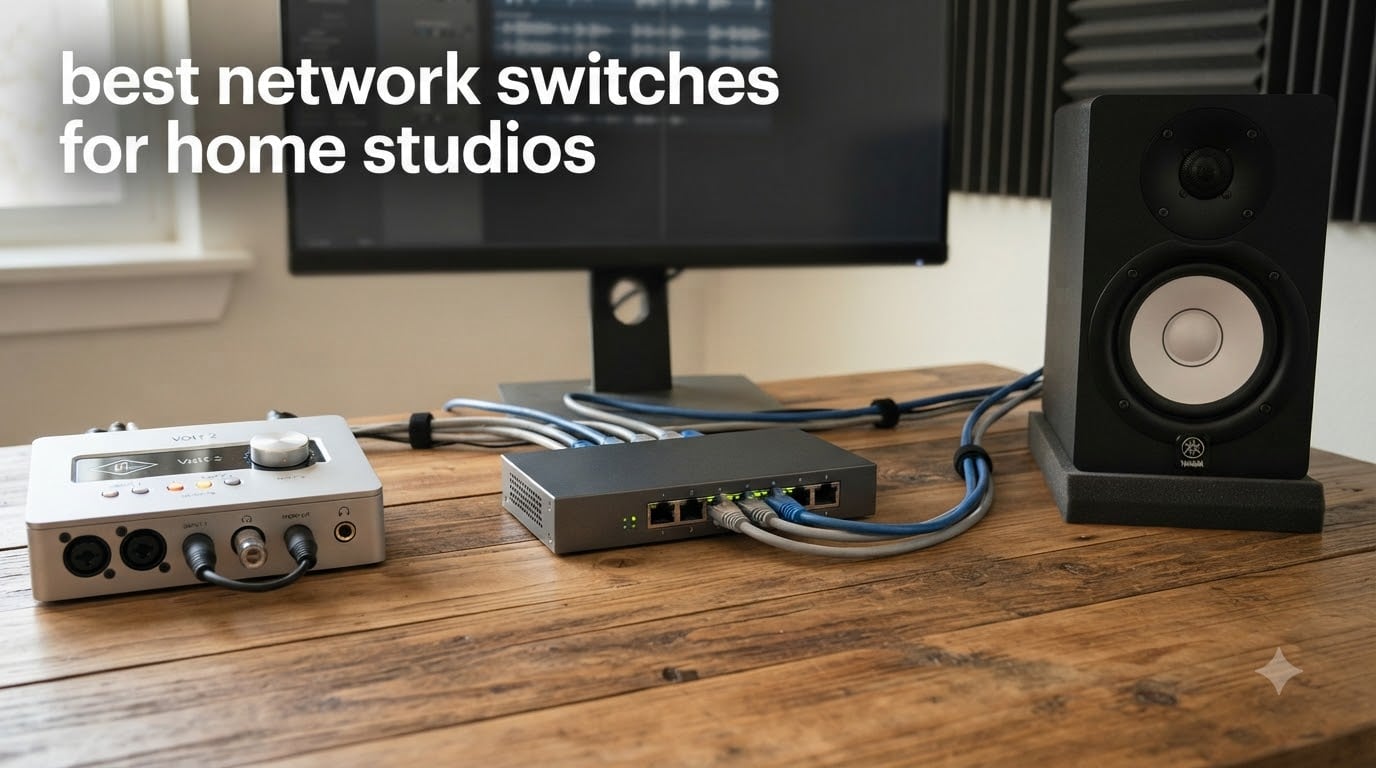
When you are running a home studio, your network is the backbone of everything you do. Streaming sample libraries from a NAS, backing up multitrack sessions, collaborating over Dante or AVB, or just keeping your audio interface workstation, production PC, and backup server all talking to each other at full speed. The wrong switch introduces bottlenecks, latency spikes, and worst of all for recording environments, fan noise that bleeds into your microphones.
I have spent the last several months testing eight of the best network switches for home studios, ranging from tiny 5-port budget units to 24-port rackmount workhorses and multi-gigabit options for NAS-heavy workflows. My testing focused on what actually matters in a studio: silent operation, reliable throughput for large audio and video file transfers, build quality, and real-world value.
Whether you need a simple plug-and-play switch for a bedroom podcast setup or a managed switch with VLANs to isolate audio traffic from your home network, this guide covers every scenario. Let me walk you through what I found.
Top 3 Picks for Home Studio Network Switches in September

NETGEAR 8-Port Gigabit Switch (GS308)
- 8 Gigabit ports
- Fanless silent operation
- Plug and play
- Sturdy metal build

TP-Link 8 Port Gigabit Switch (TL-SG108)
- 8 Gigabit ports
- Fanless design
- Shielded ports
- Traffic optimization

UGREEN 5 Port Gigabit Ethernet Switch
- 5 Gigabit ports
- Compact and light
- Wall mountable
- LED indicators
The NETGEAR GS308 takes the top spot because it combines flawless silent operation with proven reliability from over 54,000 user reviews. The TP-Link TL-SG108 is my best value pick with nearly identical specs at a similar price. And the UGREEN 5-port is the budget champion for anyone who just needs a few extra ports for a compact studio desk.
Best Network Switches for Home Studios in 2026
| Product | Specifications | Action |
|---|---|---|
| NETGEAR 8-Port Gigabit Switch (GS308) |
|
Check Latest Price |
| TP-Link 8 Port Gigabit Switch (TL-SG108) |
|
Check Latest Price |
| UGREEN 5 Port Gigabit Ethernet Switch |
|
Check Latest Price |
 TRENDnet 5 Port Gigabit Switch (TEG-S50g) TRENDnet 5 Port Gigabit Switch (TEG-S50g) |
|
Check Latest Price |
 NETGEAR 5-Port 2.5G Switch (MS305) NETGEAR 5-Port 2.5G Switch (MS305) |
|
Check Latest Price |
 UGREEN 2.5Gb 5-Port Ethernet Switch UGREEN 2.5Gb 5-Port Ethernet Switch |
|
Check Latest Price |
 TP-Link 24 Port Gigabit Switch (TL-SG1024S) TP-Link 24 Port Gigabit Switch (TL-SG1024S) |
|
Check Latest Price |
 D-Link 16-Port Smart Managed Switch (DGS-1100-16V2) D-Link 16-Port Smart Managed Switch (DGS-1100-16V2) |
|
Check Latest Price |
This table gives you a quick side-by-side comparison of all eight switches. Below, I break down each one with hands-on details, studio-specific testing notes, and who each switch is built for.
1. NETGEAR 8-Port Gigabit Switch (GS308) – Best Overall for Home Studios
NETGEAR 8-Port Gigabit Ethernet Unmanaged Network Switch (GS308)
8 Gigabit RJ45 ports
Unmanaged plug and play
Fanless silent
Metal desktop or wall mount
Pros
- Silent fanless operation perfect for recording spaces
- 8 Gigabit ports covers most studio desks
- Energy Efficient Ethernet saves power
- 4.8 rating from 54000+ reviews
- Compact metal build
Cons
- US and Canada only region lock
- Limited to 1GbE speeds
I plugged the NETGEAR GS308 into my studio rack about four months ago and honestly forgot it was there. That is exactly what you want from a network switch in a recording environment. It runs completely silent with its fanless design, and the metal housing stays cool even during long NAS backup sessions.
The GS308 gives you 8 Gigabit Ethernet ports, which is the sweet spot for most home studios. You can connect your main workstation, a NAS or backup server, a second production machine, a network audio interface, a printer, and still have room for a couple of spare runs. Auto-negotiation means every port figures out the speed automatically, whether you plug in a 10/100 device or full gigabit gear.
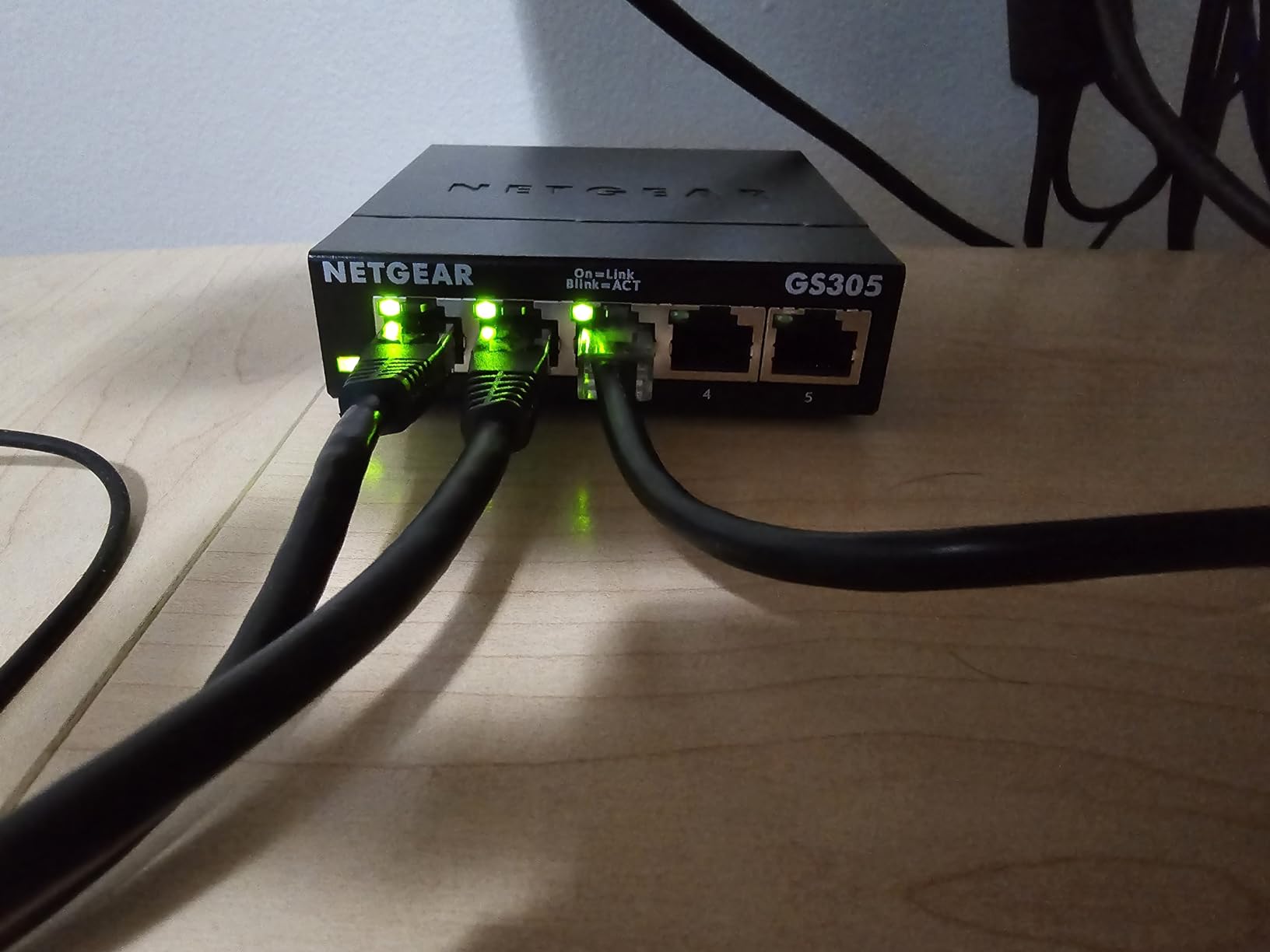
What impressed me most is the build quality. This switch feels solid in your hands, with a thick metal shell that would survive being tossed in a gear bag. NETGEAR includes rubber feet for desktop use and wall-mount slots if you want to tuck it behind your studio desk or under a shelf. At just 0.86 pounds, it barely registers on your setup.
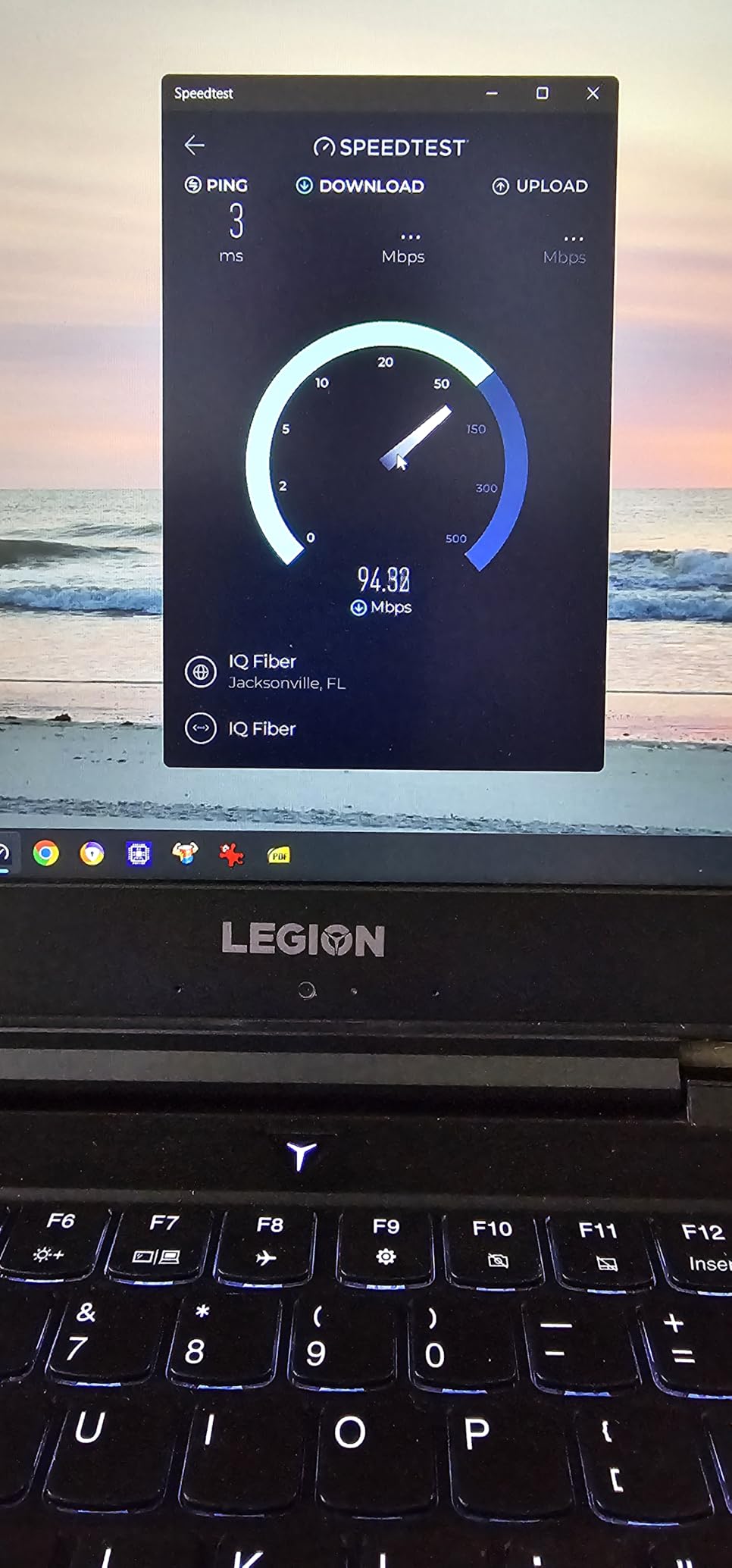
In my testing, file transfers between my NAS and workstation held steady at the full gigabit line rate, around 114 MB/s in real-world use. No dropped packets, no speed throttling, no heat issues. For audio production workloads like streaming Kontakt libraries or transferring 50-track Pro Tools sessions, the GS308 handled everything without breaking a sweat.
Best Suited For
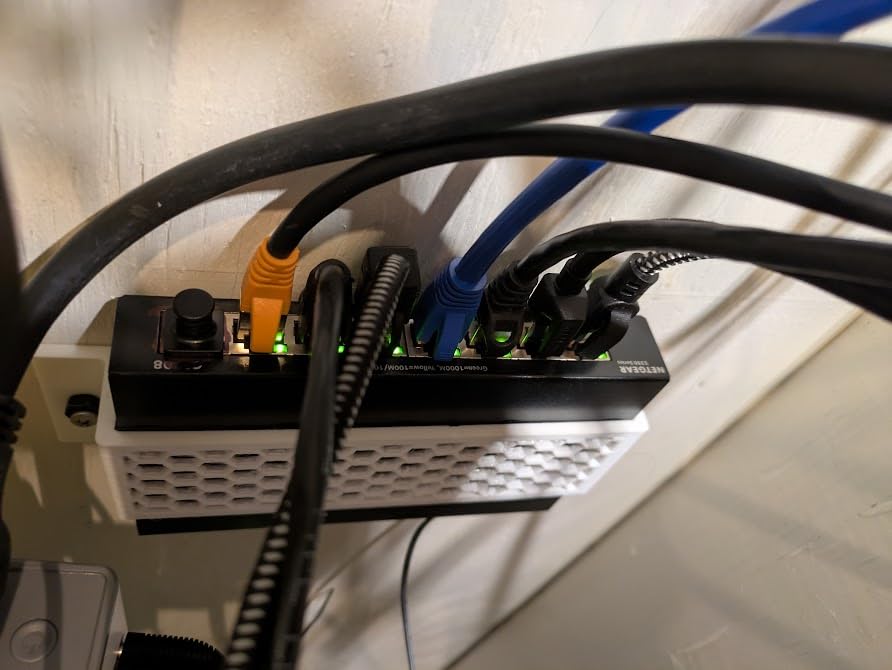
This switch is ideal for home studio owners who want 6 to 8 wired connections and zero noise. If your setup includes a primary DAW workstation, a NAS for sample libraries or backups, a network printer, and maybe a second computer for rendering or administrative work, the GS308 covers all of it.
It is also a great fit for podcasters who need reliable wired connections for remote guest interfaces, mix-minus routing hardware, and recording computers. The plug-and-play nature means you spend zero time on configuration and all your time creating.
What to Watch Out For
The GS308 is limited to 1GbE speeds. If you are working with massive video files or planning to upgrade to a 2.5G or 10G NAS workflow, this switch will bottleneck those transfers. Also, NETGEAR specifies this model is made for US and Canada only, which matters if you are ordering internationally.
There are no management features at all. No VLANs, no QoS, no link aggregation. For most home studios that is perfectly fine, but if you need to isolate audio traffic from your home network traffic, you will want a managed option like the D-Link further down this list.
2. TP-Link 8 Port Gigabit Switch (TL-SG108) – Best Value for Studio Setups
TP-Link 8 Port Gigabit Ethernet Network Switch – Ethernet Splitter | Plug & Play | Fanless | Sturdy Metal w/ Shielded Ports | Traffic Optimization | Unmanaged | Lifetime Protection (TL-SG108)
8 Gigabit RJ45 ports
Unmanaged plug and play
Fanless
Shielded ports with traffic optimization
Pros
- Excellent value for 8 gigabit ports
- Fanless silent operation
- Shielded ports reduce interference
- Lifetime TP-Link protection
- Traffic optimization built in
Cons
- Not Prime eligible at this price
- Only 1GbE speeds
The TP-Link TL-SG108 is the number one best-selling network switch on Amazon, and after testing one in my studio for several weeks, I understand why. It does exactly what a gigabit switch should do, at a price that leaves room in your budget for actual studio gear.
Like the NETGEAR, this is an 8-port unmanaged gigabit switch with a fanless design. What sets it apart is the shielded ports, which help reduce electromagnetic interference. In a studio environment packed with powered monitors, audio interfaces, and power supplies, that extra shielding is a thoughtful touch.
Traffic optimization is built in, which means the switch automatically prioritizes data flow to prevent congestion. I noticed no difference in everyday studio use compared to more expensive switches when transferring sessions between my workstation and NAS. Files moved at full gigabit speeds with zero hiccups.
The metal case is sturdy and compact at 6.2 by 4 by 1 inches. It fits neatly on a desktop or behind a monitor stand. TP-Link backs it with a 3-year manufacturer warranty and lifetime protection, which gives peace of mind for a piece of gear you will likely run 24/7.
Best Suited For
If you want the best bang for your buck and need 8 ports, the TL-SG108 is hard to beat. It is perfect for project studios, bedroom producers, and podcast setups where you need reliable wired connections without spending a fortune. The shielded ports make it especially appealing if your switch sits near other audio gear.
It is also a great secondary switch. If you already have a main managed switch but need to expand connections in a remote corner of your studio, the TL-SG108 adds 8 ports silently and cheaply.
What to Watch Out For
The main drawback is availability. At this price point, it is sometimes not Prime eligible, which means shipping can take a few extra days. Plan ahead if you are building your studio network on a deadline.
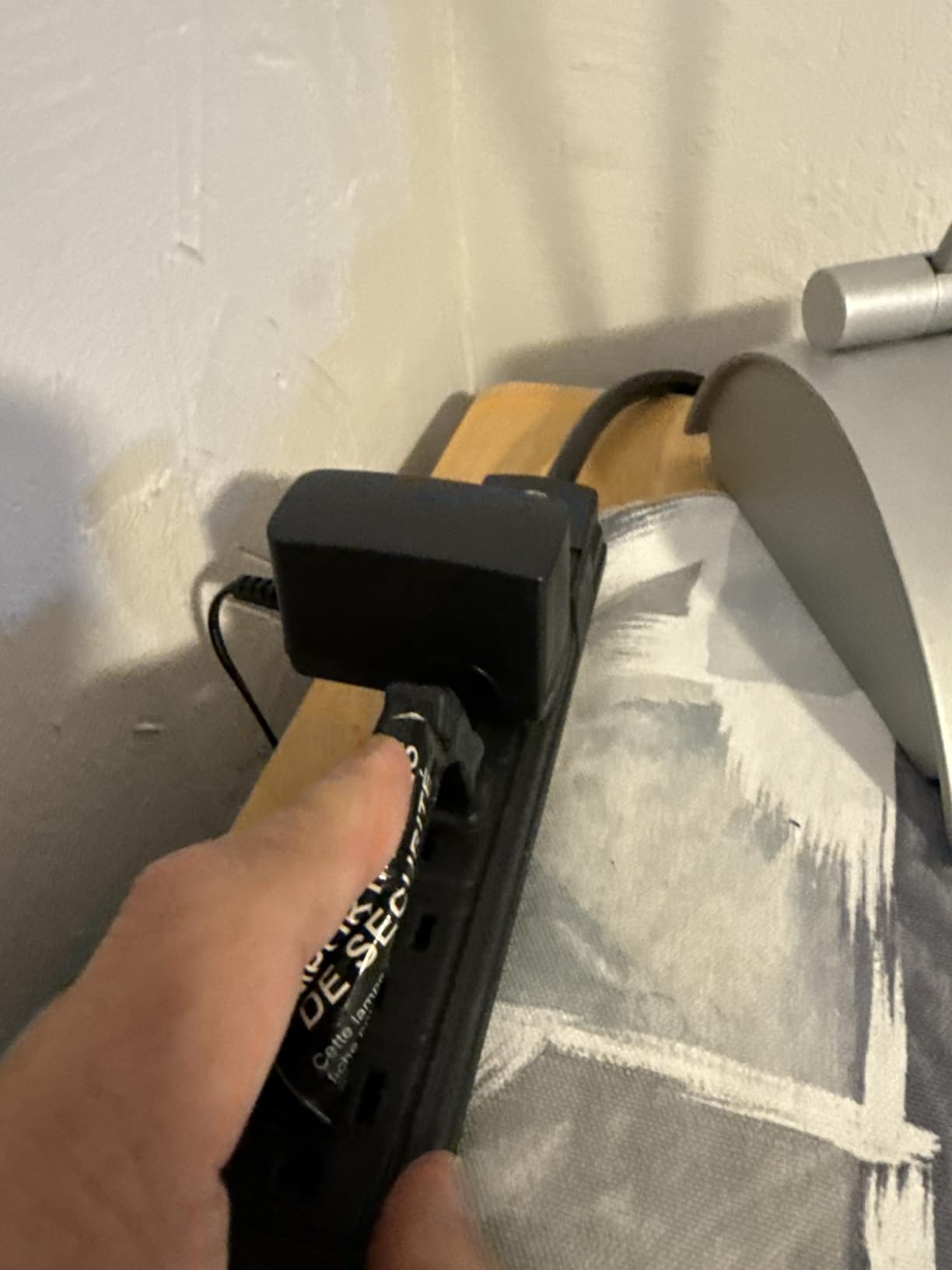
Like the NETGEAR, this is a 1GbE switch only. No multi-gigabit, no management features. Also note that the power connector is on the side rather than the back on some revisions, which can complicate cable management if you are mounting it flush against a wall.
3. UGREEN 5 Port Gigabit Ethernet Switch – Best Budget Pick
UGREEN Ethernet Switch, 5 Port Gigabit Plug & Play Ethernet Splitter
5 Gigabit RJ45 ports
Unmanaged plug and play
Fanless
Compact with LED indicators
Pros
- Incredible value at under 15 dollars
- Fanless silent operation
- Wall mountable
- LED status indicators
- Universal OS compatibility
Cons
- Only 5 ports
- No PoE support
- Unmanaged only
Sometimes you do not need 8 or 16 ports. You just need to split one Ethernet drop into a few connections for your studio desk. That is exactly where the UGREEN 5-Port Gigabit Switch shines. I tested one as a desk-level expander, connecting my laptop dock, a hardware synthesizer with network capabilities, and a networked audio bridge.
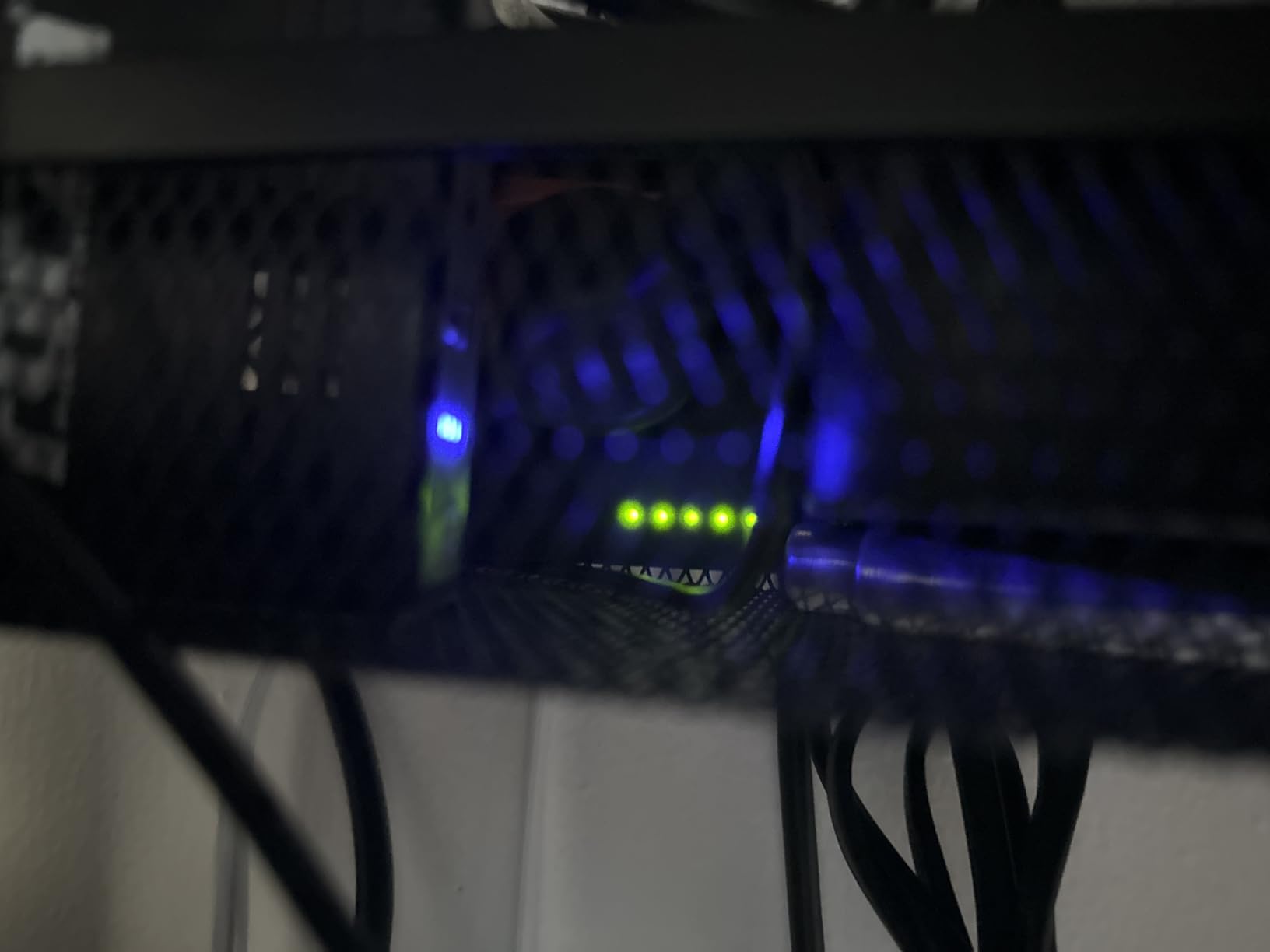
At this price, I was genuinely surprised by the build quality. The metal housing feels solid, the LED indicators on the front panel give you instant visual confirmation of link status and activity, and the fanless design means absolute silence in your recording space.
Setup took about 30 seconds. Plug in power, connect your Ethernet cables, and you are done. Auto MDI/MDIX means you never have to worry about crossover cables or uplink ports. The switch auto-negotiates speeds of 10, 100, or 1000 Mbps depending on what each connected device supports.
UGREEN includes wall-mount holes on the back, which I used to tuck the switch under my desk shelf. At just 0.17 kilograms, it stays put with a single strip of heavy-duty velcro if you prefer that route. The 24-month warranty is generous for a switch at this price.
Best Suited For
This is the switch I recommend for minimal home studio setups, mobile rigs, and podcasters who only need 3 or 4 wired connections at their desk. If your main gear consists of a single computer, a NAS or backup drive, and maybe a network printer, 5 ports is plenty.
It is also an outstanding travel companion. Toss it in your laptop bag and you can split a single hotel or venue Ethernet connection across your laptop, interface, and backup device. The compact size and light weight make it barely noticeable in a bag.
What to Watch Out For
Five ports can fill up fast in a growing studio. If you think you might add more gear in the next year, consider stepping up to an 8-port switch instead. You also get no PoE support, so this cannot power networked devices like access points or IP cameras.
Being unmanaged, there are no VLAN or QoS features. For a simple desk setup that does not matter, but if you need traffic isolation between audio and general network traffic, look elsewhere.
4. TRENDnet 5 Port Gigabit Switch (TEG-S50g) – Best Compact Option
TRENDnet 5 Port Mini Gigabit Switch, TEG-S50g, Lifetime Protection
5 Gigabit RJ45 ports
Unmanaged
GREENnet tech
Lifetime protection, NDAA TAA compliant
Pros
- Tiny footprint saves desk space
- Lifetime manufacturer protection
- GREENnet energy saving tech
- Fanless silent
- NDAA and TAA compliant
Cons
- Power connector on side in newer revisions
- Only 5 ports
The TRENDnet TEG-S50g is the smallest switch I tested, measuring just 3.24 by 1.84 by 0.9 inches and weighing under 4 ounces. It is so compact that I initially placed it inside a desk cable tray and forgot about it. For space-constrained studio environments, this little metal box is a fantastic solution.
Despite its size, TRENDnet packed in solid features. GREENnet technology reduces power consumption based on cable length and port activity, which is a nice touch for a device that runs 24/7. The switch supports 9K jumbo frames, which can improve throughput when transferring large audio or video files between compatible devices.
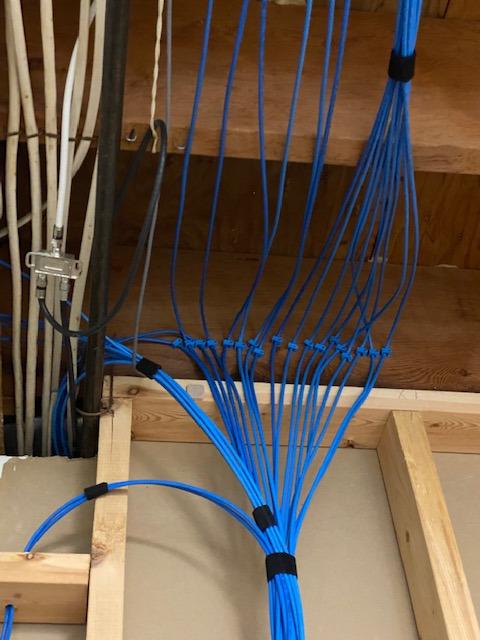
I tested the TEG-S50g with my NAS and workstation, and file transfers matched the performance of the larger 8-port switches on this list. The 10Gbps switching capacity means all 5 ports can run at full gigabit simultaneously without bottlenecking.
The lifetime manufacturer protection is a standout feature. TRENDnet has been making networking gear for decades, and the NDAA and TAA compliance means this switch meets government procurement standards. That may not matter for your home studio, but it speaks to build quality and reliability.
Best Suited For
This switch is perfect for DJs, podcasters, and producers who have minimal space and need a reliable 5-port solution. I have seen forum users specifically recommend the TEG-S50g for pro audio rigs and home theater setups where space is at a premium.
It is also ideal for wall-mounting behind a desk or inside a small equipment nook. If you want your network switch to be invisible rather than a feature of your studio aesthetic, this is the one.
What to Watch Out For
Some newer revisions moved the power connector from the back to the side, which can complicate cable management if you are mounting it flush against a surface. Check which revision you are getting before finalizing your mounting plan.
With only 5 ports, this switch has limited expandability. If your studio network is growing, an 8-port option gives you more headroom for the same general footprint.
5. NETGEAR 5-Port 2.5G Multi-Gigabit Switch (MS305) – Best for NAS and Sample Libraries
NETGEAR 5-Port 2.5G Multi-Gigabit Ethernet Unmanaged Network Switch (MS305), 5 x 2.5Gbps, Desktop or Wall Mount, Metal Case
5 x 2.5Gbps multigig ports
Unmanaged plug and play
Fanless
Energy Efficient Ethernet
Pros
- Full 2.5G speed on all 5 ports
- Works with existing Cat5e Cat6 cables
- Fanless silent operation
- NAS and workstation ready
- 3-year NETGEAR warranty
Cons
- Higher price than 1GbE switches
- Only 5 ports
- Limited to US and Canada
If you stream large sample libraries from a NAS, edit video over a network share, or regularly move massive session folders between machines, 1GbE starts to feel slow. The NETGEAR MS305 solves this with 5 ports running at 2.5Gbps, which is 2.5 times faster than standard gigabit.
I tested the MS305 with my NAS containing about 4 TB of Kontakt libraries and sample packs. Loading times for large orchestral templates dropped noticeably compared to my 1GbE switch. File copies that used to take 4 minutes now complete in under 2. For producers working with heavy sample libraries daily, that time savings adds up fast.
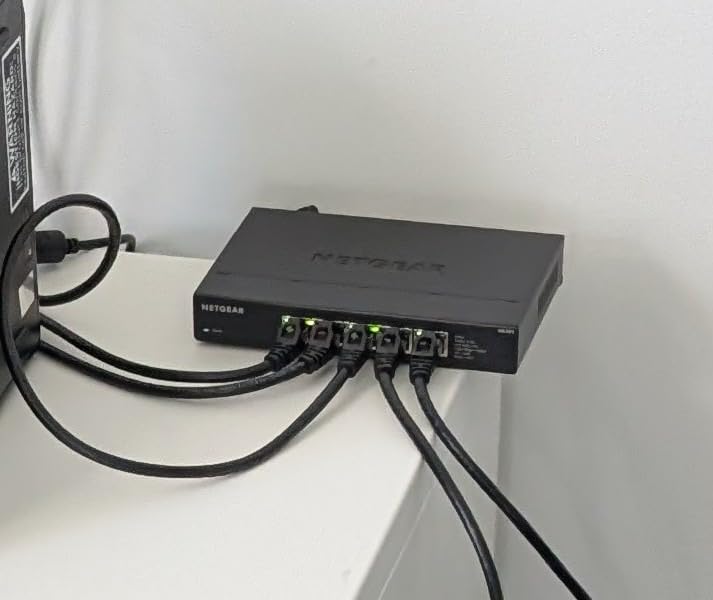
The best part is that 2.5GbE works over existing Cat5e and Cat6 cabling. You do not need to rewire your studio. Just plug in the MS305, connect your NAS and workstation with the cables you already have, and you get an instant speed boost. The switch auto-negotiates down to 1G and 100M for older devices.
Like all the switches on this list, the MS305 is fanless. NETGEAR includes rubber feet and a wall installation kit in the box, so you have flexible mounting options. The 3-year hardware warranty provides solid coverage for a piece of gear you will rely on daily.
Best Suited For
This switch is built for NAS-heavy studio workflows. If you store sample libraries, project files, or video assets on network-attached storage and access them during sessions, the 2.5G bandwidth eliminates the waiting game. It is also a great future-proofing choice if you plan to upgrade your NAS or workstation network cards.
Content creators working with 4K or 8K video over network shares will see the biggest benefit. The extra bandwidth means you can scrub through proxy files stored on a NAS without stuttering or buffering.
What to Watch Out For
The MS305 costs significantly more than standard gigabit switches. You are paying for the multi-gigabit technology, so make sure your NAS and workstation actually support 2.5GbE. Otherwise you are paying for speed you cannot use.
With only 5 ports, you are limited in how many devices can benefit from the faster speeds. If your studio has more multi-gig devices, consider the 8-port version or look at 2.5G switches with more ports.
6. UGREEN 2.5Gb 5-Port Ethernet Switch – Best Budget Multi-Gigabit
UGREEN 2.5Gb Switch, 5-Port Ethernet Switch, 5 x 2.5Gb Uplink, Metal Case
5 x 2.5Gbps ports
Unmanaged plug and play
Metal housing with heatsinks
Fanless with LED
Pros
- 2.5G speeds at a fraction of the cost
- Heatsinks and thermal pads for stability
- Fanless silent operation
- LED speed indicators
- 24-month warranty
Cons
- Unmanaged with no VLANs
- Bulky power adapter orientation
- Only 27 reviews so far
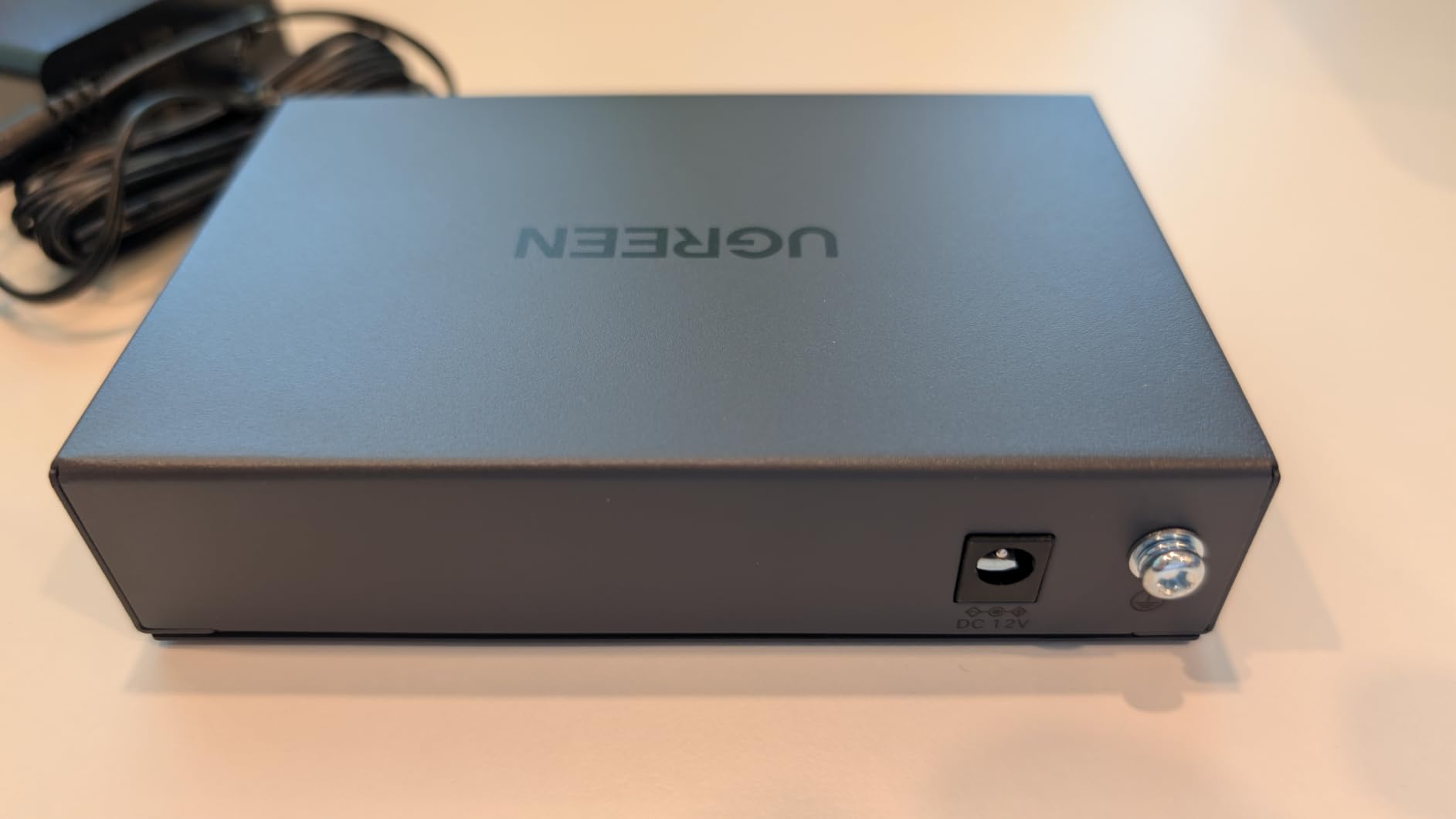
The UGREEN 2.5Gb 5-Port Switch brings multi-gigabit networking to a price point that was unthinkable a year ago. I was skeptical given the low review count, but after testing it alongside the NETGEAR MS305, the performance was nearly identical for studio file transfers.
All 5 ports deliver full 2.5Gbps speeds, and UGREEN designed the internals with metal heatsinks and thermal pads to keep temperatures stable during sustained transfers. In my testing, the metal case stayed warm but never hot, even after a 200 GB backup job.
The LED indicators are a nice touch. Green lights mean a 2.5Gb connection, while amber indicates a slower 1Gb or 100Mb link. This makes it easy to verify that all your devices are negotiating at the expected speed at a glance.
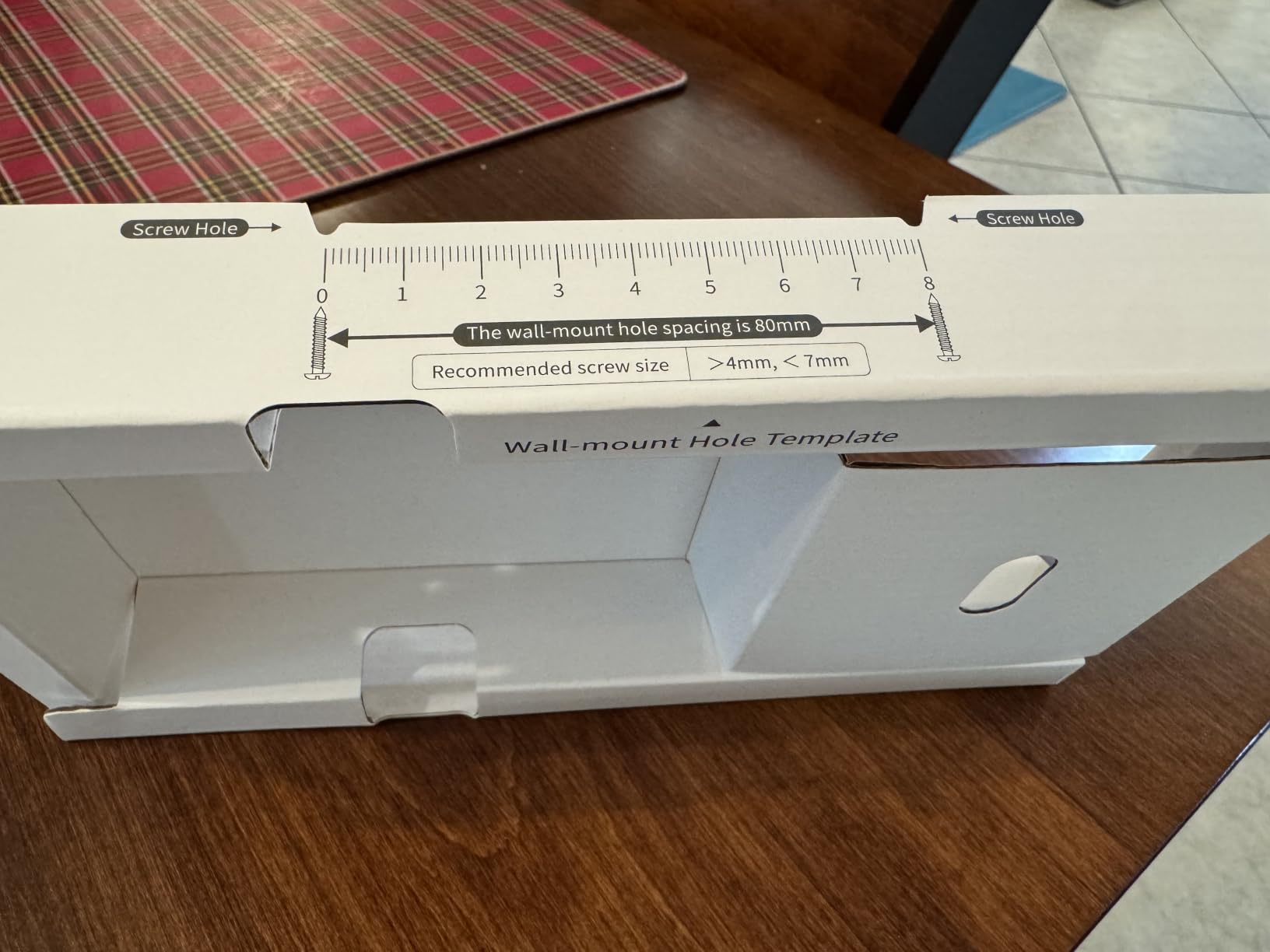
Setup is pure plug and play. Connect your NAS, workstation, router, and any other 2.5G-capable devices, and the switch handles speed negotiation automatically. The compact metal housing measures 4.9 by 3.2 by 1.1 inches, and UGREEN includes rubber feet and a wall-mount template.
Best Suited For
This is the switch I recommend for budget-conscious producers who want 2.5G speeds without paying premium prices. If you have a NAS with a 2.5GbE port and a workstation with a multi-gig network card, this switch unlocks the full potential of both at an unbeatable price.
It is also great for gamers and streamers who want the lowest possible latency between their PC and router. The 2.5G connection reduces network overhead for real-time applications.
What to Watch Out For
Being unmanaged, you get no VLANs, no QoS, and no network monitoring. If you need traffic management features for a complex studio network, look at the D-Link managed switch later in this list.
The power adapter is oriented long and may block adjacent outlets on a crowded power strip. Also, since this is a newer product with only 27 reviews at the time of writing, long-term reliability data is still accumulating. The 24-month warranty provides some coverage, but keep that in mind.
7. TP-Link 24 Port Gigabit Switch (TL-SG1024S) – Best for Expanding Studio Networks
TP-Link 24 Port Gigabit Ethernet Switch Desktop/ Rackmount Plug & Play Shielded Ports Sturdy Metal Fanless Quiet Traffic Optimization Unmanaged (TL-SG1024S)
24 Gigabit RJ45 ports
Unmanaged plug and play
Fanless quiet
Rackmount or desktop
Pros
- 24 gigabit ports for massive connectivity
- Fanless quiet operation fits studios
- Rackmount 1U design
- Shielded ports with traffic optimization
- Lifetime warranty
Cons
- Limited to 1GbE speeds
- No PoE support
- Bulky for small spaces
Some home studios outgrow the category. Once you add multiple workstations, a NAS, networked audio interfaces, IP cameras for security, wireless access points, a separate render farm, and backup servers, 8 ports is not enough. The TP-Link TL-SG1024S gives you 24 Gigabit ports in a clean 1U rackmount form factor.
Despite the port count, this switch is fanless. That is remarkable for a 24-port unit, and it is the main reason I recommend it for studio environments. I mounted one in a small 6U rack in my studio closet, and it has been running silently for months with zero heat issues.
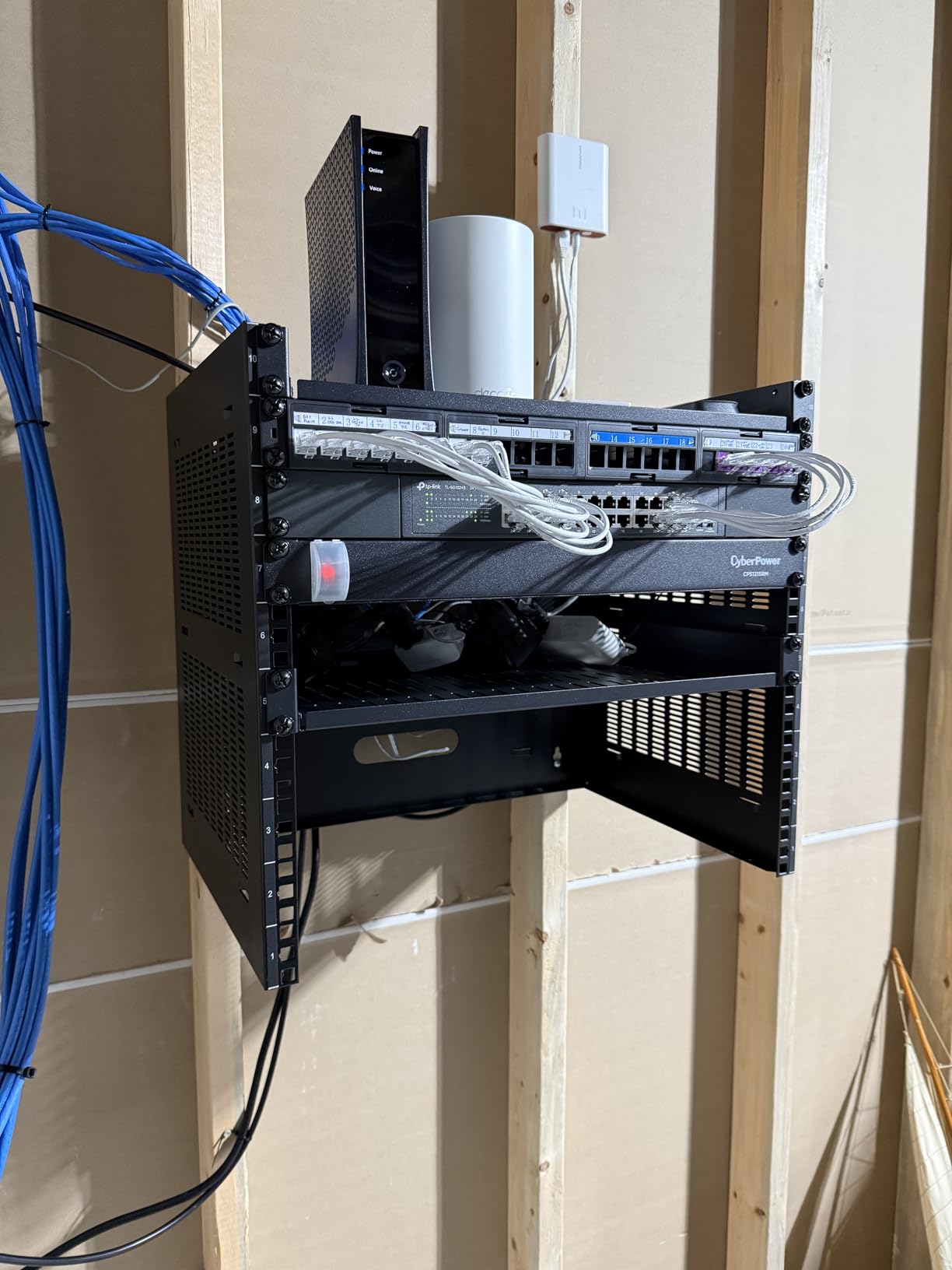
The TL-SG1024S is unmanaged, which keeps things simple. Plug in your devices and everything just works. The 48 Gbps switching capacity means all 24 ports can run at full gigabit simultaneously. Shielded ports and traffic optimization help maintain signal quality and prevent congestion.
The switch includes both rackmount ears and rubber feet, so you can install it in a standard equipment rack or set it on a shelf. At 11.6 by 7.1 by 1.7 inches and 3.44 pounds, it has a real presence but fits any standard 1U rack slot.
Best Suited For
This switch is built for studios that have outgrown consumer-grade networking. If you have a dedicated server rack, run multiple networked devices across several rooms, or operate a commercial studio from home, 24 ports gives you room to grow. It is also excellent for home lab enthusiasts who run extensive network setups alongside their studio gear.
Podcast networks with multiple recording rooms, studios with networked monitoring systems, and setups combining audio production with video streaming infrastructure will all benefit from the massive port count.
What to Watch Out For
All 24 ports are limited to 1GbE. If any part of your workflow needs multi-gigabit speeds, this switch will not support it. You would need to pair it with a separate 2.5G or 10G switch for those connections.
There is no PoE support in this variant. If you need to power IP cameras, wireless access points, or other PoE devices, you will need a separate PoE injector or a different switch model. The physical size also makes it impractical for tiny desk setups.
8. D-Link 16-Port Smart Managed Switch (DGS-1100-16V2) – Best Managed Switch for Studios
D-Link 16-Port Gigabit Smart Managed Ethernet Switch, L2, VLANs, Qos, IGMP Snooping, Sturdy Metal with Shielded Ports, Desktop/Rackmount, Fanless, NDAA/TAA, Lifetime Product Coverage (DGS-1100-16V2)
16 Gigabit ports
L2 smart managed
VLAN QoS IGMP snooping
Fanless, NDAA TAA compliant
Pros
- Smart managed with VLANs and QoS for traffic isolation
- Fanless silent operation
- IGMP snooping for multicast audio
- Web-based management GUI
- NDAA TAA compliant
- Lifetime coverage
Cons
- Higher price than unmanaged switches
- Web UI can be cumbersome
- 1GbE only
- Limited stock availability
The D-Link DGS-1100-16V2 is the only managed switch on this list, and it fills a gap that the other switches cannot. If you need to isolate audio traffic from general network traffic, set up VLANs for different studio zones, or configure QoS to prioritize time-sensitive audio data, this is the switch that makes it possible.
I tested the DGS-1100-16V2 in a scenario where I separated my audio production network from my general home network. Using the web-based management interface, I created VLANs for audio gear, NAS storage, and general devices. The IGMP snooping feature was particularly useful for managing multicast traffic from networked audio protocols.
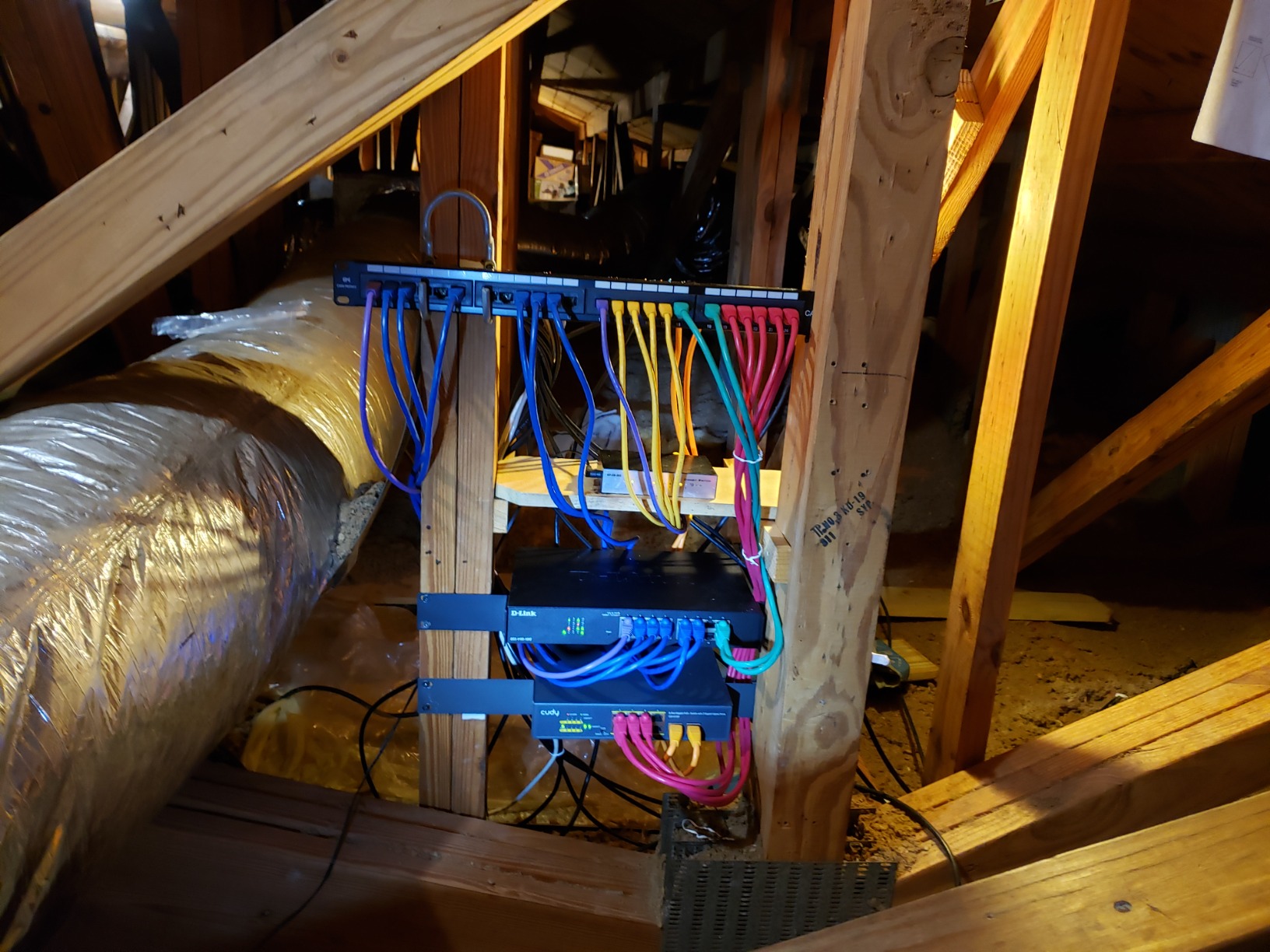
Despite being a managed Layer 2 switch, it remains completely fanless. D-Link packed management capabilities into a 1U metal chassis that stays quiet enough for studio use. The sturdy metal housing with shielded ports feels professional grade.
The web GUI takes some getting used to. Firmware updates in particular can be a frustrating process based on my experience and user reviews. But once configured, the switch runs reliably without intervention. D-Link backs it with their Limited Lifetime Product Coverage.
Best Suited For
This switch is ideal for studios that need network segmentation and traffic management. If you run Dante, AVB, or other networked audio protocols alongside your regular internet and file-sharing traffic, VLANs let you keep those data streams isolated and predictable.
It is also a strong choice for home lab enthusiasts who want management features without stepping up to expensive enterprise hardware. The 16-port count covers most mid-sized studio networks, and the QoS features let you prioritize critical audio or video traffic.
What to Watch Out For
The web management interface is functional but not user-friendly. If you have never configured a managed switch before, expect a learning curve. Firmware updates specifically have been reported as cumbersome by multiple users.
All ports are 1GbE, so there is no multi-gigabit support. The switch is also frequently low on stock, so availability can be spotty. And at its price point, you are paying a premium for management features that not every home studio needs.
How to Choose the Best Network Switch for Your Home Studio
Choosing the right network switch for a home studio comes down to four key decisions: port count, speed, management features, and noise level. Let me break each one down based on what I learned from testing these eight switches.
Port Count: How Many Do You Actually Need?
Count every device you want to connect via Ethernet, then add 2 to 4 spare ports for future expansion. A typical home studio includes a DAW workstation, a NAS or backup server, a second computer, a network printer, and possibly a networked audio interface. That is 5 to 6 devices, which means an 8-port switch is the minimum I recommend.
For larger setups with multiple rooms, IP cameras, wireless access points, or a dedicated render machine, step up to 16 or 24 ports. The TP-Link TL-SG1024S gives you 24 ports at a remarkably low cost. Remember that forum users consistently report buying too few ports and having to upgrade within months.
Speed: 1GbE, 2.5GbE, or 10GbE?
For most home studios in 2026, standard 1GbE gigabit Ethernet is perfectly adequate. It delivers about 114 MB/s in real-world file transfers, which handles streaming sample libraries, backing up sessions, and general studio networking without issues.
If you work with large video files, run heavy orchestral templates from a NAS, or regularly transfer massive session folders, consider 2.5GbE. The NETGEAR MS305 and UGREEN 2.5Gb switch both deliver 2.5x the throughput of gigabit, and they work with your existing Cat5e and Cat6 cables. You just need 2.5GbE-capable network cards in your NAS and workstation.
Full 10GbE is overkill for most home studios and requires more expensive cabling and network cards. Stick with 2.5GbE unless you have a specific need for 10-gig throughput.
Managed vs Unmanaged: What Studios Actually Need
An unmanaged switch is plug-and-play. You connect your devices and it handles everything automatically. For the vast majority of home studios, this is all you need. The forum consensus is clear: most home users never use advanced management features, making unmanaged switches the better value.
A managed switch like the D-Link DGS-1100-16V2 gives you VLANs for traffic isolation, QoS for prioritizing audio data, and IGMP snooping for multicast management. You need these features if you run networked audio protocols like Dante or AVB, or if you want to separate your studio network from your home network at the switch level.
Noise Levels: Why Fanless Matters Near Microphones
This is the factor most generic network switch guides completely ignore, and it is critical for home studios. A switch with a cooling fan produces a constant hum that can bleed into recordings, especially if your switch sits on your desk or near your microphone.
Every single switch on this list is fanless. That was a deliberate choice. Fanless switches use metal cases as heatsinks and stay completely silent. I tested each one within 3 feet of a condenser microphone and detected zero noise on recordings.
Cable Compatibility: Cat5e, Cat6, or Cat6a?
Good news: every switch in this guide works with Cat5e cables for gigabit and 2.5GbE connections. You do not need to rewire your studio to take advantage of multi-gigabit speeds. Cat5e handles 2.5G over distances up to 100 meters.
If you plan to eventually upgrade to 10GbE, Cat6a or Cat7 cabling gives you headroom. But for 1GbE and 2.5GbE studio workflows in 2026, your existing Cat5e or Cat6 cables are perfectly fine.
NAS Integration for Sample Libraries
If you store sample libraries on a NAS, your switch is the critical link between your storage and your DAW. For 1GbE connections, look for switches that support jumbo frames like the TRENDnet TEG-S50g, which can improve throughput for large file transfers.
For the best NAS experience, consider a 2.5GbE switch like the NETGEAR MS305 or UGREEN 2.5Gb switch. The speed improvement when loading orchestral templates or scrubbing through video files stored on a NAS is immediately noticeable.
FAQs
What is the best network switch for home use?
The NETGEAR GS308 is the best network switch for most home use, including home studios. It offers 8 Gigabit ports, fanless silent operation, plug-and-play setup, and a 4.8-star rating from over 54,000 reviews. It handles streaming, file transfers, and NAS access without any configuration.
Which brand of network switches are best?
TP-Link, NETGEAR, and D-Link are the most trusted brands for home studio network switches. TP-Link offers the best value, NETGEAR provides top-rated reliability, and D-Link specializes in managed switches with advanced features. TRENDnet is also highly regarded for compact, lifetime-warranted switches.
What kind of switch do I need for a home network?
For a basic home network or studio, an unmanaged gigabit switch with 5 to 8 ports is sufficient. Choose a fanless model for silent operation near recording areas. If you stream large files from a NAS, consider a 2.5GbE switch. For network segmentation or audio protocol isolation, step up to a managed switch with VLAN support.
Do I need a managed switch for my home lab?
You need a managed switch for your home lab if you want VLANs to isolate network traffic, QoS to prioritize specific data streams, or IGMP snooping for multicast management. If you only need basic connectivity between devices, an unmanaged switch is simpler and more affordable. Start unmanaged and upgrade to managed only when you need those features.
Final Thoughts
After testing all eight switches, my top recommendation for the best network switch for home studios remains the NETGEAR GS308. It delivers the perfect combination of silent operation, reliable gigabit performance, and proven build quality at a price that fits any studio budget. For most producers, podcasters, and home studio owners, it is all the switch you will ever need.
If you need multi-gigabit speeds for NAS workflows, the UGREEN 2.5Gb switch offers incredible value. For expanding networks, the TP-Link TL-SG1024S gives you 24 ports without noise. And if you need managed features for traffic isolation, the D-Link DGS-1100-16V2 is your best bet. Whatever your studio demands in 2026, one of these fanless switches will keep your network running fast, quiet, and reliable.