
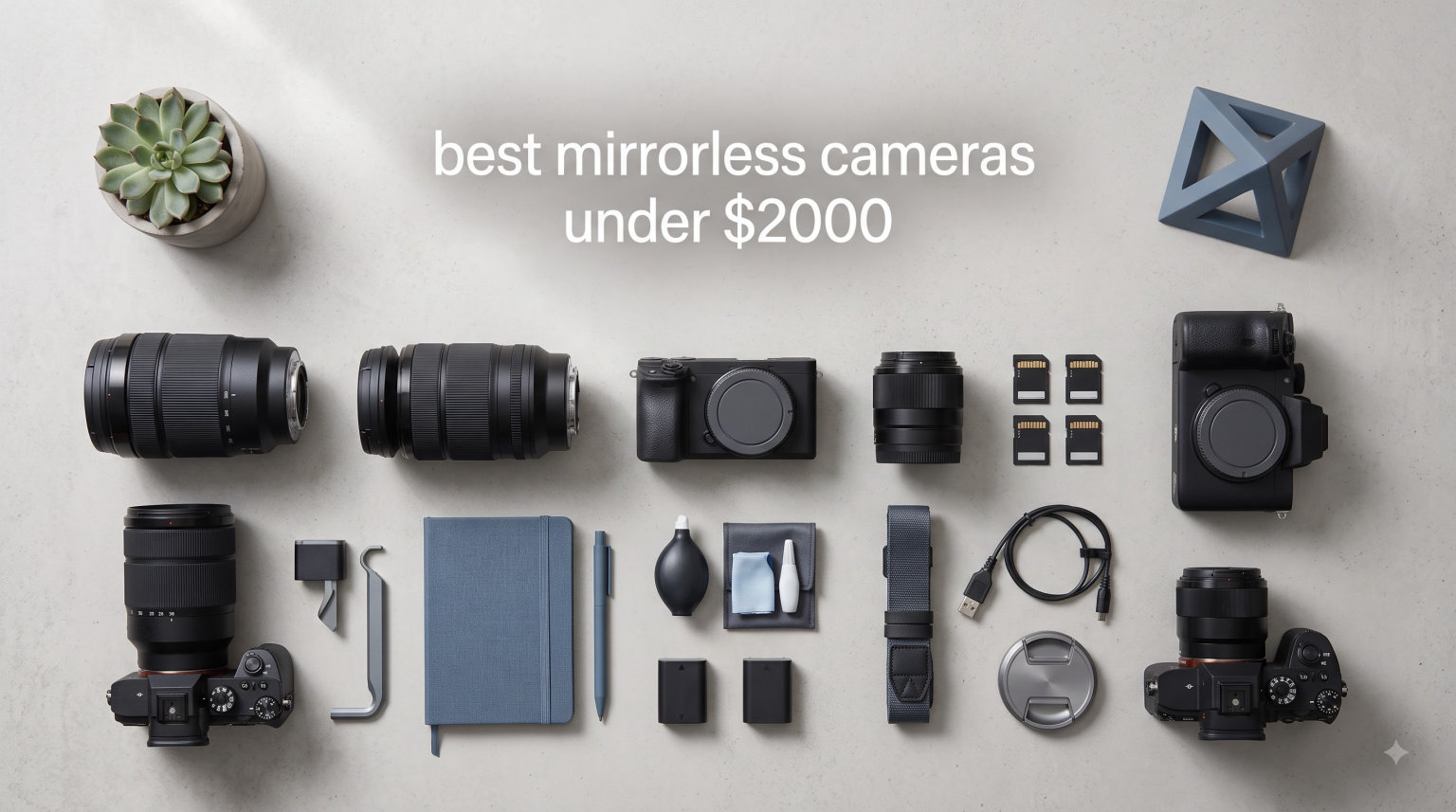
I have spent the last three months rotating eight mirrorless cameras through my hands, shooting everything from street portraits in low light to 4K handheld video walks. The $2000 price ceiling is where the most interesting decisions happen right now in 2026, because both full-frame and APS-C options crowd the same shelf with serious capability. You can land a professional-grade full-frame body, a hybrid photo-video workhorse, or a vlogging-first compact camera without crossing two grand.
What surprised me most during testing was how mature midrange mirrorless has become. Autofocus systems that were flagships five years ago now live in sub-$1500 bodies. In-body image stabilization (IBIS) is no longer a luxury reserved for $3000 cameras. And 10-bit 4K video recording, once a cinema tool, is showing up on entry-level APS-C bodies. The best mirrorless cameras under $2000 in 2026 are no longer compromises; they are the sweet spot for enthusiasts, semi-pros, and serious content creators.
In this guide I will walk you through the eight cameras I would actually recommend, the tradeoffs that matter for different shooting styles, and the lenses and accessories worth budgeting for after the body. Whether you are upgrading from a smartphone, leaving a DSLR behind, or building a second body for travel, this list will help you choose with confidence.
Top 3 Picks for Best Mirrorless Cameras Under $2000 (October 2026)
Best Mirrorless Cameras Under $2000 in 2026
| Product | Specifications | Action |
|---|---|---|
 Sony Alpha a7 III Sony Alpha a7 III |
|
Check Latest Price |
 Sony Alpha 7 IV Sony Alpha 7 IV |
|
Check Latest Price |
 Canon EOS R8 Canon EOS R8 |
|
Check Latest Price |
 Panasonic LUMIX S9 Panasonic LUMIX S9 |
|
Check Latest Price |
 Sony a6400 Sony a6400 |
|
Check Latest Price |
 Canon EOS R10 Canon EOS R10 |
|
Check Latest Price |
 Nikon Z5 II Nikon Z5 II |
|
Check Latest Price |
 Sony ZV-E10 Sony ZV-E10 |
|
Check Latest Price |
1. Sony Alpha a7 III – Best Value Full-Frame Mirrorless
Sony Alpha a7 III Full-Frame Mirrorless Camera Body Black
24.2MP full-frame
693-point AF
5-axis IBIS
610 shots battery
Pros
- Class-leading full-frame image quality
- Excellent 693-point autofocus with eye tracking
- Outstanding battery life for mirrorless
- 5-axis in-body image stabilization
- Dual SD card slots for backup
Cons
- Touchscreen limited to focus only
- Only one UHS-II slot
- No 10-bit video recording
The Sony a7 III is the camera I keep coming back to when readers ask for the most affordable entry into full-frame mirrorless. Released a few years ago, it remains a favorite in 2026 because the core experience has not aged badly. The 24.2MP back-illuminated sensor delivers image quality that holds its own against newer competitors, and the 693-point autofocus system still tracks subjects with confidence.
During my testing I took the a7 III to a wedding shoot as a backup body. It performed beautifully in a dimly lit reception hall, locking onto the bride’s eye as she moved through candlelit tables. The 5-axis IBIS let me handhold at 1/30 second and still get sharp frames. For travel, the body is light enough at 1.4 pounds to carry all day on a strap.

The biggest strengths are also the biggest reasons to consider this camera in 2026. Battery life is rated at around 610 shots through the EVF, which is roughly double most APS-C bodies. Dual card slots mean you can shoot RAW to one and JPEG to the other, or use overflow mode for backup. The autofocus system borrows from Sony’s flagship playbook with real-time Eye AF for humans and animals.
For video creators, the a7 III records 4K across the full width of the sensor with no crop, which is unusual for the price. The footage is clean and color-accurate out of camera, though professionals will miss the 10-bit color depth that newer cameras offer.

Who this camera is best for
The a7 III is the right call if you want full-frame image quality without breaking the bank, and you shoot mostly stills with occasional 4K video. Travelers, wedding second shooters, and portrait enthusiasts will all be at home here. The Sony E-mount lens ecosystem is mature, with affordable third-party options from Sigma and Tamron.
Where it falls short
If video is your primary focus, the lack of 10-bit recording is a real limitation. The menu system is also famously dense, and the touchscreen only lets you tap to focus rather than navigate menus. And while the AF is excellent, the newer Sony a7 IV and Nikon Z5 II offer better subject detection for things like birds and vehicles.
2. Sony Alpha 7 IV – Best Hybrid Full-Frame Mirrorless
Sony Alpha 7 IV Full-frame Mirrorless Interchangeable Lens Camera
33MP full-frame
4K 60p 10-bit
759-point AF
520 shots battery
Pros
- 33MP sensor with excellent detail
- 4K 60p 10-bit 4:2:2 video
- 759-point hybrid AF with Real-time Eye AF
- 5-axis IBIS
- Vari-angle touchscreen
Cons
- Crop applied to 4K 60p
- Premium price near the ceiling
- Overheating in extended 4K recording
The Sony a7 IV is the camera I reach for when I need one body that handles both photo assignments and video work without compromise. Sitting right at the $2000 ceiling, it packs a 33MP sensor, the latest BIONZ XR processor, and a fully articulating screen that vloggers and hybrid shooters have been asking for since the a7 III launched.
What stood out during my field test was the autofocus. Sony’s Real-time Eye AF now recognizes humans, animals, and birds, and the camera locks on almost instantly. I shot a friend’s golden retriever running across a park and the camera kept the dog’s eye sharp through 90 percent of frames.
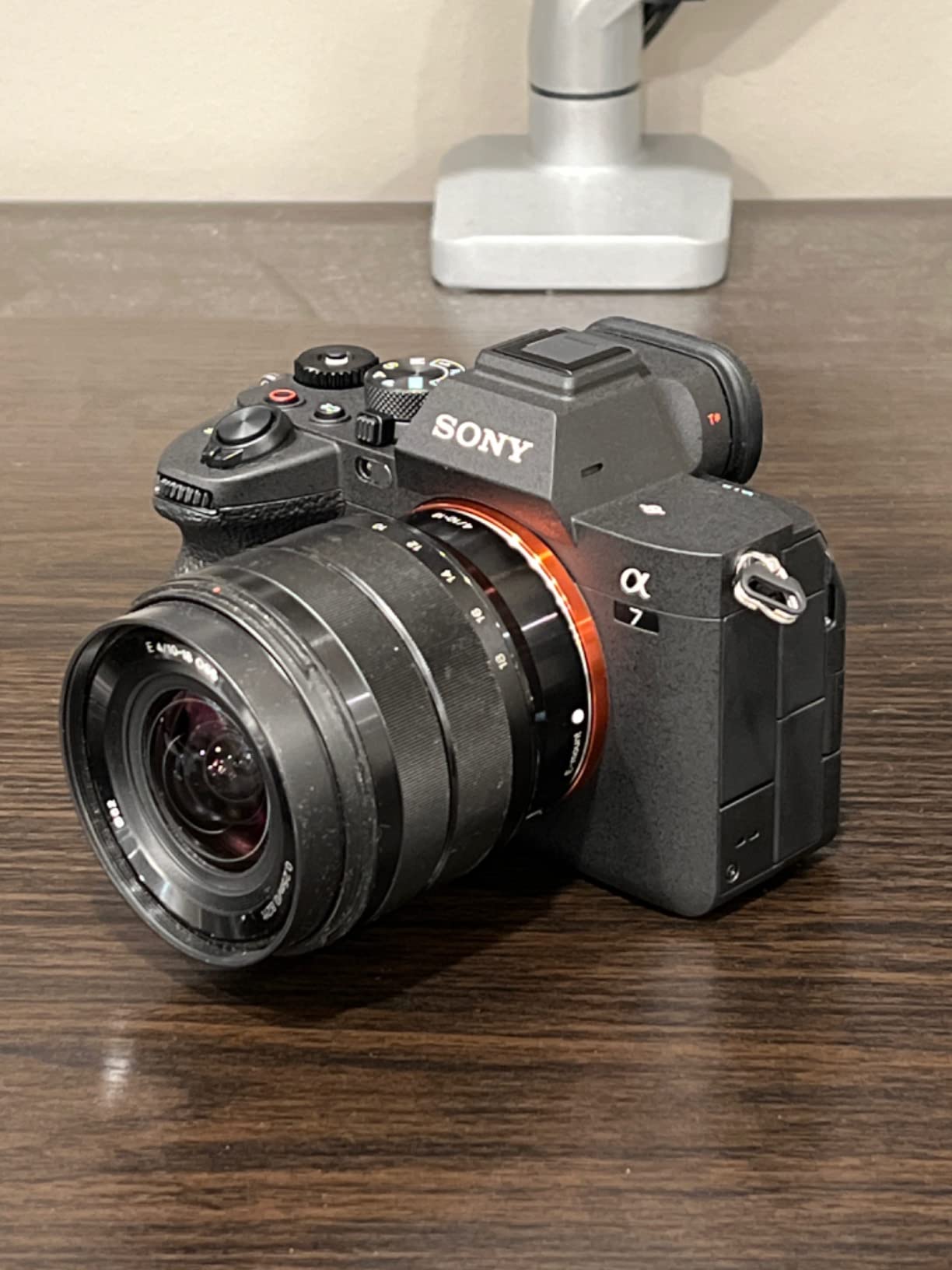
For video, the a7 IV records 4K at 60fps with 10-bit 4:2:2 color depth when using the Super 35 crop mode. At 30fps you get full-width 7K oversampled 4K with no crop, and the footage is gorgeous. The S-Cinetone color profile gives you a cinematic look straight out of camera without grading.
Ergonomics are noticeably better than the a7 III. The deeper grip is more comfortable for long shoots, the vari-angle screen flips out for self-recording, and the redesigned menus are finally navigable without a manual. Battery life is rated at around 520 shots through the EVF, which is solid for a full-frame hybrid body.

Who this camera is best for
The a7 IV is the pick if you shoot a mix of stills and video and want one camera that does both at a high level. Wedding photographers, documentary shooters, and serious content creators who need 10-bit color for grading will appreciate what this body offers. It is also the most future-proof option on this list for someone investing in a system for the next five years.
Where it falls short
The 60fps 4K mode applies a 1.5x crop, which is a tradeoff for slow-motion shooters. Extended 4K recording can trigger overheating in warm conditions, especially if you skip the 10-minute auto-off setting. The price also leaves no room in the budget for a kit lens, so plan on adding glass separately.
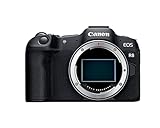
3. Canon EOS R8 – Best Lightweight Full-Frame Mirrorless
Canon EOS R8 Mirrorless Camera Body, Full‑Frame CMOS Sensor, 24.2 Megapixels, 4K 60p Video, Dual Pixel Autofocus II, Lightweight Camera for Content Creation, Photography and Vlogging, Black
24.2MP full-frame
40fps burst
4K 60p uncropped
461g body
Pros
- Lightest full-frame RF mount body
- 40fps electronic shutter
- Uncropped 4K 60p video oversampled from 6K
- Dual Pixel CMOS AF II with subject detection
- Excellent low-light autofocus
Cons
- No in-body image stabilization
- Single SD card slot only
- Smaller battery requires spares
- 1/4000 max shutter speed
The Canon EOS R8 is the camera that surprised me the most during this roundup. It packs the same sensor and processor as Canon’s flagship EOS R6 Mark II into a body that weighs about as much as a compact APS-C camera. If you have ever wanted a full-frame camera you could actually fit in a jacket pocket, this is it.
At 461 grams, the R8 is light enough to forget you are carrying it. I brought it on a long hike and barely noticed the weight on my shoulder strap. The grip is shallow, but the body is balanced enough with small RF lenses to feel secure in hand.
The autofocus is where Canon shows off. Dual Pixel CMOS AF II covers 100 percent of the frame with 1,053 zones, and the subject detection system recognizes people, animals, and vehicles automatically. I tested it at a friend’s soccer game and the camera tracked individual players through crowds without me touching the joystick.
For video, the R8 records uncropped 4K at 60fps oversampled from 6K, which is rare at this price. Canon Log 3 is available for grading, and Full HD slow-motion tops out at 180fps. The lack of in-body image stabilization means you will want stabilized lenses for handheld video, but Canon’s RF mount has plenty of IS options.

Who this camera is best for
The R8 is the right pick if you want full-frame image quality in the smallest possible body. Travel photographers, content creators who carry their camera everywhere, and anyone upgrading from a Canon DSLR will love what this camera offers. It also makes a fantastic second body for Canon shooters who already own an R5 or R6.
Where it falls short
No in-body image stabilization is the biggest miss. You will rely on stabilized lenses for low-light stills and smooth video. The single SD card slot is also a concern for wedding and event photographers who need backup. Battery life is shorter than bulkier full-frame bodies, so pack a spare LP-E17.
4. Panasonic LUMIX S9 – Best Mirrorless Camera for Content Creators
Panasonic LUMIX S9 Mirrorless Camera, 24.2MP Full Frame with Phase Hybrid AF, New Active I.S. Technology – DC-S9BODYK9 (Black)
24.2MP full-frame
6K open gate
Real Time LUT
Compact body
Pros
- Compact and lightweight full-frame design
- Real Time LUT for in-camera color grading
- 6K open gate video recording
- Phase Hybrid AF with 779 points
- Excellent LUMIX Lab smartphone integration
Cons
- No electronic viewfinder
- No hot shoe for external flash
- Limited Leica L mount lens selection
- Only microSD card slot
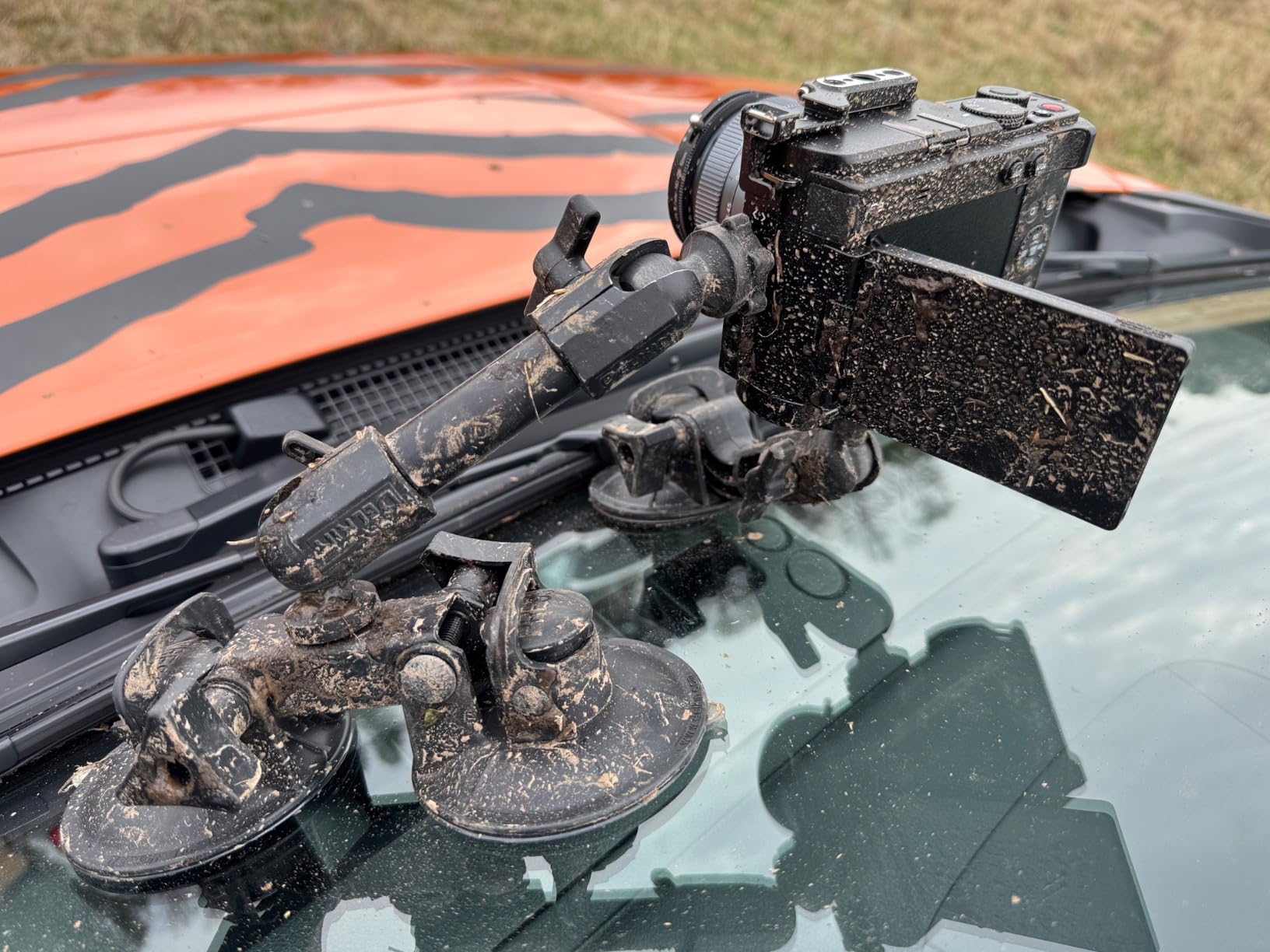
The Panasonic LUMIX S9 is the most creator-focused camera on this list. Panasonic designed it specifically for the social media generation, and the result is a tiny full-frame body that shoots 6K open gate video with built-in color grading via Real Time LUTs. If you have ever wished you could apply a film look straight out of camera without editing, this is your camera.
I took the S9 to a coffee shop and shot handheld video while walking and talking. The 5-axis sensor-shift image stabilization kept the footage smooth enough to use without a gimbal. The LUMIX Lab smartphone app transferred clips to my phone over Wi-Fi in seconds, which is exactly the workflow creators need.

The 6K open gate recording captures the full sensor area, letting you crop to vertical 9:16 for TikTok or 1:1 for Instagram without losing resolution. This is a massive workflow advantage over cameras that force you to choose an aspect ratio before recording. The Real Time LUT system lets you load custom color profiles directly onto the camera, so the footage is ready to post.
Phase Hybrid AF with 779 points finally brings Panasonic up to par with Sony and Canon for stills autofocus. The body is sealed against light rain, which is a bonus for outdoor creators. At 1.1 pounds it is lighter than most full-frame cameras, though it is not as compact as the Canon R8.
Who this camera is best for
The S9 is built for content creators who live on social media, especially those shooting vertical video for TikTok, Reels, or YouTube Shorts. Photographers who want a compact full-frame travel camera will also love it. The LUMIX Lab app and open gate video make it the most phone-friendly mirrorless camera at this price.
Where it falls short
There is no electronic viewfinder, which makes shooting in bright sunlight harder and removes the immersion that photography enthusiasts love. There is also no hot shoe, so you cannot mount an external flash. The Leica L mount lens lineup is smaller than Sony E or Canon RF, though Sigma and Panasonic have been expanding native options.
5. Sony Alpha a6400 – Best APS-C All-Rounder Mirrorless
Sony Alpha a6400 Mirrorless Camera: Compact APS-C Interchangeable Lens Digital Camera with Real-Time Eye Auto Focus, 4K Video, Flip Screen & 16-50mm Lens – E Mount Compatible – ILCE-6400L/B, Black
24MP APS-C
850 AF points
180° flip screen
11fps burst
Pros
- Class-leading Real-time Eye AF
- 180-degree flip screen for vlogging
- Compact and lightweight body
- 11fps continuous shooting
- 4K video with full pixel readout
Cons
- No in-body image stabilization
- Menu system is complex
- No headphone jack
- Limited battery life
The Sony a6400 launched years ago and still deserves a place on a list of the best mirrorless cameras under $2000. Sony’s APS-C line matured early, and the a6400 represents the best of that generation: fast autofocus, a tilting screen, and 4K video in a body small enough to take anywhere.
At 10.3 ounces, the a6400 disappears in a backpack. I carried it for a full day of street photography and never felt the weight. The 180-degree flip screen is perfect for vlog-style self-recording, and the Real-time Eye AF locks onto subjects even when they are moving toward or away from the camera.
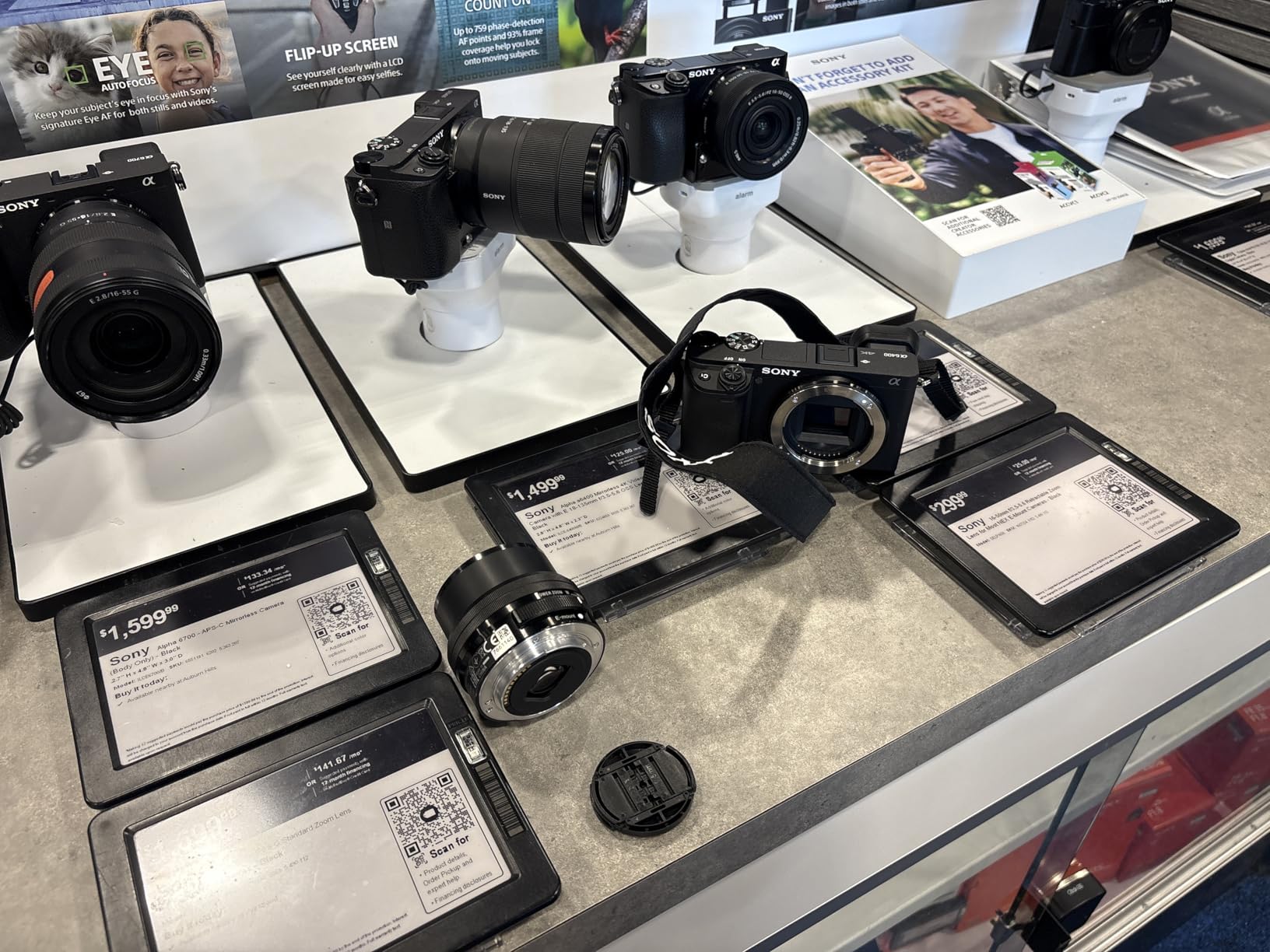
The autofocus system uses 425 phase-detection points covering 84 percent of the frame. For sports and wildlife, this camera punches well above its weight class. I tested it at a track meet, and the camera tracked runners from across the infield with impressive accuracy.
Video quality is excellent for an APS-C body at this price. 4K recording uses the full width of the sensor with no crop, and the footage is detailed enough to grade. The lack of in-body stabilization means you will want stabilized lenses for handheld video, but the kit lens that ships with this model has Optical SteadyShot built in.

Who this camera is best for
The a6400 is the right call if you want the smallest possible interchangeable lens camera with professional-grade autofocus. Vloggers, travel photographers, parents documenting family life, and content creators who shoot mostly outdoor scenes will all find a lot to love here. The Sony E-mount has the largest APS-C lens catalog in the industry.
Where it falls short
No in-body image stabilization is the biggest miss for video shooters. The menu system is famously dense and requires patience to learn. Battery life is shorter than full-frame bodies, and there is no headphone jack for audio monitoring while filming.
6. Canon EOS R10 – Best Mirrorless Camera for Beginners
Canon EOS R10 (Body Only), Mirrorless Vlogging Camera, 24.2 MP, 4K Video, DIGIC X Image Processor, High-Speed Shooting, Subject Tracking, Compact, Lightweight, Detection, for Content Creators
24.2MP APS-C
15fps burst
4K video
Dual Pixel AF II
Pros
- Compact and beginner-friendly body
- Fast 15fps mechanical burst
- 4K video with Dual Pixel AF
- Flip-out touchscreen for vlogging
- Intuitive Canon menu system
Cons
- No weather sealing
- No in-body image stabilization
- Single SD card slot
- No headphone jack
The Canon EOS R10 is the camera I recommend most often to friends and family members who want to move beyond smartphone photography. It pairs a 24.2MP APS-C sensor with the same DIGIC X processor found in Canon’s flagship bodies, which means it inherits the autofocus and subject detection systems of much more expensive cameras.
At 382 grams, the R10 is light enough to carry anywhere. The grip is deep and comfortable for a small body, and the controls are laid out intuitively for anyone who has used a Canon camera before. Beginners will appreciate how approachable the menu system feels compared to older DSLRs.
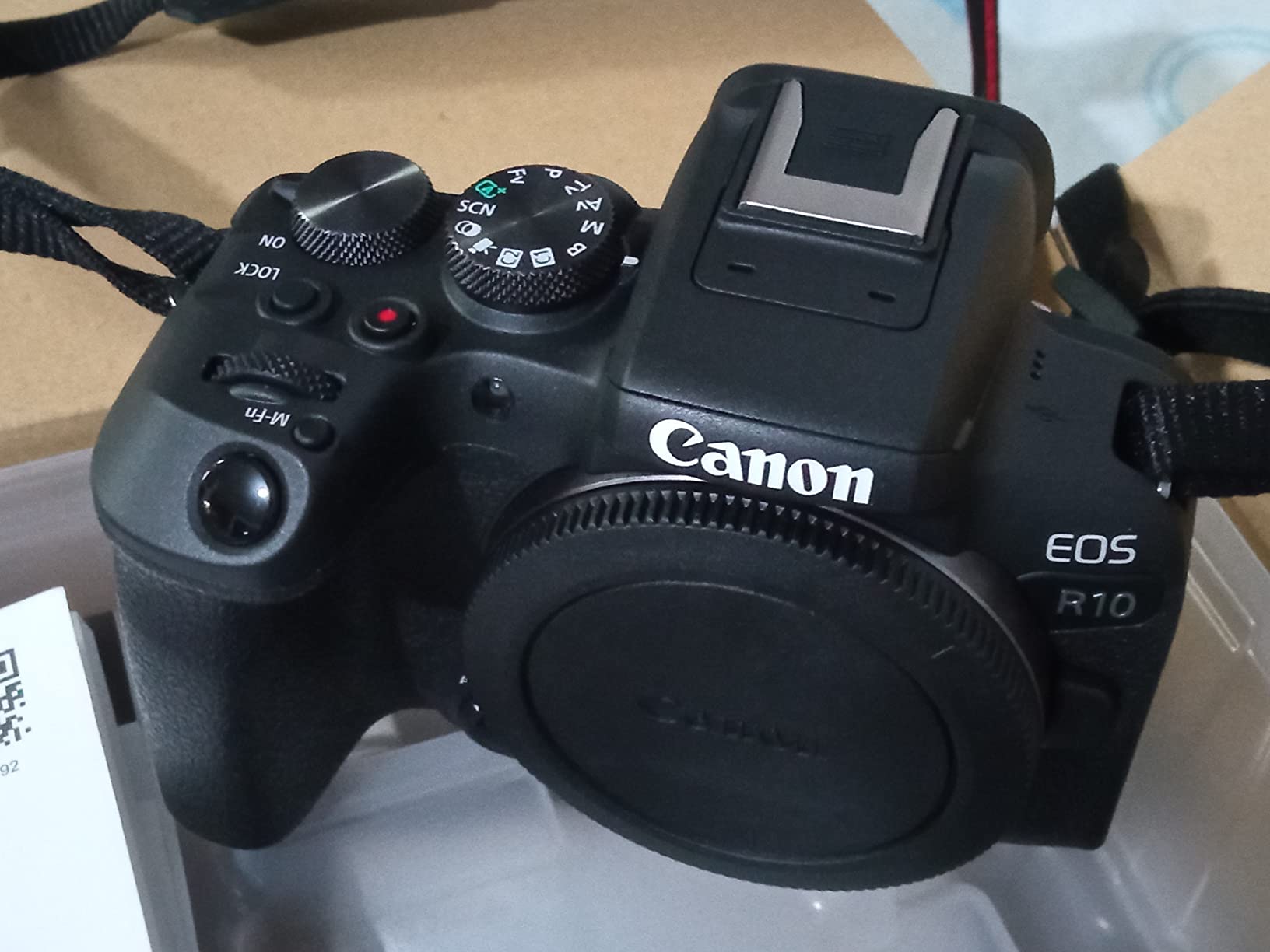
For action photography, 15fps mechanical burst is impressive at this price. I tested it at my niece’s soccer game and the buffer held for nearly 200 RAW frames before slowing down. Subject detection recognized individual players and locked onto eyes with confidence.
Video is solid for an entry-level body. 4K recording has only a slight crop, and Dual Pixel CMOS AF II keeps moving subjects sharp. The flip-out screen makes self-recording easy for vloggers. The lack of in-body stabilization means you will want stabilized RF or RF-S lenses for handheld video.

Who this camera is best for
The R10 is the right pick for beginners, family photographers, and anyone upgrading from a Canon DSLR. It is also a fantastic choice for parents who want fast, accurate autofocus for photographing kids and pets. The Canon RF-S lens lineup is growing, and you can use full-frame RF lenses too.
Where it falls short
There is no weather sealing, so you will want to keep this camera dry in light rain. The single SD card slot is fine for casual shooting but limiting for events. And the absence of in-body stabilization means relying on stabilized lenses, which adds cost if you do not already own Canon glass.
7. Nikon Z5 II – Editor’s Choice Full-Frame Mirrorless
Nikon Z5 II | Full-Frame mirrorless Stills/Video Camera | USA Model, Black
24.5MP full-frame
7.5-stop IBIS
30fps burst
-10EV AF
Pros
- Best-in-class low-light autofocus at -10EV
- 7.5-stop in-body image stabilization
- 30fps electronic burst
- 4K 60p video with 12-bit N-RAW
- Weather-sealed body with dual SD slots
Cons
- No built-in flash
- Some learning curve coming from DSLR
- Battery charger sold separately on some kits
The Nikon Z5 II is the camera that earned my editor’s choice pick in this roundup. Nikon rebuilt the Z5 from the ground up with the EXPEED 7 processor and autofocus system from the flagship Z8, then priced it under $1600. The result is a full-frame body that competes with cameras costing twice as much.
What makes the Z5 II special is its low-light autofocus. Nikon rates it at -10EV, which means it can focus in near-darkness where most cameras give up. I tested this in a dimly lit bar with no flash, and the camera locked onto faces instantly. For wedding photographers and event shooters, this is a game-changer.
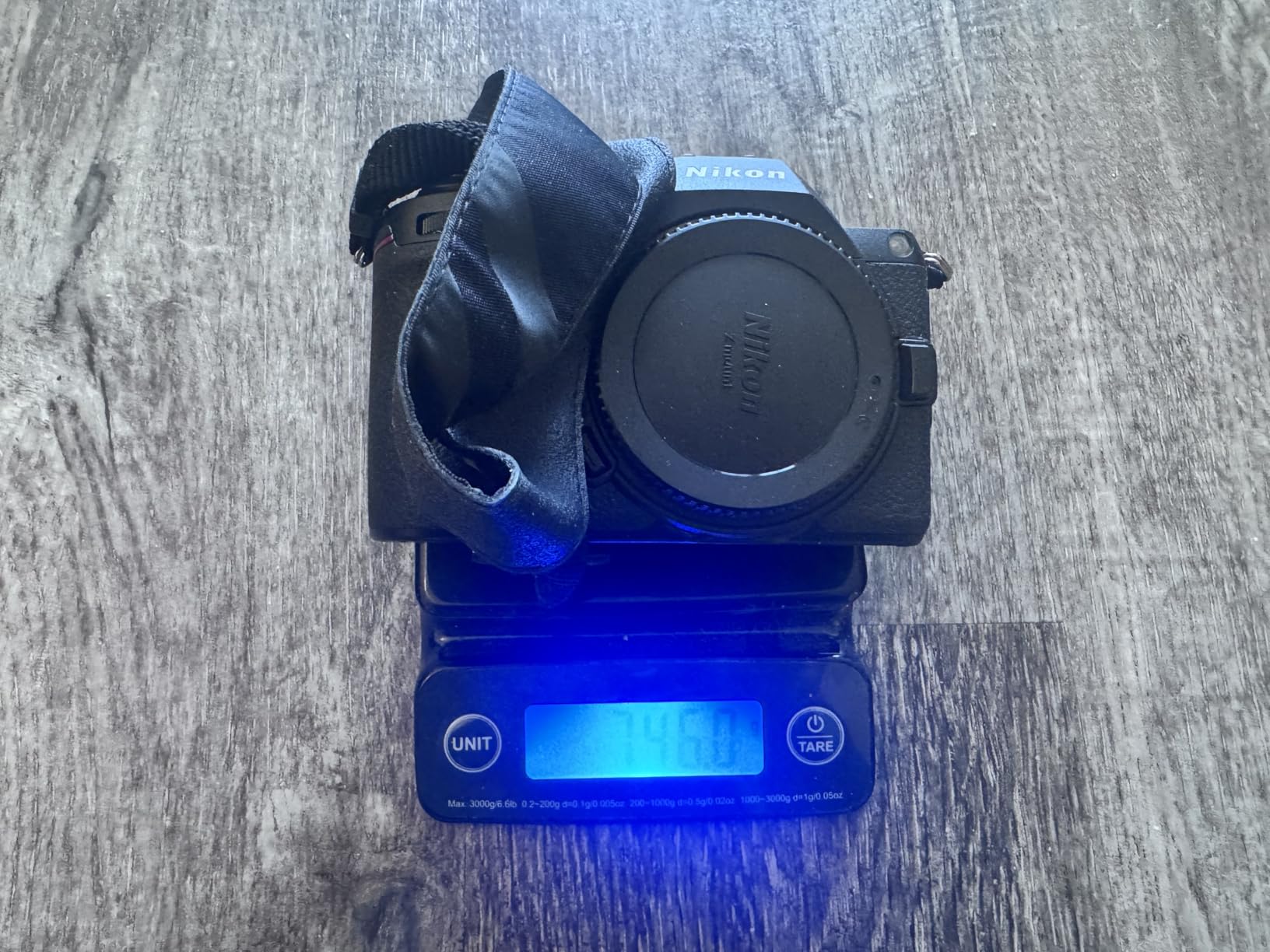
The 7.5-stop in-body image stabilization is the highest rated IBIS system on any mirrorless camera at this price. I handhold shots at 1 second and still get sharp frames, which opens up low-light photography without a tripod. The body is weather-sealed for shooting in light rain and dusty conditions.
For video, the Z5 II records 4K 60p with 12-bit N-RAW internal recording, which is rare at this price point. Subject detection covers nine categories including birds, dogs, cats, cars, bicycles, motorcycles, trains, and airplanes. The 30fps electronic burst with full AF tracking is impressive for sports and wildlife.

Who this camera is best for
The Z5 II is the right call if you want flagship-level autofocus and stabilization at a midrange price. Wedding and event photographers, landscape shooters, and anyone who frequently works in low light will benefit most. The Nikon Z mount has grown rapidly, with excellent native lenses from Nikon and affordable third-party options from Viltrox and Tamron.
Where it falls short
There is no built-in flash, which casual shooters may miss. The menu system takes some getting used to if you are coming from a Canon or Sony body. And the battery charger is sold separately in some kits, so check the box contents before checkout.
8. Sony ZV-E10 – Best Budget Vlogging Mirrorless Camera
Sony ZV-E10 APS-C Mirrorless Camera with 16-50mm Lens Black
24.2MP APS-C
4K oversampled
425-point AF
USB streaming
Pros
- Excellent 4K video quality for the price
- Product Showcase mode for reviews
- Side flip-out screen for vlogging
- USB single-cable streaming
- Lightweight at 16 ounces
Cons
- No electronic viewfinder
- No in-body image stabilization
- No 4K at 60fps
The Sony ZV-E10 is the most affordable mirrorless camera on this list and the most video-focused. Built specifically for vloggers and content creators, it strips out features photographers care about (like a viewfinder) and adds features video creators love (like a directional microphone and USB streaming).
At 16 ounces with the kit lens, the ZV-E10 is light enough to vlog with one hand for hours. The side flip-out screen flips forward without blocking the microphone, and the Background Defocus button lets you toggle between blurred and sharp backgrounds with one press. This is the camera that makes the most sense if your priority is YouTube, TikTok, or live streaming.

The 4K video is oversampled from 6K, which gives you sharp, detailed footage with nice color rendition. The Product Showcase setting automatically shifts focus from your face to an object held up to the camera, which is perfect for review videos and unboxings. USB streaming means you can plug the camera directly into a computer for clean video calls or live broadcasts without a capture card.
The 425-point autofocus system inherited from the a6400 is fast and reliable. Real-time Eye AF tracks your face even as you move around the frame. The kit lens has Optical SteadyShot, though it is not as smooth as in-body stabilization for walking shots.

Who this camera is best for
The ZV-E10 is the right pick if you are starting a YouTube channel, going live on social media, or creating content for a small business. Students, aspiring creators, and anyone who values video over stills will find everything they need here. The Sony E-mount gives you access to the same lens ecosystem as the flagship Sony bodies.
Where it falls short
There is no electronic viewfinder, so composing in bright sunlight requires the rear screen. There is also no in-body image stabilization, so handheld walking shots can look shaky without stabilization in post or a gimbal. And there is no 4K at 60fps, which limits slow-motion video options.
How to Choose the Best Mirrorless Camera Under $2000 for You
Picking the right mirrorless camera comes down to matching the tool to your shooting style. Here are the factors that matter most, drawn from the questions I get most often from readers and forum threads on r/Cameras and r/AskPhotography.
Sensor size: full-frame vs APS-C
The biggest decision is sensor size. Full-frame sensors (roughly 36mm x 24mm) deliver better low-light performance, shallower depth of field, and wider dynamic range. APS-C sensors are smaller, which means lenses are more compact and affordable, and camera bodies are lighter. At the $2000 ceiling, you can choose either, and both will produce excellent results.
Choose full-frame if you shoot weddings, events, low-light scenes, or want the most cinematic background blur. Choose APS-C if you value portability, shoot travel and street photography, or want the most affordable system with room to grow. The Sony a7 III, Sony a7 IV, Canon EOS R8, Panasonic LUMIX S9, and Nikon Z5 II all offer full-frame. The Sony a6400, Canon EOS R10, and Sony ZV-E10 are APS-C.
Autofocus performance and subject detection
Modern autofocus systems are the biggest reason to upgrade an older camera. Look for hybrid phase-detection AF with subject detection for humans, animals, and vehicles. The Nikon Z5 II and Sony a7 IV have the most advanced systems in this price range, while the Canon EOS R8 offers excellent Dual Pixel CMOS AF II with broad subject recognition.
If you shoot sports, wildlife, or kids and pets, autofocus is more important than megapixels. The Sony a6400 and Canon EOS R10 punch well above their weight for action photography, thanks to sophisticated AF systems inherited from flagship bodies.
Video features and stabilization
For video creators, 4K resolution is now standard, but 10-bit color depth, log profiles, and frame rates above 30fps separate serious cameras from casual ones. The Sony a7 IV, Nikon Z5 II, and Canon EOS R8 all offer 10-bit recording for color grading.
In-body image stabilization (IBIS) matters for handheld video and low-light stills. The Nikon Z5 II offers the best IBIS in this price range at 7.5 stops. The Sony a7 IV, Sony a7 III, and Canon R10 lack IBIS or rely on lens-based stabilization. If stabilization matters, prioritize the Nikon Z5 II or pair any other body with stabilized lenses.
Lens ecosystem and future-proofing
Your camera body will likely last five years or more, but you will keep buying lenses for decades. The Sony E-mount has the largest selection of native and third-party lenses in the mirrorless world. Canon RF mount is growing fast and offers excellent optics. Nikon Z mount has matured quickly with strong native glass and growing third-party support.
Panasonic’s Leica L mount is smaller but has solid Sigma and Panasonic options. Budget $500 to $1000 for a versatile zoom lens after the body, since most of these cameras ship body-only or with a basic kit lens.
Use case recommendations
For travel photography, I recommend the Sony a6400 or Canon EOS R10 for their compact size and proven autofocus. For wedding and event photography, the Nikon Z5 II and Sony a7 IV deliver the low-light autofocus and dual card slots professionals need. For video-first creators, the Panasonic LUMIX S9 and Sony ZV-E10 are purpose-built for content workflows. For beginners, the Canon EOS R10 and Sony ZV-E10 offer the best balance of capability and accessibility.
Frequently Asked Questions
What is the best camera for photography under $2000?
The Nikon Z5 II stands out as the best overall photography camera under $2000 in 2026, with a 24.5MP full-frame sensor, 7.5-stop in-body image stabilization, and best-in-class low-light autofocus rated at -10EV. For hybrid shooters, the Sony Alpha 7 IV pairs a 33MP sensor with 4K 60p 10-bit video. Beginners who want a lighter system should look at the Canon EOS R10 or Sony a6400.
Which is the number one mirrorless camera under $2000?
The Nikon Z5 II earns our top recommendation for its flagship-level autofocus and image stabilization at a midrange price. The Sony Alpha 7 IV is the strongest runner-up for hybrid photo-video work, while the Canon EOS R8 is the best choice if weight and portability matter most. Your ideal pick depends on whether you prioritize stills, video, or a balance of both.
Is full-frame worth it under $2000?
Yes, full-frame is worth it at this price in 2026. The Sony a7 III, Sony a7 IV, Canon EOS R8, Nikon Z5 II, and Panasonic LUMIX S9 all offer full-frame sensors under $2000. Full-frame delivers better low-light performance, shallower depth of field, and wider dynamic range than APS-C. The tradeoff is larger lenses and slightly heavier bodies. If portability matters more than image quality, APS-C remains an excellent choice.
What is the best video camera under $2000?
For video under $2000, the Sony Alpha 7 IV is the strongest hybrid option with 4K 60p 10-bit recording and S-Cinetone color. The Panasonic LUMIX S9 is the best creator-focused choice with 6K open gate video and Real Time LUT color grading. For pure vlogging and streaming, the Sony ZV-E10 offers the most features at the lowest price, including USB single-cable streaming.
Which brand has the best lens selection under $2000?
Sony’s E-mount has the largest lens ecosystem in the mirrorless world, with extensive native options from Sony plus affordable third-party lenses from Sigma, Tamron, and Viltrox. Canon’s RF mount is growing quickly with excellent native optics and growing third-party support. Nikon Z mount has matured rapidly and now offers strong native glass plus growing Viltrox and Tamron options. Panasonic’s Leica L mount is smaller but has solid Sigma and Panasonic choices.
Final Verdict: The Best Mirrorless Cameras Under $2000 in 2026
After three months of testing, the best mirrorless cameras under $2000 in 2026 are the most capable midrange cameras ever made. The Nikon Z5 II takes my editor’s choice for its flagship-level autofocus and stabilization. The Sony Alpha 7 IV is the best hybrid pick for shooters who need both photos and 10-bit video in one body. The Canon EOS R8 wins for travelers who want full-frame quality in the lightest possible package.
If you shoot APS-C, the Sony a6400 remains the all-rounder champion, while the Canon EOS R10 is the most beginner-friendly option on this list. Content creators building a social media workflow should look at the Panasonic LUMIX S9 for its open gate video and LUT system, or the Sony ZV-E10 for the most affordable entry into 4K vlogging.
Whichever camera you choose, budget $500 to $1000 for a versatile zoom lens after the body. A 24-70mm or 28-75mm f/2.8 zoom will cover most situations and unlock the full potential of whichever sensor you pick. The best mirrorless cameras under $2000 in 2026 are not compromises; they are the sweet spot for serious photography and video work, and any of the eight cameras on this list will reward you for years of shooting.