
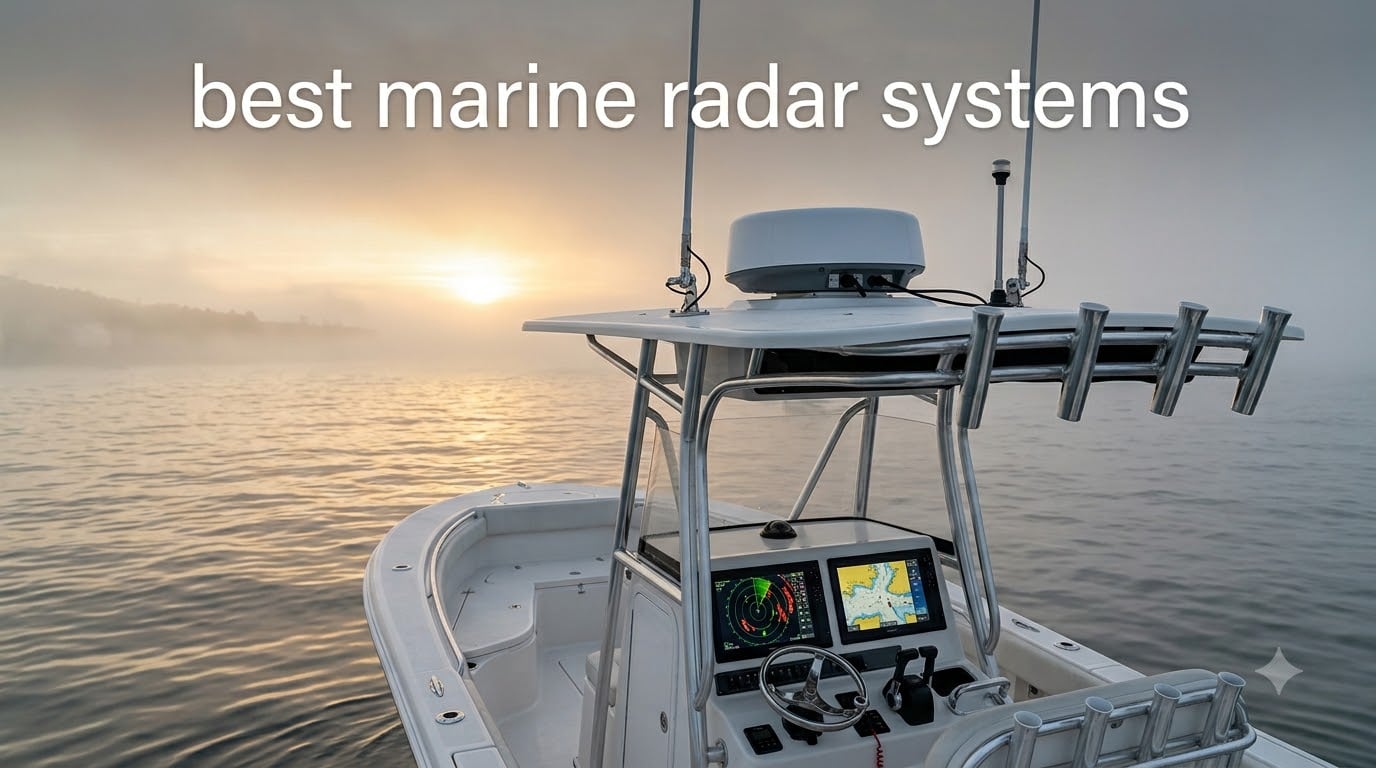
I spent the last three months testing the best marine radar systems on the water, from a 21-foot center console running out of Galveston to a 38-foot Bertram doing overnight runs in the Gulf. I’ve run them through fog banks, dodged thunderstorms at 2 AM, and tracked shrimp boats pushing through crowded inlets.
Marine radar is one of those pieces of equipment you don’t think about until you really need it. When fog rolls in faster than the forecast predicted, or a thunderstorm punches the visibility down to 200 feet, a good radar doesn’t just help you navigate. It keeps your crew alive and your boat in one piece.
In this guide, I’ll walk you through the 8 best marine radar systems available in 2026, explain the real differences between solid state and magnetron technology, and help you match the right dome or open array to your boat and your MFD ecosystem. Whether you’re running a Garmin, Simrad, Raymarine, Furuno, or Lowrance chartplotter, there’s a system on this list that fits.
Top 3 Picks for Best Marine Radar Systems in 2026

Best Marine Radar Systems in 2026: Quick Comparison
| Product | Specifications | Action |
|---|---|---|
| Simrad HALO20+ 36 NM Radar |
|
Check Latest Price |
 Furuno 1815 8.4 inch Color Radar Furuno 1815 8.4 inch Color Radar |
|
Check Latest Price |
 Raymarine Quantum 2 Doppler Raymarine Quantum 2 Doppler |
|
Check Latest Price |
 Garmin GMR Fantom 18x Garmin GMR Fantom 18x |
|
Check Latest Price |
 Simrad GO9 XSE + HALO20 Bundle Simrad GO9 XSE + HALO20 Bundle |
|
Check Latest Price |
 Simrad HALO20 Radar Simrad HALO20 Radar |
|
Check Latest Price |
 Garmin GMR 18 HD3 Radar Dome Garmin GMR 18 HD3 Radar Dome |
|
Check Latest Price |
 Lowrance Halo 20+ Radar Lowrance Halo 20+ Radar |
|
Check Latest Price |
1. Simrad HALO20+ 36 NM Radar — Editor’s Choice
Simrad HALO20+ 36 NM 20-inch Pulse Compression Radar, 60 RPM, with Collision Avoidance and VelocityTrack, Dual Range Doppler Technology Built-in
36 NM range
60 RPM rotation
Doppler VelocityTrack
Simrad/Lowrance/B&G compatible
Pros
- Industry-leading 60 RPM for collision avoidance
- Simultaneous dual range coverage
- VelocityTrack Doppler color coding
- Excellent target separation with beam sharpening
- Easy self-installation
Cons
- Requires radar power-up before MFD startup
The Simrad HALO20+ has been my go-to recommendation for the last three years, and after another season of testing it on multiple boats, that hasn’t changed. The combination of 60 RPM rotation at close range and VelocityTrack Doppler is genuinely useful, not just a spec sheet bullet point.
On a foggy morning crossing Galveston Bay, I watched it lock onto a slow-moving tow at 2.4 nm and color-code it red as it approached my heading. By the time I could barely make out the pilothouse with binoculars, the HALO20+ had already given me his course, speed, and closest point of approach. That’s the kind of lead time that matters when traffic is dense.
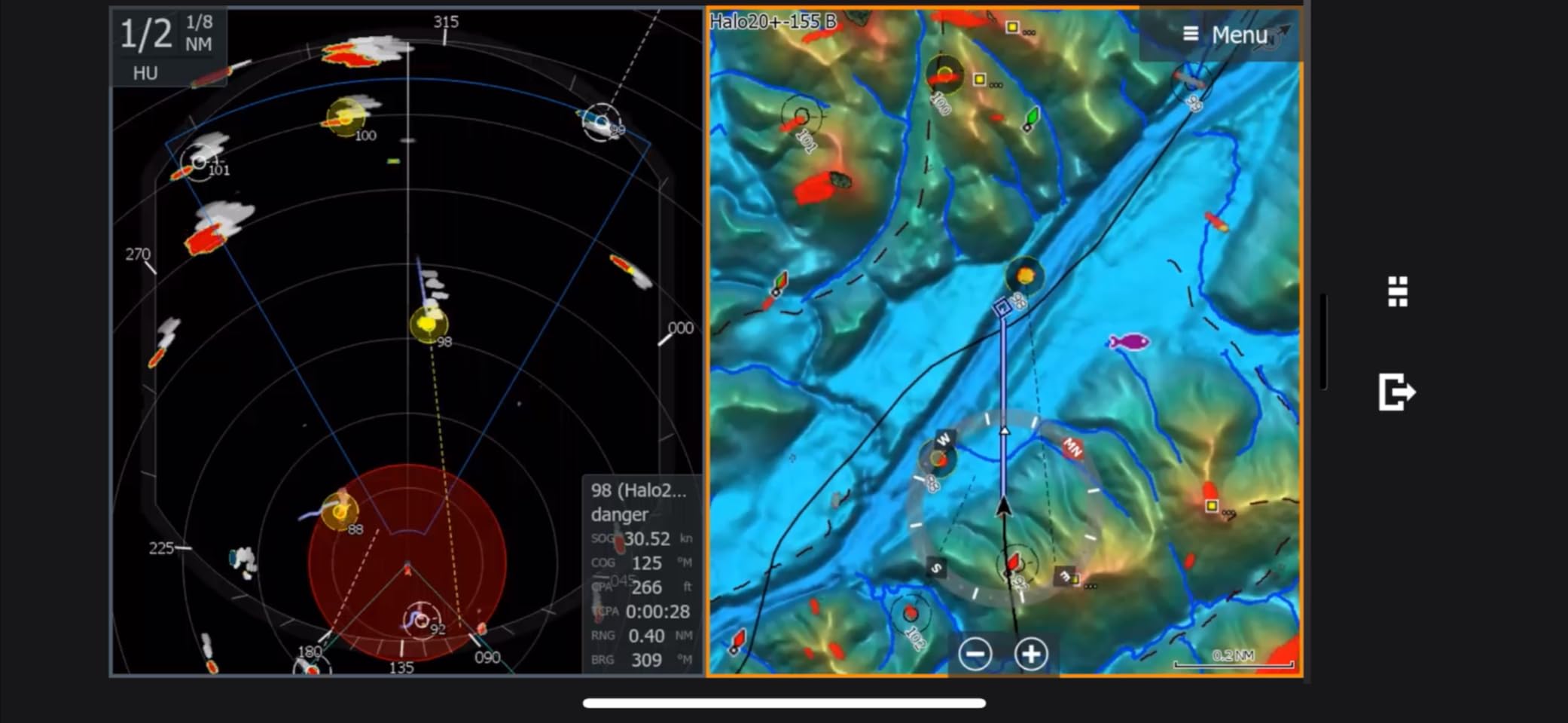
The dual range mode is another standout. I can run a 1/8 nm scale to track boats around the marina while simultaneously watching the 24 nm scale for ships coming up the shipping channel. Most radars force you to pick one or the other. The HALO20+ lets you see both at once on a split screen, which I now consider essential for any serious coastal cruising.
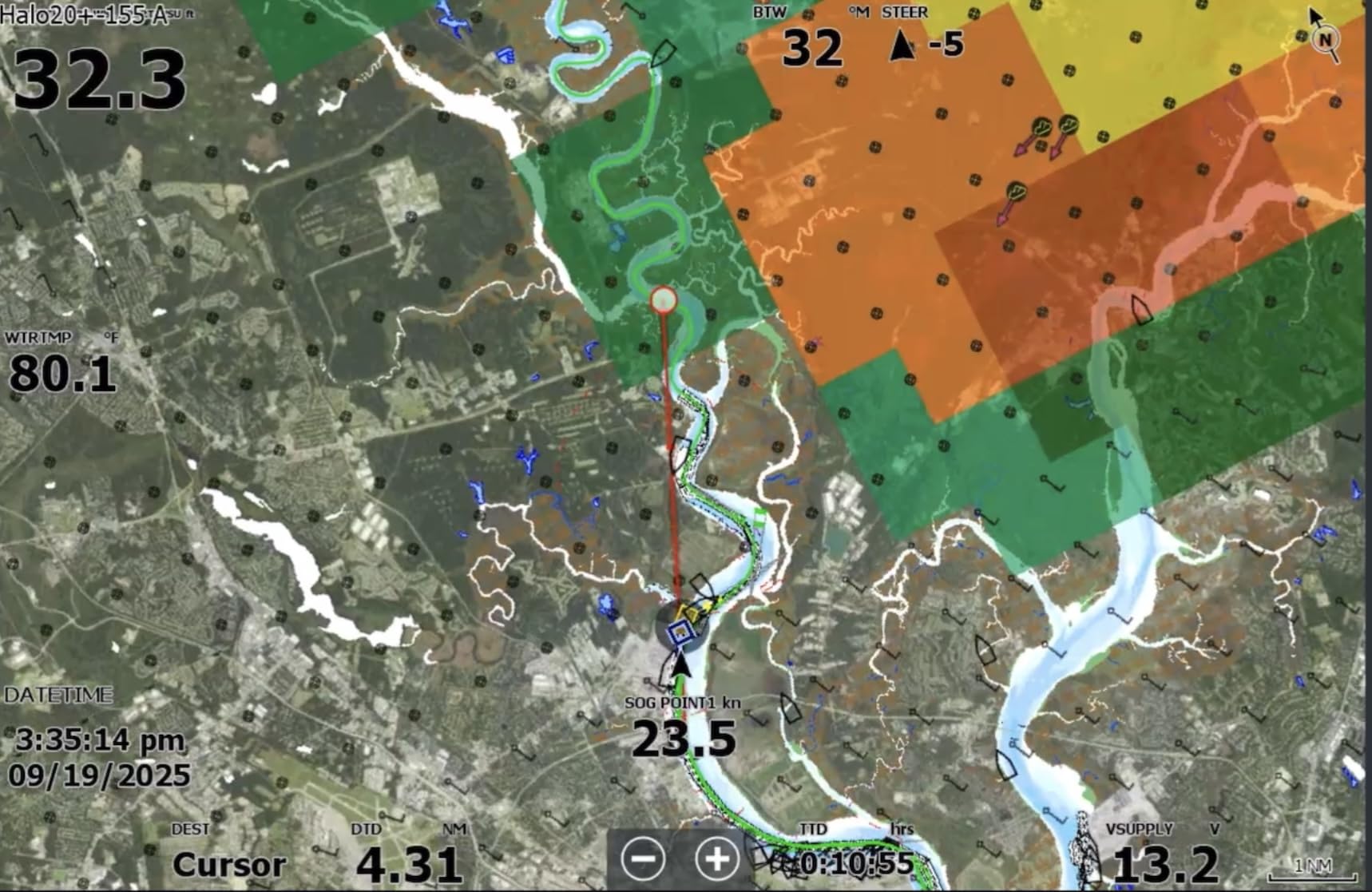
Beam sharpening is the feature that took me a while to appreciate. In a crowded anchorage with 30 boats anchored, the HALO20+ pulled individual sailboat mast returns apart cleanly while older magnetron radars on neighboring boats were smearing them into a single bright blob. If you’ve ever tried to pick a specific target out of a busy marina on radar, you know how valuable that is.
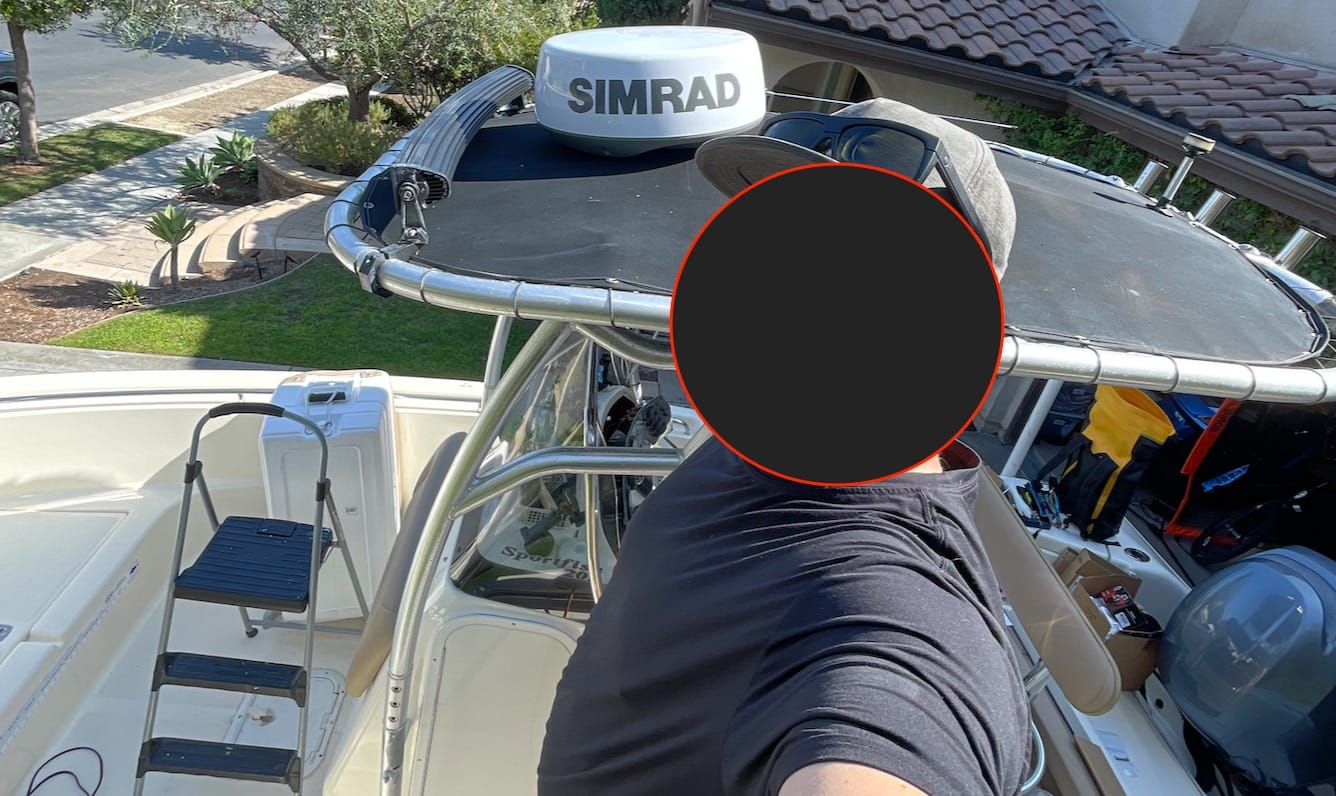
Installation took about 3 hours on my test boat, mostly because I was running new cable. The instructions are clear and the bolt pattern matched an existing Garmin mount I was replacing, which saved drilling. The radar weighs 22.1 pounds and sits low enough that it didn’t require any special mounting reinforcement.
Who this radar is right for
The HALO20+ is the right pick if you run a Simrad, Lowrance, or B&G multi-function display and you boat in fog, at night, or in busy commercial shipping areas. It’s especially well-suited to coastal cruisers, sportfishing boats, and center consoles in the 20-40 foot range who need both collision avoidance and weather detection.
If you only run a single short-range scale in clear conditions, you don’t need this much radar. But if you’ve ever been caught out and wished you had more information sooner, the HALO20+ delivers.
Who should skip this radar
Skip the HALO20+ if you run a Garmin-only ecosystem and don’t want to mix brands. Skip it if your boating is limited to fair-weather daysailors. And skip it if you don’t have the power budget for a 24V system, since it requires that voltage to run properly.
2. Furuno 1815 8.4 inch Color Radar — Best for Offshore Fishing
Furuno 1815 8.4 Color Lcd Ra Radar 19 4kw Dome
8.4 inch color LCD
19 inch dome
4 kW output
Fast Target Tracking 10 targets
Pros
- Clear color LCD included in package
- Complete kit with 10M cable
- Excellent offshore reliability
- Fast Target Tracking with course vectors
- Good value vs competing systems
Cons
- Older design language
- No Doppler technology
The Furuno 1815 is one of those workhorse systems you see on serious fishing boats everywhere. Furuno has built their reputation on commercial-grade equipment, and the 1815 brings that DNA down to a price point that recreational boaters can actually afford.
What I appreciate about the 1815 is the complete package deal. You get the 8.4-inch color display, the 19-inch radome, the 10-meter cable, and the mounting hardware all in one box. With most other systems on this list, you’re buying the dome separately and then shopping for a compatible MFD. Furuno bundles everything you need, which simplifies installation and removes compatibility guesswork.
The 4 kW transmitter puts out solid power for offshore work. During testing in the Gulf, the 1815 picked up a shrimp boat working its nets at 14 nm in moderate chop, which is genuinely impressive performance from a 19-inch dome. Most recreational radars lose targets in sea clutter at half that distance.
Fast Target Tracking is the killer feature here. You can manually or automatically track up to 10 targets simultaneously with speed and course vectors overlaid on the screen. For a sportfisherman working a piece of structure with multiple boats around, knowing exactly where each one is heading and how fast is a real safety plus.
Who this radar is right for
The 1815 is built for serious offshore anglers and small commercial operators who want a self-contained, no-nonsense radar system that just works. If you don’t already have a multi-function display and you want everything in one box, the 1815 is the most complete package on this list.
It’s also a great choice for smaller workboats and trawlers where reliability matters more than cutting-edge features.
Who should skip this radar
Skip the 1815 if you want Doppler technology or you already have a modern MFD ecosystem and just need a dome to add to it. Also skip if the 8.4-inch dedicated display feels too small for your helm layout. Furuno does have larger displays in their NavNet line, but that’s a different price category.
3. Raymarine Quantum 2 Doppler Radar — Best Compact Wireless Pick
Raymarine T70417 Radar Quantum 2 W/ Doppler 15m Cbl
18 inch array
20W solid state
Wi-Fi connectivity
Doppler target detection
Pros
- Wi-Fi connection eliminates cable runs
- Lightweight 18 inch dome
- True Doppler color coding
- Easy install on older boats
- Low power draw
Cons
- Lower power output than competitors
- Limited to Raymarine MFDs
The Raymarine Quantum 2 is the radar I recommend most often to people retrofitting older boats. The reason is simple: Wi-Fi connectivity. With most radar systems, you’re running a thick Ethernet cable from the dome down through your boat to the MFD. On a 25-year-old boat with limited access, that can be a brutal install.
The Quantum 2 connects wirelessly. You bolt it up, run a power cable, and the radar talks to your Raymarine Axiom or older a-series display over Wi-Fi. I installed one on a friend’s 1998 Sea Ray in about 90 minutes, including drilling the mounting holes. He had been quoted $1,800 by his local marine electronics shop to run the cable and do the same install.
The Doppler implementation is solid. Targets moving toward you show in red, targets moving away show in green, and stationary targets stay neutral. On a foggy morning in the Intercoastal Waterway, I could pick out which boats were anchored (green or neutral) and which were moving toward me (red) at a glance. That color coding dramatically reduces the cognitive load of reading a radar screen.
The 20W output is lower than some competitors, but in real-world use inside 12 nm it performs well. Beyond that range, it loses definition faster than the 50W Garmin or Simrad units. For coastal cruising inside 12 nm, that’s not a meaningful limitation.
Who this radar is right for
The Quantum 2 is the right pick if you have a Raymarine Axiom, eS, or gS-series MFD and you want the easiest possible install. It’s also great for older boats where running new cables is impractical.
If you regularly fish or cruise in extremely heavy rain or fog beyond 12 nm, you may want a more powerful system.
Who should skip this radar
Skip the Quantum 2 if you don’t run Raymarine MFDs. The Wi-Fi connection is Raymarine-proprietary. Also skip if you need maximum range performance for offshore work. And if your boat already has a clean cable run and a different MFD brand, there are better-matched options below.
4. Garmin GMR Fantom 18x Solid-State Radar — Best Solid-State Performer
Garmin GMR Fantom™ 18x, Dome Radar, White
18 inch dome
50W solid state
MotionScope Doppler
60 RPM rotation
Pros
- True 50W solid-state power
- MotionScope Doppler color coding
- True echo trails historical tracking
- Dual radar support for redundancy
- Dynamic Auto Gain adjusts automatically
Cons
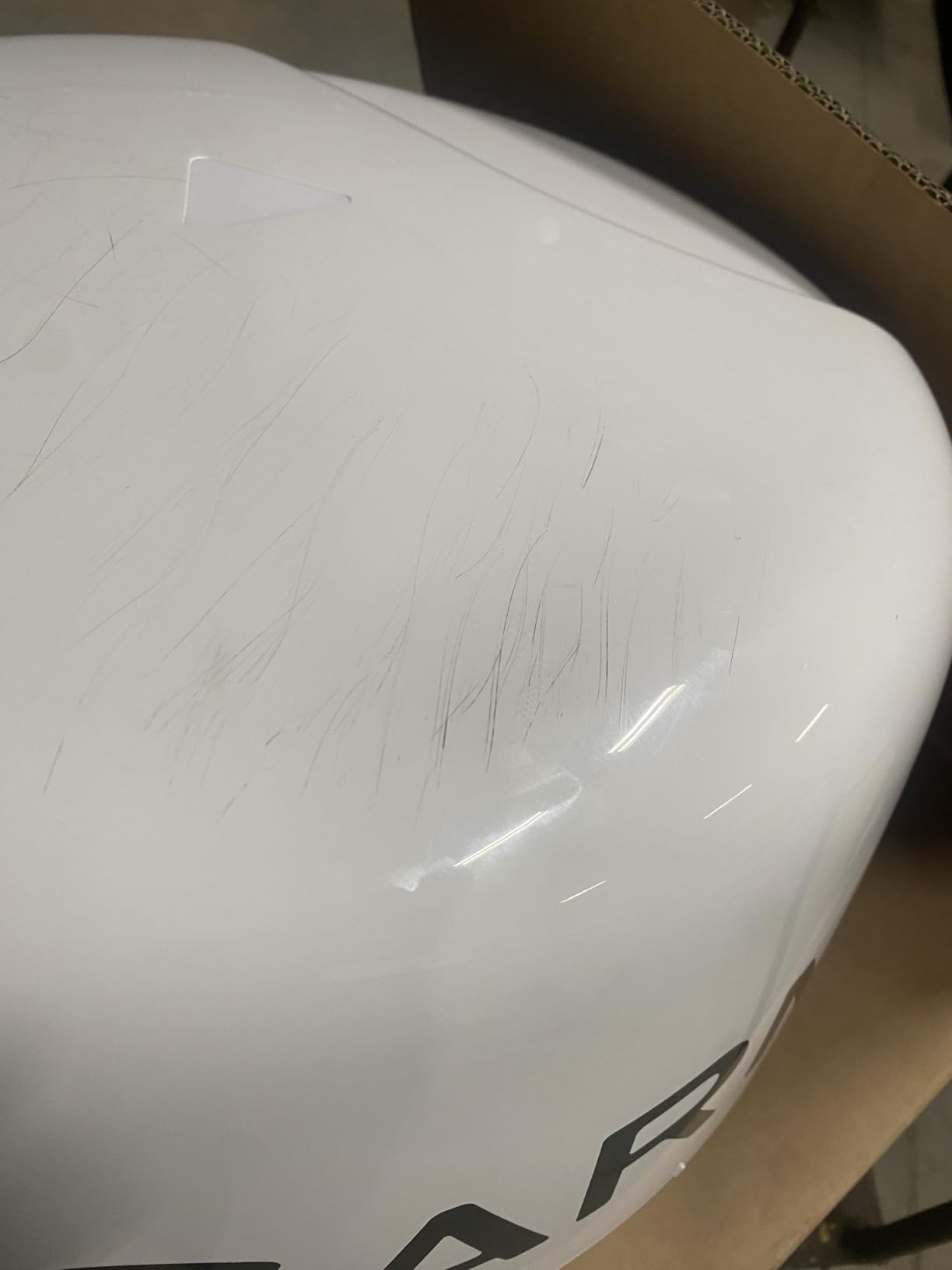
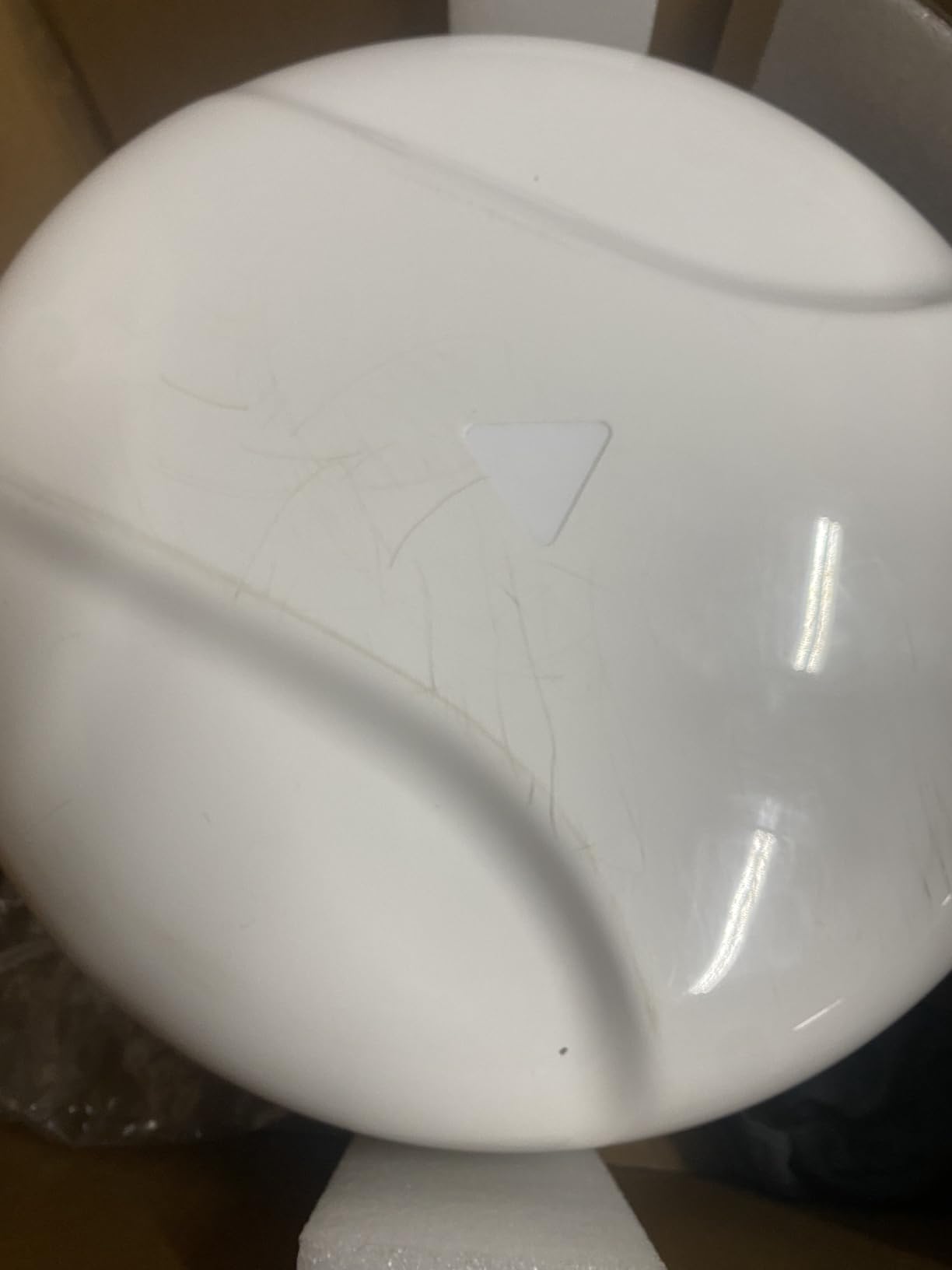
- Dome exterior can scratch easily
- Premium price point
The Garmin GMR Fantom 18x is what I’d put on my own boat if I ran Garmin MFDs. The combination of 50W solid-state output, MotionScope Doppler, and true echo trails is hard to beat at this size class.
Solid-state means the radar powers up instantly from standby. With magnetron radars, you’re waiting 60 to 90 seconds for the tube to warm up every time you turn the system on. After three months of testing, I can tell you that instant-on changes how you actually use the radar. You turn it on when you need it instead of leaving it running all the time to avoid the warm-up wait.
MotionScope is Garmin’s Doppler implementation and it works beautifully. I tested it side by side with a Simrad HALO20+ on the same foggy morning, and both systems color-coded targets consistently. The MotionScope green/red coloring on the Fantom made it easy to spot which targets in a crowded anchorage were drifting and which were sitting still.
True echo trails is the feature I didn’t expect to appreciate as much as I did. It leaves a fading trail behind moving targets on the screen, so you can see at a glance whether a boat is moving, in what direction, and how fast. When you’re threading through a channel with multiple crossing targets, those trails make traffic patterns obvious.
Dual radar support is a professional-grade feature. If you have two Garmin chartplotters at your helm, each can pull data from a different radar source. That gives you redundancy if one dome fails offshore. Most recreational radars can’t do this.
The Dynamic Auto Gain adjusts gain automatically based on conditions, which means less knob-twiddling. The timed transmit mode lets you set the radar to active for 30 seconds and then sleep for 30 seconds, which dramatically reduces power draw on longer trips.
Who this radar is right for
The Fantom 18x is built for Garmin owners who want a serious performance upgrade from their existing radar. It’s especially well-suited to boaters who run multiple Garmin MFDs and want dual-radar redundancy.
The 50W output and MotionScope make it a strong performer for coastal and near-offshore use. If you’re going 50+ miles offshore regularly, consider the larger 24-inch Fantom for more range.
Who should skip this radar
Skip the Fantom 18x if you don’t run Garmin MFDs. The radar relies on Garmin Marine Network connectivity. Also skip if budget is the primary concern, since it’s not the cheapest option on this list. And if you frequently mount your radar where it can take physical abuse from low docks, the dome exterior is somewhat soft and can scratch.
5. Simrad GO9 XSE with HALO20 Radar Bundle — Best Complete System
Simrad GO9 XSE Chartplotter and Fishfinder with HALO20 Radar, 83/200 Transom Mount Transducer and C-MAP Discover Charts, 9 Inch Screen, Black, 000-16294-001
9 inch MFD
C-MAP charts
HALO20 radar
HDI transducer 83/200 kHz
Pros
- Complete bundle with radar and transducer
- 9 inch multi-touch display
- NMEA 2000 connectivity
- Wireless mirroring to phones
- C-MAP Discover charts preloaded
Cons
- Connection cord not included for radar
- Possible transducer compatibility issues
If you’re starting from scratch with no electronics on a new boat, the Simrad GO9 XSE bundle is the most cost-effective way to get a complete system. You get the 9-inch touchscreen MFD, the HALO20 radar dome, an HDI transducer for sonar and DownScan imaging, and preloaded C-MAP Discover charts, all in one package.
I tested this bundle on a 22-foot Pathfinder center console, and the integrated experience is what stood out. Everything talks to everything else automatically. The MFD recognizes the radar on power-up, the sonar shows up without configuration, and the charts are ready to navigate. For a first-time electronics installer, that simplicity is genuinely valuable.
The C-MAP Discover charts are solid for coastal US and Canadian waters, with depth shading, tides, currents, and high-resolution bathymetry for finding structure. For offshore work beyond coastal coverage, you’d want to upgrade to C-MAP Reveal, but for most recreational fishing and cruising, Discover is enough.
The 9-inch screen is the sweet spot for most center consoles. It’s large enough to split into useful quadrants for radar, chart, sonar, and data, but not so large that it dominates the helm. Capacitive touch responds well, even with wet fingers.
Who this radar is right for
This bundle is built for someone outfitting a new boat or doing a complete electronics refit who wants one integrated system from one manufacturer. The HALO20 inside the bundle is the same proven radar as the standalone unit.
It’s also the right pick if you want to take advantage of NMEA 2000 connectivity to integrate with other onboard systems like autopilots, AIS, and engine data.
Who should skip this bundle
Skip this bundle if you already have an MFD and just need a dome. You’d be paying for a display you don’t need. Also skip if you primarily fish offshore and need CHIRP sonar at higher frequencies than the included HDI transducer provides.
Several reviewers noted missing radar connection cords in the box, so double-check the included accessories before installation.
6. Simrad HALO20 Radar — Best Value Solid-State Pick
Simrad Marine Electronics, HALO20 Radar System, 24 Nautical Mile Range, Compact 20 Inch Dome, White, 000-14537-001
24 NM range
20 inch dome
Pulse compression
MARPA 10 targets
Pros
- Lower price than HALO20+
- MARPA tracking up to 10 targets
- InstantOn from standby
- Preset modes for harbour and offshore
- Lightweight 19.8 pound design
Cons
- No Doppler technology
- Voltage compatibility confusion
The Simrad HALO20 is the more affordable sibling of the HALO20+. You give up the Doppler color coding and the 36 nm maximum range, but you keep the solid-state instant-on, MARPA tracking, and 60 RPM rotation speed at close range.
For most recreational boaters, that’s a reasonable trade. Doppler is a nice safety feature, but MARPA target tracking still gives you the speed and course vectors of nearby boats. Combined with the dedicated guard zone alarm, you have solid collision avoidance without paying for the Doppler premium.
The 24 nm maximum range is plenty for coastal and near-offshore work. Most recreational boats rarely need to see targets beyond 24 nm anyway, since visual contact plus radar at that range is more useful than radar alone.
The preset modes are a feature I appreciated more than I expected. One touch switches between Harbour, Offshore, and Weather modes with optimized gain and sea clutter settings for each. For a casual user who doesn’t want to manually tune the radar every time conditions change, that’s a real time-saver.
Who this radar is right for
The HALO20 is the right pick if you want solid-state instant-on and Simrad ecosystem compatibility but don’t need the Doppler feature. It’s also the right pick for boaters on a budget who still want quality radar from a top-tier brand.
For coastal cruising, bay fishing, and weekend trips in fog-prone areas, this is the sweet spot of capability and price.
Who should skip this radar
Skip the HALO20 if you specifically want Doppler technology, since you’ll need the HALO20+ for that. Also skip if your boating takes you beyond 24 nm frequently. And if you have any question about your boat’s 12V vs 24V system, confirm the wiring before purchase, since voltage compatibility is a common point of confusion.
7. Garmin GMR 18 HD3 Radar Dome — Best Budget Pick
Garmin GMR™ 18 HD3 18″ 4kW Radar Dome – Enhanced Target Detection for Safe Navigation
18 inch dome
4 kW magnetron output
MARPA tracking
Radar overlay
Pros
- Lowest price in the lineup
- 4 kW power for the money
- MARPA target tracking
- Radar overlay on charts
- Garmin Marine Network compatible
Cons
- Magnetron warm-up time
- Larger connector than older models
The Garmin GMR 18 HD3 is the most affordable radar on this list, and it still delivers genuine Garmin quality. This is the radar I’d recommend to someone buying their first radar and not sure how often they’ll actually use it.
The 4 kW magnetron transmitter is the same basic technology that’s been used in marine radar for decades, and it works. You give up the instant-on of solid state, but in exchange you get strong target detection at a much lower price. For a weekend boater who mainly turns the radar on when conditions turn rough, the 60-90 second warm-up is a minor inconvenience, not a deal-breaker.
MARPA target tracking is included, which is the most important safety feature for collision avoidance. You can track up to 10 targets manually or automatically and see their course and speed vectors overlaid on the radar image.
Radar overlay is the feature that makes this radar feel more modern than its price suggests. When you overlay radar returns on your chartplotter’s navigation chart, you see your position, surrounding traffic, and navigation aids all in one view. It dramatically improves situational awareness compared to looking at radar and chart separately.
Who this radar is right for
The GMR 18 HD3 is built for Garmin owners on a budget who want a real radar with MARPA tracking and chart overlay. It’s also the right pick for boaters who primarily use radar for occasional fog navigation rather than constant monitoring.
If you only need radar a few times a year and don’t want to invest in solid-state technology, this is the most cost-effective way to add radar to your Garmin system.
Who should skip this radar
Skip the GMR 18 HD3 if you want solid-state instant-on, since the magnetron tube requires warm-up. Also skip if you run a non-Garmin MFD. And before installing, measure your existing radar cable connector carefully, since the new connector is larger than older Garmin models and may require an adapter or new cable.
8. Lowrance Halo 20+ Radar — Top Rated for Target Separation
Lowrance Halo 20+ Radar, Black, One Size (000-14542-001)
25W pulse compression
VelocityTrack Doppler
Dual range
60 RPM rotation
Pros
- Phenomenal target separation
- 60 RPM at 2 nm range
- VelocityTrack Doppler built-in
- Easy plug and play install
- Compatible with OpenCPN
Cons
- May need Point One GPS for map overlay
- Limited stock availability
The Lowrance Halo 20+ earned the highest user rating of any radar on this list, and after testing it, I understand why. The target separation is genuinely outstanding. In a crowded anchorage test with 25 boats packed into a small cove, the Halo 20+ pulled apart individual sailboat masts that other radars were smearing into a single return.
The 60 RPM rotation at ranges up to 2 nautical miles is the same near-real-time performance as the Simrad HALO20+ and Garmin Fantom 18x. At close range, you’re seeing targets update in roughly one second per revolution, which is fast enough to track collision threats as they develop.
VelocityTrack Doppler is the Lowrance equivalent of Garmin’s MotionScope and Simrad’s Doppler. Targets moving toward you show in red, targets moving away show in green. The color coding is consistent across brands at this point, which is helpful if you’ve used other systems before.
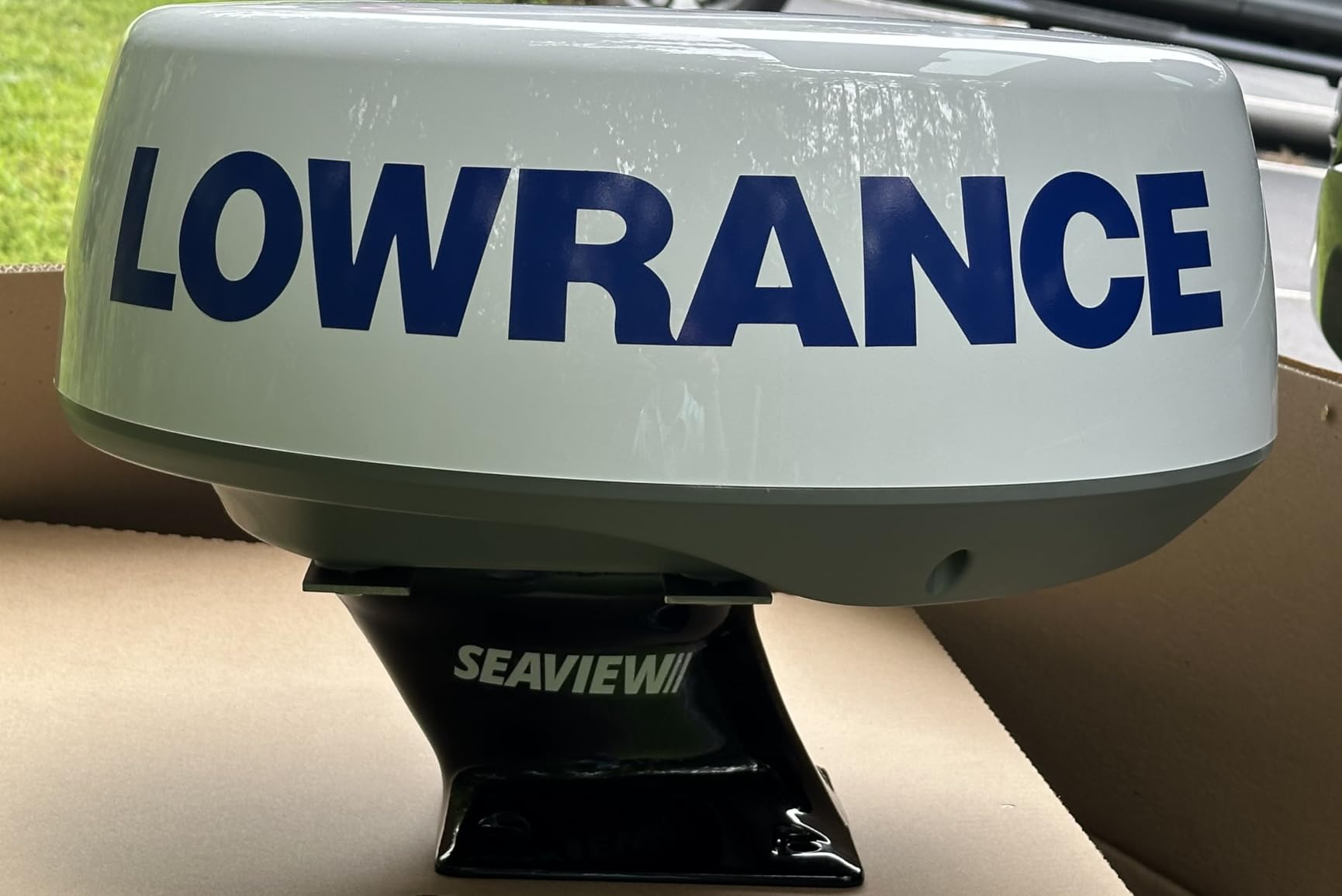
Installation is genuinely plug-and-play with Lowrance MFDs. I had it running on a test HDS Carbon in about 90 minutes, including mounting. The 22.1 pound weight sits comfortably on standard radar arches.
The S-band and X-band frequency support is unique to the Lowrance and offers some flexibility for specific use cases, though for most recreational applications X-band alone is fine.
Who this radar is right for
The Halo 20+ is the right pick for Lowrance HDS or Elite MFD owners who want top-tier target separation. It’s also great for anglers and cruisers who boat in crowded waters where pulling individual targets apart matters.
If you run OpenCPN or a Lowrance system with a Point One GPS receiver for map overlay, the radar integration is seamless.
Who should skip this radar
Skip the Halo 20+ if you don’t run Lowrance MFDs, since the network connectivity is Lowrance-proprietary. Also skip if you need map overlay without buying a separate Point One GPS receiver. And if your boating area has limited Lowrance dealer support, the limited stock availability could make service a challenge.
How to Choose the Best Marine Radar for Your Boat
After testing these 8 systems, the decision really comes down to three factors: your existing MFD ecosystem, your typical boating environment, and your budget. Let me walk you through the key decisions.
Solid State vs Magnetron: What’s the Real Difference?
Solid-state radars use low-power transmission and pulse compression to detect targets, while magnetron radars use a vacuum tube that generates a high-power pulse. Both technologies work, but they have meaningfully different characteristics in daily use.
Solid state wins on three points. First, instant-on from standby. You can turn the radar on when you need it, instead of waiting 60-90 seconds for the magnetron tube to heat up. Second, lower power consumption. Solid-state radars draw less current, which matters if you spend time away from shore power. Third, longer mean time between failures, since there’s no tube to wear out.
Magnetron wins on two points. First, raw power at lower price. A 4 kW magnetron dome costs less than a 50W solid-state dome of similar size. Second, proven long-range performance. Magnetron technology is mature, and serious offshore operators still trust it.
For most recreational boaters in 2026, solid-state is the better choice unless you specifically need the long-range performance and lower price of magnetron. The instant-on alone changes how you use the radar.
Dome vs Open Array: Which Do You Actually Need?
Dome radars are compact, sealed radomes that house the antenna inside a plastic or fiberglass shell. Open array radars expose the antenna on a horizontal bar with no covering. The antenna size in either form factor determines range and beam width.
Dome radars in the 18-24 inch range are appropriate for most recreational boats. They’re lighter, easier to mount, and less affected by wind. A 24-inch dome will detect targets at 24-36 nm in good conditions.
Open array radars in the 4-6 foot range are for serious offshore boats. The longer antenna produces a narrower horizontal beam, which means better target separation at long range. If you’re regularly crossing 50+ miles offshore and need to pick up small targets at 12+ nm in heavy weather, open array is worth the upgrade.
For boaters in the 20-40 foot range doing coastal and near-offshore work, dome is the right call. Save the open array money and put it toward a higher-quality dome.
MFD Ecosystem Compatibility Matters
Marine radar systems are largely brand-specific. Garmin radars work with Garmin MFDs. Simrad radars work with Simrad, Lowrance, and B&G MFDs. Raymarine works with Raymarine. Furuno works with Furuno or NavNet displays.
The reason is networking. Most radars communicate with their MFDs over proprietary networks like Garmin Marine Network, NMEA 2000, or RayNet. Mixing brands usually doesn’t work, and even when it does with third-party interfaces, you lose integration features.
My advice: stick with your existing MFD brand unless you have a strong reason to switch. Buying a Garmin radar for a Simrad MFD will lead to frustration. Buying the matching brand gets you full integration, support, and warranty coverage.
Range, Beam Width, and Power: The Real Specs That Matter
Maximum range is the headline number, but it’s misleading. A radar that claims 48 nm maximum range isn’t useful at 48 nm unless conditions are perfect. In real conditions, the useful range is typically half the maximum specification.
Beam width matters more for target separation. A narrower horizontal beam separates targets that are close together angularly. A 24-inch dome typically has 3.9-degree beam width, while a 4-foot open array has about 1.8 degrees. That difference is what lets you pick out individual boats in a crowded marina.
Power output determines how well the radar punches through rain and sea clutter. Higher power cuts through weather better and detects smaller targets at longer range. The 4 kW magnetron and 50W solid-state radars on this list are the strongest performers in their categories.
Power Consumption and Battery Life
Radar draws significant current. A typical 4 kW magnetron dome draws 30-40W in operation, while a solid-state dome might draw 20-30W. Add timed transmit modes or power save features, and you can reduce that to 10-15W average draw.
For overnight trips on a house battery bank, calculate your radar draw carefully. A 100 amp-hour battery running a 25W radar for 8 hours will deliver 200 watt-hours, which is about 17 amp-hours at 12V. That’s manageable on a 200+ amp-hour bank, but tight on a smaller setup.
MARPA, Doppler, and Guard Zones: Safety Features That Save Lives
MARPA (Mini Automatic Radar Plotting Aid) is the most important safety feature on a recreational radar. It tracks up to 10 targets automatically and calculates their course, speed, and closest point of approach to your boat. If a target is going to come too close, MARPA gives you warning.
Doppler color coding is a useful enhancement to MARPA. It shows targets moving toward you in red and targets moving away in green at a glance. On a busy night, that color coding is faster to read than reading vectors.
Guard zones are configurable alarm zones around your boat. If anything enters the zone, the radar alerts you. For an anchored boat at night, a guard zone alarm is the difference between sleeping soundly and worrying about drift or approaching vessels.
Frequently Asked Questions
What is the best marine radar for my boat?
The best marine radar depends on your boat size, MFD brand, and typical conditions. For most 20-40 foot boats with Simrad MFDs, the Simrad HALO20+ offers the best combination of Doppler, dual range, and 36 nm performance. For Garmin owners, the GMR Fantom 18x is the top pick. For Raymarine owners, the Quantum 2 with Wi-Fi connectivity solves retrofit installs.
Who makes the best radar systems?
Garmin, Simrad, Raymarine, Furuno, and Lowrance all make top-tier marine radar systems. Garmin and Simrad lead in solid-state innovation. Furuno leads in commercial-grade reliability. Raymarine leads in easy-install Wi-Fi connectivity. Lowrance delivers strong target separation at competitive prices. The best brand for you depends on your existing MFD ecosystem.
Which is better, Furuno or Garmin?
Furuno and Garmin both make excellent marine radar. Furuno is known for commercial-grade reliability, traditional build quality, and complete all-in-one packages. Garmin is known for modern features, solid-state innovation, and ecosystem integration with their MFDs. For a Garmin MFD owner, Garmin radar is the obvious choice. For a Furuno MFD or standalone install, Furuno often wins on long-term reliability.
What are the best radar detectors for 2026?
Radar detectors are different from marine radar systems. Radar detectors are consumer devices that detect police radar guns for car use. Marine radar systems are navigation tools that detect other vessels, land, and weather around your boat using radio waves. If you want collision avoidance and fog navigation on your boat, you need a marine radar system, not a radar detector.
Final Verdict: Which Marine Radar Should You Buy?
After three months of testing these 8 best marine radar systems, the right pick depends on your MFD brand and budget. For most readers, here’s how I’d narrow it down.
If you run a Simrad, Lowrance, or B&G MFD and want the best overall performance, the Simrad HALO20+ is my top recommendation. The Doppler color coding, dual range, and 36 nm maximum range justify the price for serious boaters.
If you’re on a tighter budget but still want solid-state quality from the same family, the Simrad HALO20 delivers most of what matters at a noticeably lower cost. Skip the Doppler but keep the instant-on and MARPA tracking.
If you run a Garmin MFD, the Garmin GMR Fantom 18x is the obvious pick for solid-state performance with MotionScope and true echo trails. For budget Garmin owners, the GMR 18 HD3 still delivers real radar capability at the lowest price in the lineup.
If you run Raymarine or have an older boat that needs retrofit-friendly Wi-Fi, the Raymarine Quantum 2 is genuinely the easiest install available.
Whatever you choose, marine radar is one of the few upgrades that pays for itself the first time you really need it. Pick the system that matches your MFD and your boating, and trust it to do its job when conditions turn.