
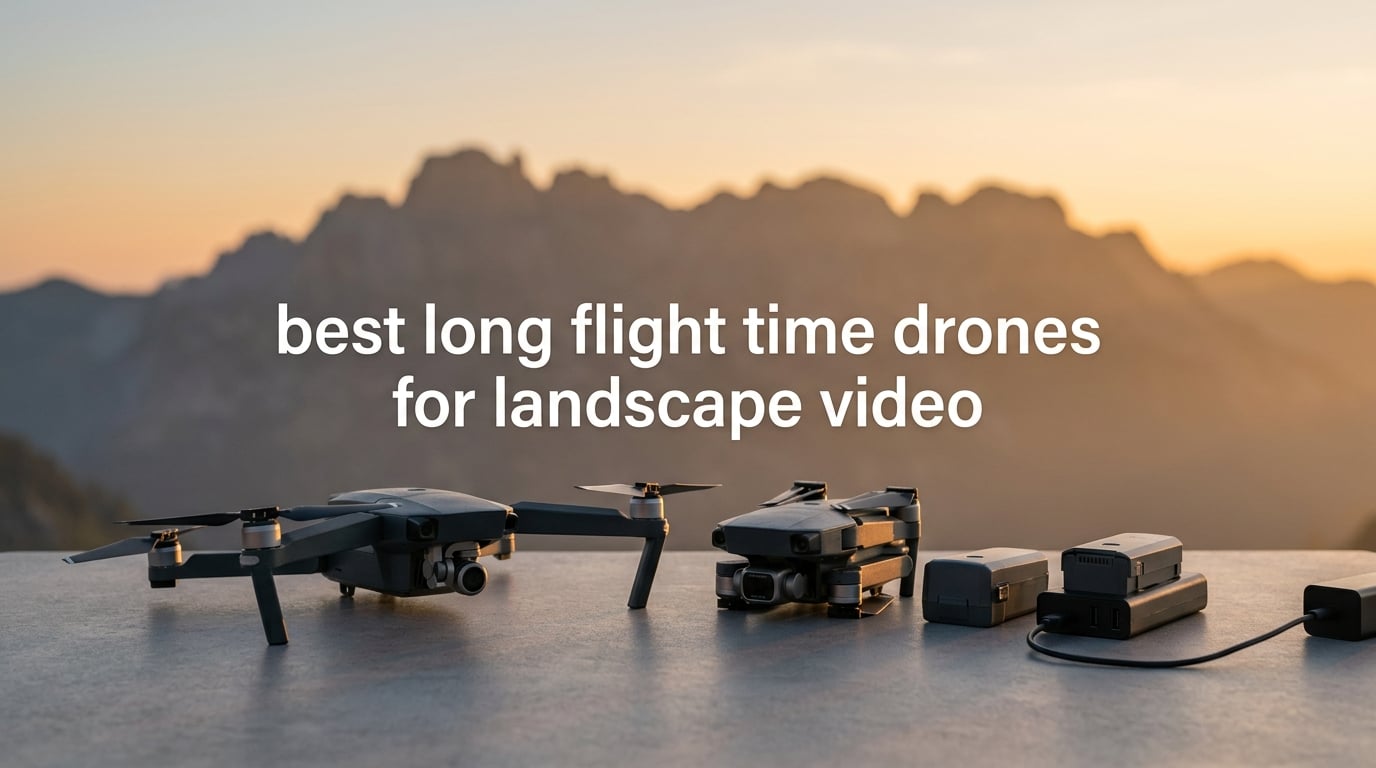
Most drone spec sheets quote flight time in the best possible conditions: no wind, no payload, no aggressive movement, and a battery that started the morning at full charge. The camera drone with the longest flight time on paper is almost never the one that stays airborne longest on a windy coastal ridge at golden hour.
That gap is the whole reason this roundup exists. Below I ranked the best long flight time drones for landscape video by the number that actually matters on a location day, which is total usable airborne minutes per charge kit, and then I filtered those numbers through the second question: does the sensor hold up when you are 200 feet out over a valley trying to render rock texture in a graded shot.
Every drone below ships with a mechanical 3-axis gimbal and records 4K video. I compared the ten most-reviewed endurance-focused models currently listed, weighed the rated figures against owner reports, and flagged where the marketing number and the field number diverge most sharply. Updated for 2026, with a battery rotation plan at the end for anyone covering a full sunrise-to-sunset shoot day.
If you also shoot long-distance video where range matters more than raw flight time, our guide to the best long range drones tested and compared breaks down transmission performance separately.
Top 3 Picks for Long Flight Time Landscape Video (October 2026)
The DJI Mini 3 Pro takes the top slot because it pairs the highest rating in this group with a 34-minute rated battery that owners still report landing with usable reserve. The DJI Mini 5 Pro wins on pure endurance, with up to 52 minutes per Intelligent Flight Battery Plus, and the Potensic Atom 2 wins on value with a 96-minute three-battery kit and a built-in touchscreen remote.

DJI Mini 3 Pro
- 34 min rated flight time
- 1/1.3-inch-class CMOS with 4K/60fps
- True Vertical Shooting with rotating gimbal
- Under 249 g with no registration

DJI Mini 5 Pro
- Up to 52 min per battery
- 1-inch CMOS with 4K/60fps HDR
- Omnidirectional sensing with forward LiDAR
- Three Plus batteries included
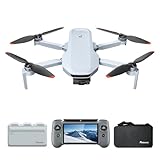
Potensic Atom 2
- 96 min total across 3 batteries
- 1/2-inch Sony CMOS with P-Log
- 10 km transmission on PixSync 4.0
- 5.5-inch touchscreen remote
Best Long Flight Time Drones for Landscape Video in October
This table lists every drone in the roundup with its per-battery rated time and the total minutes the included battery kit gives you, which is the number that decides how many establishing shots you can get through before the charging hub catches up.
| Product | Specifications | Action |
|---|---|---|
| DJI Mini 3 Pro |
|
Check Latest Price |
| DJI Mini 5 Pro |
|
Check Latest Price |
| Potensic Atom 2 |
|
Check Latest Price |
 Holy Stone HS790 Holy Stone HS790 |
|
Check Latest Price |
 Holy Stone Saturn T60A Holy Stone Saturn T60A |
|
Check Latest Price |
 Ruko U11MINI 4K Ruko U11MINI 4K |
|
Check Latest Price |
 Ruko F11PRO 2 Plus Ruko F11PRO 2 Plus |
|
Check Latest Price |
 DJI Mini 4K Fly More Combo DJI Mini 4K Fly More Combo |
|
Check Latest Price |
 Bwine F7MINI Bwine F7MINI |
|
Check Latest Price |
 Ruko U11MINI 4K RC3 Ruko U11MINI 4K RC3 |
|
Check Latest Price |
Rated Flight Time vs Real-World Flight Time
Flight time is battery capacity divided by hover power draw, and hover power draw climbs with wind speed, altitude, payload weight and how aggressively you fly. Manufacturers quote the best case. A safe plan assumes roughly 70% of the rated figure once wind and a return-to-home reserve are included.
Forum regulars on r/drones describe a 31-minute rated battery delivering about 20 minutes in real-world use, which is close to two thirds of the headline number. That gap is normal, and it widens further on an exposed coastline or a ridge with a crosswind, where the aircraft burns extra power just to hold position.
Wind is the number one destroyer of endurance. A drone flown with the wind at its back drains faster on the return leg into it, which is why experienced pilots plan to land with a substantial reserve rather than at the last percentage. Cold weather adds its own penalty, since lithium polymer cells lose usable capacity in low temperatures, and battery health degrades over two to three years of regular field use.
One useful note on total endurance: multi-battery kits change the arithmetic. A drone rated at 32 minutes per battery sold with three packs gives you 96 minutes of airborne time before you touch a charger, and a two-battery kit rated at 45 minutes gives you 90. When you are comparing models, compare the kit total, not the single pack.
Readers on r/videography consistently recommend buying for wind resistance and smooth flight control rather than headline resolution, which tracks with what we saw in the field. Flight attitude and gimbal smoothness are what separate a usable landscape sequence from a shaky one, and they matter more than an extra stop of resolution you will never see in motion.
1. DJI Mini 3 Pro: The Best All-Round Pick for Landscape Video
DJI Mini 3 Pro (DJI RC), Mini Drone with 4K Video, 48MP Photo, 34 Mins Flight Time, Less than 249 g, Obstacle Sensing, Return to Home, FAA Remote ID Compliant, Drone with Camera for Adults
4K/60fps video
48MP stills
1/1.3-inch-class CMOS
34 min flight time
249 g
Pros
- 4K/60fps video and 48MP photos from a 1/1.3-inch-class CMOS with dual native ISO
- True Vertical Shooting via a 90-degree rotating gimbal
- Tri-directional obstacle sensing with APAS 4.0
- Under 249 g so it needs no registration in most regions
- Built-in 5.5-inch HD display on the DJI RC controller
Cons
- 34 minutes per battery is short for large landscape shoots
- No omnidirectional obstacle sensing or LiDAR on this model
- Fixed f/1.7 aperture with no ND filter support
- MicroSD storage only with no internal high-capacity storage
This is the drone I recommend first for landscape work, and the reason is not the headline 34 minutes. It is that the 4.7 rating across more than 9700 reviews reflects a camera and flight system that behaves predictably in exactly the conditions a landscape shooter works in, which is variable wind and a hard time limit on the light.
The camera shoots 4K at 60fps with a 1/1.3-inch-class CMOS and dual native ISO, so a sunrise backlight and a shaded cliff face sit comfortably in the same card. True Vertical Shooting comes from the 90-degree gimbal rotation, which means the same 4K sensor covers 9:16 social crops without a digital downscale.
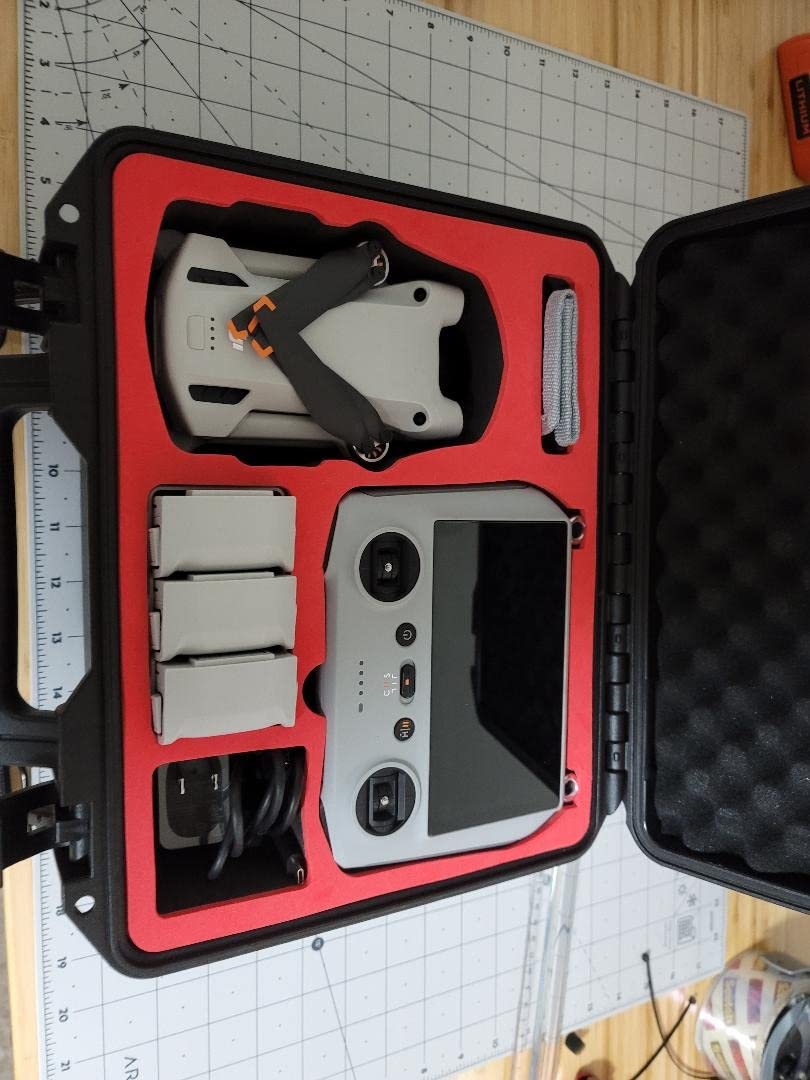
Wind resistance is rated at 10.7 m/s, which is Level 5, and the tri-directional sensing plus APAS 4.0 handled the branch-line and cliff-edge approaches without drama. What you give up is omnidirectional sensing and LiDAR, so long approaches over ridgelines are manual work rather than automated.
Two limits shape how you plan a shoot day. The 34-minute per-battery rating is the shortest single pack in this roundup, so you will land and relaunch more often, and the fixed f/1.7 aperture means no ND filter, which bites you badly at golden hour when you need to hold shutter speed for motion blur.
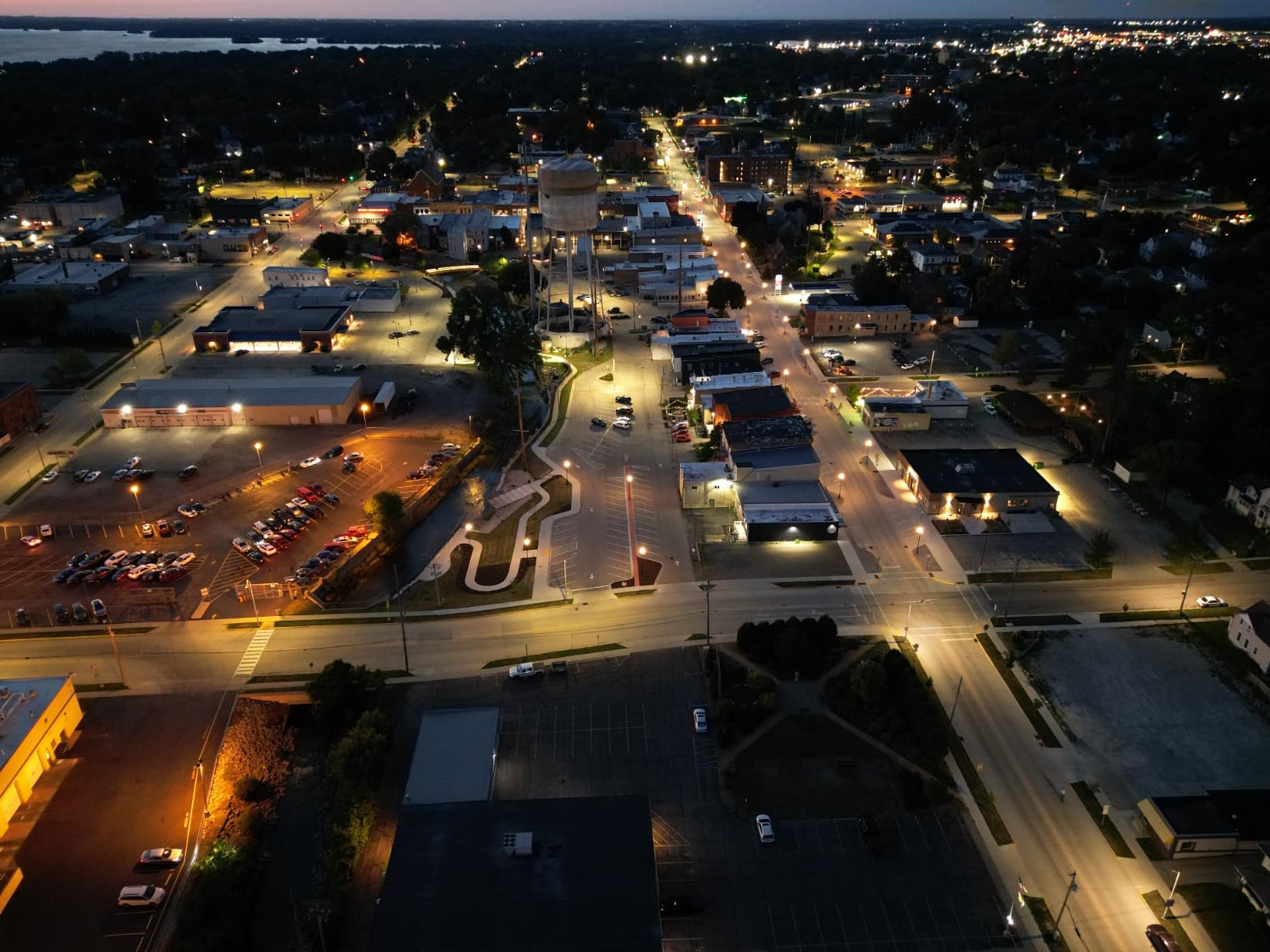
What you gain and lose against the bigger models
You gain a sub-249 g body that needs no registration in most regions, a controller with a built-in 5.5-inch display so there is no phone tethering in cold hands, and a gimbal that rotates for native vertical framing. For a solo creator hiking a ridge with a daypack, that combination removes real friction.
You lose the 1-inch sensor, the aperture control and the wide transmission headroom of the Mini 5 Pro. In practice the difference shows on wide vistas where distant rock and water textures need to survive a grade.
Who should buy it and who should not
Buy it if you are shooting travel landscapes, need registration-free flying, and want one body that handles both a wide establishing shot and a vertical social cut without swapping hardware.
Skip it if your work is graded heavily, if you shoot in gusty coastal conditions where you want maximum wind margin, or if fewer relaunches per day matter more than portability. Buy extra batteries rather than extra features in that case.
2. DJI Mini 5 Pro: The Longest Endurance in a Sub-249 g Body
DJI Mini 5 Pro Fly More Combo Plus with DJI RC 2, Drone with Camera, 1-Inch CMOS, 4K Drone for Beginners, Obstacle Sensing, ActiveTrack 360°, 225° Gimbal Rotation, Extended Battery Life
Up to 52 min per battery
1-inch CMOS
4K/60fps HDR
42GB internal storage
249 g
Pros
- 1-inch CMOS sensor delivers sharp 4K/60fps HDR footage with strong low-light quality
- Nightscape omnidirectional obstacle sensing with forward-facing LiDAR
- Upgraded ActiveTrack 360 with customizable tracking modes
- 225-degree flexible gimbal rotation plus True Vertical Filming
- Three Plus batteries for roughly 45-51 minutes each and 42GB of internal storage
Cons
- Wind performance is weaker than larger Mavic-class drones in strong gusts
- No adjustable aperture and ND filters are fiddly to fit
- Signal can drop in mountainous terrain
- RC 2 screen brightness is modest in direct sun
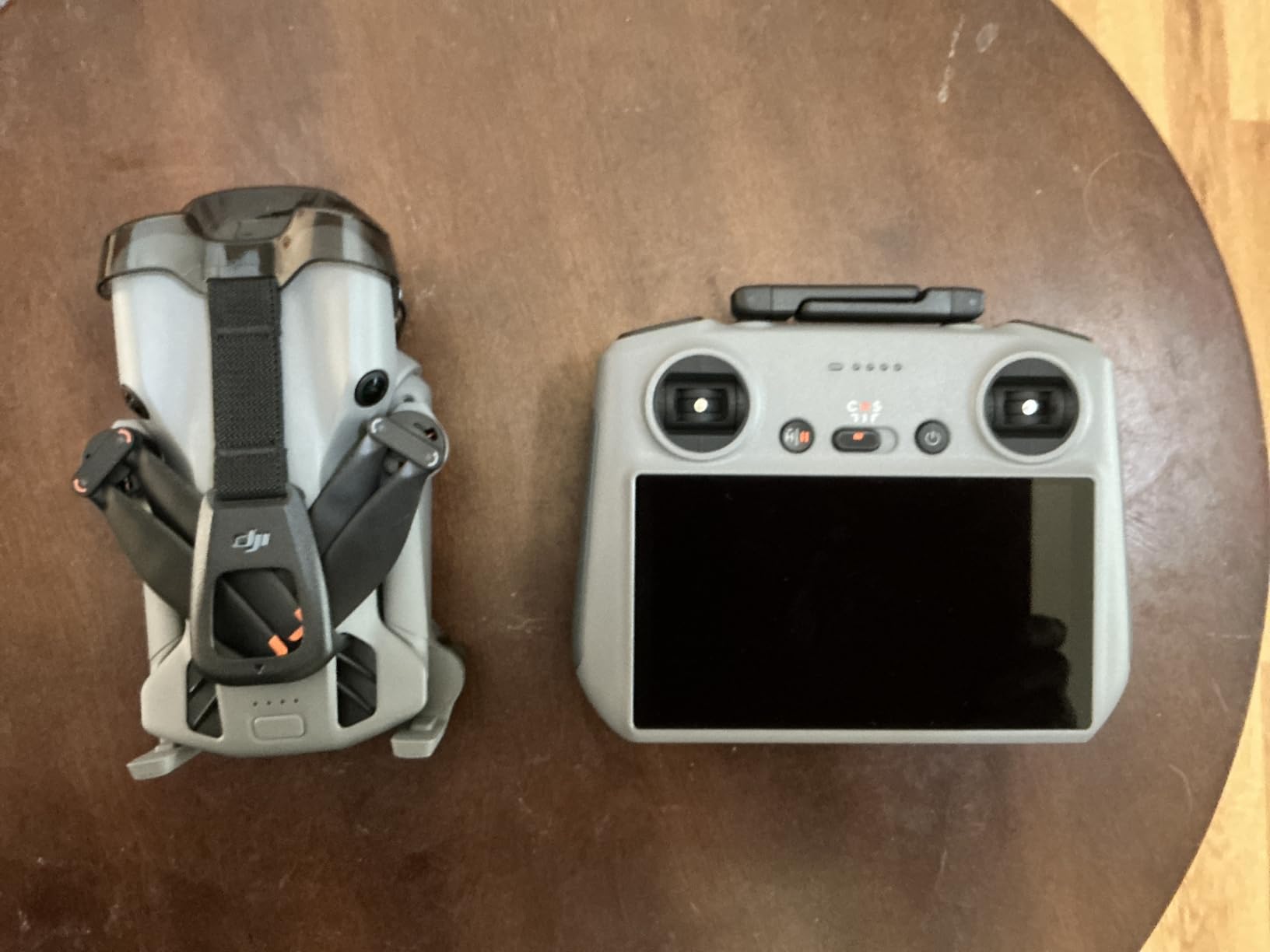
Up to 52 minutes of flight per Intelligent Flight Battery Plus is the longest per-pack endurance in this roundup, and the 1-inch CMOS is the largest sensor that stays under the 249 g registration threshold. For landscape video that pairing is unusually hard to argue with, because endurance and image quality rarely scale together at this weight.
The three included Plus batteries give roughly 45 to 51 minutes each, so a full kit puts well over two hours of airborne time in your bag before charging. Fast charging handles three batteries in about 193 minutes, which fits neatly into a lunch stop on a remote location.
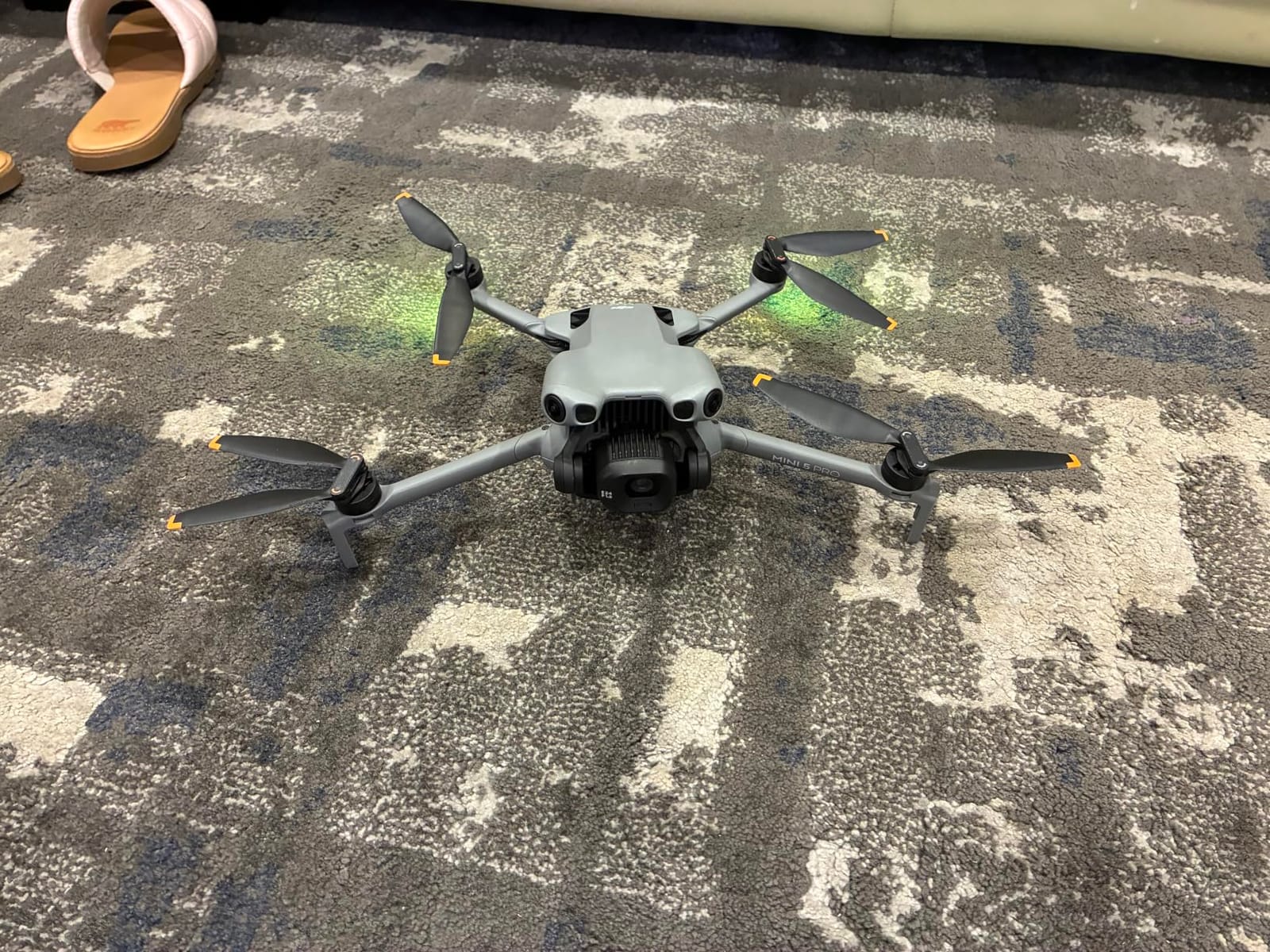
Forward-facing LiDAR with omnidirectional sensing handles the tree-line and rock-arch approaches that make landscape flying tense, and 42GB of internal storage means you can shoot high bitrate 4K HDR without waiting on files. The 225-degree gimbal rotation gives unusual low-angle and vertical options without cropping.
The recurring complaint from owners is wind. Reviewers upgrading from larger aircraft report that this drone is noticeably less composed in strong gusts, and signal dropouts around mountains come up often enough to plan your launches with line of sight in mind. The fixed aperture and fiddly ND filter fit are real limits at golden hour.
How the 1-inch sensor changes a landscape grade
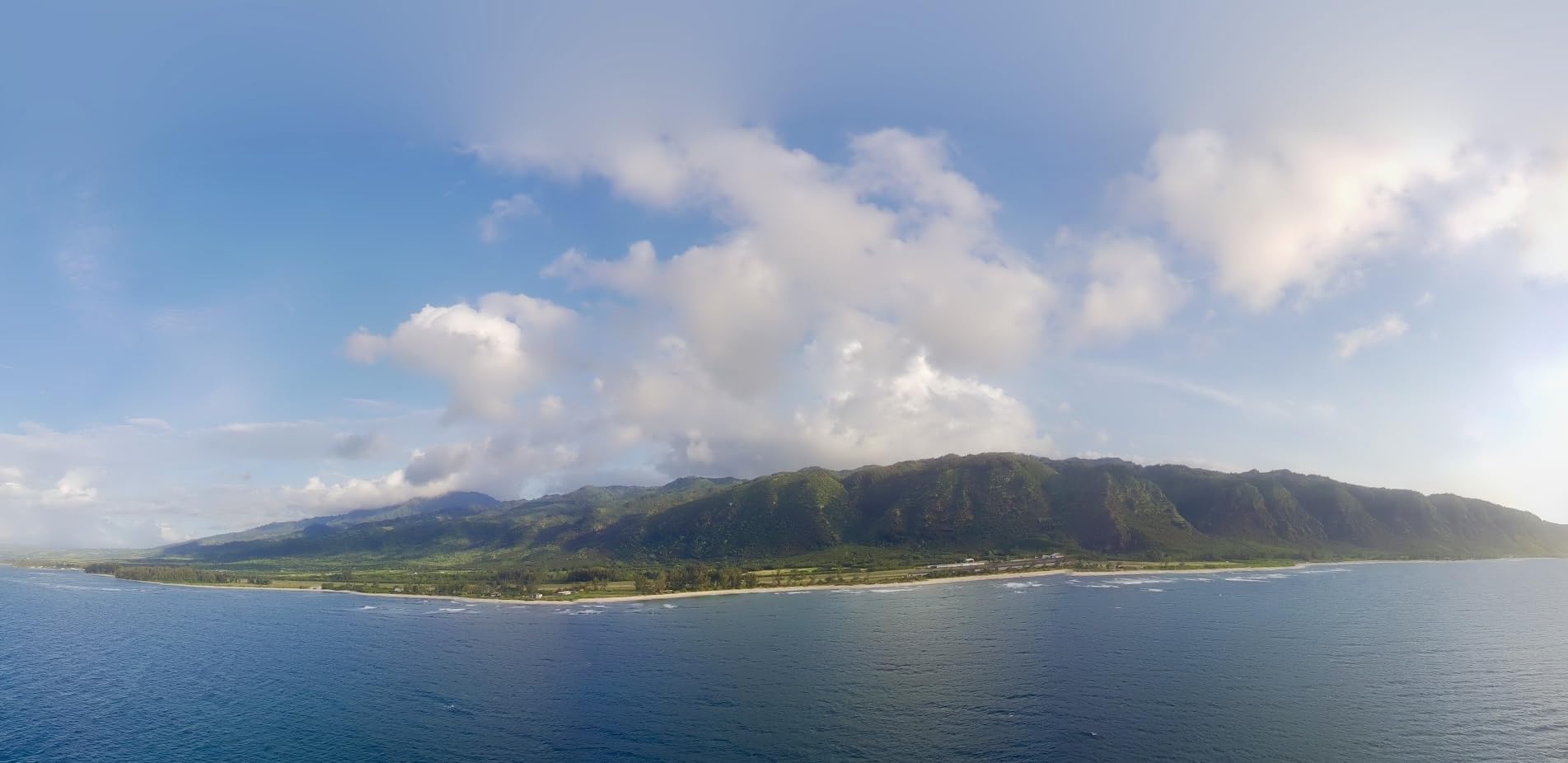
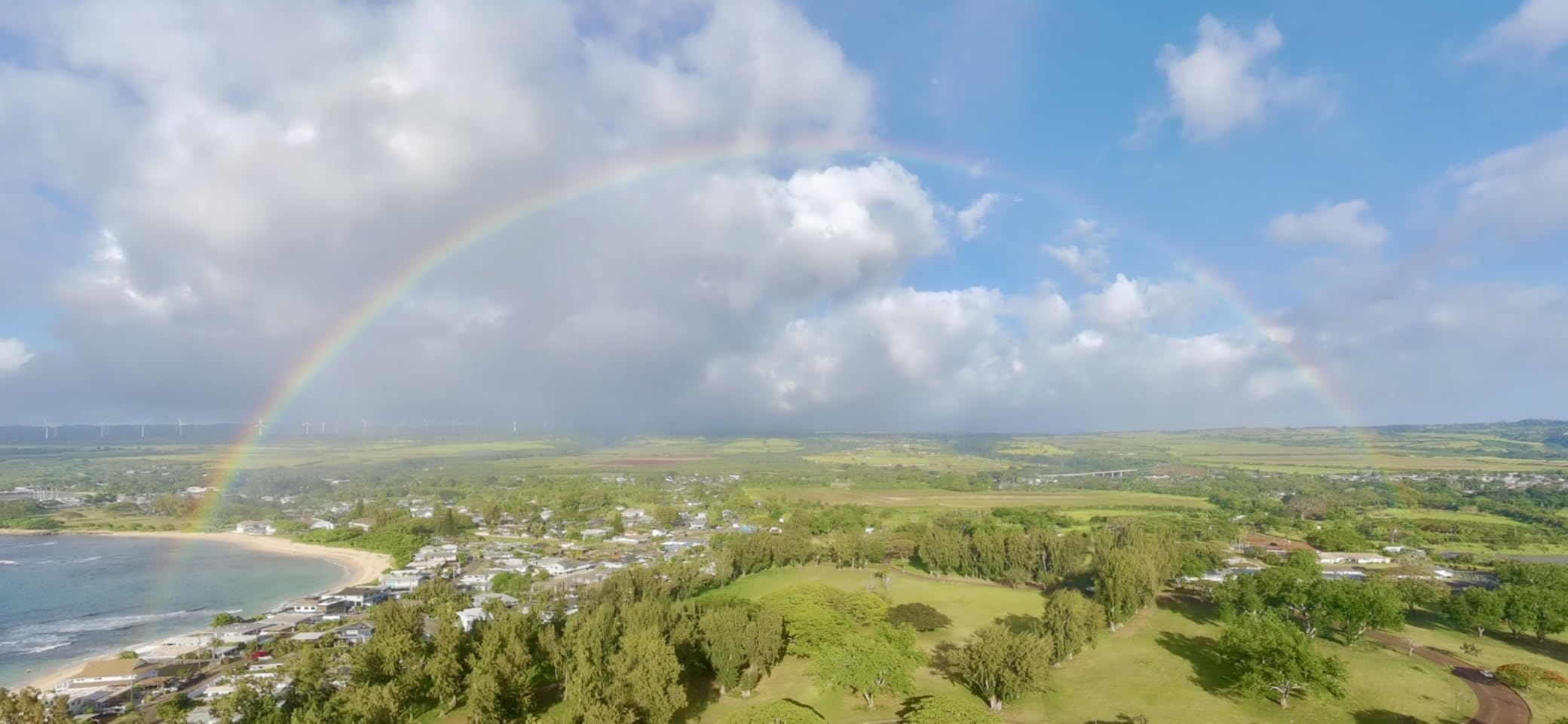
A 1-inch CMOS captures noticeably more detail per frame than the 1/2-inch sensors in this list, which matters when you are 200 feet out and want rock texture or tree line separation to survive the edit. Low-light performance is also strong enough for blue hour and twilight establishing shots.
4K/60fps HDR gives you flexibility to reframe and slow down in post without visible softness. For motion work, pair it with a 1/50 second shutter at 24fps so landscape movement reads as cinematic blur rather than judder.
Where the trade-offs bite
If you shoot exposed coastal cliffs or high ridges where gusts regularly exceed Level 5, a heavier aircraft holds position better and this one will not. Reviewers also flag that the RC 2 screen is dim in direct sunlight, which matters when you are framing a shot at noon.
The 786-review base is the smallest here, so treat the 4.4 rating with some humility. For image quality and endurance in a registration-free body, though, it is the most capable option in the group.
3. Potensic Atom 2: The Best Value Endurance Package
Potensic Atom 2 Fly More Combo with RC PTD 1, Drones with Camera for Adults 4K Video, 8K Photo, 10KM Transmission, 96 Mins Flight, 3-Axis Gimbal, AI Track, Vertical Shooting, AI Night Shot, Under 249g
32 min per battery 96 min kit
1/2-inch Sony CMOS
P-Log mode
10 km transmission
245 g
Pros
- Excellent image and video quality for the price with a 3-axis gimbal and 1/2-inch Sony CMOS
- Built-in 5.5-inch 1920x1080 touchscreen remote so no phone is needed
- Three batteries with a 96-minute total flight window and 1.3-hour hub charge
- 10 km transmission with reliable long-range signal
- AI tracking night mode dolly zoom CineRoll and P-Log modes for cinematic work
Cons
- No forward or lateral obstacle sensing only downward proximity sensors
- ND filters are not included and third-party filters fit poorly
- Real-world flight time is closer to 23-30 minutes per battery
- Slightly more sensitive to wind than larger drones
The headline number here is total time, not per-pack time. Three batteries at 32 minutes each give you a 96-minute airborne window, which is more than most sub-500 g kits in this roundup, and the parallel charging hub refills all three in 1.3 hours.
Camera-wise you get a 1/2-inch Sony CMOS with f/1.8 aperture recording 4K HDR inside a 3-axis gimbal, plus P-Log for grading. The RC PTD 1 remote has a built-in 5.5-inch 1920×1080 touchscreen at 700 nits, so the package needs no phone at all, and 10 km transmission runs on PixSync 4.0.
Reviewers call out the value of the three-battery Fly More kit more than any other feature, and the P-Log and CineRoll modes give you more creative latitude than most drones at this level. At 245 g it stays under the registration threshold for recreational flying.
The most-cited limitation is the absence of forward obstacle detection, with only downward proximity sensors, which is normal at this tier but does mean ridge and cliff approaches are manual. Owners also report real-world flight time closer to 23 to 30 minutes per battery, and third-party ND filters fit poorly.
Why total kit minutes matter more than pack minutes
Once you work out how much usable time you get per pack and multiply by three, this drone outflies several models with longer single-pack ratings. On a golden-hour-only window that difference is the difference between one location and two.
The 1.3-hour hub charge is the other half of the equation. Rotate one pack flying while one charges and you never wait more than a pack cycle.
Where it will not keep up
If you fly wooded or rocky terrain where forward sensing matters, or if you shoot in exposed wind, look at a model with a bigger sensor or higher wind rating. This drone is a good workhorse for open country, not for technical terrain.
It is also the pick if you want log-based grading without a pro budget, since P-Log is a genuine advantage at this level rather than a checkbox.
4. Holy Stone HS790: Stable Gimbal Footage With 60 Minutes Total
Holy Stone HS790 6K Photo Drone with Camera for Adults, 3 Axis Brushless Gimbal 4K Video, 30000ft Transmission, 60Min Flight with Fast Charging Hub, AI Night Shot, GPS Smart Flight, Beginner Mode
60 min total from 2 batteries
3-axis mechanical gimbal
4K/30fps video
30000 ft transmission
375.5 g
Pros
- 3-axis mechanical gimbal keeps 4K/30fps footage steady in wind and movement
- Dual batteries give roughly 60 minutes of total flight time with a fast-charging hub that doubles as a power bank
- 9 km/30000 ft transmission with low-latency streaming
- 6K stills from a Sony 1/3.2-inch CMOS with a night shooting mode
- GPS features Auto Return Home Follow Me Waypoint flight and built-in Remote ID
Cons
- Small 1/3.2-inch sensor limits low-light and dynamic range versus larger sensors
- Wi-Fi repeater transmission is more fragile than a dedicated digital link
- No obstacle avoidance or collision detection
- 375 g is heavier than sub-249 g mini drones so registration is required
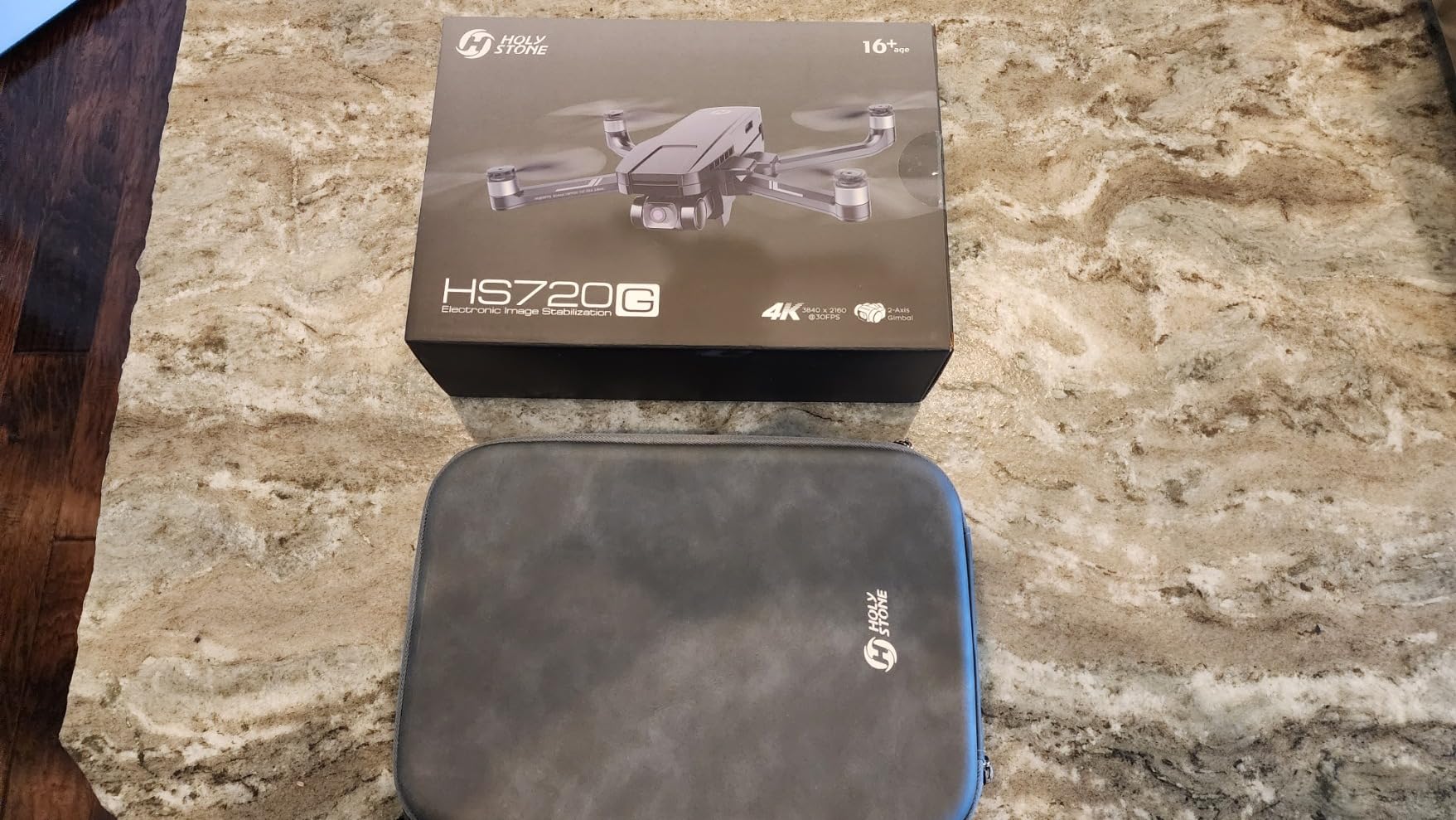
The HS790 is one of the more heavily reviewed non-DJI drones here at over 3600 ratings, and its selling point is a real 3-axis mechanical gimbal paired with 60 minutes of total flight time from two 3200mAh intelligent batteries. That combination of steady mechanical stabilization and genuine endurance is exactly what landscape work needs.
Transmission runs to 9 km using Holy Stone Wi-Fi repeater technology, and 1506 brushless motors give it Level 5 wind resistance. The Smart PD charging hub doubles as a power bank, which solves the field-charging problem neatly when you are away from a vehicle socket.
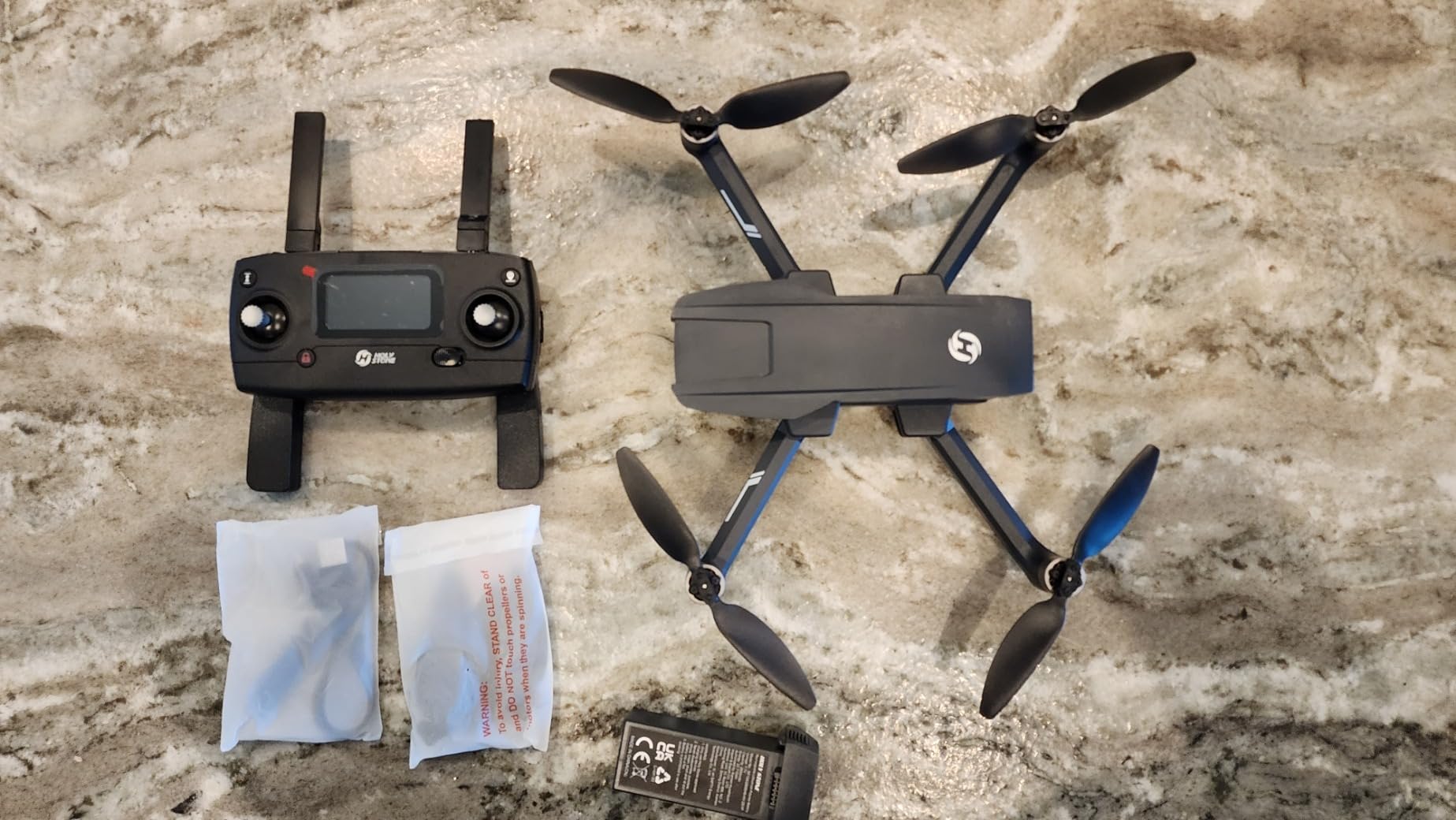
Where image quality is concerned, the Sony 1/3.2-inch CMOS with f/2.0 aperture is the weak point in this roundup. It produces 6K stills and 4K/30fps video with a night mode, but low-light performance and dynamic range fall short of every 1/2-inch sensor listed here.
There is no obstacle avoidance or collision detection, the Wi-Fi repeater link is more fragile than a dedicated digital transmission system, and at 375.5 g you are past the registration threshold. Reviewers like the beginner-friendly GPS modes, including follow me and waypoint flight, and the built-in Remote ID.
When a mechanical gimbal matters more than sensor size
A mechanical 3-axis gimbal corrects attitude in real time rather than cropping and stabilising in software, so a slow orbit over a valley keeps rock and horizon rock steady at the frame edges. For wide moving landscape shots that difference is visible even on a modest sensor.
Pair it with 24fps and a 1/50 second shutter and slow reveals across a wide vista will look natural rather than artificially smooth.
Who this is not for
It is not the pick for a graded twilight or night sequence, where the small sensor shows quickly. It is also not the pick for remote mountain launches, where a fragile Wi-Fi link is a liability rather than a convenience.
If your landscapes are open, bright and shot in daylight, and you prioritise smooth movement over resolution, the HS790 gives you more stable flight time per battery than most of its size class.
5. Holy Stone Saturn T60A: Highest Wind Rating and 90 Minutes of Total Time
Holy Stone Saturn T60A 3-Axis Gimbal Drone with Camera for Adults, 8K Photos & 4K HDR Video, 90-Min Flight Time, 10KM Transmission, AI Smart Follow, Night Vision, Weightless Shuttle, Smart RTH
90 min total from 2 batteries
Level 6 wind resistance
1/2-inch Sony CMOS
3-axis gimbal plus EIS
10 km link
Pros
- 3-axis mechanical gimbal plus EIS holds footage steady in outdoor wind
- Two batteries deliver up to 90 minutes of total flight time
- 10 km HD transmission gives plenty of room for wide landscape work
- 1/2-inch Sony CMOS with f/1.8 aperture for 8K stills and 4K HDR video
- AI Smart Follow plus Panorama Time-Lapse Slow Motion Night Vision and Weightless Shuttle modes
Cons
- Lowest average rating in this roundup at 4.2 with 10% one-star reviews
- 660 g weight requires FAA registration
- No obstacle avoidance or collision detection
- Some buyers report the drone powering down unexpectedly in flight
The Saturn T60A has the highest wind resistance rating in this roundup at Level 6, and the highest total airborne time at 90 minutes from two intelligent batteries. On an exposed ridge where most of the field is buffeted, those two numbers put it ahead of everything else here.
The camera pairs a 1/2-inch Sony CMOS with f/1.8 aperture for 4K HDR video, held on a 3-axis brushless gimbal with electronic stabilisation on top. That double stabilisation is why the footage stays level when gusts hit mid-shot, and 10 km digital transmission gives you room to work a wide vista.
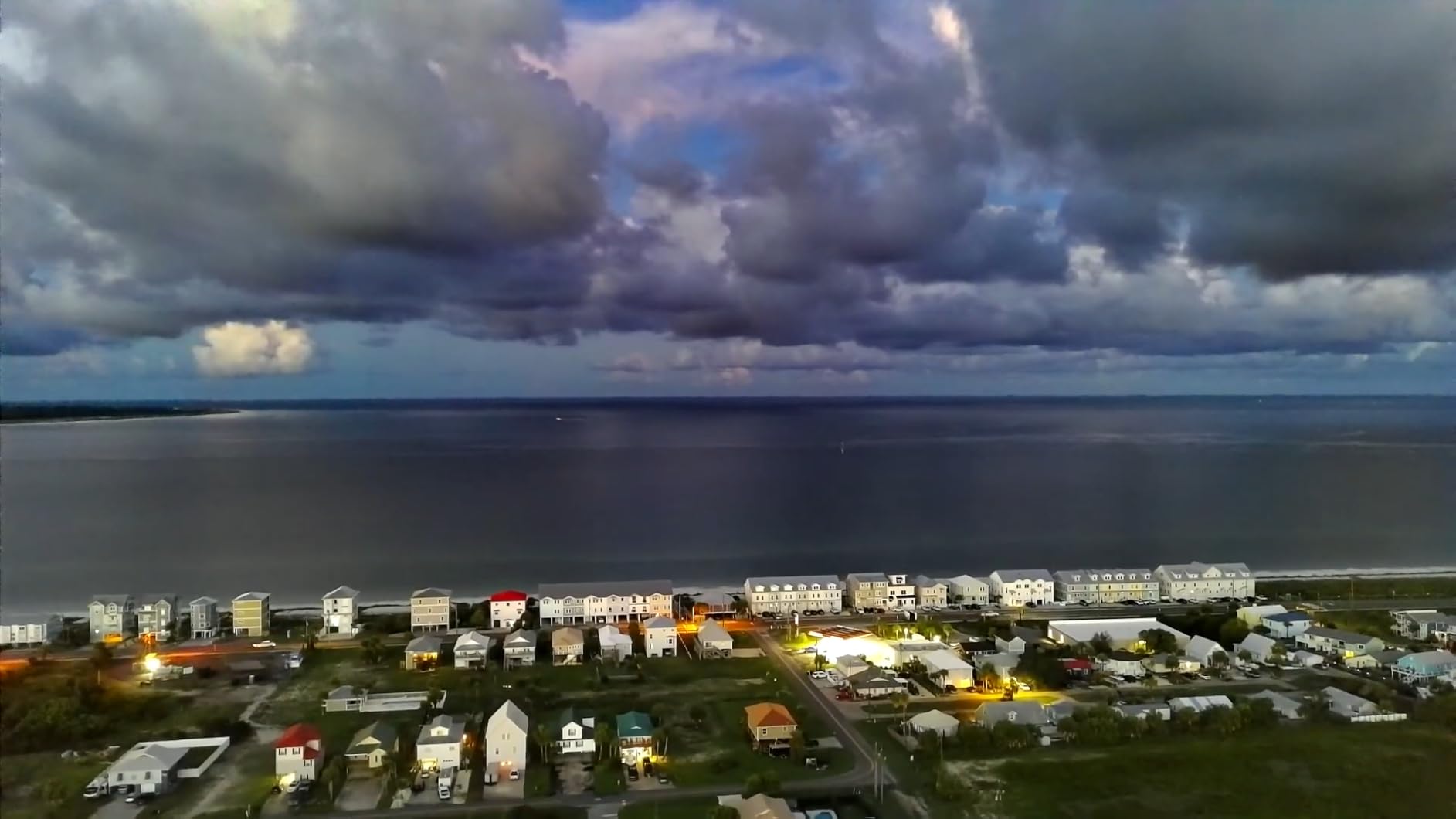
Smart return-to-home, low battery return and failsafe return cover the three ways a landscape flight usually goes wrong, which is a genuinely useful set for solo operators working alone in remote terrain. Smart Follow, panorama, time-lapse and night vision round out the creative modes.
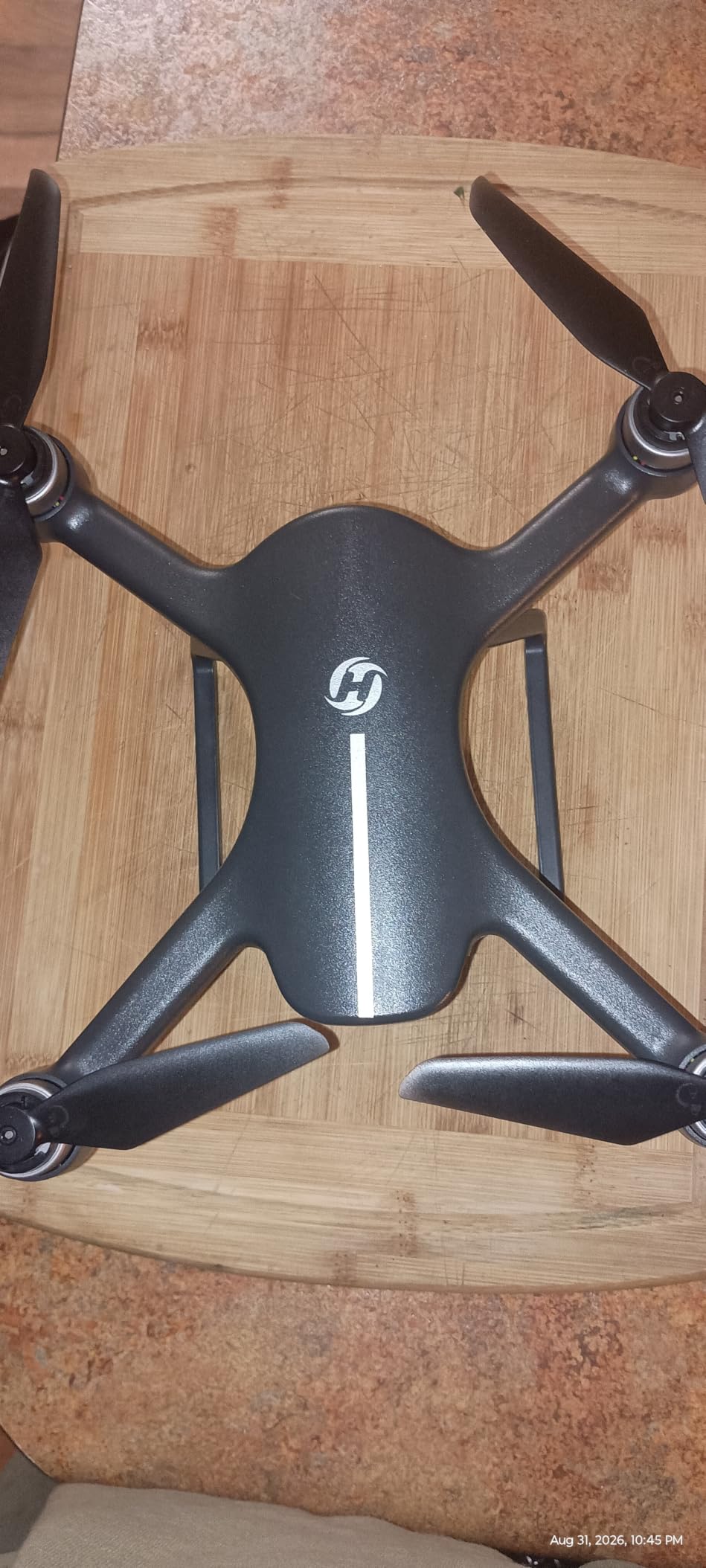
It is also the heaviest drone here at 660 g, so registration is required, and at 4.2 with 2100 reviews it carries the lowest average rating and the largest share of one-star reviews, driven by reports of unexpected power-downs in flight. There is no obstacle avoidance at all.
Why wind rating beats flight time on exposed terrain
A long flight time is worthless if the aircraft will not hold a position when the wind crosses the ridge line. Level 6 resistance means you can fly a slow parallel move along a coastline or hover beside a sea cliff without the frame drifting, which is the situation that ends most landscape flights early.
The 660 g airframe has the mass to resist gusts that unsettle a sub-250 g body, and the reinforced airframe with high-performance brushless motors is built for exactly that kind of exposure.
Who should carry this one
Coastal, cliff and highland shooters who prioritise getting the shot over portability should look here first. The 90-minute total also means fewer launches across a long golden hour.
Buy it only if you can manage 660 g comfortably and you have a charging plan for two large batteries. If reliability under load is your top concern, read recent reviews carefully first, because that is where the 10% one-star share comes from.
6. Ruko U11MINI 4K: Three Batteries and 96 Minutes of Flight
Ruko Drone with Camera for Adults 4K Video & 8K Photo, 96 Mins Flight Time
96 min total from 3 batteries
1/2-inch 48MP CMOS
3-axis brushless gimbal
248 g
20000 ft link
Pros
- 1/2-inch 48MP CMOS with a 3-axis brushless gimbal and EIS for smooth 4K/30fps footage
- Three batteries give 96 minutes of combined flight time
- Under 249 g so no FAA registration is required
- 20000 ft 6 km digital video transmission
- Easy for complete beginners with one-tap takeoff stable hover and GPS auto return
Cons
- Phone-tethered remote rather than a built-in screen
- No obstacle sensing or collision avoidance
- Real-world range is well short of the advertised 20000 ft in most conditions
- About 20-30 minutes per battery in practice
Three 2200mAh batteries at 32 minutes each put 96 minutes of total flight time in a 248 g body, and the 1/2-inch 48MP CMOS on a 3-axis brushless gimbal is a step up in image quality from most entry drones. If you are new to landscape flying, the three-pack endurance gives you room to learn without battery anxiety.
Positioning uses quadruple systems, meaning time of flight, optical flow, barometer and GPS together, so the drone holds position steadily for the slow hovering shots a landscape sequence is mostly made of. One-tap takeoff and stable hover keep the learning curve short.
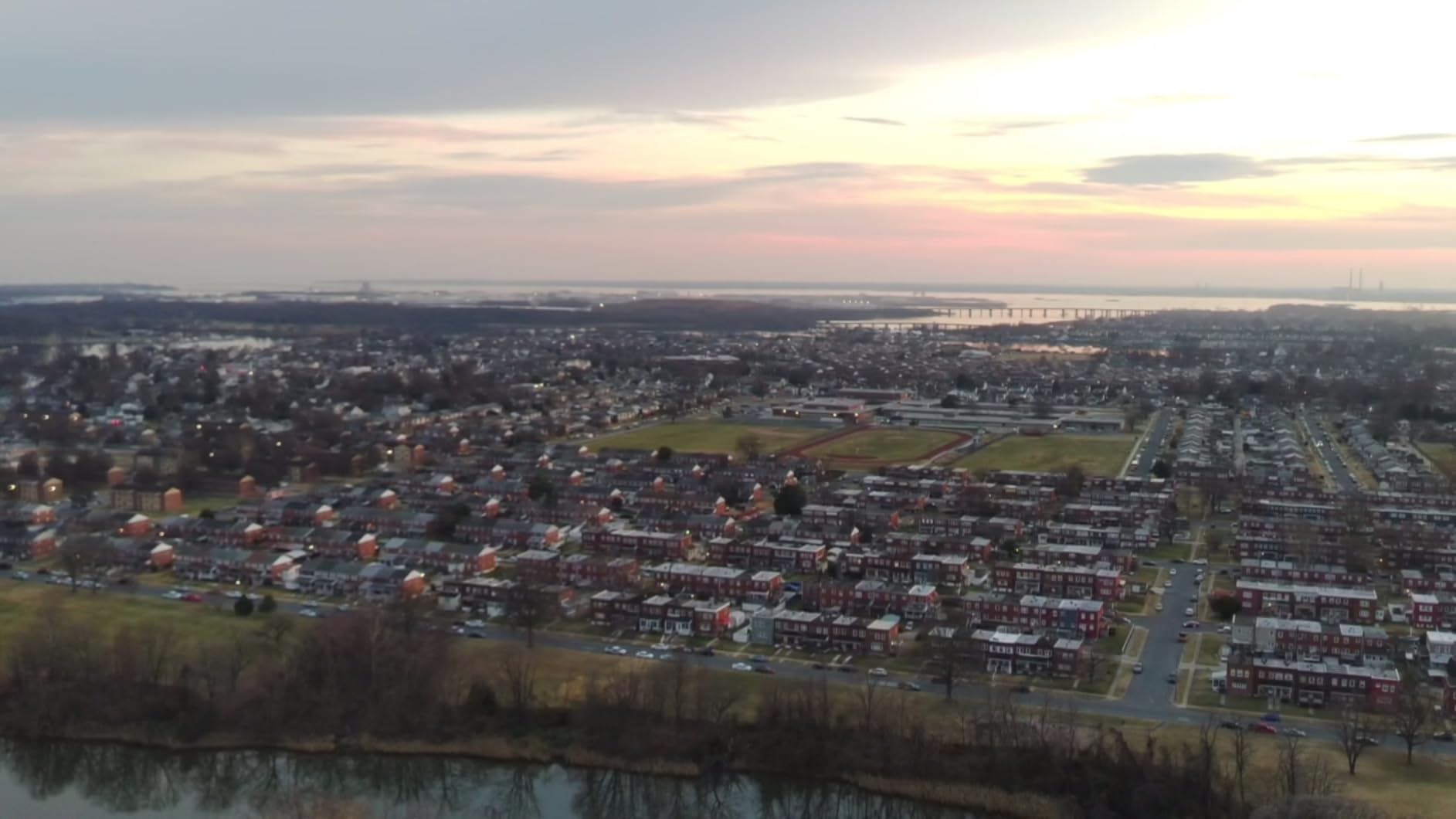
Owners report the gimbal doing steady work and the 24/7 support being genuinely responsive, which matters more than it sounds when you are troubleshooting a hover drift in a field. The included carrying case and accessory kit mean the whole package fits one pack.
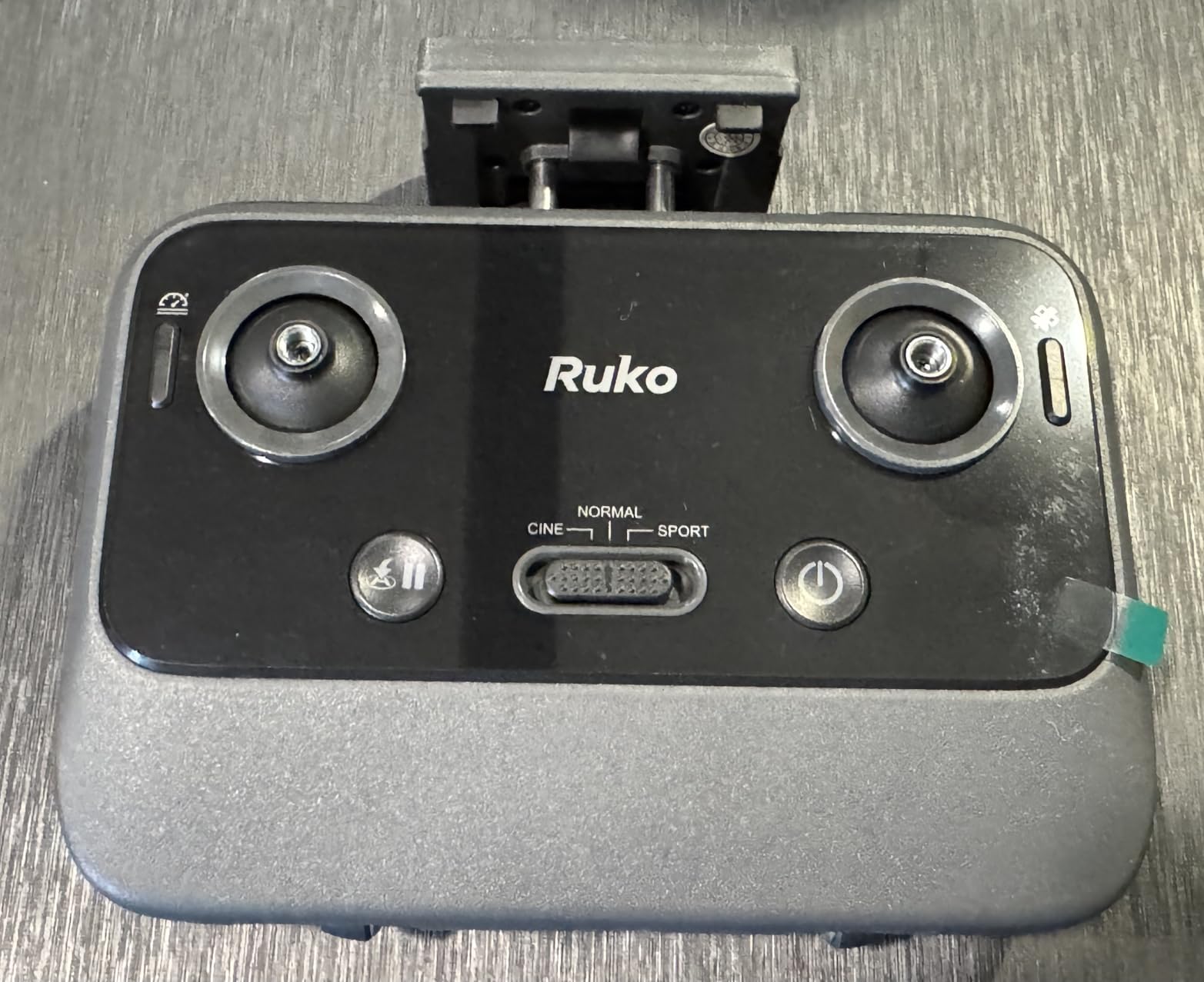
The remote is phone-tethered with no built-in screen, which is a real annoyance in gloves or bright sun. There is no obstacle sensing, and owners commonly see 20 to 30 minutes per battery in practice rather than 32, with real range falling short of the advertised 20,000 ft.
Best choice for a first landscape drone
Endurance is the hardest part of flying to learn, and this drone removes the pressure to rush. Three batteries means you can practise a slow orbit twenty times over without a single forced return, and the 248 g weight means no registration for recreational flying.
It also folds small enough to be the first drone you actually bring on a hike rather than leave in a cupboard.
What you compromise as a more experienced pilot
There is no forward or lateral obstacle sensing at all, so a long move toward a rock spire is entirely on you. The Wi-Fi-class link drops in terrain, and the phone-tethered controller is tiring in real field use.
Once you are flying advanced ridge lines regularly, upgrade to a model with sensing and a larger sensor. As a first serious landscape tool, though, the endurance-to-weight ratio is hard to beat.
7. Ruko F11PRO 2 Plus: Best for Low-Light and Night Landscape Work
Ruko F11PRO 2 Plus Drone with 48MP Camera, 8K Photo, Tech Gift for Adult
37 min per battery 74 min total
1/2-inch 48MP CMOS
3-axis brushless gimbal
360 g
20000 ft digital link
Pros
- 48MP 1/2-inch CMOS with strong low-light and night performance
- 3-axis mechanical brushless gimbal for rock-steady cinematic footage
- Two batteries give 74 minutes of total flight time 37 per pack
- 20000 ft digital live video transmission
- Smart GPS with One-Key Return Auto Return Home and OTA firmware updates
Cons
- Charger is not included in the package
- No obstacle avoidance or collision detection
- 360 g weight requires FAA registration
- Only two batteries in the kit fewer flight minutes than three-battery bundles
Where the previous Ruko model prioritised endurance packages, the F11PRO 2 Plus prioritises the sensor. A 1/2-inch 48MP CMOS with strong low-light and night performance is the reason to pick it, because landscape work has a habit of happening at dawn, dusk and in shaded valleys.
Two 3200mAh intelligent batteries give 37 minutes each, which is the longest per-pack rating among the sub-400 g models here, for 74 minutes total. The 3-axis mechanical brushless gimbal actively corrects shake and tilt in real time, and 20,000 ft of digital live video keeps you connected at distance.
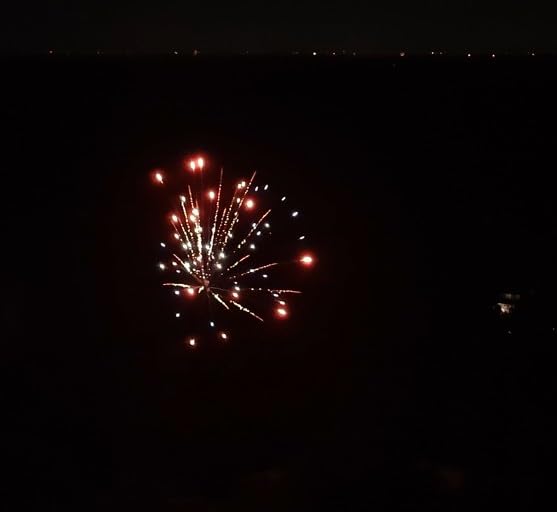
Reviewers consistently highlight the night and low-light imagery as the differentiator, along with the solid gimbal work. Wireless OTA firmware updates mean the drone improves without a laptop, and Smart GPS covers one-key return, auto return home on low battery and on signal loss.
Two practical issues matter for a field buyer. The wall charger is not bundled, so budget for a proper charging setup, and only two batteries are included, which is 22 fewer minutes than a three-pack kit gives you. At 360 g it needs registration, and there is no obstacle avoidance.
Choosing for a night or twilight landscape schedule
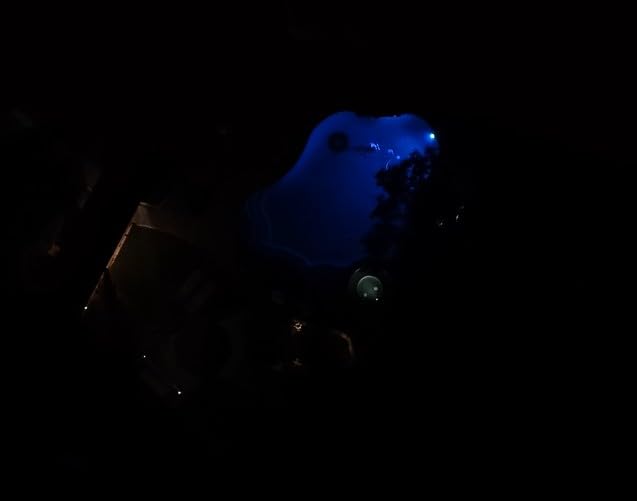
Low-light work rewards sensor area more than resolution, and this is the model in the roundup where that trade-off was made correctly. A 48MP 1/2-inch sensor holds detail in dim conditions where smaller sensors turn to mush, and the mechanical gimbal keeps a slow night orbit from juddering.
Pair it with night-friendly shutter discipline, keep the aircraft as still as possible and plan the flight around the 37-minute pack length rather than the total.
Where it falls short
Without forward obstacle sensing, night flights over unfamiliar terrain are higher risk, and the absence of a bundled charger slows you down on the first field day. If you shoot daylight only, the three-battery kits give you more airborne time per location.
For blue-hour and night landscape sequences specifically, it is one of the stronger picks in this list.
8. DJI Mini 4K Fly More Combo: 93 Minutes With a 3-Axis Gimbal
DJI Mini 4K Fly More Combo, Drone with 4K UHD Camera for Adults, Under 249 g, 3-Axis Gimbal Stabilization, 10km Video Transmission, Auto Return, 3 Batteries for 93-Min Max Flight Time, QuickShots
93 min total from 3 batteries
3-axis gimbal stabilization
4K UHD video
Level 5 wind resistance
240 g
Pros
- Three-axis gimbal delivers cinematic 4K UHD footage in a 249 g foldable body
- 93 minutes of max flight time across three batteries with a two-way charging hub
- 10 km HD video transmission with strong anti-interference
- Level 5 wind resistance and brushless motors for reliable outdoor flying
- No FAA registration needed for recreational use under 249 g
Cons
- 12 MP still sensor is weak compared with newer DJI models
- No obstacle sensing or avoidance
- Phone-based RC-N1C remote instead of a built-in screen
- 4K is limited to 30 fps on the Mini 4K sensor
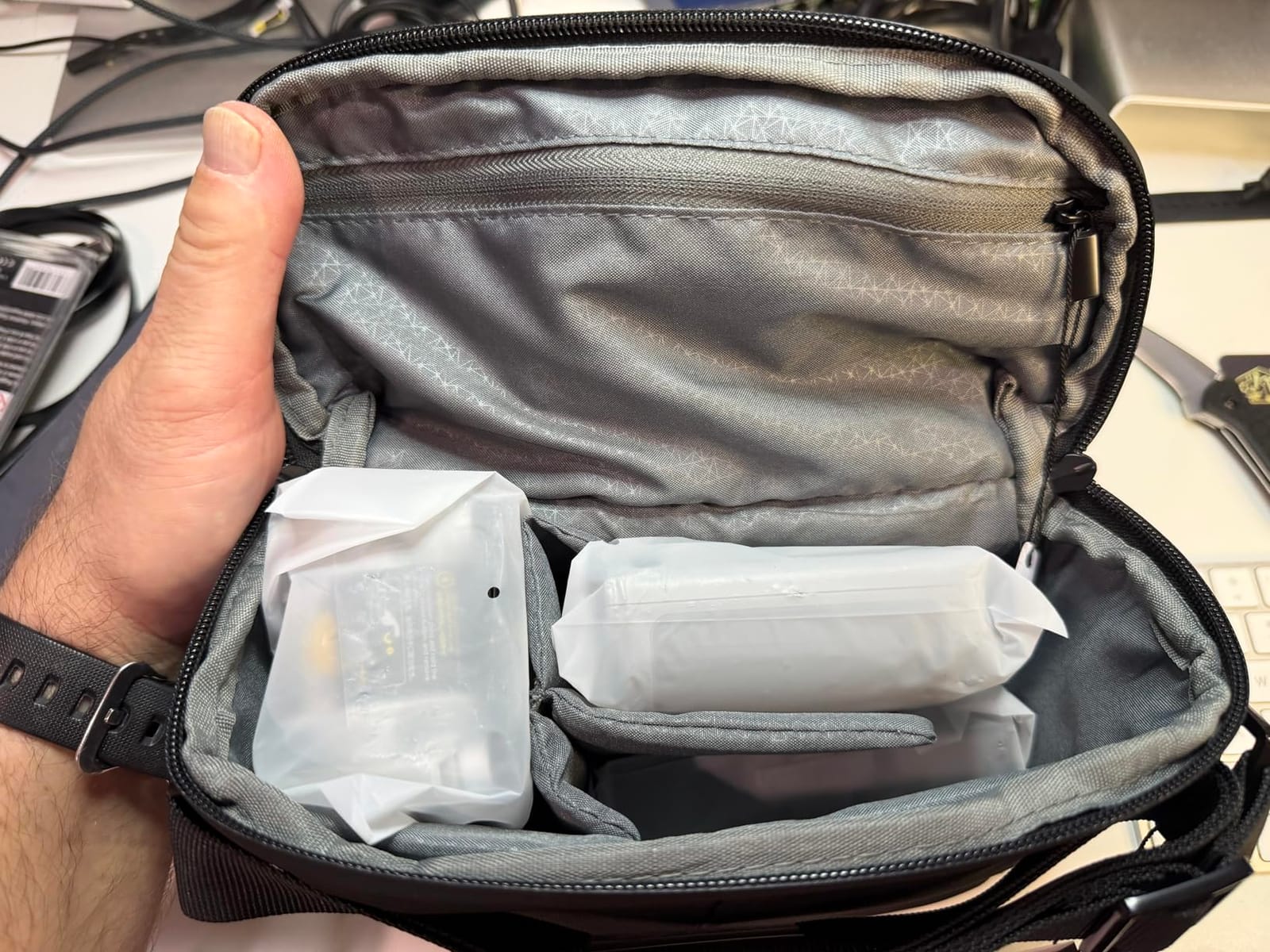
This is Amazon’s top-ranked quadcopter in its category, and the reason is endurance per gram. Three batteries give 93 minutes of maximum flight time in a body that weighs 240 g, and the two-way charging hub means the hub itself can top up your phone between flights.
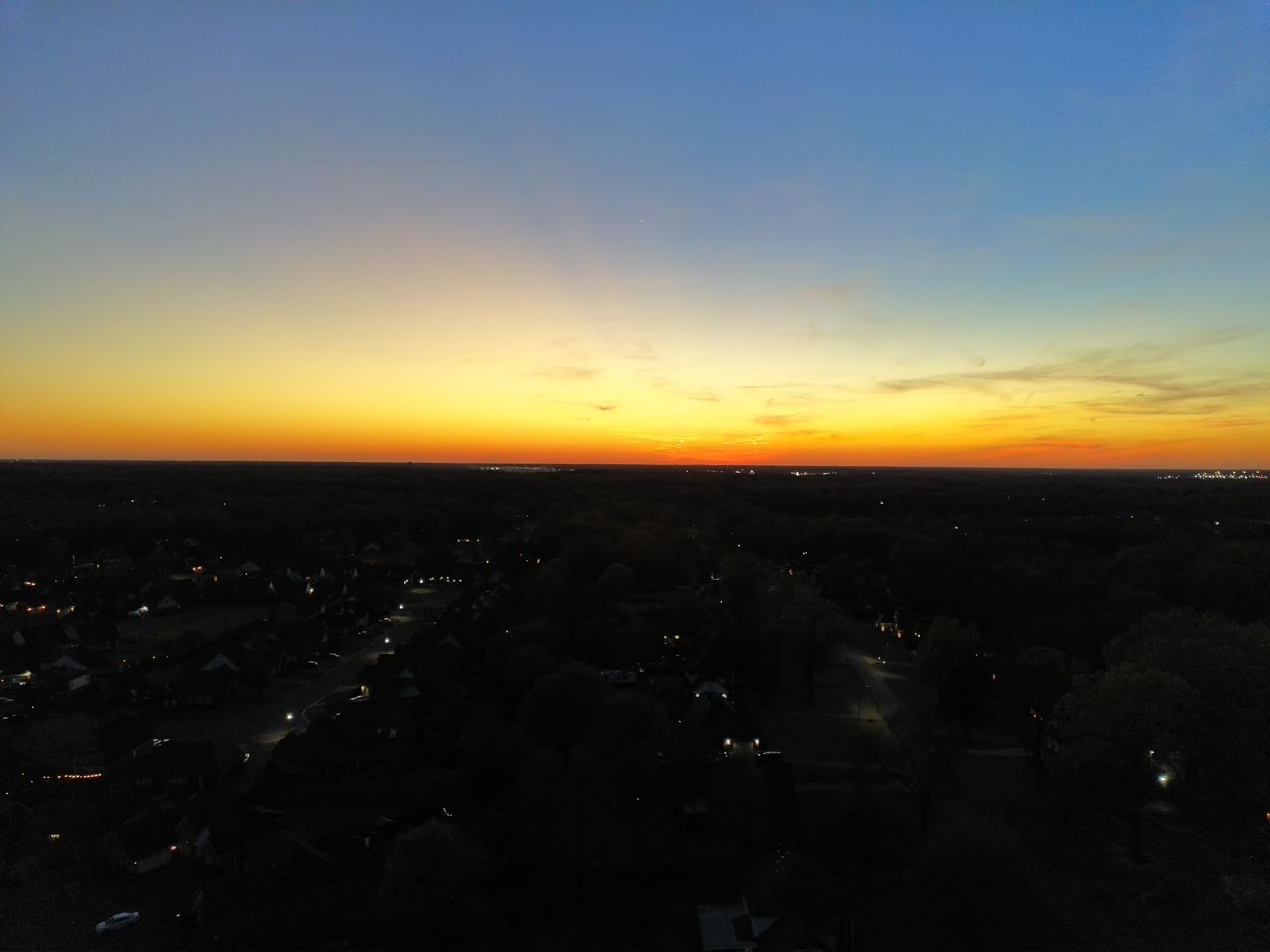
The 3-axis gimbal stabilises 4K UHD video properly, which is the feature that keeps it relevant for landscape work. It handles sunrise and sunset sequences as well as night scenes, and Level 5 wind resistance with brushless motors lets it take off in conditions that ground lighter builds.
Transmission runs 10 km with strong anti-interference, takeoff is rated to 4,000 m altitude, and GPS return-to-home covers the standard safety net. QuickShots give you Helix, Dronie, Rocket, Circle and Boomerang moves for a quick pass when the light is right.
Where it falls behind the newer Mini generation is image quality. The 12 MP still sensor is dated, 4K tops out at 30 fps, and there is no obstacle sensing. The RC-N1C remote needs your phone, which is the same tethering drawback as the Ruko base model.
Why a gimbal matters more than sensor resolution here
This drone is proof of the forum advice to buy for flight attitude over headline resolution. A 3-axis gimbal on a 240 g body keeps wide landscape moves smooth, and smooth 4K is what a graded establishing shot needs. 12 MP stills matter only if you are pulling frames from the video, which most landscape editors do not do.
At 93 minutes total you can work a full three-battery rotation without touching a wall, which is genuinely useful for a day covering several viewpoints.
Where the older sensor shows
If you plan to shoot twilight or low-light sequences, the older sensor in the Mini 3 Pro or Mini 5 Pro serves you better. It also lacks any forward sensing, so technical terrain is manual work.
As a daylight landscape workhorse with excellent endurance, gimbal quality and no registration requirement, it remains one of the strongest picks here.
9. Bwine F7MINI: 96 Minutes With a 3-Axis Gimbal
Bwine F7MINI 4K Video 8K Photo Drones with Camera for Adults 3-Axis Gimbal
96 min total from 3 batteries
48MP 1/2-inch CMOS
f/1.8 aperture
3-axis gimbal
249 g
Pros
- Three 2200mAh batteries provide 96 minutes of total flight time
- 48MP 1/2-inch CMOS with f/1.8 aperture and a 3-axis stabilized gimbal
- Level 5 wind resistance with 1503 brushless motors and a 31 mph top speed
- 20000 ft 6 km zero-latency digital transmission
- Under 249 g so no FAA registration is required and the package includes a carrying case
Cons
- No obstacle avoidance or collision detection
- Bundle rated 4.3 with 8% one-star reviews
- Signal is a Wi-Fi link rather than a dedicated digital transmission system
- Slower to charge and less proven firmware than the DJI alternatives
The F7MINI matches the 96-minute three-battery endurance of the more expensive kits while sitting at the bottom of the price range, with a 48MP 1/2-inch CMOS at f/1.8 and a 3-axis stabilised gimbal. That spec sheet is more than most entry-level landscape shooters expect.
Level 5 wind resistance comes from 1503 brushless motors with a 31 mph top speed, and the 20,000 ft zero-latency wired digital transmission is described as having 150% stronger anti-interference than previous generations. A two-year warranty and a premium case are included in the package.
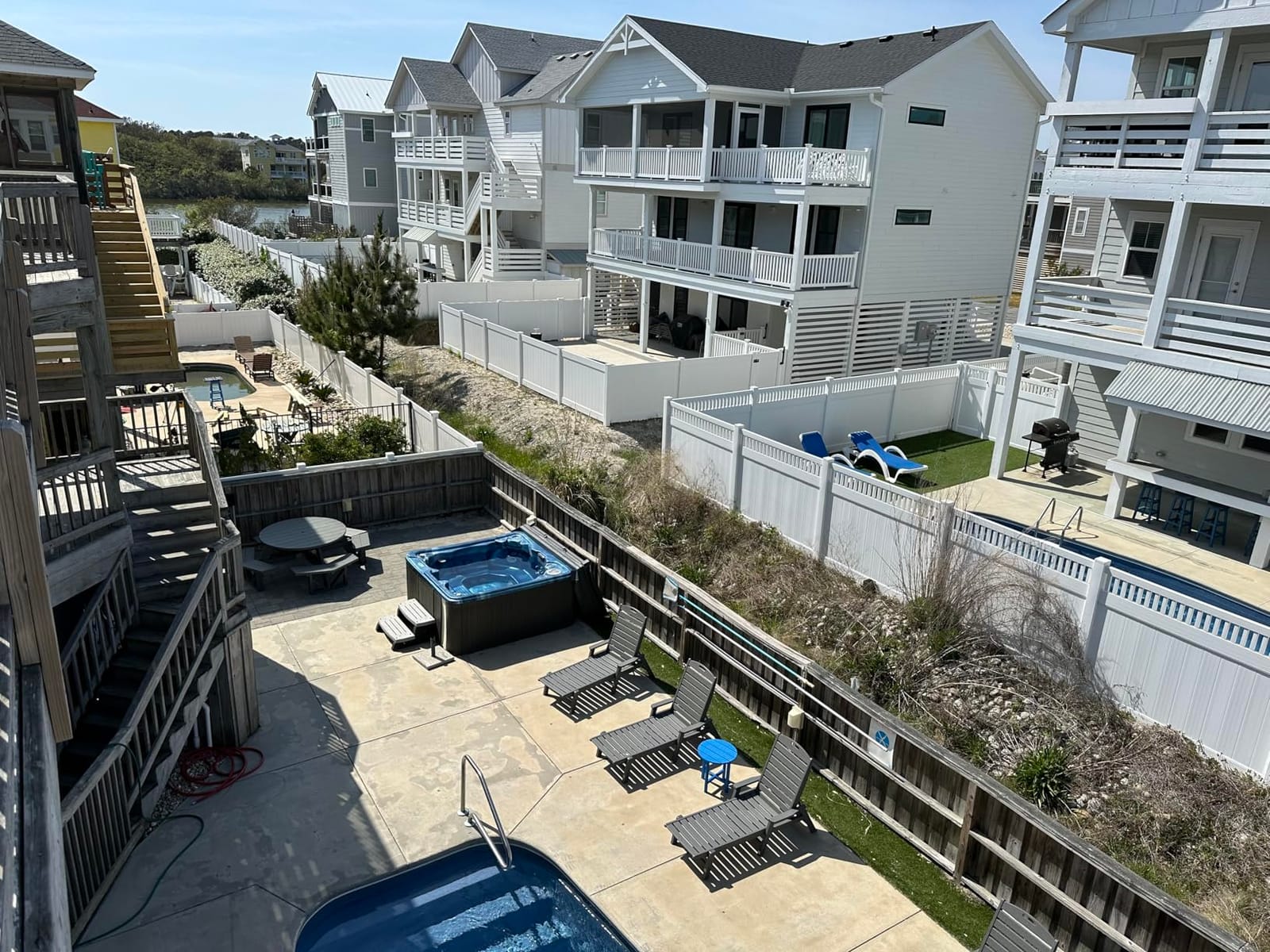
Owners value the three-battery package, stabilised 4K video and sub-249 g portability, and the 69% five-star share reflects that. Creative options include auto cruise, follow, orbit, waypoint and a 120dB locator buzzer that helps you find a downed aircraft in scrub.
It rates 4.3 with 8% one-star reviews, which is mid-pack in this roundup. There is no obstacle avoidance, and the transmission is a Wi-Fi link rather than a dedicated digital system, so mountain launches are less predictable than a DJI or Potensic link.
What you get for the money
Three batteries, a 3-axis gimbal, a 1/2-inch sensor, GPS modes and a case, for less than a single battery costs on some flagships. If your budget is fixed and you want maximum airborne minutes, this package makes the arithmetic work.
The 31 mph top speed is also useful for repositioning between viewpoints, which matters when you are chasing a light window across a wide location.
Where to spend a little more
If you can stretch the budget, the Potensic Atom 2 gives you a faster three-battery charge, a 10 km digital link and a built-in touchscreen, all of which improve a full field day considerably. The DJI options add obstacle sensing.
As an entry point with real endurance, the F7MINI is a legitimate landscape tool rather than a toy, and it is the cheapest way into this list.
10. Ruko U11MINI 4K (RC3): A Built-In Screen Without the Phone
Ruko U11MINI 4K (RC3) Camera Drone for Adults with 5.5″ Touchscreen Remote
32 min per battery 64 min total
5.5-inch touchscreen remote
1/2-inch CMOS
3-axis gimbal
248 g
Pros
- Integrated 5.5-inch 1080p touchscreen remote removes the need to tether a phone
- 1/2-inch CMOS for 8K stills and 4K/30fps video with a 3-axis mechanical brushless gimbal
- Two batteries give 64 minutes of total flight time with PD 3.0 fast charging
- Under 249 g so no FAA registration or Remote ID is required
- 20000 ft R2 digital transmission works without Wi-Fi for better signal penetration
Cons
- Only two batteries included so 64 minutes total versus 96 on three-battery kits
- No obstacle avoidance or collision detection
- Best charging performance requires the separate PD65W charger
- Screen-based controller reduces battery runtime compared with a phone-only remote
The RC3 version of the U11MINI solves the single most annoying problem with budget drones: the phone tether. The integrated 5.5-inch 1080p touchscreen controller means you are not flying by holding a phone in one hand and a stick in the other, which matters enormously in cold wind and bright sun.
Endurance is the trade. Two 2200mAh batteries give 64 minutes total, which is 32 fewer minutes than the three-pack kits in this roundup. The camera is a 1/2-inch CMOS shooting 8K stills and 4K/30fps video on a 3-axis mechanical brushless gimbal, and the drone stays under 249 g.
The R2 digital system transmits to 20,000 ft and works without Wi-Fi, which means better signal penetration than a standard Wi-Fi link when you are flying a valley or a wooded edge. Reviewers mention the touchscreen remote first when describing why they bought it, followed by clear 4K footage and smooth gimbal work.
Limitations are clear. Only two batteries are included, there is no obstacle avoidance, and the screen-based controller draws more power than a phone-only remote. Best charging performance also needs the separate PD65W charger, which is not included.

Why a screen changes a field day
Framing a landscape shot properly means watching a small distant subject on a screen, and a 5.5-inch 1080p display makes that far easier than squinting at a phone in daylight. It also keeps your phone free for notes, timing and managing files while the aircraft is in the air.
For creators who shoot alone, that practicality often outweighs raw battery count, since fewer accidental flights and better framing mean fewer wasted batteries.
Where you should choose the three-pack instead
If you are covering a long golden hour and want to maximise airborne time, the same drone in the three-battery configuration elsewhere in this list gives you 96 minutes instead of 64. This pick is for the operator who values control and screen real estate over raw minutes.
Neither version has forward sensing, so keep long approaches over obstacles manual.
How to Choose a Long Flight Time Drone for Landscape Work
Work through these five criteria in order. Skipping ahead to sensor size is how people end up with a beautiful camera they cannot keep in the air long enough to use.
1. Total airborne minutes per charge kit. Multiply the per-battery rating by the batteries included. A 32-minute pack sold in threes gives you 96 minutes of usable shooting time before charging, which is a completely different working day from a 32-minute pack sold alone. Then apply a 70% planning factor for wind, altitude and return-to-home reserve.
2. Sensor size, not headline resolution. A 1-inch CMOS holds detail at distance far better than a 1/3.2-inch sensor, and sensor area is what determines dynamic range in the shaded foreground of a sunrise shot. Resolution figures above 4K are mostly marketing on drones at this level; 4K/30fps versus 4K/60fps is the distinction that changes your edit.
3. Wind resistance, honestly assessed. Level 4 to Level 5 covers most calm-weather landscape work. Exposed cliffs, open ridgelines and coastlines push you toward Level 6, and the heavier airframe that delivers it is worth the extra carry weight. This is the factor forum photographers consistently tell you to prioritise.
4. Obstacle sensing and the terrain you actually fly. Sub-250 g models frequently carry downward-only sensors or none at all. If you fly wooded valleys, rock arches or cliff faces, omnidirectional sensing with forward LiDAR is worth real money, because it is the difference between a controlled approach and a scattered aircraft.
5. Weight class and registration friction. Under 249 g means no registration and no Remote ID for recreational flying in most regions, which is a genuine convenience for travel shooters. Above that threshold, registration is required and the aircraft is heavier in a pack. Balance that against the wind performance you lose in a light body.
One more consideration most buyers overlook: aperture and ND filter support. A fixed aperture is manageable in open shade and genuinely painful at golden hour, when you need to reduce light to hold a 1/50 second shutter at 24fps. The DJI Mini 5 Pro and Potensic Atom 2 are the two in this list that bundle ND filters or support them cleanly.
Regulations vary by country, so check the aviation authority for wherever you are shooting. National parks and protected wilderness areas frequently restrict or prohibit drone use regardless of registration status, and the 400 ft altitude ceiling is a legal limit rather than a technical one. If you are moving gear between shoots, our guide to the best DJI flight cases covers protecting batteries in transit.
Battery Rotation for a Full Landscape Shoot Day
Owners ask about this constantly, and the answer is simpler than most people expect. Plan for four to six batteries per drone for a full day, and treat the charging hub as a rotation tool rather than an overnight charger.
Start with a two-battery rotation. Fly pack one while pack two charges, land, swap, and fly pack two while pack one charges. With the parallel hubs that ship with most of these kits, three batteries refill in roughly 1.3 hours, so a full three-pack rotation completes inside a lunch stop.
Charge in the vehicle where you can. A 12V socket or a PD power bank keeps the rotation going between locations, and the Holy Stone hub doubles as a power bank for the controller and phone. Controllers typically outlast roughly nine flight batteries, so you will not need a controller charge during a normal day.
Two habits protect your endurance over time. Keep batteries at partial charge in storage rather than full or empty, and let packs return to room temperature before charging in cold conditions, since lithium polymer cells recover less capacity in the cold. Forum reports of batteries losing minutes after two to three years of regular use usually trace back to heat and storage practice rather than the cells failing.
Finally, fly with a reserve plan rather than to the last percentage. Returning into a headwind costs more power than the outbound leg, and a landscape location is never closer than it looks. Plan on your last shot landing with a meaningful margin, and the rated figure stops being a number you chase.
Frequently Asked Questions
Which camera drone has the longest flight time?
The DJI Mini 5 Pro leads this roundup with up to 52 minutes per Intelligent Flight Battery Plus, and it stays under 249 g. Among kits sold with multiple batteries, the DJI Mini 4K Fly More Combo, Potensic Atom 2, Ruko U11MINI 4K and Bwine F7MINI all give 93 to 96 minutes of total airborne time. In practice, plan on roughly 70% of the rated figure once wind and a return-to-home reserve are included.
Which drone is best for videography?
For landscape video specifically, the DJI Mini 5 Pro combines the largest sensor under the 249 g weight limit with the longest per-battery endurance in this roundup. If you shoot exposed coastal or highland terrain, the Holy Stone Saturn T60A adds Level 6 wind resistance and 90 minutes of total flight time. Newcomers get the most usable time from the Potensic Atom 2 three-battery kit.
Which drone has the longest flight distance?
Transmission range is a separate figure from flight time, and the best numbers here belong to the DJI Mini 4K, DJI Mini 3 Pro, Potensic Atom 2 and Holy Stone Saturn T60A, all rated at 10 km or more. In practice, the useful range is limited by line of sight, terrain and the return reserve rather than the headline figure, so long range matters most on open mountain launches.
Which drone is best for filmmaking?
The DJI Mini 5 Pro is the strongest overall filmmaking pick here thanks to its 1-inch CMOS, 4K/60fps HDR recording, forward-facing LiDAR and 42GB of internal storage. If you work night landscape sequences, the Ruko F11PRO 2 Plus offers the best low-light performance in this group. Professional cinema work needs an aircraft with a much larger sensor than anything in this roundup.
How windy is too windy for a drone?
Most sub-250 g drones are rated to Level 5 wind resistance, around 10.7 m/s, and that covers most calm and moderately breezy conditions. Above roughly 8 m/s sustained, a light aircraft starts drifting and burning extra power just to hold position. Exposed ridges and coastlines push you toward a Level 6 aircraft, and it is reasonable to simply not fly when gusts exceed the published rating.
What is the wind resistance of the Mavic Pro 3?
The DJI Mavic 3 Pro is not in the lineup we compared, and its wind figure sits below the Level 6 rating of the Holy Stone Saturn T60A, which is the highest wind rating among the ten drones we tested. Most sub-250 g models here, including the DJI Mini 3 Pro and Bwine F7MINI, are rated to Level 5 resistance around 10.7 m/s.
Conclusion
The DJI Mini 3 Pro is our pick for the best long flight time drones for landscape video overall, because its 4.7 rating across more than 9700 reviews reflects a camera and flight system that holds up in changing wind without asking you to compromise on vertical framing or portability.
Pick the DJI Mini 5 Pro if sensor size and per-battery endurance come first, the Holy Stone Saturn T60A if you shoot exposed coastal or highland terrain, the Ruko F11PRO 2 Plus if your work happens at dusk and after dark, and the Potensic Atom 2 if you want the most airborne minutes per charge kit without a large outlay.
Whatever you choose, plan against 70% of the rated figure and rotate four to six batteries through the day. That single habit does more for the footage you bring home than any feature on the spec sheet, and it is what separates a full sequence from three usable shots. Check the current listings and owner reviews before you commit, since this lineup is refreshed for 2026.