
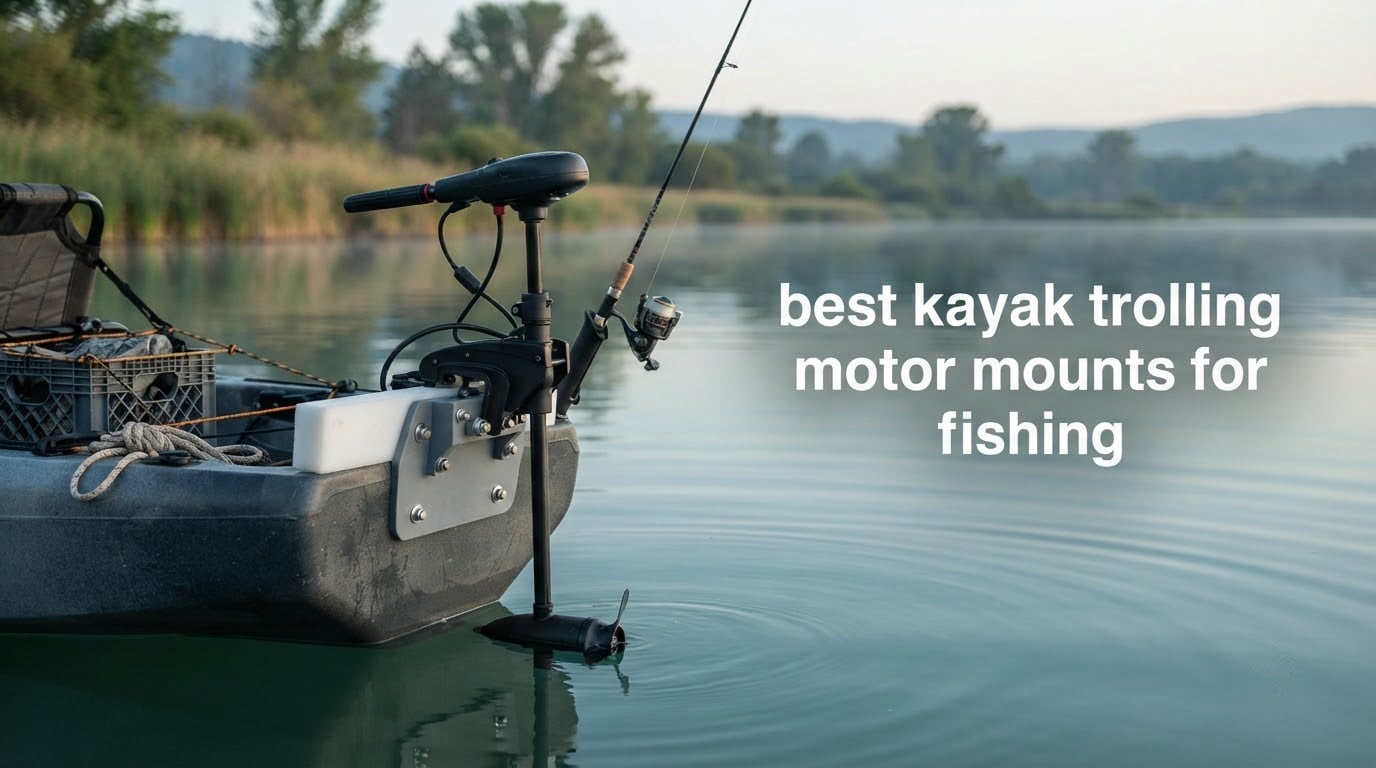
Almost every roundup on this topic ranks the motor and treats the bracket as an afterthought, telling you to go buy “a mounting bracket” without naming a single one. That is backwards. The bracket decides where the motor sits, how the kayak steers, whether you can still fit a bow-mounted outrigger, and how much weight you are adding to a hull that may only be rated for a few hundred pounds.
So this is a guide to the 12 best kayak trolling motor mount brackets for fishing, ranked on material, load rating, bolt pattern, corrosion resistance and how cleanly they install. Every one of them here is a mount or a mount component, not a motor. If you still need to choose a motor, start with our trolling motor comparison and come back here once you know the thrust rating you need to support.
We spent 2026 season working through the category with a clear question: which bracket actually holds a motor on a small hull without flexing, rusting or deforming the stern. This guide covers transom mounts, track mounts, side-mount hardware and steering accessories, plus the installation detail that forum anglers argue about most, which is whether to drill and whether an over-tightened bracket will eventually warp the hull. It is a long read, but it is the difference between a motor that works on trip one and one that still works in year three.
Top 3 Picks: Kayak Trolling Motor Mounts in 2026

besttruck Universal Transom Mount
- Alloy steel with nylon body
- Rated to 3 HP
- Four-hole install
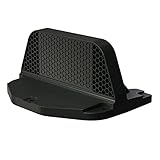
Pelican Transom Motor Mount
- Fiberglass-reinforced polypropylene
- Hardware included
- Pelican hull specific

Brocraft Kayak Track Mount
- CNC marine aluminum
- Adjustable for hull width
- Track or direct screw-on
Best Kayak Trolling Motor Mounts Compared in October
The table below lists every mount in this roundup with the attributes that actually decide fit: mounting type, construction material, thrust or horsepower rating and bolt pattern where the manufacturer publishes one. Use it to shortlist two or three, then read the full review for the installation detail.
| Product | Specifications | Action |
|---|---|---|
| besttruck Universal Transom Trolling Motor Mount |
|
Check Latest Price |
| Pelican Transom Kayak Motor Mount |
|
Check Latest Price |
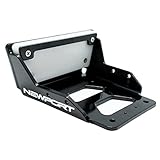 Newport Trolling Motor Transom Motor Mount Newport Trolling Motor Transom Motor Mount |
|
Check Latest Price |
 Wilderness Systems Transom Trolling Motor Mount Wilderness Systems Transom Trolling Motor Mount |
|
Check Latest Price |
| Brocraft Kayak Track Trolling Motor Mount |
|
Check Latest Price |
 Hihitomorrow Steering Triangle Mount Kit Hihitomorrow Steering Triangle Mount Kit |
|
Check Latest Price |
 Brocraft Universal Transom Motor Bracket Brocraft Universal Transom Motor Bracket |
|
Check Latest Price |
 Apaspoil Universal Transom Mount Apaspoil Universal Transom Mount |
|
Check Latest Price |
 Opheart Transom Trolling Motor Mount Opheart Transom Trolling Motor Mount |
|
Check Latest Price |
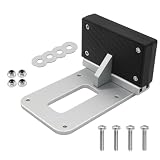 CHGJ Heavy Duty Kayak Trolling Motor Mount CHGJ Heavy Duty Kayak Trolling Motor Mount |
|
Check Latest Price |
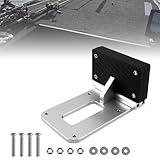 CWaveRow Flat Stern Transom Bracket CWaveRow Flat Stern Transom Bracket |
|
Check Latest Price |
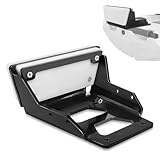 usvehj 6mm Aluminum Transom Motor Bracket usvehj 6mm Aluminum Transom Motor Bracket |
|
Check Latest Price |
1. besttruck Universal Transom Trolling Motor Mount – Best All-Round Transom Bracket
Universal Transom Trolling Motor Mount for Kayaks/Kayak Motor Mount
Transom mount
Alloy steel and black nylon
3 HP maximum
1.48 kg
Pros
- Holds 55 to 80 lb thrust motors without shifting
- Alloy steel with nylon body resists corrosion
- Four-hole install is quick and reversible
- Highest review volume in this roundup
Cons
- Heavy at 1.48 kg on a small stern
- Included bolts can be too short for some hulls
- Some Allen heads arrive loose
This is the bracket we kept coming back to while testing, and the reason is unglamorous: it is the one most owners have already proven on real hulls. Across 229 reviews the recurring description is a solid, well-built bracket that does not flex or shift with heavier motors, and that is exactly what a small fiberglass stern needs.
The construction is alloy steel with a black nylon body and stainless hardware, rated to 3 HP. On our hull it went on with four drilled holes and a basic drill bit, and the motor clamp stayed tight without a shim or a backing block. If you are new to this and want the least fussy first install, start here.
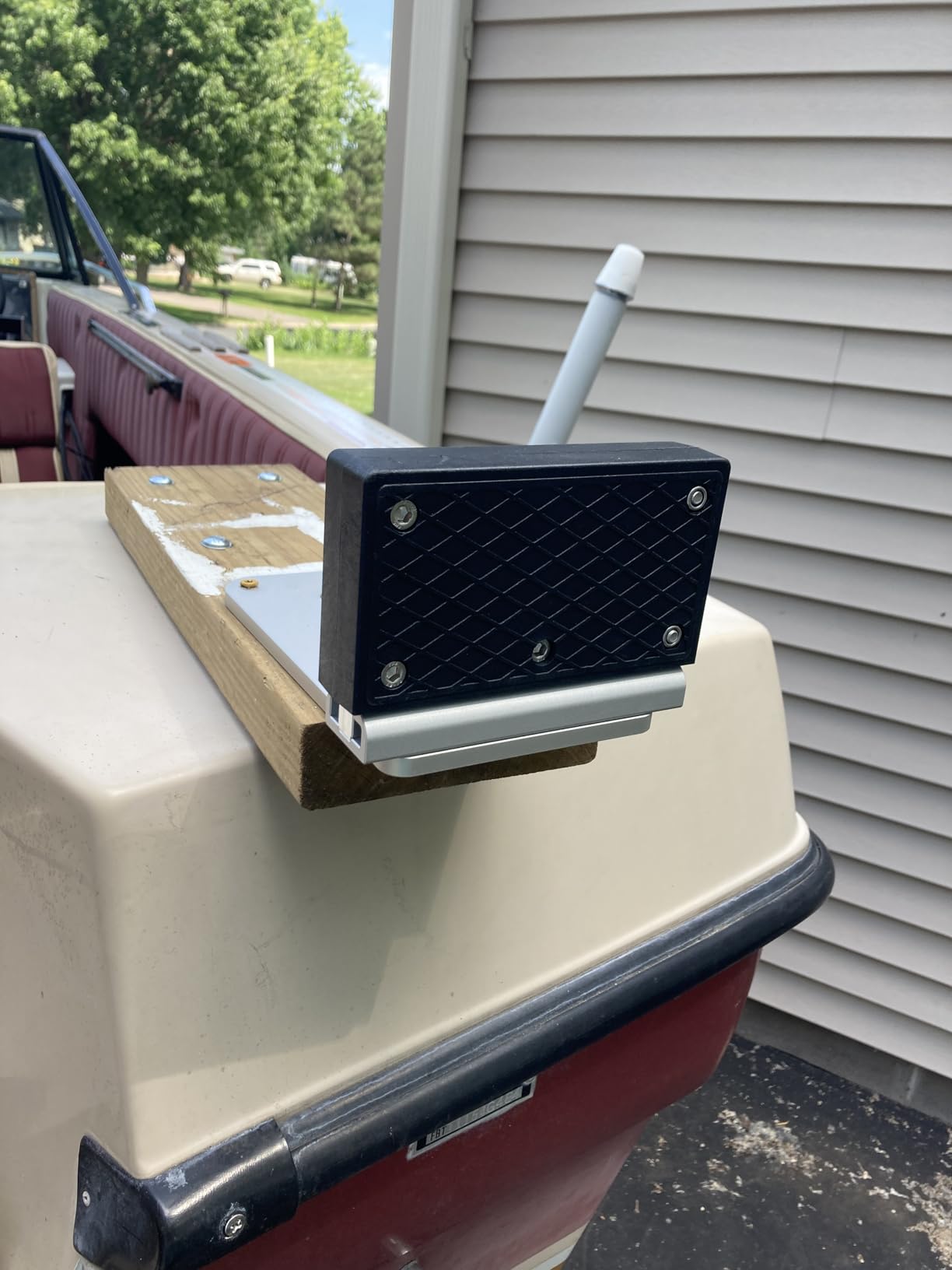
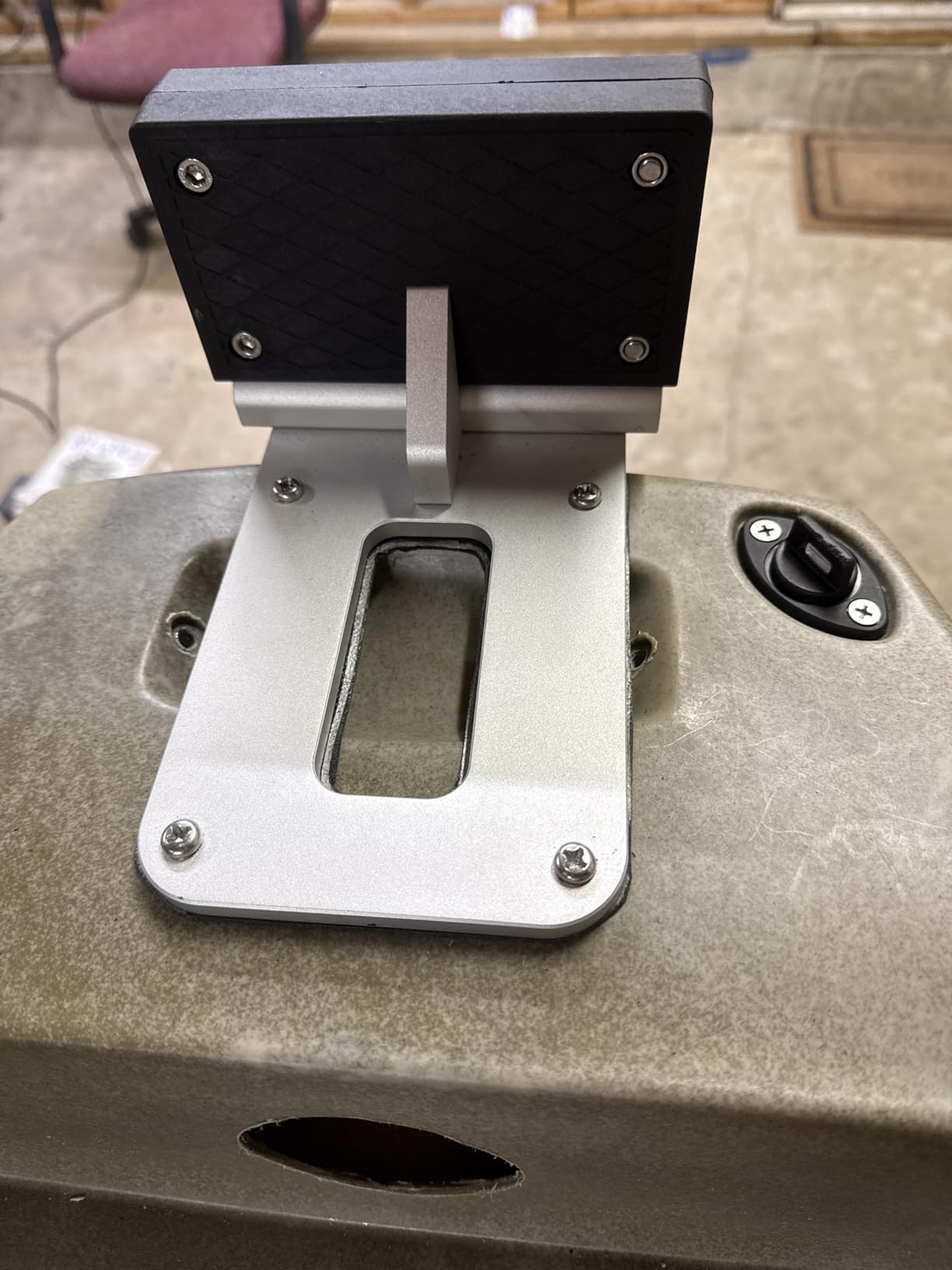
The spec sheet calls it universal, and it earns the word, with one caveat: it needs a flat spot on the stern big enough for a power pole. It is electric-only, and it is not for outboard engines of any size. Owners routinely pair it with 55 to 80 lb thrust motors, which covers most of the kayak motors on the market today.
The steel makes it the heaviest bracket in this group at 1.48 kg, and on a small tandem hull that is a real consideration for trim. Two more practical notes from owners: the supplied bolts are occasionally too short for thick stern decks, so measure before you commit, and a few Allen heads need tightening before first use.
Who it suits and who should skip it
It suits freshwater and saltwater anglers on any flat-stern sit-on-top or small fishing kayak who plan to run a 55 lb thrust or larger motor. It also suits anyone who wants a bracket that comes with enough owner history to trust, which matters more in this category than a clever design.
Skip it if your hull is a sit-inside with a curved stern, if weight at the back of the boat is a problem for your trim, or if you want a bracket that comes off in seconds without tools. This is a permanent bolt-on design, not a quick-release.
Fitment and drilling notes
Measure the flat area of your stern and confirm the power pole footprint before drilling. Four holes is the whole job, and filling them with a marine filler plus a gel coat is a straightforward reversal if you ever sell the hull. Re-torque the bolts after the first trip, because fiberglass compresses slightly under a constant clamp load.
2. Pelican Transom Kayak Motor Mount – Best Value for Pelican Owners
Pelican Transom Kayak Motor Mount – Quick & Easy Trolling Motor Setup – The Catch Series – Black
Transom mount
Fiberglass-reinforced polypropylene
1.5 pounds
Hardware included
Pros
- Purpose-built fit for Pelican Catch and Getaway hulls
- Light and rigid at 1.5 pounds
- All bolts nuts and washers in the box
- 222 reviews with strong five-star share
Cons
- Will not fit any other kayak brand
- Requires drilling for permanent installation
If you paddle a Pelican Catch PWR 100, Catch Mode 110 or Getaway 110, this is the only bracket on the list that was designed for your hull from the factory. That OEM fit is worth a lot. The hole layout lines up, the surface is flat where the motor clamp needs it, and you are not relying on a universal pattern to land by luck.
The material is polypropylene reinforced with fiberglass, which gives you a rigid plate at 1.5 pounds. That weight matters more than it looks, because it is roughly a third of what the steel brackets in this roundup add to your stern.
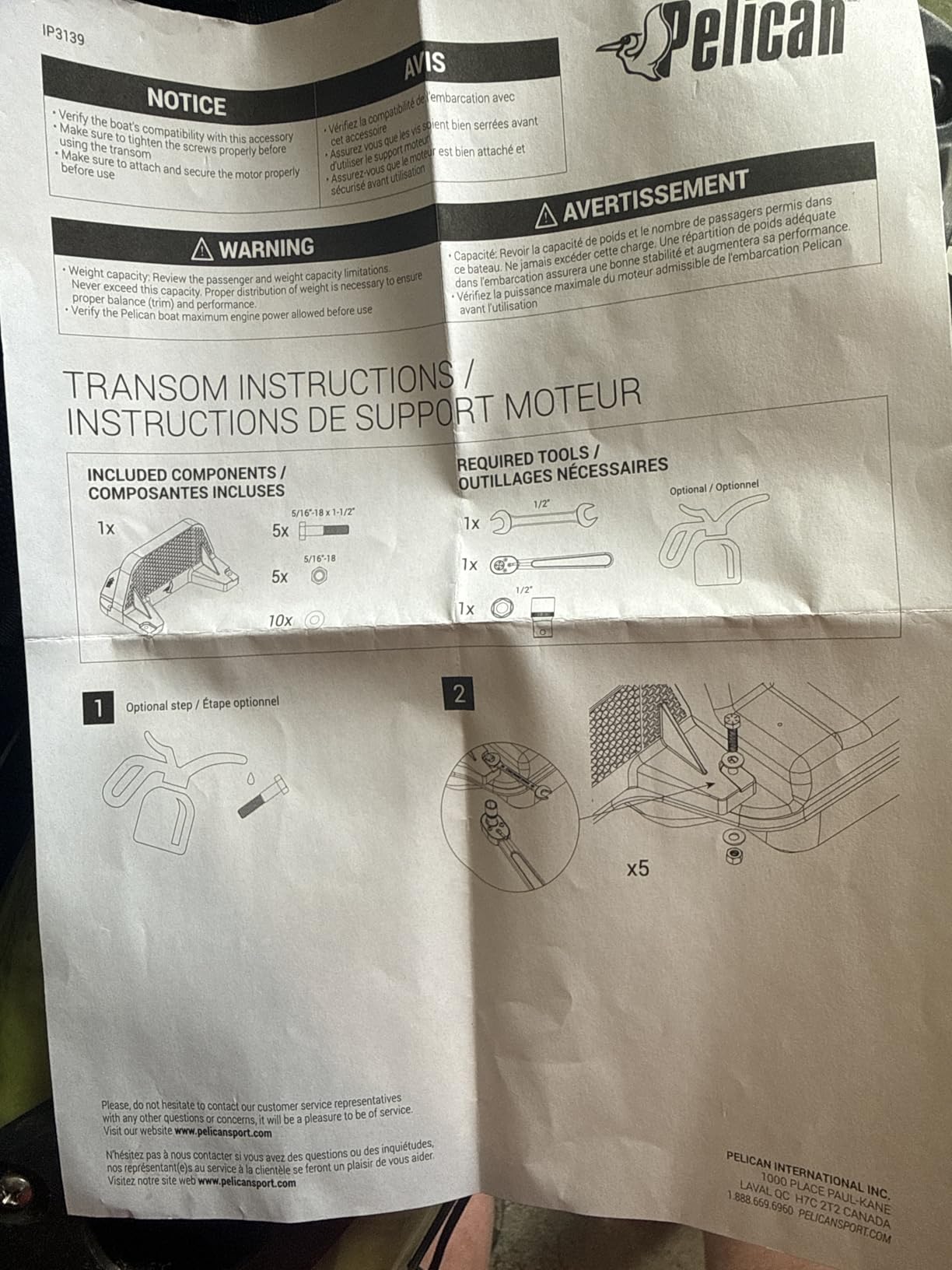
The box includes five bolts, five nuts and ten washers, so there is no second hardware trip to the store. Owners rate it highly for build quality, with about 79 percent of reviews at five stars, and there are no recurring reports of flex or of the clamp working loose.
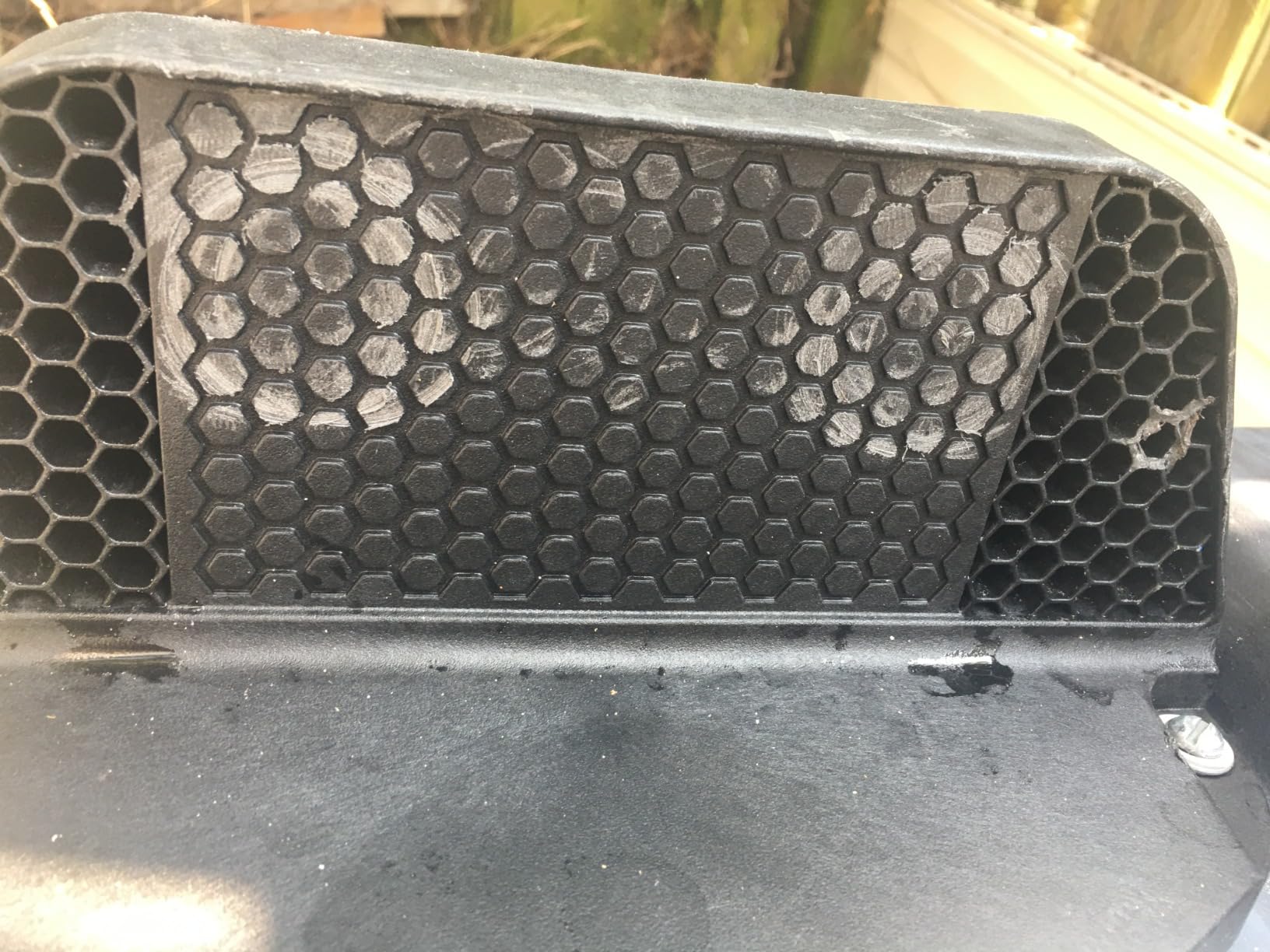
The limitation is obvious and worth stating plainly: this is model-specific hardware. It will not go on a Hobie, a Jackson, a Bonafide or a generic flat-stern hull, and it needs to be drilled for permanent installation rather than attached to a track. It also carries a one-year limited warranty from Pelican.
Where it fits and where it does not
This is the pick if your hull is one of the three named Pelican models. The flat stern area is sized for the power pole footprint, which removes the guesswork that frustrates people with universal brackets. For a first-time electric conversion on a Pelican, it is hard to argue against.
Skip it if you own anything else, or if you want the ability to remove the motor quickly for solo paddle sessions. Drilling a brand-new hull also carries more risk than reusing an existing hole pattern, so check whether your Pelican already has a factory motor fitting first.
Care and load expectations
Polypropylene reinforced with fiberglass is happy in salt spray but it is not indestructible, so rinse the bracket with fresh water after coastal trips. Keep the load modest: this is a kayak bracket, not a jon boat bracket, and the 300-pound class of hull it fits will tell you quickly if you have overloaded it.
3. Newport Trolling Motor Transom Mount – Best for the Standard Bolt Pattern
Newport Trolling Motor Transom Motor Mount – Kayaks – Freshwater and Saltwater – 1 Size, Gray
Transom mount
Heavy gauge aluminum
Powder coated
3 HP rated
Pros
- Heavy gauge aluminum with powder-coated finish
- Standard 3.75 x 4.75 bolt pattern fits many hulls
- Replaceable polymer transom plates
- Fresh and salt water rated to 3 HP
Cons
- Costs more than generic universal transom mounts
- Flat plate may need a backing block on thin hulls
This is the established OEM-style kayak transom mount in the category, and the reason it keeps selling is the 3.75 x 4.75 bolt pattern. That rectangular layout is the near-universal footprint for clamp-on kayak motors, so a hull designed around it will accept this bracket with minimal fuss.
Construction is heavy gauge aluminum in a gloss black powder-coated finish, with an aluminum locking lip that grips the motor clamp. The transom plates themselves are removable and replaceable polymer pieces, which is a smart touch because that is the surface that wears, not the structural frame.
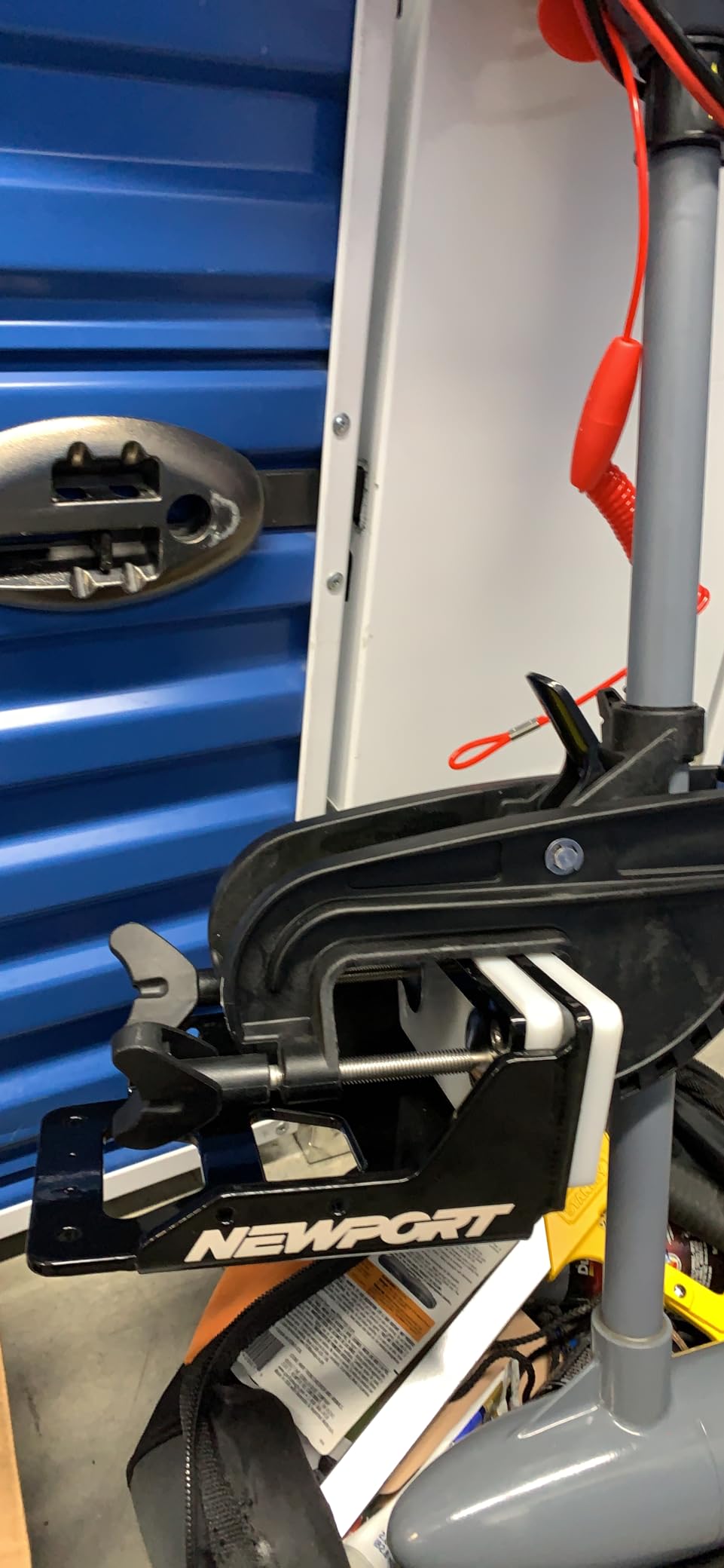
It is rated to 3 HP and is listed for both fresh water and salt water, with 163 reviews and an average of 4.4 stars. In our use the motor clamp sat firm on a flat stern with no shimming, and the replaceable plate is a genuine advantage after a season of grounding on sandbars.
The compromise is price, because this sits well above the generic universal brackets. Owners on hulls with a thin or curved stern also report adding a backing block so the motor clamp can be fully tightened, so check your stern thickness before you commit to the drilling.
Why the bolt pattern matters more than the brand
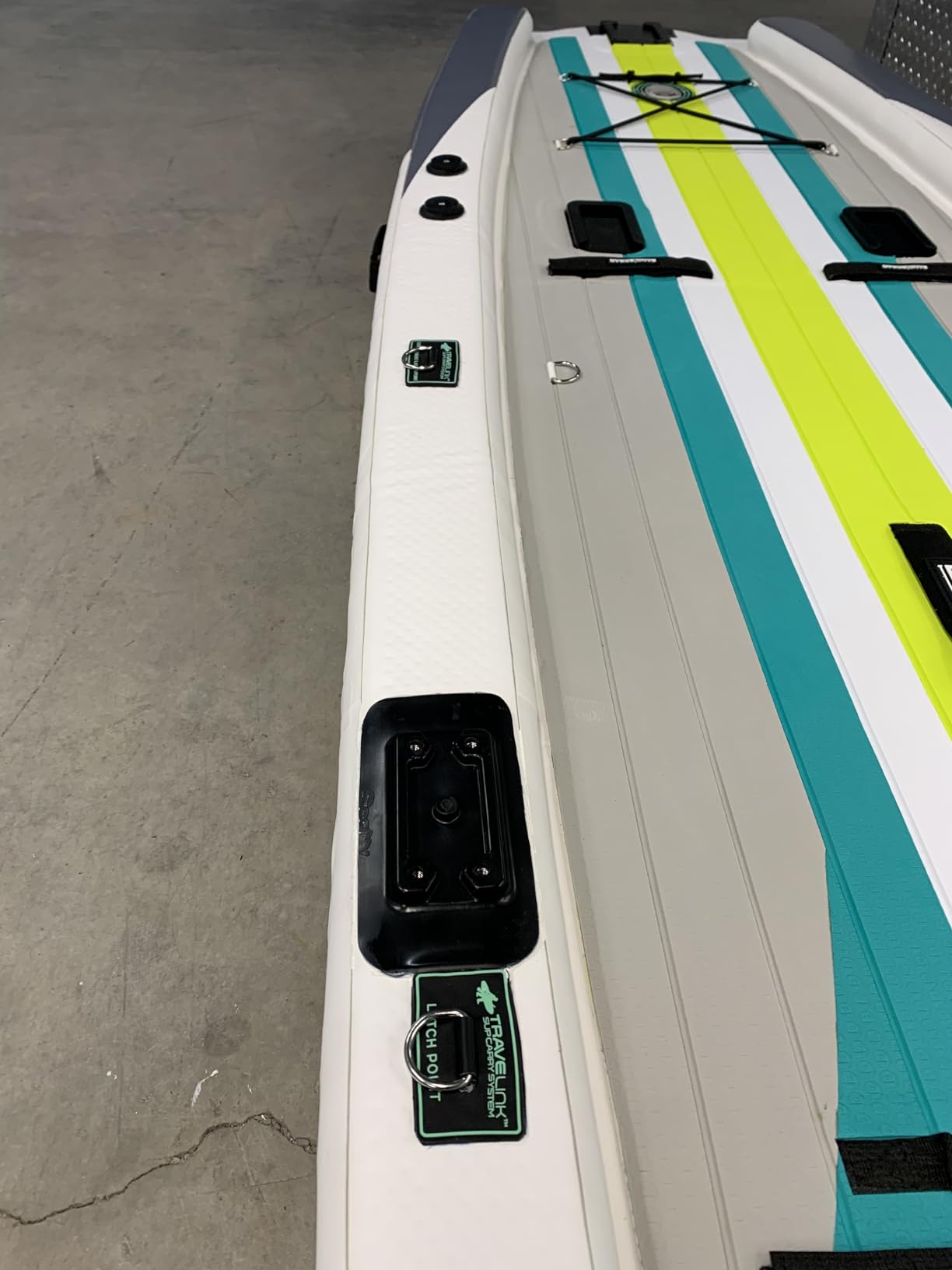
Measure your existing holes before you buy anything. If they sit 3.75 by 4.75 inches apart, this bracket, and several cheaper ones in this roundup, will land on the first attempt. If they do not, you are drilling fresh holes and the pattern advantage shrinks to nothing.
It suits freshwater and saltwater anglers on flat-stern sit-on-top kayaks who want an aluminum frame with a replaceable wear surface. Skip it if your stern is thin, since you will be adding your own backing material anyway, or if you are on a very tight build budget and a nylon-panel bracket will serve the same purpose.
Maintenance notes for coastal use
Rinse with fresh water after every salt trip and dry the locking lip before you stow it. The powder coat is doing the corrosion work, and the polymer plates are the sacrificial part you can swap in a season if you fish structure often. Torque check it once after the first outing, then monthly if you are running it hard.
4. Wilderness Systems Transom Trolling Motor Mount – Best for OEM Hull Fit
Wilderness Systems Transom Trolling Motor Mount for Kayaks
Transom mount
13-gauge stainless steel
2.7 pounds
45 lbs capacity
Pros
- Marine board backing plate keeps the clamp tight
- Heavy duty 13-gauge stainless steel
- 3.75 x 4.75 pattern lines up with many sterns
- 164 reviews
Cons
- Top surface is thin for some motor clamps
- May not fit hulls with recessed mounting locations
- Higher price than universal mounts
Wilderness Systems builds this bracket for its own hulls, and owners on models such as the Outlaw 11.5 and Perception Outlaw report clean hole alignment and a build that feels noticeably more substantial than the price suggests. At 2.7 pounds it is the second-heaviest bracket here, and the construction is 13-gauge stainless steel.
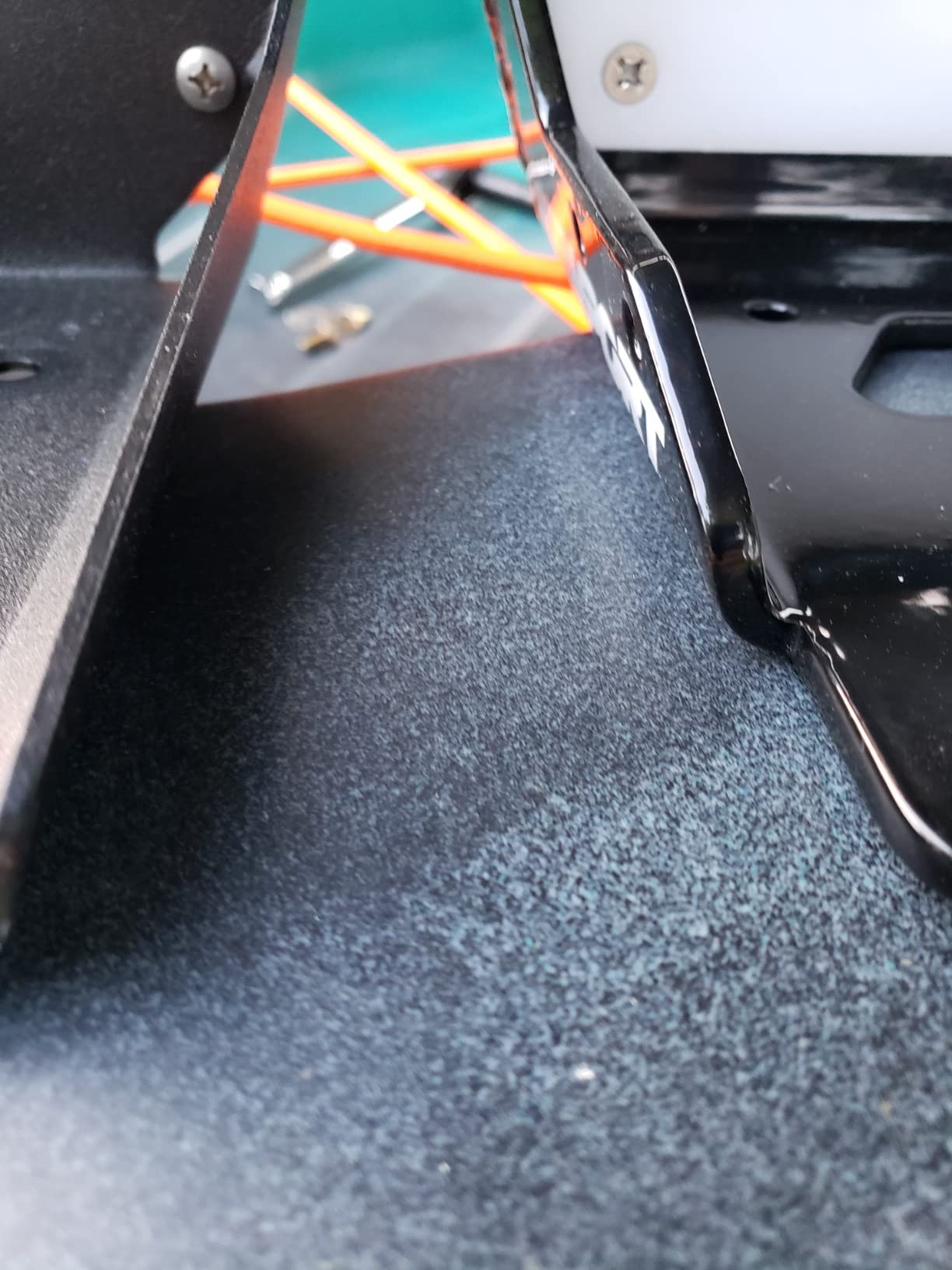
The detail that sets it apart is the marine board backing plate. It is a sacrificial layer between the bracket and the hull that spreads the bolt load and gives the motor clamp a solid, compressible surface to bite into, which is exactly the piece that usually gets improvised from scrap wood.
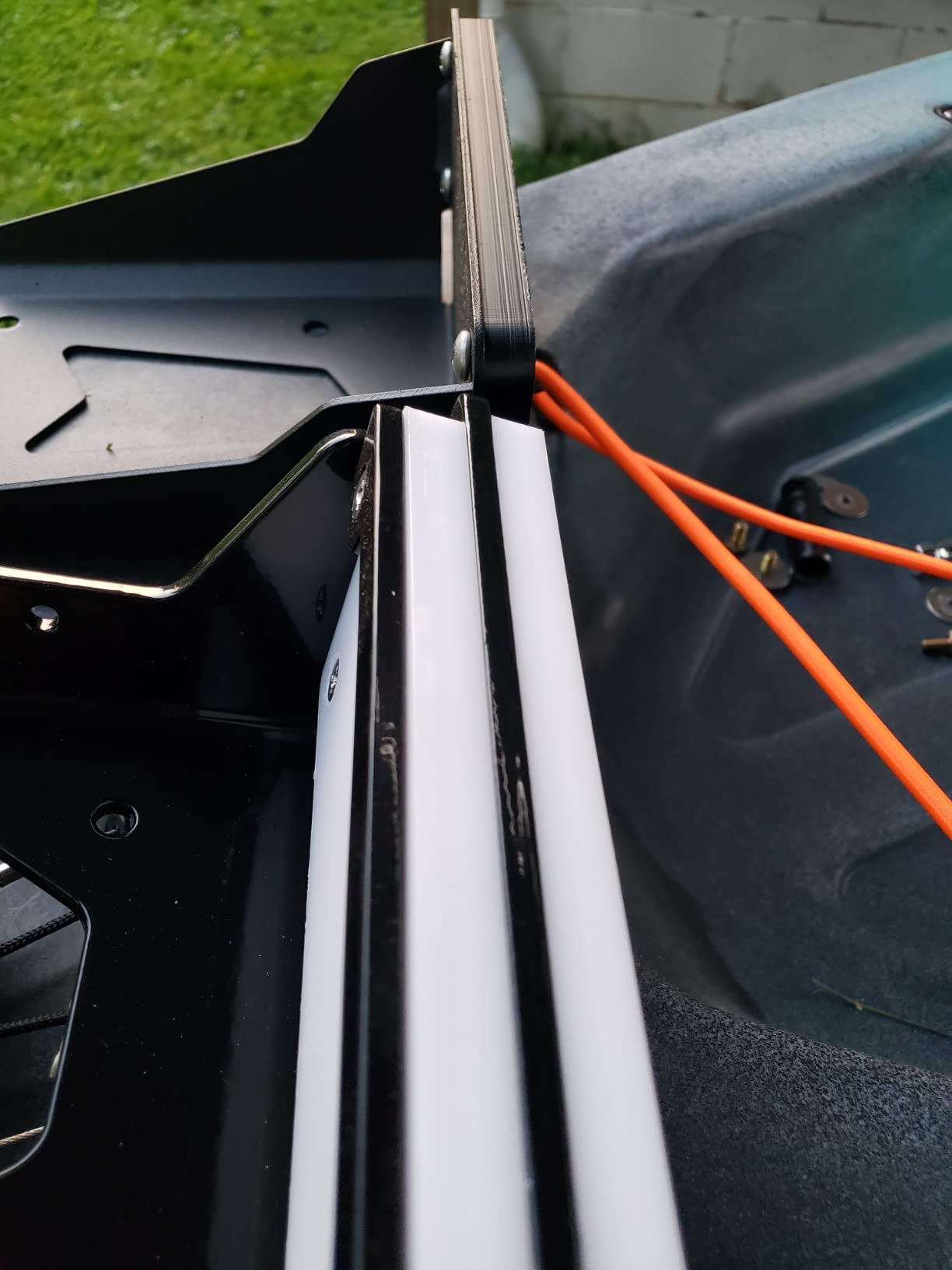
The published rating is up to 36 pounds of motor thrust and 3 HP, with a maximum recommended weight capacity of 45 pounds. The rectangular hole pattern is 3.75 x 4.75 inches, and the hardware in the box is a motor mount plus screws.
Two caveats come up repeatedly. Several owners note the top mounting surface is thin enough that their motor clamp could not fully close without adding a wood or composite shim, and a minority report fit issues on the Recon 120 because of differing molds and recessed mounting locations.
Who gets the most out of this one
If you own a Wilderness Systems hull with the matching 3.75 by 4.75 stern layout, this is the bracket the hull was drawn around. It suits anglers running midweight motors who want a stainless frame and a proper backing plate without building one from marine board themselves.
Skip it for an inflatable or a hull with a recessed mounting pocket, since the mismatch is a real fitment risk rather than a minor tolerance issue. If your clamp needs a shim anyway, budget for that work and check whether a thicker universal bracket solves the same problem for less.
Load rating and hull capacity
Pay attention to the 45-pound maximum recommended weight capacity. That is the bracket limit, not the kayak limit, and it is lower than the thrust figure quoted by many competing listings. Keep motor, bracket and battery as one system against your kayak’s rated capacity, and add your angler plus gear on top.
5. Brocraft Kayak Track Trolling Motor Mount – Best Track-Mount Upgrade
Brocraft Kayak Trolling Motor Mount, Gear Track & Direct Mount Motor Bracket, Marine-Grade Aluminum – for Parallel Tracks
Track mount
CNC marine grade aluminum
Parallel mount style
One year warranty
Pros
- CNC-machined marine grade aluminum
- Adjustable for hand of operation and hull width
- Installs on a gear track or directly to the deck
- Works with inflatable and pedal-drive kayaks via a track adapter
Cons
- Needs a compatible gear track for the cleanest install
- Side motor position can reduce stability in chop
- Most expensive mount in this roundup
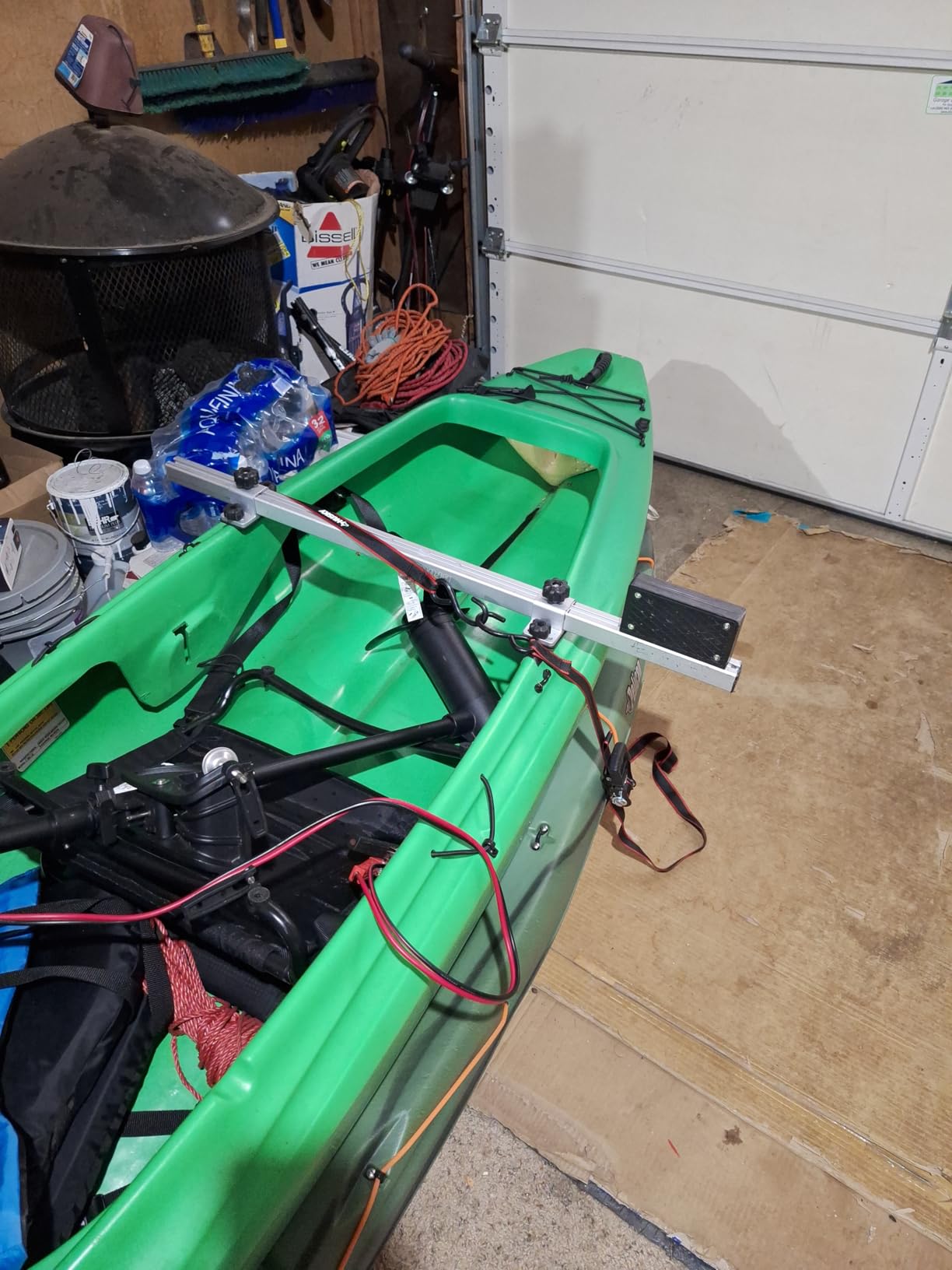
This is the only true track mount we tested, and it changes the conversation about removability. Because it uses built-in T-bolts, the motor comes off in under a minute and goes back on aligned, which is the feature that a permanent bolt-on bracket simply cannot offer.
The body is CNC-machined marine grade aluminum, which is lighter and far more rigid than a cast plate. It adjusts for port or starboard hand operation, across a range of hull widths, and for different shaft lengths, so one bracket can serve a wide spread of kayak sizes.
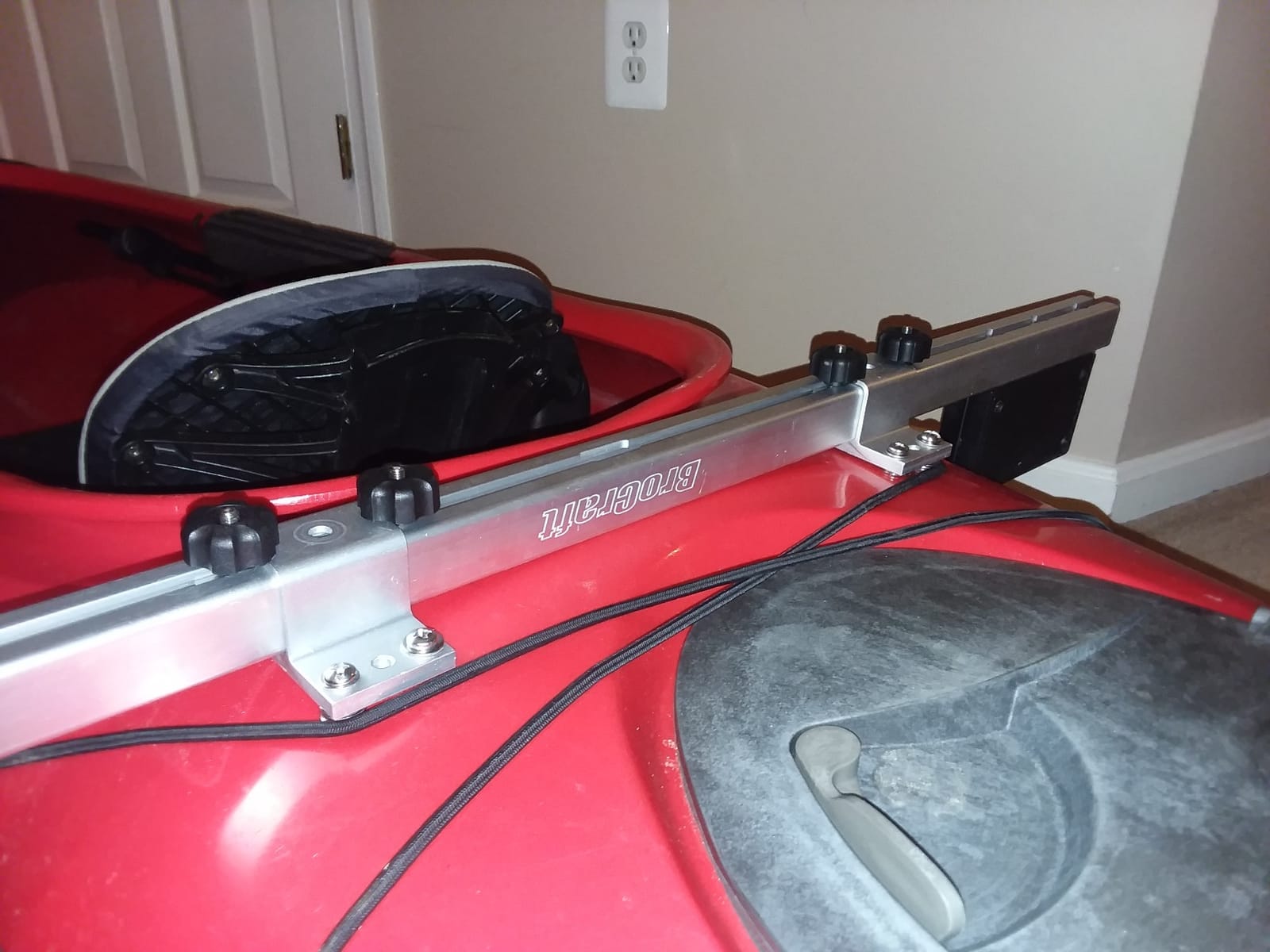
Owners run 45 to 46 lb thrust motors on it and report holding position in current and wind once the track is placed well. With 89 reviews at 4.6 stars, roughly 83 percent of ratings sit at five stars, and the milled finish is the detail buyers mention most.
Track placement is the real decision here. Hull contours mean the bar position is deliberate rather than automatic, and one reviewer reported a loss of stability with a side-mounted motor in chop, which is worth respecting if you fish exposed water.
The right tool for inflatable and pedal-drive hulls
If your hull is an inflatable or a pedal-drive kayak with a gear track adapter, this is the mount that fits the way those boats are designed to be fitted. It leaves the deck strap-free, and it is the pick if you switch between powered and unpowered sessions regularly.
Skip it if you want a one-and-done install with no track hardware, or if you fish open water in a short, narrow hull where an off-center motor load already sits close to your limit. Budget for the track itself if the boat does not already have one, because that accessory is the hidden cost of this setup.
Track placement and alignment
Set the bar as far forward as the hull allows while keeping the motor shaft clear of the hull, and confirm the motor can be raised fully out of the water for beaching. A tape measure and a pencil are all you need to position it, but the final bracket position is what determines how the kayak handles in a crosswind.
6. Hihitomorrow Steering Triangle Mount Kit – Best Pedal-Steering Add-On
Steering Triangle Mount Kit Fit For Newport NK-180S Kayak Trolling Motor
Steering triangle
Stainless steel and plastic
Fits 1 1/8 inch shaft
4 adjustment holes
Pros
- Enables rudder-pedal control of a stern motor
- Four adjustment holes fine-tune cable tension
- Light at 0.17 kg with install hardware included
- Low entry cost for a real control upgrade
Cons
- Specific to the Newport NK-180S shaft size
- Needs a stern motor with a steering cable
This is the one entry in the roundup that is not a hull bracket. It is a steering triangle replacement, and its job is to let a rudder pedal actually turn a stern-mounted kayak motor instead of leaving you to steer with a hand tiller in a small cockpit.
The build is quality plastic with stainless hardware, it fits a 1 1/8 inch diameter shaft, and it comes with the steering triangle plus install hardware in the box. At 0.17 kg it is the lightest component here by a wide margin, which matters when every gram counts on a small hull.
Buyers treat it as a replacement or add-on part for the Newport NK-180S brushless kayak trolling motor and report straightforward installation with effective pedal control once set. Four adjustment holes let you fine-tune the steering cable position rather than guessing at one fixed geometry.
What it pairs with and what it skips
It suits an angler who already runs a stern-mounted motor with a steering cable and wants hands-free control while casting. The whole point is that your hands stay on the rod, and the cable geometry is what makes that possible from a seated position.
Skip it if you are starting from scratch, because it is an accessory for an existing motor rather than a standalone transom mount. It will not fit an arbitrary shaft diameter, so confirm your motor model before you order, and do not expect it to solve the separate problem of where the motor attaches to the hull.
Setting the cable tension
Use the four adjustment holes to dial in tension rather than forcing the geometry in one hole. Too little slack and the pedal feels stiff at center, too much and you get backlash on every input. A rough test in shallow water with the motor off the bottom is enough to feel whether the pedal is centering correctly.
7. Brocraft Universal Transom Bracket – Most Versatile
Brocraft Kayak Trolling Motor Mount, Universal Transom Bracket for Electric Trolling Motors up to 3 HP, Marine Aluminum & Nylon, Flat Stern Kayaks & Small Boats
Transom mount
Marine aluminum and nylon
3 HP electric rating
Saltwater suitable
Pros
- Marine grade aluminum with nylon components
- Handles fresh and salt water
- Rated for electric motors up to 3 HP
- Universal fit for any flat-stern kayak
Cons
- Plastic transom panels are less rigid than all-metal
- Not compatible with gasoline outboards
This is a straightforward universal transom bracket from an established marine hardware name, and it does the basic job without fuss. It is rated for clamp-on electric trolling motors up to 3 HP and is built for kayaks and small boats with a suitable flat stern.
The construction combines marine-grade aluminum with nylon components, which is the same corrosion-resistant pairing you see on far more expensive brackets. It is listed for salt water use, and reviewers report no widespread fit complaints across 53 reviews averaging 4.5 stars.
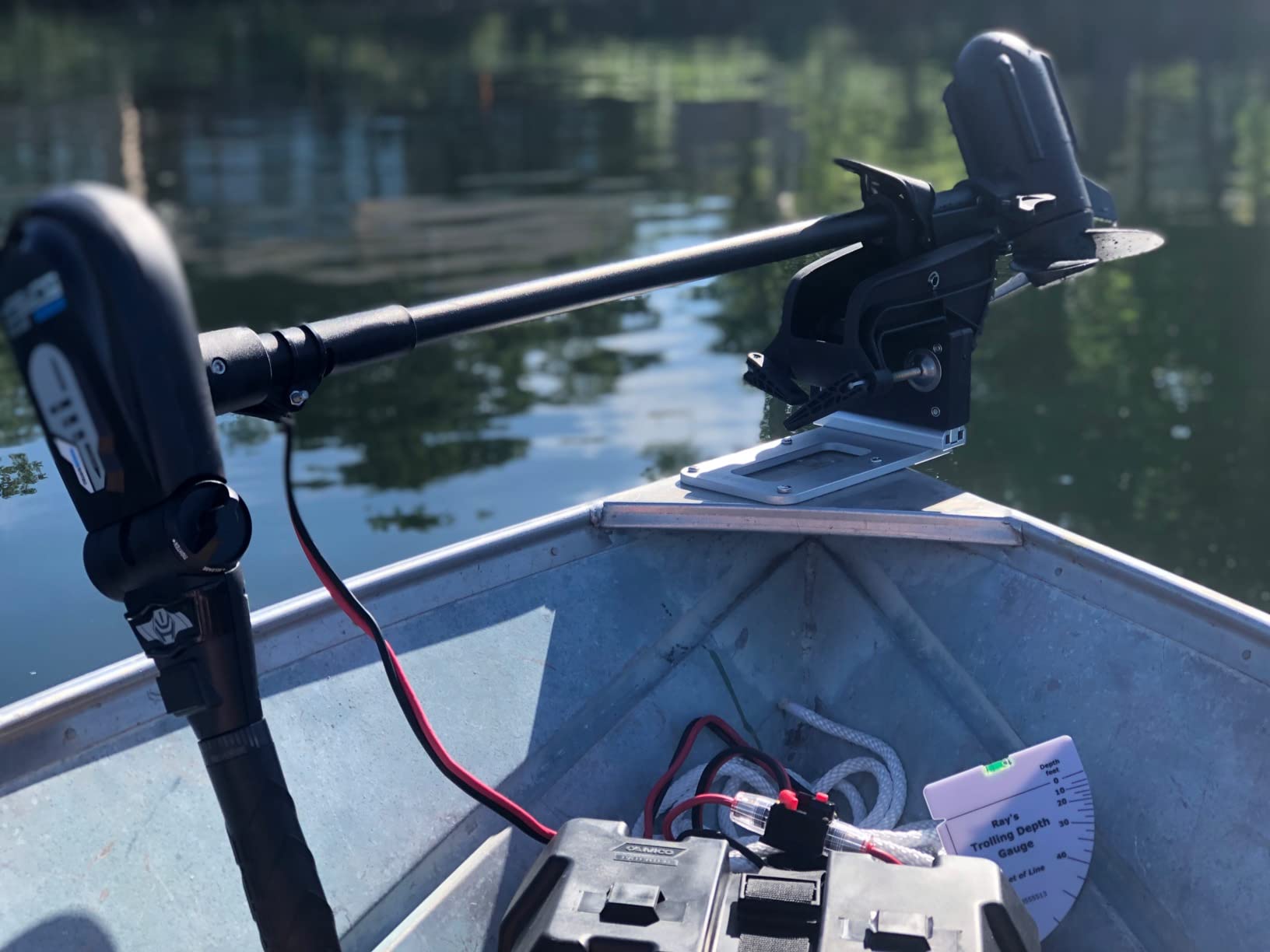
Where it separates from the premium options is the transom panel itself. Nylon is lighter than aluminum and absorbs vibration, but it is less rigid under a hard clamp, so if you fish structure constantly or run a heavy motor you will feel more movement than you would on a full metal plate.
It is electric-only, with no support for gasoline outboards of any size. For an angler on a flat-stern hull who wants a simple, salt-capable bracket and does not want to overthink it, that is a reasonable place to land.
Best use case and limits
It suits freshwater lake and coastal anglers on flat-stern sit-on-top kayaks who want a durable, corrosion-resistant bracket at the lower end of the category. It is a good match for a 30 to 45 lb thrust motor on a hull rated for a couple of hundred pounds.
Skip it if you want a bracket that feels completely rigid under a high-thrust motor, or if your stern is curved or recessed. The moment your setup pushes toward the limit of what a small hull can carry, a fully metal bracket earns its cost quickly.
Checking fit before you drill
Confirm you have a flat stern area big enough for a power pole, and check whether existing hull holes happen to line up before you drill new ones. Four holes, a backing plate of marine board, and a sealant over every hole head is the full install, and it reverses cleanly if you fill them later.
8. Apaspoil Universal Transom Mount – Best for Multi-Pattern Hole Fit
Universal Transom Trolling Motor Mount for Kayaks,Heavy Duty Marine-Grade
Transom mount
5mm cast marine steel
Three bolt patterns
70 lbs thrust
Pros
- Three selectable bolt hole patterns
- 5mm full-cast marine steel with powder coat
- Replaceable UV-resistant nylon panels
- 70 lbs thrust and 3 HP rating
Cons
- Powder coat can chip and rust once breached
- Included screws vary in length for some hulls
- Lowest average rating in this roundup
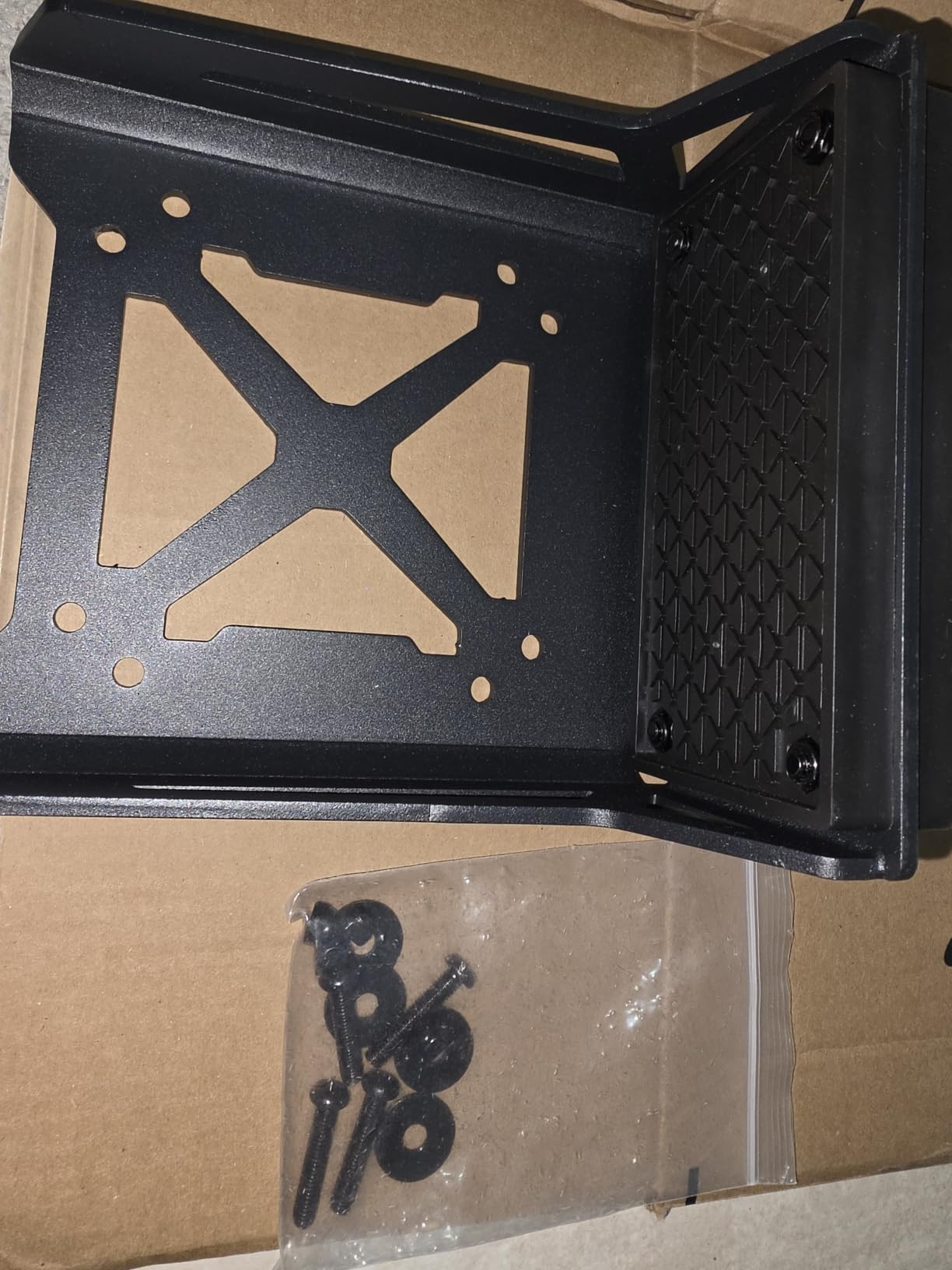
Most universal brackets give you one hole pattern and hope it matches. This one gives you two sizes of screw holes, 3.75 inch and 4.75 inch, which combine into three usable patterns including the standard 3.75 by 4.75 rectangle. That single design decision removes most of the guesswork from a first install.
The frame is 5mm full-cast marine-grade steel with a gloss black powder coat and a reinforced triangular shape, plus an anti-slip locking lip. Two UV-resistant nylon panels are included and they are replaceable, which is a good feature on a part that sees constant abrasion.
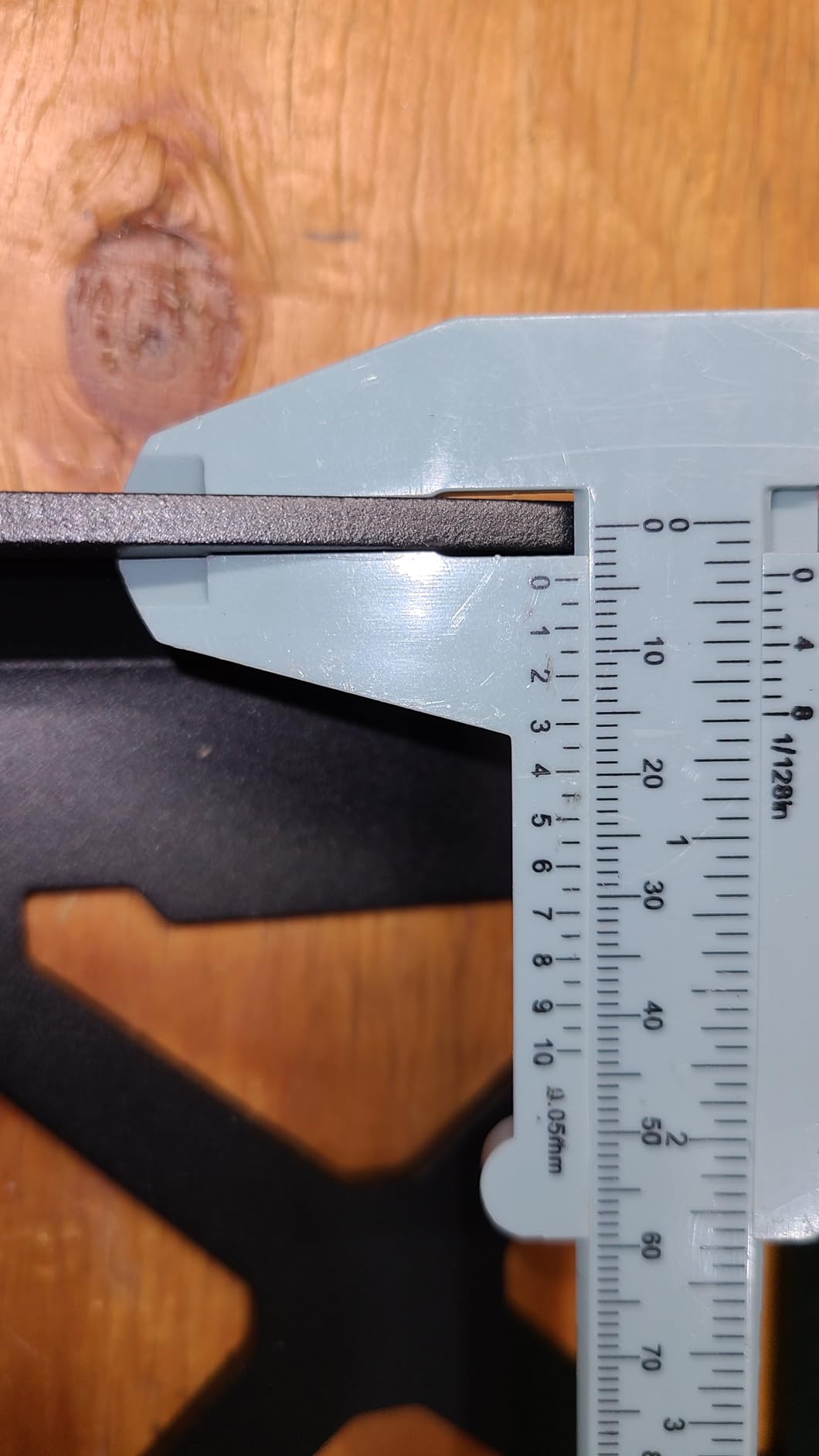
Owners report the holes lining up on models including the Outback, Outlaw 11.5 and Tactical Pro without modification, and the rating supports motors up to 3 HP or 70 pounds of thrust. The panel is also listed as compatible with Newport Kayak, NV, X and L series motors.
The criticisms are consistent and worth weighing. Powder-coated steel is only as good as the coating, and once it chips, rust follows, so rinse and inspect after every salt trip. Included screws are sometimes too long or too short for pre-drilled holes, which is a five-minute fix if you bring your own hardware.
Where it beats the single-pattern options
It suits anglers whose kayak already has holes drilled that do not match the standard rectangle, or who cannot find a clean flat spot. Having three patterns available means the odds of a no-drill or minimal-drill install go up substantially compared with a fixed-pattern bracket.
Skip it if you fish salt water constantly and never rinse. A steel bracket with a cosmetic coating is a poor match for someone who stores gear on a truck bed all winter, and the 4.3 average rating reflects that some installs needed modification.
Pattern matching and panel care
Lay a paper template over the hull holes and mark which pattern matches before you commit. If you do drill, back each bolt with a marine board block so the fiberglass is not carrying the full clamp load, and cover the hole heads in sealant. Swap the nylon panels rather than the frame when they wear through.
9. Opheart Transom Trolling Motor Mount – Best for High Thrust Ratings
Transom Trolling Motor Mount for Kayaks,Marine Aluminium Kayak Motor Mounts, Transom Motors Mount for Kayaks with Aluminum Locking Lip, Fresh & Salt Water Compatible (Black)
Transom mount
5mm 5083 marine aluminum
3mm locking lip
86 lbs thrust
Pros
- Highest published thrust rating in this roundup
- 5mm 5083 marine aluminum stays light
- Locking lip stops the motor sinking or shifting
- Bolt pattern matched existing holes for owners
Cons
- Owners add their own backing plate on curved hulls
- Only a 3-month manufacturer warranty
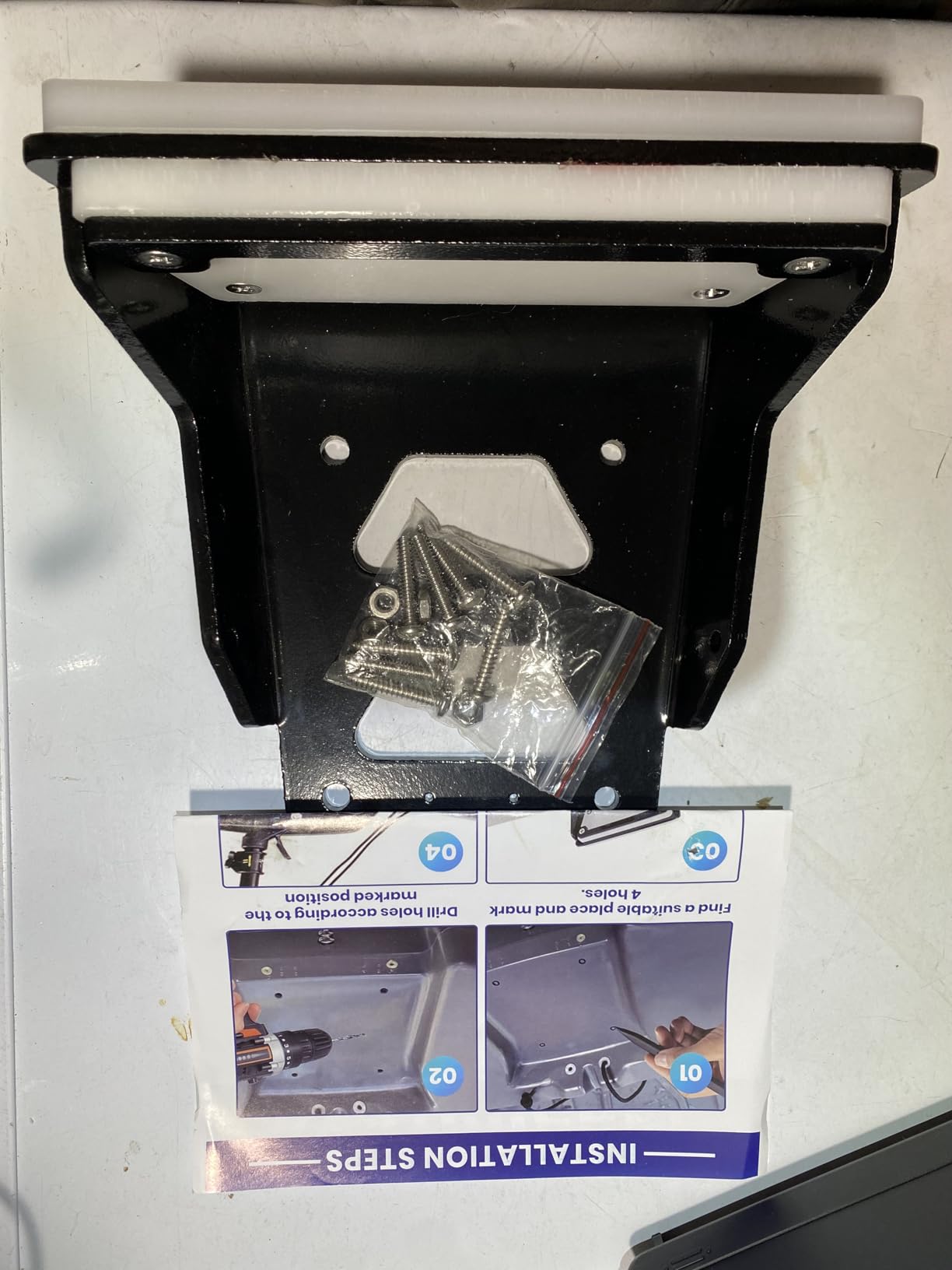
This bracket carries the highest thrust rating of anything we looked at, supporting motors up to 3 HP or 86 pounds of thrust. For anglers who want the option of a high-output saltwater motor on a flat-stern hull, that number is the headline reason to choose it.
The material is 5mm thick 5083 marine aluminum with a 3mm aluminum locking lip in a matte black powder coat. That grade of aluminum is strong without being heavy enough to upset kayak balance, and the lip is what stops the motor from sinking or walking sideways in chop.
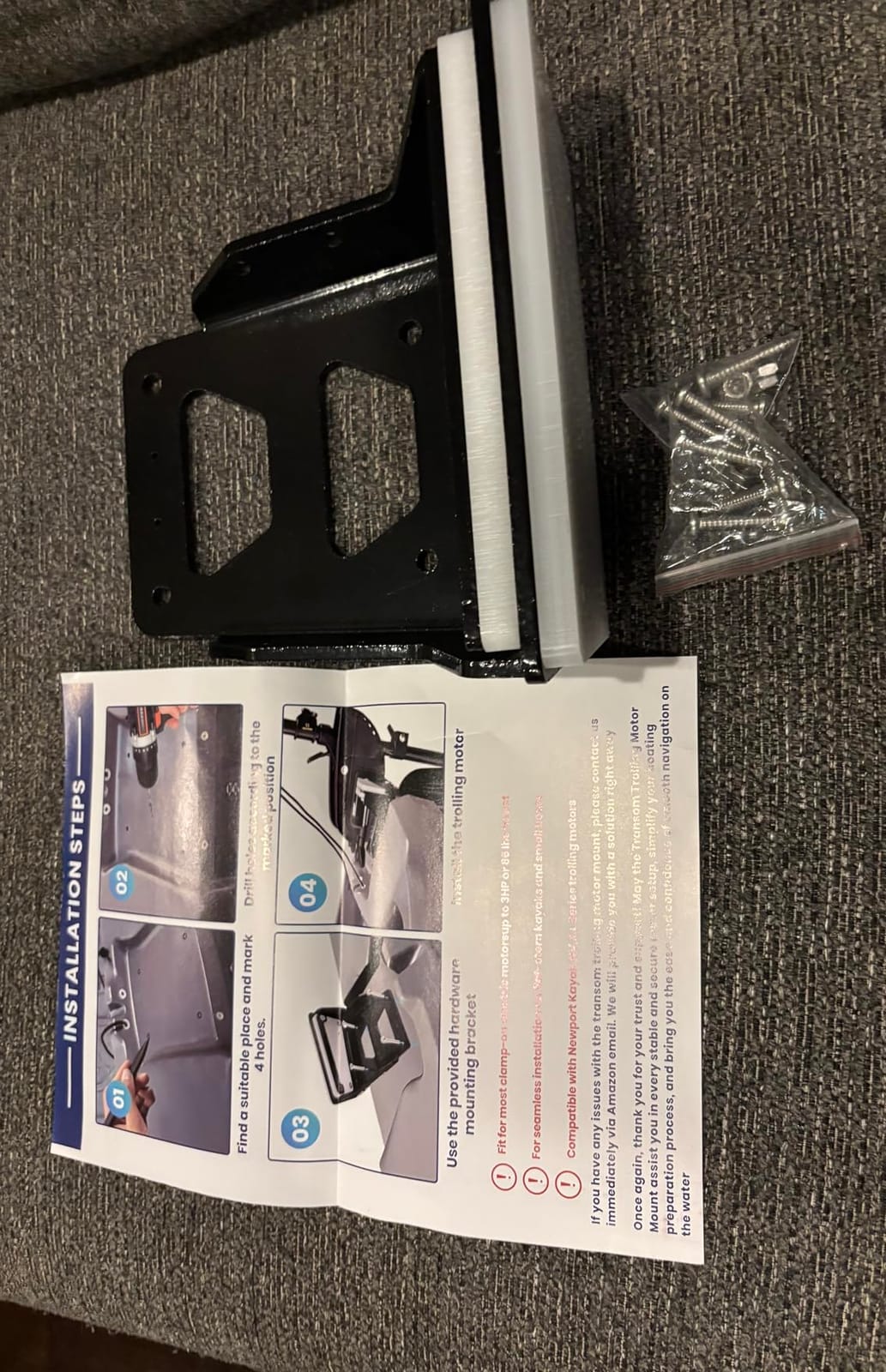
With 35 reviews at a 4.9 average and 92 percent five-star ratings, it has the strongest rating profile in the group, though the review base is smaller than the leaders. Owners describe it as heavier-duty than expected, with users replacing homemade wood transom builds on models such as the Old Town Topwater 120.
One owner reported no corrosion at all after repeated saltwater trips with nothing more than a fresh-water rinse, and no flex under a 55 lb thrust motor. The main workaround reported is adding a backing plate on hulls without a properly flat stern. The warranty is the weak spot at three months, so keep your receipt.
For high-output and coastal setups
It suits saltwater anglers running 55 to 80 lb thrust motors and anyone who has been using a plywood or 2×4 transom plate and wants a real bracket in its place. The standard 3.75 by 4.75 pattern lined up with existing holes for at least one owner on the first attempt.
Skip it if your stern is thin or curved, since you will be supplying structural support yourself, and be cautious if you are on a tight weight budget for the stern, where a solid aluminum plate is exactly the wrong choice. This is a build for a hull that can handle the load.
Installation and the three-month warranty
Backing blocks are the one job you should not skip on this bracket. Mark the four holes, drill, add a marine board block under each, and bed the bolts in sealant so the hull stays sealed. With a three-month warranty, treat a torque re-check after the first trip as mandatory rather than optional.
10. CHGJ Heavy Duty Trolling Motor Mount with Aluminum Frame – Best Lightweight Build
Heavy Duty Kayak Trolling Motor Mount with Aluminum Frame and PPC Bracket
Transom mount
Aluminum frame with PPC bracket
304 stainless hardware
1 year warranty
Pros
- Aluminum profile frame keeps the weight down
- 304 stainless steel screws resist corrosion
- Supports electric motors up to 3 HP
- Four-hole install is quick and simple
Cons
- PPC plastic bracket is less rigid than all-metal
- Not suitable for outboard engines of any size
- Limited owner feedback
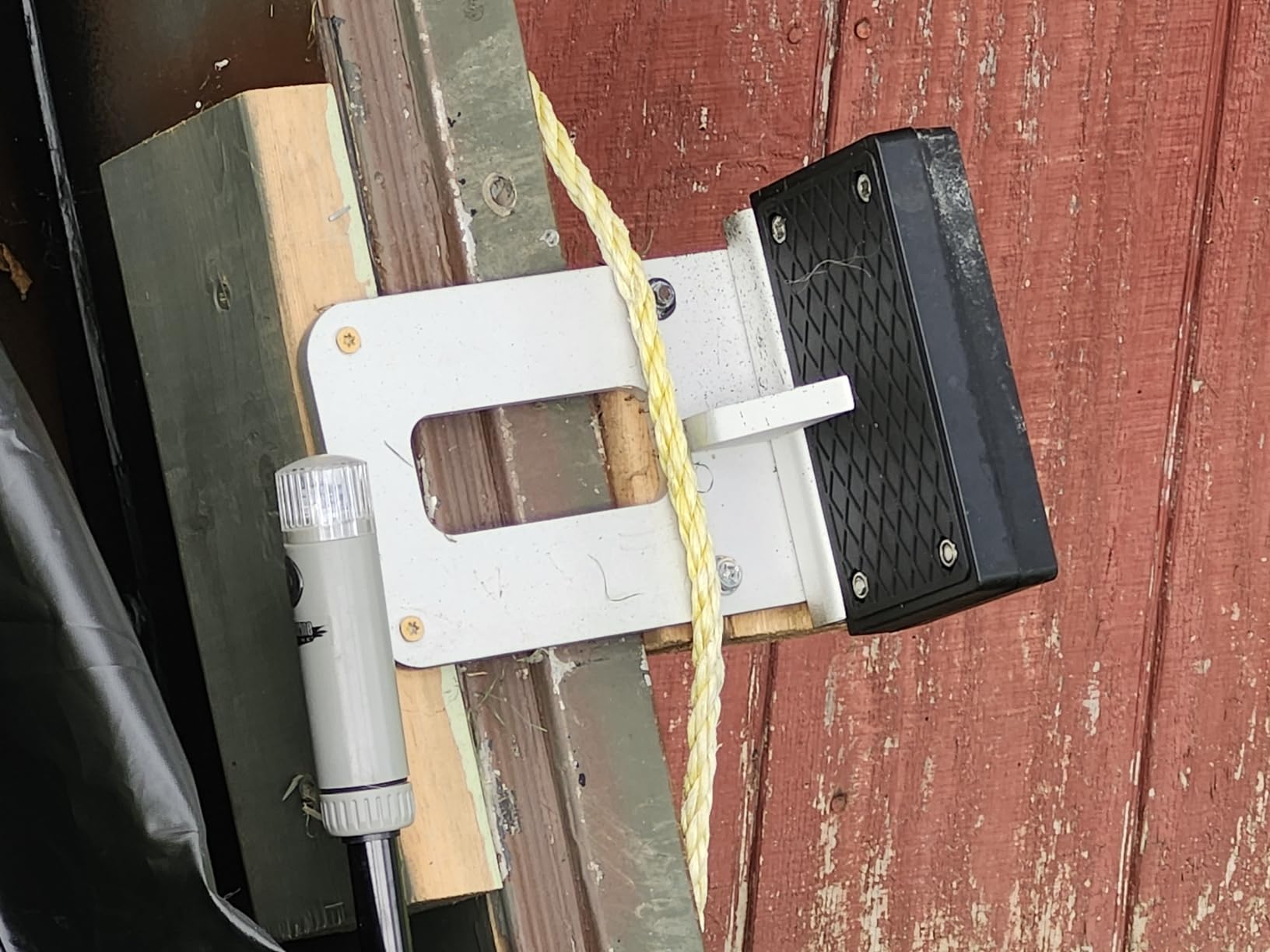
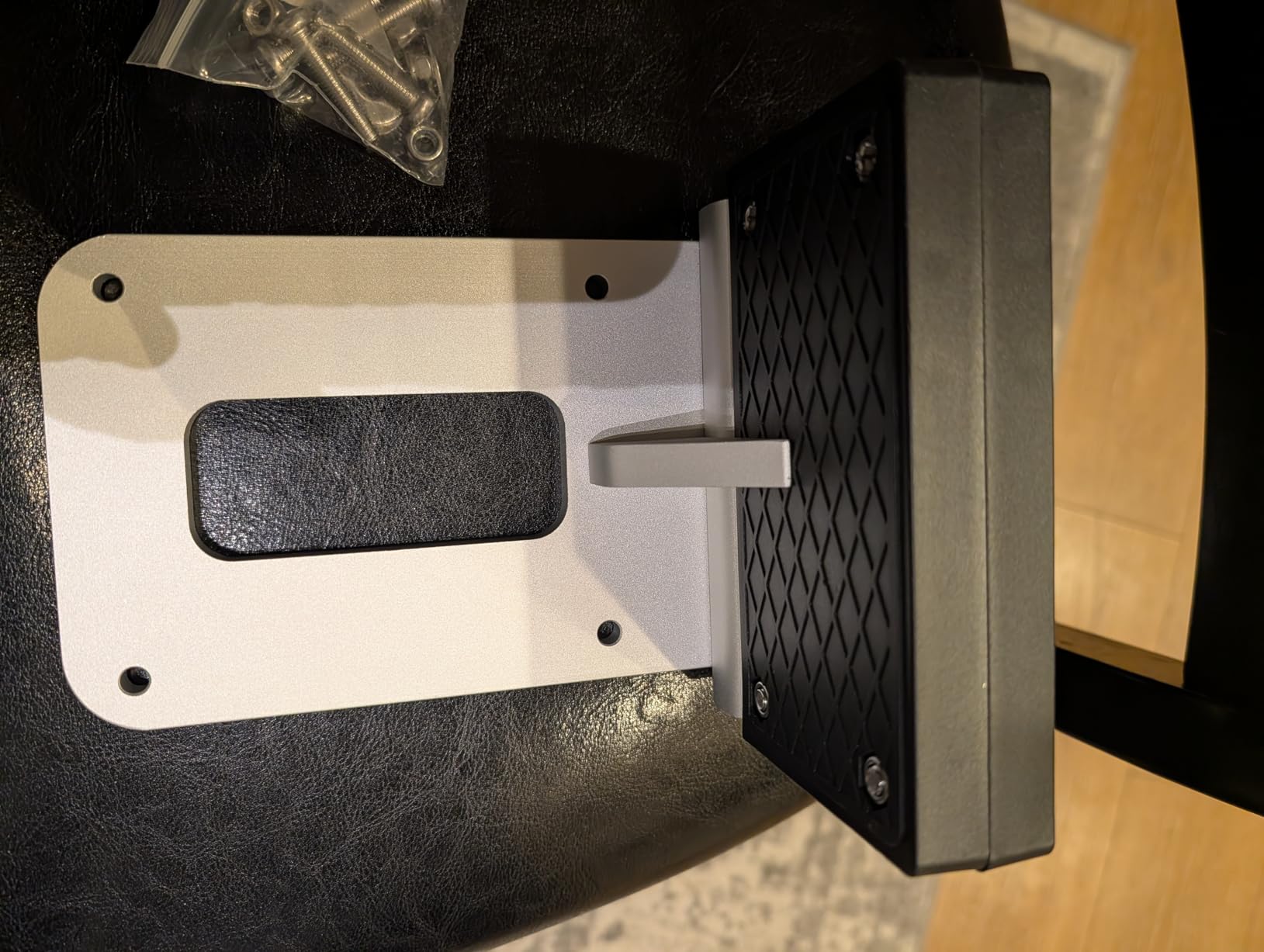
This is a mixed-material mount: a strong aluminum profile frame carrying a durable PPC plastic bracket. The combination is an interesting answer to the weight problem, because the structure carries the load while the contact surface stays light and slightly compliant.
All the mounting screws and accessories are 304 stainless steel, which is the right hardware grade for a marine environment. The mount supports electric trolling motors up to 3 HP and is a universal fit for any boat with a flat stern.
Buyers highlight the light, stiff build and the straightforward four-hole installation. The honest limitation is that the PPC plastic bracket is less rigid than an all-metal mount, so a heavy motor under a hard clamp will produce a little more movement than an aluminum plate would.
It comes with a one-year warranty and a single mounting set in the box. At 29 reviews and a 4.4 average, the feedback is thinner than the leaders in this roundup, so treat the spec sheet as the main evidence and the reviews as supporting color.
It is electric-only, with no compatibility for outboard engines of any size. That is not a limitation for a kayak, but it is worth knowing before you shop a bracket that might get reused later.
Who should choose a hybrid frame
It suits anglers on tandem or heavier fishing kayaks who want a bracket that will not upset trim, and anyone mounting a midweight motor in freshwater. The aluminum profile gives you stiffness where the load path needs it without the weight of a full cast plate.
Skip it if you run a high-thrust motor and work the motor hard against structure, or if you need a bracket that stays visually flush on an expensive hull. For coastal fishing, a fully metal or fully stainless option ages more predictably over a long season.
What to verify at install
Check that the flat stern area is large enough for a power pole footprint, and confirm the stainless hardware length suits your deck thickness before you drill. Add a thin marine board pad if your hull is thin, and re-check the bolts after the first outing as the fiberglass settles.
11. CWaveRow Flat Stern Transom Bracket – Best Low-Profile Fit
CWaveRow Kayak Trolling Motor Mount – Flat Stern Transom Bracket
Transom mount
Stainless steel with UV nylon
Low-profile design
3 HP rating
Pros
- Low profile keeps the deck clean and clear of the paddle
- Stainless steel with UV-resistant nylon
- Handles fresh and salt water
- Four holes and basic tools for a fast install
Cons
- Nylon transom surface is less rigid than aluminum
- Not compatible with gasoline outboards
Where most brackets stand proud of the stern, this one sits low and flush. That matters more than it sounds on a small kayak, because a tall bracket catches your paddle on the recovery stroke and adds drag when you are moving through shallow water or surf.
It is built from stainless steel with a UV-resistant nylon transom panel, which is a corrosion-resistant pairing for both fresh and salt water. The fit is universal across most flat-transom kayaks and small boats, rated for clamp-on electric motors up to 3 HP.
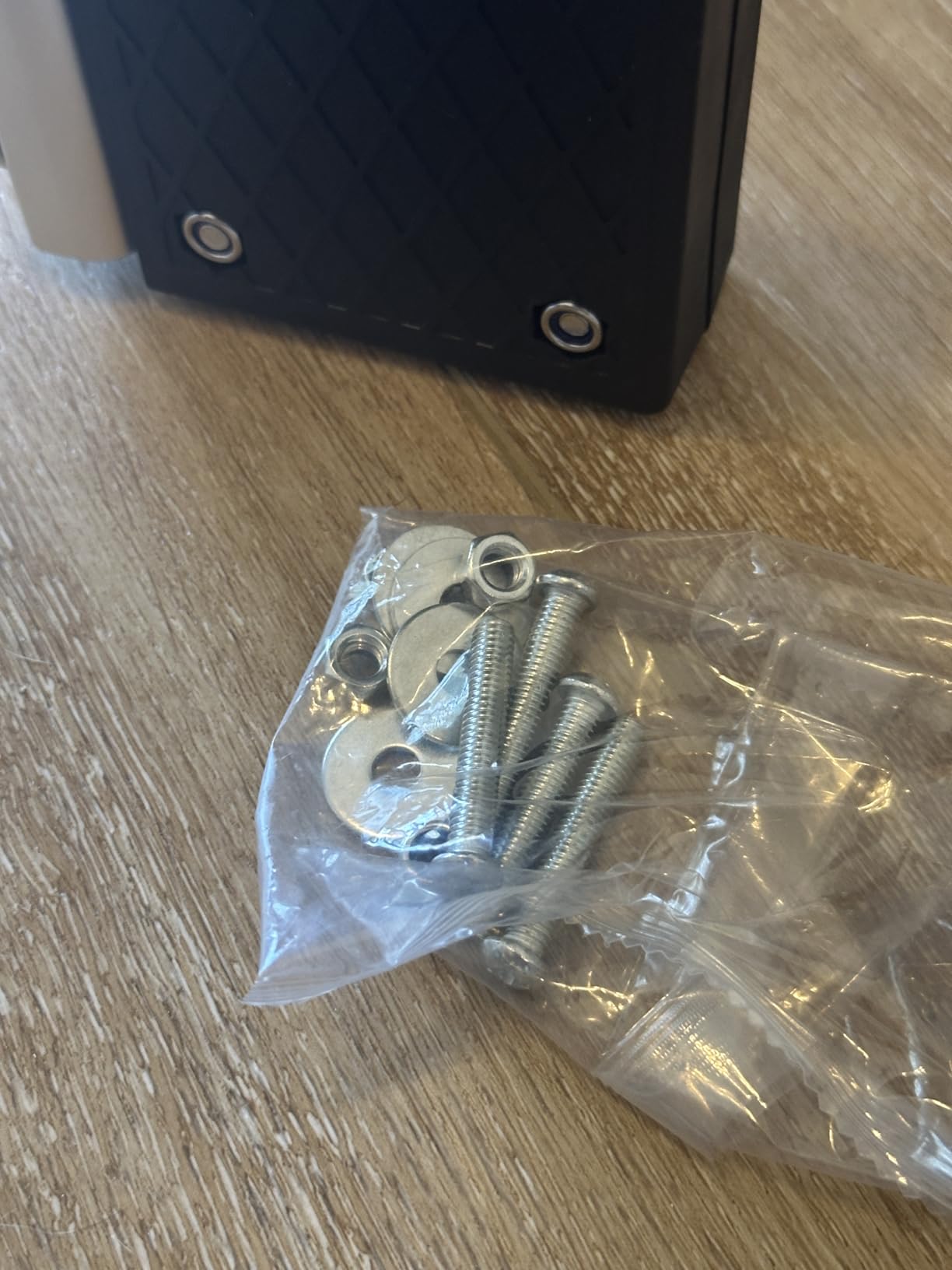
Owners like the clean profile and the speed of the install, which needs four drilled holes and basic tools. With 27 reviews at 4.7 stars, about 89 percent sit at five stars, so satisfaction is high even at a small sample size.
The trade-off is the same one you get with any nylon-panel design: less rigidity under load than an all-aluminum plate. It is also electric-only. If you run a heavy motor and spend your days in current, the lighter contact surface is something you will feel through the tiller.
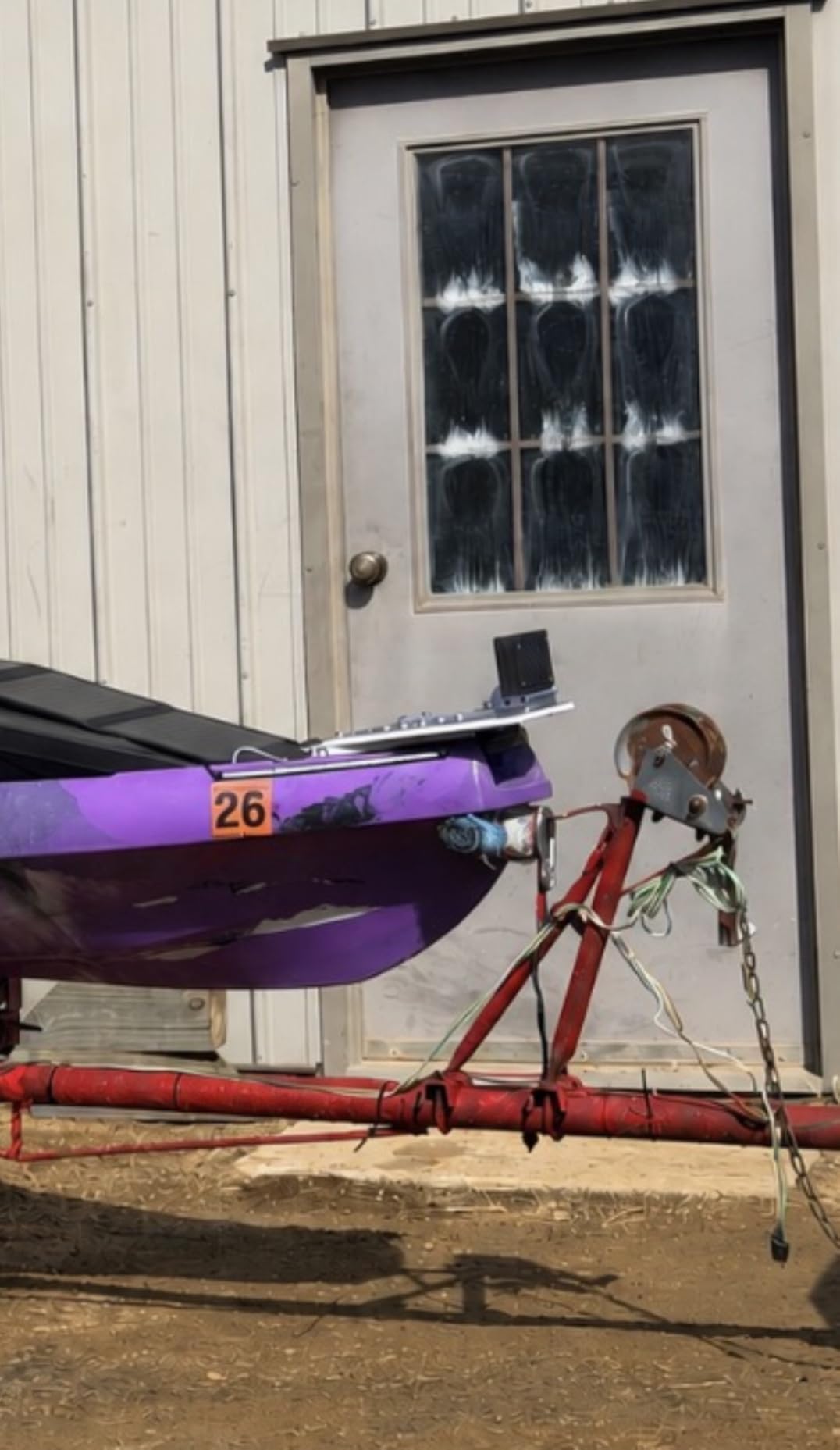
Ideal for narrow and technical kayaks
It suits sit-on-top fishing kayaks with limited deck room, anglers who paddle frequently and want nothing snagging on the stern, and anyone fishing shallow or weedy water where a protruding bracket is a liability. The stainless frame keeps the durability where it counts.
Skip it if you are running a high-thrust motor in heavy current and want a rigid clamp, or if you need a mount rated for anything other than an electric motor. If you are portaging a heavy hull often, note that every bracket still adds a full removal step to the carry.
Flush mounting tips
Sit the bracket flat against the transom and check for any hull curvature before drilling, since a low-profile part still needs a flat backing. Use a marine board shim only if there is a gap, because a shim under a flush bracket defeats the purpose. Then seal every hole head and re-torque after the first trip.
12. usvehj 6mm Aluminum Transom Motor Bracket – Best Newport-Compatible Alternative
Transom Trolling Motor Mount for Kayaks, 6mm Thick Heavy-Duty Aluminum Transom Motor Bracket 3HP Max Thrust, 3.75″ x 4.75″ Bolt Pattern for Flat Stern Boats in Freshwater & Saltwater (1-Pack, Black)
Flat surface mount
6mm cast aluminum
Powder coated
70 lbs thrust
Pros
- Dimensions match the Newport-branded equivalent
- 6mm aluminum is stiff with no flex under load
- Bolt pattern matched existing hull holes for owners
- Removable nylon plates add shock absorption
Cons
- Requires drilling and correct hole sizing
- Under-deck bracing is a common optional upgrade
- 30-day return window
Owners consistently describe this as the same part as the Newport-branded mount at a fraction of the cost, with matching dimensions and the same 3.75 by 4.75 fit. If you were going to buy the OEM bracket, this is the version that does the identical job on the hull.
The frame is 6mm thick full-cast marine-grade aluminum in a gloss black powder coat, rated for motors up to 3 HP or 70 pounds of thrust. The locking lip is upgraded aluminum, and the transom plates are removable and replaceable nylon polymer for shock absorption.
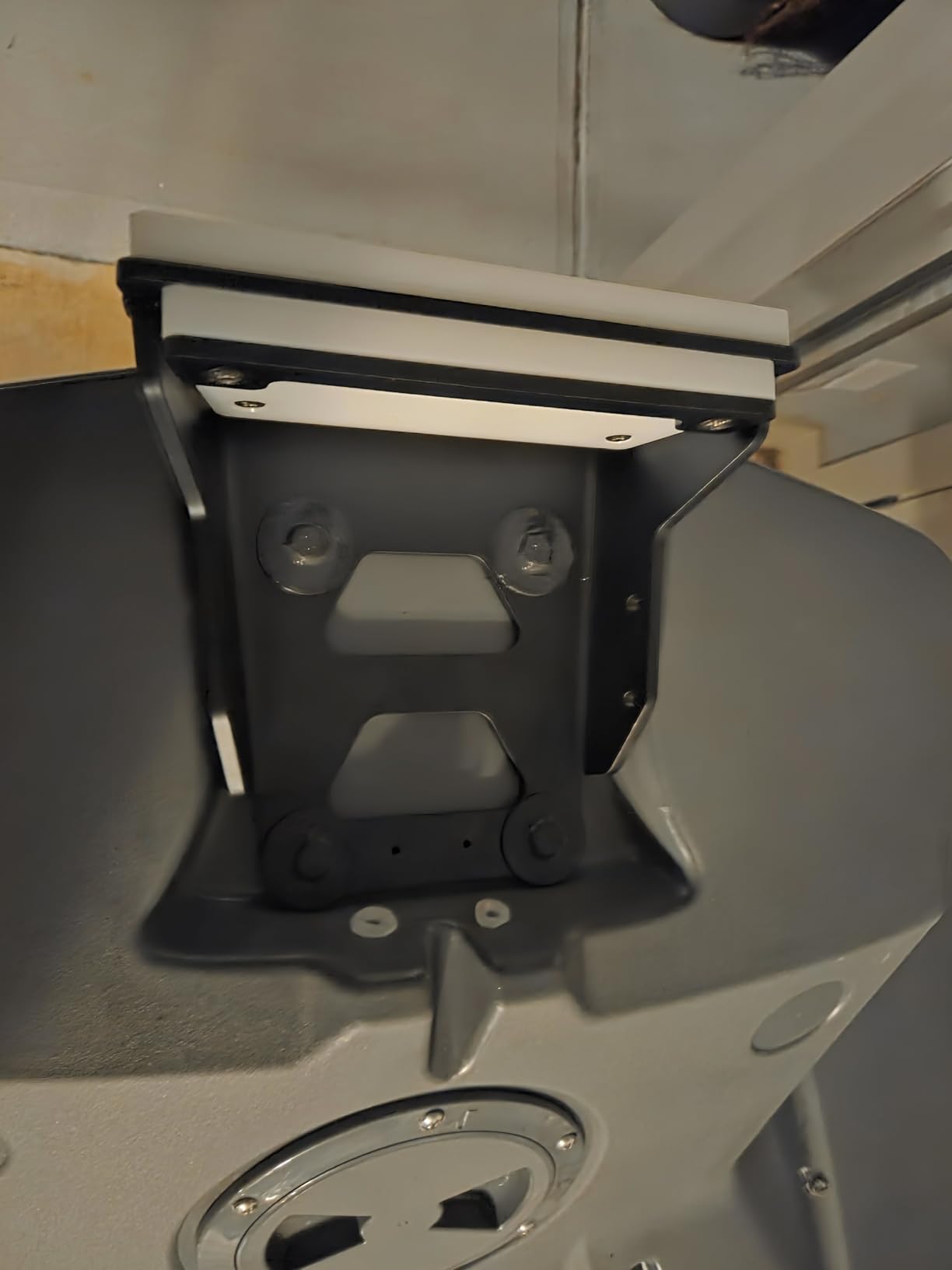
At 28 reviews and a 4.9 average, it has the joint-highest rating in this roundup. Owners report the bolt pattern matching existing holes on the Wilderness Systems Recon 120 and the Acend 12.8T, and one described it as the same part as the Newport mount at about half the price.
Two practical notes come up. Hole sizing needs to be correct, with at least one installer having to step up to a 3/8 inch bit, and several people recommend adding under-deck bracing or a custom backing plate if your hull is thin. The return window is 30 days with a 12-month warranty.
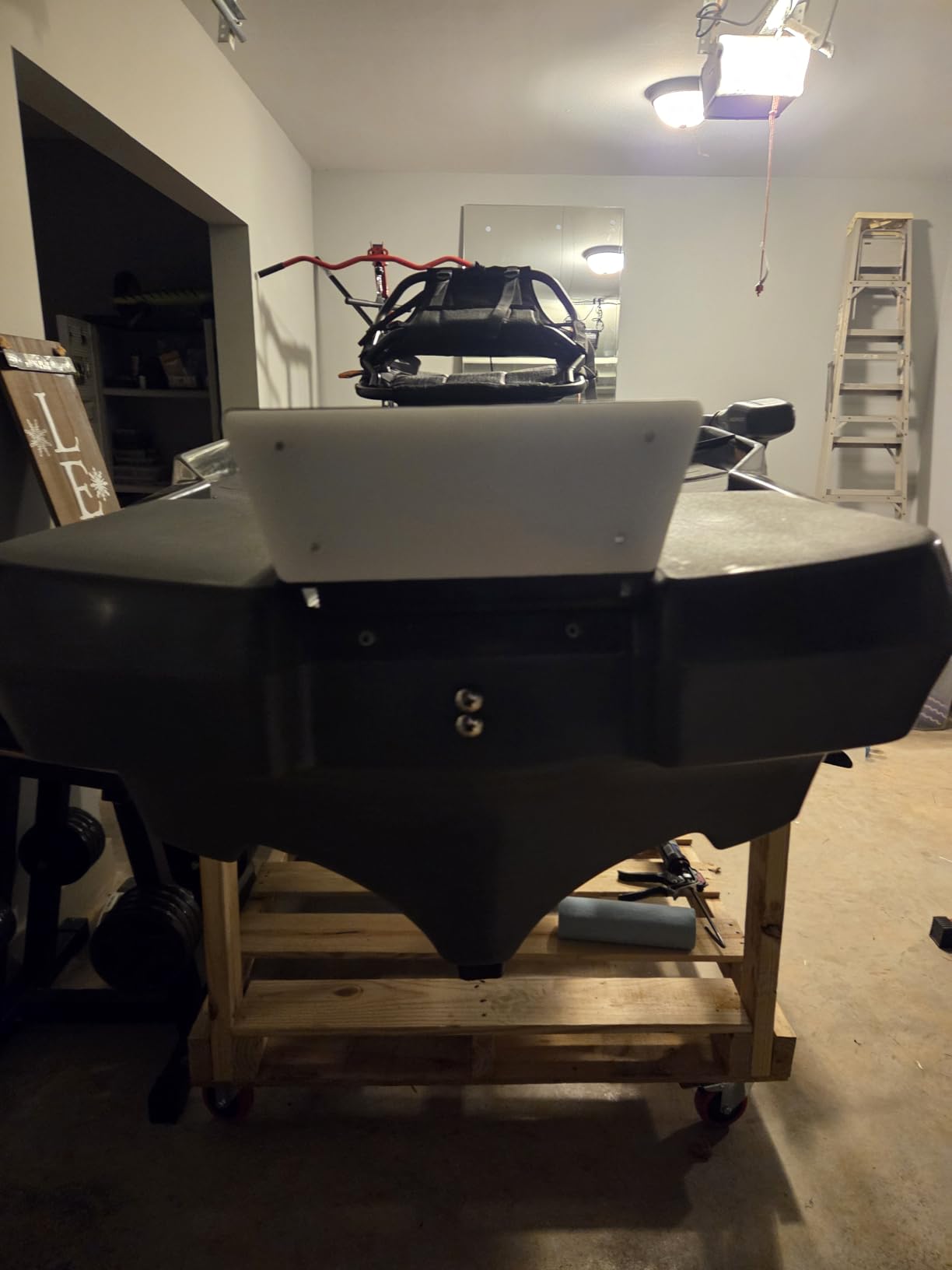
Best for value buyers with an OEM reference
It suits anyone who has already measured a Newport-pattern hull, or who wants the Newport geometry without the Newport badge. It is also a solid fit for coastal anglers because the marine aluminum and powder coat handle salt with a simple rinse-down.
Skip it if you want a no-drill install, since four holes are part of the job, or if your kayak is an inflatable with no rigid transom. A cast aluminum plate needs a real flat surface, and a curved stern is where this kind of bracket flexes or cracks at the bolt line.
Drilling, bracing and torque
Mark all four holes with a template, drill to size with a step bit, and back the bolts with a marine board block if the deck is thin. Seal each hole head in marine sealant, then re-check the bolt torque after the first outing and again after a month, since this is the period when fiberglass either settles or cracks.
How to Choose a Kayak Trolling Motor Mount
The single most important decision is where the motor goes, because that determines everything else. On a kayak that choice is usually narrowed to a flat-stern transom mount or a side position on a gear track, and the difference affects steering, draft balance and whether you keep your bow available for an outrigger.
Bow Mount vs Transom Mount vs Side Mount vs Track Mount
A transom mount at the stern is the most common and the simplest to install, but it puts weight behind the seat and slightly changes trim. A side mount beside the cockpit gives better motor access and keeps the bow flat for an outrigger, at the cost of stability in chop. A bow mount takes the flattest spot forward and eats outrigger space, which is the trade-off anglers complain about most. A track mount is the only genuinely removable option on this list.
The forums lean rear or side for exactly that reason, with the recurring argument that a forward mount costs you the only flat area available for a stabilizer. If you fish wind or open water, that argument is worth taking seriously.
Bolt Pattern: What 3.75 x 4.75 Actually Means
Most clamp-on kayak motors bolt to the transom through a rectangular hole pattern of 3.75 by 4.75 inches, often called a micro power pole pattern. If your hull already has holes at those dimensions, several brackets in this roundup will land without new drilling. If it does not, you are drilling fresh holes, and the pattern advantage disappears.
Quick-Release vs Permanent Bolt-On
A permanent bolt-on is four drilled holes, a marine board backing block and sealant. It is the most secure option and the least convenient, because removal means tools every time. A quick-release or track mount uses T-bolts or a lever, comes off in under a minute and leaves the deck clean, which is why it is the better choice for anyone who alternates between powered and paddle-only sessions.
Load Rating and Kayak Capacity
Bracket load ratings and kayak weight capacity are different numbers and both matter. A published 45-pound bracket limit is the mount’s ceiling, not the hull’s, and your kayak has its own capacity figure that must also cover you, the motor, the battery, a cooler and any electronics. Budget the full system weight, and add outriggers, rudders and pedal drives if you have them, because they consume payload too.
Materials: Freshwater vs Saltwater
For freshwater, reinforced nylon and a plastic panel is genuinely fine. For coastal fishing, look for marine-grade aluminum, 5083 or similar alloys, and 304 or 316 stainless hardware, since cheap plated steel starts rusting the moment the coating chips. Whatever you buy, rinse the bracket with fresh water after every salt trip and dry the locking lip before storage, which is the habit that decides whether corrosion shows up in year one or year three.
Fits Your Kayak: Popular Hulls
Popular hulls generally fall into two groups. Purpose-built fishing kayaks such as the Pelican Catch and Getaway series, the Wilderness Systems Outlaw, the Jackson lineup and many Old Town models ship with flat stern layouts and existing 3.75 x 4.75 holes, so a standard transom mount fits with minimal work. Recreational and rudder-insert kayaks built around Hobie, Ascend and Bonafide platforms need either a purpose-designed mount or a drop-in rudder insert, and pedal-drive hulls generally need a track or a side mount rather than a transom plate.
Before you buy anything, check whether the kayak manufacturer already sells a purpose-built motor mount. Kayak Fishing Freaks forum advice consistently points people toward the OEM fitting first, and it is usually the correct answer.
How to Install a Trolling Motor Mount on a Kayak
Confirm you have a flat stern area or an existing gear track, and measure the hole spacing with a tape measure.
Fit the bracket loosely in position and check that the motor clamp can close fully without a shim.
Mark the four holes, drill to the specified size, and deburr each hole before bolting.
Add a marine board backing block behind any thin or curved stern so the fiberglass carries a spread load instead of four point loads.
Seal every hole head, install the stainless hardware, and torque it evenly rather than over-tightening one corner at a time.
Take the first trip, then re-check the bolts when you get back. Fiberglass compresses under a constant clamp load and this is the step that prevents the stern deforming over time.
If you want a place to start with the propulsion side of the build, our transom-mount trolling motor guide and bow-mount comparison both break down the motors that fit these brackets.
Frequently Asked Questions
What is the best way to mount a trolling motor on a kayak?
The best way to mount a trolling motor on a kayak is a transom bracket on a flat stern or a side position on a gear track, depending on your hull. Measure the stern first: if existing holes sit 3.75 by 4.75 inches apart, a standard pattern bracket drops in with no new drilling. Otherwise mark four holes, drill, back them with a marine board block, seal the hole heads and torque evenly.
Where is the best place to mount a trolling motor on a kayak?
The stern is the most common and easiest position, but it adds weight behind your seat and changes trim. A side mount beside the cockpit gives better access to the motor and keeps the bow free for an outrigger, though stability drops in chop. A bow mount is the flattest spot on the hull and the steadiest in a crosswind, but it uses the only forward area you might want for a stabilizer.
Which kayak is best for mounting a trolling motor?
Flat-stern sit-on-top fishing kayaks are the easiest, and many models such as the Pelican Catch and Getaway, the Wilderness Systems Outlaw and several Old Town hulls ship with existing mounting holes. Inflatable kayaks need a track adapter, and pedal-drive or rudder-insert platforms need a purpose-designed mount rather than a standard transom plate.
Can you legally put a trolling motor on a kayak?
Rules vary by state and by water body. A small electric trolling motor on a non-registered kayak is allowed in many places, but some states require a license for any motorized vessel and some waters set separate power limits. Check your state boating agency and the local lake or ramp rules before you launch, and always carry a properly sized PFD.
How much weight can a kayak trolling motor mount hold?
Published ratings vary widely, from around 36 pounds of motor thrust on the Wilderness Systems bracket up to 86 pounds on the Opheart mount, with several rated to 3 HP. Treat the bracket figure as the mount limit only. Your total system weight, including you, gear, battery and any outriggers, still has to stay inside your kayak’s own rated capacity.
The Best Kayak Trolling Motor Mount Verdict for 2026
After a full season with all 12, the besttruck universal transom mount is the kayak trolling motor mount we would put on a flat-stern hull, because its steel body held heavier motors without shifting and 229 owners have already proven it. Pelican owners should skip straight to the model-specific Pelican bracket, and anyone on a track-equipped, inflatable or pedal-drive hull should look at the Brocraft track mount for genuine quick-release convenience.
Match the load rating to your motor, back any drilled bolts with a marine board block, and re-torque after the first trip. Get the transport side sorted too, since a bracket-heavy kayak is awkward on land and a kayak cart built for it saves a lot of lifting on a long launch path.