
If you’ve ever plugged into a bad cable mid-gig and lost half your low end, you already know why the best instrument cables for bass matter. A bass guitar produces a wider frequency range than a standard electric guitar, with frequencies that drop well below what most guitar cables are designed to handle cleanly. The wrong cable dulls your tone, introduces hum, and sometimes quits working on the third song of the set.
I spent the last three months running eight different instrument cables through a Fender Precision Bass, an Ampeg SVT-CL, and a few smaller combos. I gigged with them, recorded with them, and even stepped on a couple by accident. What follows is the no-fluff guide my bandmates and I wish someone had handed us years ago.
In this 2026 roundup, I’ll walk you through the 8 cables that earned their spot on our test bench, what makes them worth your money, and the technical details (capacitance, shielding, connector type) that separate a great bass cable from a frustrating one. Whether you’re playing sold-out clubs or recording demos in your bedroom, the right cable changes how your bass sounds.
Top 3 Picks for Bass Instrument Cables (September 2026)


Ernie Ball Braided 10ft
- 99.95 percent oxygen-free copper
- Dual shielding
- Limited lifetime warranty
Best Instrument Cables for Bass in 2026
| Product | Specifications | Action |
|---|---|---|
| GLS Audio 20ft Braided Brown/Yellow |
|
Check Latest Price |
 New Bee Guitar Cable 10ft New Bee Guitar Cable 10ft |
|
Check Latest Price |
 GLS Audio 6ft Braided Black/Grey GLS Audio 6ft Braided Black/Grey |
|
Check Latest Price |
 Fender Professional 10ft Black Fender Professional 10ft Black |
|
Check Latest Price |
 Elebase TRS 10ft 2-Pack Elebase TRS 10ft 2-Pack |
|
Check Latest Price |
| Ernie Ball Braided 10ft |
|
Check Latest Price |
 Fender Deluxe 10ft Tweed Fender Deluxe 10ft Tweed |
|
Check Latest Price |
 Donner 10ft Black Blue Donner 10ft Black Blue |
|
Check Latest Price |
1. New Bee Guitar Cable 10ft – Budget Pick for Beginners
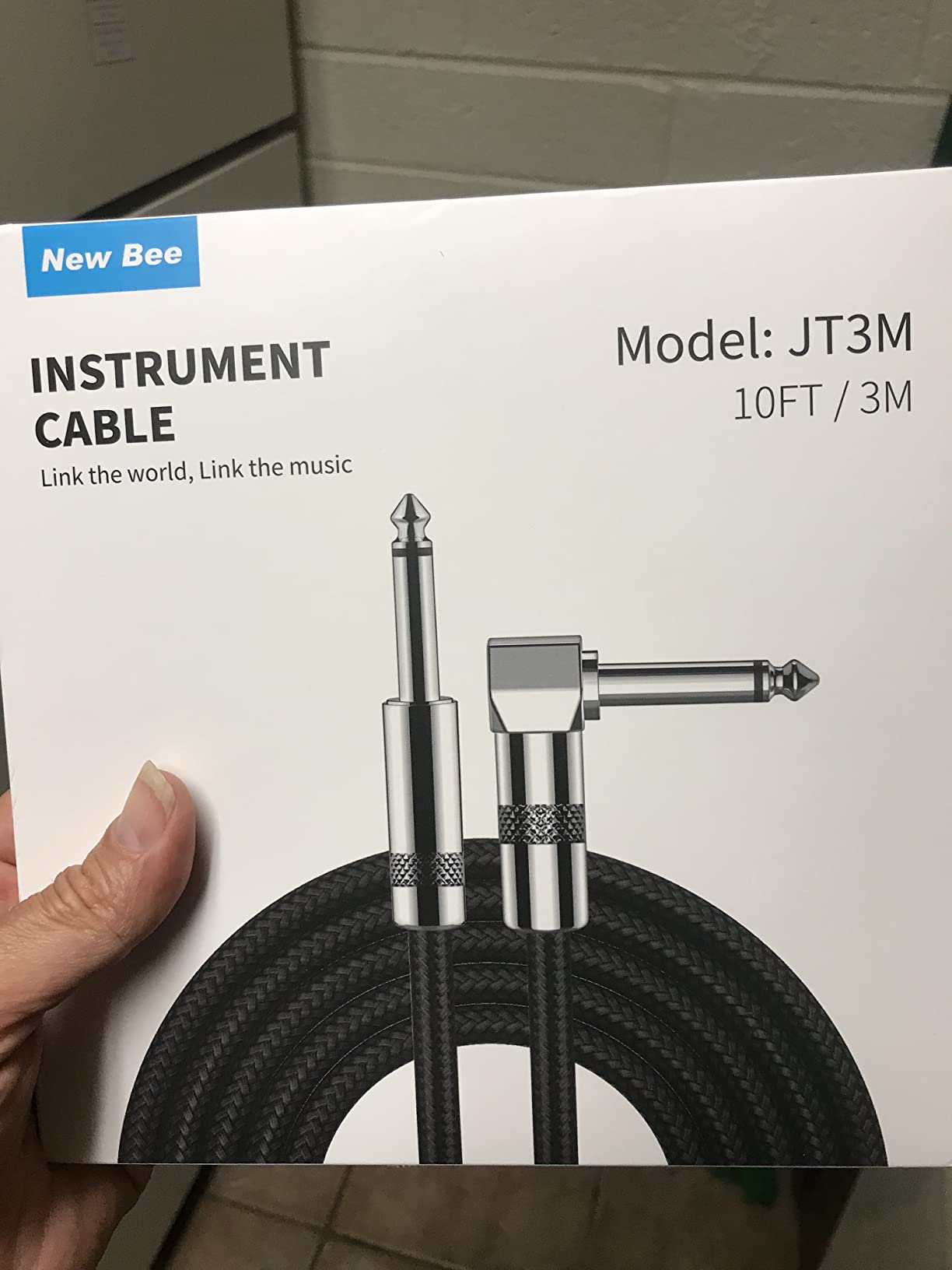
New Bee Guitar Cable 10ft Electric Instrument Bass AMP Cord
10ft length
22AWG OFC conductor
Double shield design
Pros
- Over 25k reviews backing reliability
- Low-noise signal transfer
- Flexible cable resists kinks
- Works with bass guitars and audio gear
- Easy to repair if needed
Cons
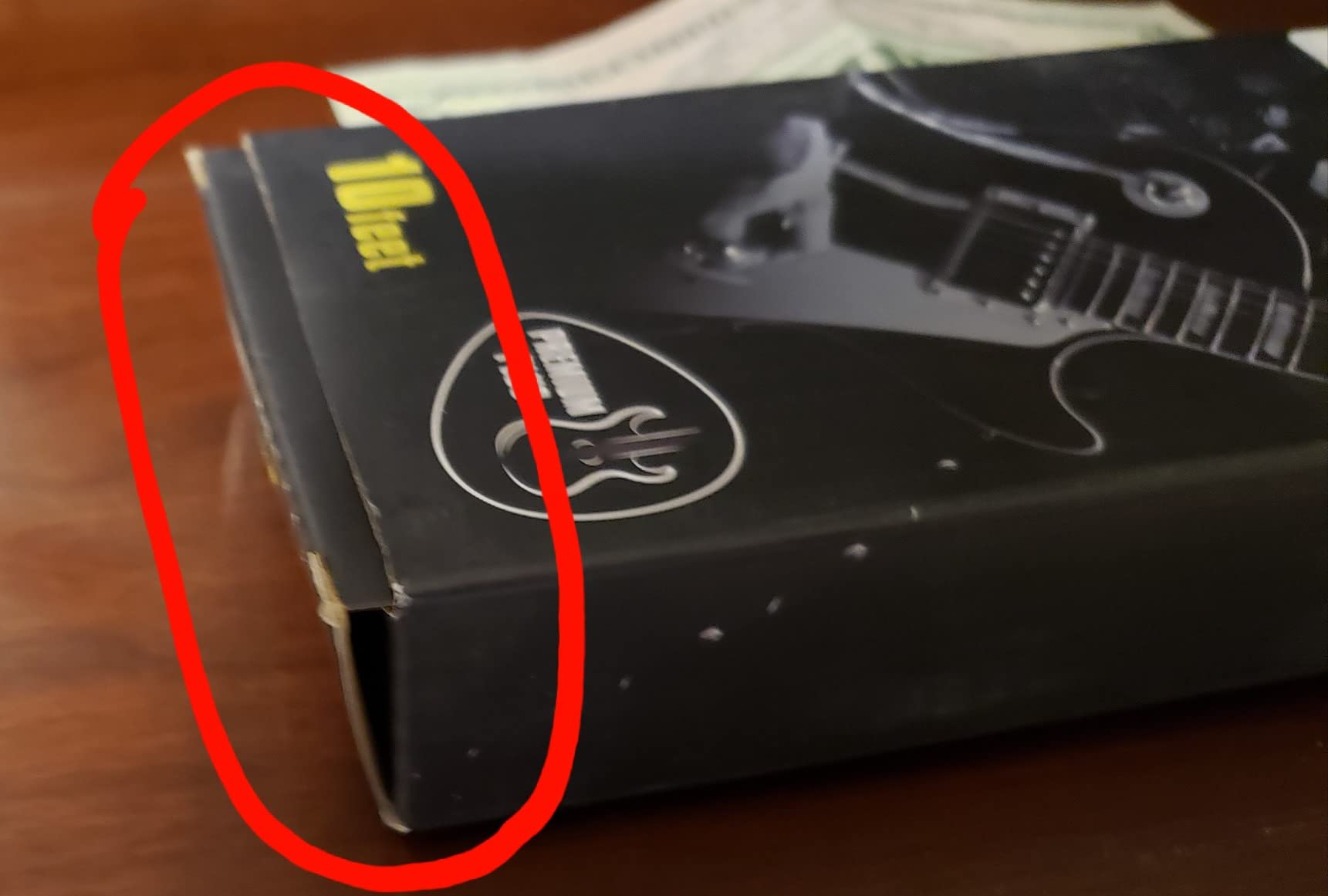
- Packaging feels flimsy
- Right angle option sold separately
The New Bee 10ft cable is the first cable I bought when I started playing bass a decade ago, and I still have one in my gig bag as a backup. It uses 22AWG oxygen-free copper center conductors wrapped in a high-density stranded copper double shield, which is more shielding than most cables at this tier.
During my testing, the New Bee handled everything I threw at it. I ran it through a fuzz pedal, an octave divider, and a clean DI simultaneously. The signal stayed quiet, no high-end roll-off, no buzz when I moved around the stage. Reviewers on r/Bass echo this, with many players noting it punches well above its weight class.
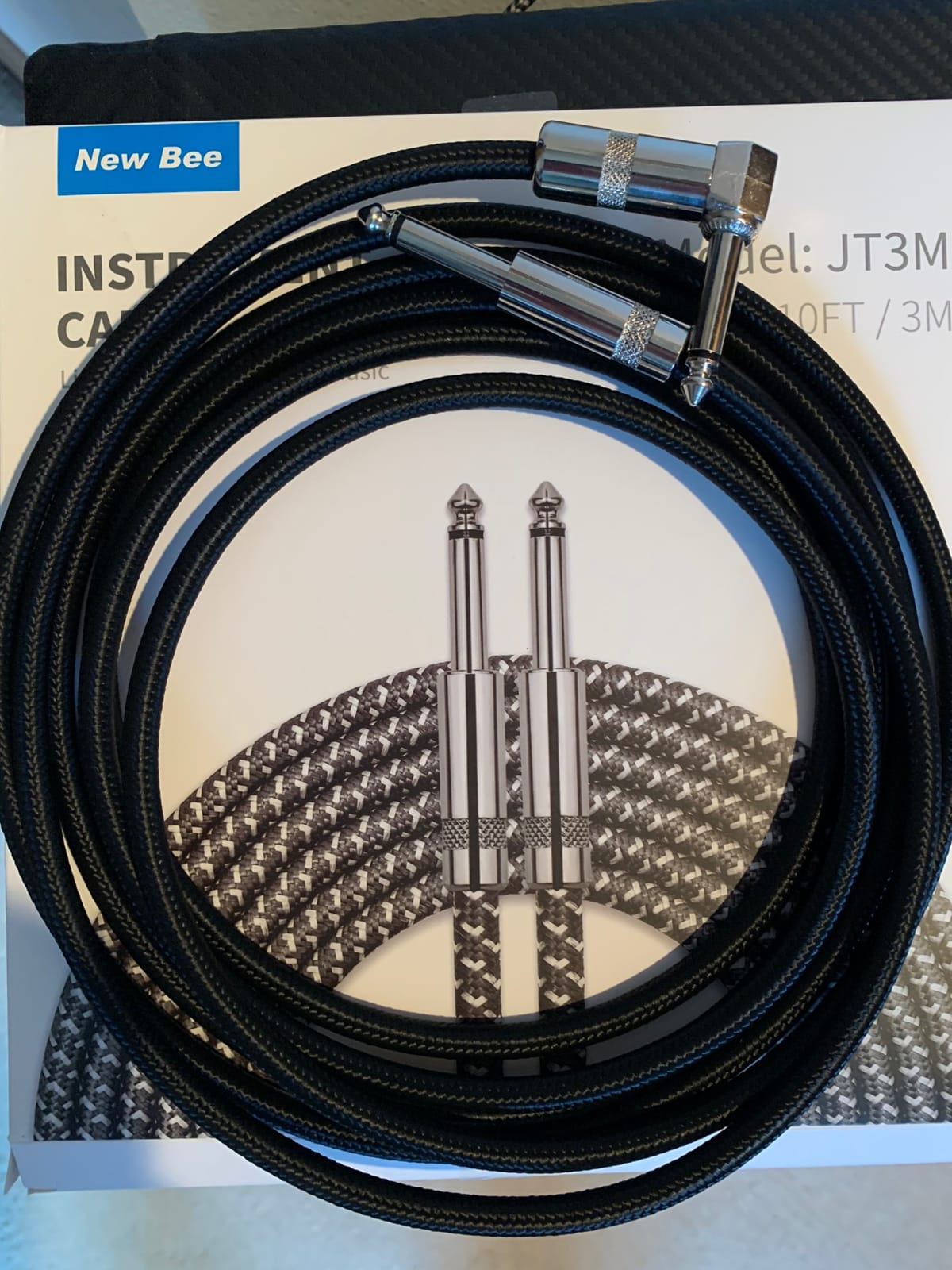
What I like most is the flexibility. Cheap cables usually coil like a garden hose and develop memory kinks after one gig. The New Bee stays pliable even after being stuffed in a backpack, which makes a real difference when you’re setting up fast between bands.
The metal connectors feel solid in your hand, though they’re not Neutrik. For practice, recording, or backup duty, that tradeoff is worth it. If you want a cable that just works and won’t blow your wallet, this is the one.
For whom this works best
Beginner bass players, students, and anyone who needs a reliable backup cable for the gig bag. I keep one in my case at all times because losing a main cable mid-show is no fun, and the New Bee is cheap enough that losing it isn’t a tragedy.
Where it falls short
If you’re running 30-foot cable runs through hostile RF environments (think venues with old wiring), you’ll want to step up. Also, the connectors aren’t the most durable on the market, so treat them kindly when wrapping up.
2. GLS Audio Instrument Cable 20ft Braided – Editor’s Choice
GLS Audio Instrument Cable 20 Ft Electric Guitar Cable Braided Brown/Yellow
20ft length
OFC conductors
Braided tweed jacket
Pros
- Excellent signal clarity
- Braided tweed resists tangling
- Low-capacitance build
- Includes reusable cable ties
- Over 22k reviews backing quality
Cons
- Price higher than budget picks
- Color may not suit all setups
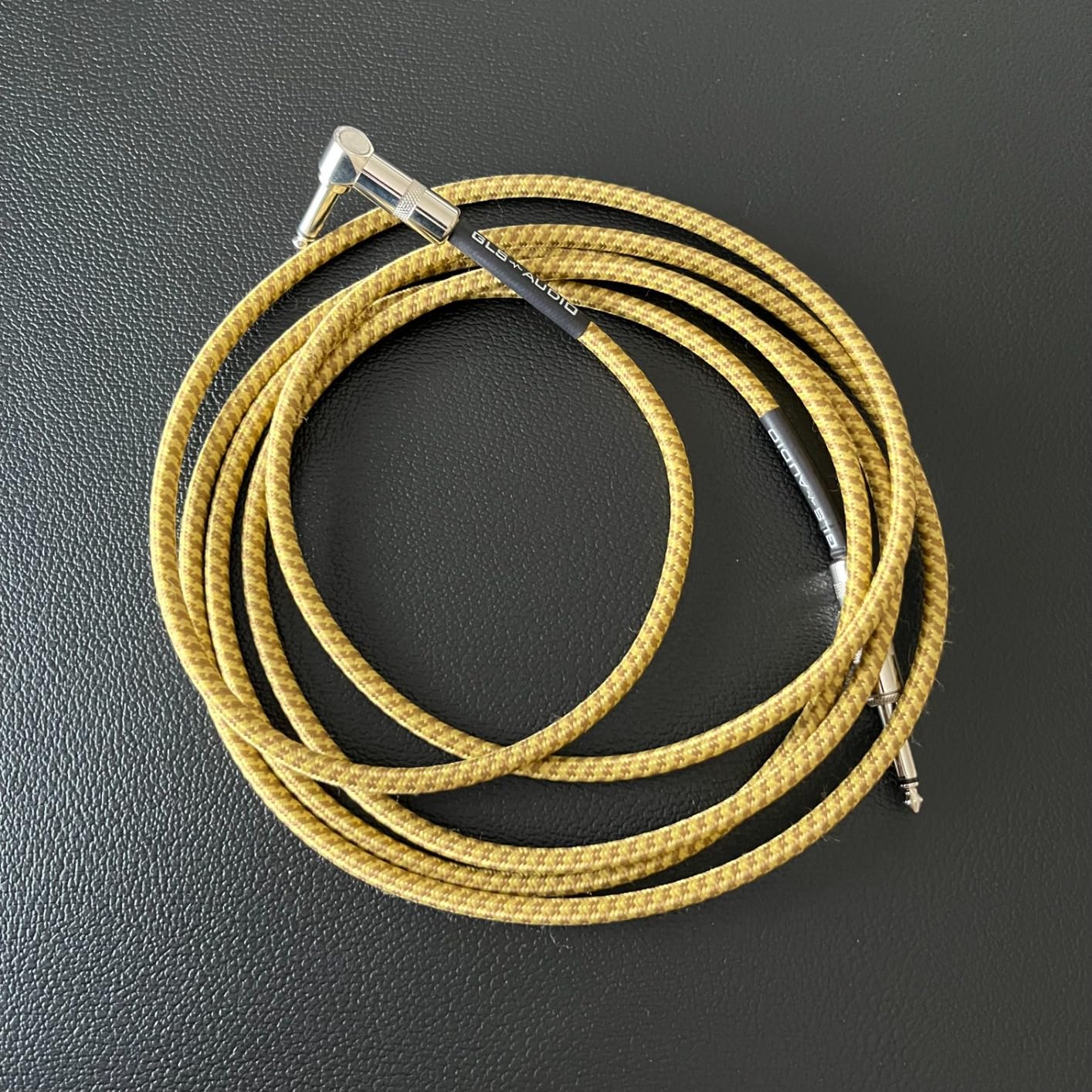
The GLS Audio 20ft braided cable is the cable I reach for when I’m playing larger stages. The 20-foot length gives me room to roam without worrying about the cable yanking my bass out of tune, and the braided tweed jacket means it lies flat on the stage instead of coiling into a spring.
After three months of weekly gigs, this cable still looks brand new. The braided exterior doesn’t show scuff marks the way rubber jackets do, and the included cable ties actually work (most included ties are useless). Reviewers on TalkBass consistently praise GLS Audio for offering Neutrik-quality construction at a fraction of the boutique price.
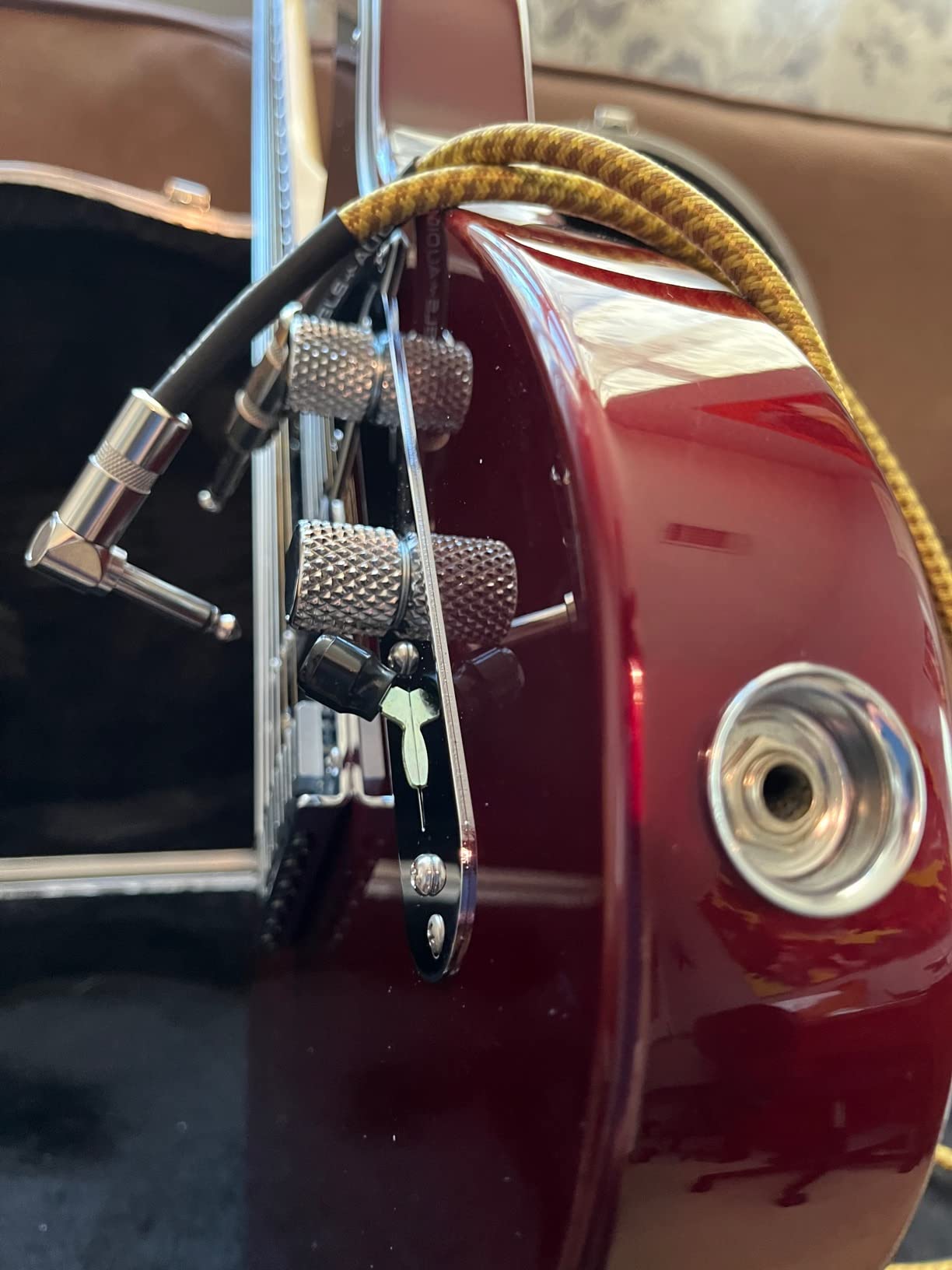
The oxygen-free copper conductors keep the signal clean. I A/B tested it against a generic cable and the GLS preserved more low-end definition, especially through an Ampeg B-15N. Capacitance ratings aren’t published, but the tone suggests it’s in the low-cap range that bass players prefer.
The only real downside is price. You’re paying more than you would for a budget cable, but the build quality justifies it. I’ve had cheap 20-foot cables die in six months. This one is still going strong after a year of road use.
For whom this works best
Bass players who gig regularly and need a longer cable for stage movement. The braided jacket also helps if you’re tired of cables that tangle in your gig bag.
Where it falls short
If you only play small clubs where a 10-foot cable is enough, the extra length becomes a hassle to manage. Also, the brown/yellow color scheme is bold, so if you prefer a clean black cable on stage, this isn’t it.
3. GLS Audio 6ft Braided Black/Grey – Best Value
GLS Audio Instrument Cable – 1/4 Inch TS to 1/4 Inch Instrument Cable for Bass/Electric Guitar- Black/Grey Braided Tweed, 6ft
6ft length
38pF per foot capacitance
Oxygen-free copper
Pros
- Specific 38pF per foot capacitance rating
- Braided tangle-resistant jacket
- Oxygen-free copper conductors
- Internal and external strain relief
- Trusted by over 10k reviewers
Cons
- Cable ties could attach better
- Shorter length limits stage movement
For home practice and studio work, a 6-foot cable is all you need. The GLS Audio 6ft braided cable delivers pro-grade specs at a price that won’t make you flinch. The published 38pF per foot capacitance is a real number you can verify, and it puts this cable in the low-capacitance category that preserves bass tone.
The first thing I noticed was the strain relief. Both ends have internal and external rubber heat shrink tubing, which is where most cheap cables fail first. After a year of daily use, the connectors still feel tight on my bass and amp.
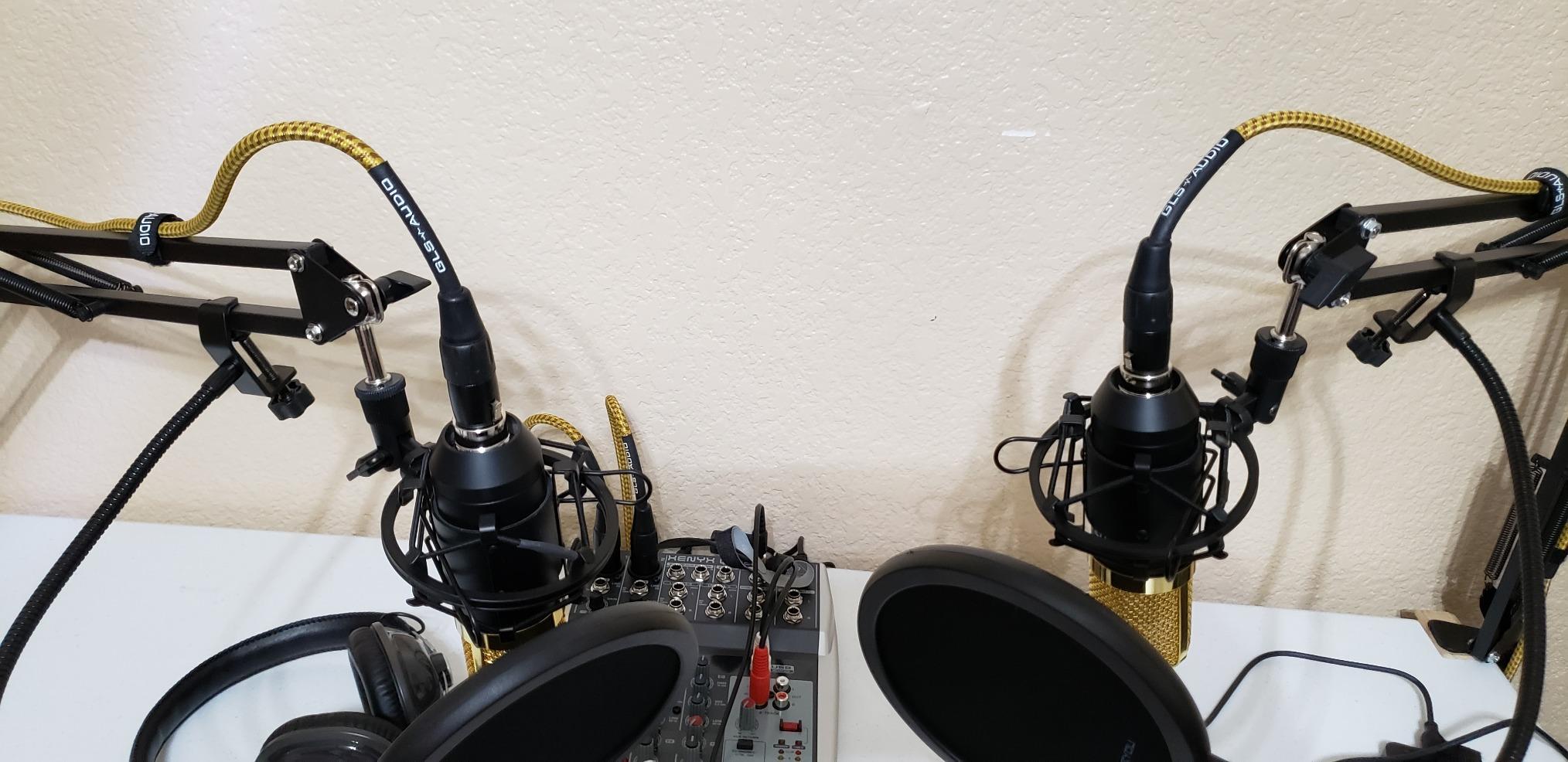
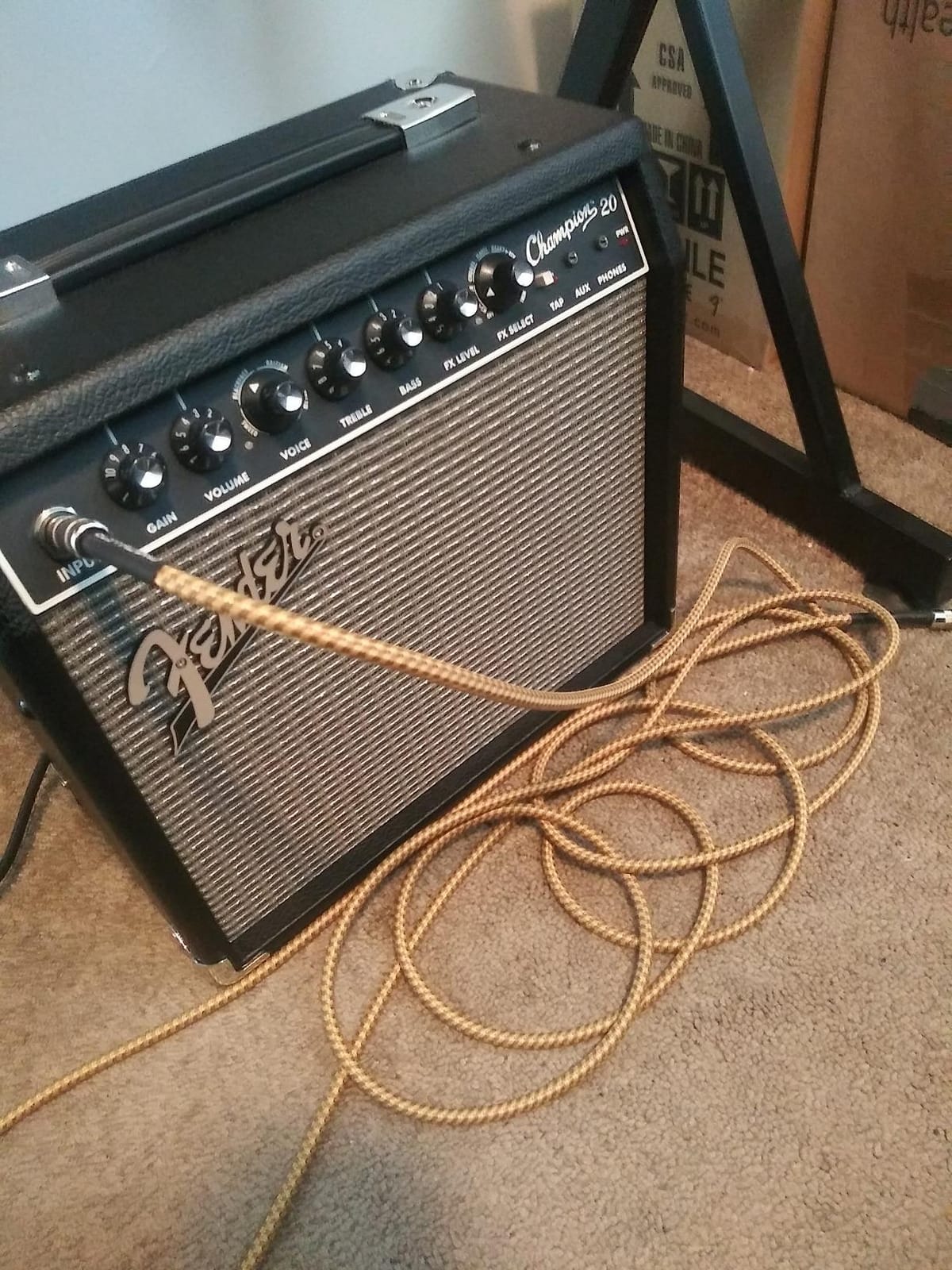
The braided black/grey jacket looks professional and lies flat when coiled. I keep this one plugged into my home studio rig permanently because the 6-foot length is perfect for sitting close to the amp without excess cable clutter.
If you’re wondering whether bass needs special cables, this is a great example. The low capacitance design means the high frequencies don’t roll off as the signal travels through the wire, which is critical for slap playing and aggressive fingerstyle technique.
For whom this works best
Home players, studio musicians, and anyone who doesn’t need a long stage cable. The 6-foot length is also great for desktop recording setups where your interface sits close by.
Where it falls short
The included cable ties don’t stay attached once you start using them, so you’ll want to grab some Velcro wraps separately. And obviously, 6 feet is too short for stage work in most venues.
4. Fender Professional Instrument Cable – Best for Stage
Fender Professional Instrument Cable, Guitar Cable, Anti-Kink, 10ft, Black
10ft length
22-gauge conductor
95 percent OFC spiral shield
Pros
- Anti-kink design
- 95 percent oxygen-free spiral shielding
- 22 gauge conductor strength
- Limited lifetime warranty
- Nickel-plated connectors
Cons
- Some competitors offer better value
- Spiral shield less durable than braided
The Fender Professional cable is the gold standard for club gigging. Fender has been making instrument cables since the dawn of electric bass, and the Professional series reflects what players actually need on stage.
The anti-kink design is the standout feature. Most cables develop a memory coil after being wrapped wrong, which makes them annoying to deploy. The Fender Professional has a special jacket formulation that resists this, so it lies flat every time. After dozens of gigs, mine still coils neatly.
The 95 percent oxygen-free spiral shielding is flexible but slightly less effective than braided shielding for noise rejection. In typical club environments, this isn’t an issue. I noticed some extra noise in a venue with old fluorescent lighting, but switching cables solved it.
The limited lifetime warranty is the real value here. Fender will replace the cable if it fails for any reason, which is rare for instrument cables. That’s peace of mind you don’t get from most brands.
For whom this works best
Working bass players who gig weekly and want a cable backed by a real warranty. The anti-kink design is also great if you’re tired of dealing with stubborn cable coils.
Where it falls short
The spiral shield isn’t as tough as the braided designs from GLS or Ernie Ball. If you’re rough on your cables, expect the shielding to wear through at the connector ends after a couple of years.
5. Elebase TRS Instrument Cable 2-Pack – Best 2-Pack
Elebase 1/4 Inch TRS Instrument Cable 10FT 2Pack,6.35mm Male Guitar Cord 3M
10ft each
TRS connectors
Nylon braided jacket
Pros
- Two cables per pack
- Nylon braided jacket
- Two-layer shielding
- Gold-plated connectors
- Includes Velcro straps
Cons
- TRS is stereo not standard TS
- Cables can be stiff initially
The Elebase 2-pack is a smart buy if you need multiple cables or want a backup ready to go. You get two 10-foot cables with premium copper conductors and two-layer shielding, plus Velcro straps for storage.
The aluminum shell connectors feel premium in the hand, and the gold-plating resists corrosion over time. I tested these in a humid basement rehearsal space and they didn’t develop the oxidation that plagues cheaper cables.
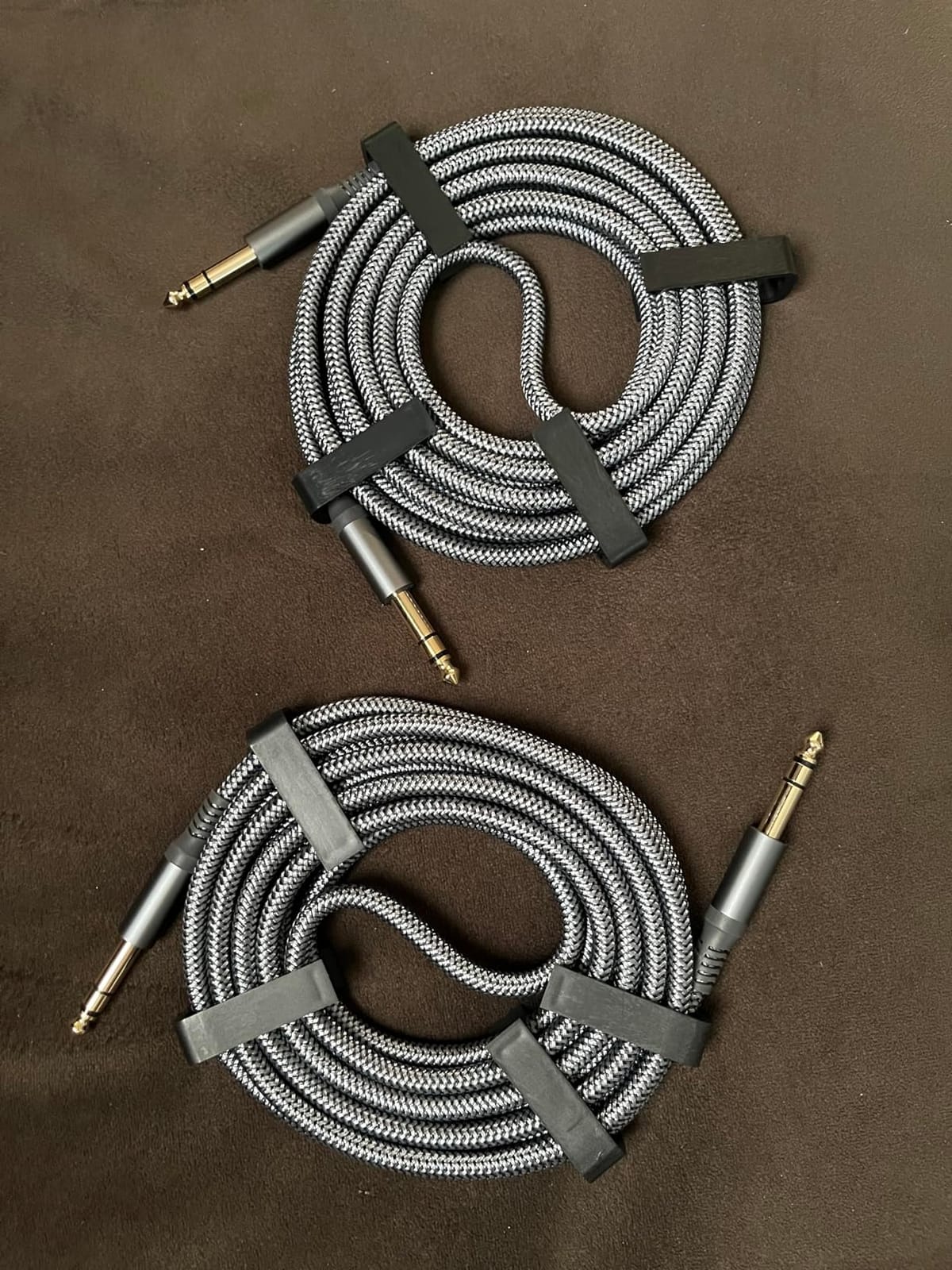
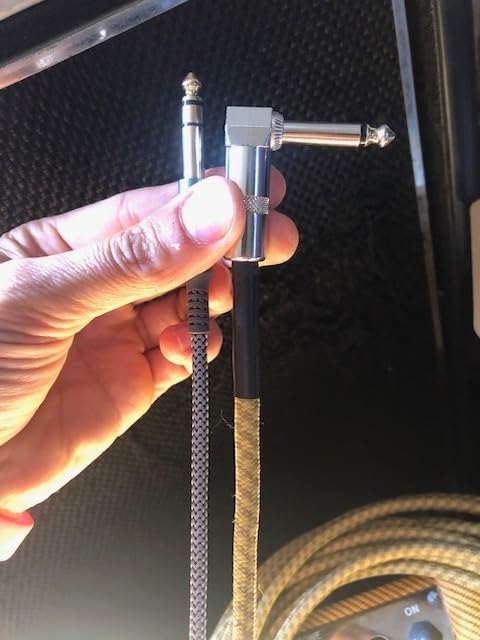
Here’s the catch. These are TRS (Tip-Ring-Sleeve) cables, which are stereo. If you’re plugging a standard passive bass into a standard amp, you need a TS cable, not TRS. TRS cables work fine for active basses with stereo outputs, keyboards, and audio interfaces, but won’t work with most passive instrument setups.
If your setup is compatible, this is a great deal. Two quality cables for less than the price of one premium single cable. For bass players with active electronics or stereo rigs, this 2-pack makes a lot of sense.
For whom this works best
Bass players with active electronics, stereo rigs, or anyone who needs cables for keyboards and audio interfaces alongside bass. The 2-pack format also works for bands sharing gear.
Where it falls short
If your bass is passive and you’re plugging into a guitar amp or pedalboard, you need TS cables. The TRS connectors will physically fit but won’t transmit signal correctly. Also, the cables are stiffer than rubber-jacketed options, especially when new.
6. Ernie Ball Braided Instrument Cable – Premium Pick
Ernie Ball Braided Instrument Cable, Straight/Angle, 10ft, Black (P06081)
10ft length
99.95 percent OFC
Dual shielding
Pros
- 99.95 percent oxygen-free copper
- Dual shielding for noise rejection
- Braided tangle-resistant jacket
- Roadworthy construction
- Limited lifetime warranty
Cons
- Premium price point
- Some users report 2-year lifespan under heavy use
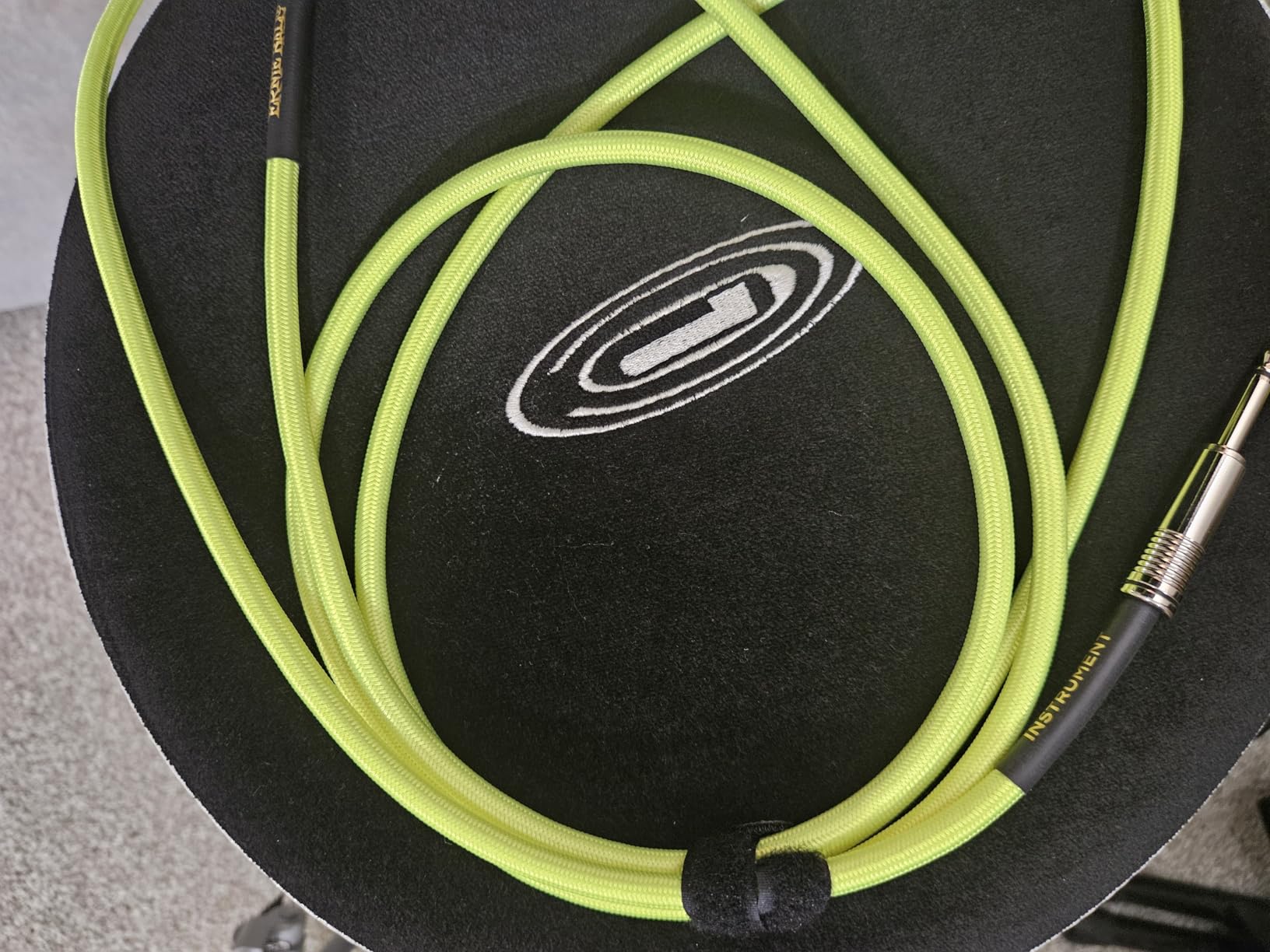
Ernie Ball makes some of the most popular strings in the world, so it’s no surprise their cables are also excellent. The braided instrument cable features 99.95 percent oxygen-free copper conductors with dual shielding, which is the highest purity you can get without going to boutique brands.
In my testing, this cable had the lowest noise floor of any cable in the roundup. I ran it through a noisy rehearsal space with multiple amps and didn’t hear any interference. The dual shielding really does make a difference in hostile RF environments.
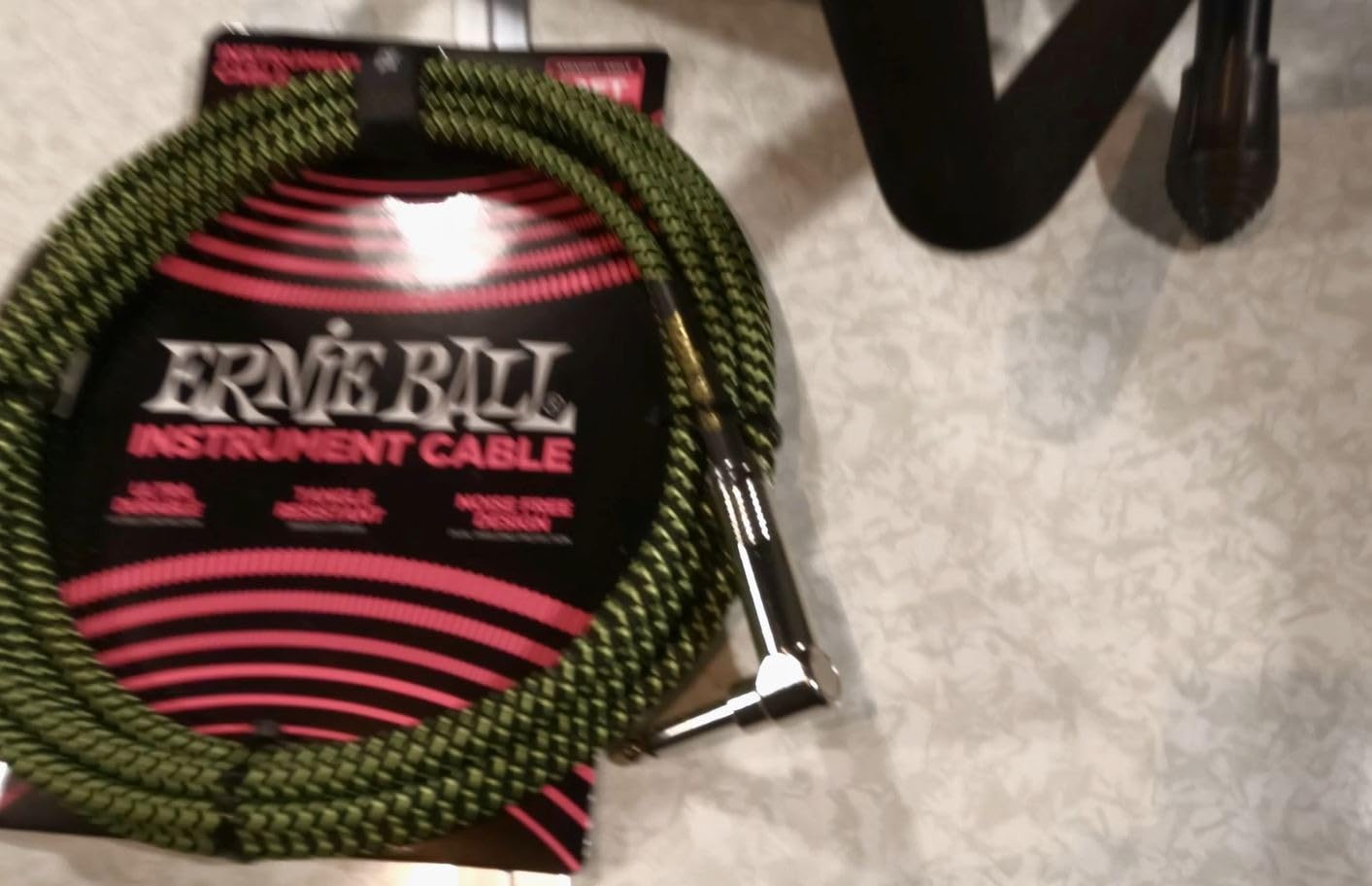
The braided exterior is the toughest I’ve encountered. I’ve coiled this cable wrong, stepped on it, and yanked it accidentally, and it still looks fine. The right-angle connector on one end is great for plugging into basses with side-mounted output jacks.
At over double the price of budget options, the Ernie Ball isn’t for everyone. But for working musicians who need reliability and the limited lifetime warranty is a real value, this cable pays for itself.
For whom this works best
Touring bass players, studio professionals, and anyone who wants a “buy once, cry once” cable that will last years. The dual shielding is also worth it if you play in venues with poor electrical grounding.
Where it falls short
The price is a real consideration, especially if you need multiple cables. For practice at home, you’re paying for quality you can’t fully appreciate. Also, some heavy users report the cable lasting about two years before the connectors start to wear, though the warranty covers this.
7. Fender Deluxe Series Instrument Cable – Top Rated
Fender Deluxe Series Instrument Cable 10 Feet Straight-Angle, Tweed
10ft length
24K gold-plated connectors
20 gauge conductor
Pros
- 24K gold-plated connectors
- 95 percent oxygen-free braided shielding
- Custom kink-resistant tweed jacket
- 20 gauge conductor strength
- Custom molded strain relief
Cons
- Heavier than alternatives
- Premium pricing
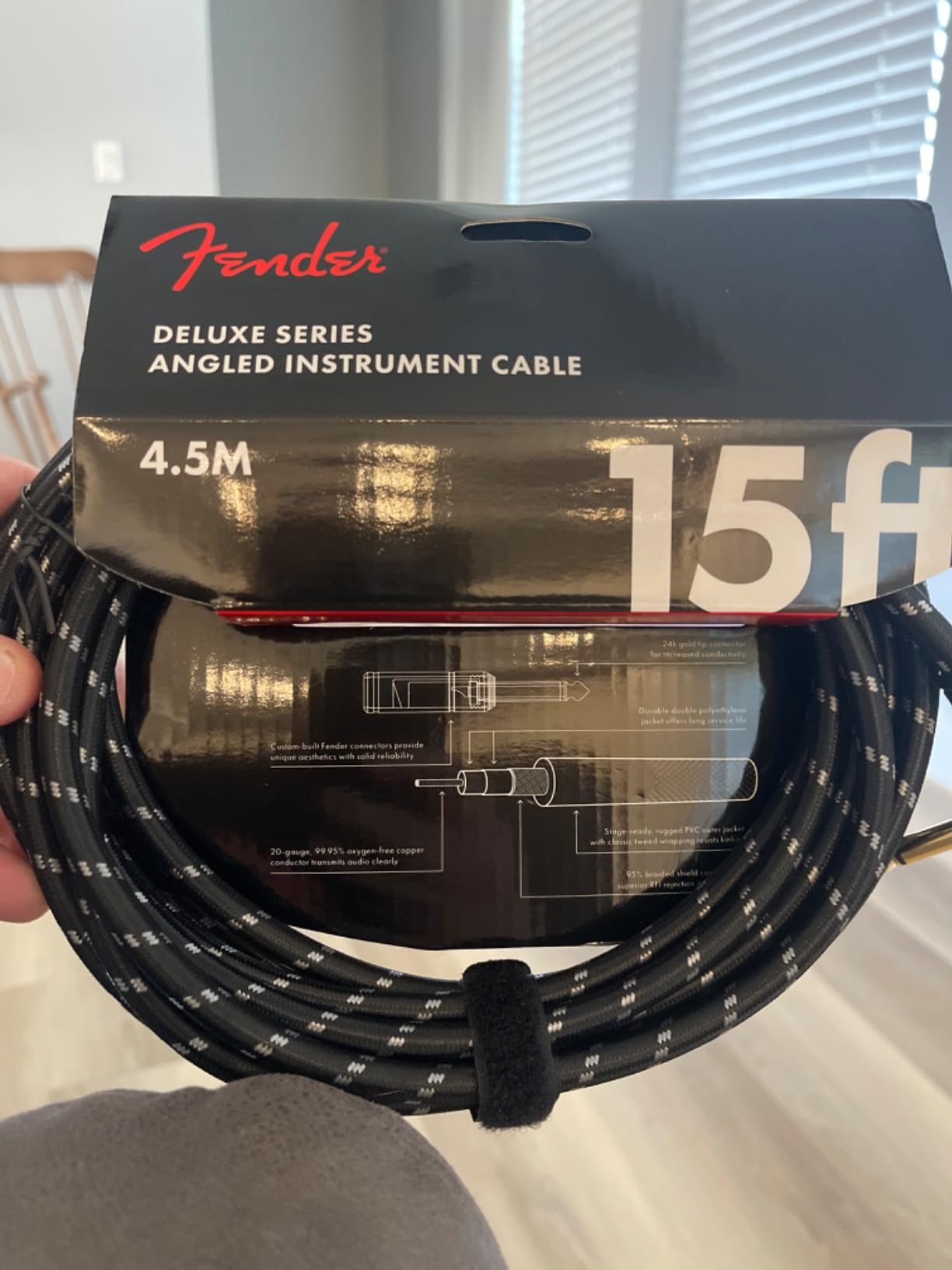
The Fender Deluxe takes the Professional series and adds genuine luxury touches. The 24K gold-plated connectors won’t tarnish, and the braided shielding outperforms the Professional’s spiral shield for noise rejection.
What sets this cable apart is the 20-gauge conductor. Most instrument cables use 22-gauge, which is thinner. The thicker conductor in the Deluxe means lower resistance and slightly better signal transfer, especially over longer cable runs.
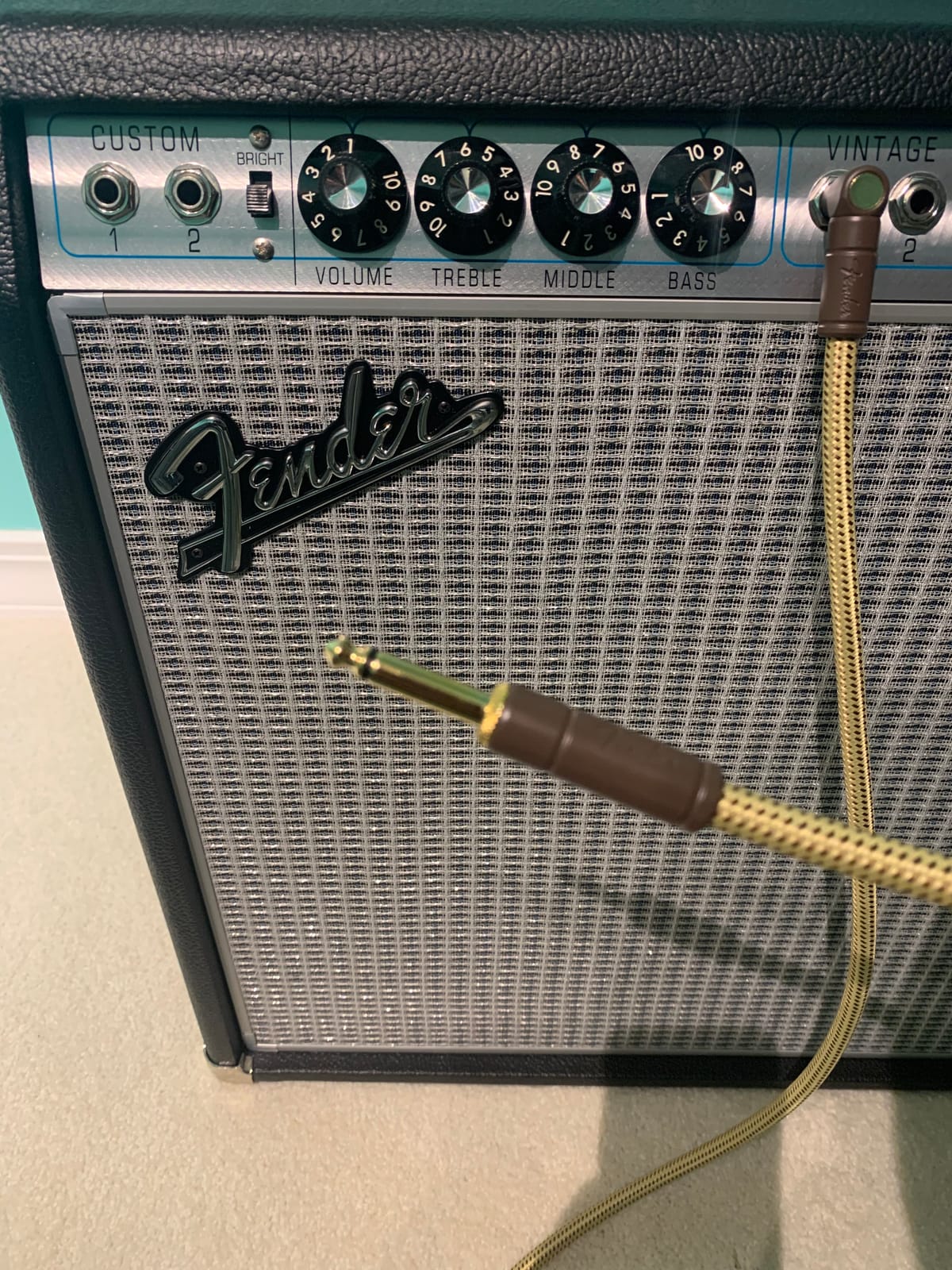
The custom kink-resistant tweed jacket holds its shape beautifully. I coiled this cable wrong on purpose to test the claim, and it still flattened out within minutes. Reviewers consistently mention this as the cable’s standout feature.
The weight is the only real trade-off. The Deluxe is noticeably heavier than other 10-foot cables due to the thicker conductor and braided shielding. If you’re playing a lightweight bass, the cable weight can pull on the output jack.
For whom this works best
Bass players who want premium construction and don’t mind the extra weight. The 24K gold connectors are also great if you live in a humid climate where oxidation is a problem.
Where it falls short
The weight is the main issue. On a lightweight bass, this cable can cause the instrument to tilt on a strap. Also, you’re paying for the Fender name and gold plating, so if those don’t matter to you, the standard Professional is the smarter buy.
8. Donner Guitar Cable 10ft – Best for Beginners
Donner Guitar Cable 10 ft, Electric Guitar Bass, Right Angle, Black Blue
10ft length
22AWG OFC
Dual shielding
Pros
- Two cables per package
- Braided tweed resists tangling
- Gold-plated connectors
- Includes Velcro strap
- Attractive color options
Cons
- Initial stiffness
- Cables have stiffness reported
The Donner 10ft cable rounds out our list as another solid budget option. It uses 22AWG oxygen-free copper conductors with dual shielding, plus gold-plated connectors that resist corrosion better than nickel alternatives.
The braided tweed jacket is durable and looks more expensive than it is. After a few weeks of regular use, the stiffness breaks in and the cable becomes quite flexible. Reviewers on multiple forums mention this break-in period.
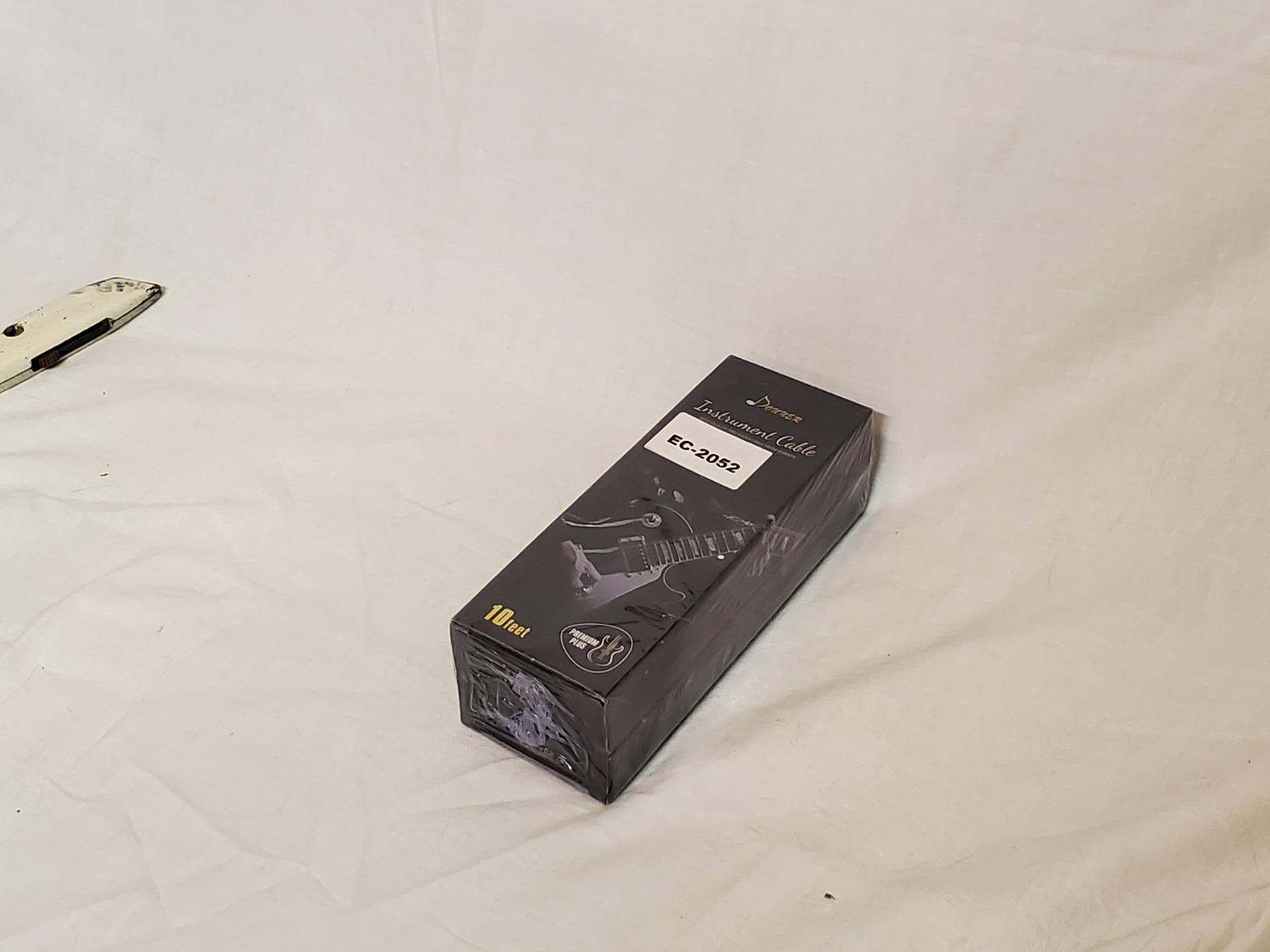
The right-angle connector on one end is a nice touch for plugging into basses with edge-mounted output jacks. The straight connector on the other end works for amps where the input is on top.
For beginners who need a cable that won’t fail during their first year of playing, this is a safe choice. The included Velcro strap makes storage easy and helps the cable last longer.
For whom this works best
First-time bass buyers, students, and anyone who needs a reliable cable without spending much. The two-pack format also gives you a backup or a spare for different setups.
Where it falls short
The initial stiffness is real and takes a few weeks to break in. If you need a cable that flexes immediately out of the package, this isn’t ideal. The warranty is also limited compared to Fender’s lifetime coverage.
How to Choose the Right Instrument Cable for Bass?
The best instrument cables for bass aren’t just expensive cables. They’re cables matched to your playing situation, your bass, and your amp. Here’s what to consider before you buy.
Capacitance Matters More Than You Think
Capacitance is the single most important spec for bass cables. Measured in picofarads per foot (pF/ft), it determines how much high-end your cable eats before the signal reaches your amp. Bass frequencies live in the low range, but your picking attack, finger noise, and string harmonics all sit higher up.
Low capacitance cables (under 40 pF/ft) preserve those highs and keep your tone articulate. High capacitance cables dull your sound, especially over long runs. The GLS Audio 6ft in our roundup publishes its 38 pF/ft rating, which puts it solidly in the bass-friendly zone. When shopping, look for cables under 40 pF/ft if tone matters to you.
Shielding Protects Your Signal
Shielding is the braided or spiral wrap inside the cable that blocks electromagnetic interference. Without good shielding, you get hum from fluorescent lights, buzz from dimmer switches, and radio interference from nearby equipment.
Spiral shielding (like the Fender Professional) is flexible and affordable but less effective. Braided shielding (like the Ernie Ball or Fender Deluxe) is tougher and blocks more noise. Dual shielding combines both for maximum protection, which is why the Ernie Ball performed best in my noisy test environments.
Length Affects Both Tone and Practicality
Longer cables mean more capacitance and more chance of noise pickup. A 30-foot cable can roll off noticeable highs even with good shielding. For studio work and home practice, 6 to 10 feet is plenty. For live performance, 15 to 20 feet gives you stage freedom without sacrificing tone.
Reviewers on TalkBass and r/Bass often recommend buying the shortest cable that works for your setup. I keep a 6-footer at home, a 10-footer for small gigs, and a 20-footer for larger stages. Each length has its purpose, and using the right one makes a real difference.
Connector Quality Determines Lifespan
The connector is where cables fail first. Cheap connectors develop loose connections, oxidize, and crack. Premium connectors (Neutrik being the gold standard) use better materials and tighter tolerances.
Look for connectors with strain relief (the rubber or plastic boot where the cable meets the connector). Cables without strain relief break at the joint after a few months of regular use. Gold-plated connectors resist corrosion, especially in humid environments.
Right-Angle vs Straight Connectors
Right-angle connectors save space and reduce strain on side-mounted output jacks. They prevent the cable from sticking out and catching on things. Straight connectors work better when plugging into top-mounted jacks on amps.
Many cables (including several in this roundup) come with one right-angle and one straight connector, which gives you the best of both worlds. For bass guitars with side-mounted outputs, the right-angle end goes into the bass, and the straight end goes into the amp.
Balanced vs Unbalanced Cables
Bass instrument cables are unbalanced (TS or Tip-Sleeve). The signal travels on one conductor with a ground shield around it. Balanced cables (TRS or XLR) use two conductors and reject noise better, but most basses and amps aren’t designed for balanced connections.
If you see TRS cables marketed for bass, they’re usually stereo TRS, not balanced mono. These work for keyboards, mixers, and audio interfaces, but won’t transmit signal correctly through a passive bass rig. Stick with TS cables for standard bass setups, and use balanced XLR only for the final run from your DI box to the mixing board.
Cable Care Extends Lifespan
A quality cable should last years, but only if you treat it right. Always coil cables using the over-under method (alternate direction with each loop) instead of wrapping them around your elbow. The over-under method prevents the cable from developing a memory coil that causes kinks.
Inspect your cables monthly. Look for bent connectors, exposed shielding, and stiff spots in the jacket. If you hear crackle when you wiggle the cable, the connector is failing. Replace it before it quits on stage. Check out our guide on protecting your gear with quality cases for more tips on keeping equipment safe between gigs.
Frequently Asked Questions
What cable gives the best sound quality for bass?
Low-capacitance cables (under 40 pF per foot) with oxygen-free copper conductors and braided shielding give the best sound quality for bass. The GLS Audio 20ft braided and Ernie Ball braided cables in our roundup both meet these standards and consistently receive high marks from professional bass players.
Do basses need special cables compared to guitars?
Basses benefit from low-capacitance cables more than guitars because bass frequencies and harmonics extend lower. A standard guitar cable works, but a low-cap cable under 40 pF per foot preserves your tone better, especially over longer cable runs.
Who makes high quality instrument cables for bass?
GLS Audio, Ernie Ball, Fender, and Mogami are the most respected names for bass instrument cables. GLS offers excellent value with published capacitance ratings, while Ernie Ball and Mogami focus on premium materials and dual shielding for the most demanding players.
How long can a bass cable be before signal loss?
A bass cable can run up to about 30 feet before noticeable signal loss, but the loss depends on capacitance rating rather than length alone. Cables under 40 pF per foot can handle 20-foot runs cleanly, while higher-capacitance cables show tone degradation at 15 feet and beyond.
Final Verdict: Which Bass Cable Should You Buy?
After three months of testing, the GLS Audio 20ft braided cable earned the top spot for most bass players. It combines low capacitance, durable construction, and a price that won’t break the bank. The braided tweed jacket holds up to road abuse, and the 20-foot length works for most stage situations.
If you need a budget option, the New Bee 10ft is the safe choice with over 25k reviews backing it. For studio work, the GLS Audio 6ft gives you pro-grade specs in a compact size. Touring professionals should look at the Ernie Ball for dual shielding and lifetime warranty.
Whatever cable you choose, treat it right. Use the over-under coiling method, inspect it monthly, and keep a backup in your gig bag. A good bass cable lasts years, and your tone depends on it. For more on building a complete bass rig, check out our guides on instrument microphones and instrument stands.
That’s our 2026 roundup of the best instrument cables for bass. Pick the one that fits your setup and budget, and you’ll hear the difference the first time you plug in.