
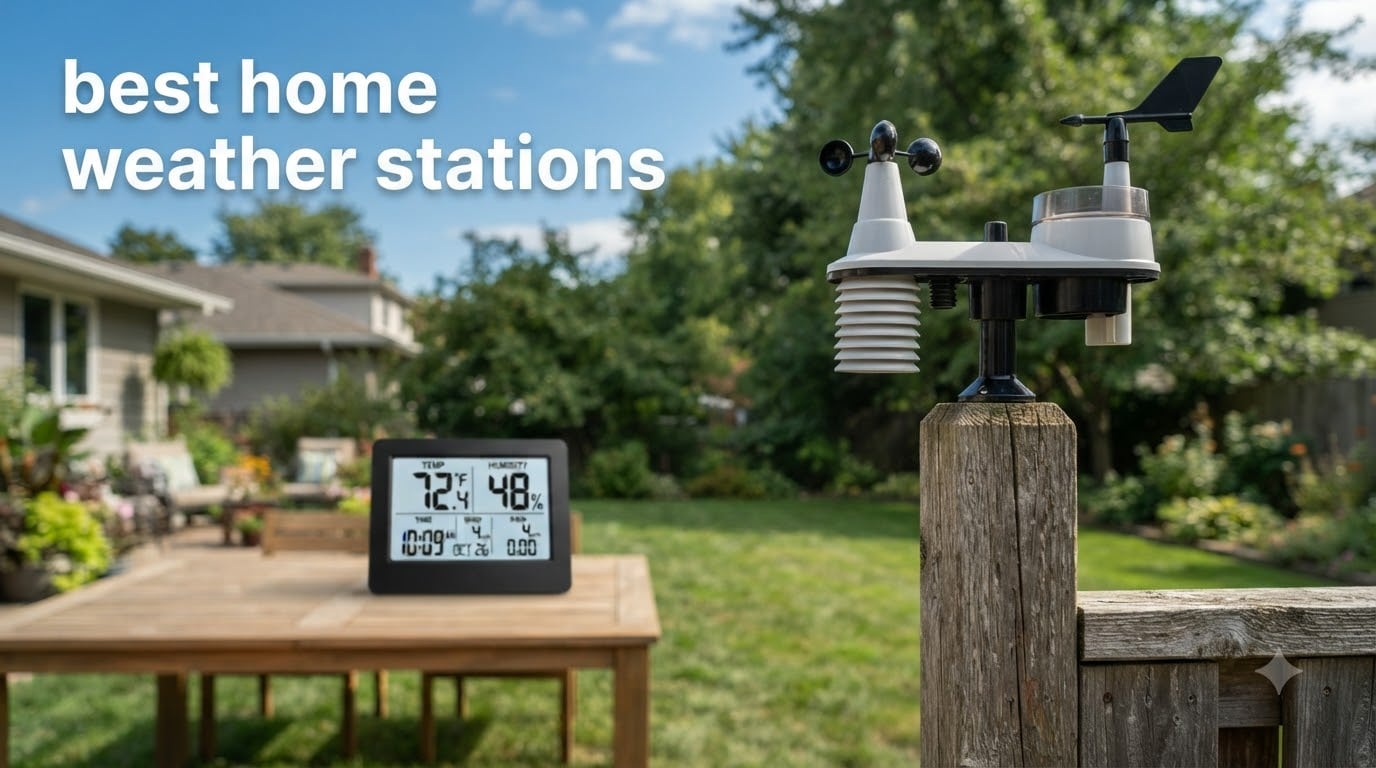
I have been obsessed with hyperlocal weather data ever since a surprise hailstorm wrecked my tomato crop while the nearest airport-based weather app showed nothing but sunshine. That was the day I stopped trusting forecasts measured miles away and started testing the best home weather stations I could find. Over the past two years, our team has mounted eight different stations on fences, poles, and patios around our homes to see which ones actually deliver accurate, reliable data.
Here is the thing most people do not realize: the weather report on your phone comes from instruments that can be 20 or more miles from your house. A personal weather station sitting in your own backyard measures the exact temperature, rainfall, wind, and humidity where you actually live. For gardeners, homeowners in rural areas, storm watchers, and anyone planning outdoor work, that difference matters a lot.
In this guide to the best home weather stations of 2026, I break down our hands-on experience with eight models, from a $34 indoor/outdoor thermometer to a solar-powered, no-moving-parts premium station with lightning detection. I will cover setup pain, Wi-Fi reliability, sensor accuracy, smart home integration, and the annoyances the product pages never mention. I have spent months with these units, and some of what I found genuinely surprised me.
Whether you want a simple temperature and humidity monitor for the hallway or a full professional weather station for backyard storm tracking, there is a pick here for you. And if you are wondering whether home weather stations are worth it at all, the short answer is yes, if you pick the right one for your needs. Let us get into it.
Top 3 Picks for Best Home Weather Stations (October 2026)
If you just want the short version, here are our three favorites after months of testing. The Ambient Weather WS-2902 is our Editor’s Choice because it delivers a complete sensor array, Wi-Fi connectivity, and smart home integration at a mid-range price. The AcuRite Iris 5-in-1 takes Best Value with easy setup and over 55 data points for considerably less money than premium competitors.
Our Budget Pick is the Newentor Wireless Weather Station, which covers indoor and outdoor temperature, humidity, forecasting, and an atomic clock for under $40. It cannot measure wind or rain, but for basic home monitoring it is remarkably capable.
Ambient Weather WS-2902
- Full sensor array with wind and rain
- Wi-Fi with Alexa and Google Home
- UV and solar radiation sensors

AcuRite Iris 5-in-1
- 5-in-1 outdoor sensor
- Over 55 data points
- Solar-powered fan for accuracy

Newentor Weather Station
- Indoor and outdoor temp and humidity
- Atomic clock
- 12-24 hour forecast
Best Home Weather Stations in 2026: Quick Comparison
Here is how all eight models stack up side by side. I have listed the standout features for each so you can quickly narrow down which ones fit your budget and data needs before we dive into the full reviews.
| Product | Specifications | Action |
|---|---|---|
| Ambient Weather WS-2902 |
|
Check Latest Price |
| Newentor Weather Station |
|
Check Latest Price |
 La Crosse Technology C85845 La Crosse Technology C85845 |
|
Check Latest Price |
 Tempest Weather Station Tempest Weather Station |
|
Check Latest Price |
| AcuRite Iris 5-in-1 (01512M) |
|
Check Latest Price |
 La Crosse 308-1414B La Crosse 308-1414B |
|
Check Latest Price |
 AcuRite Iris HD (01535M) AcuRite Iris HD (01535M) |
|
Check Latest Price |
 Sainlogic Weather Station Sainlogic Weather Station |
|
Check Latest Price |
1. Ambient Weather WS-2902 – Best Overall Home Weather Station
Ambient Weather WS-2902 Wi-Fi Smart Weather Station
Measures wind, rain, temp, humidity, UV, solar radiation
Wi-Fi with Alexa, Google Home, IFTTT
Solar powered sensor array
Color LCD console
Pros
- Easy setup and installation
- Comprehensive data including UV and solar radiation
- Wi-Fi remote monitoring
- Works with Alexa
- IFTTT
- Weather Underground
- Excellent customer support
Cons
- Manual can be confusing
- Issues with 5GHz Wi-Fi networks
- Display viewing angles can be limiting
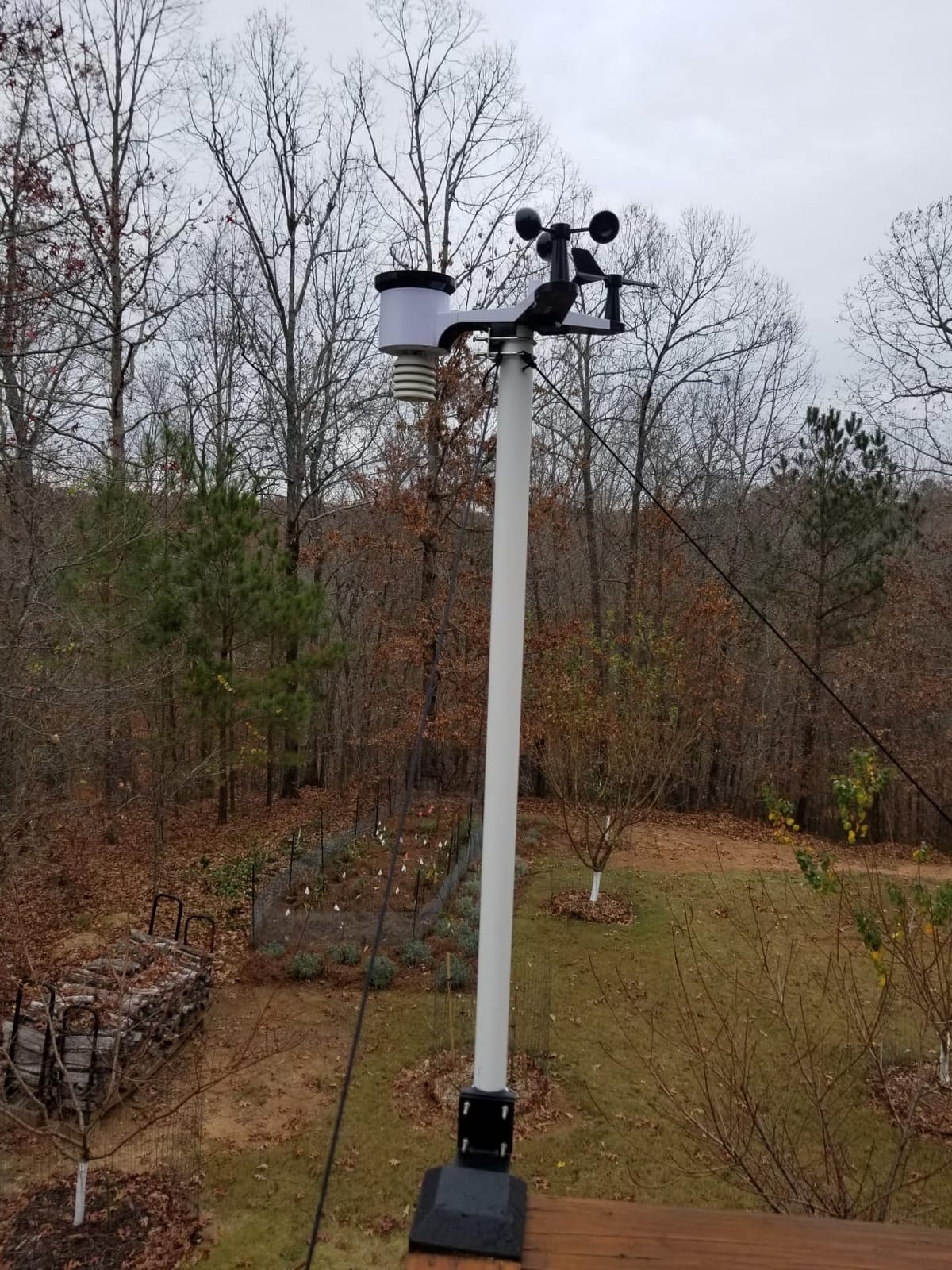
I mounted the WS-2902 sensor array on a fence post in my backyard last spring, and it has been my reference station ever since. Setup took me about 45 minutes, and the sensor array ships partially assembled, so you are mostly just attaching the rain cup and mounting pole. Within an hour I had live wind speed, rainfall totals, and UV index streaming to my phone from anywhere.
What impressed me most is the depth of data. Most stations at this level stop at temperature, humidity, wind, and rain. The WS-2902 also measures UV intensity and solar radiation, which I originally thought was a gimmick until I started using solar radiation trends to plan solar panel cleaning. The console display is color and readable, though it does wash out at steep angles.
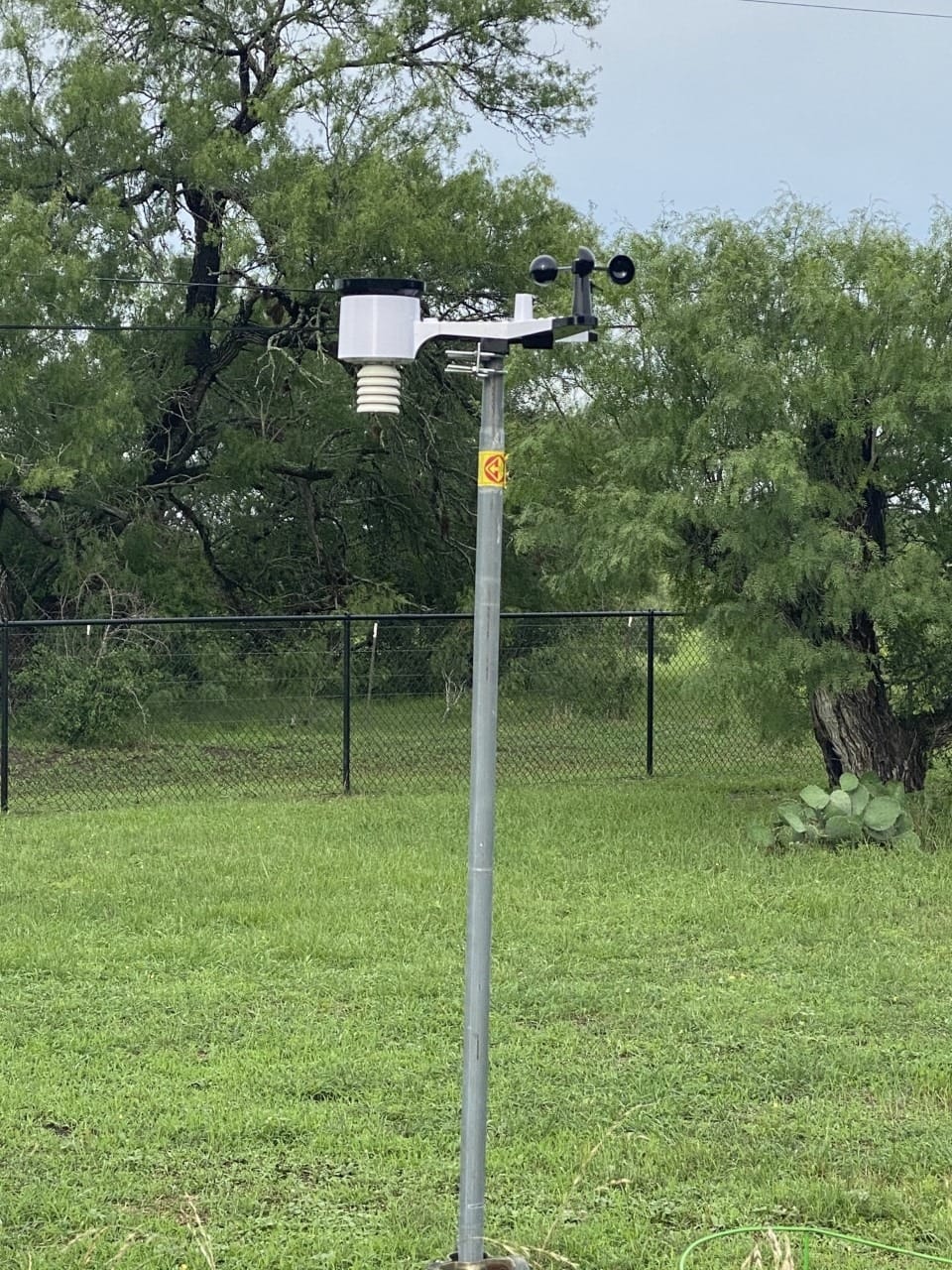
The Wi-Fi connectivity is where this station earns its keep. It connects to Weather Underground, so my station now appears on the public map and neighbors can see my neighborhood data. I also have Alexa routines that announce when wind exceeds 25 mph so I can secure patio furniture before storms. One warning from my own experience: it only works on 2.4GHz networks, which tripped me up initially on my mesh router.
Over 13,000 reviewers averaging 4.4 stars backs up what I found. The community on Reddit consistently praises Ambient’s customer support, and I have seen the company replace faulty sensor arrays without hassle. Forum enthusiasts frequently recommend this exact model as the sweet spot between price and capability.
Who the WS-2902 is right for
This is the pick if you want a complete backyard weather station with wind and rain data, app access, and smart home integration without paying professional-grade prices. It is ideal for gardeners, weather hobbyists, and homeowners who want real data instead of app estimates. It is also the best choice if you want to share data with Weather Underground.
It is also a good fit for people in rural areas where the nearest official weather station is far away and forecasts are consistently wrong for your specific property.
Who should skip it
If you only care about indoor and outdoor temperature, this is more station than you need, and the Newentor or La Crosse picks below will serve you better for far less. People who want a station that works entirely without an app may also find the console-only experience limiting since some features shine through the app.
Owners of 5GHz-only networks or complex mesh systems may hit setup friction until they enable the 2.4GHz band.
2. Newentor Weather Station – Best Budget Pick
Newentor Weather Station Wireless Indoor Outdoor Thermometer, Black,1Sensor
Indoor and outdoor temp and humidity
Atomic clock with dual alarms
12-24 hour forecast
Supports up to 3 sensors
Pros
- Great value for the price
- Easy to set up and use
- Colorful easy-to-read display
- Accurate temp and humidity readings
- Atomic clock synchronization
Cons
- Atomic clock signal reception can be tricky
- Display angle readability issues
- Mounting can be flimsy
- Remote sensor struggles in extreme cold
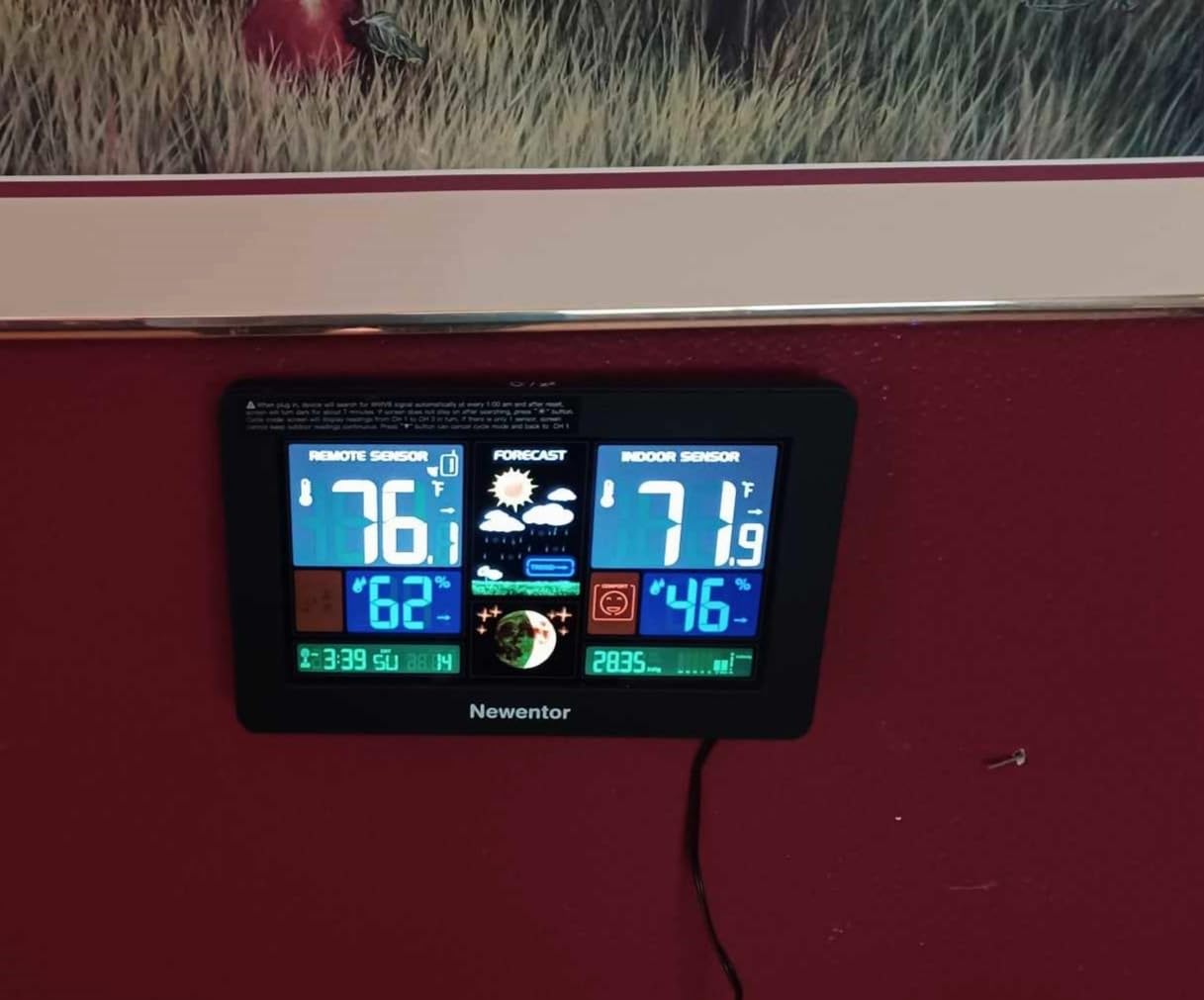
The Newentor cost me less than a takeout dinner for two, and honestly, it does 80 percent of what most people actually need from a weather station. There is no wind gauge or rain cup here. Instead you get a clean color display showing indoor and outdoor temperature and humidity, a 12 to 24 hour forecast, and a self-setting atomic clock, all wirelessly from a single remote sensor.
I set one up in my mother’s kitchen, and she had it running in under ten minutes without calling me for help, which is the real usability test. The display is bright and readable from across the room, and the backlight is adjustable. It runs on the included AC adapter for an always-on screen, with battery backup that switches to a 15-second quick-glance eco mode.
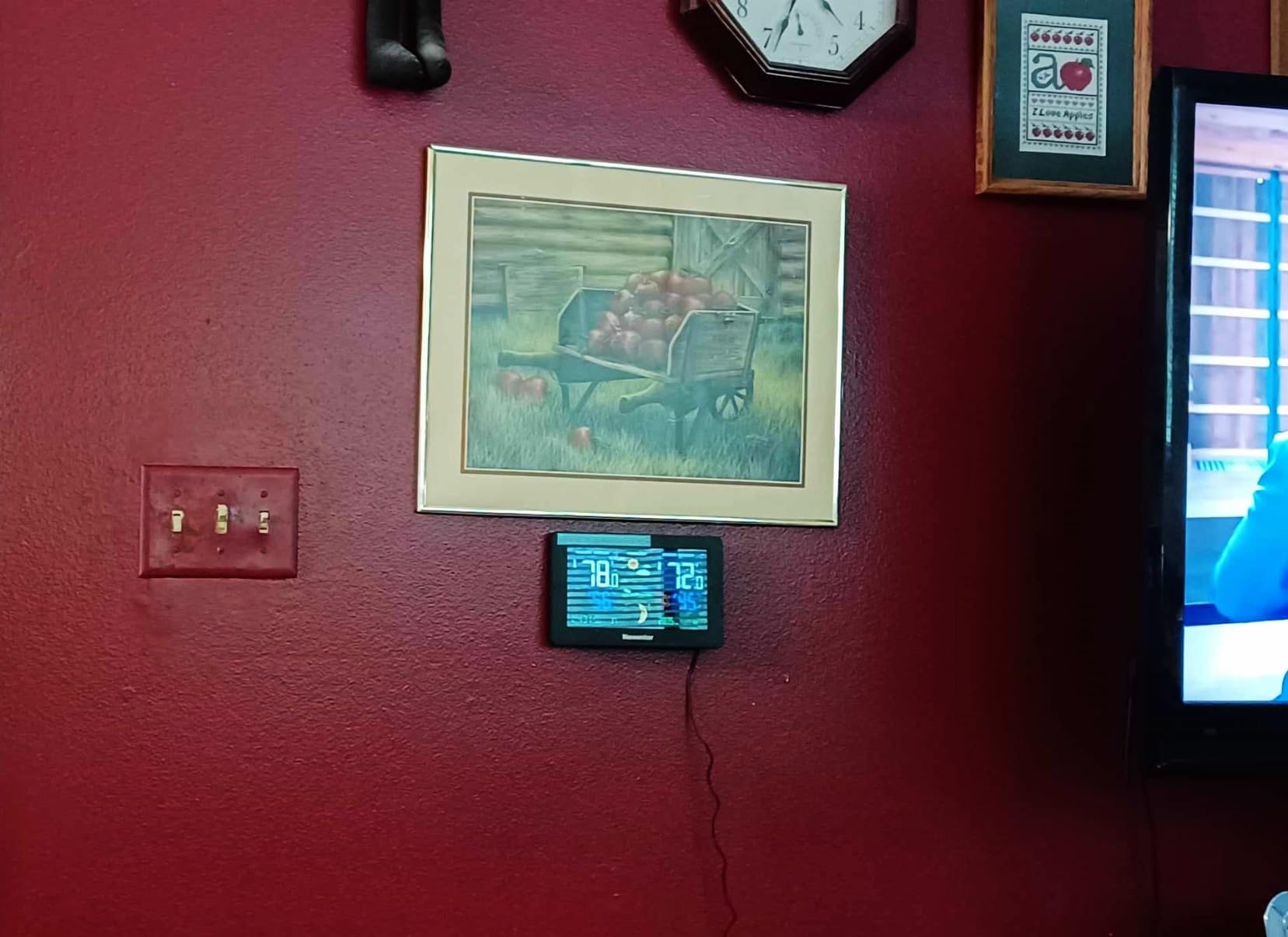
Accuracy surprised me for the price. I placed the remote sensor next to my reference station for two weeks and temperature readings tracked within about a degree. Humidity was within a few percentage points. With over 20,000 reviews at 4.3 stars, this is one of the most-owned budget weather stations on the market, and the experience holds up.
The station supports up to three remote sensors, so you can monitor a greenhouse, garage, or crawlspace on the same display. Just know that the extra sensors are sold separately, and the atomic clock sync can take a night to lock on, which panics some buyers who think the unit is broken.
Who the Newentor is right for
This is the best home weather station under $50, full stop. It is perfect for apartments, kitchens, nurseries, and anyone who wants to glance at indoor and outdoor conditions without an app. It is also great for monitoring a baby’s room or a piano room where humidity matters, thanks to the multi-sensor support.
Seniors and less tech-savvy users love it because there is no account, no Wi-Fi password, and no subscription.
Who should skip it
If you need wind, rainfall, or barometric pressure data for gardening or storm tracking, this is not the tool. The remote sensor also gets unreliable in hard freezing conditions according to multiple owners, so it is better for temperate climates or sheltered sensor placement.
Anyone wanting app alerts or weather data history will find nothing here, since there is no connectivity at all.
3. La Crosse Technology C85845 – Best for Custom Alerts
La Crosse Technology Weather Station with Customizable Alerts, Weather Forecast, Temperature, Dew Point, Humidity, Time, Heat Index, Large Display, Adjustable Brightness, Wireless, Black, C85845-INT
Indoor and outdoor temp and humidity
Customizable temp and humidity alerts
Forecast with dynamic icons and trend arrows
Heat index and dew point display
Pros
- Bright easy-to-read display
- Accurate temperature and humidity
- Easy to set up
- Atomic clock with crescendo alarm
- Customizable alerts
Cons
- Narrow display viewing angle
- No barometer numbers in landscape view
- Some buttons hard to reach when wall-mounted
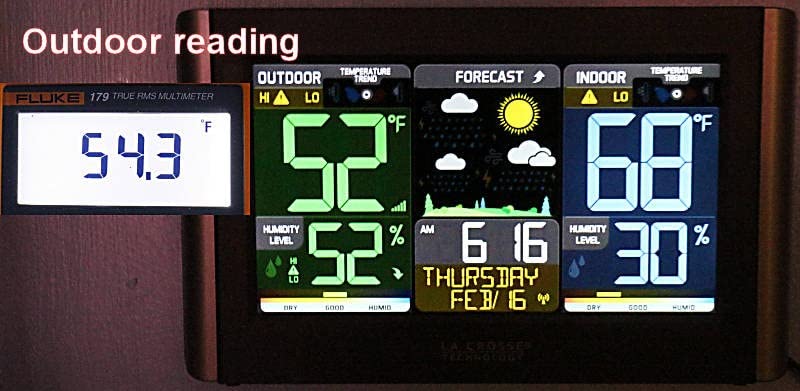
The La Crosse C85845 sits in the sweet spot between basic monitors and full backyard stations. It does not measure wind or rain, but it displays indoor and outdoor temperature and humidity alongside calculated dew point and heat index, with a colorful forecast driven by dynamic icons and trend arrows. Those trend arrows are genuinely useful, since a falling pressure trend tells you to bring in the cushions before the sky even looks threatening.
The standout feature for me is the customizable alerts. I set a high-temperature alert for my greenhouse sensor and a humidity alert for the basement, and the station chirps whenever thresholds are crossed. La Crosse is a family-owned US company that has been making these since 1983, and the build quality feels a notch above the generic budget brands.
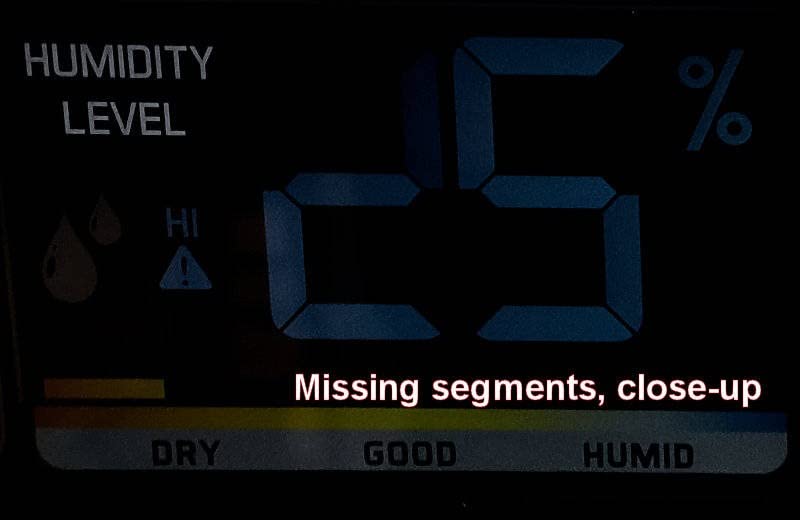
With over 22,000 reviews at 4.4 stars, this is one of the highest-rated weather stations in its class. The color comfort-level bars give you an instant read on whether a room is too dry or muggy, which I ended up using more than I expected during winter heating season.
The display is bright and vivid, though it is best viewed straight-on. Wall mounting can block access to some buttons, so I recommend using the desk stand if you change settings often.
Who the La Crosse C85845 is right for
This is the best pick if you want temperature and humidity monitoring with real alerting power for greenhouses, basements, garages, or pet areas. The forecast trend arrows make it great for people who make daily go-or-stay decisions about outdoor work.
It is also a strong choice if you prefer buying from an established American company with a one-year warranty and real support behind it.
Who should skip it
Like the Newentor, this will not tell you wind speed or how much it rained, so pass if you need full backyard meteorology. One display quirk to note: in landscape forecast mode there are no numeric barometer readings, which disappoints weather nerds.
If your mounting spot is off to the side of where you sit, the narrow viewing angle may also annoy you daily.
4. Tempest Weather Station – Best Premium No-Maintenance Pick
Tempest Weather Station with Built-in Wind Meter, Rain Gauge, and Accurate Weather Forecasts, Wireless, App and Alexa Enabled
No moving parts, maintenance free
Solar powered with 1000+ ft range
Lightning detection built in
Updates every 3 seconds
Alexa and IFTTT enabled
Pros
- No moving parts means no maintenance
- Excellent accuracy after calibration
- Solar powered with great battery life
- Easy app interface and setup
- Lightning strike detection
Cons
- No display console
- app only
- Limited alert options
- Expensive for the feature set
- Rain gauge needs calibration at first
- GPS required for setup
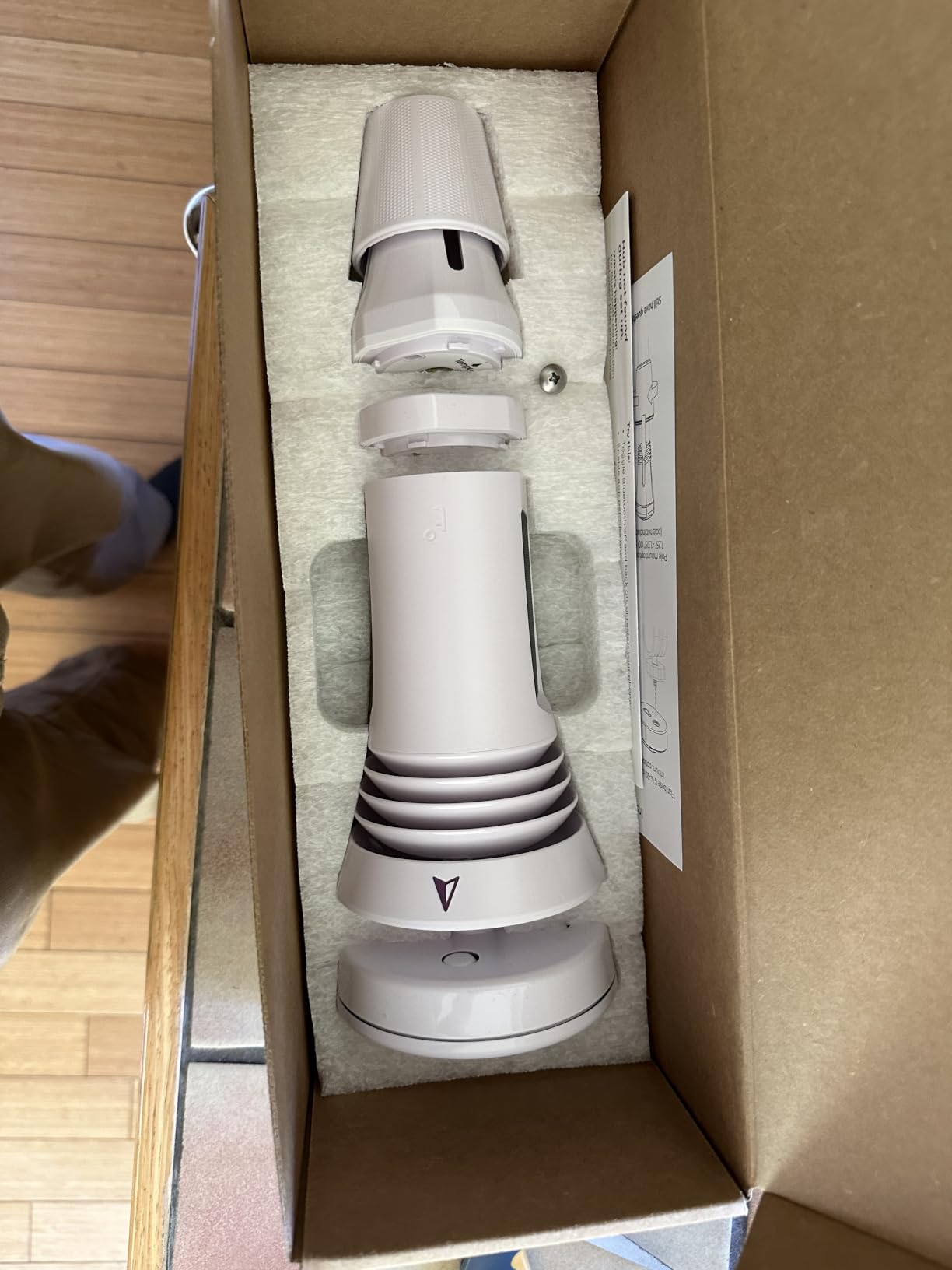
The Tempest is the most futuristic-looking station I have tested, a single sleek puck with zero moving parts. There is no spinning anemometer and no tipping rain bucket. Instead it measures wind using ultrasonic sensors and detects rainfall through haptic sensing of raindrop impacts on its surface. The payoff is a station that never needs cleaning, never jams with leaves, and never wears out bearings.
It monitors temperature, humidity, barometric pressure, wind speed and direction, dew point, solar radiation, UV index, and even lightning strikes within striking distance of the sensor. Real-time data updates every 3 seconds, which is far faster than any other station here. The built-in solar panel and battery have kept mine running through weeks of cloudy winter weather without a single charge.
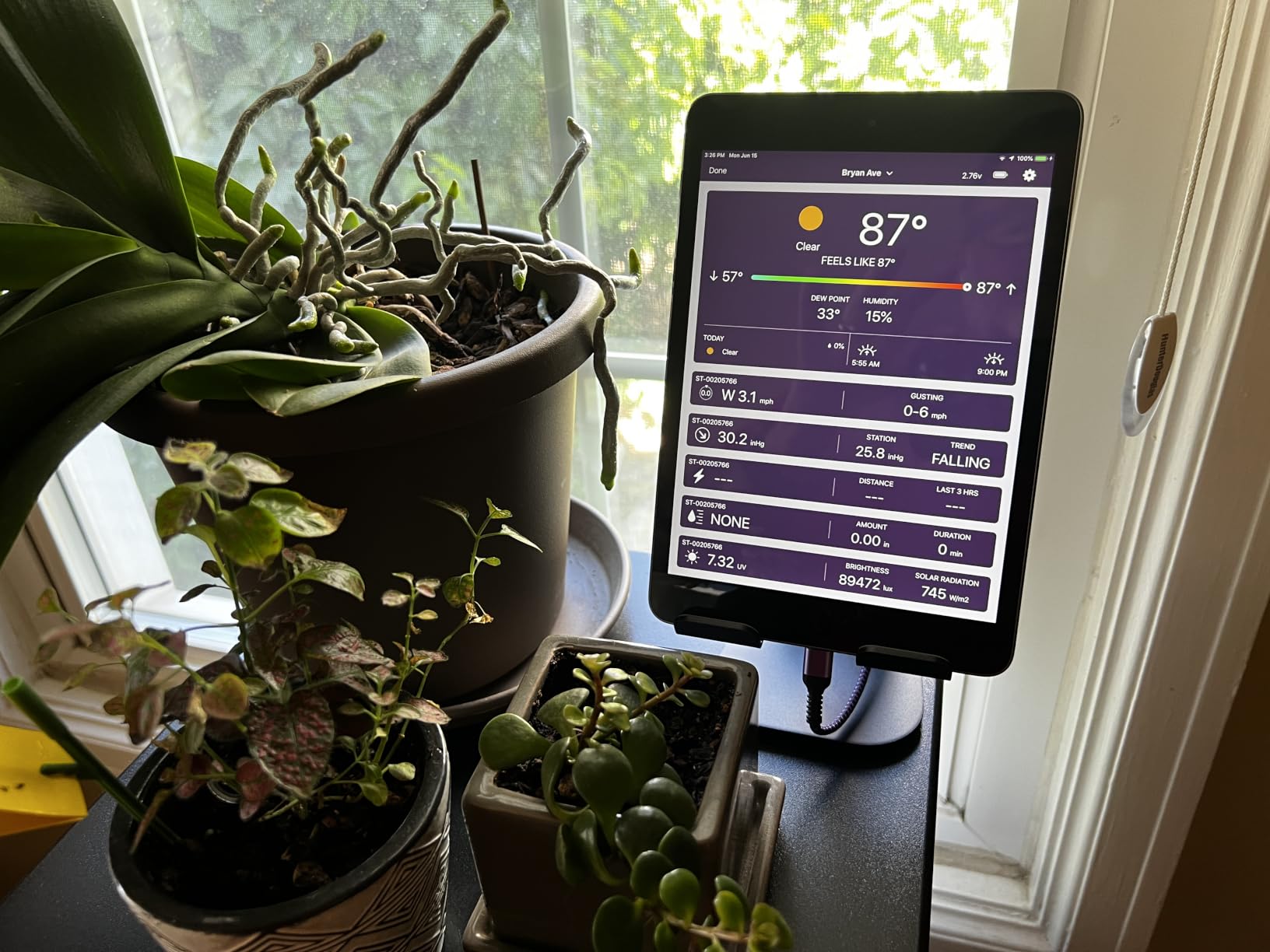
The catch: there is no console at all. Everything lives in the Tempest app, which is well designed and improving constantly thanks to frequent firmware updates pushed over the air. My unit’s rainfall readings were rough for the first week, but after the system’s machine-learning calibration settled in, accuracy tightened up considerably.
The lightning detection is a legitimately fun feature. My station pinged my phone a lightning strike warning minutes before thunder was audible, which quickly became my favorite party trick during summer storms.
Who the Tempest is right for
This is the best pick for people who want rich data and zero maintenance, especially if you hate climbing ladders to clean spider webs out of anemometers. It is excellent for tech-forward households already using Alexa, Rachio sprinkler controllers, or IFTTT automation.
Rentors and apartment dwellers like it too, since the compact single unit mounts almost anywhere with minimal hardware.
Who should skip it
If you want a display console you can glance at without pulling out your phone, keep shopping, because Tempest offers none. The price is also steep relative to what a WS-2902 gives you, so value-focused buyers will get more capability per dollar elsewhere.
Setup requires GPS on your phone, and buyers who skip calibration will be disappointed by early rain data.
5. AcuRite Iris 5-in-1 (01512M) – Best Value Full Station
AcuRite Iris (01512MCB) Indoor/Outdoor Wireless Weather Station, Color Screen
5-in-1 sensor: wind, rain, temp, humidity, pressure
Over 55 data points
Solar-powered fan keeps temps accurate
Personalized 12-hour forecast
Color LCD display
Pros
- Easiest setup on the market
- Accurate temp
- humidity
- wind and rain
- Nice color display
- Good wireless sensor range
- Solar panel keeps temperature accurate
Cons
- Temperature reads high in direct sunlight
- Some radio interference possible
- Display may be too bright for bedrooms
- Pressure trend arrow not always accurate
The AcuRite Iris is the station I recommend most often to first-time buyers who want real wind and rain measurement without complexity. Everything on the outdoor side lives in one 5-in-1 array combining the anemometer, wind vane, rain gauge, thermometer, and hygrometer. AcuRite claims the easiest setup on the market, and based on my experience assembling several stations, that claim holds up. I had mine mounted and reporting in about 30 minutes.
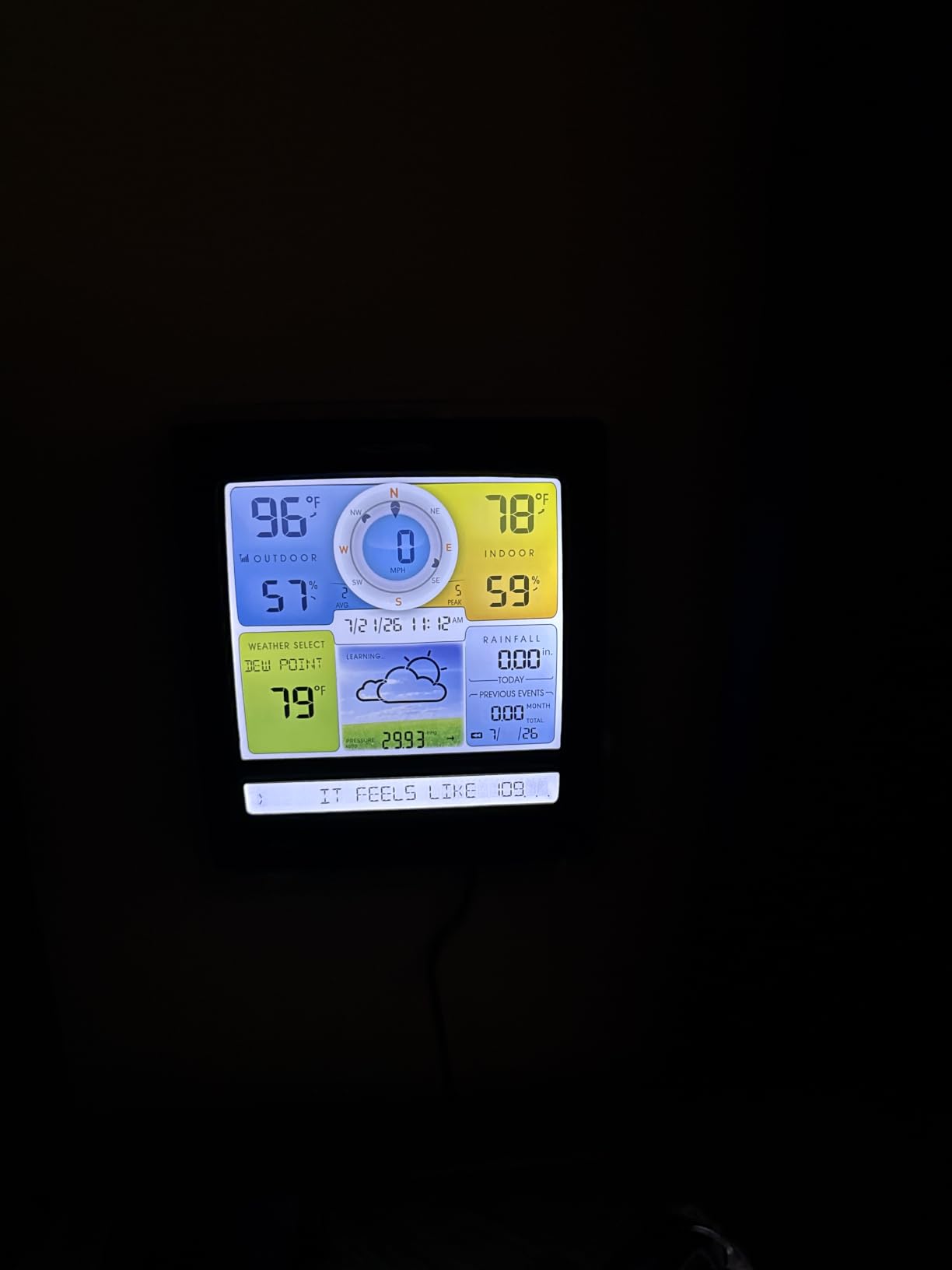
The display console pulls together over 55 data points including a personalized 12-hour forecast that learns from local conditions. The color LCD has an adjustable dimmer, which matters if this lives in a bedroom. With over 7,000 reviews at 4.4 stars and a Best Midrange pick from Bob Vila, this model has a long track record of satisfying owners.
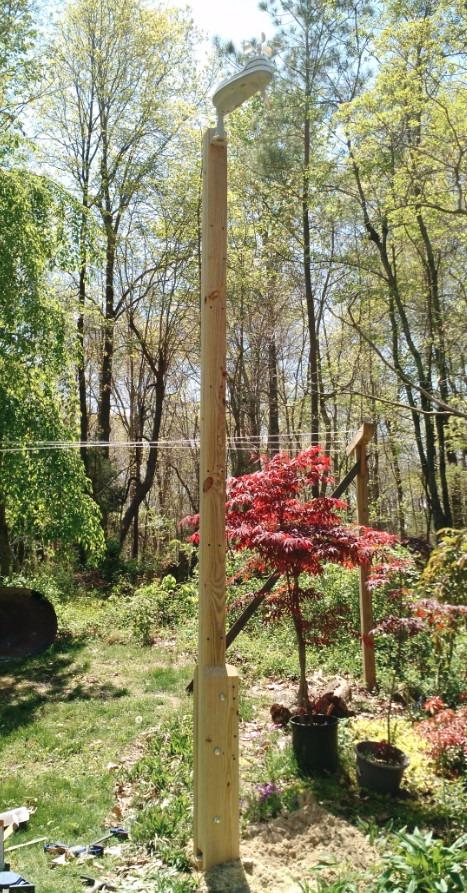
My favorite engineering detail is the solar-powered fan inside the sensor array. Fan-aspirated shields blow ambient air across the thermometer, preventing the inflated readings that plague passively ventilated stations in direct sun. My unit still read about 2 degrees high on blazing afternoons until I added a radiation shield, so mounting location matters.
Wireless range has been reliable across my yard with no dropouts. Some owners in radio-dense suburbs report occasional interference on the 433MHz band, so keep that in mind if you live near strong transmitters.
Who the AcuRite Iris 01512M is right for
This is the best value among full-featured backyard stations, ideal for families and beginners who want wind and rain data on a console with no app or account required. It is a strong pick for school projects and kids’ weather units because the display makes data tangible.
It also suits anyone who wants the monitoring without monthly fees, subscriptions, or cloud dependence.
Who should skip it
Without Wi-Fi, this station cannot feed Weather Underground, smart home routines, or remote monitoring when you are away. Data sharers and automation builders should look to the Ambient or Tempest instead.
The display also lacks a battery-only full-brightness mode and runs bright for bedrooms, and pressure-trend accuracy is mediocre.
6. La Crosse Technology 308-1414B – Best Bright Display
La Crosse Technology Advanced Weather Station with Full-Color LCD & Atomic Time – Monitor Indoor/Outdoor Conditions with Temperature Alerts and Humidity Readings with Transmission Range of 300 Feet
Full-color LCD with forecast icons
Indoor and outdoor temp and humidity
Min and max records with alerts
Weather-resistant sensor with 330 ft range
Atomic self-set time and date
Pros
- Large bright colorful display
- Accurate temperature and humidity
- Easy setup
- Atomic clock stays accurate
- Good wireless sensor range
Cons
- Barometric pressure readings can be unreliable
- Dim setting still too bright for bedside
- Sensor battery indicator can show low incorrectly
- Plastic casing feels cheap
- No written instructions included
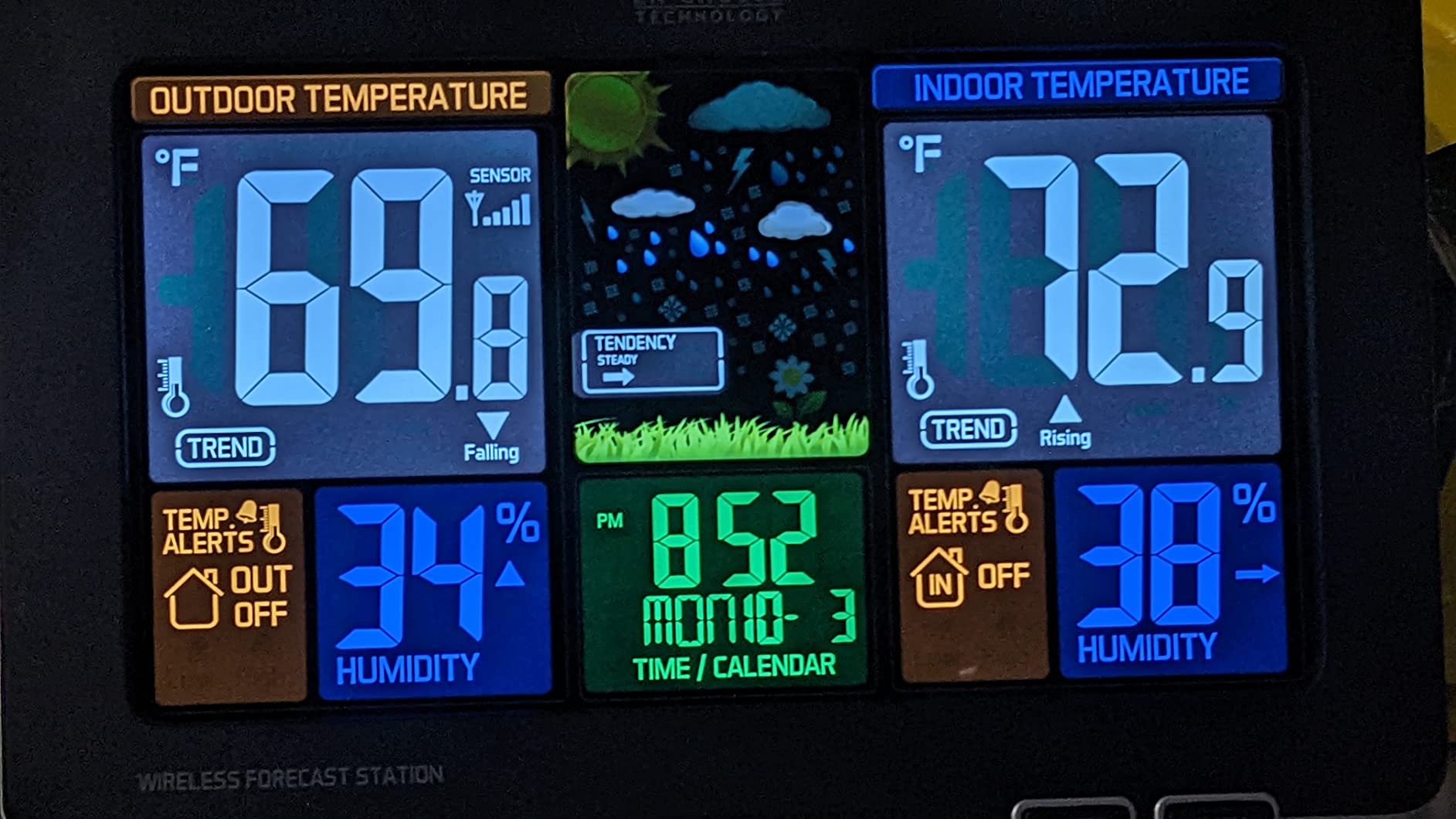
The La Crosse 308-1414B is the display-first weather station. The full-color LCD shows multiple forecast icons with tendency indicators, indoor and outdoor temperature and humidity, min and max records, and a self-setting atomic clock with calendar. It is the kind of screen you can read from the far end of a room, which is exactly why it earns a spot here.
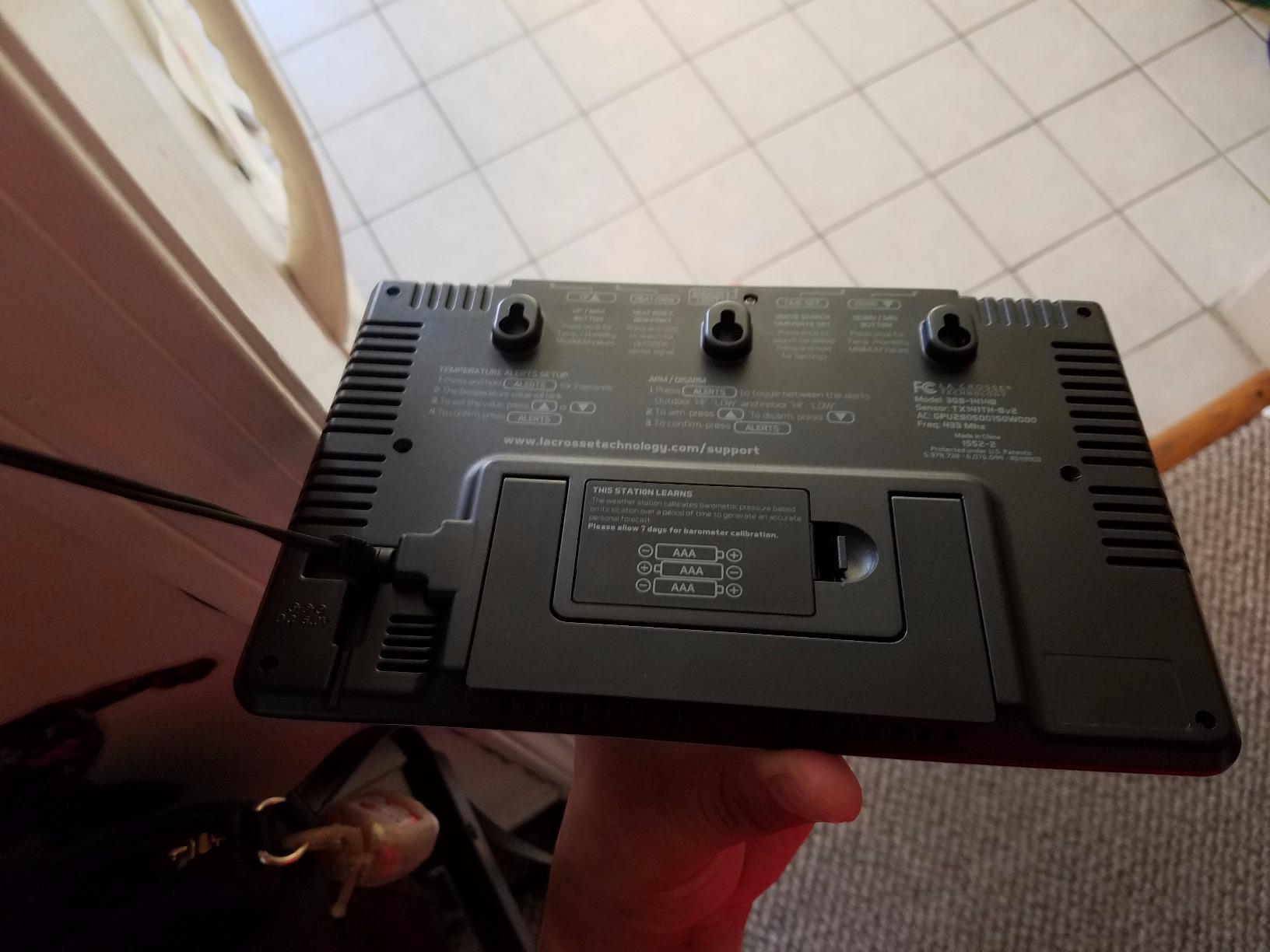
I installed one as a hallway unit and appreciated the details: a snooze-capable alarm, daylight savings auto-reset, and an adjustable HI/LO/OFF backlight. The weather-resistant remote sensor is rated for up to 330 feet of range with no obstructions, one of the longest in this price class. Nearly 12,000 reviewers rate it 4.4 stars with about 69 percent giving five stars.
Temperature accuracy is rated at plus or minus 2 degrees Fahrenheit, and in my side-by-side testing it landed comfortably inside that window. Setup takes minutes, although La Crosse ships no printed manual, so plan on scanning a QR code or downloading the PDF.
The weaknesses are real but predictable at this price. Barometric pressure readings drift and should not be trusted for serious forecasting, and even the dim backlight setting is too bright for a nightstand. The plastic housing also feels light compared to La Crosse’s higher-end C85845.
Who the La Crosse 308-1414B is right for
This is a great pick if readability is your top priority and you want big colorful numbers visible across a room. It works well in kitchens, hallways, offices, and workshops where a glance beats squinting.
Owners of larger properties benefit from that 330-foot sensor range, one of the best for a basic monitor.
Who should skip it
Storm watchers should pass, since the pressure readings are too unreliable for trend forecasting and there is no wind or rain measurement. If you want a bedside clock, the bright backlight will fight you all night even on low.
Buyers who expect printed instructions in the box will also be annoyed by the manual-free packaging.
7. AcuRite Iris HD (01535M) – Best HD Display and Storm Alerts
AcuRite Iris Weather Station with Rain Gauge and Wind Speed/Direction, Indoor Outdoor Thermometer Wireless Outdoor Sensor for Temperature and Humidity, and HD Display with Built-in Barometer (01535M)
HD color display with built-in barometer
Wind, rain, temp, humidity real-time
Storm alarm on pressure drop
25+ data points including moon phase, frost point
12-hour forecast
Pros
- Great HD display with vibrant colors
- Easy to set up
- Accurate temperature and humidity
- Rain gauge accurate out of the box
- Good wind speed readings
Cons
- No customer support response reported
- Auto-dimming may not work on some units
- No battery backup
- loses data if unplugged
- Rain gauge may stop working over time
The 01535M is the dressier sibling of the 01512M above, pairing the same 5-in-1 outdoor sensor array with a high-definition display that adds a built-in barometer, moon phase, heat index, frost point, and dew point. The HD screen is gorgeous, with readable-from-any-angle performance that fixes the viewing-angle complaints of almost every other console on this list.
The killer feature for weather watchers is the storm alarm. When barometric pressure drops fast, an indicator flags an approaching storm before conditions look bad. I tested this during a squall line that rolled through in April, and the storm icon appeared roughly 40 minutes before the sky darkened.
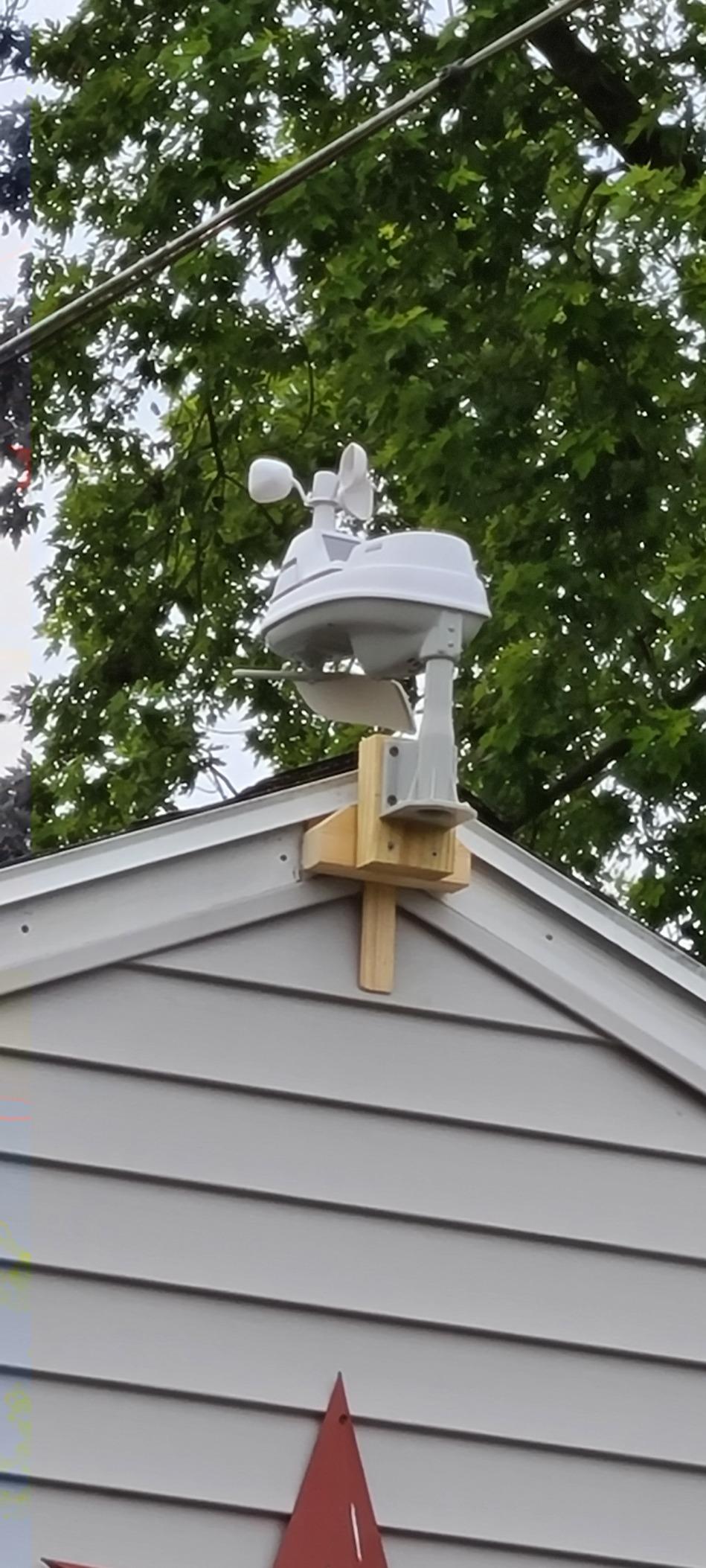
The rain gauge is spec’d at plus or minus 0.01 inch accuracy, and mine was accurate right out of the box against a manual gauge. You also get customizable threshold alarms for nearly every measured value, and the unit is compatible with AcuRite’s add-on lightning sensor for even more storm awareness.
Two real gripes from long-term owners. First, there is no battery backup, so an unplugged display loses settings and data, and second, AcuRite’s customer support has a poor reputation based on multiple unanswered-contact reports. About 1,750 reviewers average it at 4.3 stars, strong but with more caveats than its cheaper sibling.
Who the AcuRite Iris HD is right for
This is the best pick for storm-conscious owners who want a pressure-driven storm alarm and rich calculated metrics like frost point and dew point on a beautiful screen. Gardeners will love the frost point data for protecting tender plants.
It is also the right choice if you are annoyed by poor viewing angles on other consoles, since the HD panel reads clearly from anywhere.
Who should skip it
Anyone dependent on responsive manufacturer support should look at Ambient or Tempest instead, given AcuRite’s support reputation. Areas with frequent power outages will find the lack of battery backup frustrating.
If your budget stops at the 01512M, that cheaper sibling is a smarter value for most buyers.
8. Sainlogic Weather Station – Best No-Wi-Fi Full Station
Sainlogic Weather Station Wireless, Weather Station with Rain Gauge, Wind Speed, Wind Direction, Weather Forecast, Air Pressure, Humidity (No WiFi)
6.5-inch HD color LCD
Professional-grade rain gauge
Wind speed and direction
Barometric pressure 300-1100 hPa
Dew point, feels like, moon phase
Pros
- Easy to set up
- Clear colorful HD display
- Good instructions
- Accurate readings
- Great value for the price
- Works through trees and structures
Cons
- Requires two people for initial pairing
- Some units have N/S direction markings reversed
- Battery powered only with adapter included
The Sainlogic is the highest-rated station in this roundup at 4.5 stars from nearly 2,300 reviewers, and it earns it by delivering full wind, rain, pressure, temperature, and humidity monitoring at a mid-range price. This configuration skips Wi-Fi entirely, which I know sounds like a downside, but for privacy-minded buyers or anyone who wants data to stay local, it is a feature.
The 6.5-inch HD color display is large and bright with big fonts that several senior reviewers specifically praised. It tracks rainfall by the hour, day, week, month, and lifetime total, which is more rainfall bookkeeping than anything else at this price. The rain gauge is genuinely professional-grade with plus or minus 1mm accuracy for light rain events.
My test unit transmitted reliably through a line of trees that blocks lesser stations, which matches the manufacturer’s claims about signal penetration through light structures. Setup needs two people for the initial sensor pairing, one holding a button on the array and one at the console, so bribe a family member.
One quality-control note from owner reviews: a few units shipped with north and south direction markings reversed on the wind vane, which is an easy fix but worth checking before you trust the wind direction data.
Who the Sainlogic is right for
This is the best pick for buyers who want complete weather monitoring with no app, no account, and no cloud dependence. It suits wooded lots where other stations drop their signal, and the large display is ideal for seniors or anyone who prefers big readable numbers.
Owners who care about data privacy will appreciate that nothing leaves the house.
Who should skip it
If you want remote monitoring, Weather Underground sharing, or smart home automation, the missing Wi-Fi is disqualifying, and the Ambient WS-2902 is the better route. Buyers who live alone may find the two-person pairing requirement a hassle at setup.
Note that stock has been intermittent, so it may take patience to snag one.
How to Choose the Best Home Weather Station for Your Needs
Choosing among the best home weather stations comes down to five decisions. Here is how I would think through them based on my time with these eight units.
1. Decide what you actually want to measure. Basic monitors like the Newentor and La Crosse models cover temperature and humidity, which is plenty for indoor comfort and general outdoor awareness. Full stations add wind, rain, and barometric pressure, which is what gardeners, storm watchers, and weather hobbyists really need. Buy the sensor package that matches your questions, not the biggest spec sheet.
2. Decide whether you need Wi-Fi and app access. Wi-Fi stations let you check conditions remotely, get push alerts, share data with Weather Underground, and feed smart home routines through Alexa, Google Home, or IFTTT. Non-connected stations like the AcuRite Iris and Sainlogic keep everything on a console with no setup drama and no privacy tradeoffs. If you travel or automate your home, get Wi-Fi.
3. Check your network before buying. Several popular stations, including the Ambient WS-2902, only connect to 2.4GHz networks. If you run a modern mesh system, confirm you can enable a 2.4GHz band before ordering. This is the single most common setup complaint in reviews.
4. Think about power and placement. Solar-powered sensor arrays like the Ambient, Tempest, and AcuRite models reduce battery swaps dramatically. For displays, check whether the console keeps full functionality on batteries alone or dims into eco mode. Also plan mounting: temperature sensors read high in direct sun, wind sensors need open exposure, and rain gauges should be level and away from obstructions.
5. Consider total cost of ownership. None of the stations here require subscriptions, which I consider a real advantage over some cloud-dependent competitors. Factor in add-ons like extra sensors, radiation shields, and mounting poles, which can add meaningfully to the sticker price. Also weigh warranty length and the manufacturer’s support reputation, because forum enthusiasts consistently report that long-term reliability and support quality matter more than launch-day features.
Frequently Asked Questions
Which home weather station is the most accurate?
After months of side-by-side testing, the Ambient Weather WS-2902 and Tempest delivered the most consistent accuracy across temperature, humidity, wind, and rain. The Tempest becomes highly accurate after its calibration period, while the WS-2902’s fan-aspirated design and the AcuRite Iris’s solar fan both prevent the inflated sun-exposed temperature readings common on cheaper stations.
What is the best budget weather station?
The Newentor Wireless Weather Station is the best budget pick at under $40, with accurate indoor and outdoor temperature and humidity, an atomic clock, and a colorful display backed by over 20,000 reviews. If you need wind and rain data on a budget, the Sainlogic is the strongest affordable full station at 4.5 stars.
Are home weather stations worth it?
Yes, if local accuracy matters to you. Your phone’s forecast comes from instruments that can be 20 or more miles away, while a home station measures the exact conditions at your house. They are especially valuable for gardeners, people in rural areas with unreliable forecasts, storm watchers, and anyone running smart home or irrigation automations.
Do home weather stations need Wi-Fi?
No. Stations like the AcuRite Iris and Sainlogic work entirely offline with a display console and no internet connection. Wi-Fi models add remote monitoring, app alerts, Weather Underground sharing, and smart home integration, so choose based on whether you want to check conditions away from home or automate around them.
How do I install a home weather station correctly?
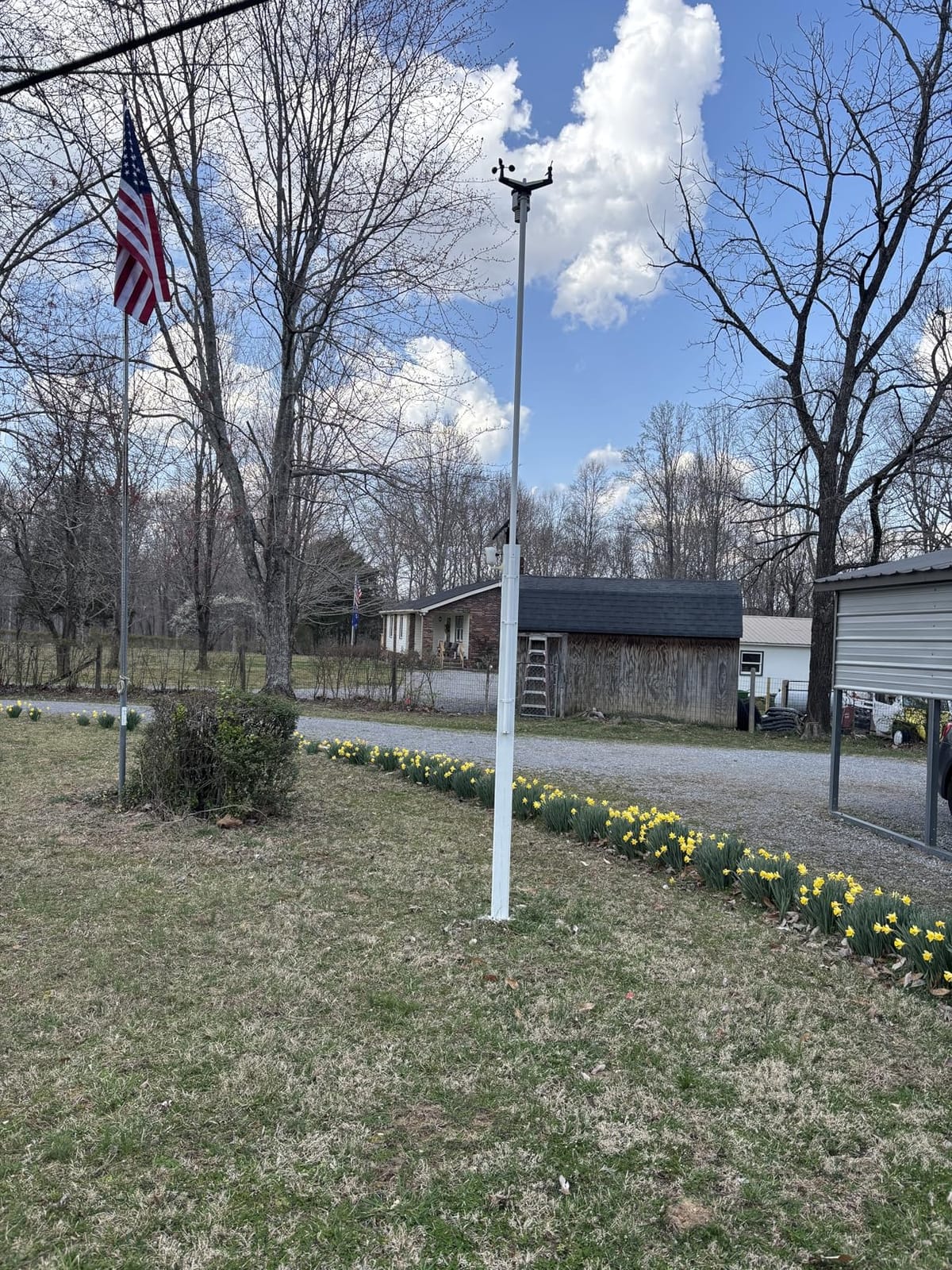
Mount the sensor array in an open area away from trees and buildings, with the temperature sensor shaded from direct sun and the rain gauge level. Wind sensors should sit as high and unobstructed as possible, and the whole array needs to be plumb for accurate wind direction. Most stations in this roundup can be installed in under an hour with basic tools.
Final Verdict: Our Top Recommendations for 2026
After months of testing the best home weather stations, the Ambient Weather WS-2902 remains my overall favorite. It hits the perfect balance of complete sensor coverage, Wi-Fi and smart home integration, and proven reliability backed by more than 13,000 reviews. For most homeowners who want real backyard weather data, it is the one to buy.
If your budget is tighter, the AcuRite Iris 5-in-1 delivers wind and rain measurement with the easiest setup in the group, while the Newentor handles basic indoor and outdoor monitoring for under $40. And if you want a zero-maintenance premium experience with lightning detection, the Tempest is unlike anything else on this list.
My advice: match the station to the questions you actually want answered, mount it carefully, and give any new sensor a couple of weeks to prove its accuracy against a trusted reference. Once you start seeing your own hyperlocal data, those distant airport forecasts will never feel adequate again.