
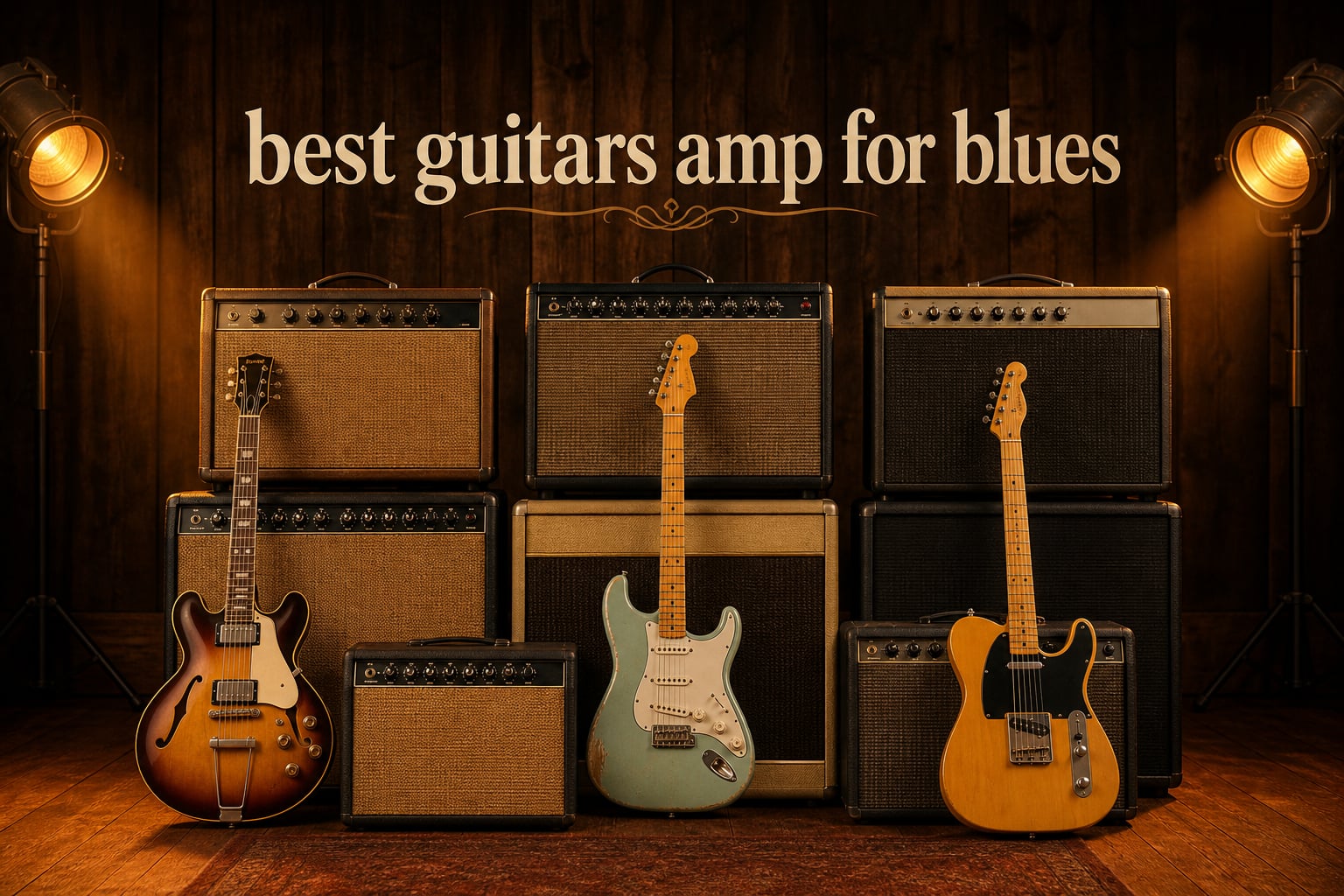
Finding the best guitar amp for blues means chasing that warm, touch-sensitive character that responds to every pick stroke and volume knob roll. After spending weeks comparing 9 amps across tube, solid-state, and digital modeling platforms, our team narrowed the field to amps that deliver genuine blues tones, from bedroom-friendly practice combos to gig-ready stage rigs.
Blues tone lives in the way an amp breaks up under your fingertips, the way a clean chord blossoms into gritty warmth as you dig in, and how the speaker moves air with each bent note. Whether you play smoky Delta bends, Texas shuffle, or Chicago-style lead work, the amp shapes everything. We tested these amps with single-coil Strats, humbucker-loaded Les Pauls, and classic P-90 guitars to evaluate how each one responds to the dynamics blues players rely on. If you are also building your blues rig, our picks for best hollow body guitars and best blues harmonicas pair well with these amps.
Top 3 Picks for Best Guitar Amps for Blues (September 2026)

Best Guitar Amps for Blues in 2026
| Product | Specifications | Action |
|---|---|---|
| Fender Mustang LT25 |
|
Check Latest Price |
| Orange Crush 20 |
|
Check Latest Price |
 Fender Blues Junior Fender Blues Junior |
|
Check Latest Price |
 Vox MSB25 Mini Superbeetle Vox MSB25 Mini Superbeetle |
|
Check Latest Price |
 Fender Mustang GTX100 Fender Mustang GTX100 |
|
Check Latest Price |
 Fender Frontman 10G Fender Frontman 10G |
|
Check Latest Price |
 Marshall MG10G Marshall MG10G |
|
Check Latest Price |
 Leo Jaymz 20W Leo Jaymz 20W |
|
Check Latest Price |
 LyxPro 20W LyxPro 20W |
|
Check Latest Price |
1. Fender Mustang LT25 – Best Digital Modeling Combo for Blues
Fender Mustang LT25 Guitar Amplifier, 25-Watt Combo Amp with 8″ Speaker
25W power
8-inch Fender speaker
30 factory presets
Color display
USB recording
Pros
- Excellent authentic Fender tones
- 30 presets covering decades of blues styles
- Intuitive 1.8-inch color display
- USB output for direct recording
- Free Fender Tone software for editing
Cons
- Mini-USB port instead of USB-C
- Digital effects feel less organic than tube compression
- Limited deep editing beyond presets
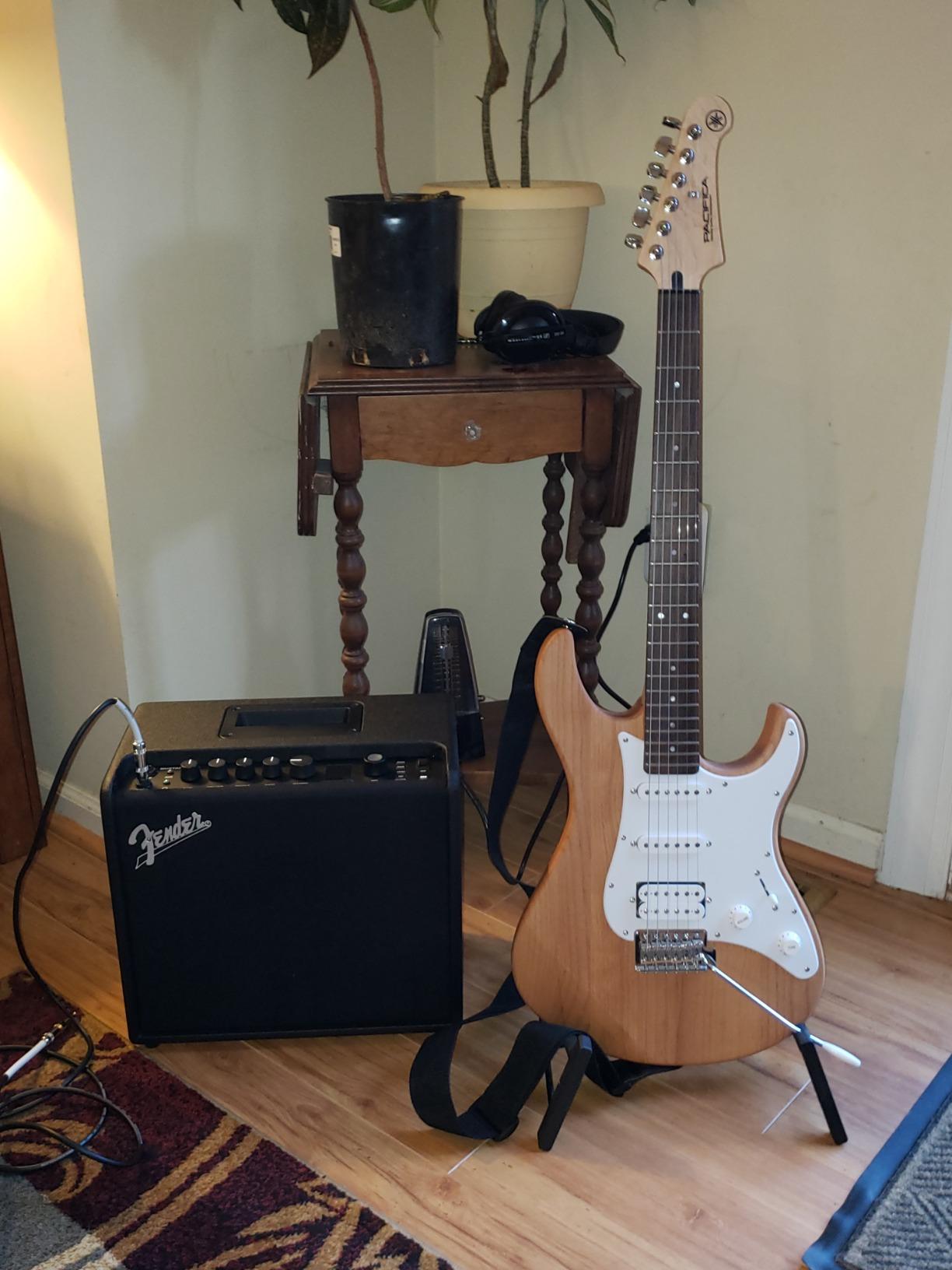
I plugged my Telecaster into the Fender Mustang LT25 and was surprised how close the Fender ’57 Deluxe and ’65 Twin reverb models sounded to the real thing. The clean channel has that glassy, bell-like chime that blues players chase, and pushing the gain brought out a warm, compressed overdrive that felt touch-responsive. For a 25-watt combo, the LT25 holds its own in a small jam space without losing note definition.
The 30 factory presets span everything from Delta cleans to Chicago blues grit, so beginners can find a usable tone without touching the editor. I found the Princeton 1965 model to be my go-to setting, with a Tube Screamer-style pedal pushing it into SRV territory. The color display makes preset switching feel modern and fast, and the USB output means I could record late-night sessions without waking the neighbors.
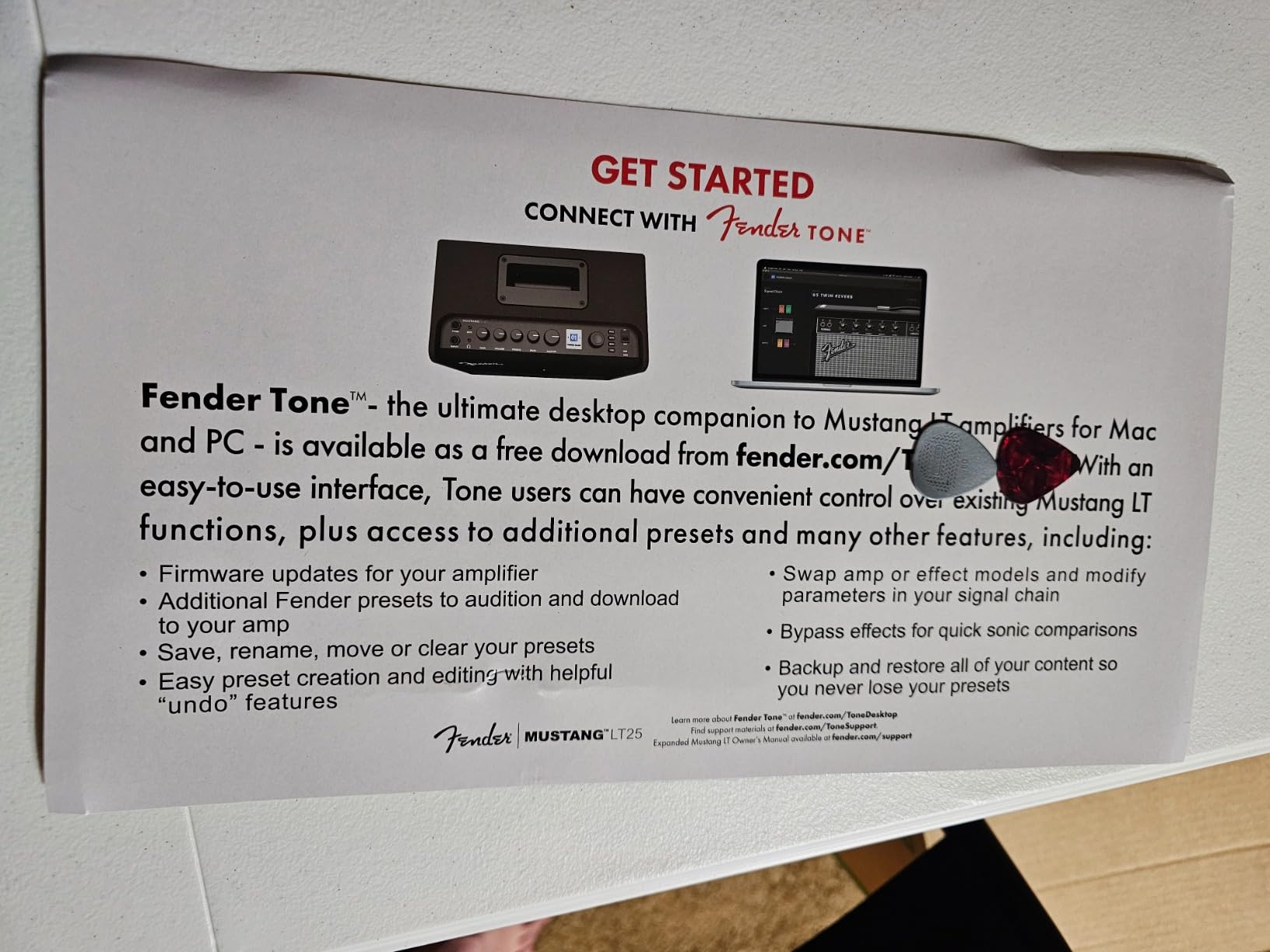
At under 16 pounds, the LT25 is light enough to move from couch to kitchen to bedroom without thinking twice. The wooden cabinet gives it a warmer character than plastic practice amps, and the included Fender Tone software lets you swap amp models and effects from your laptop. For the price, this amp delivers more usable blues tones than anything else in the entry-level modeling category.
One thing I noticed during testing is that the digital effects, while good, do not respond to pick attack the same way a tube amp does. If you live for that dynamic compression where the amp breathes with your playing, you may want to step up to a tube model. For everyone else, the Mustang LT25 is a remarkably capable practice companion that grows with your playing.
Who This Amp Is For
Beginners who want authentic Fender tones without spending on a tube amp will love the LT25. Intermediate players who gig coffee shops and want reliable tones with consistent sound will appreciate the preset reliability. Anyone recording at home who needs direct USB output will find this amp nails the basics.
Players who chase the absolute touch-response of vintage tube amps should consider the Fender Blues Junior instead. If you only need one tone for practice and a compact bedroom setup, the Mustang LT25 delivers genuine Fender character at a low cost.
Setup Tips for Blues Tone
I start with the ’65 Princeton Reverb model and dial the gain to about 4 out of 10, then push the volume slightly past noon. From there, I add a touch of spring reverb and a light Tube Screamer-style overdrive in the effects chain. This gives a warm, woody clean tone that breaks up when you dig in, exactly the response blues guitarists love.
For a Stevie Ray Vaughan-flavored sound, switch to the ’65 Twin Reverb model, push the gain higher, and engage the built-in tube screamer effect. Backing off the guitar’s volume knob cleans the tone up for rhythm work, then roll it up for lead lines.
2. Orange Crush 20 – Best Solid-State Amp for Blues Tone
Orange Crush 20 20W 8″ 2-Channel Guitar Amplifier and Speaker Combo, Orange
20W solid-state
8-inch speaker
Twin channel
3-band EQ
CabSim headphone out
Pros
- Authentic British-flavored tone
- Surprisingly loud for the size
- Takes pedals exceptionally well
- Two channels with separate EQ
- Mid-rich character suits blues
Cons
- No onboard reverb or tuner
- On and off switch on rear panel is awkward
Our team tested the Orange Crush 20 with a Les Paul Studio and a Stratocaster, and both guitars sounded right at home through it. The clean channel has that thick, woody midrange Orange is famous for, and the dirty channel moves from gritty crunch to full-on classic rock drive without becoming muddy. For a 20-watt solid-state combo, it has more tonal personality than amps costing twice as much.
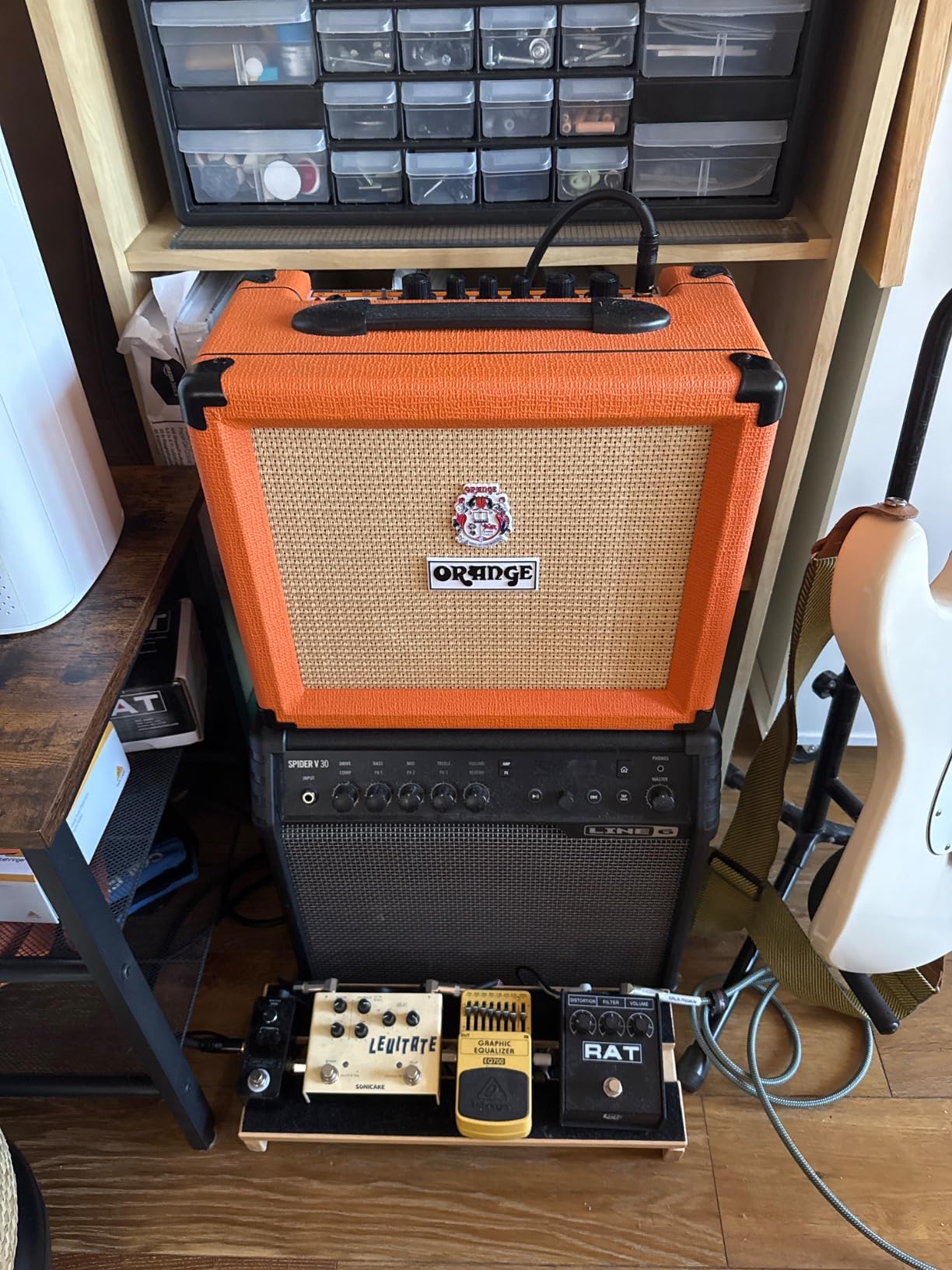
The Crush 20 shines as a pedal platform, which matters for blues players who run overdrive and fuzz. I ran a Tube Screamer into the clean channel and got the exact compressed, mid-hump response that defines players like Albert Collins and early Eric Clapton. The 8-inch speaker is small, but the cabinet design pushes enough air to feel room-filling in a small venue.
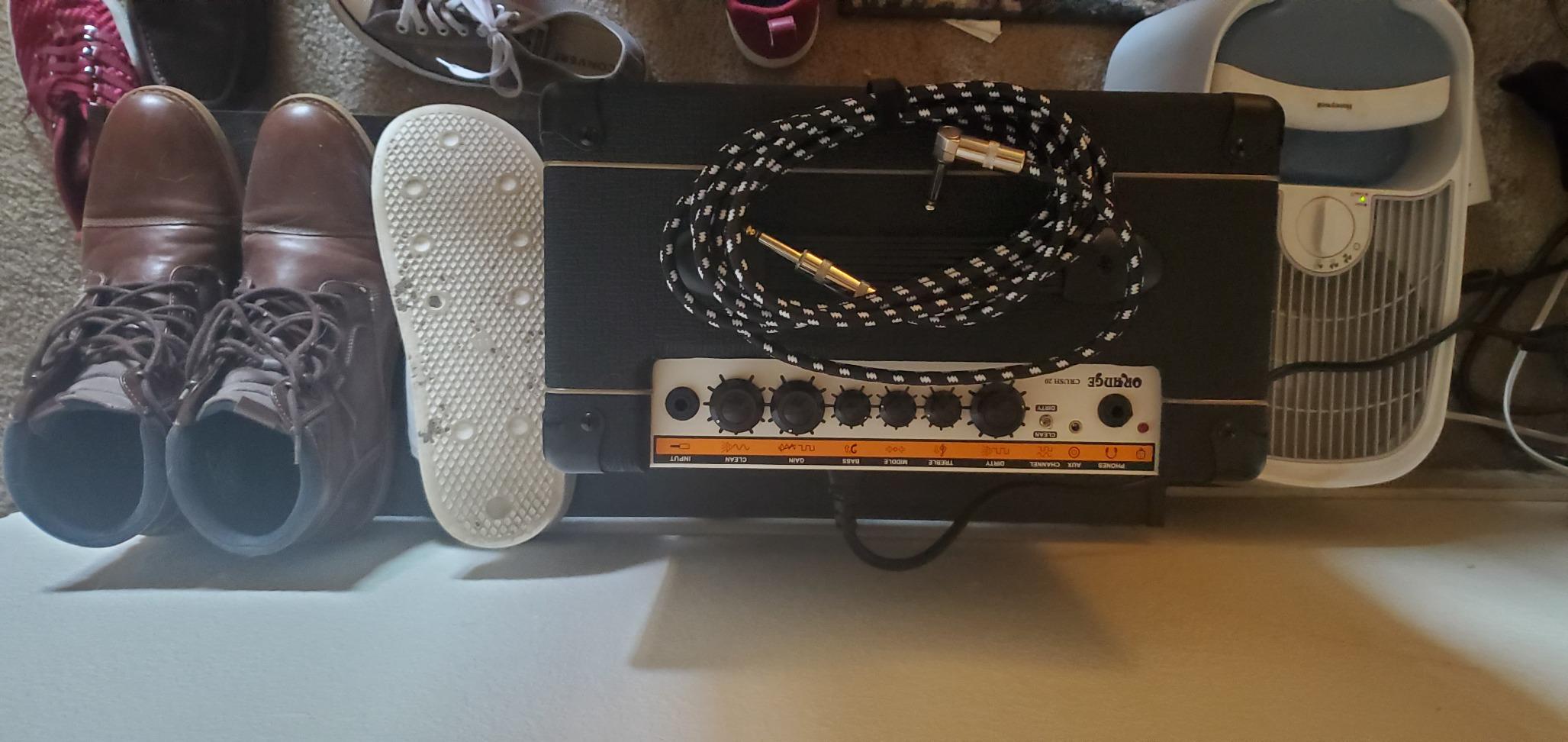
One of the biggest surprises during testing was the CabSim-loaded headphone output. Plugging headphones in gives a convincing mic’d-cab response that makes late-night practice feel like recording in a studio. For apartment players, this alone is worth the price of admission.
On the downside, there is no onboard reverb, which means an external pedal is necessary for that surf-style splash. The rear-mounted power switch is also awkward if you keep the amp against a wall. Neither issue is a dealbreaker, especially at this price point where the Crush 20 punches well above its weight.
Who This Amp Is For
Budget-conscious players who want authentic British-flavored tone for blues will appreciate this amp’s character. Pedal enthusiasts who already own overdrive and fuzz boxes will find the Crush 20 is a perfect clean foundation. Apartment dwellers needing headphone-friendly practice will benefit from the CabSim output.
Players who need onboard reverb for surf and clean work should plan to add a pedal or look at the Fender Mustang LT25 instead. Anyone needing a tube amp’s natural compression for true vintage blues breakup should save up for the Blues Junior.
Setup Tips for Blues Tone
I run the gain on the clean channel around 3 o’clock, the volume at noon, and add a touch of bass boost to thicken single-coil pickups. A Tube Screamer set to low gain in front of the clean channel gives that classic blues push that responds to pick attack. Rolling back the guitar’s volume knob cleans up the tone for rhythm and brings back grit for lead lines.
For a John Mayer-style clean tone, keep the gain low, add a chorus pedal, and let the midrange character of the Crush 20 carry the sound. For Texas blues, push the dirty channel harder with humbuckers and let the speaker break up naturally.
3. Fender Blues Junior – Best Tube Amp for Vintage Blues Character
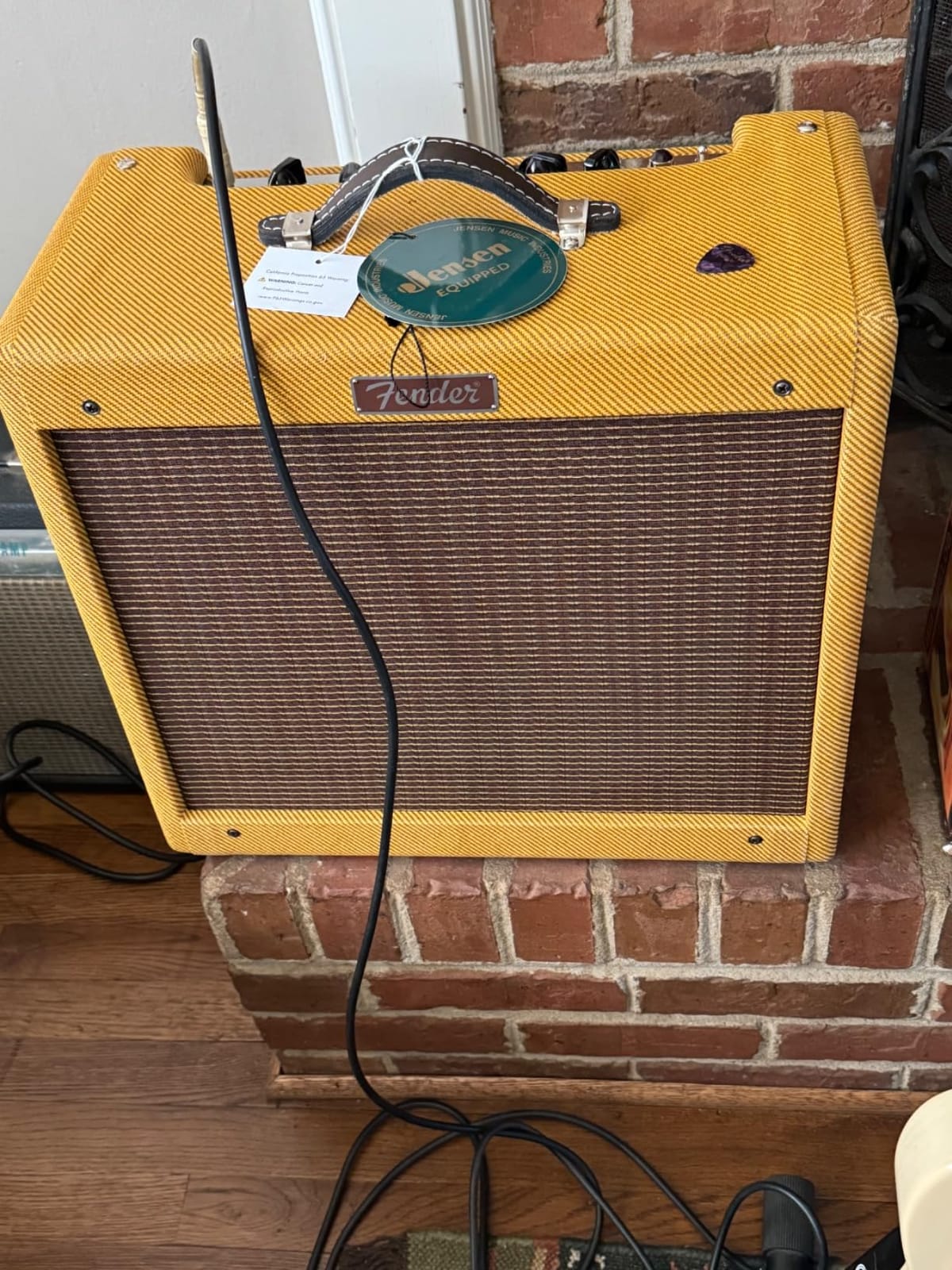
Fender Blues Junior Guitar Amplifier, Lacquered Tweed, with 2-Year Warranty
15W all-tube combo
EL84 power tubes
Jensen P12N speaker
Spring reverb
Fat switch
Pros
- Classic warm tube tone with EL84 and 12AX7 tubes
- Foot-switchable Fat mode adds thickness
- Onboard spring reverb with vintage drip
- Lacquered tweed cabinet looks and feels premium
- Jensen P12N speaker delivers warm articulate response
Cons
- No effects loop for pedal placement
- Reverb less lush than Deluxe or Princeton
- Some quality control issues reported on used units
The Fender Blues Junior is the amp that introduced me to the magic of tube-driven blues tone. With a Stratocaster plugged in, the clean channel has that sparkly, three-dimensional chime that defines American blues from the 1960s on. Push the volume up and the EL84 power tubes begin to break up into that creamy, compressed overdrive that responds to every pick stroke. This is what people mean when they say a tube amp breathes.
At 15 watts, the Blues Junior is loud enough for small club gigs and bedroom-level volume control is possible by simply running the master volume lower. The Fat switch, activated via footswitch, thickens the midrange for solo work and gives you that bigger, fuller lead tone that makes blues lines sing. The onboard spring reverb is drippy enough to add dimension without sounding artificial.
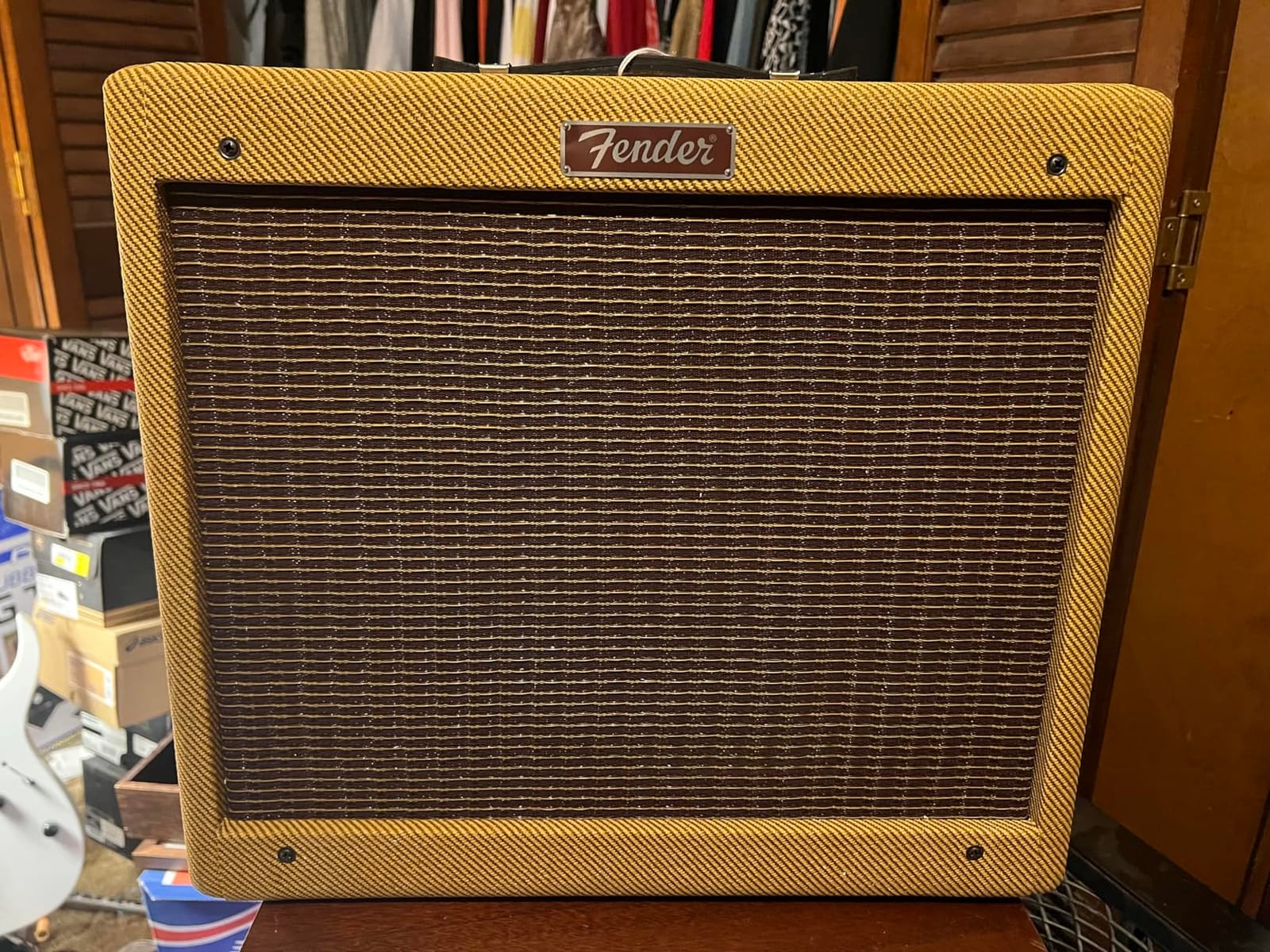
Through the 12-inch Jensen P12N speaker, single notes bloom with woody warmth and chords have a tactile, almost physical presence. I found that humbucker guitars sound slightly darker through this amp, so I preferred single-coils and P-90 pickups for the brightest, glassiest cleans. For a true late-50s tone, pair it with a Telecaster and a slap-back delay pedal.
The main limitations are the lack of an effects loop, which forces time-based effects like delay and reverb into the input chain where they can sound harsh, and a slightly less lush reverb than the bigger Deluxe Reverb. Used units sometimes show quality control issues, so buy from a reputable dealer or get a new one if your budget allows.
Who This Amp Is For
Intermediate players ready to invest in their first serious tube amp will find the Blues Junior delivers authentic vintage character. Blues purists who want tube compression and natural breakup without modeling will love the touch-sensitive response. Small venue performers who want stage-friendly tone with home-practice volume control will appreciate the master volume design.
Pedal-heavy players who need an effects loop should look at a Fender Deluxe Reverb or a higher-wattage amp with an effects loop. Absolute beginners on a tight budget should start with a digital modeling amp like the Mustang LT25 before committing to tube power.
Setup Tips for Blues Tone
I set the volume around 4 to 5, the master volume to about 6, and the tone stack with treble at 6, middle at 5, and bass at 4. The Fat switch engaged adds the midrange thickness that defines classic blues lead tone. For Stevie Ray Vaughan tones, push the volume to 7 and let the tubes break up naturally without a drive pedal.
For B.B. King-style clean tones, keep the volume around 3 and use the guitar’s volume knob to push into subtle breakup when you dig in. The spring reverb at about 3 adds dimension without overwhelming the dry signal.
4. Vox MSB25 Mini Superbeetle – Portable British Tube Tone
Vox MSB25 Mini Superbeetle 1×10″ 25W Guitar Amp
25W tube
10-inch speaker
Analog Vox circuit
Built-in reverb and tremolo
Rechargeable battery
Pros
- Classic Vox chimey British tone
- Compact and portable design
- Built-in overdrive adds grit
- Tremolo and reverb included
- Rechargeable battery for grab-and-go
Cons
- Tremolo depth not adjustable
- 10-inch speaker may not fill larger rooms
- Tube amp needs warm-up time
The Vox Mini Superbeetle surprised me the moment I turned it on. That chimey, jangly British top-end that defined 1960s British invasion tone is right there in the analog circuit. Plug in a Stratocaster or a Rickenbacker-style guitar and you immediately hear why Brian May and Tom Petty chased this sound. Despite the small footprint, the 25-watt tube power section pushes enough air for bedroom volume and small practice sessions.
The built-in reverb and tremolo are simple but effective, and they evoke the same kind of surf-and-atmosphere tones that defined Vox’s classic amps from the 60s. The tremolo depth is fixed rather than adjustable, which limits fine-tuning but keeps the controls simple. I found the tremolo pairs beautifully with the spring reverb for moody ballad work.
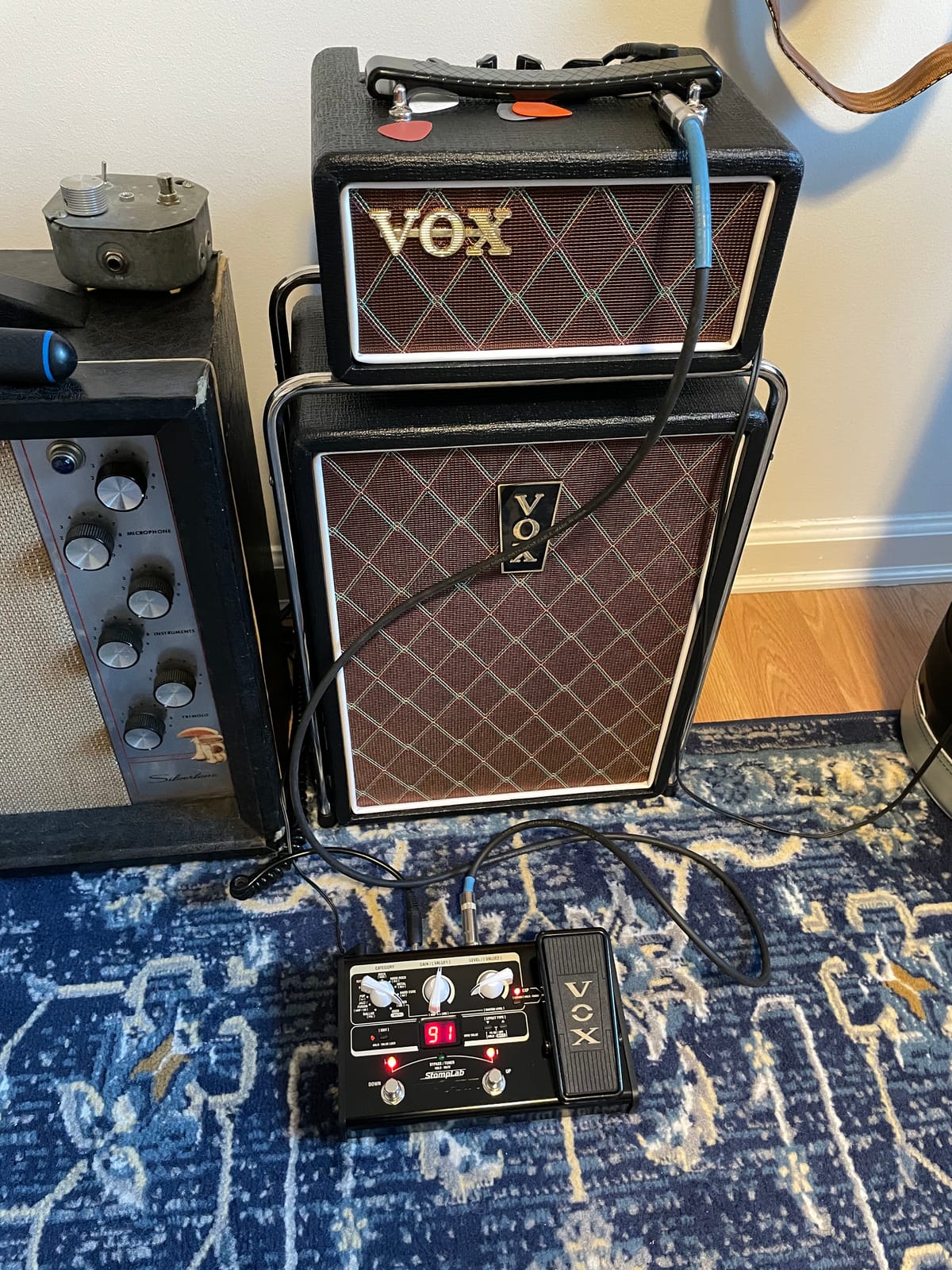
The optional rechargeable battery is the headline feature here. Being able to take the Mini Superbeetle to the back porch, the park, or a friend’s place without hunting for an outlet changes how you play. It weighs just over 18 pounds and the compact beetle-style cabinet is easy to carry with one hand.
The 10-inch speaker moves less air than a 12-inch would, so don’t expect this little amp to fill a large room. For bedroom, office, and small gig use, it is more than capable. Tube amps also need warm-up time and can be sensitive to bumps while hot, so treat it with care.

Who This Amp Is For
Players chasing classic British invasion tone will love the Vox chime and tremolo. Apartment dwellers who need grab-and-go portability will benefit from the battery option. Songwriters who want atmospheric tremolo and reverb built in will appreciate the simple one-knob-per-function layout.
Players who need to cover large venues should look at a higher-wattage amp or a PA-fed setup. Pedal platform users who want a perfectly clean foundation may want a Fender-style amp rather than this chimey-voiced Vox.
Setup Tips for Blues Tone
I keep the gain low for chimey clean tones and use the guitar’s volume knob to push into breakup. The tremolo set at a slow rate around 4 o’clock adds motion to clean chord work. For dirty blues tones, engage the built-in overdrive and roll back the volume on your guitar to clean up for rhythm work.
Pair this amp with humbucking pickups for full-bodied blues-rock tones or with single-coils for vintage British-style clean work. A subtle delay pedal adds depth without overwhelming the amp’s natural character.
5. Fender Mustang GTX100 – Stage-Ready Modeling Amp
Fender Mustang GTX100 Guitar Amp and 7 Button Footswitch, 100 Watts, with 2-Year Warranty Integrated Looper, Bluetooth Audio Streaming for Play Along, 24.5Dx21.05Wx13.05H Inches, Black
100W digital modeling
12-inch Celestion speaker
200 presets
Bluetooth and WiFi
7-button footswitch included
Pros
- 200 onboard user presets with modular signal chain
- 12-inch Celestion speaker delivers full sound
- Bluetooth audio streaming for play-along
- 7-button footswitch with tap tempo and looper
- Stereo XLR line outputs for direct recording
Cons
- Some users report WiFi audio dropout issues
- Most presets need tweaking out of the box
- App works on phones and tablets only
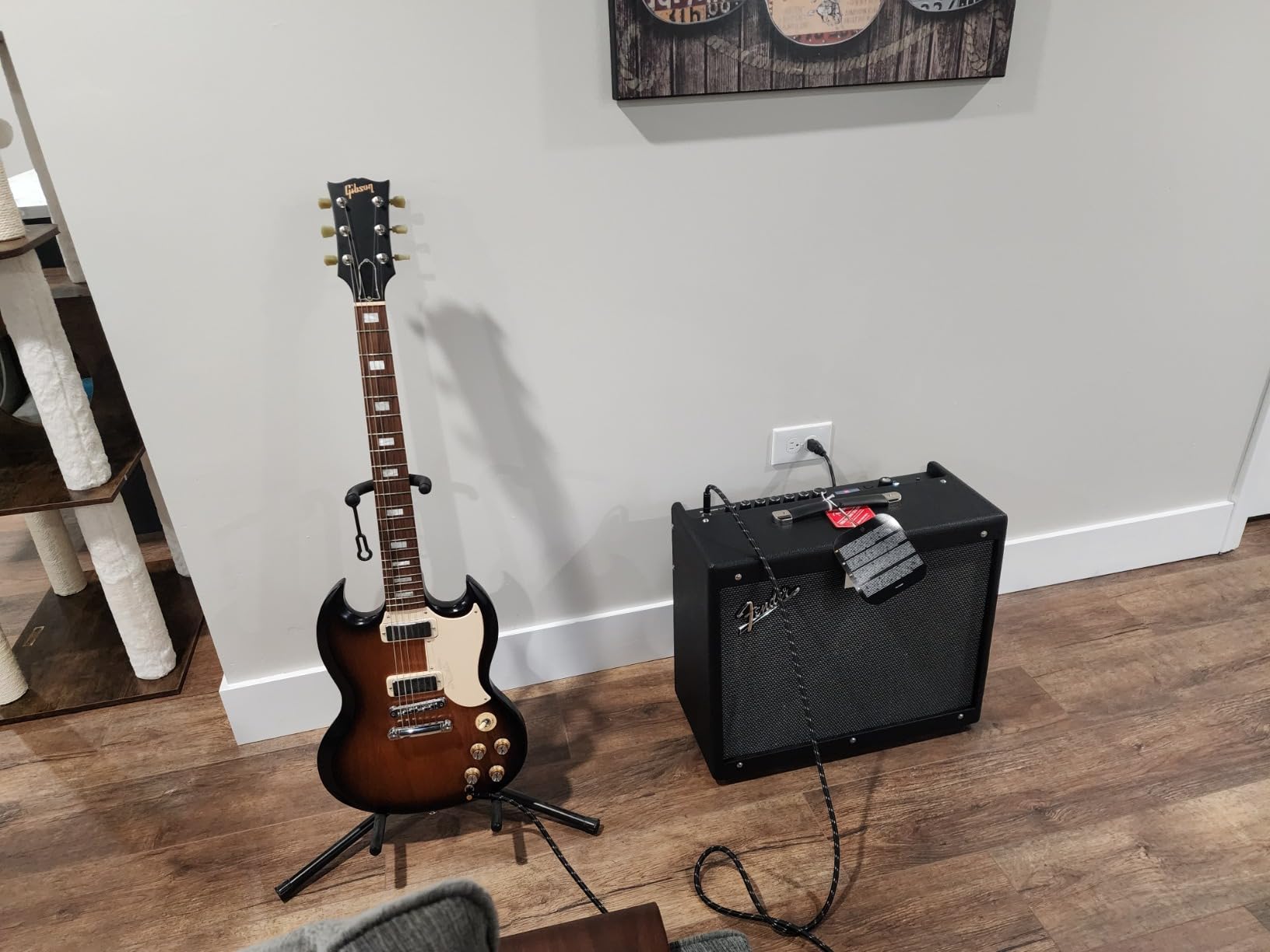
For players who need a single amp that does everything, the Fender Mustang GTX100 is one of the most versatile modeling combos on the market. Our team plugged in humbuckers, single-coils, and P-90s and found usable blues tones across the 200 presets, from Tweed-era cleans to modern high-gain leads. The 100-watt power section and 12-inch Celestion speaker give this amp enough volume and air movement for stage use.
The included 7-button footswitch with tap tempo and 60-second looper is a major value add. Most amps in this range do not include a footswitch, and certainly not one with a built-in looper for practice and songwriting. Bluetooth audio streaming lets you jam along with tracks from your phone or laptop, and the WiFi connectivity opens up Fender’s cloud preset sharing community.
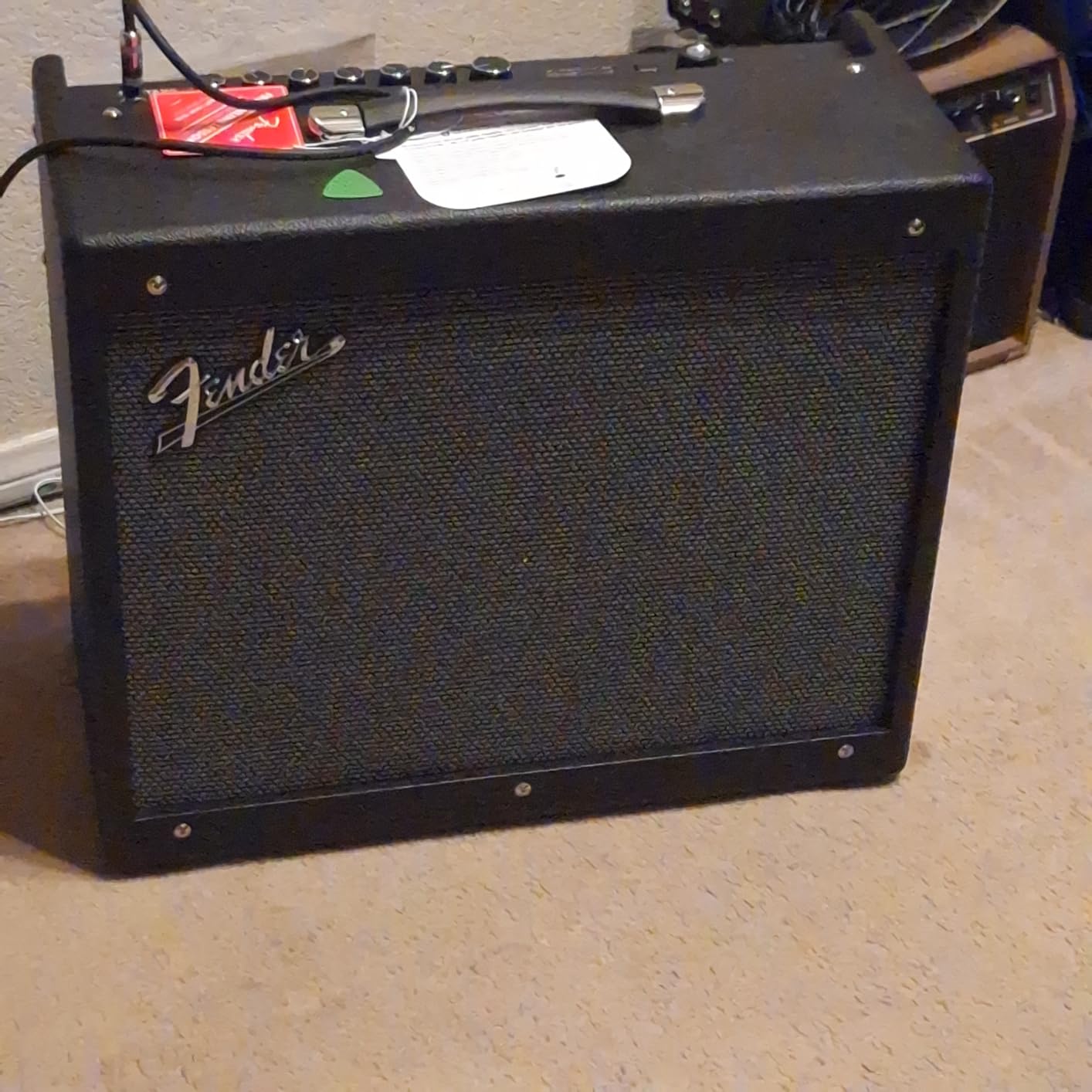
The stereo XLR line outputs make direct recording or live sound feed simple. Plug into a PA system or audio interface and you get a consistent, mic’d-cab tone without needing to mic the actual speaker. For home recordists, this saves a step in the signal chain.
On the downside, some users have reported WiFi-related audio cutouts during streaming. Disabling WiFi in the menu solves this. Most presets benefit from a quick tweak of gain and EQ out of the box to suit your guitar. The companion app only works on phones and tablets, which is awkward for PC-based recording setups.
Who This Amp Is For
Stage players who need amp modeling versatility with enough power for live gigs will appreciate the GTX100. Recording musicians who want direct XLR outputs for home studios will benefit from the built-in cabsim. Tech-friendly players who enjoy editing tones via apps will love the modular signal chain.
Tone purists who want all-analog tube compression should consider the Fender Blues Junior. Players who only need bedroom practice volume can save money with the Mustang LT25.
Setup Tips for Blues Tone
I start with the ’65 Princeton Reverb model as my clean foundation, then engage a Tube Screamer-style overdrive in the effects chain for SRV-style grit. The included footswitch lets me switch between clean rhythm and dirty lead tones on the fly. Tap tempo for the tremolo and delay effects syncs everything to song tempo.
For Chicago blues tones, try the ’65 Deluxe Reverb model with a light overdrive and spring reverb. For Texas blues, push the gain higher and add a slap-back delay. Save your favorite setups to user preset slots for instant recall.
6. Fender Frontman 10G – Best Budget Practice Amp for Blues Beginners
Fender Frontman 10G Electric Guitar Amplifier, 10-Watt Amp, Black/Silver
10W solid-state
6-inch speaker
Built-in overdrive
Headphone jack
Aux input
Pros
- Clean tones are surprisingly good for the price
- Lightweight and portable at under 9 pounds
- Headphone jack for silent practice
- Reliable Fender build quality
- Great starter value for beginners
Cons
- Overdrive channel sounds too compressed
- Only treble and bass EQ (no mid control)
- Limited wattage for playing with drums
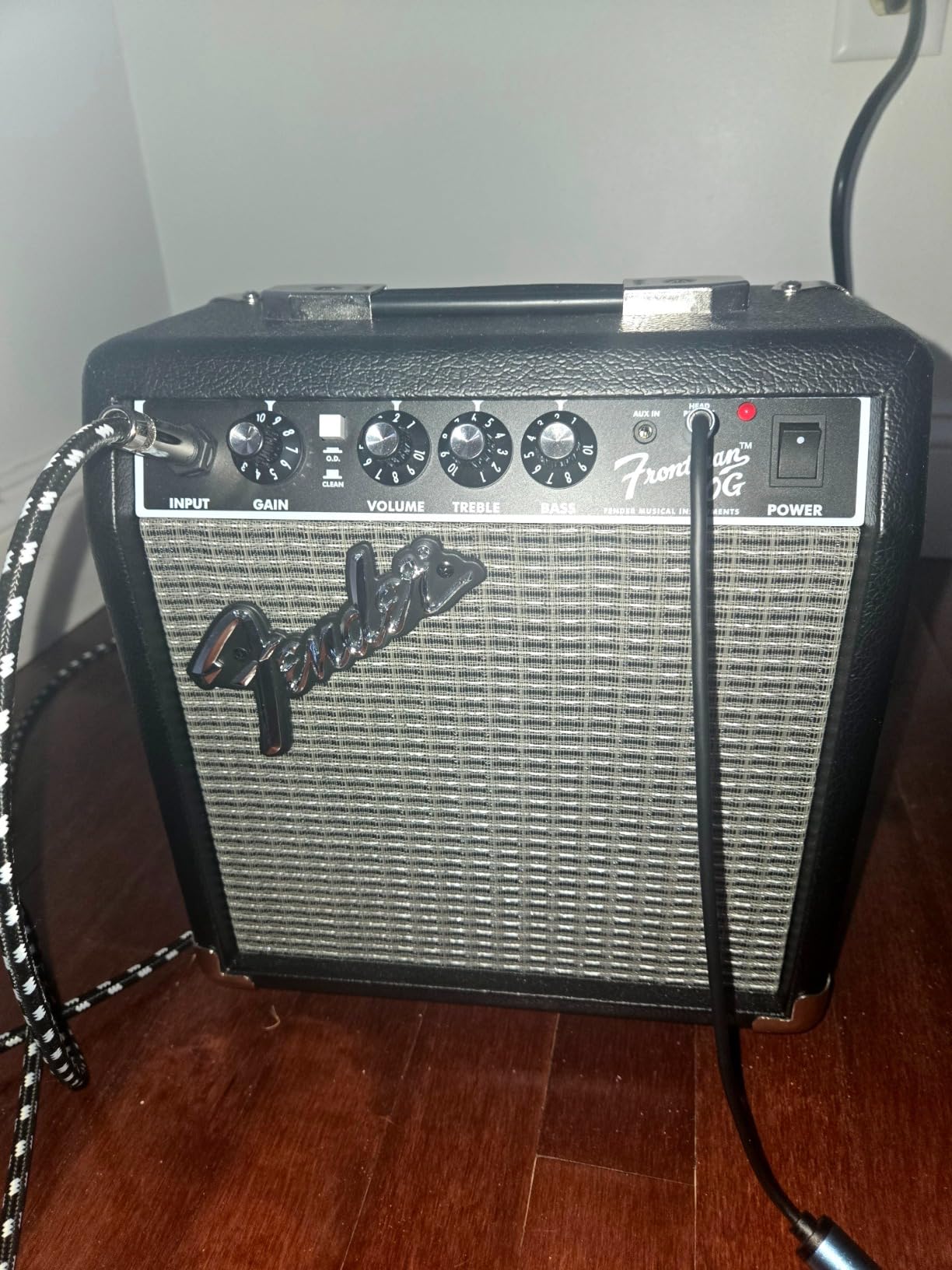
For absolute beginners looking for the best guitar amp for blues on a tight budget, the Fender Frontman 10G delivers clean Fender character at a price that is hard to beat. The clean channel is warm and clear, perfect for practicing blues scales and chord progressions. With over 13,000 reviews averaging 4.6 stars, this amp has earned its reputation as a reliable starter.
The headphone jack is the headline feature for apartment players. Plug in headphones, and you can practice late into the night without bothering roommates or neighbors. The aux input lets you play along with backing tracks from your phone, which is invaluable for solo practice sessions.
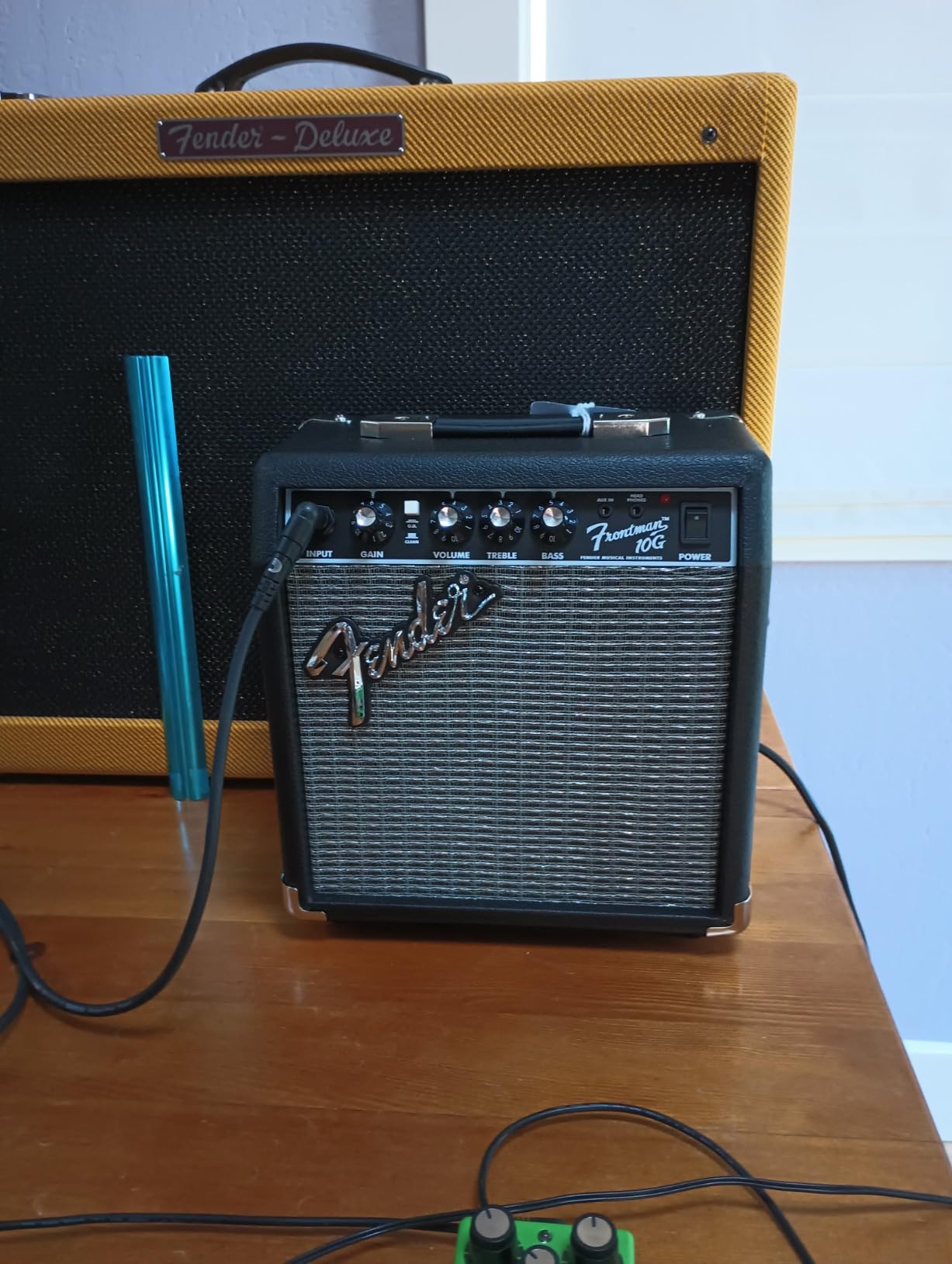
At under 9 pounds, the Frontman 10G is light enough for kids to carry and small enough to fit on a desk or shelf. The closed-back cabinet gives it slightly heavier bass response than open-back designs, which actually works well for blues rhythm tones.
The overdrive channel is functional but compressed, which makes it less inspiring than a dedicated tube drive. The two-band EQ (treble and bass only) limits tone shaping. Most importantly, 10 watts is not enough to play alongside drums, so this amp is for practice only rather than jam sessions.
Who This Amp Is For
Absolute beginners on a tight budget will find the Frontman 10G offers reliable Fender character at a starter-friendly cost. Apartment dwellers who need headphone practice will benefit from the silent-play feature. Younger players who need a lightweight, portable amp for lessons will appreciate the small size.
Players who want authentic overdrive tones should upgrade to a tube amp or a modeling combo like the Mustang LT25. Anyone needing stage volume should consider a higher-wattage option.
Setup Tips for Blues Tone
I keep the clean channel selected, volume around 5, and bass at 4 with treble at 6. This gives a balanced tone that works for both rhythm and lead practice. For bluesy grit, switch to the overdrive channel and roll back the volume knob on your guitar to control the intensity.
Pair the Frontman 10G with a single-coil guitar like a Squier Strat or a Telecaster copy for the brightest cleans. Humbuckers sound thicker but slightly muddy through the 6-inch speaker.
7. Marshall MG10G – Classic British Tone in a Small Package
Marshall MG10G Combo Electric Guitar Amplifier – Black
10W solid-state
6.5-inch speaker
2 channels
3-band EQ
Headphone jack
Pros
- Unmistakable Marshall tone in a compact package
- Clear and punchy sound with good balance
- Lightweight at 10 pounds
- Multiple channels for versatility
- Affordable entry to Marshall sound
Cons
- Clean channel is basic compared to dirt channel
- Limited wattage for jam sessions
- Some users report being stuck on dirty channel
The Marshall MG10G delivers that unmistakable British-flavored Marshall crunch in a bedroom-friendly format. Plug in a Les Paul or SG and you get the thick, midrange-heavy tone that defined classic rock and blues-rock from the late 60s onward. Our team found the overdrive channel especially satisfying for Cream-era Clapton tones and Angus Young-style rhythm work.
At 10 watts through a 6.5-inch speaker, the MG10G is loud enough for bedroom practice and quiet jam sessions but not for playing with a drummer. The 3-band EQ gives more tone-shaping flexibility than the Frontman 10G, and the dedicated clean and overdrive channels let you switch between rhythm and lead tones with the amp’s mode selector.
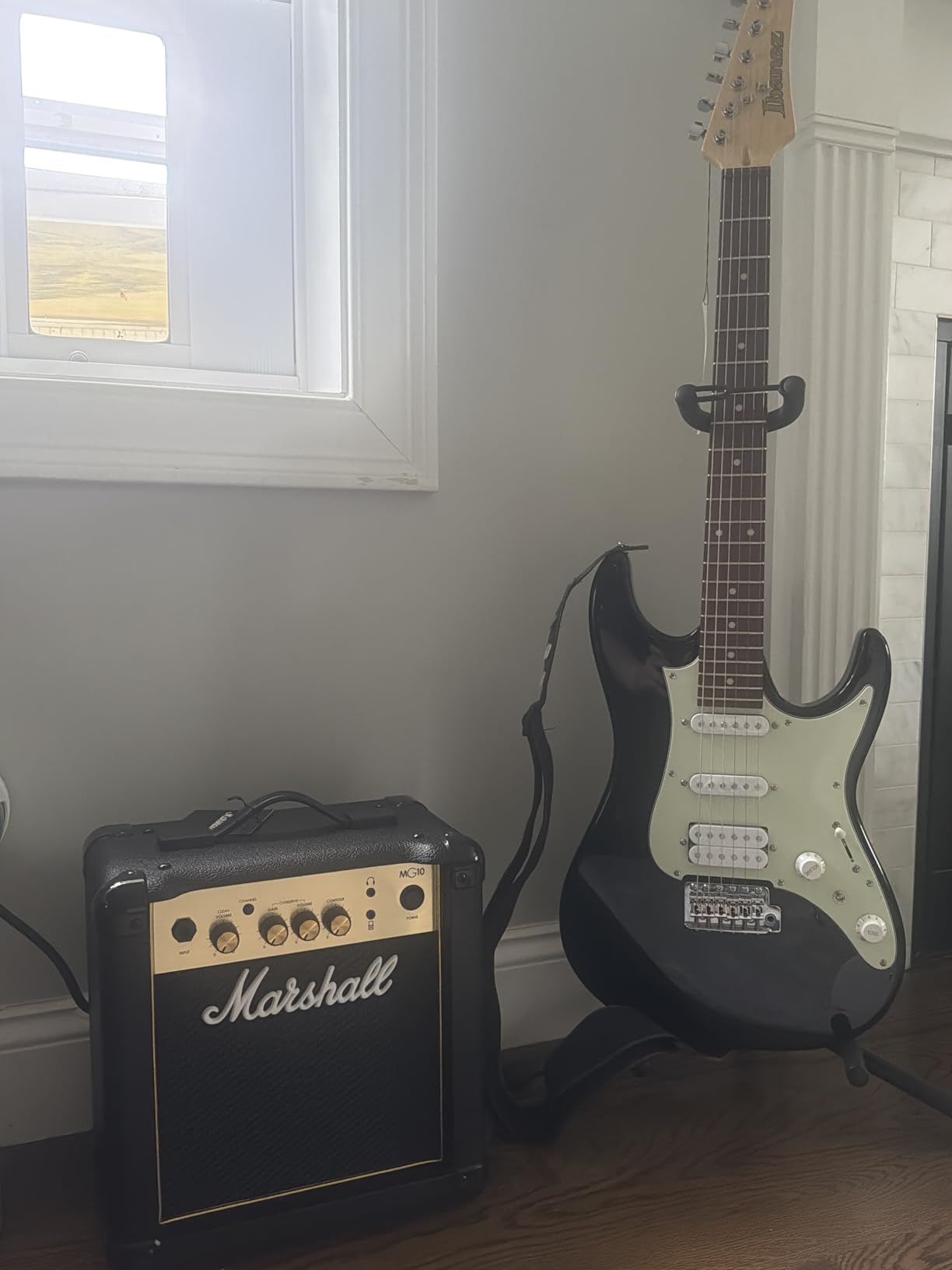
The Marshall name carries a lot of weight, and this little combo delivers the core of what makes Marshall desirable. The closed-back cabinet gives tight low-end response, which suits humbucker pickups especially well.
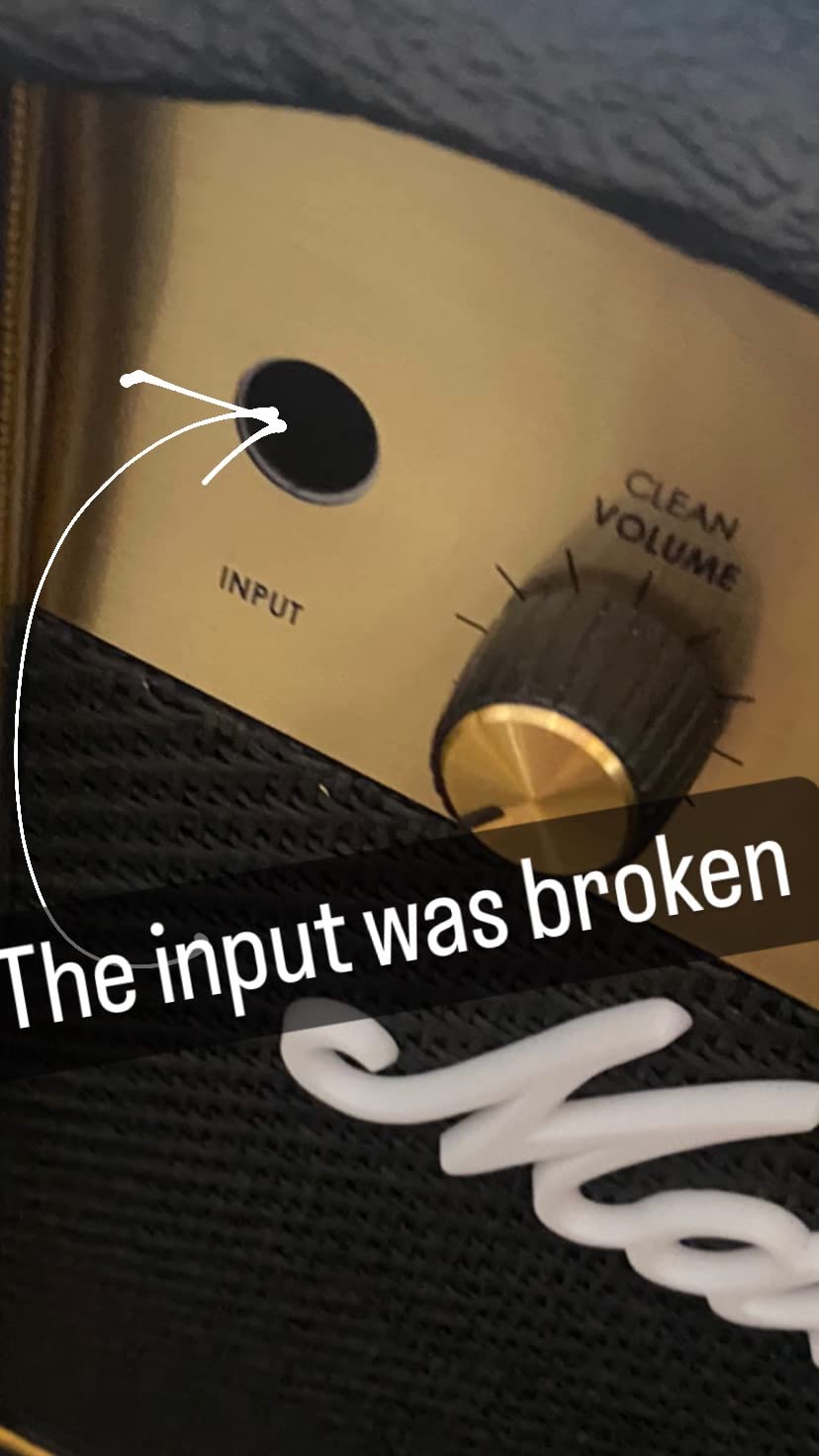
Some users have reported difficulty with the channel-switching mechanism, occasionally getting stuck on the overdrive channel. This appears to be a quality control issue affecting a small number of units. The clean channel is functional but less inspiring than the overdrive, so plan on using dirt for most of your blues work.
Who This Amp Is For
Beginners who want to explore classic rock and blues-rock tones without breaking the bank will appreciate the MG10G’s character. Bedroom players who want Marshall flavor at low volume will find this amp is bedroom-friendly. Les Paul and SG players who want thick humbucker tone will love the midrange response.
Single-coil players who want glassier Fender cleans should look at the Frontman 10G or Mustang LT25. Anyone needing to play with a band should consider a higher-wattage amp.
Setup Tips for Blues Tone
I set the gain around 4 on the overdrive channel, volume at 5, and use the 3-band EQ to scoop the mids slightly for thicker rhythm tone. For lead work, push the gain to 5 or 6 and let the speaker break up. Rolling back the guitar’s volume cleans the tone for chord work.
For authentic British blues tones, try a humbucker-equipped guitar with the gain set just past the edge of breakup. Add a touch of reverb from an external pedal for atmospheric ballad work.
8. Leo Jaymz 20W – Versatile Budget Combo with Clean and Distortion
Leo Jaymz 20W Electric Guitar Amplifier – Clean and Distortion Channel – 3 Band Equalization and CD Line Input – Recording Studio, Practice Room, Small Courtyard (6.5″, Black)
20W solid-state
6.5-inch speaker
Clean and distortion channels
3-band EQ
CD line input
Pros
- Surprisingly portable and lightweight at 5.5 pounds
- Clean and distortion channels offer versatility
- Sturdy build quality with leather handle
- CD and AUX inputs for play-along
- Good value for starter amp buyers
Cons
- Distortion quality less refined than higher-end amps
- Some quality control concerns reported
- Input voltage limited to 110-130V only
The Leo Jaymz 20W punches above its weight class for a budget practice amp. Our team tested it with a Squier Stratocaster and a Yamaha Pacifica and found usable blues tones on both channels. The clean channel is clear and warm, and the distortion channel moves from light grit to heavier drive, covering classic rock and blues-rock territory.
At 5.5 pounds, this is one of the lightest amps in our roundup. The leather handle on top makes it easy to carry to lessons, jams, or just from room to room. For younger players or anyone who values portability, this amp delivers without weighing you down.
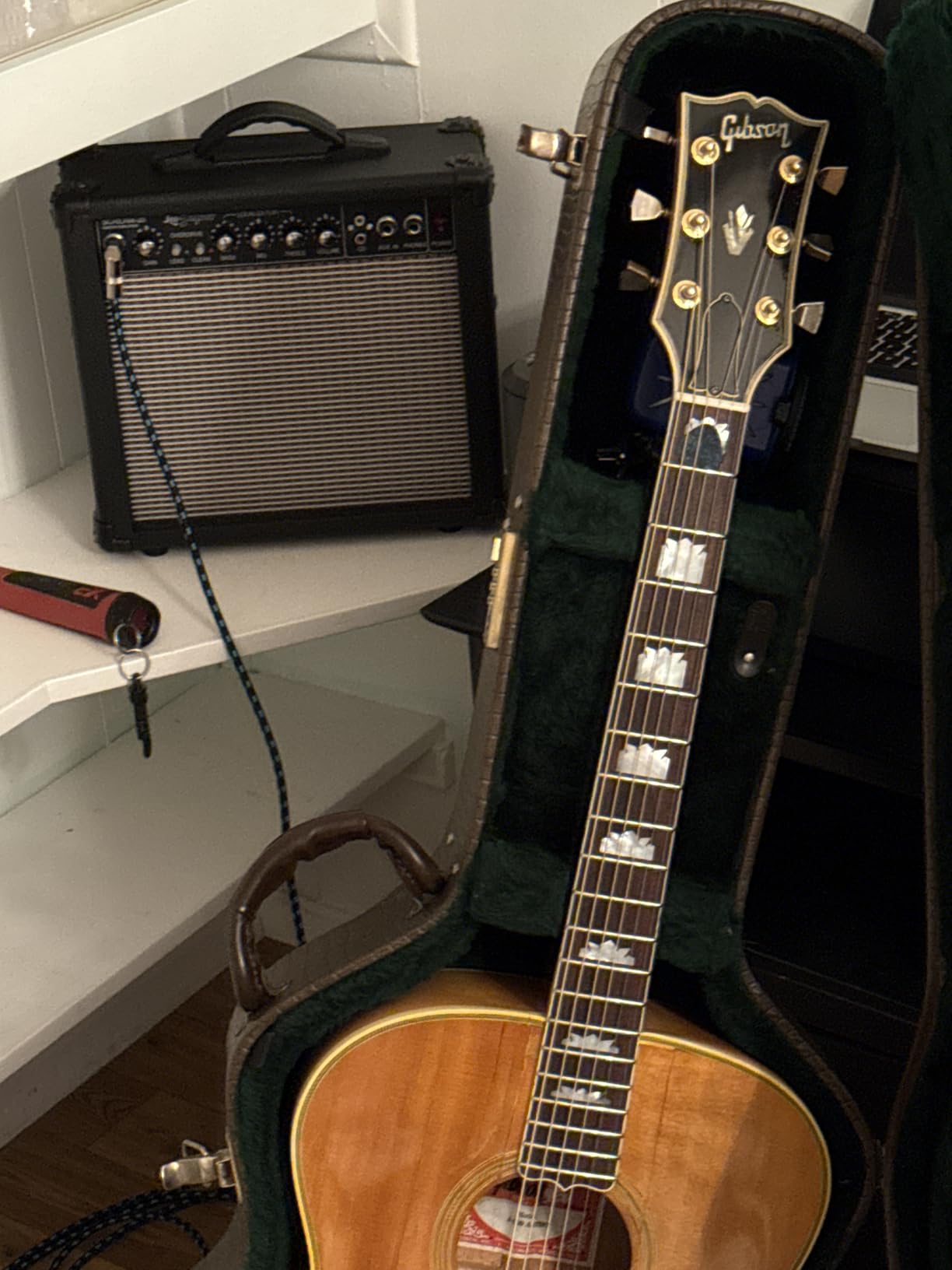
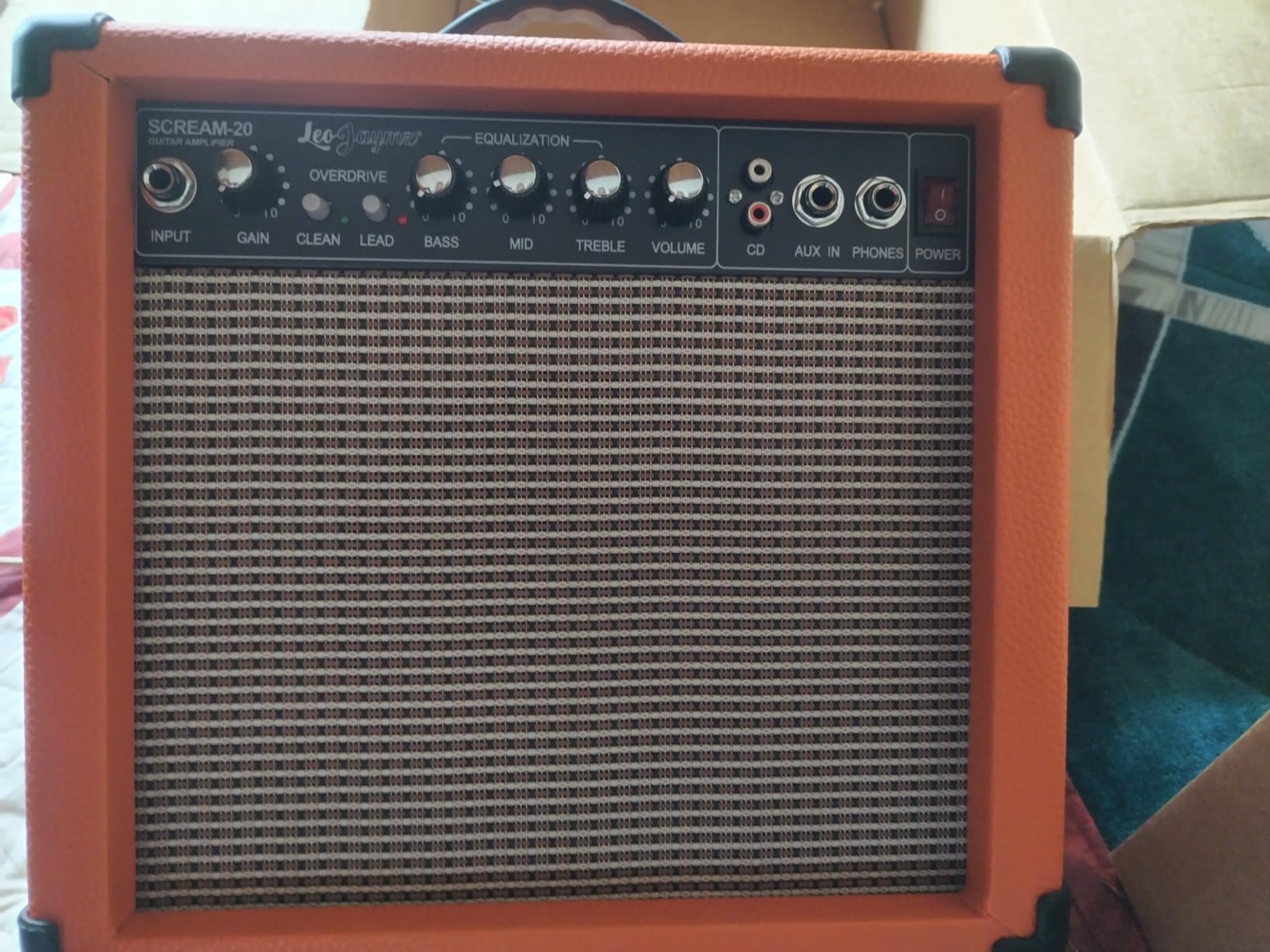
The 3-band EQ gives more tone-shaping options than some budget amps offer, and the CD/AUX inputs make it easy to play along with backing tracks or drum machines. This is useful for practice sessions where you want to develop your timing and feel.
The distortion channel is serviceable for blues-rock but lacks the refinement of more expensive options. Some users have reported quality control issues, so check the warranty and buy from a reputable seller. The 110-130V voltage limitation means international players will need a step-up transformer.
Who This Amp Is For
Beginners on a tight budget who want both clean and distortion channels will find the Leo Jaymz delivers versatility. Younger players who need a lightweight, easy-to-carry amp will appreciate the 5.5-pound design. Players who want play-along capability via CD or AUX input will benefit from the built-in jacks.
Players who want refined overdrive should consider a tube amp or modeling combo. International users needing multi-voltage support should look at amps with universal power supplies.
Setup Tips for Blues Tone
I keep the clean channel selected for traditional blues work, with bass at 4, mid at 5, and treble at 6. This gives a balanced tone that works for both rhythm and lead. For light blues grit, switch to the distortion channel and roll back the guitar’s volume to control the intensity.
Pair this amp with single-coil guitars for the brightest clean tones. Humbuckers sound thicker but may need the bass rolled off to avoid muddiness.
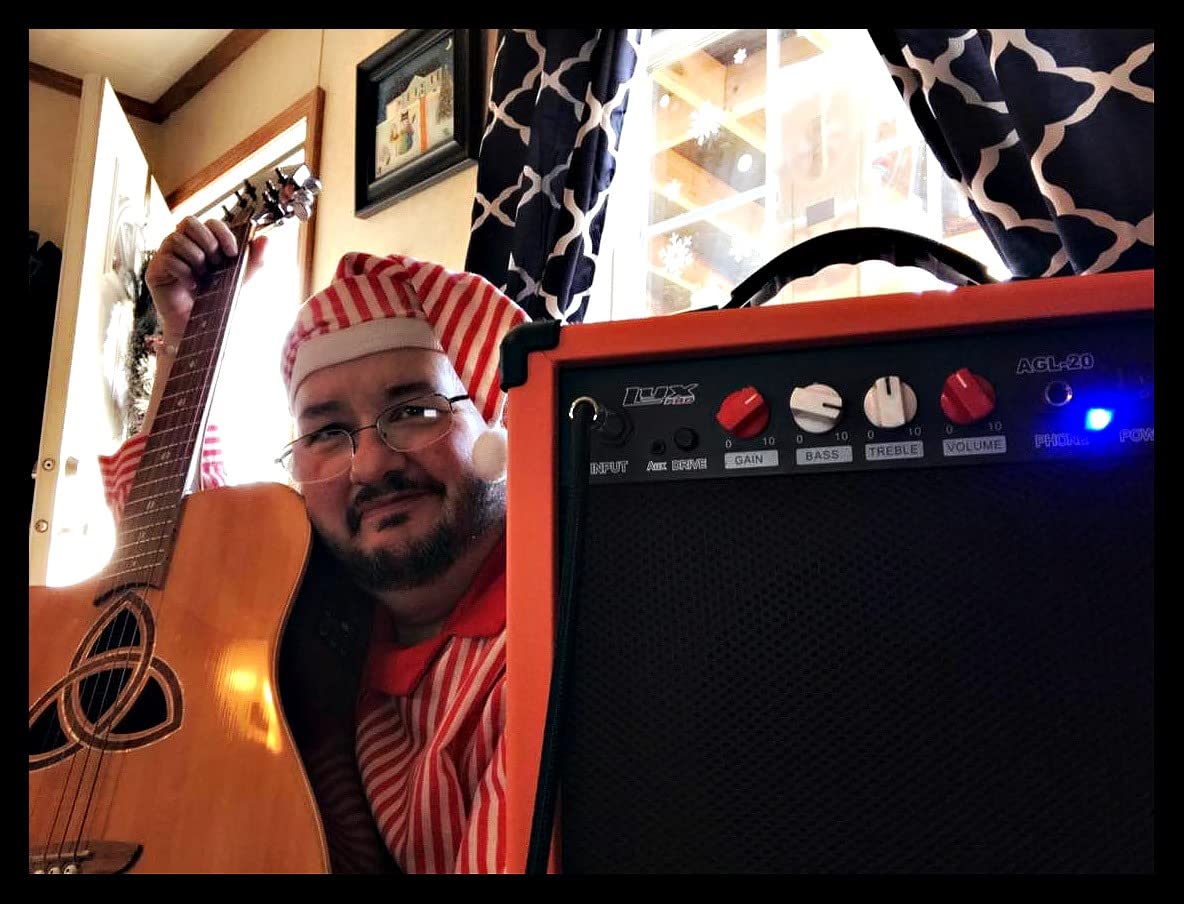
9. LyxPro 20W – Compact Budget Amp for Beginner Blues Players
LyxPro Electric Guitar Amp 20 Watt Amplifier Built in Speaker Headphone Jack and Aux Input Includes Gain Bass Treble Volume and Grind – Blue
20W solid-state
4-inch speaker
Grind switch
Headphone jack
Aux input
Pros
- Excellent value for beginners on a budget
- Clear and crisp sound at any volume
- Headphone jack for silent practice
- Aux input for play-along
- Gain bass treble volume and grind controls
Cons
- Small 4-inch speaker limits low-end response
- Build quality is basic with some flimsy components
- Not suitable for metal or high-gain styles
The LyxPro 20W is a no-frills budget amp that gets the job done for absolute beginners. With over 3,800 reviews, it has earned a place in many a bedroom and dorm room. The clean channel is clear enough for practicing blues scales and chord changes, and the grind switch adds a basic overdrive for blues-rock rhythm work.
At under 7 pounds, this amp is light enough for younger players to manage, and the rubber corner edges help protect it from bumps. The aux input for play-along with backing tracks is a useful feature at this price point.
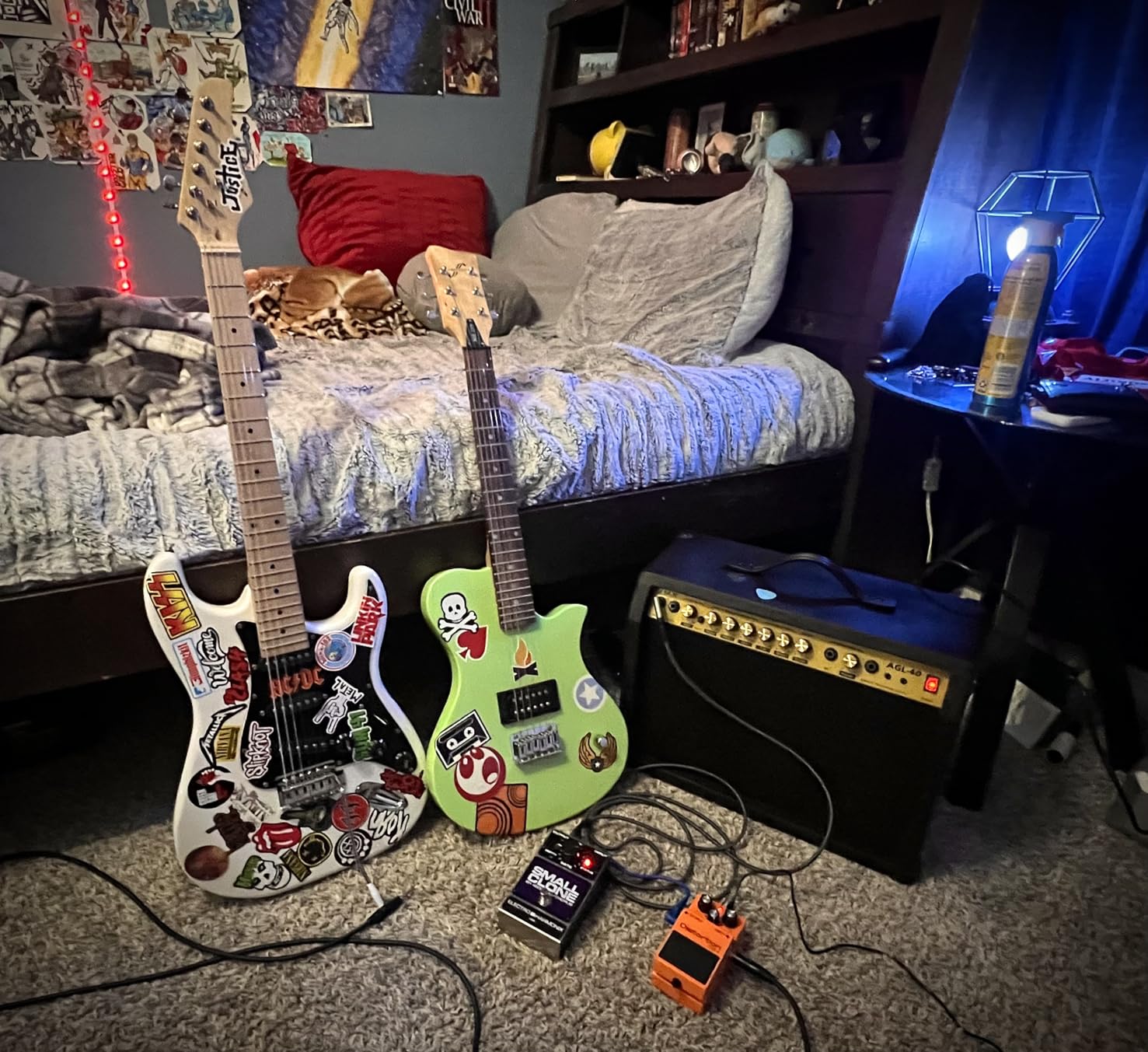
The 4-inch speaker is small, so do not expect full bass response or big clean headroom. For practicing scales, chords, and basic blues progressions, it is more than capable. The headphone jack lets you practice quietly when needed.
Build quality is basic, with some users reporting flimsy knobs or cosmetic issues. The amp is not designed for high-gain styles like metal, so stick to clean and light blues overdrive for the best results. For the absolute lowest budget option, this amp delivers basic functionality.
Who This Amp Is For
Absolute beginners with a very tight budget will find the LyxPro offers basic practice functionality. Younger players or students who need a starter amp for lessons will appreciate the low cost. Apartment dwellers who want a compact, lightweight practice option will benefit from the small footprint.
Players who want authentic blues tone should invest in a tube amp or modeling combo. Anyone needing stage volume or playing with a band should look at higher-wattage options.
Setup Tips for Blues Tone
I keep the volume around 5, treble at 5, bass at 4, and gain low for clean blues practice. The grind switch adds a basic overdrive for blues-rock rhythm work when needed. Avoid pushing the gain too high, as the small speaker will start to sound harsh before the overdrive sounds musical.
Pair this amp with a beginner-friendly guitar like a Squier Strat or a Yamaha Pacifica. Single-coil pickups will give the cleanest, most musical tones through the small speaker.
Buying Guide: How to Choose the Best Guitar Amp for Blues?
The best guitar amp for blues comes down to how you play, where you play, and what tones you chase. Tube amps deliver the natural compression and touch-responsive breakup that define classic blues, but they cost more and need occasional maintenance. Solid-state amps offer reliability and value, with modern designs that capture some tube character at a fraction of the cost. Digital modeling amps put dozens of classic amp models in a single box, giving you access to everything from a 1950s tweed Deluxe to a British Vox AC30 without buying multiple amps.
Wattage matters more than most buyers think. For bedroom practice, 5 to 15 watts is plenty. Tube amps at this wattage can still push air and break up nicely when you want to gig or record. For small club gigs, 15 to 30 watts through a tube amp gives you enough headroom for the drummer. Larger venues need 50 watts or more, or a mic’d amp going through the PA. Buying more amp than you need leads to cranking the volume down to bedroom levels, which kills the natural breakup that makes tube amps special.
Speaker size changes the character of the amp significantly. A 12-inch speaker, like the Jensen P12N in the Blues Junior, moves more air and delivers fuller low-end response. An 8-inch speaker, like in the Orange Crush 20, is tighter and more focused, great for cutting through a mix but less room-filling. A 6-inch speaker in a budget practice amp works fine for scale practice but lacks the tonal complexity of bigger speakers.
Tube vs Solid State for Blues Tone
Tube amps use vacuum tubes to amplify the signal, and they produce natural compression and harmonic distortion as you push the volume up. This is the sound blues players have chased since the 1950s, from the tweed Deluxe to the Marshall JTM45. The touch-sensitive response means light picking produces clean tone and harder picking produces natural overdrive, all from the same amp. Solid-state amps use transistors and produce a tighter, more precise sound. They are reliable, affordable, and often include features like reverb, chorus, and delay built in. For bedroom practice on a budget, a solid-state amp like the Orange Crush 20 or Leo Jaymz 20W delivers solid blues tone. For authentic vintage character, a tube amp like the Blues Junior or Mini Superbeetle is the way to go.
Forum users on r/bluesguitarist and r/GuitarAmps consistently report that small tube amps (5 to 15 watts) work best for home blues practice. The Fender Deluxe Reverb and Blues Junior are frequently recommended, and master volume controls are essential for getting tube breakup at bedroom volume. Players who use pedals often prefer clean solid-state platforms like the Orange Crush series.
Dialing in Delta Blues vs Texas Blues Tones
Delta blues, the original acoustic-to-electric style, calls for clean, woody tone with light breakup on hard pick strokes. A Fender-style amp with single-coil pickups delivers this naturally. Keep the volume moderate, treble around 6, bass around 4, and let the speaker’s natural character carry the sound. Texas blues, popularized by Stevie Ray Vaughan, demands more gain and thicker midrange. Push the volume higher, engage a Tube Screamer-style overdrive, and use humbuckers or hot single-coils for the right response.
For slide guitar work, especially in open tunings, a cleaner amp with plenty of headroom lets the slide work sing without fighting distortion. A dedicated slide guitar paired with a Fender-style tube amp delivers classic Delta tones. Resonator guitars benefit from a similar setup, and our picks for best resonator guitars for blues pair naturally with the amps in this roundup.
Pairing Your Guitar with Your Amp
Single-coil guitars like Stratocasters and Telecasters pair best with Fender-style amps that have clean headroom and chimey character. Humbucker-equipped guitars like Les Pauls and SGs pair well with Marshall and Orange-flavored amps that have midrange thickness. P-90 pickups split the difference and work well with either style. For blues, the guitar and amp interaction matters more than the specs on paper, so try to play through both before committing.
Frequently Asked Questions
What amp does Joe Bonamassa use?
Joe Bonamassa is known for using a mix of vintage and boutique tube amps. His main stage amps have included Fender tweed Deluxe reissues, Marshall 1959 Super Lead plexis, and Divided by 13 amps. For recording, he has used a wide range of vintage Fenders, Marshalls, and Vox AC30s. The common thread is his preference for tube amps that respond to pick attack and break up naturally under gain.
Are Blackstar amps good for blues?
Blackstar amps can work well for blues, especially their HT and Studio series tube combos. The HT-5R and HT-20R offer genuine tube tone at accessible prices, with features like built-in reverb and ISF (Infinite Shape Feature) EQ that lets you dial in American or British-style response. They are particularly strong for blues-rock tones that push into classic rock territory. For traditional Delta or Chicago blues, however, a Fender-style amp may capture the character more accurately.
Tube vs solid state for blues guitar?
Tube amps deliver the natural compression, harmonic richness, and touch-sensitive breakup that define classic blues tone. They respond dynamically to your pick attack and the guitar’s volume knob. Solid-state amps are more affordable, reliable, and often include features like effects and amp modeling. For authentic vintage blues character, tube amps win. For budget practice and modern versatility, solid-state and modeling amps like the Fender Mustang LT25 deliver excellent value.
What wattage do I need for home practice blues?
For home practice, 5 to 15 watts is plenty, especially with a tube amp that can break up at low volumes using a master volume control. Solid-state amps in this range are good for clean tones and light overdrive. If you want to play with a drummer or in small venues, 15 to 30 watts gives more headroom. Larger gigs need 50 watts or more, or a mic’d amp going through the PA. Buying more amp than you need leads to cranking down the volume, which kills tube character.
How to get blues tone at low volume?
To get blues tone at low volume, use a master volume on a tube amp and set the master low while pushing the channel volume higher. This engages the preamp tubes’ breakup without driving the power tubes to full volume. Attenuators between the amp and speaker give similar results. Alternatively, use a modeling amp with headphone output for silent practice, or run a small 1 to 5 watt tube combo like the Fender Champ at near-bedroom levels.
Final Verdict: Choosing the Best Guitar Amp for Blues in 2026
After testing these 9 amps across single-coil and humbucker guitars, our team recommends the Fender Mustang LT25 as the best guitar amp for blues overall. It delivers authentic Fender amp models, intuitive controls, and direct USB recording at a price that fits most budgets. Beginners get a usable blues tone out of the box, and intermediate players can deep-edit tones through Fender’s free software.
For authentic tube character, the Fender Blues Junior remains our top tube pick. For British-flavored solid-state value, the Orange Crush 20 delivers iconic midrange character at a low price. Whatever amp you choose from this roundup, focus on how it responds to your playing dynamics, because the magic of blues tone lives in the conversation between your hands and the amp. If you are also exploring other blues gear, check out our picks for the best cigar box guitars for blues players to round out your collection.