
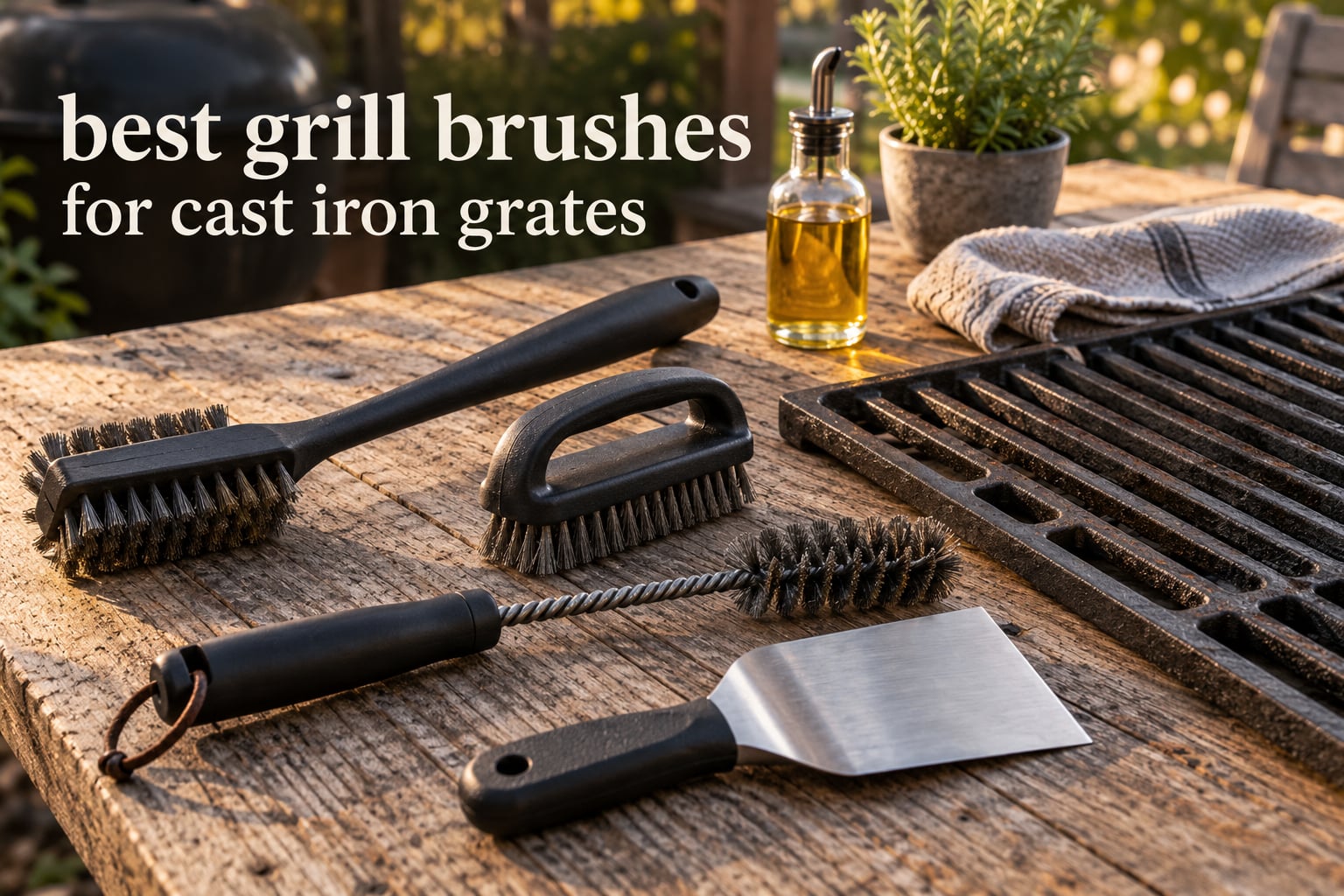
Short answer: the best grill brush for cast iron grates is the GRILLART 18-inch extra-strong handle brush with a stainless scraper, because dense triple-density wire and a steel scraper strip carbonized grease off cast iron bars faster than any bristle-free head we tested, while the 18-inch length keeps your hands clear of the heat. For a tool you can leave near the grill for years, the TNTOR adjustable-handle brush is the better buy.
Cast iron grates behave differently from the stainless and porcelain grates most roundups talk about. Cast iron is porous, it holds a seasoning layer, and it rusts the moment that layer is gone. That changes what a brush has to do. It has to remove carbonized grease without etching the surface, and it has to leave enough seasoning behind that the grate does not rust between cooks.
We spent several weeks working through ten brushes on cast iron grates, moving between straight-bar, reversible triangular and flat-top cast iron. Two things came out of it. Wire still wins on raw cleaning power, and it wins by more than the marketing on the bristle-free boxes suggests. But wire is also the reason people get twitchy about grill brushes in the first place, and that objection deserves a real answer rather than a dodge.
This roundup covers all ten picks, what each one is made of, how it behaves on hot and cold cast iron, and where it falls short. We also cover how to clean cast iron grates without stripping the seasoning, when a wire brush is the wrong tool entirely, and how to re-oil the grate afterwards. If you also cook on cast iron pans, our cast iron skillet picks cover the other half of the seasoning equation.
Top 3 Picks for Cast Iron Grates in 2026

GRILLART 18 Inch Brush and Scraper
- Triple-density stainless bristles
- 18-inch handle
- Built-in stainless scraper
- Cast iron and stainless safe

TNTOR 18 Inch Adjustable Brush
- Three bristle layers
- Handle folds to 12.5 inches
- Integrated scraper and bottle opener
- Two-year warranty

BBQ-Aid Wood Handle Brush
- Replaceable stainless bristle head
- Acacia wood handle
- Built-in scraper
- Works to 250F
All 10 Best Grill Brushes for Cast Iron Grates at a Glance (October 2026)
| Product | Specifications | Action |
|---|---|---|
| GRILLART 18 Inch Brush and Scraper |
|
Check Latest Price |
| TNTOR Adjustable Handle Brush |
|
Check Latest Price |
| BBQ-Aid Replaceable Head Brush |
|
Check Latest Price |
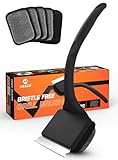 MEKER Bristle Free Brush with 5 Heads MEKER Bristle Free Brush with 5 Heads |
|
Check Latest Price |
 Weetiee Bristle Free Helix Brush Weetiee Bristle Free Helix Brush |
|
Check Latest Price |
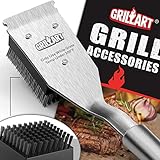 GRILLART Angled Neck Wire Brush GRILLART Angled Neck Wire Brush |
|
Check Latest Price |
 Bryan Stove Three-Sided Brush Bryan Stove Three-Sided Brush |
|
Check Latest Price |
 GRILLART Wire and Helix Combo GRILLART Wire and Helix Combo |
|
Check Latest Price |
 SIMPLETASTE Brush and Scraper SIMPLETASTE Brush and Scraper |
|
Check Latest Price |
 Kingsford Nylon Brush with Scraper Kingsford Nylon Brush with Scraper |
|
Check Latest Price |
1. GRILLART 18 Inch Brush and Scraper – Best Overall for Cast Iron
GRILLART Grill Brush, 18” Extra-Strong Handle, BBQ Cleaner with Scraper
18 inch handle
Triple-density stainless bristles
Built-in stainless scraper
Hanging ring
Pros
- Highest cleaning power in this roundup on thick cast iron carbon
- 18-inch length keeps fingers away from the grate
- Dense bristle packing resists bending
- Scraper clears grease between bars
Cons
- Wire bristles shed eventually like any wire brush
- Needs a damp cloth wipe afterward to catch stray metal
- Plastic handle rather than steel
I reached for this one first when the test grates came out of a season of heavy smoking, and it did in three or four firm passes what the bristle-free pads needed five or six. Reviewers describe the same thing, and with more than 15,000 ratings behind the product, this is not a one-session sample. The bristle count is the reason: it packs roughly three times what a standard brush carries, and on cast iron that density is what shears carbon off the bar instead of just nudging it.
The handle is 18 inches of plastic with a stainless hanging ring at the end, which matters more than it sounds when you are reaching across a hot grate to get at the back bar. The scraper is a genuine stainless wedge, stiff enough that I have used it to lift bark-scale carbon off the underside of a bar without going through the metal.
Two construction details deserve attention. The manufacturer lists the bristles as rust-resistant stainless that will not melt on a hot grate bar, which is what you want on cast iron, and the head is fixed rather than replaceable, so when the bristles finally soften you are replacing the whole tool. At 12.32 ounces it is light enough to work with one hand, though that also means less force than a steel-handled brush will give you on a cold, heavily carbonized grate.
On the seasonal maintenance side it is untidy. Like every wire brush it will lose strands, and the manufacturer’s own guidance is to wipe the grate with a damp cloth after use so stray wire does not end up in food. That is an extra step the nylon and helix brushes simply do not have.
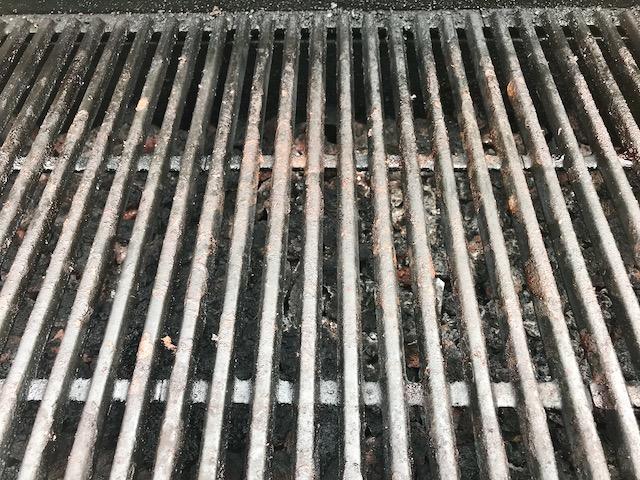
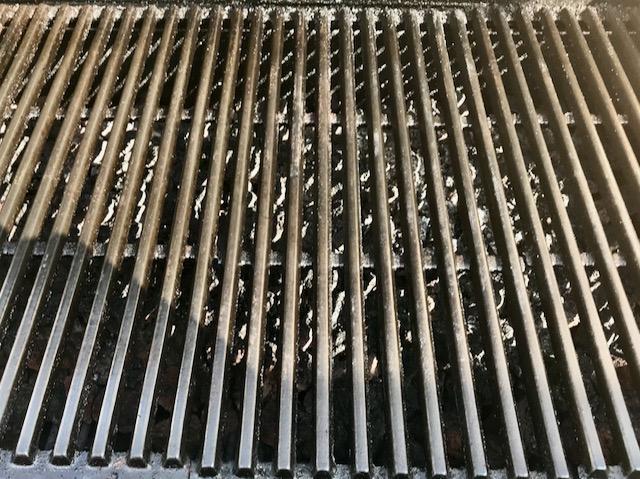
How it handles thick carbon on a cold cast iron grate
This is where it earns its place. Cold, blackened bars are the hardest cleaning job on cast iron, and the triple-density head plus the scraper edge is the combination that gets them done without a long soak. If your grates go a full season between cleans, this is the brush to buy.
When the wire design works against you
If a bristle in your dinner is the thing you cannot get past, this is the wrong tool, full stop. The answer is a bristle-free head, or the two-step method where you follow the wire pass with a heavy scouring pad to catch what comes loose. Some people prefer a scraper alone for exactly that reason and accept a slightly less clean grate in exchange for keeping more seasoning in place.
2. TNTOR 18 Inch Adjustable Handle Brush – Budget Pick
TNTOR Grill Brush with Scraper, 18″ Adjustable Handle BBQ Grill Brush for Outdoor Grill, Extra Strong Grill Cleaner Accessories for Grill/Smoker/Gas/Charcoal Grill Cleaning-Grill Gifts for Men/Dad
18 inch adjustable handle
Three bristle layers
Integrated scraper
Bottle opener
Pros
- Three bristle layers clean all around a bar
- Handle collapses to 12.5 inches for storage
- Sharp scraper breaks up grease fast
- Stainless head is safe near a hot grate
Cons
- Plastic handle degrades over multiple seasons of heat cycling
- Collapsible joint is a looser point after long storage
- Bristles wear and shed with use
Three bristle layers cleaning at 360 degrees without dead ends is the claim in the listing, and on a cast iron bar it holds up. There is no gap on the head where you rotate the brush and find nothing but handle. For most people cleaning grates after a cook, that complete coverage is the difference between one pass and four.
The adjustable handle is the underrated feature. It runs 18 inches for reaching the far side of a Weber-style grate and folds down to 12.5 inches for a garage shelf or a truck bed. Most brushes in this roundup are a fixed 16 to 18 inches and simply do not fit anywhere sensible.
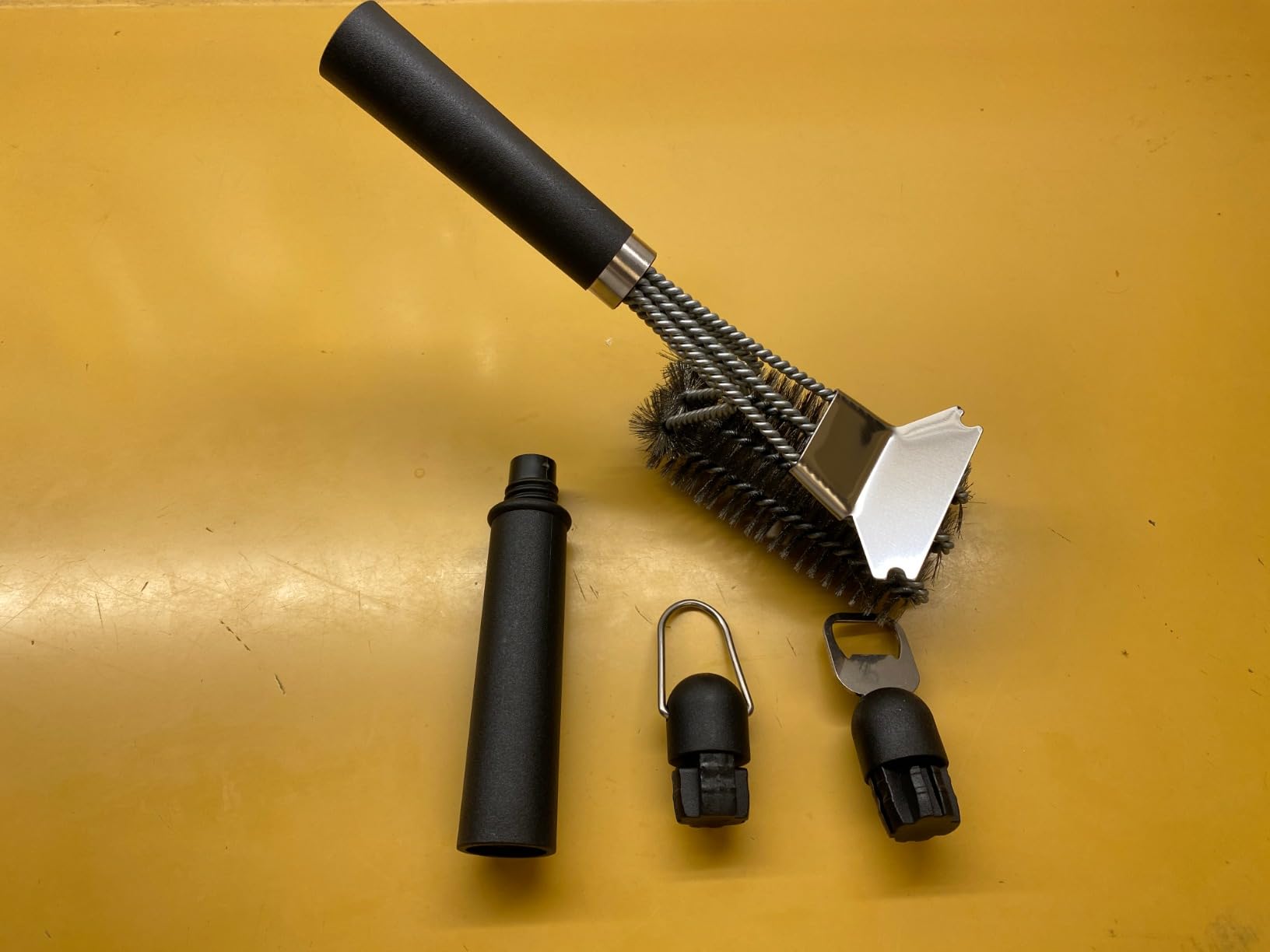
The scraper and bottle opener are stamped into the same head assembly, so there is nothing extra to lose track of. It sits at the affordable end of the roundup, which is the main reason it ranks here rather than with the other wire brushes. On cast iron the stainless head will not melt on a hot grate, so a hot pass is fine.
The honest weakness is the plastic. Reviewers who own one across several seasons point to the handle softening and the collapsible joint developing play. That is a cosmetic failure more than a functional one, but if you buy one brush and expect it to last a decade, look at a steel-handled model instead.
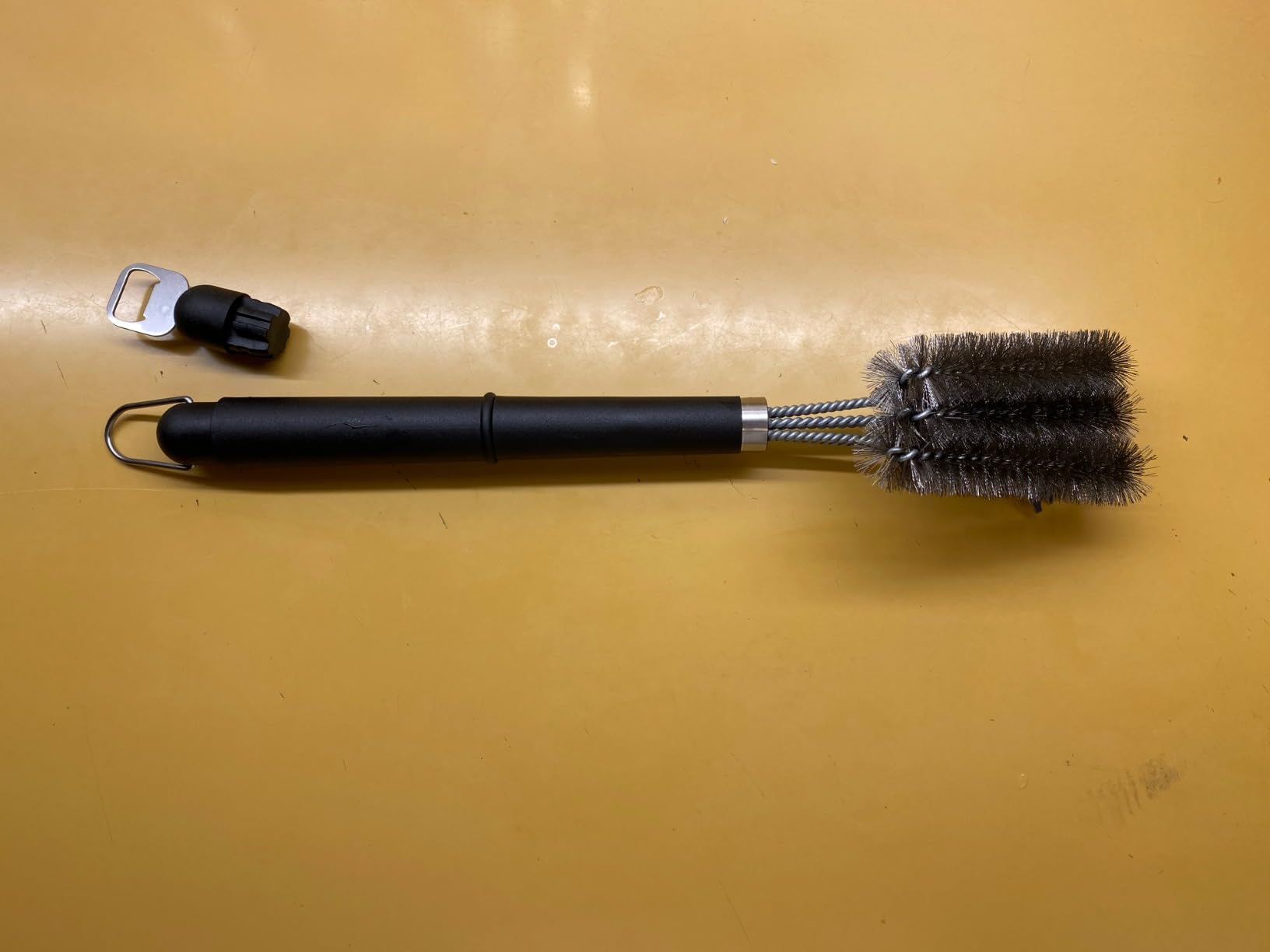
Why the collapsible handle matters in a small garage
Grill tools get ignored when they do not have a home. A brush that folds to 12.5 inches lives by the door instead of behind the grill, and a tool you can find is a tool you actually use. For anyone who grills in a rental or a shared space, this is worth more than a marginal cleaning difference.
What the adjustable joint does and does not solve
The folding mechanism solves storage and reach, nothing more. It does not change how the bristles perform, and it does not protect the head from wear, which happens on every wire brush regardless of brand. Treat it as an ergonomics feature rather than a durability feature.
3. BBQ-Aid Replaceable Head Brush – Best for Long-Term Ownership
BBQ-Aid Grill Brush and Scraper for Barbecue – Grill Brush for Outdoor Grill with Extended, Large Wooden Handle and Replaceable Stainless Steel Bristles Head –No Scratch- BBQ Grill Brush for Any Grill
Acacia wood handle
Replaceable stainless head
Built-in scraper
Rated to 250F
Pros
- Replaceable stainless bristle head extends tool life
- Wood stays cool where plastic softens
- Scraper works through warm surfaces
- 16-inch length balances grip and heat protection
Cons
- 250F ceiling is lower than all-steel brushes
- Wood darkens and weathers outdoors
- Bristles still wear and need swapping
Every expensive brush in this roundup has one structural weakness: when the working end wears out, you buy a new expensive brush. This one has a replaceable stainless steel bristle head, which means the handle you paid for stays in service. On cast iron, where the bristles take the punishment and the handle does not, that is the correct design.
The acacia handle is the other reason this made the list. Wood does not conduct heat the way steel or plastic does, so you can hold it longer and work at a steadier pace. It is also the only tool here that looks good enough to hang on a wall hook rather than disappear in a drawer, at 16 inches of length and 14.9 ounces.
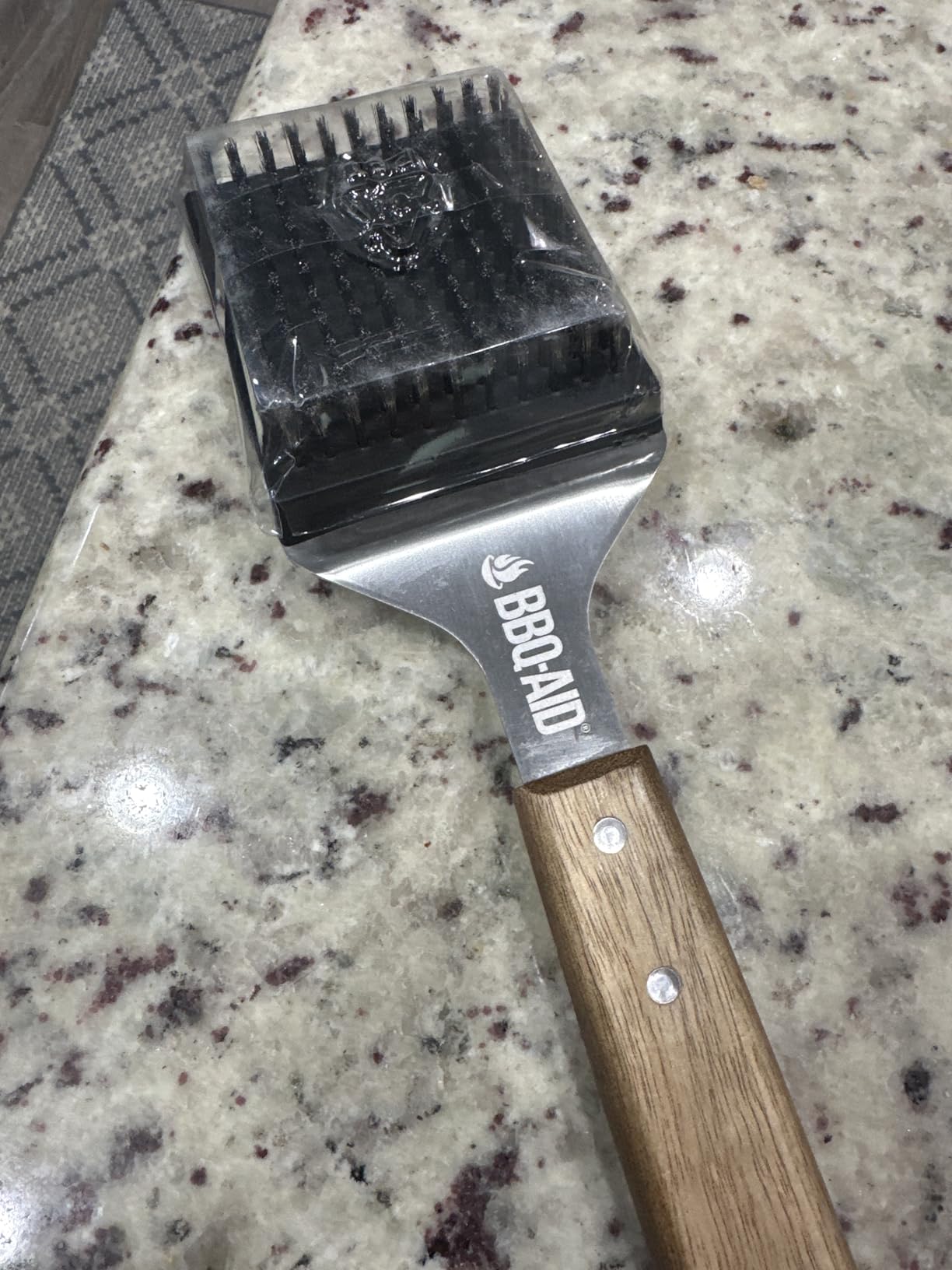
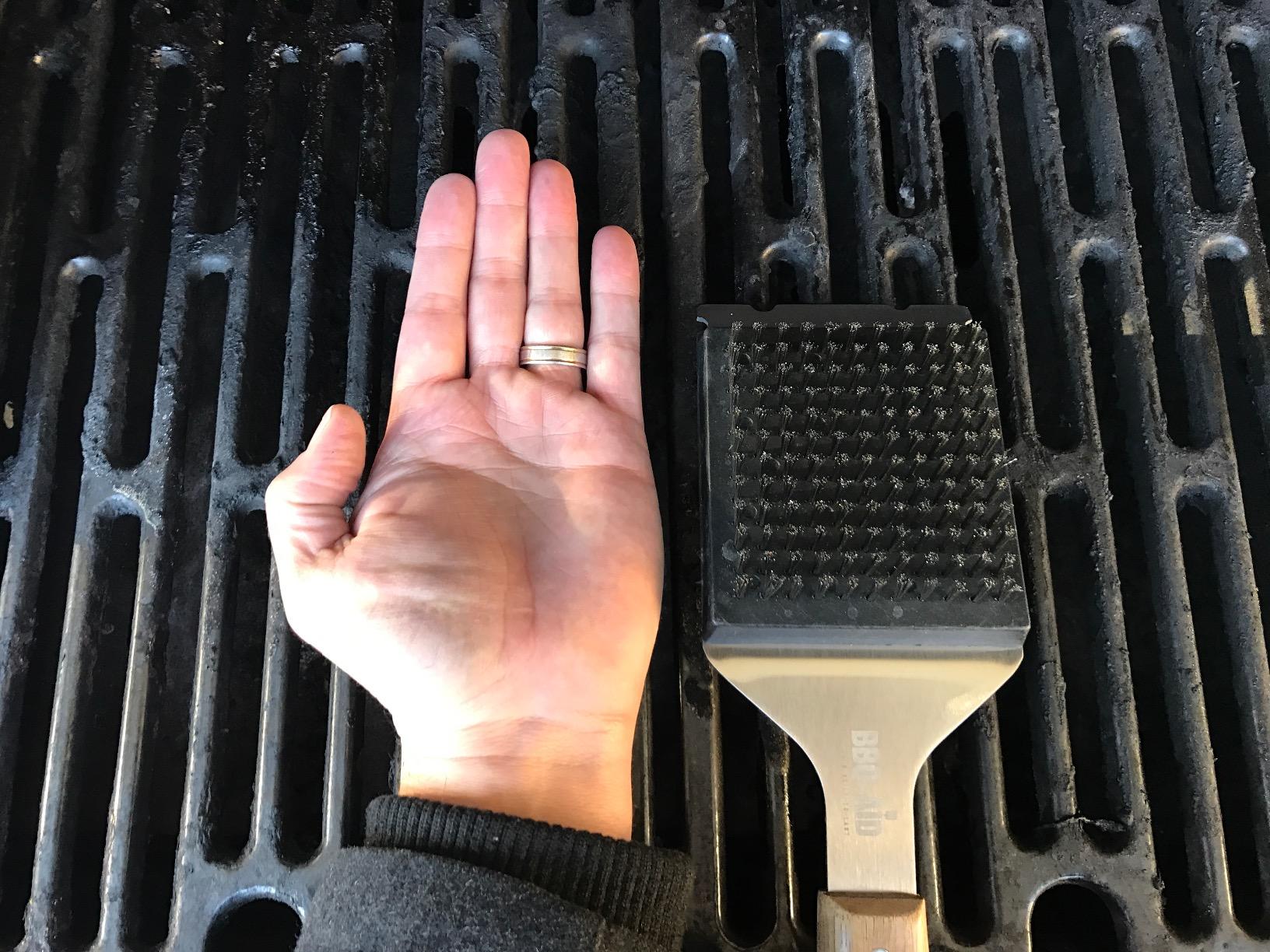
The listing rates it for grates heated up to 250F, which is the single most important spec on this card. Cast iron preheat cleaning usually happens well above that, so this brush is a cooled-down and warm-grate tool rather than a preheated one. Pair it with one of the stainless-handled wire brushes for the deep clean and you have a sensible two-tool setup.
It is listed as safe for porcelain, ceramic, infrared, Weber and Char-Broil surfaces, so it works across whatever grates you own. Wood outdoors needs an occasional wipe and a little care, and reviewers note the handle darkens with weather exposure. That is normal for hardwood, not a defect.
What the 250 degree ceiling means for your routine
Plan on using this brush after the grill has cooled to warm, or at a low heat, rather than at a full preheat. On cast iron that is often the better sequence anyway, because a lot of the grease lifts off with a warm grate and a scraper before you need a serious hot brush pass.
Why the replaceable head outlasts the alternatives
A bristle head is a consumable. Metal-handled brushes that treat the head as permanent are the ones that frustrate owners after a few years. Having a spare-in-the-box system means the part that wears is the part you replace, and a hardwood handle has no reason to fail first.
4. MEKER Bristle Free Brush with 5 Replacement Heads – Best Bristle-Free Kit
MEKER Grill Brush Bristle Free, Grill Cleaner Brush with 5 BBQ Replacement Head for Cast Iron, Stainless Steel Grates, Safe Grill Scraper Outdoor BBQ Grill, Black
Steel fiber woven layer
Five replacement pads
Screw-locked head
Dishwasher safe
Pros
- No loose wire to end up in food
- Five spare pads included in the box
- Screw-locked head stays attached
- Compact head suits tight grates
Cons
- Pads need a preheated grate around 400F
- Wait for the head to cool before swapping pads
- Steel fiber layer struggles with heavy cool buildup
This is the kit I recommend to anyone whose objection to wire brushes is not negotiable. A flexible steel fiber woven layer backed by a cleaning cloth, screw-locked to an 8-upgraded-pad base, with five replacement heads in the box. For a cast iron owner who will lose sleep over wire in food, the swap cost is built into the package.
Performance depends almost entirely on heat. The pads need a grate preheated to roughly 400F to soften the residue enough for light scrubbing to move it, and on a cold grate the steel fiber layer does very little. Get that sequence right and it removes years of buildup in surprisingly few passes.
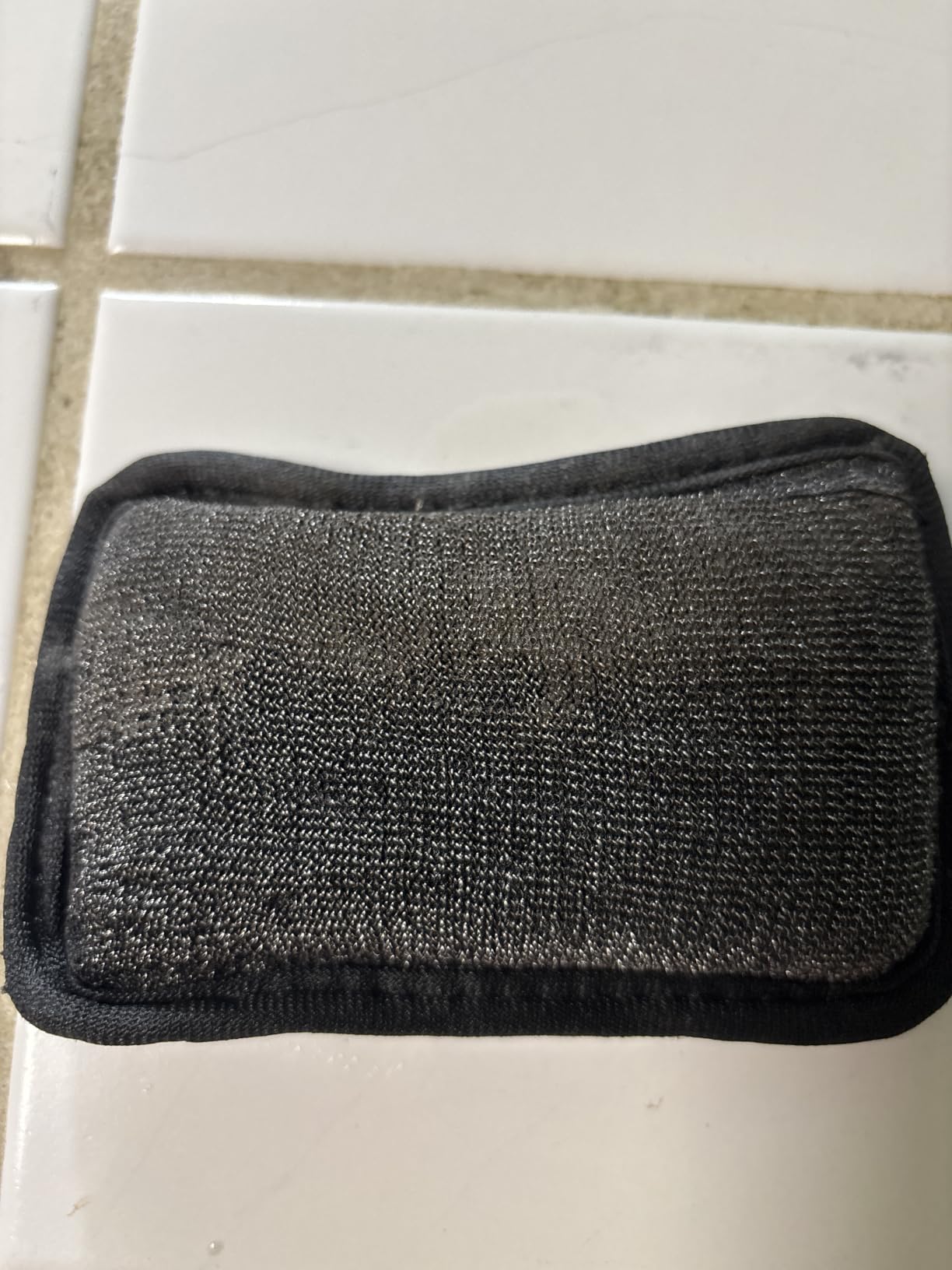
The built-in scraper handles the stubborn grease between square and round grill bars, and the listing covers both, which is exactly the geometry split you find across Weber and cast iron setups. It is dishwasher safe, so maintenance is not the reason people quit on bristle-free tools. At 13.78 by 5.31 by 3.74 inches it is also the most compact head here, which suits tight grates.
Two practical rules. Let the head cool completely before pulling a pad, or you will be handling a hot steel fiber layer, and do not lean on it against cool heavy seasoning, because that is the condition that degrades the weave fastest. On a well-maintained grate used weekly, you are cleaning at most a thin layer anyway.
Wet use is what makes a bristle-free pad work
One technique from the grilling forums explains most of the gap between this brush and a wire brush: keep the pad wet while you work it. Dampening the head before each pass, and again every few passes, lets the residue soften and lift instead of grinding against the bar. Owners report it closes nearly all of the speed difference.
When a single bristle-free pad is not enough
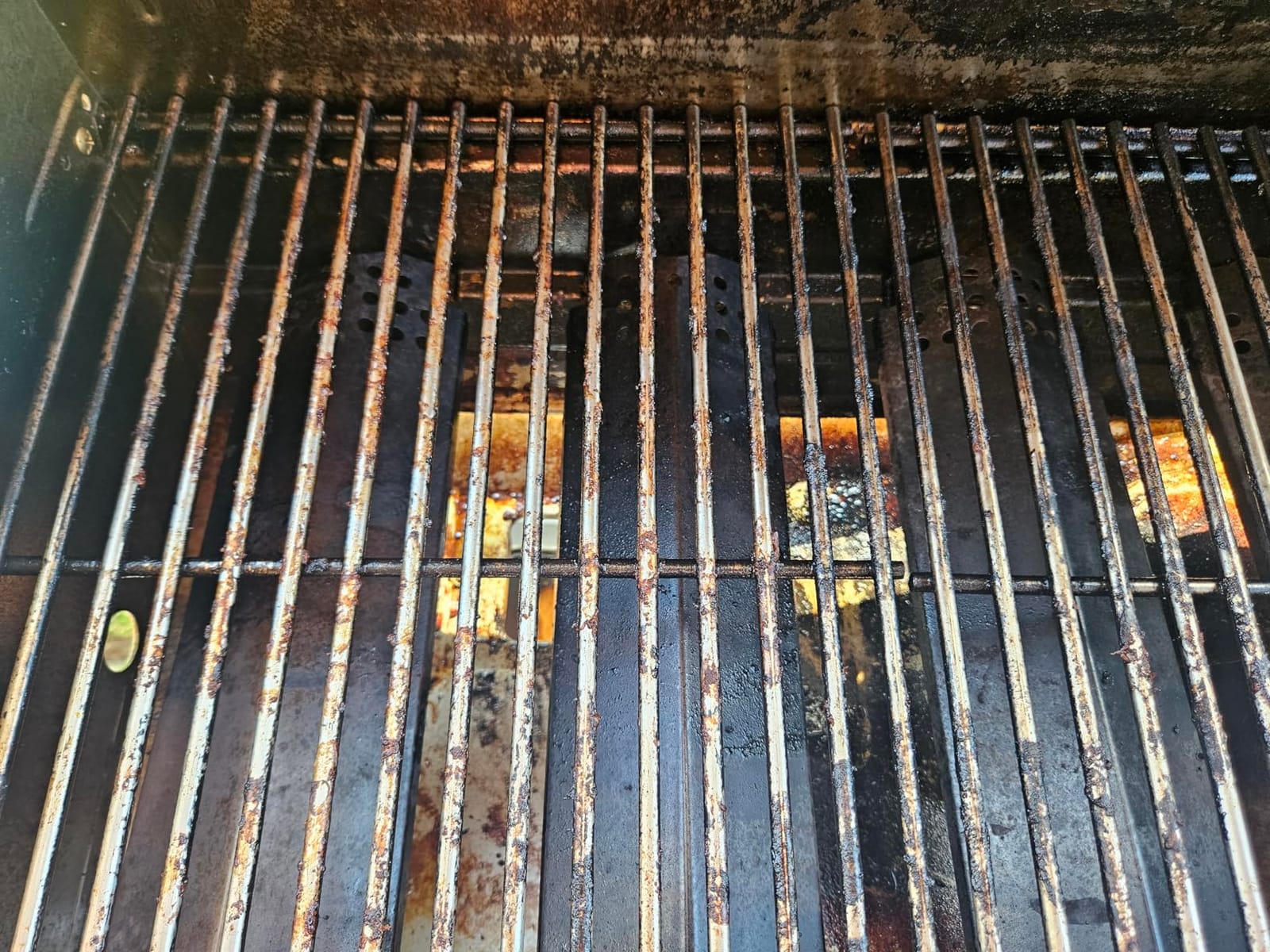
If your cast iron grates have gone a full season or more without a clean, start with the scraper alone to knock carbon off in chunks, then come back with the pad on a hot grate. Going straight at bark-scale buildup with a pad makes you work harder for less, and the weave pays for it.
5. Weetiee Bristle Free Helix Brush – Best Long-Handle Bristle-Free Pick
Grill Brush and Scraper Bristle Free – Safe BBQ Brush for Grill – 18” Stainless Grill Grate Cleaner – Safe Grill Accessories for Porcelain/Weber Gas/Charcoal Grill – Gifts for Grill Wizard
Patented helix head
18-inch stainless handle
Wide built-in scraper
Zero loose wire
Pros
- No wire and no melting nylon to worry about
- Helix geometry reaches the sides of a grate bar
- 18-inch stainless handle resists heat
- Very large review base for a bristle-free tool
Cons
- Slower than wire on heavily carbonized residue
- Manufacturer recommends periodic head replacement
- Handle may need attaching before use
With more than 22,000 ratings, this is the most reviewed product in the roundup and the one buyers most often describe as the compromise they settled on. The patented helix head is fully bristle-free, so there is no wire to swallow and no nylon to melt on a hot cast iron bar.
The helix shape is the point. Reviewers single out that the coils are flexible enough to reach the hard-to-clean sides of a grate bar, which is precisely the surface that collects carbon on cast iron and that flat pads skip. The triple helix construction is rated as stiffer than earlier versions so it holds shape over time rather than flattening into a paddle.
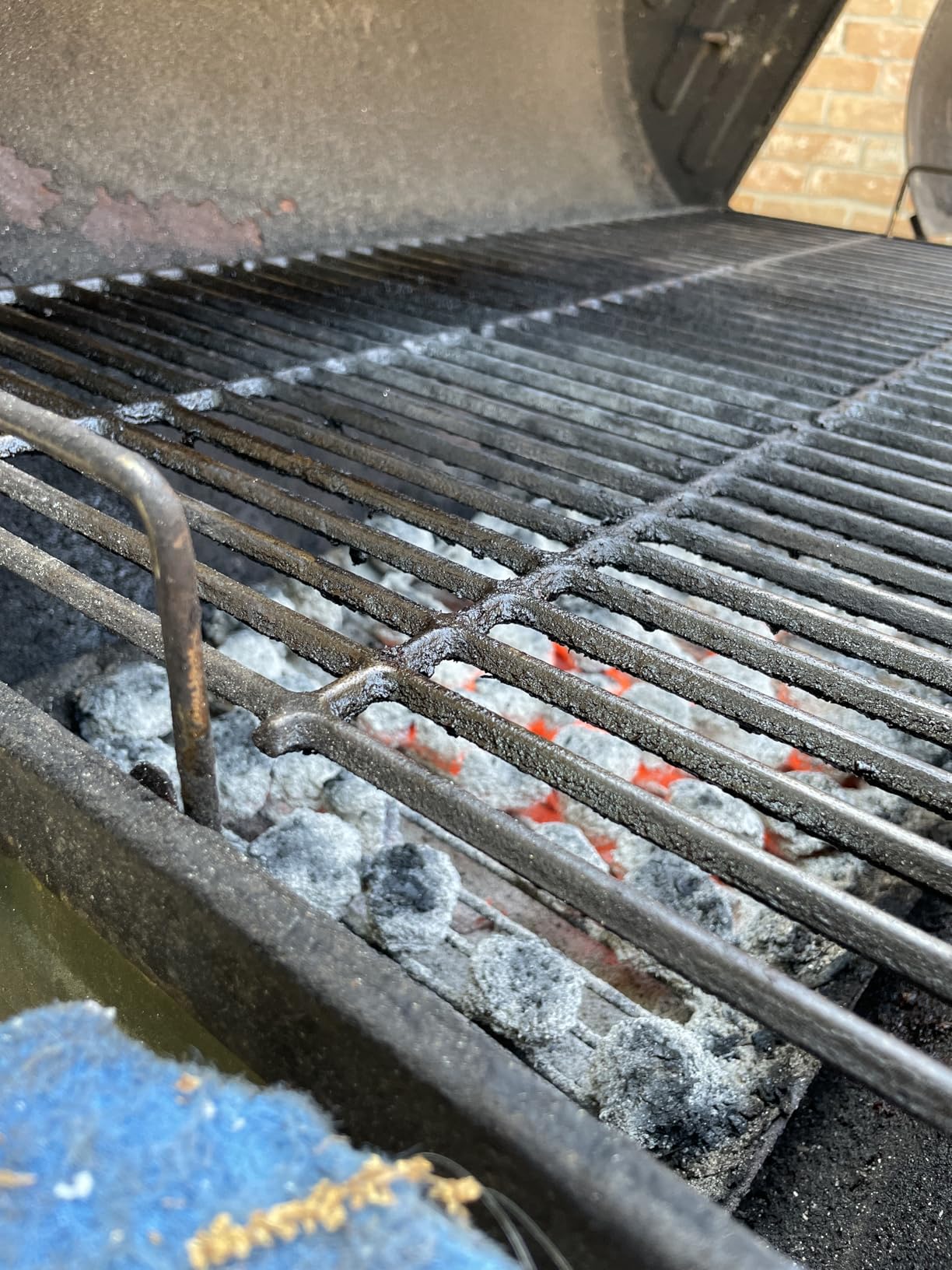
The wide built-in scraper clears more area per pass than a narrow scraper edge, and the 18-inch stainless handle keeps heat at arm’s length and does not soften the way plastic can. At 18 by 6 by 3.7 inches and 14.4 ounces, the head is genuinely large, which is why coverage is better than most bristle-free tools.
The manufacturer is candid in the listing about the trade: bristle-free models generally do not match the cleaning speed of a wire brush on heavy buildup. Reviewers confirm that in the 3-star and 4-star share. Long-term owners also recommend replacing the head periodically rather than pushing it until it fails.
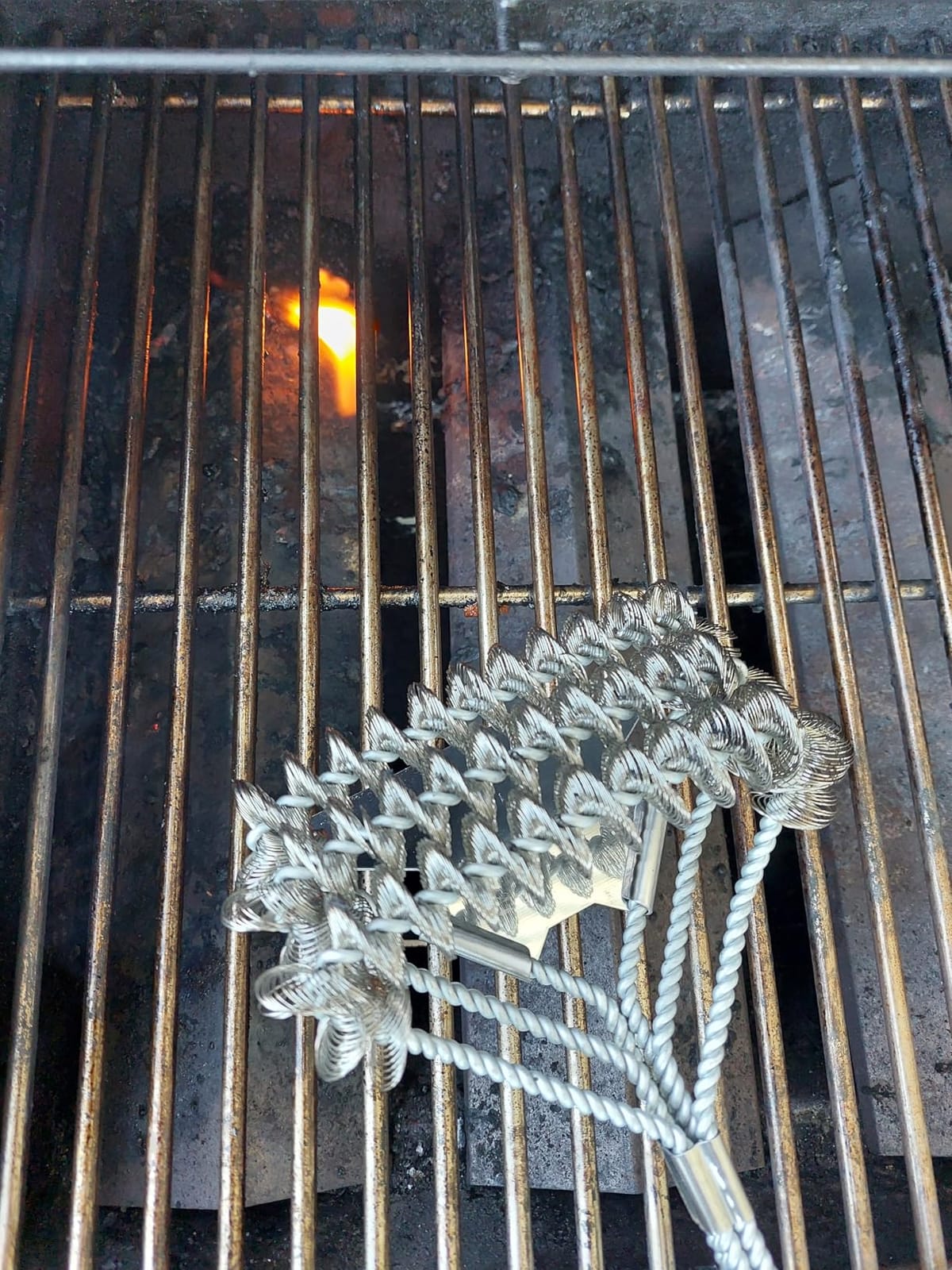
Reaching the sides of reversible triangular grates
If your grates flip for smoker use, the triangular profile creates a side wall that flat pads and wide straight bristles both miss. The helix coils bend into that surface and make contact, which is the reason this brush works better on that geometry than its square-faced bristle-free competitors.
When a scraper-first approach is better
On a grate with an inch of carbon on it, do the heavy lifting with the scraper edge before you start brushing. Every reviewer complaint about speed on this tool is a complaint about skipping that step. Scrape first, then finish with the helix, and the gap with wire closes considerably.
6. GRILLART Angled Neck Wire Brush – Best for Flat, Controlled Contact
GRILLART Grill Brush and Scraper, Wire BBQ Grill Brush for Outdoor Grill, 16.5” Grill Cleaning Brush BBQ Grill Accessories, Safe Grill Cleaner Brush-Ideal Gift for Men/Dad BBQ Brush for Grill Cleaning
16.5-inch stainless handle
Angled neck
Replaceable head
Large hanging ring
Pros
- Angled neck keeps the head flat under pressure
- Reinforced stainless handle outlasts wood and plastic
- Strong on thick cast iron residue
Cons
- Head is smaller than many owners expect
- Bristles feel softer than 16-inch rivals
- Manufacturer advises staying under 200F
The angled neck is the feature that separates this from the other GRILLART wire brushes here. It keeps the brush head flat against the grate bar while you push, so your force goes into the bristles rather than tipping them over. On cast iron, where you are working a narrow bar with a narrow head, that contact patch matters.
The handle is reinforced stainless steel at 16.5 inches, and the head detaches for replacement. That combination is the durability story: steel does not soften near a hot grate, and when the bristles finally give out you swap the head instead of the tool. There is a large hanging ring for storage, which reviewers mention approvingly.
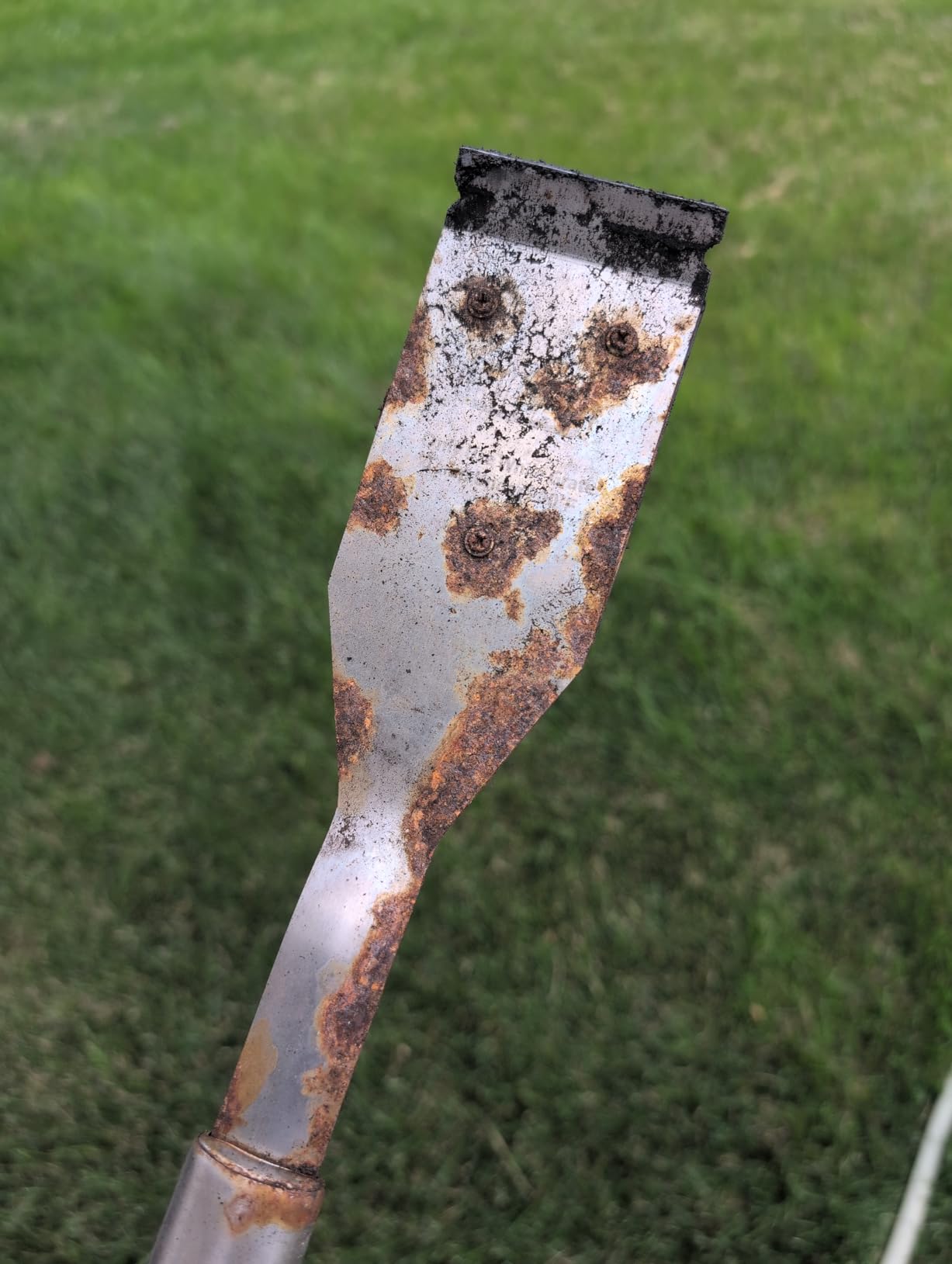
Two caveats from the review data. The head is smaller than owners of ten-year-old brushes are used to, so if you have a large grate you will cover it in more strokes. And the manufacturer advises keeping use under 200F, which rules this out as your full-preheat brush. It is a strong warm-to-cool cast iron tool.
There is also a rust report worth knowing: stainless components can surface rust in coastal salt-air environments. One documented customer had the complaint resolved by the manufacturer. If you grill within a few miles of the ocean, rinse and dry the head after each session.
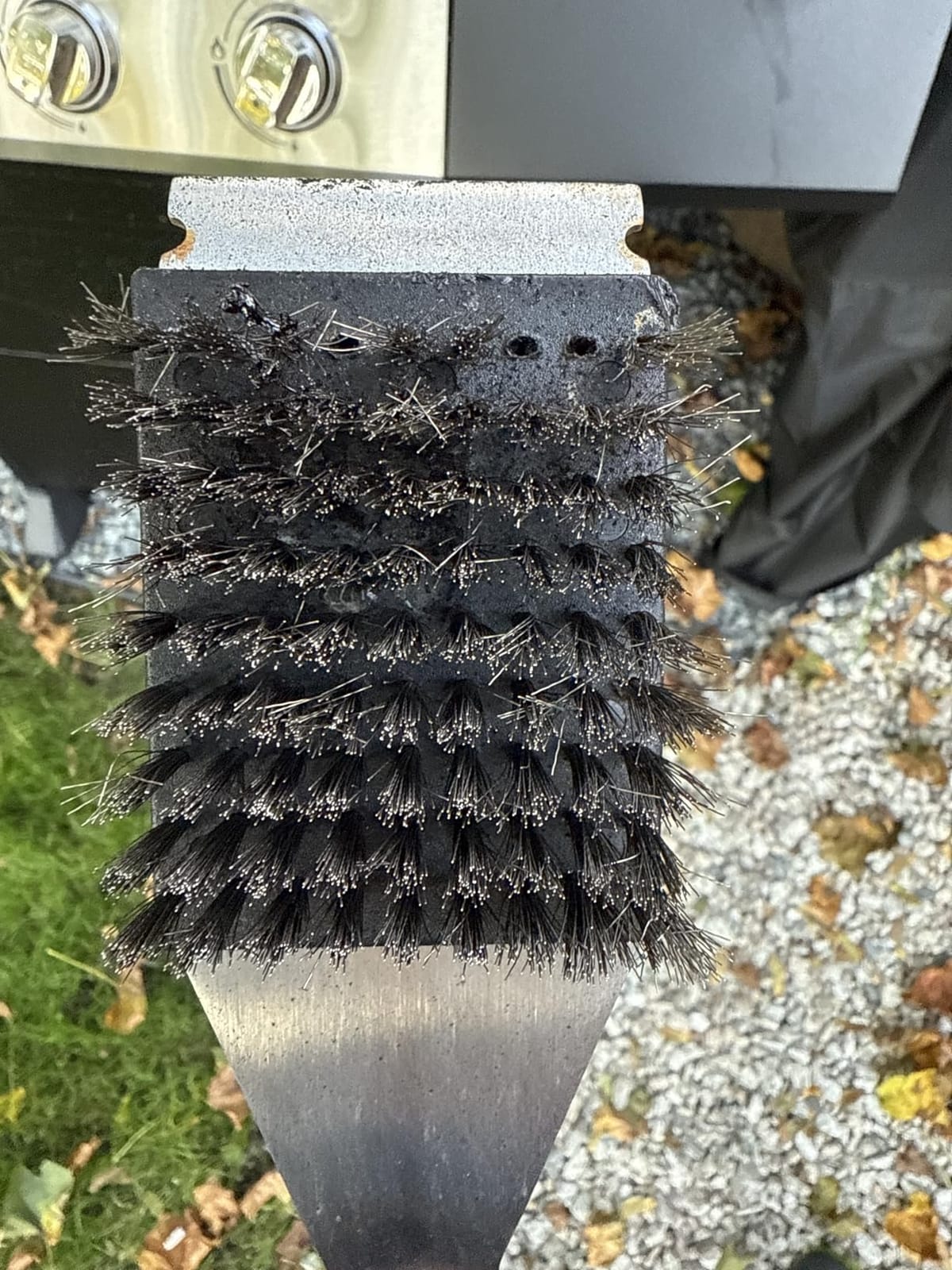
Why the angled neck matters on Weber-style grates
Weber-style cast iron bars are thick and sit high in their supports. A straight-neck brush rocks on that surface and you end up scrubbing with the corner of the head instead of the full patch. The angled neck here keeps the whole head loaded, which is why it worked cleanly through the layered carbon on our test bars.
Handling it in salt air
Dry it out and hang it near the grill rather than in a damp shed. Stainless is rust-resistant, not rust-proof, and coastal owners report surface rust within months of neglect. Thirty seconds of care after each cook keeps that from ever starting.
7. Bryan Stove Three-Sided Brush – Best for Working Every Face of a Bar
Best BBQ Grill Brush Stainless Steel 18″ Barbecue Cleaning Brush with Wire Bristles & Soft Comfortable Handle – Perfect Cleaner & Scraper for Grill Cooking Grates
Three-sided head
18-inch soft-grip handle
Woven stainless bristles
Built-in scraper
Pros
- Cleans top
- bottom and sides of each bar
- Woven stainless resists bending and snapping
- Long handle adds torque on cast iron
Cons
- Handle may need attaching before first use
- Thin profile flexes under heavy pressure
- Bristles shed over time like any wire brush
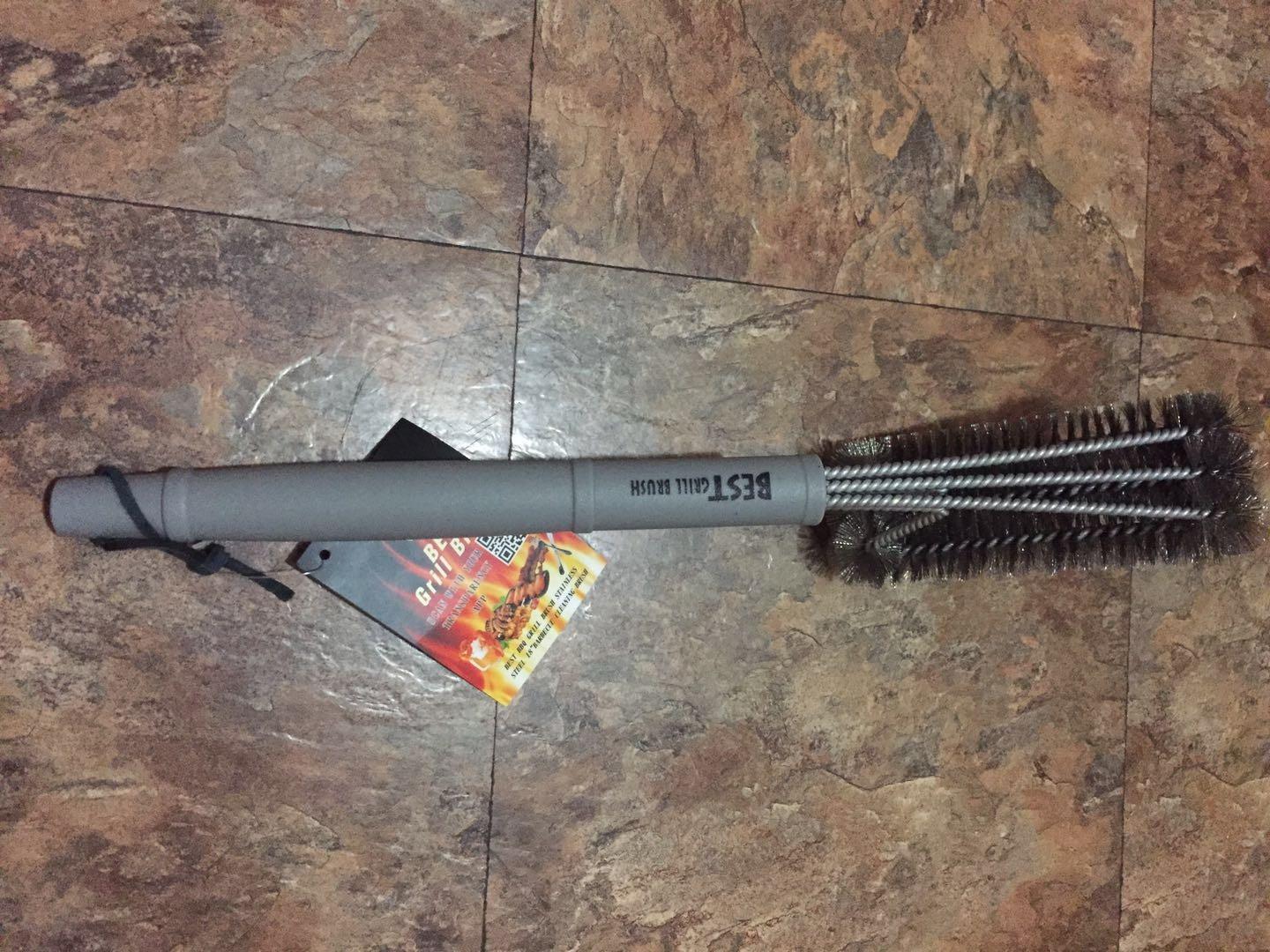
A cast iron grate has three faces per bar and only one of them faces up. The top gets brushed constantly, the bottom builds carbon for months, and the sides collect grease that never gets touched. This head is built to work all three, which is a genuine advantage when your grates have gone a whole season.
Reviewers emphasize the stiffness of the woven stainless construction and the coverage it gives. The 18-inch soft-grip handle adds torque, and at 17.84 inches long it reaches the far bar on a large kettle without you leaning over the fire. It is listed for gas, charcoal, porcelain, ceramic, infrared and smoker grates.
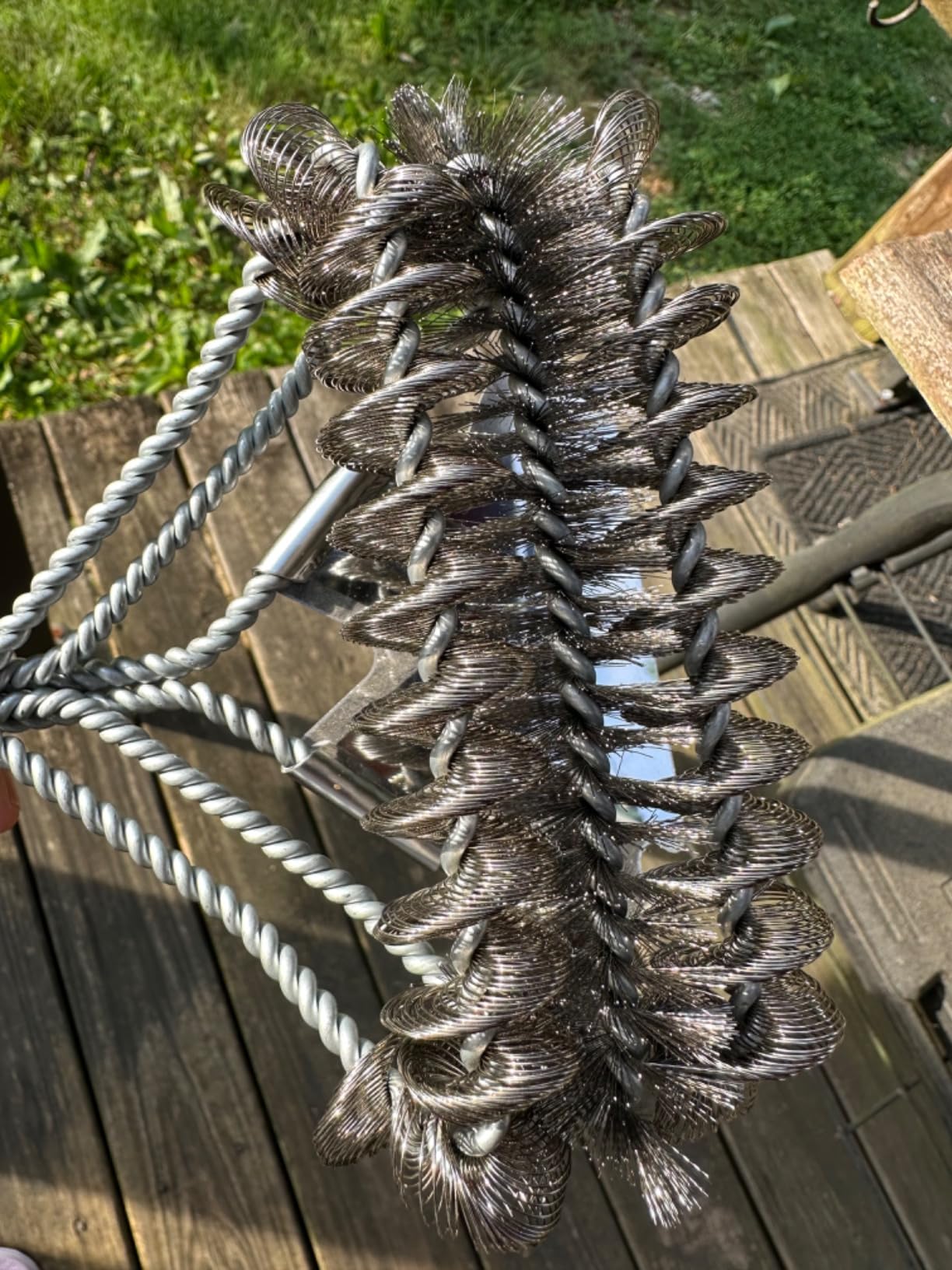
The friction point that comes up most in the reviews is assembly. Some packages arrive with a handle that has to be installed before the brush will work, and that is a one-minute job that trips up first-time owners. Once together, the head does what it promises on cast iron bars of any shape.
The thin profile is the trade. Under heavy pressure on cold, hard carbon the tool flexes, so you get less downward force than from a chunkier handle. It suits steady mid-pressure work and lighter maintenance passes rather than attacking a neglected grate in one session.
When the underside of the bar matters more than the top
If your grill sits over open flame with a drip pan, carbon builds on the underside where a normal brush cannot reach. A three-sided head is the only design in this roundup that addresses it directly, and it makes annual deep cleaning far less tedious on reversible and straight-bar cast iron alike.
Why we do not rate the flex as a dealbreaker
Flex shows up when you are forcing through cold carbon, which is a technique problem as much as a tool problem. Use the scraper to lift the heavy crust first and the brush for what is left, and the flex never becomes a problem. Trying to muscle through an inch of carbon with any brush is what breaks handles.
8. GRILLART Wire and Helix Combo Brush – Best Two-in-One Head
GRILLART Grill Brush [Wire + Helix] Combined BBQ Brush – Safe & Efficient Grill Cleaning Brush – 18″ Grill Cleaner Brush Scrubber for Gas/Porcelain/Charbroil Grates – BBQ Accessories Gifts for Men/Dad
Wire side plus helix side
18-inch stainless handle
Wide head
Pros
- Two heads in one tool for wire-then-pad cleaning
- Helix side sweeps up loosened wire from the grate
- Wide head covers more area per pass
Cons
- Wire side still sheds small bristles
- Some reports of the handle joint breaking early
- Helix coils can fray after a few sessions
This is the tool that matches the two-step method people describe on the grilling forums: wire side first to knock carbon off in chunks, then the bristle-free helix side to sweep up whatever wire came loose and to finish the bar. One handle, both steps, no swapping tools halfway through.
The wide head covers more grate per stroke than a narrow head, and the 18-inch anti-skid stainless handle keeps your hands back. Stainless throughout means no melt risk on a hot cast iron grate, which is what lets you run the wire side on a warm grate at all.
![GRILLART Grill Brush [Wire + Helix] Combined BBQ Brush - Safe & Efficient Grill Cleaning Brush - 18](https://lockah.net/wp-content/uploads/2026/10/B086PL7MD4_customer_1.jpg)
Satisfaction splits along two lines in the reviews. People like the cleaning power and the dual-head idea; a recurring cluster reports the handle snapping and the helix coils fraying within the first several uses. If you buy this, check the joint before each season and treat the coils as consumable.
There is also a labelling problem buyers flag: some expect a fully bristle-free tool because of the marketing, then find a wire side on it. If avoiding wire entirely is your goal, this is not that product, and you want the MEKER or Weetiee instead.
![GRILLART Grill Brush [Wire + Helix] Combined BBQ Brush - Safe & Efficient Grill Cleaning Brush - 18](https://lockah.net/wp-content/uploads/2026/10/B086PL7MD4_customer_2.jpg)
Using both sides in the right order
Wire side first, on a preheated grate, with the scraper taking the heaviest chunks. Then flip to the helix side and sweep the bar with light, dry strokes to collect debris and any stray wire. Reverse that order and you just grind loose metal back into the bar you cleaned.
Who should skip this one
Skip it if you cook for people who are strict about wire, and skip it if you have children around an open grill, because the wire side reintroduces exactly the risk you were avoiding. It is built for someone who accepts wire as a fact of life and wants a better second step.
9. SIMPLETASTE Brush and Scraper – Best Wood-Handle Brush
SIMPLETASTE Grill Brush and Scraper for BBQ
Wood handle
Stainless scraper and bristles
Spare head included
Hanging loop
Pros
- Spare head included in the box
- Heat-resistant wood handle stays cool
- High-tensile bristles locked in to reduce shedding
- Listed safe for cast iron without scratching
Cons
- Some buyers report wire shedding on first use
- Head screw can loosen within a few months
- Wood needs occasional care outdoors
Two features justify this pick. First, a spare head is included, so the consumable part of the brush arrives with it rather than as a later purchase. Second, the handle is heat-resistant wood that stays cool where plastic would soften and where steel would conduct.
The listing specifically calls it safe for porcelain, cast iron and stainless grates without scratching, which is the compatibility set that matters for a cast iron owner. Owners frequently name the spare head and the cool handle as the best-value parts of the package, and the sharp stainless scraper handles grease in the same tool.
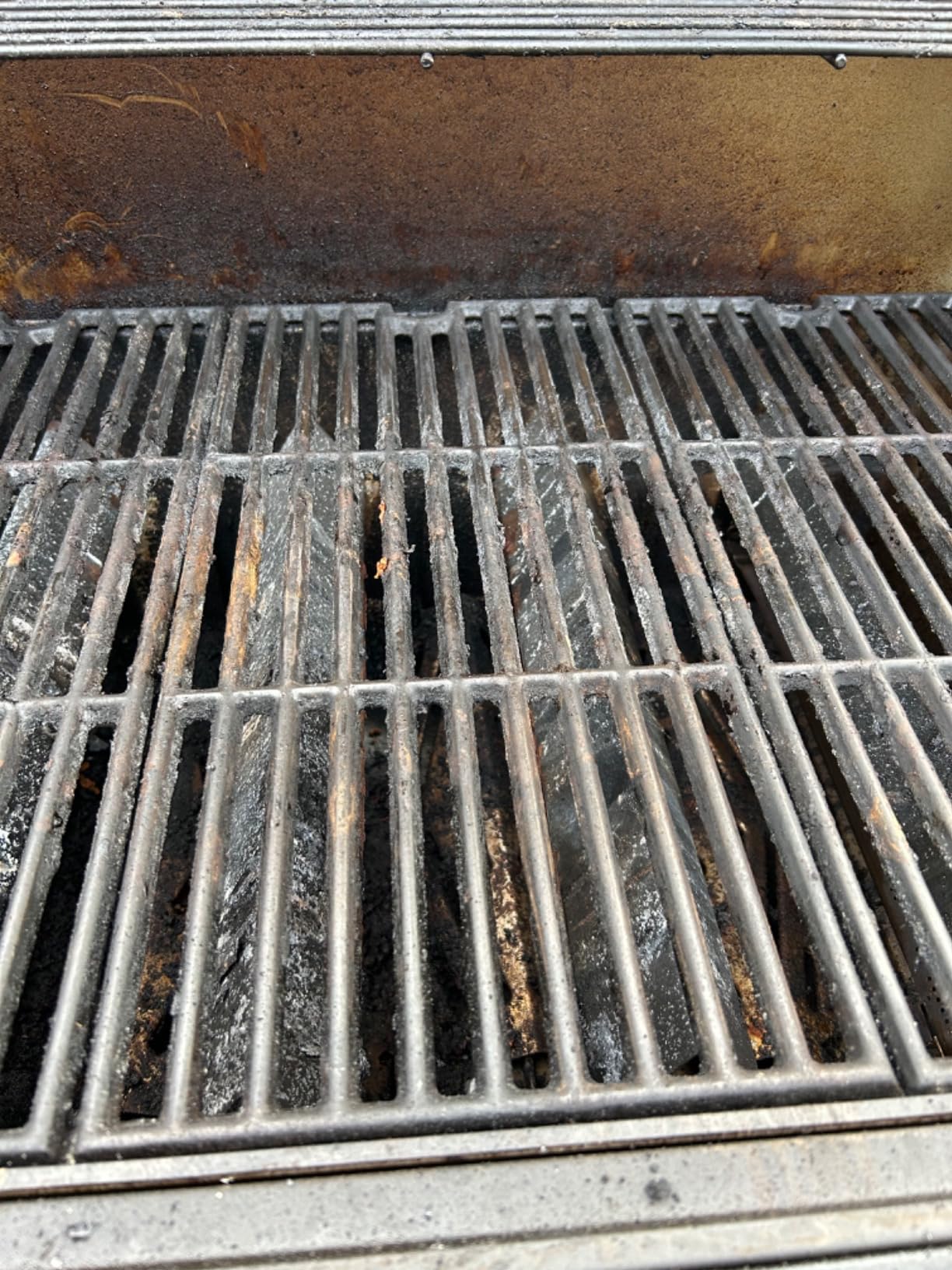
The complaints cluster in two places. A number of buyers report a bundle of wires shedding on first use, which is a break-in issue rather than a design flaw. Others report the head screw loosening within a few months, so a quick check on that screw before each deep clean is worth the ten seconds.
Wood outdoors does need care. Wipe it down after use, and if it darkens or weathers, a light coat of food-safe oil brings it back. One documented buyer had the seller replace the tool over a durability complaint and updated the review positively afterwards.
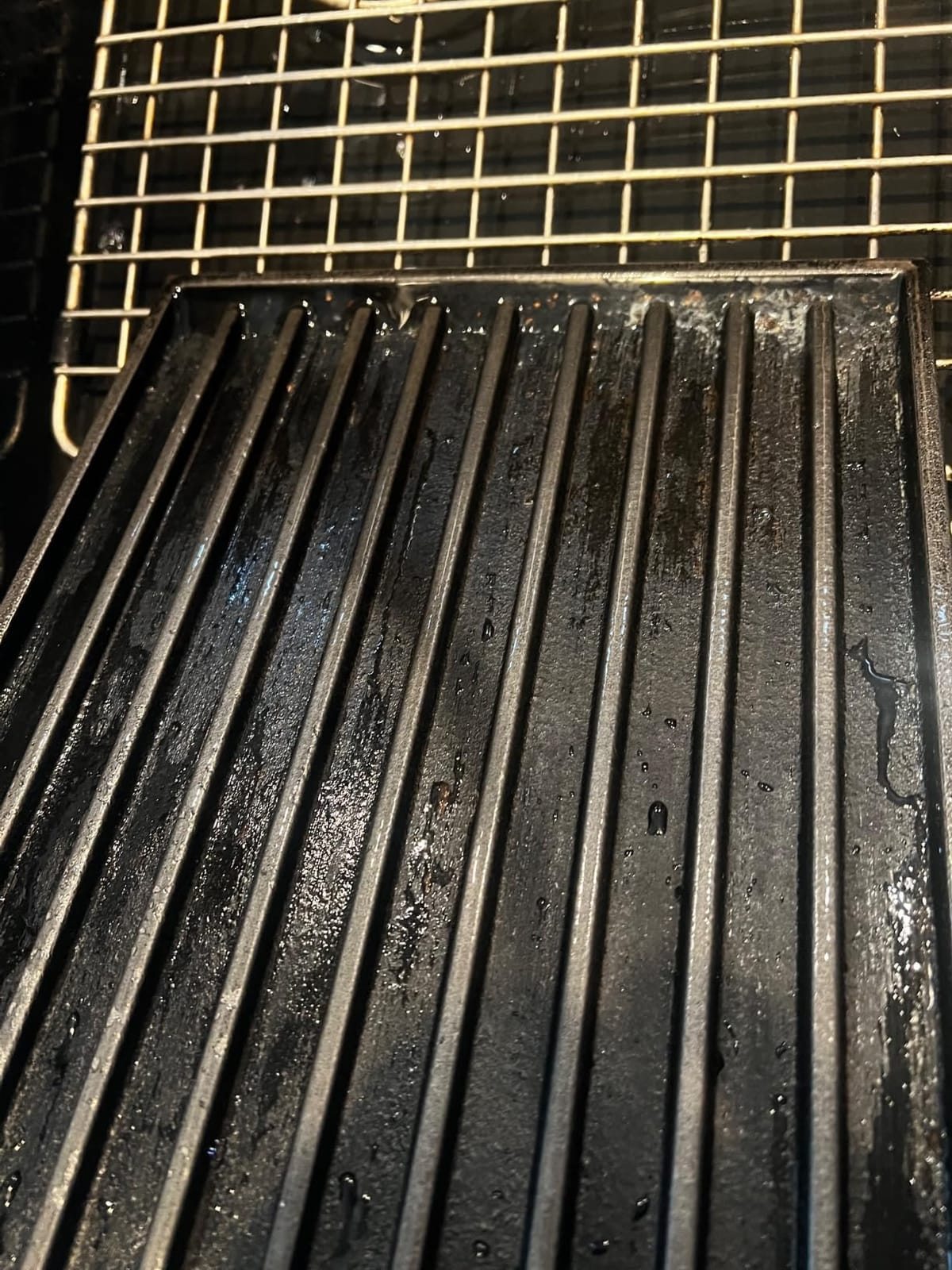
Whether high-tensile bristles actually shed less
The bristles are locked into the base rather than crimped at the surface, which is the design intent behind reduced shedding. In practice it helps, but it does not eliminate shedding, so wipe the grate with a damp cloth after a wire pass. Treat the anti-shedding claim as a reduction, not a removal.
Choosing between the two wood-handled options here
If you want the longest service life per purchase, take the BBQ-Aid with its acacia handle and replaceable head. If you want the spare head in the box on day one and a lower outlay, this is the one. Both keep your hands off the heat, and both pair well with a cold-grate nylon brush for weekly touch-ups.
10. Kingsford Nylon Brush with Scraper – Best Value for Cooled Grates
Kingsford Grill Cleaning Brush with Scraper and Bottle Opener, 17 Inch
Nylon bristles
Metal scraper edge
17-inch rubber grip
Bottle opener
Pros
- Nylon is safe on cast iron and sheds no metal
- Shaped rubber grip stays secure in long sessions
- 17-inch reach keeps hands off the grate
- Marks the lowest average rating here
Cons
- Nylon is for cooled grates
- not hot buildup
- Softens or deforms with repeated very hot contact
- Light 4-ounce body gives little leverage on hard carbon
This is the brush for routine maintenance on a cool grate, and I mean that as a compliment. Nylon bristles are safe on cast iron, they will not melt on a warm bar, and nothing can come loose into your food. For the weekly wipe-down after a Saturday cook, it is genuinely the easiest tool here to use.
The shaped rubber grip is the detail that makes it pleasant on cold metal, and the 17-inch length keeps your hands clear of the surface. The integrated metal scraper loosens stuck-on food before the bristles get to it, and the bottle opener at the handle end gives it a second use.
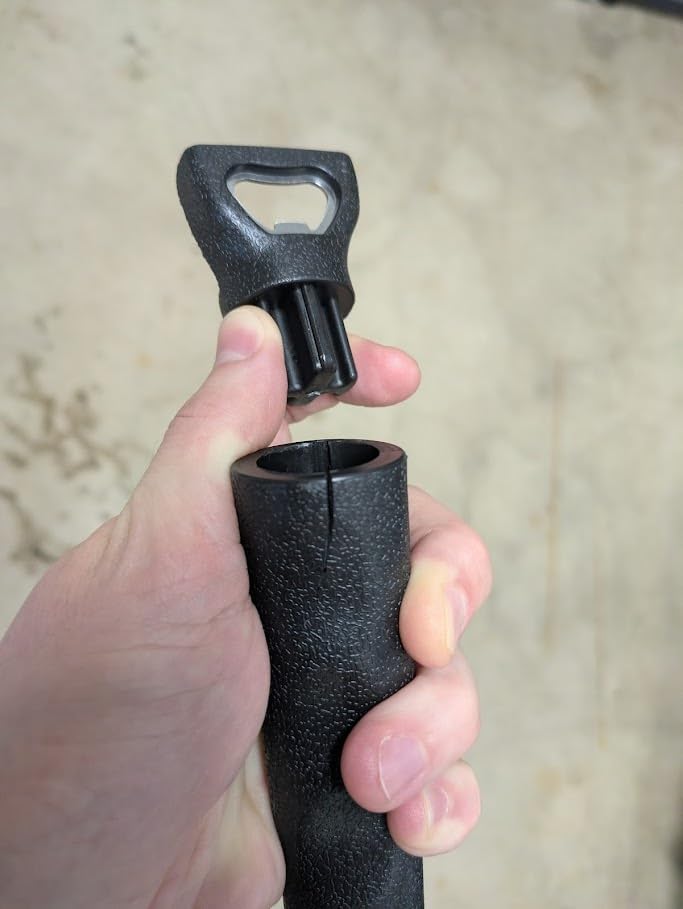
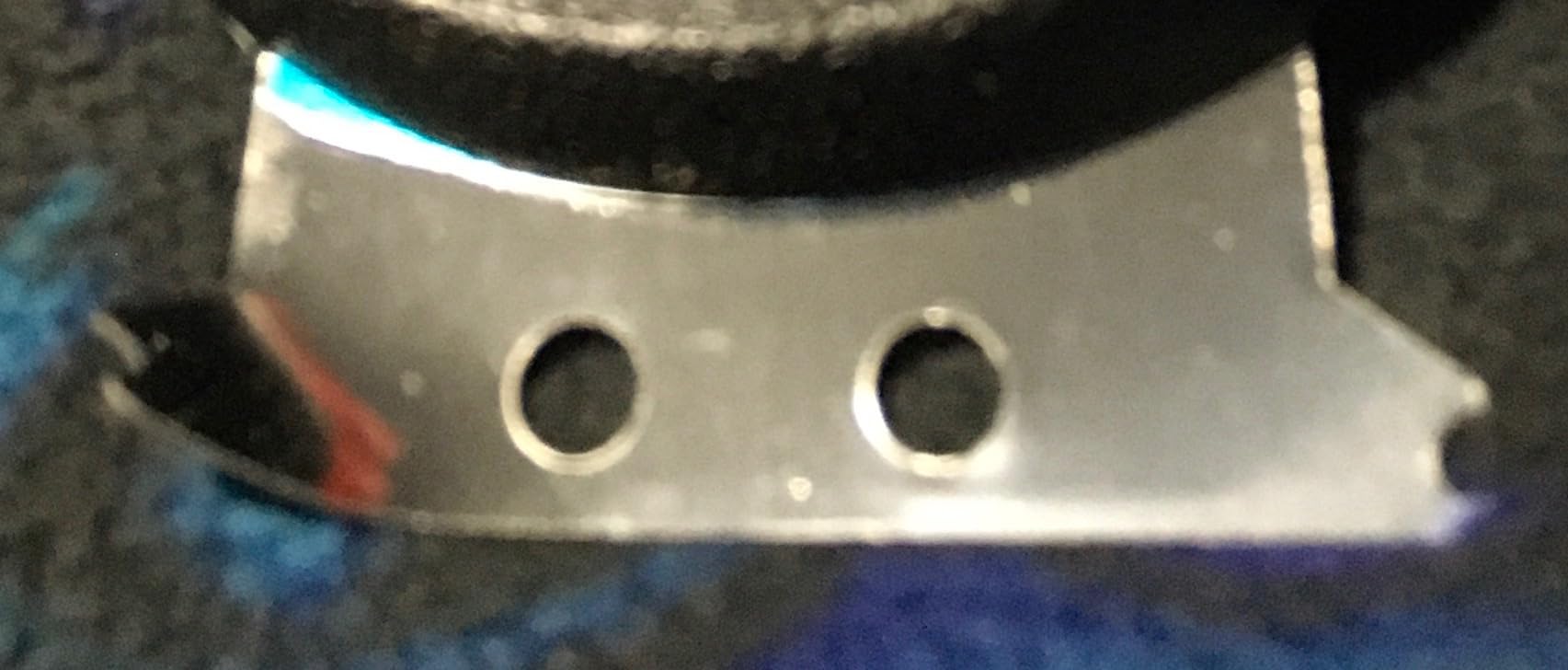
Be clear about the limits, because they are the reason this sits at the end. The listing positions the nylon bristles for cooled grates, and buyers agree: they clean a cooled grate well and struggle with hot, heavily carbonized buildup. Nylon also softens, deforms or melts with repeated contact with very hot bars.
At 4 ounces it is the lightest tool here, which means very little leverage against a tough carbon crust. You can add force by pushing down with your body weight, but a steel brush simply has more mass behind the head. This is a companion brush, not a deep-clean brush.
Nylon on cooled cast iron grates
On a grate that is warm to the touch with a light film of grease, nylon is the right material. It lifts that film without touching the seasoning underneath, which means you do not need to re-oil after every quick clean. That alone makes it a good weekly tool for cast iron owners.
Where nylon fails and what it costs you
Nylon fails on heat and on hard carbon, and both failure modes arrive together on a neglected grate. It has the lowest average rating in this roundup, with a 9% one-star share, and that tracks with owners who expected a deep-clean brush. Pair it with one wire brush from this list and you cover both jobs.
How to Clean Cast Iron Grates Without Stripping the Seasoning
Start cold if you can. Turn the burners off, let the grates cool until you can hold a hand near them, and remove them from the firebox. Working hot works, but cold gives you control and removes the burn risk that makes people rush.
Scrape first. Use the stainless scraper edge on every brush in this roundup and knock carbon off in slabs, working along the bars and across them. Ten minutes of scraping removes most of what a brush would otherwise have to grind away, and it protects the bristles and the seasoning underneath.
Then brush. On a warm grate, long firm strokes along the bar line and across it. If you are using a bristle-free head, dampen it first and rewet every few passes. Stop when the bar is bare metal and you can see the seasoning color rather than black carbon.
Wipe, dry, and oil. Wipe the grate with a damp cloth or paper towel, dry it completely, then apply a thin coat of oil while it is still warm. For grates that see flare-ups, flaxseed or grapeseed oil handle high heat better than canola. If you want to compare tools, our indoor grill pan guide covers the other way cast iron gets seasoned.
Wire Brush Safety: The Objection Every Reader Raises
The concern is legitimate, so let us put it plainly. Wire bristles wear, strands break off, and a strand that reaches your grill surface can end up in food. That is why several brush recalls have landed in this category over the years, including Cuisinart, Weber and Nexgrill models pulled by the US Consumer Product Safety Commission. Owners who lived through those recalls tend to distrust any wire brush permanently.
The forum consensus is more measured than the marketing on either side. Long-term owners describe watching bristle fallout on grates cleaned with the free-in-box brushes, and one long-time wire user switched brands entirely after a brush began leaving metal shards. But plenty of other owners report years of wire brush use without a bristle ever reaching their plate.
Our position: use the wire brush, then wipe the grate. A damp cloth after every wire pass removes nearly all of the loose strands, and that step takes thirty seconds. If you want zero compromise, the MEKER pad kit or the Weetiee helix brush removes the risk entirely, and the two-step method with a scouring pad after a wire pass catches what most people miss.
Re-Seasoning Cast Iron Grates After a Deep Clean
A deep clean on cast iron takes seasoning with it. That is not a defect, it is how cast iron works, and re-oiling is part of the job rather than an extra step. The rule is a thin layer, applied warm, and it is easier to add than to remove.
Choose by heat. Flaxseed oil is the traditional pick for grill grates because it tolerates flare-up temperatures and polymerizes hard. Grapeseed oil is neutral and easy to find. Canola and vegetable oils are fine for grates that never see direct flare-ups, and they are what most stores stock.
Apply it thin. Wipe on a very light film, then wipe it back off with a clean cloth until the grate looks almost dry. A visible sheen is too much, and thick patches flake off into your food later. Heat the grate to smoking for a few minutes, let it cool, and repeat once more for a durable layer.
Long-term owners who prefer not to re-oil after every clean use the scraper as their main tool precisely because it leaves enough seasoning on the grates that they do not rust as quickly. That is a real tradeoff, not a mistake, and for many cast iron owners it is the better one.
Cast Iron Grate Buying Guide: Bristles, Scrapers and Grate Geometry
Bristle material decides the job. Stainless wire is the most aggressive and the fastest on hard carbon, and it is the only material that handles a grate that has gone a full season. Coiled stainless is more durable and bends less. Nylon is safe on cast iron and will not melt or shed metal, but it belongs on cooled grates and light grease films. Helix and steel-fiber pads are bristle-free and effective when the grate is hot, provided you keep them wet. Match the material to how dirty the grate is, not to how dirty it might get.
Scraper or no scraper. Every brush in this roundup that we recommend carries one, and it is not a gimmick. A scraper removes carbon in slabs instead of grinding it off in powder, which is faster, kinder to the bristles, and easier on the seasoning. If a brush has no scraper, add a separate one.
Grate geometry decides the head. Straight-bar cast iron is the easiest case and any wide head works. Reversible triangular grates have a side wall and a juice channel that flat pads and straight bristle rows miss, so pick a helix head or an angled neck. Expanded metal grates shred brushes and catch on coils, so skip bristle-free designs there and use wire. We also like a three-sided head on straight bars because the underside of a bar is the surface you forget.
Handle length and material. Eighteen inches keeps your hands away from the grate and is the length most people settle on. Stainless handles resist heat cycling better than plastic; wood stays coolest to hold but needs occasional care outdoors; plastic is fine for cold-grate brushes. Folding handles matter more than they sound if you have limited storage.
Maintenance, storage and replacement. A hanging ring or loop near the grill is the difference between a tool you use and a tool you replace every two years. Replaceable heads extend tool life far beyond what a fixed head allows, and dishwasher-safe bristle-free heads are far easier to keep hygienic. If you enjoy maintaining tools in general, our vinyl cleaning brush guide covers the same care principles for a different surface, and our anti-static record brush guide covers the gentler end of the brush spectrum where residue, not carbon, is the problem.
Frequently Asked Questions
What is the best grill brush to use on cast iron grates?
A stainless wire brush with a built-in scraper is the best choice for cast iron grates because it strips carbonized grease faster than any bristle-free head. Scrape the grate first, brush with firm strokes along and across the bars, then wipe it with a damp cloth and re-oil it while warm.
What is the best way to clean cast iron grill grates?
Let the grates cool, remove them from the firebox, and scrape off carbon in slabs with a stainless scraper. Brush the bare bars with long firm strokes, dampening a bristle-free head every few passes if you use one. Wipe the grate dry, then apply a thin coat of oil while it is still warm.
What kind of brush do you use to clean cast iron?
Stainless steel wire bristles for hard, carbonized buildup, paired with a scraper. Nylon bristles are safe on cast iron and work well on cooled grates with light grease. Bristle-free helix and steel fiber pads are a good compromise, but they need a hot grate and frequent rewetting to move residue.
What is the best grill brush without wire bristles?
The MEKER bristle-free brush with five replacement pads is our pick, because the steel fiber woven layer handles hot cast iron grates and no metal can detach into your food. The Weetiee helix brush is the alternative if you want a long stainless handle and a head that reaches the sides of the bars.
Why shouldn’t you clean a grill with a wire brush?
The concern is loose bristles. Strands wear and can break off onto the grate, and several grill brush recalls have been issued in this category. The risk is manageable: scrape first, brush, then wipe the grate with a damp cloth so stray strands are removed before you cook.
What is the best material for bristles in a grill brush?
For cast iron grates, stainless steel wire gives the fastest cleaning on hard carbon and will not melt on a hot grate. For safety and cold-grate work, nylon is the safest choice because it sheds no metal. Helix and steel fiber pad designs sit between the two and need a hot, wet grate to perform.
What is the best oil to use to season cast iron grill grates?
Flaxseed oil is the traditional choice for grill grates because it tolerates flare-up temperatures and hardens into a durable layer. Grapeseed oil is a neutral alternative, and canola or vegetable oil work on grates that do not see direct flare-ups. Apply a very thin film while the grate is warm, then wipe off the excess.
Can you use a wire brush on cast iron grates?
Yes. A stainless wire brush is the fastest and most effective tool for cast iron and will not damage the metal. The main risk is bristles shedding onto the grate, which you handle by wiping the grate with a damp cloth after brushing and before cooking. Any brush you use should be followed by a thin coat of oil.
The Verdict
The best grill brushes for cast iron grates are the ones that pair a scraper with bristles aggressive enough for real carbon, followed by a thin coat of oil. The GRILLART 18-inch brush is the one we recommend to most people, and the TNTOR adjustable brush is the smarter buy if you want a handle that stores somewhere sensible.
Pick a bristle-free head instead if a wire strand in your food is a dealbreaker, and keep a nylon brush for cooled grates and weekly touch-ups in 2026. Either way, scrape first, wipe after every wire pass, and oil the grate while it is warm.