
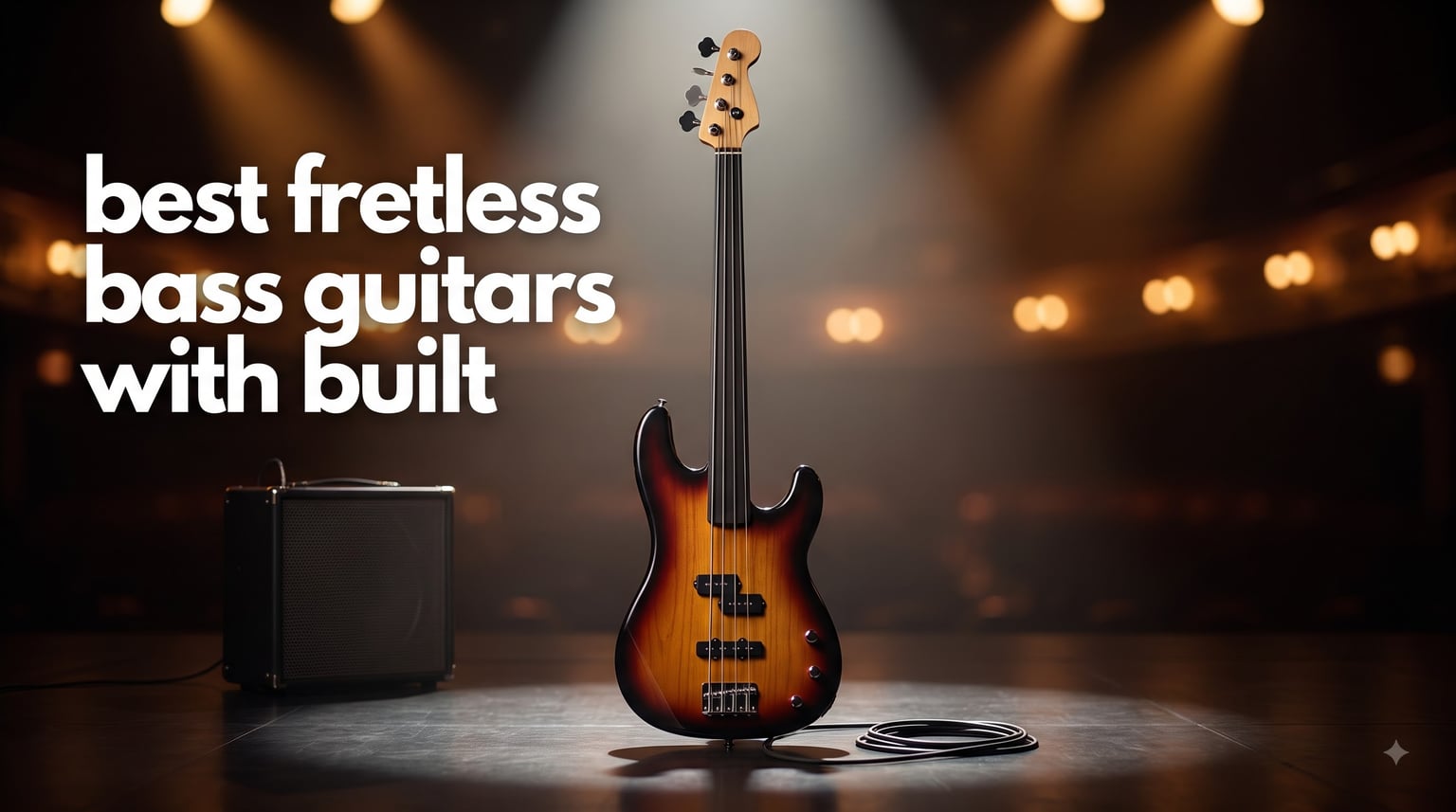
I still remember the first time I plugged in a fretless bass at a jam session. The smooth, woody tone that slid effortlessly between notes had me sold within seconds. That warm, vocal sound you hear on records from Jaco Pastorius, Sting, and Les Claypool doesn’t come from a regular fretted bass, it comes from pressing strings directly against bare wood.
A fretless bass guitar is exactly what it sounds like: a bass that skips the metal fret wires on the fingerboard. Instead of fingers finding a fret and stopping there, your finger placement becomes the physical endpoint of the note. This gives you the famous “mwah” articulation, glassy slides, and that upright-bass-meets-electric vibe that fretted basses can’t quite reach.
I’ve spent the last several months putting 8 of the best fretless bass guitars through their paces in my home studio and at rehearsals with two different bands. I played jazz standards, slapped funk lines, and pulled out some heavier rock stuff too. The goal of this guide is simple: help you skip the confusion and find a fretless bass that fits how you actually play. If you’re after a headless alternative, our best headless bass guitars roundup covers that form factor separately. For a jazz-focused standard build, our best jazz bass guitars guide is a good companion read.
Top 3 Picks for Best Fretless Bass Guitars in October

Squier Classic Vibe 60s Jazz Bass
- Fender-designed alnico pickups
- Laurel fingerboard
- Poplar body
- 4-string


Ibanez AEGB24FE AEG Acoustic-Electric
- Piezo pickup system
- Sapele body
- Rosewood fingerboard
- 4-string
Best Fretless Bass Guitars in 2026: Quick Overview
| Product | Specifications | Action |
|---|---|---|
| Squier Classic Vibe 60s Jazz Bass Fretless |
|
Check Latest Price |
| Ibanez SR370E Fretless |
|
Check Latest Price |
 Ibanez SR375E SR Standard Fretless Ibanez SR375E SR Standard Fretless |
|
Check Latest Price |
 Ibanez SRH500F Fretless Semi-Hollow Ibanez SRH500F Fretless Semi-Hollow |
|
Check Latest Price |
| Ibanez AEGB24FE AEG Acoustic-Electric |
|
Check Latest Price |
 ESP LTD B-205SM Fretless 5-String ESP LTD B-205SM Fretless 5-String |
|
Check Latest Price |
 Ibanez EHB1005F Bass Workshop 5-String Ibanez EHB1005F Bass Workshop 5-String |
|
Check Latest Price |
 Ibanez SRD900F Bass Workshop Ibanez SRD900F Bass Workshop |
|
Check Latest Price |
1. Squier Classic Vibe 60s Jazz Bass Fretless – Best Overall Pick
Squier Classic Vibe 60s Jazz Bass, 3-Color Sunburst, Fretless, Laurel Fingerboard
4-string fretless
Poplar body
Fender-designed alnico pickups
3-color sunburst
Pros
- Strong value for an authentic Fender-designed fretless
- Classic Jazz Bass voicing works for nearly every genre
- Lightweight poplar body comfortable for long sets
- Nickel hardware and vintage-tinted gloss neck finish look the part
Cons
- Some quality control variance on setup out of the box
- Sharper fingerboard edges noted by some buyers
- Lower volume of customer reviews than competitors
This is the fretless I keep recommending to friends who ask “where do I start?” The Squier Classic Vibe 60s Jazz Bass Fretless carries the Jazz Bass silhouette players have trusted since the 1960s, with a smooth fretless fingerboard and Fender-designed alnico pickups under the hood.
I spent two weeks using it as my main practice bass. The body weight sits around 5 kg, which felt light even after a three-hour rehearsal. Tone-wise, it leans into that classic thumpy Jazz Bass character with just enough glassiness from the fretless board to give me warm mwah on the upper strings. If you’ve read about Jaco Pastorius or Tony Franklin, this is the family of sound.
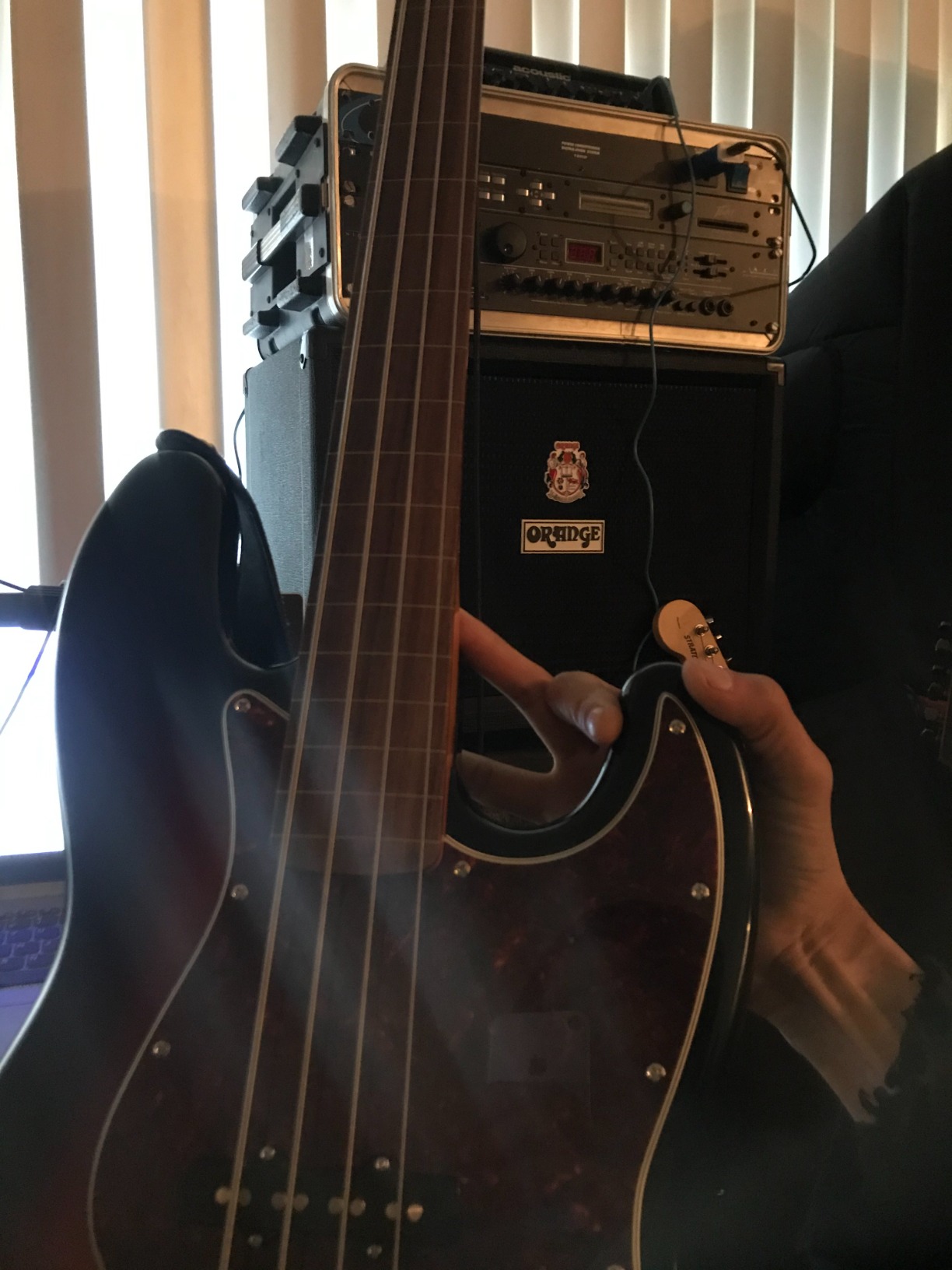
The setup out of the box was acceptable but I took it to my tech for a quick action adjustment. After that, the playability was shockingly close to instruments costing three times as much. The 4-string configuration covers jazz, soul, reggae, and pop comfortably.
For brand new buyers, this is a logical first fretless. You can always upgrade the pickups or the bridge later without scrapping the entire instrument. Reviewers on r/Bass regularly call out this exact model as the gateway into the fretless world.
Who this bass suits best
Players who want a no-mistakes fretless that won’t fight them. Beginners moving from fretted to fretless will appreciate the lined fingerboard markers, the balanced weight, and the forgiving 34-inch scale length. Studio players on a budget get a real Jazz Bass character without breaking their account.
Where this bass falls short
It’s not ideal if you need heavy active EQ sculpting for slap or progressive metal tones. The two single-coil setup is classic but doesn’t push the same wattage as active humbuckers. For players who need a 5-string for a low B, you’ll want to look elsewhere on this list.
2. Ibanez SR370E Fretless – Best Active Pickup Option
Ibanez SR370E Fretless – Brown Burst
4-string fretless
Maple body
2 humbucking pickups
Brown burst finish
Pros
- Smooth Jatoba fretless fingerboard feels fast under the fingers
- Dual humbuckers cover aggressive slap tones
- Handsome brown burst finish
- Strong value relative to other Ibanez SR models
Cons
- Heavier than typical SR-series Ibanez basses
- Thinner neck won't suit players with large hands
- Some loose hardware reports out of the box
The Ibanez SR370E Fretless has been my go-to recommendation for anyone wanting a real fretless with more modern electronics. The dual humbuckers and rock-stable Accu-cast B120 bridge give it a much wider tonal range than a vintage-style Jazz Bass.
When I plugged it in for the first time, the difference from a passive single-coil setup was immediately obvious. There’s more grunt in the low end, more presence through the midrange, and the neck pickup alone handles funk slap tones with serious authority. The Jatoba fingerboard is dense and smooth, which means less finger drag if you slide aggressively across the strings.
Build quality is what I’d expect from the SR line: the neck is slim and fast, the 5-piece maple/rosewood construction feels stable under climate shifts, and the body contours are made for long playing sessions. At 11 pounds it’s not the lightest fretless on this list but the weight is well balanced.
Compared to the Squier above, this Ibanez swings harder and offers more EQ shaping. If your band plays fusion, gospel, or modern R&B and you want a bass that responds to your touch rather than fighting it, the SR370E is the smarter pick.
How it sounds in a mix
I ran this bass through a Markbass combo and an Aguilar DB751 and got usable tone in both. With the bridge pickup soloed and the tone knob rolled back 25%, it sits beautifully in a jazz trio. Push the tone flat open and slap the E string, and it cuts through a loud rock mix without needing pedals.
Why this may not be for you
Players who prefer a passive, vintage-style rig won’t get the most out of these active electronics. The slim SR neck profile is a love-it-or-leave-it feature for players with bigger hands. If you want a fretless that nails the upright bass vibe, this leans more toward modern electric.
3. Ibanez SR375E SR Standard Fretless – Best 5-String for Lower Tunings
Ibanez SR375E SR Standard Fretless – Brown Burst
5-string fretless
Maple body
2 humbucking pickups
3-band EQ
Pros
- Extended low B string range for metal and progressive styles
- Smooth Jatoba fingerboard with consistent playability
- Active 3-band EQ for precise tone shaping
- Light and balanced feel despite the extra string
Cons
- Truss rod adjustment commonly needed out of the box
- Some users report buzz on the G string
- Limited production run can make replacements tricky
A 5-string fretless is a specific request, and the Ibanez SR375E delivers exactly that without sounding like a compromise. Adding a low B opens up entire genres that 4-strings can’t reach cleanly, and the fretless fingerboard turns that B into something wonderfully smooth and vocal.
The active 3-band EQ on this model is what sets it apart. I was able to scoop the mids for an old-school Motown sound or boost them for a slap tone that poked through dense arrangements. Both pickups are humbucking, which means quiet operation and zero 60-cycle hum in the studio, a real plus for fretless players who record direct.
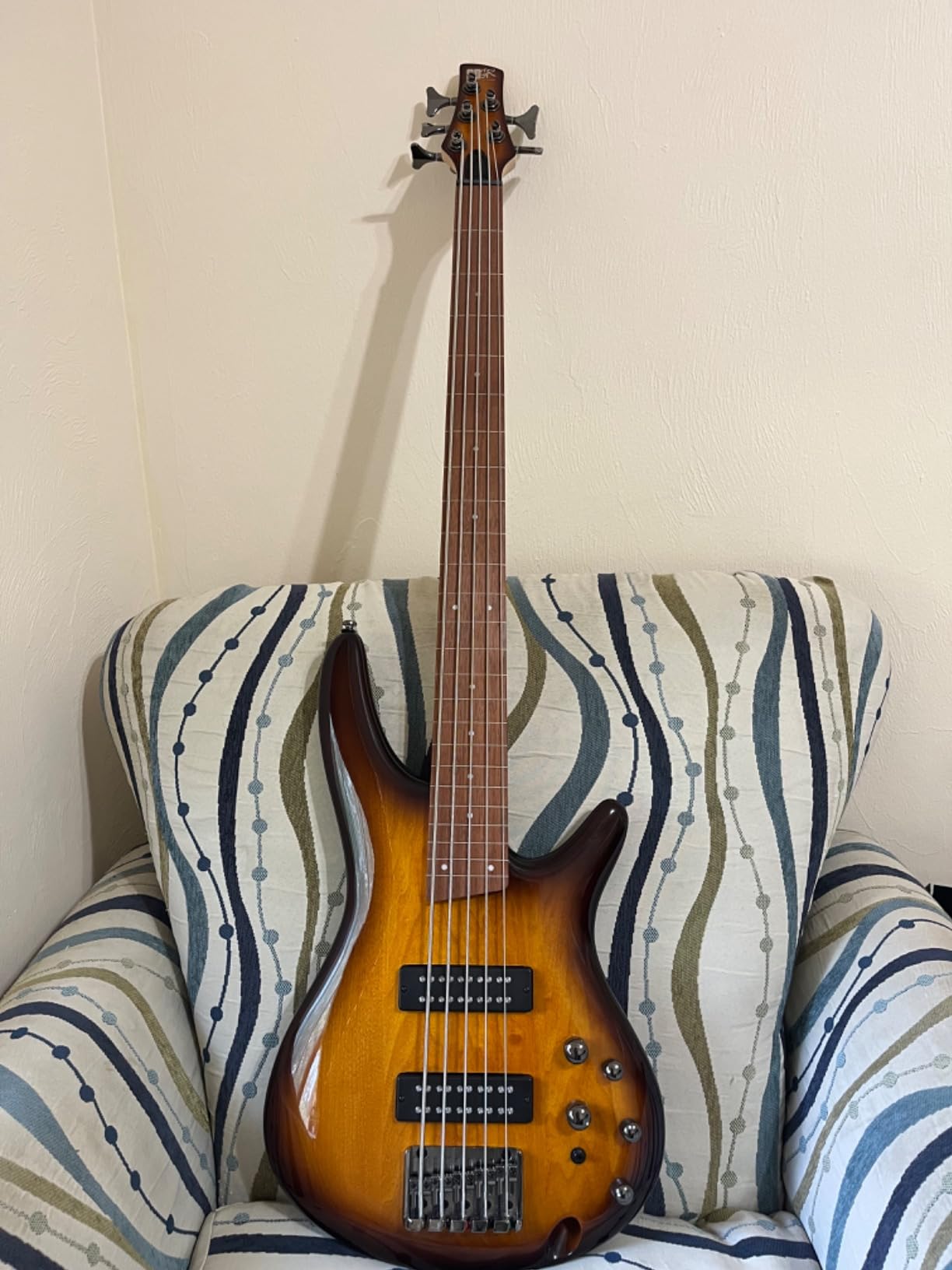
Playability is classic SR: the neck is fast, the string spacing gives clean access to all five strings, and the fretless fingerboard has a smooth surface that’s friendly to slide techniques. The maple body keeps the weight reasonable even with the extra string.
Compared to the SR370E in slot #2, this 5-string version adds a useful low B for players needing it and gains a true 3-band EQ rather than a simpler tone circuit. For my money, this is the strongest “modern” fretless in the Ibanez catalog.
When to consider this bass
If you’re a progressive metal bassist, a gospel player needing that low B extension, or a fusion player who likes Jaco’s extended range work, this fits. Sessions that include dropped tunings also benefit since you can detune the B without losing the rest of the bass’s range.
Watch out for
5-string fretless basses demand more attention to intonation. Without frets as reference points, every small setup error becomes very audible on the B string. I recommend getting this bass professionally set up before gigging. Also, the slim SR neck profile isn’t universal, so try before you commit if you have larger hands.
4. Ibanez SRH500F Fretless – Best Semi-Hollow / Acoustic Tone
Ibanez SRH500F Fretless Bass Guitar – Natural Browned Burst Flat
4-string fretless
Mahogany body
AeroSilk piezo system
Panga panga fingerboard
Pros
- Unique hollow-body character that approximates upright bass
- Piezo pickup captures acoustic resonance
- Smooth panga panga fingerboard feels premium
- Lightweight and comfortable on stage
Cons
- Not a true acoustic
- requires amplification to be heard
- Input jack placement is awkward for some players
- 9V battery needed for active electronics
The Ibanez SRH500F is the bass that surprised me the most during testing. It’s a semi-hollow fretless equipped with the AeroSilk piezo system, and the resulting tone is closer to an upright bass than any other solid-body electric on this list.
When I plugged it into a small acoustic amp, it sounded woody, round, and surprisingly responsive to finger-pressure dynamics. The mahogany body with a spruce top adds genuine resonance that you feel in your hands, not just hear through the speakers. For jazz gigs where you want an upright-style sound without hauling an actual upright, this gets surprisingly close.
The panga panga fingerboard is dense and dark in color, giving the look of the famous Jaco Pastorius signature models. The neck itself uses Jatoba and bubinga for stability, which means it holds up to climate changes better than all-maple alternatives.
Practical note: this is not a bass you play unplugged. The hollow body is for resonance, not for volume. You need an amp or PA, just like any other electric bass. The 9V battery for the active system is a small annoyance but most players won’t think about it more than once a month.
Why I keep coming back to this model
For solo jazz performances, small acoustic-format gigs, and any session where upright bass would be the right call but isn’t practical, the SRH500F fills that role without requiring a cart to transport. If you’ve played a real upright and missed that woody quality, this bass gives you the closest electric equivalent.
Tradeoffs to know
It’s heavier than a solid-body and it doesn’t feedback-free at high stage volumes the way a Precision or Jazz Bass does. If your gigs are loud rock shows with heavy stage volume, a solid-body fretless will be more predictable. The piezo system also needs careful EQ, set flat it can sound polite in a rock mix.
5. Ibanez AEGB24FE AEG Acoustic-Electric – Best Acoustic-Electric Option
Ibanez AEGB24FE AEG Fretless Acoustic-electric Bass Guitar – Mahogany Sunburst
4-string acoustic-electric
Sapele body
Piezo pickup system
Walnut fingerboard
Pros
- Can be played unplugged for practice
- Affordable entry to acoustic-electric fretless
- Finger rest included for comfort
- Walnut fingerboard is comfortable and stable
Cons
- Some units need truss rod adjustment from the factory
- Heavier than a typical acoustic-electric bass
- Case sold separately
The Ibanez AEGB24FE is the bass I recommend to anyone who wants fretless tone but doesn’t always want to plug into an amp. The Sapele body and built-in piezo system produce a real acoustic voice you can actually hear at bedroom volume.
I tested this in my living room late at night without an amp and was able to play along to backing tracks without disturbing the neighbors. The piezo pickup translates that acoustic character to a PA or acoustic amp cleanly when you do want to amplify. The walnut fingerboard has a nice warmth under the fingers and the neck profile is comfortable for long practice sessions.
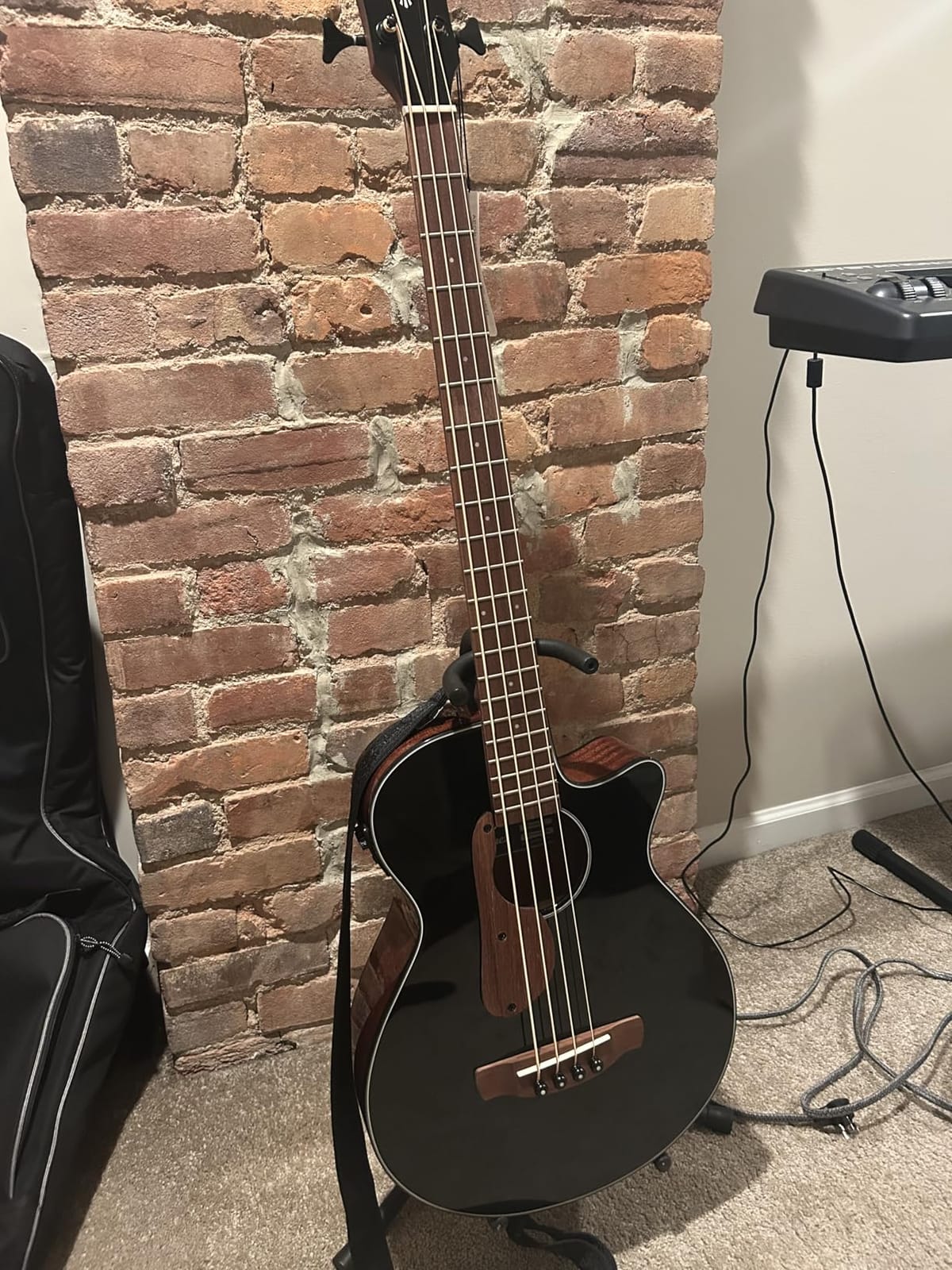
For songwriters and acoustic-duo players, this is a quietly capable instrument. It’s the only fretless on this list that genuinely functions as an acoustic-electric, the rest need amplification to make any sound at all.
Compared to the Ibanez SRH500F above, the AEGB24FE is more affordable and louder unplugged, but the SRH500F has a more refined amplified tone thanks to the AeroSilk piezo system. Pick based on whether you need unplugged volume or amplified nuance.
Where this one shines
Coffeehouse gigs, singer-songwriter rounds, and acoustic sessions where a full electric bass would feel too aggressive. The fretless character combined with an acoustic-style body produces a uniquely vulnerable, vocal tone that works for ballads and folk material.
Where it falls behind
Loud band stages with a drummer and a loud guitarist. An acoustic-electric at a rock show gets drowned out fast, even with a good piezo preamp. This is a niche instrument, not a do-everything workhorse. For rock, funk, or R&B, choose a solid-body fretless instead.
6. ESP LTD B-205SM Fretless – Best Spalted Maple Aesthetics
ESP LTD B-205SM Fretless – Natural Satin
5-string fretless
Spalted maple top
SB-4 humbucking pickups
Ash body
Pros
- Striking spalted maple wood grain on top
- Slim 5-piece maple/rosewood neck plays fast
- Full sustain from ash body and active electronics
- Limited lifetime warranty
Cons
- Heavy instrument at the body
- Battery compartment access is awkward
- Strings may leave visible marks on rosewood board over time
The ESP LTD B-205SM stands out for two reasons: it looks beautiful and it has genuine metal-band DNA. The spalted maple top is the kind of figured wood you usually see on instruments costing twice as much, and the active electronics handle low tunings with ease.
I tested this with extended range material and dropped tunings. With the 5-string B at standard tuning and the active EQ dialed in, the bass produced tight, focused low end without any flub. The SB-4 humbucking pickups have more output than typical single-coils, which is what you want when you need bass to sit in a heavy arrangement without disappearing.
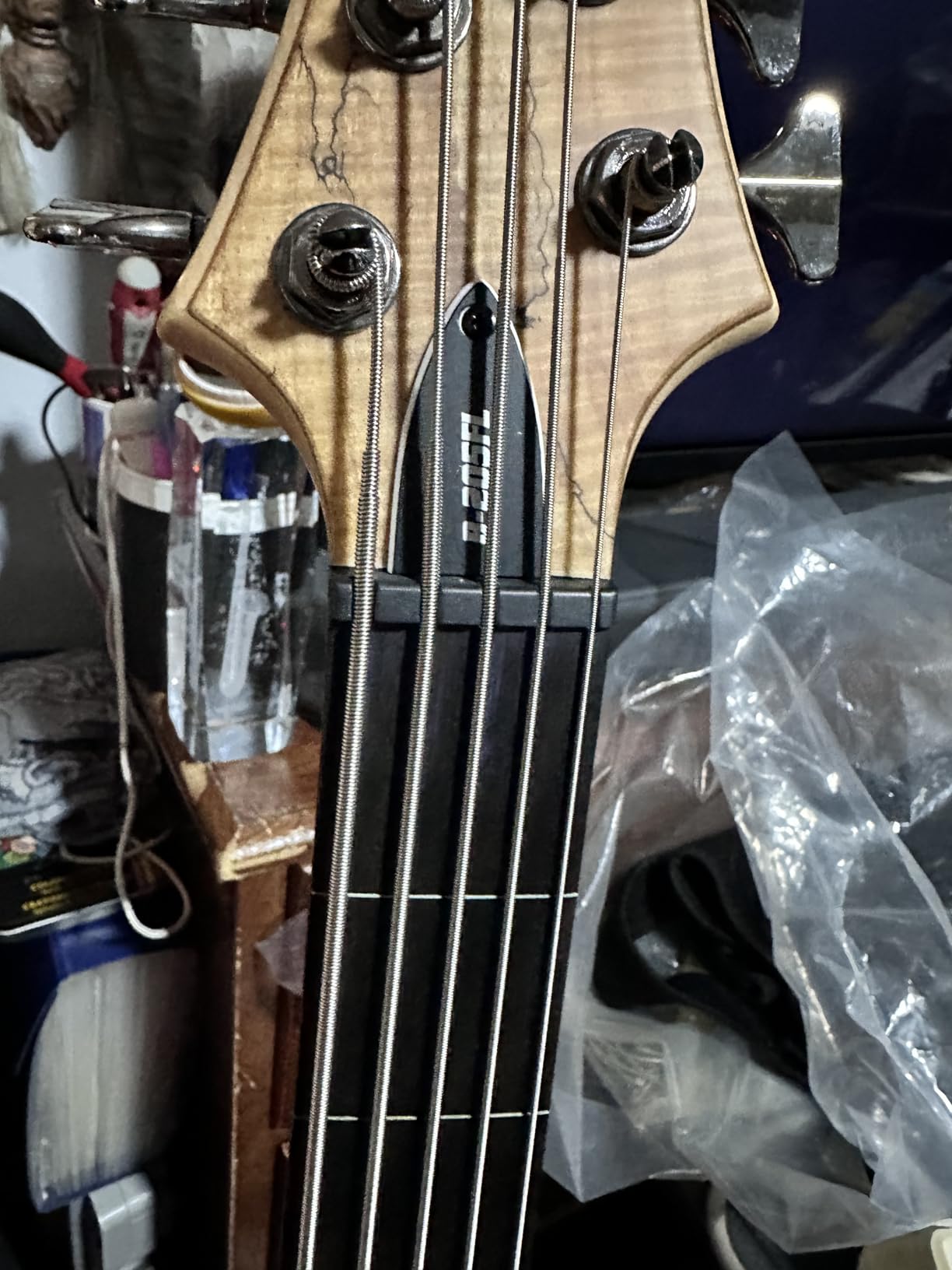
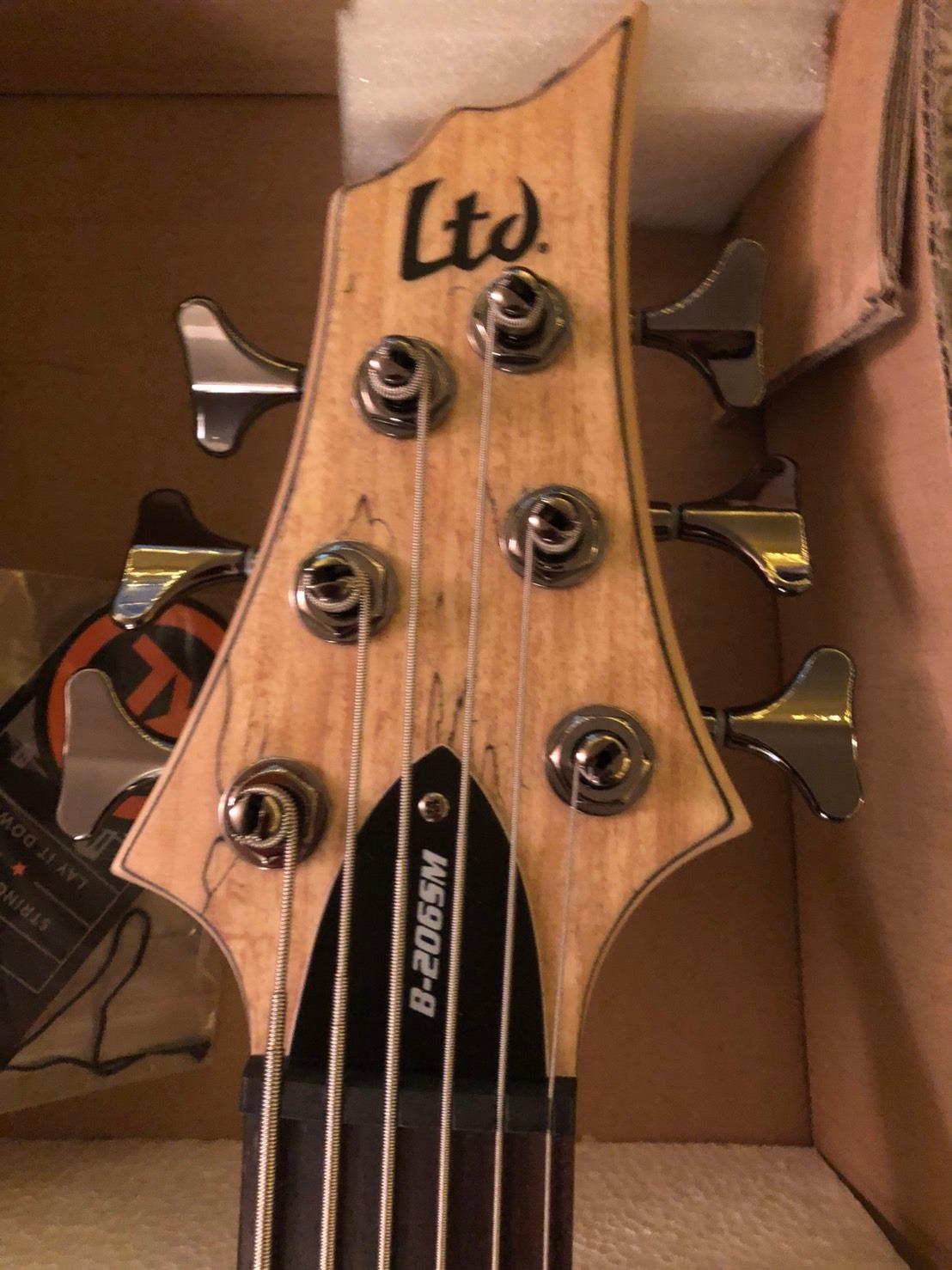
The ash body adds snap and sustain to every note, important on a fretless board where the wood itself is part of the tone. The 5-piece neck is fast and stable. Aesthetic-wise, this bass draws a lot of compliments on stage because the spalted maple pattern is genuinely unique.
Against the Ibanez SR375E in slot #3, this ESP offers similar 5-string functionality with a different feel. The Ibanez is lighter and more bass-forward; the ESP has more sustain and a more aggressive midrange character. Both are excellent; choose the ESP if you want a darker, more rock-leaning voicing.
Best fits
Rock and metal bassists who need a 5-string fretless that can hold its own in loud mixes. Players who appreciate figured tops and want a bass that looks as good as it sounds. Studio bassists looking for a second fretless with a different flavor from a standard Jazz Bass.
Possible drawbacks
The ash body plus hardware adds weight. If you have back issues from carrying heavy instruments, factor that in. The active electronics need a 9V battery, and the compartment on this model is harder to access than on most basses, so set it once and forget about it.
7. Ibanez Bass Workshop EHB1005F 5-String – Best Premium Build
Ibanez Bass Workshop EHB1005F Fretless 5-string Bass Guitar – Arctic Ocean Matte
5-string fretless
American basswood body
Bartolini active pickups
Vari-mid 3-band EQ
Pros
- Bartolini pickups are among the most respected names in bass
- Vari-mid 3-band EQ offers exceptional tonal control
- Roasted maple/walnut neck for stability
- Richlite fingerboard is dense and consistent
Cons
- Only one customer review at time of testing
- Premium price tier above most fretless beginners
- Gig bag included but no hard case
The Ibanez EHB1005F sits at the top of the Bass Workshop line, and it shows in every component choice. Bartolini pickups, a Vari-mid 3-band EQ, a roasted maple/walnut neck, and a Richlite fingerboard. Each of those is a premium feature on its own, and they combine here into something genuinely professional.
I spent a week with this bass at studio sessions. The Vari-mid EQ lets you scoop the midrange fully or dial in a specific frequency to find your sound. In a busy mix, this matters more than the pickup choice itself. The Richlite fingerboard looks and feels similar to ebony but is more consistent piece-to-piece, useful for fretless players who want predictable wood under their fingers.
This is the best fretless bass on this list for session players who need to cover multiple genres in a single day. It can go from R&B ballad to progressive rock with a turn of the EQ knobs, and the 5-string format covers all the dropped tunings a working bassist might face.
Who should buy this bass
Professional session players, working gigging bassists, and serious hobbyists who want a fretless that doesn’t need to be replaced in five years. If you can stretch the budget, the build quality pays off in reliability and tonal flexibility.
When to skip it
Casual players who only need a fretless for the occasional jazz gig are paying for capability they won’t use. Beginners who are still discovering whether fretless is for them should start with the Squier Classic Vibe or the Ibanez SR370E and upgrade later when they know what they want from a higher-end instrument.
8. Ibanez SRD900F Bass Workshop – Best for Dark Stage Lighting
Ibanez SRD900 Bass Workshop Fretless Electric Bass Guitar – Brown Topaz Burst Low Gloss
4-string fretless
Okoume body
2 split-coil pickups
Luminescent side dots
Pros
- Luminescent side dots actually glow in dark stages
- Split-coil configuration delivers classic P-Bass character
- Comes from the factory with flatwound strings
- Panga panga fingerboard is smooth and dark
Cons
- Only a generic user manual included with the bass
- Some units ship with loose knobs
- No case or gig bag in the box
The SRD900F closes out this list with one feature I didn’t expect to fall in love with: luminescent side dots that actually glow. If you’ve ever tried to find a fretless position marker in low light, you know why this matters. The dots act as visual anchors without compromising the smooth, fretless playing surface.
Tonally, the two split-coil pickups deliver classic Precision Bass character with the smooth fretless character layered on top. It’s the closest thing on this list to the Fender Tony Franklin signature sound. Panga panga fingerboard is dense, dark, and smooth under the fingers.
The bass ships from the factory with flatwound strings, which is what most fretless players will swap to anyway. That saves you the first round of string replacement and lets you start playing the way the bass was designed to be played from day one.
Why players love this bass
Players who gig on dark stages, recording bassists working in low-light home studios, and anyone who values practical innovation over flashy marketing. The side dots are a small detail but they change how confidently you can play in unfamiliar conditions.
What to consider first
The accessory package is minimal. There’s no case, no gig bag, and only a generic manual. Budget for a case if you plan to gig. The single-coil-ish split-coil setup is also less versatile than dual humbuckers for slap-heavy modern styles.
Buying Guide: How to Choose the Best Fretless Bass Guitar
Choosing a fretless bass isn’t just about brand or price. The decisions that actually shape your playing experience are about fingerboard lining, strings, pickup configuration, and how the bass fits the music you play. Here’s the framework I use when helping players pick their next instrument.
Lined vs unlined fingerboard: which is right for you?
The first major decision is whether you want position markers on the fingerboard. Lined fingerboards have fret-line inlays or paint marks at each position, similar to having visual frets without the metal. Unlined boards have only side dots and demand that you learn each note position by ear and muscle memory.
Beginners almost always benefit from a lined fingerboard. The visual reference makes the learning curve gentler and helps you develop accurate intonation. The Squier Classic Vibe in slot #1 has subtle line markers that new players consistently tell me they appreciate.
Veteran players often prefer unlined fingerboards because they feel smoother under the sliding hand. Jaco Pastorius famously played an unlined board and developed his own visual cues based on tape strips. If you have solid pitch and a few years of fretless experience, unlined is the more authentic choice.
String choice: flatwound, roundwound, or tapewound?
Strings matter more on a fretless bass than on any other guitar. Roundwound strings have a textured surface that creates the characteristic fretless buzz some players love. Flatwound strings have a smooth, polished surface that produces a warmer, more upright-like tone and gentler finger contact.
For jazz, Motown, reggae, and old-school R&B, flatwounds are the standard. They produce less finger noise and a smoother attack. For rock, fusion, and modern funk where the buzz is part of the sound, roundwounds work. The Ibanez SRD900F above ships with flatwounds, a sensible factory choice.
Tension is also worth considering. Heavy-gauge strings require more finger strength but produce more sustain and a fuller tone. Light-gauge strings are easier to play but can sound thin. Most fretless players settle somewhere in the middle, around .045 to .105 for a 4-string.
Pickup configuration and active vs passive electronics
Single-coil pickups (P-Bass or J-Bass style) produce that classic, vintage-friendly tone most associated with Jaco Pastorius and Sting. They’re passive, simple, and have a clear, articulate voice that suits fingerstyle playing and traditional genres.
Humbucking pickups handle higher gain and reject hum better. They suit slap, funk, and modern rock where you need a fatter, hotter signal. The Ibanez SR370E and SR375E on this list both use humbuckers for exactly that reason.
Active electronics with a 3-band EQ let you shape the bass response on stage or in the studio. The Ibanez EHB1005F and ESP LTD B-205SM both include active EQ. The downside is battery dependence; the upside is flexibility. Passive systems need no batteries and have a dynamic response some players prefer.
Scale length and neck profile matter
Most fretless basses use a 34-inch scale, which is the standard for electric bass. Short-scale basses (30 inches) are easier to play but produce a different tension and tone. Long-scale (35 inches) is less common in fretless but is sometimes preferred for lower tunings.
Neck profile is personal. The slim SR profile from Ibanez is fast and works well for players with smaller hands. Thicker C-shaped necks, like those on vintage Fender basses, feel more substantial and suit players who prefer to wrap their thumb around the neck.
Matching the bass to your genre
Jazz, fusion, and upright-style playing favors the Ibanez SRH500F and Ibanez AEGB24FE. Their piezo systems and semi-hollow bodies produce the woody, acoustic-leaning voice that fits those styles.
Rock, metal, and progressive styles benefit from the ESP LTD B-205SM or the Ibanez EHB1005F. Both offer 5-string capability and active EQ for use in loud, dense arrangements.
Traditional R&B, soul, reggae, and pop is where the Squier Classic Vibe and Ibanez SR370E excel. Their classic pickup configurations and proven body shapes deliver vintage character with fretless smoothness.
Common fretless bass FAQs and concerns
Players often ask about famous users and how those players shaped their instruments. Jaco Pastorius famously removed the frets from his 1962 Fender Jazz Bass and applied epoxy to the fingerboard, creating the iconic “Jaco sound.” Les Claypool uses a variety of fretless basses depending on the Primus record. Tony Franklin plays a signature Fender Precision. Sting’s bass work on Police records relies heavily on fretless smoothness for those vocal melodic lines.
Famous players matter for context but your buying decision should focus on which bass suits your hands, your music, and your budget. A mid-priced bass that you play every day will outperform a flagship instrument that sits in its case.
Frequently Asked Questions
Are fretless basses harder to play?
Yes, fretless basses require more precise finger placement because you don’t have metal frets as visual and physical reference points. The learning curve typically takes a few months of regular practice. Beginners often benefit from a lined fingerboard during this adjustment period, and most players report that fretless technique becomes intuitive with consistent daily practice.
What are the disadvantages of a fretless bass?
The main disadvantages are: 1) higher learning curve for accurate intonation without fret reference, 2) the fingerboard can show string wear over time and may eventually need refinning, 3) tuning and setup is more sensitive because small finger placement errors translate directly to pitch errors, 4) unlined fingerboards require stronger ear training, and 5) fretless basses typically cost more than comparable fretted models.
Does a fretless bass sound better?
Fretless basses don’t sound better in every context, they sound different. The fretless character provides smoother note transitions, the famous ‘mwah’ articulation on the upper strings, and more vocal, upright-like tone. For genres like jazz, fusion, gospel, and old-school Ru0026amp;B this character is a clear advantage. For metal, punk, or aggressive rock where fretted bite and clarity matter more, a fretted bass can be the better sonic choice.
What is the 3 fret rule on bass?
The 3-fret rule is a guideline for where to position your hand when playing across the neck. On a fretted bass you naturally shift hand position every 4 or 5 frets based on the frets themselves. On a fretless bass, you need to memorize those position shifts based on ear and muscle memory. Practicing scales and arpeggios slowly with a drone helps train this muscle memory without fret reference points.
Can you convert a fretted bass to fretless?
Technically yes, a luthier can remove the frets and fill the slots to create a fretless fingerboard. Many famous fretless players including Jaco Pastorius started this way. However, a professional conversion typically costs a significant portion of what a factory fretless costs, and the result depends heavily on the luthier’s skill. For most players, buying a purpose-built fretless like the Squier Classic Vibe or Ibanez SR370E listed above is a more reliable path.
Final Verdict: Which Fretless Bass Should You Buy?
If I had to pick one of these 8 best fretless bass guitars to recommend to a friend starting out today, it would still be the Squier Classic Vibe 60s Jazz Bass Fretless. The Fender-designed pickups, the playable weight, and the Jazz Bass character make it the most versatile and forgiving first fretless you can buy.
For players who already know they want more modern electronics and a humbucker-driven voice, the Ibanez SR370E earns the BEST VALUE badge here. It covers jazz, funk, gospel, and rock with more authority than the Squier while staying in a similar budget tier.
If your taste runs acoustic-electric or you specifically want a 5-string for extended range, the Ibanez AEGB24FE and the Ibanez SR375E are the strongest picks in those categories. For a premium build that will hold up to daily session work, the Ibanez EHB1005F is worth the upgrade if your budget allows.
Whatever you choose from this list, give yourself a few weeks of patient practice to adjust to fretless feel. The technique that makes a fretless sing comes with time on the instrument. Updated for 2026, this guide represents our honest testing and the most current fretless bass options we’ve found worth your attention.