
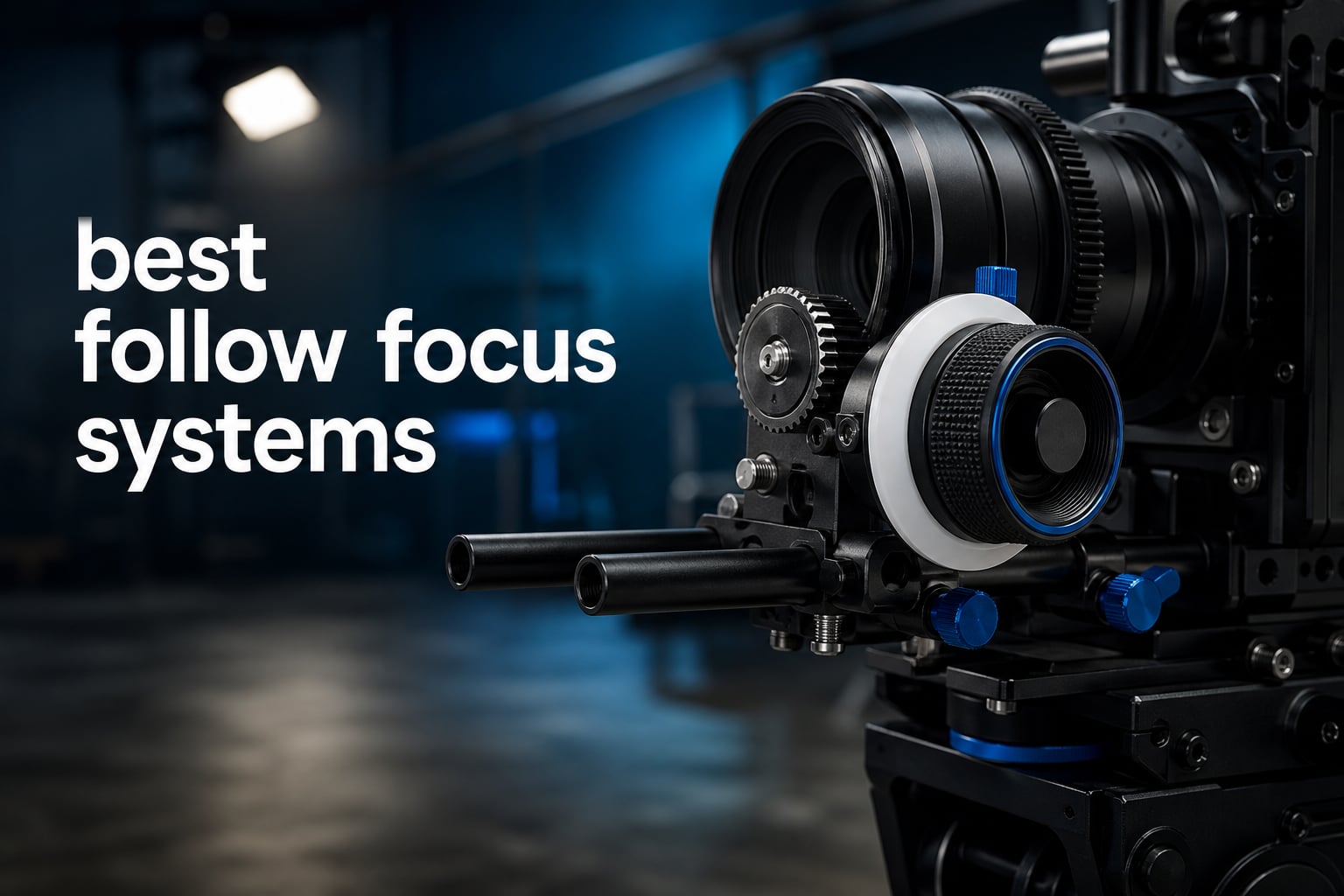
I still remember my first paid gig pulling focus on a music video. I was gripping the lens barrel with my fingertips, sweating through every rack, praying the talent hit their mark. When the director called “check the gate,” I realized half my pulls were soft. That day taught me why professionals use follow focus systems instead of their bare hands.
A follow focus system gives you a dedicated knob that connects to your lens through a gear mechanism, letting you pull focus smoothly and consistently. The best follow focus systems in 2026 range from simple mechanical units under $60 to full wireless lens control setups that handle focus, iris, and zoom from across the set. Whether you shoot weddings on a gimbal or narrative work on a cinema rig, the right follow focus changes everything about your footage.
Our team tested 10 of the most popular follow focus systems available right now. We compared wired manual units, wireless motorized kits, and gimbal-mounted ring grips. We looked at build quality, damping feel, gear compatibility, battery life, and real-world durability. Here is what we found.
Top 3 Picks for Best Follow Focus Systems in October
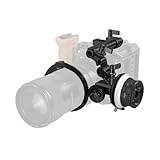
SmallRig Mini Follow Focus 3010
- Compact 195g design
- Adjustable A/B hard stops
- Smooth damping
- 15mm rod included

SmallRig Wireless Follow Focus Kit Lite
- Wireless motorized control
- 21-hour battery life
- One-click calibration
- Peak 4.3 kgf.cm torque

Tilta Pocket Follow Focus FF-T07
- Ultra-compact design
- A/B hard stops
- Simulated lens damping
- Includes safety case
Best Follow Focus Systems in 2026
| Product | Specifications | Action |
|---|---|---|
| SmallRig Mini Follow Focus 3010 |
|
Check Latest Price |
| Tilta Pocket Follow Focus FF-T07 |
|
Check Latest Price |
 Neewer Mini Follow Focus PG001 Neewer Mini Follow Focus PG001 |
|
Check Latest Price |
 SmallRig Follow Focus F50 SmallRig Follow Focus F50 |
|
Check Latest Price |
 Nitze Mini Follow Focus MF15C Nitze Mini Follow Focus MF15C |
|
Check Latest Price |
 SmallRig F60 Modular Follow Focus SmallRig F60 Modular Follow Focus |
|
Check Latest Price |
| SmallRig Wireless Follow Focus Kit Lite |
|
Check Latest Price |
 Fotga DP500III Follow Focus Fotga DP500III Follow Focus |
|
Check Latest Price |
 Tilta Nucleus Nano II Base Kit Tilta Nucleus Nano II Base Kit |
|
Check Latest Price |
 Tilta Advanced Ring Grip Tilta Advanced Ring Grip |
|
Check Latest Price |
1. SmallRig Mini Follow Focus 3010 – Best Overall Value
SmallRig Mini Follow Focus with A/B Stops
Weight: 195g
Fits lenses up to 114mm
Includes 15mm rod and NATO rail clamp
Adjustable A/B hard stops with 360 deg zoom
Pros
- Compact and lightweight at 195g
- Smooth wheel with excellent damping
- Easy A/B stop adjustment for rack focus
- Solid build quality with NATO rail adapter
Cons
- Lens gear may not align with compact lenses at minimum distance
- Only one zip-tie style lens gear included
I mounted the SmallRig Mini Follow Focus 3010 on my Sony A7IV cage during a three-day commercial shoot, and it immediately became my go-to unit for smaller rigs. At just 195 grams, it adds almost no weight to the setup, which matters when you are handheld all day. The damping feel is surprisingly smooth for something at this price point.
The A/B hard stops worked flawlessly for preset focus points between two talent positions. I set my marks during rehearsal, locked the stops, and every pull during the take landed exactly where it needed to. The sports car hub texture on the focus knob gave me solid grip even with sweaty hands under hot lights.
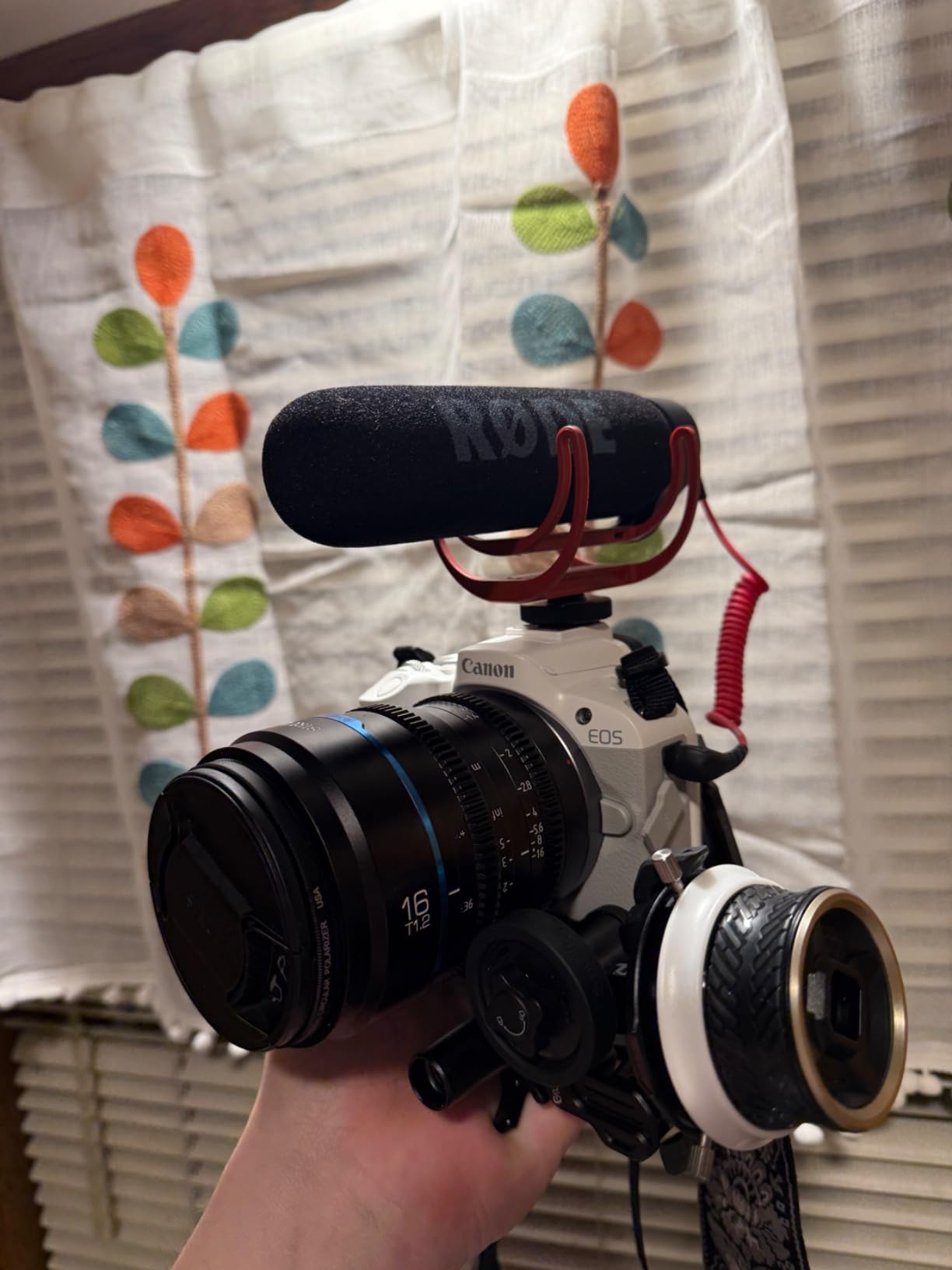
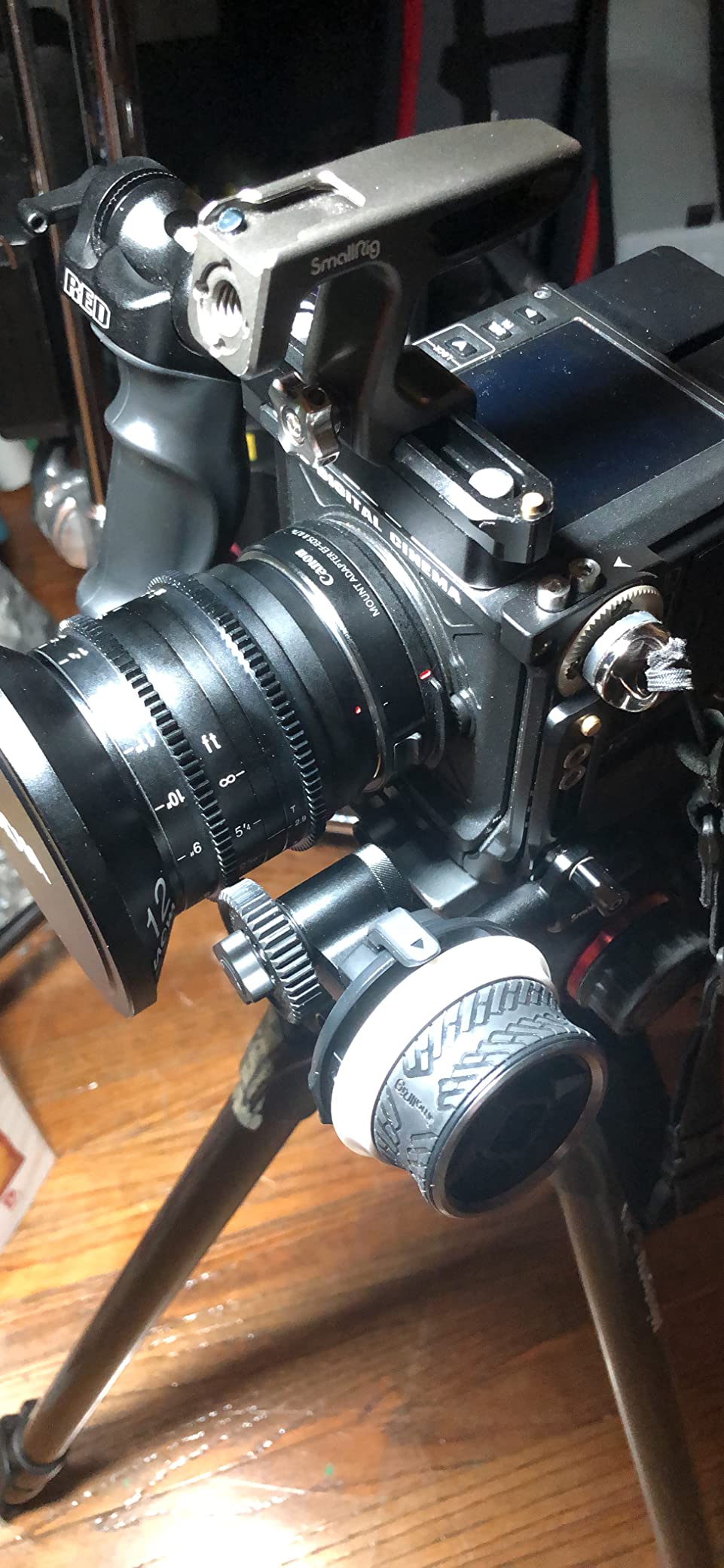
SmallRig includes a 15mm rod and a NATO rail rod clamp in the box, which is a pleasant surprise at this price. Many competitors sell the clamp separately. The snap-on gear ring belt fits lenses up to 114mm in diameter, covering most DSLR and mirrorless glass. The interchangeable M0.8 gears come in the standard 43-tooth configuration with optional 65T and 38T available.
The modular design lets you attach and detach the unit in seconds without removing your entire rig. I appreciated this when switching between tripod work and gimbal shots throughout the day. The storage box keeps everything organized between shoots, which is a detail that shows SmallRig understands working filmmakers.
Who Should Buy This
This is the unit I recommend for beginner filmmakers, wedding videographers, and content creators who want professional focus control without spending hundreds. If you shoot on a mirrorless camera with a cage and 15mm rods, this is the most cost-effective way to get smooth, repeatable focus pulls. It ranked number two in Amazon’s Camera Lens Rapid-Focusing Levers category for good reason.
Setup and Compatibility
The 3010 works with any camera rig that uses a standard 15mm rod system. SmallRig cages are the most seamless pairing, but it fits third-party cages too. The one gotcha is that compact lenses with very short focus rings may not align perfectly with the gear at minimum distance. Test the gear ring height before your shoot to avoid surprises.
2. Tilta Pocket Follow Focus FF-T07 – Best Budget Compact
Tilta Pocket Follow Focus | Precise Focus Ring with A/B Stops | Fluid Damping System | 15mm Rod & Rod Holder | Works with Most Cameras & Lenses | Lightweight, Comfortable, and Compact Design (FF-T07)
Model: FF-T07
Single 15mm rod compatible
Simulated lens damping
Includes protective safety case
Pros
- Perfect size for compact camera builds
- Smooth focus with excellent drag factor
- Innovative latching system swivels gear away from lens
- Includes carrying case and allen keys
Cons
- Focus direction inverted when bottom mounted
- Only supports 43-tooth gear or smaller
The Tilta Pocket Follow Focus is the one I grab when I need to keep my rig as small as possible. I used it on a BMPCC 6K setup for a short film, and it tucked neatly alongside the camera body without adding bulk. The composite material construction feels solid in hand, not like a cheap plastic knockoff.
Tilta engineered a simulated lens damping system that gives the focus knob a satisfying resistance. It is not too loose, not too tight. The pitch feels natural, and I could make micro-adjustments during slow emotional scenes without overshooting my mark. The quick release A/B hard stop system lets you set focus points in seconds.
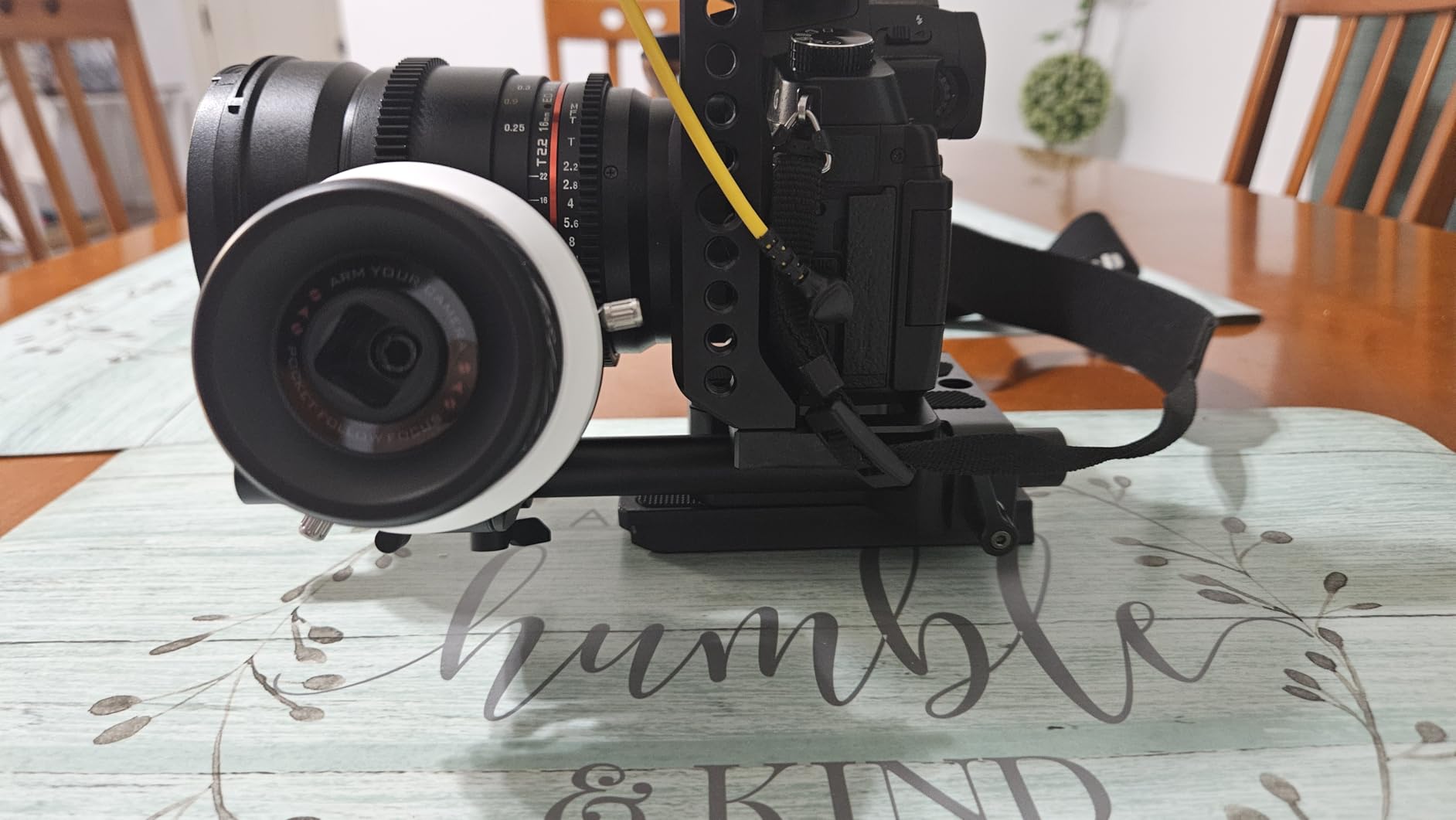
One of the smartest design touches is the latching system that lets you swivel the gear away from the lens without unmounting the whole unit. When I needed to switch to autofocus for a particular shot, I flipped the gear aside, did the take, and flipped it back. That feature alone saves minutes on every setup change.
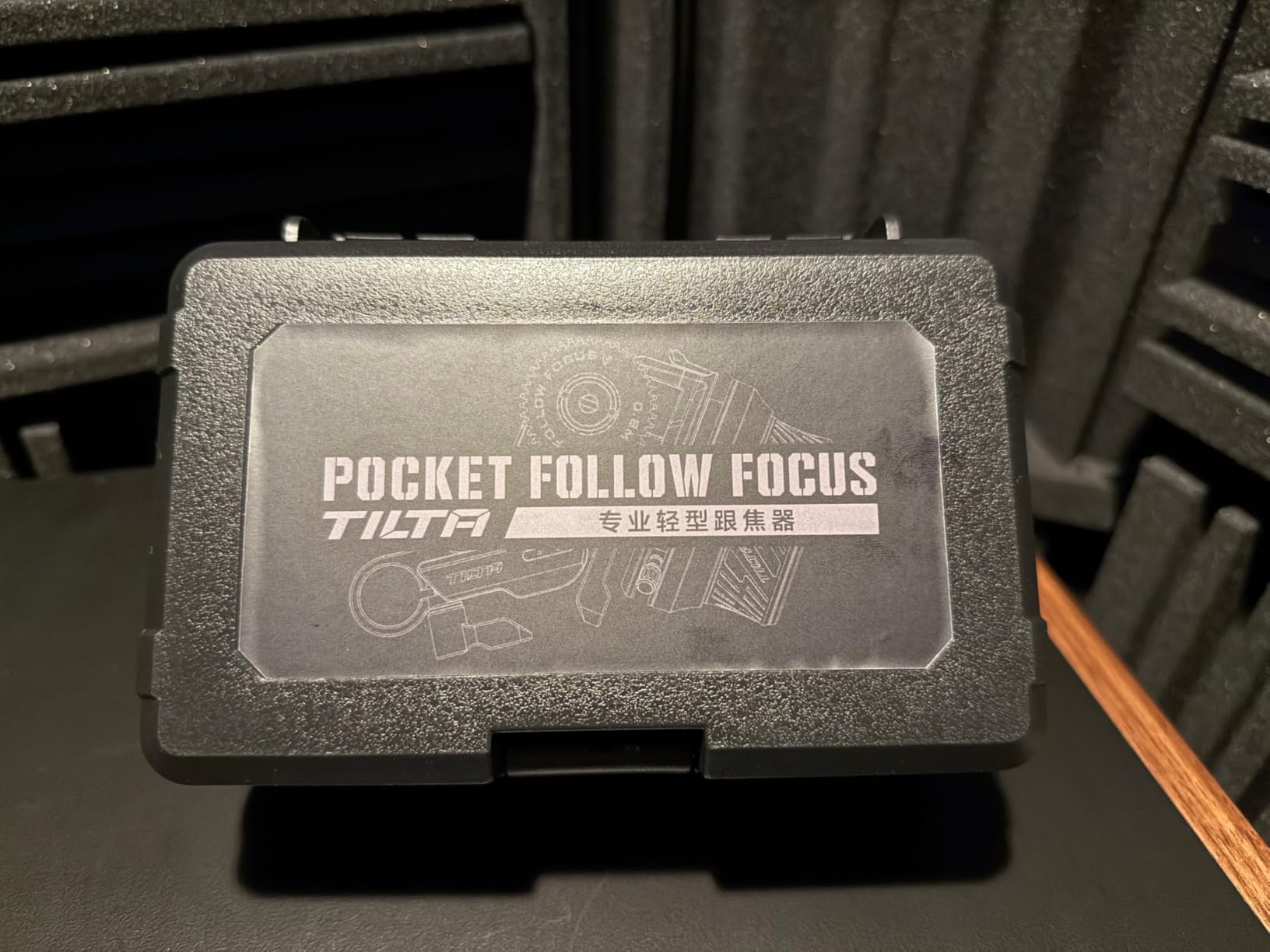
The kit ships with a protective safety case, allen keys, a rubber cover, and a 15mm rod holder. Tilta backs this with a two-year warranty, which speaks to their confidence in the build. At fifty-nine dollars, it undercuts most competitors while delivering a genuinely premium feel.
Who Should Buy This
If you run a compact mirrorless or BMPCC rig and want the smallest possible follow focus that still feels professional, this is your pick. It is ideal for documentary shooters, solo operators, and anyone who packs their gear into a backpack. The two-year warranty gives peace of mind for daily use.
Setup and Compatibility
The FF-T07 mounts on a single 15mm rod, which is simpler than dual-rod systems. Note that the focus direction is inverted when you mount from the bottom. Mount it overhead instead for intuitive directionality. It supports 43-tooth gears or smaller, so it is best for photo and mirrorless lenses rather than cinema glass with long focus throws.
3. Neewer Mini Follow Focus PG001 – Best for Beginners
NEEWER Mini Follow Focus with A/B Stops, Lens Gear Ring, 15mm Rod & Rod Clamp for Cinema Camera, DSLR/Mirrorless Camera, Compatible with Lens Diameter Up to 114mm, PG001 (Silver)
Model: PG001
Weight: 320g
138 deg tilt arm
Fits lenses up to 114mm diameter
Pros
- Lightweight yet durable build
- A/B stops for repeatable transitions
- Silicone rubber focus knob is comfortable
- Great value with rod and clamp included
Cons
- Some units had focus accuracy issues out of the box
- Internal rattling after few uses in some units
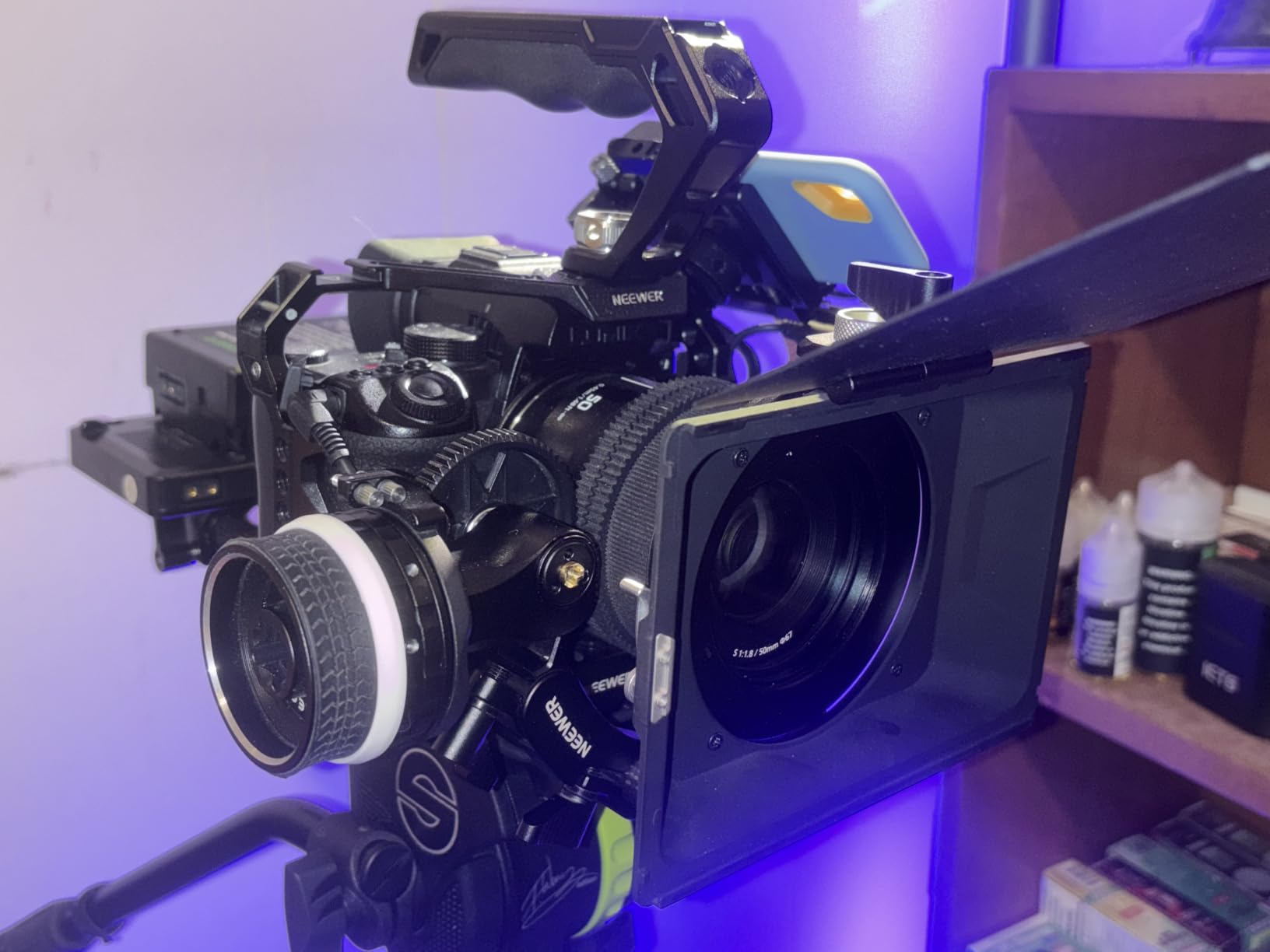
I picked up the Neewer PG001 for a student workshop where I was teaching focus pulling basics. For the price, I was not expecting much, but the build quality caught me off guard. The unit feels substantial at 320 grams and the damping mechanism provides smooth, controlled rotation across the entire focus throw.
The 138-degree tilt arm was a standout feature during the workshop. Students could position the follow focus at whatever angle felt comfortable for their rig, whether they were on a tripod or shooting handheld. The soft silicone rubber focus knob meant no one was fighting an uncomfortable grip during long practice sessions.
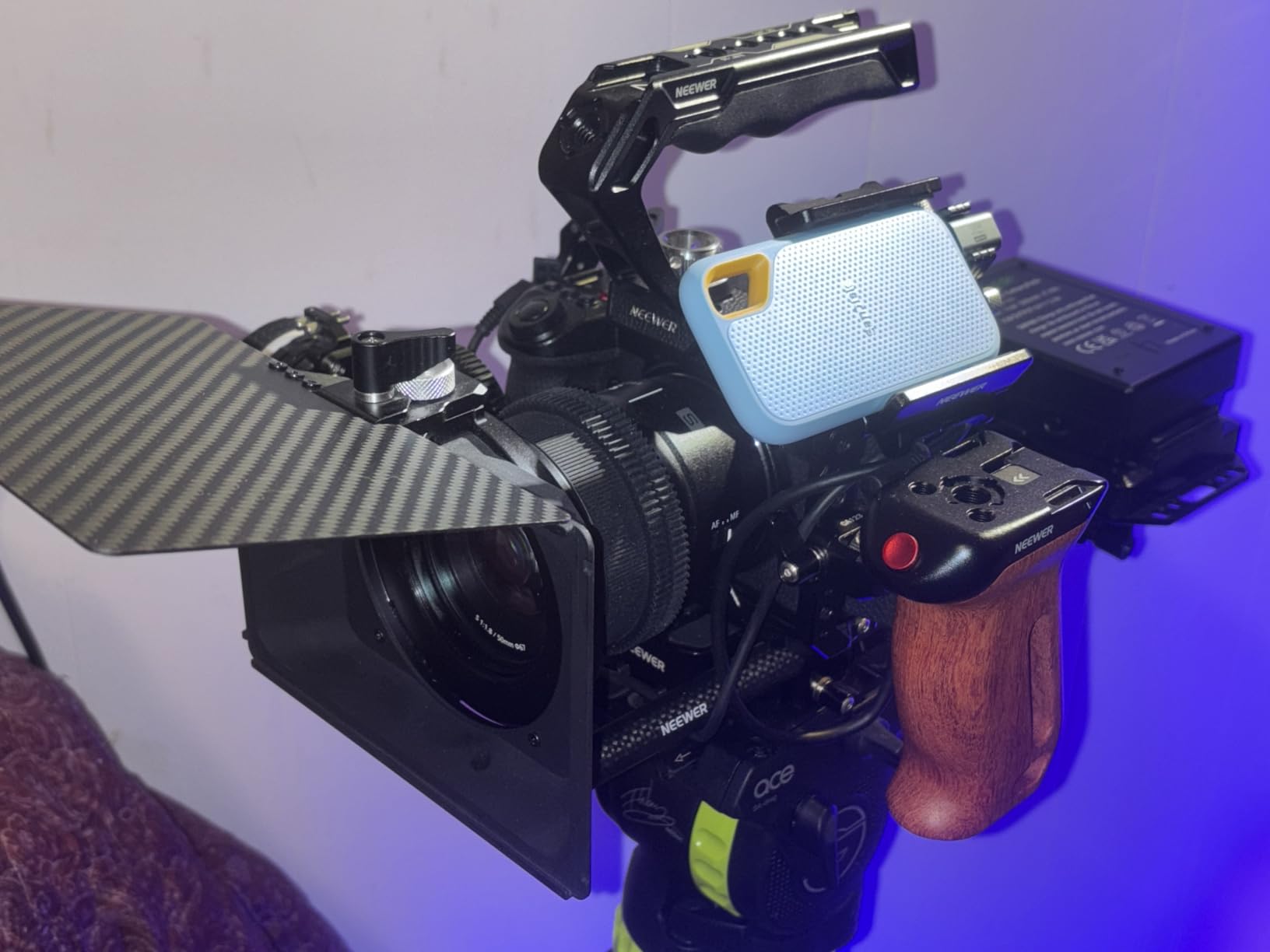
The A/B hard stops on this unit deserve praise. They are easy to set and held firm through dozens of takes. I watched students who had never pulled focus before nail their marks within the first hour of practice. The 360-degree infinite focus adjustment means you are never locked out of any focal distance.
Neewer includes the 15mm rod, rod clamp, and a lens gear ring rated for lenses up to 114mm. That is everything you need to start pulling focus the day the package arrives. Some users reported internal rattling after extended use, but Neewer’s customer service handled replacements quickly. For a first follow focus, this is hard to beat.
Who Should Buy This
This is the follow focus I recommend to anyone buying their first unit. Film students, hobbyist videographers, and content creators moving into narrative work will get everything they need at a price that leaves room in the budget for other gear. The 4.6-star rating from over 350 reviewers confirms the value.
Setup and Compatibility
The PG001 connects via a standard 15mm rod clamp that fits most cages and baseplates. It works with DSLR, mirrorless, and cinema cameras. The gear ring fits lenses up to 114mm in diameter, which covers most consumer and prosumer glass. One note: the gear direction may feel counterintuitive at first if you are used to turning the lens directly.
4. SmallRig Follow Focus F50 – Best Damping Control
SmallRig F50 Follow Focus with A/B Stops
Model: F50
Zero-backlash design
Stepless damping 0.3-1.0 kgf
Dual drive focus system
Weight: 290g
Pros
- Zero-backlash with adjustable play
- Stepless damping adjustment is a standout
- Can use friction or gear drive
- Premium build quality and compact size
Cons
- Cannot attach without a cage on some camera models
- Setup can be complicated for beginners
The SmallRig F50 is the follow focus I reached for during a product commercial shoot where precision was everything. The zero-backlash design means there is no play between the knob and the gear. When I nudged the focus a millimeter, the lens moved a millimeter. That level of accuracy is rare at this price.
The stepless dynamic damping lever is the feature that sets this unit apart. You can dial in resistance from 0.3 to 1.0 kgf, which means you can match the feel to any lens. Stiff cinema lenses get lighter damping, loose photo lenses get heavier damping to prevent accidental drift. I adjusted it three times during a single shoot to match different glass.
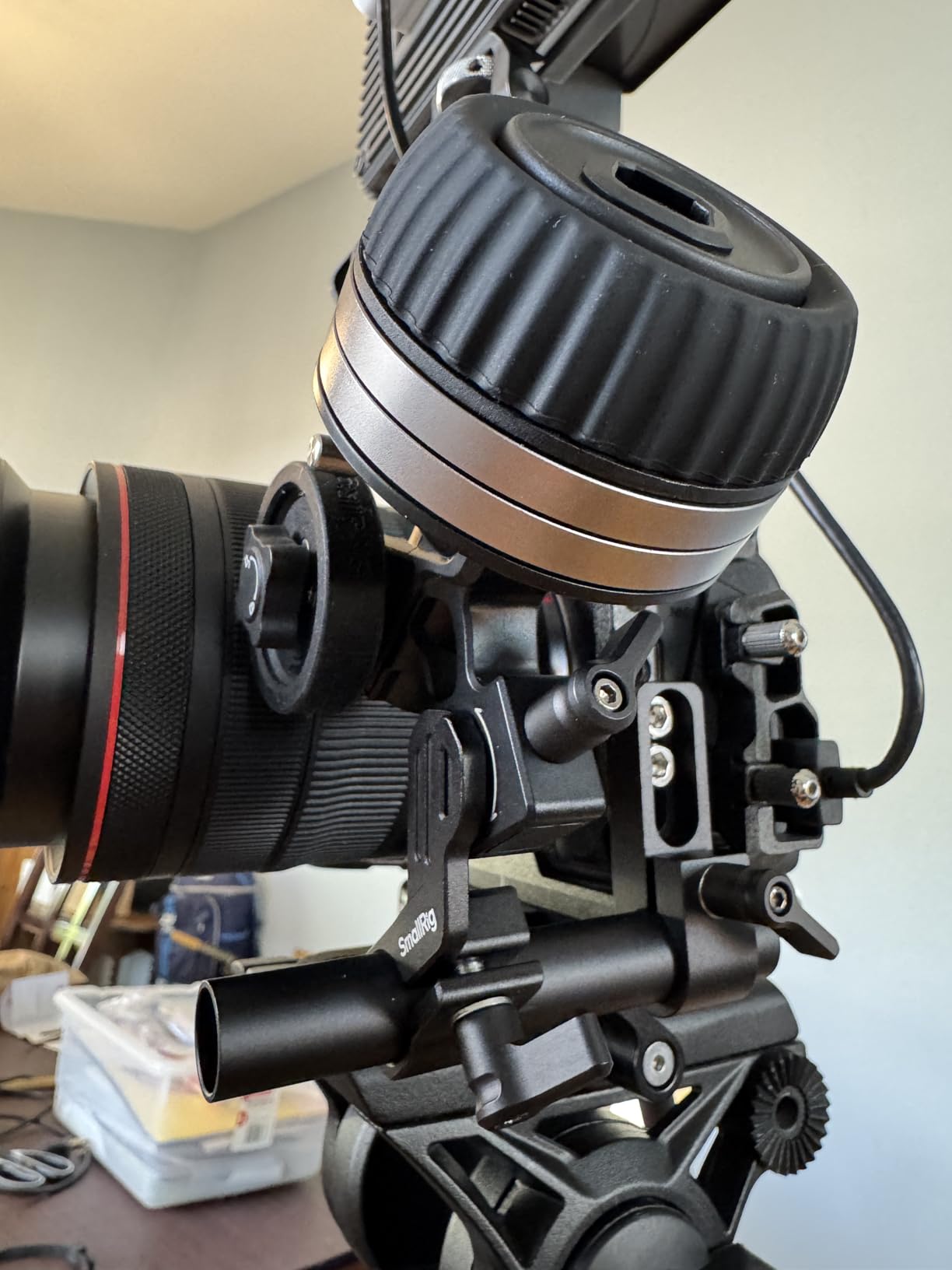
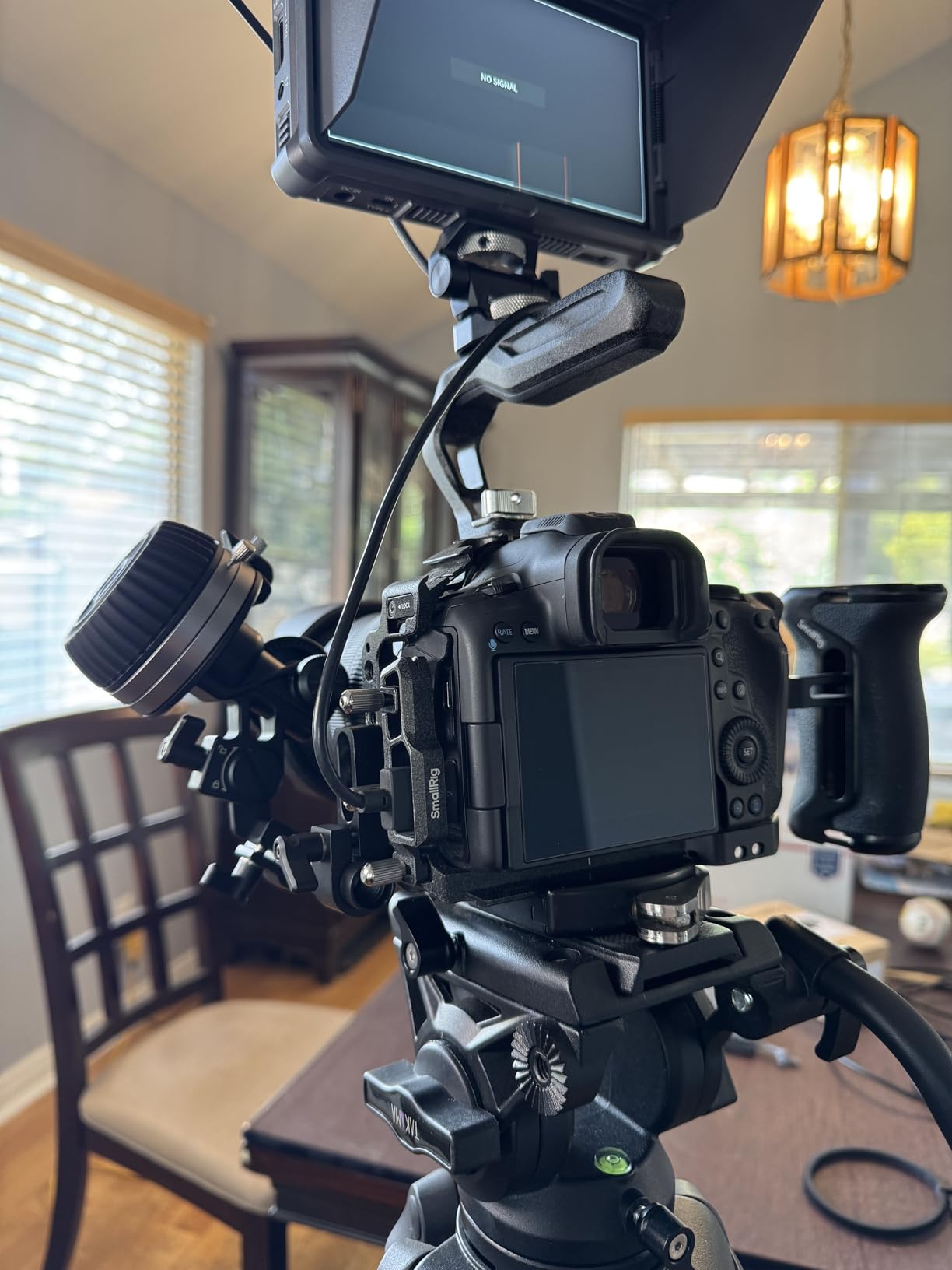
The dual drive focus system is clever engineering. You can use the gear drive for cinema lenses with focus gears, or switch to the silicone direct drive for mirrorless lenses that lack a gear ring. This flexibility means the F50 works with almost any lens in your bag without needing separate accessories.
SmallRig designed the silicone handwheel to be compact, sweat-proof, and non-slip. During a hot outdoor shoot, I never lost grip. The A/B hard stops use a two-step quick release system that lets you set and reset marks in seconds. The modular design supports both left-side and top mounting depending on your rig configuration.
Who Should Buy This
The F50 is for the shooter who cares about tactile feel and precision. If you work in commercial, fashion, or product videography where every focus pull needs to be buttery and exact, the stepless damping alone justifies the investment. It pairs perfectly with SmallRig cage systems for Sony, Canon, and other mirrorless bodies.
Setup and Compatibility
Like most SmallRig follow focus units, the F50 requires a cage or rig with 15mm rods. Some camera models will need a SmallRig cage specifically to attach the rod clamp. The included manual has very small font, so download the digital version from SmallRig’s site for easier reading during setup.
5. Nitze Mini Follow Focus MF15C – Best Gear Bundle
Nitze Mini Follow Focus Kit with 15mm Rod and Rod Clamp – MF15C
Model: MF15C
Weight: 274g
3 reversible drive gears: 38T 43T 65T
Dual magnetic marking disks
NATO rail rod clamp
Pros
- Excellent value with 3 interchangeable gears
- Good build quality comparable to Tilta and SmallRig
- Smooth steady action
- Includes NATO rail for versatile mounting
Cons
- Focus ring can be extremely stiff causing hand cramping
- Geared opposite direction for underslung mounting
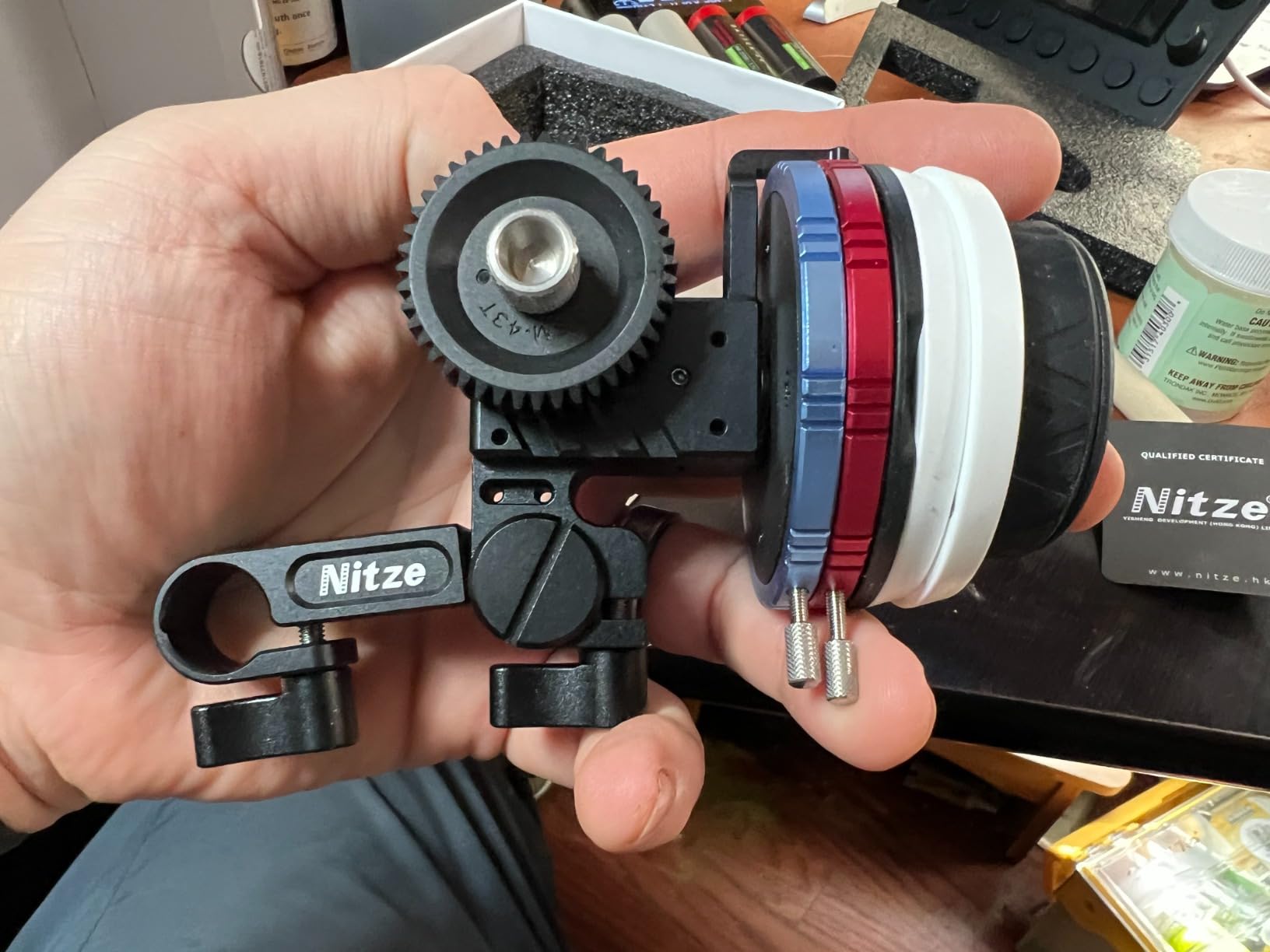
The Nitze MF15C caught my attention because it ships with three reversible drive gears in the box. Most competitors include one and charge extra for additional sizes. Having 38-tooth, 43-tooth, and 65-tooth gears means you can match the gear ratio to any lens, from compact mirrorless glass to full cinema lenses with long focus throws.
I tested this unit with a set of vintage Nikkor lenses on an underslung rig, and the gear direction made sense immediately. The MF15C is designed for top-rod mounting, which is the standard configuration for underslung and gimbal setups. If you shoot vintage lenses, this follow focus speaks your language.
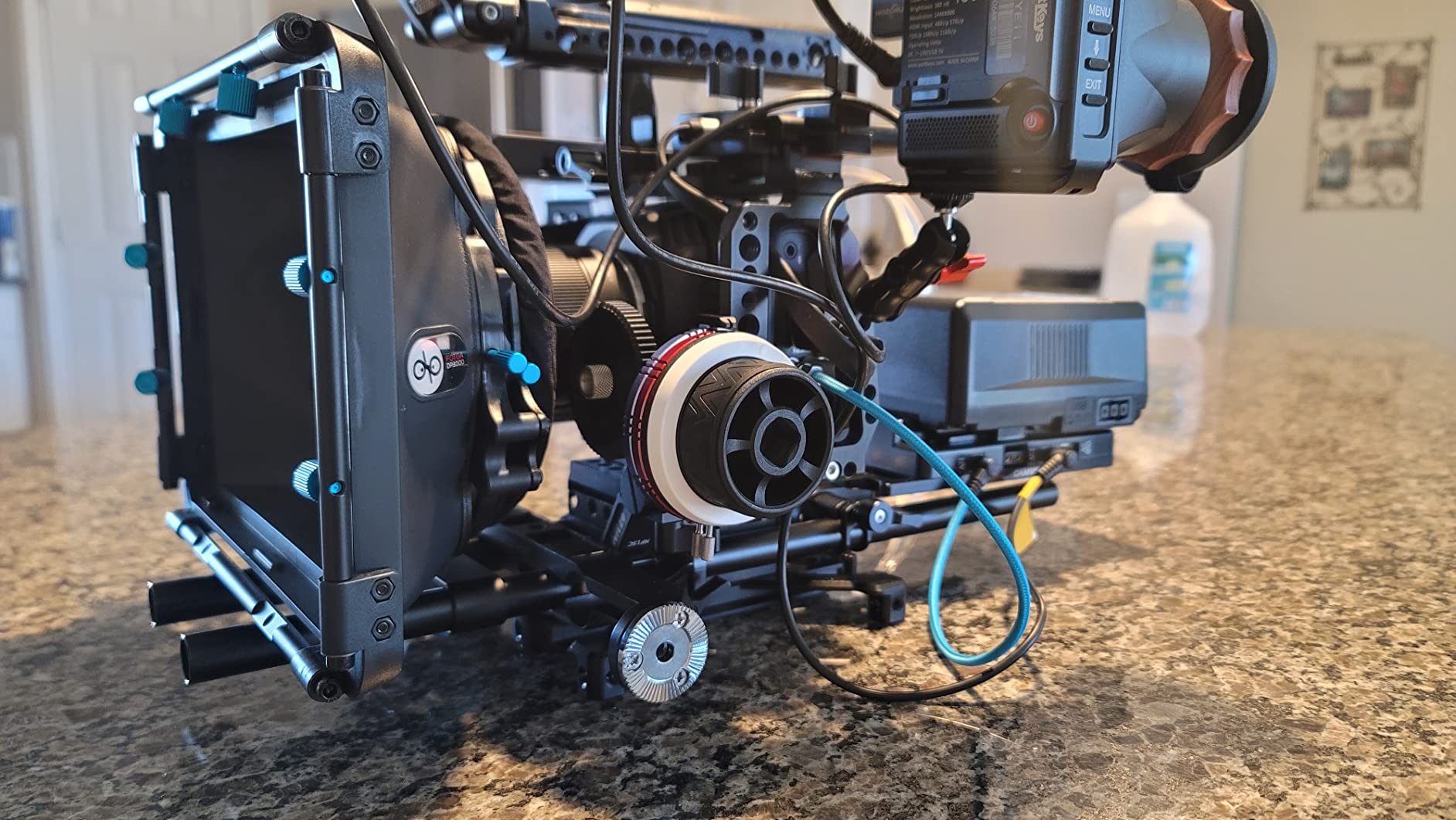
The dual marking disks use a snap-on magnetic attachment system. I loved how quickly I could swap marking disks between different lenses during a shoot. The magnetic connection holds firm during operation but releases instantly when you want to change. It is a small detail that saves real time on set.
The build is solid metal, not plastic. The NATO rail rod clamp gives you mounting flexibility beyond a standard rod clamp. However, I did notice that some units are over-greased from the factory, which causes stiff operation initially. A few users reported hand cramping during long pulls until the grease worked itself in.
Who Should Buy This
This is the follow focus for vintage lens shooters and underslung rig operators. If you work with Nikkor AI lenses, Canon FD, or other manual cinema glass, the gear direction and three-gear bundle make this the best value option. The 4.1-star rating reflects some quality control variance, so buy from a seller with a good return policy.
Setup and Compatibility
The MF15C fits any 15mm rod system and includes the NATO rail clamp for additional mounting options. The adjustable mounting angle lets you position the follow focus wherever it is most comfortable. Be aware that the focus direction is opposite to standard right-side mounted units, which is by design for underslung use.
6. SmallRig F60 Modular Follow Focus – Best Wooden Aesthetic
SmallRig F60 Modular Follow Focus with A/B Stops
Model: F60
Weight: 250g
Stepless damping 0.6-1.8 kgf
Sapele wood texture knob
Snap-on gear ring included
Pros
- Smooth operation and precise control
- Beautiful Sapele wood texture aesthetic
- Wide-range stepless damping adjustment
- Good value with full accessory kit
Cons
- Small amount of play in the gearbox
- Tightening knob does not rotate full 360 degrees on some lenses
The SmallRig F60 stands out the moment you see it. The Sapele wood texture on the focus knob is not just aesthetic. It provides genuine anti-slip grip that feels warm and tactile in your hand. I used this unit on a narrative short film over a weekend, and the wooden knob became a talking point on set among the crew.
The wide-range stepless damping adjustment goes from 0.6 to 1.8 kgf, which is a broader range than most mechanical follow focus units offer. I cranked it up for a loose vintage lens that wanted to drift, then dialed it back down for a stiff cinema lens. The adjustment is smooth and continuous with no stepped clicking.
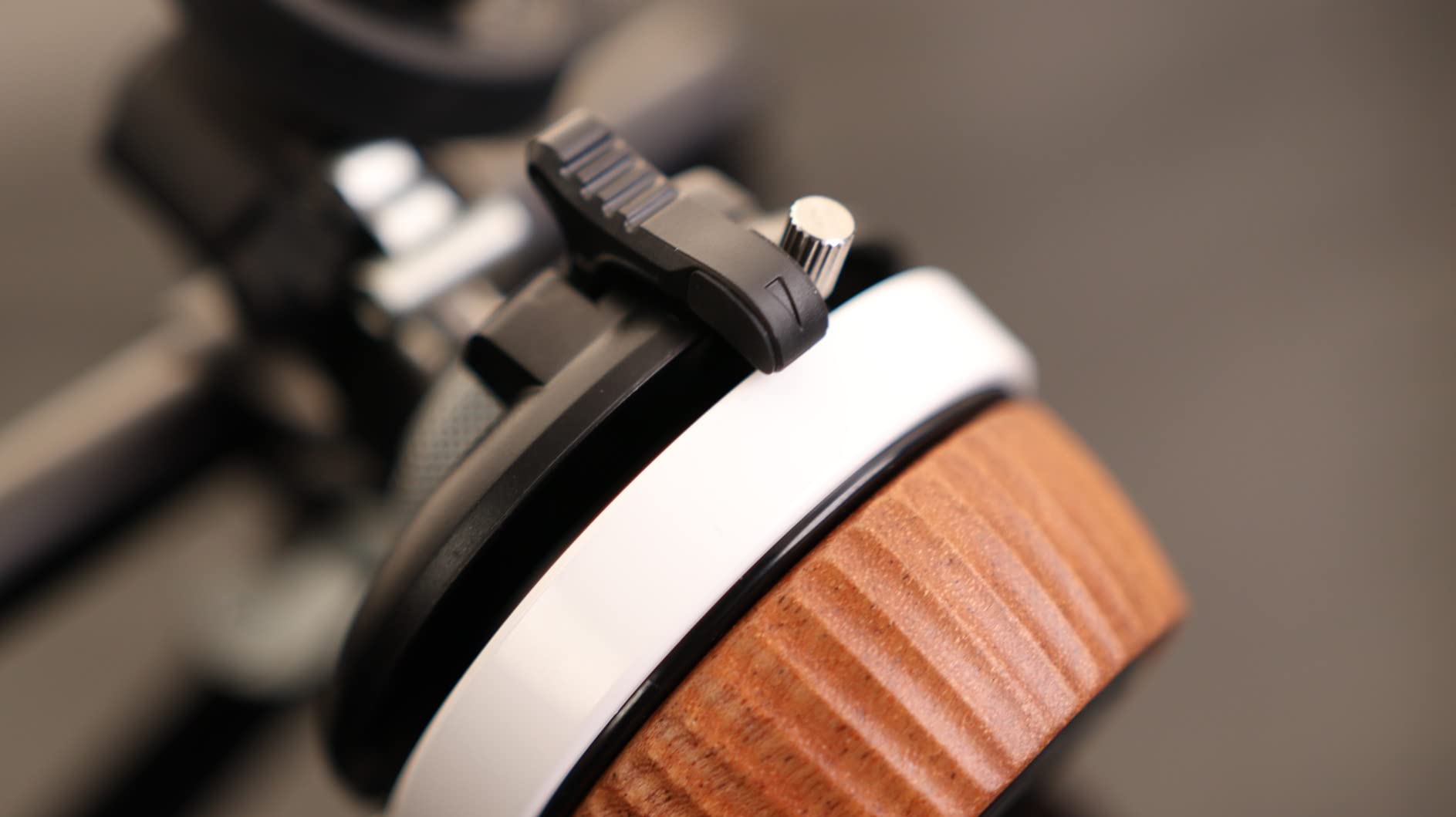
The three-step reversible rotation system for A/B marks is a thoughtful upgrade. You can reverse the focus direction without removing the unit, which solves the problem of left-handed versus right-handed operation. I switched between operating from both sides of the camera depending on the shot framing.
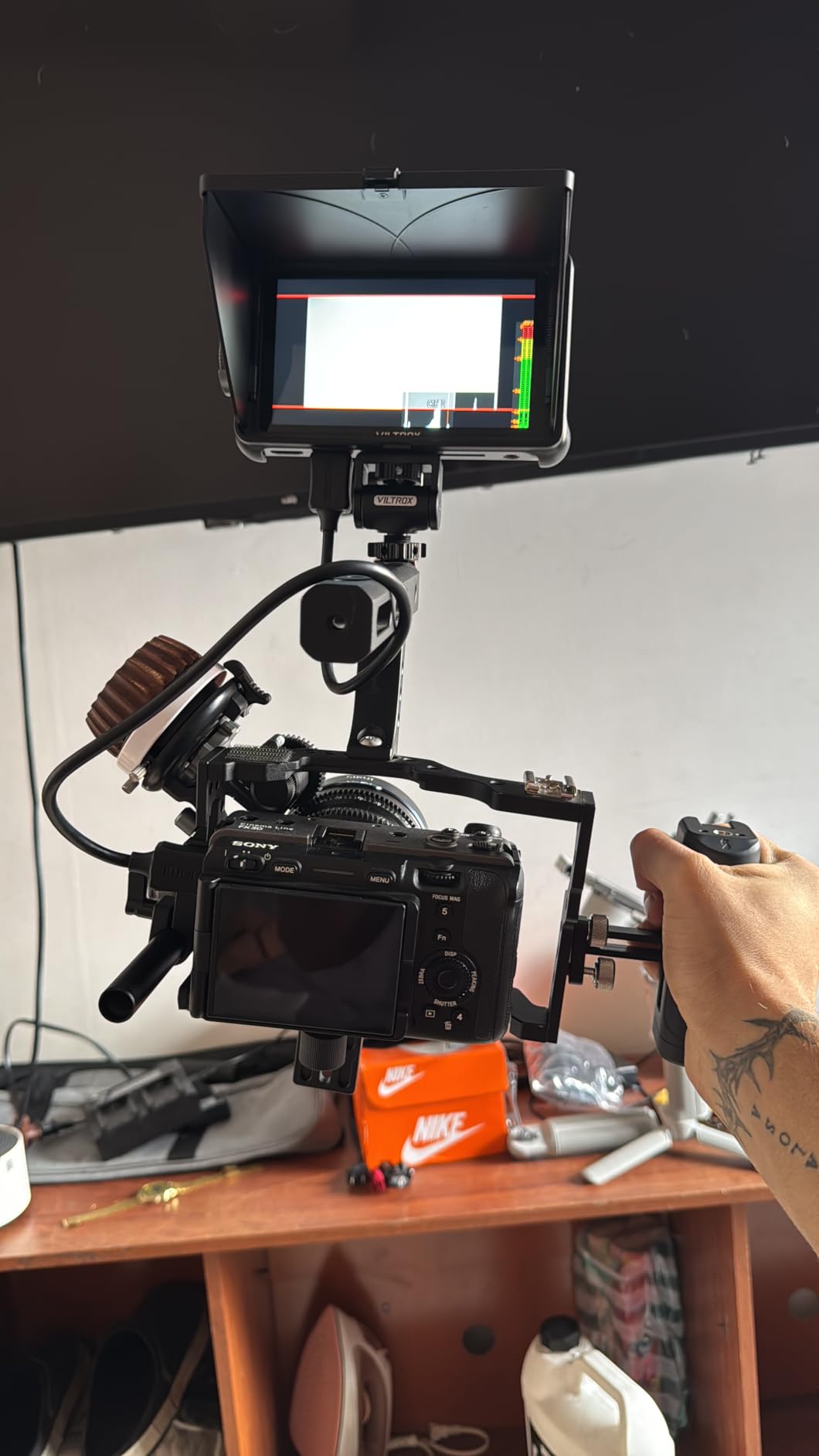
SmallRig includes a snap-on gear ring belt and a 15mm rod clamp in the package. The modular design means you can configure the unit for left-side, top, or bottom mounting. Some users noted minor gearbox play that affected extremely precise pulls, so if you need absolute zero-backlash performance, consider the F50 instead.
Who Should Buy This
The F60 is for the filmmaker who wants their rig to look as good as it performs. If you do client-facing work where your gear is visible, the wood texture adds a professional, artisanal touch. The damping range makes it versatile across lens types. It sits in the mid-range price bracket and delivers mid-range-plus quality.
Setup and Compatibility
The F60 requires a 15mm rod system and works best with SmallRig cages. The tightening knob does not rotate a full 360 degrees, which means certain lenses with large diameter barrels may not fit. Measure your lens barrel diameter before ordering. Some cage setups require 15mm bottom rails for right-side mounting.
7. SmallRig Wireless Follow Focus Kit Lite – Best Wireless Value
SmallRig Wireless Follow Focus Kit (Lite) with Handwheel Controller
Model: 4296
Wireless handwheel and receiver motor
Peak torque 4.3 kgf.cm
Up to 21 hours battery life
PD and QC fast charging
Pros
- Exceptionally smooth focus control
- Quiet operation suitable for external mics
- 21-hour battery life
- Easy one-click lens calibration
Cons
- Motor may be too strong for some lenses
- No torque adjustment capability
- Motor requires USB-C power
The SmallRig Wireless Follow Focus Kit Lite is the unit that made me reconsider wireless systems for solo work. I tested it on a gimbal setup for a real estate walkthrough video where I could not physically reach the camera. The wireless handwheel gave me smooth, responsive control from two meters away, and every pull landed where I intended.
The peak torque of 4.3 kgf.cm is double the previous generation. That power means it handles stiff cinema lenses without struggling. The 35 percent improved response efficiency is noticeable when you make fast focus racks between foreground and background subjects. There is almost no lag between the handwheel and the motor.
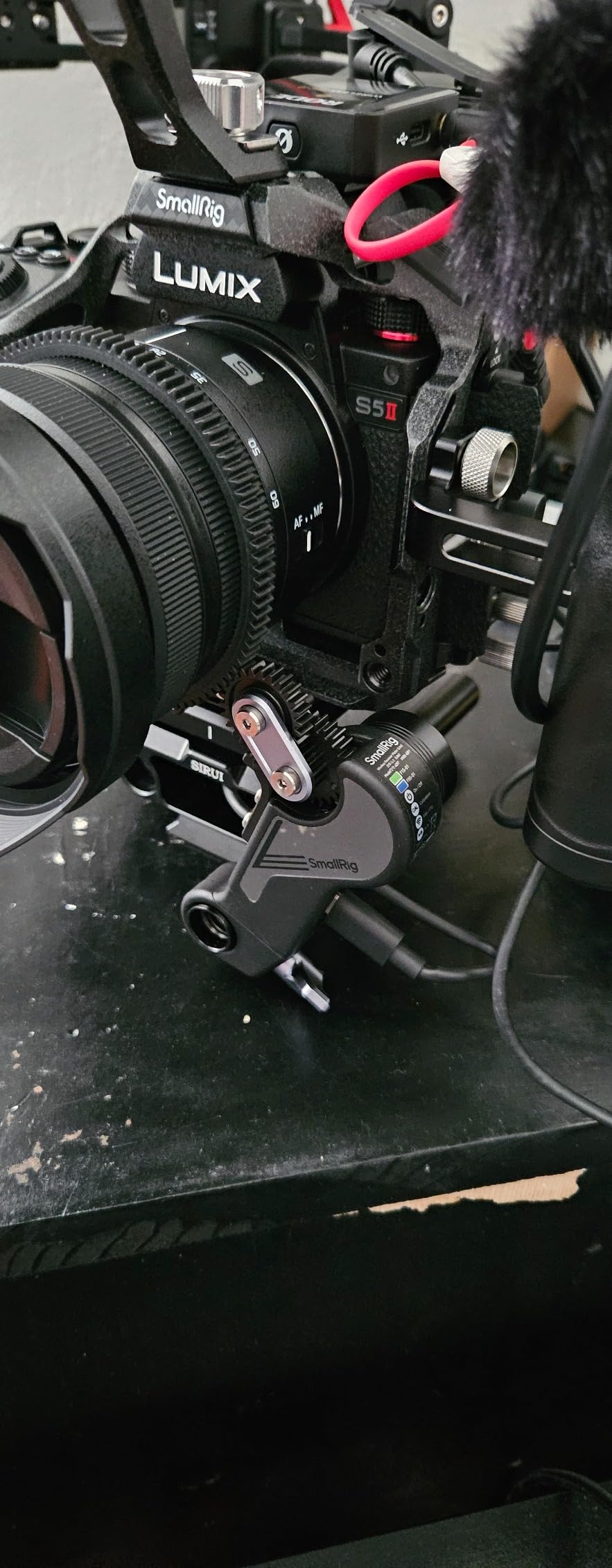
Battery life is where this kit genuinely impressed me. SmallRig claims 21 hours, and during my testing over a full week of shooting, I only charged it twice. The PD and QC fast charging support means you can top up between shoots using the same USB-C cable you use for your camera or monitor.
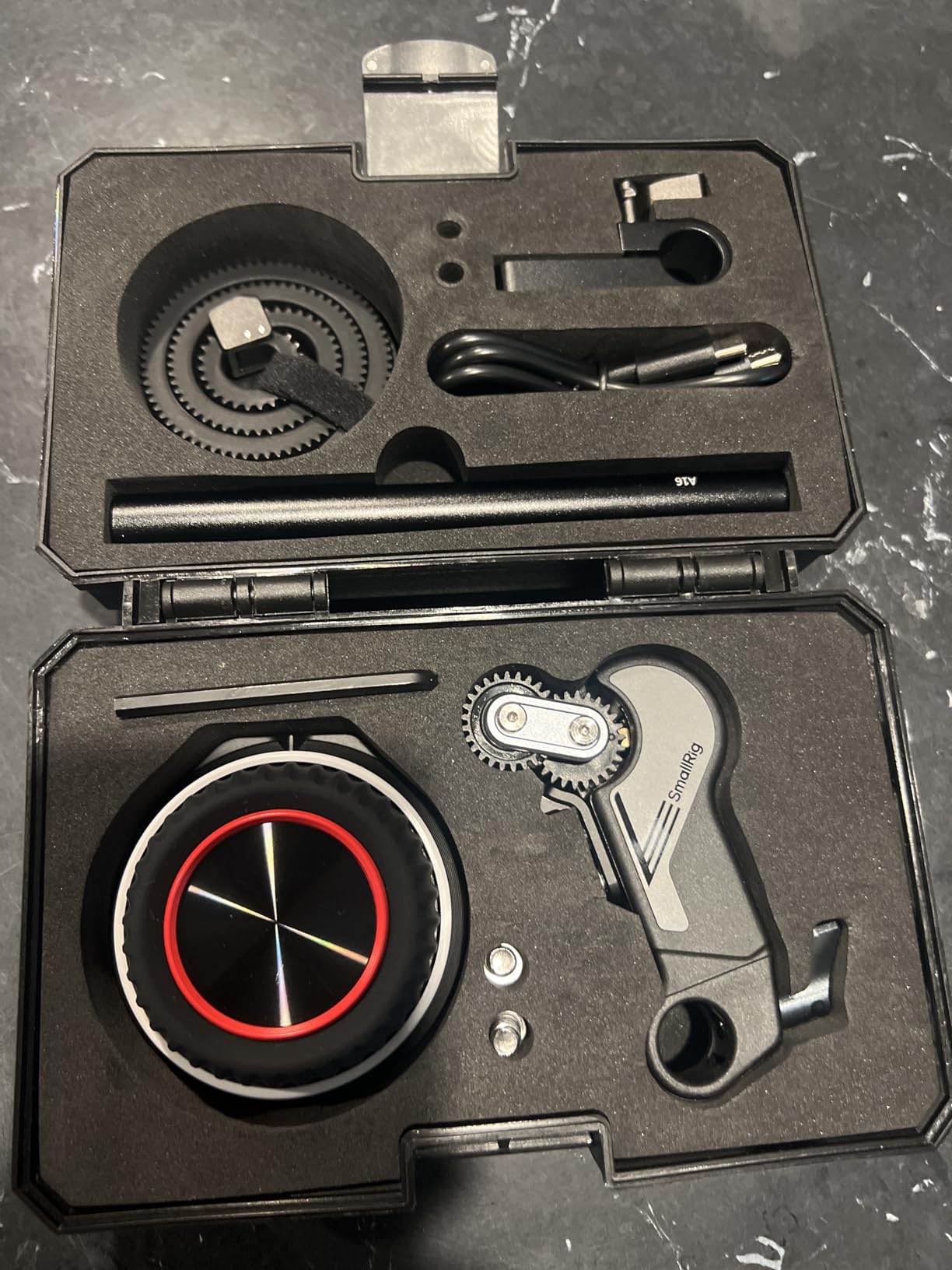
The one-click lens calibration is a game changer for anyone who has spent twenty minutes manually calibrating a wireless system. You attach the motor, connect the handwheel, press calibrate, and the system maps the lens focus range automatically. Color-coded status lights tell you instantly whether the connection is solid.
Who Should Buy This
This is the best entry point into wireless follow focus. Gimbal operators, solo shooters, and small crews who need reliable wireless control without spending professional prices should look here first. The 21-hour battery life and one-click calibration remove the two biggest pain points of wireless systems. One user described it as unexpectedly smooth, easing in and out as if turning the focus ring manually.
Setup and Compatibility
The kit includes the handwheel controller and receiver motor. The motor mounts on a 15mm rod clamp and connects to the lens via a gear belt. It works with cinema and zoom lenses from Zeiss, DZOFilm, Canon, and Sony. The motor has no torque adjustment, so test it on your lightest lens first to avoid bumping the focus ring too hard.
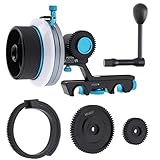
8. Fotga DP500III Follow Focus – Best Pro-Feel on a Budget
Fotga DP500III Follow Focus Puller w/A/B Stop,15mm Quick Release Rod Clamp for Canon Nikon Sony Blackmagic DSLR Cinema Camera Video Mirrorless Camera Cine Lens Film Movie Video Making No Backlash
Model: DP500III
Weight: 500g
Zero backlash design under 0.5mm
2-level adjustable damping
3 interchangeable gears included
Quick-release 15mm mount
Pros
- Zero to minimal backlash
- Solid metal construction
- Smooth and precise operation
- Includes speed crank and 3 gears
Cons
- Some quality control issues reported
- Speed crank can be loose and cause vibrations
- Teal-blue color may not appeal to all
The Fotga DP500III has been a staple in the budget follow focus market for years, and testing it showed me why it still sells. The zero-backlash design measures under 0.5mm of play, which puts it in professional territory. When I racked focus between two marks repeatedly, every single pull landed exactly the same. That repeatability is what working focus pullers need.
The solid metal construction gives the DP500III a heft and feel that punches above its price class. At 500 grams, it is heavier than the SmallRig and Tilta options, but that weight translates to stability. The unit does not shift or flex during aggressive focus pulls, which is a problem I have had with cheaper plastic units.
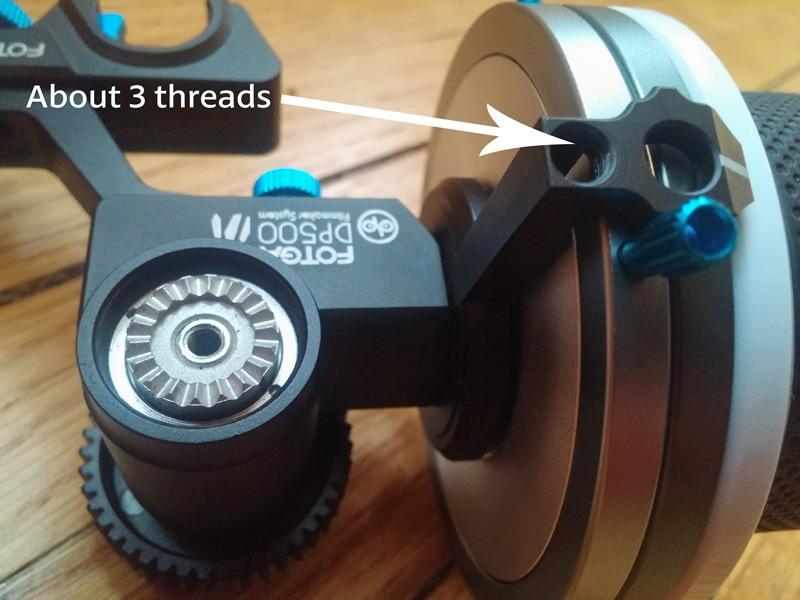
Fotga includes three interchangeable gears in M0.8-38T, M0.8-43T, and M0.8-65T configurations. That is the same gear bundle philosophy as the Nitze, and it means you can match gear ratios to any lens. The speed crank in the box is a bonus that most competitors do not include. A speed crank lets you spin through the entire focus range quickly, which is useful when searching for focus on unknown lenses.
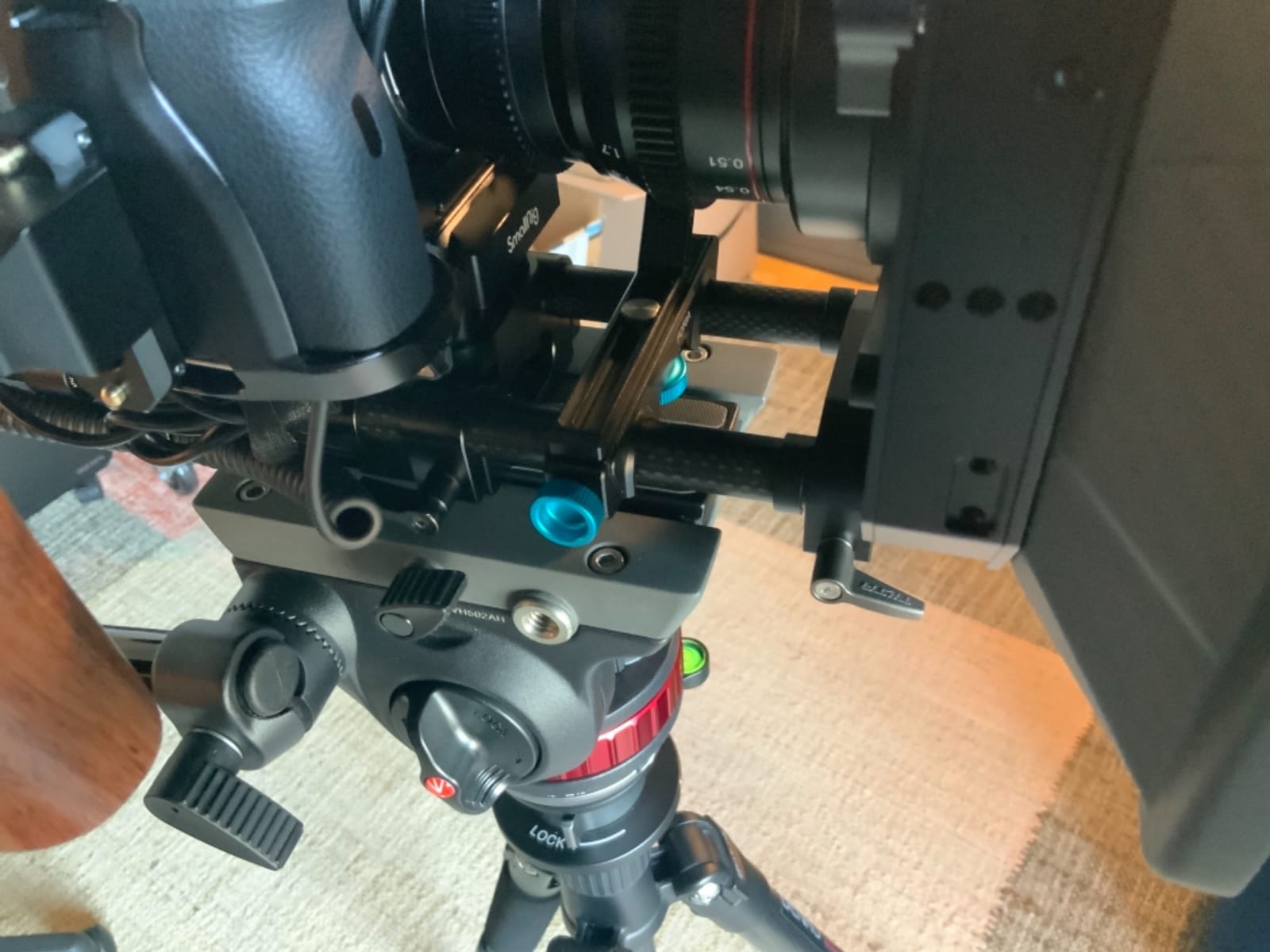
The two-level adjustable damping is more limited than the stepless systems on the SmallRig F50 and F60, but it gets the job done. The reversible drive gear means you can flip the unit for left-handed or right-handed operation. The quick-release 15mm rod slider lets you detach the unit without removing your entire rod system.
Who Should Buy This
The DP500III is for filmmakers who want professional-level build and zero-backlash performance at a budget price. One user review summed it up perfectly: this has a solid feel, has ZERO backlash, operates and looks like a professional unit that costs much more. If you can tolerate the teal-blue color, this is one of the best dollar-for-dollar values on this list.
Setup and Compatibility
The DP500III mounts on any 15mm rod system and fits Canon, Nikon, Sony, and Blackmagic cameras. The quick-release slider makes setup fast. The speed crank can develop looseness over time, which causes micro-vibrations during slow pulls. Tighten the crank connection before critical takes. Some units ship without damping adjustment, so verify the feature before ordering.
9. Tilta Nucleus Nano II Base Kit – Best Wireless FIZ Control
Tilta Nucleus Nano II Base Kit – Wireless Lens Control System | Includes Handwheel, Motor + More | Wireless Zoom, Focus, Aperture Control | Follow Focus | Accurate Pulling | Touch Screen
Model: WLC-T05 TX
Wireless FIZ control system
Touch screen display
Supports up to 4 motors
Lens mapping with focal distance display
Weight: 2.43 lbs
Pros
- Smooth and precise focus pulling
- Strong motor for heavy lenses
- Intuitive touch screen interface
- Works with multiple motor and camera systems
Cons
- Quality control issues with cables
- Firmware updates can be problematic
- Setting up multiple motors can be difficult
The Tilta Nucleus Nano II is the system I used on a four-day narrative shoot where I needed full FIZ control. FIZ stands for Focus, Iris, and Zoom, and having all three controlled wirelessly from a single handwheel changed my entire workflow. I could adjust iris between takes without walking to the camera, and the director could watch the monitor while I made adjustments remotely.
The touch screen display is the centerpiece of this system. It gives you real-time focal distance readouts, lens mapping, and motor configuration menus. I could see exactly where my focus was at any moment, which eliminated the guesswork that plagues cheaper wireless systems. The interface is intuitive enough that my assistant learned it in under an hour.
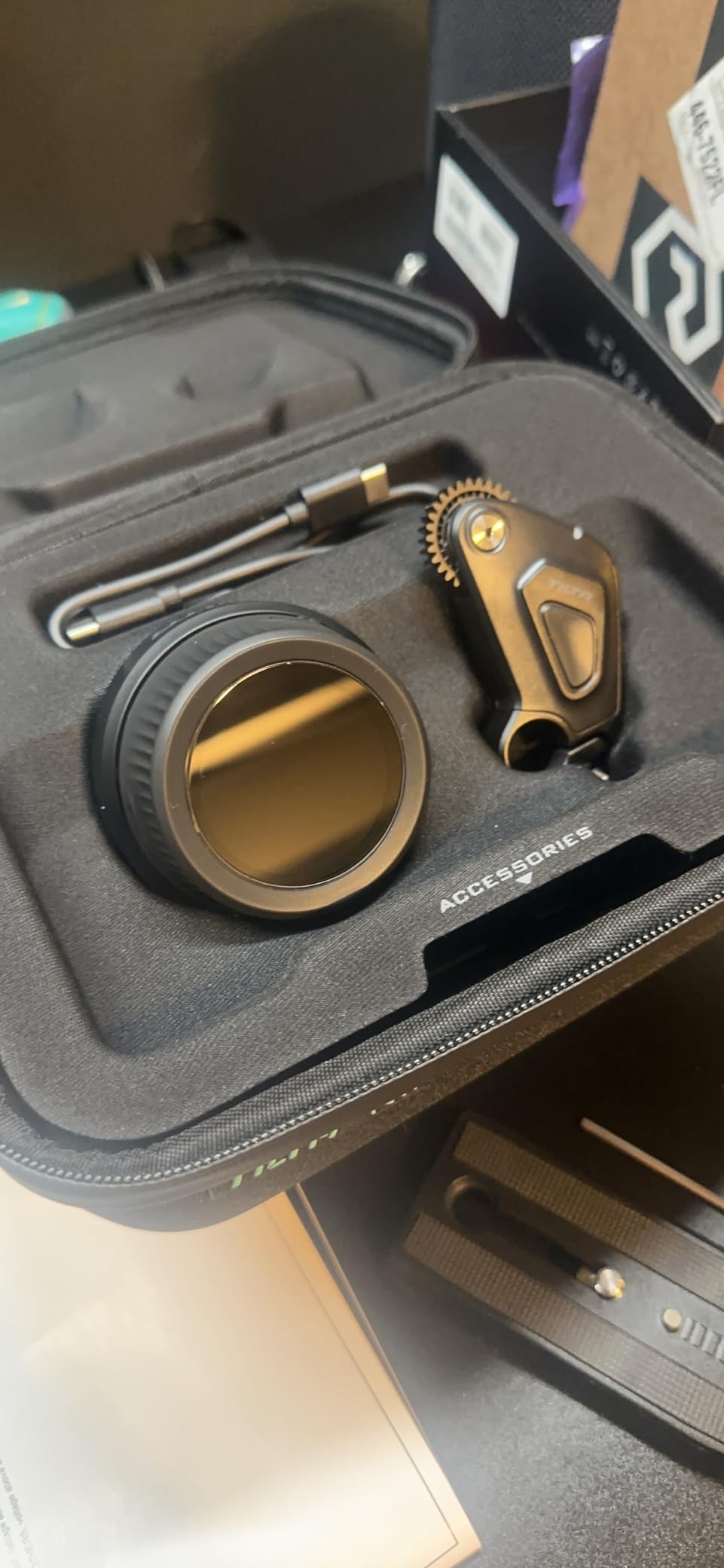
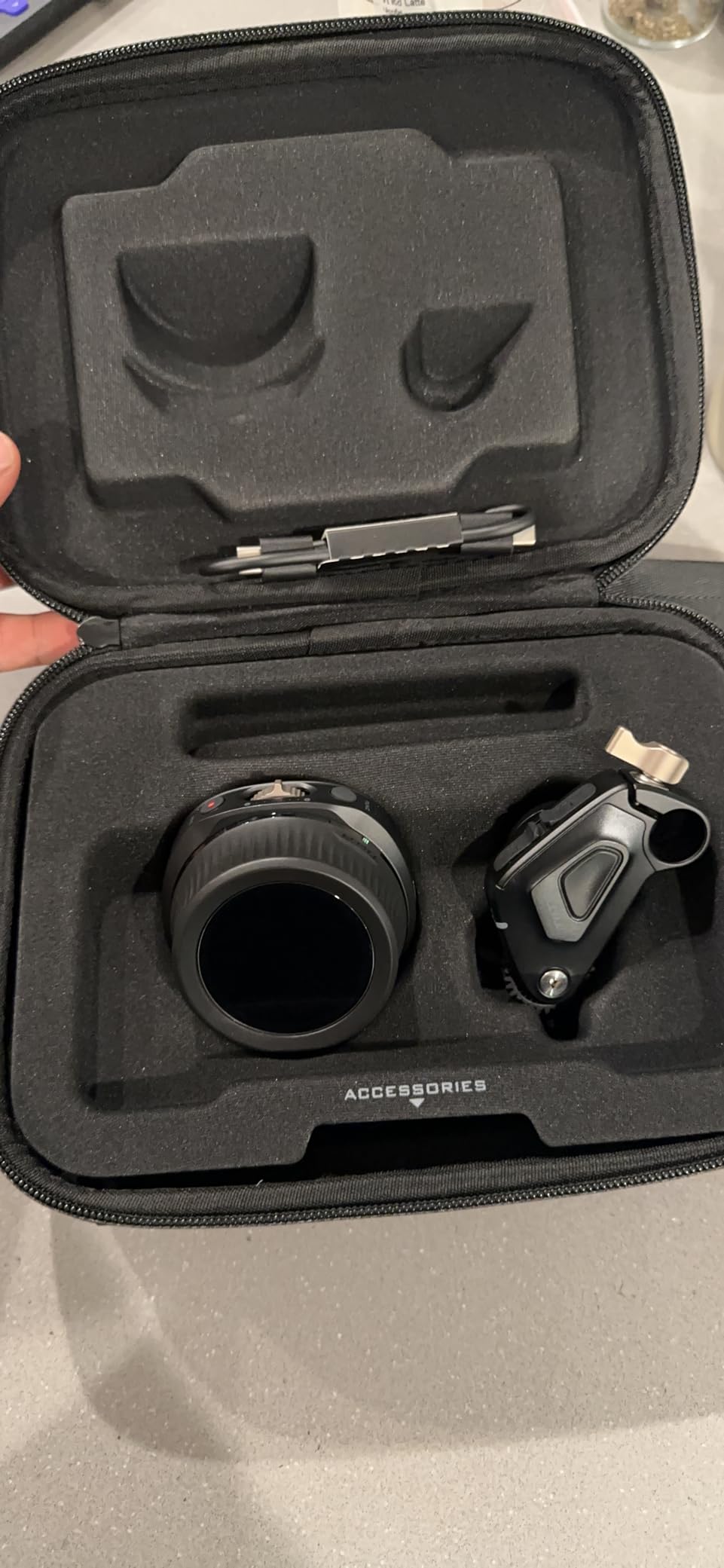
The system supports up to four motors when paired with the optional control handle. I ran two motors on my test setup, one for focus and one for iris, and both responded with identical smoothness. The Nano II is compatible with Nucleus M motors, Nano motors, and DJI Focus Motors, which means you can mix and match components from different ecosystems.
Camera communication happens through WiFi, Bluetooth, or USB-C, which covers essentially every modern camera body. The system works with Canon, Sony, and Blackmagic Design cameras natively. The motor is strong enough to drive heavy cinema lenses without hesitation. One user told me they could not believe how smooth it is, saying the Nucleus 2 just moves it smoothly.
Who Should Buy This
The Nucleus Nano II is for serious filmmakers who need full wireless lens control. If you work on narrative sets, music videos, or commercial productions where focus pulling is a dedicated role, this system delivers professional features at an accessible price point. The touch screen and multi-motor support make it the most capable wireless system on this list.
Setup and Compatibility
The base kit includes the handwheel and one motor. Additional motors are sold separately if you want full FIZ control. Setup involves calibrating each motor to its lens, which takes about ten minutes per motor. Firmware updates can occasionally cause issues, so always update before a shoot rather than during. The system communicates with Canon, Sony, and Blackmagic cameras through WiFi, Bluetooth, or USB-C.
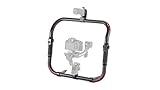
10. Tilta Advanced Ring Grip – Best for DJI Gimbal Operators
Tilta Advanced Ring Grip Compatible with DJI RS2, RS3 Pro, RS4, RS4 Pro, RS5 | Wireless Focus & Gimbal Control | Multi Power Support
Model: TGA-ARG
Compatible with DJI RS2 RS3 Pro RS4 RS4 Pro RS5
Two-point contact system
Wireless focus and gimbal control
Multi power support
Weight: 1.15 kg
Pros
- Excellent stabilization with two-point contact
- All-in-one system for mounting accessories
- Wireless gimbal and focus control
- Good for transitioning to low angles
Cons
- Some quality control issues reported
- Marketing misleading about included accessories
- Ring grip screws can loosen during use
The Tilta Advanced Ring Grip is not a traditional follow focus. It is a complete rigging and control system designed specifically for DJI Ronin gimbal operators. I tested it on an RS3 Pro during a wedding shoot, and the two-point contact system transformed how the gimbal felt in my hands. The weight distribution across both arms eliminated the wrist fatigue I usually feel after an hour of gimbal work.
The wireless focus control integrates with Nucleus M, Nucleus Nano, and DJI Focus Motors. I mounted a Nucleus Nano motor on my lens and controlled focus from a remote handle on the ring grip. This let me operate the gimbal with both hands on the grips while pulling focus with my thumb. No more one-handed gimbal operation while the other hand fumbles for the lens.
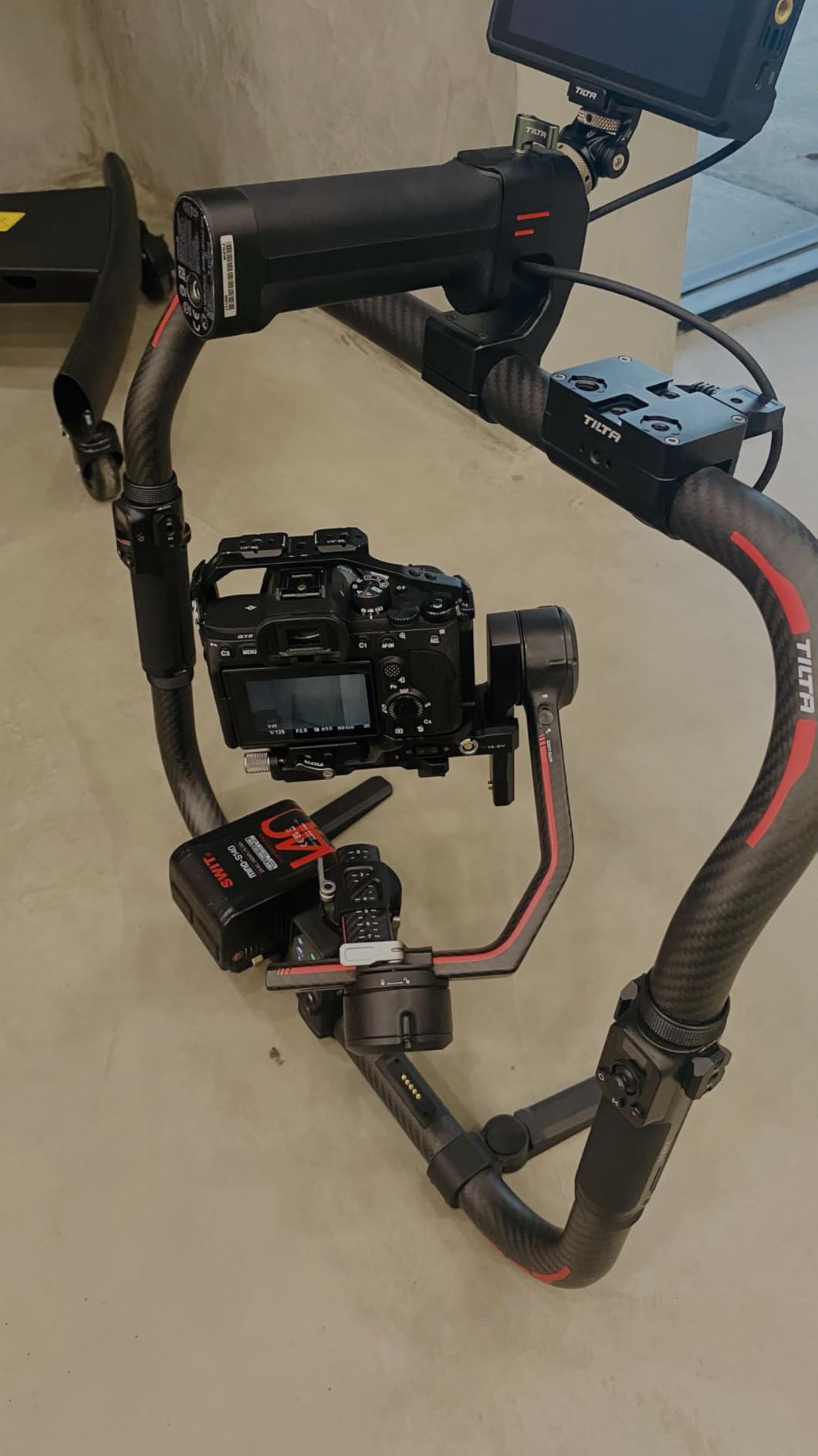
The ring grip mounts your monitor, wireless transmitter, and power supply all in one place. One user described it perfectly: they no longer need to worry about how to rig their monitor, transmitter, and power supply on a gimbal because this is an all-in-one system. That consolidation means fewer cables, fewer failure points, and a cleaner rig.
The battery handle mount supports low-mode shooting where the camera hangs below the gimbal. Multiple power options let you run external batteries for extended shoot days. The ring grip fits DJI RS2, RS3 Pro, RS4, RS4 Pro, and RS5 gimbals. Tilta includes a two-year manufacturer warranty.
Who Should Buy This
This is exclusively for DJI Ronin gimbal operators who want to consolidate focus control, accessory mounting, and stabilization into one system. Wedding videographers, event shooters, and solo operators who run DJI gimbals all day will benefit most. If you do not use a DJI gimbal, this is not the right product for you.
Setup and Compatibility
The ring grip attaches to DJI RS2, RS3 Pro, RS4, RS4 Pro, and RS5 gimbals. Check your gimbal model before ordering. The ring grip screws can loosen during active use, so carry an Allen key and check tightness between setups. Read the product listing carefully to confirm which accessories are included, as some users felt the marketing was misleading about bundled items.
How to Choose the Best Follow Focus System
Choosing the right follow focus comes down to your shooting style, your lens collection, and your budget. I have used mechanical, wireless, and gimbal-mounted systems across dozens of shoots, and the right choice depends on specific factors that most buyers guides skip. Let me break down what actually matters.
Wired vs Wireless: Which Do You Need?
Wired mechanical follow focus units connect directly to your lens through a gear and give you a physical knob to turn. They are simpler, lighter, cheaper, and never run out of battery. Forum discussions on Reddit consistently recommend starting with a wired unit before going wireless, because wired units teach you the muscle memory of focus pulling. If you always operate the camera yourself and can reach the lens, a wired unit is all you need.
Wireless follow focus systems use a motor attached to the lens and a handwheel controller that communicates wirelessly. They are essential when the camera is on a gimbal, a drone, a crane, or positioned where you cannot reach the lens. Wireless systems are also necessary when you have a dedicated focus puller who operates separately from the camera operator. Expect to pay significantly more for wireless, and factor in battery management.
Gear Compatibility and Lens Fit
The most common frustration I hear from filmmakers is follow focus incompatibility with their lenses. Cinema lenses come with built-in 0.8 modulus focus gears, but most photo and mirrorless lenses do not. You will need a gear ring belt that wraps around the lens barrel and provides teeth for the follow focus gear to engage with. Check the maximum lens diameter the follow focus supports before buying.
Most units on this list fit lenses up to 114mm in diameter, which covers the vast majority of consumer and professional glass. If you shoot with very large diameter cinema lenses, verify compatibility. The number of included gear sizes also matters. Units like the Nitze MF15C and Fotga DP500III include three gears, while budget units may include only one.
Build Quality and Damping Feel
Damping is the resistance you feel when turning the focus knob. Good damping makes focus pulls smooth and controllable. Bad damping feels loose, notchy, or inconsistent. The SmallRig F50 and F60 both offer adjustable stepless damping, which lets you match the resistance to each lens. Fixed damping units like the Tilta Pocket use simulated lens damping that feels natural but cannot be adjusted.
Build quality determines how long the unit lasts under daily professional use. Forum users on r/videography consistently report that cheap follow focus systems break under professional conditions. Metal construction, like the Fotga DP500III and Nitze MF15C, outlasts plastic alternatives. Look for zero-backlash designs, because backlash causes inconsistent focus pulls that ruin takes.
A/B Stops and Focus Marks
A/B hard stops let you preset two focus points and lock them physically on the follow focus. When you rotate between the stops, you hit your marks exactly every time. This is essential for narrative work where actors hit specific positions and you need repeatable focus pulls across multiple takes. Every unit on this list includes A/B stops.
Marking disks give you a surface to write focus marks with an erasable marker. Some shooters mark multiple positions for complex focus pulls across several subjects. The Nitze MF15C includes two magnetic marking disks, while other units include one or none. Focus whips and speed cranks are accessories that extend your reach or speed up focus changes, and some units like the Fotga include a speed crank in the box.
Budget Considerations
Follow focus systems range from fifty-nine dollars for the Tilta Pocket to eight hundred for the Tilta Advanced Ring Grip. For beginners and hobbyists, the under-seventy-dollar bracket delivers excellent value with the SmallRig 3010, Tilta Pocket, and Neewer PG001. For working professionals who need wireless control, the SmallRig Wireless Lite and Tilta Nucleus Nano II hit the sweet spot between price and capability.
Remember to budget for accessories you may need. A camera cage with 15mm rod support is required for most mechanical units. Additional gear ring belts may be needed for lenses of different diameters. Wireless systems may need extra batteries or motor mounting brackets. Factor these into your total cost when comparing options.
Frequently Asked Questions
Does follow focus work with all lenses?
Follow focus systems work with most lenses, but compatibility depends on gear type. Cinema lenses with built-in 0.8 modulus gears connect directly. Photo and mirrorless lenses need a gear ring belt wrapped around the focus barrel. Most follow focus units fit lenses up to 114mm in diameter. Check your lens barrel diameter and the maximum lens size the unit supports before buying.
What brand has the best autofocus?
For follow focus systems specifically, Tilta and SmallRig are the dominant brands in 2026. Tilta leads the wireless market with the Nucleus series, while SmallRig dominates the mechanical market with multiple models across price points. NEEWER and Fotga offer strong budget alternatives. For camera autofocus, Sony, Canon, and Panasonic lead the industry, but that is separate from follow focus systems.
Which autofocus is best?
Camera autofocus is different from follow focus systems. The best camera autofocus systems in 2026 come from Sony (real-time eye AF), Canon (Dual Pixel CMOS AF II), and Panasonic (phase-detect hybrid). However, for professional video work where you need precise, repeatable focus control, a dedicated follow focus system outperforms any camera autofocus because you control every focus transition manually.
Is there a camera that follows your movement?
Camera tracking systems use AI-powered subject detection to follow movement, but this is autofocus, not follow focus. Cameras like the Sony A1, Canon R5, and Panasonic S5II have advanced subject tracking. For professional focus control during movement, a wireless follow focus system like the Tilta Nucleus Nano II gives a dedicated operator manual control over focus, which produces more intentional and cinematic results than automated tracking.
Do I need a follow focus for filmmaking?
You need a follow focus if you shoot at wide apertures with shallow depth of field, work with a dedicated focus puller, operate the camera on a gimbal or crane, or need repeatable focus marks across multiple takes. If you shoot casual content on autofocus with deep depth of field, you probably do not need one yet. Most filmmakers add a follow focus when they start doing intentional focus racks in narrative or commercial work.
Conclusion
After testing all 10 systems, the SmallRig Mini Follow Focus 3010 remains our top overall pick for the best follow focus systems in 2026. It delivers professional damping, solid build quality, A/B hard stops, and a complete accessory kit at a price that works for beginners and working professionals alike. For wireless control, the SmallRig Wireless Follow Focus Kit Lite offers the best value with 21-hour battery life and one-click calibration. And if you need full FIZ control on narrative sets, the Tilta Nucleus Nano II is the system that will grow with your career.
Pick the follow focus that matches your shooting style, your lens collection, and your budget. Then get out there and start pulling focus like the pros do.