
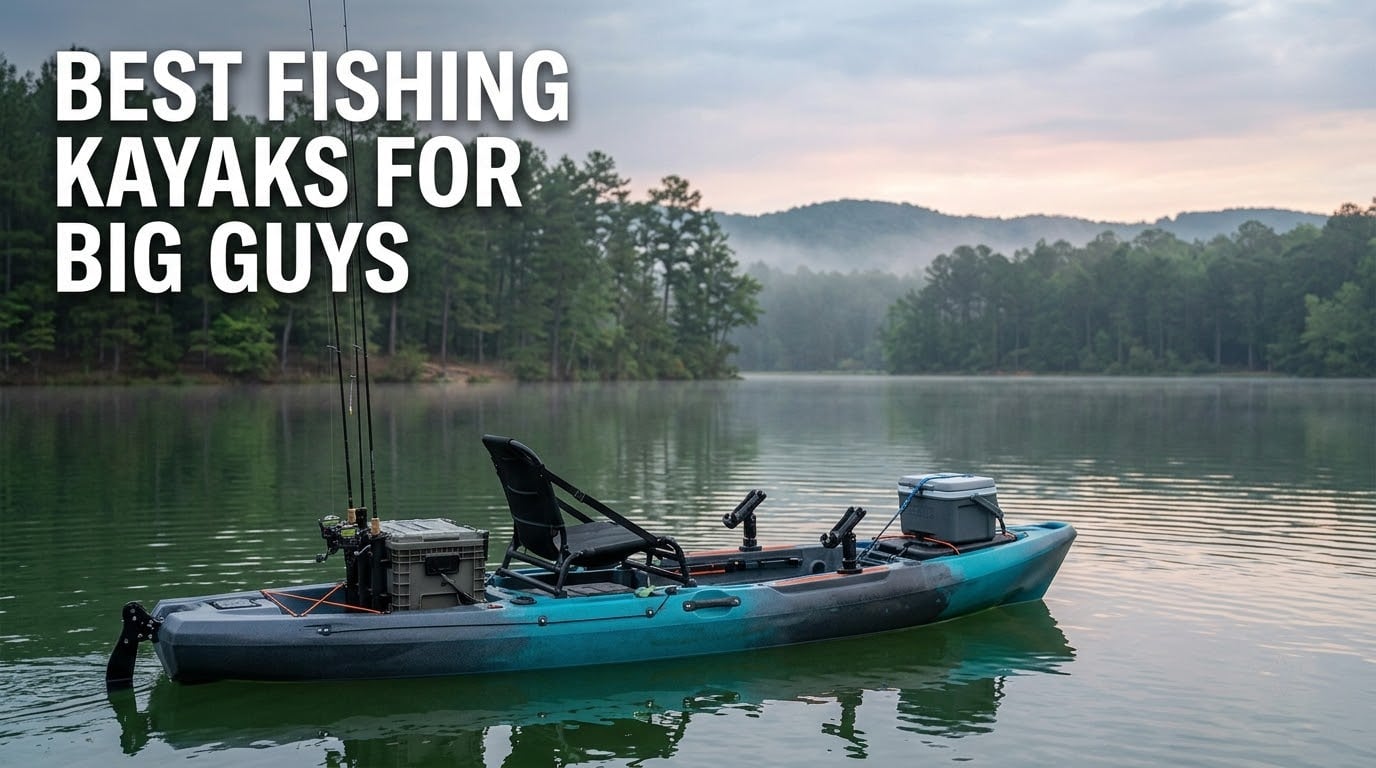
The best fishing kayaks for big guys are wide, high-capacity angling hulls with an elevated adjustable seat. Look for three numbers: 400 lb of rated capacity or more, a beam of 34 in or wider, and a frame or stadium seat that adjusts to your leg length. Standard spec sheets assume a paddler near 180 lb, so anything rated below 300 lb will feel cramped and wet long before the day is done.
Those three specs decide everything, and they are why our top three are the Pelican Catch Mode 110 at 375 lb rated capacity on a 34.5 in beam, the Perception Outlaw 11.5 at 425 lb on a 35 in beam, and the BKC Brooklyn 12.5 Pro at 550 lb. Each one solves the same problem in a different way: width for standing casts, length for gear and range, and raw headroom for a heavy load.
I spent weeks cross-checking spec sheets against owner reviews for twelve angling kayaks, focusing on the details that matter after you are loaded with a tackle crate, a cooler and a battery for a fish finder. Weight capacity, beam width and seat height decided the ranking. Boat weight decided whether you can launch it at all, which is a bigger problem than most reviews admit. If you want the short version first, our general fishing kayak roundup covers the mainstream picks.
Top 3 Picks for Big Anglers in 2026
Best Fishing Kayaks for Big Guys in October
| Product | Specifications | Action |
|---|---|---|
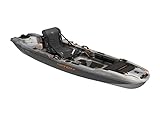
| Pelican Catch Mode 110 |
|
Check Latest Price |
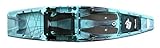
| Perception Outlaw 11.5 |
|
Check Latest Price |
 Reel Yaks Raptor Reel Yaks Raptor |
|
Check Latest Price |
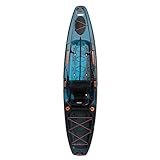 Lifetime Yukon Angler 116 Lifetime Yukon Angler 116 |
|
Check Latest Price |
 BKC Brooklyn 12.5 Pro BKC Brooklyn 12.5 Pro |
|
Check Latest Price |
 Pelican Catch Classic Angler Pelican Catch Classic Angler |
|
Check Latest Price |
 Lifetime Tamarack Angler 100 Lifetime Tamarack Angler 100 |
|
Check Latest Price |
 Pelican Sentinel 100X Pelican Sentinel 100X |
|
Check Latest Price |
 Reel Yaks Radar Reel Yaks Radar |
|
Check Latest Price |
 Reel Yaks Rapido Reel Yaks Rapido |
|
Check Latest Price |
 Albott Modular Fishing Kayak Albott Modular Fishing Kayak |
|
Check Latest Price |
 Old Town Sportsman PDL 106 Old Town Sportsman PDL 106 |
|
Check Latest Price |
1. Pelican Catch Mode 110 – Best Overall for Big Anglers
Pelican Catch Mode 110 Fishing Kayak – Premium Angler Kayak with Lawnchair seat, Granite – 10.5 Ft.
Capacity: 375 lb
Beam: 34.5 in
Boat weight: 67 lb
Length: 10 ft 8 in
Pros
- Tunnel hull holds steady standing to cast
- 375 lb rating with gear loaded
- Ergoboost seat folds flat and adjusts in height
- Two 4 in rigging tracks and three rod holders
Cons
- Wide tunnel hull paddles slowly
- Skeg can pop out of its mount after bumps
- Deck flexes for paddlers over 200 lb
This is the boat I kept coming back to while comparing the group, because it does the three things that matter most for a heavier angler without asking you to compromise on anything else. A 36 in cockpit sits you inside a hull wide enough that standing to cast feels ordinary rather than adventurous. Owners running 230 lb and 260 lb report no stability concerns at all.
The Ergoboost seat adjusts in height and the EVA pad stays comfortable through a full day, which matters when a molded foam seat would normally have your hips complaining by hour three. Under-seat storage and the two 4 in rigging tracks swallow a tackle crate and a cooler without crowding the deck.
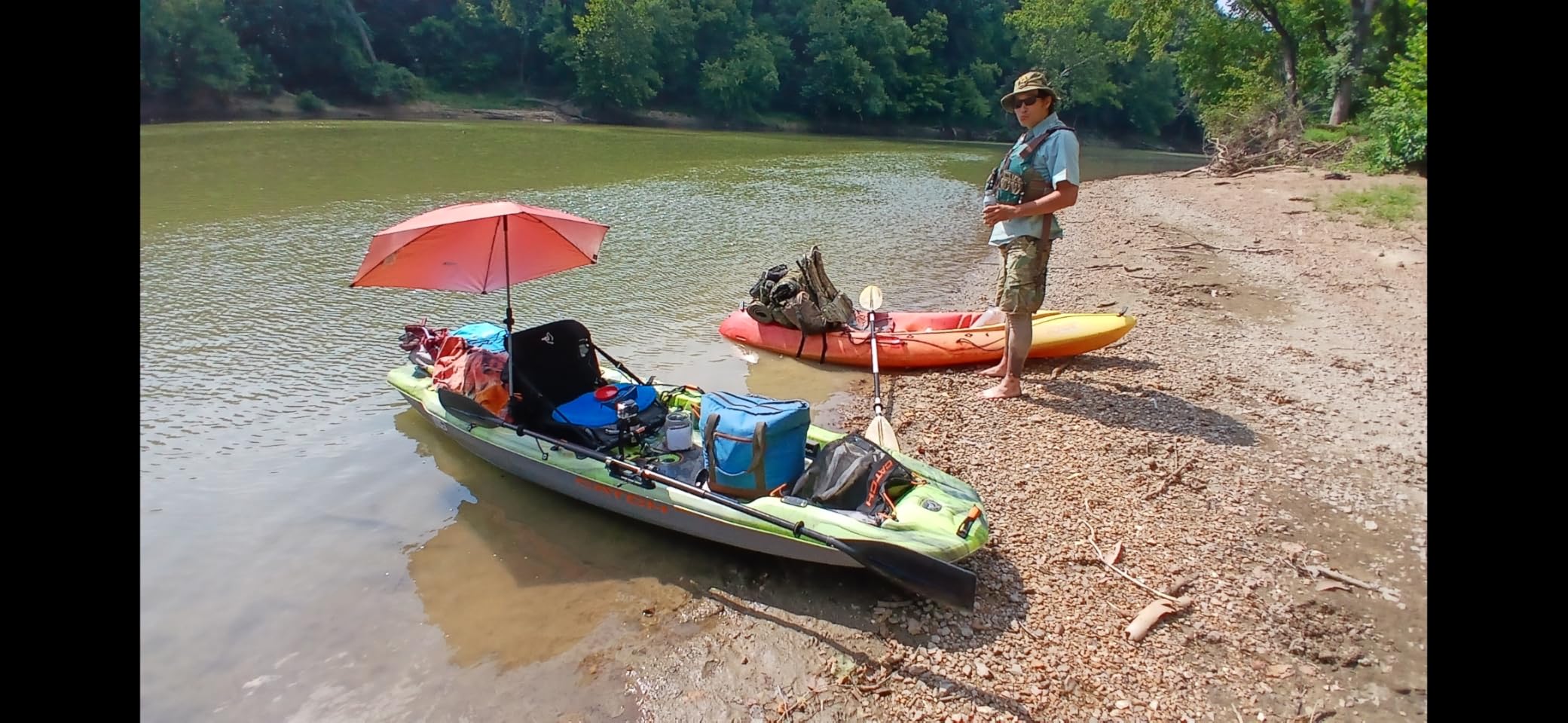
Two 4 in tank wells, three flush-mount rod holders and anti-slip deck carpet complete the angler package, and the extra internal flotation is built to meet or surpass ABYC standards. Pelican backs it with a lifetime limited warranty against manufacturer defects and a year on parts and accessories.
The listed weight is not consistent across the listing: 63 lb in the bullet points, 67 lb in the spec sheet. Plan on the higher figure.
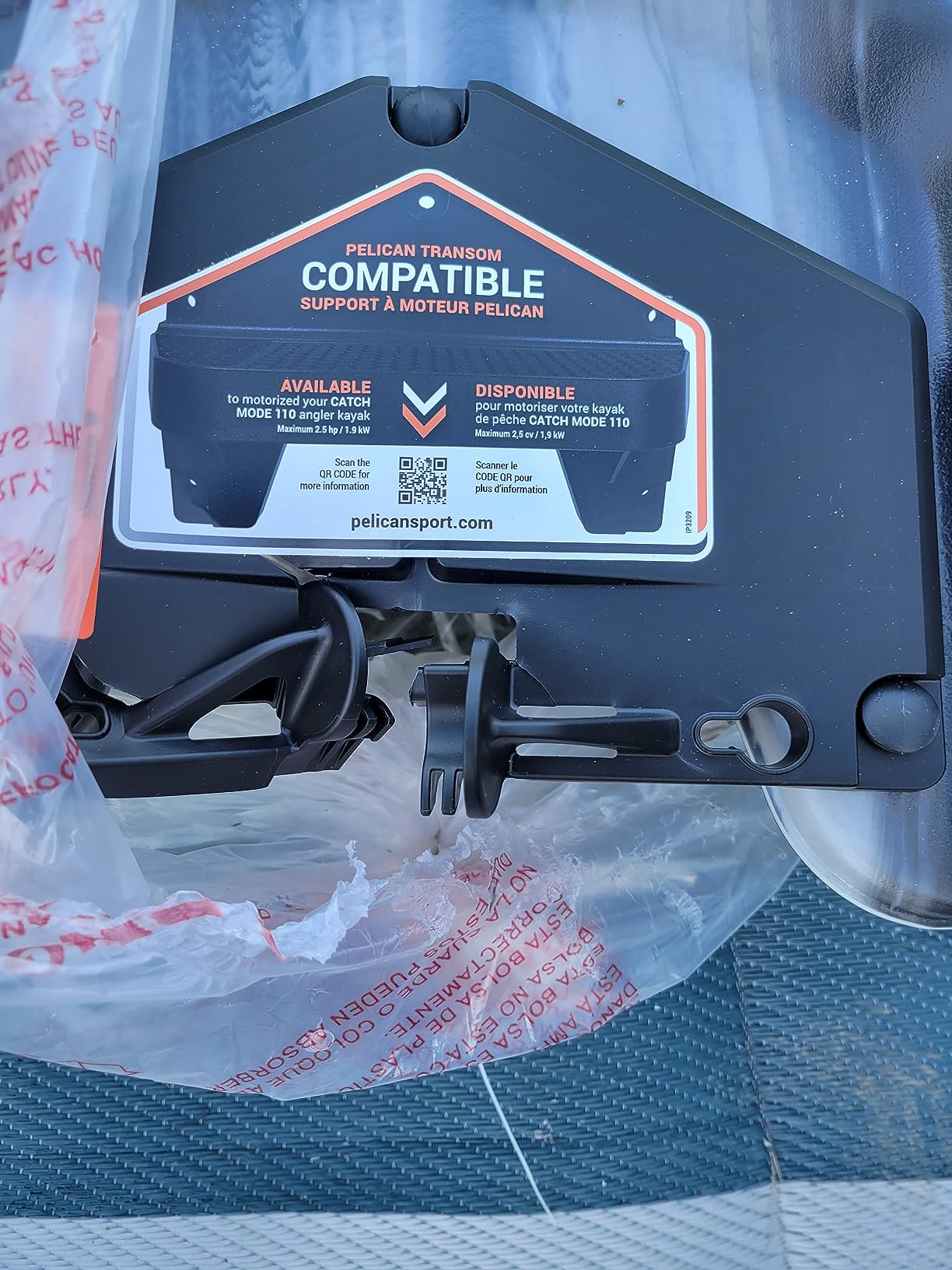
What you will notice on the first trip
You will feel the width immediately, and not in a bad way. The tunnel hull resists the side-to-side wobble that makes people nervous in narrower boats, so casting from a seated position does not require constant micro-corrections.
The trade-off is speed. A 10 ft 8 in hull this wide pushes a lot of water and will not win races against a narrower 10 footer. For a big angler cruising to a spot and fishing all day, that is a fair trade.
Where it falls short
Owners report the skeg popping out of its mount after bumping rocks or submerged timber, and it has to be reset before you get straight tracking back. If you fish shallow, weedy water, check it each launch.
At 67 lb it needs a cart for anything beyond a short carry. Handles can strain on a solo shoulder carry, and more than one reviewer pairs it with a kayak cart. Our tandem kayak guide covers the alternative if you need a hull that splits for carrying.
2. Perception Outlaw 11.5 – Best Premium Sit-On-Top for Heavy Loads
Perception Kayaks – Outlaw 11.5 Fishing Kayak – Sit on Top – Fold Away Lawn Chair Seat – 4 Rod Holders – Integrated Tackle Trays – 11.5 ft – Dapper
Capacity: 425 lb
Beam: 35 in
Boat weight: not listed
Length: 11 ft 6 in
Pros
- 425 lb rating with a 35 in beam
- Fold-away frame seat for long sessions
- Four integrated rod holders
- Large rear tank well and front storage
Cons
- Heavier than 9 and 10 foot rivals
- Roof rack or trailer needed in practice
- Thinner owner feedback than category leaders
The Outlaw 11.5 solves capacity with length instead of width, and that is a smart trade for anyone whose real problem is gear volume rather than knee room. At 11 ft 6 in with a 425 lb rating, it takes a loaded cooler, a crate and a battery without the deck looking like a hardware store.
The fold-away frame seat is the feature owners mention most. It folds up when you want to stand and drops back down for long sits, and the frame geometry keeps hips and knees spread rather than pinched in a molded shell.
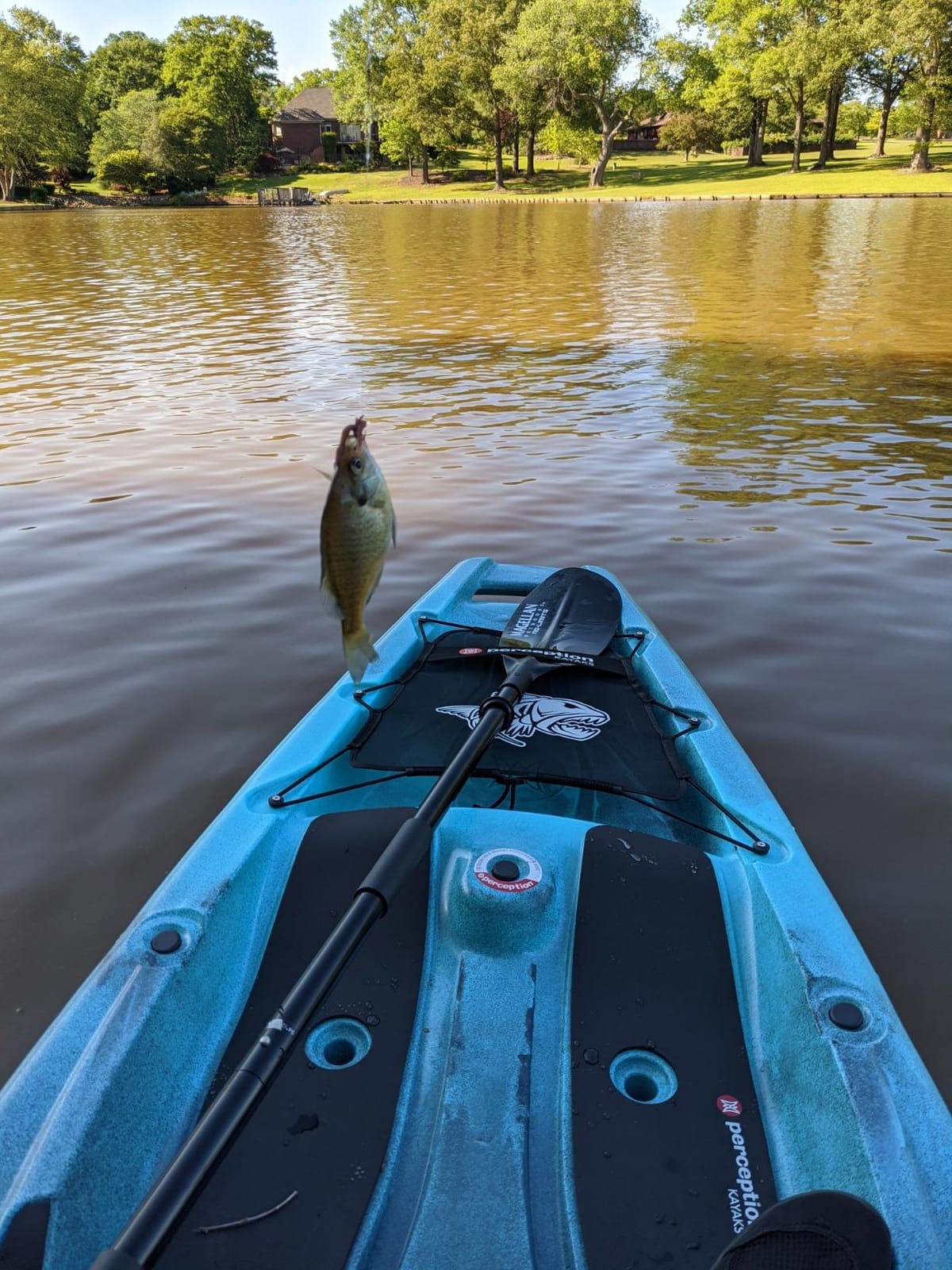
Four integrated rod holders and integrated tackle trays are moulded in rather than clamped on, so nothing shifts when you lean over a side. Made in the USA with a five-year hull and deck warranty and one year on installed accessories.
Capacity here is genuinely useful headroom rather than a headline number, since you plus gear rarely approaches 425 lb.
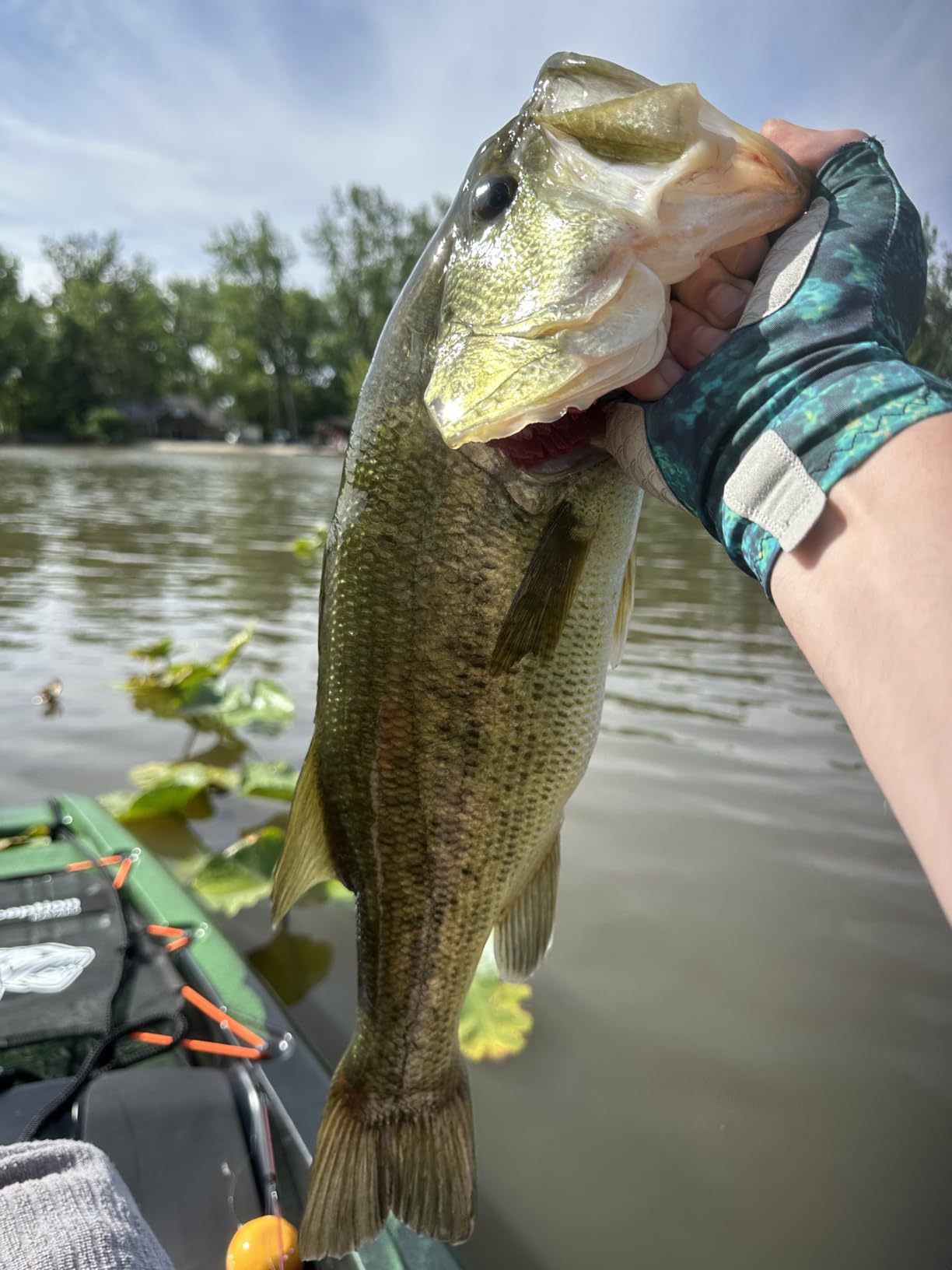
What you will notice on the first trip
This boat tracks well for its size. A longer hull with a defined bow line keeps a straight line when you stop paddling, which is a nice change from the wide short boats in this roundup.
The deck space is the reason to buy it. Fishers running heavy loads describe the rear tank well and front storage as the first places they could put a real tackle crate.
Where it falls short
Size is the honest drawback. At 11 ft 6 in this is not a car-back-of-seat boat, and the manufacturer does not list a boat weight, so you are planning a roof rack or trailer rather than a solo shoulder carry.
Owner feedback on this listing is thinner than the category leaders, so you are buying on a well-established boat and a five-year warranty rather than on a deep recent review history.
3. Reel Yaks Raptor – Best Value Pedal Drive You Can Carry Alone
Reel Yaks Raptor Modular Fishing Kayak, Fin Drive 9.5ft, 380 lbs Capacity
Capacity: 380 lb
Beam: 30.3 in
Boat weight: 62 lb
Length: 9.5 ft
Pros
- Two-piece halves fit in an SUV trunk
- Fin drive is quiet and efficient
- W-hull gives solid casting stability
- Spare parts easy to source
Cons
- Rudder control wires and ferrules break easily
- Low-slung seat with no height extender
- Included paddle is basic
If your problem is getting a pedal kayak to the water and into a small building, the modular answer solves more than the specs suggest. The Raptor splits into two sections with internal carry handles, so it goes in a trunk without a roof rack and stands in a closet between trips.
At 380 lb capacity with a fin pedal drive, it also removes shoulder fatigue on long paddle days. Fin drives are quiet, weed-resistant and simpler to maintain than propellers, which matters if you fish shallow water often.
For angling there is an aluminium T-rail accessory track, a flush-mount rod holder and storage hatches in both sections. An optional centre module converts the layout to a tandem if your fishing partner later joins you, and our pedal kayak guide covers the drive options in more detail.
Warranty is one year on the hull, which is the shortest in this roundup.
What you will notice on the first trip
Assembly takes minutes and the seam between the two halves is barely noticeable once the pin connections are torqued. Owners fishing rocky shorelines report the hull holds up well after repeated launches.
The wide W-hull keeps you steady while casting even though the beam is narrower than the tunnel-hull boats here. You feel the difference more in wind and chop than on flat water.
Where it falls short
Rudder hardware is the recurring complaint: multiple reviews report the guide screw snapping or the control wires breaking within a season, which puts the rudder out of service. Check the cables before every trip.
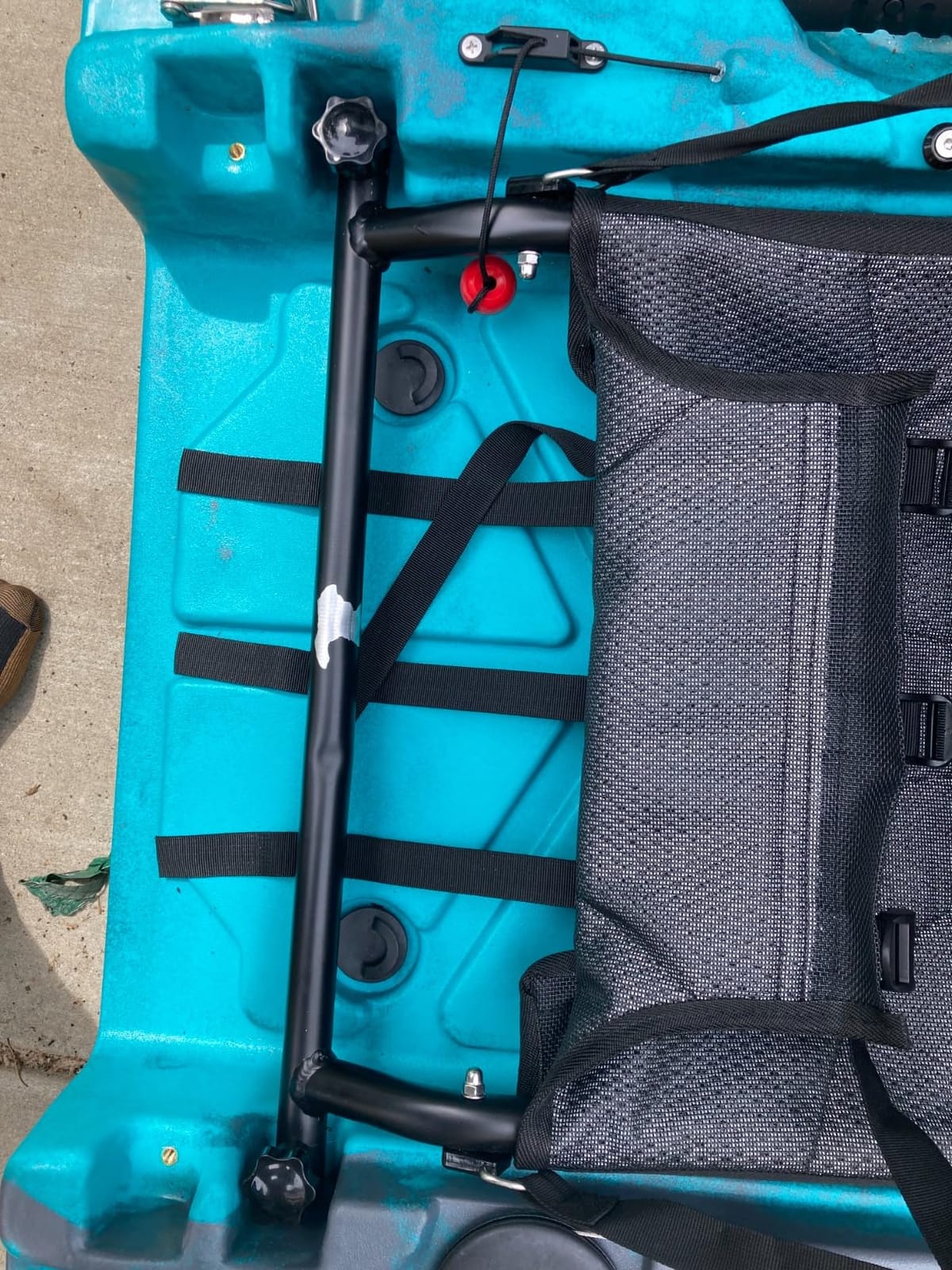
The supplied stadium seat sits low and there is no height extender offered, which taller and heavier paddlers describe as tight. Budget for a seat booster or an elevated seat solution before a full day on the water.
4. Lifetime Yukon Angler 116 – Best for a Feature-Packed Deck
Lifetime Fishing Kayak, Yukon Angler 116
Capacity: 350 lb
Beam: 32 in
Boat weight: 78 lb
Length: 11 ft 6 in
Pros
- Adjustable frame seat with two positions
- High initial stability hull and stability strap
- Two 12 in Universal Track sections
- Eight self-bailing scupper holes
Cons
- 78 lb is heavy for solo handling
- Paddle and rudder sold separately
- 32 in beam is narrow for its capacity
The Yukon Angler 116 has the most complete factory spec sheet of anything we reviewed, which makes it the easiest boat to build a full fishing setup on. Two 12 in sections of Universal Track accept almost any accessory mount, and the front scuppers accept most scupper transducers for a fish finder.
The adjustable frame seating system switches between a high setting for fishing and paddling and a reclined setting for sitting back, so one seat covers both halves of the day. A moulded-in 28 in fish ruler is a small touch that tells you the angler was part of the design brief.
A stability strap helps with stand-up casting, eight self-bailing scupper holes keep the deck draining after a splash, and the hull is rudder-ready for an aftermarket install. Five-year limited warranty.
Its rating distribution is unusually clean, with no one-star reviews in the pool, which is a good sign for a boat this size.
What you will notice on the first trip
The high initial stability hull feels planted when you shift weight or reach for a rod. The 350 lb rating on an 11 ft 6 in hull is one of the better size-to-capacity ratios in the group, so you are not carrying dead length.
Universal Track is the quiet hero. It means adding a rod holder, a holder for a net and a light later costs nothing in drilling.
Where it falls short
At 78 lb the boat is one of the heavier hulls here, so a quality wheel set or a second pair of hands is close to mandatory. That is exactly the kind of limit that catches people out at the ramp.
The 32 in beam is narrower than the 34 to 36 in heavy-capacity models, so it is a boat for seated casting with a strap rather than for standing free. Paddle and rudder are separate purchases.
5. BKC Brooklyn 12.5 Pro – Best for Range on Foot Power
BKC Brooklyn 12.5 Pro Pedal Fishing Kayak, Propeller Drive
Capacity: 550 lb
Beam: 35 in
Hull: HDPE sit-on-top
Length: 12.5 ft
Pros
- 550 lb rating with a 35 in beam
- Propeller drive covers long distances quietly
- Two watertight hatches with dry bag inserts
- Adjustable aluminium frame seat
Cons
- Pedal drive parts fail over time
- Rudder needs a hand to hold a line
- Drive must be raised in shallow water
This is the only 550 lb rated hull in the roundup, and that headroom is the entire point. Paddlers who run a heavy battery, a large crate and a trolling motor have to add those numbers before choosing a boat, and most hulls in this class stop around 400 lb.
At 12.5 ft with a propeller drive and a 35 in beam, it is a genuine day-tripper on foot power. Owners log long distances while trolling without switching to a paddle.
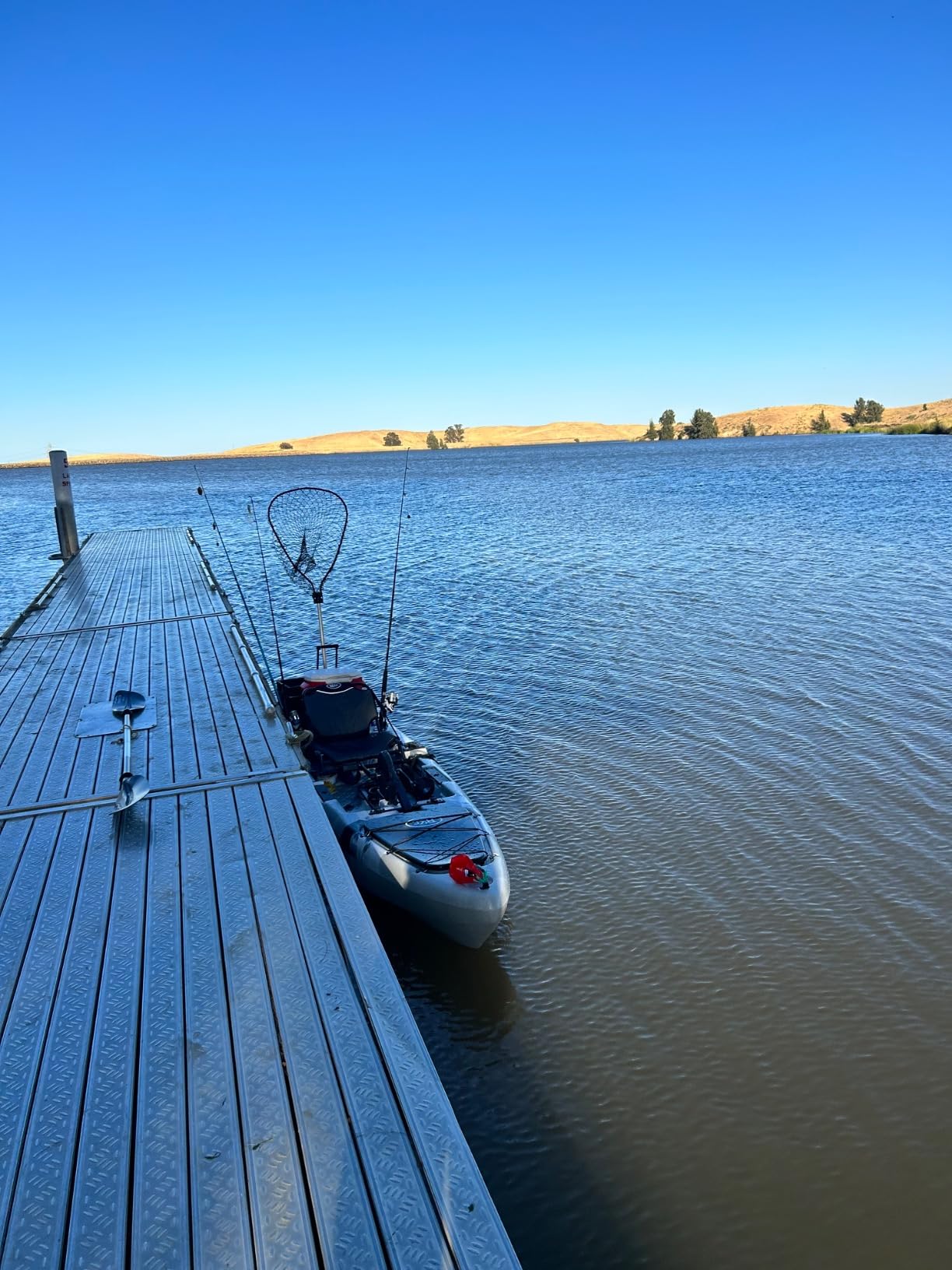
Dual watertight hatches with dry bag inserts keep electronics and spare clothing dry, three flush-mounted rod holders sit within reach, and the adjustable aluminium frame seat spreads your legs properly. Four built-in handles and a paddle park help with loading. Five-year warranty.
One caution on the listing: the listed item weight of 5 lb refers to the accessory component, not the hull.
What you will notice on the first trip
The first thing you notice is how little effort it takes to cover water. The propeller drive is smooth and quiet, and the hand-controlled rudder gives sharp maneuvering when you are moving at speed.
For a big angler, sitting in a 12.5 ft hull with a 35 in beam feels open rather than enclosed. Knee and hip pressure, the most repeated complaint in this category, is much less of an issue at this length.
Where it falls short
Pedal drive reliability is the dominant theme in the reviews. Locks and housings break, some units arrive mis-manufactured, and replacement can turn into a long exchange with the manufacturer. Budget time and patience for that possibility.
The rudder does not hold a straight line unless you keep a hand on the control, and the drive has to be raised in shallow water and for launching and landing. Standing stability is also more limited than on the wide pontoon-style hulls.
6. Pelican Catch Classic Angler – Most Versatile for Bigger Anglers
Pelican Catch Classic 100 Angler – Sit-on-Top Fishing Kayak – Ergocast Dual Position Seating System – 10 ft – Outback
Capacity: 350 lb
Beam: 34 in
Boat weight: 57 lb
Length: 10 ft
Pros
- Tunnel hull with a wide casting deck
- Dual position seat sits high or low
- Light enough for one person to lift
- Two rigging tracks and a quick-lock hatch
Cons
- Weakest rating distribution of the Pelicans
- 350 lb leaves less margin than the Catch Mode
- Accessories sold separately
The Catch Classic Angler is the sensible middle of the Pelican angler line and the least expensive way into a 350 lb rated tunnel hull with a 34 in beam. For a paddler around 300 lb with a moderate gear load, the numbers work without any drama.
The ERGOCAST Classic dual position seat is the feature that changes the day. Sitting high for casting and dropping low for comfort means you are not choosing between a stable cast and a comfortable rest.
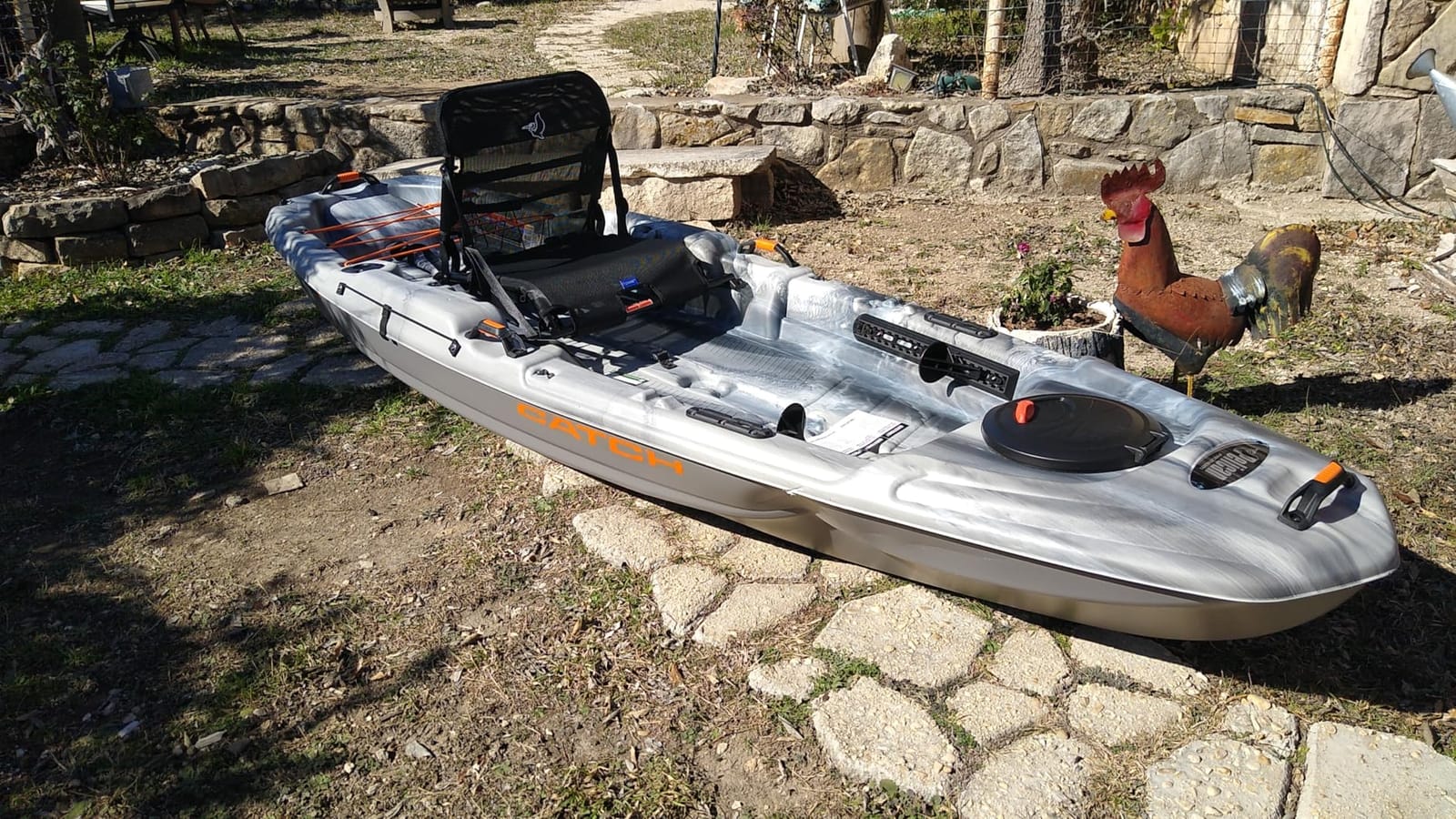
A front quick-lock hatch, a rear tank well with bungee lacing, two 4 in rigging tracks, two flush-mount rod holders, adjustable footrests and a bottle holder give you a complete platform. At 57 lb with ergonomic carrying handles, it is light for a 10 ft fishing kayak.
Pelican adds a lifetime limited warranty against manufacturer defects and one year on parts and accessories.
What you will notice on the first trip
The tunnel hull gives a secure, steady ride and easy entry and exit, which matters more than it sounds when you are climbing in and out of a loaded boat in shallow water.
Owners like the carry weight most. If you are launching from a shoreline rather than a dock, 57 lb is a boat one person can move without planning the day around the lift.
Where it falls short
The rating distribution is the weakest of the three Pelican models here, with a 12 percent share of one-star reviews. Something is not landing for a segment of buyers, and the customer feedback on this listing is thinner.
At 350 lb it also gives less margin than the Catch Mode 110 at 375 lb. If you are heavier than 300 lb, prefer the wider boat with the higher rating. Rudder and other accessories are separate purchases.
7. Lifetime Tamarack Angler 100 – Best When Carry Weight Decides It
Lifetime Muskie Angler Sit-On-Top Kayak with Paddle, Tan, 120″
Capacity: 275 lb
Beam: 31 in
Boat weight: 51 lb
Length: 10 ft
Pros
- Light enough to load solo on a roof rack
- Stable flat bottom holds well in chop
- Three rod holders and two storage compartments
- Five-year limited warranty
Cons
- 275 lb rating is low for heavy paddlers
- Seat connector clips bend under load
- Supplied paddle is short and flimsy
At 51 lb, this is one of the few fishing kayaks here that a single person can genuinely lift onto a car by themselves. If your storage and transport situation is the binding constraint, that one fact can outweigh a hundred pounds of extra capacity.
The flat bottom is stable for its size and owners report it handling choppy water and rough launching better than expected. A sharp bow and a skeg keep it tracking, and multiple footrest positions let you set the pedal distance to your legs.
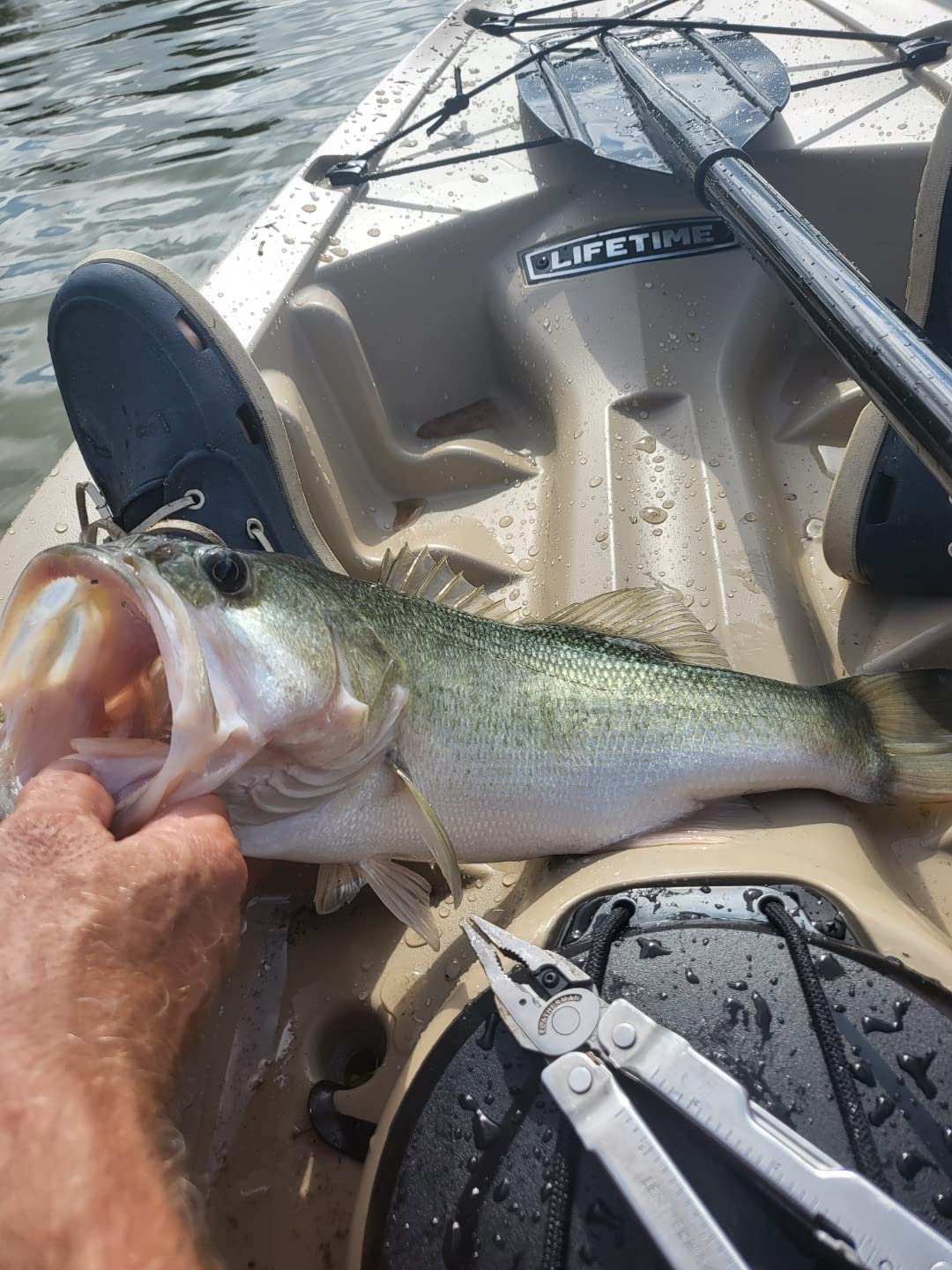
Two flush-mount rod holders, one top-mount holder, two 6 in storage compartments, a paddle keeper and front and rear T-handles make it a complete beginner package. The paddle is included, which removes one more purchase. UV-protected HDPE with a five-year limited warranty.
Roughly three quarters of the ratings on this listing are five-star, one of the strongest distributions we saw.
What you will notice on the first trip
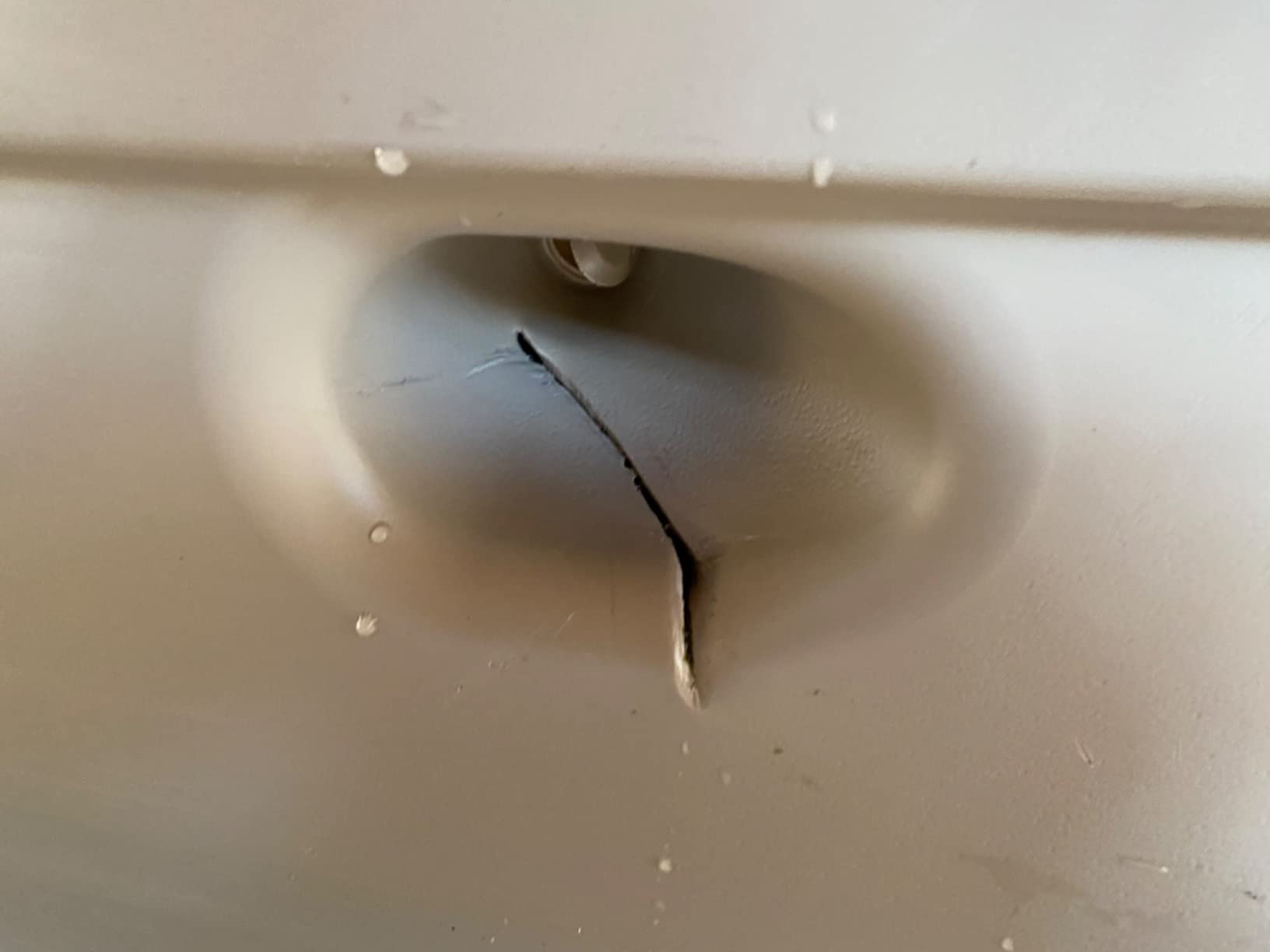
The boat is tough. Owners report dogs, rocks and tree collisions without a leak, which is the sort of durability you want when the boat lives in a truck bed.
Tracking is the weak point. It does not hold a straight line when you stop paddling and tends to veer, so treat it as a boat to paddle deliberately rather than one that runs itself.
Where it falls short
The 275 lb rating is the number that ends this conversation for many big anglers. Add a cooler, a battery and a crate and you are close to the limit before you start, and a boat that sits too low in the water paddles wet.
The moulded seat connector clips bend out of their slots under load, moulded plastic debris sometimes needs vacuuming out of the hull before first use, and the supplied paddle is short and flimsy. Most owners replace the seat with a stadium seat anyway.
8. Pelican Sentinel 100X – Best for Apartment Storage and Small Cars
Pelican Sentinel 100X Angler Fishing KayakSit-on-Top KayakLightweight one Person Kayak9.6 ft
Capacity: 275 lb
Beam: 29.92 in
Boat weight: 44 lb
Length: 9 ft 6 in
Pros
- 44 lb fits in a sedan with seats folded
- ErgoLounge seat and adjustable backrest
- ExoPak removable storage compartment
- Multi-chine flat bottom for casting
Cons
- 275 lb rating is the lowest here
- 29.9 in beam is narrow
- Narrower beam makes standing casts tight
The Sentinel 100X answers a question most roundups ignore: what can you keep in a flat and still carry alone. At 44 lb and 9 ft 6 in, it fits in a sedan with the rear seats folded and stands against a wall in a small apartment.
Buyers describe it as the best value in the 9 foot sit-on-top class, and build quality is compared favourably against models costing much more. The patented Ram-X material is built for years of service and the boat carries a lifetime limited warranty.
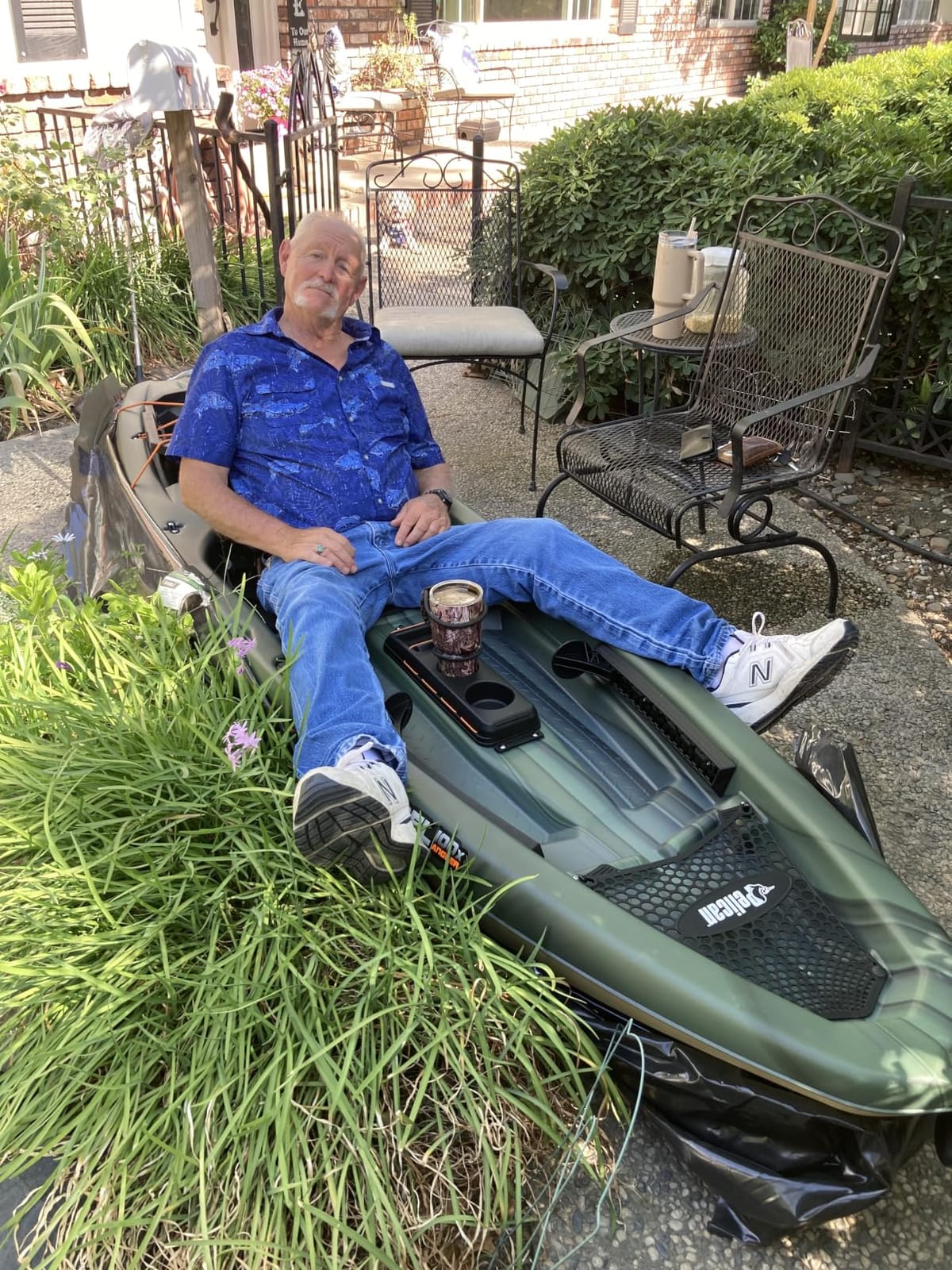
The multi-chine flat bottom gives casting stability, the ErgoLounge seat and adjustable backrest fit a range of sizes, and the centre console plus the removable ExoPak compartment turn the tank well into usable storage. Two flush-mount rod holders and a mesh-decked front platform round out the angler features.
Additional internal flotation is built in to meet or surpass ABYC standards.
What you will notice on the first trip
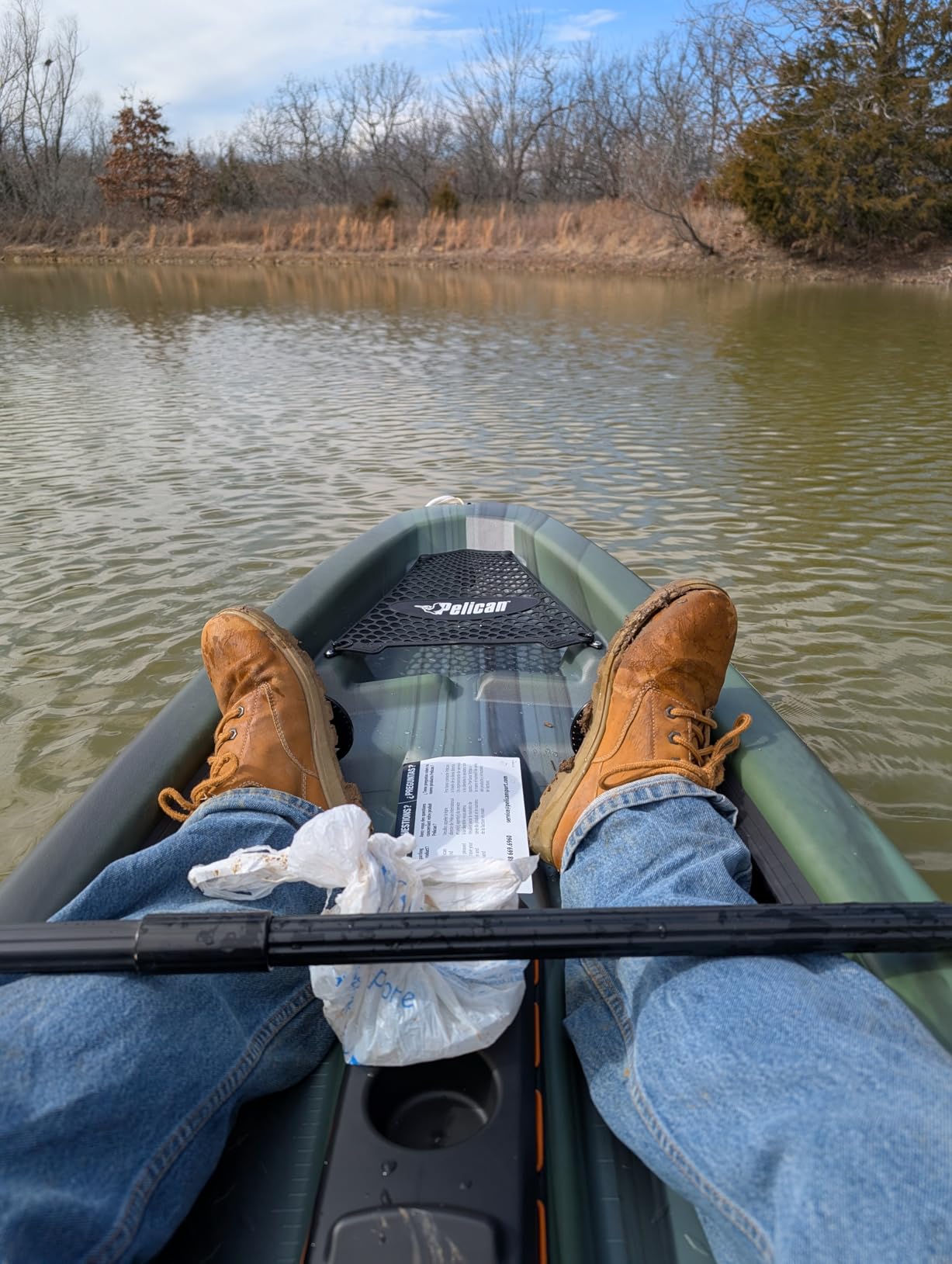
It feels bigger than 9 ft 6 in suggests, largely because the cockpit is open and the deck is uncluttered. The adjustable backrest makes long sits workable for a wide range of body sizes.
Loading it solo is the daily difference. At 44 lb it still carries a noticeable weight over distance, and several owners pair it with a kayak cart, but it is a one-person job.
Where it falls short
At 29.92 in it is the narrowest beam here, and owners report standing to cast feels tight. If standing casts are part of your routine, this is the wrong shape for you.
The 275 lb rating is the real limit for a big angler, and some owners also report wobble in the water. Treat this as a lightweight boat for a lighter paddler, not a capacity solution.
9. Reel Yaks Radar – Best for Tight-Spot Maneuvering
Reel Yaks Radar Modular Fishing Kayak, 10ft, 430 lbs Capacity
Capacity: 430 lb
Beam: 33 in
Boat weight: 88 lb
Length: 10 ft
Pros
- 430 lb capacity on a 33 in beam
- Propeller drive with instant reverse
- Modular halves fit in a car
- Best rating of the Reel Yaks trio
Cons
- 88 lb is heavy across two sections
- Listing and spec sheet disagree on capacity
- Modular add-ons are costly
The Radar is the shorter of the two larger Reel Yaks modular boats, and its propeller drive with instant forward and reverse is what buyers cite first. Working a tight spot between stumps or along a weed line without paddling is far easier when you can back into position.
At 430 lb on a 33 in beam, it also solves the capacity question for paddlers in the high threes and low fours, and it splits into two sections for storage.
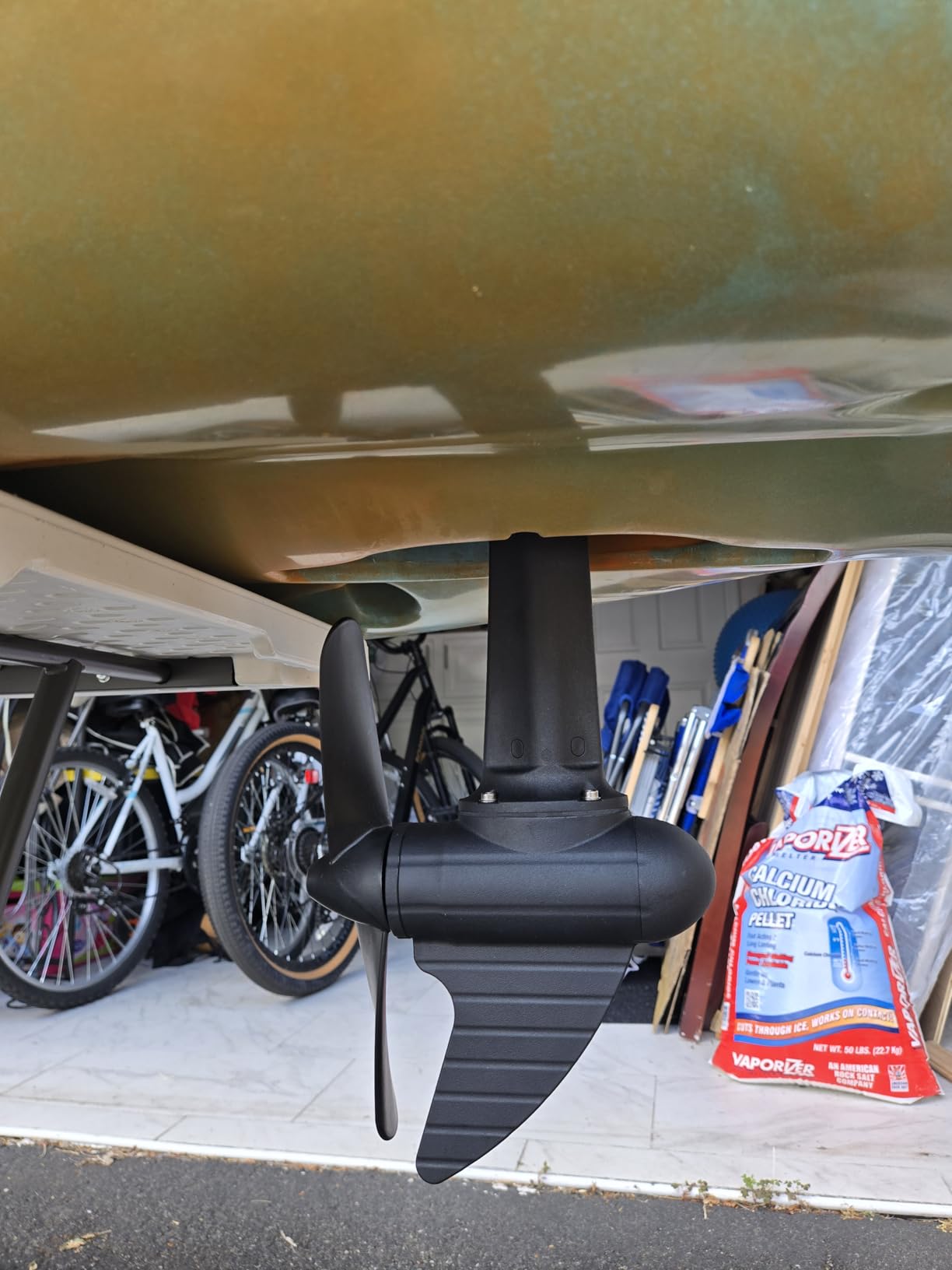
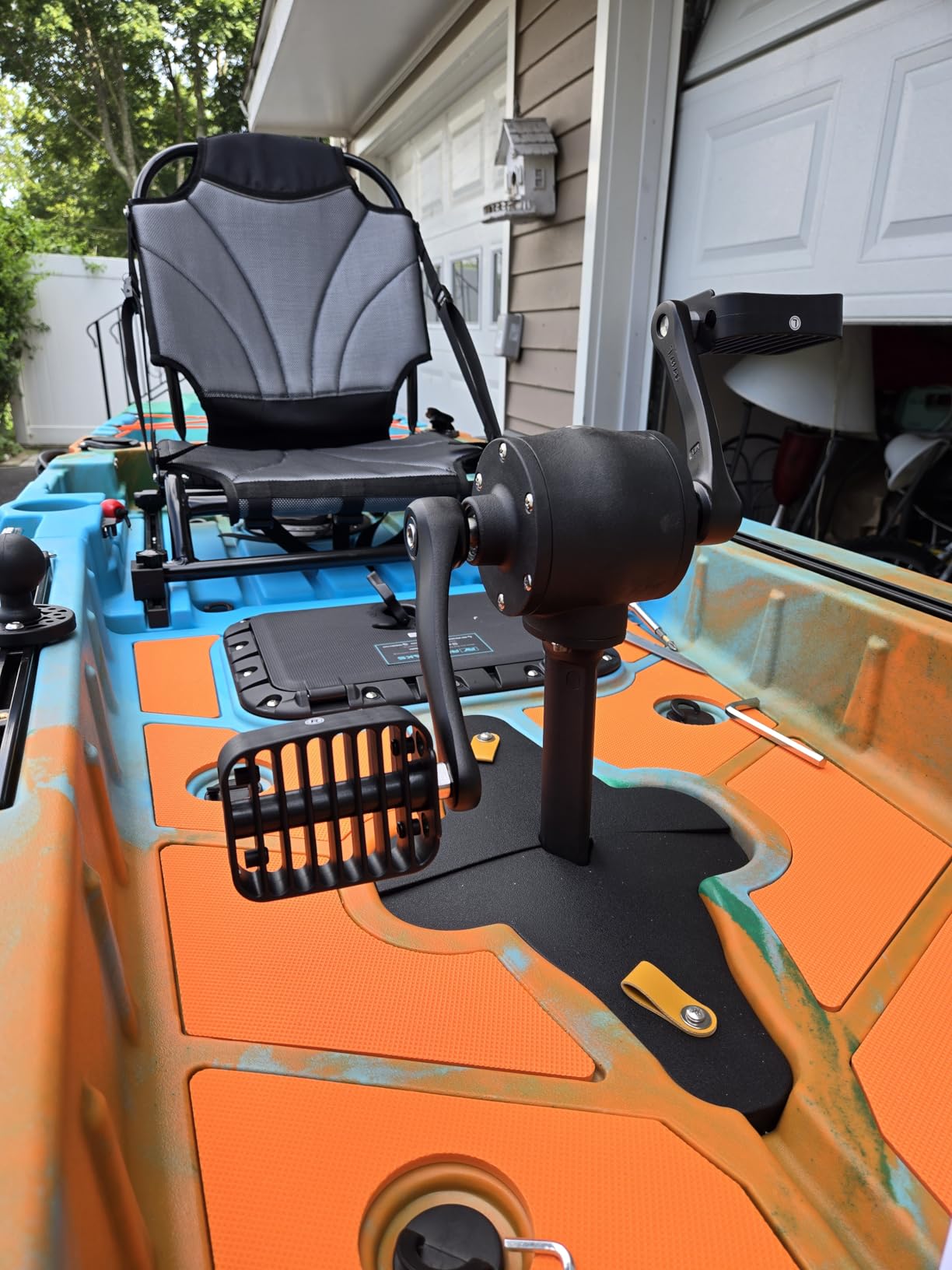
A 360 rod holder, track rails and storage hatches cover the angler basics, and the stadium seat gives a more upright position than a low plastic saddle. Two-year hull warranty.
One thing to check before you buy: the listing copy references 440 lb while the spec field states 430 lb. We have used the spec figure here.
What you will notice on the first trip
The reverse function is the feature you will miss most once you have used it. Positioning a heavy boat by paddling alone is slow and tiring, and the drive removes that friction entirely.
This is the best rating distribution among the Reel Yaks models here, so the ownership experience appears consistent rather than polarised.
Where it falls short
At 88 lb across two sections, the sections themselves are manageable but the total is heavy enough that you are planning a cart for the beach and two trips from the car.
It is also the thinnest review pool among the pedal models here at 35 reviews, and the modular add-ons such as the centre module and motor mount are costly extras.
10. Reel Yaks Rapido – Best Wide Modular Deck
Reel Yaks Rapido Modular Fishing Kayak, Prop Drive 10.8ft, 440lb Capacity
Capacity: 440 lb
Beam: 35 in
Boat weight: 72 lb
Length: 10.8 ft
Pros
- 440 lb rating with a 35 in beam
- Propeller drive with instant reverse
- Two-piece design removes the trailer need
- Flush rod holders and track rails
Cons
- Average rating sits at the bottom of the roundup
- Smallest review pool at 31
- Capacity exceeds what many paddlers need
The Rapido combines the widest beam in the Reel Yaks modular range with a 440 lb rating, and for a big angler that combination is the argument. A 35 in beam gives you a wide deck to stand on, and 440 lb of rating means the boat stays planted when you load it.
Like its siblings it splits into two sections with carry handles, so no trailer or roof rack is required, and the propeller drive offers instant forward and reverse.
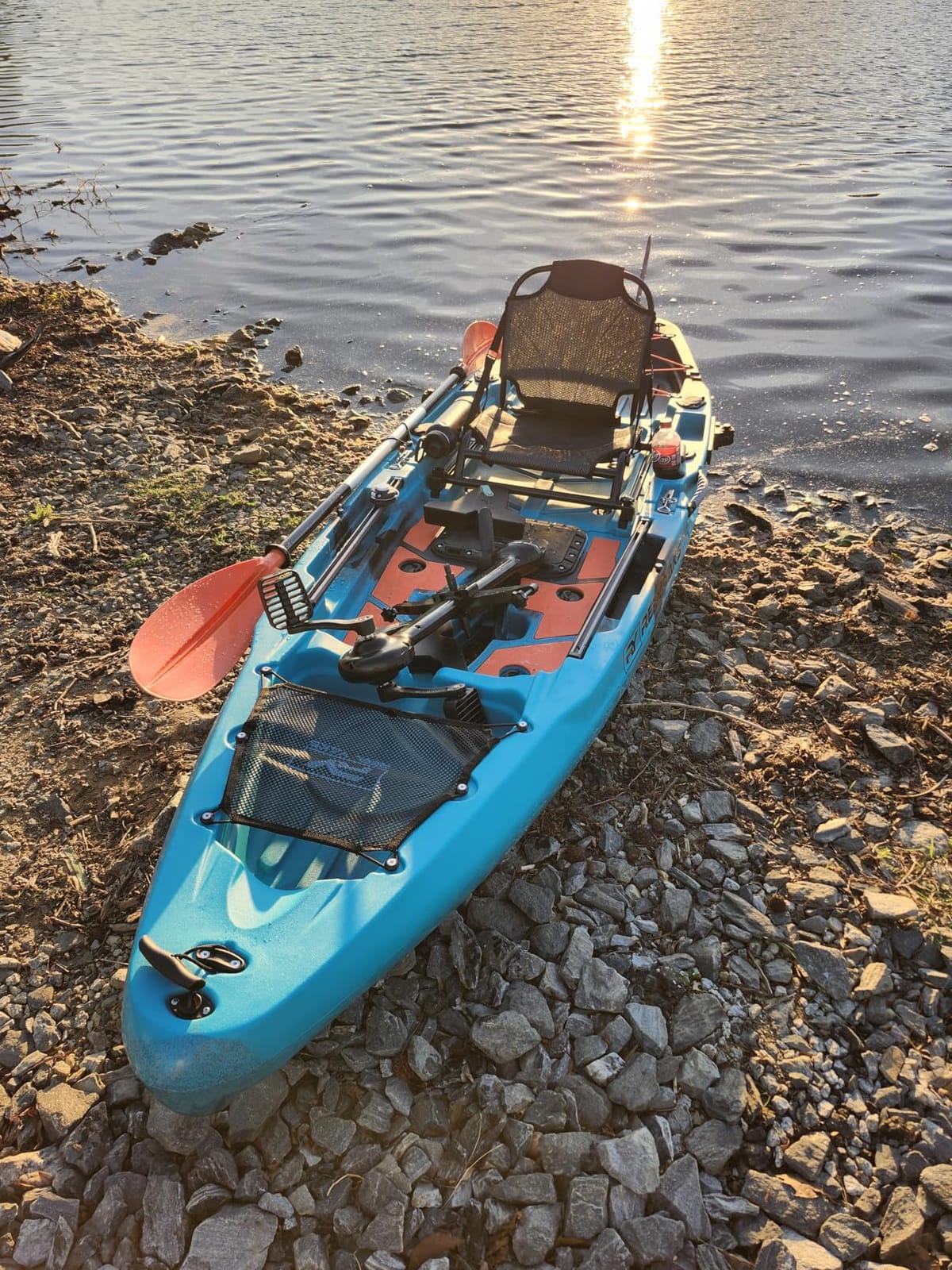
A stadium seat, track rails, flush-mount rod holders and storage hatches complete the setup, with a two-year hull warranty. HDPE construction keeps weight down relative to the size.
It is one of the newest premium boats in this roundup, which is both the appeal and the caveat.
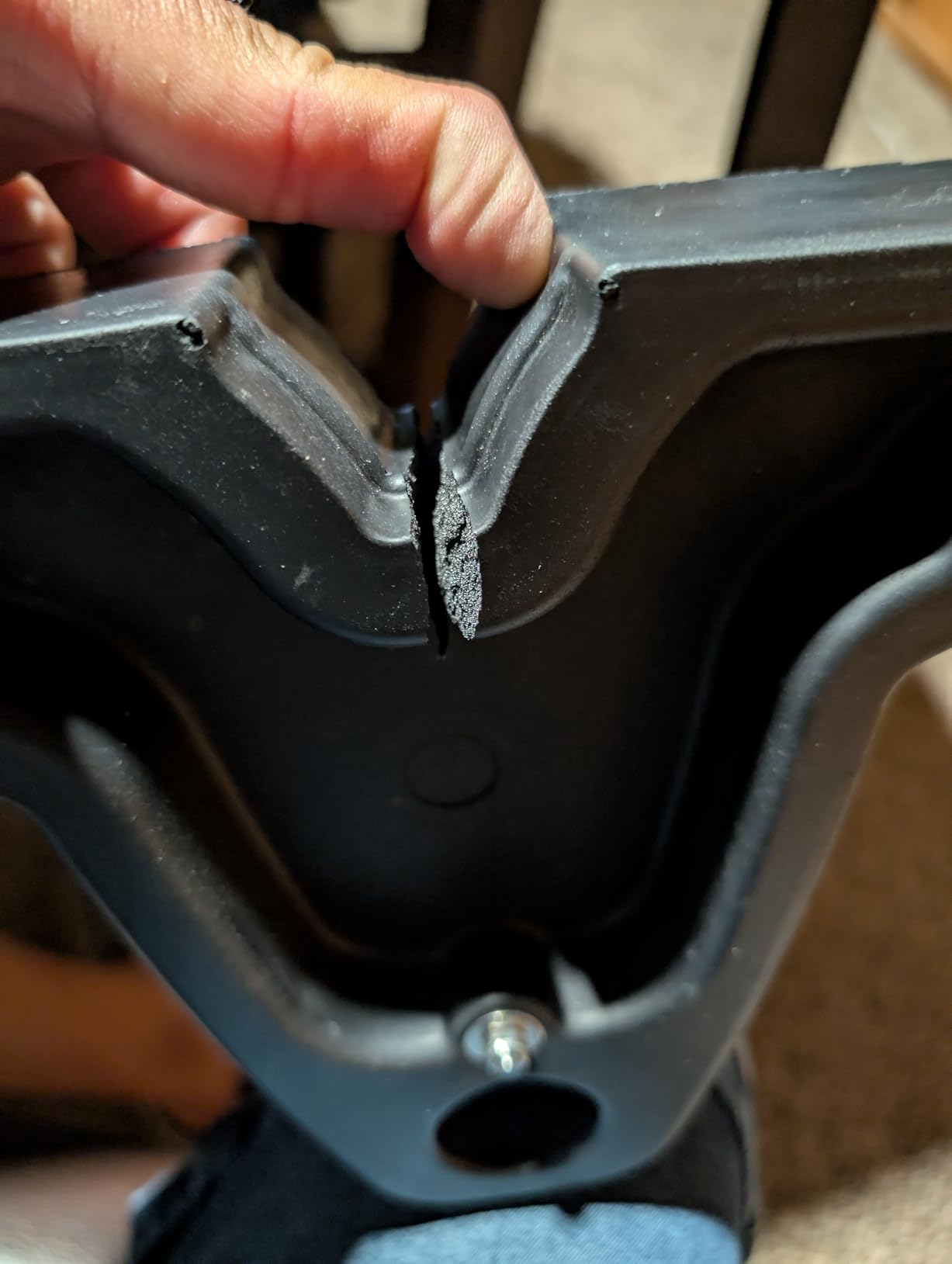
What you will notice on the first trip
The deck width is the first difference you feel. Standing space on a 35 in beam is a real working area, not a perch, and that is what makes casting from your feet practical for a heavier paddler.
The modular break-down also changes how you fish. You are no longer tied to one launch point, because the boat lives in a garage rather than on a rack.
Where it falls short
The review pool is the smallest in the roundup at 31 reviews with a 4.0 average, and that is the honest risk on a new model. There is not yet a long ownership history to reassure you.
The listed 440 lb rating also exceeds what many paddlers will ever use, and if your body weight is under 350 lb you are carrying dead capacity that costs width, weight and speed.
11. Albott Modular Fishing Kayak – Best for Shared and Rental Setups
Albott Modular Fishing Kayak with Fin Drive System & Durable HDPE
Capacity: 420 lb
Beam: 34.68 in
Assembled weight: 102.4 lb
Length: 9.4 ft
Pros
- Four-step quick assembly with internal handles
- Fin drive works forward and reverse
- 34.7 in beam gives a wide platform
- Customizable with modular upgrades
Cons
- Thin hull walls are poor for rocky rivers
- Supplied seat is basic
- Pedal brackets are a long-term weak point
The Albott is the modular option aimed at people who will share the boat. It breaks down into sections with internal handles and assembles in four steps, and reviewers describe fitting the pieces into a compact car or van without a roof rack.
At 420 lb with a 34.68 in beam, the numbers are strong for a 9.4 ft hull, and reviewers repeatedly praise the standing area for a 6 ft angler who wants to fish upright.
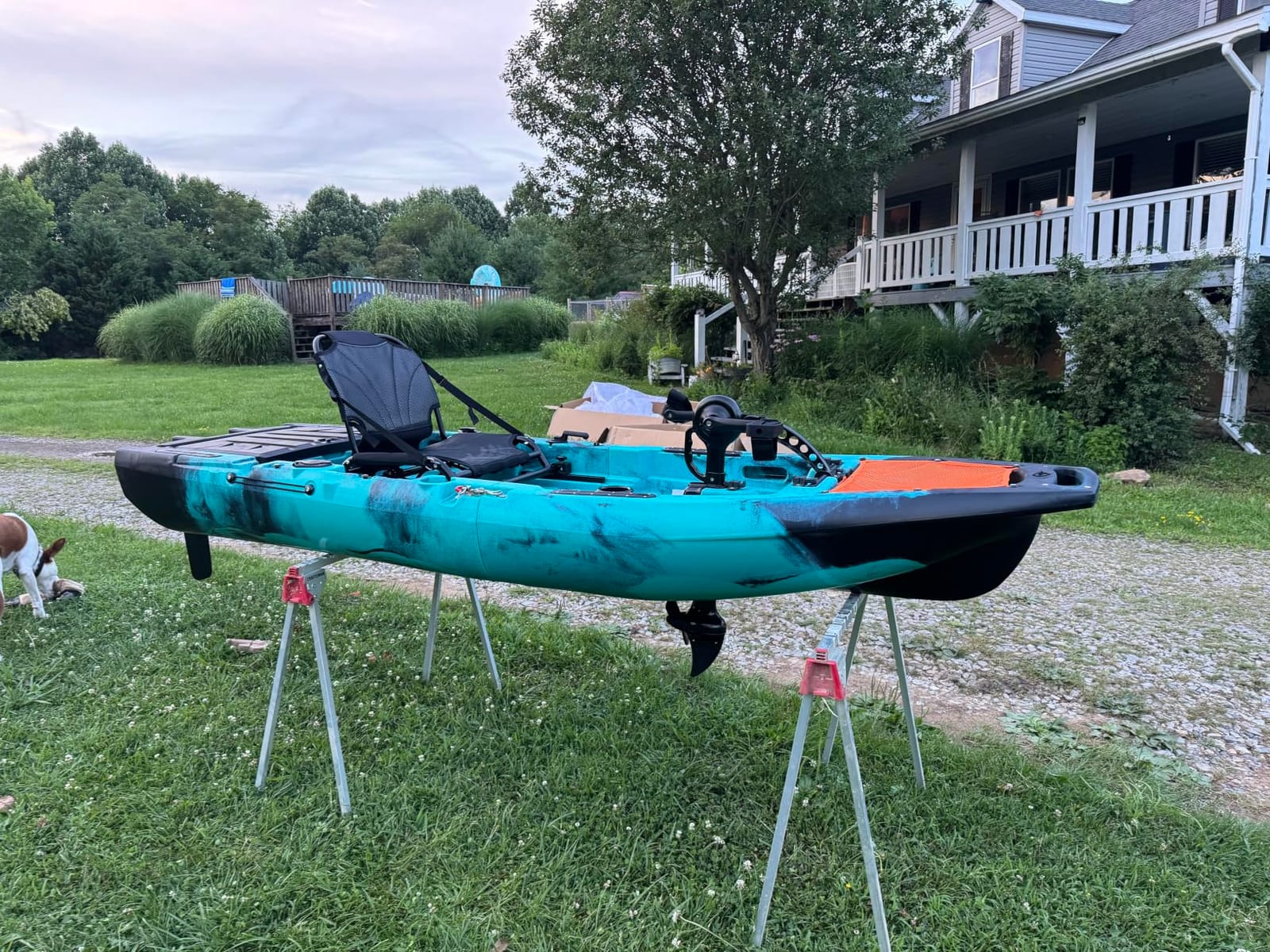
The 11 lb fin pedal system includes spare fins and is knee-friendly and weed-resistant, and the cable-operated rudder raises and lowers from the cockpit. Reinforced HDPE with pin connections and 304 stainless hardware holds the sections together.
It is the highest rated of the modular group at 4.5 stars, on a small pool of 28 reviews.
What you will notice on the first trip
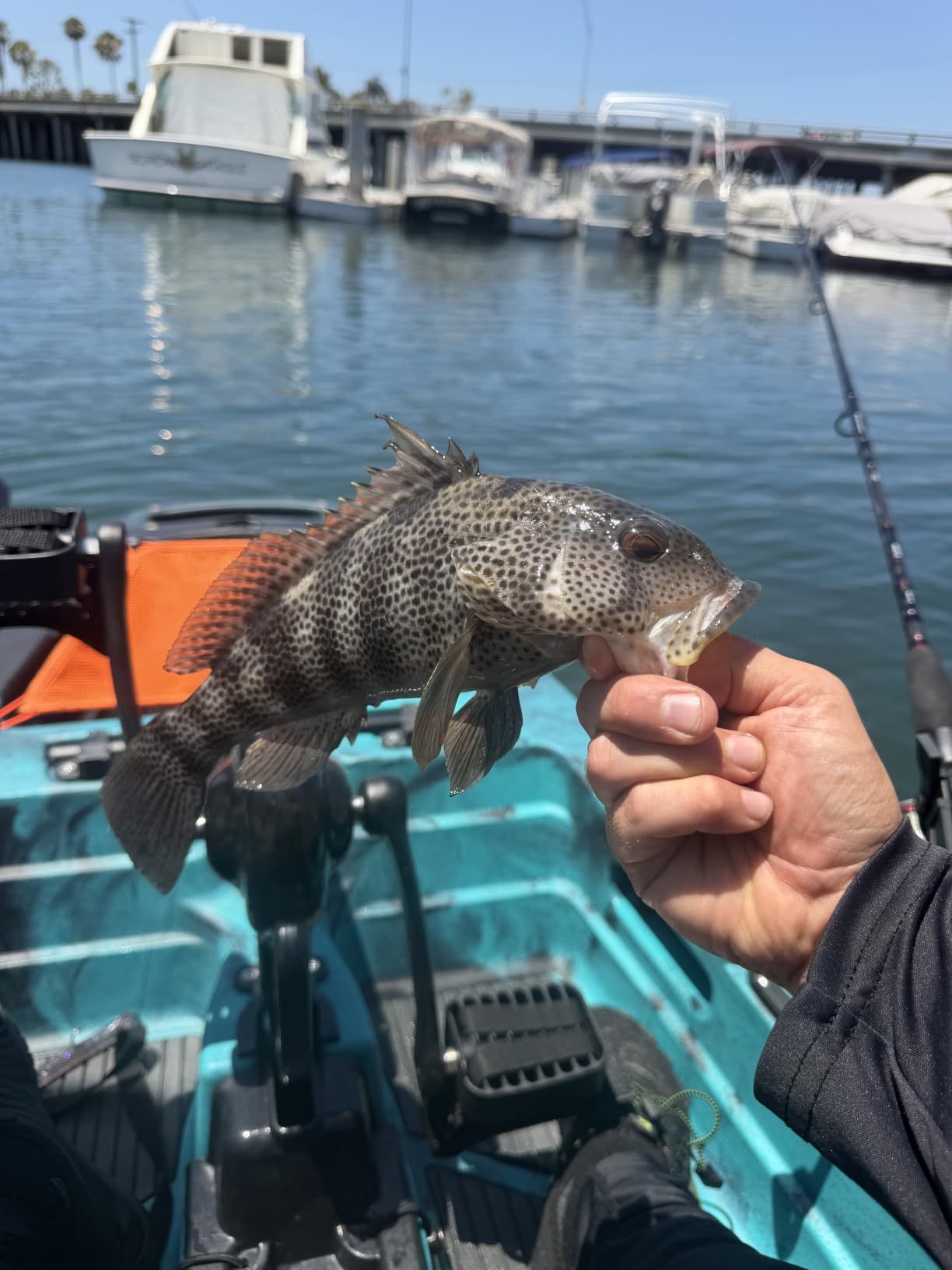
The two-piece seam is close to invisible once assembled, which is unusual for a modular boat and reassures anyone worried about water tracking in at the joint.
The fin drive works in both directions and the pedal package at 11 lb is lighter than most drive systems, so you can lift the drive out to move the hull around a launch.
Where it falls short
Hull thickness is thinner than higher-end kayaks, and that shows on rocky rivers where a thin wall is a puncture risk. Keep it on lakes and ponds.
The supplied seat is basic rather than premium, and pedal mounting brackets are a long-term weak point. The warranty is six months, which is far shorter than the rest of the group, and the hull ID references a company listed as out of business, which can complicate state registration. Check your local boating authority before buying.
12. Old Town Sportsman PDL 106 – Best for Standing Casts on a Wide Deck
Old Town Sportsman PDL 106 Pedal Fishing Kayak (Ember Camo)
Capacity: 450 lb max (343 lb usable)
Beam: 36 in
Hull weight: 107 lb
Length: 10 ft 6 in
Pros
- Widest beam in the roundup at 36 in
- Pontoon hull is quiet and tracks predictably
- Mesh seat adjusts to leg length
- PDL drive with instant reverse
Cons
- 107 lb hull cannot be lifted solo
- Pedal console is a separate 18 lb piece
- Limited access to skinny water
This is the boat to buy if standing up to cast is non-negotiable. The 36 in beam is the widest here, and a pontoon-style hull of that width stays steady even when you are standing, leaning and bouncing in a wave.
The rating needs reading carefully. It is 450 lb maximum with 343 lb usable capacity for people and gear, so a paddler above the low 300s will feel the difference between the headline number and the usable one.
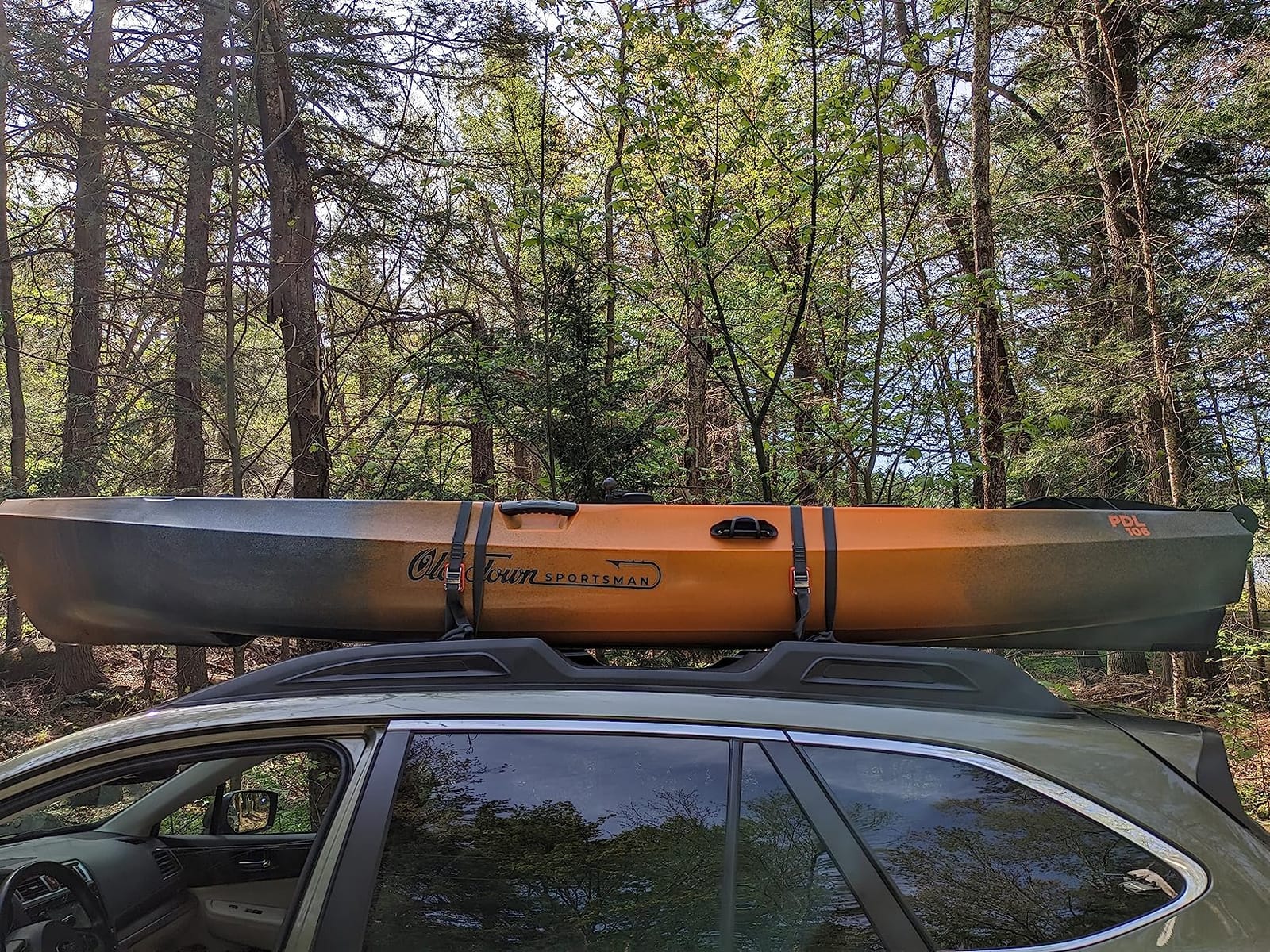
The premium mesh seat has lumbar support and adjusts to leg length, which is exactly what a 6 ft paddler needs, and the patented easy-docking pedal drive drops in and out without tools for launching and landing. A universal transducer mount, accessory tracks, cushioned floor pads and a tackle box come as standard.
It holds the highest average rating in the group at 4.7 stars with no one-star reviews, on a pool of 23.

What you will notice on the first trip
The hull feels solid in a way lighter boats do not. It is quiet on the water, tracks predictably and holds its line when you are trolling rather than paddling.
The pedal drive is smooth and responsive with instant reverse, and owners describe long-term ownership with no issues over three years of use.
Where it falls short
Weight. The hull is 107 lb and the removable pedal console adds another 18 lb, so a cart or a ramp is effectively required and this is not a solo shoulder-carry boat. Plan the launch before you plan the trip.
It is also the widest and heaviest hull here, which limits access to skinny water and shallow vegetated areas relative to narrower boats. The paddle is a separate purchase. If you cannot handle the lift, our inflatable kayak guide covers the alternative storage route.
How to Choose a Fishing Kayak When You Are a Big Angler
1. Weight capacity and the 150 lb headroom rule
Capacity ratings are total load limits covering the paddler, the gear, the battery and any motor. Add your body weight plus your realistic gear load, then compare it to the rating. If you are near the number, you are in the danger zone.
Our headroom rule is at least 100 lb of margin, and 150 lb if you plan to stand up regularly or fish in wind. Above 400 lb body weight, stop looking at boats under 450 lb and treat 275 lb models as unsuitable no matter how good they look.
2. Beam width and deck stability
Beam width is the single biggest factor in whether a boat feels stable to a heavier paddler. It spreads your load across more surface area, which raises both static stability while sitting still and moving stability in a current. Wide and flat decks also give you somewhere to put your feet when you stand.
The practical thresholds are simple: below 32 in is tight for standing casts, 34 to 36 in handles a seated cast and a careful standing cast, and 36 in plus is where you can work upright. That is why the widest boats here score highest for standing fishing.
3. Seat height, seat width and frame versus foam
Knee, hip and lower-back pain in moulded foam seats is the most repeated complaint we found across owner reviews, and the fix is usually an elevated frame or stadium seat. Height matters most if you are tall, because a low seat forces your knees up and your hips forward.
A practical guide: your seat height should let your knees sit roughly level with or slightly below your hips while your feet find a footrest. Adjustable or dual position seats are worth the money, and if a boat’s supplied seat sits low, budget for a seat booster.
4. Hull material and the solo-launch weight rule
Rotomolded HDPE is the standard for hard angling kayaks: cheap, tough and forgiving of impacts. Inflatables are lighter to store but sit lower and take more care. Modular boats split into sections, which is the only design that solves both a heavy hull and a small storage space.
Here is the launch weight rule we use. Under 50 lb is a genuine solo carry. 50 to 70 lb means a kayak cart is worth owning. Over 70 lb is a two-person lift or a ramp, and you should not buy that boat without a cart already in the garage.
5. Propulsion: pedal drive, fin drive, propeller or paddle
Pedal drive matters more for big anglers than for anyone else, because a heavier paddler tires faster and every stroke costs more. Fin drives are quiet, weed-resistant and simple. Propeller drives offer instant forward and reverse, which is a real advantage when manoeuvring in tight water.
Budget for a shallow-water compromise. Drives generally need raising for launching, landing and fishing over vegetation, and propeller drives need more clearance than fins. If your water is mostly open lake, a paddle with an anchor system may be all you need.
6. Transport, storage and safety planning
Before the hull, plan the logistics. Apartments and small cars point to a modular or inflatable boat. Roof racks point to a single-piece hull that will actually fit. If you fish alone at a remote launch, a cart matters more than any accessory on the deck.
On safety, wear a PFD every trip and size it to your body weight rather than your chest measurement, then buckle every strap. A properly fitted PFD keeps your head above water when you are fully immersed, which is exactly the scenario a heavier paddler faces after a capsize. Standing casts belong on calm water, so anchor first and keep your weight centred when you rise.
Frequently Asked Questions
Can a 300 lb person kayak?
Yes, with the right hull. A 300 lb paddler plus a typical gear load needs a boat rated 375 lb or higher, and ideally a beam of 34 in or wider for seated casting. The Pelican Catch Mode 110 at 375 lb and the Perception Outlaw 11.5 at 425 lb both fit that profile.
What kind of kayak can hold up to 500 pounds?
Hulls rated 450 lb and above handle that load with margin. In this roundup the Old Town Sportsman PDL 106 is rated 450 lb maximum with 343 lb usable for people and gear, and the BKC Brooklyn 12.5 Pro is rated 550 lb, the highest capacity we reviewed.
Can a 400 lb person kayak?
Yes, but you need a purpose-built hull. A 400 lb paddler should target 450 to 550 lb of rated capacity, a beam of 35 in or wider, and an elevated seat that adjusts to leg length. Boat weight matters here too, since models in this class commonly run past 70 lb.
How heavy is too heavy for a kayak?
There is no universal weight limit, but there is a practical one. Standard fishing kayaks are often rated 275 lb, which leaves no room for gear. We recommend at least 100 lb of capacity margin above your body weight, and 150 lb if you plan to stand up to cast regularly.
Is a pedal drive or fin drive better for a large angler?
Both work, and the choice depends on your water. Fin drives are quieter, cheaper and weed-resistant, which suits shallow lakes and rivers. Propeller drives give instant forward and reverse, which makes tight-spot maneuvering far easier. Either way, budget for raising the drive in shallow water and when launching.
Final Verdict: Match the Boat to the Angler
For most bigger anglers, the Pelican Catch Mode 110 is the right starting point: 375 lb of rating on a 34.5 in beam with a seat that adjusts and folds flat. If you want more gear space and a longer day, step up to the Perception Outlaw 11.5 at 425 lb. If carrying and storage are your real constraints, the modular Reel Yaks Raptor solves a problem the rest of the list cannot.
For standing casts on a wide deck, the Old Town Sportsman PDL 106 has the most beam, with a cart as the price of admission. Check your body weight against your gear load before you order, keep at least 100 lb of capacity margin, and pick a boat you can actually lift to the water. Those two decisions will matter more in 2026 than any other spec on the page.