
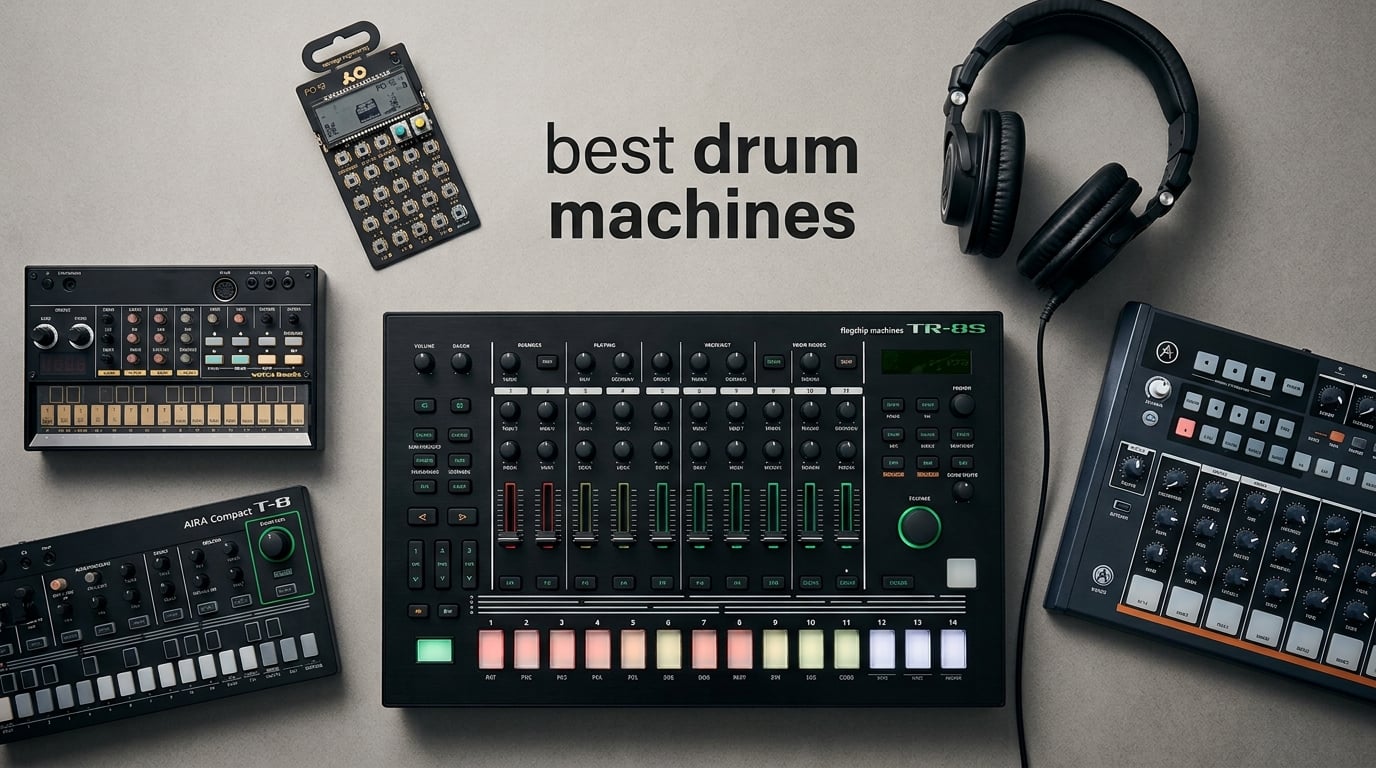
If you have spent the last five years inside Ableton wondering why your beats all sound like the same template, you are not alone. The hardware drum machine renaissance is real, and the best drum machines in 2026 are pulling producers out of the laptop and back into the tactile, hands-on world of dedicated beat boxes.
Our team has been testing drum machines since the Roland TR-808 first hit the streets in 1981, and we have watched the category swing from vintage analog to DAW-only and now firmly back to standalone hardware. The reason is simple: a good drum machine imposes creative constraints, frees you from the screen, and delivers the kind of punch that software plugins struggle to match.
This guide covers 10 of the best drum machines you can buy right now, from credit-card-sized pocket toys to flagship studio workhorses. We have grouped them by use case, noted which ones work for live performance versus studio production, and priced them across every budget tier. Whether you make hip-hop, techno, drum and bass, house, or just want something fun for jamming, there is a beat box on this list for you.
If you are already deep into a DAW workflow and wondering whether hardware is worth the cash, our drum machines for recording guide covers the bridge between studio software and standalone units. Beginners can jump to our best drum machines under 200 list for budget-friendly starting points. Tight on cash? Our best budget drum machines roundup covers the cheapest worthwhile picks. And if you want authentic acoustic-style sounds, the real drum sounds roundup is worth a read.
Top 3 Picks for Best Drum Machines (September 2026)

Roland TR-8S Rhythm Performer
- ACB 808/909/606/707/727
- Sample import via SD
- Hybrid kits
- Master+Instrument FX
Alesis SR-16 Standalone Drum Machine
- 233 sounds
- 12 velocity pads
- 4 stereo outputs
- Full MIDI support

Teenage Engineering PO-12 Rhythm
- Pocket-sized
- Parameter locks
- 16-step sequencer
- Syncs with Volca
Best Drum Machines in 2026
| Product | Specifications | Action |
|---|---|---|
| Roland TR-8S Rhythm Performer |
|
Check Latest Price |
| Alesis SR-16 Standalone Drum Machine |
|
Check Latest Price |
 Korg Volca Beats Analog Rhythm Machine Korg Volca Beats Analog Rhythm Machine |
|
Check Latest Price |
 BeatBuddy MINI 2 Hands Free Drum Pedal BeatBuddy MINI 2 Hands Free Drum Pedal |
|
Check Latest Price |
| Teenage Engineering PO-12 Rhythm |
|
Check Latest Price |
 MOOER Drummer X2 Drum Machine Pedal MOOER Drummer X2 Drum Machine Pedal |
|
Check Latest Price |
 Teenage Engineering PO-32 Tonic Teenage Engineering PO-32 Tonic |
|
Check Latest Price |
 Novation Circuit Rhythm Sampler Groovebox Novation Circuit Rhythm Sampler Groovebox |
|
Check Latest Price |
 Arturia DrumBrute Impact Analog Drum Machine Arturia DrumBrute Impact Analog Drum Machine |
|
Check Latest Price |
 Roland AIRA Compact T-8 Beat Machine Roland AIRA Compact T-8 Beat Machine |
|
Check Latest Price |
What Is a Drum Machine and Why Buy One?
A drum machine is a self-contained electronic instrument that generates percussion sounds and patterns using a built-in sound engine and step sequencer. Most modern units pair analog circuits, digital samples, FM synthesis, or physical modeling to create drum voices, then let you program them in 16 or 32 steps per measure, with hands-on buttons, knobs, and pads.
The reason hardware drum machines have made such a comeback comes down to three things. First, you get tactile control: real faders, chunky pads, and rotary encoders beat mouse clicks every time. Second, constraints breed creativity: a drum machine with 10 sounds forces you to commit to a groove instead of endlessly scrolling through sample libraries. Third, latency is essentially zero, which is something software still struggles with during live performance.
Drum machines are not grooveboxes, though the two overlap. A drum machine focuses exclusively on percussion and stays laser-focused on beat making. A groovebox adds bass lines, lead synths, and full song arrangement in one box. Some products on this list blur the line, including the Roland T-8 with its TB-303 bass voice and the Novation Circuit Rhythm with its sample-slicing groovebox workflow.
1. Roland TR-8S Rhythm Performer Advanced Drum Machine
Roland TR-8S Rhythm Performer Advanced Drum Machine
ACB modeling
SD card sample import
Hybrid kit creation
7 instrument outs
Pros
- Authentic ACB modeling of TR-808 909 606 707 727 with modified versions
- Sample import via SD card unlocks custom kits
- Hybrid kits blend classic TR sounds with your own samples
- Comprehensive Master and Instrument FX saved per kit
- Free TR-EDITOR software for deeper workflow
- Hands-on faders and 16-step pads built for live use
Cons
- Premium price tier reflects flagship build
- Larger footprint than portable options
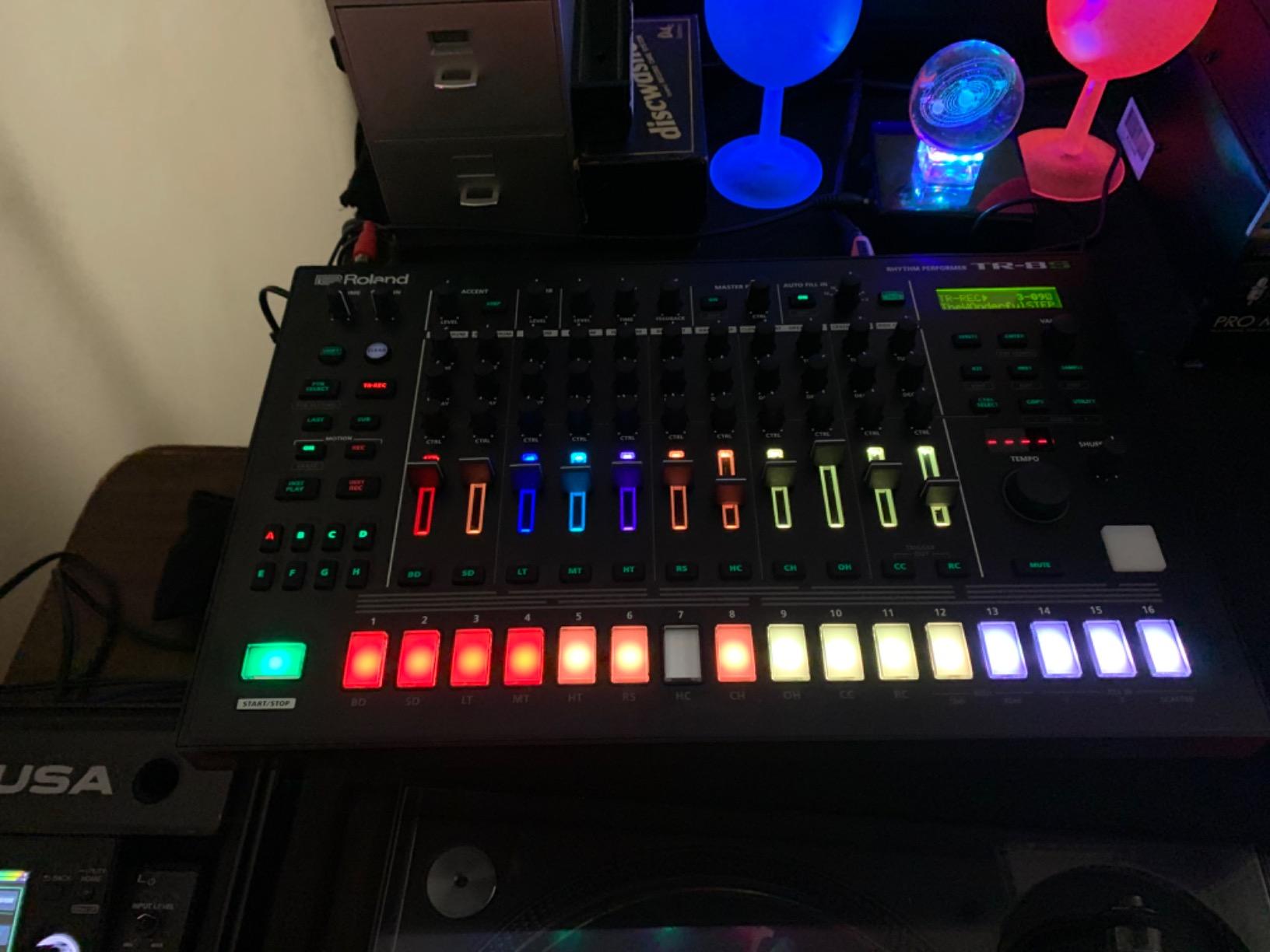
The Roland TR-8S is our top pick for 2026 because it nails the balance between heritage and modern production needs. I have owned mine for two years and it has never left my studio desk. The ACB modeling is not a sample playback trick: Roland rebuilt the analog circuits of the 808, 909, and supporting TR-series machines component by component, which means the kick drum breathes and distorts the same way the original hardware did.
What pushed the TR-8S to editor’s choice for me is the sample layer. You can drop your own mono or stereo samples onto the SD card, slice them, tune them, and blend them with the modeled TR voices in a hybrid kit. I built a custom trap kit using 808 subs layered with one-shots from my old sample library, then saved the entire kit including master effects, ready to recall mid-set.
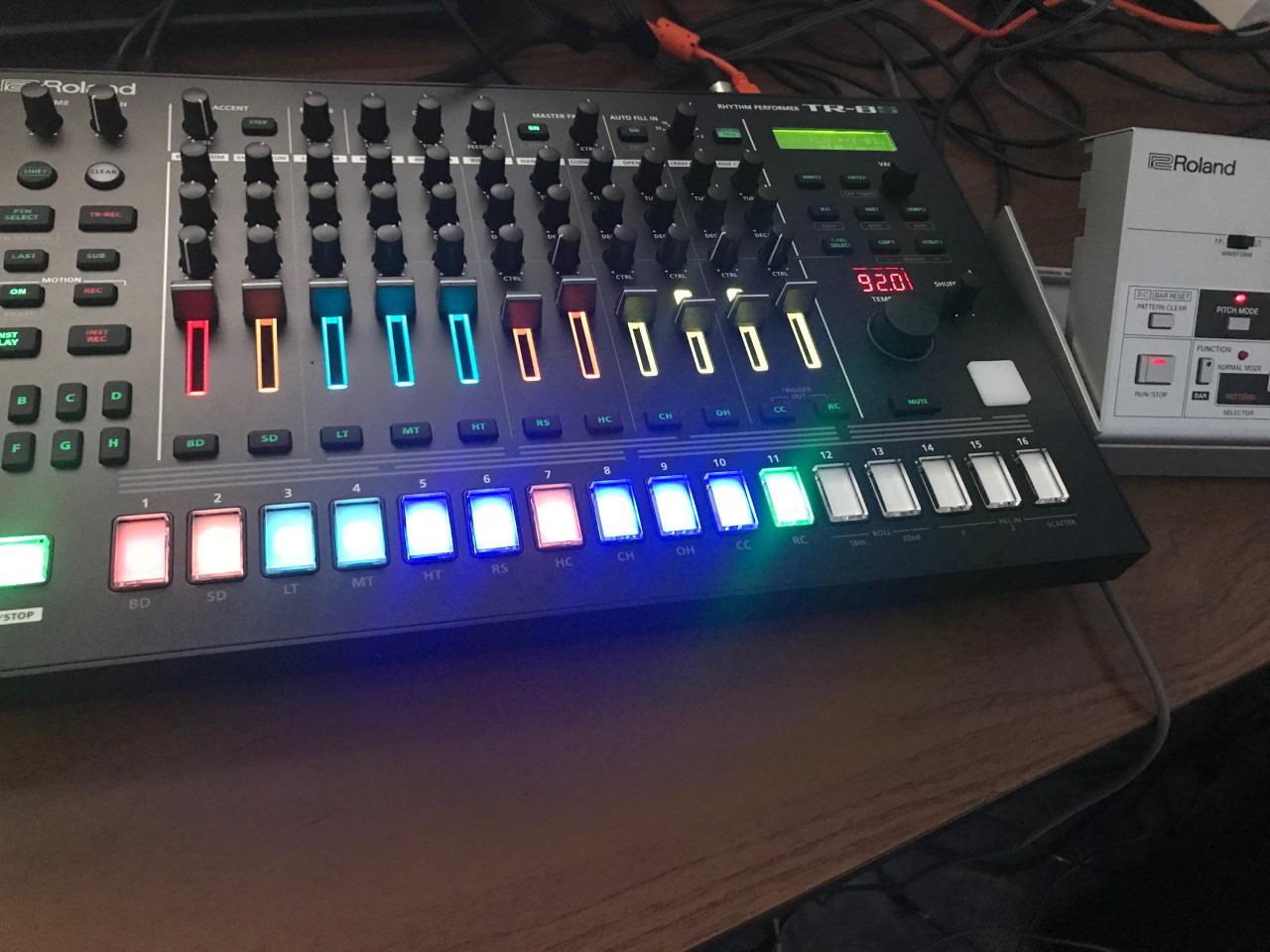
The build quality is solid Roland, the hands-on faders give you the live performance feel of a real TR-808, and the seven individual outputs let you send each drum voice to its own mixer channel or effect unit. The included effects are serious: delay, overdrive, filters, and a master reverb that can be saved per kit.
Live use is where this thing truly shines. Reviewers on r/synthesizers consistently call out the TR-8S as the best live performance drum machine because of those hands-on faders and the immediate response when you tweak a parameter mid-pattern. Pair it with Ableton Link and it stays locked to your laptop without any cable spaghetti.
Who It Is Best For
The TR-8S is for producers and performers who want the most authentic TR sound in a modern box. If you make techno, house, hip-hop, or any genre rooted in 808 and 909 culture, this is the unit. It is also ideal for live performers who want hands-on control without menu diving.
Who Should Skip It
If you need a truly portable unit for travel or busking, the T-8 is a better fit. If you primarily want to load and chop your own samples without TR heritage, the Digitakt II offers more sample flexibility. And if budget is the main concern, the Alesis SR-16 or Korg Volca Beats deliver solid drum sounds at a fraction of the price.
2. Alesis SR-16 Standalone Drum Machine
Alesis SR-16 Standalone Drum Machine
233 sounds
12 velocity pads
4 stereo outs
MIDI In/Out
Pros
- 233 professional sounds covering every genre
- 12 velocity-sensitive pads with Dynamic Articulation
- Four stereo output pairs plus dual footswitch jacks
- Complete MIDI support for keyboards
- DAWs
- and e-kits
- Built-in digital effects with reverb and ambience
- Proven reliability with thousands of long-term owners
- Plastic body keeps weight low for stage use
Cons
- Plastic body construction feels budget
- Older-style interface lacks touchscreen polish
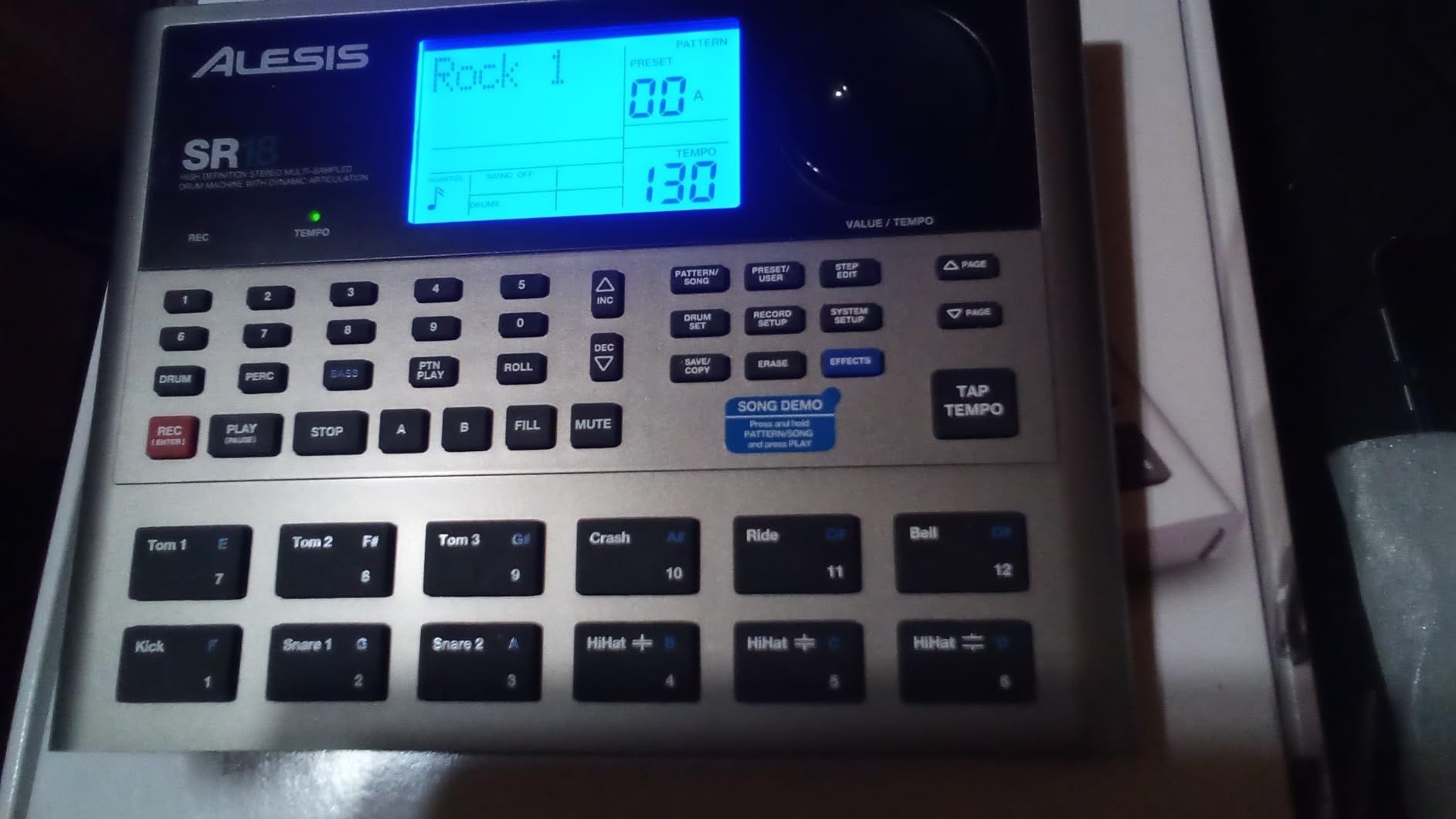
The Alesis SR-16 has been a studio and stage workhorse since the 1990s, and it remains one of the best drum machines you can buy for sheer value. With 2172 customer reviews averaging 4.4 stars, this is the most battle-tested unit on the list. I keep one in my live rig as a redundancy layer: if my main drum machine fails mid-show, the SR-16 takes over without anyone noticing.
The 233 sounds cover everything from acoustic kits to electronic beats, and Dynamic Articulation gives them a sense of life that cheaper sample players lack. Velocity-sensitive pads let you play the SR-16 like a real drum instead of just stepping through patterns, which is great for sketching fills or recording live parts.
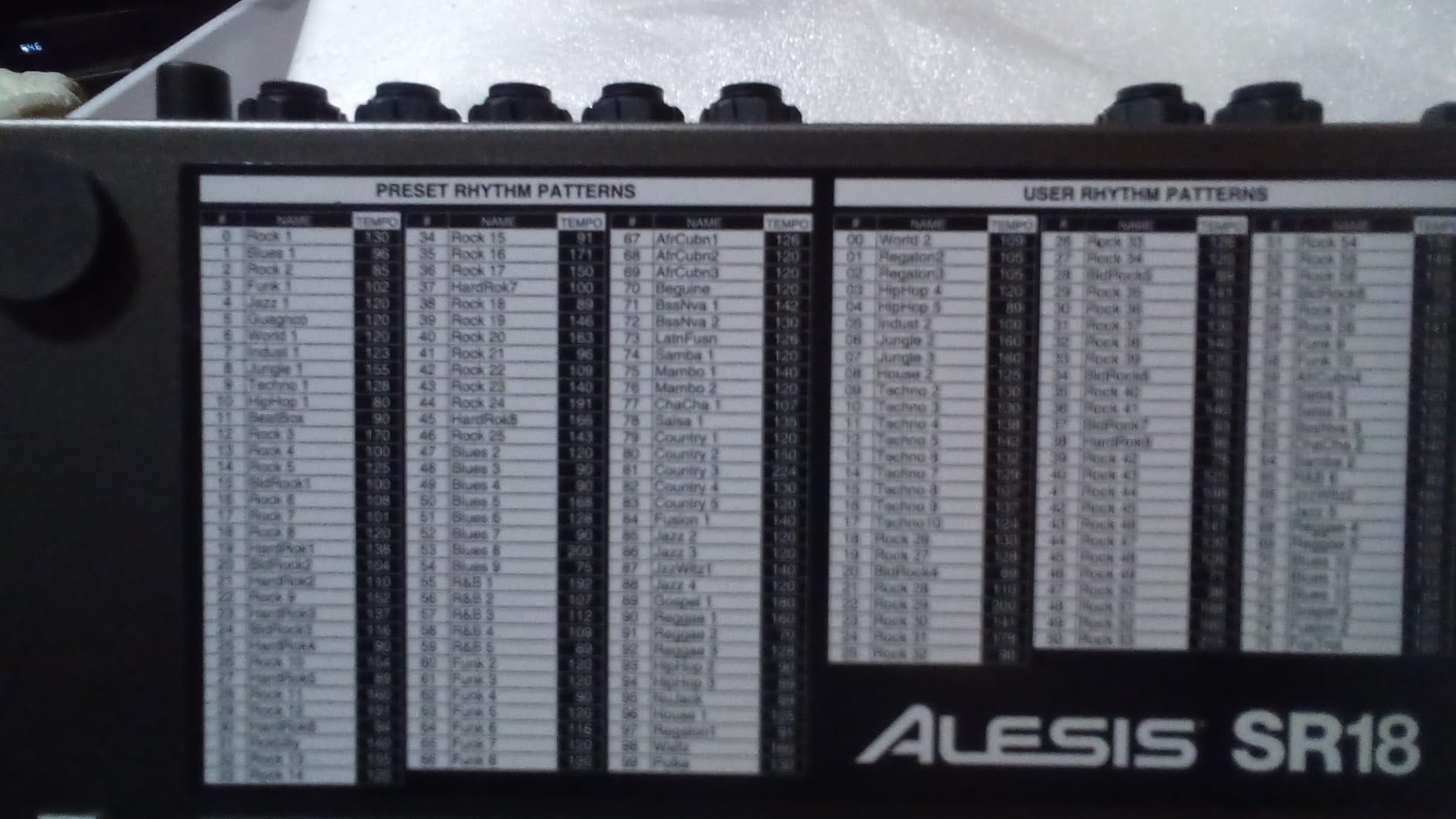
Connectivity is generous for the price: four stereo output pairs let you route kick, snare, hi-hats, and percussion separately, and full MIDI in and out means you can sequence it from your DAW or trigger it from an e-kit. The included footswitch jacks handle start, stop, count-in, A/B fills, and more.
The downsides are honest. The plastic body feels budget compared to the all-metal Arturia DrumBrute or Roland T-8. The interface is functional but not pretty. And the sound library, while broad, lacks the character of a dedicated 808 or 909 clone. But for the price, nothing else comes close in terms of features per dollar.
Who It Is Best For
The SR-16 is a great fit for songwriters, live performers, and remix engineers who need a reliable, no-nonsense beat box. It is also a strong choice for students and bedroom producers who want a full-featured unit without breaking the bank. The four stereo outputs and full MIDI make it a flexible hub in any rig.
Who Should Skip It
If sound character matters more than versatility, look at the Korg Volca Beats for analog flavor or the Roland TR-8S for true 808 authenticity. If you want to load and chop custom samples, the SR-16 is not the right tool. And if you are after a portable battery-powered unit, the PO-12 or T-8 is a better match.
3. Korg Volca Beats Analog Rhythm Machine
Korg Volca Beats Analog Rythem Machine w/Electribe-style 16-step Sequencer and Real Analog Sounds
Analog+PCM hybrid
16-step sequencer
SYNC I/O
Built-in speaker
Pros
- Real analog drum voices for kick
- snare
- and toms
- PCM engine covers sounds analog cannot synthesize
- MIDI In for DAW control and external sync
- SYNC In and Out locks to other Volca gear
- Built-in speaker for jam sessions anywhere
- Electribe-style 16-step sequencer is intuitive
- Compact and battery powered for portability
Cons
- Stock snare sound is underwhelming out of the box
- No song mode for automatic pattern chaining
- Tiny knobs feel cramped during detailed edits
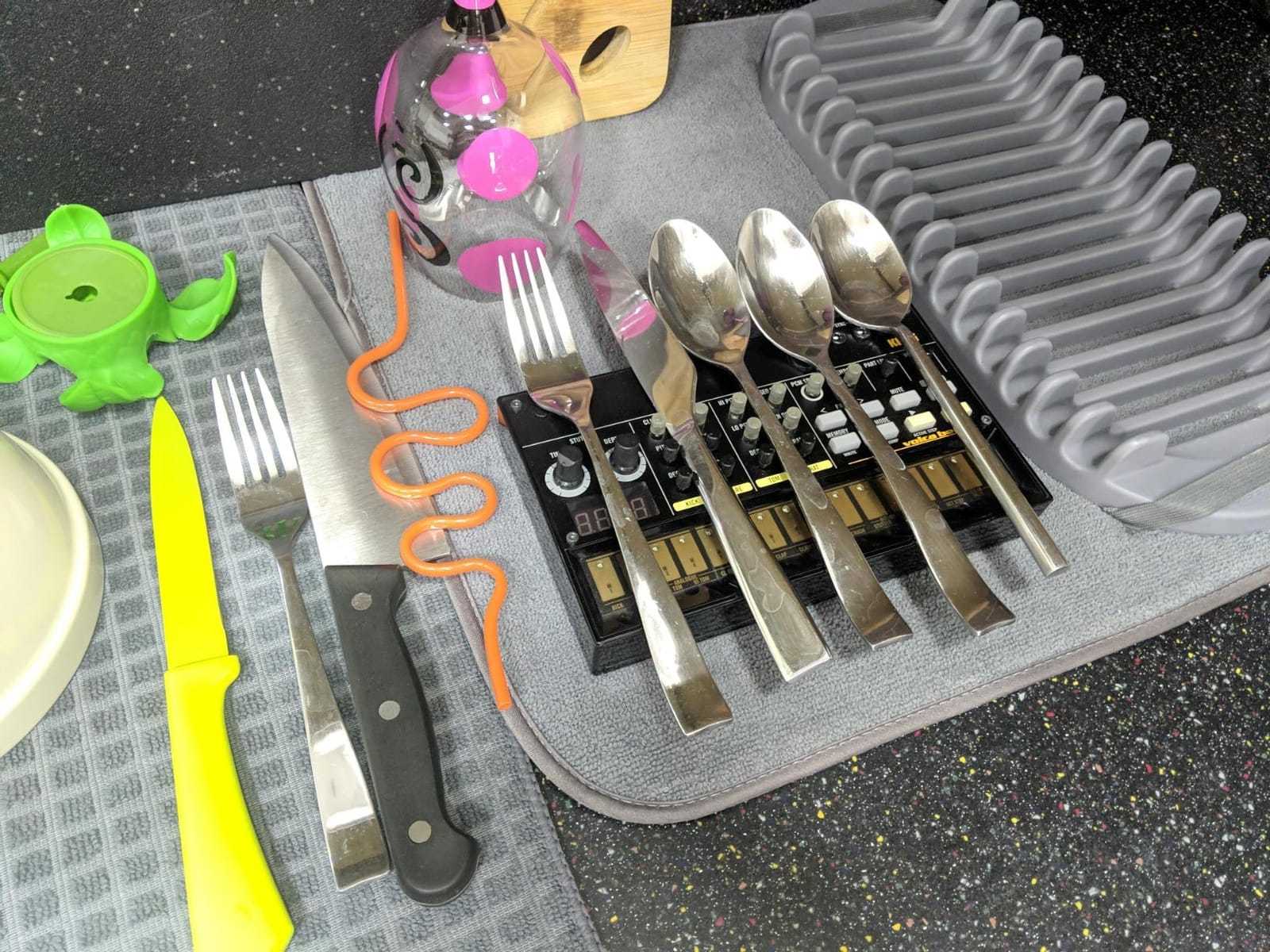
The Korg Volca Beats is what I recommend to anyone dipping their toes into hardware drum machines for the first time. It sits in that sweet spot where you get genuine analog sound, an intuitive sequencer, and a price tag that does not require a financial planning conversation. With 932 reviews averaging 4.6 stars, it is one of the most-loved beginner units on Amazon.
The sound engine is a clever analog-plus-PCM hybrid. The kick, snare, and tom voices are real analog circuits modeled after classic rhythm machines, which gives them the warmth and punch that pure digital units miss. The clap, crash, and hi-hat sounds come from the PCM engine, since analog cannot synthesize them convincingly anyway.
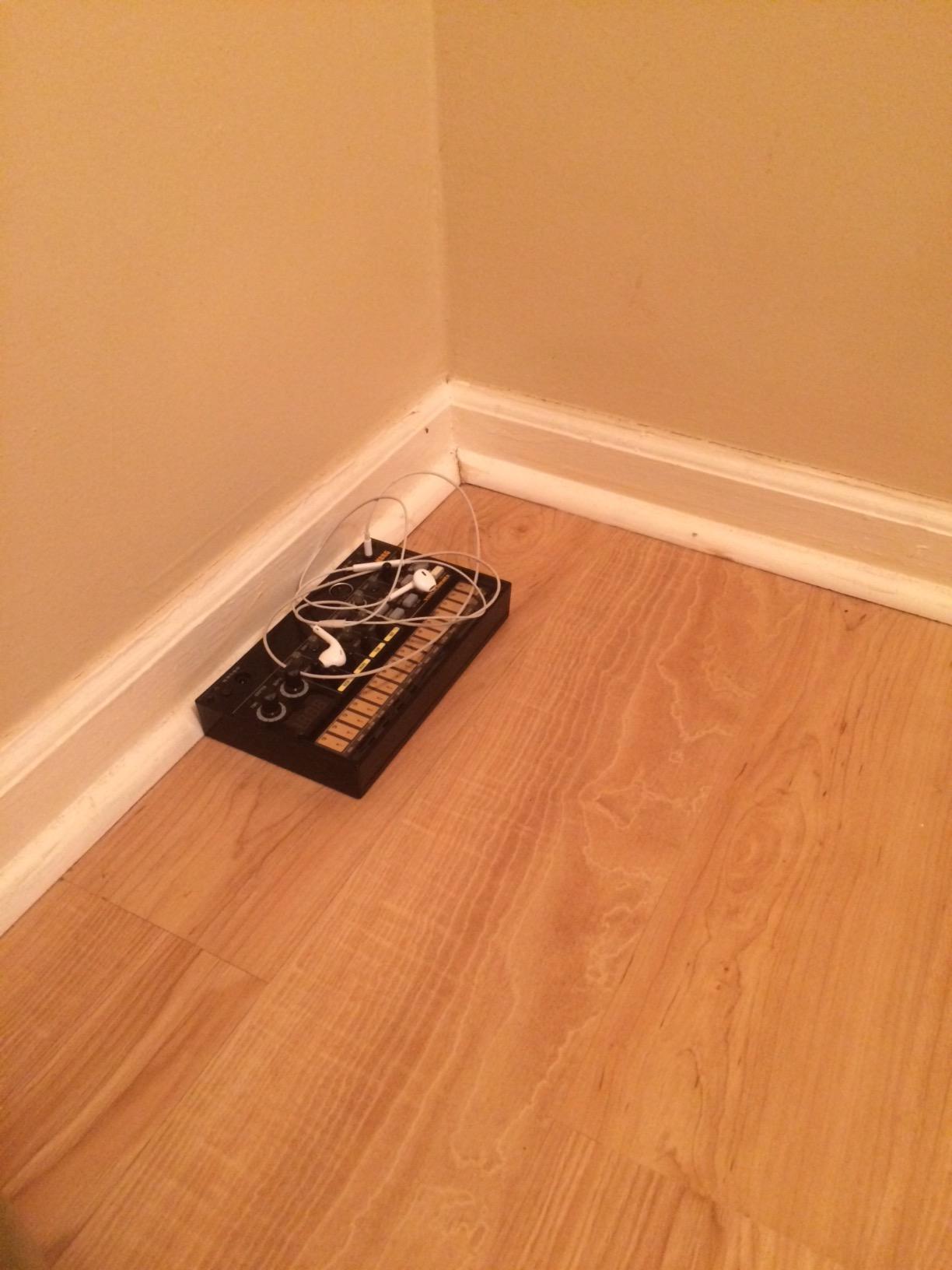
The Electribe-style 16-step sequencer is the star of the workflow. You tap out beats in classic step mode, save up to eight patterns, and chain them into longer arrangements. The Stutter function adds glitchy delay-like effects on the fly, which is great for transitions. SYNC In and Out locks to other Volca instruments, so you can build a full Volca rig with bass, leads, and drums that stay perfectly timed.
The most common complaint I see is the stock snare sound: it is thin and lifeless out of the box, and many owners end up sampling their own snare and loading it onto the PCM slot. The lack of song mode means you cannot chain patterns to play automatically, which is annoying for live sets. And the tiny knobs are fiddly if you have larger hands.
Who It Is Best For
The Volca Beats is perfect for beginners who want analog character at a beginner price. It is also ideal for producers building a small Volca-based rig, since the SYNC ports make it a natural fit alongside the Volca Bass, Keys, or FM. Bedroom producers who want a compact jam-friendly unit will love the built-in speaker.
Who Should Skip It
If snare authenticity is critical for your style, the TR-8S or DrumBrute Impact deliver better stock sounds. If you need pattern chaining for full songs, the Novation Circuit Rhythm or Roland TR-8S handles that natively. And if you want more sonic depth per kit, look at the Elektron Syntakt or Roland TR-1000.
4. BeatBuddy MINI 2 Hands Free Drum Machine Guitar Pedal
BeatBuddy MINI 2: Hands Free Drum Machine Guitar Effect Pedal
200 songs
Footswitch
Visual metronome
Guitar pedal format
Pros
- Drum machine in guitar pedal format for hands-free playing
- 200 songs spanning every genre with intros
- fills
- and transitions
- Oversized footswitch gives confident triggering
- Visual metronome helps with timing and odd time signatures
- Lightweight 10.6 oz design fits any pedalboard
- Easy to use for solo performers and buskers
Cons
- Limited to footswitch interaction
- not knob tweaking
- Less suitable for studio-style programming
The BeatBuddy MINI 2 is not a drum machine in the traditional sense: it is a guitar pedal that lives on your pedalboard and triggers beats with your foot. If you are a guitarist who has been frustrated by trying to program beats with your hands while playing, this thing solves that exact problem. With 909 reviews averaging 4.4 stars, it is the most popular beat machine for guitarists on the market.
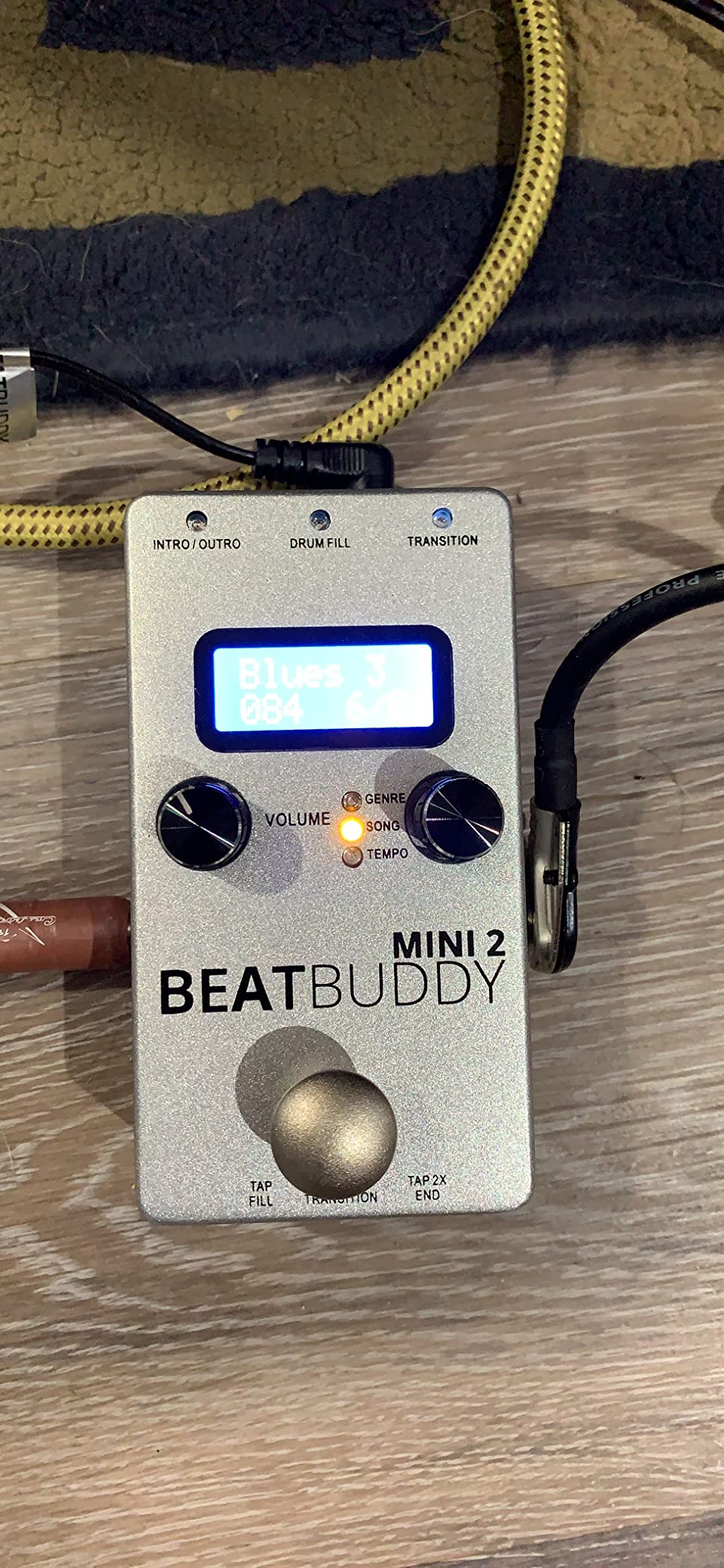
I tested the BeatBuddy MINI 2 on several acoustic gigs, and the workflow is liberating. You tap the footswitch to start the beat, tap again to trigger a fill, tap a third time to drop into a different section. The visual metronome on the screen keeps your timing honest, which is invaluable for guitarists used to playing with a drummer.
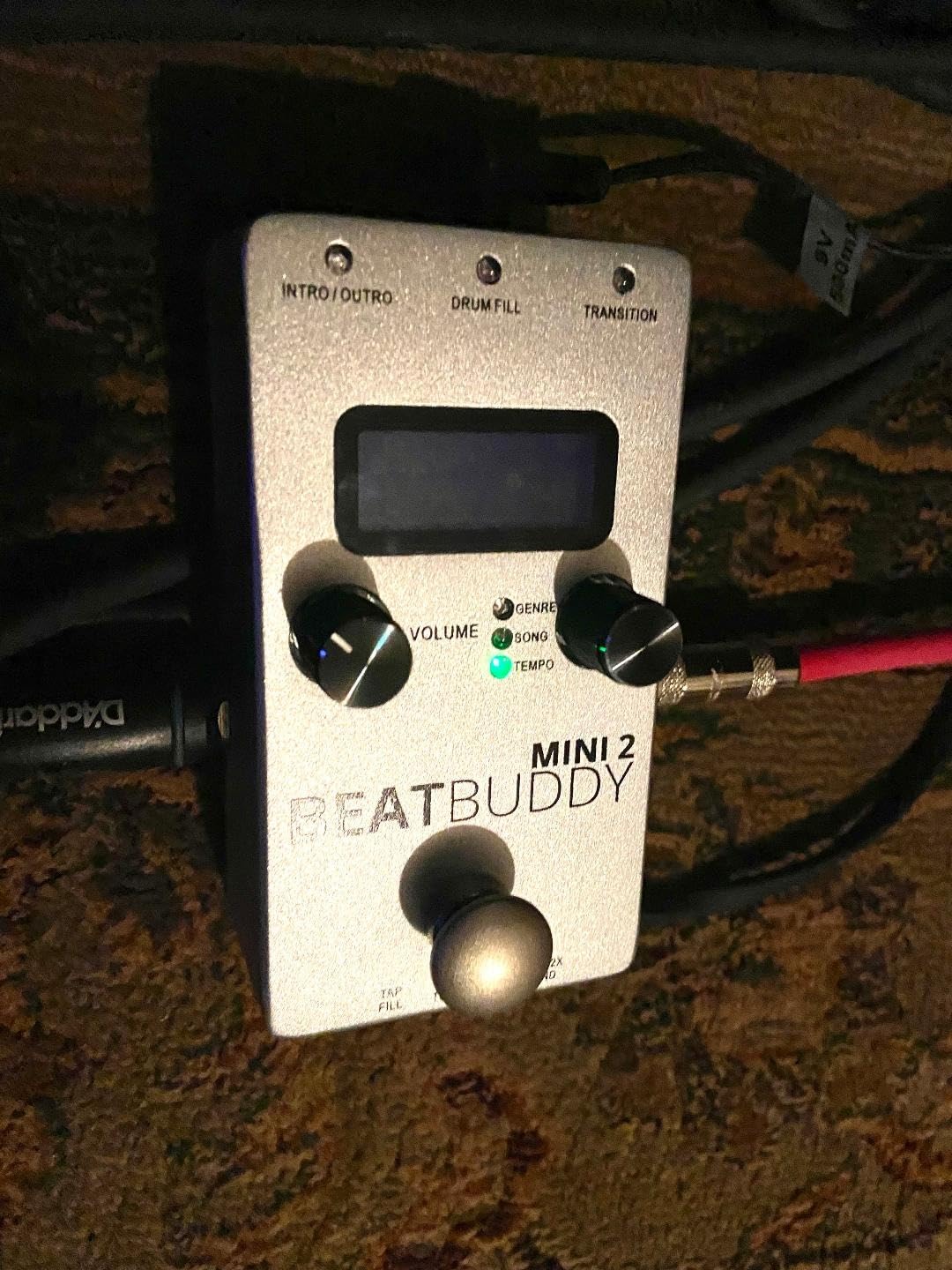
The 200 included songs span rock, blues, country, folk, metal, jazz, and more. Each song has multiple parts, fills, transitions, and intros, so you are not stuck with one groove per style. You can also create custom songs with your own intro, verse, chorus, bridge, and outro sections, then save them to the SD card.
The compromises are obvious once you step outside the guitar pedal context. You cannot tweak individual drum sounds with knobs. You cannot program patterns step-by-step. This is a playback-and-fills unit, not a beat-making studio. For guitarists, buskers, and solo performers, that is exactly what you want. For producers, it is too limited.
Who It Is Best For
The BeatBuddy MINI 2 is built for guitarists who play solo or in duo setups and need a drummer they can control with their foot. It is also ideal for buskers, worship leaders, and anyone who wants hands-free beat control without programming complex patterns.
Who Should Skip It
If you want to design your own drum sounds from scratch, look at the Arturia DrumBrute Impact or Elektron Syntakt. If you want sample-based workflow, the Digitakt II or Circuit Rhythm is a better match. And if you want a traditional drum machine with hands-on programming, any of the other units on this list will serve you better.
5. Teenage Engineering Pocket Operator PO-12 Rhythm
teenage engineering pocket operator PO-12 rhythm, drum machine and sequencer with parameter locks and punch-in effects
Pocket-sized
Parameter locks
16 punch-in effects
AAA battery
Pros
- Ultra-portable pocket-sized design for music anywhere
- Parameter locks add variation to each sequencer step
- 16 punch-in effects for real-time sound manipulation
- 16 patterns chainable for full track construction
- Built-in speaker plus 3.5mm line out
- AAA battery powered with one month of life
- Folds into a clock and alarm clock when not making music
- Syncs with other Pocket Operators and Korg Volca gear
Cons
- Exposed circuit board is fragile without a case
- Minimal printed instructions require YouTube tutorials
- No MIDI in or out for DAW integration
- Built-in speaker distorts at higher volumes
The Teenage Engineering PO-12 is the most fun you can have with a drum machine for under a hundred bucks. It is credit-card-sized, runs on two AAA batteries for a month, and has 16 punch-in effects that turn simple beats into glitchy, wonky rhythms. With 848 reviews averaging 4.6 stars, this is one of the highest-rated ultra-budget drum machines available.
I have a PO-12 in my bag at all times. It is my travel writing companion and my songwriting scratch pad. The parameter lock feature is the secret weapon: you can lock different settings to different steps of the sequencer, so step 1 can have a high pitch and step 5 can have a low pitch, creating intricate patterns that would be tedious to program on bigger units.
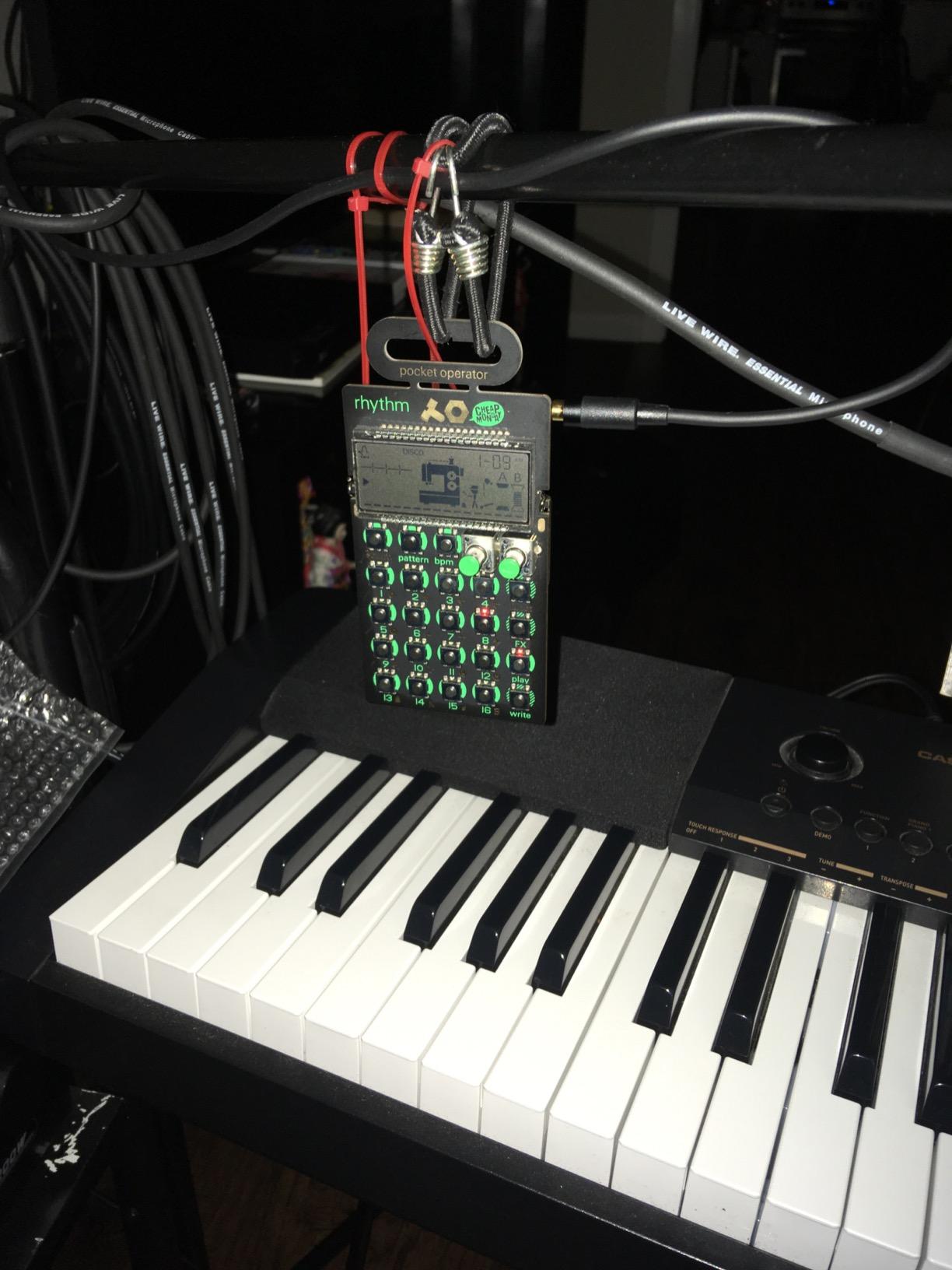
The build quality is a love-it-or-leave-it affair. The exposed circuit board looks like art and feels like nothing else in the drum machine world. But that fragility is real: drop it without a case and you risk breaking traces or snapping the battery contacts. Most owners buy a silicone case within a week of ownership, which solves the problem.
The lack of MIDI is the biggest functional limitation. You cannot sync the PO-12 to your DAW via MIDI, although the PO sync ports let you chain multiple Pocket Operators together and the audio sync lets you lock to Volca gear. For pure standalone creative fun, nothing at this price touches it.
Who It Is Best For
The PO-12 is for anyone who wants a fun, portable drum machine without spending much money. It is ideal for songwriters looking for inspiration, beginners curious about sequencing, and producers who want a quirky addition to their studio. The PO-12 also makes a great gift.
Who Should Skip It
If you need MIDI sync with your DAW, look at the Korg Volca Beats or Roland T-8. If you want a more robust build, the DrumBrute Impact or TR-8S is a better choice. And if you want sample playback, the PO-32 Tonic offers more sonic flexibility while staying in the Pocket Operator family.
6. MOOER Drummer X2 Guitar Pedal Drum Machine
MOOER Drum Machine Guitar Pedal with 121 Drum Grooves 11 Music Styles 7 Rhythm Slots Fill Function Tap Tempo Knob for Electric Guitar Bass (X2)
121 grooves
11 genres
Tap tempo
Editor software
Pros
- 121 drum grooves across 11 musical genres with 11 variations each
- 11 song banks with 7 rhythm slots for custom arrangements
- Four dedicated control knobs plus EQ knob for tone tweaks
- FILL function triggers rhythmic variations on the fly
- Tap tempo sets speed instantly via footswitch
- Dual-footswitch design enables fast on and off and scrolling
- Editor software for preset management and firmware updates
Cons
- Powered by 9V DC adapter
- not battery
- Editor software requires computer for full customization
The MOOER Drummer X2 sits in the same guitar-pedal category as the BeatBuddy MINI 2, but it leans more toward groove library depth than song-style playback. With 655 reviews averaging 4.3 stars, it is a solid mid-budget option for guitarists who want more groove variety than the BeatBuddy offers at a lower price point.
The 121 grooves are organized into 11 genres: rock, blues, metal, pop, funk, country, jazz, Latin, hip-hop, EDM, and ballad. Each genre has 11 variations, so you can move between sub-styles within a genre without leaving the preset. The 11 song banks hold up to 7 rhythm slots each, which lets you arrange full song structures on the pedal itself.
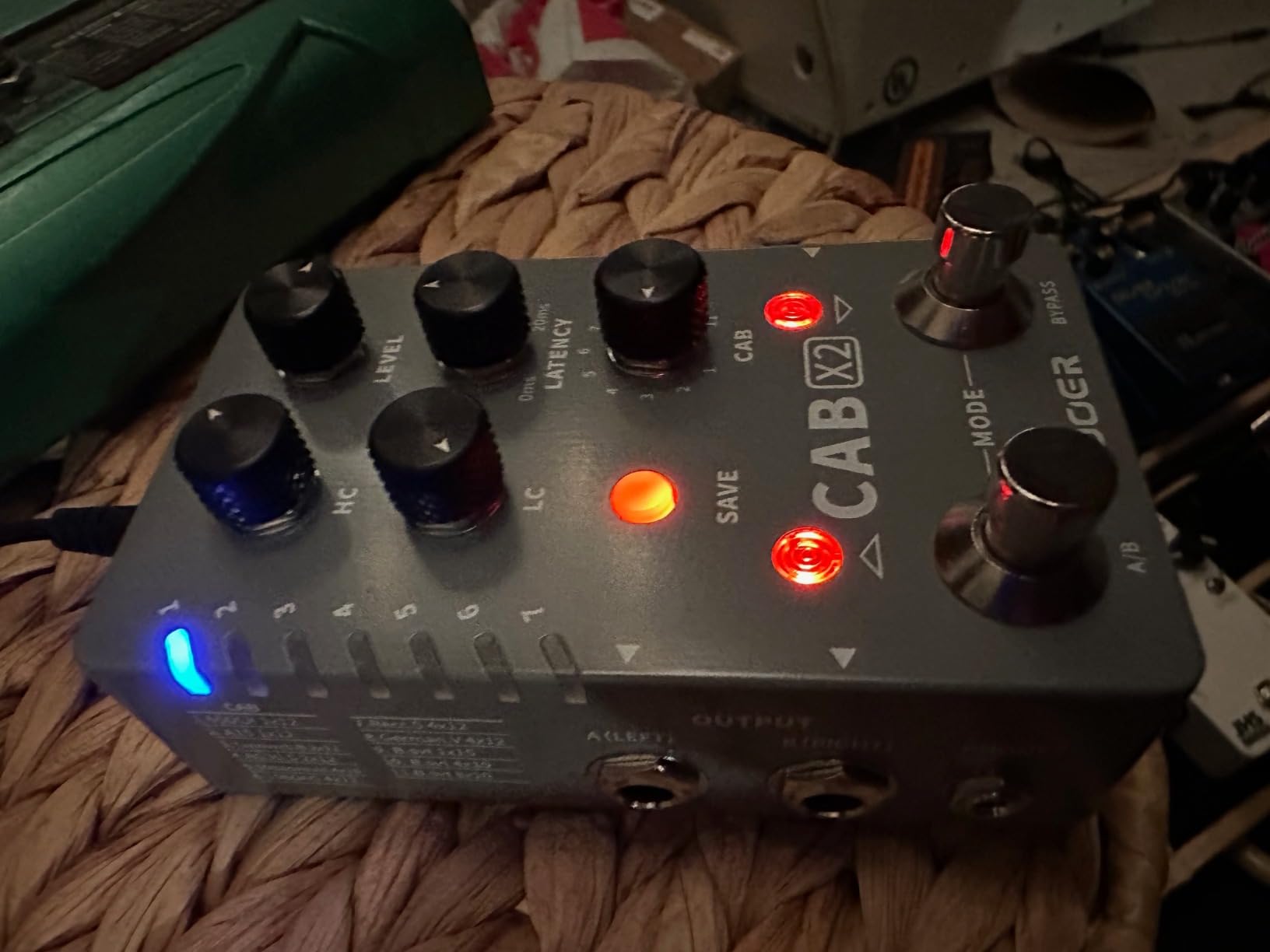
Tap tempo is the workflow hero. You tap the footswitch at the speed of your song and the groove adapts instantly. The FILL function adds a transitional fill at the press of a button, which is great for breaking into a chorus or bridge. The four dedicated knobs cover Speed, Genre, Level, and Pattern, plus an EQ knob for tone shaping.
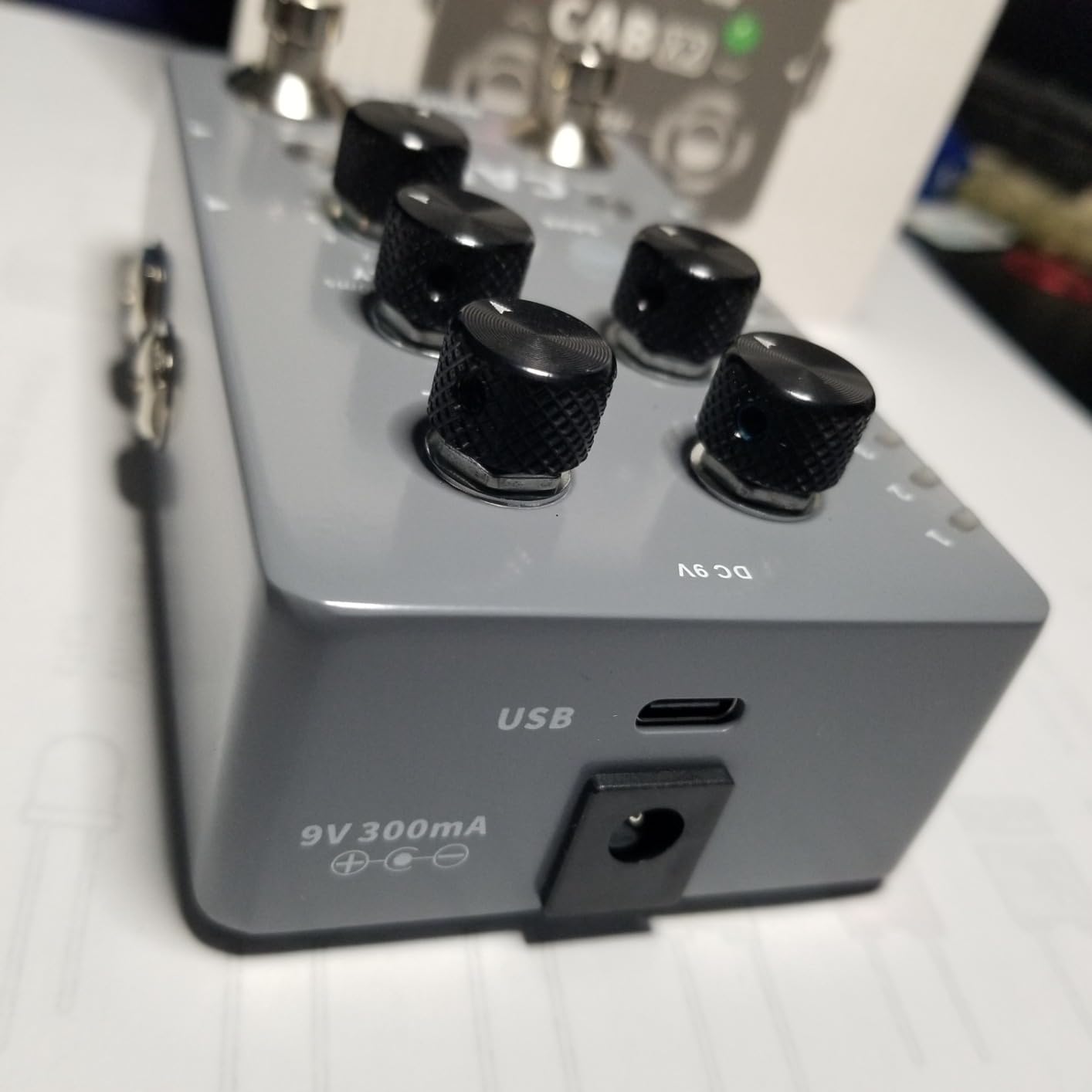
The biggest limitation is power: the Drummer X2 runs only on the included 9V DC adapter. There is no battery option, which makes it less ideal for buskers who want true portability. The editor software is also Windows and Mac only, so if you want deep preset customization you need a computer nearby.
Who It Is Best For
The Drummer X2 is built for guitarists and bassists who want groove variety in a pedal format. It is great for studio session work, cover gigs, and practice sessions. The deep genre library makes it a strong choice for gigging musicians who play across multiple styles.
Who Should Skip It
If true battery-powered portability matters, the BeatBuddy MINI 2 or PO-12 is a better fit. If you want sample-based beat design, look at the Circuit Rhythm or Digitakt II. And if you are after the deepest guitar-pedal feature set, the BeatBuddy MINI 2 has stronger song arrangement tools.
7. Teenage Engineering Pocket Operator PO-32 Tonic
teenage engineering pocket operator PO-32 tonic, drum and percussion synthesizer and sequencer, unlimited sounds with microtonic through data transfer
MicroTonic synthesis
64-step chain
Wireless transfer
AAA battery
Pros
- Real synthesizer engines with unlimited sounds via MicroTonic VST transfer
- Parameter locks and 16 punch-in effects with step multiplier
- 64 patterns chainable for long compositions
- Wireless sound transfer via built-in microphone or cable
- Built-in speaker plus 3.5mm line out
- AAA battery powered with extended runtime
- Folding stand plus clock and alarm clock functions
Cons
- Customizing sounds requires purchasing MicroTonic VST separately
- Fragile exposed circuit board benefits from a case
- Battery contact tabs can fatigue with heavy use
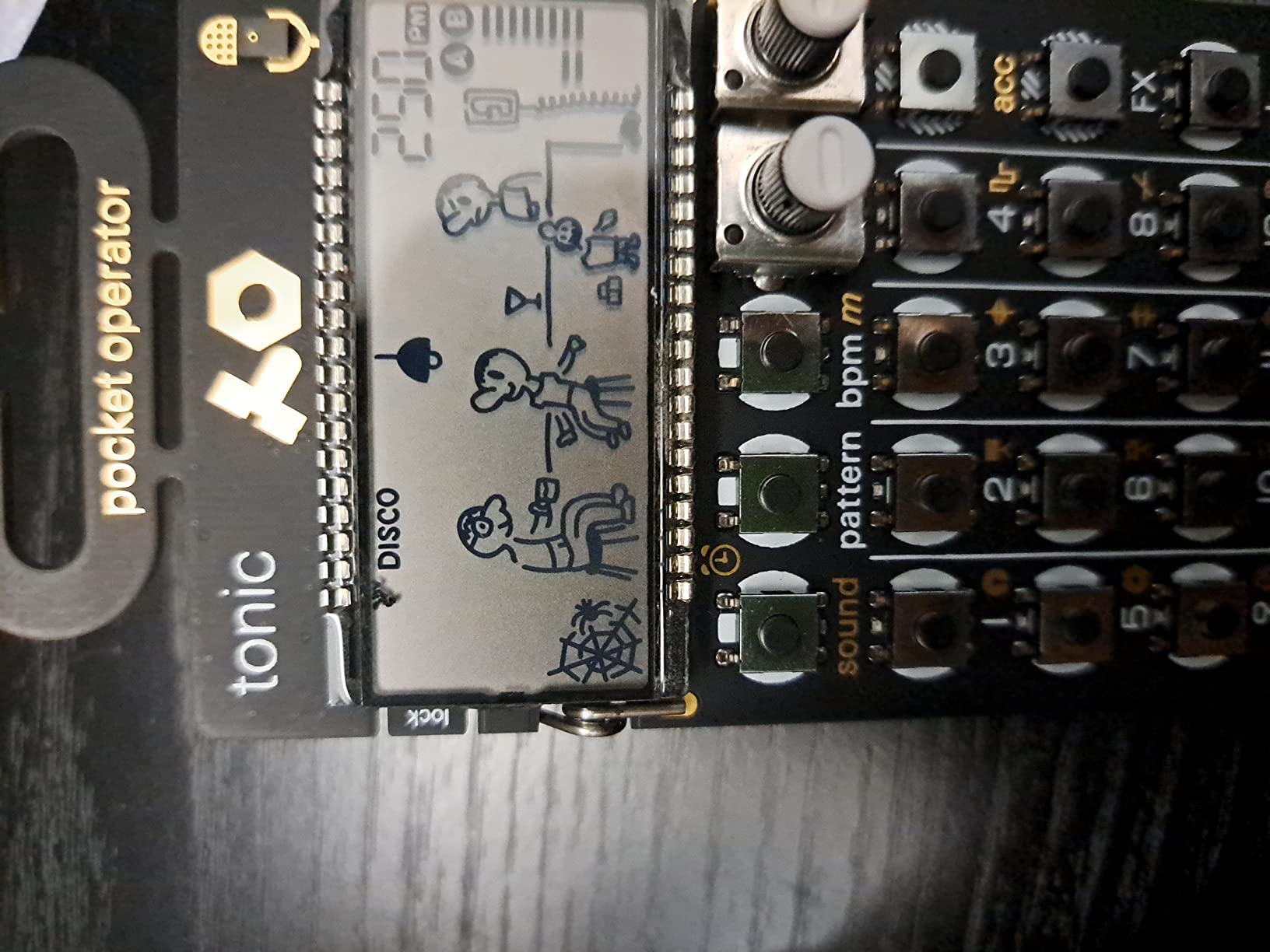
The PO-32 Tonic is the bigger sibling of the PO-12, and it swaps the sample-based engine for true synthesis powered by Sonicware’s MicroTonic drum synth. With 416 reviews averaging 4.6 stars, it has a slightly smaller audience than the PO-12 but a more dedicated one, since sound designers love the synthesis depth.
The synthesis engine is the standout feature. You can transfer sounds from the MicroTonic VST plugin to the PO-32 via the built-in microphone or the included cable, effectively giving you unlimited sound design possibilities. Once a sound is on the unit, you can tweak it directly using the parameter locks and punch-in effects.
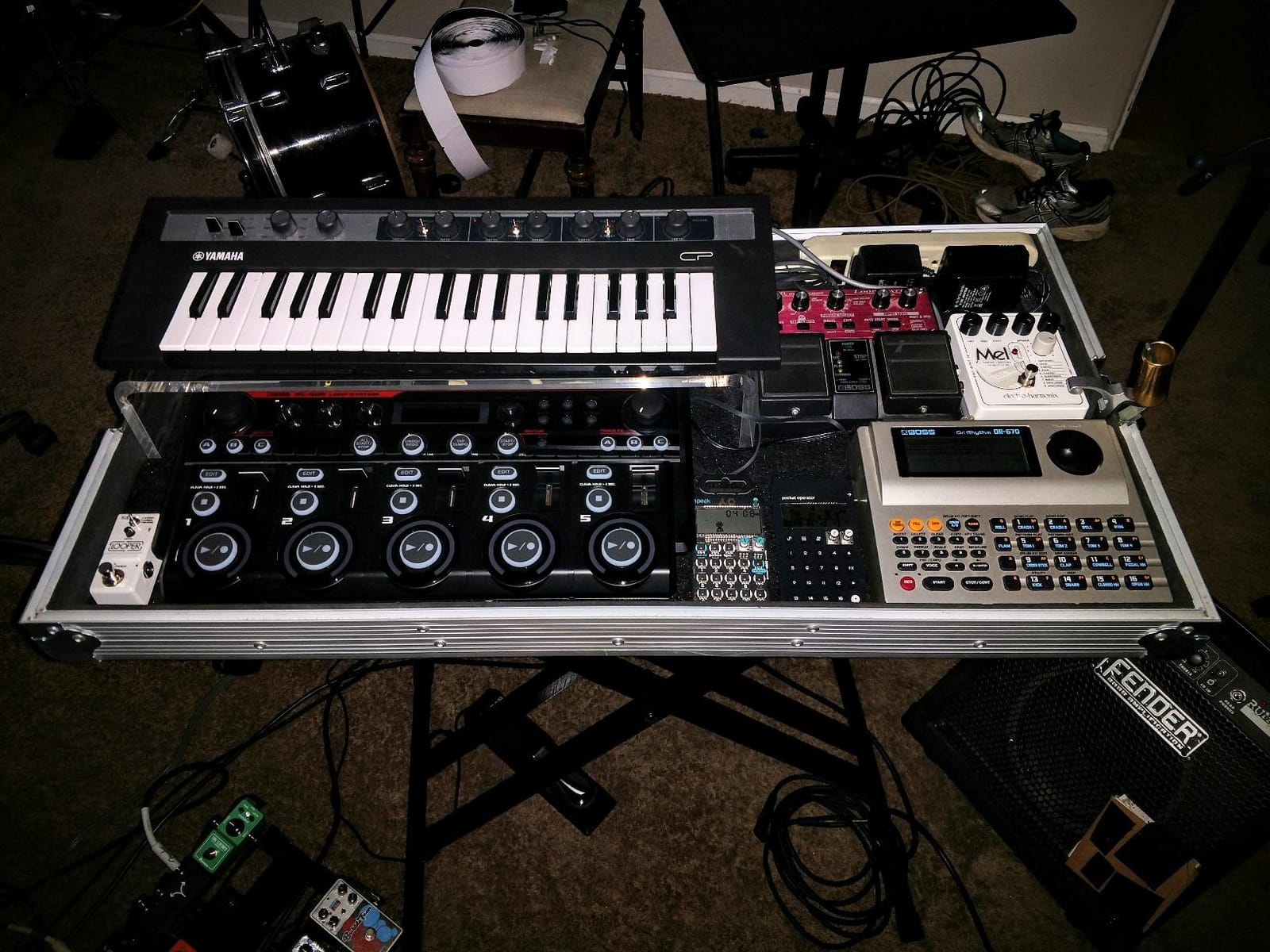
The 64-pattern chainable step sequencer is a serious step up from the PO-12’s 16 patterns. You can build full tracks with multiple sections, fills, and transitions, all on a credit-card-sized device. The step multiplier lets you add ratcheted subdivisions on the fly, perfect for trap-style hi-hat rolls.
The downsides are familiar to Pocket Operator owners. The exposed circuit board is fragile. The battery contacts can fatigue over time, leading to power issues. And to get the most out of the synthesis, you need to buy MicroTonic separately, which adds to the total cost. That said, the value for synthesis depth at this size is unmatched.
Who It Is Best For
The PO-32 Tonic is for producers and sound designers who want a pocket-sized synthesizer with serious depth. It is ideal for anyone who already uses MicroTonic in their DAW and wants a portable hardware companion. The unit also makes a great travel companion for sketching beats on the go.
Who Should Skip It
If you prefer sample-based beat making, the PO-12 or Circuit Rhythm is a better fit. If you want a more robust build, the DrumBrute Impact or TR-8S will hold up better. And if you want to skip the MicroTonic purchase, the PO-12 gives you sample-based fun at a lower price.
8. Novation Circuit Rhythm Sampler and Groovebox
Novation Circuit Rhythm Sampler and Groovebox
8 sample tracks
Performance FX
4-hour battery
MIDI/USB-C/microSD
Pros
- Standalone sampler and drum machine with no computer required
- Slice
- sculpt
- and resample from phone
- turntable
- or synth
- Eight sample tracks each with 32-step patterns chainable to 256 steps
- Built-in performance FX including lo-fi tape
- beat repeat
- reverb
- delay
- sidechain
- Four-hour internal battery for portable gigs
- MIDI
- USB-C
- and microSD connectivity
- Class-compliant USB-C audio and MIDI interface
- Hands-on sequencer with quantized or off-grid recording
Cons
- No display screen
- relies on LED color coding
- Slow sample saving over USB-C
- Limited per-sample effects customization
- 8x2 step layout feels unusual to users of 4x4 or 1x16 layouts
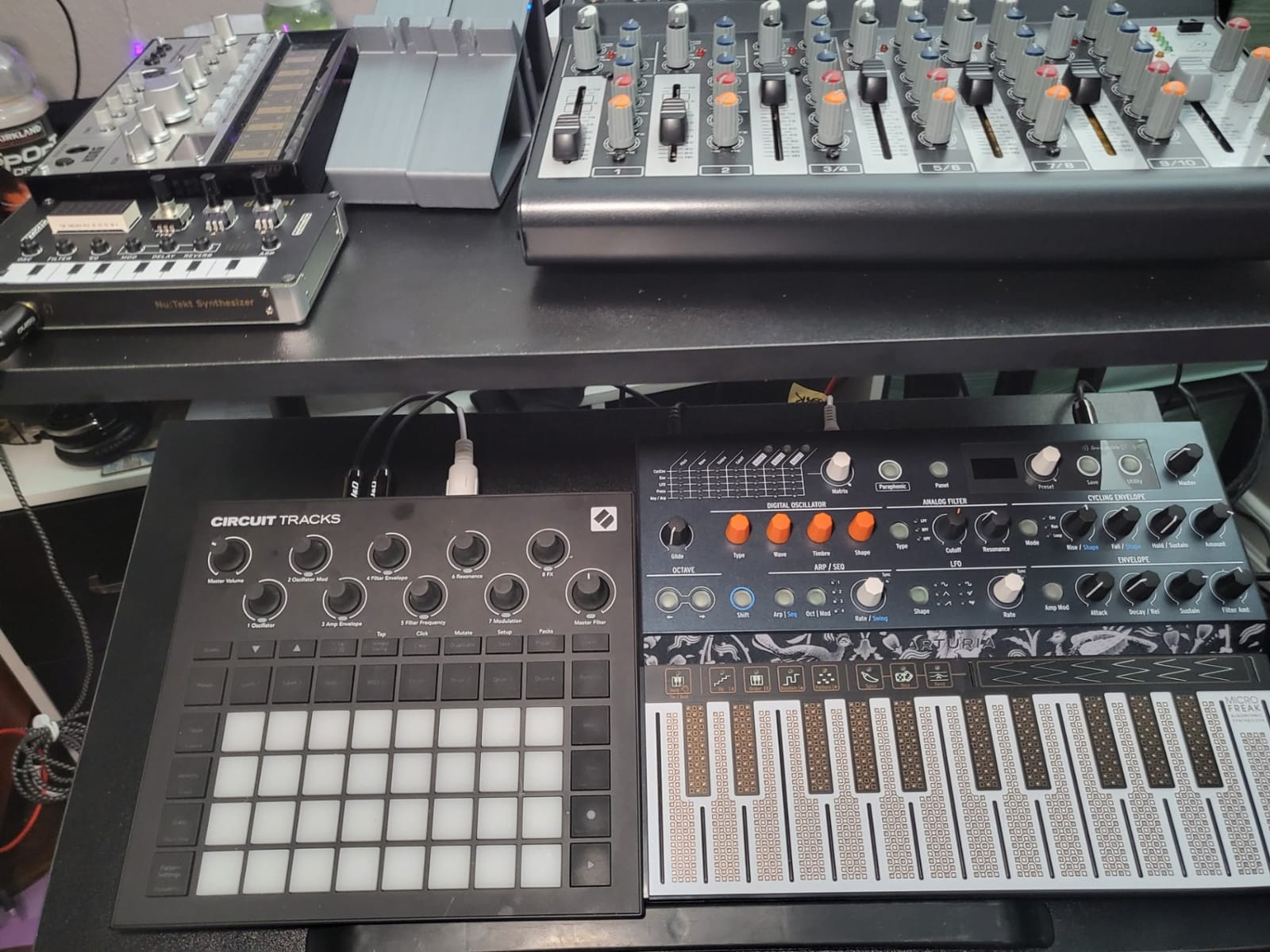
The Novation Circuit Rhythm is the only true groovebox on this list, which means it leans hard into the creative jam-friendly workflow that sets grooveboxes apart from pure drum machines. With 214 reviews averaging 4.3 stars, it has a smaller but passionate user base who appreciate the sampling depth.
The sampling workflow is the standout. You can record audio directly from a phone, turntable, or external synth via the line input, then slice, chop, and resample it into a kit. I tested it with a vinyl record: dropped the needle, hit record, sliced the loop into 8 pads, and had a custom beat in under five minutes.
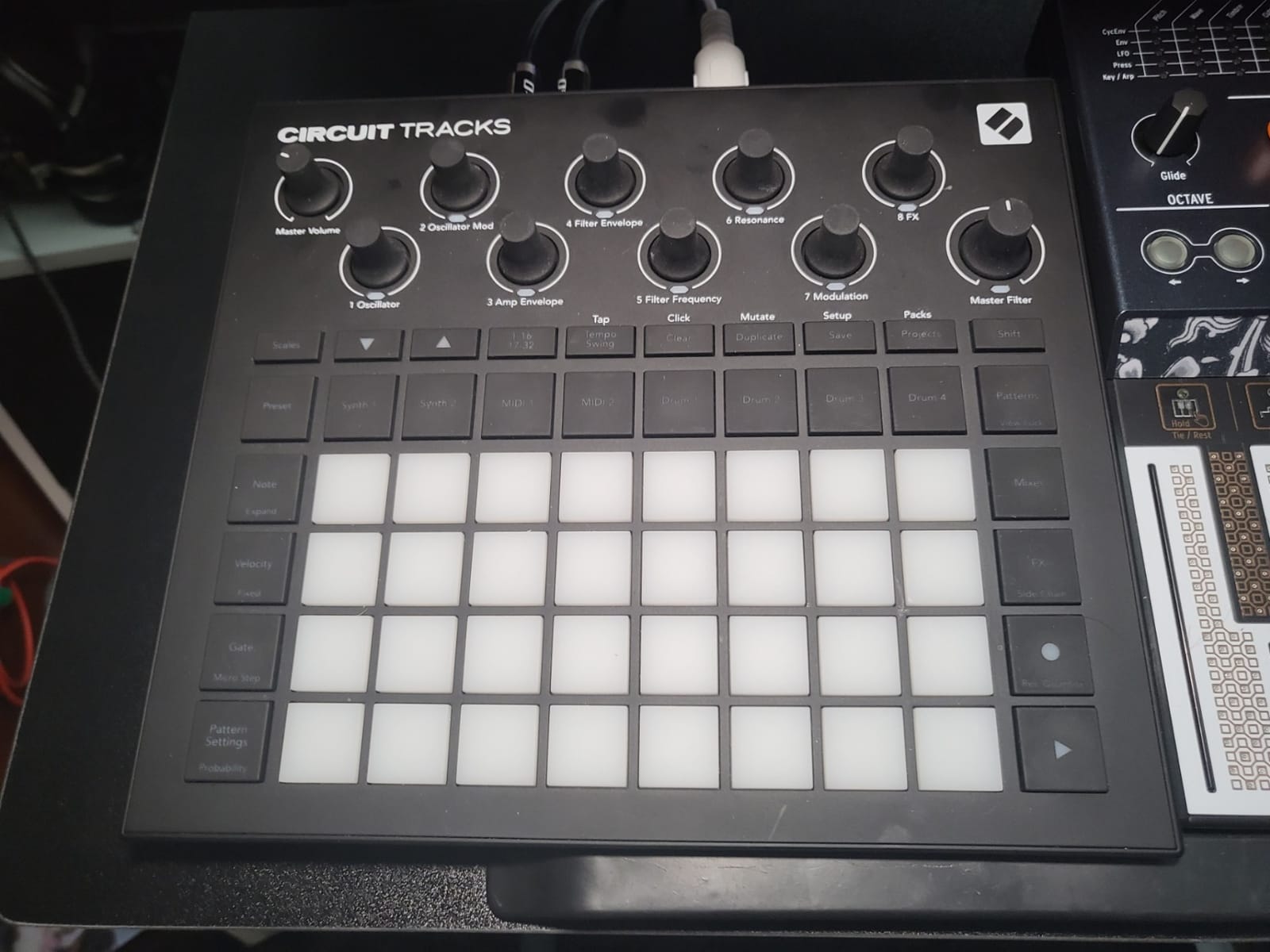
The performance effects are studio-grade: lo-fi tape crunch, beat repeat stutter, reverb, delay, and sidechain compression all live on dedicated macro controls. You can route effects per track, save them into your patches, and trigger them with the four macro encoders during live performance. The four-hour battery is enough for a full live set.
The biggest complaint I have is the lack of a display screen. You navigate everything through LED color coding, which has a steep learning curve for the first few weeks. Sample saving over USB-C is also slower than it should be. But once you internalize the workflow, the Circuit Rhythm is one of the most fun tools you can own.
Who It Is Best For
The Circuit Rhythm is for producers who want to bring their own sounds into a hardware box and jam on them. It is ideal for hip-hop producers sampling vinyl, electronic producers chopping loops, and live performers who want hands-on sampling and effects. The battery power makes it a great gigging tool.
Who Should Skip It
If you prefer preset sounds and traditional drum machine workflows, the TR-8S or Volca Beats is a better fit. If menu-driven LED navigation frustrates you, look at the T-8 or DrumBrute Impact, which have screens. And if you want a heavier emphasis on synthesis rather than sampling, the Syntakt delivers more per-track sound design.
9. Arturia DrumBrute Impact Analog Drum Machine
Arturia DrumBrute Impact Analog Drum Machine
All-analog
Color mode
64-step patterns
Metal build
Pros
- Fully analog sound engine with no digital samples
- Optional Color sound-shaping on every instrument except cowbell
- Separate accent per drum for dynamic expression
- Song mode for chaining patterns into full tracks
- All-metal alloy steel construction for stage durability
- Intuitive knob-per-function layout for hands-on tweaking
- 64-step patterns with pattern chaining
Cons
- Limited onboard effects compared to higher-end competitors
- Slower shipping from some third-party sellers
The Arturia DrumBrute Impact is the best all-analog drum machine on this list, period. While many modern drum machines blend analog with PCM samples, the DrumBrute Impact commits fully to analog circuitry for every drum voice. With 218 reviews averaging 4.6 stars, it has a smaller audience but an extremely loyal one.
What makes the DrumBrute Impact special is the Color mode. Each drum voice has a Color knob that re-shapes the sound in real time, essentially adding a built-in distortion or filter per instrument. The result is a huge sonic palette from a single analog circuit: you can go from clean 808-style punch to gritty, overdriven techno thump with a single knob turn.
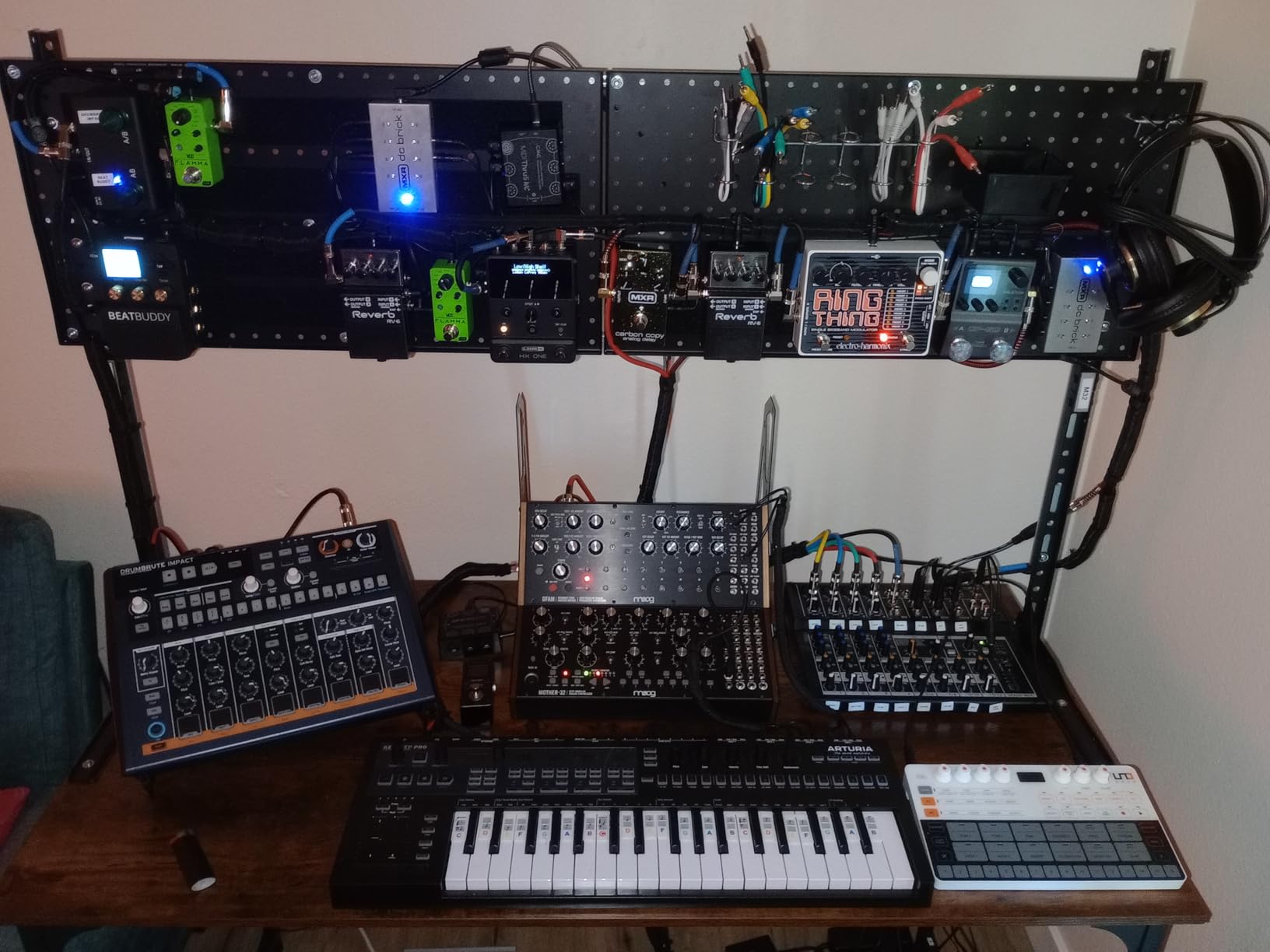
The build quality is also standout. The all-metal alloy steel chassis is built for stage use, and the knob-per-function layout means you can tweak any parameter without menu diving. Song mode lets you chain patterns into full arrangements, which is something the Volca Beats still lacks.
The compromises are honest. The onboard effects are limited compared to the TR-8S or T-8: you get distortion but not much else. The sound library is purely analog, so if you want modern trap snares or cinematic percussion, you will need to look elsewhere. But for classic analog punch with creative flexibility, nothing at this price comes close.
Who It Is Best For
The DrumBrute Impact is for analog purists and techno, house, and electro producers who want genuine analog circuits. It is also a strong choice for live performers who need a roadworthy metal chassis and immediate hands-on control. The Color mode adds creative versatility that pure analog boxes often lack.
Who Should Skip It
If you want TR-808 authenticity with sampling, the TR-8S is the better choice. If you want more effects and modern hybrid sound design, the Roland T-8 or Korg Volca Beats offers more depth per dollar. And if you need sample playback, look at the Circuit Rhythm or Digitakt II.
10. Roland AIRA Compact T-8 Beat Machine
Roland AIRA Compact T-8 Beat Machine
ACB 808/909/606
TR-REC sequencer
USB-C audio
Compact
Pros
- Ultra-portable Roland rhythm and bass machine with TR-808
- TR-909
- TR-606 drums plus TB-303 bass
- ACB technology faithfully recreates vintage Roland tone
- Intuitive 16-step sequencer with hands-on beat-making tools
- TR-REC sequencer with 64 user patterns up to 32 steps each
- Advanced programming with probability
- sub step
- last step
- and velocity controls
- Built-in delay
- reverb
- overdrive
- and sidechain compression
- Class-compliant USB-C audio and MIDI interface
- no drivers needed
- Comprehensive audio
- MIDI
- and sync I/O plus AIRA Link
Cons
- Smaller form factor can limit hands-on tweaking
- Bass-line focus may not suit purist drum-only users
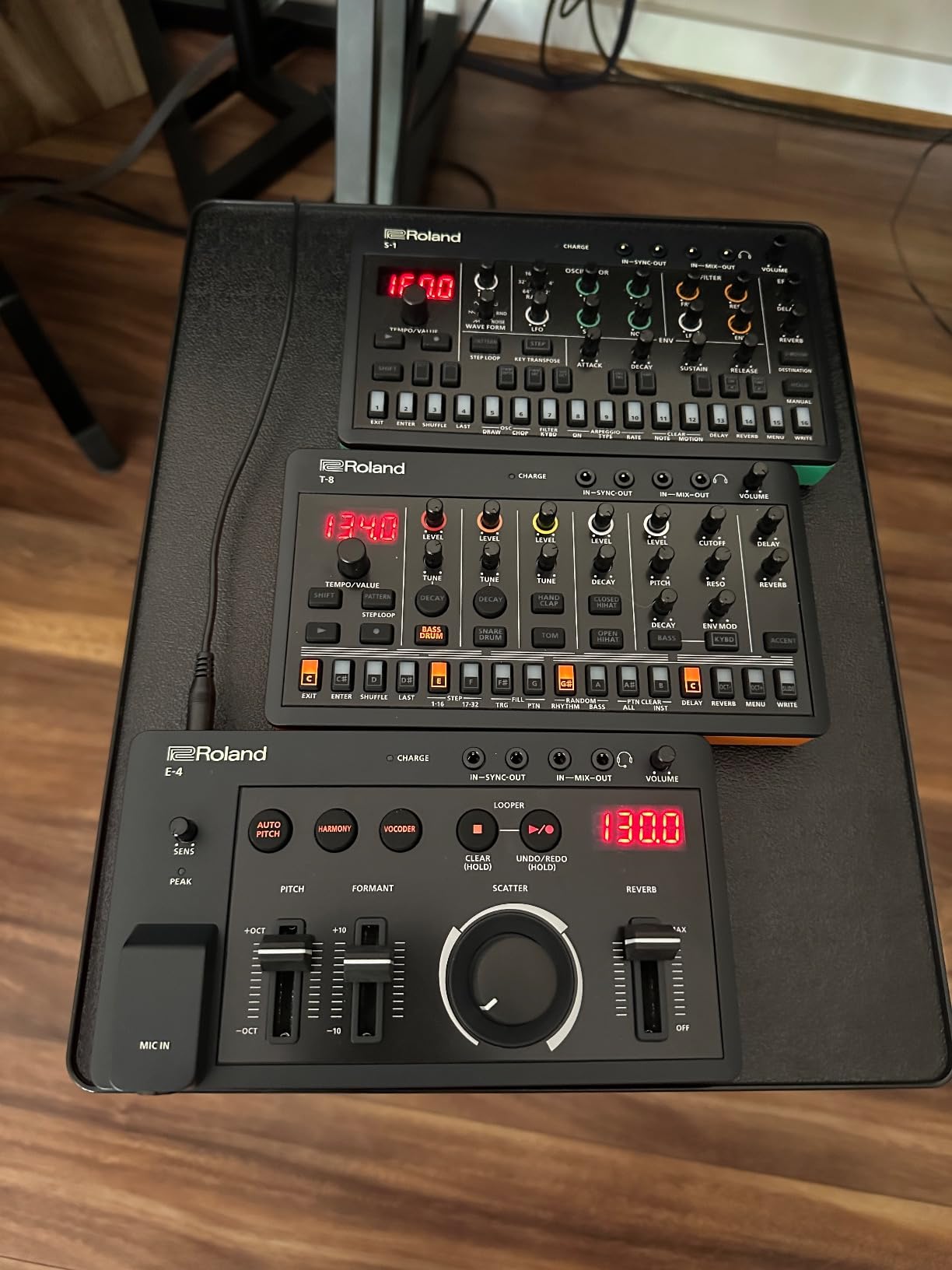
The Roland AIRA Compact T-8 is the most portable beat machine Roland has ever made, packing the legendary TR-808, TR-909, and TR-606 sounds plus a TB-303-style bass voice into a unit small enough to slip into a laptop bag. With 202 reviews averaging 4.5 stars, it is a relatively new release that has quickly earned a devoted following.
I have been carrying the T-8 to coffee shops, parks, and friend hangouts for months. The ACB modeling means you get authentic Roland tone in a unit the size of a paperback book. The TR-REC sequencer with probability, sub-step, last step, and velocity controls gives you deep programming power that belies the small form factor.
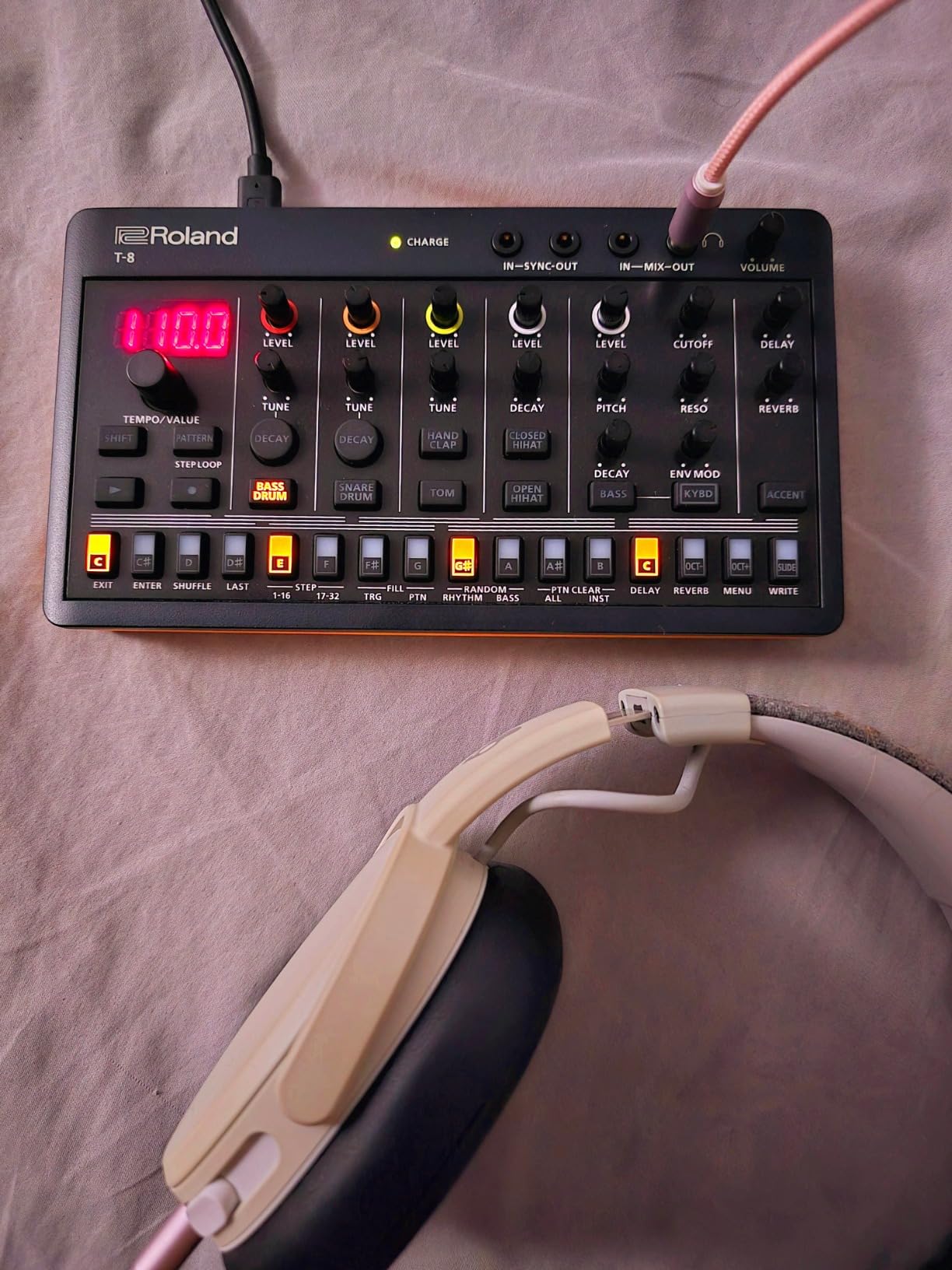
The bass voice is what makes the T-8 unique. Most drum machines focus exclusively on percussion, but the T-8 adds a TB-303 bass synth voice so you can sketch full song ideas without bringing a separate bass synth. The built-in effects (delay, reverb, overdrive, sidechain compression) are surprisingly deep for a portable unit.
Connectivity is excellent: USB-C audio and MIDI with no drivers required, plus comprehensive audio, MIDI, and sync I/O via AIRA Link. You can plug headphones directly into the unit, then run the audio into a recorder or interface for DAW integration. The smaller form factor means the pads and knobs are tighter than the TR-8S, which some users find limiting for live tweaking.
Who It Is Best For
The T-8 is perfect for producers who want authentic Roland sound in a portable package. It is also ideal for beginners who want to learn on a unit they can take anywhere. The built-in bass synth makes it a strong choice for sketch-writing and live jamming. If you do not need a screen, the T-8’s interface is refreshingly immediate.
Who Should Skip It
If you want maximum hands-on control with full-size pads, the TR-8S is a better fit. If you want pure sampling workflow, the Digitakt II or Circuit Rhythm is the way to go. And if you want to focus exclusively on drums without the bass voice, the Volca Beats keeps things streamlined.
How to Choose the Best Drum Machine for You
Picking the right drum machine comes down to five questions: what sound engine do you want, how deep do you need the sequencer to go, what connectivity do you require, how portable does it need to be, and how does it fit your budget?
Sound Engine: Analog vs Digital vs Hybrid
Analog drum machines like the Arturia DrumBrute Impact generate every drum voice through real analog circuits. The result is warm, punchy, and gritty, with the natural compression and saturation that analog circuits provide. Digital drum machines use PCM samples or synthesis to recreate drum sounds, often with deeper editing options. Hybrid units like the Roland TR-8S, Korg Volca Beats, and Roland T-8 combine analog and digital elements for the best of both worlds.
For most producers, a hybrid unit delivers the most versatility. Pure analog is great for techno, house, and electro where the circuit character is part of the sound. Pure digital or sample-based units like the Novation Circuit Rhythm are best for hip-hop, trap, and any genre that depends on modern production sounds.
Sequencer Capabilities
The sequencer is the heart of any drum machine. Step sequencers let you program beats one step at a time, which is great for tight electronic grooves. Real-time sequencers record what you play, which is more intuitive for live drumming. Probabilistic sequencers like the Elektron Digitakt add random or weighted steps, which is great for generative music.
Look for pattern chaining or song mode if you want to build full arrangements. The Volca Beats lacks song mode, which is a real limitation for live sets. The TR-8S, T-8, DrumBrute Impact, and Circuit Rhythm all handle pattern chaining well.
Connectivity and Outputs
MIDI in and out is essential for syncing with other gear and DAWs. USB audio interface functionality, like on the T-8 and Circuit Rhythm, lets you record the drum machine directly into your computer without a separate audio interface. Individual outputs, like the seven on the TR-8S, let you process each drum voice separately in a mixer.
Sync options matter for hybrid setups. DIN Sync, analog clock, and Ableton Link are the most common. The TR-8S, T-8, and Circuit Rhythm all support Ableton Link, which makes them easy to integrate into modern DAW-based workflows.
Portability and Power
If you gig, busk, or travel with your gear, battery power matters. The Pocket Operators run on AAA batteries for a month. The T-8, Circuit Rhythm, and Volca Beats can run on USB power or battery packs. The TR-8S, DrumBrute Impact, and Alesis SR-16 need AC power, which limits their portability.
Size and weight also matter for stage use. The PO-12 fits in a pocket. The T-8 fits in a laptop bag. The TR-8S and DrumBrute Impact need dedicated space in a studio rack or pedalboard setup.
Budget Tiers
Under 200 dollars gets you the Pocket Operators, Volca Beats, BeatBuddy MINI 2, MOOER Drummer X2, and Alesis SR-16. These are all solid starter units with different strengths.
The 200 to 500 dollar tier includes the Roland T-8, Arturia DrumBrute Impact, and Novation Circuit Rhythm. This is where you start getting serious build quality, deeper sequencers, and more authentic sound engines.
The 500-plus tier is flagship territory: the Roland TR-8S, Elektron Digitakt II, Elektron Syntakt, and Roland TR-1000. These units offer the deepest sound design, the most flexible sequencing, and the most comprehensive connectivity.
Best Drum Machines by Genre and Use Case
Different genres call for different drum machine strengths. Here is a quick map to help you find the right fit.
For hip-hop, the Roland TR-8S delivers authentic 808 and 909 character, while the Novation Circuit Rhythm lets you sample vinyl and chop loops. The Alesis SR-16 is a solid budget workhorse for trap and boom-bap alike.
For techno and house, the Arturia DrumBrute Impact delivers analog punch with the Color mode for grit, while the Roland TR-8S remains the live performance benchmark. The Korg Volca Beats is a great budget analog starter.
For drum and bass, the Elektron Digitakt II and Syntakt offer the deepest sequencing with parameter locks and conditional trigs. The Roland TR-8S also handles DnB well at faster tempos.
For live performance, the Roland TR-8S is the consensus pick from r/synthesizers because of its hands-on faders and individual outputs. The Roland T-8 is the best portable option. The Circuit Rhythm adds sampling flexibility for live-set creativity.
For beginners, the Korg Volca Beats is the most beginner-friendly beat machine with intuitive sequencing and a low price. The Roland T-8 is great for those willing to spend more for authentic Roland sound. The PO-12 is the best gift-grade starter.
For DAWless production, the TR-8S, T-8, Syntakt, and Circuit Rhythm all work as standalone production hubs. Pair any of these with a small mixer and a synth, and you have a complete studio without a computer.
Frequently Asked Questions
What is a drum machine and how does it work?
A drum machine is an electronic musical instrument that creates percussion sounds and patterns via a built-in sound engine and step sequencer. Most use analog circuits, digital samples, FM synthesis, or physical modeling to generate drum voices, then let you program patterns of 16 to 64 steps with hands-on buttons, knobs, and pads.
What is the difference between a drum machine and a groovebox?
A drum machine focuses exclusively on percussion and beat making, with no bass or lead synth voices. A groovebox adds bass lines, lead synths, and full song arrangement in one box. Some products blur the line: the Roland T-8 includes a TB-303-style bass voice, and the Novation Circuit Rhythm is a sampler-groovebox hybrid.
Are drum machines only good for dance music?
No. Drum machines work for any genre that needs programmed or performed percussion: hip-hop, rock, pop, jazz, ambient, film scoring, and more. The Roland TR-808 and TR-909 are dance-music staples, but the same machines power countless hip-hop, trap, and live band records. The Alesis SR-16 is popular with songwriters and remix engineers because of its broad genre coverage.
How many drum tracks do I need?
For most styles, 8 to 16 tracks is plenty: kick, snare, closed hi-hat, open hi-hat, clap, rim, tom, and a couple of percussion voices cover the bulk of pop, rock, hip-hop, and EDM. More complex genres like drum and bass or industrial benefit from 16 tracks or more, which is where units like the Elektron Digitakt II shine.
What connections do I need on a drum machine?
At minimum you need a stereo audio output (headphones or 1/4 inch) and MIDI in and out for sync with other gear or a DAW. USB audio interface functionality, like on the Roland T-8 and Novation Circuit Rhythm, lets you record the drum machine directly into your computer. Individual outputs, sync in and out, and CV and gate are useful for advanced setups.
How much should I spend on a drum machine?
Budget units from 60 to 200 dollars (Teenage Engineering PO-12, Korg Volca Beats, Alesis SR-16) deliver solid drum sounds and core sequencing. The 200 to 500 dollar tier (Roland T-8, Arturia DrumBrute Impact, Novation Circuit Rhythm) adds serious build quality and deeper features. Flagship units above 500 dollars (Roland TR-8S, Elektron Digitakt II, Roland TR-1000) deliver the deepest sound design and most comprehensive connectivity.
Final Verdict: Which Drum Machine Should You Buy?
The best drum machines in 2026 cover every genre, budget, and workflow style. Our editor’s choice, the Roland TR-8S, remains the most authentic and versatile flagship for producers and live performers who want classic Roland sound with modern sampling. The Alesis SR-16 wins the value crown with thousands of long-term owners and a feature set that punches well above its price. The Teenage Engineering PO-12 is the fun, ultra-portable budget pick that belongs in every producer’s bag.
For analog purists, the Arturia DrumBrute Impact is unbeatable. For beginners, the Korg Volca Beats is the ideal starting point. For guitarists, the BeatBuddy MINI 2 changes how you play live. For sound designers, the PO-32 Tonic unlocks unlimited synthesis depth in a pocket-sized package. For groovebox fans, the Novation Circuit Rhythm is the most creative sampling workflow available.
Whatever you choose, the hardware drum machine renaissance means there has never been a better time to step away from the laptop and back into the tactile world of dedicated beat boxes. Pick the unit that matches your genre, your workflow, and your budget, and start programming beats with your hands instead of your mouse.