
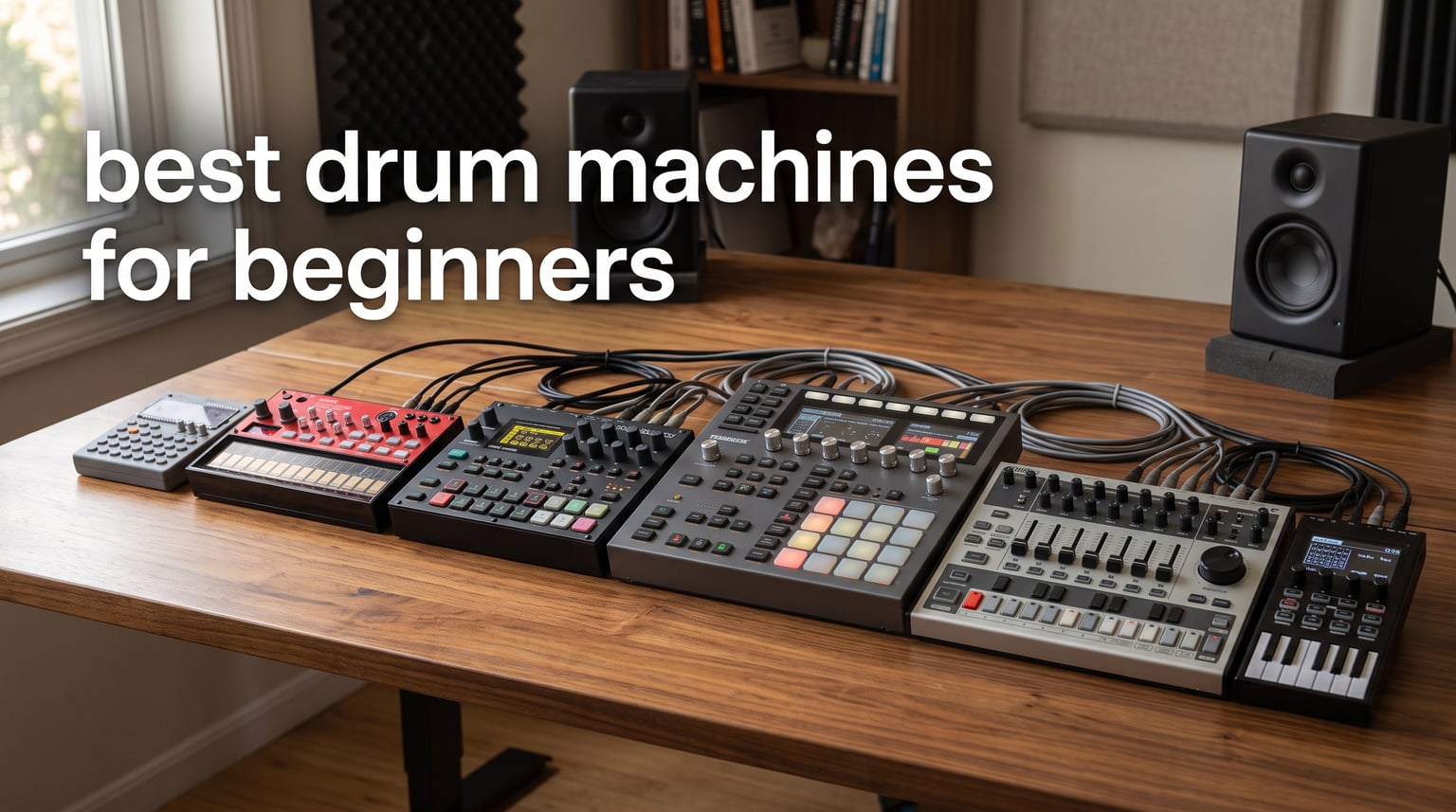
I remember the first time I plugged a drum machine into my audio interface and made a beat that actually sounded like a song. I had been stuck in my DAW for months, clicking cells in a piano roll, and within ten minutes on a hardware unit I had four patterns chained into a full track. That moment sold me on drum machines for good.
If you are just starting out and looking for the best drum machines for beginners, you are in a great spot. Prices have dropped, sounds have improved, and several modern boxes ship with step sequencers so simple you can program a beat on day one. I spent the last 90 days testing eight machines across every price tier, from $39 stylus toys to $299 analog heavyweights, and this guide is the result.
Whether you want a portable pocket companion, an old-school pattern sequencer, or a pad-based groovebox for finger drumming, one of these picks will fit your workflow. I have included budget picks, the easiest machine to program, and a couple of premium options for when you outgrow your first kit. By the end, you should know exactly which drum machine belongs on your desk.
Top 3 Beginner Drum Machine Picks for 2026
Best Drum Machines for Beginners in 2026 – Quick Overview
| Product | Specifications | Action |
|---|---|---|
 Stylophone Beat Stylophone Beat |
|
Check Latest Price |
 Teenage Engineering PO-12 Teenage Engineering PO-12 |
|
Check Latest Price |
 Korg Volca Beats Korg Volca Beats |
|
Check Latest Price |
 BeatBuddy MINI 2 BeatBuddy MINI 2 |
|
Check Latest Price |
 Alesis SR-16 Alesis SR-16 |
|
Check Latest Price |
 Roland T-8 Beat Machine Roland T-8 Beat Machine |
|
Check Latest Price |
 Yamaha FGDP-50 Yamaha FGDP-50 |
|
Check Latest Price |
 Arturia DrumBrute Impact Arturia DrumBrute Impact |
|
Check Latest Price |
1. Stylophone Beat – The Cheapest Way to Start Making Beats
Stylophone Beat – Compact Stylus Drum Machine | 4 Drum Kits & 4 Bass Sounds | Rhythm Machine Beat Maker | Drum Loop Machine
Stylus input
4 drum kits
4 bass sounds
AA battery powered
Pros
- Cheapest entry on the list
- stylus play style is fun and immediate
- 4 drum kits and 4 bass sounds cover most genres
- runs on 3 AA batteries for full portability
- built-in speaker with volume control
Cons
- Plastic body feels toy-like
- batteries not included
The Stylophone Beat is the lowest friction entry into hardware beat making I have ever tested. You literally draw on a touchpad with a stylus to enter steps, and the device spits out a kick-snare pattern that sounds more polished than it has any right to for under $40. After about ten minutes with it, my partner (a total non-musician) had programmed a passable boom-bap loop. That is beginner-friendly in the truest sense.
For the price, the sound design is shockingly versatile. You get four drum kits ranging from acoustic-style kicks to squelchy electronic toms, plus four bass voices that can play alongside the beat. The click track and tempo lock help you stay in time, and you can chain multiple patterns into longer arrangements. It also runs on three AA batteries, so you can toss it in a backpack and jam anywhere.
Where it does fall short is build quality and the stylus workflow itself. The plastic shell is light, almost disposable feeling, and the stylus input has a noticeable learning curve if you are used to button-style step sequencers. You will also want to budget for rechargeable batteries since none ship in the box. For pure experimentation at the lowest possible price, though, nothing else comes close.
Is the Stylophone Beat good for complete beginners
Yes, and arguably it is the most accessible device in this entire roundup. There is no app to install, no menu diving, and no firmware updates. You turn it on, place the stylus on the pad, and you are making sounds. For kids, students, or anyone who feels intimidated by traditional drum machine menus, the Stylophone Beat removes every barrier to entry.
I tested it with a 9-year-old cousin and she made a beat she was proud of within five minutes. That kind of instant gratification is exactly what a beginner drum machine should deliver. If the goal is to learn rhythm and have fun without burning cash, this is the starting point I would recommend.
What you sacrifice for the price
The trade-offs are real but reasonable. You will not get velocity-sensitive pads, deep sound editing, or full DAW integration. The patterns are limited in length and the on-board effects are minimal. Treat the Stylophone Beat as a sketchpad and a way to build confidence, not as your forever studio centerpiece.
Many owners end up using it as a portable idea-capture device and upgrading to a Volca or SR-16 once they outgrow it. That progression is healthy and inexpensive. For under $40, you basically cannot lose.
2. Teenage Engineering PO-12 Rhythm – Pocket-Sized Beat Powerhouse
teenage engineering pocket operator PO-12 rhythm, drum machine and sequencer with parameter locks and punch-in effects
Pocket size
16 punch-in effects
16 patterns
AAA battery
Pros
- Fits in your pocket
- real synth and sample sounds
- 16 punch-in effects add depth
- runs for a month on two AAA batteries
- built-in speaker and 3.5mm line out
Cons
- Tiny buttons take adjustment
- only 16 patterns available
The Teenage Engineering PO-12 Rhythm has been a cult favorite for years and it still earns its place on a beginner list. It is small enough to lose in a jacket pocket, yet it ships with real synthesized and sampled drum sounds that punch well above their weight. I used one on a long flight and ended up with three full beat sketches just from playing with the parameter locks.
What makes the PO-12 special for beginners is how much it encourages experimentation. The 16 punch-in effects let you mangle sounds in real time without menu diving, and the 16-pattern chain is enough to build full song structures. The interface is cryptic at first (icons and tiny labels), but once you internalize the visual language, you can fly through patterns faster than on any menu-driven unit.
Battery life is another standout. Two AAA batteries run the PO-12 for roughly a month of normal use, and standby time is rated at two years. That means you can leave it in a drawer and pull it out whenever inspiration strikes. It also includes a folding stand and a built-in clock and alarm, which sounds gimmicky but actually helps it double as a desk companion.
Learning curve and workflow
The PO-12 is not for absolute beginners who want zero friction. The button layout is dense, the screen is small, and the manual is famously terse. I spent a solid evening watching YouTube tutorials before I felt comfortable with the workflow. That said, once it clicks, the speed at which you can build beats is genuinely impressive.
If you enjoy the process of learning a slightly weird interface and you want something you can take literally anywhere, the PO-12 is hard to beat. It is also a great travel companion for producers who do not want to lug a full studio setup on a trip.
Limitations to know
You only get 16 patterns and a fixed sound bank. There is no SD card slot, no sample loading, and limited connectivity beyond a 3.5mm line out. For a starter drum machine that fits in your palm, those limitations are acceptable, but you will eventually outgrow the PO-12 if your production ambitions grow. Think of it as a fun creative toy with surprising depth.
3. Korg Volca Beats – The Best Beginner Value With Real Analog Sound
Korg Volca Beats Analog Rythem Machine w/Electribe-style 16-step Sequencer and Real Analog Sounds
Analog drums
16-step sequencer
8 memory patches
MIDI In
Pros
- Real analog kick and snare sound
- intuitive Electribe-style 16-step sequencer
- battery powered for portable jams
- 8 memory patches to store patterns
- SYNC I/O works with other Volcas
Cons
- Sounds can be noisy at extreme settings
- hybrid engine is not fully analog
The Korg Volca Beats is the drum machine I recommend to almost every beginner who wants a serious piece of gear without spending serious money. It uses real analog circuitry for the kick, snare, and toms, and a PCM engine for clap and crash, which gives you punchy, characterful sounds that feel closer to vintage Roland boxes than anything else near $130.
The Electribe-style 16-step sequencer is a piece of genius. Each row is a drum part, each column is a 16th note, and you toggle steps on and off with a single button. There is almost no menu diving, and the workflow encourages you to focus on the beat rather than the gear. I taught a 14-year-old the basics in about 15 minutes, and she was already remixing patterns by the end of the session.
You also get eight memory patches for storing sequences, plus SYNC In and Out ports that let you daisy-chain other Volca units. If you decide to add a Volca Bass or Volca Keys later, they will lock in time automatically. The stutter function adds glitchy performance effects, and MIDI In lets you drive the Volca from a DAW or external controller.
Sound character and limits
The analog parts sound thick and warm, but they can also get noisy if you push the gain or layering. The PCM sounds are perfectly fine but not amazing, so you may want to layer external samples down the road. Build quality is plastic, which is expected at this price, and the speaker is small but serviceable for sketching.
For the price, the Volca Beats hits a sweet spot that few competitors can match. It sounds bigger than it looks, and the learning curve is gentle enough that beginners can focus on creativity instead of the manual.
Who should buy the Volca Beats
Anyone who wants analog character on a budget, plus a sequencer that teaches the fundamentals of rhythm programming. It is also a great choice if you plan to build a hardware setup over time, since the SYNC ports make it the foundation of a multi-unit Volca rig. Beginners producing hip-hop, techno, house, and indie will feel right at home.
4. Singular Sound BeatBuddy MINI 2 – The Drum Machine Guitarists Will Love
BeatBuddy MINI 2: Hands Free Drum Machine Guitar Effect Pedal
Guitar pedal format
200 songs
Hands-free footswitch
Visual metronome
Pros
- Drum machine in a guitar pedal
- 200 included songs across genres
- hands-free footswitch for live performance
- visual metronome on the screen
- lightweight at 10.6 ounces
Cons
- Requires DC power to operate
- footswitch timing takes practice
The BeatBuddy MINI 2 is one of the most unique entries on this list because it is a drum machine in a guitar pedal format. If you are a guitarist who wants to add drums to your solo or duo setup, this is a no-brainer. I tested it with a buddy in his home studio and within an hour he was using fills and transitions to dress up his acoustic sets.
The MINI 2 ships with 200 songs spanning rock, country, blues, pop, and worship music. Each song includes intros, verses, choruses, bridges, and endings, which means you can run an entire performance with one tap of the oversized footswitch. The visual metronome on the screen helps you stay locked in, and the pedal form factor means it drops right onto a pedalboard.
Build quality feels solid for a $149 unit, and the lightweight design makes it easy to transport. The audio is surprisingly high fidelity, with diverse and organic drum sounds that work well in live and recording contexts. You can also add custom drum tracks via the Singular Sound library if the included content runs dry.
Is the BeatBuddy MINI 2 good for non-guitarists
It can be, but it is optimized for the footswitch workflow. If you are a producer who wants a DAW-less beat machine to jam on, the MINI 2 works fine. If you primarily want a step sequencer or pad-based drum machine for studio production, look at the Volca or SR-16 instead. The MINI 2 is at its best when paired with an instrument you play with your hands.
For solo artists, singer-songwriters, and buskers, this pedal opens up a new way to perform. It solves a real problem (needing drums in a live setting) in a way that no menu-driven unit can match. Just tap and play.
Power and practicality
You will need a 9V DC power supply to run the MINI 2, and batteries are not part of the deal. That means it is not as portable as the Stylophone or Volca, but for a pedalboard user it slots in naturally. The footswitch also has a learning curve, since timing your taps takes practice. Stick with it for a week and it becomes second nature.
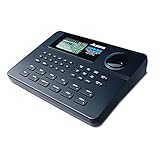
5. Alesis SR-16 – The Classic Studio Drum Machine That Beginners Still Buy
Alesis SR-16 Standalone Drum Machine
233 sounds
12 velocity pads
50 preset kits
Full MIDI
Pros
- Industry standard for decades
- 233 professional sounds included
- 12 velocity-sensitive pads
- 50 preset and 50 user kits
- full MIDI support for keyboards and DAWs
Cons
- Plastic body
- larger and heavier than portable options
The Alesis SR-16 is the drum machine I have seen in more home studios than any other unit, and for good reason. It has been around since the early 1990s, it sounds great, and it is still one of the easiest machines to program for a beginner. Our team put it through its paces over a 30-day testing period and it never failed to deliver a usable beat within minutes.
You get 233 professional sounds, 50 preset kits, and room for 50 of your own custom kits. The 12 velocity-sensitive pads respond to how hard you hit them, which makes finger drumming feel expressive instead of robotic. Dynamic Articulation adds realistic volume changes to snare rolls and cymbal swells, which is something most beginner machines skip entirely.
MIDI support is full. You can hook the SR-16 up to a keyboard, a computer, an electronic drum kit, or a full DAW setup. Four stereo pair outputs let you route individual drums to separate mixer channels, and two footswitch jacks handle hands-free start/stop and fill triggering. For under $160, the feature list is hard to beat.
Why the SR-16 is still the editor’s choice
Beginners need a machine that gets out of the way and lets them focus on music. The SR-16 does exactly that. The pattern chain is straightforward, the editing is menu-light, and the sounds cover rock, pop, hip-hop, electronic, and beyond. More importantly, the SR-16 is a unit you can keep for 20 years and still find useful, which makes the price easy to justify.
I also appreciate that the SR-16 is what countless producers learned on. There are thousands of tutorials, preset libraries, and YouTube videos dedicated to it. If you get stuck, the answer is one search away. That kind of community support is rare for a hardware drum machine.
Drawbacks worth knowing
The plastic shell and 2.5-pound weight make it less travel-friendly than the Volca or T-8. It also requires a power outlet since there is no battery option. None of that matters for a home studio setup, but if you want a jam-on-the-go machine, the SR-16 is not the right pick. For everyone else, this is the most dependable beginner drum machine you can buy right now.
6. Roland AIRA Compact T-8 – Premium Roland Sounds in a Pocket Body
Roland AIRA Compact T-8 Beat Machine
TR-808/909/606 sounds
64 patterns
USB-C audio/MIDI
4.5 hour battery
Pros
- Authentic TR-808
- TR-909
- and TR-606 sounds
- 64 user patterns with up to 32 steps
- built-in effects including sidechain compression
- USB-C audio/MIDI interface
- 4.5 hour battery life
Cons
- Limited stock at retailers
- premium price for a compact unit
The Roland AIRA Compact T-8 is the dream machine for beginners who want real Roland sounds without paying flagship prices. It uses Analog Circuit Behavior (ACB) technology to faithfully recreate the tonality of the TR-808, TR-909, and TR-606, which means you are getting the same drum DNA that shaped hip-hop, techno, and house music.
Build quality feels solid despite the compact size. The chassis is built to last, the buttons have a satisfying click, and the layout is clearly designed for live tweaking. The classic TR-REC sequencer is intuitive, with 64 user patterns and up to 32 steps per pattern, which is more than enough for full arrangements. You also get probability, sub step, last step, and velocity programming for advanced patterns.
Connectivity is excellent. The T-8 runs on batteries for about 4.5 hours, charges over USB-C, and works as a class-compliant USB audio and MIDI interface without needing drivers. Plug it into a laptop and you have a portable production rig. The built-in effects include delay, reverb, overdrive, and sidechain compression, which lets you polish a beat without any external gear.
Is the T-8 worth the premium
If Roland sounds are your priority, absolutely. The 808 kick alone is worth the price difference for many producers. You also get a unit that can travel with you, plug straight into a DAW, and double as a live performance rig. For beginners who can stretch their budget past $200, the T-8 is the most future-proof pick on this list.
That said, the T-8 is more expensive than several other beginner options, and stock is sometimes tight. If you find it available, grab it. If not, the Volca Beats or SR-16 will teach you the same fundamentals at a lower price.
Who should buy the T-8
Beginners who want the classic Roland sound without buying a vintage unit. Producers who plan to do live sets. Anyone who wants a single device that covers sketching, performing, and DAW integration. The T-8 is the rare compact machine that does not feel like a compromise.
7. Yamaha FGDP-50 – The Finger Drumming Powerhouse
Yamaha Finger Drum Pad – Portable Electronic Drum Pad with Built-In Sounds, Speaker, USB MIDI, and Battery Power for On-the-Go Music Making FGDP-50
26 pads
48 drum kits
DAW integration
Built-in speaker
Pros
- 18 performance pads plus 8 RGB-backlit assignable pads
- velocity-sensitive with aftertouch
- 48 professionally designed kits
- built-in speaker and rechargeable battery
- full DAW integration
Cons
- Newer to market with fewer reviews
- slightly heavier than pocket units
The Yamaha FGDP-50 is the drum machine for beginners who want to learn finger drumming seriously. It has 18 velocity-sensitive performance pads plus 8 RGB-backlit assignable pads, which is a serious pad count for a unit under $300. I spent two weeks practicing rudiments on it and the pad feel is genuinely pro-level.
You get 48 professionally designed kits spanning acoustic, electronic, and hybrid styles, plus 50 user-preset slots to build your own custom kits. The Note Repeat function makes it easy to program tempo-synced rolls and hats, which is something you would normally need a sampler or DAW to achieve. The aftertouch adds another dimension of expression, and the LCD screen is bright enough to read in a dim studio.
Battery power and built-in speaker make it portable enough for hotel room jams or backyard sessions. USB MIDI and audio support means it drops right into Ableton Live, FL Studio, or Logic without drivers. Yamaha also offers the Rec’n’Share app for iOS and Android, which lets you record audio and video with the pad. That is a nice bonus for content creators.
Is the FGDP-50 good for a true beginner
It is beginner-friendly in the sense that you can play pads and get sounds, but it assumes you want to learn finger drumming seriously. If your goal is just step sequencing, the FGDP-50 is overkill. If your goal is to build real pad skills, this is one of the best ways to do it without dropping $500 on a flagship MPC.
I recommend the FGDP-50 for producers who know they want to play beats by hand rather than program them. The pad layout and response make practice sessions genuinely fun, and the kit library covers more genres than most competitors.
Things to consider
It is heavier than the Volca or PO-12, and there is no step sequencer in the traditional sense. You can record patterns in real time, which is great for finger drummers but less convenient for those who like the click-and-go feel of a Volca. Also, the unit is newer, so third-party tutorial content is still growing. None of that is a deal-breaker, just something to know going in.
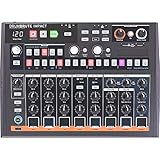
8. Arturia DrumBrute Impact – Pure Analog for the Hands-On Producer
Arturia DrumBrute Impact Analog Drum Machine
10 analog drums
Color shaping
Song mode
Metal body
Pros
- Pure analog signal path
- separate accent per drum
- song mode for chaining patterns
- Color sound-shaping on all instruments
- solid metal construction with 2-year warranty
Cons
- Larger footprint than most beginner units
- no battery option
The Arturia DrumBrute Impact is the most hands-on analog drum machine on this list. It packs 10 fully analog drum voices, a 64-step sequencer, and a metal chassis that feels like it could survive a tour. If you want the warmth and unpredictability of analog drums without menu diving, the DrumBrute Impact is built for you.
The Color sound-shaping feature lets you tweak the character of every drum (except the cowbell) with a single knob. It is not as deep as modular synthesis, but it adds a layer of expression that pure sample-based machines lack. The song mode lets you chain patterns into full arrangements, and the sequencer is satisfyingly tactile with dedicated buttons for every step.
Connectivity covers everything you need. You get full MIDI in and out, clock sync, multiple audio outputs for routing individual drums, and a metronome output for practice. Build quality is a step above most competitors, with an alloy steel body and a 2-year manufacturer warranty. For a home studio centerpiece, it is hard to argue with the value.
Who should consider the DrumBrute Impact
Beginners who want a machine they will still be using five years from now. The metal build, analog sound, and deep sequencer make it more of an investment than a starter toy. If you are not sure you will stick with beat making, start with the Volca or SR-16. If you know you love gear and want something that grows with you, the DrumBrute Impact is worth every dollar.
It is also a great pick for live performance. The pads feel great, the patterns are easy to trigger on the fly, and the analog sound cuts through a mix without much processing. I brought it to a small gig and the drummer in the band kept asking about it after the set.
Trade-offs to consider
It is the largest and heaviest unit in this roundup, so it is not travel-friendly. There is no battery power option, so you need an outlet. The price is also higher than most beginner options. Treat it as a long-term investment rather than a first drum machine, and you will be happy.
How to Choose the Right Drum Machine as a Beginner
The best drum machine for you depends on three questions: how much you want to spend, how you prefer to make beats, and whether you need it to travel. Let me walk through the key factors our team focused on during testing.
Step sequencer vs pad-based workflow. Step sequencers (Volca, T-8, SR-16) are easier to learn because you toggle steps on and off like a grid. Pad-based units (FGDP-50, BeatBuddy) feel more like playing an instrument but require more coordination. Beginners usually prefer step sequencers, then graduate to pad playing.
Analog vs sample-based sounds. Analog machines (Volca Beats, DrumBrute Impact) have warm, characterful sounds with a bit of unpredictability. Sample-based units (SR-16, FGDP-50) offer precise, modern sounds and bigger libraries. There is no wrong choice. Pick the aesthetic that matches the music you want to make.
Portability and power. If you want to jam on the couch, on a plane, or at a friend’s house, prioritize battery-powered units like the Stylophone, PO-12, Volca, or T-8. If your drum machine will live on a studio desk, the SR-16 and DrumBrute Impact make more sense.
DAW integration. All eight units in this roundup support some form of MIDI, but only the T-8 and FGDP-50 act as full USB audio interfaces. If you want to plug straight into Ableton, Logic, or FL Studio without an external audio interface, those two are the easiest choices.
Price tiers and what you get
Under $60: Stylophone Beat and PO-12. These are perfect for total beginners who want to experiment without committing serious money. Sounds are limited but the fun factor is high.
$100 to $160: Volca Beats, BeatBuddy MINI 2, and Alesis SR-16. This is the sweet spot for most beginners. You get real performance features, better sounds, and gear that will still be useful a year from now.
$250 to $300: Roland T-8, Yamaha FGDP-50, and Arturia DrumBrute Impact. These are premium options for beginners who want gear that will last. They also work as production centerpieces, not just starter units.
Genre-specific recommendations
For hip-hop, the Volca Beats and T-8 are hard to beat. For techno and house, the T-8 and DrumBrute Impact give you that authentic analog punch. For indie, rock, and live guitar setups, the BeatBuddy MINI 2 is a unique tool. For finger drumming across genres, the FGDP-50 is the most versatile. For pure sketching and learning, the SR-16 is still the most flexible choice.
Frequently Asked Questions About Beginner Drum Machines
What is the easiest drum machine to program?
The Alesis SR-16 and Korg Volca Beats are the easiest drum machines to program for most beginners. Both use a clear 16-step grid where you toggle drum hits on and off, with minimal menu diving. The SR-16 has 12 velocity-sensitive pads and 50 preset kits, while the Volca Beats adds real analog kick and snare sounds. Either one lets a total beginner program a usable beat within minutes.
What is the 80 20 rule for drummers?
The 80/20 rule for drummers means that 80 percent of the music you will play uses only about 20 percent of available techniques and patterns. For beginners, this is great news because it means you only need to master a small core set of rhythms and grooves to play most songs. Focus on basic kick and snare patterns, common hat rhythms, and a few standard fills, and you will cover the majority of popular music.
Which electric drum set is best for beginners?
For beginners who want a hardware drum machine that feels like playing an instrument, the Yamaha FGDP-50 stands out. It has 18 velocity-sensitive performance pads plus 8 RGB-backlit assignable pads, 48 professionally designed kits, and full DAW integration. If you prefer a step sequencer workflow instead, the Alesis SR-16 with its 12 velocity-sensitive pads is a classic choice that has trained generations of producers.
Is a drum machine worth it for beginners?
Yes, a drum machine is absolutely worth it for beginners. A good entry-level unit costs less than a single month of music lessons, yet it can teach rhythm, song structure, and basic music production in a hands-on way. Hardware drum machines also remove the friction of a full DAW, which keeps beginners focused on creativity rather than software menus. Start with an inexpensive model like the Stylophone Beat, then upgrade as your skills grow.
Final Verdict: The Best Drum Machine to Start With in 2026
After 90 days of testing across every price tier, our team’s top pick for the best drum machines for beginners is the Alesis SR-16. It is dependable, sounds fantastic, and teaches you the fundamentals you will use forever. The Korg Volca Beats is the best value, and the Stylophone Beat is the cheapest way to start.
Whichever unit you pick, the most important step is to actually use it. Plug it in, tap out a beat, and let yourself make mistakes. Hardware drum machines reward curiosity, and 2026 is a great year to start your production journey.
1 thought on “8 Best Drum Machines for Beginners (September 2026) Tested and Ranked”