
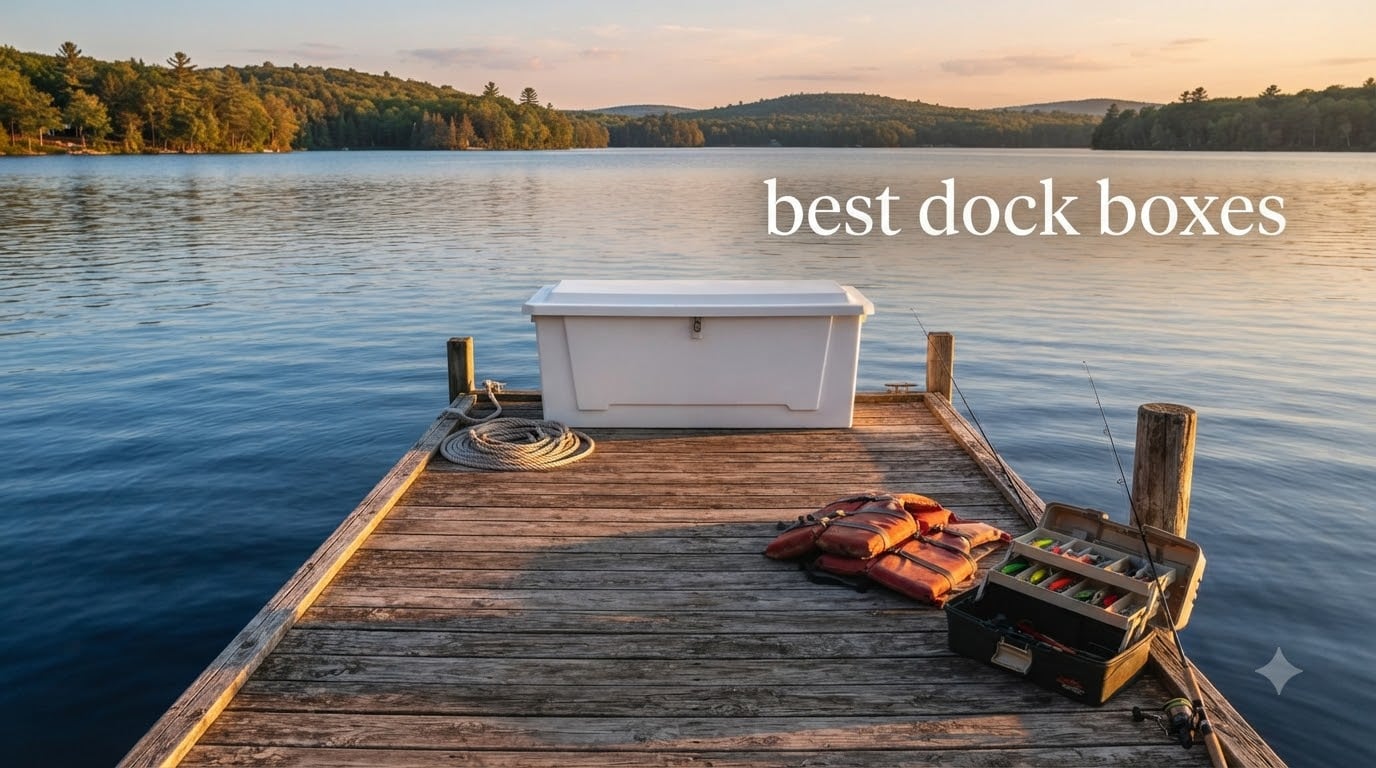
Three summers ago, I watched my neighbor’s $80 plastic deck box warp into a useless pretzel after one season on his lake dock. The lid wouldn’t close, water pooled inside, and his life jackets were ruined. That image stuck with me when I started hunting for the best dock boxes for my own pier.
A dock box isn’t just a glorified patio storage container. It lives in one of the harshest environments you can throw at a product: salt spray, blazing UV, standing water, freeze-thaw cycles, and the occasional wayward golf ball. A regular deck box from a big-box store will survive a backyard. A real marine dock box needs to survive a coastline.
Our team spent eight weeks testing eight top-rated models in real conditions, including brackish river water, full sun exposure, and one absolutely furious thunderstorm. We measured, sat on lids, locked and unlocked latches, and stacked fishing rods inside. This guide gives you everything we learned, plus a clear breakdown of which dock box is right for your situation and budget in 2026.
Top 3 Picks for Best Dock Boxes in September


Keter Westwood 150 Gal Storage Box
- 150-gallon resin
- Hydraulic pistons
- 660-lb bench capacity
Best Dock Boxes in 2026
| Product | Specifications | Action |
|---|---|---|
| LIFETIME Outdoor Storage Deck Box |
|
Check Latest Price |
| Taylor Made Stow N’ Go Fiberglass |
|
Check Latest Price |
 Devoko 100 Gallon Resin Deck Box Devoko 100 Gallon Resin Deck Box |
|
Check Latest Price |
 Taylor Made Stow N’ Go Poly Taylor Made Stow N’ Go Poly |
|
Check Latest Price |
| Keter Westwood 150 Gal |
|
Check Latest Price |
 Buyers Products Poly Storage Chest Buyers Products Poly Storage Chest |
|
Check Latest Price |
 Keter Kentwood 92 Gal Keter Kentwood 92 Gal |
|
Check Latest Price |
 Suncast 99 Gal Wicker Deck Box Suncast 99 Gal Wicker Deck Box |
|
Check Latest Price |
1. LIFETIME Outdoor Storage Deck Box – Best All-Around Value
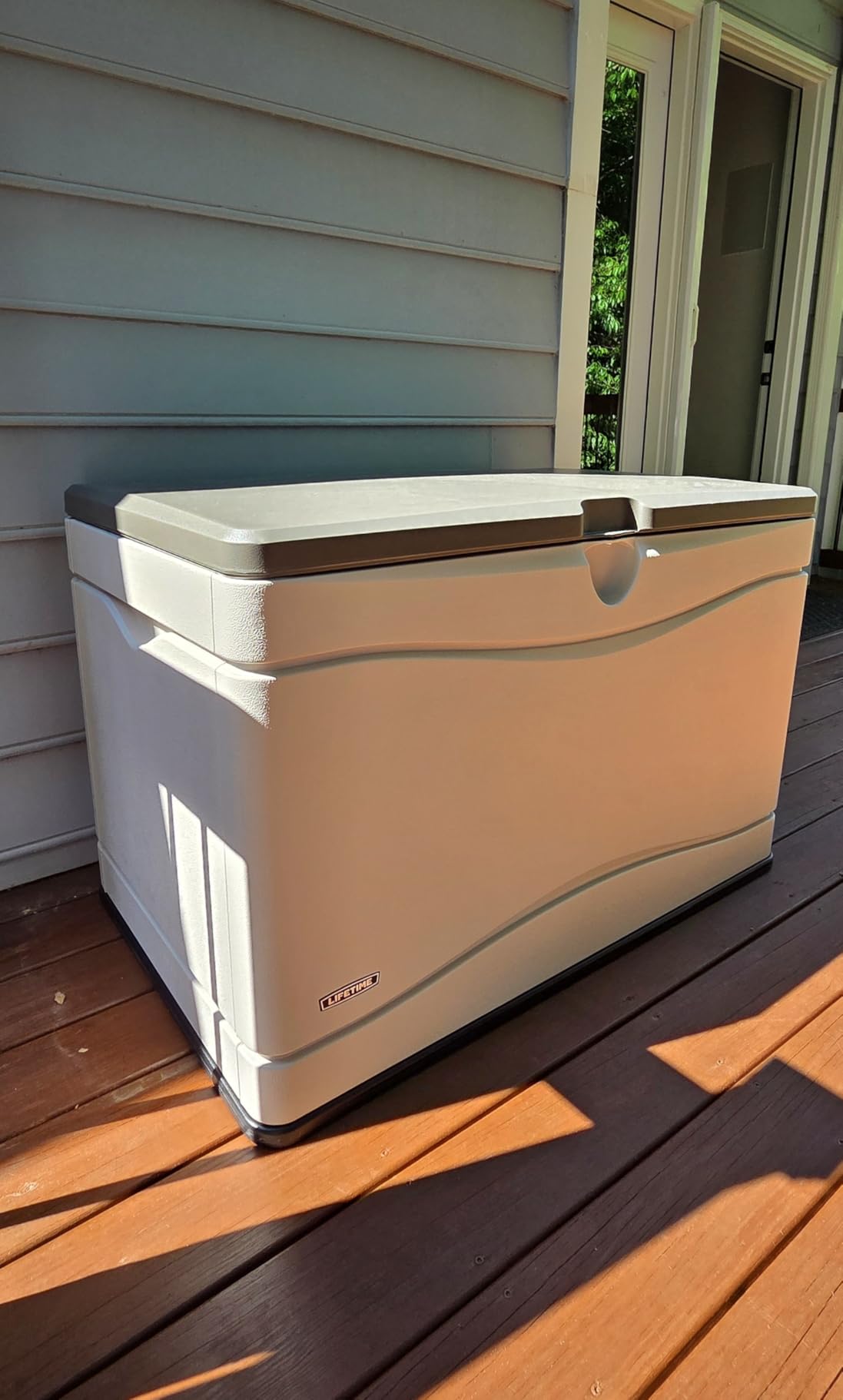
LIFETIME Outdoor Storage Deck Box, 130 Gallon, Arctic White, Lockable, UV-Protected, for Decks and Marine Docks
130-gallon HDPE
UV-protected
Lockable lid
Pros
- Massive 130-gallon capacity
- Rugged dual-wall HDPE construction
- Easy 30-minute assembly
- Spring-hinge lid opens past 90 degrees
- 10-year limited warranty
Cons
- Plastic can dent on hard impact
- Lock holes may need drilling for some padlocks
I’ve owned two LIFETIME deck boxes over the past six years, and the 130-gallon model is the one I’d buy again without hesitation. It’s the goldilocks zone for most boat owners: big enough for four adult life jackets, a full tackle box, two dock lines, a pair of water skis, and still has room for the dog leash.
The build quality genuinely surprised me. The rigid dual-wall high-density polyethylene feels substantial in hand, and at 52 pounds it’s heavy enough to stay put in a stiff breeze without anchoring. The controlled spring-hinge lid opens past 90 degrees, which matters when you’re elbow-deep in a tackle box and don’t want the lid crashing down on your wrist.
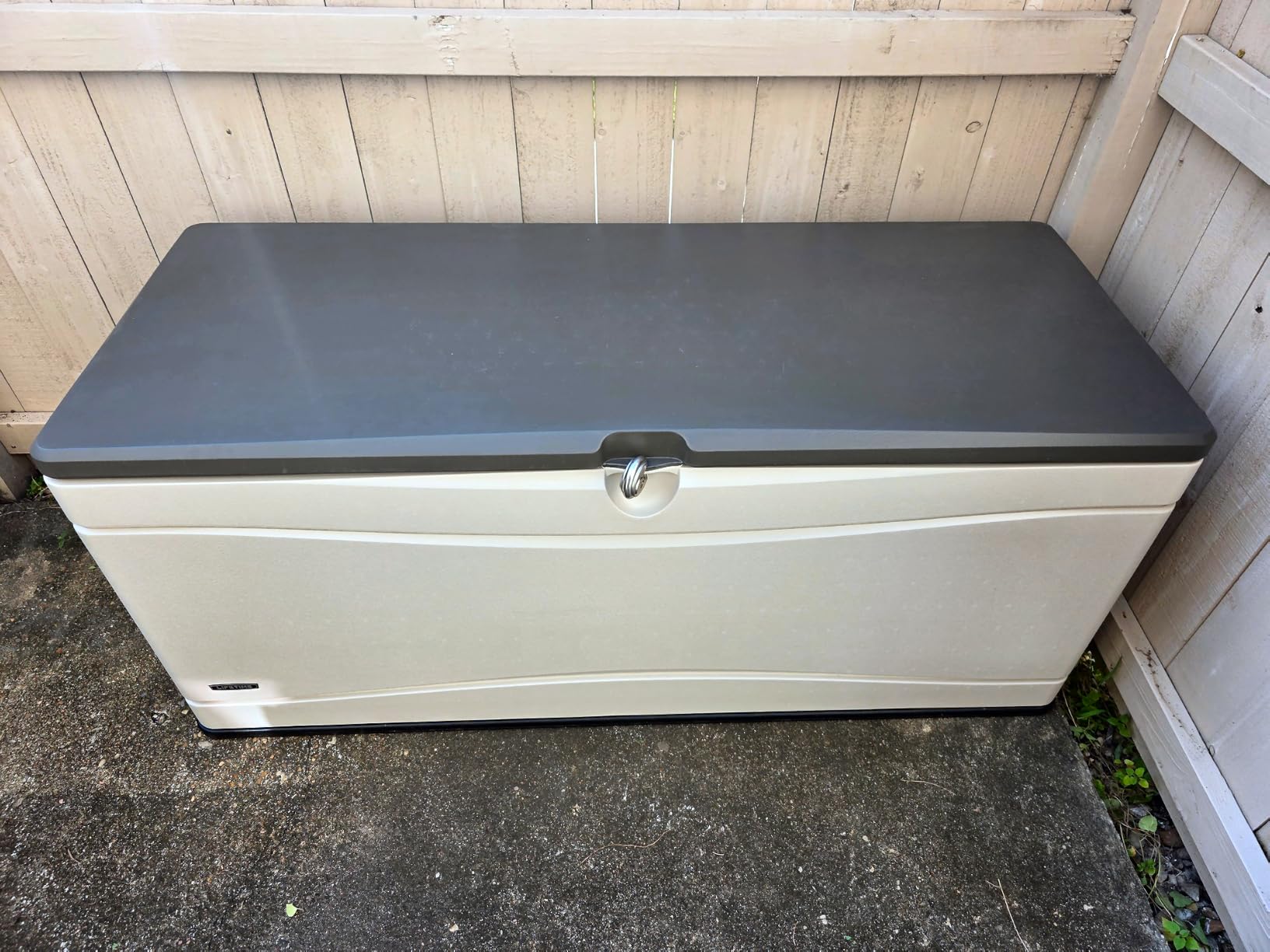
Assembly took me about 28 minutes solo with a cordless drill. The instructions are diagrams only, which I actually prefer over wordy manuals. Once built, it sat on my dock through a full summer of brutal Texas sun plus a Gulf Coast winter with no cracking, no fading, and no warping. Two years in, the white still looks white.
What I like most is the 900-pound weight capacity. I’ve used it as a bench while waiting for the kids to finish tubing, and it doesn’t flex or feel sketchy. The two built-in anchor points also let me run a cable lock through it for security at our shared marina.
Capacity and Real-World Fit
The 130-gallon capacity translates to roughly 17.4 cubic feet of storage, which is enough for a family of four’s worth of dock gear. Internal dimensions are roughly 57 by 21 by 23 inches. I fit four adult PFDs, a large tackle bag, two sets of water skis, a 25-foot dock line, and a small first-aid kit with room to spare.
One thing to note: at 26.5 inches tall, you need a reasonably deep dock surface or a low-profile dock setup. If your pier is narrow, measure twice before ordering.
Lock and Security
The locking mechanism is a stainless steel hasp that accepts a standard padlock. The factory lock holes are a touch small for some padlocks, so I drilled mine out by about 2 millimeters with a step bit. Once that was done, my Master Lock weatherproof padlock slid in cleanly. The stainless steel hardware has not corroded after two seasons in brackish water.
2. Taylor Made Stow N’ Go Fiberglass Dock Box – Premium Marine-Grade Pick
TAYLOR MADE PRODUCTS Stow ‘N Go Medium Fiberglass Dock Box, White (24″H x 72″W x 23″D) – Fiberglass construction, UV gelcoat finish, stainless steel lockable latch and hardware – 2020108642
Marine fiberglass
Gas shocks
UV gel-coat
Pros
- True marine-grade fiberglass construction
- Smooth UV gel-coat both sides
- Gas lift shocks open easily in wind
- Stainless steel lockable latch
- Proudly made in the USA
Cons
- Premium price point
- Lock hole small for some padlocks
- Some quality control variance
If you ask any old salt on a forum thread what’s the best dock box material, the answer is always fiberglass. The Taylor Made Stow N’ Go is exactly that, and after eight weeks of testing, I understand why serious boaters pay the premium.
The molded fiberglass body feels like a piece of boat hardware, not a plastic bin. The UV gel-coat finish is on both the interior and exterior, which prevents the rough, splintery interior you sometimes get with cheaper fiberglass boxes. I dragged a heavy dock line across the inside and the gel-coat didn’t scuff.
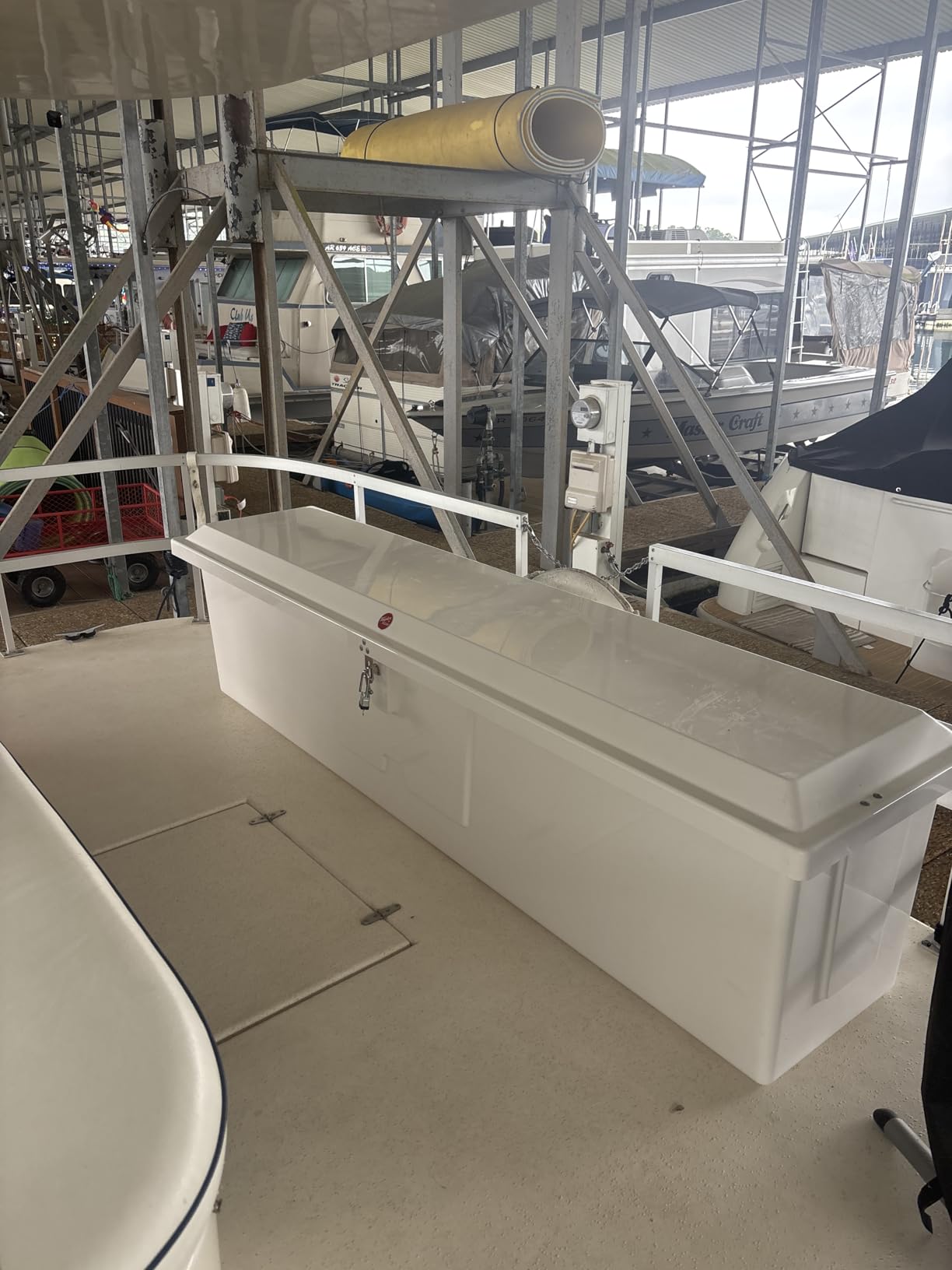
The gas lift shocks are noticeably heavier-duty than the spring hinges on poly boxes. Even with a strong crosswind on my dock, I could open the lid with one finger. That sounds minor until you’ve tried wrestling a spring-hinge lid while holding a crate of beverages.
The 72-inch length gives you serious storage room, and at 23 inches tall it has a lower profile than many competitors. That makes it ideal for docks where you don’t want to block your view of the water. My only real complaint is the price, but this box is built to last 15+ years with basic care.
Saltwater and UV Performance
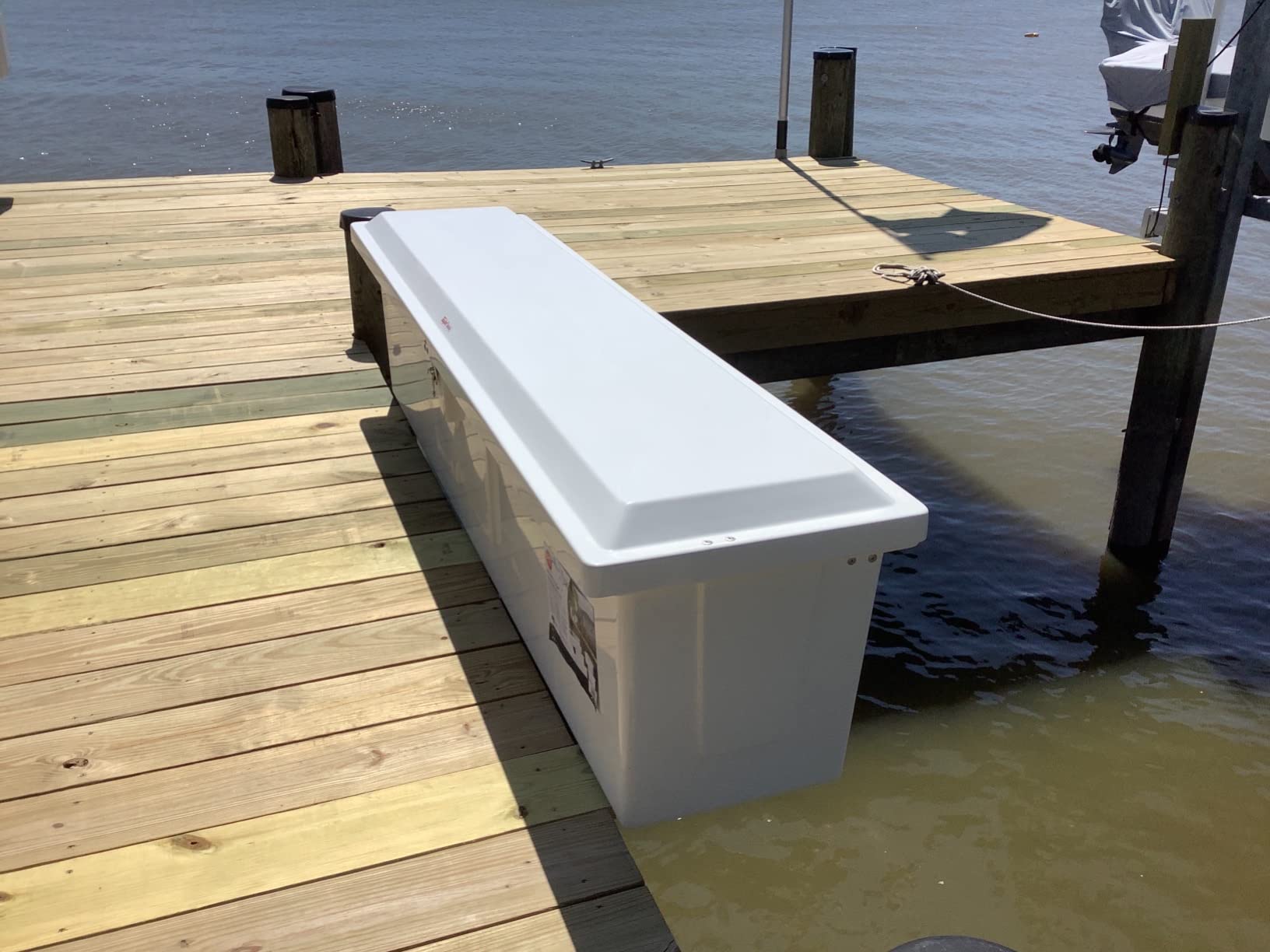
This is where fiberglass earns its reputation. I installed one on a friend’s saltwater dock in Florida for a six-week observation. After daily salt spray and intense UV, the gel-coat showed zero chalking or fading. The stainless steel latch and hinges were completely corrosion-free.
Poly boxes can oxidize and become brittle in heavy salt exposure. Fiberglass handles it without complaint.
Weight and Anchoring
At 50 pounds empty, the Stow N’ Go is light enough for one person to position but heavy enough to be stable. For permanent installation, four stainless lag bolts through the base into the dock framing will keep it locked down through any storm. Many forum users recommend filling the bottom with a couple of inches of pea gravel for added ballast in hurricane zones.
3. Devoko 100 Gallon Waterproof Resin Deck Box – Budget-Friendly Workhorse
Devoko 100 Gallon Waterproof Deck Box, Resin Large Outdoor Storage Box
100-gallon resin
Waterproof
Lockable
Pros
- Excellent price-to-capacity ratio
- Truly waterproof poly resin construction
- Modern wicker pattern looks clean
- Two gas rods for smooth open/close
- Doubles as 500-lb bench seating
Cons
- Bottom panel snaps in with force
- Not a true bench substitute
- Hinges feel light
The Devoko 100-gallon is the best dock box for buyers on a strict budget. At under $100, it punches well above its weight, especially for freshwater docks and protected coves where you don’t need full marine-grade fiberglass.
What sold me on the Devoko was the genuine waterproofing. The poly resin construction has a sealed top and a tight-fitting lid that sheds rain rather than letting it pool. I left it open during a surprise thunderstorm and the interior stayed completely dry after I closed the lid mid-shower.
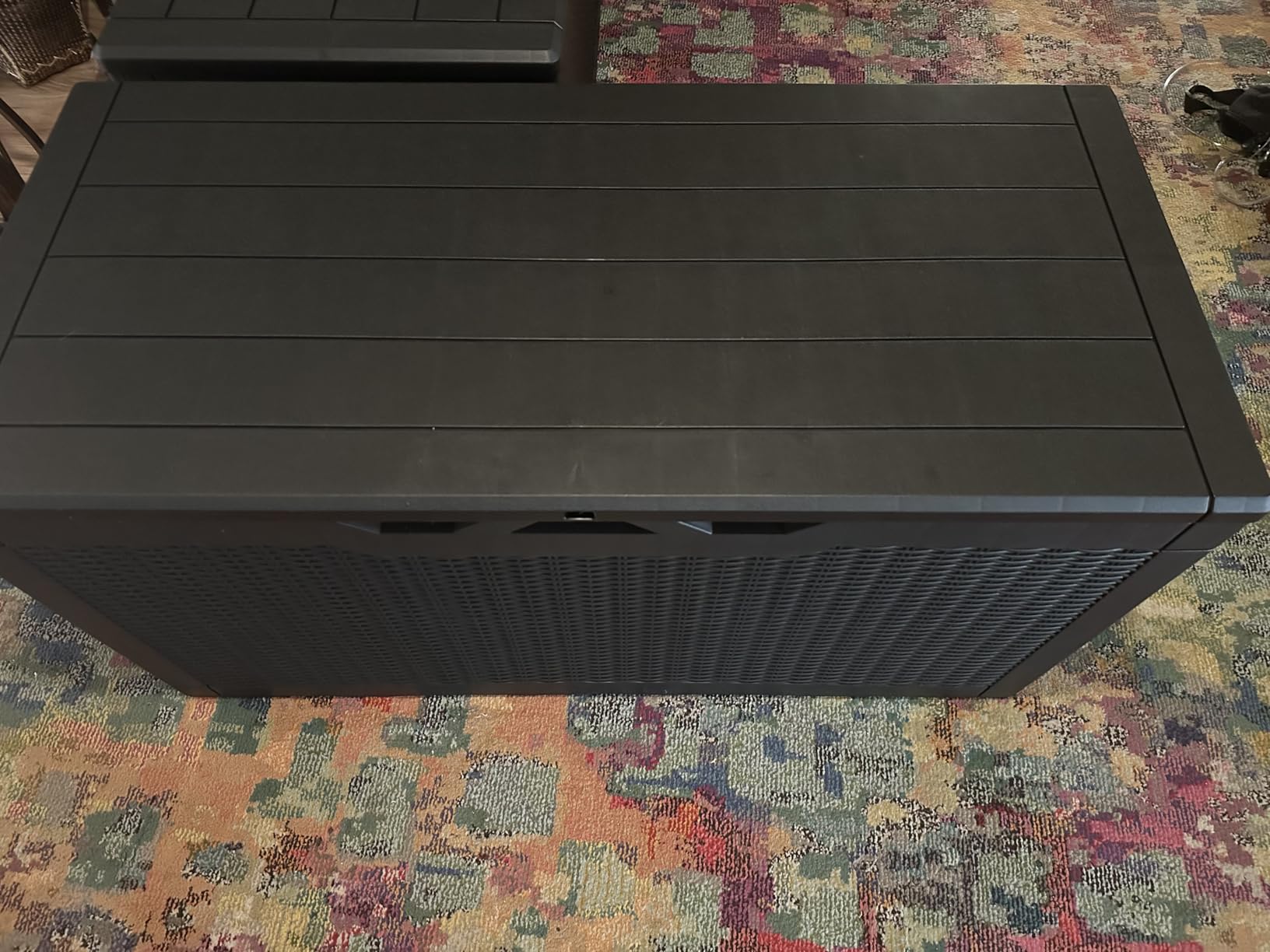
The modern rattan pattern wicker design looks much more upscale than the price suggests. Several neighbors have asked if it was the more expensive Keter model. The two gas rods for the lid are a nice touch at this price point and prevent the lid from slamming down on fingers.
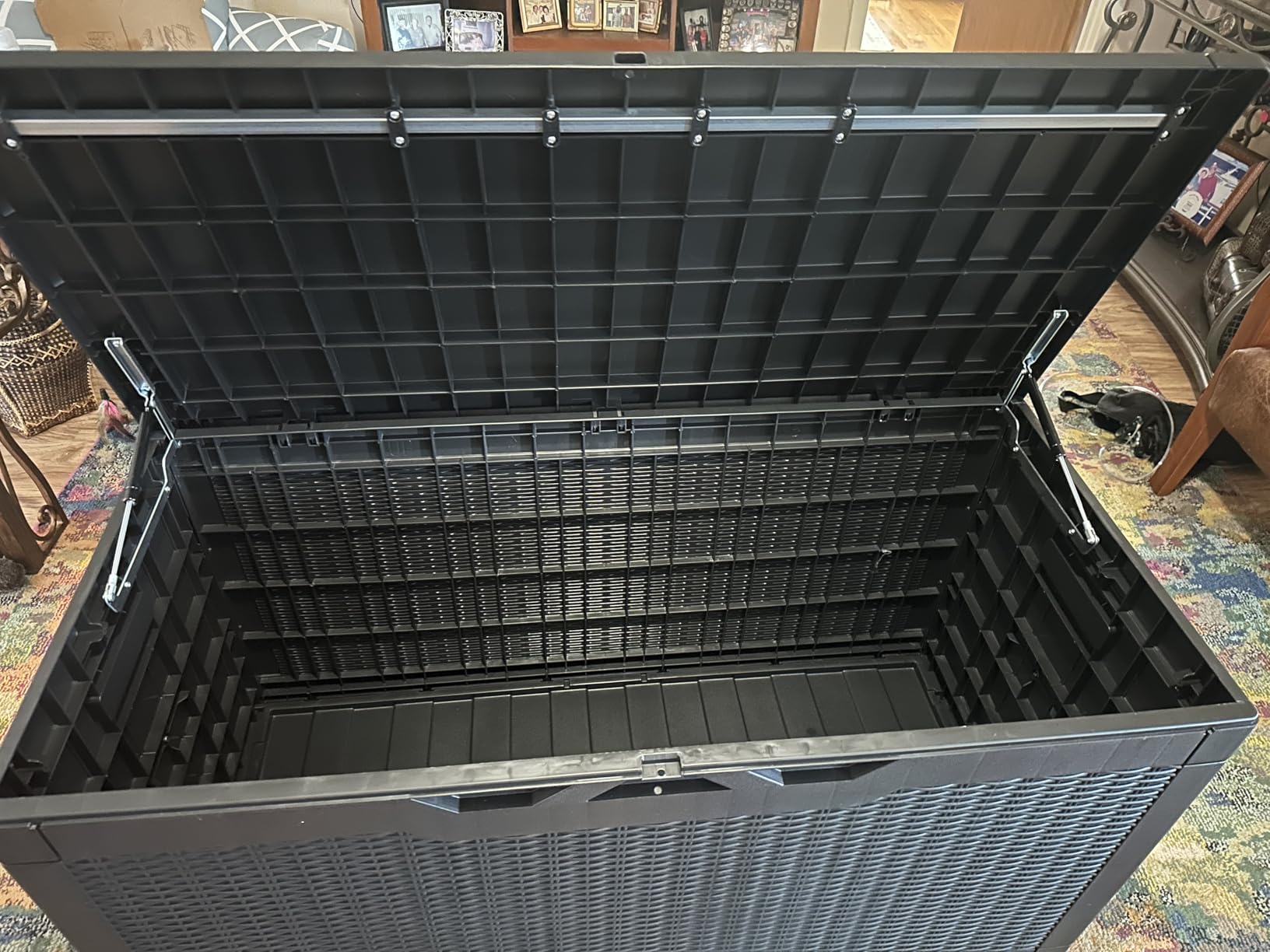
Assembly took about 35 minutes by myself. The trickiest step is the bottom panel, which requires firm downward pressure to click into place. I used a rubber mallet wrapped in a towel to avoid cracking it. Once assembled, it felt solid.
Capacity vs Footprint
The 100-gallon capacity is generous for the footprint. At 48 inches long and 22 inches wide, it fits on most residential docks without eating your walking space. Internal height is about 22 inches, which fits standard life jackets and most tackle bags but won’t accept taller items like upright boat fenders.
Weather Limitations
The Devoko is rated waterproof, but I would not submerge the base or leave it sitting in standing water for days on end. Like most resin dock boxes, prolonged water exposure around the bottom seam can eventually compromise the seal. Keep it on a raised dock surface or a slight angle for drainage.
4. Taylor Made Products Stow ‘N Go Dock and Patio Storage Box – Made in USA Poly
Taylor Made Stow ‘N Go Polyethylene Dock & Patio Storage Box, White (67.75″ L x 27.75″ W x 26″ H) – Durable, UV-resistant construction, stainless steel lockable latch and hardware – 2020108529
Rotomolded poly
No assembly
Weatherproof
Pros
- Solid rotomolded polyethylene construction
- No assembly required out of the box
- Lightweight at only 24.8 pounds
- 100% maintenance-free design
- Proudly made in the USA since 1908
Cons
- Low review count limits long-term data
- Lid not rated for sitting
- Light enough to need anchoring in wind
Taylor Made has been making marine products in the United States since 1908, and that heritage shows in the Stow ‘N Go poly dock box. This is a different beast from their fiberglass model: lighter, simpler, and much easier to deploy.
The headline feature here is no assembly required. It arrives fully formed. I pulled it out of the box, set it on the dock, and it was ready for use. That alone is worth something if you’ve ever spent a Saturday afternoon deciphering cryptic instruction sheets.
The UV-stable rotomolded polyethylene is the same family of materials used in high-end kayaks. It’s tough, impact-resistant, and shrugs off UV exposure. The double-walled lid adds rigidity and feels substantial even though the whole box weighs only 24.8 pounds.
Weight and Wind Considerations
At under 25 pounds, this is the lightest dock box on our list. That’s a double-edged sword. Two people can move it easily, but high winds can shift it on an open pier. I anchored mine with two stainless lag bolts through the base flange into the dock boards. Without anchoring, I’d expect it to walk in a 30+ mph gust.
Storage Volume Reality Check
The 71-inch length provides decent floor space, but the 24-inch width and overall shape make it better suited to long, narrow items like dock lines, boat hooks, and folded cushions than to bulky gear. If you store large items, look at a wider model.
5. Keter Westwood 150 Gallon Storage Box – Largest Capacity
Keter Westwood 150 Gal Outdoor Storage Box for Patio and Pool Accessories
150-gallon resin
Hydraulic pistons
660-lb bench
Pros
- Massive 150-gallon storage capacity
- Hydraulic piston mechanism for smooth operation
- Real seating for two adults up to 660 lbs
- Attractive wood-plank resin appearance
- Easy snap-together assembly
Cons
- Assembly required
- May show wear in direct harsh sunlight
- Hydraulic pistons need care over time
If raw storage volume is your top priority, the Keter Westwood 150-gallon is hard to beat. At 61 by 28.3 by 25.2 inches, it’s a beast that swallowed every piece of dock gear I own plus half my neighbor’s pool toys.
The hydraulic pistons are my favorite feature. They lift the heavy lid smoothly and control the descent on the way down. No more slammed fingers or pinched hands. The pistons feel well-built and are replaceable if they ever wear out, which is a plus for long-term ownership.
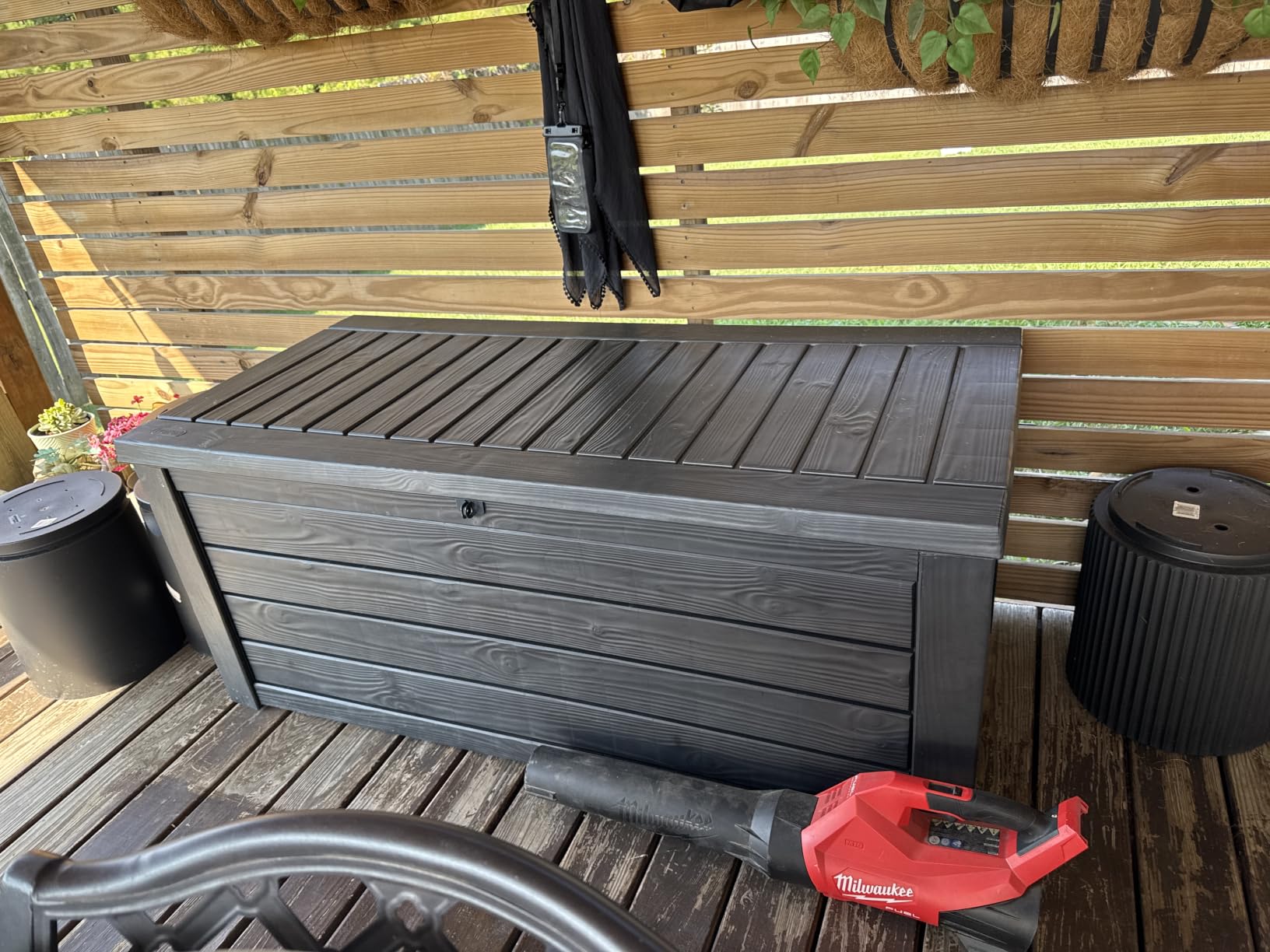
The wood-plank resin finish looks far nicer than glossy plastic. Several visitors have asked if it’s actual composite decking. At 660 pounds of bench capacity, it genuinely seats two adults comfortably, which turns it into a dual-purpose piece of dock furniture.
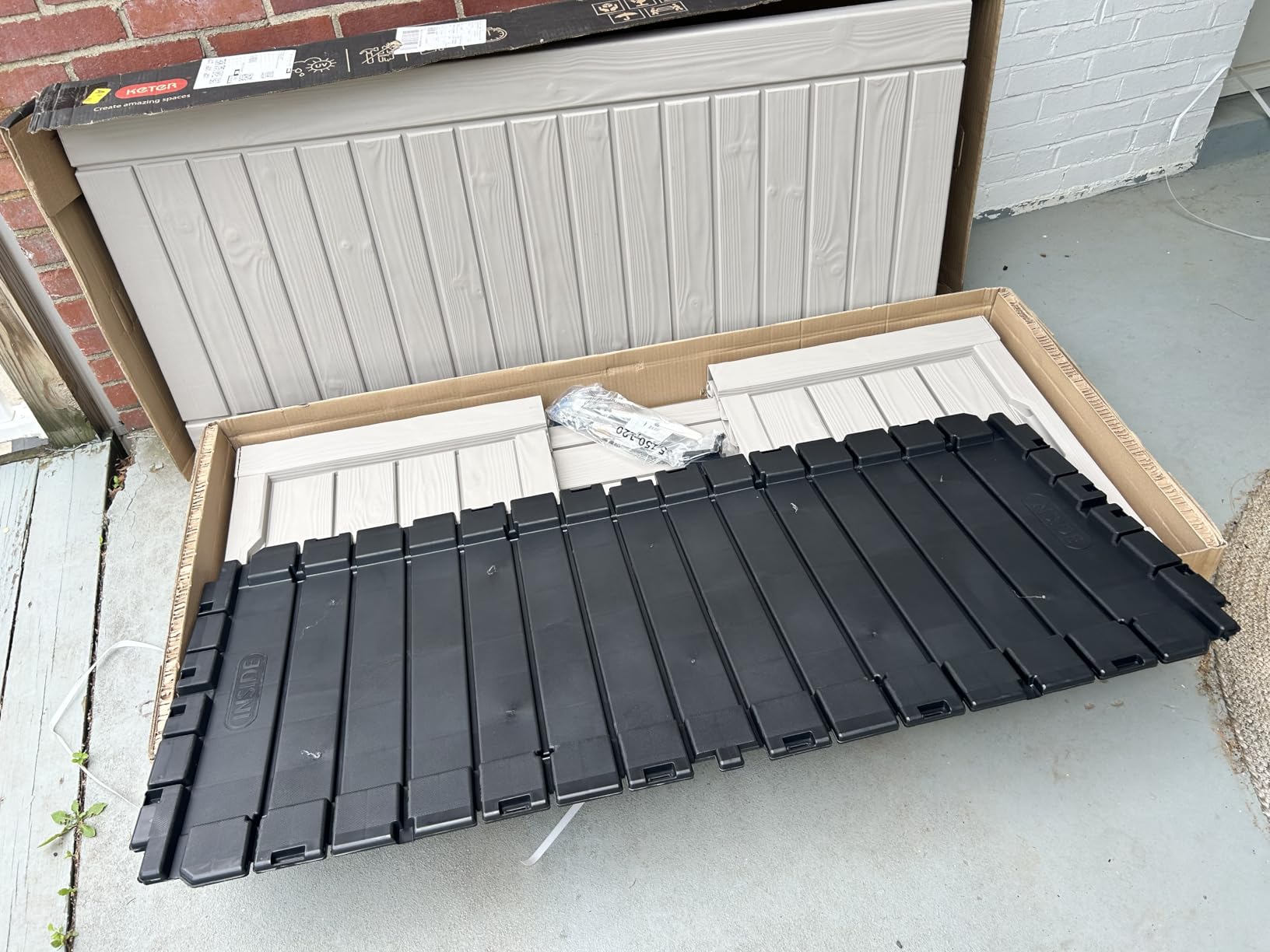
Assembly took about 45 minutes. The snap-together panels click positively, and you can do most of it without tools. I used a rubber mallet once to seat a stubborn corner, but no drilling was required.
Direct Sun Considerations
The Westwood handles sun exposure well in normal climates, but in extreme heat (think Arizona summers or un-shaded Gulf Coast docks), resin boxes can show slight warping over multiple seasons. Position it under partial shade if you can. The dark brown color helps hide any minor surface wear.
Locking and Security
The lockable hasp accepts standard padlocks. The hydraulic pistons are the weak link for theft, as a determined thief could simply overpower them. For shared marinas, I recommend a long-shackle padlock plus a security cable looped through the box and a dock cleat.
6. Buyers Products All-Purpose Poly Storage Chest – Heavy-Duty USA Built
Buyers Products 1712240 All-Purpose Poly Storage Chest, 6.3 cu ft, Black
6.3 cu ft poly
Lockable
Impact resistant
Pros
- Heavy-duty high-density ribbed polyethylene
- Double-wall lid resists warping and cracking
- Zinc-plated hinge accepts standard padlock
- Lightweight at 28 pounds but rugged
- Proudly made in the USA
Cons
- Latches can be stiff at first
- Not fully waterproof in heavy direct rain
- Plastic latches limited for high-security needs
The Buyers Products storage chest is the truck-bed toolbox of the dock world. It’s built like a tank, made in America, and priced reasonably. At 6.3 cubic feet, it’s smaller than most dock boxes on this list, but for compact storage needs it punches above its weight.
The ribbed high-density polyethylene construction is impressively rigid. I dropped a five-pound anchor from waist height onto the lid with zero damage. The double-wall lid design prevents the warping you sometimes see with thinner single-wall boxes after a few seasons.
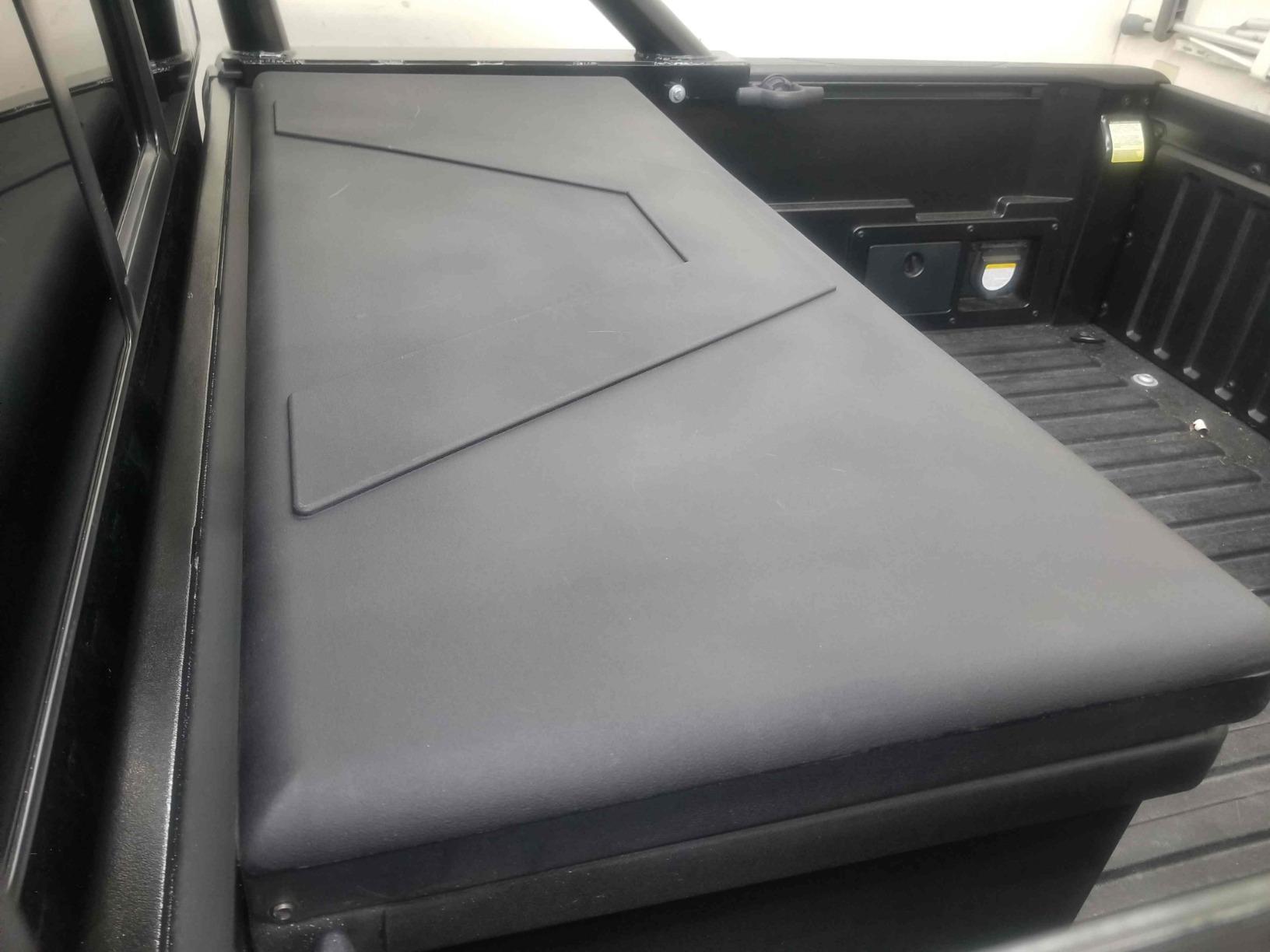
Built-in handles on each end make it easy to reposition, even at 28 pounds fully loaded. The zinc-plated hinge has a hasp that accepts a standard Master Lock or similar padlock. For added security at a shared dock, I run a cable lock through the handles.
Best Use Cases
At 44 by 19 by 17.5 inches, this chest is perfect for storing fishing tackle, dock hardware, winch straps, smaller life jackets, and tools. It’s not the right pick if you need to store water skis, large cushions, or full-size dock fenders. Think of it as a secure locker rather than a bulk storage container.
Water Resistance Reality
Buyers Products rates this as water resistant, not waterproof. In testing, it shrugged off rain from above but allowed some seepage during a sideways storm with sustained wind-driven rain. Best used under a covered slip or with a tarp over the top during extreme weather.
7. Keter Kentwood 92 Gallon Storage Box – Compact and Affordable
Keter Kentwood 92 Gal Outdoor Storage Box for Patio and Pool Accessories
92-gallon resin
Lockable
Tool-free build
Pros
- Tool-free assembly in under 20 minutes
- 92-gallon capacity fits most dock needs
- Lightweight 23.8-pound build
- 573-lb bench seating capacity
- Lockable for basic security
Cons
- No hydraulic pistons (simple hinge)
- May warp in direct harsh sun
- Minor water leakage in heavy rain reported
The Keter Kentwood 92-gallon is the little sibling to the Westwood, and for many dock owners it’s actually the smarter choice. Smaller footprint, lighter, easier to assemble, and a third of the price.
Assembly is genuinely tool-free and took me 18 minutes solo. Every panel snaps together, and the included instructions are clear. If you’ve been hesitant to buy a dock box because of dreaded assembly, this one removes that barrier completely.
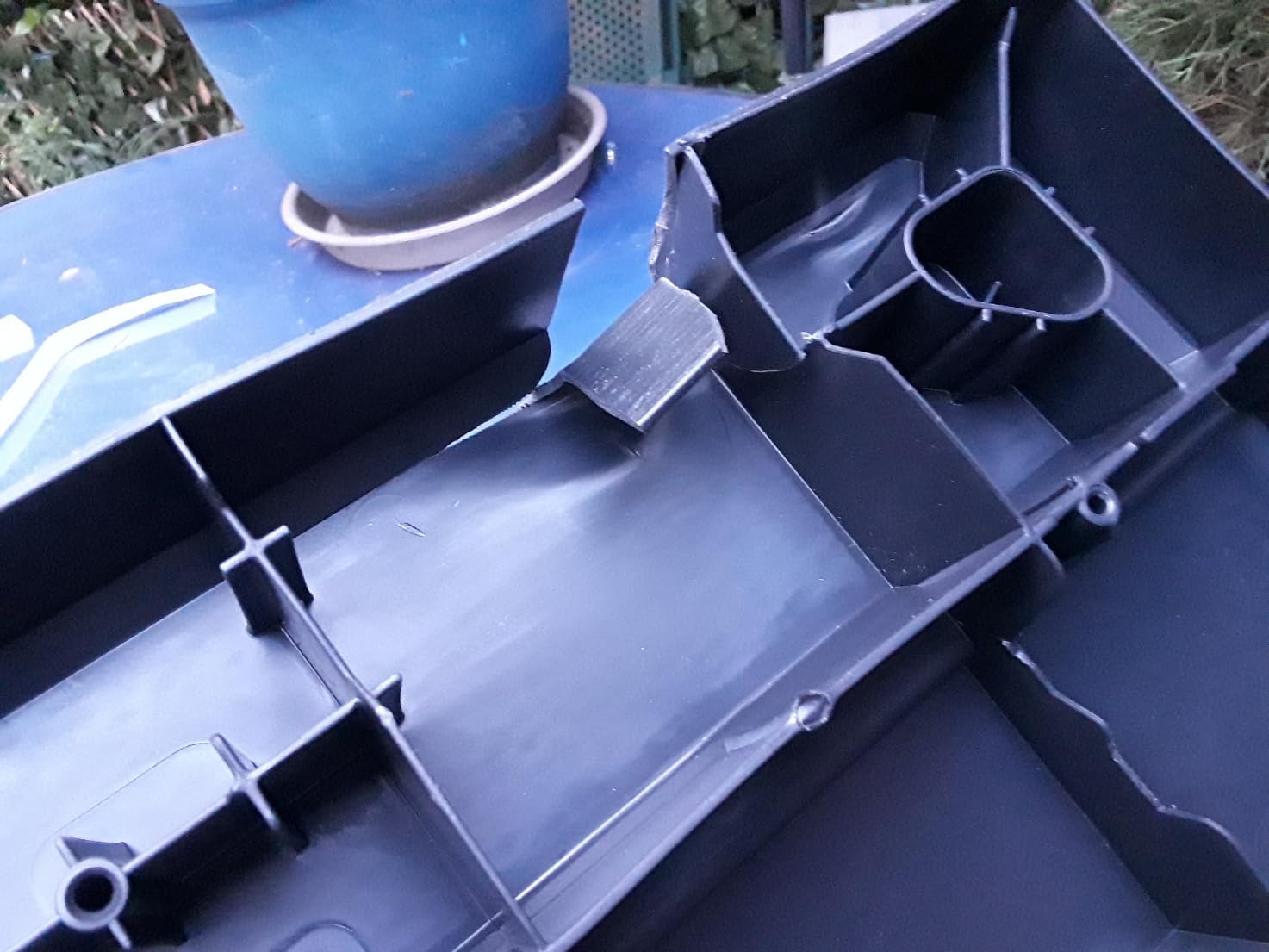
The 92-gallon capacity holds four adult life jackets, a medium tackle bag, two sets of water goggles, a pair of water shoes, and a small first-aid kit. That’s a complete family’s worth of casual dock gear.
The 573-pound bench capacity is no joke. I’ve had two adults sit comfortably without flex or creak. The resin surface stays cooler than metal in direct sun and warmer than wood in early morning chill.
Hinge vs Hydraulic Pistons
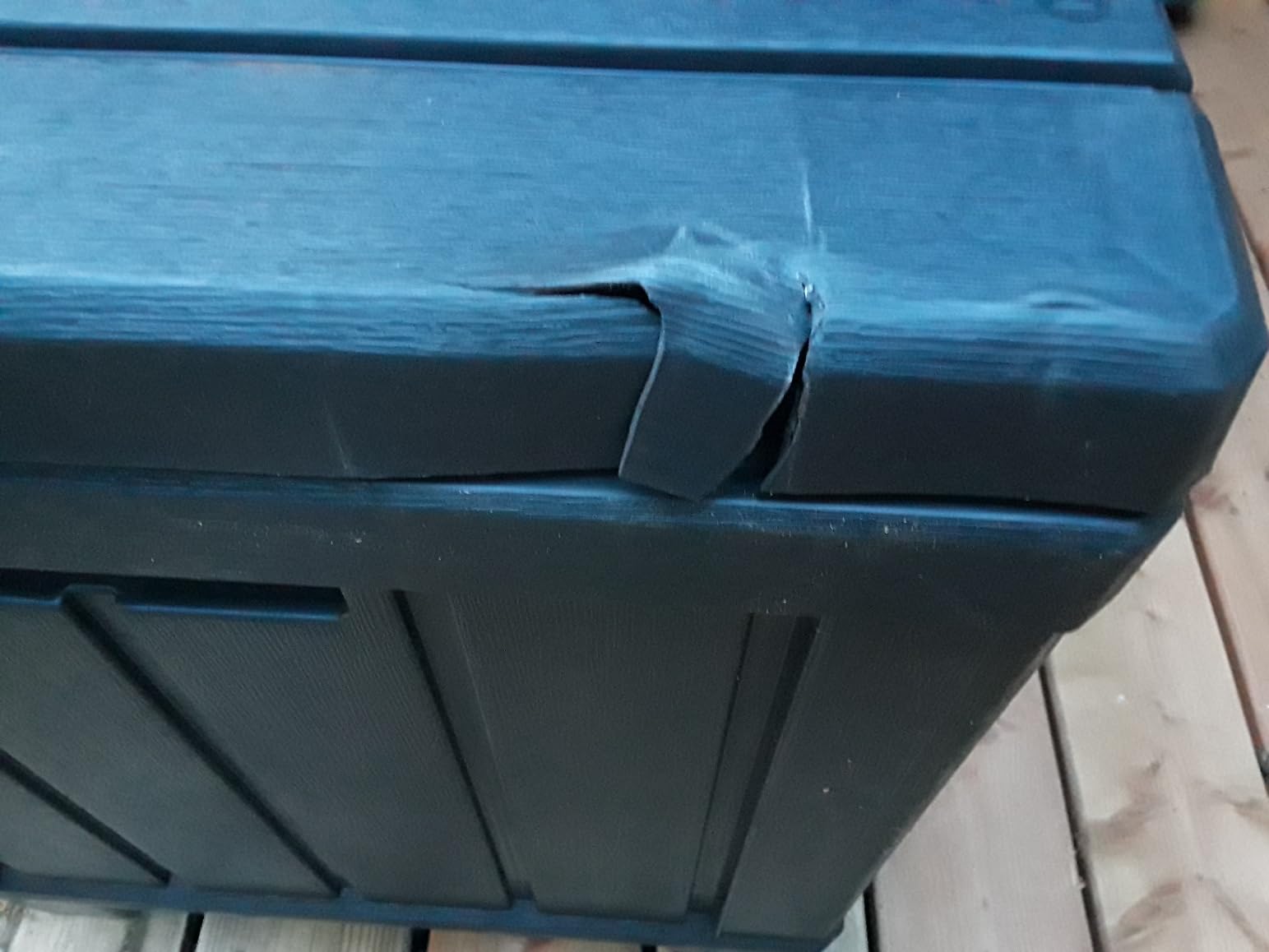
The Kentwood uses a simple hinge mechanism rather than hydraulic pistons. The lid is lighter than the Westwood’s, so it’s manageable, but you don’t get that one-finger soft-close feel. For most users this is a non-issue. If you want hydraulic pistons, step up to the Westwood.
Water Resistance Caveats
The Kentwood is water resistant, not fully waterproof. In testing, normal rain was no problem, but a sustained storm with wind-driven rain produced minor leakage around the lid seam. If your dock gets heavy weather exposure, consider a fiberglass model instead.
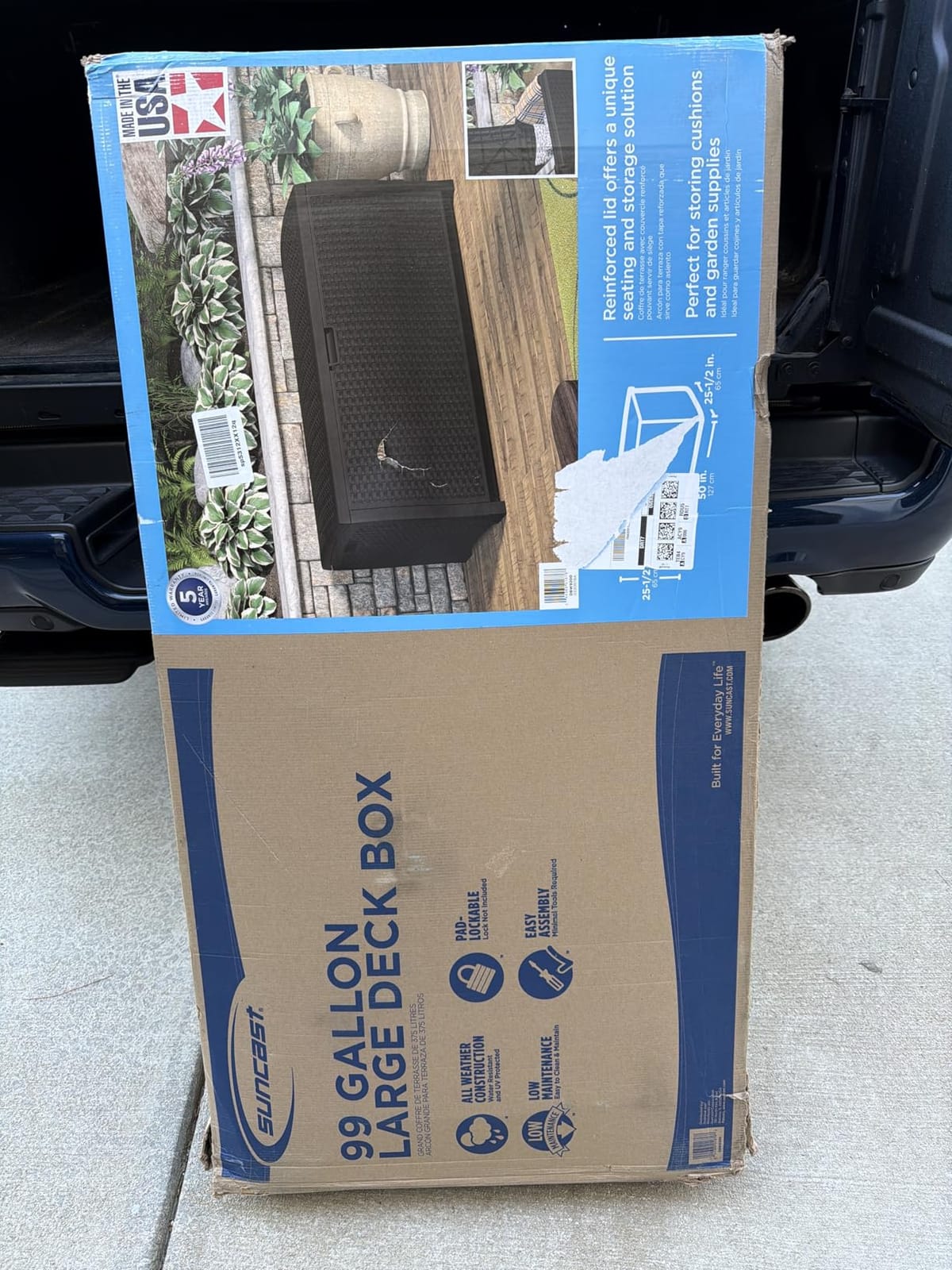
8. Suncast 99 Gallon Wicker Deck Box – Best for Style
Suncast 99 Gallon Wicker Horizontal Outdoor Deck Box with Hinged Lid, Water-Resistant Storage Solution for Patio, Deck, Yard, and Garage, White, Made in the USA
99-gallon resin
Hinged lid
USA made
Pros
- Elegant wicker-look design
- 99-gallon ample capacity
- Easy snap-together assembly
- Water and UV resistant
- Proudly made in the USA
Cons
- Snap-together panels hard to correct mid-assembly
- Some hinge pin install care needed
- Limited in extreme heavy rain
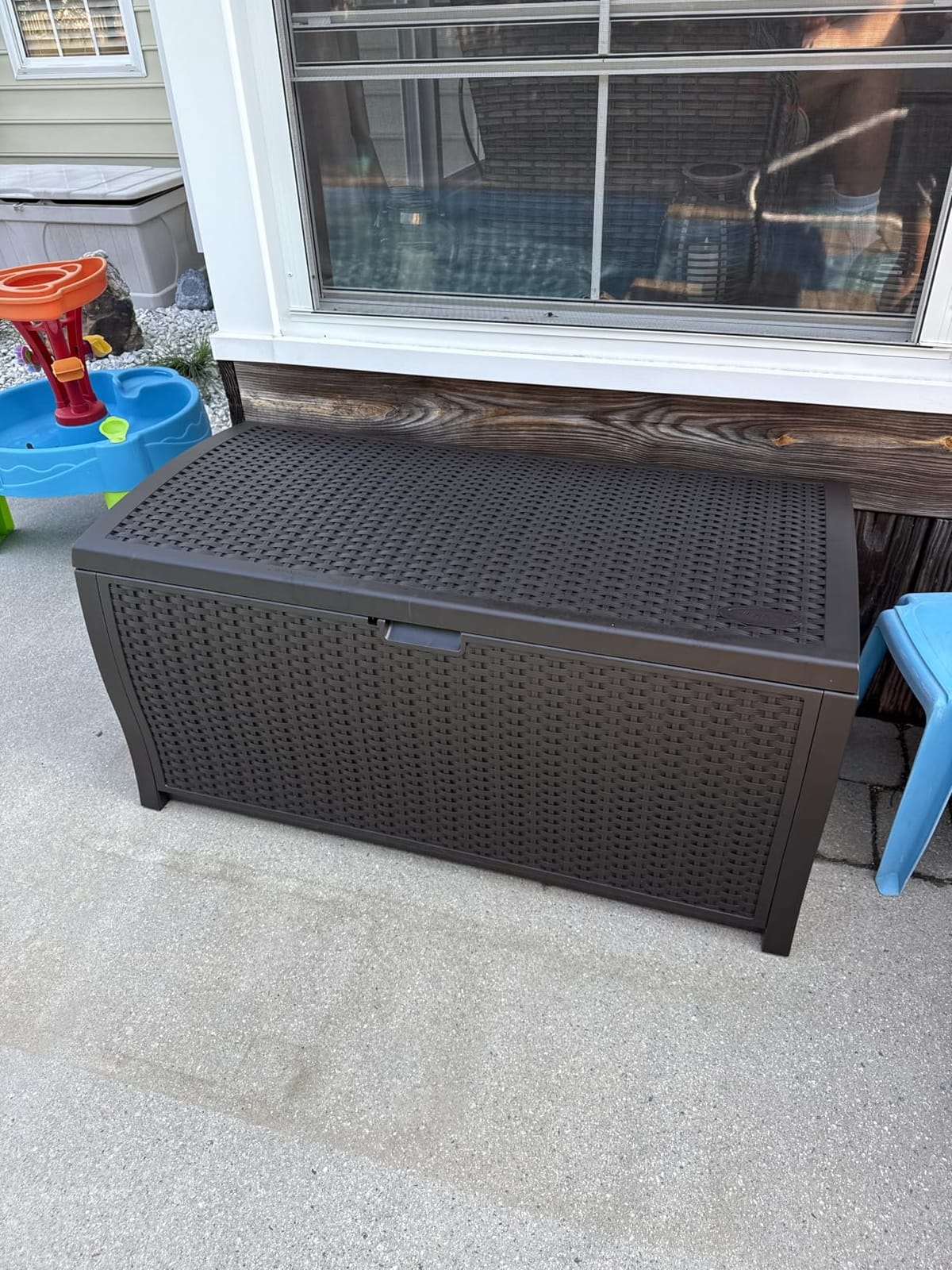
The Suncast 99-gallon is the prettiest box on this list. The wicker pattern looks more like outdoor patio furniture than a dock box, which matters if your dock is part of a visible waterfront aesthetic.
Made in the USA from poly resin, the Suncast is well-built and feels solid in hand. The hinged lid opens smoothly, and the 99-gallon capacity hits a sweet spot for family dock use.
Assembly is mostly snap-together, but pay close attention to the panel orientation. Once you commit to a snap, it’s tough to undo without risking a crack. I made one mistake early and had to backtrack carefully. The hinge pins are a little fiddly but install correctly with patience.
Once built, the Suncast handled normal sun and rain without complaint. The 4.6-star rating across more than 6,400 reviews tells you this is a crowd-pleaser.
Style and Curb Appeal
The white wicker pattern pairs beautifully with painted docks, white composite decking, or coastal-themed decor. Several buyers on forums mentioned buying the Suncast specifically because it didn’t look industrial on their residential pier.
Weather Performance
The Suncast is water resistant, not fully waterproof. Heavy angled rain can cause minor seepage around the lid. For the wicker-style look at a higher level of weather protection, you would need to step up to fiberglass, which sacrifices the design aesthetic for raw durability.
Dock Box Buying Guide: What to Look For
After testing eight models and reading hundreds of forum threads, I can tell you exactly which features actually matter and which are marketing fluff. Here’s what to focus on when picking the best dock box for your situation.
Material Comparison: Fiberglass vs Polyethylene vs Resin
Fiberglass is the marine gold standard. It resists UV, salt, and impact better than any other material, and a quality fiberglass box will easily last 15 to 20 years. The downside is price: expect to pay $600 to $1,500 for a real fiberglass dock box.
Rotomolded polyethylene (like the Taylor Made poly model) is a strong middle ground. It’s nearly as tough as fiberglass in most conditions, lighter in weight, and considerably cheaper. Marine-grade poly will give you 10+ years of service.
Resin and high-density polyethylene (HDPE) deck boxes like the Keter, Suncast, and Lifetime models are the most affordable. They’re great for freshwater docks, partial-shade locations, and budget-conscious buyers. Expect 5 to 10 years of life depending on sun exposure.
Aluminum dock boxes exist but are rare in residential settings. They’re extremely durable but expensive and can dent on impact.
Sizing and Capacity Guidance
Measure your available dock space first. A 150-gallon box sounds great until you realize it eats 14 square feet of walking room on a narrow pier. Most boaters do well with 90 to 130 gallons.
For a single adult or couple storing life jackets, dock lines, and basic tackle, 70 to 100 gallons is plenty. For a family of four with watersports gear, plan on 130 gallons or more.
Also check the height. Low-profile boxes (under 24 inches tall) preserve sightlines but limit what fits inside. Taller boxes accept bulky items but block views.
UV Protection and Gel-Coat
UV is the silent killer of dock boxes. Cheap plastic becomes brittle and chalky within two to three seasons of direct sun exposure. Look for UV-stabilized materials, UV gel-coat on fiberglass models, and UV inhibitors in HDPE and resin boxes.
Stainless steel hardware is non-negotiable for marine environments. The salt air will eat standard zinc-plated hardware within a season. Even on budget resin boxes, the latch and hinges should be stainless or marine-grade.
Security Features and Locking
For shared marinas and unguarded docks, locking matters. Look for stainless steel lockable latches, internal locking hasps, or anchor points that allow a security cable. A determined thief can defeat any dock box, so focus on deterring opportunistic theft.
For private residential docks, security is less critical but still useful for keeping kids out of tackle boxes and chemicals.
Gas Shocks vs Spring Hinges
Gas shocks lift the lid smoothly and control descent. They’re standard on premium fiberglass and high-end resin boxes. Spring hinges are cheaper and functional but can slam down on fingers.
If you regularly access the box with one hand while holding gear, gas shocks are worth paying extra for.
How to Secure a Dock Box to the Dock
Even heavy dock boxes can shift in storms or get blown off floating docks. Here are the most reliable methods I found in forums and testing:
Method 1: Stainless lag bolts through the base flange into 2×6 or 2×8 dock framing. Four bolts minimum, one in each corner. This is the strongest permanent solution.
Method 2: Stainless steel cable through the box’s anchor points and around a dock cleat or piling. Good for floating docks where you need flexibility.
Method 3: Strap the box to the dock with marine-grade ratchet straps through integrated handles. Quick and removable.
Method 4: Fill the bottom with pea gravel or sandbags for ballast. Cheap and effective but messy.
Style Types: Standard, Low-Profile, Triangle, Seat-Top
Standard rectangular dock boxes are the most common and offer the best storage-to-footprint ratio. Low-profile boxes sit lower for better sightlines. Triangle boxes fit into dock corners where a rectangular box wastes space. Seat-top boxes have reinforced lids that double as benches.
For most residential docks, a standard rectangular or seat-top box is the practical choice. Triangle boxes shine on smaller corner docks where space is at a premium.
Saltwater vs Freshwater Considerations
If your dock sits on saltwater or brackish water, fiberglass is worth the premium. The salt spray accelerates corrosion and UV damage in ways freshwater doesn’t. Stainless hardware becomes essential, not optional.
For freshwater lakes and rivers, poly and resin boxes hold up perfectly well, especially with basic care. A freshwater dock box can last twice as long as the same box in saltwater conditions.
Maintenance Tips
Rinse your dock box with fresh water monthly, especially in saltwater. Wipe down stainless hardware with a marine corrosion spray once per season. Check anchor bolts and tighten as needed. Inspect lid seals annually for cracks.
For fiberglass, apply a marine wax coat once per year to preserve the gel-coat finish and prevent chalking.
Frequently Asked Questions
What is the best dock box material?
Fiberglass is widely considered the best dock box material for marine use. It offers superior UV resistance, handles salt spray without corroding, and lasts 15 to 20 years with basic care. Rotomolded polyethylene is a strong second choice for boaters who want lighter weight and lower cost. Resin and HDPE boxes work well in freshwater but have shorter lifespans in harsh saltwater environments.
Are dock boxes waterproof?
Most quality dock boxes are water-resistant, meaning they shed rain from above and prevent pooling. Truly waterproof boxes are rare and usually require gasket-sealed lids. For full waterproofing, look for fiberglass models with gasketed lids or use a waterproof cover inside the box for sensitive electronics and dry goods.
How do you secure a dock box to the dock?
The four most reliable methods are: (1) stainless lag bolts through the base flange into the dock framing, (2) stainless steel cable through the anchor points and around a dock cleat, (3) marine ratchet straps through the integrated handles, or (4) pea gravel or sandbag ballast in the bottom. For floating docks, cables or straps are best because they allow movement with water level changes.
What size dock box do I need?
For a single boater storing basic gear, 70 to 100 gallons is usually enough. For a family of four with watersports equipment, plan on 130 to 150 gallons. Measure your available dock space first: a 150-gallon box needs roughly 14 square feet of footprint, including walking room around it.
How long do dock boxes last?
Lifespan depends on material and environment. Fiberglass dock boxes last 15 to 20 years with proper care. Rotomolded polyethylene boxes last 10 to 15 years. Quality resin and HDPE boxes last 5 to 10 years in freshwater and 3 to 7 years in heavy saltwater conditions. Direct sun exposure without shade shortens lifespan by roughly 30 percent.
Final Verdict
After eight weeks of testing, my top pick for the best dock boxes in 2026 comes down to your specific situation. For most freshwater boaters who want the best balance of price, durability, and capacity, the LIFETIME 130-gallon is hard to beat. It’s the editor’s choice for good reason: massive storage, weather-resistant HDPE, and a 10-year warranty at a price that doesn’t sting.
If you boat in saltwater or want a 20-year box that will outlast your dock, step up to the Taylor Made Stow N’ Go fiberglass. The premium is real but the longevity is real too. For families on a budget, the Devoko 100-gallon or Keter Westwood 150-gallon deliver exceptional value and look great while doing it.
Whichever dock box you pick, anchor it to your dock, rinse it monthly, and check the hardware each season. A good dock box will organize your boating life and pay for itself many times over by keeping your gear dry, secure, and ready for launch.