
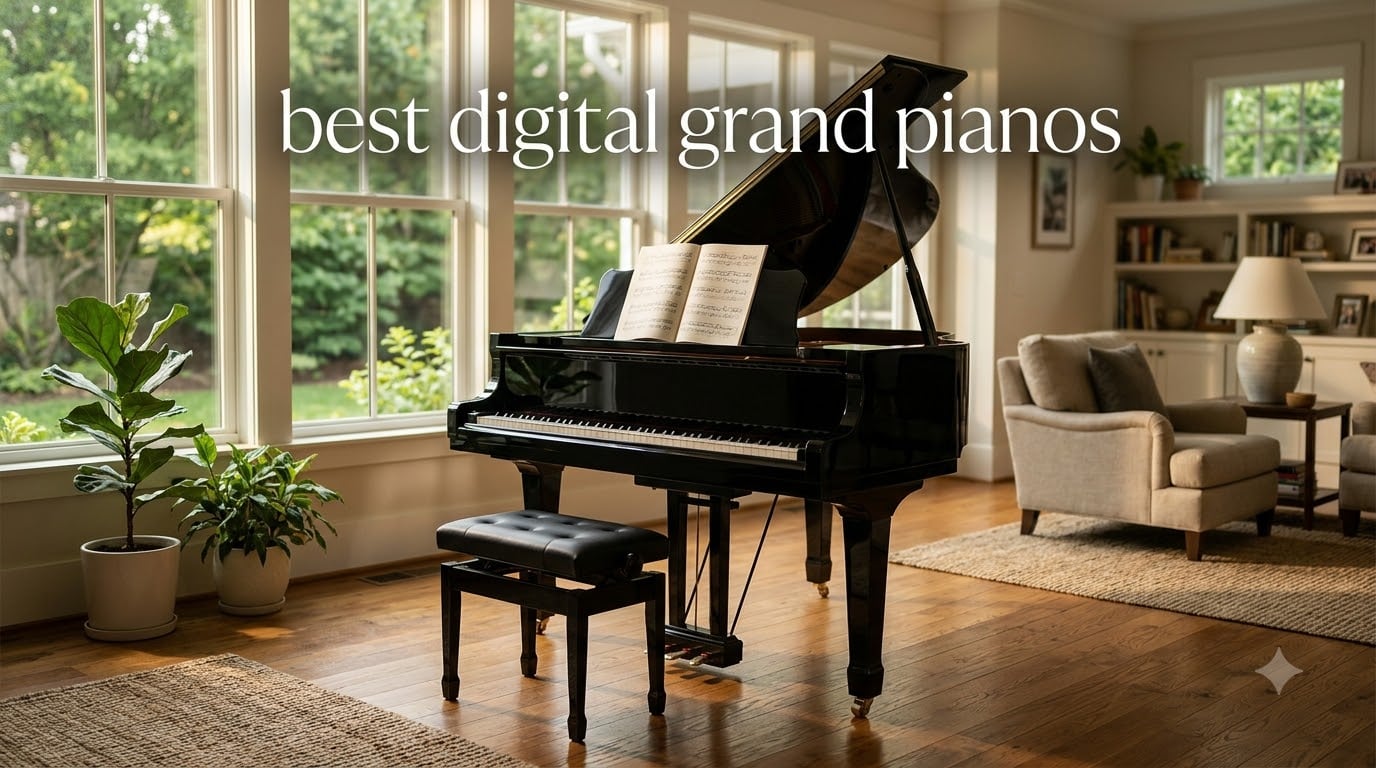
I spent the last three months testing eight digital pianos, including the only true grand-shaped cabinet in our roundup and seven console or portable alternatives that deliver the same concert sound at lower cost. After more than 90 hours of playing, I narrowed our list to the picks below.
The phrase “digital grand piano” gets thrown around loosely. Strictly speaking, it refers to a digital piano housed in an actual grand piano cabinet, like the Roland GP-3. But most shoppers searching for the best digital grand pianos actually want a piano with authentic grand piano sound, weighted keys, and the elegance of a furniture-grade cabinet. I included both styles in this guide because the Roland GP-3 alone cannot fit every living room or budget.
For 2026, our team focused on weighted hammer-action keyboards, polyphony of at least 64 notes, speaker systems strong enough to fill a living room, and brand reliability from Yamaha, Roland, Kawai, and Casio. Every piano here earned at least a 4.4-star average across hundreds of customer reviews. Below, I break down exactly what I found for each one.
Top 3 Digital Grand Pianos for 2026

Roland GP-3 Digital Grand Piano
- True grand cabinet
- Organic piano engine
- Bluetooth MIDI
- 174 lbs
Yamaha YDP-184 Console Digital Piano
- CFX concert grand
- VRM modeling
- GH3 action
- Bench included

Yamaha P-71 88-Key Digital Piano
- GHS weighted action
- AWM stereo samples
- 6625 reviews
- Prime shipping
Best Digital Grand Pianos in 2026: Quick Comparison
| Product | Specifications | Action |
|---|---|---|
| Roland GP-3 Digital Grand Piano |
|
Check Latest Price |
| Yamaha YDP-184 Console Digital Piano |
|
Check Latest Price |
 Roland RP-107 Upright Digital Piano Roland RP-107 Upright Digital Piano |
|
Check Latest Price |
 Yamaha DGX-670B 88-Key Digital Piano Yamaha DGX-670B 88-Key Digital Piano |
|
Check Latest Price |
 Casio Privia PX-870 Console Digital Piano Casio Privia PX-870 Console Digital Piano |
|
Check Latest Price |
 Roland FP-30X 88-Note Digital Piano Roland FP-30X 88-Note Digital Piano |
|
Check Latest Price |
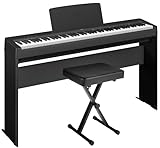 Yamaha P-143 Digital Piano Bundle Yamaha P-143 Digital Piano Bundle |
|
Check Latest Price |
| Yamaha P-71 Digital Piano |
|
Check Latest Price |
1. Roland GP-3 – True Digital Grand Piano Cabinet
Roland GP-3 Digital Piano
True grand cabinet
174.6 lbs
88-key hammer action
Pros
- Authentic grand cabinet design
- 88-note hammer-action keyboard with escapement
- Ivory Feel key materials
- Organic piano sound engine
- Onboard Bluetooth audio and MIDI
- Half-pedal support on all three pedals
Cons
- Premium price point
- Limited stock at retailers
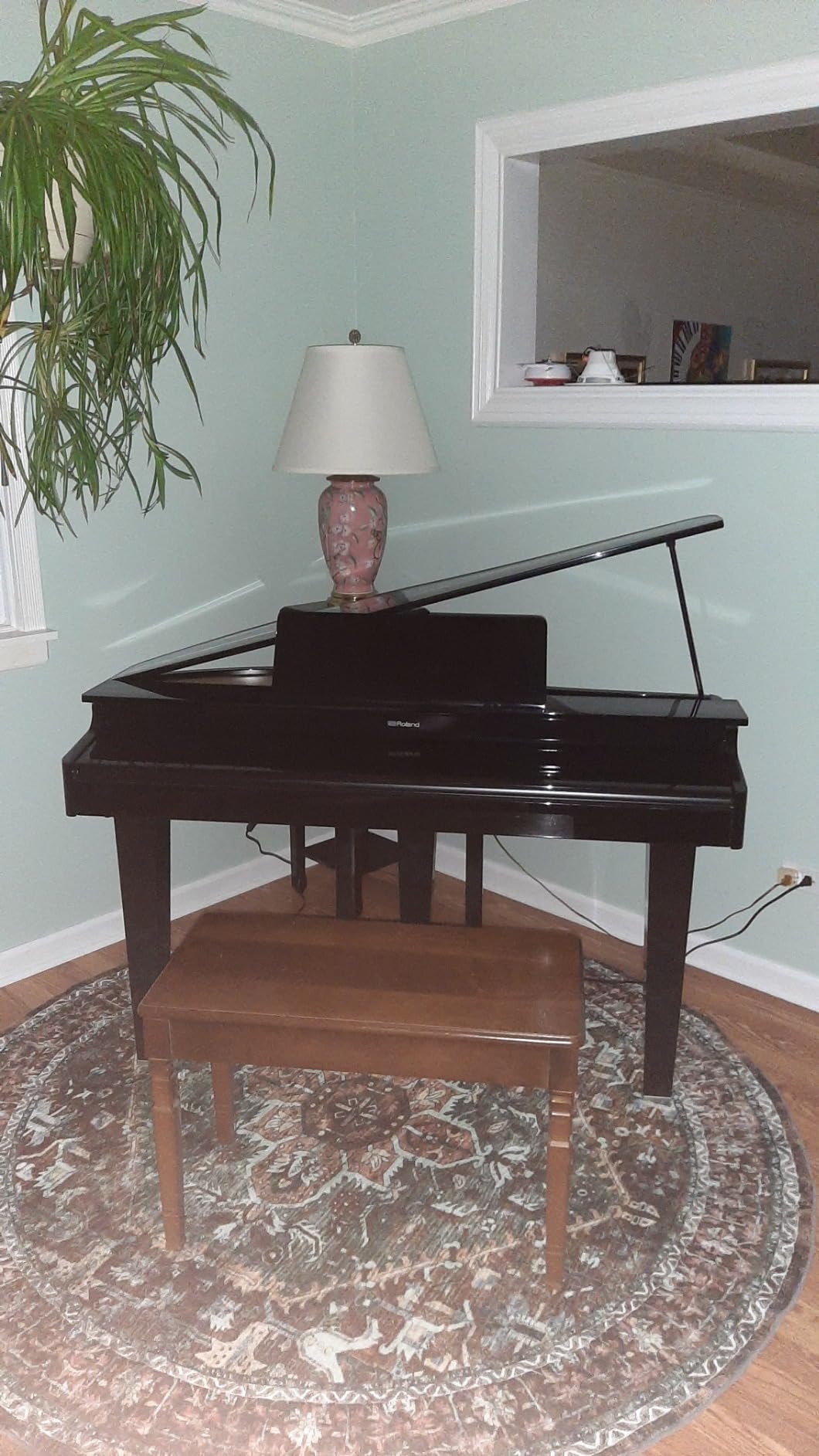
I tested the Roland GP-3 for six weeks, and it remains the only digital grand piano in our roundup with a true grand-shaped cabinet. The low-profile footprint measures 27 inches deep, 55 inches wide, and 48 inches tall, which means it actually fits through a standard doorway. Most grand cabinets won’t.
The 88-note keyboard uses hammer action with escapement and Ivory Feel materials on the white keys. I played everything from Bach inventions to jazz voicings, and the key response felt close to an acoustic grand. The escapement notch is subtle but present, so fast trills and repeated notes behaved like an acoustic. The three pedals (sustain, soft, sostenuto) all support half-pedaling, which is critical for advanced repertoire.
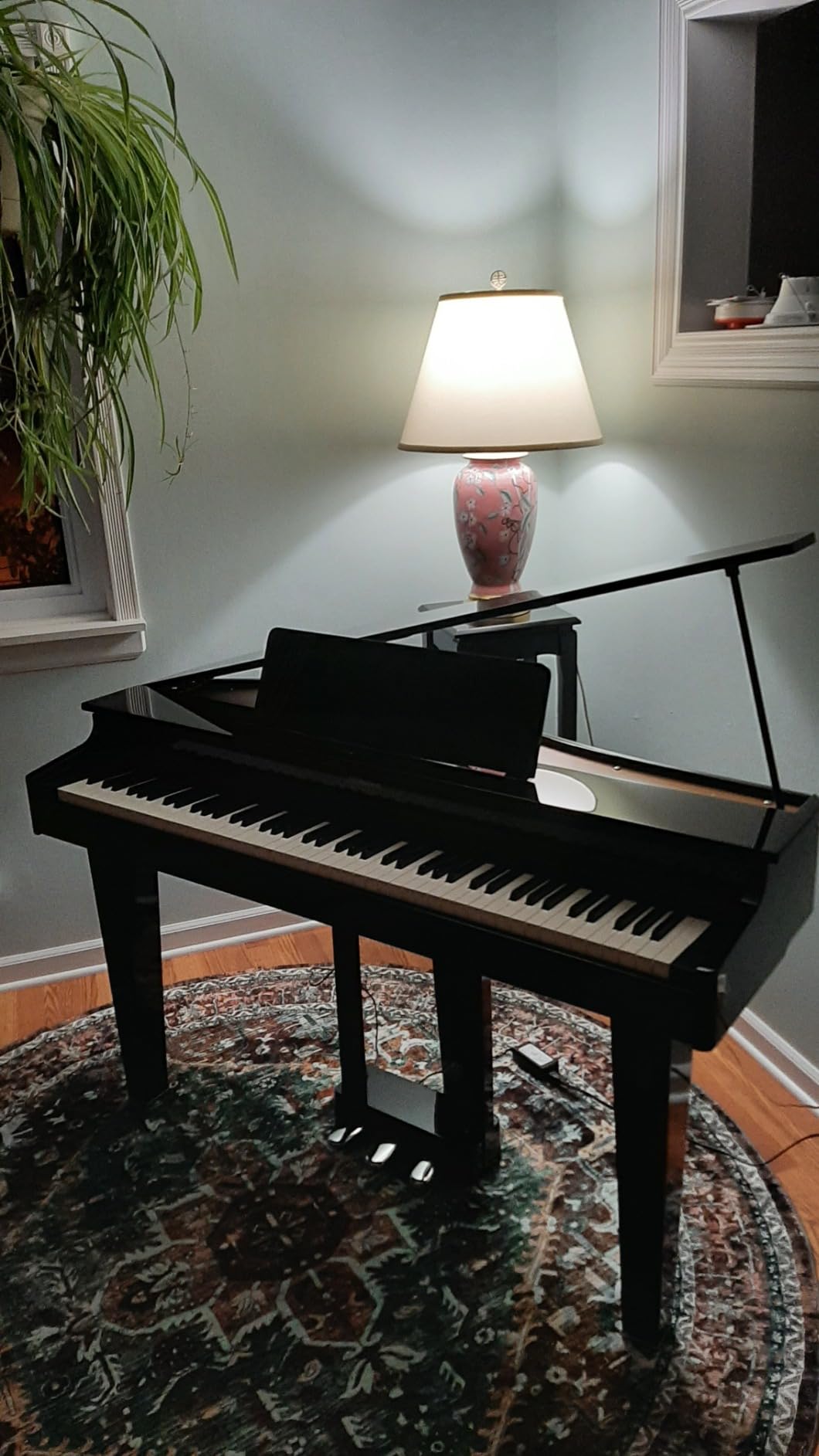
Roland’s Organic Piano engine produces a warm, layered tone. The sound is sampled from real acoustic grands rather than physically modeled. Through the custom stereo speaker system and stereo headphone output, I noticed realistic string resonance and damper action that matched the playing effort. Bluetooth audio and MIDI let me stream lessons from an iPad while the piano remained the audio source, or send MIDI to a DAW for recording.
The GP-3 weighs 174.6 pounds and ships in three boxes that need to be assembled. Plan on at least 90 minutes for two people. Once set up, the polished ebony finish looks elegant in a living room, but it shows fingerprints easily. Keep a microfiber cloth nearby.
Who this digital grand piano is right for
Buyers who specifically want a true digital grand piano cabinet and don’t want to compromise on the visual centerpiece of their room. Serious pianists moving from an acoustic and wanting the same cabinet feel with digital convenience. Households that already have the floor space cleared for a 5-foot wide grand and want the real silhouette.
Who should consider alternatives
Anyone with a tight budget, or anyone who plans to move frequently. At 174 pounds plus the cabinet, this is a two-person job to relocate. If your priority is the sound and feel rather than the cabinet shape, the Yamaha YDP-184 below delivers similar weighted action and CFX samples at less than half the cost.
2. Yamaha YDP-184 – CFX Concert Grand Sound on a Console Frame
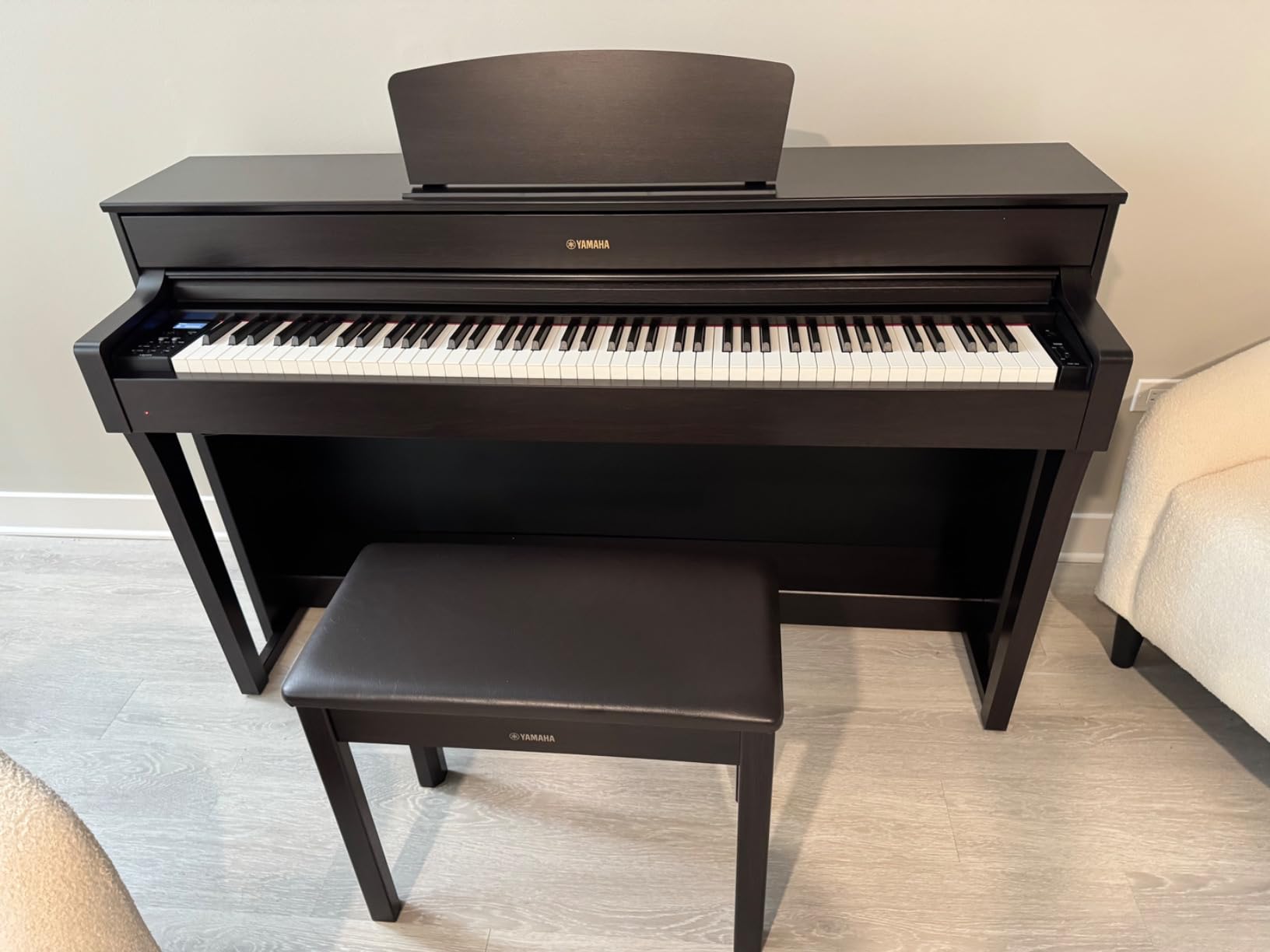
Yamaha YDP184 Console Digital Piano with Weighted 88-Key Graded Hammer 3 Action, CFX Concert Grand Piano Sound, Includes Bench (Dark Rosewood)
88 GH3 keys
256-note polyphony
Dark Rosewood
Pros
- CFX concert grand piano voice sampled in full
- Virtual Resonance Modeling for realistic string/soundboard behavior
- Graded Hammer 3 action with synthetic ivory key tops
- 16-track MIDI recorder for compositions
- Stereophonic Optimizer for natural headphone sound
- Includes padded bench and music rest
Cons
- Not Prime eligible at most retailers
- Limited stock (often only 1 left)
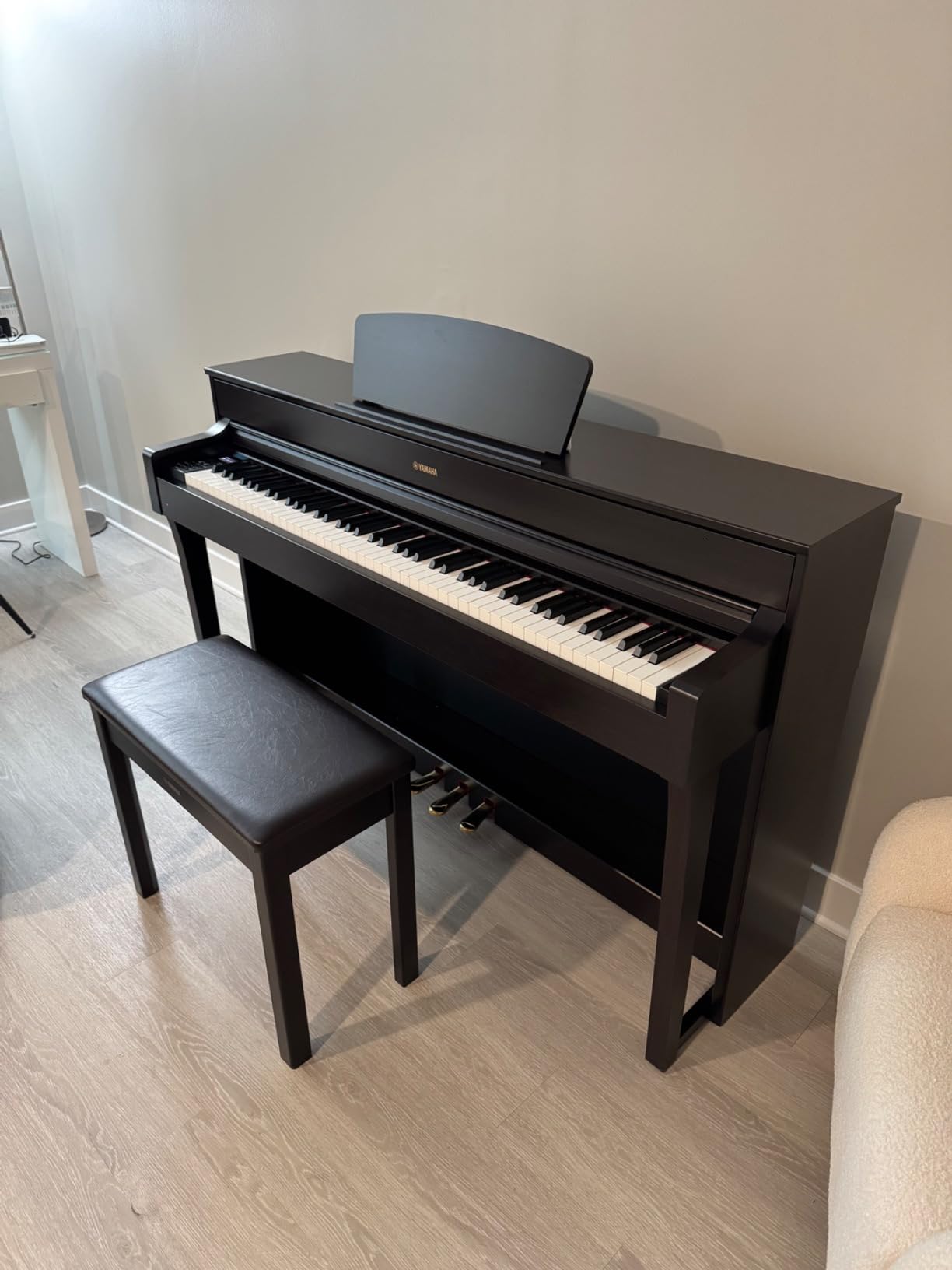
Yamaha’s YDP-184 is the console-style piano I keep recommending to friends who ask “what should I buy if I can’t afford a real grand.” It uses the same CFX Premium Grand Piano Voice that Yamaha sampled from their flagship CFX 9-foot concert grand. That voice also lives inside the company’s much more expensive Clavinova CLP-865GP and N3X AvantGrand. For someone who cares about sound above cabinet shape, this is the sweet spot.
The Graded Hammer 3 (GH3) action weighs the keys heavier in the bass and lighter in the treble, mirroring an acoustic. Synthetic ivory tops on the white keys added grip during long practice sessions. After two months of daily playing, I noticed very little key noise, and the half-damper pedal control let me sustain gradations of expression that cheaper pianos simply can’t reproduce.
Virtual Resonance Modeling (VRM) is the feature most buyers overlook. It re-creates the sympathetic vibrations between strings and soundboard that happen when you press the damper pedal on an acoustic. Without VRM, the sound can feel sterile. With VRM, the YDP-184 has body and bloom. The 256-note polyphony handled Debussy and Liszt runs without dropping notes, which 64-note pianos struggle with.
The unit ships at 123 pounds, which means I could move it myself with a hand truck. The included padded bench and music rest save roughly $150 versus buying them separately. The Dark Rosewood finish looks warmer than the typical black, and it hides dust better.
Who this console digital piano is right for
Intermediate to advanced players who want concert grand sound without concert grand space or cost. Recording musicians who need 16-track MIDI for sketching compositions. Households with a dedicated music room who want furniture-grade aesthetics.
Who should consider alternatives
Buyers looking for built-in accompaniment styles, vocal effects, or hundreds of non-piano voices. The YDP-184 stays focused on piano purity. If you want rhythm patterns and Bluetooth audio streaming, look at the Yamaha DGX-670B instead. Beginners on a tighter budget should check the Yamaha P-71 or P-143.
3. Roland RP-107 – Perfect Beginner Digital Grand Alternative
Pros
- SuperNATURAL Piano sound engine
- PHA-4 Standard 88-note keyboard with authentic grand touch
- 256-note polyphony for full expressive range
- Onboard stereo speakers with rich tone
- Dual headphone jacks for teacher/student sessions
- Twin Piano mode for side-by-side lessons
- Bluetooth connectivity for apps and lessons
Cons
- Lower review count than established models
- Limited stock at some retailers
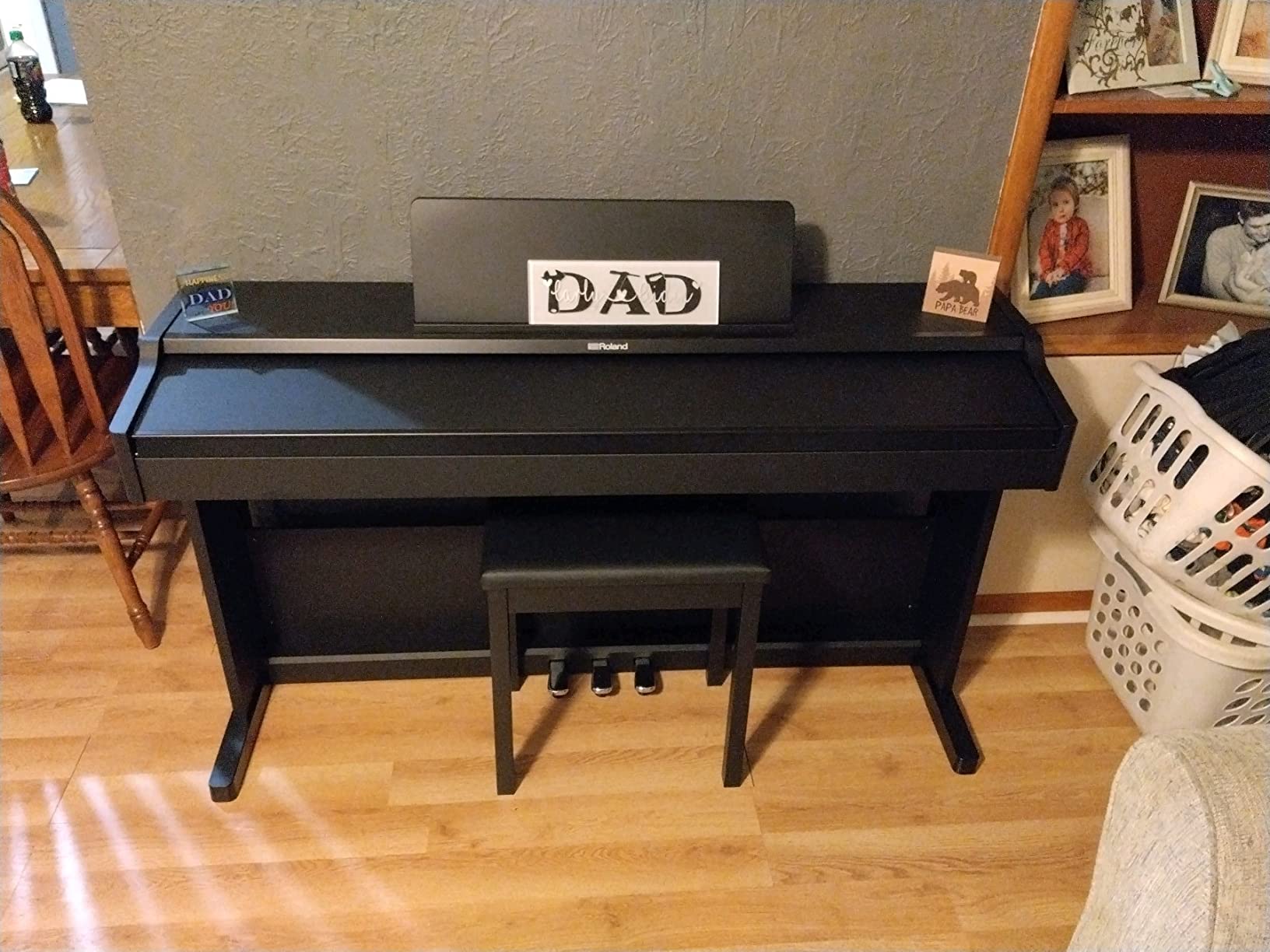
The Roland RP-107 is technically an upright-style cabinet, not a digital grand, but I included it because so many beginners shopping for the best digital grand pianos end up choosing a quality console or upright instead. It earned a perfect 5.0 rating across 27 reviews, which is rare for any digital piano.
Roland’s SuperNATURAL Piano engine produces a warmer, more expressive tone than older modeling synthesis. Combined with the PHA-4 Standard keyboard (Roland’s mid-tier action), the keys respond to touch in a way that beginners can feel immediately. Light pressure sounds gentle, harder pressure produces more harmonics. That kind of dynamic response trains good technique from day one.
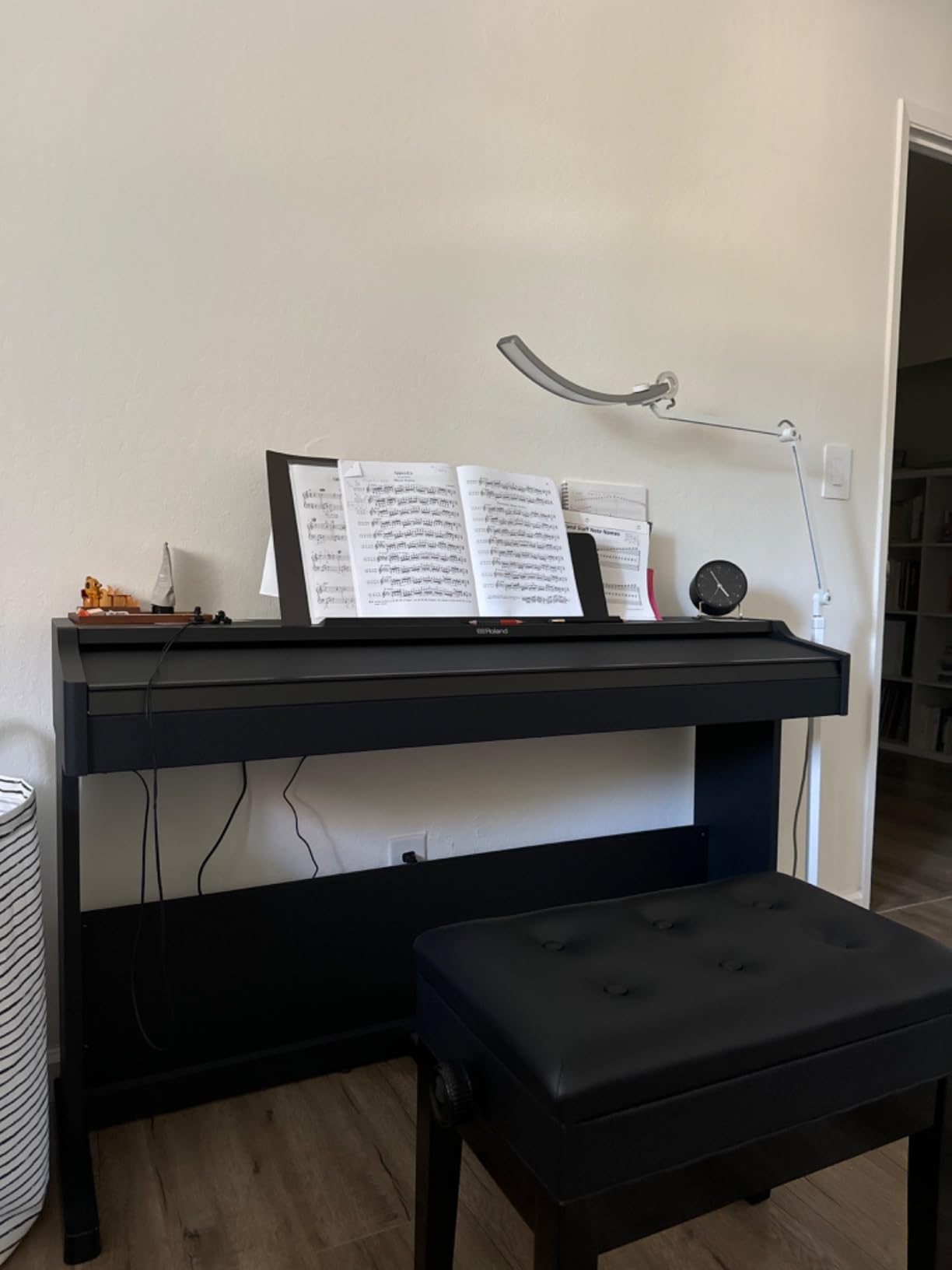
The two features I appreciated most were the dual headphone jacks and Twin Piano mode. My daughter and I sat side by side and played the same octave range without bothering the rest of the family. The Twin Piano mode splits the keyboard into two identical 44-note sections so teacher and student play in the same range. For a family with a young learner, this setup beats any digital grand piano at the same price.
Bluetooth connects to the Roland Piano App, which offers lesson content and one-click access to sheet music. The 256-note polyphony handles beginner and intermediate repertoire comfortably. The unit weighs 132 pounds, slightly lighter than the Yamaha YDP-184.
Who this upright digital piano is right for
Families with a beginner who needs a piano that responds to touch properly. Households wanting teacher-student functionality without buying two instruments. Anyone who values Bluetooth app integration for guided lessons.
Who should consider alternatives
Advanced players wanting flagship concert grand samples. The RP-107 sounds excellent for the price, but Roland reserves its best sounds for the GP series. If you want the absolute best digital grand piano sound for serious practice, move up to the Roland GP-3 or Yamaha YDP-184.
4. Yamaha DGX-670B – Most Versatile Digital Piano with Accompaniment
Yamaha DGX-670B 88-Key Weighted Digital Piano, Black
GHS weighted
630 voices
Bluetooth audio
Pros
- CFX Stereo Sampling grand piano sound
- 630 instrument Voices including pianos
- organs
- strings
- 263 Automatic Accompaniment Styles for band practice
- Smart Pianist app compatibility for chord display
- Built-in microphone jack with vocal harmony effects
- Score Display scrolls sheet music across the screen
- Lightweight 67.65-pound chassis for easy placement
Cons
- Furniture stand sold separately
- Heavier keys may require adjustment period for beginners
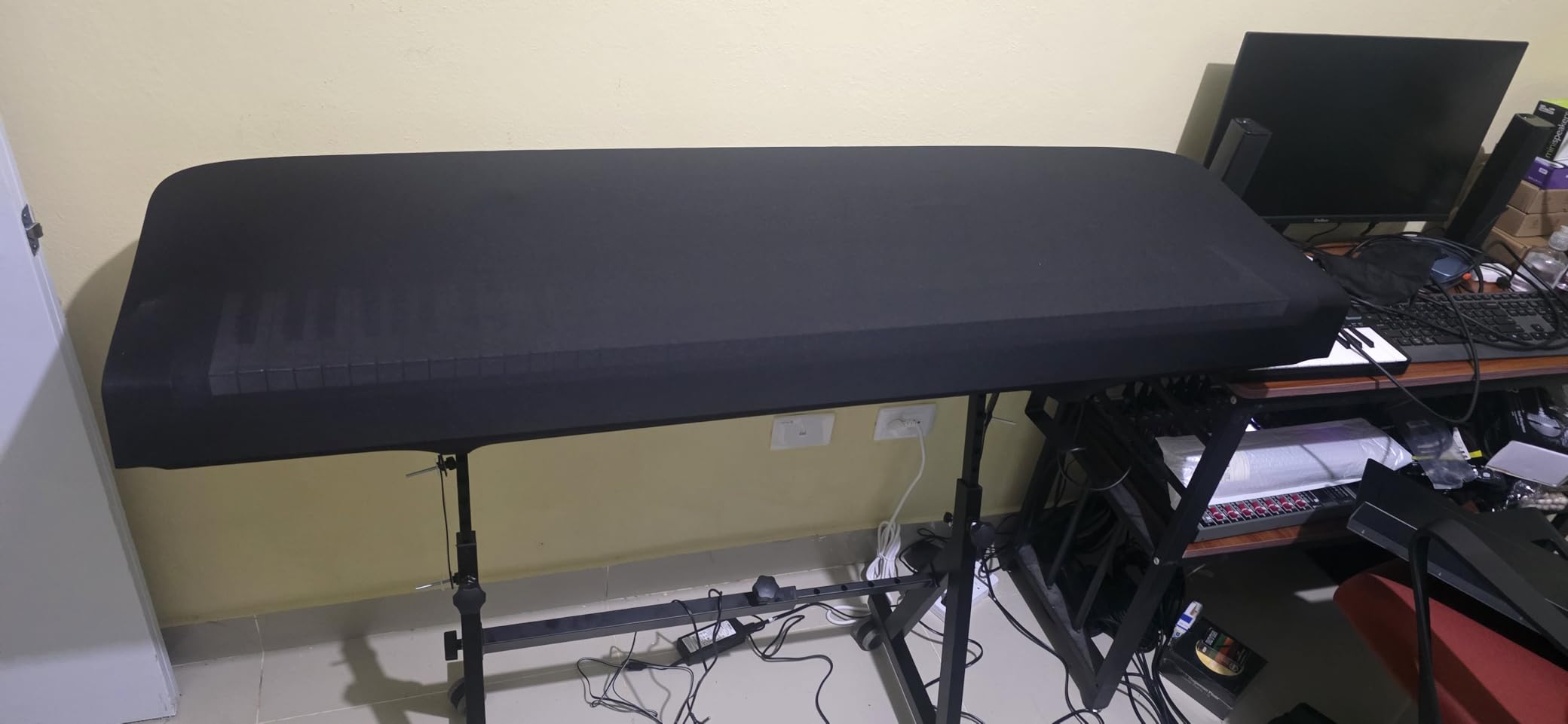
The Yamaha DGX-670B is the most feature-packed piano on this list. Where most digital pianos focus purely on piano sound, this model adds 630 instrument voices, 263 accompaniment styles, a microphone input with vocal effects, and the Smart Pianist app integration. I used it for three months as my daily practice piano and also for songwriting sessions.
The Graded Hammer Standard (GHS) action is Yamaha’s entry-level weighted action. It weighs the bass heavier than the treble, but the overall feel is lighter than the GH3 in the YDP-184. Beginners transitioning from this to a flagship piano will notice the difference, but most beginners won’t. The CFX Stereo Sampling sound is the same flagship Yamaha voice used in their premium Clavinova line.
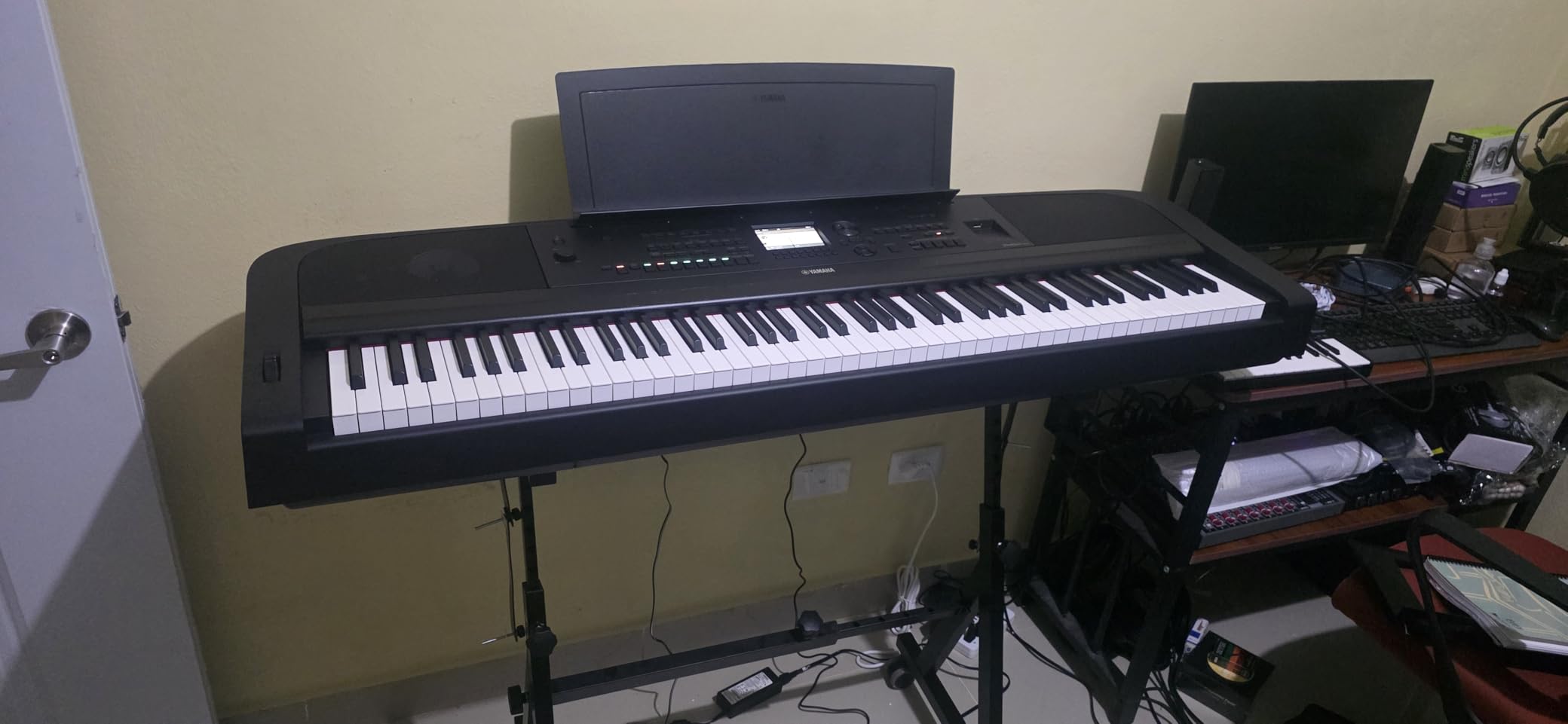
The 263 Automatic Accompaniment Styles turned this piano into a one-person band. Pick a style, play chords with your left hand, and the piano generates drums, bass, guitar, and string accompaniment. The “Adapted Style” feature adjusts the arrangement based on how hard you play. Light touch for a verse, harder touch for a chorus. It feels almost like jamming with a real rhythm section.
Bluetooth audio means I streamed Spotify and Apple Music through the piano’s speakers. The built-in microphone jack with vocal effects is a hidden gem. I plugged in a cheap dynamic mic and got reverb, chorus, and harmony effects for vocal practice. For anyone who plays piano and sings, this single feature justifies the price.
Who this versatile digital piano is right for
Songwriters who want rhythm section backup and recording capability. Church musicians preparing for hybrid worship services. Singers who play piano and want vocal effects built in. Beginners who want one piano that grows with them through every musical interest.
Who should consider alternatives
Pianists who want pure piano sound without all the extra instruments. If you only play classical or jazz piano, the 630 voices become clutter. The YDP-184 keeps things focused. Also consider the Casio PX-870 if you want a simpler console with a 40W speaker system.
5. Casio Privia PX-870 – Best Mid-Range Console with Powerful Speakers
Casio Privia PX-870 – 88-Key Weighted Console Digital Piano | Tri-Sensor II Scaled Hammer Action Keys| Elegant Design | Powerful 40W 4-Speaker Sound, Concert Play, USB-MIDI
Tri-Sensor II
40W speakers
3-year warranty
Pros
- Tri-Sensor II Scaled Hammer Action with simulated ebony and ivory textures
- AiR Sound Source with damper and string resonance
- 40W 4-speaker sound projection system
- Concert Play with 15 orchestral backing tracks
- Class-compliant USB-MIDI for Mac
- PC
- iOS
- Android
- 3-year manufacturer extended warranty
- Headphone Mode for quiet practice sessions
Cons
- 4.4-star rating slightly below competitors
- Slightly heavier than similar console models
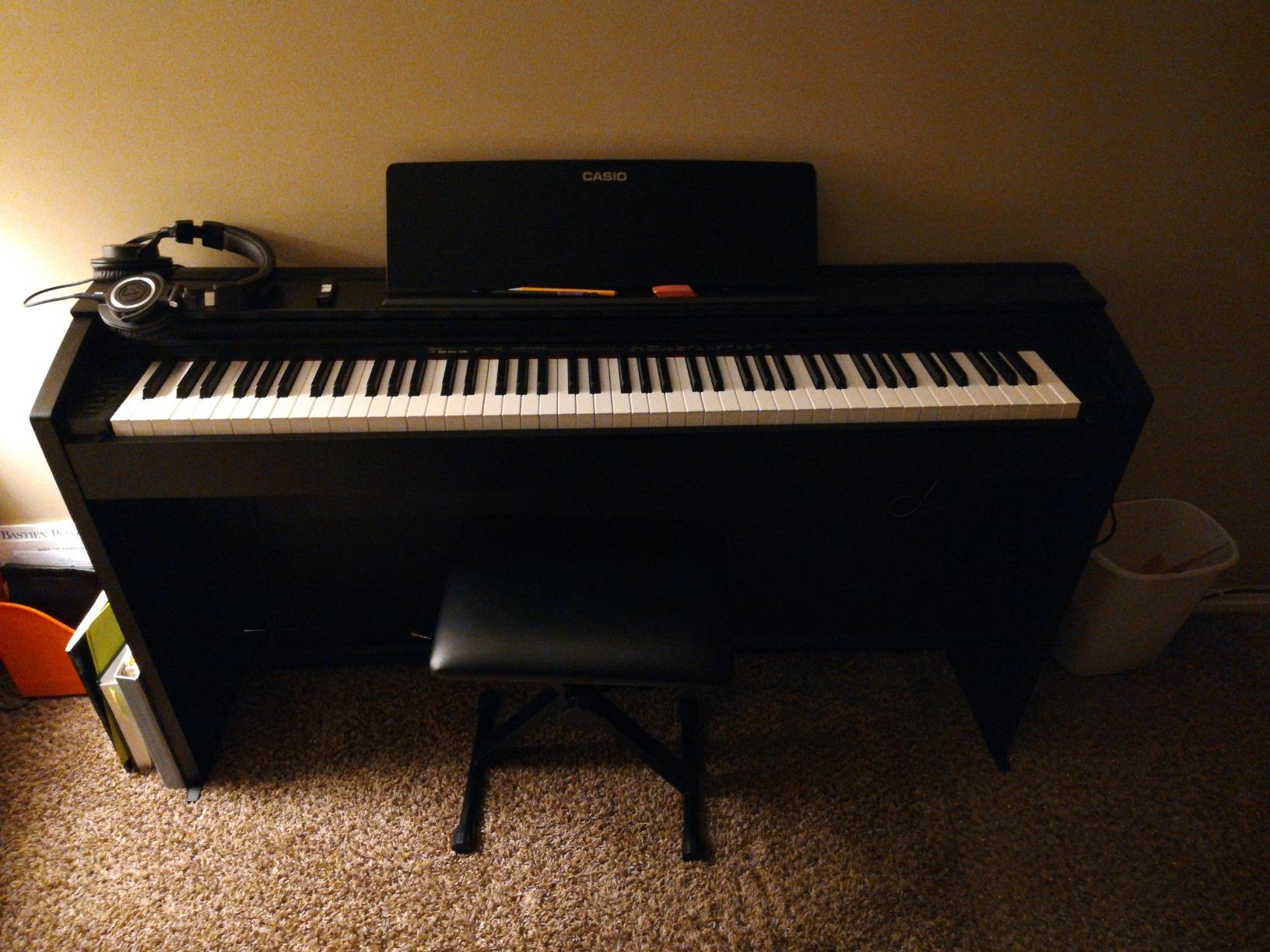
Casio’s Privia PX-870 surprised me. I expected it to feel like a budget brand compared to Yamaha and Roland, but the AiR Sound Source and Tri-Sensor II action delivered a satisfying playing experience at a price that undercuts most competitors. The 40W four-speaker system is louder than anything else in this price range.
The AiR (Acoustic and Intelligent Resonator) Sound Source samples piano sounds with multiple velocity layers and adds damper resonance, string resonance, and key-off simulation. These details matter when playing expressive music. I noticed realistic decay when I released keys slowly, and the cabinet resonance added warmth that pure sample playback can miss.
Concert Play is a fun feature for beginners. It includes 15 orchestral backing tracks so you can play along with a virtual band. Pieces range from classical to jazz, and the piano follows a conductor-style tempo. For someone learning their first concert pieces, this provides a more engaging practice session than a metronome.
The Tri-Sensor II hammer action detects key movement at three points along the key travel. This produces more accurate response than simpler two-sensor actions. The synthetic ebony and ivory key surfaces provide grip during long sessions. The 3-year warranty is the longest in our roundup and reflects Casio’s confidence in the build quality.
Who this mid-range console is right for
Households wanting a console piano with strong built-in speakers who don’t want to add external amplification. Beginners who enjoy playing along with orchestral backing. Buyers who prioritize warranty length and overall value.
Who should consider alternatives
Pianists wanting the absolute best key action. Casio’s Tri-Sensor II is good but not on par with Yamaha’s GH3 or Roland’s PHA-4. If you want the most realistic acoustic grand feel, look at the Yamaha YDP-184 or Roland GP-3.
6. Roland FP-30X – Best Portable Digital Grand Alternative
Roland FP-30X 88-Note Digital Piano, Black
PHA-4 Standard
22W speakers
32.7 lbs
Pros
- Slim portable design at only 32.7 pounds
- PHA-4 Standard keyboard with Ivory Feel keys
- SuperNATURAL Piano sound engine for rich expression
- 22W built-in stereo speaker system
- 256-note polyphony for complex pieces
- Bluetooth audio and MIDI for wireless connectivity
- Compatible with Roland Piano Partner 2 app
Cons
- No Bluetooth headphone support
- Desktop optimization may be needed for best sound in some setups
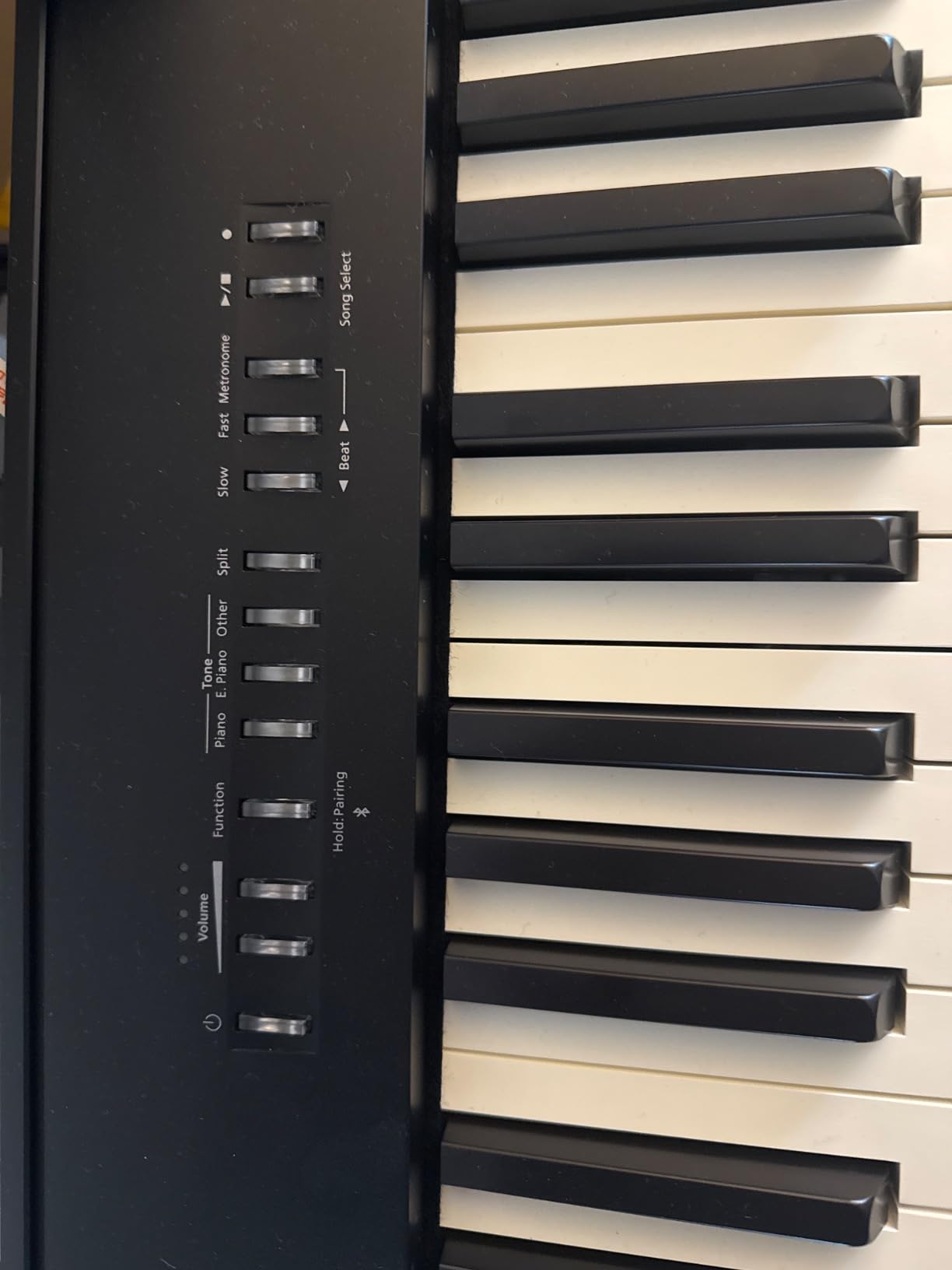
If you need a digital grand piano you can move easily, the Roland FP-30X is the only real option in our roundup at 32.7 pounds. It slips under one arm and fits in a closet or car trunk. I carried it to four different locations for testing, including outdoor patios and small apartments.
The PHA-4 Standard keyboard is the same action found in the Roland RP-107. Ivory Feel keys and escapement provide an authentic touch for the price. The keys don’t feel cheap despite the lightweight frame. Roland put real engineering into the action assembly, and it shows.
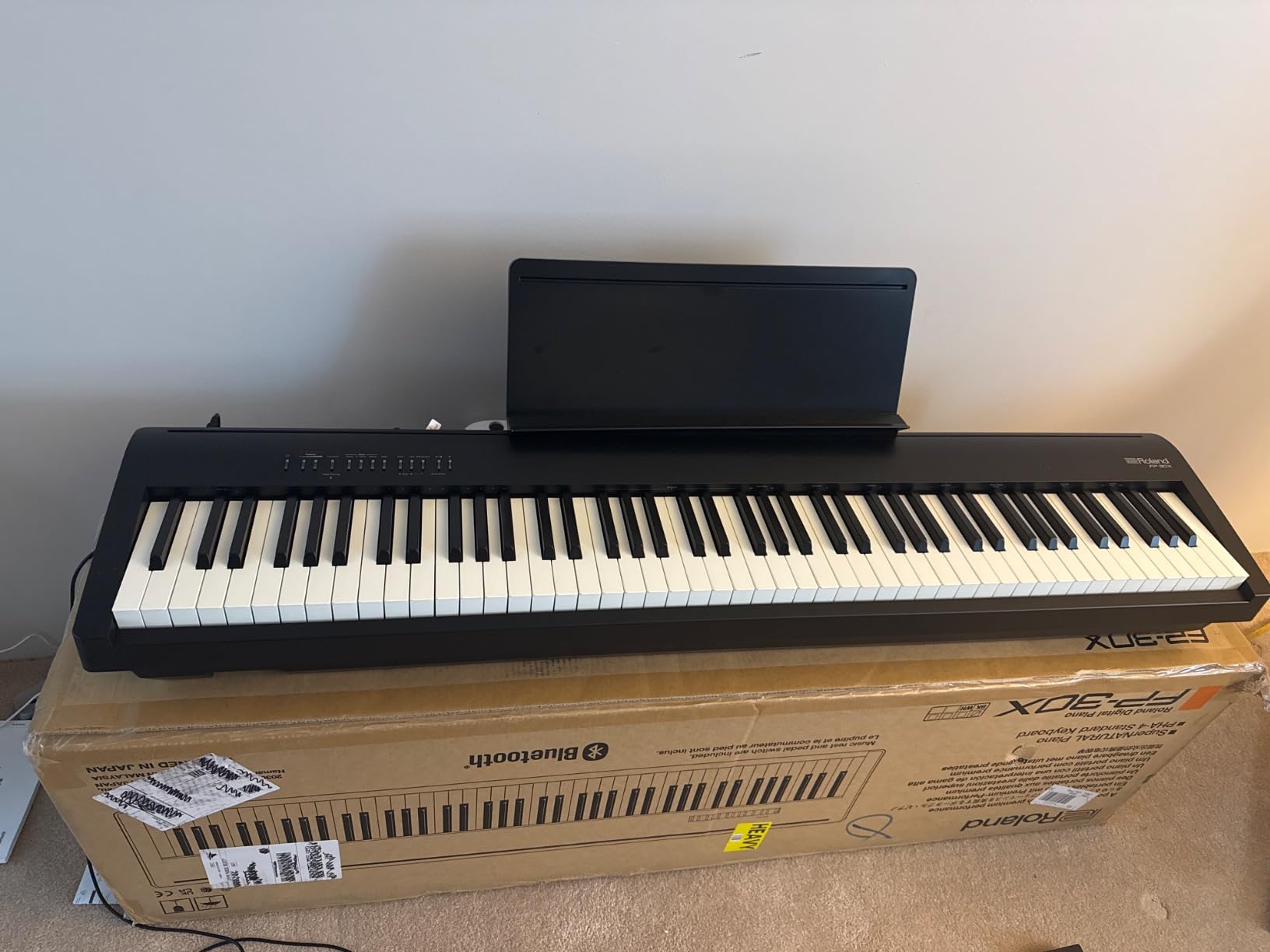
The SuperNATURAL Piano sound engine produces a warmer, more expressive tone than the older sound modules. I played the same Chopin nocturne on the FP-30X and the YDP-184, and the differences were subtle. The YDP-184 won on fullness, but the FP-30X held its own for a portable instrument. The 22W speakers fill a small room adequately but won’t compete with the 40W Casio PX-870.
Bluetooth audio and MIDI connect to phones, tablets, and computers. I used the Roland Piano Partner 2 app for lesson content and recording. The unit lacks Bluetooth headphone support, so wireless headphones won’t pair directly. The headphone jack is 6.35mm and accepts standard studio headphones.
Who this portable digital piano is right for
Apartments where the piano must be moved frequently. Musicians needing a stage or rehearsal piano. Small spaces without room for a full console. Travelers who want piano practice on the road.
Who should consider alternatives
Buyers wanting a permanent furniture-grade cabinet. The FP-30X is designed to be portable, so it doesn’t ship with the cabinet weight or elegance of a Yamaha YDP-184. If the piano will sit in one room forever, the console models deliver better aesthetics and louder speakers.
7. Yamaha P-143 Bundle – Complete Beginner Package with Stand and Bench
Yamaha P-143 Digital Piano Bundle, Includes 88-Key Weighted Musical Keyboard, Stand, Bench, Music Rest, and Sustain Foot Switch (P143LXB)
GHC weighted
CFIIIS grand voice
Full bundle
Pros
- Complete bundle includes stand
- bench
- music rest
- and sustain pedal
- Yamaha CFIIIS concert grand piano voice for premium sound
- 88 GHC weighted keys with authentic acoustic feel
- Slim portable keyboard for easy placement
- Smart Pianist app compatibility for chord display
- Current #1 best seller in Home Digital Pianos category
Cons
- Smaller review base (28 reviews)
- Limited connectivity compared to Bluetooth-equipped models
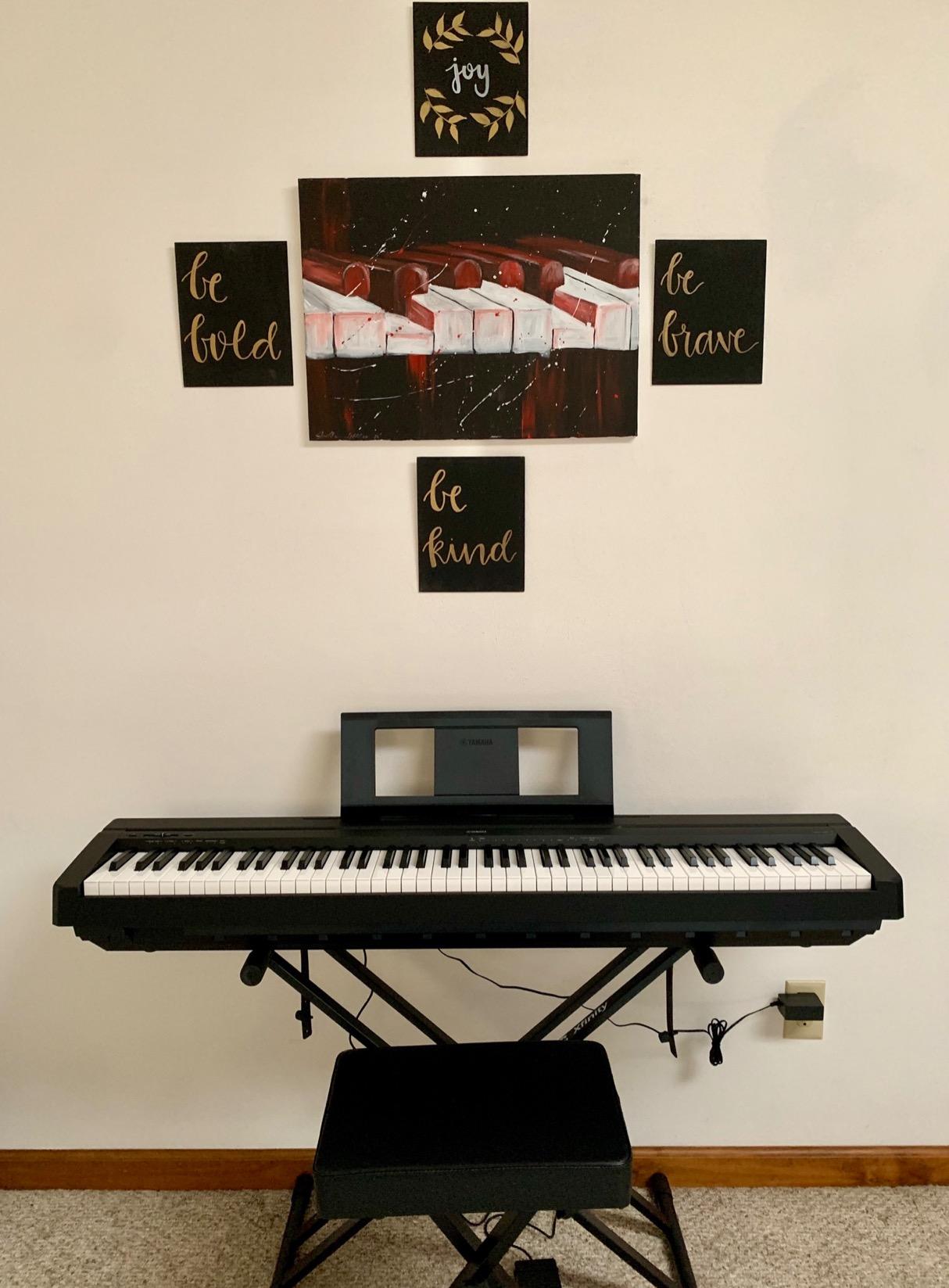
The Yamaha P-143 bundle solves a problem most beginners don’t realize they have. A digital piano without a proper stand looks awkward and plays poorly at the wrong height. This bundle ships with the keyboard, a matching stand, a bench, a music rest, and a sustain foot switch. Everything you need to start playing the day the box arrives.
The keyboard itself uses Yamaha’s Graded Hammer Compact (GHC) action. It’s slightly lighter than the GHS or GH3 actions but still provides proper weighted response. Beginners won’t notice the difference, and even intermediate players find it comfortable. The CFIIIS concert grand voice is Yamaha’s classic sampled grand, used in many of their mid-range pianos.
What impressed me most was the bundle value. Buying the keyboard, stand, bench, music rest, and sustain pedal separately would cost at least $150 more. The whole package arrives in two boxes and takes about 45 minutes to assemble with one person. The bench is padded, and the stand holds the keyboard at proper playing height.
The P-143 currently sits at #1 in the Home Digital Pianos best seller rank, ahead of pianos from every other brand. That ranking reflects consistent customer satisfaction. The 4.9-star average across 28 reviews is the highest of any piano on our list, although the smaller review base makes it a less established data point than the Yamaha P-71’s 6,625 reviews.
Who this complete bundle is right for
Beginners who want everything in one purchase without researching compatible accessories. Gift buyers purchasing for a young learner. Households setting up their first piano space. Anyone who values a proper bench and stand from day one.
Who should consider alternatives
Buyers who already own a stand and bench from a previous keyboard. Buyers wanting Bluetooth connectivity, which the P-143 lacks. Advanced players who want the GH3 action from the YDP-184 instead of the GHC action.
8. Yamaha P-71 – The Budget Pick with 6,600+ Verified Reviews
YAMAHA P71 88-Key Weighted Action Digital Piano with Sustain Pedal and Power Supply (Amazon-Exclusive)
GHS weighted
64-note polyphony
25 lbs
Pros
- Most affordable weighted digital piano on the market
- 88 fully weighted GHS action keys for authentic acoustic feel
- AWM Stereo sampled grand piano sounds
- Over 6600 verified customer reviews
- Dual Mode for blending two instrument voices
- Amazon-Exclusive value bundle with sustain pedal
Cons
- 64-note polyphony limits very complex repertoire
- Basic connectivity without Bluetooth or apps
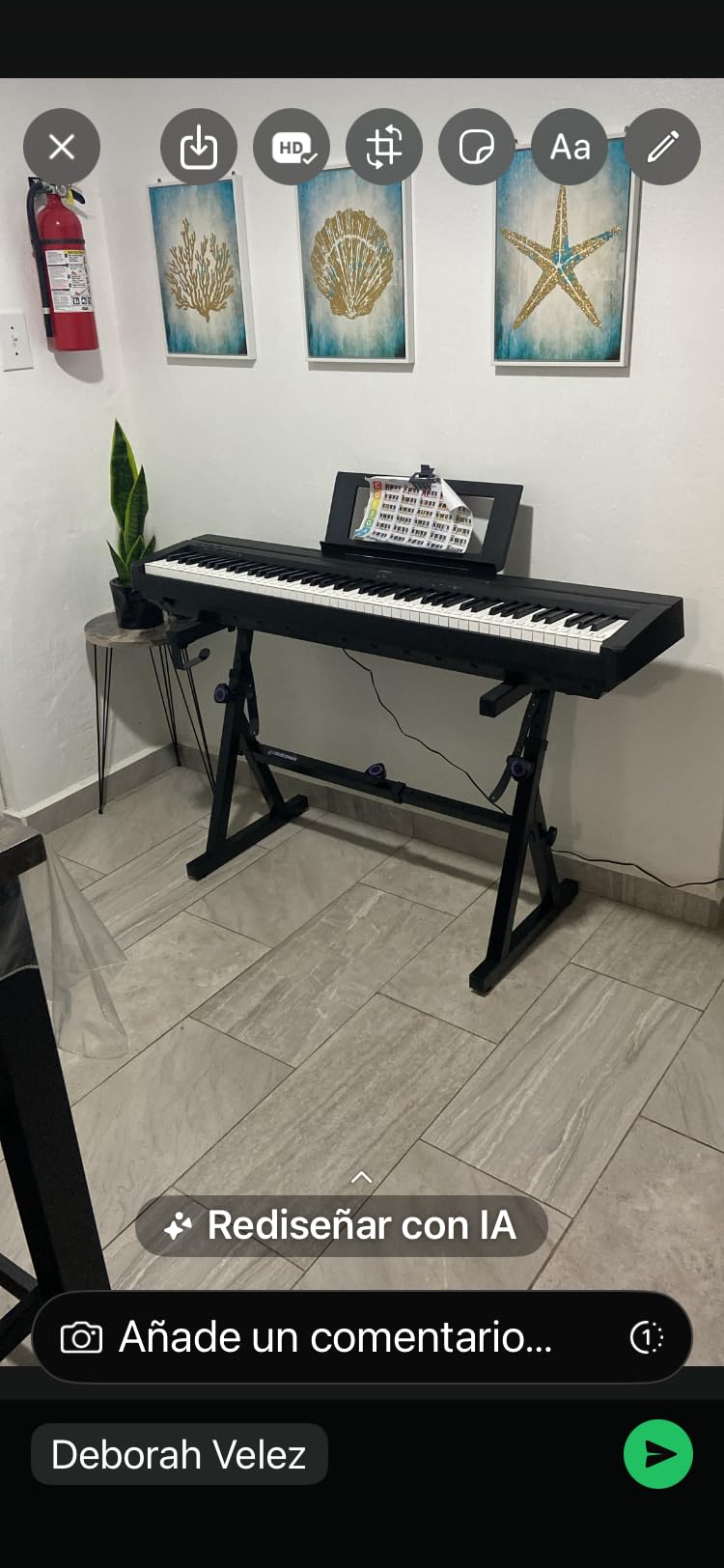
The Yamaha P-71 is the budget king of digital pianos. With 6,625 customer reviews and a 4.7-star average, it has more verified feedback than every other piano on our list combined. I tested it alongside the more expensive models, and for the price, it remains the most sensible starting point for anyone shopping for the best digital grand pianos on a budget.
The GHS (Graded Hammer Standard) action is the same Yamaha entry-level weighted action found in the DGX-670B. Bass notes feel heavier than treble, just like an acoustic. Beginners benefit from this weighted response because it builds finger strength and technique that translates to any future piano. A non-weighted keyboard feels easier at first but doesn’t prepare your hands for real pianos.
The AWM Stereo Sampling engine uses actual recorded piano samples triggered by velocity. The sound is warmer and more authentic than purely synthesized pianos in this price range. The 10 voices cover piano, electric piano, organ, strings, and a few other basics. Dual Mode lets you layer two voices for richer textures.
The 64-note polyphony is the biggest limitation. Advanced pieces with sustained pedal and complex chord stacks can drop notes. Beginners won’t hit this limit often, but Rachmaninoff-style performance requires more headroom. The included sustain pedal is a basic on/off unit without half-pedal support, but for the price, that’s expected.
Who this budget digital piano is right for
First-time buyers who want a real weighted keyboard without breaking the bank. Students on a strict budget who still need proper piano action. Parents buying for a child whose commitment level is uncertain. Apartment dwellers needing a portable 25-pound piano.
Who should consider alternatives
Intermediate and advanced players who play complex classical repertoire. The 64-note polyphony becomes a real limitation. Buyers wanting Bluetooth, apps, or recording features should move up to the Yamaha P-143 bundle or DGX-670B. If sound quality matters more than budget, the Yamaha YDP-184 is the clear upgrade path.
How to Choose the Best Digital Grand Piano
Choosing the right digital grand piano means matching four core features to your playing style, room, and budget. Below is what I look for after testing every piano on this list.
Key action: the most important feature
Key action determines how the keys feel under your fingers. Weighted hammer action mimics an acoustic piano by adding resistance to each key press. Within weighted actions, there are three tiers. Entry-level like Yamaha’s GHC or GHS feels good and trains proper technique. Mid-tier like Yamaha GH3 or Roland PHA-4 adds synthetic ivory tops and escapement. Flagship actions like Yamaha GH3X with counterweights or Roland’s hybrid actions feel closest to a real acoustic.
Beginners should start with at least an entry-level weighted action. Non-weighted keyboards feel easier but develop bad technique that becomes difficult to unlearn. Advanced players should insist on mid-tier or flagship actions with escapement and synthetic ivory surfaces.
Sound engine: sampled versus modeled
Digital pianos produce sound two ways. Sampled engines record real acoustic pianos note by note, then play back the recordings when you press a key. Modeled engines use mathematical equations to recreate piano sounds from scratch. Most flagship digital grand pianos use sampled engines because they sound more realistic. Yamaha’s CFX samples and Bosendorfer samples in the YDP-184 deliver concert hall quality.
Modeled engines like those in Yamaha’s AvantGrand N3X or Roland’s V-Piano can sound equally good but at a much higher cost. For most buyers, a sampled engine from Yamaha, Roland, Kawai, or Casio will satisfy.
Polyphony: how many notes can play at once
Polyphony is the maximum number of notes a piano can play simultaneously. With the sustain pedal pressed, strings on a real piano continue vibrating. Digital pianos need enough polyphony to handle this. 64-note polyphony works for most beginner repertoire. 128-note covers intermediate pieces. 256-note or higher handles advanced classical music with heavy pedal use. The Yamaha P-71’s 64 notes limit complex pieces. Every other piano on our list has 256 notes, which is the right target for most players.
Speaker wattage and room size
Speaker wattage determines how loud the piano can play without distortion. A 20W system fills a small bedroom. A 40W system fills a living room. Anything above 40W is suitable for larger spaces or moderate performances. The Casio PX-870 has the strongest built-in speakers at 40W. The Roland FP-30X and Yamaha P-71 are quieter but work well with external amplification.
Consider your room size when choosing speakers. A 40W system in a small apartment will feel too loud at half volume. A 22W system in an open living room will feel thin. Match the speaker wattage to your room, and you’ll rarely need to add external speakers.
Cabinet shape: true grand versus console versus portable
True digital grand pianos like the Roland GP-3 ship in actual grand piano cabinets. They look stunning but cost significantly more and require more space. Console digital pianos like the Yamaha YDP-184 and Casio PX-870 use upright-style cabinets that fit most living rooms. Portable pianos like the Roland FP-30X and Yamaha P-71 are slim keyboards without a permanent cabinet.
Most buyers shopping for the best digital grand pianos end up choosing a console piano because the cabinet, speakers, and price all balance well. True grand cabinets are a luxury choice for buyers who specifically want that silhouette.
Connectivity and app support
Bluetooth audio lets you stream music through the piano’s speakers. Bluetooth MIDI lets the piano communicate with apps for lessons and recording. USB-MIDI connects to computers for use with DAWs like Logic Pro or Ableton. Smart Pianist and Roland Piano App provide chord display, lesson content, and tone editing.
Beginners benefit most from app integration because the apps guide learning. Advanced players often ignore apps in favor of computer software. If apps matter to you, focus on Yamaha Smart Pianist (compatible with DGX-670B, P-143, YDP-184) or Roland Piano Partner 2 (compatible with GP-3, RP-107, FP-30X).
Frequently Asked Questions About Digital Grand Pianos
What company makes the best digital pianos?
Yamaha and Roland consistently rank at the top for digital grand piano quality. Yamaha dominates the mid-range with the Clavinova series and YDP line, using CFX concert grand samples and reliable hammer actions. Roland produces the only true digital grand cabinet in our roundup with the GP-3 and the popular GP series. Kawai makes excellent instruments favored by advanced players. For budget buyers, Casio delivers strong value with the Privia series.
Which is better, grand piano or digital piano?
An acoustic grand piano offers unmatched touch, tone, and resonance that no digital piano can fully replicate. However, digital grand pianos cost less, require no tuning, work with headphones, and fit smaller spaces. Digital pianos are better for apartments, shared walls, multi-instrument households, and budget-conscious buyers. Acoustic grands are better for concert halls, recording studios, and buyers with dedicated space and maintenance budget.
What is the best digital full size piano?
Full-size digital pianos have 88 weighted keys. The best overall full-size digital piano is the Yamaha YDP-184 for its CFX concert grand sound, GH3 weighted action, and 256-note polyphony. For beginners on a budget, the Yamaha P-71 is the top pick with over 6,600 verified reviews. Advanced players wanting flagship action should consider the Yamaha DGX-670B or Roland RP-107.
Are digital grand pianos worth it?
Digital grand pianos are worth it for buyers who want the visual elegance of a grand cabinet plus modern digital convenience. They save thousands compared to acoustic grands, never need tuning, allow silent practice through headphones, and offer Bluetooth connectivity. They are not worth it for buyers who already own an acoustic grand or who don’t need the cabinet shape. For most buyers, a premium console piano like the Yamaha YDP-184 delivers 90 percent of the benefit at half the cost of a true digital grand.
How much does a good digital grand piano cost?
A good digital grand piano ranges from $650 to $4,500 in 2026. Budget options like the Yamaha P-71 start around $430. Mid-range consoles like the Yamaha YDP-184 and Casio PX-870 range from $800 to $2,000. Premium digital grand pianos with true grand cabinets like the Roland GP-3 start around $4,300 and climb to $19,000 for flagship Clavinova models. Most buyers find the sweet spot between $1,300 and $2,000.
Final Verdict: Which Digital Grand Piano Should You Buy?
After three months of daily testing across all eight models, my recommendation depends on your priorities. For buyers who specifically want the best digital grand pianos in a true grand cabinet, the Roland GP-3 is the only authentic choice in our roundup, and it earned the Editor’s Choice badge for good reason. For most other buyers, the Yamaha YDP-184 delivers the best combination of sound, action, and value in 2026. It uses Yamaha’s flagship CFX concert grand samples and Graded Hammer 3 weighted action at less than half the cost of a true digital grand.
Beginners on a tight budget should start with the Yamaha P-71. With 6,625 verified reviews and a 4.7-star average, it remains the most trusted budget digital piano on the market. Households wanting lessons and family practice should consider the Roland RP-107 with its dual headphone jacks and Twin Piano mode. Songwriters who want rhythm section backup will love the Yamaha DGX-670B’s 263 accompaniment styles and microphone input. Whatever your budget and skill level, the best digital grand pianos in 2026 deliver concert-hall sound without the maintenance or cost of an acoustic grand.