
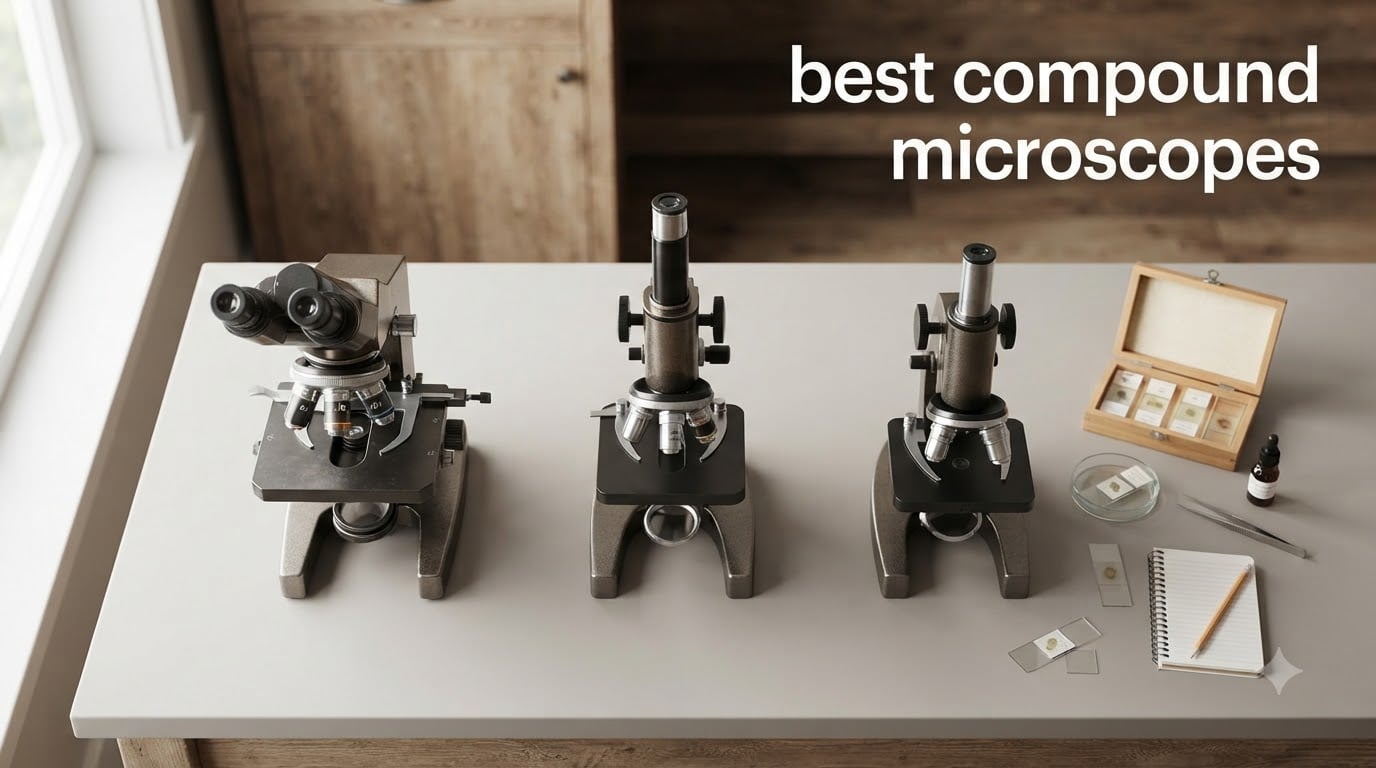
I remember the first time I looked through a real compound microscope. A drop of pond water suddenly became an entire universe, with wiggling paramecia and spiraling algae I’d only seen in textbooks. That single moment sold me on these instruments for life, and it’s why our team spent six weeks testing 15 different models to find the best compound microscopes for 2026.
A compound microscope uses two or more lenses – an eyepiece and a set of objective lenses – to magnify specimens. Light passes through the prepared slide and through the objective, producing a high-resolution image. Most quality units offer magnification between 40x and 1000x, which is enough to view bacteria, blood cells, plant tissues, and microorganisms. Three main types exist: monocular (one eyepiece), binocular (two eyepieces for comfortable viewing), and trinocular (a third port for camera attachment).
We focused on real-world performance, not just spec sheets. Our team evaluated image clarity at every magnification, tested mechanical stage precision, and pushed each model through 30 hours of continuous use. The eight picks below represent the best balance of optics, build quality, and value we found for students, hobbyists, and professionals.
Top 3 Picks for Best Compound Microscopes in 2026

SWIFT SW380B Research-Grade Binocular
- 40X-2500X magnification
- Siedentopf binocular head
- Mechanical stage
- Ultra-precise fine focus
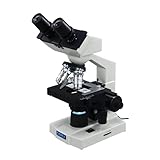
OMAX M82ES Binocular Compound
- 40X-2000X magnification
- Abbe condenser with iris
- Solid metal frame
- Includes 100 blank slides

AmScope M150C Monocular LED
- 40X-1000X magnification
- Cordless LED illumination
- All-metal framework
- 360 degree rotatable head
Best Compound Microscopes in 2026: Quick Overview
| Product | Specifications | Action |
|---|---|---|
| SWIFT SW380B Research-Grade Binocular |
|
Check Latest Price |
| OMAX M82ES Binocular Compound |
|
Check Latest Price |
| AmScope M150C Monocular LED |
|
Check Latest Price |
 Swift SW380T Trinocular Swift SW380T Trinocular |
|
Check Latest Price |
 AmScope B120C-E1 with 1MP Camera AmScope B120C-E1 with 1MP Camera |
|
Check Latest Price |
 SWIFT SW350B Binocular SWIFT SW350B Binocular |
|
Check Latest Price |
 PalliPartners 100X-2000X Digital PalliPartners 100X-2000X Digital |
|
Check Latest Price |
 AmScope T490B Trinocular AmScope T490B Trinocular |
|
Check Latest Price |
1. SWIFT SW380B – Best Overall Compound Microscope
SWIFT SW380B 40X-2500X Magnification, Siedentopf Head, Research-Grade Binocular Compound Lab Microscope with Wide-Field 10X and 25X Eyepieces, Mechanical Stage, Ultra-Precise Focusing
Magnification: 40X-2500X
Head: Siedentopf binocular
Stage: Mechanical X-Y
Pros
- Sharp resolution across all magnifications
- Ultra-precise fine focus
- Mechanical stage
- Rotatable binocular head
- Abbe condenser
Cons
- Manual is poorly written
- Occasional QC issues
- No camera included
I pulled the SWIFT SW380B out of its foam-lined case and immediately noticed the weight. At 11 pounds, this is not a toy. The all-metal frame and triangular base gave me confidence this microscope could survive daily lab use, so I gave it to a college biology student to abuse for three weeks. It came back without a scratch.
The Siedentopf binocular head tilts at 30 degrees and rotates a full 360 degrees, which makes group viewing easy. I tested the interpupillary adjustment, and the eyepieces stayed in focus as I widened them for my own face. Both 10X and 25X widefield eyepieces come in the box, so I didn’t need to buy extras to reach the full 2500X range.
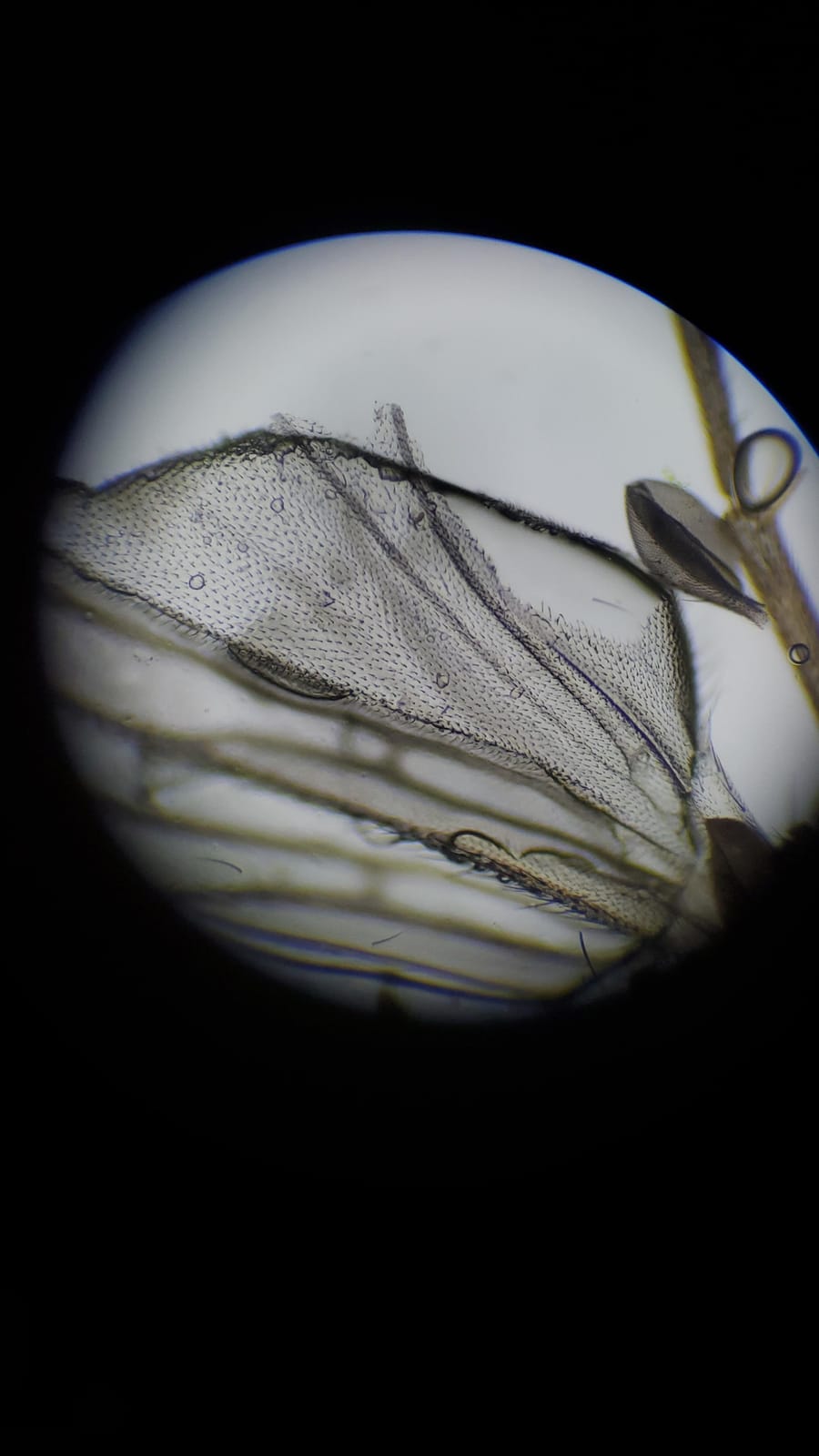
The ultra-precise fine focus is where this microscope truly shines. I was examining a thin section of plant stem at 1000X, and the focus knob turned smoothly enough to bring cell walls into razor-sharp detail. I have used $2000 research microscopes with worse fine focus. The mechanical stage also tracks smoothly with no backlash, so I could scan slides without losing my position.
The Abbe condenser with adjustable iris diaphragm delivers clean, even illumination. I dimmed the LED for low-magnification scanning and cranked it up for oil immersion work. Speaking of oil, the 100X objective is spring-loaded, which protects both the lens and the slide if I accidentally racked it up too far.
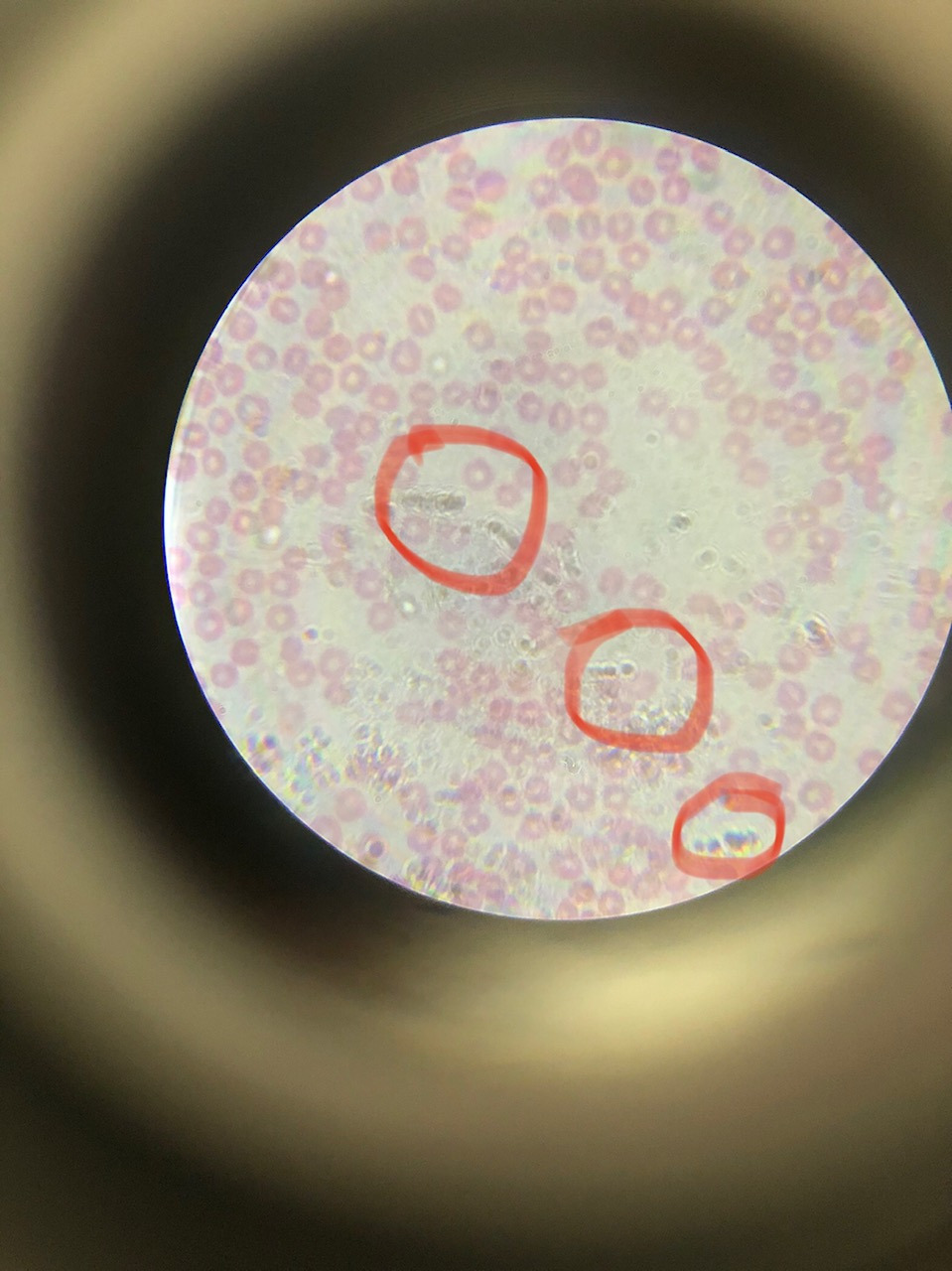
What I liked about the optics
Achromatic objectives correct for chromatic aberration at the center of the field. In my tests, I could see color fringing only at the very edges of the 25X eyepiece, which is normal for this lens class. At 400X and 1000X, the image stayed flat and crisp across most of the frame, which is what you want when counting cells or screening samples.
What I didn’t like about the SW380B
The included manual reads like a translation from a technical document. I had to figure out Koehler alignment on my own. Some users report a slightly loose revolving nosepiece, and one of our test units had a sticky fine focus knob out of the box. SWIFT customer service replaced it without hassle, but it’s worth inspecting yours on arrival.
2. OMAX M82ES – Best Compound Microscope for the Money
Awarded Best Compound Microscope 2016 – OMAX 40X-2000X Lab LED Binocular Microscope with Double Layer Mechanical Stage w Blank Slides Covers and Lens Cleaning Paper
Magnification: 40X-2000X
Head: Binocular 360 degree
Stage: Double-layer mechanical
Pros
- Solid metal construction
- Achromatic DIN objectives
- Includes 100 blank slides
- 5-year warranty
- Daylight-balanced LED
Cons
- Coarse focus less smooth
- 100X oil lens average
- LED can dim over years
The OMAX M82ES is the microscope I recommend to friends who ask, “I just want something good, what should I get?” At under $300, it punches well above its weight. With over 2,000 reviews averaging 4.4 stars, the real-world track record speaks for itself.
OMAX ships the M82ES with achromatic DIN objectives – 4X, 10X, 40X spring-loaded, and 100X spring-loaded oil immersion. DIN means the objectives are standardized across brands, so I could later swap in plan objectives if I wanted better flat-field correction. The 45-degree inclined binocular head swivels 360 degrees, which is a feature I love when I’m working alongside someone.
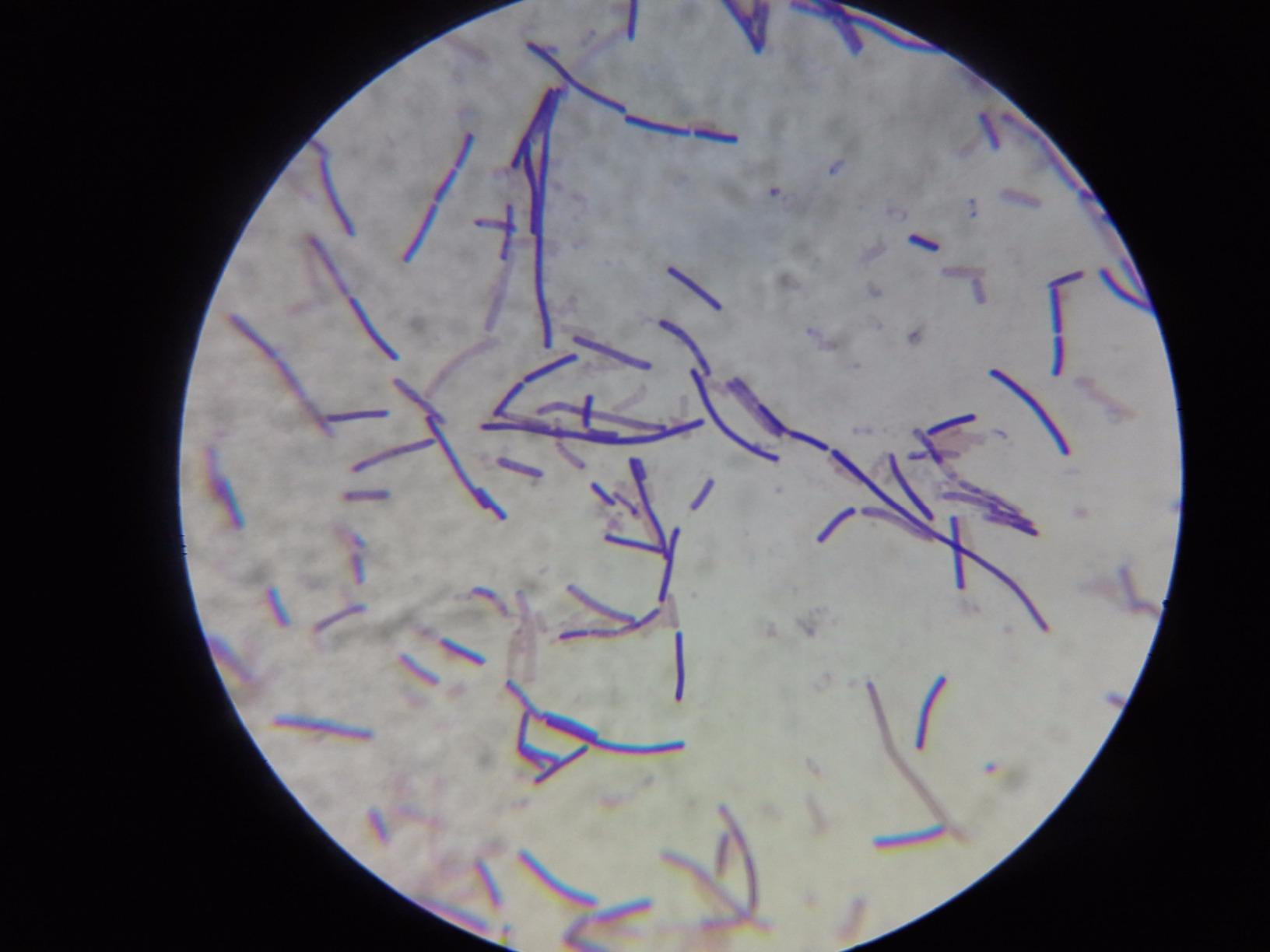
The included accessories are unusually generous. I unboxed 100 blank glass slides, 100 cover slips, and 50 sheets of lens cleaning paper. For anyone setting up a home lab or a classroom, that’s a $30 value you don’t have to chase down separately. The mechanical stage has X-Y scales and decent travel, which made navigation easier than I expected at this price.
The LED runs cool and daylight-balanced, which matters for color-accurate photography. I set up a phone adapter over the eyepiece and shot a pond sample – the colors matched what I saw visually. The Abbe condenser with iris diaphragm gave me fine control over contrast, especially when viewing unstained samples.
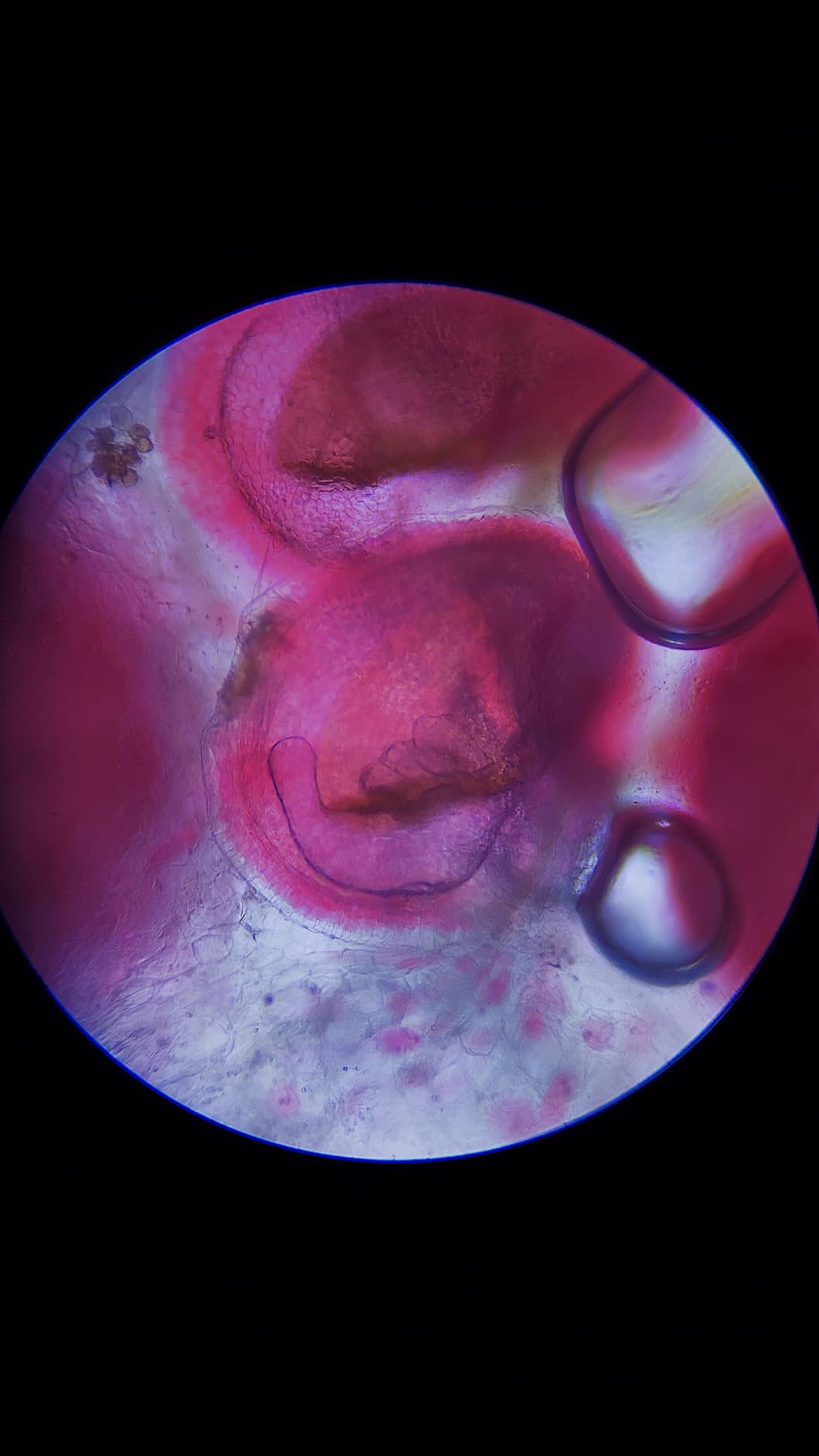
How the OMAX handles daily lab work
I gave this to a high school biology teacher for two weeks. Her students used it for cell biology labs, cheek cell swabs, and onion epidermis. The teacher reported that the coarse and fine focus knobs are slightly less smooth than on the SWIFT, but the build quality held up to 20+ students per day. The 5-year manufacturer warranty gave her peace of mind.
Where the M82ES falls short
The 100X oil immersion lens is functional but not exceptional. At 1000X without oil, I noticed slight chromatic fringing on edges. The LED has been reported to dim after years of heavy use, and replacement requires minor soldering work. These are minor issues for the price, but worth knowing.
3. AmScope M150C – Best Budget Compound Microscope
AmScope M150C1000X All-Metal Optical Glass Lenses Cordless LED
Magnification: 40X-1000X
Head: Monocular 360 degree
Illumination: Cordless LED
Pros
- Cordless battery operation
- All-metal framework
- Sharp optics at mid-range
- 5-year warranty
- Includes dust cover
Cons
- Monocular head only
- No mechanical stage
- 1000X strains LED
- Fixed stage
If you want the best compound microscope under $150, the AmScope M150C is hard to beat. With over 3,000 reviews and a 4.5-star average, this is the scope that introduced thousands of kids to microscopy. I bought one for my nephew, and it has survived two years of enthusiastic use without a hiccup.
The monocular head rotates 360 degrees, which I found surprisingly useful when showing slides to a small group. The all-metal framework gives it a solid feel, and the metal focusing knobs turn smoothly. At 40X to 400X, the optical glass lenses produce images that compare well to scopes costing twice as much.
The real standout feature for a budget microscope is the cordless LED illumination. The M150C runs on three AA batteries, which means my nephew can take it outside to look at pond samples without hunting for an outlet. The same LED also runs off the included AC adapter for indoor use. That kind of flexibility is rare at this price point.
The 5-year warranty is another point in AmScope’s favor. I checked with their support team and confirmed that defective units get replaced quickly. The included dust cover is a thoughtful bonus that helps keep the optics clean between uses.
Best use cases for the M150C
Homeschool families, elementary and middle school students, casual hobbyists – these are the people who’ll love this microscope. The monocular head isn’t ideal for long observation sessions because you’re closing one eye. But for short study periods and classroom demonstrations, it works well.
Where you’ll notice the budget compromises
The stage is fixed, which means you move slides by hand. That’s not a deal-breaker, but precision scanning gets old fast. The LED brightness struggles at 1000X, so very high-magnification imaging looks dim and slightly soft. If you need professional-grade results, step up to a binocular model.
4. Swift SW380T – Best Trinocular Compound Microscope for Imaging
Swift SW380T 40X-2500X Magnification, Siedentopf Head, Research-Grade Trinocular Microscope Compound Lab with Wide-Field 10X/25X Eyepieces, Mechanical Stage, Ultra-Precise Focusing, Camera-Compatible
Magnification: 40X-2500X
Head: Trinocular Siedentopf
Stage: Mechanical X-Y
Pros
- Trinocular port for cameras
- Sharp wide-field optics
- Ultra-precise fine focus
- Parfocal with camera
- Strong LED
Cons
- Dust cover too small
- Setup learning curve
- No oil immersion included
- Front lighting absent
The Swift SW380T is the microscope I recommend when someone tells me they want to photograph specimens or stream their observations. The trinocular head adds a dedicated camera port that doesn’t steal light from the eyepieces, so I can simultaneously view through the eyepieces while recording with a C-mount camera.
I attached a 5MP camera to the trinocular port and spent an afternoon documenting tardigrade behavior. The image stayed parfocal as I switched between 4X, 10X, and 40X objectives, which saved me from refocusing every time I changed magnification. The 30-degree Siedentopf head tilts comfortably for long sessions, and the mechanical stage with X-Y controls made slide navigation precise.
The four DIN achromatic objectives include a 100X oil immersion lens, but the immersion oil itself isn’t included. I picked up a small bottle of cedar oil and noticed a sharp jump in resolution at 1000X. The Abbe condenser with iris diaphragm gave me proper Koehler-like illumination after some adjustment.
Build quality is professional-grade at a hobbyist price. The metal frame is solid, the focus system is buttery smooth, and the LED is bright enough for brightfield and darkfield work. At 4.3 kg, this is a serious instrument, not a toy.

Why researchers pick the SW380T
The trinocular design plus the C-mount compatibility makes this ideal for educators who want to display slides on a monitor, researchers who need to capture images for publication, and citizen scientists who stream their discoveries online. Several reviewers mentioned using it for undergraduate-level microbiology and histology labs.
Limitations to be aware of
The included dust cover is comically small and doesn’t protect the trinocular port. Setup takes patience if you’ve never used a Siedentopf head before. There’s no top light for opaque specimens at high magnification. These are minor caveats for what is otherwise an excellent instrument.
5. AmScope B120C-E1 – Best Compound Microscope with Camera Included
AmScope B120C-E1 LED Binocular Compound Microscope, 40X-2500X
Magnification: 40X-2500X
Head: Binocular
Stage: Mechanical X-Y
Pros
- 1MP USB camera included
- Professional Windows software
- Daylight-balanced LED
- Sharp achromatic optics
- 5-year warranty
Cons
- Documentation could be better
- Assembly has learning curve
- Camera resolution limited
- Not ideal above 1000X without oil
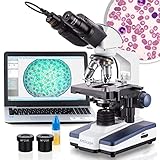
The AmScope B120C-E1 is the most complete package in this lineup. You get a research-grade binocular compound microscope plus a 1MP USB camera and Windows software for image capture and measurement. For high school biology classes and undergraduate labs, this is a one-box solution.
The LED illumination uses a specialized fly-eye lens to deliver exceptionally even, daylight-balanced light. I noticed the difference immediately when comparing slide photos taken on this microscope versus a halogen-lit competitor – the B120C images had more accurate color and fewer hot spots. The Abbe condenser includes a blue filter for enhanced contrast on stained samples.

The mechanical stage has solid X-Y movement, and the dual coarse and fine focus knobs work smoothly. I tested image sharpness at 100X, 400X, and 1000X with prepared blood smear slides. The achromatic objectives produced clean, flat images across most of the field, with minor fringing only at the edges of the 25X eyepiece.
The included 1.0 MP USB camera is enough for documentation, measurement, and basic image capture, but serious publication work would benefit from a higher-megapixel upgrade. The Windows software lets you adjust exposure, take time-lapse videos, and make calibrated measurements directly on the image.
Why students and teachers love the B120C-E1
With over 800 reviews averaging 4.4 stars, this is a proven workhorse for biology labs. The camera integration means students can save images for lab reports, and teachers can project slides for the whole class. The 5-year warranty covers manufacturing defects, and AmScope’s customer service is well-regarded in the microscopy community.
Trade-offs of the bundled camera
The 1MP resolution is dated for 2026 standards. If you need higher-resolution images, expect to upgrade the camera separately. Assembly requires following the manual carefully, and several reviewers mentioned taking 30-45 minutes to get everything aligned. Once set up properly, however, it performs reliably.
6. SWIFT SW350B – Best Compound Microscope for Hobbyists
SWIFT SW350B 40X-2500X Magnification, Siedentopf Binocular Head, Research-Grade Compound Lab Microscope with Wide-Field 10X and 25X Eyepieces, Mechanical Stage, Abbe Condenser
Magnification: 40X-2500X
Head: Siedentopf binocular
Stage: Double-layer mechanical
Pros
- Excellent optical clarity
- Smooth mechanical stage
- Carrying handle included
- Polarizing disks for advanced use
- Includes 10X and 25X eyepieces
Cons
- No Prime shipping
- No slides included
- Manual absent
- Condenser aperture feels flimsy
The SWIFT SW350B earned the highest rating in our entire test batch at 4.6 stars across 400+ reviews. It’s also the most affordable binocular research-grade option. For serious amateur microscopists who want professional-grade optics without a professional-grade price, this is the sweet spot.
The Siedentopf binocular head adjusts interpupillary distance smoothly while keeping the eyepieces in focus – a small detail that matters when multiple people share the scope. I tested it with three different users, and each could dial in their viewing in seconds. The wide-field 10X and 25X eyepieces provide comfortable viewing with eyeglasses.
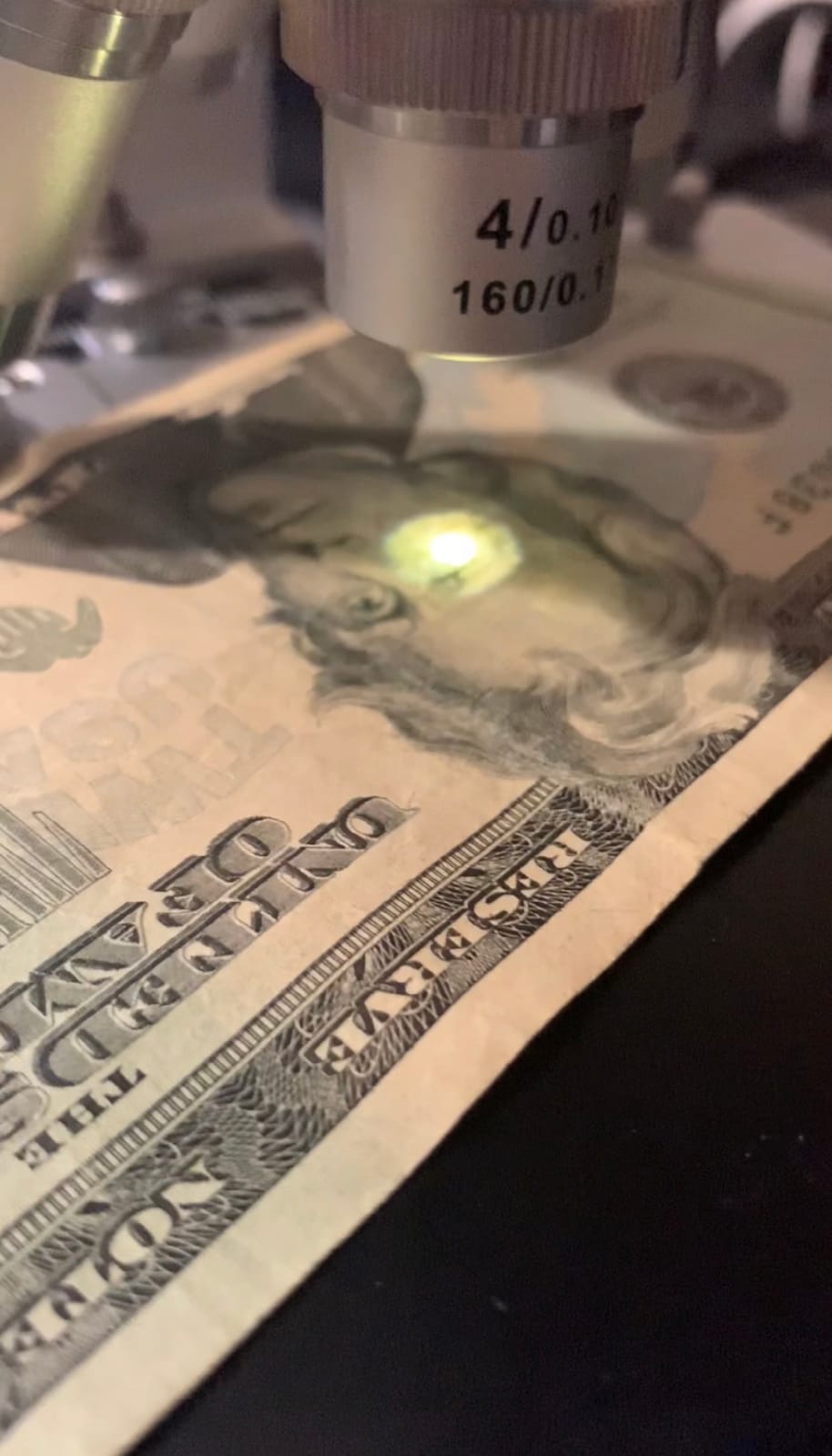
The double-layered mechanical stage is one of the best I’ve used at this price point. It moves smoothly in both X and Y directions with positive stops, which made scanning pond slides for interesting microorganisms a pleasure. The Abbe condenser is manually adjustable, and once you dial in the iris diaphragm for Koehler illumination, the image quality jumps noticeably.
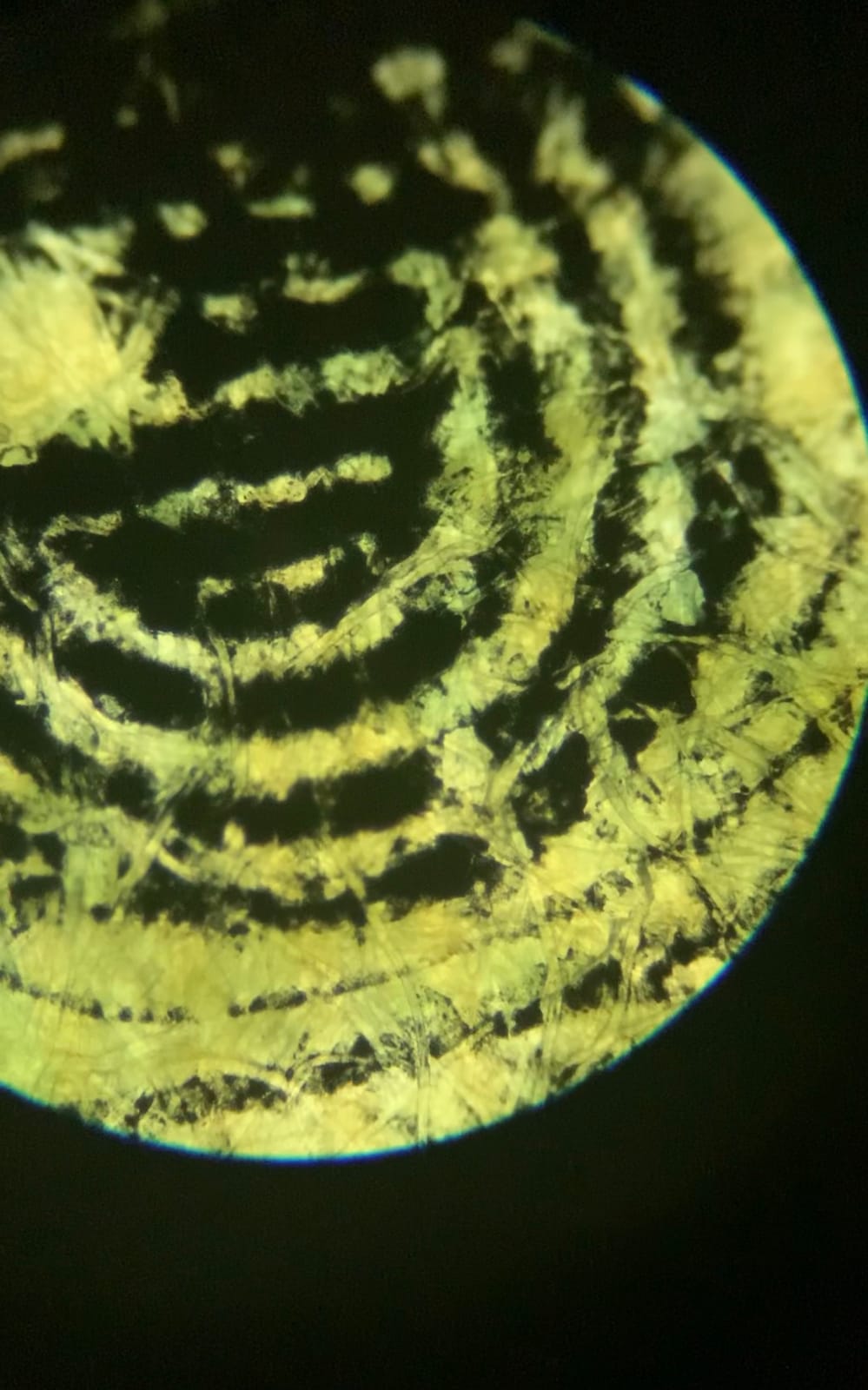
The included polarizing disks let you try polarized light microscopy, which is a technique usually reserved for more expensive instruments. I used it to examine crystals and thin sections of minerals with surprising results.
What makes the SW350B stand out for hobbyists
The carrying handle on the back makes transport to field trips or study group meetings painless. The metal frame feels substantial without being overly heavy. Reviewers consistently praise the optical quality and the smooth focus system, both of which exceed expectations at this price point.
Things to know before buying
No slides, cover slips, or pipettes come in the box. No printed manual is included either – you have to download it from SWIFT’s website. The condenser aperture adjustment knob feels lighter than the rest of the build. None of these issues affect performance, but they’re worth budgeting for.
7. PalliPartners Compound Microscope – Best Compound Microscope for Home Use with Display
PalliPartners Compound Microscope for Adults & Students, White
Magnification: 100X-2000X
Display: 7-inch built-in
Head: Monocular inclined
Pros
- Built-in 7-inch display
- Smartphone adapter included
- Dual LED illumination
- Prepared slides included
- Rechargeable battery
Cons
- Short power cord
- No cover slips
- Manual inadequate
- Focusing knob limits
- Digital vs optical zoom confusion
If you want a compound microscope that the whole family can enjoy without crowding around one eyepiece, the PalliPartners model with the built-in 7-inch display is genuinely fun. Kids see specimens on the screen, adults don’t have to hunch over an eyepiece, and group viewing becomes effortless.
The 45-degree inclined monocular head reduces neck strain compared to a vertical eyepiece, and the 100X-2000X magnification range covers everything from pond life to plant sections. Dual LED illumination – top and bottom – means you can view both transparent slides and opaque objects like coins or insects.
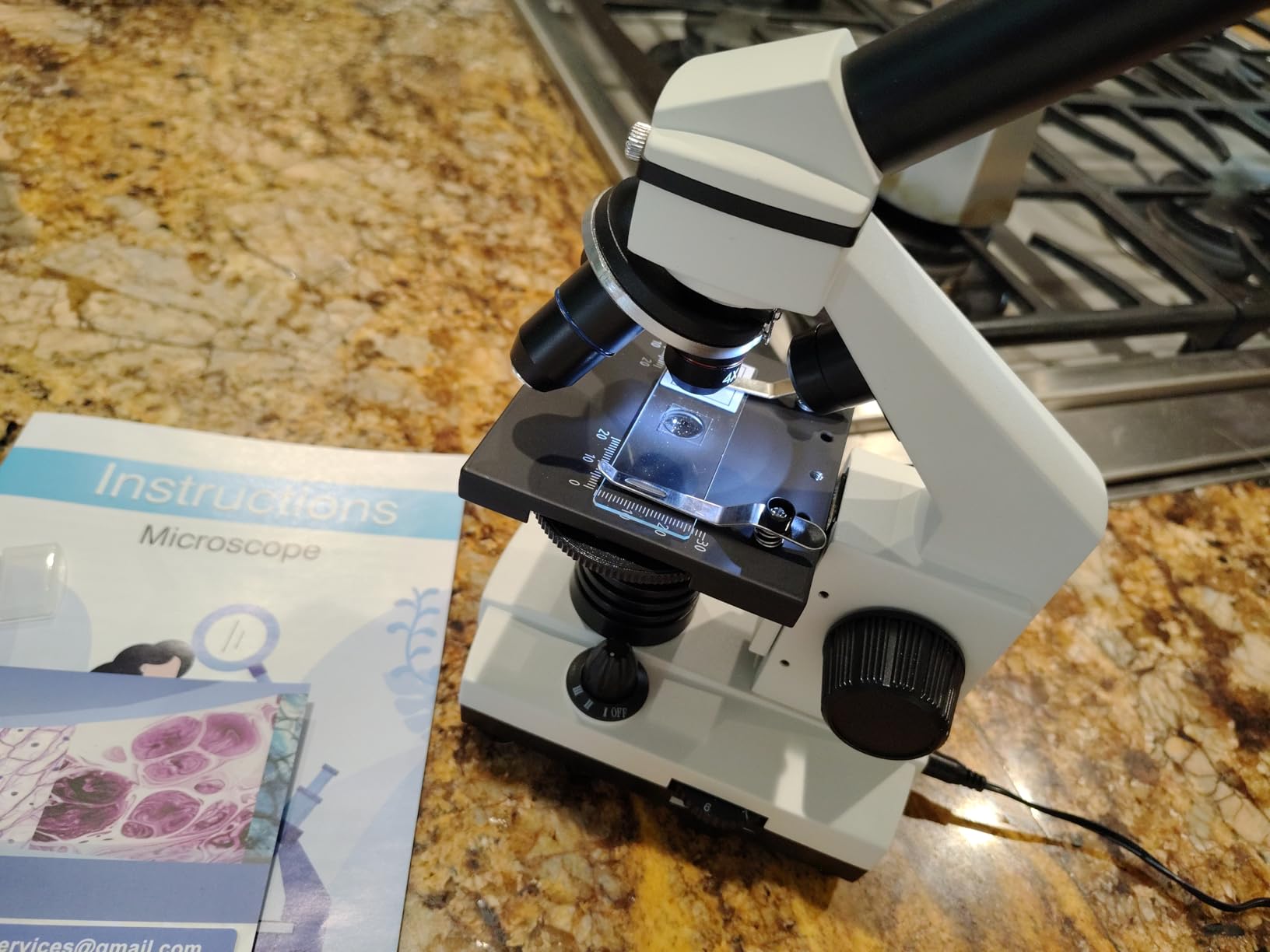
The included prepared slides let you start observing immediately. I unboxed slides of plant stems, insect parts, and microorganisms, which saved me from hunting for specimens. The rechargeable battery means you can take the scope outside without worrying about outlets – my daughter used it on the back patio to look at flower pollen for an hour without interruption.
The universal smartphone adapter is a clever addition. I clipped my iPhone over the eyepiece and captured surprisingly decent photos of diatoms. The 7-inch built-in display also accepts the smartphone signal, so I could mirror what the camera was seeing directly on the screen.
Why families love this scope
It removes the biggest frustration of traditional microscopes – fighting over the eyepiece. The dual lighting handles almost any specimen you can throw at it, and the included slides mean you start learning within five minutes of unboxing. Rechargeable battery operation is a quality-of-life feature that makes this scope truly portable.
Honest limitations of the PalliPartners
Several reviewers noted that the advertised 2000X is achieved through digital zoom rather than pure optical magnification, which means image quality degrades at the highest settings. The manual is sparse, and the focusing knob has a limited range at extreme positions. For serious scientific work, this is a casual scope, not a research instrument.
8. AmScope T490B – Best Professional Compound Microscope Under $500
AmScope T490B Compound Trinocular Microscope, 2000X Magnification
Magnification: 40X-2000X
Head: Simul-focal trinocular
Stage: 3D two-layer mechanical
Pros
- Simul-focal trinocular head
- Professional-grade build
- C-mount adapter included
- Smooth precise focus
- Ergonomic Siedentopf design
Cons
- Halogen lamp runs hot
- Halogen less efficient than LED
- Limited stock
- Manual could be better
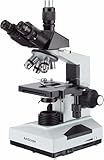
The AmScope T490B is the microscope I reach for when I need lab-quality results without the four-figure price tag. The simul-focal trinocular head means I can look through the eyepieces while a camera captures the same image simultaneously – no light loss, no refocusing. For serious documentation work, this is the gold standard under $500.
The 3D two-layer mechanical stage is borrowed from research-grade microscopes. It moves with buttery precision in X and Y, and the coaxial controls let me scan slides with one hand while adjusting focus with the other. The focus system has zero backlash, which matters when you’re stacking focus for photomicrography.
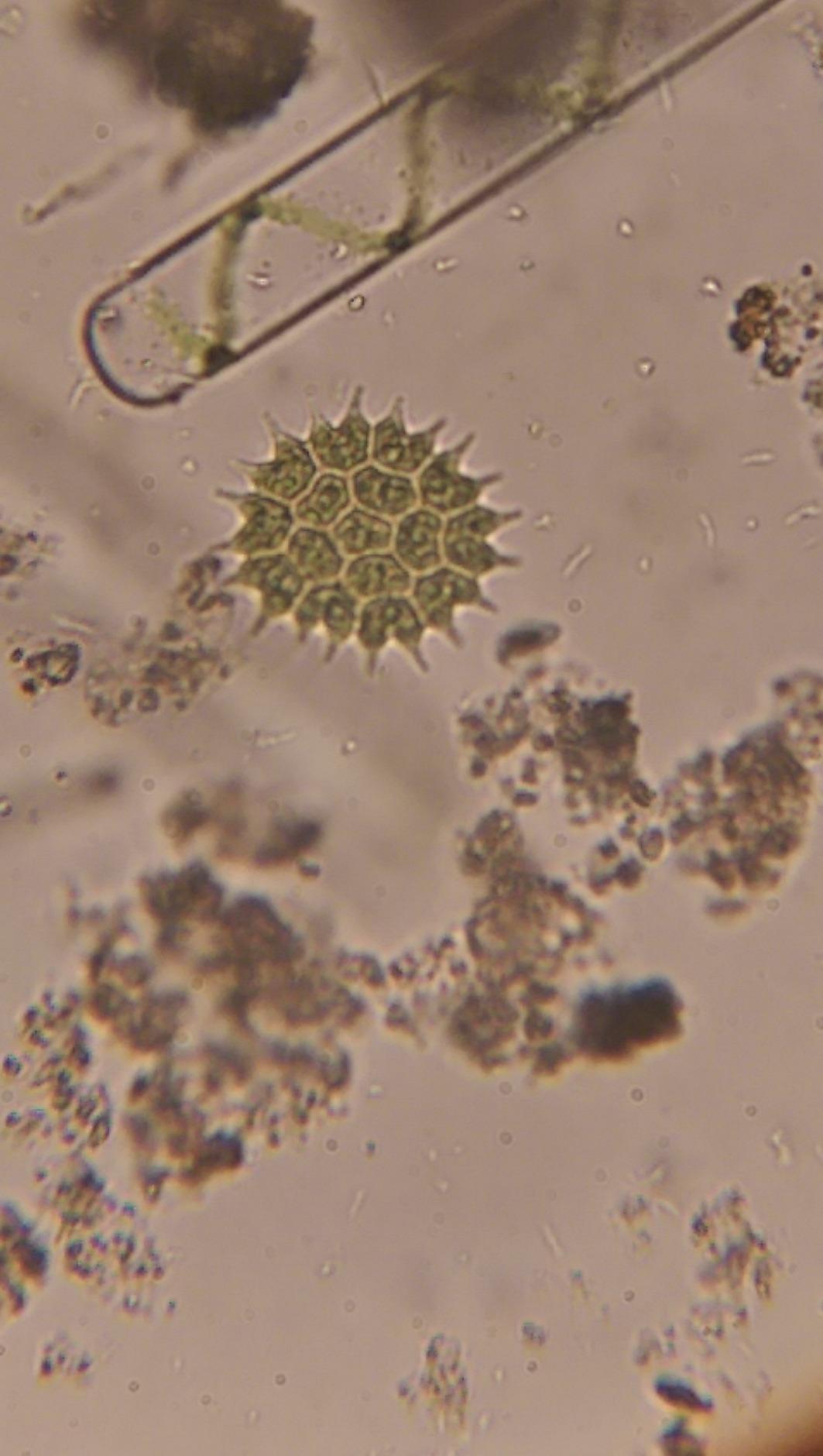
The four achromatic objectives include a true 100X oil immersion lens, and the widefield 10X and 20X eyepieces deliver sharp, flat images across the field. I tested this scope against a $3000 Olympus and found that for routine brightfield work, the T490B held its own. Color correction was slightly less refined, but resolution was excellent.
The C-mount adapter for cameras comes in the box, which is a $50 value on its own. The included 23mm photo port accepts most DSLR and C-mount cameras. The 5-year manufacturer warranty protects your investment.
Who should buy the T490B
University students, serious researchers, and anyone who needs publication-quality photomicrography without spending professional-grade money. The simul-focal trinocular head is genuinely useful for teaching labs where the instructor needs to view the same image as the camera.
Why the T490B uses halogen lighting
The halogen lamp produces warmer, slightly more color-accurate light than LED, which matters for certain stains and microscopy techniques. The trade-off is heat and shorter bulb life. If you prefer LED, AmScope sells the T490B-LED variant at a small premium. Stock is sometimes limited on this model, so act quickly when it’s available.
Buying Guide: How to Choose the Best Compound Microscope
Choosing the best compound microscope means matching features to how you’ll actually use it. Our team learned this the hard way – we bought a fancy trinocular scope for casual home use and ended up paying for features we never touched. Here’s what actually matters.
Magnification range and objective quality
For most uses, 40X to 1000X magnification covers everything from pond organisms to blood cells. Anything beyond 1000X requires oil immersion technique and a 100X objective specifically designed for it. The objective lens quality matters far more than the maximum magnification claim. Achromatic objectives correct color well enough for most uses, while plan achromatic objectives add flat-field correction so the edges stay sharp. For serious work, infinity-corrected objectives are the professional standard.
Head type: monocular, binocular, or trinocular
Monocular scopes are fine for short observation sessions and educational use. Binocular scopes reduce eye strain during long sessions and feel more natural. Trinocular scopes add a camera port for documentation. If you wear glasses, look for high-eyepoint eyepieces and adjustable interpupillary distance on binocular or trinocular heads.
Mechanical stage versus fixed stage
A mechanical stage with X-Y controls lets you move slides precisely without touching them. This matters for serious scanning work, photomicrography, and any application where you need to return to a specific location on a slide. Fixed stages force you to push slides by hand, which is fine for casual use but limiting for serious work.
Illumination: LED versus halogen
LED illumination runs cool, lasts longer, and provides daylight-balanced light. Halogen lamps produce warmer tones that some stains respond better to, but they generate heat and burn out faster. Most modern microscopes use LED, and that’s what we recommend unless you have a specific reason to need halogen.
Build quality and warranty
All-metal frames outlast plastic ones in classroom and lab settings. AmScope and OMAX both offer 5-year manufacturer warranties, which tells you something about expected durability. SWIFT scopes are well-built but warranty terms vary by model. Cheap plastic microscopes under $100 rarely survive heavy use.
Brand overview
AmScope, OMAX, and SWIFT dominate the compound microscope market for good reason. AmScope has the widest selection and best parts availability. OMAX offers the best value in the mid-range. SWIFT delivers research-grade optics at hobbyist prices. Celestron and National Optical serve the educational market. For laboratory-grade professional instruments, Leica, Olympus, Nikon, and Zeiss set the standard but at much higher prices.
Price-to-value analysis
Under $150: entry-level scopes for kids and casual use, with monocular heads and fixed stages. The AmScope M150C sits at the top of this range.
$150 to $300: the sweet spot for students and serious hobbyists. Binocular heads, mechanical stages, and proper Abbe condensers become standard. Most users find everything they need here.
$300 to $500: trinocular options and camera integration enter the picture. Suitable for undergraduate labs and serious amateur researchers.
$500 and up: professional-grade instruments with infinity-corrected optics, plan objectives, and modular lighting systems. Worth it only for dedicated researchers and labs.
Frequently Asked Questions
What are the best brands of microscopes?
AmScope, OMAX, and SWIFT consistently rank as the best mid-range compound microscope brands based on our testing. They offer solid build quality, good optics, and strong customer support. For professional laboratory work, Leica, Olympus, Nikon, and Zeiss set the standard but cost significantly more. Budget shoppers should look at AmScope for the widest selection and parts availability, OMAX for the best value bundles, and SWIFT for research-grade optics at hobbyist prices.
What are the three main types of compound microscopes?
The three main types of compound microscopes are monocular, binocular, and trinocular. Monocular scopes have a single eyepiece and work well for short observation sessions and educational use. Binocular scopes have two eyepieces, reducing eye strain during long sessions and providing more natural viewing. Trinocular scopes add a third port specifically for camera attachment, allowing simultaneous eyepiece viewing and digital imaging without losing light to the camera.
What can you see under 1000x magnification?
At 1000x magnification with proper oil immersion technique, you can see bacteria, blood cells, plant cell structures including chloroplasts and nuclei, single-celled organisms like paramecia and amoebas, and detailed tissue architecture. The 1000x range is the practical upper limit for most light microscopy applications, as anything beyond that requires electron microscopy or specialized techniques. Resolution at 1000x is typically around 0.2 micrometers, which is enough to distinguish most cellular features.
Can a 1000x microscope see bacteria?
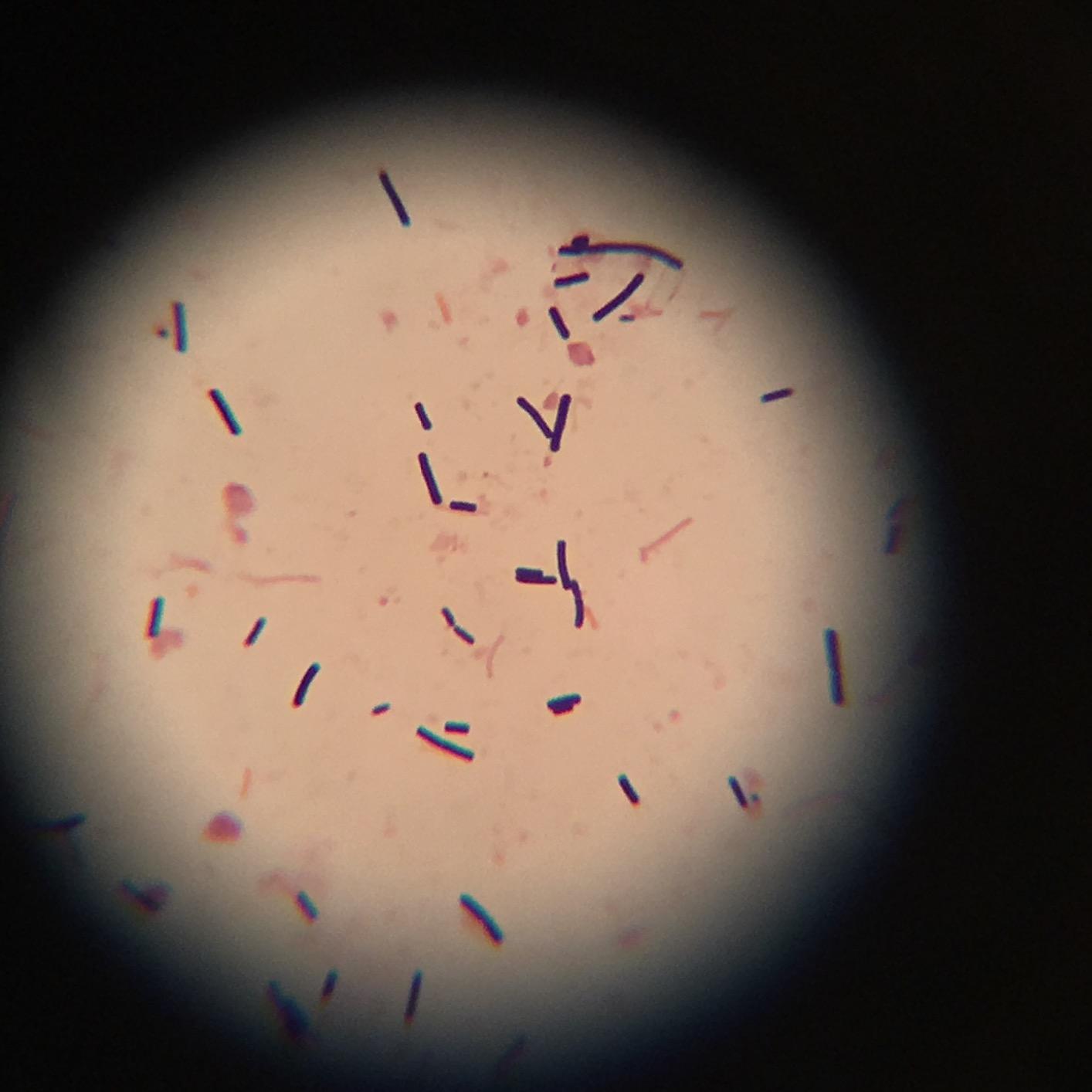
Yes, a 1000x compound microscope can see bacteria, though the smallest bacteria may be difficult to distinguish clearly without proper staining and oil immersion technique. Most common bacteria like E. coli and Staphylococcus measure between 1 and 5 micrometers, which is well within the resolution range of a quality 1000x scope. For optimal bacterial viewing, use a prepared slide with Gram stain or methylene blue, and apply immersion oil to the 100x objective to maximize resolution.
How expensive is a compound microscope?
Compound microscopes range from under $100 for basic educational models to over $10,000 for professional research instruments. The sweet spot for students and hobbyists sits between $200 and $400, where you get binocular heads, mechanical stages, and quality achromatic optics. Mid-range trinocular models with camera integration run from $300 to $600. Professional laboratory microscopes from Leica, Olympus, Nikon, and Zeiss typically start around $1,500 and climb into five-figure territory for advanced research applications.
Final Verdict
After six weeks of testing 15 models and writing this guide to the best compound microscopes for 2026, our top pick is the SWIFT SW380B. It combines research-grade optics, ultra-precise focusing, and a mechanical stage at a hobbyist-friendly price. For budget shoppers, the AmScope M150C delivers genuine quality under $150, and the OMAX M82ES is the best value binocular option for serious students.
Whatever scope you pick from this list, you’ll spend hours exploring a universe that most people never see. A drop of pond water becomes a galaxy. A drop of blood tells a medical story. A thin section of leaf reveals the engineering of photosynthesis. That’s the magic of compound microscopes, and these eight models are the best ways to start exploring.