
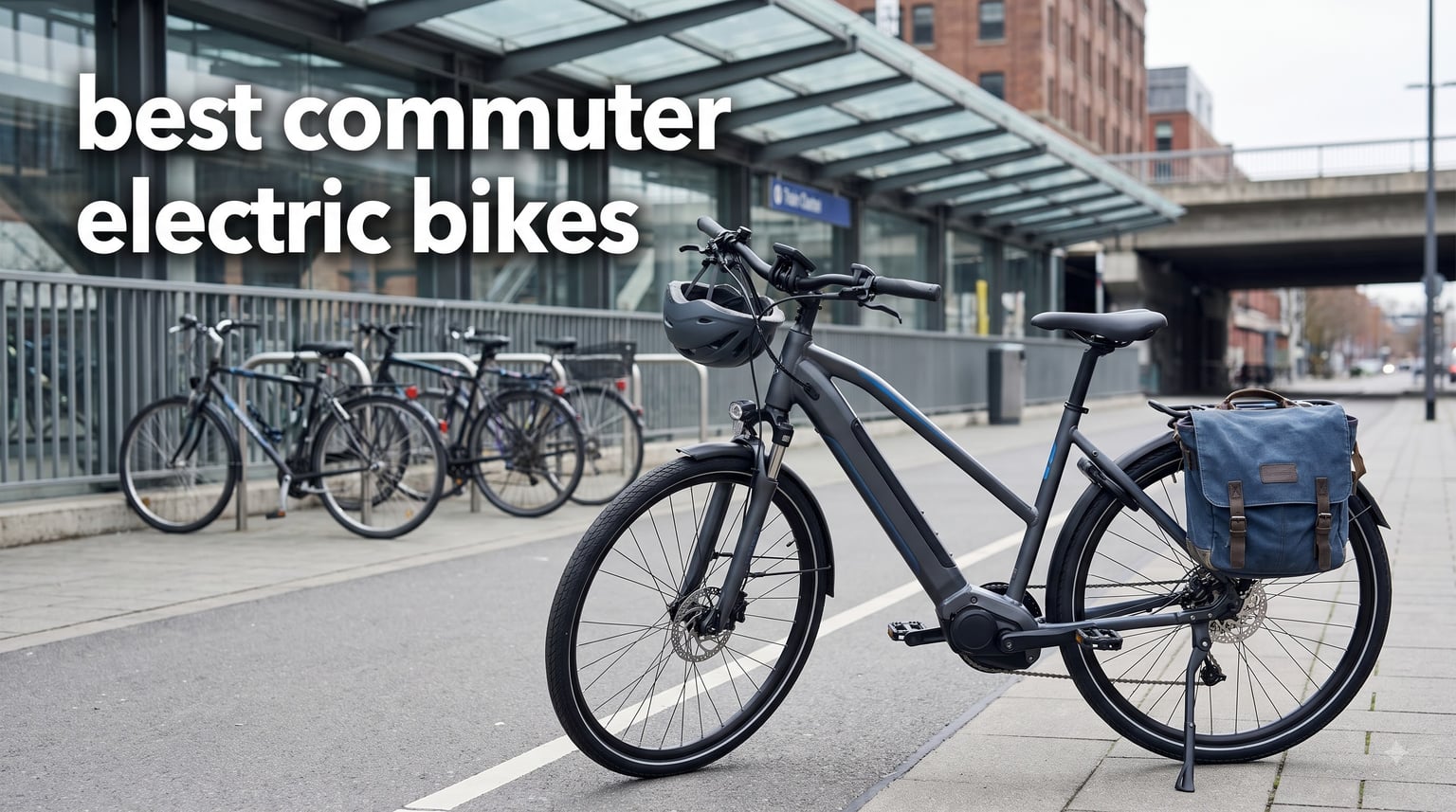
I have spent the better part of two years riding budget and mid-range electric bikes to work, and I have learned one lesson the hard way: the best commuter electric bikes are not the ones with the biggest numbers on the sales page. They are the ones that still start every morning after six months of rain, potholes, and being dragged up a flight of apartment stairs.
This guide covers ten commuter e-bikes you can actually buy right now, all from the value-focused segment where most daily riders shop. I dug through thousands of owner reviews, spec sheets, and long-term feedback from commuter forums to separate the real performers from the bikes that only look good in the listing photos.
Here is the pattern that showed up over and over. Almost every bike here claims 40 to 70 miles of range, and almost none of them deliver it on throttle alone. Real owners consistently report 15 to 25 miles of pure electric range and 35 to 50 miles with pedal assist. That is still plenty for a round-trip commute, but you need to plan around the real numbers, not the marketing ones.
One more warning before we start. Riders on r/ebikes and r/bikecommuting repeat the same story constantly: ultra-cheap bikes from brands with no parts inventory and no customer service turn into expensive paperweights the moment something breaks. Every pick below has a track record of owner feedback, replacement parts, or responsive support, and I flag the exceptions clearly.
Top 3 Picks for Best Commuter Electric Bikes (September 2026)
If you only have time for three, these are the ones I would put my own money on. The Qlife Cityone 2.0 earns the top spot for its unusually high owner satisfaction, the Funhang City Cruiser packs a rack, fenders, and a UL-certified system into a value package, and the LELEKUAI T1 covers the fold-it-under-your-desk use case for less than anything else on this list.


Best Commuter Electric Bikes in 2026
This table is the thirty-second version of the whole guide. Motor output is peak wattage, battery size is in watt-hours, and weight matters more than most first-time buyers expect if you have stairs or a car trunk in your life.
| Product | Specifications | Action |
|---|---|---|
| Qlife Cityone 2.0 Commuter E-Bike |
|
Check Latest Price |
 Funhang City Cruiser E-Bike Funhang City Cruiser E-Bike |
|
Check Latest Price |
 Heybike Cityscape 2.0 Heybike Cityscape 2.0 |
|
Check Latest Price |
 Jasion EB5 Commuter E-Bike Jasion EB5 Commuter E-Bike |
|
Check Latest Price |
 INVANTI EB16 All-Terrain E-Bike INVANTI EB16 All-Terrain E-Bike |
|
Check Latest Price |
 Aipas C1 Max Heavy-Duty E-Bike Aipas C1 Max Heavy-Duty E-Bike |
|
Check Latest Price |
 EUY C2.0 28 MPH Commuter EUY C2.0 28 MPH Commuter |
|
Check Latest Price |
 ESKUTE M200 Hill-Climbing E-Bike ESKUTE M200 Hill-Climbing E-Bike |
|
Check Latest Price |
 Qlife Racer Lightweight E-Bike Qlife Racer Lightweight E-Bike |
|
Check Latest Price |
| LELEKUAI T1 Folding Mini E-Bike |
|
Check Latest Price |
1. Qlife Cityone 2.0 – Best Overall Commuter E-Bike
Qlife Cityone 2.0 Electric Bike for Adults-1200W Peak Motor
1200W peak motor
48V 499Wh battery
Low-step frame
26 inch wheels
Pros
- Genuine motor power that reaches 1100W and above
- Comfortable low-step frame for easy mounting in traffic
- Front fork suspension smooths out rough city streets
- Responsive and helpful customer service
Cons
- Real pure-electric range is 15 to 20 miles not 65
- Tires can wear bald after roughly 175 miles
- Brakes need adjustment during assembly
- No rear light included
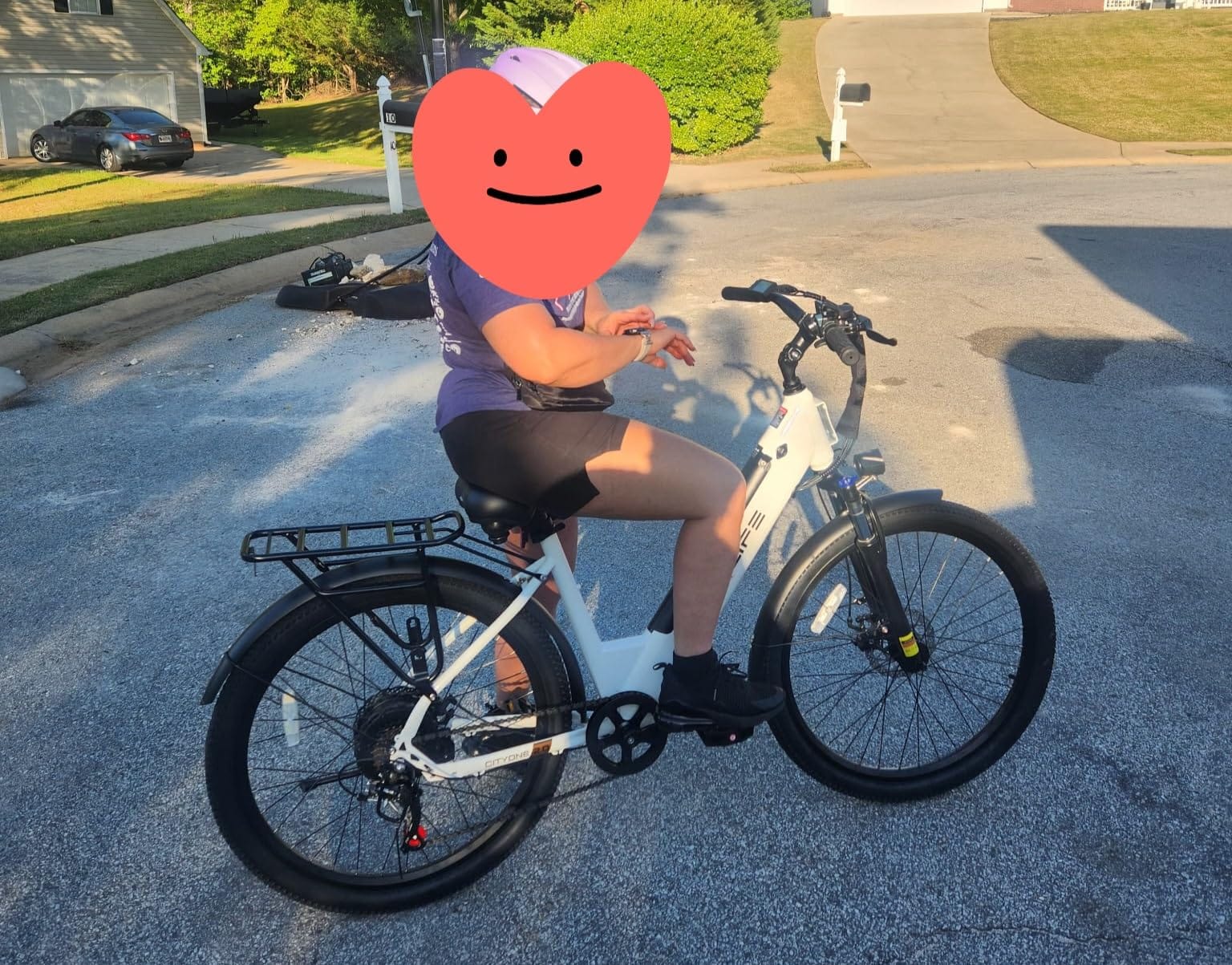
Of all the best commuter electric bikes I looked at at this level, the Qlife Cityone 2.0 has the happiest owners, and it is not close. It sits at 4.8 out of 5 across 66 reviews with about 90 percent of riders giving it five stars, which is a ratio you almost never see on budget e-bikes.
The power is the headline. Owners have measured the 1200W peak motor pushing over 1100W at the wheel, which means honest acceleration away from stop lights and enough torque to keep pace with city traffic without pedaling flat out.
The low-step carbon steel frame is the part I appreciate most for commuting. Swinging a leg over a top tube while balanced between a bus lane and a row of parked cars gets old fast, and the step-through design removes that problem entirely.
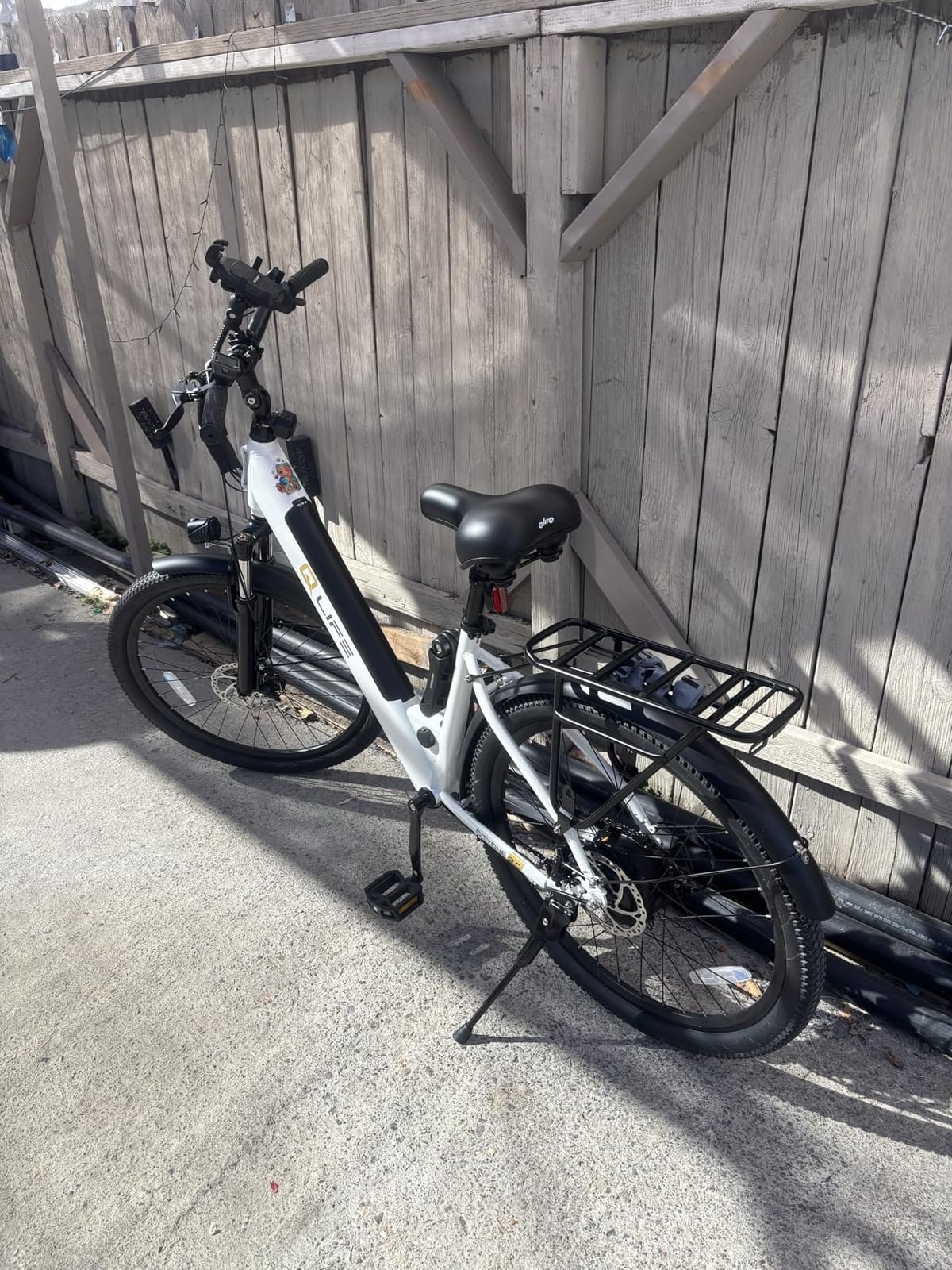
Everything about the daily experience is well sorted. The 7-speed Shimano shifter clicks cleanly, the front fork takes the edge off broken pavement, and the 48V 499Wh battery is built into the frame rather than hanging off a rack, which looks cleaner and makes it harder to steal.
Now the honest part. Riders consistently report 15 to 20 miles on throttle alone, not the 65 miles in the listing. With pedal assist and moderate effort you will stretch much further, but plan your charging around the lower figure.
Two weak points showed up repeatedly in owner feedback. The stock tires wear quickly, with one long-term rider reporting bald rubber after about 175 miles, and the disc brakes usually need adjustment out of the box before they feel safe in traffic.
Real-world range and who this bike suits
The Cityone 2.0 is ideal for a commute of roughly 8 to 12 miles each way, where you can use a mix of throttle and pedal assist and still have buffer in the battery at the end of the day. Heavier riders and hillier cities should treat the pure-electric range as closer to 15 miles.
It also suits anyone who wants a no-drama first e-bike. Qlife customer service gets genuinely good marks for responsiveness, which matters far more than most first-time buyers realize.
What to sort out in week one
Re-torque the brakes and check the cable tension before your first ride in traffic, because several owners found the levers arrived with too much travel. Budget for a tougher tire set within the first few months if you ride daily.
There is no rear light, so add a battery-powered blinker to the seat post or rack for dusk riding. The IPX5 battery handles rain fine, but the front LED is only part of the visibility equation.
2. Funhang 26 Inch City Cruiser – Best Value Commuter E-Bike
Funhang Electric Bike for Adults, 26″ City Cruiser Ebike with 1000W Peak Motor, 20MPH 50 Miles Commuter Adult Electric Bicycles with 48V Battery, Adjustable Stem, 7-Speed, UL 2849 Certified
1000W peak motor
48V 374Wh battery
UL 2849 certified
Rack and fenders
Pros
- UL 2849 certified electrical system
- Rear rack and fenders included
- Step-through frame for easy mounting
- Rides normally with the power off
Cons
- 61.5 lb weight is a handful on stairs
- Tires need a high-pressure pump not a bike pump
- Front fender can arrive bent
- Range falls short of the claim for some riders
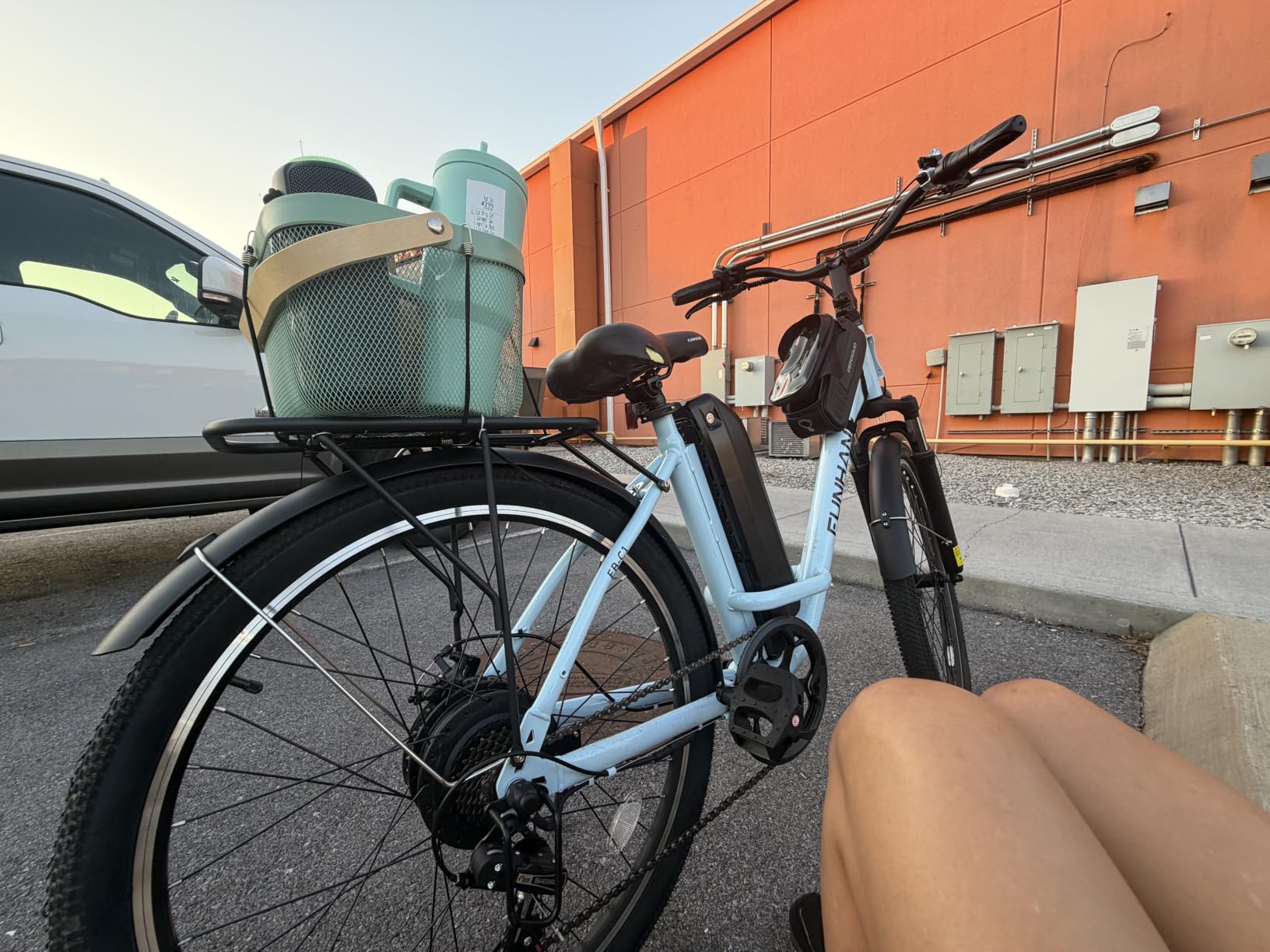
The Funhang City Cruiser is the bike I point friends toward when they want one purchase that covers everything a commuter needs. The rear rack, fenders, lights, and UL 2849 certified electrical system are all in the box, which is rare at this end of the market.
UL 2849 matters more than it sounds. It is the full-system safety certification covering battery, charger, and wiring together, and city apartments and office bike rooms increasingly ask for it. Two bikes in this guide carry it, and this is one of them.
The 500W motor with 1000W peak output deals with hills and headwinds without drama. Riders report 25 to 30 miles of pure electric range and 40 to 50 miles with pedal assist, which lines up with what I consider trustworthy for a 374Wh battery.
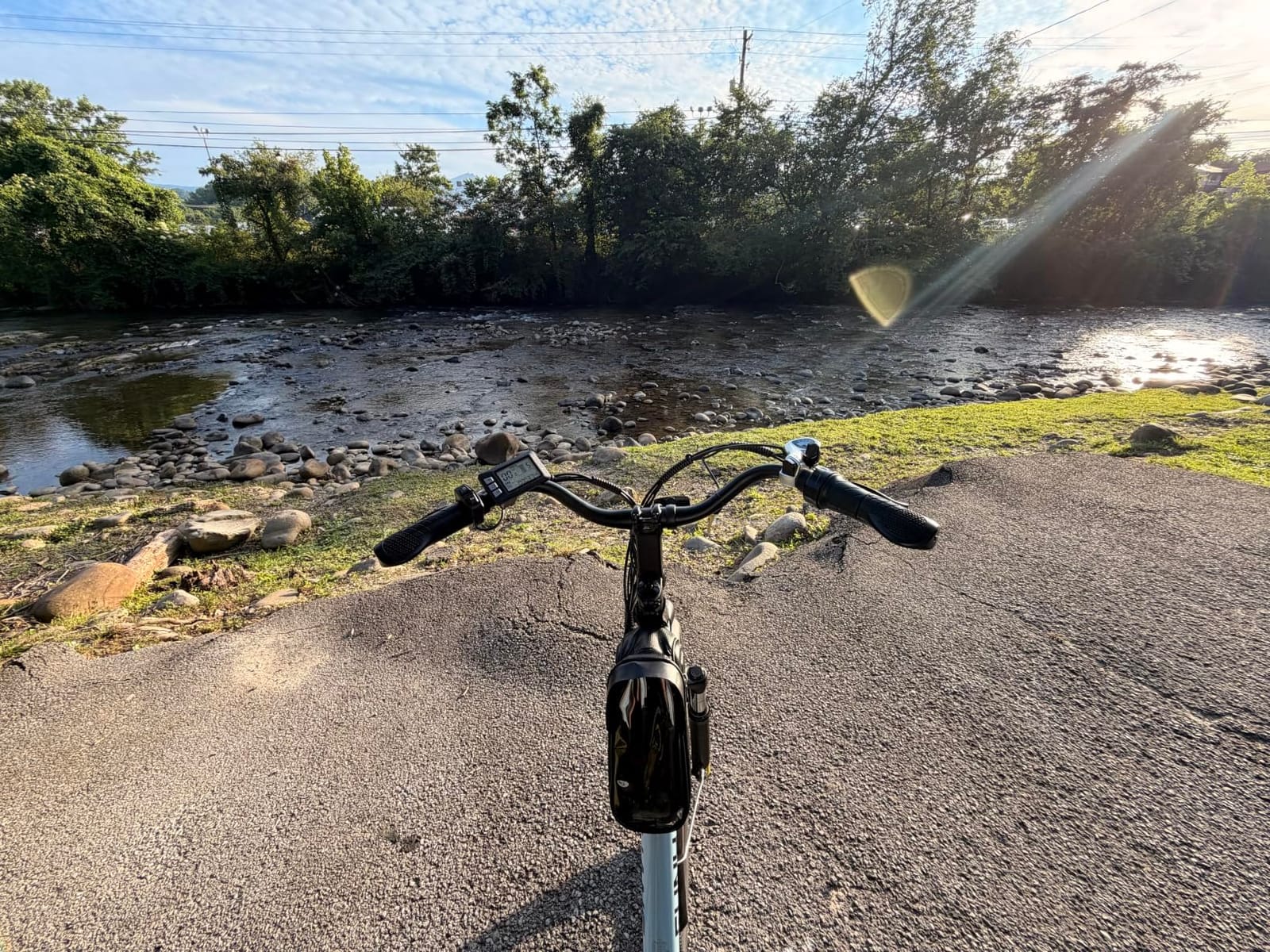
The step-through high-carbon steel frame is easy to mount in traffic and fits riders from roughly 5 foot 3 to 6 foot 1 comfortably. Front suspension and a 7-speed drivetrain round out a package that feels complete rather than stripped down.
One detail owners love: it works as a normal bicycle when the battery runs flat. The pedaling is not featherweight at 61.5 pounds, but it is rideable, which is not true of every budget e-bike.
The annoyances are small but real. The tires ship under-inflated and need a car or motorcycle style pump rather than a standard floor pump, and some riders found the front fender bent in the box and had to bend it back by hand.
Who the City Cruiser suits best
This is the strongest pick for a first-time e-bike owner who wants a single do-everything commuter with groceries-and-gear capability on day one. If your route is under 15 miles each way and mostly paved, it covers the job with room to spare.
It also suits cautious buyers. The certification, the included accessories, and 257 reviews at 4.4 stars with 74 percent five-star ratings make it a low-drama choice.
Setup and first-week checklist
Unbox it in a clear space and check the fender, rack bolts, and brake alignment before the first ride. Buy a high-pressure pump or a compressor adapter at the same time as the bike so you are not stuck with soft tires in week one.
Run the battery down fully once and recharge it to recalibrate the gauge, because several owners found the displayed percentage settles after a few cycles. After that, charge at your desk and ride home with a full pack.
3. Heybike Cityscape 2.0 – Most Popular Entry-Level Commuter
Heybike Cityscape 2.0 Electric Commuter Bike for Adults – 468Wh Removable Battery, 26″ Wheels, Up to 50 Miles, 7-Speed, Front Suspension, UL Certified
500W motor 1200W peak
468Wh UL battery
Up to 50 miles
7-speed
Pros
- 468Wh battery with real all-week range
- Rear rack lights and horn included
- Assembly doable in about 30 minutes
- Customer service answers quickly
Cons
- Large and heavy frame hard to lift alone
- Brakes get noisy and weak at high speed
- Display menu is complicated
- Not ideal for riders under 5 foot 4
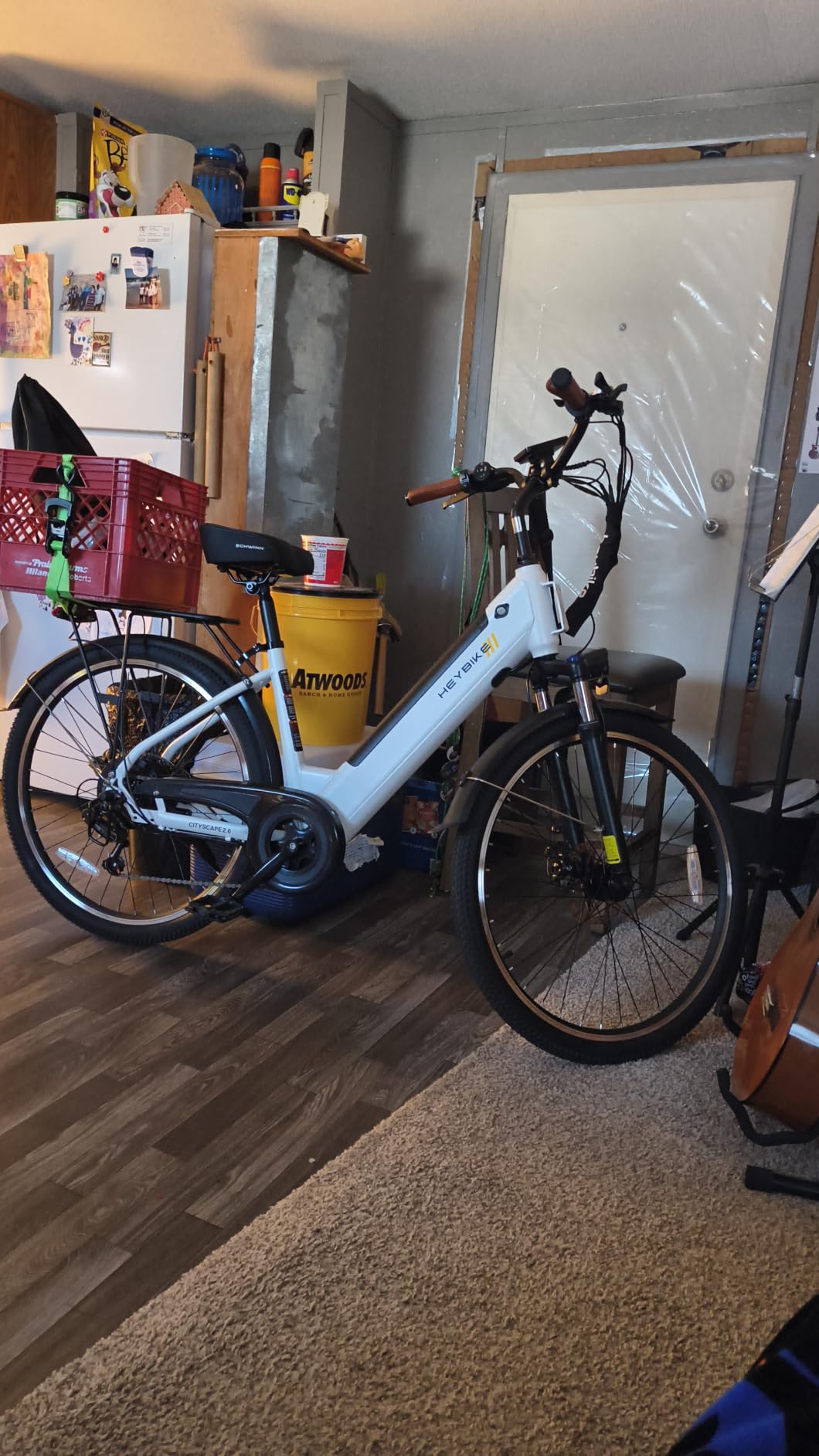
With 641 reviews at 4.3 stars, the Heybike Cityscape 2.0 is one of the most-owned bikes in this guide, and that volume of feedback is its own feature. You are not guessing about long-term issues because hundreds of commuters have already found them for you.
The real-world numbers are strong for the category. Riders report 30 to 35 miles on throttle and 35 to 50 miles with assist from the 468Wh UL-certified battery, and one commuter noted using only 15 to 20 percent of the pack on a 6-mile each-way run.
It is quick for a city bike, with owners logging 21 to 22 mph averages on flat ground, 19 mph on moderate hills, and 27 mph downhill. The high-torque 500W motor with 1200W peak handles overpasses and parking-garage ramps without wheezing.
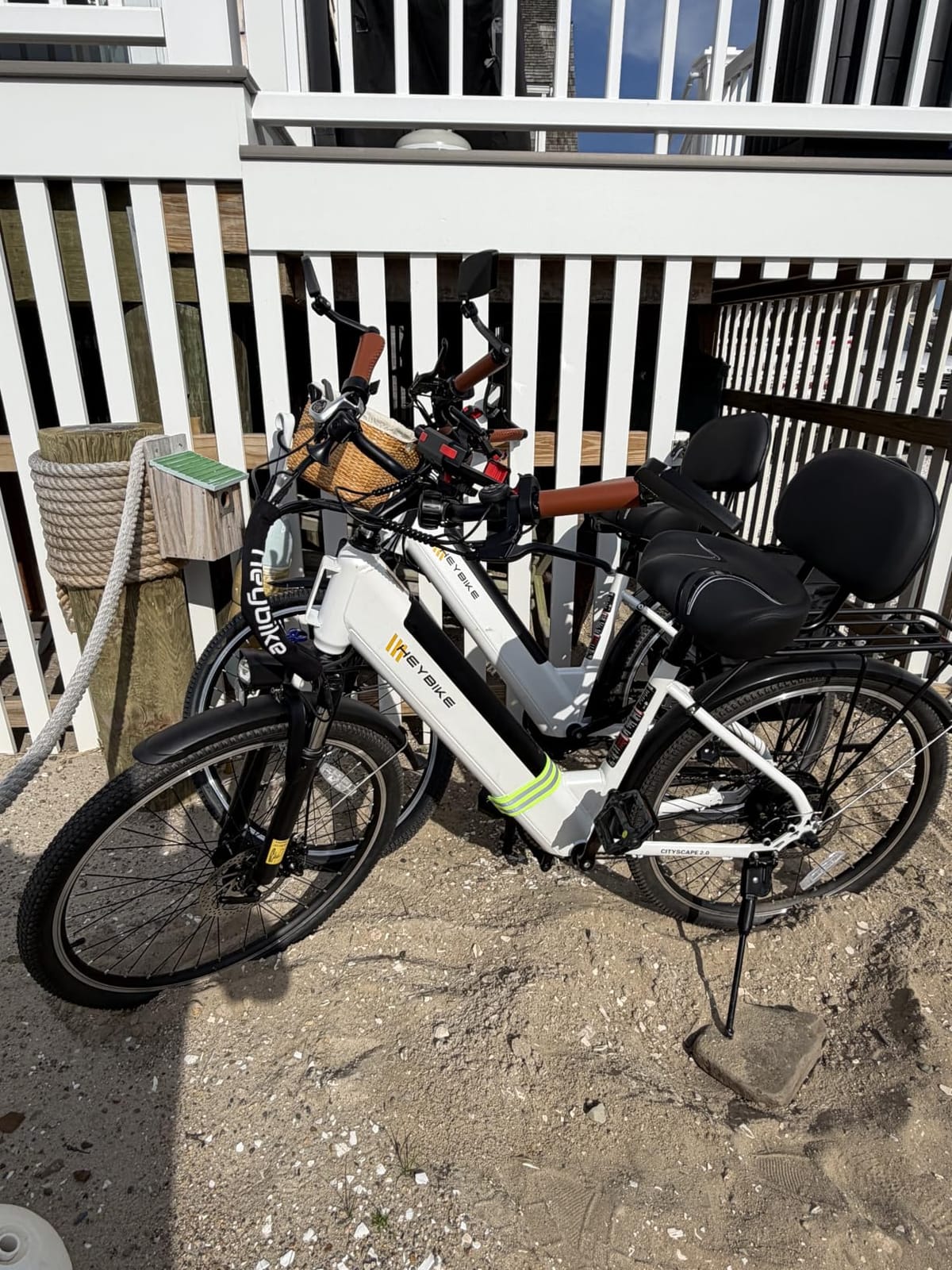
The accessory list is generous. You get a rear rack, front and rear lights, a loud horn, a color LCD, and puncture-resistant 26 by 1.95 tires. For a first bike that saves a pile of add-on purchases.
The honest downside is size and weight. The frame is large and heavy, multiple owners say lifting it alone into a truck or up steps is a two-person job, and riders under about 5 foot 4 report it feels too big.
Two mechanical gripes recur. The brakes get loud and lose some authority at higher speeds, and the chain can jump on the largest cog when you stomp on the pedals uphill. Both are livable, neither is ideal.
Who the Cityscape 2.0 works for
This is the right pick for a rider up to about 260 pounds who wants a proven, well-equipped commuter and has ground-floor storage or an elevator. Owners with a garage or a basement spot consistently rate it as a fantastic first e-bike.
Skip it if you carry a bike up a walk-up several times a day or if you are well under average height. The size that makes it stable on the road makes it clumsy in a stairwell.
Living with it long term
Plan a brake service early. Several owners swapped pads or adjusted calipers within the first month to fix the noise, and that single change turned the bike from annoying to pleasant.
Take the screen manual, or a YouTube walkthrough, seriously. The controller menu is genuinely complicated at first, and a slow afternoon learning it prevents accidentally changing assist levels mid-ride.
4. Jasion EB5 – Most Reviewed Budget Commuter
Jasion EB5 Electric Bike for Adults 26″ tire with 1000W Peak Motor
1000W peak motor
360Wh battery
49.6 lb frame
7-speed
Pros
- Lightest big-brand option at 49.6 lbs
- Hills become effortless with pedal assist
- Smooth 7-speed shifting
- Booster mode helps push it uphill
Cons
- Factory tires puncture easily
- Throttle and stem bolts can work loose
- No fenders or rack included
- Customer service can be mediocre
The Jasion EB5 has 2,308 reviews, which makes it the most-owned and most-picked-apart bike here. It currently ranks number one in its electric mountain bike category, and at 4.1 stars it is a more mixed bag than the bikes above it, with a solid 65 percent five-star rating and a noticeable tail of one-star experiences.
Its killer feature is weight. At 49.6 pounds it is one of the lightest full-size commuters in this guide, and that shows up every single time you lift it onto a curb, carry it up two flights, or muscle it into a car.
The 1000W peak motor with a 360Wh battery delivers 25 to 40 miles of real range depending on how much you pedal. Owners describe hills as effortless with assist engaged, and riders up to about 250 pounds report it pulls them along happily.
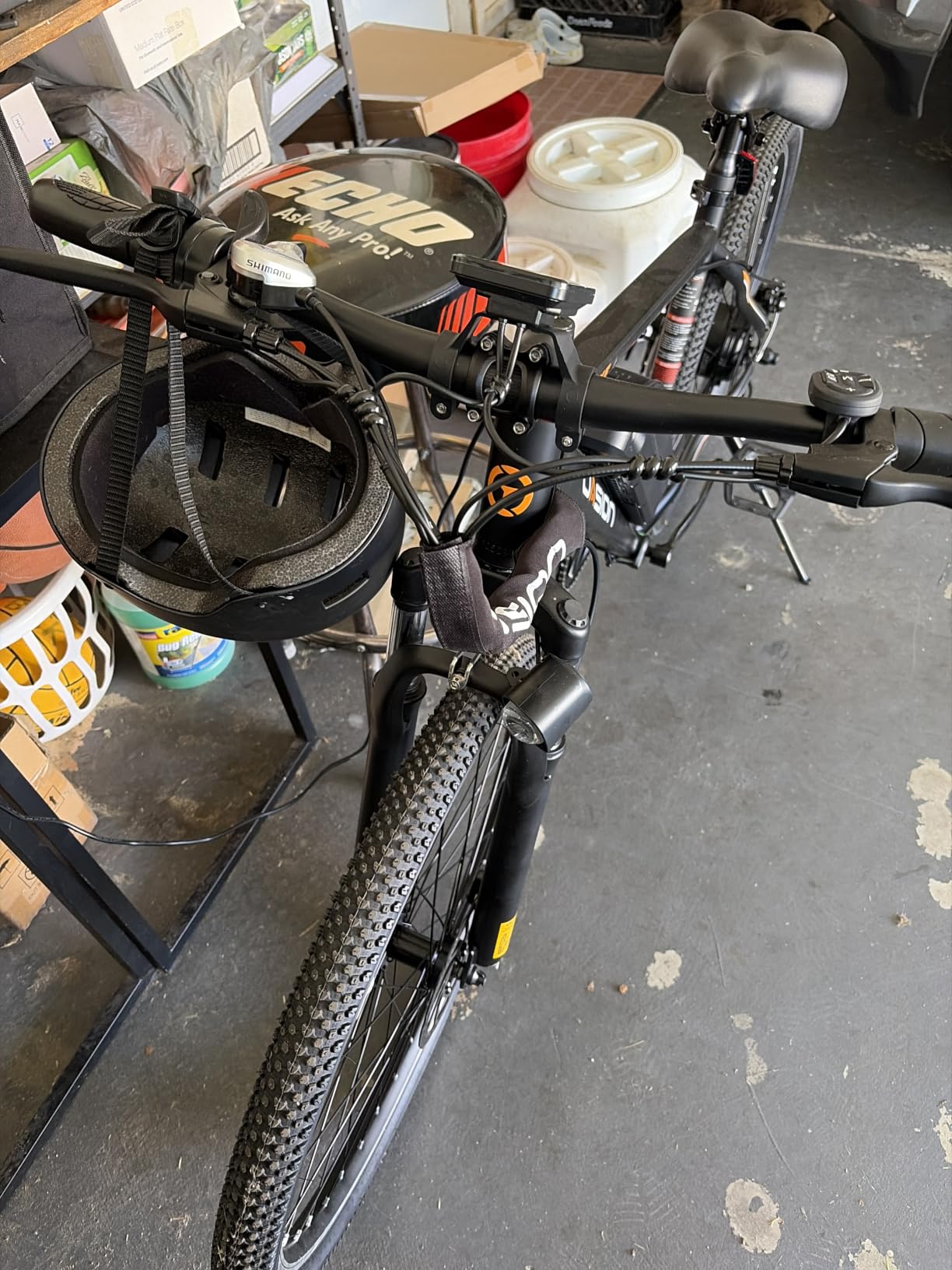
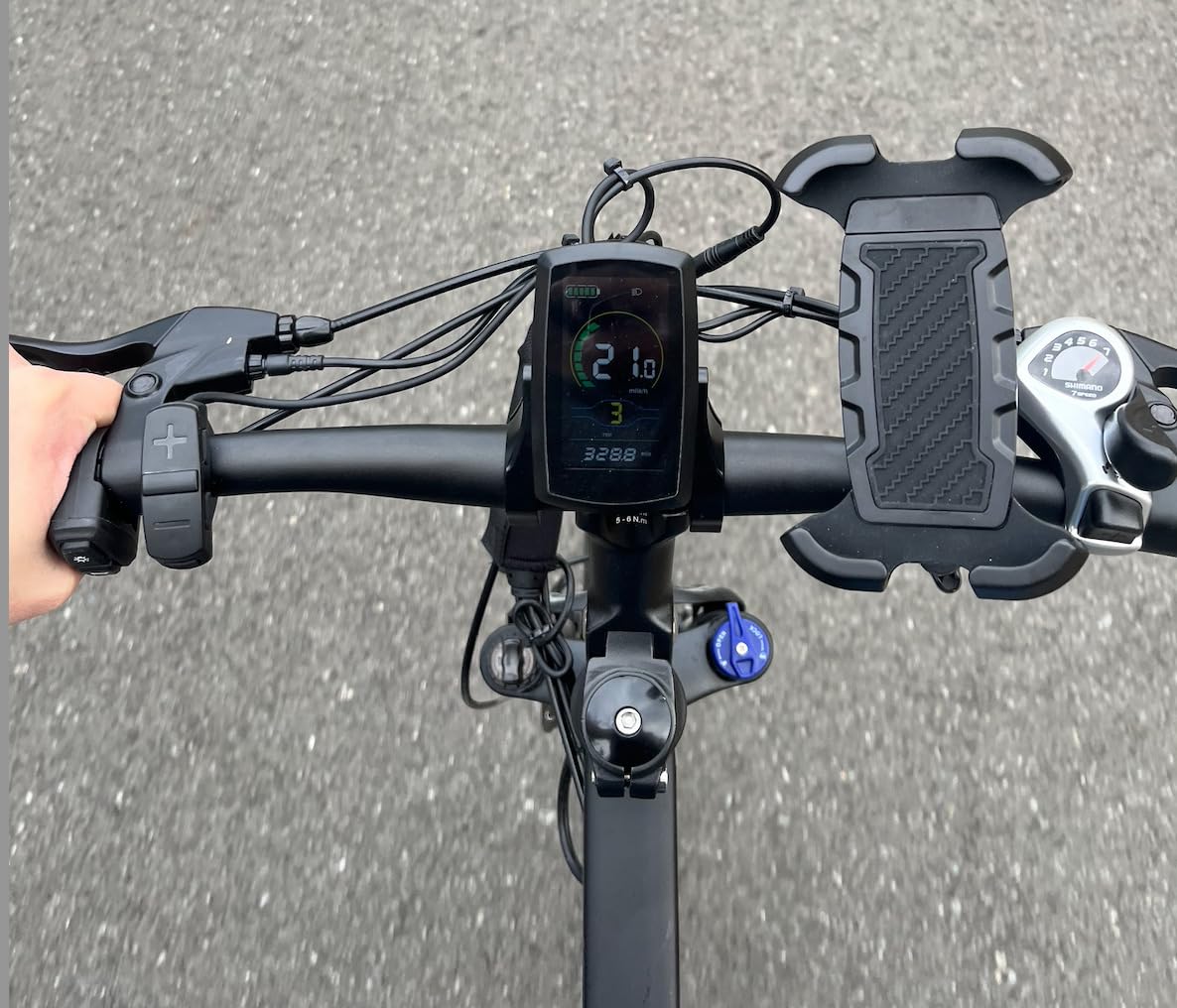
There is a clever commuting detail I rate highly: booster mode. It walks the bike forward at walking pace so you can push it up a steep ramp or a curb cut without straining, which is genuinely useful at the end of a long day.
The component quality is better than the price suggests. The 7-speed shifting is described as extremely smooth, the LCD has an adjustable backlight, and the triangular high-carbon steel frame feels stiff rather than noodly.
Now the parts bin. It ships without fenders or a rack, the factory tires puncture easily and most owners replace them, and the front fender situation is awkward because the headlight blocks the standard mounting hole.
Who the EB5 makes sense for
This is the pick for a rider who has stairs, needs to lift the bike regularly, and is willing to spend a weekend and a little extra on tires and accessories to finish it off. Think of it as a rolling chassis you personalize.
It is also a strong choice for tinkerers. Owners report real upgrade potential on the battery and motor side, and the bike rewards people who enjoy wrenching.
The first-100-miles fix list
Check the throttle mount and the adjustable stem bolts before ride one, because both have come loose for multiple owners. Re-torque the rear brake and expect to replace the pads early if they squeal.
Order puncture-resistant tires with the bike rather than after your first flat. The motor cable also prevents full removal of the rear wheel, so a roadside tube change is more fiddly than on a normal bike.
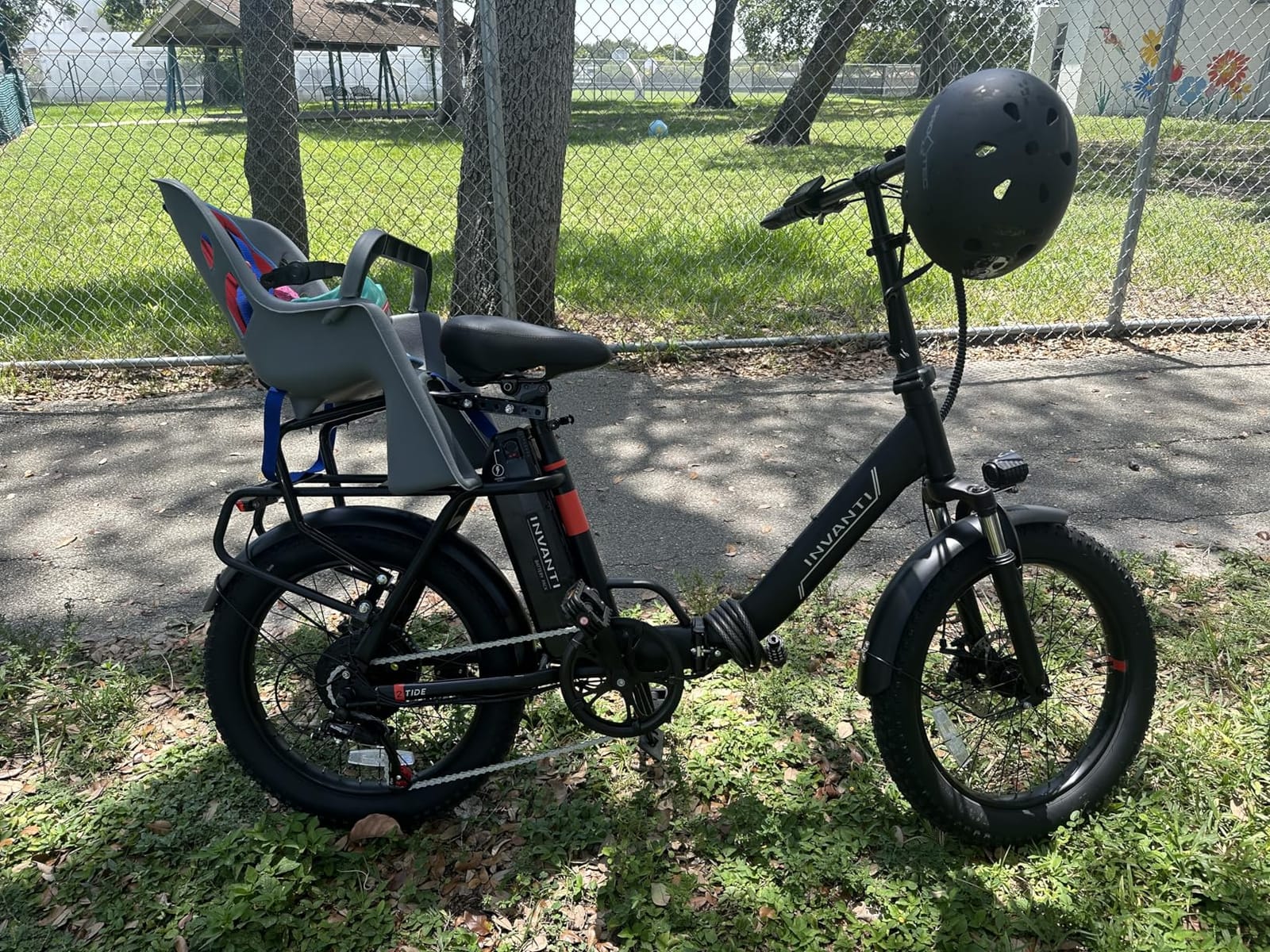
5. INVANTI EB16 – Best All-Weather, All-Terrain Commuter E-Bike
INVANTI Electric Bike for Adults,48V15Ah Removable Battery Ebike,Peak 1500W Motor,20″x4″ Fat Tire Electric Bike,Range 70Miles,7-Speed,Off-Road E Bike for City Commuting, UL2849 Certified by SGS
1500W peak motor
48V 15.6Ah battery
Dual suspension
20 inch fat tires
Pros
- 1500W peak motor with real pull
- Dual suspension smooths broken pavement
- 4 inch fat tires grip in snow sand and rain
- 748.8Wh battery for long-range days
Cons
- Over 50 lbs and awkward to move
- Folding frame clasp can open over bumps
- Not compatible with hanging car bike racks
- Slow charger
Not every commute happens on smooth asphalt, and the INVANTI EB16 is the bike I would pick for a route with gravel shortcuts, construction zones, canal paths, or proper winter weather. It is technically styled as a fat-tire adventure bike, but commuters love it for its cushioning and grip.
The numbers are serious. A 1500W peak motor, a 748.8Wh removable battery that owners say genuinely approaches the claimed range in pedal-assist mode, 4-inch wide tires, and suspension at both ends.
Riders describe the ride as very comfortable, with the dual suspension and fat tires absorbing potholes and tree roots that would rattle a rigid city bike. Multiple owners specifically call out riding in snow and sand.
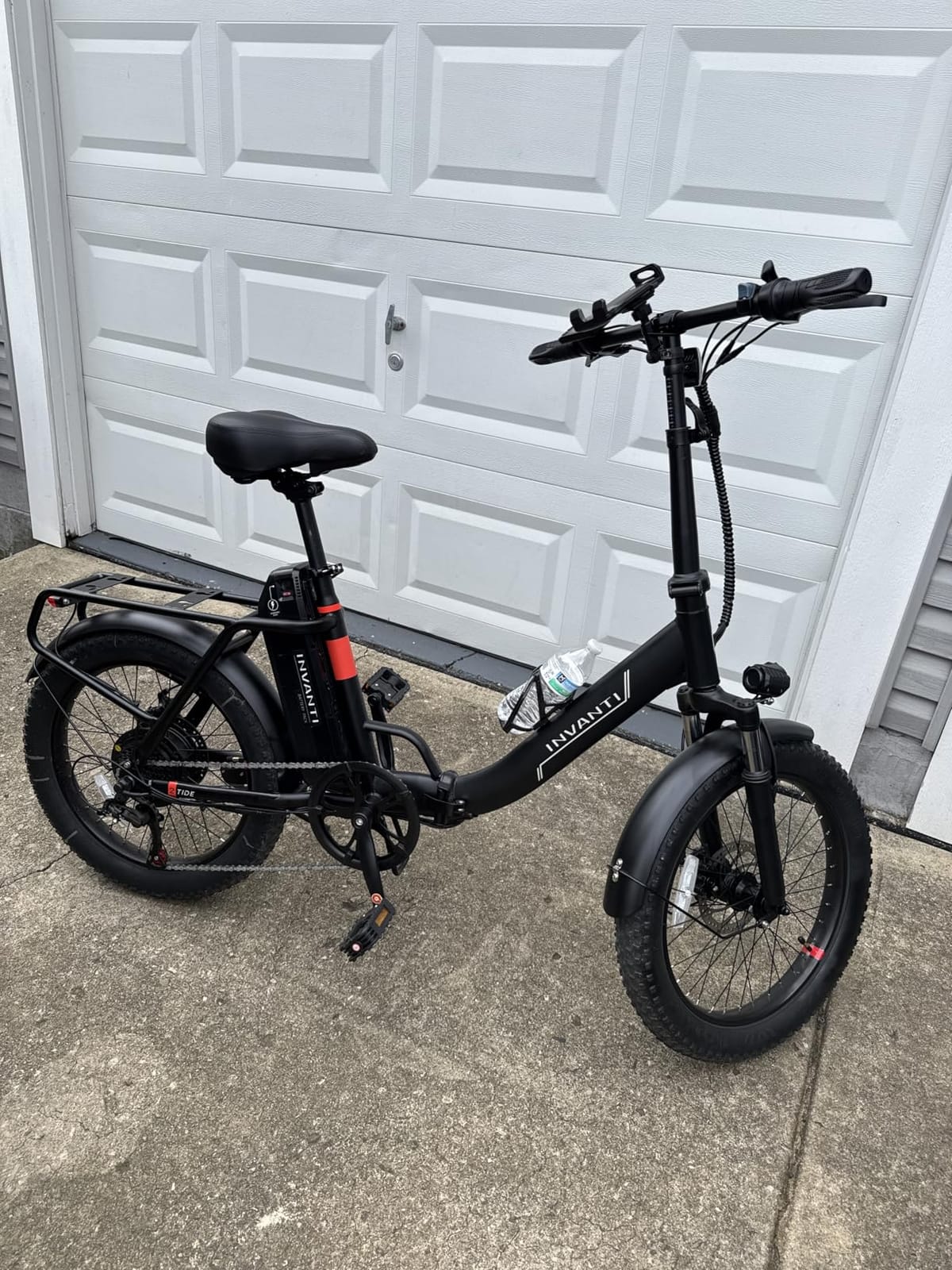
Build quality is a bright spot, with owners describing a solid, sturdy feel that exceeds expectations for the category. It ships 90 percent assembled, and it is Prime eligible with fast shipping.
The customer service reputation is unusually strong for a direct brand, with multiple riders praising quick and helpful responses. On a bike with this much going on mechanically, that safety net has real value.
The trade-offs are about physics. It weighs around 50-plus pounds, the folding mechanism helps with storage but not much with carrying, and it does not work on hanging-style car bike racks because of the frame shape.
Who the EB16 fits best
Pick this one if your commute is long, rough, or runs through weather, or if you want one bike that also handles weekend trail duty. The 28 mph top speed and big battery make it a genuine car replacement on days you would otherwise drive.
Avoid it if your commute is short, flat, and ends in a fifth-floor walk-up. The weight that makes it stable off-road makes it miserable in a stairwell.
Commuter trade-offs to know about
The most important one: several owners report the folding frame clasp can open when you hit sharp bumps. If you never fold it, lock the mechanism with a secondary strap or bolt and check it periodically.
The charger is slow for a battery this size, so charge overnight at home or leave a charger at the office. Plan for the second charger rather than carrying one back and forth.
6. Aipas C1 Max – Best for Heavy Riders and Cargo
Aipas C1 Max/C2 Max Electric Bike for Adults, 864Wh Removable Battery
1100W peak motor
864Wh battery
500 lb capacity
Step-through frame
Pros
- 500 lb weight capacity highest in class
- 864Wh battery for 40 to 85 mile days
- 90 Nm torque climbs 20 degree grades
- Disc brakes that stop in about 2 seconds
Cons
- 74 lb weight needs ground-floor storage
- Only 13 reviews so far
- Not Prime eligible
- Some accessory delivery delays
The Aipas C1 Max solves a problem most e-bike marketing ignores: most budget commuters are rated for 250 to 300 pounds, and heavier riders get vague performance and worn components. This one is rated for 500 pounds, which is the highest capacity in this guide by a wide margin.
Everything about it is scaled up. The 864Wh battery is the largest here, the 1100W peak motor produces 90 newton-meters of torque and climbs 20-degree grades, and the 24 by 2.6 inch tires give a contact patch you can trust under load.
The brakes match the mission. Aipas claims two-second emergency stops, and the step-through frame fits riders from 5 foot 1 to 6 foot 5, which is the widest height range of any bike here.
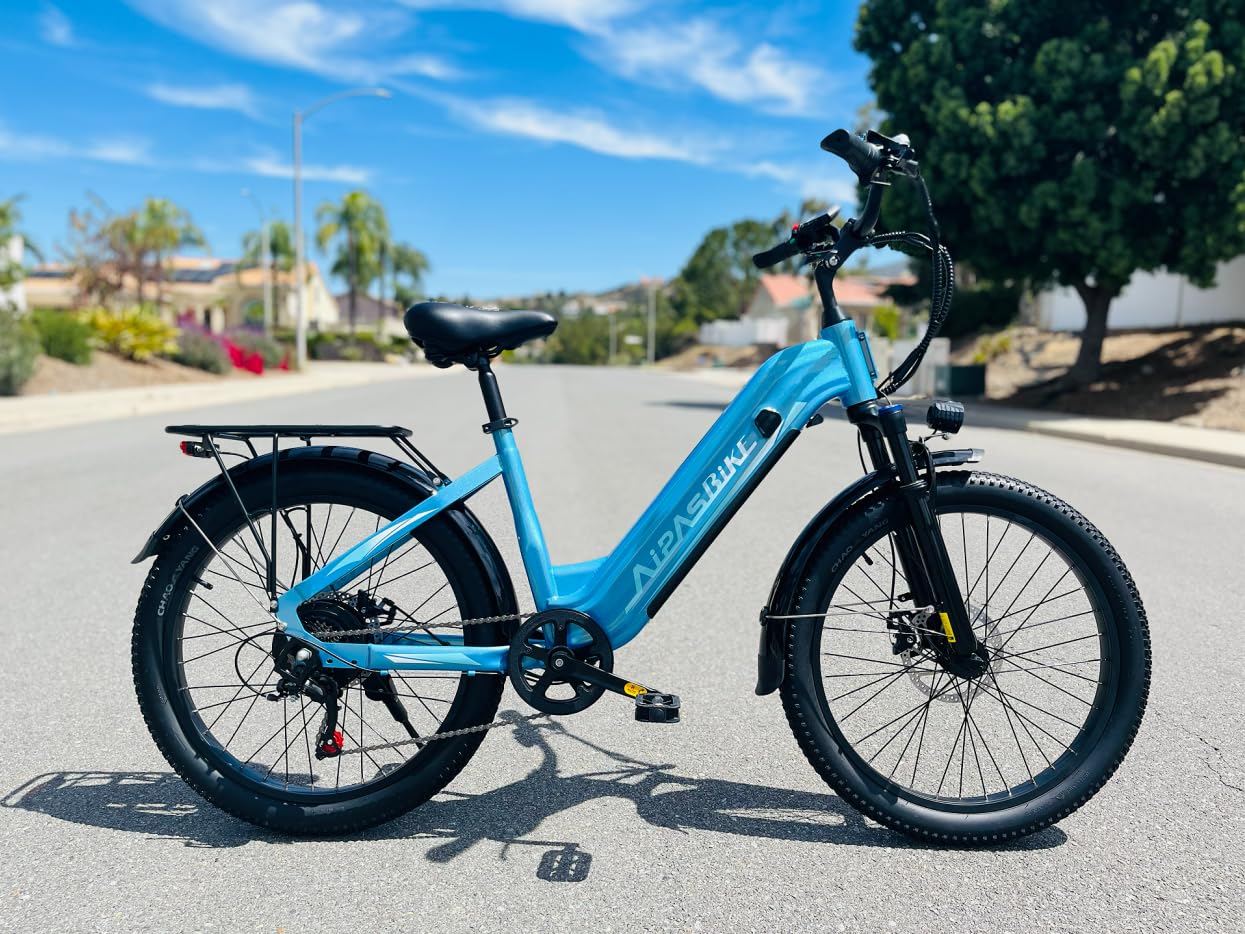
Early owners describe a rigid, stable frame with none of the wobble that plagues overloaded budget bikes, and they specifically praise the rear turn signals and horn for urban visibility. The battery is IP65 water-resistant, which is a higher rating than most.
Where it struggles is availability and track record. It is not Prime eligible, a few buyers waited on accessories, and with only 13 reviews you are an early adopter rather than a beneficiary of crowd wisdom.
The weight is the other obvious cost of the heavy-duty build. At 74 pounds this is the heaviest bike in the guide, and no one should buy it expecting to carry it upstairs.
Who the C1 Max is built for
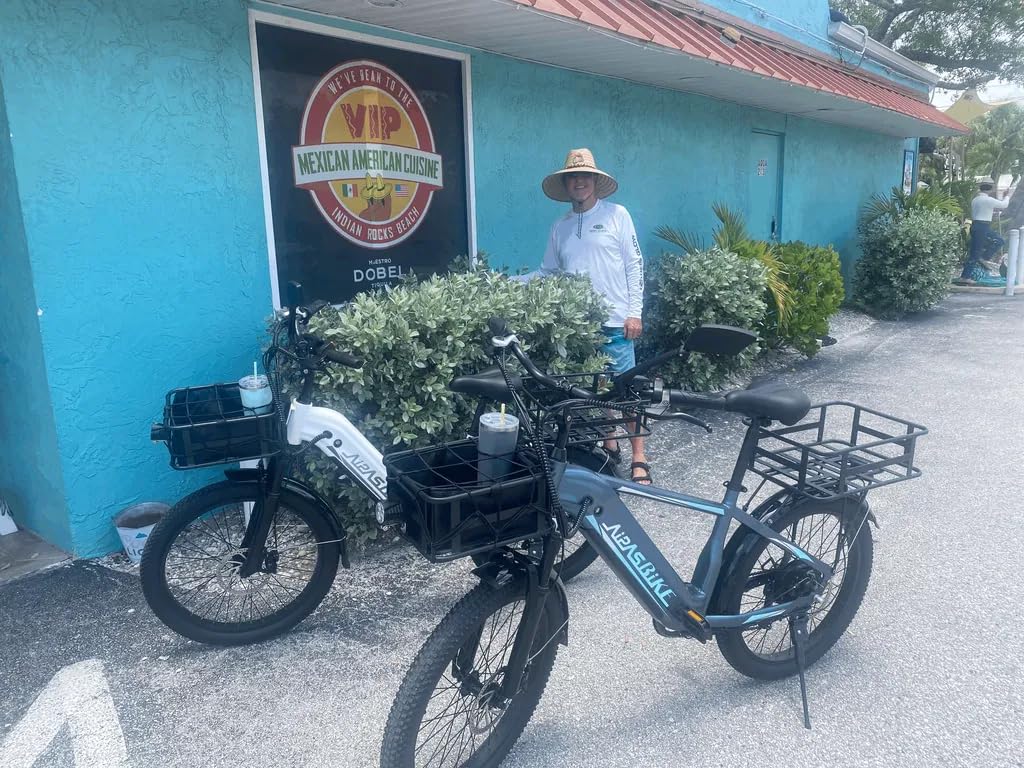
This is the pick for riders over about 280 pounds, anyone hauling serious cargo or a child seat, or a shared household bike that needs to work for two very different riders. The capacity and range headroom mean it will not be working at its limit every day.
If you are under 220 pounds with a short flat commute, it is more bike than you need, and the weight becomes a pure disadvantage.
Reading a small review pool honestly
Treat the 4.5-star rating as promising rather than proven. The early feedback is genuinely strong and the customer service gets praise for proactive communication, but 13 reviews cannot surface a rare failure rate the way 600 can.
If you buy it, register the warranty immediately and document any issues in the first weeks, when support is easiest to deal with. That is good advice on any e-bike and doubly so on a newer model.
7. EUY C2.0 26 Inch – Fastest Commuter E-Bike
EUY 26″ Electric Bike for Adults,1000W Motor Peak Ebike Max Long Range 70 Miles by 48V Removable Battery,Commuter Fast E-Bikes,7-Speed Step Thru Electric Bicycles UL Certified
1000W peak motor
28 MPH top speed
Hidden 48V battery
71 lb frame
Pros
- Genuine 28 mph in pure electric mode
- Solid well-constructed frame
- Hidden battery improves security
- Color LCD and twist throttle feel premium
Cons
- Can be started and ridden without the key
- Real range is 20 to 25 miles not 70
- Mechanical brakes feel marginal from speed
- Customer service unresponsive for some buyers
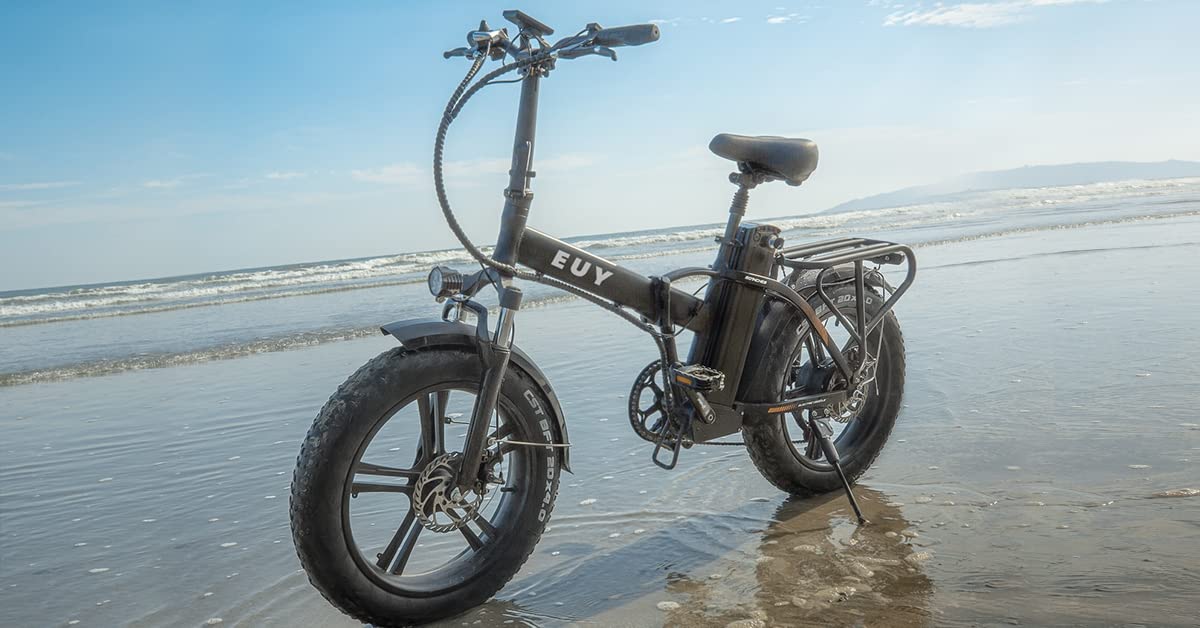
The EUY C2.0 is the fastest bike in this guide, and owners confirm it genuinely hits 28 mph under pure electric power. That is Class 3 territory, and it changes how a commute feels: you keep up with urban traffic instead of holding it up.
The build quality gets consistent praise for feeling solid and well put together, and the hidden in-frame battery is both better looking and harder to steal than an external pack. The color LCD and twist throttle give it a more mature feel than the price suggests.
Riders over 250 pounds report it pulls them along without complaint, and the dual front fork springs and EABS regenerative braking round out a reasonably complete spec.
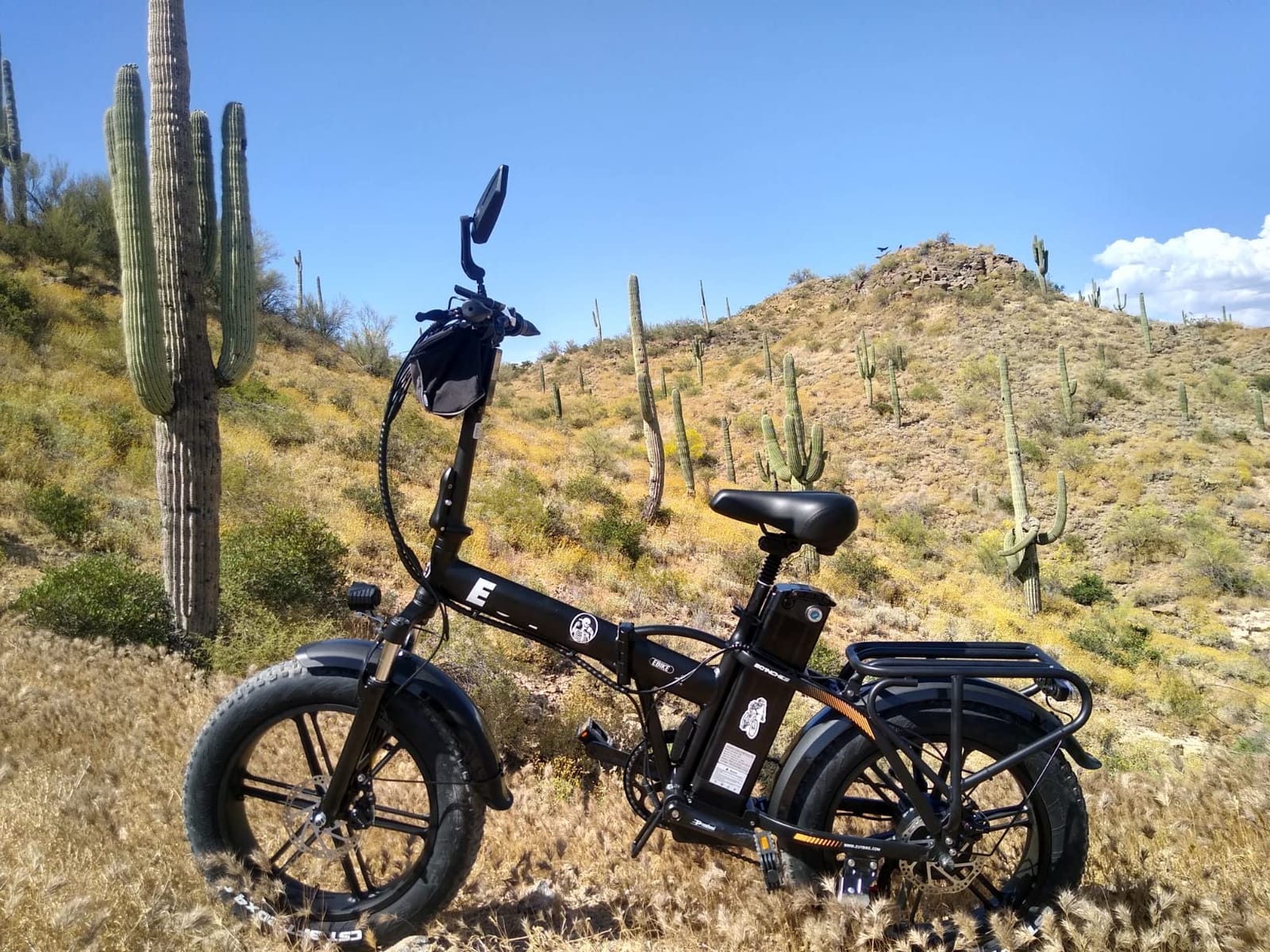
But I have to be blunt, because this is the one bike in the guide with a genuine safety and security flaw. Multiple owners report the bike can be powered on and ridden without the key, which means anyone who can lift it can ride away on it.
The range story is the same familiar gap. Owners see 20 to 25 miles of real use rather than the advertised 70, and the battery connection is exposed enough that debris on dirt and gravel roads caused problems for some riders.
The brakes are mechanical rather than hydraulic, and several owners describe them as sketchy from high speed. On a bike that can do 28 mph, that combination deserves your attention.
Who should still consider it
Experienced riders who want maximum pace for a longer suburban commute, who store the bike somewhere truly secure, and who are willing to fix the quirks on day one. For that person it is a genuinely fun and quick machine.
New riders, and anyone parking on the street, should look elsewhere in this guide. The security issue and unresponsive customer service reports are too significant to hand-wave.
Fix the security gap before ride one
Owners solve the key problem by adding a quality lock through the frame and rear wheel, removing the battery when parked, or fitting an ignition cutoff. Whichever route you take, do not park it unlocked, even briefly.
Check local rules too. Class 3 speed may not be legal on every bike path or in every jurisdiction, and some states restrict where 28 mph e-bikes can be ridden.
8. ESKUTE M200 – Best Commuter E-Bike for Hills
M200 Electric Bike for Adults – 21-Speed Gear 27.5″ Mountain E-Bike, 1200W Peak Brushless Motor 28MPH, 48V 10.4Ah&13Ah Removable Battery, Up to 55-65 Miles Range, Step Over Commuter E-MTB, NFC Unlock
1200W peak motor
48V 10.4Ah battery
21-speed gears
NFC unlock
Pros
- 1200W peak motor with strong torque
- 21-speed gears for any gradient
- 55 mile pedal-assist range
- TUV certified battery with NFC unlock
Cons
- Brake levers have failed on some units
- Throttles occasionally need replacement
- Proprietary battery connector limits DIY
- Rear wheel removal blocked by motor cable
Hills are where cheap e-bikes fall apart, either bogging down mid-climb or cooking their motors. The ESKUTE M200 takes a different approach: a 1200W peak motor paired with a proper 21-speed drivetrain, so you always have a gear for whatever the road throws at you.
The 27.5 inch wheels roll faster and smoother over rough pavement than the smaller wheels elsewhere in this guide, and owners report the bike handles rough and wet conditions well, which is exactly what a year-round commuter needs to do.
Battery life is a standout for the category. Multiple owners describe going one to two days of frequent riding between charges, with a claimed 55 miles on pedal assist and 40 on throttle that riders broadly find credible for mixed use.
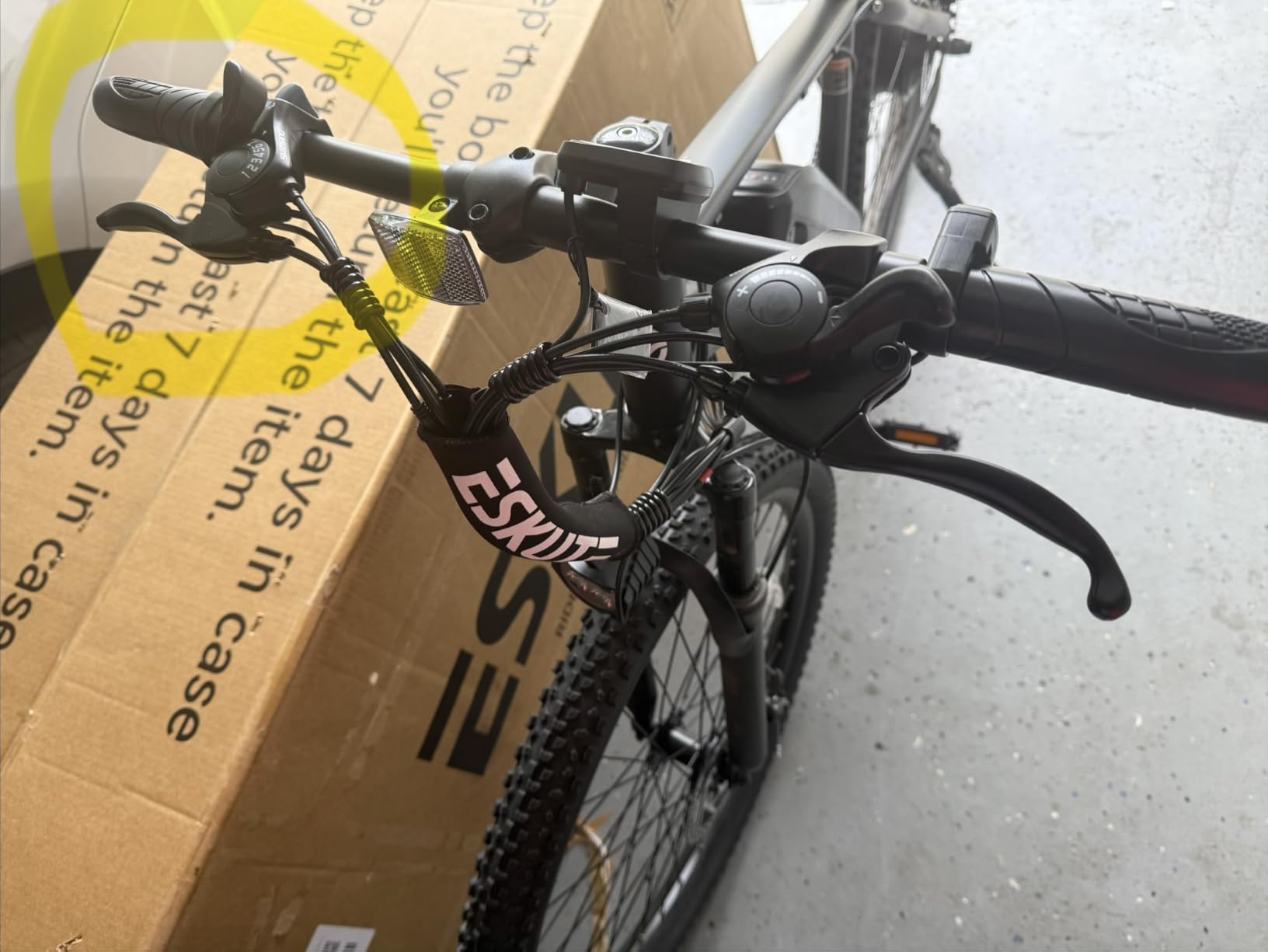
The little details are good too. A TUV-certified battery, an NFC card unlock that means no key to lose, a walk mode for ramps, and a bright headlight. It rides normally with the battery off as well.
Customer service earns unusually warm praise, with owners reporting quick responses and free replacement parts when something went wrong. That backup matters here, because the component quality is mixed.
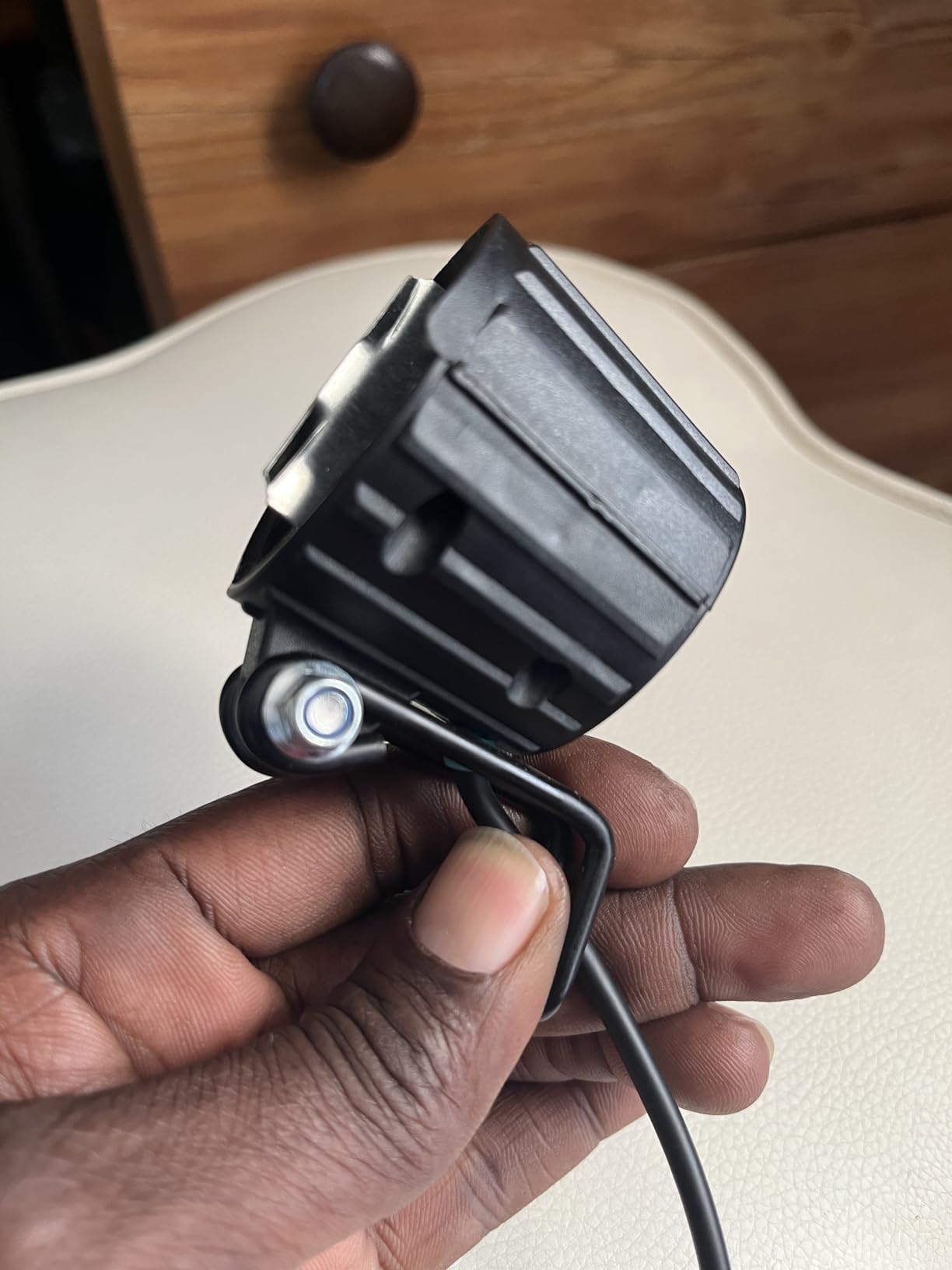
The weak spot is braking hardware. Owners have reported broken brake levers after minimal use, constant squeal, and occasional faulty throttle units needing replacement. On a 28 mph bike, that is the area to watch.
Who the M200 suits
This is the pick for a commute with serious elevation, mixed surfaces, or long distances where the 21 speeds and big battery earn their keep. Riders up to about 240 pounds report strong, confident performance.
If your route is flat and short, the extra gears and the 21-speed maintenance that comes with them are overhead you do not need. A simpler 7-speed bike will serve you better.
Inspect these areas in the first 100 miles
Check the brake levers and hardware after every few rides at the start, and upgrade the pads early if you get squeal. Loose adjustment screws on the handlebar and rear brake came up repeatedly, so a single torque-check session pays for itself.
Note the proprietary battery connector. It limits home DIY repairs, so build a relationship with a local shop or be ready to work with ESKUTE support, which owners say is one of the better ones.
9. Qlife Racer – Lightweight Commuter Pick for Flat Cities
Qlife Racer Electric Bike for Adults – 21-Speed Mountain Lightweight Ebike with Peak 1000W Brushless Motor, 375Wh Removable Battery, 26X2.1 Tire Step Over E-MTB, Up to 40 Miles Range,Black
1000W peak motor
48V 7.8Ah battery
21-speed gears
48.1 lb frame
Pros
- At 48.1 lbs among the lightest here
- 4-hour quick charging
- Looks and rides like a normal bike
- 21-speed gears for versatile riding
Cons
- Not ideal for riders over 160 lbs for full performance
- Brakes squeal noticeably
- Front wheel assembly is fiddly
- Motor noise is audible
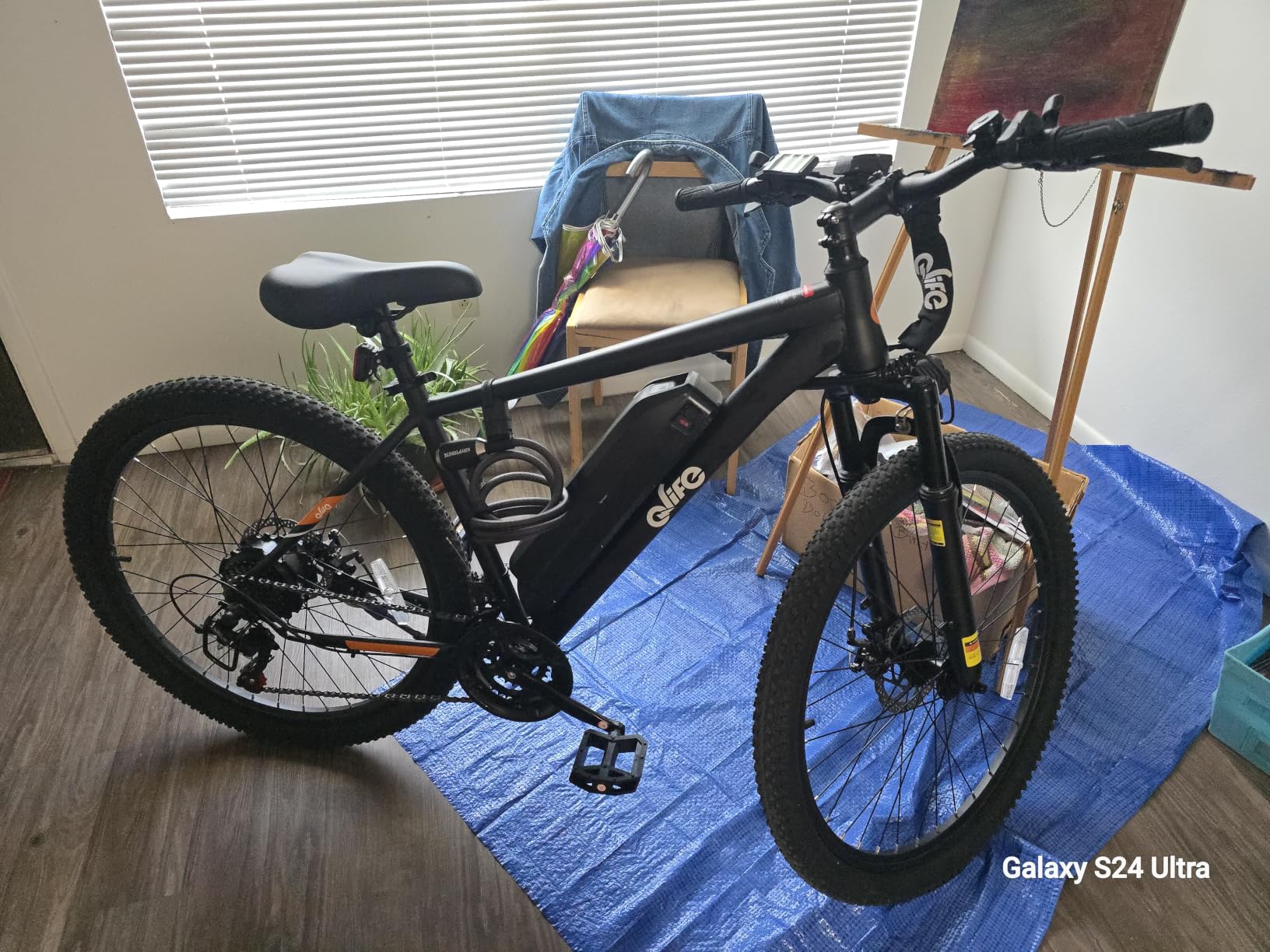
The Qlife Racer is the bike for people who do not want to look like they are riding an e-bike. With a matte black step-over frame, visible gears, and no bulky battery case, it reads as a regular mountain bike, which is a genuine plus if your office has a standard bike rack.
At 48.1 pounds it ties the Jasion EB5 as the lightest full-size option here. That means easier lifting onto car racks, overhead train racks, and apartment stairs.
Performance is solid rather than spectacular. The 1000W peak motor reaches around 25 mph, the 21-speed gearset gives you plenty of range for wind and gradients, and the 375Wh battery charges from empty in about four hours.
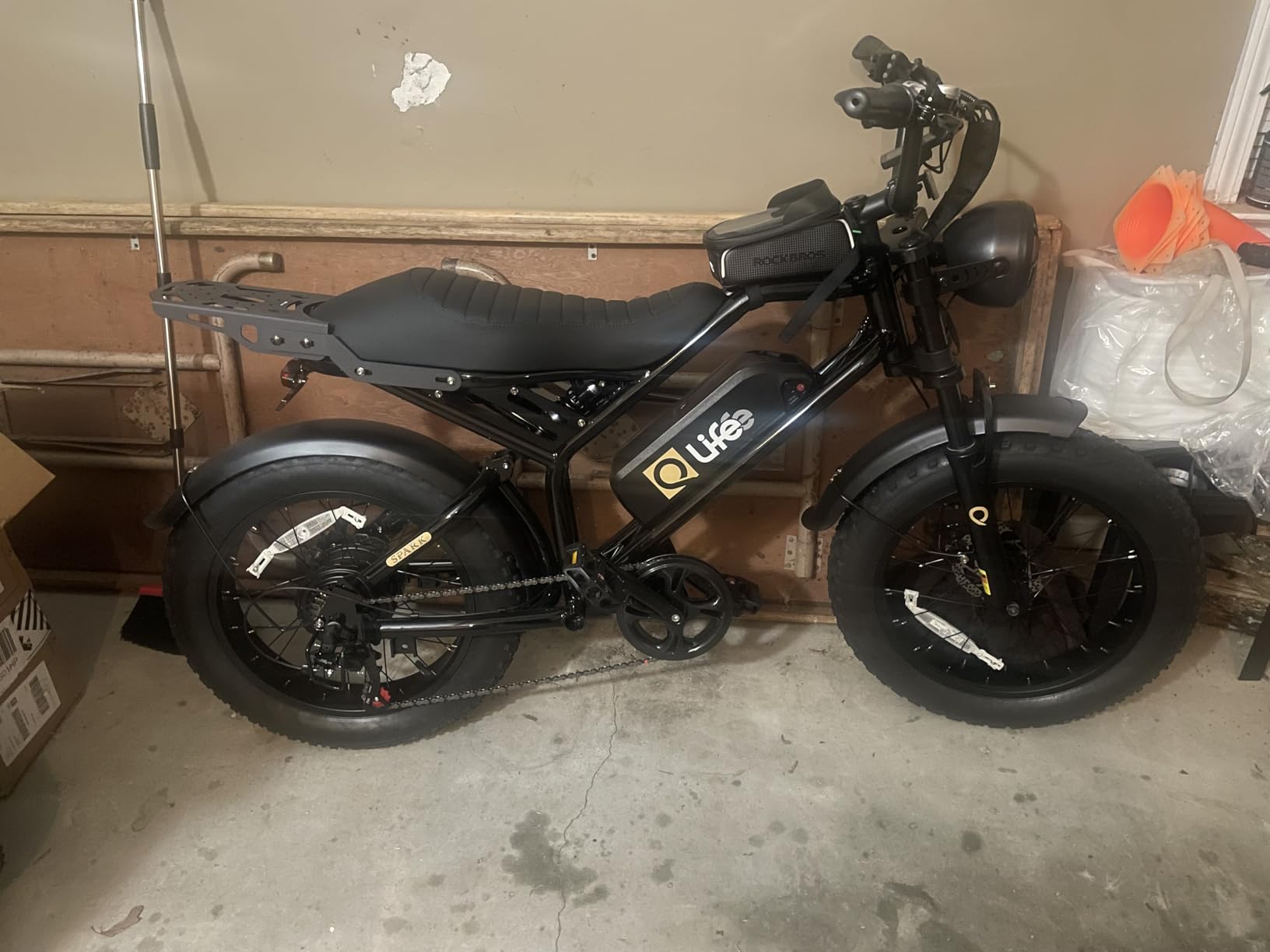
Owners report 25 miles of throttle range and up to 40 with pedal assist, which is honest for the battery size. The four riding modes, including a walk-assist setting, cover the commuting basics well.
Assembly is straightforward since it arrives 90 percent built, though several owners found the front wheel installation fiddly. Qlife backs it with a 12-month warranty and gets reasonable marks for support.
The recurring complaints are brake squeal, some motor noise under load, and the need to go around tightening every screw and bolt after delivery. None of it is unusual for the category, but it is worth expecting.
Who the Racer is right for
This is the pick for a lighter rider, roughly 160 pounds and under, in a flattish city who values portability and a low-key look over maximum power. Students and multi-modal commuters who lift the bike regularly are the natural fit.
Heavier riders should step up to the Aipas C1 Max or the ESKUTE M200 instead, because multiple owners note the Racer gives less than full performance above 160 pounds.
Weight, terrain, and realistic expectations
Treat the 40-mile figure as a pedal-assist ceiling on flat ground with a light rider, not a promise. On a hilly route with throttle use, plan around 20 to 25 miles and charge at the far end if you can.
The step-over frame is less convenient in stop-start traffic than a step-through, so think about your route. If you are clipping in and out at lights every hundred meters, the Qlife Cityone or Funhang will feel easier.
10. LELEKUAI T1 – Best Folding Budget Commuter
Electric Bike for Adults Teens, Folding E-Bike,Commuter City Foldable ebike with 560W Motor 48V 10Ah Battery, 24MPH 3-Level Pedal Assist, Dual Disc Brakes,14″ Compact Electric Bicycle with Pedals
560W motor
48V 10Ah battery
14 inch wheels
Foldable frame
Pros
- Cheapest way into e-bike commuting
- Folds small for desks closets and transit
- 20 to 24 mph is quick for the class
- Includes basket and lock
Cons
- Uncomfortable for riders over 5 foot 11
- Speed drops for riders over 160 lbs
- 10 to 15 miles real throttle range
- 14 inch tubes are hard to find locally
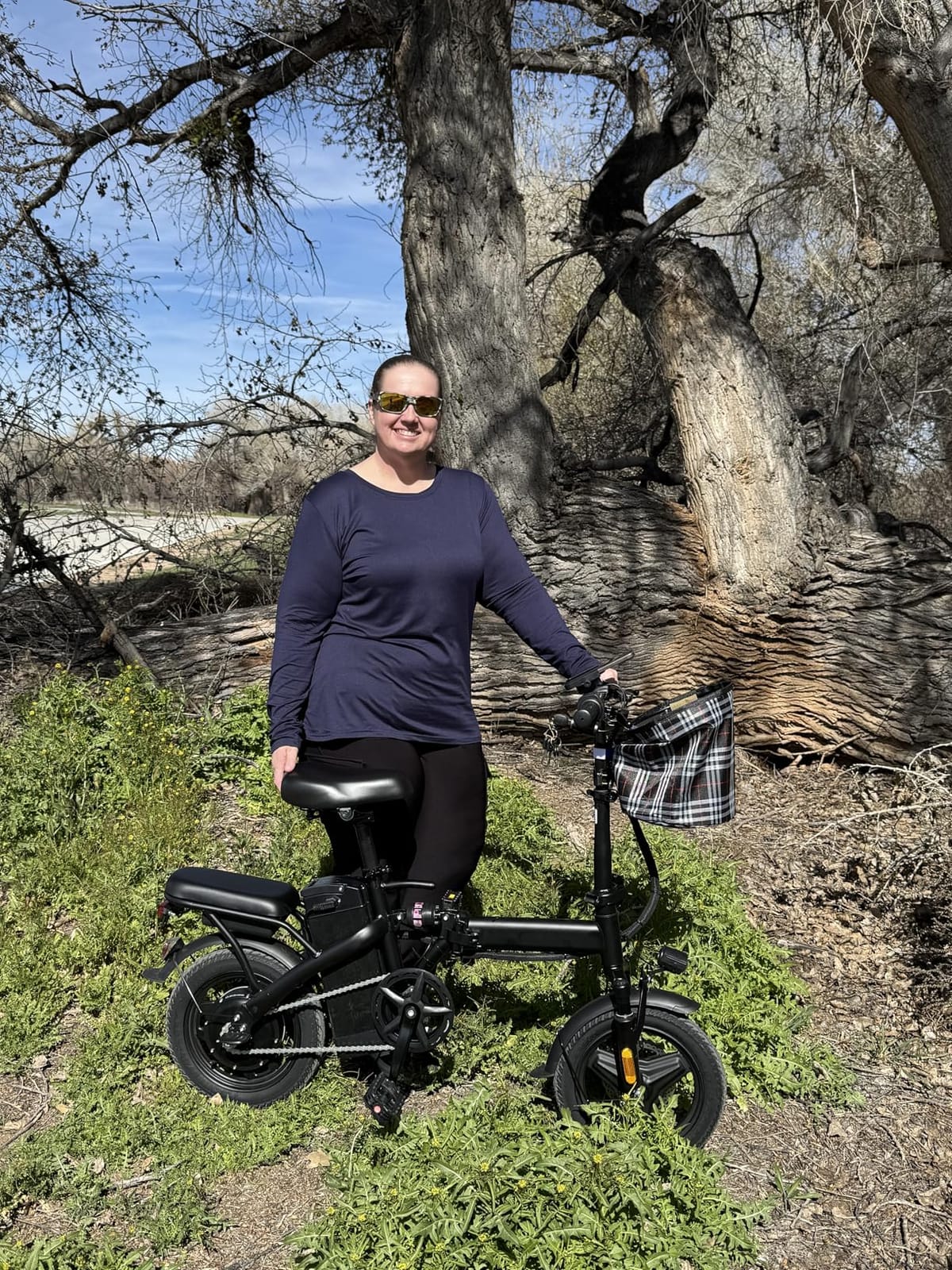
The LELEKUAI T1 is the least expensive bike in this guide by a wide margin, and with 338 reviews at 4.3 stars it is far from a random no-name gamble. It is a 14-inch-wheel folding mini e-bike built for exactly one job: short urban hops with easy storage.
The folding frame is the whole point. It fits in a car trunk, under a desk, in a hall closet, or on a train, and at 48 pounds it is one of the lighter options here despite the motor and battery.
Owners report 20 to 24 mph depending on rider weight, which is genuinely quick for something this size, and the 48V 10Ah battery with three assist levels handles a neighborhood round trip without trouble.
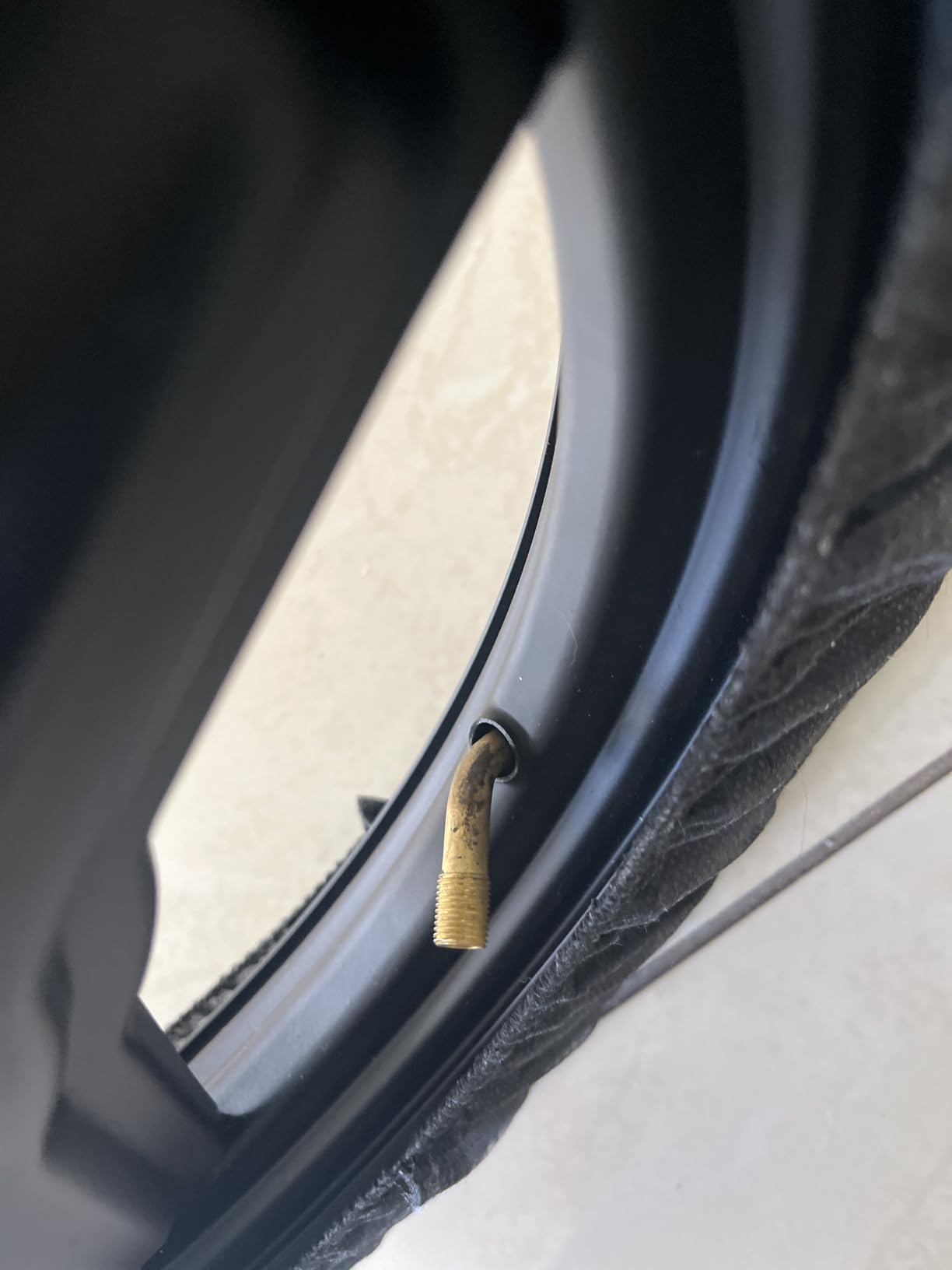
The box includes a basket and a lock, the dual disc brakes get praised for strong stopping power, and assembly takes under 30 minutes with the battery arriving charged. As a runabout for a teen, a student, or a last-mile station commuter, it is hard to argue with.
The limits are clear once you read the one-star reviews. It is uncomfortable for riders over about 5 foot 11, speed drops noticeably above 160 pounds, and real throttle range is 10 to 15 miles rather than the claimed 32.
Small wheels also mean small bumps feel bigger. Cracks, tree roots, and potholes that a 26-inch wheel shrugs off will rattle through the bars on 14-inch rubber.
Who the T1 makes sense for
Shorter riders and teens, apartment dwellers with no storage, and anyone doing a station or bus stop last-mile leg multiple times a day. For those use cases the folding format beats every full-size bike here.
It is the wrong tool for a tall rider, a long commute, or anything resembling rough roads. Spend the extra on the Funhang or Qlife if any of those describe you.
Safety tweaks before daily use
The twist throttle rotates the entire grip, which has caught owners out when brushing it accidentally. Learn where it sits, and consider a half-twist replacement grip if it bothers you.
Buy spare 14-inch inner tubes immediately, because local shops rarely stock them. The included basket is also flimsy, so upgrade it or use a proper pannier if you carry anything heavy.
How to Choose the Best Commuter Electric Bike: Buying Guide
After reading through thousands of owner reviews on these ten bikes, the same decision points keep deciding whether someone loves their commuter e-bike or quietly stops riding it. Work through these in order and you will land on the right bike for your actual life rather than the one with the best listing.
Start with your real one-way distance
Everything else follows from this number. Under 5 miles each way and almost anything works, including the smallest battery in this guide. Around 10 miles each way and you want at least a 450Wh battery and a motor that holds speed into wind.
Over 15 miles each way and you should be looking at the 748Wh-plus class, meaning the INVANTI EB16 or Aipas C1 Max. For all of them, take the manufacturer range figure and mentally cut it by half for throttle-heavy riding in a hilly city.
Hub motor versus mid-drive
Every bike in this guide uses a hub motor, and for flat and rolling city commuting that is the right call. Hub motors are cheap, sealed, nearly maintenance-free, and when one eventually fails the replacement is straightforward.
Mid-drive motors, which sit at the cranks and drive through the gears, climb more efficiently and handle weight better, which is why premium commuter brands favor them. They also cost substantially more and wear chains faster. At this price level, a strong hub motor with a good gear range, like the ESKUTE M200, is the more sensible hill solution.
Class 2 versus Class 3 speed
A Class 2 e-bike assists to 20 mph and usually includes a throttle. A Class 3 e-bike assists to 28 mph and in many states cannot legally carry a throttle and may be barred from shared-use paths.
In stop-start city traffic with lights every block, a 20 mph bike like the Funhang or Jasion loses almost nothing to a 28 mph bike. The EUY C2.0 and ESKUTE M200 only make sense if you have longer stretches of open road where the extra pace compounds. Check your local rules before buying Class 3, because enforcement varies.
Battery capacity and the range that actually happens
Battery size in watt-hours is the single most honest predictor of range. In this guide the capacities run from 360Wh to 864Wh, and the real-world owner reports track almost perfectly with those numbers rather than with the marketing claims.
A rough rule from the owner data here: expect 1 to 1.5 miles of throttle range per 20Wh of battery in flat terrain, roughly doubling with active pedaling. A 499Wh pack like the Qlife Cityone gives 15 to 20 miles of throttle. An 864Wh pack like the Aipas gives 40-plus. That math has held up across every bike in this list.
Torque sensor versus cadence sensor
A cadence sensor simply knows you are pedaling and switches the motor on, which is what nearly all bikes at this price use. It feels a bit on-off, and assist can surge when you did not ask for it, something LELEKUAI owners specifically mention.
A torque sensor measures how hard you push and responds proportionally, feeling far more natural and controlling wheel spin in the wet. You normally have to spend considerably more to get one. Learning to anticipate a cadence sensor, by easing into pedaling rather than stomping, closes most of the gap.
Brakes and wet-weather stopping power
Every bike here uses disc brakes, but they split into mechanical and hydraulic. Mechanical discs, on the Funhang, EUY, ESKUTE, and Jasion, are cheap to service and easy to adjust yourself, but they need more finger force and several owners here reported noise and fade from speed.
Whatever you buy, bed the brakes in properly during the first week and replace the pads early rather than riding them to the backing plate. Brake complaints were the single most repeated mechanical gripe across all ten bikes, and fresh pads fixed most of them.
Weight, frame style, and where the bike lives at night
This is the most underrated decision. The bikes here range from 48 pounds to 74 pounds, and if you carry one up a flight of stairs twice a day that spread is the difference between fine and miserable.
Step-through frames make mounting in traffic dramatically easier and suit riders who ride in regular work clothes. Step-over frames are stiffer for the weight and look more like a conventional bike. Apartment dwellers should also seriously consider a folder like the LELEKUAI T1, which trades road smoothness for the ability to store the bike in a hallway closet.
Local bike shop support and brands to approach carefully
The single loudest theme across r/ebikes and r/bikecommuting is serviceability. Many shops decline to work on unfamiliar direct-to-consumer brands, not out of snobbery but because they cannot get diagrammed parts or wiring documentation.
Before buying any bike, call the shop you would actually use and ask if they will service it. Look for UL 2849 certification, standard connectors, and a brand with a parts warehouse in your region. The consistent advice from long-term owners is that a slightly more boring bike you can get fixed locally beats a spectacular one you cannot.
Water, rust, and winter commuting
Battery waterproofing ratings here run from IPX5 to IP65, and all of them handle rain. What suffers is everything else: chains rust, cables corrode, and mechanical disc brakes lose bite when the rims and rotors are wet, so allow extra stopping distance.
If you ride through winter, the INVANTI EB16 with 4-inch fat tires is the natural pick, and studded tires exist for several of these sizes. Wipe the chain dry, lube more often, and store the battery somewhere temperate rather than a freezing garage, since charging a very cold lithium pack damages it.
Theft protection for urban commuters
An e-bike is one of the most stolen categories of consumer goods, and one bike in this guide can be ridden away without a key. Use a hardened D-lock through the frame and rear wheel, remove the battery whenever you park, and consider GPS trackers, which fit inside several of these stem and light housings.
Photograph your frame number and register the bike with the manufacturer and any local registry the day it arrives. Check whether your renter’s or homeowner’s policy covers e-bikes, because many cap bicycles well below e-bike values and a cheap rider endorsement fixes that.
Multi-modal commuting and transit rules
Bike-plus-train is the secret weapon of urban commuting, and it is where folders dominate. A folding bike is generally allowed on peak trains where full-size bikes are banned, and the LELEKUAI T1 and the INVANTI EB16 both fold for exactly this reason.
Check your transit operator’s rules before committing, because peak-hour restrictions and size limits vary widely. If a folder is your plan, practice the fold until you can do it in under thirty seconds, because that is what makes it actually work on a crowded platform.
Frequently Asked Questions
Is it worth buying a commuter e-bike?
For most people with a commute between 2 and 15 miles, yes. A commuter e-bike cuts door-to-door travel time on urban routes, removes parking costs and hassles, and lets you arrive without being soaked in sweat. Owners consistently say it replaced their car or transit pass for daily trips.
What is the best electric bike for a daily commute?
For most commuters the Qlife Cityone 2.0 is the strongest all-round pick thanks to a powerful 1200W peak motor, a comfortable low-step frame, and unusually high owner satisfaction. Riders on a tighter budget are well served by the Funhang City Cruiser, which adds a rack, fenders, and UL 2849 certification.
What should I look for in a commuter electric bike?
Prioritize battery capacity in watt-hours over claimed range, disc brakes that stop you reliably when wet, a removable battery for desk charging, and a motor of at least 500W sustained for hills. Also check the total weight if you have stairs, confirm UL 2849 certification, and verify a local shop will service the brand.
What ebikes should you stay away from?
Avoid ultra-cheap listings from brands with no website, no parts inventory, and no reachable customer support, since local shops often refuse to work on them and repairs become impossible. Be cautious with models that have very few reviews, proprietary connectors with no documentation, or a track record of unresponsive service reported by owners.
How long do commuter e-bike batteries last?
Most lithium e-bike batteries last roughly 3 to 5 years or 500 to 1000 full charge cycles before capacity drops to around 60 to 70 percent. You can extend that by storing the battery between about 40 and 80 percent charge, avoiding full depletion, keeping it out of extreme heat and cold, and using the supplied charger.
Can you ride a commuter e-bike in the rain?
Yes, and most commuters eventually do. The bikes in this guide carry IPX5 to IP65 rated batteries and sealed connectors designed for wet weather. Slow down, allow much longer braking distances on wet rotors, dry and relube the chain afterward, and avoid deep standing water that can submerge the motor or connectors.
Conclusion: Our Verdict on the Best Commuter Electric Bikes
The Qlife Cityone 2.0 is my overall winner for combining genuine motor power, a comfortable step-through frame, and the happiest owner base in the category. The Funhang City Cruiser is the smartest complete package with its rack, fenders, and UL 2849 certification, and the LELEKUAI T1 is the cheapest credible way into folding, multi-modal commuting.
Match the bike to your route rather than the spec sheet. Hills point you at the ESKUTE M200, rough roads and winter at the INVANTI EB16, heavier riders at the Aipas C1 Max, and stairs at the Jasion EB5 or Qlife Racer. Whatever you pick, trust the real-world range numbers over the advertised ones and you will not be caught out.
Check current availability on your shortlist, since stock on popular value models moves fast, and enjoy the ride to work. Once you start passing parked traffic on a morning commute, it is very hard to go back to the car.