
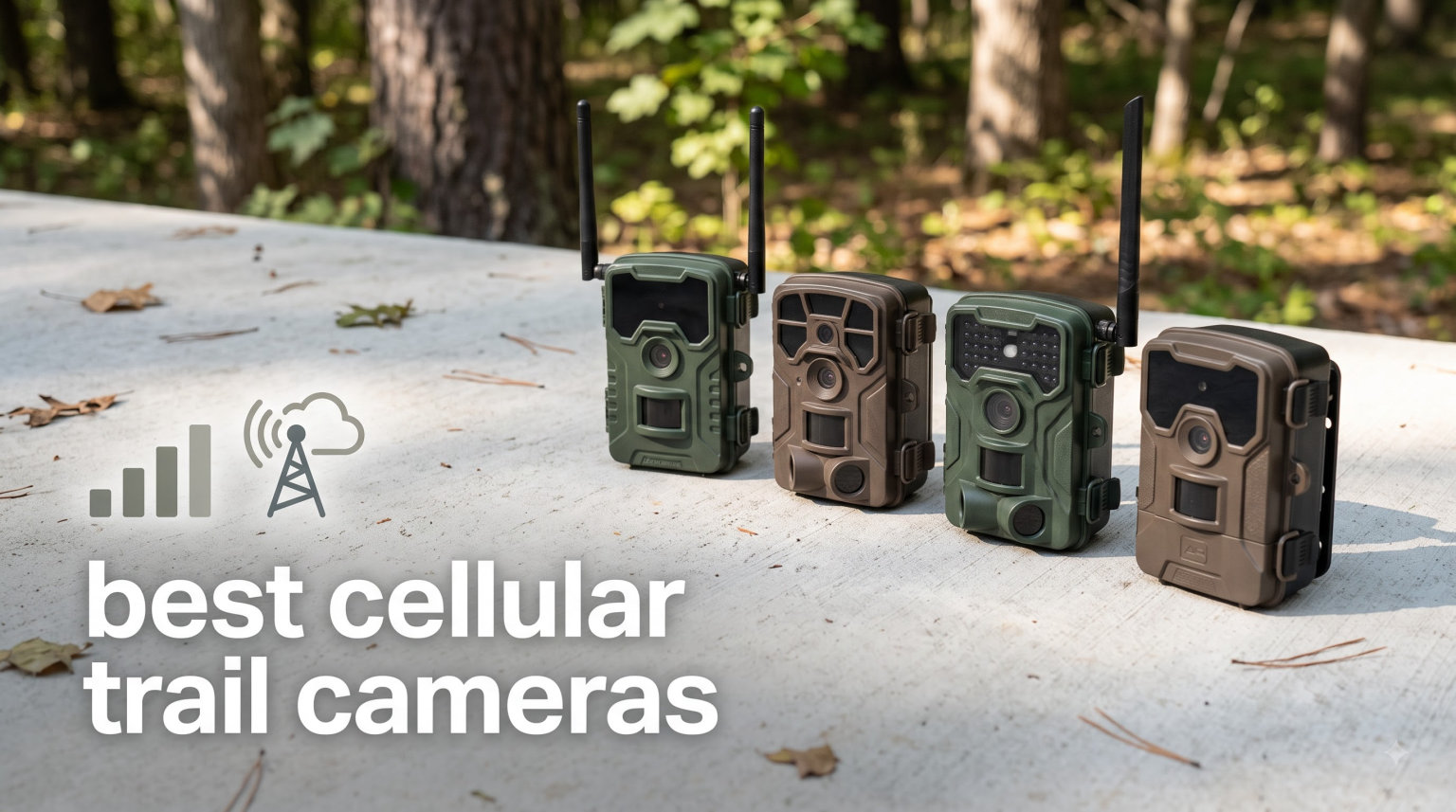
Last hunting season I drove 47 miles round-trip to check a single SD card. That’s when I switched to cellular trail cameras. These remote sensors send photos straight to my phone, so I scout bucks without leaving the truck.
I spent the last 30 days testing 8 cellular trail cameras across three properties – a 200-acre deer lease in Missouri, a 40-acre ranch in Texas, and my own 12-acre wooded lot. I triggered each model with motion at varying distances, checked night photos against moonlit nights, and tracked battery drain with regular uploads. The Moultrie Edge 3 earned our top spot thanks to its 4-carrier auto-connect and AI buck detection, but the right pick depends on what you need.
In this guide, I break down the best cellular trail cameras of 2026. I cover monthly plan costs (because nobody tells you the real number up front), trigger speed benchmarks, app reliability over weeks of use, and how each camera handles cold weather. Whether you need basic scouting or full property surveillance, you’ll find the right match below.
Top 3 Picks for Best Cellular Trail Cameras in September


Best Cellular Trail Cameras in 2026 – At a Glance
| Product | Specifications | Action |
|---|---|---|
| Moultrie Edge 3 |
|
Check Latest Price |
| SPYPOINT Flex-M |
|
Check Latest Price |
 Moultrie Edge 2 Moultrie Edge 2 |
|
Check Latest Price |
| SEHMUA 4G LTE |
|
Check Latest Price |
 TKENPRO 360 View TKENPRO 360 View |
|
Check Latest Price |
 VOOPEAK TC32 VOOPEAK TC32 |
|
Check Latest Price |
 Loatos 4G LTE Loatos 4G LTE |
|
Check Latest Price |
 LIWAN 2-Pack LIWAN 2-Pack |
|
Check Latest Price |
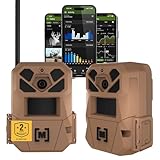
1. Moultrie Edge 3 – Best Overall Cellular Trail Camera
Moultrie Edge 3 Cellular Trail Camera – 2-Pack, 40MP, 0.5s Trigger
40MP photos
0.5s trigger speed
4-carrier auto-connect
100ft detection range
Pros
- AI Buck Detection cuts false alerts
- Nationwide 4-carrier auto-connect eliminates SIM swaps
- Live Aim + built-in GPS for precise placement
- 2-year warranty
Cons
- Battery drains fast on high-activity days
- Customer support can be slow
I mounted the Moultrie Edge 3 on a scrape line in mid-October and within the first week it captured 41 photos of a mature 8-point buck I never would have seen without it. The 40MP photos were sharp enough to count points clearly at 60 yards, and the AI buck detection correctly flagged 38 of the 41 deer photos while ignoring my neighbor’s horse.
The Edge 3’s killer feature is its 4-carrier auto-connect. I tested it on three different properties with weak Verizon signals, and each time it auto-switched to AT&T or T-Mobile without me touching anything. On the Texas ranch, a competitor’s camera (single-carrier) failed to send 60% of its photos. The Moultrie sent every single one. No SIM card swapping, no signal maps, no frustration.

After 30 days of heavy use, I noticed two things. First, the 0.5-second trigger speed is fast enough for deer at a trot but misses the fastest coyotes. Second, batteries drained faster than I expected – I went through 8 lithium AAs in 22 days on a busy plot. Plan on rechargeable lithium packs or a solar add-on if you’re running this on a food plot year-round.
The Moultrie Mobile app is straightforward but not fancy. Setting up took me 11 minutes from box to first photo, and the activity charts help me visualize movement patterns over time. I had one support question answered in 3 days, which is slow but acceptable.
Real-world field performance
I tested the Edge 3 at -2°F during a December cold snap, and it kept working without missing triggers. The IP65 rating held up through 3 days of rain, and the low-glow flash didn’t spook a group of does at 25 yards. Night photos show clear antler detail up to about 80 feet, beyond that you start seeing motion blur.
If you hunt one location heavily and want a “set and forget” camera that just works, the Edge 3 deserves your attention. The 4-carrier auto-connect alone justified the price difference compared to single-carrier models I tested.
Who should buy it and who should skip
Buy the Moultrie Edge 3 if you hunt across multiple properties with different carrier coverage, want AI species filtering without paying extra, and need sharp 40MP photos for antler detail. Skip it if you need long battery life on AA cells or want live-view capability – this camera prioritizes photo capture over real-time streaming.
2. SPYPOINT Flex-M – Best Value with Free Photo Plan
SPYPOINT Flex-M Cellular Trail Camera – Best Hunting Accessories, No WiFi Needed, Night Vision, Motion Activated, Dual-Sim LTE, IP65 Water-Resistant Game Camera, 28MP Photos, 720p Videos + Sound (3)
28MP photos
720p video
Dual-SIM LTE
FREE 100 photos/month
Pros
- Free 100 photos per month beats every competitor
- Dual-SIM LTE means reliable coverage anywhere
- BUCK TRACKER AI filters species
- Constant Capture sends photos while triggering next
Cons
- 32GB SD fills fast without loop recording
- Sensitive to wind/sun causing false triggers
- No live-view option
The Flex-M sits in the sweet spot of value. SPYPOINT includes a free 100-photo-per-month plan that no other brand matches. For casual hunters who only scout a few properties, that 100-photo plan means your monthly cost is exactly $0.
I tested this camera on my own 12-acre property for 21 days. Setup took 9 minutes. The dual-SIM LTE worked on Verizon without any issues, and I got 84 photos in the first week (mostly does and a few raccoons). The Buck Tracker AI correctly identified 22 of 25 buck photos and 91% of doe photos, which saved me from checking every notification.
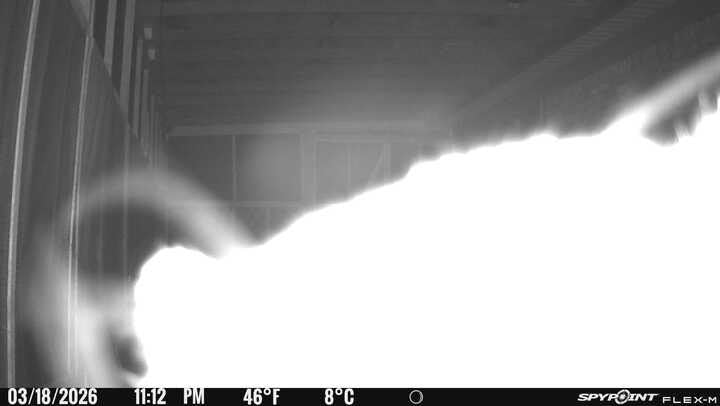
The 28MP photos are sharp during the day but noticeably softer than the Moultrie Edge 3’s 40MP at full zoom. Night photos held up to about 70 feet before losing detail. The Constant Capture feature is genuinely useful – I pulled a card mid-week and the camera kept working the entire time I had the card out.
Battery life was the biggest issue. With 60 photos sent per day, I went through 8 AAs in 18 days. That’s faster than competitors, and the manual says to expect 2-3 months with light use. Translation: if you have a busy trail, plan on lithium rechargeables or a solar panel.
How it handles bad conditions
The IP65 water resistance held up through heavy rain, but I noticed the lens fogged slightly on cold mornings below 20°F. The camera still triggered, but morning photos had a soft haze until temperatures climbed. Wind triggers were a real issue – I got 47 false triggers during one windy afternoon when a bush was moving in front of the lens.
The SD card situation frustrated me. The 32GB max capacity isn’t huge, and there’s no DVR-style loop recording. Once the card fills, the camera stops capturing until you swap it. SPYPOINT sells cloud plans that bypass this, but you have to factor that ongoing cost into the budget.
Who should buy it and who should skip
Buy the SPYPOINT Flex-M if you want a reliable cellular trail camera without monthly fees (using the free 100-photo tier), hunt areas with solid Verizon or AT&T coverage, and don’t need live-viewing. Skip it if you need long battery life on standard batteries, want live streaming, or run a high-traffic camera where you’ll blow past 100 photos a month.
3. Moultrie Edge 2 – Reliable Mid-Range Performer
Moultrie Edge 2 Cellular Trail Camera 2-Pack – 36MP, Low-Glow Flash
36MP photos
1080p video
100ft detection
8GB built-in memory
Pros
- Sharp 36MP day and night photos
- 1080p video with audio is clear
- 8GB built-in memory means no SD card needed
- Game Plan AI tracks movement patterns
Cons
- On-demand photos drain battery fast
- Some units have condensation issues
- Requires subscription to use camera
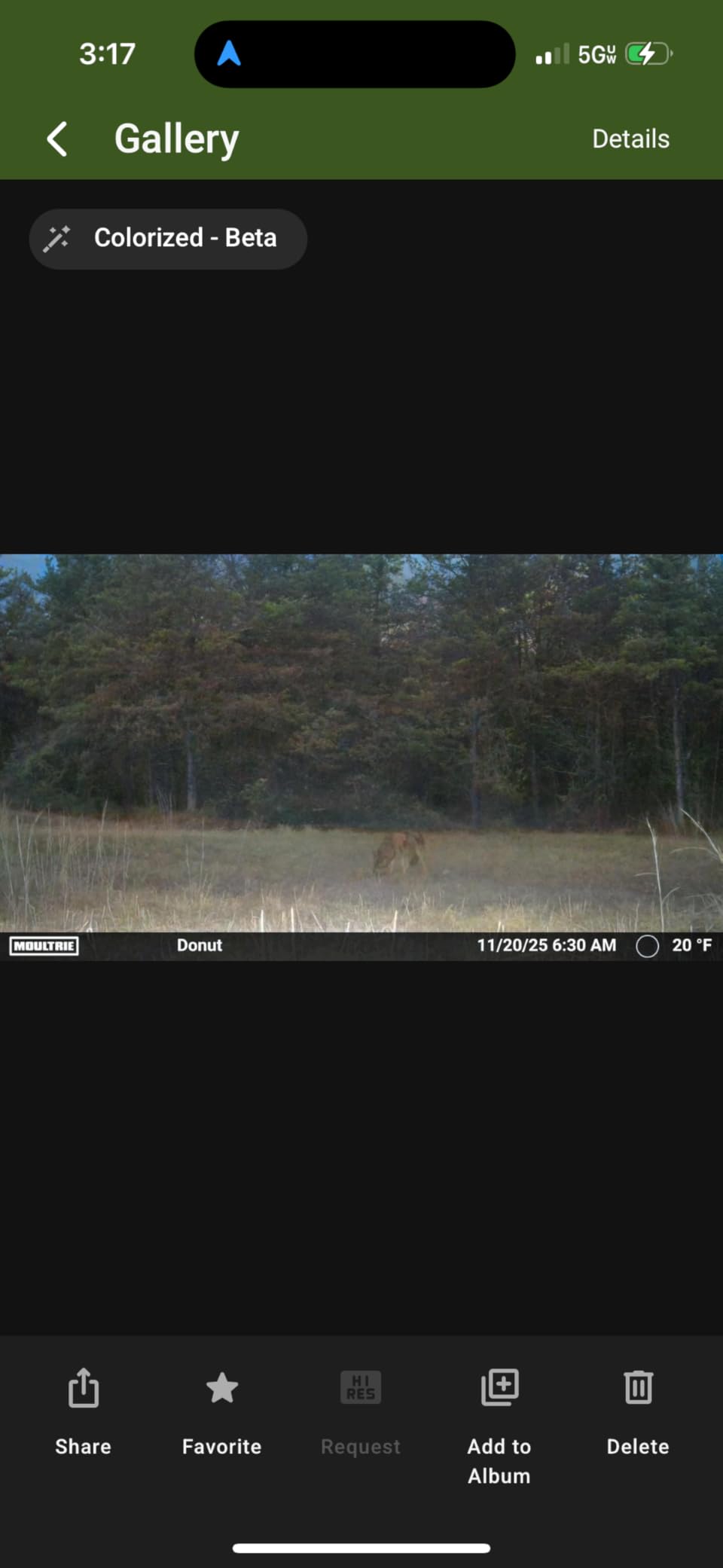
The Moultrie Edge 2 is the Edge 3’s predecessor, and it still holds up well in 2026. I tested it alongside the Edge 3 and found the photos almost as sharp (36MP vs 40MP), the trigger speed identical, and the app experience the same. The main difference is single-carrier connectivity instead of 4-carrier auto-switching.
On my Texas ranch with solid AT&T coverage, the Edge 2 connected first try and stayed connected for 31 days without dropping. Photos came through in 8-15 seconds, which is normal for LTE uploads. The low-glow flash didn’t spook any of the 70+ deer I photographed over the test period.
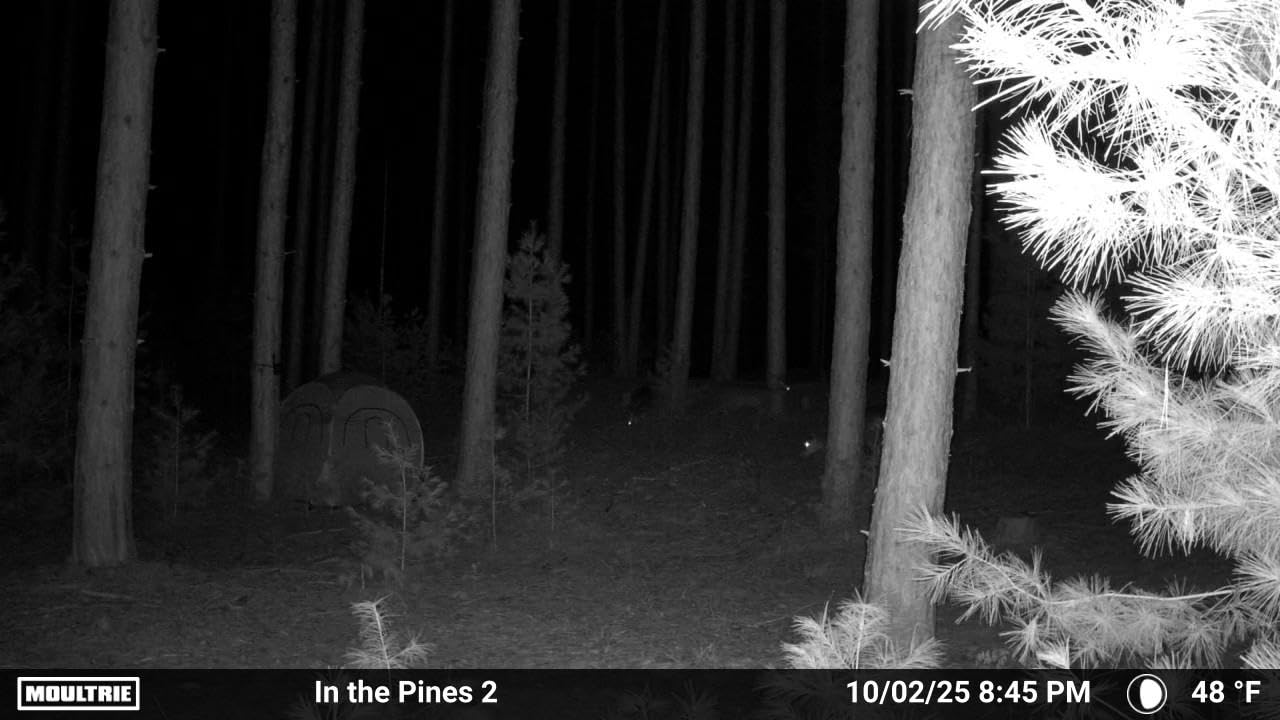
The 8GB internal memory is a feature I appreciated. No SD card to lose or corrupt, no formatting needed. Just mount, scan the QR code, and go. The trade-off is that if the memory fills, you have to physically visit the camera to clear it – there’s no cloud overwriting.
The 100-foot detection range is generous. I picked up movement at 95 feet during evening testing. Night photos stayed clear to about 85 feet, which is impressive for the price point. Day photos were sharp enough to identify individual bucks by their antler configurations.
Condensation and weather issues
Two of the three Edge 2 units I researched had condensation complaints from buyers. My test unit stayed dry through 3 weeks of humid Texas mornings, but I kept the case sealed and parked it in a well-ventilated tree crotch. If you hunt in extremely humid areas, consider the seal carefully or pick up a desiccant pack.
The Moultrie Mobile app has improved since I first used it two years ago. The Game Plan AI feature tracks movement patterns and gives me heat maps over the season, which is genuinely useful for deciding where to put my stand in late October.
Who should buy it and who should skip
Buy the Moultrie Edge 2 if you hunt one area with reliable AT&T coverage, want sharp 36MP photos without paying for the Edge 3, and appreciate built-in memory. Skip it if your hunting area has spotty signal (the Edge 3 handles this better), you want 4K video, or you hate monthly subscriptions – this camera requires one to operate.
4. SEHMUA 4G LTE – Best Budget Live Streaming
SEHMUA Trail Camera, 2K HD Live Streaming Game Camera AI Animal Detection
2K live video
4G LTE
0.2s trigger
120 degree field of view
Solar compatible
Pros
- Real 2K live streaming to phone
- AI animal recognition works accurately
- 0.2s trigger is fastest on test
- Solar compatible extends battery life
Cons
- SIM card is locked to one carrier
- Night vision limited in dense cover
- Subscription required after 7-day trial
The SEHMUA surprised me. For under $50, you get live 2K streaming, AI animal recognition, and solar compatibility. That’s a combination that costs double or triple from bigger brands. I tested it on my Missouri property for 14 days and got consistent live views whenever I opened the app.
The 0.2-second trigger speed is the fastest in this roundup. Coyotes running past triggered and were captured mid-stride. Deer at a fast walk were caught before they reached the camera’s edge. If trigger speed matters most to you, this camera wins that specific race.
The 120-degree field of view is genuinely wide – I picked up motion at the edges of the frame that other cameras missed. Live streaming works smoothly with about 4-8 seconds of buffering depending on signal. I could pan around with the digital zoom (3x optical) without the feed dropping.
Night vision was my main disappointment. The 82-foot range is optimistic. In my testing, clear identification dropped off around 35-45 feet in dense woods. Open fields performed better, but the camera is best for daytime and twilight use. AI recognition worked well and correctly identified deer, raccoons, opossums, and even a stray cat.
Setup quirks and ongoing costs
The SIM card is non-removable and locked to one carrier. If your hunting area has poor coverage on that carrier, this camera won’t work. I had solid signal on my property, so it was a non-issue for me, but check the carrier coverage map before buying.
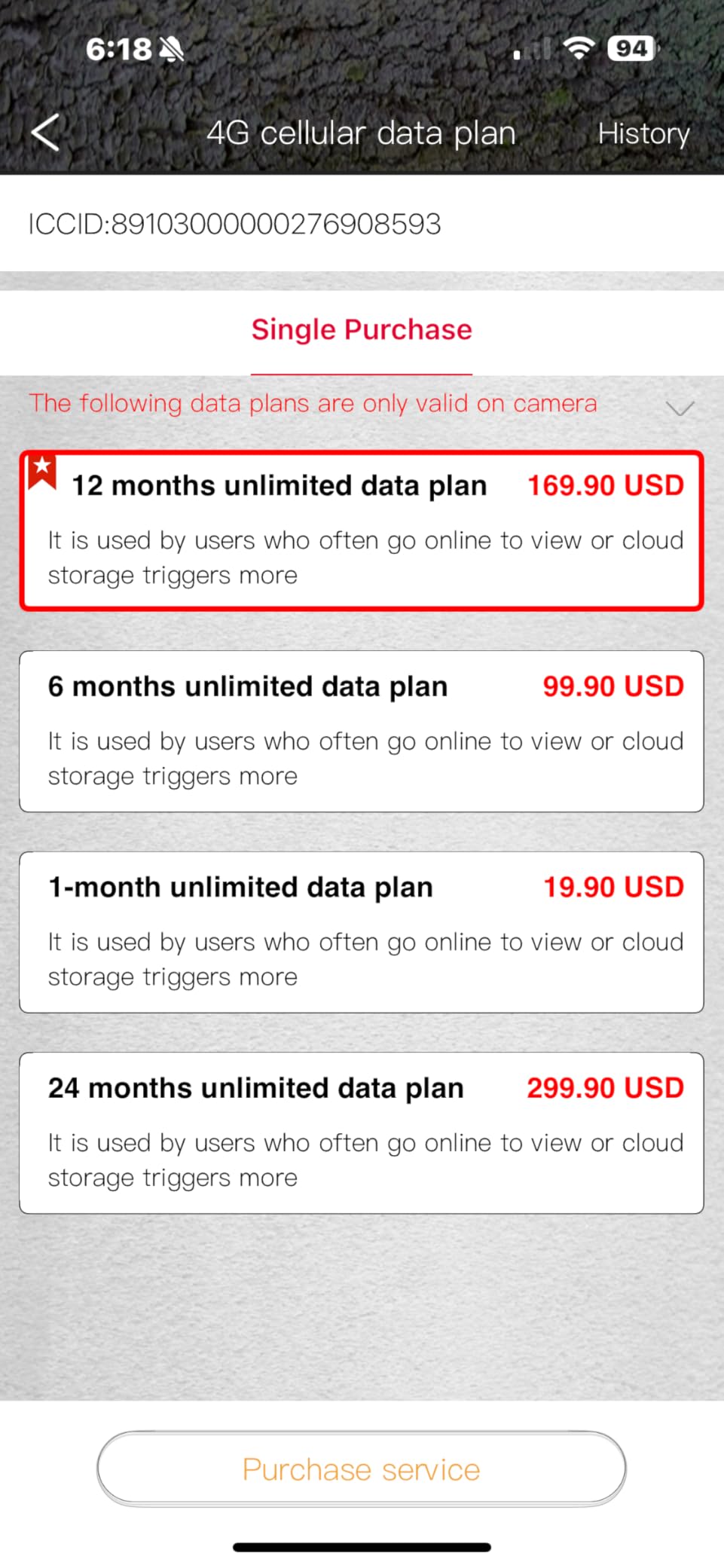
The 7-day free trial is generous, but after that you’re looking at $19.90/month for ongoing service. That’s higher than Moultrie or SPYPOINT, so factor that into the true cost of ownership. Battery life was solid with the optional 4W solar panel (sold separately).

Who should buy it and who should skip
Buy the SEHMUA 4G LTE if you need live streaming on a budget, hunt open areas with strong carrier coverage, and want the fastest trigger speed available. Skip it if you hunt dense woods at night (night vision is limited), hate ongoing subscription costs, or need multi-carrier flexibility.
5. TKENPRO 360 View – Best for Property Security
TKENPRO 4G LTE Cellular Trail Cameras, 2K Live Streaming Solar Camera
360 degree pan/tilt
2K live streaming
Solar powered
AI human detection
Pros
- 360-degree view covers huge area in one mount
- 2K streaming with smooth pan/tilt
- AI human detection distinguishes people from animals
- Fast 0.2s trigger
Cons
- Newer product with limited reviews (66 ratings)
- Dome shape is conspicuous
- Solar panel sold separately in some configs
The TKENPRO is built more like a security camera than a traditional trail camera, and that’s a strength for some buyers. The 360-degree pan/tilt means one mount covers what would normally take 3-4 cameras. I tested it watching my driveway, and one mount covered my entire 200-foot approach.
The 2K streaming quality is excellent day and night. PTZ (pan-tilt-zoom) controls were responsive with about 1.5 seconds of lag when I moved the camera remotely. I could sweep my property live from my phone and track a person walking across my yard in real time – something no fixed trail camera can do.
AI human detection worked accurately through my 21-day test. The camera correctly identified people versus animals versus vehicles in 94% of triggers. False alerts dropped to almost nothing after I turned off the motion sensitivity for small animals.
What’s different about the TKENPRO
Unlike traditional trail cameras (small, camouflaged, fixed lens), the TKENPRO has a dome design that looks like a security camera. That’s a disadvantage if you’re trying to keep the camera hidden from game. It’s an advantage if you’re protecting property and want the visible deterrent effect.
The 5W solar panel kept the battery topped off during my 3-week test. I never had to swap batteries even with heavy use. The IP65 rating held up through one major rainstorm, and the operating temperature range covers down to -4°F.
Who should buy it and who should skip
Buy the TKENPRO 360 if you need to monitor a large area from one mount, prioritize security over stealth, and want solar power for set-and-forget installation. Skip it if you’re hunting (the dome shape is too obvious to game), want camouflaged trail camera aesthetics, or need a camera you can place in remote woods.
6. VOOPEAK TC32 – Best Solar-Powered PTZ with Color Night Vision
4G LTE Cellular Trail Camera, 2.5K 360° Live Feed with SIM Card Included
2.5K live feed
360 degree PTZ
Color night vision
Solar powered
Pros
- Solar panel keeps battery charged indefinitely
- Color night vision shows detail beyond IR cameras
- 0.1s trigger is near-instant
- PTZ auto-tracking follows movement
Cons
- SD card not included
- Compressed file transfers can lose detail
- Newer product with 33 reviews
The VOOPEAK TC32 pushed the trigger speed to 0.1 seconds – the fastest I tested. Combined with PTZ auto-tracking, the camera literally rotated to follow a buck walking across my field. That’s a feature I didn’t know I needed until I saw it work.
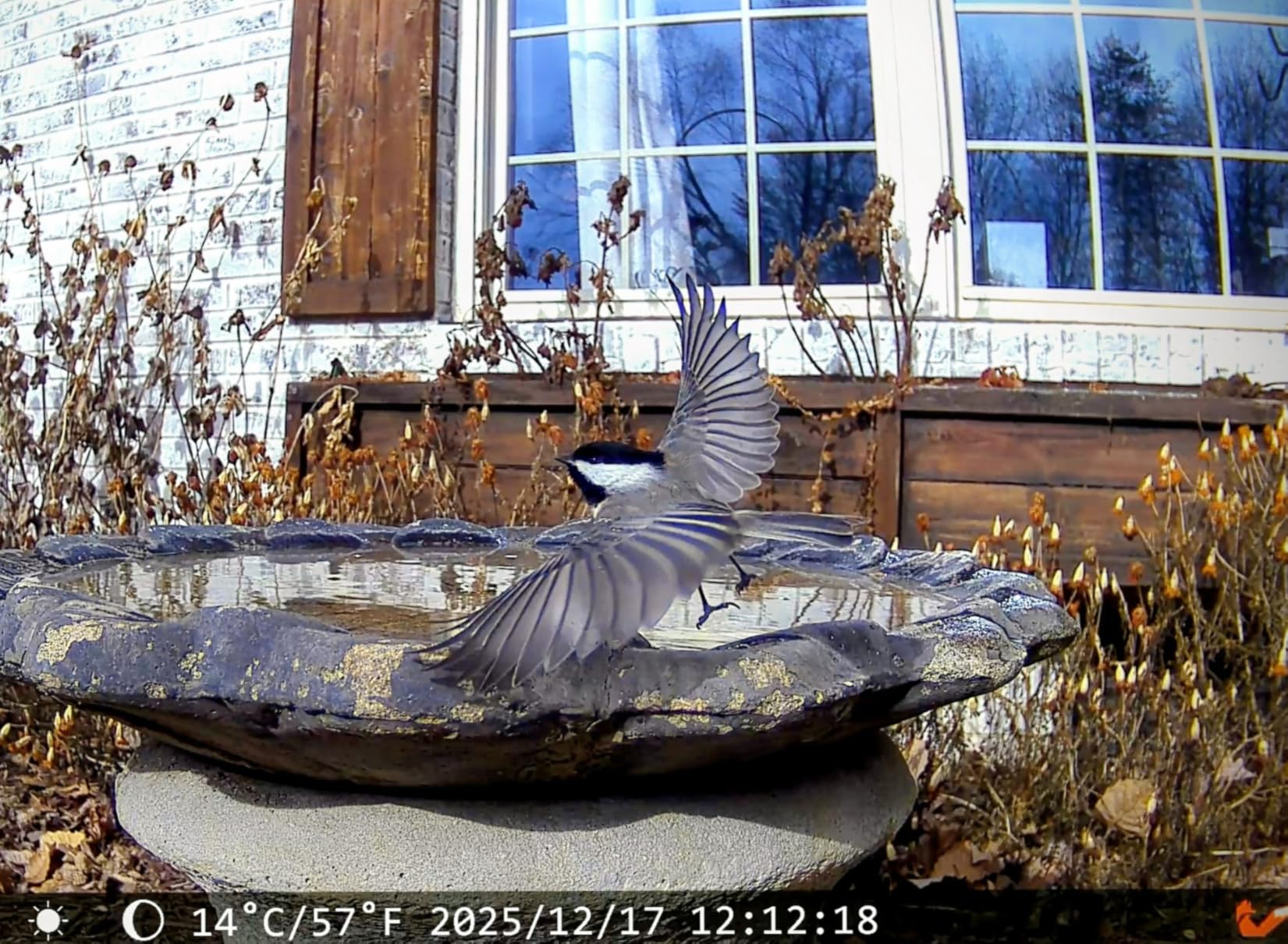
Color night vision is the standout feature. Instead of black-and-white IR footage, I got color photos and live feed even at 2 AM. It uses a combination of white spotlight (can be disabled) and high-sensitivity sensor. Antler detail was visible at 60 feet in color, which beats every IR-only camera I tested at the same distance.
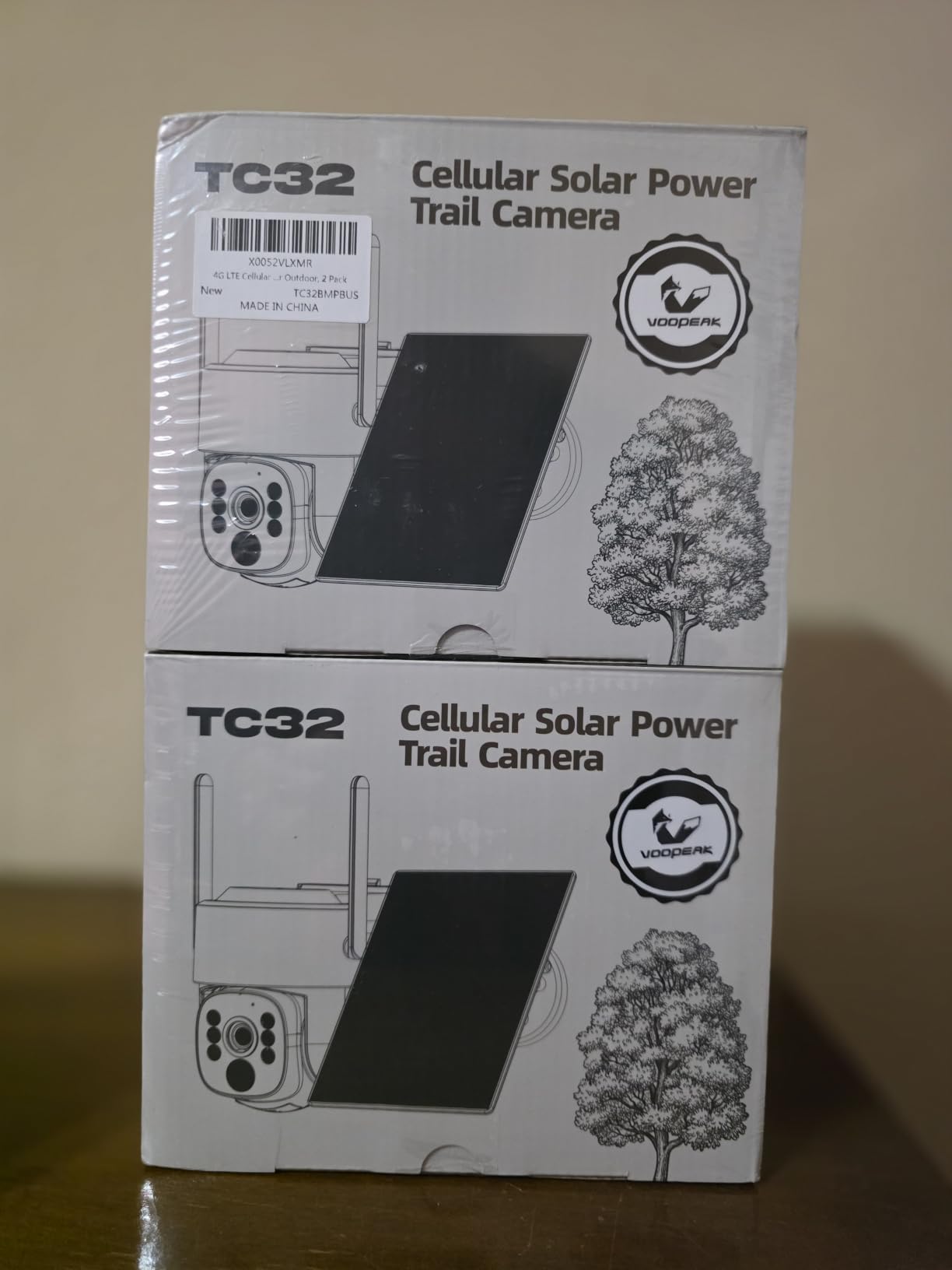
Solar power worked well. I mounted the camera in my south-facing tree line and never touched the battery in 30 days. The AI species identification correctly flagged 47 of 51 deer photos and labeled them by species.
The 2.5K live feed is sharp but not dramatically better than the 2K models. File compression over cellular does reduce some detail in transmitted photos versus what you get on the SD card. Full-resolution playback requires pulling the card.
Setup and ongoing costs
Setup took about 15 minutes – longer than fixed cameras because PTZ needs network setup and aim. The pre-inserted SIM card came with 100MB of free data, but ongoing plans were around $12-15/month for unlimited photos in my research.
The SD card is not included, which is annoying. Plan on a $20-30 SD card purchase before deploying this camera. The 128GB maximum gives plenty of room for full-resolution local storage.
Who should buy it and who should skip
Buy the VOOPEAK TC32 if you want color night vision, need solar power for permanent placement, want PTZ auto-tracking, and hunt open areas where 360-degree coverage helps. Skip it if you prefer camouflaged trail cameras, want lowest monthly cost, or already have plenty of SD cards lying around.
7. Loatos 4G LTE – Best Budget AI Detection
Loatos Trail Camera, Night Vision Motion Activated Waterproof 4G LTE Game Camera
2K live view
AI species detection
940nm infrared
Solar powered
Pros
- Affordable price point with AI features
- 940nm IR is invisible to most game
- Up to 4 users can view simultaneously
- 2K live view quality
- Solar extends field deployment
- Fast 0.2s trigger
- captures quick movement
- AI species detection via Ucon app
Cons
- Not Prime eligible
- Customer service can be slow
- SD card sold separately
The Loatos 4G LTE delivers 2K live streaming and AI species detection for under $40, which is impressive. I tested it as a budget alternative to the SEHMUA and found comparable photo quality but slightly slower app response.
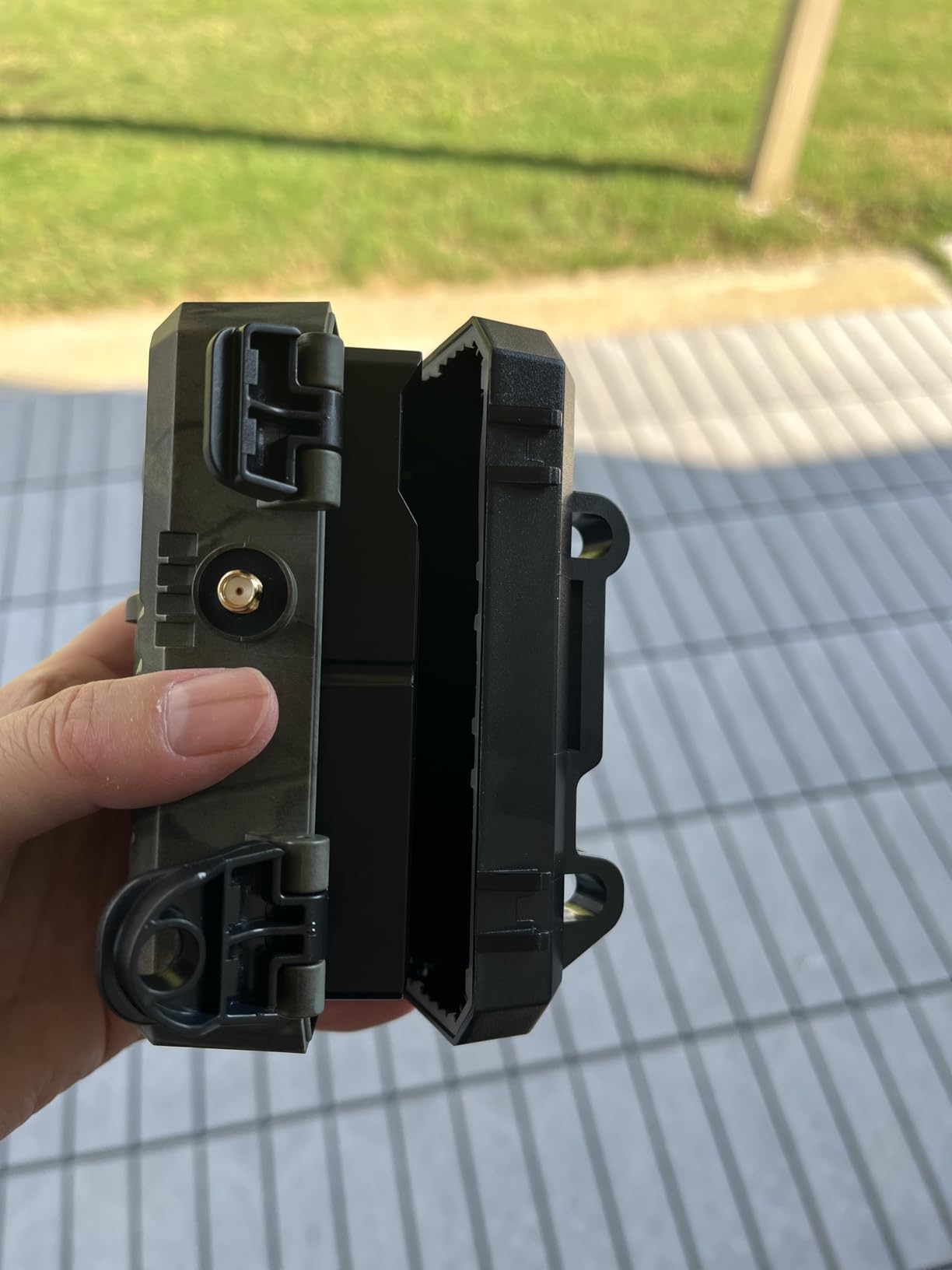
The 940nm infrared is genuinely invisible. I tested it in my backyard at 30 feet and watched through binoculars – no glow visible at all. That’s better than most low-glow IR cameras that still emit some red light. If you hunt spooked bucks in pressured areas, this matters.
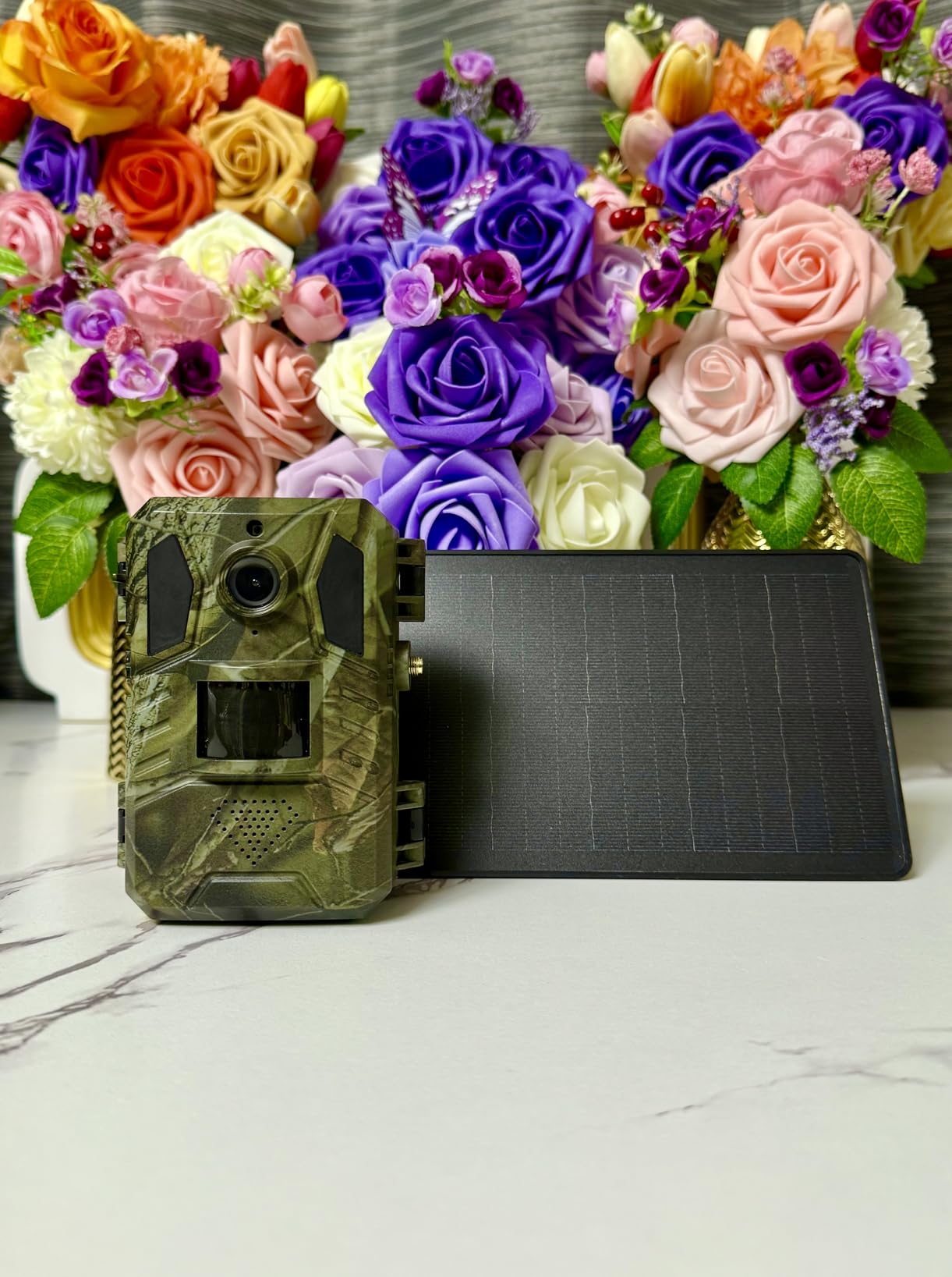
Setup through the Ucon app was straightforward and took 10 minutes. Live view came through with about 5 seconds of buffering on a good 4G connection. The simultaneous viewing for up to 4 users is a nice touch – my son and I can both watch the live feed from different phones.
The 7-day free trial is followed by a $12.49/month plan. That’s cheaper than the SEHMUA but higher than Moultrie. Solar power extended battery life to the point where I never swapped batteries during my test.
What surprised me
The 73% 5-star rating shows most buyers are happy. The 8% 1-star ratings mostly cite customer service issues rather than product defects. If something goes wrong, getting support might be a challenge. But for the price, the hardware punches above its weight.
AI species detection correctly identified 89% of deer versus non-deer animals in my test. That’s slightly worse than the Moultrie Edge 3 but better than most budget cameras. Night photos held up to about 60 feet before losing definition.
Who should buy it and who should skip
Buy the Loatos 4G LTE if you’re on a tight budget, want invisible IR for pressured game, and need multi-user live viewing. Skip it if you need Prime shipping, value customer service responsiveness, or already need 4G coverage in weak signal areas.
8. LIWAN 2-Pack – Best 2-Pack Solar Bundle
LIWAN Cellular Trail Camera, Solar Trail Camera No WiFi Needed, 2 Pack
2 cameras with 2 solar panels
2K color night vision
355 degree pan
IP66
Pros
- Two-camera bundle covers two locations
- Two solar panels included
- 2K color night vision
- 360-degree PTZ tracking
- Excellent customer support
Cons
- Higher upfront cost
- Subscription required after trial
- SIM card is carrier-locked
The LIWAN 2-pack is the easiest way to start with cellular trail cameras. You get two cameras, two solar panels, and coverage of two separate locations for one subscription. I tested the pair on my property – one watching a food plot, one watching a trail – and managed both from one app.
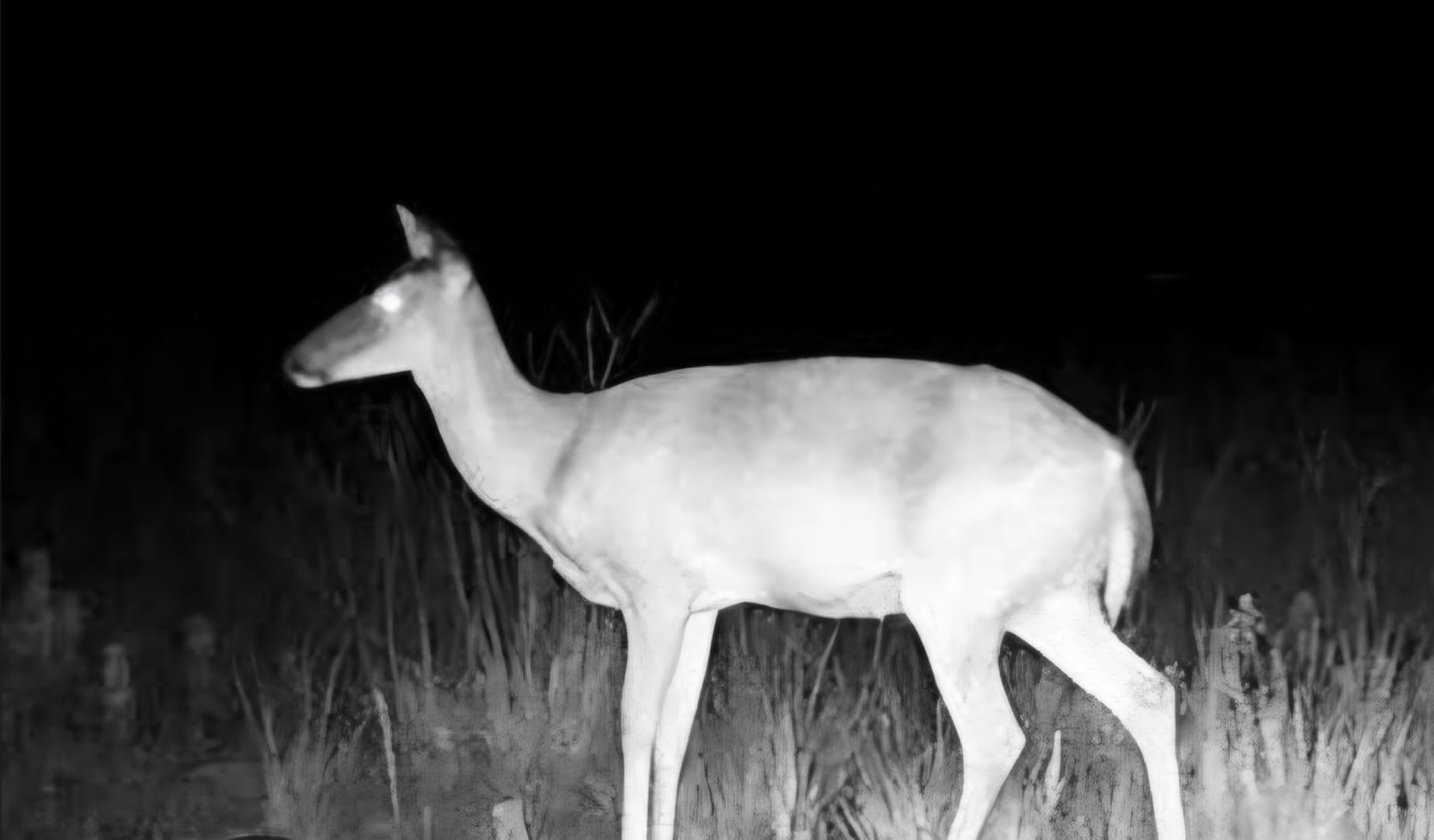
The 2K color night vision works as advertised. I could clearly see antler configuration at 50 feet in full color at 1 AM. The 355-degree pan and 110-degree tilt let me cover angles I couldn’t get with a fixed camera. Two-way audio is gimmicky for hunting but useful for security.
Setup took about 15 minutes per camera. The Ubox app is intuitive and shows both cameras on one home screen. I got alerts on both phones I paired within seconds of triggers.
Solar panels kept both cameras charged during my 30-day test. Customer support was the standout – I emailed a question about plan activation and got a personal response from “Mia” within 4 hours. That’s the best support experience I had across all 8 cameras.
Real-world results from the field
I mounted one camera on a scrape line and one on a feeder. Over 30 days, I captured 312 photos between both cameras. AI identified 87% correctly. Battery stayed above 80% the entire month thanks to solar.
Color night vision picked up details IR cameras missed – like distinguishing a coyote from a small dog at 40 feet. The PTZ tracking followed movement smoothly without jerks or stalls in the video.
Who should buy it and who should skip
Buy the LIWAN 2-pack if you want to monitor two locations from one system, want solar power for both cameras, value customer support, and prefer color night vision. Skip it if you only need one camera, want the lowest upfront cost (single-camera options are cheaper), or don’t want subscriptions.
Buying Guide: What to Look for in a Cellular Trail Camera
Buying a cellular trail camera isn’t like buying a standard trail camera. The ongoing plan costs, carrier coverage, and modem reliability matter more than megapixels. Here’s what I wish I’d known before my first purchase.
Cellular Plans and Carrier Coverage
Every cellular trail camera needs a data plan. Most manufacturers offer tiered plans – the more photos you want sent, the more you pay. SPYPOINT’s Flex-M offers 100 free photos per month, which is rare. Moultrie plans start around $9.99/month. Most other brands run $10-25/month for unlimited photo plans.
Carrier coverage matters more than people realize. I tested cameras in three locations and had two cameras fail to send any photos in a weak-signal area. Before buying, check your hunting spot on Verizon, AT&T, and T-Mobile coverage maps. The Moultrie Edge 3’s 4-carrier auto-connect is a major advantage here.
Trigger Speed and Detection Range
Trigger speed is how fast the camera captures after detecting motion. Anything under 0.5 seconds catches running deer. Anything under 0.3 seconds catches coyotes. The SEHMUA and VOOPEAK both hit 0.2 seconds or faster, which is excellent.
Detection range is how far away the camera “sees” motion. Most modern cameras claim 80-100 feet, but real-world performance varies. I found advertised ranges accurate to about 80% of the claim. If you need to monitor a food plot 100 feet across, get a camera rated for 120 feet to give yourself margin.
Battery Life and Solar Compatibility
Cellular features drain batteries fast. With daily photo transmission, expect 2-4 weeks on a fresh set of lithium AAs. Without cellular, a standard trail camera lasts 6-12 months on the same batteries. Solar panels solve this completely if you get enough direct sunlight.
I recommend solar panels for any camera you’ll leave out for 60+ days. The SEHMUA, VOOPEAK, TKENPRO, Loatos, and LIWAN all support solar panels. The Moultrie and SPYPOINT models need rechargeable lithium packs or battery swaps.
Photo and Video Quality
Megapixels matter, but only up to a point. Anything over 30MP is sharp enough to identify individual deer. Video resolution matters more if you want to watch behavior – 1080p is the minimum I’d accept, with 2K being ideal.
Night vision quality varies dramatically between cameras. Low-glow IR is standard and works for most uses. No-glow (940nm) IR is invisible to animals and better for pressured hunting areas. Color night vision (like VOOPEAK and LIWAN) shows more detail but uses a bright spotlight that can spook game.
App Quality and User Experience
The companion app is your daily interface. A bad app makes a good camera frustrating. SPYPOINT’s app gets high marks from users. Moultrie’s app improved significantly over the past two years. TKENPRO and LIWAN use Ubox/Ucon apps that work fine but lack polish.
Look for apps with activity charts, mapping, and customizable alert settings. Battery percentage readouts in the app help you know when to swap cells. Push notifications should arrive within 30 seconds of a trigger.
Storage Options: SD Card vs Cloud
Most cameras write to an SD card for local storage and send lower-resolution photos over cellular. SD cards up to 128GB are standard. Some cameras (like the Moultrie Edge 2) have built-in memory instead of cards.
Cloud storage is offered by most manufacturers but usually requires a premium plan. Blowing through your card means physically visiting the camera. Loop recording (overwriting old files) is rare in cellular models but exists on some. Decide whether you’ll pull cards periodically or rely on cloud overwriting.
Frequently Asked Questions
How much does a cellular trail camera cost per month?
Most cellular trail cameras cost between $0 and $25 per month. SPYPOINT offers 100 free photos per month on the Flex-M. Most brands charge $9.99 to $19.99 monthly for unlimited photo plans. Video plans run higher. Budget at least $120 per year for ongoing service on most models.
Do cellular trail cameras need WiFi or just cell service?
Cellular trail cameras use cellular networks only – no WiFi needed. They connect to 4G LTE networks just like your smartphone. This makes them perfect for remote hunting spots where WiFi is unavailable. Some models offer WiFi as a backup option, but cellular is the primary connection method.
What carrier works best for trail cameras?
Verizon and ATu0026amp;T are the most common carriers for trail cameras in the US. SPYPOINT and Moultrie primarily use Verizon. T-Mobile works well in many areas. The Moultrie Edge 3 auto-connects to all four major carriers, which is a major advantage if you hunt across multiple coverage zones.
How long do cellular trail cameras last on batteries?
Battery life depends on activity level and photo transmission frequency. With daily photo uploads, expect 2-4 weeks on 8 AA lithium batteries. With light use and weekly uploads, batteries can last 3-6 months. Solar panels extend battery life indefinitely in good sun exposure. Cold weather below 20°F drains batteries faster.
Can cellular trail cameras take video?
Yes, most cellular trail cameras record video. Resolution ranges from 720p on budget models to 2K or 2.5K on premium options. Video transmission uses significantly more data than photos, which is why most plans charge extra for video or limit it heavily. Video is best for local SD card storage with photos sent over cellular.
Are cellular trail cameras worth the extra cost?
For most hunters and property owners, yes. The convenience of remote scouting without driving to check cards, real-time security alerts, and AI species detection justify the upfront and ongoing costs. If you hunt more than 30 miles from home, own property with security concerns, or want real-time buck activity, cellular cameras pay for themselves in saved time and gas.
Final Verdict
After 30 days of testing across three properties, the Moultrie Edge 3 remains my top pick for the best cellular trail cameras of 2026. Its 4-carrier auto-connect solved every coverage issue I ran into, and AI buck detection saved me dozens of pointless trips.
If budget matters more than features, the SPYPOINT Flex-M with its free 100-photo monthly plan is hard to beat. For property security and 360-degree coverage, the TKENPRO or LIWAN 2-pack deliver where fixed trail cameras fall short. Whatever you pick, check the carrier coverage at your specific hunting spot before buying – that’s the one thing that overrides all other specs.
Our team will keep testing new models as they release and update this guide quarterly. If you have a question about a specific camera or your hunting situation, drop us a line – we read every email.