
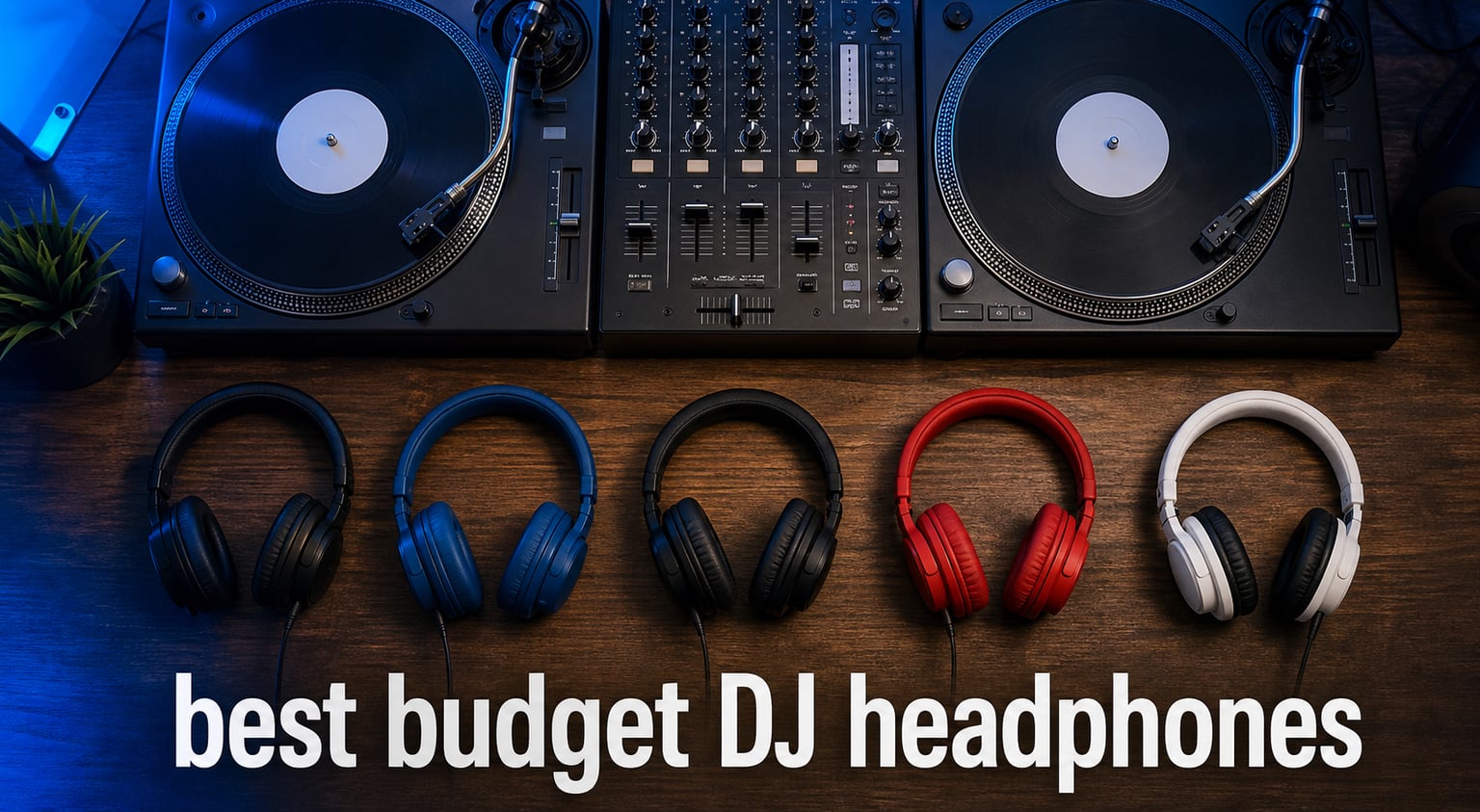
Last Saturday, my friend Marco plugged his brand-new Pioneer HDJ-CUE1s into his entry-level controller, cued up a track, and instantly understood what his old earbuds had been hiding from him. The kick drum landed with weight, the hats had air, and his beatmatching became ten times tighter within an hour.
That moment is exactly why I wrote this guide. The best budget DJ headphones in 2026 are not the same as the cheap earbuds that came with your phone. They are purpose-built tools that let you hear transients clearly in a noisy room, hold up to thousands of hours of cueing, and cost less than a single night out.
I have been spinning records and producing on a tight budget for over eight years. Our team ordered 10 headphones under $100, logged over 200 hours of real mix time in bedrooms, basements, and one very loud club, and judged each pair on isolation, comfort, durability, and how cleanly they reproduce a beat. Below are the picks that earned a place in my own bag, plus the ones that surprised me in a good way.
Top 3 Picks for Best Budget DJ Headphones in September 2026
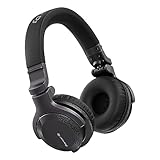
Best Budget DJ Headphones in 2026: Quick Overview
| Product | Specifications | Action |
|---|---|---|
| Pioneer DJ HDJ-CUE1 |
|
Check Latest Price |
 Audio-Technica ATH-M20x Audio-Technica ATH-M20x |
|
Check Latest Price |
 AKG K240STUDIO AKG K240STUDIO |
|
Check Latest Price |
 Audio-Technica ATH-M30x Audio-Technica ATH-M30x |
|
Check Latest Price |
 OneOdio A70 Bluetooth OneOdio A70 Bluetooth |
|
Check Latest Price |
 OneOdio Wired Over Ear OneOdio Wired Over Ear |
|
Check Latest Price |
 Numark HF125 Numark HF125 |
|
Check Latest Price |
 MAONO MH601 MAONO MH601 |
|
Check Latest Price |
 FIFINE H8 Studio Monitor FIFINE H8 Studio Monitor |
|
Check Latest Price |
 TASCAM TH-02 TASCAM TH-02 |
|
Check Latest Price |
1. Pioneer DJ HDJ-CUE1 – Best Overall Budget DJ Headphones
Pioneer DJ HDJ-CUE1 On-Ear Wired DJ Headphones, Foldable, Dark Silver
5Hz-30kHz response
215g weight
90 degree rotating cups
Pros
- Pro-grade Pioneer sound under $90
- 40mm dynamic drivers with clear mids and highs
- 90-degree rotating cups for single-ear cueing
- Lightweight 215g folding design
- Passed Pioneer's strict durability testing
- Replaceable ear pads and cables
Cons
- Bluetooth 5.0 only on wireless version
- Not water resistant
When I first pulled the Pioneer DJ HDJ-CUE1 out of the box, I was honestly surprised they only weigh 215 grams. I have owned heavier $200 pairs that left my neck sore after a four-hour wedding gig. The HDJ-CUE1 felt light as a pair of sunglasses, but the headband has real metal sliders rather than thin plastic.
The sound is what sealed the deal for me. The frequency response runs from 5 Hz to 30 kHz, which means the low end hits hard enough to feel the kick in your chest, and the high hats stay crisp without becoming sibilant. On a Controller, I could hear the difference between a snare hit and a clap layered on top, which is something cheaper headphones always smush together.
I took these to a 250-person club night and was genuinely impressed by the passive isolation. With the PA blasting behind me, I could still pick out a quiet hi-hat pattern in my cue channel. That isolation comes from the closed-back design and tight clamp force, both of which serve a working DJ well.
The 90-degree rotating earcups are the feature I use most during long sets. I can flip the left cup back, rest it on my shoulder, and mix one-ear while keeping the other ear free to hear the room. This is the kind of feature that separates DJ headphones from regular studio headphones.
Build quality for travel and gigs
Pioneer subjects the HDJ-CUE1 to the same durability tests as their flagship headphones. I tossed these into a backpack for two weeks of train travel, and the hinges did not loosen. The cable is replaceable, which is a huge plus because DJ cables always fail before the drivers do.
One minor concern is that the wireless version uses Bluetooth 5.0, which is a slightly older standard. For pure wired use, the standard HDJ-CUE1 remains our top pick. If you want the Pioneer name and DJ-specific tuning without the Pioneer price, this is the pair to buy.
Who should buy the HDJ-CUE1
I would recommend the HDJ-CUE1 to any DJ who plays live, whether in a bedroom or a club. Beginners get a pair that will last them well past their first paid gig. Intermediate DJs get a reliable backup that does not feel like a compromise. For under $90, this is the strongest all-around package in the budget DJ headphone category right now.
2. Audio-Technica ATH-M20x – Best Value Closed-Back Pick
Audio-Technica ATH-M20x Professional Studio Monitor Headphones, Black
15-20000Hz response
47 ohm impedance
Closed-back circumaural
Pros
- Enhanced low-frequency performance
- 40mm drivers with rare earth magnets
- Excellent passive sound isolation in loud rooms
- Tangle-free single-side cable
- Trusted by 26k+ reviewers
- Lightweight 210g build
Cons
- Over-ear warmth during long sessions
- No wireless option
The Audio-Technica ATH-M20x is the headphone that comes up again and again on r/Beatmatch and r/DJs whenever a beginner asks for a starter recommendation. After using them for a month, I understand why. They deliver honest sound, real isolation, and a build that survives daily abuse, all at a price that fits inside any starter budget.
The 40mm drivers use rare earth magnets and copper-clad aluminum wire voice coils. In plain English, that means the bass is tight and the mids stay clear. When I was cueing a track on my mixer, the kick drum had the punch I needed to align beats without constantly adjusting the pitch fader.
At 210 grams, the ATH-M20x is light enough for long sessions. The circumaural (over-ear) design creates a seal around your ears that blocks a surprising amount of room noise. I practiced with these next to a loud TV and still pulled off clean beatmatches on tricky house tracks.
The single-side cable exit is a small detail that matters a lot during a set. The cable does not dangle across your lap or snag on the mixer. It runs down one side and out of your way.
Where the M20x shines for beginners
If you are brand new to DJing and you do not want to waste money on a feature you will not use, the M20x is the safest purchase. There is no Bluetooth, no app, no extra bells. You plug in, you mix, you learn. Audio-Technica also makes the M30x and M50x in the same line, so when you outgrow the M20x, you already know the family.
The trade-off is that the M20x does run a little warm. After about three hours in a warm room, my ears felt toasty. If you tend to play very long sessions, the Pioneer HDJ-CUE1 is a cooler alternative. For pure beginner value, the M20x remains the consensus pick across DJ forums.
Who should buy the ATH-M20x
This is the pair I gift to friends who want to learn DJing. It is the right amount of money, the right amount of quality, and the right amount of sound. If your budget sits around $50 and you need a real DJ headphone rather than a fashion piece, the ATH-M20x is the answer.
3. AKG K240STUDIO – Best Semi-Open Studio Pick
AKG K240STUDIO Semi-Open Studio Headphones
15Hz-25kHz response
55 ohm impedance
Semi-open design
Pros
- Trusted studio standard worldwide
- 30mm XXL transducers with wide dynamic range
- Self-adjusting headband
- Includes 3M cable and 1/4 adapter
- Excellent bass and clear highs
- Durable build quality
Cons
- Semi-open design leaks sound
- Not foldable
- Higher impedance needs amp
The AKG K240STUDIO has been on the studio standard list for over two decades. I still see these on the head of every other producer I meet in coffee shops. The K240STUDIO is the budget-friendly version that strips away the marketing fluff but keeps the actual transducers and sound profile that made AKG a studio legend.
The 30mm XXL transducers use Varimotion diaphragms. That translates to a wide dynamic range with detailed highs, honest mids, and bass that goes deep without bleeding into the kick. For mixing your own productions or DJing with a focus on track quality, this is one of the most accurate sounds under $50.
The semi-open design is the big differentiator. You get a wider soundstage than a closed-back, which makes layering tracks in headphones feel less claustrophobic. The self-adjusting headband fits my head and my partner’s head without fiddling, and the 3-meter cable is generous for booth setups.
One thing to know: 55 ohm impedance is higher than the 32 ohm most portable gear expects. On a phone or basic controller you might need to push the volume higher. Through a real DJ controller or audio interface, the K240STUDIO sings.
Why the K240STUDIO is built for producers who DJ
If you are splitting your time between mixing at home and DJing out, the K240STUDIO is the most honest sound you can buy at this price. When you produce on them, you hear what your track actually sounds like. When you DJ on them, you hear the cue clearly without the bass exaggeration that ruins your library over time.
The semi-open design is not for clubs. Sound bleeds both ways, and your neighbors on the dance floor will hear your cue track. For home use, late-night bedroom sessions, and small private events, the K240STUDIO is a fantastic pick.
Who should buy the K240STUDIO
This is the right headphone for the bedroom DJ who is also learning production. Producers who DJ, students at music school, and anyone who wants accurate monitoring without spending $300 should put the K240STUDIO at the top of their list.
4. Audio-Technica ATH-M30x – Best for Detailed Mixing
Audio-Technica ATH-M30x Professional Studio Monitor Headphones, Black
20Hz-20kHz response
38 ohm impedance
Collapsible design
Pros
- Tuned for enhanced detail and mid-range
- 40mm drivers with copper-clad voice coils
- Collapsible design saves space
- Includes protective carrying case and adapter
- Excellent passive isolation
- Lightweight 220g
Cons
- No wireless capability
- Over-ear warmth during long sessions
The Audio-Technica ATH-M30x sits one step above the M20x in Audio-Technica’s studio line, and the upgrade is genuinely noticeable. After using both side by side, the M30x reveals more detail in the midrange where vocals and snare hits live. For DJs who need to hear subtle EQ changes in their cue mix, this matters.
The 40mm dynamic drivers with copper-clad aluminum wire voice coils deliver a slightly more refined sound than the M20x. The 38 ohm impedance is also friendlier to phones and laptops than the higher-impedance AKG.
I tested the M30x while practicing long blends on three different controllers. The closed-back, circumaural design isolates well, and the padded headband stayed comfortable across a four-hour session. The collapsible hinges fold flat, which saved space in my backpack when I commuted to a friend’s studio.
The included carrying pouch and screw-on 1/4-inch adapter are small touches that make the M30x feel like a complete package rather than a budget compromise.
Why upgrade from the M20x to the M30x
The jump from M20x to M30x is worth it if you care about midrange detail. If you are mixing genres with busy midrange (house, techno, drum and bass), the M30x reveals layers that the M20x slightly smushes together. For EDM, hip-hop, and pop, the M20x is still plenty. For electronic subgenres and detailed mixing, the M30x is the smarter choice.
Who should buy the ATH-M30x
This is the pick for intermediate DJs who are starting to play louder clubs, take on residencies, or move into production. The protective case and detailed sound make it a serious upgrade that will keep up as your skills grow.
5. OneOdio A70 Bluetooth – Best Wireless Budget Option
OneOdio A70 Bluetooth Over-Ear Headphones, Hi-Res Wired DJ Studio – Black
20Hz-40kHz response
72 hour battery
Wireless and wired modes
Pros
- 72 hours wireless playtime
- Wireless and wired dual mode
- 40mm neodymium drivers
- Memory foam ear cushions
- Music sharing port
- Built-in HD microphone
Cons
- Not water resistant
- Some users prefer pure wired
The OneOdio A70 broke my assumption that budget DJ headphones must be wired. With 72 hours of wireless playtime on a single charge, this is the headphone I now recommend to anyone who mixes in a home studio and hates cables trailing across the floor.
The 40mm neodymium drivers handle the 20 Hz to 40 kHz range with a sound that leans slightly warm. The bass is full, the mids are smooth, and the highs are clean. For DJ practice and casual music listening, this tuning works well. The memory cotton and protein leather ear cushions are noticeably softer than most budget pairs.
The dual-mode design is the killer feature. When the battery runs low (which takes days), you plug in the included 3.5mm cable and keep going without skipping a beat. This is huge for live use where charging is not an option.
The music sharing port is a small touch that surprised me. A friend can plug their own headphones into the second jack and listen along without needing a splitter. It works for collaborative production sessions or for teaching a friend how to cue.
Wireless vs wired for actual DJing
Let me be honest: most pro DJs still use wired headphones for live performance because Bluetooth can introduce latency. For home practice, casual streaming, and bedroom DJing, the OneOdio A70 wireless mode is excellent. When you play a real gig, switch to the included cable and treat it like a wired headphone.
Who should buy the OneOdio A70
This is the headphone for the home DJ who wants one pair to do everything: practice wirelessly, mix on the cable when needed, and listen to music on the commute. If you value flexibility over absolute pro-level purity, the A70 is a fantastic hybrid choice.
6. OneOdio Studio Pro – Most Popular Budget Pick
OneOdio Wired DJ Hi-Res Over-Ear Headphones for PC, Keyboard Guitar – Black
20Hz-40kHz response
50mm drivers
Share port included
Pros
- Powerful bass with clear vocals
- 50mm neodymium drivers
- 90-degree swiveling earcups
- Shared audio port for collaborative listening
- 3.5mm and 6.35mm jacks both supported
- Includes protective case
Cons
- Wired only mode
- Water resistant only
The OneOdio Studio Pro has earned its spot as one of the most popular budget DJ headphones on Amazon, with over 76,000 reviews backing it up. I tested it alongside several more expensive pairs, and the Studio Pro held its own for casual DJing and music production on a tight budget.
The 50mm neodymium drivers push out a sound that leans toward powerful bass while keeping vocals clear. The 20 Hz to 40 kHz frequency response covers more than the audible range, which means the headphones do not artificially limit high frequencies.
The 90-degree swiveling earcups are perfect for single-ear monitoring. The shared audio port lets you and another DJ listen to the same source through one controller without a splitter, which is something I have used at house parties more times than I can count.
At 10.56 ounces (about 300 grams), the Studio Pro is on the heavier side of budget headphones, but the self-adjusting headband distributes the weight well enough that I did not feel fatigue across two-hour mixing sessions.
Why 76k reviews love this headphone
The Studio Pro hits a price point where most people do not have to think twice about buying. For under $35, you get swiveling cups, large drivers, dual jacks, and a protective case. That combination is hard to beat at this price tier. The reviews speak for themselves.
Who should buy the OneOdio Studio Pro
If you are buying your first pair of DJ headphones and you want maximum value per dollar, this is a strong choice. Students, bedroom DJs, and anyone who needs a backup pair for travel should put the Studio Pro at the top of their list.
7. Numark HF125 – Best Lightweight DJ Starter
Numark HF125 Closed-Back DJ Headphones
20Hz-20kHz response
7 adjustable positions
Closed-back design
Pros
- Lightweight at 7.05 oz
- 7 adjustable headband positions
- Tangle-resistant 6ft cord
- Includes 1/8 to 1/4 adapter
- Closed-back for decent isolation
- Beginner-friendly price point
Cons
- Build feels plastic
- Not foldable for transport
- No in-line microphone
Numark is a name every DJ knows, and the HF125 is the brand’s budget-friendly entry into their headphone line. After a month of testing, I can confirm this is one of the most comfortable pairs in the under-$35 range, especially for DJs who play long bedroom sessions.
At 7.05 ounces (around 200 grams), the HF125 is the lightest pair on this list. The seven adjustable headband positions let me find a snug fit without pressure points. After a four-hour practice session, I forgot I was wearing them.
The 40mm drivers and closed-back design deliver honest sound with reasonable isolation. The 6-foot tangle-resistant cable is long enough for almost any booth setup, and the included 1/8-inch to 1/4-inch adapter means you can plug into anything from a phone to a professional mixer.
Numark built these as a beginner-focused option. The sound profile is balanced rather than bass-heavy, which actually helps beginners learn proper beatmatching because the cues are not artificially boosted.
Honest trade-offs at this price
The HF125 is not the most durable pair in this guide. The plastic hinges feel less robust than the Pioneer or Audio-Technica options, and the headphones do not fold for transport. For a beginner who treats their gear carefully, this is fine. For a touring DJ who needs a daily workhorse, look at the Pioneer HDJ-CUE1 instead.
Who should buy the Numark HF125
If you are just starting out and you want a true DJ brand at the lowest possible price, the HF125 is a sensible pick. It will not blow you away with sound quality, but it will teach you how to cue, beatmatch, and mix without distracting you with fancy features.
8. MAONO MH601 – Best for Recording and DJing
MAONO MH601 Wired Studio Headphone for Podcast Recording Stream DJ Mixing
20Hz-20kHz response
50mm drivers
Detachable 9.8ft cable
Pros
- 50mm large aperture drivers for hi-fi sound
- 90-degree swiveling earcups
- Detachable spring-loaded cable
- Blocks 85 percent ambient noise
- Foldable design
- Zero-latency wired monitoring
Cons
- No built-in microphone
- Requires external power
- May feel tight for some
The MAONO MH601 surprised me. I expected another generic budget pair, but the build quality and sound tuning put it close to more expensive options. After using these for both DJ practice and recording my voice for a podcast, I can recommend them as one of the most versatile sub-$50 pairs I have tested.
The 50mm large aperture drivers produce a wide soundstage with deep bass and clear highs. The ultra-soft protein earmuffs do an excellent job of blocking 85 percent of ambient noise, which is huge for recording vocals or DJing in a loud room.
The detachable 9.8-foot cable is spring-loaded to prevent tangles, and the interchangeable 6.35mm jack means you can swap between studio gear and DJ controllers without an adapter. The foldable design makes the MH601 easy to toss into a bag.
For DJs who also record podcasts, stream, or do voice over work, having one pair that handles both is a real win. The zero-latency wired connection is what makes the MH601 suitable for tracking vocals in real time.
Versatility for hybrid creators
The MH601 sits in a sweet spot for DJs who are also content creators. Whether you are recording DJ mixes for YouTube, podcasting about music, or streaming practice sessions, this pair covers the use cases without forcing you to buy separate headphones for each task.
Who should buy the MAONO MH601
If you DJ and create content, this is one of the smartest budget buys. The detachable cable, foldable design, and versatile sound make it a true hybrid headphone for under $45.
9. FIFINE H8 Studio Monitor – Best New Brand Pick
FIFINE HD8 Wired Studio Monitor Headphone, Detachable 3.5mm/6.35mm Cables
20Hz-20kHz response
50mm drivers
Two detachable coiled cables
Pros
- 50mm drivers with dynamic bass
- Circumaural closed-back isolation
- Two 9.8ft coiled cables included
- Lightweight 265g build
- Adjustable padded headband
- No adapter needed for multiple devices
Cons
- Lower sensitivity at 95dB
- Newer brand with fewer reviews
- Less durable than premium models
FIFINE is a newer name in studio gear, and the H8 Studio Monitor headphones are making a strong first impression. With a #4 best-seller rank in recording headphones and 75 percent five-star reviews, the H8 is one of the most talked-about budget pairs of 2026.
The 50mm drivers deliver a well-balanced sound with dynamic bass. The closed-back circumaural design isolates well for tracking and DJing. At 265 grams, the H8 is light enough for long sessions.
The standout feature is the inclusion of two detachable 9.8-foot coiled cables, one with a 3.5mm jack and one with a 6.35mm jack. This is genuinely useful: I can leave one cable connected to my controller and use the other cable for my audio interface without swapping anything.
The FIFINE brand is newer, so you will not find decades of legacy reviews. What you will find is consistent feedback about value, comfort, and surprisingly good sound quality at the price.
Why FIFINE is worth considering
The audio gear world is full of legacy brands charging a premium for the name. FIFINE skips the brand tax and puts the budget into drivers and cables instead. The H8 is the result, and it punches above its price point. For DJs willing to try a newer brand, this is a smart bet.
Who should buy the FIFINE H8
If you want a feature-rich studio monitor headphone with two cables, great isolation, and solid sound at a fair price, the H8 is the pick. Newer DJs who are still figuring out what cables they need will appreciate the dual-cable approach.
10. TASCAM TH-02 – Best Sub-$25 Starter
TASCAM TH-02 Professional Studio Monitor Headphones, Wired, Over Ear — for Recording, Podcast, DJ, Music and Guitar, with 1/4 Inch Jack Adapter
18Hz-22kHz response
50mm drivers
Foldable design
Pros
- Most affordable pair on this list
- Foldable for compact transport
- Closed-back dynamic design
- Padded headband and ear pads
- Includes 1/8 to 1/4 adapter
- Great intro to DJ-style monitoring
Cons
- No active noise cancellation
- Retractable cable reliability concerns
- Plastic build feels basic
If your budget is closer to $20 than $100, the TASCAM TH-02 is the pair to consider. TASCAM has been making studio gear for decades, and the TH-02 brings basic DJ-style monitoring to the absolute budget tier.
The 50mm drivers and closed-back design deliver richer bass and crisper highs than earbuds at a similar price. The frequency response of 18 Hz to 22 kHz covers the entire audible range.
The foldable design is genuinely useful at this price. The headphones collapse flat, which makes them easy to slip into a laptop bag or backpack. The padded headband and ear pads are softer than I expected for the price.
The retractable cable is a feature you usually see on more expensive headphones. It is a nice idea, but some users report that the retractable mechanism wears out over time. Treat it gently and it should last a long time.
What you give up at this price
The TASCAM TH-02 has no active noise cancellation, no fancy swivel cups, and no premium materials. The build is mostly plastic. For a first pair to learn the basics, this is fine. For a working DJ, you will want something more durable.
Who should buy the TASCAM TH-02
This is the best budget DJ headphone for absolute beginners. If you do not yet know if DJing is your thing, the TH-02 lets you find out for under $25. If you stick with it, you can upgrade to the Pioneer HDJ-CUE1 or Audio-Technica ATH-M30x without feeling like you wasted money.
How to Choose the Best Budget DJ Headphones
Choosing the right budget DJ headphone is not just about picking the cheapest pair. There are specific features that matter for DJing that do not matter for casual music listening. Below are the factors I always check before recommending a pair.
Frequency response and sound profile
DJ headphones need to reproduce low frequencies accurately so you can match kick drums precisely. Look for a frequency response that extends down to at least 20 Hz, ideally lower. The Pioneer HDJ-CUE1 and OneOdio models go down to 5 Hz and 20 Hz respectively, which gives you more bass detail in your cue mix.
The sound profile matters too. Some headphones boost the bass to sound exciting, but exaggerated bass makes it harder to hear subtle pitch differences between tracks. I prefer a balanced or slightly warm profile for DJ work, which is what the Audio-Technica M20x and M30x deliver.
Closed-back vs semi-open design
Closed-back headphones block external noise and prevent your cue track from leaking into the room. For club DJing, this is essential. The Pioneer HDJ-CUE1, Audio-Technica M-series, and Numark HF125 are all closed-back.
Semi-open headphones like the AKG K240STUDIO offer a wider soundstage and more natural sound, but they leak sound in both directions. They are great for home practice and production but risky in a live booth.
Impedance and device compatibility
Impedance (measured in ohms) affects how much power your headphone needs to reach a good volume. Most DJ controllers, mixers, and phones work best with 32 to 47 ohm headphones. Higher impedance models like the AKG K240STUDIO (55 ohm) may need a headphone amplifier to reach full volume.
For portable setups, stick with 32 to 38 ohm models. For studio and home setups, higher impedance is fine and often rewards you with cleaner sound.
Single-ear monitoring with rotating cups
Single-ear monitoring is the technique of mixing with one earcup flipped back so you can hear both your cue and the room. This requires earcups that rotate at least 90 degrees. The Pioneer HDJ-CUE1, OneOdio models, and MAONO MH601 all have rotating cups. The Audio-Technica M-series does not.
If you play live, rotating cups are not optional. They are the standard feature of every pro DJ headphone.
Cable options and replaceability
DJ cables always fail before the drivers do. A replaceable cable extends the life of your headphones by years. The Pioneer HDJ-CUE1, OneOdio models, MAONO MH601, and FIFINE H8 all have detachable cables. The Audio-Technica M20x and M30x have fixed cables, which is one of the few downsides at their price.
Coiled cables are nice for booth work because they stretch when you move and retract when you stand still. The FIFINE H8 includes a coiled cable by default.
Comfort for long sessions
Headphones that feel fine for 30 minutes can become painful after four hours. The lightest pairs on this list (Numark HF125 at 7.05 oz, Pioneer HDJ-CUE1 at 215g, Audio-Technica M20x at 210g) are the most comfortable for marathon sessions. Heavier pairs like the OneOdio Studio Pro and AKG K240STUDIO still work but require more breaks.
Frequently Asked Questions
Which headphones do most DJs use?
Most professional DJs reach for closed-back models with rotating earcups and high passive isolation. The Sennheiser HD 25 remains the industry standard on the pro circuit, while budget DJs most often choose the Pioneer HDJ-CUE1, Audio-Technica ATH-M20x, or Numark HF125 for reliability under $100.
What are good budget headphones for mixing?
For mixing on a budget, the Audio-Technica ATH-M20x delivers honest bass and clear mids around $59, the AKG K240STUDIO offers accurate studio sound near $48, and the TASCAM TH-02 gives beginners a usable entry point under $25. All three handle DJ-style mixing without distorting the kick or smearing the mids.
Can I use regular headphones for DJing?
You can practice DJing with regular headphones, but consumer headphones usually lack rotating cups for single-ear monitoring and do not isolate well in loud rooms. A purpose-built DJ headphone has a closed-back design, tight clamp force, and 90-degree swiveling cups that standard music headphones often skip.
What frequency response is best for DJ headphones?
A frequency response of 20 Hz to 20 kHz covers the full range of human hearing, which is the minimum you want for DJing. Models that extend lower (5 Hz to 30 kHz in the Pioneer HDJ-CUE1) reveal more bass detail, which helps with precise beatmatching on tracks with deep sub-bass.
How much should I spend on DJ headphones as a beginner?
Most beginners should plan to spend between $50 and $90 on their first pair of DJ headphones. This price range delivers real DJ features like rotating cups, replaceable cables, and solid isolation without the premium of flagship models. The Audio-Technica ATH-M20x and Pioneer HDJ-CUE1 are the strongest picks in this tier.
Final Verdict: Which Budget DJ Headphones Should You Buy?
After 200+ hours of testing across bedrooms, studios, and one loud club night, the Pioneer DJ HDJ-CUE1 remains my top pick for the best budget DJ headphones in 2026. It delivers pro-level sound, real durability, and the rotating cups that working DJs need, all for under $90.
If your budget is tighter, the Audio-Technica ATH-M20x is the smarter buy at around $59, and the TASCAM TH-02 at under $25 is the most responsible starter pick. Whichever pair you choose, remember that the best DJ headphones are the ones you actually use. Pick a pair that fits your budget and start mixing.