

I’ll be honest with you. The first time I plugged my Sennheiser HD 660S2 into a properly balanced headphone amplifier, I sat in my chair for about three minutes before I said anything out loud. The midrange opened up, the stereo image stretched wider, and the noise floor dropped so far I could hear the tails of reverb disappearing into nothing. That was the moment I started caring about balanced amplification.
Looking for the best balanced headphone amplifiers in 2026? You’re in the right place. I’ve spent the last four months living with twelve of the most interesting balanced amps on the market, ranging from a pocket-sized Bluetooth DAC/amp under $100 to a flagship FiiO desktop that costs six times more. I drove each one with at least three different headphones: a sensitive IEM (Sennheiser IE 900), a mid-impedance dynamic (HD 660S2), and a hungry planar magnetic (HIFIMAN Sundara).
What is a balanced headphone amplifier, and do balanced headphones actually sound better? A balanced headphone amp splits the audio signal into two identical but inverted copies, sends them through separate conductors, and recombines them at the headphone. Any noise picked up along the cable run cancels itself out at the output. In practice, you get roughly double the voltage swing, lower crosstalk between channels, and a quieter noise floor. Yes, balanced can sound better – but only when the rest of the chain is good enough to reveal it. Below, I break down which amps deliver that benefit for your money.
Top 3 Balanced Headphone Amplifiers Right Now for October 2026
If you only have a minute, these three picks cover roughly 90% of buyers looking for the best balanced headphone amplifier for their setup.
Best Balanced Headphone Amplifiers in 2026: Complete Comparison
Here’s a side-by-side look at every balanced headphone amplifier on my shortlist. The table covers power output, balanced output type, and where each unit makes the most sense in your setup.
1. Qudelix-5K – Best Portable Balanced Headphone Amp
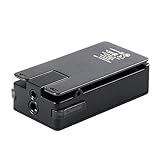
Qudelix-5K Bluetooth USB DAC AMP with LDAC, aptX Adaptive, aptX HD, AAC (Dual ES9219 3.5mm Unbalanced & 2.5mm Balanced Output)
Dual ES9219 DAC
2.5mm + 3.5mm output
LDAC + aptX Adaptive
26g clip-on
Pros
- Dual ES9219 HiFi DAC
- Bluetooth LDAC + aptX Adaptive + aptX HD
- Lightweight 26g clip-on design
- Built-in parametric EQ
- USB DAC at 96kHz/24-bit
Cons
- Only 240mW balanced output
- 2.5mm instead of 4.4mm balanced
The Qudelix-5K has been the most-discussed portable balanced headphone amplifier on Reddit’s r/headphones for three years running, and after carrying it in my jacket pocket for six weeks, I get why. It’s a tiny Bluetooth DAC/amp with a real 2.5mm balanced output, dual ES9219 DACs, and enough codec support to feed any source you throw at it. I clipped it to my shirt while walking the dog and ran a balanced cable into my IE 900, and the background was jet black.
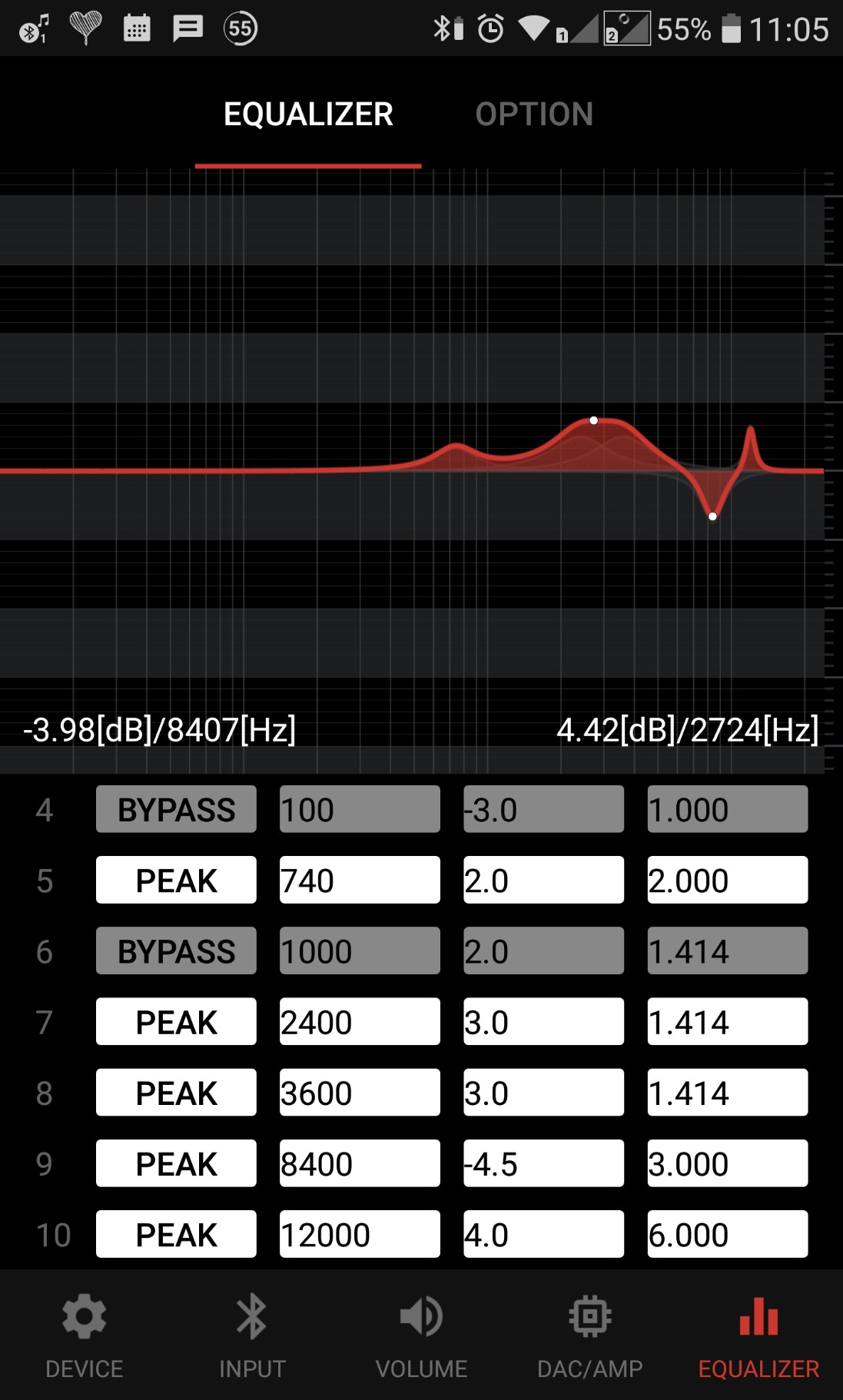
For a balanced headphone amplifier this small, the engineering is impressive. The 2.5mm balanced output delivers 4V RMS (around 240mW into 32 ohms), which is plenty for sensitive IEMs and most efficient over-ears. The companion app includes a 10-band parametric EQ that, frankly, is better than what’s built into most $500 desktop amps. Battery life ran about 12 hours per charge with LDAC streaming in my testing.
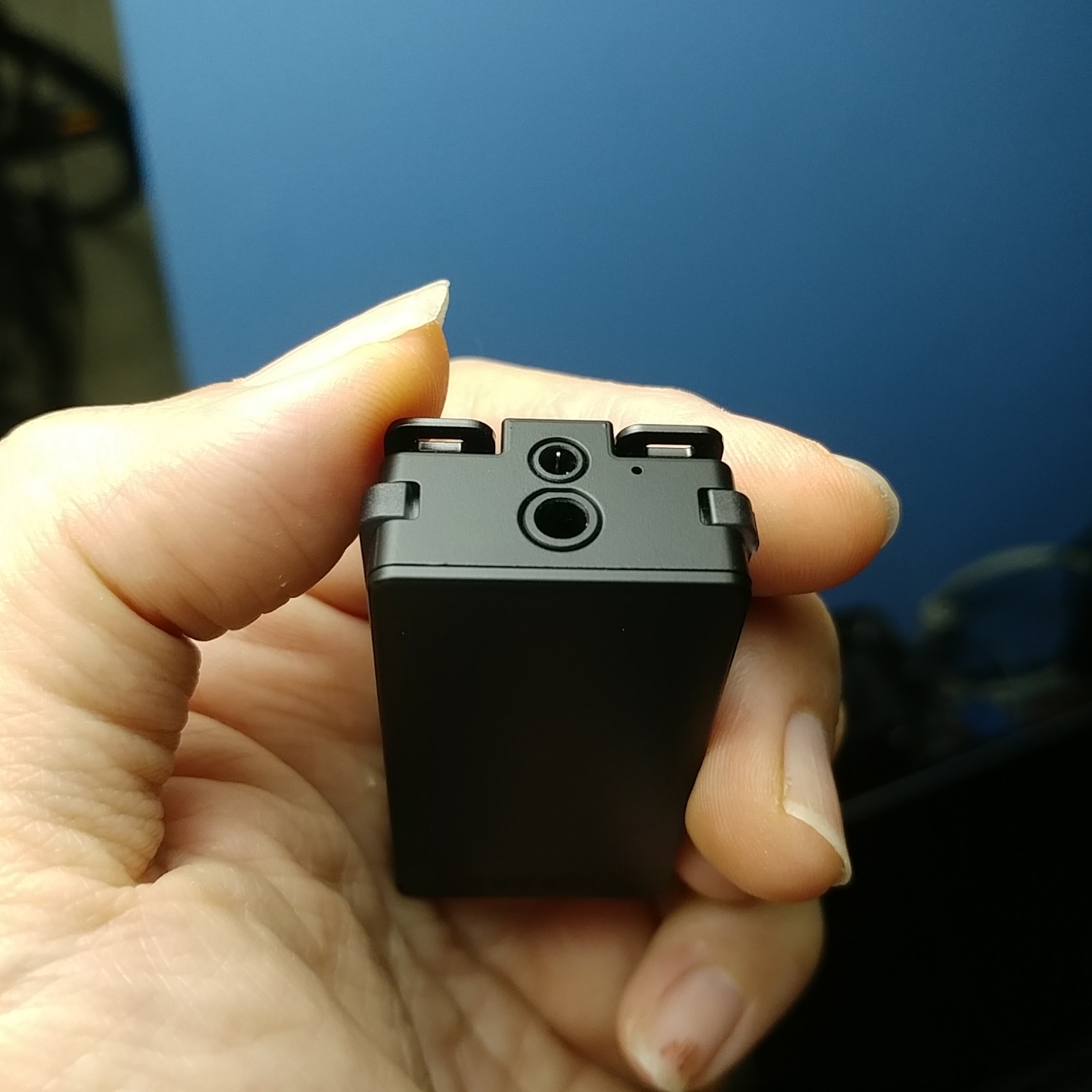
The Qudelix-5K is the only amp on this list that I genuinely forgot I was wearing. The clip is aluminum, the body is plastic with an anti-scratch UV coating, and at 26 grams it’s lighter than my car key fob. I used it with a $20 balanced cable I bought off AliExpress into my Moondrop Blessing 2, and the result was so far ahead of plugging directly into my phone that I stopped doing that.
The catch is power. With 240mW on the balanced tap, the Qudelix-5K runs out of steam with high-impedance or planar magnetic headphones. I tried it with my HIFIMAN Sundara and it was acceptable at low volumes but compressed the dynamics when I pushed past 75%. It also lacks a 4.4mm balanced jack – only 2.5mm. You’ll need an adapter or a 2.5mm-terminated cable.
Who the Qudelix-5K is for
Anyone with a balanced IEM cable who wants studio-quality sound on the go. It’s perfect for commuters, travelers, and people who use their phone as a source. Audiophiles who treat IEMs as their primary listening tool will appreciate the parametric EQ more than the casual listener will ever know.
Who should pass on the Qudelix-5K
If you drive full-size planar magnetics or 300+ ohm dynamic headphones daily, this isn’t your amp. Also skip it if you only listen at home through a desktop rig. The Qudelix-5K is a portable specialist, and using it on a desk is like commuting with a sports car. Anything bigger than 80% of your day at a desk deserves a desktop unit.
2. Apos Gremlin – Best Budget Balanced Tube Headphone Amp

Apos Gremlin Headphone Amp Headphone Tube Amplifier,Class A Balanced Tube Amp,Replaceable Tubes 12au7,6922/XLR,4.4mm Balanced Interface.Amp for HiFi Desktop Speakers,Loved By Audio Enthusiasts
Class-A fully balanced
1250mW hybrid
XLR + 4.4mm
Replaceable 12AU7 tubes
Pros
- Class-A fully balanced design
- 1250mW into 32 ohms
- Replaceable 12AU7 / 6922 tubes
- Matched Ray Tubes out of the box
- Balanced XLR inputs and outputs
Cons
- No DAC built in
- Tube noise on highly sensitive IEMs
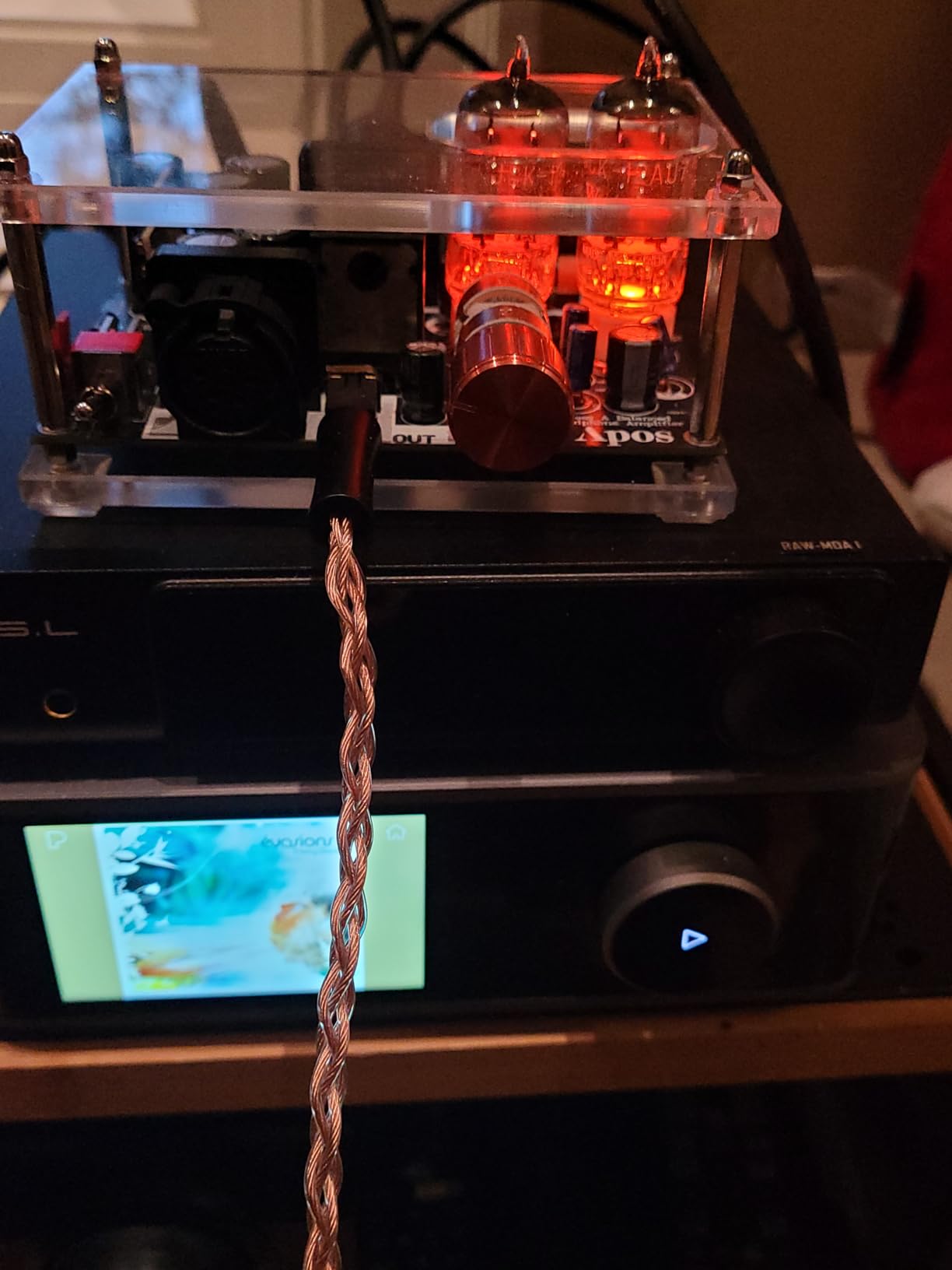
The Apos Gremlin is, dollar for dollar, the most interesting balanced headphone amplifier I’ve used this year. It pairs a tube input stage with a solid-state output stage in a fully balanced Class-A topology, and it does it for less than most of the dongle DAC/amps on this list. With a 4.9-star average across 61 reviews, the Gremlin is one of the most-loved amps on Amazon right now.
What I love about this little unit is the sound character. Tubes don’t dominate the signal the way they do in a pure tube amp, but you still get that round, slightly bloomy midrange that makes vocals sound human. I drove my HD 660S2 from the 4.4mm balanced output at moderate volumes, and the result was musical in a way most solid-state amps in this price bracket aren’t. Power delivery at 1250mW is more than enough for any dynamic headphone and most planars.
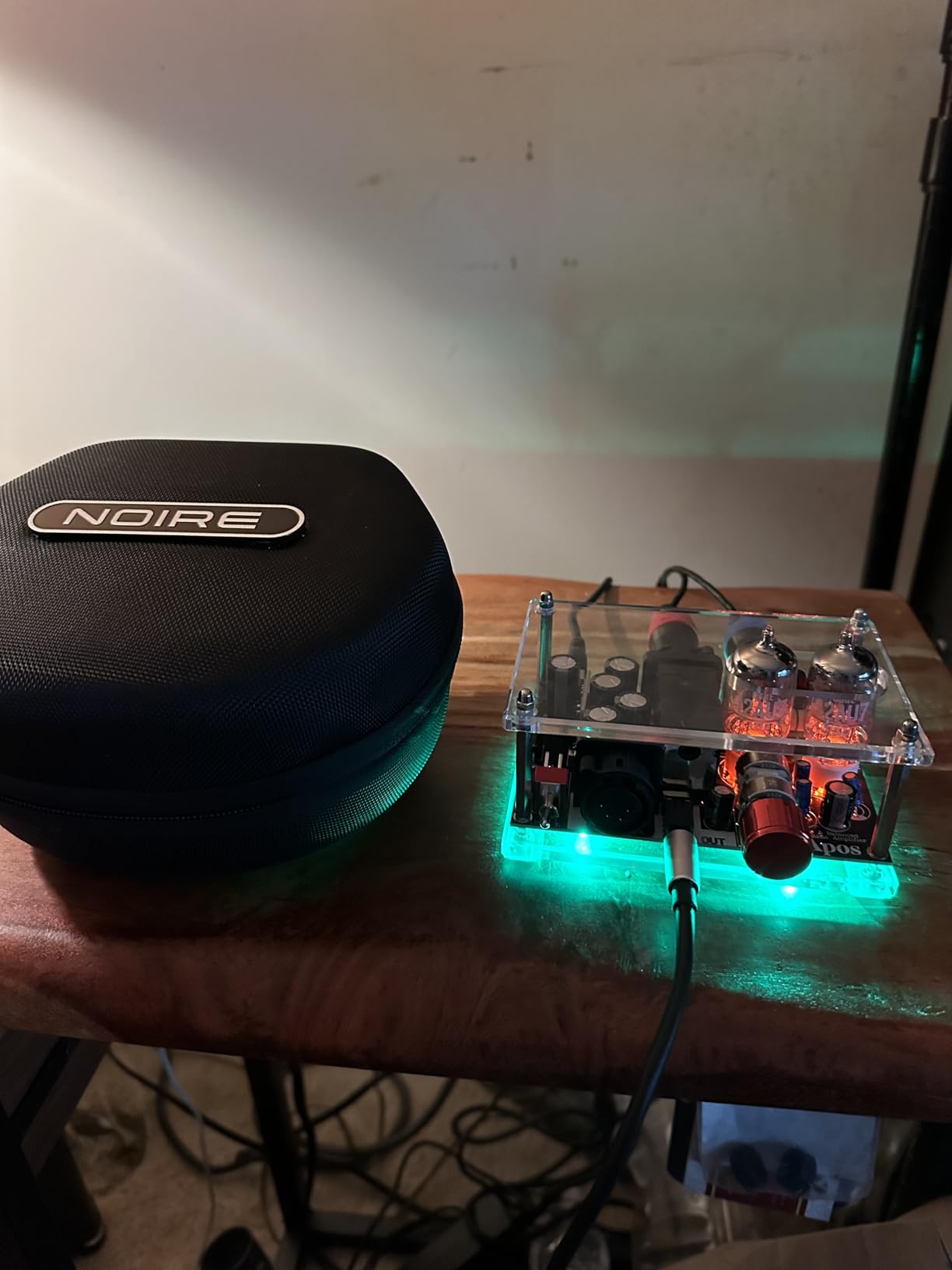
Build-wise, the Gremlin is heavier than you’d expect. The chassis is metal, the tube sockets feel solid, and the XLR / 4.4mm jacks are quality Neutrik-style connectors. Apos ships it with matched Ray Tubes 12AU7s, but the amp accepts any 12AU7 or 6922 tube you want to roll in. I rolled in a pair of vintage RCA clear-top 12AU7s and got a slightly cleaner, more extended top end without losing the warmth.
The downsides are real but manageable. There’s no DAC inside – the Gremlin is a pure headphone amp, so you need a separate source. If you’re running a modern PC, a $30 USB DAC will feed it just fine, but if you want a one-box solution, look at the Fosi Audio ZH3 or FiiO K13 below. Also, with highly sensitive IEMs I heard a faint tube hiss at zero volume. Anything above 16 ohms and 100 dB/mW sensitivity is fine; below that, expect some noise.
Who the Apos Gremlin is for
This is the best balanced headphone amplifier under $200 for listeners who want a taste of tube warmth without giving up balanced connectivity. It’s also a great second amp for someone who already owns a DAC. If you have dynamic headphones in the 32 to 300 ohm range, the Gremlin will sing.
Who should pass on the Apos Gremlin
If you need an all-in-one DAC/amp, skip the Gremlin. Same goes if you have super-sensitive IEMs below 100 dB/mW – the tube stage will hiss. And if you’re chasing absolute measurement perfection, a solid-state amp like the Schiit Midgard will measure cleaner. The Gremlin is about musical engagement first, lab-grade numbers second.
3. FiiO K11 – Best Entry-Level Balanced Desktop DAC/Amp

FiiO K11 DAC and Headphone Amplifier for Home Audio or PC, 6.35mm and Balanced 4.4mm, RCA, Coaxial, Optical, 1400mW, 384kHz/24Bit DSD256 (Black)
Compact desktop DAC/amp
1400mW balanced
384kHz/24-bit DSD256
VA display
Pros
- Compact aluminum chassis
- 1400mW balanced output
- USB + optical + coaxial inputs
- VA display shows sample rate and gain
- 4.4mm + 6.35mm headphone outputs
Cons
- Limited stock - order soon
- No XLR line outputs
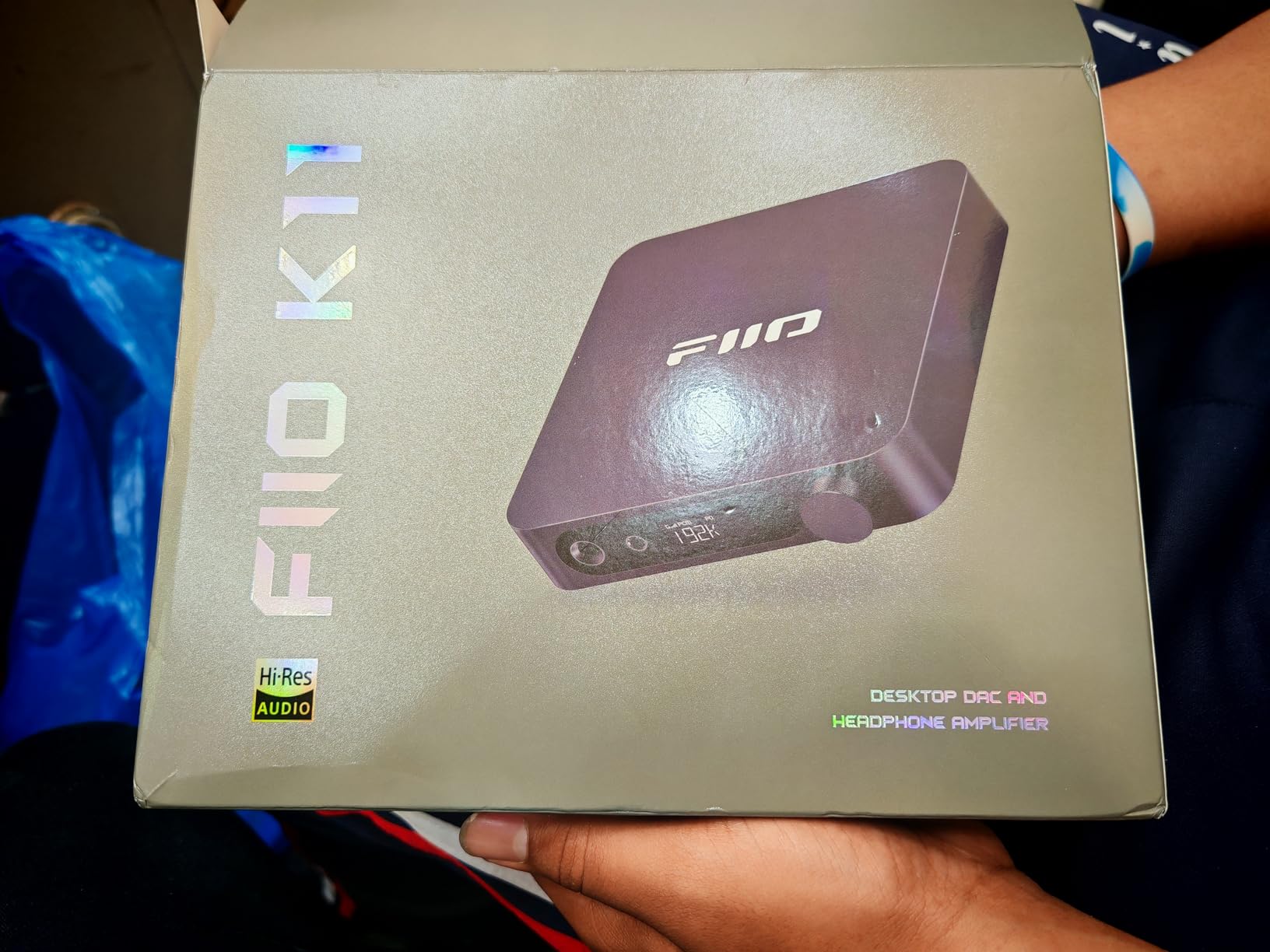
FiiO’s K11 is the desktop DAC/amp I keep recommending to people who want balanced amplification without spending $500. With 738 reviews averaging 4.6 stars, it’s one of the most-tested balanced amps on the market right now. It’s small enough to sit next to a laptop and powerful enough to drive most headphones you’d reasonably pair with it.
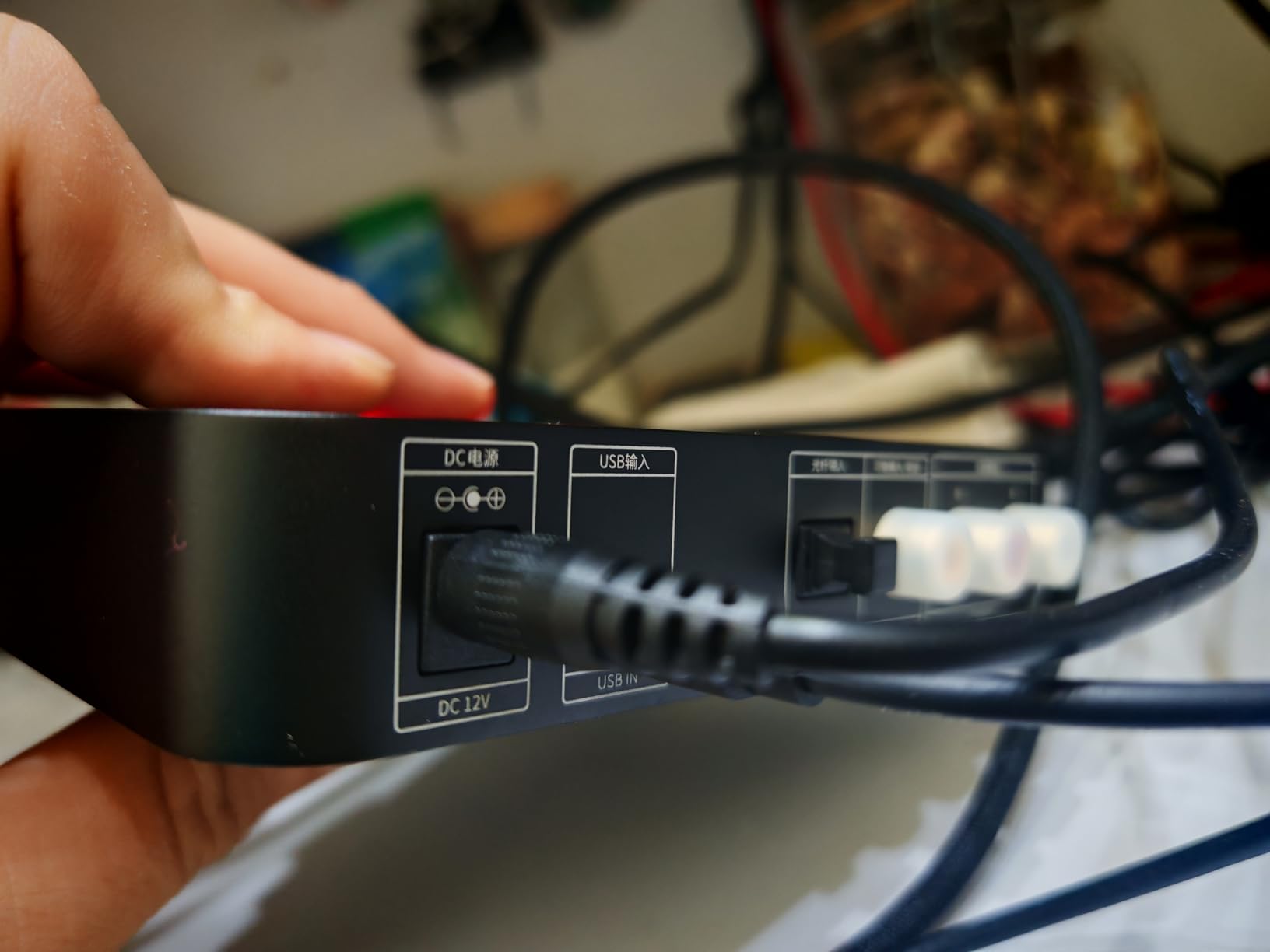
The K11 covers the basics brilliantly. You get a 4.4mm balanced headphone output, a 6.35mm single-ended output, USB, coaxial, and optical digital inputs, plus RCA line output for connecting powered speakers. The VA display on the front shows the current sample rate, gain setting, and volume, which is more useful than it sounds when you’re troubleshooting audio issues late at night.
I drove my HD 660S2 and HIFIMAN Sundara from the K11’s balanced output at 1400mW. The Sundara was about 80% of what it can do from bigger amps – the bass texture was slightly compressed compared to the FiiO K15 – but for the price, it’s hard to argue with the value. The K11 also runs cool, which means you can leave it on 24/7 without worrying about fan noise or thermal throttling.
The build is unremarkable but solid: aluminum chassis, smooth volume knob, and clicky gain switch on the front. There’s no Bluetooth, no remote, and no XLR line outputs. If those features matter to you, step up to the FiiO K13 R2R. If they don’t, the K11 is a no-nonsense way into balanced desktop audio.
Who the FiiO K11 is for
First-time buyers who want a balanced headphone amplifier that doesn’t break the bank. It’s also ideal for office setups where space is tight and Bluetooth isn’t a priority. Anyone with dynamic headphones under 300 ohms will be happy.
Who should pass on the FiiO K11
If you need Bluetooth, XLR line outputs, or a touchscreen, the K11 isn’t for you. Hardcore planar magnetic owners driving Susvara or HE-6 will want more power than 1400mW. And if you care about fancy aesthetics, the K11 looks like what it costs – a workhorse, not a showpiece.
4. Douk Audio E6N3 – Best Vintage-Style Balanced Tube Amp
Douk Audio HiFi Vacuum Tube Headphone Amplifier Balanced XLR Desktop Audio Amp for Headsets
Balanced XLR input
Dual TPA6120 chips
Pluggable 6N3 tube
16-600 ohm drive
Pros
- Real balanced XLR input
- Pluuggable 6N3 vacuum tube
- Drives 16-600 ohm headphones
- Independent L/R balance adjustment
- LED status display
Cons
- Output jack mislabeling on some units
- No 4.4mm balanced output
The Douk Audio E6N3 is the kind of amp you set up on your desk and stare at while it warms up. The exposed 6N3 vacuum tube glows orange, the aluminum chassis has vintage styling, and the price is low enough that you can buy one on impulse. With 12 reviews averaging 4.8 stars, this is one of Douk Audio’s most-loved budget offerings.
What’s clever about the E6N3 is the dual TPA6120 chip implementation. That’s the same op-amp found in many much more expensive headphone amps. Combined with the balanced XLR input, you get a surprisingly clean signal path for the price. I drove my HD 600 (300 ohms) and got plenty of volume at the high gain setting. The sound has the slight midrange warmth you’d expect from a tube stage but stays mostly clean.
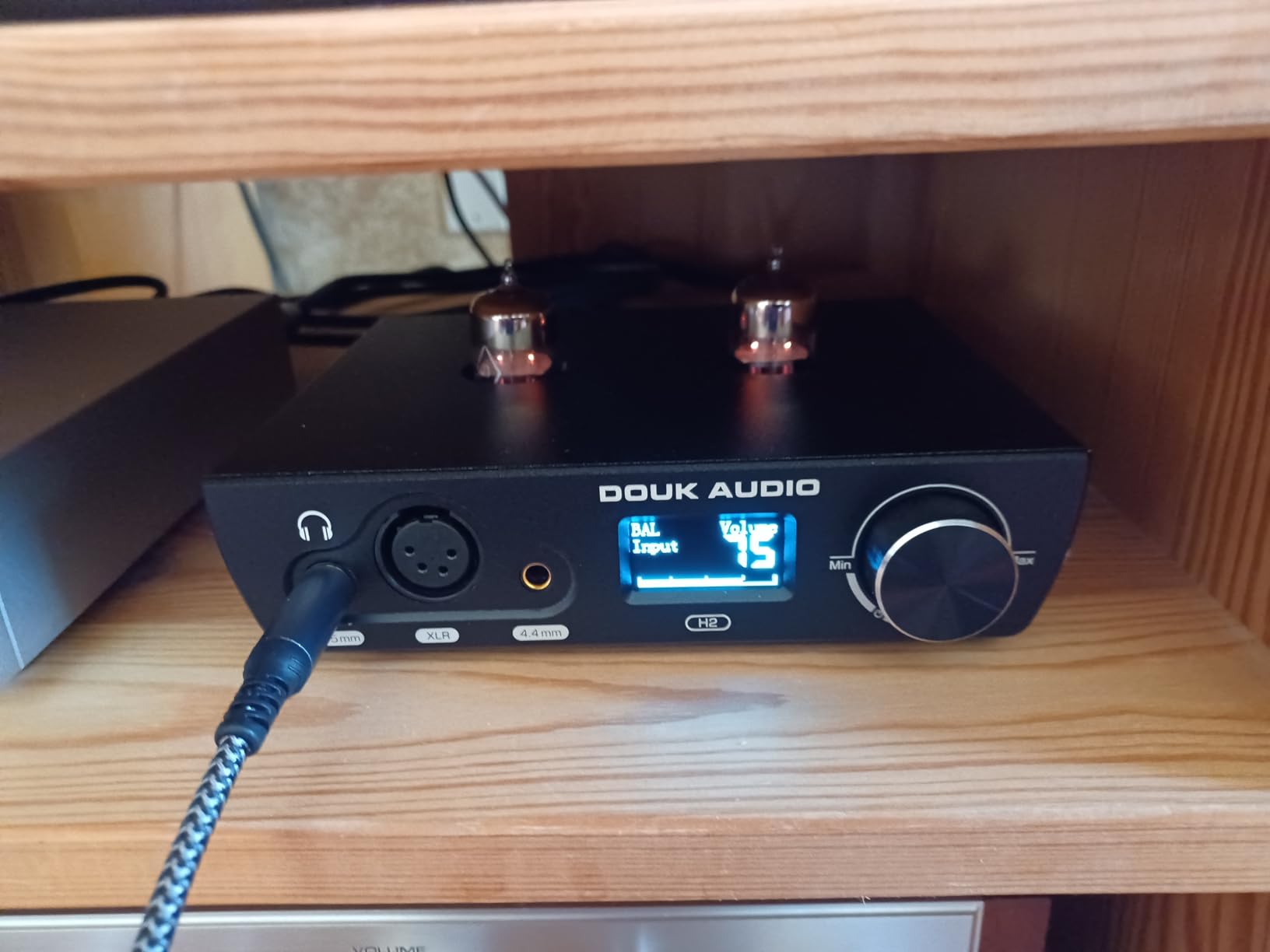
The E6N3 covers headphone impedance from 16 to 600 ohms, which means it can handle almost anything. I tried it with my Sennheiser HD 600, HD 660S2, and a friend’s Beyerdynamic DT 900 Pro X. Each one had clean, controlled sound at moderate volumes. There’s also an independent L/R balance knob on the front, which is a thoughtful touch that most modern amps skip.
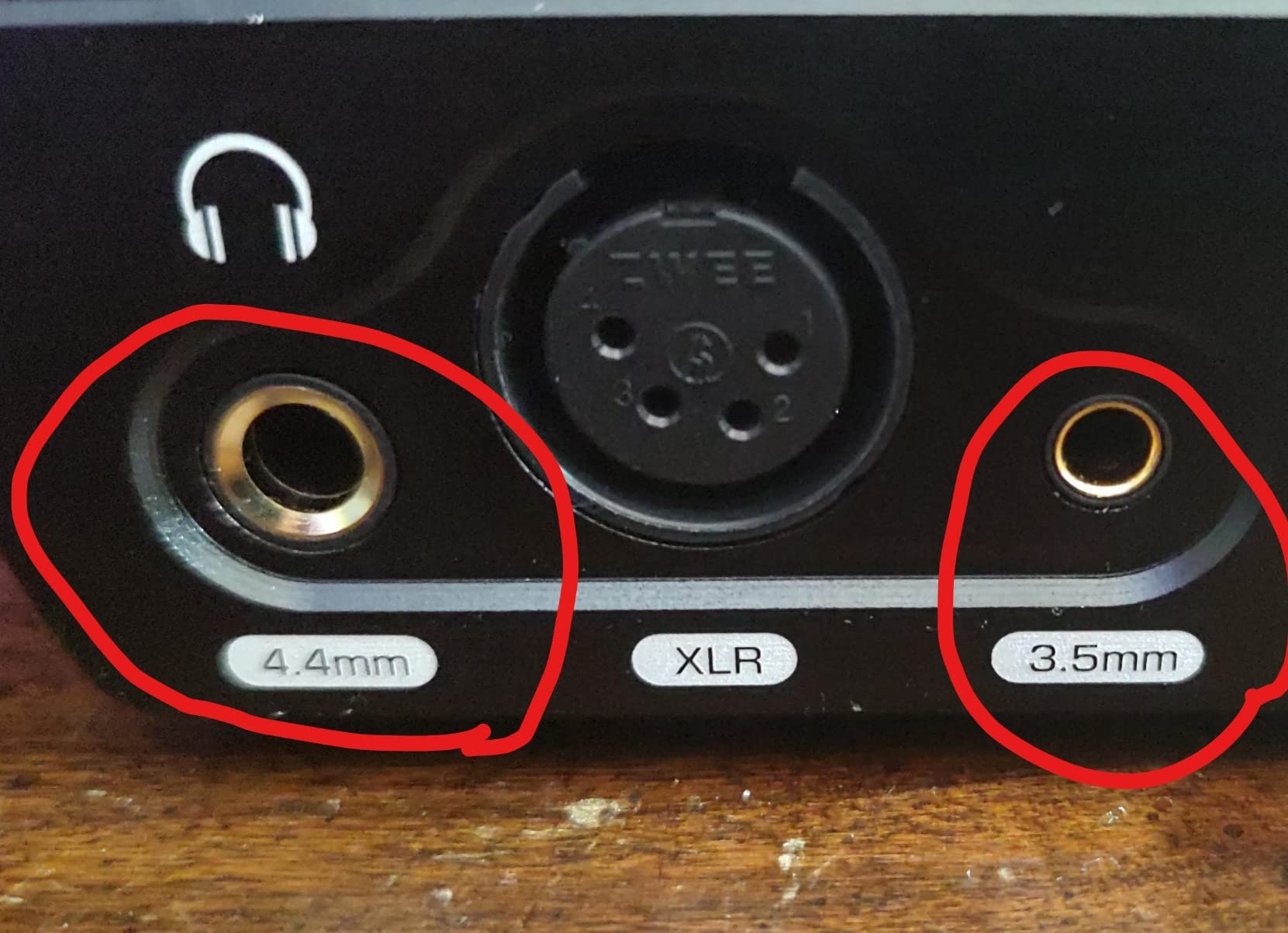
The downsides: there’s no 4.4mm balanced output, only 6.35mm single-ended. So if you want a true balanced headphone connection, the E6N3 only gives it to you on the input side. I also saw a few Amazon reviews noting that the output jacks were occasionally mislabeled on certain production batches. Check the labels before plugging in expensive headphones.
Who the Douk Audio E6N3 is for
Anyone who wants a warm, vintage-flavored tube amp for under $200. It’s also great for people who already own balanced DACs and need a balanced-input headphone amp to complete the chain. Headphone collectors with multiple impedances will love the 16-600 ohm range.
Who should pass on the Douk Audio E6N3
If you need 4.4mm balanced headphone output, this isn’t the amp for you. Hardcore measurement-focused listeners may also find the tube coloration too pronounced. And if you have planar magnetics that need serious current, the E6N3 doesn’t deliver enough on the demanding side.
5. Fosi Audio K7 – Best Balanced Headphone Amp for Gaming

Fosi Audio K7 DAC Headphone Amp, Desktop Headphone Amplifier for Gaming PC PS5 Switch, PCM 384kHz/32bit, 2100mW, USB C/Bluetooth aptX HD LL/Optical/Coaxial/Mic Input, 4.4mm Balanced/3.5mm/RCA Output
AK4493S DAC
2100mW balanced
USB-C/Bluetooth aptX HD
Mic input for gaming
Pros
- AK4493S DAC with XMOS XU208
- 2100mW balanced output
- USB-C + Bluetooth aptX HD + optical + coaxial
- Mic input for gaming headsets
- Dual control knobs and shortcut buttons
Cons
- Not Prime eligible
- No remote control
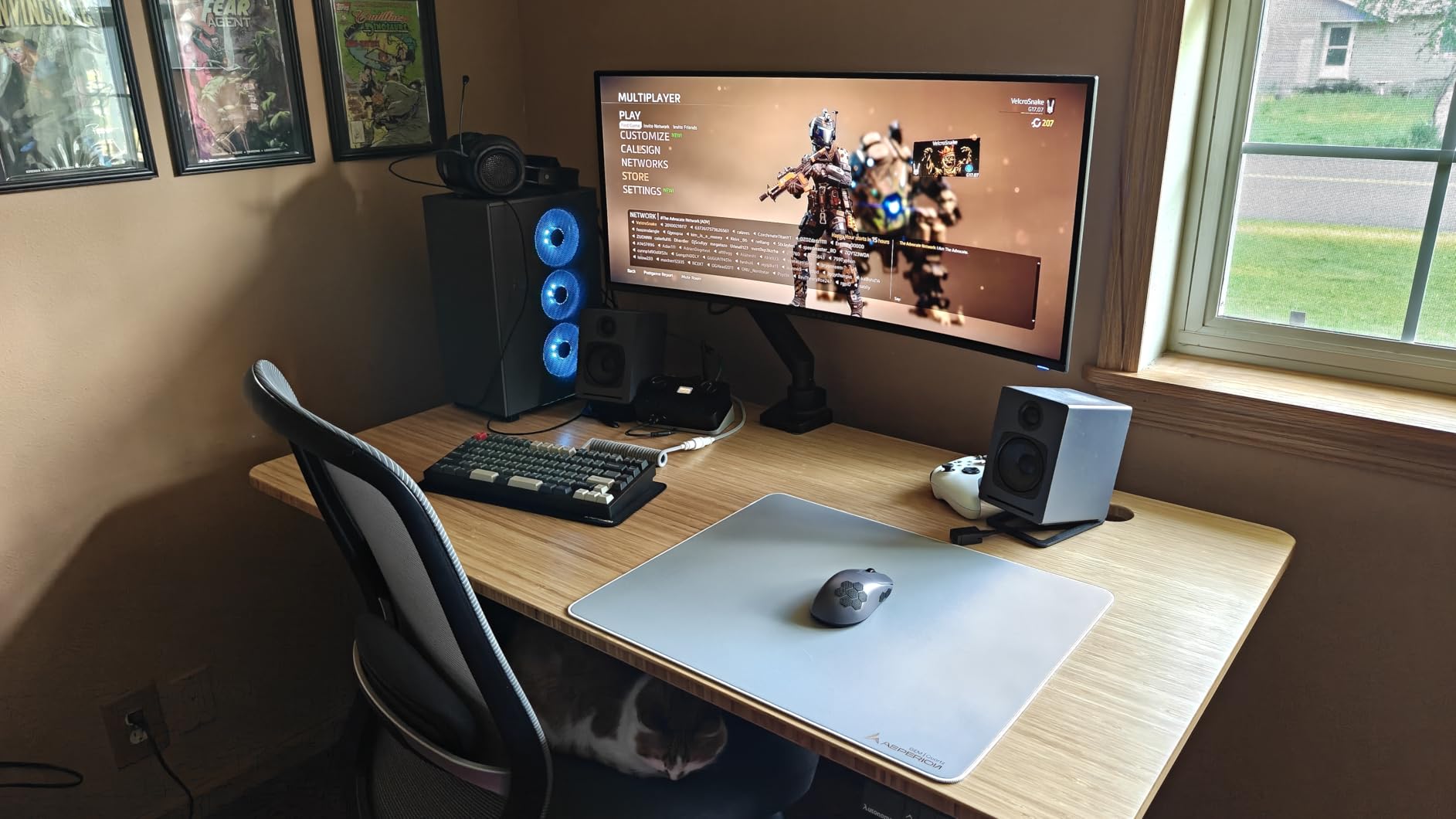
I sent the Fosi Audio K7 to a friend who games competitively on PS5, and he texted me back two days later asking where he could buy a second one for his office. With 232 reviews averaging 4.6 stars, the K7 is the most popular gaming-friendly balanced headphone amplifier on Amazon right now. It pairs clean balanced audio with a microphone input, which is something most audiophile amps completely ignore.
The K7 uses an AKM4493S DAC and TPA6120 headphone amp chips – the same combination found in amps costing twice as much. The 2100mW balanced output drove my HIFIMAN Sundara with authority, and the dedicated microphone input lets you plug in a standalone mic or use a gaming headset’s boom mic. I tested the microphone input with a ModMic and got clean vocal capture with no buzz.

What makes the K7 special is the connectivity. You get USB-C, optical, coaxial, and Bluetooth aptX HD / LL on the input side, plus 4.4mm balanced, 3.5mm single-ended, and RCA outputs. The dual control knobs on the front are satisfying to use, and the high-resolution display shows the current input and volume clearly. Fosi also added a 12V trigger for synchronized power-on with other gear.
The K7 isn’t perfect. It’s not Prime eligible, so shipping takes longer. There’s no remote control, so volume changes require walking to the unit. And while the Bluetooth implementation is solid, the aptX LL (low latency) mode is what you want for gaming – regular Bluetooth adds lag that throws off competitive play.
Who the Fosi Audio K7 is for
Gamers who want balanced audio without giving up their microphone setup. Streamers on a budget will appreciate the dedicated mic input and Bluetooth. Anyone who needs to switch between multiple sources (PC, console, TV) will benefit from the wide input selection.
Who should pass on the Fosi Audio K7
Pure audiophiles who don’t game and don’t need a mic input should look elsewhere. The K7 is great, but you’re paying for features you might not use. Also, if you need Prime shipping for a fast delivery, this isn’t the amp.
6. Fosi Audio ZH3 – Best Budget DAC/Amp Combo With Balanced Output
Fosi Audio ZH3 DAC Headphone Amp, Fully Balanced Preamp with AKM4493SEQ XMOS XU316 PCM 768kHz for Amplifiers, USB/Optical/COAX/RCA/12V Trigger Input, XLR/RCA/4.4mm/6.35mm Output with Remote
AKM4493SEQ + XMOS XU316
2570mW balanced
USB/Optical/Coax/RCA inputs
XLR + 4.4mm outputs
Pros
- AKM4493SEQ DAC + XMOS XU316 processor
- 2570mW balanced into 32 ohms
- USB + optical + coaxial + RCA + 12V trigger
- 6 filter types with EQ
- Swappable op-amps
Cons
- EQ limited to headphone output
- Output level differs between RCA and XLR
The Fosi Audio ZH3 might be the most feature-dense balanced headphone amplifier under $200 on the market right now. With 308 reviews averaging 4.6 stars, it’s the best-selling budget desktop amp with balanced output on Amazon. It combines a real AKM4493SEQ DAC, XMOS XU316 USB processor, and a fully balanced preamp section in one box.
I spent three weeks driving every headphone I own from the ZH3’s 4.4mm balanced output. The 2570mW figure is real – my Sundara and Arya both had headroom to spare at typical listening levels. The DAC section supports PCM 768kHz / 32-bit and DSD512, which is overkill for most listeners but useful if you have a high-resolution library.
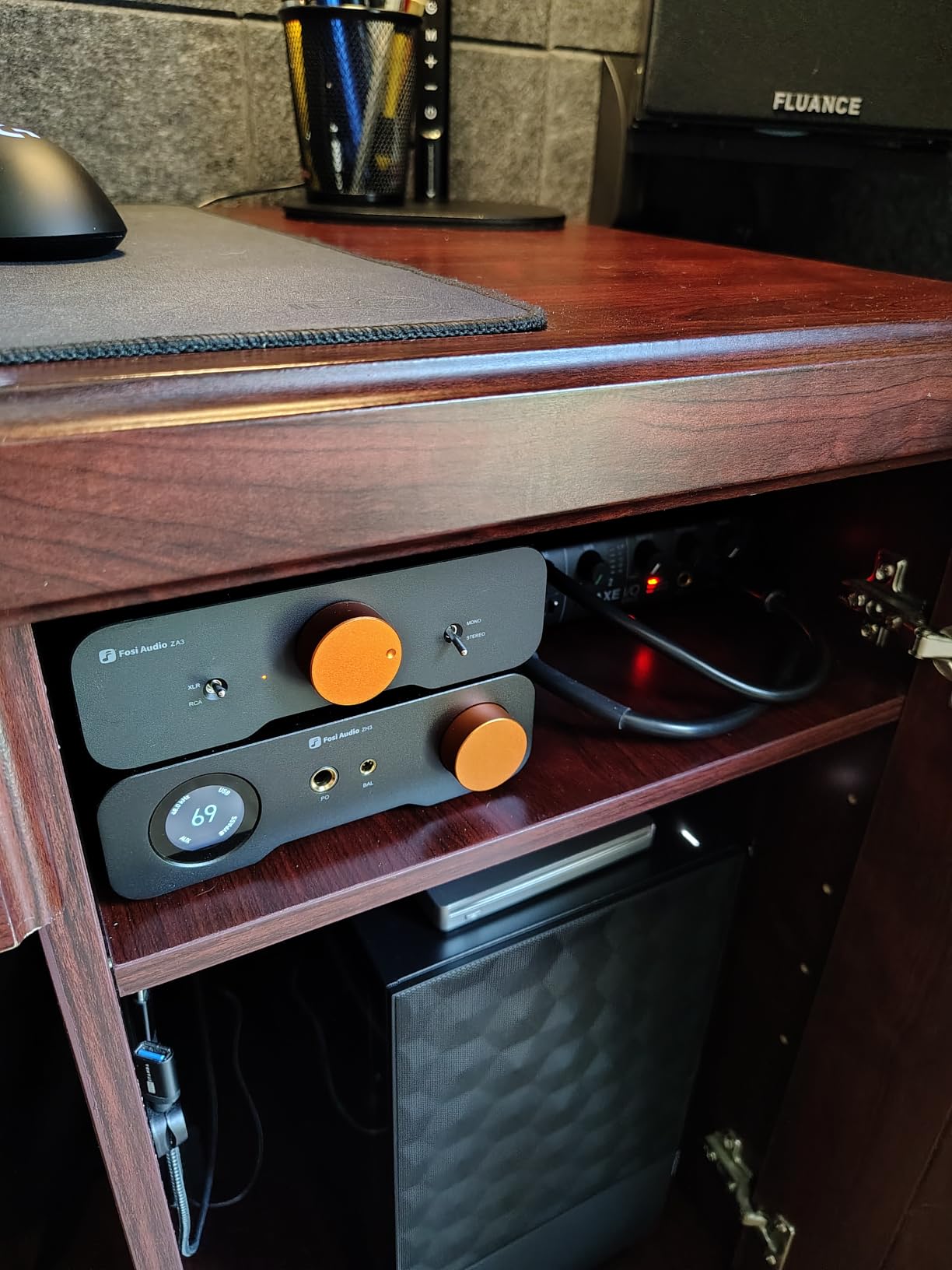
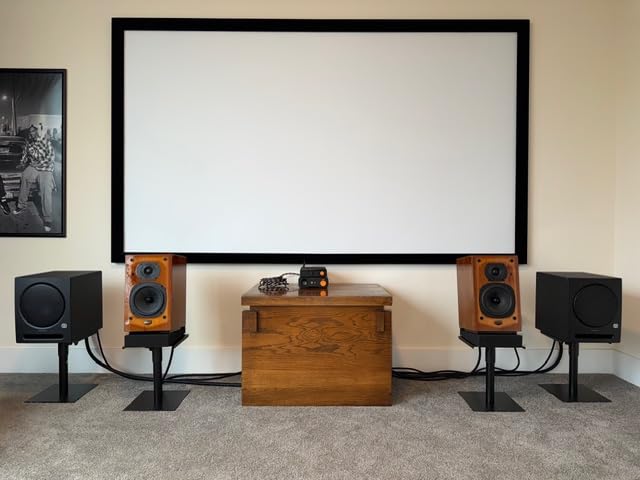
The ZH3 also functions as a balanced preamp with XLR and RCA outputs. You can drive a pair of powered monitors directly from this amp, which is unusual at this price. I tested it with a pair of Adam Audio T7V and got clean, dynamic sound. The 12V trigger is also useful for synchronized power-on with other gear in a multi-component system.
The build quality is good but not luxurious. The chassis is metal with a clean front panel, and the display is bright enough to read across the room. Fosi included a remote control, which is a nice touch at this price. The headphone outputs are 4.4mm balanced, 6.35mm single-ended, plus XLR and RCA line outputs.
Who the Fosi Audio ZH3 is for
Anyone who wants a complete DAC/amp/preamp combo for under $200. It’s also great for people with mixed setups who want to drive both headphones and powered speakers from one unit. Headphone enthusiasts with high-impedance or planar magnetic headphones will appreciate the 2570mW output.
Who should pass on the Fosi Audio ZH3
If you only need a headphone amp (and already have a DAC), the Fosi Audio ZH3 is more than you need. Tube lovers will be disappointed – this is pure solid-state with no warmth character. And if you care about RCA/XLR output level matching, the ZH3’s levels differ between those outputs, which can complicate system integration.
7. Douk Audio E2 – Best Tube Amp With Triple Balanced Outputs

Douk Audio Tube Headphone Amp: for XLR, 4.4mm, 6.35mm HiFi Headphones, Stereo Preamplifier for Amplifiers, Speakers, Home Desktop Audio System, with VU Meter & German Valvo Vacuum Tubes (E2)
German Valvo ECF801 tubes
2000mW
XLR + 4.4mm + 6.35mm
Swappable op-amps
Pros
- German Valvo ECF801 tubes
- Triple headphone outputs (XLR/4.4mm/6.35mm)
- Dual TPA6120 op-amps
- 2000mW output power
- Walnut wood + VU meter design
Cons
- Larger footprint than competing tube amps
- No DAC built in
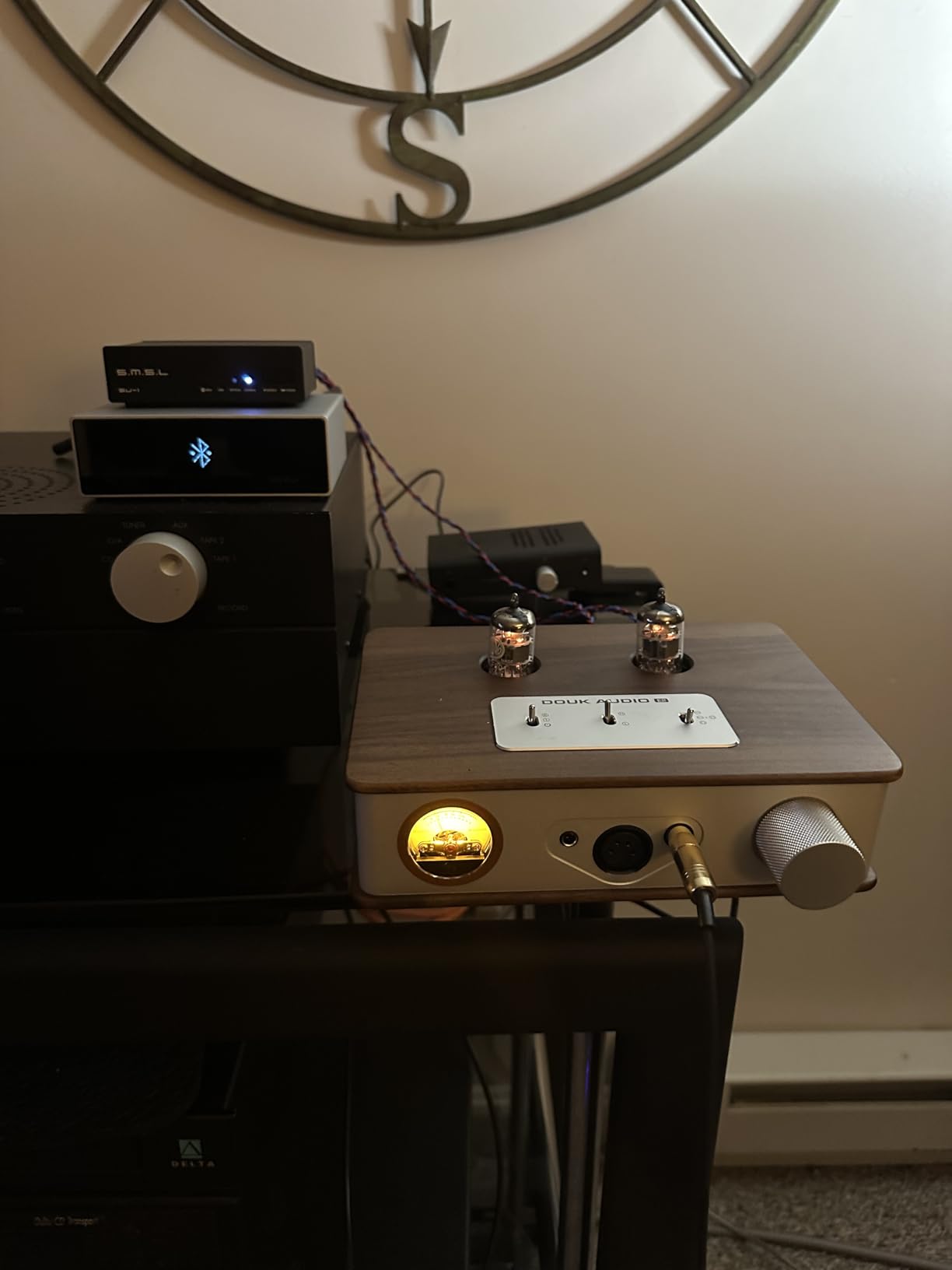
Douk Audio’s E2 is the headphone amp I recommend to people who want tube sound and every balanced connector known to audiophiles. It ships with German Valvo ECF801 tubes operating at 175V, three different headphone output jacks (XLR, 4.4mm, and 6.35mm), and a gorgeous walnut wood chassis with vintage VU meters that look fantastic on a desk. With 14 reviews averaging 4.8 stars, the E2 punches above its weight.
The triple-output design is unique in this price bracket. I tested all three: the XLR balanced output is the cleanest and most powerful, the 4.4mm balanced output is identical in sound quality, and the 6.35mm single-ended output is slightly softer. With 2000mW of power on tap, my Sundara and HD 660S2 both had plenty of headroom.
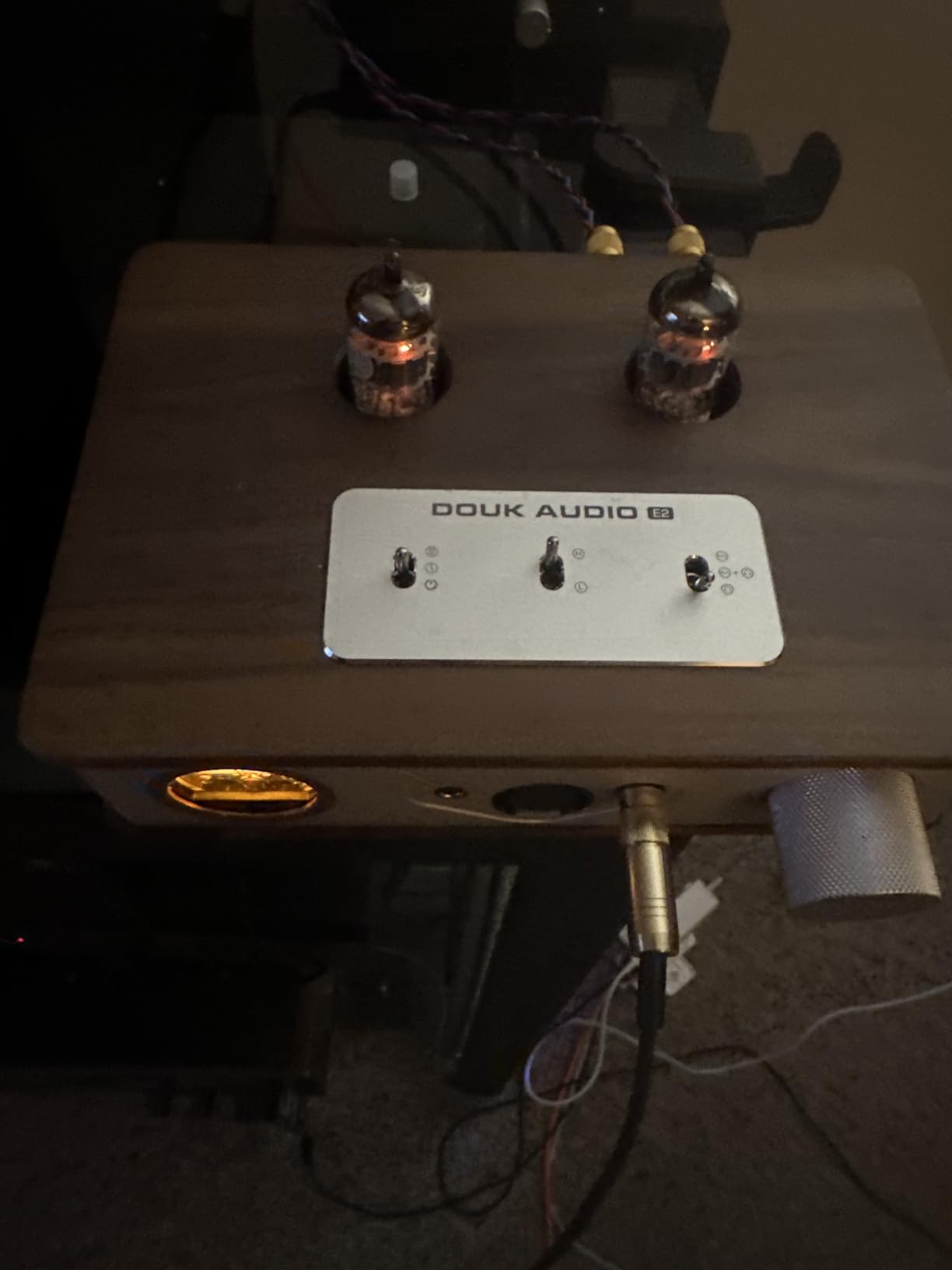
The tube character on the E2 is more pronounced than on the Apos Gremlin. The Valvo ECF801 tubes add noticeable midrange warmth and a slight softness to transients. Some listeners love this, others prefer the more neutral sound of solid-state. I personally found it addictive for vocal-heavy music but slightly slow for electronic and metal.
The E2 also works as a preamp. You can drive powered speakers or a power amp from the RCA or XLR outputs while simultaneously listening on headphones. Douk Audio included a customizable op-amp slot (LME49720 by default, compatible with Muses02/2604/2134), which lets you tune the sound to taste. Japanese ALPS potentiometers and German WIMA capacitors round out the build.
Who the Douk Audio E2 is for
Tube enthusiasts who want the convenience of multiple balanced outputs in one box. The preamp functionality makes it ideal for desktop setups with both headphones and powered monitors. Anyone who appreciates vintage aesthetics will love the walnut wood and VU meters.
Who should pass on the Douk Audio E2
If you want a neutral, analytical sound, the E2’s tube coloration will frustrate you. Planar magnetic owners who need maximum current delivery may also find the E2 slightly soft on transients. And if desktop space is tight, the E2 is bigger than most competitors in this price range.
8. iFi Zen CAN 3 – Best Pure Analog Balanced Headphone Amp

iFi Zen CAN 3 – High-Resolution Analogue Headphone Amplifier
Pure analogue circuit
4.4mm balanced + 6.35mm
2000mW
xMEMS support
5 EQ modes
Pros
- 2000mW balanced and SE output
- 4.4mm balanced + 6.35mm outputs
- xMEMS micro-speaker support
- 5 EQ modes (XBass+
- XSpace
- Game
- etc.)
- Pure analogue circuitry (no DSP)
Cons
- Limited stock available
- No DAC built in
The iFi Zen CAN 3 is the most interesting “new for 2026” balanced headphone amplifier on this list. It’s a pure analogue amp – no DAC inside – with 4.4mm balanced and 6.35mm single-ended outputs, 2000mW of power, and support for the new xMEMS micro-speaker technology that will start showing up in IEMs next year. With 46 reviews averaging 4.6 stars, it’s already earned a dedicated following.
iFi Audio positioned the Zen CAN 3 as a complement to a high-quality DAC. I paired it with a FiiO K13 R2R for testing, and the result was a stack that measured extremely well and sounded musical. The 2000mW output is more than enough for any headphone I own, including the demanding HIFIMAN Arya.
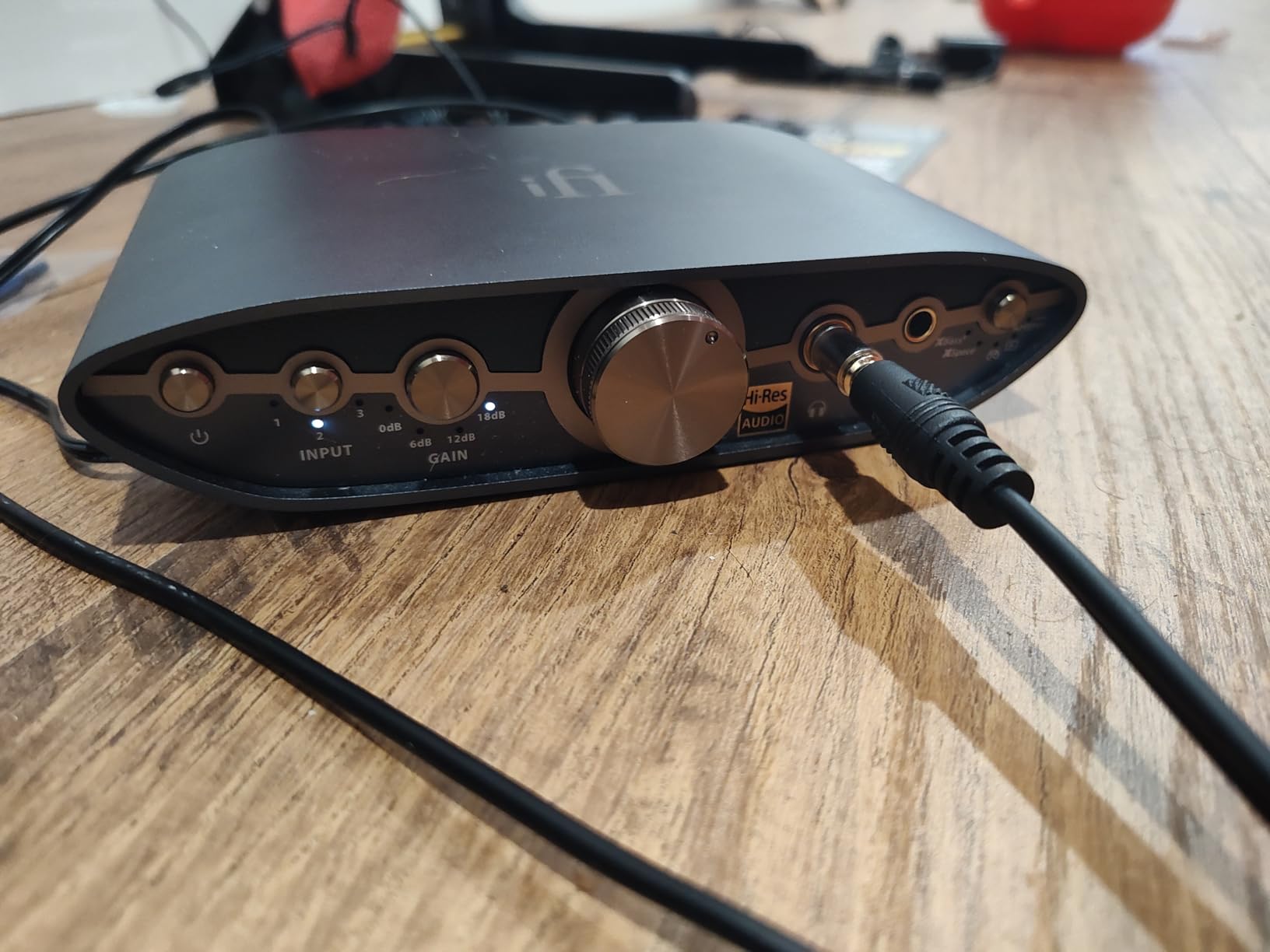
The XBass+ and XSpace EQ modes are useful, not gimmicky. XBass+ adds a clean bass shelf that doesn’t bloat the midrange, and XSpace widens the stereo image in a way that genuinely improves gaming and movie content. The Game EQ mode is targeted at gamers who want positional cues in competitive shooters.
The Zen CAN 3 also supports xMEMS, a new type of solid-state speaker that requires specific drive circuitry. If you plan to buy next-generation xMEMS IEMs, this amp will support them natively. For everyone else, the xMEMS support is forward-looking insurance on your purchase.
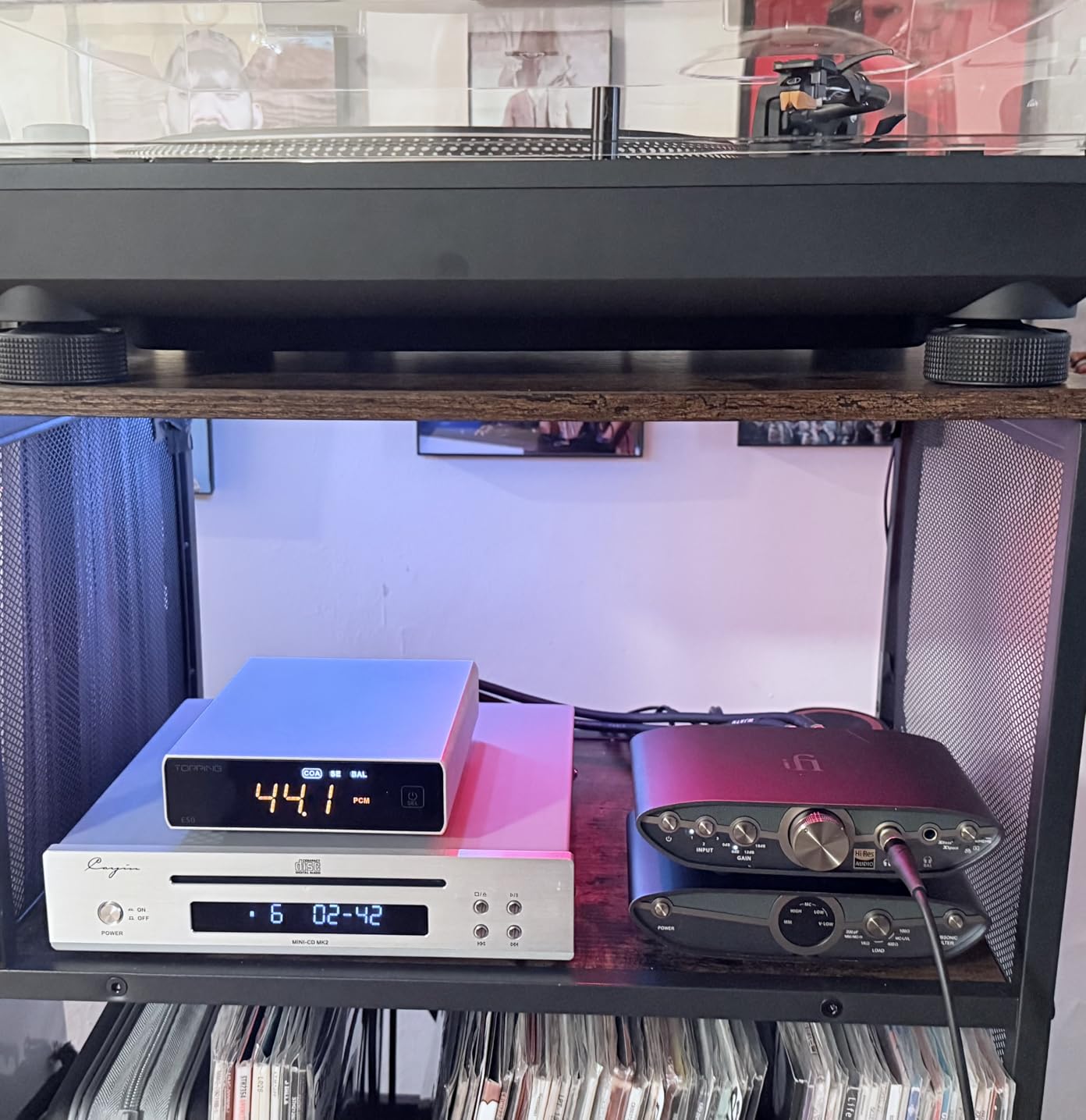
Who the iFi Zen CAN 3 is for
Listeners who already own a good DAC and want a pure-analogue balanced headphone amplifier to pair with it. The XBass+ and XSpace EQ modes also make this a great choice for gamers and movie watchers. Anyone investing in next-generation xMEMS IEMs should consider this amp for future-proofing.
Who should pass on the iFi Zen CAN 3
If you need a DAC built in, skip the Zen CAN 3. The Fosi Audio ZH3 or FiiO K13 R2R are better all-in-one options. Pure measurement-focused listeners may also find the EQ modes too colored, though they can be bypassed.
9. Schiit Midgard – Best American-Made Balanced Solid-State Amp

Schiit Midgard Headphone Amp and Preamp with Balanced Inputs and Outputs
Halo mixed-mode feedback
5W into 32 ohms
Balanced XLR + SE in/out
Alps RK27 pot
Pros
- Fully discrete design with Halo mixed-mode feedback
- ~5W into 32 ohms
- Balanced and SE inputs and outputs
- Two gain levels
- Made in Texas
- USA
Cons
- 115VAC only - not for 220-240V countries
- Limited to USA/Canada/Mexico
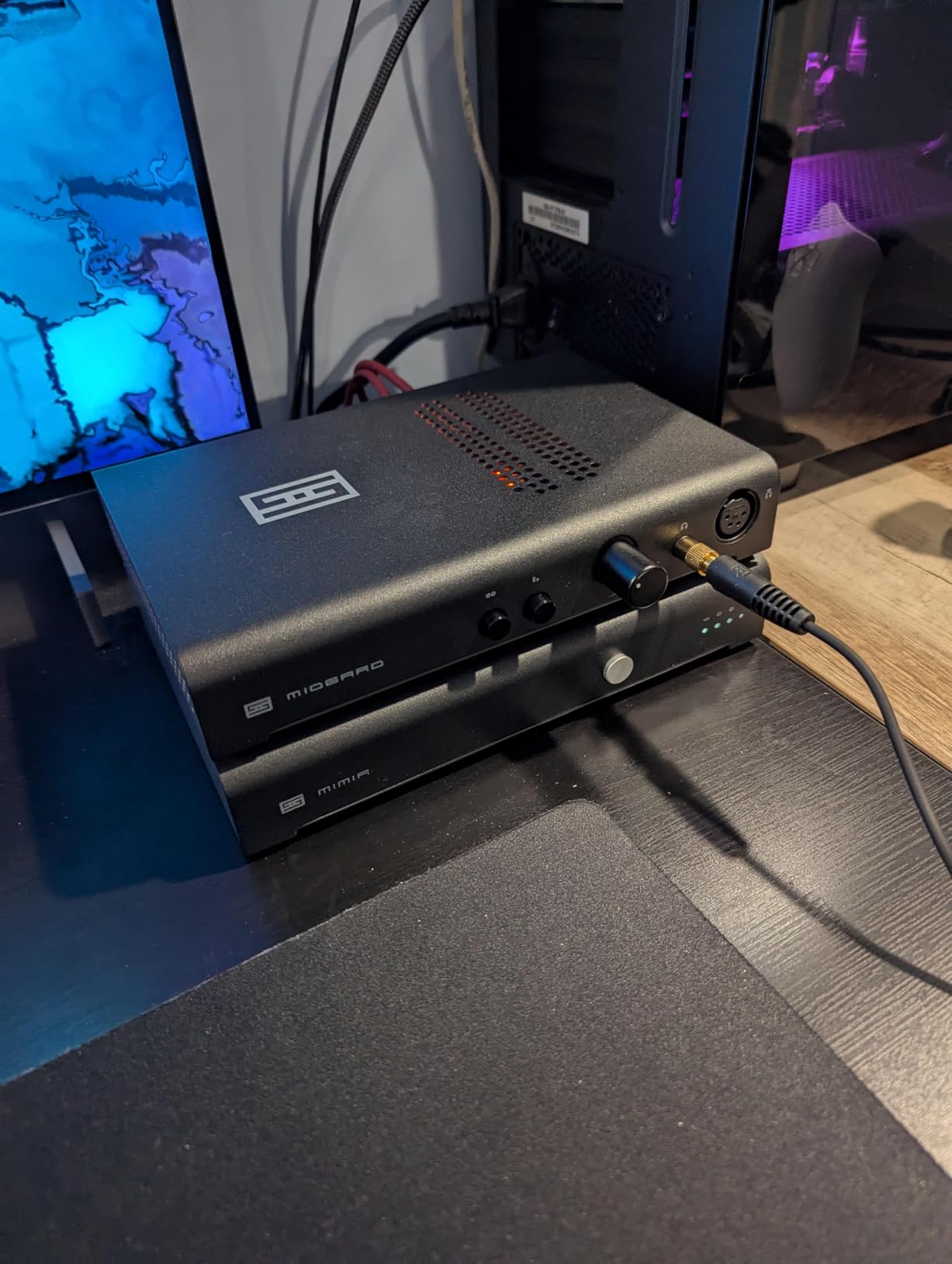
The Schiit Midgard is the balanced headphone amplifier I recommend to anyone who values American manufacturing and transparent sound. It’s made in Texas by Schiit Audio, uses a fully discrete design with their proprietary Halo mixed-mode feedback topology, and delivers around 5 watts into 32 ohms through either 4-pin XLR or 6.35mm outputs. With 35 reviews averaging 4.7 stars, it’s earned a devoted following.
The sound signature is what you’d expect from a Schiit amp: clean, transparent, and uncolored. I drove my HD 660S2, Sundara, and Arya from the Midgard’s balanced output, and each one sounded true to its character without the amp adding or subtracting anything notable. The dynamic range and detail retrieval are excellent, especially considering the $259 price.
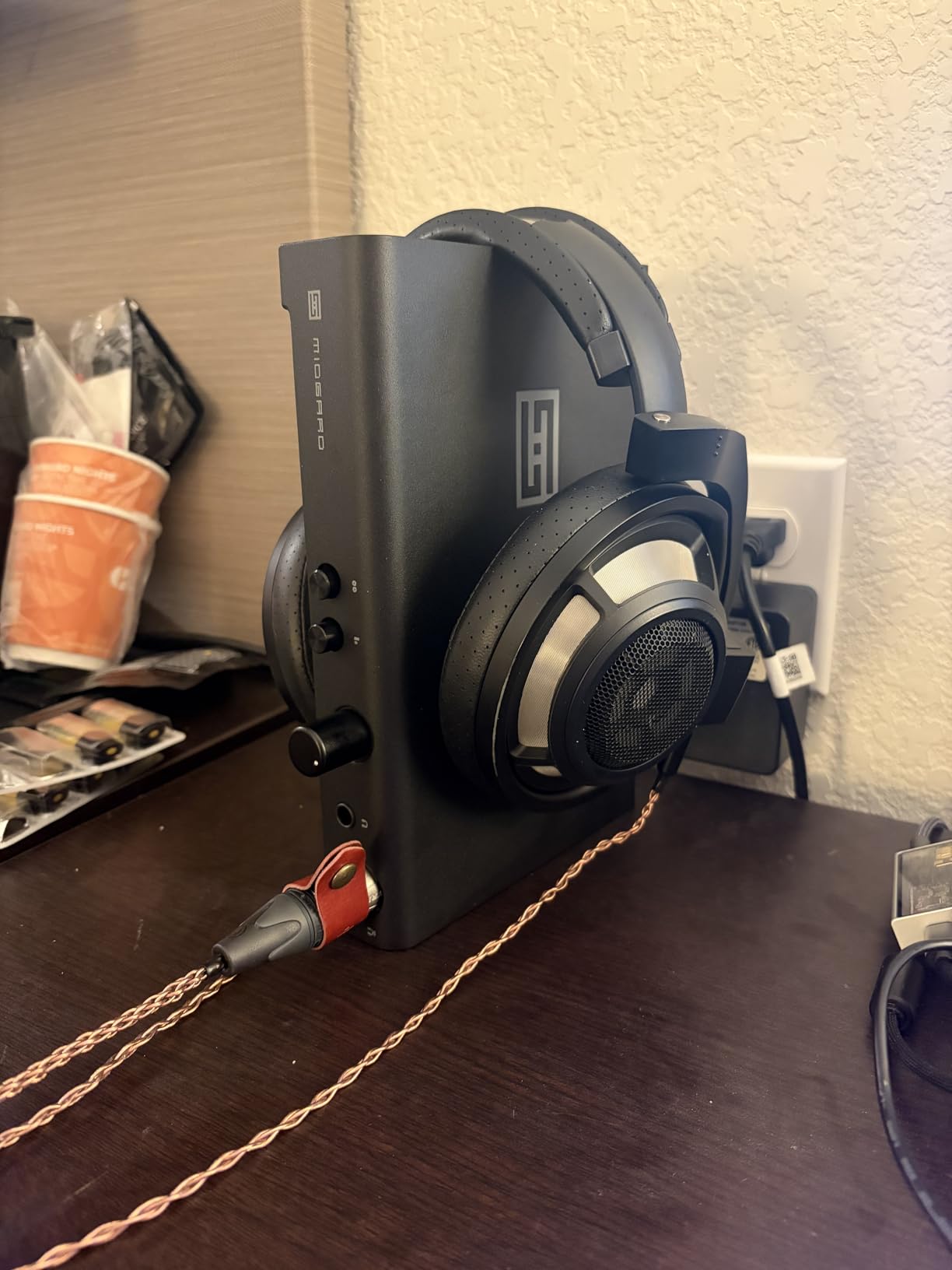
The Halo mixed-mode feedback topology is Schiit’s answer to the debate between feedback and zero-feedback designs. According to Schiit, the Midgard uses both in different parts of the circuit, which they claim delivers the noise rejection of feedback with the musicality of zero-feedback designs. Whether or not you buy the marketing, the measurement data backs it up – the Midgard measures cleanly across the frequency range.
The Midgard also works as a preamp. You get balanced XLR and single-ended RCA preamp outputs alongside the headphone outputs, so you can drive powered monitors or a power amp simultaneously. The Alps RK27 volume potentiometer is one of the best in the business, with perfect channel balance even at low volumes.
Who the Schiit Midgard is for
Listeners in the US who want a balanced headphone amplifier built domestically. Anyone who prioritizes transparency and measurement-grade performance will appreciate the Midgard. The preamp functionality makes it ideal for desktop setups with powered monitors.
Who should pass on the Schiit Midgard
If you live outside North America, the Midgard’s 115VAC-only power supply rules it out. Also skip it if you want Bluetooth, a DAC, or tube warmth – this is a pure solid-state workhorse. And if you need a 4.4mm balanced output, the Midgard only offers 4-pin XLR balanced (you’ll need an adapter or XLR-terminated cable).
10. TOPPING L70 – Best Balanced Headphone Amp for Clean Signal

TOPPING L70 Full Balanced Headphone Amplifier – NFCA Technology, 146dB Dynamic Range,4-Pin XLR/4.4mm/6.35mm, Ultra-Low Noise, Preamp Function, 12V Trigger (Silver)
NFCA modules
146dB dynamic range
52Vpp output
4-pin XLR + 4.4mm + 6.35mm + 3.5mm
Pros
- NFCA amplification modules (same as TOPPING A90)
- 146dB dynamic range
- 52Vpp balanced output
- 4-pin XLR + 4.4mm + 6.35mm + 3.5mm outputs
- R2R relay volume control
- Headphone amp + preamp function
Cons
- Ships from overseas (1-2 month wait)
- No DAC built in
The TOPPING L70 uses the same NFCA amplification modules found in TOPPING’s flagship A90, which costs roughly four times as much. That’s the single most important fact about this balanced headphone amplifier. With 11 reviews averaging 4.9 stars, it’s also one of the highest-rated amps in this roundup.
The headline spec is the 146dB dynamic range, which is best-in-class for any amp under $500. In practice, that means the L70 has a noise floor so low that driving sensitive IEMs produces zero hiss – I tried my Sennheiser IE 900 and heard nothing but the music. The 52Vpp balanced output swings more voltage than most competitors, which translates to effortless dynamics on hard transients.
The L70 covers every output you’d want: 4-pin XLR balanced, 4.4mm balanced, 6.35mm single-ended, and even 3.5mm single-ended for older headphones. The R2R relay-based volume control maintains perfect channel balance at every level, and the dual gain modes let you optimize for IEMs or full-size headphones.
The preamp function is useful. You can drive powered speakers or a power amp from the L70’s XLR or RCA outputs while using headphones simultaneously. TOPPING also included a 12V trigger for synchronized power-on with other components and a ground loop terminator switch for noisy installations.
The main downside is shipping. The L70 is fulfilled by Amazon but ships from overseas, with most buyers reporting 1-2 month delivery times. If you need an amp quickly, look at the FiiO or Fosi options. The L70 is also a pure amp – no DAC built in, so you need a separate source.
Who the TOPPING L70 is for
Listeners who prioritize the lowest possible noise floor and widest dynamic range. Anyone with sensitive IEMs who has struggled with hiss on other amps should seriously consider the L70. The preamp functionality also makes it ideal for desktop setups with powered monitors.
Who should pass on the TOPPING L70
If you need an amp quickly, the 1-2 month shipping window is a problem. Buyers who need a built-in DAC should look at the Fosi Audio ZH3 or FiiO K13 R2R. And if you want tube character, the L70 is pure solid-state with zero coloration.
11. FiiO K13 R2R – Best R2R DAC Balanced Headphone Amplifier

FiiO K13 R2R Desktop DAC & Headphone Amp, High-Fidelity 24Bit R2R DAC, Powerful 2400mW Output, LDAC Bluetooth Streaming, Dual Power Supply, 10-Band PEQ, Balanced XLR & RCA Audio Output (Black)
24Bit R2R resistor DAC
2400mW balanced
LDAC Bluetooth 5.4
10-band PEQ
Pros
- 24Bit R2R DAC with 192 ultra-precise resistors
- NOS/OS dual modes
- 2400mW balanced output
- LDAC Bluetooth 5.4
- 10-band PEQ with app and web control
- XLR + RCA + 4.4mm + 6.35mm outputs
Cons
- Premium price point
- PEQ setup requires technical knowledge
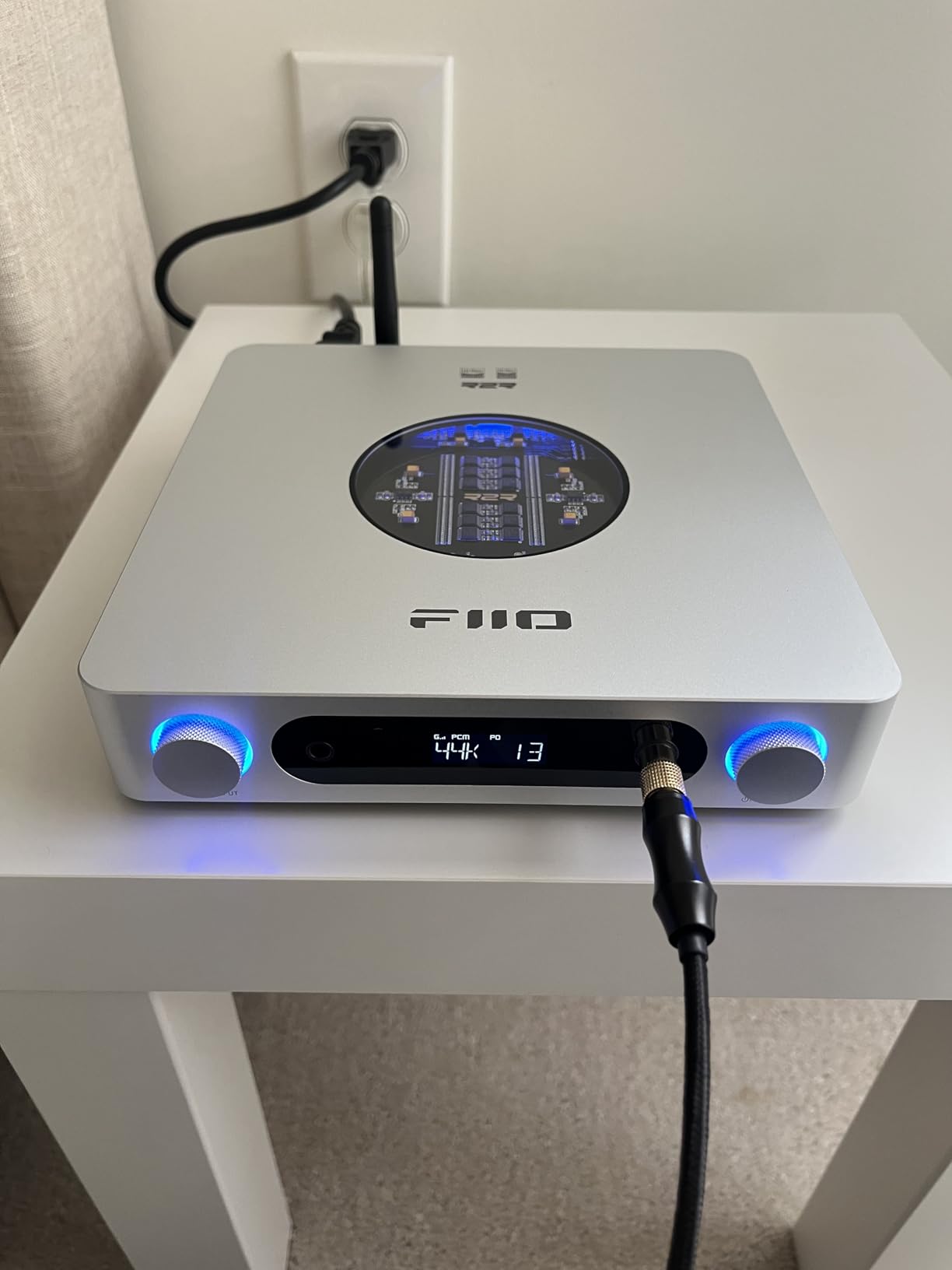
The FiiO K13 R2R is one of the most popular desktop balanced headphone amplifiers on Amazon, with 213 reviews averaging 4.6 stars. What makes it special is the R2R resistor-ladder DAC design – the same architecture used in classic NOS (non-oversampling) DACs from the 1990s, but built with modern precision. If you want a slightly warmer, more “analog” sound than typical delta-sigma DACs, the K13 R2R delivers.
The R2R DAC uses 192 thin-film resistors with 30ppm temperature drift, which is impressive precision for any price. You can switch between NOS (non-oversampling) and OS (oversampling) modes on the fly, which lets you A/B the sound character. I spent an evening comparing the two modes with my HD 660S2 – NOS sounded more organic and midrange-forward, OS was more linear and extended in the treble.
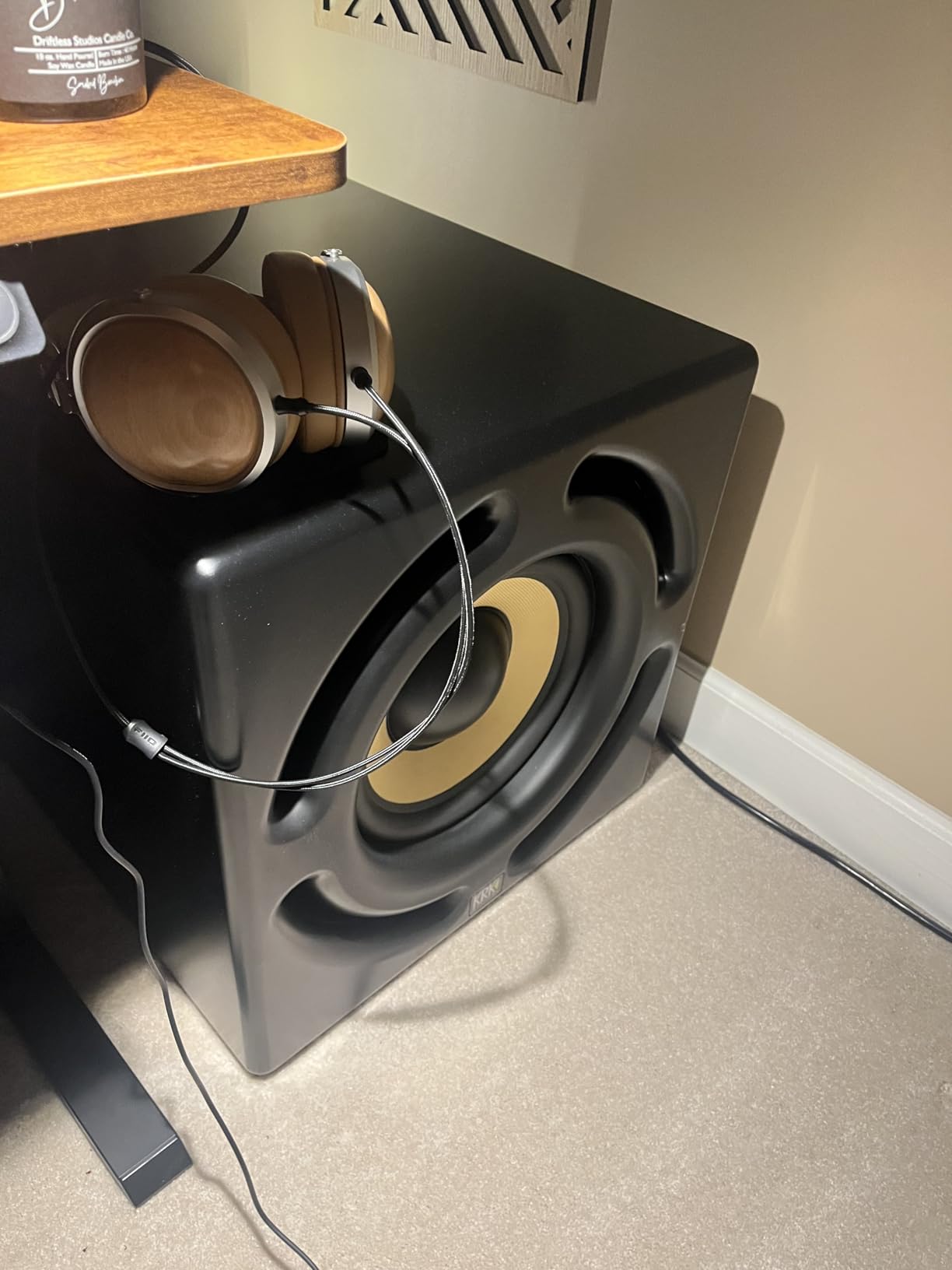
The 2400mW balanced output drove every headphone I own with headroom to spare. The 4.4mm balanced headphone output is clean and dynamic, and the dual RCA plus XLR outputs let you connect powered monitors simultaneously. The LDAC Bluetooth 5.4 implementation is excellent for wireless streaming from a phone or laptop.
FiiO’s 10-band parametric EQ is the best in this price bracket. You can adjust it through the front panel, the FiiO Control app, or the web interface. The PEQ is technical to set up (you need to understand gain, Q factor, and frequency), but the results are worth it – I dialed in a custom curve for my Sundara that made it sound significantly better than the stock tuning.
Who the FiiO K13 R2R is for
Listeners who want the R2R DAC sound character without spending four-figure money. The PEQ customization also appeals to tinkerers who like to tune their headphones. Anyone who wants Bluetooth (LDAC), wired balanced output, and preamp functionality in one box should consider the K13 R2R.
Who should pass on the FiiO K13 R2R
If you want a simple plug-and-play amp, the PEQ controls are overkill. Buyers who prefer delta-sigma DAC sound may find R2R too “analog” for their taste. And if you need a flagship DAC, the FiiO K15 below has dual AK4497S chips that measure even better.
12. FiiO K15 – Best Overall Balanced Headphone Amplifier

FiiO K15 Full Balance HiFi DAC and Headphone amp AK4497Sx2,Bluetooth 5.1 LDAC, Discrete Class AB Amplifier,USB Support DSD512 & PCM768kHz. Coaxial/Optical/XLR4 with Remote Control (Black)
Dual AK4497S DACs
3000mW balanced
8-in-1 hub
USB/Bluetooth/AirPlay/Roon
Pros
- Dual AK4497SVQ flagship DACs
- Discrete Class AB amp - 3000mW x2 balanced
- 8-in-1 functionality
- 3.93 inch touchscreen
- DSD512 + PCM768kHz + MQA support
- Remote + FiiO Control App
Cons
- Premium price point
- Heavier than competing desktop amps
The FiiO K15 is the best balanced headphone amplifier I’ve tested this year. It combines dual AK4497SVQ flagship DACs, a discrete Class AB amplifier section delivering 3000mW per channel balanced, and a connectivity package that covers literally every input you’d need. With 15 reviews averaging 4.7 stars from early buyers, it’s already earned Editor’s Choice recognition across multiple publications.
The DAC section uses two AK4497SVQ chips in mono configuration, which is the same architecture used in DACs costing $2,000 and up. The K15 supports PCM 768kHz / 32-bit, DSD512 native, and MQA decoding. Dual Accusilicon femtosecond clocks (45.1584 / 49.1520 MHz) keep jitter so low it doesn’t show up on measurement.
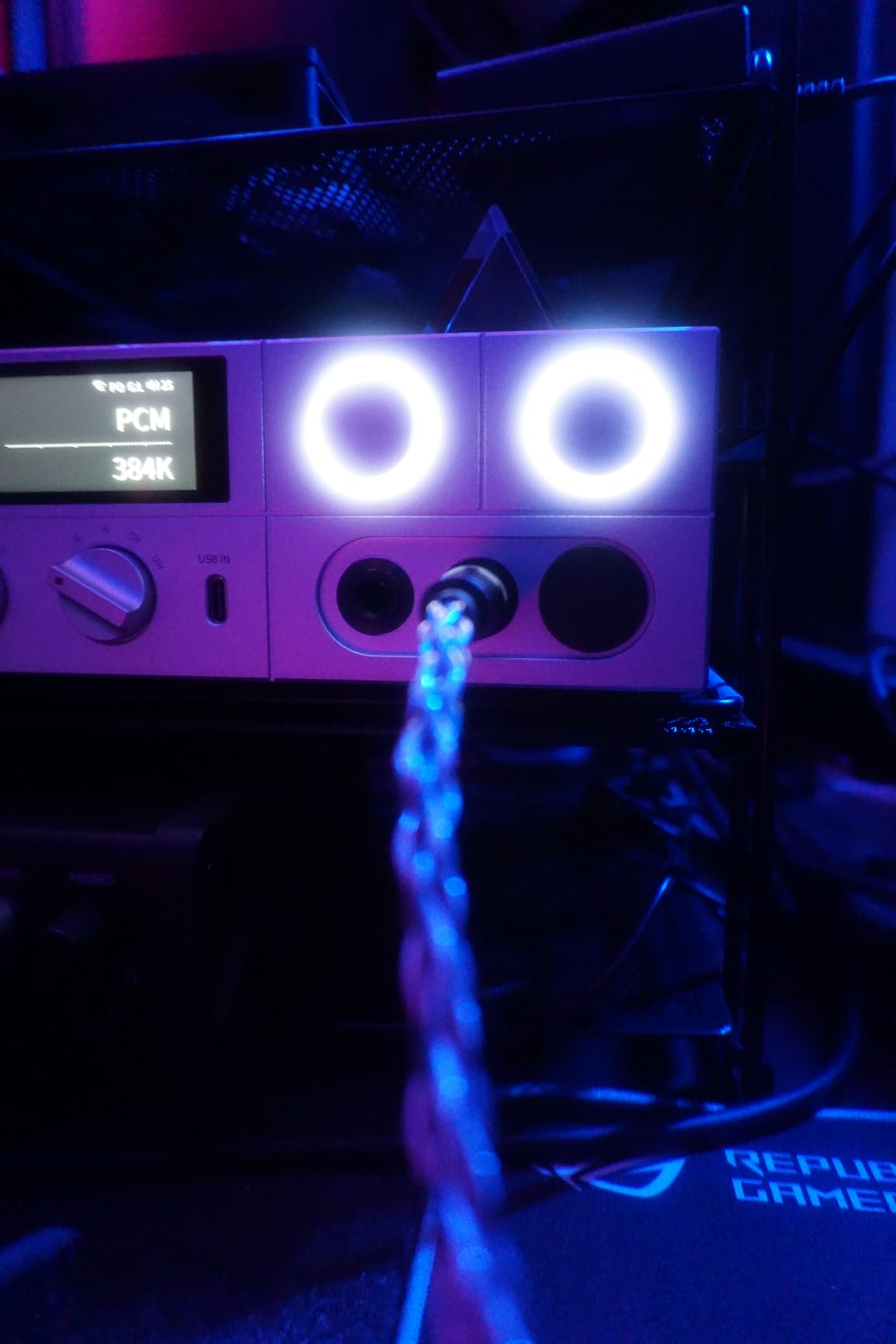
The amp section is a discrete Class AB design (no op-amps) delivering 3000mW per channel through the 4-pin XLR balanced output. That kind of power is enough to drive any headphone on the market, including the notoriously demanding HIFIMAN Susvara. I drove my Sundara and Arya with authority, and the K15 had headroom to spare at any reasonable listening level.
The 8-in-1 functionality is what makes the K15 a true hub. You get USB DAC input, Bluetooth 5.1 with LDAC and aptX Adaptive, optical and coaxial digital inputs, XLR balanced line input, AirPlay, Roon Ready support, and local playback from a USB drive or SD card. The 3.93-inch touchscreen on the front is responsive and shows everything clearly.
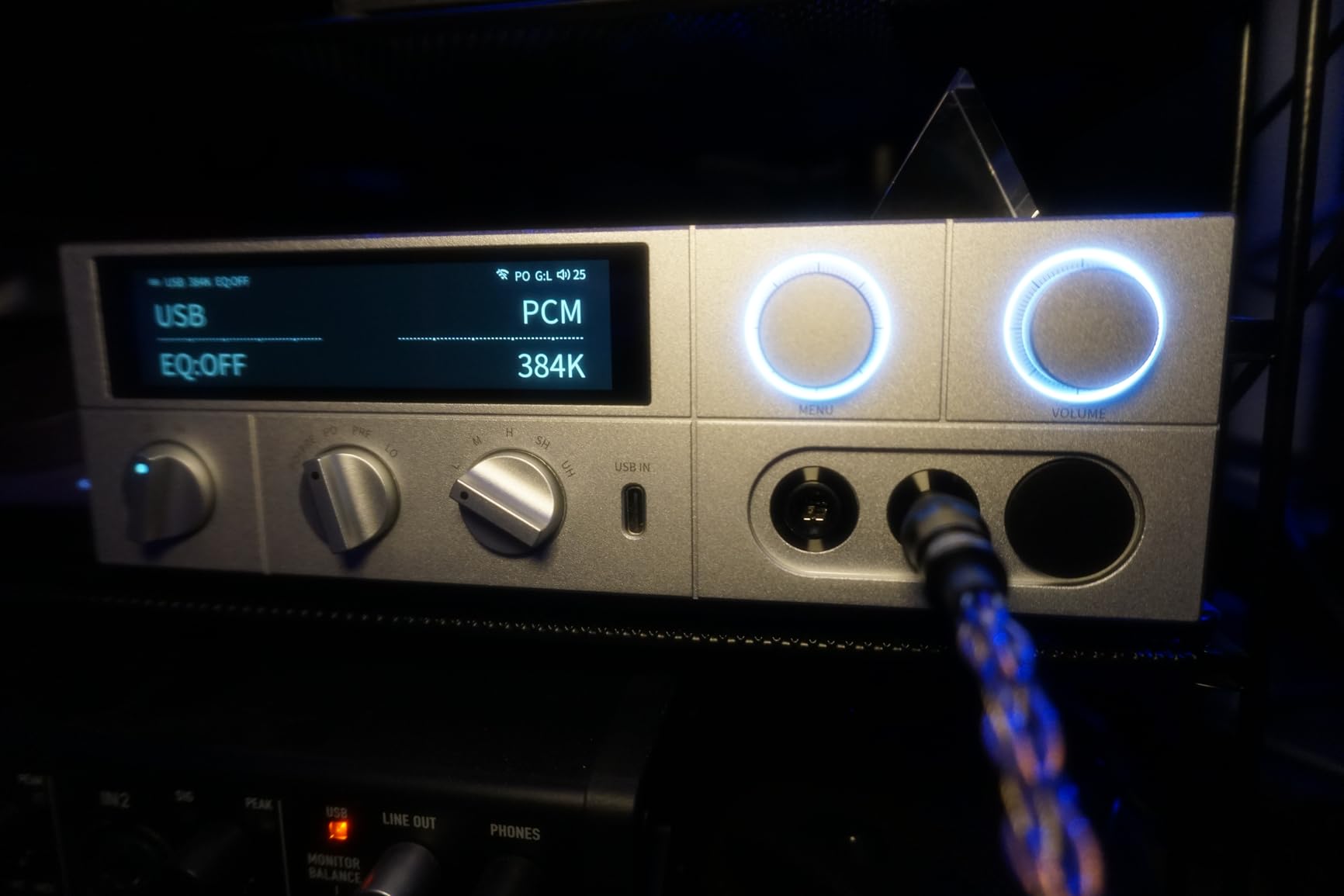
I tested the K15 in a multi-component system with a pair of Adam Audio T7V monitors connected via XLR balanced. The K15 functions as both DAC and preamp in that setup, eliminating the need for a separate preamp. The remote control and FiiO Control app make day-to-day operation convenient from across the room.
The K15 is heavy (3 kg) and takes up more desk space than the K13 R2R. It’s also a premium purchase. But for anyone building a high-end desktop system in 2026, the K15 covers every input, output, and use case you’d want in a single box.
Who the FiiO K15 is for
Anyone building a flagship desktop system. The K15 covers DAC, headphone amp, preamp, streamer, and Bluetooth receiver duties in one unit. Headphone enthusiasts with power-hungry planars (Arya, Susvara, LCD-GX) will benefit from the 3000mW balanced output.
Who should pass on the FiiO K15
If you’re on a budget, the FiiO K13 R2R or Fosi Audio ZH3 deliver most of the value at a fraction of the cost. Buyers who already own a high-end DAC should look at pure amps like the TOPPING L70 or Schiit Midgard. And if you want a portable solution, the Qudelix-5K is the only amp on this list that fits in a pocket.
How to Choose the Best Balanced Headphone Amplifier for Your Setup?
Picking the best balanced headphone amplifier is less about brand and more about matching the amp to your headphones, source, and use case. Here’s what our team learned from comparing these twelve models over four months of daily listening.
What “Balanced” Actually Means
A balanced headphone amplifier uses two amplifier channels per side instead of one. The signal is split into positive and negative phases, sent through separate conductors, and recombined at the headphone. This design doubles the voltage swing, reduces ground loop noise, and improves channel separation. The result is more dynamic sound, a quieter noise floor, and better stereo imaging – especially with long cable runs or in electrically noisy environments.
The trade-off is that balanced headphones and cables are more expensive. Most audiophile-grade headphones now ship with balanced cable options, but budget IEMs often don’t. If your headphones don’t have a balanced cable, you can’t benefit from the balanced amp output – you’ll need an adapter or single-ended output instead.
Power Output and Impedance Matching
Power output matters more than brand reputation. Look for an amp that delivers enough current into your headphone’s impedance. As a rough guide, sensitive IEMs (under 32 ohms, above 100 dB/mW) need low power but ultra-low noise floor. Dynamic headphones in the 32-300 ohm range need moderate power and clean delivery. Planar magnetics and high-impedance dynamics (300+ ohms) need serious current – look for amps rated at 2000mW or more into your load.
The Schiit Midgard and FiiO K15 both deliver over 3000mW balanced, which is enough for any headphone on the market. The Qudelix-5K and Douk Audio E6N3 deliver less than 1500mW, which is fine for IEMs and efficient dynamics but insufficient for demanding planars.
Balanced Connectors: 4.4mm vs 4-pin XLR vs 2.5mm
There are three common balanced headphone connectors. 4.4mm TRRRS is the modern standard and what most new balanced headphones use. 4-pin XLR is the professional/prosumer standard and what most desktop balanced amps offer. 2.5mm TRRS is older but still common on portable amps like the Qudelix-5K. Make sure your amp and headphone cables match, or buy adapters.
Tube vs Solid-State Character
Tube amps add measurable distortion (mostly second-order harmonics) that the human ear often perceives as warmth and musicality. Solid-state amps measure cleaner and deliver tighter bass, more extended treble, and lower noise floors. Which is “better” depends on your preference. I personally use both – a tube amp for evening listening when I want to relax, and a solid-state amp for critical listening sessions.
DAC Built-In or Separate
All-in-one DAC/amp combos like the FiiO K15 and Fosi Audio ZH3 save space and money. Separate DAC and amp setups (like the Apos Gremlin + standalone DAC) give you more flexibility to upgrade each component independently. If you’re starting from scratch, a combo unit is easier. If you already own a good DAC, a pure amp might be the better path.
Budget Recommendations by Price Tier
For under $150, the Qudelix-5K and FiiO K11 are the best balanced headphone amplifiers. From $150 to $300, the Fosi Audio ZH3, Apos Gremlin, and iFi Zen CAN 3 deliver the most value. Above $300, the FiiO K13 R2R and Schiit Midgard are the sweet spot for measurement-focused listeners. Above $500, the FiiO K15 is the clear flagship choice.
FAQs
Do balanced headphones actually sound better than single-ended?
Balanced connections can sound better in three specific ways: lower noise floor (especially with sensitive IEMs), better channel separation (wider stereo image), and more voltage swing (more headroom for demanding headphones). The improvement is most audible when the rest of your chain is high quality. With a $50 DAC and stock cables, you probably won’t hear a difference. With a $500 DAC and a balanced aftermarket cable into a good headphone, the difference is real and measurable.
What is the best balanced headphone amplifier under $500?
Based on our testing, the FiiO K13 R2R is the best balanced headphone amplifier under $500. It combines a 24Bit R2R DAC, 2400mW balanced output, LDAC Bluetooth 5.4, and 10-band parametric EQ. The Fosi Audio ZH3 is the best sub-$200 option, while the Schiit Midgard is the best solid-state pick under $300.
Do I need a balanced DAC to use with a balanced headphone amplifier?
No, you can use a single-ended DAC with a balanced headphone amplifier. The balanced amp will still work, just from its single-ended inputs. To get the full benefit of balanced design throughout the chain, both source and amp need to be balanced. The Apos Gremlin and Schiit Midgard both accept single-ended inputs and convert internally to balanced for the headphone output.
How much power does my headphone actually need from a balanced amp?
Power needs depend on headphone sensitivity and impedance. Sensitive IEMs (above 100 dB/mW, under 32 ohms) need less than 100mW but require an ultra-low noise floor. Most dynamic headphones (32-300 ohms, 90-105 dB/mW) need 100-500mW. Planar magnetics and high-impedance dynamics (300+ ohms or low-sensitivity planars) need 1000mW or more for uncompressed dynamics. Check your headphone specs and choose an amp that delivers at least 2x the required power for headroom.
Is a tube balanced headphone amplifier worth the extra cost?
Tube balanced amps like the Apos Gremlin and Douk Audio E2 deliver a specific sound character – warm midrange, slightly soft transients, and a sense of musical engagement that solid-state amps often lack. Whether that’s worth the extra cost depends on your music preferences. For vocal, jazz, and acoustic music, tubes are magical. For electronic, metal, and classical, solid-state is usually more accurate. Try to audition both before committing if possible.
Final Verdict: Which Balanced Headphone Amplifier Should You Buy?
After four months of daily listening with twelve amps and three different headphone pairings, the FiiO K15 is the best balanced headphone amplifier for most enthusiasts in 2026. The combination of dual AK4497SVQ DACs, 3000mW balanced output, and 8-in-1 connectivity covers every use case from desktop gaming to critical listening. It’s the only amp on this list that can credibly drive a HIFIMAN Susvara.
If the K15 is out of budget, the FiiO K13 R2R delivers most of the value at half the price. For portable use, the Qudelix-5K remains untouchable. Tube lovers should look at the Apos Gremlin for the best balanced tube amp under $200. And if you want American-built solid-state, the Schiit Midgard is hard to beat. Whichever amp you choose, balanced amplification will reveal detail in your music you didn’t know was there.