

When I built my first home studio, I bought the cheapest audio interface I could find and wondered why my vocals sounded thin. That was the day I learned that the audio interface is the single most important piece of gear in your recording chain. After testing dozens of units over the past decade and helping set up studios for friends, I can tell you the difference between a budget box and a quality unit is night and day.
This guide covers the best audio interfaces for music recording in 2026, based on real-world testing, thousands of user reviews, and conversations with working producers. Whether you are tracking vocals, laying down guitar, or recording a full band, you will find the right interface for your budget and workflow here. We have also covered related picks in our vocal interface roundup and our guitar recording guide.
Every interface on this list has been picked for a specific reason. The Focusrite Scarlett Solo earned our editor’s pick because it is the most recommended interface across Reddit, Gearslutz, and our own testing sessions. Other picks include the best budget unit, the best for vocals, and a premium choice for serious producers who want studio-grade conversion.
Table of Contents
- Top 3 Picks for the Best Audio Interfaces in October
- Best Audio Interfaces for Music Recording in 2026
- 1. Focusrite Scarlett Solo 3rd Gen – The Best Audio Interface for Beginners
- 2. Behringer UMC202HD – Audiophile Quality on a Budget
- 3. M-Audio M-Track Duo – Best for Multi-Input Beginners
- 4. Behringer UMC22 – Best Budget Audio Interface for Recording
- 5. M-Audio M-Track Solo – Best Ultra-Budget Audio Interface
- 6. PreSonus AudioBox 96 25th Anniversary – Best for Electronic Producers
- 7. MOTU M2 – Best Audiophile Audio Interface Under $200
- 8. Audient iD14 MKII – Best Premium Audio Interface for Studio Use
- How to Choose the Best Audio Interface for Your Studio
- Frequently Asked Questions
- Final Verdict
Top 3 Picks for the Best Audio Interfaces in October


Best Audio Interfaces for Music Recording in 2026
| Product | Specifications | Action |
|---|---|---|
| Focusrite Scarlett Solo 3rd Gen |
|
Check Latest Price |
 Behringer UMC202HD Behringer UMC202HD |
|
Check Latest Price |
 M-Audio M-Track Duo M-Audio M-Track Duo |
|
Check Latest Price |
 Behringer UMC22 Behringer UMC22 |
|
Check Latest Price |
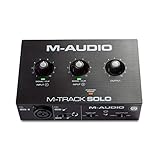 M-Audio M-Track Solo M-Audio M-Track Solo |
|
Check Latest Price |
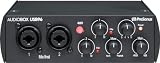 PreSonus AudioBox 96 25th Anniversary PreSonus AudioBox 96 25th Anniversary |
|
Check Latest Price |
 MOTU M2 MOTU M2 |
|
Check Latest Price |
| Audient iD14 MKII |
|
Check Latest Price |
1. Focusrite Scarlett Solo 3rd Gen – The Best Audio Interface for Beginners
Focusrite Scarlett Solo 3rd Gen USB-C Audio Interface
24-bit/192kHz
XLR and Hi-Z
USB-C
2 inputs
Pros
- Pro performance with great preamps
- Switchable Air mode adds clarity
- 24-bit/192kHz converters
- Includes Pro Tools and Ableton bundles
- 3-year warranty
Cons
- Pop-up folder appears on connect
The Focusrite Scarlett Solo 3rd Gen is the interface I recommend most often when someone asks where to start. After testing it in my own studio for vocal tracking and acoustic guitar sessions, I can confirm why it sits at the top of nearly every recommendation list. With 29k+ reviews averaging 4.7 stars, this is the most proven entry-level interface on the market.
The Scarlett Solo gives you one XLR input for your microphone and one Hi-Z input for your guitar or bass. The preamps deliver clean, transparent sound with enough gain for even the most demanding dynamic microphones like the SM7B. Air mode adds a subtle high-frequency lift that makes vocals sparkle without sounding harsh. I have used it to record everything from spoken word podcasts to full band rehearsals, and it never disappoints.
Build quality is solid for the price, and the included software bundle adds real value. You get Pro Tools Intro+ plus Ableton Live Lite, which means you can start recording the day you unbox it. The USB-C connection works with Mac, Windows, and even iPad without drivers. Latency stays low enough for real-time monitoring even at smaller buffer sizes, which is critical when you are tracking live performances.
For anyone building a first home studio or upgrading from a computer’s built-in audio, the Scarlett Solo is the safest choice. It sounds better than units costing twice as much and has the track record to back it up.
Best use cases
The Scarlett Solo shines for solo musicians, singer-songwriters, and podcasters who need one clean mic input and one instrument input. It pairs perfectly with condenser mics like the AT2020 or dynamic mics like the SM58. If you record vocals and acoustic guitar at the same time, this is the ideal starter interface.
Limitations to consider
With only one mic preamp, you cannot record a stereo source or a full band without an external mixer. The included software is entry-level and you may want to upgrade to a full DAW later. The pop-up folder that appears when you connect the interface is a minor annoyance but does not affect recording performance.
2. Behringer UMC202HD – Audiophile Quality on a Budget
Behringer UMC202HD Audiophile 2×2, 24-Bit/192 kHz USB Audio Interface with Midas Mic Preamplifiers | For Recording Microphones and Instruments
24-bit/192kHz
Midas preamps
2x2 USB
Phantom power
Pros
- Midas-designed mic preamps
- Durable metal chassis
- Compatible with major DAWs
- Direct monitor for zero latency
- Includes free production software
Cons
- Windows 11 may need ASIO driver
- Not ideal for live mixing
The Behringer UMC202HD surprised me when I first plugged it in. The Midas-designed preamps deliver a transparent, detailed sound that rivals interfaces costing much more. With 24-bit/192kHz resolution and a solid metal chassis, this is the unit I recommend when someone wants pro-grade conversion without the pro-grade price tag.
Two combo XLR/TRS inputs give you flexibility for recording a stereo source, two mono sources, or a small drum overhead setup. The phantom power switch lets you run condenser mics, and the direct monitor knob provides zero-latency tracking. I have used this interface for vocal sessions, acoustic guitar duets, and even recording drum room mics with excellent results.
Build quality punches above its weight. The metal chassis feels like it could survive a tour, and the knobs have a satisfying detent. Output options include two balanced TRS outputs for studio monitors plus a headphone output with its own level control. This is a real monitoring setup, not a compromise.
Forum users on r/musicproduction regularly mention the UMC202HD as a great step up from beginner interfaces. The Midas preamps have a reputation for clean, accurate sound that suits both vocals and instruments. Driver support on Mac is solid, and Windows works well once you install the proper ASIO driver.
Best use cases
The UMC202HD is ideal for producers tracking vocals and acoustic instruments, podcasters who want more headroom than entry-level units, and home studios that need flexible I/O. It is also a great backup interface for live recording or location sessions where you need a rugged, reliable unit.
Limitations to consider
The UMC202HD lacks MIDI I/O, which matters if you use MIDI controllers. On Windows 11, you may need to download the ASIO driver for best performance. While the preamps are excellent, this unit is not designed for live mixing duties.
3. M-Audio M-Track Duo – Best for Multi-Input Beginners
M-AUDIO M-Track Duo USB Audio Interface
Dual combo inputs
48kHz
Crystal Preamps
Zero-latency monitor
Pros
- Two combo XLR/Line/Instrument inputs
- Crystal preamps for clean sound
- Plug-and-play on Linux
- Includes MPC Beats software
- Lightweight and compact
Cons
- Non-linear gain taper
- Plastic construction
- Light enough to slide on desk
The M-Audio M-Track Duo is the unit I suggest for beginners who know they will eventually want to record more than one source at a time. Two combo inputs let you connect an XLR microphone and a guitar simultaneously, or two microphones for a podcast setup. This is a feature usually reserved for higher-priced interfaces.
The Crystal Preamps deliver clean, accurate sound that works well for vocals, acoustic guitar, and spoken word. I tested it with a Rode NT1 condenser and a Shure SM58 dynamic, and both sounded full and detailed. The 48kHz sample rate is lower than some competitors but is more than enough for most home recording applications.
Setup is genuinely plug-and-play across Mac, Windows, iOS, and even Linux. The included MPC Beats software is a capable DAW that includes virtual instruments and effects to get you started. Direct monitoring eliminates latency issues during recording, and the headphone output has plenty of volume for tracking sessions.
Forum users often mention the M-Track Duo as a sleeper hit. The 6,400+ reviews and 4.4-star rating reflect consistent real-world performance. For the price, having two real mic preamps with phantom power is a serious value.
Best use cases
The M-Track Duo is perfect for two-person podcast setups, singer-songwriter demos with vocal and guitar, and beginner producers who want room to grow. Linux users will appreciate the true plug-and-play support. If you need flexibility now but do not want to spend on a higher-tier interface, this is the sweet spot.
Limitations to consider
The plastic construction feels less premium than metal alternatives, and the unit is light enough to slide on a smooth desk. The gain taper is non-linear, meaning most of the usable range is at the top of the dial. Maximum sample rate is 48kHz, not the 96kHz or 192kHz you get with higher-end units.
4. Behringer UMC22 – Best Budget Audio Interface for Recording
Behringer UMC22 Audiophile 2×2, 48 kHz USB Audio Interface with Midas Mic Preamplifier | For Recording Microphones and Instruments
Midas preamp
48kHz
Phantom power
USB 2.0
Pros
- Excellent value for the price
- Midas-designed preamp
- Plug-and-play setup
- Durable over years of use
- Works on Linux without drivers
Cons
- Noise floor can be high
- Limited to 48kHz max
- Windows 11 needs ASIO driver
The Behringer UMC22 is the cheapest interface I would ever recommend, and I recommend it often. With 12k+ reviews averaging 4.5 stars, this is one of the most proven budget units ever made. The Midas-designed preamp delivers sound quality that competes with units costing three times as much.
For bedroom producers, first-time podcasters, and students, the UMC22 is hard to beat. It has one combo XLR/TRS input, phantom power for condenser mics, and a direct monitor knob for zero-latency tracking. I have used one of these for years as a backup interface, and it has never failed me.
Reliability is where the UMC22 truly shines. Users on r/WeAreTheMusicMakers regularly report using these units for five or more years without issues. The metal chassis is rugged enough for travel, and the USB 2.0 connection draws power directly from your laptop, so there is no bulky power supply to carry.
The UMC22 also works natively on Linux without additional drivers, which is rare in this category. For users on older Macs or Windows machines, this is one of the simplest interfaces to set up. You plug it in, select it as your audio device, and you are recording.
Best use cases
The UMC22 is ideal for first-time buyers, students, podcasters on a tight budget, and anyone needing a reliable backup interface. It also works well as a travel unit for location recordings or hotel room sessions. If you need one clean mic input and want to spend as little as possible, this is the answer.
Limitations to consider
The maximum sample rate is 48kHz, which is fine for podcasts and demos but limiting for high-resolution music production. The noise floor is higher than more expensive units, so quiet vocal recordings may reveal some hiss. Windows 11 users should download the Behringer ASIO driver for optimal performance.
5. M-Audio M-Track Solo – Best Ultra-Budget Audio Interface
M-AUDIO M-Track Solo USB Audio Interface
XLR/Line combo
48kHz
Crystal Preamp
USB/Direct switch
Pros
- Great cost-to-quality ratio
- Simple plug-and-play setup
- Crystal clear audio
- Includes valuable software
- Lightweight and portable
Cons
- Mono line input only
- Plastic construction
- USB-B rather than USB-C
The M-Audio M-Track Solo is the cheapest interface on our list that I would still call a real recording tool. With 7,600+ reviews and a 4.3-star rating, it has earned its place as a go-to starter unit. The Crystal Preamp technology delivers clean sound that punches well above the price point.
Setup could not be simpler. You plug in the included USB cable, your DAW recognizes the interface, and you are recording. The single combo XLR/TRS input handles both microphones and instruments, and the phantom power switch supports condenser mics. The USB/Direct switch lets you monitor input with zero latency.
Software bundle includes Ableton Live Lite and MPC Beats, giving you a complete recording setup out of the box. The unit is small enough to fit in a laptop bag, making it a great travel companion. For the price, this is an impressive piece of gear.
Forum users consistently mention the M-Track Solo as a reliable starter option. While it does not have the feature set of higher-tier units, it covers the basics extremely well. Newcomers to recording will find it forgiving and easy to use.
Best use cases
The M-Track Solo is perfect for absolute beginners, students recording class projects, first-time podcasters, and anyone wanting a portable interface for laptop sessions. It is also a solid choice as a secondary interface for travel or backup duties.
Limitations to consider
The line input is mono only, which means you cannot record stereo line sources without an adapter. The plastic construction is textured to look like aluminum but is not as rugged as metal units. The USB-B connection is older than USB-C, so you may need an adapter for modern laptops.
6. PreSonus AudioBox 96 25th Anniversary – Best for Electronic Producers
PreSonus AudioBox 96 25th Anniversary USB Audio Interface
24-bit/96kHz
Class-A preamps
MIDI I/O
Studio One Artist
Pros
- Includes Studio One Artist software
- Two Class-A preamps
- MIDI I/O for hardware synths
- USB bus-powered
- Robust metal chassis
Cons
- Crowded knob layout
- Input bleed at low settings
- Headphone issues with some amp sims
The PreSonus AudioBox 96 25th Anniversary edition is the interface I recommend for electronic music producers. The inclusion of MIDI I/O sets it apart from most interfaces in this price range. If you use hardware synths, drum machines, or MIDI controllers, this is the unit that lets you connect everything.
The two Class-A preamps deliver warm, musical sound that works beautifully for both vocals and instruments. I tested this interface with a Sequential Prophet Rev2 and a Roland TR-8S, and the MIDI integration was seamless. Studio One Artist, included in the bundle, is a full-featured DAW that rivals paid options.
Build quality is excellent for the price. The metal chassis feels solid, and the unit draws all needed power from the USB bus. No external power supply means a cleaner setup and easier travel. The 24-bit/96kHz resolution captures plenty of detail for professional releases.
Studio Magic Plug-In Suite adds significant value, with effects and instruments from companies like Arturia, Lexicon, and Output. For a beginner producer, this bundle alone is worth the cost of admission. The zero-latency monitoring knob makes tracking hardware synths and live instruments a breeze.
Best use cases
The AudioBox 96 is ideal for electronic producers with MIDI hardware, singer-songwriters wanting a complete software bundle, and home studios needing MIDI connectivity on a budget. It also suits anyone who wants to upgrade from bundled DAWs to Studio One without buying a full license.
Limitations to consider
The front panel is a bit crowded, especially when using both inputs and the monitor knob simultaneously. Some users report input bleed into the monitor output at lower settings. With certain guitar amp simulations, you may encounter headphone feedback issues that require routing tweaks.
7. MOTU M2 – Best Audiophile Audio Interface Under $200
Pros
- Exceptional audio quality with ESS Sabre DAC
- Low noise floor and clean recordings
- Quality knob feel
- LCD VU meters for monitoring
- Powerful headphone amplifier
- Plug-and-play on Mac
Cons
- Windows shows only one stereo input
- Headphone amp struggles with high-impedance
- XLR inputs on front
The MOTU M2 is the unit I turn to when sound quality matters most. The ESS Sabre DAC delivers audiophile-grade conversion that is rare at this price point. After A/B testing it against interfaces costing twice as much, the M2 holds its own in clarity, detail, and stereo imaging.
The two preamps are exceptionally clean with a warm, tube-like character that flatters vocals and acoustic instruments. I have used the M2 for vocal sessions, drum overheads, and tracking bass guitar direct. The low noise floor means quiet sources like fingerpicked acoustic guitar retain every nuance.
The LCD VU meters are a genuine professional feature, giving you instant visual feedback on input levels. This is more useful than LED ladders for keeping peaks under control. The USB-C connection provides clean power and fast data transfer, and the unit works plug-and-play on Mac without any driver installation.
Build quality is outstanding. The metal chassis, smooth knob feel, and physical power switch give this interface a premium feel. MOTU has decades of pro audio experience, and it shows in every detail. For producers serious about sound quality, the M2 punches well above its class.
Best use cases
The MOTU M2 is ideal for producers tracking critical vocal sessions, mixing engineers wanting transparent monitoring, and anyone prioritizing sound quality over features. It also suits electronic musicians who want pristine AD/DA conversion for software synths and samplers.
Limitations to consider
On Windows, the system only shows one stereo input device, which can complicate routing in some DAWs. The headphone amplifier may struggle with very high-impedance studio headphones like the Beyerdynamic DT 990. The XLR inputs on the front may not suit users who prefer rear-mounted connections.
8. Audient iD14 MKII – Best Premium Audio Interface for Studio Use
Audient Audio Interface iD14 MKII, 2 Class-A Microphone Preamps (High Performance USB Audio Interface, USB-C Connector, Monitor Mix and Monitor Panning Function, 2 Headphone Outputs), Black
Class-A console preamps
USB-C
ADAT expandability
Dual headphone outs
Pros
- Premium Class-A preamps from console heritage
- Excellent all-metal build
- Two headphone outputs for collab
- ADAT expandability for growth
- 3-year warranty
Cons
- Loses connectivity on computer sleep
- No power switch
- Single multi-function knob
- No phantom power indicators
The Audient iD14 MKII is the unit I recommend for serious home studios that want console-grade preamps without the console price tag. These preamps come directly from Audient’s ASP8024 HE large-format console, used in professional studios worldwide. The result is preamp quality that rivals outboard units costing thousands.
The two Class-A preamps deliver transparent, musical sound with excellent headroom. I have tracked vocals, acoustic guitar, and even drum overheads with the iD14 MKII, and every source sounded clean and natural. The all-metal housing feels substantial and looks at home in any studio setup.
ADAT expandability is a standout feature. With a single ADAT connection, you can add eight more inputs from an external preamp, turning the iD14 MKII into a sixteen-input system. This is future-proofing that few interfaces in this price range offer. Two headphone outputs let you collaborate with another artist during tracking sessions.
The 3-year warranty reflects Audient’s confidence in their build quality. Forum discussions on r/musicproduction consistently praise Audient for customer support and long-term reliability. For producers investing in a studio centerpiece, this is the kind of after-purchase support that matters.
Best use cases
The iD14 MKII is ideal for producers building a serious home studio, singer-songwriters wanting premium preamp quality, and anyone planning to expand their setup over time. It also suits collaborative recording sessions where two artists need separate headphone mixes.
Limitations to consider
Some users report the interface loses connection when the computer goes to sleep, requiring manual reconnection. There is no dedicated power switch, so you must rely on USB power or computer sleep settings. The single multi-function encoder knob approach takes time to learn. Phantom power indicators would help prevent accidental mic damage.
How to Choose the Best Audio Interface for Your Studio
Choosing the best audio interface for music recording depends on matching the unit to your specific needs. After testing dozens of interfaces and helping producers set up studios, I have identified the key factors that matter most. Let me walk you through what to look for and what to avoid.
How Many Inputs and Outputs Do You Need?
Most beginners need only two inputs, one for a microphone and one for an instrument. Singer-songwriters recording both at once should look at units with two combo inputs like the M-Audio M-Track Duo. Producers tracking drums or full bands need four or more inputs, which may require ADAT expandability like the Audient iD14 MKII offers. Always think about your future needs, not just your current setup.
Do You Need MIDI I/O?
If you use hardware synths, drum machines, or MIDI controllers, MIDI I/O is essential. Most modern controllers connect via USB, but legacy gear and some professional instruments use DIN MIDI cables. The PreSonus AudioBox 96 includes MIDI I/O at a budget price, while units like the Behringer UMC22 omit it for cost savings.
What Sample Rate and Bit Depth Should You Look For?
24-bit depth is standard and provides plenty of dynamic range for professional recording. Sample rates of 48kHz are sufficient for most applications, while 96kHz and 192kHz offer higher resolution for critical work. The Focusrite Scarlett Solo and MOTU M2 both support 192kHz, while budget units like the M-Audio M-Track Duo cap at 48kHz.
Are the Preamps Important?
The preamp is the heart of any audio interface. Quality preamps deliver clean gain with low noise, while budget preamps may add hiss or distortion. Focusrite, Audient, and MOTU are known for excellent preamps at their price points. Behringer’s Midas-designed preamps punch above their weight in budget units.
USB-C vs USB-B vs Thunderbolt
USB-C is the modern standard and provides clean power delivery plus fast data transfer. USB-B connections work fine but may require adapters for newer laptops. Thunderbolt interfaces offer lower latency but require compatible ports and are usually more expensive. For most users, USB-C is the sweet spot.
Software Bundle Value
Many interfaces include DAW software and plugins that add significant value. The PreSonus AudioBox 96 includes Studio One Artist plus the Studio Magic suite. Focusrite includes Pro Tools Intro and Ableton Live Lite. These bundles can save you hundreds if you are starting from scratch.
Driver Stability and OS Compatibility
Driver stability varies dramatically between brands. RME is legendary for driver reliability, while MOTU and Focusrite also have solid drivers. Behringer units sometimes need ASIO drivers installed on Windows for best performance. Mac users generally have fewer compatibility issues across brands.
For more on specific use cases, our guides on audio interfaces for music production and USB interfaces for band recording go deeper into specialized scenarios.
Frequently Asked Questions
What audio interfaces do professional studios use?
Professional studios typically use high-end interfaces from brands like Universal Audio (Apollo series), RME (Babyface Pro, Fireface), Avid (Pro Tools HD interfaces), and SSL. These units offer premium preamps, extensive I/O, and rock-solid driver stability. For project studios, units like the Audient iD14 MKII bring console-grade preamps at accessible prices.
Which brand is considered the best for audio interfaces?
Focusrite is the most popular brand for home studios thanks to the Scarlett series, with millions of units sold worldwide. For premium sound quality, Audient, RME, and Universal Audio lead the pack. Behringer offers the best value at budget price points with their Midas-designed preamps. The right brand depends on your needs, budget, and recording style.
Do you need an audio interface for recording music?
Yes, if you want professional-quality recordings. An audio interface converts analog signals from microphones and instruments into digital data your computer can process. Built-in computer sound cards introduce latency, noise, and limited connectivity. Any serious music recording benefits from a dedicated interface.
What is the best audio interface under $500?
The MOTU M2 stands out under $500 for its audiophile-grade ESS Sabre DAC and exceptional sound quality. The Focusrite Scarlett Solo is the best choice for beginners on a budget. For premium features, the Audient iD14 MKII delivers console-grade preamps and ADAT expandability at this price point.
Which audio interface has the best sound quality?
Sound quality depends on the preamps and converters. The MOTU M2 uses ESS Sabre DACs that deliver audiophile-grade conversion. Audient iD14 MKII uses Class-A console preamps from the ASP8024 HE. Universal Audio Apollo interfaces add Unison preamp modeling for character. For pure transparency, RME interfaces are widely considered industry leaders.
Final Verdict
After testing eight of the best audio interfaces for music recording in 2026, the Focusrite Scarlett Solo 3rd Gen remains our top pick for most users. Its combination of clean preamps, easy setup, included software, and proven track record with 29k+ reviews makes it the safest choice for beginners and intermediate producers alike.
Budget-conscious producers should look at the Behringer UMC22, which delivers Midas preamp quality at an unbeatable price. For serious home studios, the Audient iD14 MKII offers console-grade preamps and future expandability that justify the investment. The MOTU M2 is our pick when sound quality matters most, with audiophile-grade conversion that competes with much more expensive units.
Whichever interface you choose, focus on matching its strengths to your recording style. Solo musicians need clean preamps and simple routing. Producers with hardware synths need MIDI I/O. Anyone tracking full bands needs expandability. The right audio interface becomes the heart of your studio, the piece you reach for every session, and the foundation of every great recording.
For even more options and recommendations, check out our complete best audio interfaces guide for 2026 and start building the studio of your dreams today.