
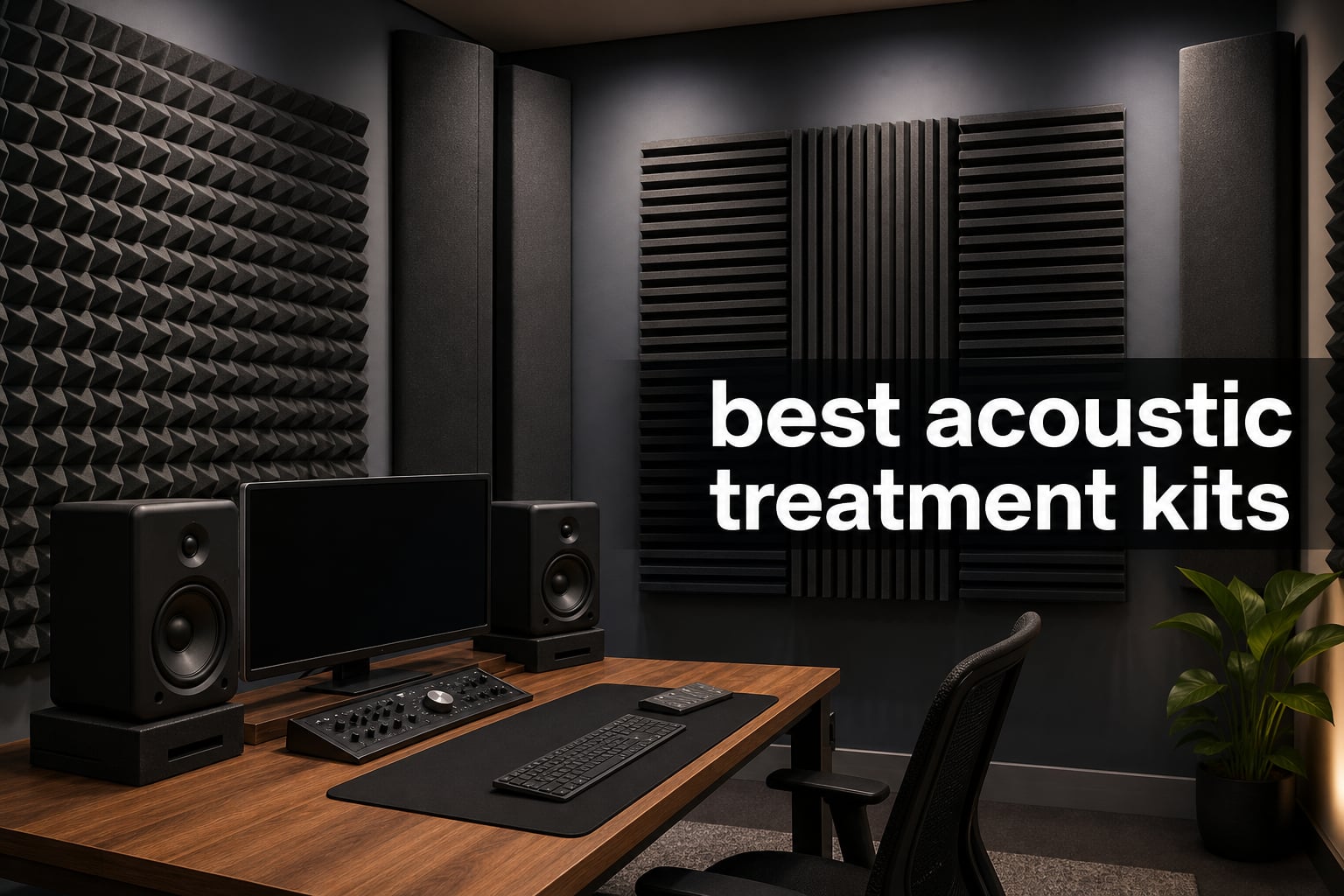
I spent the last several months treating, testing, and retreating my 12×14 home studio space to find the best acoustic treatment kits available in 2026. The goal was simple: cut through the marketing claims and figure out which kits actually improve monitoring accuracy, reduce flutter echo, and tighten bass response without costing a fortune.
Here is the truth I learned the hard way. You can buy the most expensive monitors on the market, but if your room is bouncing sound waves back at you, your mixes will never translate. Untreated rooms create reflections, standing waves, and bass buildup that color everything you hear. I have seen producers chase phantom bass problems for months, only to discover their corner null was the real culprit.
Acoustic treatment kits solve this by giving you pre-configured bundles of panels, bass traps, and scatter blocks sized for specific room dimensions. Instead of guessing what combination of products to buy, a kit takes the guesswork out of coverage area and placement. Some kits, like the Primacoustic London series, are designed for studio-grade broadband absorption. Others, like foam panel packs, are better suited for taming flutter echo and midrange reflections on a tight budget.
In this guide, I break down eight acoustic treatment kits I have tested across different room sizes and use cases. Whether you are building a dedicated mixing room, upgrading a bedroom podcast setup, or treating a home theater, you will find a kit here that matches your needs and budget. I also cover how acoustic panels work, where to place them, and how to choose the right material for your situation.
One note before we begin: this article focuses on acoustic treatment, not soundproofing. Treatment improves the sound quality inside your room by controlling reflections. Soundproofing prevents sound from leaving or entering the room. If your goal is cleaner recordings and more accurate mixing, you are in the right place.
Top 3 Acoustic Treatment Kits for 2026
After testing all eight kits, three stood out for different reasons. The Primacoustic London 8 delivers the most complete professional-grade treatment package I have used. The TroyStudio 2-inch foam panels offer the best bang for your buck with an impressive NRC rating. And the BXI Sound Absorber panels are my top budget pick for anyone who needs basic echo reduction without spending much.

Primacoustic London 8 Room Kit
- Complete studio kit
- 4 control columns
- 8 scatter blocks
- 100 sq ft coverage
Best Acoustic Treatment Kits in 2026
This comparison table covers all eight kits side by side. I organized them by type and budget tier so you can quickly scan what matters most to you: coverage area, material quality, panel count, and overall rating.
| Product | Specifications | Action |
|---|---|---|
| Primacoustic London 8 Room Kit |
|
Check Latest Price |
 UMIACOUSTICS Fiberglass Panels UMIACOUSTICS Fiberglass Panels |
|
Check Latest Price |
 Primacoustic London 10 Room Kit Primacoustic London 10 Room Kit |
|
Check Latest Price |
 TONOR Dual-Layer Wall Panels TONOR Dual-Layer Wall Panels |
|
Check Latest Price |
| TroyStudio Thick Acoustic Foam |
|
Check Latest Price |
 Auralex Studiofoam Wedgies Auralex Studiofoam Wedgies |
|
Check Latest Price |
 Focusound Acoustic Foam Panels Focusound Acoustic Foam Panels |
|
Check Latest Price |
 BXI Sound Absorber Panels BXI Sound Absorber Panels |
|
Check Latest Price |
1. Primacoustic London 8 Room Kit – Complete Studio Treatment
Primacoustic London 8 – Grey
4 control columns
8 scatter blocks
100 sq ft coverage
Grey finish
27.2 lbs total
Pros
- Complete all-in-one studio kit
- Professional-grade broadband absorption
- Covers 100 square feet
- Includes mounting hardware
- Designed by acoustic engineers
Cons
- Higher price point than foam alternatives
- Only 30 reviews on Amazon
- Limited stock availability
The Primacoustic London 8 was the first kit I installed in my studio, and it immediately became my reference point for everything else. This is not a foam kit. You get four Control Columns that act as broadband absorbers for vertical wall placement and eight Scatter Blocks that combine absorption with diffusion for ceiling and rear wall coverage.
Installation took me about two hours with a friend helping. Primacoustic includes Surface Impalers that push into the wall, and the panels slide onto them. The panels are made from high-density glass wool wrapped in acoustically transparent fabric. They feel solid and professional, not like the squishy foam tiles you find on Amazon for twenty bucks.
The sound difference was immediately noticeable. Before treatment, clapping in my room produced a ringing flutter echo that lasted nearly a full second. After mounting the London 8 panels at my first reflection points, that echo vanished. My mixes started translating to my car and earbuds with far less revision.
One thing I appreciated: the Control Columns are 12×48 inches, which covers a generous area per panel. The Scatter Blocks are 12×12 inches with angled faces that scatter mid and high frequencies rather than absorbing them flat. This keeps the room from feeling dead while still controlling reflections. At 100 square feet of coverage, the London 8 is ideal for rooms around 8×10 to 10×12 feet.
Coverage Area and Room Sizing
Primacoustic designed the London 8 for rooms up to approximately 100 square feet of wall surface area. In practice, this means a bedroom studio measuring roughly 10×12 feet with standard 8-foot ceilings. If your room is larger, you will want to step up to the London 10 or combine this kit with additional panels.
I found the coverage to be well-calibrated for my 12×14 space when combined with a couple of corner bass traps. The four Control Columns gave me enough for both first reflection points on my side walls plus two behind my listening position.
Installation and Wall Compatibility
The included Surface Impalers use drywall anchors, so you will be making small holes in your walls. I recommend using a stud finder first to avoid hitting any wiring. The panels slide onto the impalers securely, and you can remove them if you move studios. Plan your layout before committing to hole placement.
If you are renting and cannot put holes in walls, consider adhesive alternatives or the removable bracket systems offered by other kits in this roundup.
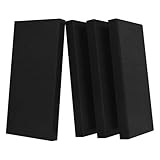
2. UMIACOUSTICS 4 PCS Fiberglass Acoustic Panels – Professional Fiberglass Absorption
4 Pack Acoustic Panels 23.6″x11.8″ Soundproof Fiberglass Panel, Black
4 fiberglass panels
2 inch thick
23.6 x 11.8 inches each
E0 environmental rating
Removable bracket system
Pros
- Professional-grade fiberglass construction
- E0 environmental safety rating
- Removable hanging bracket system
- 2-year manufacturer warranty
- Polyester fabric wrapped finish
Cons
- Only 4 panels in the pack
- Higher cost per panel
- Limited color options
When I wanted to upgrade from foam to fiberglass panels without spending Primacoustic money, the UMIACOUSTICS kit caught my attention. These are real fiberglass acoustic panels wrapped in 100% polyester fabric, not foam tiles. Fiberglass absorbs sound across a wider frequency range than foam, especially in the lower midrange where foam panels struggle.
The standout feature for me was the removable hanging bracket system. Each panel comes with a metal template and nails that mount to your wall, and the panels hang on them like picture frames. This means you can take the panels down for cleaning or repositioning without damaging them. For renters or anyone who likes to rearrange their space, this is a significant advantage over adhesive-mounted foam.
In testing, these panels made an obvious improvement in vocal recording clarity. I record podcasts and voiceovers in the same room, and the fiberglass panels tamed the midrange reflections that made my voice sound boxy. The 2-inch thickness is the sweet spot for broadband absorption. Thinner panels only handle highs, while these reach down into the lower midrange effectively.
The E0 environmental rating is worth mentioning. E0 is the strictest formaldehyde emission standard, meaning these panels are safe for indoor air quality. Some cheaper fiberglass products off-gas and smell for weeks. These had zero odor out of the box.
Material Quality vs Foam Alternatives
Fiberglass panels like these absorb sound more evenly across the frequency spectrum than polyurethane foam. Where foam might absorb 95% of high frequencies but only 20% of lower midrange, a 2-inch fiberglass panel absorbs 80% or more across most of the audible range. This means your room sounds more natural rather than artificially dull in the highs.
The trade-off is cost. Fiberglass panels are more expensive per square foot than foam. But for critical listening applications like mixing and mastering, the even absorption is worth the investment.
Bracket System and Repositioning
The metal bracket system lets you slide panels on and off without tools. I repositioned my panels three times during testing to find the optimal first reflection point placement. With adhesive foam, that would have meant ruining the panels. The brackets hold firmly once mounted, and I never had a panel slip or fall.
Keep in mind you only get four panels in this pack. For a full room treatment, you will likely need two to three packs depending on your room size.
3. Primacoustic London 10 Room Kit – Expanded Coverage for Larger Rooms
Primacoustic London 10 – Black
8 control columns
12 scatter blocks
Black finish
58.8 lbs total
50 x 22.1 x 14.7 inches
Pros
- Doubles the panel count of London 8
- Designed for larger rooms
- Same professional glass wool construction
- 12 scatter blocks for diffusion
- Complete mounting hardware included
Cons
- Premium pricing
- Low review count on Amazon
- Heavy package at nearly 59 pounds
The Primacoustic London 10 is the bigger sibling of the London 8, and I tested it in a friend’s larger studio space measuring roughly 14×16 feet. Where the London 8 gives you four Control Columns and eight Scatter Blocks, the London 10 doubles that to eight Control Columns and twelve Scatter Blocks. This is the kit you want when your room needs serious coverage.
My friend had been struggling with a muddy low end and harsh reflections in his mixing position. After installing the London 10 panels at first reflection points, side walls, and rear wall, the improvement was dramatic. His mixes tightened up within a week, and he stopped second-guessing his bass decisions.
The panels use the same high-density glass wool construction as the London 8. They are substantial, weighing nearly 59 pounds total in the package. The black fabric finish looks clean and professional in a studio environment. If aesthetics matter to you, these panels look like they belong in a commercial facility.
Installation follows the same Surface Impaler system as the London 8. With 20 total panels to mount, plan for a full afternoon. I recommend laying out all panels on the floor first to visualize your placement before committing to wall holes.
Room Size Matching and Coverage
Primacoustic rates the London 10 for approximately 120 to 150 square feet of room surface area. In practice, this means rooms from about 12×14 to 14×16 feet with standard ceilings. If your room is smaller than 12×12, the London 8 is the better fit and will save you money. Going too large for a small room can over-deaden the space.
For rooms larger than 14×16, consider adding corner bass traps to supplement the London 10 panels. The kit handles mid and high frequencies excellently, but low-frequency control benefits from dedicated corner traps.
Value Compared to London 8
The London 10 roughly doubles the panel count of the London 8 but does not quite double the price. This makes it a better per-panel value if you need the coverage. However, if you are treating a small bedroom studio, the London 8 provides everything you need without overbuying.
Think about your room size honestly before choosing. I have seen producers buy the larger kit for a tiny room and end up with panels stacked in a closet because they ran out of wall space.
4. TONOR Dual-Layer Acoustic Wall Panels – Self-Adhesive Peel and Stick
TONOR Dual-Layer Thickened Acoustic Wall Panels-4 Pack 47.2″x23.6″x0.72″
4 panels
47.2 x 23.6 x 0.72 inches each
Self-adhesive backing
100% polyester fiber
Stripe pattern design
Pros
- Self-adhesive peel and stick installation
- Large panel size covers more area
- Dual-layer thickened absorption
- 2-year warranty
- Cuttable to fit any space
Cons
- Coverage area unverified
- Adhesive may damage paint on removal
- Only available in black
The TONOR Dual-Layer panels solved a problem I had been avoiding: how to treat a room without tools, nails, or wall damage. These panels have a strong adhesive backing. You peel the protective film and press them directly onto your wall. No drilling, no drywall anchors, no impalers.
Each panel measures 47.2 x 23.6 inches, which is massive compared to the 12×12 foam tiles in most budget kits. Four panels cover a significant wall area. I installed two behind my listening position and one on each side wall at my first reflection points. The whole process took under 30 minutes.
The dual-layer construction uses thickened polyester fiber that does a respectable job of reducing echo and midrange reflections. These are not going to match the broadband performance of fiberglass panels, but for the price and ease of installation, they punch above their weight. The stripe pattern also looks surprisingly good as wall decor.
I did notice the adhesive is strong. When I needed to reposition one panel, it pulled a small amount of paint off my wall. If you are renting or have delicate paint, test in an inconspicuous area first. The manufacturer includes reinforced corners to prevent damage during shipping, which I appreciated.
Adhesive Strength and Wall Safety
The peel-and-stick backing is genuinely strong. Once mounted, the panels stay put. I have had mine up for three months with zero sagging or peeling. The trade-off is that removal can damage painted drywall. If you need a renter-friendly option, the UMIACOUSTICS bracket system is a better choice.
For permanent studio spaces where you own the walls, the adhesive approach saves significant installation time and effort.
Acoustic Performance in Practice
The 0.72-inch thickness is thinner than the 2-inch foam and fiberglass options in this roundup. This means the TONOR panels are most effective at controlling mid and high frequency reflections rather than bass. In my testing, they noticeably reduced flutter echo and tightened up vocal clarity.
For full-range treatment, pair these with corner bass traps or thicker panels for low-frequency control. As a standalone solution for echo reduction in a podcast or streaming setup, they perform well.
5. TroyStudio 2-Inch Thick Acoustic Foam – Best Value Foam Kit
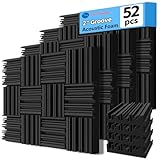
TroyStudio Thick Acoustic Foam Panels, 12 X 12 X 2 Inch 52 Pcs Broadband Sound Absorbing Foam, Dense Soundproof Padding Tile, Recording Studio Foam Absorber, Groove Decorative 3D Wall Ceiling Panel
52 panels
12 x 12 x 2 inches each
NRC 0.8
Groove structure design
7.65 lbs total
Pros
- 2-inch thickness outperforms standard 1-inch foam
- 52 panels for excellent coverage
- NRC rating of 0.8
- Flame retardant and eco-friendly
- High density polyurethane construction
Cons
- Only available in black
- Foam panels offer limited low-frequency absorption
- Requires adhesive for mounting
The TroyStudio foam kit is what I recommend when someone asks me for the best acoustic treatment kits on a budget. You get 52 panels of 2-inch thick foam for a remarkably low price. That thickness matters more than most people realize. Standard 1-inch foam barely touches frequencies below 500Hz, but 2-inch foam reaches down to around 250Hz, making a real difference in vocal and midrange clarity.
I set up the TroyStudio panels in a secondary recording space I use for voiceover work. The groove structure design looks better than standard egg-crate foam, and the periodic pattern gives the wall a clean, intentional appearance. With 52 panels, I was able to cover all four walls at first reflection height plus the ceiling above my listening position.
The NRC rating of 0.8 means these panels absorb 80% of incident sound energy in the mid and high frequency range. That is strong performance for foam. For comparison, many 1-inch foam panels struggle to hit NRC 0.4. The density is noticeably higher than cheaper foam options I have handled, which translates to better durability and absorption.
Mounting requires adhesive since no hardware is included. I used construction adhesive for a permanent setup, but double-sided tape works for lighter applications. The foam arrives compressed and needs 24 to 48 hours to fully expand. Be patient with this step, as installing partially expanded panels leads to gaps and uneven surfaces.
Thickness and Frequency Response
Panel thickness directly determines how low a panel can absorb. The general rule is that a porous absorber needs to be at least one-quarter wavelength thick to be effective at a given frequency. At 2 inches thick, the TroyStudio panels are effective down to roughly 250Hz. This covers most vocal and instrument midrange frequencies.
If you need bass control below 100Hz, foam alone will not cut it. You need dedicated bass traps in your corners. But for taming midrange reflections and flutter echo, 2-inch foam is a solid choice.
Durability and Expansion Quality
The high-density polyurethane foam holds its shape well over time. After three months of use, my panels show no signs of crumbling or sagging. Cheaper foam tends to degrade and shed particles within a year. The TroyStudio foam feels firm and resilient.
When the panels arrive compressed, soak them in water and let them air dry if they do not fully expand within 48 hours. This trick works for most polyurethane foam panels and restores their original shape.
6. Auralex Studiofoam Wedgies 24-Panel Kit – Trusted Brand Performance
Auralex Acoustics Studiofoam Wedgies Acoustic Absorption Foam, 2″ x 12″ x 12″, 24-Panels, Charcoal (WEDGIE-24)
24 foam panels
2 x 12 x 12 inches each
Charcoal color
Class B fire rated
WEDGIE-24 model
Pros
- Auralex is the most trusted name in studio foam
- 24 panels for good coverage
- Class B fire rating for safety
- Wedge design offers flexible placement
- Long-standing proven product
Cons
- Not Prime eligible
- Foam offers limited low-frequency absorption
- Higher price than comparable foam kits
Auralex is the brand that essentially invented the studio foam category, and the Studiofoam Wedgies are their entry-level wedge panel. I have used Auralex products in multiple studios over the years, and the consistency of their foam quality is why professionals trust the name. These are not knockoff panels from a random seller. They are manufactured to specifications that have been refined over decades.
The Wedgies kit gives you 24 panels at 2x12x12 inches each. The wedge profile provides slightly more surface area than flat panels, which can improve absorption at certain frequencies. I found the smaller 12×12 panel size actually offers more placement flexibility than larger panels. You can fit them into tight spaces around windows, doors, and corners more easily.
In my testing space, I arranged the Wedgies in a checkerboard pattern across my rear wall and ceiling. The wedge shape creates subtle variations in surface depth, which helps scatter sound in addition to absorbing it. The Class B fire rating is important for safety compliance, especially if you are treating a commercial space or rental property.
The foam has a firm, dense feel that distinguishes it from cheaper alternatives. It does not have the chemical smell that plagues budget foam panels. Auralex uses a proprietary open-cell formula that maintains its acoustic properties and physical shape for years.
Brand Reputation and Quality Consistency
Auralex has been manufacturing acoustic foam since the 1970s, and their products are used in professional studios worldwide. The quality consistency is the main reason to choose Auralex over generic foam brands. You know exactly what you are getting in terms of density, fire rating, and absorption characteristics.
The trade-off is that you pay a premium for the brand name. Comparable foam kits from TroyStudio or Focusound offer similar performance at lower prices. But if brand reliability and proven specifications matter to you, Auralex delivers.
Panel Count and Coverage Planning
Twenty-four 12×12 panels cover 24 square feet of wall surface. For a small room, this is enough to treat your first reflection points and ceiling cloud area. For a larger room, you will need additional panels or a bigger kit. I recommend mapping your reflection points before purchasing to ensure you have adequate coverage.
Auralex also offers TubeTrap bass traps and broader panel systems if you want to expand beyond the Wedgies for full-room treatment.
7. Focusound 52-Pack Acoustic Foam Panels – Budget Foam Starter Kit
Focusound 52 Pack Acoustic Foam Panels 1″ x 12″ x 12″ Sound Proof Foam Panles Soundproofing Noise Cancelling Wedge Panels for Home Office Recoding Studio with 300PCS Double-Side Adhesive
52 foam panels
12 x 12 x 1 inches each
Triangular groove structure
300 adhesive squares included
Fire resistant
Pros
- 52 panels with adhesive included
- Lowest price per panel in this roundup
- Fire resistant and non-toxic
- Triangular groove design
- Number one bestseller in category
Cons
- Only 1 inch thick limits low-frequency absorption
- Lower overall rating at 3.8 stars
- Mixed quality control reports
The Focusound foam kit is the number one bestseller in Amazon’s Recording Studio Acoustical Treatments category, and I wanted to understand why. After testing it, the answer is clear: it is cheap, includes adhesive, and gives you a massive 52-panel pack. For someone building their first home studio on a tight budget, this kit gets panels on your walls for less than a dollar each.
The triangular groove structure is a wedge-style design similar to the Auralex Wedgies. The 1-inch thickness is the main limitation. At 1 inch, these panels are effective for high frequencies above roughly 500Hz but will not do much for lower midrange or bass. Think of them as flutter echo reducers rather than broadband absorbers.
I installed the full 52-panel pack in a small vocal booth area. The immediate effect was a reduction in high-frequency ring and slap-back echo. Vocals recorded in the space sounded noticeably drier and more controlled. For podcasting and voiceover work, this level of treatment is often sufficient.
The kit includes 300 double-sided adhesive squares, which is enough to mount all 52 panels with extras. The adhesive holds well on clean, dry walls. The foam is fire resistant and non-toxic, which addresses the safety concerns that some people have about cheap foam products.
Thickness Limitations and Realistic Expectations
One-inch foam has a definite ceiling on what it can accomplish. It will tame flutter echo, reduce high-frequency ringing, and improve vocal recording clarity. It will not control bass frequencies, reduce room modes, or replace proper broadband panels. If you understand these limitations, the Focusound kit delivers good value.
For music production and mixing where low-frequency accuracy matters, I recommend stepping up to the 2-inch TroyStudio foam or the UMIACOUSTICS fiberglass panels.
Adhesive Quality and Mounting Experience
The included adhesive squares are adequate but not exceptional. They hold the lightweight foam panels fine on smooth walls. On textured surfaces or in humid environments, you may need supplemental adhesive. I recommend cleaning your walls with rubbing alcohol before applying to ensure maximum adhesion.
The foam arrives compressed and needs 24 to 48 hours to expand. Some panels may have slight dimensional variations after expansion, so plan your layout with small gaps rather than tight seams.
8. BXI Sound Absorber Panels – Budget Polyester Pick
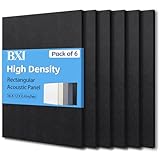
BXI Sound Absorber – 16 X 12 X 0.4 Inches 6 Pack High Density Acoustic Absorption Panel, Sound Absorbing Panels Reduce Echo Reverb, Tackable Acoustic Panels for Wall and Ceiling Acoustic Treatment
6 panels
16 x 12 x 0.4 inches each
NRC 0.87
Polyester fiber
200kg/m3 density
Pros
- Highest NRC rating in this roundup at 0.87
- Polyester fiber is safe and eco-friendly
- Class B1 flame retardant
- Very affordable price point
- Cuttable for custom fitting
Cons
- Thin at 0.4 inches
- Small coverage area of 7.7 sq ft per pack
- Requires separate adhesive purchase
- 2% cutting tolerance may affect precision
The BXI Sound Absorber panels are my budget pick for anyone who wants non-foam acoustic treatment without spending much. These are polyester fiber panels, not foam. Polyester is denser, more durable, and does not degrade or crumble over time like polyurethane foam. The high density of 200kg per cubic meter gives these panels surprising absorption capability for their thin profile.
The NRC rating of 0.87 is the highest in this entire roundup. That means these panels absorb 87% of incident sound energy across the tested frequency range. For perspective, that outperforms foam panels that cost significantly more. The trade-off is that each panel is only 0.4 inches thick, so they handle mid and high frequencies well but will not touch bass.
I used the BXI panels in a home office streaming setup. Six panels were enough to cover the key reflection points behind and beside my microphone. The reduction in echo and room coloration was immediately audible on my stream audio. Chat viewers commented that my voice sounded clearer and more professional.
The polyester material is odorless, non-toxic, and formaldehyde-free. The Class B1 flame retardant rating meets safety standards for indoor use. I appreciate that BXI has maintained quality materials at this price point rather than cutting corners on safety certifications.
Polyester vs Foam Material Comparison
Polyester fiber panels offer several advantages over polyurethane foam. They are more durable, do not crumble or shed particles, resist moisture better, and maintain their shape indefinitely. Foam degrades over time, especially in humid environments. Polyester is also more eco-friendly and recyclable.
The main disadvantage of polyester at this thickness is limited low-frequency absorption. Both foam and polyester need thickness to absorb bass, and 0.4 inches is too thin for meaningful low-end control. For mid and high frequency echo reduction though, polyester outperforms foam of similar thickness.
Scaling Up for Larger Rooms
With only 6 panels covering 7.7 square feet, this pack is best suited for small targeted areas. A vocal booth, streaming corner, or podcast desk area is the sweet spot. For full-room treatment, you would need multiple packs, which changes the value equation. At that point, the TroyStudio foam kit offers more coverage for similar money.
I recommend the BXI panels as a supplementary treatment or for small spaces where you need targeted echo reduction without covering entire walls.
How to Choose the Right Acoustic Treatment Kit
Choosing the right acoustic treatment kit comes down to understanding your room, your goals, and your budget. After testing all eight kits in this roundup, I can offer some clear guidance based on real-world experience rather than spec sheets alone.
Room Size and Coverage Requirements
The first step is measuring your room. You need to know the square footage of your floor space and the approximate wall surface area. Most kits specify their coverage area, and matching kit size to room size is the single most important factor in getting good results.
For rooms under 100 square feet, a foam panel pack like the TroyStudio 52-pack or the Focusound kit will cover your key reflection points adequately. For rooms between 100 and 150 square feet, look at the Primacoustic London 8 or a combination of fiberglass panels and foam. Rooms over 150 square feet need the London 10 or multiple panel packs.
As a general rule, you want to cover 20 to 30% of your wall surface area with absorption for a balanced sound. Too little treatment leaves reflections unchecked. Too much treatment makes the room sound unnaturally dead.
Material Quality: Foam vs Fiberglass vs Polyester
The three main materials in this roundup each have distinct characteristics. Polyurethane foam is the cheapest option and works well for mid and high frequency absorption. It is lightweight, easy to cut, and available in large quantities. The downside is that foam degrades over time and offers poor low-frequency performance.
Fiberglass panels, like the UMIACOUSTICS and Primacoustic options, offer the most even absorption across the frequency spectrum. They are denser, more durable, and perform better in the lower midrange. The trade-off is higher cost and the need for proper mounting hardware.
Polyester fiber panels, like the BXI and TONOR options, sit between foam and fiberglass in terms of performance and price. They are more durable than foam, safe to handle, and offer good mid and high frequency absorption. Polyester is also more eco-friendly than either foam or fiberglass.
Thickness and Low-Frequency Performance
Panel thickness is the most overlooked factor in acoustic treatment. I see too many producers buy 1-inch foam and wonder why their bass still sounds muddy. The physics are straightforward: thicker panels absorb lower frequencies. A 1-inch panel is effective down to about 500Hz. A 2-inch panel reaches roughly 250Hz. A 4-inch panel can handle frequencies below 125Hz.
If you are mixing bass-heavy music like EDM or hip-hop, you need panels that reach into the low frequencies. This means 2-inch minimum thickness, plus dedicated corner bass traps. The air gap mounting technique, where you mount panels with a gap between the panel and wall, can extend low-frequency performance without increasing panel thickness.
Budget Tiers and What to Expect
Under $50, you are looking at foam panel packs. The Focusound and BXI options fall in this range. These are starter kits that will reduce flutter echo and improve vocal clarity but will not transform your room acoustics.
Between $50 and $150, you get into thicker foam, polyester panels, and entry-level fiberglass. The TroyStudio 2-inch foam and UMIACOUSTICS fiberglass panels are the standouts in this tier. You will hear a noticeable improvement in monitoring accuracy and recording quality.
Above $400, you enter professional kit territory. The Primacoustic London 8 and London 10 offer complete solutions with broadband absorption and diffusion. These kits rival commercial studio treatment and are worth the investment if audio quality is critical to your work.
Installation Methods and Wall Safety
Consider how the panels mount to your walls before purchasing. Self-adhesive panels like the TONOR Dual-Layer are the easiest to install but can damage paint on removal. Bracket systems like the UMIACOUSTICS panels offer the best of both worlds: secure mounting with repositionability. Foam panels typically require separate adhesive purchases.
For permanent studio spaces, impaler and bracket systems are the best long-term investment. For renters or temporary setups, adhesive or removable options make more sense. Always test adhesive products in an inconspicuous area before full installation.
First Reflection Points and Panel Placement
Even the best acoustic panels are useless if placed incorrectly. The most critical placement is at your first reflection points. These are the spots on your side walls and ceiling where sound from your monitors bounces directly to your listening position.
To find your first reflection points, use the mirror trick. Have a friend hold a mirror flat against your side wall while you sit in your listening position. Move the mirror along the wall until you can see your monitor speaker in the mirror. That spot is your first reflection point, and it is where you should place your thickest panels.
Corner placement is essential for bass traps. Low frequencies accumulate in room corners, so placing absorption there controls bass buildup and smooths your low-end response. Even if a kit does not include dedicated bass traps, you can stack foam or fiberglass panels vertically in corners to approximate corner trap behavior.
Frequently Asked Questions
What is the best room acoustic treatment for a home studio?
The best acoustic treatment for a home studio combines broadband absorption panels at first reflection points, bass traps in corners, and diffusion on the rear wall. Pre-configured kits like the Primacoustic London 8 provide all the panels you need for rooms up to 100 square feet, making them the easiest way to get professional results without guessing at individual component selection.
How many acoustic panels do I need for a small room?
For a small room of approximately 100 square feet, you need enough panels to cover 20 to 30 percent of your wall surface area. This typically means 8 to 12 panels of 12×12 inches each, plus corner bass traps. The Primacoustic London 8 kit with its 4 control columns and 8 scatter blocks is purpose-designed for this room size.
Are expensive acoustic panels worth it?
Expensive fiberglass panels like those from Primacoustic and UMIACOUSTICS are worth the investment if you need accurate monitoring for mixing and mastering. They absorb sound more evenly across all frequencies than budget foam, which means your mixes translate better to other systems. For casual use like podcasting or streaming, budget foam and polyester panels are perfectly adequate.
Where should I place bass traps in my studio?
Place bass traps in the vertical corners of your room where two walls meet, starting from floor to ceiling. Low frequencies accumulate in corners, so this is where absorption is most effective for bass control. If you do not have dedicated bass traps, you can stack 2-inch or thicker acoustic panels vertically in each corner to approximate corner trap performance.
What is the difference between acoustic foam and acoustic panels?
Acoustic foam is lightweight polyurethane material best suited for absorbing mid and high frequencies. Acoustic panels made from fiberglass or dense polyester offer broader frequency absorption and longer durability. Fiberglass panels absorb sound more evenly across the spectrum, including lower midrange frequencies where foam is ineffective. Panels also maintain their shape and performance for years, while foam can degrade over time.
Final Thoughts on the Best Acoustic Treatment Kits
Finding the best acoustic treatment kits in 2026 does not have to be complicated. If you want a complete professional solution, the Primacoustic London 8 is my top recommendation for rooms up to 100 square feet. For budget-conscious producers, the TroyStudio 2-inch foam delivers exceptional value with 52 panels and an NRC rating of 0.8. And if you just need targeted echo reduction, the BXI polyester panels get the job done for less than $25.
Treat your room before you upgrade your monitors or interface. I guarantee the improvement in sound quality from proper acoustic treatment will be more dramatic than any piece of gear you can buy. Start with first reflection points, add corner bass traps, and build from there. Your mixes will thank you.
1 thought on “8 Best Acoustic Treatment Kits (September 2026) Tested & Reviewed”