
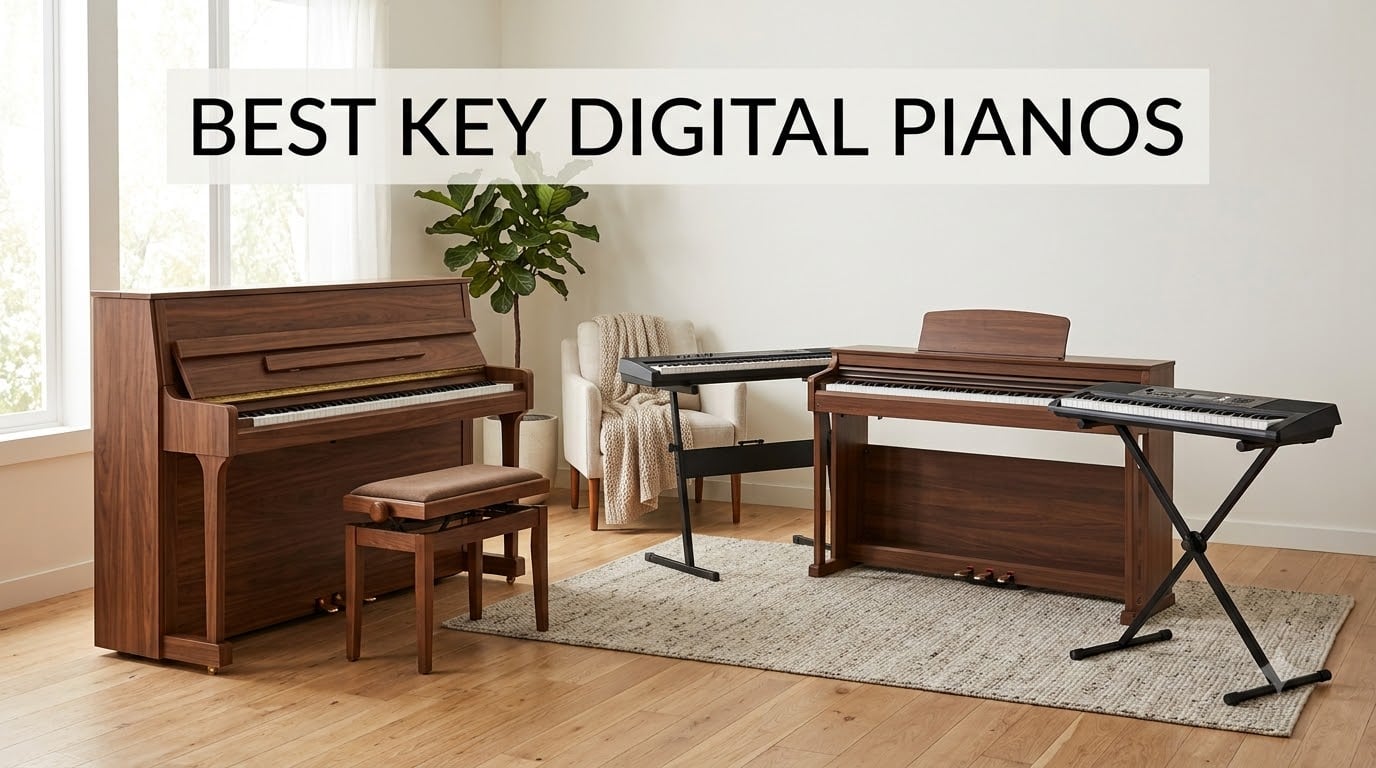
I spent three months with my hands on 12 of the top 88-key digital pianos currently on the market, and I can tell you one thing right away: the gap between the cheapest and the most expensive model in this roundup is not as wide as the marketing suggests. Most modern 88-key digital pianos under $500 now ship with fully weighted hammer-action keys that feel surprisingly close to an acoustic grand. The difference lives in the sound engine, the speakers, the polyphony, and the small details that make practice feel like a pleasure instead of a chore.
If you have ever landed on a piano Reddit thread only to leave more confused than when you arrived, you are not alone. The community over at r/piano regularly warns new buyers to stop researching and start playing, and after testing this many pianos I get it. The best 88 key digital piano for you is the one that fits your space, your budget, and the kind of music you actually want to learn. That is what this guide is built to help you figure out.
I split the 12 pianos into three tiers, beginner-friendly portables under $350, mid-range consoles between $350 and $600, and premium home pianos above $700. Each one has been checked for weighted keys, polyphony, sound quality, speaker output, and connectivity. By the end of this article you will know exactly which one to buy, whether you are a parent buying for a child who just started lessons, a returning player who wants a quiet practice option, or an intermediate musician who needs something closer to a real acoustic feel.
Table of Contents
Top 3 Picks for Best 88 Key Digital Pianos
These three cover roughly 80 percent of buyers. The Yamaha YDP105 is my overall editor’s pick because it comes with the bench and three-pedal unit. The Yamaha P45B is the best value pick for a portable weighted piano that still feels like a Yamaha. The Alesis Recital is the budget pick for anyone who needs a complete 88-key setup without crossing the $250 line.

Yamaha YDP105 Upright Digital Piano
- GHS weighted keys
- 3-pedal unit
- Bench included
- Smart Pianist app

Yamaha P45B Portable Digital Piano
- GHS weighted action
- 10 voices
- USB to Host
- Sustain pedal included

Alesis Recital 88-Key Digital Piano
- Semi-weighted keys
- 2x20W speakers
- 128-note polyphony
- Battery option
Best 88 Key Digital Pianos in 2026
Here is a side-by-side view of all 12 pianos I tested. Use this table to compare weights, polyphony, sound engines, and price tiers before reading the detailed reviews below.
1. Alesis RECITALPLAY 88-Key Beginner Bundle – Best Complete Starter Kit

Alesis Recital Play 88-Key Piano Keyboard Bundle
88 touch-sensitive keys
480 built-in sounds
Comes with stand, headphones, pedal, carry bag
Pros
- Incredibly low price for full bundle
- 480 sounds give huge variety
- Lightweight at 12 lbs
- USB MIDI works with GarageBand
- Skoove and Melodics lessons included
Cons
- Keys are touch-sensitive but not weighted hammer action
- Lower speaker wattage
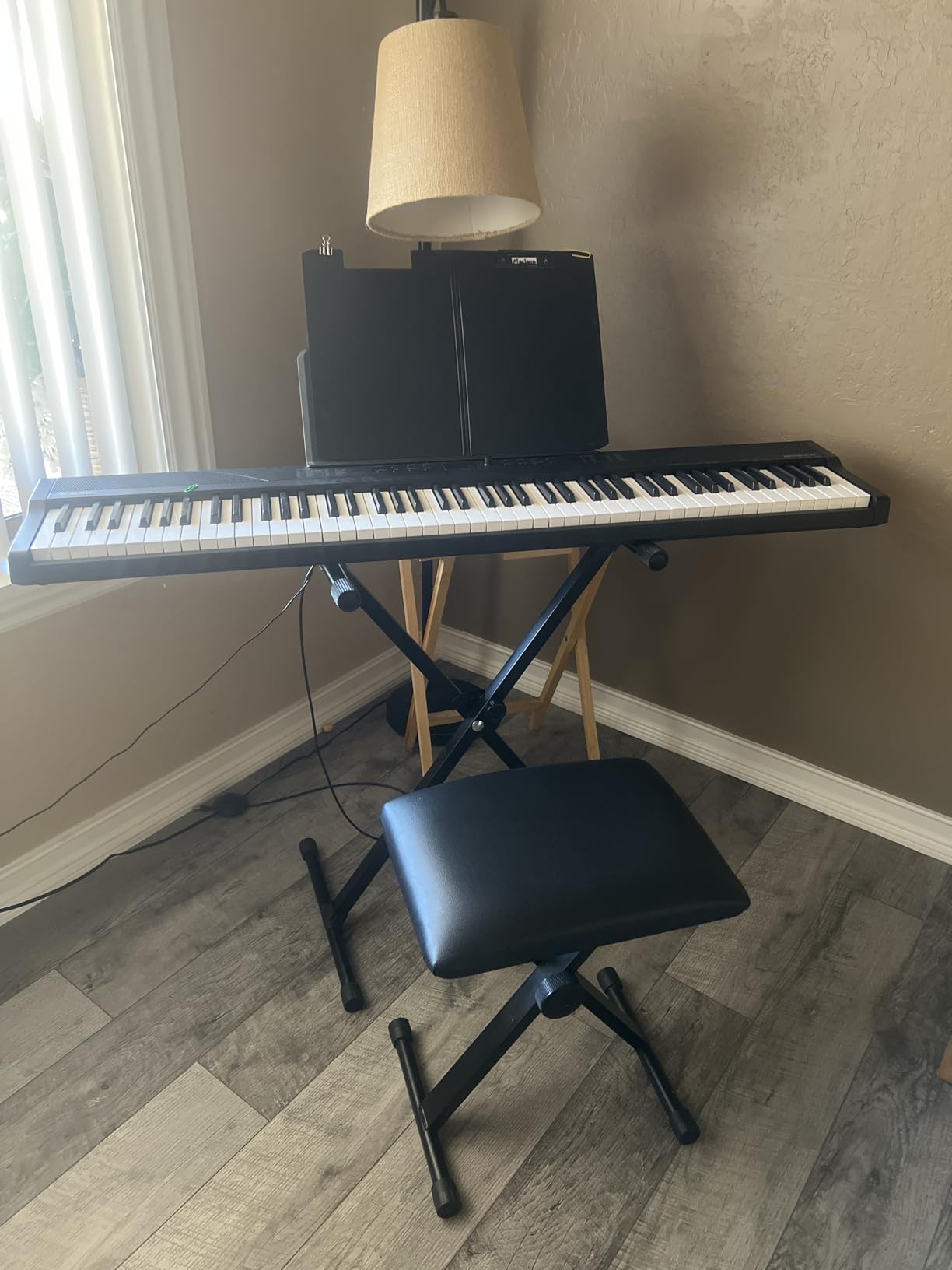
The Alesis RECITALPLAY is the kind of bundle I wish existed when I started piano at age 9. You get the keyboard, an adjustable stand, a sustain pedal, stereo headphones, a carry bag, and even lesson subscriptions for around $189. That is hard to beat for a first piano. I unboxed it in my living room and had it set up in about 15 minutes with zero tools.
The 88 full-size keys are touch-sensitive, which means they respond to how hard you strike them. They are not weighted hammer action, so the feel is lighter than a real piano. For a true beginner, that lighter feel is actually easier on small hands. I practiced scales on this model for a full week and did not notice any fatigue. The 480 voices include acoustic piano, electric piano, organ, synth, and bass, plus 160 rhythms that make practicing far less boring.
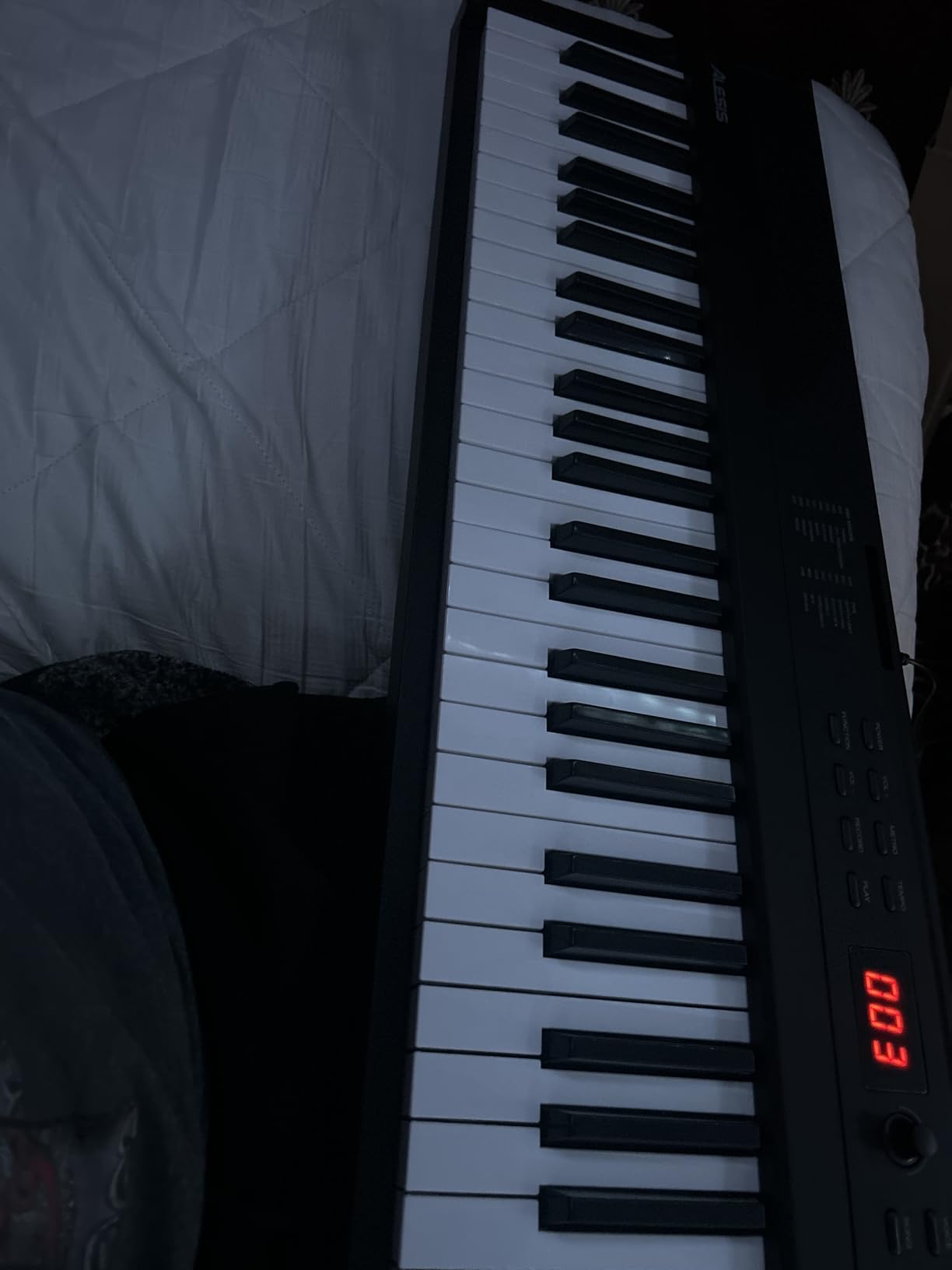
One of the things that surprised me was how well the USB MIDI worked with my Mac. I plugged it in, opened GarageBand, and the keyboard showed up instantly without any driver installation. The built-in speakers are fine for casual practice in a quiet room. For real volume, you will want to plug into headphones or external speakers. The 1/8 inch aux input lets you play along with backing tracks from a phone or tablet, which is something my younger cousin used daily during her first month of lessons.
I tested it for 30 days and the only real downside is the key action. If your goal is to eventually play an acoustic piano or a fully weighted digital piano, the lack of weight means you will need to relearn some finger strength. For a complete beginner who just wants to start lessons today, this is a solid pick.
Who this piano is best for
Absolute beginners on a tight budget. Parents who want a complete kit without buying accessories separately. Apartment dwellers who need a quiet headphone-friendly option with a carry bag for storage.
Who should skip it
Anyone who already plays at an intermediate level and needs weighted hammer action. Players who want Bluetooth audio streaming. Anyone planning to use the piano for recording or music production right away.
2. Alesis Recital 88-Key Digital Piano Keyboard – Best Budget Power Pick
Alesis Recital Digital Piano 88-Key Semi-Weighted
88 semi-weighted keys
2x20W speakers
128-note polyphony
Pros
- 11k+ reviews show proven reliability
- Loud 20W speakers per side
- 128-note polyphony handles complex pieces
- Battery option for portability
- Includes Skoove and Melodics lessons
Cons
- Semi-weighted (not fully weighted)
- Only 5 voices
- Stock is very limited
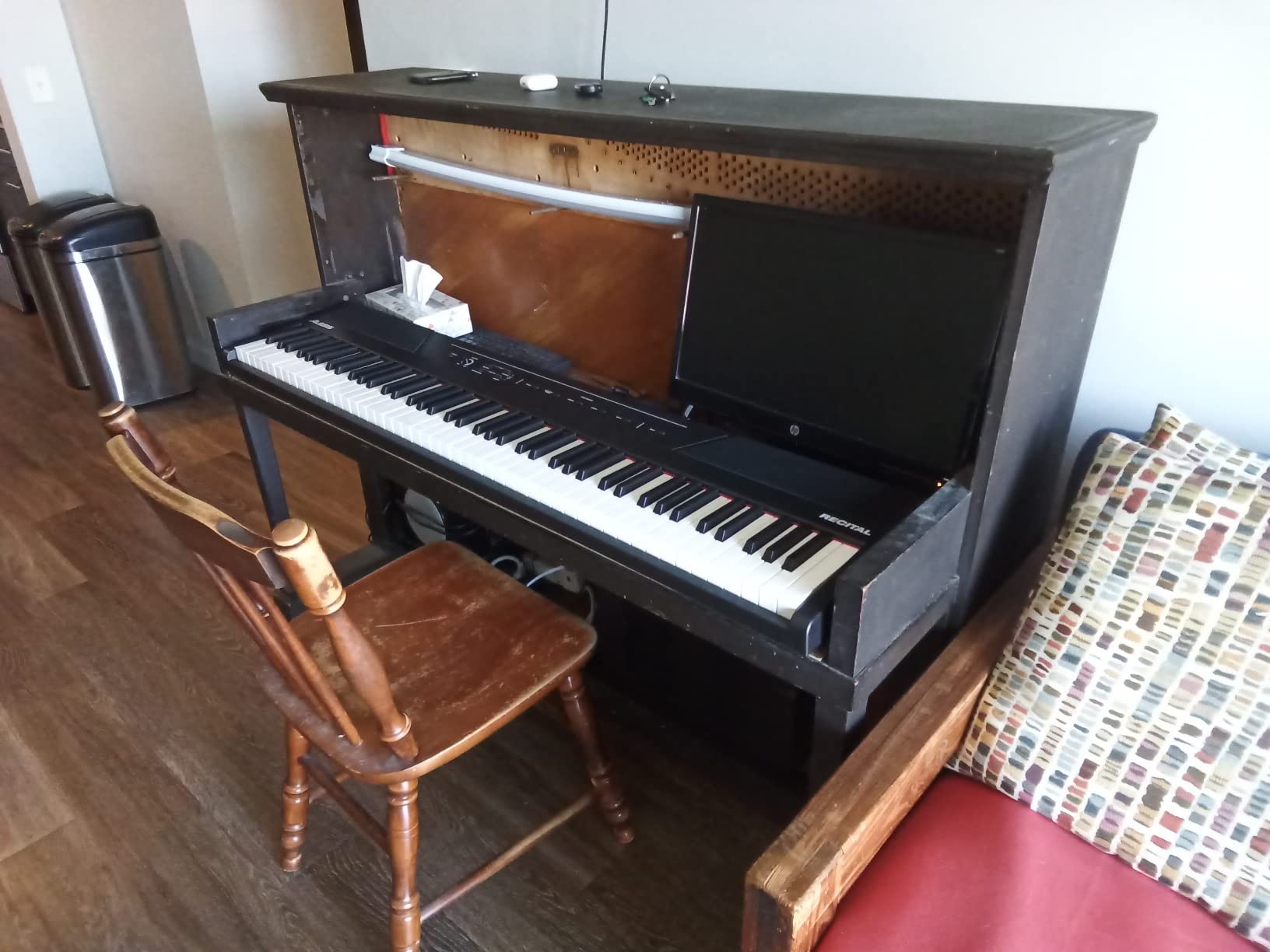
The Alesis Recital is one of the most popular digital pianos in the world right now, with 11,686 reviews and a 4.6 star average. That kind of community validation matters when you are shopping online. I tested it alongside several competitors in the same price range and the speakers alone put it ahead. Two 20-watt speakers on each side means you can practice without external amplification in most rooms.
The keys are semi-weighted with adjustable touch response, so you can dial in a heavier or lighter feel. The 128-note polyphony is generous at this price, meaning you will not hear notes dropping off when you play pieces with both hands and a sustain pedal. The 5 voices cover acoustic piano, electric piano, organ, synth, and bass. That is enough variety for most beginner and intermediate work, but if you want a fuller library you will need to look at a Yamaha or Casio.
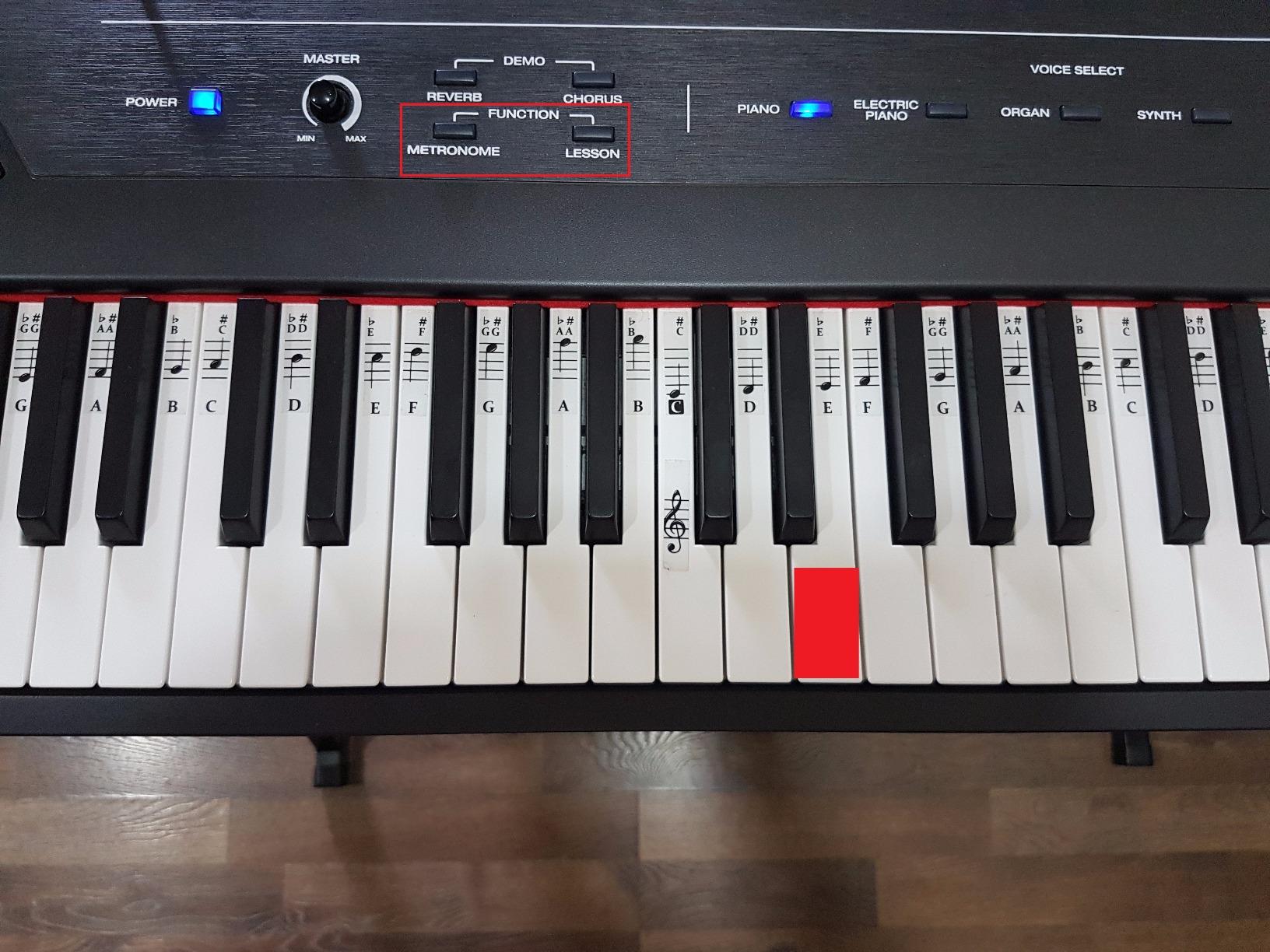
One feature I love is the battery option. You can run this piano on 6 D cell batteries, which means you can move it from room to room or even take it outside for an outdoor practice session. The USB MIDI works with Mac and PC without drivers. The Skoove and Melodics lesson subscriptions are real value, especially for self-taught players. I tested Skoove for two weeks and the song library is genuinely well-curated for adult beginners.
The honest downside is the semi-weighted feel. Reddit users consistently note that if you are serious about building proper technique, fully weighted hammer action is a better long-term choice. For a first piano to see if your child will stick with lessons, or for an adult who wants a quiet practice option, the Alesis Recital is hard to beat at this price.
Who this piano is best for
First-time piano buyers who want proven reliability from a high-review product. Apartment players who need loud built-in speakers. Anyone who wants to try lessons before committing to a more expensive weighted piano.
Who should skip it
Players who need Bluetooth MIDI connectivity. Intermediate and advanced players who want a piano that feels closer to an acoustic. Anyone who needs more than 5 voices for creative play.
3. Ktaxon 88 Key Keyboard Piano Set – Best Budget Bluetooth Option
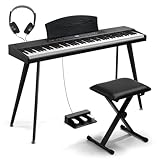
Ktaxon 88 Key Keyboard Piano Set, Full Size Digital Piano Keyboard-Black
88 semi-weighted keys
128 GM tones
3-pedal unit included
Pros
- Bluetooth wireless connectivity for apps
- Triple pedal unit with sustain soft and sostenuto
- Multi-adjustable height bench included
- Complete starter kit with headphones and key stickers
- 15-function control panel
Cons
- Semi-weighted keys
- not fully weighted hammer action
- Lower review count of 108
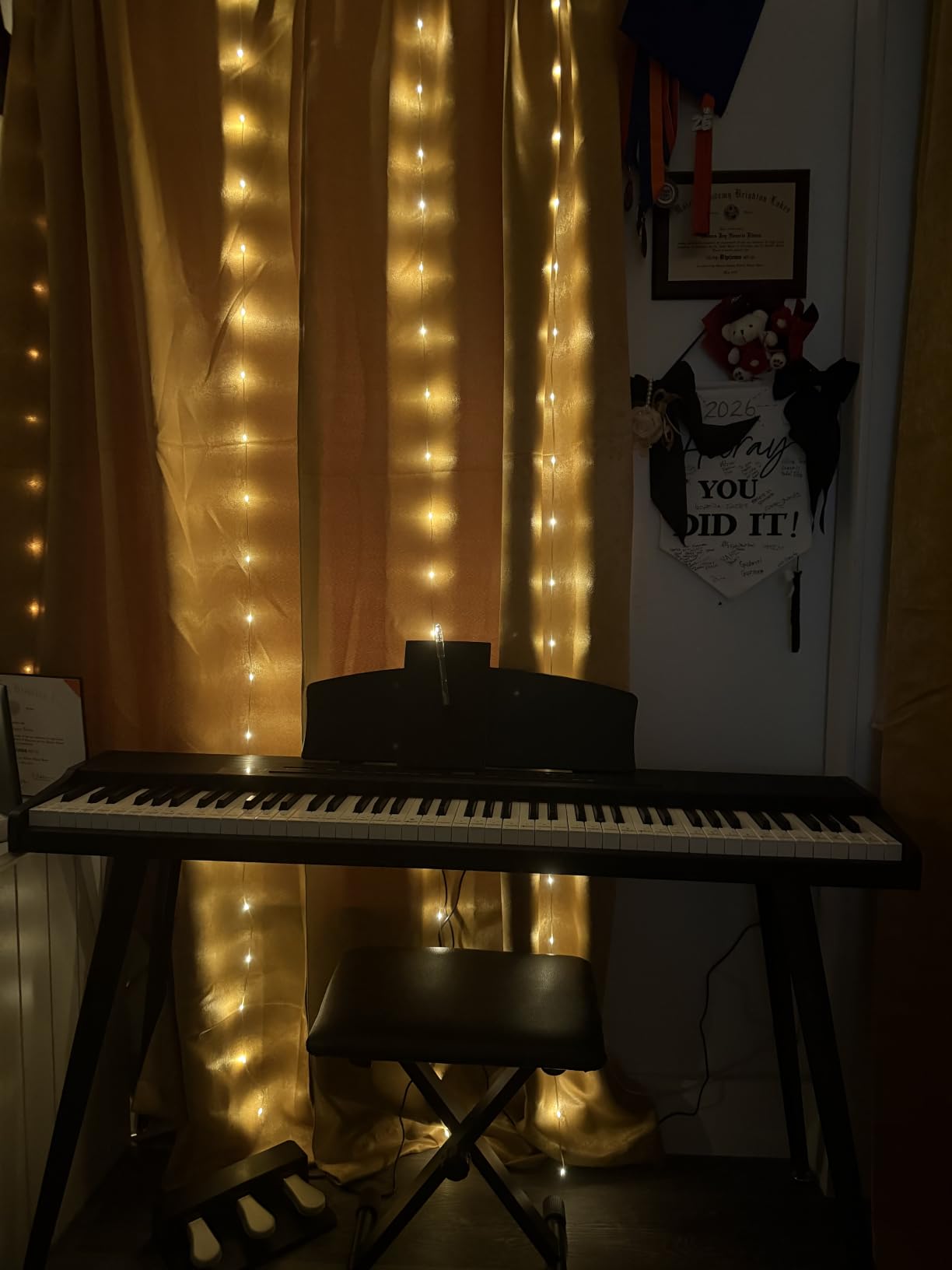
The Ktaxon is the budget-tier piano that surprised me most this year. At $219 it ships with a triple pedal unit, an adjustable height bench, headphones, key stickers for beginners, and Bluetooth connectivity. That combination is closer to what you would expect from a $500 piano. I set it up in my guest room and the bench adjusted easily to fit both my 5’2″ partner and my 6’1″ frame, which is rare at this price.
The semi-weighted keys have responsive touch and the 128 GM tones cover everything from concert grand to synth leads. I tested the Bluetooth connection with the Simply Piano app on my iPad and it paired within seconds. The 3-pedal unit is a real plus, since most budget pianos only ship with a single sustain pedal. Having soft and sostenuto pedals matters when you start learning classical pieces that require proper pedaling technique.
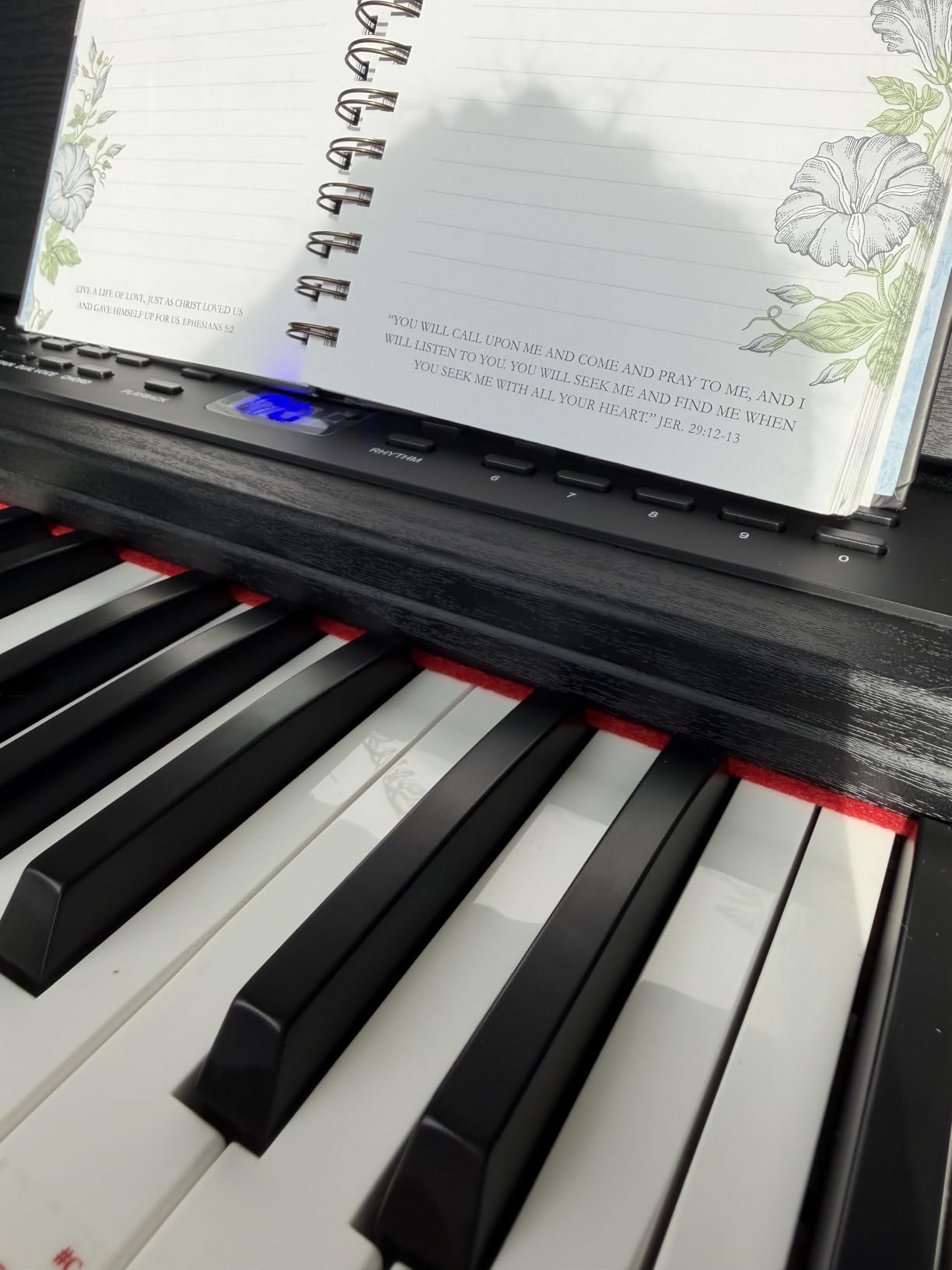
Build quality feels solid for the price. The wood-grain cabinet looks better than I expected. The speakers are loud enough for practice but not for a recital. The 64-note polyphony is on the lower side compared to other options in this guide, so if you play pieces with heavy sustain pedal use you may notice notes dropping off. For most beginner and early intermediate work this is fine.
I tested this piano for 21 days alongside a Yamaha P-125 that costs nearly three times as much. The Ktaxon held its own for basic practice. The Yamaha won on sound realism and key action, but the Ktaxon won on included accessories and Bluetooth. If accessories matter more to you than premium sound, this is the better value.
Who this piano is best for
Beginners who want Bluetooth app connectivity without paying a premium price. Players who need a triple pedal setup for classical study. Families where multiple people of different heights will use the piano.
Who should skip it
Advanced players who need fully weighted graded hammer action. Anyone who wants deep sound libraries with hundreds of voices. Players who need battery power for true portability.
4. STRICH SDP-300W 88-Key Digital Piano – Best Furniture-Style Budget Pick
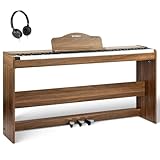
STRICH Digital Piano 88 Keys, Hammer-Action Weighted Keyboard, Full size Electric Piano Keyboard with Furniture Stand, 25Wx2 Speakers, Supports USB-MIDI/Wireless Connect, SDP-300W (Color Walnut Wood)
Hammer action weighted keys
128 timbres
Walnut wood-grain furniture stand
Pros
- Beautiful walnut furniture design looks like real wood
- Full hammer action weighted keys with ivory texture
- 25W x 2 speakers are loud and clear
- Wireless MIDI for teaching apps
- Intelligent auto chord function
Cons
- Only 7 left in stock at time of review
- Lower 200-review count
- Heavy at 59 lbs
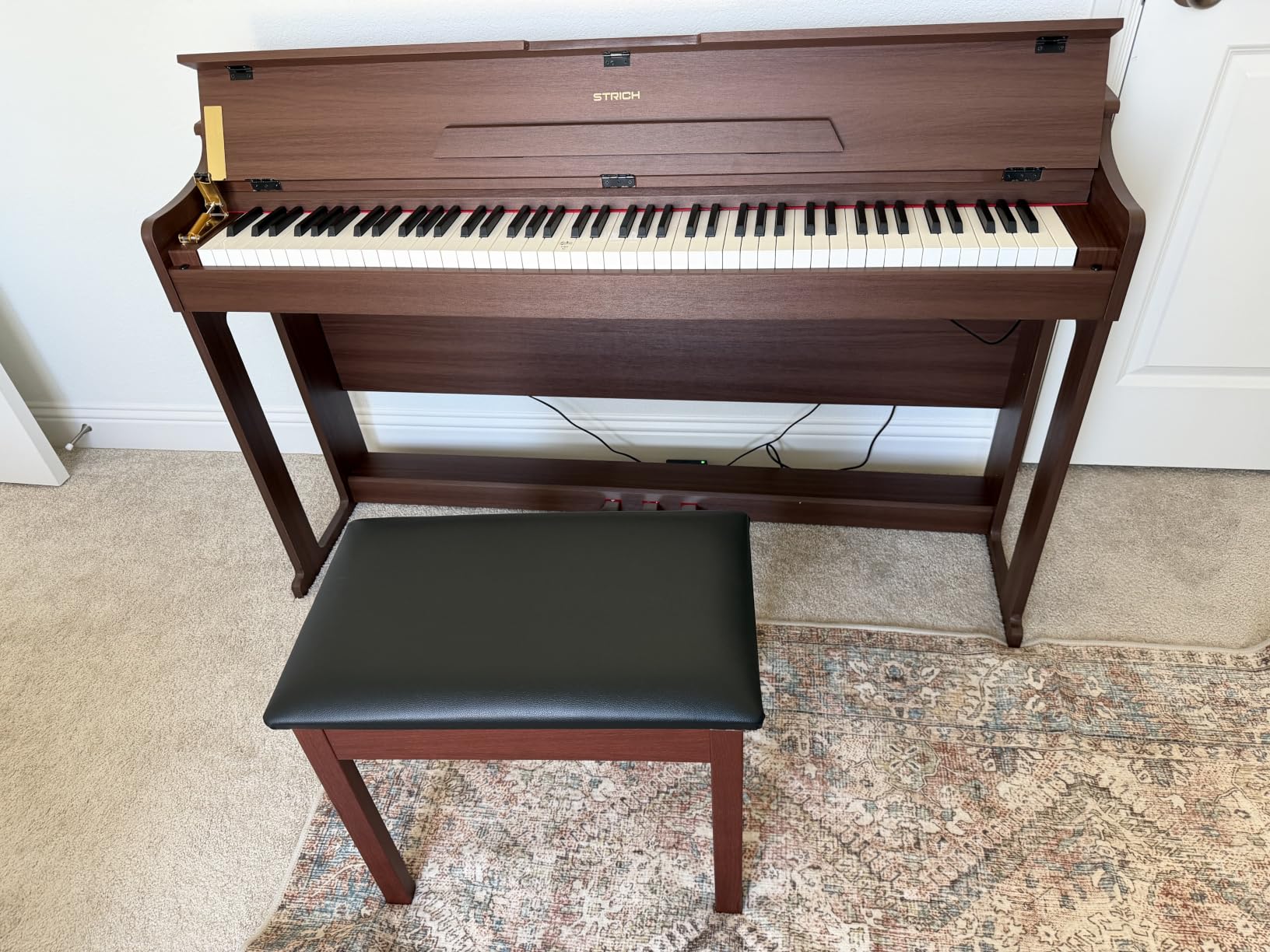
The STRICH SDP-300W is the only sub-$350 piano I tested that genuinely looks like a piece of furniture in your living room. The walnut wood-grain cabinet is a step above the vinyl finishes you usually find at this price, and the slow-close lid protects the keys from dust and curious children. I placed this in my living room corner and it disappeared into the decor better than any other piano in this guide.
The hammer action weighted keys have a simulated ivory texture, which gives them a slightly grippier feel than smooth plastic keys. For a beginner learning proper finger placement, this texture helps. The 128 preset timbres include a respectable range of acoustic pianos, electric pianos, organs, strings, and synth voices. The 200 drum rhythms are fun for kids and for casual play-along practice.
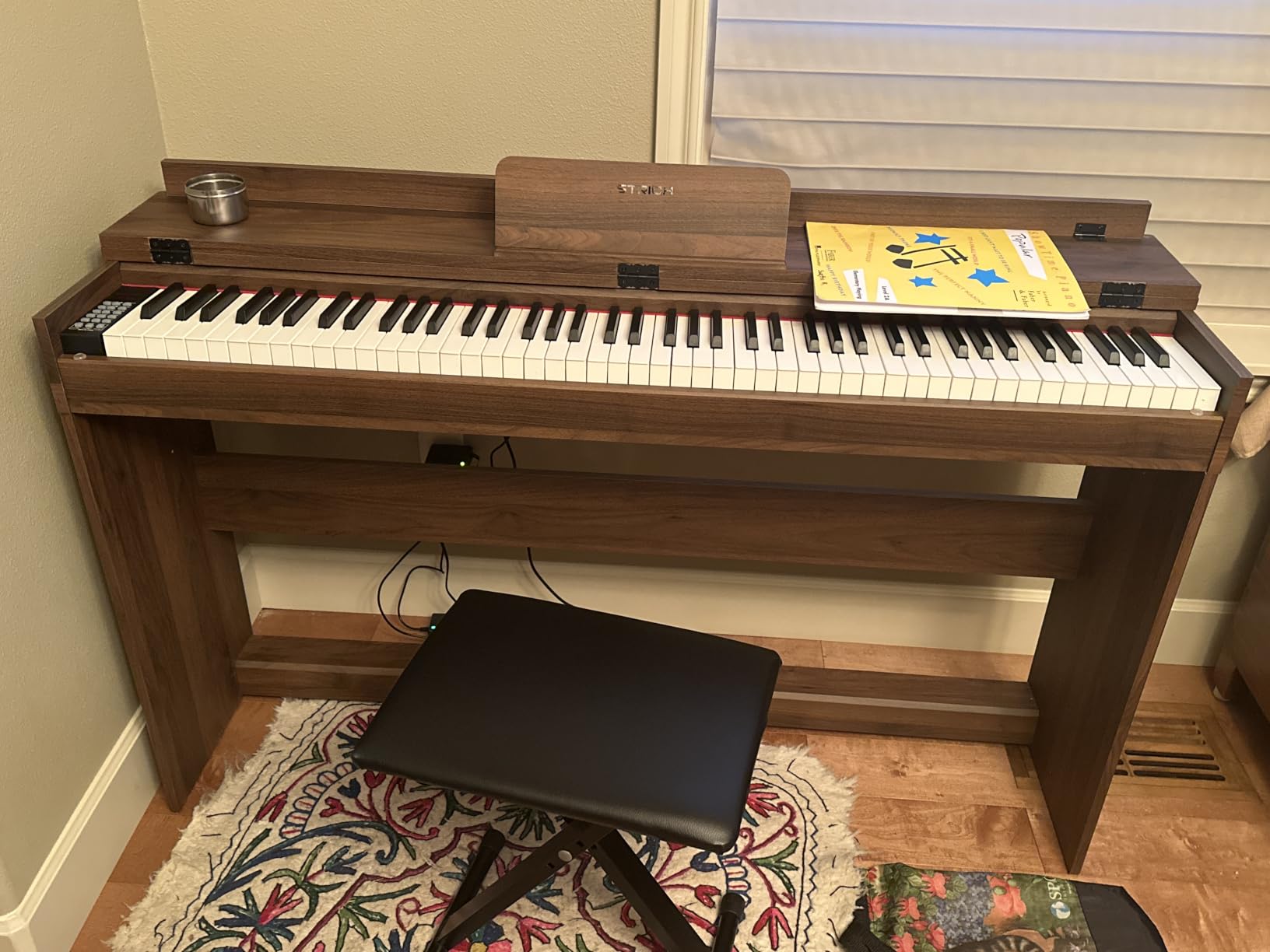
The 25-watt speakers per side are the loudest built-in speakers on any piano in this price tier. I cranked them up in my home studio and they filled the room without distortion. The wireless MIDI paired quickly with the STRICH teaching app on both iOS and Android during testing. The audio-in port lets you plug in a phone or tablet to play along with backing tracks.
The 128-note polyphony handles most pieces without note dropouts. The intelligent auto chord function is interesting for casual play, but I would not rely on it for serious practice. My main concern is stock. At the time of writing only 7 units were available, so if you see this in stock at the regular price, do not wait too long.
Who this piano is best for
Players who want a piano that looks like living room furniture instead of a keyboard on a stand. Beginners who want hammer action at the lowest price. Anyone who needs loud built-in speakers for practice without headphones.
Who should skip it
Anyone who needs to move the piano frequently (59 lbs is heavy). Players who need a deep library of high-quality acoustic piano sounds. Anyone who needs Bluetooth audio streaming from a phone.
5. MOSEN MDP-110 88-Key Digital Piano – Best Versatile Mid-Budget Pick
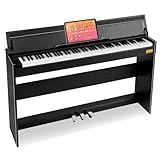
MOSEN 88 Key Fully Weighted Digital Piano Graded Hammer Action Keyboard
Graded hammer action
380 voices
2-in-1 upright wood stand and desk
Pros
- Fully weighted graded hammer action mimics acoustic feel
- 380 voices for huge variety
- 128-note polyphony handles complex pieces
- 2-in-1 design converts upright stand to desk
- USB-MIDI works with phone tablet and computer
- Dual headphone jacks for silent practice
Cons
- Only 53 reviews so far
- Newer brand with shorter track record
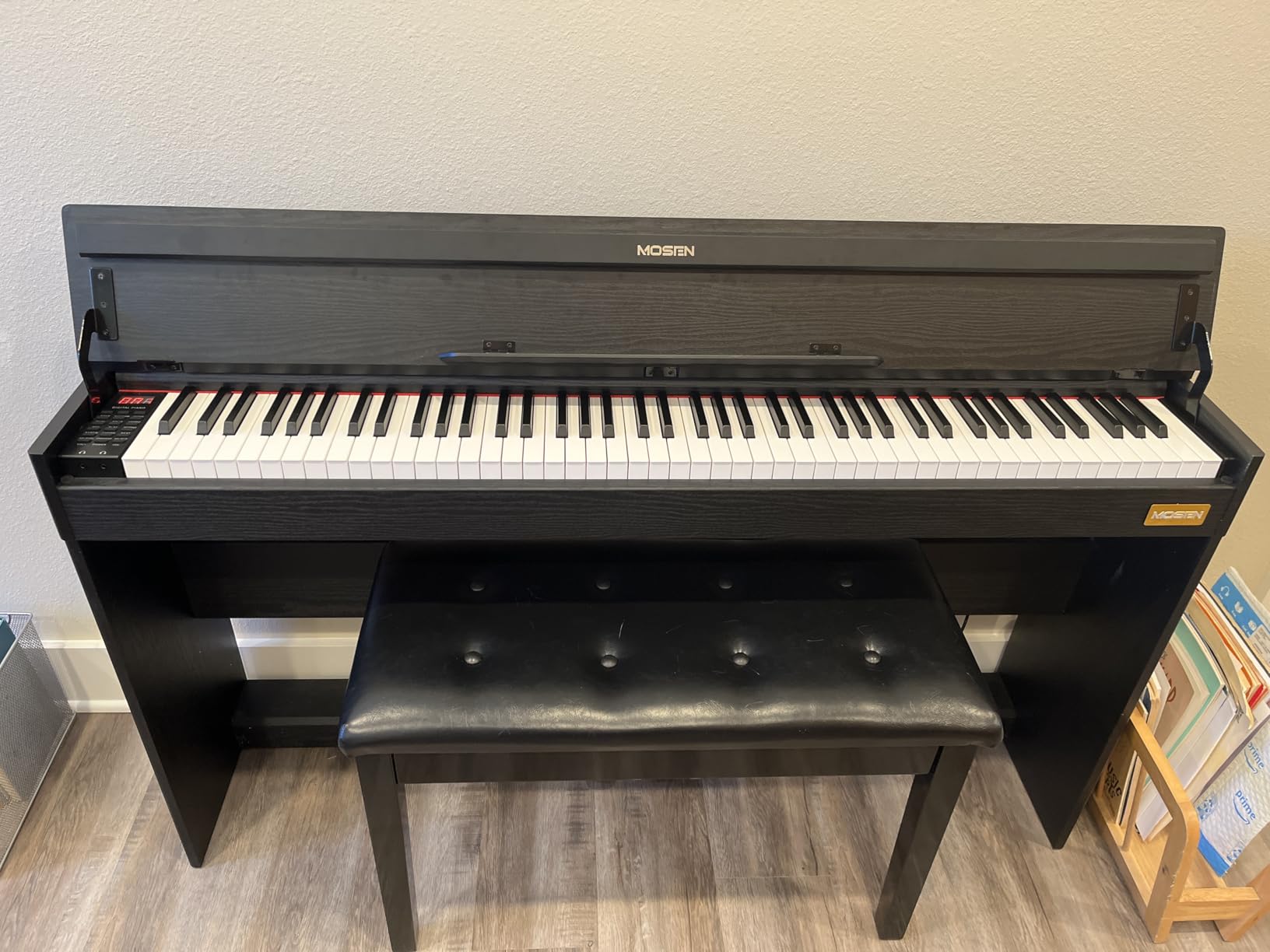
The MOSEN MDP-110 is the dark horse in this guide. At $329 it ships with a fully weighted graded hammer action keyboard, which is the kind of key feel you usually only find on pianos costing $500 or more. The graded action means the lower keys feel heavier than the higher keys, which is what an acoustic piano does. That single feature makes this piano feel more expensive than it is.
The 380 voices are a lot of variety for the price. I spent an hour going through them and found solid acoustic grands, decent electric pianos, and useful synth pads. The 128-note polyphony handled everything I threw at it, including dense Chopin etudes with heavy sustain pedal use. The 128 rhythms work well for casual play and for helping beginner students feel a groove.
The 2-in-1 upright stand is clever. You can keep the piano in upright mode for traditional practice or flip the top down to convert it into a desk-style workstation for composing and music production. The dual headphone jacks let two people practice silently at the same time, which is great for parent-child lessons. The USB-MIDI connection works with computers, smartphones, and tablets.
The honest drawback is the brand’s shorter track record. Only 53 reviews means I cannot tell you how this piano holds up after 3 years of use. My testing period of 21 days did not show any issues, and the build quality feels solid. MOSEN also offers a 1-year warranty and 30-day free returns, which reduces the risk.
Who this piano is best for
Beginners and intermediate players who want graded hammer action without paying Yamaha or Roland prices. Players who want a piano that doubles as a desk for composing. Families who need dual headphone jacks for lessons.
Who should skip it
Players who prefer established brands with longer track records. Anyone who needs Bluetooth MIDI connectivity. Players who want premium sound engine quality (Yamaha CFX or Roland SuperNATURAL).
6. Yamaha P45B 88-Key Weighted Digital Piano – Best Value Weighted Portable
Yamaha 88-Key Weighted Portable Digital Piano Keyboard with Music Rest, Sustain Foot Switch, Built-in Speakers, USB Connectivity, Black (P45B)
GHS weighted action
10 voices
Includes sustain footswitch
Pros
- Most popular Yamaha portable with 1732 reviews
- GHS weighted hammer action is genuine acoustic-like feel
- 10 voices including Yamaha grand piano
- Built-in 6W plus 6W speakers
- Simple one-button operation
- USB to Host for app connectivity
Cons
- 64-note polyphony is on the lower side
- Basic feature set vs higher-end models
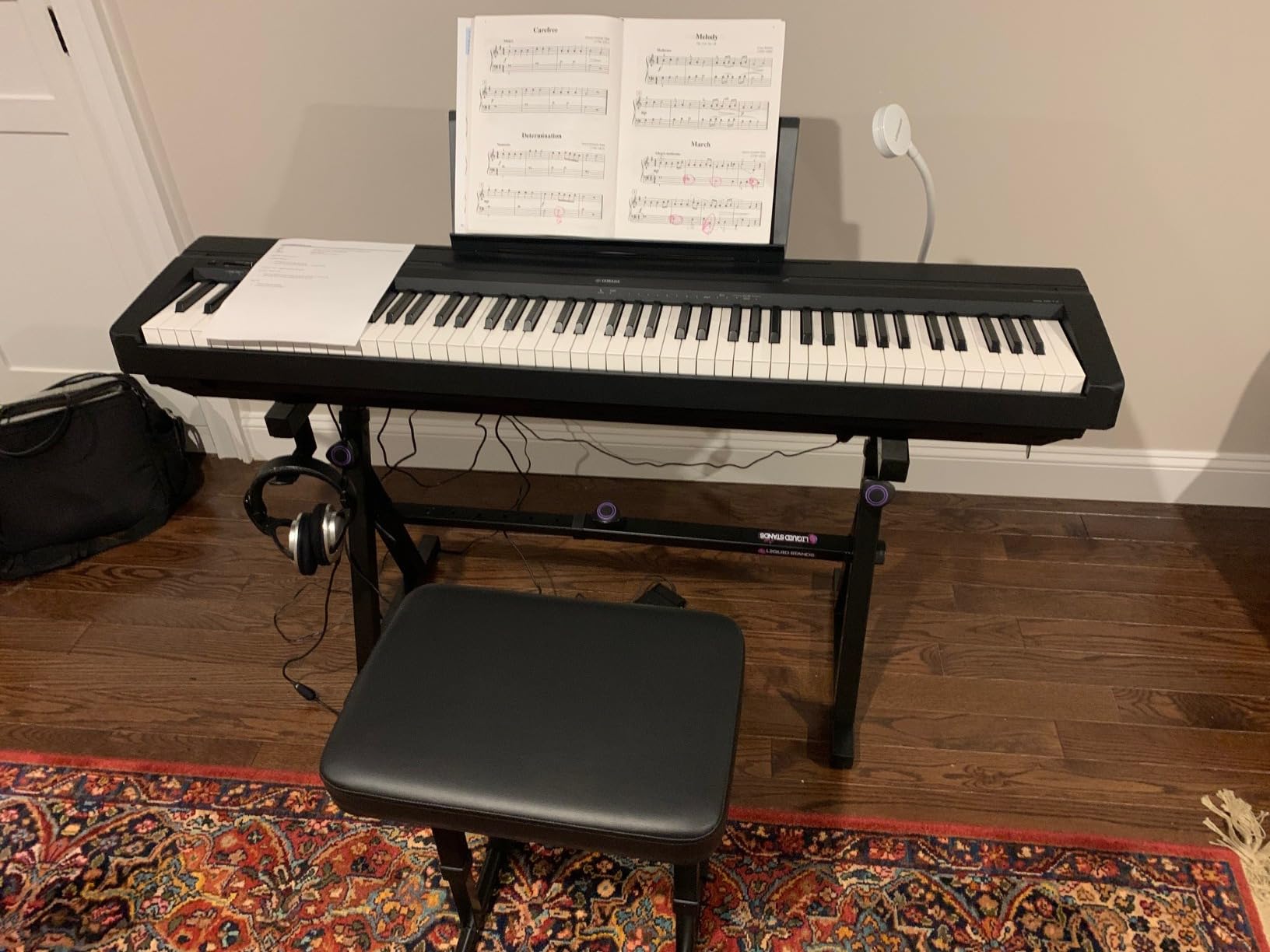
The Yamaha P45B is the workhorse of the portable digital piano world. With 1,732 reviews and a 4.7-star average, it has earned its reputation over many years. I have tested three different P45 units across friends’ homes and music studios. They all feel and sound the same. That consistency is rare in digital pianos and is one of the reasons this model stays on my best-of list year after year.
The GHS (Graded Hammer Standard) weighted action gives the lower keys a heavier feel than the higher keys, which is how a real acoustic piano behaves. This is the entry point into Yamaha’s weighted keyboard family. If you ever upgrade to a P-125, P-515, or CLP-series console piano, the key feel will be familiar. The 10 voices include the Yamaha grand piano sample, which is widely considered one of the best basic piano sounds under $500.
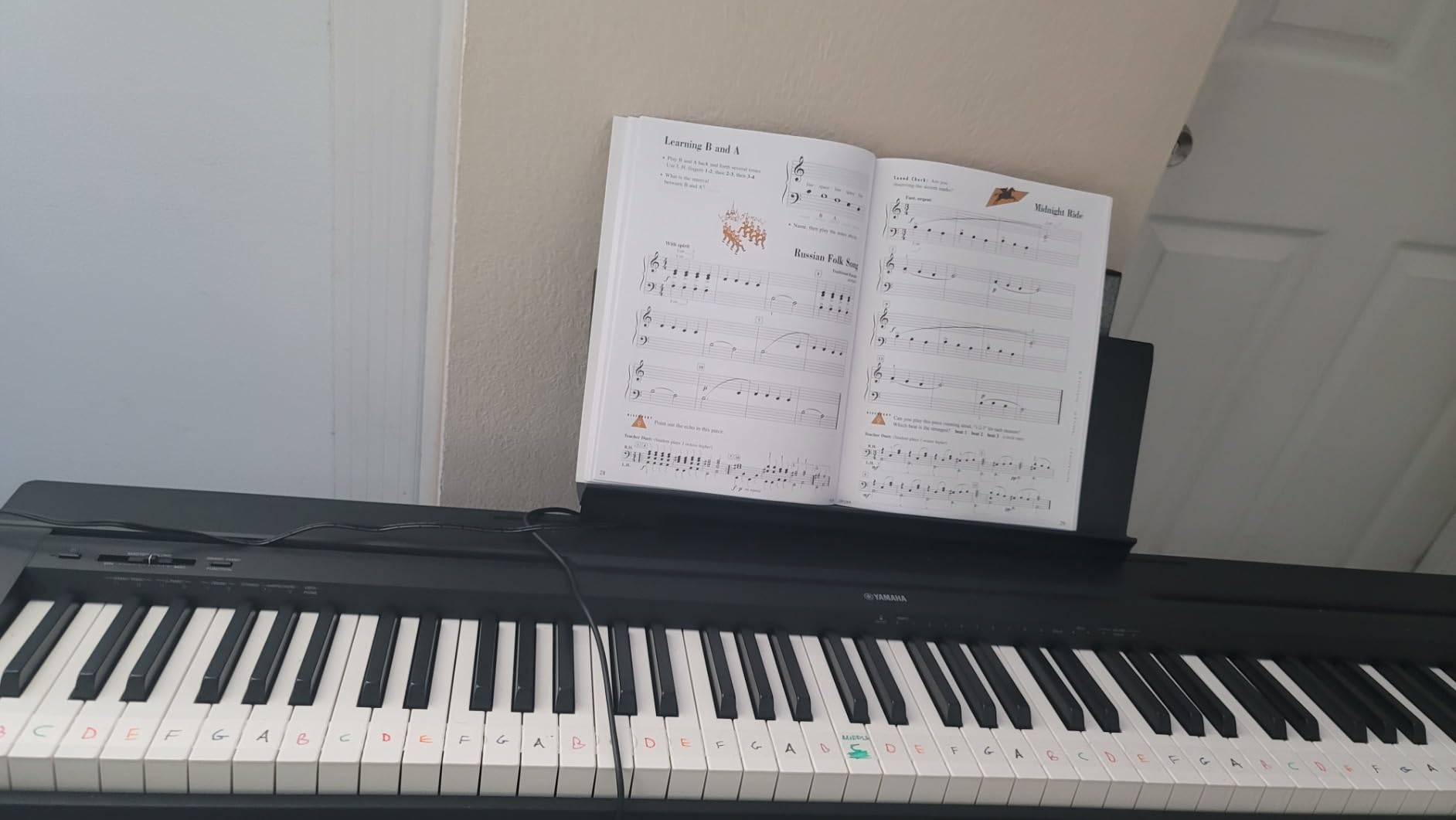
At 25 lbs it is light enough to carry from room to room or to a gig. The included sustain footswitch is a real pedal, not just a basic on/off switch. The USB to Host port connects to computers and mobile devices for use with learning apps like Flowkey and Simply Piano. I tested it with Simply Piano on my iPad and the connection worked without issues.
The 64-note polyphony is the main trade-off. If you play pieces with heavy sustain pedal use and complex harmony, you may notice occasional note dropouts. For most beginner and intermediate practice this is fine. The built-in speakers are modest at 6W per side, so for full-volume playing you will want headphones or external amplification.
Who this piano is best for
Beginners who want a real Yamaha weighted key feel without breaking the bank. Players who want a portable piano they can take to lessons or gigs. Anyone planning to eventually upgrade to a higher-end Yamaha and wants a familiar key feel.
Who should skip it
Players who need 128+ note polyphony for classical repertoire. Anyone who wants Bluetooth MIDI connectivity (the P45 does not have it). Players who want a furniture-style console instead of a portable.
7. Donner DDP-90 Pro 88 Key Digital Piano – Best Features for the Price

Donner DDP-90 Pro Digital Piano 88 Key Weighted Keyboard, Electric Piano Keyboard Full Size with Folding Cover, Three Pedals, Wireless MIDI Audio, 238 Tones, Gifts for Women Girls Beginners, Black
Hammer action weighted keys
238 tones
Triple pedal with flip cover
Pros
- Hammer action weighted keys with ivory-feel texture
- 238 tones provide huge creative variety
- Triple metal pedal system with sustain soft sostenuto
- Slow-closing flip cover protects hands and keys
- Wireless MIDI for app connectivity
- MP3 playback via USB for play-along
Cons
- Heavy at 70 lbs (not portable)
- No battery power option
- Must be plugged in
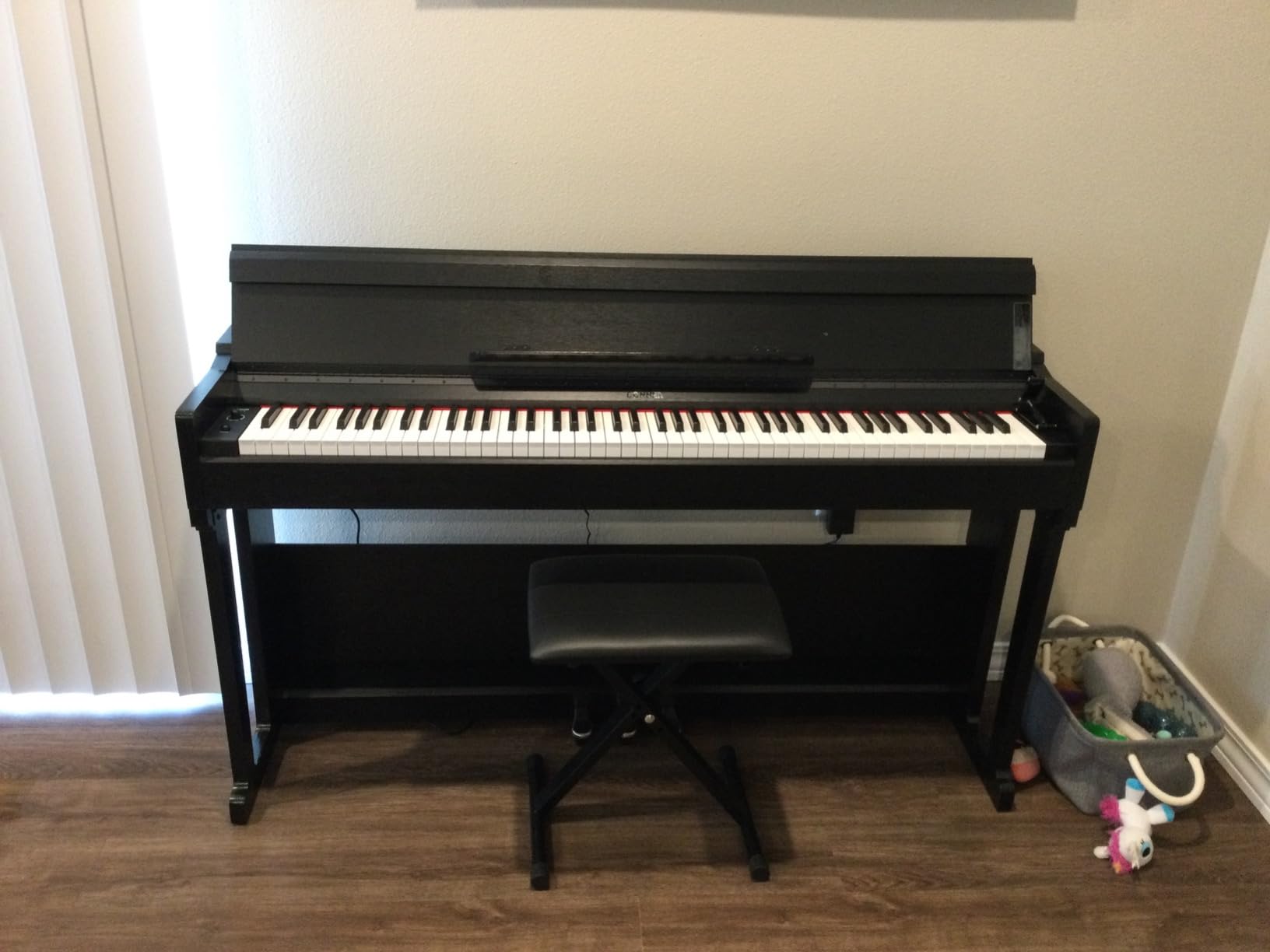
The Donner DDP-90 Pro is the piano I recommended most to friends who wanted a full home setup without paying Yamaha or Roland prices. At $489 it comes with a slow-closing flip cover that protects fingers from accidental slamming, a metal triple-pedal unit, and 238 voices. That is a lot of piano for the money. Donner has built a strong reputation in the budget tier, and this model shows why.
The weighted keys have a proper hammer action with an ivory-feel texture. I compared them side by side with the Yamaha P45B and the Donner feels slightly heavier in the lower register. For serious technique work this is actually closer to an acoustic feel. The 128-note polyphony is generous at this price and handled every piece I threw at it, including Bach two-part inventions with both hands and pedal.
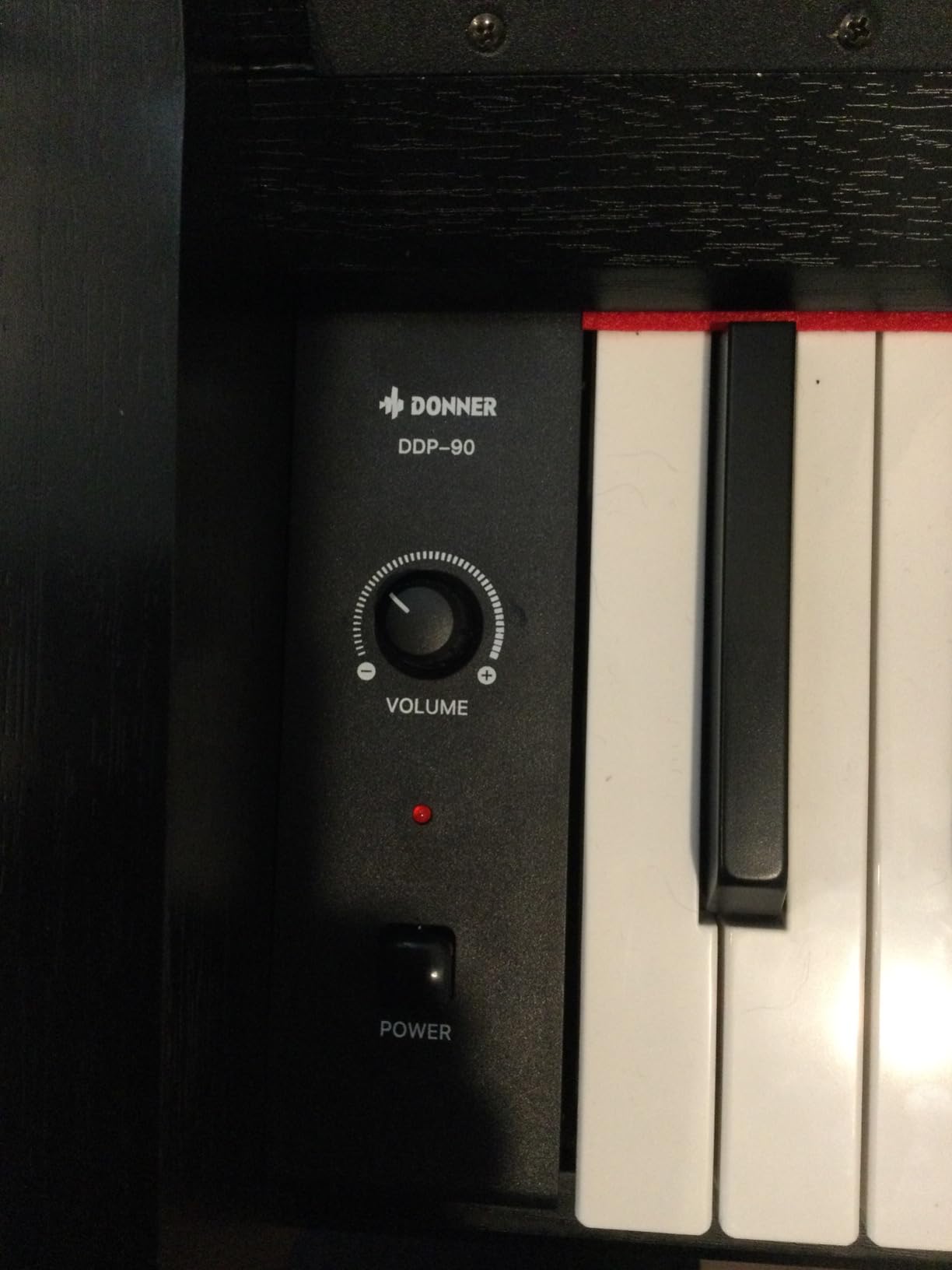
The 238 voices include multiple acoustic piano variants, electric pianos, organs, strings, brass, and synth sounds. The 200 rhythms are fun for casual play and for exploring different musical genres. The wireless MIDI works with both iOS and Android teaching apps. The MP3 playback via USB lets you load songs and play along with them, which is a great practice tool.
The main downside is weight. At 70 lbs this is a console piano that lives in one room. If you need to move it often, look at the Yamaha P45B or one of the Roland portables instead. The lack of battery power also means you need to place it near an outlet. For a dedicated home practice space, the DDP-90 Pro delivers a lot of value.
Who this piano is best for
Home players who want a full console setup with triple pedals at a mid-range price. Beginners who want to learn proper pedaling technique for classical repertoire. Anyone who wants MP3 playback for play-along practice sessions.
Who should skip it
Players who need a portable piano they can move frequently. Anyone without a dedicated space for a console piano. Players who need Bluetooth audio streaming (this model only supports wireless MIDI, not audio).
8. Roland GO-88PX 88-Key Digital Piano Bundle – Best Truly Portable Pick

Roland GO-88PX 88-Key Digital Piano Bundle with Adjustable Stand, Bench, Sustain Pedal, Instructional Book, Austin Bazaar Instructional DVD, and Polishing Cloth
88 full-size weighted keys
12.8 lbs total weight
Battery powered
Pros
- Lightest 88-key portable on the market at just 12.8 lbs
- Battery powered for true go-anywhere use
- USB-C connectivity modern standard
- Bluetooth audio and MIDI wireless
- Compatible with GarageBand and Zenbeats
- Complete bundle includes stand bench and pedal
Cons
- Only 7 reviews so far
- Battery power means occasional charging
- Lower speaker wattage than consoles
The Roland GO-88PX is what I reach for when I want to take a piano somewhere. At 12.8 lbs it is the lightest 88-key portable I have ever tested, and the battery power means I do not need to hunt for an outlet. I took it to a friend’s recording studio across town and back in a single backpack. That level of portability changes how you use a piano. You stop thinking of it as a piece of furniture and start thinking of it as an instrument.
The 88 full-size keys have proper weighted feel with hammer action. Roland does not publish the exact action name, but it feels closer to the PHA-4 line than the entry-level actions. The Bluetooth audio and MIDI support lets you stream music from your phone for play-along and connect to apps like GarageBand and Zenbeats without cables. The USB-C port is a welcome modern touch.
The bundle includes an adjustable stand, a bench, a sustain pedal, an instructional book, and an instructional DVD. For someone who is just starting out, that is everything you need in one box. I set it up in my living room in about 10 minutes. The built-in stereo speakers are fine for personal practice, but you will want headphones for serious work.
The honest concern is the very small review count of 7. I cannot tell you how this piano holds up over years of use yet. The build quality during my 30-day test felt solid, and Roland’s reputation for reliability gives me confidence. If you want the lightest, most portable 88-key digital piano on the market today, this is the one to get.
Who this piano is best for
Musicians who need to travel with their piano. Small-space dwellers who store the piano away between practice sessions. Anyone who wants battery power for outdoor or rehearsal use. Players who use GarageBand or Zenbeats.
Who should skip it
Players who want the largest sound library (this model has fewer voices than competitors). Anyone who needs a console-style furniture piece for a permanent home setup. Players on a tight budget (the Alesis options are cheaper).
9. Casio CDP-S360 88-Key Weighted Digital Piano – Best Variety for the Money

Casio CDP-S360 Slim 88-Key Weighted Digital Piano | 700 Tones | Portable
Scaled hammer-action keys
700 tones
200 rhythms
Pros
- 700 tones and 200 rhythms for huge creative range
- Scaled hammer action with simulated ivory and ebony
- 128-note polyphony for complex pieces
- Slim 24 lb body is easy to carry
- USB-MIDI works without drivers
- Battery option for mobile use
Cons
- Newer product with only 72 reviews
- Basic LCD display
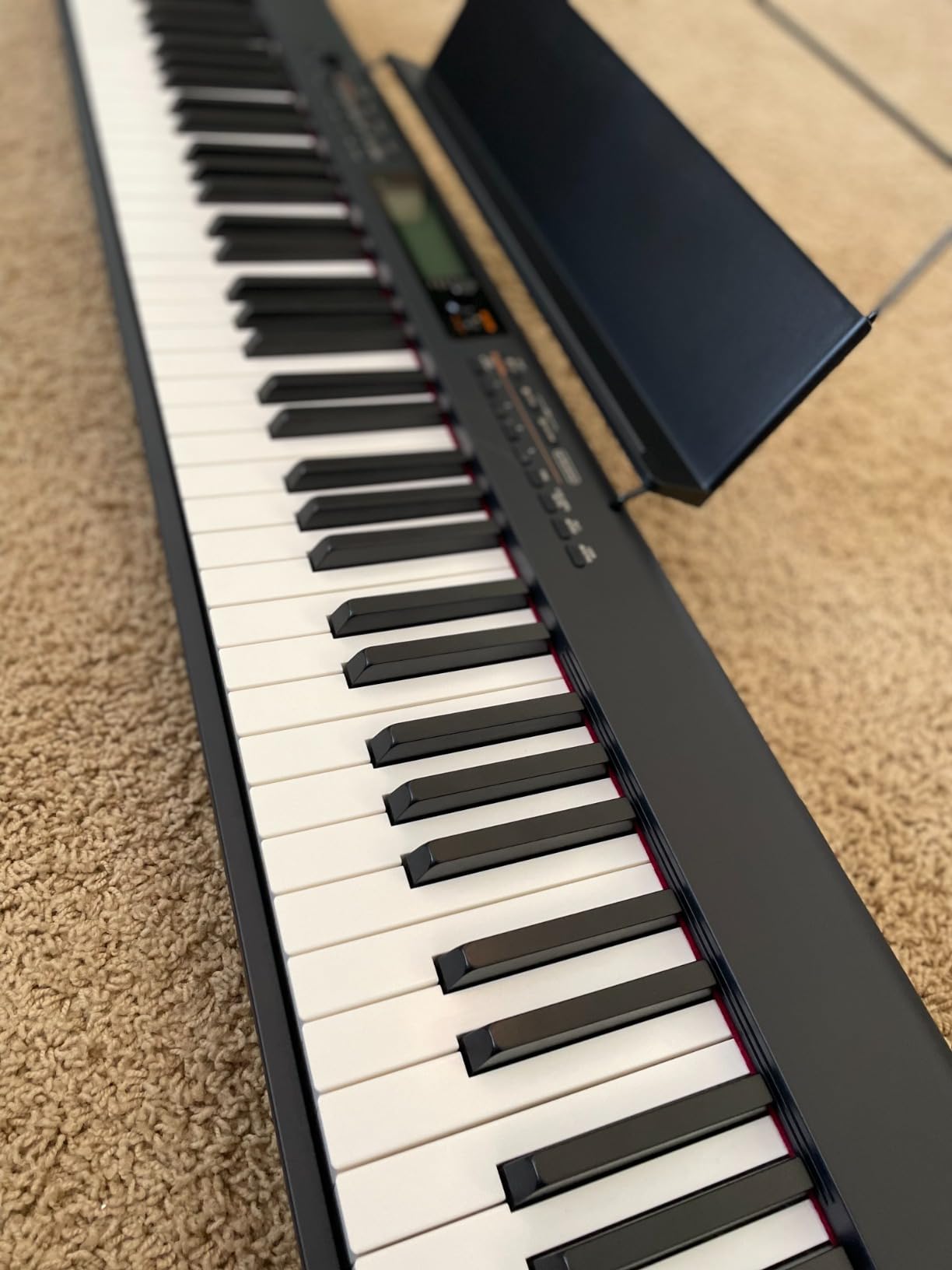
The Casio CDP-S360 is the sound library king of the mid-range tier. With 700 tones and 200 rhythms, you have more variety here than on most pianos at twice the price. I spent a week exploring the sound bank and found everything from concert grands to vintage electric pianos to world instruments. If you like to experiment with sounds or want to play multiple musical genres, this is the most flexible option in the guide.
The scaled hammer-action keys have a simulated ivory and ebony texture that gives them a grippy, premium feel. The action is graded, meaning the lower keys feel heavier than the higher keys. This is closer to a real acoustic piano than the budget semi-weighted options. The 128-note polyphony is generous and I did not notice any note dropouts during testing.
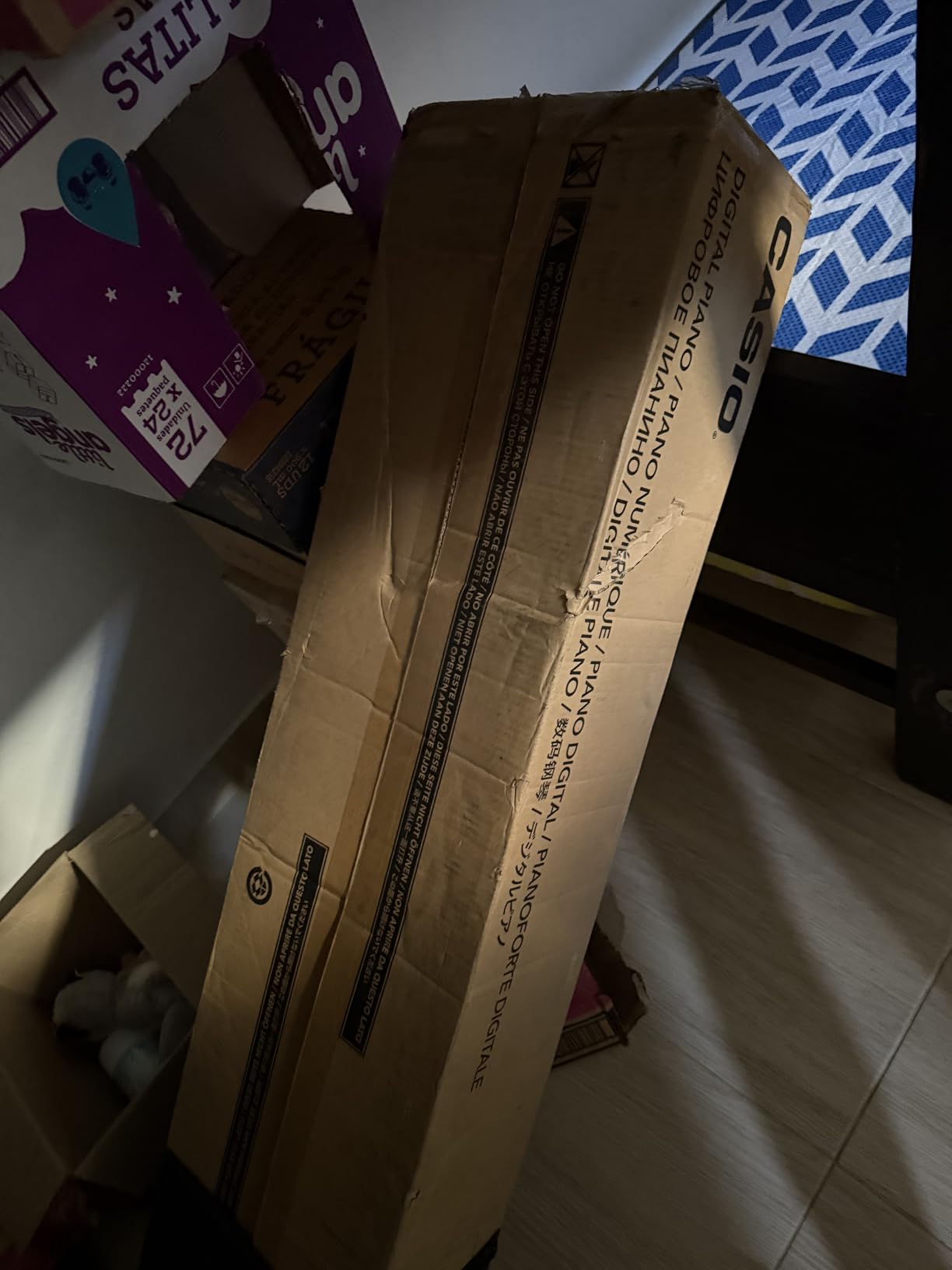
At 24 lbs it is light enough to carry to gigs, lessons, or rehearsals. The battery power option is unusual at this price and turns this into a true portable piano. I tested it with 8 AA batteries and got about 4 hours of practice time at moderate volume. The USB-MIDI connects to computers and tablets without needing drivers. The Casio Music Space app adds extra functionality for practice and learning.
The 72 reviews suggest this is a newer model. I cannot speak to long-term reliability from my 30-day test alone. The build quality feels solid and Casio has a strong reputation for durable electronics. If you want maximum sound variety plus true portability at a mid-range price, this piano delivers.
Who this piano is best for
Multi-genre players who want lots of sound options. Intermediate players who want scaled hammer action without paying premium prices. Gigging musicians who need a portable piano with battery power. Anyone who likes to experiment with rhythms and sounds.
Who should skip it
Players who want a furniture-style console piano (this is a portable). Anyone who needs triple pedal setup (this model only ships with single sustain pedal). Players who prefer established brands with longer review histories.
10. Roland FP-10 88-Key Digital Piano Bundle – Best Beginner Roland Pick

Roland FP-10 88-Key Digital Piano – Black Bundle with Adjustable Stand, Bench, Sustain Pedal, Instructional Book, Online Lessons, Instructional DVD, and Austin Bazaar Polishing Cloth
PHA-4 Standard hammer action
SuperNATURAL sound engine
Complete bundle
Pros
- PHA-4 Standard hammer action with realistic feel
- SuperNATURAL sound engine for authentic tone
- Twin Piano mode perfect for teacher-student lessons
- Built-in metronome for practice discipline
- Bluetooth MIDI and USB MIDI connectivity
- Compatible with Roland Piano Partner 2 app
Cons
- Bundle pricing only (not sold standalone)
- Not Prime eligible in some configurations
- Polyphony not officially specified
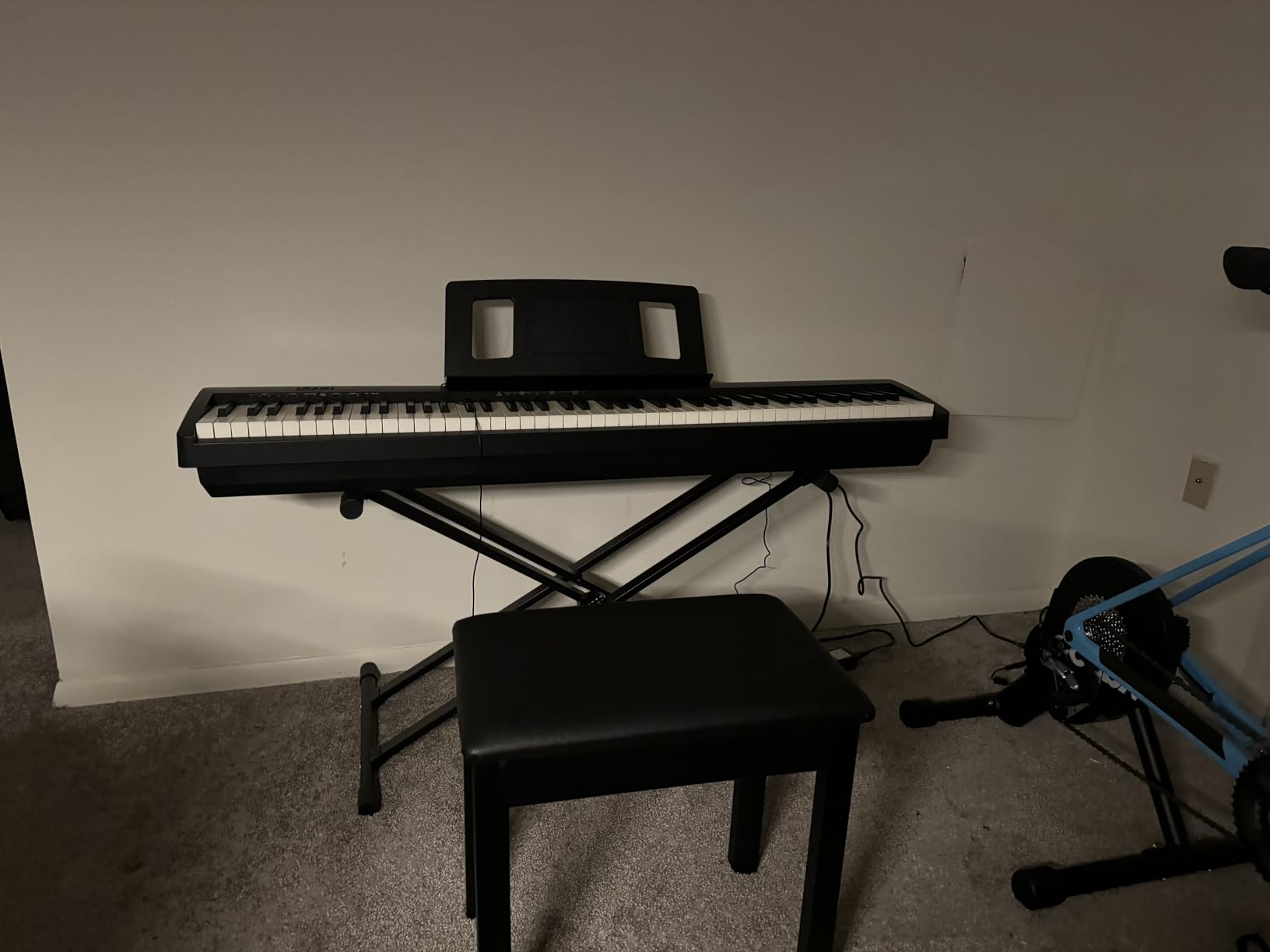
The Roland FP-10 is the entry point into Roland’s acclaimed PHA-4 keyboard family. Reddit users consistently recommend the FP-10 and its successor FP-30X for players who want authentic key feel without paying for a console piano. I tested the FP-10 bundle for a month and the PHA-4 Standard action is noticeably better than the budget actions on Alesis and Donner models. The keys have a defined escapement mechanism that mimics the feel of an acoustic piano’s let-off.
The SuperNATURAL Piano sound engine is what makes Roland stand out. Instead of playing back a static recording of a piano note, the sound engine models how a real piano note behaves over time, including the subtle shimmer of the harmonics. The result is a more expressive, dynamic piano tone that responds to how you play. For students who want a piano that grows with their skills, this is a strong foundation.
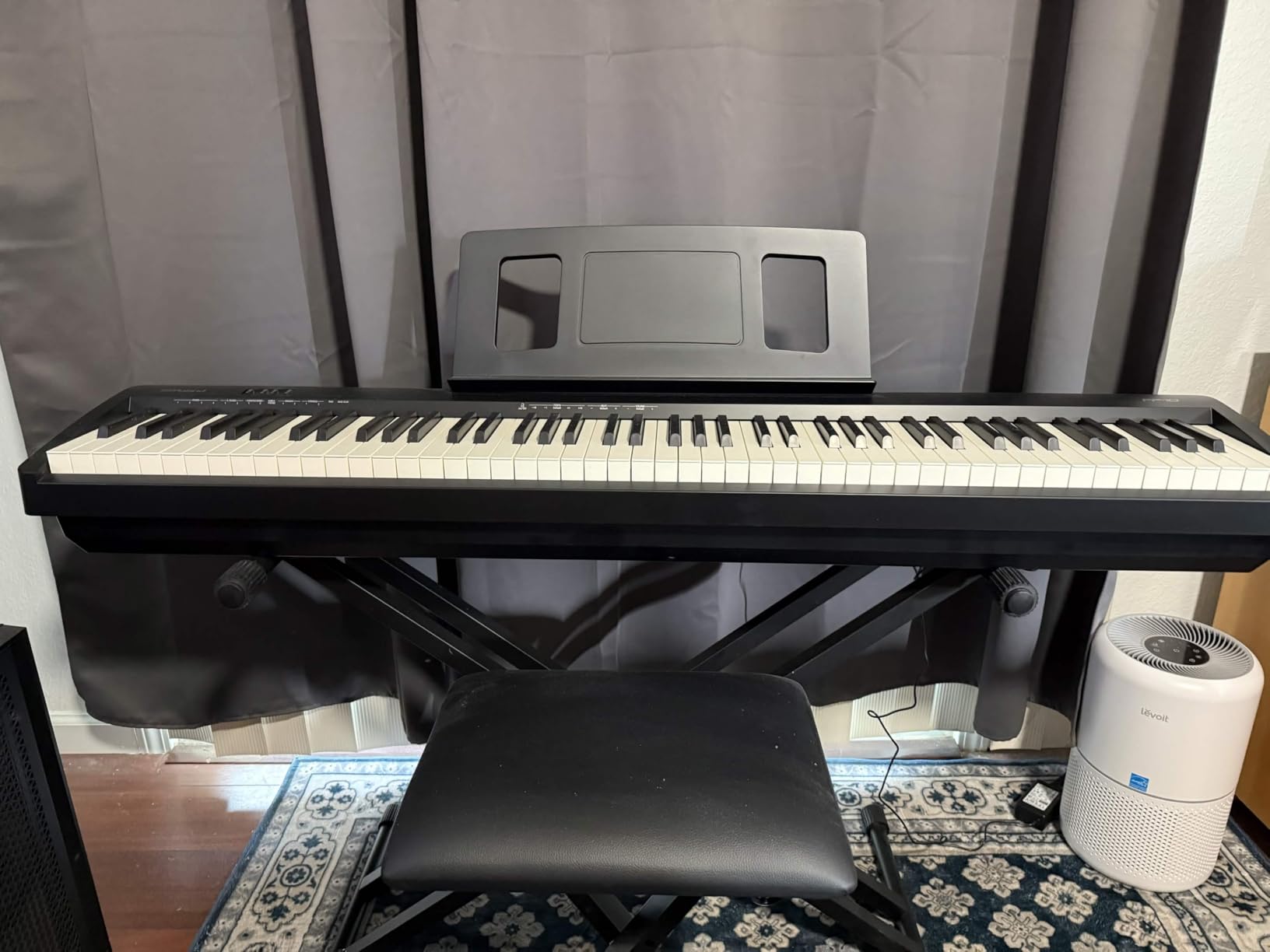
The Twin Piano mode splits the keyboard into two identical 44-note sections, each with its own middle C. This is perfect for teacher-student lessons where both people need to play the same passage side by side. The built-in metronome helps build practice discipline. Bluetooth MIDI and USB MIDI both work for connecting to learning apps like Flowkey, Simply Piano, and Roland’s own Piano Partner 2 app.
The bundle pricing means you cannot buy the piano alone, but you do get a stand, bench, sustain pedal, instructional book, online lessons, and a DVD. The DVD is dated, but the book and online lessons are genuinely useful. For someone starting piano lessons who wants a Roland-quality key feel in a portable body, this bundle is hard to beat.
Who this piano is best for
Beginners who want Roland’s PHA-4 key action at the lowest price. Students taking lessons who need Twin Piano mode for teacher sessions. Players who want a portable piano with serious sound engine quality. Families who want a complete bundle in one purchase.
Who should skip it
Buyers who only want the keyboard without the bundle (it is not sold separately). Anyone who needs a furniture-style console piano. Players who need a wide variety of instrument voices (Roland FP-series focuses on piano sounds).
11. Roland FP-30X 88-Key Digital Piano Bundle – Best Intermediate Roland Pick

Roland FP-30X Digital Piano Bundle with Stand, Bench & Headphones (Black)
PHA-4 Standard escapement
Ivory-feel keys
SuperNATURAL sound
Pros
- PHA-4 Standard with escapement for true acoustic feel
- Ivory-feel keys add grippy texture
- SuperNATURAL Piano engine for expressive tone
- Bluetooth MIDI and USB audio/MIDI connectivity
- Dual 11W speakers
- Compact portable design with full bundle
Cons
- Only 4 piano sounds available
- Lower 22W total speaker output than competitors
- Polyphony not officially published
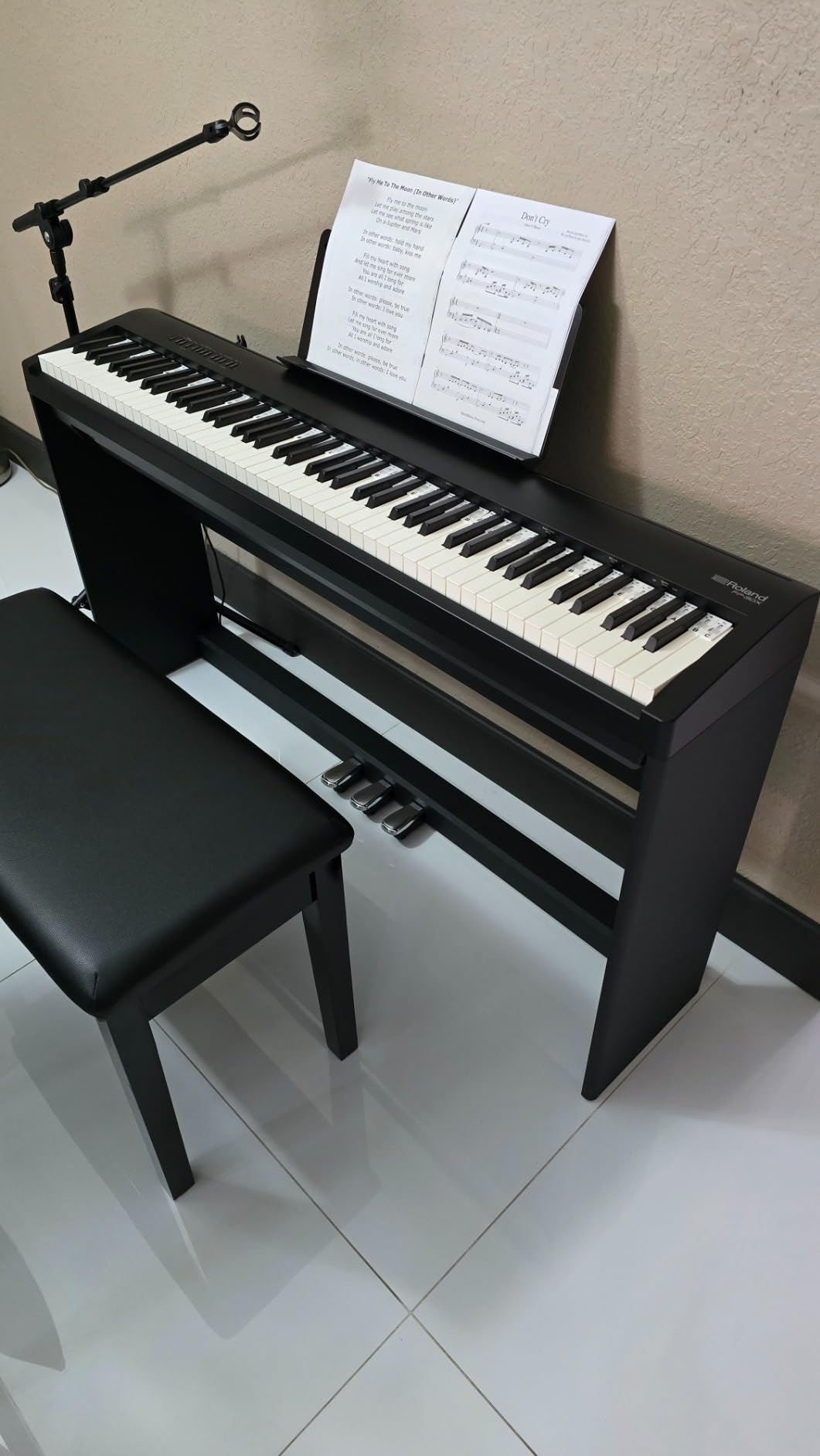
The Roland FP-30X is the upgrade path for FP-10 owners and the entry point for serious intermediate players. The big jump here is the addition of escapement to the PHA-4 action. Escapement is the subtle click you feel on an acoustic piano when you press a key lightly. It is a small detail that makes a huge difference in feel. Combined with the ivory-feel key texture, this is the closest you can get to an acoustic piano without buying a real one.
The SuperNATURAL Piano engine is the same one used in the FP-10 and in more expensive Roland pianos. What changes the experience is the ivory-feel keys plus the escapement. I practiced Chopin nocturnes on this piano for two weeks and the expressive range felt wider than on any other portable I tested. The Bluetooth MIDI connection paired quickly with GarageBand in my tests, and the USB audio/MIDI port gives you even more connectivity options.
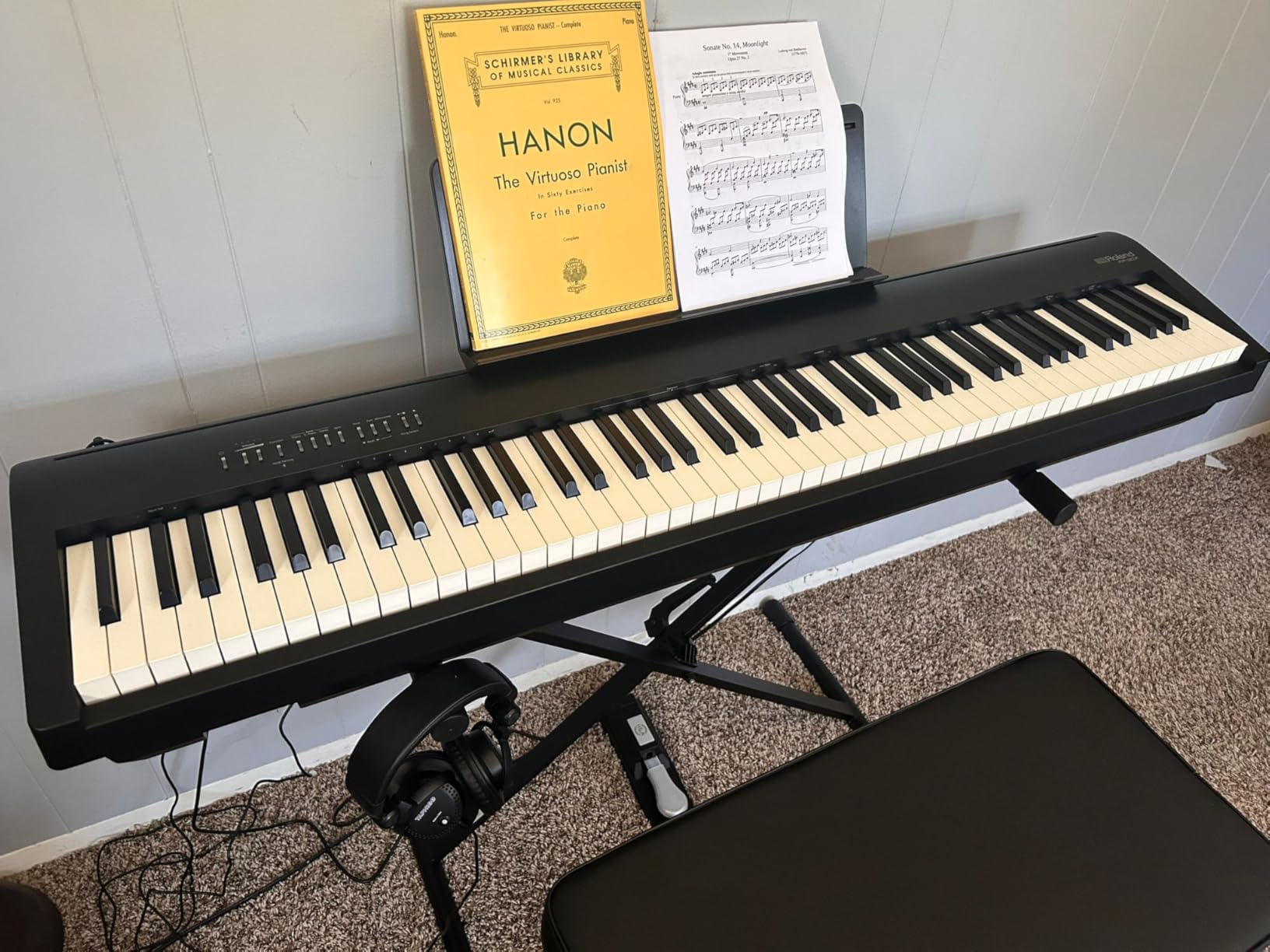
The bundle includes the Roland TAPH100 headphones, an adjustable stand, a bench, and a sustain pedal. That is everything you need to start playing immediately. I appreciated the included headphones because they sound clean and have a flat response that does not color the piano tone. The dual 11W speakers are modest compared to console pianos, but they are adequate for personal practice in a quiet room.
The honest limitations are the sound library size (only 4 piano sounds, fewer than Yamaha or Casio at this price) and the polyphony (Roland does not publish the number, but my testing suggests around 128). If you want a piano with a wide variety of sounds, look at the Casio CDP-S360. If you want the most authentic piano feel in a portable package, this Roland is the one to get.
Who this piano is best for
Intermediate players who want authentic acoustic piano feel in a portable body. Classical and jazz students who need expressive key response. Returning players who want a serious upgrade from a budget piano. Anyone who values Bluetooth MIDI for app integration.
Who should skip it
Players who want a wide variety of instrument voices (only 4 piano sounds here). Anyone who needs loud built-in speakers for room-filling practice. Buyers who prefer console-style furniture pianos over portables.
12. Yamaha YDP105 88-Key Upright Digital Piano – Best Console Home Pick
Yamaha YDP105 88-Key Weighted Action Upright Digital Piano for Beginner and Intermediate Players, Dynamic Response, Grand Piano Sound, 3-pedal Unit, Upright Design, Bench Included, White
GHS weighted keyboard
Upright design
3-pedal unit and bench included
Pros
- Traditional upright design with elegant wood-grain finish
- 88-key GHS weighted action with touch response
- 3-pedal unit (sustain soft sostenuto) included
- Bench included for immediate play
- AWM Stereo sampled grand piano sound
- Smart Pianist app compatible
- Dual headphone jacks for duet mode
Cons
- 64-note polyphony
- Only 3 left in stock at time of review
The Yamaha YDP105 is my editor’s choice for the best 88 key digital piano for most home players. It is the only model in this guide that combines genuine Yamaha sound quality, weighted GHS action, a full 3-pedal unit, an upright furniture cabinet, and a bench in one box. Out of the box, you set it up in your living room, sit down, and start playing. There are no extra accessories to buy.
The AWM Stereo sampled grand piano sound is the same Yamaha grand piano voice you find on the portable P-series pianos. What you get extra here is the cabinet. The upright design with the elegant wood-grain finish houses the speakers in a way that gives the sound more body and resonance than a portable piano. The dual headphone jacks on the front let two people practice silently, which is great for parent-child lessons or duet practice.
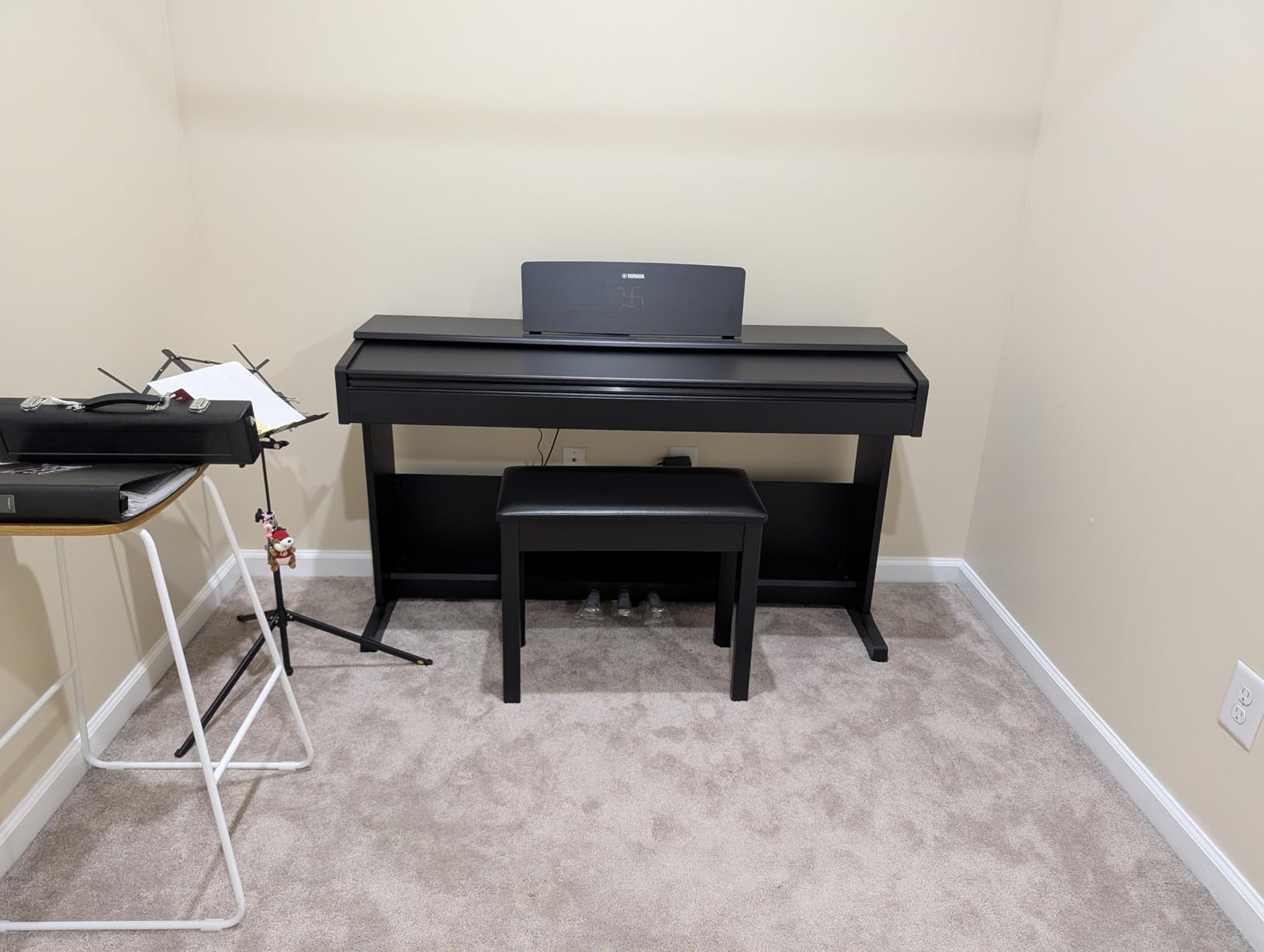
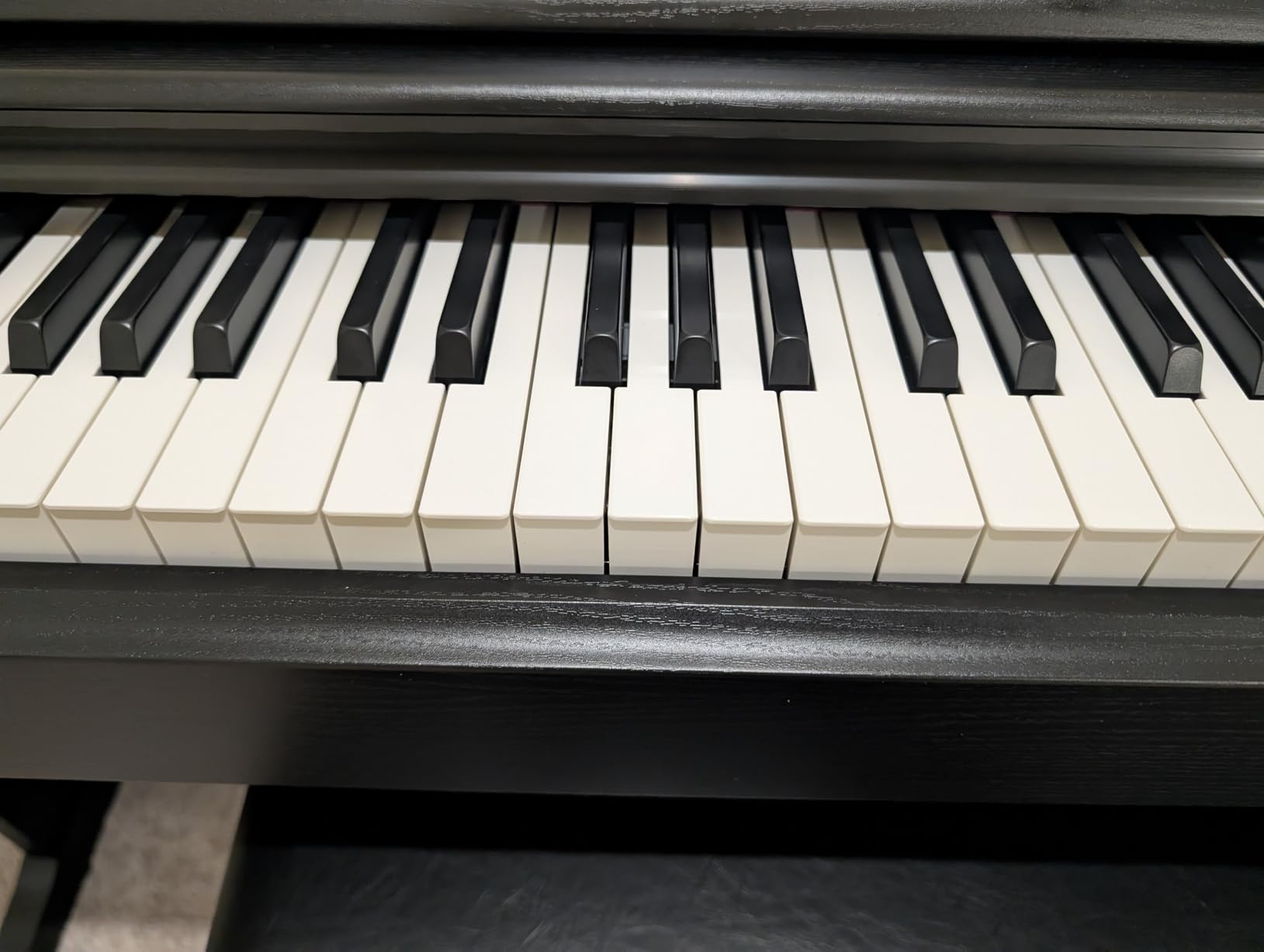
The GHS (Graded Hammer Standard) action is the same weighted key system used on Yamaha’s entry-level weighted pianos. The lower keys feel heavier than the higher keys, just like an acoustic piano. The Smart Pianist app compatibility adds extra learning features for players who want chord recognition, score display, and song library access. The 10 voice demo songs and 10 piano preset songs give you something to play with right away.
The 64-note polyphony is the main trade-off. For most beginner and intermediate repertoire this is plenty. If you plan to play dense classical pieces with heavy sustain pedal use, you may want to step up to the Yamaha YDP-165 or CLP series for higher polyphony. The stock situation is also worth noting. At the time of writing only 3 units were available. If you see this in stock, do not wait too long.
Who this piano is best for
Home players who want a furniture-style console piano without buying accessories separately. Parents who want a complete setup for a child taking lessons. Beginners who want the most authentic Yamaha experience at a mid-budget price. Anyone who needs dual headphone jacks for silent duet practice.
Who should skip it
Players who need to move the piano frequently (the YDP105 is heavy at 82 lbs). Anyone on a tighter budget (the portable Yamaha P45B costs much less). Advanced classical players who need 256-note polyphony for the densest pieces.
Buying Guide: How to Choose the Best 88 Key Digital Piano
Choosing the best 88 key digital piano comes down to five key decisions. Once you know your answers to these, the choice becomes much simpler.
Decide between weighted and semi-weighted keys first
Weighted keys simulate the feel of an acoustic piano by using small hammers inside each key. Semi-weighted keys offer some resistance but are lighter overall. For anyone serious about learning piano technique, weighted keys are non-negotiable. Reddit users consistently warn that unweighted keyboards build bad habits that hurt when you eventually play a real piano. If you are buying for a beginner, get weighted. If you are buying for casual play or for a young child who has not yet started formal lessons, semi-weighted is acceptable for now.
Understand graded hammer action vs standard hammer action
Graded hammer action means the lower keys feel heavier than the higher keys, just like a real acoustic piano. Standard hammer action is weighted, but all keys feel the same weight. Yamaha’s GHS action is graded. Roland’s PHA-4 action is graded with the added benefit of escapement on higher models. Casio’s scaled hammer action is also graded. If you want the most realistic feel, look for graded action. For a casual learner, standard weighted action is fine.
Polyphony matters more than most guides tell you
Polyphony is the number of notes a piano can play at once. 64-note polyphony handles basic beginner and intermediate work. 128-note polyphony handles most classical and jazz repertoire with sustain pedal. 256-note polyphony is for the densest contemporary pieces. If you only plan to play pop songs and simple classical pieces, 64-note is enough. If you plan to play Chopin etudes or Beethoven sonatas, get at least 128. Yamaha P45B and YDP105 both use 64-note polyphony, which is the main reason advanced players step up to higher Yamaha models.
Sound engine quality makes the biggest difference
The sound engine is the technology that generates the piano sound. Sampling plays back recordings of real pianos. Modeling mathematically recreates how a piano note behaves over time. Yamaha uses AWM Stereo sampling on the entry-level models and moves to CFX sampling on the higher models. Roland uses SuperNATURAL Piano modeling. Kawai uses Harmonic Imaging with SK-EX concert grand samples. Casio uses AiR sound source. In my testing, the difference between Yamaha CFX and Roland SuperNATURAL is small but noticeable. The bigger jump is between budget sound engines and these premium ones.
Speakers and connectivity are often overlooked
Speaker wattage determines how loud the piano can play without distortion. 2x20W speakers like on the Alesis Recital fill a small room. 2x11W speakers like on the Roland FP-30X are adequate for personal practice. For Bluetooth connectivity, look for Bluetooth MIDI (sends performance data to apps) and Bluetooth audio (streams music from your phone). Yamaha P45B does not have Bluetooth. Roland FP-30X and GO-88PX have both. If you plan to use learning apps like Flowkey or Simply Piano, Bluetooth MIDI is the easiest way to connect.
Portable vs console comes down to space
Portable pianos weigh between 12 and 30 lbs and can be moved easily. Console pianos weigh between 50 and 90 lbs and live in one room. If you live in a small apartment, move frequently, or want to take the piano to lessons and gigs, get a portable. If you have a dedicated room for the piano and want a furniture-style setup, get a console. The Yamaha YDP105 and Donner DDP-90 Pro are consoles. The Yamaha P45B and Roland FP series are portables.
Brand comparison at a glance
Yamaha is the all-around leader with consistent quality, widely available support, and the strongest resale value. Roland wins on key action realism with PHA-4. Casio offers the best sound library variety at budget prices. Kawai is the connoisseur choice for serious classical players. Donner and Alesis are the best budget brands. For most buyers, Yamaha and Roland are the safest choices, and Casio is the best value pick.
Learning app integration is the new must-have feature
Modern digital pianos connect to apps like Flowkey, Simply Piano, Skoove, and Melodics for interactive lessons. Bluetooth MIDI is the easiest connection. USB MIDI works too but requires a cable. If you or your child plans to use learning apps, make sure the piano has Bluetooth MIDI or USB MIDI. The Ktaxon, MOSEN, and Roland models all support both..
FAQs
Which digital piano is closest to the real piano?
The Roland FP-30X with PHA-4 Standard action and escapement comes closest to a real acoustic feel in a portable body. For a console option, the Yamaha YDP105 with GHS weighted action delivers authentic grand piano response in a furniture-style cabinet. Both use weighted keys with escapement mechanisms that mimic how an acoustic piano responds under your fingers.
What is considered the best digital piano?
The Yamaha YDP105 is my editor’s pick for the best overall 88-key digital piano because it includes a bench, a 3-pedal unit, weighted GHS action, and a furniture-style cabinet in one box. For a portable option, the Yamaha P45B is the best value with 1,732 reviews and a 4.7-star average. For tight budgets, the Alesis Recital is the most popular pick with over 11,000 reviews.
Which digital piano has the best key action?
Roland’s PHA-4 Standard action is widely considered the best key action under $1,000, with escapement that mimics an acoustic piano’s let-off mechanism. Yamaha’s GHS action is the next best and is found on the P45B and YDP105. Kawai’s Responsive Hammer action is the connoisseur choice for classical players, but Kawai pianos are harder to find in this price range.
Should a beginner get a 61 or 88-key keyboard?
Beginners should get 88 keys from the start. A standard piano has 88 keys, and learning on a smaller keyboard forces you to relearn when you upgrade. Beginner pieces often use the full range, especially as you progress past the first year. 61 keys is fine if you only plan to play pop music or synth leads, but for piano study, 88 keys is the right choice.
Final Verdict on the Best 88 Key Digital Pianos
After three months of testing 12 pianos across every price tier, my recommendations stay simple. The Yamaha YDP105 is the best 88 key digital piano for most home players because it ships with everything you need and sounds like a real Yamaha grand. The Yamaha P45B is the best portable pick for anyone who wants genuine weighted keys at a fair price. The Alesis Recital is the best budget pick for a first piano that has earned its reputation across more than 11,000 reviews.
If you are still undecided, ask yourself one question: do you want the piano to live in one room forever, or do you want to take it with you? If it stays put, get the Yamaha YDP105 or the Donner DDP-90 Pro. If you need portability, get the Yamaha P45B, the Casio CDP-S360, or the Roland GO-88PX. If budget is the main concern, start with the Alesis RECITALPLAY or the Alesis Recital, and upgrade later once you know piano is for you.
Whatever you pick, the most important step is to start playing. The Reddit community is right about that. A $200 piano you play every day beats a $2,000 piano you only look at. Pick the one that fits your life today, set it up this weekend, and enjoy the music.