
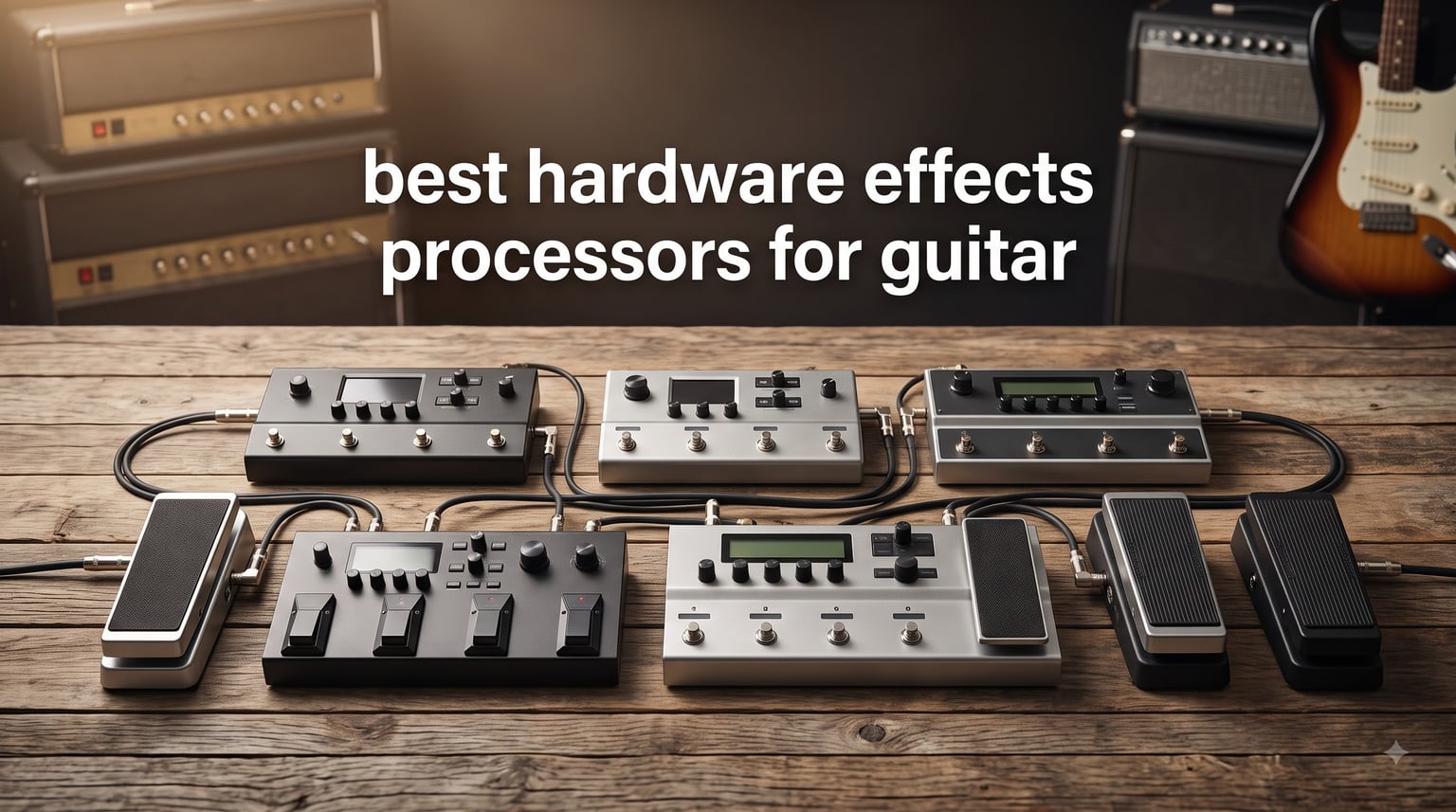
Finding the best hardware effects processors for guitar in 2026 means sorting through dozens of multi-effects pedals that promise studio-grade tone in a box. Our team has been testing, gigging, and recording with these units for months to separate the genuinely useful from the marketing fluff.
Whether you are replacing a massive pedalboard, building a fly rig for weekend shows, or just want one box that covers practice and home recording, the right guitar processor changes everything. The best multi-effects pedals now deliver amp modeling and IR loading that rival tube amps, USB interfaces for direct recording, and preset management that makes live switching effortless.
This guide covers 12 hardware effects processors spanning entry-level units to flagship professional modelers. We tested each one with single coils, humbuckers, and acoustic-electric guitars through studio monitors and real amps. Every recommendation here earned its spot through hands-on use, not spec sheets.
Table of Contents
Top 3 Picks for Best Hardware Effects Processors for Guitar
If you want to skip ahead, these three processors stood out across our testing. The Line 6 HX Stomp delivers flagship Helix tone in a stompbox footprint, the IK Multimedia TONEX Pedal uses AI modeling for startlingly realistic amps, and the FLAMMA FX100 offers incredible value for beginners.

Best Hardware Effects Processors for Guitar in 2026
Here is the full lineup of every processor we tested. Use this comparison to scan specs at a glance, then dig into the individual reviews below for the details that matter.
| Product | Specifications | Action |
|---|---|---|
 Line 6 HX Stomp Line 6 HX Stomp |
|
Check Latest Price |
 BOSS ME-90 BOSS ME-90 |
|
Check Latest Price |
 BOSS GX-10 BOSS GX-10 |
|
Check Latest Price |
 Zoom G1X FOUR Zoom G1X FOUR |
|
Check Latest Price |
 Zoom G6 Zoom G6 |
|
Check Latest Price |
 MOOER GE150 Pro MOOER GE150 Pro |
|
Check Latest Price |
 VALETON GP-200 VALETON GP-200 |
|
Check Latest Price |
 HeadRush Flex Prime HeadRush Flex Prime |
|
Check Latest Price |
 NUX MG-30 NUX MG-30 |
|
Check Latest Price |
| IK Multimedia TONEX Pedal |
|
Check Latest Price |
 Donner Arena 2000 Donner Arena 2000 |
|
Check Latest Price |
 FLAMMA FX100 FLAMMA FX100 |
|
Check Latest Price |
1. Line 6 HX Stomp — Flagship Helix Modeling in a Compact Pedal
Line 6 HX Stomp Multi-Effects Guitar Pedal
HX Modeling engine
300+ effects
6 simultaneous blocks
IR loading
3 footswitches
Pros
- Same HX Modeling as flagship Helix
- 300+ effects and models
- Up to 6 simultaneous blocks
- IR loading capability
- True stereo processing
Cons
- Only 3 footswitches without external controller
I have used the HX Stomp as my primary gigging processor for over a year, and it remains the most tone-accurate compact modeler I have played through. The same HX engine that powers the full Helix lives inside this little black box, which means you get over 300 effects and amp models derived from the flagship unit.
The selling point is flexibility. You can run up to six simultaneous blocks, mixing amp models, cab IRs, and effects in any order you want. That is enough signal chain for a full professional tone, all in something that fits on three switch positions.
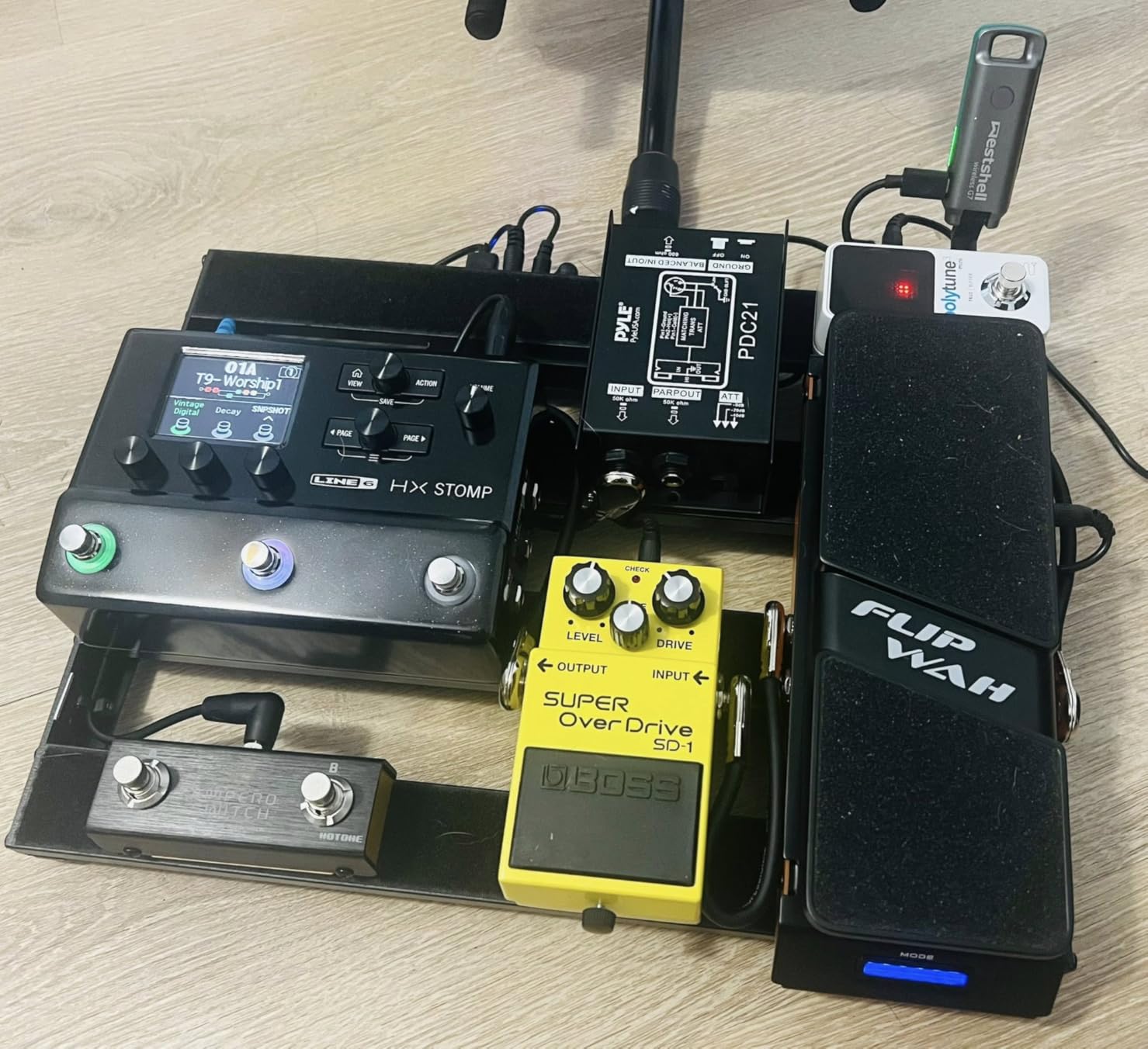
The three capacitive footswitches feel premium with their color-coded LED rings. You can assign each one to toggle effects, change presets, or trigger the looper. The capacitive sensing means you can hold your foot near a switch to see what it controls without actually pressing it, which is genuinely useful on dark stages.
Sonically, the HX models respond like the real thing. Pick dynamics translate naturally, and rolling back your guitar volume cleans up an overdriven amp model exactly the way a tube amp would. The IR loading means you can load third-party cabinet impulses for endless tonal variety.
Integration with Existing Pedalboards
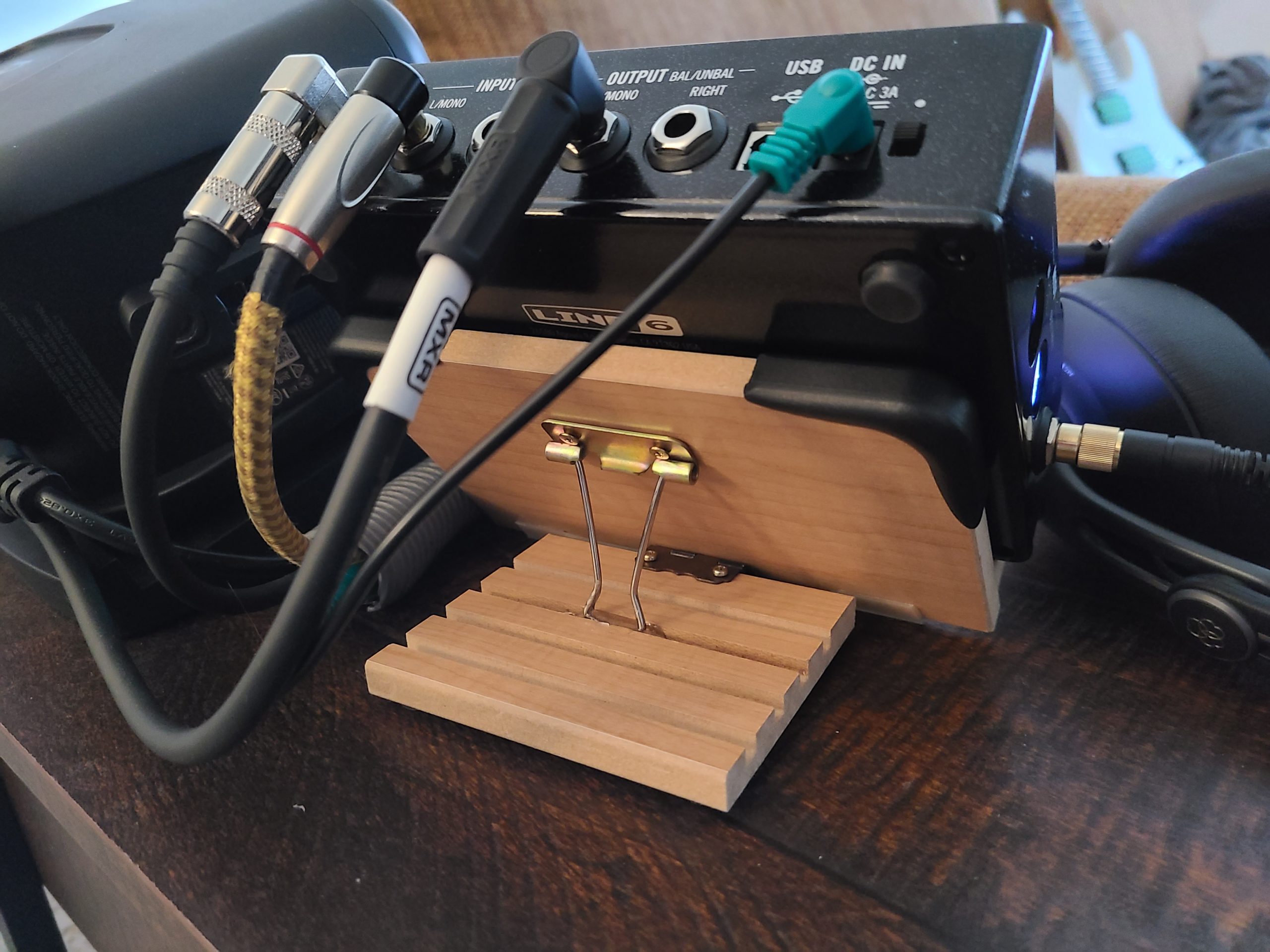
The HX Stomp shines as a centerpiece on a hybrid board. Its effects loop lets you place your favorite analog dirt pedals before or after the modeling section, giving you the best of both worlds. Many players run a drive pedal into the Stomp for their core tone, then use the Stomp for time-based effects and amp modeling downstream.
Recording and USB Interface Use
The built-in USB connection works as a 24-bit audio interface, so you can record directly into your DAW without extra hardware. I tracked an entire EP using nothing but the Stomp and a laptop. The re-amping capability lets you send a dry signal back through the unit later to tweak tones without re-recording.
2. BOSS ME-90 — Battery-Powered All-In-One Workhorse
BOSS ME-90 Guitar Multi-Effects All-In-One Guitar Processor
11 AIRD amp models
60 effects from GT-1000
8 footswitches
Battery powered
Effects loop
Pros
- 24-bit processing with 32-bit float
- 11 AIRD amp models
- 60 GT-1000 effects
- 8 multi-function footswitches
- Battery powered
Cons
- Knob-only interface feels limited for complex editing
The BOSS ME-90 is the unit I recommend most to players who want stompbox-style control without a touchscreen. Eight multi-function footswitches sit across the front panel, each assignable to effects or presets. The AIRD amp modeling technology borrowed from the flagship GT-1000 gives you authentic tube-amp response across 11 amplifier models.
Battery operation is a standout feature. You can run the ME-90 on six AA batteries, making it perfect for busking, outdoor gigs, or rehearsal spaces without power outlets. The redesigned expression pedal with toe switch adds wah and volume control without needing an external pedal.
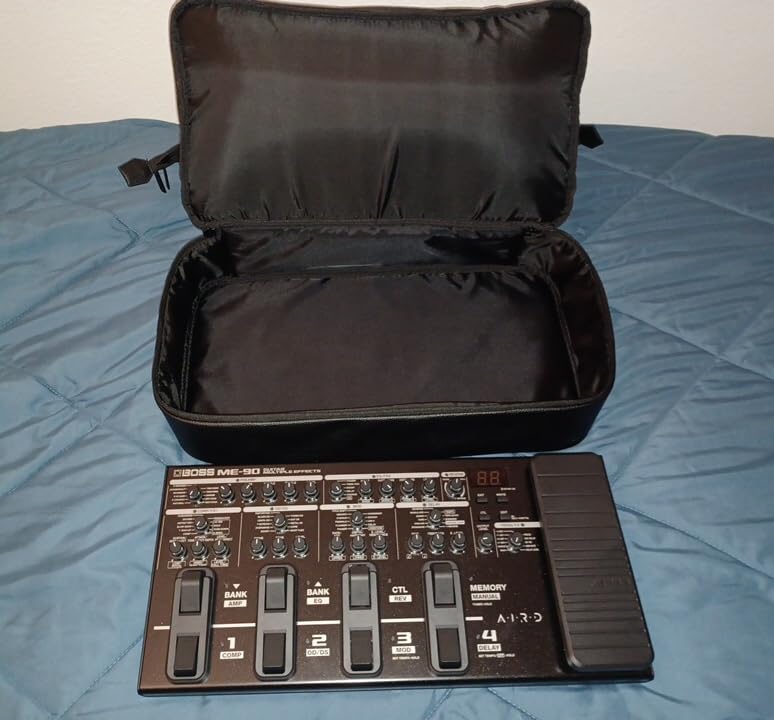
BOSS packed 60 effects derived from the GT-1000 into this unit, covering delay, reverb, modulation, and dynamics. The effects loop lets you integrate external pedals, and the USB-C connection handles both firmware updates and audio interfacing for recording.
The 36 ready-to-play presets mean you can plug in and start gigging immediately. The BOSS Tone Studio software opens up deeper editing on your computer, though the knob-based interface handles most adjustments fine for live tweaking.
Battery Power for Busking and Outdoor Gigs
The ME-90 runs roughly seven hours on six AA batteries, which covers most gigs on a single set. This makes it one of the few professional-grade processors you can take anywhere without worrying about power. Pair it with a battery-powered amp and you have a fully mobile rig.
Live Performance Footswitch Layout
Eight footswitches in manual mode let you toggle individual effects on and off like a traditional pedalboard. The dedicated bank-up and bank-down switching makes preset navigation fast during set changes. Players coming from individual stompboxes will feel at home immediately.
3. BOSS GX-10 — Compact Processor with Color Touch Display
BOSS GX-10 Compact Guitar & Bass Effects Processor
GX-100 sound engine
32 amp types
170 effects
Color touch display
AIRD technology
Pros
- GX-100 sound engine in compact design
- 32 amp types and 170 effects
- Color touch display
- 15 assignable blocks
- Metal chassis
Cons
- USB powered limits portability
- Not Prime eligible
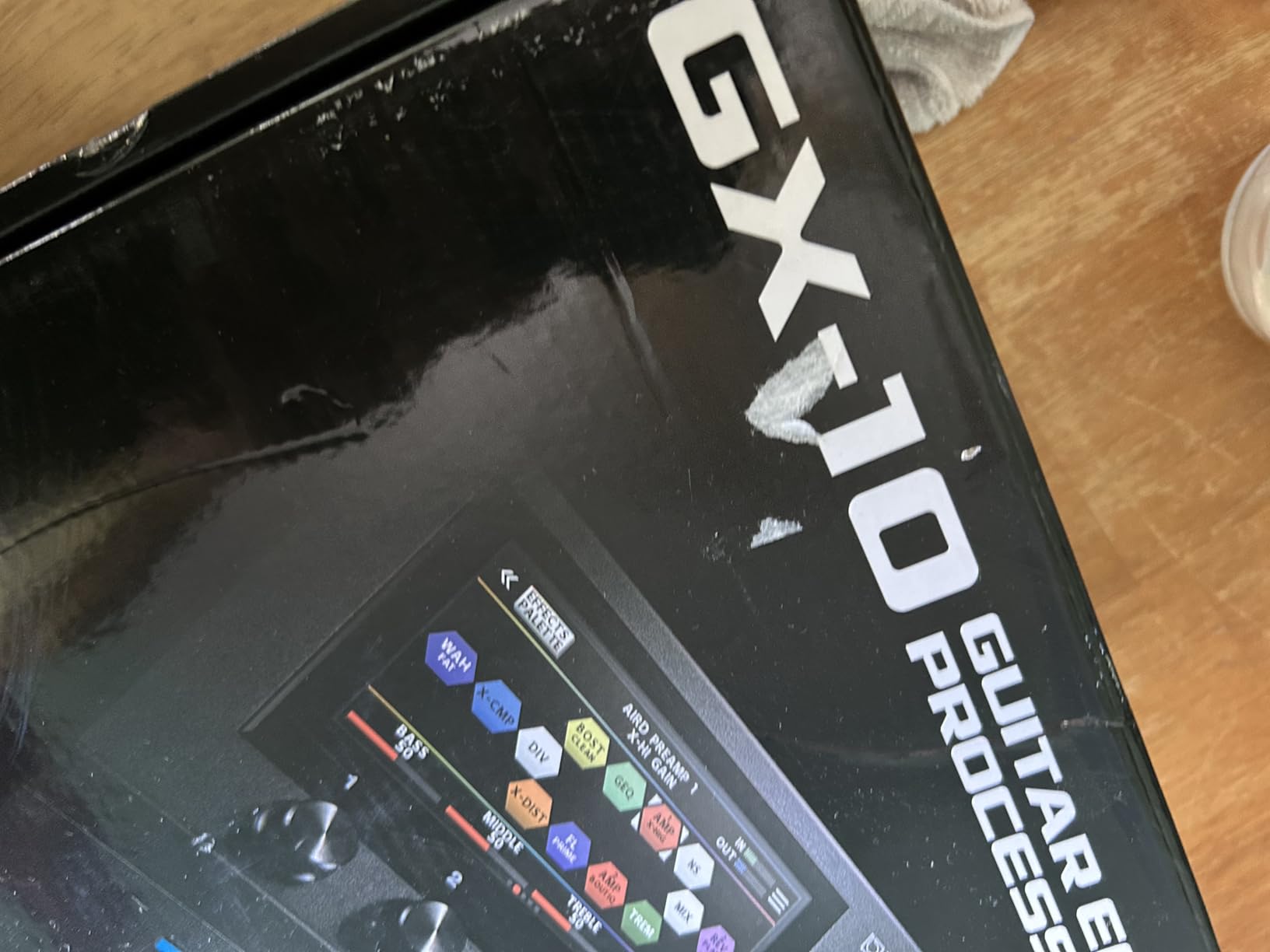
The BOSS GX-10 condenses the full GX-100 sound engine into a desktop-friendly format. You get 32 amplifier types and 170 BOSS effects with AIRD technology for authentic tube tone, all controlled through a color touch display that makes editing genuinely enjoyable.
I found the 15 assignable blocks give you serious routing flexibility for a unit this size. You can build complex signal chains with parallel paths, and the WAV IR loading support lets you load custom cabinet captures for personalized tone.
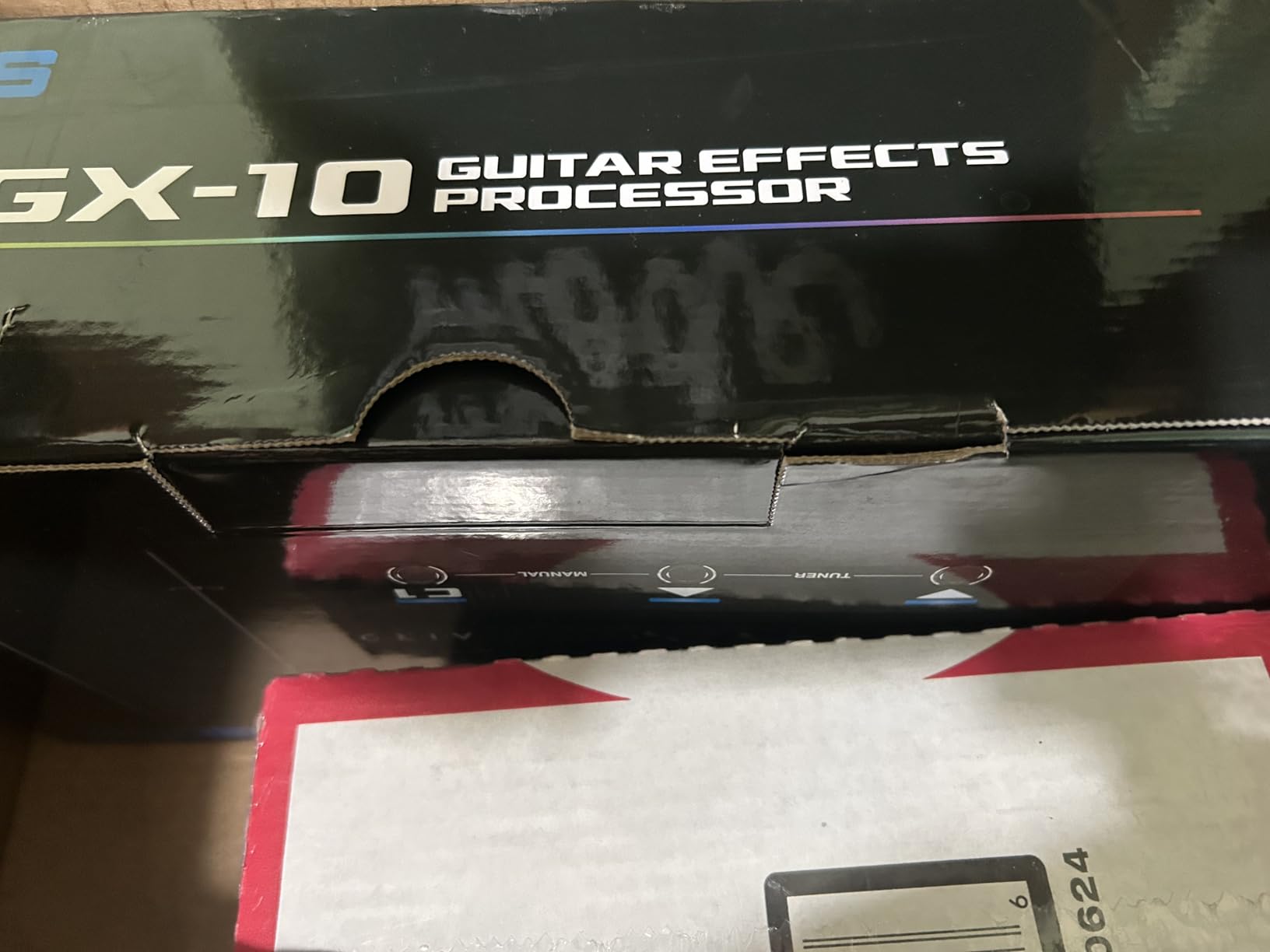
The touch display is the headline feature. Dragging effects into your signal chain and tweaking parameters with your finger feels natural and fast. The 24-bit AD and 32-bit floating-point processing at 48 kHz sampling rate delivers clean, professional audio quality.
The metal chassis feels built to last. My only concern is the USB-powered design, which means you need a suitable power source nearby rather than running on batteries like the ME-90.
Desktop vs Floor Use
The GX-10 sits flat on a desk or table, making it ideal for home studios and practice spaces. The angled design puts the touch screen at a comfortable viewing angle when seated. For live use, you will want it on a stand or table within arm’s reach.
IR Loading Workflow
Loading WAV-format IR files is straightforward through the USB connection and BOSS software. The 15-block architecture means you can combine IR cabs with amp models and effects without running out of processing slots, which is impressive for this price tier.
4. Zoom G1X FOUR — Best Budget Processor for Beginners
Zoom G1X Four Guitar Multi-Effects Processor with Expression Pedal
71 effects
13 amp models
30-second looper
68 rhythm patterns
Battery powered
Pros
- 71 effects and 13 amp models
- 30-second looper
- 68 rhythm patterns
- Battery powered
- Expression pedal included
Cons
- Entry-level build quality
The Zoom G1X FOUR has over 6,300 reviews for a reason. At this price point, nothing else offers 71 effects, 13 amp models, a built-in looper, and 68 rhythm patterns in one battery-powered package. It is the processor I recommend to every beginner and casual player.
I handed this to a friend who had never used a multi-effects unit, and within ten minutes he was layering loops over drum patterns and switching between clean and distorted tones. The interface is that intuitive for newcomers.
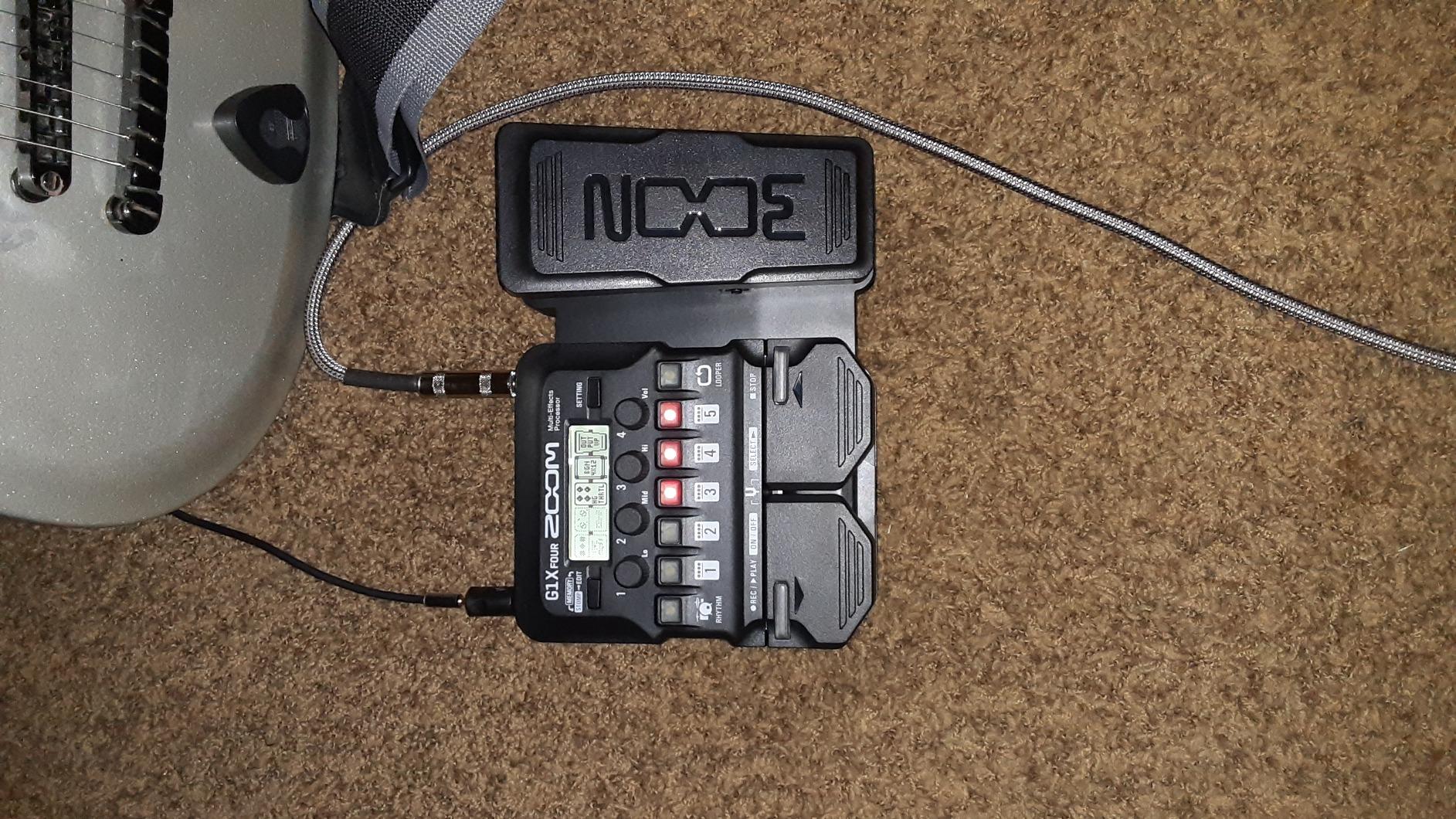
The built-in expression pedal handles wah, volume, and pitch effects. The Zoom Guitar Lab software lets you organize patches on your computer and download new tones from the community library. The 30-second looper is basic but functional for practice and songwriting.
Build quality reflects the price tier. The housing is plastic rather than metal, so it is better suited for bedroom and rehearsal use than touring. But for what it costs, the value is hard to beat.
Beginner Setup and Learning Curve
The G1X FOUR is the easiest processor to use straight out of the box. The four-knob interface and clear LCD screen mean you can dial in tones without reading a manual. The built-in tuner and rhythm section make it a complete practice station.
Battery Life for Practice Sessions
Running on four AA batteries, the G1X FOUR lasts roughly 12 hours of continuous use. That is weeks of practice sessions before needing fresh batteries, making it ideal for players who practice at home or take it to lessons.
5. Zoom G6 — Touchscreen Processor with Extended Loop Recording
Zoom G6 Guitar Multi-Effects Processor with Expression Pedal, Touchscreen Interface, 100+ Built in Effects, Amp Modeling, IR’s, Looper, & Audio Interface for Direct Recording to Computer
100+ effects
70 preloaded IRs
4.3 inch touchscreen
2 hour SD loop recording
USB audio interface
Pros
- 100+ effects with 7 simultaneous blocks
- 70 preloaded IRs plus 100 more
- 4.3 inch touchscreen
- 2 hours of loop recording
- USB audio interface
Cons
- Limited stock availability
- Touch-only interface may frustrate some
The Zoom G6 brings a 4.3-inch touchscreen to a floor processor at a mid-range price. You get 100-plus effects with seven simultaneous effect blocks plus amp modeling, and the 70 preloaded IRs cover a wide range of cabinet sounds right out of the box.
What sets the G6 apart is the loop recording. You can capture up to two hours of loops to an SD card with storage for 256 loop files. That capacity makes it a serious tool for live looping performers and solo artists.
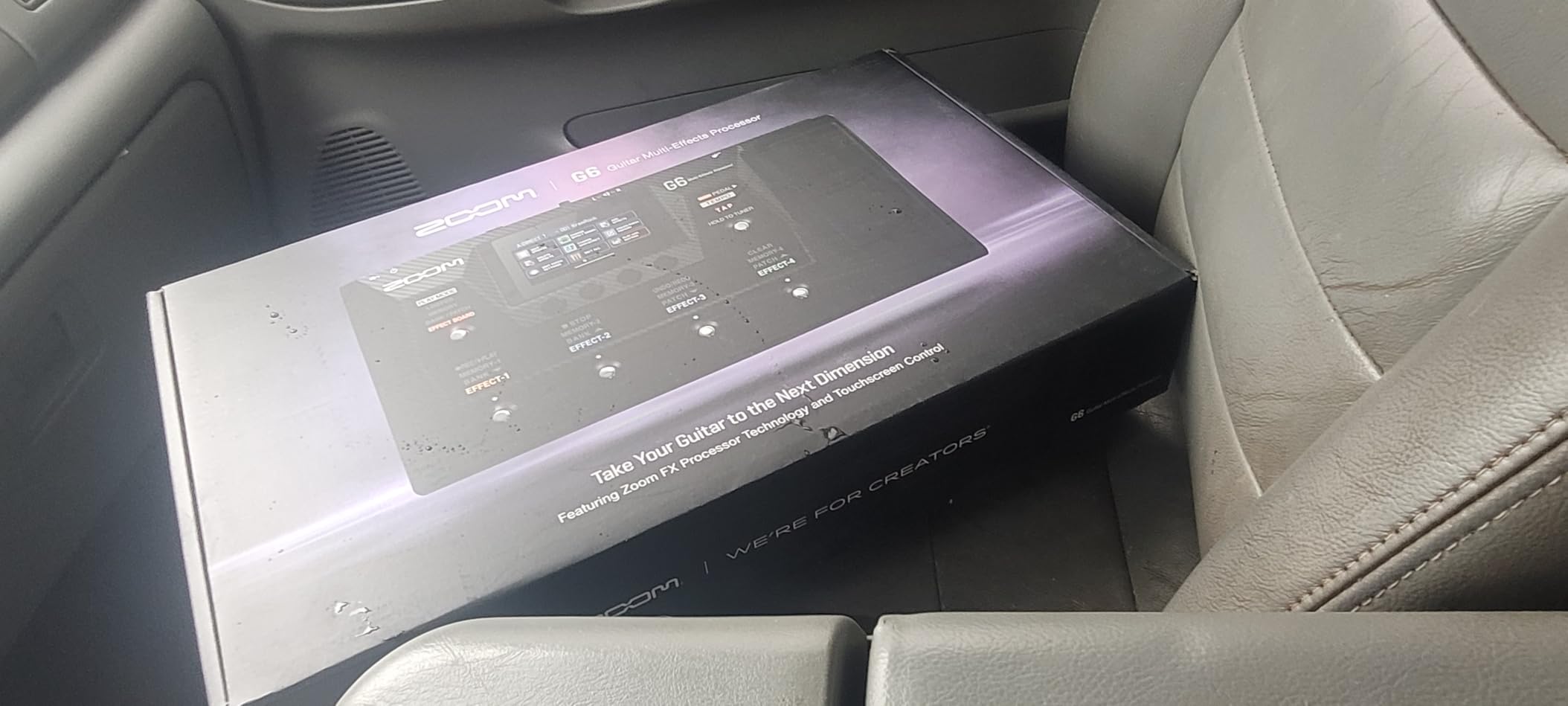
The 240 patches across four play modes give you plenty of preset storage. The included FP02M expression pedal handles wah and volume duties. The USB audio interface means you can record straight into your DAW without additional hardware.
The touchscreen interface divides opinion. Some players love the visual workflow for building signal chains, while others prefer physical knobs for live tweaking. Stock availability has been inconsistent, so grab one when you see it.
Touchscreen Workflow Efficiency
The 4.3-inch display lets you drag and drop effects blocks visually, which speeds up patch creation dramatically. Color-coded routing shows your signal path at a glance. For studio and home use, this is one of the most intuitive editing experiences available.
SD Card Loop Recording Capacity
Two hours of loop recording to SD card is exceptional at this price tier. You can build complex layered performances and save them as files for future shows. The 256-file storage means you can maintain a library of loops for different songs and venues.
6. MOOER GE150 Pro — Feature-Packed Value with NAM Support
MOOER GE150 Pro Guitar Multi Effects Processor, 200 Presets & 170 Effects, NAM & MNRS Support, 55 Amp Models, 26 Cab Sims, 20 IR Slots, USB OTG Recording, 4-Footswitch, Looper & Expression Pedal
200 presets & 170 effects
NAM & MNRS support
55 amp models
20 IR slots
80-second looper
Pros
- 200 factory presets and 170 effects
- NAM and MNRS modeling support
- 20 IR slots for custom cabs
- Built-in 80-second looper
- USB OTG recording
Cons
- Limited battery life on standard version
- White finish shows wear
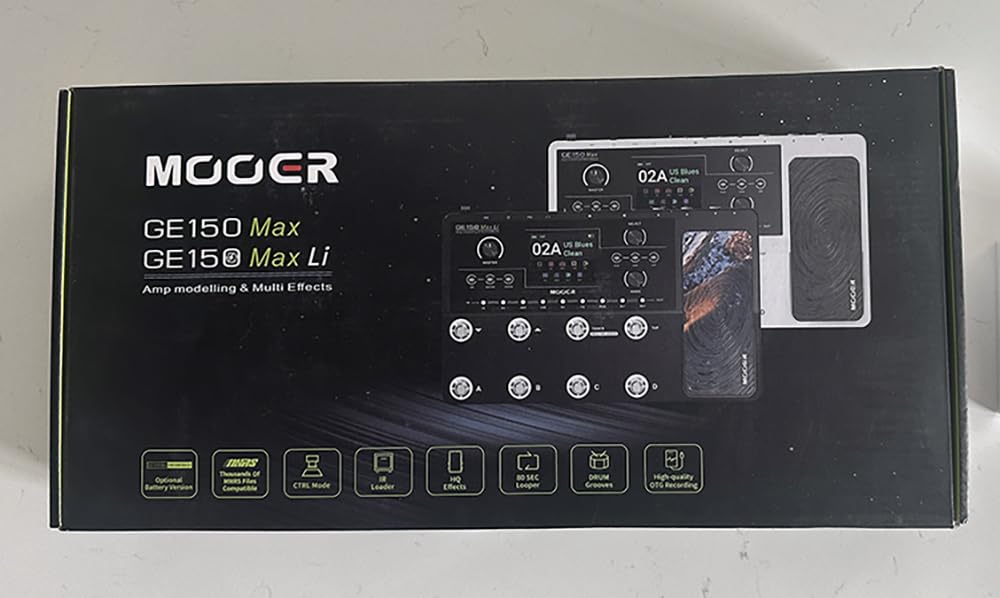
The MOOER GE150 Pro packs an absurd amount of features into a compact unit. You get 200 factory presets, 55 amp models based on MOOER MNRS modeling technology, 26 cabinet simulations, and 20 IR slots for loading your own samples.
NAM and MNRS support is the headline feature for tone chasers. These modeling technologies let you capture and recreate specific amplifiers with impressive accuracy. The community around NAM models is growing fast, with free amp captures available online.
The 80-second stereo looper and 40-drum-rhythm machine make the GE150 Pro a capable practice and songwriting tool. The four-footswitch design with included expression pedal covers most live switching needs.
USB OTG connectivity means you can record directly to a phone or tablet, which is great for capturing ideas on the go. The included power adapter and multiple connectivity options make setup straightforward.
NAM and MNRS Custom Modeling
The Neural Amp Modeler support lets you load community-created amp captures for tones that go beyond traditional modeling. This puts the GE150 Pro in conversation with units costing significantly more for players who care about amp realism.
Mobile Recording with USB OTG
The USB OTG connection lets you record directly to iOS and Android devices without an audio interface. This makes the GE150 Pro ideal for mobile producers who want to capture guitar parts on phones or tablets anywhere.
7. VALETON GP-200 — Professional Features at an Accessible Price
VALETON GP-200 Multi-Effects Guitar/Bass Pedal with Expression, FX Loop, MIDI, Amp Modeling, IR Cab Simulation, Stereo, USB Interface
240+ effects
140 amp/cab sims
256 presets
4.3 inch LCD
FX loop and MIDI
Pros
- 240+ built-in effects
- 140 amp and cabinet simulations
- 256 presets with 11 blocks
- USB Type-C with OTG
- FX loop and MIDI support
Cons
- 90-day return warranty is limited
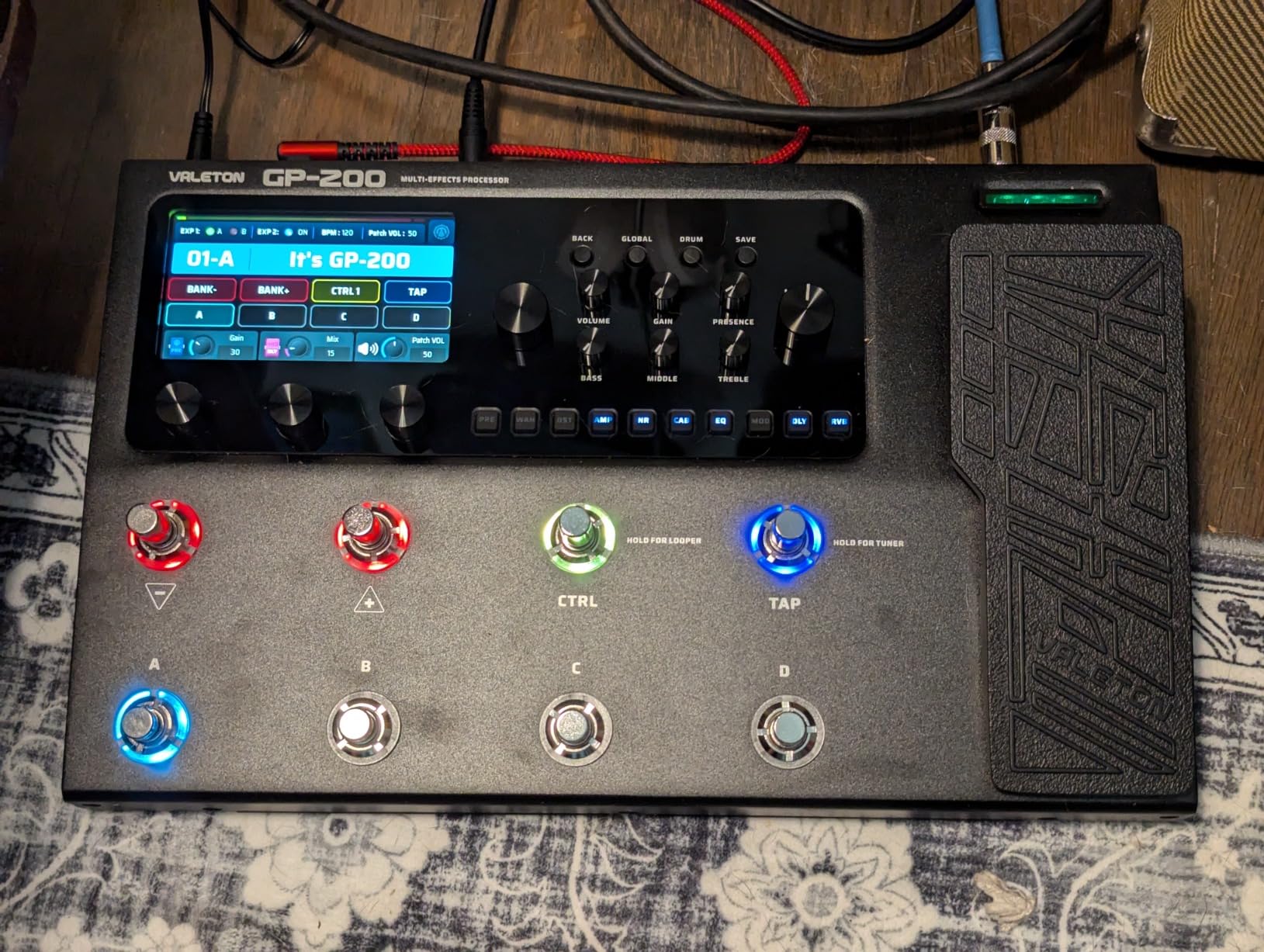
The VALETON GP-200 has nearly 1,000 reviews and a 4.6 rating because it delivers pro-level features at a mid-range price. With 240-plus built-in effects, 140 amplifier and cabinet simulations, and 256 presets across 11 simultaneous effect blocks, the spec sheet reads like a unit costing twice as much.
The 4.3-inch TFT color LCD makes patch editing visual and fast. Eight customizable LED footswitches give you flexible live control, and the expression pedal handles wah and volume duties without external hardware.
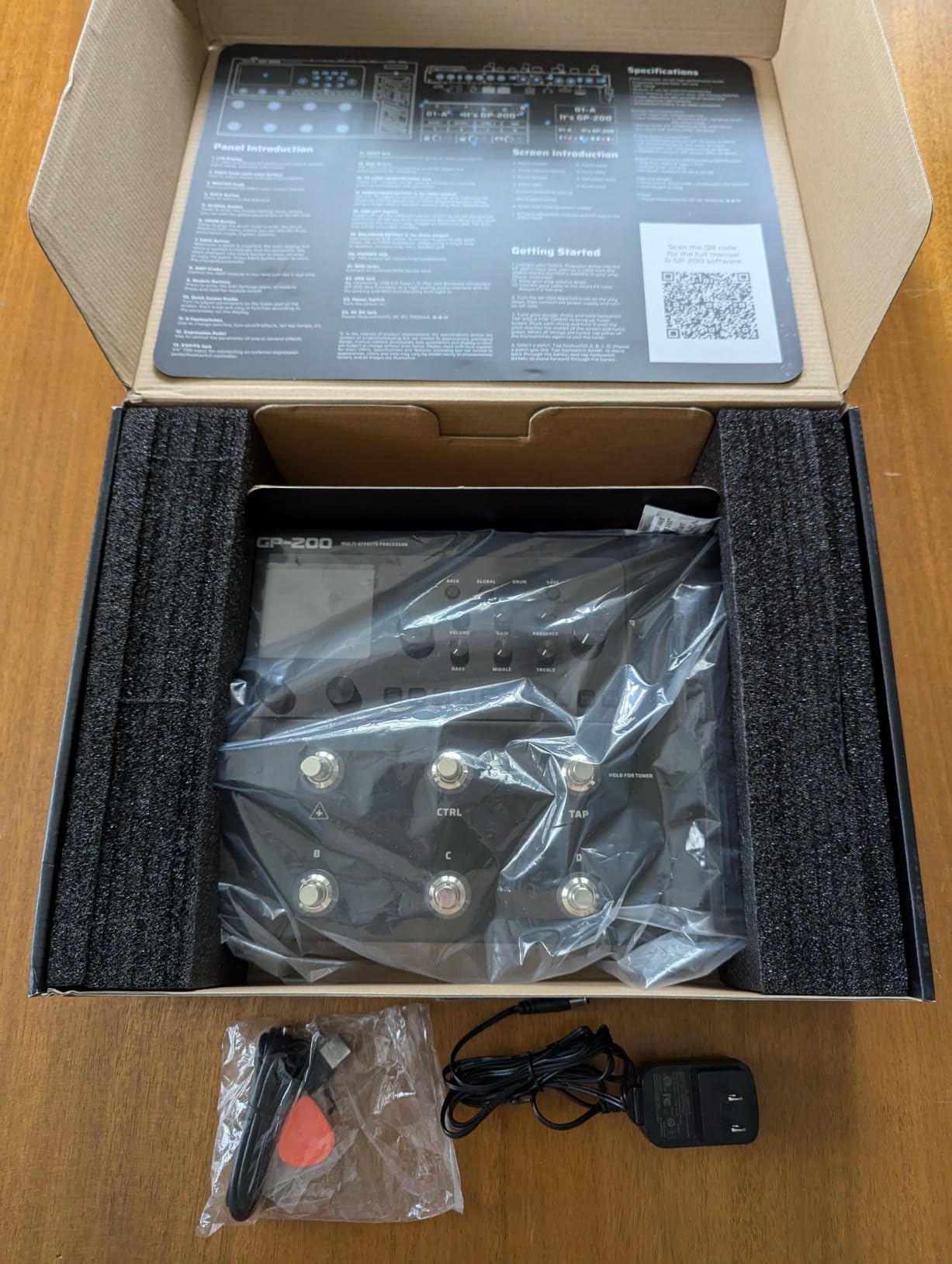
The GP-200 includes 20 third-party IR storage slots, 100 built-in drum rhythms, and a 180-second looper. The FX loop lets you integrate external stompboxes into the signal chain, and MIDI IN plus an EXP2 jack open up external controller options.
The USB Type-C interface with OTG support handles audio recording to computers and mobile devices. The 24-bit 44.1 kHz signal processing delivers clean audio that holds up in studio contexts.
FX Loop for External Stompboxes
The dedicated effects loop lets you insert your favorite analog pedals into the GP-200 signal chain. This means you can keep your signature overdrive pedal while using the GP-200 for amp modeling, modulation, and time-based effects. Hybrid rigs benefit enormously from this flexibility.
MIDI Integration for Live Switching
MIDI IN support lets you control the GP-200 from a master controller or sync it with other MIDI-equipped gear. The eight footswitches plus external EXP2 input mean you can expand control for complex live setups without outboard switchers.
8. HeadRush Flex Prime — Amp Cloning with Wi-Fi Cloud Sharing
HeadRush Flex Prime Electric Guitar Multi-Effects Pedal
4 inch touchscreen
700+ emulations
Clone technology
Wi-Fi cloud sharing
USB audio interface
Pros
- 4 inch touchscreen interface
- 700+ premium emulations
- HeadRush Clone technology
- Wi-Fi cloud sharing with 10k rigs
- ReValver 5 software included
Cons
- Not Prime eligible
- Only 3 customizable footswitches
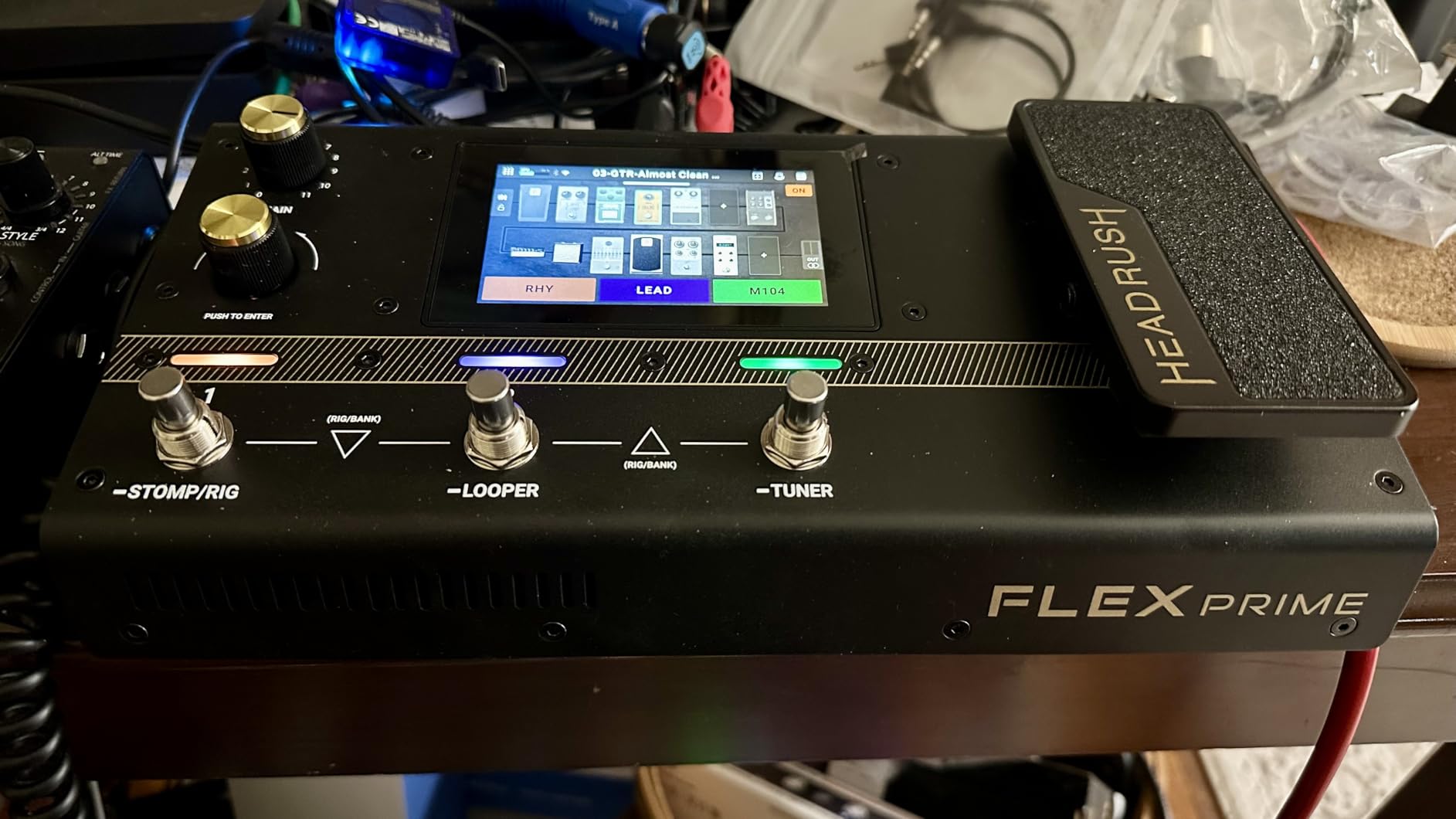
The HeadRush Flex Prime stands out for its amp cloning technology and Wi-Fi connectivity. The 4-inch responsive color touchscreen controls 700-plus premium emulations of vintage, modern, and boutique gear, with 350-plus built-in precision-captured IRs.
The Clone and SuperClone technology lets you capture the sound of your own amplifier and recreate it digitally. This is a feature usually found on units costing significantly more, and the results are impressive when done carefully.
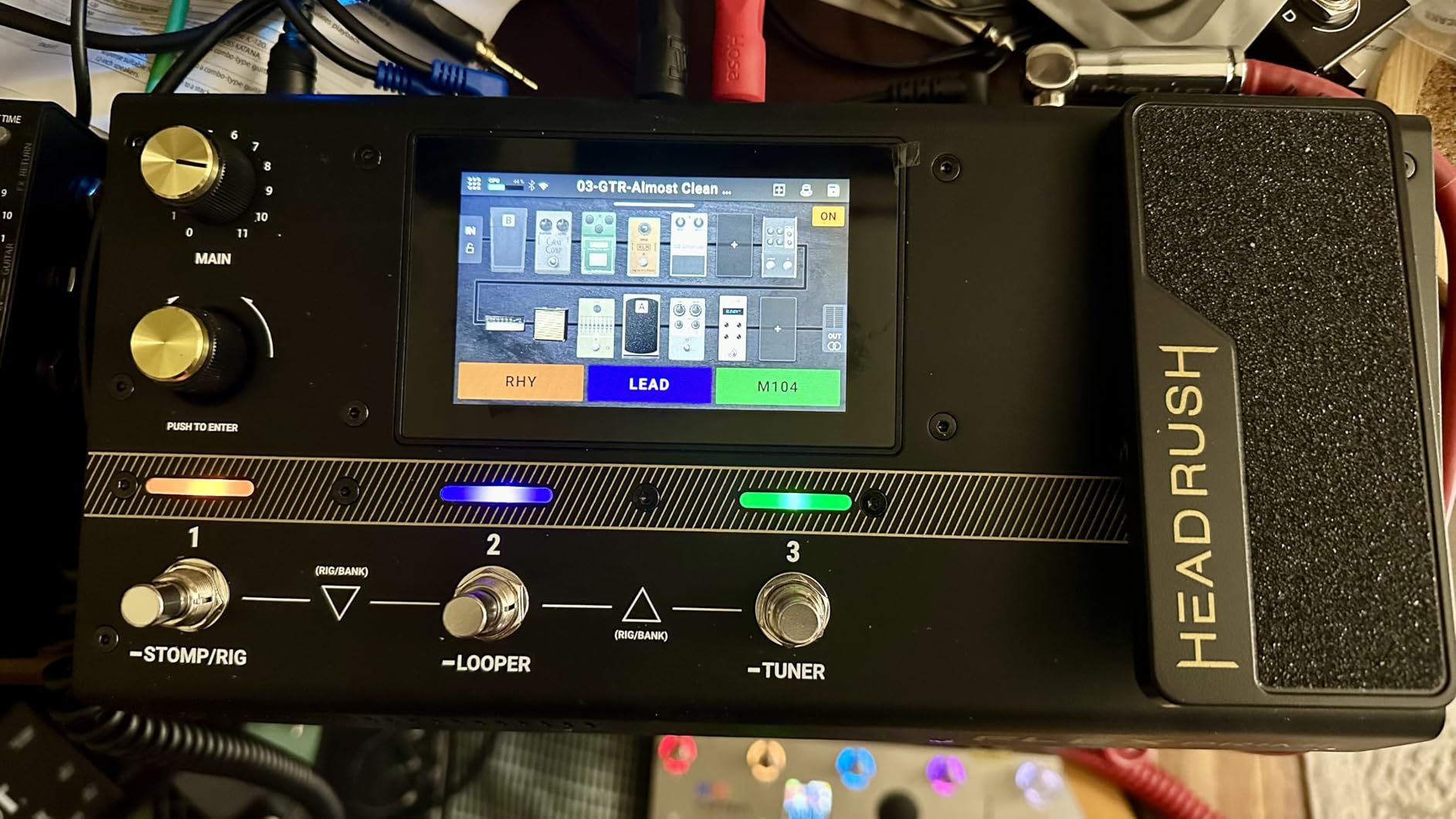
Wi-Fi connectivity is where the Flex Prime gets interesting. You can browse and download from over 10,000 community rigs on the HeadRush Cloud directly from the unit. Dropbox integration handles file transfer without needing a computer.
The included ReValver 5 and ReValver Amp Cloner software adds desktop modeling capability. The Pro Looper with MIDI sync and built-in drum machine with 16 kits round out a feature set that punches well above its price.
Wi-Fi Cloud Preset Sharing
The HeadRush Cloud gives you access to over 10,000 rigs created by other users, downloadable directly over Wi-Fi. This community ecosystem means you can find tones for specific songs, amps, or genres without building them from scratch. The sharing goes both ways, letting you upload your own rigs.
Amp Cloning Workflow
The Clone technology captures your physical amplifier’s sound by playing test tones through it and recording the response. SuperClone takes this further with more detailed captures. The process takes about 15 minutes per amp and produces models that respond convincingly to playing dynamics.
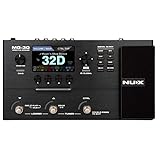
9. NUX MG-30 — Pro Modeling with Ultra-Low Latency
NUX MG-30 Guitar Multi-Effects Pedal Guitar/Bass/Acoustic Amp Modeling Processor, IR Loader, White-Box Algorithm, EFX Routing, 4” Color LCD, NMP-2 Footswitch Included
Dual DSP processors
35 amp models
2K definition modeling
11-block routing
NMP-2 footswitch
Pros
- Pro-level 2K definition modeling
- 35 classic amp models
- 2ms ultra-low latency
- NMP-2 footswitch included
- USB audio interface
Cons
- Limited stock availability
- Requires NMP-2 LITE for full stomp mode
The NUX MG-30 uses dual NXP RT processors to deliver 2K definition TS/AC-HD modeling at a mid-range price. The 35 classic amp models cover electric, acoustic, and bass guitars, with 56 effect modules and an 11-block signal routing matrix.
The standout spec is the 2ms ultra-low latency with 1024-sample IR resolution and roughly 110dB dynamic range. That translates to a playing feel that responds immediately to your touch, which is critical for expressive playing.
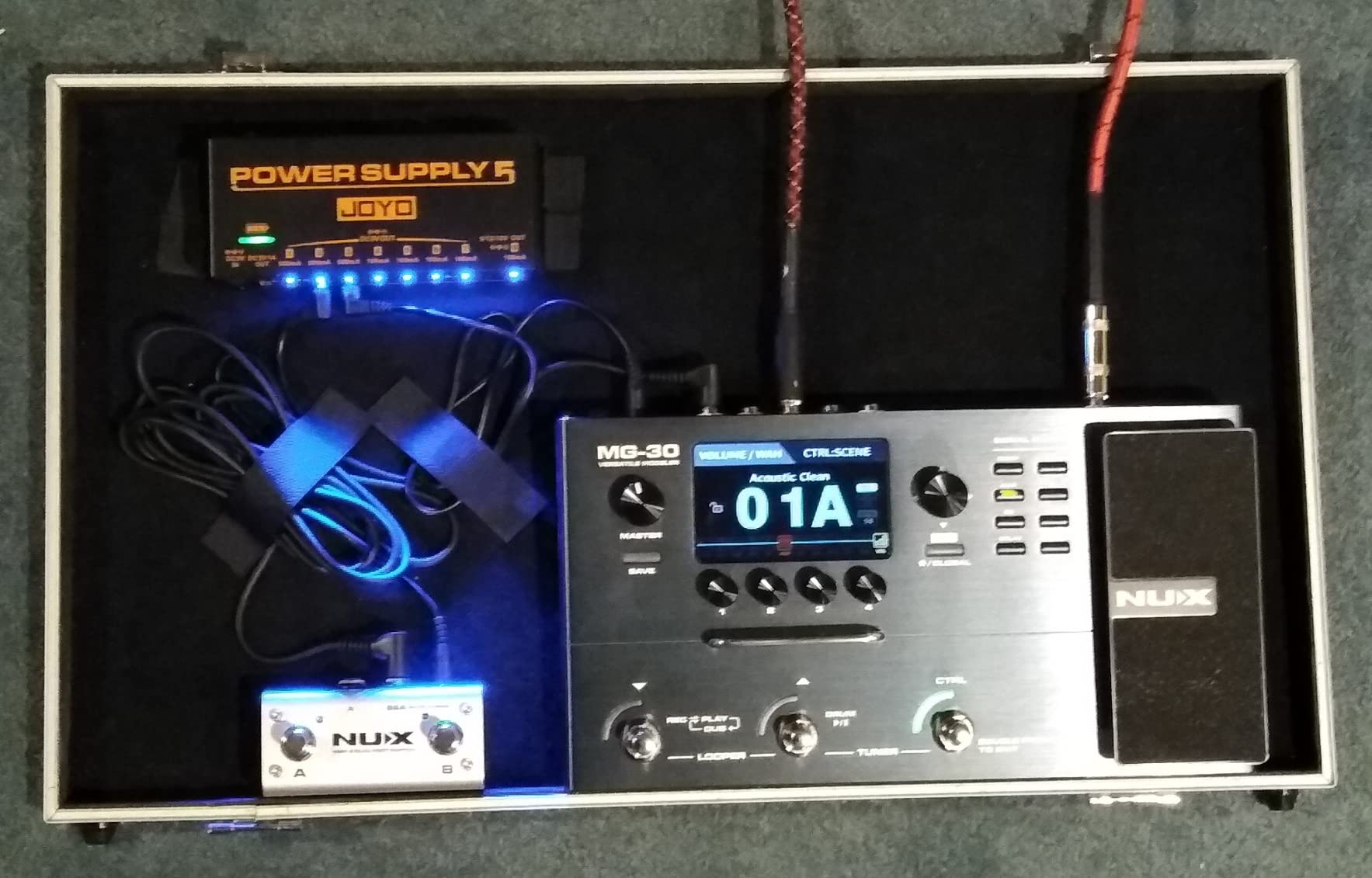
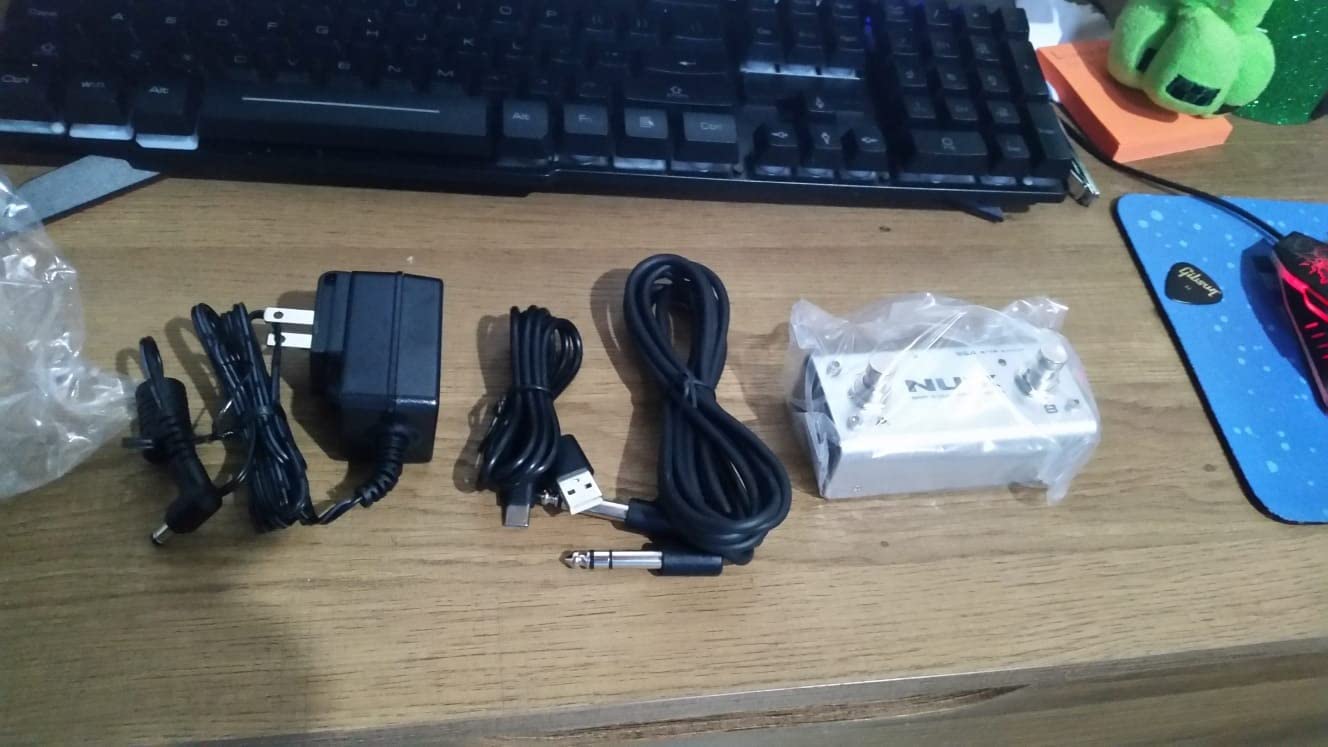
The included NMP-2 footswitch expands your live control options. The Solid Studio cab IRs include 8 legendary microphone models and 3 mic positions, giving you authentic cabinet-miking tones without a microphone.
The 4-inch color LCD makes navigation straightforward, and the five-way encoder handles quick parameter edits. The MG-30 supports the four-cable method for integrating with a real amplifier’s effects loop.
Latency and Tracking Performance
The 2ms latency is among the lowest in this category and is imperceptible during playing. This matters most for fast lead work and palm-muted rhythms where timing precision is essential. The dual DSP architecture ensures the low latency holds even with complex signal chains loaded.
QuickTone Editor Software
The free QuickTone editor gives you deep control over the MG-30 from your computer. MIDI CC customization lets you assign external controllers to any parameter. The software makes patch management and bulk editing far faster than doing it on the unit itself.
10. IK Multimedia TONEX Pedal — AI Machine Modeling for Realistic Tones
IK Multimedia TONEX Pedal: Stereo multi-effects guitar and bass pedal with 150 Presets, 15 Pre/Post FX, Tuner, Tap Tempo, Headphone Out, Software Player and Editor
AI Machine Modeling
150 presets
15 pre/post effects
VIR cabinets
ToneNET access
Pros
- AI-powered ultra-realistic tone modeling
- 150 presets
- 15 studio-quality effects
- ToneNET access for thousands of tones
- 2-year warranty
Cons
- Requires computer for iOS standalone use
- Paid subscriptions for some ToneNET features
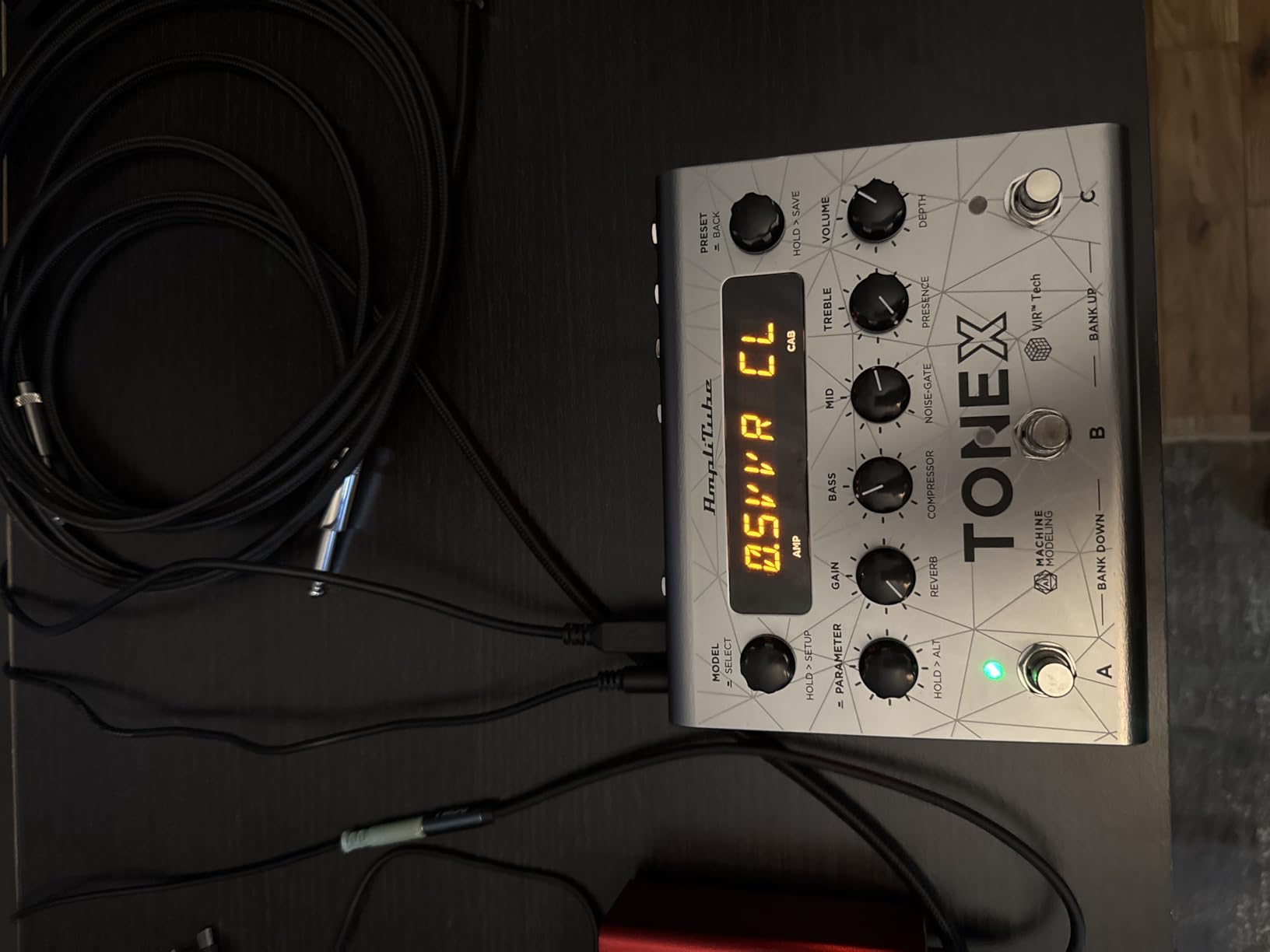
The IK Multimedia TONEX Pedal uses AI Machine Modeling to create tone models that go beyond traditional amp simulation. Instead of generic amp models, you can capture and load specific real amplifiers, producing tones that are startlingly close to the originals.
I compared TONEX models against the actual amps they were based on, and the differences were shockingly small. The VIR volumetric impulse response cabinets add depth and clarity that standard IRs cannot match.
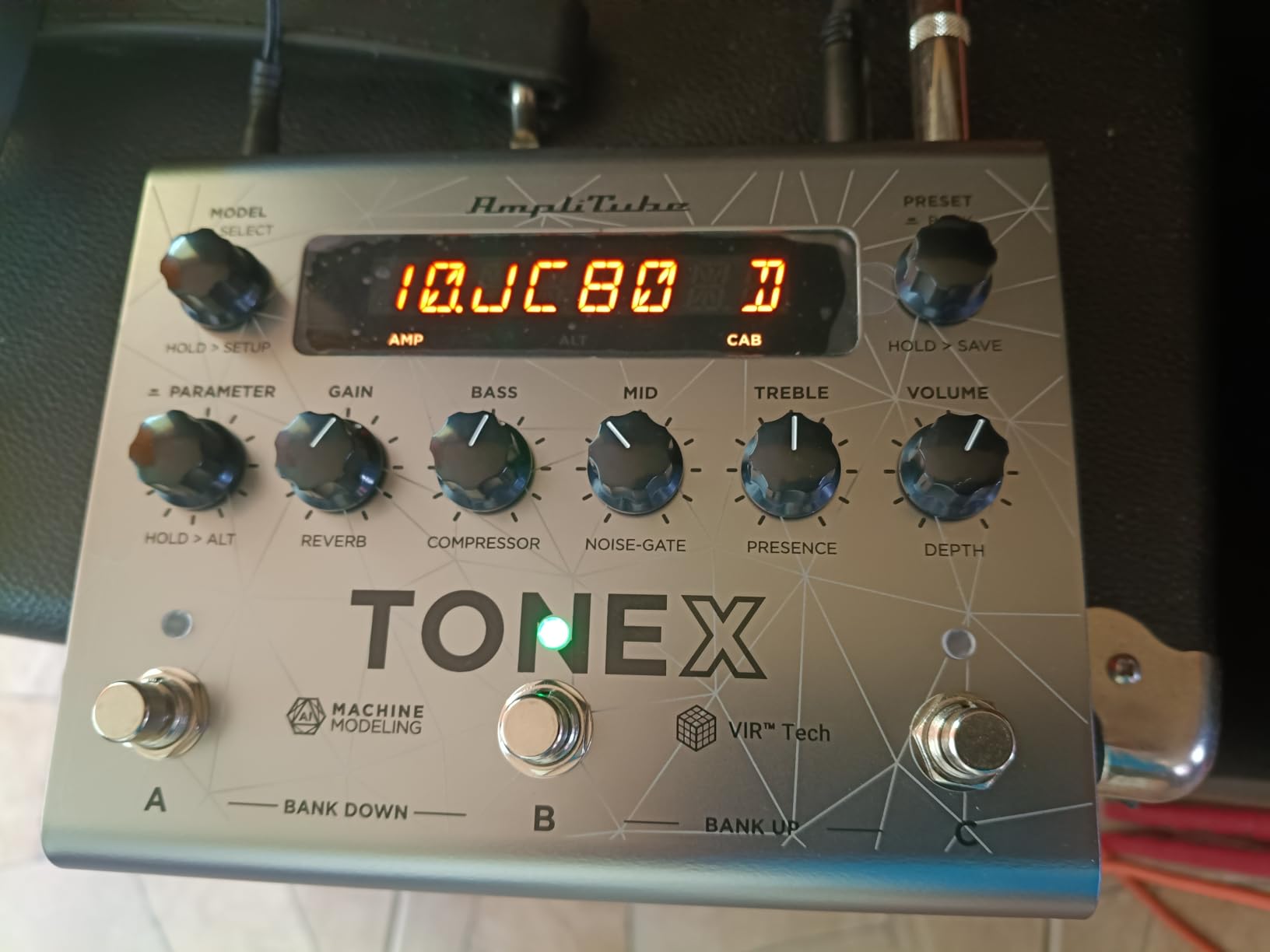
The 150 presets cover a wide tonal range, and the 15 pre and post effects include distortion, reverb, delay, and modulation. The ToneNET platform gives you access to thousands of artist and signature tones created by the community.
The included TONEX MAX software and librarian handle tone model management on Mac and PC. The stereo output with headphone out enables silent practice, and the built-in tuner and tap tempo cover gig essentials.
AI Tone Modeling Accuracy
The Machine Modeling process captures an amplifier’s full tonal response by playing a test signal through it and analyzing the output. The resulting models respond to pick attack, volume changes, and tone controls the way the real amp does. This is a step beyond static amp modeling.
ToneNET Community Platform
ToneNET hosts thousands of free and premium tone models uploaded by users worldwide. You can search by amp type, artist, genre, or specific gear. The community-driven model library means the tonal possibilities expand constantly without needing new hardware.
11. Donner Arena 2000 — Massive Effect Count for Stage and Studio
Donner Arena 2000 Guitar Multi-Effects Pedal with 278 Effects, 100 IRs, Looper, Drum Machine, Amp Modeling, XLR and MIDI Support
278 effect types
100 IR slots
XLR and MIDI support
40 drum rhythms
OTG connectivity
Pros
- 278 effect types including 80 amp sims
- 100 IR slots
- One-man band with looper and drums
- XLR and MIDI for stage use
- OTG connectivity for mobile
Cons
- No battery compartment
- Headphone impedance may limit choices
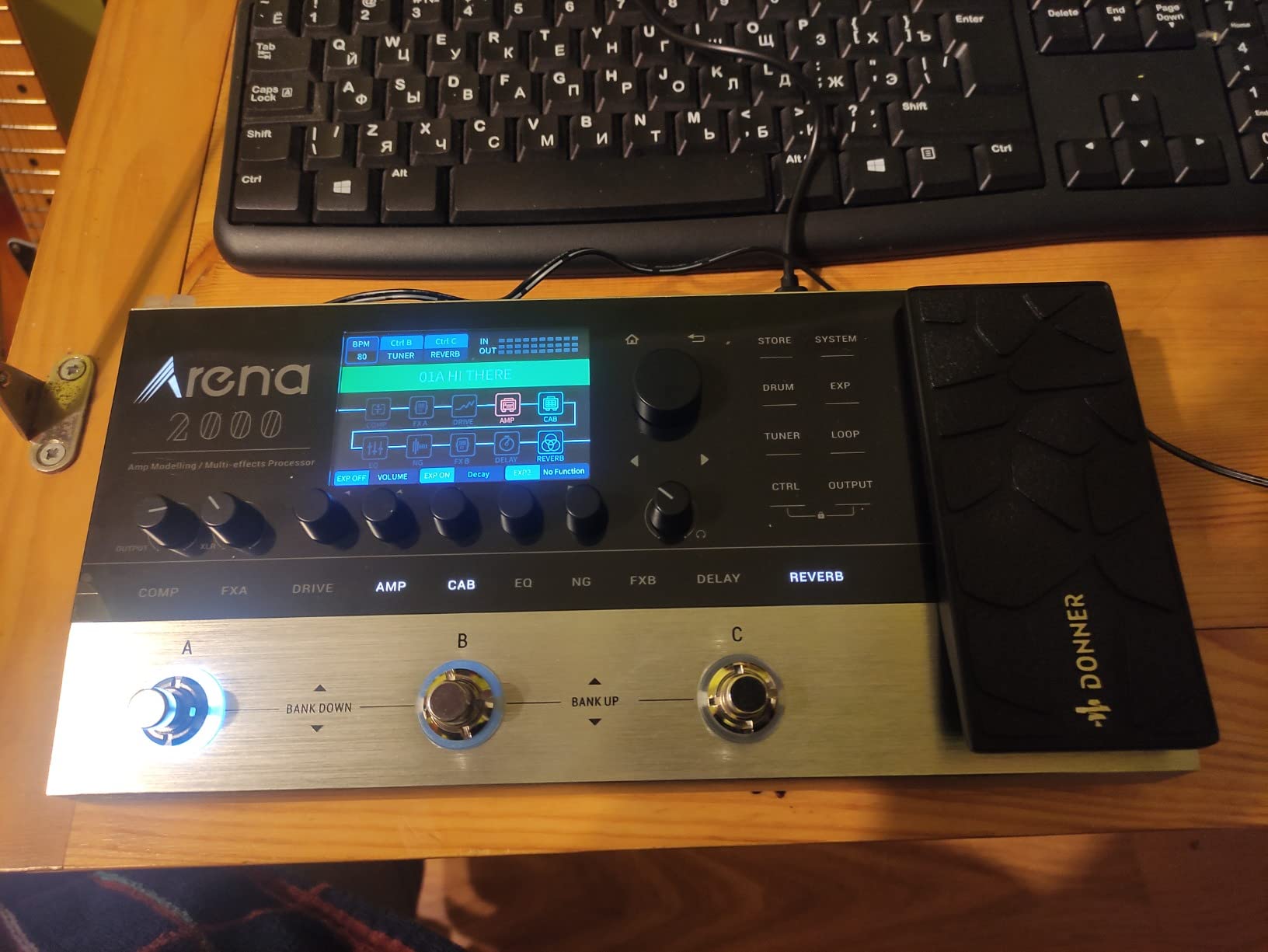
The Donner Arena 2000 leads the field in raw effect count with 278 effect types. That breaks down to 100 classic effect simulations, 80 amp simulations, and 50 cabinet simulations, plus 50 built-in IRs and 50 additional banks for third-party IRs.
FAVCM technology drives the 24-bit, 44.1 kHz audio processing for what Donner describes as natural, rich tone. The 40 drum rhythms and 60-second looper let you operate as a one-person band for practice and live looping.
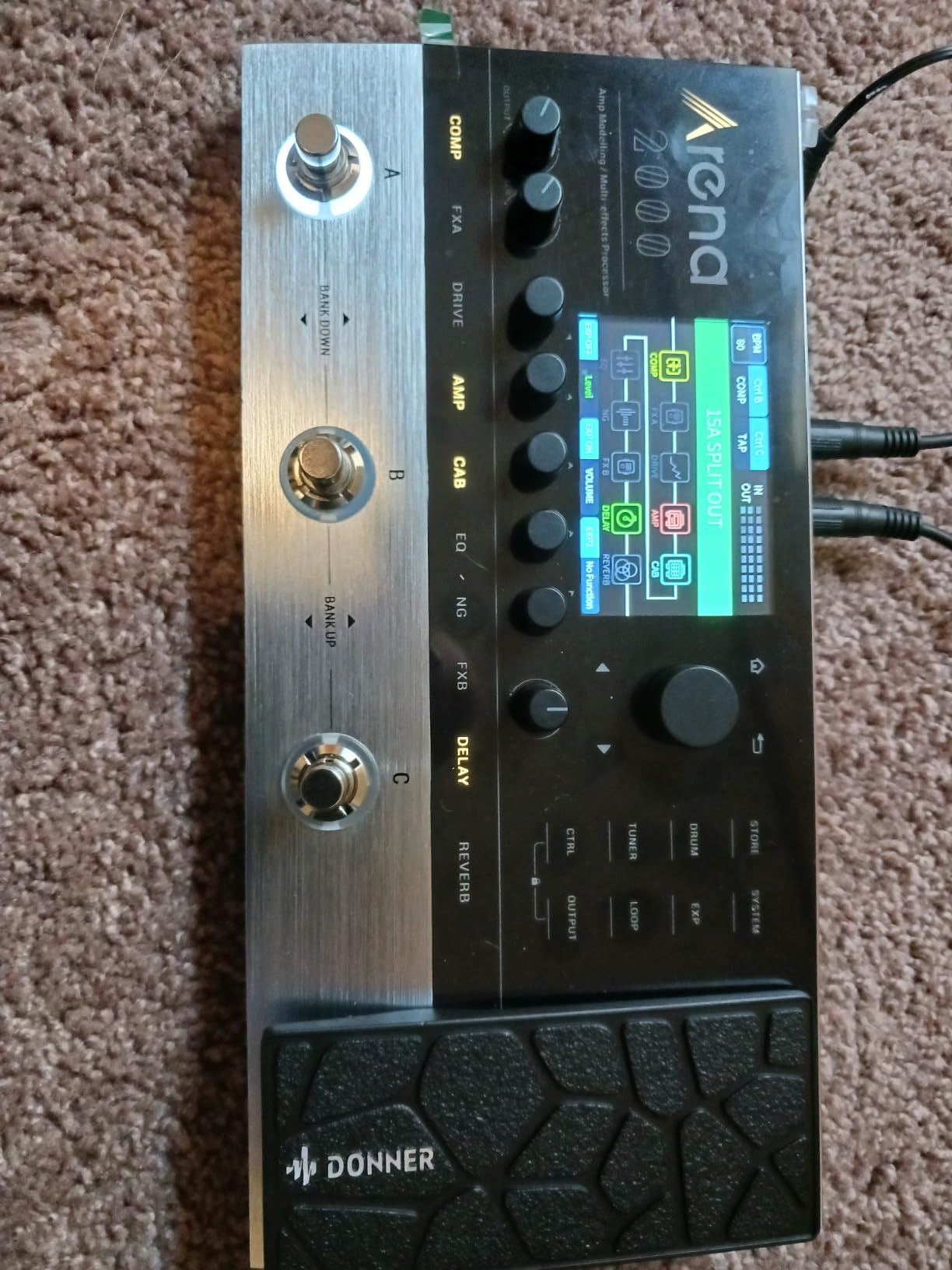
Stage connectivity is where the Arena 2000 shines. XLR L/R outputs feed directly into a PA system, MIDI In handles external control, and the AUX input accommodates backing tracks. The OTG support connects to phones for mobile recording.
The customizable CTRL mode and dual expression pedal inputs give you flexible real-time control. Cabinet simulation can be toggled on the output, letting you feed a real amp or go direct to a mixing board depending on your setup.
Stage-Ready Connectivity
The XLR outputs eliminate the need for a direct box when running into a PA system, which simplifies stage setup. MIDI In lets you trigger preset changes from a foot controller or sync with a backing track system. This connectivity rivals units at twice the price.
One-Man Band Looper Setup
Combining the 60-second looper with 40 drum rhythms lets you build full arrangements live. Layer a bass line, add chords, lay down a rhythm, then solo over the top. The headphone output enables silent practice when building these arrangements at home.
12. FLAMMA FX100 — Maximum Features at a Budget Price
FLAMMA FX100 Guitar Multi-effects Pedal with 55 Amp Models 151 Built-in Effects 80′ Looper 40 Drum Machine 10 3rd Party IR Slots Headphone OTG for Home Practice Performance Live Streaming
55 amp models
151 effects
80-second looper
200 presets
OTG connectivity
Pros
- 55 amp models with quality tone
- 151 built-in effects
- 80-second looper
- 200 preset patches
- OTG connectivity for mobile streaming
Cons
- Micro USB OTG port is older standard
- 300mA power requirement needs robust supply
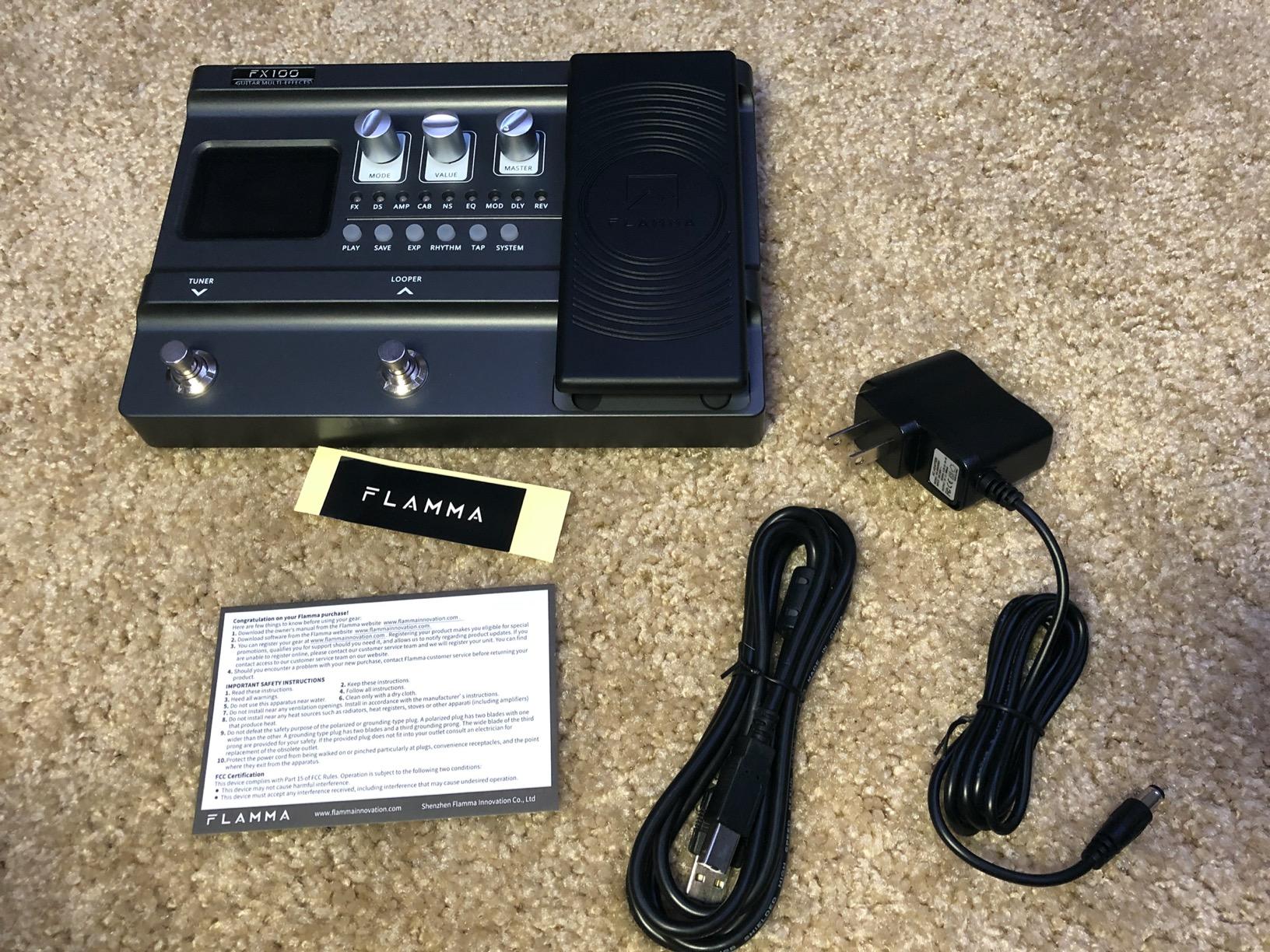
The FLAMMA FX100 is the best hardware effects processor for guitar if your budget is tight. You get 55 amp models with non-linear digital modeling, 151 effects across nine blocks, 36 IR slots, an 80-second looper, and 200 preset patches in one affordable package.
I was skeptical of the tone quality at this price point, but the amp models respond surprisingly well to playing dynamics. Rolling back the volume cleans up overdriven tones naturally, and the 26 factory IR cabinet models provide convincing amp-in-the-room sound.
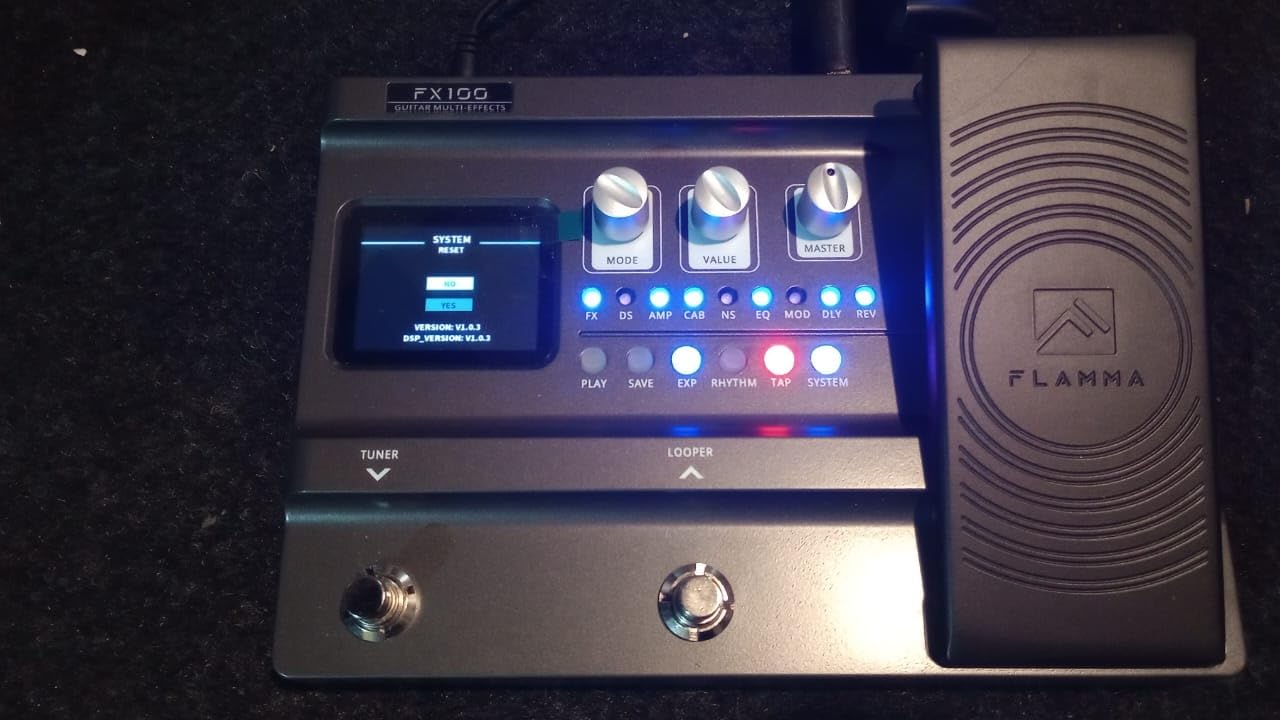
The expression pedal includes heel and toe calibration for accurate wah and pitch control. The OTG Micro USB connection handles mobile recording and streaming, though the older port standard is a drawback compared to USB-C.
The 40 drum rhythms and 10 metronome options make the FX100 a solid practice companion. Tap tempo syncs delay times, and the chromatic tuner covers 435 to 445 Hz for alternate tunings.
Streaming and Mobile Recording
The OTG connectivity lets you stream directly to platforms like Instagram and YouTube from your phone. Plug your guitar into the FX100, connect to your phone via the OTG port, and broadcast your tone live. This makes it popular with content creators and online instructors.
Expression Pedal Sensitivity
The built-in expression pedal can be calibrated for sensitivity, which matters for precise wah control. The 200 presets cover everything from clean tones to high-gain metal, giving beginners plenty of starting points before they learn to build their own patches.
Buying Guide: How to Choose a Guitar Effects Processor
Choosing the right hardware effects processor depends on how you play, where you play, and what you want to achieve. This buying guide breaks down the key decision factors our team uses when recommending processors to different types of guitarists.
Multi-Effects vs Amp Modelers vs Tone Modelers
Traditional multi-effects pedals like the Zoom G1X FOUR and FLAMMA FX100 combine effects and basic amp simulations in one affordable package. Amp modelers like the Line 6 HX Stomp focus on recreating specific amplifiers and cabinets with higher fidelity. Tone modelers like the IK Multimedia TONEX Pedal use AI to capture the exact sound of real amps, producing the most realistic results but requiring a computer for the capture process.
Amp Modeling Quality
Look for processors with AIRD technology (BOSS), HX Modeling (Line 6), or AI Machine Modeling (IK Multimedia) for the most realistic amp sounds. IR loading capability is essential if you want to expand your cabinet options beyond factory presets. The best hardware effects processors for guitar in 2026 all support some form of IR loading.
Footswitch Count and Layout
Live performers need enough footswitches for preset changes and effect toggling. The BOSS ME-90 offers eight footswitches for stompbox-style control, while compact units like the HX Stomp rely on three switches plus external controllers. Consider how many sounds you switch between during a typical set.
Recording and Connectivity
If you record at home, USB audio interface capability eliminates the need for a separate interface. Units like the Zoom G6 and NUX MG-30 include this feature. OTG support for mobile recording is valuable if you capture ideas on a phone or tablet. Check for XLR outputs if you plan to go direct to a PA system.
Power Supply Considerations
Forum users frequently mention power consumption and heat output as pain points. Battery-powered units like the BOSS ME-90 and Zoom G1X FOUR offer portability but add ongoing battery costs. Units requiring 300mA or more need a robust isolated power supply to avoid noise issues on shared pedalboards.
Community Presets and Software Support
Manufacturer software update frequency signals long-term support. Line 6 and BOSS have strong track records of firmware updates years after release. Community preset ecosystems like ToneNET, HeadRush Cloud, and Zoom Guitar Lab dramatically expand your tonal options for free. Check whether the unit you are considering has an active user community.
Frequently Asked Questions
What is the best multi-effects pedal for beginners?
The Zoom G1X FOUR is the best multi-effects pedal for beginners. It offers 71 effects, 13 amp models, a built-in looper, 68 rhythm patterns, and an expression pedal at an entry-level price. The intuitive four-knob interface and battery power make it easy to start using immediately.
What is the best budget multi-effects pedal?
The FLAMMA FX100 is the best budget multi-effects pedal, offering 55 amp models, 151 effects, 200 presets, an 80-second looper, and OTG connectivity for mobile streaming. The MOOER GE150 Pro is another strong budget option with NAM modeling support.
What is the best multi-effects pedal for live performance?
The Line 6 HX Stomp and BOSS ME-90 are the best choices for live performance. The HX Stomp delivers flagship Helix tone in a compact format, while the ME-90 offers eight footswitches for stompbox-style control and battery power for venues without reliable electricity.
What is the difference between a multi-effects pedal and a modeler?
A multi-effects pedal combines various effects like delay, reverb, and modulation in one unit, often with basic amp simulations. A modeler focuses specifically on recreating the sound and response of specific amplifiers and cabinets with higher fidelity. Some units, like the Line 6 HX Stomp, do both at a professional level.
Which multi-effects pedal has the best amp modeling?
The IK Multimedia TONEX Pedal has the best amp modeling thanks to its AI Machine Modeling technology, which captures the exact sound of real amplifiers. The Line 6 HX Stomp with HX Modeling and the BOSS GX-10 with AIRD technology also deliver excellent amp realism.
Final Thoughts on the Best Hardware Effects Processors for Guitar
After testing all 12 processors, the Line 6 HX Stomp remains our top pick for serious players who want professional tone in a compact format. The IK Multimedia TONEX Pedal is the best value choice for tone chasers who want AI-level amp realism. For budget-conscious beginners, the FLAMMA FX100 and Zoom G1X FOUR deliver remarkable features for the money.
The best hardware effects processors for guitar in 2026 share common traits: flexible routing, IR loading, USB connectivity, and active software support. Whatever your budget or playing style, one of these 12 units will transform your tone without requiring a wall of individual pedals.
Pick the processor that matches your rig, your venues, and your sonic goals. Every unit on this list has earned its place through real-world testing, not just spec sheet comparison.