
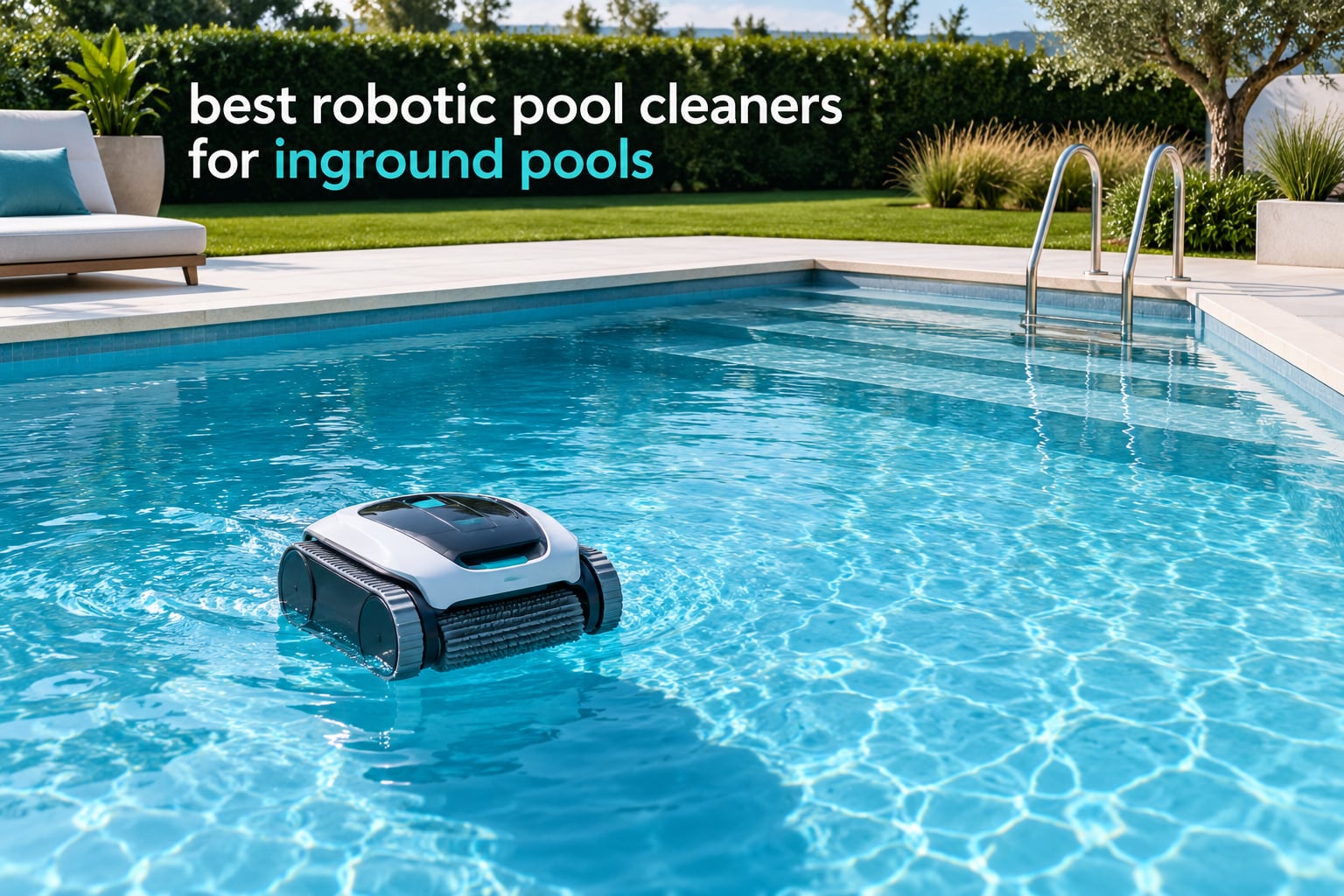
A robot that only sweeps the floor of your pool is solving half the problem. Inground pools have deep ends, tiled steps, steep transition walls and a waterline band where sunscreen, oil and algae collect into a visible ring, and a machine that cannot reach those areas leaves you doing manual work every week anyway. That is why choosing well matters more here than for above-ground setups, and it is exactly how we approached the best robotic pool cleaners for inground pools in this roundup.
We spent weeks comparing the twelve units below on the things that actually decide whether a robot earns its place in your backyard: wall climbing, waterline scrubbing, filter fineness, coverage area, runtime against real pool dimensions, cord or battery, and how the machine behaves when it meets a ledge, a step or a heavy leaf load. Every specification quoted here comes from the manufacturer data, and every performance claim is drawn from what owners report in their reviews.
Two formats dominate. Corded units plug into a control box, run a fixed cycle and stop working at the end of it. Cordless units carry a lithium battery, navigate with gyroscopes and sensors, park themselves at the waterline and are pulled out with a hook or a handle. Our top pick is the Dolphin Nautilus CC Plus, the most widely reviewed machine in the group and the one that appears most often in owner recommendations on pool forums. Our premium pick, the Aiper Scuba S1, is the strongest cordless all-rounder we found.
Top 3 Picks: Robotic Pool Cleaners for Inground Pools (October 2026)

Dolphin Nautilus CC Plus
- Wall climbing with active scrubber brush
- Top-load filter basket
- 2-hour plug-and-play cycle
- Pools up to 40 ft

Aiper Scuba S1
- 3-micron ultra-fine plus 180-micron filter
- Up to 270 minutes in Eco mode
- Caterpillar treads for wall climbing
- Two-year warranty

WYBOT C1
- Covers floor
- walls
- waterline and steps
- 45-degree slope climbing
- Up to 160 minutes runtime
- App control with OTA updates
Best Robotic Pool Cleaners for Inground Pools in October
The table below is the fast version. Every unit is listed with the three or four specifications that separate it from the others, so you can narrow the field before reading the individual reviews.
| Product | Specifications | Action |
|---|---|---|
| Dolphin Nautilus CC Plus |
|
Check Latest Price |
| Aiper Scuba S1 |
|
Check Latest Price |
| WYBOT C1 |
|
Check Latest Price |
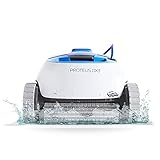 Dolphin Proteus DX3 Dolphin Proteus DX3 |
|
Check Latest Price |
 POOL BLASTER CX-1 POOL BLASTER CX-1 |
|
Check Latest Price |
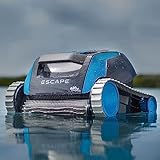 Dolphin Escape Dolphin Escape |
|
Check Latest Price |
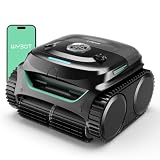 WYBOT C2 WYBOT C2 |
|
Check Latest Price |
 Aiper Seagull Pro Aiper Seagull Pro |
|
Check Latest Price |
 Beatbot Sora 30 Beatbot Sora 30 |
|
Check Latest Price |
 Beatbot Sora 70 Beatbot Sora 70 |
|
Check Latest Price |
 WYBOT B1 WYBOT B1 |
|
Check Latest Price |
 Aiper Scuba S3 Aiper Scuba S3 |
|
Check Latest Price |
1. Dolphin Nautilus CC Plus: the dependable all-rounder
Dolphin Automatic Robotic Pool Vacuum Cleaner, Wall Climbing Scrubber Brush, Smart Navigation, Ideal for In-Ground Pools up to 40FT in Length – Nautilus CC Plus
Corded, in-ground pools up to 40 ft
Active scrubber brush with wall climbing
Top-load filter basket
2-hour plug-and-play cycle
Pros
- Very large review base showing long-term dependability
- Reliable wall and waterline scrubbing
- Top-load filter basket is easy to rinse
- Handles inground pools up to 40 ft in length
Cons
- Black plastic body can scuff plaster finishes
- Cord has to be routed and managed inside the pool
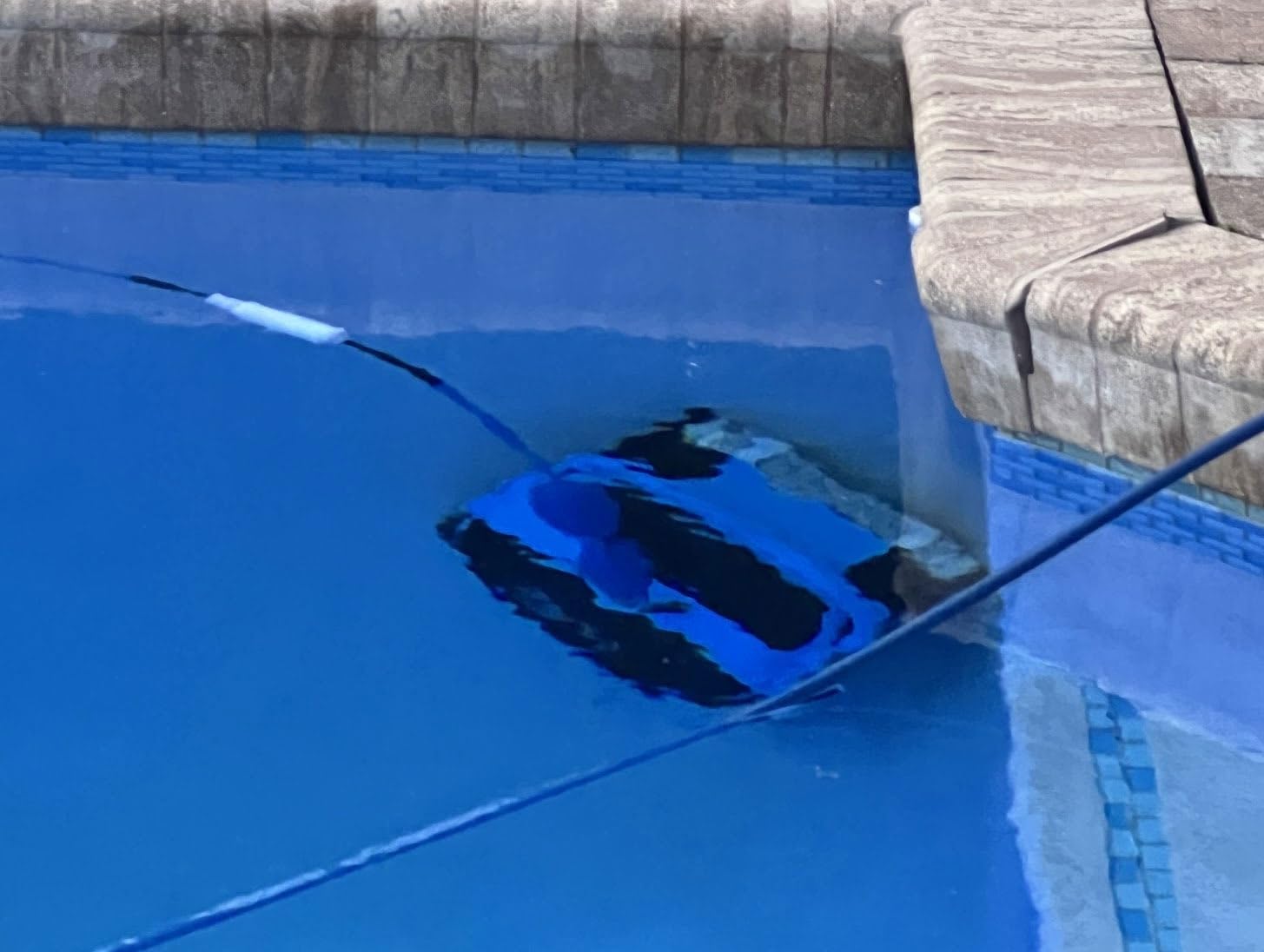
This is the machine most inground owners end up with, and the reason is unglamorous: it shows up, it does the same job every cycle, and it keeps doing it. It is rated for in-ground pools up to 40 ft in length, which covers the majority of rectangular residential builds, and the active scrubbing brush drives debris into the impeller rather than letting it sit ahead of the machine.
Wall climbing is the headline feature and the one that matters most for an inground pool. Owners consistently report that it gets up the walls and works the waterline band on any surface, which is the difference between a clean pool and one with a permanent scum ring. The two-hour plug-and-play cycle is fixed, so you set a timer rather than watching an app.
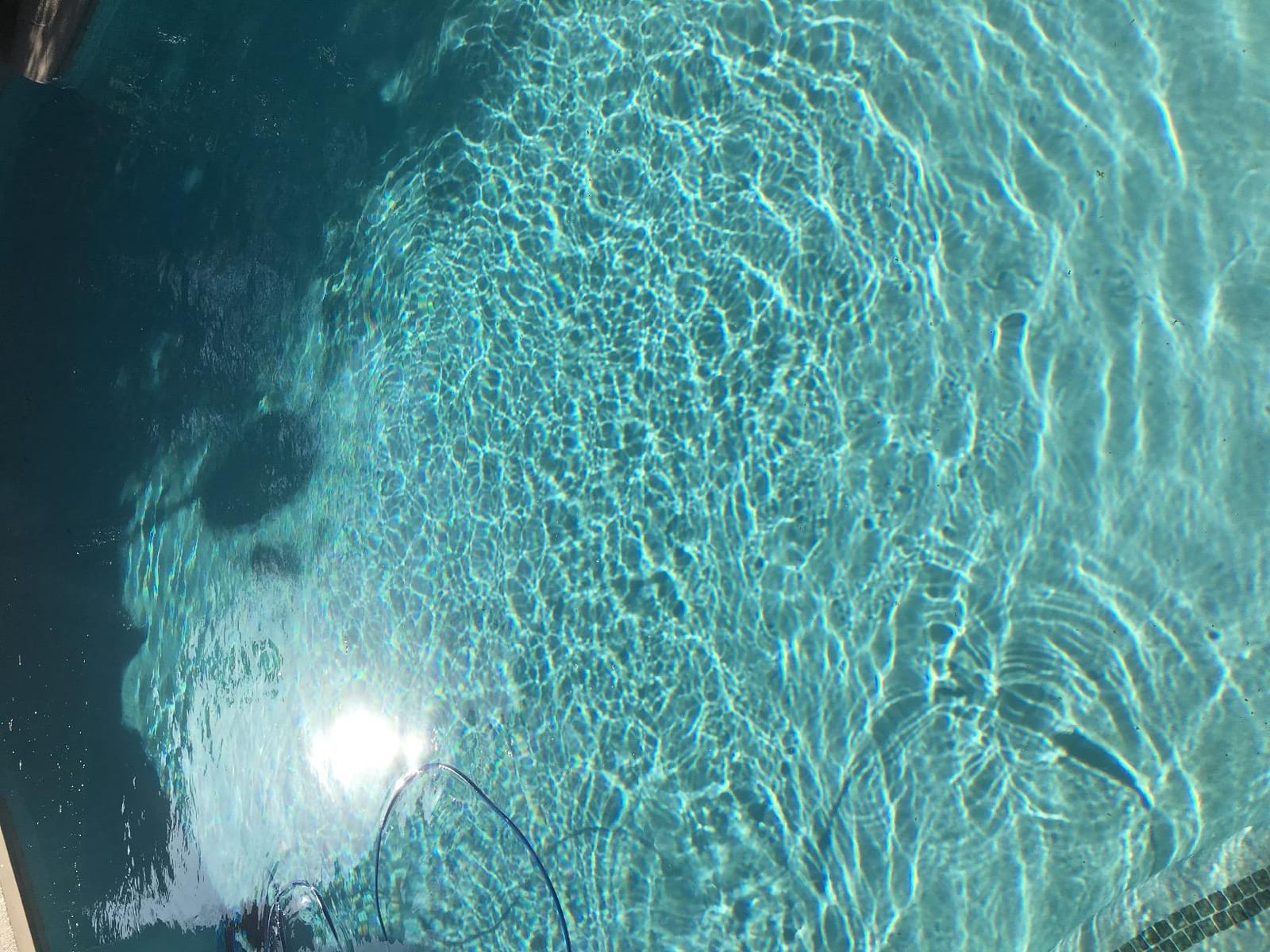
Two things keep it from being perfect for everyone. The body is black plastic, and some owners on plaster and dark finishes report seeing scuff marks left on the pool surface after a run. The cord also has to be managed in the pool itself, which is the one recurring frustration that pushes people toward cordless.
On build and mechanics it is a 9.45 kg unit measuring 22.2 by 17.6 by 12.9 inches, running on AC power through a control box under a limited warranty from Maytronics. The top-load filter basket is the detail that keeps owners loyal, because you pull it straight out of the top of the unit instead of unscrewing a canister, rinse it with a hose and drop it back in.
Who the Nautilus CC Plus suits
It suits anyone with a rectangular inground pool up to 40 ft who wants a fixed, hands-off cycle and does not want to think about charging anything. It also suits owners who already own a Maytronics unit, because the ecosystem and parts support is the deepest of any brand here.
It is a good match for pools that collect leaves in autumn and for anyone who values filter access above fine silt filtration. A renter or a swimmer who wants the machine only for a heavy cleanup after a storm will also find a fixed two-hour cycle perfectly adequate.
Where it falls short
It is not the right choice for a salt water pool where corrosion on the cable and power supply has already been an issue for you, because the cable design puts that risk in play. It is also not ideal if the single scrubber brush feels thin against a finish that grows biofilm fast.
If you have a freeform shape with deep pockets, expect some corner coverage to be uneven. And if lifting a wet 9.45 kg unit out of a deep end by hand is a problem, the lighter cordless options below are a better ergonomic match.
2. Aiper Scuba S1: the best cordless all-rounder
Aiper Scuba S1 2026 Robotic Pool Cleaner,Floor/Wall/Waterline/Shallow Area Cleaning, Double Filtration, Adaptive Navigation, High-Precision Sensors, App Support-Teal
Cordless with app control
3-micron and 180-micron dual filtration
Up to 270 minutes in Eco mode
Caterpillar treads for wall climbing
Pros
- Strongest filtration pairing in the cordless group
- Effective wall and waterline scrubbing on treads
- Self-parks at the waterline at cycle end
- Two-year warranty with responsive support
Cons
- Smaller brush and lower suction make it slower than premium corded units
- Full feature set needs a smartphone and good poolside Wi-Fi
- Some reports of partial coverage on unusual custom shapes
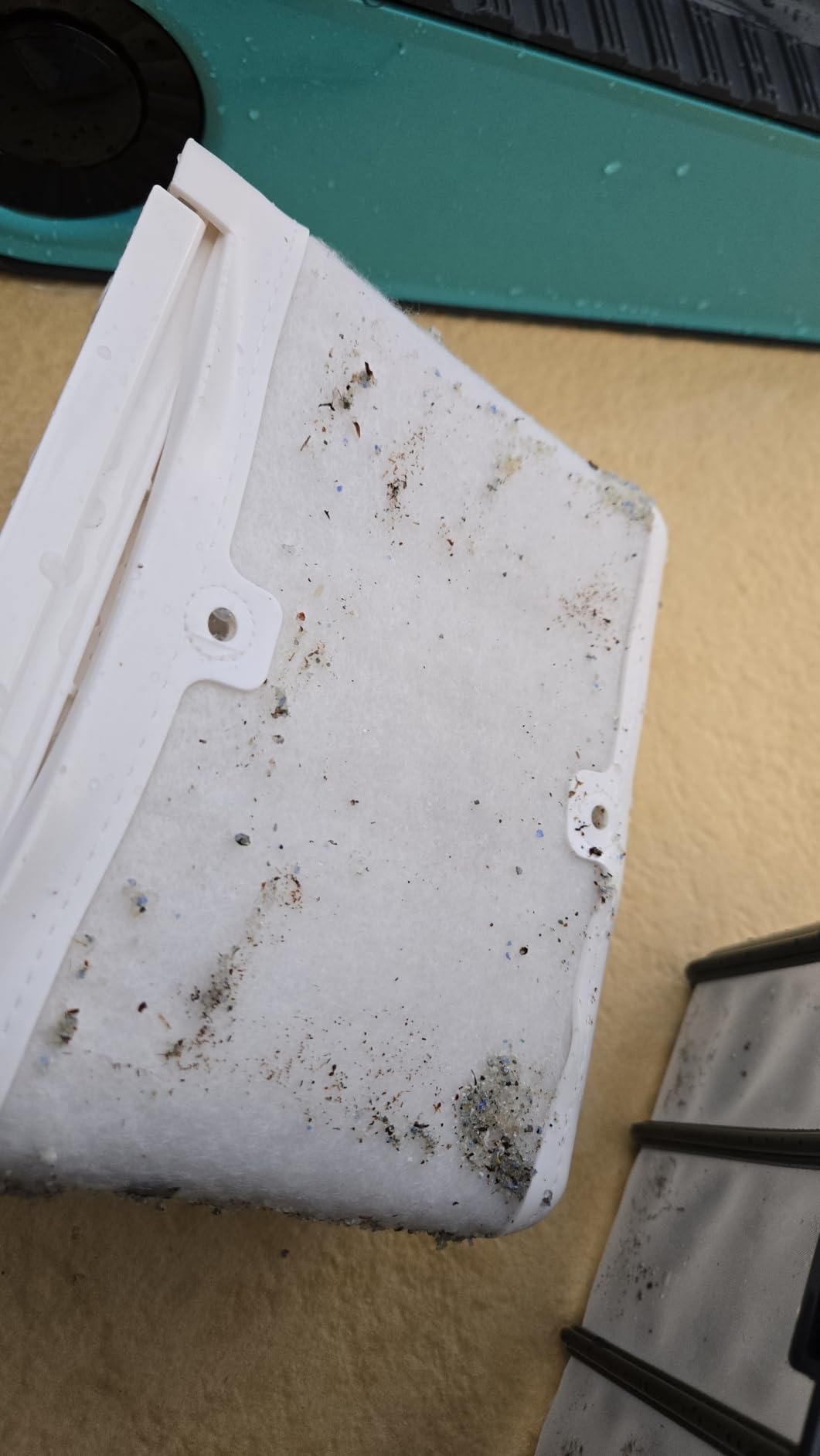
The Scuba S1 is the machine we would put in a pool that has fine dust blowing in from a construction site next door, because the replaceable 3-micron insert is the finest filter in this roundup and it sits alongside a 180-micron basket so you are not changing filters for every type of debris. That dual setup is the reason it handles both leaf loads and sand in the same week.
Navigation runs on 11 high-precision sensors with dual-path adaptive mapping and a WavePath pattern, and the drive is caterpillar treads rather than wheels. Treads are the right hardware for inground work because they keep traction on a wet transition slope where a rubber wheel can spin out. The four-zone program covers floor, walls, waterline and shallow areas above 12 inches.
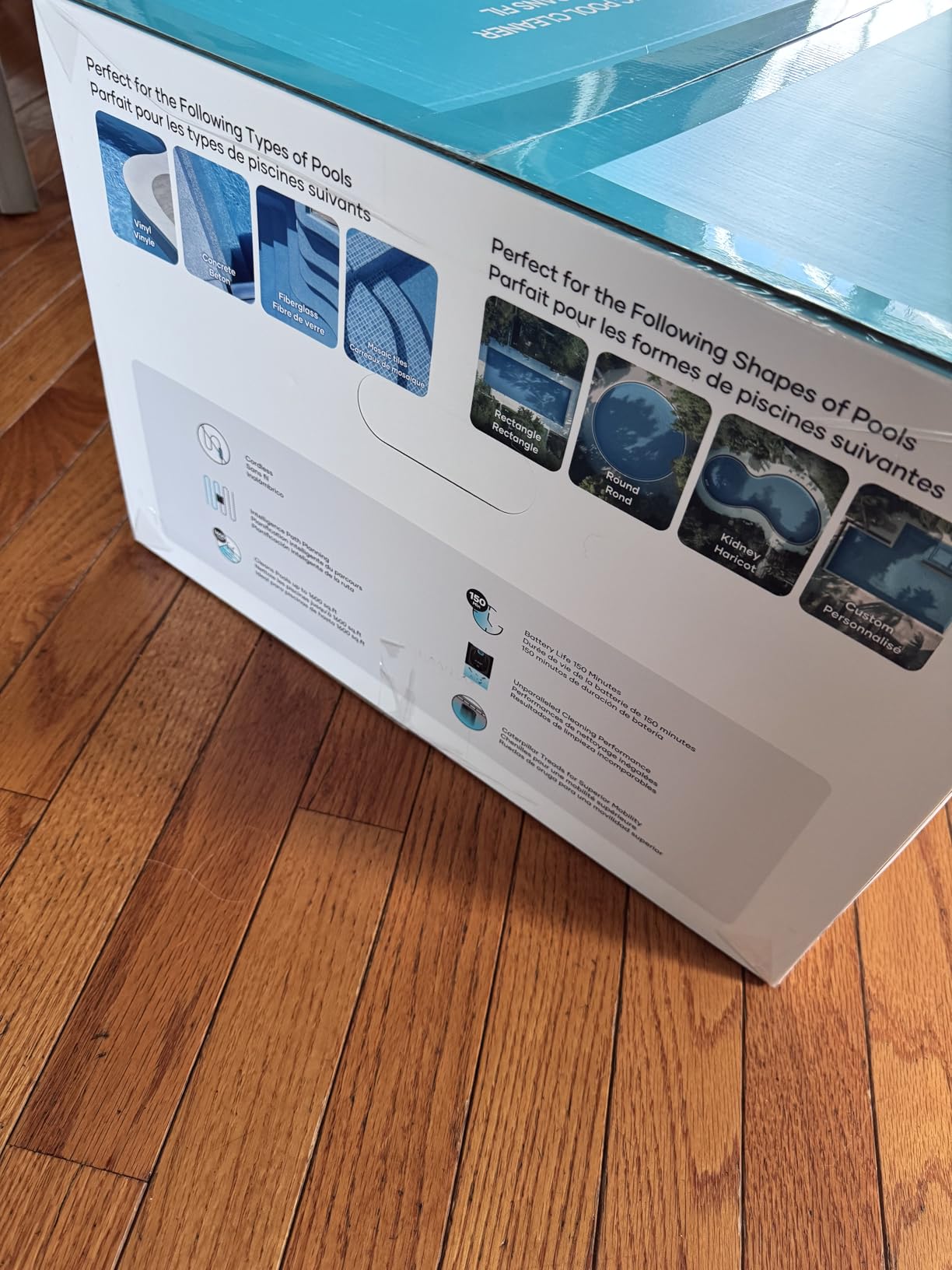
Runtime is where it separates itself from most cordless rivals. Eco mode runs up to 270 minutes, while the Auto, Floor, Wall and Scheduled modes run up to 180 minutes, and you can set a weekly cleaning plan in the app for genuinely hands-free operation. At 15.6 by 18.7 by 8.7 inches it is a compact body, and it parks itself at the end of a cycle so you are not fishing with a pole.
The honest trade-off is pace. Reviewers report very thorough floor cleaning with almost no spots left, but consistently note the unit is slower than higher-priced models because of the smaller brush and lower suction. If your pool only needs a quick weekly sweep, that is a non-issue. If you are clearing a pool that has gone a full season untouched, budget more time.
Who the Scuba S1 suits
It suits owners who want cordless convenience without giving up serious filtration, especially anyone dealing with sand tracked in from a sand-based pool cover or a dusty yard. The three cleaning zones and the treads make it a good fit for pools with a deep end and a steep transition.
It also suits people who want scheduled cleaning they never have to remember. The weekly custom plan plus self-parking means the machine can run while you are at work, which is the whole point of going cordless in the first place. Warranty support is a real plus: owners report Aiper honoring the two-year warranty.
Where it falls short
It is the wrong pick if your pool has a genuinely irregular custom shape, because some reports describe the unit cleaning only part of such a pool. It is also a poor match if your phone or Wi-Fi signal is poor at the poolside, since the scheduling and mode selection depend on the connection.
Do not buy it expecting corded suction levels. And if you need to lift a heavy wet unit out of a deep end, note that owners describe it as heavier than expected for a mid-size machine. The treads also need periodic inspection for grit caught in the drive.
3. WYBOT C1: the best value cordless pick
WYBOT C1 Cordless Robotic Pool Vacuum for Inground Pools, Professional
Cordless with app control
Triple-motor system climbing 45-degree slopes
Up to 160 minutes on a 4-hour charge
Inground pools up to 1618 sq ft
Pros
- Strong pickup of leaves
- sand
- dog hair and calcium
- Effective wall and waterline climbing
- Easy to lift and easy to rinse the basket
- Good value against premium corded units
Cons
- Needs long cycles to clear a heavily debris-laden pool
- Can catch on ledges and flip at transitions
- App connection drops once submerged
The C1 does the four things that matter in an inground pool: it drives the floor on an S-path, climbs walls on an N-path, scrubs the waterline and works the steps. That four-in-one coverage claim is backed by a triple-motor system rated to climb slopes up to 45 degrees, which is one of the steeper figures in this group and a real advantage on a deep-end transition.
It is rated for inground pools up to 1,618 sq ft with depths up to 9.86 ft, which puts it firmly in the mid-size residential band rather than the very large category. Runtime is up to 160 minutes on a charge that takes 160 minutes, so you plan a cycle and roughly the same amount of recharge time around it.
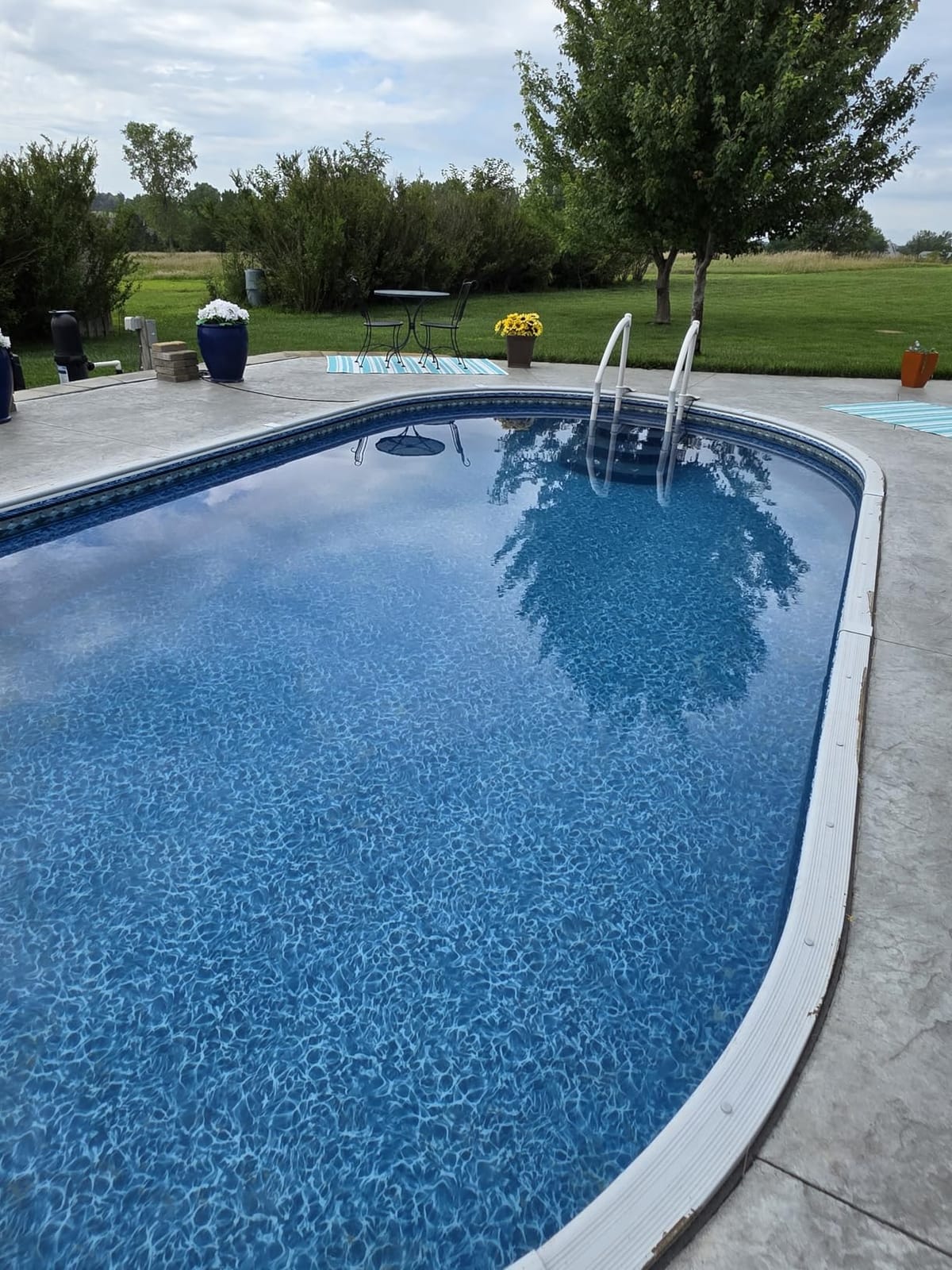
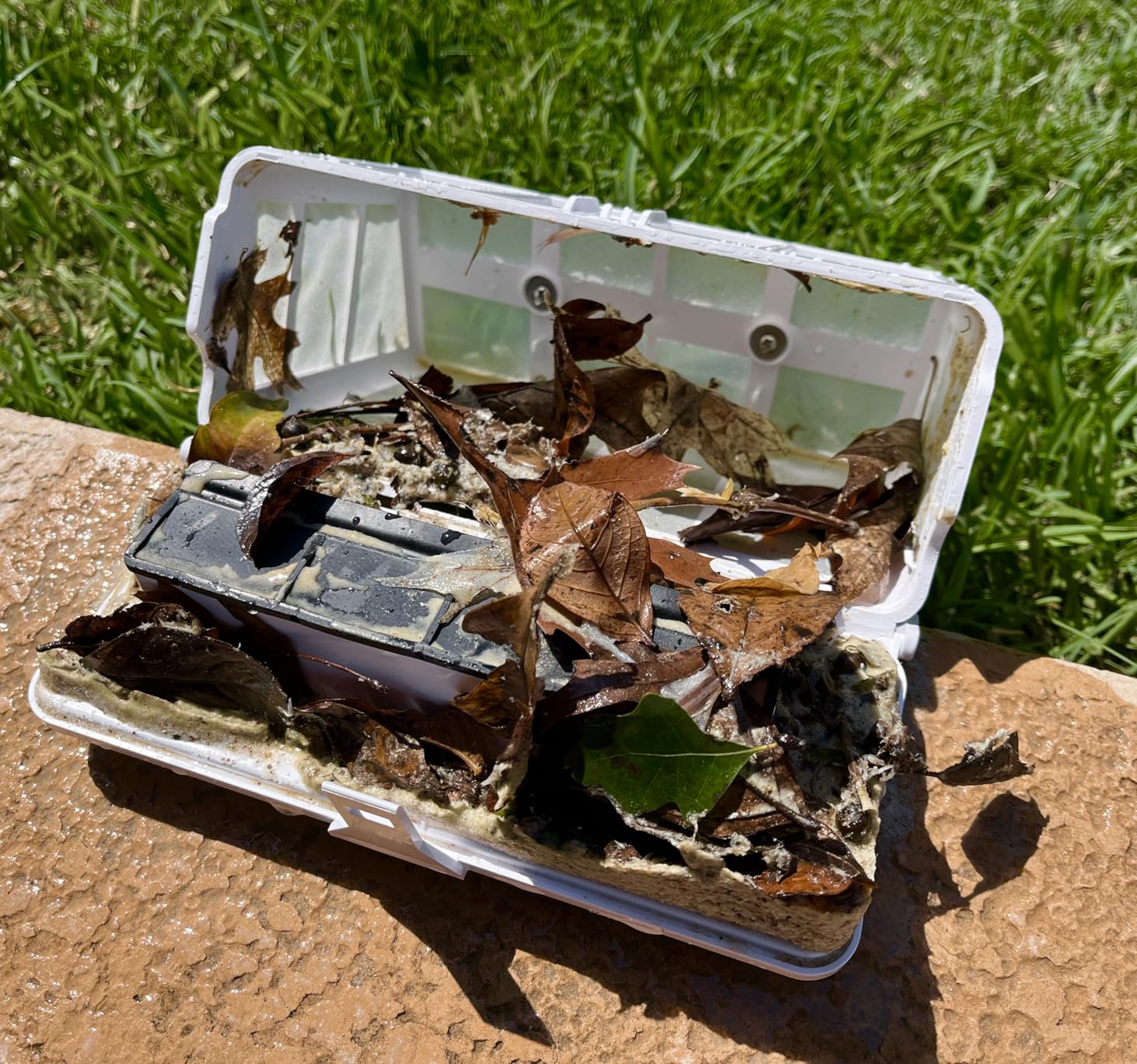
Owners report that it picks up large amounts of leaves, sand, dog hair and calcium, and several reviewers call out that it climbs walls and scrubs the waterline even in pools it was not primarily sold for. At 17 by 13 by 18 inches it is easy to lift out, and the filter basket rinses clean under a hose in a few minutes.
Two practical notes before you buy. The phone connection drops once the unit is submerged, so live monitoring is a pre-cycle feature rather than a while-it-works feature. And the charging connector is proprietary rather than a standard plug, so keep the cable with the unit.
Who the WYBOT C1 suits
It suits owners of a mid-size inground pool who want cordless freedom and four-surface coverage on a budget. The 45-degree climbing figure makes it a solid choice for pools with a deep end where a robot has to transition from flat floor to steep wall quickly.
It is a good fit for anyone with pets that shed into the pool, since owners specifically mention dog hair pickup. App scheduling and OTA firmware updates also make it a sensible pick if you want the manufacturer to keep improving the software after you buy.
Where it falls short
It needs long runtime cycles to fully clear a pool that is heavily loaded with debris, so a single short run after a storm will not do it. Owners also report it getting stuck on ledges and flipping over on transitions, which matters if your pool has a raised sun shelf or an unusual step design.
The 1,618 sq ft ceiling rules it out for the largest inground builds, and the 4-hour charge is longer than several rivals. If wall and waterline scrubbing is the primary goal rather than a secondary feature, spend up for a unit with a dedicated lateral scrubbing system.
4. Dolphin Proteus DX3: the silt and sand specialist
Dolphin Proteus DX3 Automatic Robotic Pool Vacuum Cleaner, Wall Climbing, Active Scrubber Brush, Ideal for In-ground Pools up to 33 FT in Length
Corded, inground pools up to 33 ft
Large fine-mesh top-load basket
14.8 lb body with quick drain
Active scrubber brush
Pros
- Fine-mesh basket holds sand and fine dirt
- Strong suction pulls leaves before rolling over them
- Light 14.8 lb body drains quickly for easy removal
- White shell avoids scuff marks on light finishes
Cons
- Frequently pops wheelies and stops or reverses mid-cycle
- Does not clean stairs reliably
- Some reports of the power box failing within a year or two
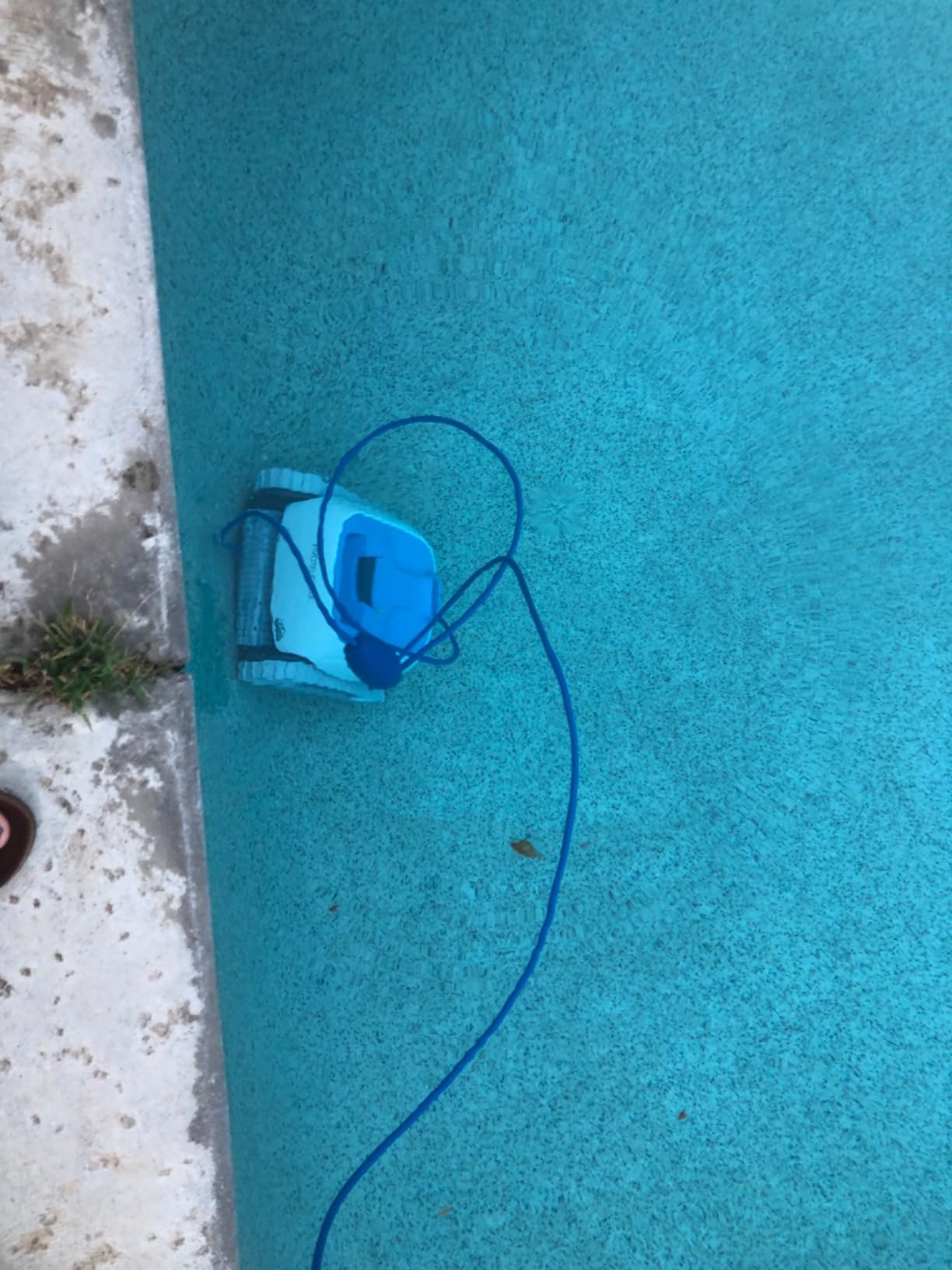
If your pool collects fine grit rather than leaves, the filter basket matters more than the drive system, and the Proteus DX3 has a large fine-mesh top-load basket built for exactly that. Owners upgrading from entry-level units report it actually clearing the pool in a single cycle, which is the single most common positive comment in its reviews.
The suction is aggressive enough to pull leaves in before the machine rolls over them, which stops the debris from being pushed to the deep end where it sits. The active scrubber brush handles wall climbing on any pool surface, and the 2-hour plug-and-play cycle means the same routine every time.
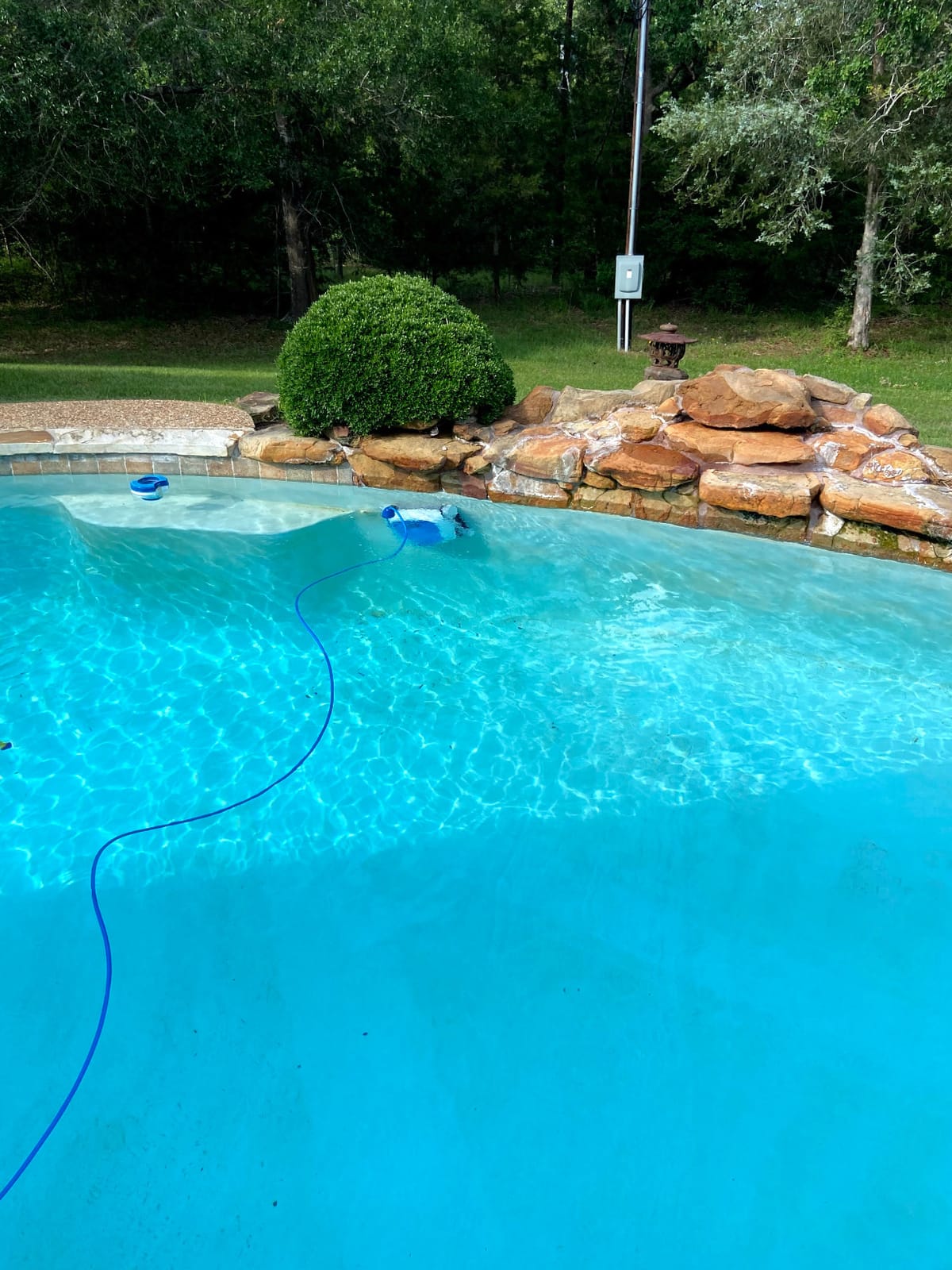
At 14.8 pounds this is one of the lighter machines in the group, and it drains quickly so you are not carrying a tank of water up the ladder. That is a meaningful advantage over the 20-plus pound cordless units. The white body is also the right choice if you have a light or plaster finish and are sensitive to scuff marks.
The common complaint is behavioural rather than mechanical. Owners report it frequently pops a wheelie and stops or reverses, which looks inefficient even when the cleaning result is fine. It is also rated only for pools up to 33 ft, so it needs a second run on a 40-footer.
Who the Proteus DX3 suits
It suits pools where sand and dust are the main problem, including those with a sand-based cover or a garden that generates fine debris. It is also a strong choice for anyone who finds a 14.8 lb unit easy to handle and wants to avoid the scuff marks darker shells leave on light finishes.
Owners upgrading from a cheap unit are the most enthusiastic group, because the jump in suction and basket fineness is visible in a single run. If you prefer a fixed cycle and do not want an app or a battery, the plug-and-play design removes every decision from the process.
Where it falls short
It does not clean stairs reliably, so tiled steps and shallow ledges will need a spot vacuum. The wheelie and stop-reverse behaviour is the most common irritation, and there are some reports of the power box failing within a year or two, which is the part to keep in mind for long-term reliability.
At 33 ft it is short for larger builds, and it is slower and less thorough than the dual-scrubber machines at the top of this list. If you have a saltwater pool, the corded format deserves a closer look before you commit.
5. POOL BLASTER CX-1: built for salt water pools
POOL BLASTER CX-1 Cordless Robotic Pool Cleaner, Automatic Vacuum for Inground and Above Ground Pools, Intelligent Wall Climbing Vac w/Strong Suction, High Capacity and Smart Scheduler
Cordless, anti-corrosion construction
Suction up to 7200 gallons per hour
Automated 7-day and 1-day cycles
Two lithium-ion batteries included
Pros
- Explicitly built for saltwater and chlorine pools
- Very strong 7200 GPH suction rating
- Scheduled cycles automate routine maintenance
- Advanced wall climbing across floors and steps
Cons
- Heavy 21 lb unit is awkward to lift from a deep end
- 6.5-hour charging time limits turnaround
- Suction still trails premium corded units
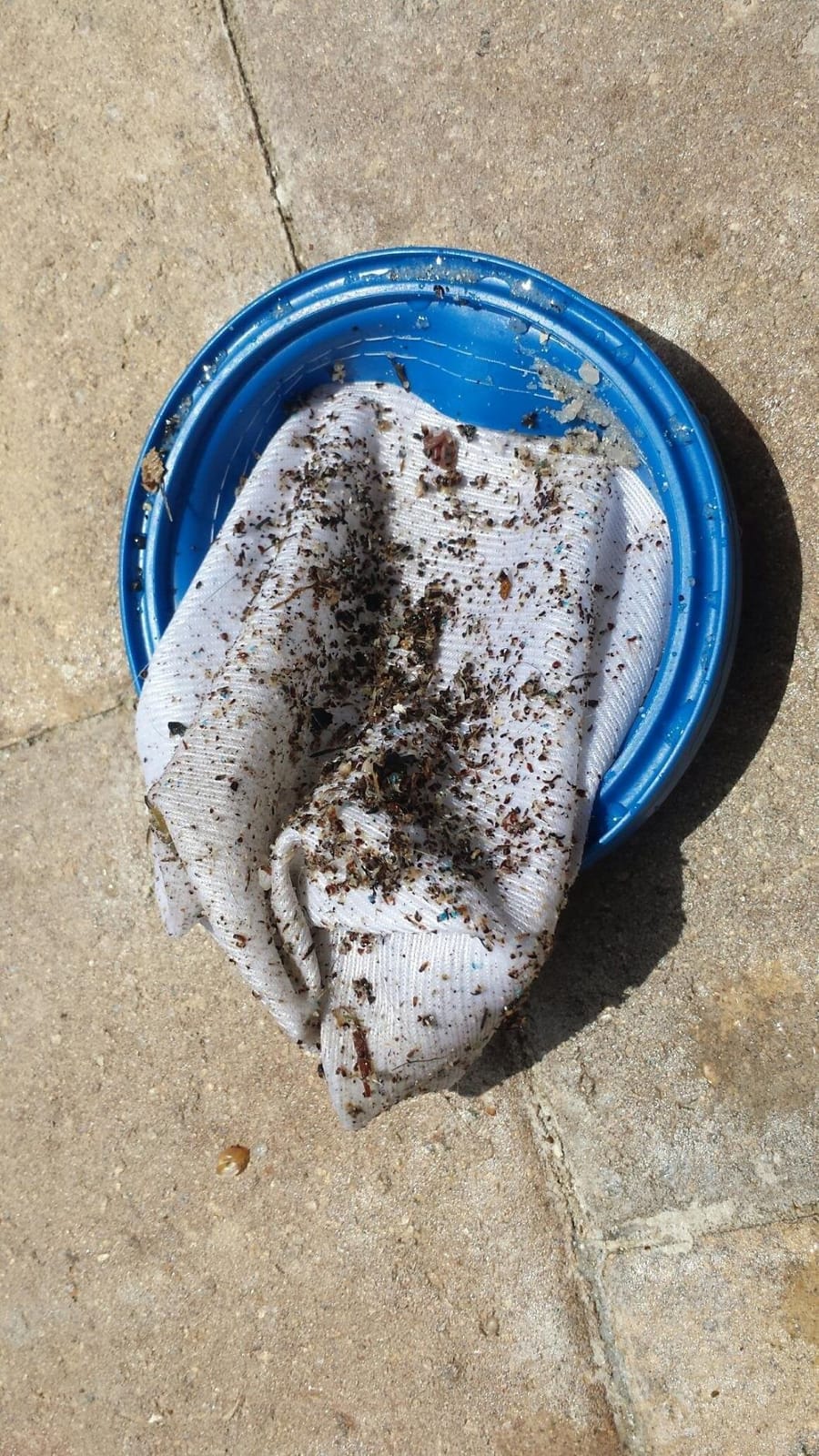
The CX-1 is one of very few machines in this roundup whose manufacturer data explicitly calls out anti-corrosion construction for saltwater and chlorine pools, and that is the reason it earns a place here. Salt systems are harder on electronics and cable connections than chlorine-only chemistry, and a unit designed for the job is worth more than a cheaper unit that is not.
It is also the only cordless model in the group rated at 7,200 gallons per hour of suction, which is well ahead of the 6,800 GPH units further down. Reviewers confirm the suction is genuinely strong and the wall climbing effective across floors, walls, steps and waterlines in an inground pool.
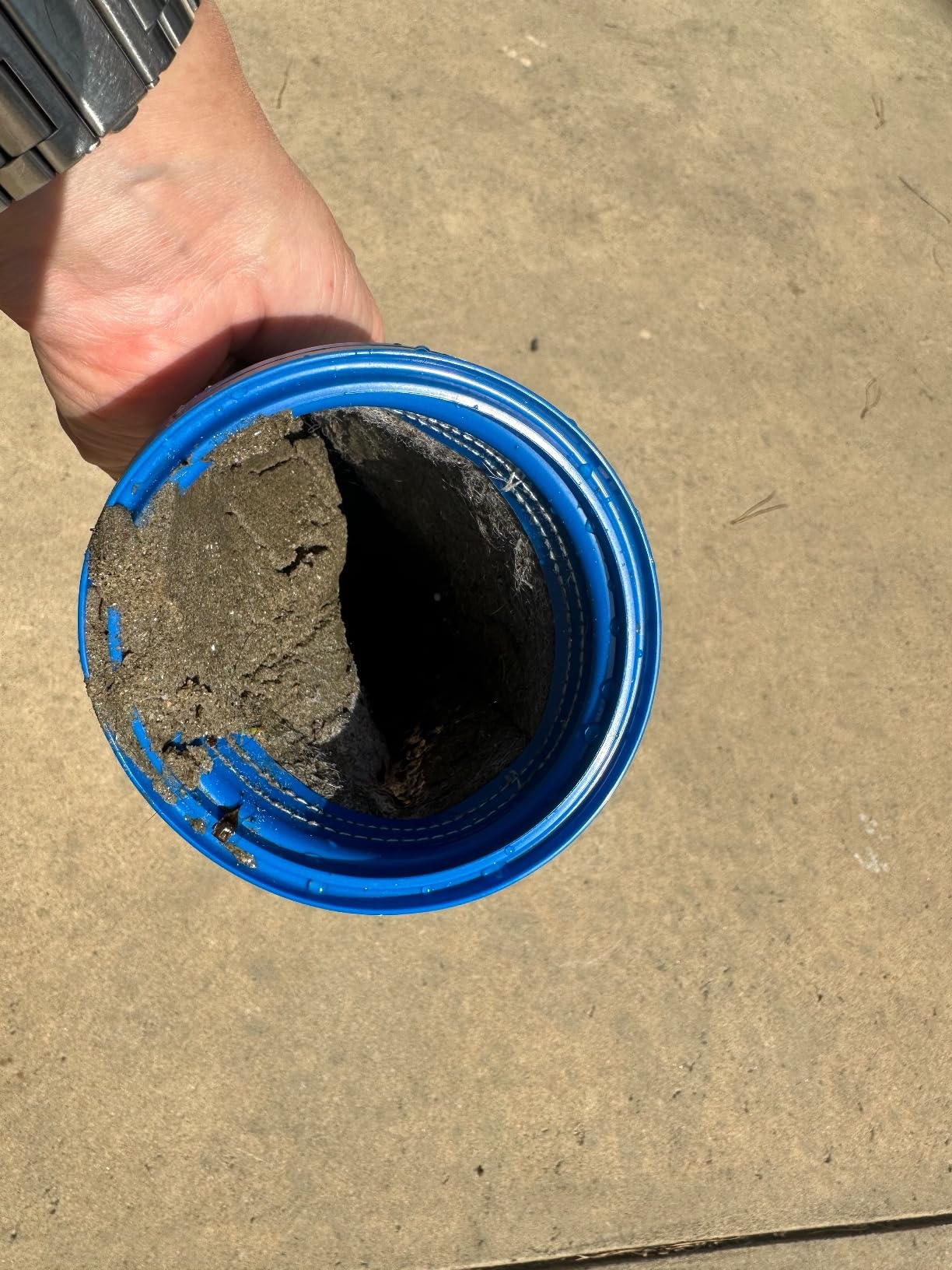
The scheduling is unusually flexible. It runs an automated 7-day cycle with up to 30 minutes per charge, or a 1-day intensive cycle up to 4 hours, and two lithium-ion batteries ship in the box so you can swap rather than wait. If you want a robot that works unattended on a fixed weekly rhythm, that is the appeal.
The trade-offs are physical. At 21 pounds it is heavy, and owners single out the weight as awkward to lift out of a pool. The 6.5-hour charge is the longest turnaround of any unit here, so a weekly schedule is comfortable but back-to-back same-day runs are not.
Who the POOL BLASTER CX-1 suits
It suits saltwater pool owners first and foremost, since corrosion resistance is the specification that matters most for them. It also suits anyone who wants genuine scheduled automation with a weekly cycle and a deep-clean option, rather than manual start-and-stop operation.
The high suction figure makes it a good fit for pools that take a heavy leaf load, and the coverage across steps and waterlines suits inground builds with a deep end. It also works for above-ground pools, so it is a reasonable choice if your property has both.
Where it falls short
It is the wrong pick if lifting weight is a concern, and 21 lb of wet unit is a real factor for anyone with back or shoulder issues. The 6.5-hour recharge also means you cannot realistically run it twice in a day without planning around the battery swap.
Reviewers note that cordless models generally lack the suction of premium corded units, and the intake is not fine-mesh capable, so it is a leaf-and-dirt machine rather than a sand specialist. If your priority is a 3-micron filtration stage, look to the Aiper units instead.
6. Dolphin Escape: the biggest filter basket
Dolphin Escape Robotic Pool Cleaner (2026 Model) — Massive Top-Loading Filter, Dual Motors, HyperBrush, HyperGrip Tracks, Smart Navigation — for Above Ground & In-Ground Pools up to 33ft
Corded, inground and above ground up to 33 ft
Oversized filter holds 60 percent more debris
HyperGrip continuous tracks
14 lb with quick water release
Pros
- Oversized top-loading filter holds the most debris in the group
- Only 14 lb with quick water release for easy retrieval
- Continuous tracks deliver reliable traction and climbing
- Works on vinyl
- fiberglass and gunite
Cons
- No app or Wi-Fi control despite smart navigation branding
- Cord must still be routed and managed in the pool
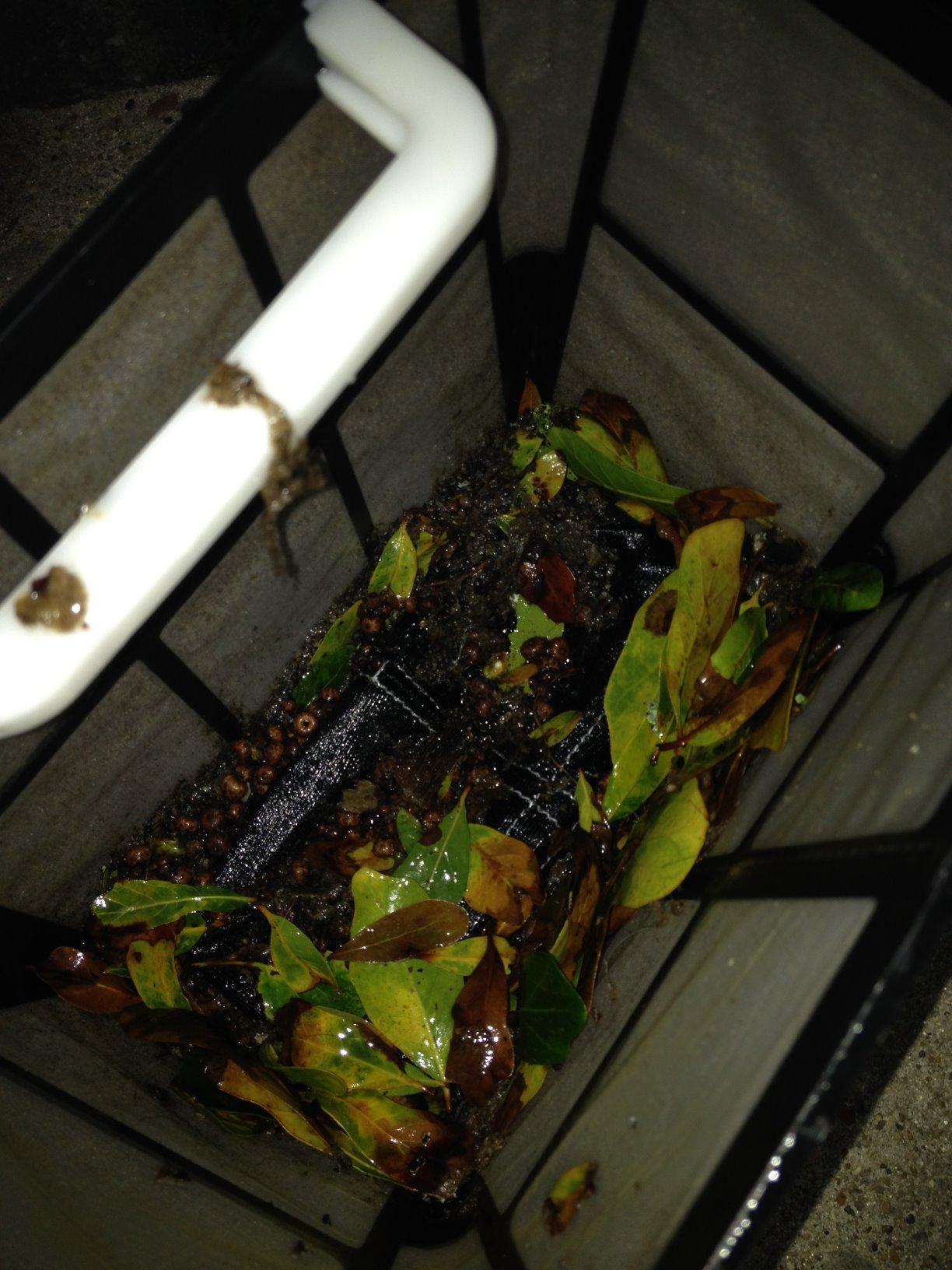
The Escape is built around one problem: a filter that fills up. Its oversized debris cartridge is claimed to hold 60 percent more debris than a standard basket, and owners consistently praise the large filter capacity as the main reason they recommend it. For a pool under a tree that drops leaves every week, fewer mid-cycle emptying stops is a genuine quality-of-life gain.
The drive is the other differentiator. HyperGrip continuous tracks with dual 24V DC motors filter over 4,000 GPH, and owners report strong satisfaction with the traction and climbing on inground pools. Tracks handle a wet slope transition better than wheels, which is where most entry-level robots stall.
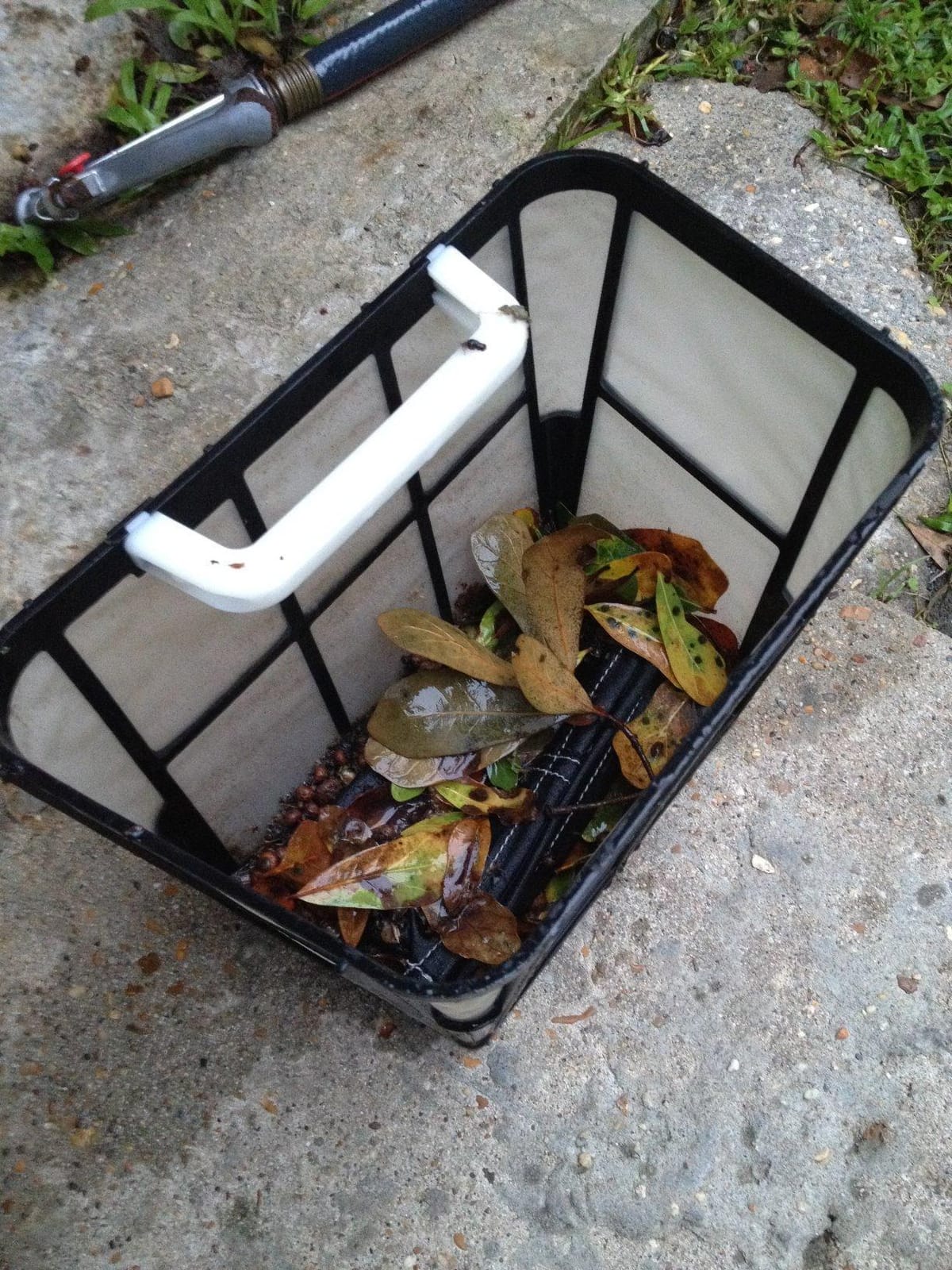
At 14 lb with a quick water release, it is one of the easiest units here to lift out of a deep end, which solves a problem that heavier cordless models create. SmartNav 2.0 robotic scanning navigation covers floor and wall work, and the HyperBrush handles scrubbing.
What it does not do is connect to anything. Despite the smart navigation branding there is no app or Wi-Fi control, so you run a fixed cycle and walk away. It is rated for pools up to 33 ft, which again makes it a mid-size machine rather than one for the largest builds.
Who the Dolphin Escape suits
It suits owners with heavy leaf debris who would rather not interrupt a cycle to empty a basket. A large basket also helps if you run the robot less often, since each run captures more before the flow is restricted.
It suits anyone who wants the easy handling of a 14 lb body, particularly with a deep end where a heavy unit is genuinely hard to lift. It is also a safe pick across surfaces, since the manufacturer rates it for vinyl, fiberglass and gunite pools, and it works for above-ground setups as well.
Where it falls short
It is a poor fit for anyone who wants app control, scheduling or firmware updates; there is no connection at all. The cord still has to be routed and managed in the pool, which is the usual corded complaint.
At 33 ft it will not cover a 40-foot pool in a single run, and the filtration is a single stage rather than a dual-micron setup, so it is not the right tool for fine silt. If you need fine filtration and a large basket at once, you are looking at a different format.
7. WYBOT C2: fine sand filtration with app control
Wybot C2 Cordless Pool Vacuum for Inground Pools, Robotic Pool Cleaner
Cordless, 10-micron and 180-micron dual filters
Up to 180 minutes and 2152 sq ft per cycle
Three brushless motors
Seven modes with auto parking
Pros
- Dual filtration captures fine sand and larger debris
- Reliable wall and step climbing with waterline scrubbing
- Auto parking at the pool edge makes retrieval easy
- Three brushless motors and a 4.6 average rating
Cons
- Only a 3 liter basket for larger pools
- Full feature control requires the phone app
- Runtimes fall short of the highest-capacity premium models
The C2 pairs a 10-micron ultra-fine filter with a 180-micron primary filter, and that combination is why it earns the fine-debris slot. The 10-micron stage catches the sand and grit that a single coarse mesh passes straight through and pushes into the impeller, which is a common failure mode in cheaper machines.
Three brushless motors supply the suction, and brushless motors have no carbon brushes to wear out, which is a quiet reliability advantage over an entry-level machine. The drive climbs pool walls and steps for waterline scrubbing, and a built-in gyroscope with optimized paths cuts down on missed floor area.
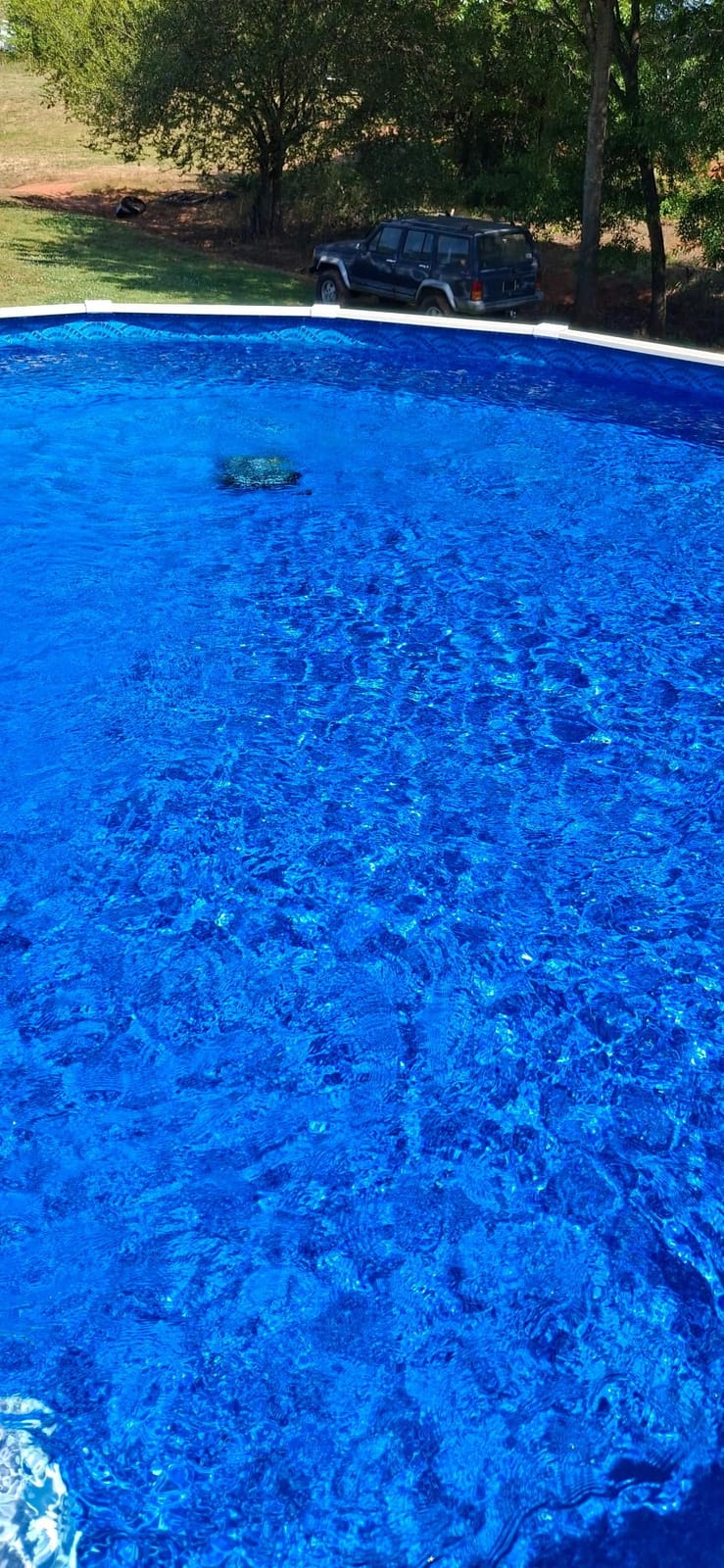
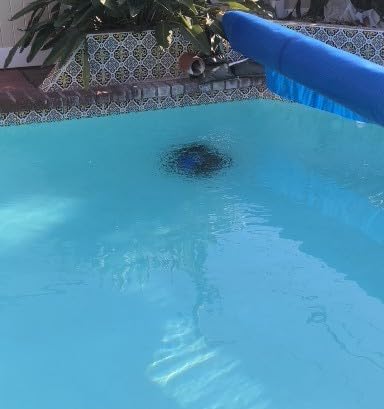
Coverage is generous for a cordless unit: up to 180 minutes of runtime and up to 2,152 sq ft per cycle, with a 3.5-hour charge between runs. Buyers highlight the navigation, the fine filtration and the auto parking at the pool edge as the standouts, and its 4.6 average is the second highest here.
The 3 liter basket is the limitation. On a larger pool with a heavy leaf load you will empty it more than once, and basket size is the one number that scales badly. Feature control also runs through Bluetooth and the app, so set your modes before the unit goes in the water.
Who the WYBOT C2 suits
It suits pools that take fine sand and grit, particularly those with a sand-based cover or heavy construction dust nearby. If you have upgraded from an older robot and found the basket could not hold what the pool produced, the dual filtration is the reason to move up.
It also suits owners who want more coverage per cycle than most cordless units deliver, since 2,152 sq ft handles a large rectangular inground pool. Seven cleaning modes and auto parking on low battery make it flexible for different seasons and debris loads.
Where it falls short
The 3 liter basket is small for the coverage it claims, so plan on more than one empty per clean on a large pool. Requiring a phone app for full feature control is a real cost for anyone who prefers physical controls or has poor poolside signal.
Runtime also falls short of the 10,000mAh machines in the large-pool category. And like most app-equipped units here, the connection is not useful once the robot is submerged, so it is a scheduling tool rather than a live monitor.
8. Aiper Seagull Pro: the easiest unit to lift out
AIPER Seagull Pro Cordless Robotic Pool Cleaner with Hook, WavePath Navigation, Wall-Climbing, Quad-Motor, 150 mins Runtime for Inground Pools up to 1,600 sq.ft, ZT6002
Cordless, 7.5 lb body
Quad-motor up to 196W, 80 gallons per minute
7800mAh battery for 150 minutes
Three modes with retrieval hook
Pros
- Only 7.5 lb
- the lightest unit in the roundup
- Four-motor four-wheel drive gives dependable wall climbing
- 150 minutes of runtime on a 3-4 hour charge
- Two-year product protection
Cons
- Entry-level filtration needs multiple emptying cycles in leaf-heavy pools
- No app connectivity or scheduling in this model
At 7.5 pounds, the Seagull Pro is the lightest machine in this roundup by a wide margin, and that single fact changes who can comfortably use a robot. Owners of deep-end pools who struggle to lift a 21-pound unit will lift this one with one hand, and the included retrieval hook helps if it parks somewhere awkward.
The hardware is not a compromise. Four motors delivering up to 196W filter up to 80 gallons per minute, and four-wheel drive handles wall climbing and waterline scrubbing. The WavePath navigation system runs Floor, Wall and Auto modes, and the 7,800mAh battery gives up to 150 minutes.
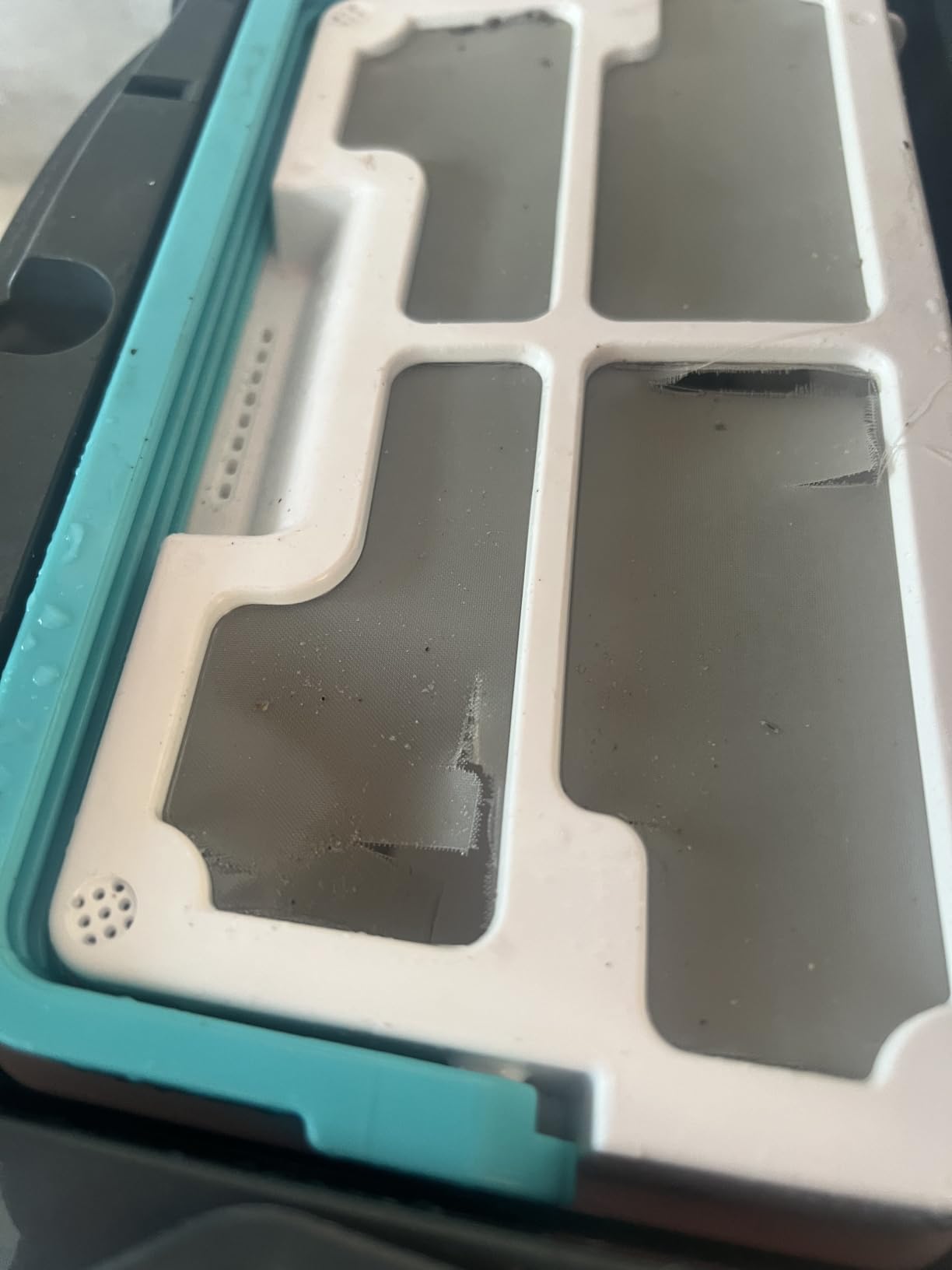
It is rated for inground pools up to 1,600 sq ft, which puts it alongside the WYBOT C1 in the mid-size category. The 3-4 hour recharge is faster than most cordless rivals, so back-to-back cycles across a weekend are realistic.
The honest limitation is filtration. This is an entry-level filter stage, and in a leaf-heavy pool it will need multiple emptying cycles to keep suction up. There is also no app connectivity and no advanced scheduling, so it runs on onboard controls only.
Who the Aiper Seagull Pro suits
It suits anyone who has been put off robotic cleaners because of the weight. A 7.5 lb body removes the most common physical objection, and it is a strong pick for pools with a deep end where retrieval distance is the hard part.
It also suits owners who want dependable wall climbing without paying for a full sensor suite. Four-wheel drive and four motors are the parts that do the work, and a simple three-mode interface means fewer things to learn or misconfigure.
Where it falls short
It is the wrong tool for a pool that gathers a lot of leaves, because the filter will fill within a single cycle and suction drops. Anyone who wants to schedule cleaning from their phone will find no app on this model.
At 1,600 sq ft it does not reach the large-pool class, and 150 minutes is short of the premium capacity figures. The trade is simple: you give up filtration refinement and app control, and you get a machine you can lift without thinking about it.
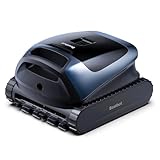
9. Beatbot Sora 30: the long-runtime pick for large pools
Beatbot Sora 30 Pool Vacuum, Floor & Wall & Waterline & Platform Cleaning, 6800GPH Power, Smart Parking, 300Min Runtime, 5L Capacity, for Above & In-Ground Pools 3229 sq.ft, Deep Blue
Cordless, 6800 GPH suction
10,000mAh battery for up to 5 hours
Covers 3229 sq ft per charge
Water-surface parking and app retrieval
Pros
- Longest runtime per charge in the roundup
- Covers 3229 sq ft of pool in a single session
- Smart water-surface parking removes the fishing-with-a-pole step
- Shallow and platform cleaning down to 8 inches
Cons
- Heavy 10.5 kg body once fully submerged
- 4.5-hour charge between cycles
- App control is limited while the unit is submerged
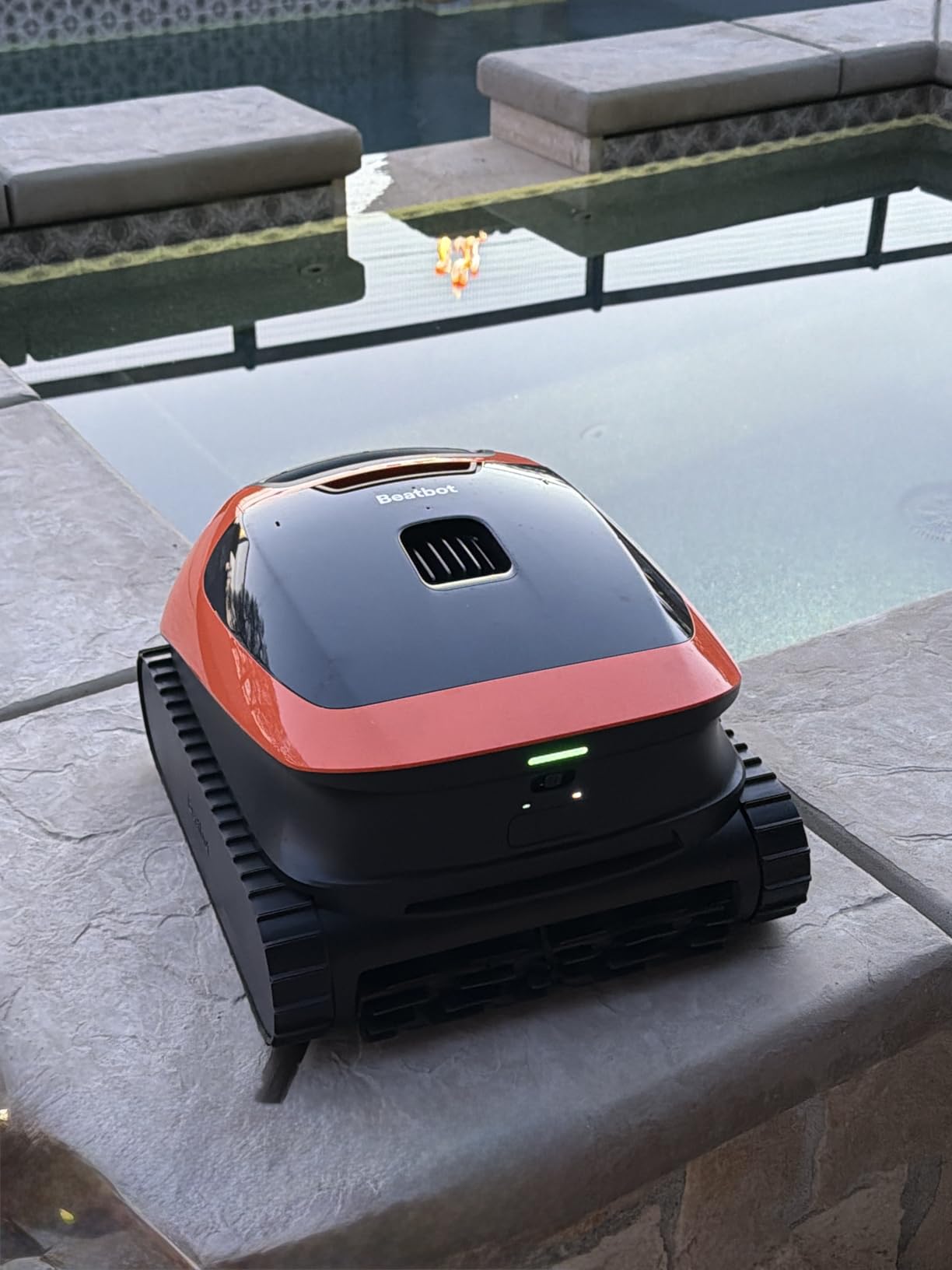
The Sora 30 exists to solve a specific problem: getting a large pool done in one pass. Its 10,000mAh battery delivers up to 5 hours of floor cleaning and covers pools up to 3,229 sq ft per charge, which is the largest single-cycle coverage figure in this group. Reviewers emphasise the long runtime as the reason it finishes the job rather than needing a second run.
Suction is rated at 6,800 GPH through a HydroBalance structure, and owners report it picks up heavy leaf debris without clogging. Ultrasonic sensors detect ledges, platforms and shallow areas down to 8 inches, so the shallow end and steps get attention instead of being skipped.
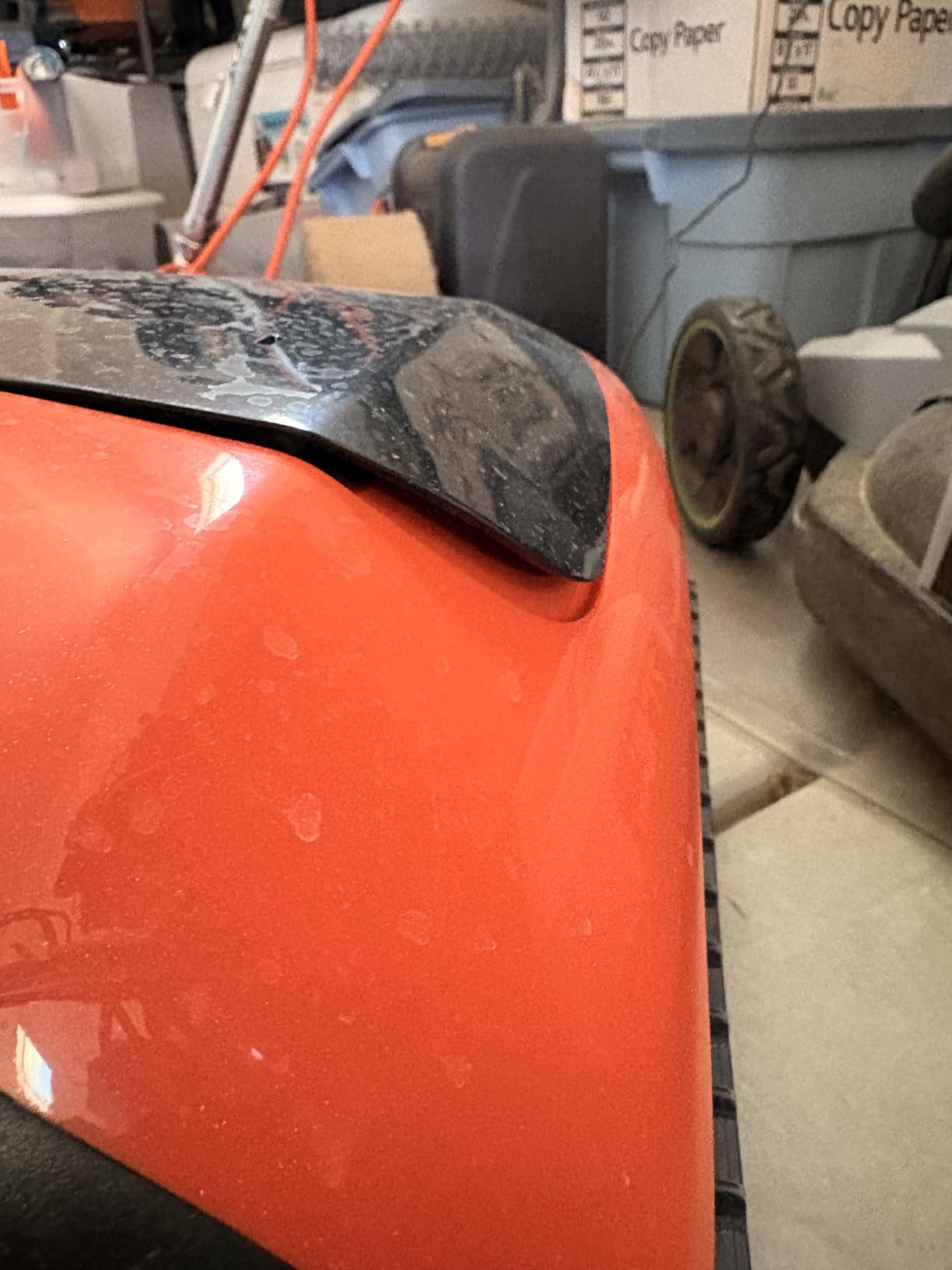
The retrieval system is the detail that changes the daily routine. It parks at the water surface when it finishes or drops below 12 percent battery, and the app offers one-touch retrieval, so you are not walking the pool edge with a pole trying to hook a handle. The 4.5 liter basket holds a good amount between empties.
What you accept is weight. At 10.5 kg the unit is heavy once fully submerged, and getting it up onto a deck from the deep end takes some effort. The 4.5-hour charge also means a long wait between cycles.
Who the Beatbot Sora 30 suits
It suits owners of large inground pools who want one charge to cover the whole basin, particularly if the pool is longer than 40 ft or has an unusual shape that defeats a two-hour cycle. The 3,229 sq ft rating gives real headroom over a mid-size pool.
It also suits anyone who finds retrieval the most annoying part of owning a robot. Surface parking means the machine ends up where you can see it and reach it, and the app retrieval removes a step from every clean. Shallow-area cleaning down to 8 inches helps if you have a sun shelf or a beach entry.
Where it falls short
It is heavy, and that is the most common complaint. If you have a deep end and difficulty lifting weight, a lighter mid-size cordless unit will serve you better even if it takes two runs.
The 4.5-hour charge means a long wait between cycles, though it is still shorter than the recharge on some mid-range cordless units. On a small pool the extra capacity is simply unused.
10. Beatbot Sora 70: the only unit here that cleans the water surface
Beatbot Sora 70 AI Navigation Pool Vacuum Robot Full-Coverage Pool Cleaning
Cordless, JetPulse surface cleaning
Full coverage down to 8 inches
10,000mAh for 5 hours and 3200 sq ft
6L basket with three-year warranty
Pros
- Only unit in this roundup that also cleans the water surface
- JetPulse jets drive floating debris into the suction inlet
- 6L basket reduces mid-cycle emptying
- Three-year warranty protection
Cons
- Heaviest unit here at 22.9 lb
- Premium price point
- App functions are limited while the robot is submerged
Every other machine on this list works below the surface. The Sora 70 also works at it, using a JetPulse dual water-jet system that drives floating debris toward the suction inlet. If you have ever run a separate surface skimmer alongside a bottom robot, this is the unit that removes that second machine from the routine.
Full coverage means water surface, waterline, floor, walls and shallow areas down to 8 inches. The 10,000mAh battery gives up to 5 hours of floor cleaning and up to 3,200 sq ft per charge, and the HydroBalance structure maintains 6,800 GPH suction throughout.
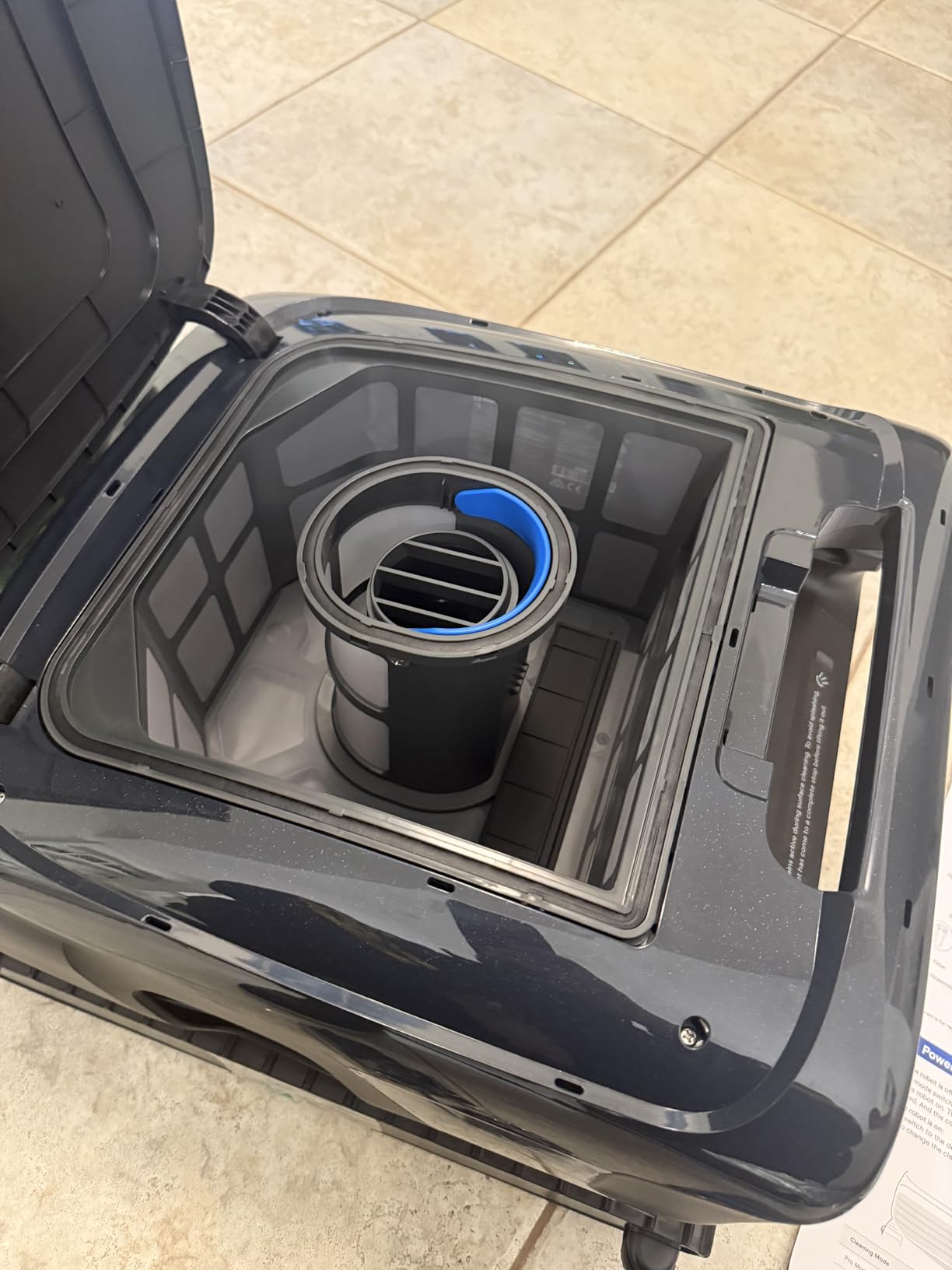
The 6L basket is the largest here, which cuts down on mid-clean emptying on a leaf-heavy pool, and smart surface parking with app tap-to-retrieve handles the end of the run. The three-year warranty is also the longest protection in the group, which matters for a machine with this much going on inside it.
It is also the heaviest unit here at 22.9 pounds. Owners note the weight alongside the premium price point as the reasons to think twice, and app functions are limited once the robot is submerged.
Who the Beatbot Sora 70 suits
It suits owners who currently run two machines. If you own a surface skimmer and a bottom robot, or you are manually skimming every clean, the JetPulse system consolidates that work into one unit with one basket to empty.
It also suits large-pool owners who want the biggest basket available and the longest warranty coverage, and anyone with a shallow shelf or beach entry where a robot that cannot enter shallow water leaves visible debris. The three-year warranty is a genuine advantage for a purchase you expect to keep for years.
Where it falls short
At 22.9 lb it is the heaviest machine in this roundup, and that matters in a deep end. The premium price point also puts it out of reach if you only need bottom cleaning, which is what most of the other units here deliver.
More moving parts inside means more that can eventually fail, and app functions are limited while the robot is submerged. If you already have a working surface skimmer, you are paying for a capability you do not need yet.
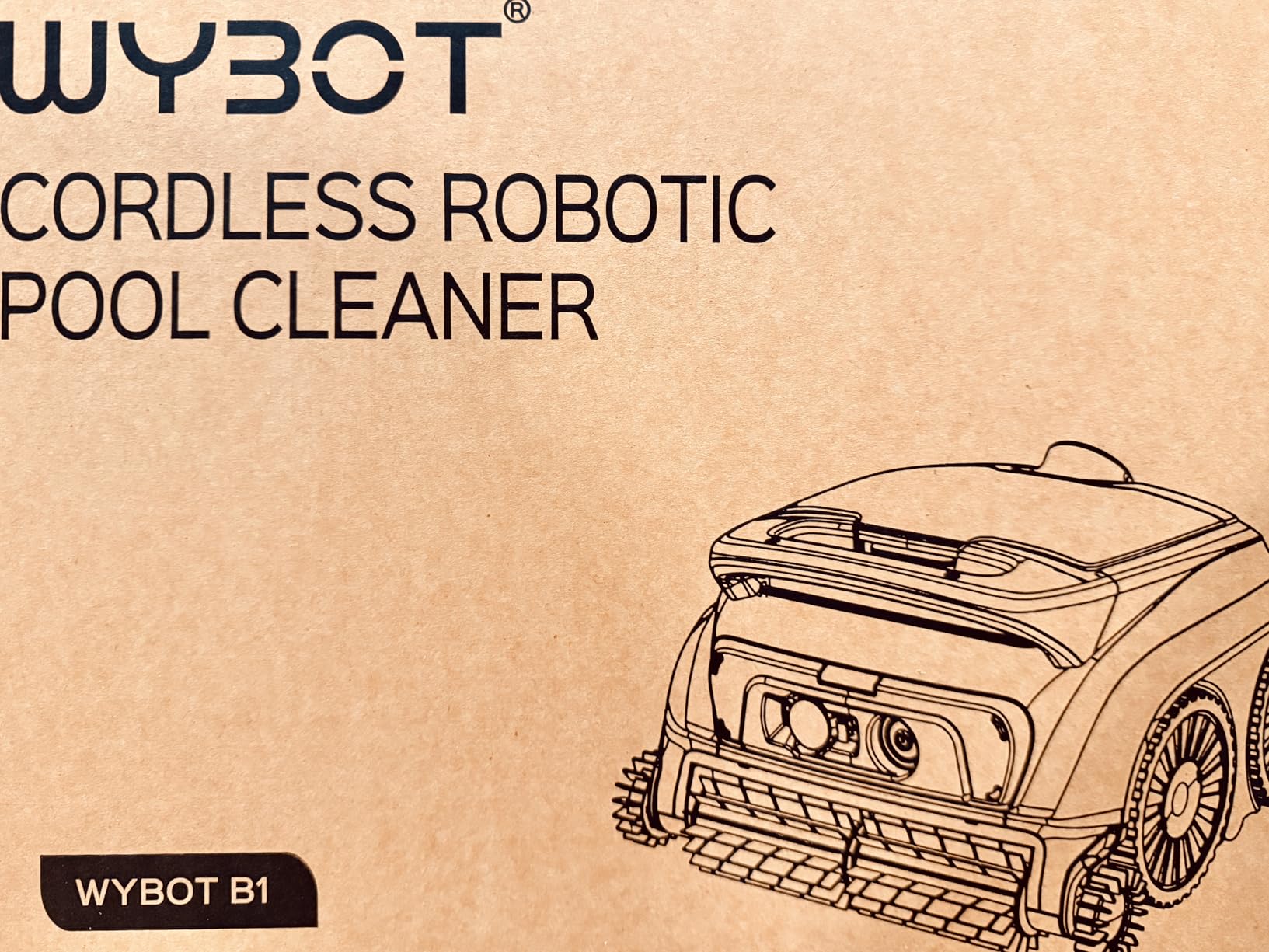
11. WYBOT B1: the budget pick that handles floors well
WYBOT B1 Cordless Robotic Pool Vacuum Pool Cleaner Robot for Inground Pools
Cordless, 14.3 lb body
Quad rollers plus dual front side brushes
Up to 120 minutes for 1150 sq ft
Five modes with self-parking
Pros
- Quad rollers handle leaves and hair
- Self-parking with an included retrieval hook
- Good suction without droppage and low operating noise
- App scheduling with OTA firmware updates
Cons
- Wall climbing is inconsistent
- on some pools the rear wheels cannot leave the floor
- 120 minute runtime is tight for medium to large pools
- Navigation sometimes re-cleans areas or misses corners
Owners rate it 4.5 on average. What it does, it does well: quad-roller brushes plus dual front side brushes pick up leaves, acorns, sand and hair, and reviewers report good suction without droppage and low operating noise.
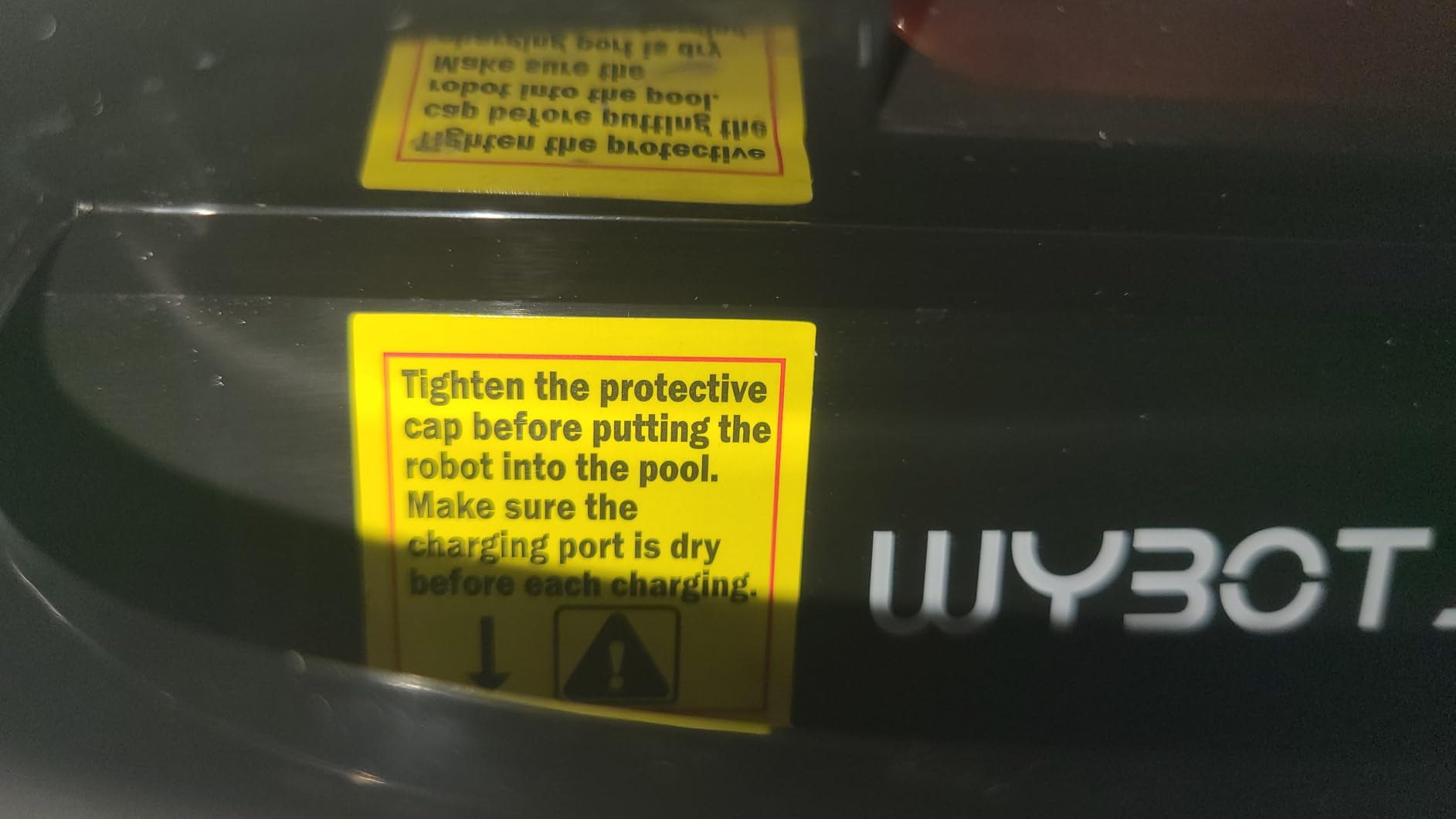
At 14.3 lb it is light enough to lift out of a deep end without the awkwardness of the 20-plus pound units, and it self-parks at the pool edge on low battery with a retrieval hook in the box. App control with scheduling and OTA firmware updates is a step up from units with onboard controls only.
The limiting factor is wall climbing, and owners are direct about it: on some pools the rear wheels cannot leave the floor at all. If your priority is floor coverage, that is a fair trade. If the waterline is the problem you are trying to solve, this is the wrong machine.
Runtime of up to 120 minutes covers pools up to 1,150 sq ft, with a 1-hour Quick Clean mode for a top-up between full cycles. The top lid latch over the debris basket is also hard to release the first few times you use it.
Who the WYBOT B1 suits
It suits owners of a small to mid-size inground pool who want dependable floor cleaning without a large outlay. The brush layout is genuinely good at mixed debris, so it handles the leaf-and-sand week that defeats many entry-level machines.
It suits older adults or anyone who does not want to wrestle with a heavy unit out of the deep end. The 1-hour Quick Clean mode is also useful for a fast top-up before guests arrive rather than committing to a full cycle.
Where it falls short
Wall climbing is inconsistent, and on some pools it simply will not leave the floor, which means no waterline scrubbing at all. That is the dealbreaker for anyone whose main goal is removing a scum ring.
At 1,150 sq ft and 120 minutes it is tight on a medium pool, and navigation sometimes re-cleans areas or misses corners. The basket latch also takes some getting used to, which is an irritation in the first week rather than a real fault.
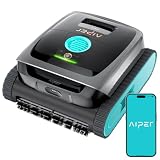
12. Aiper Scuba S3: the waterline scrubbing specialist
Aiper Scuba S3 Robotic Pool Cleaner with Auto-Parking & Alerts, Azure
Cordless, lateral waterline scrubbing at 5 ft per min
Auto-docks at the waterline with phone alert
180-micron mesh plus replaceable 3-micron insert
Up to 240 minutes in Eco mode
Pros
- Best average rating in the roundup at 4.8
- Aggressive lateral waterline scrubbing that lifts scum rings
- Dual filtration handles both large leaves and fine silt
- Smart path planning gives near-complete coverage
Cons
- App control does not work while the unit is underwater
- More sensors mean a higher maintenance burden
- Filter basket capacity is limited for debris-heavy pools
- Heavy low-contrast retrieval handle
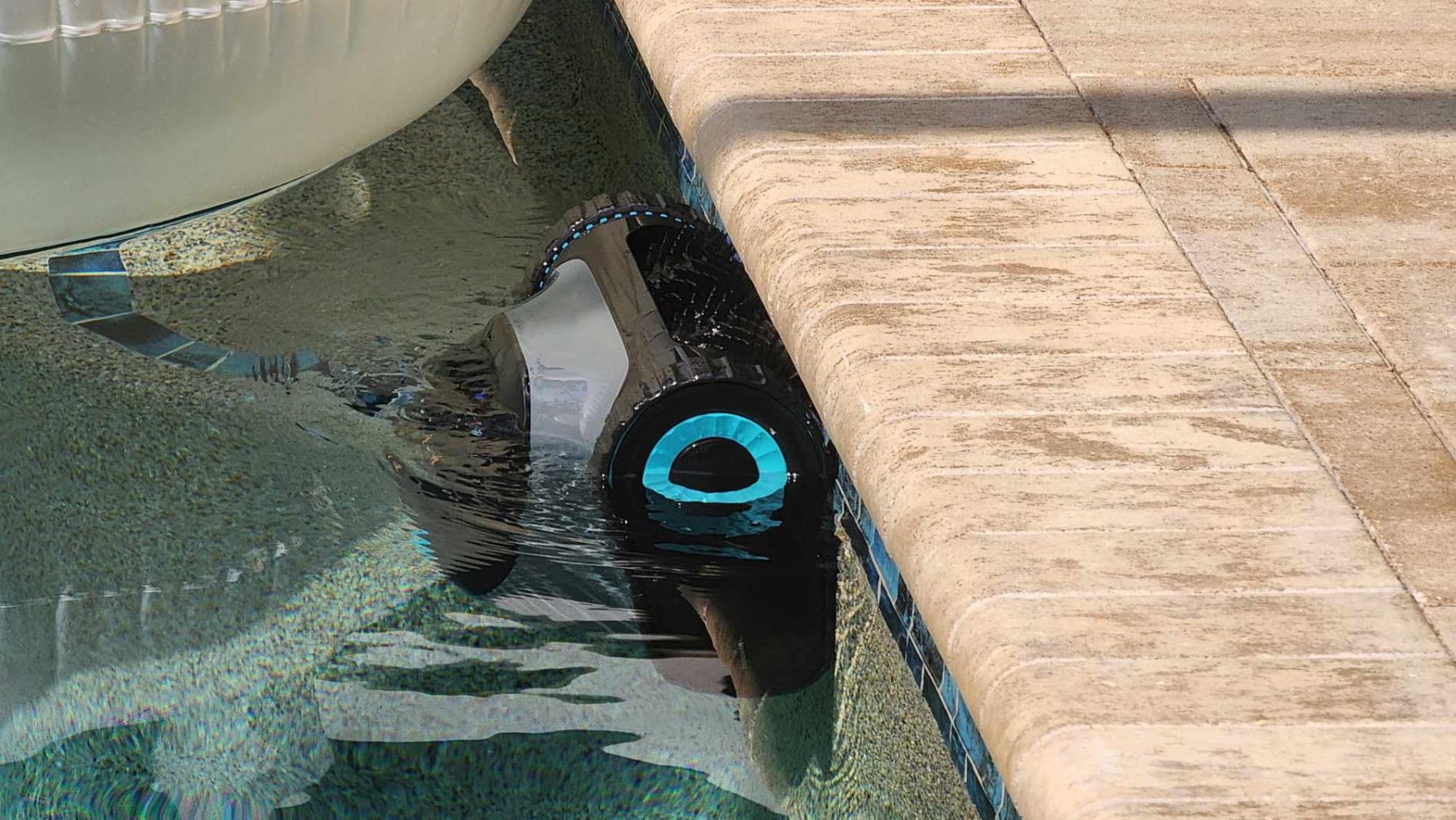
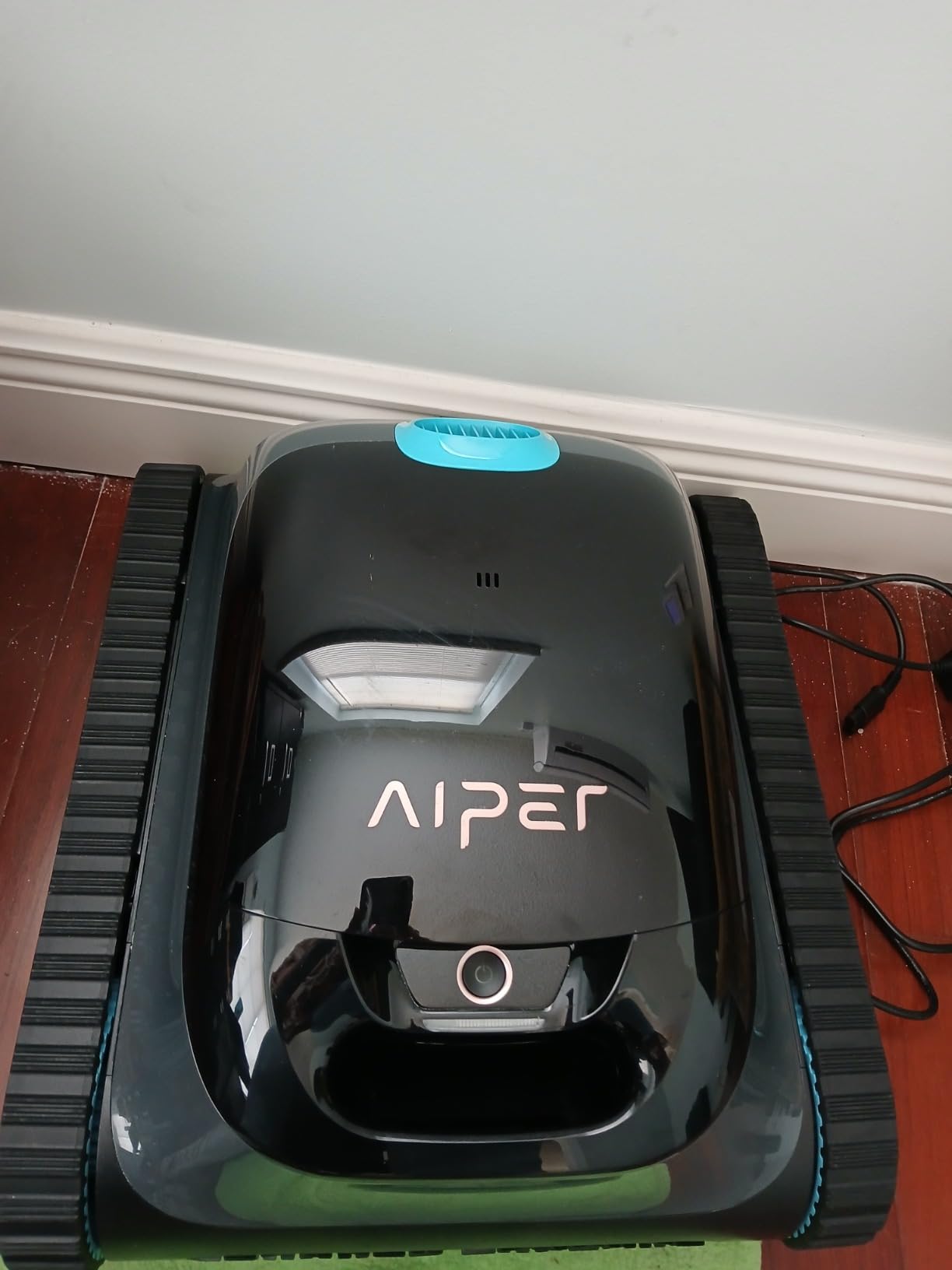
The Scuba S3 is the unit to buy if the waterline is what bothers you. It does not climb the wall and scrub the band vertically like most machines; it travels laterally along the waterline at 5 ft per minute, reaching 2 inches above the water edge. That is a different mechanical approach, and owners report it lifts scum rings effectively where climbing units smear them.
It carries the highest average rating in this roundup at 4.8, with 85 percent five-star ratings. Dual-stage filtration pairs a 180-micron mesh with a replaceable 3-micron insert, so the same machine handles a storm of leaves and a season of fine silt without a filter change.
Intelligent sensors build a logical route across freeform and uneven floors, and owners report near-complete coverage from that path planning. Auto-docking at the waterline sends a smartphone alert so you know when it has finished without watching the pool, and dual brushes with an 18 lb quick-drain body keep the weight manageable.
Owners on r/swimmingpools running a 16×32 inground report the functionality and feature set matched what was advertised. The caveats: app control does not work while the unit is underwater, the basket capacity is limited for debris-laden pools, and more sensors mean more potential failure points over time.
Who the Aiper Scuba S3 suits
It suits anyone with a visible ring at the waterline, particularly on light plaster, fibreglass or tile finishes where the ring shows clearly. The lateral scrub reaches higher than a standard climbing brush, which is the difference between a ring that fades and a ring that stays.
It also suits owners of freeform or uneven pools, where fixed S-path machines leave patches and sensor-driven route planning does not. The 240-minute Eco mode gives you a long quiet cycle, and the two-filter setup removes the need to choose between leaf and silt capacity.
Where it falls short
It is the weakest fit if your pool gathers heavy debris, because the basket is limited and fills faster than the 5L and 6L units here. Anyone without reliable poolside connectivity will not get the alerting and scheduling features that justify the app.
More sensors and features also mean a higher maintenance burden and more potential failure points than a simpler corded machine. The retrieval handle is also heavy and a low-contrast colour in the water, with one report of stress cracking.
How to Choose a Robotic Pool Cleaner for an Inground Pool
Most disappointing robots are not bad machines. They are right machines bought for the wrong pool, so the useful questions are narrow and specific. Here is how we would work through them in order.
1. Corded or cordless: which format suits your pool
Corded units never run out of power mid-cycle and generally carry a constant suction, which is why they remain the reference standard for heavy leaf and sand loads. Their weakness is the cable: it has to be routed from the control box to the pool, and a cord that gets dragged across the floor can end up in the water. Corded models also tie you to where your outlet is.
Cordless units remove the cable entirely, which is the single most common reason owners upgrade. They park themselves, park at the waterline, and many can be scheduled in advance. What you give up is runtime, charge time and a consistent suction curve, since battery output drops as the cycle progresses.
One more reliability point in the corded camp: a corded unit has fewer parts that can fail, because there is no battery pack or battery contacts to corrode. That matters for salt water pools, where electronics sit in a harsher environment. If you have a saltwater pool, the POOL BLASTER CX-1 is the only unit here with anti-corrosion construction called out in the manufacturer data.
2. Pool size, coverage and how much runtime you need
Translate your pool length into coverage rather than trusting a marketing number. A 16×32 rectangular pool is roughly 512 sq ft of surface, and a 20×40 is about 800 sq ft before you account for a deep end slope or a freeform curve. Those are the two dimensions most common in owner reports on pool forums, and they are the right baseline for judging a runtime claim.
Match coverage to the number you see. The Dolphin Nautilus CC Plus is rated by pool length, up to 40 ft, which is a different convention from the square-foot figures used by the cordless units. Square footage is the more useful number when your pool is not rectangular, because it captures the curve.
Rough sizing from the units here: the WYBOT B1 and Aiper Seagull Pro suit pools up to 1,150 and 1,600 sq ft, the WYBOT C1 up to 1,618 sq ft, and the WYBOT C2 up to 2,152 sq ft. The Beatbot Sora 30 and Sora 70 cover 3,229 and 3,200 sq ft per charge. Anything above 2,500 sq ft should start with the Beatbot units.
3. Wall climbing and waterline scrubbing
Wall climbing is where cheap robots give up, and where the difference between a clean pool and a grubby one lives. The mechanism is usually an active scrubber brush that presses the unit against the wall, plus enough traction to hold on. Wheels slip on a wet transition; continuous tracks and four-wheel drive do not.
Waterline scrubbing is a separate capability and not every wall climber does it well. Most units climb and scrub vertically at the band. The Aiper Scuba S1 uses caterpillar treads for the climb, the WYBOT C1 handles the waterline as part of its four-in-one coverage, and the Aiper Scuba S3 is the outlier, travelling laterally along the waterline at 5 ft per minute and reaching 2 inches above the water edge.
Be honest about your pool’s shape. Deep ends, raised sun shelves and tiled steps are where coverage fails. The Beatbot units detect shallow areas down to 8 inches, the Aiper Seagull Pro covers shallow areas above 12 inches, and the WYBOT C1 explicitly includes steps in its coverage.
4. Filtration and what a micron rating actually means
The micron rating tells you the size of the particle the mesh stops. A 180-micron filter catches leaves, acorns, hair and large grit. A 3-micron filter catches fine sand and silt that would otherwise circulate back into the pool or clog the impeller. These are not competing specifications; they are different jobs.
Dual filtration gives you both. The Aiper Scuba S1 pairs a replaceable 3-micron ultra-fine filter with a 180-micron standard filter, and the Scuba S3 uses a 180-micron mesh plus a replaceable 3-micron insert. The WYBOT C2 sits in between with 10-micron and 180-micron stages. Single-stage machines like the Aiper Seagull Pro are leaf-and-dirt tools by design.
Basket size is the other half of the equation. The Beatbot Sora 70 holds 6L and the Sora 30 holds 4.5L, while the WYBOT C2 holds 3L. A fine-micron filter on a small basket means more frequent emptying, so check both numbers together rather than optimising for one.
Whatever you buy, the robot’s basket is not a filter for your pool water. Your actual water filtration is a separate system, and if that is due for a service, our guide to the best cartridge filters for inground pools is worth a look before you spend on a robot.
5. Navigation, app control and auto-park
Navigation falls into three tiers. Random or bump-and-turn machines wander and re-clean the same patch. Gyroscope machines hold a planned floor path, typically an S-shape with an N-shape on the walls. Sensor-driven machines map the pool and adapt, which is the only tier that handles freeform and uneven floors well.
App control is a convenience rather than a necessity, and one honest expectation matters: on most of the cordless units here, including the WYBOT C1, the WYBOT C2 and the Aiper Scuba S3, the app connection does not work while the robot is submerged. It is a scheduling and mode-selection tool, not a live video feed.
Auto-park or auto-dock is the feature that actually changes your daily routine. A robot that ends at the water surface, as the Beatbot units do, is far easier to retrieve than one you have to hook from the deck. The WYBOT C2, WYBOT B1 and Aiper Scuba S1 also park themselves at the end of a cycle.
6. Pool surface compatibility
Almost every unit here works on vinyl, fiberglass and gunite, because brush materials are chosen to be safe across finishes. The differences appear at the edges. The Dolphin Escape is explicitly rated for vinyl, fiberglass and gunite pools up to 33 ft, and the Dolphin Nautilus CC Plus is rated for any surface.
On a gunite or concrete pool, a dark plastic body can leave scuff marks that are visible against a light plaster finish, which is why some owners of the Nautilus CC Plus prefer a lighter-bodied machine such as the Dolphin Proteus DX3. If your pool is bare concrete and tiled, brush pressure matters more, and the active scrubber and dual-brush designs handle it better than a single passive brush.
For gunite pools with deep drains, stairs and a lot of built-in detail, a manual touch-up vacuum is still useful for corners a robot cannot reach. Our picks for that job are covered in the guide to the best pool vacuum heads for concrete pools.
7. Salt water and chlorine chemistry
Salt water is the harder environment for pool equipment. A salt cell and higher salinity accelerate corrosion on cables, power supplies and motor housings, and warranty terms can differ by chemistry. Before buying, check whether the manufacturer rates the unit for salt and whether that rating affects the warranty.
Of the twelve units here, the POOL BLASTER CX-1 is the only one whose manufacturer data explicitly specifies anti-corrosion construction for saltwater and chlorine pools. If your pool is salt, that specification is worth more than any filtration number on the sheet.
The other practical salt consideration is the filter. A 3-micron insert on a saltwater pool will load quickly with dust and scale, and the manufacturer lists the Scuba S1 and Scuba S3 inserts as replaceable, which is what you want on a salt system with a harder water profile.
8. Lifespan, maintenance and total cost of ownership
For lifespan, the honest answer comes from owners rather than spec sheets. A pool owner on a pool forum reported replacing a Maytronics Prowler Warrior SI after just over three years of service. That is a realistic expectation: a well-built corded robot commonly gives you three to five seasons before something fails, often the power supply or the drive train rather than the body.
Ongoing costs are modest but not zero. Filters are the recurring item, and dual-filtration machines with replaceable inserts add a per-year cost that single-stage machines do not have. Batteries are the second item, and cordless units with proprietary charging connectors are harder to keep running long-term if the pack degrades.
A workable maintenance rhythm: empty and rinse the basket after every run, wash the filter element every few weeks in season, pull hair out of the tracks or rollers monthly, and store the unit out of direct sun between seasons. A robot left in a heated pool all winter is the fastest route to a degraded seal.
Most owners on forums run more than one machine. A common setup pairs a surface skimmer with a robot on the bottom and a handheld spot vacuum for corners, with one owner on r/swimmingpools describing exactly that three-part combination as the setup they are happy with. If you already own a surface skimmer, the Aiper Scuba S1 or one of the Dolphin models may cover everything you need.
9. Who should not buy a robotic pool cleaner
Do not buy a robot if your pool is above ground and small. These machines are sized, weighted and driven for inground basins, and a compact above-ground pool is better served by a dedicated small-pool unit. We cover those separately in our guide to pool cleaners for above-ground pools.
Do not buy one if your pool has no walls worth cleaning and you mainly need surface skimming, because a bottom robot will not solve the problem you have. Do not buy one if nobody in the household can lift 15 to 23 pounds of wet unit out of a deep end, unless the model parks at the surface and you can use a retrieval hook or pool ladder.
Also skip it if you are unwilling to empty a filter basket mid-cycle during a heavy season. A robot with a small basket and a leaf-heavy pool becomes a chore rather than a shortcut. If you travel constantly and cannot run a scheduled cycle, a corded unit with a timer is more dependable than a cordless unit you have to remember to start.
Frequently Asked Questions
Is Dolphin or Polaris better?
Dolphin builds the units most owners recommend for inground pools because of its service network and the size of its installed base, and three Dolphin models appear in this roundup. The Dolphin Nautilus CC Plus is rated for pools up to 40 ft and has by far the largest review base of any unit here, which means more long-term owner data behind it. Polaris competes well on pressure and on lighter, simpler machines, but fewer Polaris units reach the feature set of the top cordless models on coverage, filtration fineness and app control. For most inground owners, the deciding factor is warranty support and parts availability in your region rather than headline specs.
What is the best robot cleaner for swimming pools?
For a typical residential inground pool, the best overall choice is the Dolphin Nautilus CC Plus. It is rated for pools up to 40 ft in length, climbs walls with an active scrubber brush, and its top-load filter basket is the easiest to clean in this group. The best cordless option is the Aiper Scuba S1, which pairs 3-micron and 180-micron filtration with caterpillar treads and up to 270 minutes of runtime in Eco mode.
What is the average lifespan of a robotic pool cleaner?
Most robotic pool cleaners last between three and five seasons when maintained properly. A pool owner replacing a Maytronics Prowler Warrior SI reported that unit lasted just over three years before failing. Corded units typically fail at the power supply or the drive train, while cordless units add a battery pack that can degrade sooner. Emptying the basket after each run, rinsing the filter element every few weeks and storing the unit out of direct sun all extend service life.
What is the most popular inground pool cleaner?
The Dolphin Nautilus CC Plus and its siblings are the most widely sold robotic pool cleaners for inground pools, and the Nautilus CC Plus alone carries close to fourteen thousand reviews on its listing. That volume is the reason it is easy to find real-world feedback, replacement parts and repair advice for it. In the cordless segment, WYBOT and Aiper dominate the listings, with three models each appearing in this roundup.
Do robotic pool cleaners work in inground pools?
Yes, and they were designed for inground pools first. An inground basin has the deep ends, steep transition walls, steps and waterline band that a robot can reach without you dragging a hose through the water. Most units here are rated for pools between 33 ft and 40 ft in length, and the larger cordless models cover up to 3,229 sq ft per cycle. Check the pool length or square footage against the unit rating before you buy.
How long should I run a robotic pool cleaner in an inground pool?
Run a full cycle for your pool size, which is most often two to three hours on a mid-size residential inground pool, and do it weekly during the swimming season. Run more often after storms or heavy leaf fall, and run less often in winter or on a covered pool. Increase the frequency if the basket is filling before the cycle ends, because restricted flow reduces suction and coverage. Do not leave a robot in the pool continuously between cycles.
Final Verdict
For most inground pool owners, the best robotic pool cleaners for inground pools come down to three machines. The Dolphin Nautilus CC Plus is the one to buy: the largest review base in the group, dependable wall climbing, an easy top-load basket and a rating for pools up to 40 ft. The Aiper Scuba S1 is the pick if you want to go cordless without compromising on filtration, with 3-micron and 180-micron stages and the longest Eco runtime here. The WYBOT C1 is the value entry into cordless, covering floor, walls, waterline and steps with 45-degree slope climbing.
Beyond those, match the machine to the problem. Fine sand calls for the WYBOT C2 or the Aiper filtration stages. Salt water calls for the POOL BLASTER CX-1. A stubborn waterline ring calls for the Aiper Scuba S3. A pool over 2,000 sq ft calls for the Beatbot Sora 30 or Sora 70, and a heavy lifting concern calls for the 7.5 lb Aiper Seagull Pro.
Whichever you pick, run it on a schedule, empty the basket after every cycle, and check the coverage rating against your pool’s actual length before you order. That single check prevents most of the disappointment we see in owner reviews of these machines in 2026.