
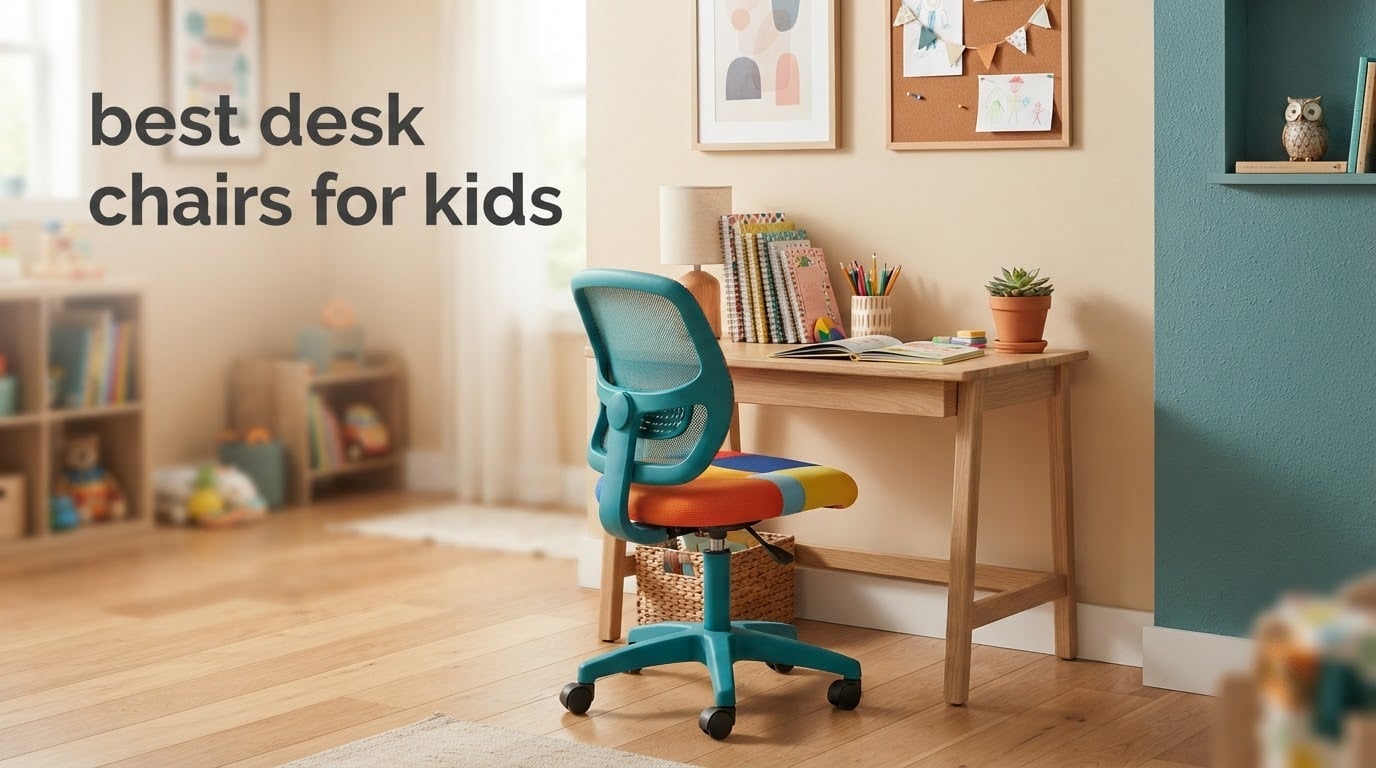
Choosing the best desk chairs for kids is harder than it looks, because a chair that fits a seven-year-old rarely fits a twelve-year-old, and most of the options on the market look identical until you read the seat height range and the caster type. Three things decide whether a kids’ desk chair works: height adjustability that puts the child’s feet flat on the floor with knees at roughly 90 degrees, a backrest with real lumbar support rather than a flat panel, and wheels that lock or self-brake so the chair cannot roll away mid-homework. We read the specifications, review patterns and parent reports behind all twelve picks below, and flagged the honest drawback on every one.
What follows covers swivel task chairs, fixed-leg chairs, and one upholstered option for a child’s bedroom, with a stated age range, a height range and a weight capacity for each. Our team spent several weeks cross-checking listing specs against customer review patterns, and we leaned on parent-community reporting for the things spec sheets never mention, like gas levers that are too stiff for a six-year-old and casters that quit rolling after a few months. If you are also upgrading the desk, our standing desk converter guide covers the height ranges these chairs have to match.
A note on method: we did not buy all twelve chairs, so this is a research-based roundup built from published specifications, aggregated review themes and parent reports, not a lab test. Every number quoted below comes from the manufacturer listing, and every caution comes from recurring themes in owner reviews.
Top 3 Picks for the Best Desk Chairs for Kids (October 2026)

GIANTEX Kids Desk Chair Purple
- True kid-scale sizing
- 250 lb capacity
- Height 16.5-21 inches
- 360-degree swivel

Primy Kids Desk Chair Pink
- Wrap-around mesh back
- 250 lb capacity
- Height 16.7-20.7 inches
- Foot ring

HONEY JOY Kids Desk Chair Grey
- 330 lb capacity
- Height 16-21.5 inches
- Removable washable cover
- Auto-braking wheels
All 12 Best Kids Desk Chairs Compared in 2026
| Product | Specifications | Action |
|---|---|---|
| GIANTEX Kids Desk Chair Purple |
|
Check Latest Price |
| Primy Kids Desk Chair Pink |
|
Check Latest Price |
| HONEY JOY Kids Desk Chair Grey |
|
Check Latest Price |
 MINPINSER Kids Desk Chair with Footrest MINPINSER Kids Desk Chair with Footrest |
|
Check Latest Price |
 Amazon Basics Kids Adjustable Mesh Chair Amazon Basics Kids Adjustable Mesh Chair |
|
Check Latest Price |
 GIANTEX Kids Desk Chair Blue GIANTEX Kids Desk Chair Blue |
|
Check Latest Price |
 VIVO Children’s Desk Chair VIVO Children’s Desk Chair |
|
Check Latest Price |
 GIANTEX Kids Desk Chair with Lumbar Support GIANTEX Kids Desk Chair with Lumbar Support |
|
Check Latest Price |
 Costzon Kids Desk Chair Pink Costzon Kids Desk Chair Pink |
|
Check Latest Price |
 FurnitureR Rolling Study Mesh Chair FurnitureR Rolling Study Mesh Chair |
|
Check Latest Price |
 Costzon Kids Desk Chair Sit-Brake Casters Costzon Kids Desk Chair Sit-Brake Casters |
|
Check Latest Price |
 LukeAlon Kids Swivel Sherpa Desk Chair LukeAlon Kids Swivel Sherpa Desk Chair |
|
Check Latest Price |
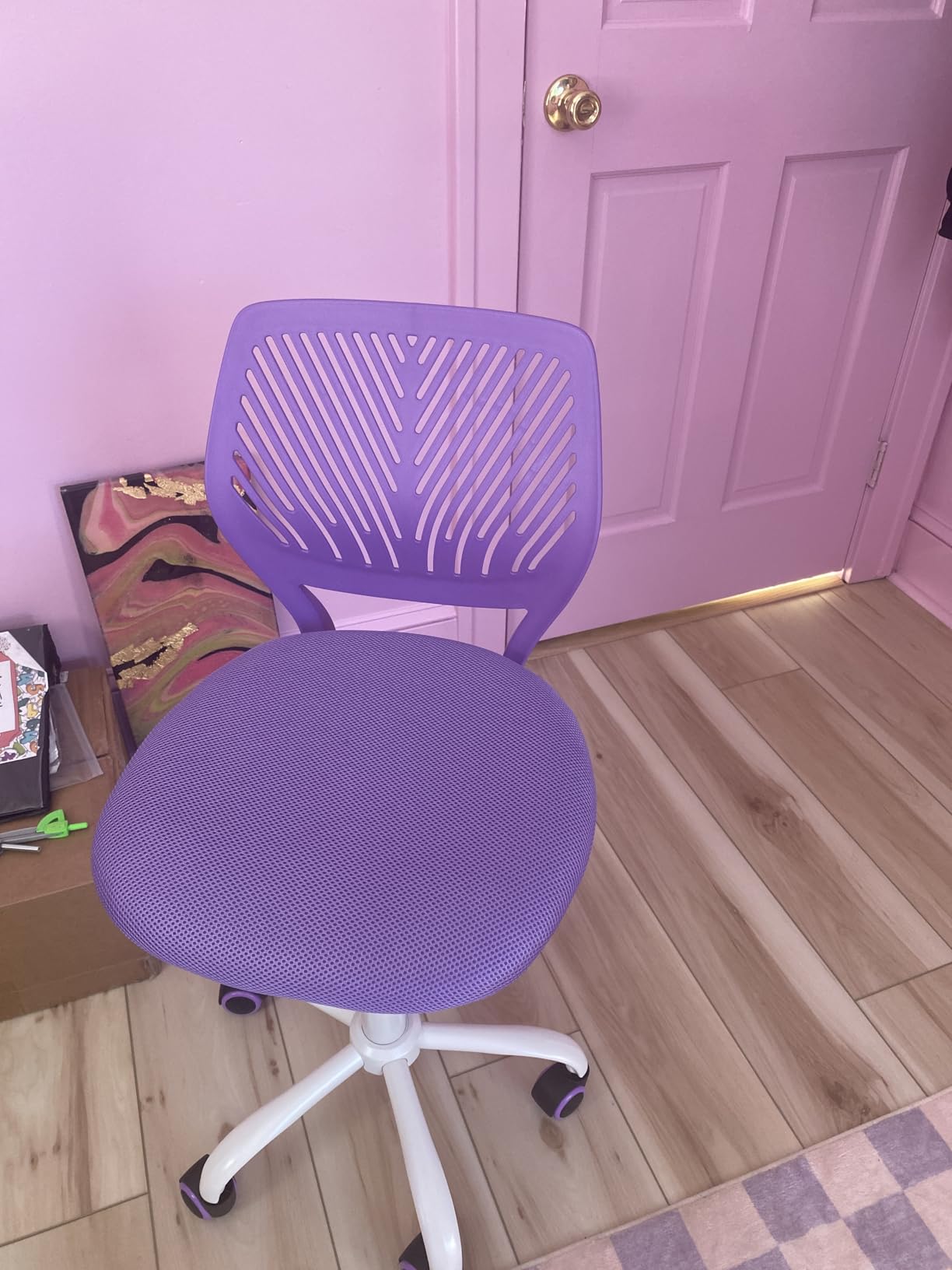
1. GIANTEX Kids Desk Chair Purple – Best Overall Kids Desk Chair
GIANTEX Kids Desk Chair, Adjustable Children Study Chair, Swivel Armless Mesh Task Office Chair, Computer Desk Chair with Adjustable Height & Lumbar Support (Purple)
Seat 15.5 x 15 inches
250 lb capacity
Seat height 16.5-21 inches
360-degree swivel
Pros
- True kid-scale proportions so feet plant flat
- Easy assembly with hardware attached to the box
- Sturdy over six months of daily use
- Light enough for a child to reposition
- Seven color options
Cons
- Rigid backrest that some kids find hard for long sessions
- Gas lift too stiff for small children to lower alone
- Bolts may need re-tightening every few months
This is the chair we would put at the top of the list for most families. The proportions are genuinely kid-sized rather than a scaled-down office chair, and that is the detail that matters most in this category. At a seat height range of 16.5 to 21 inches with a 15.5 by 15 inch seat pad, a child can sit with feet flat and knees bent instead of dangling or perching on the front edge.
It weighs 10 pounds, which sounds minor but is a real advantage in a child’s room. A child can drag it to a table for crafts without asking for help, and a parent can move it between the bedroom and a playroom. The 360-degree swivel and five multi-directional casters roll over hard floors and carpet without catching.
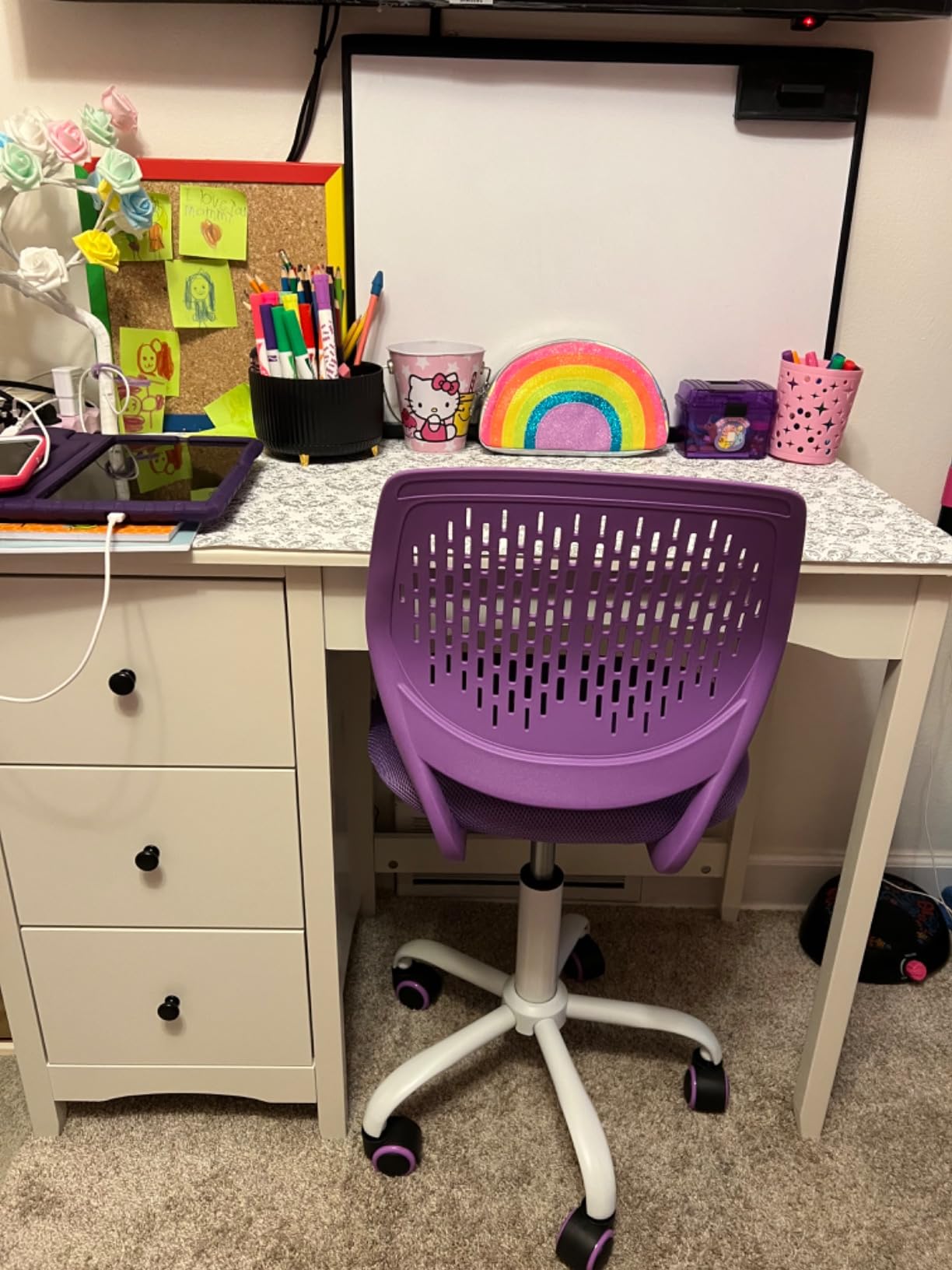
Review patterns for this model are unusually consistent. Owners repeatedly mention buying a second one for a sibling, which is the clearest signal that a chair survives a real household. Assembly is quick, the hardware packet is attached to the box, and the frame holds up over months of daily homework use.
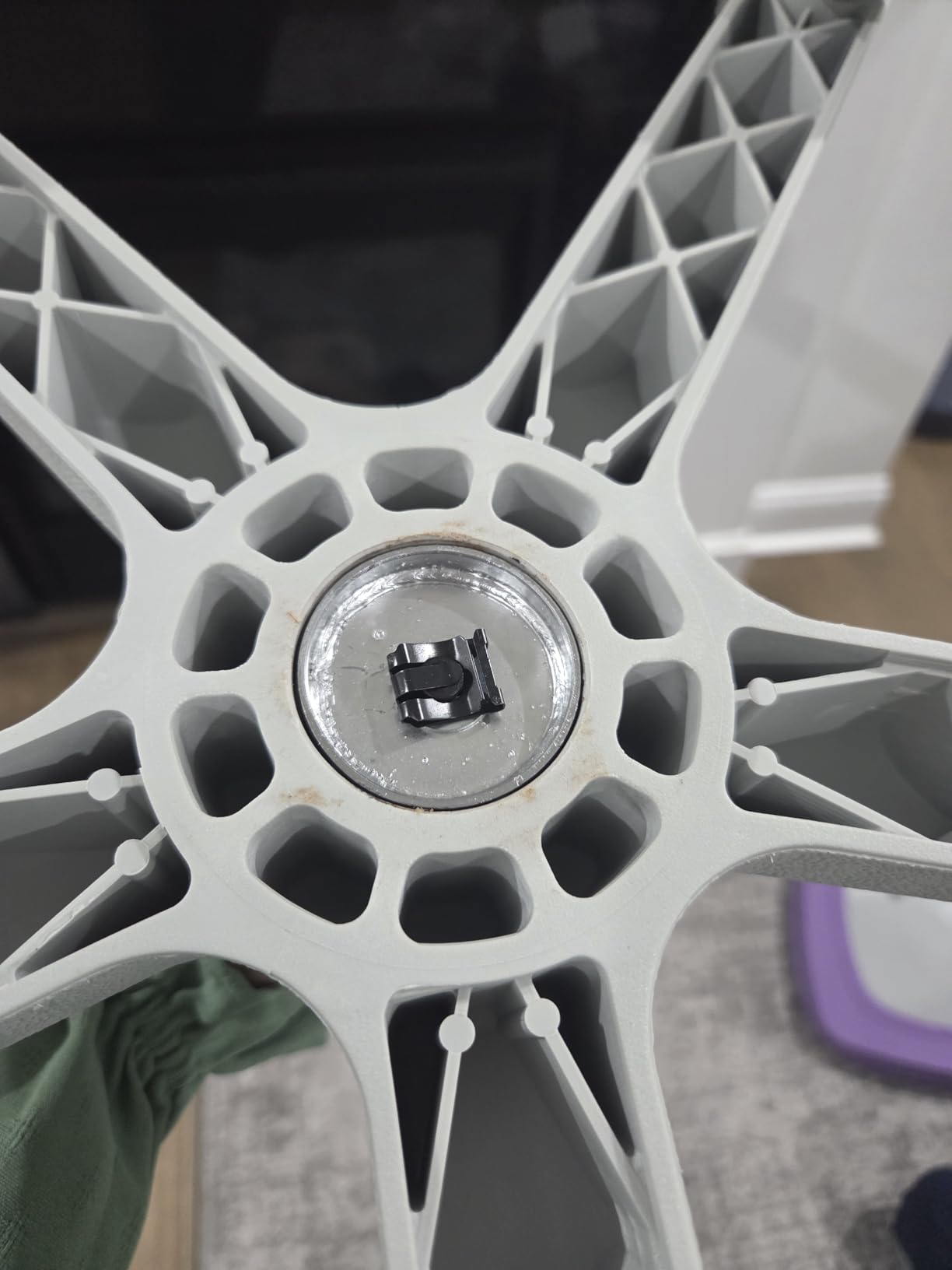
The limitation worth knowing before you commit is the height lever. Several owners report that the gas lift is stiff enough that a younger child cannot push the seat down on their own, so an adult will be lowering it for the first year or two. The second limitation is the hard plastic backrest, which a few parents supplement with a small cushion during long evening sessions.
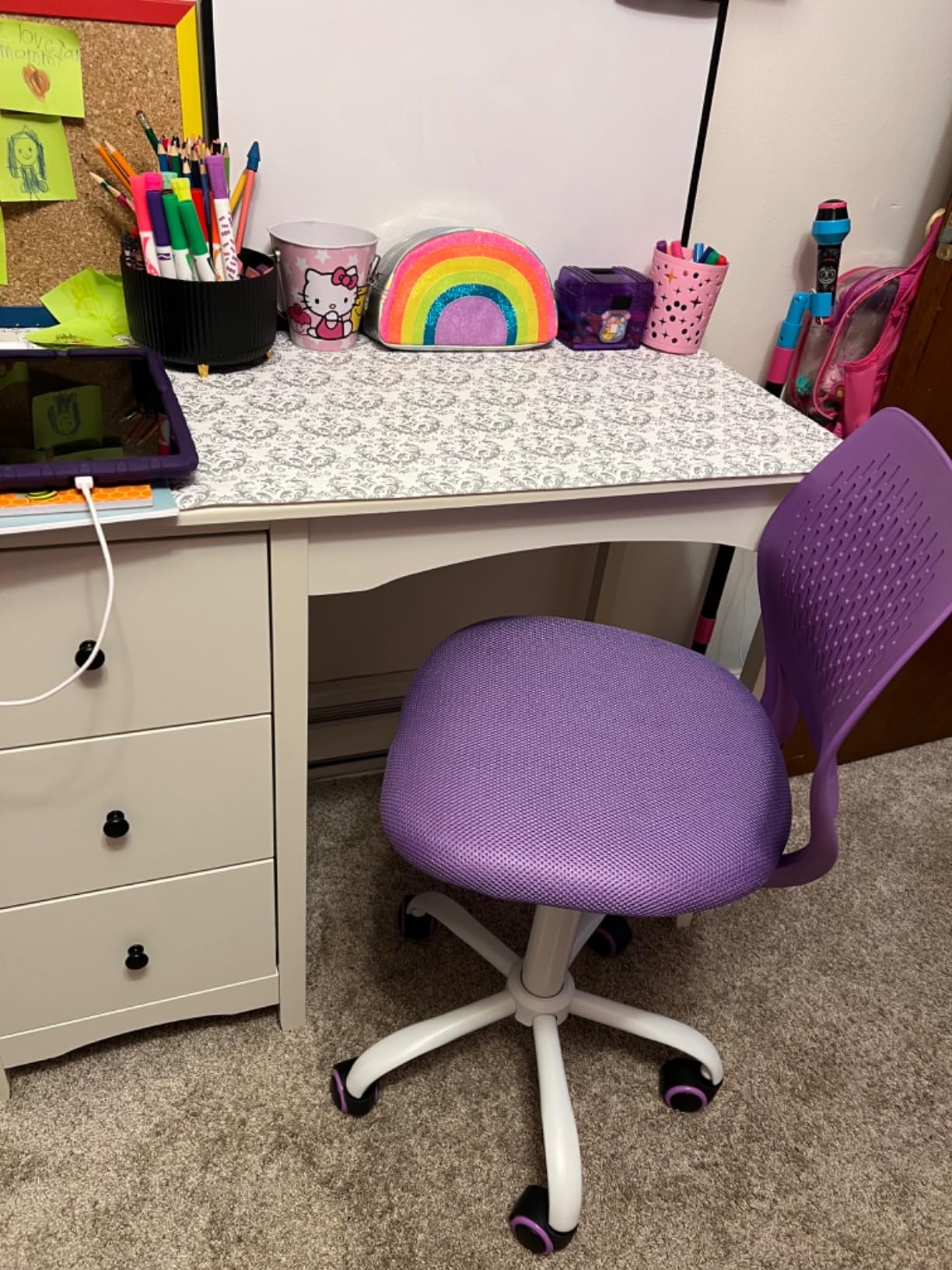
Is the seat height range right for a standard kids desk?
The 16.5 to 21 inch range is the low end of what swivel kids’ chairs offer, and that is exactly why this model fits a typical 24-inch-tall kids’ desk with room to spare. It also means the chair slides fully under the desk rather than colliding with the apron, which solves a problem for compact bedroom setups.
The trade-off is that it will not reach a raised or drafting-height surface. If your desk sits above roughly 29 inches, you will want a chair with a taller base range such as the Primy listed below.
When is this the wrong chair to buy?
Skip it if your child is already tall for their age, close to a teen, or needs genuine lumbar support across the lower back. A twelve-inch-to-fifteen-inch-wide back panel does not carry a growing spine the way a curved, Y-shaped backrest does. It is also the wrong pick if the seat needs to be adjustable by the child alone without adult help.
For a tween who needs support, look at the lumbar-support model or the footrest-equipped chair further down. For a younger child, this is hard to beat on value and durability.
2. Primy Kids Desk Chair Pink – Best Value Swivel Chair
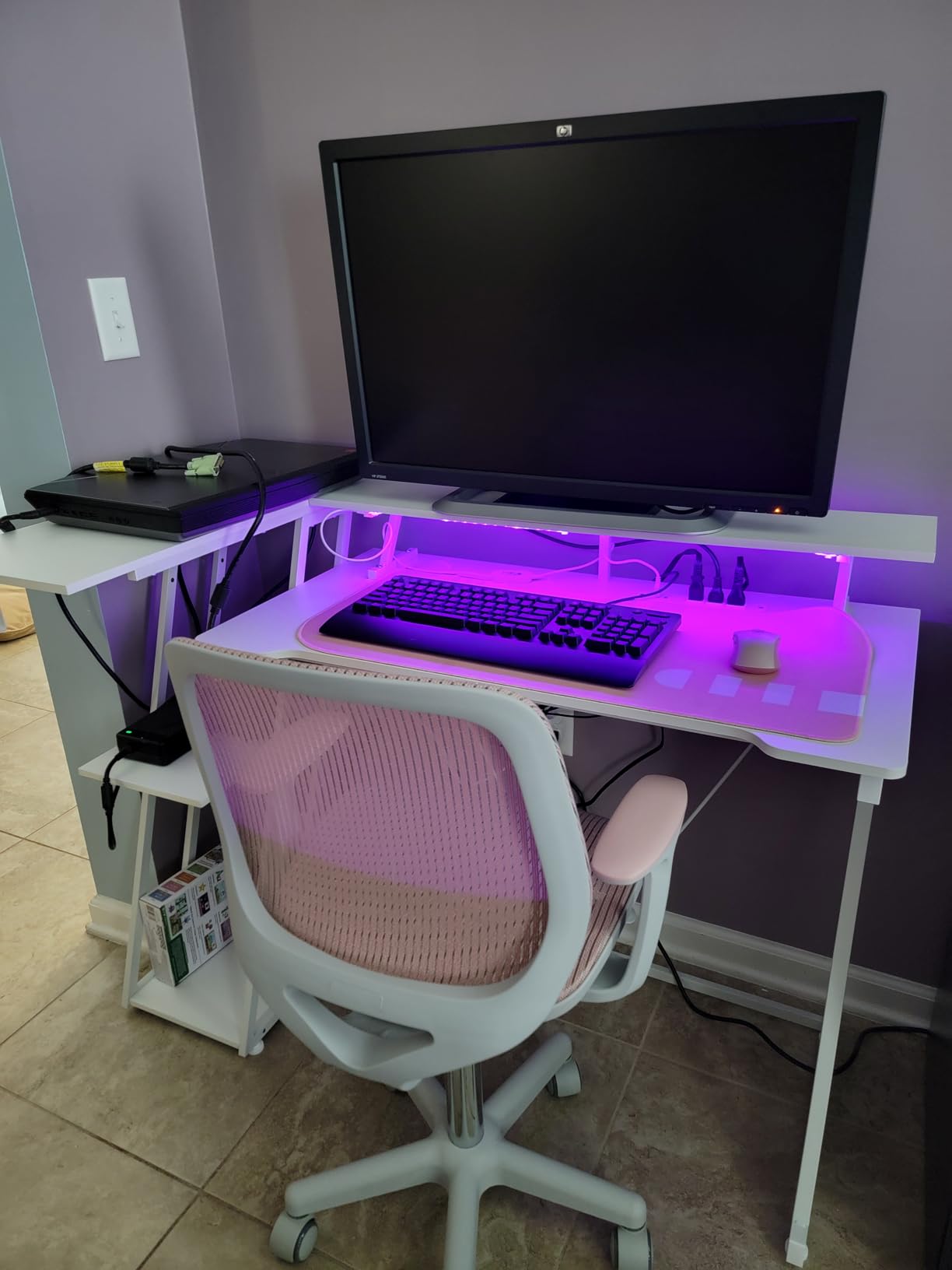
Primy Kids Desk Chair, Pink Study Chair for Boys Girls with Height Adjustable, Swivel Mesh Task Student Chairs for 4-12, Growing Teen Office Chair for Home/School/Office (Pink)
Seat height 16.7-20.7 inches
250 lb capacity
17.5 inch wrap-around mesh back
Foot ring included
Pros
- All hardware and spares packed together
- Assembly in about 15 minutes
- Smooth gas lift and solid base plate
- Breathable wrap-around mesh back
- Foot ring useful at drafting height
Cons
- Mesh shows dirt and pet hair readily
- Plastic seat back flexes
- Sharp unfinished metal on some foot rings
The Primy chair has a taller base range than most of its competitors, running from 16.7 to 20.7 inches, and a 17.5-inch-wide C-shaped mesh backrest that curves around the child’s shoulders. That backrest is wider than anything else in this roundup at the same general size, and it is the reason this chair feels less cramped than a typical armless kids’ seat.
Assembly is one of the better ones we saw documented. Everything arrives in a single labeled packet with a hex wrench, a manual and a video walkthrough, and owners put it together in roughly 15 to 20 minutes. The three-stage air rod and explosion-proof base plate are rated to 250 pounds, which is a real load rating for a child chair.
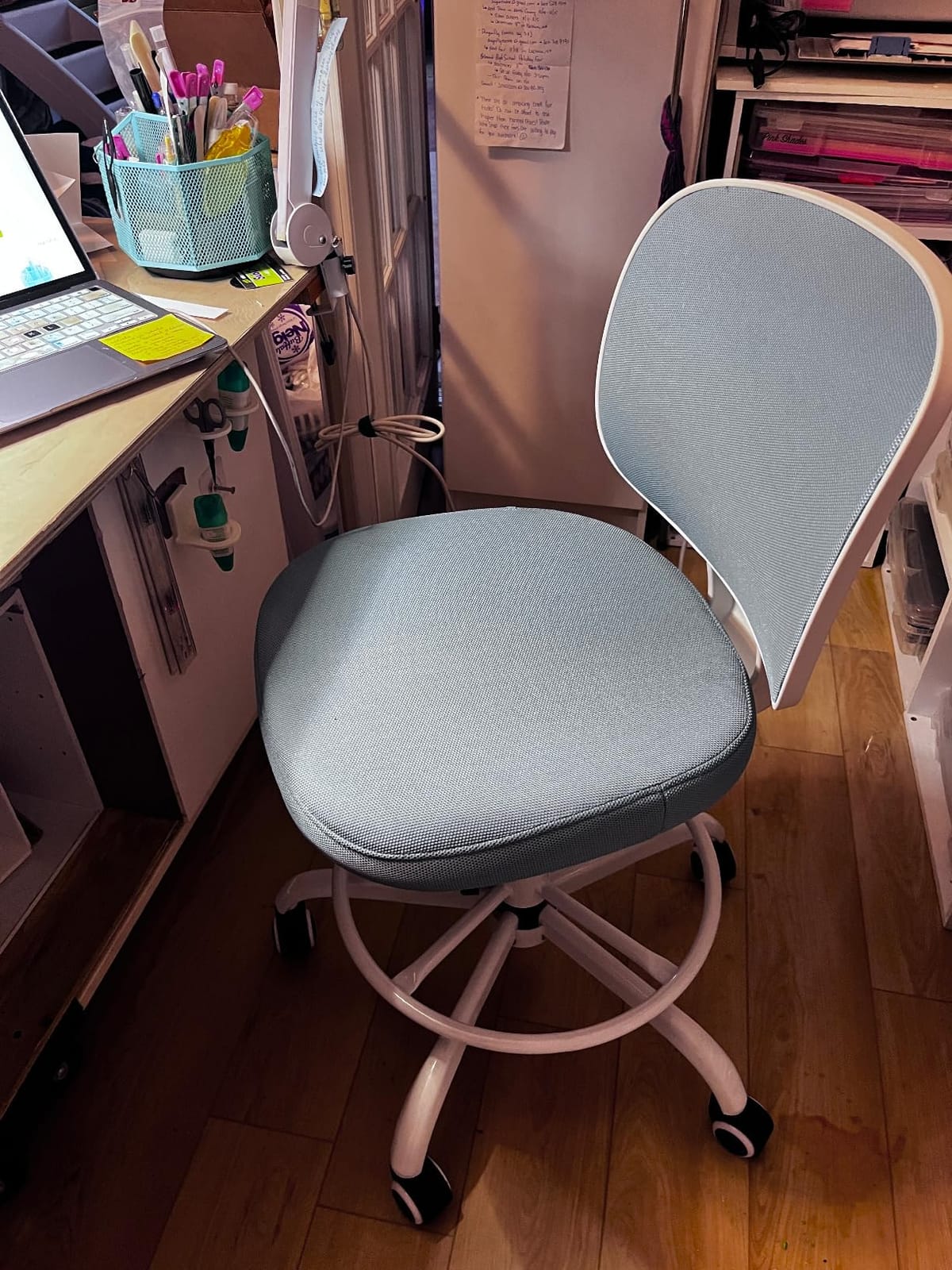
Two things separate it from the pack. First, the foot ring, which turns the chair into a usable drafting-height seat and stays put rather than swinging. Second, the packaging, with foam and bubble wrap around the base, and reviewers note the chair arrives without damage.
The honest drawback is the mesh. Light-colored mesh is breathable and cool, but it shows dust, thread, pet hair and crumbs readily, and a child can slide around on it during writing. Several owners also note flex in the plastic seat back, and a few received units with unfinished metal on the underside of the foot ring that needed filing before use.
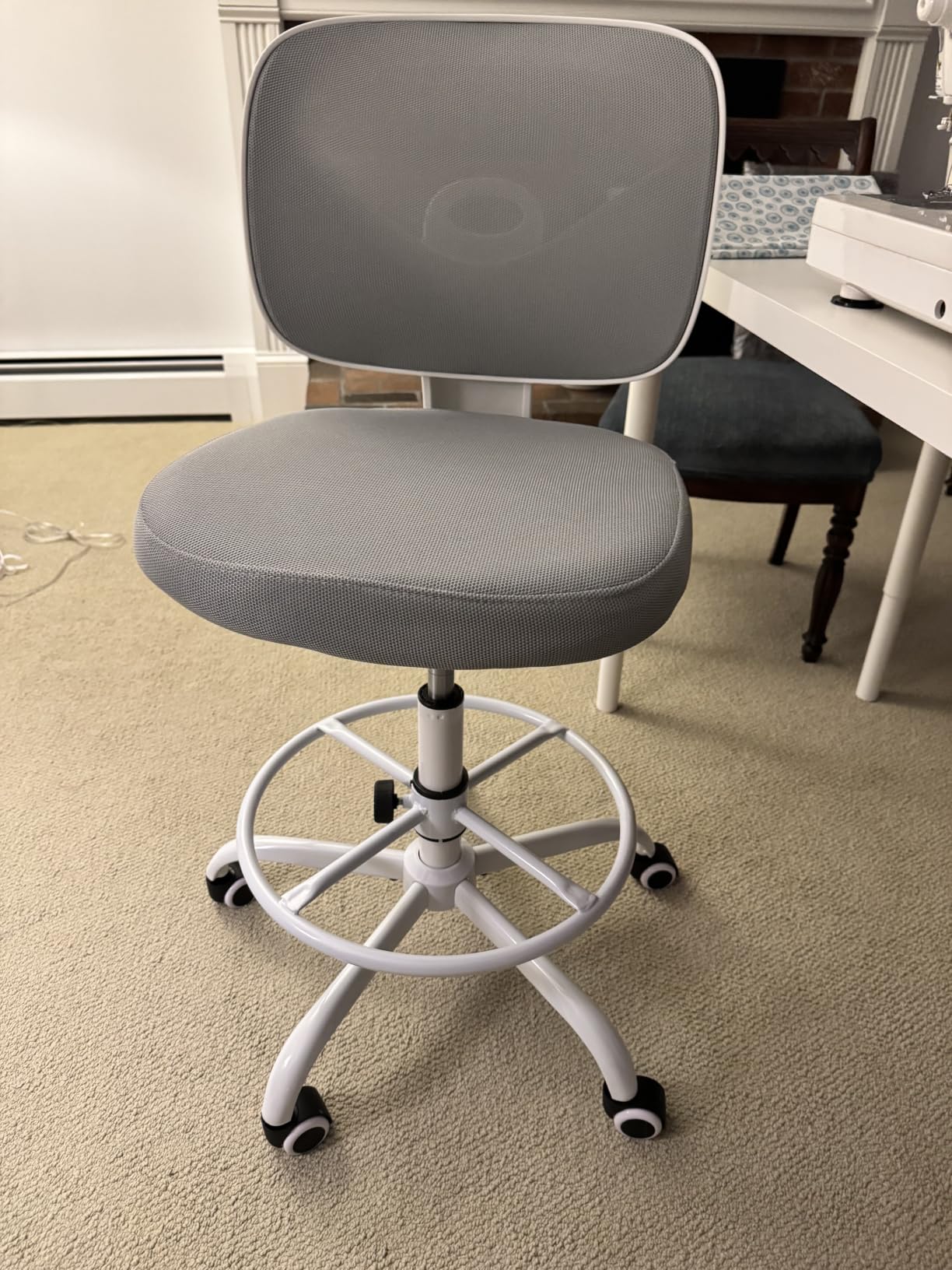
Does the taller base help or hurt with a low desk?
It helps if your desk is a raised sit-stand model or a drafting table, because the 20.7 inch top of the range is taller than most rivals. It hurts if your desk is very low, because the chair may not compress enough to tuck under the apron, leaving the child sitting at a fixed height with a gap to the desktop.
Measure the underside of your desk apron before choosing, and compare it against the chair’s compressed height. The foot ring is not a substitute for this, since it hangs below the seat rather than letting the seat descend.
Is the wrap-around back worth the mesh drawbacks?
For a child who slouches forward during homework, yes. The C-shaped back gives the shoulder blades something to lean against and gives a parent a visible surface to check posture against, which a flat slat back does not. If your child is a messy eater who eats at the desk, a wipeable seat is likely the more important feature.
Owners also report using this chair for adults, which tells you the frame is built past a child’s needs. That is a reasonable durability signal when you are trying to buy once and grow into.
3. HONEY JOY Kids Desk Chair Grey – Best Built Kids Desk Chair
HONEY JOY Kids Desk Chair, Height Adjustable Children Study Chair, Swivel Mesh Task Student Chair, Universal Casters, Child Computer Desk Chair for Boys Girls Age 3-10 (Gray)
Seat height 16-21.5 inches
330 lb capacity
Y-shaped back with armrests
Removable washable cover
Pros
- Highest average rating in the group
- Assembly in roughly 15 minutes
- Removable washable cushion cover
- 330 lb capacity outlasts growth spurts
- Five color options
Cons
- Cushion fabric shows stains over time
- Wheels auto-brake so the chair will not roll while seated
- No rocking or recline
This is the highest-rated chair in the roundup, with a 4.7 average and roughly 85 percent of reviews at five stars. It is also one of the few chairs here that combines armrests, a 330-pound capacity and a removable cushion cover, which is an unusual amount of hardware for a child-sized seat.
The seat height runs from 16 to 21.5 inches, so it covers a 5.5 inch adjustment range, the joint-widest on this list. A Y-shaped back support sits behind an ergonomic backrest, and the whole seat swivels 360 degrees on universal casters. Assembly takes about a quarter of an hour with illustrated instructions and all hardware included.
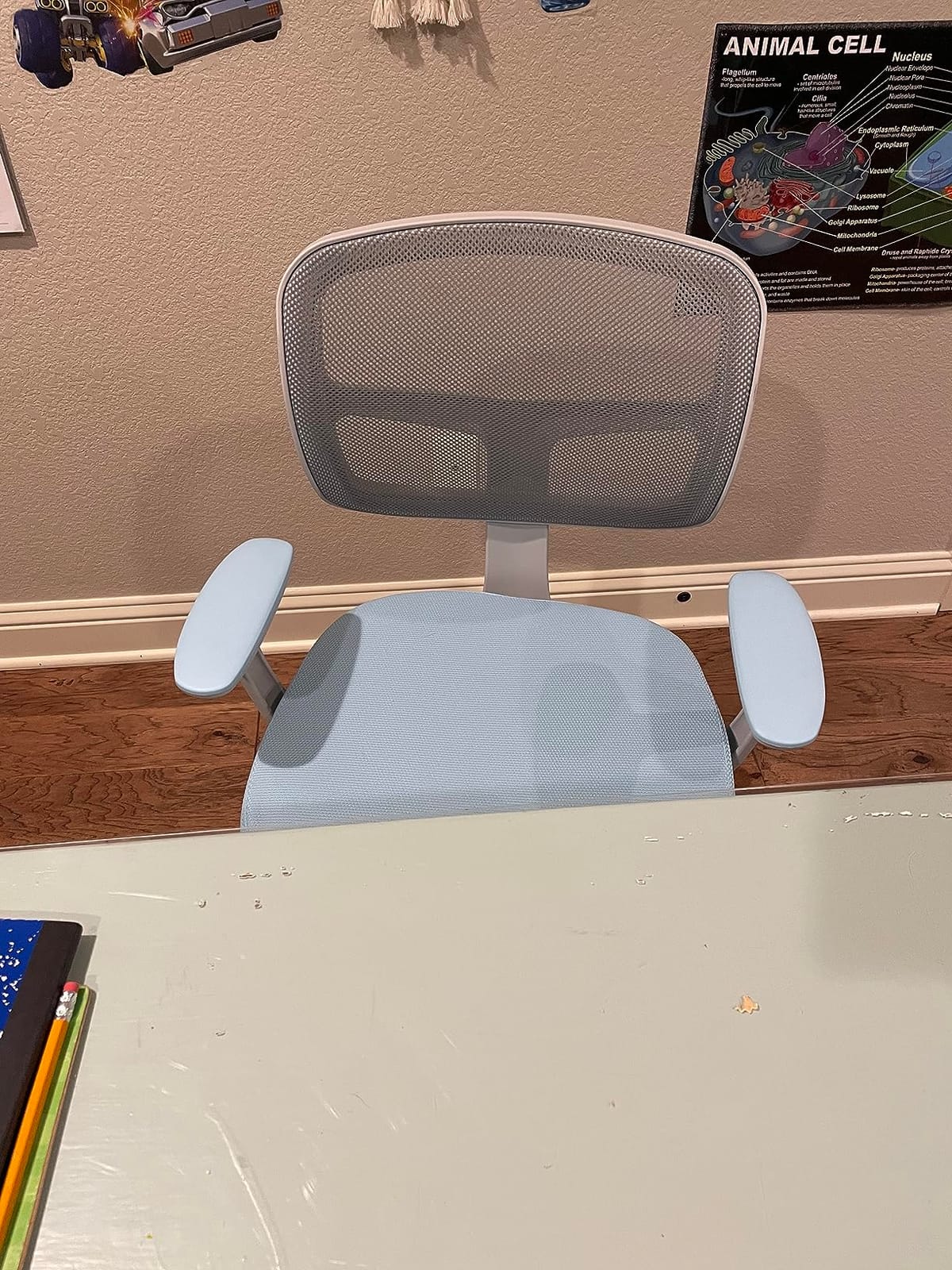
The removable high-elastic sponge cushion with a detachable cover is the feature parents mention most, because it is the difference between wiping a spill and scrubbing a stain. It comes in green, pink, grey, purple and blue, which covers most bedroom color schemes.
The wheel behavior is the dividing line. These casters auto-brake once a child sits down, so the chair stops rolling while occupied. Some parents call that a safety win and others call it an annoyance, and the same mechanism means a light child may not be able to sink the seat to its lowest setting without help.
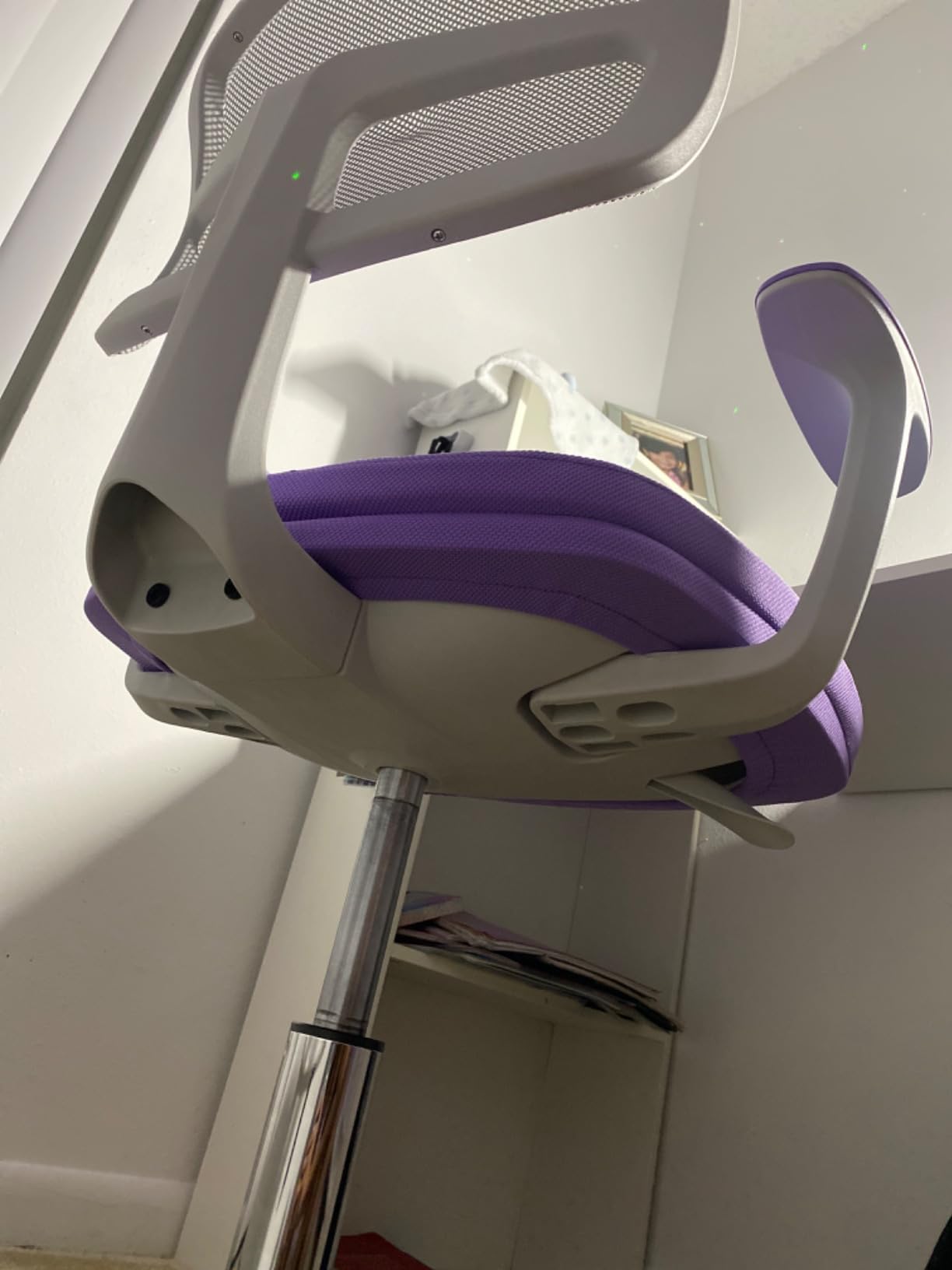
Are the auto-braking casters a feature or a problem?
It depends on your child. For a child who kicks off with their feet mid-writing, or who climbs on furniture next to the desk, wheels that lock on weight remove the roll-away and tip risk that parents complain about most. For a child who needs to scoot sideways constantly while thinking, the same feature will frustrate them.
This is also the mechanical reason the auto-brake is worth knowing about before purchase. It is a weight-triggered system, not a lever, so it engages and releases on its own.
Is a 330 pound rating realistic for a child chair?
It is a frame rating rather than a promise of adult comfort, and we would not treat it as a two-person chair. What it does mean is that the base plate and gas lift are not the weak link, which is where cheaper chairs fail first. Several owners report the chair still looks new after extended use.
Because this model does not rock or recline, a few younger children were disappointed. If movement while seated is what your child needs, that is a signal to look at active seating instead.
4. MINPINSER Kids Desk Chair with Footrest – Best for Taller Kids
Kids Desk Chair,Ergonomic Study Chair with Adjustable Height,Swivel Mesh Desk Chair with Wheels,Home Office Chair for Children in Home Bedroom Grey
Seat height 17.3-21.3 inches
260 lb capacity
Adjustable footrest
Arms adjust through 90 degrees
Pros
- Built-in adjustable footrest for leg support
- Sturdy enough for an adult to sit in
- Fits taller kids and high desks
- Stain and discoloration resistant fabric
- Compact enough for loft-bed desks
Cons
- Sits higher than most kids chairs so measure your desk
- Height lever needs more force than a small child can apply
- No headrest
This is the chair to look at if your child is tall for their age or your desk is a high sit-stand model. The seat height range of 17.3 to 21.3 inches sits higher than most of the category, and the built-in adjustable footrest is the feature that separates it from everything cheaper on this list.
A footrest solves a problem that no amount of height adjustment can: a child whose feet cannot reach the floor even with the seat at its lowest. A 17.3 inch seat depth, a mesh backrest with a back cushion, and armrests that adjust through 90 degrees to slide under a table complete the package. Buyers rate it as the premium tier of this roundup.
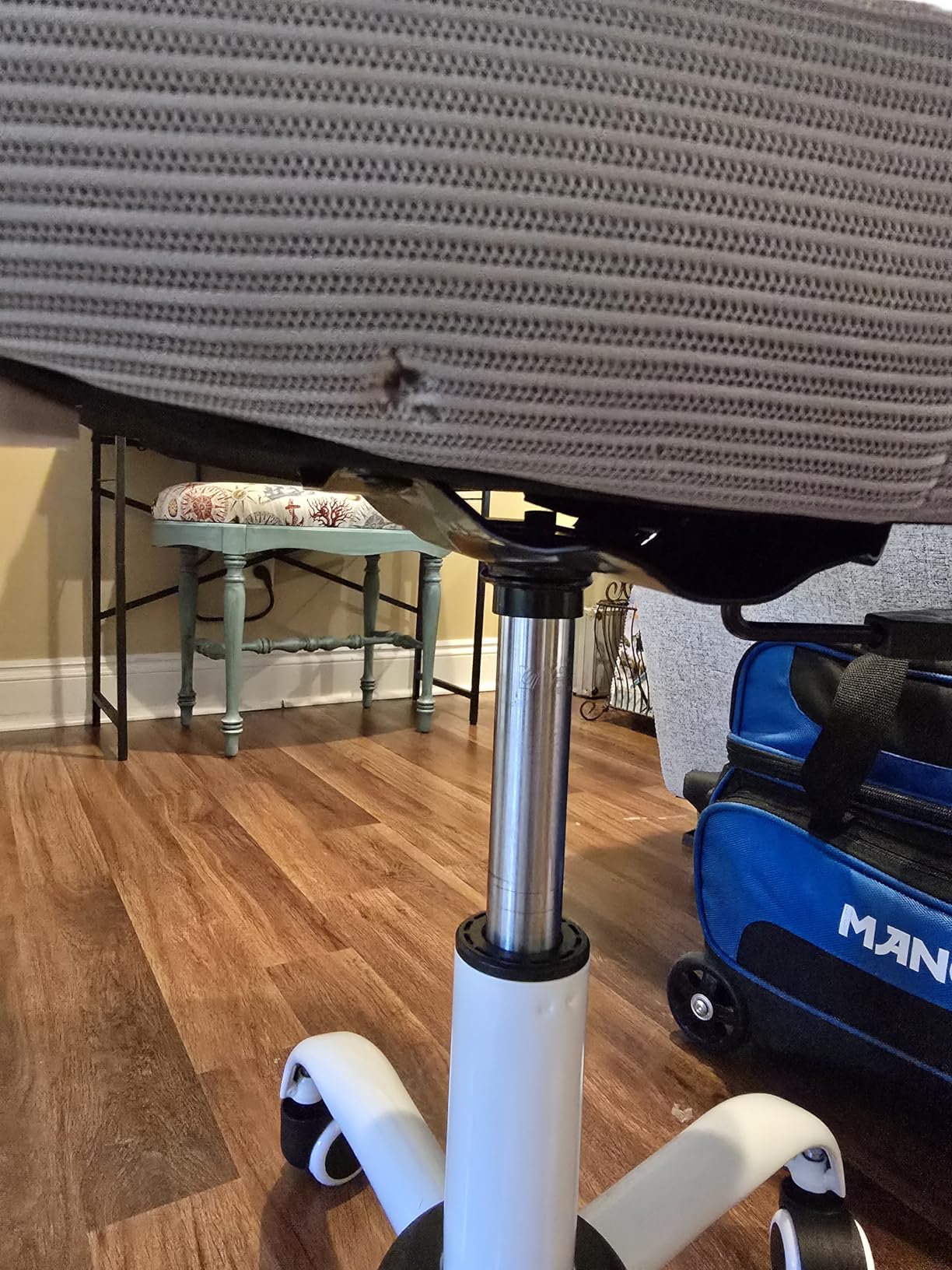
Owners consistently call the build solid, with several noting it holds up over months and can take an adult sitting on it briefly. The fabric resists staining and discoloration better than the mesh or plush options here, which matters in a room where the chair doubles as a reading seat.
The single most common caution is fit. Because the chair sits higher than most children’s chairs, parents are urged to measure their desk first, and several report that a small child cannot lower the seat alone because the lever takes more force than they can apply. Assembly is also a little less straightforward than the competition, and some units arrived without a manual.
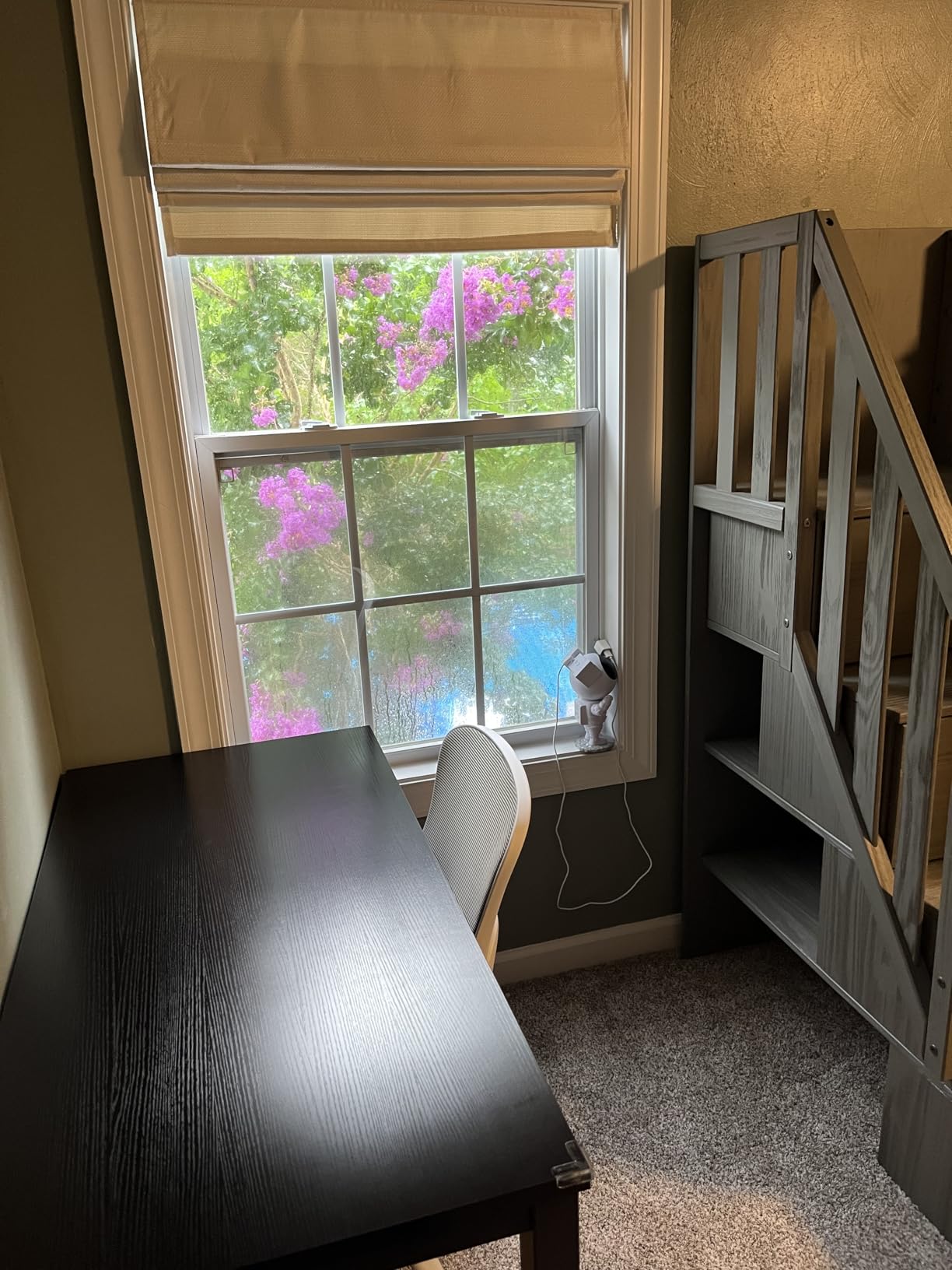
When does a footrest actually solve a problem?
When your child has outgrown the seat height range of a cheaper chair but is not ready for an adult chair. If the seat bottoms out and the feet still dangle, raising the chair does not help because there is no range left. A footrest gives the legs somewhere to land and restores the 90-degree knee angle that keeps a child from slouching forward.
If your child’s feet already reach the floor comfortably in every chair you have tried, a footrest is a nice-to-have rather than a need, and one of the cheaper models below will do the job.
Will this fit a low kids desk?
Measure first. A 17.3 inch minimum seat height is a poor match for the very lowest kids’ desks, and the armrests add width that can catch on a desk apron. Parents with standard mid-height desks report no problem, and the arms tuck under cleanly once rotated.
There is no headrest, so a child who slumps back rather than forward may still need a reminder to sit up. The wipe-clean fabric is one of the easiest surfaces here to maintain.
5. Amazon Basics Kids Adjustable Mesh Chair – Best for Low Desks and Younger Kids
Amazon Basics Kids Adjustable Height Mesh Low-Back Swivel Desk Chair with Footrest, Rolling Computer Chair for Student Homework, Green
Pneumatic height adjustment
360-degree swivel
Removable footrest
BIFMA compliant build
Pros
- BIFMA compliant frame
- Removable footrest for smaller children
- Breathable mesh back stays cool
- Easy to wipe clean
- Quiet swivel and repositioning
Cons
- Low back gives less lumbar support than taller models
- Foot pedal and low range suit younger children
- Six percent of reviews at one star
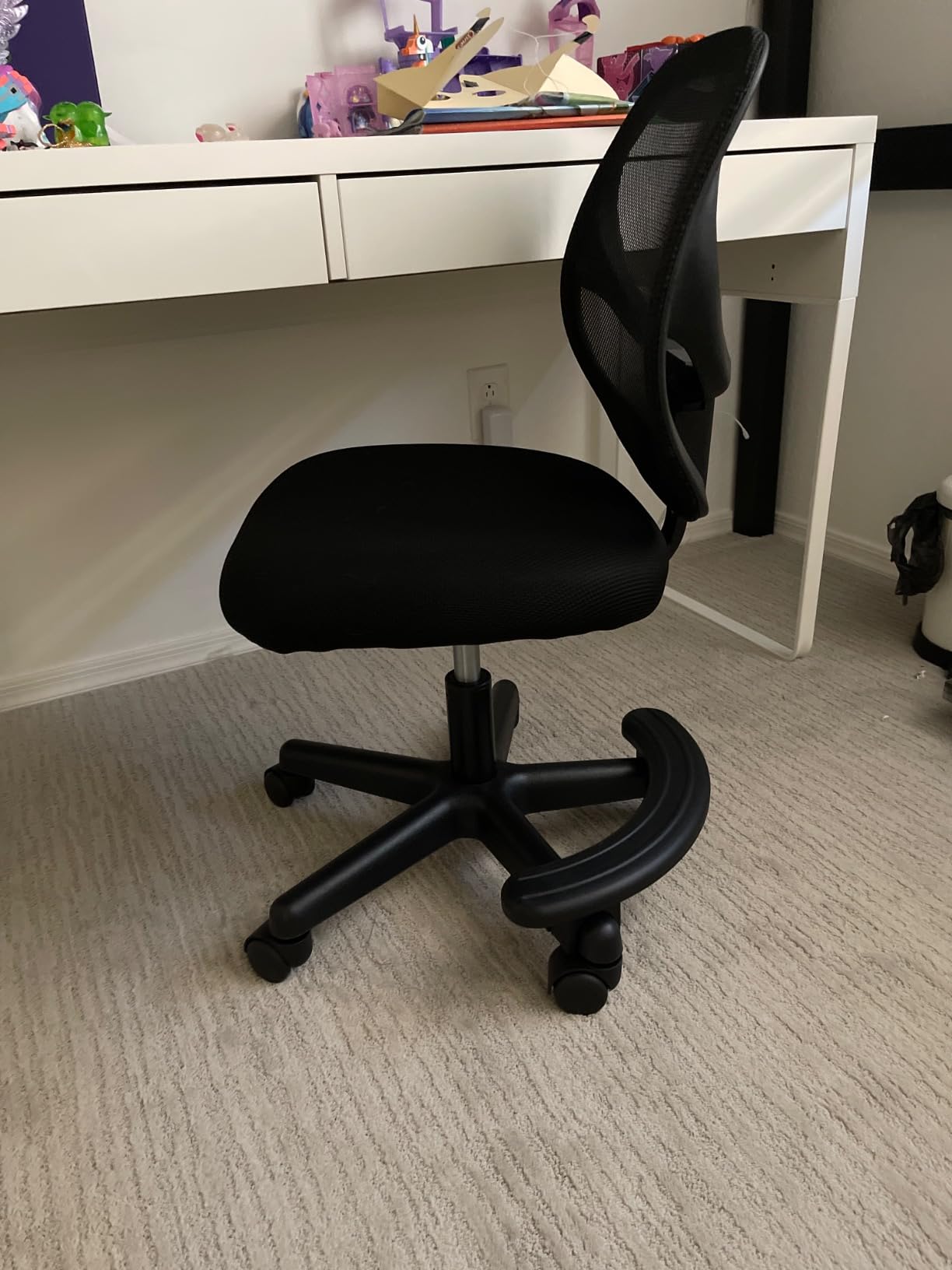
This chair comes from a brand with a broad first-party line rather than a marketplace listing, and it meets the BIFMA standard that many of the cheaper swivel chairs in this category do not. That compliance detail matters more than it sounds, because it ties the frame and base to a recognized durability test.
The feature that sets it apart for younger children is the removable footrest. Combined with a low seat height and a 16.93-inch-wide padded seat, it lets a smaller child reach the floor even when the chair itself bottoms out. The contoured low mesh backrest and padded seat stay breathable through long homework sessions, and the whole surface wipes clean.
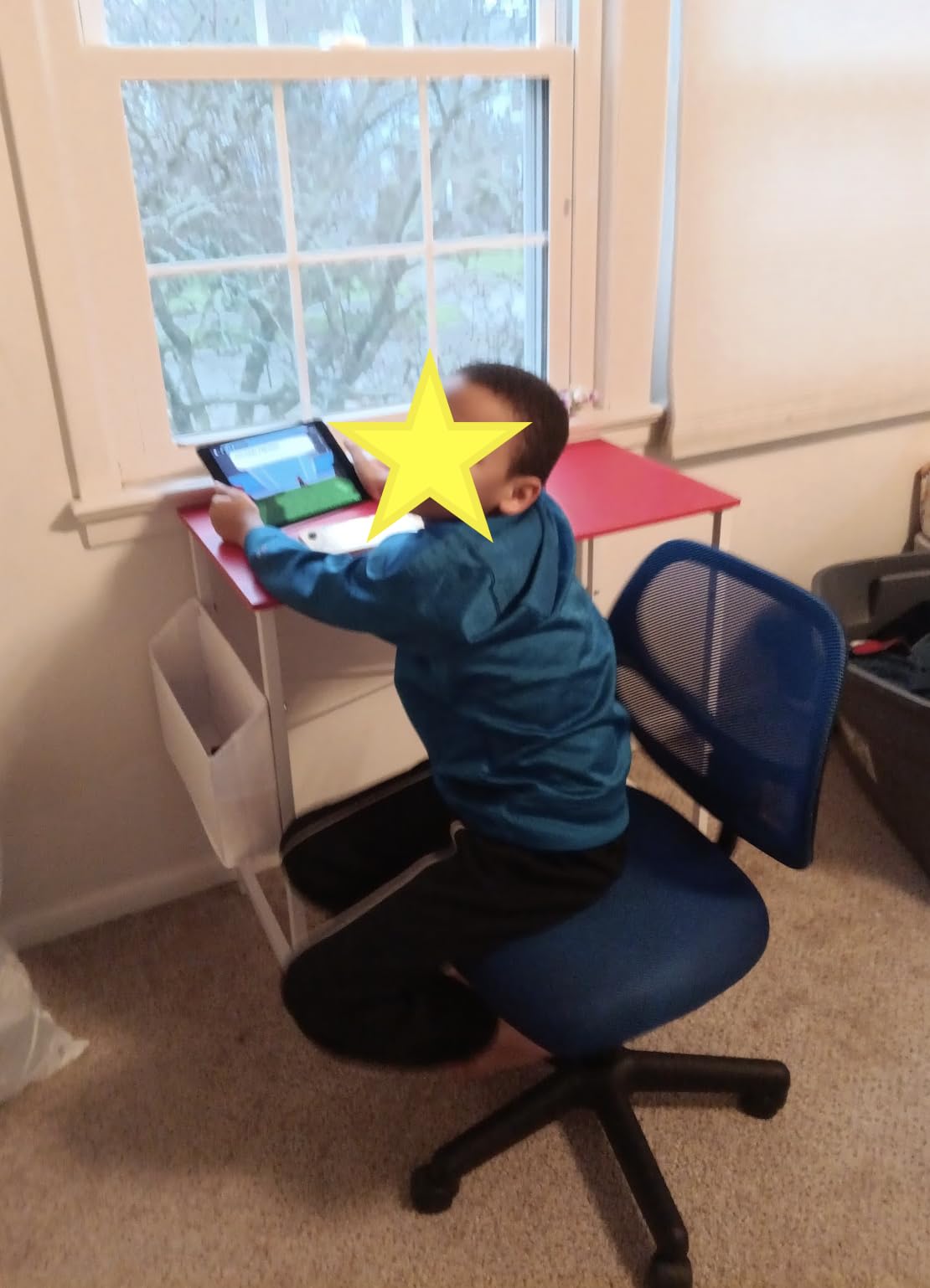
Assembly requires some work, and it comes with instructions but not the hand-holding of the other picks here. Pneumatic height adjustment and a 360-degree swivel make repositioning easy, and reviewers generally describe the build as dependable for crafts, homework and computer work.
The honest drawback is the low back. A contoured low mesh backrest is comfortable and cool, but it sits well below the shoulder blades, so it provides less lumbar support than the taller Y-shaped backs in this roundup. A small share of reviews also flags build or longevity concerns, and the design suits younger children more than tall tweens.
Is a low back a real problem for a child under 10?
Not usually. For a child doing 20 to 30 minute homework blocks, breathability and a padded seat matter more than lumbar depth, and the mesh keeps a child cool in a warm room. The limitation shows up when homework stretches into a two or three hour evening session, or when a child is already slouching before they sit down.
If you can see your child pulling their shoulders forward at the keyboard, move up to a taller back rather than adding a cushion that slides.
Why does the removable footrest matter so much here?
Because it extends the effective fit range of a chair whose seat height is already at the low end. When the chair reaches its minimum and the feet still do not touch, a footrest is the only way to close the gap. Leaving it off is fine for a taller child, and detaching it keeps the chair from being used as a step.
The trade-off is a foot pedal that suits smaller children, since a larger child may not engage it easily. The nylon star base and rolling casters are stable across floor types.
6. GIANTEX Kids Desk Chair Blue – Best for Ages 6-11
GIANTEX Kids Desk Chair, Children Armless Study Chair with Adjustable Height, Ergonomic Kids Office Chair with Wheels, Rolling Swivel Mesh Task Desk Chair for Girls Boys Teens, Blue
Seat height 16.5-21 inches
250 lb capacity
12 inch backrest width
10 lb frame weight
Pros
- Light enough for a child to move alone
- Bright colors children like
- Breathable mesh seat and back with sponge padding
- Reinforced gas lift and metal five-claw base
Cons
- Cushioning is thin for long homework sessions
- 12 inch backrest is narrow for bigger kids
- Best suited to ages 6-11 rather than tweens
This model shares a rating of 4.7 with the chair at number one, and it solves a slightly different problem: a child who is not strong enough to move a heavier chair but has outgrown a stool. At 10 pounds, this is one of the lightest options in the roundup, and reviewers specifically call out that a child can reposition it alone.
The seat height adjusts from 16.5 to 21 inches on a reinforced gas lift and a metal five-claw base rated to 250 pounds. Both the back and the seat are breathable mesh over high-density sponge padding, and the backrest is contoured to follow a child’s body curve rather than sitting flat.
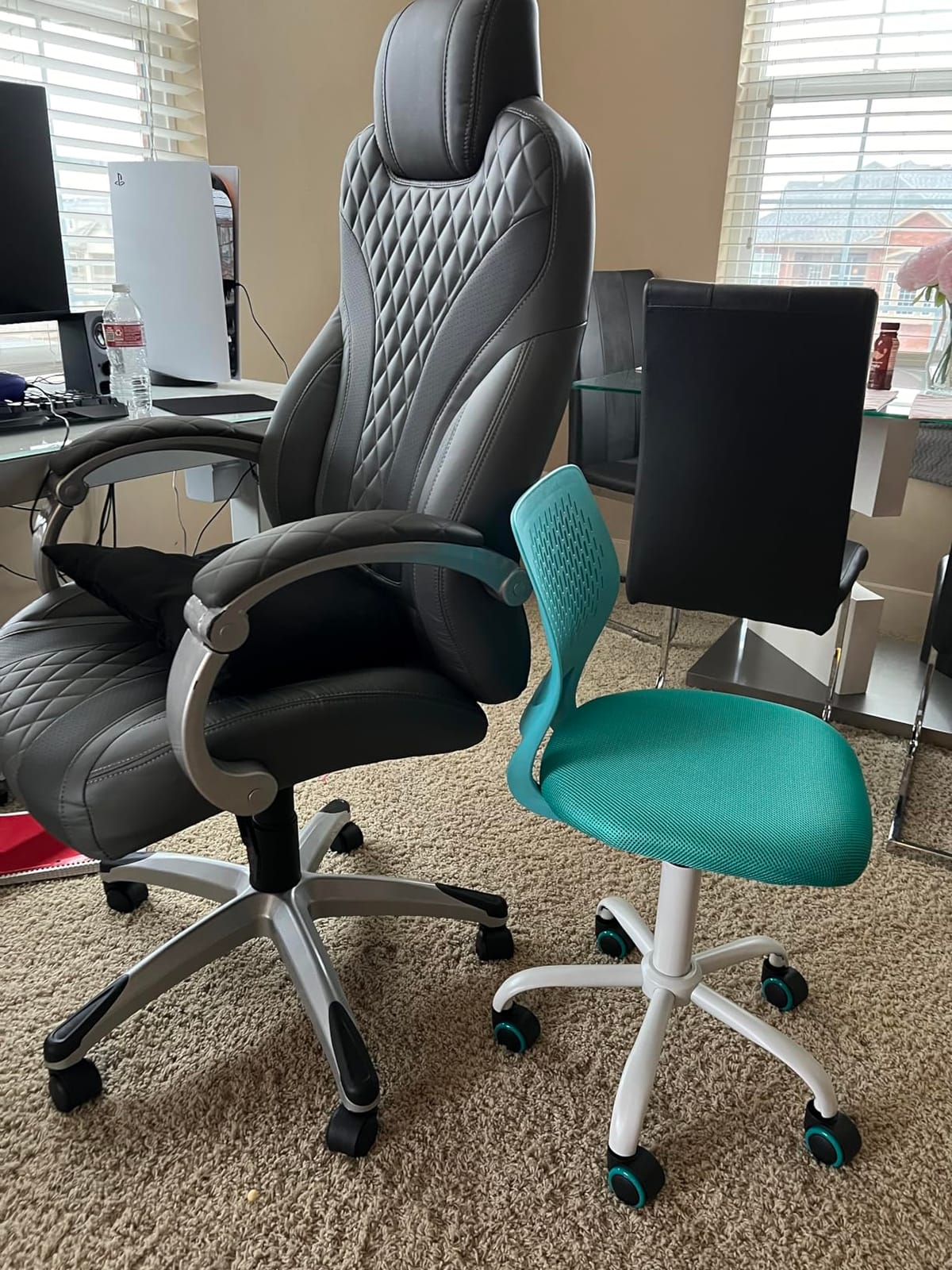
Assembly is simple, and the color range covers rose, turquoise, grey, purple, sage, pink and blue. Parents note the chair suits a wider age range than most kid chairs and can double as a small adult desk chair, which is a reasonable durability signal.
The recurring limitation is that the cushioning is on the thin side. For moderate homework sessions it works well, but it is not a chair for a teenager grinding through hours, and the 12-inch backrest width offers limited support for a bigger child.
Is 10 pounds light enough for a child to manage?
It is light enough that a seven or eight-year-old can drag it across a carpet or reposition it in a tight room, which removes a daily friction point. Heavier 17 to 21 pound chairs in this roundup require an adult to move, which defeats the point of a chair in a child’s own room.
The flip side is that a light frame can be tipped by a child leaning back aggressively, so this is not the pick for a heavy-footed sitter who rocks in the chair.
When should a parent move up to a bigger chair?
Move up when the child is roughly eleven or twelve, or the moment homework sessions run past an hour. The narrow back and thin cushion are fine for a primary-school workload and marginal for middle-school volume, and a 12-inch-wide back simply cannot hold a wider frame in place.
The good news is that the seat height range here overlaps with the more supportive models, so a sibling of a similar size can share the same desk setup.
7. VIVO Children’s Desk Chair – Best Kids Desk Chair Without Wheels
VIVO Gray Children’s Desk Chair, DESK-V201G-CH
Seat height 12.6-15.7 inches
Solid steel frame
150 lb capacity
No casters or swivel
Pros
- Solid steel frame that rarely tips
- Screw-in height adjustment that grows with the child
- Rubber feet protect floors
- Light enough to move between rooms
- 3-year manufacturer warranty
Cons
- Fixed four-leg design with no casters or swivel
- 150 lb limit is lower than swivel rivals
- Bottom screws can loosen if a child leans back
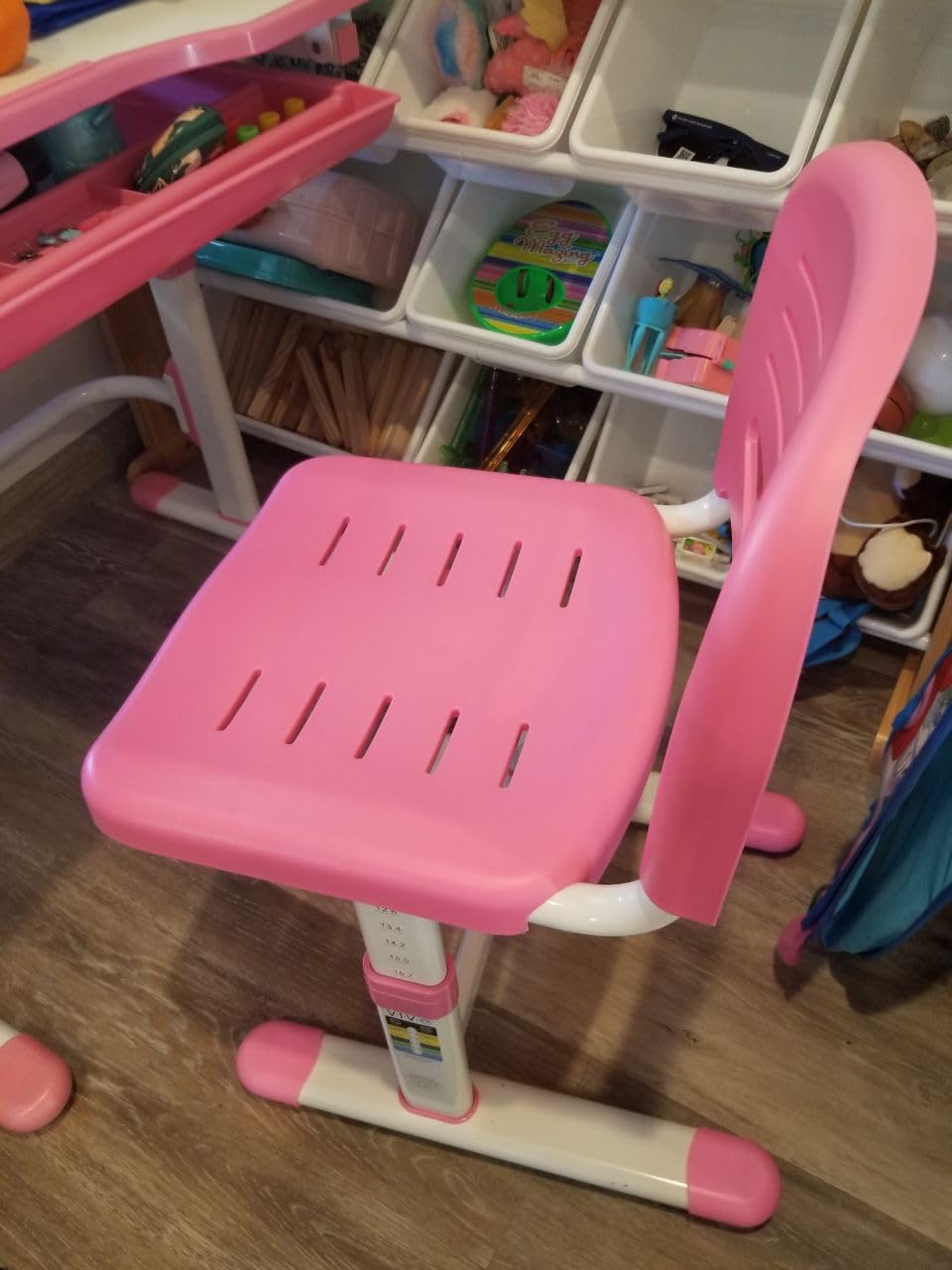
This is the chair to buy if wheels are the thing you are worried about. It is a fixed four-leg design with a solid steel frame, slightly elevated leveling feet and rubber floor protectors, and it does not roll, swivel or tip. For a three or four-year-old who climbs on furniture, removes a whole category of risk.
Height adjustment is screw-in rather than gas lift, moving from 12.6 to 15.7 inches, with markings printed on the chair leg so you can set the height quickly as the child grows. The recommended range is ages 4 to 10, and the supportive back gives a child something to push against when standing up from the seat.
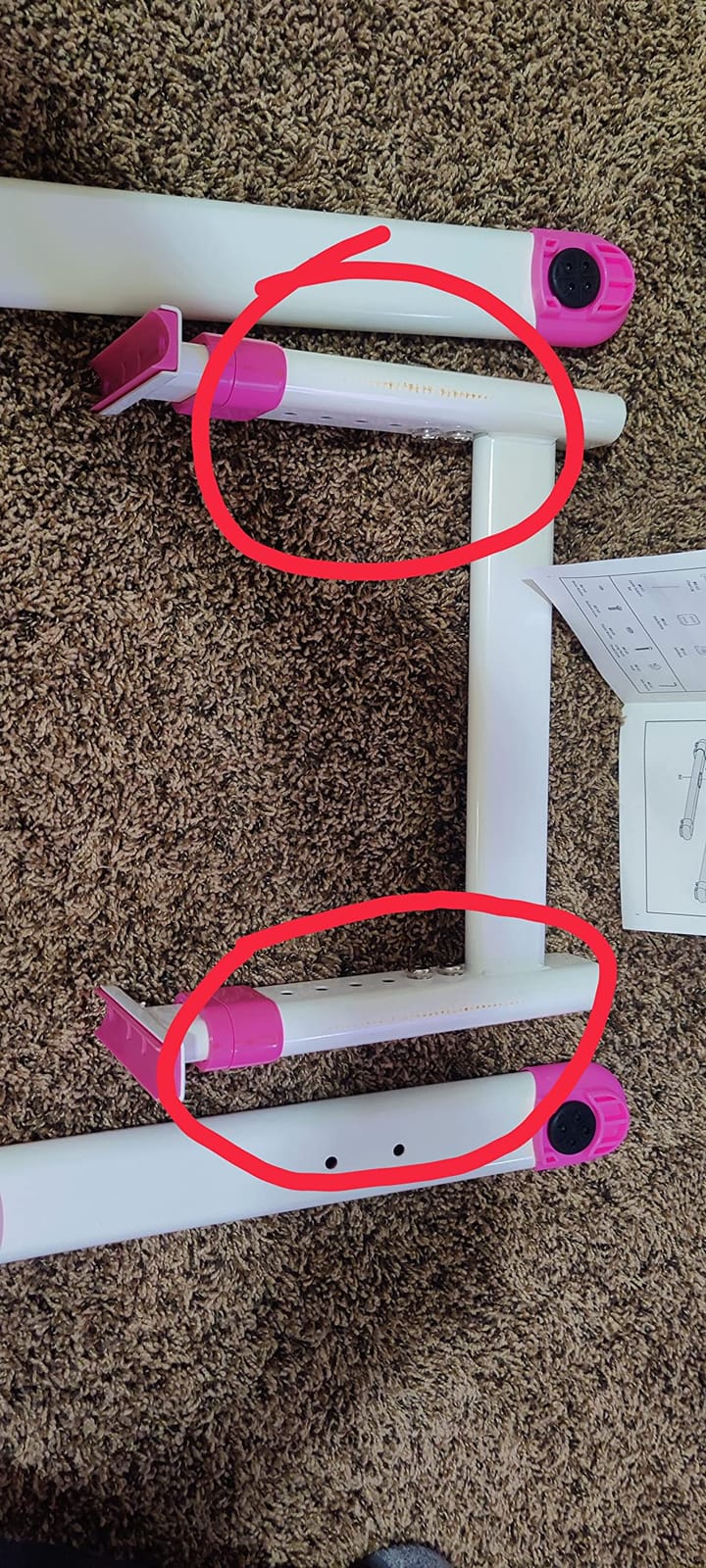
Owners treat this as a durable, long-term piece. Several reuse it for gardening or as a perch elsewhere in the house, which tells you the frame outlasts the task. The universal design works with most kids’ desks on the market, and it comes with hardware, step-by-step instructions and a 3-year manufacturer warranty.
Two limitations are worth weighing. The 150-pound capacity is the lowest here, which matters for a tall child approaching a growth spurt. And because the legs are screw-fixed, a child who leans back hard can gradually loosen the bottom screws, so a periodic tightening is worth doing.
When is a no-wheel chair the right call?
When your child is under about seven, when the room has hard floors near other furniture, or when a rolling chair has become a daily source of arguments. Parents on parent-community boards repeatedly name wheels that roll away as the number one deal breaker, and a four-leg base is the simplest fix there is.
It is also the right answer if the desk is in a small bedroom corner where a five-star base would keep hitting the wall as the child spins.
Does screw-in height adjustment work as well as a gas lift?
For fit, yes. The 3.1 inch range covers the ages 4 to 10 window, and the leg markings make each setting repeatable, which is easier than a gas lever for an adult adjusting the chair once or twice a year. The downside is that there is no fine adjustment between settings, so the fit is approximate rather than precise.
Given the 150-pound limit, plan to move to a swivel model around the time a child needs shoes for the footwell of a desk chair, which is usually a sign of a growth spurt.
8. GIANTEX Kids Desk Chair with Y-Shaped Lumbar Support – Best Lumbar Support for Kids
GIANTEX Kids Desk Chair, Ergonomic Adjustable Teen Task Chair w/Y-Shaped Lumbar Support, Armrest & Universal Wheels, Mesh Kid Office Chair for Sturdy, Kids Computer Chair for Boys & Girls 4-12, Grey
Height 16-21 inches for 43-60 inch children
330 lb capacity
Wide armrests
Removable washable cover
Pros
- Y-shaped lumbar support encourages upright posture
- Wide armrests guard against falls
- Removable washable cover
- Silent 360-degree casters
- 330 lb capacity for a long life
Cons
- Costs more than armless models
- Bulky 20 inch base needs floor space
- Seat is firmer than plush alternatives
This is the pick for parents whose main worry is posture during long study sessions. The curved backrest is built around a Y-shaped support structure that sits in the lumbar region, and that is a real design decision rather than a decorative curve. The height range is specified for children 43 to 60 inches tall, running from 16 to 21 inches.
The wide armrests are described by the manufacturer as guarding against falls, and they are noticeably wider than the standard armrests on the armless models. Combined with a 330-pound star base, silent 360-degree casters, and wide armrests, this is a chair built to be leaned on and pushed around without complaint.
The seat is a high-resilience foam cushion with a removable cover, which makes cleanup straightforward and extends the life of the chair. Assembly takes roughly 15 minutes with illustrated instructions, and the chair is 20 by 20 by 31.5 inches.
The trade-offs are size and feel. The 20-inch base takes more floor space than the armless options, which is a real constraint in a compact bedroom, and the seat reads as firmer than the plush upholstered alternatives. It also costs more than the simpler armless GIANTEX models, so you are paying specifically for the back support and arm width.

What does Y-shaped lumbar support actually do?
It gives the lower back a surface to press into, so a child can lean back into the chair instead of collapsing forward over a worksheet. The curved backrest follows the spine’s natural curve rather than presenting a flat plane, which reduces the slouch that shows up when a child leans over a laptop or writes on the floor.
It does not correct posture on its own. A child who never leans back will not benefit from the shape, so it works best alongside a habit of checking posture every half hour.
Is the wider armrest design worth the extra size?
For a child who scoots, climbs or shifts weight unpredictably, yes. The armrests create a barrier that keeps a shifting child inside the seat rather than half off it, and they also give a tween somewhere to rest their arms while reading rather than pulling their shoulders up.
Measure the space between the desk and the nearest wall or bed first. On a 20-inch base with a 20-inch footprint, this chair needs roughly 5 square feet of clear floor and will not tuck into a tight corner the way an armless model does.
9. Costzon Kids Desk Chair Pink – Best Kids Desk Chair to Gift
Costzon Kids Desk Chair, Adjustable Children Study Computer Chair with Arms & Wheels, Student Swivel Rolling Task Chair, Ergonomic Kids Office Chair for Boys Girls Age 4-12, Home Bedroom School, Pink
Overall height 31.5-36 inches
330 lb capacity
Y-shaped lumbar support
Removable washable cushion
Pros
- Assembly in about 10 minutes with labeled parts
- Removable washable cover with a child in the house
- Sturdy and well built for the tier
- Quiet wheels that do not mark the floor
- Bright finish a child actually likes
Cons
- A child who is not heavy enough cannot lower the seat alone
- Some units had unresponsive casters that needed replacing
- Less supportive than deeper-backed chairs for long sessions
This chair shows up constantly as a birthday or holiday gift, and the reason is packaging as much as the product. Every part is individually labeled, assembly takes close to ten minutes, and the pink finish reads as a present rather than as office furniture. That combination is rare in this category.
The build is a 330-pound capacity frame with a Y-shaped lumbar support, a deep seat and armrests, a thick high-density sponge seat, and a breathable mesh back. The whole unit swivels 360 degrees on five universal wheels, and the cushion is removable and washable. The listed height range is 31.5 to 36 inches overall, and the age range is 4 to 12.
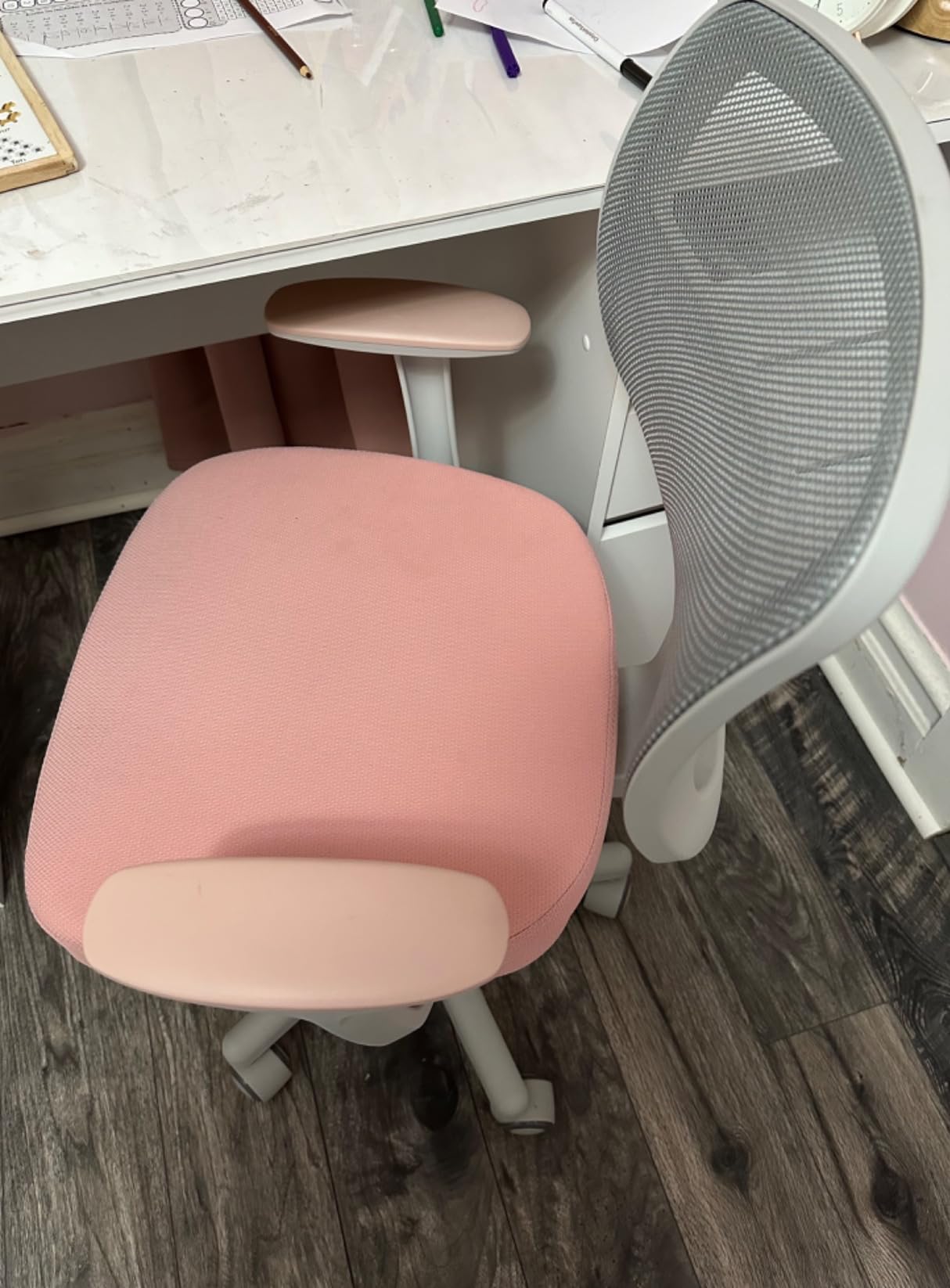
Owners describe it as sturdy for the price tier, holding up through years of use, and it rolls smoothly and quietly without marking a wood floor. The removable cover is the single most-cited practical feature, because a chair at a child’s desk will be spilled on.
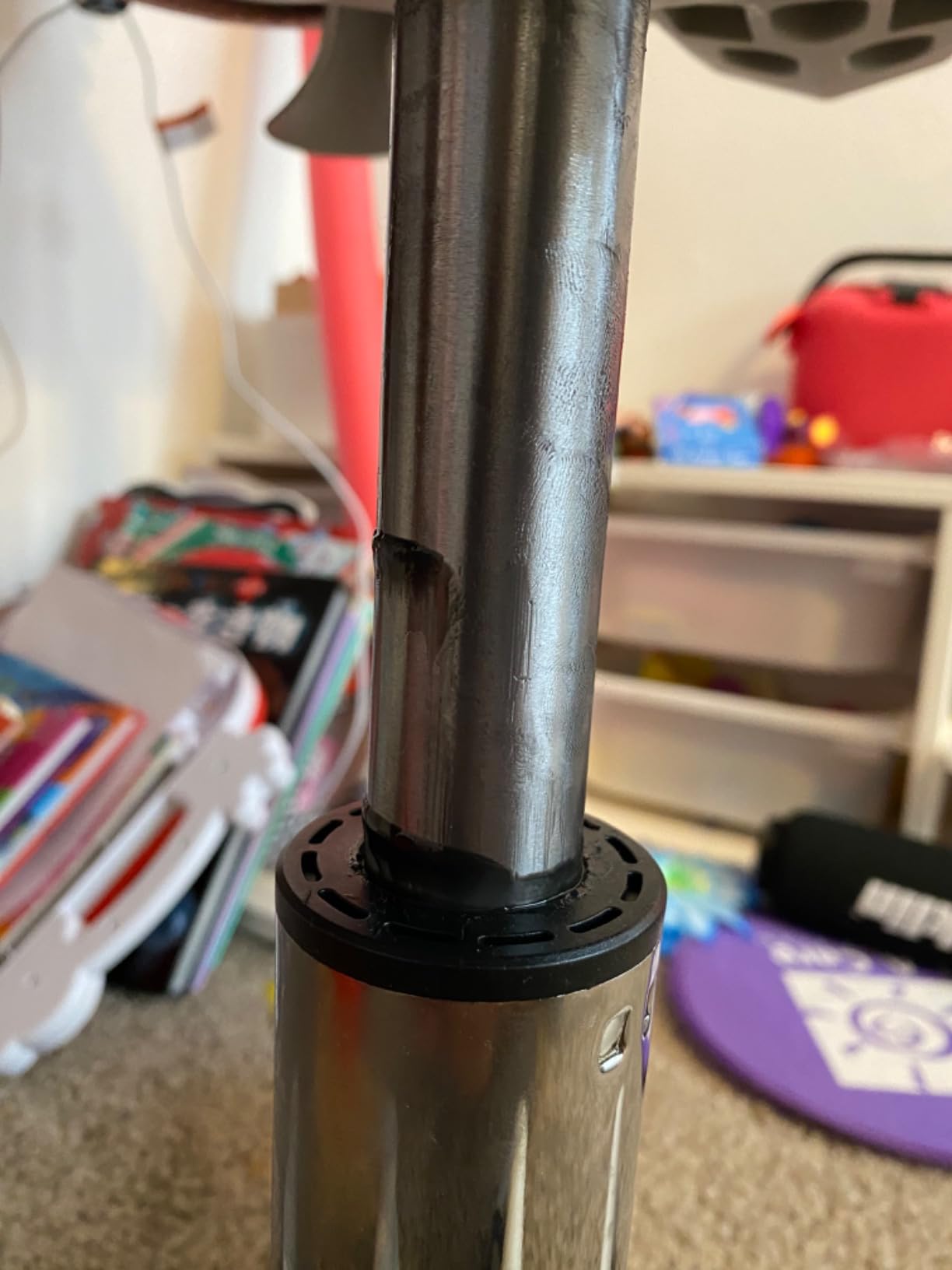
Two mechanical issues recur. The gas lever is stiff enough that a light child cannot push the seat down without adult help, and a small number of buyers had to replace the casters because the wheels arrived unresponsive. The mesh back is also shallower than the deeper-back models, so it supports long sessions less well.
Why is this easier to give as a gift?
Because the person assembling it is often not the person using it. Labeled parts and a short assembly time mean a grandparent can put it together in a single sitting, and a removable washable cover means the new owner does not have to worry about the first spill. Bright, non-clinical colors also make it feel like a gift rather than a piece of office equipment.
If you are buying for someone who will use it for intensive homework rather than light study, look at a deeper-backed model instead.
Is a 330-pound rating here realistic?
It describes the frame, not the comfort level for a full-grown adult. The practical value is longevity: a 330-pound base is not the component that fails first, so this chair should stay usable through a child’s growth from 4 to 12 rather than needing replacement at 8.
Check the caster wheels when the chair arrives, since unresponsive rollers are the one defect buyers report. They can be replaced, but it is better to know on day one.
10. FurnitureR Rolling Study Mesh Chair – Best for Small Bedrooms
FurnitureR Rolling Study Mesh Desk Chair, Ergonomic Armless Compact Adjsutable Swivel Task Chair with Soft Cushion ad Plastic Mid-Back for Students Teens Children Kids, Sky Blue
Pneumatic height adjustment
360-degree swivel
15 inch seat depth
10 lb frame weight
Pros
- Compact armless frame tucks under a small desk
- Entry-level price with swivel and height adjustment
- Breathable mesh padded seat with foam fill
- Light enough for a child to reposition
- Four color options
Cons
- Molded plastic mid-back gives less support
- No armrests for long typing sessions
- Suits children and young teens rather than adults
If the constraint is floor space, this is the chair to measure first. At 15.2 by 15.7 inches across the seat and a 34.2 inch overall height, with an armless frame and a narrow base, it slides under a small desk and into a corner in a way that most five-star bases cannot. It weighs 10 pounds, so a child can pull it out on their own.
Despite being the entry-level option in this roundup, it includes pneumatic height adjustment and a 360-degree swivel, which are not universal at this tier. The seat is a breathable mesh pad with foam fill, and the backrest is ergonomically contoured molded plastic aligned to the spine’s natural curve.
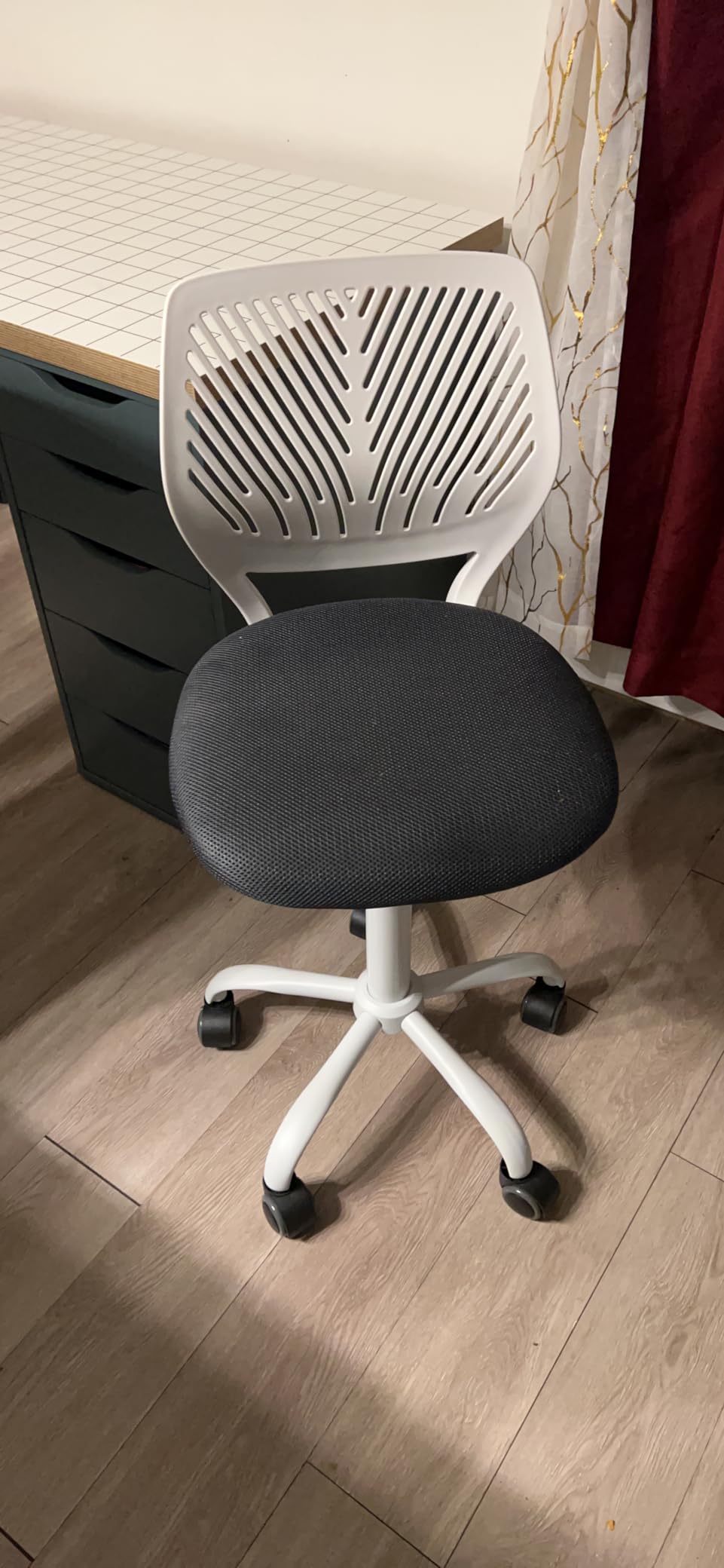
Reviewers pick it for bedrooms, dorm rooms and study corners where space is tight, and they consistently mention the smooth swivel and the easy glide under a desk. It comes in sky blue, rose orange, hot pink and a black and gray combination.
The limitation is support. A molded plastic mid-back is cooler and easier to wipe than a fabric back, but it gives noticeably less support during long sessions than a mesh or cushioned backrest, and there are no armrests. Owners frame it as a chair for children and young teens rather than bigger kids or adults.
How much floor space does a compact chair really save?
Several inches in each direction, which sounds small but is decisive in a narrow bedroom. The five-star bases on the other chairs here push their footprint to roughly 20 inches across, while this chair’s frame is designed to disappear under a desk. A child with a desk in a corner or under a loft bed will feel the difference every day.
The narrow back also means a child sits more upright on their own, since there is less depth to slump into. That is a real benefit for a younger child who tends to fold forward.
Is this chair good enough for a full school year of homework?
For primary-school workloads, yes. Pneumatic adjustment, a swivel and a padded breathable seat cover the basics, and the contoured back is enough to keep a child from hunching over short writing tasks. For a middle-schooler doing two hours of evening work, the plastic mid-back will start to feel cheap, and an armless design gives nowhere to rest tired shoulders.
If you expect to move up a size within two years, spend the difference on a chair with a deeper back and a stated height range that goes higher.
11. Costzon Kids Desk Chair with Sit-Brake Casters – Best for Rolling Safety
Costzon Kids Desk Chair, Height Adjustable Children Study Computer Chair with Armrests, Sit-Brake Casters, Swivel Mesh Task Chair for Boys Girls Teens Students, Kids Chair for Home, Office, School
Ages 6-15 range
330 lb capacity
Sit-brake casters lock above 55 lbs
Tensioned nylon mesh seat
Pros
- Sit-brake casters stop the chair rolling while a child writes
- Wide 6-15 age range
- Breathable tensioned mesh seat and back
- PU wheels that do not damage floors
- Solid build that stays wobble-free
Cons
- Rollers can stop rolling entirely after a few months
- Children under 55 lbs cannot trigger the brake or lower the seat
- Not designed for adult use over long hours
If your child’s chair keeps drifting across the room while they write, this is the most direct fix in the roundup. The five casters are sit-brake type: once a child over 55 pounds sits down, the wheels lock automatically, and they release when the child stands up. That is the mechanism IKEA-style safety guidance points parents toward, and it removes the roll-away problem without a lever or a brake pedal.
The stated age range is 6 to 15, which is the widest in this roundup, and the gas lift adjusts the overall height from 31.5 to 36 inches. The backrest is ergonomically curved with a rounded, sloped front cushion edge that stops the seat front digging into the backs of a child’s thighs.
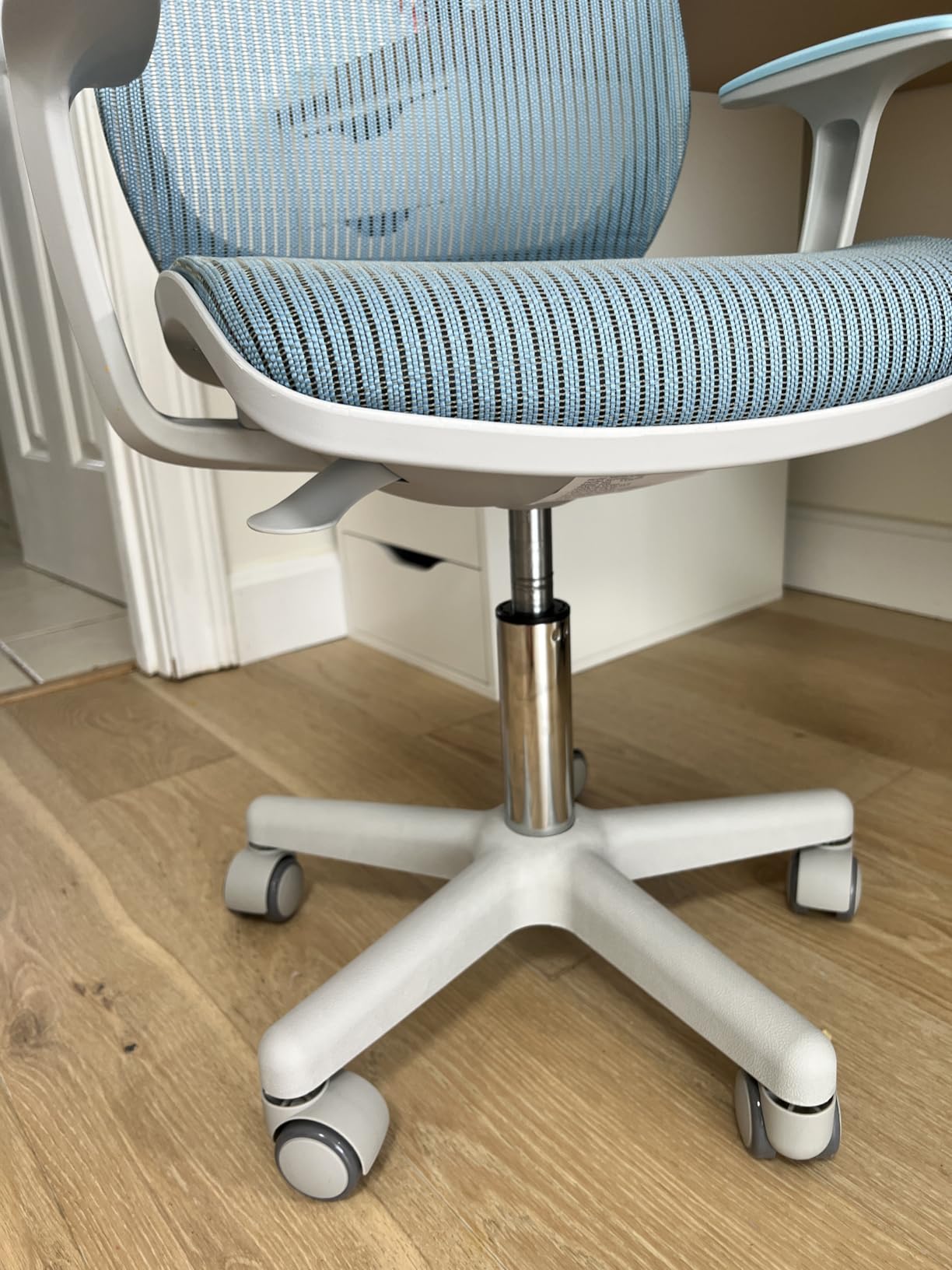
The seat and back are tensioned nylon mesh over a polypropylene support base, rated to 330 pounds, and the PU wheels are designed not to mark a floor. Owners like the fact that the mesh is breathable and comfortable for long sessions, and several report the build still looks new after a year of daily use.
The recurring criticism is mechanical rather than structural. Some owners report the rollers stop rolling altogether after a few months, which turns a safety feature into a chair that only moves when pushed. And because the brake is weight-triggered, a child under 55 pounds cannot engage it or sink the seat to its lowest position, so the practical minimum age is higher than the label suggests for a small child.
Are sit-brake casters better than locking casters?
For a child, usually yes, because there is nothing to remember. A manual lock lever is a control a six-year-old will not think to press, while a weight-triggered brake engages every time without effort. It also removes the need for a brake pedal under the desk, which is one less thing to trip over.
The failure mode is that weight-triggered mechanisms are mechanical and can seize. Check that the chair still rolls when empty, and be aware that a very light child will not trigger it at all.
Is a 6 to 15 age range realistic?
The height range supports it, and the 330-pound frame will not be the limiting factor. What does not hold up is the adult use case: despite the rating, the mesh and back height are built for a child, so an adult would find this uncomfortable well before the frame gave out.
Because this is the least well-rated chair in the roundup, pair it with a firm plan. If rolling safety is the deciding factor, it is still the clearest implementation of that feature here, and the mesh is comfortable enough for long homework blocks.
12. LukeAlon Kids Swivel Sherpa Desk Chair – Best Styled Kids Desk Chair
LukeAlon Kids Swivel Sherpa Desk Chair, White
Seat 14.5 x 18 inches and 2.25 thick
Swivel base 16.5-19.5 inches
Sherpa upholstery
18 inch backrest
Pros
- Plush sherpa upholstery softer than mesh or plastic
- Stylish curved design that suits a bedroom
- Assembly is often just four screws
- Works for reading
- eating and studying
- Swivel base with height adjustment
Cons
- Sherpa needs spot cleaning rather than wiping
- Some owners question sturdiness as the child grows
- Too small and light for adults
- Petite children cannot lower the seat
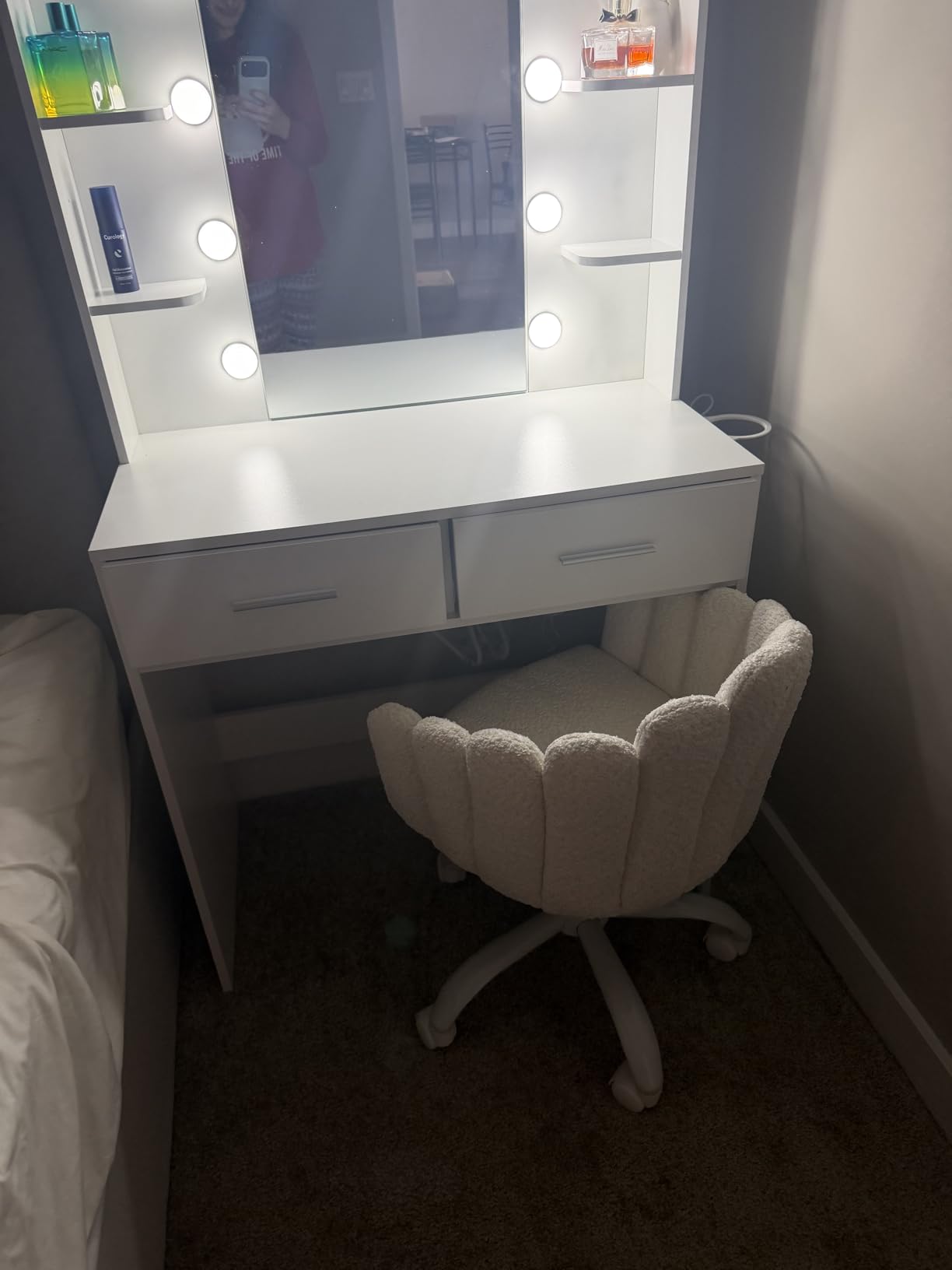
This is the pick when the chair has to look like it belongs in a bedroom rather than a study. The sherpa upholstery and curved-edge backrest give it a reading-chair silhouette, and the white base keeps it visually light in a small room. Parents buying a chair to coordinate with a specific decor scheme tend to land here.
Underneath the styling it is a real swivel chair. The base adjusts from 16.5 to 19.5 inches, the seat is 14.5 inches deep by 18 inches wide with 2.25 inches of padding, and the backrest is 13.75 inches tall with wide armrests for resting a head or a book. Assembly is limited to installing the chair feet with the included tool.
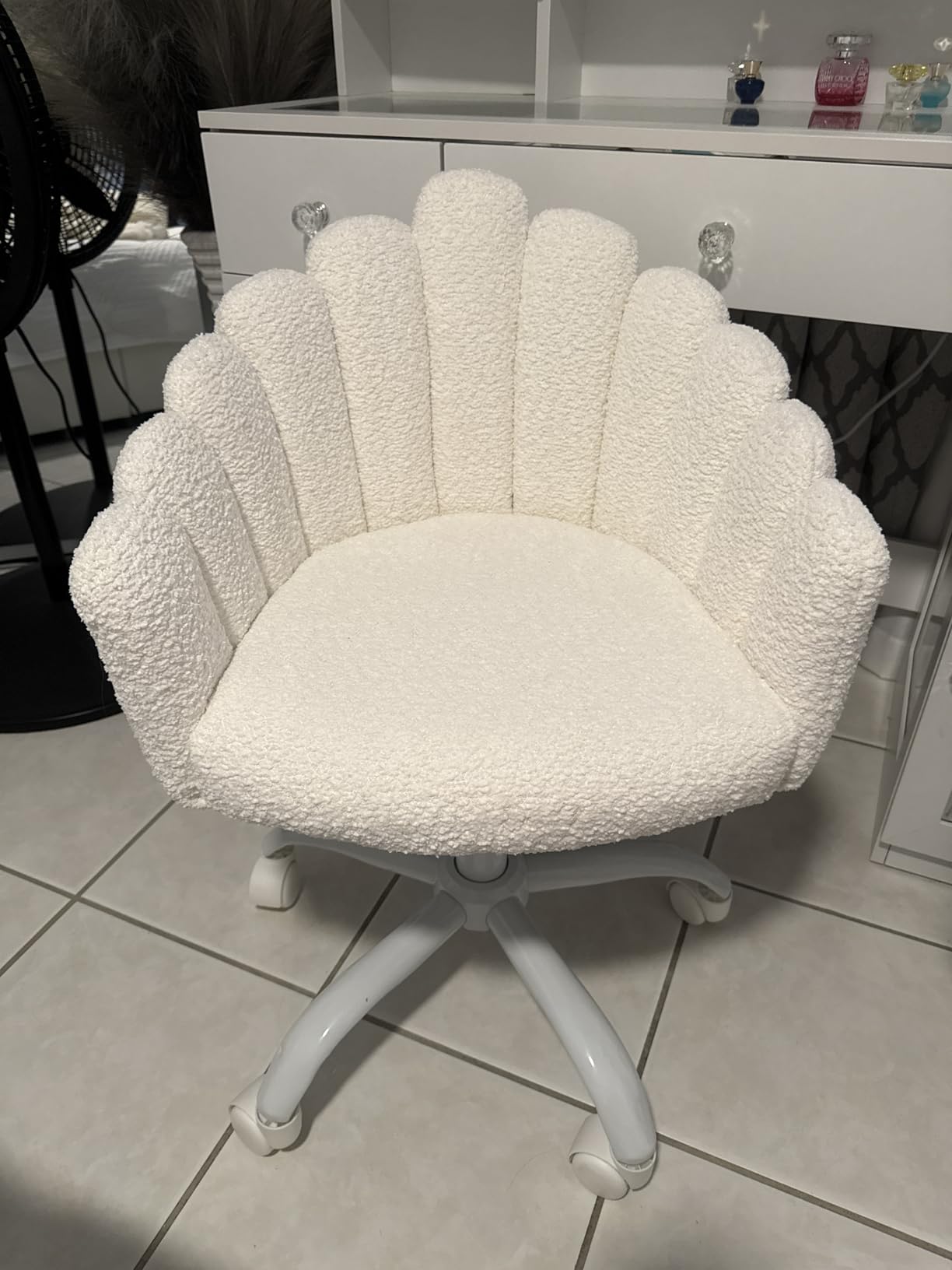
Buyers single out the softness of the sherpa as the main reason to choose it, along with the speed of assembly and the fact that it fits neatly under a child’s desk while serving for reading, eating and studying. It comes in pink, purple, white and a colorful pattern.
There are honest reservations. Sherpa fabric needs spot cleaning rather than a wipe, which is a real drawback in a room where a chair gets spilled on daily. Some owners question the sturdiness for a growing child, and the seat is too small and light for an adult. Petite children also may not have the weight to lower the seat themselves.
Is a sherpa chair practical for daily homework?
For short and medium sessions, yes, and arguably it is the most comfortable seat here for reading. The padding is 2.25 inches thick, which is more than the mesh-and-sponge options, and a soft surface is easier for a child to settle into during a chapter book rather than a worksheet.
It becomes less practical over time because of the cleaning requirement. A wipeable vinyl or mesh seat can be cleaned in seconds after a spill, while sherpa needs spot cleaning and will darken where a child leans.
How long will a plush chair last a growing child?
The 16.5 to 19.5 inch swivel range covers a younger child well, and the wide armrests are comfortable for a small body. Beyond early elementary, the pint-sized 14.5-inch seat depth becomes the limiting factor, and it is a two-year-to-five-year chair rather than a buy-once purchase.
If your child is already close to a tween, spend the extra and buy the footrest model or the lumbar-support chair, which will carry them to ages 13 or beyond.
What to Look For in a Kids Desk Chair
1. Height adjustability and the 90-degree knee rule
This is the single factor that determines whether a child slouches, and it is the one most often skipped. Sit the child on the chair, lower the seat until the underside of the thigh rests lightly on the seat surface, and check that the feet either sit flat on the floor or on a footrest with the knee bent at roughly 90 degrees. If the knees are higher than the hips, the child will slide forward or perch. If the feet dangle, the child will swing and lose circulation in their legs.
Measure your child’s popliteal height, which is the distance from the floor to the back of the knee, and set the seat one to two inches below it. Ranges of three inches or more are worth paying for, because they let one chair cover a two-to-three-year growth window instead of a one-year window.
2. Casters and safety brakes
Wheels are where most of the parent complaints in this category come from. Three mechanisms exist, and parents search for all three by name. Weight-sensitive casters roll only under load, so an empty chair stays put. Self-braking or sit-brake casters lock when a child sits and release when they stand. Manual lock casters need a lever or a brake pedal, which a young child will not remember to use. Below all three sits the no-wheel option, which eliminates the problem entirely and is worth considering for any child under about seven.
The safety concern is not only rolling away. A child who climbs down backwards off a wheeled chair can tip it, and a heavier child on a low-rated base is the worst case. If you want a broader picture of how adults handle the same problem at a full-size desk, our guide to under-desk foot support covers the same fit logic at the other end of the size range.
3. Ergonomics and lumbar support
For a child, ergonomic means three things and not more: a seat that matches leg length, a back that supports the lower back rather than the shoulders, and a surface that does not slide. A contoured or Y-shaped backrest is the mechanism that does the work, and a flat slat back does not. Seat depth matters too, since a seat that is too deep pushes a small child forward onto the front edge where they cannot use the back at all.
Check that the back actually reaches the lumbar region rather than stopping at the shoulder blades. On a child chair, a back that looks supportive in a photo is often only tall enough to press against the mid-back, which is why reading the back height in inches tells you more than the word ergonomic on a listing.
Wobble and active seating versus a conventional task chair
This is genuinely unsettled in parent communities, and we would rather present the tradeoff than declare a winner. Active and wobble seats let a child move while remaining seated, and they show up regularly as the recommendation for children who fidget or who have ADHD. The mechanism is intuitive: a child who needs to move gets a way to move that does not mean leaving the desk.
Against that, a wobble stool gives up the ability to adjust height precisely, and most parents in these discussions note it is a short-task seat rather than a long-homework seat. Our reading of the parent opinion is age-dependent: for a child under nine doing short bursts, movement beats stillness, and for a tween doing two hours of evening homework, a supported, adjustable task chair wins. Neither product type on this list is an active seat, so if movement while seated is the priority, that is a category to shop separately and then pair with a desk.
Which chair to buy by age
For ages 3 to 5, prioritize stability and low seat height. A fixed four-leg frame, a low stool, or a low-base swivel chair with a footrest fits this window, and wheels are a liability rather than a feature at this age. The VIVO and the Amazon Basics model cover it well.
For ages 6 to 9, look for a gas-lift chair with a 4-inch-plus adjustment range and a mesh or contoured back. This is the window where posture habits form, and it is where a child can be trusted to swivel without tipping. The chairs at numbers one, two, three and six all target this band.
For ages 10 to 14, prioritize lumbar support, a stated height range, a weight capacity above 250 pounds, and cleanable upholstery. Weight capacity becomes the honest predictor of whether the chair outlives the growth spurt, because the frame is what fails and it is the part that is hardest to replace. The footrest model, the lumbar-support model and the 330-pound chairs cover this band.
Cleaning, maintenance and finishing your workspace
Cleanability is a top-three parent concern and almost never covered. The ranking runs from best to worst: removable machine-washable covers first, then wipeable vinyl or mesh, then firmly upholstered fabric that needs spot cleaning. Two chairs in this roundup have removable covers, which is why they keep appearing in reviews as the practical choice. A chair that looks better usually loses on this axis, so pick the one your child will not avoid sitting on because of a suspected stain.
Also check the base. Rubber feet protect a wood floor, and PU wheels are designed not to mark a surface, which matters more in a bedroom than in an office. If the chair will live next to a whiteboard for a study wall, our glass desk whiteboard guide covers mounting options that keep the study surface clear.
Does spending more buy better posture?
Sometimes, and the improvement is in specific components rather than overall quality. A higher budget typically buys a deeper backrest with real lumbar shaping, a footrest, a wider armrest, a 330-pound base instead of a 150-pound one, and a removable cushion cover. It rarely buys a sturdier basic frame, because the screws, gas lift and base plate are comparable across tiers.
Given that, a parent who buys once and keeps the chair for three years should spend on the back support and the weight capacity, and economize on the finish. A parent whose child will outgrow the chair in a year should not. One more note: if you are buying a desk and chair together, sets are convenient and cheaper per unit, but the chair is almost always the weaker component and the desk height is fixed, which is exactly why an adjustable chair is the smarter single purchase. You can read our picks for the rest of the setup in the desk organizer guide.
Frequently Asked Questions
What is the best desk chair for long hours of sitting?
It depends on age more than on the chair. For a child under 10, long sitting is not the goal, because attention spans rarely support more than 20 to 30 minutes of focused work, and a chair that encourages movement breaks is more useful than one optimized for hours. From about 12 upward, sustained homework becomes real, and then full lumbar support, a seat depth the child can use, and a wide height range matter. For that band, a chair with a Y-shaped or contoured back and a 330-pound base, such as the lumbar-support and footrest models in this roundup, holds up far better than a low-back mesh chair.
What is the best desk and chair set for children?
Sets are convenient and cheaper per unit, but the chair is almost always the weaker half of the bundle and the desk height is fixed. That fixed height is the real problem: it locks the fit, so a child who grows out of the seat height ends up with dangling feet or a hunched back until the whole set is replaced. Buying an adjustable chair on its own lets you keep the desk and change only the chair. If you do want a set, match it to an age band rather than a stage, check the desk height against the child’s popliteal height, and expect to replace the chair first.
What is the ADHD chair?
An ADHD chair is not a separate product category. The term usually refers to an active, wobble or balance seat that lets a child move while remaining seated, and parent reports commonly associate that movement with better focus during homework. A conventional adjustable task chair is the alternative, aimed at children who need quiet, supported posture for reading or writing. Neither is a treatment, and claims about attention should be read as parent-reported experience rather than clinical results. The practical choice is age and task dependent, and it is worth trying both before committing.
What chair is good for kids with ADHD?
Two tracks work. For a child who fidgets and needs to move, an active or wobble seat lets them burn that energy without leaving the desk, and that is the most common recommendation in parent communities. For a child who needs sustained, quiet posture for reading or writing, a standard adjustable task chair with genuine lumbar support is the better tool. In either case, if the chair has wheels, choose self-braking or sit-brake casters rather than unbraked ones, because impulsive movement combined with free-rolling wheels is the most-reported real-world risk.
How high should a kids desk chair be?
Set the seat so the child’s feet rest flat on the floor or on a footrest, with the knee bent at roughly 90 degrees. The practical method is to measure the child’s popliteal height, the distance from the floor to the back of the knee, then set the seat one to two inches below that number. Most swivel kids’ chairs in this category adjust between 16 and 21.5 inches, which covers a broad age range. If the chair bottoms out and the feet still dangle, the fix is a footrest, not a taller chair.
How do I stop my kids chair from rolling around?
Pick the caster type first. Weight-sensitive casters roll only under load, self-braking or sit-brake casters lock automatically once a child sits, and manual lock levers need a child to remember them, which is a poor assumption. A brake pedal under the desk works but adds something to trip over. Two chairs in this roundup use sit-brake casters that engage above 55 pounds, though those same wheels can stop rolling after a few months, so check them periodically. Below about age seven, a fixed four-leg chair removes the problem entirely.
What age should a child start using a desk chair?
Around age three to four for a low, stable seat used for short drawing and craft tasks, with wheels treated as a liability rather than a feature at that stage. Between six and nine, a height-adjustable swivel chair is the right upgrade, because that is when posture habits form and when a child can be trusted to swivel without tipping. From ten onward, look for real lumbar support and a weight capacity above 250 pounds so the chair survives the growth spurt instead of being replaced at twelve.
Which Kids Desk Chair Should You Buy?
For most families, the chair at number one is the right starting point, because its kid-scale proportions and 16.5 to 21 inch range fit a standard kids’ desk and survive sibling-to-sibling use. If your child is tall or your desk is high, take the footrest-equipped chair instead. If your child is under about seven and wheels worry you, the fixed four-leg model removes the entire category of risk.
Tell us your child’s age and height, whether you want wheels or no wheels, and how much you want to spend, and the decision usually narrows to two or three picks within a minute. Every price on this list moves, so check the current figure on the product page before you order.