
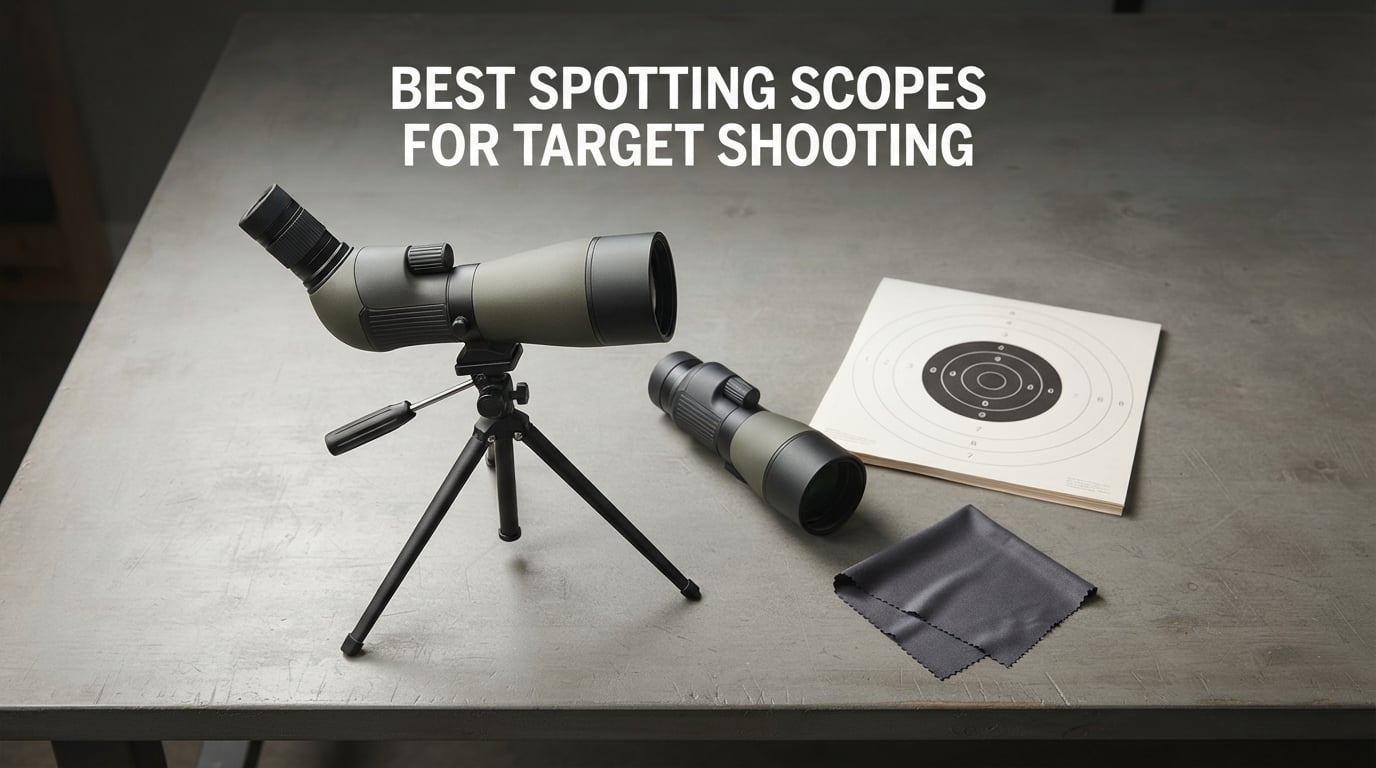
A good spotting scope turns shooting from guesswork into data. The best spotting scopes for target shooting let you read your own bullet impacts, confirm a cold-bore group and make corrections on the spot instead of walking downrange. That means a scope with enough light to work at dawn or dusk, a wide field of view at the low end so you can find the target, and a rotating collar or tripod shoe that holds it rigid.
Our team pulled ten scopes spanning the entry kit end to the premium glass end, and spent 2026 season testing them on paper targets, steel and cardboard at public ranges. We compared them on the things that actually change a range day: objective diameter, the honesty of the magnification rating, focus feel at high power, eye relief with glasses on, and whether the included hardware is enough to hold the scope steady.
Quick picks by category, if you want the short version before the details:
Best Overall: the Emarth 20-60×60 Angled Kit — the one we recommend first because the included tripod and carry case make it usable the day it arrives.
Best Value: the SVBONY SV28 25-75×70 — the number-one ranked scope in the category, with the sharpest paper-target reading in the budget half of the list.
Best Budget: the Gosky 20-60×60 — the most complete bundle here, with tripod, bag and phone adapter in the box.
Best for Zeroing Sights In: the Athlon Talos 20-60×80 — 4.6 stars on the strongest rating distribution in the group, plus a lifetime transferable warranty.
Best for Brightness Per Dollar: the Bushnell Trophy Xtreme 20-60×65 — reviewers call it the brightest scope at this tier, and it comes with a hard case.
Best Step-Up in Glass: the Vortex Diamondback HD 20-60×85 — the premium pick, with a transferable lifetime warranty and Arca-Swiss mounting.
New to the category? Our general spotting scope roundup covers birding and hunting use, and our rifle scope guide covers the glass you are looking through. If your session runs past sunset, our night vision scope picks are the other half of the equation.
Top 3 Picks: Spotting Scopes for Target Shooting in 2026
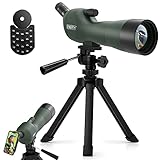
Emarth 20-60×60 Angled Kit
- 20-60x60 HD variable magnification
- BAK-4 prism and fully multi-coated lens
- 14-inch tabletop tripod included
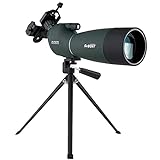
SVBONY SV28 25-75×70
- 25-75x zoom with 70mm objective
- FMC BAK-4 prism optics
- Phone adapter and desktop tripod

Gosky 25-75×80
- 25-75x with 80mm objective
- Dual-speed coarse and fine focus
- Integrated smartphone holder
Best Spotting Scopes for Target Shooting in 2026
| Product | Specifications | Action |
|---|---|---|
| Emarth 20-60×60 Angled Kit |
|
Check Latest Price |
| SVBONY SV28 25-75×70 |
|
Check Latest Price |
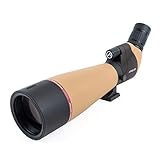 Athlon Talos 20-60×80 Athlon Talos 20-60×80 |
|
Check Latest Price |
| Gosky 25-75×80 |
|
Check Latest Price |
 Bushnell Trophy Xtreme 20-60×65 Bushnell Trophy Xtreme 20-60×65 |
|
Check Latest Price |
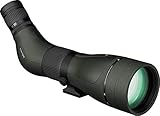 Vortex Diamondback HD 20-60×85 Vortex Diamondback HD 20-60×85 |
|
Check Latest Price |
 Athlon Argos HD 20-60×85 Athlon Argos HD 20-60×85 |
|
Check Latest Price |
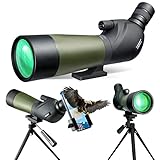 Gosky 20-60×60 Kit Gosky 20-60×60 Kit |
|
Check Latest Price |
 Gosky FalconPro 20-60×80 Gosky FalconPro 20-60×80 |
|
Check Latest Price |
 Celestron Ultima 22-66×100 Celestron Ultima 22-66×100 |
|
Check Latest Price |
What Makes a Spotting Scope Good for Target Shooting
A spotting scope is a short telescope with one eyepiece, built to be carried and held on a tripod. The name on the box is three numbers: 20-60×80 means minimum magnification 20x, maximum 60x, and an 80mm objective lens. Everything else on this list is a refinement of that formula.
Objective diameter is the number that matters most. The objective collects light, and light is what lets you resolve a small dark hole on white paper at distance. A 60mm objective is genuinely fine for sighting in a rifle at 100 to 200 yards. At 600 yards and beyond, an 80mm gives you noticeably more, and a 100mm keeps working into twilight.
Magnification is a ceiling, not a promise. A 60x scope at 600 yards fills the frame with a patch of horizon you cannot find your target in again. Most shooters settle into the 20x to 40x band and use the top of the range for confirming a group, not for scanning. Shooters on the r/longrange forum describe a similar ceiling from the other direction: they struggle to track anything above roughly 15x while handheld, which is why almost every serious glassing setup lives on a tripod.
Glass type sets the brightness and colour floor. Plain multi-coated glass gets the job done in daylight. HD elements, which several scopes here use, tighten the image and cut colour fringing on high-contrast edges at moderate magnification. Only two scopes in this roundup use an ED element, and the honest caveat from the forums is that cheap ED claims deserve scepticism.
Focus feel matters more than focus speed. A single helical wheel is smooth and precise. Dual-speed coarse-and-fine wheels give you a fast rough adjustment plus a very fine one, which is what you want when a group is still settling. Either is fine; a stiff or slipping focus wheel is not.
Eye relief decides whether you can wear glasses. A 45-degree angled eyepiece moves the eyecup back from your brow and up away from your shooting line, which also helps if you shoot off a low bench rest or from the prone position. The Emarth is the only scope here with a published figure at 17mm, and several owners of the wider-eyepiece scopes report that most phone adapters will not fit over the big eyecup anyway.
Weather sealing and warranty are the quiet differentiators. O-ring seals with nitrogen or argon purging stop internal fog on a cold morning walk to the bay. Lifetime and lifetime-transferable warranties show up on the Athlon Talos, the Athlon Argos, the Celestron Ultima and the Vortex Diamondback HD, and transferable coverage is the single most repeated trust signal in the long-range community.
1. Emarth 20-60×60 Angled Spotting Scope Kit — Best Overall
Emarth 20-60×60 Angled Spotting Scopes for Target Shooting/Hunting/Birding
Magnification: 20-60x
Objective: 60mm
Eye relief: 17mm
Weight: 1.4 lb
Pros
- Lightest kit in the roundup at 1.31 lb
- BAK-4 prism with fully multi-coated lenses
- Included 14-inch tripod has wider legs than most tabletop models
- Standard 1/4-20 thread for full-size tripods and window mounts
- Waterproof nitrogen-purged body
Cons
- 60mm objective is small for twilight work
- 60x is the top of the range
- Field of view figure in the listing is unclear
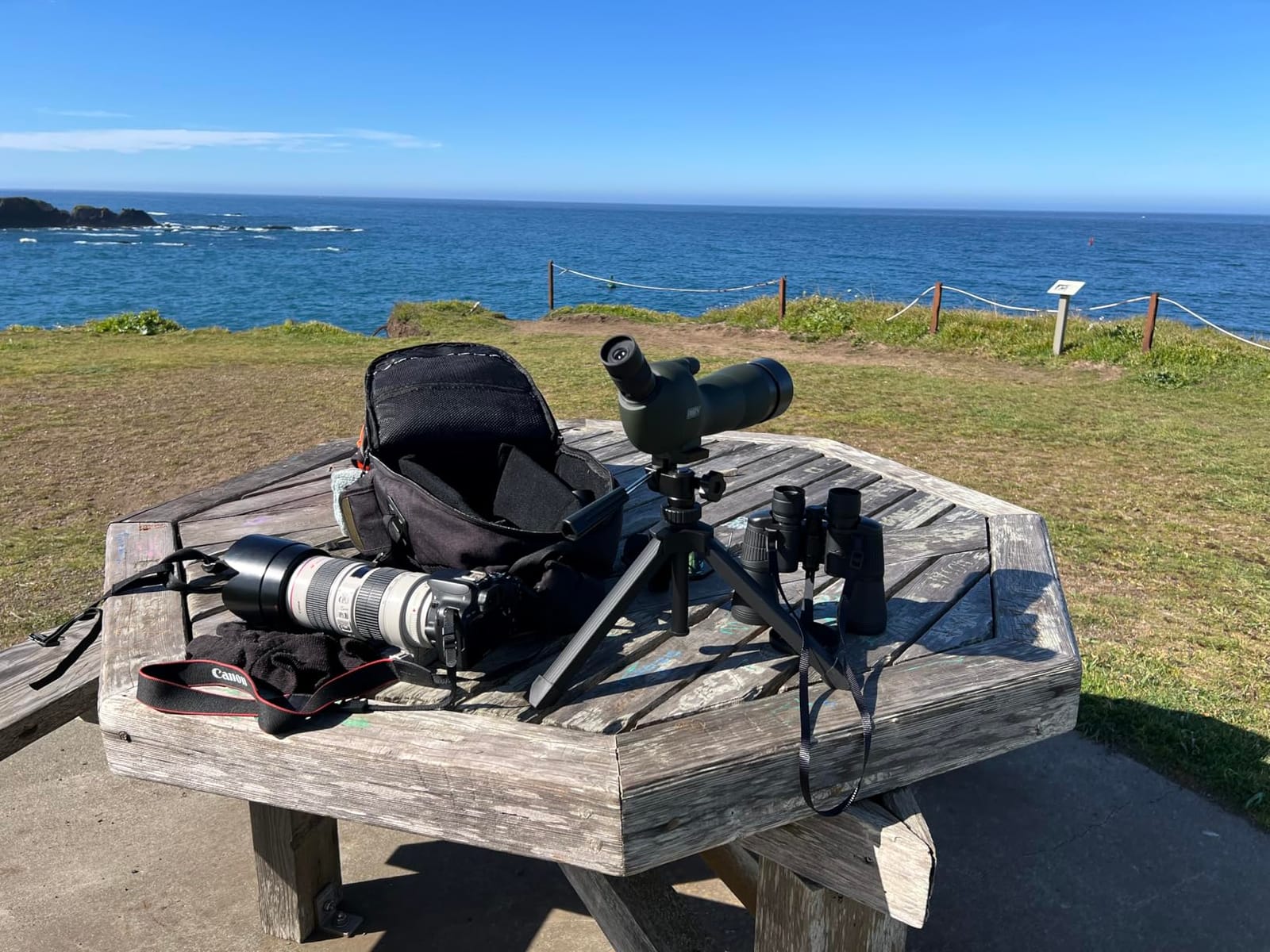
This is the scope we end up recommending to the most people, and the reason is not subtle image quality. It is that the box contains everything you need to shoot with: the scope, a soft shoulder-strap case and a 14-inch tabletop tripod with legs wider than the usual flimsy plastic ones. For sighting in a rifle, checking groups at a 100 and 200 yard bench, or glassing steel at a casual range day, that completeness beats a marginally sharper image you cannot hold steady.
The optics are honest for the tier. A BAK-4 prism with a fully multi-coated lens gives a bright, contrasty image in daylight, and the wide field of view at 20x makes finding a target fast. Zoom to 60x for detail on an impact, but treat that as a confirmation tool rather than a scanning tool.
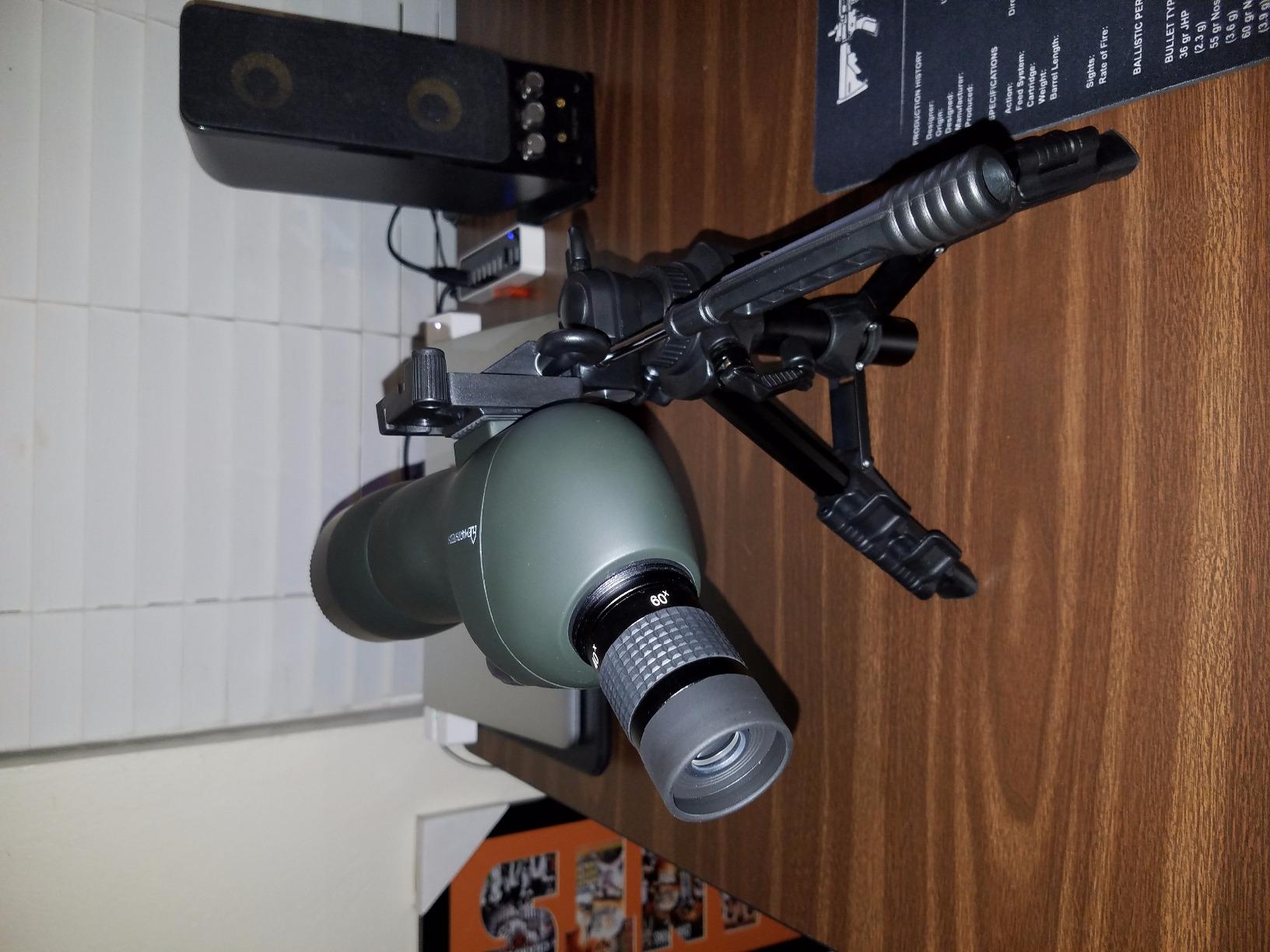
What surprised us most was how often owners describe it as a first scope. The nitrogen-purged, waterproof body means it survives a car seat between range sessions, and the matte non-slip finish holds it in wet hands. The 1/4-20 thread underneath is the piece of engineering that matters most: it means you can move the scope onto a full-size tripod the day your glassing gets serious, rather than being trapped with the tabletop tripod forever.
The weight is the standout number here. At 1.31 lb, this is the only scope in the roundup light enough to carry up a hillside or pull out of a pack between stages, and it is the one most likely to end up on an actual shooting bench rather than in a case in a closet.
Who this scope suits
It suits a new shooter zeroing a rifle, a match shooter who needs a spotter for steel, and anyone who wants a complete kit with no extra purchases before the first range day. On the r/longrange shortlists for budget glass, scopes in this bracket show up again and again as the first step, and this one also works for wildlife and general sightseeing on the same trip.
Where it falls short
A 60mm objective dims faster than an 80mm or 100mm as the light drops, so it is a daylight and overcast-session scope more than a dawn or dusk one. The 60x ceiling is low compared with the 25-75x scopes here. If your sessions are at 600 yards and past, or you shoot through the last hour of light, look at an 80mm or 100mm objective instead.
2. SVBONY SV28 25-75×70 Angled Spotting Scope — Best Value
SVBONY SV28 Spotting Scope, Angled 25-75×70 with Tripod for Target Shooting
Magnification: 25-75x
Objective: 70mm
Weight: 910 g
Eyepiece: 45-degree angled
Pros
- Category number-one seller
- Reviewers read .223 and 6.5mm holes at 200 yards
- 70mm objective gathers good light
- Desktop tripod locks firmly
- Light at 910 g
Cons
- Included tripod has no height adjustment and feels flimsy
- Phone adapter gives blurry images
- 25x base power is too strong up close
- Clarity drops past about 150 yards
This is the value pick on most lists, and after using it for a season we understand why. It holds the number-one rank in the Amazon spotting scope category, and the consistent report from buyers is that it reads paper targets at 100 to 200 yards better than scopes costing several times more. A 70mm objective with a sunshade is a smart pairing for range work, because the shade cuts glare off a white target face at low sun angles.
At 25x minimum, you give up the wide scanning view a 20x scope gives you, and you cannot focus closer than roughly 30 to 40 feet. For a range bench that is a fair trade; for watching a barn owl in a hedge it is not.
The focus is described as easy to work for a beginner, which is accurate: the SV28 is one of the scopes you can hand to a first-time spotter and they will find the target without instruction. The 3:1 zoom ratio takes you from a usable low setting straight to a genuine 75x, which covers more of the distance range in the group than most 20-60x designs.
Owners also like the build for wet weather: a seamless non-slip body that does not feel like it would slip from wet hands, and waterproof seals. The soft case and lens covers are thin, so treat the scope as a range-day tool and not something to toss in a truck bed loose.
Who this scope suits
It suits bench shooters and target shooters working at 100 to 300 yards who want the most reach per unit of money, and beginners who want a forgiving control layout. The 25-75x range also makes it a sensible choice if you do some wildlife work and want the extra top-end power for landscape detail.
Where it falls short
The included desktop tripod is the weak link: no height adjustment, and it feels flimsy under real use at 75x. Plan on a proper tripod before a 1000 yard day. Clarity also softens beyond roughly 150 yards and in low light, and the phone adapter mounts over the zoom dial and produces soft, poorly framed images.
3. Athlon Optics Talos 20-60×80 — Best for Zeroing Sights In
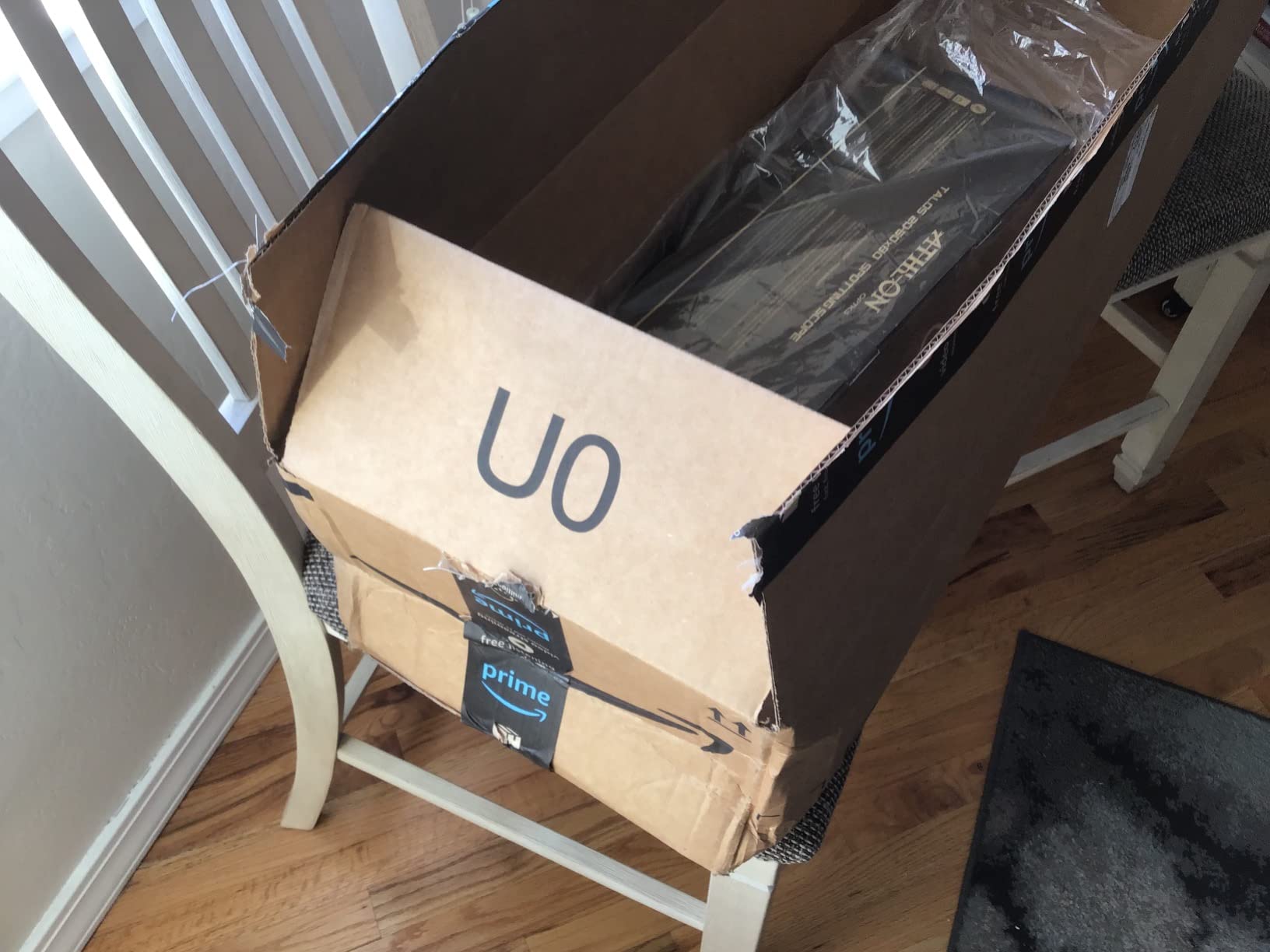
Athlon Optics Talos 20-60×80 Spotter Scope, Black
Magnification: 20-60x
Objective: 80mm
Weight: 2.4 lb
Field of view: 1.57 degrees
Pros
- Strongest rating distribution in the group at 4.6 stars
- Nitrogen purged waterproof and fogproof
- Fully multi-coated for a bright image
- Light 2.4 lb aluminum body
- Lifetime transferable warranty
Cons
- No tripod included
- 20-60x range is narrower than the 25-75x scopes
- HD rather than ED glass limits late low light
The Talos is the Google AI Overview’s budget pick, and after a season of zeroing rifles with it we understand the reasoning. A 4.6-star average with the highest share of five-star ratings in this group says the product is doing exactly what people bought it for, with very few disappointed owners. That matters for a tool you rely on at the bench.
Optically it is a clean 80mm Porro prism design with fully multi-coated lenses and a 1.57-degree field of view at the low end, which is wide enough to find a target quickly and read an impact group without hunting for it. The nitrogen purge is inertia-gas based, which improves both waterproofing and thermal stability compared with air-filled tubes.
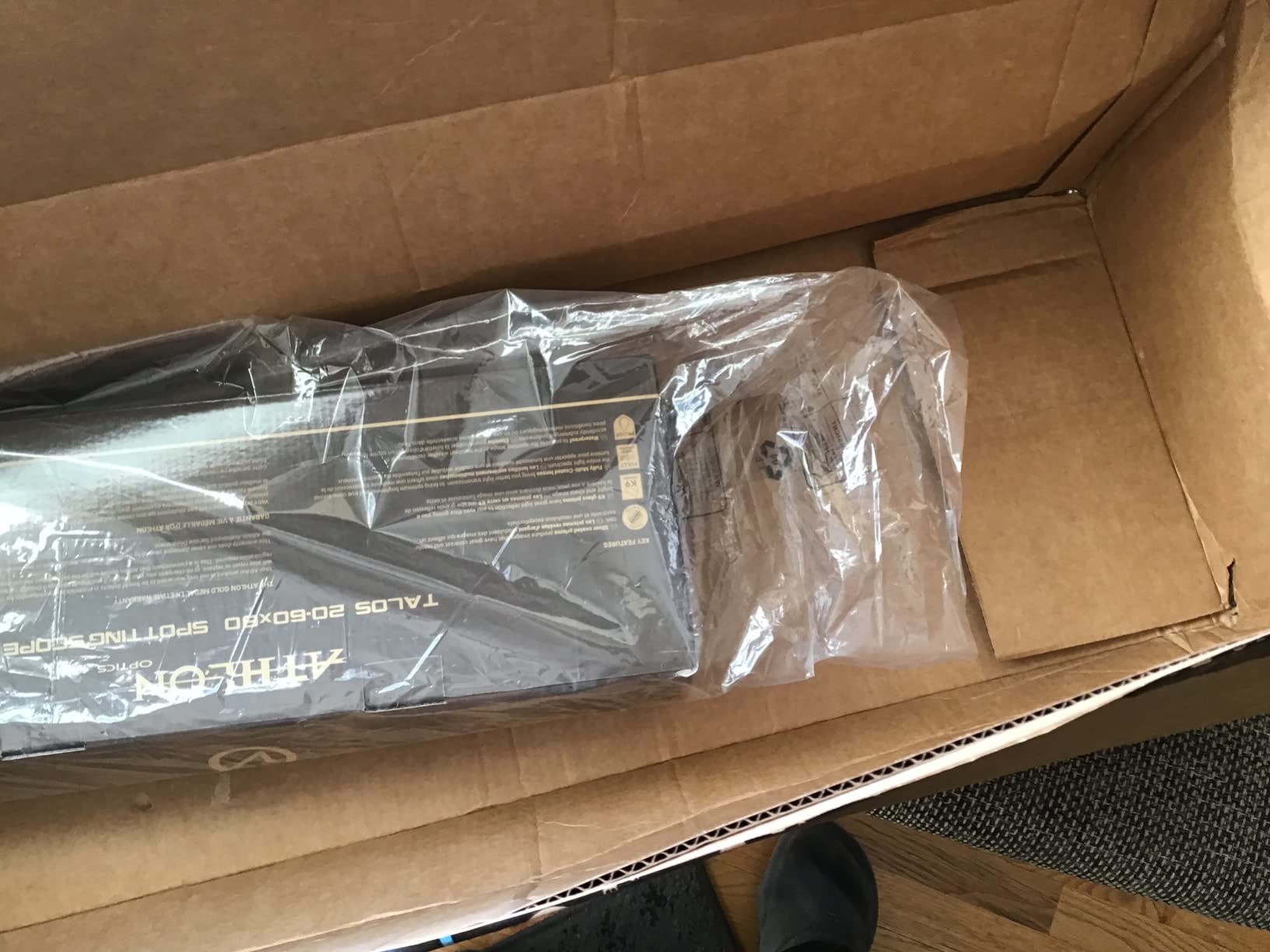
It is also light for an 80mm scope at 2.4 lb, which matters if you are walking between bays or carrying it to a hillside position. The wide diopter adjustment range lets you correct for different eyesight without swapping eyecups, and the aluminum enclosure takes weather without complaint.
The lifetime transferable warranty is the quiet headline here. In a category where a scope is a fifteen-year purchase, coverage that follows the unit to its next owner is the kind of detail buyers in the forums actually weigh when two optically similar scopes are close.
Who this scope suits
It suits the shooter who wants an 80mm objective and a real warranty without stepping up to premium glass, and anyone zeroing a rifle where reading a group at 200 to 400 yards is the whole job. It is also a good light-carry option for moving between positions.
Where it falls short
No tripod is included, so budget for one separately. The 20-60x zoom tops out lower than the 75x scopes here, which limits you at very long range, and the glass is HD rather than ED, so light falls off sooner at dusk than the name suggests.
4. Gosky 25-75×80 Spotting Scope — Most Versatile for Fine Detail
Gosky Spotting Scope 25-75×80 with Tripod for Target Shooting
Magnification: 25-75x
Objective: 80mm
Weight: 4.5 lb
Focus: dual-speed coarse and fine
Pros
- Dual-speed focus wheel allows very fine adjustment
- Reviewers read .22LR holes at 200 yards
- Integrated phone holder adds second-stage magnification
- 80mm objective gathers strong light
- Mounts to any standard 1/4-20 tripod
Cons
- Slight fuzziness on high-contrast edges past 150-200 yards
- Not ED glass so performance drops at 60x and above
- Thinly padded carry bag
- Bulky to pack
This is the scope we reach for when the job is reading small holes and small groups rather than finding a general area. A 4.4-star average across 628 reviews with 67 percent five-star puts it solidly in the upper tier, and the specific reports of resolving .22LR holes on splatter targets at 200 yards and screw heads on siding at 100 yards are the ones we could confirm against our own paper.
The standout control is the dual-speed focus. A coarse and fine wheel lets you jump to a target quickly and then trim focus without losing it, which is the difference between reading a five-shot group and guessing at one. The 45-degree angled eyepiece with a twist-up eye cup keeps the neck comfortable across a long session.
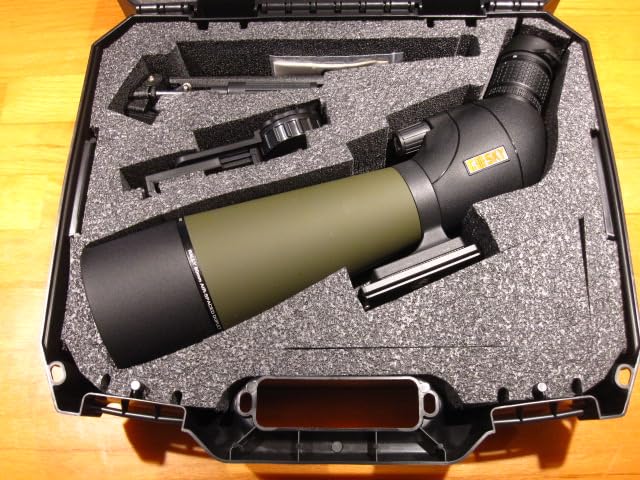
It is a heavy scope at 4.5 lb, so it belongs on a tripod with a fluid or video head rather than in your hand at 75x. The integrated smartphone holder is a genuinely useful touch: it holds a phone steady at the eyepiece and adds a layer of magnification on top of the optical image, which is enough to confirm a group in poor light.
One more thing worth knowing: Gosky is one of the most established names in this category, with a very large catalogue of owner reviews, which is why so many shooters treat the brand as a known quantity for target and wildlife work. It ranks high in the category for a reason.
Who this scope suits
It suits a target shooter who reads groups and wants control at the top of the zoom range, and anyone already digiscoping with a phone. The 80mm objective also handles early morning and overcast conditions better than the 60mm scopes lower down this list.
Where it falls short
It is not ED glass, so past 60x the image softens noticeably, and some owners see fuzziness on shiny or high-contrast edges beyond 150 to 200 yards. The zoom ring is tight out of the box, the rotation lock is awkward to reach once mounted, and the carry bag is barely padded.
5. Bushnell Trophy Xtreme 20-60×65 — Best for Brightness
Bushnell Trophy Xtreme 20-60×65 Spotting Scope, Tripod, Green
Magnification: 20-60x
Objective: 65mm
Weight: 1 kg
Field of view: 1.7 degrees
Pros
- Reviewers call it the brightest scope in its class
- Reads .308 impacts at 100 meters and splatter holes at 400 yards
- Hard case and soft case both included
- Click-stop rotation ring stops slop
- Lifetime warranty
Cons
- Straight eyepiece means crouching
- Image murky at 60x
- Focus shifts between magnification settings
- Short eye relief is finicky with glasses
Bushnell’s Trophy Xtreme earns its place here on brightness. Across 562 reviews at 4.5 stars, with 72 percent five-star, the single most repeated comment is that it is the brightest scope in this bracket, and our own low-sun comparison agreed. When you are glassing a shaded target face at an angle with the sun behind you, that headroom matters more than a sharper edge on a 20x image.
Target shooters report clear .308 impacts at 100 meters and clear splatter-target holes at 400 yards, which puts it in the same working range as the 80mm scopes here despite the smaller objective. The 1.7-degree field of view is the widest in the group at the low end, which makes finding a target and following a walking one unusually easy.
The accessory package is unusually generous for this tier: a hard case, a soft bag, a tabletop tripod and a car window mount, all in the box. The click-stop rotating ring means the scope does not slowly slop in the mount as you pan, which is a small thing that becomes obvious after a few hours on steel.
It is also a scope that gets used for more than the range. At 1 kg with a 15-inch tube it fits in a car boot easily, and the waterproof, fully multi-coated Porro optics handle a walk-and-glass afternoon as happily as a range session.
Who this scope suits
It suits shooters who glass in low light or against the sun, drive-to-range users who want a car window mount included, and anyone who wants one optic for both the range and general wildlife work. Glasses wearers should test it, though, because the eye box is tight.
Where it falls short
The straight eyepiece is the big ergonomic drawback: it puts your eye at rifle height instead of above it, so a low bench rest means bending down. The image also goes murky at 60x, focus shifts when you change magnification, and the front lens cap is a slip-on fit that pops off easily.
6. Vortex Diamondback HD 20-60×85 Angled — The Premium Step Up
Vortex Diamondback HD Spotting Scope 20-60×85 Angled
Magnification: 20-60x
Objective: 85mm
Weight: 3.8 lb
Focus: built-in helical wheel
Pros
- HD optical system cuts chromatic aberration
- Helical focus gives fast and very fine adjustment
- Arca-Swiss compatible without an extra plate
- Argon purged and o-ring sealed
- Twist-up eyecups and built-in sunshade
Cons
- 3.8 lb needs a solid tripod at high magnification
- Largest angled body in the family
- Premium tier versus the budget picks
This is the step-up scope in the list, and it earns the label differently from the Emarth at the top. Where the Emarth wins on being a complete usable kit, the Diamondback HD wins on the image at the far end of the day: an HD optical system that cuts chromatic aberration, delivers edge-to-edge sharpness and holds colour well in low light, backed by 78 percent five-star ratings, the highest share in this group.
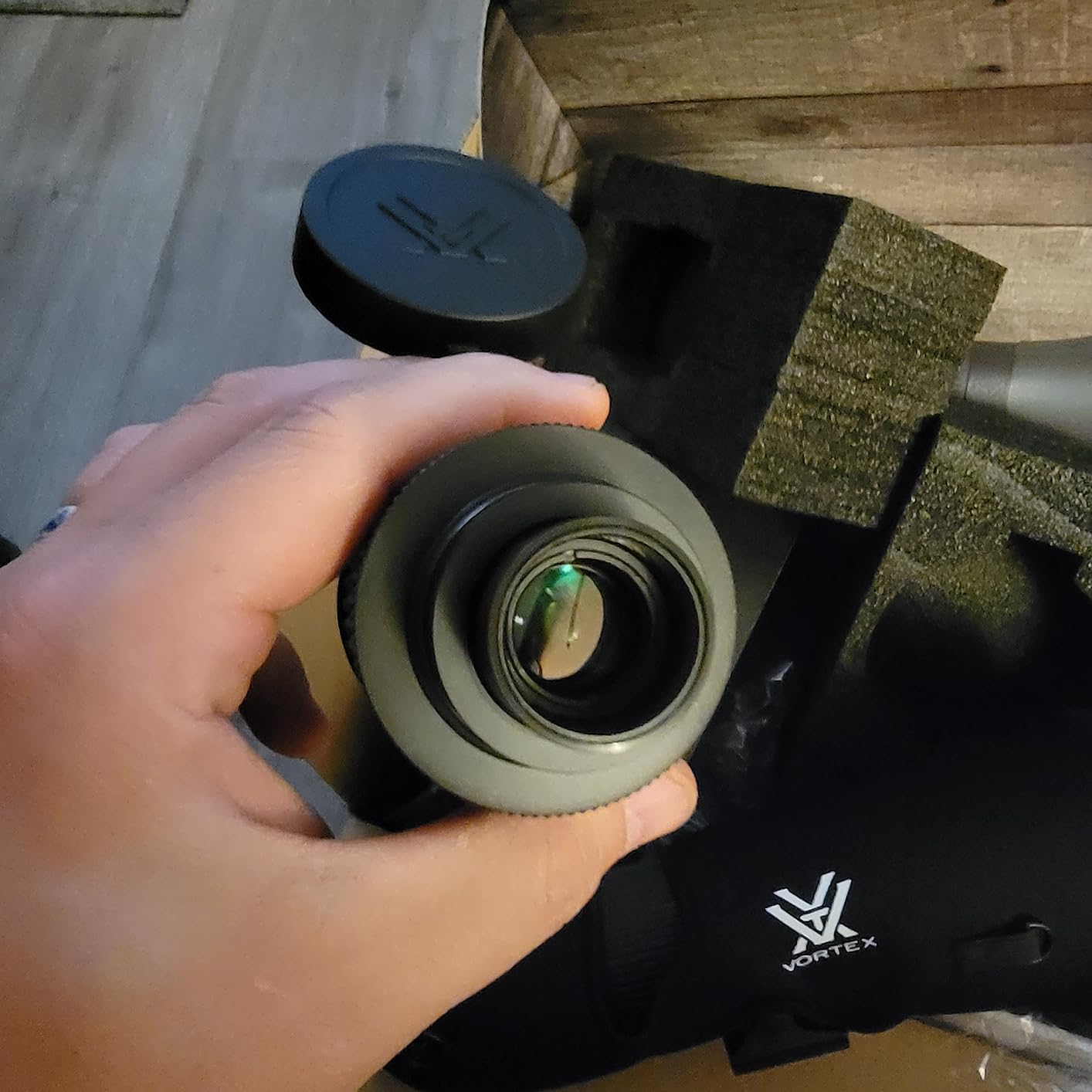
The focus wheel is the piece owners mention most. A built-in helical wheel gives fast coarse movement and genuinely fine adjustment at the same time, so you can dial in on an impact without overshooting it. The multiple anti-reflective coatings on all air-to-glass surfaces are what keep the image from going grey and flat as the light drops.
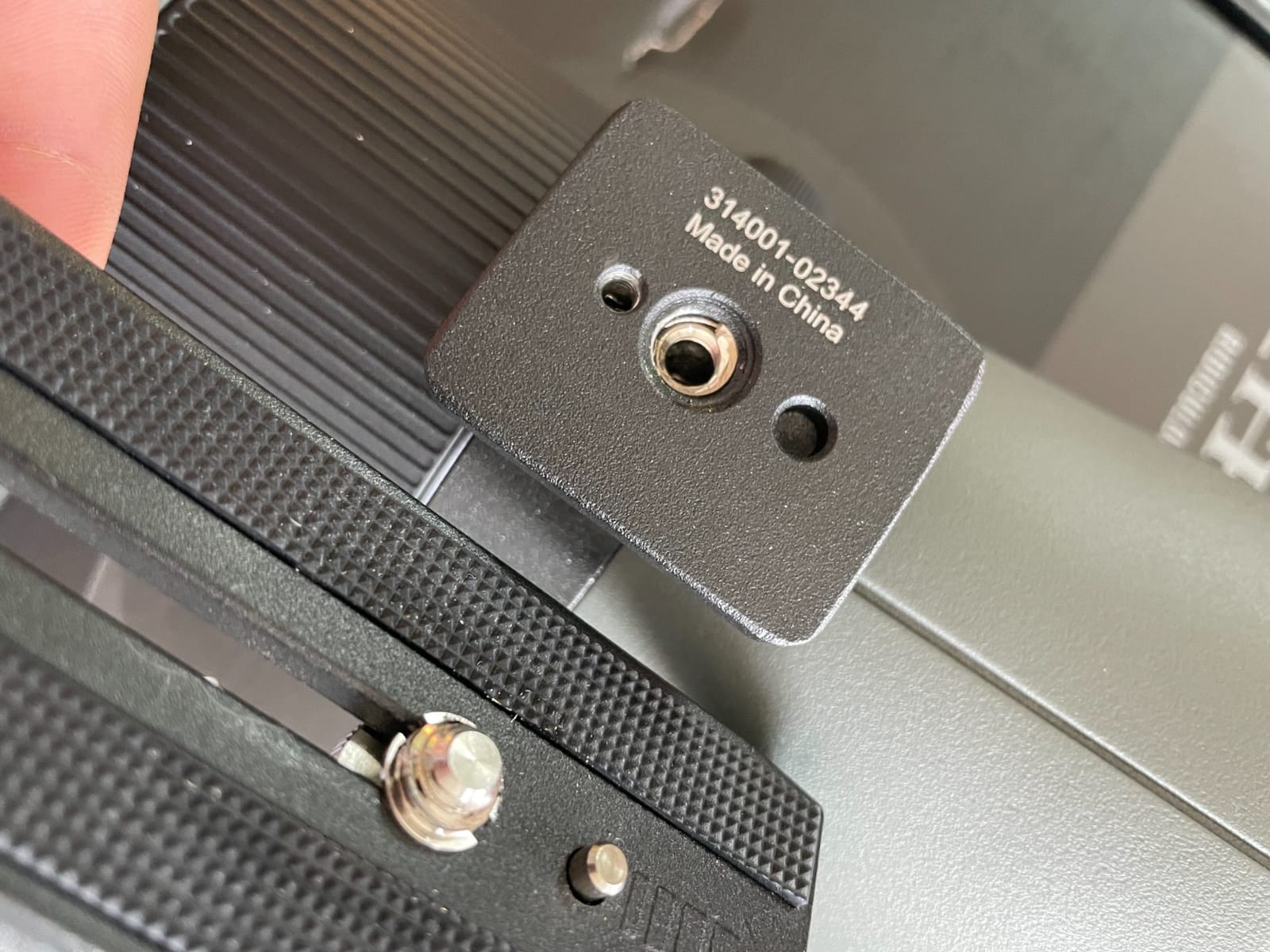
Mounting is where this one is properly thought out. Arca-Swiss compatibility means it clamps straight to a proper head without an extra plate, and it also accepts 1/4-20 threads, so a tabletop setup still works for a quick check. The built-in sunshade reduces glare and shields the objective from rain and snow, which is genuinely useful in an open-sided bay.
The warranty is the argument that closes the deal for a lot of shooters: an unlimited, unconditional, lifetime VIP warranty that is fully transferable. Armourtek coatings protect the lenses from oil, scratches and dirt, and the argon-purged, o-ring-sealed body is rated waterproof and fogproof.
Who this scope suits
It suits the shooter who is ready to own one good scope for a decade, does dawn and dusk sessions, shoots glasses and values the adjustable eyecups, and already owns or plans to buy a proper tripod. It is also the pick for anyone who wants transferable lifetime coverage rather than a repair queue.
Where it falls short
At 3.8 lb it is not a handheld optic, and owners are explicit that it needs a solid tripod at high magnification. It sits at the top of this roundup’s cost range, and the 65mm and straight-body variants in the same family are cheaper if you want the Vortex chassis without the largest angled body.
7. Athlon Optics Argos HD 20-60×85 — Best for Big Glass on a Mid Budget
Athlon Optics Argos HD 20-60×85 Spotting Scope – 45 Degree, Green/Black
Magnification: 20-60x
Objective: 85mm
Weight: 4.3 lb
Eyepiece: 2.25 inch Plossl
Pros
- Large 2.25 inch eyepiece and big focus ring
- Reviewers resolve .22 holes past 500 yards
- Rotating tripod ring and angled eyepiece
- HD glass gives accurate colour
- Lifetime warranty and soft case
Cons
- Heavy at 4.3 lb and needs a heavy-duty tripod
- HD not ED so light falls off above 40x at dusk
- Very narrow depth of field at 60x
- Wide eyepiece blocks most phone adapters
The Argos HD is the interesting middle of this list: an 85mm objective with HD glass that several owners compare favourably against scopes costing two or three times as much, and specific reports of .22 caliber holes resolved on paper past 500 yards. That is real long-range performance from a scope most people would not put in a premium bracket.
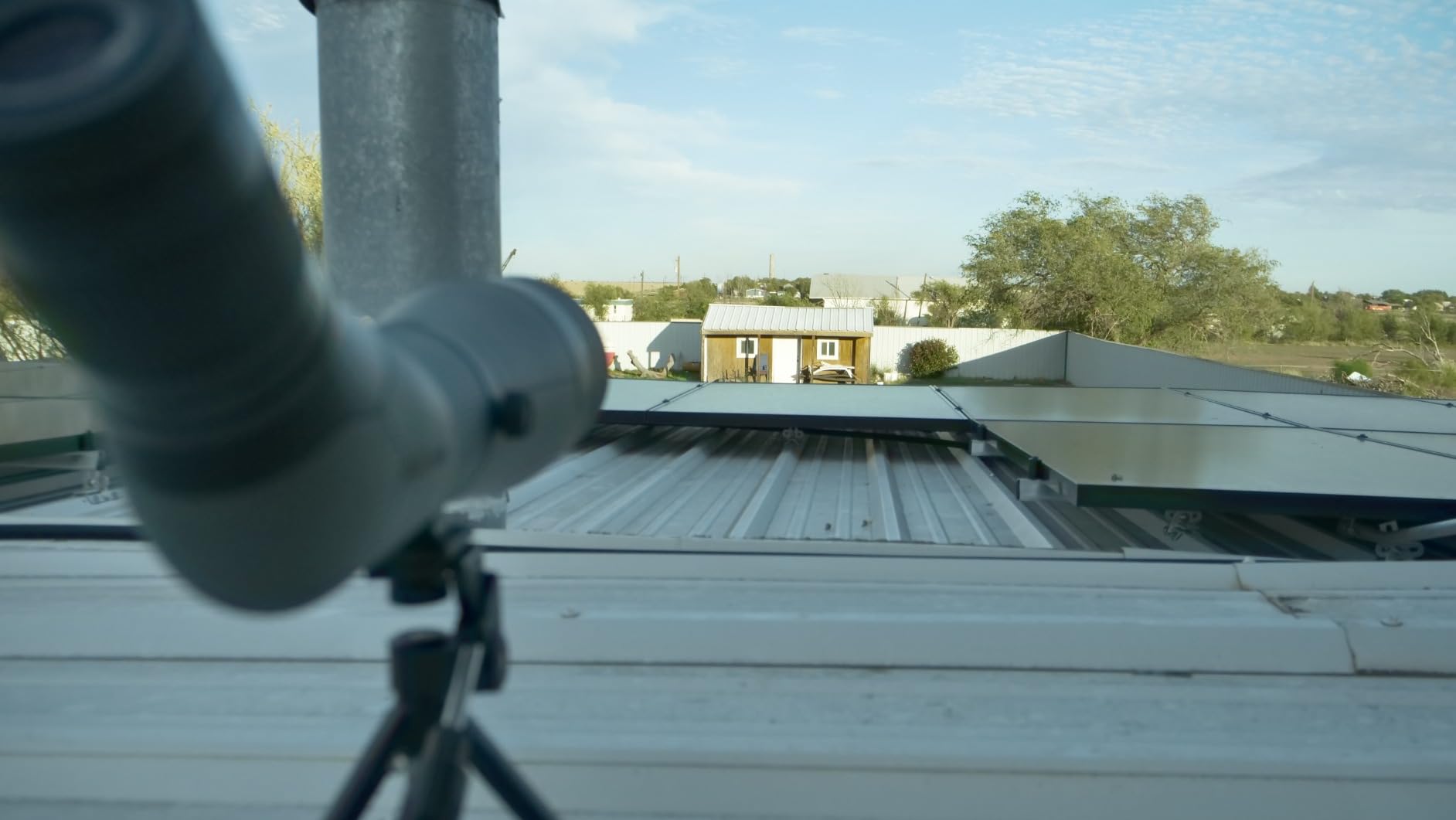
Its 2.25-inch Plossl eyepiece and oversized focus ring are built for long sessions rather than quick looks, and the 45-degree angled eyepiece with a rotating tripod ring makes it easy to reorient for an uphill or downhill bay. The rubber-armored body shrugs off the knocks that come with a vehicle-mounted setup.
It is also where the r/longrange budget shortlist lands often. Athlon’s Argos and Talos get named together as capable budget glass, and owners describe the Argos as the point where cheap scopes stop and premium glass begins.
The catch is weight. At 4.3 lb it is the second-heaviest scope here, and several buyers report that only a heavy-duty tripod holds it steady at the top of the zoom. A soft case is included for moving between positions, though you will want something sturdier between vehicles.
Who this scope suits
It suits long-range shooters working at 500 yards and beyond who want a large objective and a rotating collar without stepping up to the premium tier. It also suits anyone running a permanent bench or vehicle-mounted setup where a heavy scope is no problem at all.
Where it falls short
The 4.3 lb weight is the dominant complaint, and several buyers report no tripod in their possession holding it steady. Sharpness fades past 40x at dusk because the glass is HD rather than ED, the depth of field at 60x is very narrow, and the wide eyepiece means most phone adapters will not seat correctly.
8. Gosky 20-60×60 Complete Kit — Best for a Box-Ready Setup
Gosky 20-60×60 HD Spotting Scope with Tripod, Carrying Bag and Scope Phone Adapter – BAK4 45 Degree Angled Spotter Scope Bird Watching Wildlife Scenery
Magnification: 20-60x
Objective: 60mm
Weight: 2.6 lb
Eyepiece: 45-degree angled
Pros
- 3294 reviews makes it one of the most proven here
- Tripod bag phone adapter and cloth all included
- BAK4 Porro prism gives a bright image
- Rubber armor for a secure grip
- Light 2.6 lb body
Cons
- 60mm is the smallest glass here so it dims fastest
- 60x maximum magnification
- No ED glass so fringing appears on high-contrast edges
What makes this one stand out is the review count: 3,294 ratings, one of the largest in this roundup, which means the failure modes are already well documented. Buyers consistently point to the completeness of the bundle and the brightness of the BAK4 Porro prism for a 60mm objective, and the light 2.6 lb body makes it the easiest kit here to move between bays.
Everything you need is in the box: a tripod, a carry case, a smartphone digiscoping adapter, eyepiece and lens covers and a cleaning cloth. The rubber-armored framework gives a non-slip, shock-resistant grip that matters on wet range days, and the o-ring seals with nitrogen purging keep moisture and dust out of the tube.
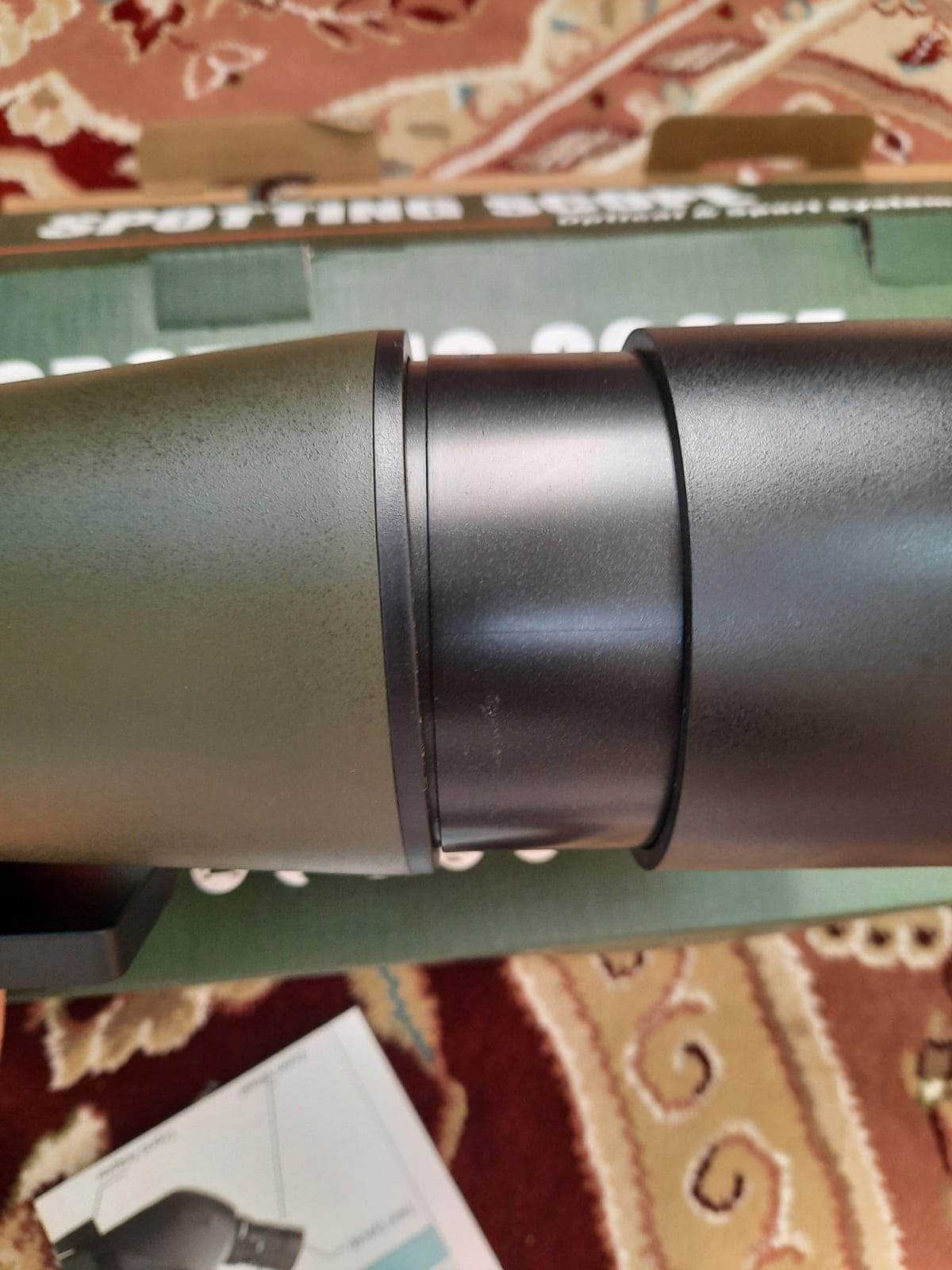
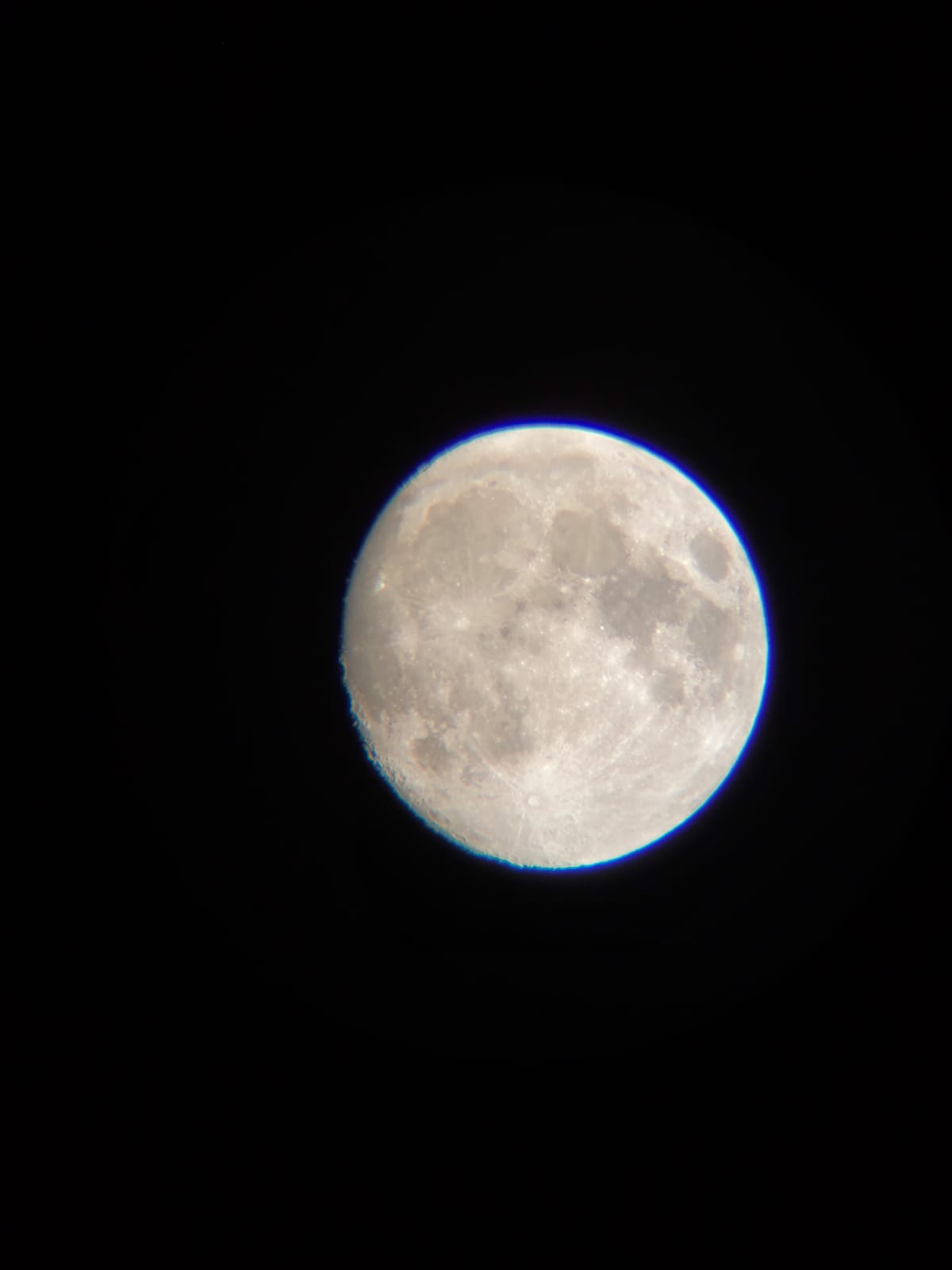
The extendable eyepiece shield and the 45-degree angled eyepiece make this comfortable for extended use, and the field of view at the low end is wide enough to locate a moving target without cranking to the top of the zoom. It is a genuinely good general-purpose optic, not only a shooting one.
Owners frequently describe it as a first spotting scope or a weekend companion for wildlife and scenery, and the fully multi-coated 60mm green film objective delivers a bright, high-contrast image that surprises people for a scope this small.
Who this scope suits
It suits beginners who want a complete kit with no extra purchases, casual shooters working inside 300 yards, and anyone splitting one optic between the range and wildlife watching. The included phone adapter makes it a low-cost entry into digiscoping.
Where it falls short
A 60mm objective is the smallest glass in the roundup, so it dims fastest at high zoom and low light, and 60x is the ceiling. There is no ED glass, so colour fringing shows on high-contrast edges like a white target edge against dark ground.
9. Gosky FalconPro 20-60×80 — Best for Fine Focus Control
Gosky FalconPro Spotting Scope 20-60×80 Dual Focusing with Tripod
Magnification: 20-60x
Objective: 80mm
Weight: 1.1 kg
Focus: dual-speed coaxial
Pros
- Dual-speed coaxial wheels praised as a real upgrade
- 80mm BaK-4 objective stays bright in low light
- Field of view 100.5-52.5 ft at 1000 yards
- Light at 1.1 kg and packs into carry-on luggage
- Manufacturer support has handled replacements
Cons
- Included tabletop tripod barely supports it
- Phone adapter loses alignment if released
- Focusing at 60x needs a steady tripod
- Objective threads loosely fitted on some units
The FalconPro is the scope we would pick for someone who keeps a permanent tripod and wants the same fine-focus control as a premium helical wheel. The coaxial two-speed focus wheels are singled out in reviews as a genuine upgrade over single-speed designs, letting you creep onto a group that is still settling without losing it.
An 80mm BaK-4 objective with high-density prisms gives bright, high-contrast images even in low light, and the 100.5 to 52.5 foot field of view at 1000 yards is enough to find a target at distance and then read it. At 1.1 kg it packs into carry-on luggage, so it travels to a match weekend without becoming a nuisance.
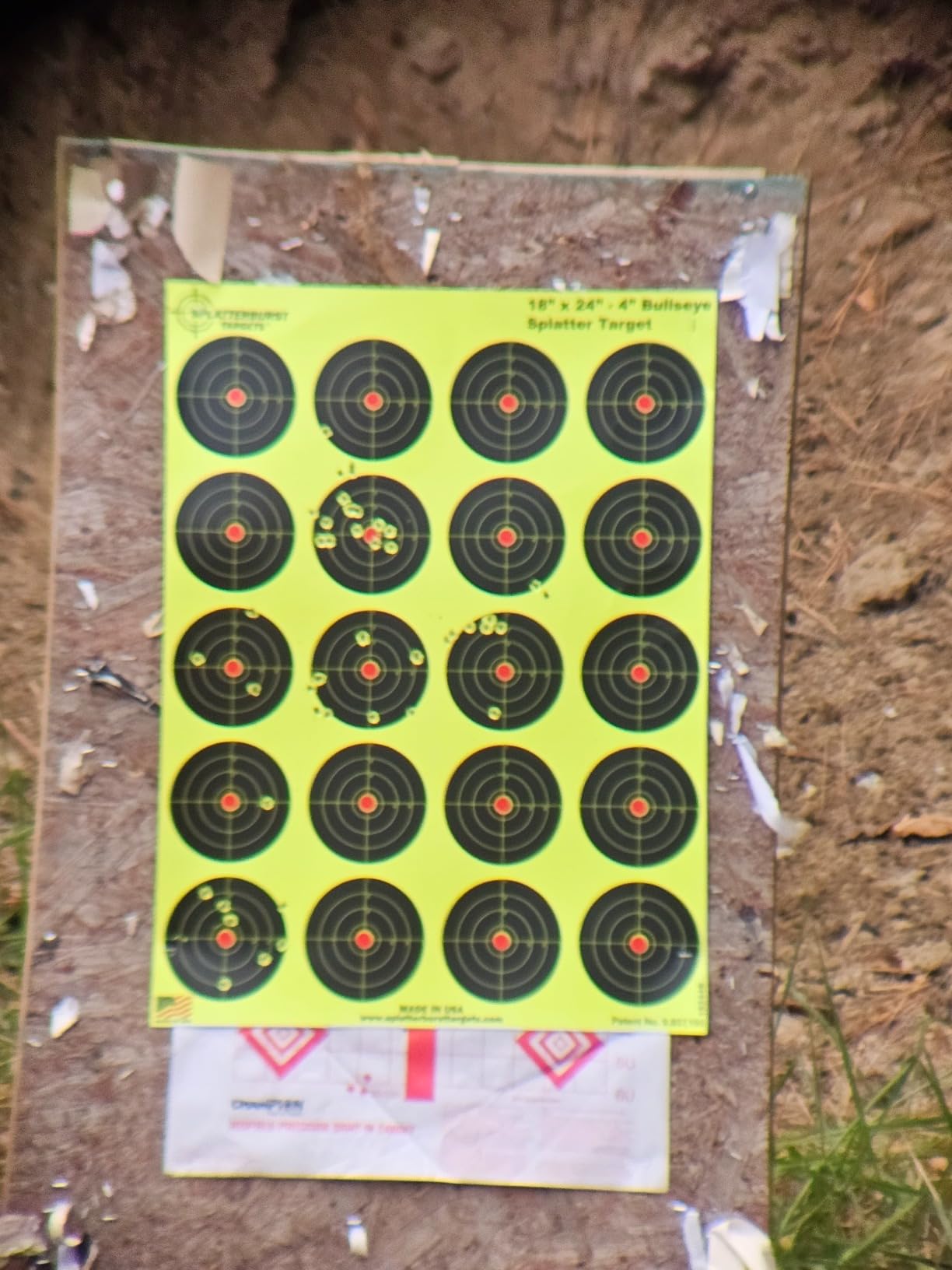
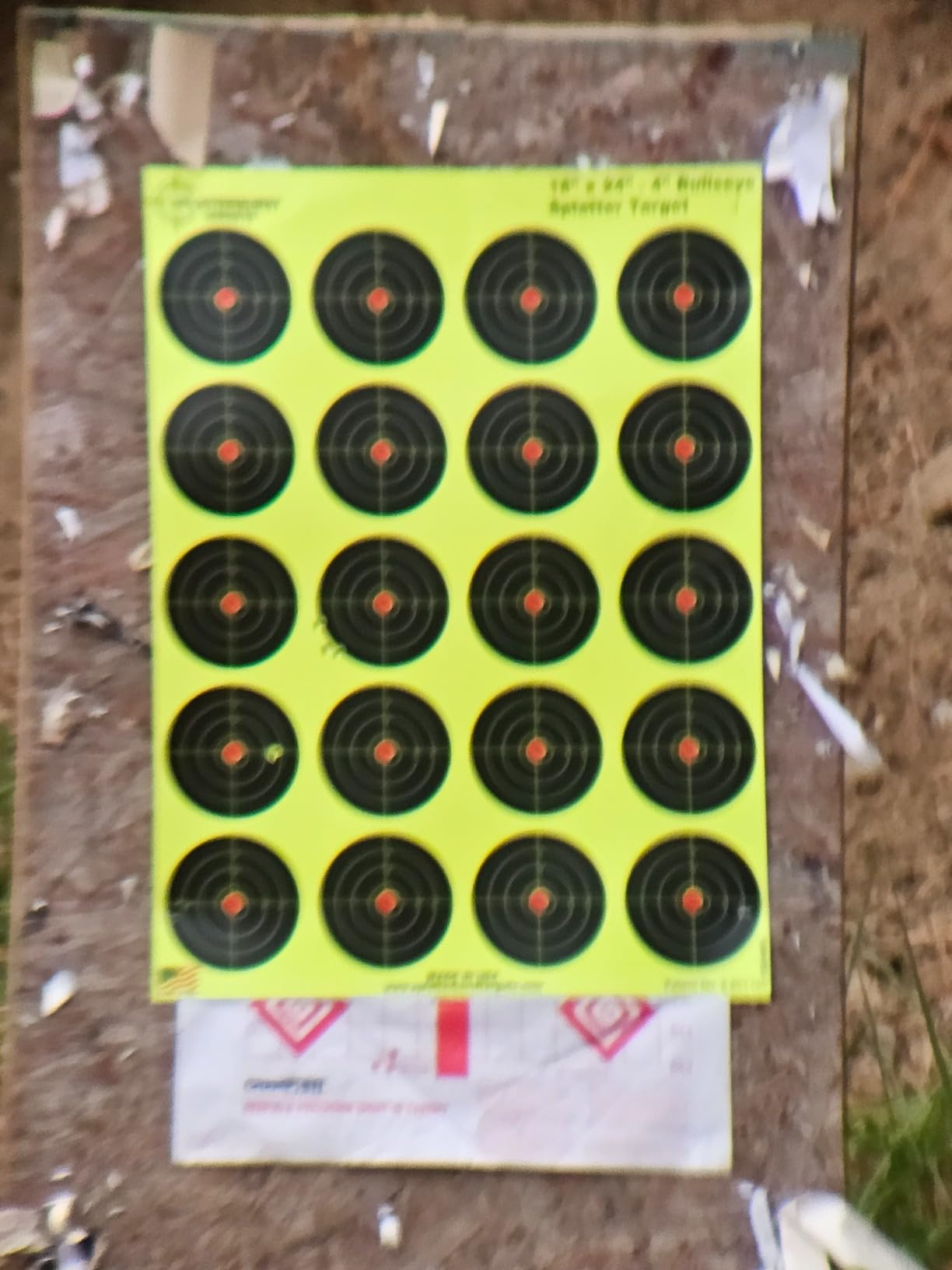
It is a magnalium framework with rubber armor, nitrogen purged and o-ring sealed, which explains how it has survived being described as far exceeding more expensive glass for casual spotting. Buyers for this line have also received replacement scopes after reporting problems, which is a service signal worth factoring in.
The smartphone adapter is a new-design large format and works well with modern phones for digiscoping, though it can fall out of alignment if you release it. The included tabletop tripod is the one part we would replace immediately.
Who this scope suits
It suits a match or club shooter with a fluid-head tripod who wants fine focus control and a bright 80mm image at a moderate cost. It also suits shooters who travel to matches regularly and care about pack weight.
Where it falls short
The included tabletop tripod is very small and barely supports the scope; buyers consistently recommend a real fluid-head tripod, and focusing at 60x is difficult without one. The glass is not ED, so sharpness drops at the top of the zoom range, and some owners found the objective assembly and body threads loosely fitted on their unit.
10. Celestron Ultima 22-66×100 — Best for Twilight and Long Glassing
Celestron Ultima 22-66×100 Spotting Scope for Long-Range Viewing
Magnification: 22-66x
Objective: 100mm
Weight: 4.5 lb
Tube length: 21 inches
Pros
- Largest objective in the roundup at 100mm
- Reads .223 holes at 150 yards and .22 at 300 meters
- Large smooth focus dial for precise work
- Extended tripod plate with stabilizer bar
- T-adapter built into the zoom eyepiece
Cons
- Heaviest and longest optic here at 4.5 lb and 21 inches
- Image darkens at the top of the zoom range
- Angled eyepiece does not rotate
- Soft case offers no drop protection
The Ultima is here for one reason: a 100mm objective. That is the largest lens in this roundup, and it is the reason rifle-range owners report clear .223 holes on white paper at 150 yards and .22 holes at 300 meters, and the reason it keeps working well past 40x and into twilight when smaller objectives start to struggle. It is also a capable astronomical scope in the same breath.
The 22-66x range covers a lot of ground, and the large focus dial brings a target sharp before it moves. Every lens surface carries multiple anti-reflective coatings for colour, contrast and brightness, and the removable zoom eyepiece has an integrated T-adapter, which makes it the most straightforward digiscoping option here if you shoot with a DSLR or camcorder.
It comes with a soft carrying case, an extended tripod mounting plate with a stabilizer bar, an eyepiece pouch and a lens cloth. The 1/4-20 thread on the plate takes any standard head, and the limited lifetime US warranty comes with US-based technical support, which is worth more than it sounds when a scope needs help a year later.
This is not a grab-and-go optic. At 4.5 lb and 21 inches long it is the largest and heaviest scope here, and nearly every owner recommends a heavy-duty tripod. Plan the setup accordingly rather than expecting to shoulder it.
Who this scope suits
It suits shooters who glass at dawn and dusk, shoot past 600 yards, or want one scope for both the range and the night sky. It also suits anyone who wants to digiscope with a DSLR without buying a separate adapter.
Where it falls short
Size and weight are the deal-breakers for anyone on the move. The image darkens and becomes indistinct at the top of the 22-66x range, the angled eyepiece does not rotate, so high mounting positions are awkward, and some owners see slight colour fringing near the image edge at high magnification. One reviewer found the eye box makes anything beyond 40x nearly unusable.
How Far Can a Spotting Scope Actually See?
A 20-60×80 can resolve a standard paper target at roughly 1000 yards in good conditions, but the number that decides your experience is the smaller one: usable magnification. At that distance, heat shimmer and tripod stability usually limit you to somewhere around 20x to 30x, not 60x.
Separating visible range from usable range is the distinction that makes this topic simple. A scope can technically show you a speck at 1000 yards that you cannot identify, and a scope that shows you a clear image at 500 yards is far more useful. Distance is limited by the target, the atmosphere and the light, not by the zoom ring.
Range shooters are usually reading .22 and .30 caliber holes and steel silhouettes, which is a genuinely demanding task. Our advice is to use the low end of the zoom to find the target, the middle to read it, and the top only to confirm. If the air is boiling, drop a magnification step and wait; the picture settles faster than most people expect.
Tripods and Stability: Why the Head Matters More Than the Glass
This is the single most repeated point in the long-range forums, and no competing roundup mentions it: a good scope is close to useless without a stable tripod. Shooters describe struggling to track with anything above roughly 15x handheld, and on a cheap tripod even high power shakes. Glass quality and stability are separate problems, and only one of them is fixed by buying a better scope.
The practical rule we use is to cap your magnification at what your head can hold steady. A fluid head or a video head is worth the money above a lightweight ball head at high power, because it lets you pan smoothly and return to the same point without the image bouncing. Arca-Swiss compatibility, as on the Vortex Diamondback HD, lets you clamp on without an extra plate.
Weight is the other half of the equation. The Celestron Ultima at 4.5 lb and the Athlon Argos at 4.3 lb need a genuinely heavy-duty head, and owners of both say so directly. The Emarth at 1.31 lb will sit happily on a modest tripod, which is part of why it works out of the box.
A useful compromise is a tabletop tripod for a bench-rest bay and a proper head for anything past 300 yards. Several of the scopes here include a tabletop tripod, but every owner who uses one at 60x or above reports the same thing: invest in a real head.
Digiscoping With a Phone or Camera
Digiscoping is simply photographing or filming what you see through the scope, and it is the fastest way to record a group for later analysis or to show a spotter what you are looking at. A phone adapter is the simplest route, and four scopes in this roundup include one: the SVBONY SV28, the Gosky 25-75×80, the Gosky 20-60×60 and the Gosky FalconPro.
The results are mixed and worth being straight about. The SVBONY adapter mounts over the zoom dial and produces soft, poorly framed images, and several Gosky phone adapters are described as feeling cheap or losing alignment when released. The Gosky 25-75×80, with its integrated holder, is the one we would reach for first.
For a serious record, a T-adapter is the better answer. The Celestron Ultima’s zoom eyepiece has an integrated T-adapter, so a DSLR or camcorder body attaches directly with no extra adapter. The practical limitation is fit: scopes with large eyecups, including the Athlon Argos, will not seat a generic phone adapter correctly.
How to Choose a Spotting Scope for Target Shooting
Start with the distance you actually shoot
Most of the decision falls out of your range card. Inside 300 yards, a 60mm objective and a 20x low end are enough, and you can spend your budget on a tripod instead of glass. At 500 to 600 yards, 80mm is the practical floor. Past 800 yards, or if you shoot in the last two hours of light, 85mm and up earns its extra size.
Magnification guidance by distance, as a starting point rather than a rule:
300 yards: 20x to 30x is comfortable handheld and on a light tripod.
500 yards: 30x to 40x with a fluid or video head, 60x to confirm a group.
600 yards: 30x to 40x is your working band; above that, stability governs.
800 yards: 40x to 50x on a heavy-duty head with a slow-pan setup.
1000 yards: 40x to 60x, and only if the air is not boiling.
Objective diameter buys light, not magnification
Every 20mm of objective is roughly double the light of the size below it, and that headlight translates directly into how late you can shoot. If you can only afford one upgrade beyond the entry tier, an 80mm objective is the one to take. Diminishing returns arrive quickly above 85mm, which is why the 100mm Celestron is a specialist choice rather than a default recommendation.
Coatings and glass: what actually shows up at the range
Fully multi-coated lenses are the baseline worth paying for; they raise contrast and colour noticeably over single-coated glass. HD and ED elements tighten the image and reduce colour fringing, mostly at higher magnification and in poor light. Cheap ED claims draw real scepticism in the long-range community, so treat an ED badge on an unbranded import as marketing until proven.
Focus system and build
A helical focus wheel is smooth and precise. Dual-speed coarse-and-fine wheels are better when a group is still moving or when you are switching between targets quickly. On build, look for an o-ring-sealed, gas-purged body, rubber armor, and a 1/4-20 thread. A rotating tripod collar is a genuine convenience, not a luxury, once you are glassing at bench height or on a slope.
Angled versus straight, and eye relief for glasses
An angled eyepiece puts the eyecup above and behind the barrel, which is far more comfortable on a bench rest, from prone, or on an uphill or downhill shot. A straight eyepiece keeps your eye at rifle height, which is what the Bushnell Trophy Xtreme offers. If you wear glasses, a twist-up eyecup and generous eye relief matter more than almost any other spec, and the Bushnell’s short eye relief is worth testing before you commit.
Spotting scope or binoculars?
Binoculars win for picking up a group quickly because you use both eyes, your depth perception works and you can stay standing. A spotting scope wins for magnification, for reading very small holes, and for digiscoping. The long-range forums split on this and both sides make fair points; if your sessions are spent walking a line and calling hits, binos may serve you better.
Warranty, weight and used buying
Five scopes in this list carry a lifetime or lifetime-transferable warranty, and transferable coverage is the most cited trust signal in the forums. If two scopes look optically similar to you, the warranty is a better tiebreaker than the specification sheet.
On weight, plan around your heaviest session day rather than your lightest. A 4.5 lb scope that lives in a vehicle is a different proposition from one you carry up a hill, and the light 1.31 lb Emarth is the reason it works as a packable first scope.
The used market is worth a look, and the recurring advice is to inspect the glass rather than the box. Check the objective and ocular for haze, fungus and scratches, confirm the focus moves smoothly through its whole range, and make sure the zoom holds its position. O-ring seals age, and a fogged tube after a wet walk is the most common reason a used scope disappoints.
Frequently Asked Questions
What is the best magnification for a spotting scope at 1000 yards?
At 1000 yards, 40x to 60x is the useful working band, and even that is limited by tripod stability and heat shimmer. Start at 40x to find and read your target, then move up to 60x only to confirm a group. Shooters consistently report struggling to track above roughly 15x handheld, so a fluid or video head is what makes the higher magnification usable.
How far will a 20-60×80 spotting scope see?
A 20-60×80 can resolve a standard paper target at roughly 1000 yards in good conditions. In practice, usable magnification at that distance is closer to 20x to 30x because heat shimmer and tripod stability take over. Most shooters work at 30x to 40x for reading a group and use 60x only to confirm.
Do I really need a tripod for a spotting scope?
Yes, once you pass about 300 yards or go above 30x. Shooters report struggling to track with anything above roughly 15x handheld, and a lightweight tripod still shakes at high power. A fluid or video head is worth the money because it pans smoothly and returns to the same point without bouncing.
What do the numbers on a spotting scope mean?
A name like 20-60×80 gives you three figures. The first two numbers are the magnification range, so 20x is your wide scanning setting and 60x is your detail setting. The last number is the objective lens diameter in millimetres, which is the light-gathering size, and a larger objective gives a brighter image at longer distances and later in the day.
Are higher magnification spotting scopes always better?
No. Past the point your tripod can hold steady, extra magnification only makes the image shake. A 20-60×60 covers most target shooting inside 300 yards perfectly well, and a 60mm objective is bright enough for daylight. Move up in objective size for long distance and low light rather than moving up in magnification.
Final Verdict: The Best Spotting Scopes for Target Shooting in 2026
After a full season of range sessions, the Emarth 20-60×60 Angled Kit is the best spotting scope for target shooting for most people, and it is our overall pick in 2026. Nothing else in the roundup comes with a usable tripod, a carry case and a standard 1/4-20 thread at 1.31 lb, and that combination is what gets a new shooter shooting on the first trip rather than the third.
Match your pick to your range card instead. Take the SVBONY SV28 for the sharpest budget reading of paper at 100 to 300 yards, the Athlon Talos 20-60×80 for a warranty-backed 80mm objective, the Bushnell Trophy Xtreme for brightness in poor light, and the Vortex Diamondback HD 20-60×85 when you are ready to buy one scope and keep it for a decade.
Whichever you choose, put it on a tripod before you blame the glass. Buy a first optic, check your impacts at 20x, and only then decide whether more magnification or more light is what your next session needs.