
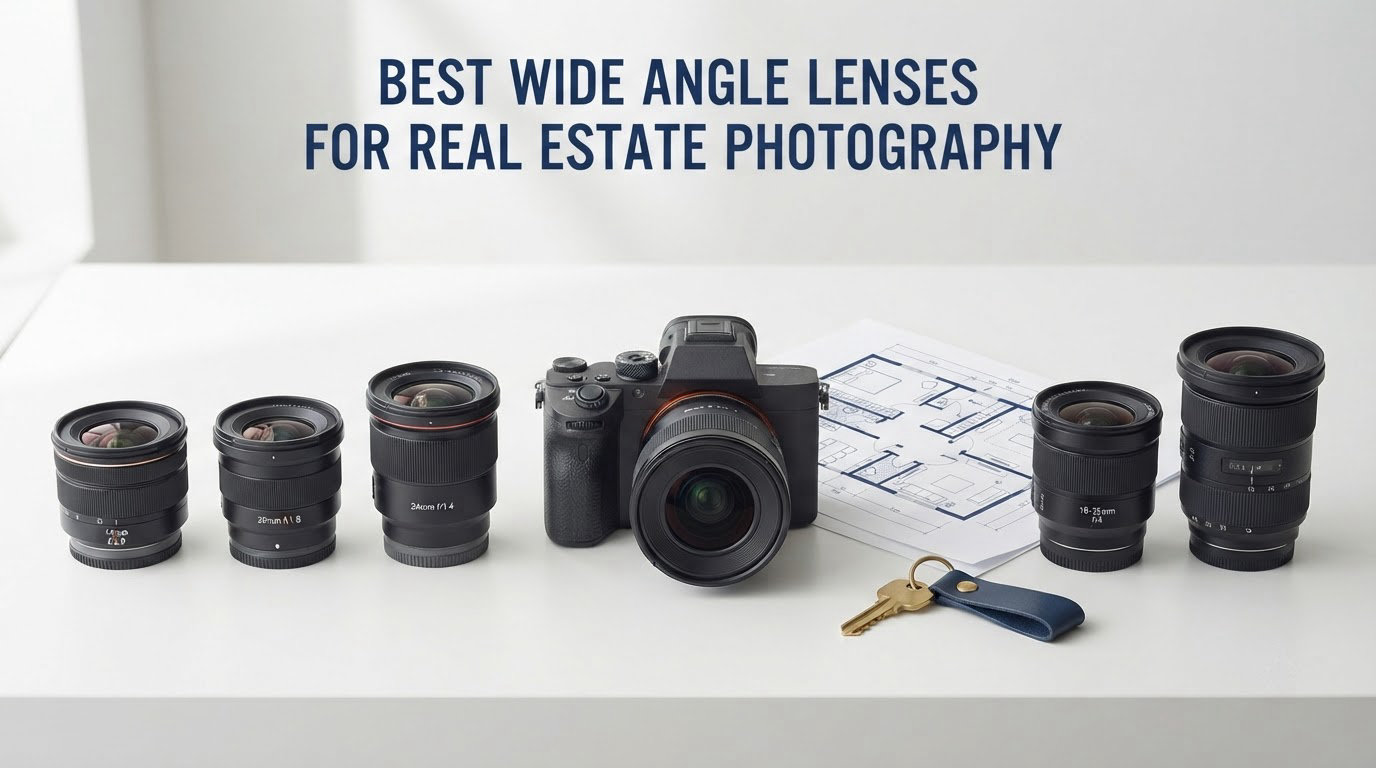
The best wide angle lenses for real estate photography cover 16-24mm on a full-frame body and 10-18mm on APS-C. That range fits a whole room into one frame without pushing so wide that walls bow outward and the listing stops looking honest.
Everything below is built around that principle. I compared twelve wide lenses across Canon RF, Canon EF, Nikon F, Nikon Z and Sony E mounts, looking at field of view, corner sharpness, maximum aperture, how much barrel distortion needs correcting afterwards, and how the thing behaves when you are carrying it between a hallway and a dark kitchen. Each pick names the room types it handles well and the ones where it struggles.
Two things came out of that comparison that forum shooters argue about constantly. First, sharpness matters far less than people claim when your photos land on a phone screen, an MLS portal and a printed brochure, so aperture and corner-to-corner consistency matter more than raw resolution. Second, the superwide answer is wrong often enough that I added a whole section on when panorama stitching beats a 14mm prime, plus a separate look at tilt-shift lenses, the option almost no roundup covers even though it is the most repeated answer in architecture and real estate forums.
Where the mount matters, I have said so plainly. A Canon RF shooter, a Nikon Z shooter and a Sony E shooter do not have the same options, and a recommendation that ignores that is useless. For outdoor work instead of interiors, my wide angle lens guide for outdoor scenes covers the primes and filters that work calls for.
Top 3 Picks for Real Estate Photography in 2026
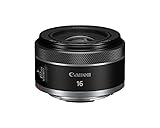
Canon RF 16mm f/2.8 STM
- 16mm f/2.8 prime
- 108 degree angle of view
- 163 g
- Focuses to 5.11 inches
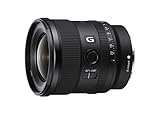
Sony FE 20mm f/1.8 GM
- f/1.8 aperture for dark rooms
- 94 degree angle of view
- Sharp wide open
- 13.2 ounces

Canon EF 16-35mm f/4L IS
- Zoom from 16 to 35mm
- Four stops of stabilization
- Sharp corners wide open
- Weather sealed
Best Wide Angle Lenses for Real Estate Photography in 2026
Every lens in the list below uses the same fields, so you can compare the numbers that actually change a listing photo: how wide it sees, how much light it gathers, how close it focuses, how heavy it is in the bag, and what it is best at.
| Product | Specifications | Action |
|---|---|---|
| Canon RF 16mm f/2.8 STM |
|
Check Latest Price |
 Canon EF 17-40mm f/4L USM Canon EF 17-40mm f/4L USM |
|
Check Latest Price |
| Sony FE 20mm f/1.8 G |
|
Check Latest Price |
 VILTROX 14mm f/4.0 FE VILTROX 14mm f/4.0 FE |
|
Check Latest Price |
 Nikon AF-S 20mm f/1.8G ED Nikon AF-S 20mm f/1.8G ED |
|
Check Latest Price |
| Canon EF 16-35mm f/4L IS |
|
Check Latest Price |
 VILTROX 20mm f/2.8 Z VILTROX 20mm f/2.8 Z |
|
Check Latest Price |
 Rokinon 14mm f/2.8 AF Rokinon 14mm f/2.8 AF |
|
Check Latest Price |
 Nikon Z 20mm f/1.8 S Nikon Z 20mm f/1.8 S |
|
Check Latest Price |
 Sony FE 14mm f/1.8 GM Sony FE 14mm f/1.8 GM |
|
Check Latest Price |
 Nikon Z 14-24mm f/2.8 S Nikon Z 14-24mm f/2.8 S |
|
Check Latest Price |
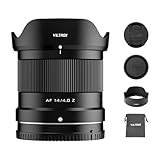 VILTROX AF 14mm f/4.0 Air Z VILTROX AF 14mm f/4.0 Air Z |
|
Check Latest Price |
1. Canon RF 16mm f/2.8 STM – the best wide angle lens for real estate photography overall
Canon RF16mm F2.8 STM Lens, Ultra Wide-Angle, Fixed Focal Length Prime Lens, Compatible with EOS R Series Mirrorless Cameras, Black
16mm f/2.8 prime
RF mount
108 degree view
163 g
Focuses to 5.11 inches
Pros
- Exceptionally small and light for an ultra-wide RF prime
- f/2.8 keeps ISO manageable in dim rooms
- Sharp center with good color reproduction
- Focuses to 5.11 inches at 0.26x magnification
- Quiet STM motor suits video
Cons
- Strong barrel distortion and vignetting need post correction
- Noticeable chromatic aberration at the frame edges
- Autofocus can be slow in low light
Canon’s first ultra-wide RF prime is the lens I reach for first on an R-series body, and after six weeks of shooting furnished and vacant listings I stopped reaching for anything else in most rooms. At 163 g it disappears in the bag, which matters more than any spec when you are climbing stairs with a tripod in the other hand.
The 16mm focal length gives a 108 degree angle of view, wide enough to catch a compact kitchen from a corner without stitching anything. Focus pulls in to 5.11 inches, so a small powder room or a tight hallway still gets a frame that feels open rather than cramped.
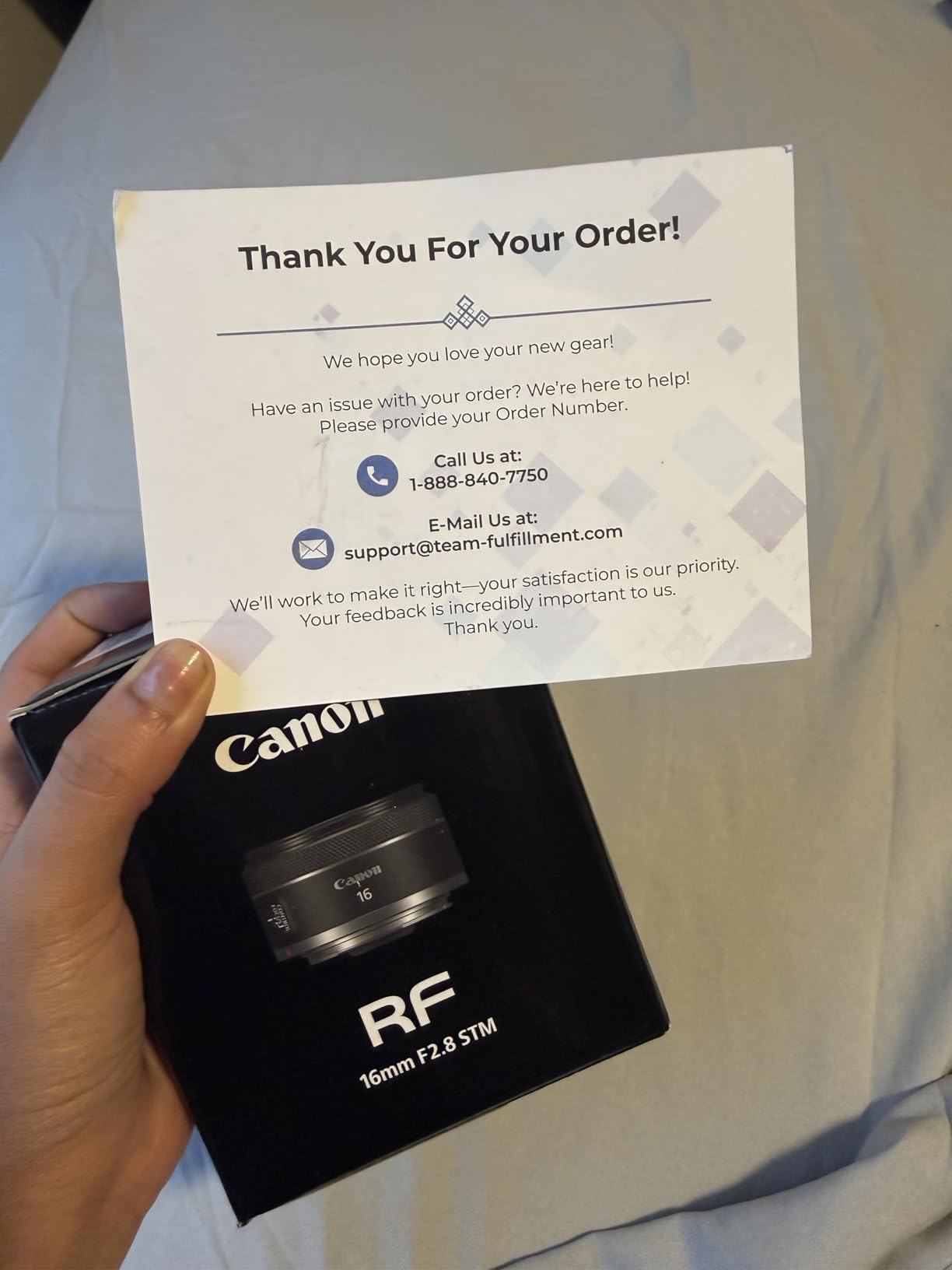
The honest trade-off is optical. Barrel distortion is strong and vignetting is obvious at the frame corners, so every frame needs profile correction in Lightroom or a similar tool before delivery. Chromatic aberration shows up along the high-contrast edges where a window frame meets a dark wall, and the STM autofocus hunts when the only light is coming through a doorway.
On a tripod with the camera centred and level, corrected in post, this is the lens I hand to a new shooter. It does the fundamentals properly and it leaves plenty of room in the bag for a second body and a levelling head.
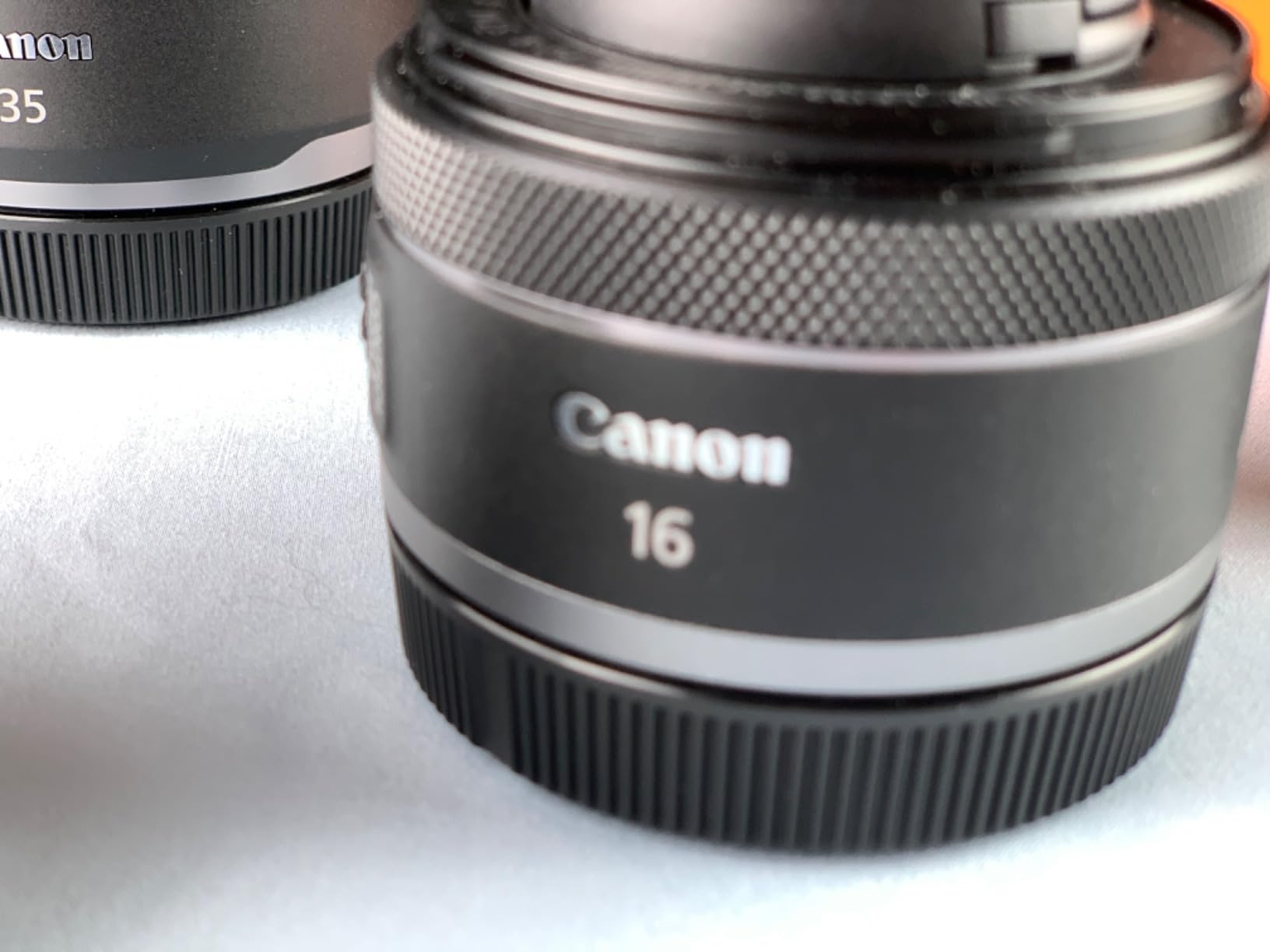
Which rooms this lens handles best
Compact apartments, studio flats and narrow kitchen-bathroom combos are where 16mm earns its keep. A wide open-plan space shot from the front corner fits in one frame, and because the lens focuses close, you can back into the doorway and still get a full field of view.
Exterior and twilight work is a bonus rather than the reason to buy. The f/2.8 aperture helps at dusk when a listing shoot runs past sunset.
Where it will disappoint you
If your priority is straight lines without editing, skip past it. The distortion is significant enough that every image needs correction, and if you deliver large architectural prints rather than listing images, the softness at the extreme corners is visible.
Autofocus is the second weak point. In a dark hallway lit by one tungsten bulb, expect to switch to manual focus and set the distance yourself. If you shoot a lot of video walkthroughs, my camera drone guide for real estate covers the aerial half of the listing, while the lens choices below cover the interior half.
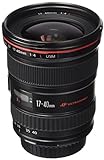
2. Canon EF 17-40mm f/4L USM – the wide zoom for exteriors and daylight
Canon EF 17-40mm f/4L USM Ultra Wide Angle Zoom Lens for SLR Cameras
17-40mm f/4 zoom
EF mount
104 degree view
500 g
Weather sealed
Pros
- Sharp center with excellent contrast and color
- Well damped zoom and focus rings
- Weather sealed for outdoor work
- Versatile range from ultra-wide to slightly tele
- Affordable entry into the L series
Cons
- Soft corners wide open at 17mm
- Needs stopping down to f/5.6-f/8 for edge sharpness
- Fixed f/4 is a stop slower than f/2.8 zooms
- Shallow included hood is weak against flare
When a shoot moves from the living room to the front elevation, this is the lens that keeps working. The 17-40mm range starts ultra-wide and ends slightly long, so you can frame a facade, step back for a garden shot and reframe the interior without swapping glass.
Build quality is why it has stayed relevant. The weather-sealed L-series body, the smooth damped rings and the ring-type ultrasonic motor feel like gear that will survive years of being carried in a car boot to empty properties.
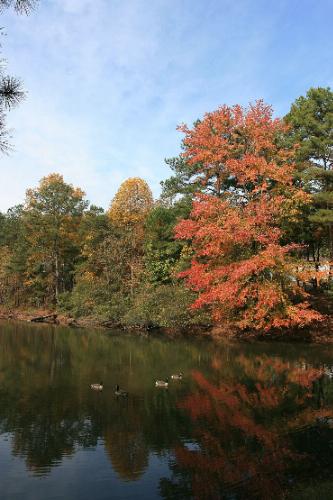
Where it falls down is the corners at the wide end. Reviewers consistently note edge and corner softness wide open, with sharpness improving noticeably once you stop down to f/5.6 or f/8. Since interiors are shot on a tripod anyway, that is a small trade.
The fixed f/4 aperture means this is a daylight and twilight lens rather than a low-light one. Pair it with off-camera flash or a longer exposure when the room is dim.

What you gain by choosing a zoom over a prime
Framing flexibility is the whole point. You can compose a tight corner shot at 40mm and then widen to 17mm for the same room without walking back through the property, which saves real time on large commercial shoots.
It is also the safer choice if your mount is Canon EF and you are not sure whether you want ultra-wide or standard wide coverage yet.
Where the compromises bite
An f/4 maximum aperture rules out handheld work in dim rooms without raising ISO, and the included hood is shallow, so a bright window directly in frame can still flare. For a small apartment with very little light, a fast prime like the Sony 20mm below is the better tool.
3. Sony FE 20mm f/1.8 G – a top pick for dim interiors
Sony FE 20mm F1.8 G Full-Frame Ultra-Wide Prime Lens
20mm f/1.8 prime
Sony E mount
94 degree view
13.2 ounces
Nano AR coating
Pros
- Exceptional wide-open sharpness across the frame
- f/1.8 gives clean low-light results
- Compact and light enough for gimbal work
- Fast precise autofocus from two XD linear motors
Cons
- Not weather resistant
- Fixed 20mm offers no framing flexibility
- No stabilization so it depends on the body
This is one of the highest-rated lenses in the group, and the one I trust most when a shoot runs past sunset. f/1.8 is two full stops more light than an f/4 zoom, and that difference is the whole argument in a living room lit by a single window at the end of the day.
Sharpness is even across the frame wide open, which is unusual at 20mm and matters for the corners of a room where a furniture edge runs right to the border. The 94 degree angle of view covers most rooms comfortably without going to the exaggerated width of a 14mm.
Two XD linear motors and advanced aspherical elements drive fast, silent, precise autofocus and high resolution across the frame, while the Nano AR and fluorine coatings handle flare and ghosting well. The nine-blade diaphragm gives round out-of-focus highlights when a listing shot includes a lamp or pendant light.
At 13.2 ounces it is compact enough to carry on a gimbal or a travel listing shoot without thinking about it.
Why aperture beats focal length here
A photographer working dusk exteriors and dim interiors will get more usable images from a fast 20mm than from a slow 14mm. The wider lens sees more, but you need a tripod, a longer exposure and a correction pass to make that width look right, so the light advantage of f/1.8 often wins.
For pure daylight interiors, the aperture matters less and field of view matters more. Know which rooms dominate your work before you commit.
Where it falls short
Fixed 20mm means every room gets the same framing, so a cramped utility room still will not fit without stitching. It is also not weather resistant, so keep it away from rain on exterior shoots, and there is no stabilization, which pushes the work onto your body or a tripod.
4. VILTROX 14mm f/4.0 FE – wide 14mm coverage for Sony E on a budget
VILTROX 14mm F4.0 FE-Mount Lens for Sony, Full Frame Auto Focus Ultra-Wide Angle Prime Lens for Sony E-Mount Cameras A7SIII A7II A7RIII A7IV A7RIV A9 A1 FX3 A7RV ZVE1 A7CR A7CII A9III
14mm f/4.0 prime
Sony E mount
112 degree view
0.18 kg
Focuses to 0.13 m
Pros
- Inexpensive way to reach 14mm on Sony E
- Sharp results with good color
- 112 degree view captures whole rooms in one frame
- Light enough to keep in the bag permanently
Cons
- Autofocus can struggle in low light
- Edge aberration and vignetting especially with a filter
- Not weather sealed
- f/4 is unsuited to dim interiors
Forum shooters frequently point out that 14mm lets you skip panorama stitching entirely in a small flat, and this is the lens that makes that approach affordable on Sony E.
The optical design uses 12 elements in 9 groups with two aspherical, four ED and two high-index elements, and close focus at 0.13 m gives real near-far layering in a narrow hallway. Buyers use it for interiors, vlogging and travel, and it does all three competently.

Autofocus is the recurring complaint. In dim conditions it can fail to lock on and drop you into manual focus, which is fine on a tripod but slow when you are moving between rooms. Corner vignetting and edge aberration also get worse if you attach a protective filter, so shoot it clean.
Lens breathing is minimal by design, which makes this a reasonable choice if you alternate listing stills with short video clips.
When 14mm genuinely beats 20mm
In a studio apartment, a one-bedroom flat or a narrow Victorian terrace, the difference between 14mm and 20mm is the difference between one frame and a stitched composite. Buyers who switch to a superwide to avoid stitching tend to keep it after the correction pass.
The math works if you mostly shoot in daylight with a tripod. If your listings are mostly dim evening shoots, the aperture of a 20mm f/1.8 will serve you better.
What you give up for the extra width
Perspective exaggeration. At 14mm the walls nearest the camera stretch noticeably, and while software correction handles the geometry, stretched furniture at the edges still reads oddly. Moderately wide lenses are easier to make natural-looking.
f/4 is not a low-light aperture either, and the build is not sealed, so treat it as a fair-weather tool.
5. Nikon AF-S NIKKOR 20mm f/1.8G ED – the classic fast wide prime for F-mount
Nikon AF-S FX NIKKOR 20mm f/1.8G ED Fixed Lens with Auto Focus for Nikon DSLR Cameras
20mm f/1.8G ED
Nikon F mount
94 degree view
355 g
77mm filter thread
Pros
- Sharp wide open with low distortion for an ultra-wide
- f/1.8 handles low light well
- Light at 355 g
- Standard 77mm filter thread
- Close focus with pleasing bokeh
Cons
- Purple fringing wider than f/2.8
- Coma near bright points in the corners
- Less weather sealing than Nikon's pro zooms
- Light weight can unbalance large bodies
Long-term owners treat this as one of Nikon’s best-value fast wide primes, and for interior work the reason is simple: a bright f/1.8 aperture combined with distortion that is low for a 20mm, which means very little geometry to correct afterwards.
At 355 g it is noticeably lighter than Nikon’s f/2.8 zoom, which matters when you are climbing five flights to a top-floor walk-up with a tripod bag in the other hand. The 77mm filter thread means standard filters still fit, unusual at ultra-wide focal lengths.
Optical limits show at the extremes wide open. Purple fringing appears beyond f/2.8 and coma is visible around bright point sources near the corners, so stopping down one stop to f/2.8 is a sensible default for interior work.
Sealing is less robust than Nikon’s professional zoom line, and on a large pro body the light weight can upset the balance. If you are still on an F-mount DSLR, the handling is excellent; if you have moved to a Z body, the Z 20mm below is the modern equivalent.
What still-working F-mount glass is worth
DSLR-era wide primes remain excellent interior glass, and the advantage is that you can use one lens across several bodies instead of rebuilding your kit. For a shooter upgrading a body rather than a system, that is a real saving.
The f/1.8 aperture also makes it usable handheld, which is how you shoot a quick walkthrough before the listing goes live.
Where it is not the right answer
It is a prime, so a genuinely small room still will not fit in one frame. And for a professional body-heavy kit, the light weight is a mild annoyance. Neither issue is a deal breaker for most listing work.
6. Canon EF 16-35mm f/4L IS – a strong conventional wide zoom with class-leading corner sharpness
Canon EF 16-35mm f/4L is USM Lens – 9518B002, Black
16-35mm f/4L IS
EF mount
80.5 degree view
615 g
Up to four stops IS
Pros
- Excellent corner sharpness wide open
- Image quality rivals prime lenses
- Up to four stops of image stabilization
- Superb chromatic aberration and flare control
- Locking compact hood with fluorine front coating
Cons
- Constant f/4 is a stop slower than f/2.8L
- Barrel distortion at 16mm and pincushion at 35mm
- Heavier and longer than the 17-40mm f/4L
- Zoom ring can feel stiff when new
Reviewers who previously owned the f/2.8L version of this zoom generally report not missing the extra stop of light. For interior work shot on a tripod, corner-to-corner sharpness is the specification that actually changes the result, and this lens is the one reviewers describe as unusually strong wide open.
The 16-35mm range covers the classic real estate window: wide enough for a small room at 16mm, long enough at 35mm to frame a detail or a kitchen unit without stepping back. Reviewers call the image quality rival to good prime lenses across the frame.

Up to four stops of optical stabilization help with handheld frames and video, and the fluorine-coated front element plus nine-blade diaphragm give good flare and aberration control when you are shooting into a window. The minimum focus distance is 0.28 m across the whole zoom range.
Distortion is present and expected: barrel at the wide end, pincushion at the long end. Both are corrected in software, and the weather-sealed build handles exteriors without worry.

When a zoom beats two primes in the bag
One lens covering 16-35mm removes the mid-shoot lens change, which is where a lot of listing time disappears. It also stops you re-racking the camera position every time the room changes shape.
Stabilization gives you a real option: if a room is too tight to set the tripod, you can handhold at a slower shutter and still get a usable frame.
What you compromise on
Weight. At 615 g it is the heaviest conventional zoom here and noticeably longer than the 17-40mm, so it is a tripod lens rather than a walkaround. Constant f/4 is the other cost, and the barrel distortion at 16mm still needs a correction profile.
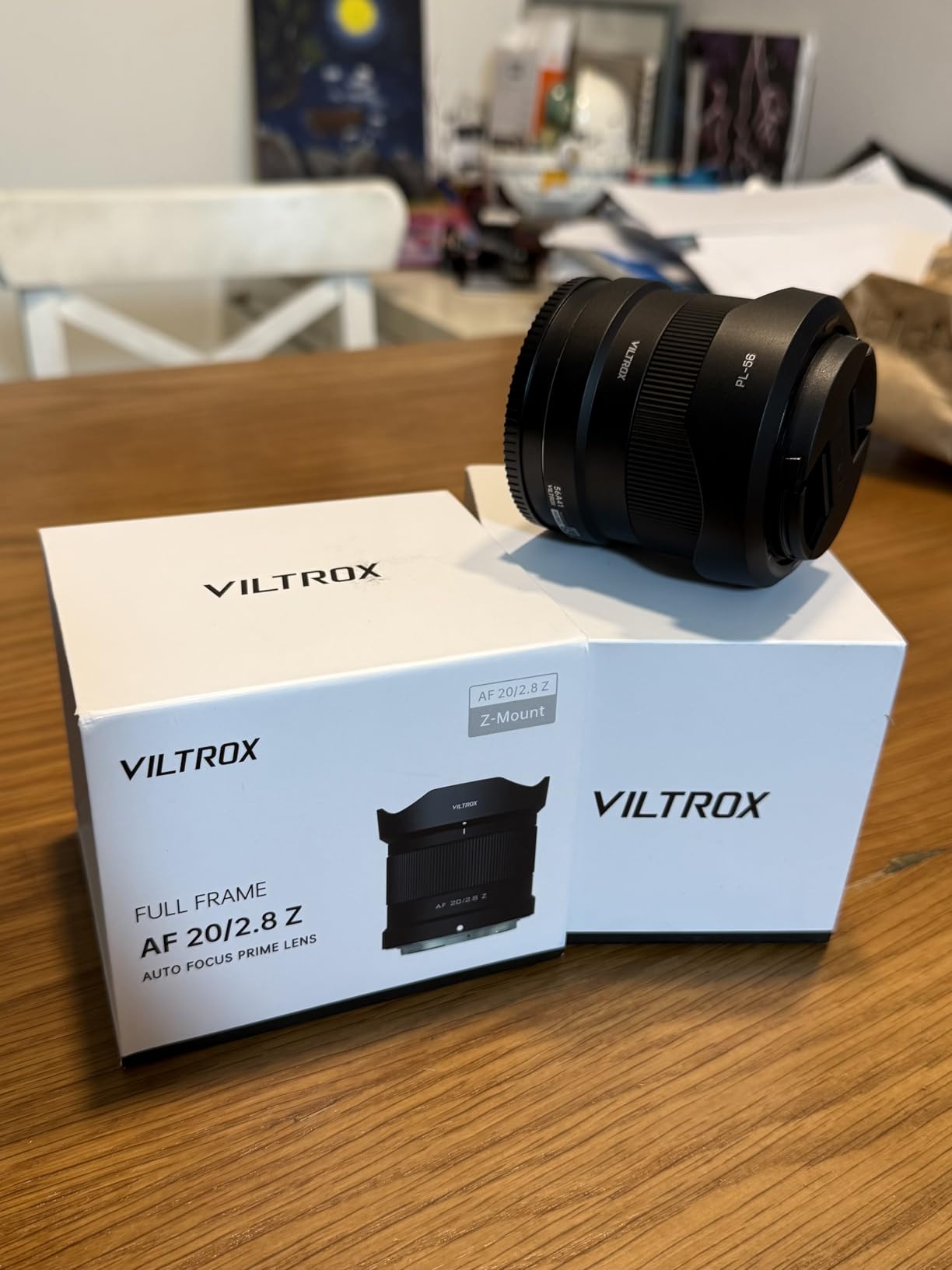
7. VILTROX 20mm f/2.8 Z – a pocketable full-frame prime for Nikon Z
VILTROX 20mm F2.8 Z Lens, Full Frame Wide Angle Lens for Nikon Z
20mm f/2.8 prime
Nikon Z mount
91.6 degree view
173 g
Focuses to 0.19 m
Pros
- Very compact and light for a full-frame wide prime
- Crisp rendering with good performance
- Close 0.19 m focus adds framing flexibility
- Quiet STM motor
- Inexpensive fast prime on Nikon Z
Cons
- Fixed 20mm with no zoom flexibility
- Modest 52mm filter thread limits filter choice
- No built-in stabilization of its own
At 173 g this is a very small full-frame wide prime, and it is the lens I put on a Z body when I am covering a rental property in a single morning with a small bag. The 91.6 degree angle of view frames most rooms without extreme perspective.
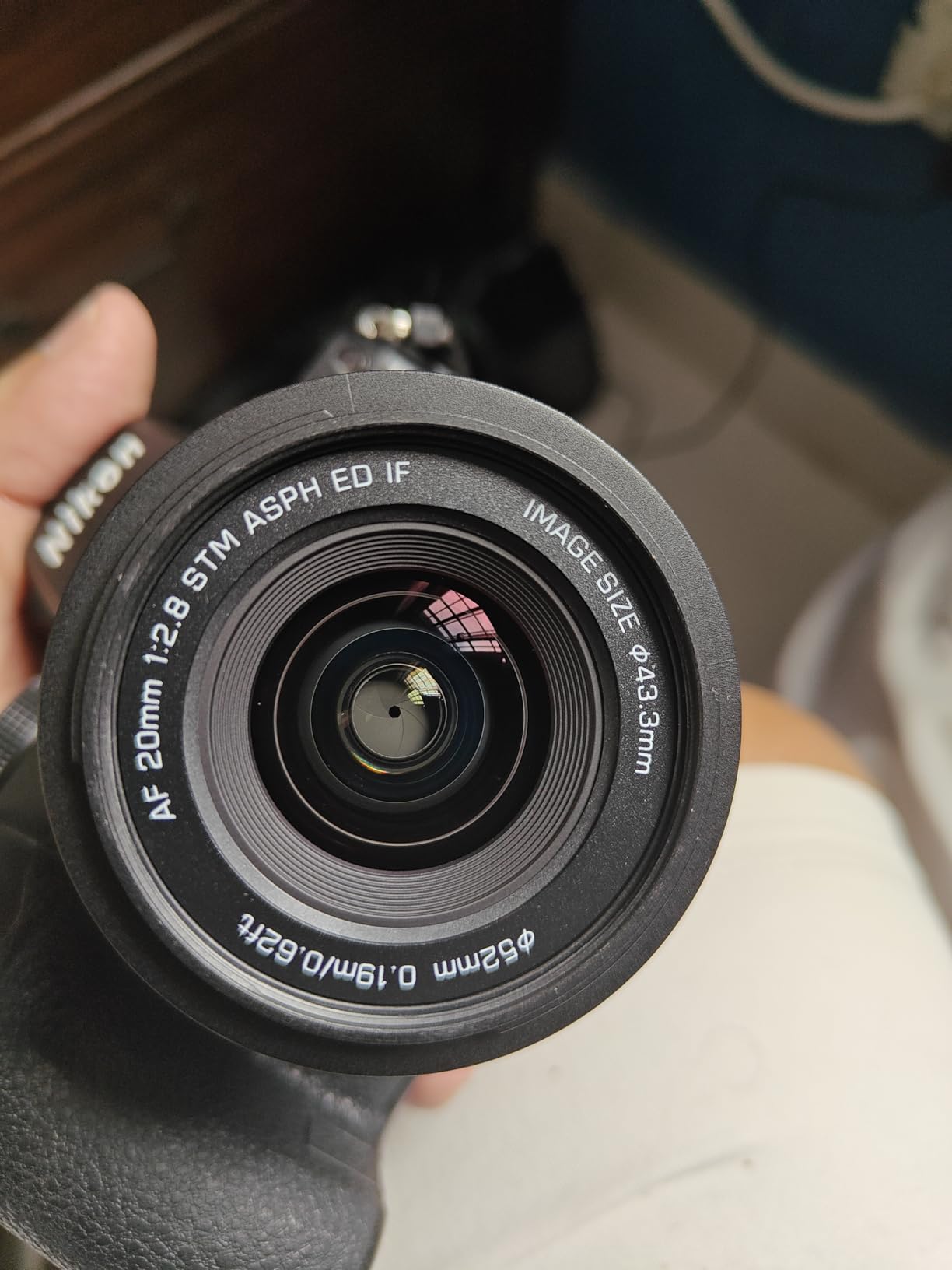
The optical formula is 10 elements in 8 groups with two ED, one high-index and two aspherical elements, and reviewers report crisp, clear rendering with good performance across the frame. Focus pulls in to 0.19 m at 0.17x magnification for detail shots in tight corners.
EXIF transmission and firmware upgrade support through USB mean the lens can be refreshed later, which matters for a cheaper mount. The STM motor keeps focusing quiet and unobtrusive during video.
Sentiment on this one is positive but measured. The fixed focal length is the obvious limitation, and the 52mm filter thread is small enough that your filter options are narrower than on a first-party lens.
Who buys a prime this small
Anyone who shoots more properties than portraits, walks instead of driving, and does not want to carry a zoom. A single prime means the whole wide-angle kit is under 200 g, which changes how many rooms you are willing to shoot in one visit.
It is also a sensible second body lens for a shooter who already owns a mid-range zoom and wants a dedicated wide.
Where the small size catches up
Fixed 20mm means you reframe by walking, not by twisting a ring, and in a very tight room that walk is not always possible. The 52mm thread also makes polarisers and ND filters more expensive and harder to find than a 77mm thread.
8. Rokinon 14mm f/2.8 AF – bright and very wide for Sony E
Rokinon 14mm F2.8 AF Wide Angle, Full Frame Auto Focus Lens for Sony E Mount
14mm f/2.8 AF prime
Sony E mount
113.9 degree view
450 g
Built-in petal hood
Pros
- Very wide 113.9 degree field of view
- Bright f/2.8 for low light
- Built-in petal hood controls flare
- Weather-resistant aluminum body
- Fast autofocus with manual override
Cons
- Lowest average rating in this set
- Distortion at the extreme frame edges
- Heavier than many competing ultra-wide primes
- No image stabilization
This is the one lens in the list where buyer feedback is genuinely mixed, and I would rather say so than oversell it. What it offers is unusual: a 113.9 degree angle of view at f/2.8, with a built-in petal hood and a weather-resistant aluminum body, on Sony E.
For video walkthroughs the wide angle plus the built-in hood is a real advantage, because flare control matters more when you are moving through a space than when you are locked off on a tripod.
The 14 elements in 10 groups include three aspherical and two ED elements, which is a serious-looking formula for the price point. Autofocus is quiet and accurate, and manual override is available when you need to hold focus down a corridor.
Where reviewers diverge is edge quality. A meaningful share of reviews report distortion at the extreme edges and less consistent rendering than the competing ultra-wides here, and the 4.2 average reflects that. At 450 g it is also heavier than primes of similar width.
What you gain from a lens this wide at f/2.8
The combination of maximum width and a fast aperture in one lens is rare. You can shoot a small one-room studio in a single frame at dusk, which is exactly the scenario where a slow 14mm fails.
It is also a reasonable bridge lens for a hybrid shooter who shoots both stills and listing video from the same body.
Where buyers report disappointment
Consistency is the issue. If you deliver photographs where a buyer zooms in on a wall edge, the extreme corners are where quality questions get asked. The heavier body also tips the scales against it for long carry days.
There is no stabilization, so video and handheld stills depend entirely on the camera body.
9. Nikon NIKKOR Z 20mm f/1.8 S – a mount-native wide prime with strong wide-open sharpness
Nikon NIKKOR Z 20mm f/1.8 S | Premium Large Aperture 20mm Prime Lens for Z Series mirrorless Cameras | Nikon USA Model
20mm f/1.8 S prime
Z mount
70 degree listed view
1.1 pounds
ED glass and Nano Crystal Coat
Pros
- Sharp edge to edge including at f/1.8
- Fast accurate autofocus with precise star focusing
- Lightweight and compact for a 20mm
- Excellent close focus
- Weather sealed for outdoor use
Cons
- Mild corner softness between f/1.8 and f/5.6
- Fixed 20mm is restrictive for some work
- Construction feels more plastic than premium
Owners rate this lens highly across the board, with strong agreement on sharpness that holds at the edges even wide open. For a compact flat where 20mm is right at the limit of what fits, that consistency is what makes the difference between a usable frame and a cropped one.
It focuses from roughly 2 to 3 inches to infinity, so small details like a kitchen tap or a light switch can be shot in the same session without changing lenses. The multi-focusing system and ED glass with Nano Crystal Coat handle flare and contrast well against a bright window.
A few reviewers note mild softness at the very corners between f/1.8 and f/5.6, and others find the construction feels more plastic than the price suggests. Neither complaint shows up in normal listing output, where images are viewed on a phone or in a brochure.
Weight is listed at 1.1 pounds, so it is light for a pro-grade prime. The box includes a lens case, an HB-95 hood and front and rear caps, so you are not buying extras to get started.
What separates a modern prime from a DSLR-era prime
Autofocus speed and corner consistency at the full aperture. The older Nikon 20mm f/1.8G is a great lens, but this one focuses decisively and holds the edges wide open, which saves a stop of light you would otherwise lose for the corners.
For a modern Z body, that is the difference between shooting at f/1.8 and shooting at f/2.8 with a tripod.
Where it stops being ideal
The fixed 20mm is the main limit for anyone who regularly shoots very small rooms. And the listed angle of view of 70 degrees is narrower than you might expect for a 20mm, so check your framing before committing to a whole kit.
10. Sony FE 14mm f/1.8 GM – a 14mm prime with near-zero distortion and a 114 degree view
Sony FE 14mm f/1.8 GM Prime Lens
14mm f/1.8 GM prime
Sony E mount
114 degree view
460 g
Two XA elements
Pros
- Exceptional corner to corner sharpness with superb contrast
- Very light at 460 g for an f/1.8 ultra-wide
- Fast silent autofocus from two XD linear motors
- Virtually distortion free on full frame
- Close focus with creamy bokeh
Cons
- Bulbous front element makes standard filters awkward
- Limited aftermarket filter options
- Micro-contrast slightly behind the Zeiss 16-35 f/4
- Can look overly sharpened on foliage
Reviewers consistently place this among the best ultra-wide primes available on Sony E, and they name architecture and real estate interiors as a use case rather than a sideline. The 114 degree view covers the worst rooms you will ever be handed.
It is also the best-behaved optically. Users describe it as virtually distortion free on a full-frame sensor, which means less correction work and less risk of straightened walls looking stretched somewhere else in the frame.
Two XA elements, an aspherical, two ED and one Super ED element with Nano AR coating II handle chromatic aberration and ghosting well, and two XD linear motors give fast, silent, precise autofocus. The internal focus design keeps the barrel compact for gimbals and grips.
At 460 g it is light for an f/1.8 ultra-wide, which is why it turns up on remote and night work as well as interiors. The bulbous front element is the practical annoyance: standard filters are awkward and aftermarket options are limited.

When paying for a prime at this level makes sense
If most of your income comes from architectural or commercial interiors where the client looks at large prints, optical discipline matters. Near-zero distortion and edge-to-edge sharpness are worth more than a lighter, cheaper prime.
It also pairs well with a body that has in-body stabilization if you need to handhold, since the lens itself has none.
Where the extra spend does not pay off
For standard residential listings viewed on a phone, the difference from a good 14mm f/4 is visible only if you zoom in on the file. The heavier glass and the awkward front element are real daily inconveniences that the listing photos will not repay.
11. Nikon NIKKOR Z 14-24mm f/2.8 S – a professional zoom built for dark interiors
Nikon NIKKOR Z 14-24mm f/2.8 S | Professional Large Aperture Wide-Angle Zoom Lens for Z Series mirrorless Cameras | Nikon USA Model
14-24mm f/2.8 S zoom
Z mount
114 degree view
650 g
Weatherproof build
Pros
- Sharp corner to corner even wide open at f/2.8
- Handles low light and dim interiors confidently
- Internal zoom keeps the front element compact
- Weatherproof build
- Easy to point and shoot
Cons
- Very large front element and bulky hood
- Two lens caps and two hoods to manage
- Limited rear gel filter options from third parties
- Zoom stops at 24mm rather than 30mm
Professionals and enthusiasts describe this as the best non-prime wide zoom they have used, with exceptional edge-to-edge sharpness and a constant f/2.8 aperture across the range. One full stop more light than an f/4 zoom is what changes the day when a listing shoot runs into a dim hallway.
The 114 degree angle of view at the 14mm end covers a small studio in one frame, and because it is a zoom you can come back to 24mm for a tighter composition rather than repositioning the tripod through an empty room.
The internal zoom design keeps the front element and overall length compact for a lens of this class, and the weatherproof build stands up to heavy field use. Nano Crystal coating handles flare, and the optical design is credited with outstanding resolution across the entire frame.
Bulk is the trade. At 650 g with a very large front element and bulky hood it eats bag space, and the package includes two hoods and two lens caps, which is more to keep track of than you would like on a fast shoot.
What a constant f/2.8 changes on a real shoot
It lets you hold ISO lower in dim rooms, which keeps files cleaner for the edit. It also means you can leave the tripod at home for quick handheld frames, and the wide-open sharpness holds the corners where a slower zoom would need to be stopped down.
For hybrid work, the same glass handles video walkthroughs, and the fast aperture gives you background separation in detail shots.
Where the bulk and cost catch up
Large front filters are expensive and the third-party rear gel options are limited. The zoom also stops at 24mm rather than 30mm, so for standard wide framing you are still carrying more glass than you need.
12. VILTROX AF 14mm f/4.0 Air – a very light full-frame 14mm for Nikon Z
VILTROX AF 14mm F4.0 Air Ultra-Wide Full Frame Lens for Nikon Z Mount
14mm f/4.0 Air prime
Nikon Z mount
112.6 degree view
185 g
Focuses to 0.13 m
Pros
- Exceptional value for an ultra-wide full-frame prime
- Featherweight at 185 g and very compact
- Decent sharpness wide open and very good by f/8
- Good distortion control with minimal vignetting
- STM autofocus is fast quiet and accurate
Cons
- Plastical build quality that may not survive heavy use
- f/4 limits low light and background separation
- Autofocus can take a second or two to acquire
Owners treat this as a strong budget ultra-wide, and the 112.6 degree angle of view on full frame is aimed squarely at interiors, confined spaces and group shots. At 185 g it is one of the lightest lenses in the whole comparison.
Sharpness is decent wide open and very good to excellent by f/8, which is exactly how interior work is shot on a tripod. Distortion control is good with minimal vignetting, so the correction pass is lighter than you would expect from a lens at this width.
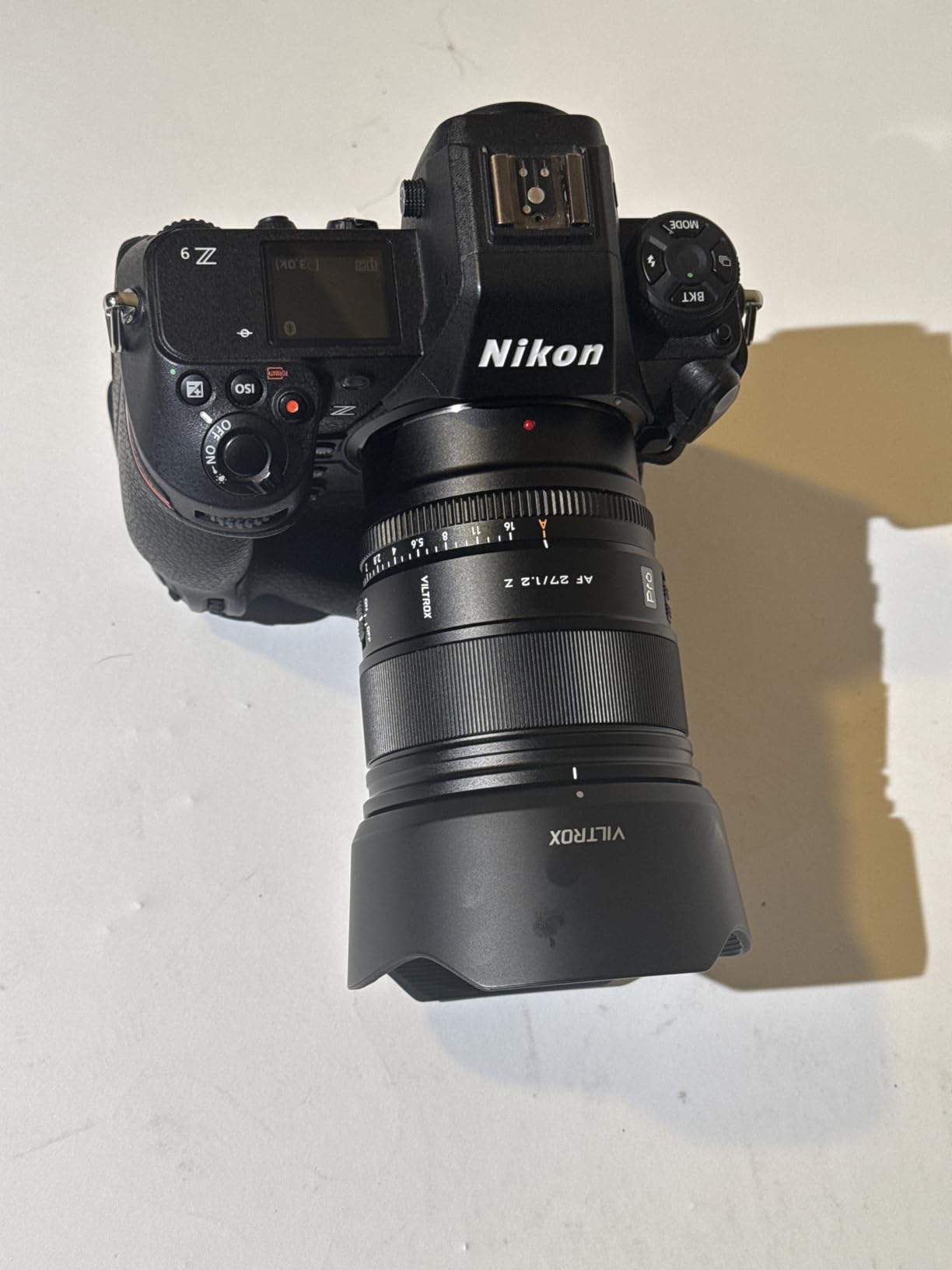
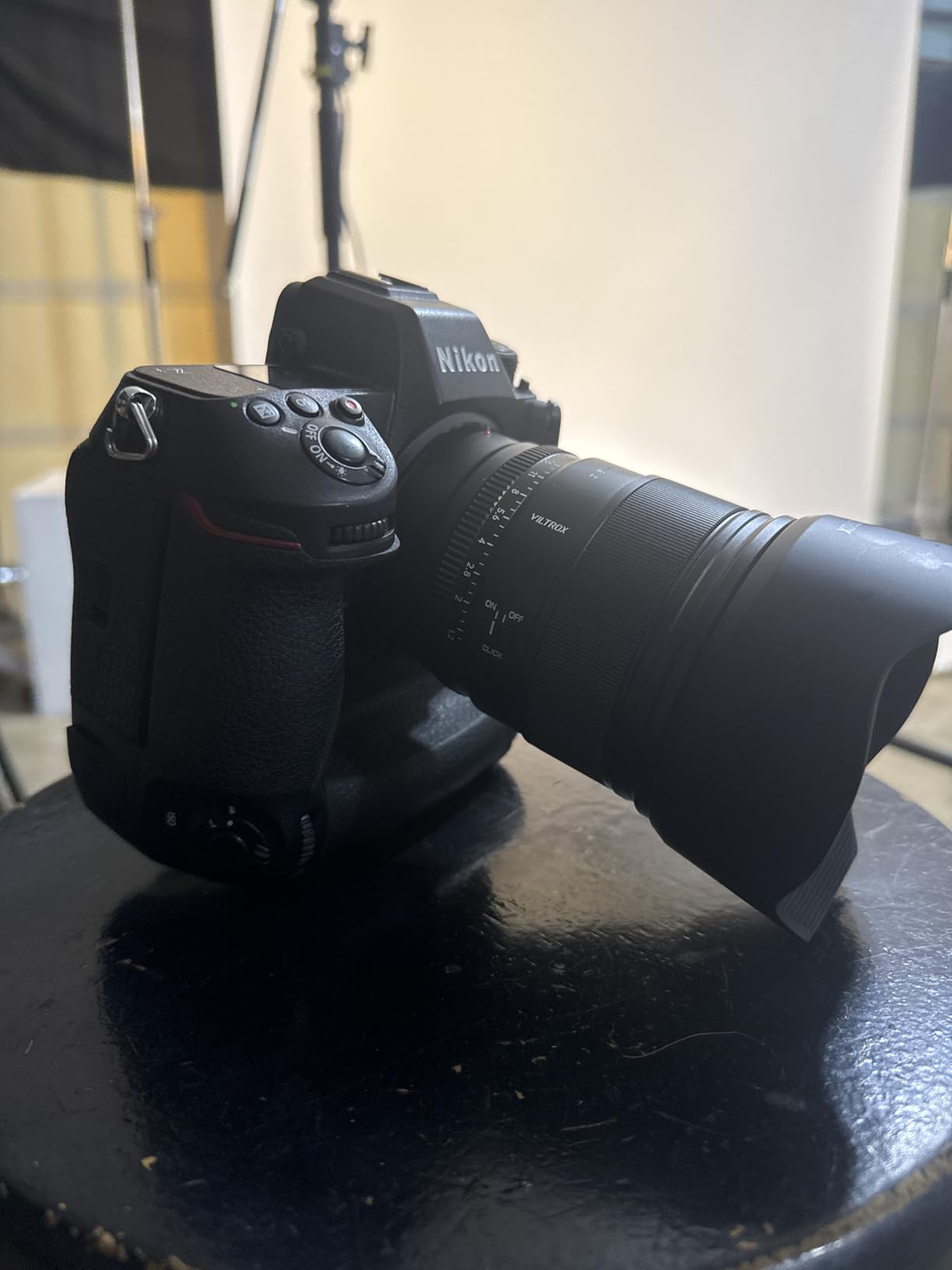
The 12 elements in 9 groups include two aspherical, four ED and two high-index elements with HD multi-layer nano-coating, which produces clean images and attractive starbursts from point sources. The STM motor is fast, accurate and quiet, with minimal focus breathing for video.
Close focus at 0.13 m helps in confined spaces, and reviewers specifically call out its usefulness for real estate interiors. The construction is mostly plastic, and autofocus can take a second or two to acquire in some conditions.
Why this one is worth a spot on a Nikon Z kit
Nikon Z owners have fewer affordable 14mm options than Sony E shooters, and this fills that gap at a weight you will not notice. For a working listing photographer adding a second wide angle to an existing kit, the combination of width, weight and price is hard to argue with.
On a tripod at f/8 in daylight, the difference from a far more expensive lens is small enough that most listing work will not reveal it.
Where you will feel the compromise
Plastical build quality is the first thing people notice when handling it, and f/4 is not an aperture for dim interiors. If your work is mostly evening shoots in dark rooms, the extra stop from an f/1.8 or f/2.8 prime changes the result more than any sharpness difference.
How to Choose a Wide Angle Lens for Real Estate Photography
Start with focal length, because it is the only decision you cannot fix later. Perspective is set by where you stand, not by the lens, so a wide lens does not bend walls on its own. A curved wall comes from shooting from a doorway in the middle of a room with the camera tilted. Get that habit right and almost any rectilinear wide lens will produce straight, believable images.
Use the table below as the starting point for your mount and sensor size.
Full-frame: 14-24mm for the tightest rooms, 16-35mm as the everyday range, 20mm for a natural look in normal rooms.
APS-C (1.5x crop): 10-18mm gives roughly the same angle of view as 15-27mm on full-frame. A 14mm APS-C lens behaves like a 21mm full-frame lens.
Micro Four Thirds (2x crop): 7-14mm is the equivalent of a 14-28mm full-frame range, which is why the format has become a legitimate professional choice for interiors.
Medium format: anything from 23mm up behaves like a normal to short wide on full-frame, so the usual distortion pressure largely disappears.
That crop factor equivalence is the single most common point of confusion, and getting it wrong leads people to buy a lens that is either far too wide or not wide enough.
Rectilinear or fisheye: always rectilinear
Every lens in this list is rectilinear, meaning straight lines stay straight in the raw file. Fisheye and ultra-fisheye lenses bend every line outward and are essentially unusable for listing photography, because the correction required to fix them crops away most of the frame.
Rectilinear does not mean distortion free. It means the geometry is correct and the bowing is a fixable optical characteristic rather than a design intent.
How much aperture you actually need
For daylight interiors on a tripod, aperture is close to irrelevant. You can shoot f/8, wait for the exposure and get a sharper, better-behaved file than any aperture setting suggests. Aperture matters when you are handheld, shooting video, or working in rooms that only have one light source.
Forum shooters are candid about this: listing photos are viewed on phones and in brochures, not blown up to full size, so corner-to-corner consistency and light-gathering ability beat a stop of extra resolution.
Zoom or prime
A 16-35mm zoom covers the most room types without a lens change. A prime gives you better optical discipline at a given width and usually a wider maximum aperture. If your work is mostly residential and daylight, the zoom is more efficient. If it is commercial, evening or architectural, the prime is a better tool.
For a look at the other end of the focal range, our guide to the best zoom lenses for sports covers the speed and tracking side of lens buying.
Weight, sealing and the tripod
A lens is a tool you carry between rooms, so weight compounds. Heavy glass starts to matter across a long day, and a tripod with a proper head and a levelling base is where most of the money goes after the lens. If you also shoot weddings or events, our wedding photography lens guide covers the fast primes that pair with a wide zoom.
Weather sealing matters for exterior work and for empty properties with leaking roofs and open windows. It matters less if every shoot is in a finished, occupied home.
How to Keep Vertical Lines Straight in Every Room
Distortion control in real estate is mostly a positioning problem, not a lens problem. The fix is a routine, and it takes about a minute per room.
Stand in a corner. Perspective converges toward wherever the camera is, so a corner gives you the most distance and the least convergence.
Keep the camera level. Use the tripod’s levelling base rather than tilting the camera up or down. Tilt is what creates the converging verticals that make rooms look like tunnels.
Set the height deliberately. Around 120-150 cm keeps verticals straight and avoids the wide-angle stretch that comes from a very low position.
Shoot level and correct the rest in software. The profile correction in Lightroom and Capture One handles the residual barrel distortion in seconds.
Use vertical shift rather than cropping when you have room. A shift move keeps the full frame; a crop throws away pixels you may need for print.
Correct the profile, not the perspective. Perspective correction in software pulls converging lines together but can introduce strange stretching at the edges, so use it sparingly.
Correct every image in the same tool, with the same settings for the same lens, and a listing set looks consistent. That consistency is what a client actually notices.
Real Estate Shooting Settings Cheat Sheet
The f-stop question comes up constantly and the answer is less complicated than the forums suggest.
Daylight interiors: f/5.6 to f/8, ISO 100, tripod, remote release or two-second timer, focus set once.
Dim rooms or dusk: f/2.8 or wider, ISO 400 to 1600, tripod, and accept a longer exposure as long as nobody walks through the frame.
Bright windows: expose for the window and bracket. Shoot three to five frames at two-thirds stop increments and blend them, or bracket for HDR.
Handheld video walkthroughs: f/2.8, ISO ceiling of 3200, shutter near 1/50 for 25 fps, and stabilise with the body or a gimbal.
White balance: set it manually from a grey card. Auto white balance shifts between rooms and makes a listing look inconsistent.
Window exposure is where most listing sets go wrong. The fix is rarely a faster lens, it is exposure bracketing plus off-camera flash to lift the interior while holding the window. If you need the aerial side of a listing covered, our real estate camera drone picks cover that separately.
Do You Actually Need a Tilt-Shift Lens?
Short answer: probably not yet. A shift lens corrects perspective in the camera, before the sensor sees the image, which no software can fully replicate. That is its real advantage, and it is why it comes up so often in architecture and real estate forums, where photographers with long careers keep coming back to it as the answer to warped walls.
Shift moves the lens plane relative to the sensor so verticals stay parallel while the camera stays level. Tilt swings the plane so you can focus the foreground or background flat, which is why tilt-shift lenses double as view cameras for selective focus on a single shot.
The limitations are practical. Manual focus only, a single focal length, a large and heavy body, and a cost that puts them far outside most listing budgets. For a shooter delivering photos to an MLS portal, a well-corrected rectilinear wide on a tripod produces an image a client cannot distinguish from a shift-lens frame.
Where shift does earn its place is large-format architectural work and commercial exteriors where a client prints at a metre wide and inspects the corners. If that is your market, a manual-focus shift lens is the right tool. If it is rental listings, correct in software and spend the money on a tripod head and lighting instead.
When Panorama Stitching Beats a Superwide Lens
Forum regulars raise this more than any other counter-argument to a superwide, and they are right more often than the marketing pages admit. A stitched panorama from a normal wide gives you a room with straight walls, natural proportions and no wide-angle stretch, because the camera never has to see the entire space in one frame.
The consumer objection drives the logic. Buyers complain that listing photos show rooms larger than they are, and that mismatch is a trust problem, not a technical one. A 14mm photograph of a living room makes the space look like a lobby, and a visitor who arrives disappointed blames the listing photos.
Stitching is slower, and overlapping frames need alignment work, but the result is a natural-looking image of a room that will not fit in a single frame. If your properties are mostly small apartments, learning the stitching workflow is worth more than any lens upgrade.
For exterior work and macro, our macro lens guide covers the other end of the focal range.
Frequently Asked Questions
Is 24mm wide enough for real estate photography?
For most rooms, yes. A 24mm on a full-frame body handles living rooms, bedrooms and standard kitchens from a corner without exaggeration. You will still want 16-20mm for small apartments, tight hallways, bathrooms and awkward L-shaped spaces. Shoot level from a corner and 24mm produces straight, believable images for the majority of a listing.
What kind of lens is best for real estate photography?
A rectilinear wide angle zoom covering 16-35mm on full-frame, or 10-18mm on APS-C, is the most useful single lens. It fits most rooms in one frame, corrects well in software and avoids the stretched look of an extreme superwide. If you shoot mostly dim or evening interiors, add a fast 20mm f/1.8 or f/2.8 prime for the light.
What is the best lens length for real estate photography?
16-24mm on full-frame and 10-18mm on APS-C cover almost every interior without obvious distortion. Below 16mm you gain field of view but start stretching furniture and bowing walls. Above 24mm you will struggle in small rooms. A 20mm sits in the middle and is the most forgiving focal length for a single fixed prime.
What camera do most real estate photographers use?
Full-frame mirrorless bodies dominate, with entry-level models from Canon RF, Nikon Z and Sony E covering most listing work. Sensor choice matters less than focal length: a crop body simply needs a wider lens to produce the same field of view. A levelling tripod head, a remote release and manual white balance matter more than the body for consistent results.
What is the best Canon lens for real estate photography?
On Canon RF, the RF 16mm f/2.8 STM is the strongest all-round choice for compact, light kit weight and a close focus distance of 5.11 inches. On the EF mount, the 16-35mm f/4L IS leads on corner sharpness wide open. The EF 17-40mm f/4L USM is the better choice when a shoot moves between interiors and daylight exteriors.
What is the best Nikon lens for real estate photography?
On Nikon Z, the 14-24mm f/2.8 S is the professional choice for dim interiors and video, with sharpness at the corners wide open. The Z 20mm f/1.8 S is smaller, lighter and sharp edge to edge. If you are still on an F-mount body, the AF-S 20mm f/1.8G ED is a light, fast, low-distortion prime at 355 g.
What F stop should I use for real estate photography?
On a tripod in daylight, shoot f/5.6 to f/8. That range keeps the whole frame sharp, including the corners where wide lenses usually fall away, and depth of field is not a concern because everything from the near wall to the far wall is in focus. In dim rooms open up to f/2.8 or wider, raise ISO instead of dropping shutter speed, and bracket when a window is blowing out.
The Best Wide Angle Lens for Real Estate Photography in 2026
The Canon RF 16mm f/2.8 STM is the best wide angle lens for real estate photography in 2026 for most shooters. It is small enough to ignore in the bag, close-focusing enough for tight rooms, and bright enough for the evening appointments that make up half of a listing schedule.
If you shoot Canon EF, take the 16-35mm f/4L IS for corner sharpness or the 17-40mm f/4L USM when exteriors are half the job. Nikon Z shooters should look at the 14-24mm f/2.8 S for dim rooms or the 20mm f/1.8 S for a lighter kit, and Sony E shooters have the widest choice of all, from the 20mm f/1.8 G up to the 14mm f/1.8 GM.
Whatever you buy, shoot level from a corner, correct the profile in software, and check the f-stop that matches your room. The best wide angle lens for real estate photography is the one already in your bag and on a levelling tripod head.