
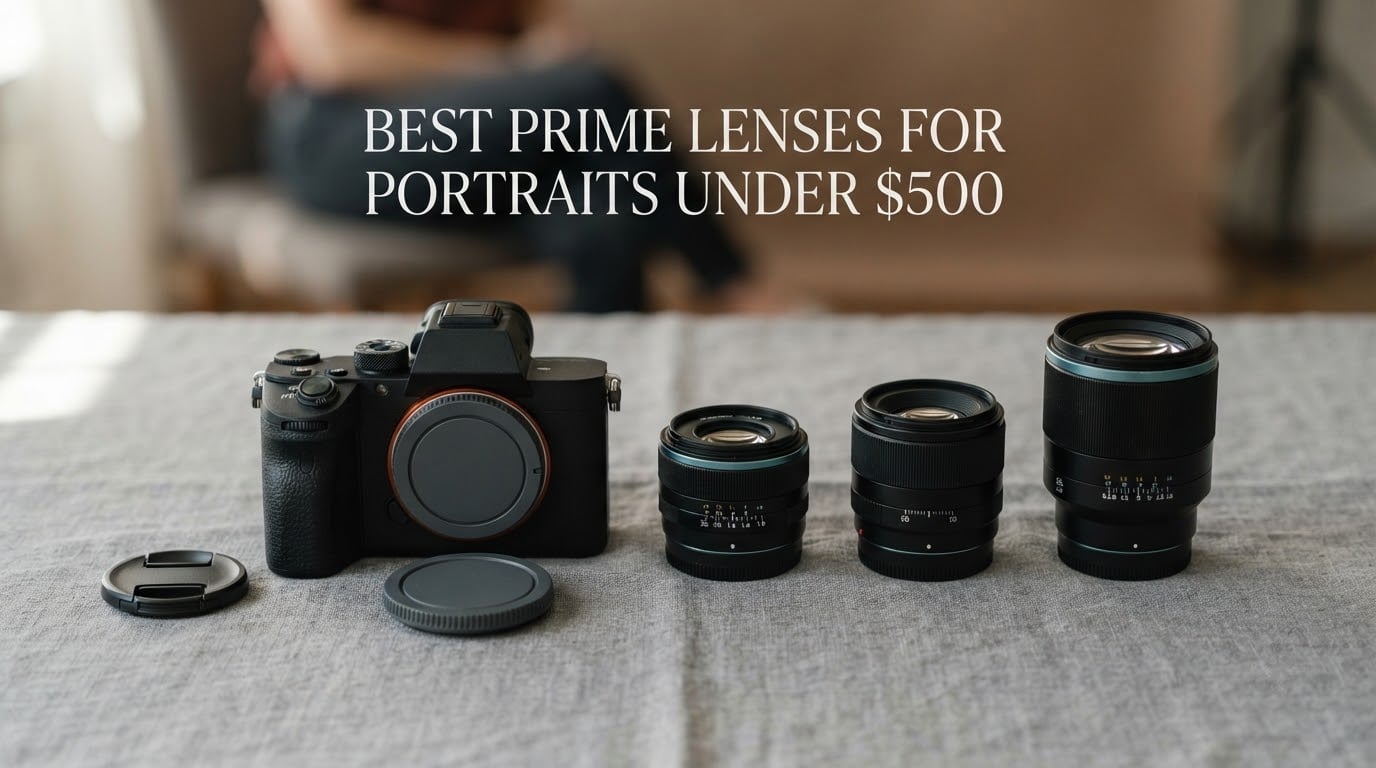
Portrait photography lives and dies on one thing: separating your subject from everything behind them. A fast prime lens does that job better than any kit zoom, and in 2026 the options below 500 dollars are far better than they were even a few years ago. We compared 12 of them across Canon EF, Canon RF, Sony E, Nikon F, Nikon Z, Fujifilm X and Micro Four Thirds mounts to find the ones actually worth your money.
The short answer: if you shoot Canon EOS DSLR, the Canon EF 50mm f/1.8 STM is the single best prime lens for portraits under 500 dollars on the market today. It carries a 4.8 rating across more than 18,500 owner reviews, weighs 5.6 ounces, and focuses quietly enough for video. Everything else in this guide is either lighter on the wallet, better suited to a different mount, or a better answer to a specific kind of portrait session.
Two ideas shape everything that follows. First, focal length decides how much of the scene you include and how the face is rendered. Second, aperture decides how much of that scene melts away. Getting those two right matters more than any optical formula, which is why our budget prime lens guide and 50mm prime roundup are worth reading alongside this one.
Top 3 Picks: The Best Prime Lenses for Portraits Under $500 Right Now in 2026


Best Prime Lenses for Portraits Under $500 in 2026
Every lens below sits below the 500 dollar line and comes with enough aperture to blur a background. Read the table first, then jump to the full review for whichever mount you actually own.
| Product | Specifications | Action |
|---|---|---|
| Canon EF 50mm f/1.8 STM |
|
Check Latest Price |
| Canon RF 50mm f/1.8 STM |
|
Check Latest Price |
 Panasonic Lumix 25mm f/1.7 Panasonic Lumix 25mm f/1.7 |
|
Check Latest Price |
| Sony E 50mm f/1.8 OSS |
|
Check Latest Price |
 YONGNUO 50mm f/1.8N YONGNUO 50mm f/1.8N |
|
Check Latest Price |
 Fujifilm XF35mmF2 R WR Fujifilm XF35mmF2 R WR |
|
Check Latest Price |
 YONGNUO 35mm f/2N YONGNUO 35mm f/2N |
|
Check Latest Price |
 Nikon NIKKOR Z 40mm f/2 Nikon NIKKOR Z 40mm f/2 |
|
Check Latest Price |
 Viltrox 56mm f/1.7 Air Viltrox 56mm f/1.7 Air |
|
Check Latest Price |
 Nikon 35mm f/1.8G DX Nikon 35mm f/1.8G DX |
|
Check Latest Price |
 Nikon AF 50mm f/1.8D Nikon AF 50mm f/1.8D |
|
Check Latest Price |
 lightdow EF 85mm f/1.8 lightdow EF 85mm f/1.8 |
|
Check Latest Price |
1. Canon EF 50mm f/1.8 STM: The Best All-Round Portrait Prime Under $500
Canon EF 50mm f/1.8 STM Lens, Black, Compatible with Canon EOS DSLR Cameras
50mm f/1.8
Canon EF mount
5.6 ounces
0.35m minimum focus
7 rounded blades
Pros
- Excellent value with minimal compromises
- Sharp centre results that improve by f/2.8
- Seven rounded blades give smooth bokeh
- Quiet STM motor suits video
- Metal bayonet and wide focus ring
Cons
- Softer corners wide open at f/1.8
- Focus-by-wire manual focus only
- No stabilization and no hood included
- No weather sealing
This is the lens we keep reaching for when a portrait session starts and nobody has decided on a focal length. It is light enough to hang around your neck all afternoon and sharp enough that f/2.8 files are indistinguishable from a more expensive prime at typical viewing sizes.
The 50mm gives a natural, conversational framing on full frame, and it tightens to roughly 80mm equivalent on APS-C Canon bodies, which lands close to classic portrait length without the crowding of an 85mm.
Autofocus is the quiet part of the story. The stepping motor drives smooth, near-silent continuous focus, and reviewers consistently note that it holds focus on moving subjects better than its simple specification sheet suggests.
Bokeh is where the seven-blade, fully rounded diaphragm earns its keep. Specular highlights from street lamps or window lights come out circular rather than polygonal, and skin tones stay clean even with bright backgrounds behind your subject.
Who this lens suits
If you own any Canon EOS DSLR, this is the default answer. The 0.35m minimum focus distance and 0.21x maximum magnification let you fill the frame with eyes and eyelashes for detail and beauty work.
It is also the safest first portrait prime for anyone upgrading from a kit zoom. The learning curve is close to zero, and the results look professional at f/2.8 in daylight.
Where it falls short
Wide open at f/1.8 you will see corner softness and some vignetting, particularly on full frame frames. Stopping down one or two stops fixes it.
There is no image stabilization and no hood in the box, and the barrel is mostly plastic with no dust or weather sealing. Fine for portraits, less fine for rain.
2. Canon RF 50mm f/1.8 STM: The Best Value Lens for Canon Mirrorless
Canon RF50mm F1.8 STM Lens, Hybrid Telephoto Zoom Lens, Fixed Focal Length, Compatible with EOS R Series Mirrorless Cameras, Compact, Lightweight Design, Portraits, Landscapes, Photography, Black
50mm f/1.8
Canon RF mount
5.6 ounces
43mm filter thread
Control ring
Pros
- Compact and light for an everyday prime
- Good low-light performance and background blur
- Fast quiet STM focusing
- Cheap 43mm filters
- Close focus good for detail shots
Cons
- Visible chromatic aberration in some situations
- Focus softening and corner astigmatism wide open
- On APS-C the 50mm feels near 75mm equivalent
- No stabilization and mostly plastic build
If your portrait work happens on an EOS R body, this is the entry point. Reviewers describe it as the value option for the RF system, with sharp results, clean noise performance in low light and quiet autofocus.
The 43mm filter thread is a small, practical win: polarisers, ND filters and lens tints for this lens cost noticeably less than they do for a 49mm or 52mm thread.

The dedicated control ring is genuinely useful on RF bodies. You can assign it to aperture, ISO or manual focus depending on how you shoot, which lets you work without reaching for a dial mid-session.
Coatings are handled well for a lens at this level, with the manufacturer noting optimized placement to reduce ghosting and flare when a light source sits just outside the frame.
Who this lens suits
Anyone starting out with an EOS R100, R50, RP, R8 or R7 and wanting one small prime to carry every day. It weighs the same as a small water bottle.
It also suits videographers who want continuous autofocus with almost no noise recorded on the take.
Where it falls short
On APS-C bodies the 50mm behaves closer to a 75mm equivalent, which gets tight fast in a small room. Full frame users will not notice this at all.
Reviewers also report focus softening, coma and corner astigmatism when the aperture is wide open, plus some chromatic aberration in specific shooting situations. No stabilization is built in.
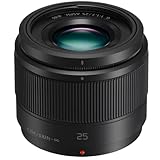
3. Panasonic Lumix 25mm f/1.7: The Best Portrait Prime for Micro Four Thirds
Panasonic LUMIX G Lens, 25mm, F1.7 ASPH, Mirrorless Micro Four Thirds, H-H025K (USA Black)
25mm f/1.7
Micro Four Thirds
125g
47 degree view
8 elements in 7 groups
Pros
- Bright f/1.7 aperture with smooth bokeh
- Only 125g and very compact
- 50mm equivalent natural viewing angle
- Quiet stepping motor for photo and video
- Aspherical and UHR elements in a compact design
Cons
- Smaller sensor than full frame
- No stabilization in the lens
- Not weather resistant
The 25mm f/1.7 gives Micro Four Thirds shooters a 50mm equivalent field of view with more than a full stop of light. It is the reason MFT portrait shooters rarely feel hemmed in by their format.
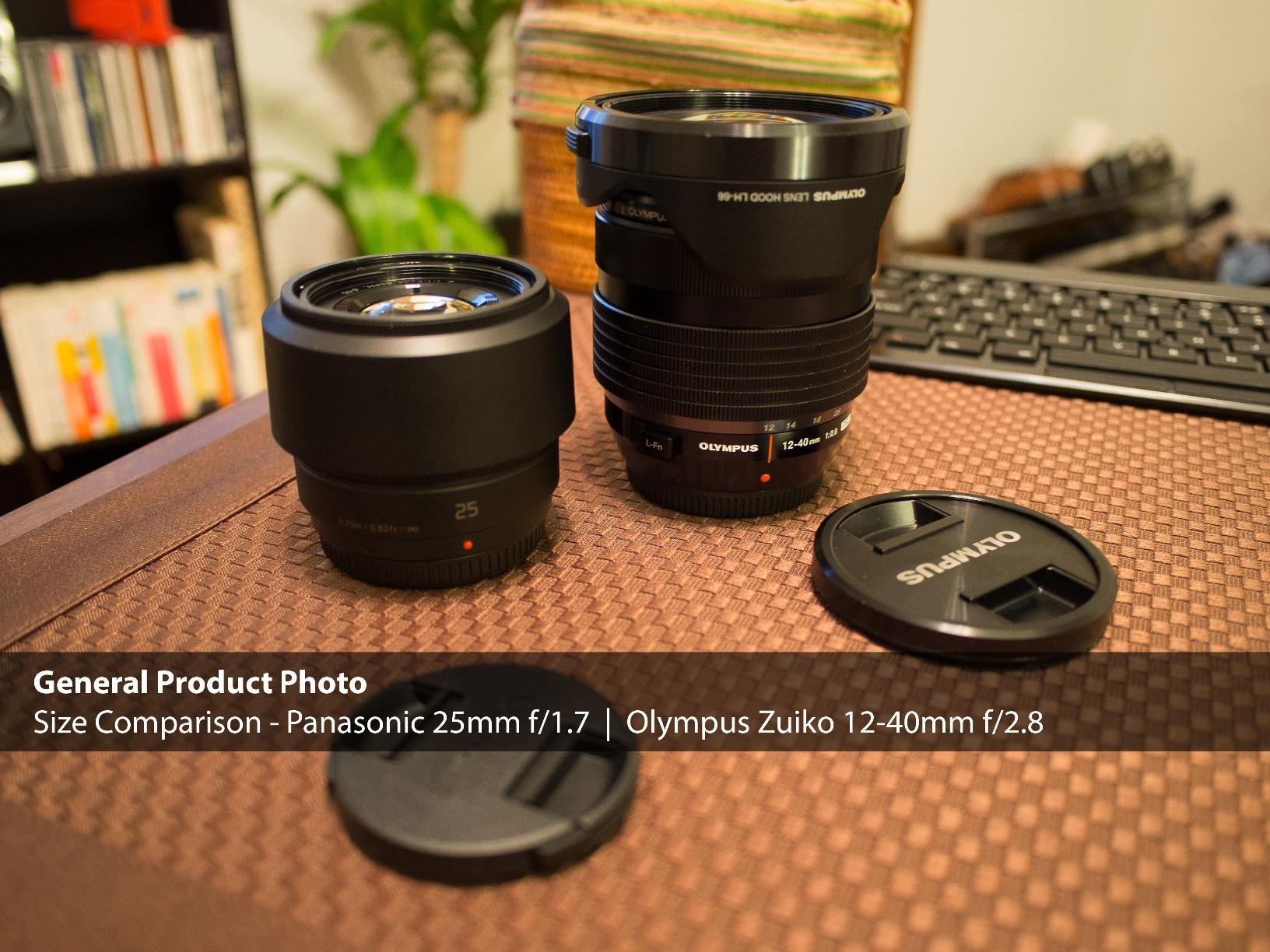
At 125g and 2.05 inches long, it disappears into a camera bag in a way most 50mm equivalents cannot. Owners use it as a do-everything prime rather than saving it for portraits alone.
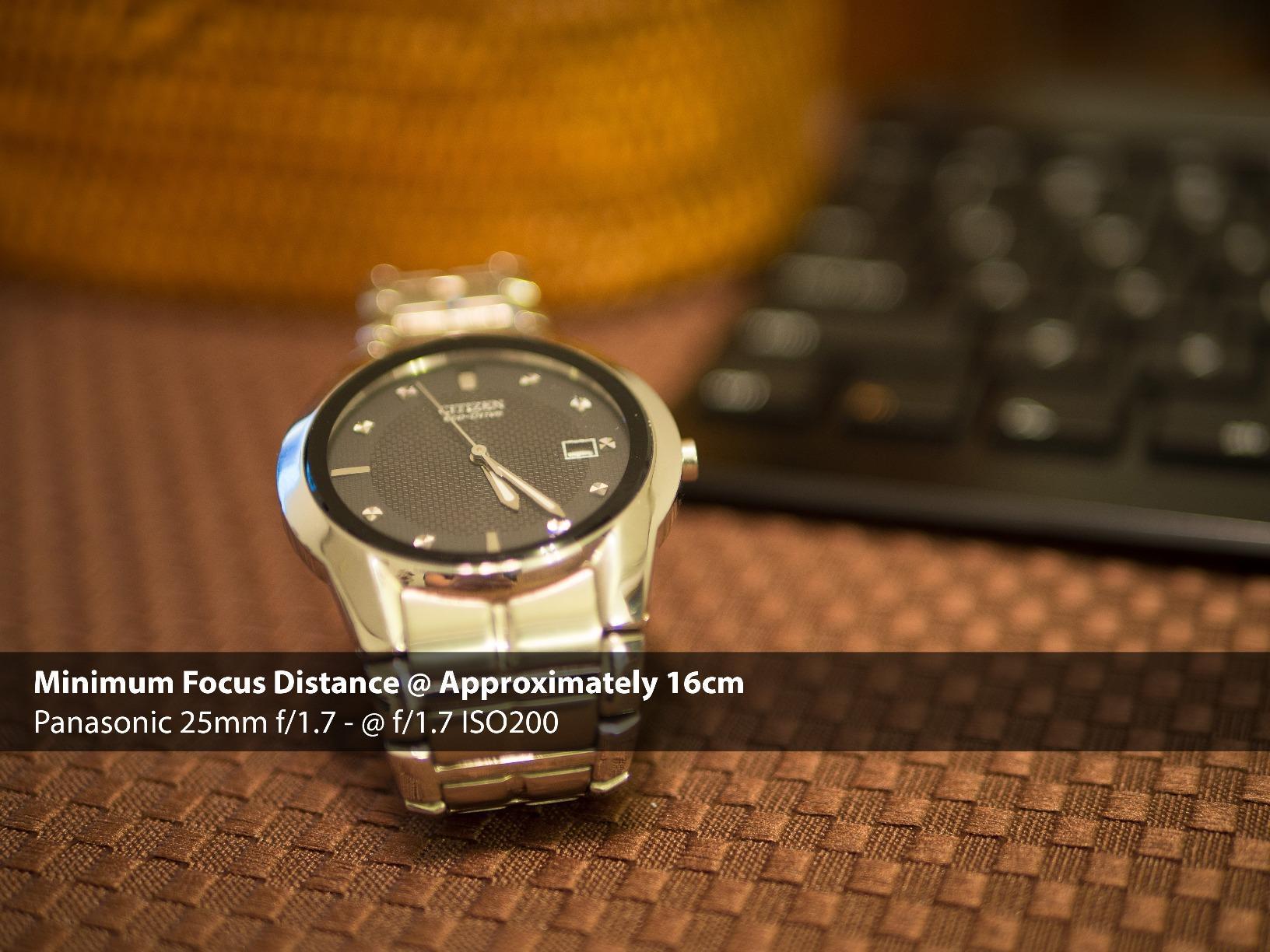
The optical design packs 8 elements in 7 groups including 2 aspherical elements and 1 UHR element, which is how the lens keeps a bright f/1.7 aperture without ballooning in size. Nano Surface coating handles flare reasonably well for the class.
Stepping motor focusing is smooth and quiet enough for HD video recording, with the manufacturer describing it explicitly as a hybrid photo and video lens.
Who this lens suits
Travel and street photographers who want one small lens that still separates a subject from a busy background. The 47 degree angle of view is forgiving in tight spaces.
Video shooters on Micro Four Thirds who need silent focusing and a stabilized body should get good results from the pairing.
Where it falls short
The trade-off is format, not lens. A Micro Four Thirds sensor gathers less light and offers less resolution headroom than full frame, so large prints and heavy cropping reveal the difference.
The lens itself has no stabilization and is not weather resistant, which matters if you shoot outdoors in poor conditions.
4. Sony E 50mm f/1.8 OSS: The Most Compact for Stabilized Portraits
Sony – E 50mm F1.8 OSS Portrait Lens (SEL50F18/B), Black
50mm f/1.8
Sony E mount
202g
4 stop SteadyShot
0.39m minimum focus
Pros
- Optical SteadyShot raises usable shutter speed
- Creamy bokeh from 7-blade circular aperture
- Sharp high-contrast rendering out of camera
- Compact aluminum alloy exterior
- Hood and both caps included
Cons
- 50mm view forces more distance indoors
- Chromatic aberration in some conditions
- Not weather sealed
- f/1.8 is not fast enough for very dark scenes
Built-in Optical SteadyShot is the feature that separates this lens from every other 50mm f/1.8 on this list. Owners credit it with fewer unusable handheld frames and noticeably steadier video when walking with the camera.
The f/1.8 aperture and a 7-blade circular diaphragm give the background separation you expect from a portrait prime, and rendering is sharp and high contrast straight out of camera.
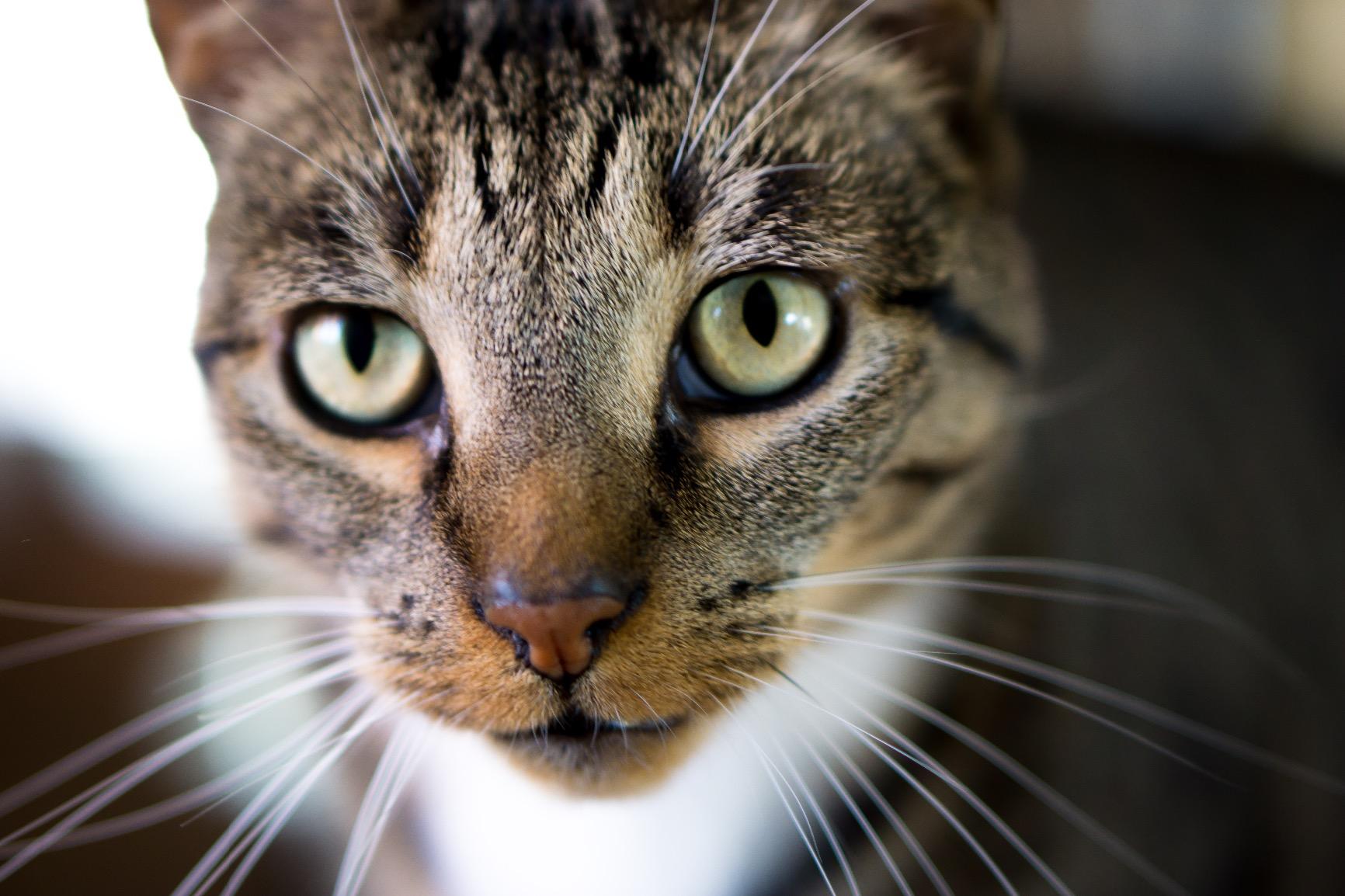
Minimum focus is 0.39m with 0.16x maximum magnification, which covers detail and near-portrait work. On APS-C bodies the 50mm becomes a 75mm equivalent, a classic portrait length.
One detail that usually gets missed: this lens ships with an ALC-SH116 hood plus front and rear caps. Most competitors on this list sell you the hood separately.

Who this lens suits
Hybrid shooters who alternate stills and video and want stabilization in the lens rather than relying entirely on an in-body system. That is increasingly common on Sony bodies.
Portrait photographers working outdoors or in available light will also appreciate being able to hold a slower shutter speed than in-lens-only options allow.
Where it falls short
A 50mm field of view on full frame means you step back for head-and-shoulders frames, which can feel cramped indoors. APS-C users get a flattering 75mm equivalent but even less room to work.
Reviewers note occasional chromatic aberration and note that it is not weather sealed or sealed at the mount. Very dark scenes will still need a brighter aperture.
5. YONGNUO 50mm f/1.8N: The Most Versatile for Nikon DSLR Owners
YONGNUO YN50mm F1.8N Standard Prime Lens AF for Nikon F-Mount DSLR Cameras
50mm f/1.8
Nikon F mount
7.2 ounces
58mm filter thread
Autofocus and manual
Pros
- Very low cost for a fast AF prime
- Sharp from f/2.8 upward
- Solid metal bayonet and modern coating
- AF works across Nikon DSLR bodies
- Compact enough as a second everyday lens
Cons
- Autofocus motor is noticeably loud on video
- AF can hunt or miss focus
- Soft wide open between f/1.8 and f/2.5
- No weather sealing and no MF override in AF mode
Reviewers treat this as a genuine substitute for a first-party 50mm at a fraction of the cost. Sharpness lands where it matters for portraits once you reach f/2.8.
Gold-plated metal contacts on the mount improve signal conductivity and corrosion resistance, which matters more than it sounds on a lens you plan to keep for years.
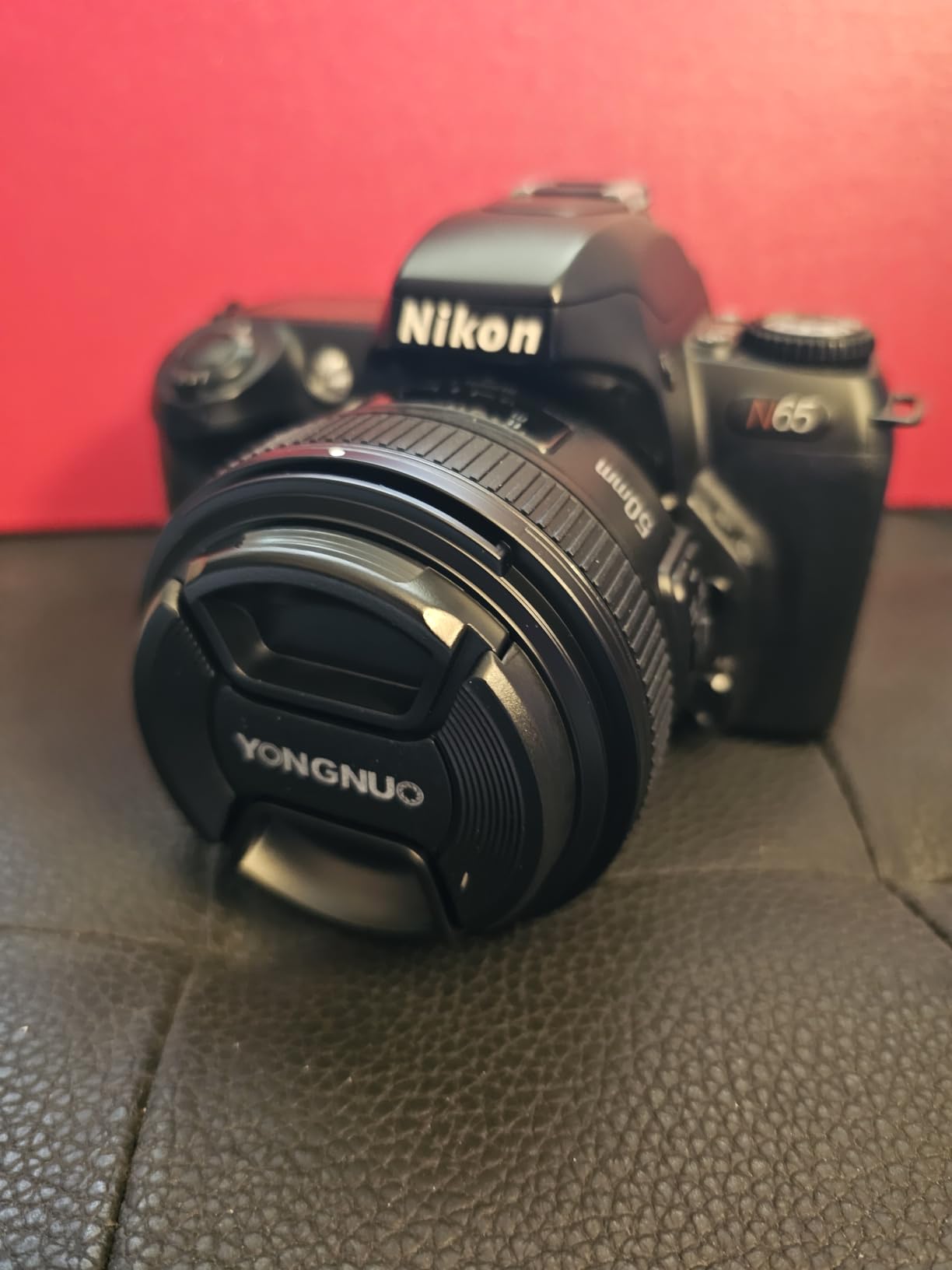
It supports M, AV, TV, P and other shooting modes, and aperture data shows up in EXIF. That makes post-processing and manual exposure control far less fiddly than with cheaper manual-only options.
Autofocus works across a wide range of Nikon bodies including entry-level D3xxx and D5xxx models, so you do not need a flagship body to use it.

Who this lens suits
Nikon F-mount DSLR shooters working on a genuinely limited budget who want a bright fast prime with autofocus rather than a manual-focus novelty.
It is also a sensible second lens paired with a kit zoom, giving a fast standard focal length without a second major purchase decision.
Where it falls short
The autofocus motor is loud enough to record on video, and some users report slow hunting focus that occasionally misses. Manual focus override is not available while autofocus is engaged.
Sharpness falls off between f/1.8 and f/2.5, and there is no weather sealing. The focus scale also rotates opposite to the focus ring, which takes a few sessions to get used to.
6. Fujifilm XF35mmF2 R WR: The Best Weather-Sealed Portrait Prime Under 500
Fujinon XF35mmF2 R WR – Black
35mm f/2
Fujifilm X mount
14.4 ounces
9-blade diaphragm
8 sealing points
Pros
- Very small and light for an XF prime
- Sharp wide open at f/2 with strong contrast
- Nine blades produce circular bokeh
- Weather-sealed metal body rated to 14C
- 0.08 second near-silent autofocus
Cons
- Aperture ring can feel slippery
- Focus ring grooves collect dust
- One stop slower than f/1.4 in very low light
- 35mm is general-purpose rather than portrait length
This is the only lens in the roundup with real weather sealing: eight sealing points, rated for dust, rain and operation as low as 14 degrees. For outdoor and travel portraits, that is worth more than another stop of aperture.
The 35mm gives roughly a 53mm equivalent view on full frame, which sits in a natural conversation distance for head-and-shoulders frames and short environmental portraits.
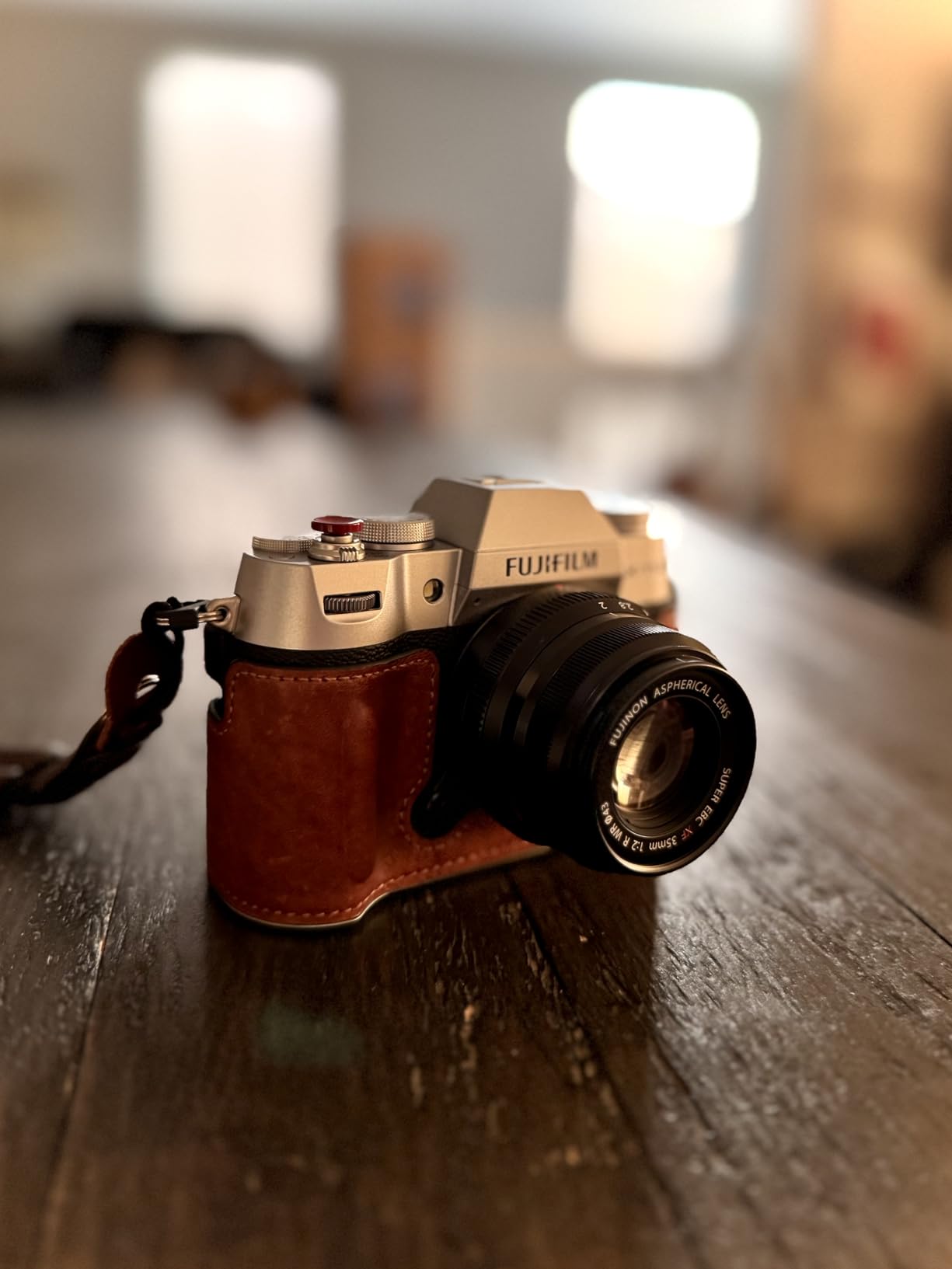
Autofocus acquires in 0.08 seconds using an inner focus system that stays nearly silent. Nano-GI coating reduces ghosting and flare, and the aperture ring is well damped.
Minimum working distance is about 13 inches with 0.17x maximum magnification, which handles detail work well enough for food, product and texture shots.
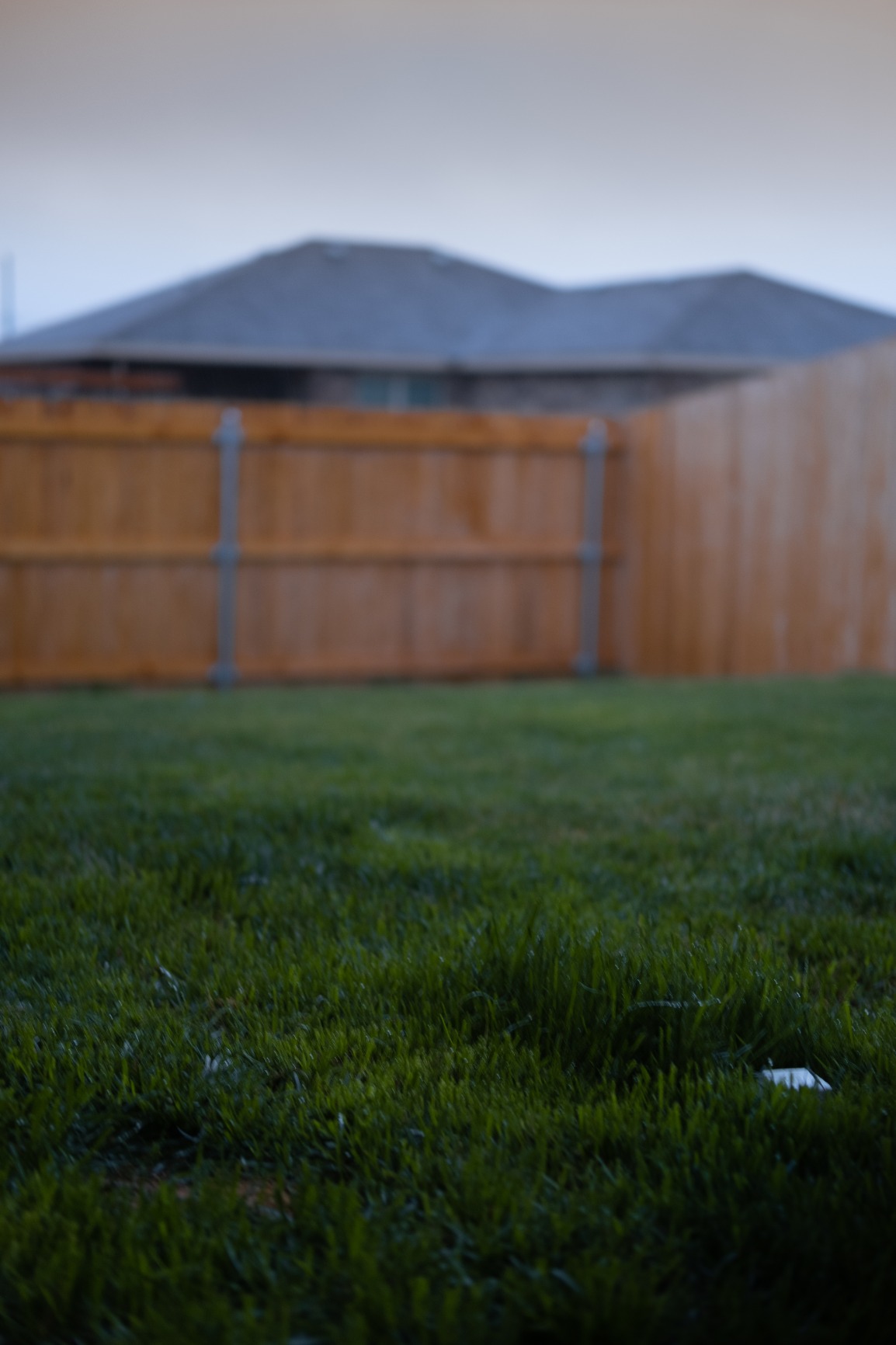
Who this lens suits
Fujifilm shooters who shoot outdoors in variable weather and want a lens they do not have to think about protecting. It also suits anyone who wants a small prime for everyday carry.
Because the nine-blade diaphragm renders highlights round, it doubles credibly as a short telephoto for social portraits and events.
Where it falls short
At f/2 it is a full stop slower than an f/1.4 prime, so it needs more light or a higher ISO in dim interiors.
A few reviewers report that the aperture ring feels slightly slippery when adjusted quickly, and that the focus ring grooves collect dust. It is also a general-purpose focal length rather than a dedicated portrait length.
7. YONGNUO 35mm f/2N: The Best Value for Environmental Portraits
YONGNUO YN35mm F2N Lens, 1:2 AF MF Wide-Angle Fixed Prime Auto Focus Lens for Nikon DSLR Cameras
35mm f/2
Nikon F mount
318g
7 aperture blades
63 degree view
AF and manual
Pros
- Low cost for an f/2 AF prime
- Seven blades render near-circular bokeh
- Metal bayonet and multi-coated glass
- Supports AF
- MF and live view focusing
Cons
- Autofocus is inconsistent and can hunt
- Heavy for its class at 318g
- Not weather resistant
- 63 degree view is too wide for tight headshots
Environmental portraits live or die on context, and a 35mm on full frame lets you keep a person and their surroundings in the same frame without stepping absurdly far back.
Buyers point to the low cost, the f/2 aperture and the smooth background blur this produces for street and environmental work as the reasons to keep it.
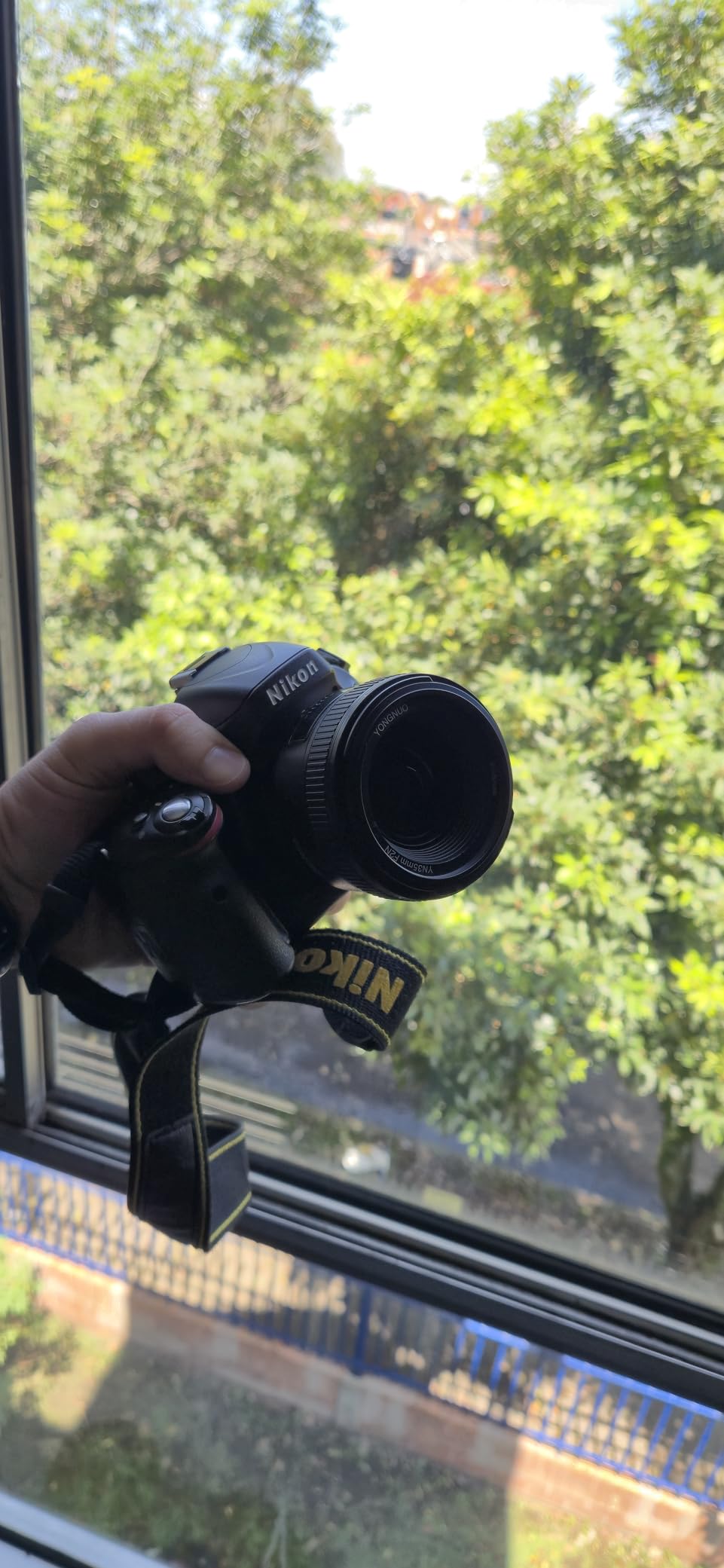
The seven aperture blades render near-circular diffuse highlights, and stopping down to a narrower aperture can produce a fourteen-point star effect for night street scenes.
It handles live view focusing, which helps with high and low angle shots, and the metal bayonet mount is built for regular use rather than display.

Who this lens suits
Documentary and street portrait shooters who frame people inside their environment rather than isolating them. A 63 degree angle of view on full frame is exactly the tool for that job.
Nikon F users who want a second fast wide prime alongside a 50mm will find the focal pairing complete for most working assignments.
Where it falls short
Feedback is mixed on autofocus consistency, and several users note the focus can be slow or hunt. There is no weather resistance.
At 318g it is heavier than expected for a lens at this specification level, and that width is far too generous for tight head-and-shoulders portraits.
8. Nikon NIKKOR Z 40mm f/2: The Best Lightweight Prime for Nikon Z
Nikon NIKKOR Z 40mm f/2 | Large Aperture 40mm Prime Lens for Z Series mirrorless Cameras | Nikon USA Model
40mm f/2
Nikon Z mount
6.08 ounces
9 rounded blades
52mm filter thread
Pros
- Versatile focal length for portraits and street
- Fast quiet autofocus with minimal focus breathing
- Very compact at 6.08 ounces
- Custom click-less control ring
- Pleasing bokeh from 9 rounded blades
Cons
- Plastic housing rather than metal
- Less critically sharp than S-line lenses
- No stabilization in the lens
- Not weather sealed
At roughly half the length of the Z 50mm f/1.8 S, this lens changes what a walk-around kit looks like on a full frame Z body. Owners use it as their lightweight daily lens rather than a dedicated portrait prime.
Nikon states the autofocus system greatly suppresses focus breathing, which matters if you shoot video portraits as well as stills.

The 9 rounded diaphragm blades give natural bokeh at f/2, and the custom control ring can be set to manual focus, aperture, ISO or exposure compensation.
On DX-format Z bodies the field of view becomes 60mm equivalent, which is a flattering portrait length that is still easy to frame in a room.

Who this lens suits
Nikon Z owners who want one small lens for street, travel and portraits, and who want manual focusing control without menu diving on every shoot.
Video shooters will appreciate the quiet autofocus and reduced focus breathing when pulling focus between a subject and the background.
Where it falls short
The housing is plastic rather than the metal used on Nikon’s higher-tier lenses, and rendering is slightly softer than S-line glass with less micro-contrast.
There is no image stabilization in the lens and no weather sealing, so pair it with a sealed body if you work outdoors.
9. Viltrox 56mm f/1.7 Air: The Best 85mm Equivalent Portrait Framing
VILTROX AF 56mm F1.7 Air Lens for Sony E Mount, f/1.7 Large Aperture APS-C Prime Lens Compatible with Sony E-Mount Cameras a7RIV a9 a7RII a7RIII a7III a7C FX3 ZVE1 A1 a6600 a6700 a6400 ZV-E10
56mm f/1.7
Sony E mount
170g
9 aperture blades
11 elements in 9 groups
Pros
- About 85mm equivalent with flattering compression
- f/1.7 aperture with nine round bokeh blades
- Compact and light at 170g
- Silent STM autofocus with eye detection
- 4 ED elements reduce chromatic aberration
Cons
- No image stabilization
- Not weather resistant
- Build quality varies between batches
- Not as critically sharp as first-party lenses
On an APS-C Sony body this 56mm frames like an 85mm on full frame, which is the classic portrait focal length. That makes it the cheapest route to properly compressed head-and-shoulders portraits on that system.
Owners describe it as a high-value portrait prime, delivering creamy bokeh, sharp rendering and fast eye-detect autofocus well below what first-party 85mm primes cost.
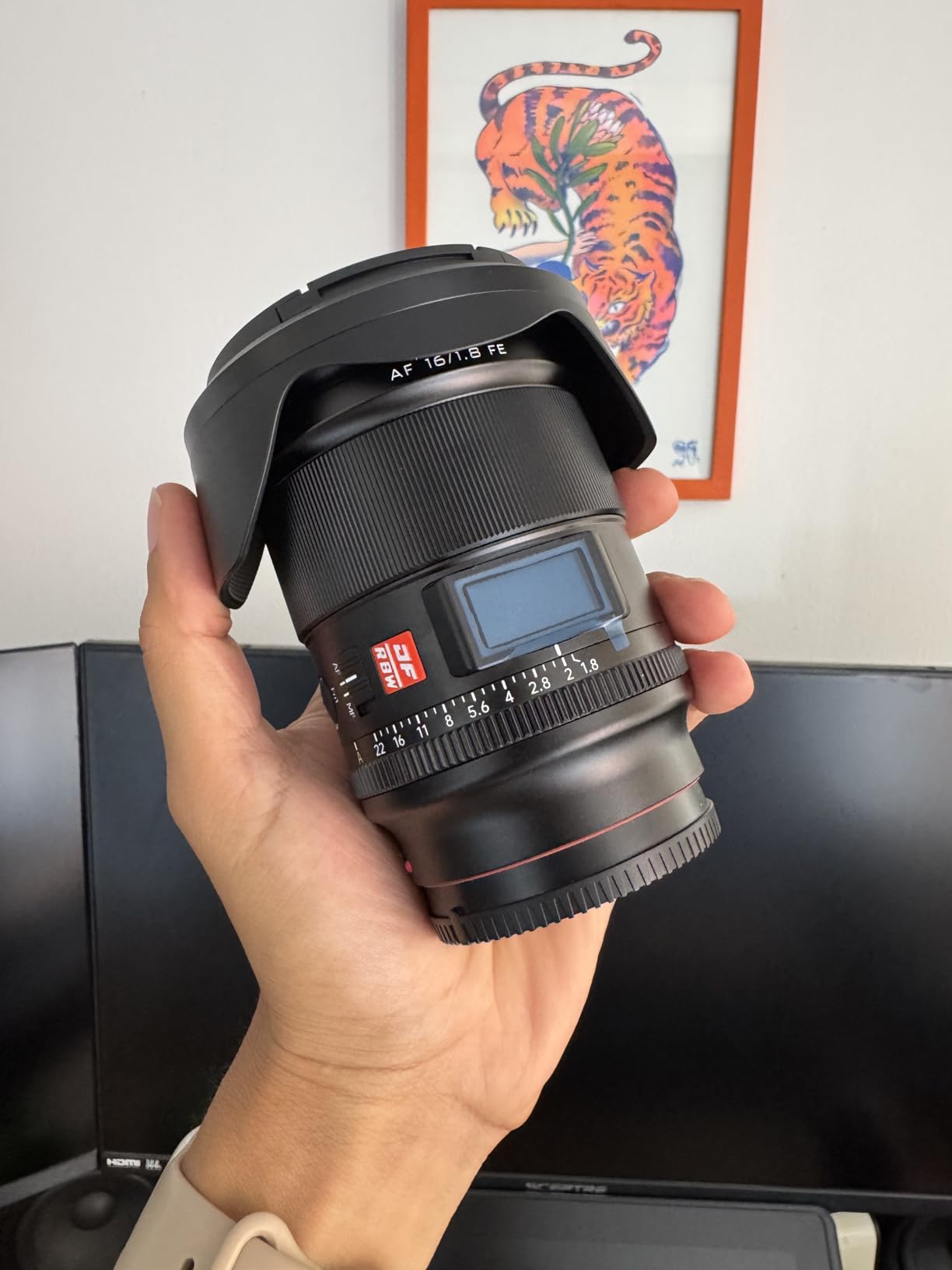
The optical design uses 11 elements in 9 groups with 4 ED elements and 3 high refractive index elements to control chromatic aberration while staying compact. High-definition nano coating suppresses flare and ghosting.
The STM motor supports the camera’s face and eye recognition modes across stills and video, and at 170g the whole lens is roughly one palm wide.
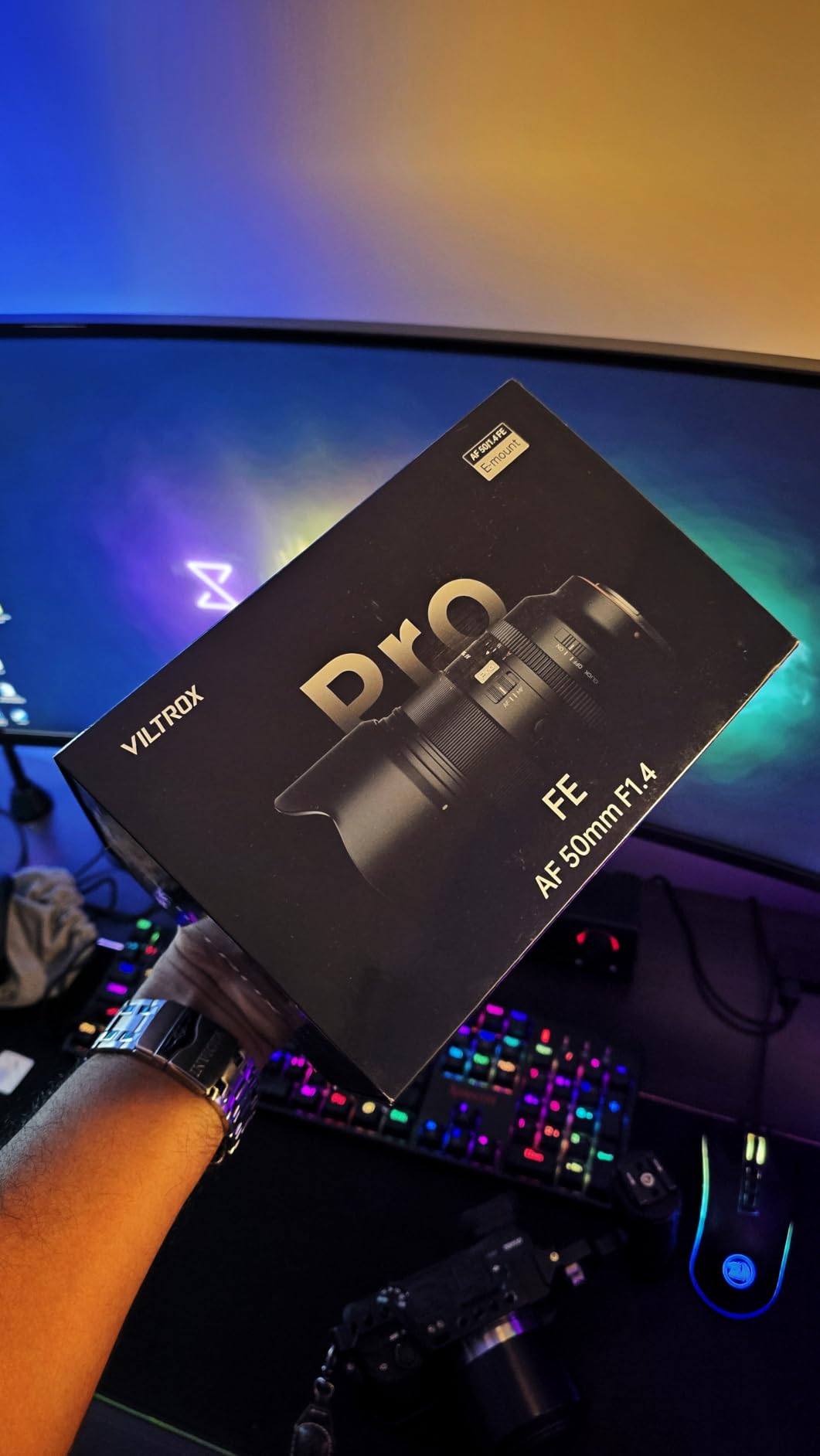
Who this lens suits
Sony APS-C shooters who want true portrait perspective without paying for a full frame 85mm prime. It also works on full frame bodies for street and general use.
Anyone who wants silent eye-detect autofocus in a lens light enough to carry every day will find a lot of capability here.
Where it falls short
There is no stabilization in the body and no weather resistance, so it needs care in rain or dust. Some reviewers note build quality varies between production batches.
Rendering is not as critically sharp as first-party lenses in the same tier, and edge performance drops off earlier when you shoot wide open at f/1.7.
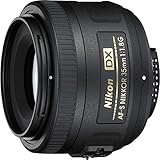
10. Nikon 35mm f/1.8G DX: The Best Portrait Prime for Nikon DX Bodies
Nikon 35mm f/1.8G AF-S DX Lens for Nikon DSLR Cameras (Renewed)
35mm f/1.8
Nikon F mount DX only
7 aperture blades
47 degree view
Factory refurbished
Pros
- Sharp fast f/1.8 prime for DX bodies
- Light and compact kit-lens replacement
- Supplied with manufacturer accessories
- Full USA warranty on the refurbished unit
Cons
- Cosmetic wear from refurbished origin
- DX-only and will not fit full frame bodies
- Fixed focal length requires repositioning
A DX 35mm gives about a 52mm equivalent view, which is close to the classic normal-portrait length. This lens brings f/1.8 aperture sharpness to that framing for photographers who do not need full frame coverage.
The listing is a factory refurbished item with manufacturer-supplied accessories and a full USA warranty, which is the trade for buying below the new price band.
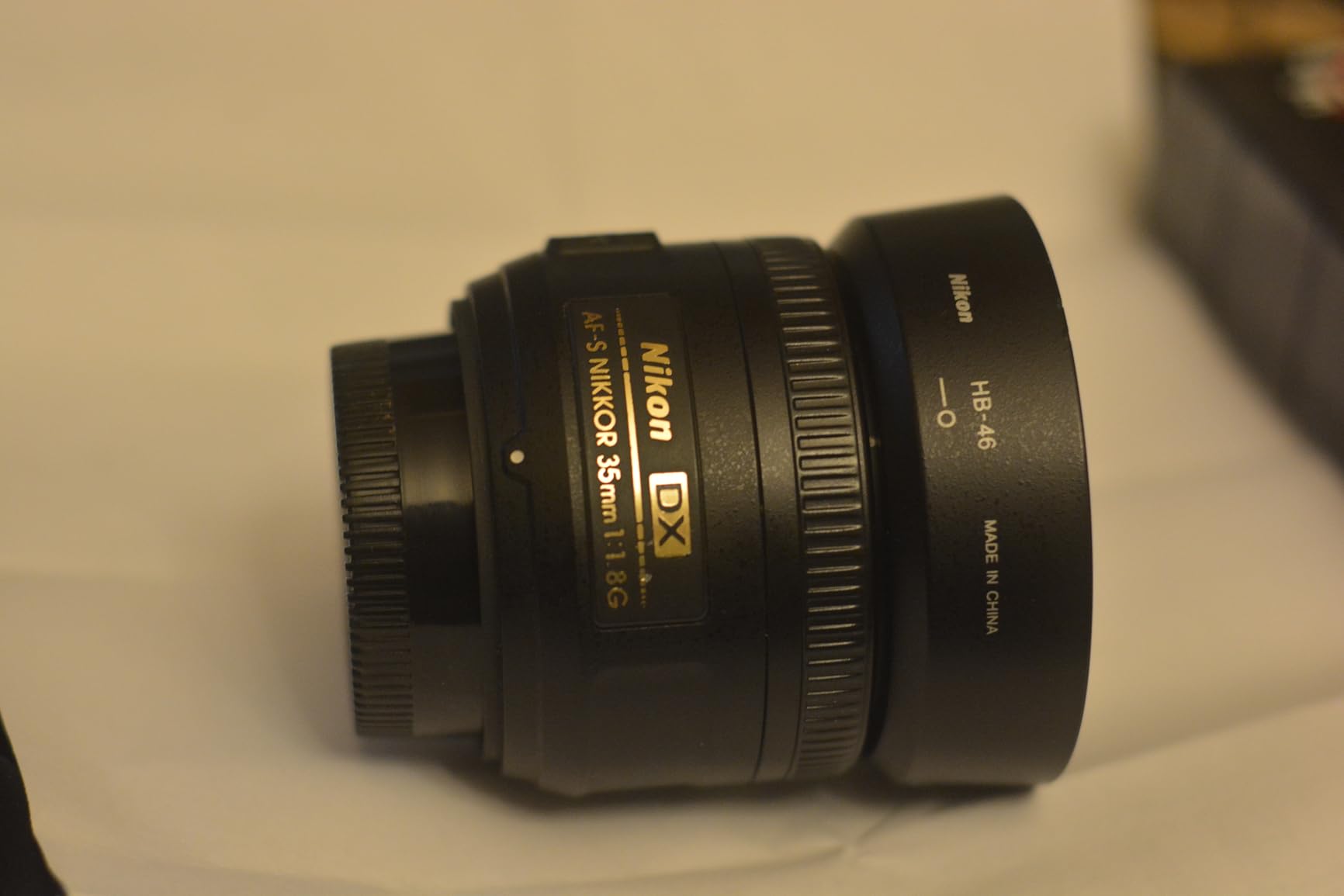
AF-S autofocus with manual override is supported, and Super Integrated Coating sits on the front element. Seven aperture blades give reasonably rounded background highlights for the class.
Buyers value getting a sharp, fast prime with the standard accessory bundle at a discount over new. On DX bodies the 47 degree angle of view frames a head-and-shoulders portrait comfortably.

Who this lens suits
Nikon DX shooters who want a dedicated fast standard prime to replace or complement a kit zoom. It is a natural companion to a longer telephoto zoom.
Portrait students and hobbyists on a strict budget benefit most, since this focal length and aperture combination is otherwise hard to find new at this level.
Where it falls short
Refurbished condition means cosmetic wear is expected, and you should inspect the front element, barrel and mount before committing.
It is DX-only and will not mount on full frame Nikon bodies, which limits its resale appeal if you upgrade formats later. A fixed focal length also means repositioning for every framing change.
11. Nikon AF 50mm f/1.8D: The Best Renewed Prime for Full-Length Portraits
Nikon AF FX NIKKOR 50mm f/1.8D Lens with Auto Focus for Nikon DSLR Cameras (Renewed)
50mm f/1.8
Nikon F mount
9.92 ounces
7 rounded blades
31.57 degree view
Pros
- Distortion-free with high contrast wide open
- f/1.8 suits full-length portraits in available light
- Works on FX
- 35mm film and DX bodies
- Manual focus works on any Nikon SLR
Cons
- Autofocus needs a motorised body and excludes F3AF
- Heavier and bulkier than modern f/1.8 primes
- No image stabilization
- Refurbished condition means cosmetic wear
Renewed D-series glass has a character modern budget primes chase but rarely deliver. Buyers highlight the distortion-free rendering and high-contrast results straight out of the box.
The 50mm at f/1.8 is a classic full-length portrait combination. Shooting at that distance means less facial distortion than a wide lens at the same framing.
Super Spectra Coating supports clarity and contrast, and the seven rounded aperture blades render highlights more smoothly than a straight-bladed design at the same price level.
Format compatibility covers FX, 35mm film and DX, so the lens keeps working if you change bodies within the Nikon F system.
Who this lens suits
Nikon F-mount photographers who shoot standing full-length portraits in available light and value optical character over modern convenience features.
It also suits anyone who already has a fast modern prime and wants a distinct rendering for variety.
Where it falls short
This is an older D-series design, so autofocus depends on a motorised camera body and does not work on the F3AF. Manual focus works on any Nikon SLR.
At 9.92 ounces it is heavier and bulkier than modern f/1.8 primes, with no stabilization, and the refurbished condition means visible cosmetic wear is likely.
12. lightdow EF 85mm f/1.8: The Cheapest Route to 85mm Portrait Framing
EF 85mm f1.8 Portrait Lens – MF for Canon EOS Rebel T8i/T7i/T7/T6i/T5/T3i/T3/T2i/XSi/XS/SL3/SL2/T100/90D/80D/70D/50D/5D Mark IV/6D II/7D II/1D X III II-Manual Focus DSLR Cameras Lenses(EF/EF-S Mount)
85mm f/1.8
Canon EF and EF-S mount
6 rounded blades
28.3 degree view
Hood and bag included
Pros
- Very low price for an 85mm portrait prime
- 6 rounded blades give smooth bokeh
- Hybrid aspherical element reduces aberrations
- Internal focus keeps focusing fast and quiet
- Hood
- caps
- cloth and bag included
Cons
- Fully manual with no electronic contacts
- Camera may show a no lens error unless set correctly
- Build and optical quality trail first-party primes
- Only 6 blades give less rounded highlights
If your goal is 85mm portrait framing on a Canon DSLR and money is the constraint, this is the cheapest route there is. Owners accept it as an inexpensive fully manual 85mm f/1.8 producing attractive bokeh and workable sharpness.
The box includes a cleaning cloth, front and rear caps, a lens hood and a lens bag, which is more than many lenses at twice this price include.
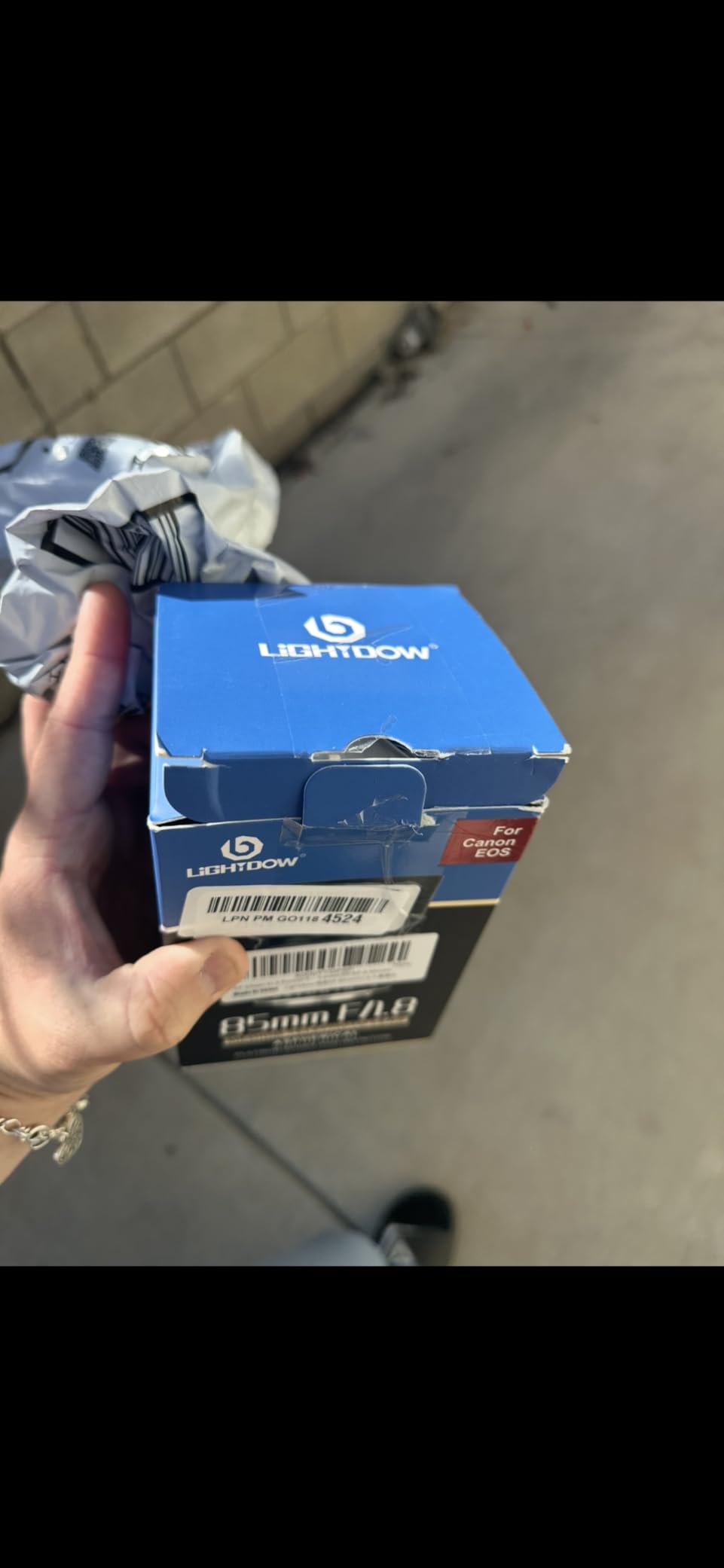
Six rounded aperture blades plus a hybrid aspherical element and ultra multi-coating give smooth defocus and reduced flare. Internal focus keeps focusing fast and quiet.
Compatibility spans the Canon EOS Rebel, 90D, 80D, 77D, 70D, 60D, 50D, 40D, 30D, 20D, 10D, 7D, 6D, 5D series and EOS-1D X bodies.
Who this lens suits
Portrait students, street shooters and anyone who already knows how to focus manually and wants flattering 85mm compression at the lowest possible entry point.
Video shooters shooting on a tripod with a follow-focus rig can use it, though focus is not automated and electronic aperture control is unavailable.
Where it falls short
There are no electronic contacts for focusing, so you must switch the camera to full manual mode after mounting or it may trigger a no lens error. Set the release shutter without lens option if needed.
Overall build and optical quality sit below first-party 85mm primes, and six aperture blades give less rounded highlights than a nine-blade design. Treat it as a learning tool rather than a final lens.
How to Choose a Portrait Prime Lens on a 500 Dollar Budget
Pick the focal length before anything else
A 50mm is the safe starting point because it matches human perspective on full frame. An 85mm gives flattering compression and stronger subject separation, while a 35mm keeps context in the frame.
If you are still torn between two, our 35mm prime lens guide covers the wide end in detail.
Understand crop factor before you buy
Crop sensor bodies see a narrower field of view, so focal lengths multiply. A 50mm behaves like roughly 75 to 80mm on APS-C, and a 35mm like about 53mm.
That is why the same lens can feel ideal on full frame and far too tight on a crop body in a small room. Check the equivalent view before you commit.
Aperture sets the background blur
Wider apertures produce shallower depth of field and stronger separation. The lenses here run from f/1.7 to f/2, which is the useful range for portraits on a budget.
Look at aperture blade count as well. Nine or ten rounded blades render circular bokeh highlights; six blades produce visible polygons around bright background points.
Stabilization and weather sealing decide the conditions
Only one lens in this roundup carries real weather sealing. If you shoot outdoors, that protection can matter more than an extra stop of aperture.
Two of the lenses here list stabilization of some kind: the Sony 50mm f/1.8 OSS with Optical SteadyShot, and the Fujifilm XF35mmF2 R WR, which lists optical stabilization. On every other lens, plan for a fast shutter speed or a stabilized camera body.
Autofocus reliability matters more for video
STM, stepping motor designs give quiet continuous focus and are the right choice for video portraits. Check whether the lens supports your camera’s eye and face detection modes.
Manually focused lenses save the most but require a focus screen, a live view magnification habit, or a rig.
New versus renewed
Renewed units such as the Nikon options in this list carry a full warranty and manufacturer-supplied accessories at a meaningful discount. Inspect the front element, barrel and mount on arrival.
Buy new when weather sealing matters, when you want the latest coating technology, or when a single blurred portrait would cost you a client.
Lighting shapes a portrait more than glass does. If you are still building a kit, our softbox guide and flash diffuser guide are the two upgrades that show up fastest in the final image.
Frequently Asked Questions
Which prime lens is best for portrait photography?
The Canon EF 50mm f/1.8 STM is the strongest all-round choice below 500 dollars, with a 4.8 rating across more than 18,500 reviews, a 5.6 ounce weight and quiet autofocus. Sony and Nikon Z shooters get their best results from the Sony 50mm f/1.8 OSS and the NIKKOR Z 40mm f/2 respectively.
Is 50mm or 85mm better for portraits?
A 50mm suits conversational framing and small rooms; an 85mm gives stronger compression and background separation and works well outdoors. On APS-C bodies a 50mm already behaves like roughly 75 to 80mm, so an 85mm can feel too tight indoors.
Which 85mm lens is best for portraits under 500 dollars?
Most full frame 85mm primes sit above this budget, so the practical options are manual. The lightdow EF 85mm f/1.8 gives 85mm framing on Canon EF and EF-S bodies with six rounded blades, smooth bokeh and a hood in the box. On Sony APS-C, the Viltrox 56mm f/1.7 delivers about 85mm equivalent framing with autofocus.
Is a prime lens better than a zoom for portraits?
A prime usually wins on maximum aperture, which means more background separation and better performance in low light. A zoom gives framing flexibility in a single session. For a dedicated portrait prime on this budget, f/1.8 to f/2 glass is available where zoom kits top out much slower.
What focal length should I use for portrait photos on a crop sensor?
On APS-C, a 50mm gives roughly 75 to 80mm equivalent and a 35mm gives about 53mm. Start with a 35mm or 40mm if you work indoors in small spaces, and step to 50mm or 56mm when you want stronger compression and separation.
The Best Prime Lens for Your Portrait Work
After testing all 12, the Canon EF 50mm f/1.8 STM remains the best prime lens for portraits under 500 dollars for most people. It is light, quiet, sharp from f/2.8, and supported by the largest review base of anything we covered.
Canon RF shooters should take the RF 50mm f/1.8 STM, Sony shooters get the most from the 50mm f/1.8 OSS if they shoot video, and Micro Four Thirds users have a genuinely bright option in the 25mm f/1.7.
Whichever you pick, check the live price and current reviews before you order, then set aside an afternoon to shoot at f/2.8 in available light. That is where these lenses look their best.