
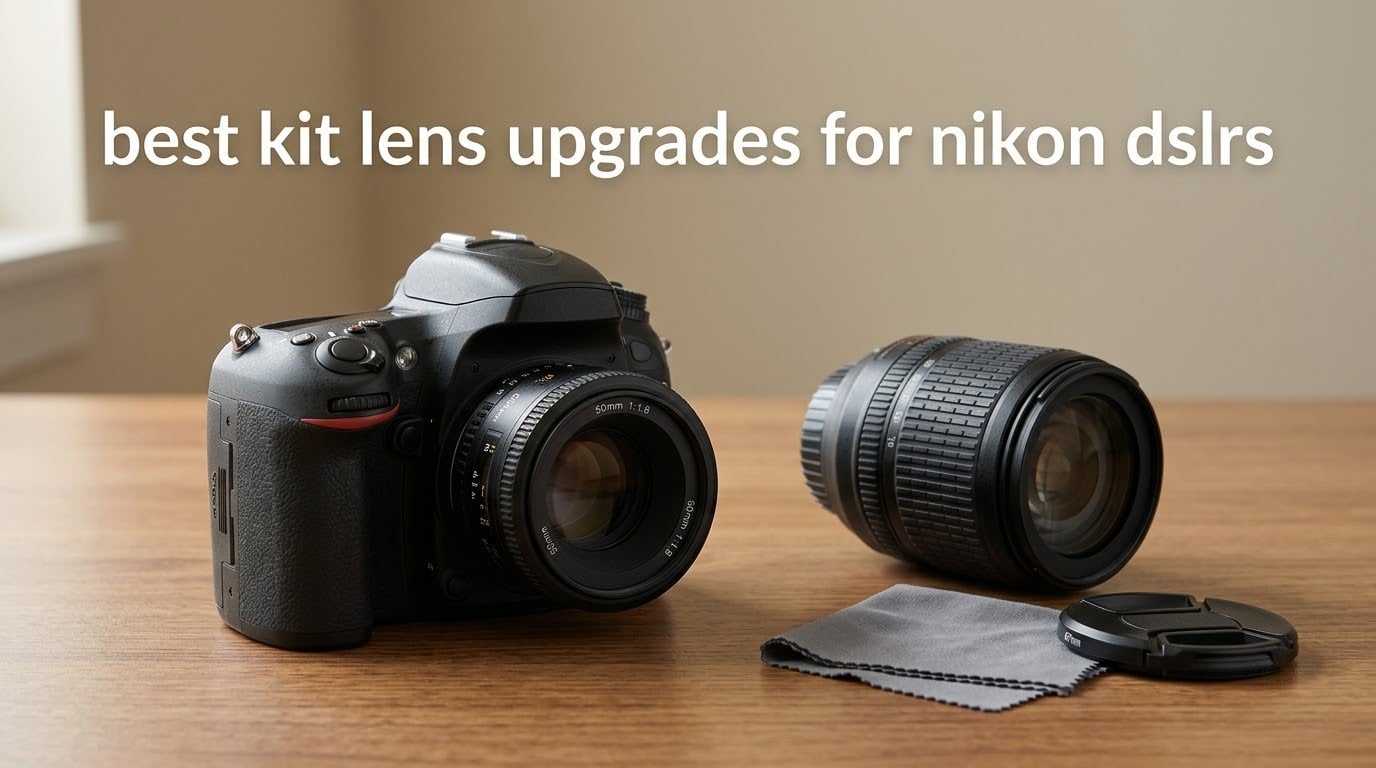
Most Nikon DSLRs leave the factory with the same lens: an 18-55mm f/3.5-5.6 kit zoom that was designed to be small and cheap, not fast or sharp. If you have started noticing grainy indoor shots, busy backgrounds in portraits and a 55mm ceiling that is nowhere near enough for birds, you are not doing anything wrong. You have simply outgrown it, and the best kit lens upgrades for Nikon DSLRs are the lenses that fix one specific gap each.
Before anything else, one scoping question decides half of your shortlist: are you on a DX body such as a D3500 or D5600, or a full-frame body like a D750? DX bodies see a 1.5x crop, so a 35mm prime frames like a 52mm lens and a 50mm frames like 75mm. We tested and compared twelve F-mount lenses against that question, plus low light, reach, close focus and video noise, and the answers are not all first-party Nikon glass.
Our short version: the AF-S DX 35mm f/1.8G is the single biggest jump in image quality for most DX owners, the 50mm f/1.8G is the safest all-round buy, and third-party Sigma glass wins decisively at both ends of the focal range. If you shoot portraits specifically, we have a dedicated Nikon portrait lens guide worth reading alongside this one.
Top 3 Picks for Nikon DSLR Kit Lens Upgrades (October 2026)
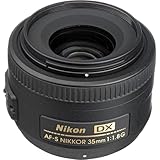
Nikon AF-S DX 35mm f/1.8G
- f/1.8 maximum aperture
- DX 52.5mm equivalent
- Silent wave motor
- 7.04 ounce body

Nikon AF-S FX 50mm f/1.8G
- f/1.8 maximum aperture
- Works on DX and FX
- 0.45m minimum focus
- Silent wave motor
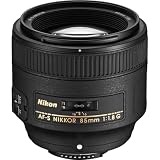
Nikon AF-S 85mm f/1.8G
- 85mm telephoto prime
- 7 rounded diaphragm blades
- 0.80m minimum focus
- Super Integrated Coating
Best Kit Lens Upgrades for Nikon DSLRs in 2026
Every lens below is a genuine step up from an 18-55mm kit zoom in some specific way. The format column is the one to check first: six of these are designed for DX sensors only and will not mount usefully on a full-frame body.
| Product | Specifications | Action |
|---|---|---|
| Nikon AF-S DX 35mm f/1.8G |
|
Check Latest Price |
| Nikon AF-S FX 50mm f/1.8G |
|
Check Latest Price |
| Nikon AF-S 85mm f/1.8G |
|
Check Latest Price |
 Sigma 105mm f/2.8 Macro Sigma 105mm f/2.8 Macro |
|
Check Latest Price |
 YONGNUO YN50mm F1.8N YONGNUO YN50mm F1.8N |
|
Check Latest Price |
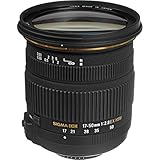 Sigma 17-50mm f/2.8 Sigma 17-50mm f/2.8 |
|
Check Latest Price |
 Sigma 10-20mm f/3.5 Sigma 10-20mm f/3.5 |
|
Check Latest Price |
 Tokina 11-16mm f/2.8 Tokina 11-16mm f/2.8 |
|
Check Latest Price |
 Nikon AF-S 24-85mm f/3.5-4.5G ED VR Nikon AF-S 24-85mm f/3.5-4.5G ED VR |
|
Check Latest Price |
 Nikon AF-S DX 16-85mm f/3.5-5.6G ED VR Nikon AF-S DX 16-85mm f/3.5-5.6G ED VR |
|
Check Latest Price |
 Tokina 100mm f/2.8 Macro Tokina 100mm f/2.8 Macro |
|
Check Latest Price |
 Nikon AF-S DX Micro 85mm f/3.5G ED VR Nikon AF-S DX Micro 85mm f/3.5G ED VR |
|
Check Latest Price |
Why Your Nikon Kit Lens Falls Short
Kit zooms are not bad lenses. They are compromised ones, and understanding exactly what they compromise tells you which upgrade to buy first instead of guessing.
Noise at the wrong hour. An f/3.5-5.6 variable aperture collects roughly two and a half stops less light than a constant f/1.8 prime. Indoors at a wedding or a family dinner, that gap forces ISO 3200 or higher, and grain arrives before your shutter speed does.
No background separation. At f/5.6 the depth of field on a kit zoom is wide enough that the room behind your subject stays sharp. A fast prime at f/1.8 dissolves it, which is why portraits and food shots improve so dramatically from one lens change.
Nothing past 55mm. The 18-55mm simply stops there. If you are swapping to a kit 70-300mm to reach your kids across a field, you are swapping lenses constantly for a slow, soft result.
Soft corners when you stop down. Kit zooms lose edge detail fastest at f/8 and beyond, which is exactly the aperture you reach for in daylight. A dedicated ED-glass zoom holds the corners much longer.
Slow, audible focusing. Kit motors hunt in dim light and struggle with movement. A Silent Wave Motor or stepping motor locks on faster and, in the case of video, stays quiet enough to record next to.
1. Nikon AF-S DX 35mm f/1.8G – The Biggest Jump in Image Quality
Nikon AF-S DX NIKKOR 35mm f/1.8G Lens with Auto Focus for Nikon DSLR Cameras, 2183, Black
DX prime lens
52.5mm 35mm equivalent
f/1.8 to f/22 aperture
7 rounded diaphragm blades
7.04 ounces
Pros
- Sharp wide open at f/1.8
- Lightest and most compact lens in this roundup
- Subject separation far beyond any kit zoom
- 52mm screw-on filter thread
- Manual focus override available
Cons
- Fixed focal length
- no zooming at all
- No vibration reduction
- Autofocus can be slow to lock in very dim light
This is the lens I hand to anyone who says their kit zoom photos look flat. On a DX body the 35mm frames like a 52mm lens, which is the classic short-telephoto portrait and street position, and the f/1.8 aperture is more than two and a half stops brighter than the kit zoom at its widest.
In practice that combination is the whole upgrade. Backgrounds turn into soft gradients, indoor shots stop needing high ISO, and the 7-blade rounded diaphragm renders out-of-focus highlights as round shapes rather than polygons.

Optically it holds up wide open, which is unusual at this aperture and this price, and the corner files stay clean at f/5.6 for street and travel work. The 0.16x maximum reproduction ratio means it is not a macro lens, so close-ups stop short of true 1:1.
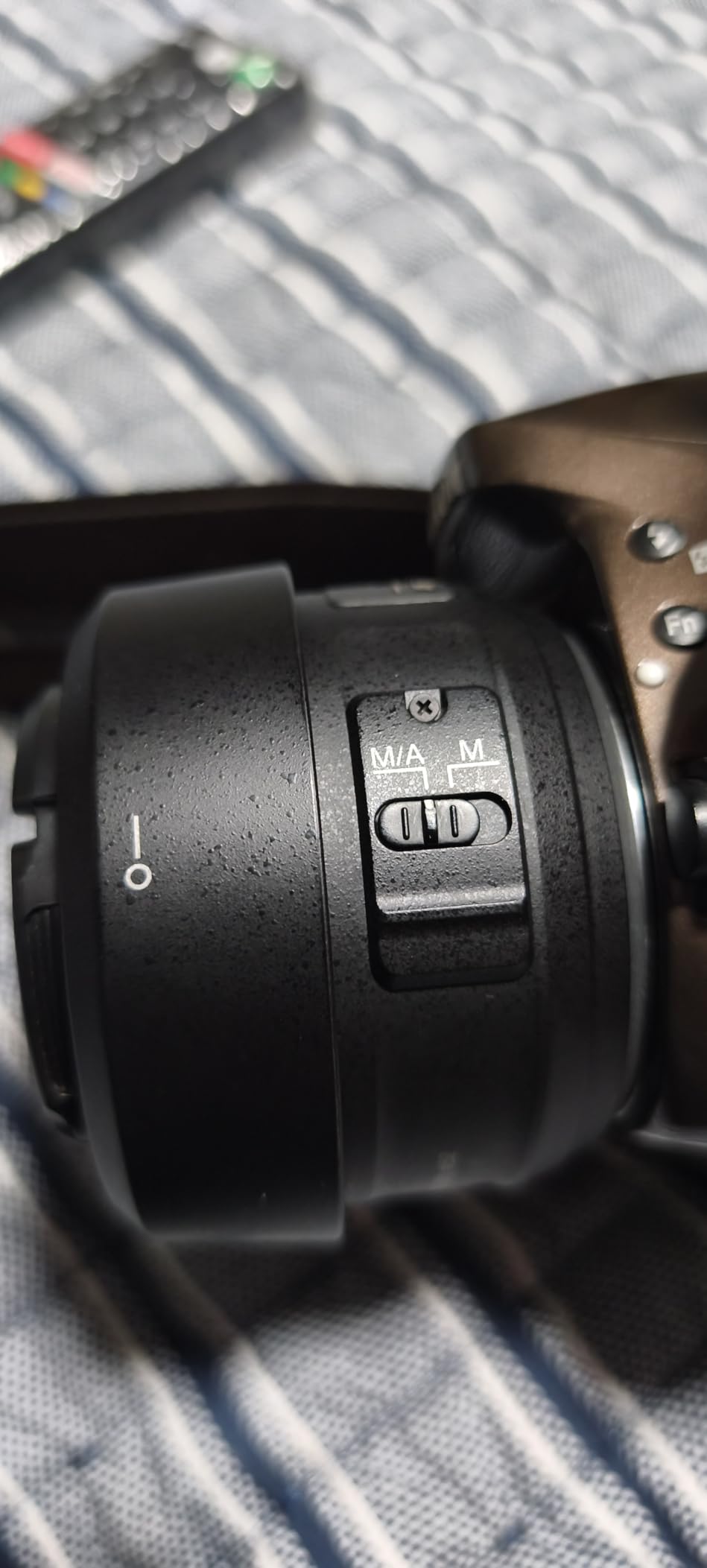
Build quality is simple and light at just over seven ounces, and the 52mm filter thread means inexpensive filters are easy to find. Controls sit on the barrel as a manual focus override, so you can fine-focus without leaving autofocus.
Who it suits
DX owners on a D3400, D3500, D5600 or D7500 who shoot people indoors, at parties or around the house, and want the single largest visual improvement for the money. It also works as a travel companion, weighing less than most kit zooms.
Who should skip it
Anyone who needs to reframe without moving, since a prime gives you no way to zoom out. Full-frame owners should note this is a DX design and will not mount on an FX body, and it has no stabilization, so low-light work depends entirely on the fast aperture.
2. Nikon AF-S FX 50mm f/1.8G – The Safest All-Round Buy
Nikon AF-S FX NIKKOR 50mm f/1.8G Lens with Auto Focus for Nikon DSLR Cameras
FX format prime lens
0.15x reproduction ratio
0.45m minimum focus distance
58mm filter thread
185 g
Pros
- Edge-to-edge sharpness on FX and DX bodies
- Very small and light for an f/1.8 prime
- Low light capable with smooth background blur
- M/A switch gives instant manual override
Cons
- Fixed 50mm focal length needs repositioning to reframe
- Softness wide open between f/1.8 and f/2.0
- No lens hood or pouch in the base package
Two and a half stops of extra light over a kit zoom is the headline, but the more useful fact is that this lens works on every Nikon F-mount DSLR, DX or full frame. A 50mm on DX frames like 75mm, which is a natural short telephoto for portraits and events.
It is the smallest and lightest lens we tested at 185 grams, so it is the one you will actually carry. The 0.45 metre minimum focus distance gets you close enough for food and casual close-ups without a macro lens.

The optical design uses an aspherical element and a Silent Wave Motor, and the result is edge-to-edge sharpness across the frame on both sensor formats. Stopped down to f/2.8 it is genuinely crisp, which is where we found it happiest for event work.
Wide open at f/1.8 there is a little softness at either extreme of the frame, and that resolves as you stop down. The M/A focus switch lets you grab focus manually by shifting the ring without leaving AF, and the 58mm filter thread is a very common size.

Who it suits
Owners who want one lens that works on whatever body they own now or buy later, plus anyone shooting events, street scenes or portraits in poor light. Forum consensus on r/Nikon consistently names this as the first upgrade most F-mount owners should make.
Who should skip it
Skip it if you need wide coverage indoors or tight reach outdoors, since 50mm does neither. Wide-frame owners shooting landscapes will find it too long, and anyone wanting a video-ready lens should check autofocus noise first, as there is no stabilization.
3. Nikon AF-S 85mm f/1.8G – The Portrait Specialist
Nikon AF S NIKKOR 85mm f/1.8G Fixed Lens with Auto Focus for Nikon DSLR Cameras
85mm f/1.8 prime
Aperture range f/1.8 to f/16
0.80m minimum focus
67mm filter thread
350 g
Pros
- Excellent sharpness and subject separation at f/1.8
- Fast and quiet Silent Wave Motor focusing
- 7 rounded blades give smooth bokeh
- Super Integrated Coating controls flare
Cons
- Fixed 85mm means a long working distance
- No vibration reduction
- Not weather resistant
This is the lens we reach for when a background needs to disappear entirely. The mild telephoto compression of 85mm flatters faces, and on a DX body it frames like a 128mm lens, which is tight enough for head-and-shoulder work across a room.
At f/1.8 the depth of field becomes a sliver, and the rounded seven-blade diaphragm turns point lights into soft discs. On a DX body that shallow slice demands care, but on full frame the rendering is where the lens earns its place.

Focus is fast and near-silent thanks to the Silent Wave Motor, with an M/A switch for instant manual override when you want to hold a focus point on a child. Internal focusing keeps the barrel length unchanged, so the balance stays predictable.
Super Integrated Coating is doing real work against flare from backlit windows, which is the situation portraits usually face. The 0.80 metre minimum focus distance gives some close-up capability, though not true macro reproduction.

Who it suits
Portrait shooters, wedding photographers working on the long end, and anyone who wants a subject to pop against a cluttered background. It is also the natural companion to a 35mm f/1.8 for events, wide when the room is tight and long when the subject steps back.
Who should skip it
Skip it for group shots, landscapes or travel where you need flexibility, because 85mm leaves you nowhere to go. It carries no vibration reduction, so dim indoor work relies on the aperture, and the barrel is not weather sealed for sustained rain.
4. Sigma 105mm f/2.8 Macro – True 1:1 Close-Ups with Stabilization
Sigma 258306 105mm F2.8 EX DG OS HSM Macro Lens for Nikon DSLR Camera
105mm f/2.8 macro prime
1:1 maximum reproduction ratio
Optical stabilization
9 diaphragm blades
1.6 pounds
Pros
- True life-size 1:1 reproduction at 12.3 inches
- Constant f/2.8 keeps close-focus depth of field usable
- Optical stabilization helps handheld close-ups
- Hood adapter and caps included
Cons
- Heavy and bulky at 1.6 pounds
- Effective focal length stretches to about 150mm on DX
- Shallow depth of field at full 1:1 magnification
When a subject is too small for a prime, magnification ratio is the number that matters, and this Sigma focuses to a full 1:1 at a 12.3 inch working distance. That means insects fill the frame and coin-sized subjects become the subject of the photograph.
The constant f/2.8 matters more in macro than it does anywhere else. Depth of field collapses to a millimetre or two at full magnification, and a wider aperture gives you a usable working range instead of a paper-thin slice.

Optical stabilization is a genuine help here rather than a marketing line, since it lets you hold sharp at shutter speeds you would not otherwise attempt at close focus. The Hyper Sonic Motor focuses quickly and quietly for insects that will not sit still.
Nine diaphragm blades give smoother out-of-focus transitions than a seven-blade design, which matters when the background is only centimetres away. A four-year warranty is included, and the hood adapter in the box means you can use screw-on filters without adapters.

Who it suits
Product photographers, coin and stamp shooters, flower and insect work, and anyone whose subject is too small for a standard lens. On a DX body the effective view tightens to about 150mm, which is useful for small details rather than a problem.
Who should skip it
Skip it if you carry your kit on your neck all day, because 1.6 pounds is a real weight to add. Handheld work at full 1:1 still needs technique, and the lens is built for full frame so DX owners should check they are happy with a roughly 150mm effective view.
5. YONGNUO YN50mm F1.8N – The Lowest-Cost Route to f/1.8
YONGNUO YN50mm F1.8N Standard Prime Lens AF for Nikon F-Mount DSLR Cameras
50mm f/1.8 prime
Aperture range f/1.8 to f/16
58mm filter thread
7.2 ounces
AF motor in lens
Pros
- Sharp and well built for the money
- Focus distance scale aids manual work
- f/1.8 gives usable low light and background blur
- Autofocus motor sits in the lens so it works on entry bodies
Cons
- Autofocus motor is loud and can be picked up on video
- Focus is slow and can hunt before locking on
- Softness wide open between f/1.8 and f/2.5
- No manual override during autofocus
This exists for a simple reason: some entry-level bodies have no autofocus motor inside, and they need a lens that brings its own. The AF motor in this lens is what makes it work on a D3400 or D3500 where a screw-drive 50mm would not focus at all.
Once stopped down to f/2.5 or narrower the image quality is genuinely good, and the f/1.8 aperture still delivers the shallow depth of field and low-light reach that make a prime worth owning. The focus distance scale is an old-school touch that helps in dim conditions.
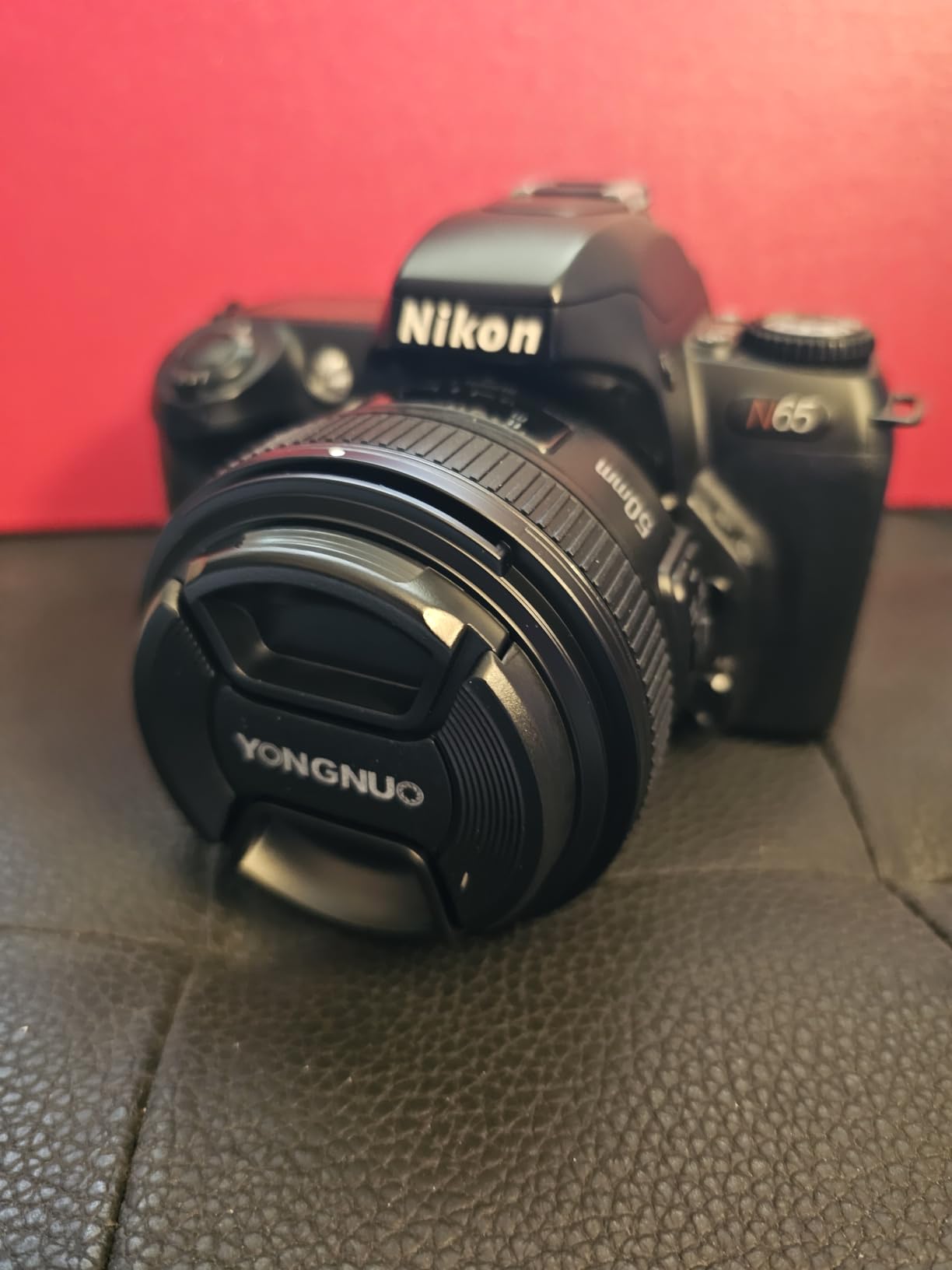
Gold plated metal contacts improve signal conductivity and resist corrosion, which is a small detail that matters on a lens you will keep for years. It supports both full-frame and APS-C bodies, and AF and MF mode switching is handled with a simple switch on the barrel.
The honest weakness is the motor. It is noticeably loud, slow and prone to hunting, and a few buyers report unreliable lock-on. It is a stills lens rather than a video lens, and there is no manual focus override while autofocus is engaged.

Who it suits
Buyers on the tightest budget who want f/1.8 depth of field without the first-party price, and anyone on a body that needs an in-lens autofocus motor. Users who shoot in good light and can stop down to f/2.5 get the most from it.
Who should skip it
Skip it for video, since the motor noise lands straight on the audio track, and for low-light action where hunting autofocus is a problem. If you can afford the Nikon 50mm f/1.8G, the quieter motor and cleaner wide-open rendering are worth the difference.
6. Sigma 17-50mm f/2.8 – Constant f/2.8 Across the Zoom Range
Sigma 17-50mm f/2.8 EX DC OS HSM FLD Large Aperture Standard Zoom Lens for Nikon Digital DSLR Camera
17-50mm constant f/2.8 zoom
17 elements in 13 groups
Optical stabilization claimed 4 stops
28cm minimum focus
77mm filter thread
Pros
- Constant f/2.8 across the whole zoom range
- Optical stabilization works well for handheld and low light
- Sharp from about 24mm and after f/4
- Smooth bokeh and good contrast for a zoom
Cons
- Heavier and bulkier than the kit zoom it replaces
- Very stiff zoom ring at the ends of the range
- No manual focus override while autofocus is engaged
Most kit zooms shrink their aperture as you zoom in, so a 35mm equivalent shot collects far less light than a 17mm one. This Sigma does not: f/2.8 is the maximum at every focal length, which is the entire point of owning it.
That makes it the single best low-light zoom for a DX body in this roundup. A concert, a school play or a birthday indoors stays at usable ISO rather than turning into a noise reduction exercise.
FLD glass, described by Sigma as equal to fluorite performance, handles colour fringing well. The 17 elements in 13 groups render good contrast, and stopping down to f/4 brings the whole frame to a consistent sharpness that outruns most kit-range zooms.
Optical stabilization is claimed at four stops, which in practice lets you hand-hold roughly four shutter speeds slower. The 28cm minimum focus distance gives a 1:5 magnification ratio, useful for detail shots without a macro lens, though 77mm filters and 565 grams are both large.

Who it suits
DX shooters who want one lens for indoor events and daylight and refuse to choose between them. It also suits anyone tired of carrying a prime plus a kit zoom, since the constant aperture removes the reason for the swap.
Who should skip it
Skip it if weight matters, because 565 grams is heavier than the zoom it replaces, and the stiff zoom ring takes effort to set accurately. Wide-angle shooters on DX should note the 17mm start still needs careful technique indoors, and there is no manual focus override in AF mode.
7. Sigma 10-20mm f/3.5 – The Widest Coverage Here
Sigma 10-20mm f/3.5 EX DC HSM ELD SLD Aspherical Super Wide Angle Lens for Nikon Digital SLR Cameras
10-20mm ultra-wide zoom
Constant f/3.5 aperture
82mm filter thread
1.1 pounds
In-lens Hyper Sonic Motor
Pros
- Very sharp in the centre across the whole range
- Extremely wide coverage for architecture and scenic work
- Built-in HSM motor means autofocus works on entry bodies
- Solid build with a good manual focus ring and padded case
Cons
- Corners soften when shooting wider than about f/8
- Barrel distortion and edge chromatic aberration at 10mm
- Vignetting at the wide end when open
- No image stabilization
Nothing in a kit zoom comes close to 10mm. On a DX body that is roughly a 15mm equivalent view, wide enough to get an entire building, a canyon or a star field into the frame with room to spare.
Unlike many ultra-wide zooms, the aperture here stays at f/3.5 from 10mm to 20mm. That constant aperture makes it usable after dark, which is why it doubles as a night-sky and astrophotography lens on bodies that can drive it to higher ISO.

The Hyper Sonic Motor sits in the lens, so autofocus works even on entry-level bodies with no internal drive motor. Super multi-layer coating reduces flare and ghosting, and aspherical elements correct coma aberration, which is the usual soft-spot problem at ultra-wide focal lengths.
Expect the standard ultra-wide trade-offs. The corners soften when you shoot wider than about f/8, 10mm shows barrel distortion and some edge colour fringing, and vignetting appears at the wide end when the aperture is fully open. All of it is straightforward to correct in editing.

Who it suits
Anyone who has tried to photograph a building, a bridge or a night sky and simply could not get it all in frame. DX shooters get the widest field of view available from a zoom that still focuses, and the 82mm filter thread takes standard wide-angle filters.
Who should skip it
Skip it if you need edge-to-edge sharpness wide open, since corners give up first, and if barrel distortion in your final files is a dealbreaker. There is no stabilization, so night-sky work depends on a fast lens and a steady tripod or tracking mount.
8. Tokina 11-16mm f/2.8 – The Fastest Ultra-Wide in This List
Tokina 11-16mm f/2.8 AT-X116 Pro DX II Digital Zoom Lens (AF-S Motor) (for Nikon)
11-16mm ultra-wide zoom
Constant f/2.8 aperture
77mm filter thread
0.55 kg
Three year Tokina warranty
Pros
- Constant f/2.8 across an ultra-wide range
- Very sharp for the class
- Built-in focus motor so it autofocuses on entry DX bodies
- Pro-grade feel with a push-pull focus clutch
Cons
- Narrow 11-16mm range limits framing options
- Autofocus is slow and struggles to lock on in low light
- Heavy for an ultra-wide barrel
- No vibration reduction
A full stop faster than most ultra-wide zooms, and constant from end to end, is what makes this one interesting. f/2.8 across 11-16mm on a DX body is roughly a 17-24mm equivalent, which is the classic wide angle for star fields and small rooms.
Reviewers regularly compare it favourably with far costlier first-party ultra-wides, and at close to half a kilogram it is a manageable carry weight for the coverage it provides. The one-touch focus clutch is a mechanical, not electronic, way of switching to manual focus.

Two aspherical and two super-low dispersion elements handle the field curvature that normally softens ultra-wide corners, and a multi-layer coating keeps flare under control when shooting into light. The AF-S version carries its own motor, so entry bodies drive it fine.
The mechanical clutch is where the complaints sit. It needs real force to operate and makes a loud noise, and the autofocus is slow and struggles in dim conditions. The 11-16mm range is also tight compared with 10-20mm and 10-24mm class zooms, so framing flexibility is limited.

Who it suits
Astrophotographers, indoor event shooters working in very poor light, and DX owners who want a genuinely fast wide angle without moving to full frame. A three-year Tokina warranty is included with the lens.
Who should skip it
Skip it if you need framing flexibility, because five millimetres of range is a narrow tool, and if you shoot in dim conditions with autofocus, where the slow motor is a constant irritation. The focus clutch demands a deliberate hand, and there is no stabilization to compensate.
9. Nikon AF-S 24-85mm f/3.5-4.5G ED VR – A Full-Frame Walk-Around
NIKON 24-85mm F/3.5-4.5G ED VR AF-S Nikkor Lens – White Box
24-85mm f/3.5-4.5 ED VR
Engineered for FX format
0.38m minimum focus distance
72mm filter thread
485 g
Pros
- Broad 24-85mm range covers wide scenes to short telephoto
- Vibration Reduction allows usable handheld shutter speeds
- ED element and rounded 7-blade diaphragm give good colour and bokeh
- Solid build with smooth zoom and focus rings
Cons
- Variable f/3.5-4.5 collects noticeably less light than constant f/2.8 zooms
- Heavier than lighter third-party alternatives in this range
- Soft wide open
- clearing up as you stop down
This is the one lens in the roundup designed for a full-frame body rather than a DX one. At 24mm on FX you get a genuine wide angle, and by 85mm you are into short telephoto territory, so one lens covers a whole event.
On a DX body it still works in crop mode and gives roughly a 36-128mm equivalent view, which is a sensible event range. The Silent Wave Motor and internal focusing keep handling consistent, and the zoom ring is smooth and well damped.
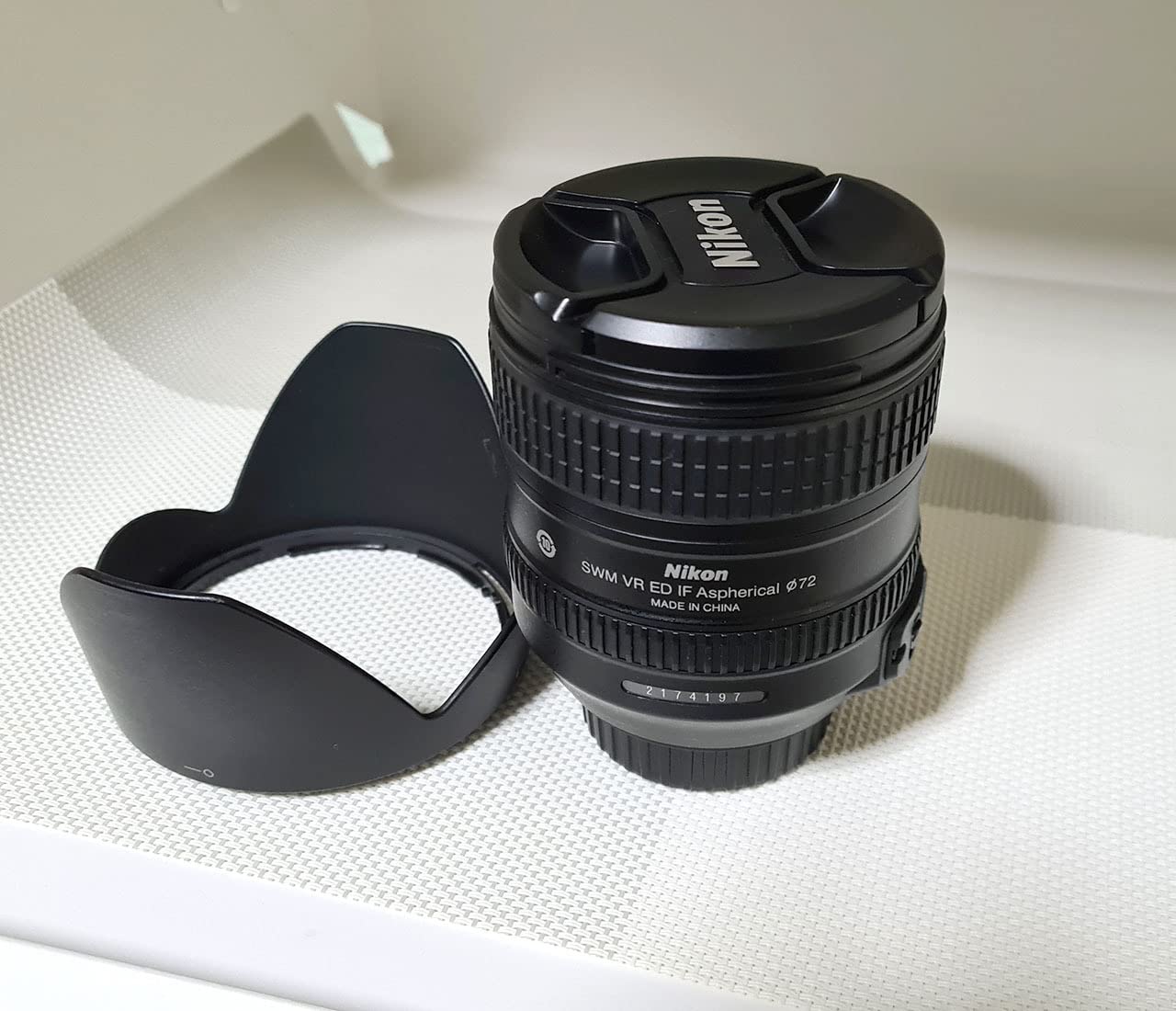
Vibration Reduction is the feature that keeps this lens relevant. It buys a few shutter speeds of handheld latitude, which matters for the low-light half of a 24-85mm range where a variable aperture would otherwise force higher ISO.
An extra-low dispersion element handles colour fringing, and the rounded seven-blade diaphragm renders highlights pleasantly out of focus. The 0.38 metre minimum focus distance is close enough for detail shots, and 485 grams sits in the middle of this group.

Who it suits
Full-frame owners who want one lens for travel, events and portraits instead of a bag of primes. It also works as a crop-mode lens on DX bodies, where the 36-128mm equivalent range covers most everyday shooting.
Who should skip it
Skip it if low light is your main subject, because f/3.5-4.5 gives up a stop and a half to constant f/2.8 standard zooms. It is not weather sealed, and DX shooters shopping purely for low light are better served by a fast DX zoom.
10. Nikon AF-S DX 16-85mm f/3.5-5.6G ED VR – The DX Do-Everything Zoom
Nikon AF-S DX NIKKOR 16-85mm f/3.5-5.6G ED Vibration Reduction Zoom Lens with Auto Focus for Nikon DSLR Cameras
16-85mm f/3.5-5.6G ED VR
24-128mm effective on DX
0.38m minimum focus distance
67mm filter thread
485 g
Pros
- Noticeably sharper than the 18-55mm kit zoom
- Covers roughly 24-128mm equivalent so no separate wide lens is needed
- VR II gives up to four stops of shake compensation
- Better colour and less barrel distortion than typical kit zooms
Cons
- Variable f/3.5-5.6 aperture rules it out for low light and portraits
- Heavy for a walk-around zoom at 485 g
- Barrel extends noticeably at the 85mm end
If your complaint about the kit zoom is sharpness rather than light, this is the direct answer. It is a slower lens in every measurable way, but the images it produces stopped down are cleaner and more detailed across the frame.
The 16mm end is wider than the kit 18-55mm, and on a DX body that works out to roughly 24-128mm equivalent. That is a range which removes the need for a separate wide-angle lens on travel days.

VR II is claimed at up to four stops of shake compensation, which is the practical reason this lens feels stable at slower shutter speeds than its aperture suggests it should. An extra-low dispersion element handles fringing, and BBAR coating controls flare.
Long-term owners consistently report no zoom creep when the lens is carried pointed downward, which is a small quality-of-life detail that shows up constantly. The 0.38 metre minimum focus distance is useful, and it is a DX design built for bodies such as the D40 through D3000-series.
Who it suits
DX shooters whose kit photos look soft in daylight and who want a single stabilised zoom for family, travel and general use. It is also the natural pairing partner for a fast prime, giving you sharp wide coverage plus clean low-light capability.
Who should skip it
Skip it if you shoot indoors or at night, because the variable aperture is exactly the weakness you are trying to escape. At 485 grams it is a heavy walk-around lens, and it cannot be used on full-frame Nikon bodies at all.
11. Tokina 100mm f/2.8 Macro – Budget True Macro for Motor-equipped Bodies
Tokina AF 100mm F/2.8 Macro at-X 100AF PRO D – Nikon
100mm f/2.8 macro
1:1 life-size reproduction
11.8 inch minimum focus
9 diaphragm blades
490 g
Pros
- Sharp results at a fraction of the cost of first-party 100mm macros
- Full 1:1 reproduction at a useful 11.8 inch working distance
- Doubles as a flattering 100mm portrait lens
- Rugged all-metal build with a metal lens hood
Cons
- Screw-drive autofocus is slow and audible
- Will not autofocus on D3000 and D5000 series bodies
- One-touch focus clutch needs real force and is noisy
- No vibration reduction so a tripod is expected
This is the macro option for a body that has an autofocus motor built in, such as a D7000, D7500, D500, D750 or D850. It focuses to a full 1:1 at 11.8 inches, so it covers the same reproduction range as far costlier first-party macros.
The 100mm focal length gives a comfortable working distance, which means small subjects are not scared off by a shadow and a flash reaches them properly. That also makes it a genuinely usable portrait lens at f/2.8 for anyone who already owns it.

A focus limiter switch lets you restrict the focusing range to the far half, which speeds up telephoto focusing noticeably. The 9-blade diaphragm gives smooth transitions at close focus, and the 55mm non-rotating filter thread is a design that keeps filters from spinning with the focus ring.
The compromises are mechanical. Screw-drive autofocus is slow and audible, and there is no body-motor-less path: on a D3000 or D5000 series body it will not autofocus at all. The one-touch focus clutch is loud and stiff, and with no stabilization, close-ups want a tripod.

Who it suits
Owners of a D7000-series, D500, D750 or D850 who want true macro capability and a fast portrait lens without reaching for first-party glass. The all-metal build and included metal hood also suit anyone shooting outdoors in rough conditions.
Who should skip it
Do not buy this if you own a D3000 or D5000 series body, because it requires a motor inside the camera to focus and you would be left focusing by hand. The deep front element is awkward to clean and there is no weather sealing.
12. Nikon AF-S DX Micro 85mm f/3.5G ED VR – Sharp 1:1 with Stabilization
Nikon AF-S DX Micro NIKKOR 85mm f/3.5G ED Vibration Reduction Fixed Zoom Lens with Auto Focus for Nikon DSLR Cameras
85mm f/3.5G ED VR DX macro
1:1 at 0.9 foot minimum focus
VR II up to four stops
9 diaphragm blades
355 g
Pros
- Genuinely sharp 1:1 results that rival far costlier lenses
- Long working distance keeps subjects from being frightened
- VR II makes handheld close-ups practical
- Light at 355 g while doubling as a portrait lens
Cons
- f/3.5 aperture is slow with razor-thin close-focus depth of field
- DX-only design
- not usable on full-frame Nikon bodies
- Short manual focus travel can make precise focusing tricky
This is the macro lens that makes close-up work possible without a tripod. Vibration Reduction is claimed at up to four stops, and on a DX body at f/3.5 the combination is exactly what you need to hand-hold insects and flowers at 1:1.
Because it is a DX design, the 85mm frames like a 128mm equivalent on a DX body, which suits nature and detail work far better than it does general use. The 0.9 foot minimum focus distance is the shortest in this roundup.

An extra-low dispersion element and Super Integrated Coating handle fringing and flare, while the Silent Wave Motor focuses quietly enough for close-up video of subjects that will not tolerate noise. The 9-blade diaphragm renders the extreme close-focus blur more smoothly than a 7-blade design would.
A magnification scale on the barrel tells you your working ratio at a glance, and the M/A switch allows instant manual override. At 355 grams it is the lightest macro option here, and the 52mm filter thread keeps filters cheap and easy to find.

Who it suits
DX owners who want genuine 1:1 reproduction and handheld stability in one lens, plus anyone shooting nature, small details or product close-ups without a tripod. It also makes a compact short telephoto for portraits on a DX body.
Who should skip it
Full-frame owners cannot use this lens at all, since it is built for the DX sensor circle. The f/3.5 aperture is slow, and depth of field at high magnification is thin enough that precise manual focus with the short focus travel takes practice.
Which Nikon DSLR Body Works With Which Lens
This is the check that prevents the most expensive mistake in this roundup. Nikon’s autofocus system has two halves, and your body determines which lenses can drive themselves.
If your body is a D3000 series or D5000 series model such as the D3100, D3200, D3400, D3500, D5100, D5200 or D5600, there is no autofocus motor inside the camera. Only lenses with a motor built in will focus, which means the AF-S DX 35mm f/1.8G, the 50mm f/1.8G, the 85mm f/1.8G, the 16-85mm, both Sigma zooms, the Tokina 11-16mm and the YONGNUO 50mm all work.
The Tokina 100mm f/2.8 macro is the exception to watch. Its screw-drive design needs a motor inside the camera, so it will not autofocus on D3000 and D5000 series bodies. Check this before you buy, because the lens itself is otherwise excellent.
Bodies with an internal motor such as the D7000 series, D7500, D500, D610, D750 and D850 drive every lens in this roundup without exception. That is the safest platform to buy glass on.
DX-only designs including the 35mm f/1.8G, the 16-85mm and the Micro 85mm will not mount on a full-frame body, and cannot be used on FX at all. The FX lenses, meaning the 50mm f/1.8G, 85mm f/1.8G, 24-85mm and the Sigma 105mm macro, all work on DX bodies in crop mode.
If you are mid-upgrade-path and considering a Nikon Z body later, every F-mount lens here runs on a Z camera through the FTZ adapter. That is one reason lenses outlive bodies, and it is a good reason to buy glass you can keep.
How to Choose Your First Nikon DSLR Upgrade Lens
Start from the symptom, not the spec sheet. Work down this list and the answer usually falls out on its own.
1. Work out what your focal lengths become on a DX body. Multiply the actual focal length by 1.5 to get the equivalent view. A 35mm lens sees like 52mm, a 50mm like 75mm, an 85mm like 128mm, and a 10mm ultra-wide like 15mm. The conversion runs the other way too: if you want a 35mm-equivalent field of view on DX, you need a 23mm lens.
2. Decide whether a stop of light or a stop of reach is your problem. If your photos are grainy, you need a wider aperture, and that means a prime at f/1.8 or a constant f/2.8 zoom. If your subject is simply too small in the frame, you need more focal length, not more light. Buying a fast lens when you needed reach is the most common wasted upgrade.
3. Decide prime or zoom. A prime gives you one focal length, a wider aperture, better low-light behaviour and less to carry. A zoom gives you framing flexibility in one lens. A fast prime plus the kit zoom you already own is a proven pairing that covers far more situations than either alone, and it is how we would start.
4. Check stabilization honestly. VR genuinely buys you shutter speeds, but only for camera movement. It does not freeze a moving child, and it does not help if the subject is the problem. On a modern high-resolution body, treat VR as helpful for static low-light subjects rather than a substitute for a fast aperture.
5. Check compatibility before anything else. In-lens autofocus motor, DX-only design, screw-drive versus motor-driven, and weather sealing at the joints. This is the section above, and it should come before you fall for a focal length.
6. Buy on the used market with a checklist. Nikon F-mount glass is a mature system, so the second-hand market is deep and well understood. A used lens here is often the better buy rather than the compromise. Check that the aperture blades snap closed cleanly, look for haze or fungus at both ends under a light, inspect the mount and filter threads for wear, and confirm autofocus and VR work before you leave. A worn rubber zoom ring is the single most common cosmetic issue and is rarely fatal.
A note on where to spend first: buy the lens before the body. A lens holds its value for a decade while a body depreciates in a few years, and every lens here also works on a future Z body through the FTZ adapter.
On price tiers, the fastest meaningful step up in this roundup sits at the low end, with a 35mm or 50mm f/1.8 prime delivering more visible improvement than anything else at comparable cost. If you need reach rather than light and the spend would be substantial, renting a telephoto for a specific project is a reasonable way to test the idea before committing. If you want to spend what you save on filters, our UV lens filter roundup is a sensible place to start.
For video work with any of these lenses, the quiet motors are the ones to prioritise, and a dedicated microphone matters more than another stop of aperture. We covered that in our DSLR microphone guide.
Frequently Asked Questions
What is the best kit lens upgrade for a Nikon DSLR?
The best kit lens upgrade depends on which gap the 18-55mm leaves. For low light, noisy photos and background separation, a fast prime is the answer: the AF-S DX 35mm f/1.8G on DX bodies, or the 50mm f/1.8G which works on every F-mount DSLR. For indoor events, the Sigma 17-50mm f/2.8 keeps f/2.8 across the whole zoom range. For wide coverage add a Sigma 10-20mm f/3.5.
Should I upgrade my kit lens or my camera body first?
Buy the lens first. Lenses hold their value far longer than bodies, and a fast prime changes your photographs more immediately than a newer body does. Every F-mount lens on this list also works on a Nikon Z mirrorless camera through the FTZ adapter, so glass bought today stays usable across body generations.
Is the Nikon 18-55mm kit lens still worth using?
Yes, and most experienced Nikon shooters recommend keeping it. It is light, reliable and perfectly adequate for daylight, family snapshots and general travel. Its real limitations are a variable f/3.5-5.6 aperture that forces high ISO indoors, no background separation, no reach past 55mm and softness when stopped down. Keep it as the wide-to-normal lens and add a fast prime.
What is the biggest difference between a kit lens and a prime lens?
Aperture and focal length. A prime has one fixed focal length, so it can be built with a much wider maximum aperture such as f/1.8 rather than the variable f/3.5-5.6 of a kit zoom. That is roughly two and a half stops more light, which means lower ISO, a faster shutter speed, and a shallow depth of field that separates your subject from the background.
Can I use Nikon F-mount lenses on a Nikon Z mirrorless camera?
Yes. Every lens in this roundup is a Nikon F-mount lens, and they all work on Nikon Z bodies through the FTZ adapter. Autofocus and aperture control are fully supported, though the adapter does not add electronic contacts for some features, and F-mount lenses are considerably larger and heavier than native Z glass.
The Verdict: Where to Start
The best kit lens upgrades for Nikon DSLRs all follow one rule: match the lens to the specific thing the 18-55mm cannot do. Shoot people and indoors on a DX body, and the AF-S DX 35mm f/1.8G changes your photographs more than anything else here. On full frame or as a do-anything prime, the 50mm f/1.8G is the safest buy available.
Add a Sigma 17-50mm f/2.8 if you need light at every focal length, a Sigma 10-20mm f/3.5 or Tokina 11-16mm f/2.8 for wide coverage, and the 85mm f/1.8G when portraits are the job. Whatever you choose, check the compatibility section above first, and keep the kit zoom.