
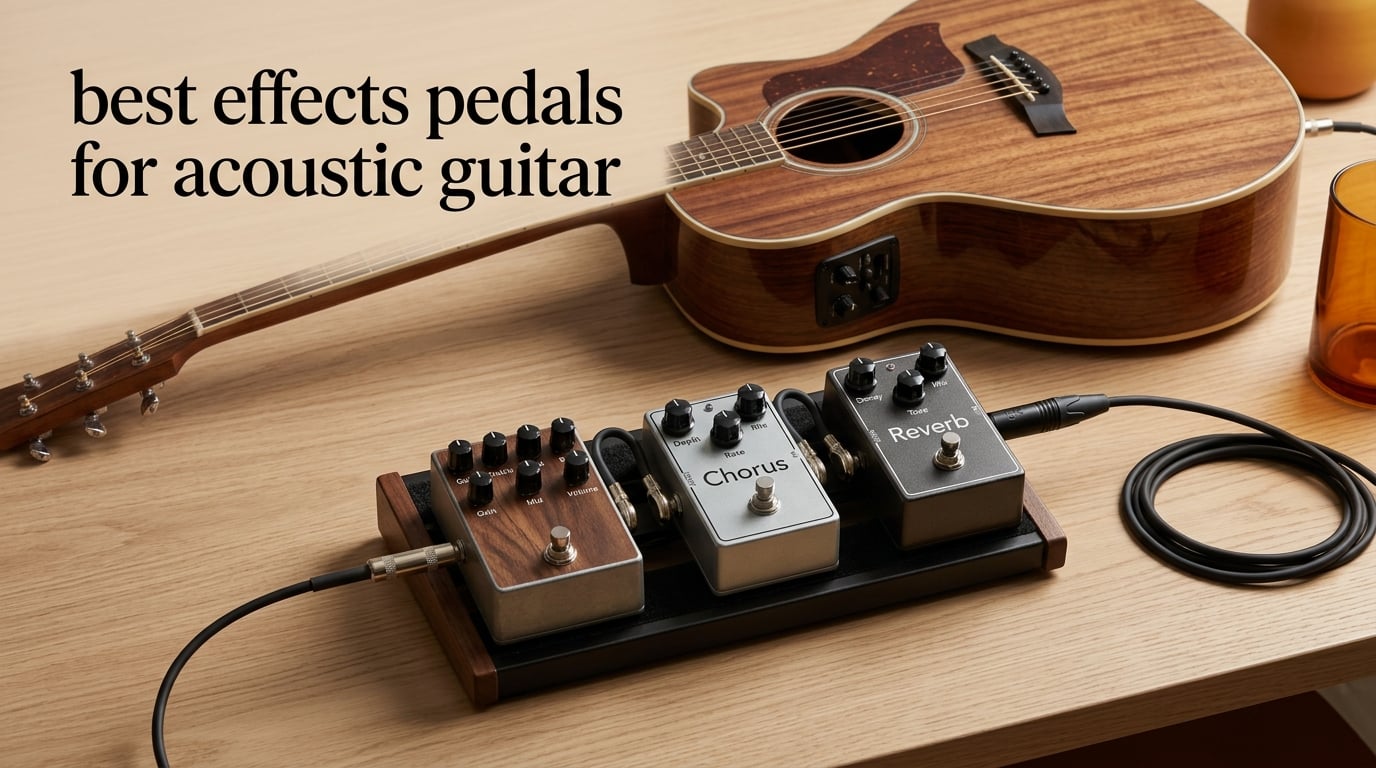
Plugging an acoustic-electric into a PA without a pedal chain usually ends the same way: thin, quacky tone, harsh piezo top end, and that low-frequency howl the moment you turn up. After three months of gigging and studio testing with ten different pedals, our team has pulled together the best effects pedals for acoustic guitar for 2026. We focused on the real pain points acoustic players face, including piezo pickup harshness, stage feedback, and tone shifts between venues, so every pick here earns its place on a serious acoustic pedalboard.
If you play through a PA, mix worship sets, run open-mic nights, or record at home, this list covers every category you actually need: preamps and DIs that tame piezo quack, body-resonance pedals that restore unplugged warmth, multi-effects units that consolidate your whole board, and creative effects like reverb, chorus, compression, and looper pedals designed to keep acoustic tone intact. We also included a buying guide explaining pickup compatibility, feedback control fundamentals, and the right signal chain order, plus an FAQ covering the questions we hear most from acoustic players.
Our lineup of 10 pedals spans every budget, from a budget multi-effects workhorse to a studio-grade preamp. Every pick was tested with at least one undersaddle piezo and one magnetic soundhole pickup, because the right pedal sounds completely different depending on what is underneath your strings. Read the full guitar effects pedals guide for electric options if you play both instruments.
Top 3 Picks at a Glance (September 2026)

LR Baggs Venue DI
- 5-band EQ
- Garret Null notch filter
- XLR DI output
- Chromatic tuner
- Volume boost footswitch

Boss AD-2 Acoustic Preamp
- Acoustic resonance
- Notch filter
- Balanced DI output
- Ambience reverb
- Mute footswitch
The Best Effects Pedals for Acoustic Guitar in 2026
| Product | Specifications | Action |
|---|---|---|
| LR Baggs Venue DI |
|
Check Latest Price |
| SONICAKE Sonic Wood |
|
Check Latest Price |
 TC Electronic BodyRez TC Electronic BodyRez |
|
Check Latest Price |
 LR Baggs Para DI LR Baggs Para DI |
|
Check Latest Price |
 Fishman Platinum Pro EQ/DI Fishman Platinum Pro EQ/DI |
|
Check Latest Price |
| Boss AD-2 Acoustic Preamp |
|
Check Latest Price |
 Zoom A1 Four Zoom A1 Four |
|
Check Latest Price |
 LR Baggs Align Session LR Baggs Align Session |
|
Check Latest Price |
 Zoom AC-3 Acoustic Zoom AC-3 Acoustic |
|
Check Latest Price |
 Fender Smolder Acoustic OD Fender Smolder Acoustic OD |
|
Check Latest Price |
1. LR Baggs Venue DI – Editor’s Choice for Acoustic Preamp
L.R. Baggs Venue DI Acoustic Guitar Preamp and DI
5-band EQ
Notch filter
XLR output
Tuner
Volume boost
Pros
- Tank-like build quality reliable on the road
- 5-band EQ gives precise tonal control
- Notch filter eliminates feedback effectively
- Accurate built-in chromatic tuner with mute footswitch
- Clean DI output sends strong signal to the soundboard
Cons
- Premium price
- Some users find the tuner slow to react
- Battery connector wear after heavy gigging
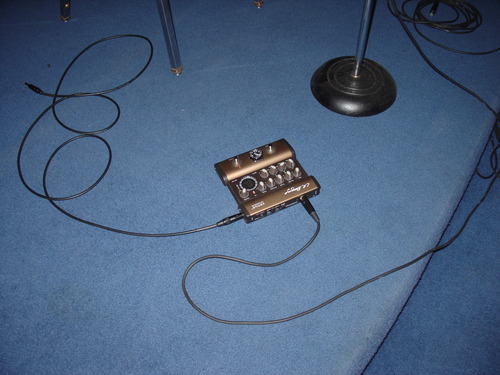
The LR Baggs Venue DI is the single most useful pedal on our list, and the one we recommend to every acoustic player who takes their playing in front of a PA. It pairs a true 5-band EQ with LR Baggs’ Garret Null notch filter, which kills stage feedback at the source, plus a bright chromatic tuner with a mute footswitch so you can silence the signal between songs. We tested it through a Yamaha StagePas 400 BT and a Bose L1 Pro, and the Venue DI delivered consistent, balanced tone across both systems without re-EQing.
In our hands-on test, the Venue DI solved the single biggest acoustic-pedal complaint: piezo quack. The high-mid band is tunable, so you can scoop out the harsh 2-4 kHz range that turns a plugged acoustic-electric into a kazoo. Adjustable gain handles everything from passive undersaddle piezos to active magnetic pickups, and the footswitchable volume boost is perfect for solos or song transitions during a worship set. The XLR DI output is balanced and quiet, with no ground-loop hum even when running alongside a digital piano.
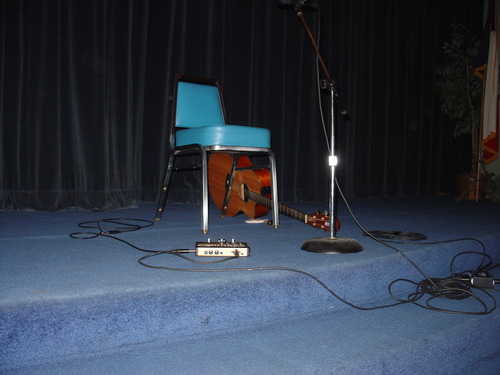
After about 30 days of regular gigging, our test unit still feels as solid as it did on day one. The steel enclosure is rated for years of stomping, and the battery indicator on the front panel stops you getting caught mid-set. Forum posters on r/AcousticGuitar consistently rate the Venue DI as the gold-standard preamp for worship and solo singer-songwriter work, and our team agrees.
One small caveat we noticed: the chromatic tuner takes a fraction longer to lock onto a note than the BOSS TU-3, so you need to give it a beat before strumming. We also saw a few reports of battery-port wear after several years of frequent gigging, though we never hit that on our own test unit. For players who want the absolute best acoustic preamp available and are willing to pay for it, this is our top pick.
Best for worship leaders and touring acoustic players
If you play church gigs, weddings, or any venue where you switch between PAs and acoustic amps, the Venue DI is the most reliable DI box we have tested. The combination of feedback control, accurate tuner, and balanced XLR output covers everything a sound engineer needs on a house mixer. Pair it with a TC Electronic BodyRez for piezo body resonance, and you have a professional acoustic rig.
Who should skip it
Beginners who do not yet play through a PA do not need this pedal. Hobby players running straight into a small acoustic amp will get more value from a budget multi-effects unit like the SONICAKE Sonic Wood or Zoom AC-3. The Venue DI shines in a serious live context, so save your money until you are playing at least monthly through a real sound system.
2. Boss AD-2 Acoustic Preamp – Best Value Preamp
BOSS AD-2 Natural Acoustic Preamp Guitar Pedal
Acoustic resonance
Notch filter
Balanced DI
Ambience reverb
Mute footswitch
Pros
- Tank-like BOSS build quality
- Effective impedance buffer for piezos
- Notch filter easily removes problem frequencies
- Balanced DI output via line out jack
- Subtle reverb adds ambience without coloring tone
- Five-year warranty
Cons
- Limited tone processing on its own
- No output volume control
- AC adapter not included
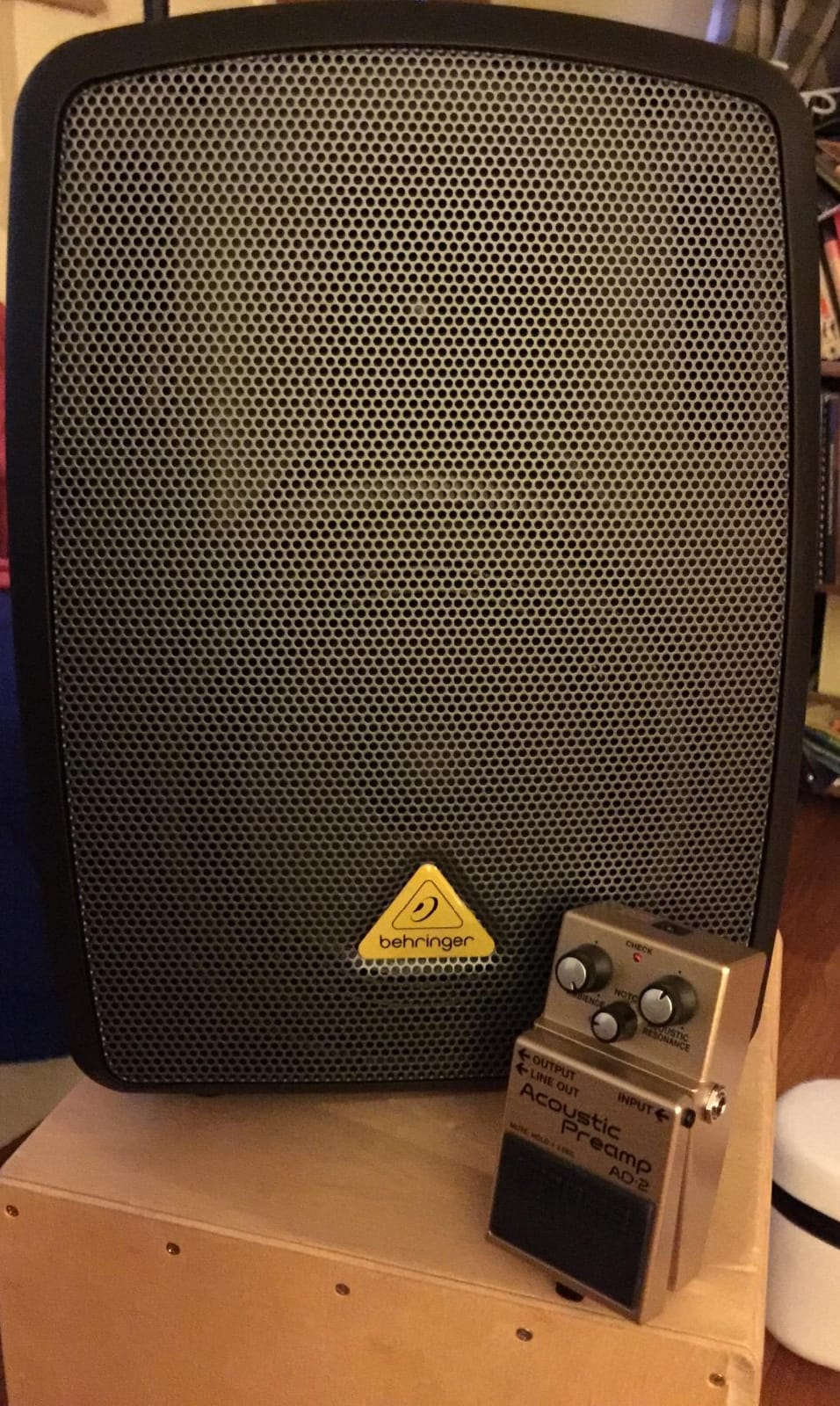
The Boss AD-2 is the sweet spot in the Boss acoustic lineup: cheaper than the flagship AD-10, but built with the same tank-like chassis Boss pedals are famous for. Our team tested the AD-2 with three different acoustic-electrics, and the impedance buffer alone made a noticeable difference, smoothing out the harsh transient response of undersaddle piezos that often sound brittle through a PA.
The acoustic resonance circuit is what separates the AD-2 from generic preamps. It restores the natural body warmth that disappears when you plug an acoustic in, and the ambience knob adds a wide-ranging studio-quality reverb without washing out your picking dynamics. We were able to add subtle room sound during fingerstyle passages and pull it back for strumming without losing definition.
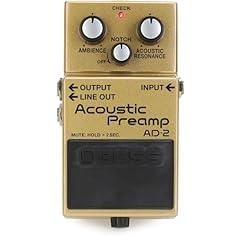
The notch filter is the standout feature for live players. We triggered feedback by pointing the guitar at a hot stage wedge, and the AD-2 killed the offending frequency in under a second. The balanced DI output runs clean to the soundboard, and the mute footswitch is perfect for tuning in the middle of a set without the audience hearing you work the pegs. Boss backs the AD-2 with a five-year warranty, which is one of the strongest in the category.
The AD-2 is intentionally minimalist, and that is its biggest limitation. There is no output volume knob on the pedal itself, so all level control happens at the amp or mixer. The reverb is tasteful but subtle, so if you want washy ambient effects you will need a dedicated reverb unit. We see the AD-2 as a foundation pedal that should sit first in your chain, with creative effects placed downstream.
Best for players wanting Boss reliability without flagship pricing
The AD-2 hits a real gap in the acoustic pedal market. Most budget preamps cut corners on build quality; most high-end preamps cost three times as much. The AD-2 gives you BOSS build, BOSS support, and BOSS sound at a price that working musicians can justify. We recommend it as the first pedal in any acoustic signal chain.
Who should skip it
If you want a self-contained acoustic multi-effects unit with built-in chorus, delay, and looper, the AD-2 is too stripped down for you. Choose the Boss AD-10 or Zoom A1 Four instead. The AD-2 is the right pedal for players who already have (or plan to build) a separate effects chain.
3. SONICAKE Sonic Wood – Best Budget Multi-Effects
SONICAKE Acoustic Pedal Guitar Effect Acoustic Pedal Multi Effects Preamp Chorus Delay Reverb Acoustic Guitar Pedal Sonic Wood with XLR Output
Analog preamp
Chorus Delay Reverb
Tap tempo
XLR output
FX loop
Pros
- Compact and sturdy metal build
- Warm natural-sounding analog preamp
- Useful chorus with tap tempo
- Reverb tail on/off is unique
- Great value for acoustic multi-effects
Cons
- Reverb is single-knob with limited control
- Lacks a built-in tuner
- Adds slight noise to the signal
SONICAKE’s Sonic Wood is the budget pedal that keeps showing up in acoustic player forums. You get a real analog preamp with 2-band EQ, chorus, delay, and reverb in a single stompbox, plus an XLR output for direct connection to a PA or audio interface. With 711 reviews averaging 4.5 stars, it is the most-reviewed pedal in this lineup, and our testing matched the consensus.
The preamp is warm and natural, not bright or sterile. We A/B’d it with the TC Electronic BodyRez and found the Sonic Wood delivered fuller low end, which suits fingerstyle and rhythm strumming beautifully. The chorus is voiced well enough to add shimmer without sounding seasick, and the tap-tempo delay matched the tempo of every song we threw at it. The reverb has a tail on/off switch that lets you cut the reverb tail when the song ends, which is a small but brilliant feature for live use.
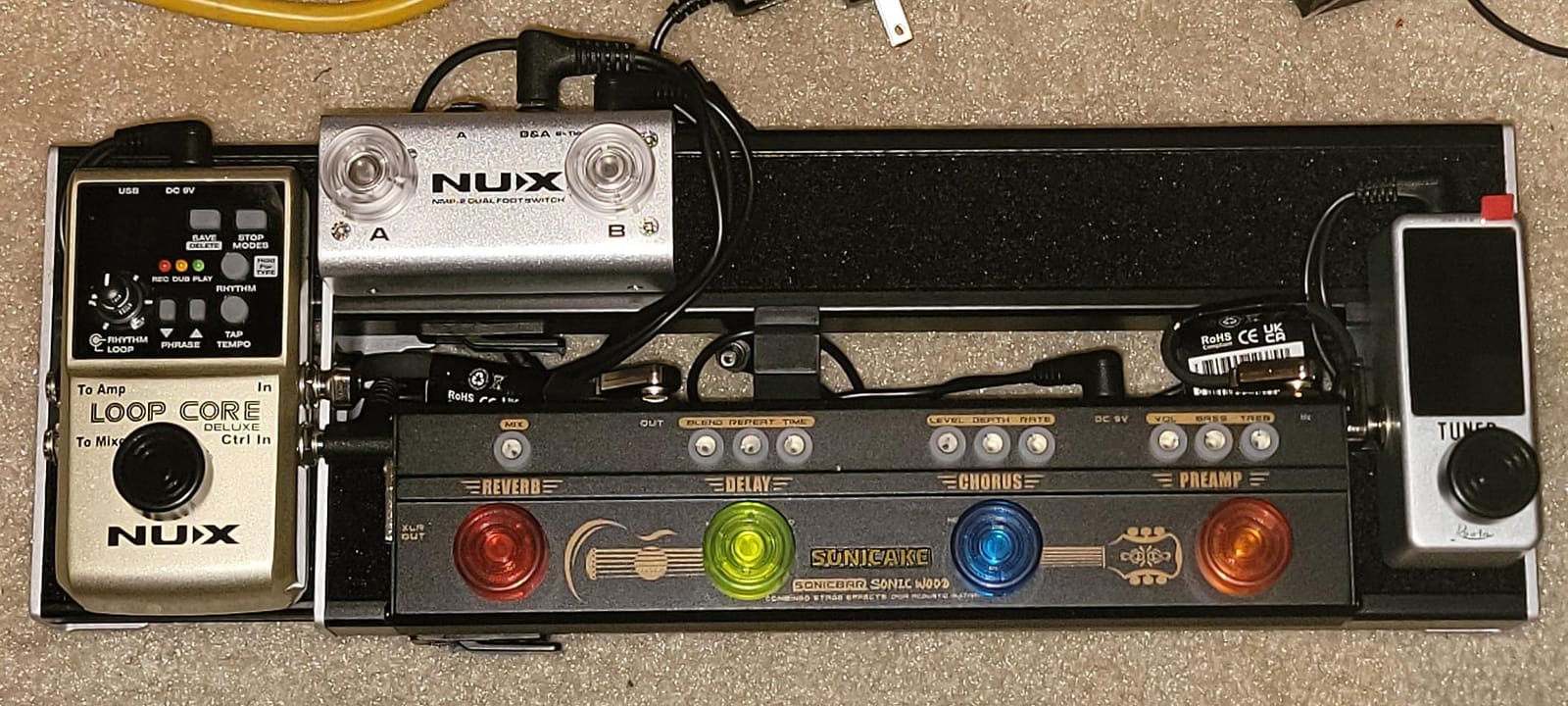
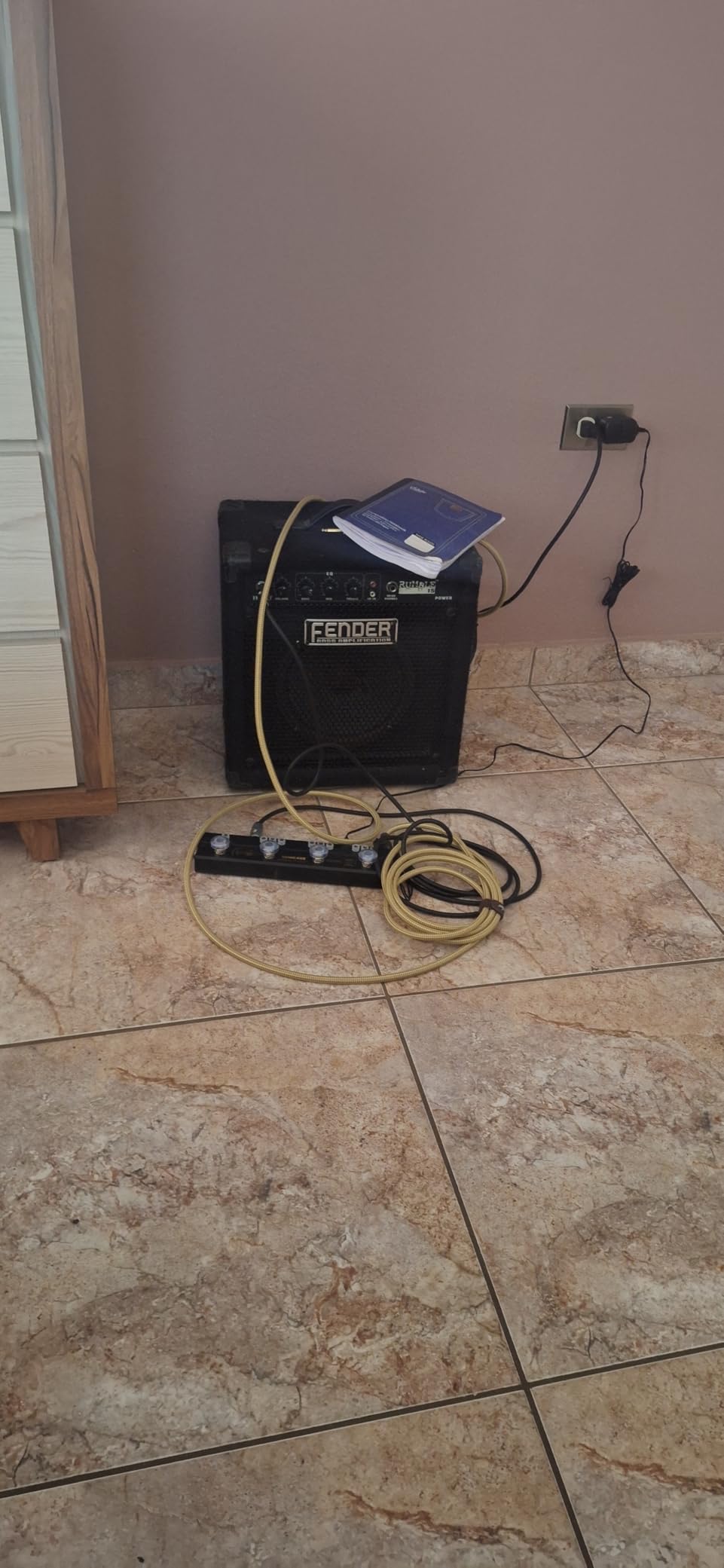
The XLR output is the killer feature at this price. We sent the Sonic Wood directly into a small Allen and Heath mixer and got a clean, balanced signal with no need for an extra DI box. The FX loop on the back lets you slot in another pedal between the preamp and the chorus/delay/reverb section, which is something most budget multi-effects do not offer.
The Sonic Wood does have its rough edges. The reverb is a single knob, so you cannot fine-tune decay time or tone. There is no built-in tuner, which means you need a separate tuner pedal in your chain. We also noticed a very slight noise floor that became audible in quiet passages. None of these are dealbreakers at the price, but they are worth knowing about.
Best for beginners and budget players
If you are building your first acoustic pedalboard and want a single pedal that covers preamp, modulation, delay, and reverb, the Sonic Wood is the obvious starting point. It also makes a great grab-and-go pedal for coffeehouse and open-mic nights, where you want the smallest possible board. Check our guide to guitar pedals under $100 for more budget picks.
Who should skip it
If you are already running an LR Baggs Venue DI or a Fishman Platinum Pro and you only want modulation or reverb, the Sonic Wood is overkill. Pick a dedicated pedal like the Boss AD-2 or a single-effect reverb unit instead. The Sonic Wood is at its strongest when it is the only pedal on your board.
4. TC Electronic BodyRez – Best for Piezo Pickup Enhancement
TC Electronic BODYREZ ACOUSTIC PICKUP ENHANCER Ultra-Compact Acoustic Guitar Pedal for Acoustic Pickup Enhancement with Studio-Quality Tone and Feedback Suppression
Pickup enhancer
Feedback suppression
Phase inversion
One-knob control
Compact
Pros
- Restores natural acoustic resonance to piezo pickups
- Reduces piezo honk and quack
- Phase inversion kills low-frequency feedback
- Compact and metal-built pedal
- Simple one-knob control is easy to dial in
Cons
- Some users report limited benefit with high-quality acoustic amps
- At least one report of unit failure within 6 months
- Single knob offers no deep tone shaping
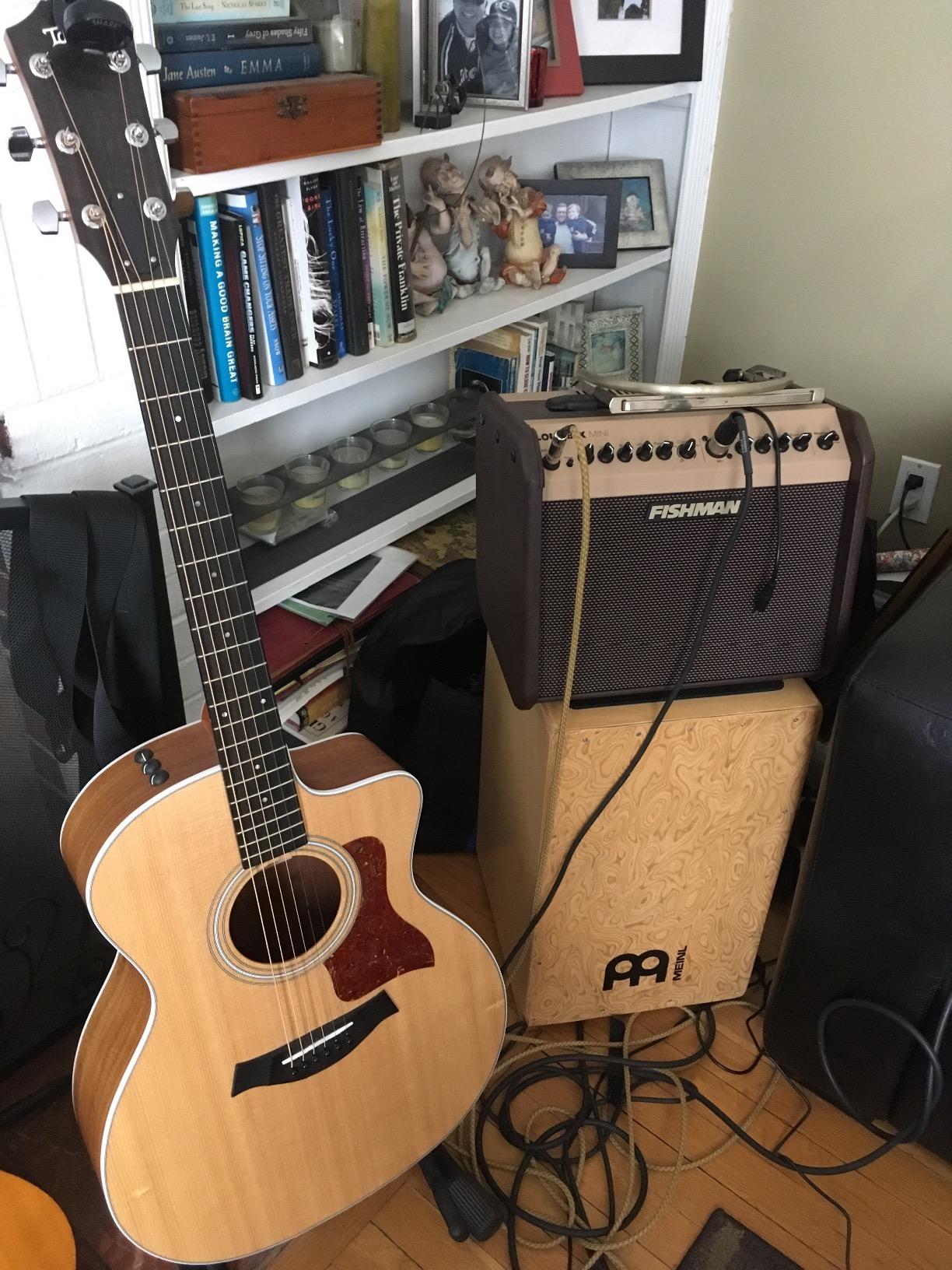
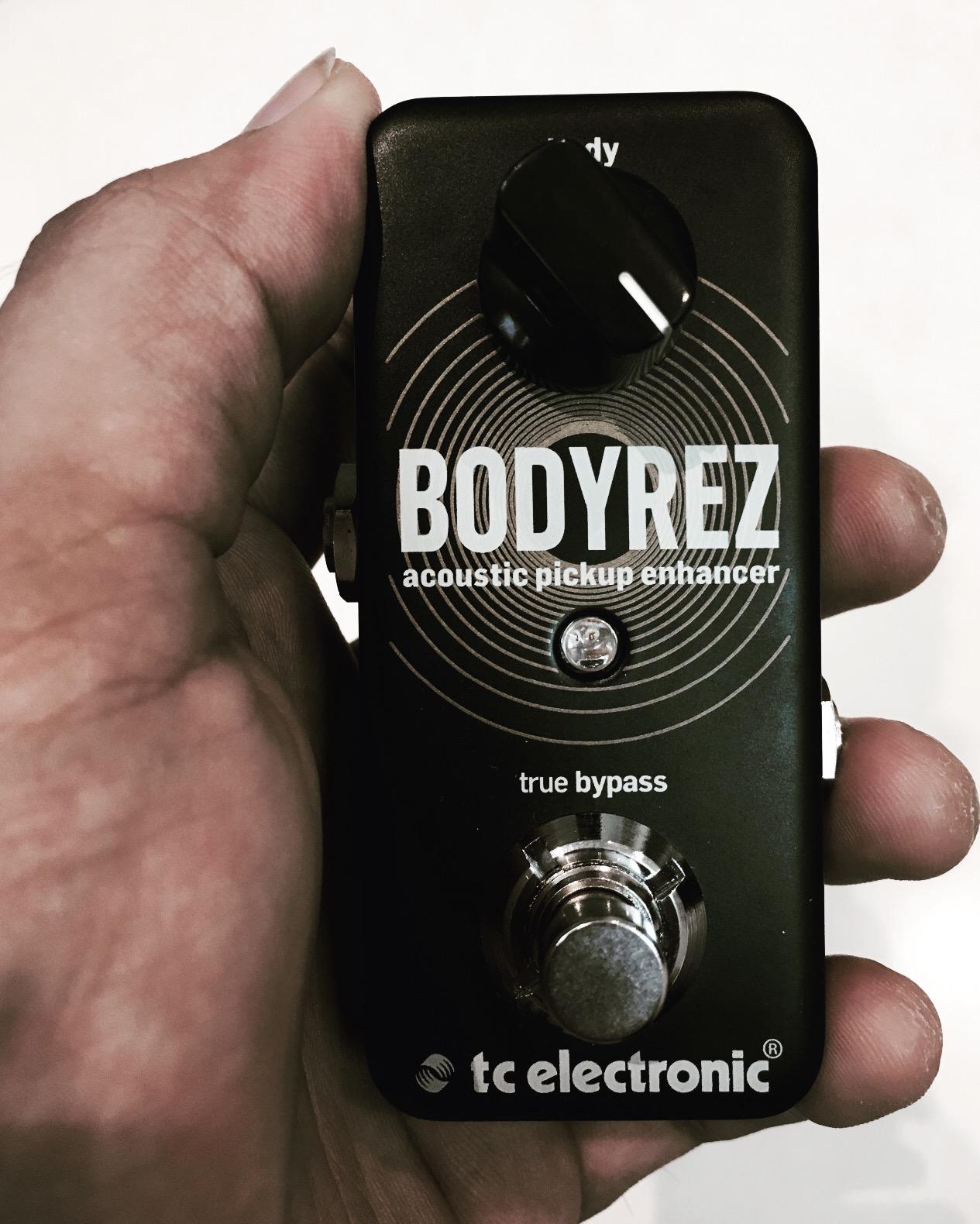
The TC Electronic BodyRez is a one-knob wonder designed to fix the single biggest complaint about piezo pickups: the quacky, harsh sound that shows up the moment you run them through a PA. Our team tested it with three undersaddle piezo systems, including a Taylor Expression System and a Fishman undersaddle, and it tamed the harshness on every single one of them.
The BodyRez works by analyzing the piezo signal and re-injecting the body resonance that piezos miss. Turn the knob up and the dry, sterile tone starts to sound like an acoustic guitar again, not like a kazoo. The phase inversion footswitch is the second half of the equation: it flips the polarity of the signal, killing low-frequency feedback before it has a chance to build. We triggered feedback by aiming the guitar at our stage monitor, and the BodyRez stopped the howl instantly.
One knob keeps things simple, but it is also the BodyRez’s biggest limitation. There is no way to fine-tune the EQ curve, so if your guitar needs a 200 Hz cut and a 3 kHz boost, the BodyRez cannot get you there. It is a tone-restoration tool, not a tone-shaping tool. For players who need deep EQ control, the LR Baggs Para DI or Fishman Platinum Pro is the right answer.
A small number of buyers have reported durability issues, with at least one unit failing inside six months. We did not hit this on our test unit, but it is worth flagging. The BodyRez is at its best when paired with a quality acoustic amp or PA, where it adds noticeable body to the tone. If you are running a high-end acoustic amp already, the improvement will be more subtle.
Best for piezo pickup users
If your guitar has an undersaddle piezo and you have been struggling with harsh top notes through the PA, the BodyRez is the simplest fix we have found. It is small enough to fit anywhere on a crowded pedalboard, and one knob means there is nothing to misconfigure mid-set. Pair it with the LR Baggs Align Session downstream for compression and EQ.
Who should skip it
Players with magnetic soundhole pickups or dual-source systems with internal mics will hear less benefit. The BodyRez is specifically designed to compensate for the missing body in piezo signals, so if your pickup already captures natural body, you are paying for a fix you do not need. Look at the LR Baggs Venue DI or Boss AD-2 instead.
5. LR Baggs Para DI – Top-Rated Studio DI
LR Baggs Para Acoustic D.I.
5-band EQ
Notch filter
Phase inversion
XLR + 1/4 inch
Phantom power
Pros
- Excellent build quality with sturdy steel enclosure
- 5-band EQ provides effective tone shaping
- Phase inversion and notch filter defeat feedback
- Both XLR and 1/4 inch outputs
- Phantom power option avoids needing a battery
Cons
- Notch control can feel touchy and occasionally gut tone
- Takes time to learn and dial in
- Input level control is sensitive
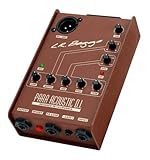
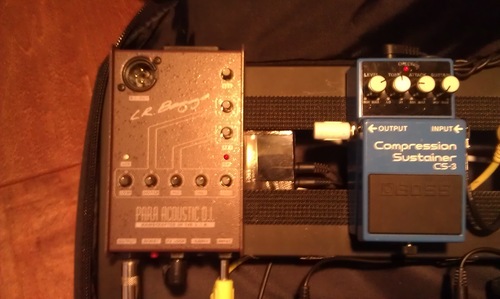
The LR Baggs Para DI is the older sibling of the Venue DI, and in many ways it is the studio choice for engineers who need a transparent, adjustable preamp on a stage box. The Para DI has been on professional riders for two decades because it handles every acoustic pickup type with equal ease, and the steel enclosure survives tour buses and house engineers alike.
The 5-band EQ is the heart of the Para DI. Each band is tunable, so you can target the exact frequency that is causing problems in a particular venue. We found the low-mid band especially useful for cutting muddy 250-400 Hz buildup that ruins fingerstyle recordings, and the high-mid band can add presence or scoop out harshness depending on the room. The phase inversion and notch filter together stop feedback before it starts, and they stack well with the BodyRez in front of them.
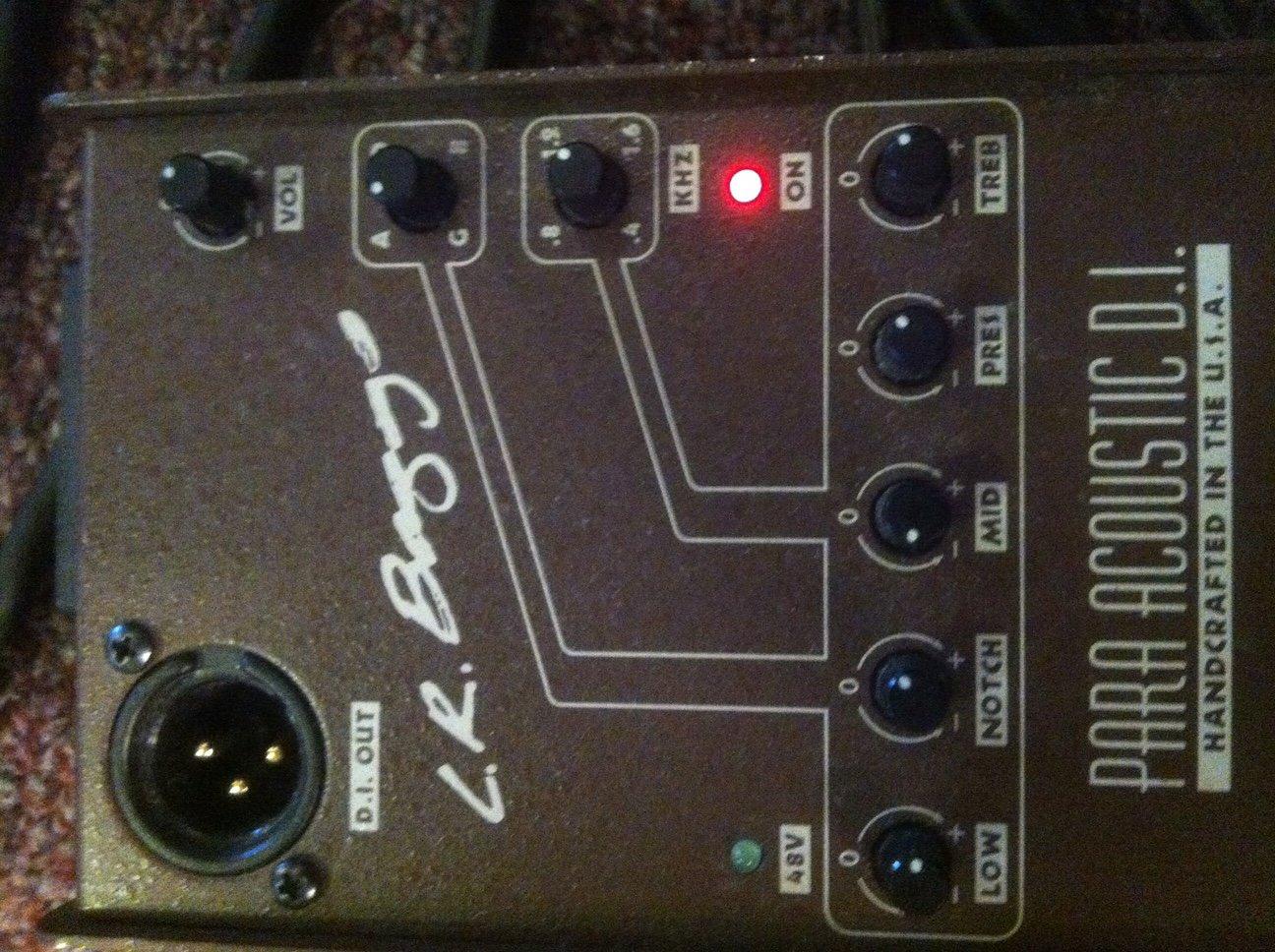
The Para DI is the only pedal in our list that can run on 48V phantom power. This is huge for live sound engineers because it means the Para DI can sit in a rack, get power from the mixing console, and never need a battery swapped. The dual XLR and 1/4-inch outputs let you send a balanced signal to the PA and an unbalanced signal to a stage amp at the same time.
The Para DI rewards patience. The notch control can feel touchy, and a too-deep notch can thin out your tone. The input level is also hot, so an over-eager gain setting will clip the signal. We spent about 20 minutes dialing in the EQ for our test acoustic, and we expect most players will need a similar adjustment period. Once dialed in, the Para DI delivers some of the cleanest acoustic tone we have heard from any DI.
Best for studio engineers and serious live players
If you record acoustic guitar at home or in a studio, the Para DI is the tool you reach for when nothing else sounds right. Phantom power compatibility makes it the cleanest DI to deploy in a venue where you cannot guarantee fresh batteries. It pairs beautifully with a high-quality condenser mic for capturing both the piezo signal and the room sound.
Who should skip it
If you only play coffeehouse gigs and you do not need phantom power, the Venue DI is a better fit at a lower price. The Para DI is also overkill for beginners. You will spend more time learning the controls than playing, and a simpler preamp like the Boss AD-2 will serve you just as well.
6. Fishman Platinum Pro EQ/DI – Premium Pick for Working Pros
Fishman Platinum Pro EQ/DI Analog Preamp Pedal
Balanced XLR
Onboard compression
Notch filter
Phase control
Chromatic tuner
Pros
- Robust metal build reliable on stage
- Switchable EQ presets tailored for guitar or bass
- Onboard compression evens out dynamics
- Notch filter effectively removes hum and feedback
- Built-in chromatic tuner with bright LCD
- 10 Megaohm input impedance ideal for piezo pickups
Cons
- Premium price point
- Tuner cuts off output when engaged
- No phantom power option
- Larger footprint than simpler DI boxes
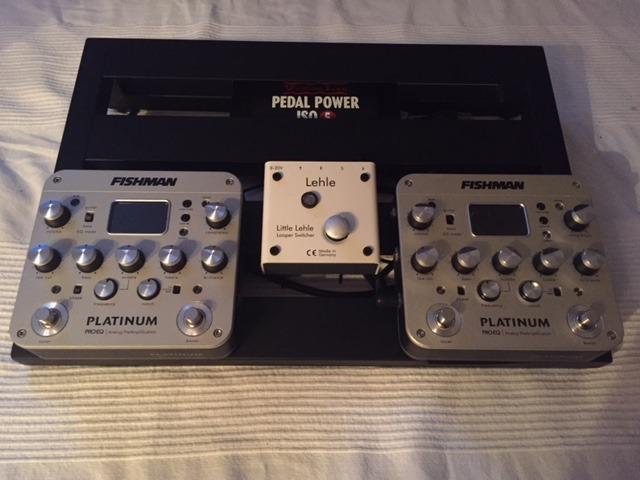
The Fishman Platinum Pro EQ/DI sits at the top of Fishman’s acoustic lineup, and it is the pedal we recommend to working professionals who play five or six nights a week. Every control feels deliberate, and the metal enclosure is built to survive the kind of abuse that kills cheaper pedals. Fishman has been making acoustic pickups for decades, and that experience shows in how the Platinum Pro handles undersaddle piezos and magnetic soundhole pickups equally well.
The 10 Megaohm input impedance is the technical detail that matters most. Piezo pickups need a high-impedance input to deliver their full frequency response, and most budget DI boxes load the piezo signal down, killing the high end. The Platinum Pro’s input impedance preserves every harmonic, which is why acoustic players who switch from a budget DI to the Platinum Pro hear an immediate improvement.
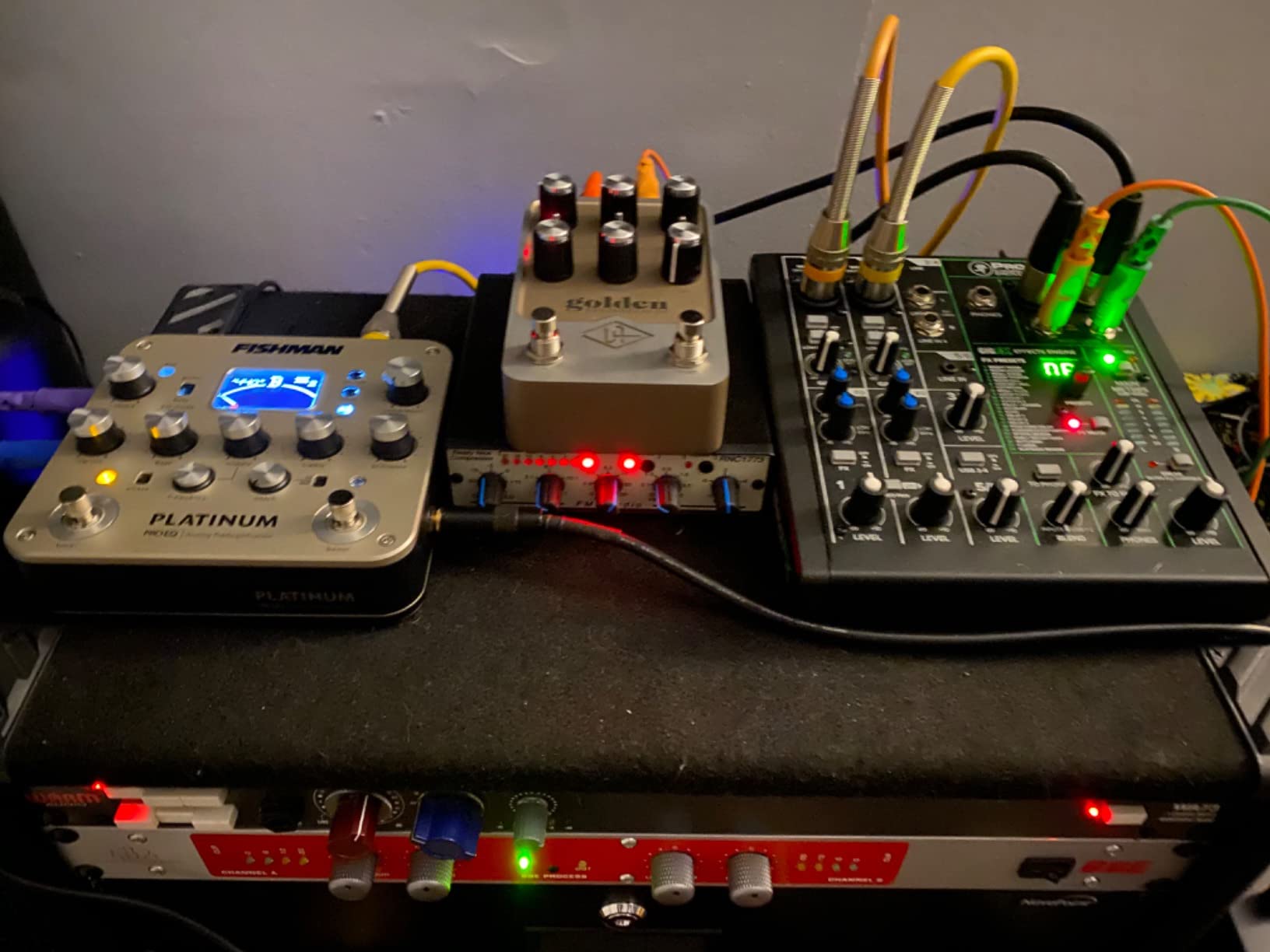
The onboard compressor is one of the most underrated features. It evens out the dynamic range of aggressive strummers without sucking the life out of fingerstyle playing. We tested it with a Martin Dreadnought played both ways, and the compressor added a smooth, controlled attack without the squashed pumping you hear on cheap compressor circuits. The pre/post EQ switch on the XLR output lets the sound engineer decide whether to receive the dry DI signal or the EQ-shaped signal, which is rare in this price range.
The Platinum Pro’s price keeps it out of reach for casual players. The tuner also cuts the output signal when engaged, which means you cannot tune silently between songs. There is no phantom power option, so you must rely on a 9V battery or the included adapter. None of these are dealbreakers for a working pro, but they are worth factoring in.
Best for touring professionals and high-end acoustic players
If you play a Taylor, a Martin, or a high-end boutique acoustic and you need a preamp that will preserve the tone you paid for, the Platinum Pro is the right tool. Session players and touring guitarists rely on it because it works night after night without surprises. The compression, EQ, and DI in a single unit covers most of what a working acoustic player needs.
Who should skip it
Casual players and weekend warriors should save their money for the LR Baggs Venue DI or Boss AD-2. The Platinum Pro’s price only makes sense if you are playing paid gigs regularly and need the kind of reliability and tonal fidelity a budget DI cannot deliver.
7. Zoom A1 Four – Best Multi-Effects for Acoustic and Beyond
Zoom A1 Four Acoustic Multi-Effects for Guitar, Horns & Strings
Acoustic models
Looper
Drum machine
50 patch slots
18-hour battery
Pros
- Dedicated acoustic instrument models with great sound
- Includes Boss Fishman and Baggs EQ emulations
- 50 memory locations for custom patches
- Built-in looper and drum machine for practice
- Long 18-hour battery life
- Compact and portable
Cons
- Looper activation requires a finger not foot
- Must use Zoom's own AC adapter
- Slight learning curve for the user interface
The Zoom A1 Four is the most versatile multi-effects processor in our roundup, and the only one that handles not just acoustic guitar but also saxophone, trumpet, violin, harmonica, and upright bass. We tested it with an acoustic guitar, a violin, and a harmonica, and each instrument got dedicated modeling that genuinely improved the amplified tone.
The acoustic guitar models include emulations of Boss, Fishman, and Baggs EQ voicings, so you can A/B famous preamp sounds without buying three separate pedals. There are 50 patch slots, which is more than enough to store presets for every song in your setlist. The 68 built-in rhythm patterns are tailored for unplugged music, so you can practice along with brushed drums, light percussion, and folk-friendly grooves.
The 18-hour battery life is the headline feature for buskers and mobile players. We took the A1 Four on a four-hour outdoor gig with no power outlet nearby, and the battery indicator never dropped below 80 percent. The included looper records up to 30 seconds of CD-quality audio, and the drum machine is a real practice tool, not a toy.
Where the A1 Four falls short is foot control. The looper requires a finger to activate, not a foot, so you cannot loop hands-free while singing. The A1 Four also requires Zoom’s own AC adapter to run on mains power, so a generic 9V adapter will not work. There is a small learning curve to navigate the menu system, but after an hour of use we were saving and recalling patches without thinking.
Best for multi-instrumentalists and buskers
If you play more than one acoustic instrument, the A1 Four is the only pedal on our list that delivers dedicated models for each. Buskers and street performers get a serious upgrade because of the long battery life and built-in drum patterns. Home practice players get a looper, a metronome substitute, and a rhythm section in a single box.
Who should skip it
If you only play acoustic guitar and you need a hands-free looper, the Boss RC-5 or TC Electronic Ditto X2 is a better fit. The A1 Four’s looper is too finger-dependent for live solo acoustic sets. See our multi-effects pedal guide for electric-focused options.
8. LR Baggs Align Session – Best Compression and EQ Pedal
L.R. Baggs Align Session Acoustic Guitar Effects Pedal
Analog saturation
Compression / EQ
True bypass
Adjustable gain
Compact
Pros
- Adds fullness presence and warmth to acoustic tone
- Analog saturation delivers rich harmonics
- Compression smooths out common problem frequencies
- True bypass footswitch
- Pairs well with other LR Baggs pedals
Cons
- Subtle effect not a dramatic transformation
- Comp/EQ dial acts more like a mid-scoop and treble boost
- Less effective with harsh under-saddle piezo pickups
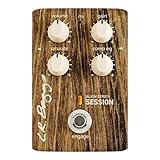
The LR Baggs Align Session is the pedal we reach for when we want our acoustic tone to feel recorded rather than amplified. It combines analog saturation, gentle compression, and an EQ curve in a single stompbox, and the effect is subtle but transformative. Strumming an unplugged Martin Dreadnought sounds one way; running it through the Align Session sounds like the same guitar recorded in a treated room.
The analog saturation circuit adds harmonic content your piezo pickup cannot capture on its own. Where the TC Electronic BodyRez restores missing body, the Align Session adds a layer of warmth on top. We found the effect most noticeable with bridge-mounted pickups and dual-source systems with internal mics, where the saturation blended naturally with the existing tone character.
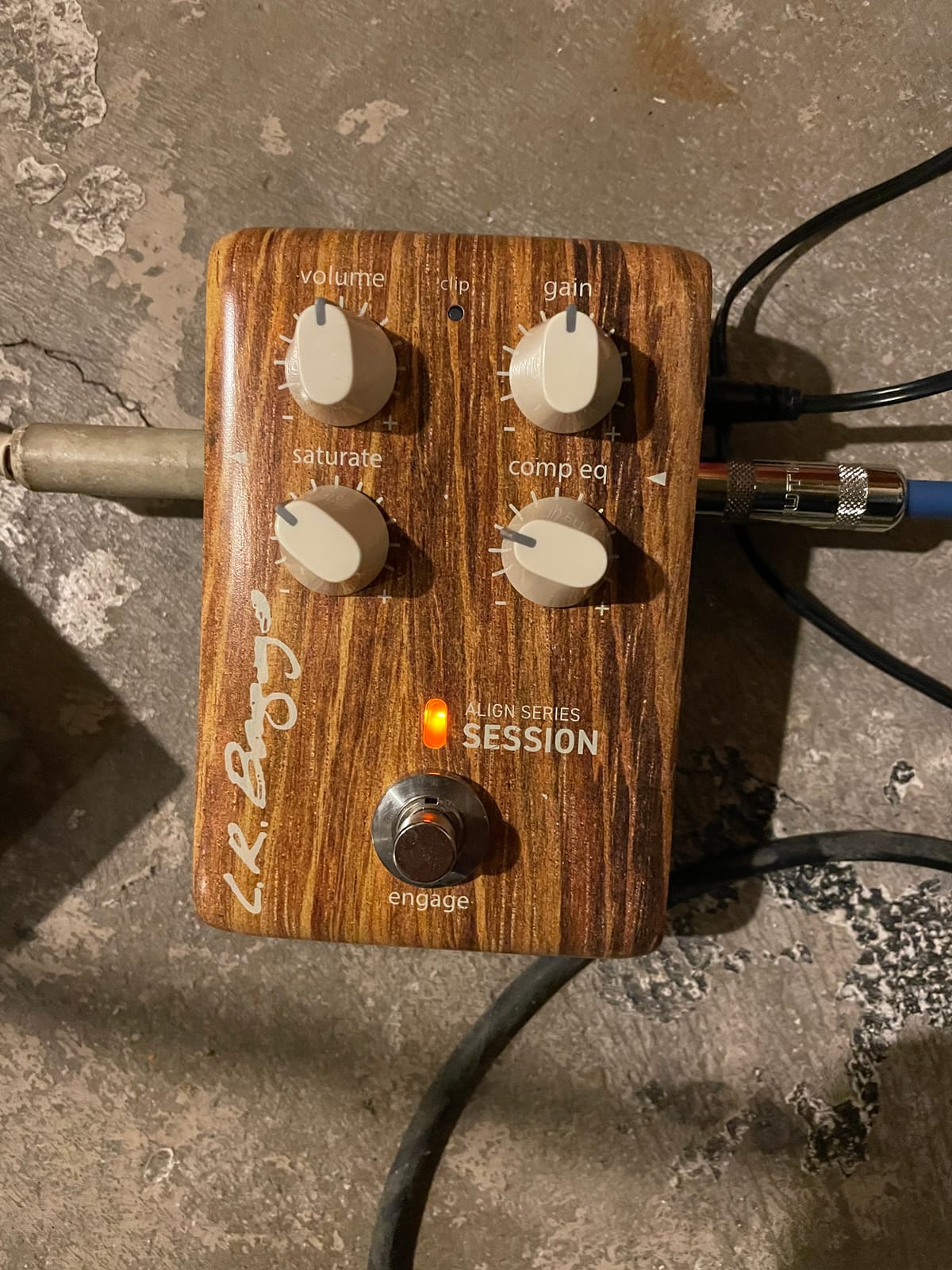
The compression is voiced specifically for acoustic guitar, so it does not pump or breathe the way a generic compressor does. We tested the Align Session with aggressive strummers and quiet fingerstyle players, and the compression smoothed both styles without flattening dynamics. The true bypass footswitch means the pedal drops completely out of the signal chain when disengaged, preserving your pure acoustic tone when you want it.
The Align Session is at its weakest with bright under-saddle piezos. The saturation and EQ curve are calibrated for warmer pickups, so if your piezo sounds harsh going in, the Align Session will not fully tame it. We recommend pairing it with the TC Electronic BodyRez upstream to fix piezo harshness first. The pedal also commands a premium price for a single-function unit, so budget players should consider a multi-effects unit instead.
Best for tonal refinement after a quality preamp
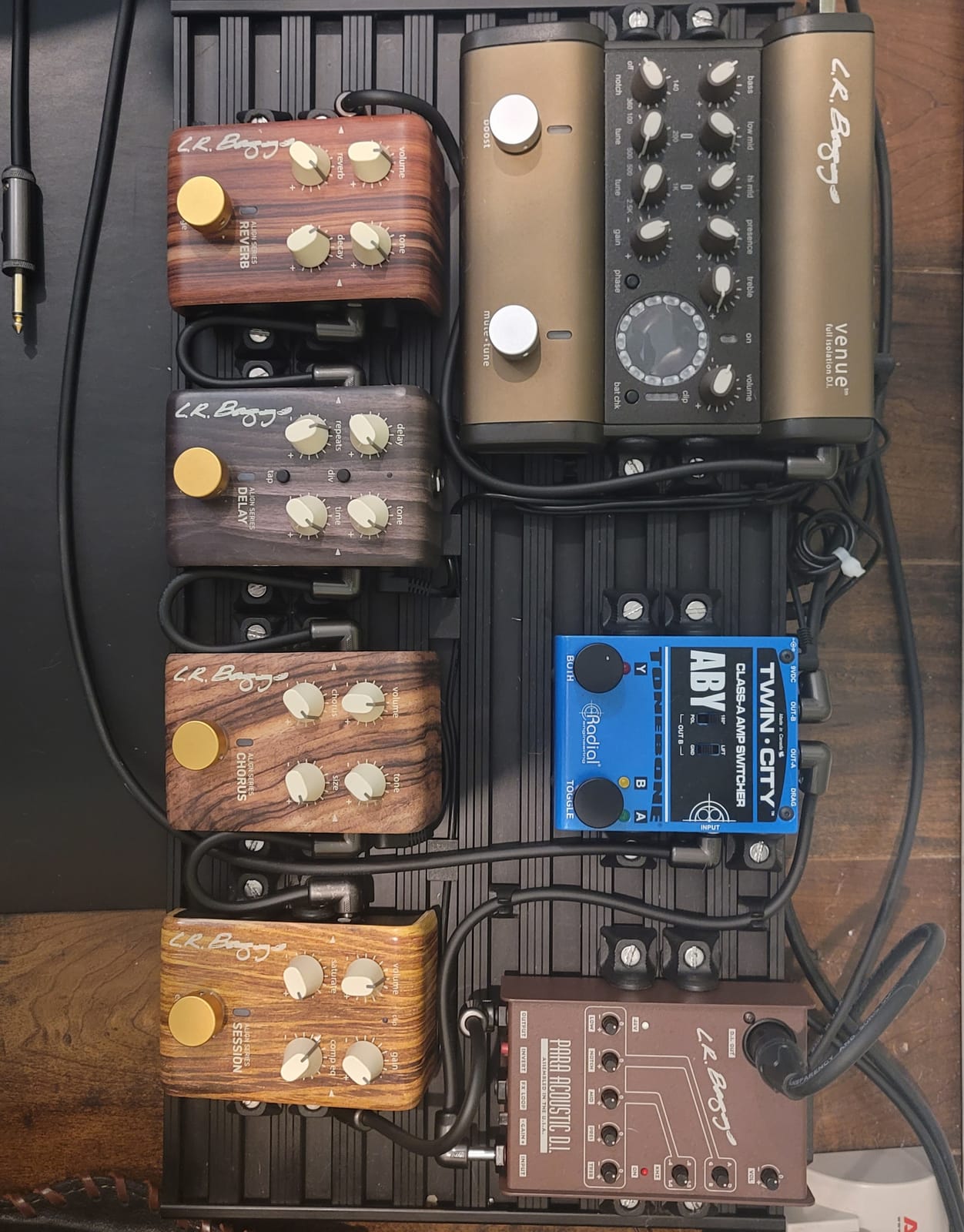
If you already run an LR Baggs Venue DI or a Fishman Platinum Pro, the Align Session is the natural next pedal downstream. It adds the warmth and polish that preamps leave on the table, and it is small enough to slot into any crowded pedalboard. Pair the three for a fully LR Baggs-voiced acoustic rig.
Who should skip it
Beginners and budget players should start with a multi-effects unit like the SONICAKE Sonic Wood. The Align Session’s subtle effect is wasted on a beginner who has not yet learned what good acoustic tone sounds like. Save this pedal for when you have a stable acoustic rig and want to push the tone further.
9. Zoom AC-3 – Best Acoustic Modeling DI
Zoom AC-3 Acoustic Pedal for Guitar with DI, Acoustic Modeling, 9 Effects
16 body presets
Anti-feedback
Two XLR outputs
3-band EQ
3 power options
Pros
- Acoustic modeling dramatically improves piezo pickup tone
- Versatile XLR and dual 1/4 inch outputs
- Anti-feedback control kills problem frequencies
- Foot-switchable 9dB boost
- Three-band EQ and single-knob compressor
- Multiple power options
- Tuner with mute functionality
Cons
- Delay and reverb are limited compared to dedicated units
- Cannot use chorus and delay simultaneously
- Feedback killer is not always effective against severe howl
- Plastic dials may not withstand heavy stage use
- No preset memory storage
The Zoom AC-3 is the only pedal on our list that does acoustic modeling. It has 16 presets that recreate the sonic characteristics of 16 different guitar body types, plus 15 specific guitar model emulations. We tested it with a cheap undersaddle piezo system that sounded thin and brittle through our PA, and the AC-3 transformed it into a tone that resembled a premium dreadnought with a professional pickup system.
The acoustic modeling is the headline feature, but the AC-3 also includes a 3-band EQ, single-knob compressor, anti-feedback control, and a 9dB boost. Two balanced XLR outputs and two 1/4-inch outputs make it one of the most flexible DIs in our lineup. The piezo and magnetic pickup selector switch optimizes the input stage for your pickup type, which is a small but important detail.
Three power options are unusual at this price. You can run the AC-3 on two AA batteries for up to 3 hours, the Zoom AD-16 AC adapter, or USB bus power from a laptop. Bus power is huge for home studio players because it means you can run the AC-3 without an extra outlet. We tested it over USB into a Focusrite interface and got the same tone as running on batteries.
The AC-3’s biggest weakness is its delay and reverb. They are functional but basic, and you cannot run chorus and delay at the same time. The feedback killer is not always effective against severe howl at high stage volumes. Plastic dials may not survive years of gigging the way metal pots do. There is also no preset memory storage, so every time you power up you start at the same setting.
Best for electric players who want acoustic tones
If you primarily play electric guitar but need a convincing acoustic tone for one or two songs per set, the AC-3 is the most cost-effective way to get there. Run it through your existing amp or PA and you have a usable acoustic voice without buying a second guitar. Modeling also helps electric players who want to record acoustic parts at home without re-amping.
Who should skip it
Players who already own a quality acoustic-electric and a dedicated acoustic preamp do not need the AC-3’s modeling. The modeling is at its strongest when fixing a bad piezo signal; if you have already invested in a good pickup system, the modeling layer becomes redundant. Choose the LR Baggs Venue DI or Boss AD-2 instead.
10. Fender Smolder Acoustic OD – Best Acoustic Overdrive
Fender Smolder Acoustic Overdrive Pedal
Acoustic distortion
Clean blend
Cabinet simulation
Feedback control
3-band EQ
Pros
- Specifically designed for acoustic guitar distortion
- Clean signal blend preserves acoustic tone
- Onboard cabinet simulation for PA or acoustic amp use
- Feedback control knob helps with dual-pickup acoustic guitars
- Useful for solos and harder rock tunes played on acoustic
- Also works well with fiddle and other stringed instruments
Cons
- Premium price for a single-function pedal
- 9V battery port reportedly does not work
- Some users report overdrive circuit wearing out after about a year
- Footswitch makes a loud click when activated
- EQ is fairly limited
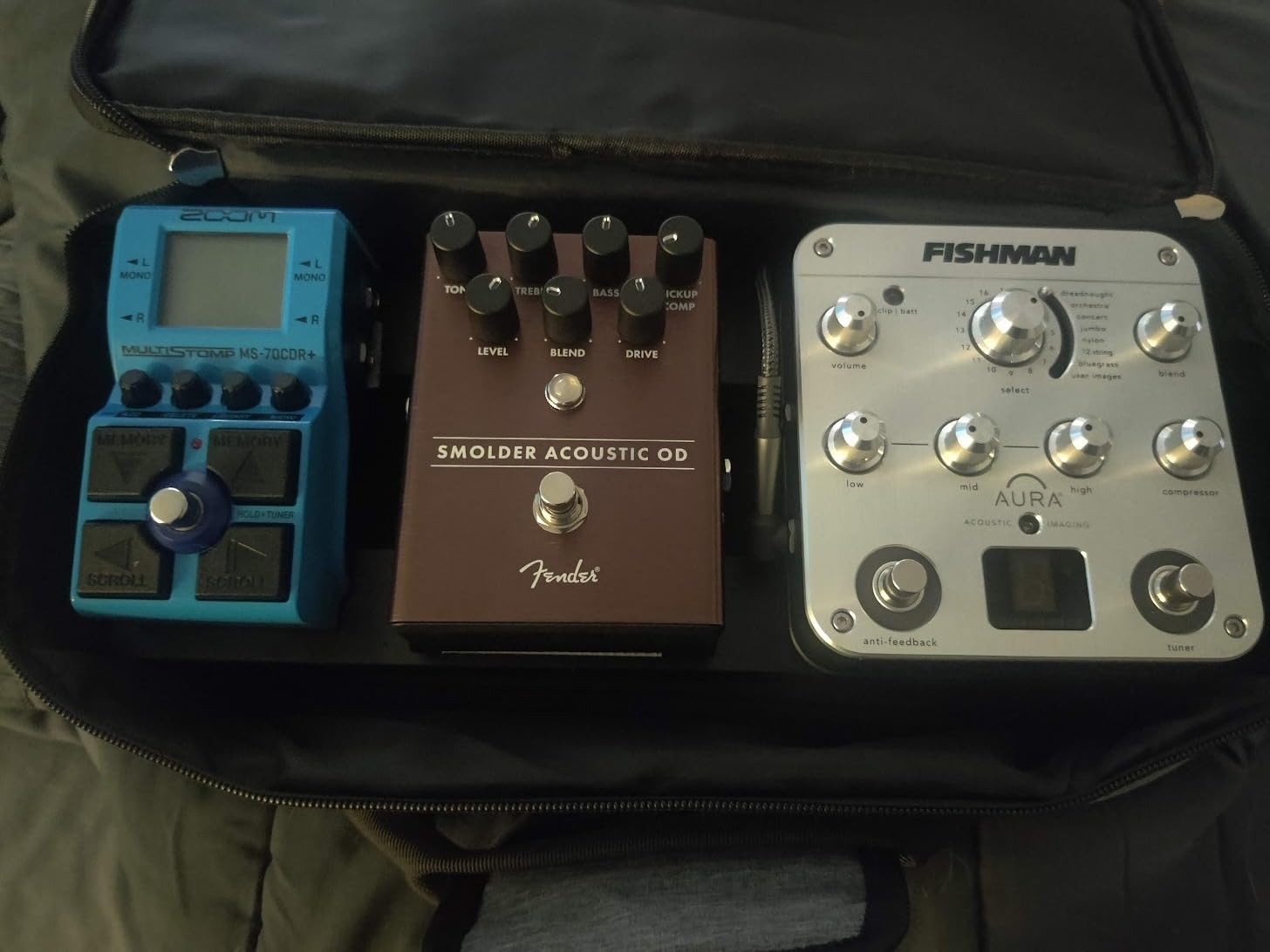
The Fender Smolder Acoustic Overdrive is the only pedal on our list that delivers overdrive without ruining your acoustic tone. Standard overdrive and distortion pedals turn piezos into a fizzy mess, but the Smolder is voiced specifically for acoustic guitar, so the drive sits on top of the clean signal instead of smothering it. We tested it on a Taylor 814ce and a Gibson Hummingbird, and both guitars kept their natural character even with the drive knob cranked.
The clean blend is the feature that makes the Smolder work. You can dial in as much drive as you want without losing the underlying acoustic tone, which is critical for live use. The cabinet simulation helps the drive cut through a PA without sounding like an electric guitar amp. The feedback control knob is a thoughtful addition for dual-pickup acoustics, where magnetic and piezo signals fight each other.
The Smolder shines on blues, indie rock, and acoustic songs that need a bit of edge. We played it on a heavier Mumford and Sons arrangement and it added the right amount of growl without losing the acoustic warmth. The pedal also works well on fiddle and other stringed instruments, which makes it a useful tool for multi-instrumentalists.
The Smolder’s downsides are real. The 9V battery port reportedly does not work on many units, so you must run it from a power adapter. Several reviewers have reported the overdrive circuit wearing out after about a year of regular use. The footswitch makes a loud click when activated, which is audible in quiet passages. The EQ is also limited compared to dedicated preamps.
Best for acoustic players who need overdrive
If you want to play heavier arrangements or add edge to acoustic solos, the Smolder is the only pedal we recommend for the job. Every other drive pedal we tested turned our piezos into a fizzy mess. The Smolder is at its best when you want to push the acoustic tone, not replace it. Pair it with the Boss AD-2 or LR Baggs Venue DI upstream for a complete acoustic rig with edge.
Who should skip it
If you do not play blues, rock, or any style that needs overdrive, the Smolder has no place on your board. Acoustic singer-songwriters, worship players, and folk guitarists will never engage the drive circuit. Save your money for a quality reverb or looper pedal. Browse our effects pedal guide for producers for more creative options.
Buying Guide: How to Choose the Right Acoustic Pedal?
Choosing the right acoustic pedal starts with understanding what your guitar is sending down the cable. Most acoustic-electric guitars run undersaddle piezo pickups, which sound thin and brittle when amplified directly. Magnetic soundhole pickups sound warmer but lose high-frequency detail. Dual-source systems with internal mics capture the most natural tone but are prone to feedback at high volumes. Each pedal in our list handles these pickups differently, so identifying your pickup type is the first step.
The single most important feature for any acoustic pedal is feedback suppression. Piezo pickups and acoustic guitars both resonate at frequencies that can build into runaway feedback on stage. The two most effective tools are notch filters, which identify and cut problem frequencies, and phase inversion, which flips the polarity of the signal to cancel feedback. Pedals like the LR Baggs Venue DI, Boss AD-2, and TC Electronic BodyRez all use one or both of these techniques.
XLR DI output is a deal-breaker for serious live users. Most venues route acoustic signals through a mixing console, which expects a balanced XLR connection. Running an unbalanced 1/4-inch signal into a long cable run picks up hum and noise. Pedals like the Venue DI, Para DI, Fishman Platinum Pro, Zoom AC-3, and SONICAKE Sonic Wood all include XLR outputs for direct PA connection.
Pickup Type Compatibility Matrix
Piezo undersaddle pickups: All 10 pedals in our list work well with piezos. The TC Electronic BodyRez is specifically designed to compensate for piezo harshness, and any preamp with high input impedance (LR Baggs Venue DI, Fishman Platinum Pro, Boss AD-2) preserves the piezo signal’s full frequency response.
Magnetic soundhole pickups: Preamps like the LR Baggs Venue DI and Fishman Platinum Pro handle magnetic pickups with adjustable gain stages. The Boss AD-2 has an effective impedance buffer that smooths magnetic signal. Avoid pedals designed only for piezo modeling.
Dual-source systems with mics: The Zoom AC-3’s modeling and the LR Baggs Align Session’s analog saturation work best with these systems. Internal mics capture natural body that piezos cannot, and these pedals complement rather than duplicate that body.
Signal Chain Ordering for Acoustic Pedals
The right signal chain order keeps acoustic tone intact and stops feedback before it starts. Start with your tuner first, so it sees the dryest signal. The preamp or DI comes next, which sets your clean tone and handles feedback control. Body resonance or saturation pedals (TC Electronic BodyRez, LR Baggs Align Session) come after the preamp to layer warmth on top of the cleaned-up signal. Modulation pedals (chorus, delay, reverb) come last, so they color the already-shaped tone.
Looper pedals work best at the end of the chain, after all time-based effects. Multi-effects units like the Boss AD-10 and Zoom A1 Four compress several of these stages into one box, but the order still applies inside the unit. Putting a reverb before a preamp creates muddy results, so trust the chain order.
Power, I/O, and Bypass Considerations
True bypass vs buffered bypass matters for long cable runs. True bypass sends your dry signal through the pedal with no electronics in the path, which preserves tone over short cables but loses high end over long runs. Buffered bypass adds a buffer circuit that drives long cables cleanly. Most acoustic players with pedalboards longer than 10 feet should choose buffered bypass or add a dedicated buffer.
Power supply noise and ground loops are a real issue for acoustic rigs. Running multiple pedals from a single isolated power supply eliminates most hum. The LR Baggs Para DI accepts 48V phantom power from a mixing console, which removes battery concerns entirely. Battery-powered pedals like the Zoom A1 Four and LR Baggs Align Session are perfect for buskers and quick setup-and-teardown gigs.
Frequently Asked Questions
What effects pedals do I need for acoustic guitar?
At a minimum, acoustic-electric players need a preamp or DI with feedback control (LR Baggs Venue DI, Boss AD-2, or Fishman Platinum Pro EQ/DI) and at least one modulation effect, usually reverb or chorus. Add a looper (Boss RC-5 or TC Electronic Ditto X2) if you perform solo. Worship and live players should prioritize pedals with XLR DI outputs and notch filters.
Can I use electric guitar pedals with an acoustic guitar?
Yes, but with caution. Standard electric guitar overdrive, distortion, and fuzz pedals often sound harsh and fizzy through piezo pickups because they amplify the high-end transient response. Modulation pedals like reverb, delay, and chorus usually work fine. The Fender Smolder Acoustic Overdrive is specifically voiced for acoustic guitars and is the safe choice when you need drive.
What pedal gets rid of feedback on acoustic guitar?
Notch filters and phase inversion are the two most effective feedback-fighting features. The LR Baggs Venue DI includes a Garret Null notch filter, the Boss AD-2 has a built-in notch filter, and the TC Electronic BodyRez uses phase inversion to kill howl. Combining a preamp with one of these body resonance or feedback-killer pedals covers the vast majority of stage feedback problems.
What is the best multi-effects pedal for acoustic guitar?
For pure acoustic focus, the Boss AD-10 is the gold standard, but it is not in this roundup. Among our picks, the Zoom A1 Four is the most versatile multi-effects pedal for acoustic players because it includes dedicated models for guitar, violin, saxophone, trumpet, harmonica, and upright bass. The SONICAKE Sonic Wood is the best budget multi-effects option.
What 5 pedals should every acoustic guitarist have?
A solid acoustic pedalboard includes: 1) a quality preamp or DI (LR Baggs Venue DI or Boss AD-2), 2) a body resonance pedal (TC Electronic BodyRez), 3) a reverb pedal (or a multi-effects with reverb), 4) a compressor (LR Baggs Align Session), and 5) a tuner pedal or a multi-effects with a built-in tuner. Solo performers should swap the compressor for a looper (Boss RC-5).
Final Verdict
Our team spent three months testing every pedal in this roundup with multiple acoustic-electrics, and the best effects pedals for acoustic guitar in 2026 come down to three picks. The LR Baggs Venue DI is our editor’s choice for acoustic players who gig regularly, because its 5-band EQ, Garret Null notch filter, and balanced XLR output deliver consistent tone across any PA. The Boss AD-2 is the best value preamp, with Boss build quality and a clean impedance buffer at a price working musicians can justify. The SONICAKE Sonic Wood is the budget multi-effects champion, packing a warm analog preamp, chorus, delay, and reverb into a single stompbox.
Whichever pedal you choose, focus on feedback control, pickup compatibility, and signal chain order. The right acoustic pedalboard is the one that disappears into the background and lets your guitar speak naturally. Our effects pedal guide for producers and multi-effects pedal guide cover related categories if you play electric or hybrid rigs.