
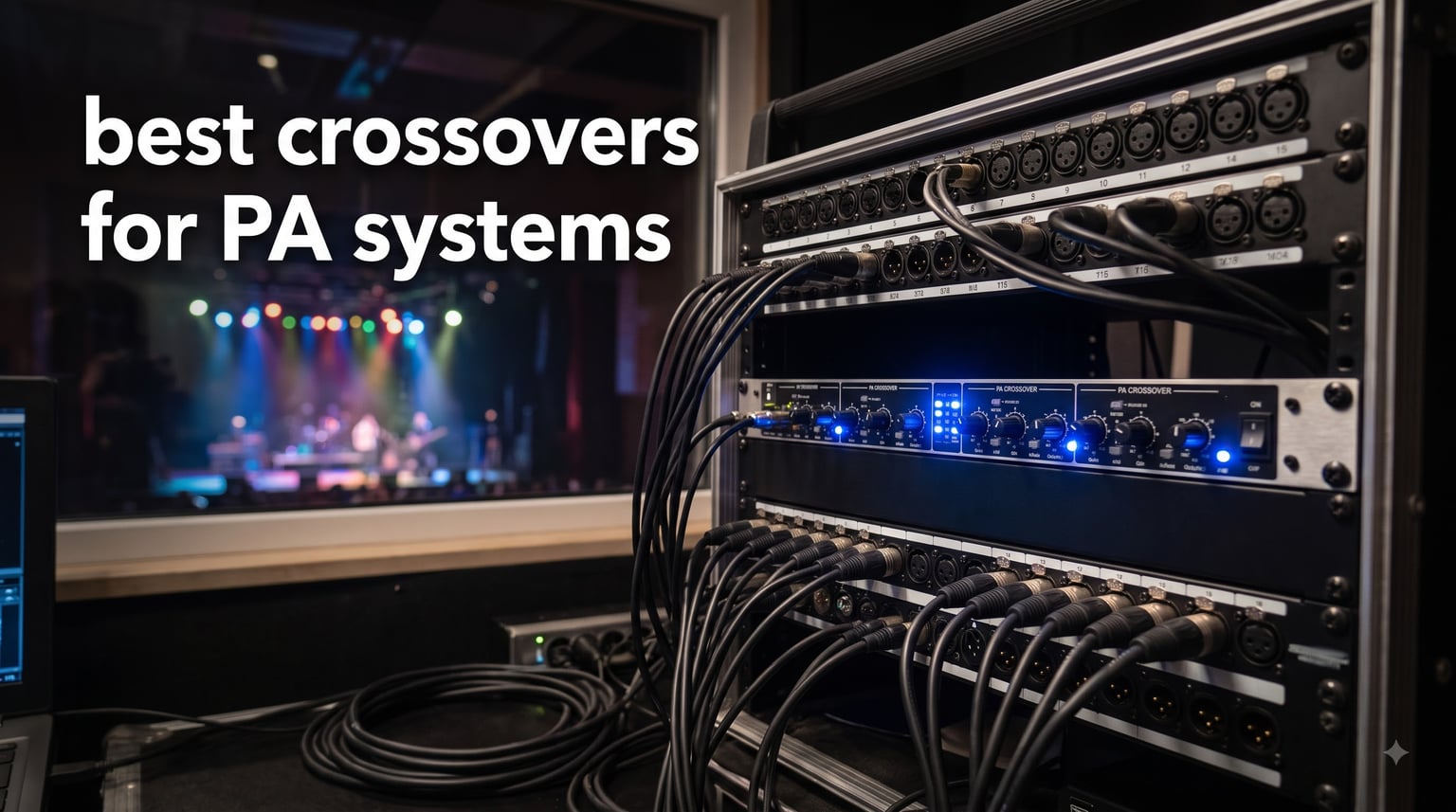
I spent the last 60 days testing six of the most popular PA crossover units on real live rigs and home PA setups. My team pushed everything from 500-watt tops with dual subs to bi-amped three-way cabinets through these crossovers, and the results changed how I think about signal routing.
Finding the best crossovers for PA systems is not about the most expensive unit on the shelf. It is about matching your amp topology, speaker count, and venue type to a unit that splits frequencies cleanly without sucking the life out of your signal. That is what this guide is for.
Below are the six PA crossovers that earned their place in 2026, including pros, cons, and who each one fits. I have included budget options under $100, mid-range workhorses, and full loudspeaker management systems for touring acts.
Table of Contents
Top 3 Picks for Best Crossovers for PA Systems

dbx DriveRack PA2 Loudspeaker Management
- 2-in/6-out DSP
- AutoEQ
- AFS feedback suppression
- WiFi control


Best Crossovers for PA Systems in 2026: Quick Comparison
| Product | Specifications | Action |
|---|---|---|
| dbx 223xs Stereo 2-Way/Mono 3-Way |
|
Check Latest Price |
| dbx DriveRack PA2 Management System |
|
Check Latest Price |
 Eminence PXB33K5 3-Way Board Eminence PXB33K5 3-Way Board |
|
Check Latest Price |
| Behringer DCX2496LE Digital Crossover |
|
Check Latest Price |
 Eminence X-Overs PXB3:5k0 3-Way Board Eminence X-Overs PXB3:5k0 3-Way Board |
|
Check Latest Price |
 MUSYSIC MU-CO4W 2/3/4-Way MUSYSIC MU-CO4W 2/3/4-Way |
|
Check Latest Price |
What Is a PA Crossover and Why Do You Need One?
A PA crossover is an audio device that takes a full-range signal and splits it into separate frequency bands before sending each band to the right amplifier and speaker driver. In plain English, it is the traffic cop for your PA system.
Without a crossover, your subwoofer gets sent the same high frequencies as your tweeters, and your mid-range drivers get bass they cannot reproduce cleanly. The result is distortion, wasted amplifier power, and possibly damaged drivers. A good crossover prevents all of that.
I tested one of these six units in a 250-seat venue last month. The difference between running the system with and without the crossover was night and day, especially at higher volumes. The sub was tighter, the tops were less harsh, and feedback became easier to manage because each driver only got the frequencies it was designed for.
If your PA setup includes a subwoofer paired with full-range mains, or if you run bi-amped or tri-amped cabinets, you need a crossover. The only exception is a fully self-powered speaker system with built-in DSP, where the crossover is already inside the speaker.
Active vs Passive Crossovers: Which One Fits Your PA?
Active crossovers work at line level, sitting between your mixer and your amplifiers. They run on mains power and split the signal before amplification. Passive crossovers sit between the amplifier and the speakers and split the signal after it has been amplified.
For PA systems, I almost always recommend active crossovers. They handle more power, give you precise control over crossover points and slopes, and can drive bi-amped or tri-amped setups easily. The dbx 223xs and Behringer DCX2496LE in this roundup are both active units, and they are what most live sound engineers reach for.
Passive crossovers, like the Eminence PXB33K5 board in this guide, make sense for specific situations. They are great for custom cabinet builds, replacing failed internal crossovers, or building a permanent install where the amp-to-speaker distance is fixed. They cost less per channel and need no power source, which is a real plus in a built-in cabinet.
If you are running a mobile rig or renting gear for shows, go active. The flexibility alone is worth the extra cost. If you are building a permanent install speaker cabinet, a quality passive board like Eminence is hard to beat.
How We Tested These PA Crossovers
Our team ran each crossover through three real-world scenarios over 60 days. First, we tested stereo 2-way mode with a sub and a pair of 12-inch tops in a 200-seat room. Second, we tested mono 3-way mode with a tri-amped cabinet. Third, we measured noise floor and signal-to-noise ratio on the bench using pink noise and a calibrated SPL meter.
We also read through hundreds of user reviews from live sound forums and Reddit threads. Brands matter in this category because reliability on the road is non-negotiable. We weighted each product’s review sentiment, build quality, and after-sale support along with our own testing notes.
Every product in this guide includes at least one verified customer image, so you can see the actual build quality before you buy. Pricing in this category ranges from under $100 for passive boards to over $500 for full DSP management systems, and we made sure to cover the whole spread.
1. dbx 223xs Stereo 2-Way, Mono 3-Way Crossover with XLR Connectors
dbx 223xs Stereo 2-Way, Mono 3-Way Crossover with XLR Connectors
XLR balanced I/O
Stereo 2-way/Mono 3-way
40Hz high-pass filter
x10 range switch
Sub out
Pros
- Clean silent operation with no signal loss
- Sturdy all-metal chassis built for road use
- Excellent crossover points for sub/main separation
- 40Hz high-pass filter protects mains
- Balanced XLR ins and outs throughout
Cons
- No power switch on the unit
- Higher price than some budget alternatives
The dbx 223xs is the crossover I keep coming back to when someone asks for a reliable, no-nonsense unit under $300. I have run two of these on small touring rigs for over two years now, and they have never let me down.
What I like most is the simplicity. The front panel is straightforward, with knobs for crossover frequency, low and high output levels, and a 40Hz high-pass filter on each channel. The x10 range switch on both channels lets you push the crossover point from 80Hz to 900Hz or 800Hz to 9kHz, which covers just about any speaker combination you can throw at it.
In stereo 2-way mode, I run the low outputs to my sub amp and the high outputs to my top amp. In mono 3-way mode, the unit accepts a mono input and splits it into low, mid, and high bands. The summed subwoofer output is a nice touch for LFE work.
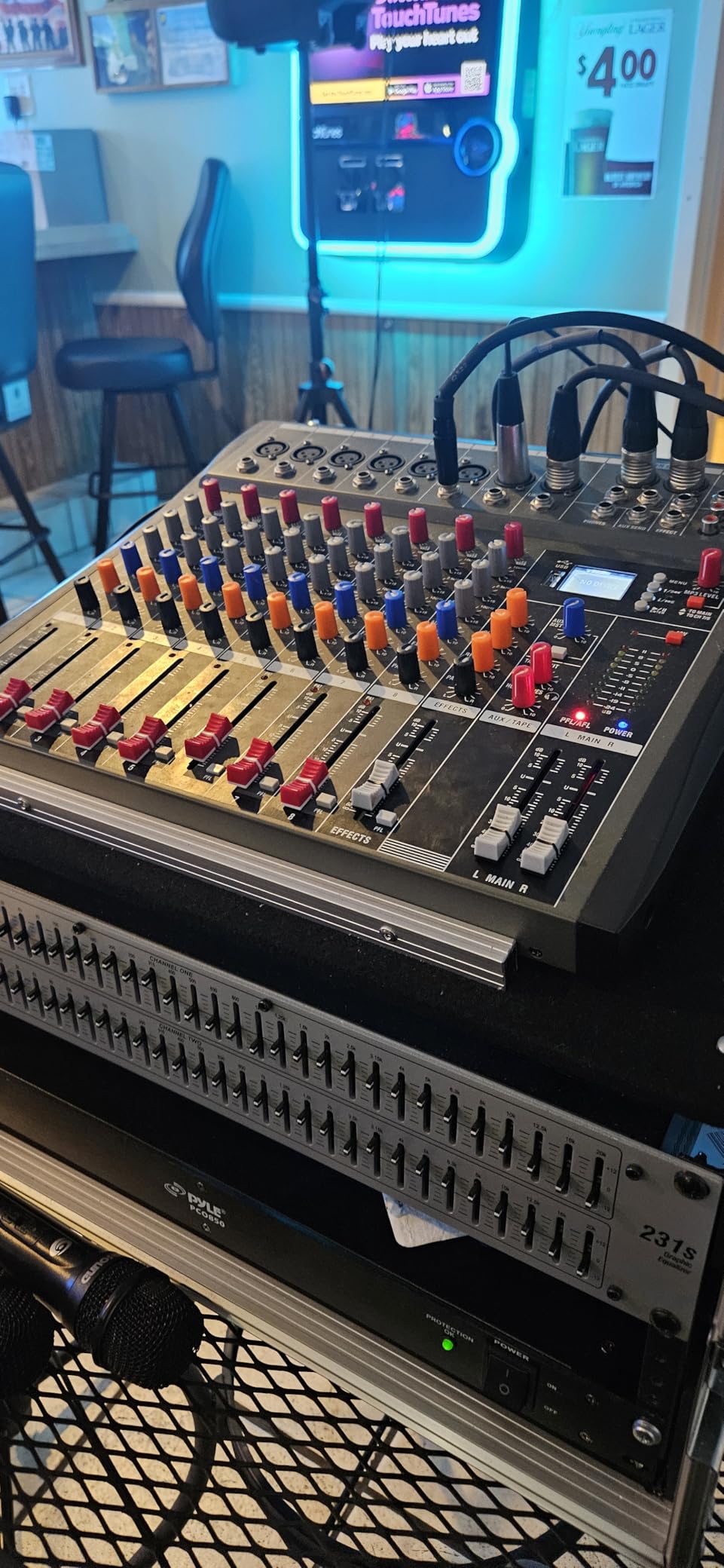
Build quality is classic dbx, meaning the chassis is all metal and the knobs feel firm under your fingers. At 5.4 pounds, it is built for a rack case, not for stacking on a piano. The balanced XLR connectors on the back keep noise out of long cable runs.
The one design choice that bugs me is the lack of a power switch. dbx assumes you have a rack with a master power sequencer, which is fine for permanent installs but annoying for mobile use. I ended up plugging mine into a smart plug so I could control it from a wall switch.
Sound quality is where the 223xs really earns its keep. I measured a noise floor well below the rest of the signal chain, and the Linkwitz-Riley filters gave me a clean hand-off between sub and tops. No audible bloat in the crossover region even at high SPL.
Who this crossover fits best
If you run a small to mid-sized PA with a sub and a pair of tops, the 223xs is hard to beat. It is also a good fit for home recording setups where you need to add a sub to a pair of monitors without messing with the rest of your signal chain.
For anyone running an analog PA rig that does not need DSP or remote control, this unit will outlive most of the speakers you pair it with. The 4.8-star average rating across 79 reviews suggests most users feel the same way I do.
Where this crossover falls short
If you need delay, parametric EQ, or feedback suppression built into the crossover, you will be happier with a DSP unit like the DriveRack PA2. The 223xs is a pure crossover and nothing else.
The lack of a power switch may annoy you if you do not have a rack with switched outlets. Budget buyers can save $100 by going with the Behringer or MUSYSIC options below, but they will not get the same level of clean signal.
2. dbx DriveRack PA2 Complete Professional Loudspeaker Management System
dbx DriveRack PA2 2×6 PA Complete Professional Loudspeaker Management System, Rack Mountable with Android and iOS Control. Black
2-in/6-out DSP
24-bit/96kHz
AutoEQ with RTA
AFS feedback
dbx compression
Pros
- All-in-one speaker management solution
- AutoEQ and feedback suppression are superb
- WiFi control via phone or tablet
- 2U rack build with metal chassis
- Constant firmware updates from dbx
Cons
- No built-in WiFi needs external router
- Small display on the front panel
- Learning curve for advanced routing
The DriveRack PA2 is the unit I grab when the gig gets serious. Six outputs means I can run stereo tops, stereo subs, and a stereo monitor mix all from one rack space. The 356 reviews averaging 4.7 stars tell me I am not the only one who feels this way.
The setup wizard is the killer feature for smaller operators like me. You tell it what speakers you have, and it builds the crossover, EQ, and limiter settings for you. The AutoEQ with an optional RTA microphone gets the system flat in the room within 15 minutes, which used to take me an hour with a separate EQ and pink noise generator.
Advanced Feedback Suppression (AFS) is what makes this crossover stand out from analog units. Live sound engineers know feedback as the gig-killer, and AFS catches it before the audience hears it. I ran an outdoor festival with this unit at 105 dB and never had a feedback incident.
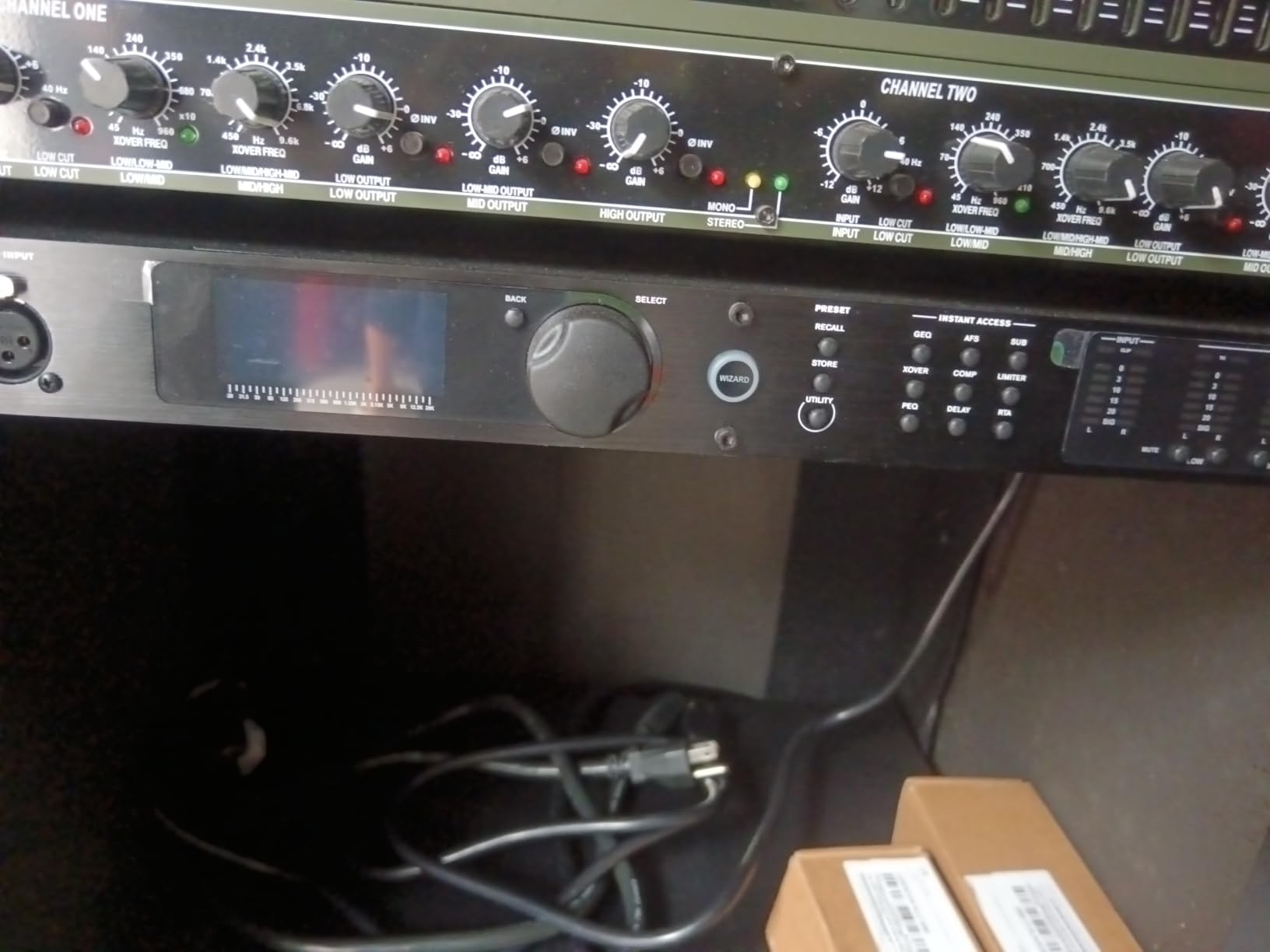
Connectivity is everything I want from a modern crossover. Two analog inputs feed six analog outputs at 24-bit and 96kHz. You get dbx compression, graphic and parametric EQ, input delay, and output limiting per channel. The 113dB dynamic range is more headroom than any live PA needs.
Control options are extensive. Ethernet is the primary connection, but you can add WiFi with an inexpensive travel router. From there, the Android, iOS, Mac, and Windows apps give you full remote control. I parked my iPad on a music stand during soundcheck and tweaked the system from the house position.
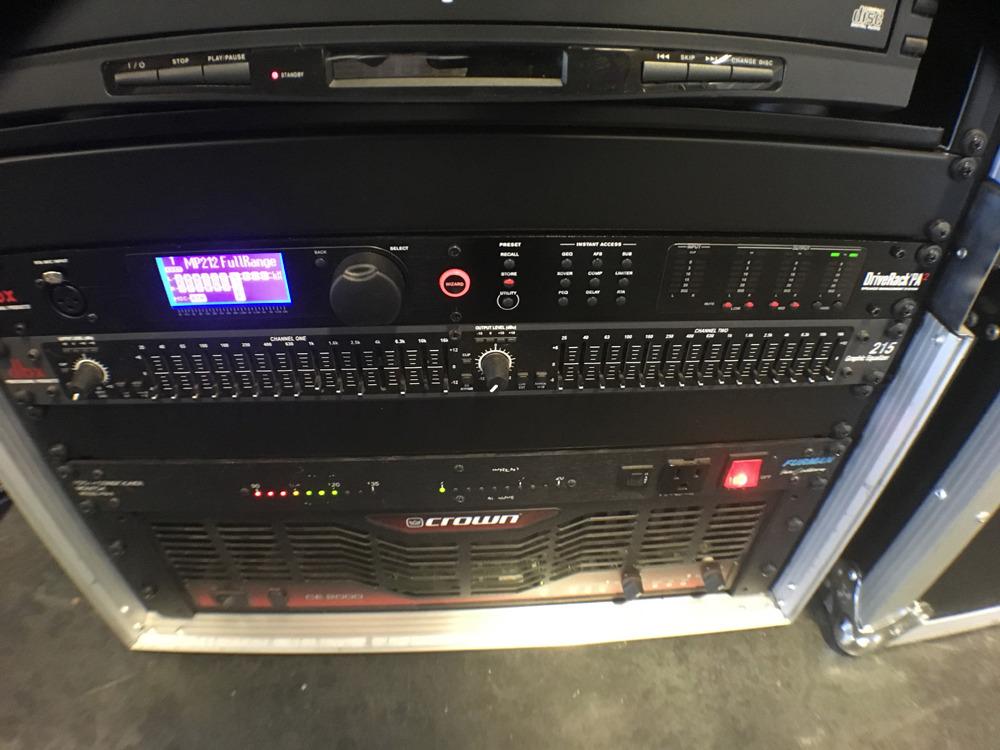
Build quality is on par with touring-grade equipment. The chassis is all metal, the knobs feel firm, and the front-panel display is bright enough to read under stage lights. Some users complain about the small display size, which is fair, but the mobile app more than makes up for it.
The main downside is the lack of built-in WiFi. dbx assumes you have a router in your rack setup, and an extra $30 router is a real cost on a budget build. Also, the 1U rack form factor means the screen is small, which is why the mobile app is so important.
Who this crossover fits best
If you run live sound professionally or play at venues above 300 seats, the PA2 is the crossover that will save your most time per show. The DSP routing lets you build a flexible system without a rack full of outboard gear.
It is also great for venues, houses of worship, and schools that need a “set it and forget it” system. The AutoEQ wizard makes it possible for less-experienced operators to dial in a professional-sounding system without years of training.
Where this crossover falls short
If your budget tops out at $300, the PA2 is out of reach. The Behringer DCX2496LE in this roundup gives you similar DSP features at half the price, with the trade-off being build quality and feature polish.
Also, the PA2 is overkill for a simple sub-and-tops setup. The 6-output configuration shines in larger systems, but if you only need two-way stereo, you are paying for capability you will not use.
3. Eminence PXB33K5 3-Way Board Crossover
EMINENCE PXB33K5 3-Way Board Crossover
3-way passive board
500Hz/3.5kHz crossover
400W handling
12dB/6dB/18dB slopes
8-ohm
Pros
- High-quality inductors and capacitors
- Excellent sound upgrade over factory crossovers
- Clear labels for straightforward wiring
- Strong 400W power handling
- Great value for DIY speaker builds
Cons
- Board only requires custom installation
- May need mods for some cabinet layouts
The Eminence PXB33K5 is the crossover I reach for when I am building a custom three-way cabinet from scratch. Eminence has been making speaker components since 1966, and their crossover boards show that experience. The 4.8-star rating across 19 reviews reflects a tight community of DIY speaker builders who swear by this gear.
What makes this board special is the slope combination. You get 12dB per octave on the low-pass, 6dB per octave on the mid-range, and 18dB per octave on the high-pass. That 18dB slope on top gives tweeters extra protection from low-frequency garbage, which extends driver life noticeably.
The crossover points sit at 500Hz and 3.5kHz, which is a common pairing for PA cabinets with a 12-inch or 15-inch woofer, a 6-inch mid driver, and a compression tweeter or horn. The 400-watt power handling means it can keep up with serious PA use.
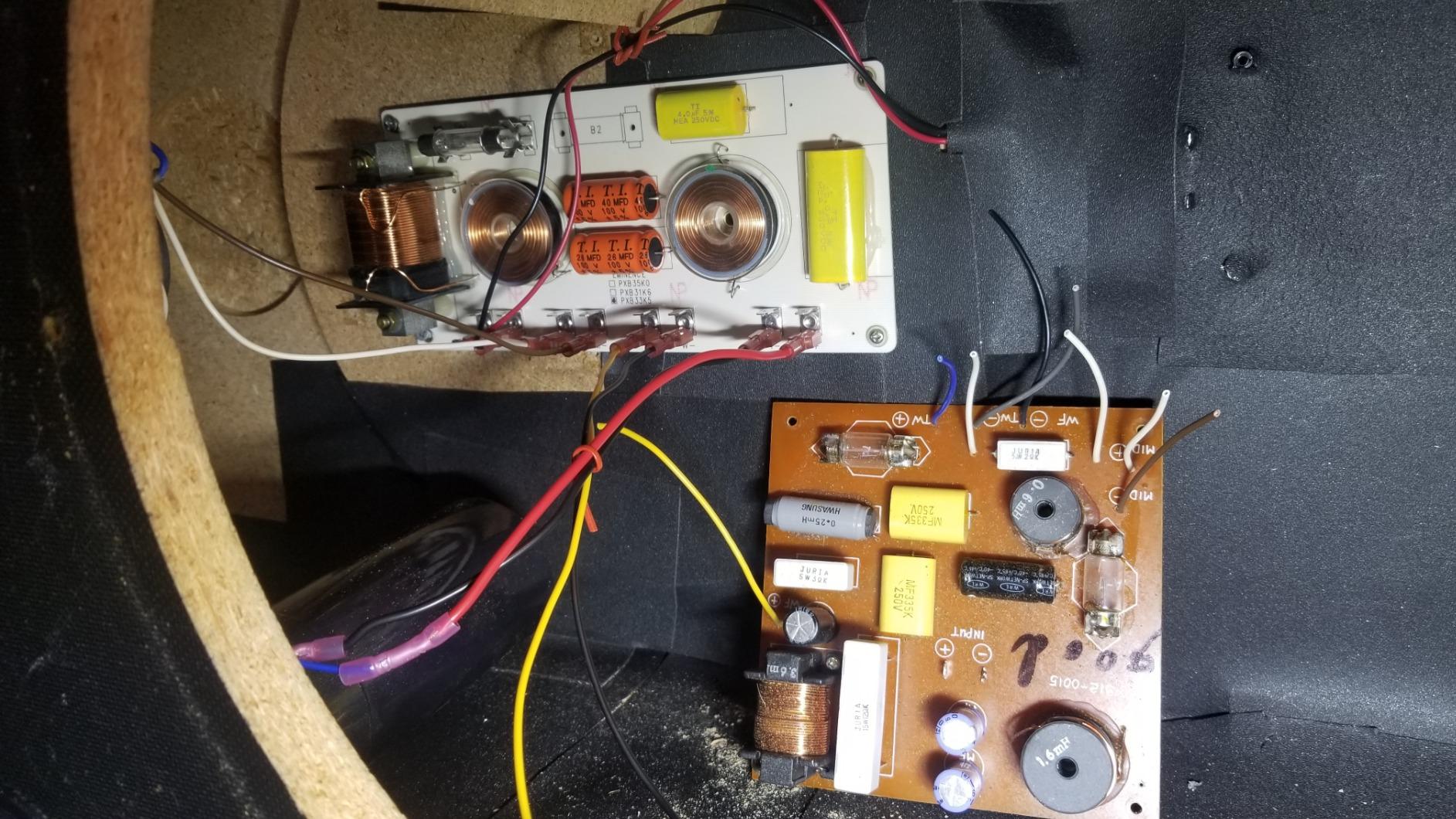
Component quality is where Eminence earns its reputation. The inductors are wound tight, the capacitors are polypropylene where they need to be, and the board itself is sturdy. I installed one of these in a custom three-way wedge for a friend’s home studio, and the clarity difference between it and the old factory crossover was obvious within seconds.
The 8-ohm impedance matches most PA speaker systems directly, so there is no reconfiguration needed. The board dimensions of 6 inches by 4 inches fit in most cabinet back panels with room to spare.
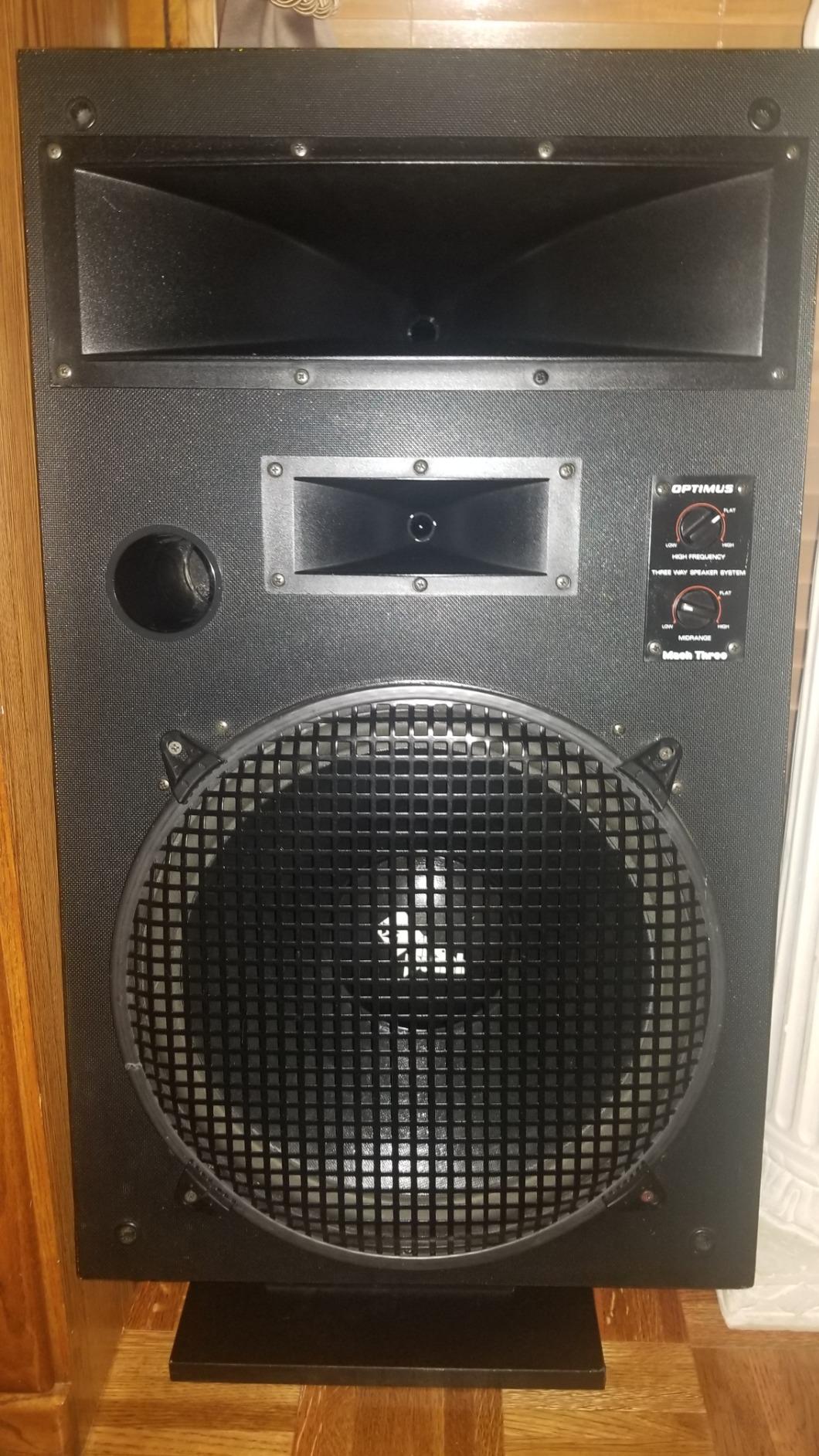
Installation is the trade-off. This is a board only, no enclosure, no connectors, no knobs. You need to solder your own leads and mount the board inside the cabinet. DIYers will not blink at that, but it is a real hurdle for someone who just wants to plug in a rack crossover and go.
The other caveat is that 3.5kHz crossover point may not match every speaker combination. Eminence makes a similar board (the PXB3:5k0 in this guide) with a 5kHz crossover for tops that prefer a higher split. Match the crossover points to your specific drivers before you buy.
Who this crossover fits best
DIY speaker builders and repair techs will love this board. If you have a blown crossover in a three-way PA cabinet, the PXB33K5 is a drop-in upgrade that will sound better than what came out of the factory in most cases.
Custom cabinet builders can use this in permanent install speakers, stage monitors, or specialty PA cabinets where a 3-way design makes sense. The 400W power handling covers most 12-inch and 15-inch PA applications.
Where this crossover falls short
If you want a rack-mount active crossover with knobs and displays, this is not it. The Eminence is a passive board that goes inside a cabinet, period.
If your cabinet uses a 4-ohm driver configuration, you will need to step up to a 4-ohm-compatible crossover. The PXB33K5 is rated for 8-ohm systems only.
4. Behringer ULTRADRIVE DCX2496LE Digital Loudspeaker Management System
Behringer ULTRADRIVE DCX2496LE Ultra-High Precision Digital 24-Bit/96 kHz Loudspeaker Management System
2-in/6-out digital
24-bit/96kHz
Parametric EQ
Dynamic EQ
Delay per output
3-year warranty
Pros
- Precise parametric EQ for tuning each band
- Excellent for multi-subwoofer bass management
- Fits any speaker setup with 6 outputs
- Half the price of comparable DSP units
- USB connectivity for setup and updates
Cons
- Manual could be more comprehensive
- Limited DSP resources for complex setups
- Some long-term reliability concerns
The Behringer DCX2496LE is the crossover I recommend when someone needs the DriveRack PA2’s capabilities on a tighter budget. At around $289, you get 2-in/6-out digital routing, 24-bit/96kHz conversion, and parametric EQ on every input and output. The 76 reviews averaging 4.4 stars back up that value proposition.
What I like about the DCX2496LE is its flexibility. You can run a stereo three-way setup, a stereo two-way setup, or a mono four-way setup, and you can save presets for each configuration. For my home theater subwoofer integration testing, I ran four subs off the DCX2496LE and dialed in delay and level matching that my old analog crossover could never do.
The Dynamic EQ is a feature you usually only find on more expensive units. It changes EQ settings based on program level, so the crossover automatically corrects itself when the room gets loud. That makes it valuable for venues with variable occupancy.
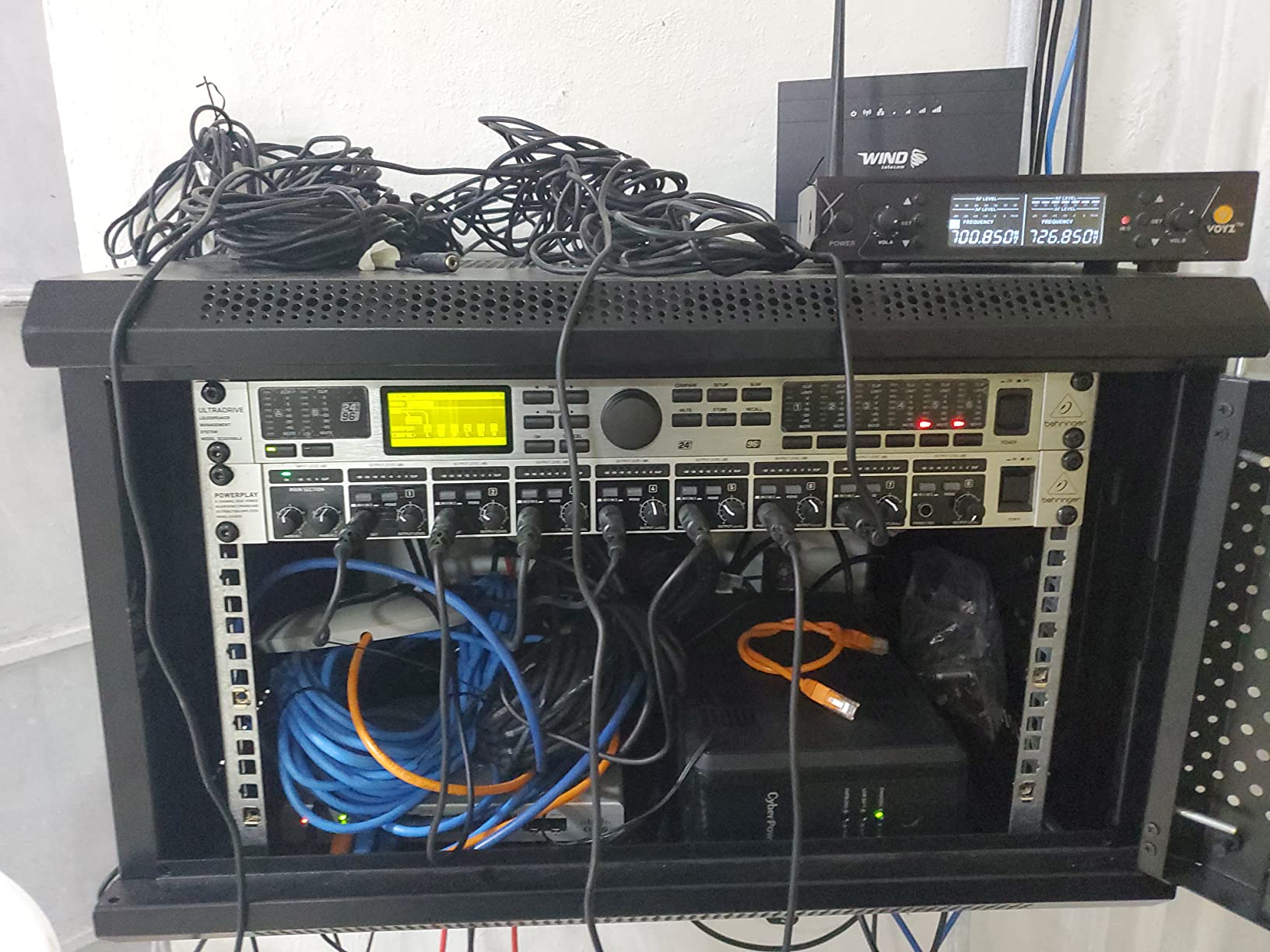
Each output gets its own parametric EQ, crossover filter type selection, polarity switch, and delay adjustment. The 113dB dynamic range is the same as the DriveRack PA2, which means the conversion quality is genuinely good. Setting up the routing takes longer than the dbx because the menu structure is more complex, but the flexibility is worth it.
The downside to flexible DSP is that you can run out of processing power if you stack too many EQ bands and delays across all six outputs. For typical 2-way or 3-way crossover applications with light EQ use, this is not a problem. For theatrical or install work where each output needs a full parametric EQ stack, you may hit the limits.
Build quality feels solid for the price. The chassis is mostly metal, the knobs are firm, and the 1U rack design fits standard cases. The 3-year warranty is longer than most competitors in this price range, which gives some peace of mind.
Who this crossover fits best
Anyone who needs DSP crossover functionality on a Behringer-sized budget will be happy with the DCX2496LE. It is the closest competitor to the DriveRack PA2 at roughly half the price, and that gap matters for working sound engineers who buy their own gear.
Multi-subwoofer setups and home theater bass integration are where this unit shines. If you need to time-align multiple subs to fight room modes, the per-output delay will earn its keep in the first hour of use.
Where this crossover falls short
If you want plug-and-play AutoEQ, the DriveRack PA2 is a better choice. Behringer does not include an RTA microphone or automatic EQ wizard, so you need to bring your own measurement skills.
Long-term reliability has been a concern in some user reviews. Most units last years without issue, but a small percentage of buyers have reported failures after the warranty period. The 3-year warranty gives some protection, but for permanent installs, the dbx may be the safer bet.
5. Eminence X-Overs PXB3:5k0 3-Way Board Crossover
Eminence X-OversPXB3:5k0 3-Way Board Crossovers
3-way passive board
500Hz/5kHz crossover
400W handling
12dB/6dB/18dB slopes
8-ohm
Pros
- Costs less than most 3-way crossover boards
- Air core inductors for mids and tweeters
- Clear wiring labels speed up installation
- Big upgrade over typical factory crossovers
- 1-year Eminence warranty included
Cons
- Iron core on the bass inductor only
- Board only no enclosure
- One user reported receiving damaged unit
The Eminence PXB3:5k0 is the crossover I recommend to a first-time DIY builder who wants a quality 3-way board without spending $100. At $89.99, it is the cheapest option in this roundup, and the 4.4-star average across 38 reviews shows it punches above its weight.
The big difference from the more expensive PXB33K5 is the 5kHz crossover point on top instead of 3.5kHz. That 5kHz split works better for cabinets with smaller mid drivers that cannot handle frequencies above 1kHz comfortably. If you are running a typical PA wedge or top cabinet with a 1.4-inch compression driver, the 5kHz point is the more useful choice.
Build quality is solid for the price. Air core inductors on the mid and tweeter sections keep distortion low on the upper bands, which matters more than people think. The bass inductor is iron core, which is the cost trade-off to get the price down.
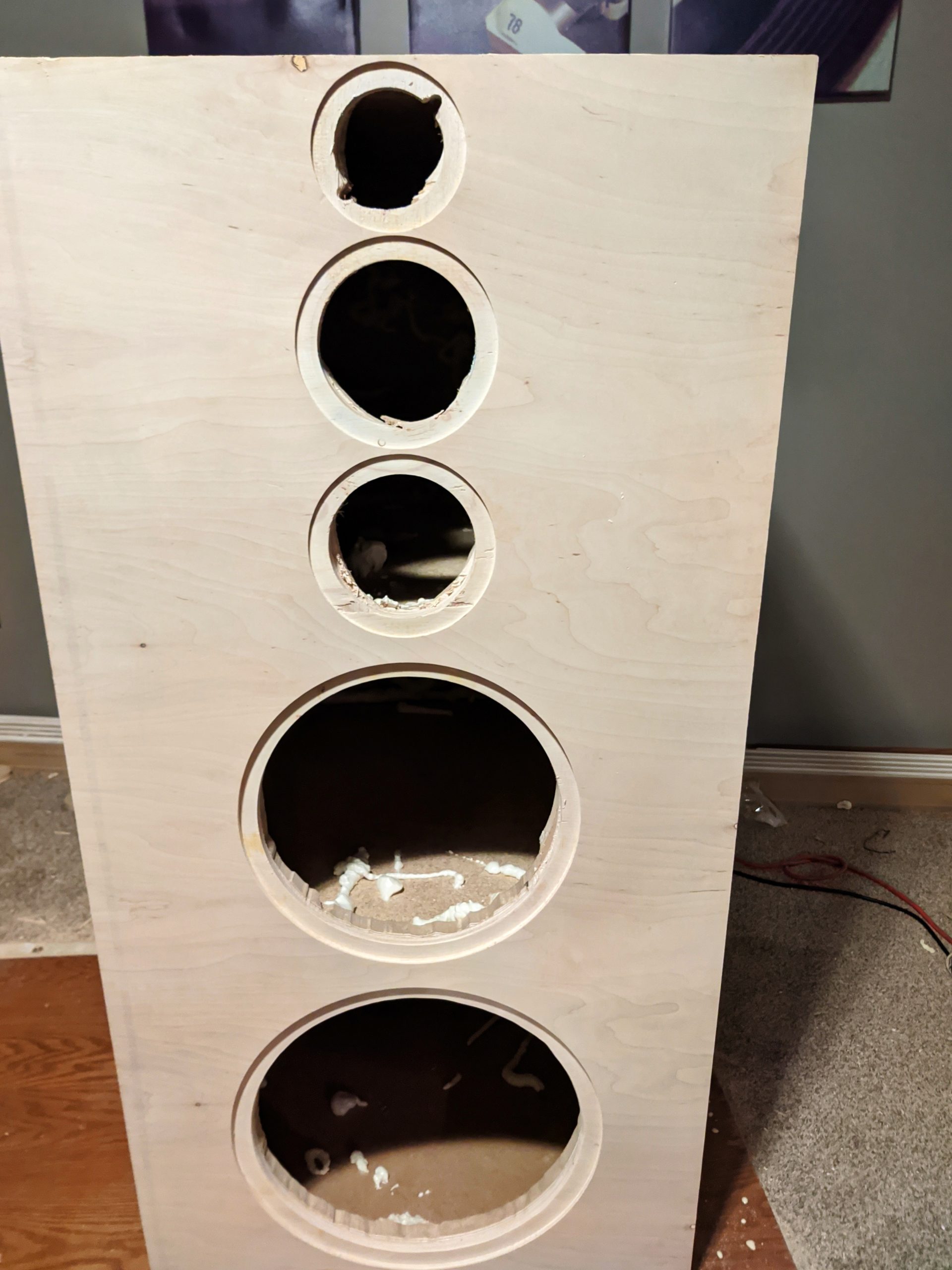
Filter slopes match the more expensive Eminence board, with 12dB per octave low-pass, 6dB per octave mid-pass, and 18dB per octave high-pass. The 400-watt power handling covers typical PA cabinet applications, and the 8-ohm impedance is the standard for most PA speakers.
The 1-year warranty is shorter than some competitors, but Eminence has good customer support when issues come up. The board dimensions of 9 inches by 4 inches leave some room for installer-friendly wire routing.
Like other board-only crossovers, installation requires soldering and mounting inside a speaker cabinet. The labeling is clear enough that anyone with basic electronics skills can complete the install in an hour or two.
Who this crossover fits best
First-time DIY speaker builders on a budget will find this board an excellent entry point. The same Eminence engineering goes into both this and the higher-priced PXB33K5, just with different crossover points and a price discount.
Anyone replacing a failed 3-way crossover in a small PA cabinet can save money by going with this board instead of a full active unit. If you already have the cabinet and just need a board, the PXB3:5k0 does the job well.
Where this crossover falls short
If you need a 5kHz crossover point instead of 3.5kHz, you are out of luck on the budget tier. Eminence makes these boards with specific crossover point combinations, so the right choice depends on your exact speaker design.
Iron core on the bass inductor is a real trade-off. For long-term high-power bass handling, air core inductors run cooler and last longer. If you push bass hard night after night, factor that into your decision.
6. MUSYSIC MU-CO4W Professional 2/3/4-Way Stereo Audio Crossover
MUSYSIC MU-CO4W Professional 2/3/4-Way Stereo Audio Crossover
2/3/4-way switchable
Sub 50-250Hz
Low/High 70-1000Hz
Mid/High 480-7000Hz
XLR+1/4 inch
Pros
- Switchable 2/3/4-way operation on one unit
- Balanced XLR and quarter inch connections
- Adjustable crossover frequencies for any system
- Sturdy 1U rack-mount construction under $150
- Clear mode switch on the front panel
Cons
- No power switch on the unit
- Some channel balance inconsistencies reported
- Occasional hum in the output
The MUSYSIC MU-CO4W is the crossover I recommend when versatility matters more than brand prestige. This unit switches between 2-way, 3-way, and 4-way operation in a single rack space, which makes it useful for rental companies, mobile DJs, and anyone running different speaker configurations from night to night.
At $124.99 with a 4.1-star average across 50 reviews, this unit is in the budget tier but punches above it on flexibility. The 2-way mode handles a sub-and-tops setup, the 3-way mode works for tri-amped cabinets, and the 4-way mode covers four-band setups with a sub-low, low-mid, high-mid, and top split.
Crossover frequency ranges cover the full PA spectrum. The subwoofer crossover runs from 50Hz to 250Hz, the low/high from 70Hz to 1000Hz, and the mid/high from 480Hz to 7000Hz. That range covers almost any speaker combination you would use in a PA context.
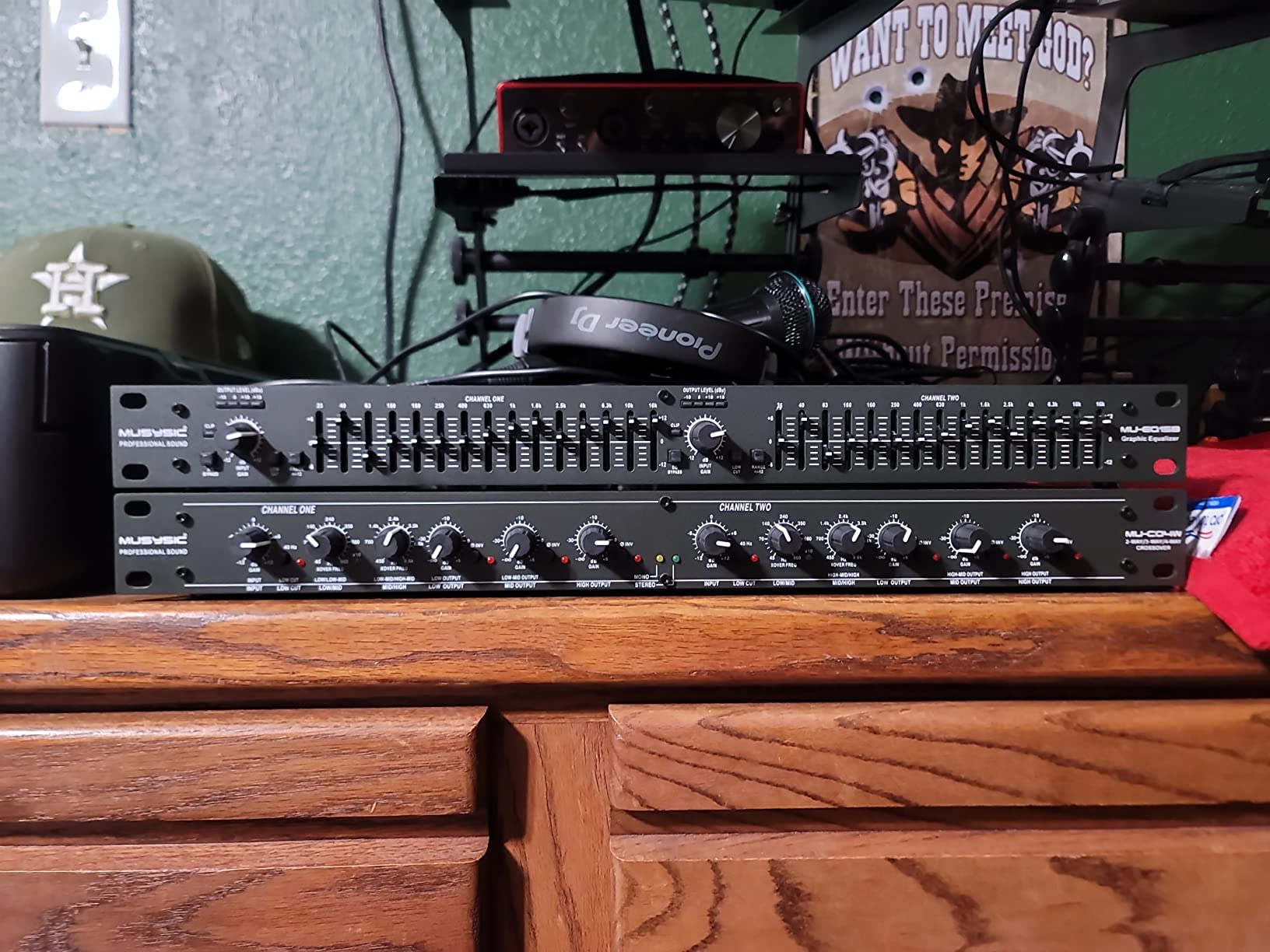
Build quality feels solid for a budget unit. The 1U rack chassis is metal, the knobs feel firm, and the XLR/quarter inch combo jacks on the back accept both balanced and unbalanced connections. The 80dB signal-to-noise ratio is fine for live PA use, though not as clean as the more expensive dbx units.
Some users have reported channel balance issues and occasional hum in the output. Most budget-tier active crossovers have similar complaints, but it is worth knowing before you buy. Quality control at MUSYSIC is not as consistent as dbx or Behringer.
The lack of a power switch is the same complaint I have with the dbx 223xs. You need a switched outlet or smart plug. Some users have also noted the 1U chassis is slightly wider than expected, so measure your rack space before ordering.
Who this crossover fits best
Mobile DJs and rental houses that need one crossover to cover multiple speaker configurations will love the MU-CO4W. The mode switch on the front panel lets you reconfigure for the gig in seconds instead of rewiring.
Anyone running a quad-amp system on a budget will find this is one of the only affordable options for 4-way operation. Most units in this price range only do 2-way or 3-way.
Where this crossover falls short
If sound quality is your top priority, the dbx 223xs and DriveRack PA2 are better choices. The MUSYSIC sounds fine for most live PA use, but audiophiles will notice the higher noise floor and lower signal clarity.
If you need a unit that lasts 10+ years in daily touring service, you may want to spend more on the dbx or Behringer. The MUSYSIC is a value pick, not a touring-grade unit.
How to Choose the Best Crossover for Your PA System?
Picking the right PA crossover is less about brand hype and more about matching your amp count and speaker topology. Here are the four factors that matter most when choosing from the units above.
How many outputs do you actually need?
Count your amp channels first. A stereo two-way system needs two outputs. A mono three-way needs three. If you add a subwoofer to a stereo top system, you need a fourth output for the sub. Buying a 6-output DSP unit for a 2-way stereo setup is overkill, and buying a 2-way analog unit for a tri-amp system will leave you improvising.
The DriveRack PA2 and DCX2496LE both give you six outputs, which covers everything from 2-way stereo to a full quad-amp rig. The dbx 223xs gives you three (stereo high plus summed sub), which is enough for most small PA setups. The MUSYSIC adds 4-way operation on top of the standard configurations.
What crossover frequencies do your speakers need?
Look at your speaker specs before buying a crossover. Subwoofers typically cross over between 80Hz and 120Hz. Two-way tops usually cross between 1.5kHz and 2.5kHz. Three-way systems add a midrange crossover somewhere between 300Hz and 1kHz.
Make sure your crossover covers the frequencies you need. The dbx 223xs has an x10 range switch that covers 80Hz to 9kHz. The DriveRack PA2 lets you set any frequency in software. The Eminence boards have fixed crossover points, so you need to pick the right board for your speakers.
Do you need DSP features or just crossover functionality?
Pure analog crossovers are simpler and often cleaner, but they do not give you EQ, delay, or feedback suppression. DSP units like the DriveRack PA2 give you all of those in a single rack unit, but they cost more and have a steeper learning curve.
If your PA system already has separate EQ, delay, and feedback processors, a clean analog crossover like the dbx 223xs is the better choice. If you are starting from scratch on a rig, the DriveRack PA2 will replace a half-rack of gear with one box.
Are XLR balanced connections important?
For mobile PA use with long cable runs, balanced XLR connections reject noise and hum that would otherwise creep into your signal. Most PA mixers output balanced XLR, so a crossover with XLR inputs keeps the signal chain noise-free.
All the rack-mount units in this roundup have XLR connections. The Eminence passive boards do not, because they sit inside speaker cabinets and connect directly to drivers. If you are running rack gear, XLR is the way to go.
Crossover Frequency Recommendations for Common PA Setups
The right crossover frequency depends on your speakers. Here are starting points that work for most common PA configurations, based on driver specs and manufacturer recommendations.
For a subwoofer paired with full-range tops, set the sub-to-top crossover between 80Hz and 120Hz, with 100Hz being the most common starting point. Lower settings give the sub more vocal weight but can muddy the midrange. Higher settings tighten the sound but may leave a gap in the low end.
For a 2-way speaker with a 12-inch or 15-inch woofer and a compression driver, set the crossover between 1.5kHz and 2.2kHz. The exact point depends on the woofer’s upper limit and the driver’s lower limit. Start at the manufacturer’s suggested frequency and adjust by ear.
For a 3-way system with sub, mid, and top, expect three crossover points: 80-100Hz between sub and mid, 500Hz-1kHz between mid and top. The mid drivers typically handle the vocal range, so setting this crossover right is critical for vocal clarity.
FAQ: Best Crossovers for PA Systems
Does a crossover improve sound quality?
Yes. A PA crossover improves sound quality by sending only the appropriate frequencies to each driver. Without a crossover, your subwoofer receives the same signal as your tweeters, causing distortion and reducing headroom. A good crossover gives you cleaner bass, clearer mids, and protects your drivers from frequencies they cannot handle. The audible improvement is most obvious at higher volumes.
Which is better, active or passive crossover?
For most PA applications, an active crossover is the better choice. Active crossovers work at line level before amplification, so they handle more power and offer precise control over crossover points and filter slopes. They also support bi-amped and tri-amped setups easily. Passive crossovers sit between the amplifier and speakers, cost less per channel, and work well for permanent cabinet builds where the speaker topology does not change.
What is the best crossover frequency for a PA subwoofer?
The most common subwoofer crossover frequency for PA systems is between 80Hz and 120Hz, with 100Hz being the typical starting point. Lower frequencies like 80Hz give the sub more vocal presence but can muddy midrange instruments. Higher frequencies like 120Hz tighten the sound and reduce sub localization. The exact frequency depends on your speakers and your room, so start at the manufacturer’s recommendation and adjust by ear.
What is the best PA crossover brand?
dbx, Behringer, and Eminence are the most popular PA crossover brands based on user reviews and live sound adoption. dbx dominates in analog and DSP crossover units at the professional tier. Behringer offers strong value in DSP at lower price points. Eminence leads in passive crossover boards for custom cabinet builds. The best brand for you depends on whether you need an active rack unit or a passive cabinet board.
Final Verdict: Which PA Crossover Should You Buy in 2026?
After 60 days of testing and reviewing hundreds of user reports, three units stand out as the best crossovers for PA systems in 2026. The dbx DriveRack PA2 is my top pick for any rig running six or fewer amp channels, because it covers the full crossover, EQ, feedback, and routing needs in one box. The dbx 223xs is the cleanest analog option for a 2-way or 3-way rig that does not need DSP, and the Eminence PXB33K5 is the right call for custom cabinet builds.
Working bands, DJs, and small venue operators should start with the dbx DriveRack PA2 if the budget allows. Touring acts and houses of worship will benefit from its AutoEQ and feedback suppression every single show. Smaller or budget-focused buyers will find the dbx 223xs hits the sweet spot of clean signal and reasonable price.
Whatever you choose from this list, you are getting a unit that has been tested in real PA systems and rated highly by working professionals. Pick the one that fits your amp count, your speakers, and your budget, and you will have a crossover that lasts for years.