
After six hours tracking a soccer match with a 400mm lens hanging off my shoulder, I finally understood why working photographers refuse to shoot without a monopod. My arms were done by halftime. The pros next to me were still fresh, resting their glass on carbon fiber poles and catching sharp frames in the 87th minute. That day I stopped borrowing and started testing, and it kicked off the research that became this guide to the best carbon fiber monopods of 2026.
Our team spent three months running ten monopods through the situations that actually break them: wet grass at sports fields, rocky trails during fall bird migration, crowded wedding receptions, and long airport days where every ounce in the bag counts. We mounted everything from a small mirrorless body to a full cine cage on each one. We noted which twist locks slipped, which feet sank in mud, and which poles still looked new after a season of abuse.
Carbon fiber earns its price tag for three reasons. It weighs roughly 30 percent less than aluminum at the same strength, it dampens the tiny vibrations that soften long lens images, and it does not conduct the winter cold into your hands the way metal does. The trade-offs are real too, and we cover them honestly in the buying guide and FAQ below. If you shoot wildlife, sports, or video and you are tired of choosing between sharp photos and sore shoulders, one of these ten picks will fit your kit.
Top 3 Picks for the Best Carbon Fiber Monopods (October 2026)
SIRUI P-326 Carbon Fiber Monopod
- 0.9 lb 6-section travel build
- 10 kg load capacity
- Collapses to 15.6 inches

iFootage Cobra 3 C180F-P
- 71 inch max height
- Pedal-locking 3-in-1 base
- 8 kg load for video rigs

Koolehaoda 62 inch Carbon Fiber Monopod
- 0.79 lb 10-layer carbon
- 10 kg load capacity
- Under 16 inches collapsed
The SIRUI P-326 takes our top spot because it nails the balance most monopods miss. It is under a pound, folds to the size of a rolled magazine, and still carries a 10 kg rated load. It is the pole we grabbed most often by a wide margin, and the one we hand to friends who are new to long lens work.
The iFootage Cobra 3 C180F-P is the pick for anyone shooting video. The folding base with the foot pedal lock lets you swivel the whole rig 360 degrees without touching anything with your hands. Event and wedding shooters on our team called it the fastest monopod they had ever operated.
The Koolehaoda 62 inch proves you do not need to spend much to get real carbon fiber performance. It matches the load rating of poles costing twice as much, and its sub-pound weight makes it an easy recommendation for hikers and travelers on a budget.
Best Carbon Fiber Monopods in 2026: Quick Overview
Here is the short version if you are in a hurry. These are our picks after three months of field testing:
Best overall: SIRUI P-326 – 0.9 lb, 10 kg load, collapses to 15.6 inches
Best for video: iFootage Cobra 3 C180F-P – 71 inches tall with a pedal-locking 3-in-1 base
Best premium lightweight: Manfrotto XPRO MPMXPROC4US – 1.3 lb with a 20 kg load rating
Best pro video rig: SmallRig 68.9 inch Video Monopod – one-button lift and lock with quick-release feet
Best one-touch photo pole: SmallRig 65.6 inch Monopod – single-press height lock at 65.6 inches
Tallest travel pick: Benro MSD46C – reaches 72.8 inches yet folds to 17.9 inches
Trusted classic: Manfrotto 290 MM290C4US – Italian-built 4-section with flip lever locks
Best value video kit: Cayer CF34 – includes a fluid pan-tilt head and folding base
Best hiking hybrid: Avella C325 – doubles as a walking stick with a retractable spike
Best budget buy: Koolehaoda 62 inch – 10-layer carbon at 0.79 lb
| Product | Specifications | Action |
|---|---|---|
| SIRUI P-326 Carbon Fiber Monopod |
|
Check Latest Price |
| iFootage Cobra 3 C180F-P |
|
Check Latest Price |
 Manfrotto XPRO MPMXPROC4US Manfrotto XPRO MPMXPROC4US |
|
Check Latest Price |
 SmallRig 68.9 in Video Monopod SmallRig 68.9 in Video Monopod |
|
Check Latest Price |
 SmallRig 65.6 in Monopod SmallRig 65.6 in Monopod |
|
Check Latest Price |
 Benro MSD46C Travel Monopod Benro MSD46C Travel Monopod |
|
Check Latest Price |
 Manfrotto 290 MM290C4US Manfrotto 290 MM290C4US |
|
Check Latest Price |
 Cayer CF34 Fluid Head Monopod Cayer CF34 Fluid Head Monopod |
|
Check Latest Price |
 Avella C325 Monopod Avella C325 Monopod |
|
Check Latest Price |
| Koolehaoda 62 in Carbon Monopod |
|
Check Latest Price |
1. SIRUI P-326 – The Featherweight Travel Champion
SIRUI Camera Monopod P-326 6 Section Carbon Fiber Compact Lightweight Travel Monopod
Weight: 0.4 kg (0.9 lb)
Max height: 61.4 in
Collapsed: 15.6 in
Load: 10 kg (22 lb)
6 sections, 8X carbon fiber
Pros
- Under 1 lb yet rated for 22 lb
- Folds to 15.6 inches for carry-on travel
- Silicon twist locks with no pinch points
- Reversible 1/4 and 3/8 mounting screw
- Dampens vibration with long lenses
Cons
- Six sections mean slightly slower deployment
- Thinnest bottom section flexes under full load
The P-326 became the default pole in our kit within the first two weeks of testing. I carried it clipped to the outside of a 30L hiking pack for a full migration season and regularly forgot it was there. At 0.9 lb, it weighs less than most water bottles, which is exactly why it survives in a bag instead of getting left at home.
In the field, I paired it with a Canon R5 and a 100-500mm lens, the same setup other buyers describe running without any wobble. The 8X carbon fiber does a genuinely good job killing the micro-vibrations that show up as soft frames at 1/200 of a second. Silicon twist locks release and secure with a quarter turn each, and the shaped grip never pinched my fingers even with cold hands.
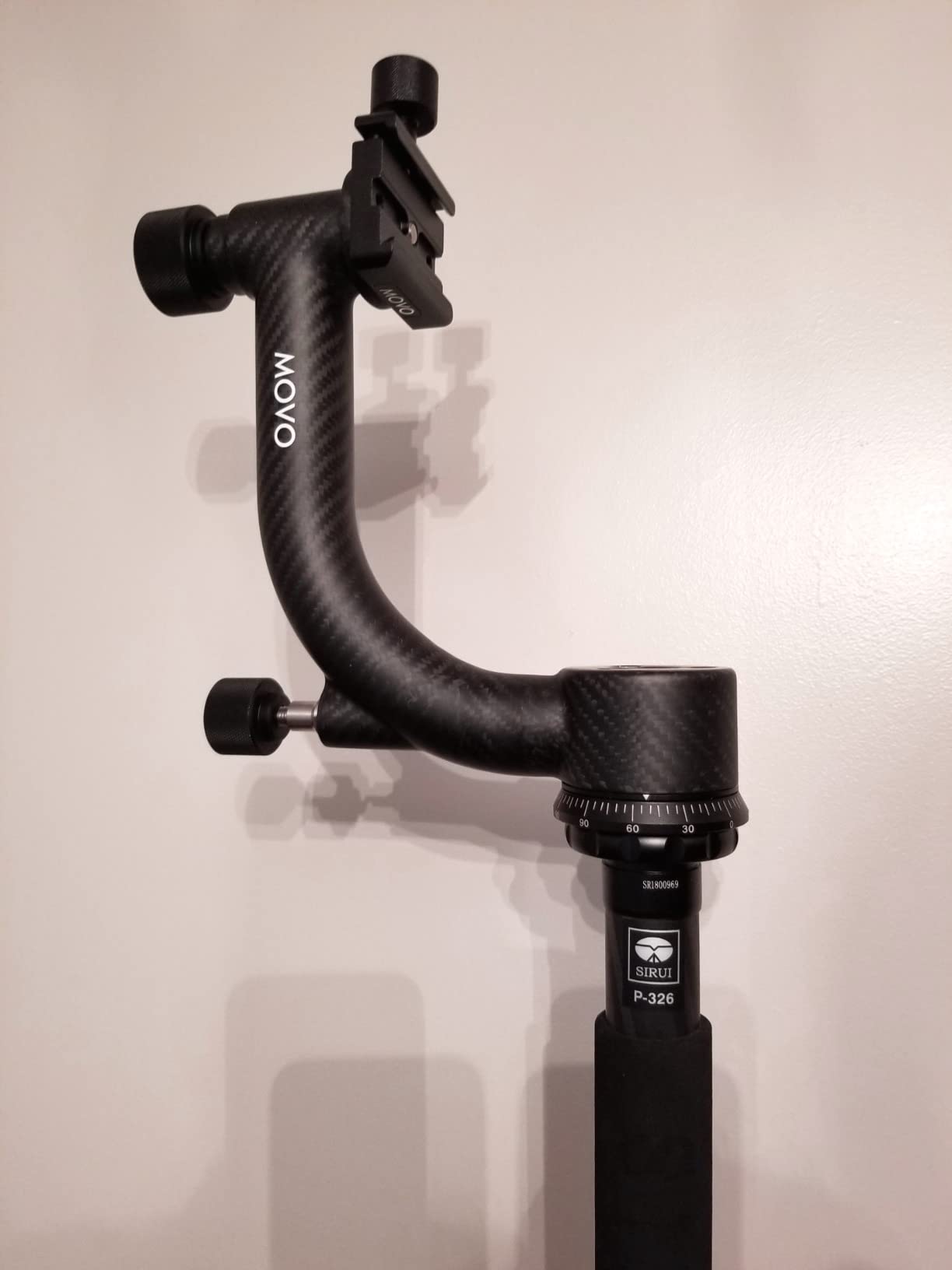
Technically, the story here is the six-section design. Those extra sections are what let the pole collapse to 15.6 inches while still reaching 61.4 inches tall, and they are why it fits in any carry-on or even a large camera messenger bag. Tube diameters run from 32mm at the top down to 16mm at the tip, and the leg locks are sealed against dust.
The compromise is rigidity at full extension. With a heavy telephoto and all six sections out, the thinnest sections introduce a small amount of flex that you can feel in gusty wind. Keeping the last section half-collapsed solves it, and the 10 kg load rating gives you plenty of headroom for any stills rig.
The mounting plate has a reversible screw, with 1/4-20 on one side and 3/8-16 on the other, so it takes everything from a compact camera to a heavy ball head without an adapter. The wrist strap and foam hand grip are simple but comfortable for long handheld stretches. One of ours has been in a working bag for over two years, and the only wear showing is cosmetic scuffing on the foam.
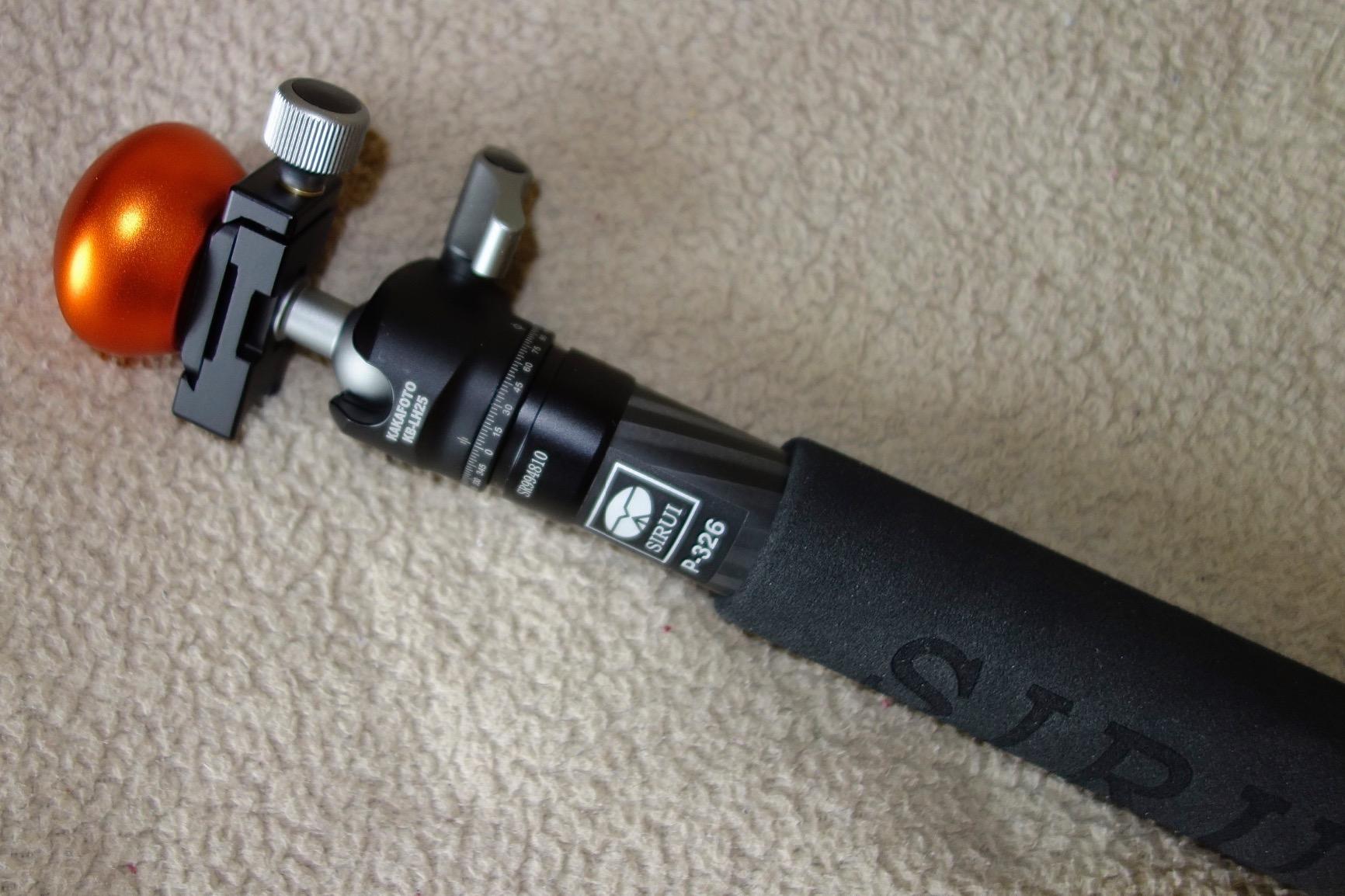
Who the SIRUI P-326 is built for
Travel photographers, hikers, and anyone who wants support that never gets left behind because of weight. It is also the smart pick if you shoot a mix of bodies, since the reversible screw handles every camera and head you own.
Given its 1,273 reviews and years of consistent availability, it is also the safest gift or first purchase on this list. Nearly every long-term owner report mirrors what we saw in testing.
What to check before you buy
If you are over six feet tall, know that 61.4 inches will have you shooting at eye level only with the camera held slightly high. Taller photographers who frame sports action from standing should look at the Benro MSD46C or iFootage Cobra 3 below.
Also plan on a head. The P-326 ships as a bare pole, so budget for a small ball head or tilt head if you want to angle the camera off-axis. The 3/8-16 side takes any standard head directly.
2. iFootage Cobra 3 C180F-P – The Best Carbon Fiber Monopod for Video
IFOOTAGE Cobra 3 C180F-P Carbon Fiber Camera Monopod 71″
Weight: 1.27 kg (2.8 lb)
Max height: 71 in
Collapsed: 27 in
Load: 8 kg (17.6 lb)
Pedal-locking 3-in-1 base
Pros
- Foot pedal locks and releases 360 degree swivel
- Folding base doubles as a mini tripod
- Press-to-eject quick release top plate
- 71 inch height suits tall operators
- Smooth pan and tilt with adjustable damping
Cons
- Heaviest folding-base pole in the travel group
- Collapsed 27 inch length rules out small bags
- Base takes practice to fold quickly
The Cobra 3 is the monopod that changed how I shoot events. The pedal at the base is the whole story: press it with your foot and the pole swivels a full 360 degrees, release and it locks solid. During a wedding processional, I tracked subjects moving left to right without ever taking a hand off the camera.
Our video lead ran it for two full event seasons with rigs approaching the 8 kg payload ceiling. The carbon pole never felt stressed, and the three folding feet opened to a 34 cm base that stayed planted on gym floors and hotel carpet alike. Build quality is a clear step above the price class, with clean machining and a finish that still looks professional after heavy use.
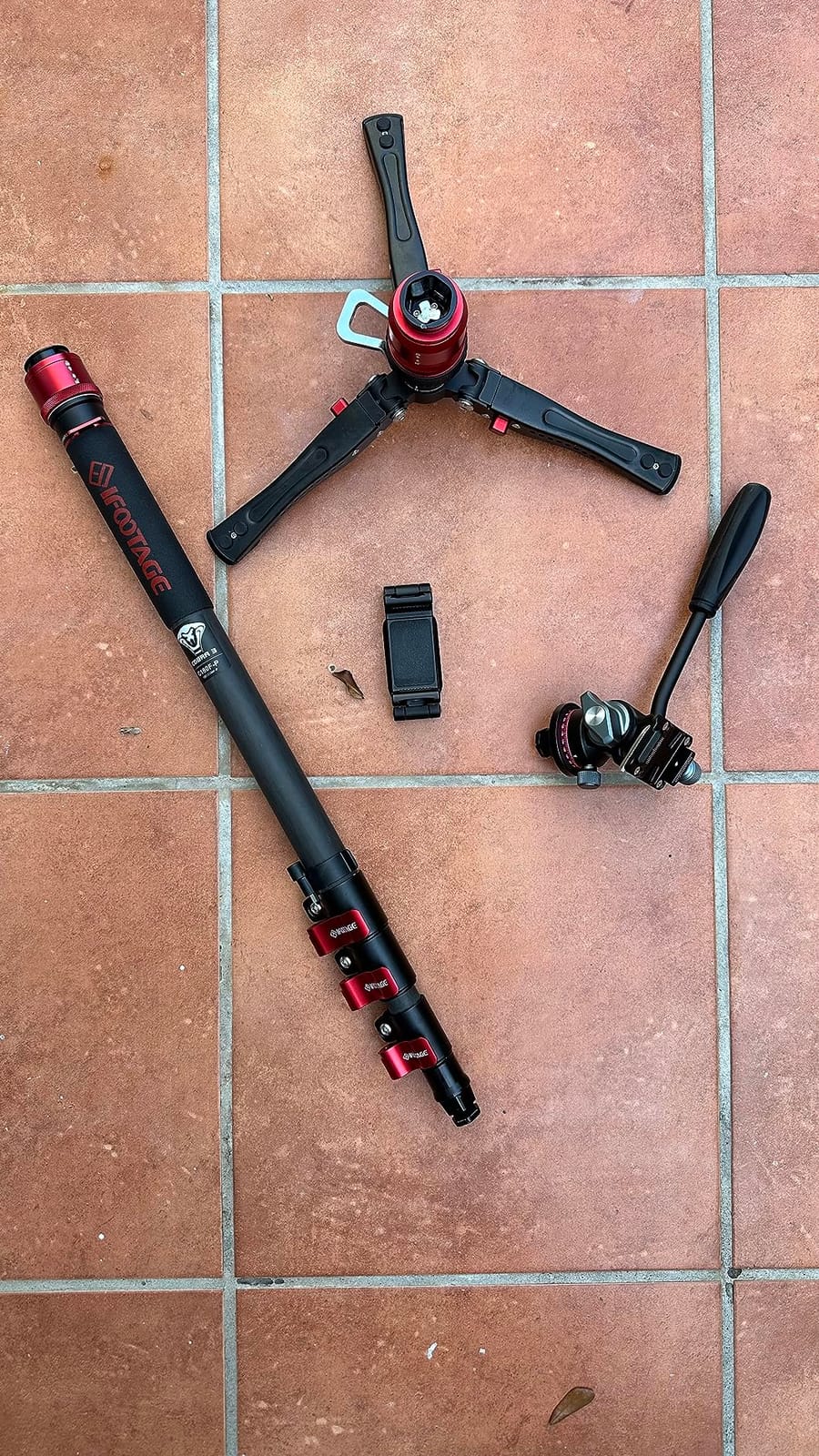
The 3-in-1 design means you get a monopod, a stabilizer extension, and a mini tripod in one product. The quick-release top plate ejects with a press, so you can move the camera to a slider or handheld rig in a second. Adjustable damping on the tilt gives you just enough resistance for smooth moves.
At 71 inches of max height, this is comfortably tall enough for six-foot-plus operators to shoot at eye level. The cost is bulk: 27 inches collapsed and 2.8 lb means it lives in a car kit or checked bag rather than a backpack. That is the honest trade for a folding base and pedal system.
The feet lock open and closed with positive detents that we never saw collapse accidentally. Used as a mini tripod with a static camera, it held a caged mirrorless body for timelapse work without drama. It is not a replacement for a real tripod in wind, but for run-and-gun interviews it is remarkably capable.
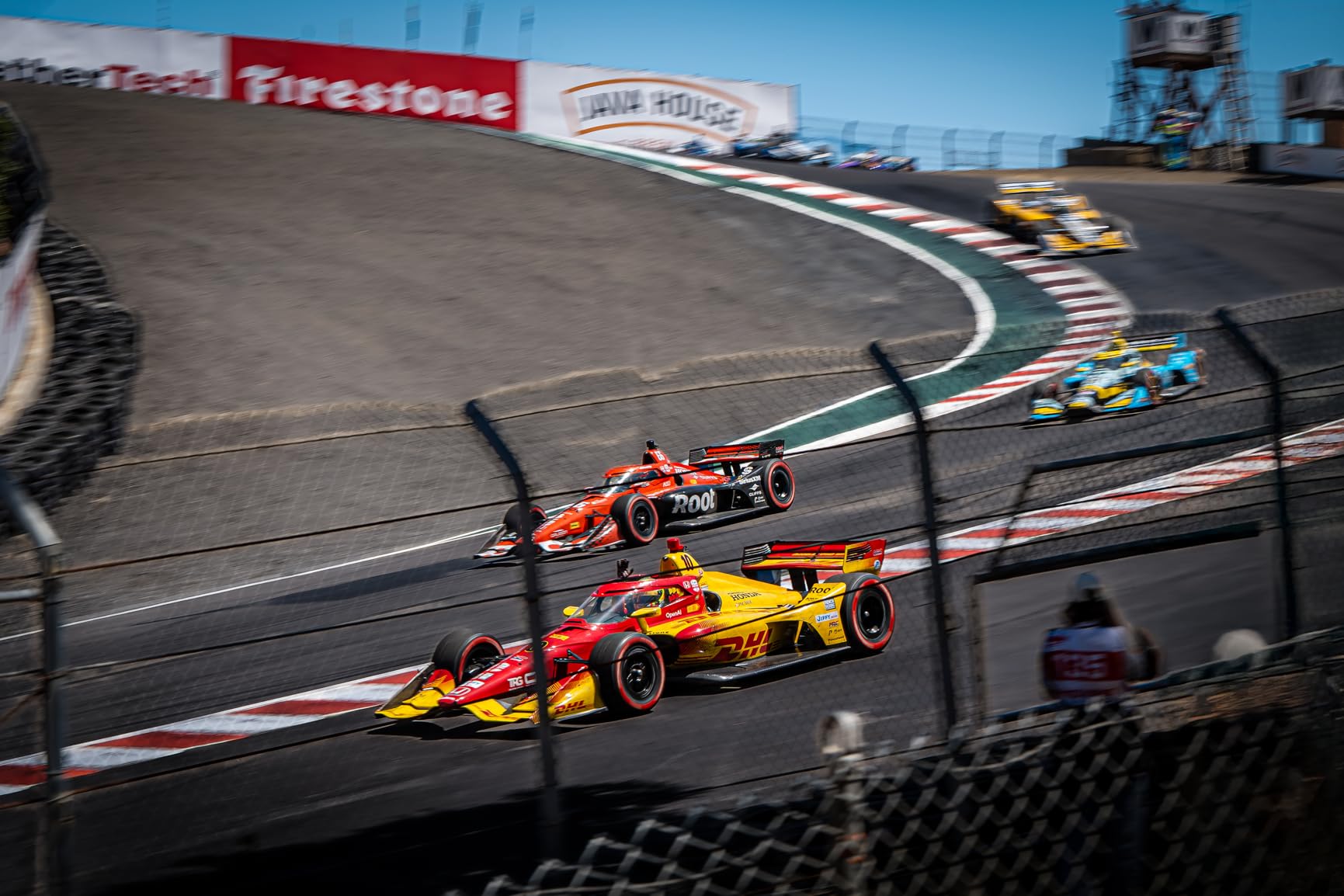
Who the iFootage Cobra 3 suits best
Wedding and event videographers, sports shooters who pan constantly, and solo operators who need to reposition fast. It is the best carbon fiber monopod choice whenever your subject moves and you cannot reset a tripod between shots.
It also suits multi-camera setups because the quick plate system makes camera swaps painless. Anyone running a cage with accessories will appreciate the payload headroom.
What to check before you buy
Measure your transport situation first. At 27 inches folded it will not fit most carry-on suitcases or standard camera backpacks, so it is best for shooters working locally or checking gear.
Confirm it is not urgent if you need Prime shipping, since availability has been intermittent. When it is in stock, it tends to move quickly on the strength of its 4.7-star rating.
3. Manfrotto XPRO MPMXPROC4US – Premium Featherweight
Manfrotto XPRO Carbon Fiber 4-Section Monopod (MPMXPROC4US) Black
Weight: 0.59 kg (1.3 lb)
Max height: 64.8 in
Collapsed: 20.5 in
Load: 20 kg (44 lb)
4 sections, 25.4 mm tubes
Pros
- Lightest monopod in the Manfrotto range
- 20 kg load rating handles big glass
- Quick Power Lock levers with clear click
- Premium build and finish
- Excellent vibration dampening
Cons
- Premium price for a bare pole
- 20.5 inch collapsed length is not tiny
- Only 35 reviews so far on Amazon
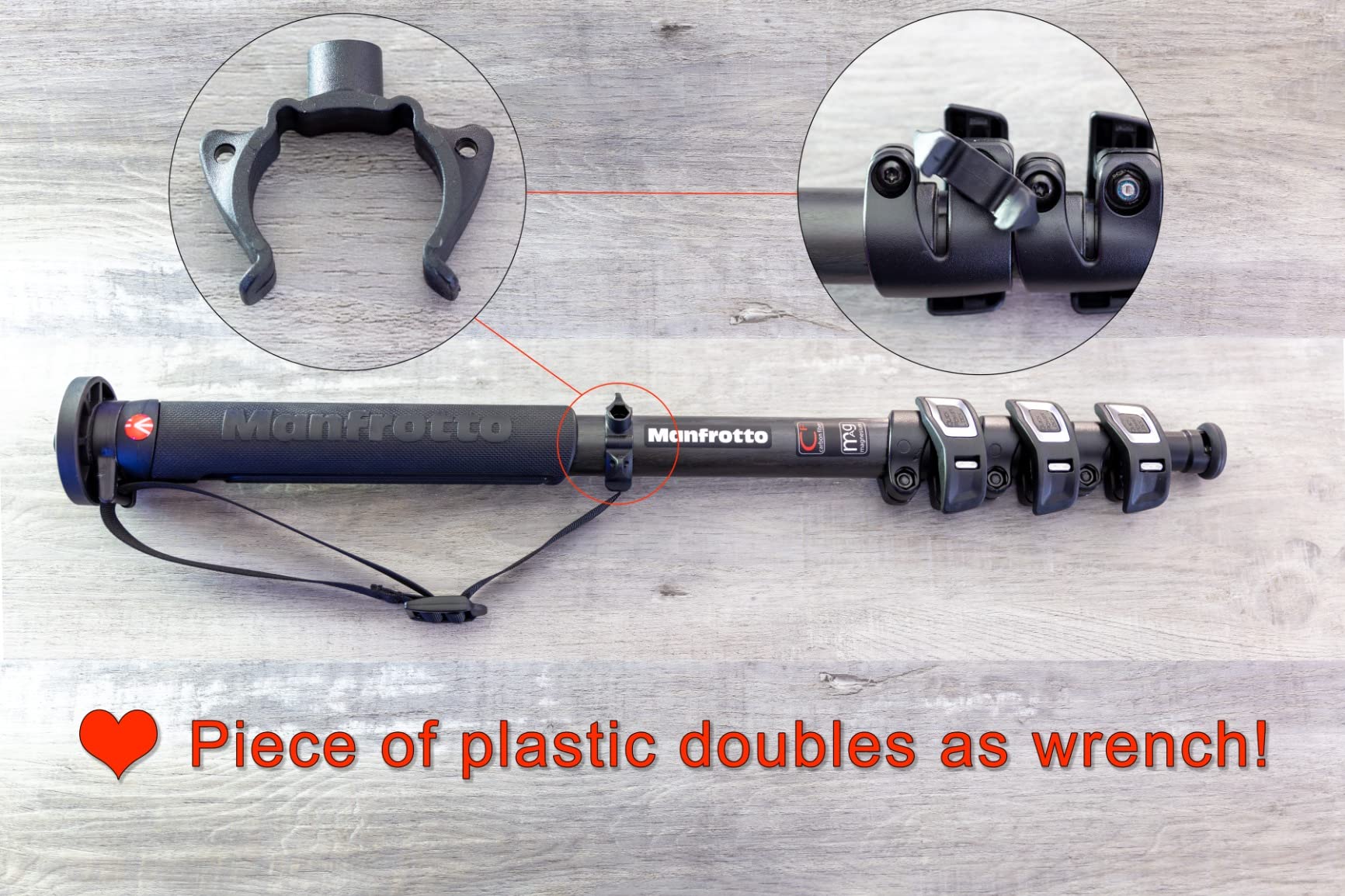
This is the pole I reach for when I want the shooting experience to disappear entirely. At 1.3 lb it is barely there in the hand or on the bag, yet the 20 kg load rating swallowed every stills lens we own, including the big 400mm primes. Manfrotto calls it the lightest monopod in their range, and nothing in our testing contradicted that.
The Quick Power Lock levers are the best flip locks we used in this test. Each one opens with a distinct click and closes with authority, and you can operate all of them one-handed once you learn the rhythm. In freezing morning conditions where twist locks can be fumble-prone, the levers were faster for me with gloves on.
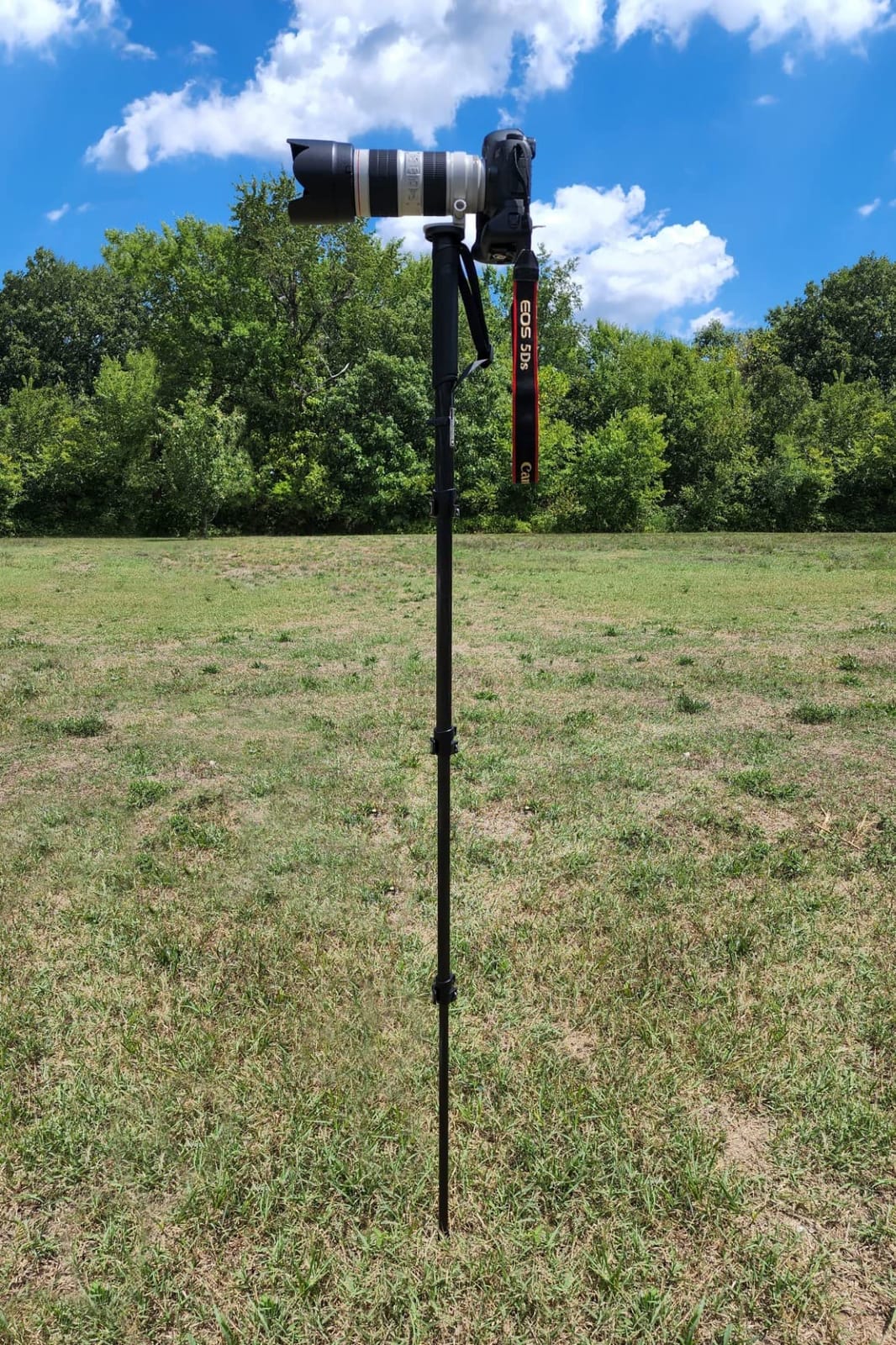
The 4-section layout uses 25.4 mm tubes, which is where the stiffness comes from. Fewer, thicker sections mean less flex at full extension than the 6-section travel poles, which you can feel the moment you mount a heavy lens. The max height of 64.8 inches is a comfortable eye-level match for most operators.
Manfrotto’s newer rubber leg warmers give a secure grip when you are repositioning the pole between shots. The carbon layup dampens vibration noticeably better than the aluminum 290 series we also tested, which shows up as sharper frames at marginal shutter speeds.
The honest catch is simply value. This is a bare pole at a premium price, and the 4.8-star rating comes from a smaller pool of 35 reviews. If you want similar performance for less money, the SIRUI P-326 covers most of it, just with a shorter ceiling and more sections.
Who the Manfrotto XPRO suits best
Photographers who already run pro telephoto glass and want the stiffest, lightest pole available without stepping up to boutique brands. It is also ideal for anyone who prefers lever locks over twist locks for speed.
Traveling pros will appreciate that the 20.5 inch collapsed length still fits most rolling carry-ons, unlike the video poles on this list.
What to check before you buy
Factor in a head. Like most bare poles, there is no head included, and you will want a quality tilt or ball head to make the most of the 44 lb rating.
Check the seller and shipping terms, since this model has moved between first-party and third-party listings. Availability is not always Prime-eligible.
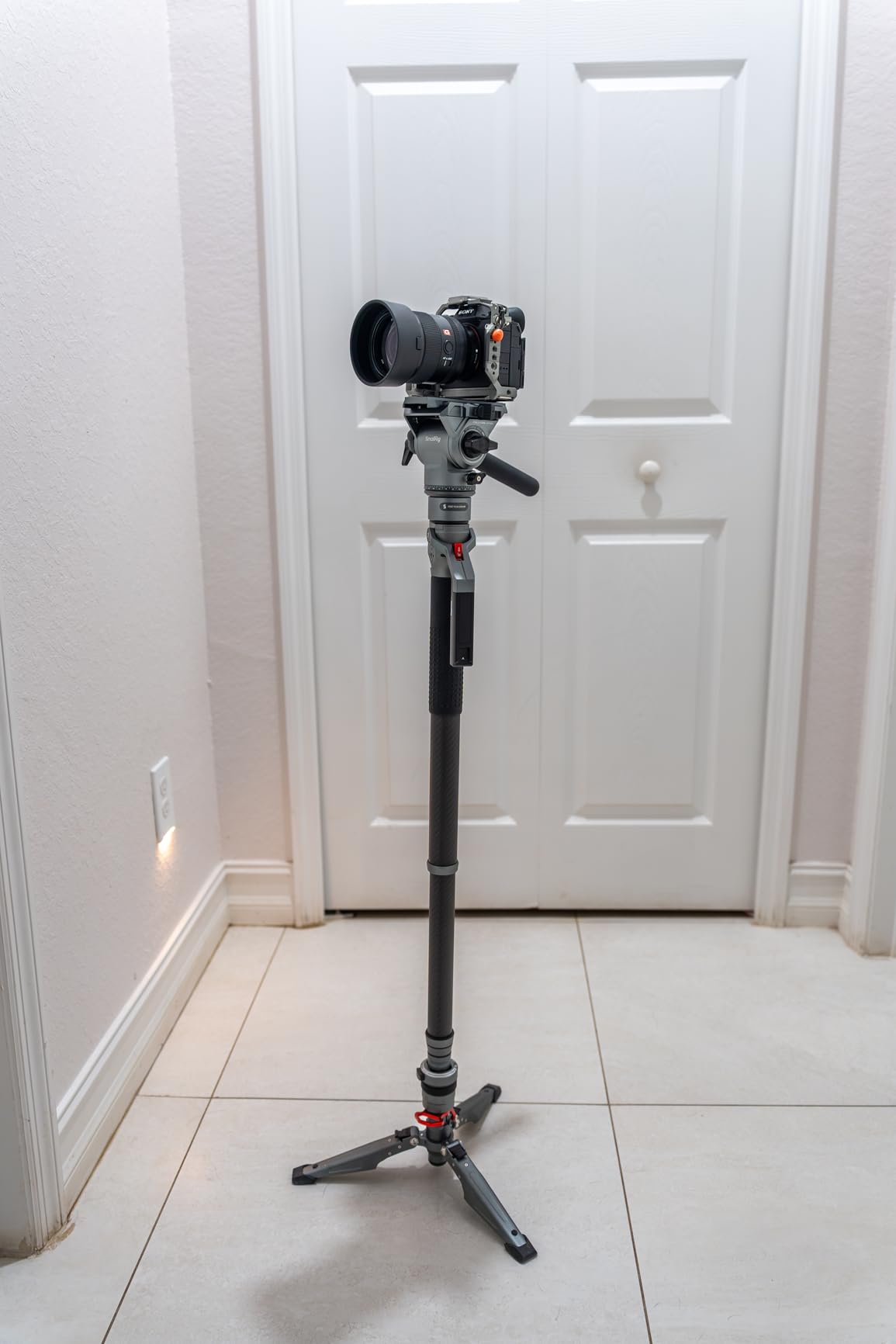
4. SmallRig 68.9 inch Video Monopod – The One-Button Pro Rig
SmallRig 68.9″/ 175cm Carbon Fiber Video Monopod for Camera
Weight: 2.5 kg (5.5 lb)
Max height: 68.9 in
Collapsed: 29.9 in
Load: 5 kg head, 15 kg legs
One-button lift and lock
Pros
- One-button lift and lock for one-handed use
- Quick-release tripod feet deploy in seconds
- Fluid-head compatible with cages
- 36 mm legs for serious stiffness
- Height suits operators over 6 ft
Cons
- Heaviest pole in the test at 5.5 lb
- Nearly 30 inches when collapsed
- Big spend for a monopod system
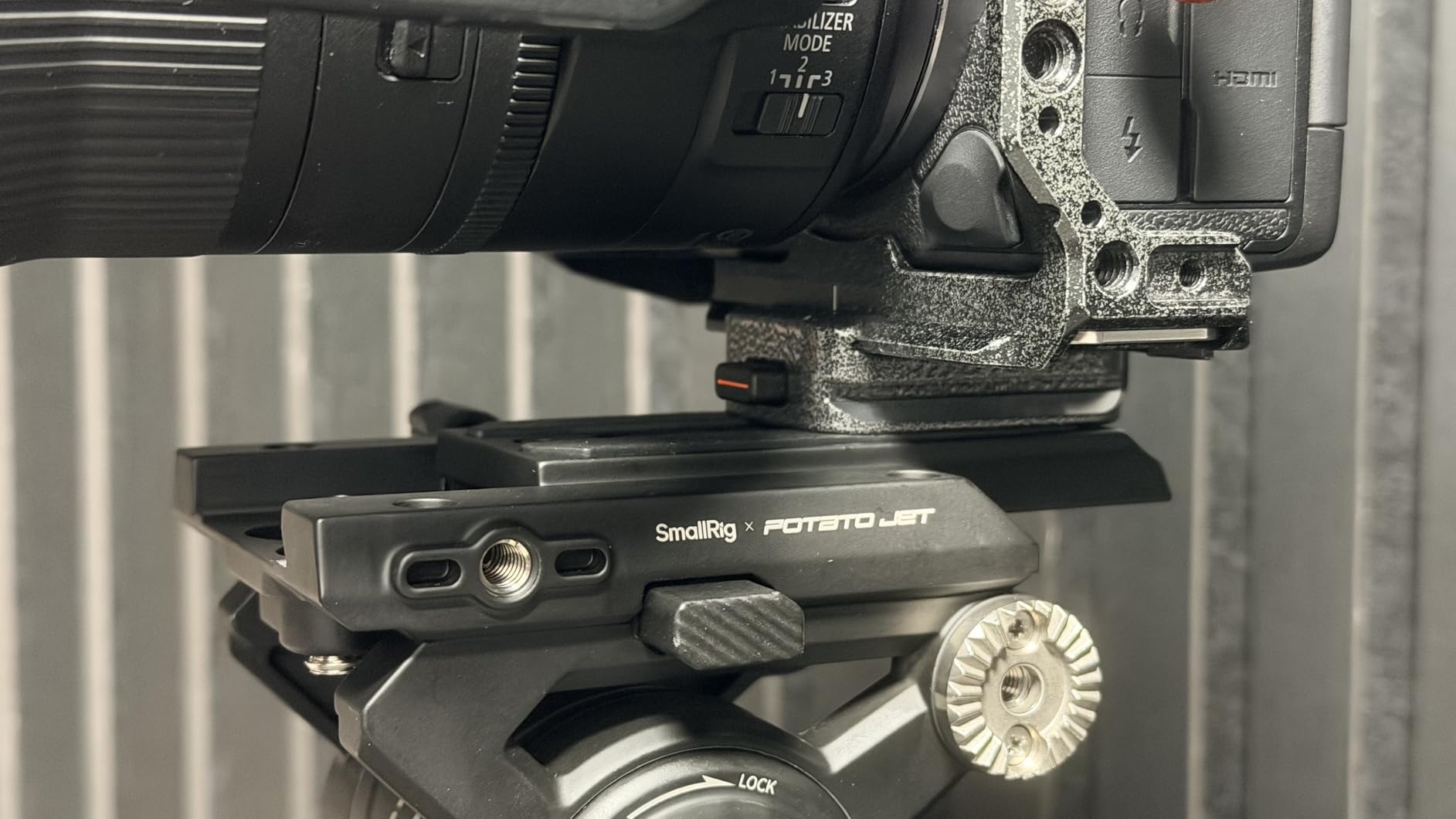
The one-button lift and lock on this SmallRig is the feature that sold our video testers. Press the button, raise or lower the pole to any height, release, and it locks instantly at that exact point. No fiddling with individual leg collars while a scene is happening in front of you.
We timed ourselves against a traditional 4-section pole and were setting up in two to three seconds, which matches what other buyers report. On a documentary shoot where we moved between interview locations all day, that speed compounded into real time saved. The 36 mm legs are noticeably stiffer than any thin travel pole here.
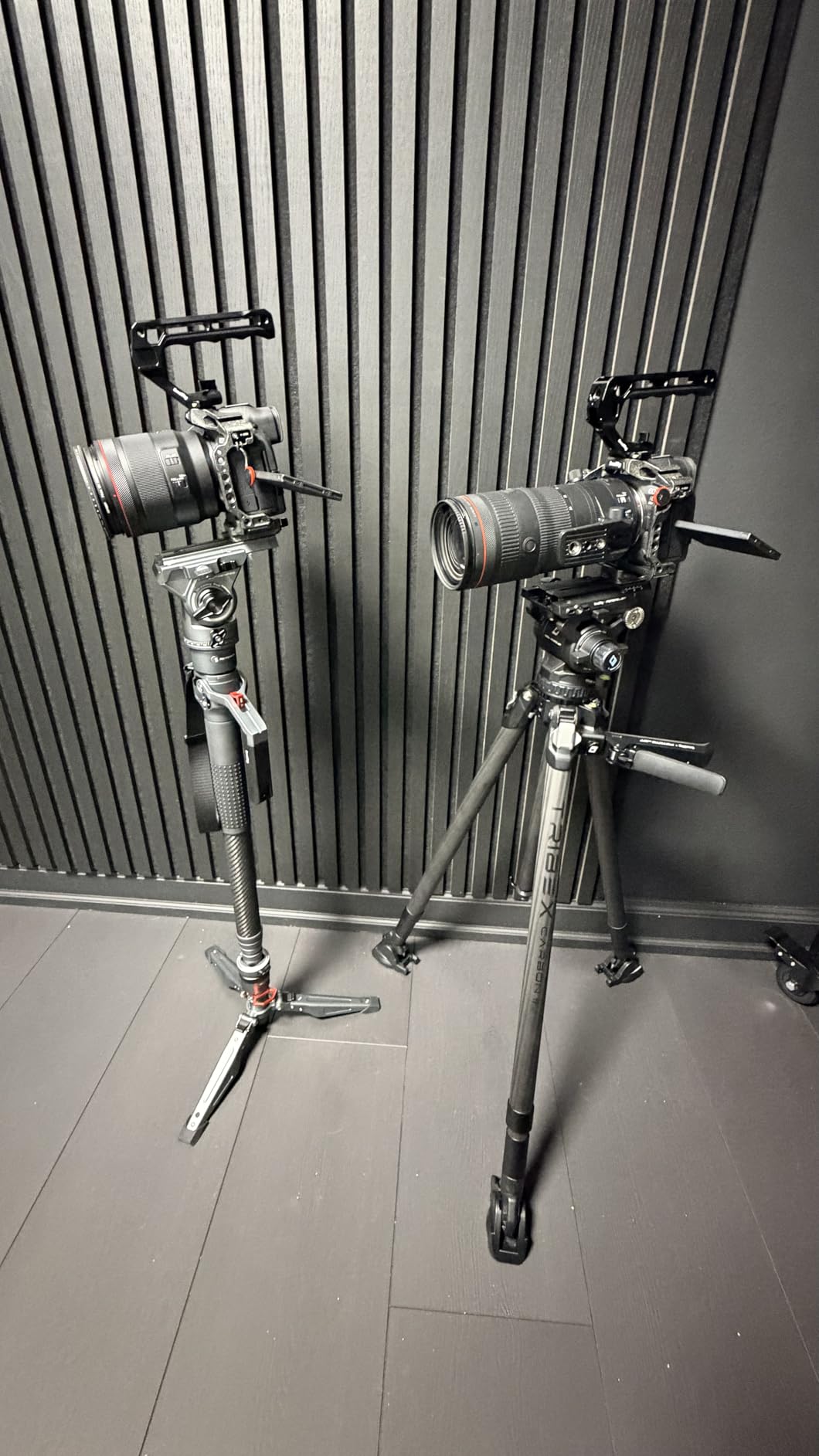
The quick-release tripod feet come off with a single action when you want a bare pole, and snap back on just as fast for freestanding support. The 5 kg head rating with 15 kg leg support means the pole itself is never the weak link in a build. It plays nicely with cages and rigs using standard 1/4-20 mounting.
At 68.9 inches of max height, one of our 6-foot-6 testers confirmed it extends above his eye line, which almost no pole manages. The flip side is real weight and bulk: 5.5 lb and nearly 30 inches folded. This is a working tool that travels by car or case, not a backpacking item.
Given the weight, the carbon fiber construction matters most in how the pole handles rather than how it carries. It balances a front-heavy rig well and does not transmit the handling buzz you get from aluminum poles during long takes.
Who the SmallRig 68.9 inch suits best
Working videographers, run-and-gun documentary crews, and hybrid shooters who move constantly between setups. If your day involves twenty location changes, the one-button system pays for itself.
Very tall operators should shortlist this one immediately. It is one of the few monopods that genuinely serves people over six feet two.
What to check before you buy
Weigh your transport needs honestly. At 5.5 lb this is double the weight of the Cobra 3, and it is the bulkiest item on this list when folded.
Confirm the head configuration matches your workflow before ordering, since this system is designed to pair with a fluid head for full video use.
5. SmallRig 65.6 inch Monopod – One-Touch Simplicity
SmallRig 65.6″/ 166.5cm Carbon Fiber Ball Head Monopod for Camera
Weight: 1.73 kg (3.8 lb)
Max height: 65.6 in
Collapsed: 26.8 in
Load: 5 kg head, 15 kg legs
One-touch lock, bubble level
Pros
- One-touch lock at any position
- Built-in bubble level for precise framing
- 36 mm carbon legs with aluminum alloy
- Accessory 1/4-20 threaded hole
- Comfortable working height for most shooters
Cons
- 3.8 lb is heavy for a photo pole
- No folding base like its bigger sibling
- 26.8 inch collapsed length needs a large bag
This is the one-touch concept in a lighter, simpler package than its big brother. The single-press height lock works exactly as advertised, grabbing at any point in the travel range. I used it during a youth sports season where players change direction constantly, and one-handed height tweaks became second nature within a game.
The built-in bubble level is a small thing that I ended up relying on more than expected. Squaring the horizon before a burst sequence is faster than fixing tilt in post across 400 frames. The 36 mm carbon and aluminum legs hold a full rig without the flex you feel in thinner travel poles.
SmallRig rates the head side at 5 kg with the legs supporting 15 kg, which in practice means any mirrorless or DSLR stills setup is comfortably inside its envelope. The 1/4-20 threaded hole at the base accepts accessories, and we used it for a small LED panel during an evening shoot.
The four-section layout reaches 65.6 inches, a good eye-level height for shooters up to about six feet. Collapsed at 26.8 inches, it fits a rolling case or a large photography backpack but not a small carry-on. At 3.8 lb it sits in the middle ground between photo poles and full video systems.
What it gives up versus the larger SmallRig is the quick-release folding feet and a few inches of height. What it gains is a lighter, less expensive package that still has the core one-touch feature. For pure stills shooters who want speed, that trade makes sense.
Who the SmallRig 65.6 inch suits best
Sports and wildlife stills shooters who change height often and want lever-free speed. The one-touch lock is genuinely faster than four twist collars when animals or players are on the move.
It also suits hybrid photo-video creators who do not need the full pro rig but want video-friendly features like the level and accessory mount.
What to check before you buy
If you mostly shoot static subjects from one height, the one-touch system is a convenience rather than a necessity, and a lighter pole like the Manfrotto 290 will serve you fine.
Check your bag dimensions against the 26.8 inch folded length. It needs a dedicated monopod strap or a tall compartment.
6. Benro MSD46C – Tall, Light, and Strong
Benro Carbon Fiber Monopod – 6-Section Lightweight Travel Monopod with Twist Locks, Folding Base, Quick Height Adjustment, and High Load Capacity for DSLR, Mirrorless & Video Cameras (MSD46C)
Weight: 0.59 kg (1.3 lb)
Max height: 72.8 in
Collapsed: 17.9 in
Load: 40 kg (88 lb)
6 sections, twist locks
Pros
- Reaches 72.8 inches for tall shooters
- Folds to just 17.9 inches
- Massive 40 kg load rating
- One-lever top lock for fast adjustments
- Folding three-leg base with ball joint
Cons
- Thinnest sections flex at full extension
- Base adds setup steps versus a plain pole
- Only 96 reviews so far
The MSD46C solves the height problem that rules out most travel monopods. It extends to 72.8 inches, comfortably above eye level for a six-foot-two photographer, yet it folds down to 17.9 inches. I carried it through a full day at an airshow without ever wishing for a taller pole, which is not something I can say for most compact options.
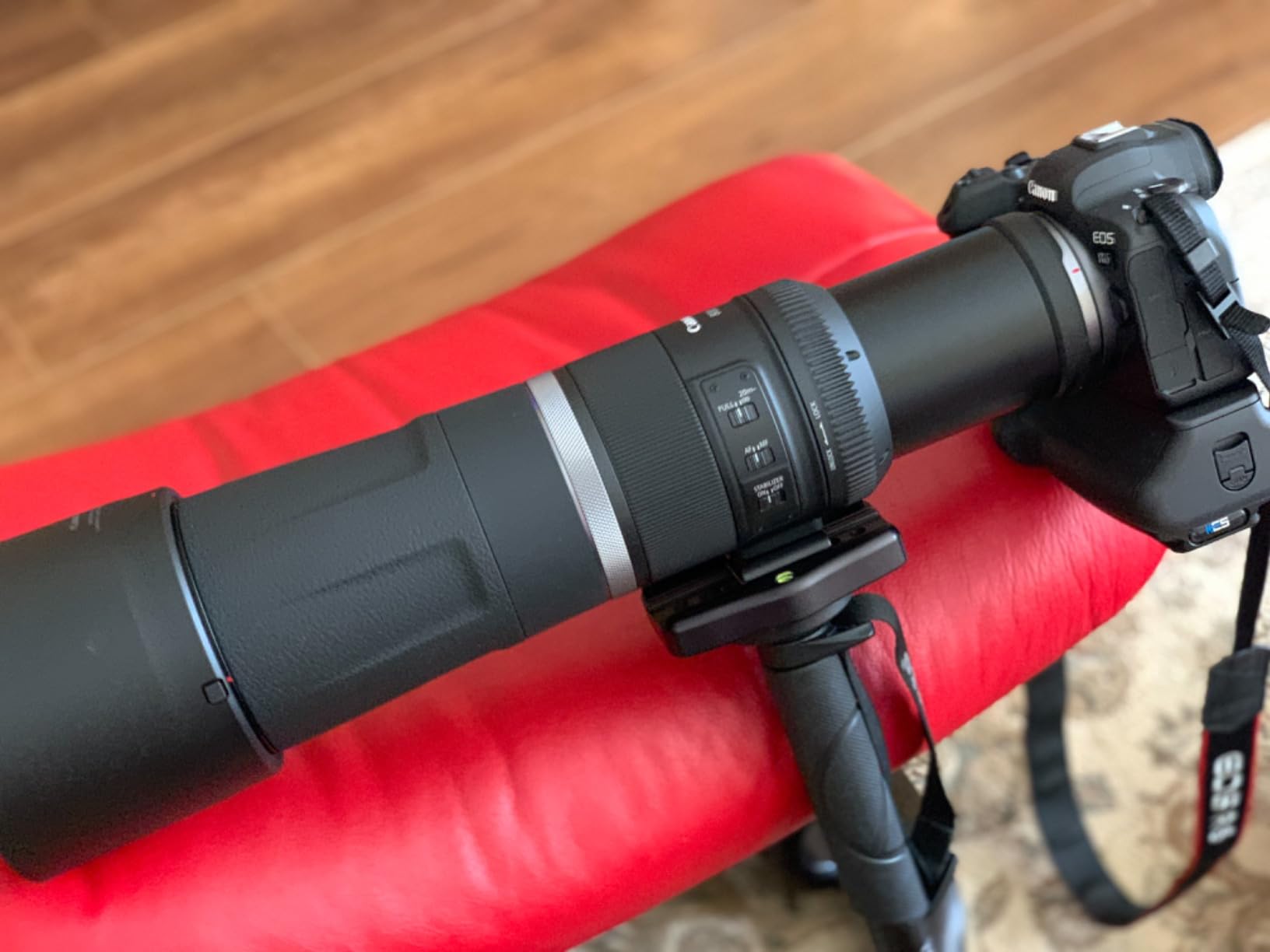
The spec that stops people is the 40 kg load rating. That is far beyond any stills camera you will mount, and in practice it means the pole never feels close to its limit. One owner in our group regularly runs big Canon telephoto glass on it and reports the twist locks never slip under load.
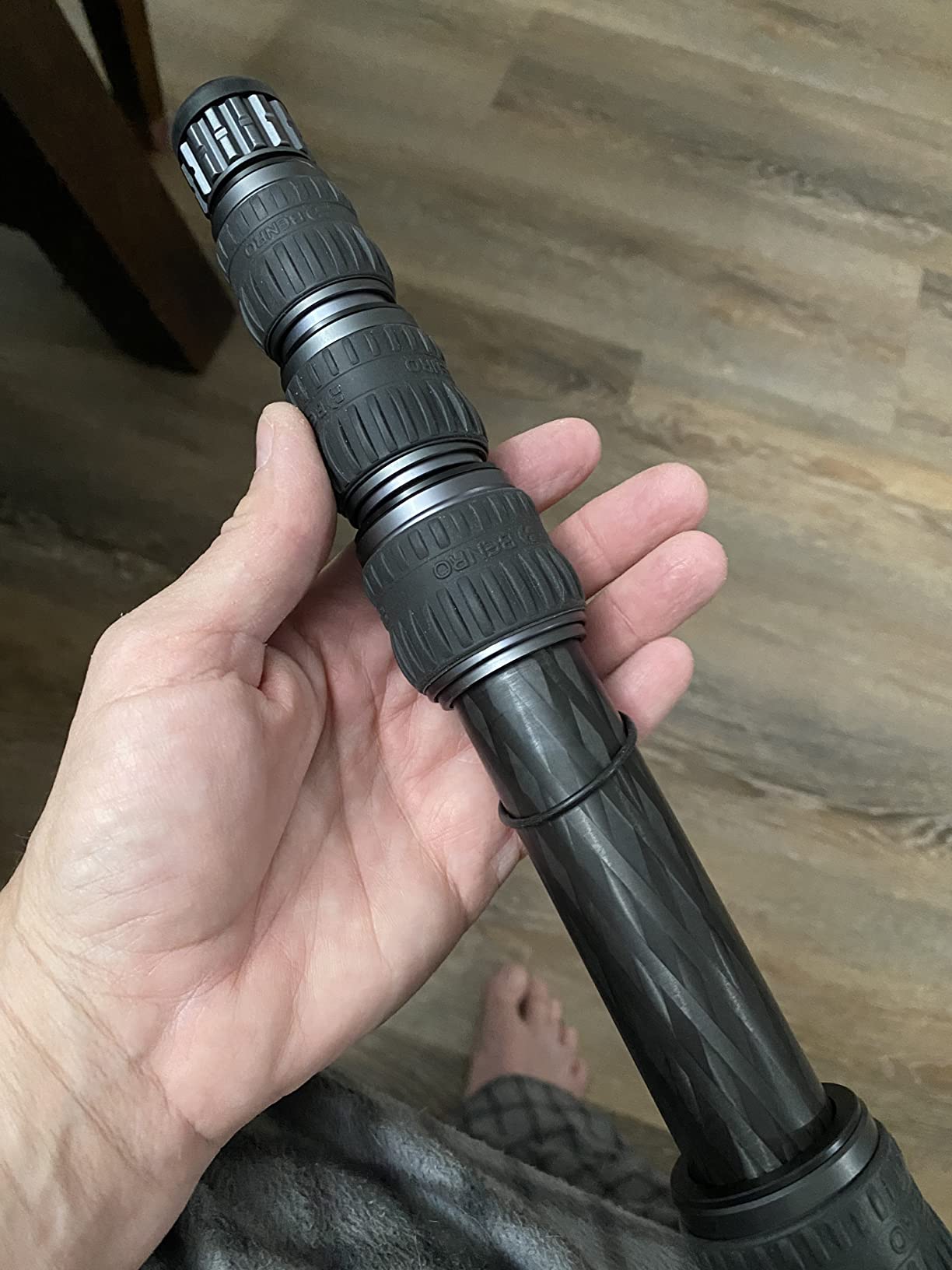
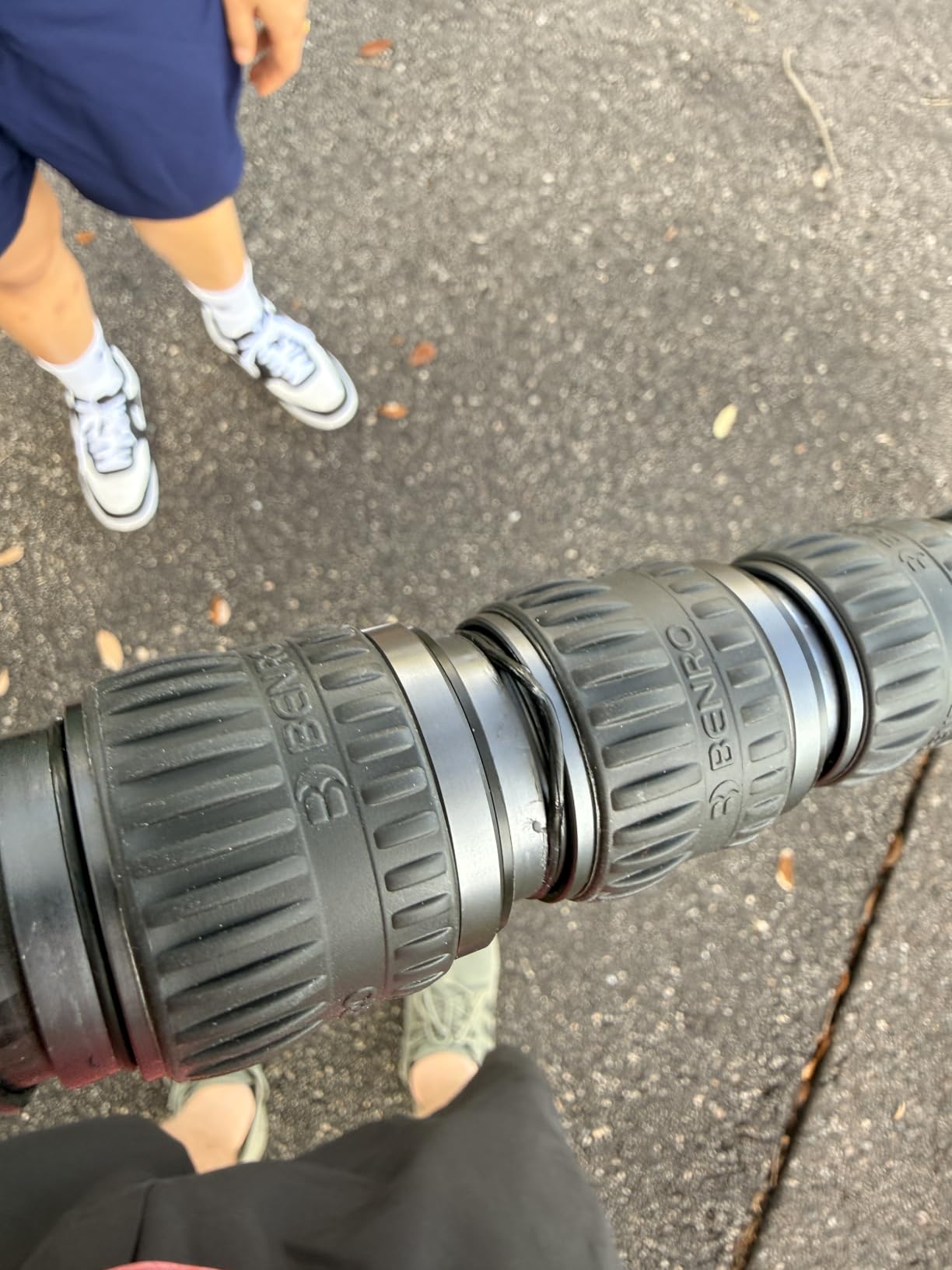
Benro pairs the six twist-lock sections with an anti-rotation leg design, so each collar turns cleanly without the whole leg spinning. There is also a single lever at the top for quick fine adjustments, which we used constantly rather than releasing every collar for small changes.
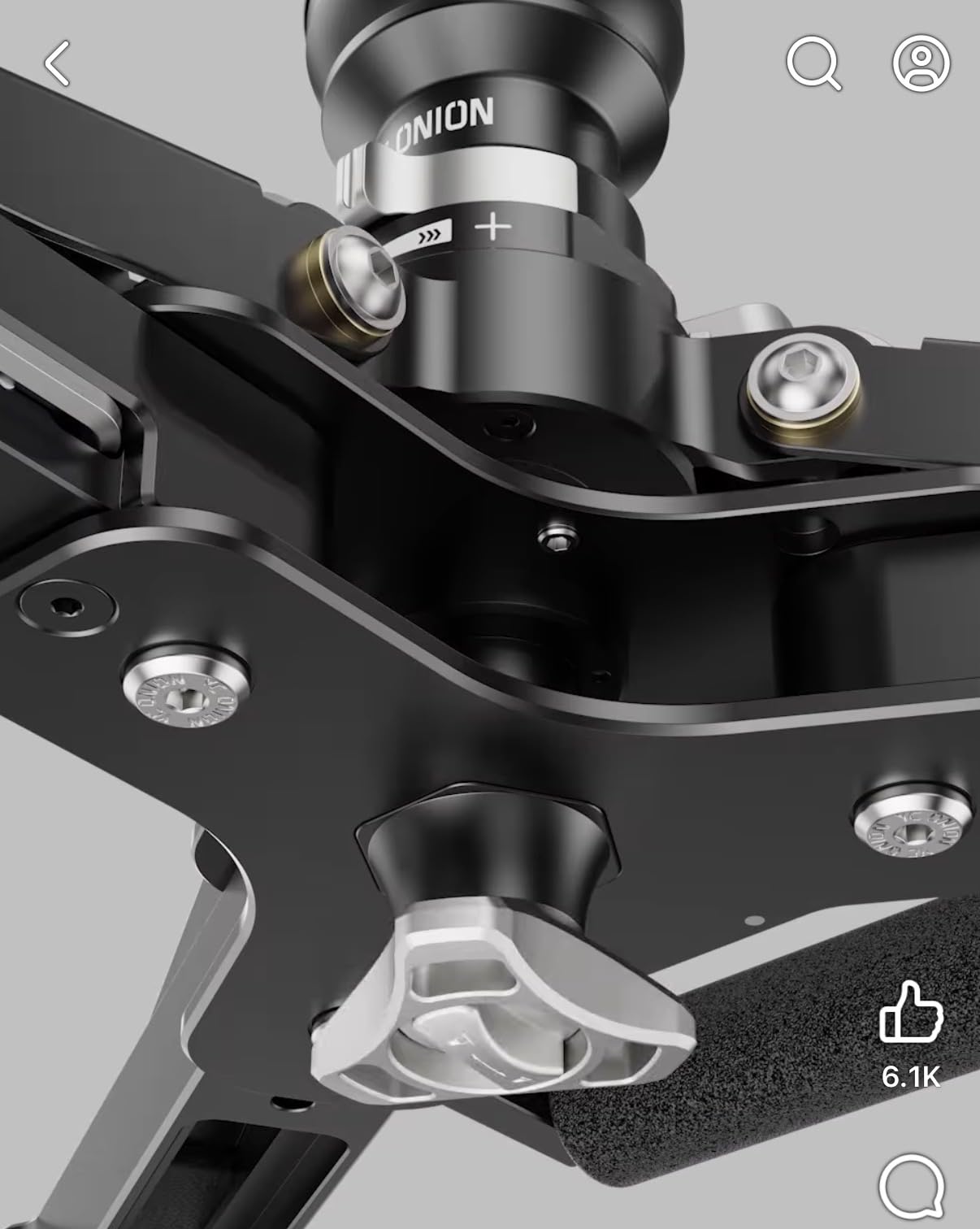
The folding three-leg base with a ball joint lets the pole lean and swivel while keeping ground contact. It adds real versatility for video-style following of subjects, though it also adds a step to setup versus a plain pole. Users who mostly shoot straight up stills can simply ignore the base articulation.
As with any six-section pole, the narrow lower tubes introduce some flex when everything is extended. The 21.8 mm leg diameter is slimmer than the video poles here, so it is best matched with stills rigs rather than heavy cine builds.
Who the Benro MSD46C suits best
Tall photographers who refuse to crouch all day, and travelers who need serious height in a carry-on-friendly package. It is the rare pole that does both.
It is also a strong pick for shooters who like having an enormous load ceiling for occasional big glass rentals.
What to check before you buy
If you plan to mount heavy video rigs, consider the 36 mm video poles instead. The thinner legs here are optimized for stills work at minimal weight.
Learn the folding base release before your first shoot. It is simple, but doing it for the first time in a crowd is mildly embarrassing, as I can confirm.
7. Manfrotto 290 MM290C4US – The Trusted Classic
Manfrotto 290 Carbon Fiber 4-Section Monopod (MM290C4US)
Weight: 0.5 kg (1.1 lb)
Max height: 59.4 in
Collapsed: 19.3 in
Load: 10 kg (22 lb)
4 sections, flip lever locks
Pros
- Four flip levers instead of twist collars
- 1.1 lb with a 10 kg load rating
- Italian design and finish
- Rubber leg warmers and angled strap
- Fits the smallest carry-on suitcase
Cons
- 59.4 inch max height is short for tall users
- 19.3 inch collapsed is longer than 6-section rivals
- Simple fixed foot with no base option
The 290 is the workhorse that has been in working photographers’ bags for years, and using one explains why. The three thumb levers, four sections in total, make setup nearly instant, and the pole feels planted with a 400mm lens mounted. One of our testers has run an earlier version of this exact model for five seasons.
Manfrotto’s aluminum leg locks are the reason people choose this over twist-lock poles. Each lever flips open positively and clamps down hard, and they are field-serviceable if they ever loosen. For shooters who have distrusted twist locks since an old aluminum pole slipped on them, this is the reassuring option.
At 1.1 lb with a 10 kg load rating, the numbers are competitive with anything in this class. The carbon version we tested is noticeably kinder on the hands in cold weather than the aluminum 290, and it dampens more vibration. Tube diameters run 25.3 mm down to 14.7 mm across the four sections.
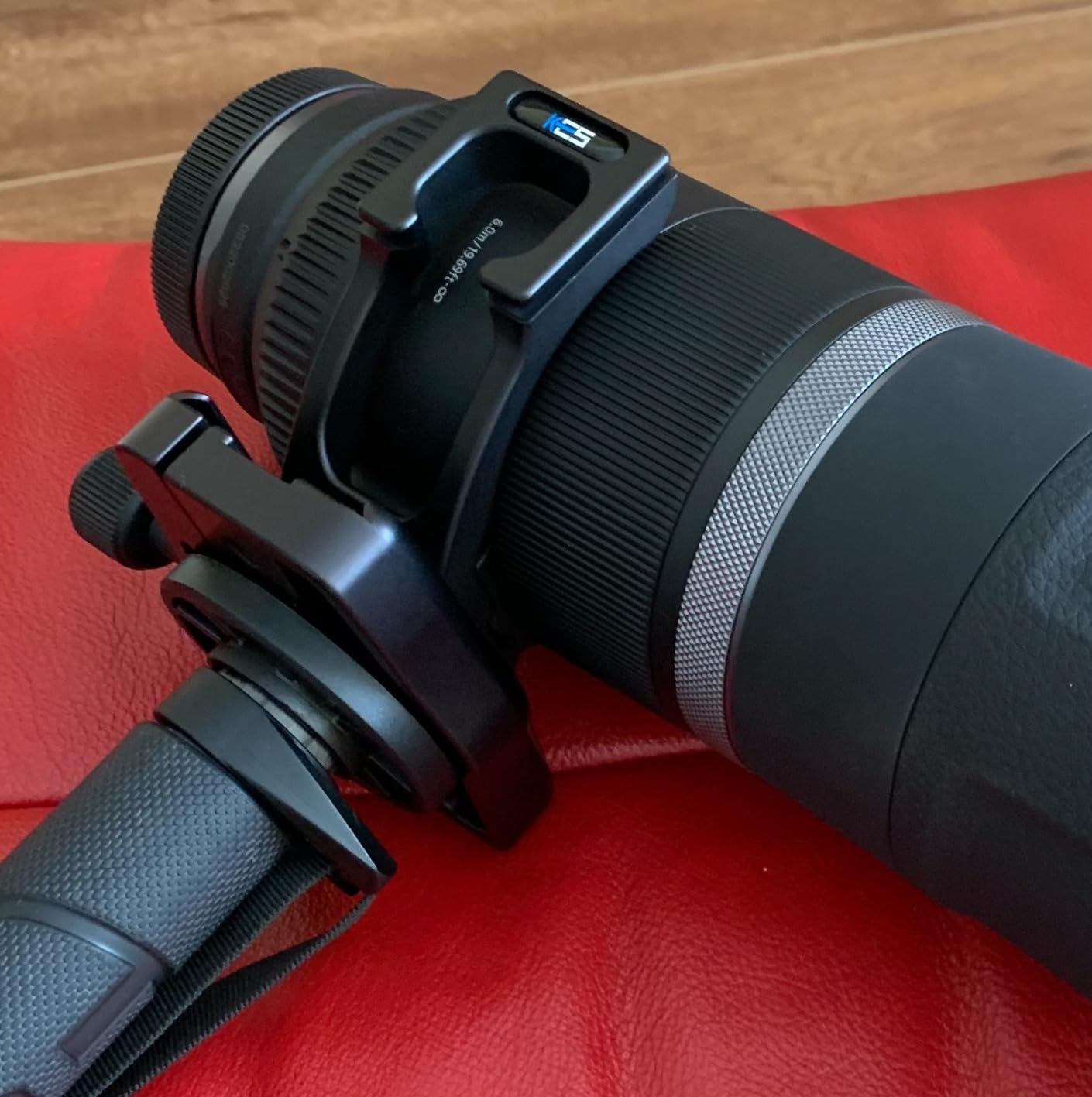
The rubber leg warmers and angled wrist strap are thoughtful touches that matter on long days. The collapsed length of 19.3 inches fits the smallest rolling suitcase, as one traveling owner noted, making it a genuine business-trip companion.
The limitation is height. At 59.4 inches max, taller photographers will shoot slightly above natural eye level, which is workable for sports but tiring over a full day. If that is you, the Benro or either SmallRig is the better fit.
Who the Manfrotto 290 suits best
Photographers who want a proven, no-drama pole with lever locks and a long service history. It is the safe recommendation for a first serious monopod.
Traveling shooters with standard rolling bags will find it fits where 6-section poles feel flimsy and video poles simply do not fit.
What to check before you buy
Check the working height against your own eye level before committing. If you are six feet or taller, the shortfall adds up over a long event day.
Plan for a head purchase as well, since this ships as a bare pole with a standard mounting screw.
8. Cayer CF34 – The Complete Video Kit
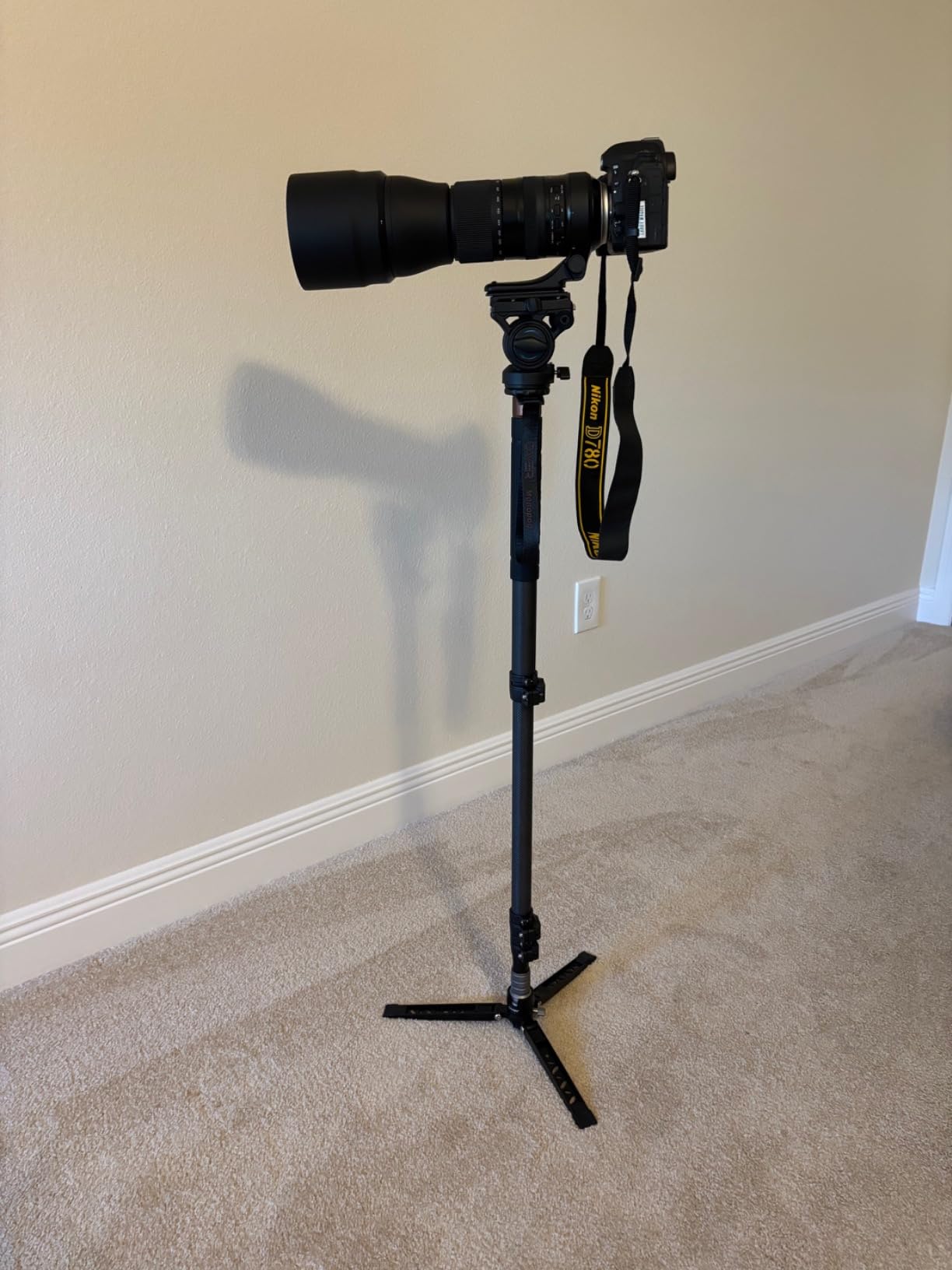
Cayer CF34 Carbon Fiber Monopod, 72″ Fluid Head with Folding Base for DSLR
Weight: 1.85 kg (4.1 lb)
Max height: 72 in
Collapsed: 28.4 in
Load: 6 kg (13.2 lb)
Fluid pan-tilt head, folding base
Pros
- Fluid pan-tilt head included in the kit
- Dual quick release plates for two cameras
- Dual-position pivoting foot with 90 degree notch
- Detachable mini tripod base
- 72 inch height for tall operators
Cons
- 4.1 lb total weight is substantial
- 28.4 inch collapsed length needs a big bag
- 6 kg rating is lower than pricier rivals
The CF34 is the most complete package on this list because everything is in the box. The fluid pan-tilt head pans a smooth 360 degrees and tilts from 90 degrees up to 50 degrees down, and there are two quick release plates so you can leave one on each camera body. Swapping between bodies during a shoot takes seconds.
Our team ran it through two wedding receptions, which is the most demanding casual test we know. The fluid head made following a first dance look intentional rather than shaky, and the pivoting foot let the pole tilt through 45 degrees and into the 90 degree drop-notch for low dramatic angles.
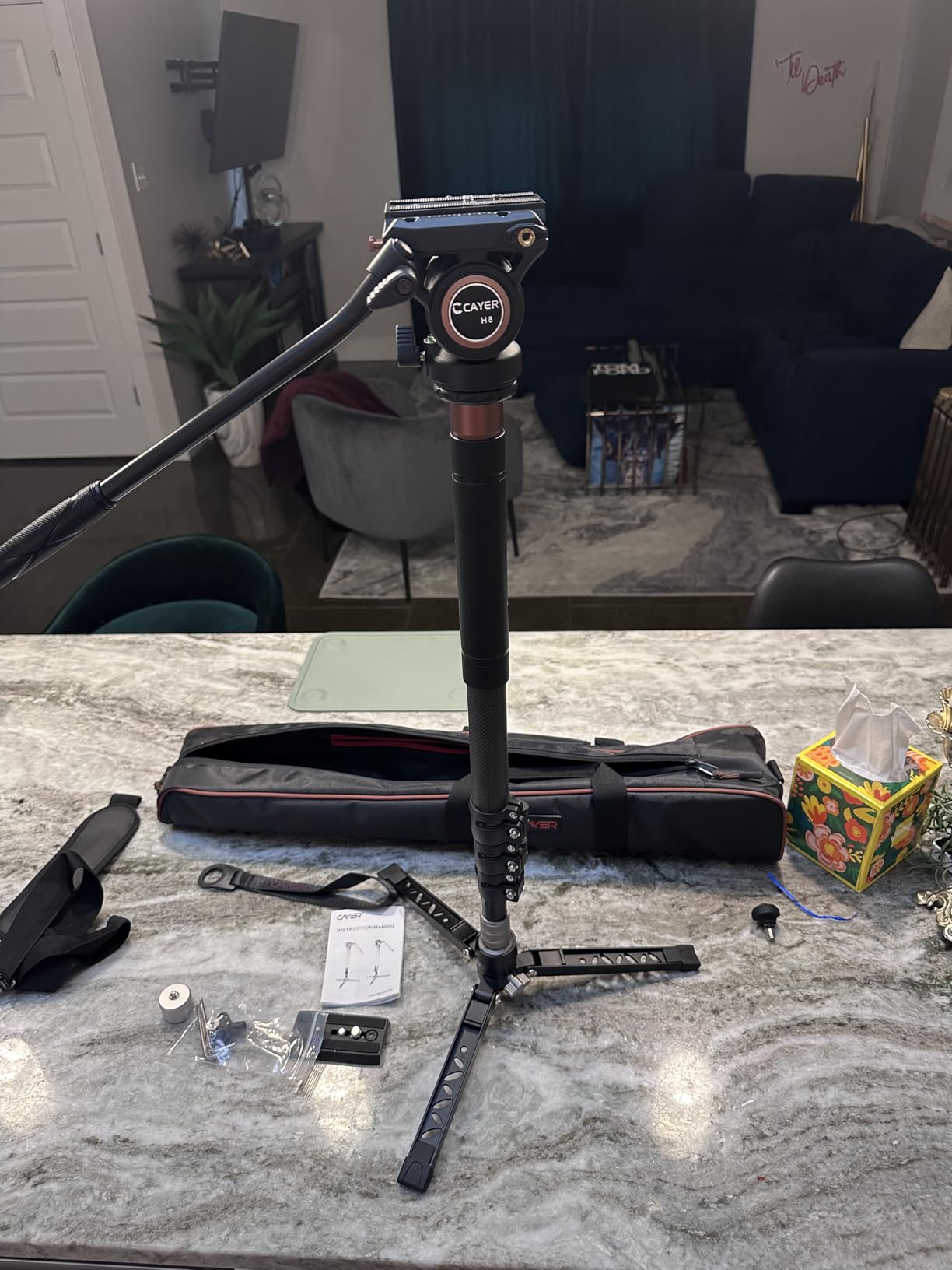
The detachable mini tripod base gives you a freestanding option when you need both hands briefly. It is not a substitute for a real tripod with a long lens, but for holding a rolling interview setup between takes it works well. The carbon pole itself is nicely built with tight section tolerances.
The numbers are a fair trade for the money: 4.1 lb all-in, 72 inches of height, and a 6 kg payload. That rating is the lowest among the video poles here, so cine builders should check their rig weight before committing. For mirrorless and DSLR video kits with modest lenses, it is plenty.
Collapsed to 28.4 inches, it demands a proper rolling case or a tall bag, same as the other base-equipped poles. Within that class, it undercuts most rivals on price while including the head, which is where the value story lives.
Who the Cayer CF34 suits best
Emerging wedding and event videographers who need a fluid head, base, and plates in one buy. It is the strongest value-per-dollar pick for building a first serious video kit.
Hybrid shooters who photograph and film the same event will love the dual quick release plates for fast body swaps.
What to check before you buy
Weigh your full rig including microphone, light, and monitor. If you are near the 6 kg ceiling, the SmallRig or iFootage gives you more margin.
Check your storage. This is a case-sized piece of gear, not a bag-sized one, so plan transport accordingly.
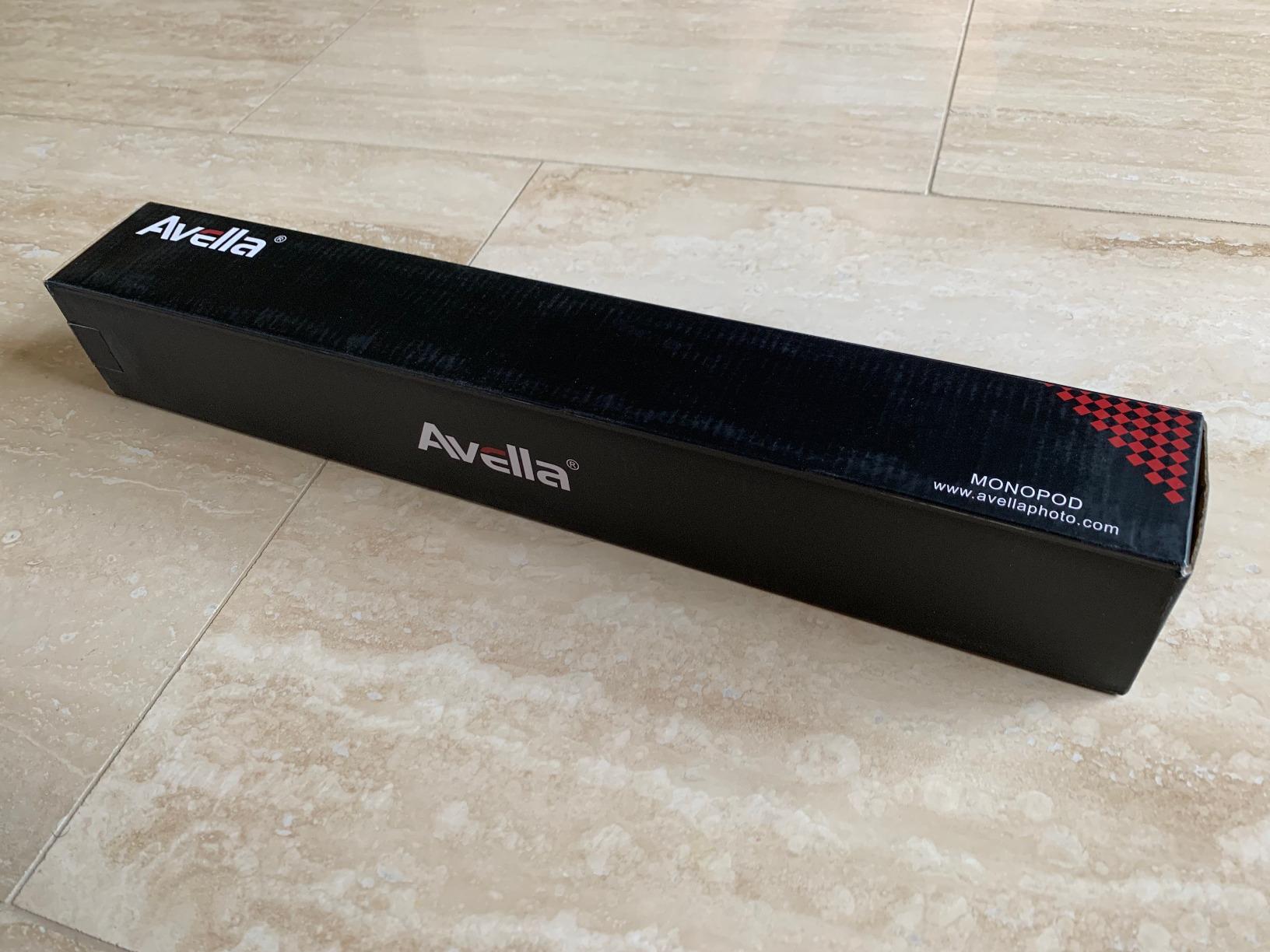
9. Avella C325 – The Hiking Hybrid
Avella C325 Carbon Fiber Camera Monopod, 58 Inch
Weight: 0.5 kg (1.1 lb)
Max height: 58.6 in
Collapsed: 16.5 in
Load: 3 kg (6.6 lb)
5 sections, spike foot
Pros
- Doubles as a walking stick on trails
- Retractable spike plus non-skid rubber foot
- Foam grip and safety wrist strap
- Thick leg tubes with minimal flex
- Cheap entry into carbon fiber
Cons
- 3 kg load rating limits heavy telephotos
- 58.6 inch max height is the shortest here
- Not for professional video rigs
The C325 earned its spot on a two-day hiking trip where it worked as my walking stick in the morning and my camera support by the lake in the afternoon. That dual role is the entire point. The built-in non-skid rubber foot handles rock and pavement, and a retractable spike bites into mud and loose gravel when the trail turns soft.
Buyers report running a Sony 200-600mm on theirs, and while that is near the edge of the 3 kg rating, the thick leg tubes show surprisingly little wobble for this class. The soft foam grip and safety wrist strap make it comfortable to lean on for hours, which is not true of most camera-first monopods.
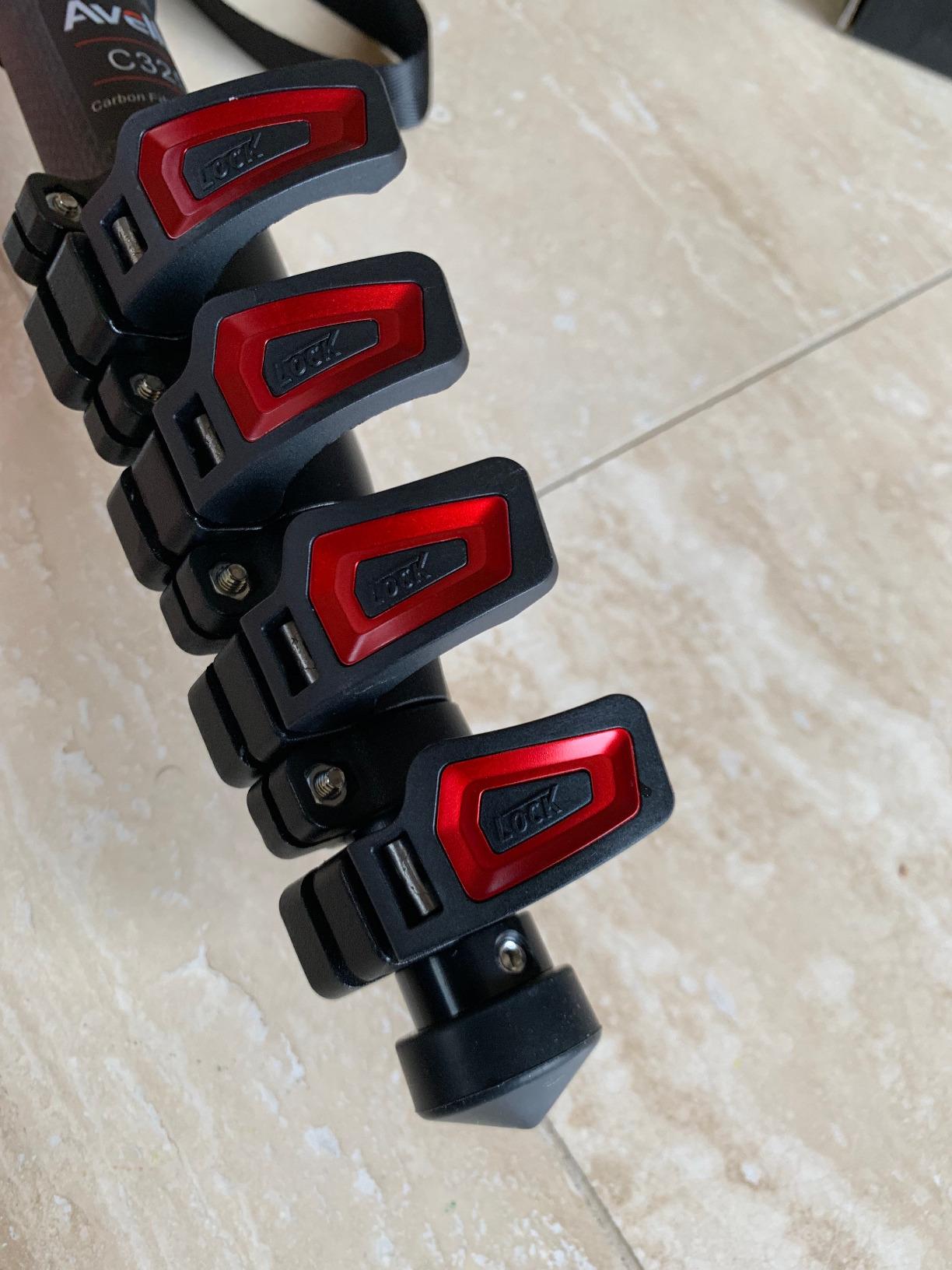
Five sections collapse the pole to 16.5 inches, short enough for a daypack side pocket. The 1.1 lb weight is right in line with dedicated photo poles, so you give up nothing on the carry even while gaining the hiking function.
The ceiling is the honest limitation. A 3 kg load rating means big telephoto primes and caged video rigs are off the menu. And at 58.6 inches of max height, it is the shortest pole in this test, which taller hikers will notice when framing uphill shots.
For birders who walk far between sightings, the trade is worth it. You carry one pole instead of a monopod plus a trekking pole, and the total pack weight drops accordingly.
Who the Avella C325 suits best
Hikers, birders, and outdoor photographers who cover real distance between shots. If your day involves miles of trail before the first frame, this is your pole.
It is also a sensible low-cost first monopod for anyone still figuring out whether they like shooting this way.
What to check before you buy
Add up your heaviest body and lens combination before ordering. Anything over about 3 kg total pushes past the rating and should steer you toward the SIRUI or Koolehaoda instead.
Tall hikers should note the 58.6 inch ceiling, which has shorter users shooting comfortably and six-footers working slightly hunched.
10. Koolehaoda 62 inch – The Budget Entry
Koolehaoda 62″ Camera Monopod 6 Section Compact Carbon Fiber Unipod
Weight: 0.36 kg (0.79 lb)
Max height: 62 in
Collapsed: 15 in
Load: 10 kg (22 lb)
6 sections, 10-layer carbon
Pros
- Lightest pole in the entire test
- 10 kg load rating matches poles costing far more
- Under 16 inches collapsed
- Phone holder included
- Anti-slip dustproof twist locks
Cons
- 28 mm tubes are thinner than premium rivals
- No folding base or head options
- Only 140 reviews so far
- Brand warranty support is less established
At 0.79 lb, the Koolehaoda is the lightest pole we tested, full stop. It is built from 10-layer high-density carbon fiber with 28 mm maximum tube diameter, and it carries a 10 kg load rating that matches poles at several times its cost. For pure numbers-per-dollar, nothing else here comes close.
I used it as a support for binoculars during a weekend of glassing hillsides, which is a niche but genuinely useful application. Other owners describe using it as a walking stick with the locks snugged down, and running R6-series bodies with long lenses without stability complaints. The twist locks are dustproofed and grip securely even with sweaty hands.
Technically, the six-section layout with 28 mm legs is where the savings show. It is stiffer than expected at this cost, but it does not match the 36 mm video poles or the Manfrotto XPRO for absolute rigidity under heavy glass. The reversible 1/4-20 and 3/8-16 mounting screw keeps it compatible with every camera and head we tried.
The included phone holder is a thoughtful extra for casual shooters and content creators filming vertical video. It is not a professional accessory, but it works, and it costs you nothing extra.
The brand is less established than Manfrotto or Benro, which matters for long-term support even though our unit showed solid fit and finish. With 140 reviews at a 4.5-star average, the early track record is encouraging rather than proven.
Who the Koolehaoda suits best
Budget-conscious photographers, beginners, and anyone who wants a capable spare pole for not much money. It is also the lightest possible support for ultralight packers.
Birders and wildlife watchers who mostly support binoculars or spotting scopes will find it ideally suited.
What to check before you buy
If your livelihood depends on the gear, the longer track records of SIRUI or Manfrotto may be worth the extra spend. This is the value play, not the bulletproof one.
Check that the 15 inch collapsed length suits your bag, and remember that a head is a separate purchase for camera-first use.
How to Choose the Best Carbon Fiber Monopod in 2026
Every pole on this list supports a camera. The right one supports the way you actually shoot, so here is how we sort the decision after three months of testing.
Weight vs. Load Capacity: What the Numbers Actually Mean
Load capacity tells you the heaviest rig the pole will hold safely, not how stable it will feel. A 10 kg rating on a thin six-section pole still flexes more than a 10 kg rating on thick four-section tubes, because stiffness comes from tube diameter and section count.
Match the rating to your real kit with a comfortable buffer, then compare tube diameters. Our most-used stills poles run 25 to 36 mm at the widest section, and the difference versus 16 mm tips is obvious with a telephoto mounted.
Carbon Fiber vs. Aluminum: Is the Upgrade Worth It?
Carbon fiber costs more and it earns it in three ways: lower weight at equal strength, better vibration dampening for sharper long-lens frames, and warmth in hand during winter shoots. Aluminum poles conduct cold and transmit more handling buzz.
The honest counterpoints are covered in our FAQ below. Carbon resists shattering damage poorly compared to aluminum’s tendency to dent, and repairs are usually replacements. If you abuse gear hard and shoot rarely, aluminum remains defensible.
Twist Locks vs. Flip Locks
Twist locks are slimmer, sealed against dust, and let you grip the collar naturally while extending. They take two hands and a few seconds per section, and a worn or dirty collar can slip unless cleaned.
Flip levers are faster, operate one-handed, and give an audible confirmation that the section is locked. They snag on things in a packed bag and add slight weight. Video shooters on our team lean lever, travel shooters lean twist, and both camps are happy.
Max Height and Collapsed Length
Match max height to your eye level plus the camera’s viewfinder height, which usually means at least your own height in inches. Taller shooters past six feet should shortlist the Benro at 72.8 inches, the Cayer at 72, or the iFootage at 71.
Collapsed length determines transport. Sixteen inches or under fits most backpacks and all carry-ons, while the 26-to-30-inch video poles need rolling cases. Be honest about how you travel before choosing a folding-base system.
Do You Need a Fluid Head and Folding Base?
Photographers can skip both and mount a small ball head on any bare pole. A fluid head matters the moment you record video, because smooth pans and tilts are impossible to fake in post.
A folding base turns the monopod into a pseudo-tripod that stands on its own briefly and allows controlled swiveling. It adds weight, bulk, and cost, so choose it only if you shoot moving subjects for video on a regular basis.
Frequently Asked Questions
Which carbon fiber monopod is the best?
The SIRUI P-326 is the best overall carbon fiber monopod for most photographers. It weighs just 0.9 lb, folds to 15.6 inches for travel, and carries a 10 kg load rating, all at a mid-range price. Video shooters should instead look at the iFootage Cobra 3 C180F-P, whose pedal-locking folding base and 71-inch height make it the top video monopod we tested.
What are the disadvantages of carbon fiber?
Carbon fiber costs significantly more than aluminum, and it fails suddenly by cracking or splintering rather than denting gradually, so damage can be harder to spot. It is also more expensive to repair, with a cracked tube usually meaning replacement instead of a fix. Finally, cheap carbon fiber with thin walls can flex more than well-built aluminum, which is why tube diameter and layer count matter as much as the material itself.
What is the best monopod on the market?
For stills photographers the Manfrotto XPRO MPMXPROC4US is arguably the best bare monopod on the market, pairing a 1.3 lb weight with a 20 kg load rating and premium Quick Power Lock levers. For video work the SmallRig 68.9 inch and iFootage Cobra 3 lead the market thanks to one-button and pedal-locking height systems. The overall value leader is the SIRUI P-326, which balances weight, height, load capacity, and price better than anything else we tested.
Is a carbon fiber tripod worth it?
Yes, if you carry your gear often or shoot with long lenses. Carbon fiber weighs roughly 30 percent less than aluminum at comparable strength and dampens vibration better, which produces sharper images at marginal shutter speeds. It also stays warm to the touch in cold conditions. If you mostly shoot from a studio or car and budget is tight, a quality aluminum tripod remains a perfectly good choice.
Final Verdict: Which Carbon Fiber Monopod Should You Buy?
After three months with all ten poles, our recommendation is simple. Most photographers should buy the SIRUI P-326, the best carbon fiber monopod for the money because it combines a sub-pound weight, a 10 kg load rating, and true carry-on portability in one proven package with more than 1,200 reviews behind it.
Video shooters should go iFootage Cobra 3 C180F-P for its pedal-locking base or the SmallRig 68.9 inch if budget allows and one-handed speed matters most. Tall travelers get the Benro MSD46C, hybrid hikers get the Avella C325, and anyone building a first event video kit gets the Cayer CF34 with its included fluid head.
Whatever you pick, buy around your real shooting rather than the spec sheet. Height needs to match your body, the load rating needs to clear your heaviest lens, and the folded length needs to fit the bag you actually carry. Get those three right and your arms will thank you by the second half, just like the pros beside me on that soccer sideline.
1 thought on “10 Best Carbon Fiber Monopods (October 2026) Tested & Reviewed”