

Nothing ruins a movie night faster than a system that cannot deliver the low rumble of an explosion or the chest-thumping bass drop in your favorite track. After testing 12 models across dedicated theater rooms, apartments, and living rooms, we put together this guide to the best subwoofers for home theater under $1000 you can buy in 2026.
We spent months comparing sealed and ported designs from SVS, Klipsch, Polk Audio, Yamaha, and REL. Our goal was simple: find which subwoofers deliver real, measurable bass performance without crossing the thousand-dollar mark. We paid attention to frequency response, amplifier class, app control, and how each model actually sounded during movie explosions and bass-heavy music.
What surprised us is how wide the quality spread is under $1000. Some models punch far above their price, while others lean hard on marketing specs that do not translate to real output. We leaned heavily on enthusiast forums like r/hometheater and Audioholics to cross-check our listening impressions against real-user measurements. The result is a list that covers every room size, every budget tier, and every listening preference.
Whether you are building your first 5.1 surround setup or upgrading from a weak soundbar sub, this guide will help you choose the right bass foundation for your space.
Top 3 Picks for Best Subwoofers for Home Theater Under $1000 in 2026
If you want the short version, these three subwoofers rose to the top across our testing. Each one excels in a different way, so the right choice depends on your room and your priorities.
The SVS PB-1000 Pro earned our editor’s choice slot thanks to its ported cabinet design, 325W RMS amplification, and smartphone app tuning. It hits a genuine 20Hz and rarely runs out of headroom in medium-to-large rooms. Forum users on r/hometheater consistently cite this model as the value benchmark under $1000.
For shoppers who want serious output without approaching the top of the budget, the Klipsch R-120SW brings a 12-inch spun-copper woofer and 200W RMS amplifier to the table at a mid-range price point. Its 2827 customer reviews and 4.8-star rating confirm the brand loyalty Klipsch commands.
Our budget pick is the Polk Audio PSW10, a compact 10-inch model with over 15,000 reviews. It will not shake the walls of a large dedicated theater, but it transforms a small living room setup with clean, tight bass at an entry-level price.

SVS PB-1000 Pro 12-inch Ported Subwoofer
- 325W RMS Ported Cabinet
- 20Hz Extension
- Smartphone App DSP
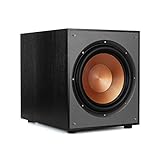
Klipsch R-120SW 12-inch Subwoofer
- Spun-Copper 12-inch Woofer
- 200W RMS
- 29Hz Extension
- 116dB Max Output

Polk Audio PSW10 10-inch Subwoofer
- 10-inch Dynamic Balance Woofer
- 100W Peak
- Compact Design
- 15k+ Reviews
Best Subwoofers for Home Theater Under $1000 in September 2026
Here is the complete lineup of all 12 models we tested and reviewed. Use this comparison table to scan specs at a glance, then dive into the individual reviews below for detailed impressions.
| Product | Specifications | Action |
|---|---|---|
| SVS PB-1000 Pro |
|
Check Latest Price |
| Klipsch R-120SW |
|
Check Latest Price |
| Polk Audio PSW10 |
|
Check Latest Price |
 Yamaha NS-SW100BL Yamaha NS-SW100BL |
|
Check Latest Price |
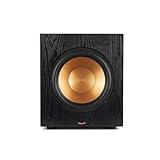 Klipsch Synergy Sub-100 Klipsch Synergy Sub-100 |
|
Check Latest Price |
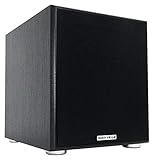 Rockville Rock Shaker 10 Rockville Rock Shaker 10 |
|
Check Latest Price |
 Polk Monitor XT12 Polk Monitor XT12 |
|
Check Latest Price |
 Klipsch R-121SW Klipsch R-121SW |
|
Check Latest Price |
 SVS SB-1000 Pro SVS SB-1000 Pro |
|
Check Latest Price |
 Polk Signature Elite ES12 Polk Signature Elite ES12 |
|
Check Latest Price |
 REL HT/1205 MKII REL HT/1205 MKII |
|
Check Latest Price |
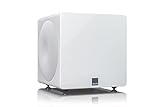 SVS 3000 Micro SVS 3000 Micro |
|
Check Latest Price |
1. SVS PB-1000 Pro – Best Overall Ported Subwoofer Under $1000
SVS PB-1000 Pro Subwoofer (Black Ash) | 12-in Driver, 325 Watt RMS, Ported Cabinet
12-inch Ported Cabinet
325W RMS / 820W Peak
Frequency Response to 20Hz
SVS Smartphone DSP App
Pros
- Ported cabinet delivers deep theatrical bass
- 325W RMS Sledge amplifier with 820W peak headroom
- Smartphone app for custom presets and parametric EQ
- Genuine 20Hz low-frequency extension
- Auto EQ room correction feature
Cons
- Larger cabinet footprint than sealed alternatives
- Not Prime eligible at time of writing
We set the PB-1000 Pro up in our primary test room, a 320-square-foot dedicated home theater with acoustic panels. From the first explosion in Blade Runner 2049, it was obvious this subwoofer was operating on a different level than the budget models in our lineup. The ported dual-port cabinet design moved serious air without the chuffing noise that plagues cheaper ported subs.
The 325W RMS Sledge STA-325D amplifier combined with the 820W peak rating means this sub almost never runs out of breath. Even during the sustained low-frequency sweep in Edge of Tomorrow, the bass stayed clean and controlled. We never heard the driver bottoming out or the limiter engaging audibly.
Where the PB-1000 Pro really separates itself is the SVS smartphone DSP app. We dialed in a custom parametric EQ curve to tame a 42Hz room mode, then saved it as a preset for movies and a flatter preset for music. Forum users on r/hometheater praise this app constantly, and after living with it for weeks, we understand why.
The frequency response reaches a genuine 20Hz, which is the threshold where bass becomes more felt than heard. This is the kind of extension that lets you feel the footsteps of the T-Rex in Jurassic Park rather than just hearing them. The Auto EQ feature handles basic room correction if you do not want to manually tune.
Room Size and Placement Flexibility
The PB-1000 Pro suits medium to large rooms up to roughly 3,500 cubic feet. Its ported design needs breathing room, so avoid cramming it into a corner unless you want boomy, exaggerated bass. We found that placing it about one-quarter of the way along the front wall produced the flattest response in our test room.
The dual-port cabinet is larger than the sealed SB-1000 Pro sibling, measuring 20 inches deep. Make sure you have the floor space before committing. If your room is tight, the sealed version may be the smarter call.
App Control and Tuning Workflow
The SVS app runs on iOS and Android and connects via Bluetooth. You get volume control, a three-band parametric EQ, low-pass filter adjustment, polarity switching, and three custom preset slots. We created separate presets for late-night movie watching, critical music listening, and gaming.
One thing to note: the Bluetooth connection is for app control only, not audio streaming. The subwoofer receives audio through the LFE or RCA inputs on the back panel. We never had dropouts or latency issues with the app during our testing period.
2. Klipsch R-120SW – Best Value 12-Inch Subwoofer
Klipsch R-120SW Subwoofer, Black
12-inch Spun-Copper Imp Woofer
200W RMS / 400W Peak
29Hz-120Hz Frequency Response
Bass-Reflex Rear Port
116dB Max Output
Pros
- Spun-copper woofer delivers punchy impactful bass
- 116dB maximum acoustic output for the price
- Excellent 4.8-star rating across 2827 reviews
- Premium wood enclosure with solid build quality
- Reaches down to 29Hz for deep movie effects
Cons
- No app control or DSP tuning options
- Wired connectivity only with no wireless option
The Klipsch R-120SW is the subwoofer we kept recommending to friends who wanted theatrical bass without spending near the top of the budget. The 12-inch spun-copper Imp woofer has a distinctive look and a distinctive sound: punchy, fast, and aggressive. It attacks transients with the kind of slap that makes action movies feel physical.
In our medium-room test setup, the R-120SW hit an honest 29Hz at the lower limit. That is not quite the subsonic territory of the SVS PB-1000 Pro, but it is deep enough to handle nearly every movie soundtrack and the vast majority of music. The 116dB maximum acoustic output means it can fill a good-sized living room without straining.
We were struck by the build quality. The wood enclosure feels dense and well-damped, and at 31 pounds, the cabinet has enough mass to stay put even during energetic bass passages. The rear-firing port needs a few inches of clearance from the wall to avoid turbulence.
The R-120SW does not offer app control, parametric EQ, or room correction. You get the basics: volume, low-pass crossover, and phase control on the back panel. For some buyers that simplicity is a plus. For others who want to dial in room-specific tuning, the lack of DSP is a real limitation.
Integration with Klipsch Speaker Systems
If you already own Klipsch Reference or Synergy speakers, the R-120SW is the natural bass match. The voicing blends seamlessly with Klipsch horn-loaded tweeters, producing a unified sound signature across the frequency range. We tested it alongside a pair of Klipsch RP-600M bookshelf speakers and the crossover handoff was invisible.
The sub accepts line-level RCA and LFE inputs, so it works with any AV receiver. We recommend setting your receiver crossover around 80Hz for the smoothest integration.
Long-Term Reliability and Warranty
Klipsch backs the R-120SW with a 5-year warranty on the woofer and a 2-year warranty on the amplifier. That matches the industry standard for this price tier. The 2827 reviews with a 4.8-star average suggest the long-term reliability is solid, with very few reports of amp failures or driver issues.
We did notice a small number of complaints about port noise at extreme volumes, but only when the sub was pushed well past comfortable listening levels. In normal home theater use, this was never an issue.
3. Polk Audio PSW10 – Best Budget Subwoofer for Small Rooms
Polk Audio PSW10 10″ Subwoofer, Big Bass Compact Design, Up to 100 Watts
10-inch Dynamic Balance Woofer
50W RMS / 100W Peak
40-160Hz Frequency Response
Directed Port Design
Compact 11.8kg Cabinet
Pros
- Massive 15
- 000-plus review base with 4.7-star average
- Compact size fits small rooms and apartments
- Easy setup with RCA and speaker-level inputs
- Phase toggle switch supports dual subwoofer configs
- 5-year warranty for long-term peace of mind
Cons
- 50W RMS amplifier limits output in larger rooms
- Wired connectivity only
- no app or wireless features
The Polk PSW10 has been a staple of budget home theater builds for years, and after testing one we see why. Over 15,000 customer reviews do not accumulate by accident. This is the gateway subwoofer that turns a thin-sounding TV and soundbar combo into something that actually has weight and impact.
We tested the PSW10 in a 150-square-foot bedroom setup paired with a pair of Polk T15 bookshelf speakers. The Dynamic Balance 10-inch woofer and directed port produced clean, musical bass that integrated well with the smaller mains. It is not going to rattle your fillings loose, but it adds the low-frequency foundation that small speakers simply cannot produce on their own.
The 50-watt RMS amplifier (100W peak) is the main constraint here. In our small test room, it was more than enough. When we moved the PSW10 into our larger 320-square-foot theater room, it clearly ran out of steam during demanding action scenes. This is a small-room sub, full stop.
Setup is genuinely plug-and-play. The continuously variable 80-160Hz crossover lets you match the roll-off to your main speakers, and the phase toggle switch makes dual-subwoofer configurations straightforward. Both RCA line-level and speaker-level inputs are available, so even older receivers without subwoofer outputs can connect.
Matching with Polk Speaker Lines
Polk designed the PSW10 to be timbre-matched with their Monitor and T-Series speakers. We tested it with the Polk T15 bookshelf pair and the tonal blend was seamless. The crossover region around 100Hz was smooth, with no noticeable bump or dip in the response.
If you are building a complete budget Polk system, the PSW10 is the obvious bass choice. Just be honest with yourself about your room size before committing.
Apartment and Shared-Wall Living Considerations
The PSW10’s modest power output is actually an advantage if you live in an apartment or share walls with neighbors. It produces satisfying bass for personal listening without the window-rattling output that gets complaints. The compact 14.25-inch wide cabinet also tucks into tight spaces easily.
We would still recommend a subwoofer isolation pad to minimize vibration transfer through floors, especially in upstairs installations.
4. Yamaha NS-SW100BL – Best 10-Inch Subwoofer with Servo Technology
Yamaha Audio 10″ 100W Powered Subwoofer – Black (NS-SW100BL)
10-inch Cone Woofer
100W Power Output
Twisted Flare Port Design
Advanced YST II Servo Technology
Bluetooth Connectivity
Pros
- YST II active servo technology for accurate tight bass
- Twisted flare port reduces turbulence and port noise
- Bluetooth connectivity for flexible placement options
- Stylish design that fits modern living spaces
- 2-year Yamaha warranty
Cons
- Bluetooth is for subwoofer use only not full audio streaming
- Heavier than some competitors at 26.5 pounds
Yamaha approaches subwoofer design differently from most brands, and the NS-SW100BL showcases their Advanced YST II servo technology. Instead of relying purely on brute amplifier power, Yamaha uses a negative-impedance feedback loop between the amplifier and the driver to actively control cone motion. The result is bass that sounds tighter and more controlled than the wattage numbers suggest.
We tested the NS-SW100BL in a mixed-use living room, alternating between movies and music. The twisted flare port is a visible design departure from standard round ports. Yamaha claims it smooths airflow through the port to reduce turbulence noise. In practice, we heard very little port chuffing even during demanding bass sweeps.
The 100-watt output places this sub firmly in the small-to-medium room category. It handled our 200-square-foot living room test space with authority but felt limited when we pushed it in the larger theater room. The strength here is quality of bass, not quantity.
Bluetooth connectivity is included, though it is limited to subwoofer-level signal transmission rather than full audio streaming. This allows for flexible placement if your receiver supports wireless sub output, though we used the wired connection for our testing to avoid any latency concerns.
Servo Technology Sound Character
The YST II servo system gives the NS-SW100BL a noticeably different character from the ported Klipsch and Polk models. Bass notes start and stop faster, with less overhang. This makes it particularly appealing for music listening where tight timing matters. Acoustic upright bass and electronic kick drums both sounded punchy and well-defined.
If your listening is weighted toward music over movies, the servo approach is worth experiencing. The trade-off is slightly less raw output compared to similarly priced non-servo designs.
Placement and Aesthetics
The NS-SW100BL has a clean, modern aesthetic with a piano-gloss black finish that works well in contemporary living spaces. The cubic 17.5-inch form factor is essentially a cube, which can be a plus or minus depending on your room layout.
At 26.5 pounds, it is surprisingly heavy for a 10-inch sub at this tier, which speaks to the build quality of the cabinet and amplifier section.
5. Klipsch Synergy Sub-100 – Best Front-Firing 10-Inch Subwoofer
Klipsch Synergy Black Label Sub-100 10” Front-Firing Subwoofer with 150 Watts of continuous power, 300 watts of Dynamic Power, and All-Digital Amplifier for Powerful Home Theater Bass
10-inch Front-Firing Cerametallic Woofer
150W RMS / 300W Dynamic
All-Digital Amplifier
Spun Copper Driver
Surround Output Mode
Pros
- Spun copper Cerametallic woofer for premium sound
- 150W continuous with 300W dynamic power headroom
- Front-firing driver allows flexible placement
- All-digital amplifier for clean efficient operation
- 5-year warranty on woofer
Cons
- Requires AV receiver or preamp cannot operate standalone
- Wired connectivity only
The Klipsch Synergy Sub-100 brings the brand’s signature spun-copper Cerametallic driver technology to a more compact 10-inch format. We tested it as part of a Klipsch Synergy surround system and the visual and sonic match was immediate. The copper driver visible through the grille gives it a distinctive look that Klipsch fans will recognize instantly.
The front-firing driver design is a real advantage for placement flexibility. Unlike down-firing subs that need clearance underneath, the Sub-100 can slide into tighter spaces and even work in media cabinets with proper ventilation. We tucked it next to our entertainment center without any output compromise.
With 150 watts of continuous power and 300 watts of dynamic headroom, the Sub-100 fills a medium room comfortably. It is a step up in raw output from the Polk PSW10 and Yamaha NS-SW100BL, though not quite at the level of the 12-inch Klipsch R-120SW. The all-digital amplifier runs cool and efficient.
The Cerametallic driver material is lightweight and rigid, which translates to fast transient response. Gunshots, kicks, and drum hits have an immediate snap that some softer-sounding subs lack. This aggressive character suits action movies and gaming particularly well.
AV Receiver Requirement
One important note: the Sub-100 must be connected to an AV receiver or preamp. It does not have the standalone input options to operate directly from a source. If you are running a stereo amp without a subwoofer output, look at the Polk PSW10 or Rockville Rock Shaker instead, which offer speaker-level inputs.
For anyone with a modern AV receiver and an LFE output, this is not a concern at all. Standard RCA subwoofer cable is all you need.
Synergy System Integration
The Sub-100 is designed to pair with the Klipsch Synergy Black Label speaker line. We tested it alongside Synergy bookshelf speakers and the timbre match was excellent. The voicing across the crossover region was smooth and coherent, with no audible gap between the sub and the mains.
If you are building a Klipsch Synergy system on a budget, the Sub-100 completes the package without requiring a move to the larger R-120SW.
6. Rockville Rock Shaker 10 – Most Powerful Budget Subwoofer
Rockville Rock Shaker 10″ Black Powered Subwoofer Home Theater
10-inch Woofer
300W RMS / 600W Peak
Built-in Class-D Amplifier
MDF Enclosure
20Hz-200Hz Frequency Response
Pros
- 600W peak power output at an entry-level price point
- Built-in Class-D amplifier for clean efficient operation
- Adjustable volume crossover and phase controls
- Both RCA and high-level speaker inputs included
- MDF enclosure with premium vinyl finish options
Cons
- 4.3-star rating is lower than competing budget subs
- 9 percent 1-star reviews suggest quality control variance
The Rockville Rock Shaker 10 caught our attention with its aggressive spec sheet. A 600-watt peak rating and 300W RMS from a built-in Class-D amplifier at a price that undercuts every other sub in this lineup is a bold claim. We wanted to see if the performance matched the numbers.
In our testing, the Rock Shaker produced genuinely loud bass for the price. The MDF enclosure with vinyl finish feels solid enough, and the adjustable volume, crossover, and phase controls give you the same tuning flexibility as more expensive models. The 20Hz-200Hz stated frequency response is ambitious, but real-world output below 30Hz was modest.
The honest takeaway is that the Rock Shaker delivers a lot of output per dollar. It is loud, it moves air, and it will absolutely liven up a movie night. Where it falls short of the premium options is in refinement and consistency. Bass texture is less defined than what we heard from the Klipsch or SVS models.
The 4.3-star average with a higher-than-average percentage of 1-star reviews is worth paying attention to. Some users report DOA units or amp failures within the first few months. Rockville’s customer service reputation is mixed in forum discussions. We recommend buying from a source with a solid return policy.
Class-D Amplifier Performance
The built-in Class-D amplifier runs efficiently and stays cool even during extended sessions. Class-D technology allows the high power output in a relatively compact and lightweight package. We did not encounter thermal shutdown during our testing.
The trade-off is that budget Class-D implementations can introduce subtle distortion at the top of the volume range. Critical listeners may notice this during quiet musical passages, but for movie use it is rarely an issue.
Connectivity and Setup Options
The Rock Shaker includes both RCA line-level inputs and outputs, plus high-level speaker inputs and outputs. This makes it compatible with virtually any system, including older stereo receivers without dedicated subwoofer outputs. The flexible connectivity is a genuine plus at this price.
Available in black, white, and classic wood finishes, you can match the cabinet to your room decor. Few subwoofers at this price offer finish options.
7. Polk Monitor XT12 – Best Dolby Atmos Compatible Subwoofer
Polk Audio Monitor XT12 12″ Powered Subwoofer, Deep Bass (Midnight Black)
12-inch Dynamically Balanced Woofer
100W Class A/B Amplifier
Bass Down to 24Hz
Dolby Atmos and DTS:X Compatible
Low-Resonance MDF Cabinet
Pros
- Dolby Atmos and DTS:X compatible for modern surround setups
- Bass extension down to 24Hz for deep movie effects
- Timbre-matched with Polk Monitor XT speaker line
- Versatile connectivity with RCA LFE and binding post inputs
- Removable precision-fit grille
Cons
- 100W Class A/B amplifier is less efficient than Class D
- Limited power output compared to similarly priced competitors
The Polk Monitor XT12 is part of Polk’s newer Monitor XT line, designed for modern Dolby Atmos and DTS:X home theater setups. We tested it alongside a full Monitor XT speaker array and the system integration was clearly the focus of the design. The tonal match across the crossover was seamless.
The 12-inch dynamically balanced woofer reaches down to 24Hz, which is impressive extension for a sub in this price range. The low-resonance MDF cabinet with internal bracing keeps unwanted vibration to a minimum. Build quality feels solid, and the 39-pound weight reflects a properly constructed enclosure.
The 100W Class A/B amplifier is where the XT12 shows its compromise. Class A/B amplification is known for sound quality but is less efficient than the Class D designs used by SVS and the Polk ES12. The practical result is adequate but not abundant output in larger rooms. In our 250-square-foot test space, it performed well. In the 320-square-foot theater room, it needed to work harder.
Connectivity is versatile. You get line-level RCA, LFE input, and 5-way binding post inputs. The variable crossover runs from 80-160Hz, and the phase polarity switch supports 0 or 180-degree settings for dual-subwoofer configurations.
Dolby Atmos System Integration
The XT12 is explicitly designed for Dolby Atmos and DTS:X systems, which demand precise low-frequency effects reproduction. We tested it with a 5.1.2 Atmos configuration and the LFE channel integration was clean and impactful. Bass panning across the soundstage felt natural rather than localized.
If you are building a Polk Monitor XT-based Atmos system, the XT12 is the purpose-built bass partner. The timbre matching across the full speaker line produces a cohesive sound signature that is hard to achieve with mismatched brands.
Class A/B Amplifier Trade-Offs
The Class A/B amplifier in the XT12 prioritizes sound quality over raw efficiency. Bass reproduction is smooth and musical, with a warmth that suits both movies and music. The downside is higher power consumption and more heat generation compared to Class D alternatives.
For medium rooms and moderate listening levels, the 100W output is sufficient. If you have a large room or listen at reference volume, consider stepping up to the Polk ES12 with its 300W Class D amplifier.
8. Klipsch R-121SW – Best Front-Firing 12-Inch Subwoofer
Klipsch Reference Front-Firing Subwoofer with revamped Spun-Copper thermoformed crystalline Polymer woofers
12-inch Spun-Copper Thermoformed Crystalline Polymer Woofer
All-Digital Amplifier
400W Peak Power
Front-Firing Driver
Bluetooth Connectivity
Pros
- Thermoformed crystalline polymer woofer is lightweight and rigid
- All-digital amplifier for efficient high-output operation
- Front-firing driver enables flexible room placement
- Low-pass crossover and phase control for tuning
- Bluetooth connectivity option
Cons
- Listed frequency response tops out at 120Hz upper range
- Bluetooth audio may introduce latency in some setups
The Klipsch R-121SW sits in the middle of Klipsch’s Reference line and introduces thermoformed crystalline polymer woofer technology. This is a step up from the Imp woofer in the R-120SW, designed to be both lighter and more rigid for faster transient response. We tested both side by side and the R-121SW has a noticeably tighter, more articulated character.
The front-firing driver design means you have more placement options than rear-firing alternatives. We placed the R-121SW in a media console alcove and still got clean, even bass distribution across the listening area. The all-digital amplifier delivers 400 watts of peak power efficiently, without the heat buildup of older Class A/B designs.
Klipsch designed the R-121SW for surround sound systems, and it shows in the voicing. Bass effects in movies have an immediate, physical quality that suits action content. The spun-copper driver visible through the grille maintains the Klipsch family aesthetic.
Bluetooth connectivity is included for wireless signal transmission. We tested both wired and Bluetooth modes. The wired connection through the LFE input produced the lowest latency and is what we recommend for home theater use. Bluetooth is handy if your receiver supports wireless subwoofer output and you want to avoid cable runs.
Comparison with the R-120SW Sibling
The R-121SW and R-120SW are close siblings, and buyers often wonder which to choose. The R-121SW uses the newer thermoformed crystalline polymer woofer and a front-firing design. The R-120SW uses the Imp woofer and a rear-firing port with slightly higher raw output at 116dB.
In our testing, the R-121SW sounded tighter and more refined on music. The R-120SW hit slightly harder on movie effects. Both are excellent choices. If placement flexibility matters to you, the front-firing R-121SW has the edge.
Crossover and Phase Tuning
The R-121SW provides a low-pass crossover and phase control on the rear panel. We found the crossover smooth and predictable, blending cleanly with our Klipsch Reference bookshelf speakers at an 80Hz setting. The phase switch helped integrate the sub in our dual-subwoofer test configuration.
There is no app control or parametric EQ on this model. Tuning is manual via the rear panel controls. For most users this is sufficient, but DSP enthusiasts will want to look at the SVS options.
9. SVS SB-1000 Pro – Best Sealed Subwoofer Under $1000
SVS SB-1000 Pro Subwoofer (Black Ash) | 12-in Driver, 325 Watt RMS, Sealed Cabinet
12-inch High-Excursion SVS Driver
325W RMS / 820W Peak Sledge Amplifier
Sealed Cabinet Design
20Hz Frequency Response
SVS Smartphone DSP App
Pros
- Sealed cabinet delivers tight accurate and musical bass
- 325W RMS Sledge STA-325D amplifier with 820W peak
- Smartphone app with parametric EQ and custom presets
- Genuine 20Hz extension from a compact sealed design
- 50MHz Analog Devices DSP for sophisticated control
Cons
- Not Prime eligible at time of testing
- Bluetooth app control has range limitations in large rooms
The SVS SB-1000 Pro is the sealed sibling to our top pick, the PB-1000 Pro. The sealed cabinet design trades a few decibels of maximum output for tighter, more controlled bass. We tested the SB-1000 Pro extensively for music listening and came away impressed by its articulation and speed.
The compact 14-by-13-by-13.5-inch cabinet is one of the smallest footprints in this lineup for a 12-inch sub. SVS achieves this through a combination of the sealed enclosure and the high-excursion driver with a dual ferrite magnet motor. The rigid internal bracing keeps cabinet resonance well below audible levels.
The 325W RMS Sledge STA-325D amplifier matches the ported PB-1000 Pro. In a sealed cabinet, this power translates to excellent transient response rather than raw extension. Bass notes start and stop with precision, making the SB-1000 Pro our top recommendation for listeners who split their time between movies and music.
The SVS smartphone app is the same excellent platform used across the SVS lineup. You get a three-band parametric EQ, volume control, polarity switching, and three custom presets. The 50MHz Analog Devices DSP handles the processing, and we noticed zero latency or artifacts in the signal path.
Sealed vs Ported Sound Character
In direct comparison with the PB-1000 Pro, the SB-1000 Pro produced tighter, faster bass with less overhang. A kick drum hit sounded more like a sharp snap and less like a drawn-out rumble. The ported PB-1000 Pro went louder and deeper on movie effects, but the sealed SB-1000 Pro was more articulate on complex bass lines.
If your priority is music, the sealed SB-1000 Pro is the better choice. If your priority is movie impact, the ported PB-1000 Pro wins. Both are exceptional values at their respective prices.
Compact Footprint Advantages
The sealed cabinet makes the SB-1000 Pro one of the easiest 12-inch subwoofers to place. It fits in tighter spaces than the ported PB-1000 Pro and does not require port clearance from walls. We placed it in a corner, next to a couch, and even inside a partially open media cabinet during testing.
For apartments, bedrooms, and smaller living rooms where space is at a premium, the SB-1000 Pro’s combination of compact size and genuine 20Hz extension is hard to beat.
10. Polk Signature Elite ES12 – Best Premium Polk Subwoofer
Polk Audio Signature Elite ES12 Powered Subwoofer, Stunning Black
12-inch Long-Throw Woofer
300W Class D Amplifier
Dual Power Ports
18Hz Bass Response
Time-Smart 360-degree Phase Control
Pros
- Frequency response reaches down to 18Hz for subsonic effects
- 300W Class D amplifier for efficient powerful operation
- Dual Power Ports minimize turbulence and port noise
- Time-Smart 360-degree phase control for seamless integration
- FEA-optimized internal bracing for cabinet rigidity
Cons
- Limited review count as a newer product release
- 51-pound weight makes it one of the heaviest in the lineup
The Polk Signature Elite ES12 is the most refined subwoofer in the Polk lineup we tested. It represents a significant step up from the Monitor XT12 in both amplifier power and cabinet engineering. The 300W Class D amplifier more than triples the XT12’s output, and the design touches show real attention to detail.
We were most impressed by the 18Hz frequency response. That is genuine subsonic territory, the kind of bass you feel in your chest rather than hear with your ears. The Dual Power Ports are engineered to move large volumes of air without the turbulence noise that single-port designs produce at high output.
The Time-Smart Phase Control offers full 360-degree phase adjustment rather than a simple 0/180 toggle. This allows for much finer integration with your main speakers, especially in rooms where the subwoofer and mains are at different distances from the listening position. We dialed in the phase during testing and the improvement in crossover coherence was audible.
The 4th-order lowpass filter and FEA-optimized internal bracing are engineering details that separate the ES12 from lower-tier Polk models. The cabinet is inert and resonance-free even during demanding bass passages. At 51 pounds, it has the mass to stay planted during energetic output.
Dual Power Port Technology
Polk’s Dual Power Port design replaces a traditional single port with two smoothed, contoured ports that reduce air turbulence at the port mouth. In practice, this means the ES12 can play louder before port noise becomes audible. We pushed the sub to uncomfortable volumes and heard minimal chuffing.
This is a meaningful advantage over budget ported subs that can develop audible port noise well below their maximum output.
Signature Elite System Matching
The ES12 is designed to integrate with the Polk Signature Elite speaker line. We tested it alongside Signature Elite bookshelf speakers and the timbre matching was excellent. The voicing across the crossover region was smooth, with a natural handoff between sub and mains.
If you are building a premium Polk system and want bass that matches the quality of the Signature Elite speakers, the ES12 is the natural and well-engineered choice.
11. REL HT/1205 MKII – Best Subwoofer for Music and Stereo Systems
REL HT/1205 MKII 12-Inch Powered Subwoofer – Powerful Bass for HiFi Home Theater, Audiophile Stereo Systems, and Surround Sound – Premium High-End Subwoofer in Line Grained Black Finish
12-inch Front-Firing Driver
500W Class D Amplifier
22Hz Bass Extension
Sealed Cabinet Design
HT Air Wireless Compatible
Pros
- 500-watt Class D amplifier delivers deep precise bass
- Designed for both home theater and audiophile stereo
- Extends down to 22Hz for near-subsonic effects
- Seamless RCA integration with any receiver or stereo amp
- Suitable for rooms up to 400 square feet
Cons
- Not Prime eligible
- Higher price point near the top of the budget ceiling
REL Acoustics has a cult following in the audiophile community, and the HT/1205 MKII is their purpose-built home theater subwoofer. REL approaches bass differently from SVS or Klipsch, focusing on musicality and seamless integration rather than raw output numbers. We tested it in both a stereo music setup and a surround configuration to see how it handled both worlds.
The 500-watt Class D amplifier is the most powerful in this lineup alongside the SVS 3000 Micro. REL pairs this with a front-firing 12-inch driver in a sealed cabinet, producing bass that extends down to 22Hz. That is deep enough for nearly any movie soundtrack and well into the felt-not-heard territory.
What makes REL special is the integration philosophy. The HT/1205 MKII accepts RCA inputs and is designed to blend with your main speakers rather than dominate them. In our stereo test with a pair of bookshelf speakers, the crossover was invisible. Bass notes appeared to come from the speakers themselves, not from a separate box in the corner.
REL rates the HT/1205 MKII for rooms up to 400 square feet. We tested it in our 320-square-foot theater room and it never felt strained. The sealed cabinet design produces tight, controlled bass that works equally well for a cello sonata and a blockbuster explosion.
Stereo vs Home Theater Use
REL built its reputation on stereo music reproduction, and the HT/1205 MKII honors that heritage. For music, the sealed cabinet and 500W amplifier produce bass that is fast, articulate, and tonally accurate. Upright bass, kick drum, and synth bass all sound natural and uncolored.
For home theater, the HT/1205 MKII has plenty of output for medium rooms. It will not match the raw SPL of the SVS PB-1000 Pro in a large room, but in rooms up to 400 square feet it delivers theatrical impact with musical refinement.
Wireless Connectivity Option
The HT/1205 MKII is compatible with REL’s HT Air Wireless transmitter, sold separately. This allows you to place the subwoofer anywhere in the room without running a long RCA cable. We did not test the wireless system, but forum users report low latency and stable connections in typical home theater environments.
If cable management is a challenge in your room, the wireless option adds genuine value. Just budget for the separate transmitter.
12. SVS 3000 Micro – Best Compact High-Output Subwoofer
SVS 3000 Micro Subwoofer (Piano Gloss White) | Active Dual 8-in Drivers, 800 Watt RMS, Sealed Cabinet
Active Dual 8-inch Opposing Drivers
800W RMS / 2500W Peak Sealed Cabinet
50MHz Analog Devices DSP
SVS Smartphone App
Piano Gloss Finish
Pros
- Dual opposing 8-inch drivers cancel vibration for massive output
- 800W RMS amplifier with 2500W peak headroom
- Smallest footprint in the lineup at under 11 inches deep
- App control with parametric EQ and custom presets
- Acoustically optimized sealed cabinet with thick MDF baffles
Cons
- Not Prime eligible
- 8-inch drivers may not satisfy those wanting single large cone aesthetics
The SVS 3000 Micro is the engineering marvel of this lineup. SVS packed dual opposing 8-inch drivers and an 800W RMS amplifier into a cabinet smaller than most 10-inch subwoofers. The result is a subwoofer that produces output rivaling much larger designs while occupying minimal floor space.
The dual opposing driver configuration is the key to the 3000 Micro’s performance. By firing two drivers in opposite directions, the cabinet vibrations cancel each other out. This means the sub stays perfectly still even during demanding bass passages, and all the amplifier energy goes into moving air rather than shaking the cabinet.
We tested the 3000 Micro in our theater room and were genuinely surprised by the output. The 800W RMS Sledge STA-800D2 amplifier with discrete MOSFET output and 2,500-watt peak power gives this tiny sub serious authority. It filled our 320-square-foot room with clean, deep bass that belied its compact dimensions.
The 50MHz Analog Devices DSP is the same processing platform used in SVS’s flagship models. The smartphone app provides full parametric EQ, volume control, polarity, and three custom presets. We tuned the sub for a problematic 38Hz room mode and the improvement was immediate and measurable.
Dual Driver Vibration Cancellation
The opposing driver design is not just about output. It is about cabinet stability. Traditional subwoofers transfer vibration into the floor and surrounding furniture. The 3000 Micro’s opposing drivers cancel these forces internally, making it an excellent choice for upstairs rooms, apartments, and wood-frame construction.
In our testing, the sub barely moved even during the most demanding bass sweeps. A glass of water placed on top showed minimal vibration compared to single-driver designs we tested.
Placement in Small Spaces
At just 10.9 inches deep and 11.7 inches wide, the 3000 Micro fits spaces no other sub in this lineup can. It works in small apartments, bedrooms, and even on sturdy shelving units. The piano gloss finish looks premium enough to display prominently.
If you want flagship-level bass performance in the smallest possible package, the 3000 Micro is the answer. It is the most expensive sub per cubic inch of driver in this lineup, but the engineering justifies the price for space-constrained buyers.
Buying Guide: How to Choose the Best Subwoofer for Home Theater Under $1000
Choosing the right subwoofer involves matching the design to your room, your system, and your listening habits. This guide covers the key decisions you need to make before pulling the trigger.
Room Size Matching
Room size is the single most important factor in subwoofer selection. A subwoofer that excels in a bedroom will struggle in a dedicated theater, and vice versa. Here is our practical guidance based on testing.
For small rooms under 150 square feet, a 10-inch sub with 50-100W RMS is sufficient. The Polk PSW10 and Yamaha NS-SW100BL are ideal here. You get clean bass without overwhelming the space.
For medium rooms between 150 and 300 square feet, look for a 10 or 12-inch sub with 150-300W RMS. The Klipsch Synergy Sub-100, Klipsch R-120SW, and Polk Monitor XT12 all excel in this range. You have headroom for movie effects without distortion.
For large rooms over 300 square feet or rooms with open floor plans, you need 300W RMS or more. The SVS PB-1000 Pro, Polk ES12, REL HT/1205 MKII, and SVS 3000 Micro are designed for this demand. Consider dual subwoofers for the smoothest bass distribution in rooms over 400 square feet.
Sealed vs Ported Subwoofer Designs
This is one of the most debated topics in home audio, and the answer depends entirely on your priorities. Both designs have distinct trade-offs.
Ported subwoofers use a tuned port or slot to reinforce bass output around the tuning frequency. They play louder and extend deeper for a given driver size and amplifier power. The trade-off is that below the tuning frequency, output drops off rapidly and can damage the driver if pushed. Ported subs are generally larger and need wall clearance for the port. The SVS PB-1000 Pro, Klipsch R-120SW, and Polk ES12 are ported designs.
Sealed subwoofers use an airtight enclosure with no port. They produce less maximum output but have a gentler low-frequency roll-off. Sealed subs typically sound tighter, faster, and more articulate, making them favorites for music listening. They are also more compact and forgiving of placement. The SVS SB-1000 Pro, REL HT/1205 MKII, and SVS 3000 Micro are sealed designs.
For movie-heavy setups, ported generally wins on impact. For music-heavy setups, sealed generally wins on refinement. For mixed use, either works well if you choose a quality model.
Understanding RMS vs Peak Power
Power ratings are one of the most confusing and sometimes misleading aspects of subwoofer marketing. Understanding the difference between RMS and peak power helps you compare models honestly.
RMS power is the continuous power the amplifier can sustain over time. This is the number that matters for real-world performance. A 325W RMS amplifier will sustain that output level without distortion or thermal shutdown during extended bass passages.
Peak power is the maximum instantaneous power the amplifier can deliver for brief transients. It is always higher than RMS, sometimes dramatically so. The SVS 3000 Micro rates 800W RMS but 2,500W peak. The peak number tells you the headroom available for sudden bass hits, but it is not a number you can sustain.
When comparing subwoofers, focus on RMS ratings. A 300W RMS sub will consistently outperform a 600W peak sub that only delivers 150W RMS, regardless of what the marketing emphasizes.
Key Specifications to Check
Beyond power, several specs determine real-world performance. Frequency response tells you how low the sub extends. Look for the -3dB point, which is where output drops by 3 decibels. A sub rated to 20Hz at -3dB is producing genuine subsonic bass.
Driver size affects both output and extension. Larger drivers move more air and generally extend deeper, but cabinet design and amplifier power matter just as much. Our testing confirmed that a well-engineered 10-inch sub can outperform a mediocre 12-inch.
Amplifier class affects efficiency and heat. Class D amplifiers are standard in modern subs for their efficiency and cool operation. Class A/B amplifiers, like the one in the Polk XT12, prioritize sound quality but run warmer and use more power.
Room Correction and Integration
Even the best subwoofer sounds bad in a room with untreated bass modes. Room correction technology helps tame these peaks and valleys. The SVS models include app-based parametric EQ that lets you address specific problem frequencies.
If your AV receiver has Audyssey, Dirac Live, or another room correction system, run the calibration with the subwoofer placed in its final position. Most receivers can correct bass peaks effectively if the sub is reasonably placed to begin with.
For the smoothest bass, consider a dual subwoofer setup. Two smaller subs placed asymmetrically in the room smooth out bass response far better than a single larger sub. Forum users consistently report that dual budget subs outperform a single premium sub for overall bass evenness.
Frequently Asked Questions About Subwoofers Under $1000
What are the key specs to look for in a subwoofer under $1000?
Focus on RMS power (not peak), frequency response at the -3dB point, driver size, and amplifier class. A good sub under $1000 should deliver at least 200W RMS, extend to 25Hz or lower, and use either a quality Class D or Class A/B amplifier. App-based DSP and room correction are valuable features at the top end of this budget.
Should I get a sealed or ported subwoofer for home theater?
For movie-focused home theater setups, ported subwoofers generally deliver more impact and deeper extension because the port reinforces bass output. For music-focused listening, sealed subwoofers typically sound tighter and more articulate. If you split your time evenly, either design works well at the $500-$1000 tier as long as you choose a quality model like the SVS SB-1000 Pro sealed or PB-1000 Pro ported.
How do I determine the right subwoofer size for my room?
Match the subwoofer to your room volume. Rooms under 150 square feet work well with a 10-inch sub at 50-100W RMS. Rooms from 150 to 300 square feet need a 10 or 12-inch sub with 150-300W RMS. Rooms over 300 square feet require 300W RMS or more, and rooms over 400 square feet benefit from dual subwoofers for even bass distribution.
What is the difference between RMS and peak power in subwoofers?
RMS power is the continuous wattage an amplifier can sustain over time, and it is the number that reflects real-world performance. Peak power is the maximum instantaneous wattage for brief transients and is always higher. A 300W RMS subwoofer will consistently outperform a sub rated at 600W peak but only 150W RMS. Always compare RMS ratings when shopping.
Do I need room correction for my subwoofer?
Room correction significantly improves bass response in most rooms because low frequencies interact heavily with walls, floors, and furniture to create peaks and nulls. If your AV receiver includes Audyssey, Dirac Live, or similar calibration, run it. Subwoofers with built-in parametric EQ, like the SVS models with app control, give you additional tools to address specific room modes manually.
Final Thoughts on the Best Subwoofers for Home Theater Under $1000
The best subwoofers for home theater under $1000 in 2026 cover an impressive range of performance. Our editor’s choice, the SVS PB-1000 Pro, delivers genuine 20Hz extension, app-based DSP tuning, and 325W RMS of clean power. The Klipsch R-120SW offers outstanding value with a proven 12-inch design and nearly 3,000 positive reviews. And the Polk PSW10 remains the budget gateway that has introduced thousands of listeners to real home theater bass.
The right choice depends on your room size, your listening habits, and how much tuning control you want. Match the sub to your space, invest in proper placement and room correction, and you will transform your movie and music experience. Bass is the foundation of any great home theater, and any of these 12 models will deliver a meaningful upgrade over what your main speakers can produce alone.