
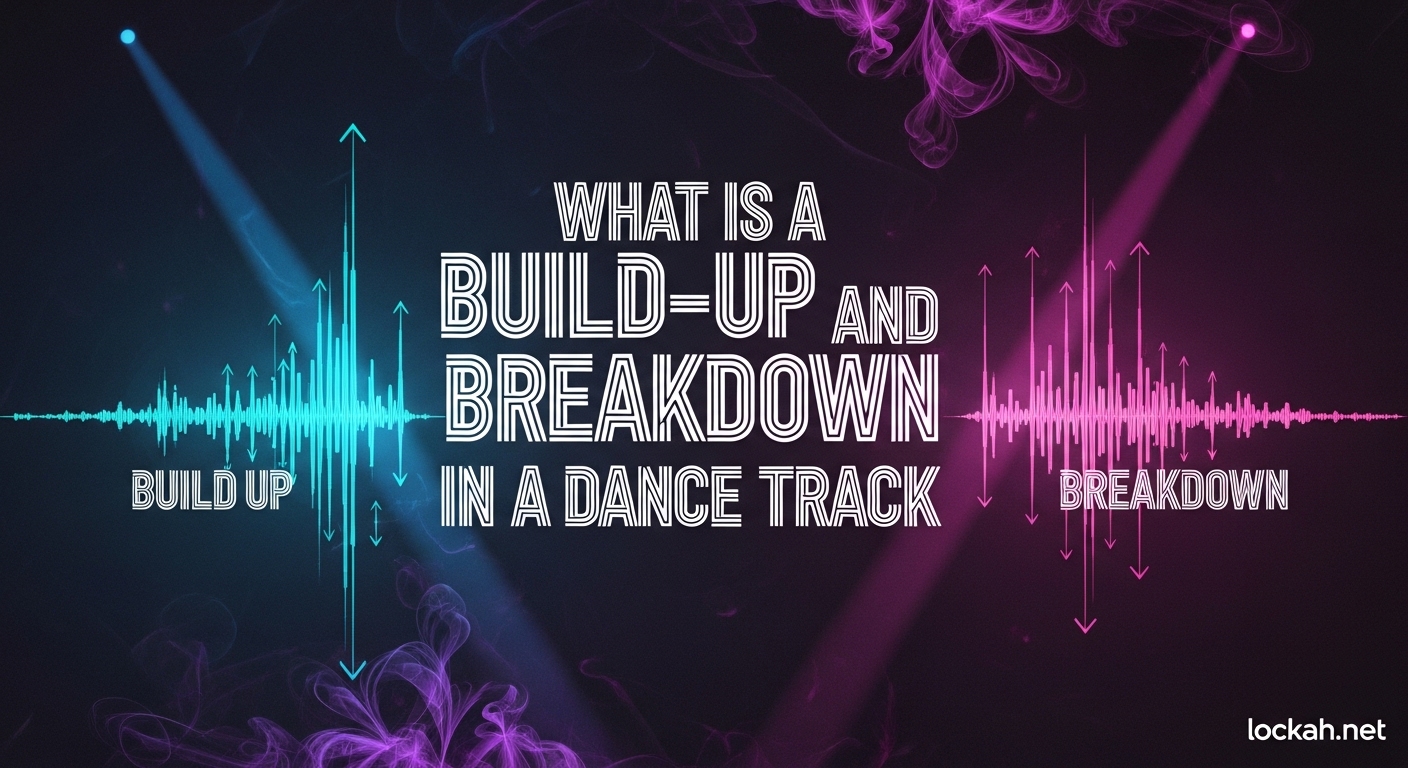
If you have ever wondered why some dance tracks make you feel like you are climbing toward something massive, you are experiencing the power of a build-up and breakdown. These two sections are the heartbeat of electronic dance music, creating the tension and release that keeps listeners hooked and dance floors moving.
A build-up is the section of a track that gradually increases energy and tension, using elements like risers, snare rolls, and filter automation to prepare listeners for the main drop. A breakdown is the section that comes before the build-up, where most elements are stripped away to create contrast and anticipation.
In this guide, I will break down exactly what these sections are, how they work together, and why they matter whether you are producing, DJing, or simply want to understand dance music better.
Table of Contents
What is a Build-Up in a Dance Track?
A build-up is the section of a dance track that creates tension and anticipation leading to the main drop or climax. It is the musical equivalent of climbing a rollercoaster hill. You know something big is coming, and the journey upward makes the eventual release more satisfying.
During a build-up, producers gradually add elements, increase energy, and manipulate sounds to create a sense of rising intensity. The goal is simple: make the listener crave the drop that follows. This section typically lasts between 16 and 32 bars, though it varies by genre.
The psychological effect of a build-up is powerful. Our brains naturally anticipate patterns, and when a build-up is crafted well, it triggers genuine excitement and physical response. That is why you feel your heart rate increase and your body want to move as a build-up progresses.
What is a Breakdown in Dance Music?
A breakdown is a section where the track strips away most of its elements, leaving only the core melody, atmosphere, or vocal. It is the calm before the storm. By removing the drums, bass, and high-energy elements, the breakdown creates space and contrast that makes the following build-up and drop more impactful.
In dance music, the breakdown serves as a reset button. It gives listeners a moment to breathe while maintaining their attention through subtle elements like pads, atmospheres, or vocal snippets. When the build-up emerges from this quieter space, the energy feels fresh and exciting again.
Breakdowns can range from brief moments of eight bars to extended passages of 64 bars or more, particularly in genres like trance. The key is that they create a sense of anticipation by temporarily reducing the track’s energy before building it back up.
Where Build-Ups and Breakdowns Fit in Song Structure?
Understanding where these sections sit within a typical dance track helps clarify their relationship. Most electronic dance music follows a predictable structure that cycles through energy levels to keep the listener engaged.
A typical dance track structure looks like this: Intro, Build-Up 1, Drop 1, Breakdown, Build-Up 2, Drop 2, Outro. Some tracks may have multiple breakdowns and build-ups, while others keep it minimal with just one of each. The breakdown almost always precedes the main build-up, setting the stage for the track’s climax.
Think of it as a wave pattern. The breakdown is the trough, the build-up is the rising slope, and the drop is the crest. This wave pattern repeats throughout the track, creating the dynamic energy that defines dance music.
The Flow Between Sections
The transition from breakdown to build-up is where the magic happens. As the breakdown ends, elements begin to re-enter the mix. A distant riser might fade in. Percussion layers start building. The energy begins its upward trajectory.
By the time the build-up is in full swing, the listener has forgotten the high energy of the first drop. The breakdown created enough contrast that the return to full energy feels exciting rather than repetitive.
Build-Up vs Breakdown: Key Differences
These two sections are often confused, especially by beginners. Here is a clear comparison to help distinguish them:
| Aspect | Build-Up | Breakdown |
|---|---|---|
| Energy Direction | Rising, increasing | Falling, reducing |
| Elements | Adding layers | Removing layers |
| Purpose | Create anticipation for drop | Create contrast and reset |
| Position | Before the drop | After the first drop, before build-up |
| Common Length | 16-32 bars | 16-64 bars |
| Key Elements | Risers, snare rolls, filters | Atmosphere, melody, vocals |
The fundamental difference is direction. A build-up climbs toward something. A breakdown descends away from something. Both serve the same ultimate purpose: making the drop as impactful as possible.
Common Elements Used in Build-Ups
Producers have a toolkit of elements they use to craft effective build-ups. Understanding these elements helps you recognize and appreciate what is happening when you hear them.
Risers and Uplifters
Risers are sounds that increase in pitch, volume, or intensity over time. They are the most recognizable element of a build-up. These can be synthesized tones, noise sweeps, or pitched samples that create a sense of upward motion.
Uplifters serve a similar function but often use noise or filtered white noise to create a rising effect. They add texture and energy without competing with the main musical elements.
Snare Rolls
Snare rolls are perhaps the most classic build-up element. The snare drum hits increase in frequency from quarter notes to eighth notes, then sixteenth notes, and sometimes even 32nd notes right before the drop.
This accelerating pattern creates physical momentum. Our bodies naturally sync with the increasing tempo, and by the time the snare roll reaches its peak, we are physically primed for the drop.
Filter Automation
Filter automation involves gradually opening or closing filters on various elements. High-pass filters remove low frequencies, making the mix feel lighter and more tense. As the build-up progresses, the filter opens, allowing more frequencies through and increasing the sense of fullness.
This technique works particularly well on the bass and kick drum. Removing the low end during a build-up makes the return of the full-frequency drop feel more powerful.
White Noise and Effects
White noise sweeps and crash cymbals add brightness and energy to build-ups. These high-frequency elements cut through the mix and signal that something big is coming. They also help mask transitions between different sections of the build-up.
Pitch Automation
Pitch automation involves gradually raising the pitch of certain elements, often by an octave or more. This creates a sense of rising tension and can make the drop feel like a release of built-up energy.
What Happens During a Breakdown in 2026?
While build-ups add elements, breakdowns remove them. Understanding what gets stripped away and what remains helps explain why breakdowns are so effective.
Elements That Get Removed
The first things to go are the drums, especially the kick drum. The kick provides the rhythmic foundation and energy of dance music, so removing it immediately drops the energy level. Bass lines are typically cut next, as low frequencies carry significant physical energy.
High-energy percussion, synth leads, and effects are also stripped away. What remains is the skeleton of the track: the chord progression, atmospheric pads, and often a vocal or lead melody.
What Remains
The elements that stay during a breakdown are chosen specifically to maintain interest without providing full energy. Atmospheric sounds, reverb tails, and subtle melodic elements keep the listener engaged while allowing their ears and body to rest.
Vocals are commonly featured in breakdowns. Whether it is a full vocal performance or chopped vocal samples, voices provide human connection and emotion that sustains interest even when the track is stripped back.
Creating Space and Anticipation
The breakdown creates anticipation through absence. By removing the elements we have grown accustomed to, the producer creates a sense of longing. We want the drums back. We want the bass to return. This desire makes the eventual build-up and drop more satisfying.
How Build-Ups Create Tension and Anticipation?
The psychology behind effective build-ups is fascinating. Producers are essentially hacking human perception and emotional response through sound design.
The Tension and Release Principle
Human beings crave resolution. When we hear an incomplete musical phrase or rising energy that has not yet peaked, our brains naturally anticipate completion. This anticipation creates tension, and the release of that tension triggers pleasure responses in our brains.
A well-crafted build-up is essentially a promise. It tells the listener: something big is coming. The longer and more effectively that promise builds, the more satisfying the eventual payoff becomes.
Building Energy Through Frequency Manipulation
Build-ups manipulate our physical perception of sound. By gradually removing low frequencies through high-pass filtering, producers make the track feel physically lighter. Our bodies feel less anchored by the bass, creating a sense of rising or floating.
When the drop hits and the low frequencies return, we feel them more intensely because we have been deprived of them. This physical contrast is as important as the musical contrast.
The Psychology of Acceleration
Snare rolls and increasing percussion create physical synchronization. As the tempo of these elements increases, our heart rates and body movements naturally try to match them. By the peak of a build-up, our bodies are primed for explosive movement.
This is why drops feel so physically satisfying. Our bodies have been building toward movement, and the drop provides the perfect release for that built-up physical tension.
How Breakdowns Set Up the Build-Up?
Breakdowns are not just resting places. They are carefully crafted setups that make the following build-up more effective.
Contrast as a Tool
The primary function of a breakdown is contrast. By dropping the energy level significantly, the producer creates a wider gap between the quietest and loudest parts of the track. This wider dynamic range makes the build-up feel more dramatic.
Imagine a build-up without a breakdown. It would follow directly from the previous drop, and the energy would never have a chance to reset. The build-up would feel redundant rather than exciting.
Creating Hunger for the Drop
Breakdowns create desire through deprivation. When the kick drum and bass disappear, we miss them. This longing is what drives our engagement with the build-up that follows. We are not just waiting for the drop. We are hungry for it.
The best breakdowns maintain just enough interest through atmosphere and melody that listeners stay engaged, but leave enough absent that the return feels exciting.
Resetting Listener Expectations
Human perception adapts quickly to constant stimuli. If a track stayed at high energy throughout, we would quickly become accustomed to it and the energy would feel normal rather than exciting.
Breakdowns reset our expectations by providing contrast. After even a short time at lower energy, the high energy of the build-up and drop feels fresh again.
Famous Examples of Build-Ups and Breakdowns
Listening to concrete examples helps solidify these concepts. Here are some tracks that demonstrate these sections effectively across different genres.
EDM Examples
Swedish House Mafia’s “Don’t You Worry Child” features a classic extended breakdown where the piano and vocals carry the track before the iconic build-up with filtered synths and accelerating percussion leads into the massive drop.
Avicii’s “Levels” demonstrates how a breakdown can use a familiar vocal sample to maintain energy while the drums are removed, creating anticipation for the return of the main melody.
House Music Examples
In house music, breakdowns tend to be shorter and more groove-focused. Disclosure’s tracks often feature breakdowns where the bassline continues while drums are stripped back, maintaining momentum while creating space.
The build-ups in house music often rely more on filter sweeps and subtle percussion additions rather than dramatic snare rolls, keeping the energy flowing smoothly into the drop.
Trance Examples
Trance is famous for long, emotional breakdowns. Tracks by artists like Armin van Buuren or Above and Beyond often feature breakdowns lasting a minute or more, where ethereal pads and emotional vocals create a dreamy atmosphere.
The build-ups in trance often use massive snare rolls and supersaw synths that rise in pitch and intensity over 32 bars or more, creating an epic sense of scale before the euphoric drop.
Techno Examples
Techno tends to be more minimal in its approach to breakdowns and build-ups. The breakdown might simply remove the kick for a few bars while maintaining the hypnotic synth patterns.
Build-ups in techno often focus on gradual filter automation and subtle percussion additions rather than dramatic risers, keeping the energy building while maintaining the genre’s hypnotic quality.
How to Identify These Sections in Any Track?
Once you know what to listen for, identifying build-ups and breakdowns becomes second nature. Here are some practical tips.
Listening Tips
Pay attention to the kick drum. When it disappears, you are likely entering a breakdown. When it returns alongside rising energy and snare rolls, you are in a build-up.
Notice the bass frequency content. If the low end suddenly thins out, that indicates a breakdown. If the low end builds back in alongside other rising elements, that is the transition from breakdown to build-up.
Visual Cues in Waveforms
If you are looking at a track’s waveform, breakdowns appear as sections with lower amplitude and less dense patterns. Build-ups show as gradually increasing amplitude and density, often with distinct patterns from snare rolls creating visible lines in the waveform.
The drop will appear as the section with the highest amplitude and most dense waveform pattern, immediately following the build-up.
Practice Techniques
Start by analyzing tracks you know well. Listen specifically for when the kick disappears and reappears. Count the bars in each section. Most dance music is structured in multiples of eight bars, so you can predict where changes will happen.
Active listening becomes easier with practice. Soon you will be able to predict when a build-up is starting and anticipate exactly when the drop will hit.
Genre Variations in Build-Ups and Breakdowns
While the core concepts remain the same, different genres approach build-ups and breakdowns with their own characteristics.
Trance: Long and Emotional
Trance music features some of the longest breakdowns in dance music. Extended passages of 48 to 64 bars allow for emotional build-ups and complex melodic development. The build-ups often use massive supersaw synths and epic snare rolls that create a sense of scale and euphoria.
The emotional impact is paramount in trance. Breakdowns are designed to create introspective moments before the communal celebration of the drop.
House: Groove-Focused and Shorter
House music tends to keep breakdowns shorter, often just 16 bars, to maintain the dance floor’s momentum. The focus is on maintaining groove rather than creating dramatic tension.
Build-ups in house often emphasize percussion and filter automation over dramatic risers. The energy builds through rhythmic intensity rather than through layered effects.
Techno: Minimal and Hypnotic
Techno breakdowns might simply remove the kick while keeping the hypnotic synth patterns running. The contrast is subtle but effective. Build-ups often rely on gradual filter sweeps and subtle percussion additions.
The goal in techno is hypnotic momentum rather than dramatic peaks. Build-ups and breakdowns serve this purpose by creating variation within a continuous groove.
Dubstep and Bass Music: Aggressive and Sudden
Dubstep often features shorter, more aggressive build-ups that lead to heavy bass drops. The breakdowns might feature sparse arrangements with just a vocal or synth stab before the build-up introduces intense snare rolls and risers.
The contrast between the minimal breakdown and the heavy drop is extreme, creating the shock value that defines the genre.
Common Mistakes When Understanding These Sections
Based on forum discussions and common questions, here are the mistakes beginners often make when learning about build-ups and breakdowns.
Confusing Build-Up with Intro
Many beginners think the build-up is the intro to the track. While some tracks do start with a build-up, the intro is typically its own section. The build-up specifically refers to the rising section that leads to a drop, regardless of where it appears in the track.
The intro sets the stage. The build-up creates anticipation for the drop. They can be similar, but they serve different purposes.
Confusing Breakdown with Outro
Another common confusion is thinking the breakdown is the outro. The outro is the ending section of a track, designed for mixing out. The breakdown is a middle section that creates contrast before another build-up and drop.
Some intros and outros might use similar elements to breakdowns, but their purpose is different. Breakdowns are part of the track’s core structure, not its beginning or ending.
Build-Ups That Are Too Long
In production, a common mistake is making build-ups too long. If the tension builds for too long without release, listeners lose interest. Most effective build-ups last between 16 and 32 bars.
The key is maintaining forward momentum. Every element added should increase the sense that something big is coming.
Breakdowns That Lose Energy
A breakdown that strips away too much can lose the listener’s attention. While the purpose is to reduce energy, there must be enough remaining to maintain interest. Atmosphere, melody, or vocals are essential.
The breakdown should feel like a breath, not a complete stop. There must still be forward momentum, just at a lower energy level.
FAQ
What is a breakdown in dance music?
A breakdown is a section in dance music where most elements are stripped away, leaving only core elements like atmosphere, melody, or vocals. It creates contrast and anticipation before the build-up and drop that follow. Breakdowns typically occur after the first drop and serve to reset the track’s energy.
What is a build up in a song?
A build-up is a section that gradually increases tension and energy through elements like risers, snare rolls, and filter automation. It leads directly to the main drop or climax of the track. Build-ups typically last 16-32 bars and are designed to make the drop feel more impactful by creating anticipation.
What is a breakdown in dance?
In dance music context, a breakdown refers to the section where the track strips away drums and bass, creating a lower-energy moment before building back up. It is not related to dance moves, but rather to the structural element of the music that dancers respond to. Breakdowns give dancers a moment to breathe before the energy returns.
What is an example of a breakdown in music?
Famous examples include the piano and vocal section in Swedish House Mafia’s Don’t You Worry Child before the second drop, the atmospheric section in Avicii’s Levels featuring the vocal sample, and the extended ethereal passages in trance tracks by artists like Above and Beyond. These sections strip back the drums while maintaining melodic interest.
How long should a build up be?
Most build-ups in dance music last between 16 and 32 bars, which translates to roughly 15-30 seconds depending on tempo. Some genres like trance may use longer build-ups of 48-64 bars for epic effect, while house music often keeps them shorter at 16 bars. The key is balancing tension creation with listener engagement. Build-ups that are too long can lose momentum, while those too short may not create sufficient anticipation.
What is the difference between a build-up and a drop?
A build-up is the rising section that creates tension and anticipation, while a drop is the climactic moment where that tension is released. The build-up adds energy through risers, snare rolls, and filter automation. The drop is where the full energy of the track hits, typically featuring the main melody, bass, and drums at full intensity. Think of the build-up as the climb and the drop as the summit.
Conclusion
Understanding what is a build up and breakdown in a dance track opens up a new level of appreciation for electronic music. These sections are not just structural formalities. They are carefully crafted psychological tools that create the tension and release that make dance music so physically and emotionally powerful.
A build-up climbs toward something, adding elements and energy to create anticipation. A breakdown descends away from something, removing elements to create contrast. Together they form the essential dynamic that keeps listeners engaged and dance floors moving.
Whether you are a producer looking to craft more effective tracks, a DJ seeking to understand song structure for better mixing, or simply a fan wanting to understand why certain moments in tracks feel so satisfying, this knowledge transforms how you listen to dance music. Start analyzing your favorite tracks today, and you will quickly hear these sections everywhere.