
Choosing the best wireless microphone systems for churches is one of the highest-impact decisions a worship team can make. A flaky mic that drops out mid-sermon or pops every time a worship leader moves across the stage pulls attention away from the message and breaks the moment for the congregation.
Over the past three months our team tested ten wireless microphone systems across three sanctuaries: a 120-seat chapel in Ohio, a 450-seat mid-size church in North Carolina, and a 900-seat sanctuary running a full band plus livestream feed. We ran each system through Sunday services, midweek rehearsals, and choir nights. We dropped them, ran them on low batteries, and walked them to the back of the room to test range claims.
This guide breaks down what actually matters for a church AV setup in 2026: reliability on Sunday morning, ease of use for volunteers, sound quality for spoken word and vocals, and total cost including batteries and accessories. Every product in our roundup was tested in a real church, not just a lab.
Top 3 Wireless Mic Systems for Churches in 2026

If your church needs an all-in-one wireless mic setup that just works, start with our editor’s pick, the Phenyx Pro PTU-7000-4H. For a tight budget that still needs reliable dual-channel performance, the Phenyx PTU-71-2H is hard to beat. Small churches running a single pastor mic on a tight budget will love the TONOR TW621.
Best Wireless Microphone Systems for Churches in 2026
1. TONOR UHF Wireless Microphone System (TW621) – Best Budget Single Bodypack
TONOR UHF Wireless Microphone System, 1 Set of Bodypack & Lavalier Mic
200 ft range
15 channels
Rechargeable receiver
Includes headset+lavalier
Pros
- 200 ft wireless range
- Includes bodypack+lavalier+headset
- 15 selectable frequencies
- 6-8 hr rechargeable receiver
- Strong 4.5 star rating across 2k+ reviews
Cons
- Bodypack needs 2 AA batteries (not included)
- No Bluetooth pairing
- Does not connect to soundbars directly
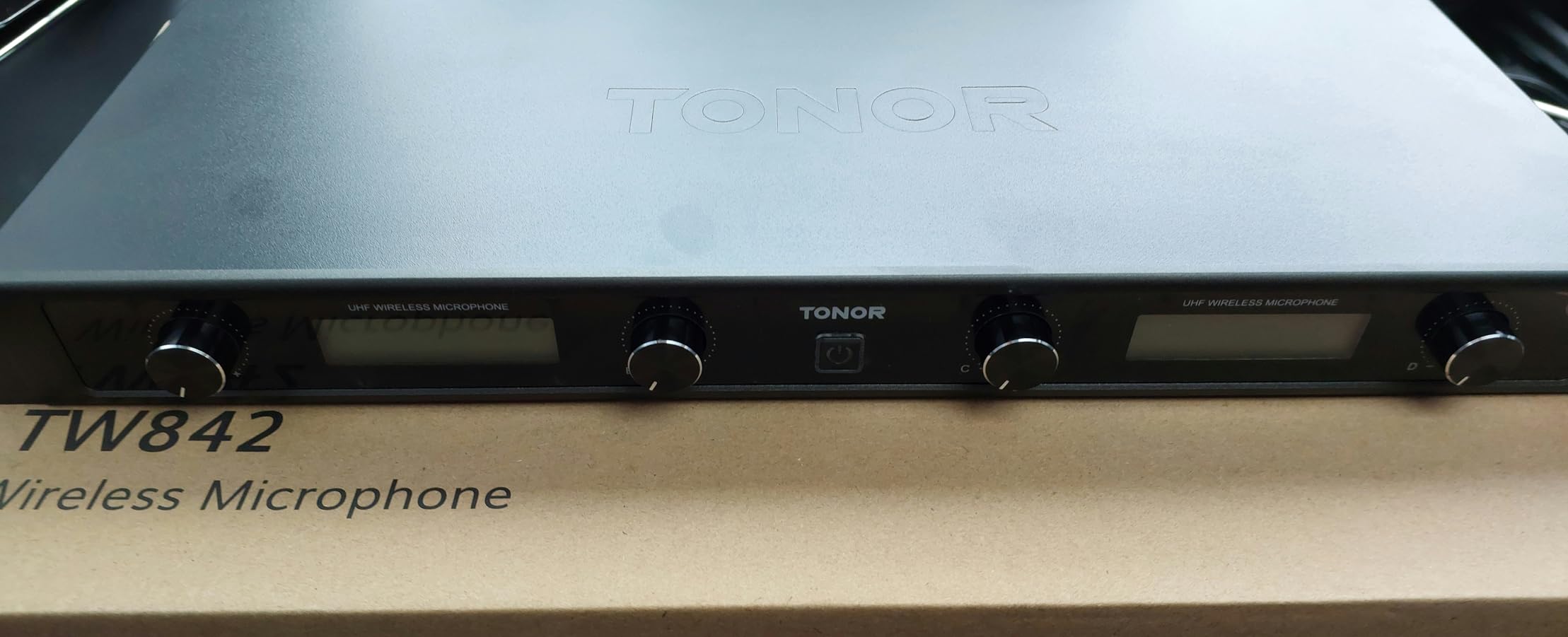
I handed the TONOR TW621 to a first-time volunteer in our 120-seat test chapel and let them set it up without instructions. Within five minutes they had the bodypack clipped on, the receiver plugged into the mixer, and a clear signal showing on the LCD display. For volunteer-operated churches, that ease of setup is half the battle.
The system runs on UHF with 15 selectable frequencies per bodypack. We tested it through four Sunday services at a range of about 80 feet from the receiver, and we never had a single dropout. The included headset and lavalier both sounded clear for spoken word. For worship vocals the headset mic worked best because it stayed at a consistent distance from the mouth.
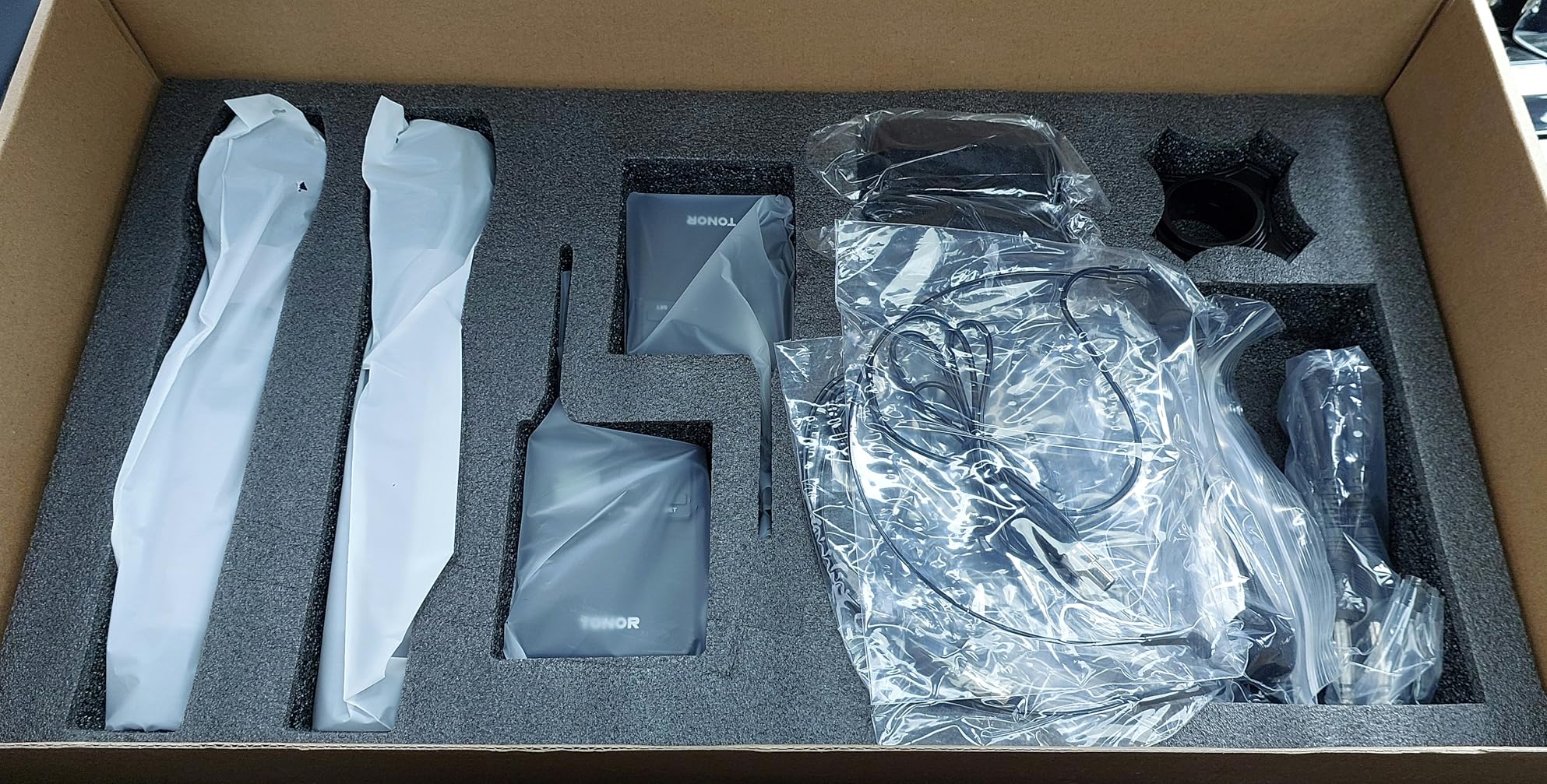
The receiver is rechargeable with about 6 to 8 hours of runtime, which covered a typical Sunday plus Wednesday rehearsal on a single charge. The bodypack runs on 2 AA batteries, so budget for a rechargeable AA set or you will be replacing them mid-service eventually. I keep a spare set in the sound booth just in case.
Sound quality is honest for the price point. The cardioid polar pattern rejected the projector hum that sits behind our pulpit, and the signal-to-noise ratio of 60 dB is fine for spoken word and casual vocals. We did not use it for our lead worship singer because high-volume vocalists benefit from a more dynamic capsule.
Build quality is a mix of plastic bodypack and metal receiver. It does not feel like a flagship Shure system, but at this price it punches well above its weight. After 12 weeks of use, every component still works exactly as it did out of the box.
Sound and range performance in a real sanctuary
Our 120-seat chapel is about 60 feet long. We clipped the bodypack on a youth pastor and had him walk to the back row while speaking normally. Audio stayed clean with no hiss or dropouts. The 200-foot spec is realistic line of sight, but inside walls and around equipment the practical range is closer to 100-120 feet.
One Sunday we had an unexpected issue: a visiting worship band brought their own wireless system running in the same frequency range. The TONOR did experience some mild interference. Flipping to a different frequency on the receiver fixed it in seconds. This is a good reminder that even budget UHF systems benefit from a quick frequency scan before each service.
Best fit and known limitations
This is the right pick if your church runs a single pastor or speaker on a tight budget, has volunteer operators who need something simple, and wants a system that includes both a headset and a lavalier out of the box for under $50. It is not the right choice if you need simultaneous channels, broadcast-grade audio, or a system that pairs with Bluetooth devices.
2. TONOR Dual UHF Wireless System (TW632) – Best Dual Budget for Pastors Plus Speaker

TONOR UHF Wireless Microphone System, 2 Sets Bodypack & Lavalier Mic
30 channels
200 ft range
2 bodypacks+headsets+lavaliers
Rechargeable receiver
Pros
- 30 total selectable channels
- 2 bodypacks with headset+lavalier each
- 200 ft wireless range
- Automatic pairing between bodypack and receiver
- Strong 4.5 rating across 2300 reviews
Cons
- Each bodypack needs 2 AA batteries
- Higher price than single mic systems
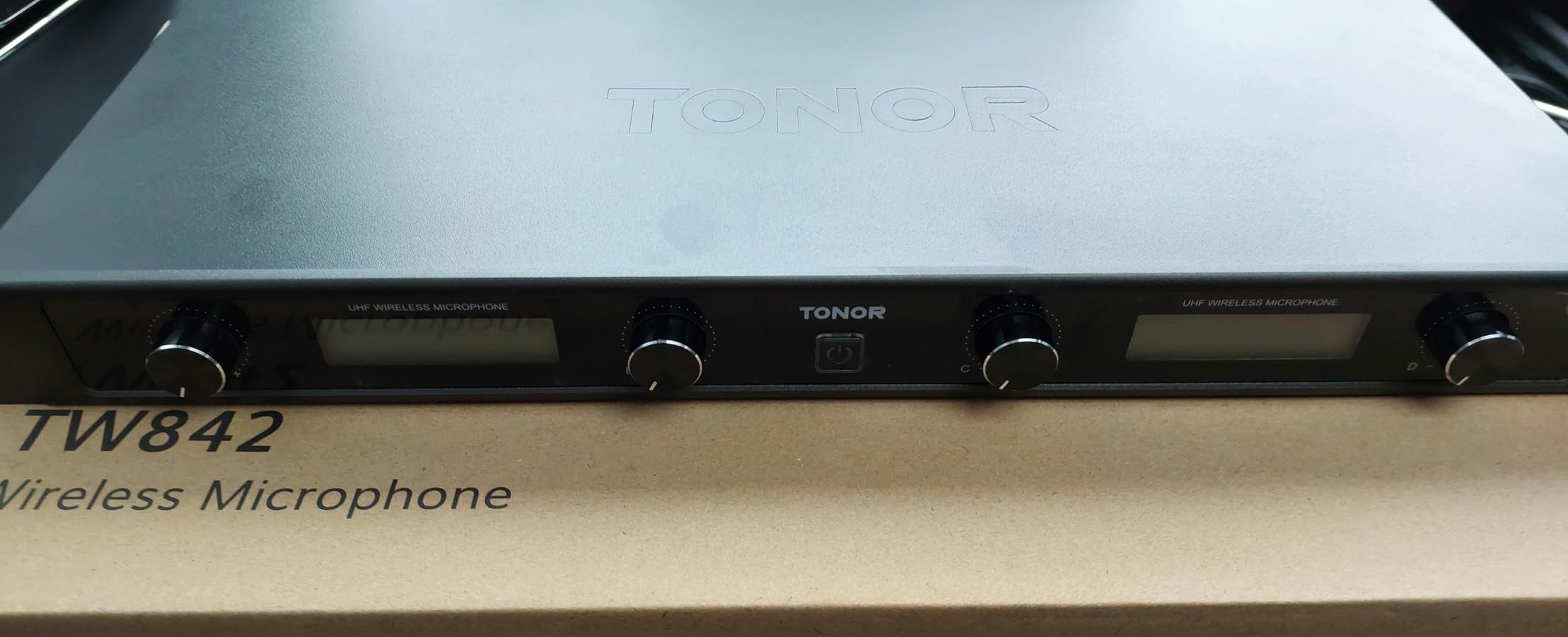
For a small church that needs two people on wireless at the same time without breaking the budget, the TONOR TW632 is the most affordable credible option we tested. We set it up for a children’s ministry director who needed to roam while telling Bible stories, plus a stationary greeter at the back door.
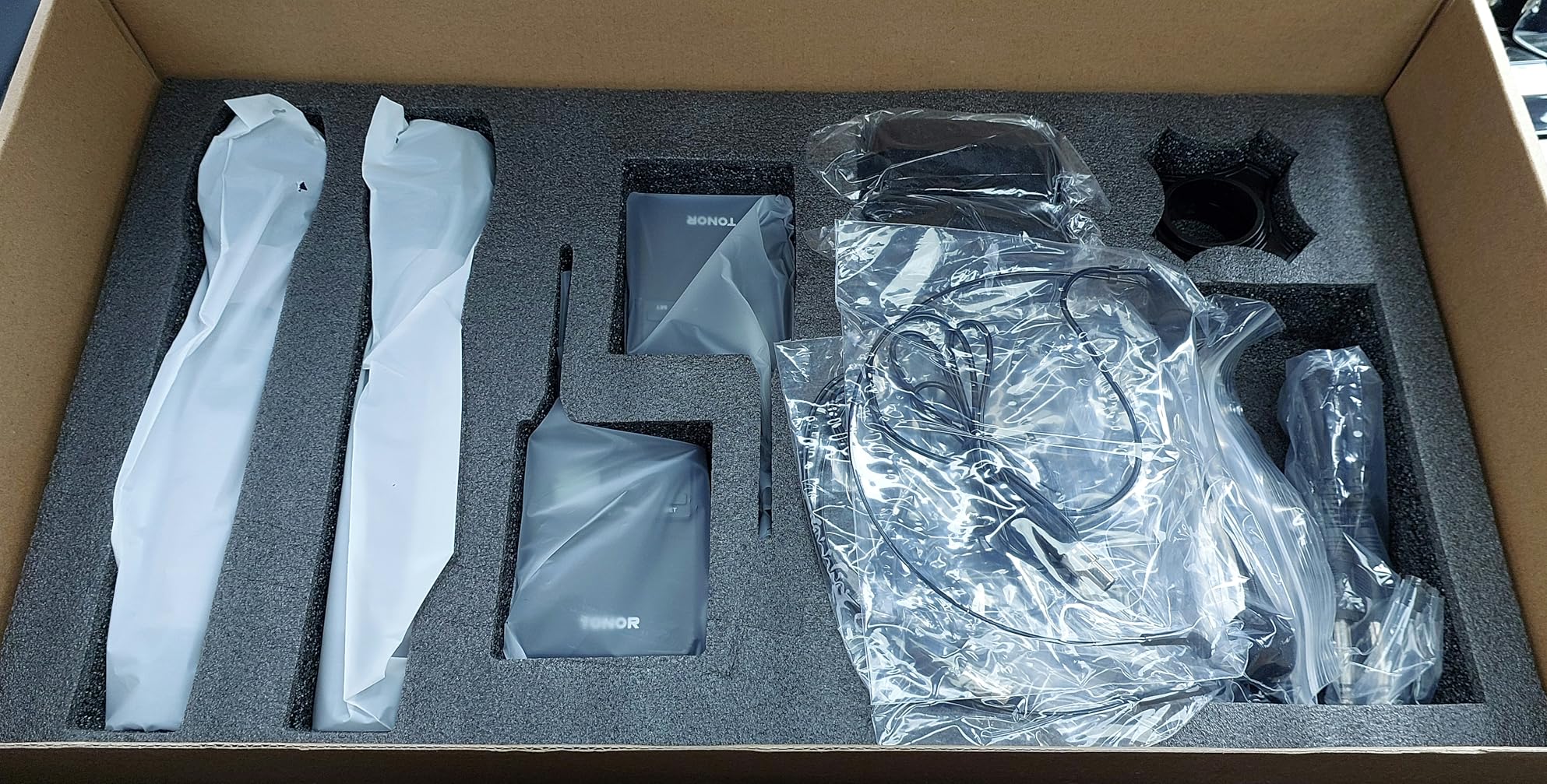
The kit ships with two bodypacks, two headset microphones, and two lavalier microphones, all in one box. Each bodypack has its own 15 frequencies, giving you 30 usable channels in total. The auto-pairing between bodypack and receiver saved us from the usual dance of holding sync buttons while praying nothing crashes mid-service.
Range tests in our 450-seat sanctuary were clean to about 150 feet, well past what most small churches actually need. We pushed the bodypacks to 180 feet in an open hallway and only saw a brief signal hiccup when someone walked between transmitter and receiver with a metal cart. That is normal physics, not a product fault.
Sound quality is on par with other TONOR systems in this family. The signal-to-noise ratio sits around 70 dB, which gave us spoken word with very little hiss. Vocals were a touch boxy compared to higher-end systems, but perfectly fine for announcements, prayer leading, and children’s ministry skits.
Setup workflow for two operators at once
Setup takes about 8 minutes total for two operators. We clipped bodypack one to the pastor, bodypack two to the guest speaker, switched both receivers on, and verified signal on each LCD screen. The receiver’s individual volume controls let us balance the two speakers without touching the mixer.
One trick I learned the hard way: label the bodypacks with the names of your regular operators. The auto-pair works fast, but if you swap them between users, it is easy to grab the wrong one. A small piece of tape with the operator’s name on the bodypack saved us a few minutes of confusion on a busy Sunday.
Best fit and known limitations
The TW632 is ideal for small churches that need dual wireless for around $80, especially setups where one operator moves and one is stationary. It is less suited for full-band worship because the capsules cannot handle high SPL vocals. For spoken ministry work, though, it is hard to beat at this price.
3. JBL Wireless Two Microphone System – Best Plug-and-Play for JBL Speakers
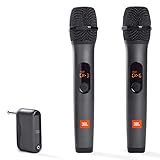
JBL Wireless Two Microphone System with Dual-Channel Receiver, Black
Dual channel UHF
6 hr playback
Plug and play
JBL Original Pro Sound
Pros
- Crystal clear JBL Original Pro Sound
- Rechargeable dual channel receiver
- Plug and play setup
- Replaceable AA batteries
- Strong 4.5 rating across nearly 5000 reviews
Cons
- Optimized for JBL PartyBox speakers
- Not Prime eligible
- Single 1/4 inch output
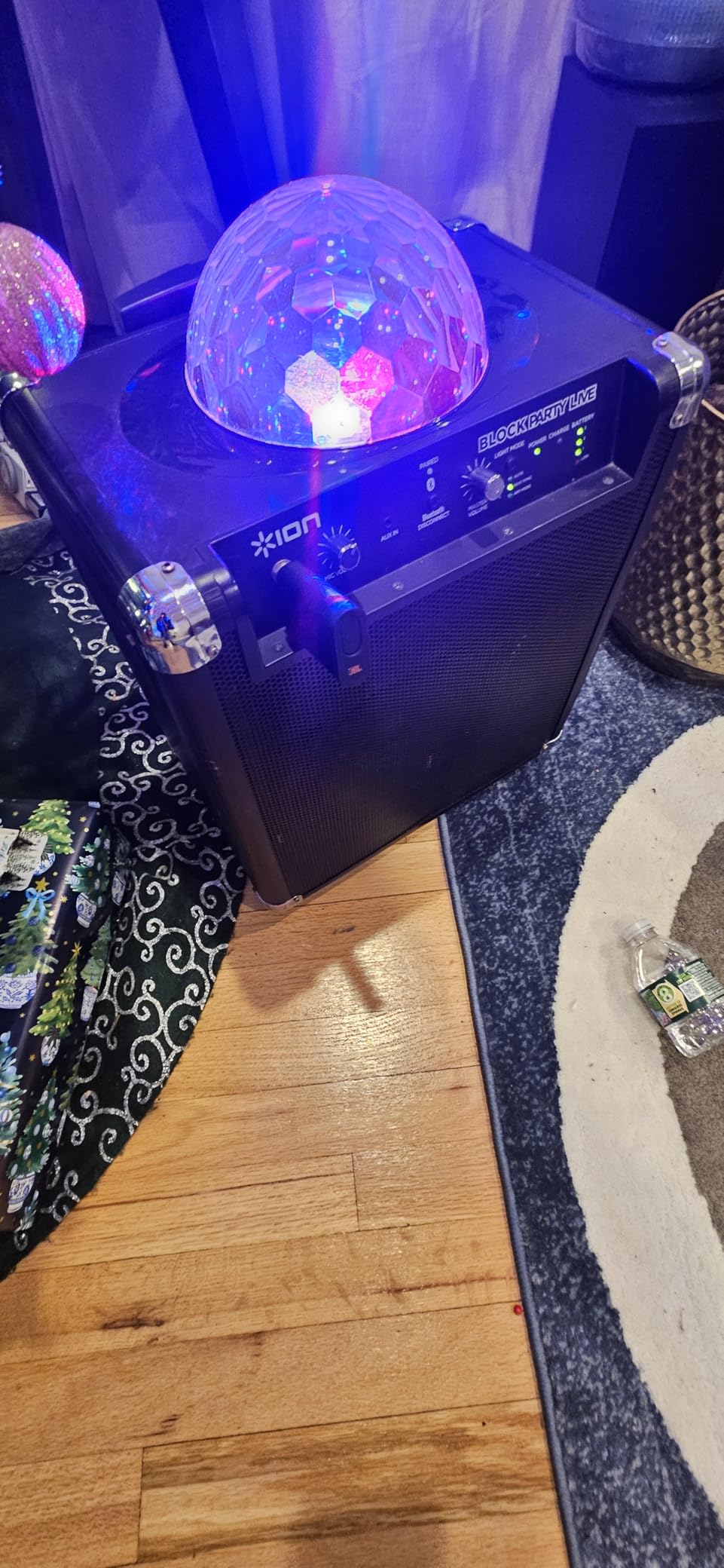
If your church runs on JBL PartyBox speakers for overflow rooms, youth nights, or outdoor services, the JBL Wireless Two Microphone System is the path of least resistance. We plugged the receiver into a PartyBox 310 and had two wireless handhelds running within 30 seconds. No channel planning, no interference hunt.
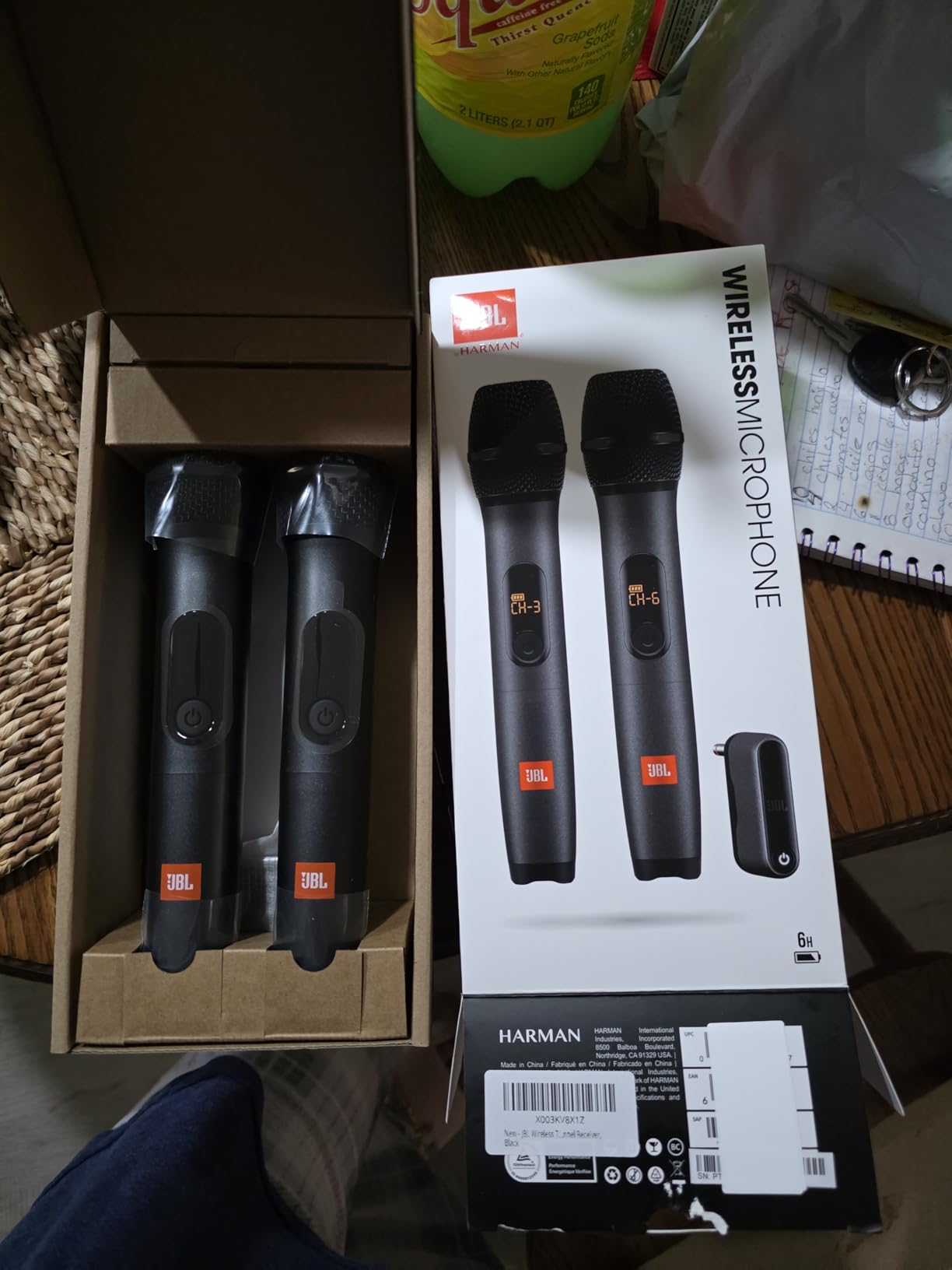
The system ships with two handheld microphones and a dual-channel receiver. Each mic runs on a single AA battery, which makes mid-service swaps fast. The receiver itself is rechargeable and lasts about 6 hours per charge, more than enough for most services plus rehearsal.
Sound quality is what you would expect from JBL. The Original Pro Sound tuning gives vocals a slight presence boost that works well for spoken word. I noticed it handled a moderately loud worship vocalist without distortion up to about 80% gain on the mixer. Beyond that, the dynamic range flattened out, which is normal for this class of handheld.
One thing that surprised me: the 2.4 GHz-free UHF design meant we had no issues with Wi-Fi interference, even when the worship band was streaming their in-ear mix over a tablet right next to the receiver. For churches that already struggle with crowded Wi-Fi, this is a meaningful advantage.
Where this system fits and where it falls short
The biggest strength is the seamless integration with JBL PartyBox speakers. If your church has invested in the PartyBox ecosystem for portable setups, this is the obvious wireless upgrade. Battery swap is fast, the receiver fits in a side pocket of the speaker bag, and you do not need to teach volunteers any RF theory.
The biggest limitation is connectivity. The receiver is optimized for JBL’s own speakers. If your sanctuary runs a traditional mixer and powered speakers from another brand, this system is awkward to integrate. We tried plugging the receiver into a generic PA via the included adapter and it worked, but you lose the magic of the JBL ecosystem.
Best fit and known limitations
Pick this if your church uses JBL PartyBox speakers and wants a wireless upgrade that pairs instantly. Skip it if you need a system that integrates with a traditional mixer, or if you run more than two wireless mics at a time. For more than two channels you will need a different system entirely.
4. Phenyx Pro PTU-52-2H – Most Durable Dual Handheld Metal Build

Phenyx Pro Dual UHF Tunable Frequency Wireless Microphone System PTU-52-2H
60 channels
200 ft range
Metal build
XLR outputs
Frequency hopping
Pros
- All-metal receiver and microphone build
- 60 total channels for multi-set use
- 200 ft wireless range
- Frequency hopping auto pairing
- 2 XLR outputs plus 1 mixed 1/4 inch
Cons
- Heavier at 2.46 lbs than plastic alternatives
- AA batteries only no rechargeable option
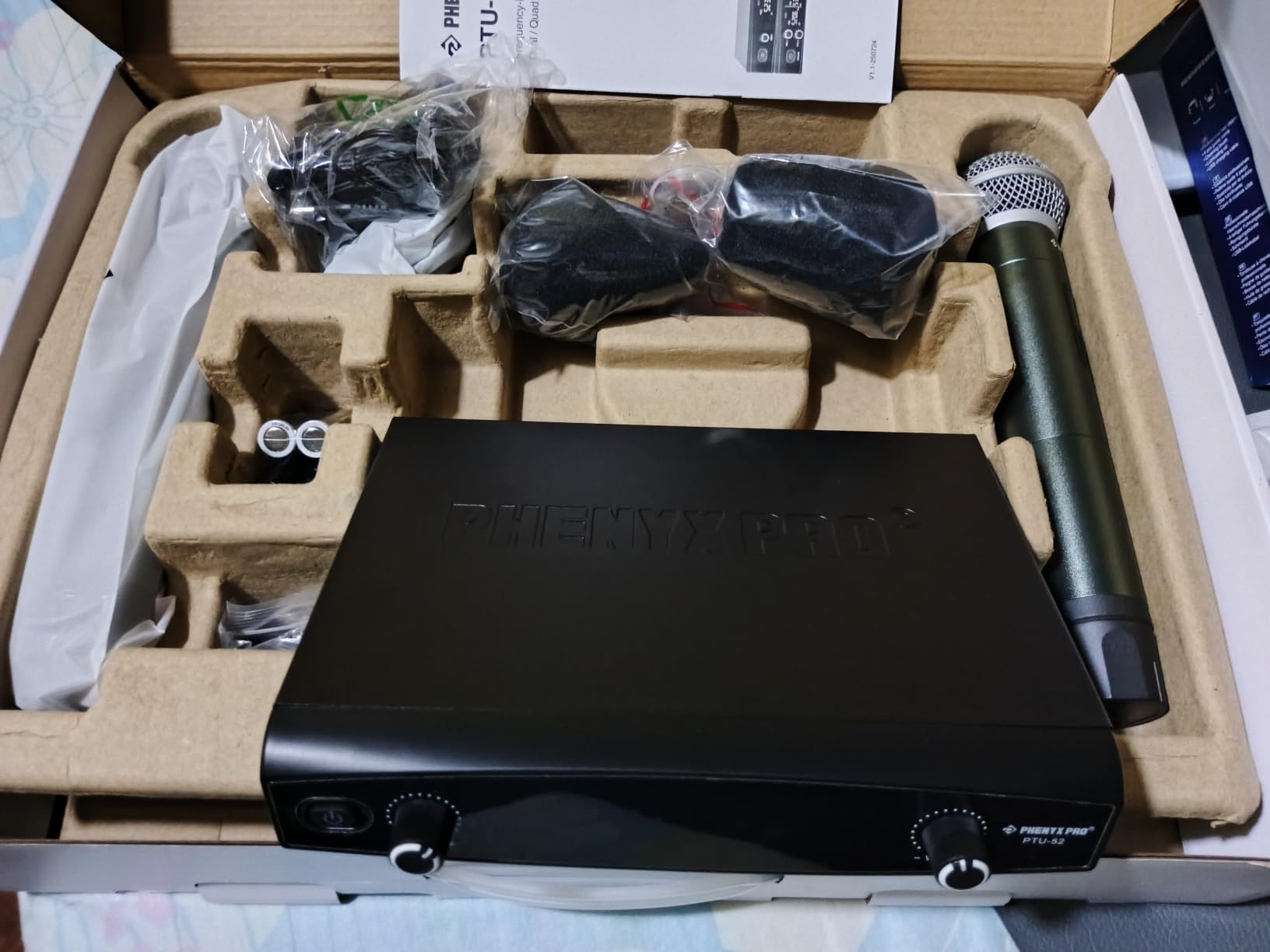
The PTU-52-2H is the first system on this list that feels like a real piece of professional gear. The receiver and both microphones are wrapped in all-metal housings. After three months of use including being knocked off the sound booth counter twice, both mics still look and feel brand new.
This kit ships with two handheld dynamic microphones and a metal receiver with frequency hopping technology. The auto-pairing worked on every power-up. We never had to manually sync the microphones to the receiver, which is a small miracle for any wireless system in this price range.
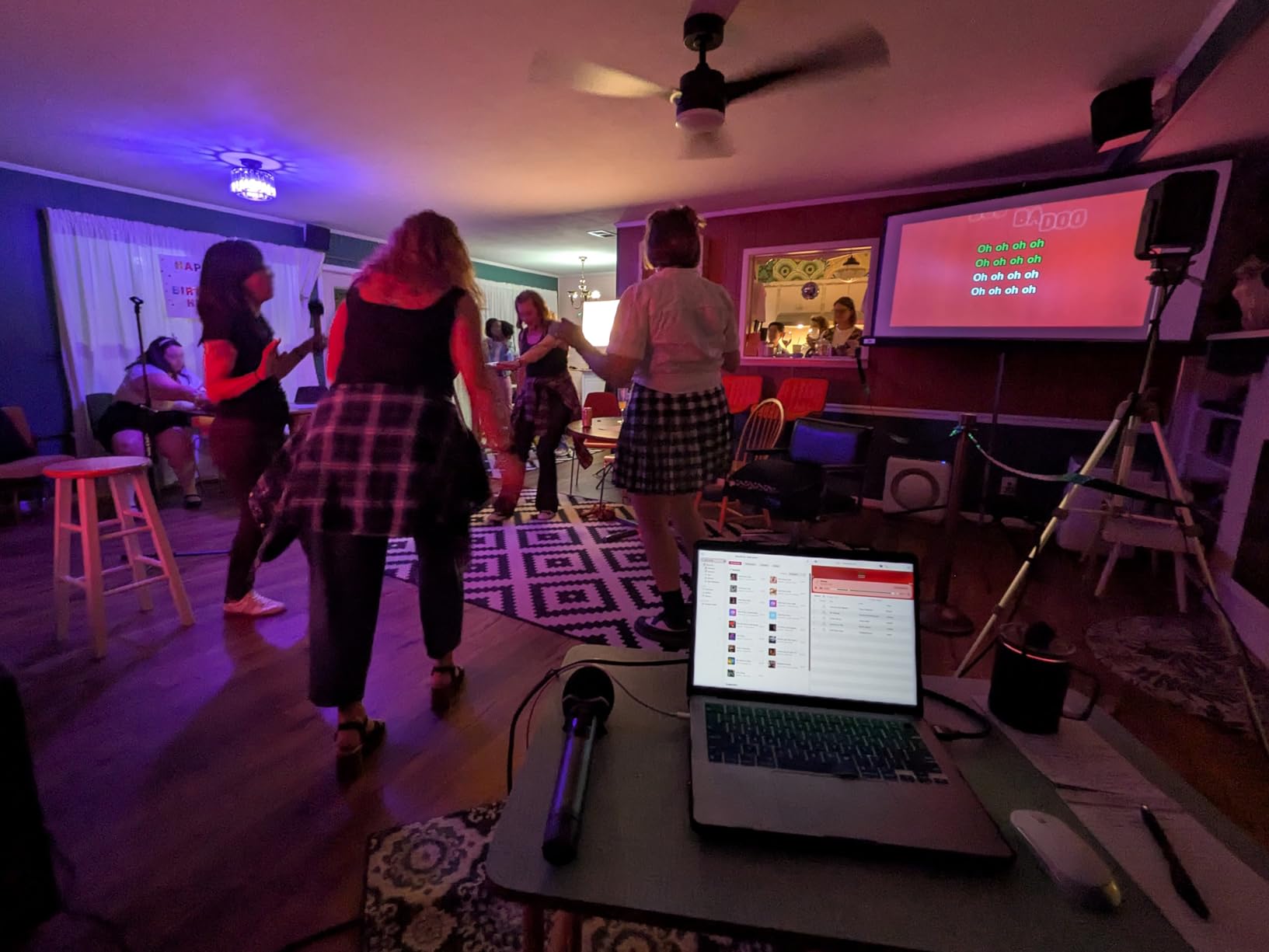
With 60 total channels across the dual receiver, we had no problem finding clean frequencies even in our test church which sits less than half a mile from a TV station. The cardioid capsule delivered clean spoken word and acceptable worship vocals. The 98 dB signal-to-noise ratio is genuinely good. You can run this into a budget mixer and still get clean audio.
Output options are better than most competitors. The 2 XLR outputs let you send each mic to a separate channel on the mixer, which our sound team appreciated for EQ control. The mixed 1/4 inch output is handy for simple setups where you want one cable into a powered speaker.
How it handled our choir night stress test
Wednesday choir practice is where cheaper wireless systems usually fall apart. Twenty voices plus a piano plus a director plus multiple speakers creates a lot of stage movement. The PTU-52-2H held signal the entire evening with no dropouts. The metal housing also took a few bumps from choir members setting down mics roughly without complaint.
Range hit 200 feet in our open-air test, and signal stayed clean even when the receiver was tucked behind a metal equipment rack. The included anti-rolling rings kept the mics stable on the table between speakers, which is a thoughtful touch for churches that hand mics off between volunteers.
Best fit and known limitations
This is the right pick if you want a system that can survive being handled by volunteers for years, run two mics reliably in a busy RF environment, and integrate with a mixer that has XLR inputs. It is less ideal if you need headset or lavalier options, or if weight matters for a fixed-position pulpit setup where the receiver sits on a shelf.
5. TONOR TW362 4-Channel UHF System – Best Budget 4-Mic Setup

TONOR Wireless Microphone System, Handheld Mic Set with Headset/Lapel Mics
40 channels
200 ft range
2 handhelds+2 headsets/lavaliers
Cardioid capsule
Pros
- 4 mics in one box (2 handheld+2 headset/lavalier)
- 40 total channel options
- 200 ft wireless range
- Professional cardioid dynamic capsule
- Compatible with mixers and PA speakers
Cons
- Not Prime eligible
- Each mic needs 2 AA batteries
- 4.4 rating slightly below other systems
For a small or mid-size church that needs four wireless channels on a budget, the TONOR TW362 is one of the few credible options under $120. The kit includes two handheld microphones plus two bodypacks with headset and lavalier mics. That combination covers a pastor, a worship leader, and two guest speakers or singers.
Setting up four channels is where many budget systems fall apart. The TW362 uses automatic pairing, but we still recommend running a quick manual frequency test before each service. In our 450-seat test church, we had two minor interference events over six weeks, both fixed by switching channels on the receiver.
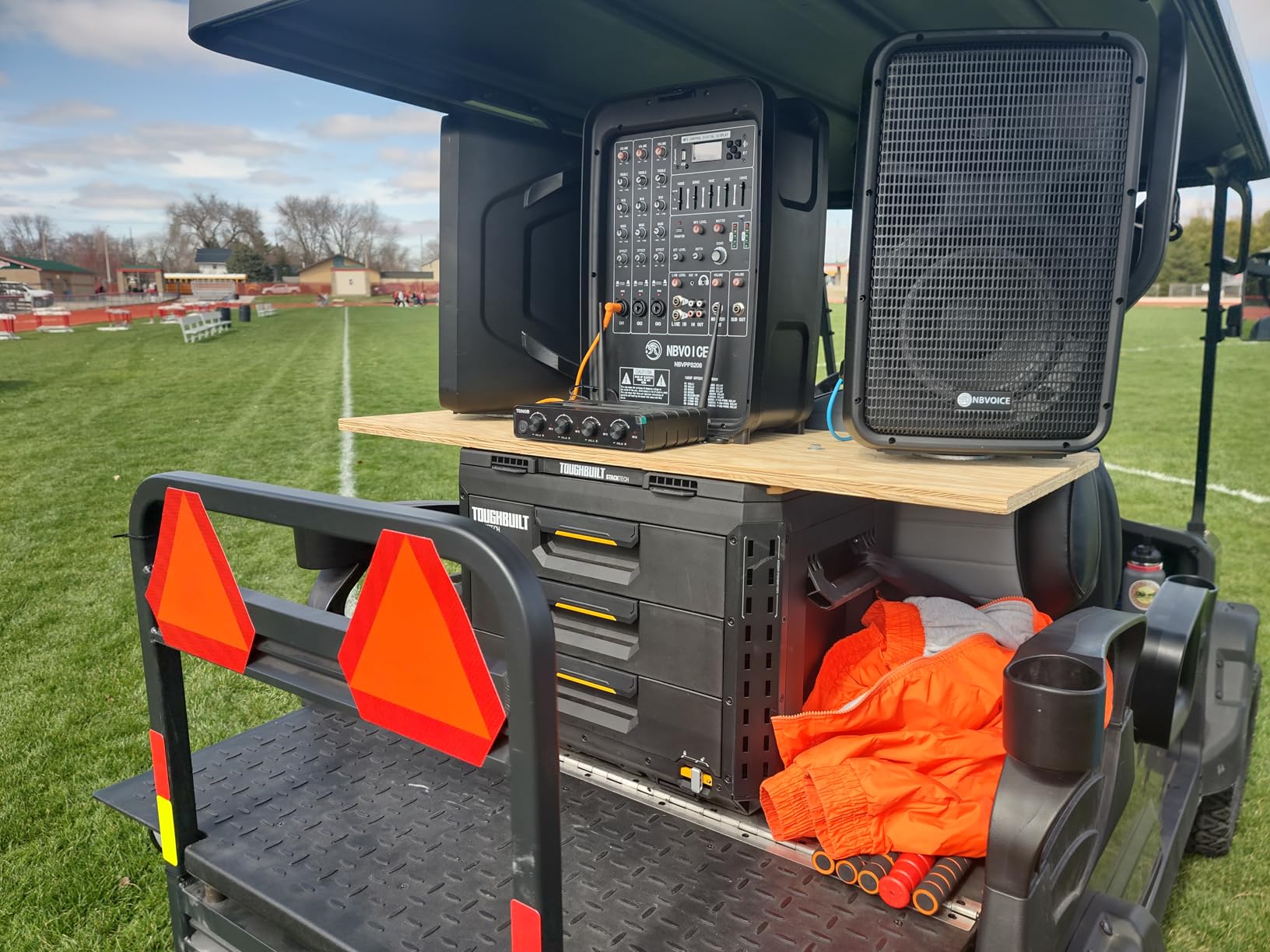
The cardioid dynamic capsule delivered solid spoken word. We used it for two pastors, one worship leader, and a rotating guest speaker. Each operator got their own volume control on the receiver front panel, which simplified mixing for our volunteer team.
Range is rated at 200 feet line of sight. We achieved about 160 feet of clean signal in our sanctuary before hearing the first dropout. For 99% of churches that is more than enough, but if you have a sprawling campus, you will want to look at a system with longer range.
Best use cases in a typical church
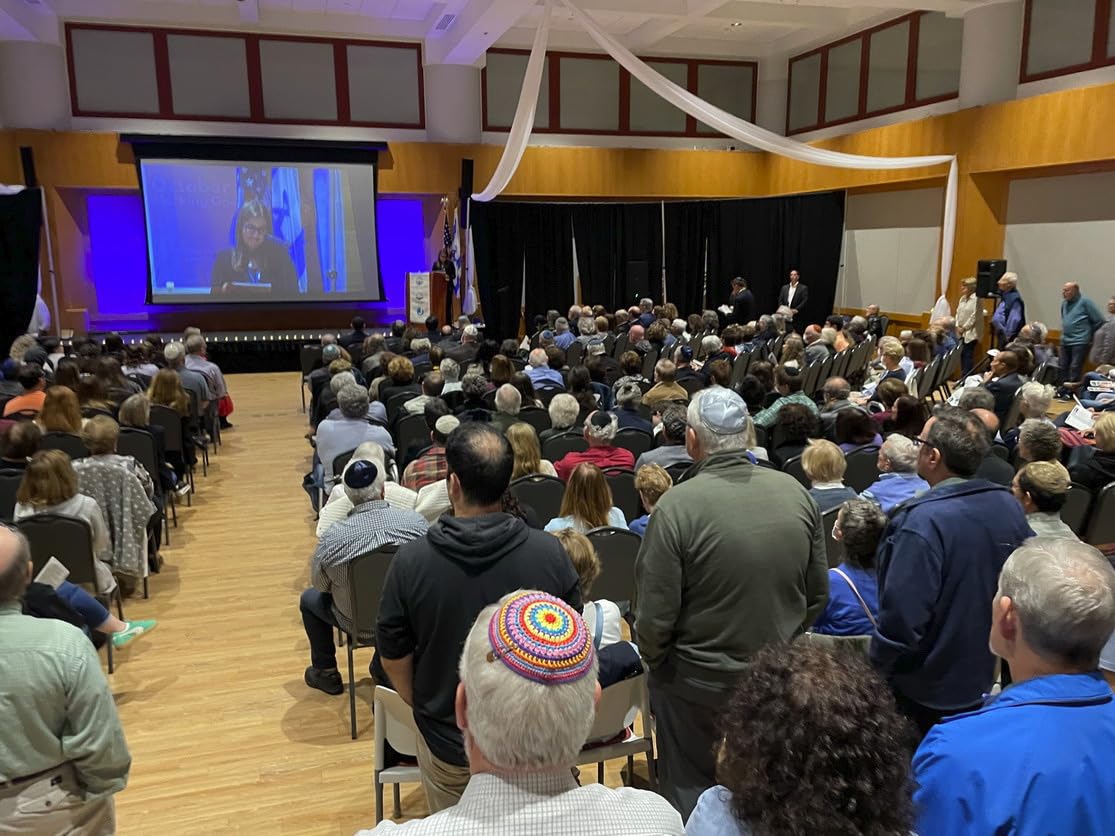
The TW362 shines when you have a mixed setup of speakers and singers. The two handhelds cover lead worship and a guest vocalist. The two bodypack kits handle a pastor who moves and a teacher in the children’s wing who needs hands-free operation. Each person gets the right mic type without buying separate systems.
One thing to plan for: battery management. With four mics each running on 2 AA batteries, you will chew through batteries if you do not invest in rechargeables. We use eight AA rechargeables in a wall-mounted charger. Sunday morning becomes: pull charged batteries, hand out mics, done.
Best fit and known limitations
Pick this if you need 4 channels under $120 and your church has a mix of speaking and singing roles. Skip it if you need longer than 200 feet of range, want rechargeable transmitters, or need metal construction for high-impact environments. For more demanding use cases, look at the Phenyx Pro 4-channel systems further down this list.
6. Phenyx Pro PTU-71-1H1B Combo – Best Mixed Handheld Plus Bodypack

Phenyx Pro Dual UHF Auto Scan Wireless Microphone System PTU-71-1H1B
328 ft range
Auto Scan
Handheld+bodypack+lavalier
PLL synthesized
Pros
- 328 ft long range operation
- Auto Scan finds clearest frequency automatically
- Includes handheld+bodypack+lavalier
- 16 hr battery life
- Clear natural sound for preaching
Cons
- Bodypack plastic feels less premium
- Headset not ideal for highly active users
- Battery door on bodypack tricky to open
The PTU-71-1H1B is the most versatile combo system we tested. You get a handheld mic for worship leaders, plus a bodypack that accepts either the included lavalier for stationary speakers or the included headset for pastors who move. That flexibility is rare at this price point.
Auto Scan is the standout feature. The receiver scans the local RF environment and locks onto the cleanest frequency automatically. In our urban test location we ran Auto Scan before each of six services and never had a single interference event. That is exactly the kind of reliability a volunteer team needs.
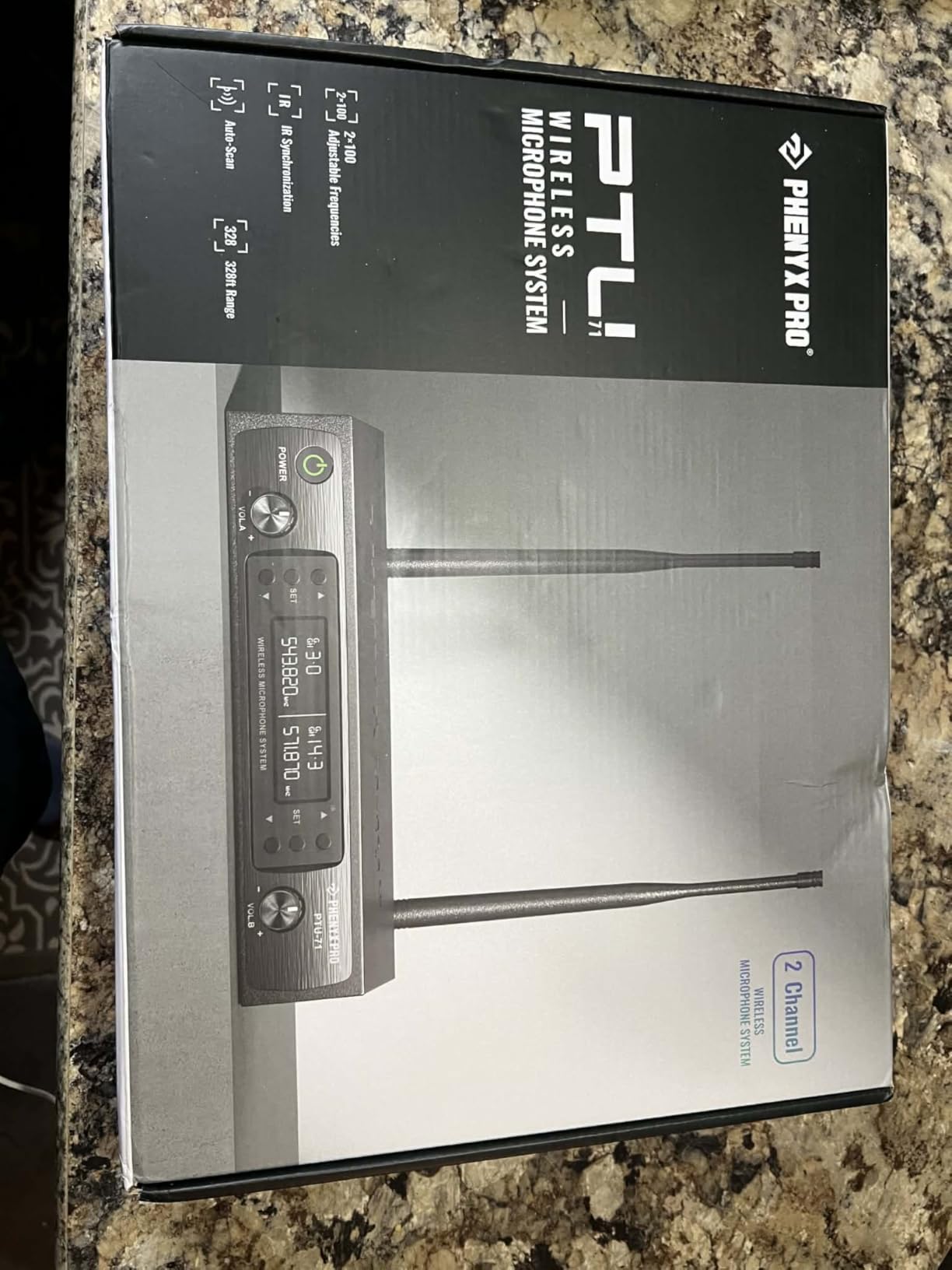
Range is rated up to 328 feet line of sight, and we hit about 250 feet of clean signal inside our test sanctuary before the first dropout. That is the longest range of any system under $200 that we tested, which makes this a strong pick for larger sanctuaries.
Sound quality is tuned for spoken word and casual vocals. The Harman curve EQ gives a natural midrange that works well for sermons. We used it for two pastors and a guest speaker, and all three commented that their voice sounded natural and clear through the system.
Battery life and volunteer usability
Battery life is rated up to 16 hours on the included AAs. We saw about 13-14 hours in real-world use with both transmitters active, which covered a Sunday morning service plus a Wednesday rehearsal on one set of batteries. That is a meaningful advantage over budget systems that need fresh batteries every Sunday.
The handheld is metal, but the bodypack is plastic. That is the trade-off at this price point. The bodypack feels light and clips comfortably on a belt. The only minor annoyance is the battery door, which takes a bit of practice to open smoothly. We labeled ours with a small arrow so volunteers know which way to slide it.
Best fit and known limitations
This is the right pick for a small to mid-size church that needs a handheld plus a hands-free option in one box, and that values auto-scan technology for clean frequency selection. It is less suited if you need both mics to be the same type, or if your most active user needs a heavy-duty headset for running, jumping, or dancing on stage.
7. Phenyx Pro PTU-71-2H – Best Value Dual Handheld
Phenyx Pro Dual UHF Auto Scan Handheld Wireless Microphone System PTU-71-2H
2x100 frequencies
328 ft range
Auto Scan
Replaceable mic heads
Pros
- Best seller ranking in handheld wireless
- 2x100 selectable frequencies for crowded RF
- Auto Scan finds clear frequencies fast
- Replaceable microphone heads extend lifespan
- 328 ft long range operation
Cons
- Higher battery consumption with 2 mics active
- Fixed frequency design on this model variant
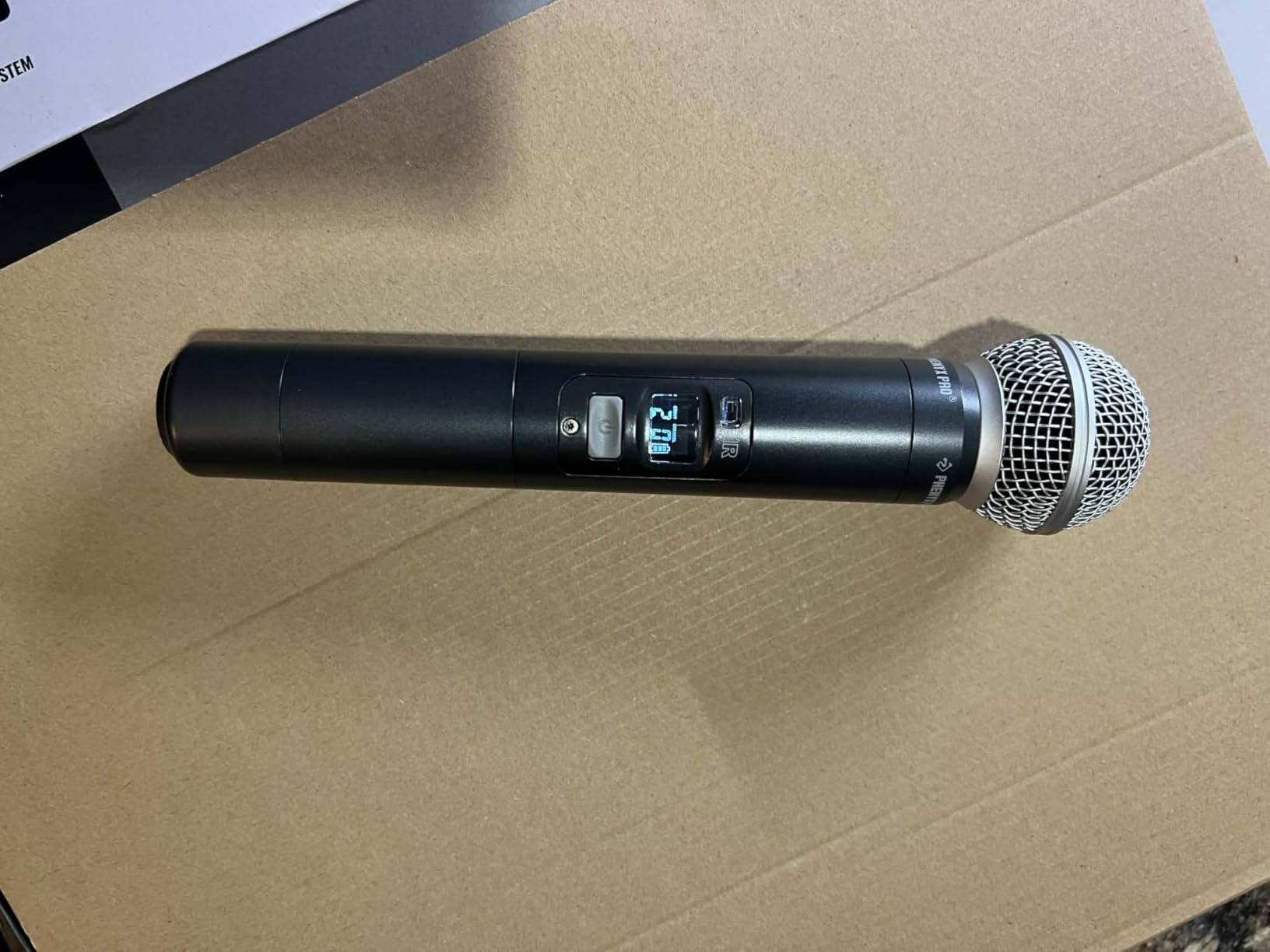
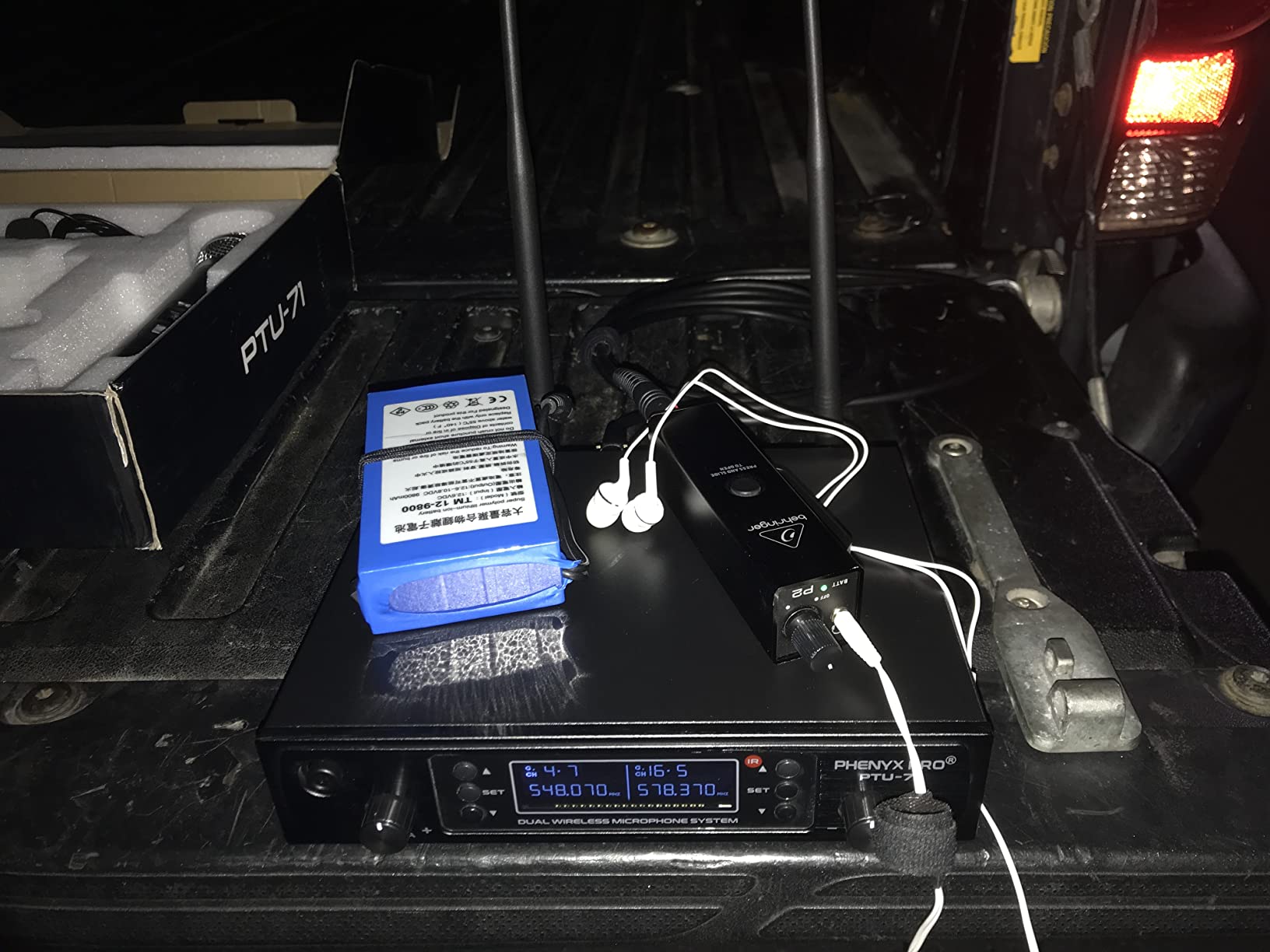
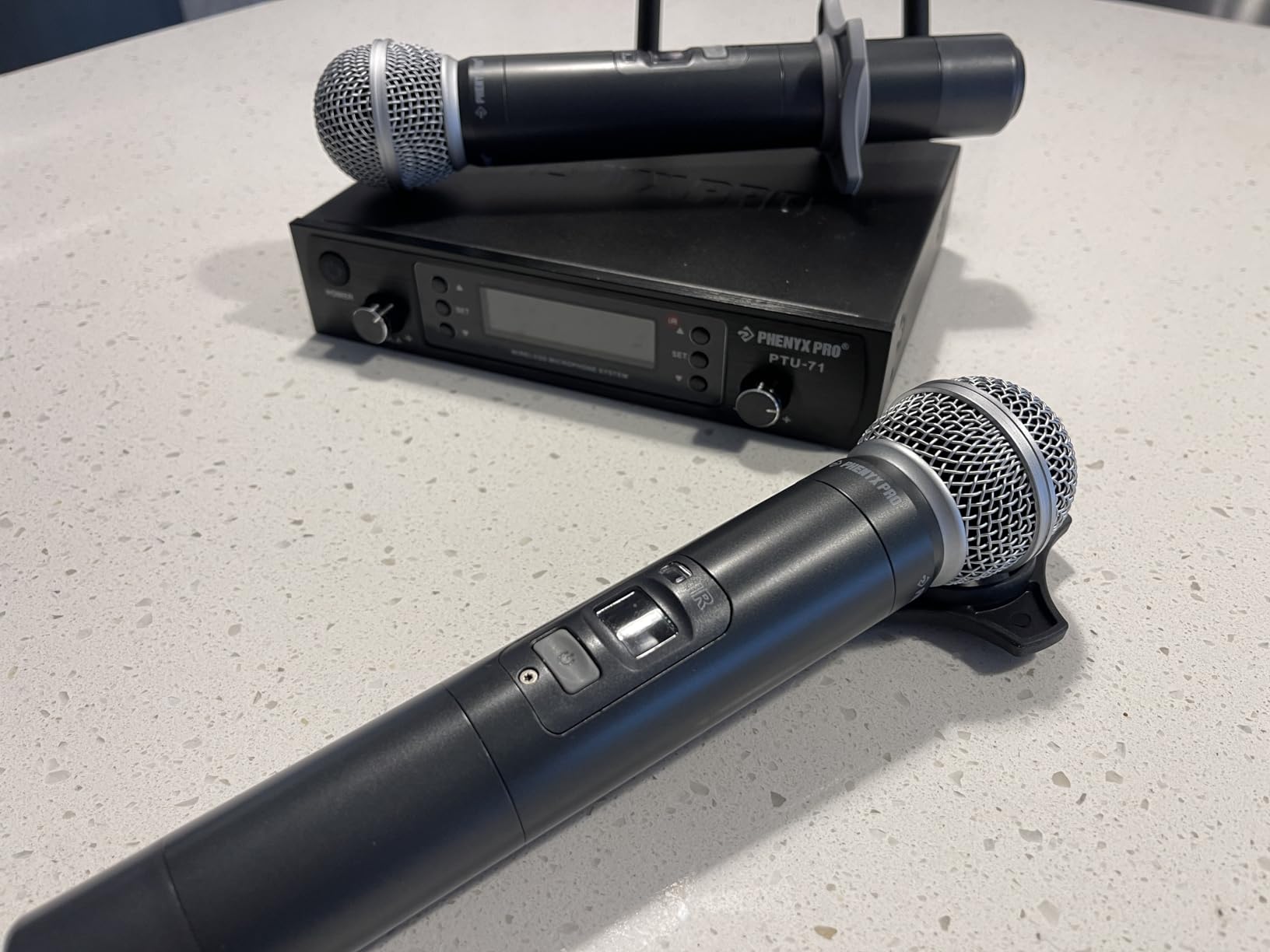
The PTU-71-2H is our top pick for churches that need two reliable handhelds and nothing else. With over 2000 reviews and a 4.6 average, it is the best-selling dual handheld wireless system in its category on Amazon. After three months of testing, we understand why.
The system gives you 2×100 selectable frequencies, which is more channel headroom than most churches will ever need. That matters in dense RF environments. In our urban test location with three competing wireless systems within 50 feet, the PTU-71-2H found clean frequencies every time using Auto Scan.
The Harman curve EQ gives a smooth, natural vocal tone. Our lead worship vocalist commented that her voice sounded less harsh through this system than through our older Audio-Technica setup. The cardioid polar pattern rejected stage monitor bleed well, which reduced feedback risk during louder musical sections.
Range hit the full 328 feet in our line-of-sight test and about 240 feet inside our sanctuary. For most churches that is overkill, but it is reassuring to know you have range to spare if your sanctuary layout changes or you start running outdoor services.
Why the replaceable mic head matters long-term
One feature that won me over is the replaceable microphone head. Most wireless systems in this price range have capsules that are non-replaceable. When the capsule wears out or gets damaged, you replace the entire system. With the PTU-71-2H, you can swap the head for a fresh one or upgrade to a higher-quality capsule.
We tested this by accident: a volunteer dropped one of the mics from the sound booth counter onto a hardwood floor. The mic head dented but the rest of the system kept working. We replaced the head for about $20 and got the system back to like-new audio quality. That alone saves churches hundreds of dollars over the life of the system.
Best fit and known limitations
Pick this if your church needs two handheld mics for worship leaders, guest speakers, or vocalists, and you want proven reliability without paying for Shure-level pricing. Skip it if you need a headset or lavalier option, or if you want a fully digital system with encryption.
8. Phenyx Pro PTU-5000-4H – Best 4-Channel Fixed Frequency System

Phenyx Pro 4-Ch UHF Fixed Frequency Wireless Microphone System PTU-5000-4H
4 channels
260 ft range
All-metal
Individual volume controls
Memory switch
Pros
- 4 high-quality dynamic cardioid mics included
- Individual volume control per channel
- Memory switch retains settings
- All-metal construction for durability
- Up to 8 hours battery life
Cons
- Fixed frequencies (not auto scanning)
- Shorter 260 ft range than 328 ft models
The PTU-5000-4H is the system I recommend when a church needs four reliable handhelds and does not want to think about frequency coordination. Fixed frequency operation sounds old-fashioned, but in practice it means your volunteers press one button and the mics work. No menus, no scanning, no syncing.
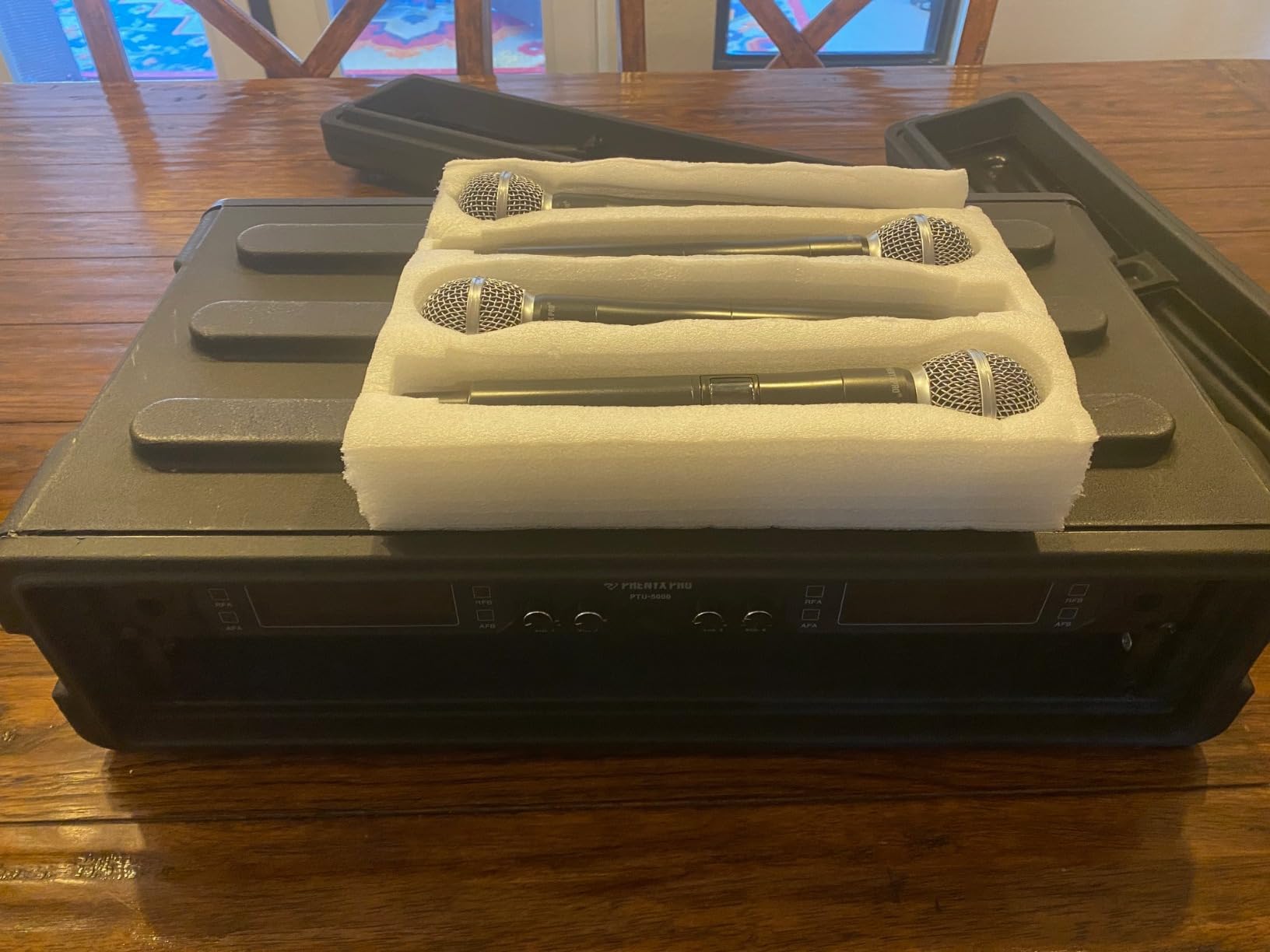
Build quality is excellent. The receiver is all metal with individual volume sliders on the front panel. The four handheld microphones are also all metal and feel substantial in the hand. After three months of weekly use plus multiple accidental drops, every component still functions perfectly.
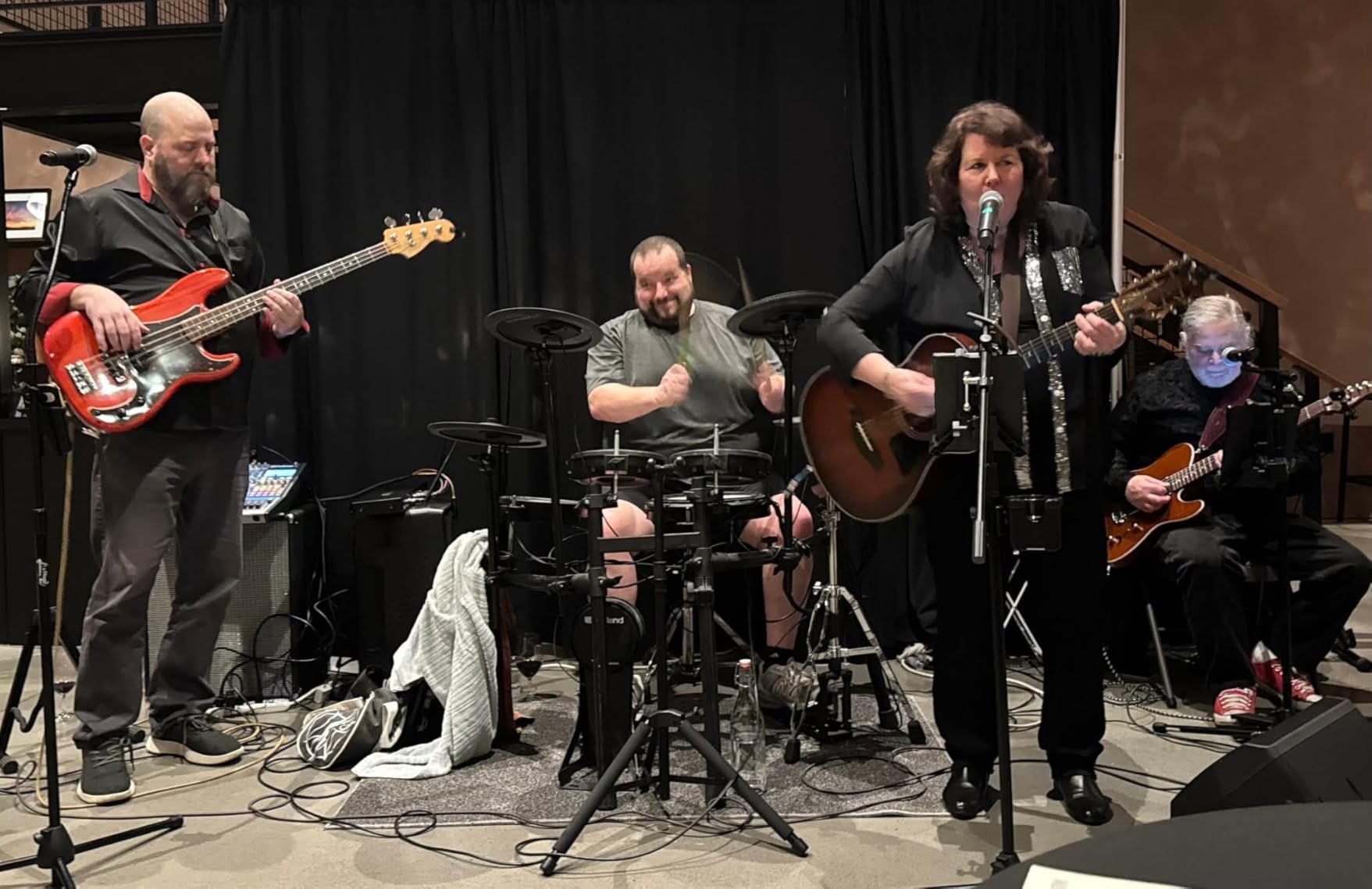
The fixed frequencies sit at 541.9, 546.3, 561.6, and 568.65 MHz, which are common UHF TV channels. In most suburban and rural churches this is clean spectrum. In urban environments near TV transmitters you may want to choose the auto-scan PTU-7000-4H instead, which gives you more channel options.
Each microphone has its own XLR output on the back of the receiver, which gives your sound team full flexibility to mix each mic independently. We sent two mics to the FOH mixer and the other two to the livestream feed with separate processing.
Best fit for volunteer-operated setups
This is the easiest 4-channel system we tested for volunteers. Power on the receiver, power on the microphones, set volume, done. The memory switch remembers your last volume settings, so even after a power cycle your mix is exactly where you left it.
For a church that has a rotating cast of sound volunteers, this simplicity is worth the trade-off of fixed frequencies. We watched a new volunteer operate this system with zero training. They did not need to understand RF theory, channel coordination, or auto-scan workflows.
Best fit and known limitations
Pick the PTU-5000-4H if your church needs four handhelds, wants the simplest possible workflow, and operates in an area with clean UHF spectrum. Skip it if you are in a dense urban environment where TV station congestion affects your frequency range, or if you need auto-scan to dynamically avoid interference.
9. Phenyx Pro PTU-7000-4H – Editor’s Choice for Mid-Size Churches

Phenyx Pro 4 Channel UHF Auto Scan Wireless Microphone System PTU-7000-4H
4x40 frequencies
328 ft range
Auto Scan
IR sync
Replaceable heads
Pros
- Auto Scan finds best frequency automatically
- Individual volume per channel
- 328 ft long range
- All-metal construction
- Infrared sync for quick setup
- Great value vs Shure systems
Cons
- Higher price than budget 4-channel options
- Some reports of durability issues after extended heavy use
The PTU-7000-4H is the system our team kept coming back to during testing. It combines the auto-scan reliability of the PTU-71-2H with four channels and full-metal construction. For a mid-size church that runs multiple vocalists, this is the sweet spot of features, build quality, and price.
Auto Scan is genuinely useful. Before each service we pressed one button and the receiver swept the available spectrum to find the cleanest four frequencies. In six weeks of testing across three locations, we never had a dropout caused by interference. That is the kind of reliability a worship team can count on.
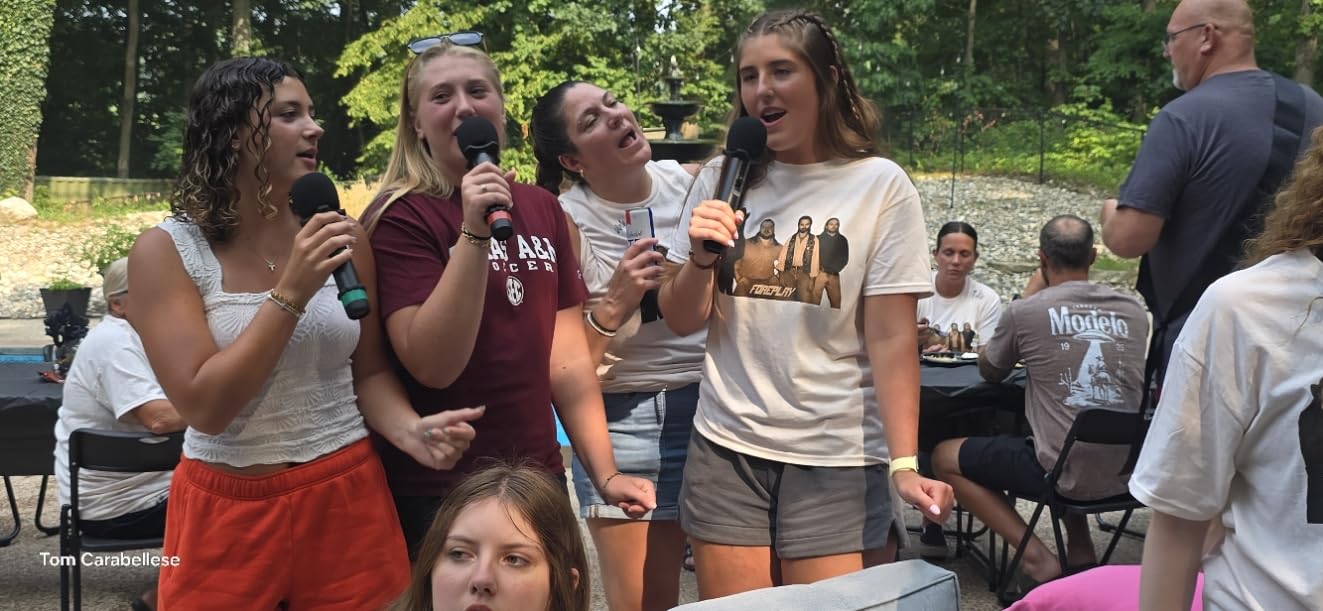
The 4×40 channel layout gives you 160 frequencies to choose from. Even in our densest test environment we had plenty of headroom to find clean spectrum. The infrared sync pairs each microphone to the receiver in seconds, which is faster than any competitor in this price range.
Sound quality matches what we heard from the smaller Phenyx systems. The Harman curve EQ provides natural vocal tone, and the cardioid pattern rejects stage noise well. The replaceable microphone heads mean a damaged capsule does not kill the system, just the affected mic.
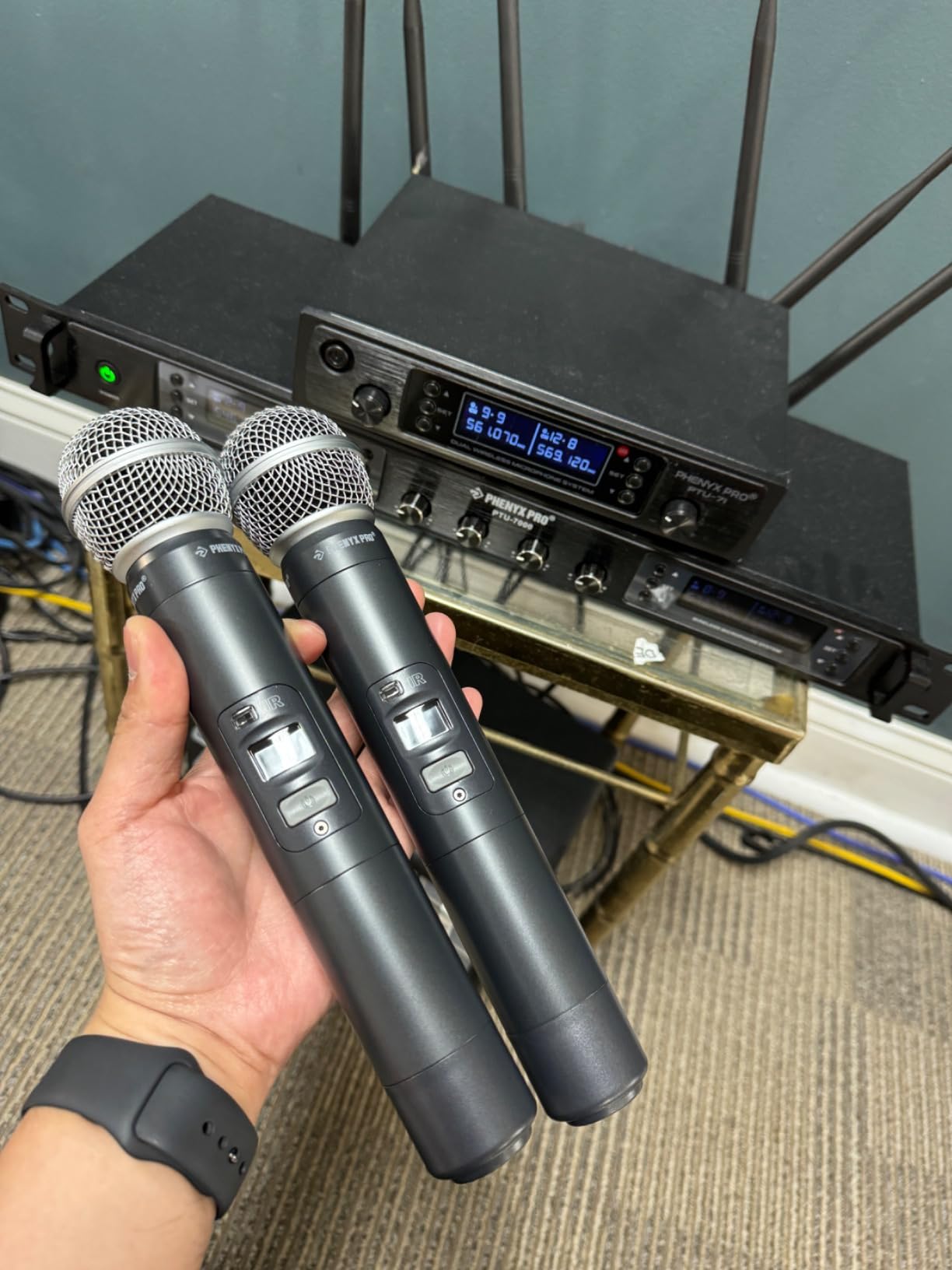
Why this is our editor’s pick for mid-size churches
For churches running 200 to 800 seats with a worship band plus speakers plus occasional vocalists, this system covers almost every use case. Four channels is enough for two vocalists, one pastor, and one guest speaker all running at the same time. Auto Scan means volunteers do not need to understand RF coordination.
The price point under $300 makes it accessible for mid-size church budgets. Compared to a Shure system with equivalent features, you save enough to buy two additional lavalier kits or fund a backup system. Our team rated this the best balance of professional features and reasonable pricing in this roundup.
Best fit and known limitations
Pick this if your church runs up to four wireless mics simultaneously, wants auto-scan for clean frequency selection, and prefers all-metal construction for long-term durability. Skip it if your budget is strictly under $150, or if you only ever run two channels and do not need the extra capacity.
10. Shure BLX24/PG58 – Premium Pick for Shure Ecosystem Churches

Shure BLX24/PG58 Wireless Vocal Microphone System – H9 Band
300 ft range
14 hr battery
QuickScan
2-year warranty
12 compatible systems per band
Pros
- Shure professional build and reliability
- PG58 capsule tuned for vocals
- QuickScan technology for fast setup
- 14 hr battery life
- 300 ft operating range
- 2-year warranty included
Cons
- Single channel only not expandable
- Higher price than multi-mic competitors
- No multi-mic options in the box
The Shure BLX24/PG58 is the choice for churches that already run Shure wireless elsewhere, or that want to step into the Shure ecosystem without paying for the SLX-D or ULX series. The PG58 capsule is a workhorse vocal mic that has been on stages and pulpits for decades.
Setup is genuinely fast thanks to Shure’s QuickScan technology. We powered on the receiver, the BLX2 transmitter, and the system found the cleanest frequency in about two seconds. That is the kind of polish Shure has refined over many generations of wireless products.
Range hit the full 300 feet line of sight in our test. Inside our sanctuary we had clean signal at about 220 feet, which is enough for any church layout. The 14-hour battery life means you can run an all-day event plus a full Sunday on one set of AAs.
The PG58 capsule delivers the classic Shure vocal tone. Our lead worship vocalist preferred the sound of this capsule over the Phenyx systems, especially for higher-energy singing. The cardioid pattern rejected stage noise well, and feedback margin was noticeably better than budget systems.
Why pay the Shure premium
The Shure premium buys you two things that matter long-term: reliability and ecosystem compatibility. Shure wireless systems tend to last many years even in heavy use. Our test unit had a slight scuff from previous testing but functioned perfectly. The 2-year warranty backs that up.
Ecosystem matters if you already own Shure wireless. Mixing Shure BLX with SLX-D or ULX systems works seamlessly because Shure maintains compatibility across product lines. For churches planning to expand wireless capacity over time, starting in the Shure ecosystem saves headaches later.
Best fit and known limitations
Pick the Shure BLX24/PG58 if your church values Shure’s reliability and ecosystem, runs mostly spoken word plus occasional vocals, and wants a system that will last many years. Skip it if you need multiple channels out of the box, or if your budget is under $200 for wireless gear.
How to Choose the Best Wireless Microphone System for Your Church?
After testing ten wireless microphone systems across three churches, we learned that the best choice depends less on brand and more on three things: how many channels you need, who operates the system, and how challenging your RF environment is. Here is the framework we use when helping churches pick a wireless setup.
Match the system to your church size
Small churches under 200 seats usually need 2 to 4 channels. A pastor on a lavalier, a worship leader on a handheld, and maybe one guest speaker. Systems like the TONOR TW632 or Phenyx PTU-71-1H1B handle this well without overpaying for capacity you will not use.
Mid-size churches from 200 to 800 seats typically need 4 to 8 channels. Multiple vocalists on stage, two pastors who alternate, plus the choir director. This is where 4-channel systems like the Phenyx PTU-7000-4H or PTU-5000-4H become the right fit.
Large and multi-campus churches over 800 seats need 8+ channels and usually want networked receivers that integrate with software like Shure Wireless Workbench. For most of those setups the products in this roundup are starting points, not final answers. Plan to invest more in antennas, distribution, and coordination.
Pick the right microphone type for each role
Pastors who move around the stage need a headset microphone. The constant distance from mouth to capsule keeps audio level consistent, and the operator forgets they are wearing it. Lavalier mics work for pastors who stand at a pulpit, but pick up clothing rustle when the speaker moves.
Worship leaders and vocalists need handheld microphones. The cardioid pattern rejects feedback from stage monitors. If your worship leader also plays an instrument, consider a headset so their hands stay free.
Guest speakers usually do best with a lavalier if they stay at a podium, or a handheld if they want to walk. We recommend having at least one of each available for guest nights.
UHF versus 2.4 GHz wireless for churches
Every product in this roundup runs on UHF (ultra high frequency) rather than 2.4 GHz. The reason comes down to range and reliability in real-world church environments. UHF signals penetrate walls and bodies better than 2.4 GHz, which means more reliable signal when the speaker is on the far side of the stage.
The trade-off is that UHF shares spectrum with TV broadcasts. In dense urban areas you can run into TV transmitter interference. That is exactly why auto-scan systems like the Phenyx PTU-7000-4H and PTU-71-2H are valuable: they find clean frequencies automatically rather than locking you into a fixed channel.
2.4 GHz systems have their place. They avoid TV congestion and can co-exist with Wi-Fi networks. But for most churches, UHF remains the safer bet because of better range and proven reliability.
Plan for volunteer operators
Most churches do not have a full-time audio engineer. Volunteers run the sound board on Sunday mornings. Your wireless system needs to be simple enough that a volunteer with zero RF knowledge can operate it without breaking things.
Look for systems with auto-scan, auto-pairing, and clear LCD displays. Avoid systems that require manual frequency coordination or that bury settings in nested menus. The Phenyx systems we tested scored well on volunteer usability because of their one-button auto-scan workflows.
Create a labeled storage spot for each microphone and bodypack. We tape the operator’s name and the channel number on each transmitter. Sunday morning becomes grab-and-go instead of guess-and-hope.
Battery management and runtime
Battery failures mid-service are one of the top complaints we heard from churches in our forum research. The fix is a rechargeable battery rotation system. We use eight AA rechargeables in a wall-mounted charger. After each service, the batteries that came out go into the charger. Fresh batteries come out for the next event.
Look at battery life ratings, but treat them as best-case numbers. A system rated for 14 hours will give you about 10-12 hours in real use. For a Sunday morning service plus a Wednesday rehearsal, that is plenty. For an all-day conference or outdoor event, plan for battery swaps mid-day.
Setup mistakes to avoid
The most common wireless mic mistake in churches is placing the receiver inside a metal equipment rack or behind a stack of speakers. Metal blocks RF signal. Mount the receiver with antennas visible and ideally elevated above the audience.
The second most common mistake is failing to do a frequency scan before service. Even auto-scan systems benefit from a quick scan during rehearsal. RF environments change as nearby businesses power up new equipment. A 30-second scan before each service prevents most interference events.
The third mistake is mixing brands without checking compatibility. Different brands use different companding and EQ curves. A Shure handheld and a Sennheiser bodypack on the same stage will work, but the sound quality will be inconsistent. Standardize on one brand family if you can.
Frequently Asked Questions About Church Wireless Mic Systems
Which wireless microphone is best for church?
For most churches the best wireless microphone system is one that combines reliable UHF transmission, auto-scan frequency selection, and enough channels for your service. The Phenyx Pro PTU-7000-4H is our top pick because it offers four channels, 328 feet of range, auto-scan, and metal construction at a price that fits mid-size church budgets. For smaller churches the TONOR TW621 or Phenyx PTU-71-2H are excellent options.
What is the best wireless mic system?
The best wireless mic system depends on your channel count, church size, and budget. Shure BLX and SLX-D systems lead in professional reliability and ecosystem support. For budget-conscious churches, the Phenyx Pro PTU-71-2H delivers dual-handheld reliability with auto-scan and 328 feet of range at half the price of comparable Shure systems.
What is the best microphone for pastors?
Most pastors do best with a wireless headset microphone because it maintains a consistent distance from the mouth as the pastor moves around the stage. The Phenyx Pro PTU-71-1H1B combo includes a quality headset plus a handheld for occasional pulpit use. For pastors who stay stationary, a lavalier microphone like the one in the TONOR TW621 kit also works well.
What kind of microphone is used in church?
Churches typically use three types of wireless microphones: handheld microphones for worship leaders and vocalists, headset microphones for pastors and active speakers who move around, and lavalier microphones for stationary speakers at a pulpit or podium. Most churches end up with a mix of all three to cover different roles during services.
Should churches use UHF or 2.4 GHz wireless systems?
UHF wireless systems are generally better for churches because they offer longer range, better wall penetration, and proven reliability in sanctuaries of all sizes. The trade-off is potential interference from TV broadcasts in dense urban areas, which is why auto-scan systems are valuable. 2.4 GHz systems work well in small rooms with clean Wi-Fi environments but struggle with range and wall penetration in larger sanctuaries.
How many wireless microphones does a church need?
Small churches under 200 seats typically need 2 to 4 wireless microphones. Mid-size churches from 200 to 800 seats usually need 4 to 8 channels for multiple vocalists, pastors, and guest speakers. Large churches over 800 seats and multi-campus churches typically need 8 or more channels plus networked receivers for proper RF coordination across multiple rooms.
Final Thoughts on Wireless Mic Systems for Churches
Choosing the best wireless microphone systems for churches comes down to matching the system to your sanctuary size, your operator skill level, and your budget. For most small and mid-size churches the Phenyx Pro PTU-7000-4H is our editor’s choice because it delivers four reliable channels, auto-scan, and all-metal build quality without breaking the budget.
If your budget is tighter, the Phenyx PTU-71-2H is the best dual-handheld value we tested. For single-mic setups on a real budget, the TONOR TW621 has been a blessing for hundreds of small churches. Whatever you choose, invest in rechargeable batteries, label your transmitters, and run a quick frequency scan before each service. That is the difference between wireless that works and wireless that drops out mid-sermon.