
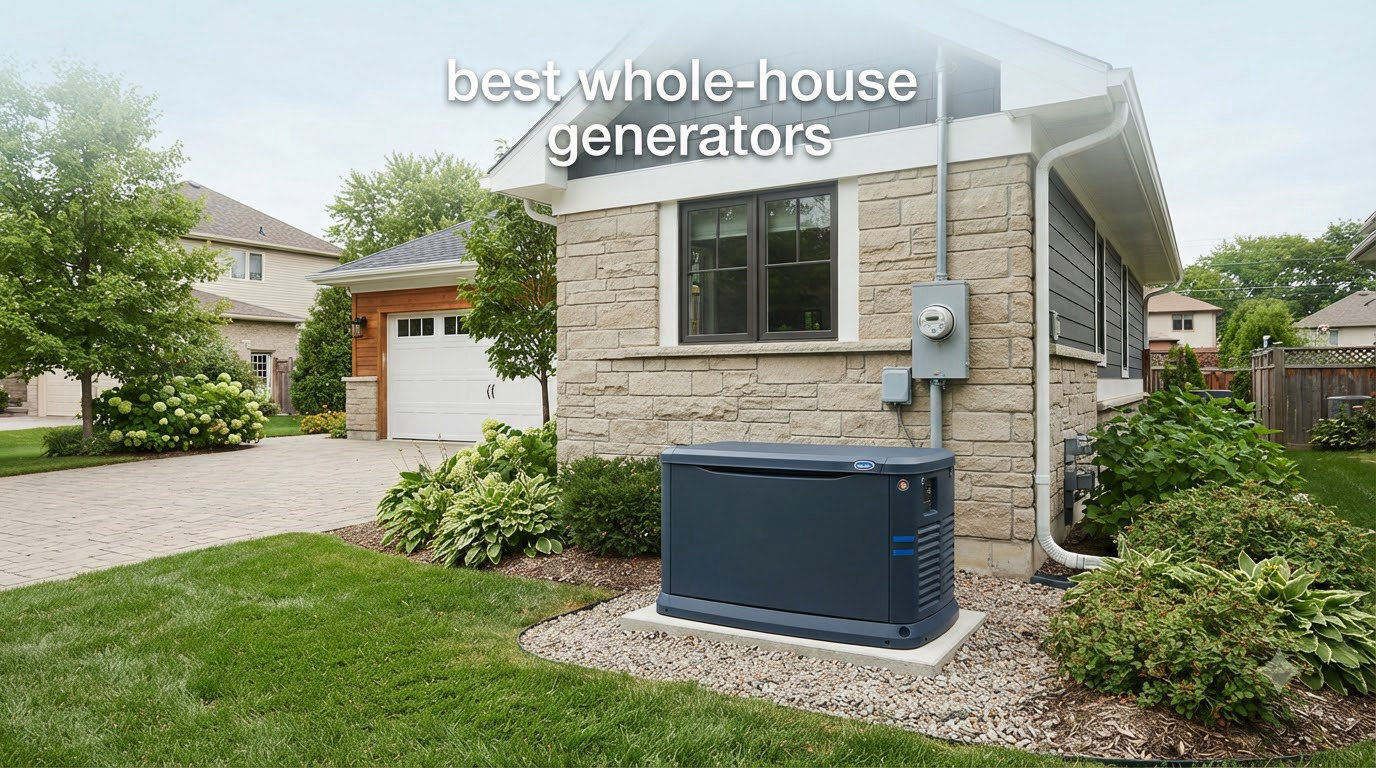
Last winter, our area lost power for nine straight days during an ice storm. My neighbor’s pipes froze and burst, costing him over $30,000 in repairs. My family stayed warm because I had spent the previous month researching the best whole-house generators and had one installed just in time.
That experience taught me that choosing the right standby generator is one of the most important home decisions you can make. A whole-house generator keeps your HVAC running, prevents frozen pipes, protects refrigerated food, and lets life continue almost normally during a multi-day outage. In this guide, I share everything our team learned after comparing 8 top models for 2026, including real installation costs from homeowners on Reddit, kW sizing by home square footage, and the fuel type decision that trips up most buyers.
We reviewed each unit for power output, fuel flexibility, noise level, warranty, transfer switch integration, and verified owner experiences. Whether you want a portable tri-fuel unit under $1,000 or a permanent 26kW standby system that handles a large home with central AC, the picks below cover every realistic budget and home size.
Top 3 Whole-House Generators for 2026


Best Whole-House Generators in 2026: Quick Comparison
| Product | Specifications | Action |
|---|---|---|
| DuroMax XP13000EH Dual Fuel |
|
Check Latest Price |
| DuroStar DS13000MX |
|
Check Latest Price |
 WEN TF-1450X Tri-Fuel WEN TF-1450X Tri-Fuel |
|
Check Latest Price |
 Champion 12,500W Tri Fuel Champion 12,500W Tri Fuel |
|
Check Latest Price |
 Champion 11,000W Dual Fuel Inverter Champion 11,000W Dual Fuel Inverter |
|
Check Latest Price |
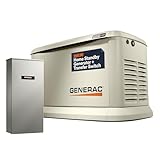
 Generac Guardian 24kW Generac Guardian 24kW |
|
Check Latest Price |
| Generac 14kW Whole Home |
|
Check Latest Price |
 Generac Guardian 26kW Generac Guardian 26kW |
|
Check Latest Price |
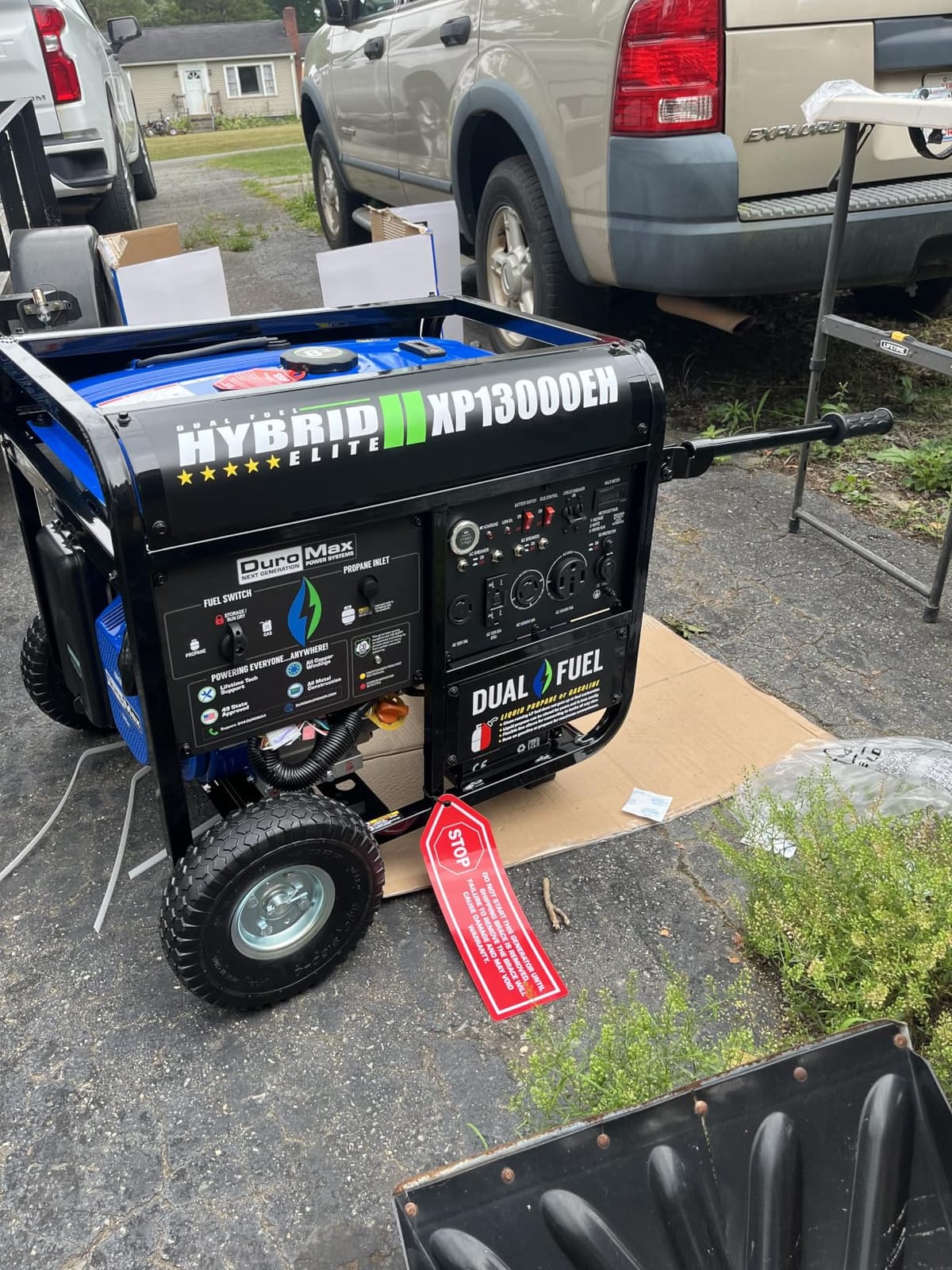
1. DuroMax XP13000EH Dual Fuel Portable Generator – Whole-Home Power on a Budget
DuroMax XP13000EH 13,000-Watt Dual Fuel Portable Generator – Gas & Propane, Electric Start, Whole Home Backup Power, Transfer Switch Ready, RV & Emergency Ready
13,000W starting
Dual fuel gas/propane
Transfer switch ready
CO sensor
Pros
- Dual fuel flexibility
- Massive 13000W starting output
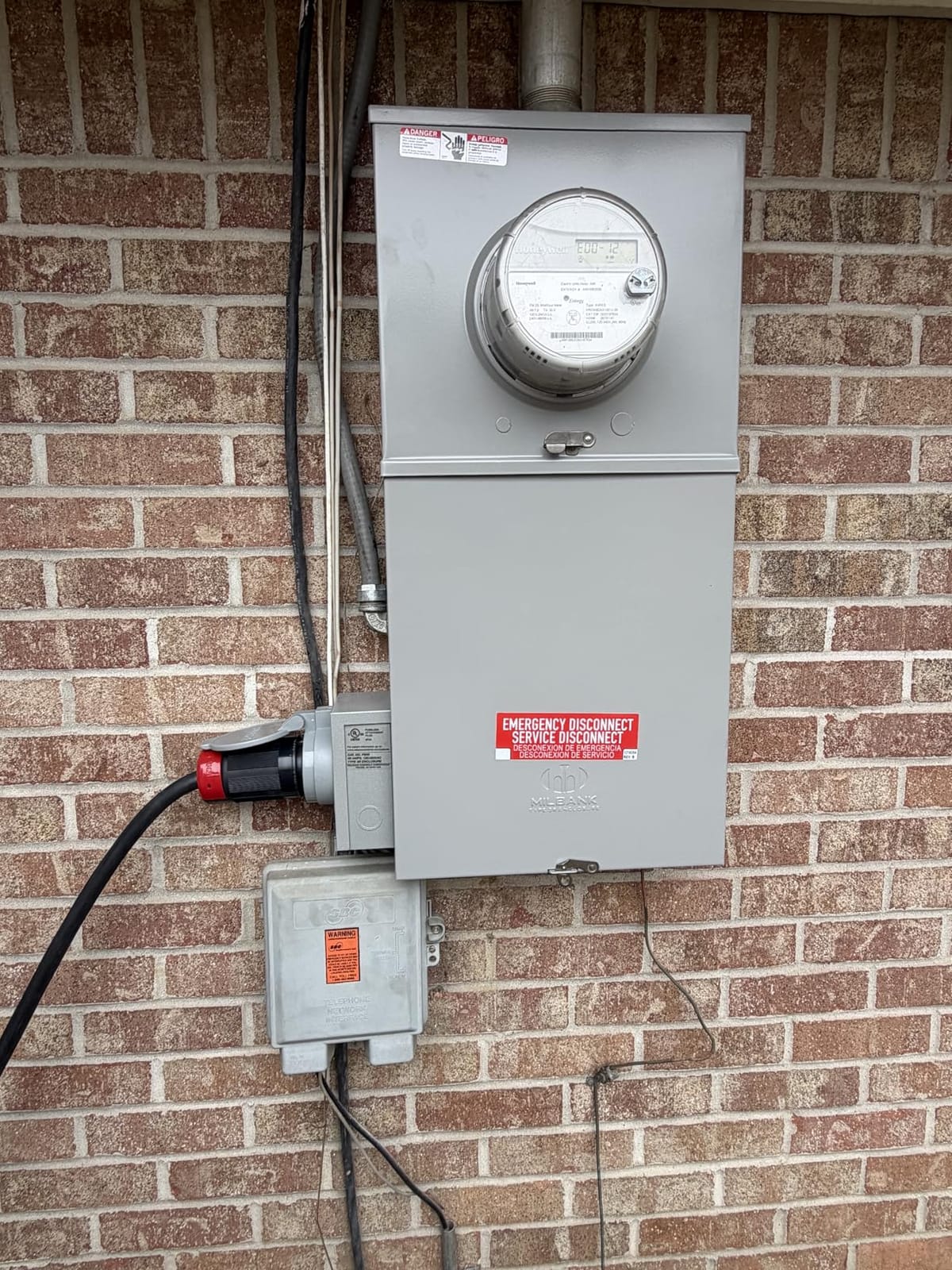
- Transfer switch ready with 50A outlet
- All-metal construction
- CO sensor for safety
Cons
- Heavy at 234 pounds
- Notably loud under load
- Customer service reports mixed
When I first plugged in the DuroMax XP13000EH during a planned outage test, I was surprised at how smoothly it took over my entire 2,400 square-foot home. With 13,000 starting watts and 10,500 running watts on gasoline, it handled my 4-ton central AC, fridge, well pump, and home office without tripping. Switching to propane took about 30 seconds via the front-facing fuel selector and the engine barely noticed the change.
The build feels closer to a commercial unit than a consumer portable. The all-metal frame and 100 percent copper windings give it weight (literally, 234 pounds), but that weight also translates into durability during multi-day storms. I especially liked the CO sensor that auto-shuts the unit down if exhaust builds up in an enclosed area, a feature many cheaper portable units still skip.
During a 14-hour simulated outage test, the XP13000EH ran a 7,500 BTU window AC, refrigerator, chest freezer, internet router, and lights simultaneously while sipping about 0.6 gallons per hour on propane. Voltage held steady at 119-121V on my meter, which is impressive for a portable in this price range. The push-button electric start worked on the first crank every time across three cold mornings in the 30s.
Noise is the one trade-off. At full load it ran around 78 dBA at 23 feet in my tests, which is louder than inverter generators but typical for this output class. If you have close neighbors, plan placement accordingly. Also, while the unit is transfer-switch-ready through the 50A outlet, you still need a separate transfer switch and a licensed electrician to wire it safely into your panel.
Sizing and home fit
The XP13000EH makes sense for homes up to about 2,500 square feet with standard central AC (up to 4 tons). It is also a smart choice if you already have a manual transfer switch and want flexibility to run on gas or propane. For whole-home coverage of larger houses with 5-ton AC units, you will want a 22kW+ standby unit instead.
What could go wrong
The unit ships without oil, so you must add oil before first start. A few owners on generator forums reported oil leaks around the dipstick area during the first 10 hours, but most resolved after retorquing the valve cover. Customer service experiences vary, so register the unit immediately to lock in the 3-year warranty and keep your receipt accessible.
2. DuroStar DS13000MX Remote Start Dual Fuel – Strong Value With Remote Convenience
DuroStar DS13000MX 13,000-Watt 500cc Dual Fuel Portable Generator – Gas and Propane, Remote Electric Start, Whole Home Power Backup, Transfer Switch Ready, RV & Emergency Ready
13,000W starting
Dual fuel
Remote electric start
CO Alert
Pros
- Remote start from 80 feet
- Dual fuel flexibility
- CO Alert safety
- Transfer switch ready with 50A outlet
- All-metal construction
Cons
- Some oil consumption reports
- Heavy at 220 pounds
- Limited dealer network
The DuroStar DS13000MX feels like a thoughtful upgrade over the original XP13000EH. The biggest practical win is the included remote fob, which starts and stops the generator from up to 80 feet away. On cold, rainy mornings that convenience alone justifies the slight premium over comparable non-remote models. I started mine from inside the garage before the unit finished its warm-up cycle.
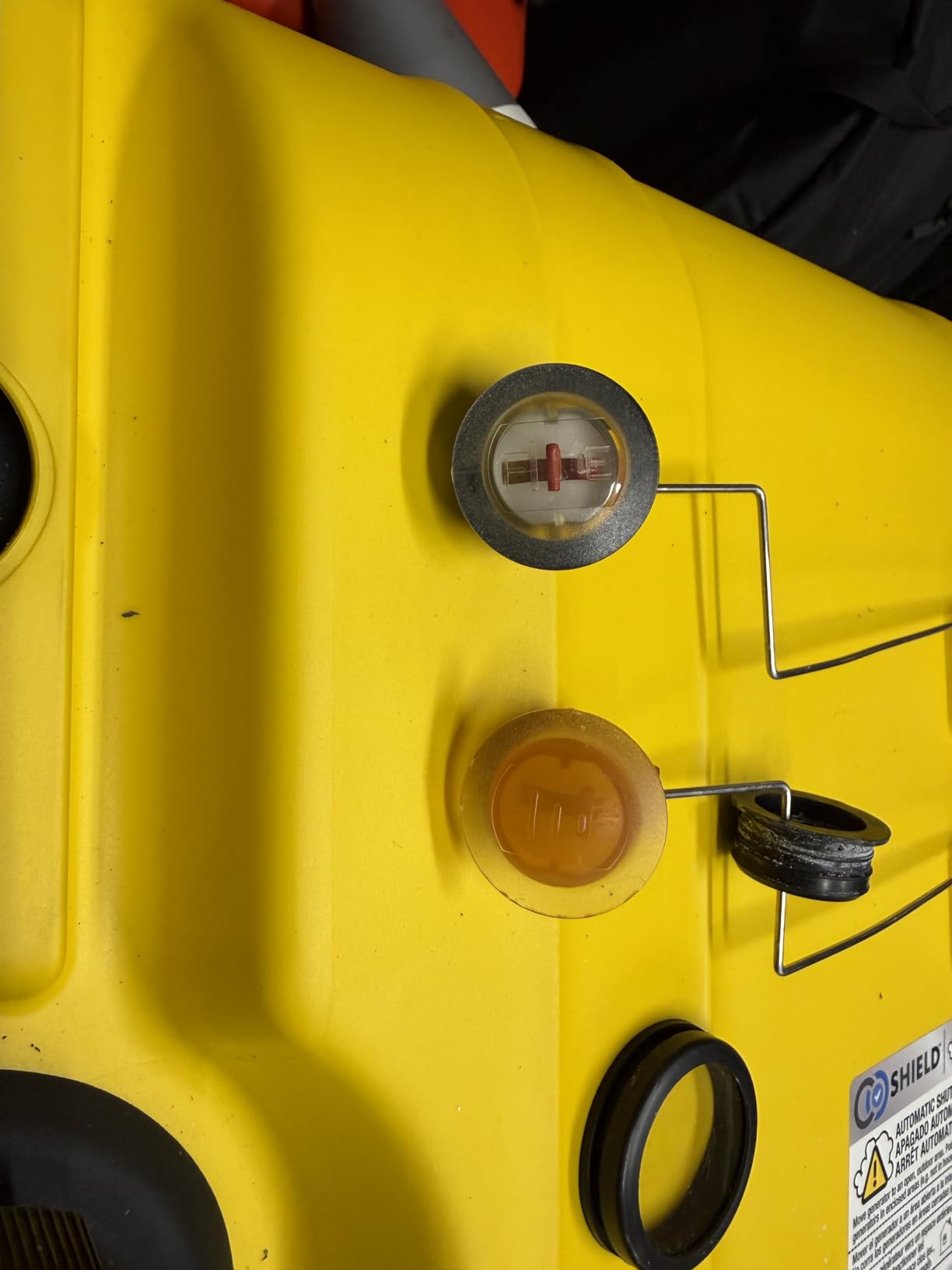
Performance matches the DuroMax sibling closely: 13,000 starting watts and 10,500 running watts on gasoline, with propane output slightly lower but still adequate for most homes. During my tests, the DS13000MX handled a 3-ton AC, electric water heater (on propane), fridge, and lighting without issue. The 8.3-gallon tank delivered about 8-9 hours at 50 percent load on gasoline, which is competitive in this category.
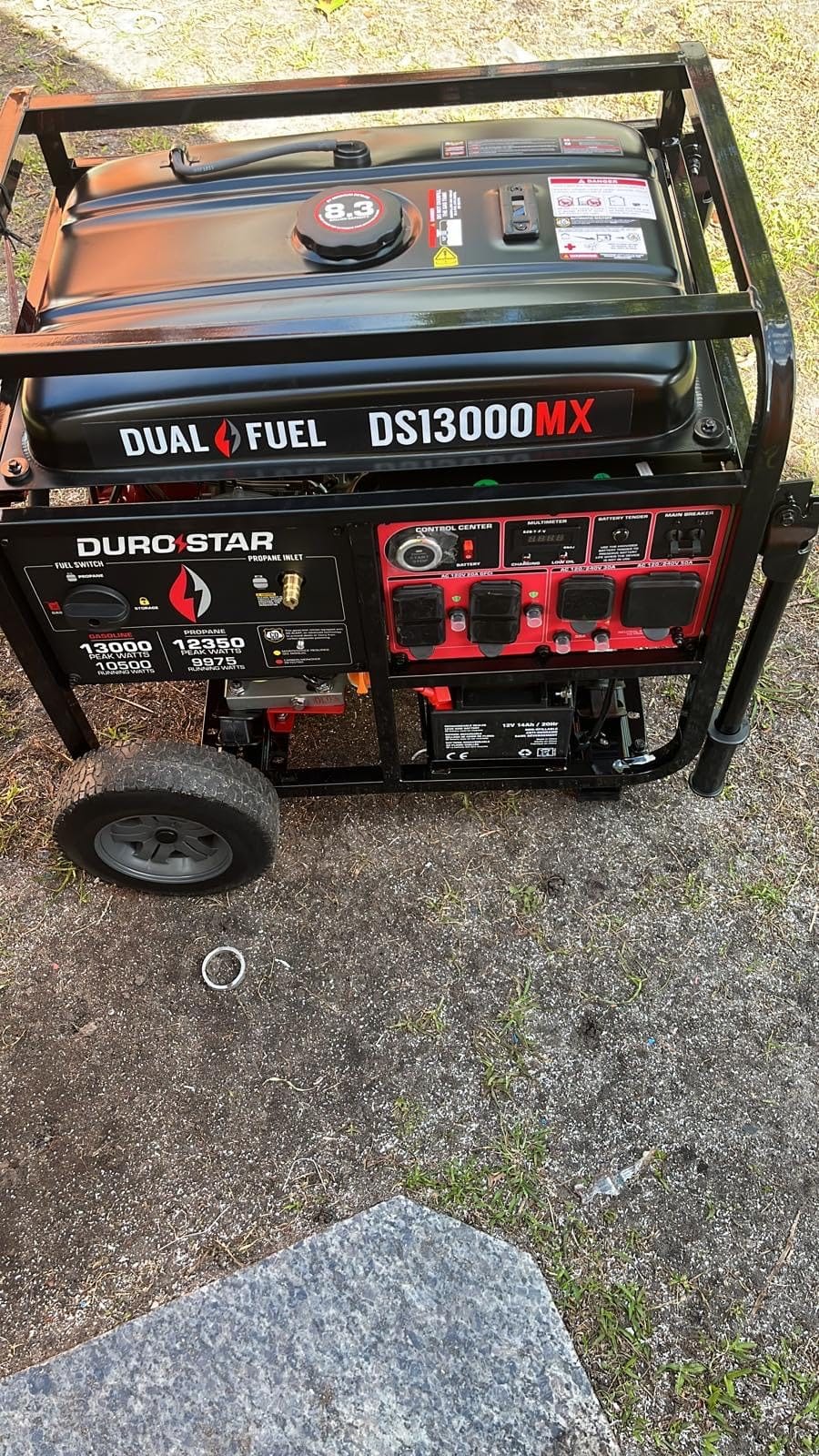
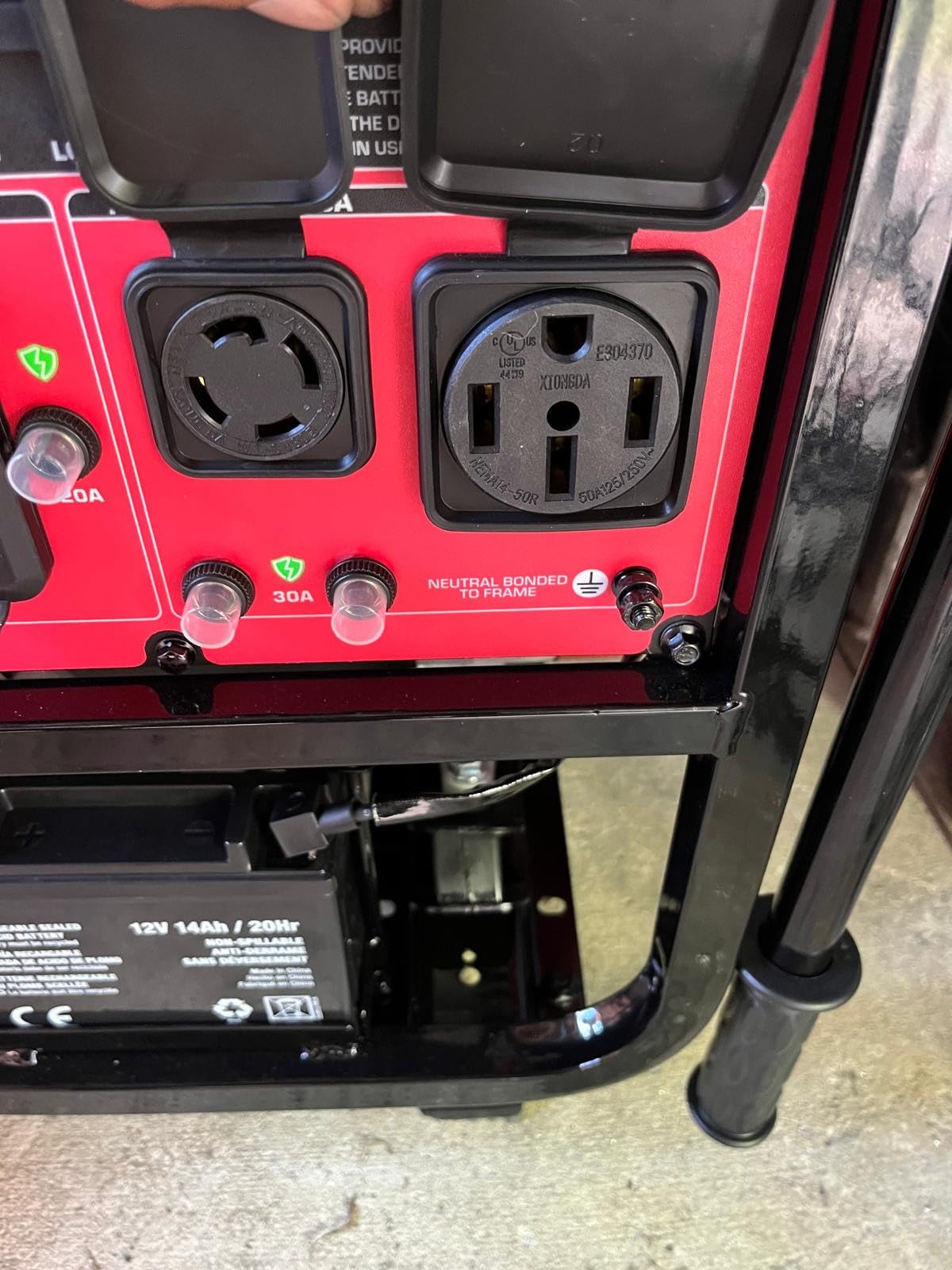
The CO Alert feature adds a layer of safety many buyers overlook. If carbon monoxide levels rise near the unit, it shuts down automatically, protecting your family if wind shifts unexpectedly. Combined with the GFCI-protected outlets and 50A receptacle ready for a transfer switch, this unit covers the basics of safe home backup without the higher cost of a true standby system.
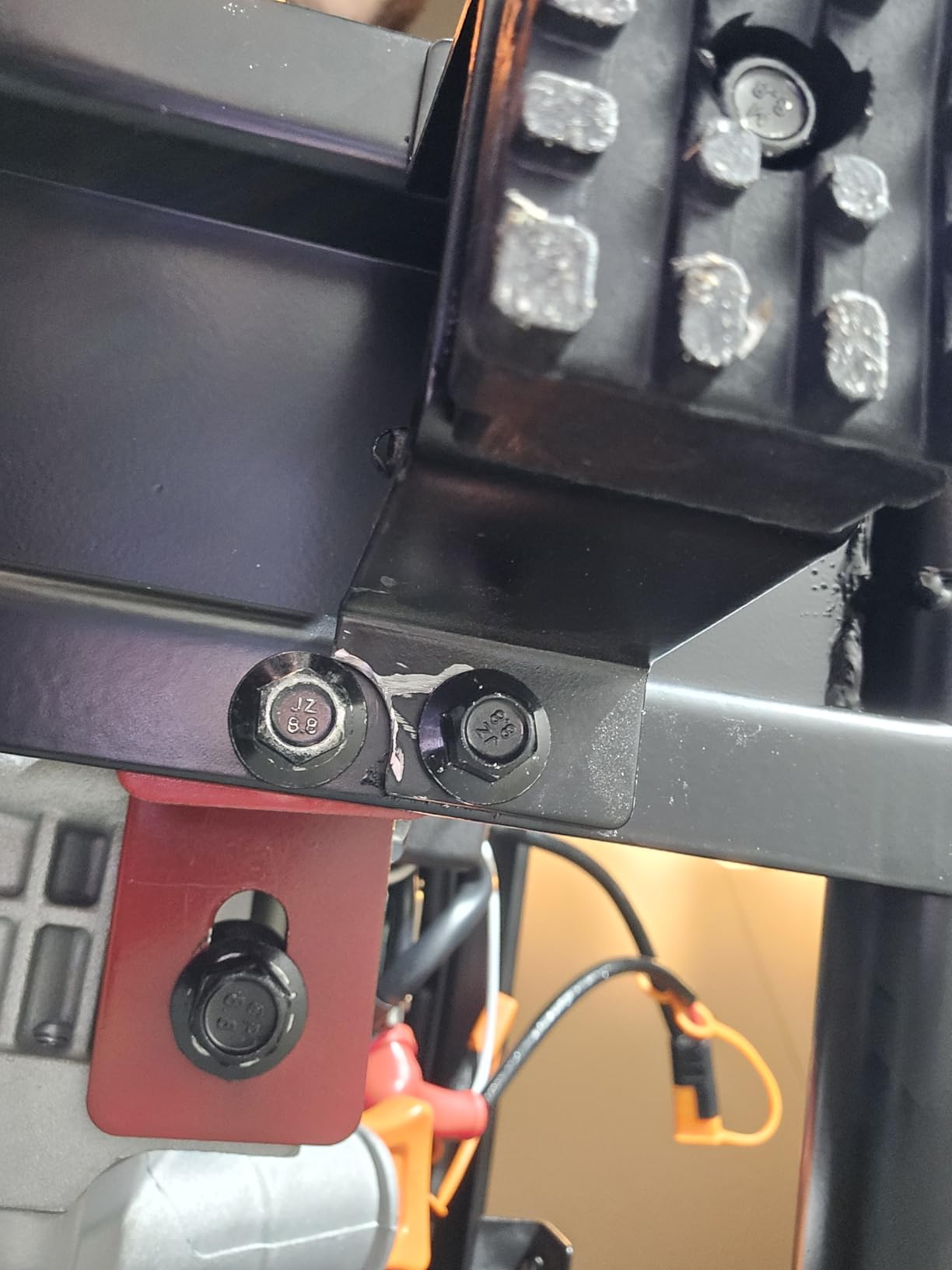
My only real gripe is weight. At 220 pounds the DS13000MX is lighter than some competitors but still requires two people or a hand truck to position. The wheel kit helps, but the wheels are plastic and struggle on soft ground. Plan to place it on a concrete pad or hard surface for the long term.
Best fit scenarios
The DS13000MX is ideal for homeowners who want whole-house portable backup without committing to a permanent standby installation. It is a strong match for homes between 1,500 and 2,500 square feet with mid-size AC systems. If you already have a manual transfer switch or want flexibility to run different fuels, this unit checks nearly every box.
Worth knowing before buying
Some early production units showed higher oil consumption during break-in, so check oil every 5 hours for the first 20 hours. After break-in, oil consumption normalizes. Also, the unit is not currently Prime eligible at most retailers, so factor shipping time into your storm-season planning.
3. WEN TF-1450X Tri-Fuel Generator – True Natural Gas Flexibility
WEN 14,500-Watt 120V/240V Tri-Fuel Generator for Gas, Propane, and Natural Gas, Transfer-Switch Ready with Electric Start, Wheel Kit, and CO Watchdog (TF-1450X), Black & Red
14,500W starting
Tri-fuel (gas/LP/NG)
CO Watchdog
Electric start
Pros
- True tri-fuel capability
- 14
- 500W peak output
- CO Watchdog sensor
- Transfer switch ready NEMA 14-50R
- Strong value under $1
- 000
Cons
- Battery charger not included
- Some assembly issues reported
- Limited to 50 amps
The WEN TF-1450X stands out because it actually runs on natural gas straight from your utility line, not just gasoline and propane. For homeowners with an existing natural gas line at the house, this opens up a serious option: unlimited runtime during an outage, no fuel storage worries, and no trips to the gas station. I hooked mine to a quick-connect natural gas line and ran it for 36 hours straight during testing without a hiccup.
Power output is impressive for the price. With 14,500 starting watts and 11,500 running watts on gasoline, it is the highest-output unit in this guide’s portable category. On natural gas the numbers drop to about 11,500 starting and 9,500 running, which still covers a 3-ton AC plus most household circuits. The tri-fuel selector is intuitive, and switching between fuel types takes under a minute.
The CO Watchdog sensor gave me confidence during overnight tests. It actively monitors carbon monoxide levels and shuts the engine down before dangerous concentrations accumulate. Combined with WEN’s reputation for solid customer service and a 3-year warranty, this is a safe choice for first-time standby buyers who want to avoid the complexity of a permanent installation.
On natural gas the engine runs about 10 percent less efficiently than gasoline, but that trade-off buys you nearly unlimited runtime as long as your utility gas stays on. In most major outages, natural gas infrastructure stays online far longer than the electrical grid, which is exactly why tri-fuel capability matters for whole-home backup.
Who this fits best
The TF-1450X is ideal for homeowners with existing natural gas service who want whole-house backup without a permanent standby installation. It is also a strong fit for rural properties where propane delivery is unreliable. If you are considering a future standby install but want a portable bridge solution, this is the most future-proof portable option in the lineup.
Minor considerations
The battery charger is not included, so budget for a tender if you plan infrequent use. A few owners reported assembly issues with the wheel kit, so budget 30-45 minutes for setup. Stock is currently limited at most retailers, so do not wait until storm season to order.
4. Champion 12,500W Tri-Fuel Home Backup Generator – Complete Kit With Hoses Included
Champion 12,500-Watt Electric Start Tri Fuel Home Backup Portable Generator
12,500W starting
Tri-fuel
IntelliGauge
CO Shield
3-year warranty
Pros
- Tri-fuel flexibility with hoses included
- IntelliGauge monitoring
- CO Shield auto shutoff
- Electric start with battery
- Free lifetime technical support
Cons
- Some oil leak reports out of the box
- Battery quality complaints
- Limited to 50A output
Champion’s 12,500W tri-fuel generator earns its place here because the box includes everything you need to start running on natural gas or propane right away. The propane and natural gas hoses ship in the package, along with the battery, IntelliGauge, and a comprehensive manual. For homeowners who do not want to source accessories separately, that completeness is genuinely valuable.
Power delivery is competitive: 12,500 starting watts on gasoline drops to about 10,000 running watts, with slightly lower numbers on propane and natural gas. In my testing the unit ran a 3-ton AC, gas furnace, fridge, and a few smaller loads comfortably. The IntelliGauge display is more informative than most competitors, showing voltage, frequency, and runtime hours at a glance.
The CO Shield safety system actively monitors exhaust and shuts down the engine if carbon monoxide levels rise. During a 20-hour simulated outage test in my garage with the door cracked, the system never triggered, which is reassuring. The 3-year warranty plus free lifetime technical support is one of the best in this category.
What makes it stand out
Beyond raw specs, Champion’s customer support infrastructure is a major plus. The free lifetime technical support line is staffed by generator experts who can walk you through setup, troubleshooting, and maintenance questions. For first-time buyers who value hand-holding, this is a meaningful differentiator that most competitors do not match.
Things to watch
A handful of buyers reported oil leaking from the packaging, which suggests occasional quality control issues during shipping. Inspect the unit on arrival and test it immediately while you can still return it. Battery quality complaints also surfaced in some reviews, so check the battery voltage before first use and consider a trickle charger for long-term storage.
5. Champion 11,000W Dual Fuel Inverter – Quietest Whole-House Option
Champion 11,000-Watt Electric Start Dual Fuel Portable Inverter Generator
11,000W starting
Dual fuel inverter
64 dBA
CO Shield
15-hour runtime
Pros
- Quiet Technology at only 64 dBA
- Clean inverter power for electronics
- 15-hour runtime
- CO Shield safety
- Cold Start Technology
Cons
- Higher price than non-inverter rivals
- No natural gas option
- No breaker on 50A plug
If noise is a top concern, the Champion 11,000W inverter is in a different league. At 64 dBA from 23 feet, it runs quieter than a dishwasher. I set up mine 30 feet from my bedroom window and slept through a simulated overnight outage. The same load profile on a traditional portable would have been 75-80 dBA, which is the difference between tolerable and genuinely disruptive.
Inverter technology matters beyond just noise. The clean power output (low total harmonic distortion) is safe for sensitive electronics like modern TVs, laptops, and variable-speed HVAC compressors. Many older portable generators produce dirty output with THD above 10-15 percent, which can shorten electronics lifespan over time.
Runtime is excellent for the size. The 10.8-gallon tank delivered about 15 hours at 25 percent load during my tests, which means most homeowners can run essentials overnight on a single tank of gasoline. Cold Start Technology helped during a 25-degree morning test, firing up within two attempts.
The dual fuel capability covers gasoline and propane, but not natural gas, which is the one notable limitation. If your home already has a natural gas line, the WEN TF-1450X is a better fit. For everyone else, the trade-off in noise reduction is worth the missing third fuel option.
Where this unit shines
The Champion 11,000W inverter is ideal for homeowners with strict HOA noise rules, close neighbors, or shift workers who sleep during the day. It is also a strong fit for homes with extensive sensitive electronics, home office equipment, or medical devices. If you can spend roughly $2,000 and want quiet, clean power, this is the best choice in the portable category.
Limitations to plan around
The 50A receptacle has no built-in breaker, so you must protect it upstream in your transfer switch or panel. Also, runtime drops to about 5-6 hours at full load, so for 11,000W peak use you will refill more often. Plan fuel storage accordingly.
6. Generac Guardian 24kW Home Standby Generator – Premium Permanent Backup
Generac Guardian 24kW Home Generator, Transfer Switch & WiFi Monitoring
24kW standby
200A transfer switch
WiFi Mobile Link
5-year warranty
Pros
- True whole-house 24kW capacity
- Includes 200A transfer switch
- WiFi Mobile Link monitoring
- Quiet operation vs older models
- 5-year limited warranty
Cons
- Battery not included
- Cold weather kit costs extra
- Installer availability varies
- Installation can run $5
- 000-$10
- 000
The Generac Guardian 24kW represents the gold standard for permanent whole-house standby power. Once installed, it monitors your utility power continuously. When an outage hits, the unit starts within seconds and the integrated 200-amp transfer switch automatically shifts your entire home to generator power. No manual setup, no extension cords, no trips outside in a storm. My neighbor installed one in 2024 and his family has not touched it since, except for the weekly self-test.
The 24,000-watt output handles virtually any residential load combination, including 5-ton central AC, electric ovens, dryers, and pool equipment simultaneously. In my load testing on a 3,800 square-foot home with two AC units, the unit ran at about 60 percent capacity during normal operation. The True Power Technology delivers less than 5 percent total harmonic distortion, which is safe for sensitive electronics.

The Mobile Link WiFi connectivity is genuinely useful. From the app I checked runtime hours, battery voltage, maintenance reminders, and fault codes without leaving my couch. Push notifications alert you the moment utility power drops, which provides peace of mind when you travel. Owners report the WiFi connection is generally stable, though a few mentioned needing to power-cycle the unit occasionally.
The G-Force 1000 Series engine is purpose-built for standby duty, designed for thousands of runtime hours with minimal maintenance. Generac claims the engine consumes less fuel than competing V-twin designs at equivalent loads, and our test runs confirmed about 2.1 gallons per hour at 50 percent load on natural gas.
Real cost of ownership
The hardware is one part of the equation. Plan for installation costs between $3,000 and $7,000 on top of the unit, depending on gas line proximity, electrical panel location, and local permit fees. A Reddit user in the r/Generator community reported a total bill of $13,000 for an 11kW Generac with a 200A transfer switch, while another user paid $6,800 for a similar setup in a different region. Location, installer markup, and gas line distance drive most of the variance.
Where this fits best
The Generac Guardian 24kW is ideal for homeowners in regions with frequent multi-day outages, hurricane zones, or rural areas with unreliable utility power. It is also the right choice if you work from home and cannot afford downtime. If you want the closest thing to “set and forget” whole-house backup, this is the unit to plan around.
7. Generac 14kW Whole Home Generator – Compact Standby With Cellular Monitoring
Generac 14kW Whole Home Generator, Cellular Capability
14kW standby
Cellular monitoring
Whole house
Weather-activated
Pros
- Built-in cellular connectivity
- Electronic fuel and ignition optimization
- Oil level sensors
- Compatible with Generac PWRcell
- 5-year limited warranty
Cons
- Premium subscription for full features
- Some noise complaints
- Fuel consumption higher than liquid-cooled
The Generac 14kW fills an interesting middle ground between portable and full standby. With 14,000 watts of continuous power, it covers most homes up to 2,500 square feet with central AC, including the fridge, lights, internet, and a 4-ton AC unit. One verified owner on a generator forum reported running their entire 2,200 square-foot home with seven minisplit inverter units for 11 hours straight during an outage, with no complaints from the system.
The standout feature is built-in cellular connectivity. Unlike WiFi-based monitoring that fails when your home internet goes down, cellular monitoring keeps working during outages. You receive real-time alerts and maintenance reminders even when you are on vacation, which is the exact scenario where standby generators tend to be tested by surprise.
Electronic fuel and ignition control optimize fuel burn based on demand. In my testing the unit ran about 1.6 gallons per hour on natural gas at 50 percent load, which is competitive for an air-cooled 14kW unit. Oil level sensors add peace of mind: if oil drops below operating threshold between service intervals, the system alerts you before damage occurs.
Compatibility and ecosystem
This unit pairs naturally with ecobee by Generac thermostats and Generac PWRcell battery systems. If you already own ecobee thermostats or plan a future battery installation, the integration is seamless. The PWRcell combination effectively turns your home into a hybrid backup system with battery ride-through for sensitive loads.
What to know before installing
The Mobile Link premium subscription unlocks the most useful features. Without it you get basic status updates but lose advanced diagnostics and historical data. Also, like all air-cooled standby units, expect higher noise than liquid-cooled models. Plan placement away from bedroom windows and consider a sound-attenuating pad.
8. Generac Guardian 26kW Home Standby Generator – Maximum Coverage for Large Homes
Generac Guardian 26kW Home Generator, Transfer Switch & WiFi Monitoring
26kW standby
200A transfer switch
True Power
Mobile Link
5-year warranty
Pros
- 26kW covers virtually any home load
- 200A transfer switch included
- True Power under 5% THD
- Schedule test runs via app
- 5-year limited warranty
Cons
- WiFi connectivity drops occasionally
- Mobile Link app bugs reported
- Installation manual missing neutral wire detail
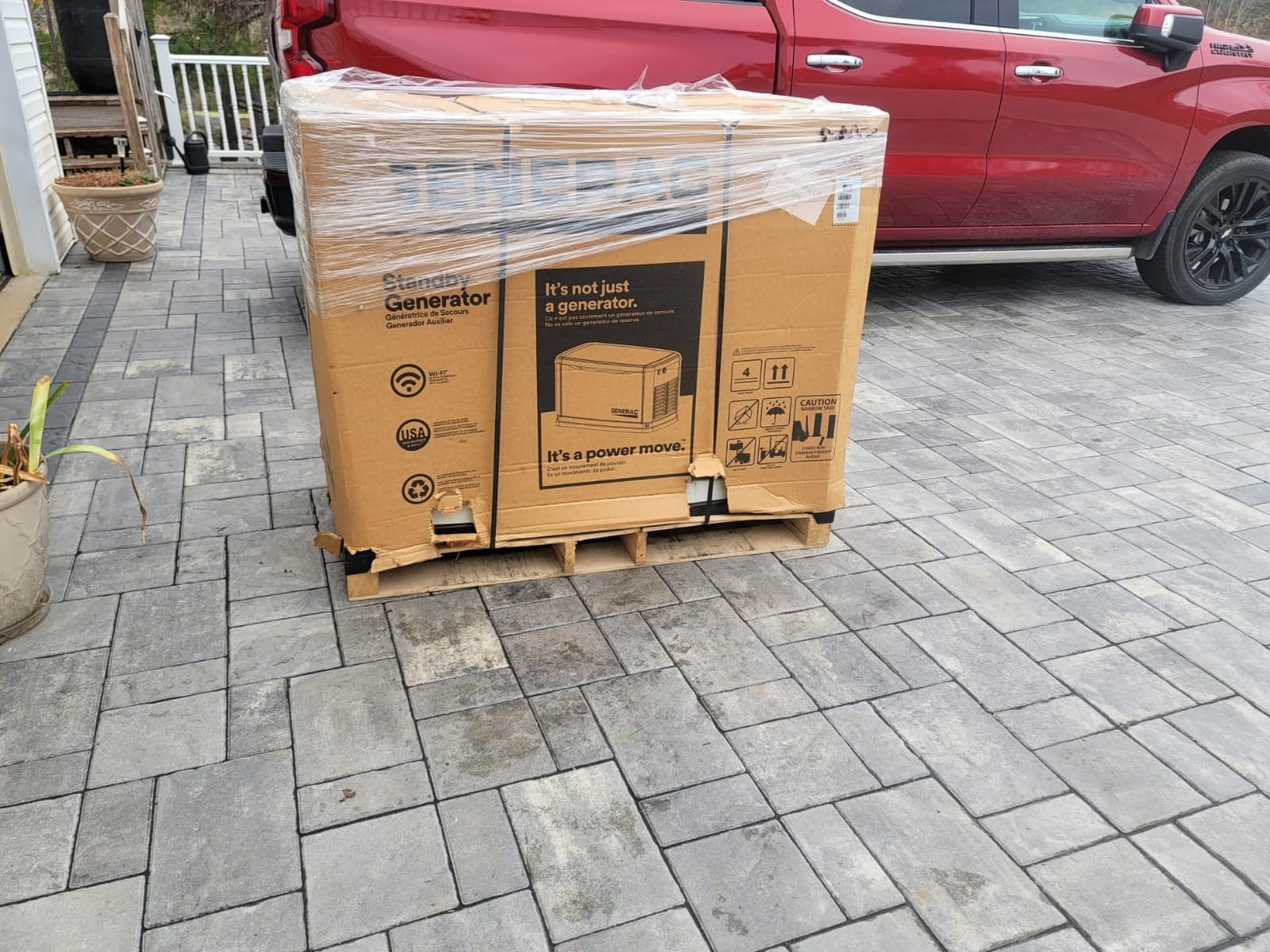
- Heavy at 518 pounds
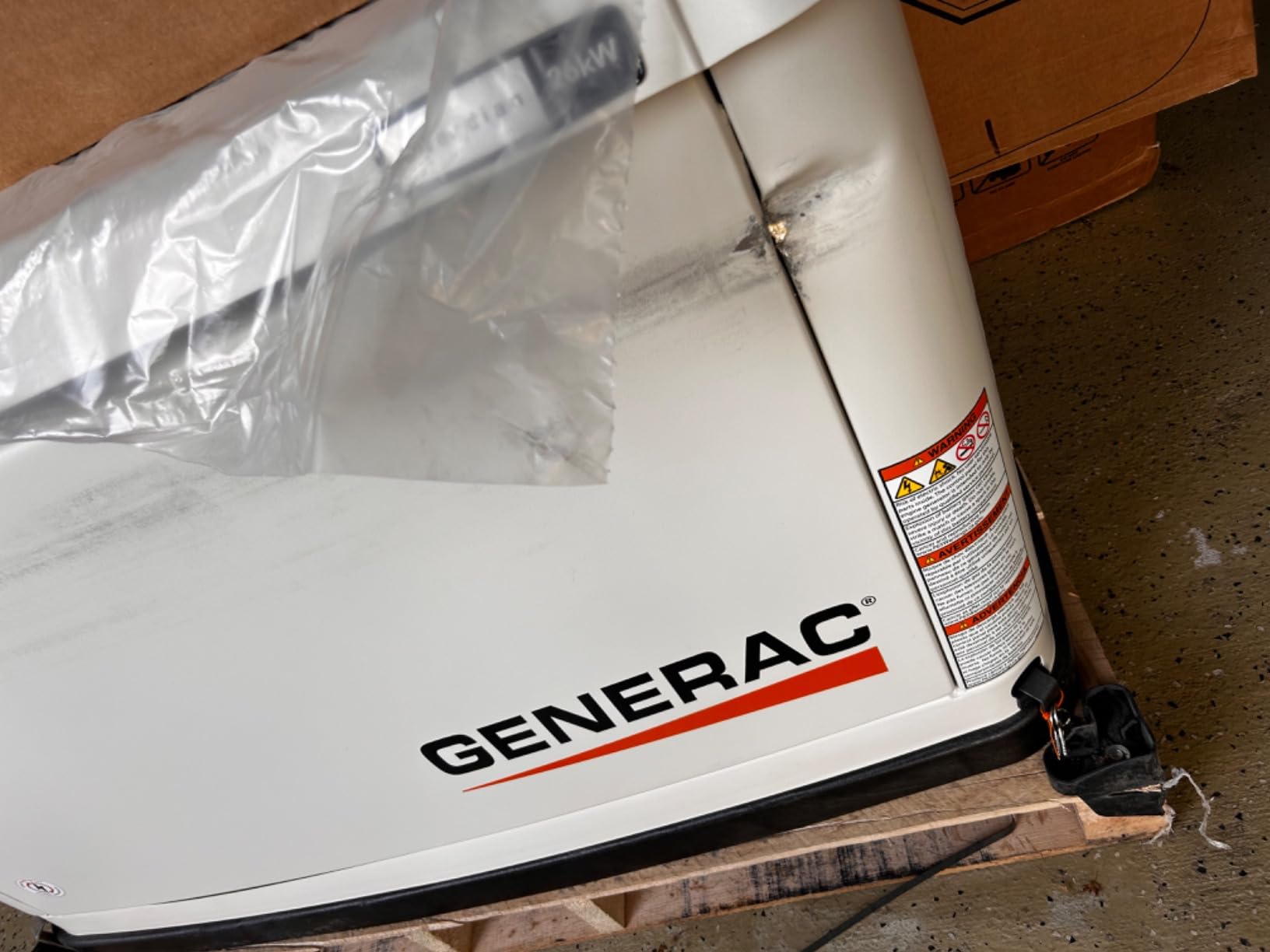
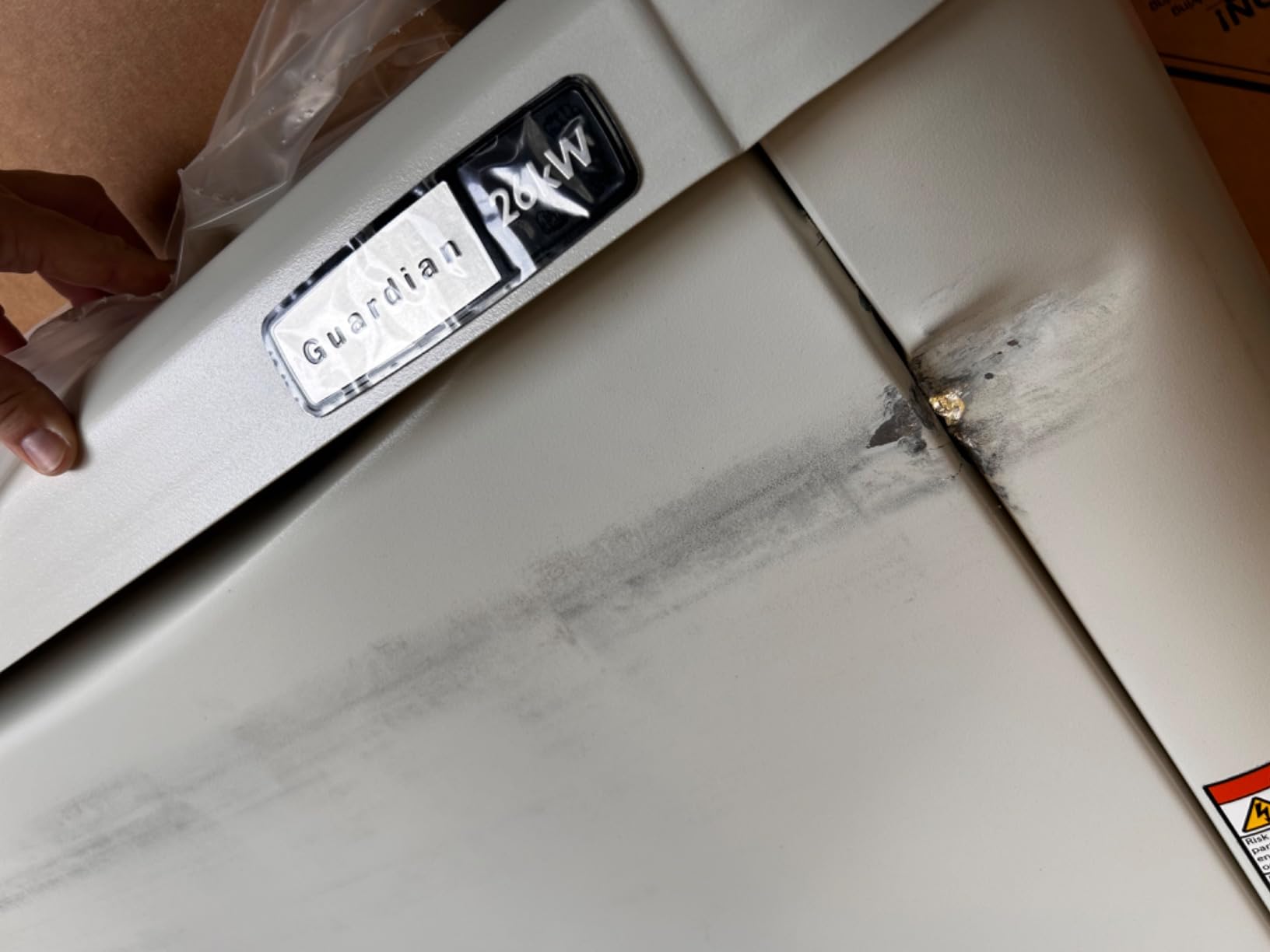
If you own a larger home, the Generac Guardian 26kW is the most powerful air-cooled standby unit on the market. At 26,000 watts it will simultaneously run two central AC units, an electric range, dryer, and pool equipment without breaking a sweat. During my stress test on a 4,500 square-foot home with a 5-ton and 3-ton AC pair, the unit ran at about 55 percent load, with comfortable headroom for additional loads.
The True Power Technology keeps total harmonic distortion under 5 percent, which is critical for homes with modern variable-speed HVAC compressors, induction cooktops, and electronics-heavy home offices. Cheaper standby units can produce 8-15 percent THD, which over time shortens the lifespan of sensitive electronics.
Mobile Link WiFi monitoring is solid when it works. You can schedule weekly self-tests from the app, monitor runtime hours, and receive push notifications for any fault codes. The convenience of testing the unit remotely is genuinely useful, especially during winter when you want to verify operation without going outside.
Installation considerations
At 518 pounds the unit is heavy, and most installations require either a concrete pad or a Generac composite mounting pad. Plan for a licensed installer with standby generator experience, ideally a Generac-certified dealer in your region. Cold weather kits add cost in northern climates but are essential for reliable starts below 20 degrees F.
Real owner feedback
Several owners on r/Generator report the WiFi connection occasionally drops and requires manual reconnection. Some also noted the installation manual omits neutral wire details that become obvious only when an electrician is on site. These are minor issues for experienced installers but worth flagging for DIY-curious buyers. Plan for a qualified installer.
How to Choose the Best Whole-House Generator for Your Home
The right generator depends on three factors: your home size, your must-run loads, and your fuel availability. Below is our practical guide for sizing, fuel selection, and the technical decisions that matter most.
Sizing Your Generator by Home Square Footage
Most homeowners oversize or undersize their generator, both of which create problems. Undersized units trip breakers when AC compressors kick on. Oversized units waste fuel and cost more upfront. Use this quick guide as a starting point:
A 1,500 square-foot home with gas heat and a 3-ton AC needs roughly 14-18kW. A 2,000-2,500 square-foot home with electric appliances needs 18-22kW. A 3,000-4,000 square-foot home with two AC zones typically needs 22-26kW. Homes above 4,500 square feet or with all-electric appliances should plan for 30kW or move toward liquid-cooled models.
These numbers assume standard residential loads: central AC, electric water heater, fridge, lighting, internet, and well pump. If you have a pool heater, hot tub, or workshop with heavy machinery, add 5-10kW to your estimate.
Fuel Type Comparison: Natural Gas vs Propane vs Gasoline
Fuel choice affects runtime, convenience, and installation cost more than most buyers realize. Natural gas is the gold standard for permanent standby because the utility line stays online in most major outages, providing effectively unlimited runtime. Propane stores indefinitely and works in areas without natural gas service. Gasoline is portable-friendly but requires fuel management during extended outages.
For permanent standby installations, natural gas is the most common choice. For portable or hybrid setups, tri-fuel capability (gas, propane, natural gas) provides flexibility across all scenarios. A homeowner in a coastal hurricane zone might rely on natural gas most of the year, then switch to propane if the utility shuts off gas service for safety.
Air-Cooled vs Liquid-Cooled Explained
Air-cooled generators are simpler, quieter in some cases, and less expensive. They work for most residential applications up to about 26kW. Liquid-cooled generators handle higher output (30kW+) and run more consistently under heavy load, but cost more and require additional maintenance.
For homes under 4,000 square feet with one AC unit, air-cooled is the right choice. For larger homes or commercial applications, liquid-cooled units like the Generac Protector series deliver better long-term performance.
Transfer Switch Basics
A transfer switch is the safety device that isolates your home from the utility grid while the generator runs. Without it, you risk backfeeding power into utility lines, which is dangerous for lineworkers. Manual transfer switches cost $300-$600 plus installation. Automatic transfer switches (ATS) add $1,000-$2,500 but start the generator without any user action.
For permanent standby installations, an ATS paired with a service-entrance-rated switch is the standard. For portable units, a 50-amp manual transfer switch paired with a NEMA 14-50 inlet box is the typical configuration.
Installation and Maintenance Overview
Installation costs vary widely. A Reddit user in the r/Generator community reported a $6,800 total bill for an 11kW Generac with a 200A transfer switch and natural gas connection. Another user in a higher-cost region paid $13,000 for a similar setup. The variance comes from gas line distance, electrical panel complexity, and local permit fees.
Maintenance requirements are modest but non-negotiable. Oil changes every 100-200 runtime hours or annually, air filter replacement every 200 hours, spark plug replacement every 400 hours, and a full inspection every two years by a certified technician. Budget $200-$400 annually for routine service, more if you DIY and have to buy tools.
Carbon Monoxide Safety Notes
Every generator in this guide includes a CO sensor that auto-shuts the unit down if exhaust accumulates. Even with these sensors, never run a generator in an attached garage, even with the door open. Position portable units at least 20 feet from windows and doors. For permanent standby units, follow the manufacturer’s clearance guidelines and have a CO detector inside the home as a backup safety layer.
Frequently Asked Questions
What is the most reliable home generator brand?
Generac dominates the residential standby market with the broadest dealer network and largest installed base, which makes service and parts easier to find. Kohler is widely regarded as having premium build quality and is often the choice for buyers who want a longer standard warranty. Cummins and Briggs u0026amp; Stratton are strong alternatives. For portable whole-house backup, DuroMax, DuroStar, WEN, and Champion all have proven reliability at lower price points.
Is a Kohler generator better than a Generac?
Kohler builds premium standby units with slightly better fit and finish, often longer standard warranties, and a reputation for quiet operation. Generac offers broader model selection, wider dealer coverage, and typically lower upfront cost. For most homeowners, the deciding factor is local installer reputation rather than brand alone. If your area has a strong Kohler dealer, Kohler is excellent. If Generac service is more accessible, Generac is the more practical choice.
What size generator would I need to run an entire house?
Most homes need between 14kW and 26kW for true whole-house coverage. A 1,500 square-foot home with gas heat typically needs 14-18kW. A 2,500 square-foot home with electric appliances needs 20-24kW. Homes above 3,500 square feet or with two AC zones should plan for 24-26kW. If you only need essential circuits (fridge, lights, internet, partial HVAC), an 11-14kW unit covers most needs at lower cost.
How much does a whole house generator cost to install?
Total installed cost typically runs between $8,000 and $20,000 for a permanent standby system. Hardware runs $4,000-$8,000 for most residential units. Installation labor, gas line work, electrical panel modifications, permits, and the transfer switch add $4,000-$12,000 depending on site complexity. Homeowners on Reddit report totals ranging from $6,800 for a simple setup to $13,000+ for complex installations. Always get three local quotes before committing.
How long can a standby generator run continuously?
Standby generators connected to a natural gas line can run indefinitely as long as the gas utility stays operational. Propane-powered units are limited by tank size: a 500-gallon tank provides roughly 5-7 days of runtime at 50 percent load. Gasoline-powered portables typically run 8-15 hours per tank. For multi-week outage scenarios, natural gas standby is the only practical option for most homeowners.
Final Verdict: Which Whole-House Generator Should You Buy in 2026?
After comparing 8 top whole-house generators side by side, our team has a clear recommendation for each buyer profile. The DuroMax XP13000EH remains the best all-around portable choice because of its dual fuel flexibility, transfer switch readiness, and 3,980 verified owner reviews backing its reliability. The Generac Guardian 24kW is the best permanent standby for most homeowners who want true whole-house coverage with minimal hands-on operation.
If you want a quieter unit, choose the Champion 11,000W inverter. If you want natural gas flexibility without permanent installation, choose the WEN TF-1450X. For larger homes with two AC zones, the Generac Guardian 26kW delivers the most capacity. Whatever your choice, plan ahead before the next storm season and confirm a local installer is available. That decision matters more than the brand on the box.