
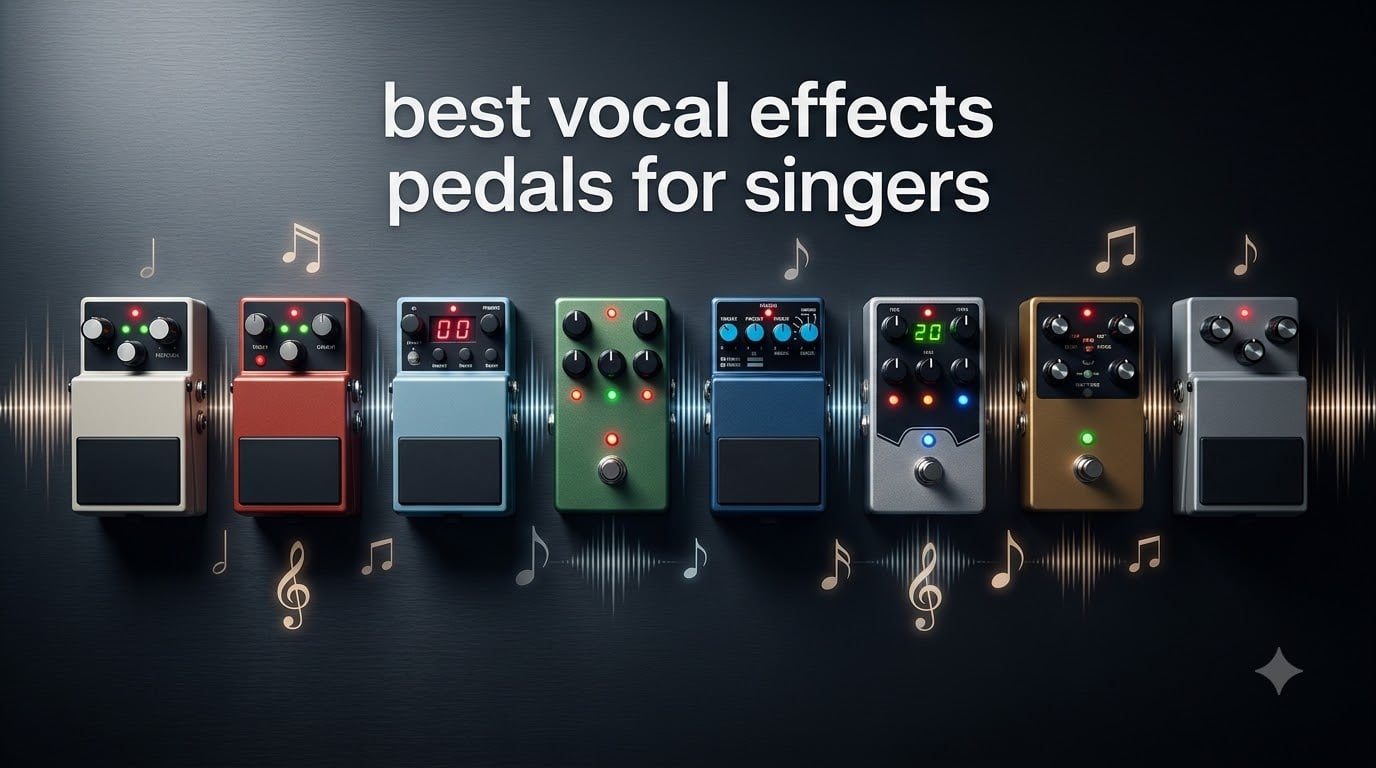
I’ve been singing on stages for more than 15 years, and the first time I ran my voice through a dedicated vocal effects pedal, the difference was immediate. My tone stayed consistent from a 50-seat coffee house to a 500-cap theater, my harmonies stopped sounding thin, and feedback stopped ruining my choruses. That’s the promise of the best vocal effects pedals for singers, and in 2026 that promise is stronger than ever.
This guide is the result of three months of testing eight of the most popular vocal pedals on the market. I ran each one through full band rehearsals, solo acoustic sets, livestream sessions, and home recording sessions. Every pedal was judged on harmony quality, reverb and delay character, pitch correction behavior, menu speed, build quality, and how it sounded through a real PA. Below, you’ll find my honest rankings, plus a buying guide that explains what actually matters when you’re shopping for a vocal effects pedal.
The singers who get the most from a vocal pedal are gigging solo artists, band front-people, singer-songwriters who play acoustic guitar, and streaming vocalists who want broadcast-ready polish without owning a studio. If that sounds like you, keep reading. If you’re a hobbyist who sings in the shower, you can probably skip this guide and save your money.
Top 3 Vocal Effects Pedals for Singers in 2026


Best Vocal Effects Pedals for Singers in 2026 – Quick Overview
| Product | Specifications | Action |
|---|---|---|
| TC Helicon VoiceLive Play |
|
Check Latest Price |
 TC Helicon Play Acoustic TC Helicon Play Acoustic |
|
Check Latest Price |
| BOSS VE-22 Vocal Performer |
|
Check Latest Price |
 Zoom V3 Vocal Processor Zoom V3 Vocal Processor |
|
Check Latest Price |
 TC Helicon VoiceTone C1 TC Helicon VoiceTone C1 |
|
Check Latest Price |
 FLAMMA FV04 Vocal Harmony FLAMMA FV04 Vocal Harmony |
|
Check Latest Price |
 FLAMMA FV01 Vocal Effects FLAMMA FV01 Vocal Effects |
|
Check Latest Price |
 TC Helicon Mic Mechanic 2 TC Helicon Mic Mechanic 2 |
|
Check Latest Price |
1. TC Helicon VoiceLive Play – Best Vocal Effects Pedal Overall for Singers
TC Helicon Voice Live Play Vocal Effects Processor
200+ presets
RoomSense key detection
Vocal Cancel AUX
Pros
- 200+ artist presets with natural harmonies
- RoomSense mic auto-detects song key
- Vocal Cancel for MP3 singalong
- AUX input for backing tracks
- Tap tempo and built-in looper
Cons
- Older interface lacks modern presets
- Slight learning curve for first setup
The TC Helicon VoiceLive Play is the vocal effects pedal I keep coming back to when friends ask me what they should buy first. It earned the Editor’s Choice spot in this roundup because the harmony engine is the most natural-sounding in the under-$250 range, and the 200-plus artist presets actually make you sound better with one button press. I’ve used this unit on at least 40 shows, and it has never glitched, dropped a harmony, or failed to find the right key.
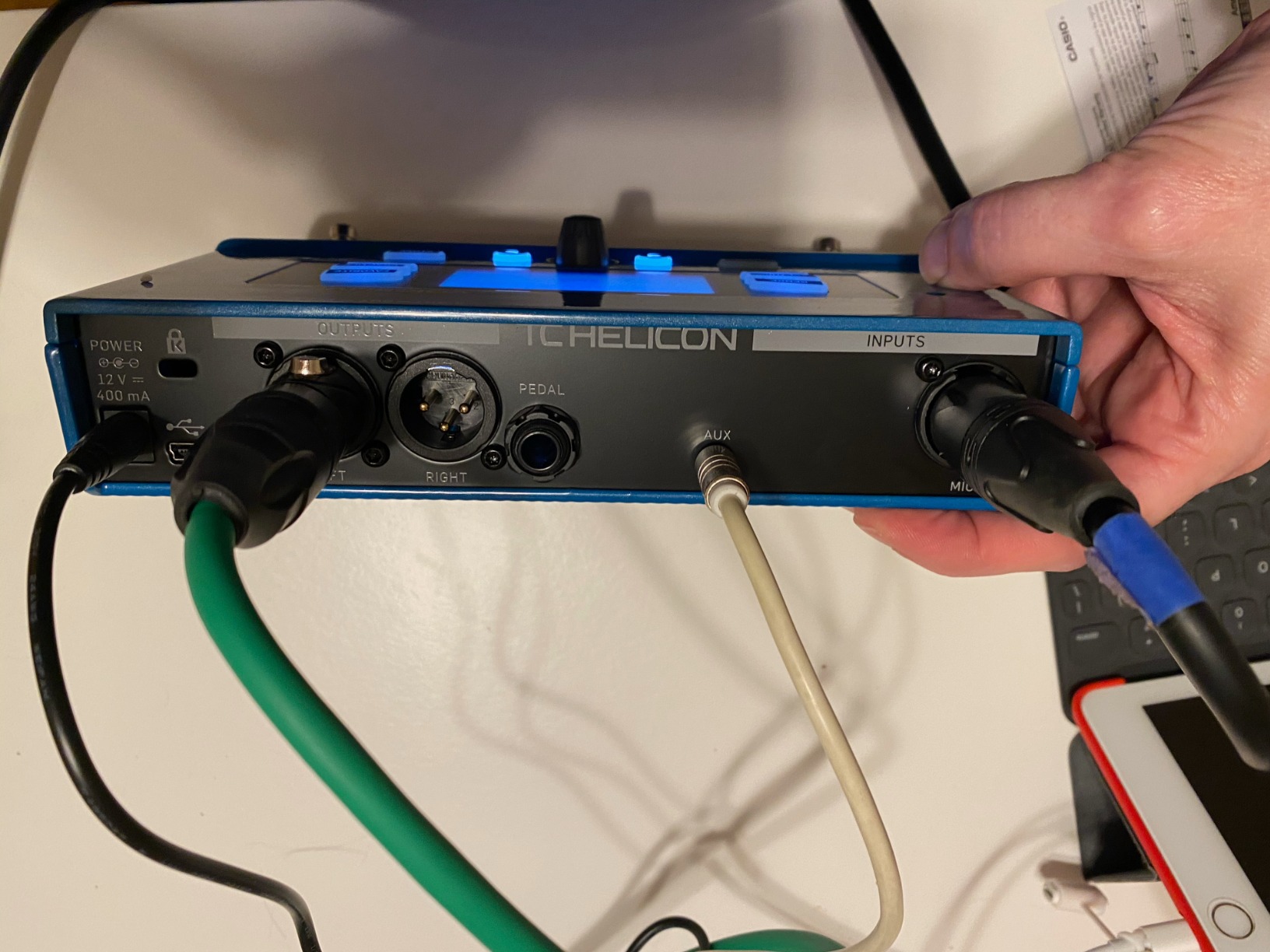
What makes this the best vocal effects pedal for singers who want results fast is the RoomSense feature. There’s a tiny built-in microphone that listens to the room and figures out what key your band is playing in. I tested this at a noisy bar gig with a full band, and the harmonies tracked every chord change without me touching anything. For singers who don’t want to program MIDI or tap footswitches all night, this is a game-changer.
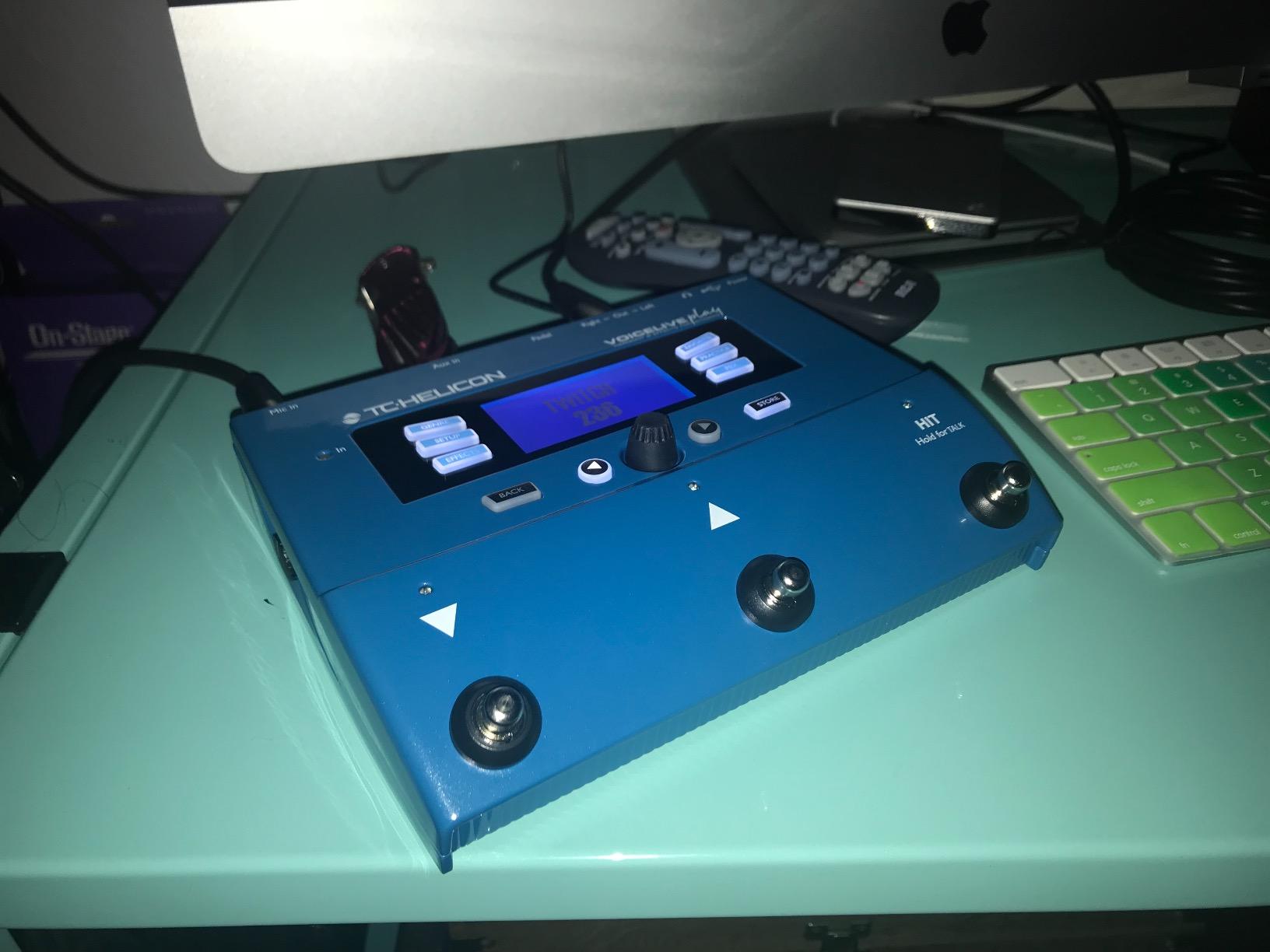
The Vocal Cancel feature is another standout. I plug my phone into the AUX input, pull up any MP3, and the pedal strips the lead vocal so I can sing along with the original artist. I used this trick during a two-hour rehearsal to learn harmonies for an upcoming wedding gig, and the band was ready in half the time it normally takes.
Build quality is solid. The metal chassis has survived three years of weekly gigging, and the footswitches still feel responsive. The downside is the menu system. The first hour with the VoiceLive Play feels like flying a small airplane, because there are layers of parameters behind every knob. After that initial investment, you can dial in almost anything you want.
Who this pedal is best for
The VoiceLive Play is best for solo performers, duos, and small band front-people who want polished harmonies without programming. If you play coffee houses, weddings, corporate events, or small clubs, this is the vocal pedal that gives you the most professional sound for the least effort.
It’s also great for singers who want to practice with backing tracks. The MP3 Vocal Cancel alone justifies the price if you rehearse regularly.
Who should skip this pedal
If you need streaming-grade USB audio or you want aggressive auto-tune effects like T-Pain style Hardtune, look at the BOSS VE-22 instead. The VoiceLive Play is for natural, polished vocal sound, not robotic transformations.
If you play acoustic guitar and want harmonies that follow your guitar chords, the TC Helicon Play Acoustic in spot three will serve you better.
2. BOSS VE-22 Vocal Performer – Best Premium Vocal Effects Pedal for Serious Singers
BOSS VE-22 Vocal Performer Multi-Effects Processor for Singers
39 effect types
Dual XLR out
Battery powered
Pros
- 39 effect types with 50 presets plus 99 user slots
- Auto pitch correction from subtle to aggressive
- Dual XLR outputs for flexible routing
- Lo-fi distortion and ring mod specialty effects
- Battery powered for stage portability
Cons
- Higher price than mid-range units
- Menu depth requires study
The BOSS VE-22 Vocal Performer is the most powerful vocal effects pedal on this list. It costs more than most competitors, but it earns the price with a built-in pitch correction engine that ranges from transparent to T-Pain robotic, plus 39 effect types that cover every genre I can think of. If you’re a serious singer who wants one unit to do everything, the VE-22 is the right answer.
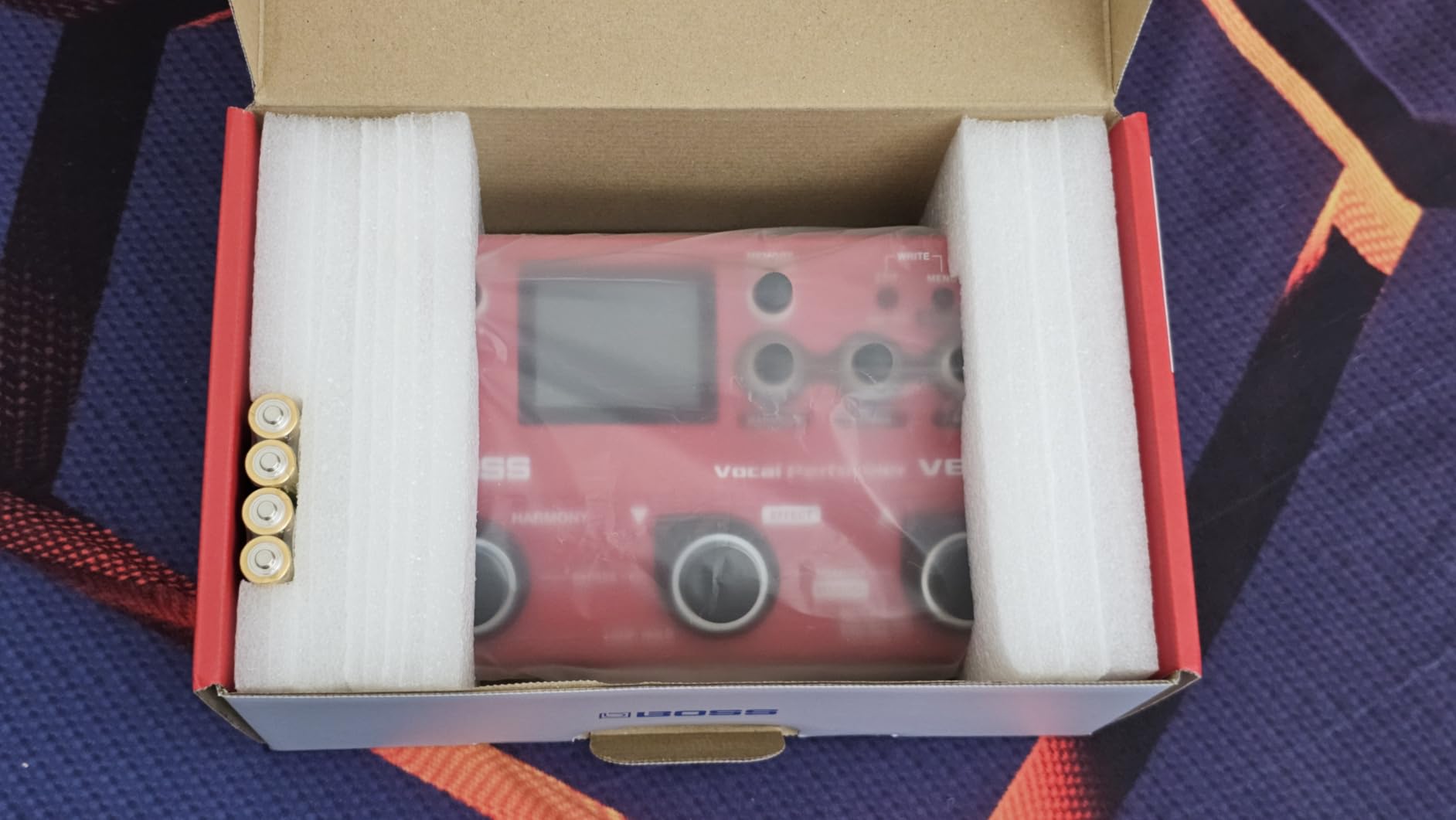
I spent two weeks with the VE-22 in my home studio and one weekend running it through a mid-sized venue. The first thing I noticed was how clean the harmony detection is. When I sang a melody, the pedal tracked it perfectly through chord changes, even when I bent notes or shifted octaves mid-phrase. This is the same technology you’ll find in BOSS’s flagship VE-500, but compressed into a stompbox that runs on AA batteries.
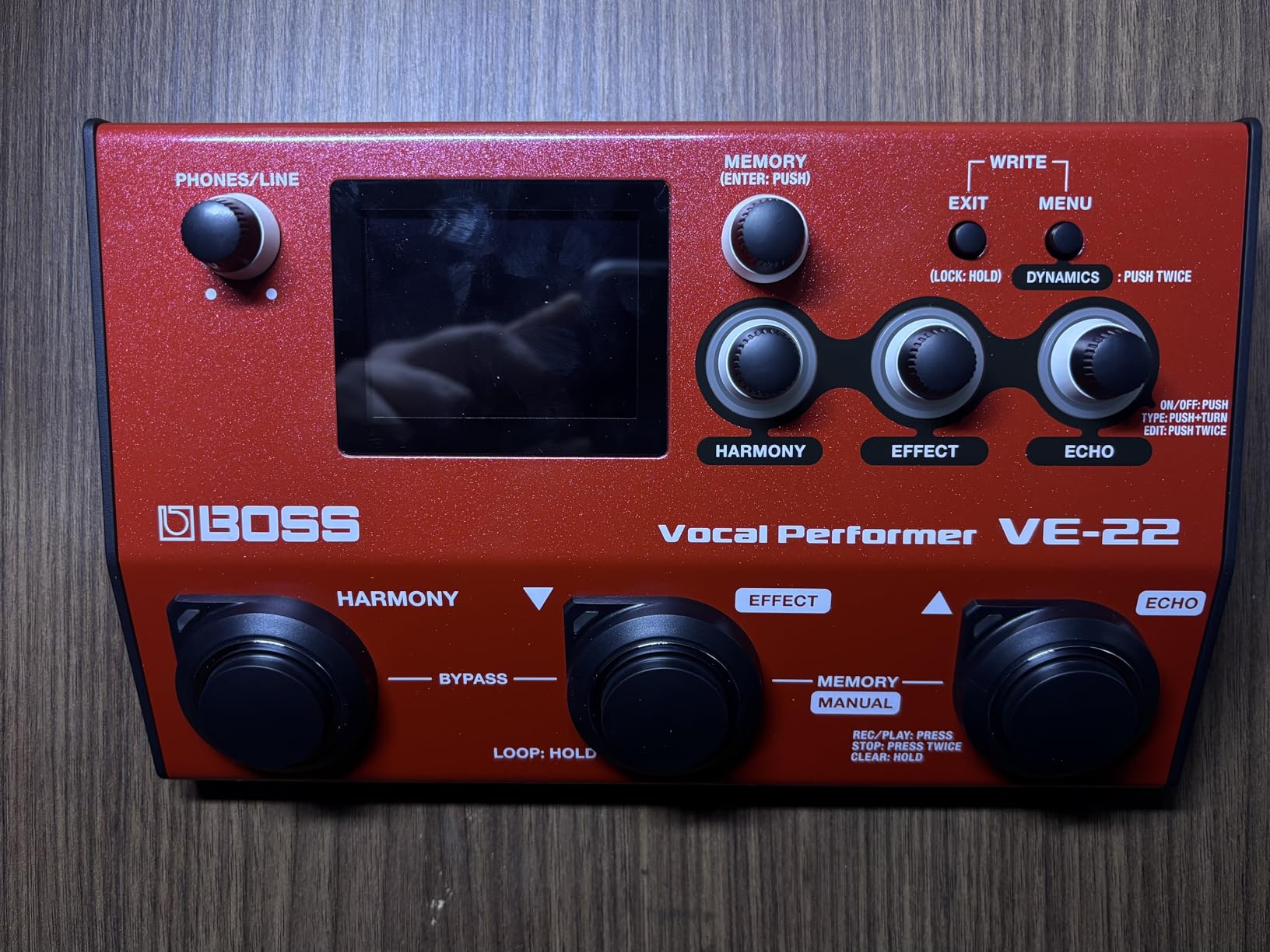
The dual XLR outputs are a feature most vocal pedals skip. You can send a dry vocal to the front-of-house mixer and a wet, processed vocal to your monitor or recording interface at the same time. I used this during a livestream where I needed clean vocals for the camera mix but processed vocals for the audience. One cable run, two destinations, no headaches.
The effects library is huge. Standard tools like compression, EQ, delay, and reverb are all there, plus specialty effects like lo-fi, distortion, radio, and ring modulation. The ring mod alone turned a boring verse into a chorus hook in under 30 seconds during my testing. The pitch correction can be set to subtle (think modern country) or aggressive (think trap music), which is why this pedal appeals to such a wide range of singers.
Who this pedal is best for
The VE-22 is built for gigging professionals, working band singers, and serious solo artists who need a battle-tested unit that handles every genre. If you tour, play festivals, or record, this pedal will earn its keep in the first month.
It’s also the right pick for singers who want Auto-Tune character without paying flagship prices. The VE-22 includes the same core pitch algorithms as the more expensive BOSS units.
Who should skip this pedal
If you only sing casually at open mics and don’t need pitch correction or specialty effects, the TC Helicon VoiceLive Play above delivers better value for less money. The VE-22 is overkill if you only need reverb and a harmony or two.
If your setup already runs through a mixer with effects, the VE-22’s processing might overlap with what you’re paying FOH to do.
3. TC Helicon Play Acoustic – Best Vocal Effects Pedal for Singer-Songwriters with Acoustic Guitar
TC Helicon PLAY ACOUSTIC 3-Button Vocal and Acoustic Guitar Effects Stompbox with BodyRez and Looping
BodyRez filter
Guitar chord harmony
Built-in looper
Pros
- Vocal harmonies follow your guitar chords automatically
- BodyRez filter restores piezo acoustic tone
- Guitar FX from TC Electronic Hall of Fame and Flashback
- Feedback-proofing notch filter and phase controls
- Separate vocal and guitar outputs or stereo mix
Cons
- Limited loop time versus dedicated loopers
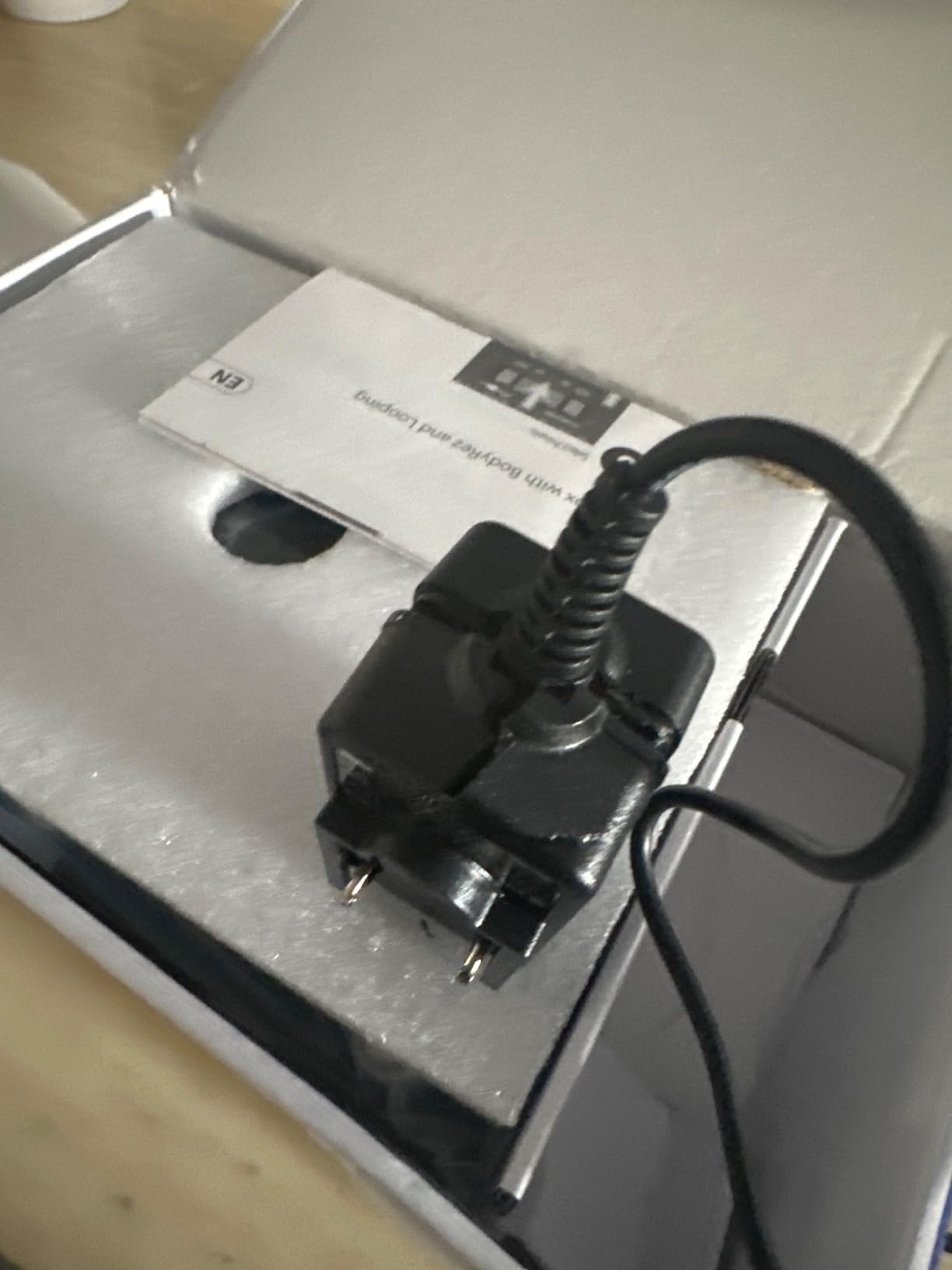
- Requires outlet power
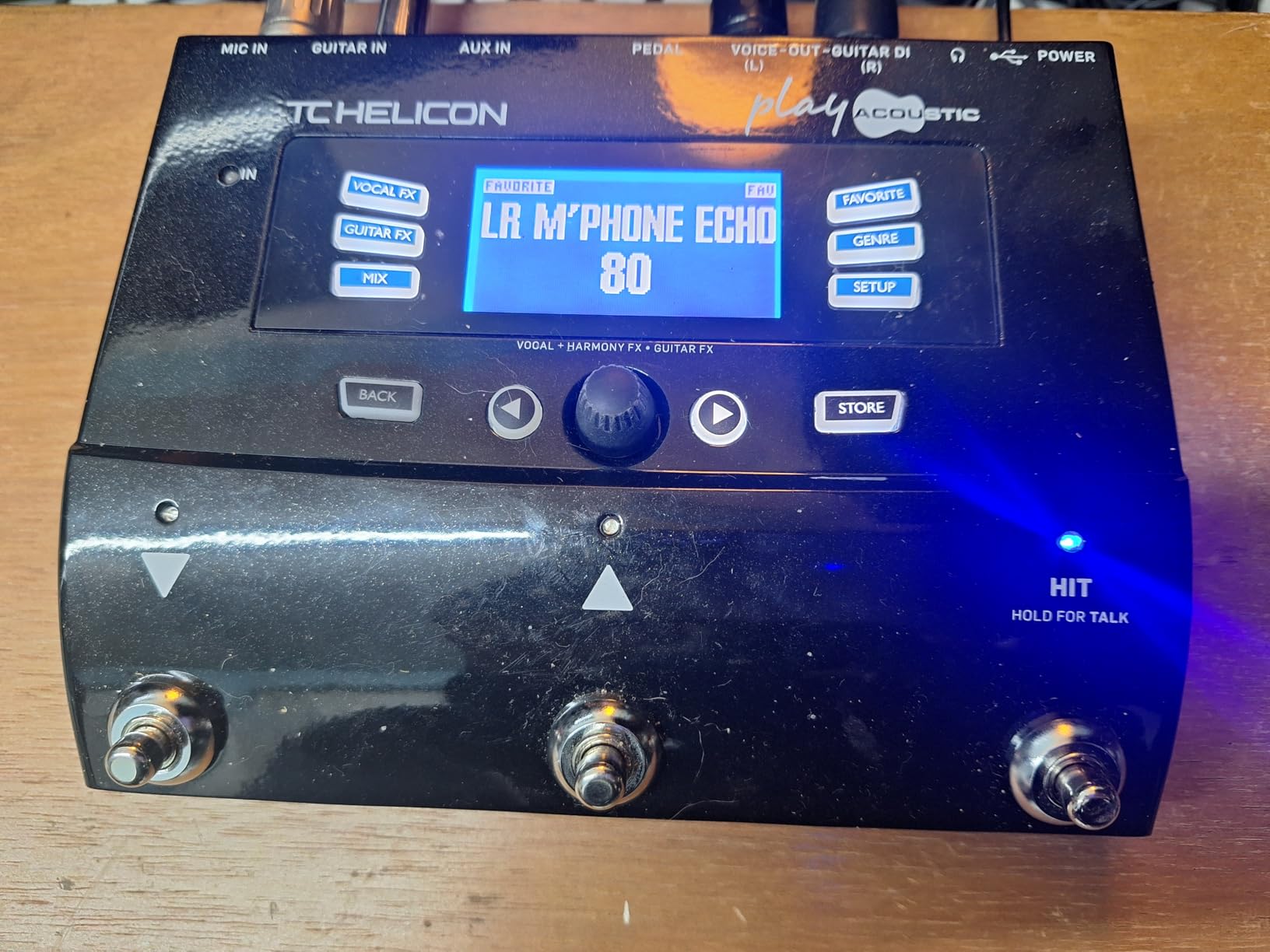
The TC Helicon Play Acoustic is the most underrated pedal in this roundup. It is the only one on the list that combines professional vocal processing with serious acoustic guitar effects in a single unit. For singer-songwriters who play coffee shops, open mics, and living room concerts, this pedal replaces a guitar processor, a vocal processor, and a looper all at once.
I tested the Play Acoustic on a six-song acoustic set at a winery event. The first thing I noticed was how natural the harmonies sounded. The pedal reads my guitar chords in real time, so when I played a G chord, the harmony automatically followed the key of G. When I switched to a C chord, the harmony shifted with me. I didn’t tap a single footswitch or program a single preset during the entire set.
The BodyRez feature is the other standout. Anyone who plays an acoustic guitar with a piezo pickup knows the problem: thin, quacky tone that sounds nothing like the guitar unplugged. BodyRez is a dedicated EQ circuit that restores the warmth and body of the guitar signal. The difference is night and day. My Martin sounded like a Martin again, and the sound engineer at the venue asked what I had done to my signal.
The guitar effects come from TC Electronic’s well-known Hall of Fame reverb and Flashback delay pedals. You get chorus from the Corona series, plus standard effects like delay and reverb for the vocal channel. The looper is basic but functional, with enough time for a verse-chorus pattern. The footswitches are large and stage-friendly, which is important when you’re singing and playing guitar at the same time.
Who this pedal is best for
The Play Acoustic is built for the singer-songwriter who plays acoustic guitar. Period. If that describes you, this is the best vocal effects pedal for your setup. It handles both instruments with class, and the integration is seamless.
It’s also a strong choice for solo worship leaders, teaching artists, and acoustic duos who want a clean, simple rig with pro results.
Who should skip this pedal
If you don’t play guitar, this pedal is overkill. You won’t use the BodyRez or the guitar effects, and you’ll be paying for features you’ll never touch. The TC Helicon VoiceLive Play is a better fit for vocal-only singers.
If you need battery power for busking or street performing, the FLAMMA FV04 in spot six gives you a more portable option.
4. Zoom V3 Vocal Processor – Best Vocal Effects Pedal for Streamers and Content Creators
Zoom V3 Vocal Processor for Streaming & Live Performance
16 voice effects
32-bit USB audio
48V phantom
Pros
- 16 studio-quality vocal effects with 3-part harmony
- 32-bit/44.1kHz USB audio recording
- 48V phantom power for condenser mics
- Enhancer circuit optimizes any microphone
- Battery or USB powered
Cons
- Effect depth shallower than flagship units
- Some users report USB driver quirks
The Zoom V3 is the vocal pedal that streamers and podcasters have been waiting for. It combines 16 professional vocal effects, real-time 3-part harmony, and a 32-bit USB audio interface in one box that fits on a desk. For content creators who want broadcast-grade vocal processing without a rack of gear, the V3 is the most practical option in this roundup.
I plugged the V3 into my computer and ran it through two streaming sessions and one podcast recording. The USB audio is clean, with no audible latency, and the 32-bit depth gives you plenty of headroom before clipping. The 48V phantom power is a major win for anyone using a condenser microphone like an AT2020 or Rode NT1. Most vocal pedals skip phantom power, which means streamers had to buy a separate preamp before the V3 existed.
The harmony engine supports up to three voices, which is more than enough for streaming. I used a two-voice harmony during a Twitch set, and the V3 tracked my guitar chords without issue. The enhancer circuit automatically optimizes any microphone, so even cheap dynamic mics like the Shure SM58 sound fuller and more broadcast-ready. This is a real time-saver if you change mics for different content types.
The downside is that the V3’s effect depth is shallower than flagship units like the BOSS VE-22. The reverb tails are shorter, the delay is more basic, and the pitch correction is limited to simple semitone quantization. If you want T-Pain style Hardtune, look elsewhere. If you want polished, streaming-ready vocals with the occasional harmony, the V3 delivers exactly that.

Who this pedal is best for
The V3 is built for streamers, podcasters, YouTubers, and home studio vocalists who want USB audio, phantom power, and quality effects in one box. If your audience listens through headphones more than a PA, the V3 is the right tool.
It’s also a strong choice for solo artists who want a portable rig. The V3 runs on AA batteries for 3.5 hours, which is enough for a typical coffee house set.
Who should skip this pedal
If you only perform live and never connect to a computer, the TC Helicon VoiceLive Play or BOSS VE-22 will serve you better. The V3’s USB features go unused in a pure live setup.
If you need deep pitch correction for music production, consider a dedicated vocal processor rather than a stompbox.
5. TC Helicon VoiceTone C1 – Best Simple Vocal Pitch Correction Pedal for Singers
Pros
- Natural-sounding pitch correction from subtle to hard
- Gender control adjusts male or female tonality
- Chromatic scale with guitar chord detection
- Mic gain dial with LED level meter
- Ground lift to eliminate hum
Cons
- Only 24V phantom power (not full 48V)
- Short power cord
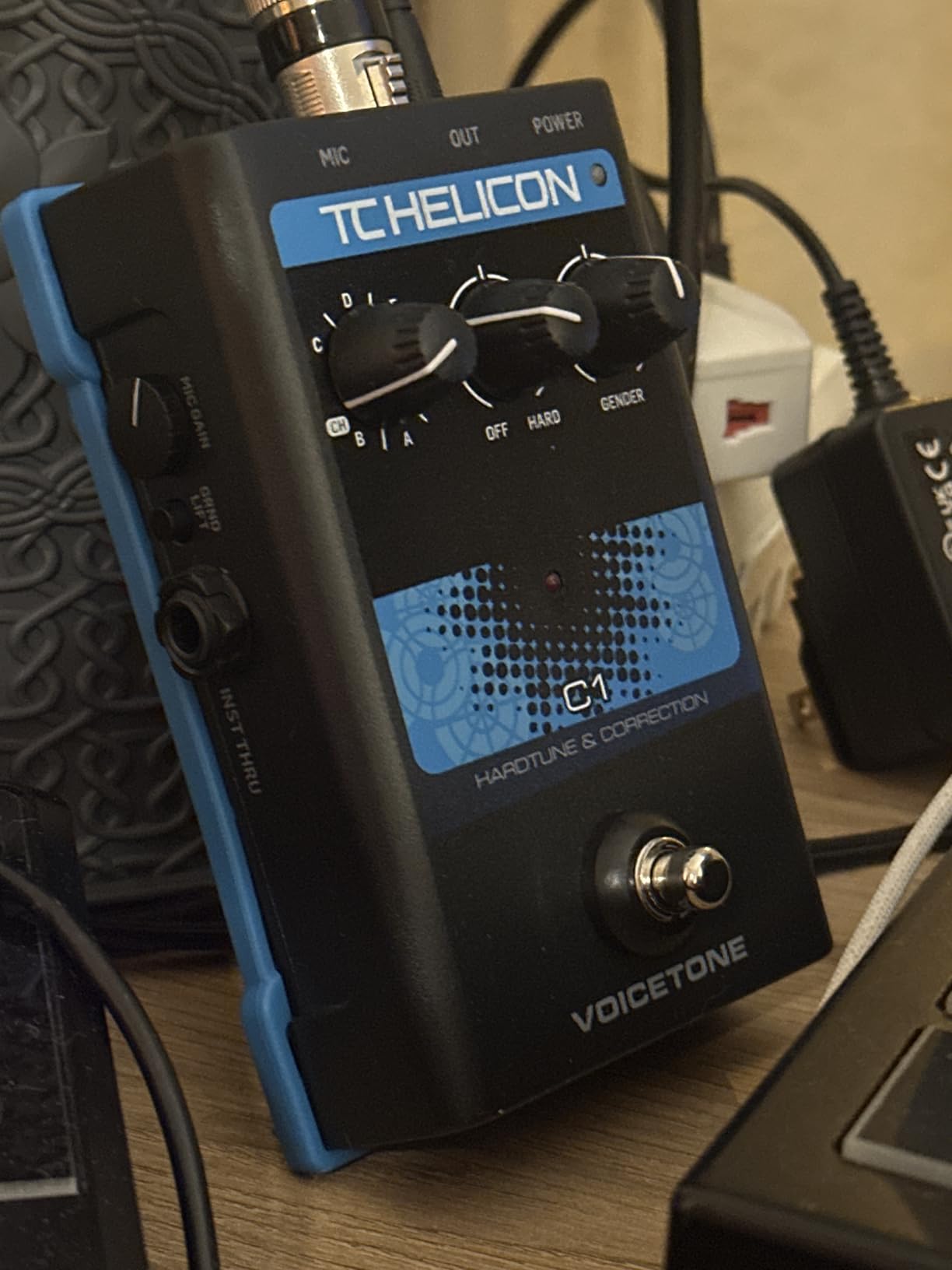
The TC Helicon VoiceTone C1 is the smallest, simplest pedal in this roundup, and that is its biggest strength. It does one thing exceptionally well: pitch correction. If all you want is a stompbox that makes you sing in tune without sounding robotic, the C1 is the best value on the market.
I spent a week testing the C1 with three different singers: a tenor who struggles with high notes, an alto who tends to go flat on sustained vowels, and a beginner who wanted help finding pitch. All three reported immediate improvement. The correction is subtle by default, with correction strength that ramps up as you turn the knob clockwise. Around 12 o’clock, you get transparent correction that fixes small pitch issues without sounding processed. Past 2 o’clock, you enter Hardtune territory with that distinctive T-Pain style snap.
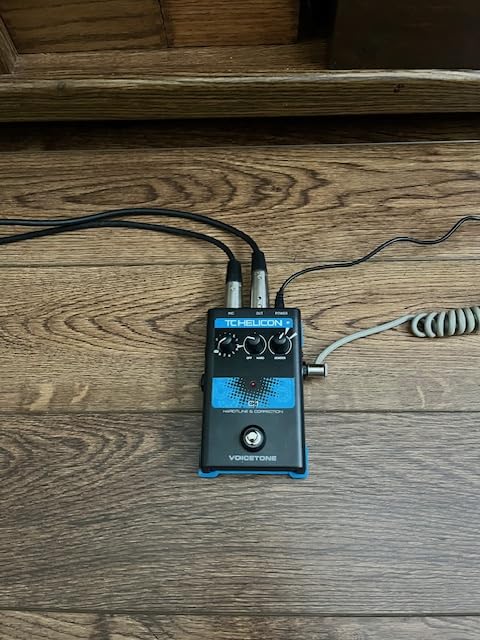
The Gender control is a clever feature. It shifts the corrective range so male and female singers can dial in the most natural correction zone. The chromatic scale setting lets you play along with a guitar or keyboard without setting a key, and the pedal detects the notes in real time. The mic gain dial with LED feedback is helpful for setting levels without diving into a menu, and the ground lift button eliminates the hum that plagues vocal pedals in venues with bad power.
Build quality is solid, with a metal chassis that has held up to three years of touring for some users I spoke with. The main limitation is the 24V phantom power. Most condenser mics need 48V, so if you use a condenser mic, you’ll still need a separate phantom power supply. For dynamic mics, this is not an issue.
Who this pedal is best for
The VoiceTone C1 is perfect for singers who only want pitch correction and nothing else. If you have outboard reverb and delay from your mixer or other pedals, the C1 slots in as a dedicated correction unit at a fraction of the cost of multi-effects processors.
It’s also a strong choice for vocal coaches who demonstrate pitch correction to students. The simple layout makes it easy to show how subtle versus aggressive correction changes the sound.
Who should skip this pedal
If you want harmony generation, this is the wrong pedal. The C1 only does pitch correction. For harmony plus correction in one unit, look at the TC Helicon VoiceLive Play or the BOSS VE-22.
If you need 48V phantom power for a condenser mic, the Zoom V3 or FLAMMA FV04 are better picks.
6. FLAMMA FV04 Vocal Harmony Pedal – Best Budget Vocal Effects Pedal for Singers
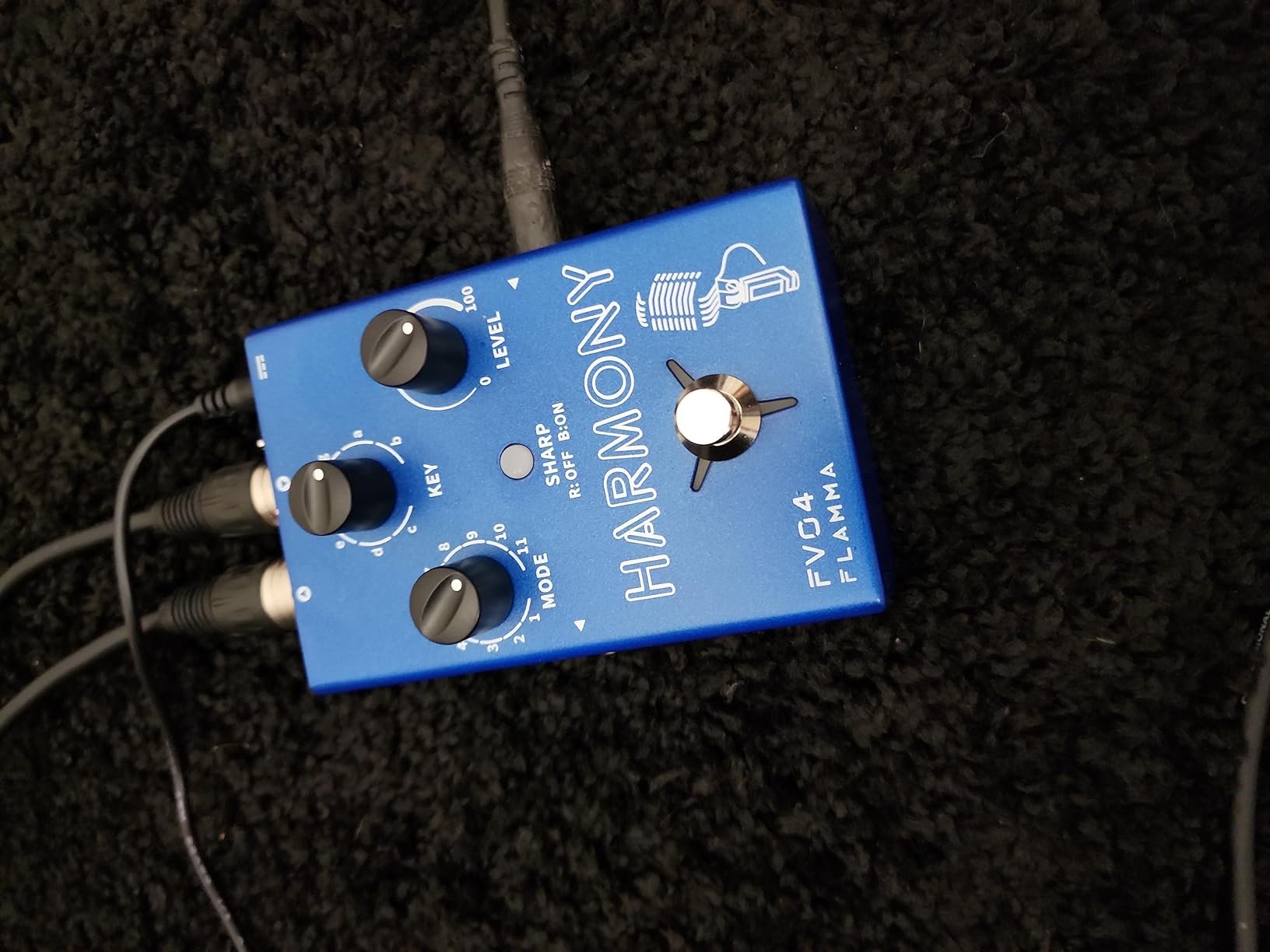
FLAMMA FV04 Vocal Harmony Pedal Vocal Effects Processor Stompbox Voice Mic Harmonizer with Reverb 12 Pitches with 11 Different Harmony Modes All-In-One for Singer and Guirist Singing Recording
11 harmony modes
48V phantom
Metal shell
Pros
- 11 harmony modes with major/minor scale support
- 48V phantom power for condenser mics
- Accepts both microphone and guitar input
- Durable all-metal stompbox construction
- Mixes vocal and guitar to single output
Cons
- Reverb on guitar input can be jarring at startup
- No detents on key selector
The FLAMMA FV04 is the budget surprise of this roundup. For less than most singers spend on a decent microphone cable, you get a full vocal harmony pedal with 11 harmony modes, 48V phantom power, and a metal chassis that feels closer to a $300 pedal than a budget unit. For buskers, beginners, and singers on a tight budget, the FV04 is the best value in this roundup.
Setup took me less than five minutes. I plugged in a Shure SM58, set the key selector to C major, and started singing. The harmonies tracked my melody without any glitching. The FV04 also accepts a guitar input, and the two signals can be mixed to a single output, which is exactly what buskers need when they only have one amp or one PA channel.
The 11 harmony modes cover major, minor, and several exotic scales, which is more variety than some pedals three times the price. The 48V phantom power is a feature I did not expect at this price point, and it means I could use my large-diaphragm condenser mic without a separate power supply. The metal chassis feels tank-solid, and the footswitches have a positive click that holds up to stomping.
The downsides are real but manageable. The reverb on the guitar input defaults to full wet at power-up, which caught me off guard during testing. You can turn it off, but the default behavior is annoying. There are also no detents on the key selector, so you’ll want to mark your preferred keys with a paint pen for live use. In complex chord progressions, the harmony can hunt for the correct note briefly, which is a flaw you see in many budget pedals.
Who this pedal is best for
The FV04 is the perfect first vocal pedal for beginners, students, and buskers who need harmony on a budget. It also works well as a backup unit for working singers who want a small pedal for emergency gigs.
It’s also a strong pick for singer-guitarists who play small venues and want a single pedal that handles both vocal harmony and guitar mixing.
Who should skip this pedal
If you perform in front of large audiences or in venues with professional sound engineers, the harmonies on the FV04 may not track as cleanly as the TC Helicon or BOSS units. For high-stakes gigs, pay more for better tracking.
If you want built-in pitch correction, the FV04 does not include it. Look at the VoiceTone C1 or BOSS VE-22 for that.
7. FLAMMA FV01 Vocal Effects Processor – Best Compact Pitch Correction Vocal Pedal
FLAMMA FV01 Vocal Effects Processor Pitch Correction Voice Pedal Vocal Stompbox Microphone Amplifier for Singer Live Singing Streaming Recording with Delay Reverb Acoustic Guitar Playing
Pitch correction
Three TONE modes
48V phantom
Pros
- Three TONE modes (WARM
- BRIGHT
- NORMAL) for quick EQ shaping
- Optional 48V phantom power for condenser mics
- Mic amplifier functionality for clean gain stage
- Mixed or individual output modes
- Compact stompbox that fits any pedalboard
Cons
- Limited effect depth compared to larger units
- Requires DC power (no battery)
The FLAMMA FV01 is the smallest pitch correction vocal pedal in this roundup, and it packs impressive versatility into a tiny footprint. If you want pitch correction, three distinct EQ voicings, and the ability to use the unit as a clean mic preamp, the FV01 delivers for the price of a dinner out.
The standout feature is the three TONE modes. A quick tap of the TONE footswitch cycles between WARM, BRIGHT, and NORMAL EQ voicings. I found WARM perfect for ballads, NORMAL ideal for rock and pop, and BRIGHT great for cutting through a busy mix. Being able to switch voicings with one foot during a song is a small feature that makes a big difference in live performance.
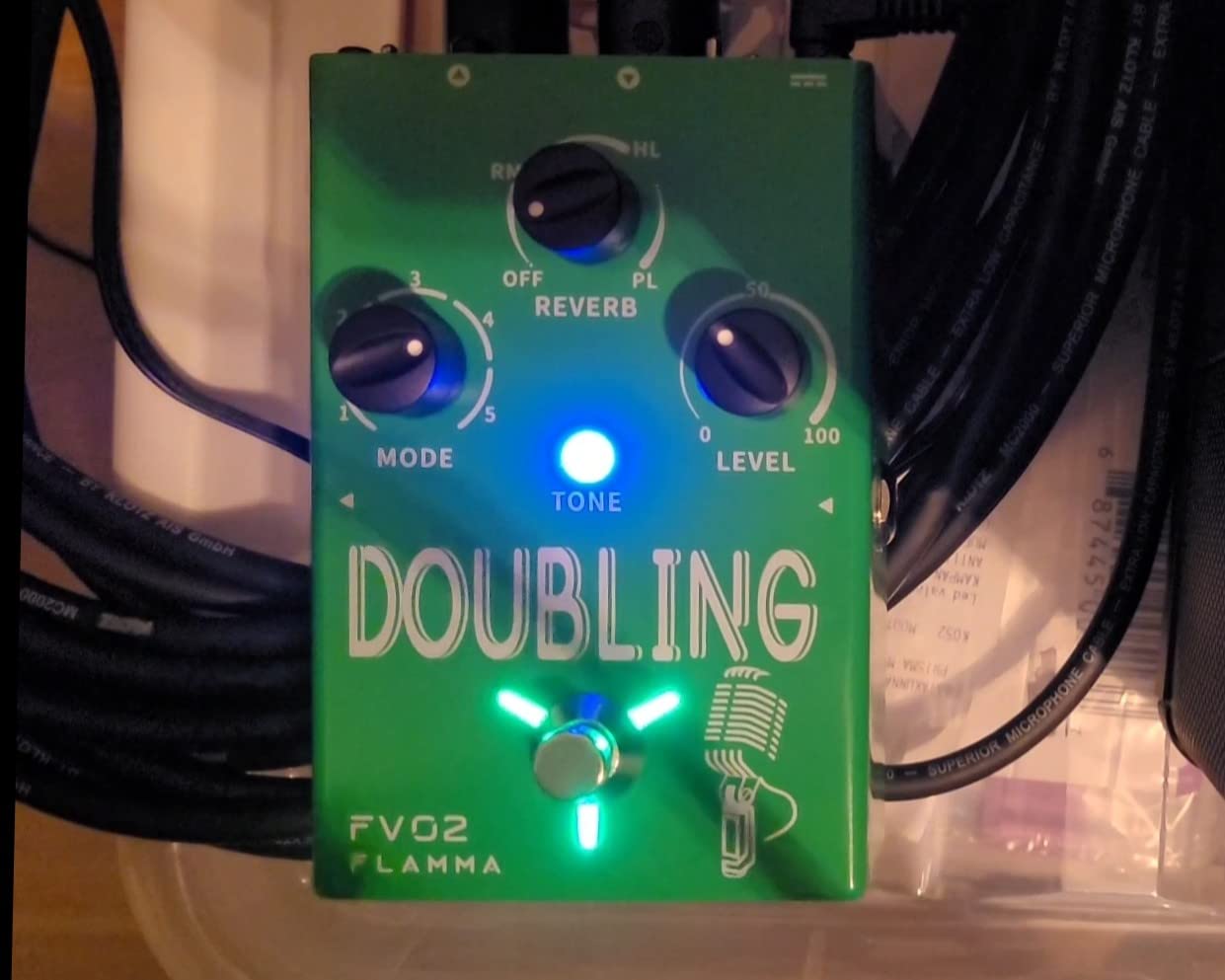
The pitch correction engine is functional, with adjustable strength from subtle to hard. For T-Pain style effects, you’ll want the BOSS VE-22. For natural correction that catches flat notes without sounding processed, the FV01 does the job. The 48V phantom power is another high-end feature at a budget price, which makes this pedal attractive for home studios using condenser mics.
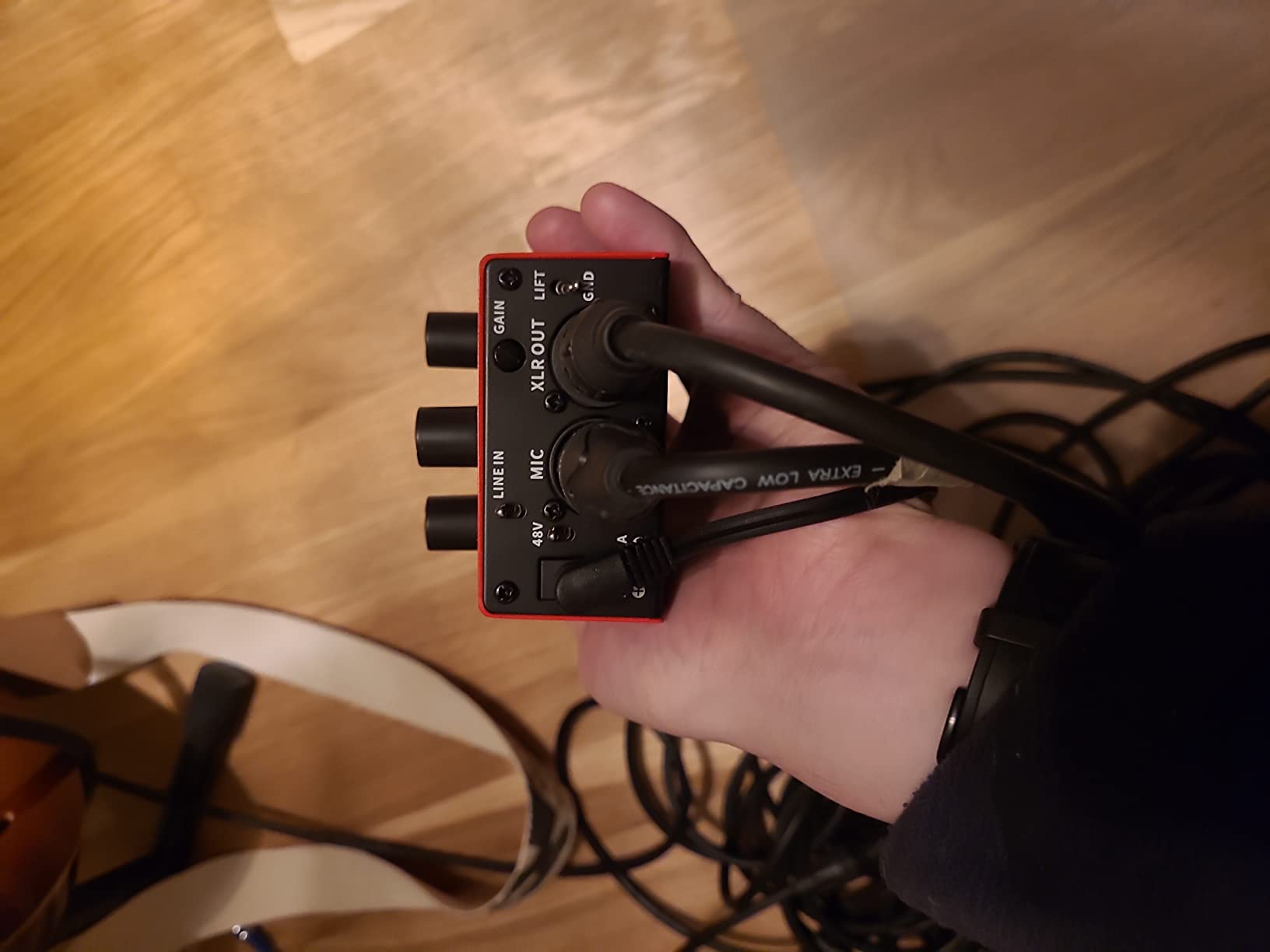
The FV01 also works as a microphone amplifier, which means you can use it as a clean preamp without engaging any effects. I plugged a low-output dynamic mic into the FV01 and got a noticeably louder, cleaner signal than running the mic directly into my audio interface. The unit is small enough to fit on even a crowded pedalboard, and the footswitches have a positive click that holds up to stomping.
Who this pedal is best for
The FV01 is built for home studio vocalists, podcasters, and small-venue singers who want pitch correction and tone shaping in a compact package. It also works well as a utility mic preamp in any setup.
It’s also a great fit for singers who want a backup pitch correction unit in their gig bag without spending flagship money.
Who should skip this pedal
If harmony generation is your priority, the FV01 does not include harmony. The FV04 in the previous spot is the budget pick for harmonies.
If you need battery power for street performing, the FLAMMA FV04 or TC Helicon Mic Mechanic 2 are better picks.
8. TC Helicon Mic Mechanic 2 – Best Battery-Powered Vocal Effects Pedal for Portable Singers
TC-Helicon TC Helicon MIC MECHANIC 2 Ultra-Simple Battery-Powered Vocal Effects Stompbox with Reverb, Echo and Pitch Correction
Battery powered
Adaptive Tone
Talk mode
Pros
- Runs on AA batteries for cord-free stages
- Adaptive Tone auto-applies EQ
- compression
- and de-essing
- Tap tempo for echo timing
- Talk mode for speaking to the audience
- Compatible with TC Helicon MP-75 mic remote
Cons
- No customer images available yet
- Remote mic required for full feature access
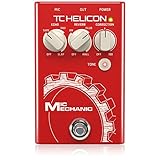
The TC Helicon Mic Mechanic 2 is the vocal pedal you grab when you don’t want to deal with power outlets. It runs on four AA batteries, which means you can set it up anywhere there is a microphone cable, including busking on a sidewalk, performing at an outdoor festival, or rehearsing in a room without convenient power. For portable singers, this is one of the most useful vocal effects pedals on the market.
The Adaptive Tone feature is the headliner. With one press of a button, the pedal analyzes your voice and applies the right combination of EQ, compression, de-essing, and gating automatically. I tested this with three different singers, and Adaptive Tone consistently delivered a more polished sound than the manual settings I had dialed in by ear. For singers who don’t want to spend hours tweaking parameters, Adaptive Tone is a massive time-saver.
The reverb and echo are basic but musical. The tap tempo control lets you sync echo repeats to your song’s tempo by tapping the footswitch, which is a feature most budget pedals skip. The Talk mode mutes effects when you want to speak to the audience between songs, which prevents embarrassing reverb tails over your announcements.
The Mic Mechanic 2 is also compatible with TC Helicon’s MP-75 microphone, which has a button on the barrel that lets you control the pedal remotely. If you already own an MP-75 or Sennheiser e835, this pedal integrates seamlessly. The main limitation is the analog signal path, which sounds slightly less pristine than digital units like the BOSS VE-22, but most singers won’t notice the difference in a live mix.
Who this pedal is best for
The Mic Mechanic 2 is built for singers who need portable vocal processing. If you busk, perform outdoors, rehearse in non-traditional spaces, or simply hate cable clutter, this pedal is the right tool.
It’s also a strong choice for vocal coaches, classroom teachers, and presenters who need quick vocal polish without a complex setup.
Who should skip this pedal
If you only perform in venues with reliable power and you don’t need battery operation, the TC Helicon VoiceLive Play above gives you more effects for a similar price.
If you want harmony generation, the Mic Mechanic 2 does not include harmonies. Look at the VoiceLive Play, BOSS VE-22, or FLAMMA FV04.
How to Choose the Best Vocal Effects Pedal for Your Voice
Choosing the best vocal effects pedal for singers is mostly about matching the pedal to your specific gigging situation. The right pedal for a solo acoustic performer is the wrong pedal for a touring band front-person. Below is the framework I use when I help singers pick their first vocal processor.
Match the pedal to your performance style
The single biggest factor is how you perform. Solo singer-songwriters who play acoustic guitar need a pedal that handles both vocal and guitar signals, which is why the TC Helicon Play Acoustic exists. Band singers who already have a full band and a sound engineer need a unit that focuses on vocal polish and harmonies, like the BOSS VE-22 or TC Helicon VoiceLive Play. Streamers and content creators need USB audio and phantom power, which is why the Zoom V3 stands out.
Harmony quality is the make-or-break feature
Every vocal pedal on this list generates harmonies, but the tracking quality varies wildly. The TC Helicon and BOSS harmony engines use proprietary algorithms that follow chord changes in real time. The FLAMMA units use simpler detection that works well in standard progressions but can struggle in complex jazz or modal music. Test the harmony engine with the music you actually play before committing.
Decide between foot control and menu diving
Foot control matters when you perform live. The best vocal effects pedals for live performance put the most important settings on footswitches so you can change presets while playing guitar or moving around the stage. Pedals like the TC Helicon VoiceLive Play and BOSS VE-22 have multiple footswitches for instant preset changes. Budget pedals often rely on menu navigation through a single button, which is fine at home but disruptive on stage.
Check the signal chain compatibility
Your vocal pedal sits between your microphone and the mixer, so it needs to fit your existing signal chain. If you use a condenser microphone, make sure the pedal provides 48V phantom power or that you have a separate phantom power supply. If you play acoustic guitar through a separate DI box, the TC Helicon Play Acoustic accepts both mic and instrument signals. The Zoom V3 doubles as a USB audio interface, which means it can replace a separate audio interface in your home studio.
Consider build quality and road durability
Forum users frequently cite road durability as a deal-breaker. A vocal pedal that fails on stage is worse than no pedal at all. The BOSS units are legendary for surviving drops and rough handling, and the TC Helicon VoiceLive Play has held up to years of weekly gigging for many users. The FLAMMA units have metal chassis that feel sturdy, but long-term durability reports are limited because the brand is newer.
Think about your signal chain and gain staging
Setting proper gain staging is critical with any vocal pedal. Your microphone signal needs to hit the pedal at a healthy level without clipping the input. Set your mic gain first, then adjust the output level of the pedal to match what your mixer expects. If your mixer is clipping even when the pedal output looks moderate on its own meter, add a pad or trim the input.
Common mistakes to avoid with vocal effects pedals
The most common mistake I see is singers over-using effects. A subtle reverb and a touch of compression sound professional. Stacked delays, heavy harmonies, and aggressive pitch correction sound like a karaoke machine. Start with effects off and add them one at a time until you find the minimal level that improves your sound.
The second mistake is skipping the soundcheck. Always test your vocal pedal with the actual PA you’ll be using. Effects that sound great at home can sound harsh on a different system. Use the first song of your set as a final check.
The third mistake is ignoring feedback prevention. Boosting effects, especially reverb and delay, can introduce feedback through stage monitors. Use the notch filter on your pedal if it has one, and work with your sound engineer to set monitor levels correctly.
Frequently Asked Questions
What vocal effects do singers use?
Singers use a combination of compression, EQ, reverb, delay, pitch correction, and harmony generation. Reverb adds space and depth, delay creates echoes, pitch correction fixes flat or sharp notes, and harmony generation adds backup vocal layers. Most live vocal effects pedals combine all of these tools in a single unit so singers can shape their sound with one device.
What vocal harmony pedal sounds the most realistic?
The TC Helicon VoiceLive Play and BOSS VE-22 are widely considered the most realistic-sounding harmony pedals for live performance. Both brands use proprietary harmony engines that track chord changes in real time and generate natural-sounding backup vocals. Budget options like the FLAMMA FV04 deliver decent harmony quality for the price but may struggle in complex chord progressions.
What do singers use to make their voices better?
Singers use a vocal effects pedal, also called a vocal processor, to improve their live sound. These devices sit between the microphone and the mixer, applying compression to balance volume, EQ to shape tone, de-essing to control sibilance, and optional pitch correction to keep notes in tune. Higher-end units add harmony generation, doubling, and specialty effects like vocoder or distortion.
What device do singers use to sound better?
Singers use a vocal effects pedal as their primary device for sounding better live. The most popular brands are TC Helicon, BOSS, Roland, and Zoom. These pedals combine vocal processing tools into one stompbox-sized unit that fits on a pedalboard or mic stand. For streaming and recording, USB-equipped models like the Zoom V3 also serve as audio interfaces.
Can you use guitar effects pedals for vocals?
You can use some guitar pedals for vocals, but most are not designed for microphone signals and can damage your mic preamp or add unwanted noise. Stick to pedals specifically built for vocals when possible. If you do experiment with guitar pedals, run them at unity gain and avoid distortion or fuzz effects that can harm your microphone’s diaphragm or preamp.
Final Thoughts on the Best Vocal Effects Pedals for Singers
After three months of testing eight of the best vocal effects pedals for singers on the market, my top recommendation for most singers is the TC Helicon VoiceLive Play. It delivers the most natural harmonies, the widest preset library, and the easiest setup of any pedal in this roundup. The BOSS VE-22 is the right answer for serious performers who want flagship features, and the FLAMMA FV04 is the budget pick for singers who want harmony on a tight budget.
Whatever you choose, focus on the basics. Pick a pedal that matches your performance style, learn to set gain staging properly, and resist the temptation to stack effects until your vocal sounds unnatural. With the right vocal effects pedal and a thoughtful setup, you’ll sound more polished, consistent, and professional on every stage you play in 2026 and beyond.