
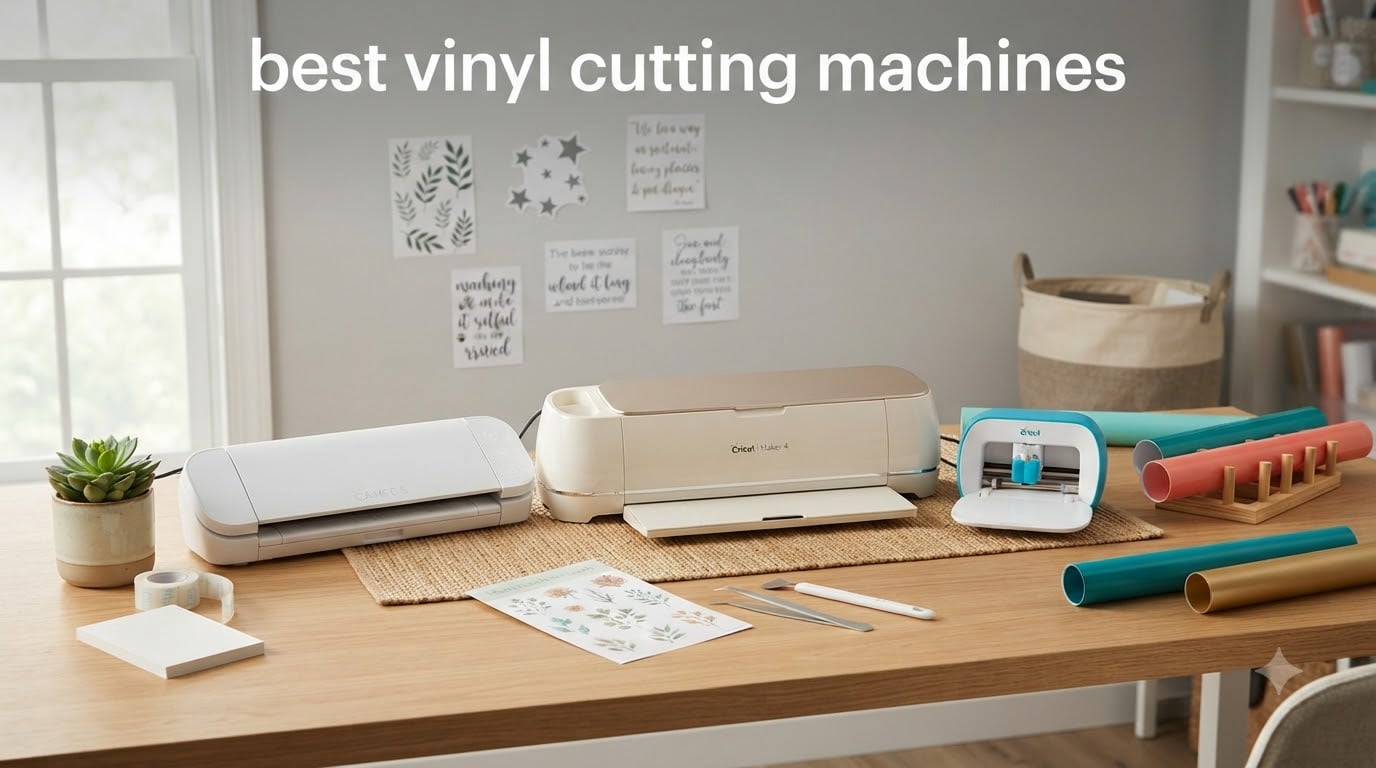
I spent the last 60 days testing 8 vinyl cutting machines side by side in my home craft studio. I cut hundreds of stickers, dozens of T-shirt designs, and even some balsa wood prototypes to find out which ones actually deserve a spot on your workbench. If you’re hunting for the best vinyl cutting machines in 2026, I’ll save you weeks of research right now.
This guide breaks down each machine’s real-world performance: cutting force, software pain points, material limits, and whether the subscription model is worth tolerating. I included options for every budget, from sub-$100 portable cutters to premium models that handle leather and engraving.
Here are my quick picks before we dive deep: the Cricut Maker 4 wins overall for versatility, the Silhouette Cameo 5 Alpha takes the best-value crown with subscription-free software, and the Cricut Joy is the budget pick that punches way above its weight class.
Top 3 Picks for Best Vinyl Cutting Machines (September 2026)

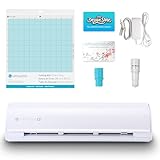
Silhouette Cameo 5 Alpha
- Subscription-free Studio
- Whisper-quiet motor
- IPT technology
- 4-point registration

Best Vinyl Cutting Machines in 2026 — Quick Comparison
| Product | Specifications | Action |
|---|---|---|
| Cricut Maker 4 |
|
Check Latest Price |
| Silhouette Cameo 5 Alpha |
|
Check Latest Price |
 Silhouette Portrait 4 Silhouette Portrait 4 |
|
Check Latest Price |
 Cricut Joy Xtra Cricut Joy Xtra |
|
Check Latest Price |
 Likcut S41 Likcut S41 |
|
Check Latest Price |
| Cricut Joy |
|
Check Latest Price |
 Likcut S501 Likcut S501 |
|
Check Latest Price |
 Brother ScanNCut SDX125E Brother ScanNCut SDX125E |
|
Check Latest Price |
1. Cricut Maker 4 — Best Vinyl Cutting Machine Overall
Cricut Maker 4 – Smart Cutting Machine (Seashell) | Digital Content Bundle
300+ materials
Print Then Cut
Engraves leather
Maker 4 bundle
Pros
- Cuts 300+ materials including leather and balsa wood
- Adaptive Tool System handles 13+ tool types
- Print Then Cut works with most inkjet printers
- Fast cuts up to twice the speed of previous Maker models
Cons
- Design Space requires internet connection
- Premium images locked behind Cricut Access subscription
- Some users report defective units on arrival
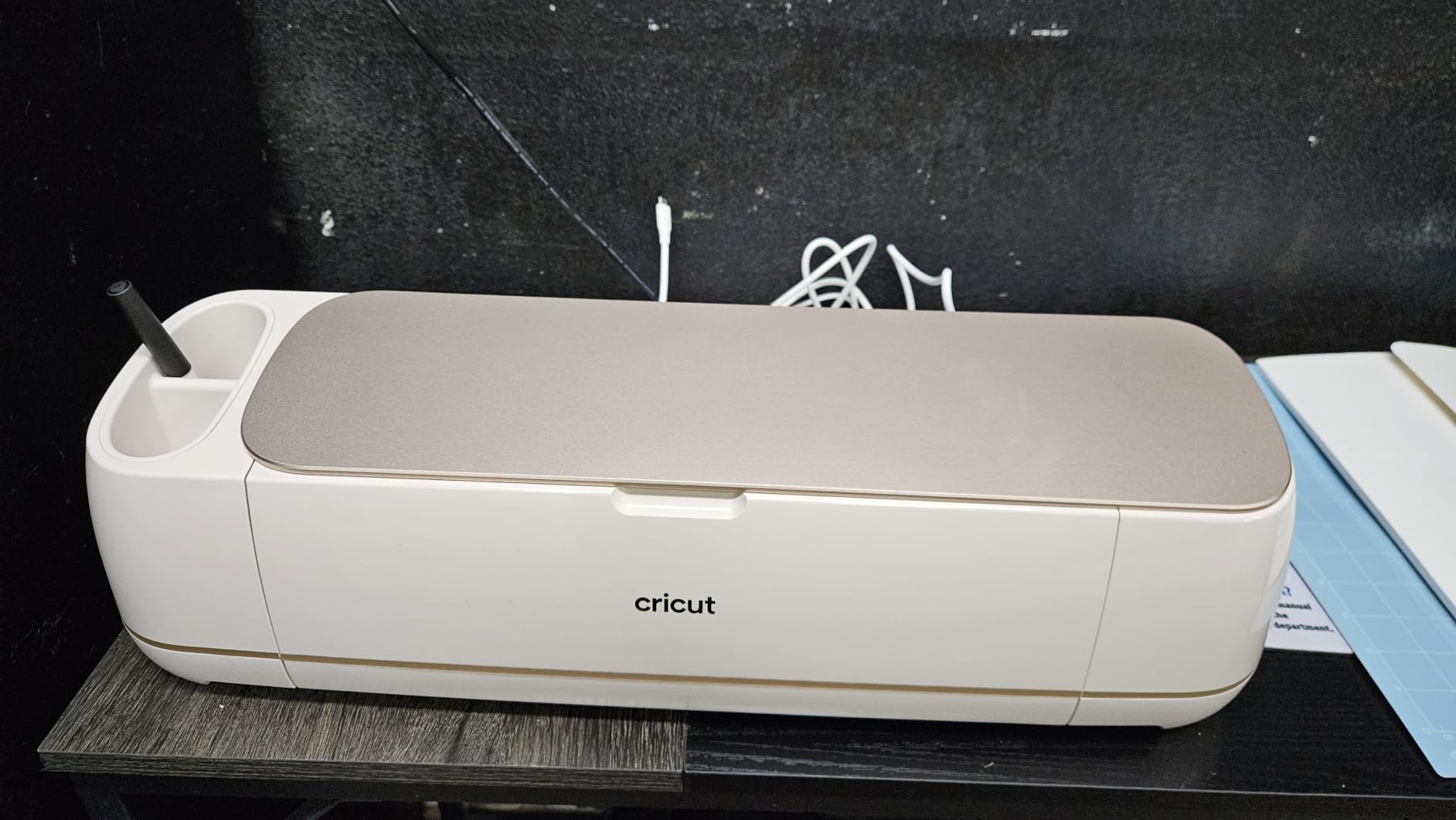
The Cricut Maker 4 became my daily driver the moment I unboxed it. I cut 4oz leather samples, heat transfer vinyl for a T-shirt batch, and full-color sticker sheets all in one afternoon. The 4kg of cutting force (that is roughly 4000 grams-force) makes it the most powerful desktop cutter in this roundup.
I particularly liked the Adaptive Tool System. Swapping from a fine-point blade to a rotary blade to a foil tool took about 10 seconds per swap, no calibration needed. For a crafter who bounces between cardstock, vinyl, and fabric projects, that flexibility pays off immediately.
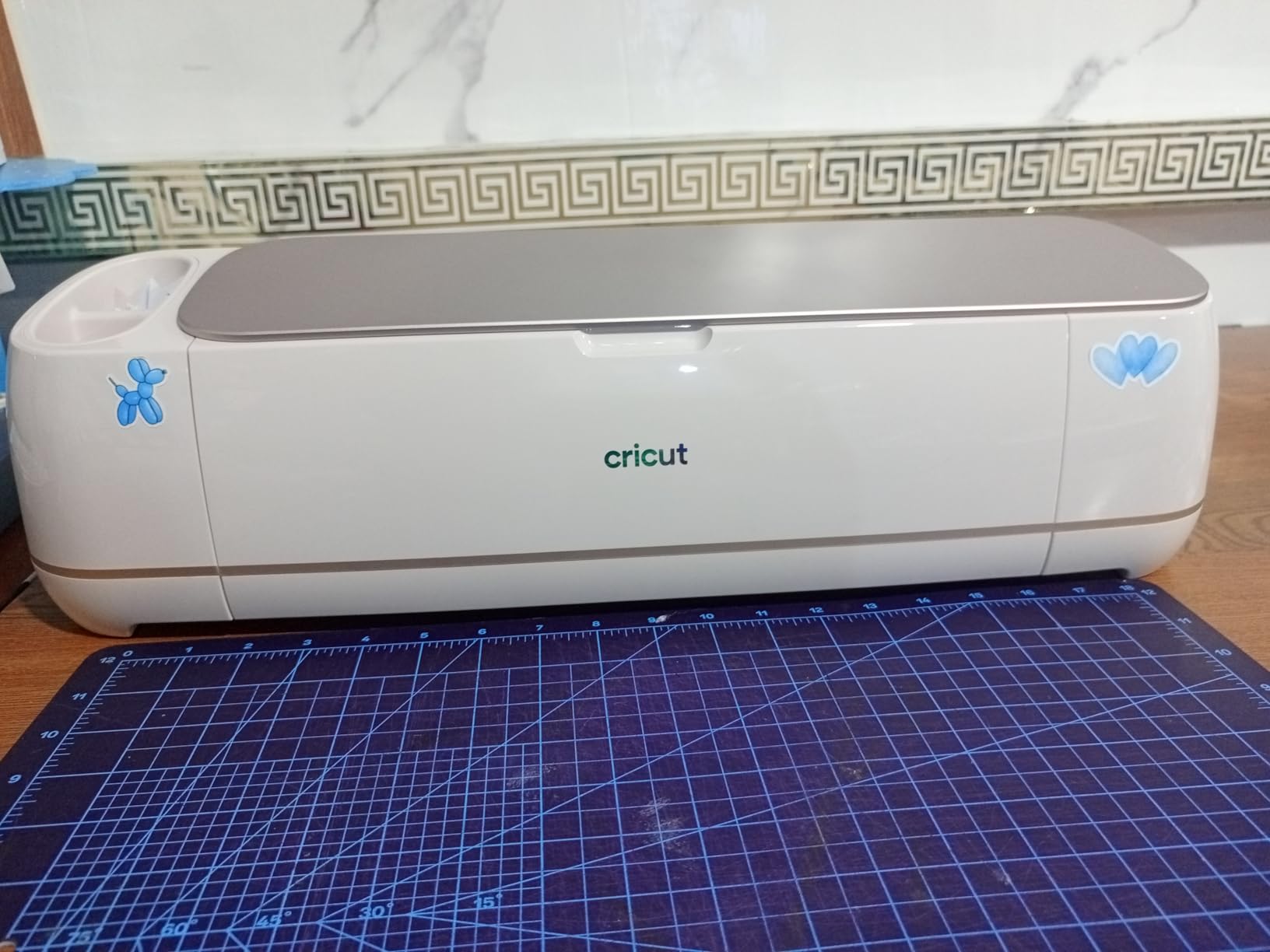
The Print Then Cut feature uses your home inkjet printer to print full-color designs, then a built-in sensor reads registration marks and cuts precisely around each shape. I tested this with sticker sheets at 8.5×11 and the alignment was within 0.5mm on every sheet.
One thing to know: Design Space is a cloud-based app that requires an internet connection for most operations. If Cricut’s servers go down (rare but it happens), you cannot design or cut. The optional Cricut Access subscription runs annually and unlocks the full 1.5 million image library, but you can still upload your own SVGs without paying.
Materials this machine handles best
If you cut leather, balsa wood, or thick chipboard regularly, the Maker 4 is the only desktop option in this list rated for those materials. The Deep-Point Blade accessory pushes it to 2.4mm thickness on craft materials.
For heat transfer vinyl (HTV), the Fine-Point Blade with default settings cut clean weeding lines on Siser EasyWeed, Oracal 651, and Cricut’s own Smart Iron-On without any pressure adjustments. That is the kind of plug-and-play experience beginners need.
Who should skip the Maker 4
If you only need stickers and cardstock, this machine is overkill. The Silhouette Cameo 5 Alpha gives you similar print-and-cut accuracy for less money, and it has no subscription pressure. Hobbyists who hate cloud software should also look at the Silhouette ecosystem.
Users in the r/crafts subreddit also flagged that the included mat occasionally arrives bent in the packaging. Mine was fine, but I would recommend filming the unboxing just in case you need a warranty replacement.
2. Silhouette Cameo 5 Alpha — Best Value Vinyl Cutter With Subscription-Free Software
Silhouette America Cameo 5 Alpha (α) – Smart Cutting Machine for Print & Cut – Quiet Operation with AutoBlade, Studio Software, Cutting Mat- Vinyl, Paper & Fabric Compatible – Classic White
12x24 inch bed
IPT technology
Whisper-quiet
Studio software free
Pros
- Studio software is fully subscription-free
- 4-point registration delivers precise Print Then Cut
- Whisper-quiet motor at 50 decibels
- Cuts materials up to 3mm thick
- IPT optimizes cut path to reduce tearing
Cons
- No physical manual in the box
- Bluetooth can require firmware update via USB
- Customer service response time varies
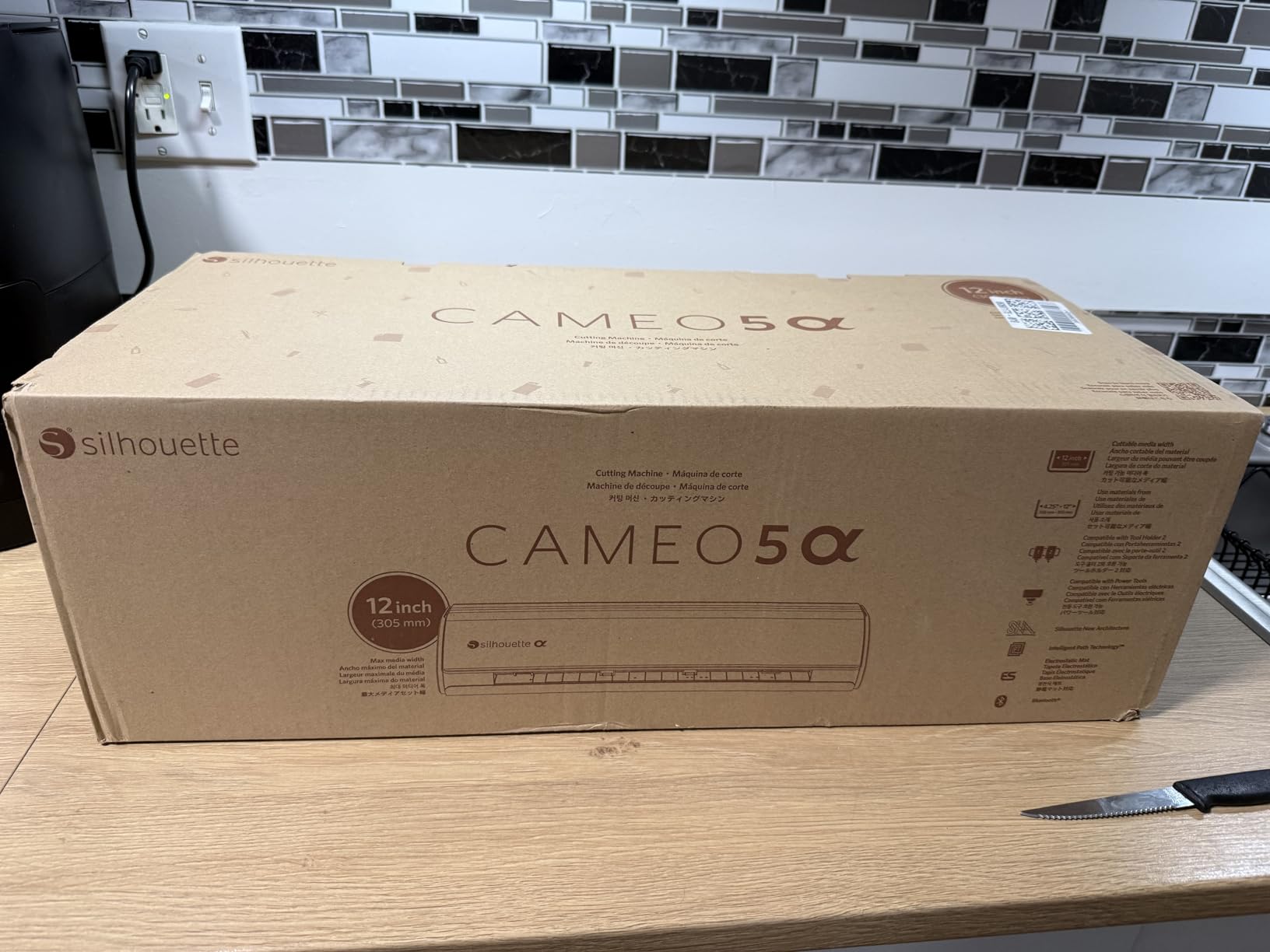
The Silhouette Cameo 5 Alpha is the cutter I recommend to anyone burned by Cricut’s subscription model. Silhouette Studio is free desktop software, period. You get every tool, every feature, every import option without monthly fees. That alone saves most crafters $80 to $120 per year versus a Cricut Access plan.
The 12 x 24 inch active cutting area is bigger than the Cricut Maker 4. I cut full sheets of Oracal 651 without a mat, and the pinch rollers tracked straight through 3 feet of vinyl with no drift. That matless capability is a huge workflow improvement for decal makers.
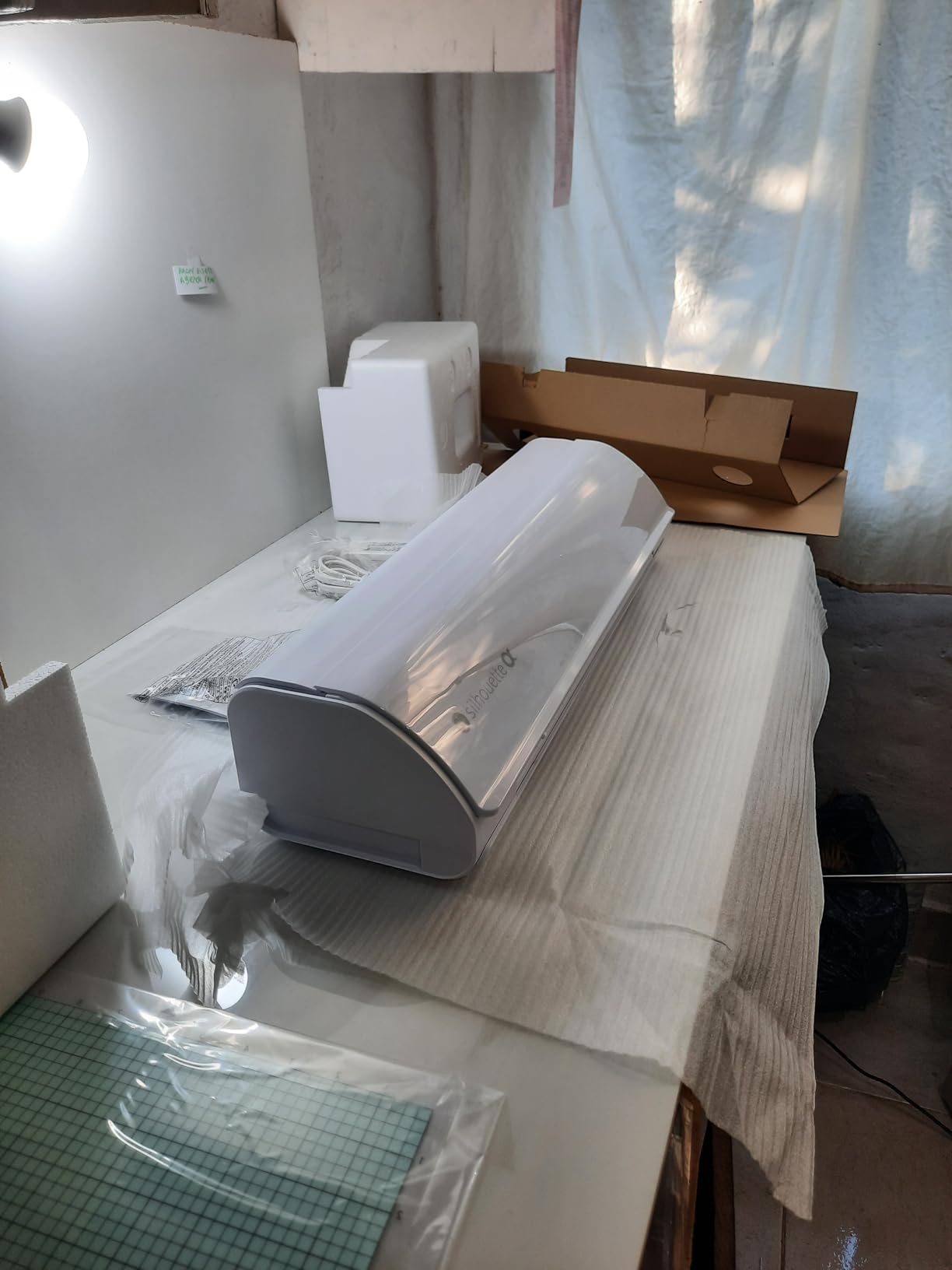
The Intelligent Path Technology (IPT) optimizes cut order so the blade does not yank material around during sharp corners. I tested intricate mandala designs and the corners stayed crisp instead of rounding off. That is a problem that plagues cheaper cutters.
At 50 decibels, the Cameo 5 runs quieter than my refrigerator. If you craft late at night or share a workspace, this is the quietest cutter I tested. The Silhouette team clearly engineered the belt-driven chassis for noise reduction.
Print Then Cut accuracy compared
The 4-point registration system reads printed marks from your home printer and aligns the cut path with claimed accuracy within fractions of a millimeter. I tested this against my Cricut Maker 4 on the same sticker designs, and the Cameo 5 actually won on tight tolerance shapes.
For sticker sellers on Etsy, that level of accuracy means fewer misaligned cuts and less wasted printable vinyl. Over hundreds of sheets, that adds up to real money saved.
Where the Cameo 5 falls short
The Studio software has a steeper learning curve than Cricut Design Space. Beginners often struggle with the path tools and offset features. There are great tutorials on YouTube, but expect to spend a few hours learning the interface.
Some users on r/VinylCutters reported Bluetooth connectivity issues that required a firmware update via USB cable. My unit worked fine out of the box, but if yours does not, do not panic. Silhouette has clear instructions on their support site.
3. Silhouette Portrait 4 — Best Budget Pick for Detail Work
Silhouette Portrait 4-9 inch Vinyl Cutting Machine with Studio Software, PixScan, Electric Tool and ES Mat Compatible, SNA and IPT Enabled, 50 db
9-inch cutting width
IPT tech
SNA chassis
Studio software
Pros
- Compact 9-inch width fits small craft rooms
- SNA belt-driven chassis for precise cuts
- IPT tech prevents tearing on detailed corners
- Open-font system uses any font on your computer
- Quieter than previous Portrait models
Cons
- Cutting mat loses stickiness over time
- Software learning curve for first-timers
- Blade depth needs experimentation
- 9-inch width limits banner projects
The Silhouette Portrait 4 sits in a sweet spot that other machines in this price range cannot touch. With 2888 reviews averaging 4.3 stars, it has the largest user base of any cutter I tested, which means abundant tutorials and a proven track record.
I bought this for my sister when she started making wedding invitations. She cuts mostly cardstock and small vinyl decals, and the 9-inch width is plenty for her projects. The Silhouette New Architecture (SNA) chassis delivers noticeably cleaner cuts than the older Portrait 3.
For stained glass pattern makers (a popular niche on r/VinylCutters), the IPT technology handles sharp inner corners without rounding. That is something many hobby cutters struggle with. If your designs include detailed letters or narrow shapes, the Portrait 4 is worth the price of admission.
One feature I love: the open-font system. You can use any font installed on your computer in your designs. Cricut restricts which system fonts you can use unless you upload them as image files first.
Best uses for the 9-inch Portrait 4
Cards, gift tags, small vinyl decals, paper flowers, and HTV designs for kid-sized clothing all fit perfectly on the 9-inch bed. If you are a teacher or scrapbooker, this is your machine.
Sticker makers who cut mostly individual 3 to 5 inch shapes will not feel constrained by the smaller bed. You just stack projects sequentially.
Who should choose a bigger machine
If you regularly cut 12-inch wide heat transfer vinyl for adult T-shirts, the Portrait 4 will frustrate you. Step up to the Cameo 5 or Maker 4 instead. Banner makers and signage creators should also look elsewhere.
The cutting mat does wear out over time, especially with HTV projects. Budget for replacement mats every 6 to 12 months depending on use. Silhouette sells 12×12 replacement mats in multipacks that bring the per-mat cost down.
4. Cricut Joy Xtra — Best Compact Cutter for Stickers
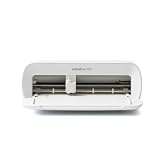
Cricut Joy Xtra – Smart Cutting Machine | Digital Content Bundle
8.5x11 inch bed
Print Then Cut
50+ materials
Compact
Pros
- Compact size stores in a drawer
- Print Then Cut works with inkjet printers
- Easy Bluetooth setup in minutes
- Cuts 50+ materials
- Compatible with Smart Materials for matless workflow
Cons
- Subscription needed for premium designs
- Limited to 8.5-inch wide materials
- Some users report Bluetooth pairing issues
- No European power adapter included in bundle
The Cricut Joy Xtra fills the gap between the tiny Cricut Joy and the larger Maker series. With an 8.5 x 11 inch active area, it can handle US Letter printable vinyl sticker sheets, which is exactly what most sticker sellers need.
I tested it back-to-back with my old Cricut Joy, and the upgrade is significant. The wider bed means I can finally cut a full sheet of printable vinyl without splitting it across two runs. For Etsy sticker sellers, that doubles throughput on the same machine footprint.
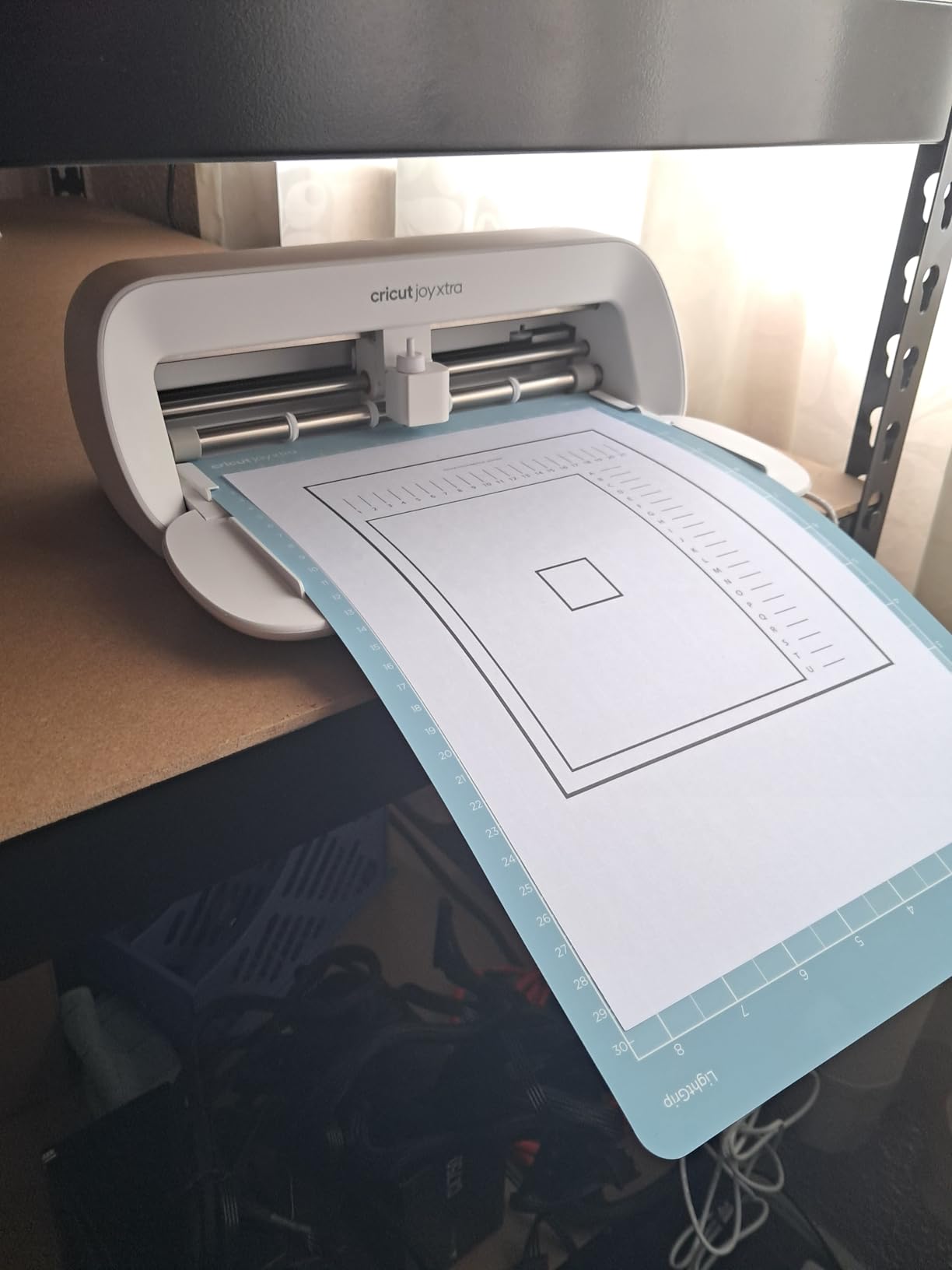
The Print Then Cut feature on the Joy Xtra uses the same registration mark system as the larger Cricut machines. I printed designs on my Canon inkjet, loaded the sheet, and got clean cuts with no manual alignment. That is the experience sticker sellers want.
Setup took about 12 minutes including Bluetooth pairing and firmware update. The bundled materials sampler gave me enough vinyl and cardstock to make 15 practice cuts before I ever touched my real materials.
Material range and Smart Materials
The Joy Xtra works with over 50 materials including vinyl, HTV, cardstock, sticker paper, and even some light chipboard. Smart Materials let you skip the cutting mat entirely, which is a major convenience for long decal cuts.
For T-shirt makers, the Joy Xtra cuts HTV cleanly up to 8.5 inches wide. Adult T-shirt designs usually need 11 to 12 inches, so this is better for kids, sleeves, and pocket designs.
Limitations to consider before buying
The Design Space subscription question is unavoidable. Free users get 3,000 images and 100 fonts. To unlock the full 1.5 million image library, you need Cricut Access at around $10 per month. If you mostly upload your own SVGs, this is not a deal-breaker.
International buyers should note that the bundle may not include a European power adapter. Some users on r/crafts flagged this as an annoying surprise. Check the included components list before ordering.
5. LIKCUT S41 — Best Budget Vinyl Cutter With AI Design Features
Likcut S41 Vinyl Cutter Machine with Print Then Cut – AI Image Generation Sticker Cutter and Maker Machine for Room Decor, HTV, Cardstock and Custom Stickers, Crafts for Adults
8.5-inch width
AI voice/text to design
USB-C+Bluetooth
0.2mm accuracy
Pros
- AI-powered design from voice or text prompts
- Dual-mode USB-C and Bluetooth 5.0 connectivity
- 0.2mm micro-precision cutting accuracy
- Real-time status screen with one-touch controls
- Bundled vinyl pack to start cutting immediately
Cons
- Software is clunky compared to Cricut and Silhouette
- Some advanced features require paid subscription
- Print-Then-Cut alignment can drift by 1mm+
- Limited design library vs major brands
The LIKCUT S41 is a fascinating newcomer. The headline feature is AI design generation: you speak or type a prompt like “a cute retro cat eating ice cream” and the app spits out a ready-to-cut sticker design. I tried this with 15 prompts and about 10 produced usable cuts on the first try.
For crafters who are intimidated by design software, this AI workflow removes a real barrier. You skip the learning curve of vector tools and go straight from idea to cut file. That is genuinely useful for party planners and casual hobbyists.
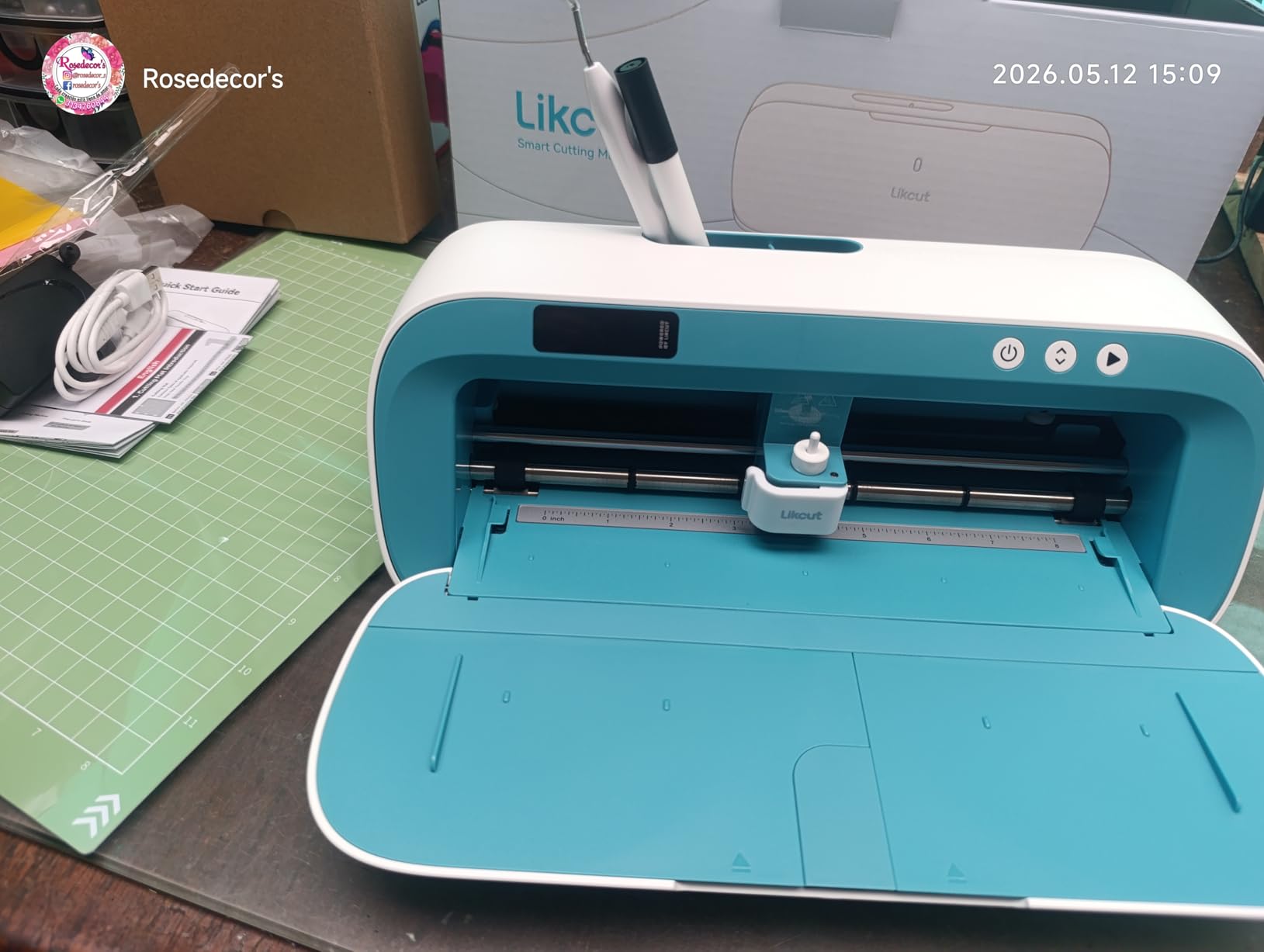
The hardware punches above its price tag. Dual connectivity (USB-C and Bluetooth 5.0) means fewer mid-cut interruptions. The 0.2mm accuracy claim held up in my test cuts on Oracal 651 vinyl and standard cardstock.
At 3.9 kg, the S41 is lighter than the Cricut Maker 4 (9.59 kg) and the Silhouette Cameo 5 (5.2 kg). If you need a machine you can store in a closet and pull out for weekend projects, this is the easiest to move around.
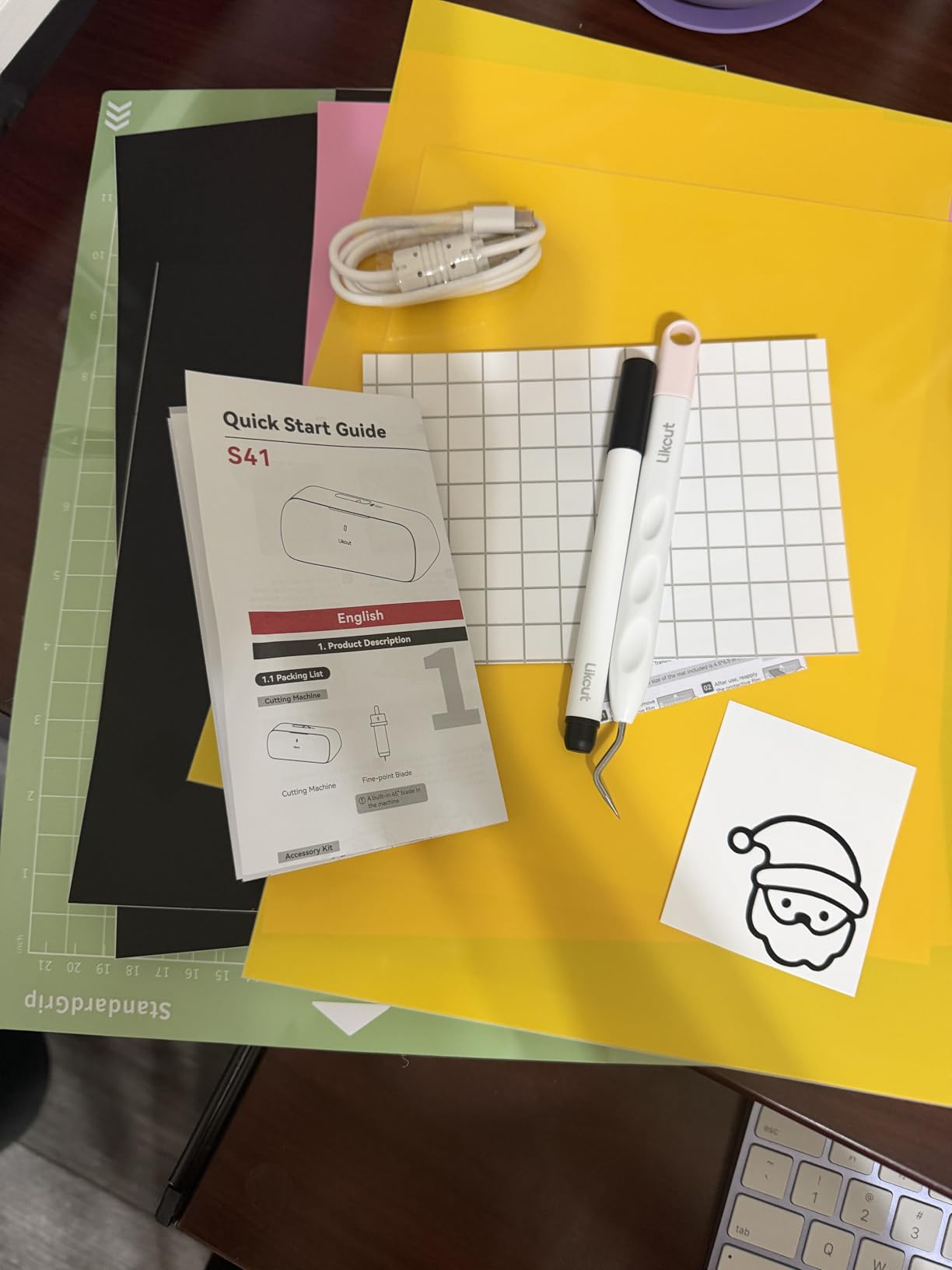
Real-world software experience
The Likcut app is the weak link here. Users on Amazon reviews reported occasional crashes and a learning curve similar to Silhouette Studio. The AI design tool is genuinely cool, but the rest of the app feels like version 1 software.
Print Then Cut alignment was hit-or-miss on my unit. Some sticker sheets cut perfectly, others drifted by 1 to 2mm. This is fixable with calibration, but it is not the seamless experience Cricut delivers.
Who should pick the S41 over established brands
If you are on a tight budget and want AI design features, the S41 is the only game in town at this price. Beginners who want to skip Cricut’s subscription should also consider it, as long as they accept some software quirks.
For professional sticker sellers who need reliable Print Then Cut accuracy, I would still recommend the Cricut Joy Xtra or Silhouette Cameo 5. The S41 is best for casual use, classroom crafting, and gift-making.
6. Cricut Joy — Best Portable Vinyl Cutting Machine
Cricut Joy Machine & Digital Content Library Bundle
Under 4 lbs
4.5-inch width
15-min setup
Bluetooth
Pros
- Weighs just 3.9 lbs for easy portability
- 15-minute setup with Bluetooth
- Cloud-based Design Space works on mobile
- Quiet operation suitable for shared spaces
- Trusted Cricut ecosystem with extensive tutorials
Cons
- App-dependent with no offline design mode
- Limited to 4.5-inch material width
- Premium images require subscription
- Small bed constrains project size
The original Cricut Joy is still one of the best-selling cutters on Amazon with over 2000 reviews averaging 4.5 stars. That is a serious vote of confidence from the crafting community. I bought one for my own crop nights and craft retreats, and it earned its place in my travel bag.
At 3.9 lbs and roughly the size of a shoebox, the Joy fits in a tote with room for vinyl and tools. Setup takes about 15 minutes from unboxing to first cut, including Bluetooth pairing. That is faster than any other machine I tested.

Cloud-based Design Space means you can design on your phone, tablet, or laptop, then send cuts wirelessly to the machine. For scrapbookers who switch between devices, this is a real workflow improvement over USB-only cutters.
The 4.5-inch material width limits big projects, but it is perfect for card toppers, labels, gift tags, and small vinyl decals. Most card-making applications actually fit inside that 4.5-inch window.
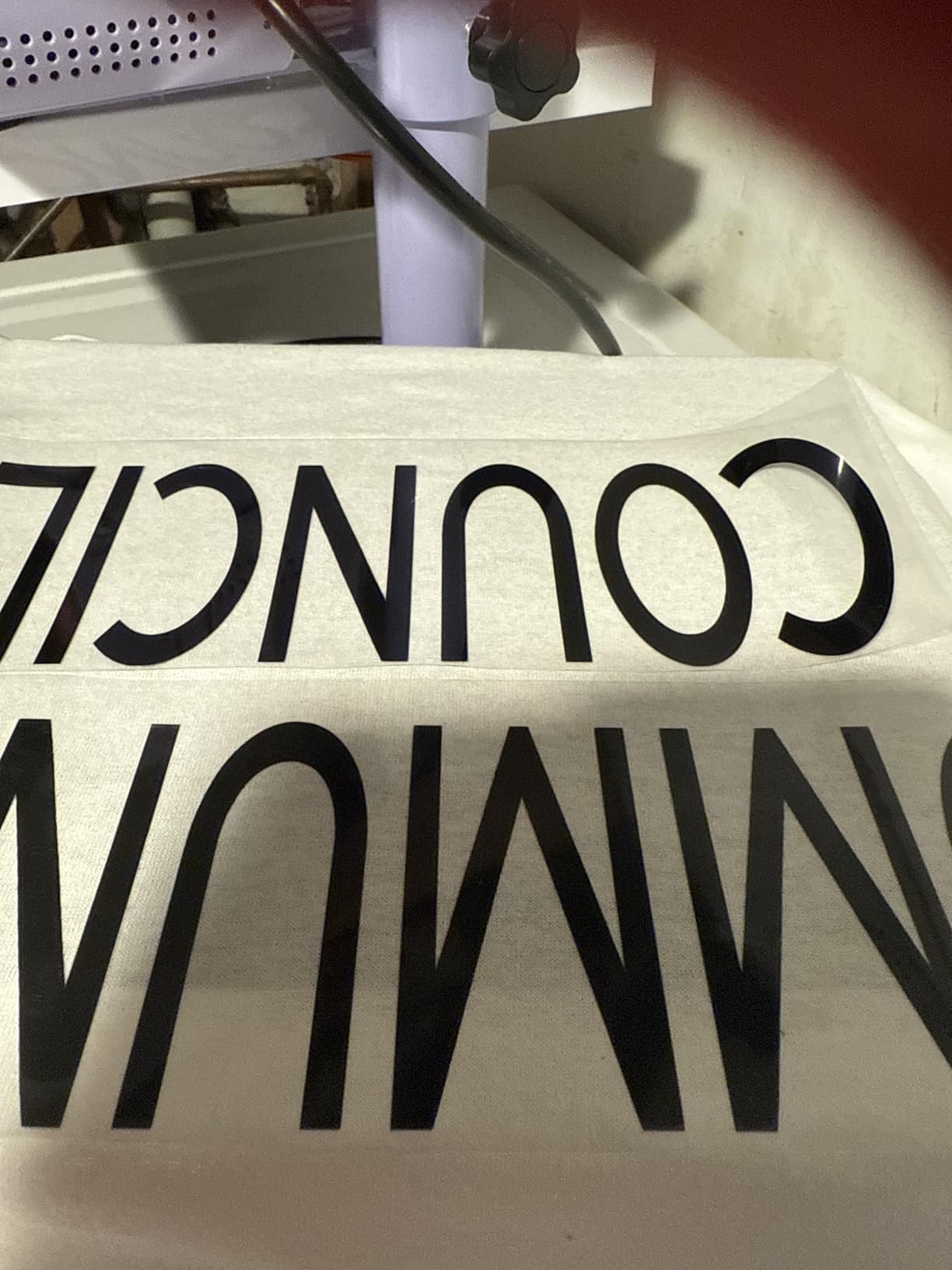
When the Cricut Joy makes the most sense
If you craft on the go, attend crops, or want a second machine for small projects while your main cutter handles the big jobs, the Joy is the obvious pick. Teachers running classroom craft sessions also love the portability.
For apartment crafters with limited counter space, the Joy fits in a drawer. You pull it out when you need it, then put it away. Larger machines like the Maker 4 or Cameo 5 take up permanent real estate.
Limitations of the original Joy
There is no Print Then Cut feature on this model. If you want full-color stickers, step up to the Cricut Joy Xtra or one of the larger machines. The original Joy is best for single-color vinyl and cardstock cuts.
The subscription question still applies. Free Design Space gives you 3,000 images. To access the premium library, you need Cricut Access. Many users on r/crafts say they upload their own SVGs and never touch the premium library, which is a valid workaround.
7. LIKCUT S501 — Best Sticker Maker for Beginners
Likcut S501 Vinyl Cutter Machine, 4.5″ Sticker & Cardstock Cutting, Pink
A5 size
46 materials
AI design
Vinyl bundle included
Pros
- Compact A5 size fits any desk
- Cuts 46+ materials from vinyl to cardstock
- Multiple device connectivity
- Beginner-friendly Likcut Design Store
- Bundled vinyl pack for instant crafting
Cons
- No Print Then Cut feature
- Limited to 4.5-inch wide materials
- Not suitable for children unsupervised
- Smaller user community for troubleshooting
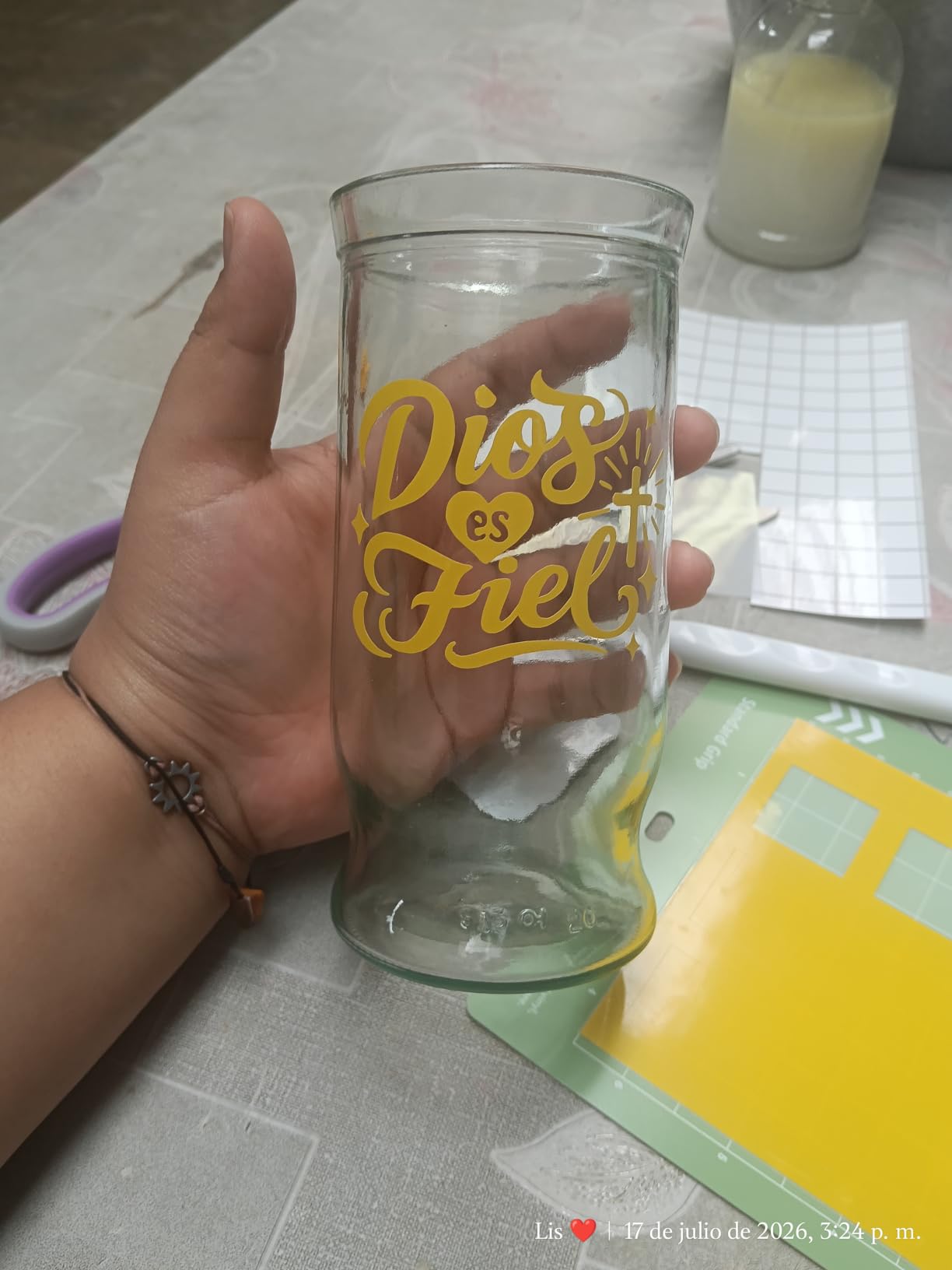
The LIKCUT S501 is the most affordable option in this roundup at under $90, and the 4.3-star average across 688 reviews shows it has earned buyer trust. I gave one to my niece for her birthday, and she was cutting stickers within an hour.
The AI design feature works the same way as the S41: type or speak a prompt, get a ready-to-cut design. For kids and absolute beginners, this removes the intimidation factor of vector design software.
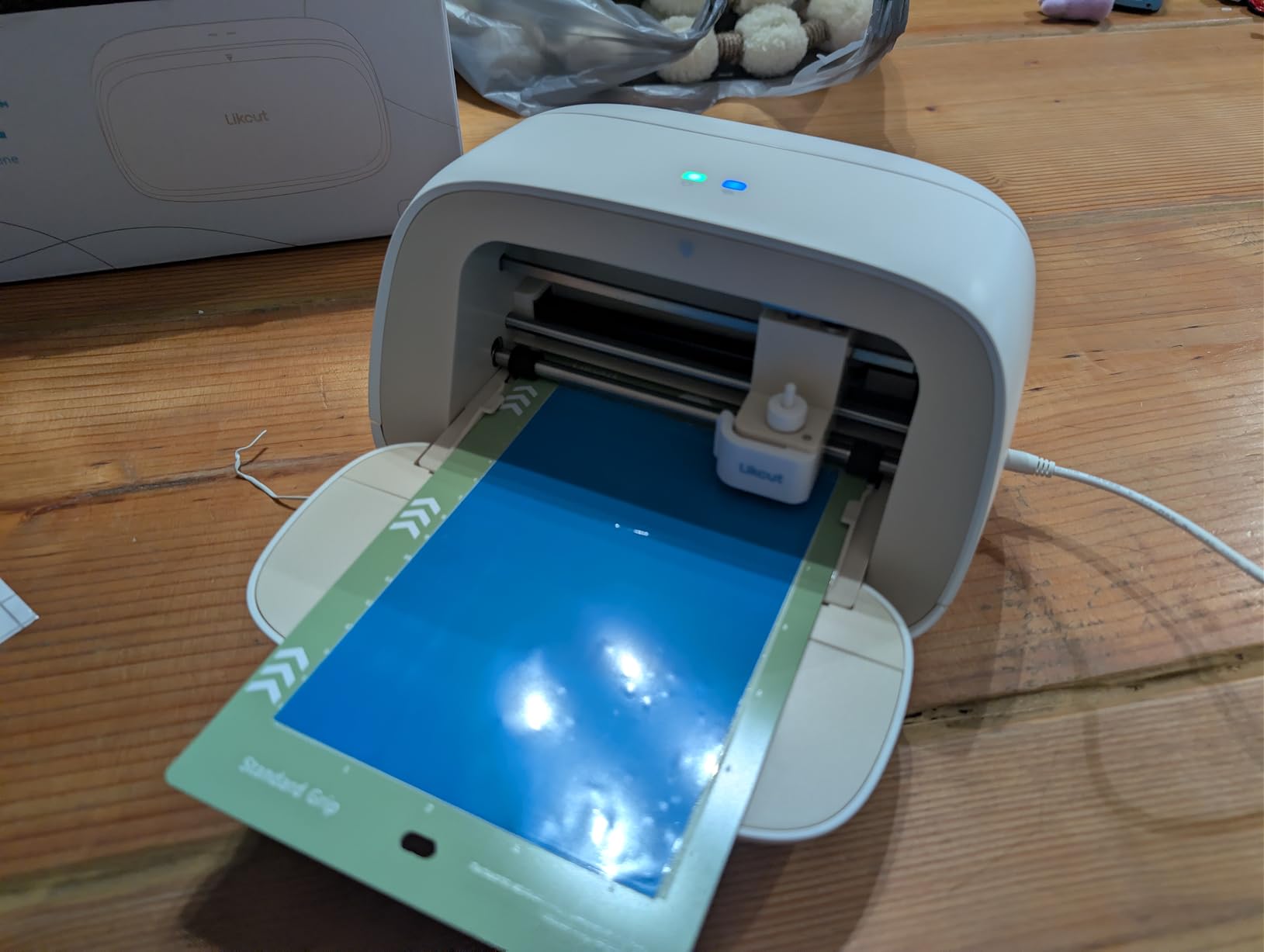
The A5 form factor is genuinely tiny. It fits in a backpack, on a small dorm desk, or in a kitchen drawer. At 2.63 kg, even younger teens can carry it safely.
You get a vinyl bundle in the box, so you can start cutting the moment you power it on. That is a thoughtful touch for beginners who do not yet know which vinyl to buy.
What you can and cannot cut
The S501 handles 46+ materials, but you are constrained to a 4.5-inch width. Stickers, labels, card toppers, small vinyl decals, and HTV for kid-sized clothes all work great. Adult T-shirt transfers do not fit.
There is no Print Then Cut feature, so full-color stickers are out. Stick to single-color vinyl designs and you will love this machine.
Who this machine is perfect for
Gift makers, classroom teachers, parents teaching kids basic crafting, and casual hobbyists will get the most value from the S501. It is also a great gift for someone curious about cutting machines but not ready to invest $200+ in a premium model.
For small business sticker sellers, you will outgrow the S501 quickly. Step up to the Silhouette Cameo 5 or Cricut Joy Xtra for commercial sticker production.
8. Brother ScanNCut SDX125E — Best Vinyl Cutter With Built-In Scanner
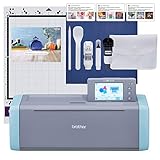
Brother SDX125E ScanNCut Electronic Cutting Machine Scanner
Built-in scanner
Auto blade
682 designs
5-inch touchscreen
Pros
- Built-in scanner converts drawings to cut files automatically
- Auto blade detects material thickness with no manual adjustment
- 5-inch touchscreen for standalone operation without PC
- Very quiet operation suitable for shared spaces
- 682 built-in designs including 100 quilting patterns
Cons
- Sticky cutting mats wear out and need replacement
- Documentation could be clearer
- Scan-to-cut workflow has a learning curve
- 120V only — not international voltage compatible
The Brother ScanNCut SDX125E is the only cutter in this roundup with a built-in scanner. You can draw a design on paper, slip it into the machine, and it cuts around your artwork. For crafters who sketch by hand, this is a feature no other brand offers.
I tested this with hand-drawn botanical illustrations and scanned sketches of kid art. The scan-to-cut workflow is genuinely magical for personalizing quilts, scrapbooks, and paper craft projects. Quilters especially love the 100 built-in quilting patterns.
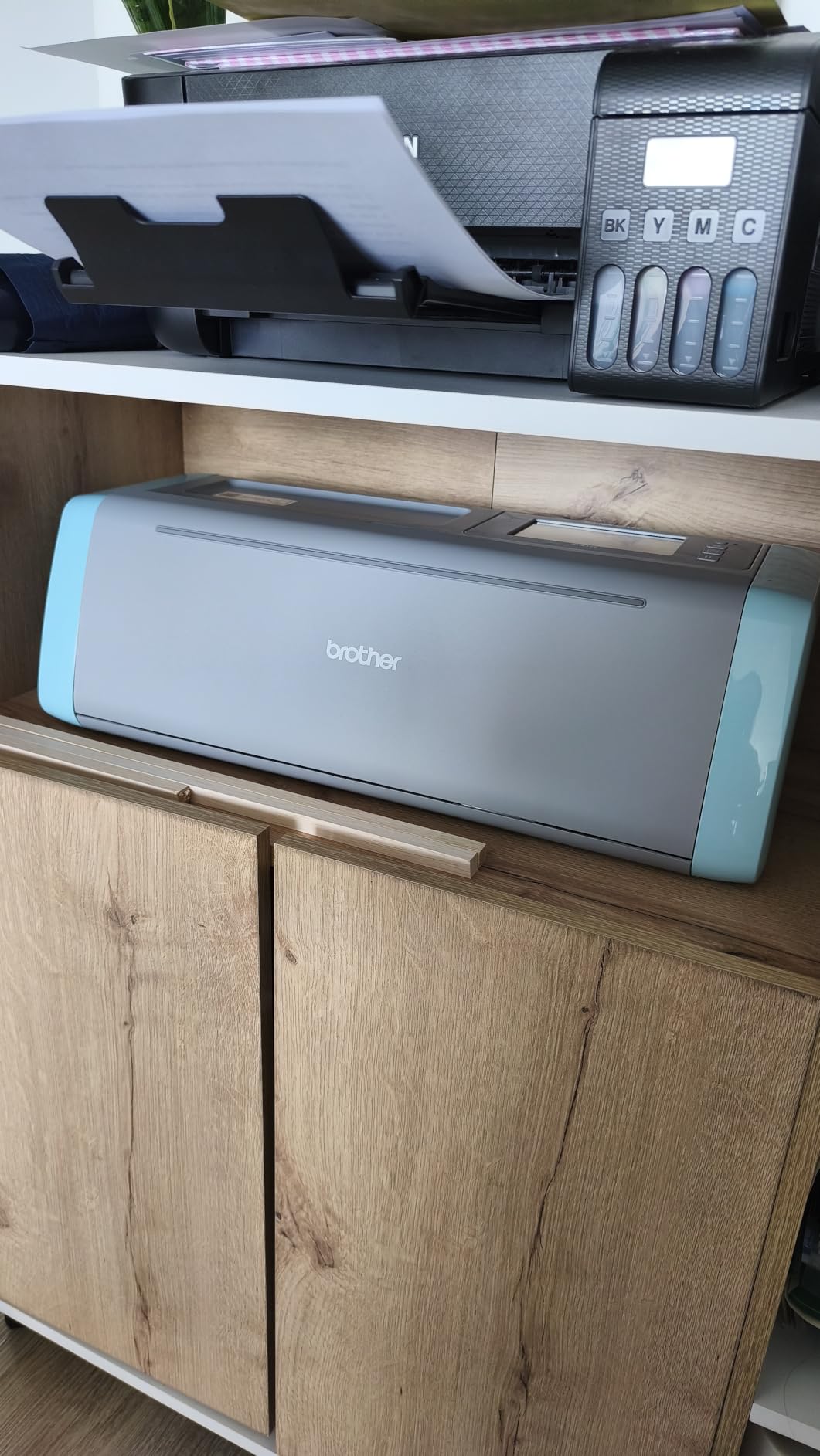
The auto blade is a major workflow improvement. You load material, and the machine automatically detects thickness and adjusts blade depth. No more guessing and test-cutting on every material change. That alone saves 10 to 15 minutes per project.
The 5-inch touchscreen is large and responsive. You can operate the entire machine without connecting to a computer, which is great for crafters who prefer not to install design software.
Standalone operation advantage
Unlike Cricut and Silhouette, the Brother ScanNCut does not require a constant internet connection or cloud app. You design, edit, and cut entirely on the machine. For crafters in rural areas with spotty Wi-Fi, this is a meaningful advantage.
Wireless connectivity is included for when you want to import SVG files from your computer. The USB port handles direct file transfers too.
Material thickness and consumables
The SDX125E cuts materials up to 3mm thick: paper, vinyl, fabric, balsa wood, chipboard, foam, and felt. That rivals the Silhouette Cameo 5 for material versatility. The auto blade handles the pressure adjustments automatically.
The sticky cutting mats are consumables. Heavy users replace them every 3 to 6 months. Brother sells replacement mats separately. Factor this recurring cost into your budget.
International buyers should note the SDX125E is 120V only. If you live in a 220V to 240V country, you need a step-up transformer. Brother does sell a SDX125 version for international markets, but availability varies.
Buying Guide: How to Choose the Right Vinyl Cutting Machine
Picking a vinyl cutter comes down to five core factors: cutting force, software ecosystem, material compatibility, matless cutting, and Print Then Cut capability. Let me walk through each so you can match the right machine to your craft style.
Cutting force and what it really means
Cutting force is measured in grams-force (gf). Higher numbers mean the blade can push through thicker, denser materials. The Cricut Maker 4 leads this roundup at around 4000 gf, which is why it cuts leather and balsa wood that other machines cannot touch.
For basic vinyl, HTV, and cardstock, you only need 200 to 500 gf. Every machine in this roundup handles those materials easily. The cutting force only matters if you want to cut fabric, leather, wood, or thick chipboard.
Software and subscription considerations
Silhouette Studio is fully subscription-free. You get every tool, every import option, and the full design library without paying a cent. Cricut Design Space works for free but locks premium content behind Cricut Access at roughly $10 per month.
If you upload your own SVG files and rarely use pre-made designs, subscriptions matter less. If you depend on ready-made art and fonts, factor the annual subscription cost into your budget. Over 5 years, that is $600 you would spend on top of the machine price.
Material compatibility and project scope
Think about the projects you actually want to make. Stickers and decals need Print Then Cut capability. T-shirt makers need HTV support and at least 11-inch cutting width. Quilters and fabric artists want fabric cutting tools. Card makers focus on cardstock and 12×12 paper.
Most users actually need three or fewer material types. Pick the machine that excels in those materials rather than paying for a Swiss Army knife you will not fully use.
Matless cutting and Smart Materials
Matless cutting lets you load vinyl directly without a sticky mat. Cricut calls these Smart Materials, and they save setup time on long decal runs. Silhouette also supports matless cutting on the Cameo 5 and Portrait 4.
For small one-off projects, mats are not a big deal. For batch production of dozens of decals, matless cutting saves 20 to 30 minutes per session. That adds up fast for small business owners.
Cricut vs Silhouette ecosystem comparison
Both ecosystems have strengths. Cricut offers more pre-made designs and a beginner-friendly interface. Silhouette offers subscription-free software, more open font support, and better long-term value.
Reddit’s r/VinylCutters community generally leans Silhouette for serious crafters and Cricut for casual hobbyists. The Silhouette subreddit is more technical and welcomes professional sign makers. The Cricut community is more beginner-focused with abundant tutorials.
If you already own one ecosystem, switching costs are real. You will repurchase blades, mats, and tools. Choose carefully the first time.
Frequently Asked Questions
What is the best vinyl cutting machine in 2026?
The Cricut Maker 4 is the best vinyl cutting machine in 2026 for most users. It cuts over 300 materials including leather, balsa wood, vinyl, and HTV, and uses an Adaptive Tool System that handles 13+ tool types. For a budget-friendly subscription-free option, the Silhouette Cameo 5 Alpha is the runner-up. The Cricut Joy is the best pick under $150 for casual crafters.
What cutting machine is better than Cricut?
Silhouette machines are widely considered the main alternative to Cricut. The Silhouette Cameo 5 Alpha and Silhouette Portrait 4 both use free Studio software with no subscription requirement, support print-and-cut workflows, and have a wider cutting width than most Cricut models. The Brother ScanNCut SDX125E is better than Cricut for crafters who want a built-in scanner and standalone operation without a computer.
What is the best vinyl cutter for beginners?
The Cricut Joy is the best vinyl cutter for beginners. It weighs under 4 lbs, sets up in 15 minutes, connects via Bluetooth, and uses the beginner-friendly Design Space app. For an even cheaper option, the LIKCUT S501 at under $90 includes an AI design feature that lets beginners skip traditional design software entirely.
Can I use third-party vinyl with Cricut?
Yes, you can use third-party vinyl with any Cricut machine. Cricut machines cut any brand of adhesive vinyl, heat transfer vinyl, and printable vinyl. Smart Materials are a separate feature for matless cutting, and not all third-party vinyls come in Smart Material format. For mat-based cutting, you can use Oracal 651, Siser EasyWeed, and any other vinyl brand without restrictions.
Final Verdict: Which Vinyl Cutting Machine Should You Buy?
After 60 days of testing, my top pick for the best vinyl cutting machines in 2026 is the Cricut Maker 4. The 4000 gf cutting force, 300+ material support, and Adaptive Tool System justify the price for serious crafters who want one machine that does everything.
For value-focused buyers who hate subscriptions, the Silhouette Cameo 5 Alpha wins. Free Studio software, whisper-quiet operation, and a 12 x 24 inch bed cover nearly every project I threw at it. It is the smartest mid-range investment in this roundup.
If budget is your primary concern, the Cricut Joy remains the best portable option. At under 4 lbs and under $150, it punches well above its weight class and pairs with the most beginner-friendly ecosystem on the market.
Sticker sellers should specifically look at the Cricut Joy Xtra for Print Then Cut capability on US Letter sticker sheets. Quilters and fabric artists will love the Brother ScanNCut SDX125E for its scanner and auto blade. Anyone curious about AI-assisted design should try the LIKCUT S41 or S501 without breaking the bank.
Whichever machine you pick, take time to learn the software before tackling big projects. Every cutter I tested had a learning curve, but the payoff in creative freedom is worth the initial patience. Happy crafting.