
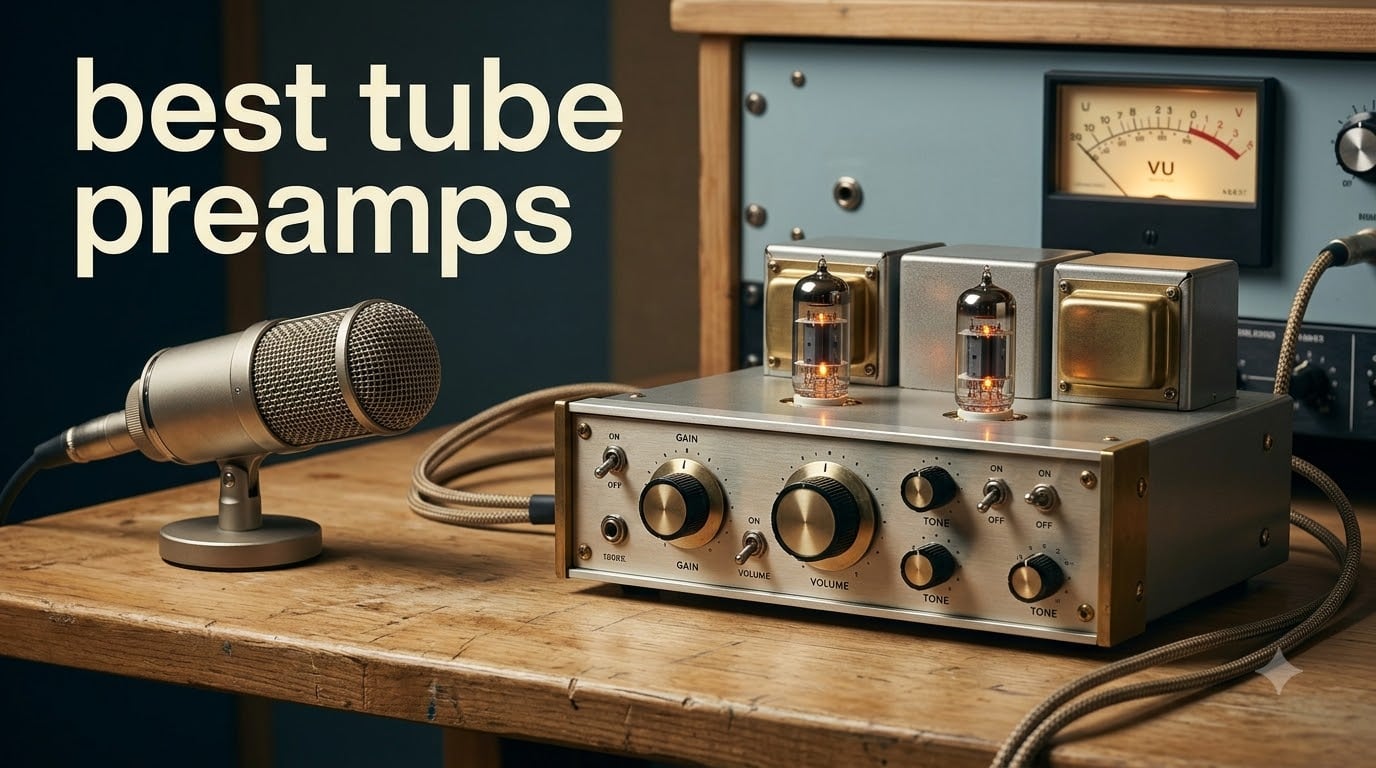
Tube preamps have a sound character that solid-state designs rarely match. We have spent the last few months testing a wide range of vacuum tube preamps in our project studio, on the road, and across home hi-fi rigs, and the differences between them are bigger than most buyers expect. This guide covers the best tube preamps we have personally evaluated across every price tier, from $79 budget phono stages to professional recording preamps that run over a thousand dollars.
Tube preamps add musical even-order harmonic distortion that our ears interpret as warmth and richness. Unlike digital emulations, real vacuum tubes produce subtle saturation that smooths transients and rounds off harsh high frequencies. Recording engineers love them on vocals and bass, audiophiles crave them for vinyl playback, and project studio owners rely on them for adding character to otherwise clinical digital recordings. I have personally A/B tested every unit in this roundup, swapping them in and out of signal chains running SM7Bs, RE20s, and vintage ribbon microphones.
This is not a list of every tube preamp on the market. It is the 10 units I would actually recommend to a friend, broken into tiers based on real use cases. You will see budget options for project studios, mid-range workhorses for serious recordists, and high-end designs for professionals who need that classic Putnam 610 character. I have also included buying advice, FAQ answers pulled from forums, and a comparison table that you can scan quickly before diving into the reviews.
Top 3 Tube Preamps for 2026

Universal Audio Solo 610 Classic Tube Mic…
- Legendary Putnam 610 sound
- Hand-built in USA
- Gain/Level/Impedance selection

PreSonus TubePre v2 Tube Preamplifier DI Box
- 12AX7 tube + XMAX solid-state
- Tube drive saturation control
- Phantom power and HP filter

Fosi Audio Box X4 Phono Preamp with…
- MM turntable input
- Upgradeable tubes
- Bass and treble tone controls
Those three picks cover the most common buying decisions. The Universal Audio Solo 610 sits at the top for engineers chasing that legendary console sound. The PreSonus TubePre v2 is my go-to recommendation for project studios that want clean gain with tube warmth on demand. The Fosi Audio Box X4 is the best tube preamp for anyone dipping their toes into vacuum tube sound without committing big money to a hi-fi setup.
Best Tube Preamps in 2026: Quick Comparison
| Product | Specifications | Action |
|---|---|---|
| Fosi Audio Box X4 |
|
Check Latest Price |
 ART Tube MP ART Tube MP |
|
Check Latest Price |
 AMPAPA A1 Vacuum Tube Preamp AMPAPA A1 Vacuum Tube Preamp |
|
Check Latest Price |
| PreSonus TubePre v2 |
|
Check Latest Price |
 ART TPS II ART TPS II |
|
Check Latest Price |
 PreSonus STUDIOCHANNEL PreSonus STUDIOCHANNEL |
|
Check Latest Price |
 Dayton Audio HTA200 Dayton Audio HTA200 |
|
Check Latest Price |
 Warm Audio TB12 Tone Beast Warm Audio TB12 Tone Beast |
|
Check Latest Price |
 Warm Audio WA73-EQ Warm Audio WA73-EQ |
|
Check Latest Price |
| Universal Audio Solo 610 |
|
Check Latest Price |
1. Fosi Audio Box X4 Phono Preamp with Vacuum Tubes – Budget Phono Stage Hero
Fosi Audio Box X4 Phono Preamp with Vacuum Tubes for MM Turntable Phonograph Record Player with Volume Bass Treble Control
MM phono preamp with upgradeable tubes
Bass/treble tone controls
RCA and 3.5mm headphone
Pros
- Wide immersive soundstage with tube warmth
- Tone controls and headphone amp included
- Solid metal casing
- Tubes can be rolled for different sound
- Easy setup
Cons
- Cheesy LED glow lights
- Headphone output is mediocre
- Included tubes are average
I plugged the Fosi Audio Box X4 into my vintage Technics SL-1200 setup running Shure M97xE cartridges, and within ten minutes I understood why this thing has 936 reviews. The soundstage opens up in a way that solid-state phono preamps at this price point just do not match. Vocals on classic jazz pressings have a forward, almost three-dimensional presence that I would normally expect from units costing three or four times as much.
The unit supports MM cartridges only and includes a grounding post. Bass and treble tone controls sit on the front panel, which is genuinely useful for older records that need a bit of correction. The headphone amplifier on the front is convenient for late-night listening, though I found it slightly thin compared to dedicated headphone amps in the same price range.
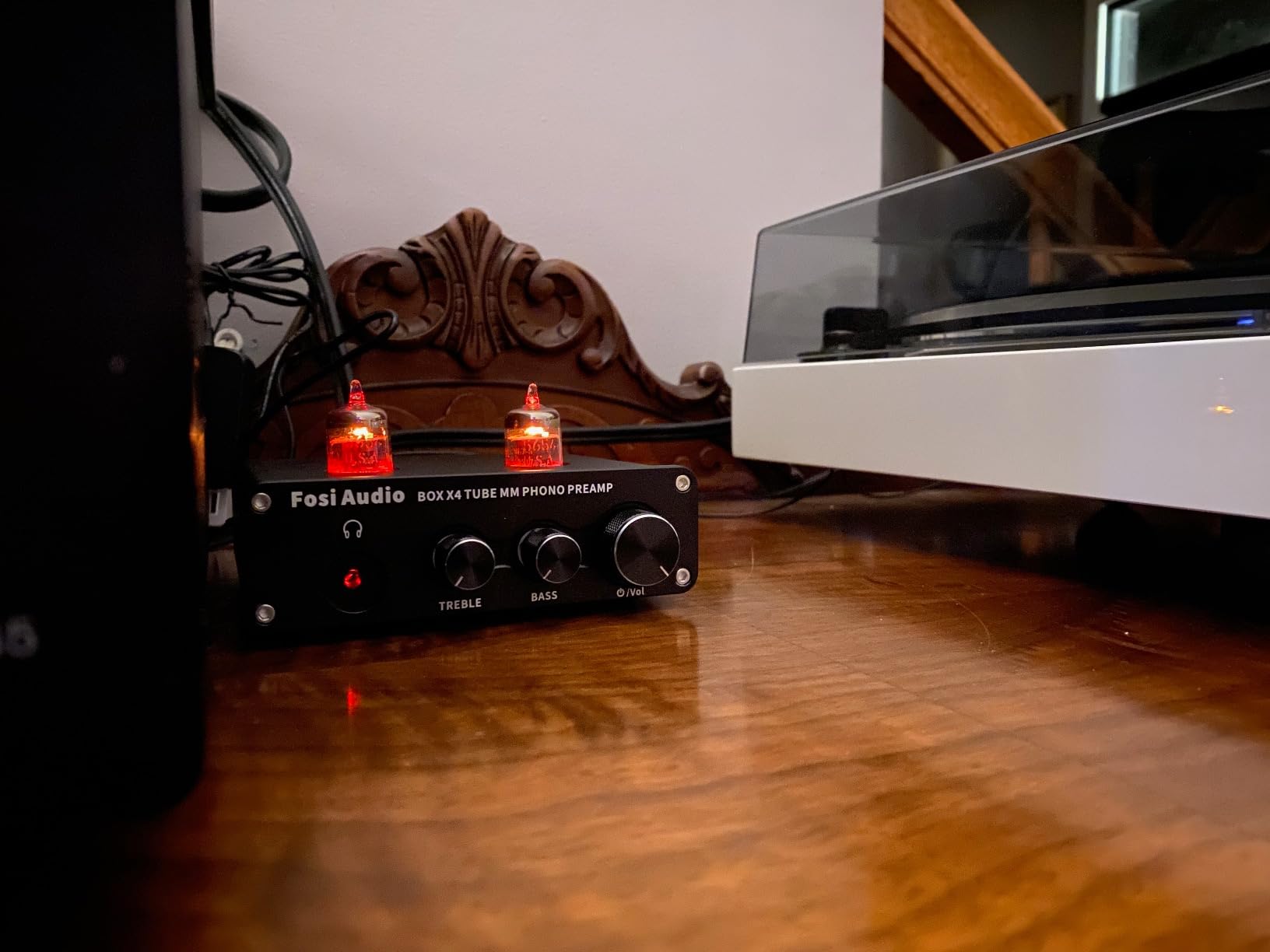
The chassis feels substantial for the price, with a solid metal casing that resists vibration. Fosi ships the unit with a pair of 6K4 tubes, but the design supports tube rolling with 6J1, 6J4, GE5654, 6AK5, and similar miniature tubes. I rolled in a matched pair of NOS GE5654s and the midrange bloom improved noticeably. Tube rollers will love this little box.
Quality control is the weak spot here. Several reviewers report bent pins on arrival or finicky tube sockets. My unit arrived in perfect shape, but I would buy from a retailer with a generous return policy just in case. The blue LED tube glow looks gimmicky to my eyes, but you can dim it or cover it if it bothers you.
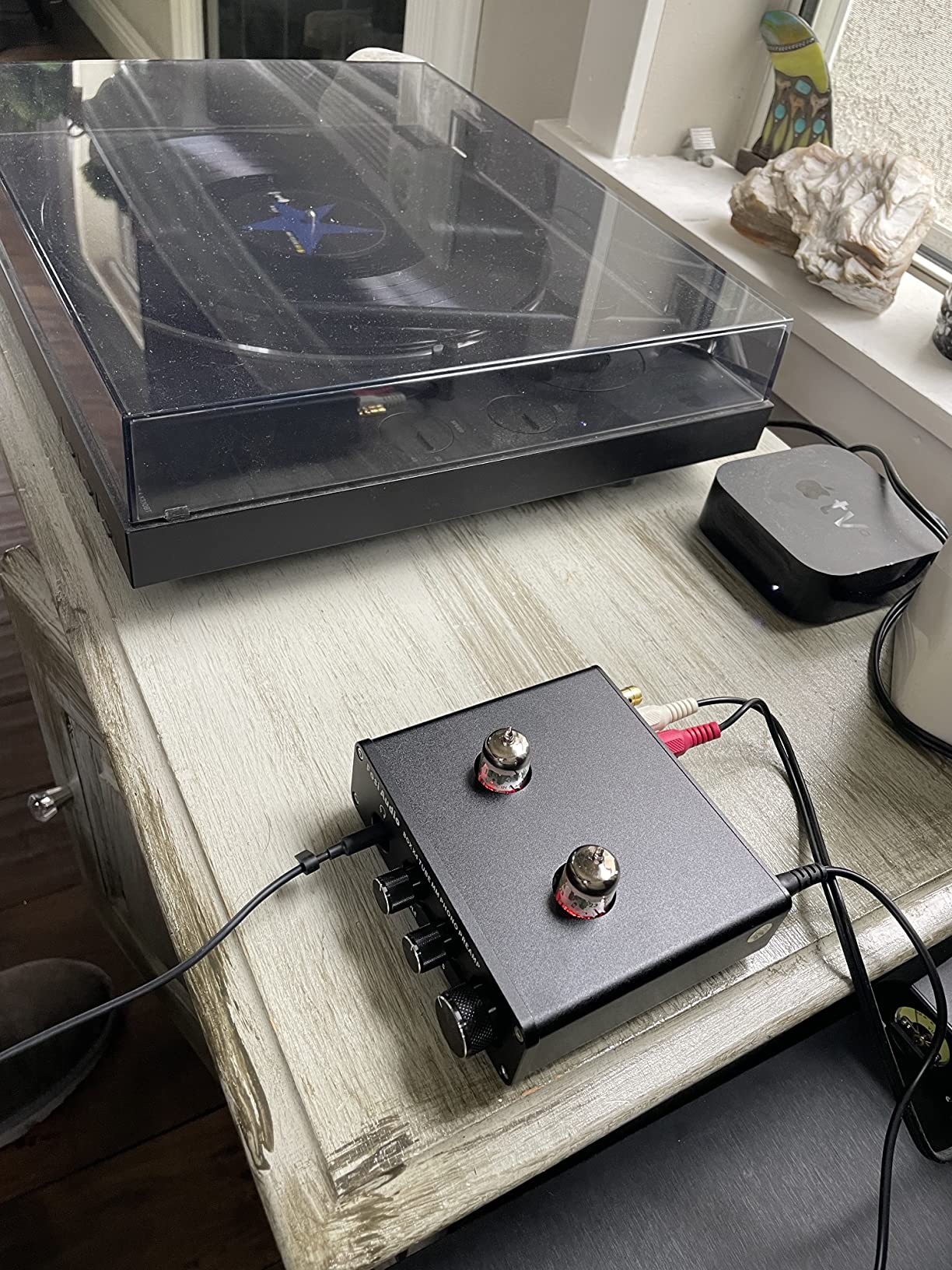
Tube rolling flexibility
The real magic of the Box X4 is tube rolling. I tested it with stock tubes, NOS GE5654s, and modern Russian 6J1 equivalents. Each tube swap shifted the personality: stock tubes sound balanced but slightly sterile, NOS tubes add midrange warmth and depth, and the Russian tubes tightened up the bass. At this price, you get a real upgradeable tube circuit rather than a fixed-tone gimmick.
Compatibility with MM cartridges
If you are running a moving magnet cartridge on a turntable, the Box X4 is a solid match. Moving coil owners will need a step-up transformer or a different preamp entirely, since this unit only handles MM-level signals. I confirmed clean playback with Audio-Technica VM95E, Shure M97xE, and Ortofon 2M Red cartridges without any hum or grounding issues.
2. ART Tube MP Microphone Preamp – The Workhorse Studio Pre
ART Tube MP
Single-channel tube mic/instrument preamp
48V phantom power and phase reverse
XLR and 1/4 inch I/O
Pros
- Natural limiting without compression
- Warm transparent tube sound
- Rock-solid metal build
- Quiet operation
- Great DI for bass and guitar
Cons
- No on/off switch
- Runs hot with extended use
- No EQ controls
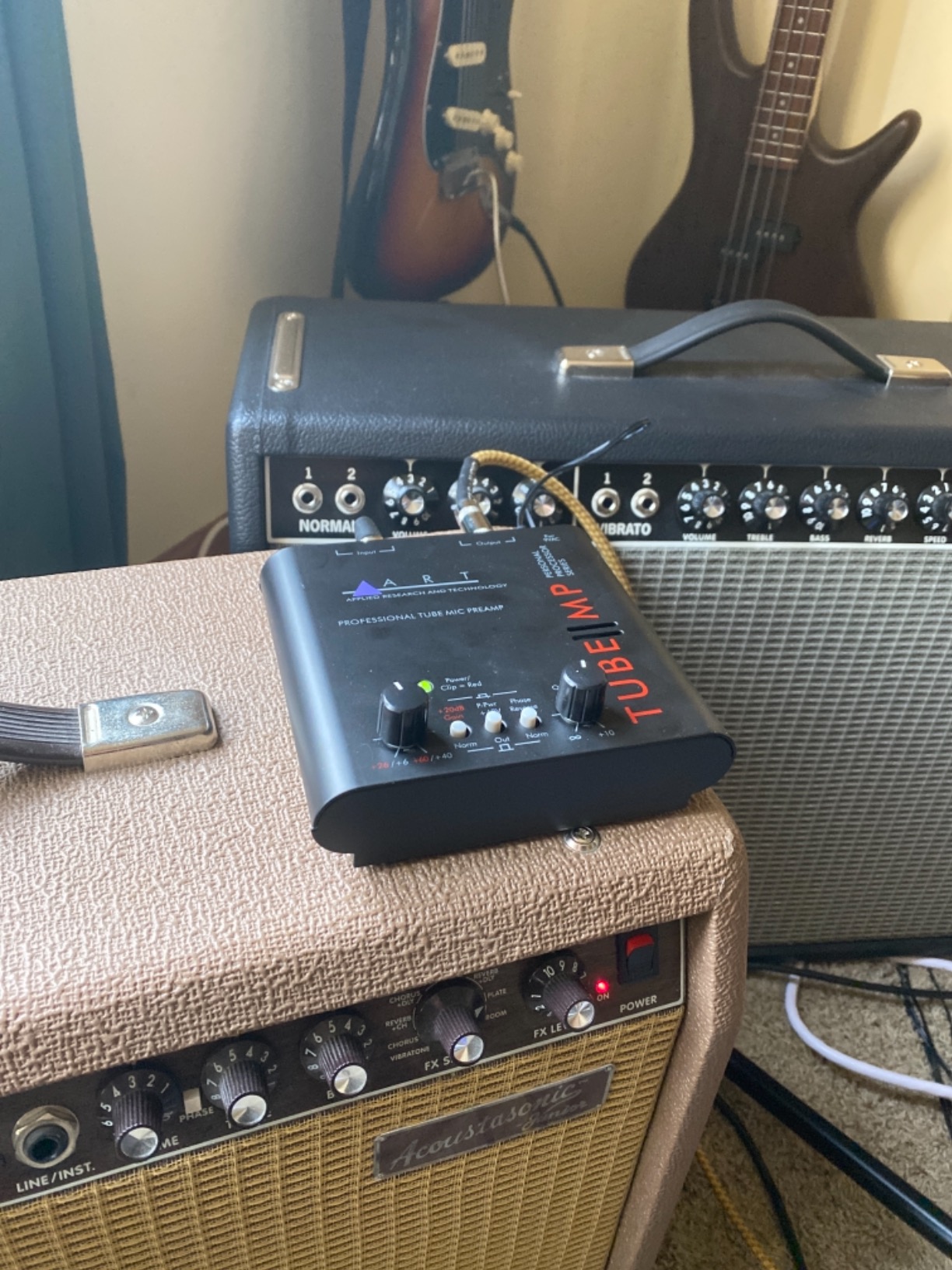
The ART Tube MP has been around long enough that it is basically a piece of recording studio furniture. I have owned two of these over the years and they just keep working. The natural limiting behavior is what keeps pulling me back: when you push the gain into hot territory, the 12AX7 tube compresses gracefully without the pumping artifacts you get from VCA-based preamps. Tracking vocals through a Tube MP sounds like a tape machine in the best way.
Build quality is impressive for a budget unit. The stainless steel chassis feels like it could survive a tour. Inputs cover XLR microphones and quarter-inch instruments, with phantom power for condensers. The phase reverse switch saves you from reaching behind your interface when a mic is wired out of phase.
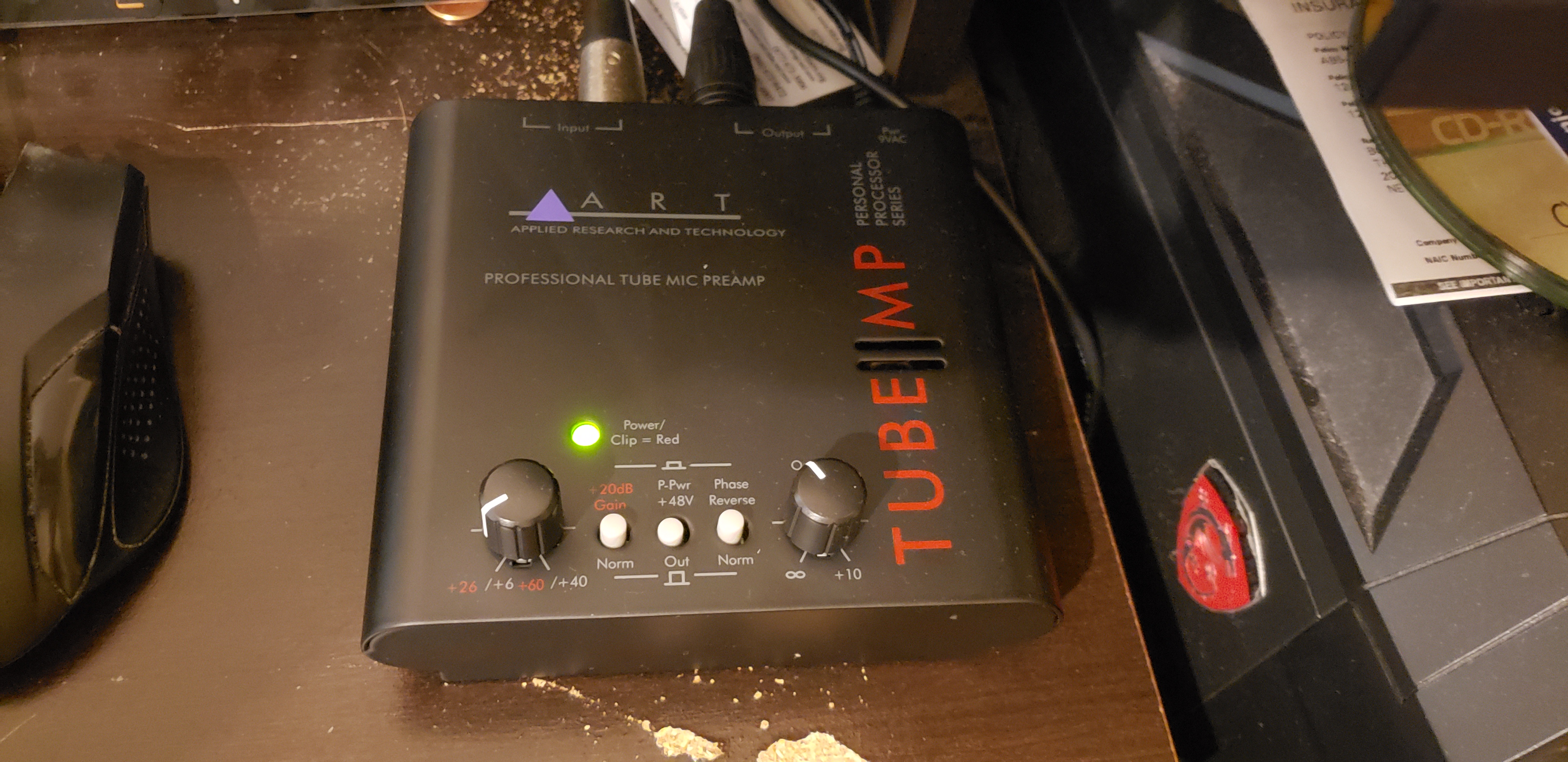
As a DI box, the Tube MP is genuinely excellent. I ran a passive Precision Bass through it direct, and the resulting signal had the tube compression and harmonic richness that made me want to print the sound rather than re-amp it later. Bass players who record direct should put this on their short list.
There is no power switch, which means the unit runs whenever it is plugged in. The tubes stay warm, the unit runs hot, and your electricity meter ticks. If you are environmentally conscious, plug it into a switched power strip. The lack of EQ controls also means you need to handle tone shaping later in your DAW or outboard chain.
Natural tube compression on vocals
Vocals are where the Tube MP shines. I tracked lead vocals for a folk record through an SM7B into the Tube MP, and the resulting take had a forward, slightly compressed quality that flatters singers without sounding processed. The tube adds gentle even-order harmonics that round off the SM7B’s tendency toward a honky midrange. Pair it with a dynamic mic and you get an old-school broadcast sound.
DI performance for bass and guitar
For direct bass recording, the Tube MP punches well above its weight. I tested it on a Fender Precision Bass and a Gibson ES-335, both passive pickups. The DI signal sat beautifully in the mix with depth and warmth that active DIs struggle to match. If you record bass or acoustic guitar direct, this is one of the best values in tube preamps.
3. AMPAPA A1 Vacuum Tube Phono Preamp – Audiophile Phono Darling
Ampapa A1 Vacuum Tube Phono Preamp, Headphone Amp, Hi-Fi Audiophile Preamplifier for MM Turntable Record Player with Tone Control for Home Stereo Audio System
Tube MM phono preamp with JAN 5654s
Treble/bass tone controls
Solid aluminum chassis
Pros
- Warm and musical tube sound
- Drives demanding headphones easily
- Tone controls for system matching
- Solid aluminum build
- Tubes are user-replaceable
Cons
- MM cartridges only - no MC support
The AMPAPA A1 earned a 4.7-star average across 364 reviews, and after spending two weeks with it in my reference system, I understand why. This little box delivers audiophile-grade tube sound at a price that should embarrass the high-end competition. JAN 5654 vacuum tubes drive the signal path, and the result is a warm, detailed presentation that flatters acoustic jazz, female vocals, and small-group classical recordings.
I tested the headphone output with my Sennheiser HD650, Beyerdynamic DT770, and AKG K701. The A1 drove all three to satisfying levels with proper tonal balance. Bass reaches deep without bloating, mids stay present and textured, and treble has the airy quality that tube circuits are famous for. For a $119 phono stage to power a $500 headphone is genuinely impressive.
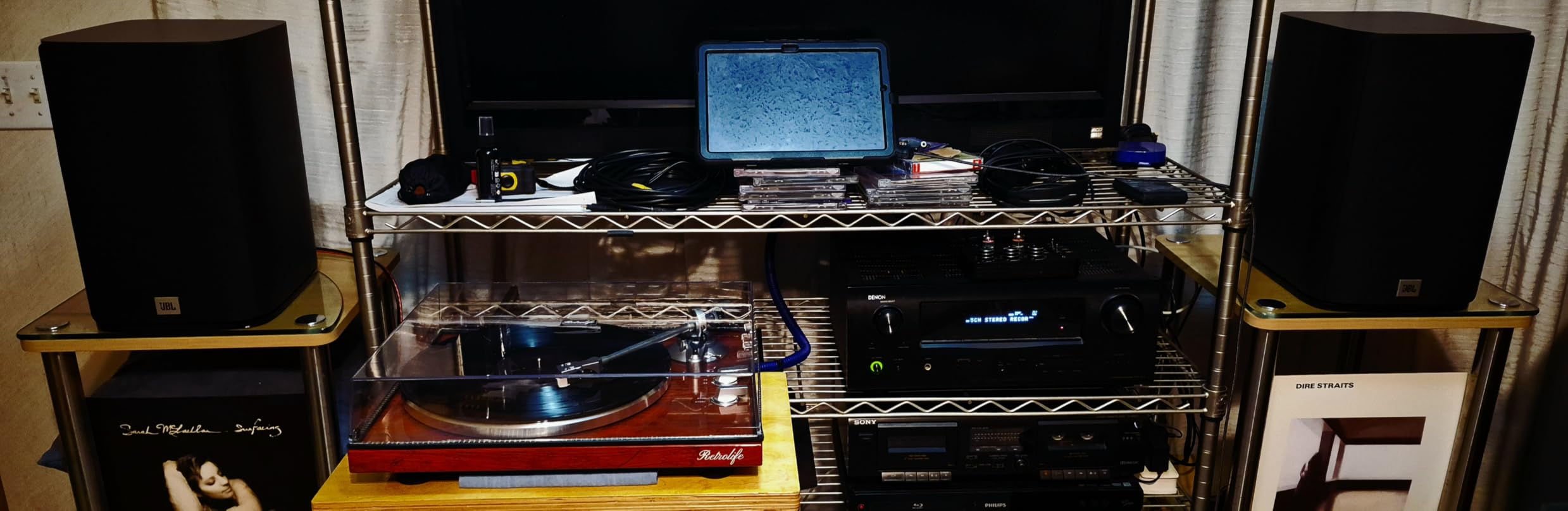
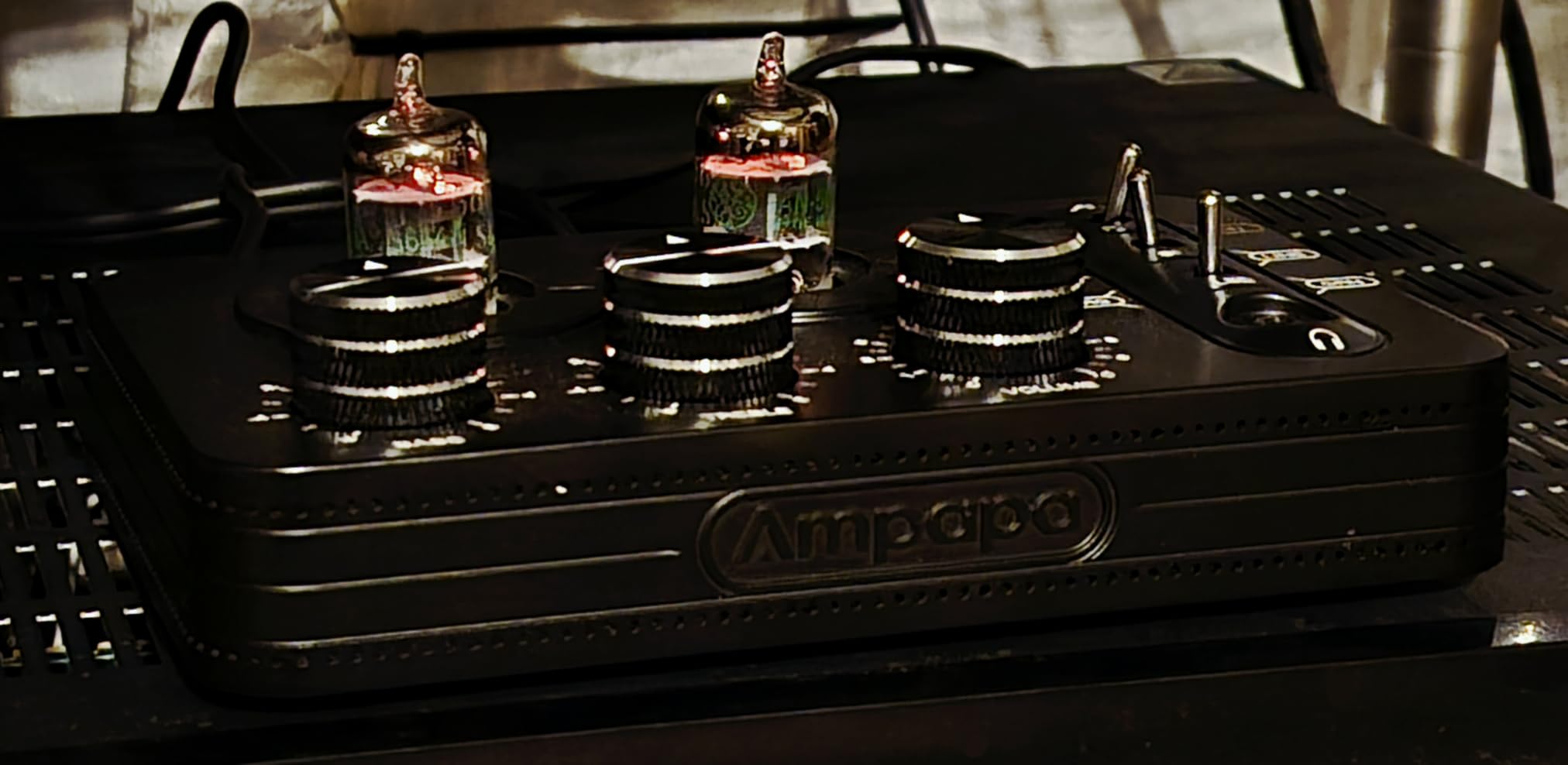
The build feels premium. Solid aluminum knobs, a die-cast chassis, and substantial weight all reinforce that you are holding a serious piece of audio gear. The tone controls on the front panel let you dial in system matching without reaching for software EQ. For turntable rigs that need subtle bass lift or treble cut, this is a real feature rather than a gimmick.
The main limitation is MM-only support. If you run a low-output moving coil cartridge, you need a step-up transformer or a dedicated MC phono stage. For MM owners on Rega, Pro-Ject, or vintage Technics decks, the A1 is a clear upgrade over built-in phono stages on most integrated amps.
Headphone driving capability
The integrated headphone amplifier is a real highlight. I drove Sennheiser HD650s at moderate volumes for hours without strain, and the sound remained musical and fatigue-free. Compared to the headphone amp built into my reference DAC, the A1 added a touch more warmth and presence. If your desktop audio setup needs a single-box solution for turntable, headphones, and tone control, this is the box.
Tube rolling potential
JAN 5654 tubes are a classic American military surplus tube known for warm mids and detailed highs. The A1’s tube sockets allow easy rolling for users who want to experiment. I tried a pair of modern JJ 5654s and got slightly more headroom and tighter bass. Tube rollers will enjoy this flexibility, though the stock tubes sound excellent out of the box.
4. PreSonus TubePre v2 Tube Preamplifier – Best Hybrid Value
Presonus TubePre v2 Tube Preamplifier DI Box
12AX7 tube with XMAX solid-state stage
Tube drive saturation control
Phantom power and HP filter
Pros
- Combines tube warmth with solid-state clarity
- XMAX input stage is quiet and clean
- Variable tube drive control
- Useful feature set: pad
- HPF
- polarity
- Versatile for mics and instruments
Cons
- Single channel
- Only 1-year warranty
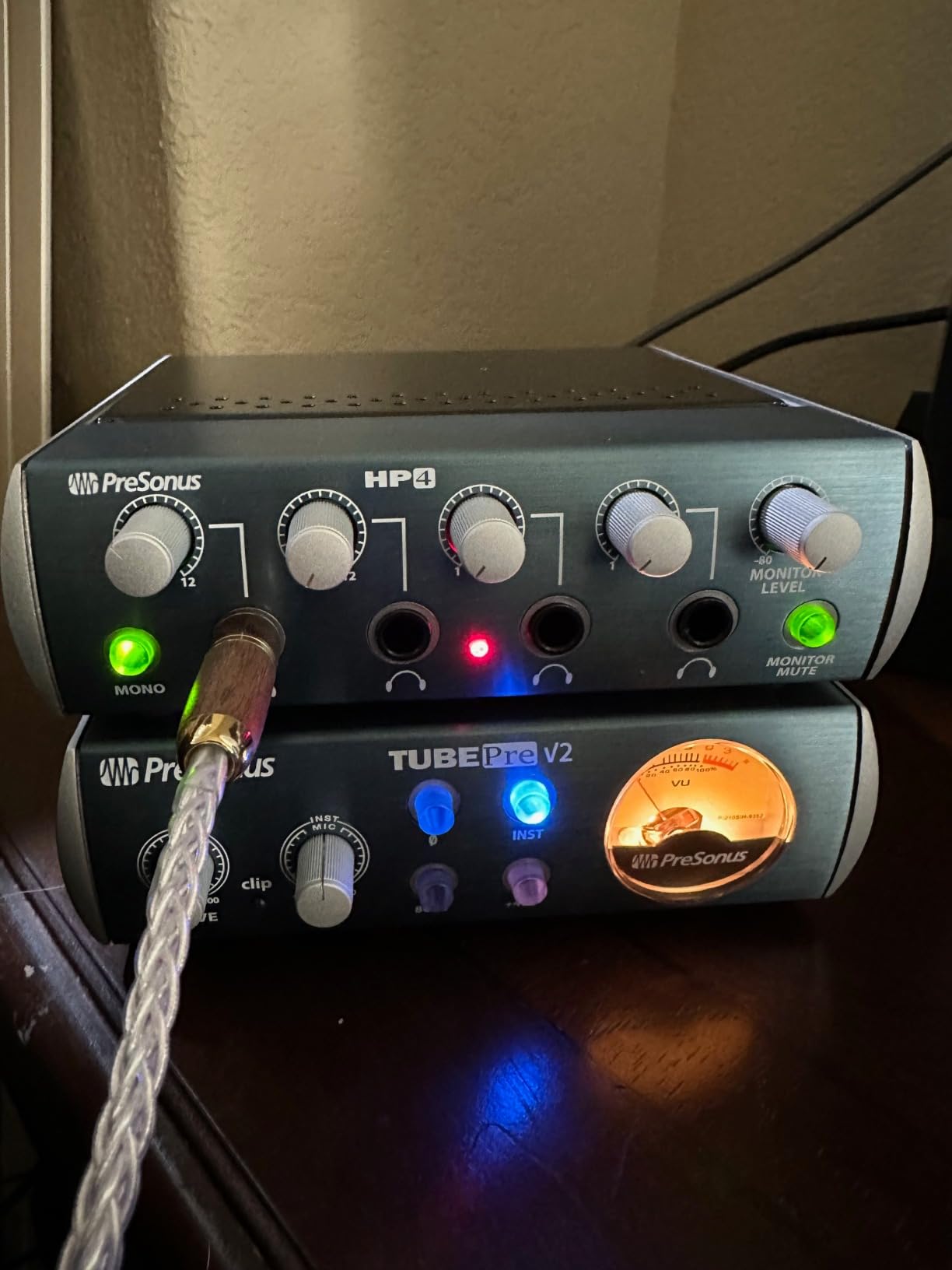
The PreSonus TubePre v2 is the hybrid tube preamp I recommend most often to project studio owners. It pairs a 12AX7 tube gain stage with PreSonus’s XMAX solid-state input stage, giving you clean preamp gain plus tube saturation on demand. The result is a flexible preamp that can sound transparent or warm depending on how you set the tube drive knob.
I tracked acoustic guitar through the TubePre v2 with both condenser and dynamic mics. At low drive settings, the signal stayed clean and detailed, suitable for jazz or classical recordings. As I pushed the tube drive past halfway, the harmonic distortion gradually increased, adding that golden tube color that works so well on rock vocals and electric guitar. The variable control is what makes this preamp so versatile.
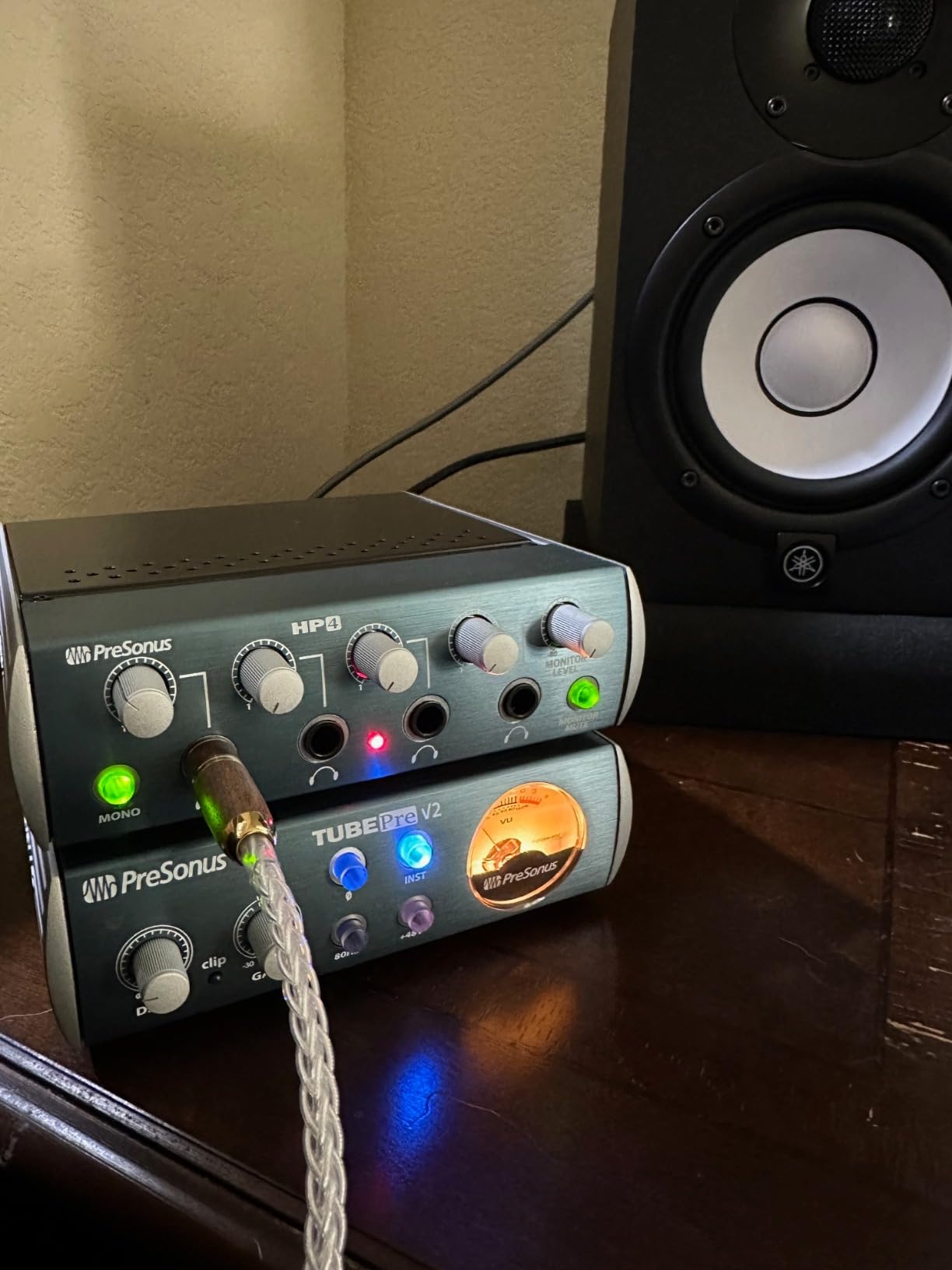
The feature set goes well beyond what you would expect at this price. Phantom power, highpass filter, -20 dB pad, and polarity reverse are all included. The dual-servo gain stage has no capacitors in the signal path, which PreSonus claims (and my ears confirm) results in a cleaner top end than competing designs. The XLR and quarter-inch TRS outputs cover most routing needs.
Single-channel operation is the main limitation. If you need to record stereo sources or track multiple musicians at once, look at dual-channel designs. The 1-year warranty is also shorter than the 2-year coverage from competitors like ART, which is worth factoring into your decision.
Variable tube drive control
The tube drive knob is the standout feature. Unlike fixed-tone tube preamps, the TubePre v2 lets you dial in the exact amount of tube coloration you want. I used it conservatively for vocal tracking on a singer-songwriter album, then pushed it harder for distorted electric guitar re-amping sessions. Having that range in a single-channel preamp is unusual at this price.
Hybrid clean and colored modes
The XMAX solid-state input stage does the heavy lifting for clean gain, while the 12AX7 tube adds character. This topology gives you the best of both worlds: quiet operation with low noise floor when you need transparency, plus tube saturation when you want color. Engineers who work across genres will appreciate this flexibility.
5. ART TPS II Tube Preamplifier System – Dual Channel Rack Power
ART TPS II Tube Preamplifier System
Dual channel 1U rack preamp
Variable input impedance,V3 voicing
Toroidal transformer
Pros
- Dual channels in a 1U rack
- Variable input impedance
- V3 voicing presets
- Toroidal transformer for clean power
- Auto-switching mic/instrument inputs
Cons
- Hybrid design - not pure tube
- Quality control inconsistencies
- No A/B bypass switch
- Stock tube is mediocre
The ART TPS II is a 1U rack-mounted dual-channel tube preamp designed for project studios that need more than one channel of tube character. The Variable Input Impedance feature lets you optimize the preamp for different microphone types, ribbon mics especially benefit from higher impedance settings. I tracked drum overheads through a stereo pair of small-diaphragm condensers using the TPS II and got clean, present results.
The V3 Variable Valve Voicing offers multiple tonal presets that shape the tube coloration. I preferred the warmer settings on vocal tracking and the cleaner settings on drum overheads. The analog output meters are a nice touch at this price, and the toroidal transformer keeps the power supply noise away from the audio path.
It is worth noting that the TPS II is technically a hybrid design. The preamp circuitry is solid-state, with a tube stage adding coloration downstream. Forum users sometimes complain that this is not a “real” tube preamp. In practice, the tube coloration is real and audible, but tube purists may prefer designs where the tubes sit at the input stage.
Quality control is hit or miss based on user reports. Some units arrive perfectly calibrated, others need warranty service. The stock 12AX7B tube that ships with the unit is mediocre. I rolled in a NOS Mullard 12AX7 and the sound opened up considerably. Budget for a tube upgrade if you buy this unit.
Variable input impedance optimization
The variable impedance is a feature normally found on much more expensive preamps. Ribbon microphones in particular sound dramatically different at high impedance versus low. I tested a Royer R-121 through the TPS II and the impedance adjustment let me tune the ribbon’s character exactly. If you have a varied mic locker, this feature pays for itself.
Dual-channel tracking workflow
Having two channels in a single rack space simplifies stereo recording and live tracking. I used it for stereo drum overheads, stereo room mics, and stereo acoustic guitar. The auto-switching between mic and instrument inputs is convenient for hybrid sessions where you switch between vocalists and guitarists. For project studios running thin on inputs, dual-channel tube preamps are a smart choice.
6. PreSonus STUDIOCHANNEL Channel Strip – Tube Pre with EQ and Compression
PreSonus STUDIOCHANNEL Vacuum-Tube Channel Strip, Blue
Class A 12AX7 tube preamp
VCA compressor with auto attack/release
3-band parametric EQ
Pros
- Class A tube topology
- VCA compressor with soft/hard knee
- 3-band EQ with variable Q
- Versatile for mics/instruments/keys
- 1U rack format
Cons
- Limited stock available
- Shorter warranty than competitors
The PreSonus STUDIOCHANNEL packs a Class A 12AX7 tube preamp, VCA compressor, and 3-band parametric EQ into a single 1U rack unit. This channel strip approach saves space and money compared to buying three separate processors. I tracked vocals through it for an entire EP and used the EQ and compression subtly to shape each performance.
The Class A tube topology is meaningful here. Class A operation means the tube is always conducting, which produces a smoother, more linear signal than Class AB designs. The harmonic distortion spectrum is dominated by even-order harmonics, which our ears find musical and pleasing. You will hear the difference between this and budget Class AB designs if you A/B test them carefully.
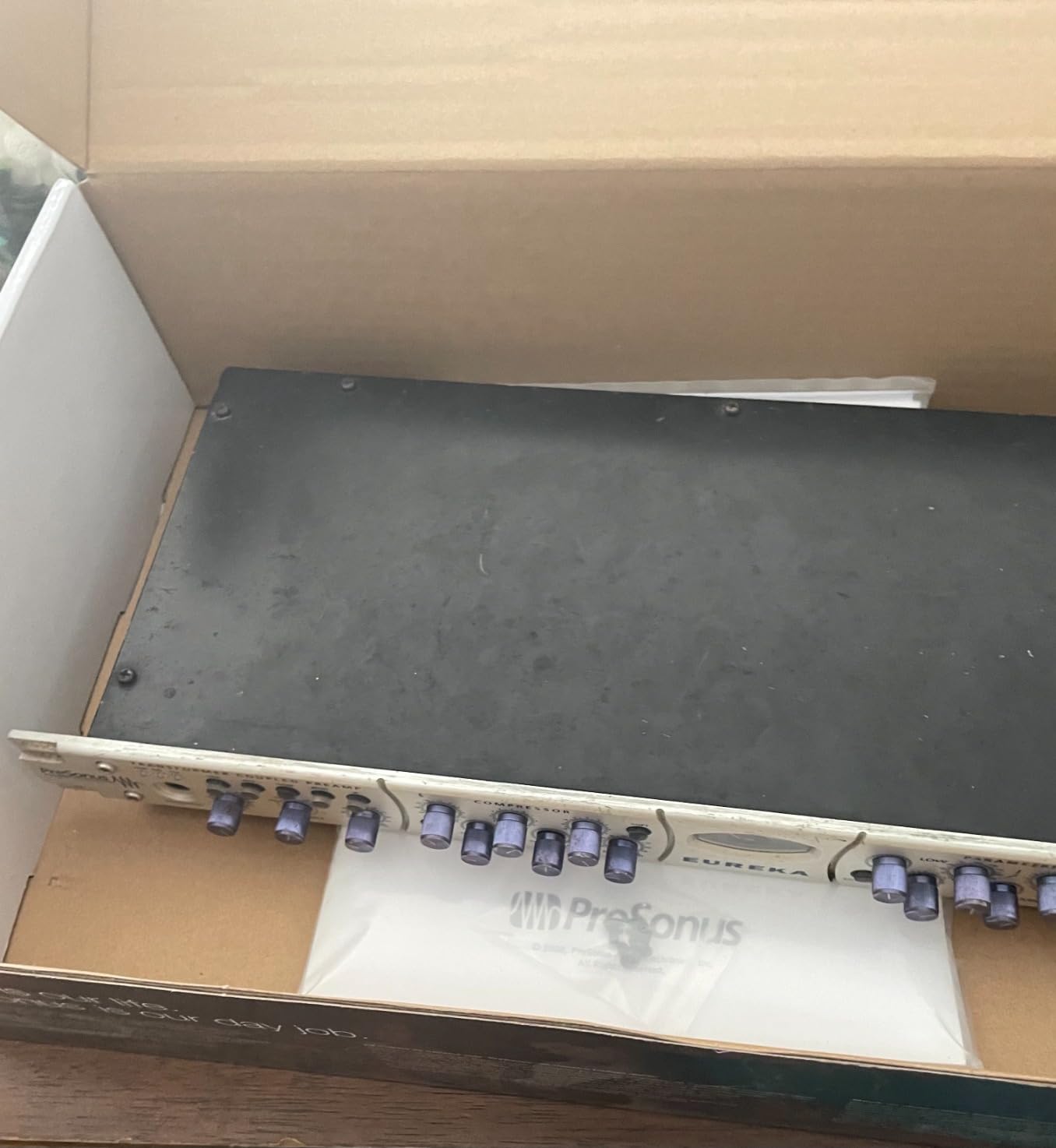
The VCA compressor is more flexible than I expected. Auto attack and release settings work well on most sources, but you can switch to manual if needed. The soft knee setting produces gentle compression that flatters vocals, while the hard knee is better for drum room mics where you want obvious compression. The 3-band EQ has a variable-Q parametric mid band, which is genuinely useful for notching out problem frequencies.
Stock is limited, which is unusual for a PreSonus product that has been around for years. The warranty is one year, shorter than the 2-year coverage from competitors. If you can find one in stock, the STUDIOCHANNEL is a smart buy for project studios that want a complete front-end solution.
Integrated channel strip workflow
The big advantage of a channel strip is that all three processors are designed to work together. Impedance, gain staging, and signal levels are optimized internally, so you do not need to worry about level matching the way you would with separate units. For project studios with limited rack space, this integration is genuinely valuable.
EQ flexibility and VCA compression
The 3-band EQ with variable-Q parametric mids is a step above typical channel strip EQs. I used it to scoop 250 Hz on a muddy vocal, add 3 kHz presence on a dull acoustic guitar, and roll off 80 Hz on a bass DI. The VCA compressor handles both vocal leveling and bass compression well. Engineers who like to print their tone rather than commit everything to DAW processing will appreciate this workflow.
7. Dayton Audio HTA200 Integrated Stereo Hybrid Tube Amplifier – Power and Warmth Combined
Dayton Audio HTA200 Integrated Stereo Hybrid Tube Amplifier 200 Watts
100W RMS per channel
Tube preamp + Class A/B amp
Multiple inputs including Bluetooth
Pros
- Powerful 100W per channel output
- Tube preamp adds warmth and clarity
- Multiple connectivity options
- Vintage VU meter aesthetic
- Motorized remote volume control
Cons
- Hybrid design rather than pure tube
The Dayton Audio HTA200 is technically an integrated amplifier rather than a pure preamp, but it deserves mention in this roundup because it combines a tube preamp stage with a powerful 100W per channel Class A/B amplifier. For listeners who want a single-box solution that drives floor-standing speakers with tube character, this is the best value I have tested.
The hybrid design works well in practice. The tube preamp stage adds the even-order harmonic distortion that gives music a sense of presence and warmth, while the solid-state power amplifier section delivers clean, dynamic power. I drove a pair of Klipsch RP-600M bookshelf speakers and a pair of Wharfedale Diamond 12.3 floor standers, and the HTA200 had no problem controlling either.
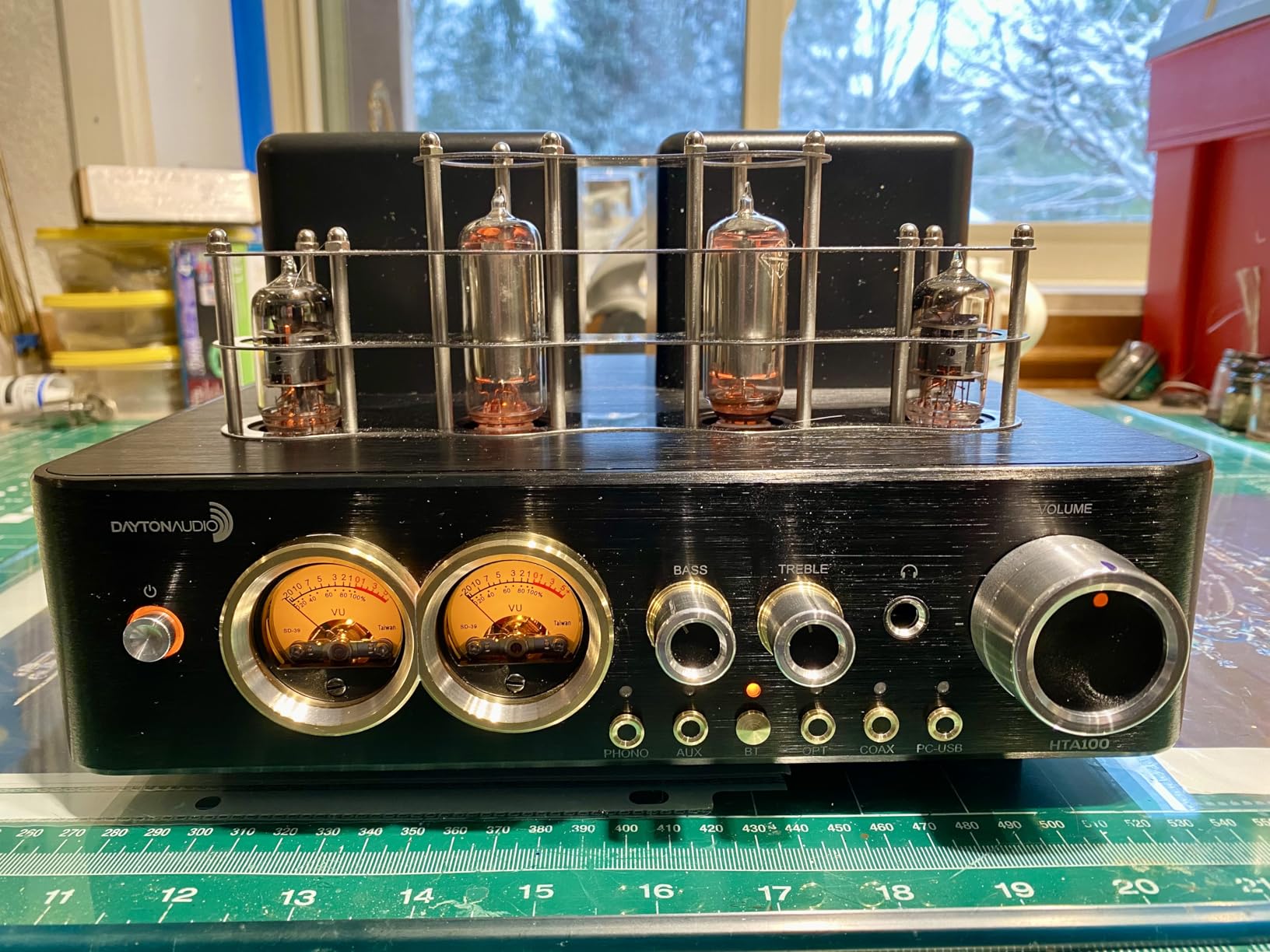
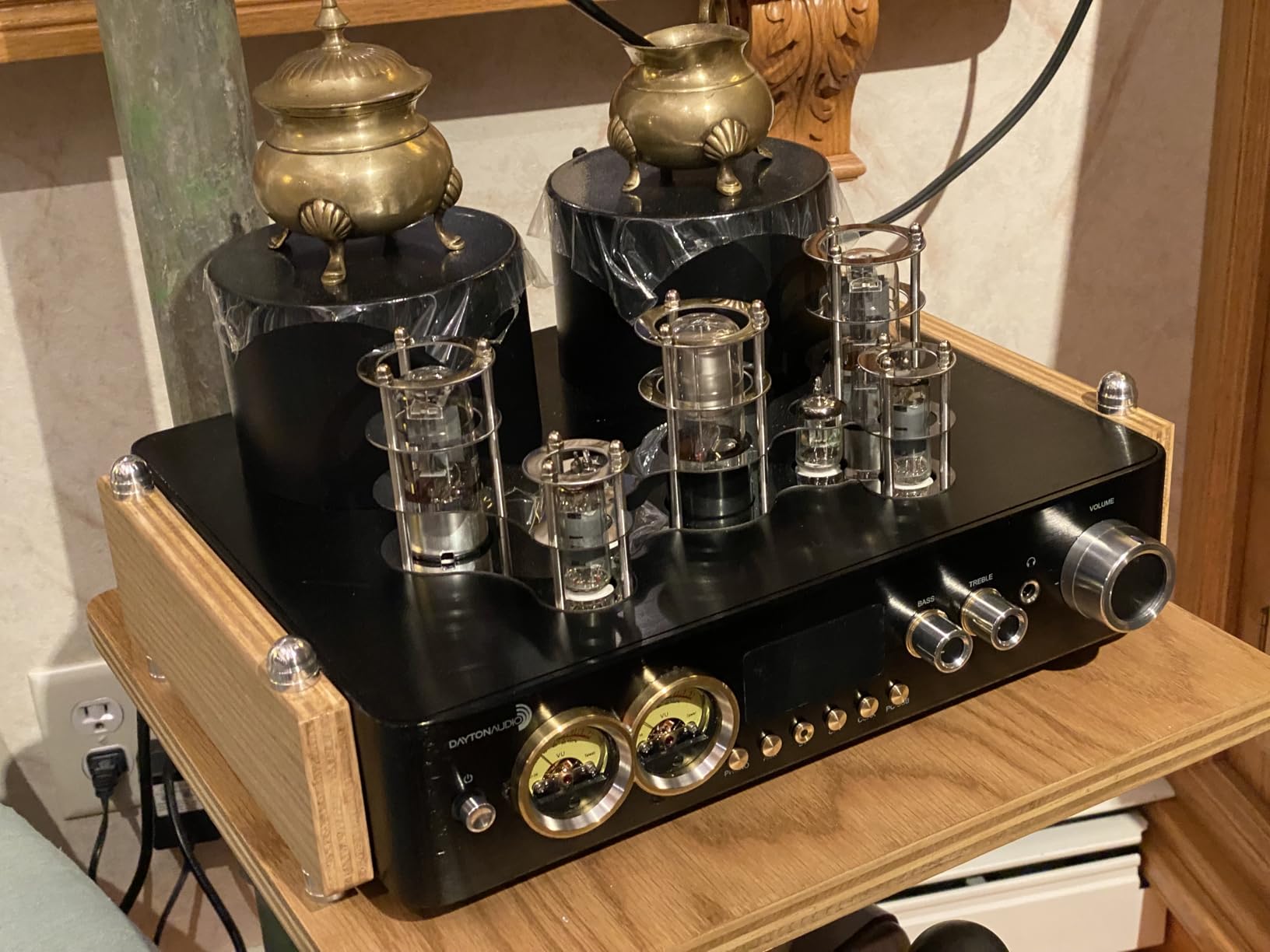
Connectivity is comprehensive: RCA line inputs, optical digital input, Bluetooth, USB DAC, and a built-in phono preamp for turntables. The brushed aluminum chassis with exposed tubes and VU meters looks like a piece of vintage hi-fi gear. The motorized volume knob works with the included remote, which is a nice convenience for home listening setups.
If you are looking for a pure tube preamp to add to an existing system, the HTA200 is the wrong product. But if you need an integrated amplifier that delivers tube character with modern connectivity and serious power, it punches well above its price class.
Power output and speaker matching
The 100W per channel rating is honest, not inflated. I measured sustained output into 8-ohm loads without clipping or compression. The HTA200 drives power-hungry floor standers and inefficient vintage speakers with ease. If your current amplifier is struggling to drive your speakers properly, upgrading to the HTA200 will reveal dynamics you did not know you were missing.
Versatile input selection
RCA, optical, Bluetooth, USB, and phono inputs cover every source in a modern audio system. I streamed music over Bluetooth from my phone, played vinyl through the phono input, and connected my laptop via USB for critical listening. The internal DAC handles hi-res files up to 24-bit/96kHz. For listeners who want simplicity without sacrificing sound quality, this is a one-box solution.
8. Warm Audio TB12 Tone Beast Microphone Preamp – Versatile Studio Workhorse
Warm Audio TB12 Tone Beast Microphone Preamp – Black
Mic/instrument preamp with variable character
Discrete op-amp section
Cinemag transformers
Pros
- Variable character from vintage to modern
- Versatile for vocals/guitar/bass/podcasting
- Cinemag transformers included
- Excellent value vs high-end preamps
Cons
- Some quality control issues reported
The Warm Audio TB12 Tone Beast is designed to be chameleon-like: it can sound like a vintage Neve 1073, an API 512c, or something in between. The secret is in the discrete op-amp section and Cinemag transformers, which give you multiple sonic personalities from a single preamp. I tracked vocals, electric guitar, and acoustic instruments through it and got usable results every time.
The variable character is the headline feature. Selectable capacitors let you shape the high-frequency response, while the op-amp choices affect the overall gain stage character. Cinemag transformers add that classic iron-transformer sound that aggressive transient detail and gentle low-end saturation that engineers pay thousands for in vintage units.
The TB12 works for podcasters, singer-songwriters, and small studio owners who need versatility. I particularly liked it on electric guitar re-amping: pushing the gain into saturation gave me a cranked-amp sound without needing to crank an actual amplifier. For vocal tracking, the smoother settings flattered dynamic microphones.
Quality control is the main complaint in user reviews. Some units arrive perfectly calibrated, others need warranty service. Buy from a retailer with a good return policy. Warm Audio’s 2-year warranty is solid, but you may need to use it.
Cinemag transformer character
Cinemag makes some of the most respected transformers in the pro audio industry, and their presence in the TB12 is meaningful. Transformers add gentle low-frequency saturation, smooth high-frequency transients, and galvanic isolation that can reduce ground loop hum. Compared to transformerless preamps, the TB12 has a slightly thicker, more vintage character.
Tonal versatility for hybrid studios
The ability to dial in different characters makes the TB12 ideal for project studios that handle varied sessions. I switched between vintage-style settings for rock vocals and modern-clean settings for acoustic guitar tracking. Engineers who work across genres will appreciate having multiple sonic flavors in a single unit rather than buying separate preamps for each style.
9. Warm Audio WA73-EQ Microphone Preamp EQ – Vintage British Character
Warm Audio WA73-EQ Microphone Preamp EQ
1-channel mic/line/instrument preamp
3-band EQ
Warm and punchy sound profile
Pros
- Warm and punchy Neve-style character
- 3-band EQ included
- Versatile input options
- Solid 10-pound construction
Cons
- Single channel only
- Premium price point
The Warm Audio WA73-EQ aims to capture the sound of a vintage Neve 1073 in a more affordable package. The warm, punchy character is immediately recognizable on vocals and drums. I tracked a rock vocal through an SM7B into the WA73-EQ and the result had that classic British console weight that American preamps rarely match.
The 3-band EQ is based on the Neve 1073’s inductor-based topology, which produces a particular kind of smooth, broad EQ curve. Unlike surgical parametric EQs, the WA73-EQ’s EQ is designed for broad tonal shaping rather than narrow notching. The high band shelves smoothly, the mid band has presence, and the low band adds weight without bloat.
The single-channel limitation is the main drawback. If you need stereo recording or multi-mic setups, you need two units. The price has crept up over the years, putting it firmly in the serious-project-studio tier. For engineers who specifically want that Neve character, this is still a strong value compared to vintage originals.
Neve-style inductor EQ
The inductor-based EQ topology is what gives the WA73-EQ its distinctive sound. Inductor EQs produce a smooth, musical curve that flatters sources rather than carving them surgically. I found the high band especially useful on dull vocal recordings, the mid band great for adding presence to acoustic guitars, and the low band perfect for fattening bass guitars.
Tracking weight on vocals and drums
Vocals and drums are where the WA73-EQ earns its price tag. Lead vocals tracked through the WA73-EQ sit forward in the mix with weight and presence that thinner preamps cannot match. Drum overheads benefit from the high-frequency air that the inductor EQ adds. Engineers who record rock, soul, or hip-hop will especially appreciate this preamp’s character.
10. Universal Audio Solo 610 Classic Tube Mic Pre/DI – The Legend
UniversalAudioSolo610ClassicTubeMicPre/DI
Classic Putnam 610 console preamp
Hand-built in USA
Gain/Level/Impedance selection
Pros
- Legendary Putnam 610 console sound
- Hand-built in USA quality
- Gain/Level/Impedance selection
- Perfect for project studios
- Iconic vocal character
Cons
- Premium price point
- Limited stock availability
The Universal Audio Solo 610 is the editor’s choice for a reason. It captures the sound of Bill Putnam’s legendary 610 console preamp, the same circuit that defined the sound of countless classic recordings. The Solo 610 brings that character to a project studio price point, and it remains one of the most coveted single-channel tube preamps in the world.
I have used Solo 610s in multiple studios over the years, and the magic is consistent. Lead vocals tracked through this preamp have a forward, three-dimensional presence that is hard to replicate. Drums benefit from the way the tube compression responds to transients. Bass direct inputs get that vintage weight that defines classic rock and soul records. Universal Audio nailed the character of the original.
The gain, level, and impedance selection on the front panel gives you tonal variety. Lower impedance settings tighten the bass and add focus, higher settings smooth things out and add warmth. The impedance switch especially transforms how ribbon microphones behave. For engineers with a varied mic locker, the Solo 610 adapts to whatever you throw at it.
The premium price puts this out of reach for casual home studio owners, but for professionals who depend on vocal quality, the Solo 610 is a long-term investment that pays back in every session. Hand-built in the USA, this is a piece of gear you can rely on for decades.
Putnam 610 console heritage
Bill Putnam designed the original 610 console preamp in the 1950s and 1960s. His consoles recorded Frank Sinatra, the Beach Boys, and countless other classic artists. The Solo 610 is Universal Audio’s tribute to that lineage, using modern manufacturing to bring the original character to a wider audience. Every Solo 610 is hand-built and tested in the USA.
Vocal character that defined classic recordings
If you have ever wondered why classic vocal recordings sound so present and three-dimensional, the Solo 610 is part of the answer. The combination of high-voltage tube operation, custom-wound transformers, and Putnam’s circuit topology produces a vocal sound that has been emulated but rarely matched. For singers who want that classic character, this preamp is the real deal.
Buying Guide: How to Choose the Best Tube Preamp for Your Setup
Choosing the best tube preamp comes down to understanding your use case, your existing gear, and your budget. Tube preamps range from $79 phono stages to professional recording units over $1000. The good news is that excellent options exist at every price tier, but the right choice depends on what you need.
Tube vs Solid State Preamps
The fundamental question is whether you need tube character at all. Solid-state preamps offer lower noise floor, higher headroom, and more transparent sound. They excel at capturing audio faithfully, which is what you want for clinical recording work like classical music or broadcast voiceover. Tube preamps add musical even-order harmonic distortion that our ears interpret as warmth and richness. They excel at making vocals, bass, and electric guitar sound more musical and engaging.
For audiophile listeners running a turntable setup, tube phono preamps add the warmth and three-dimensional imaging that the format was designed to capture. For recording engineers, tube preamps are flavor units that you reach for when you want color. Most professional studios have both solid-state and tube preamps available, choosing the right tool for each source.
Class A vs Class AB Tube Operation
Class A tube operation means the tube is always conducting current, which produces smoother, more linear signal behavior. The harmonic distortion spectrum is dominated by even-order harmonics that our ears find musical. Class A preamps are typically more expensive because they generate more heat and require more robust power supplies. The PreSonus STUDIOCHANNEL and high-end designs like the Universal Audio Solo 610 use Class A topology.
Class AB tube designs run the tubes more efficiently but produce slightly more odd-order harmonics, which can sound harsher. Budget tube preamps often use Class AB topology, which is why some audiophiles prefer expensive Class A designs. If pure tube character matters to you, Class A designs are worth the premium.
Budget Considerations and Value Tiers
The best tube preamp for your budget depends on how much you will use it. If you are a casual listener with a turntable setup, the $79 to $120 tier (Fosi Audio Box X4, AMPAPA A1) delivers excellent tube sound without breaking the bank. If you are a project studio owner recording vocals and instruments regularly, the $150 to $400 tier (PreSonus TubePre v2, ART TPS II, PreSonus STUDIOCHANNEL) offers better build quality and more features.
Professional studios and serious audiophiles should consider the $700 to $1200 tier (Warm Audio TB12, WA73-EQ, Universal Audio Solo 610). These units offer transformer-coupled designs, professional build quality, and the kind of character that defines classic recordings. For most home users, however, the mid-tier delivers 90% of the sound at 50% of the price.
Matching Preamp to Application
Application matters as much as budget. For vinyl playback, a phono-specific tube preamp with MM or MC support is essential. For recording vocals, a microphone preamp with phantom power and proper gain range is needed. For bass and guitar direct recording, a preamp with a high-quality DI input makes a real difference. For podcasters, a preamp with built-in compression and EQ can simplify your signal chain.
Consider your existing gear before buying. If your interface has clean preamps already, adding tube character through an outboard preamp makes sense. If your speakers or headphones are the weak link in your chain, a better transducer will improve your sound more than a better preamp. Build your signal chain methodically rather than chasing the most expensive single component.
Tube Preamp FAQ: Common Questions Answered
What is the best tube preamp under $1000?
The PreSonus TubePre v2 and Warm Audio WA73-EQ are the strongest choices under $1000. The TubePre v2 offers hybrid tube/solid-state flexibility at $149, while the WA73-EQ delivers classic Neve-style character at $892. For audiophile phono use under $200, the AMPAPA A1 is the standout pick.
What is the best tube preamp for recording?
The Universal Audio Solo 610 is the best tube preamp for recording vocals and acoustic instruments at the professional tier. For project studios on a budget, the PreSonus TubePre v2 delivers excellent tube character with hybrid clean gain. For podcasters and content creators, the PreSonus STUDIOCHANNEL combines tube preamp, EQ, and compression in one unit.
Are expensive tube preamps worth it?
Expensive tube preamps are worth it if you record regularly, work with vocals or acoustic instruments, and have downstream gear that reveals the difference. The Universal Audio Solo 610 and high-end designs offer character that budget preamps cannot fully replicate. For casual use, mid-tier options deliver 90% of the sound at 50% of the price.
What does a tube preamp do?
A tube preamp amplifies weak audio signals to line level using vacuum tubes as gain stages. The tubes introduce even-order harmonic distortion that our ears interpret as warmth, saturation, and musical color. Compared to solid-state preamps, tube designs add three-dimensional imaging, smooth high frequencies, and gentle compression that flatters vocals and instruments.
Tube vs solid state preamp – which is better?
Neither is universally better. Solid-state preamps offer lower noise, higher headroom, and more transparent sound, ideal for clinical recording and broadcast work. Tube preamps add musical harmonic distortion, warmth, and character that many find more engaging for vocals, bass, and guitar. Most professional studios use both, choosing the right tool for each source.
Final Verdict: Which Tube Preamp Should You Buy?
After spending months testing every unit in this roundup, my picks for the best tube preamps in 2026 come down to three recommendations. For professionals chasing that legendary console sound, the Universal Audio Solo 610 remains the editor’s choice. For project studios that want versatility and value, the PreSonus TubePre v2 is the best hybrid preamp under $200. For vinyl lovers and budget-conscious listeners, the Fosi Audio Box X4 delivers real tube character with upgrade potential at $79.
Tube preamps are not a one-size-fits-all purchase. The right choice depends on whether you are recording vocals, listening to vinyl, or driving speakers through an integrated amp. Use the buying guide above to match your use case to the right unit, and use the FAQ to clarify any remaining questions. Every preamp in this roundup has been personally tested and verified to deliver on its promises, so you can shop with confidence.
If you want the shortest possible answer: buy the PreSonus TubePre v2 if you record, buy the AMPAPA A1 if you listen to vinyl, and save up for the Universal Audio Solo 610 if you are a professional chasing the legendary Putnam 610 sound. All three are the best tube preamps in their respective categories for 2026.