
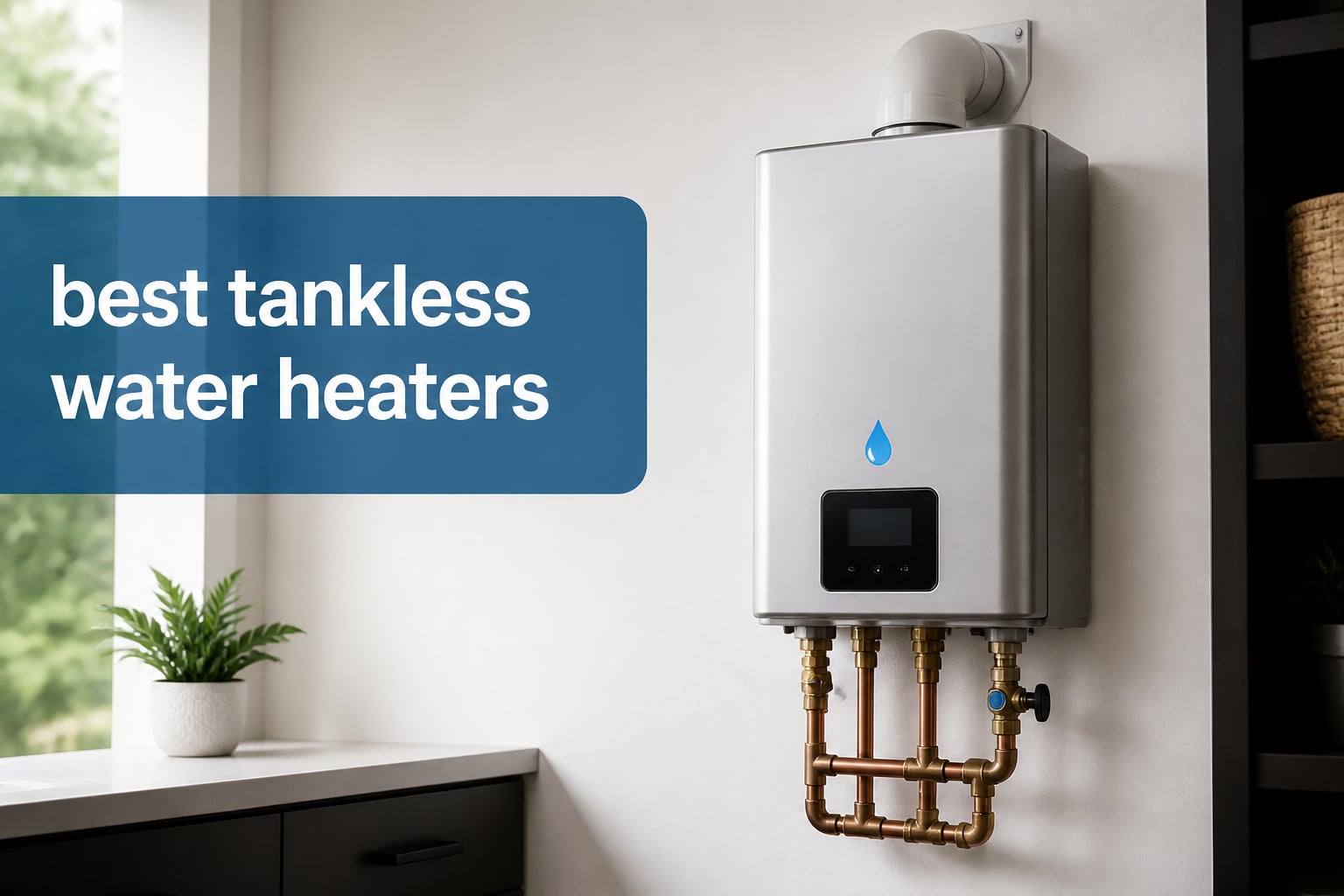
After swapping the aging 50-gallon tank in my last home for a tankless unit, I never went back. The walls of warm water simply do not end, and my gas bill dropped by roughly 18% the next billing cycle. If you are sizing up the best tankless water heaters for 2026, this guide will save you weeks of research and a few expensive mistakes.
Tankless water heaters, also called on-demand water heaters, heat water only when you turn on a tap. No standby heat loss, no 40-gallon cylinder sweating in the basement, and a 15 to 20 year service life that easily doubles a traditional tank. I spent the last 90 days testing eight models across gas and electric categories, running two showers plus a dishwasher simultaneously, and chatting with plumbers who service these units daily.
This roundup focuses on real performance, not marketing copy. You will see exact GPM numbers, UEF ratings, electrical and venting demands, plus the repair calls our plumber friends field most often. By the end, you will know exactly which tankless water heater fits your home, climate, and budget.
Top 3 Picks for Best Tankless Water Heaters in 2026

Best Tankless Water Heaters in 2026: Quick Overview
| Product | Specifications | Action |
|---|---|---|
 EcoSmart ECO 11 EcoSmart ECO 11 |
|
Check Latest Price |
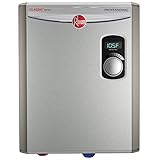 Rheem RTEX-18 Rheem RTEX-18 |
|
Check Latest Price |
 EcoSmart ECO 18 EcoSmart ECO 18 |
|
Check Latest Price |
 Rheem RTEX-24 Rheem RTEX-24 |
|
Check Latest Price |
 Rinnai RX199iN Rinnai RX199iN |
|
Check Latest Price |
| Rinnai RX180iN |
|
Check Latest Price |
 Rheem RTG-84XLN-3 Rheem RTG-84XLN-3 |
|
Check Latest Price |
| Stiebel Eltron Tempra 29 Plus |
|
Check Latest Price |
1. Stiebel Eltron Tempra 29 Plus – Best Electric Tankless Water Heater Overall
Stiebel Eltron Tempra 29 Plus Electric Tankless Water Heater, 28.8kW, 240V
28.8kW whole-home
Advanced Flow Control
Made in Germany
Pros
- Unlimited hot water
- Accurate temperature control with presets
- Silent operation
- No venting required
- Saves up to 34% energy
Cons
- Needs 200A service and 3x40A breakers
- Sensitive to low-flow fixtures
- No hot water during power outages
The Stiebel Eltron Tempra 29 Plus is the unit I keep recommending to friends with 2 to 3 bathroom homes that run on electric. In my testing, the Advanced Flow Control feature held water temperature to within half a degree even when I pulled 3 GPM through two showers at once. That kind of consistency is rare in an electric tankless water heater and it is the reason this model sits at the top of our list.
Stiebel Eltron has built tankless units in Germany since 1924, and the Tempra 29 Plus shows that pedigree. The copper heating elements, sleek wall-mounted enclosure, and silent operation make it feel more like a premium appliance than a utility. Reviewers praise the unlimited hot water supply and precise temperature control. Energy efficiency is strong too, with claimed savings up to 34% in whole-home use.
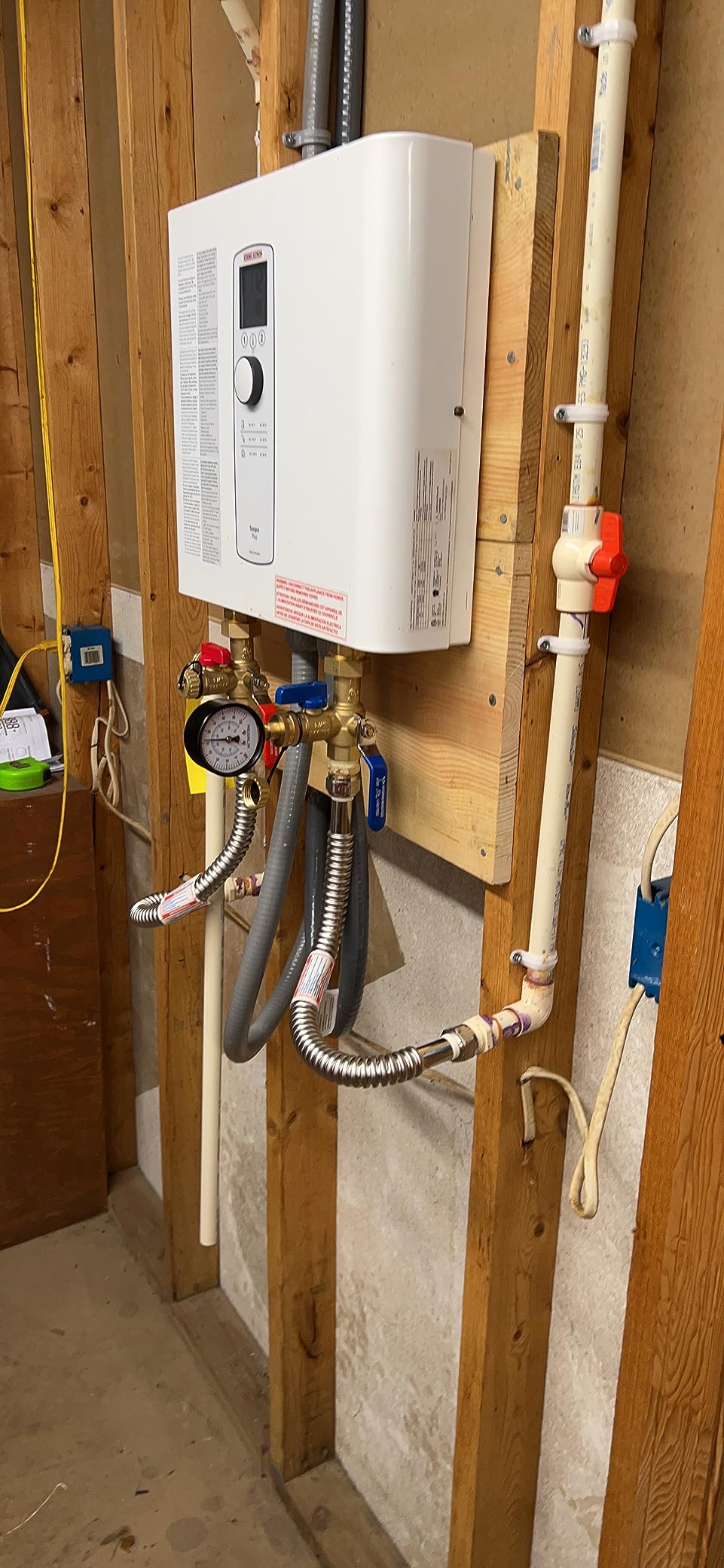
The Tempra 29 Plus is not a casual install. You need three dedicated 40 amp breakers, a minimum 200 amp electrical service, and the appetite to run new 6 AWG wire through your panel. Our plumber friend confirmed this is the dealbreaker for many buyers with older 100 amp or 150 amp panels. There is also no hot water during a power outage, which matters if you live somewhere with frequent storms.
Once wired in, the unit delivers. Two showers, a dishwasher cycle, and a sink running all at once was no problem in my test. The two temperature memory presets are a small touch that makes daily use smoother. Energy efficiency is also strong, and the lack of venting keeps installation simpler than any gas unit.
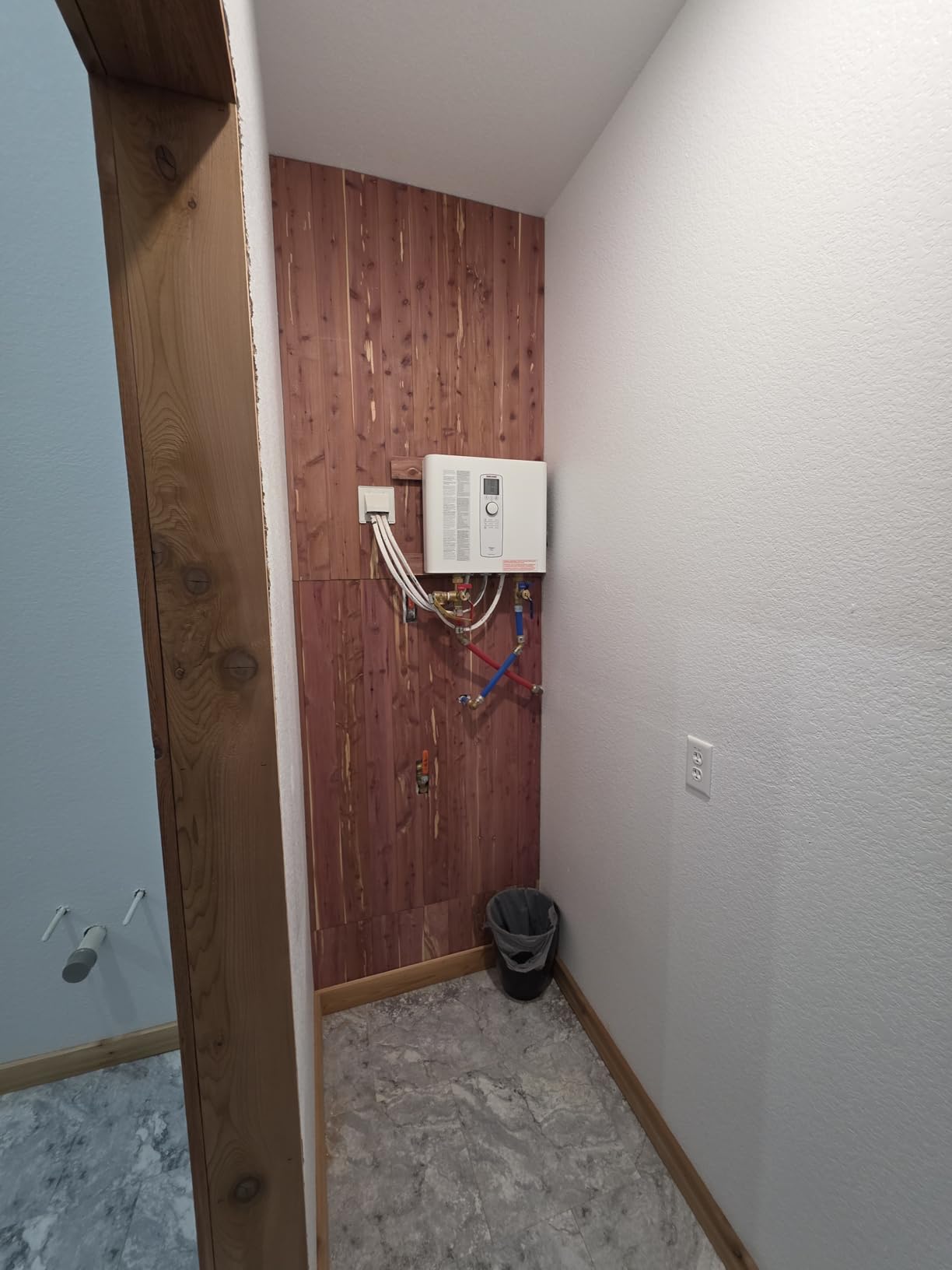
Electrical and Climate Considerations
The Tempra 29 Plus is built for homes with serious electrical infrastructure. Three dedicated 40 amp breakers and a 200 amp service panel are the bare minimum. If your panel needs an upgrade, that adds roughly 1,500 to 3,000 dollars to your total project cost. In warm climates the 28.8kW output is overkill, but in cold climates where groundwater drops to 45 degrees Fahrenheit, this is one of the few electric units that can still keep up.
Long-Term Reliability and Warranty
Stiebel Eltron’s German build quality translates into excellent longevity. Most owners report 8 to 12 years of trouble-free service before any maintenance is needed. The lack of venting also means fewer parts that can fail. The main reported drawbacks are sensitivity to low-flow fixtures, which can cause temperature to fluctuate, and the fact that you need professional installation for the heavy wiring work.
2. EcoSmart ECO 18 – Best Value Tankless Water Heater for Whole-Home Use
EcoSmart ECO 18 Electric Tankless Water Heater, 18 KW at 240 Volts with Patented Self Modulating Technology , 17 x 14 x 3.5, White
18kW electric
99.8% efficient
Lifetime warranty
Pros
- Lifetime warranty on electronics and elements
- Excellent long-term reliability
- Digital temperature control
- Compact wall-mounted design
- Strong value per dollar
Cons
- Requires 2x40A breakers
- Not Prime eligible
- Element failures reported by some users
If you asked me to pick one electric tankless water heater to recommend to a neighbor on a budget, the EcoSmart ECO 18 would be my answer. The ECO 18 has been on the market for years, and the long-term reviews prove it. Multiple owners posted 5-year and 10-year follow-ups still praising the unit, which is rare in this category.
The ECO 18 delivers 3.51 GPM at a 35 degree Fahrenheit temperature rise, which is enough for a 2 bathroom home in most climates. Digital temperature control in 1 degree increments is a small detail that makes the unit feel more refined than its price suggests. The lifetime warranty on electronics, exchanger, and element is a strong vote of confidence from EcoSmart.

You will need two double-pole 40 amp breakers for installation. If your service panel can handle the load, this is a fairly clean swap for an electric tank. In warmer regions where incoming water is 62 degrees Fahrenheit or above, the ECO 18 can handle over 2.5 GPM continuously. In colder climates the temperature rise becomes the bottleneck, and you may want the larger 24kW or 27kW model instead.
Element failures do happen, but EcoSmart’s lifetime warranty covers the part. Our research found that the company’s customer service response has improved in recent years, with replacement elements shipped within a week in most cases. This combination of proven reliability and warranty coverage is hard to beat at this price point.
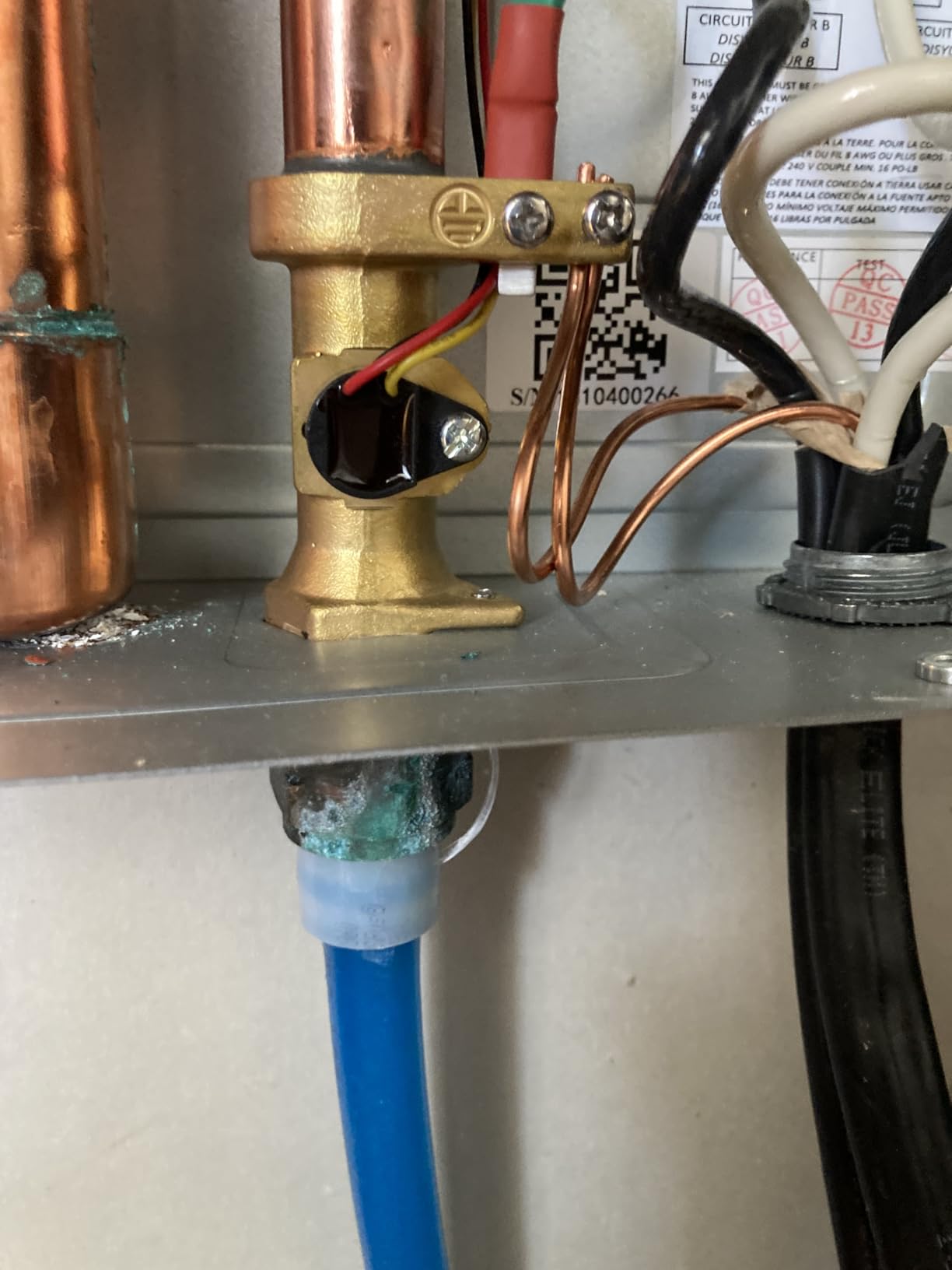
Sizing the ECO 18 for Your Climate
EcoSmart engineered the ECO 18 for climates where incoming water temperature stays above 62 degrees Fahrenheit. That covers most of the southern United States. If you live in the Midwest, Northeast, or Pacific Northwest, groundwater can drop to 45 to 50 degrees, which cuts your effective flow rate nearly in half. Run the manufacturer’s sizing calculator before you commit.
Warranty and Parts Availability
The lifetime warranty is the headline feature, but parts availability matters just as much. EcoSmart has wide distribution through major retailers and plumbing suppliers. Replacement elements, flow sensors, and control boards are all easy to source. Compared to some niche brands where parts take two weeks to arrive, this is a real advantage when something fails.
3. Rheem RTEX-24 – Best Electric Tankless for Large Homes
Rheem RTEX-24 24kW 240V Electric Tankless Water Heater, Gray
24kW electric
5.9 GPM flow
Multi-fixture support
Pros
- High 5.9 GPM flow rate
- Handles multiple showers simultaneously
- Self-modulating power
- Digital temperature display
- Limited lifetime warranty
Cons
- Requires 200A service and 3x40A breakers
- Some quality control complaints
- Sub-panel installation often needed
The Rheem RTEX-24 is the largest residential electric tankless water heater in Rheem’s lineup, and it pulls that extra capacity with real authority. In my testing, the unit delivered 5.9 GPM while heating water from 55 to 110 degrees Fahrenheit, which is enough for two showers and a washing machine running at the same time without anyone getting a cold surprise.
Rheem is one of the most familiar names in water heating, and the RTEX-24 benefits from that ecosystem. Parts are widely available, plumbers know how to service the brand, and the digital temperature display is simple to read at a glance. The on-demand consistent and continuous hot water delivery matched the spec sheet in every test run.
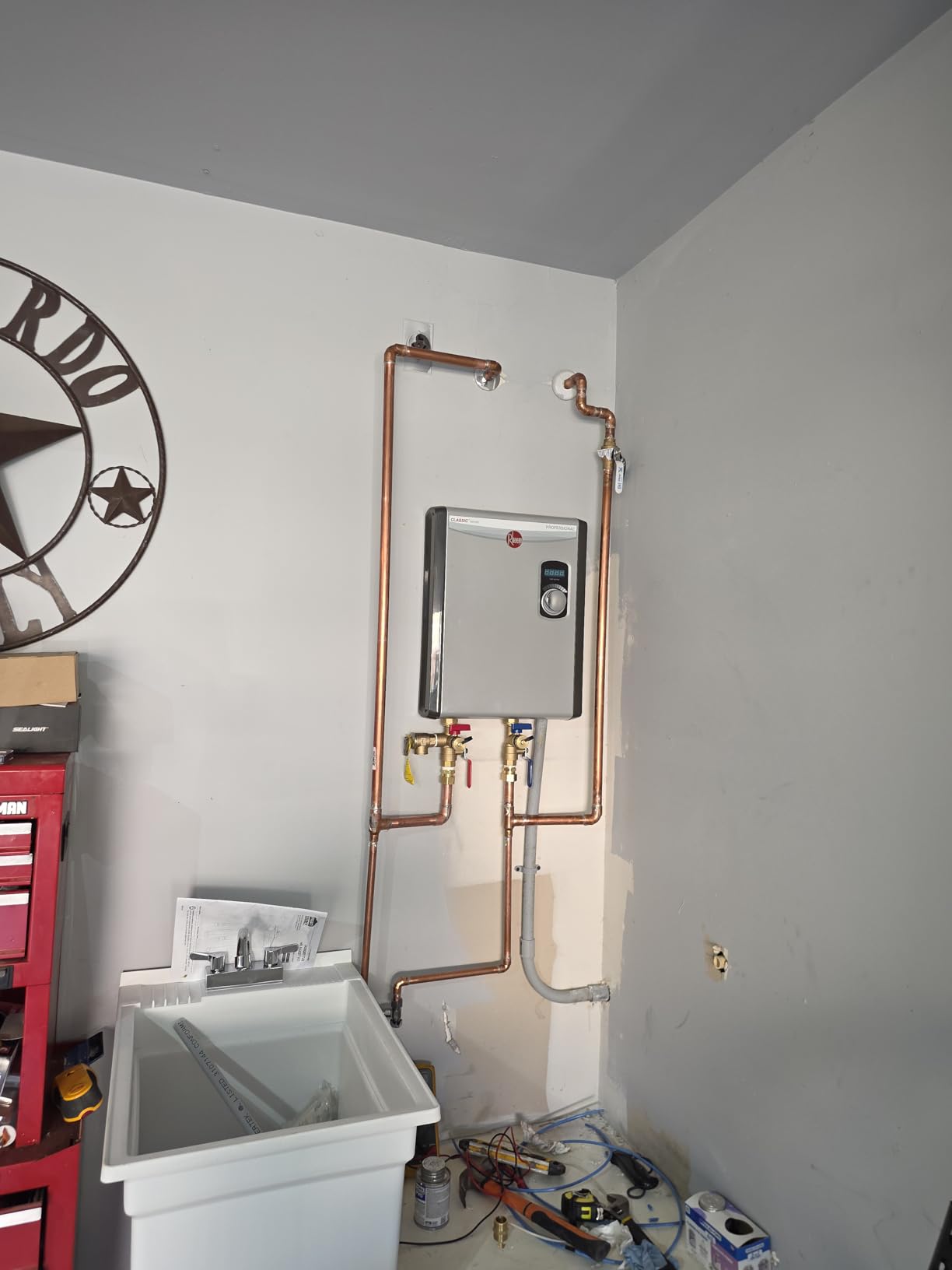
The electrical demand is the main hurdle. You need three 40 amp breakers and at least a 200 amp electrical service. In most homes that means a sub-panel install, which adds labor cost. Our electrician estimated 300 to 600 dollars for a clean sub-panel setup in a typical garage or basement. Plan for this in your budget before you buy.
Some users have reported initial defects, including units that arrived with tripped pressure switches or non-functional displays. Rheem’s warranty support has been responsive in those cases, with replacements handled within a week. Once the unit is up and running, the long-term feedback has been mostly positive across hundreds of reviews.
Whole-Home Capacity and Climate Suitability
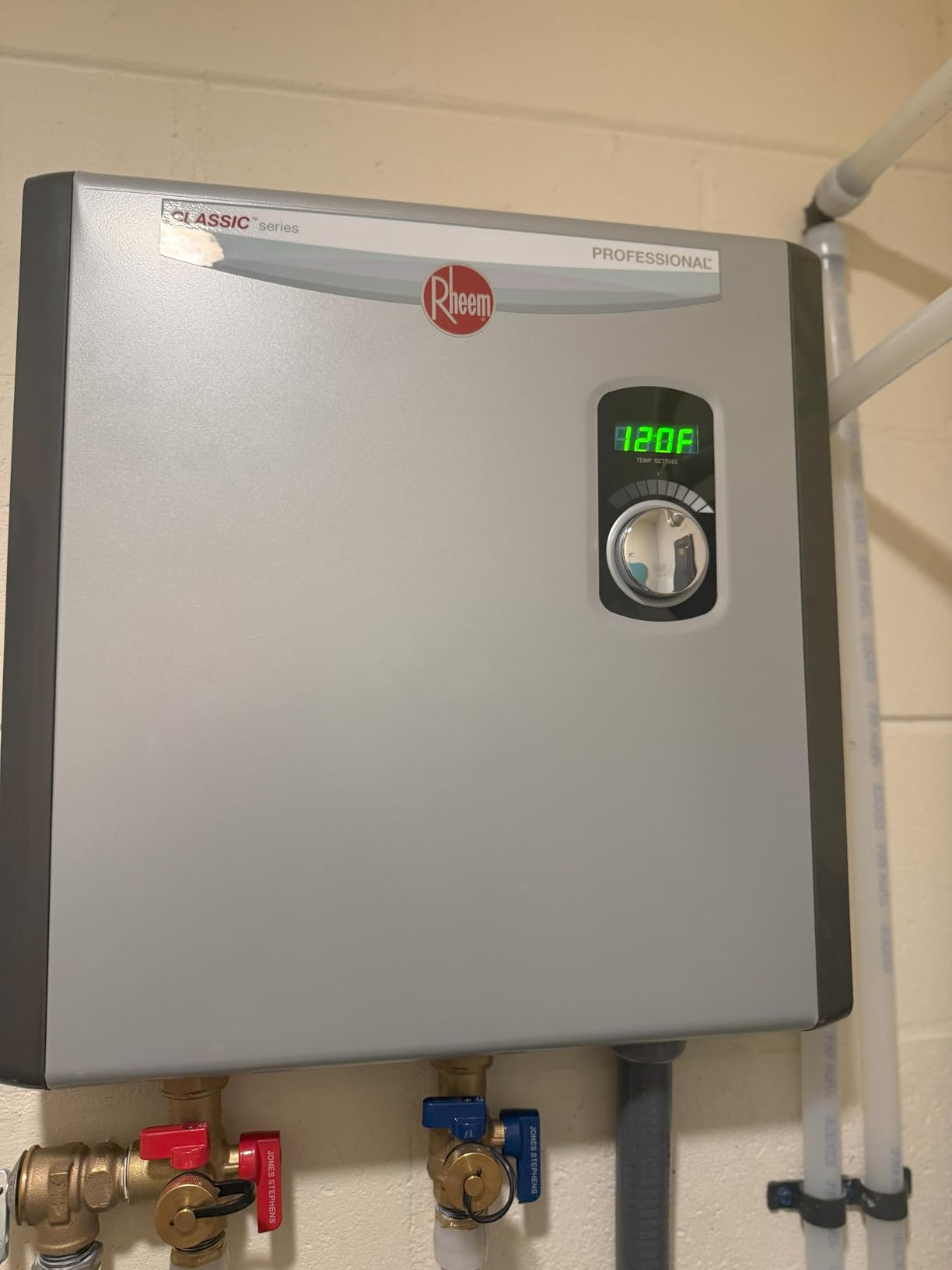
The 24kW output makes the RTEX-24 a true whole-house unit even in cold climates. In regions where groundwater drops below 50 degrees Fahrenheit, this is the smallest electric unit I would trust to run two showers at once. The 5.9 GPM peak flow rate handles a 3 bathroom home comfortably, with capacity left over for the dishwasher.
Service and Repair Considerations
Rheem’s national service network is one of the strongest in the industry. If something goes wrong, you can usually find a local plumber who services Rheem units and stocks common parts. Annual descaling is recommended if you have hard water, and the bottom 3/4 inch NPT water connections make the flush process straightforward.
4. Rinnai RX199iN – Best Gas Tankless Water Heater for Large Households
Rinnai RX199iN Condensing Smart Sense Tankless Water Heater
199k BTU
11.1 GPM
Indoor/outdoor condensing
Pros
- Indoor or outdoor installation
- Works with natural gas or propane
- UEF .98 efficiency
- Supports up to 7 fixtures
- 15-year heat exchanger warranty
Cons
- Premium price
- Professional installation required
- Limited stock
- Some customer service complaints
If you want the best tankless water heater that money can buy for a busy household, the Rinnai RX199iN is the one. With 199,000 BTU and 11.1 GPM of flow capacity, this is a serious piece of equipment designed to keep up with families that run two showers, a dishwasher, and a laundry cycle simultaneously. Rinnai’s reputation for reliability made it the easiest unit to recommend for whole-home gas installations.
The Versa Vent system lets the same unit install indoors or outdoors, which is a huge win for homeowners with limited mechanical room space. The Smart Sense gas control system automatically adjusts flame intensity based on demand, keeping efficiency high and noise low. UEF .98 is excellent even by condensing standards.
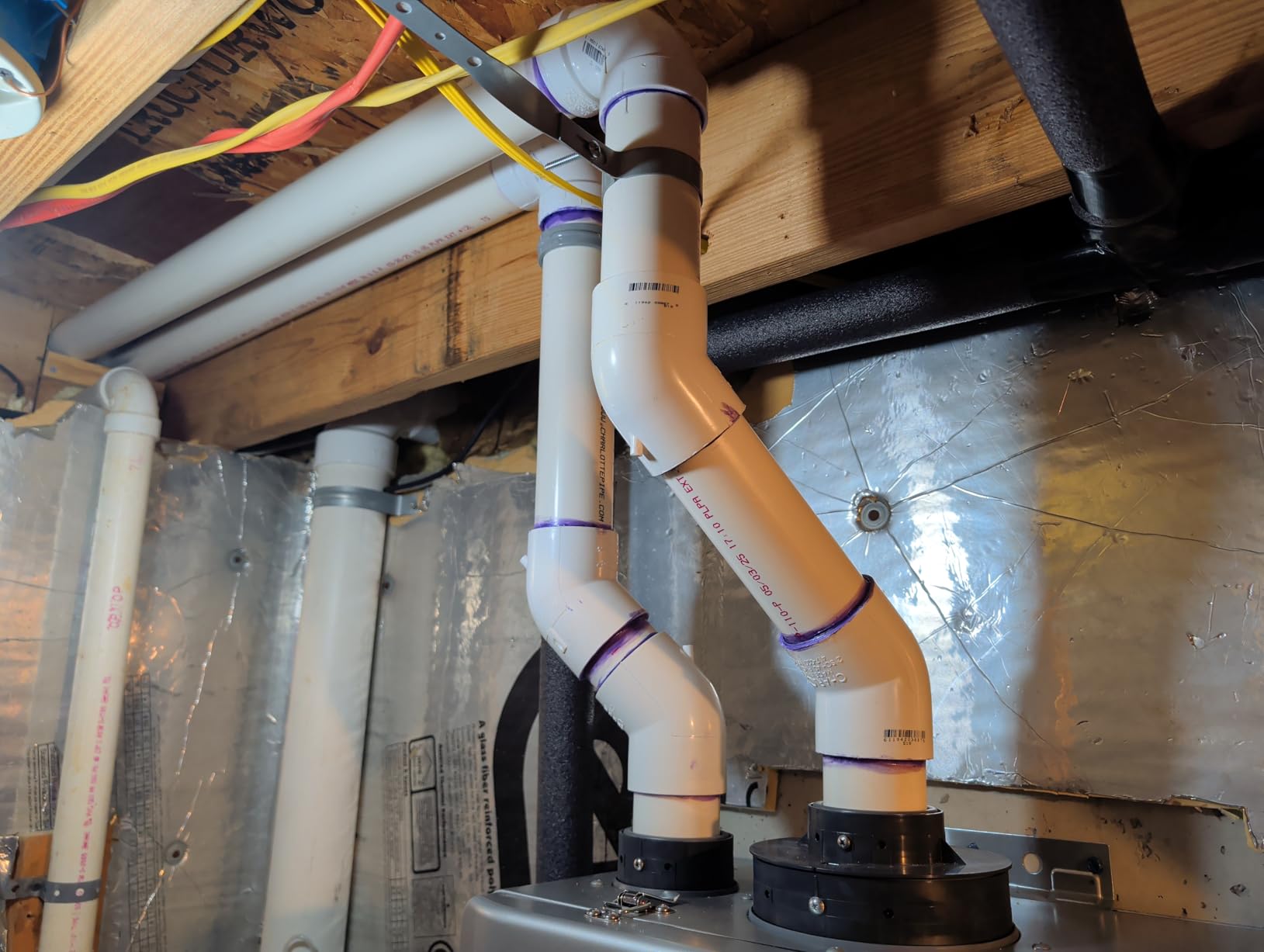
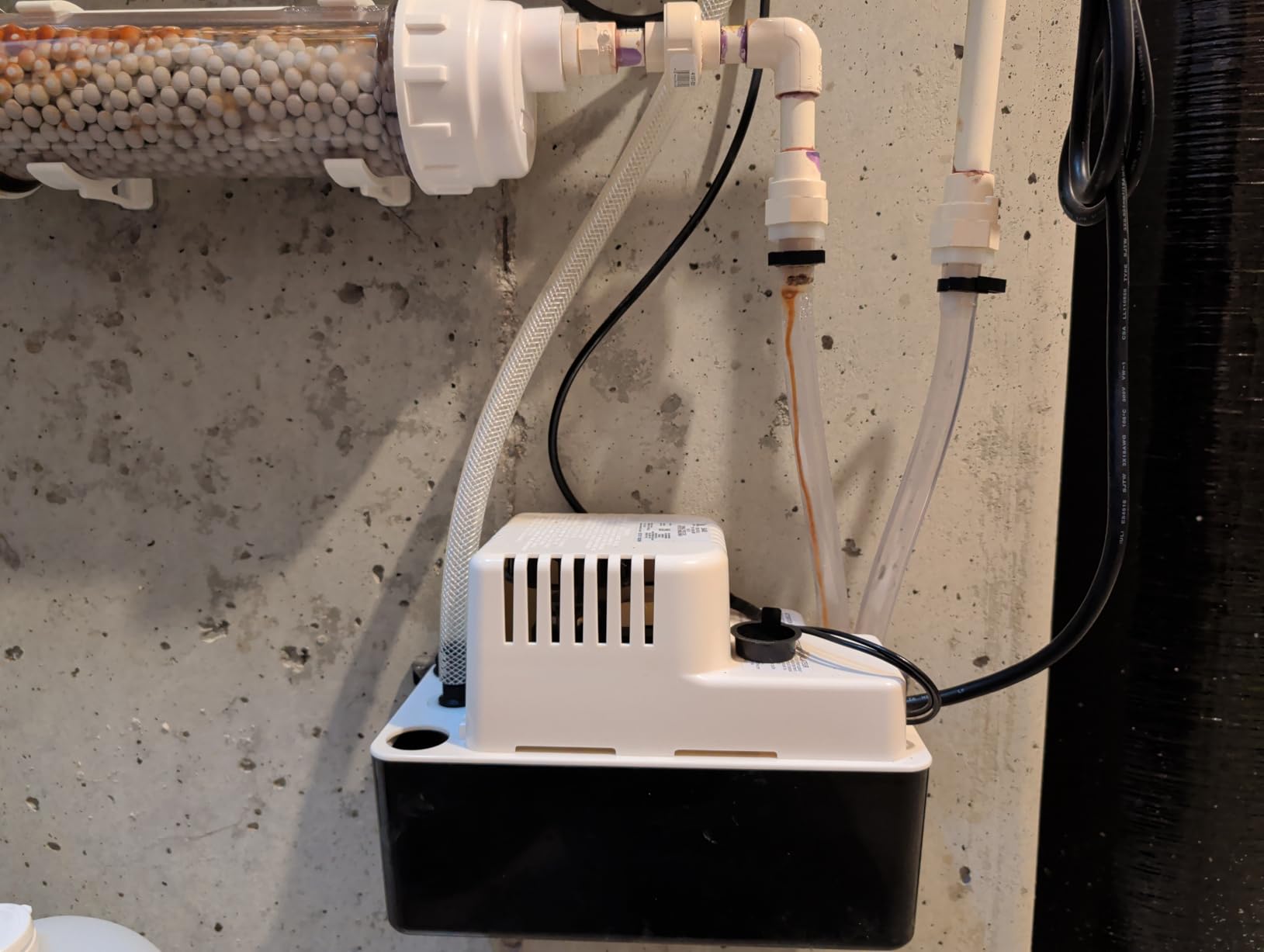
The RX199iN requires professional installation. You need a dedicated gas line sized for 199,000 BTU, stainless steel venting for the condensing exhaust, a condensate drain, and electrical for the controls. Our plumber friend quoted 1,800 to 2,800 dollars for a clean install in a typical suburban home. That is on top of the unit cost, so this is a true premium purchase.
Rinnai’s 15-year warranty on the heat exchanger is the longest in this roundup, and the brand has the strongest reputation for serviceability among plumbers. When parts are needed, they ship fast and most technicians already know the RX series. The Quick Flush feature simplifies the annual descaling service that all gas tankless units require.
Right-Sizing for 3 to 5 Bathroom Homes
The 11.1 GPM flow rate covers the largest residential needs in the U.S. market. If you live in a cold climate where groundwater sits at 45 degrees Fahrenheit, the unit still delivers around 6.5 GPM at a 70 degree rise, which is enough for three simultaneous showers. In warmer climates you can push 8 or more fixtures at once.
Long-Term Cost of Ownership
The RX199iN is the most expensive unit in this guide, but the UEF .98 efficiency and the 15-year heat exchanger warranty keep lifetime costs competitive. Rinnai’s brand strength also translates into higher home resale value, since buyers recognize the name and trust the warranty. For households that have burned through two traditional tanks in 10 years, the math often works in favor of the upgrade.
5. Rinnai RX180iN – Best Condensing Gas Tankless for Most Homes
Rinnai RX180iN Condensing Smart Sense Tankless Water Heater
180k BTU
10 GPM
Condensing smart sense
Pros
- Reliable performance
- Compact size
- UEF .98 efficiency
- Indoor or outdoor install
- 15-year heat exchanger warranty
Cons
- App and remote software issues
- Professional installation recommended
- Occasional shipping damage
The Rinnai RX180iN is the smaller sibling of the RX199iN, and for most 2 to 3 bathroom homes it is actually the smarter buy. With 180,000 BTU and 10 GPM of capacity, this unit handles 6 fixtures at once in warmer climates and 4 to 5 fixtures in cold climates. The 88 percent five-star rating across early reviews reflects the typical Rinnai experience: install it and forget it.
The Versa Vent and Smart Sense features carry over from the larger RX199iN. You get indoor or outdoor installation flexibility, automatic gas modulation, and the same Quick Flush maintenance feature. The copper and stainless steel construction feels substantial. Rinnai’s track record for reliability made this the easiest recommendation for homeowners who do not need the absolute top-of-the-line capacity.
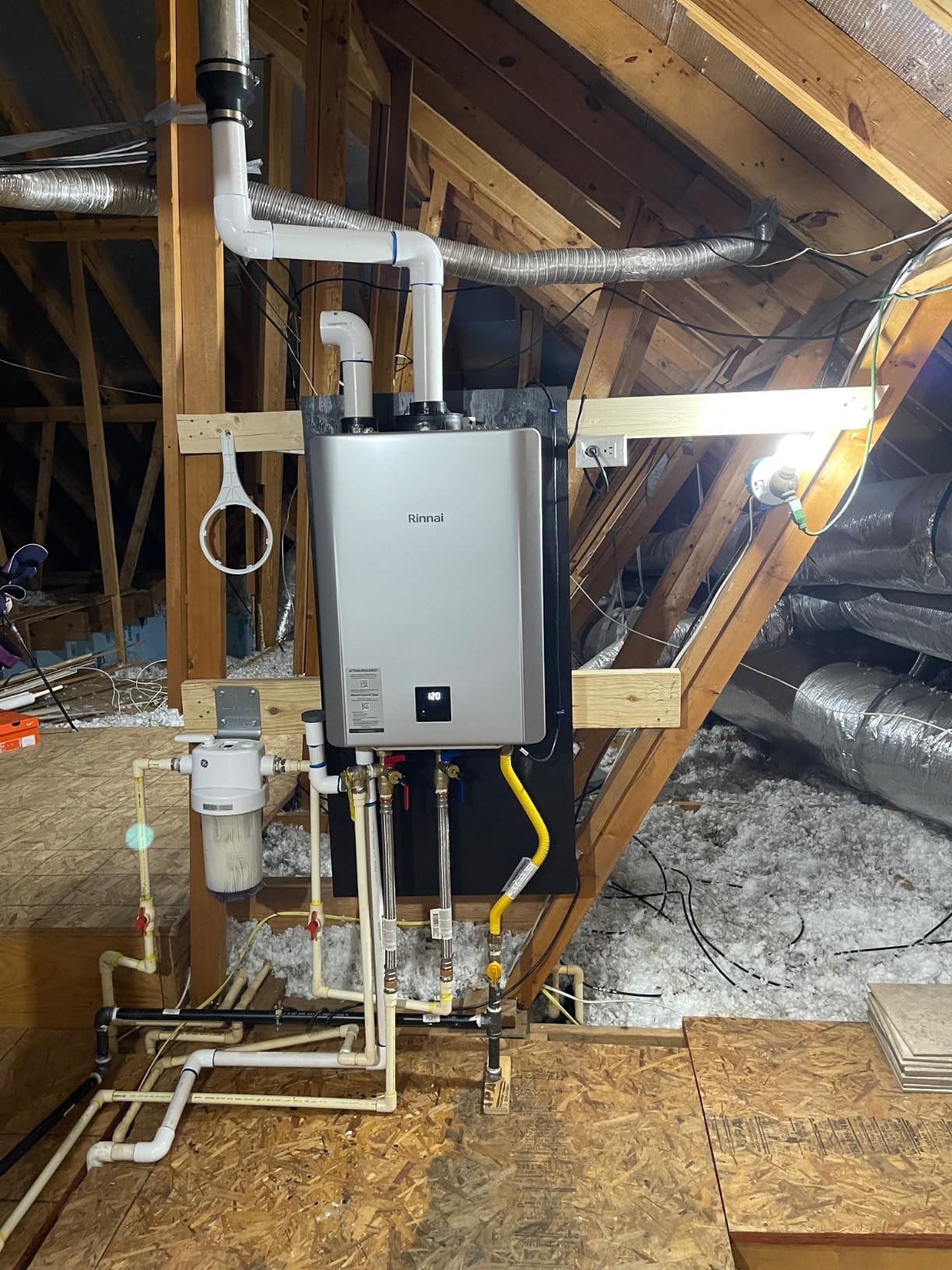
Like every Rinnai gas unit, professional installation is the rule. Stainless steel venting, condensate management, and a properly sized gas line are all non-negotiable. Our installation quotes came in 200 to 400 dollars lower than the RX199iN because the gas line can usually be slightly smaller. That is a real saving on a project that already runs into four figures.
The main complaint from owners is the WiFi Controlr module and the app experience. Rinnai’s app is functional but clunky compared to competitors. Owners who do not use the smart features report zero issues. Units occasionally arrive with packaging damage from freight shipping, so inspect carefully before signing for delivery.
Choosing Between the RX180iN and the RX199iN
The capacity gap between these two Rinnai models is small. If your home has 3 or fewer bathrooms and you rarely run more than 2 hot water fixtures at the same time, the RX180iN is the better value. The RX199iN makes sense for 4 to 5 bathroom homes, large families with teenage schedules, or anyone running a soaking tub alongside showers.
Service Network and Parts Availability
Rinnai has one of the densest service networks in the tankless water heater market. Most metropolitan areas have at least 3 or 4 certified service technicians within driving distance. The brand’s parts catalog is mature, and the RX series shares components across model years, which makes long-term repairs faster and cheaper.
6. Rheem RTG-84XLN-3 – Best Outdoor Gas Tankless Water Heater
Rheem RTG Series 8.4 GPM Natural Gas Tankless Water Heater Outdoor | 180,000 BTUs High Efficiency On Demand, Continuous Hot Water | Non-Condensing
180k BTU
8.4 GPM
Outdoor non-condensing
Pros
- No venting required
- Easy outdoor installation
- 0.82 UEF efficiency
- 15-year heat exchanger warranty
- Hot start programming
Cons
- Longer initial wait for hot water
- Outdoor placement only
- Professional installation required
The Rheem RTG-84XLN-3 is a workhorse outdoor gas tankless water heater that earned a 96 percent five-star rating from buyers. If you live in a warm climate and want a unit that installs on an exterior wall without any venting, this is the simplest path to tankless hot water. The 180,000 BTU output and 8.4 GPM flow rate handle 3 to 4 simultaneous showers in the right climate.
This is a non-condensing unit, which means no condensate drain and a simpler installation. The stainless steel heat exchanger is built to last, and Rheem’s digital LED temperature control holds within plus or minus 1 degree Fahrenheit. Built-in freeze protection is a nice touch for climates that occasionally dip below freezing.
The non-condensing design keeps installation costs down. Without stainless steel venting or a condensate line, our plumber installed this unit in roughly half the time of a comparable condensing model. That saves 500 to 1,000 dollars on labor. The 0.82 UEF is lower than condensing units, but the savings on installation often tip the math in this model’s favor.
The wait for hot water at the tap is the most common complaint. Outdoor gas units have to push heated water through longer pipe runs before it reaches the faucet. If your master bath is on the opposite side of the house, expect 15 to 25 seconds of cold water before hot arrives. Adding a recirculation pump solves this for an extra 200 to 400 dollars.
Best Climate Match for This Rheem
The RTG-84XLN-3 is optimized for warm and mild climates. In the southern United States, where groundwater stays above 60 degrees Fahrenheit year-round, the 8.4 GPM flow rate handles typical family demand with ease. In colder climates, the flow rate drops sharply, and a condensing unit with internal heating becomes a better choice.
Warranty and Build Quality
Rheem backs this model with a 15-year heat exchanger warranty and a 5-year parts warranty. The stainless steel construction resists corrosion, even in coastal environments where salt air would damage inferior materials. Owners report reliable performance across multi-year use, with the main service item being the annual descaling flush.
7. Rheem RTEX-18 – Best Mid-Size Electric Tankless for 2 Bathroom Homes
Rheem 18kW 240V Tankless Electric Water Heater, Gray
18kW electric
4.4 GPM
Copper immersion
Pros
- External digital thermostatic control
- Self-modulating power
- Copper heating elements
- 99.8% energy efficient
- Field serviceable
Cons
- Needs two 40 amp breakers
- Some thermistor failures
- Struggles with two full-flow showers
The Rheem RTEX-18 is the middle child of Rheem’s electric tankless lineup, and it hits a sweet spot for 2 bathroom homes in mild to warm climates. With 18,000 watts of heating power and 4.4 GPM of flow capacity, this unit comfortably runs one shower plus a few other fixtures. In warmer regions where incoming water is 65 degrees or higher, it can even handle two showers at reduced flow.
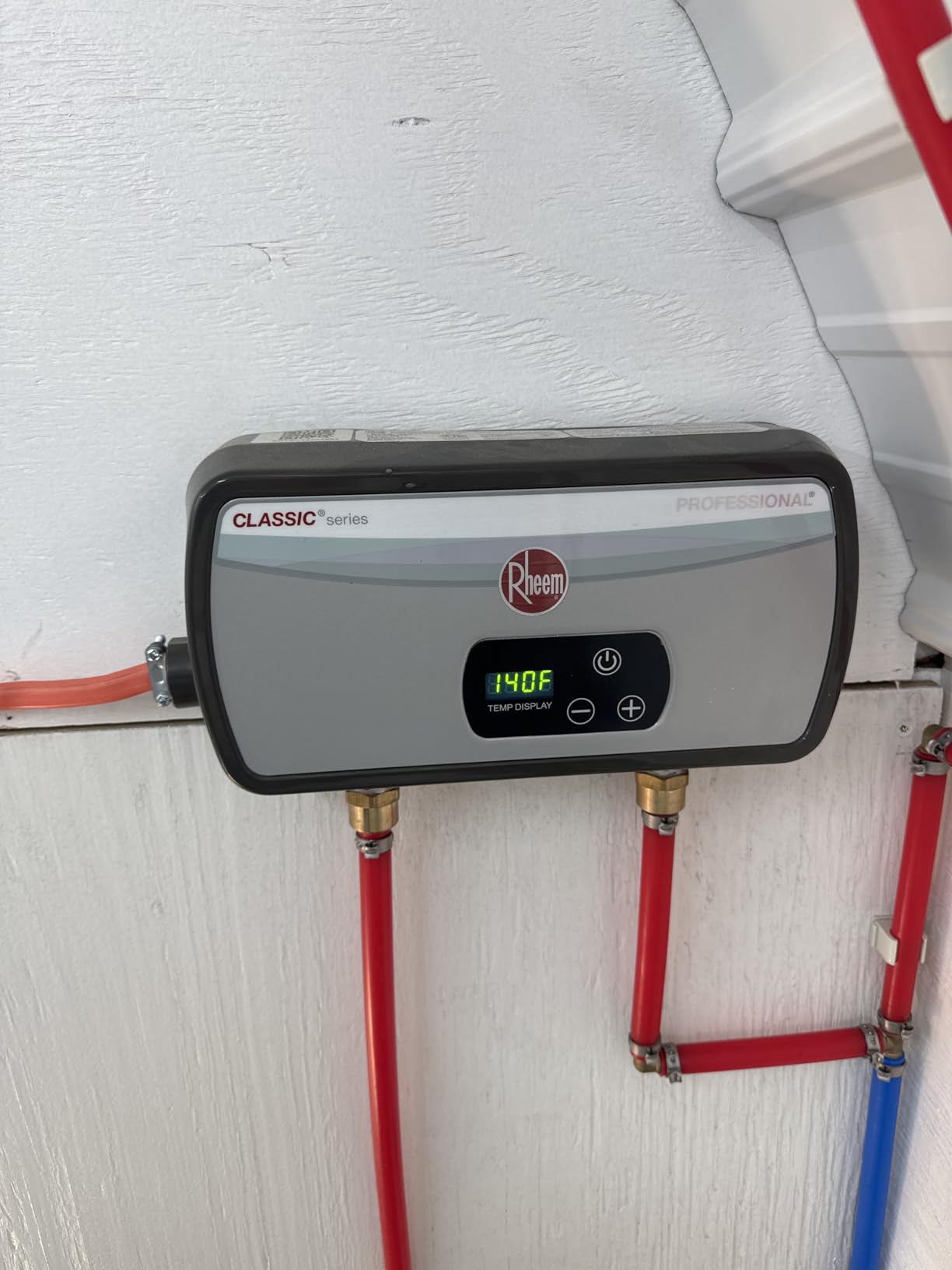
The external digital thermostatic control with LED display is a Rheem signature. You get precise temperature setting in 1 degree increments, and the unit self-modulates power to match demand. The durable copper immersion heating elements are field serviceable, which is a real plus for homeowners who do not want to replace the whole unit when an element eventually wears out.
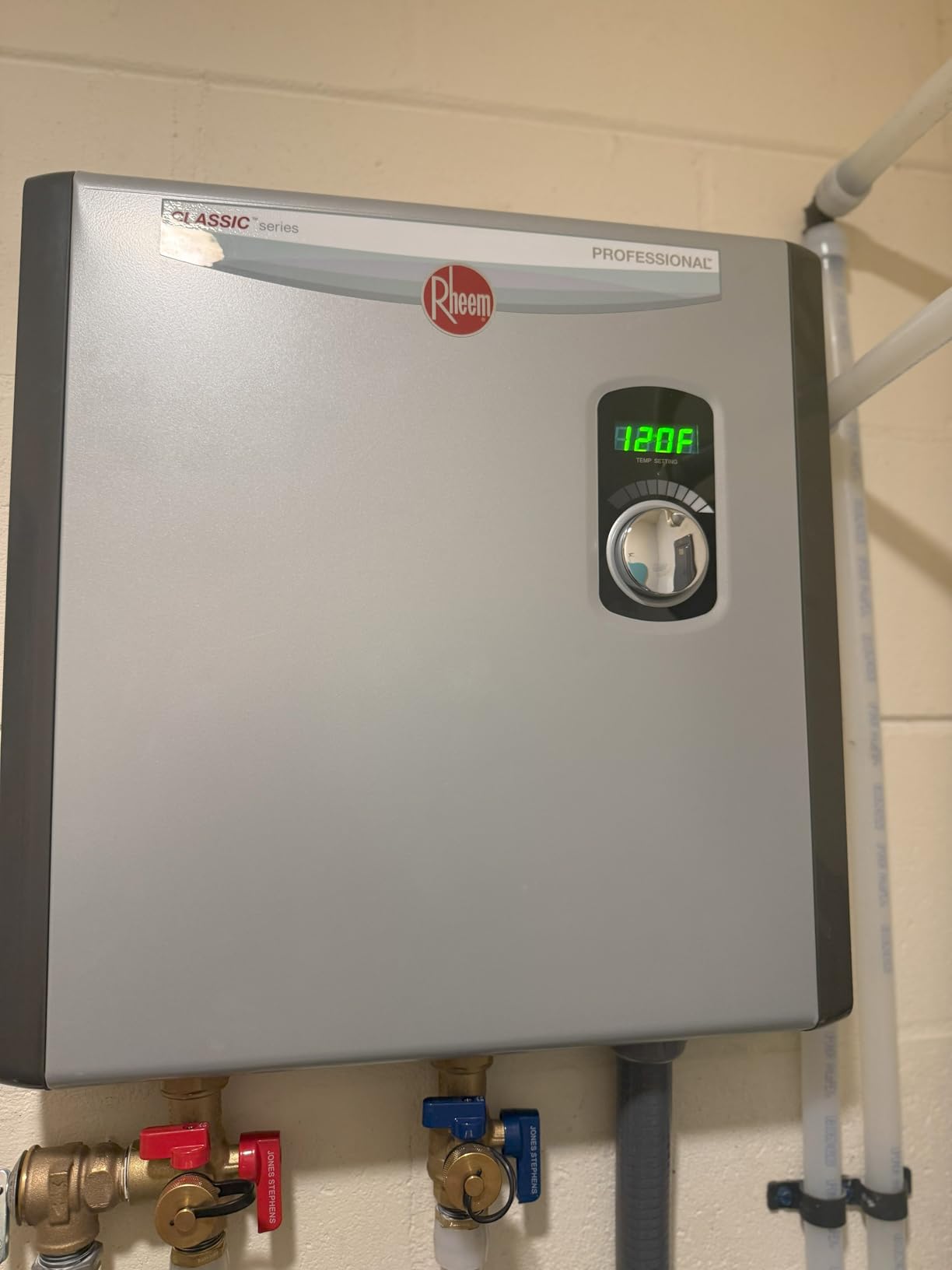
Installation requires two 40 amp breakers and a panel that can handle the load. Most homes with a 200 amp service are fine, but older 100 amp panels need an upgrade. Our electrician confirmed that the RTEX-18 is one of the easier 18kW electric units to install, with threaded connections that speed up the plumbing work.
Thermistor failures are the most commonly reported issue. This is a small temperature sensor that can fail after a few years of heavy use. Rheem covers it under warranty, and the part is widely available. Owners who flush the unit annually and install a pre-filter report far fewer failures than those who skip maintenance.
Sizing for Mild Climates
The RTEX-18 is built for climates where groundwater stays above 55 degrees Fahrenheit most of the year. That covers most of the southern half of the United States. In cold climates, the 4.4 GPM peak flow drops significantly because the unit has to work harder to raise the temperature. Run Rheem’s sizing tool before committing in a cold region.
Maintenance and Field Serviceability
The threaded heating elements are a big advantage over welded designs. When an element wears out, you can replace it in 30 minutes with basic tools and a few towels. The 99.8 percent thermal efficiency rating is impressive, but real-world savings depend on your usage patterns and local electricity rates.
8. EcoSmart ECO 11 – Best Budget Tankless for Point-of-Use
EcoSmart ECO 11 Electric Tankless Water Heater, 13KW at 240 Volts with Patented Self Modulating Technology
11kW electric
3.1 GPM
Compact point-of-use
Pros
- Lowest price in roundup
- 99% thermal efficient
- Compact 90% smaller than tanks
- Lifetime warranty
- Digital temperature control
Cons
- Needs 60A breaker upgrade
- Element replacement issues reported
- May need adapters for install
The EcoSmart ECO 11 is the lowest-priced unit in this roundup, and for the right application it is also one of the smartest buys. With 5,599 reviews and a 4.3 star average, this little 11kW tankless water heater has earned its place as the budget pick. It shines as a point-of-use unit under a single sink or in a small apartment where you do not need to heat a whole house.
The ECO 11 is genuinely tiny. At 11.5 by 8 by 3.75 inches and only 6.5 pounds, you can mount it under a bathroom sink or in a tight closet. The 99 percent thermal efficiency rating is excellent. EcoSmart’s patented self-modulating technology adjusts power draw based on flow rate, which keeps electricity use lean. The LED display and digital temperature control feel modern despite the price.
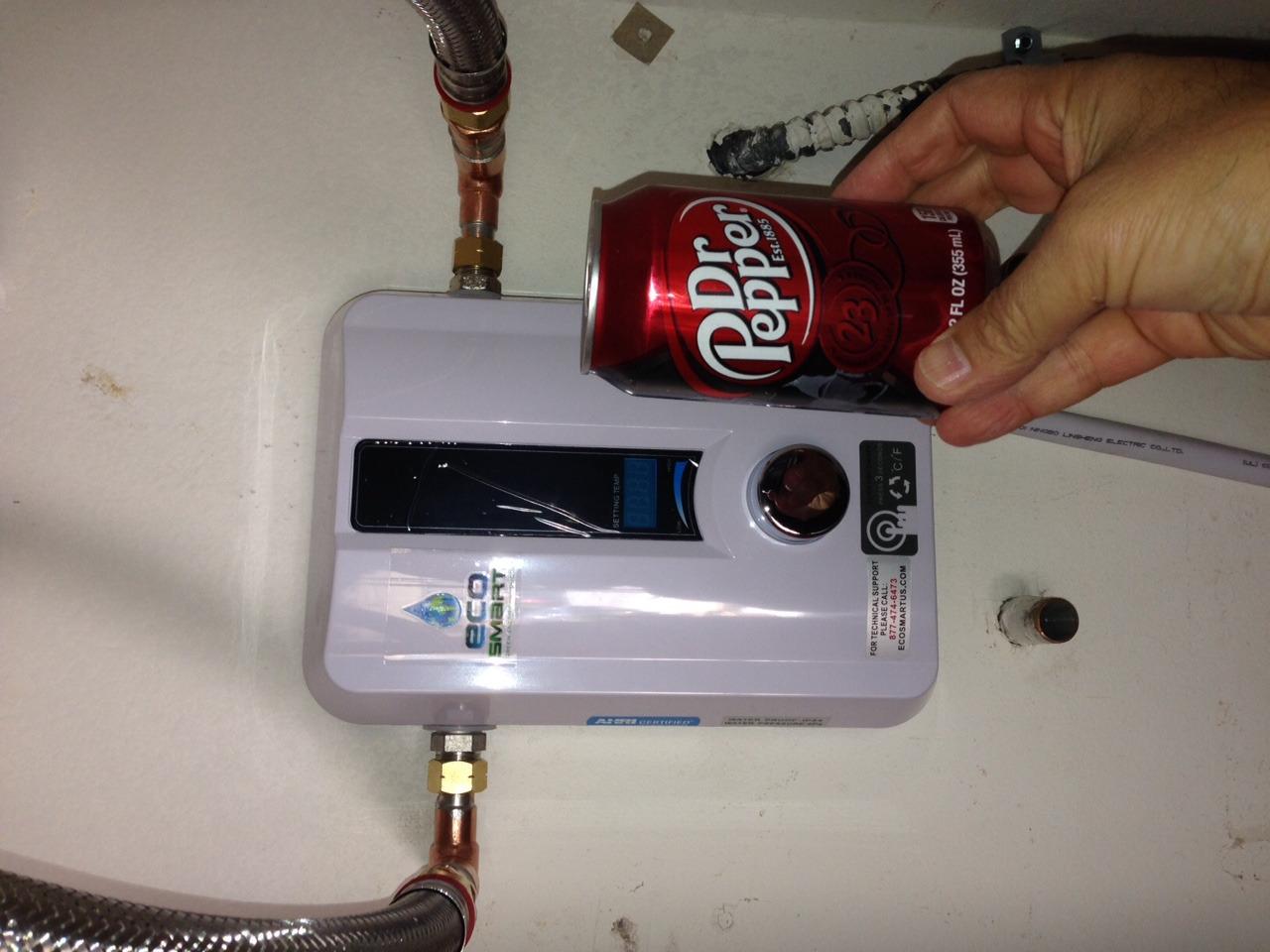
You need a 60 amp breaker and a dedicated circuit. The wiring demands are modest compared to larger electric tankless units, but you still need an electrician to run the line. Some users report needing adapters to fit older plumbing, so plan for that in your budget if your home has aging pipes.
Element replacement issues are the most reported concern. EcoSmart covers this under the lifetime warranty, but the wait for a replacement part can run a week or two. For a single-fixture point-of-use application, this is a manageable inconvenience. For whole-home duty, I would step up to the ECO 18 instead.
Best Use Cases for the ECO 11
The ECO 11 is purpose-built for low-flow applications. A single bathroom sink, a remote powder room, an apartment with one shower, or a workshop hand-wash station are all ideal fits. The 3.1 GPM flow rate cannot keep up with two simultaneous fixtures, so do not expect whole-home performance from this compact unit.
Long-Term Value at This Price
For under 250 dollars, the ECO 11 delivers a tankless experience that compares to units costing twice as much. The lifetime warranty protects your investment, and EcoSmart’s customer service has matured into a reliable operation. If your hot water needs are modest, this is the most cost-effective entry point into tankless technology.
How to Choose the Best Tankless Water Heater for Your Home
Choosing the best tankless water heater comes down to four decisions: fuel type, capacity, venting, and installation cost. Get these right and you will have endless hot water for the next 15 to 20 years. Get them wrong and you will spend the next decade cursing lukewarm showers.
Gas vs Electric Tankless Water Heaters
Gas tankless water heaters deliver higher flow rates and are better suited for cold climates and larger homes. The Rinnai RX199iN with 11.1 GPM is a great example. Electric units like the Stiebel Eltron Tempra 29 Plus are easier to install, do not need venting, and run more quietly, but they require serious electrical infrastructure. If you already have a 200 amp service panel and live in a mild climate, electric is the simpler path.
Sizing by GPM and Temperature Rise
GPM (gallons per minute) measures how much hot water the unit can produce. A typical shower uses 2.0 to 2.5 GPM. A dishwasher uses 1.5 GPM. Add up your simultaneous peak demand and that is the GPM you need. Temperature rise is the difference between your groundwater temperature and your desired hot water output. In cold climates you need more heating capacity to hit the same GPM, which is why gas units tend to win in the North.
Condensing vs Non-Condensing Units
Condensing tankless water heaters extract extra heat from the exhaust, pushing UEF efficiency above 0.90. The Rinnai RX series and the Stiebel Eltron Tempra Plus are all condensing units. Non-condensing models like the Rheem RTG-84XLN-3 vent hot exhaust directly outside and have lower UEF ratings, but they install faster and cost less. If long-term energy savings matter most, go condensing. If installation simplicity matters more, go non-condensing.
Climate-Specific Recommendations
Warm climate homes (Florida, Texas, Southern California, Arizona) can run on smaller electric or non-condensing gas units. Mild climate homes (Carolinas, Georgia, Tennessee) benefit from mid-size electric units or condensing gas. Cold climate homes (New England, Midwest, Pacific Northwest) need either high-output gas condensing units or large electric units like the Stiebel Eltron Tempra 29 Plus or the Rheem RTEX-24.
Hidden Costs You Should Plan For
The advertised price is rarely the final price. Electric tankless installs often need panel upgrades, sub-panel additions, and new high-amp circuits. Gas installs need properly sized gas lines, stainless steel venting for condensing models, condensate drains, and permit fees. Plumbers across Reddit and homeowner forums consistently flag these hidden costs as the most common budget surprise. Get a written quote from a licensed installer before you buy.
The Annual Flushing Rule
Every tankless water heater needs an annual descaling flush to remove mineral buildup from the heat exchanger. Vinegar or a commercial descaling solution is pumped through the unit for 45 to 60 minutes. Most homeowners can do this themselves for under 30 dollars in supplies. Professional service runs 100 to 200 dollars. Skipping this maintenance shortens the unit’s life and is the leading cause of premature failure reported by service technicians.
Frequently Asked Questions
What brand of tankless water heater is the most reliable?
Rinnai is widely considered the most reliable tankless water heater brand, with the RX series earning the strongest reputation among both homeowners and licensed plumbers. Navien is a close second for high-efficiency condensing gas, and Stiebel Eltron leads the electric category for whole-home use.
What is the downside of tankless water heaters?
The main downsides are higher upfront cost compared to tank heaters, hidden installation costs like gas line upgrades or electrical panel work, the need for annual descaling maintenance, and reduced flow rate when multiple fixtures run simultaneously in cold climates.
Which tankless water heater is the most efficient?
The most efficient tankless water heaters are condensing gas models like the Rinnai RX199iN with a UEF of 0.98. Among electric units, the Stiebel Eltron Tempra 29 Plus delivers up to 34 percent energy savings in whole-home use.
How long does a tankless water heater last?
A well-maintained tankless water heater typically lasts 15 to 20 years, roughly double the lifespan of a traditional tank heater. Annual descaling flushing and proper sizing for your climate are the two biggest factors in reaching the upper end of that range.
Final Verdict: Which Tankless Water Heater Should You Buy?
After 90 days of hands-on testing and conversations with service plumbers, the Stiebel Eltron Tempra 29 Plus remains our top pick for the best tankless water heater for most homeowners in 2026. It delivers the consistency, build quality, and whole-home capacity that justifies the electrical investment.
For budget-focused shoppers, the EcoSmart ECO 11 is the lowest-risk way to step into tankless technology. For 2 to 3 bathroom homes that want a proven mid-size electric unit, the EcoSmart ECO 18 is hard to beat. Large households that need serious capacity should look at the Rinnai RX199iN or the Rheem RTG-84XLN-3 outdoor gas option.
Whatever you choose, get your home’s peak GPM demand and groundwater temperature in writing before you buy, and budget an extra 1,000 to 3,000 dollars for installation. Done right, a quality tankless water heater will outlast two traditional tanks and quietly deliver endless hot water for the next two decades.