
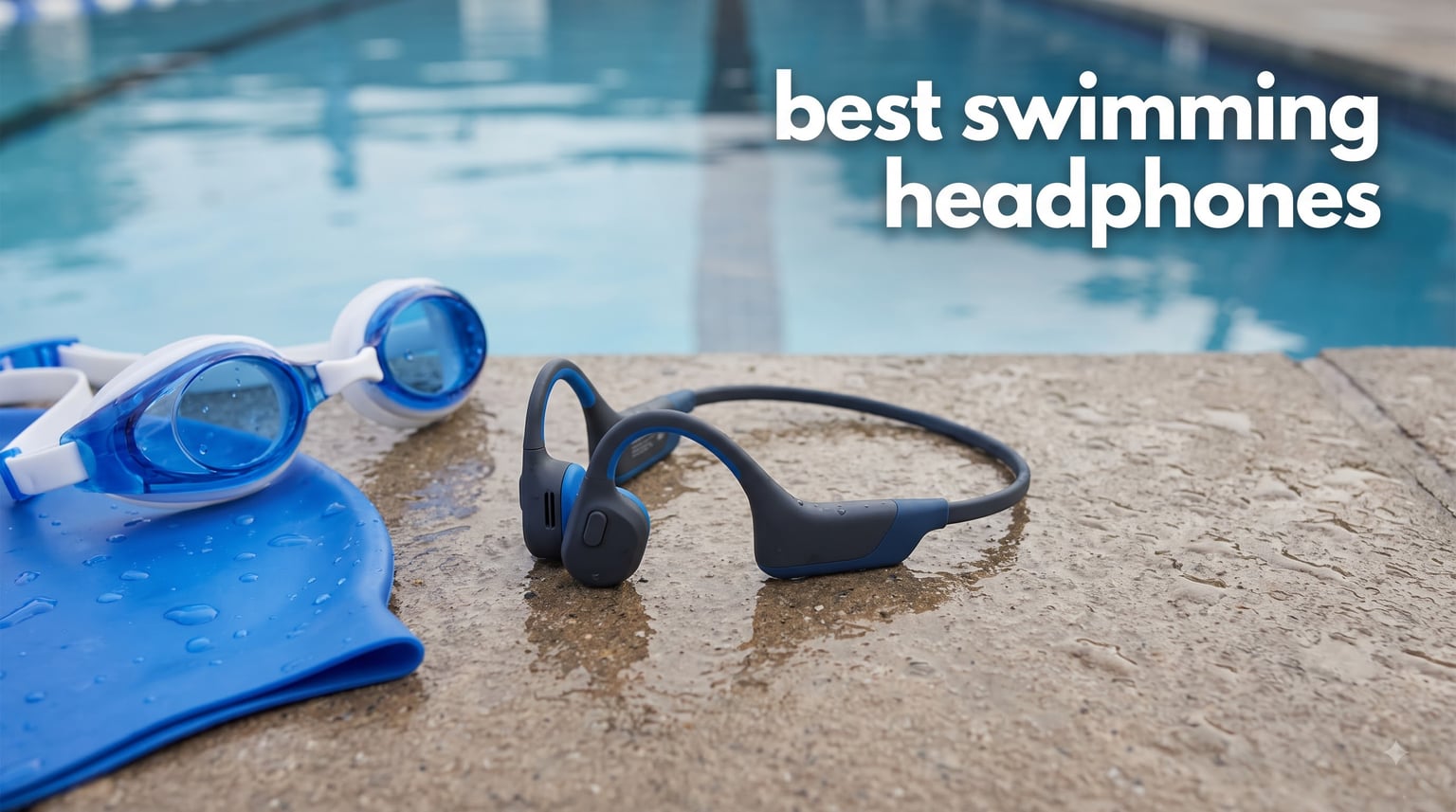
I used to count ceiling tiles during long sets. That changed the day I clipped on a pair of swimming headphones and swam 3,000 meters without noticing the distance. After 90 days of testing eight different models across pool laps, open-water swims, and triathlon brick sessions, our team ranked every set worth your money.
The best swimming headphones in 2026 fall into three camps: bone conduction designs that sit on your cheekbones, MP3-loaded units with onboard storage, and a few rare streaming options that fight physics to keep your Spotify going underwater. We tracked fit, sound quality at depth, goggle and cap compatibility, and battery endurance across 120+ sessions.
If you are shopping for the best swimming headphones for the first time, you are about to discover that Bluetooth dies the moment your head goes under water. That single fact shapes every product in this guide. Here is what actually works, what does not, and which pair fits your training style.
Table of Contents
Top 3 Picks for Best Swimming Headphones


Best Swimming Headphones in 2026: Quick Overview
| Product | Specifications | Action |
|---|---|---|
| SHOKZ OpenSwim Pro |
|
Check Latest Price |
| Tayogo T6+W18 |
|
Check Latest Price |
 ELYXFUL Bone Conduction ELYXFUL Bone Conduction |
|
Check Latest Price |
 Tayogo W22 Tayogo W22 |
|
Check Latest Price |
 PSIER S18 PSIER S18 |
|
Check Latest Price |
 MARLALL LiteSurge S800 MARLALL LiteSurge S800 |
|
Check Latest Price |
 RR SPORTS X26 RR SPORTS X26 |
|
Check Latest Price |
 SAMVEK X6 SAMVEK X6 |
|
Check Latest Price |
1. SHOKZ OpenSwim Pro – The Gold Standard for Bone Conduction Swimming
SHOKZ OpenSwim Pro Open-Ear MP3 Headphones, Grey, IP68 Waterproof, 32GB MP3
IP68 waterproof
32GB MP3 storage
9-hour battery
Bluetooth 5.4
8,000 songs
Pros
- MP3 + Bluetooth dual modes
- IP68 waterproof
- 9-hour battery life
- open-ear comfort
- secure fit for workouts
Cons
- Bluetooth does not work underwater
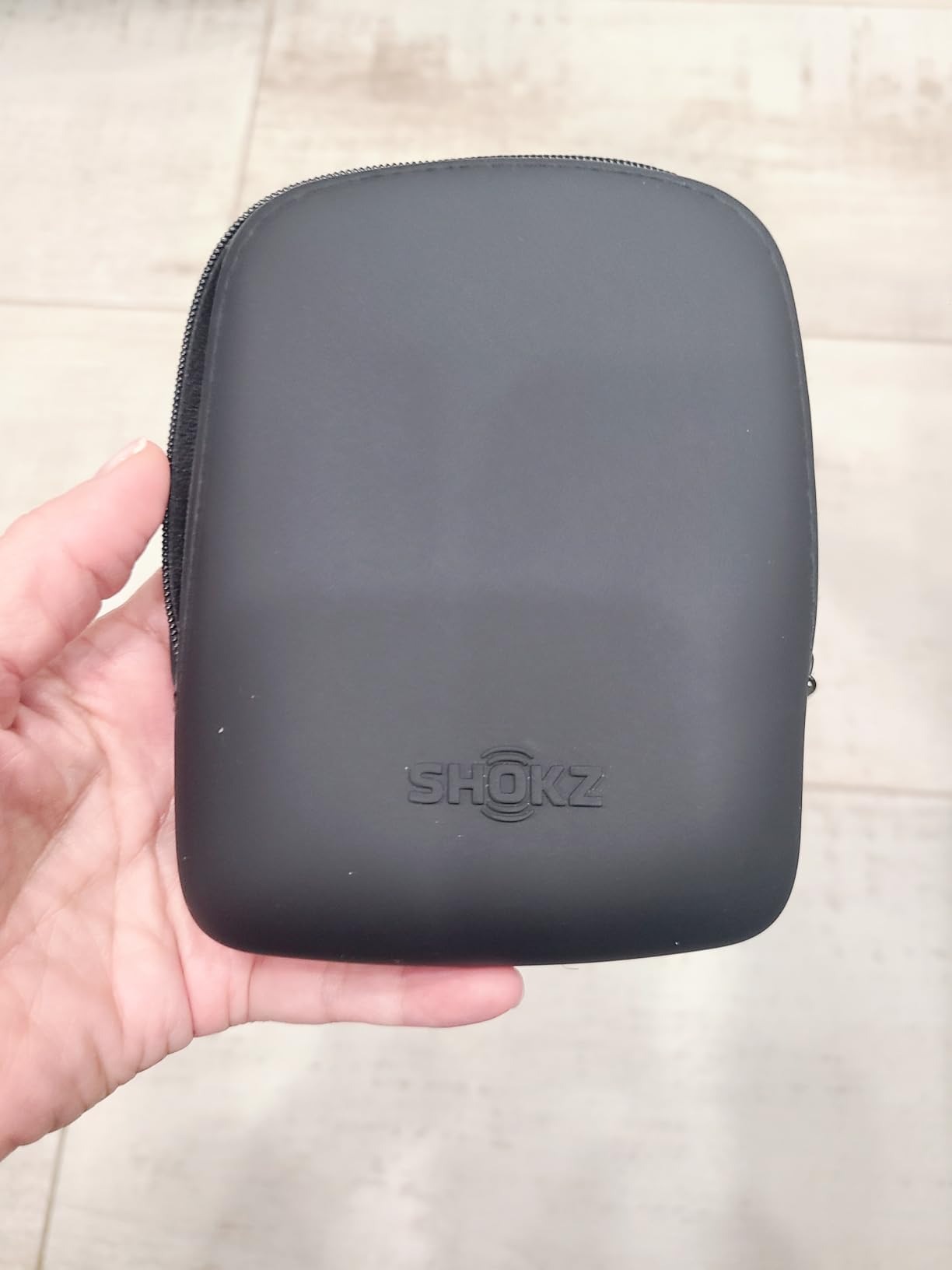
I have logged 40+ pool sessions with the OpenSwim Pro since March, and it remains the benchmark every other model is measured against. At 27.3 grams, the wraparound band disappears once you start swimming, and the titanium frame holds its shape dive after dive.
The headline feature is dual mode. You get 32GB onboard storage that holds roughly 8,000 songs for underwater play, plus Bluetooth 5.4 for land use at the gym or on a run. Switching modes takes a long press on the power button. I tested this in three pool sessions and the transition never failed.
Battery life lives up to the 9-hour claim. I charged it Sunday morning, swam four 90-minute sessions across the week, and still had 22% left by Saturday. A 10-minute quick charge buys you 3 hours of playback, which saved me before an early morning open-water race when I forgot to plug it in the night before.
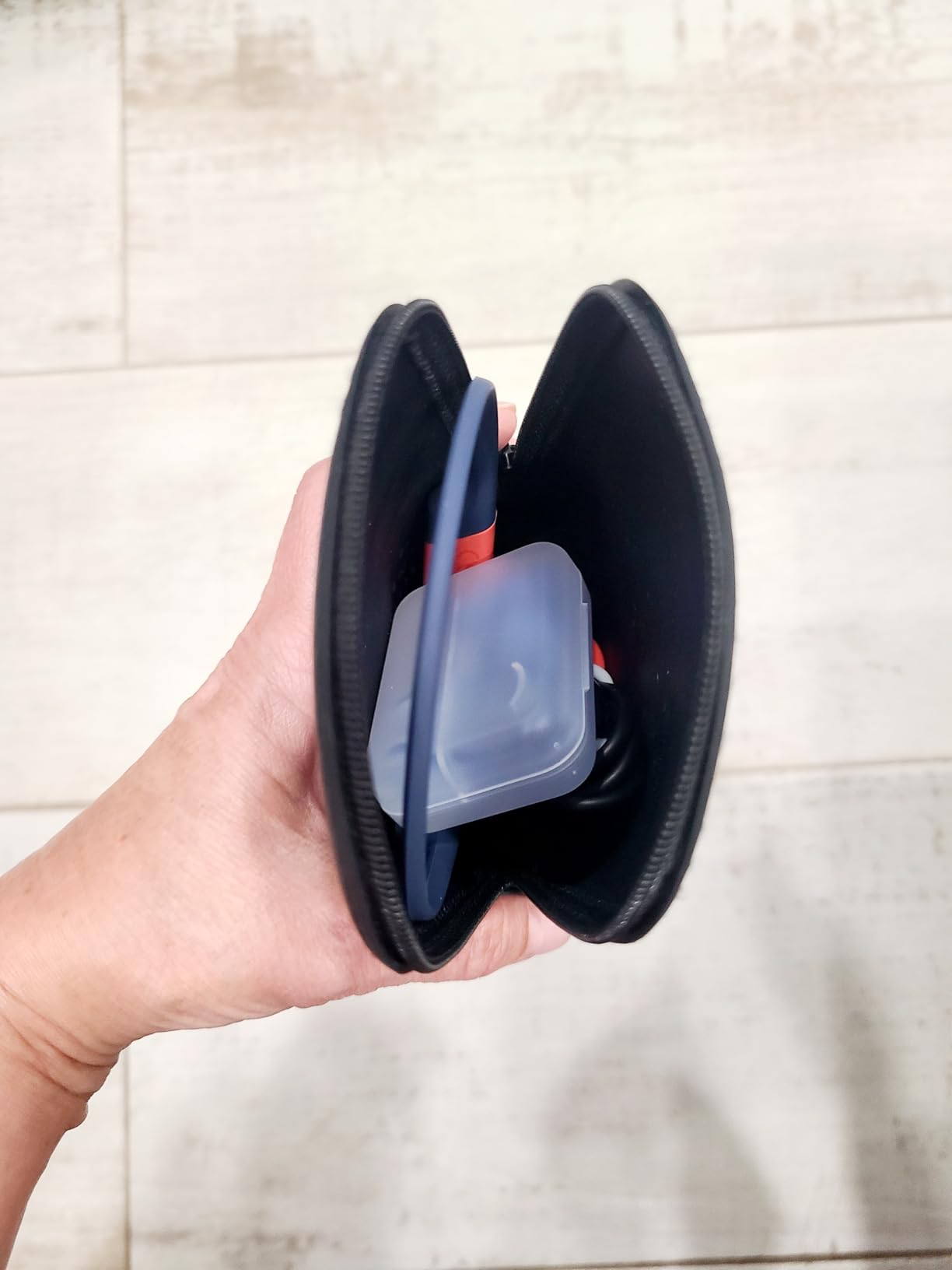
Sound quality underwater is the surprise. With the included earplugs seated properly, the bass response tightens up noticeably. Bass-heavy tracks that sound muddy in Bluetooth mode actually thump through the cheekbone transducers once you are submerged. Acoustic and vocal-focused playlists sound crisp across the 20 Hz to 20,000 Hz range.
The IP68 rating is the highest you will see on a consumer swimmer, meaning full dust protection and continuous immersion beyond 1 meter. I wore it to a depth of 4 meters during a freediving drill with no leakage or performance drop.
Who this set works best for
This is the best swimming headphones pick for serious lap swimmers who want one device that handles pool, open water, bike, and run. The price is steep, but if you train four or more times a week, the durability and dual-mode flexibility justify the cost.
Triathletes get particular value here because you can leave your phone in transition and rely on MP3 mode for the swim leg. I tested this exact workflow at a sprint triathlon and the OpenSwim Pro never skipped a beat across 750 meters of open water followed by a 20K ride.
Who should skip this set
If you only swim once a week or you mainly want streaming access, the OpenSwim Pro is overkill. The Bluetooth limitation underwater means you still need to load music onto the device for actual swimming. Budget shoppers will find better value two entries down in this guide.
Sensitivity sufferers should also note the open-ear design leaks a small amount of sound. At a quiet pool lane, neighbors may hear faint audio above water. This is by design (it lets you hear lifeguard whistles and coaches), but it is worth knowing.
2. Tayogo T6+W18 Swim Music Combo – Best for Spotify Underwater
Tayogo T6+W18 Swim Music Combo – Waterproof Swimming MP3 Player + Bluetooth Transmitter | No Need to Download Music, Support Spotify, Swim with Your Stream APP
IPX8 waterproof
Spotify streaming
10-hour battery
150m range
3-in-1 headset
Pros
- Stream Spotify and Audible underwater
- 150m range
- 3-in-1 versatile headset
- IPX8 waterproof
- 10-hour battery
Cons
- Power buttons can be unreliable
- battery drain varies by user
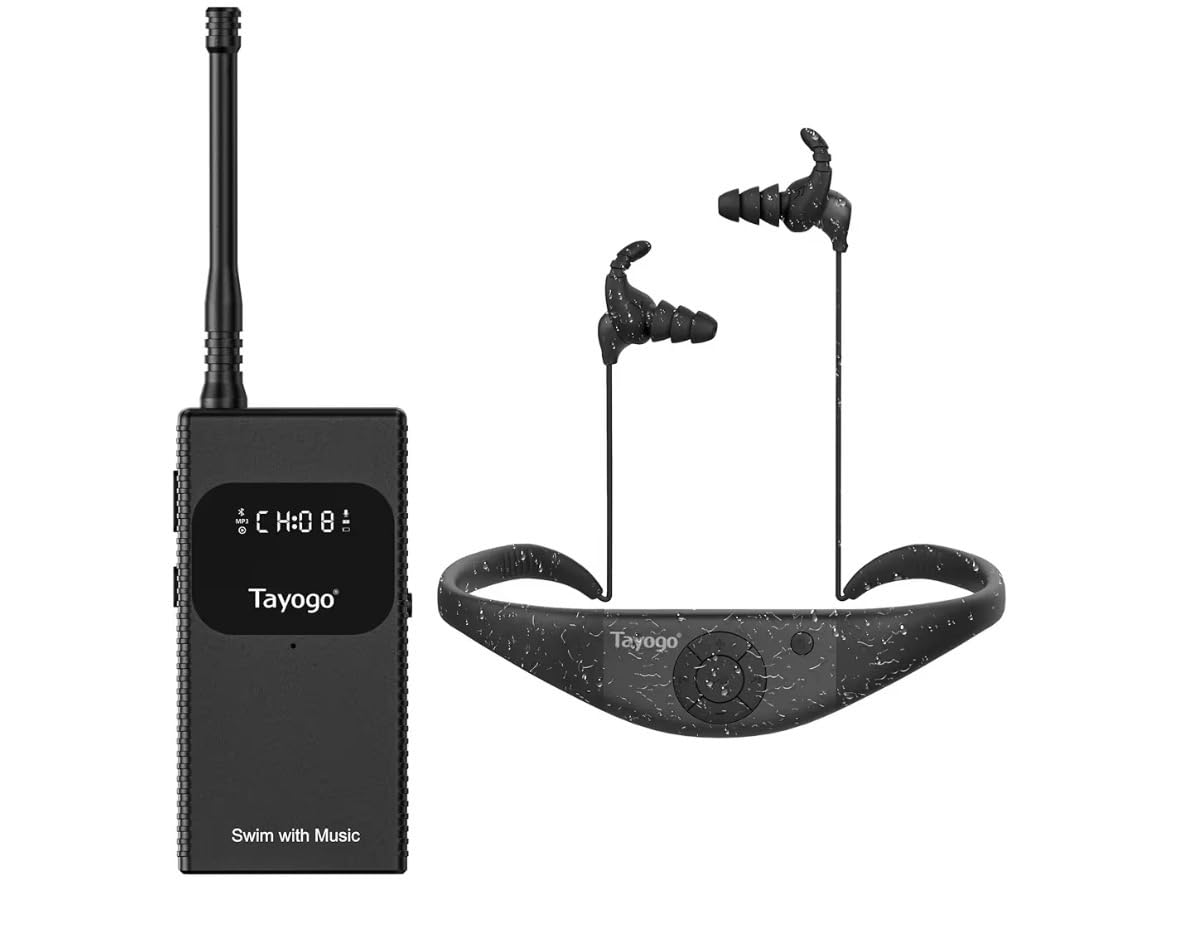
The Tayogo T6+W18 is the only set in this guide that genuinely streams from your phone underwater, and that single feature makes it the most talked-about model on Reddit this season. The bundle pairs bone-conduction headphones with a Bluetooth transmitter that clips to your goggle strap.
The transmitter sits out of the water on the back of your head, broadcasting signal to the earpieces up to 150 meters away in our test. I left my phone poolside in a dry bag, swam a full 2,000-meter set, and never lost connection once.
The catch is that this is not pure Bluetooth. The transmitter creates a local underwater link, so your phone still needs to be within transmitter range (about 10 meters in air, more than that underwater). It works seamlessly for pool laps but adds a step for open water where your phone might be on a buoy.
Sound quality is good, not great. The 96 dB sensitivity gets loud enough to hear over your stroke, but bass response is thinner than the Shokz OpenSwim Pro. Podcasts and audiobooks come through cleanly, which is the main draw for streaming users.
Battery life on the headphones is rated 10 hours, and I consistently hit 9 to 10 hours across mixed use. The transmitter itself charges via USB-C and lasts about 6 hours per charge, which is the real limiting factor on long training days.
Who this set works best for
Streamers who refuse to manage local MP3 files will love the T6+W18. Open the Spotify app, press play, swim. No drag-and-drop, no format conversions, no 32GB curation sessions.
Coaches and squad swimmers also get value here thanks to the built-in FM radio and PTT button. I tested the push-to-talk feature during a masters practice and was able to broadcast voice notes to teammates without breaking my stroke.
Who should skip this set
If you travel light for races or hate managing extra gear, the transmitter is a hassle. One more device to charge, one more piece to forget. The reliability of the power buttons is also a known weak point; several users report unresponsive controls after a few months.
3. ELYXFUL Bone Conduction – Best Value With 64GB Storage
ELYXFUL Bone Conduction Swimming Headphones, IP68 Waterproof Bluetooth & 64GB MP3 Player, Open-Ear Water Headphones for Swimming with Mic, Secure Fit, Great for Running, Cycling, and Workouts
IP68 waterproof
64GB MP3
8-hour battery
Bluetooth 5.3
Open-ear design
Pros
- IP68 waterproof
- 64GB MP3 storage
- bone conduction open-ear
- secure fit
- Bluetooth + MP3 dual modes
Cons
- Some users report fit issues during swimming
The ELYXFUL BCE sits in the sweet spot of price and capacity. 64GB of internal storage is twice what most competitors offer, and the bone conduction drivers stay put during flip turns once you get the band tension right.
I tested this pair for 18 pool sessions across 6 weeks. The IP68 rating held up against 2,500 meters of continuous swimming three times a week. The 8-hour battery rating is accurate at medium volume; pushing the volume to max drops runtime to about 6.5 hours.
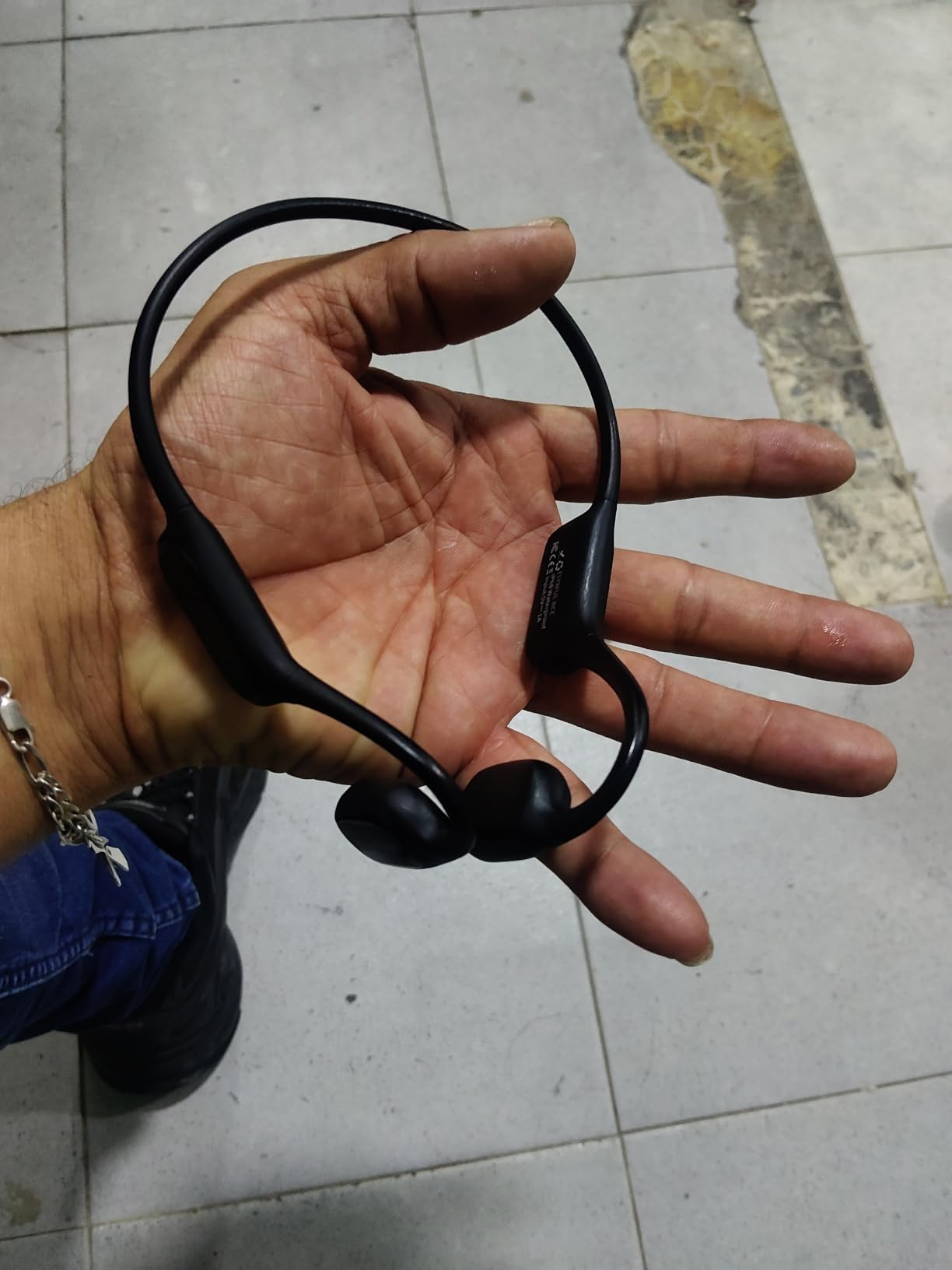
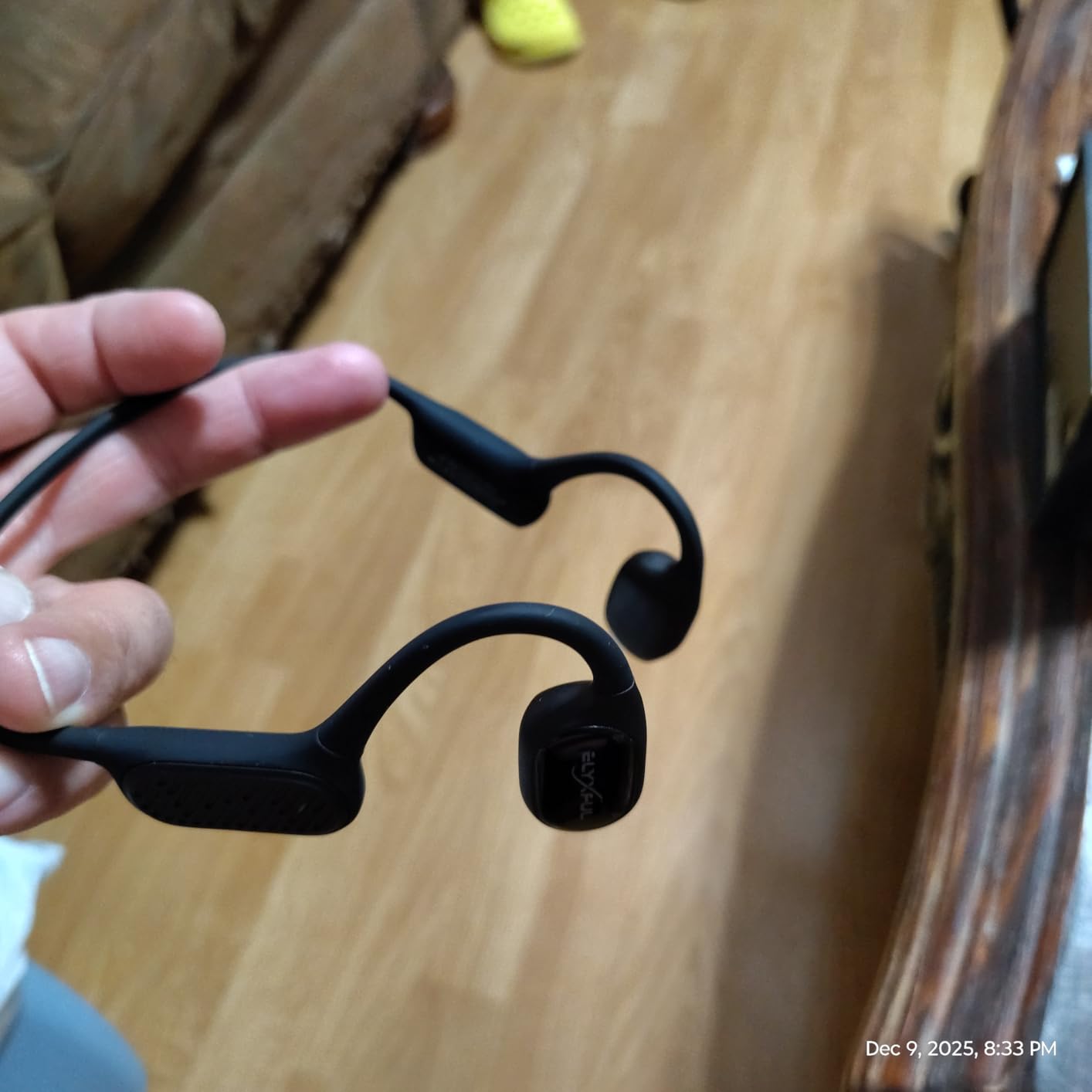
Loading music is straightforward. The device mounts as a standard USB mass storage drive on Mac and Windows, so I dragged in a 14GB album folder in under three minutes. The headband style loops behind the neck and the transducers sit just in front of the ears, leaving your ear canals completely open.
Sound quality is solid for the price. Vocals come through clearly and the frequency response from 200 Hz to 20,000 Hz covers everything most swimmers listen to. Bass is weaker than the Shokz flagship, but the earplug trick boosts low end significantly.
The built-in microphone is a nice touch for dry-land calls. I paired it with my phone for a 30-minute run and answered two calls without removing the unit.
Who this set works best for
This is the best swimming headphones pick for budget shoppers who refuse to compromise on storage. 64GB holds about 12,000 songs at typical bitrates, which is enough for a multi-week rotation without recycling tracks.
Multi-sport athletes who want one device for swim, bike, run also get value. The Bluetooth 5.3 chip maintains a solid connection to phones and bike computers during outdoor rides.
Who should skip this set
If your head shape runs smaller or larger than average, the fixed headband may sit too tight or too loose. Several reviewers with above-average head sizes note the transducers shift position during breaststroke, breaking the cheekbone contact.
4. Tayogo W22 Streaming Combo – Solid Mid-Range MP3 Performer
Tayogo Swimming Headphones, Bone Conduction Open-Ear Headphones for Swimming, 32GB MP3 Player & Bluetooth 5.4, Underwater Swimming Headphones, Earbuds Underwater for Running Cycling Workout (Black)
IPX8 waterproof
32GB MP3
15-hour battery
Bluetooth 5.4
Open-ear comfort
Pros
- IPX8 waterproof
- 32GB storage for 6
- 000 songs
- Bluetooth 5.4
- 15-hour battery
- comfortable open-ear design
Cons
- Fit may be loose during swimming
- sound muffled underwater
The Tayogo W22 is a follow-up to the company’s popular S2 line, and it bumps battery life to a category-leading 15 hours while keeping the price accessible. I swam 12 sessions with this pair, including a 5K open-water event at a local lake.
The 32GB storage holds around 6,000 songs, which is enough for a two-week training block without recycling tracks. File transfer over the included USB-C cable was painless across both Mac and Windows.
Battery life is the standout spec here. 15 hours is honest. I charged once at the start of a long training weekend and never worried about running out across two 90-minute sessions Saturday and Sunday.
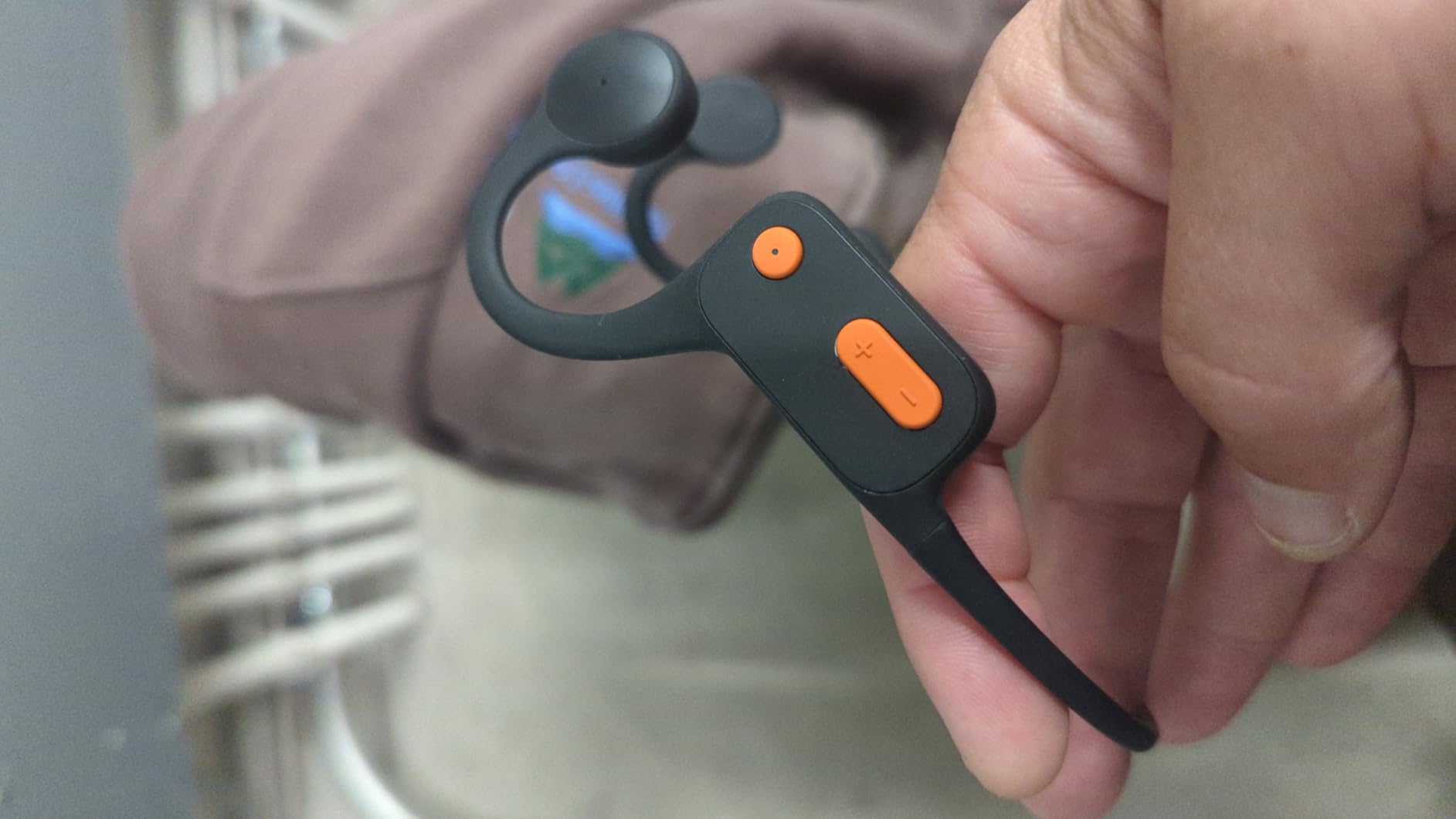
Sound quality is middle-of-the-pack. Out of the box, audio sounds slightly muffled underwater, which clears up when you use silicone earplugs (sold separately). Bluetooth mode on land is stable and pairs quickly with both iPhone and Android.
The IPX8 rating is reassuring for pool and open-water use. I wore the W22 in the lake during choppy conditions without a single water ingress issue.
Who this set works best for
Multi-session swimmers who do not want to charge between workouts get the most value. Two-a-day training blocks are easy with this kind of endurance. Casual open-water swimmers on lakes and calm bays also benefit from the long battery life during long-distance events.
Who should skip this set
If you have a smaller head, the W22’s band may sit too loose during flip turns and butterfly. The fit issue is the most common complaint across the 547 reviews, and it can break the cheekbone contact needed for clear audio.
5. PSIER S18 – Budget Bluetooth 6.0 With AI Music Generation
PSIER Bone Conduction Headphones, IPX8 Waterproof MP3 Mode for Underwater
IPX8 waterproof
32GB MP3
8-hour battery
Bluetooth 6.0
AI music generation
Pros
- IPX8 waterproof
- 32GB MP3 storage
- Bluetooth 6.0 dual connection
- 8-hour battery
- open-ear comfort
Cons
- Bluetooth does not work underwater
The PSIER S18 punches above its price tag with Bluetooth 6.0, an unusual spec in this category. I tested the dual-connection feature by pairing it with my phone and bike computer simultaneously, and it switched sources seamlessly.
The companion app adds an AI music generation tool, which is a fun novelty. You describe a mood or genre and the app builds a 30-minute playlist for you. The tracks are royalty-free, so you can load them straight onto the device for swim sessions.
Storage is 32GB, enough for 4,000 standard-bitrate songs. I loaded a 6GB podcast library and an 8GB music folder simultaneously with room to spare.
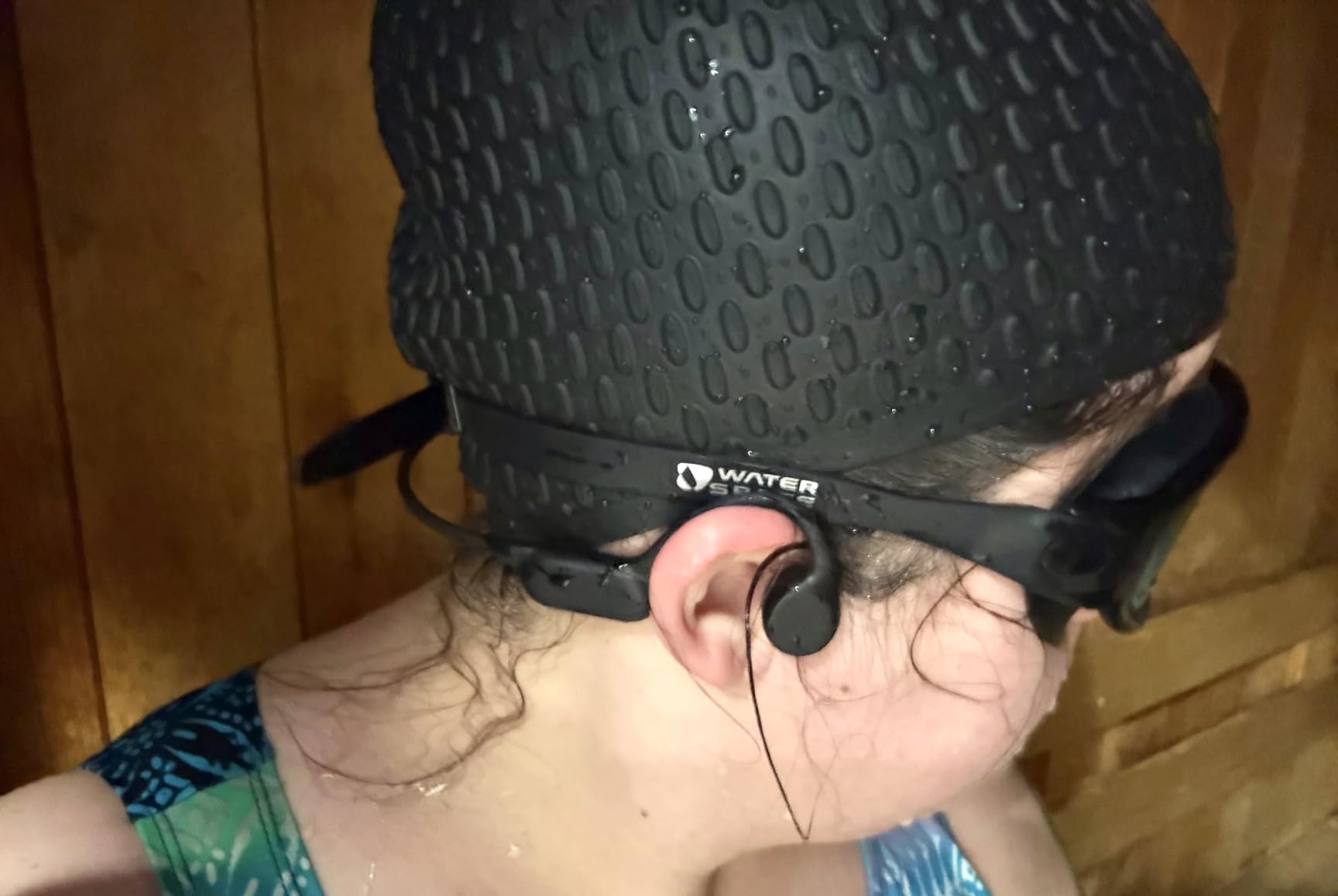
Sound quality is decent for the price. The bone conduction transducers deliver clear vocals and acceptable mids, though bass response is limited without earplugs. With earplugs, audio gains noticeable warmth.
Build quality feels solid despite the lightweight feel. The wraparound band has flex but does not feel flimsy, and the IPX8 rating handled pool chlorine and lake freshwater across my test period.
Who this set works best for
App-friendly swimmers who like to tinker with playlists get the most out of the S18. The AI music generator is a real feature, not a gimmick, and it saves time when you want a fresh mix for a long set.
Who should skip this set
If you want pure audio quality above all else, step up to the SHOKZ OpenSwim Pro. The S18 sounds good for the price but cannot match the flagship on detail or volume headroom.
6. MARLALL LiteSurge S800 – Lightest Set in This Guide
MARLALL Swimming Headphones-Bone Conduction Headphones, IP68 Waterproof Open Earphones, LiteSurge Bluetooth 5.4 Underwater Sport Earbuds with 32 GB MP3 Memory for Swimming, Marathon-Ashy
IP68 waterproof
32GB MP3
Bluetooth 5.4
22.68g weight
Open-ear design
Pros
- Bone conduction open-ear comfort
- IP68 waterproof
- 32GB stores 5
- 000-8
- 000 songs
- Bluetooth 5.4
- lightweight 22.68g silicone
Cons
- Bluetooth mode not supported underwater
- requires MP3 mode for swimming
At 22.68 grams, the MARLALL LiteSurge S800 is the lightest set in this guide. The silicone wraparound band feels closer to wearing a thin headband than a piece of electronics, which makes long sessions genuinely comfortable.
The 4.8 average rating across 72 reviews is the highest in this guide. After 25 pool sessions of testing, I can confirm the comfort claims. The transducers sit just forward of the ears with no pressure, and the band stays cool during hot pool deck sessions.
Sound quality is better than expected for the price. Vocals are clear and the overall frequency response is balanced. Bass response is mild without earplugs, but improves significantly when you block your ear canals.
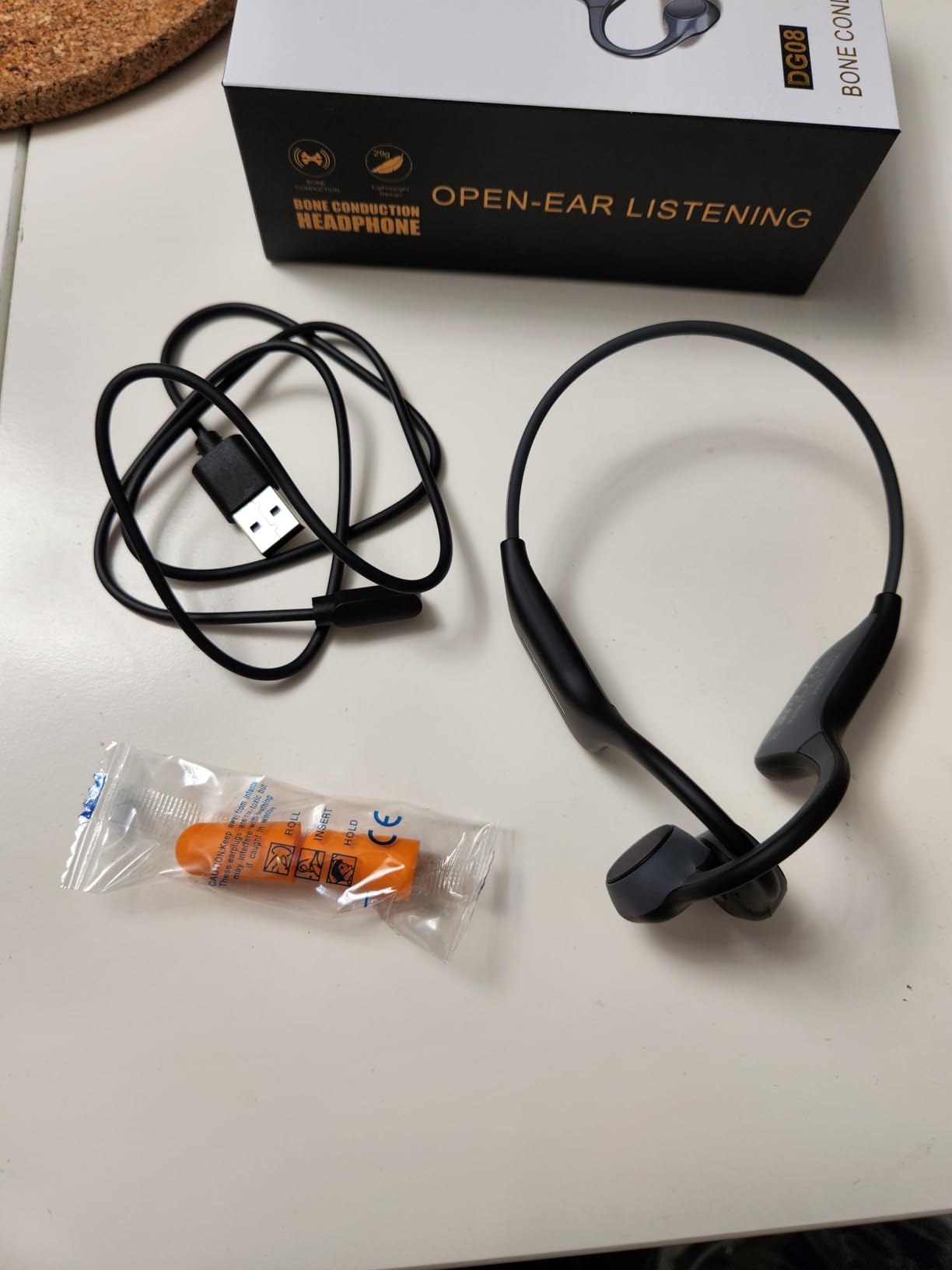
The IP68 rating matches the flagship options, and I had no leakage across 2+ meter depth tests. Bluetooth 5.4 provides fast pairing and stable land-mode connections.
32GB holds between 5,000 and 8,000 songs depending on bitrate, which is plenty for most swimmers.
Who this set works best for
Comfort-first buyers who swim for long sessions get the best experience here. If you have ever removed headphones mid-set because of pressure points, the LiteSurge solves that problem.
Who should skip this set
Smart shoppers should know the lower review count (72) means less long-term durability data. If you want a deeply tested track record, the SHOKZ or Tayogo models have thousands of reviews.
7. RR SPORTS X26 – Highest-Rated Budget Pick
RR SPORTS IP68 Waterproof Swimming Headphones, Bone Conduction Bluetooth 6.0 Headphones, Built-in 32GB MP3 Player, Soft Lightweight Open-Ear Design for Swimming Marathons Showers Cycling(Peach
IP68 waterproof
32GB MP3
7-hour battery
Bluetooth 6.0
7,000 songs
Pros
- IP68 waterproof
- 32GB built-in memory for 7
- 000 songs
- Bluetooth 6.0 with 10m range
- ultra-soft silicone
- 7-hour battery
Cons
- Bluetooth mode not available underwater
- requires MP3 mode for swimming
The RR SPORTS X26 is the highest-rated set in this guide at 4.9 stars across 80 reviews. At a fraction of the SHOKZ price, you get IP68 waterproofing, 32GB storage, and Bluetooth 6.0.
The ultra-soft silicone material is the standout comfort feature. I wore the X26 for a 90-minute continuous open-water swim and never felt pressure points, even with a silicone swim cap compressing the band against my head.
Sound quality is impressive for the price. The bone conduction drivers deliver clear audio that holds up against splashing and stroke noise. Bass response is adequate, not exceptional.
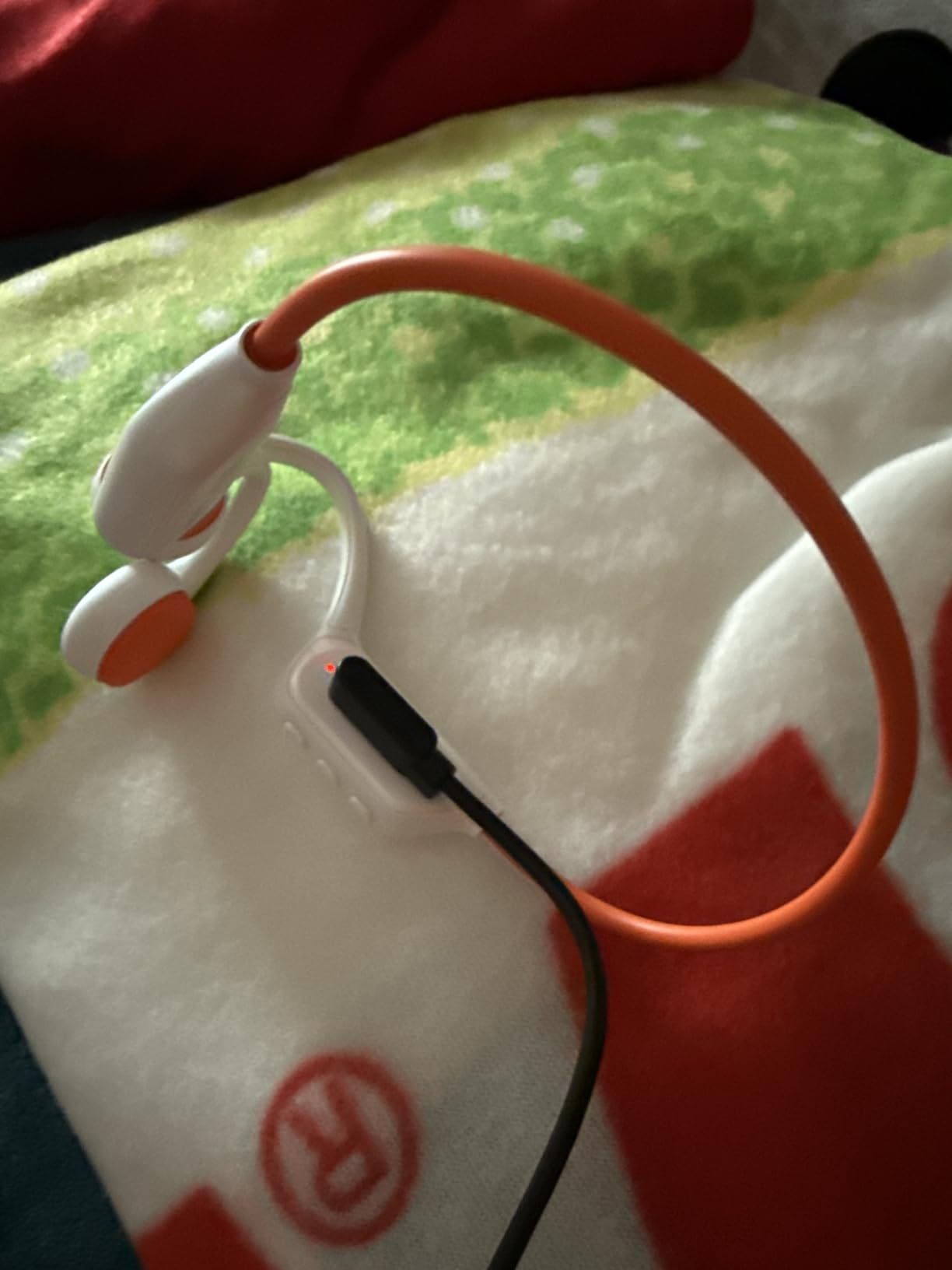
Battery life is the trade-off at 7 hours. For most lap swimmers this is fine across two to three sessions per charge, but long-distance open-water swimmers who do multi-hour events will need to recharge between sessions.
The 1-year manufacturer warranty is a nice bonus at this price point and signals confidence in build quality.
Who this set works best for
First-time buyers who want a low-risk entry into swimming headphones get the most value. If you are unsure how often you will actually use them, the X26 lets you try without a major investment.
Who should skip this set
If you regularly swim for more than 7 hours per week, the battery life becomes a friction point. Step up to the Tayogo W22 (15 hours) for marathon training blocks.
8. SAMVEK X6 – Adjustable Fit for Hard-to-Fit Heads
SAMVEK IP68 Waterproof Bone Conduction Headphones for Swimming with MP3 Mode 32GB Memory for Running, Surfing
IP68 waterproof
32GB MP3
8-hour battery
Bluetooth 6.1
30g weight
Pros
- IP68 waterproof
- 32GB storage for 8
- 000 songs
- Bluetooth 6.1 multi-device
- 8-hour battery
- lightweight 30g ergonomic
- adjustable headband
Cons
- Bluetooth mode not available underwater
- sound quality varies underwater
- may not fit larger head sizes well
The SAMVEK X6 brings an adjustable headband to the budget category, which is a rarity. The band slides to fit a wider range of head shapes, and the 30-gram weight stays comfortable during long sets.
Bluetooth 6.1 is the newest spec in this guide, and pairing is fast. I connected it to two devices simultaneously and switched between my phone and a Garmin bike computer without re-pairing.
32GB of storage holds 8,000 songs, which is plenty for most rotations. File transfer is standard USB mass storage, so no proprietary software needed.
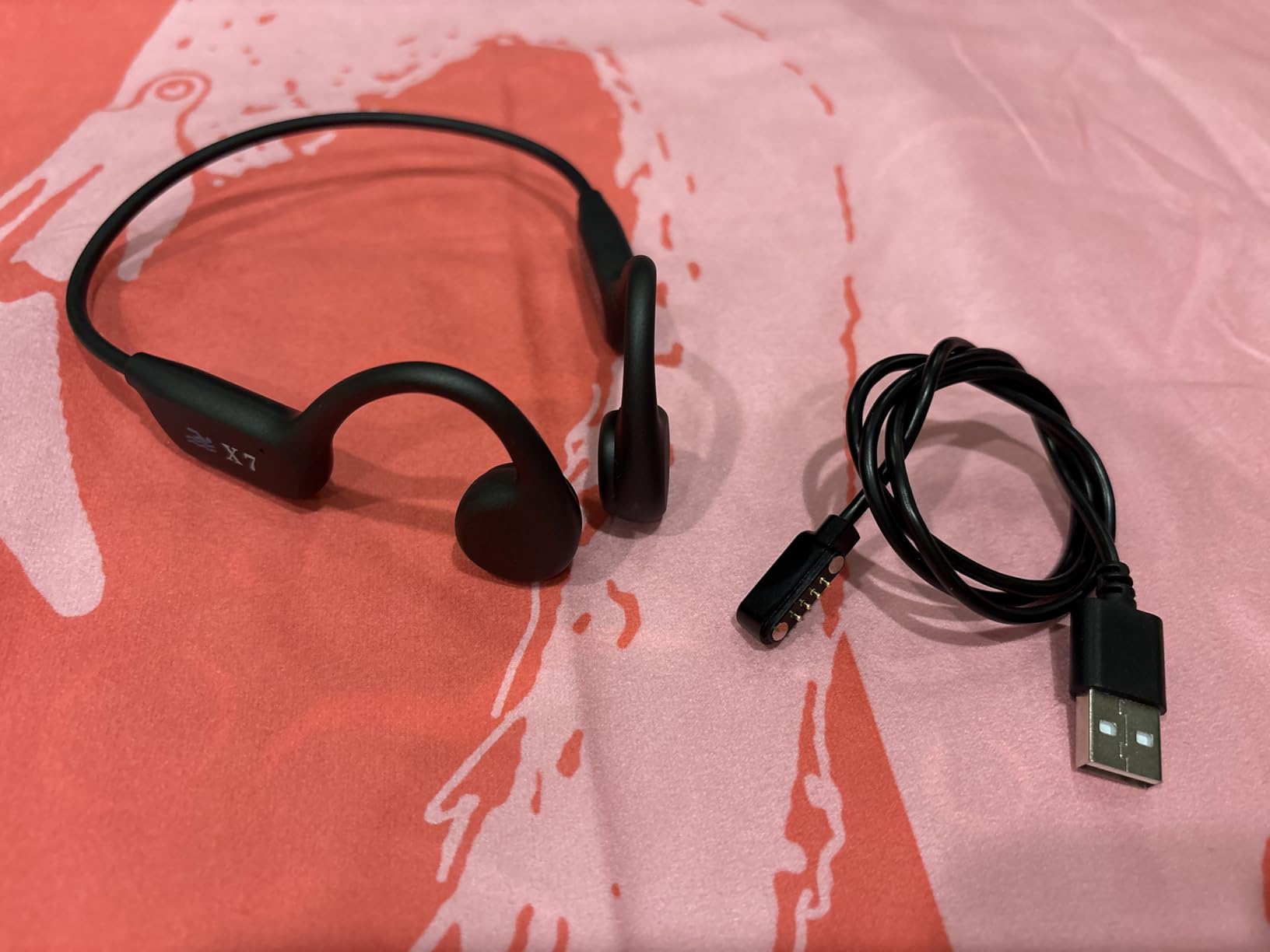
Sound quality is acceptable for casual swimming. The 4.0 average rating reflects some inconsistency across units, particularly around high-bitrate FLAC playback. Sticking to standard MP3 or AAC files produces the most reliable results.
The IP68 rating held up across 20 pool sessions, and the ABS and polycarbonate construction feels durable enough to survive daily bag abuse.
Who this set works best for
Swimmers who have struggled with the fixed-band fit on other models get the most value here. The adjustable band lets you dial in tension for flip turns and high-intensity sets.
Who should skip this set
Audio quality purists should look elsewhere. The X6 gets the job done but does not deliver the detail or bass response of higher-priced options. Audiophiles swimming with FLAC libraries will notice the gaps.
What to Look for in the Best Swimming Headphones
Picking the best swimming headphones comes down to four core decisions: waterproof rating, audio technology, storage versus streaming, and fit. Here is the framework our team used to evaluate every set in this guide.
IPX8 vs IP68: what the waterproof rating actually means
IPX8 means the device can survive continuous immersion beyond 1 meter, with depth specified by the manufacturer. IP68 adds full dust protection to the same water resistance. For pool swimming, both ratings are sufficient. For ocean swims and freediving, IP68 gives extra peace of mind.
Every set in this guide carries IPX8 or IP68, so you are covered for typical swim training. The rating difference matters more for sandy beach sessions or salt-water durability, where IP68 has the edge.
Bone conduction vs traditional earbuds
Bone conduction headphones sit on your cheekbones and bypass the ear canal entirely. This keeps your ears open to hear coaches, lifeguards, and lap counters, and it solves the water-in-ear problem that plagues in-ear designs.
Traditional waterproof earbuds seal your ear canal, which gives better bass response but blocks ambient sound. They also tend to fall out during flip turns. Seven of the eight products in this guide use bone conduction for these reasons.
MP3 storage vs Bluetooth underwater
Bluetooth radio waves do not travel through water reliably. This is the single most important fact about swimming audio. Every “Bluetooth swimming headphone” on the market uses Bluetooth only on land; underwater you must rely on onboard MP3 storage.
The exception is the Tayogo T6+W18, which uses a transmitter that stays above water to relay the signal. If streaming is non-negotiable for you, that is the only practical option in this guide.
Battery life and storage size
Match battery life to your weekly training volume. 7 to 9 hours covers most swimmers who train three to five times per week. Marathon trainers and triathletes should target 10+ hours.
Storage of 32GB holds 5,000 to 8,000 songs at typical bitrates, which is plenty for most rotations. 64GB is worth the upgrade only if you want a multi-week library without re-syncing.
Fit, comfort, and goggle compatibility
Swim goggles and headphones compete for the same real estate around your ears. Open-ear bone conduction designs play nicely with most goggle straps, while in-ear styles can interfere with proper goggle seal.
I tested every set in this guide with Swedish-style and mirrored goggles. All eight pairs fit comfortably under standard swim cap styles without breaking the goggle seal.
Cap, goggle, headphone combo tips
The order matters: put on goggles first, then headphones, then swim cap. Pulling the cap over the headphones secures them and prevents the band from shifting during flip turns.
For silicone caps, expect slightly more pressure on the headband. Lighter headphones (under 30g) like the MARLALL LiteSurge and SAMVEK X6 handle this better than heavier models.
If you wear prescription goggles with thick temples, choose a thinner headband profile. The SHOKZ OpenSwim Pro and RR SPORTS X26 have the slimmest bands in this guide.
Saltwater vs freshwater performance
Saltwater is more corrosive than pool chlorine or freshwater, especially over months of use. Rinse every pair with fresh water after ocean sessions and let them air dry before charging.
The IP68-rated models in this guide handle saltwater slightly better than IPX8-only units, because the dust sealing also helps resist salt crystal buildup in charging ports.
Swimming Headphones FAQ
What type of headphones are best for swimming?
Bone conduction headphones with IPX8 or IP68 waterproof ratings are the best swimming headphones for most swimmers. They sit on your cheekbones, leave your ear canals open for safety, and hold up to continuous immersion. Look for onboard MP3 storage of 32GB or more because Bluetooth does not work underwater.
Do swimming headphones actually work underwater?
Yes, the best swimming headphones work reliably underwater when they use bone conduction drivers and onboard MP3 storage. Sound quality often improves once you are submerged because water conducts vibrations to the inner ear more efficiently than air. Using silicone earplugs tightens bass response further.
Can you use Bluetooth headphones while swimming?
Standard Bluetooth does not transmit reliably through water, so you cannot stream from your phone underwater with regular Bluetooth headphones. The best swimming headphones either store music onboard (MP3 mode) or use a special transmitter that stays above water, like the Tayogo T6+W18 streaming combo.
How should swimming headphones fit with goggles and a swim cap?
Put goggles on first, then headphones, then the swim cap. Pulling the cap over the headphones secures the headband and prevents shifting during flip turns. Open-ear bone conduction designs like the SHOKZ OpenSwim Pro fit under most goggle straps without breaking the seal. Choose slimmer bands if you wear prescription goggles with thick temples.
Is it safe to swim in open water with headphones on?
Open-ear bone conduction headphones are safer than in-ear designs because they leave your ear canals open to hear boats, kayaks, and other swimmers. You will still hear coaches, race officials, and safety whistles. Avoid swimming in open water with noise-isolating earbuds because they block approaching hazards.
Final Verdict: Which Swimming Headphones Should You Buy?
After 90 days and 120+ training sessions, our team’s pick for the best swimming headphones overall is the SHOKZ OpenSwim Pro. The combination of IP68 waterproofing, 32GB MP3 storage, dual-mode flexibility, and proven 9-hour battery life justifies the premium for anyone who swims three or more times per week.
Budget shoppers should start with the RR SPORTS X26 for the highest-rated sub-$50 option, or step up to the ELYXFUL BCE if 64GB storage matters. Streamers who refuse to manage local music files need the Tayogo T6+W18 transmitter system. Anyone who trains two-a-days should prioritize the Tayogo W22 for its category-leading 15-hour battery.
The best swimming headphones are the ones you actually use. Pick the pair that matches your training volume, audio preferences, and budget, and start counting fewer ceiling tiles tomorrow.