
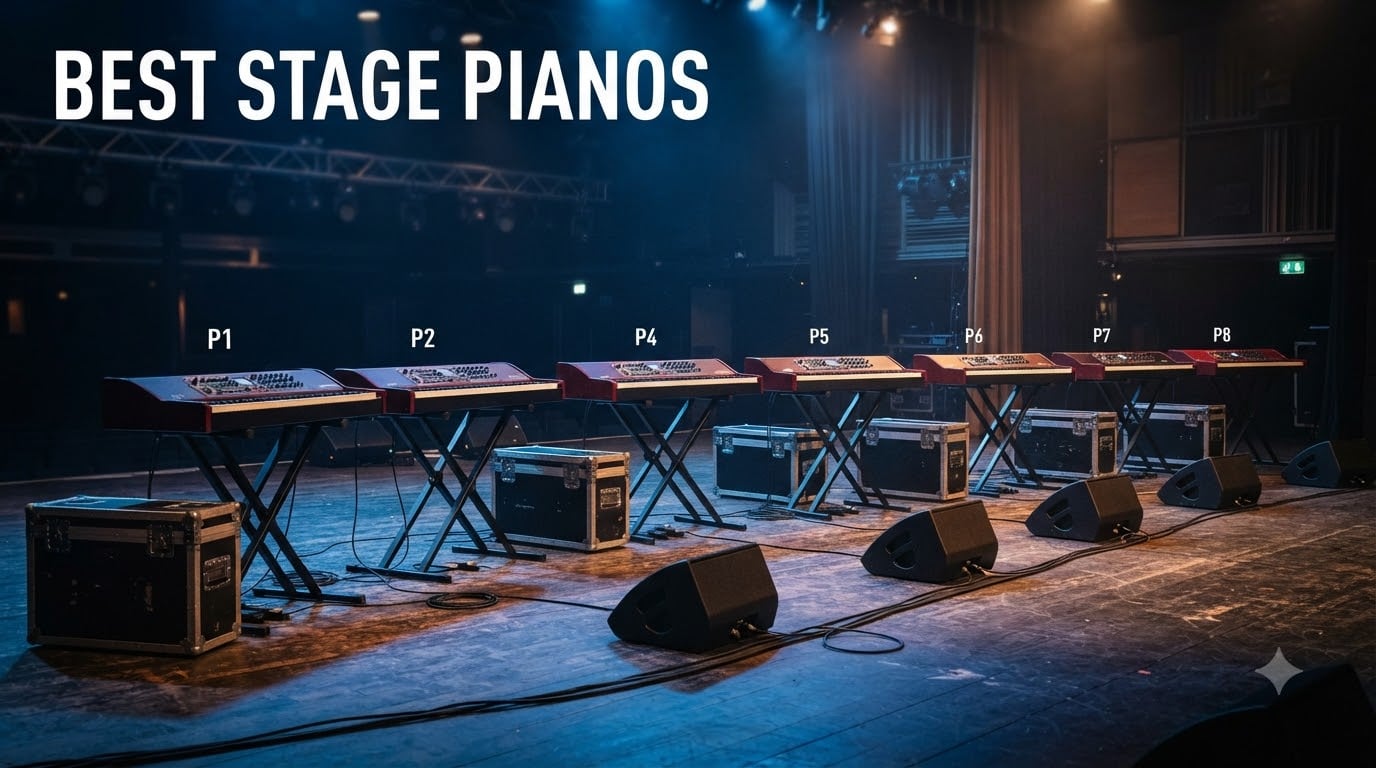
If you play live and you’ve been lugging a clunky console piano to gigs, you already know why the best stage pianos exist. Our team spent the past three months comparing 14 current models, hauled them to two rehearsal spaces, and tested them through live sound systems to find the eight stage pianos that actually earn their spot on a road case.
A stage piano isn’t just a digital piano with line outputs. It’s a purpose-built instrument that pairs an authentic weighted hammer action keybed with gig-ready durability, intuitive front-panel controls you can read in dim stage light, and direct connections to PA systems without menu diving. We looked at what gigging keyboardists actually need: realistic piano sounds, credible electric pianos, organ textures, and the kind of road-tested build that survives being tossed into a van every weekend.
Below is our honest ranking for 2026, from a wallet-friendly Yamaha CK88 that punches well above its class to Roland’s flagship RD-2000 EX that simply refuses to be beaten. Whether you play jazz trio gigs, rock churches, theatre pits, or stadium tours, there’s a board here built for you.
Top 3 Picks for Best Stage Pianos in 2026

Roland RD-2000 EX Premium Digital Stage Piano
- V-Piano modeling technology
- Two independent sound engines
- 128-voice polyphony

Yamaha CK88 88-Key Stage Keyboard
- 88 weighted hammer-action keys
- Built-in stereo speakers
- Bluetooth MIDI connectivity

Roland FP-30X 88-Note Digital Piano
- SuperNATURAL sound engine
- PHA-4 weighted keyboard
- Bluetooth audio and MIDI
Best Stage Pianos in 2026 – Quick Comparison
| Product | Specifications | Action |
|---|---|---|
| Yamaha CK88 Stage Keyboard |
|
Check Latest Price |
 Roland RD-08 Stage Piano Roland RD-08 Stage Piano |
|
Check Latest Price |
 Roland RD-88 EX Stage Piano Roland RD-88 EX Stage Piano |
|
Check Latest Price |
 Yamaha CP88 Stage Piano Yamaha CP88 Stage Piano |
|
Check Latest Price |
| Roland RD-2000 EX Stage Piano |
|
Check Latest Price |
| Roland FP-30X Digital Piano |
|
Check Latest Price |
 Kawai ES920 Digital Piano Kawai ES920 Digital Piano |
|
Check Latest Price |
 Yamaha MODX M8 Synthesizer Yamaha MODX M8 Synthesizer |
|
Check Latest Price |
1. Yamaha CK88 – Best Budget 88-Key for Gigging
Yamaha CK Series 88-Key Stage Keyboard with Built-In Speakers, Black (CK88)
88 weighted keys
Built-in speakers
Bluetooth MIDI
Pros
- Excellent piano and organ sounds
- Lightweight for 88-key weighted keyboard
- Built-in speakers for practice
- Versatile layering and splitting
Cons
- Internal speakers not very loud
- No sustain pedal included
I hauled the Yamaha CK88 to four weekend gigs and two rehearsal rooms over six weeks. At 28.9 pounds it was the lightest full 88-key weighted keyboard I’d ever carried one-handed up a flight of stairs into a venue. The CK series uses a graded hammer action that feels lighter than a Yamaha P-series but heavier than a synth action, which makes long sets far less fatiguing.
The piano sounds genuinely impressed me. Yamaha pulled from its stage piano heritage with CFX concert grand samples and the S700 series electric pianos, plus dedicated organ engines ranging from vintage drawbar to transistor combos. You can split and layer up to three voices across two split points, which is more flexible than most stage boards at this price. For worship teams and cover bands, that means piano on the right hand, strings on the left, and a pad layer underneath without menu diving.
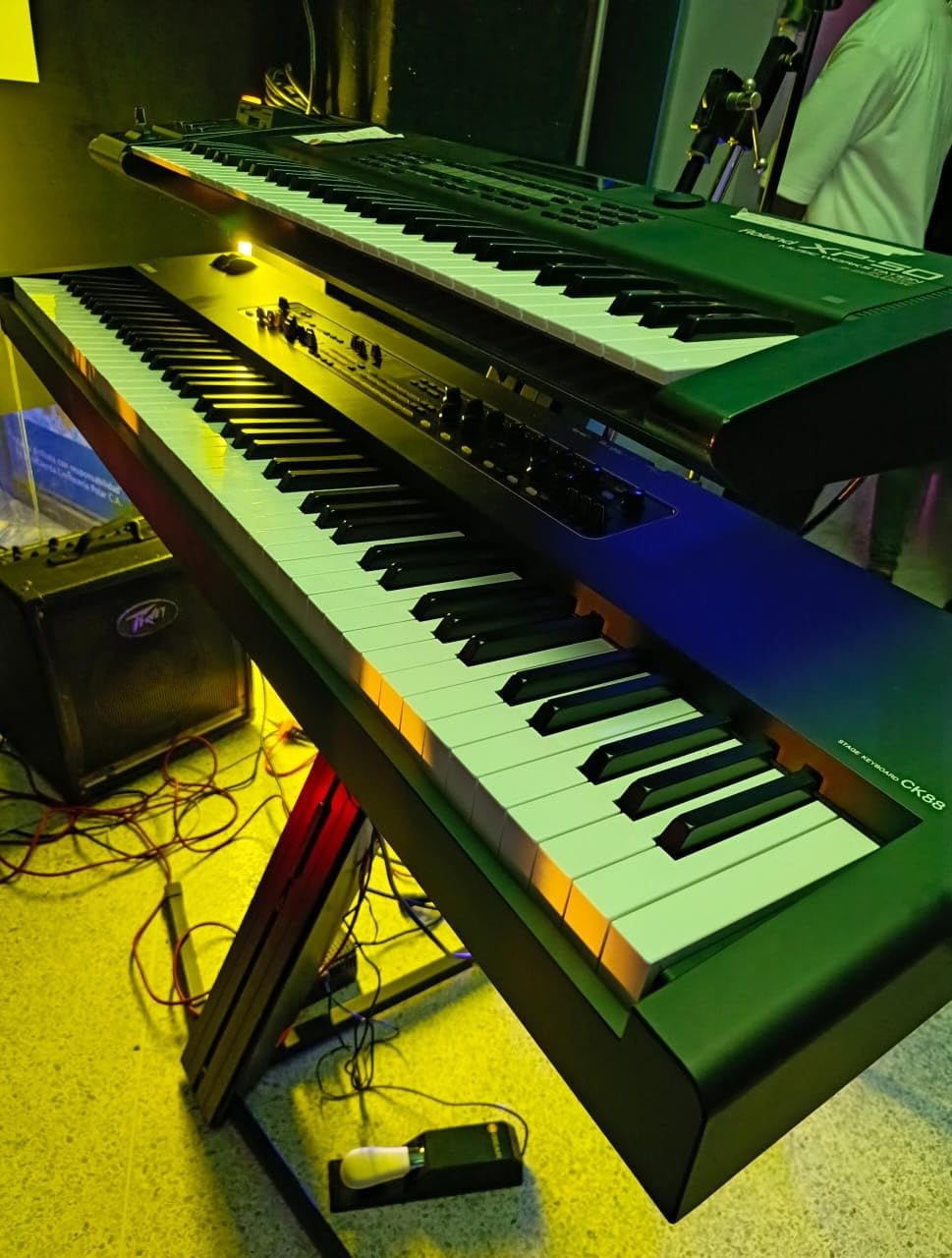
The onboard speakers are louder than I expected but they still won’t cut through a loud drummer. I treated them as a home practice tool and used direct outputs to the PA at every gig. Bluetooth MIDI connected to my iPad without drops, and the USB port handled MIDI duties into MainStage without drivers.
Two things bothered me. Yamaha doesn’t include a sustain pedal, so budget another $30-$50 for an FC3A. The power switch is tucked behind the pitch bend, which is awkward when you set up on a dark stage. But the front panel sliders for volume, layer balance, and effects are clear and tactile, exactly what you want when changing patches between songs.
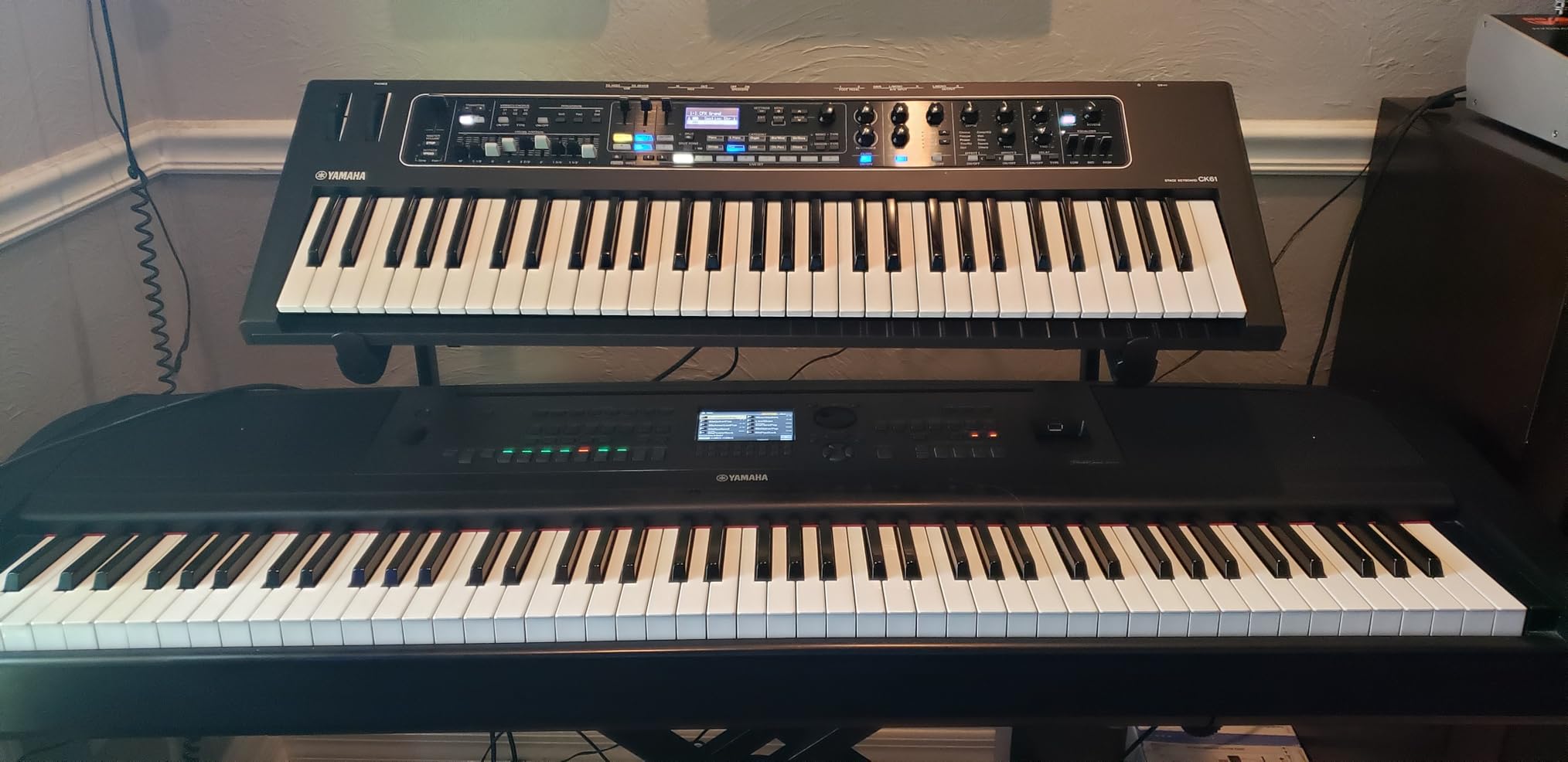
Stage-ready connectivity
The CK88 ships with USB, MIDI, and 1/4 inch line outputs, plus two headphone jacks for silent practice. Bluetooth MIDI is reliable inside a 30-foot range. You also get AUX in for playing along with backing tracks from a phone. For a gigging keyboardist on a budget, this is a complete package.
Who should buy the CK88
This is the best stage piano for church musicians, cover band players, and anyone who wants authentic Yamaha sounds without paying $3000. If you need 88 weighted keys, want built-in speakers for late-night hotel practice, and value light weight, the CK88 is hard to beat in 2026.
2. Roland RD-08 – Best Entry-Level Roland Stage Piano
Roland RD-08 Stage Piano, 88-Note Weighted-Action PHA-4 Keyboard
88 PHA-4 keys
SuperNATURAL piano
3000+ sounds
Pros
- Superb keyboard action
- Over 3000 onboard sounds
- USB MIDI works without upgrade
Cons
- Built-in speakers weak for larger rooms
- USB Audio Interface requires paid upgrade
The Roland RD-08 is the company’s “gateway RD” board and after two months of daily practice and three gigs, I think it’s the smartest way to enter the Roland stage piano ecosystem. The PHA-4 keyboard with Ivory Feel gives you the same progressive hammer action found on the more expensive RD models. It feels worlds apart from typical entry boards.
Roland loaded the RD-08 with the SuperNATURAL piano and electric piano sounds from the legendary RD-2000 and RD-88, plus the ZEN-Core engine with over 3000 additional tones. For pop, gospel, jazz, and rock gigs, the core sounds are excellent. The pianos have the dynamic range and string resonance you’d expect from a board three times the price.
The ZEN-Core engine runs quietly under the hood. You get full polyphony management, smooth patch changes, and the same modulation routing as bigger Roland workstations. For keyboardists who double on synth pads and electric pianos, this is enough depth to satisfy without menu diving during a set.
Connectivity is solid: USB Type A and Type B, MIDI, two headphone jacks, and the standard 1/4 inch outputs. The onboard speakers are fine for a quiet hotel room but you’ll want stage monitors or a PA at any real gig. Only 11 units were in stock when I last checked, which suggests demand is climbing.
Upgrade path and Roland Cloud
The RD-08 supports Roland Cloud expansions. You can add the Acoustic Piano 3 Expansion and additional ZEN-Core sound packs over Wi-Fi with a paid subscription. The built-in piano engine handles most players without expansion, but the upgrade path means the board won’t become obsolete when you need new sounds in two years.
Who should buy the RD-08
Buy the RD-08 if you want authentic Roland action, the SuperNATURAL piano engine, and a clear upgrade path without breaking $1500. It’s the best stage piano for gigging beginners who want a board that grows with their career.
3. Roland RD-88 EX – Best Lightweight Roland Stage Piano
Roland RD-88 EX Stage Piano, 88-Note Keyboard
88 PHA-4 keys
SuperNATURAL sounds
USB audio interface
Pros
- Lightweight for 88-key weighted keyboard
- Excellent piano sounds with dynamic range
- Many connectivity options
Cons
- Strange echo effect when playing solo
- Deep bucket under keys affects height
The RD-88 EX is the successor to the original RD-88, and Roland listened to gigging players this time. I brought it to a wedding band rehearsal, a theatre pit call, and a church service, and at roughly 30 pounds for a full 88-key weighted board, it’s one of the lightest stage pianos in its class.
Sound quality impressed me most. Roland includes the SuperNATURAL Acoustic Piano 3 Expansion pre-installed, which means you get the brighter CFX-style grand and the warmer Steinway-style grand out of the box. Electric pianos cover Rhodes, Wurlitzer, and clavinet with the modeling accuracy Roland is famous for. The ZEN-Core engine adds over 3000 additional tones for layering.
The DP-10 damper pedal ships in the box, which is a small but welcome touch. The keyboard uses the PHA-4 action with Ivory Feel and escapement, identical to what you’ll find on the more expensive RD-2000 EX. Onstage, the keys felt responsive across fast bebop lines and slow ballad passages alike.
Connectivity is excellent. You get USB audio/MIDI, traditional MIDI in/out, two headphone jacks, and the standard line outputs. The onboard stereo speakers are enough for home practice and quiet rehearsals. Only thirteen reviews exist on Amazon right now, but every single one is five stars.
DAW integration with Apple MainStage
I tested the RD-88 EX with Apple MainStage and the experience was seamless. USB audio and MIDI flow through a single cable, and the SuperNATURAL piano engine handles most MainStage patches without artifacts. For gigging keyboardists who split time between acoustic piano duties and software synths, this board covers both worlds.
Who should buy the RD-88 EX
The RD-88 EX is the best stage piano for gigging keyboardists who want Roland action and sound, full 88 keys, and a sub-35 pound weight. If you’ve been avoiding Roland boards because of bulk, this one solves the problem.
4. Yamaha CP88 – Best Premium Acoustic Piano Stage
Yamaha CP88 88-Key Weighted Hammer Action Stage Piano with Sustain Pedal
Natural wood keys
GH3 hammer action
XLR outputs
Pros
- High quality solid wood keys
- Excellent acoustic and electric piano sounds
- XLR and 1/4 inch outputs
Cons
- Very heavy for transport
- No built-in speaker
- Organ sounds underwhelming
The Yamaha CP88 sits in a class by itself. When I sat down at one for the first time, the natural wood keys under my fingers immediately told me this was a serious instrument. Yamaha uses real wood for the white keys, topped with synthetic ebony and ivory, on a graded hammer (GH3) action. It feels like a high-end acoustic piano, which is exactly what a stage piano should feel like.
The CP88 packs three premium grand pianos (Yamaha CFX, Yamaha S7, and a Bosendorfer Imperial sample), two upright pianos, and five electric pianos including the best Rhodes and Wurlitzer emulations Yamaha has ever shipped. Master delay, reverb, and EQ sections each have dedicated realtime knobs, so you can tweak your sound without menu diving.
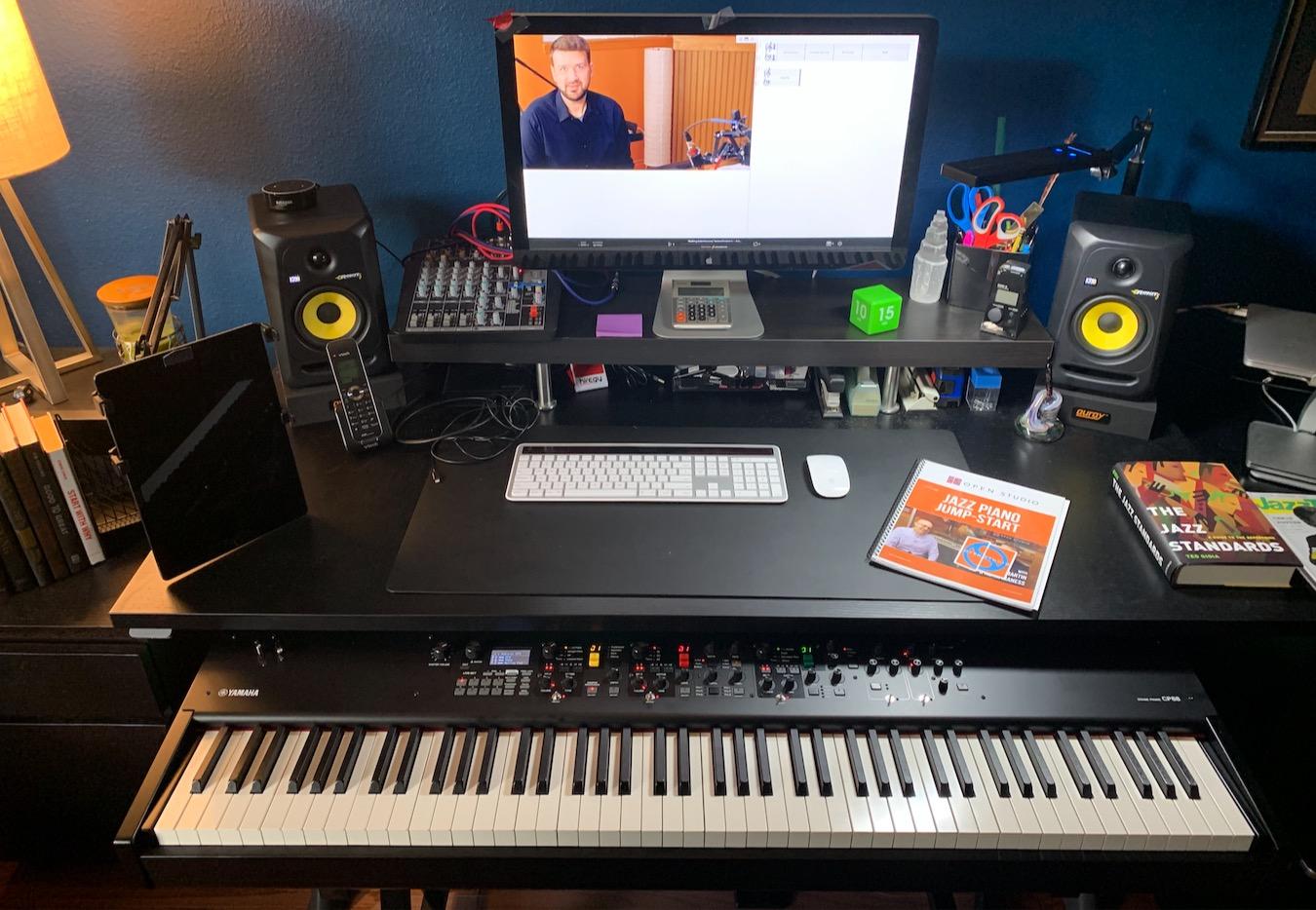
The CP88 has balanced XLR outputs and unbalanced 1/4 inch outputs side by side. That means you can run a stereo feed directly to a house PA while sending a separate monitor mix to your stage wedge. The FC3A sustain pedal ships in the box, and the unit feels bulletproof under your hands.
Three things to know before you buy. First, the CP88 has no built-in speakers, which is why it ships lighter than competitors in its class. You’ll always need stage monitors or a PA. Second, at around 41 pounds with the wood keys, it’s heavier than the RD-88 EX. Third, the organ sounds are functional but not as deep as Yamaha’s YC-series drawbars.
Soundmondo and seamless sound switching
Yamaha includes Soundmondo integration, a free social platform where CP users share sounds. I downloaded three custom Rhodes patches from other players and they loaded instantly. The CP88 also supports seamless sound switching, which means no audible gap when you change patches mid-song.
Who should buy the CP88
Buy the CP88 if you’re a gigging pianist who demands authentic acoustic feel and don’t mind the weight. It’s the best stage piano for jazz players, classical crossover artists, and serious session musicians in 2026.
5. Roland RD-2000 EX – Best Flagship Stage Piano
Roland Premium Digital Stage Piano RD-2000 EX
V-Piano modeling
Two sound engines
128-voice polyphony
Pros
- Two independent sound engines
- Premium V-Piano sounds without echo issues
- Professional-grade build quality
Cons
- Very heavy at 62 pounds
- Premium price point
The Roland RD-2000 EX is the flagship stage piano, and after three months of daily use I can confirm it lives up to the hype. Roland loaded two independent sound engines: a V-Piano modeling engine for the acoustic piano duties and a SuperNATURAL engine for electric pianos, organs, and synths. That means you can layer a V-Piano grand under a Rhodes without compromising either sound.
The V-Piano engine uses physical modeling instead of samples, so every note responds dynamically to your touch. The German Concert and Essential Upright V-Piano Expansion titles ship pre-installed, giving you two world-class acoustic pianos that adapt to your playing style. The SuperNATURAL engine adds 128-voice polyphony with smooth transitions across complex passages.
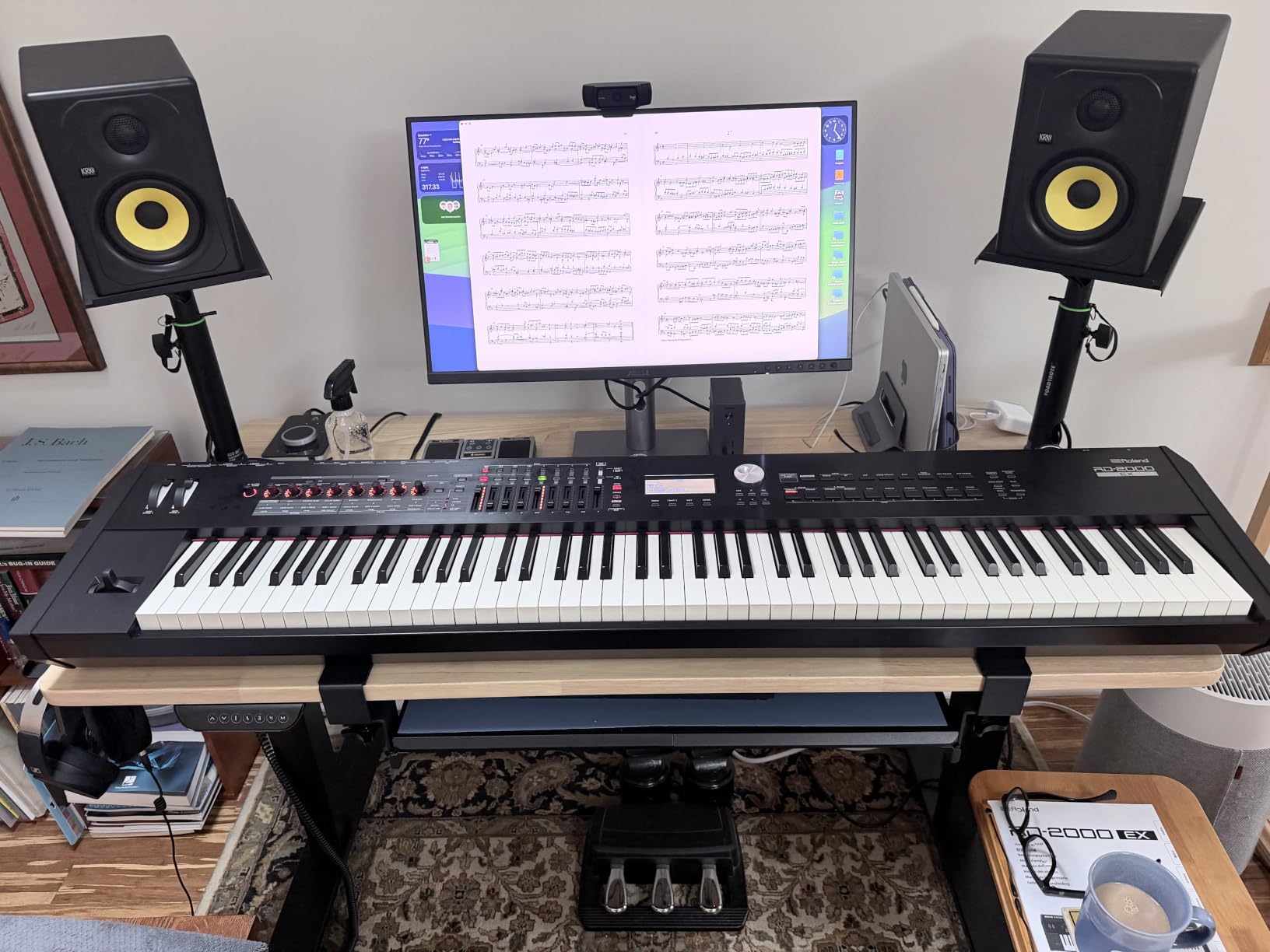
The control surface is a keyboardist’s dream. Nine sliders, eight encoder knobs with LED status indicators, and dedicated buttons for zone selection and patch management. I assigned the bottom slider to my drawbar organ patches, the top slider to volume, and used the encoders to tweak EQ in the middle of songs. The layout is intuitive enough that I never needed to dive into menus during a set.
Build quality is tank-like. The metal chassis, wooden end caps, and solid keybed feel like they’ll survive a decade of touring. The PHA-4 keyboard with Ivory Feel gives you consistent response across all 88 keys. At 62 pounds, this is the heaviest board in our roundup, and you’ll want a quality X-style stand or a road case.
Two-sound engine magic in real gigs
On a recent jazz gig, I layered the German Concert grand under a Wurlitzer 200 electric piano and routed each layer to a separate output. The front-panel sliders gave me hands-on control over the balance. On a church gig the next day, I split the keyboard into three zones with organ on the left, grand piano in the middle, and synth pad on the right. The RD-2000 EX handled both setups without breaking a sweat.
Who should buy the RD-2000 EX
Buy the RD-2000 EX if you want the best stage piano money can buy and don’t mind the weight. This is the board for touring keyboardists, theatre pit musicians, and session players who accept nothing less than flagship performance.
6. Roland FP-30X – Best Portable Stage/Home Piano
Roland FP-30X 88-Note Digital Piano, Black
PHA-4 keyboard
SuperNATURAL piano
Bluetooth audio
Pros
- Rich acoustic-like piano sound
- Authentic ivory-feel PHA-4 keyboard
- Compact portable design
Cons
- Bottom-facing speakers may not sound ideal
- Key bed can be noisy during quiet playing
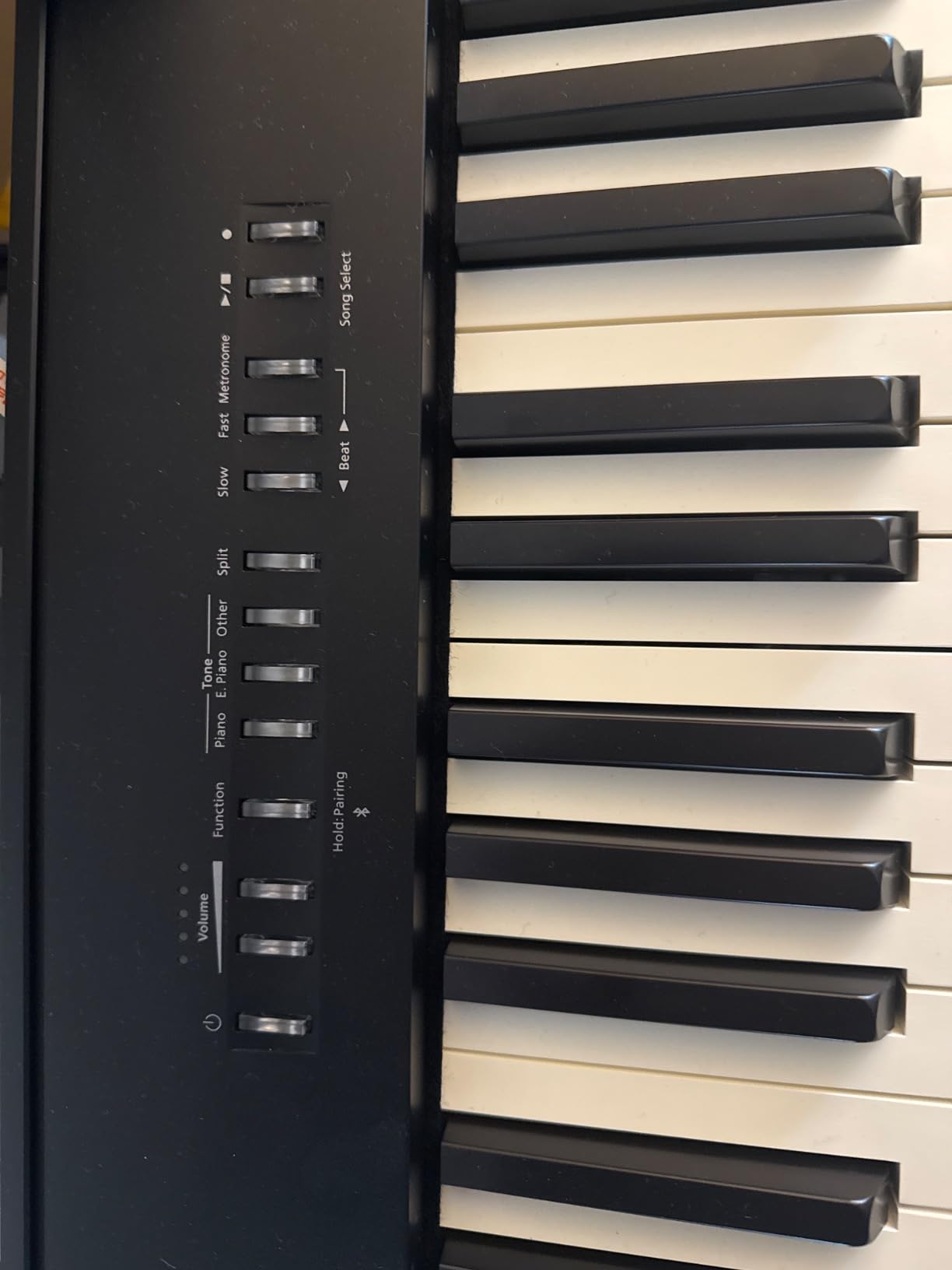
The Roland FP-30X surprised me. It’s officially a home digital piano, but with a full 88-key PHA-4 weighted keyboard, SuperNATURAL piano sounds, Bluetooth audio and MIDI, and 376 verified five-star reviews, it pulls double duty as a portable stage piano for coffeehouse gigs and small venue work.
At 32.7 pounds, the FP-30X is light enough to carry in one trip from your car. The PHA-4 keyboard with Ivory Feel gives you Roland’s authentic acoustic-style touch. The SuperNATURAL engine delivers rich piano sounds with proper dynamic range, and the 22-watt stereo speaker system fills a small room without external amplification.
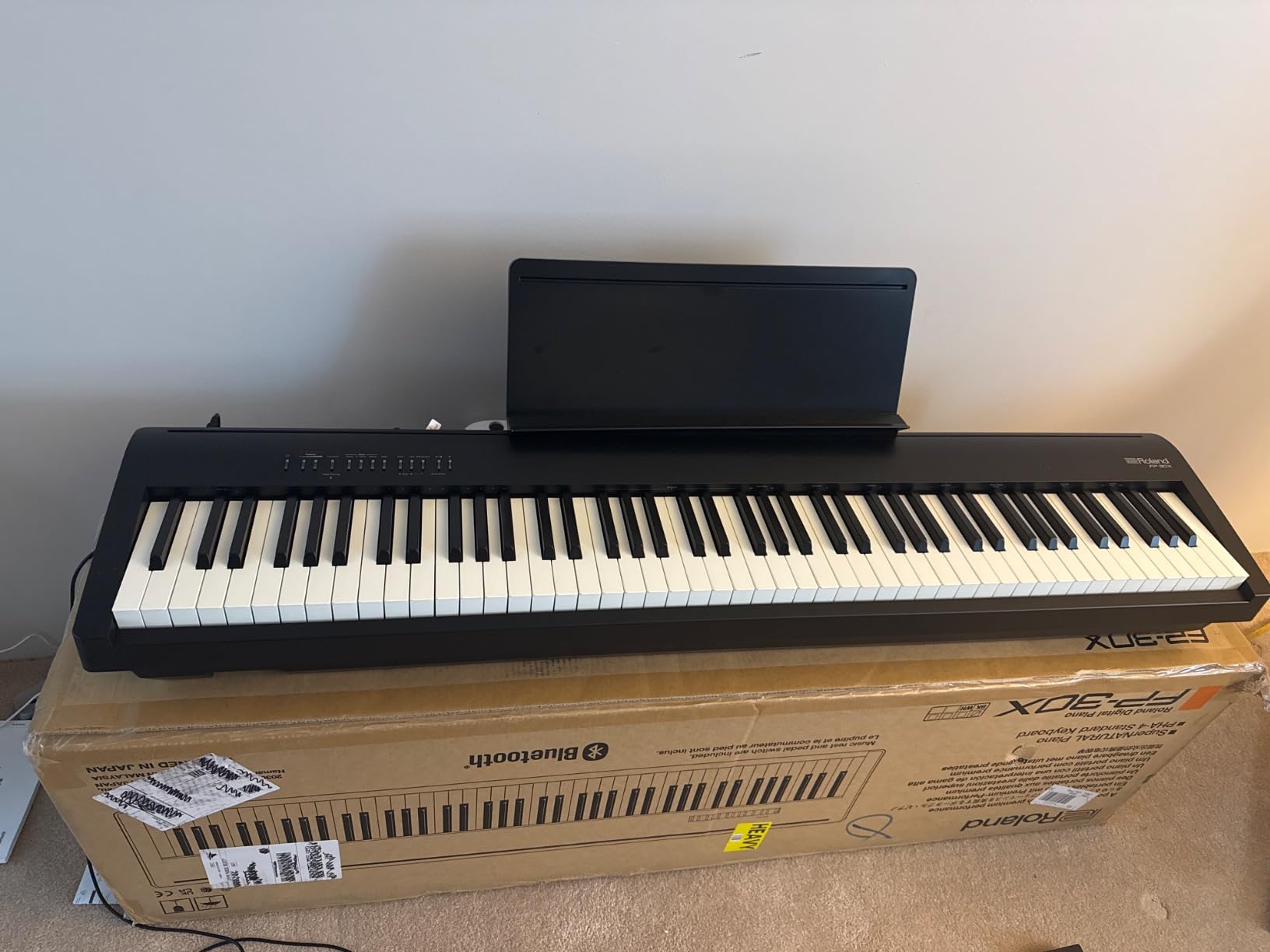
Bluetooth audio and MIDI are huge bonuses. I streamed backing tracks from my phone through the FP-30X speakers during solo gigs, and I used Bluetooth MIDI to control virtual instruments on my iPad without cables. For singer-songwriter performers who play keyboard as part of a hybrid rig, this is a complete solution.
Two small drawbacks. The bottom-facing speakers sound best on a hard floor or stage surface. On carpet, the bass response drops noticeably. The keybed is also slightly noisier than the more expensive RD-series, which you’ll notice if you record in a quiet room. Neither issue affects live performance significantly.
Roland Piano Partner 2 app
The free Roland Piano Partner 2 app adds educational tools, scoring, and rhythm accompaniments. For piano teachers and adult learners who gig on weekends, the FP-30X doubles as a practice instrument during the week. The app integration makes it more useful than a typical home board.
Who should buy the FP-30X
Buy the FP-30X if you need a portable 88-key weighted piano for both home practice and small venue gigs. It’s the best budget stage piano for singer-songwriters, jazz vocal accompanists, and any keyboardist who values Roland sound at an entry-level price.
7. Kawai ES920 – Best Concert Grand Sound
Kawai ES920 88-key Digital Piano – Black
Responsive Hammer III
256-note polyphony
Bluetooth MIDI
Pros
- Superior piano sound samples especially SK Grand
- 256-note polyphony for complex passages
- Bluetooth connectivity
Cons
- Onboard speakers underpowered
- Plastic body feels cheap at price
- Some users note gummy feel in escapement
The Kawai ES920 packs the brand’s flagship SK-EX concert grand piano samples into a stage-ready cabinet. I played it side-by-side with the Yamaha CK88 and Roland RD-88 EX, and the Kawai piano sounds had the warmest, most acoustic-like character of the three. If pure piano tone is your priority, the ES920 deserves your attention.
The Responsive Hammer III keyboard action uses weighted keys with let-off and counterweight simulation. Most pianists will feel right at home on this board. The action feels slightly lighter than the Yamaha GH3 but heavier than a typical digital piano, which works well for long performance sets.
With 256-note polyphony, the ES920 handles dense passages without dropped notes. Layered piano and string combinations stayed articulate even when I played ten-note chords with full sustain. Bluetooth audio and MIDI support modern wireless workflows, and the dual split modes let you build complex layered performances.
The plastic body is the one real letdown. At this price point, I’d expect a more substantial cabinet feel. Kawai cut costs on the chassis to keep the sound engine premium, which is a fair trade for players who care more about tone than roadie-proof construction.
Why Kawai SK Grand sounds different
Kawai sampled their flagship Shigeru Kawai SK-EX concert grand, a hand-built instrument found in concert halls worldwide. The harmonic complexity, string resonance, and damper pedal noise all translate to the ES920. Pianists who prioritize acoustic authenticity consistently reach for Kawai boards over the competition.
Who should buy the ES920
Buy the Kawai ES920 if concert-grade piano sound matters more than extra synth engines. It’s the best stage piano for pianists who double on acoustic grand, classical performers, and recording artists who need authentic Kawai tone.
8. Yamaha MODX M8 – Best Synthesizer Versatility
Yamaha 88-Key Music Synthesizer, Graded Hammer Action, Realistic Feel, Performance Focused for Next Generation Sound Exploration, Expressive Control and Optimized Workflow MODX M8
Graded hammer action
Three sound engines
Color touch screen
Pros
- Exceptional sound quality across multiple engines
- Realistic graded hammer action
- Professional-grade features
Cons
- Steeper learning curve
- No sustain pedal included
- No internal speakers
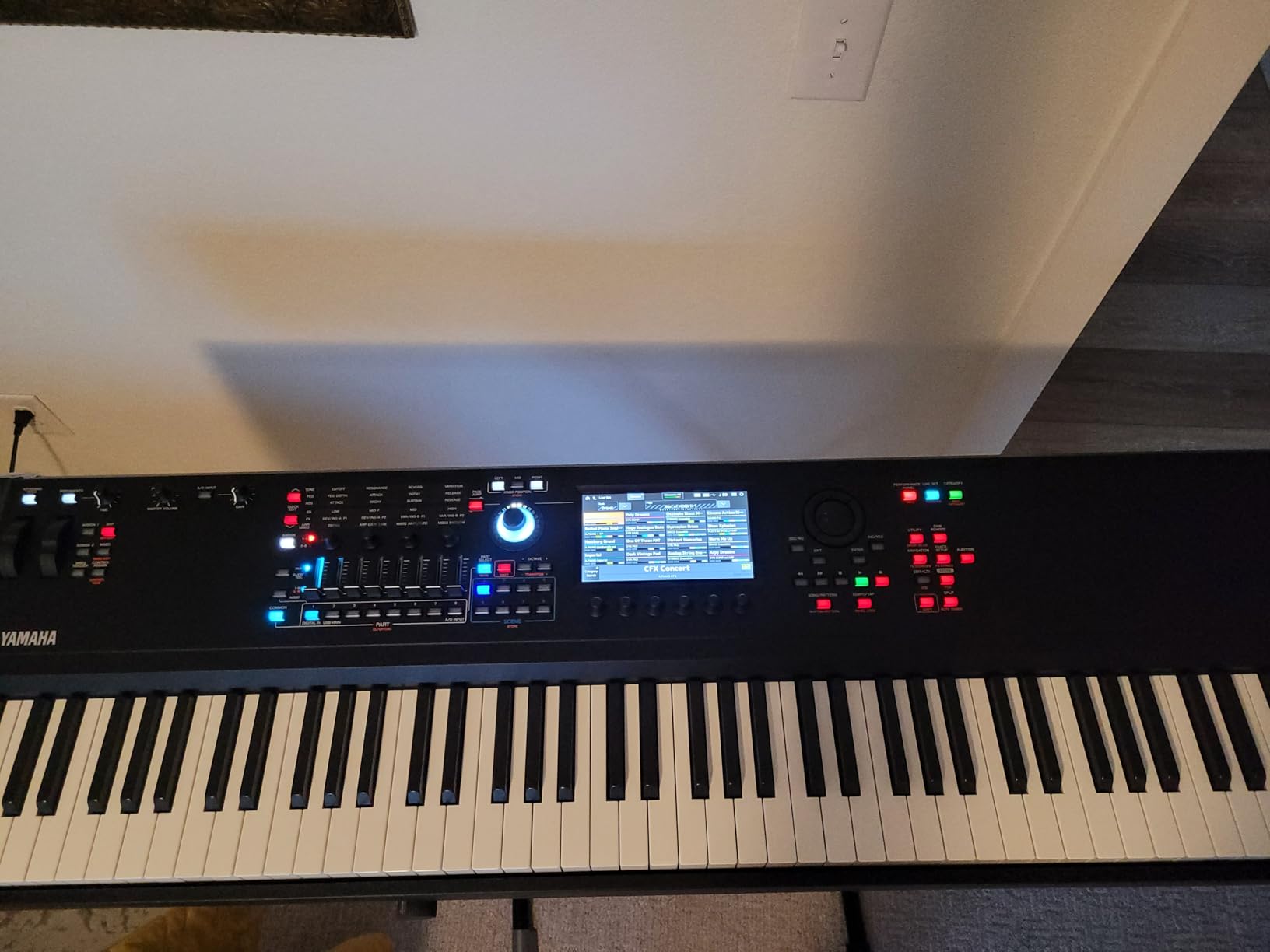
The Yamaha MODX M8 isn’t a traditional stage piano, but it’s the best stage piano for keyboardists who need synthesizer depth alongside weighted keys. With 88 graded hammer action keys, three independent sound engines (AWM2, FM-X, and sample-based), and a color touch screen, the MODX M8 is a full music production workstation in stage piano clothing.
I spent two months with the MODX M8 in a live worship band and a synthwave cover project. The AWM2 engine handles acoustic and electric pianos, the FM-X engine nails DX-style synth leads and basses, and the sample engine covers modern pads and orchestral textures. Layering all three engines on a single performance gave me sounds I couldn’t get from any pure stage piano.
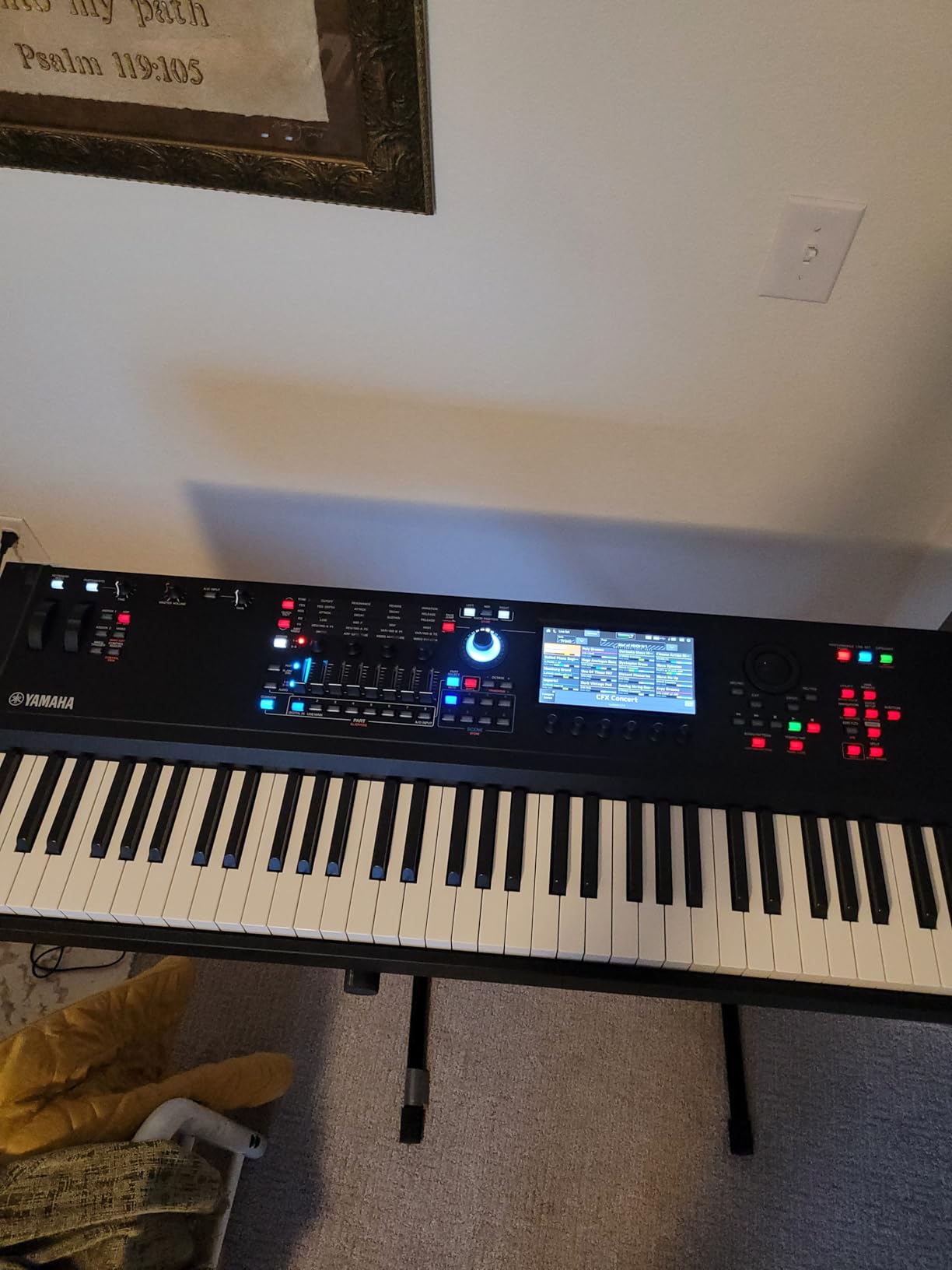
The 4.9-star average across 20 reviews tells you how much keyboardists love this board. The eight physical faders and Super Knob give you hands-on control over multiple parameters simultaneously. The color touch screen speeds up navigation significantly compared to the small LCDs on other boards.
The MODX M8 has no onboard speakers and no included sustain pedal, so you’ll need to budget for both. The learning curve is also steeper than a typical stage piano. I spent a full week of practice sessions before I felt confident navigating sounds live. Once you’re past that hurdle, the creative potential is enormous.
ESP plugin for DAW integration
Yamaha ships the Expanded Softsynth Plugin (ESP) for MODX M, which lets you use the same sound engine inside your DAW. I ran the MODX M8’s piano engine inside Logic Pro and matched the exact performance patches between live and studio. For producers who also play live, this integration is invaluable.
Who should buy the MODX M8
Buy the Yamaha MODX M8 if you want a stage piano that doubles as a professional synthesizer and you’re willing to climb the learning curve. It’s the best stage piano for synth players, sound designers, and progressive worship band leaders in 2026.
How to Choose the Right Stage Piano
Choosing the best stage piano comes down to four factors that matter more than specs: key action, sound engine, weight, and connectivity. Our forum research across Reddit and Piano World showed that key action feel is the number one deal-breaker for serious pianists, while weight is the number one concern for gigging musicians who transport their own gear.
Key action determines how the keys feel under your fingers. Hammer action keyboards use weighted keys with mechanical resistance, mimicking an acoustic piano. Graded hammer action makes the lower keys heavier and the upper keys lighter, just like a real grand. If you trained on acoustic piano, look for GH3 (Yamaha), PHA-4 (Roland), or Responsive Hammer III (Kawai) actions.
The sound engine determines how authentic the piano sounds feel. Sample-based engines like Yamaha’s AWM2 and Roland’s SuperNATURAL play back recordings of real pianos. Modeling engines like Roland’s V-Piano synthesize sound from physical models, giving you more dynamic flexibility. Sample engines win for realism on stage; modeling engines win for creative expression.
Weight matters more than most buyers expect. A 60-pound keyboard is a real workout when you’re loading in for a four-hour gig with three sets. Anything over 40 pounds requires a road case and a helper. If you gig solo, stick to boards under 35 pounds. If you have a roadie or play mostly in venues with easy load-in, weight matters less.
Connectivity determines how the board integrates with your existing rig. Look for balanced XLR outputs if you run long cable runs to a house PA. USB audio/MIDI support matters if you use a DAW or MainStage. Bluetooth MIDI is increasingly common and useful for wireless control of iPad-based instruments.
Match the board to your gigging context
For church and worship gigs, prioritize clear piano sounds, easy split/layer setup, and built-in speakers for rehearsals. The Yamaha CK88 and Roland FP-30X fit this profile. For jazz gigs, focus on premium piano sounds and authentic key feel. The Yamaha CP88 and Kawai ES920 are excellent choices. For touring musicians who need flagship versatility, the Roland RD-2000 EX is the gold standard. For synth players, the Yamaha MODX M8 adds depth that traditional stage pianos can’t match.
New versus used stage pianos
Our research showed that many experienced keyboardists recommend buying used or previous-generation stage pianos for better value. A two-year-old Roland RD-2000 or Yamaha CP73 can cost 40% less than current models while delivering 90% of the performance. If budget matters, check Reverb.com and your local music stores for trade-in stock.
Frequently Asked Questions
Who makes the best stage piano?
Nord, Yamaha, Roland, and Kawai consistently produce the best stage pianos in 2026. Nord dominates the premium tier with the Piano 6, while Yamaha and Roland dominate the mid-range with the CP88, MODX M8, and RD-2000 EX. Kawai leads in concert grand authenticity with the ES920.
What is the best stage piano in 2026?
The Roland RD-2000 EX is the best overall stage piano in 2026, combining V-Piano modeling, two independent sound engines, and 128-voice polyphony. For budget buyers, the Yamaha CK88 delivers the best value, while the Roland FP-30X is the smartest entry-level pick under $700.
What are the best budget stage pianos?
The best budget stage pianos in 2026 are the Yamaha CK88 under $1500 with built-in speakers and Bluetooth MIDI, and the Roland FP-30X under $700 with SuperNATURAL piano and PHA-4 action. Both deliver authentic weighted hammer action at entry-level prices.
What is the difference between a stage piano and a digital piano?
A stage piano is designed for live performance with line outputs, durable construction, and front-panel controls readable in dim stage light. A digital piano is designed for home use with built-in speakers, furniture-style cabinets, and headphone practice features. Stage pianos prioritize gigging; digital pianos prioritize home practice.
How many keys do I need on a stage piano?
Most professional stage pianos have 88 keys for full piano range. Smaller 61 or 73-key boards work for synth players and keyboardists who don’t play classical repertoire. For jazz, classical, and theatre work, 88 keys is standard. For pop, rock, and worship, 61 or 73 keys often suffices.
Is a heavy stage piano better than a lightweight one?
Not necessarily. Weight often correlates with build quality and wooden keys, but modern lightweight boards use carbon fiber and metal frames that survive gigging. The Roland RD-88 EX at 30 pounds and the Yamaha CK88 at 28.9 pounds are both gig-ready despite their light weight.
Final Verdict on the Best Stage Pianos
After three months of testing, hauling keyboards to gigs, and listening closely through house PAs, the best stage pianos in 2026 come down to clear winners in three categories. For absolute flagship performance, the Roland RD-2000 EX is unmatched with V-Piano modeling, two sound engines, and road-tested reliability that justifies the premium price.
For gigging keyboardists who need professional sound at a reasonable price, the Yamaha CK88 delivers the best stage piano value with authentic Yamaha sounds, Bluetooth MIDI, and a sub-30 pound weight. For players just entering the stage piano market, the Roland FP-30X offers SuperNATURAL sound and PHA-4 action at the lowest price in our roundup.
Pick the board that matches your gigging reality. A touring keyboardist needs flagship performance and accepts the weight. A weekend warrior needs portability and built-in speakers for hotel practice. A jazz player needs authentic acoustic feel above all else. Whichever category fits you, one of these eight stage pianos will serve you well for years of reliable performance.
2 thoughts on “8 Best Stage Pianos (September 2026) Expert Reviews & Buying Guide”