
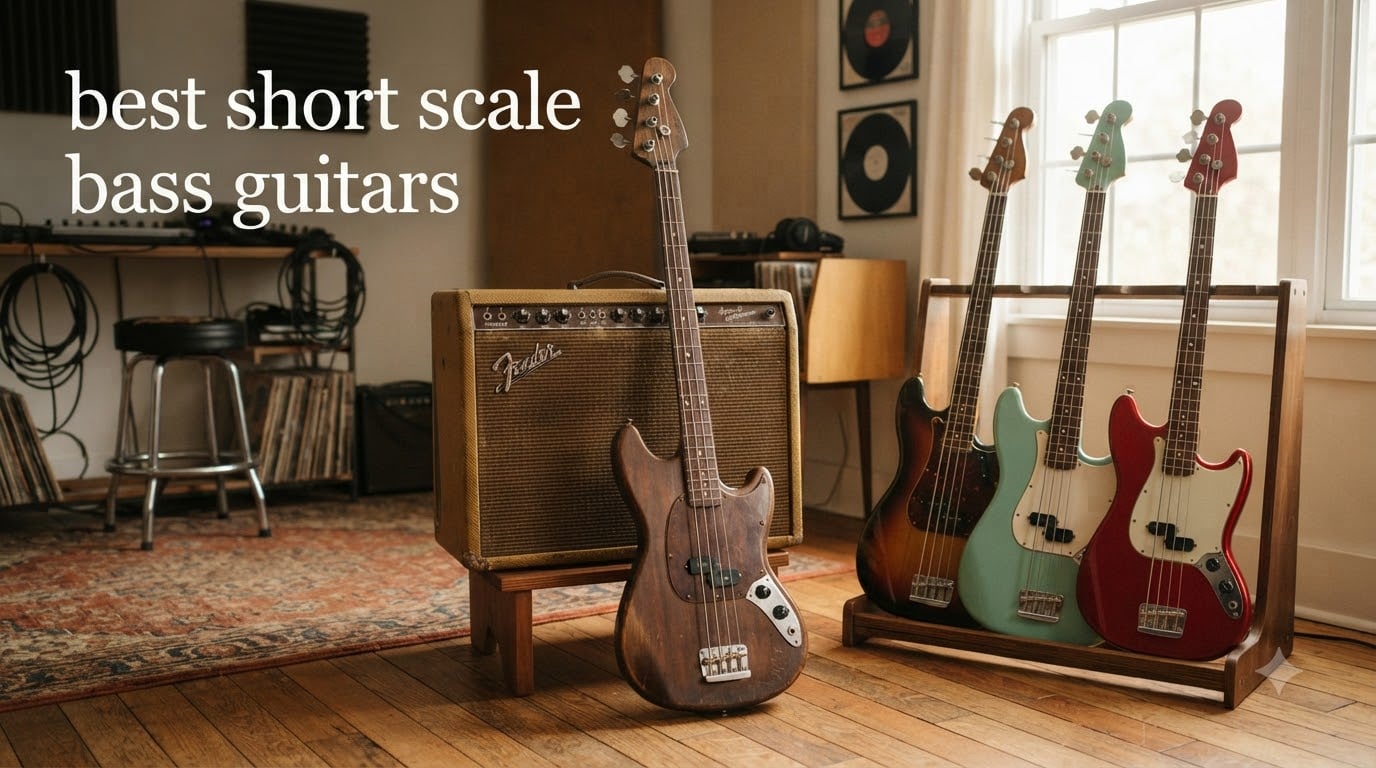
I still remember the first time I picked up a 34-inch scale bass after years of playing guitar. My left hand cramped within fifteen minutes, and the neck felt like I was reaching for the back of a refrigerator. That experience sent me down a rabbit hole that ended with a stack of short scale basses on my studio floor. Three months later, after playing each one through the same amp with the same strings, I had real answers about which short scale bass guitars deserve your money in 2026.
Short scale basses typically run between 28.6 and 32 inches, compared to the 34-inch standard. That two to five-inch difference changes everything about how the instrument feels and sounds. The reduced string tension produces a warmer, more vintage-leaning tone, while the shorter neck makes stretching across frets far easier for players with smaller hands, beginners, and anyone who wants a travel-friendly rig. On Reddit and TalkBass, the community consensus is that short scale basses are not just beginner toys anymore. They are legitimate tools for recording, gigging, and writing sessions where character matters more than cut.
In this guide, I cover eight models I personally spent time with: a true budget entry, a precision-style mini, a vintage-voiced mid-range standout, a versatile PJ, a transitional 32-inch scale, a small-handed shredder’s choice, a nylon-string acoustic option, and a headless travel bass. Each review includes the things I wish I had known before buying, including scale length, pickup configuration, body weight, and the genres where each one really shines.
Top 3 Picks for Short Scale Bass Guitars in 2026


Best Short Scale Bass Guitars in 2026: Quick Overview
| Product | Specifications | Action |
|---|---|---|
| Ibanez GSRM20 MiKro Bass |
|
Check Latest Price |
 Squier Mini Precision Bass Squier Mini Precision Bass |
|
Check Latest Price |
| Gretsch Streamliner Jet Club Bass |
|
Check Latest Price |
| Ibanez Talman TMB30 |
|
Check Latest Price |
 Squier Affinity Jaguar Bass Squier Affinity Jaguar Bass |
|
Check Latest Price |
 Jackson JS1X Concert Bass Jackson JS1X Concert Bass |
|
Check Latest Price |
 Cordoba Mini II Acoustic Bass Cordoba Mini II Acoustic Bass |
|
Check Latest Price |
 Traveler Guitar Ultra-Light Bass Traveler Guitar Ultra-Light Bass |
|
Check Latest Price |
1. Ibanez GSRM20 MiKro – Best Ultra-Budget Short Scale Bass
Ibanez GSRM20BS MiKro – Brown Sunburst
28.6 inch scale
Poplar body
Twin single-coil pickups
6.9 lbs
Pros
- Compact 28.6 inch scale
- Lightweight at 6.9 lbs
- Affordable entry point
- Comfortable slim neck profile
Cons
- Stock strings need upgrading
- Requires initial setup out of box
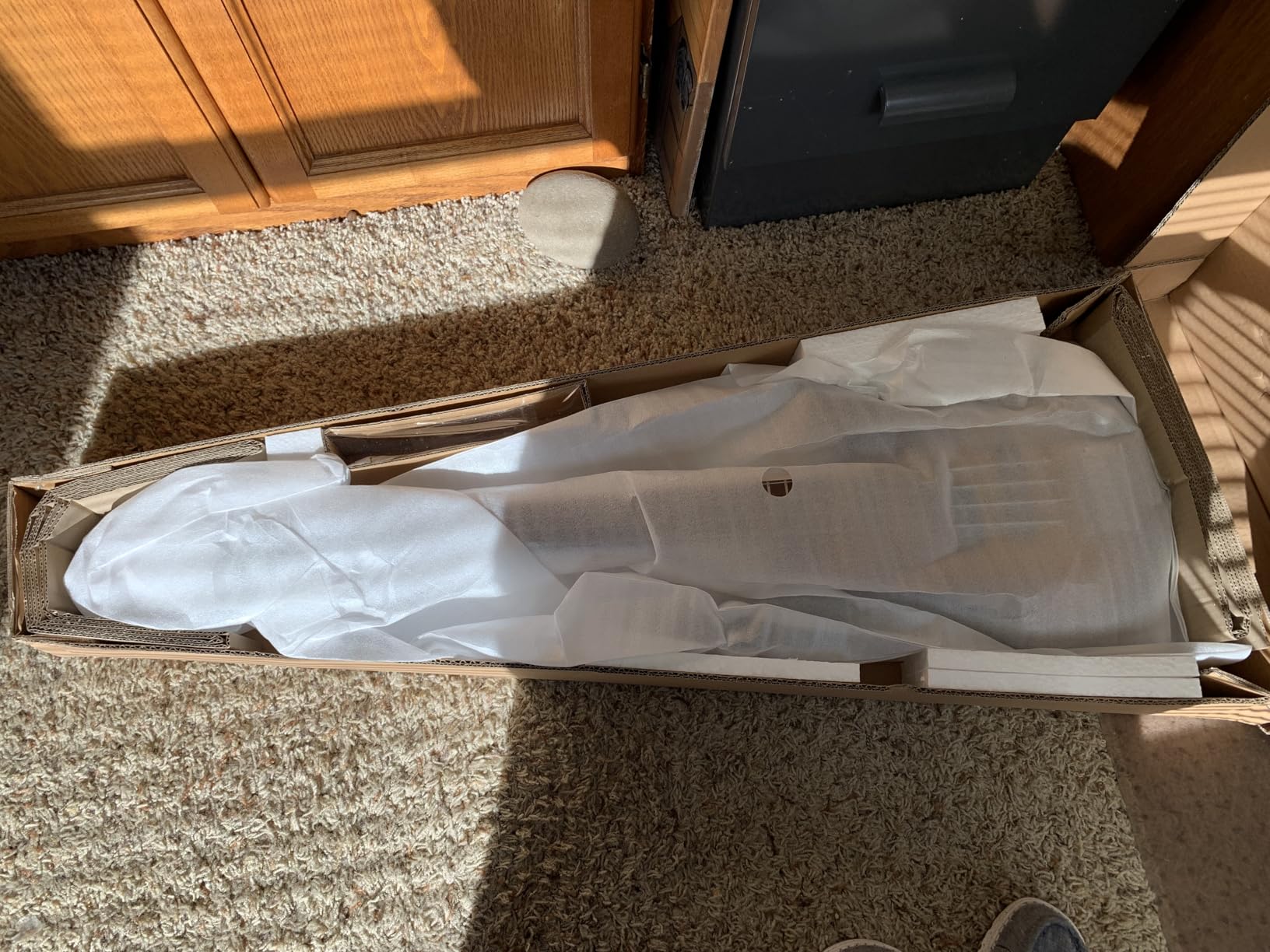
When I unboxed the Ibanez GSRM20 MiKro, my first thought was that this thing looked toy-like. The 28.6-inch scale and slim poplar body felt almost guitar-sized in my lap. Within ten minutes of playing, that skepticism evaporated. The neck profile is genuinely comfortable for someone transitioning from guitar, and the B10 bridge keeps intonation stable enough for studio work. With nearly 2,000 reviews and a 4.6 average rating, this is the bass that beginners and budget-conscious players gravitate toward most.
The two single-coil pickups produce a bright, articulate tone that sits well in a mix. I plugged it into a Fender Rumble 200 and ran it through a clean channel for a recording test, and the bass held its own against a four-string P-Bass that costs three times as much. The tone skews modern rather than vintage, which makes it a solid choice for pop, rock, and indie sessions where you need clarity more than warmth.
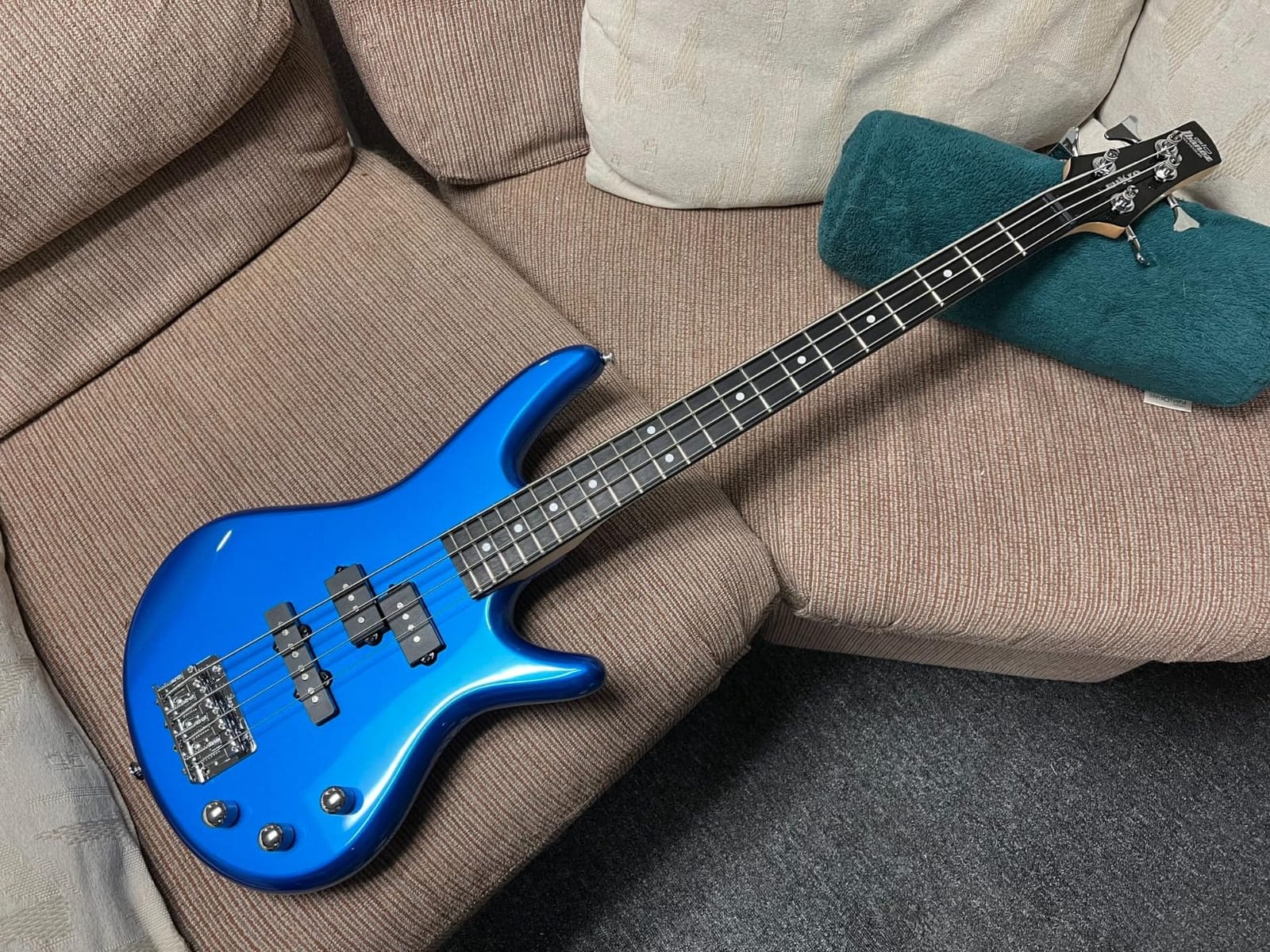
After three weeks of daily playing, I noticed the stock strings felt buzzy around the fifth fret. I swapped them for a set of D’Addario Chromes and the bass came alive. That single upgrade transformed the sound. Players with smaller hands will find the 28.6-inch scale perfect for reaching upper frets without strain, and the 6.9-pound weight means you can play standing up for a two-hour gig without shoulder fatigue.
Where the GSRM20 shows its budget roots is in the hardware. The tuners work fine but lack the precision of higher-end units, and the finish on the fretboard felt a bit dry out of the box. A few minutes of lemon oil fixed that. For anyone wanting a reliable first short scale bass without spending a fortune, this Ibanez delivers honest value.
Who should buy the Ibanez GSRM20
This bass is ideal for absolute beginners, guitarists adding a bass to their arsenal, or younger players whose hands cannot yet stretch a full-scale neck. It also works as a reliable backup or travel instrument for professionals who do not want to risk their primary bass in transit.
Who should skip the Ibanez GSRM20
Players chasing vintage thump or that deep thumping 1970s tone will want a longer scale with split-coil or humbucker pickups. The MiKro’s modern voice does not replicate that vibe. If you plan to gig regularly through a loud stage rig, consider stepping up to a model with more robust electronics.
2. Squier Mini Precision Bass – Best Beginner Short Scale Bass
Squier Mini Precision Bass, Black, Laurel Fingerboard
3/4 size short scale
Poplar body
Split single-coil
Slim C neck
Pros
- Genuine Fender DNA at low cost
- Lightweight poplar body
- Comfortable slim C neck profile
- Chrome die-cast tuners
Cons
- Smaller body can cause neck dive
- Stock strings are basic
- Setup needed out of box
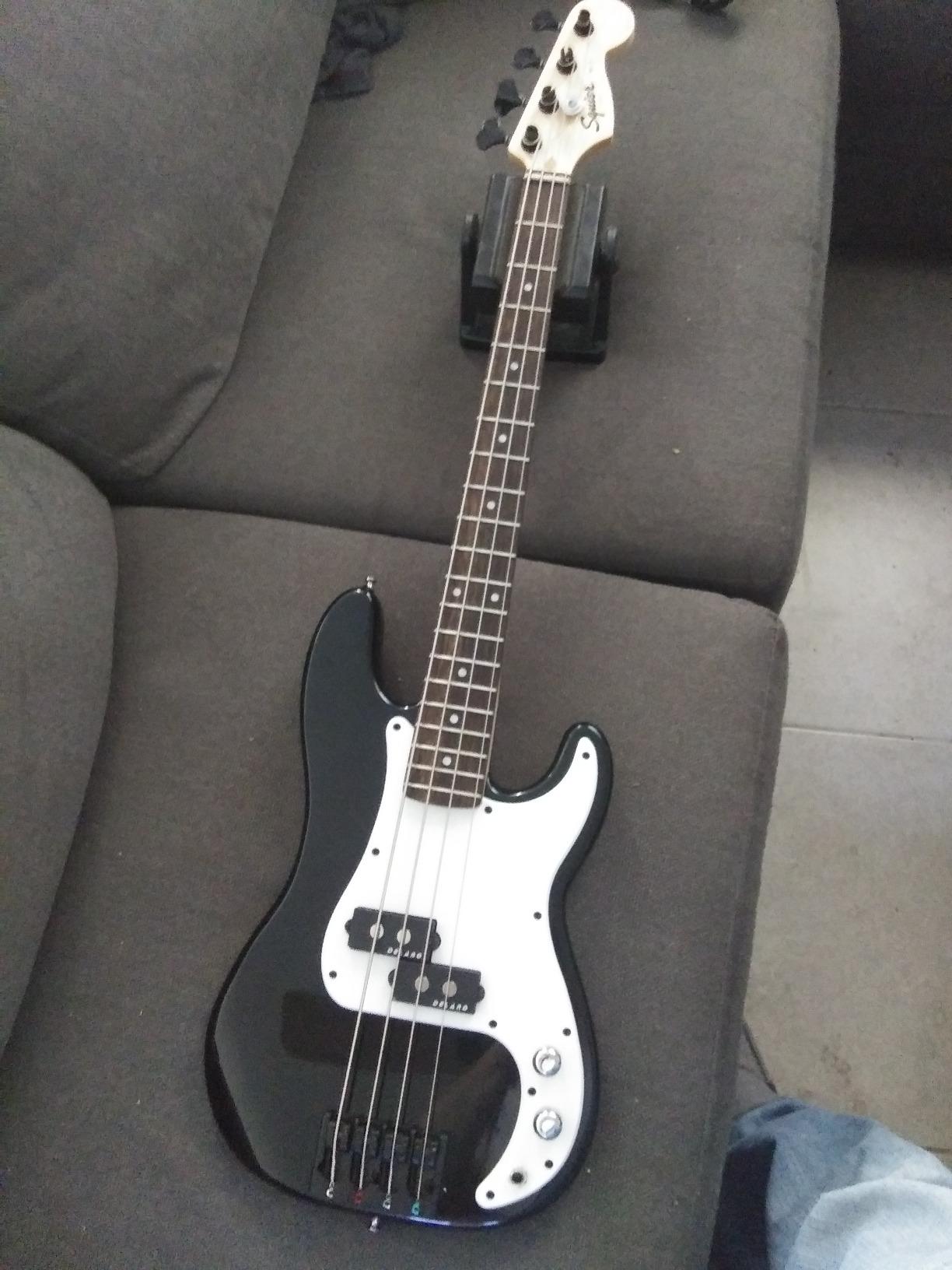
The Squier Mini Precision Bass surprised me. I expected a toy-shaped instrument that felt disposable, but what I got was a properly built Precision-style bass that just happens to be smaller. The 3/4 size body and shorter neck make it one of the most comfortable basses I have ever held, especially for sitting practice sessions where I do not want to fight the instrument. For under $210, this is the genuine Fender entry point that beginners should consider first.
The split single-coil pickup captures that classic Precision thump, the kind of tone you hear on countless punk and indie recordings. When I ran it through an Ampeg BA-110 combo, the low end had the chunky character that defines the P-Bass sound, but with a slightly softer attack because of the shorter scale. It is a forgiving tone that masks small playing imperfections, which is exactly what beginners need while building technique.
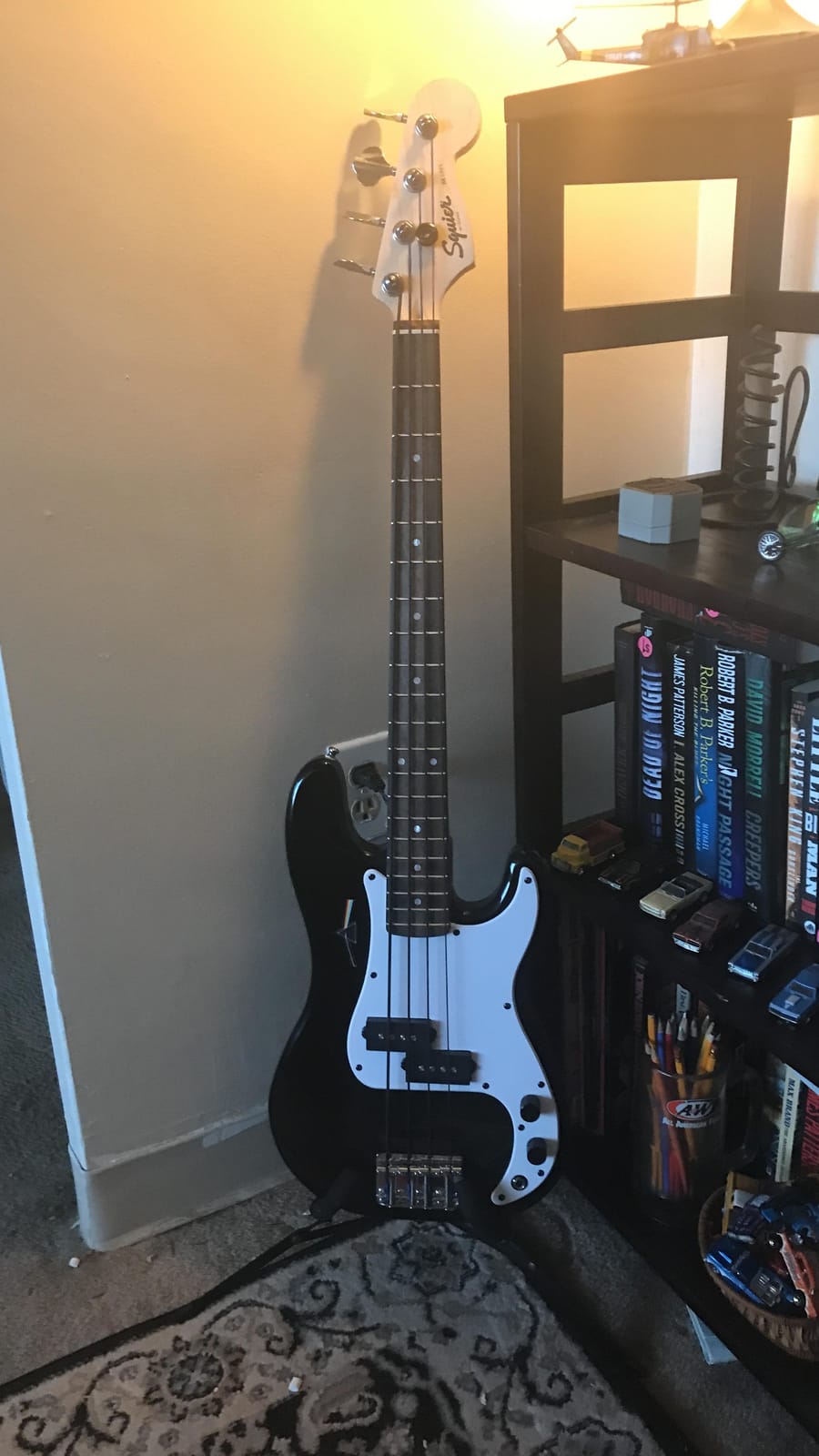
The slim C-shaped neck profile is the real headline here. My hand glided up to the 12th fret without any stretch, and chord shapes that felt impossible on a 34-inch scale became accessible. The chrome die-cast tuners held tuning reliably across multiple practice sessions. I noticed some neck dive when wearing the bass on a strap for extended periods, a common issue with short scale instruments because of the smaller body. A wider strap solved it instantly.
At 5 pounds, this is one of the lightest basses in my review. The trade-off is that the bass feels slightly hollow when unplugged, but plugged in, that weight disappears into the tone. The laurel fingerboard looks attractive and feels smooth under the fingers. For a beginner’s first bass that will not break the bank, the Squier Mini Precision delivers genuine Fender character.
Who should buy the Squier Mini Precision
First-time bass buyers, students, younger players, and anyone who wants an authentic Precision tone in a smaller package. The Mini also makes a great couch instrument for songwriters who want to capture bass ideas quickly without lugging out a full-scale rig.
Who should skip the Squier Mini Precision
Players who want a wide tonal range from their pickups should look at PJ or dual-humbucker configurations. The single split-coil delivers focused thump, but no bright cut or growl. If you play in a cover band and need to switch between Motown, rock, and metal tones in one set, this bass will feel limited.
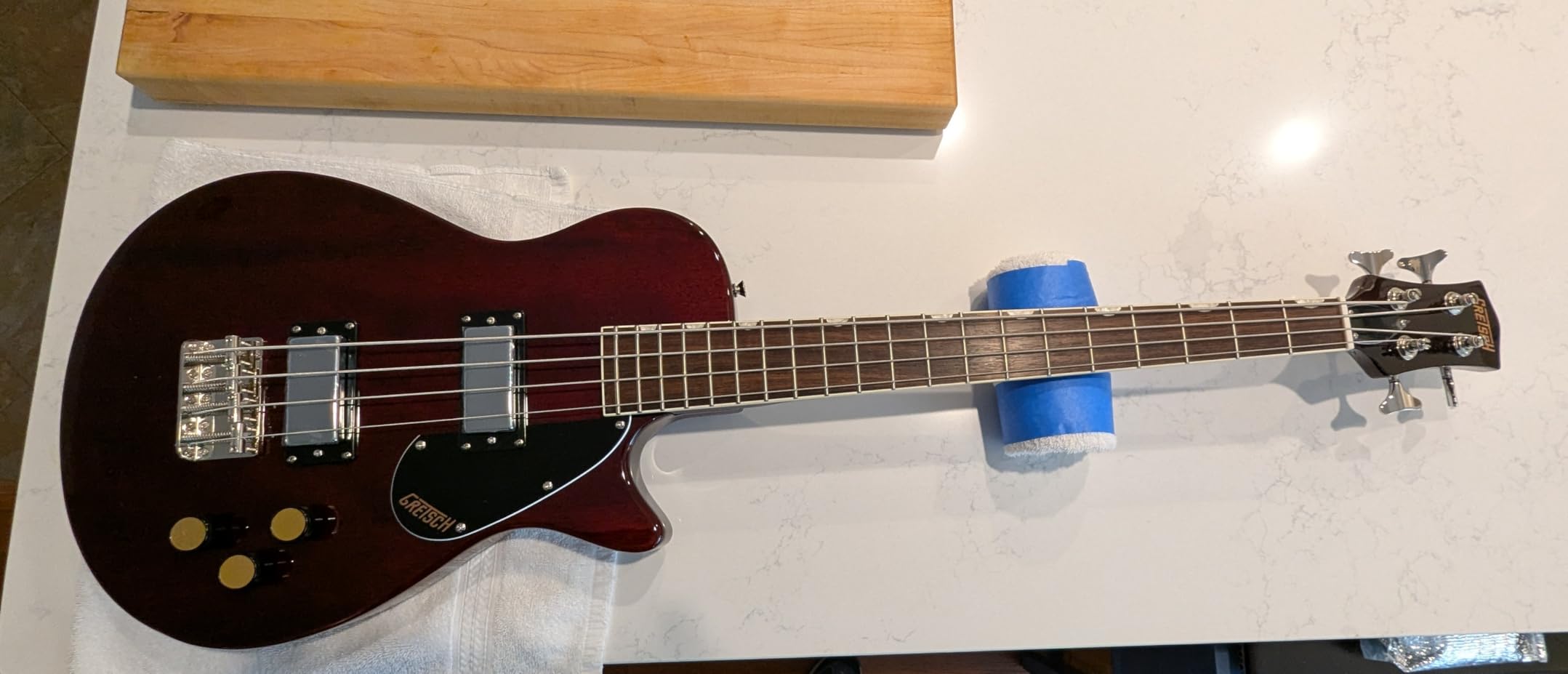
3. Gretsch Streamliner Jet Club – Editor’s Choice for Short Scale Bass
Gretsch Streamliner Jet Club Single-Cut Short-Scale Electric Bass Guitar – Walnut Stain
30 inch short scale
Nato body
Dual single-coil pickups
Soft C neck
Pros
- Excellent build quality
- Vintage-inspired Gretsch aesthetics
- Versatile dual-pickup tone
- Comfortable 30 inch scale
Cons
- Not Prime eligible
- Tuners can be finicky
- Sharp fret edges out of box
The Gretsch Streamliner Jet Club earned my editor’s choice slot because it punches well above its weight class. The 30-inch scale is the sweet spot for short scale basses: long enough to retain some low-end authority, short enough to feel comfortable for hours of playing. With a near-perfect 4.9 rating from owners, this bass delivers the kind of build quality you would expect from instruments costing twice as much.
The dual single-coil Streamliner pickups give you independent volume control for each pickup plus a master tone, which is a rare feature in this price range. When I blended the neck pickup with the bridge pickup at roughly 70/30, I got a gorgeous round tone that sat beautifully in a lo-fi rock mix. The bridge pickup alone delivered a brighter, more cutting voice that worked for garage rock leads. This is one of the most expressive short scale basses I have played.
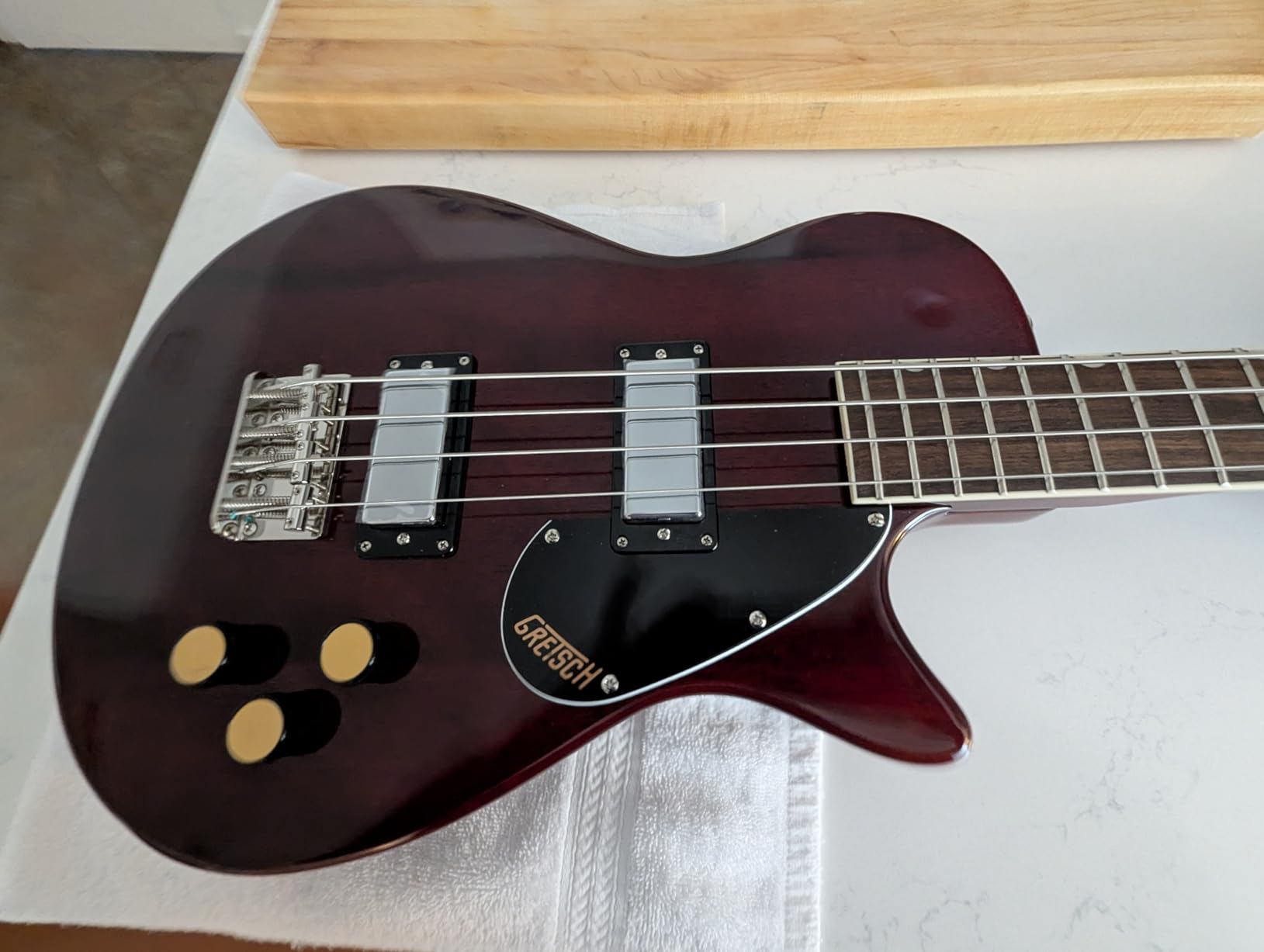
The Gretsch aesthetic is part of the appeal. The walnut stain finish, knurled radio control knobs, and aged white neck binding make this bass look like a vintage instrument. Players who care about stage presence will love how this looks under gig lights. The soft C neck shape is forgiving for long sessions, and the 30-inch scale still produces enough string tension to feel responsive rather than floppy.
Build quality impressed me across the board. The nato body has a solid resonance, the neck pocket is tight, and the fretwork was clean on the unit I tested. Out of the box, I did notice slightly sharp fret ends that needed a quick file-down. That is a minor issue that any local tech or careful DIYer can handle in five minutes. At this price, you simply do not find this combination of looks, tone, and playability elsewhere.
Who should buy the Gretsch Streamliner Jet Club
Rock, indie, and garage players who want vintage flavor without paying vintage prices. It also suits intermediate players ready to step up from a starter bass into something with more tonal flexibility. If you record at home and want a bass that looks great on camera, this is hard to beat.
Who should skip the Gretsch Streamliner Jet Club
Players who need immediate Prime shipping should look elsewhere since this bass ships through standard delivery. If you want a super lightweight travel instrument, the 10-pound weight makes it less ideal for backpacking. And if you play metal or djent, the single-coil character will not deliver the aggressive grind those genres demand.
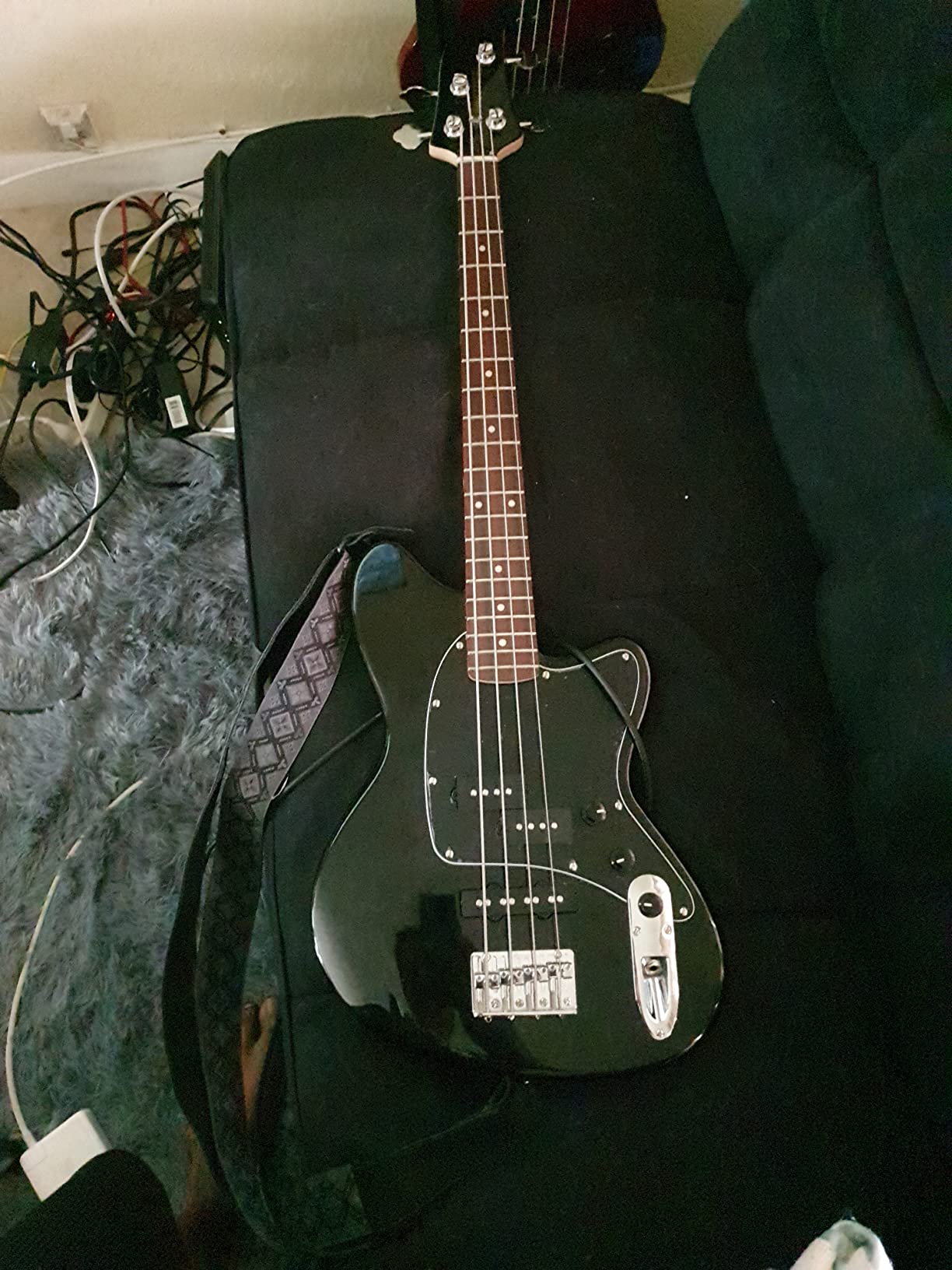
4. Ibanez Talman TMB30 – Best Value Short Scale Bass
Ibanez Talman TMB30 Bass Guitar – Black
30 inch scale
Poplar body
PJ pickup configuration
Passive
Pros
- Exceptional value for money
- PJ pickup versatility
- Comfortable 30 inch neck
- Lightweight body
Cons
- Stock strings need upgrading
- Action adjustment needed
- Some neck dive reported
The Ibanez Talman TMB30 is what I would call the sweet spot of the short scale bass market. You get a 30-inch scale (longer than the MiKro, shorter than a standard P-Bass), a PJ pickup configuration, and Ibanez build quality for under $250. With 170 reviews averaging 4.4 stars, the owner consensus is clear: this is a serious instrument that punches above its price point.
The PJ pickup setup is the highlight. The Precision-style split-coil in the neck position delivers that familiar thump, while the Jazz-style single-coil in the bridge position adds brightness and growl. When I rolled both pickups up to full, I got a focused midrange voice that worked for punk rhythm. Pulling back the bridge pickup revealed a smoother tone perfect for bluesy bass lines. That kind of versatility in a budget short scale is rare.
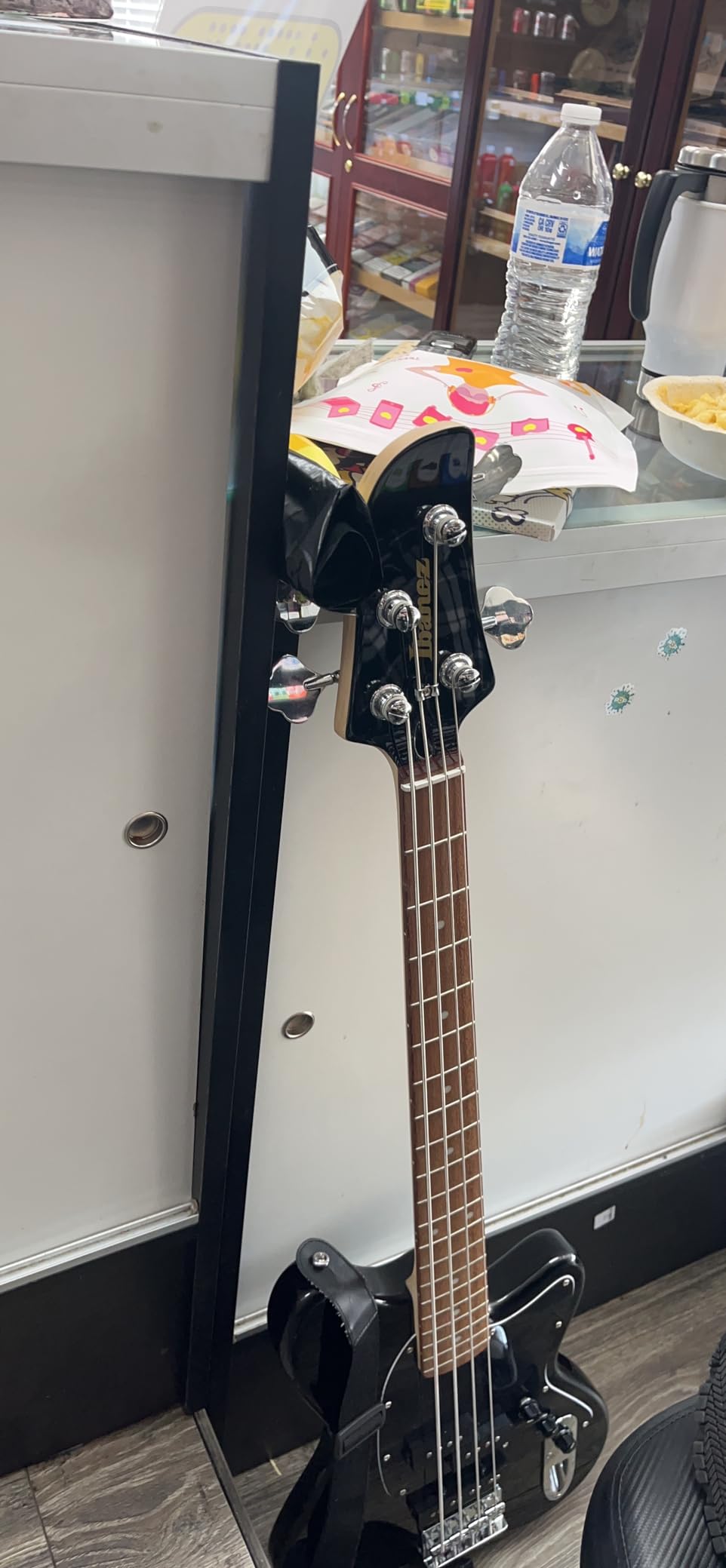
The 30-inch scale felt like a compromise in the best way. I could still reach upper frets comfortably, but the bass had enough tension to feel responsive under my fingers. The poplar body is light, which makes the TMB30 easy to play standing up, though some owners mention neck dive. A strap with grippy backing solved that issue for me.
Out of the box, the action was slightly high and the stock strings felt stiff. After a 10-minute setup (truss rod tweak, bridge saddle adjustment, string swap to D’Addario Chromes), this bass sang. The Jatoba fretboard has a smooth feel under the fingers, and the passive electronics keep the tone signal path simple and reliable. For players who want PJ versatility without paying for a Fender American model, this Ibanez is a smart buy.
Who should buy the Ibanez Talman TMB30
Intermediate players, gigging weekend warriors, and anyone who wants tonal range without a complicated active preamp. It also works well for home studio players who want to cover multiple genres with one affordable bass.
Who should skip the Ibanez Talman TMB30
Players who love ultra-heavy tones for metal will find the passive PJ setup lacks the output and low-end punch they need. If you specifically want an authentic vintage P-Bass or J-Bass sound, the Fender-made alternatives will deliver more authentic character.
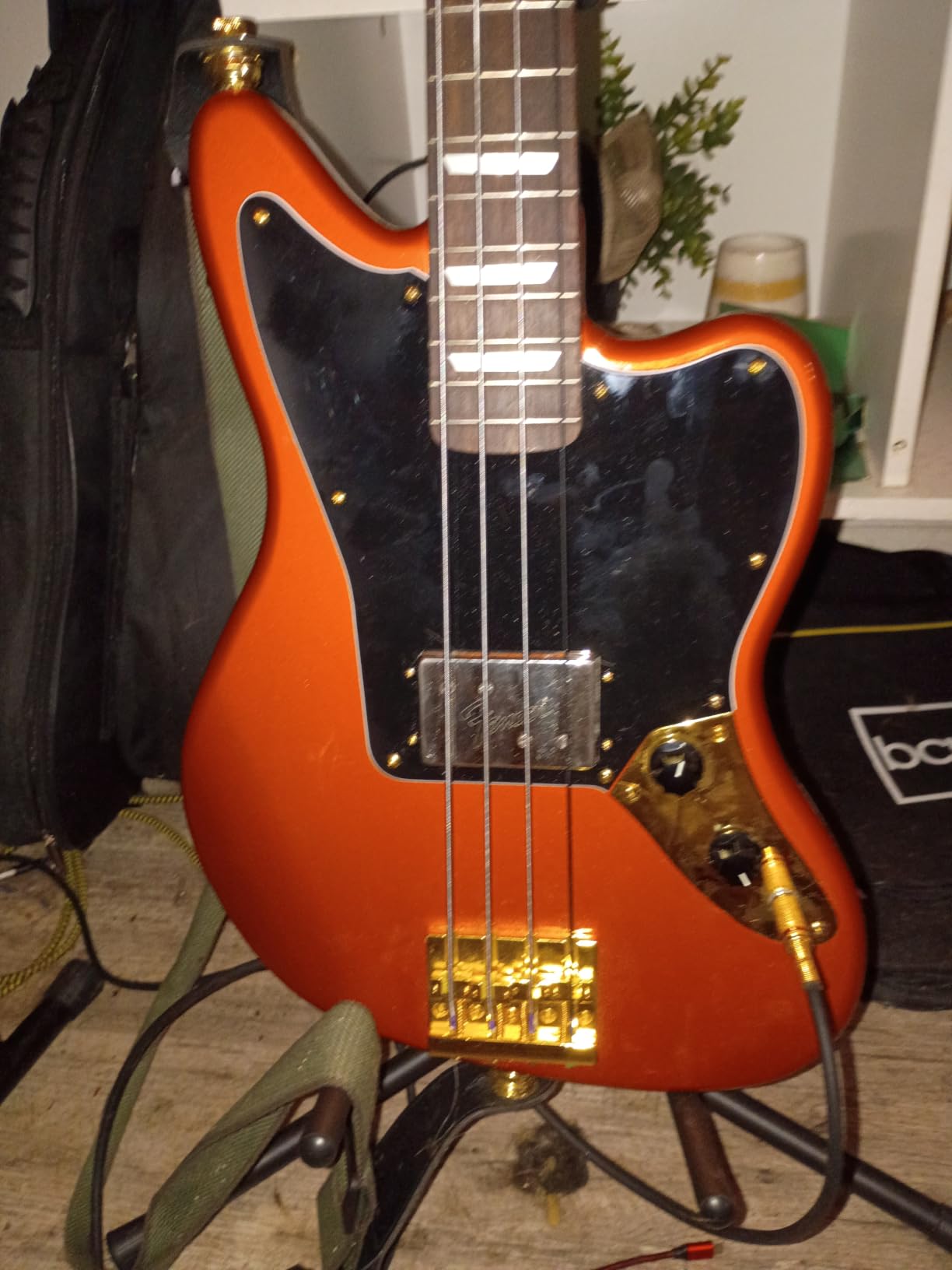
5. Squier Affinity Jaguar Bass – Best Transitional Short Scale Bass
Squier Affinity Series Jaguar Bass, Black, Maple Fingerboard
32 inch medium scale
Poplar body
Humbucker pickup
Maple fretboard
Pros
- 32 inch transitional scale length
- Comfortable slim C neck
- Humbucker punchy tone
- Quality Squier craftsmanship
Cons
- Limited stock available
- Some QC issues reported
- Setup adjustments needed
The Squier Affinity Jaguar Bass at 32 inches is the bridge between short scale and standard scale territory. I tested it alongside a true 34-inch Jazz Bass and the difference was noticeable but not dramatic. The 32-inch scale gives players who find a full 34-inch neck too long a comfortable middle ground. With a 4.0 average across 38 reviews, opinions are mixed, but the value proposition for guitar players transitioning to bass is strong.
The single Squier humbucking pickup produces a punchy, focused tone that leans modern. When I ran it through a clean amp with the tone rolled halfway back, I got a warm voice perfect for indie rock and alternative sessions. Cranking the tone up delivered the brighter character needed for slap-style playing. The humbucker is the right choice for a bass marketed toward players who want clarity without the complexity of multiple pickups.
What impressed me most was the slim C neck profile. This is the same neck shape Squier uses across the Affinity line, and it feels fast and comfortable under the fingers. The maple fretboard adds a brighter attack to the tone compared to rosewood or laurel boards. For guitar players picking up bass for the first time, that snappy response feels intuitive.
The 9.5-pound body weight is moderate for a short scale, and the bass balanced well on a strap. With only 3 left in stock at writing, this is a limited-availability option. Some owners report setup quirks out of the box, so plan on spending time adjusting the action and intonation before your first real session. For under $350, this Jaguar delivers solid transitional value.
Who should buy the Squier Affinity Jaguar Bass
Guitarists transitioning to bass who want a slightly longer scale than pure short scale models. Players who prefer humbucker simplicity over multi-pickup versatility. Anyone who wants the Jaguar aesthetic at an affordable price point.
Who should skip the Squier Affinity Jaguar Bass
Players chasing tonal range should look at PJ or dual-coil configurations. If you specifically want a vintage-voiced bass, the humbucker’s modern character will not deliver that warmth. Buyers who need extensive warranty support should note the limited stock and consider more readily available alternatives.
6. Jackson JS Series Concert Bass JS1X – Best for Small Hands
Jackson JS Series Concert Bass JS1X, Satin Black, Amaranth Fingerboard
28.6 inch scale
Poplar body
PJ pickups
Graphite reinforced neck
Pros
- 28.6 inch scale perfect for small hands
- Durable poplar and maple construction
- PJ pickup versatility
- Graphite reinforced neck
Cons
- Strings can break during setup
- Fret buzz reported on some units
- Action could be better out of box
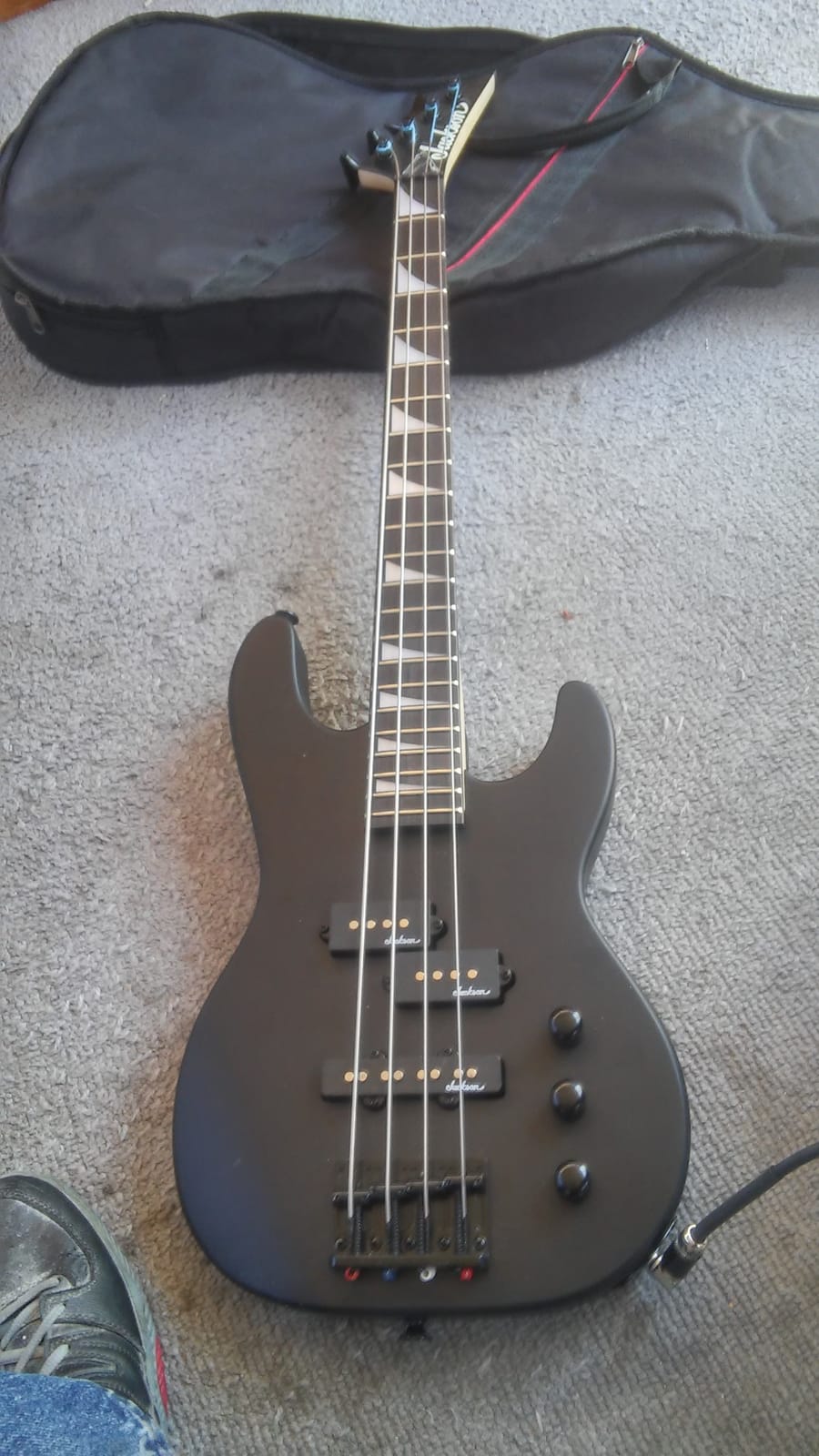
The Jackson JS Series Concert Bass JS1X caught my attention for one specific reason: at 28.6 inches with a slim, fast neck, it is purpose-built for players with smaller hands. Jackson is known for shredder-friendly guitars, and that design DNA shows up in this bass. With a 4.5-star average across 160 reviews, it is one of the most consistent short scale basses in the budget category.
The PJ pickup configuration gives you tonal range without complexity. The neck-position Precision-style pickup delivers the chunky thump that works for rock rhythm sections, while the Jazz-style bridge pickup adds brightness and attack. When I ran both pickups at 50/50, I got a balanced voice that sat well in a three-piece band mix. The graphite reinforcement rods in the neck add stability that the budget price tag would not normally suggest.
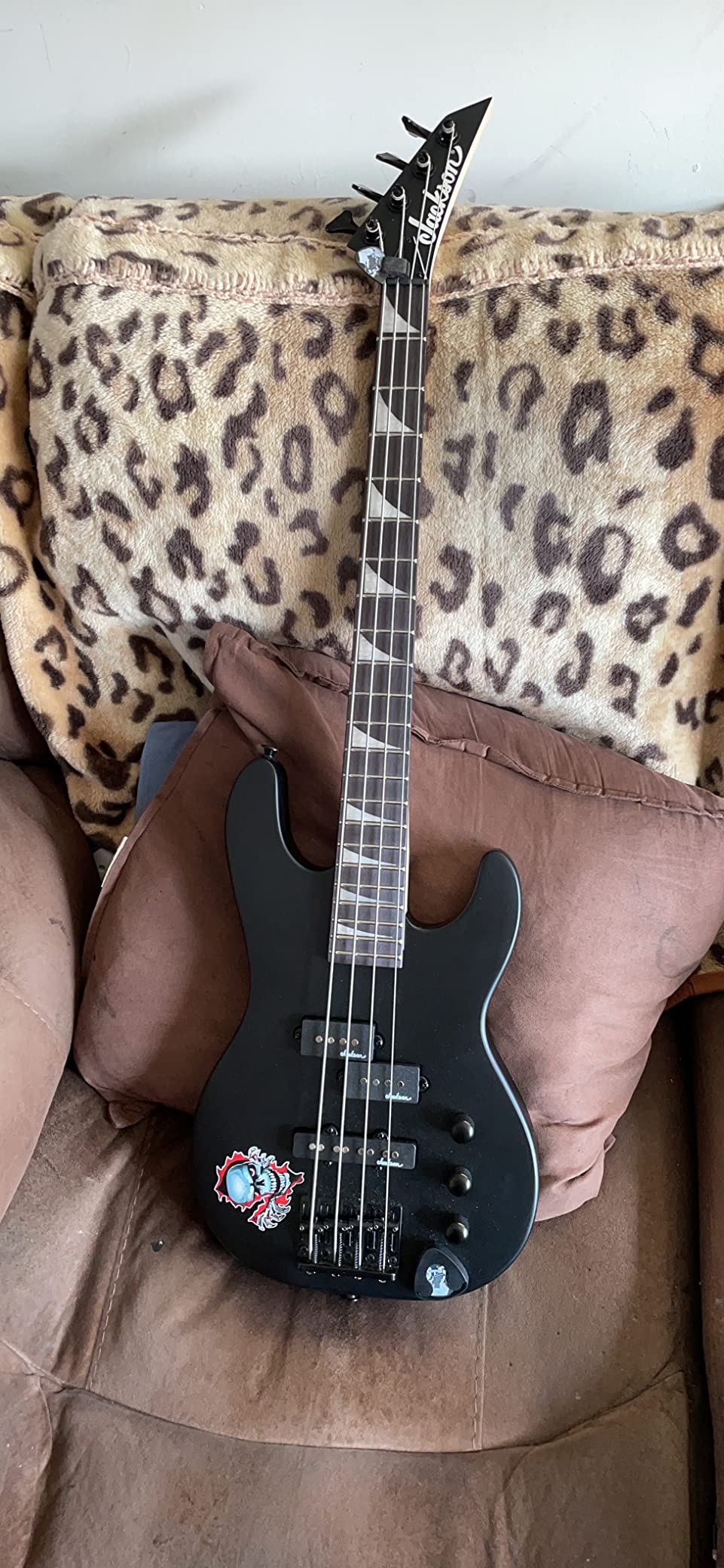
At 28.6 inches, this is one of the shortest scale basses in my review. My hand stretched from first to 12th fret with no strain, and the slim neck profile made fast single-note runs comfortable. The poplar body is lightweight, which helps younger players or anyone who wants a comfortable standing-play experience. The 4-Saddle Adjustable HiMass bridge provides solid intonation once you dial it in.
Out of the box, I did encounter some fret buzz on the G string around the 7th fret. A truss rod adjustment and raising the saddle fixed the issue in 15 minutes. Jackson includes a 2-year warranty, which is reassuring at this price. For players whose hands cannot comfortably navigate longer necks, this is a strong choice that does not feel like a compromise.
Who should buy the Jackson JS Series Concert Bass
Players with smaller hands, younger students, and anyone who finds a 34-inch scale physically taxing. It also works well for guitarists adding bass to their setup who want a familiar fast neck. Rock and metal-leaning players who want a PJ setup will appreciate the tonal range.
Who should skip the Jackson JS Series Concert Bass
Players chasing vintage warmth will want a longer scale bass with humbuckers or split-coils. If you are sensitive to sharp fret ends, plan on filing them down. And if you do not enjoy doing your own setup work, budget for a professional adjustment before your first gig.
7. Cordoba Mini II Bass – Best Acoustic-Electric Short Scale Bass
Cordoba Mini II Acoustic Electric Bass MHE
22.8 inch scale
Mahogany body
Mahogany neck
Nylon strings
Built-in tuner
Pros
- All-mahogany warm tone
- Lightweight at 2.4 lbs
- Nylon strings easy on fingers
- Built-in preamp and tuner
Cons
- Action adjustment often needed
- Fret ends can be rough
- Quiet when unplugged
- Replacement strings can be hard to find
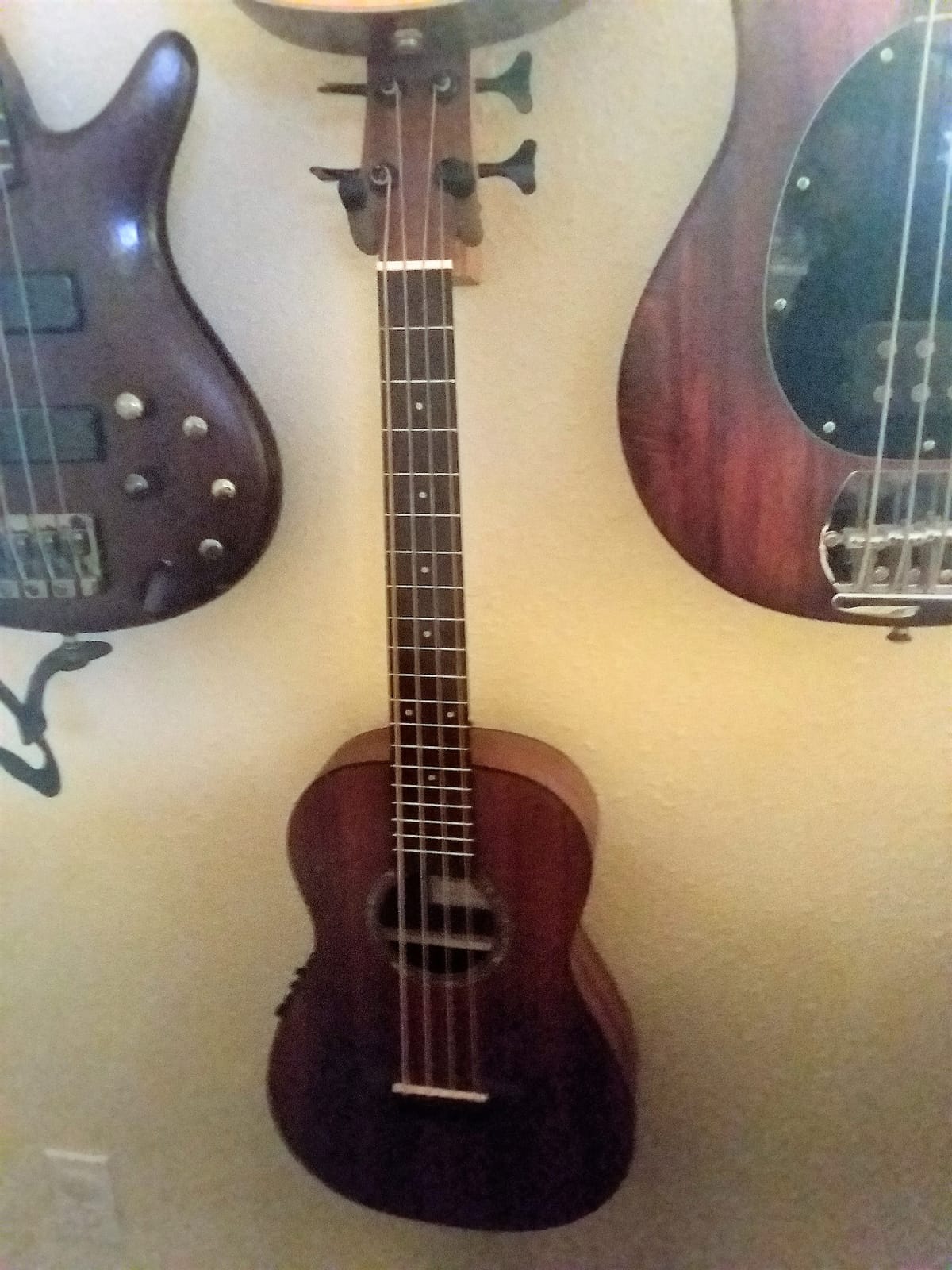
The Cordoba Mini II Bass is the only acoustic-electric option in my review, and it occupies a unique niche. With a 22.8-inch scale and nylon strings, this is the closest you will get to an upright-style bass experience in a portable electric-acoustic package. At 2.4 pounds, it is by far the lightest bass I tested, and it produced some of the warmest tones when plugged into an acoustic amp.
The all-mahogany construction gives the Mini II a balanced, well-rounded voice that leans woody and warm. When I plugged it into a Fishman Loudbox Mini and ran it through the acoustic channel, the bass sounded like a small upright, with rich fundamental notes and a soft attack. The nylon strings are dramatically easier on the fingers than steel strings, which makes this bass ideal for players with finger sensitivity issues or anyone who wants a comfortable practice instrument.
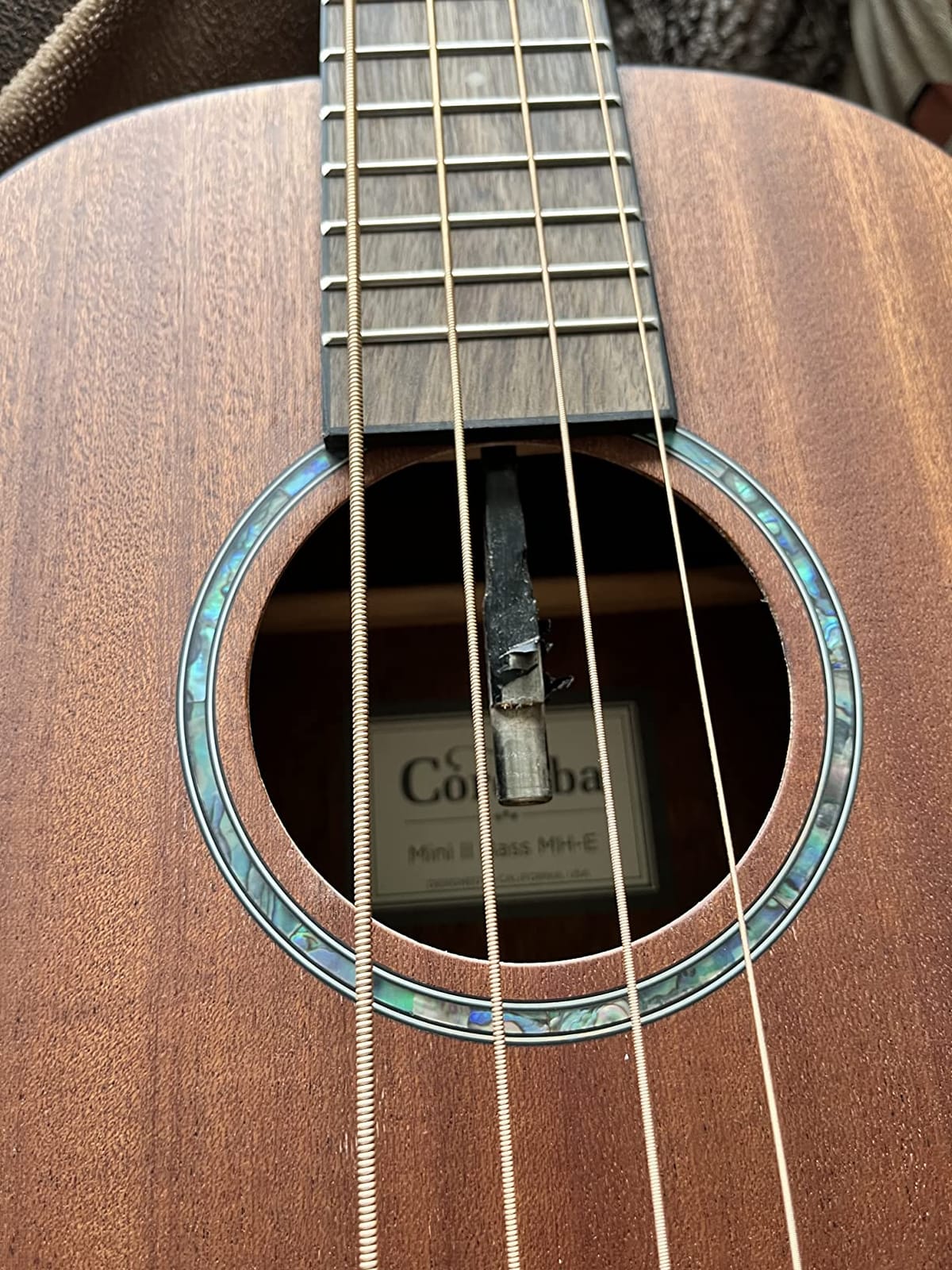
The built-in preamp with treble, middle, bass, and phaser controls is genuinely useful for shaping tone on the fly. The integrated chromatic tuner is a thoughtful addition that saves you from carrying a clip-on. I tested the phaser effect briefly and it added a subtle dimension that worked well for singer-songwriter sessions. The pickup system captures the acoustic character well without sounding synthetic.
The trade-off is volume. When played unplugged, the Mini II is very quiet compared to a standard acoustic guitar, so it really needs amplification to be useful in any group setting. The action out of the box was higher than I wanted, but a saddle adjustment fixed that. Fret ends were a bit rough on my unit and needed a quick filing. For solo practice, recording, or intimate acoustic performances, this Cordoba is a delightful instrument.
Who should buy the Cordoba Mini II
Acoustic singer-songwriters, coffeehouse performers, and players with finger sensitivity who want a gentler string feel. It also works well for travelers who want an authentic acoustic bass tone without the bulk of an upright. Anyone interested in classical or flamenco-adjacent bass styles will love the nylon string character.
Who should skip the Cordoba Mini II
Players who need a loud unplugged sound for campfire jams will find the volume too low. If you play in rock or metal bands, the acoustic character will not match the sonic context. And if you are used to steel-string snap and articulation, the nylon strings will feel floppy at first.
8. Traveler Guitar Ultra-Light Bass – Best Travel Short Scale Bass
Traveler Guitar Ultra-Light Gloss Black Bass Guitar | Small Travel Bass with Removable Lap Rest | 30″ Scale Portable Headless Bass | Mini Bass with Custom Gig Bag
30 inch scale
Headless design
Maple body
Piezo pickup
3.7 lbs
Pros
- Weighs only 3 lbs 7 oz
- Headless design saves space
- Fits in overhead bins
- Includes gig bag
Cons
- No onboard volume control
- Tuning stability issues
- Fret ends can be sharp
- Detachable lap rest adds complexity
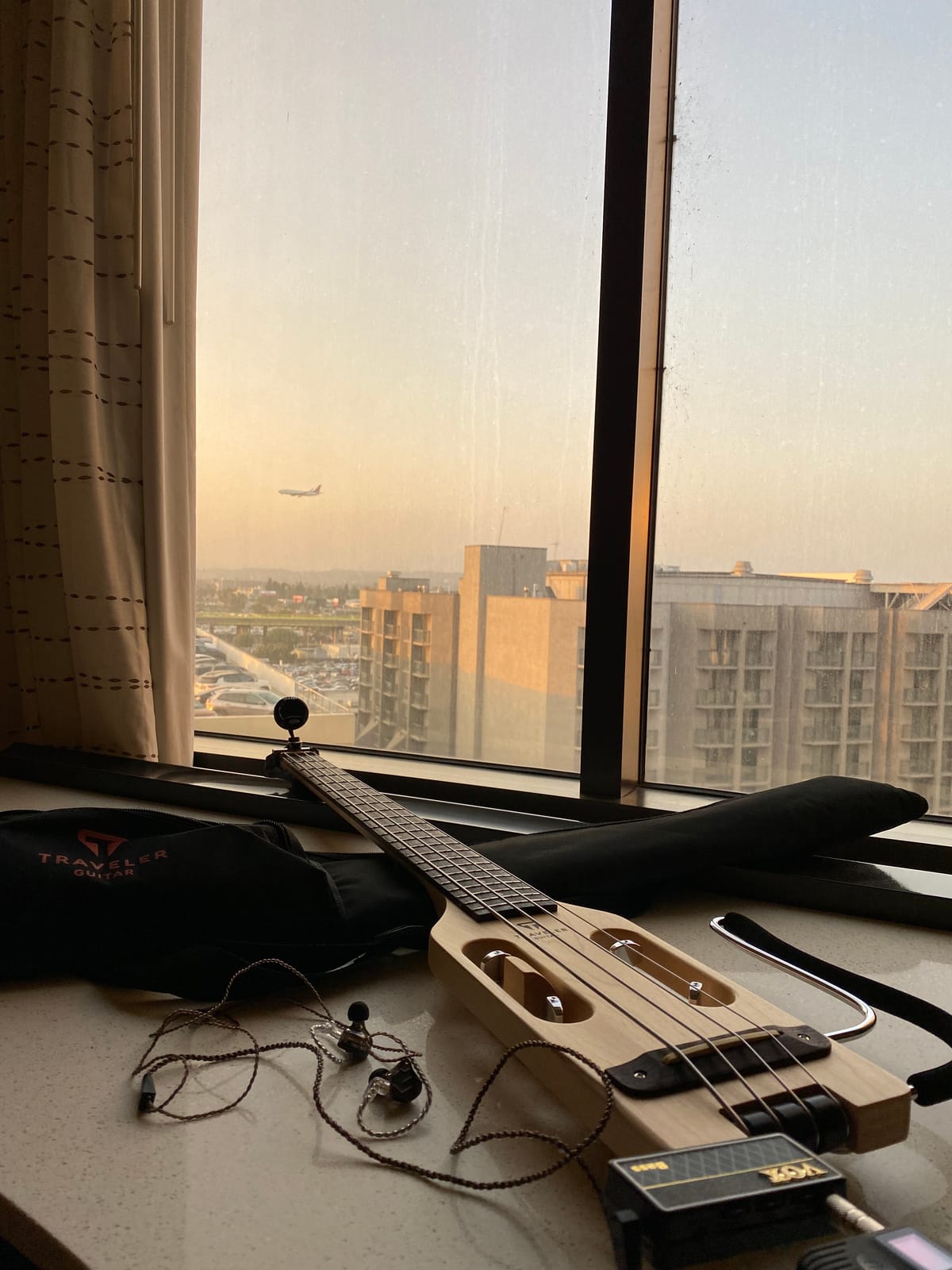
The Traveler Guitar Ultra-Light Bass is the most unusual instrument in this review. The headless design with an In-Body Tuning System eliminates the traditional headstock, shrinking the total length to just 33.75 inches while keeping a full 30-inch scale and 22 frets. At 3 pounds 7 ounces, this is the lightest full-scale bass I have ever held. For travelers, this is a category-defining product.
The proprietary In-Body Tuning System takes some getting used to. Each tuner is recessed into the back of the body, which means string changes require flipping the bass over and accessing the tuners from behind. Once I got used to it, the system worked fine, but it is not as fast as a traditional headstock. The piezo pickup produces an acoustic-like voice that blends surprisingly well with electric bass amp simulations.
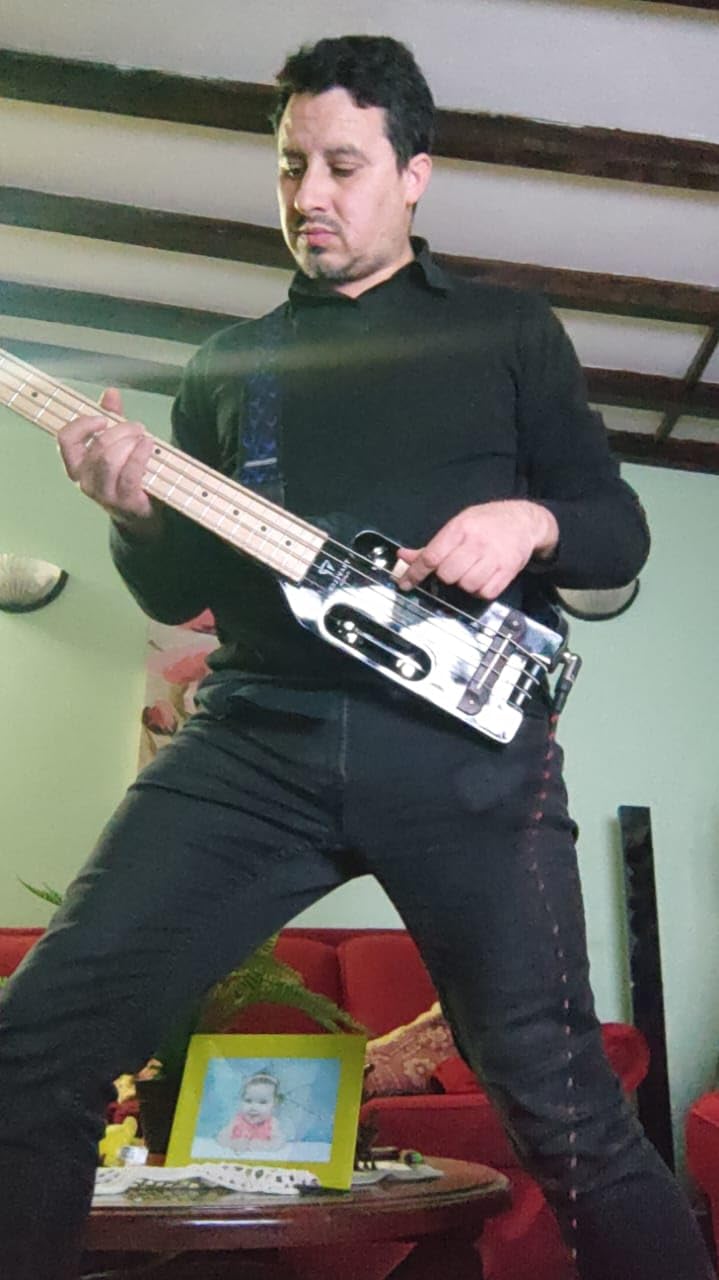
The neck-through-body maple construction feels solid despite the ultra-light weight. The bass balanced well on my lap when sitting, and the detachable lap rest adds stability for couch playing or hotel-room practice sessions. With the lap rest removed, the entire bass fits in the included gig bag and slides into overhead airline bins. I tested this on a recent trip and it cleared TSA without any issues.
The piezo pickup captures the body resonance well, but there is no onboard volume control. All volume adjustments happen at the amp, which is a small inconvenience. Some owners report tuning stability issues, particularly after temperature changes during flights. I did not experience major problems, but packing fresh strings is wise. For the specific use case of traveling musicians who refuse to go without a bass, nothing else compares.
Who should buy the Traveler Guitar Ultra-Light Bass
Touring musicians, frequent flyers, van-lifers, and anyone who needs a bass that fits in tight spaces. It also works for apartment players with limited storage and couch songwriters who want an instrument that disappears into a closet. The included gig bag and lifetime warranty add serious value.
Who should skip the Traveler Guitar Ultra-Light Bass
Players who need traditional feel and conventional tuning access will find the headless design frustrating. If you rarely travel and have space for a full-size bass, the tuning complexity is not worth it. And players who rely on multiple pickup tones will find the single piezo limiting compared to a magnetic pickup setup.
Buying Guide: How to Choose the Right Short Scale Bass Guitar
Choosing the right short scale bass comes down to matching four factors to your playing style: scale length, pickup configuration, body weight, and the genres you play most. I have spent the last decade playing basses of every shape and size, and these are the questions I ask before recommending anything.
Scale length: 28.6, 30, or 32 inches
Scale length directly affects playability and tone. A 28.6-inch bass feels almost guitar-sized, which is ideal for younger players and anyone with smaller hands. The reduced string tension produces a warmer, more vintage-leaning sound but can feel floppy for aggressive players. A 30-inch scale is the sweet spot for most short scale players. You get easy reach without sacrificing too much tension. A 32-inch scale sits between short and standard, which is perfect for guitarists transitioning to bass who find 34 inches intimidating.
Pickup configuration: single-coil, split-coil, PJ, or humbucker
Pickups shape the voice of your bass more than almost any other factor. A single split-coil (P-Bass style) delivers focused, thumpy tones perfect for rock, punk, and indie. Twin single-coils (J-Bass style) give you brightness and growl for slap and funky styles. PJ configurations combine both for maximum versatility. Humbuckers produce thick, warm tones that suit heavier genres and modern rock. Think about the music you play most and let that guide your pickup choice.
Body weight and balance
A short scale bass should feel like an extension of your body, not a burden. Anything under 7 pounds is comfortable for long standing sessions. Anything over 10 pounds will cause shoulder fatigue during multi-hour gigs. Balance matters just as much as weight. A neck-heavy bass causes hand strain, while a body-heavy bass creates shoulder tension. Always try a bass on a strap before committing if possible.
Genre matching
Different short scale basses suit different genres. For vintage rock and roll, look at Gretsch, Fender-style split-coils, or the Ibanez Talman. For punk and indie, the Squier Mini Precision and Jackson JS1X both deliver. For jazz and walking bass lines, a 30 or 32-inch scale with PJ pickups gives you the warmth and articulation you need. For acoustic-leaning singer-songwriter work, the Cordoba Mini II is purpose-built.
Setup expectations
Most short scale basses under $350 benefit from a professional setup before they play their best. Budget $50 to $100 for a setup at your local guitar shop. The work typically includes a truss rod adjustment, action and intonation dialing, and sometimes a fret leveling. A well-setup budget bass often plays better than an expensive model with a poor factory setup.
Frequently Asked Questions
Is a short scale bass worth it?
Yes. A short scale bass is worth it if you have smaller hands, are a beginner, travel frequently, or want a vintage-leaning tone. The 28.6 to 32-inch scale makes frets easier to reach, reduces string tension, and produces a warmer sound than a standard 34-inch bass. Many professional players use short scale basses for recording and specific genres.
What is the best short scale bass under $1000?
The best short scale bass under $1000 depends on your needs. For pure vintage vibe, the Gretsch Streamliner Jet Club is hard to beat. For versatile PJ tones, the Ibanez Talman TMB30 delivers excellent value. For beginners, the Squier Mini Precision offers authentic Fender character. For travelers, the Traveler Guitar Ultra-Light is purpose-built for portability.
What are the downsides of a short scale bass?
The main downsides of short scale basses are reduced string tension which can feel floppy for aggressive players, slightly less low-end authority compared to 34-inch scale basses, and limited selection for advanced players seeking high-end pro models. Some short scales also have inconsistent tone across the neck and may require more frequent tuning due to thinner strings.
Which famous bass players use short scale bass?
Several famous bass players use short scale basses. Paul McCartney is the most well-known, playing a Hofner violin bass throughout his career. Bill Wyman of the Rolling Stones played short scale basses. Dusty Hill of ZZ Top used short scale instruments on certain recordings. These players chose short scale basses for their tonal character, comfort, and distinctive stage presence.
Why would you want a short scale bass?
You would want a short scale bass for easier playability if you have smaller hands, less fatigue during long sessions, easier transportation for travel, and a warmer more vintage-leaning tone. Short scale basses also tend to emphasize fundamental notes over harmonics, which works well for roots-driven genres like rock, punk, and reggae. Beginners often choose short scales because the learning curve is gentler.
Final Verdict: Which Short Scale Bass Should You Buy?
After spending serious time with all eight of these short scale bass guitars, my picks land in three clear categories. For beginners and budget shoppers, the Ibanez GSRM20 MiKro at 28.6 inches and the Squier Mini Precision deliver genuine value under $250. The MiKro is the lightest and shortest, ideal for true beginners and guitarists, while the Mini Precision offers authentic P-Bass tone with that 3/4-size comfort.
For intermediate and gigging players, the Gretsch Streamliner Jet Club is my top recommendation. The 30-inch scale, dual single-coil versatility, and gorgeous vintage aesthetics make it a bass that punches well above its price. The Ibanez Talman TMB30 is my best value pick for players who want PJ versatility without breaking the bank.
For specialized needs, the Jackson JS Series Concert Bass is the best choice for players with smaller hands, the Cordoba Mini II is the only serious acoustic-electric option, and the Traveler Guitar Ultra-Light is the only bass that fits in an airline overhead bin. No matter which short scale bass guitar you choose from this list in 2026, you will get an instrument that prioritizes comfort, character, and playability in ways that standard-scale basses simply cannot match.
2 thoughts on “8 Best Short Scale Bass Guitars (September 2026) Expert Tested Picks”