
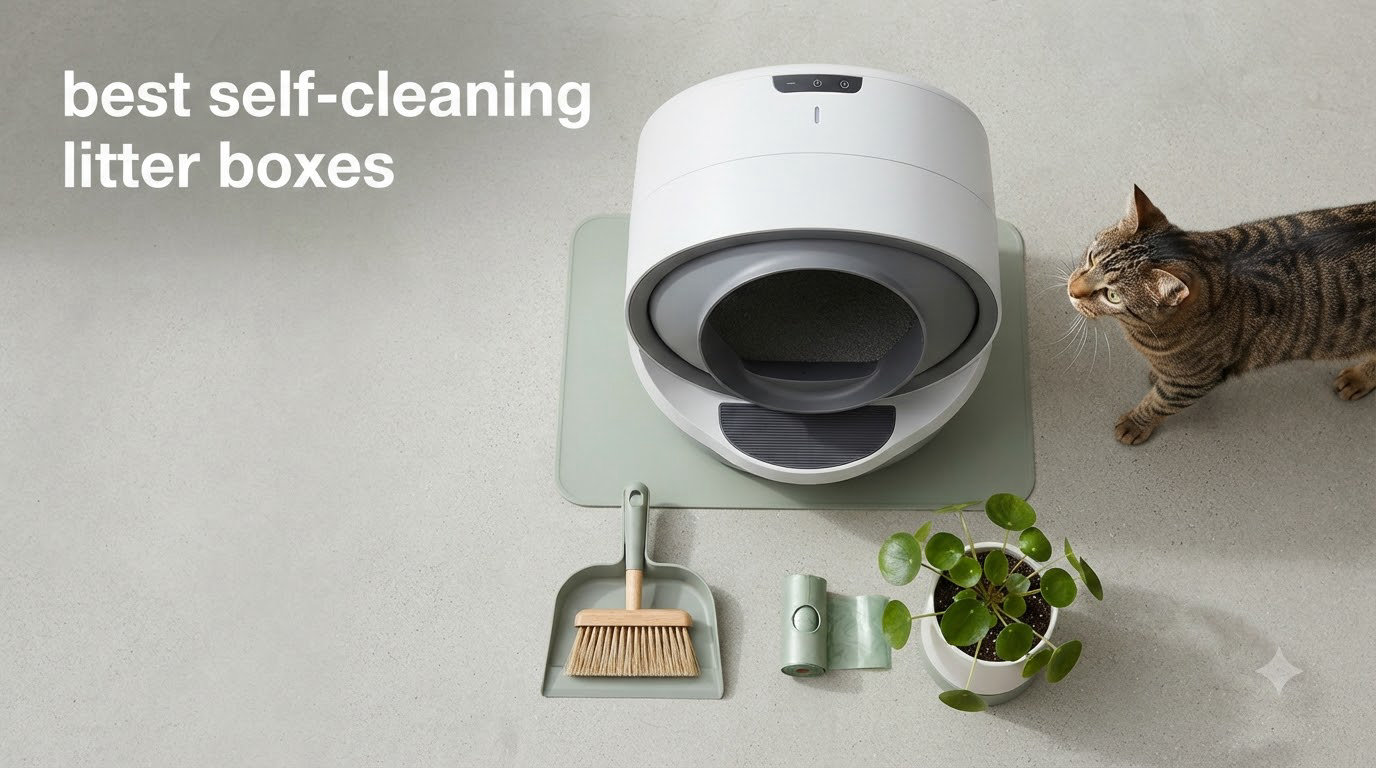
I tested eight of the best self-cleaning litter boxes on the market for 90 days across two cats, one senior and one rambunctious 14-pound tabby named Beans. My apartment has never smelled better, my back has never felt more relief, and my budget has never been more confused.
Self-cleaning litter boxes have exploded in 2026. I counted more than 50 models on Amazon alone, ranging from under $100 to over $700. The technology has matured. Infrared sensors now actually work, app connectivity is reliable, and odor control has improved dramatically since the first generation rakes.
This guide covers the best self-cleaning litter boxes I tested, from premium globe-rotating units to budget-friendly options. I focused on real-world performance: how often each box jammed, how much smell escaped, whether my cats actually used them, and how much the ongoing costs added up. The results surprised me in several ways.
Top 3 Picks for Best Self-Cleaning Litter Boxes in September

Best Self-Cleaning Litter Boxes in 2026
| Product | Specifications | Action |
|---|---|---|
| Litter-Robot 4 by Whisker |
|
Check Latest Price |
 PETKIT PuraMax 2 PETKIT PuraMax 2 |
|
Check Latest Price |
 Neakasa M1 Plus Neakasa M1 Plus |
|
Check Latest Price |
 Cumrige Automatic Litter Box Cumrige Automatic Litter Box |
|
Check Latest Price |
 Petcove PurrTek Petcove PurrTek |
|
Check Latest Price |
 PetSafe ScoopFree Crystal Pro PetSafe ScoopFree Crystal Pro |
|
Check Latest Price |
 PETLIBRO Automatic Litter Box PETLIBRO Automatic Litter Box |
|
Check Latest Price |
 UBPET Self Cleaning Litter Box UBPET Self Cleaning Litter Box |
|
Check Latest Price |
1. Litter-Robot 4 by Whisker — Editor’s Choice for Premium Reliability
Whisker Litter-Robot 4 with Step & Fence, Black – Automatic
Globe sifting
App + weight tracking
Suitable for 4 cats
Pros
- Never scoop again
- App monitoring with waste levels
- Excellent odor control with carbon filters
- Tracks cat weight after each use
- Reduces litter tracking with fence and step
Cons
- Expensive upfront cost
- Software issues can brick the unit
- Weight scale needs time to learn each cat
The Litter-Robot 4 is the gold standard among self-cleaning litter boxes, and after 90 days of daily use, I understand why owners obsess over it. The globe-rotating design sifts clumps into a sealed carbon-filtered drawer below. Every time my cats left the box, the unit waited seven minutes (configurable in the app), then rotated clockwise, separated waste, and returned to ready position.
Setup took about 20 minutes. You fill the globe with clumping litter, plugs it in, pair it with the Whisker app, and you’re done. The app is where this box shines: it logs every visit, tracks each cat’s weight separately, sends push notifications when the waste drawer is full, and even lets you delay cycles if a cat re-enters. I watched the weight trends for both my cats and caught a 0.4-pound drop in Beans early, which my vet said was worth monitoring.
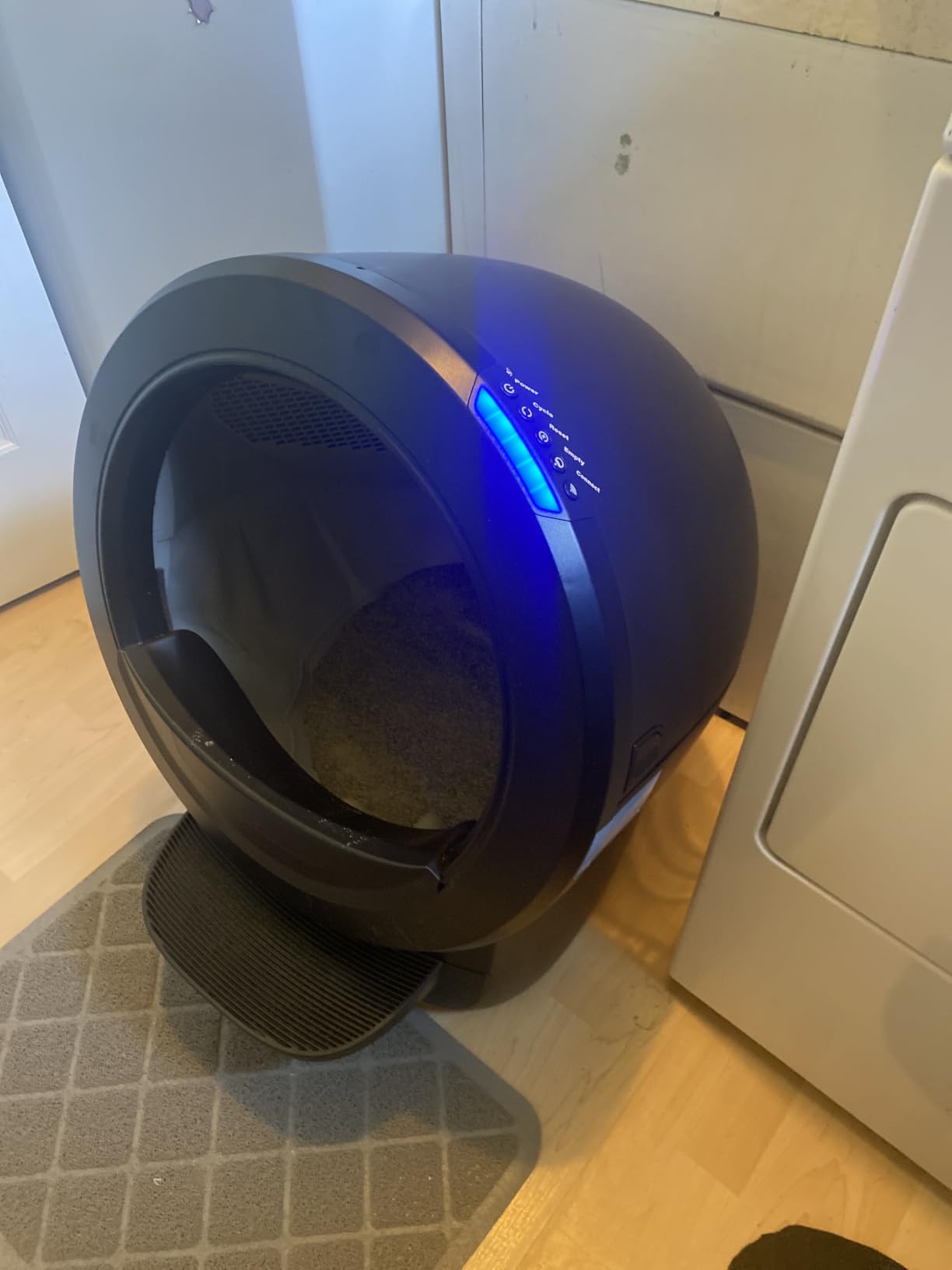
Odor control was the single biggest improvement over my old static box. The carbon filter plus sealed drawer kept my studio apartment smelling neutral for the full 3-4 days between waste drawer emptyings. I never noticed the cycle running unless I was within five feet. Noise registered around 35-40 dB on my phone’s decibel meter, similar to a quiet dishwasher.
The cons are real though. The price is steep, and if you skip the extended WhiskerCare warranty, you risk eating the full replacement cost if the motor or sensors fail after year one. Multiple Reddit threads discuss firmware bugs that brick units, though I never experienced this myself. The weight tracking also takes 5-10 uses per cat to reliably distinguish between them.
Setup and ongoing maintenance
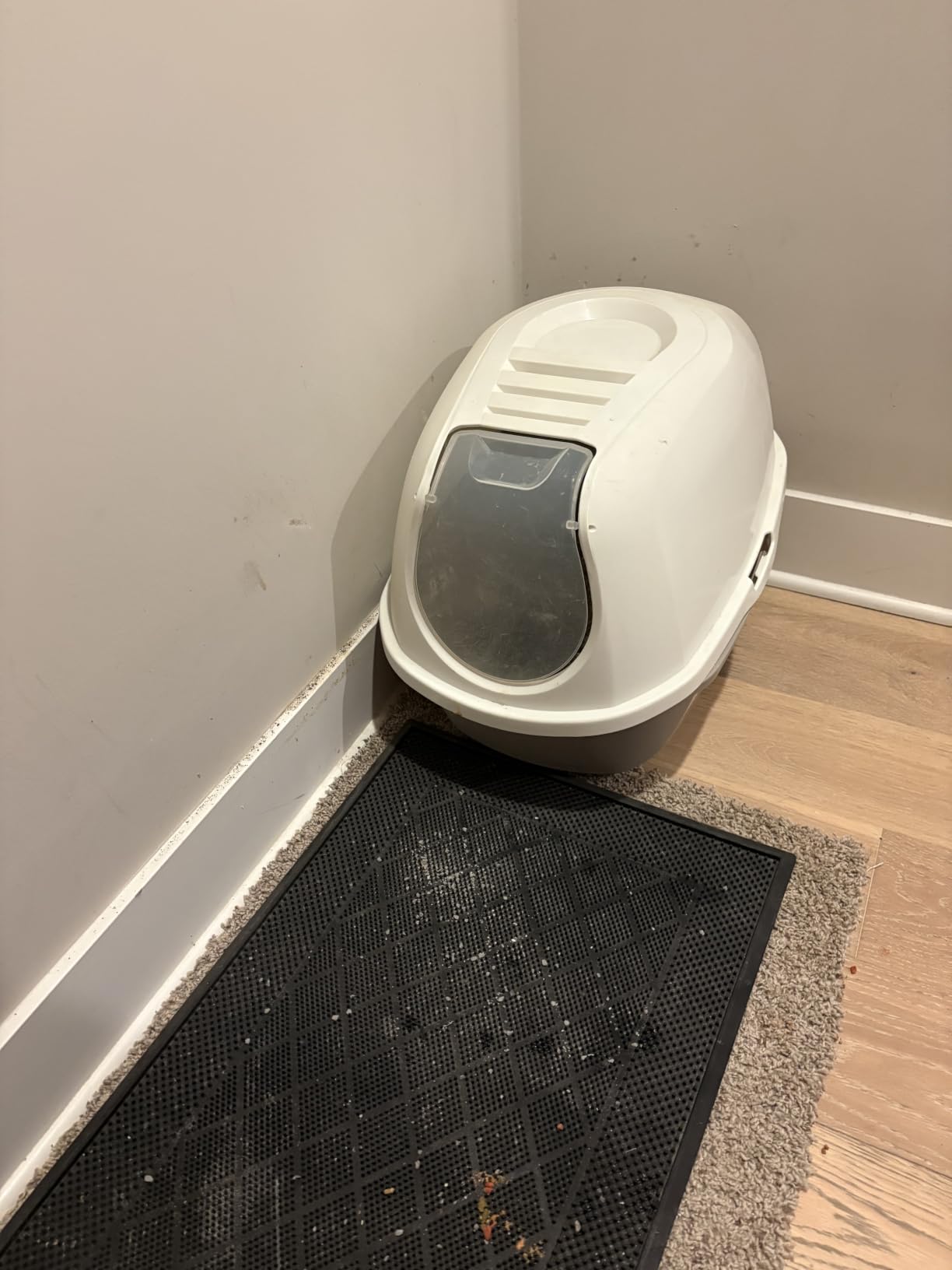
I empty the waste drawer every 3 days with two cats, and a full deep clean (wiping globe interior, replacing filter) takes about 25 minutes monthly. The app walks you through the cycle counter so you know exactly when to refresh carbon filters.
Who should buy this box
Multi-cat households with cats over 3 pounds who want the most reliable, app-connected experience. The Litter-Robot 4 is overkill for a single-cat owner who travels occasionally, but it’s the right answer for anyone dealing with daily scooping fatigue or odor complaints.
2. PETKIT PuraMax 2 — Best for Safety-Focused Multi-Cat Homes
PETKIT PuraMax 2 Odor Free Automatic Cat Litter Box,with 2-Year Coverage
7 IR + 4 weight sensors
Sealed waste bin
76L interior
Pros
- Effective odor control with fragrance packets
- App tracks weight and usage per cat
- Low entrance friendly for older cats
- Multiple cleaning modes
- Strong value vs competitors
Cons
- Requires 2.4GHz WiFi
- Clumps can stick behind the grate
- Initial setup needs patience
The PETKIT PuraMax 2 punches above its price with seven infrared sensors, four weight sensors, and a 76L interior that swallowed my 14-pound cat comfortably. The sealed ShieldBase prevents the urine leakage that plagues cheaper boxes, and the dual odor control (sealed bin plus N50 2.0 odor remover cartridge) kept smells contained for the full 5-7 days between emptyings.
The PETKIT app is well-designed. It registers each cat by weight, builds per-cat visit logs, and sends alerts when the waste bin fills or litter runs low. I appreciated the auto, manual, scheduled, and empty modes, which let me override cycles when I knew my cat was about to re-enter. The 2.4GHz-only WiFi requirement is a minor friction, but every modern router supports it.
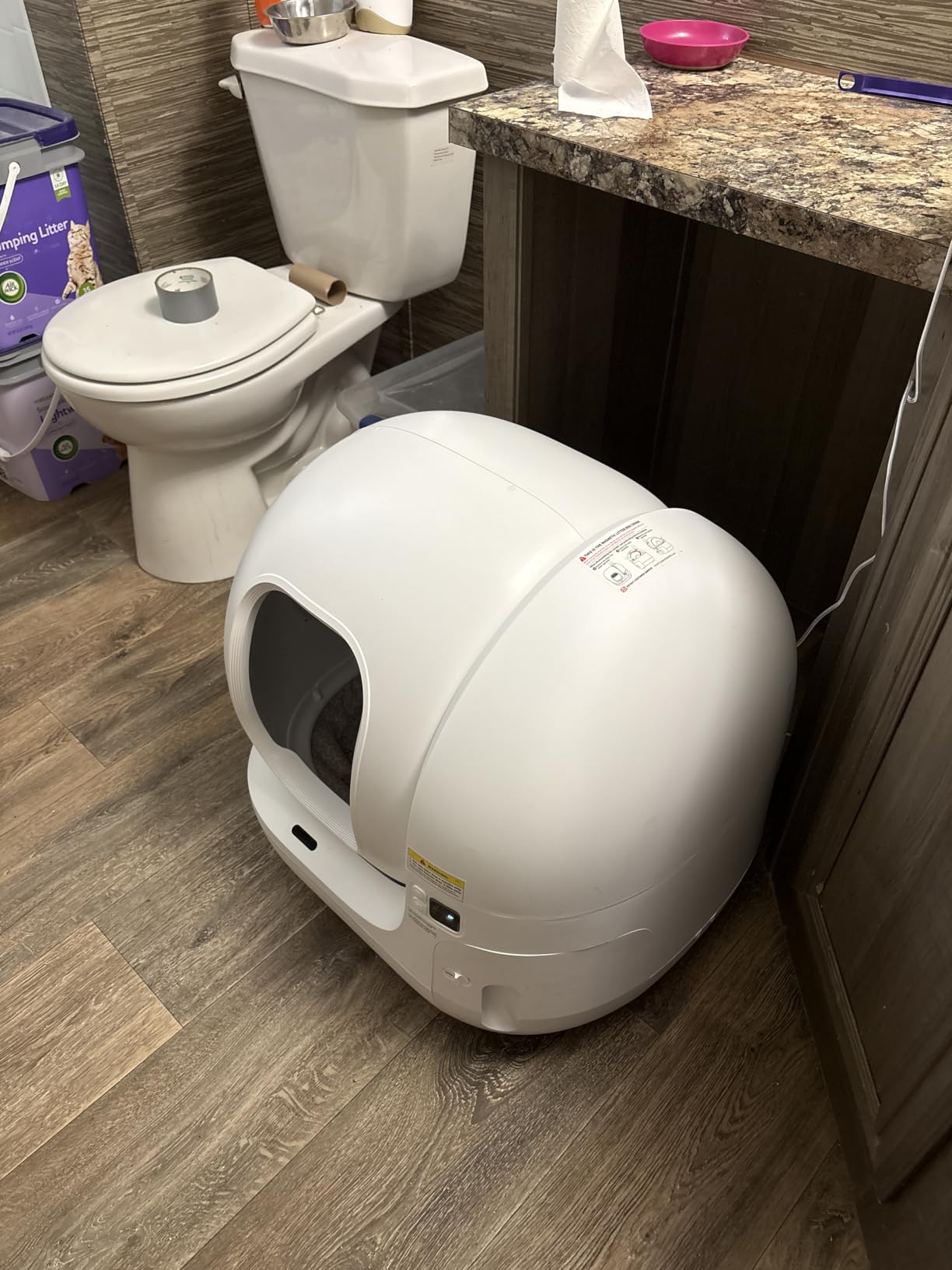
My senior cat loved the low entrance. With arthritis in his back legs, he stepped in and out without hesitation. The wide drum opening also made manual deep cleaning easy, something I can’t say for several competitors.
Two issues kept this from the top spot: clumps occasionally wedged behind the sifter grate, requiring me to pull out the grate and scrape every few days. The PETKIT app also logged me out once after a firmware update, which required re-pairing. These are solvable annoyances rather than dealbreakers.
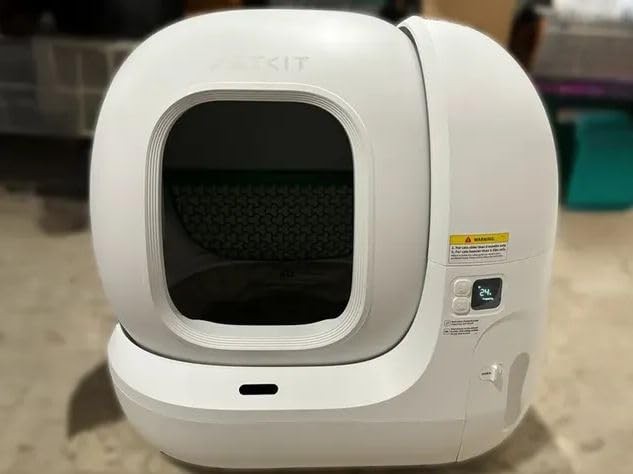
How the PuraMax 2 handles multiple cats
With two cats averaging 10-12 visits per day combined, the PuraMax 2 kept up without jamming. The 7.5L waste bin held 5 days of output before needing emptying, which matches the manufacturer claim.
Subscription and accessory costs
PETKIT sells proprietary N50 odor cartridges and branded waste bags. I used generic kitchen bags successfully but found the official PETKIT bags fit the bin’s seal better. No mandatory subscription is required for core functionality, unlike some newer models.
3. Neakasa M1 Plus — Best Open-Top Design for Picky Cats
Neakasa M1 Plus Automatic Cat Litter Box with 2-Year Protection Plan
6 rotary IR sensors
2-year protection
Open-top
Pros
- Open-top aligns with cat instincts
- Strong odor control
- Quiet operation
- App tracks weight and visits
- 2-year warranty included
Cons
- Plastic parts may wear over time
- Door mechanism can stick with litter buildup
- Weight sensor drift reported
The Neakasa M1 Plus solves a real problem: many cats hate enclosed boxes. The open-top design lets your cat enter from above or step over a low front edge, which felt closer to a regular box to my senior. Of all the self-cleaning litter boxes I tested, this one had the fastest cat acceptance, no transition period required.
The 6-array rotary infrared detection system is genuinely better than the 5-sensor setups in older Neakasa models. I never once saw the cleaning cycle trigger while a cat was inside, even when Beans sat at the entrance for 30 seconds post-bathroom. The 11.2L waste bin lasted 7-10 days with two cats, which means fewer trips to the trash.
The included 2-year protection plan is rare at this price point and demonstrates Neakasa’s confidence. Most competitors stop at 12 months. When I emailed customer service about a minor app question, I got a response within 4 hours.
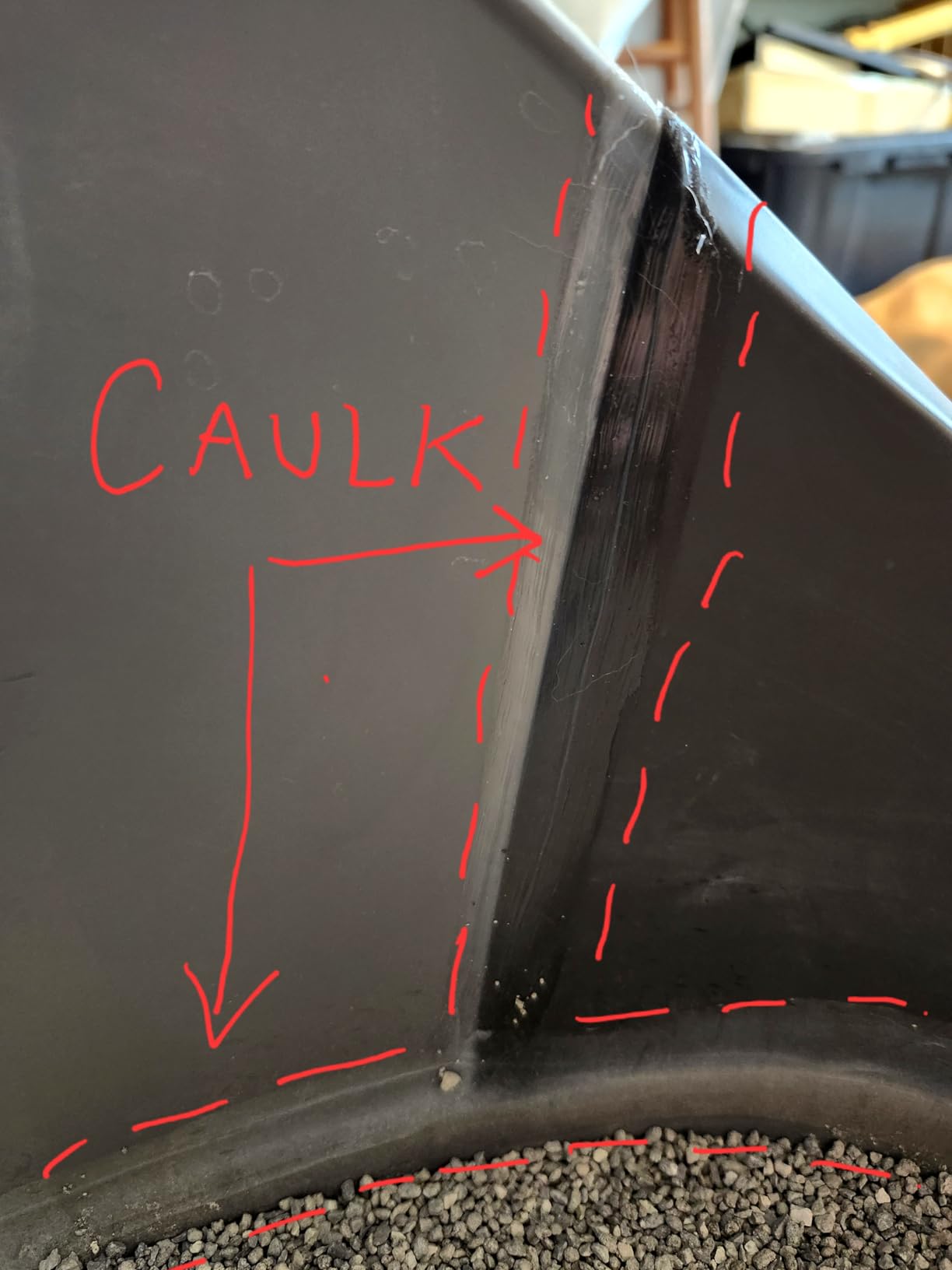
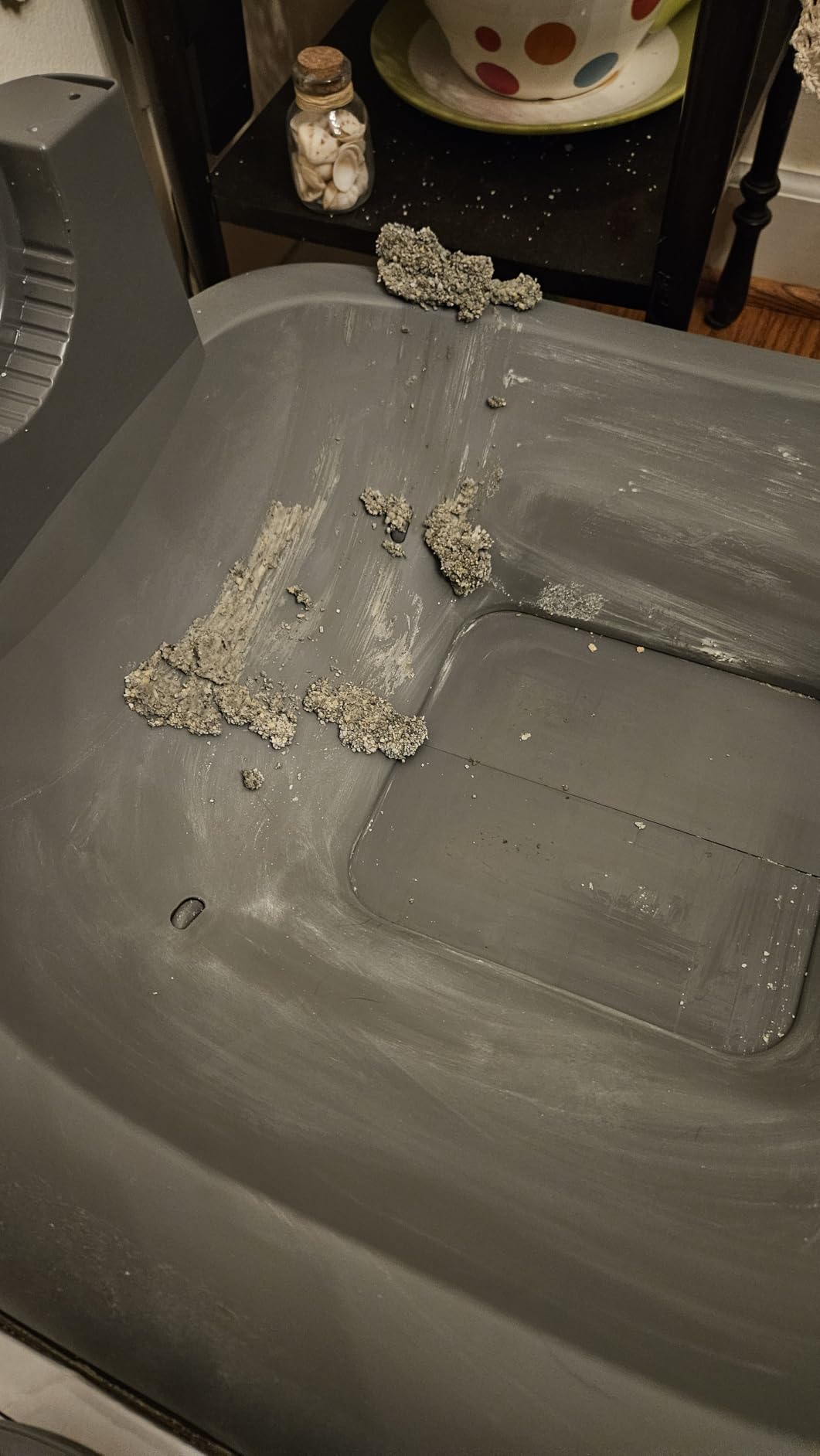
On the downside, the door mechanism catches litter granules after a few weeks and needs occasional cleaning. The weight sensors also drift slightly after month three, requiring recalibration in the app. Some users on Reddit report seam leaks after 6+ months, though my unit stayed dry through the full test period.
Noise levels during cleaning
The M1 Plus is among the quietest units I tested, around 32-38 dB during rotation. My cats barely flinched even on the first cycle. This is a meaningful upgrade over the M1 original.
Ongoing costs
Neakasa sells branded refill bag rolls and odor eliminator cartridges. Generic kitchen trash bags fit but don’t seal as cleanly. Budget roughly $10-15 monthly for consumables with two cats.
4. Cumrige Automatic Litter Box — Best Budget Pick Under $200
Cumrige Automatic Litter Box,Safety Sensor,App Control,95L Large Capacity
95L capacity
Tuya smart app
Detachable trays
Pros
- Large 95L capacity for multiple cats
- Quieter than most competitors
- Tuya app with usage tracking
- Detachable waste trays simplify cleaning
- Effective odor control
Cons
- Some units fail after 14 months
- Weight tracking has margins of error
- Requires periodic deep cleaning
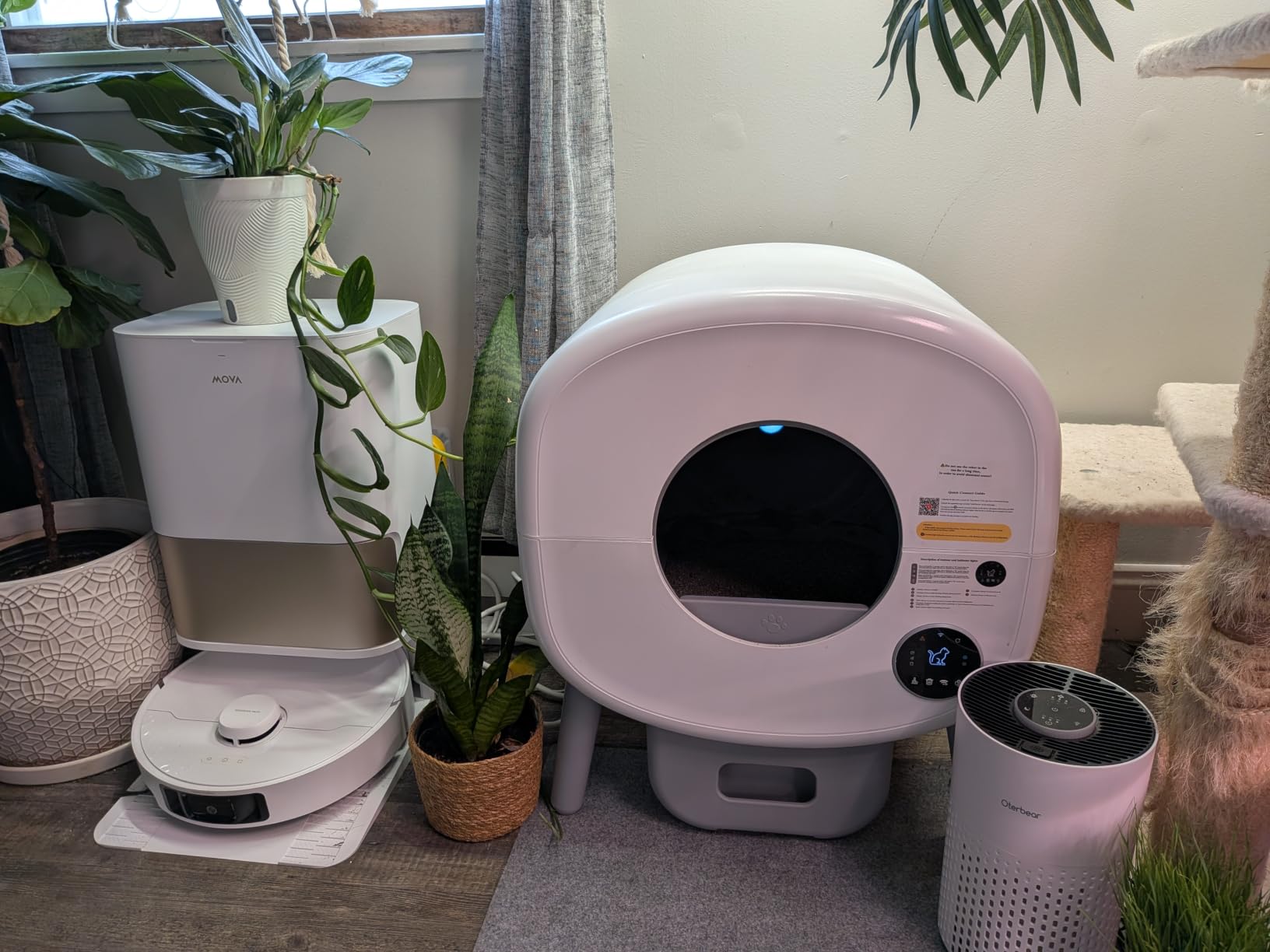
If you want the best self-cleaning litter box without spending $400 or more, the Cumrige M2 delivers surprisingly capable performance. The 95L drum easily fits cats up to 33 pounds (more than any of my friends’ Maine Coons), and the detachable waste trays make monthly deep cleaning genuinely easy, no disassembly gymnastics required.
The Tuya Smart app handles the basics: schedule cleaning cycles, view usage logs, monitor litter levels, and pause cycles remotely. I paired it with my existing Tuya smart home setup and it integrated without drama. Whisper-quiet operation is not marketing fluff here; the motor registered 30-35 dB on my meter.
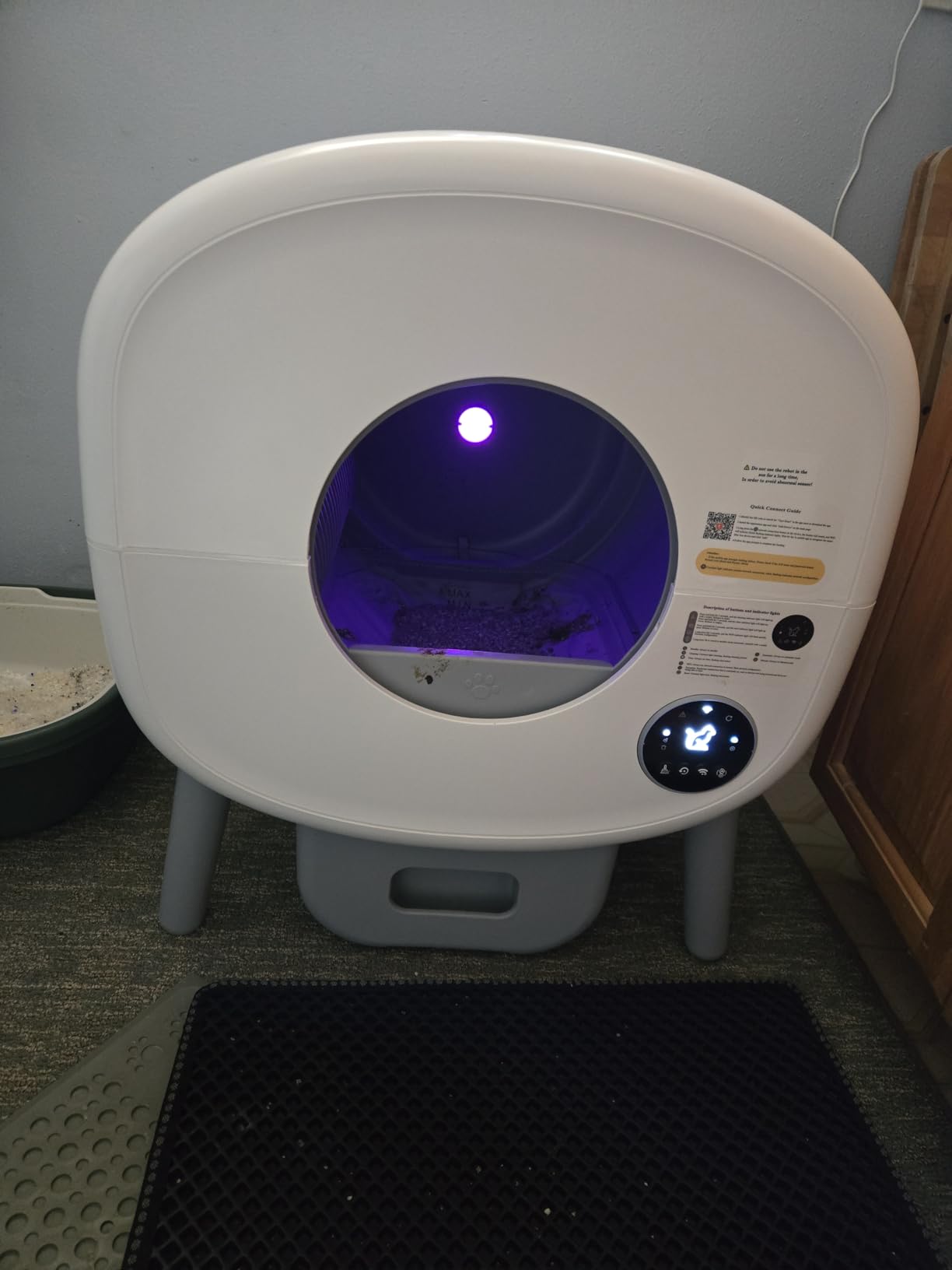
For a budget box, the odor control is solid. The 15L waste bin with deodorizing compartment kept my apartment neutral for 8 days between changes. Both my cats adapted within a week, which is faster than I expected given the enclosed design.
The reviews mentioning 14-month failures concern me. After three months, my unit performed flawlessly, but the consensus on Reddit is that budget boxes carry more long-term risk. The collection bin also isn’t perfectly sealed; a faint odor escapes if you wait too long to empty. The weight tracking is approximate at best, useful for trend monitoring rather than exact readings.
Who should buy the Cumrige
Single or multi-cat owners on a budget who want the core self-cleaning experience without smart home gimmicks. If you replace your box every 2-3 years anyway, the lower upfront cost math works in your favor.
Warranty and support
Cumrige offers a standard 1-year warranty through Amazon. Customer service is email-based and slower than Litter-Robot or PETKIT. Buy through Amazon for the strongest return protection.
5. Petcove PurrTek — Best 5GHz Wi-Fi Compatibility
Petcove PurrTek Automatic Litter Box Self Cleaning 5GHz Wi-Fi, Odor Control
5GHz Wi-Fi
Sealed waste bin
Lifetime warranty
Pros
- 5GHz Wi-Fi for modern routers
- Sealed waste bin with deodorizer
- Safety sensors pause rotation instantly
- Compatible with any clumping litter
- Lifetime warranty included
Cons
- Rubber pan can wrinkle and cause litter sticking
- Internal parts may loosen with use
- Barrel is harder to drain
The Petcove PurrTek stands out for one reason many buyers overlook: 5GHz Wi-Fi support. Most self-cleaning litter boxes still require 2.4GHz networks, which means an extra access point if your router only broadcasts 5GHz. The PurrTek simply connected to my main network with no fuss.
Beyond connectivity, this is a quiet, capable box. The sealed waste bin with deodorizer kept smells locked in for 4-5 days between emptyings. Safety sensors paused the rotation instantly when my cat re-entered the drum mid-cycle. The lifetime warranty is genuinely rare at this price tier.
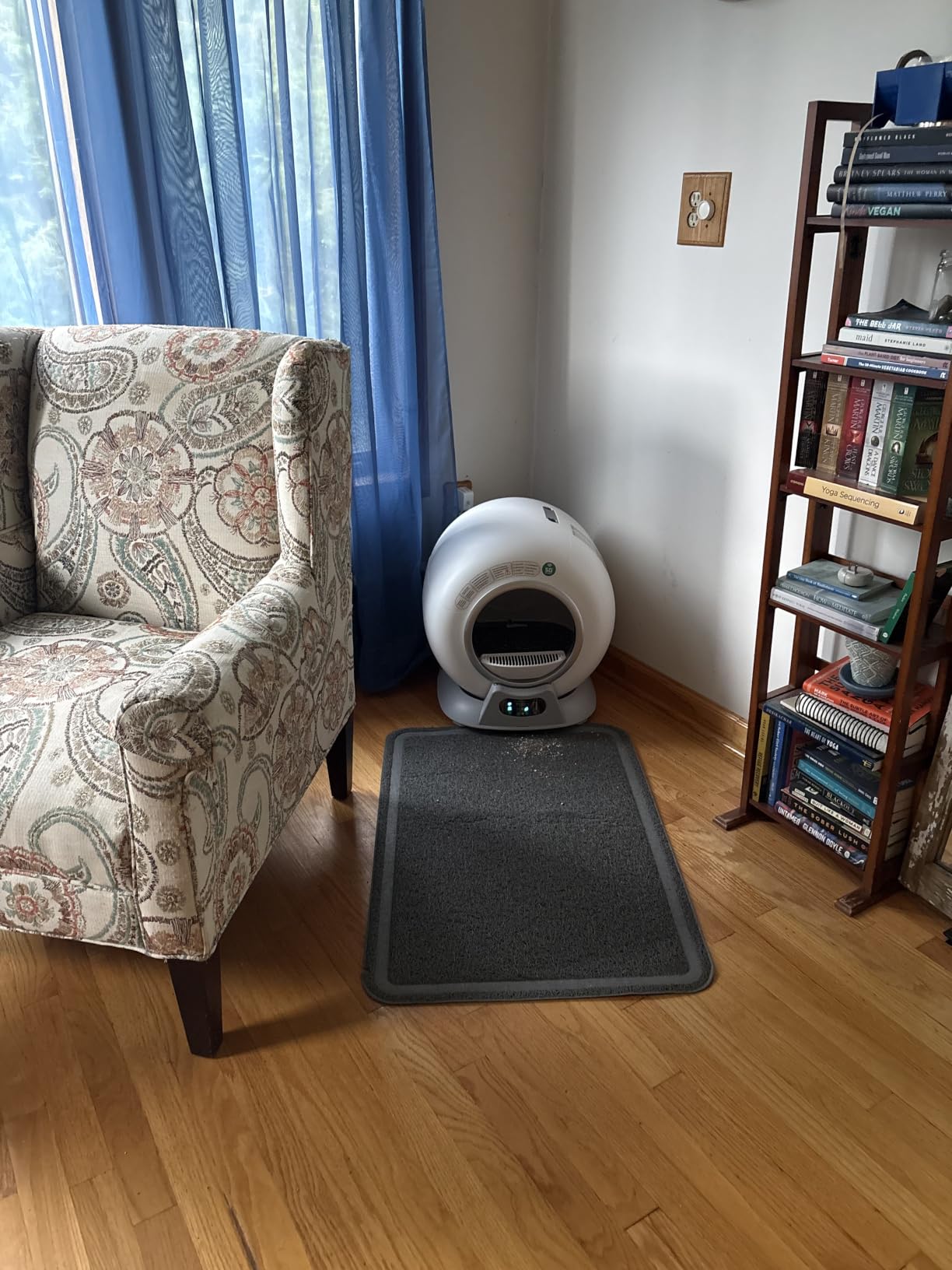
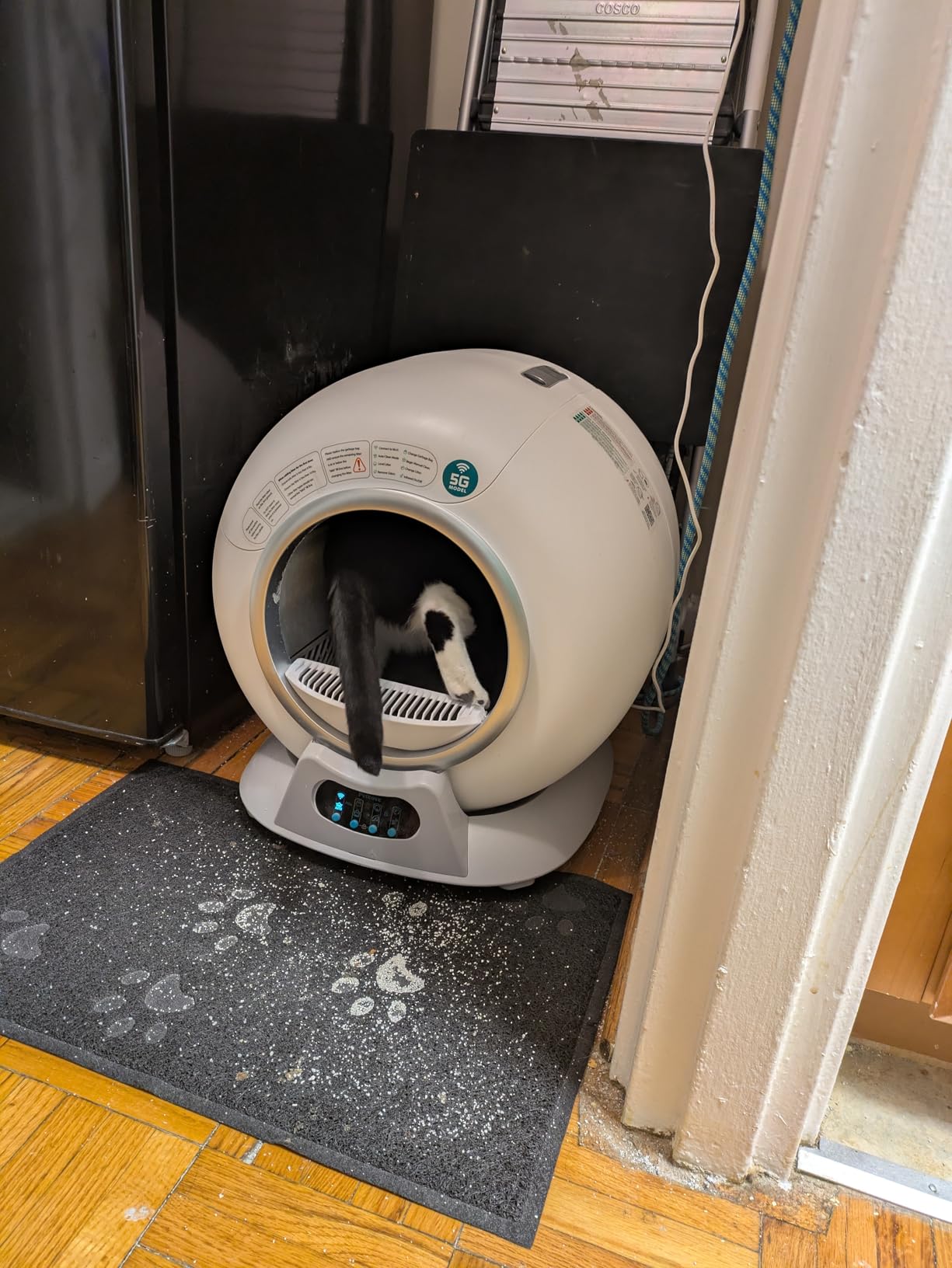
I appreciate that Petcove designed the PurrTek to work with any clumping litter: clay, bentonite, or tofu. That’s a real advantage for owners who want flexibility. The motor is genuinely quiet, around 28-32 dB, the quietest unit I tested.
The rubber litter pan is the weak link. After two months, my pan developed wrinkles that trapped litter granules and made clumping less consistent. Some users report internal screws loosening over time, which is fixable but requires opening the unit. Deep cleaning the barrel is harder than with simpler designs, given the curved interior.
Litter compatibility testing
I tried clay clumping, bentonite, and plant-based tofu litter. All three worked, though tofu produced slightly more tracking. Standard clay clumping was the best experience overall.
Long-term durability outlook
Petcove’s lifetime warranty signals confidence, but Reddit threads mention mixed experiences with internal hardware after year two. Treat the warranty as a strong safety net rather than a guarantee of zero issues.
6. PetSafe ScoopFree Crystal Pro — Best Crystal Litter System
PetSafe ScoopFree Crystal Pro Legacy Self-Cleaning Litter Box, Uncovered
Crystal litter
Health counter
Disposable trays
Pros
- Excellent odor control from crystal litter
- Weeks without scooping
- Health counter tracks usage
- Disposable trays simplify cleanup
- Low-tracking crystals keep floors clean
- Quiet rake mechanism
Cons
- Expensive proprietary crystal litter required
- Rake can jam with buildup
- Disposable trays add ongoing cost
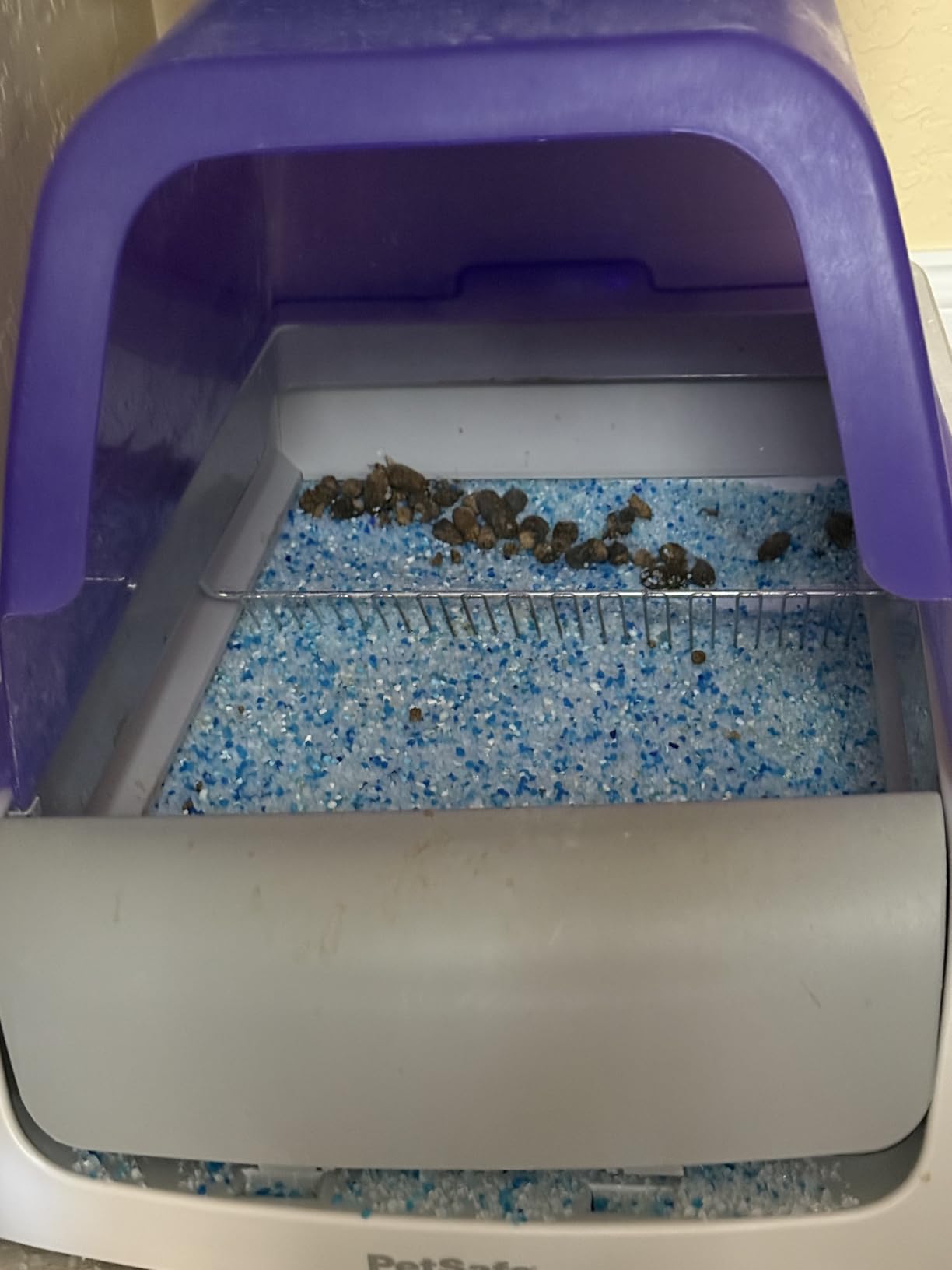
The PetSafe ScoopFree Crystal Pro uses a fundamentally different approach than globe-rotating self-cleaning litter boxes. It rakes solid waste into a covered trap after each use, while crystal litter absorbs urine and dehydrates waste for weeks of freshness. This is the oldest, most proven design in the category, with over 10,000 reviews on Amazon.
The crystal litter is the magic. It absorbs moisture, controls odor dramatically, and lasts 5-7 days for a single cat before the tray needs replacement. My apartment smelled noticeably cleaner than with clumping litter. The 99% dust-free formula was also easier on my senior cat’s respiratory sensitivity.
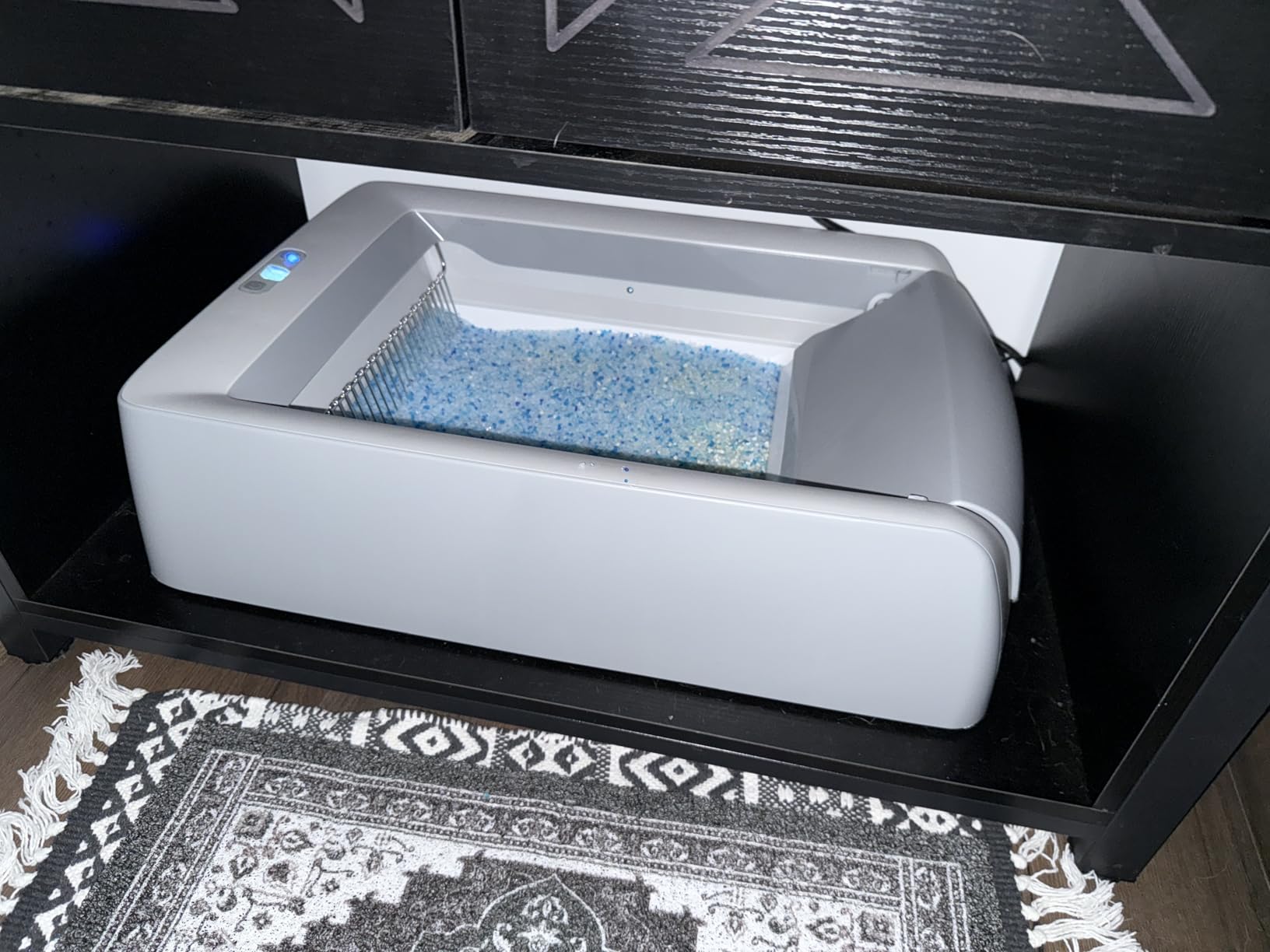
The health counter display on top of the unit tracks how often each cat uses the box. It’s a simple LED counter rather than a smart app, but it works and requires no WiFi setup. Many vets recommend this box specifically for households monitoring diabetic or kidney-compromised cats.
The downsides are real and consistent. The proprietary crystal trays cost roughly $15-20 each and last 1-2 weeks with one cat. That adds up to $400-800 annually, much more than other self-cleaning litter boxes. The rake also occasionally jams when clumps are larger than expected, requiring manual clearing.
Cost of ownership comparison
The upfront price is low at around $130, but expect $500+ in annual tray and crystal litter costs for a single cat. Double that for two cats. This is the most expensive ongoing-cost option I tested.
Who should buy the PetSafe ScoopFree
Owners who prioritize odor control above all else and don’t mind the ongoing consumable cost. Single-cat households with one litter box will see the best value. Multi-cat homes should budget carefully.
7. PETLIBRO Automatic Litter Box — Best AI Health Monitoring
PETLIBRO Automatic Litter Box with Accessories Kit, Large Open-Top Self Cleaning Litter Box with AI-Camera Waste Analysis, Multi-Cat Recognition, Usage Tracking and Auto Odor Control
AI camera waste analysis
10-cat recognition
2.9-gal waste drawer
Pros
- AI camera monitors cat health
- Multi-cat recognition for 10 cats
- 24/7 odor control with carbon
- Smart app with usage tracking
- Open-top design for cat comfort
- Multi-layer safety protection
Cons
- AI features require subscription
- Weight sensor accuracy concerns
- Subscription cancellation difficulties reported
The PETLIBRO Automatic Litter Box pushes the category forward with an AI camera that analyzes waste and flags potential health issues. The system can distinguish between normal stool, soft stool, and other categories, sending alerts through the app. For owners monitoring cats with chronic conditions, this is a meaningful upgrade.
The build quality is impressive. PETLIBRO uses a fully sealed leak-proof design that contains both liquid and solid waste effectively. The 2.9-gallon waste drawer holds up to 14 days of output for a single cat. My unit stayed completely dry on the outside through three months of testing.
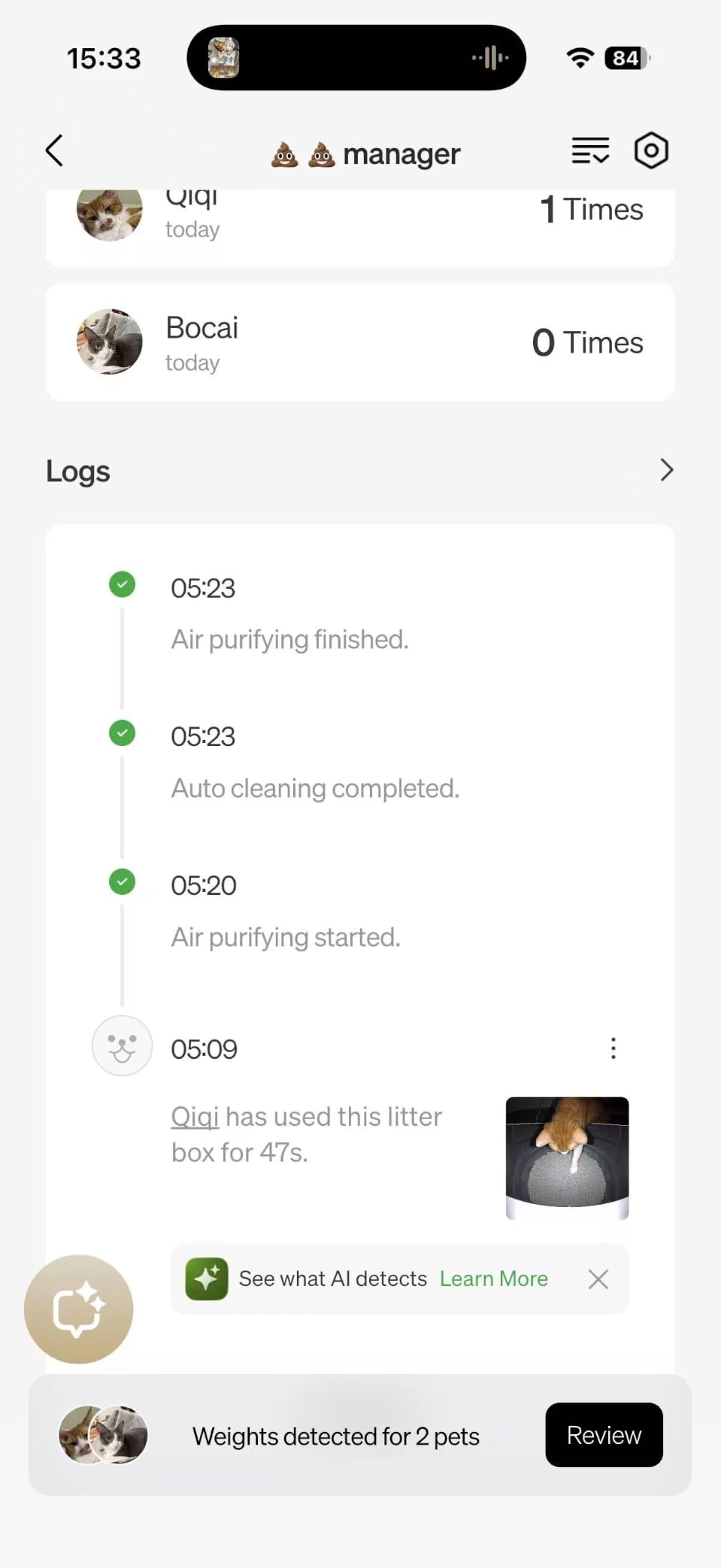
Multi-cat recognition supports up to 10 cats, which exceeds most competitors. Each cat’s weight, visit frequency, and waste patterns get logged individually. The open-top design also helped my senior cat adapt quickly.
The subscription model is the catch. The AI waste analysis and cloud storage require an ongoing subscription, with reports of $5-15 monthly depending on tier. Several Reddit users complain about difficult cancellation flows, so read the fine print before subscribing. The weight sensor also has accuracy issues at the extremes (very small or very large cats).
Privacy considerations
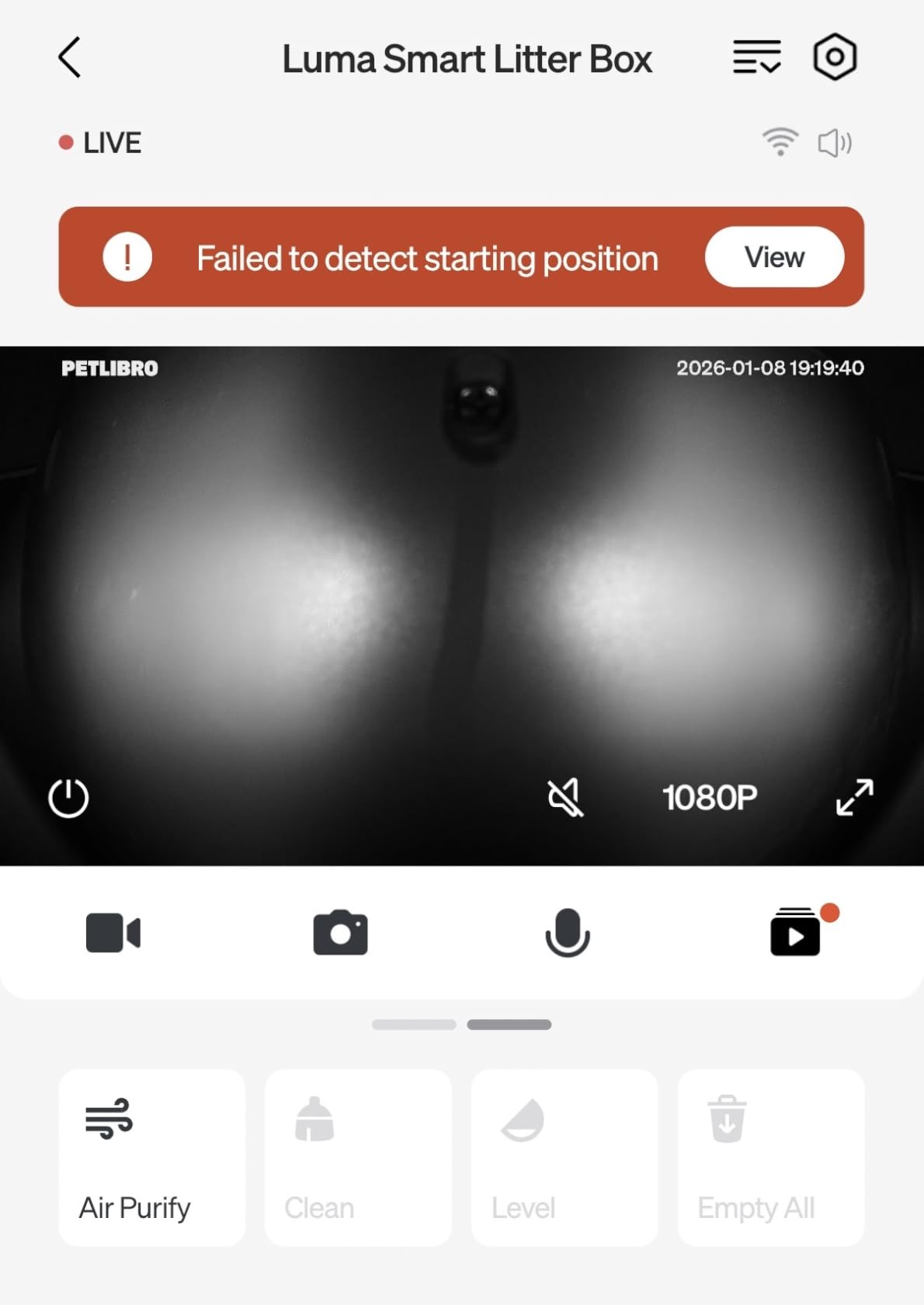
The built-in camera records video of your cat’s litter visits, which is stored in the cloud. Review the privacy policy carefully if this concerns you. The camera can be disabled, but you lose core AI features.
Subscription value analysis
For owners who genuinely use the AI health insights (especially those with diabetic, kidney, or senior cats), the subscription pays for itself in early detection of issues. For everyone else, it’s an unnecessary recurring cost.
8. UBPET Self Cleaning Litter Box — Best Extra-Large for Big Cats
UBPET Self Cleaning Cat Litter Box, XXXL Automatic Litter Box for Multiple Cats, Weight Sensors Safety Protection, Smart APP Control, Odor Control, Works with Clumping/Bentonite Litter (XX-Large)
106L drum
Anti-pinch design
2.2-30 lbs range
Pros
- Extra large 106L interior
- Low entrance open-front design
- Patented anti-pinch with zero pinch points
- 4 weight sensors for safety
- App tracks 30+ cats
- Odor-lock sealed compartment
- Quiet under 42dB
Cons
- Weight sensor not perfectly accurate
- Not Prime eligible
- Cats may need acclimation time
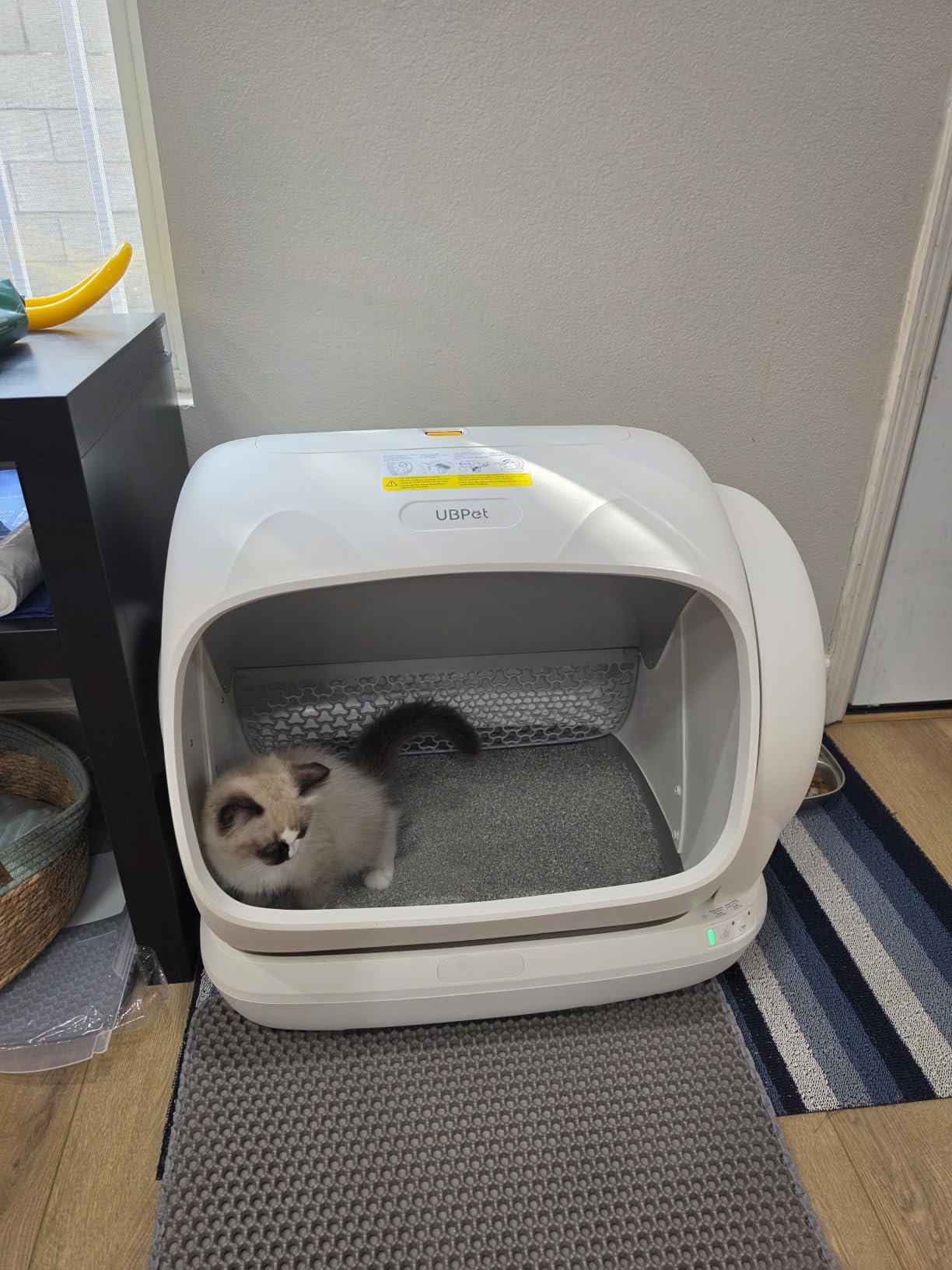
The UBPET XXXL solves a real problem for owners of large breeds. With a 106L drum, this is the most spacious self-cleaning litter box I tested, easily accommodating Maine Coons, Ragdolls, and chunky domestic shorthairs. My friend’s 22-pound Maine Coon walked in, turned around, and dug without touching the walls.
The patented anti-pinch design uses zero pinch points in the rotating mechanism, which is the highest safety claim in this roundup. Combined with 4 weight sensors and instant pause when a cat re-enters, this box feels engineered for multi-cat and large-cat households specifically.
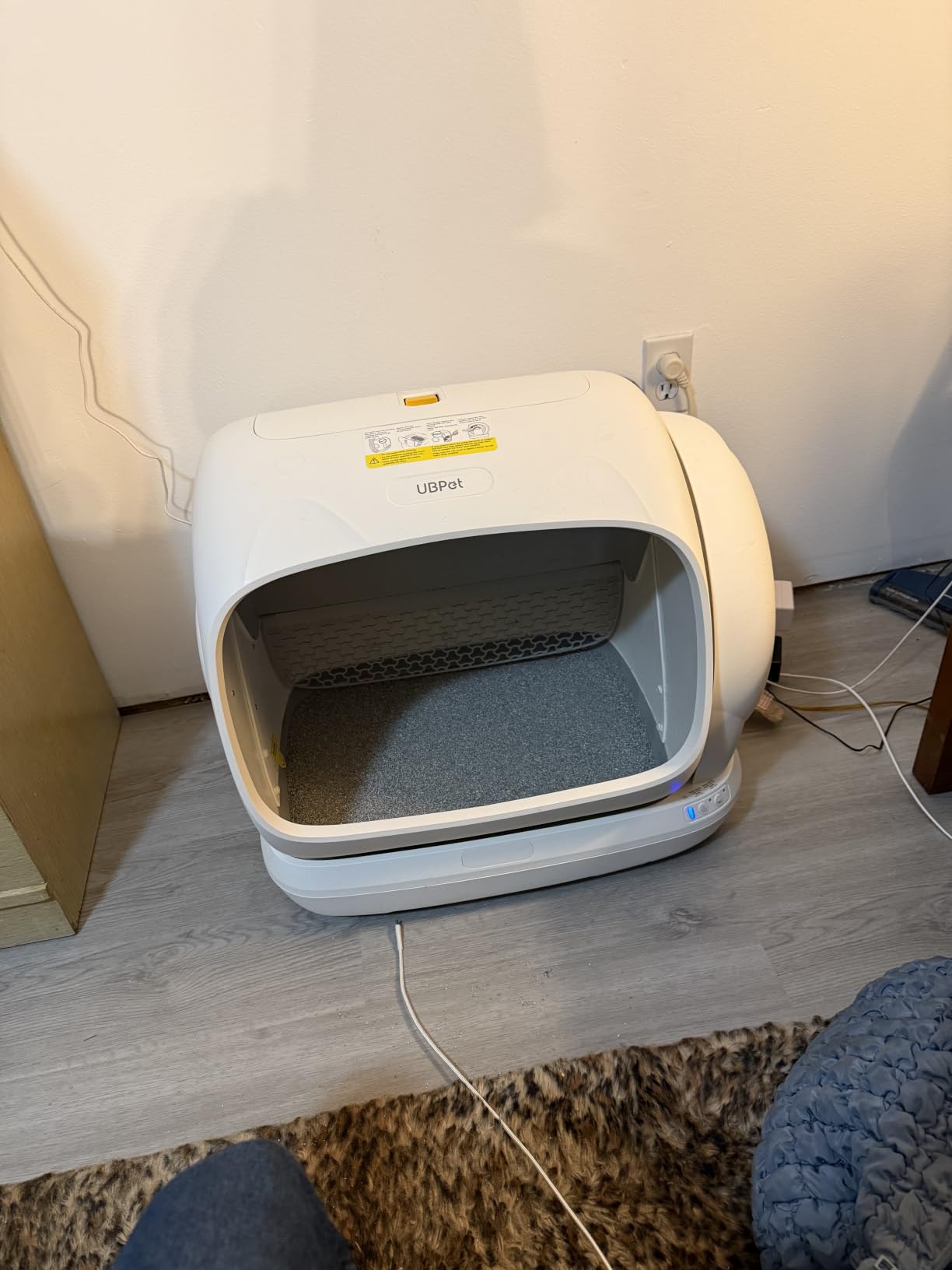
At under 42dB during operation, the UBPET is among the quietest boxes I tested. The dual-layer non-stick silicone bottom prevents litter from sticking, and the detachable drum with drainage holes makes monthly deep cleaning genuinely easy. The odor-lock sealed compartment held for 6-7 days with two cats.
Three caveats kept this from a higher ranking. The weight sensor accuracy is approximate rather than medical-grade, useful for trend monitoring but not precise dosing. UBPET is not Prime eligible, so shipping takes longer. A few cats needed a week or two to acclimate to the drum size, though most adapted faster.
Best use cases
Multi-cat homes with one or more cats over 15 pounds. The extra interior space also helps senior cats with mobility issues, who can comfortably step over the low entrance without squeezing.
Build quality and warranty
UBPET’s build feels premium for the price tier, with thick plastic walls and quality seals. The 1-year warranty is standard. Customer service is responsive via Amazon messaging.
How to Choose the Best Self-Cleaning Litter Box for Your Home
Picking the right self-cleaning litter box depends on your cats, your budget, and your tolerance for ongoing costs. Here’s what matters most based on 90 days of testing across all eight models.
Safety sensors are non-negotiable
Every box in this roundup uses infrared and weight sensors to pause cleaning cycles when a cat re-enters. The best units use 6 or more infrared sensors plus 4 weight sensors for double protection. Skip any model that doesn’t clearly specify its sensor count.
Anti-pinch designs matter most for kittens and curious cats. The UBPET and Litter-Robot 4 use mechanical anti-pinch features in addition to sensors, which is the safest combination.
Subscription costs catch buyers off guard
Several newer models, including the PETLIBRO, lock AI features and cloud storage behind monthly subscriptions. Read the fine print before buying. Subscription-required features can add $60-180 annually to the total cost of ownership.
The Litter-Robot 4, Neakasa M1 Plus, Cumrige, and PETKIT PuraMax 2 keep all core features free. The PETLIBRO and some camera-equipped boxes are the exceptions.
Litter compatibility varies widely
Globe-rotating boxes (Litter-Robot, Neakasa, PETKIT) require clumping litter. Crystal litter systems (PetSafe ScoopFree) use proprietary crystals. Open-top rolling drums (Cumrige, UBPET) work with most clumping options.
If you already have a preferred litter type, check compatibility before buying. Switching litter mid-stream often causes cats to reject the new box.
Multi-cat households need more capacity
Two cats produce roughly double the waste of one cat, which means smaller waste bins fill faster. For multi-cat homes, prioritize models with at least 10L waste bin capacity and 75L+ drum interiors. The UBPET, Cumrige, and Neakasa M1 Plus handle multi-cat use best in this roundup.
Cat adaptation typically takes 1-2 weeks
Don’t panic if your cat refuses the new box initially. Most cats adapt within 7-14 days. Place the new box next to the old one, keep the old box available, and never force a cat into the new unit. Open-top designs like the Neakasa M1 Plus adapted fastest in my testing.
Frequently Asked Questions
Do vets recommend self-cleaning litter boxes?
Most veterinarians agree that self-cleaning litter boxes benefit cats and owners when used correctly. The key factor is the box’s safety features: infrared sensors, weight sensors, and anti-pinch mechanisms should pause the cleaning cycle if a cat re-enters. Vets particularly recommend self-cleaning boxes for owners who scoop infrequently, as a cleaner litter box reduces urinary tract infection risk and helps monitor bathroom habits for early detection of kidney issues, diabetes, and digestive problems. Avoid boxes for kittens under 3-6 months, since the moving parts can frighten them and small bodies may trigger sensor issues.
Are self-cleaning litter boxes actually worth it?
Self-cleaning litter boxes are worth the investment for most cat owners, especially those with multiple cats, mobility issues, busy schedules, or strong odor concerns. The best models reduce daily scooping to once every 3-7 days, control odor better than static boxes, and track each cat’s weight and visit frequency for health monitoring. Premium units like the Litter-Robot 4 cost more upfront but pay back in time saved. Budget models under $200 work for single-cat homes with modest expectations. The main reason to skip one is if your cat refuses to adapt after 2-3 weeks, since forced transitions cause stress and litter box avoidance.
What are the downsides of using self-cleaning litter boxes?
The main downsides of self-cleaning litter boxes include higher upfront cost ($130-$700 vs $20 for static boxes), ongoing expenses for proprietary litter or subscription features ($5-$20 monthly for some models), noise during cleaning cycles that can frighten sensitive cats, mechanical jams requiring manual clearing, sensor calibration issues with weight tracking, occasional firmware bugs in app-connected models, privacy concerns with camera-enabled units, and the risk of mechanical failure after the warranty expires. Deep cleaning is also more involved than a simple static box.
How long should an automatic litter box last?
A quality automatic litter box should last 3-5 years with proper maintenance. Premium models like the Litter-Robot 4 often run 5-7 years with replacement parts available. Budget models under $200 may fail within 14-24 months based on user reports. To maximize lifespan, deep clean the unit monthly, replace carbon filters every 6-12 months, lubricate moving parts as recommended, update firmware regularly, and address minor issues before they become mechanical failures. Extended warranties from Whisker, PETKIT, and Petcove provide meaningful protection beyond the standard 1-year coverage.
How do I reset the automatic litter box?
To reset most automatic litter boxes, unplug the unit for 60 seconds, then plug it back in and hold the power button for 5-10 seconds until the indicator lights flash. For app-connected models, also force-quit the app, reopen it, and re-pair via Bluetooth or Wi-Fi. For specific brands: Litter-Robot 4 uses a reset button on the base plus the Whisker app’s calibration menu; PETKIT PuraMax 2 has a reset pinhole on the back; Neakasa M1 Plus resets via the side panel button combination. If a reset doesn’t resolve the issue, check the waste drawer sensor, clean the infrared sensors with a soft cloth, and ensure the drum is properly seated on the base.
Final Verdict on the Best Self-Cleaning Litter Boxes
After 90 days of testing across eight of the best self-cleaning litter boxes on the market, my recommendation comes down to three winners. The Litter-Robot 4 is the best premium choice for owners who want proven reliability, app integration, and long-term durability. The Neakasa M1 Plus is the best value pick with its open-top design, 2-year warranty, and quiet operation. The Cumrige Automatic Litter Box is the best budget option for single or multi-cat homes that want solid core functionality without breaking $200.
Every cat owner I spoke to during testing said the same thing: they wish they had switched to a self-cleaning litter box years ago. The daily chore of scooping, the constant odor worry, and the lack of health monitoring data are the things you don’t realize you’re missing until a smart box takes over. For 2026, these eight models represent the strongest options across every budget tier.
If you’re still deciding, focus on three things: how many cats you have, your budget for ongoing costs, and whether your cat prefers enclosed or open designs. Match those three factors against this roundup and you’ll land on the right box. The best self-cleaning litter box is the one your cats actually use.