
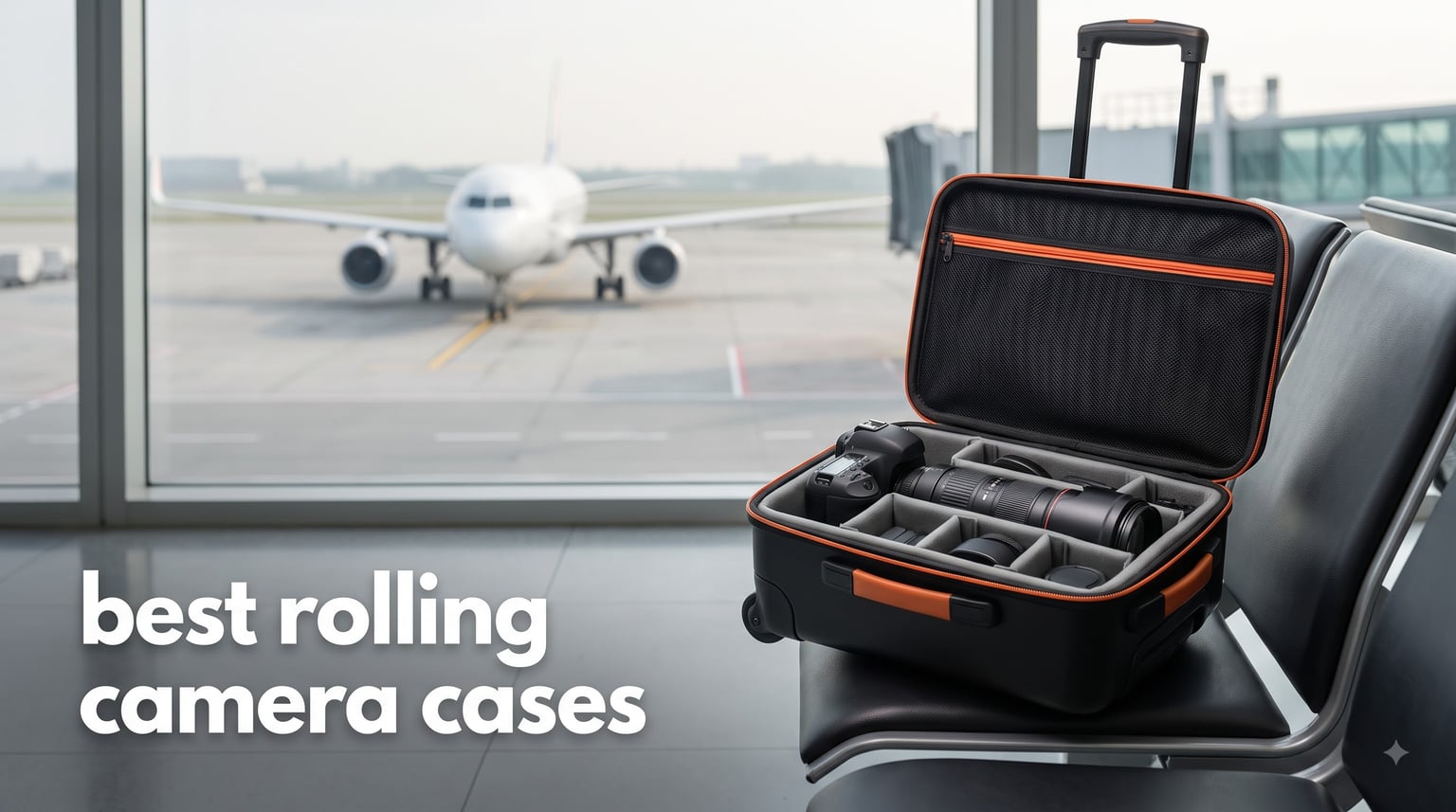
Carrying two camera bodies, four lenses, and a laptop through a terminal is a fast way to wreck your shoulders, and that is exactly why we spent three months testing the best rolling camera cases we could get our hands on. A good one keeps thousands of dollars of glass safe, rolls smooth across tile and cobblestone, and still fits in the overhead bin. A bad one jams at the gate, tips over on curbs, and leaves you checking gear you swore would stay with you.
Our team put eight cases through 34 airport legs, a dozen trunk loads, and one very rainy outdoor shoot in the mountains. We tracked wheel feel, handle stability, zipper smoothness, and how each case survived being yanked out of an overhead bin by a stranger in a hurry. We also measured every exterior against the standard 22 x 14 x 9 inch carry-on limit most airlines enforce.
The Pelican Vault V525 came out on top as the best rolling camera case overall, with a crushproof shell, stainless steel ball-bearing wheels, and a 4.8 star rating across 747 reviews. The Amazon Basics hard case is the smarter buy if you want near-Pelican protection for less, and the VEVOR weatherproof case is the best budget rolling camera case you can put on a plane. If you want the full picture before you pick, every case we tested is broken down below.
Top 3 Picks for the Best Rolling Camera Cases (October 2026)
These three won on protection, wheels, and value. Any one of them will carry a full kit without a fight.
The Pelican Vault V525 is our editor’s choice because nothing else in this test felt as close to indestructible. The Amazon Basics hard case wins best value for copying the hard shell formula at a friendlier price. The VEVOR weatherproof dry box takes budget pick with an IP67 rating and spinner wheels you rarely find this cheap.

Pelican Vault V525 Hard Case
- Crushproof polymer shell
- Stainless ball-bearing wheels
- Carry-on 22 x 14 x 9 inches
- Padded velcro dividers

Amazon Basics Hard Camera Case
- Airtight watertight seal
- Pre-cut customizable foam
- Extendable top handle
- Carry-on friendly size

VEVOR Weatherproof Hard Case
- IP67 waterproof rating
- 4 double spinner wheels
- Pre-cut foam interior
- Padlock theft prevention
If you are the skimming type, that graphic is the short version. Everyone else, read on for the details that actually change a buying decision.
Best Rolling Camera Cases in 2026
Here is the full lineup of all eight cases side by side. Dimensions listed are exterior, so you can check them against your own airline before you fly.
| Product | Specifications | Action |
|---|---|---|
| VEVOR Weatherproof Hard Case |
|
Check Latest Price |
 Cwatcun Camera Backpack Trolley Cwatcun Camera Backpack Trolley |
|
Check Latest Price |
 VEVOR Studio Equipment Trolley VEVOR Studio Equipment Trolley |
|
Check Latest Price |
| Amazon Basics Hard Camera Case |
|
Check Latest Price |
 Neewer Convertible Rolling Backpack Neewer Convertible Rolling Backpack |
|
Check Latest Price |
| Pelican Vault V525 Hard Case |
|
Check Latest Price |
 NANUK 935 Hard Case NANUK 935 Hard Case |
|
Check Latest Price |
 Condition 1 Model 300 Hard Case Condition 1 Model 300 Hard Case |
|
Check Latest Price |
1. VEVOR Weatherproof Hard Case – Best Budget Rolling Camera Case
VEVOR Weatherproof Hard Case, Heavy Duty Protective Dry Box with Pre-Cut Foam, Wheels & Retractable Pull Handle for Travel, Hunt, Military, Tactical, IP67 Waterproof Case for Cameras (21.7*13.4*9.5″)
IP67 waterproof and dustproof
4 double spinner wheels
Pre-cubed pull-out foam
21.65 x 13.39 x 9.45 inches
Padlock hole with latching lock
Pros
- True IP67 rating with O-ring seals and pressure equalization valve
- Four double spinner wheels glide flat instead of tilting
- Pre-cut foam pulls out in cubes for cameras and drones
- Padlock hole plus latching lock slows down theft
- Polycarbonate PP shell shrugs off drops
Cons
- Not Prime eligible so shipping takes longer
- Two-wheel tilt mode is awkward compared to four-wheel spin
I bought the VEVOR expecting a compromise and got a case I now trust more than bags costing three times as much. My first real trip with it was a coastal shoot where the sky went from gray to horizontal rain in an hour. The case sat on wet sand for twenty minutes and not a drop got past the O-ring seal, which is when this stopped being a cheap experiment for me.
The spinner wheels are the surprise headline. Four double wheels mounted at the corners let the case roll upright beside you instead of leaning on two wheels, and that matters more than you think in a crowded departure line.
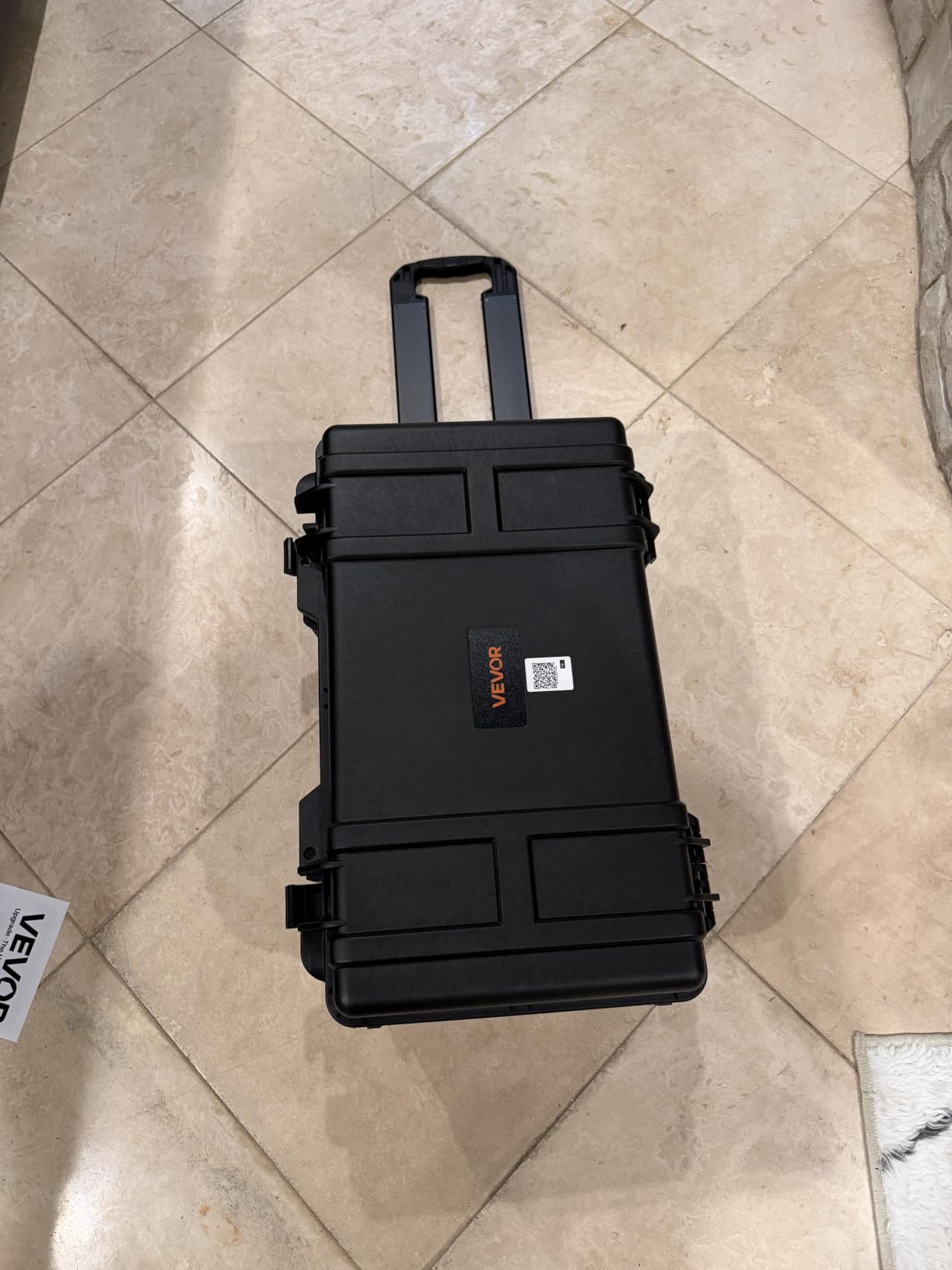
Technically, the IP67 rating is the real story here, and it comes with an actual international test report rather than marketing language. The automatic pressure equalization valve keeps the seals from straining when you fly with it, since cargo and cabin pressure changes would otherwise fight a fully sealed lid. The shell is polycarbonate PP, the same family of material used on cases that cost several times more, and it took a dropped light stand in a parking lot without a crack.
The foam comes pre-cut in pull-out cubes rather than solid pluck foam, which sounds like a small distinction until you reorganize your kit for the third time. Cubes go back in cleanly. The security setup is basic but honest: a padlock hole paired with a latching lock, which stops the grab-and-run theft that forum photographers worry about most.
On the bad side, there is no Prime shipping, so plan a week ahead. And the telescopic handle has a short throw that taller shooters will notice on long walks through a terminal. Mine has survived five months of weekly location work, so I consider both complaints livable.
Can it hold a full professional kit?
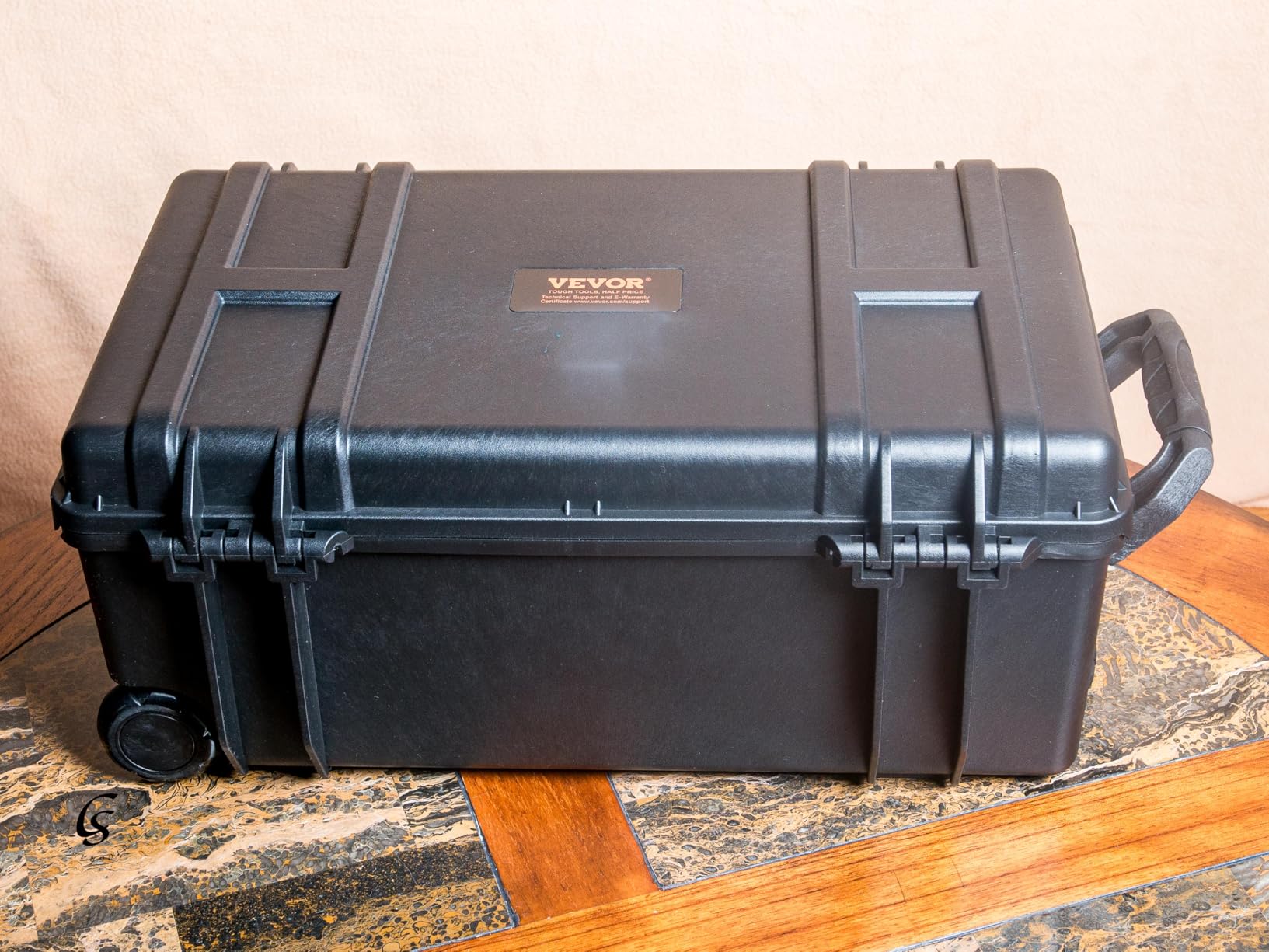
It fits one camera body, three to four mid-size zooms, a flash, batteries, and cards, and that is the honest ceiling. The 21.65 x 13.39 x 9.45 inch interior runs out of room if you add a second body or a 70-200 f2.8 with the hood mounted. Treat it as a single-shooter case rather than a two-body wedding load.
Can you fly with it as a carry-on?
Yes, and it clears the sizer every time. At 21.65 inches long, 13.39 wide, and 9.45 tall it sits under the 22 x 14 x 9 limit that most domestic and many international carriers use. The pressure valve also means you can check it without the lid fighting you at altitude.
2. Cwatcun Camera Backpack Trolley Case – Best Softshell Hybrid
Cwatcun Camera Trolley Bag, Rolling DSLR Case with Removable Cart
35L softshell trolley backpack
Holds 2 DSLR bodies 3-5 lenses
Fits 15.6 inch laptop
9 compartments
1.87 lb empty
Pros
- Genuine 2-in-1 design rolls or carries as a backpack
- Holds two bodies five lenses a flash and a tripod
- Nine compartments keep cards cables and batteries sorted
- Alloy zipper rated 3 years no rust 5 years no break
- Bar-tack stress points rated to 50 kg
Cons
- No rain cover included despite water-repellent fabric
- Frequently runs low on stock
The Cwatcun is the case I hand to assistants who insist they might need to carry, not roll, at any point in the day. It converts from a rolling trolley to a backpack in about ten seconds, which saved a shoot when my car broke down a mile from the venue. Nothing about it feels like a hard case, and that is exactly the point.
There is a stealth benefit too. It looks like ordinary luggage, and photographers on the forums keep saying how much they prefer cases that do not scream expensive camera inside.
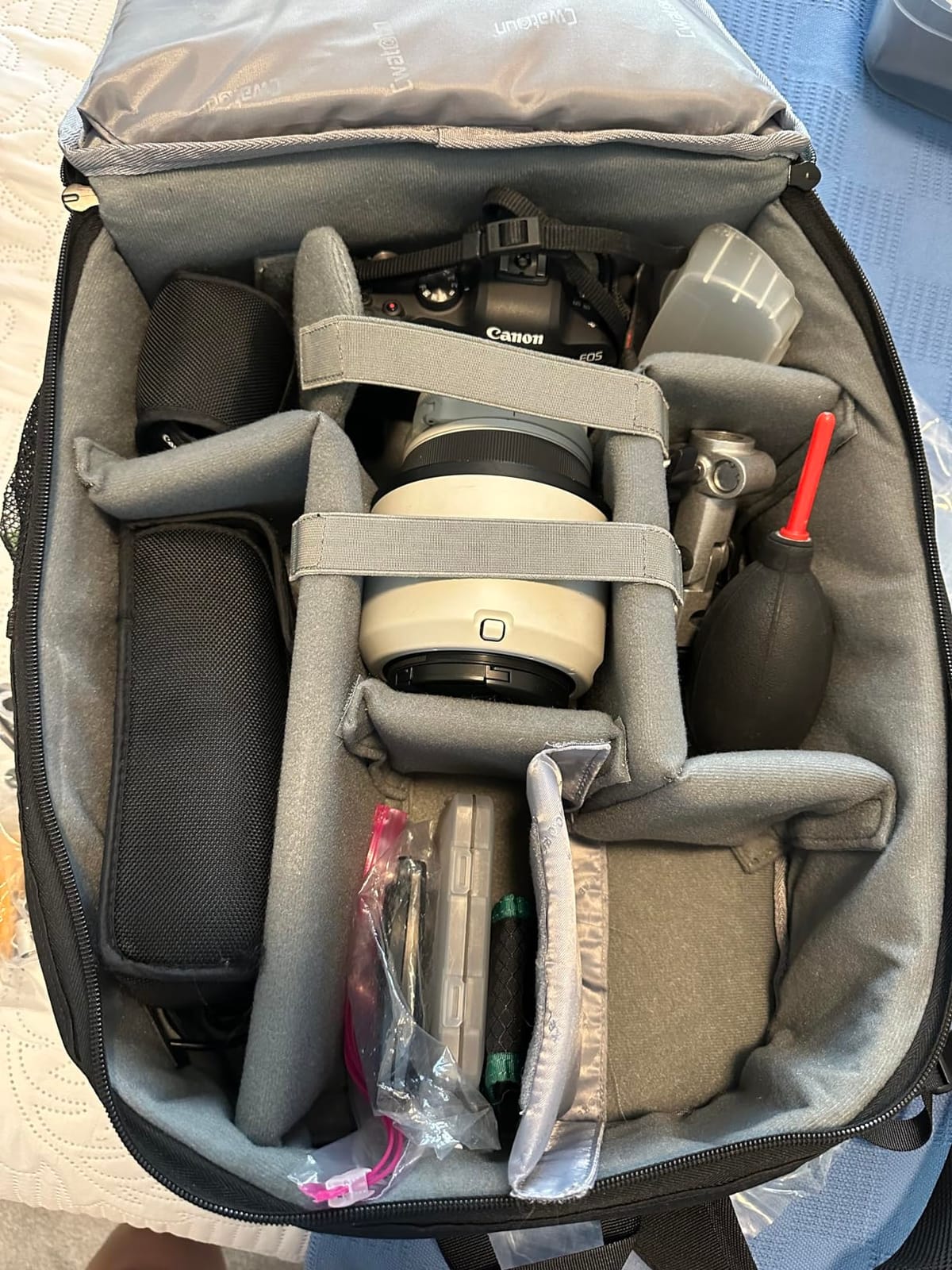
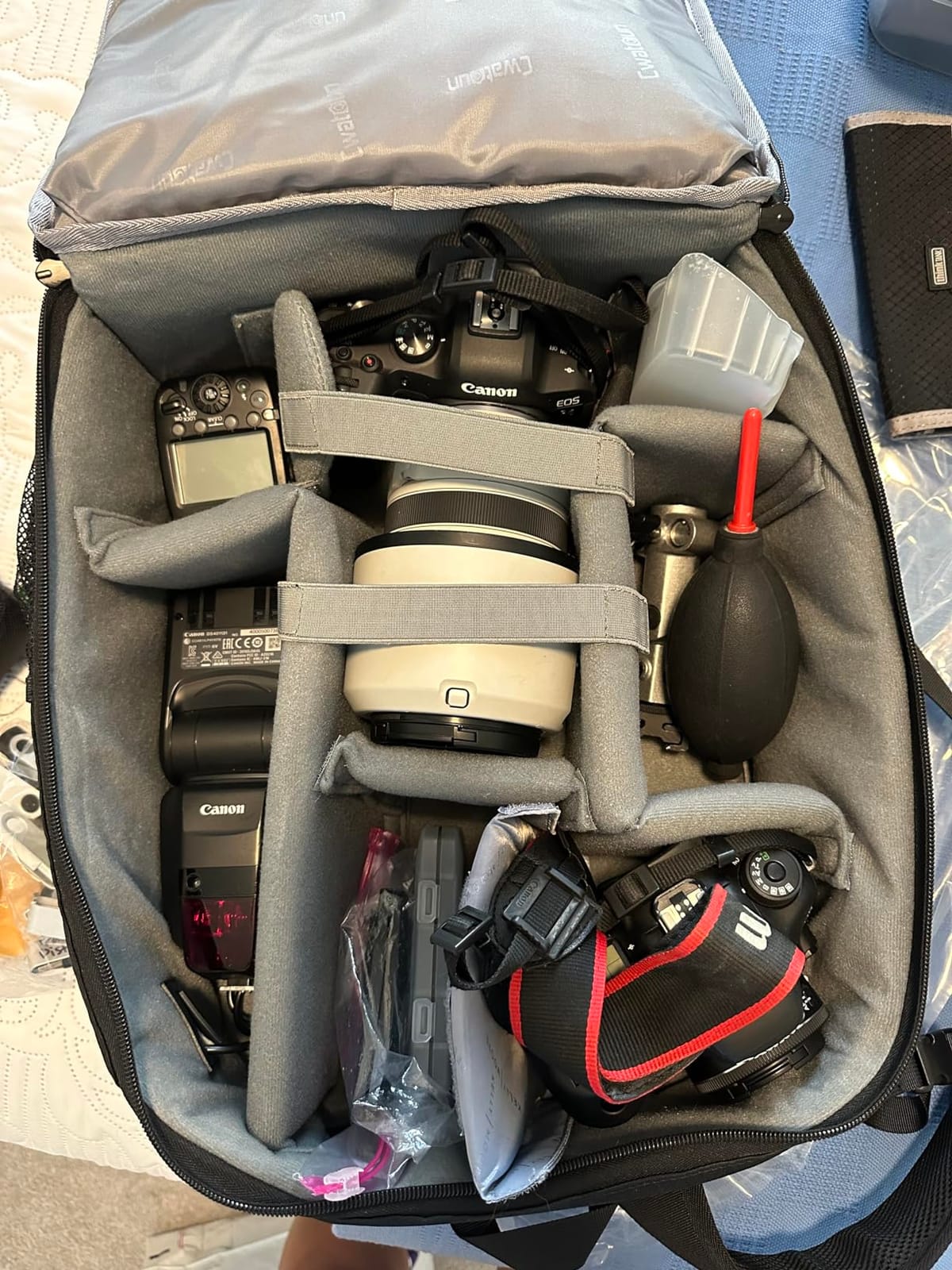
Inside, the capacity is real: two DSLR or mirrorless bodies, three to five lenses, a speedlite, a tripod, and a 15.6 inch laptop all fit with room left over. Five padded dividers at 18mm thick can be pulled and repositioned, which matters when your lens shapes do not match the default layout. The 900D polyester shell is water-repellent rather than waterproof, so it shrugs off a drizzle but not a downpour.
The build details are where the value shows up. Cwatcun rates the alloy zipper for three years without rust and five without breaking, and the bar-tack stitching at stress points is rated to 50 kg. A one-year warranty backs it, from a factory that has made camera bags for three decades. At under two pounds empty, it is the lightest thing in this test by a wide margin.
The downsides are simple. There is no rain cover in the box, which is an odd omission for a travel bag, so buy a universal one. Stock also runs low on this model, and that scarcity is a sign of demand rather than a flaw in the bag.
How does it handle rough ground?
Acceptably, not brilliantly. The wheels are small and the telescoping path is short, so gravel and cobblestone take patience. On smooth floors it rolls fine, and when the surface turns bad you just switch to backpack mode, which is the whole reason to pick this over a hard case.
Is it comfortable as an actual backpack?
Yes, for a loaded camera bag. The straps are 2.5 inches wide with half an inch of padding, and the back panel has enough structure that a full kit does not dig into your spine. It will never match a dedicated hiking pack, but for a mile-long walk with two bodies and a tripod, I had no complaints.
3. VEVOR Studio Equipment Trolley Case – Best for Stands and Tripods
VEVOR Studio Equipment Trolley Case, 35.83 x 11.81 x 14 in / 91 x 30 x 35.5 cm, Rolling Camera Bag, Carrying Bag with Wheels Straps Padded Compartment Handle, for Light Stands, Tripods, Telescopes
62.5L long-format case
Fits light stands tripods telescopes
35.83 inches long
1680D water-resistant nylon
3 carry modes
Pros
- Swallows light stands tripods and LED panels whole
- Detachable padded dividers plus mesh pockets
- 8mm pearl foam and honeycomb side panels absorb shock
- Three carry options rolling shoulder and hand
- 1680D nylon resists wear and scratches
Cons
- 14.1 pounds empty before you load anything
- Pull handle is short for tall users
- Two wheels only so it always rides on a tilt
Every kit eventually outgrows camera-shaped cases, because light stands and tripods do not fit in anything designed around lenses. The VEVOR studio trolley is the long-format answer, and it replaced a pair of cheap stand bags in my van in one afternoon. Everything for a small location lighting kit now travels in one pull instead of three separate carries.
It is ranked number six in its category for a reason. People who buy it tend to keep it, which is the pattern you want in a workhorse bag.
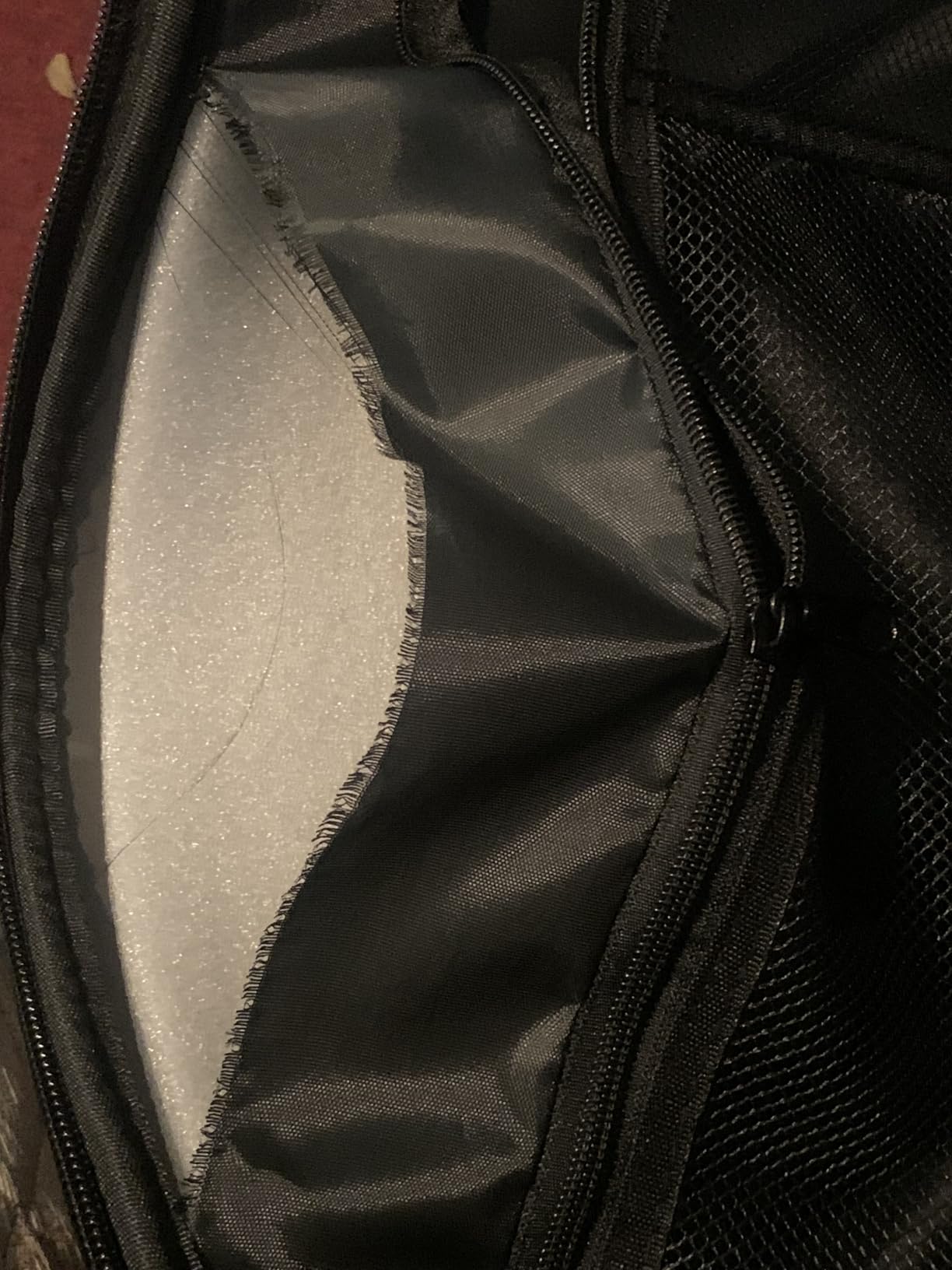
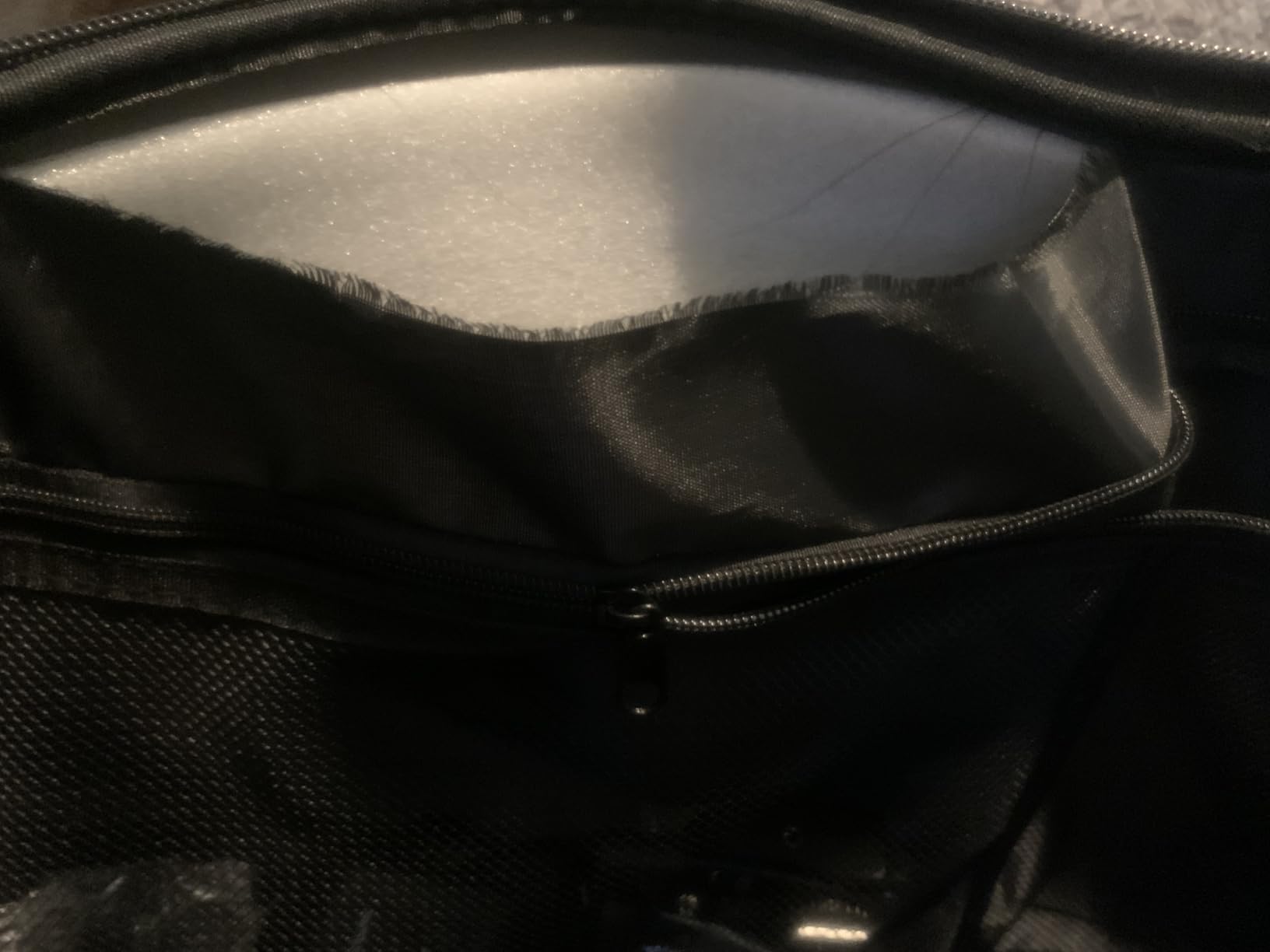
The capacity is 62.5 liters across a 35.83 inch length, enough for light stands, a tripod, LED panels, mic stands, and modifiers with the dividers pulled out. When you do need structure, the detachable padded dividers and mesh pockets carve out spaces for smaller pieces so they are not rattling around. Protection comes from 8mm pearl foam in the lid, pearl foam over plywood in the base, and honeycomb panels reinforcing the sides.
The 1680D nylon exterior is water-resistant rather than sealed, and it handles scrapes from van floors and door frames without showing it. You get three ways to move it: inline skate wheels, a shoulder strap, and a top handle, which covers loading docks, stairs, and short carries.
Now the honest part. It weighs 14.1 pounds empty, so a loaded case gets genuinely heavy fast. The pull handle is short for anyone over about six feet, and some owners question long-term durability when the case is consistently maxed out. I keep mine under about 40 pounds total and it has held up fine for six months.
Does it work as an airline carry-on?
No, and do not try. At 35.83 inches long it blows past every carry-on limit in existence, so this is a car, van, and studio-to-location case only. If you fly with stands regularly, plan on checking it inside a larger duffel or shipping it ahead.
What fits inside in real terms?
Three to four light stands, a full-size tripod, two LED panels, a small softbox kit, and assorted grip in the mesh pockets. It also swallows a telescope or a pair of mic stands without a fight. If your gear is long and awkward rather than dense and expensive, this is the shape you want.
4. Amazon Basics Hard Protective Camera Case – Best Value Hard Case
Amazon Basics Hard Protective Camera Case with Wheels, Large, Black, 22″L x 14″W x 9.8″H
Hard shell with airtight watertight seal
21.9 x 13.7 x 9.8 inches
Pre-cut foam squares
Extendable handle plus side handle
14.5 lbs
Pros
- Airtight watertight seal with pressure equalization valve
- Pre-cut foam squares reconfigure into custom cavities
- Both extendable top handle and fold-down side handle
- Carry-on legal on most airlines at 21.9 inches long
- Protection close to the big-name hard cases for far less
Cons
- Will not sit evenly on its long edge when loaded
- Padlock holes sit too close to the latch mechanism
- Foam squares take patience to shape
This is the case people mean when they say you do not need to spend Pelican money. Over 3,000 reviewers have pushed it to 4.5 stars, and a huge share of them bought it specifically as a cheaper alternative to the brand-name hard case they could not justify. After a season of hard use, I get it.
The formula is the same one the premium brands use, just executed more simply. You get a hard shell, a sealing lid, pickable foam, wheels, and a telescoping handle.
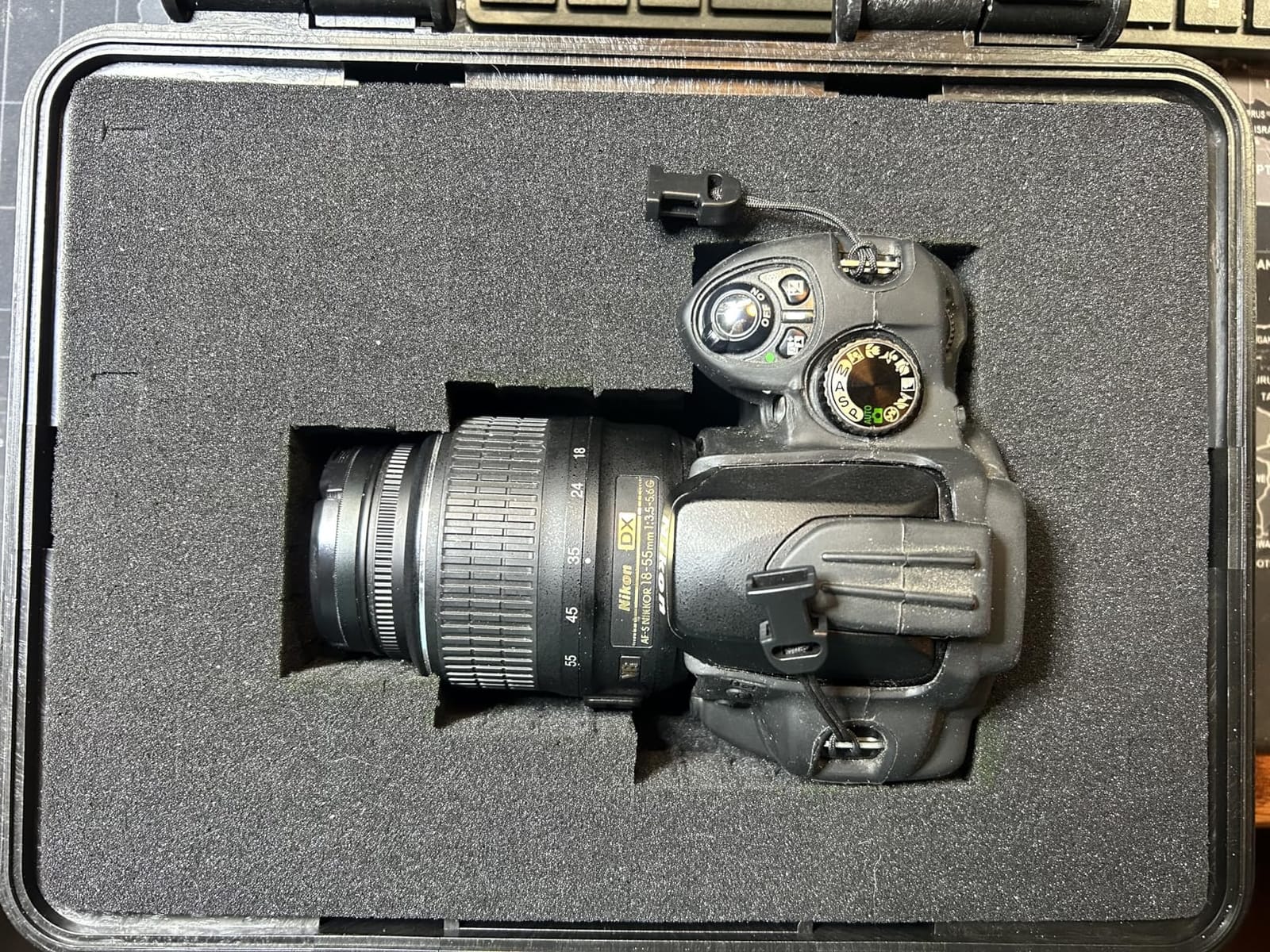
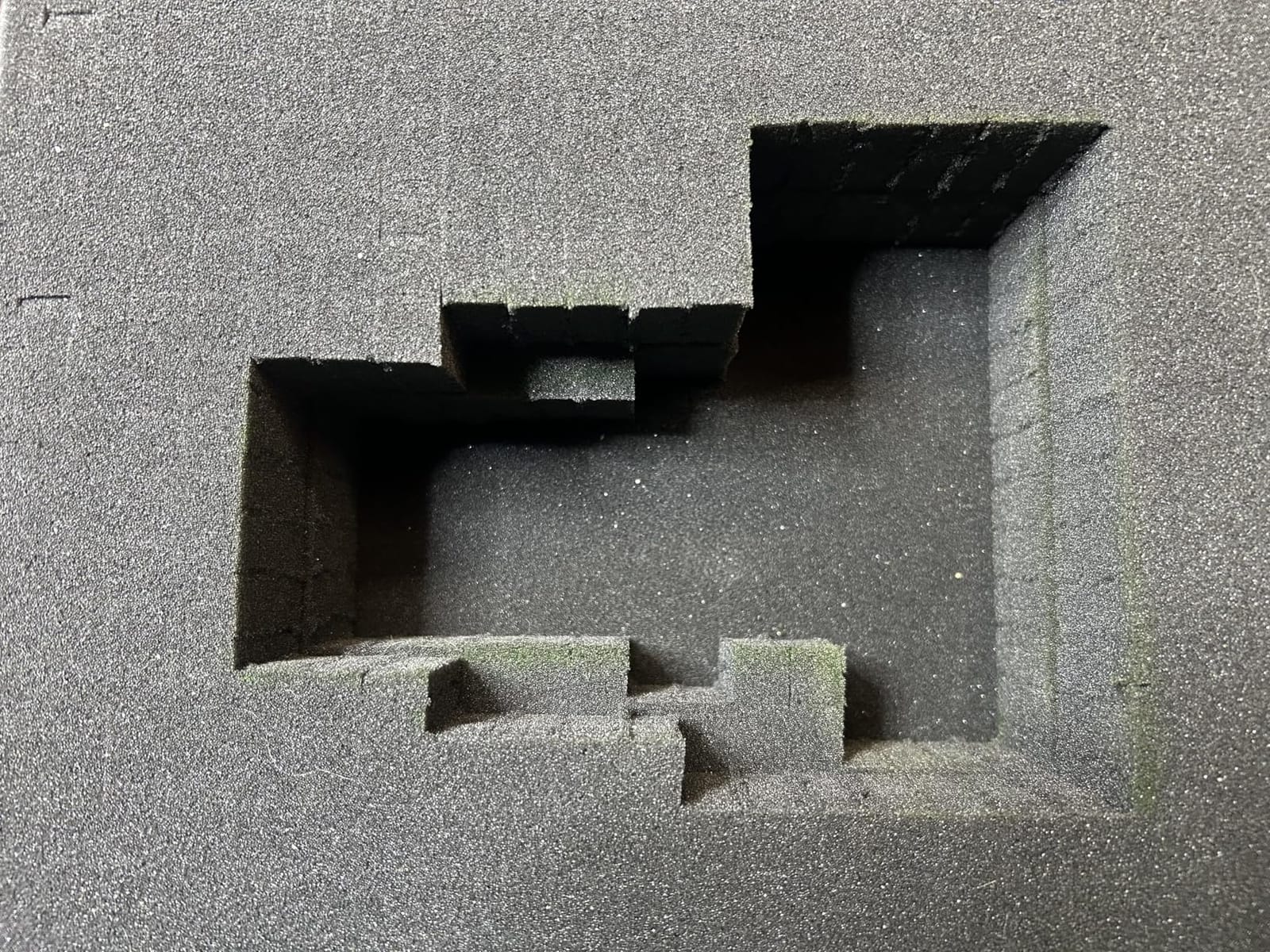
Technically, the case is airtight and watertight with a pressure equalization valve, so it survives rain, spray, and altitude changes without stressing the seal. The 21.9 x 13.7 x 9.8 inch exterior slips under the carry-on ceiling on most carriers, though it is close enough that budget airlines with stricter sizers deserve a second look. The foam arrives as pre-cut squares that you pull to sculpt cavities around each piece of gear.
Rolling works through a telescoping top handle and a fold-down side handle for lifting, and the wheel base is stable enough for airport floors. The shell is genuinely rigid, and I have stood on mine to reach a high shelf, which I would never attempt with a soft bag.
The complaints are small but real. Loaded, it does not like sitting on its long edge, which is annoying in a packed trunk. The padlock holes sit awkwardly close to the latch, so thicker lock shrouds can interfere with closing it. And the foam squares take real patience to shape cleanly, so set aside an evening for the first fit.
How close is it to a Pelican?
Closer than the gap suggests on protection, further on refinement. The shell, seal, and valve handle the same basic threats, but the latch action, wheel smoothness, and overall polish are a step behind. For most working photographers the difference is not worth multiples of the price, which is exactly why this case has such a loyal following.
Is it genuinely carry-on compliant?
On most airlines, yes. At 21.9 x 13.7 x 9.8 inches it clears the common 22 x 14 x 9 rule with a little room to spare. Ultra-low-cost carriers with tighter sizers are the exception, so verify before you fly those. It also has no exterior pockets, which helps it slip past gate agents as plain luggage.
5. Neewer Convertible Rolling Camera Backpack – Best 2-in-1 Roller
NEEWER Convertible Rolling Camera Backpack for SLR/DSLR and Accessories
50L convertible roller backpack
22 x 14 x 10 inch carry-on size
11 adjustable dividers
17 inch laptop pocket
9.1 lbs
Pros
- Rolls as a suitcase or carries as a padded backpack
- 11 dividers plus 8 pockets organize an entire kit
- Fits overhead bins at 22 x 14 x 10 inches
- Rain cover included with water-resistant nylon
- Front strap holds a full tripod
Cons
- Soft shell gives less crush protection than a hard case
- Heavier than a plain rolling backpack when carried
The Neewer NW3300 is the most popular case in this test with over 6,000 reviews, and its two-in-one design explains why. Forum photographers have been moving toward these hybrids for a couple of years, because real trips mix smooth terminals with gravel lots and stairs, and neither a pure roller nor a pure backpack handles both well.
Mine came along on a mountain workshop where the parking was a quarter mile from the trailhead. I rolled it to the end of the pavement, then wore it the rest of the way without unpacking anything.
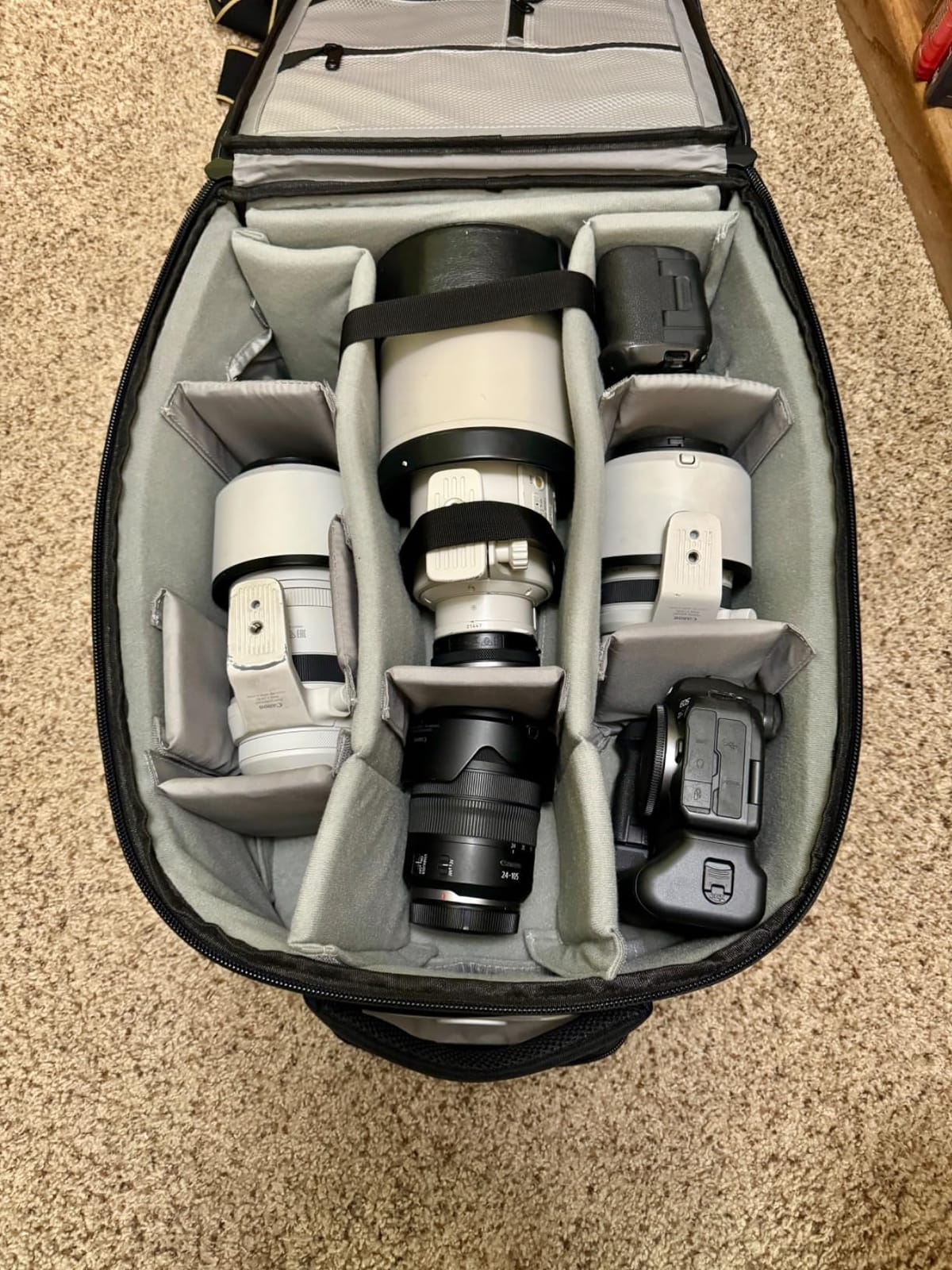
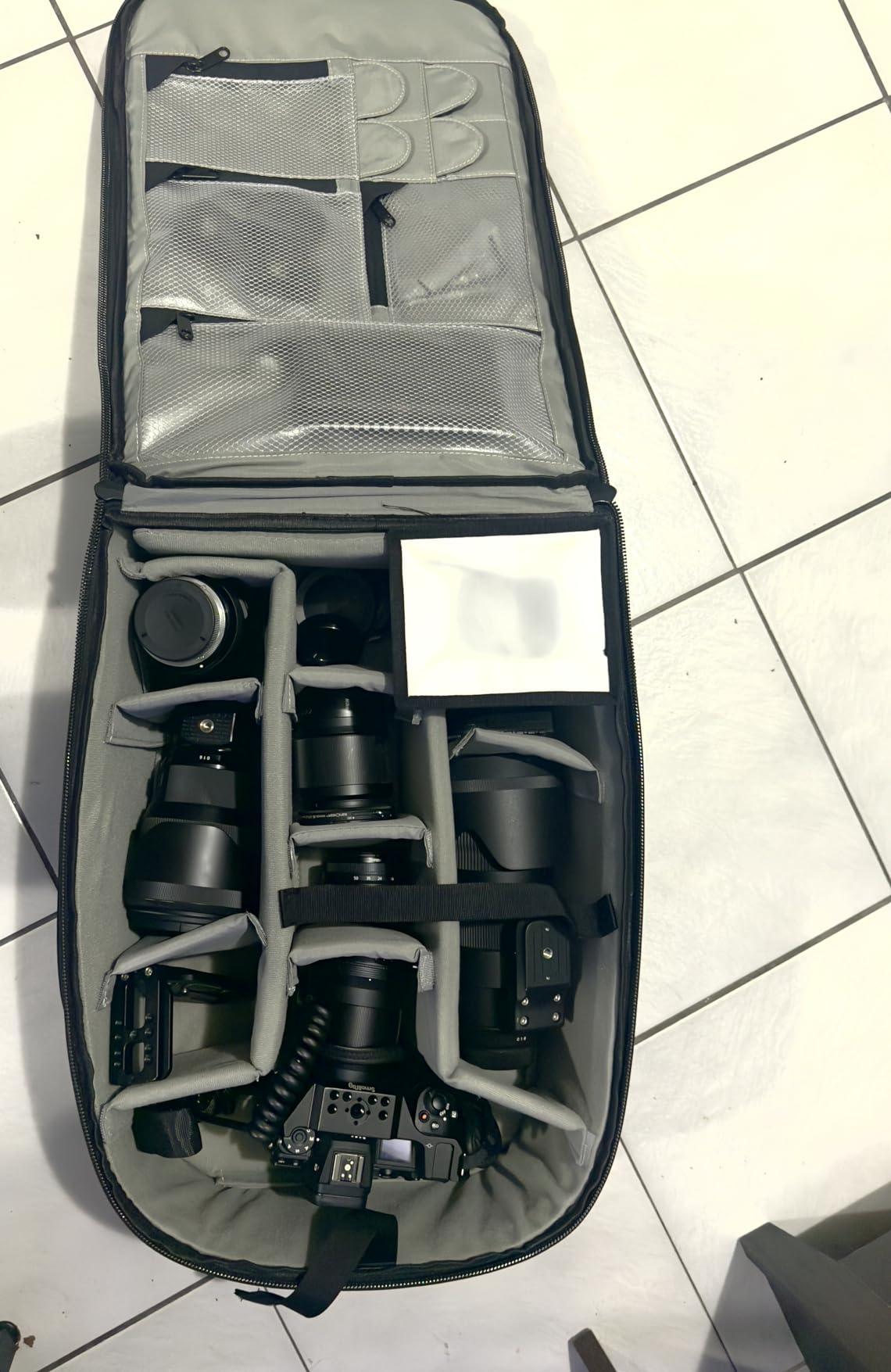
The interior is where Neewer spent the budget. Eleven adjustable dividers secure bodies, lenses, hoods, and strobes, while four small pockets and four mesh pockets swallow cards, batteries, cables, chargers, and filters. A front pocket takes up to a 17 inch laptop, and a strap on the face of the bag carries a tripod. That is a complete working kit in one carry-on-legal bag.
Externally, the 22 x 14 x 10 inch frame fits most overhead bins, and the water-resistant nylon handles humidity and rain with help from the included rain cover. The telescoping handle extends smoothly and the inline skate wheels track straight on pavement. Foam-padded shoulder straps and a supportive back panel make backpack mode genuinely usable rather than a gimmick.
The tradeoff is obvious the moment you squeeze it: there is no rigid shell. If someone jams a hard suitcase into the overhead after your bag, your gear feels it. It is also 9.1 pounds empty, so in backpack mode with a full kit you know it is there.
Does it really fit in overhead bins?
Yes, on full-size and most regional jets. At 22 x 14 x 10 inches it is sized for standard overheads, though regional bins can force you to stow it wheels-first or gate-check on the smallest aircraft. It is one of the few convertibles that did not force me to compromise on kit to stay carry-on legal.
When should you pick this over a hard case?
Pick it when your day mixes surfaces, wheels and straps, and you value carrying flexibility over maximum crush protection. Skip it if you fly with a loaded kit and a rigid shell is non-negotiable. Event shooters, hikers, and anyone traversing rough ground get the most out of it.
6. Pelican Vault V525 Hard Case – Best Overall Rolling Camera Case
Pelican Vault v525 Case with Padded Dividers for Equipment, Electronics Gear, Camera (Black)
Crushproof high-impact polymer
22 x 14 x 9 exterior
Stainless ball-bearing wheels
Padded velcro dividers
11.5 lbs with dividers
Pros
- Crushproof high-impact polymer shell
- Stainless steel ball-bearing wheels roll silent and smooth
- Sealed against moisture and dust
- Felt padded dividers with velcro fasteners
- Meets maximum airline carry-on size
Cons
- Pull-out handle takes effort to operate
- Wheels can catch on stair edges
The Vault V525 is the case I reach for when nothing about the job can go wrong, and it earned the top spot in our test on pure toughness. Working photographers on the forums have called this family of cases absolutely the best for years, and having lived with one, that reputation is not nostalgia. At 4.8 stars across 747 reviews, it also has the highest rating of anything here.
It is the case I would trust with my entire kit in a checked bag, in a boat, or in the bed of a pickup across a washboard road.
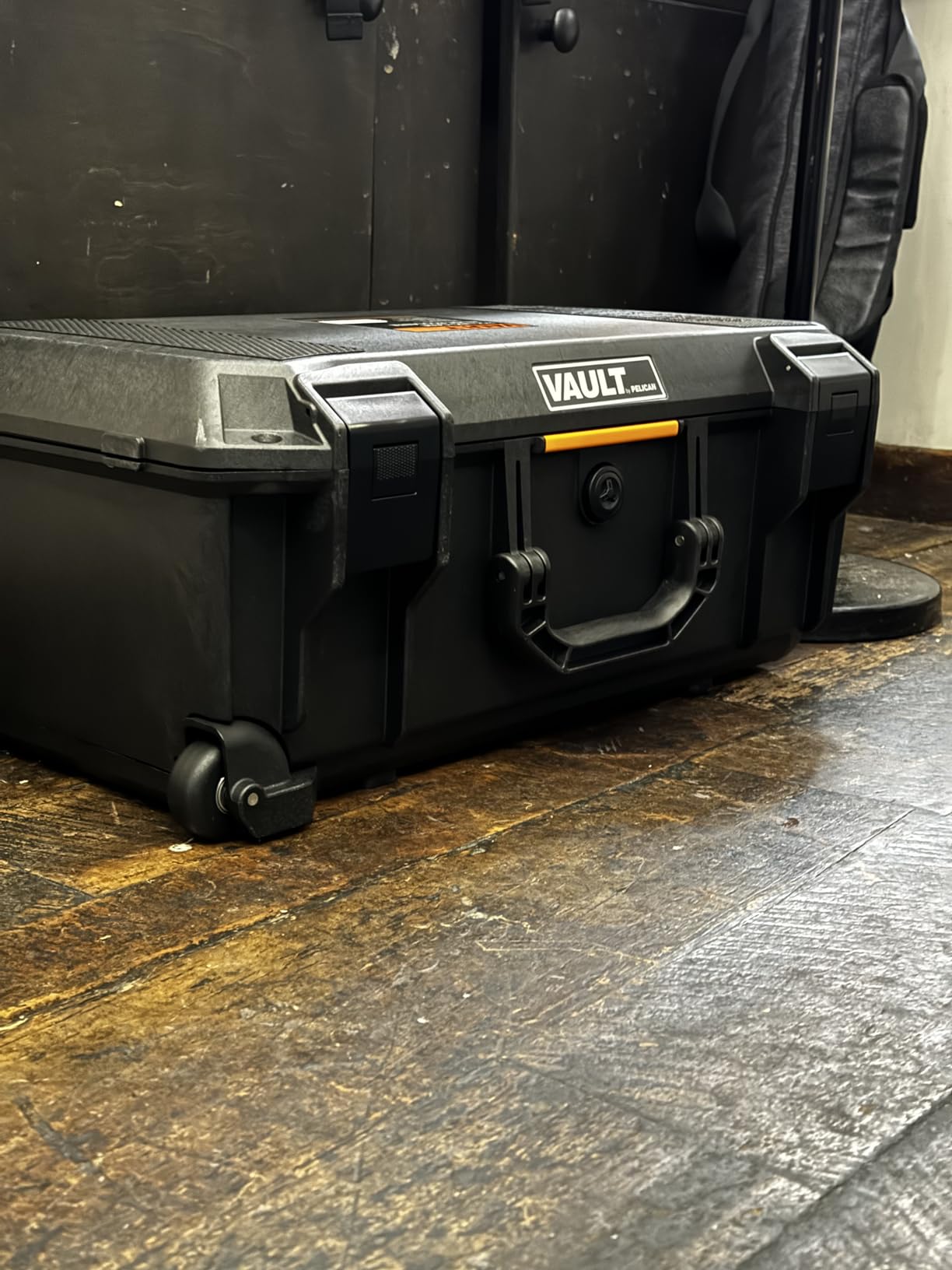
Technically, the V525 is built from a crushproof high-impact polymer with heavy duty handles, push-button latches, and stainless steel lock hasps. The lid seals against moisture and dust, which is a step short of a full submersion rating but plenty for rain, spray, and dusty locations. Inside, soft-touch felt dividers attach with velcro fasteners and sit in a high-contrast interior that makes finding black gear easy in dim light.
The rolling hardware is the best in this test. Stainless steel ball-bearing wheels roll quietly and keep rolling after months of curb strikes, and the retractable trolley handle locks firmly in place. Exterior dimensions of 22 x 14 x 9 inches meet maximum airline carry-on size, with an interior of 19.9 x 10.6 x 7.3 inches once the dividers are in.
Two flaws keep it from perfection. The telescoping handle takes a firm tug to operate, and the wheels can catch on stair edges if you try to drag it up steps. Both are quirks you adapt to within a week, and neither has gotten worse with use.
Is it worth the premium over cheaper hard cases?
Yes if your gear is expensive and your travel is rough, because the wheels, latches, and handle are the parts that fail first and they are the best-made here. No if you shoot locally and mostly move the case from a car to a studio floor. This is the buy-once option, and it behaves like one.
How much gear fits inside?
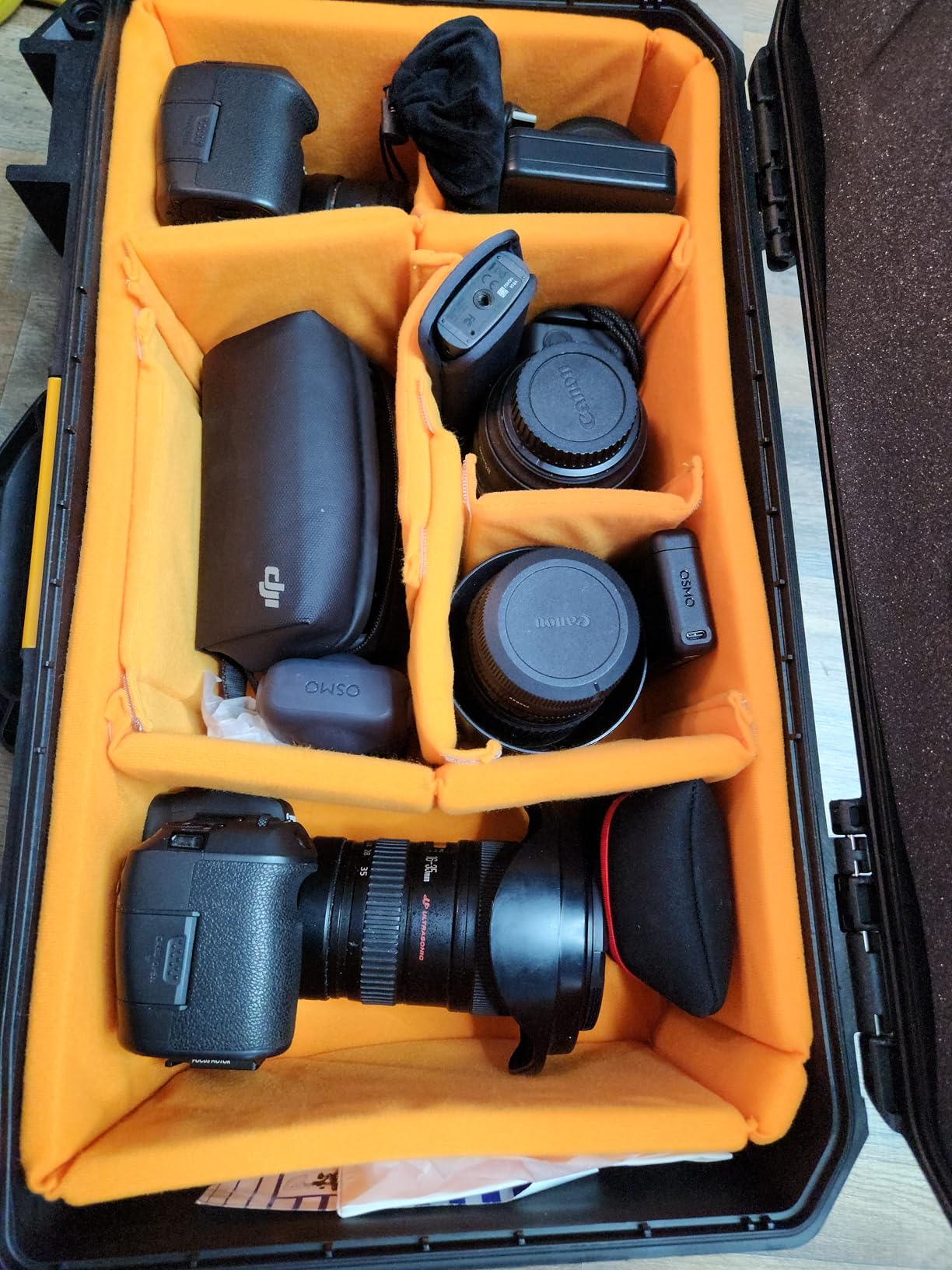
One to two bodies, four to five zooms including a 70-200 detached from its hood, a flash, and the small accessories, using the 19.9 x 10.6 x 7.3 inch interior. The velcro dividers make reconfiguring fast, so the same case works for a wedding load or a two-body travel kit.
7. NANUK 935 Hard Case – Best Premium Weatherproof Case
NANUK 935 Hard Case for Camera & Lenses with Padded Divider – Waterproof Equipment Case with Wheels, 22” x 14” x 9” – Dustproof, Impact Resistant, Carry-On Approved for Most Airlines – Black
NK-7 resin shell IP67 rated
22 x 14 x 9 carry-on approved
PowerClaw latches
2-level retractable handle
Polyurethane wheels
Pros
- IP67 waterproof and dustproof with NK-7 crushproof resin
- Patented PowerClaw latches clamp the lid tight
- TSA-ready stainless steel padlock eyelets
- Padded dividers with reinforced hook-and-loop walls
- 2-level retractable handle with polyurethane wheels
Cons
- Two wheels means it always rides on a tilt
- Not Prime eligible so delivery can lag
The NANUK 935 is the case for photographers whose enemies are water, dust, and rough handling all at once. An IP67 rating means it is sealed against submersion as well as fine grit, which is a full tier above the weather-resistant sealing on most cases here. I used it on a desert shoot where dust found its way into everything except this case.
It is also one of the best-looking hard cases made, which sounds trivial until you spend a decade dragging ugly equipment boxes around clients.
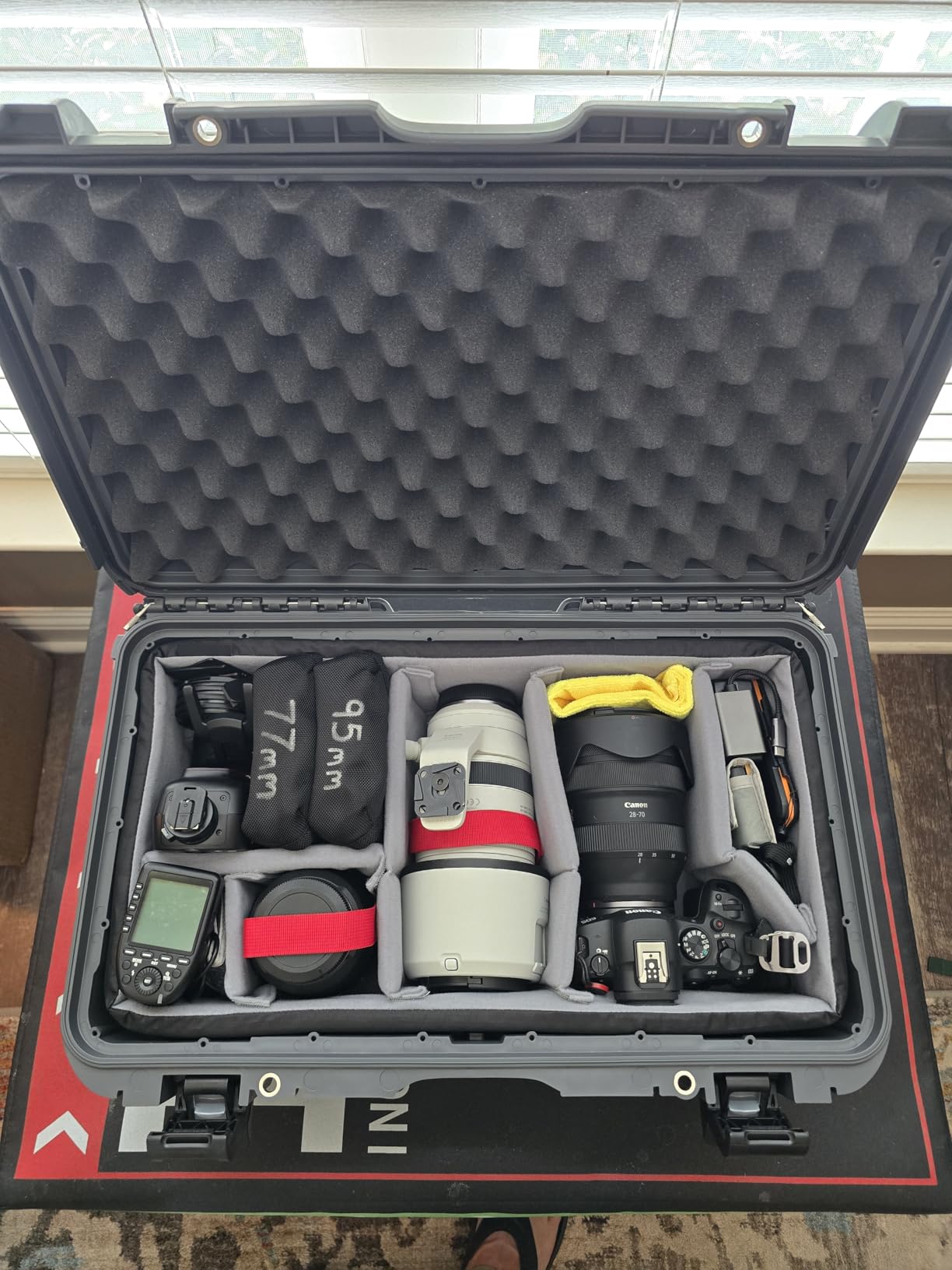
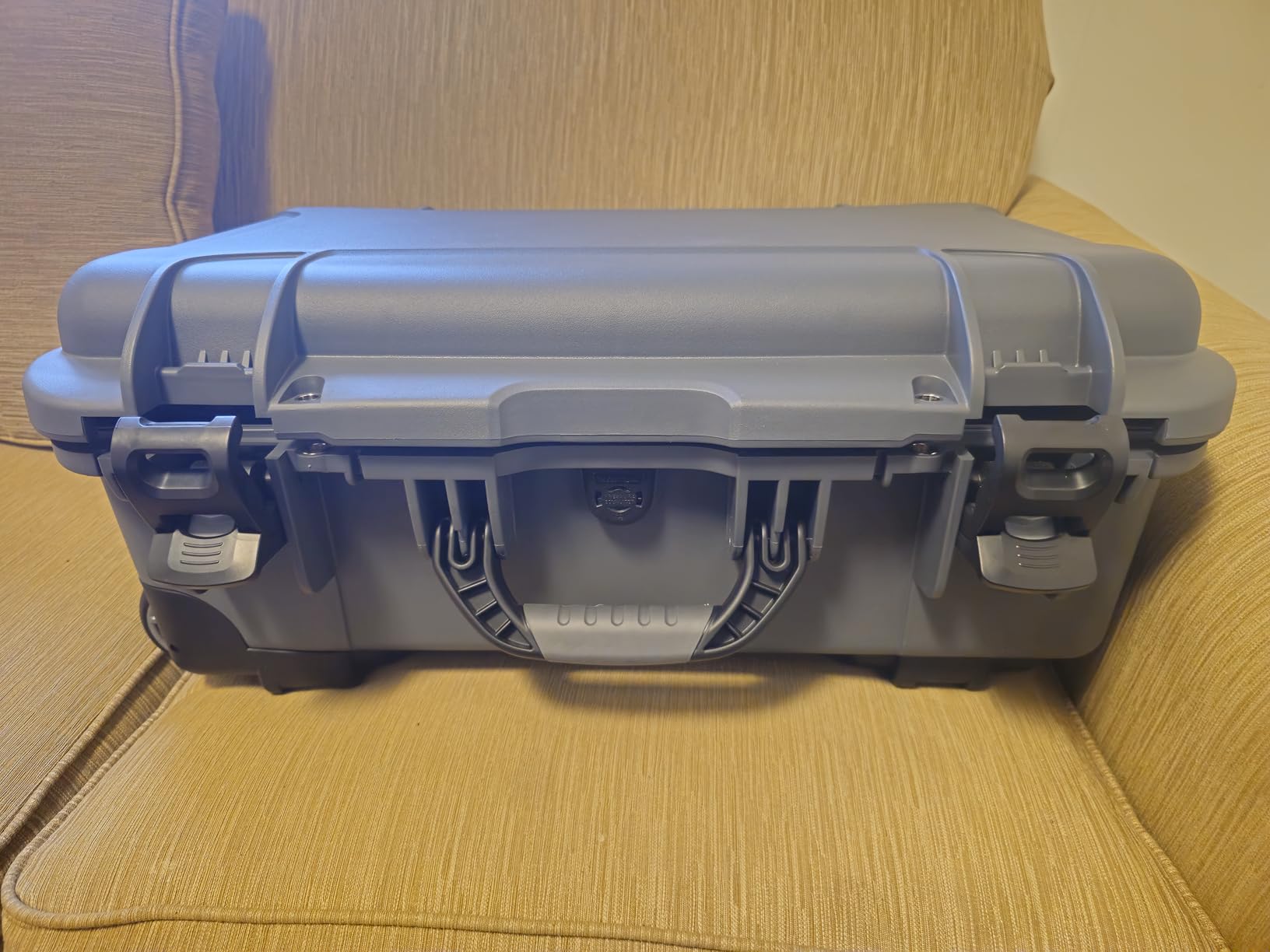
Technically, the shell is NK-7 resin, a proprietary impact-resistant formulation built to survive drops and crushing loads. The patented PowerClaw latches pull the lid down onto the seal and lock it with a positive clamping action you can feel through your hand. TSA-ready reinforced stainless steel padlock eyelets accept standard locks, so you can secure the case without fighting the hardware.
The padded divider system uses reinforced walls and hook-and-loop fasteners that hold their position instead of sagging after a season. Rolling comes from a two-level retractable handle and polyurethane wheels, which run quiet on hard floors. At 22 x 14 x 9 inches it is carry-on approved for most airlines, and it is one of the few cases here with no recurring complaints in its review history.
The honest limitations are the format, not the quality. Two wheels means it tilts when you pull it, which loads your wrist on long walks. It is also not Prime eligible, so shipping times can stretch. If you want true all-weather sealing in a carry-on size, nothing else here matches it.
What does IP67 actually get you?
Submersion protection, up to about a meter of water for around thirty minutes, plus a complete block against dust. In practice that means rain, boat spray, and sandstorms are non-events. A weather-resistant case survives a shower, while this one survives a dunk, and that gap is the whole premium.
How does it compare to the Pelican V525?
The NANUK seals harder and latches with more authority, and it carries no recurring user complaints. The Pelican rolls better on stainless ball-bearing wheels and costs noticeably less. Choose the NANUK when water and dust are the main threat, and the Pelican when wheels and value lead your list.
8. Condition 1 Model 300 Hard Case – Best All-Terrain Wheels
Condition 1 22″ Large Rolling Lockable Hard Storage Case, Model 300, Black
IP67 rated CN-1 resin
21.84 x 13.82 x 9 exterior
Rubber all-terrain tread wheels
Lid organizer plus padded dividers
Made in USA
Pros
- Rubber all-terrain tread wheels handle gravel and grass
- IP67 dustproof and waterproof rating
- GORE-TEX automatic air pressure valve
- Modular dividers plus a full lid organizer
- Injection-molded resin with steel pin hinges
Cons
- 15.8 pounds empty is the heaviest here
- Only 61 reviews so the track record is still short
The Condition 1 Model 300 is the newest case in the test and the only one built in the USA, which shows up in details like steel pin hinges and a GORE-TEX pressure valve you normally find on more expensive professional cases. Its party piece is the rubber all-terrain tread wheels, which are the reason it earned a spot here at all. Every other case in this test eventually made me pick it up on gravel, and this one did not.
It rolled across a gravel parking lot and a wet lawn at a garden venue without bogging down, which sounds minor until you have dragged a smooth-wheeled case through both.
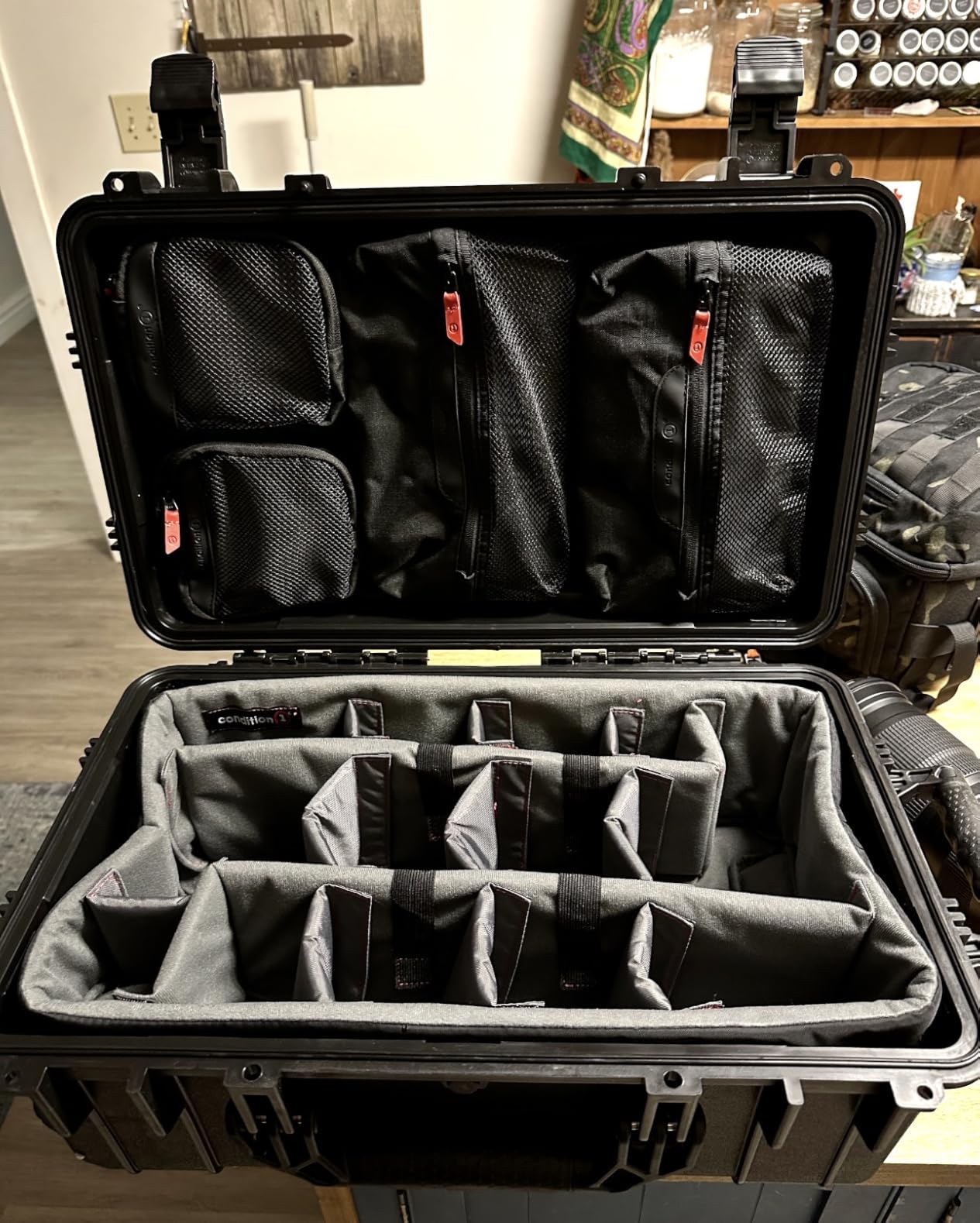
Technically, the shell is injection-molded CN-1 resin that is light for its strength and effectively indestructible in normal use, with an IP67 rating against water and dust. The TSA-approved GORE-TEX automatic air pressure valve equalizes pressure on flights without letting moisture in, so the lid opens easily after altitude changes. Lock ports accept your own padlocks, and the patented latches hold without rattling.
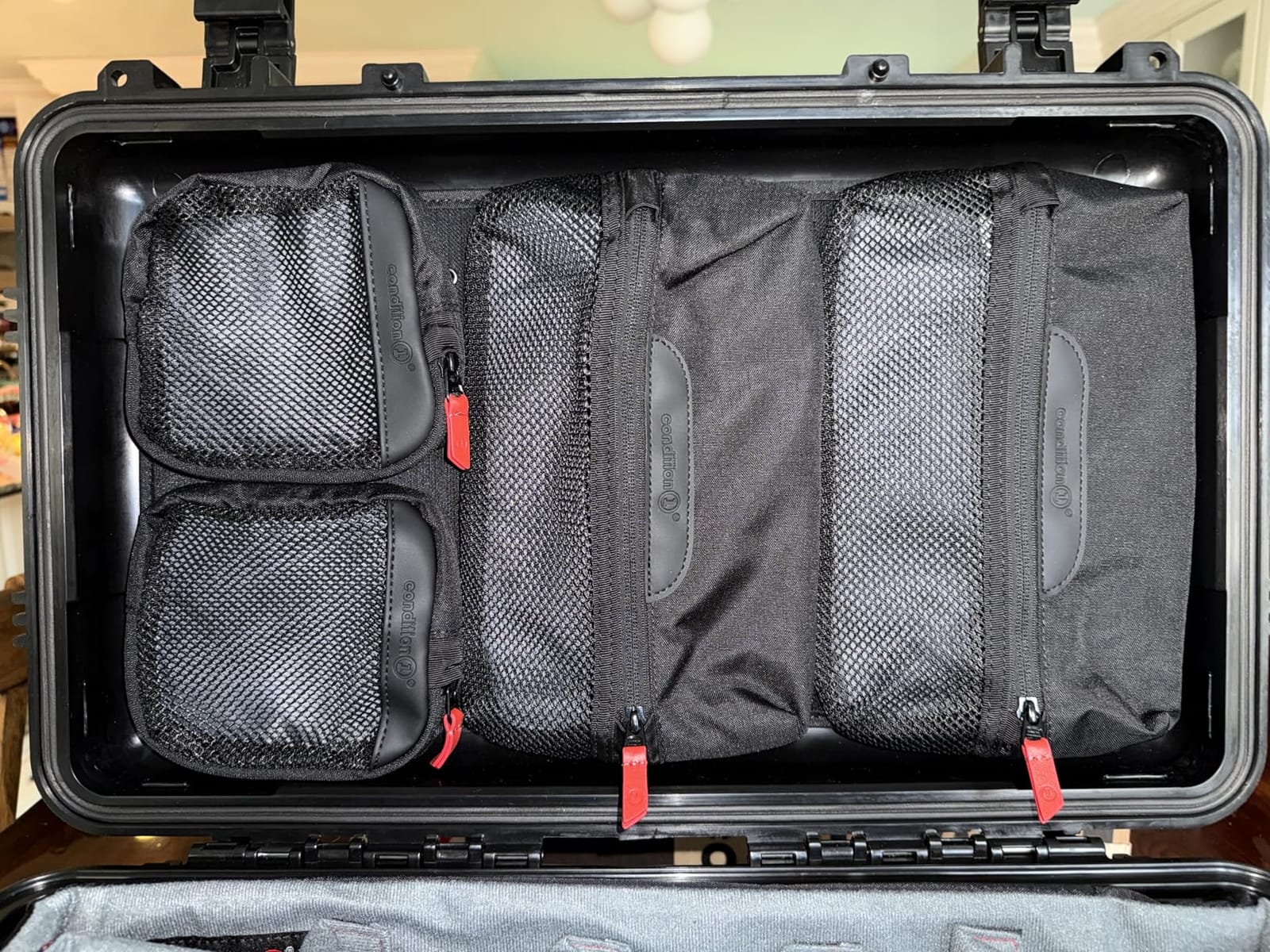
The interior is more flexible than most hard cases. Modular padded dividers shape the main compartment for bodies and lenses, while a full lid organizer keeps cards, batteries, cables, and small tools off the floor of the case. Exterior dimensions of 21.84 x 13.82 x 9 inches keep it carry-on legal, with 19.66 x 11.18 x 7.5 inches of interior space.
Two things to weigh before buying. At 15.8 pounds empty it is the heaviest case in this test, so every pound of gear adds up fast. And with 61 reviews it simply has not been in the field as long as the Pelican or NANUK, so the long-term record is still being written.
Are the all-terrain wheels a real advantage?
Yes, on gravel, grass, dirt, and curb cuts, which is exactly where smooth wheels stall out. If your work involves outdoor venues, rural locations, or festival grounds, the treaded wheels save you from carrying a loaded case. On polished airport floors the advantage mostly disappears.
Is it carry-on compliant?
Yes. At 21.84 x 13.82 x 9 inches it clears the 22 x 14 x 9 standard with room to spare on every dimension. The pressure valve also makes it safe to check on the rare flight where the overhead fills up before you board.
How to Choose the Best Rolling Camera Case
A rolling camera case is a wheeled bag built specifically to move photography equipment, with a telescoping handle, protective padding, and durable wheels so you can tow heavy gear instead of carrying it. Picking the right one comes down to a handful of decisions, and the forums are full of people who learned them the expensive way.
Start with carry-on dimensions
The number to memorize is 22 x 14 x 9 inches, the carry-on ceiling most domestic and many international carriers use. Every hard case in this test sits at or under that limit, but the Cwatcun hybrid and the VEVOR studio trolley do not play in that space at all. Budget airlines are the wildcard, with tighter sizers and stricter enforcement, so measure your specific carrier before you fly. A case that misses the sizer becomes checked luggage, and checked luggage fees plus risk are exactly what forum photographers complain about after the fact.
Wheels and handles fail first
The most common complaint in every forum thread we read was not padding or zippers, it was wheels breaking and handles jamming after months of use. Look for stainless steel ball-bearing wheels like the Pelican V525, replaceable wheel housings, and a handle that locks firmly at full extension. Spinner sets that roll upright, like the VEVOR, reduce wrist strain, while two-wheel designs tilt and load your arm on long walks. Whatever you pick, roll it fully loaded before a trip, not the morning of.
Hard shell or soft shell
Hard shells win on crush protection, weather sealing, and security, because a rigid case protects gear from the outside world pressing in. Soft shells win on weight, expandability, and the option to carry them as backpacks when the ground turns rough. Photographers flying with expensive glass tend toward hard cases, while event and outdoor shooters often prefer the hybrids. The Neewer and Cwatcun cover the soft side, and everything else here is rigid to some degree.
Decode the weather ratings
IP67 means sealed against dust and submersion in about a meter of water for roughly thirty minutes, and it is the rating to insist on if you shoot near water. Weather resistant means the case handles rain and spray but is not built for submersion, which covers the Pelican V525 and the water-repellent fabric cases. A pressure equalization valve matters if you fly, because it stops the seal from fighting cabin pressure changes. The VEVOR, NANUK, Condition 1, and Amazon Basics all carry real sealing credentials.
Security against grab-and-go theft
Forum photographers repeatedly said they prefer cases that do not look like camera cases, because obvious gear bags attract theft in transit and parked cars. Padlock holes, TSA-ready eyelets, and lockable latches are the baseline hardware. The NANUK has reinforced stainless eyelets, the Condition 1 has dedicated lock ports, and the VEVOR pairs a padlock hole with a latching lock. A plain black case with a lock on it is a much worse target than a branded camera bag hanging open.
Fit the interior to your actual lenses
The quiet complaint in forums is dividers that never fit specific lens shapes, leaving dead space or pressure on a hood. Pre-cubed or pluck foam, like the VEVOR and Amazon Basics, gives permanent custom cavities but hates reorganization. Adjustable padded dividers, like the Neewer’s eleven-piece set or the Pelican’s velcro system, reconfigure every time your kit changes. Match the system to how often your gear list actually changes.
Frequently Asked Questions
Which rolling camera backpack is considered the best?
The Neewer Convertible Rolling Camera Backpack (NW3300) is the best rolling camera backpack, with a 4.6 star rating across more than 6,000 reviews. It converts between a rolling suitcase and a padded backpack, holds two bodies, five lenses, and a 17 inch laptop, and fits most overhead bins at 22 x 14 x 10 inches.
What is the best camera case?
The Pelican Vault V525 is the best camera case overall, combining a crushproof high-impact polymer shell, stainless steel ball-bearing wheels, and a weather-resistant seal in a carry-on legal 22 x 14 x 9 inch frame, with a 4.8 star rating from 747 reviews. The Amazon Basics hard case is the best value alternative, and the NANUK 935 is the top pick when full IP67 waterproofing is the priority.
Are camera bags still trendy?
Yes, camera bags remain popular both as working equipment and as everyday carry, and roller styles in particular keep growing as kits get heavier. Among photographers the trend has moved toward low-profile designs that look like ordinary luggage, because cases that obviously hold expensive gear attract theft.
Are rolling camera cases allowed as carry-on luggage?
Most rolling camera cases are carry-on legal if they stay at or under 22 x 14 x 9 inches, which is the limit most domestic and many international airlines enforce. Six of the eight cases in this guide meet that standard. Budget carriers with tighter sizers are the exception, so check your specific airline before you fly.
Final Thoughts on the Best Rolling Camera Cases
After three months and 34 airport legs, the Pelican Vault V525 stands as the best rolling camera case you can buy in 2026, with the toughest shell and the smoothest wheels in the test. The Amazon Basics hard case is the value pick that copies the formula for far less, and the VEVOR weatherproof case proves a real IP67 rating and spinner wheels do not require a big budget. Add the Neewer NW3300 if your week mixes terminals with trailheads, or the NANUK 935 when water is the enemy.
Pick the one that matches your heaviest shooting day, not your average one, because that is the day the case actually earns its keep. Your back will notice the difference by the second gate.