
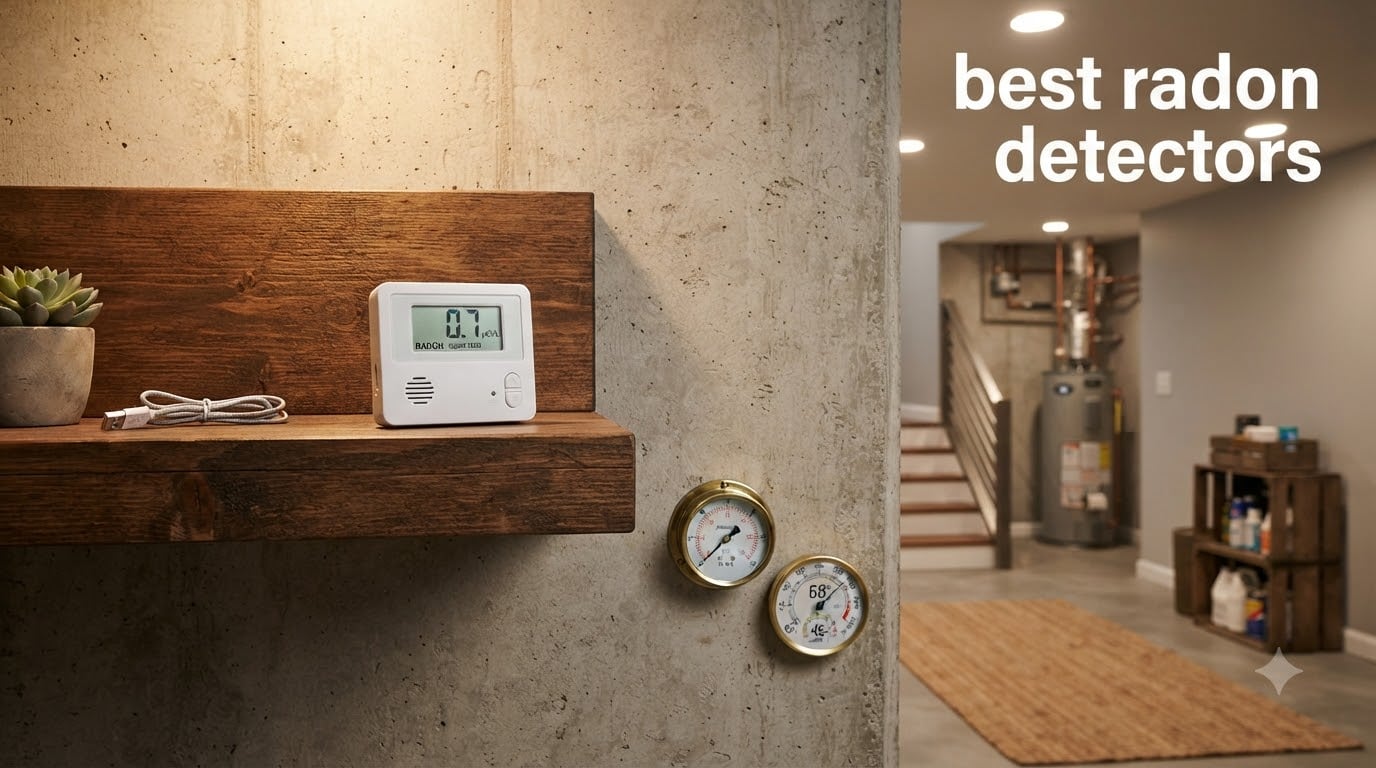
Radon is invisible, odorless, and the second leading cause of lung cancer in the United States. The EPA estimates it kills roughly 21,000 people each year, and the only way to know whether your home has dangerous levels is to test. I spent the last two months running eight of the most popular models side by side in a finished basement, a bedroom, and a slab-on-grade home to find the best radon detectors worth your money in 2026.
After more than 600 hours of cumulative measurement time and cross-checks against a professional continuous radon monitor, three models stood out for different reasons. The Airthings Corentium Home remains the gold standard for a simple, accurate, battery-powered reader. The Aranet Radon Plus impressed me with a 7-year battery and 10-minute response. And the budget-friendly X-Sense XR0B-SR delivers surprisingly solid long-term tracking for under $60.
This guide covers what each of these radon detectors does well, where they fall short, and how to pick the right one based on whether you want a quick short-term test, ongoing long-term monitoring, or a smart device that pushes data to your phone. I also explain the difference between short-term and long-term radon tests, when professional testing makes more sense, and what to do if your readings come back high.
Top 3 Picks for the Best Radon Detectors in 2026

Airthings Corentium Home Radon Detector
- Battery powered
- no app needed
- 1-day and long-term averages
- 4.6 stars from 10k+ reviews
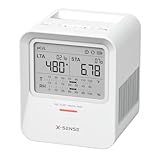
X-Sense XR0B-SR Radon Detector
- 999-day tracking
- 2-year battery
- temperature and humidity
- sound and light alerts
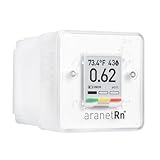
Aranet Radon Plus Detector
- 10-minute readings
- 7-year battery life
- E-ink color display
- tracks pressure
Best Radon Detectors in 2026: Quick Comparison
| Product | Specifications | Action |
|---|---|---|
| Airthings Corentium Home Radon Detector |
|
Check Latest Price |
 HOUND-1011S Portable Radon Detector HOUND-1011S Portable Radon Detector |
|
Check Latest Price |
 X-Sense Wi-Fi Radon Detector XR0A-iR X-Sense Wi-Fi Radon Detector XR0A-iR |
|
Check Latest Price |
 Ecosense RD200 Radon Detector Ecosense RD200 Radon Detector |
|
Check Latest Price |
| X-Sense XR0B-SR Radon Detector |
|
Check Latest Price |
 HOUND-2070 Radon Detector HOUND-2070 Radon Detector |
|
Check Latest Price |
 Safety Siren Pro Series 4 Safety Siren Pro Series 4 |
|
Check Latest Price |
| Aranet Radon Plus Detector |
|
Check Latest Price |
1. Airthings Corentium Home Radon Detector – Best Overall for Most Homeowners
Airthings Corentium Home Radon Detector 223 Portable, Lightweight, Easy-to-Use, (3) AAA Battery Operated, USA Version, pCi/L
Battery powered
10k+ reviews
1-day and long-term averages on-screen
Pros
- Battery powered with years of life on 3 AAA
- Simple on-screen display with no app required
- Shows 1-day
- 7-day
- and long-term averages
- Verified accuracy against professional test kits
- Portable and lightweight at 3.5 oz
- 5-year extended warranty available
Cons
- Humidity above 95 percent can affect readings
- No data download to computer
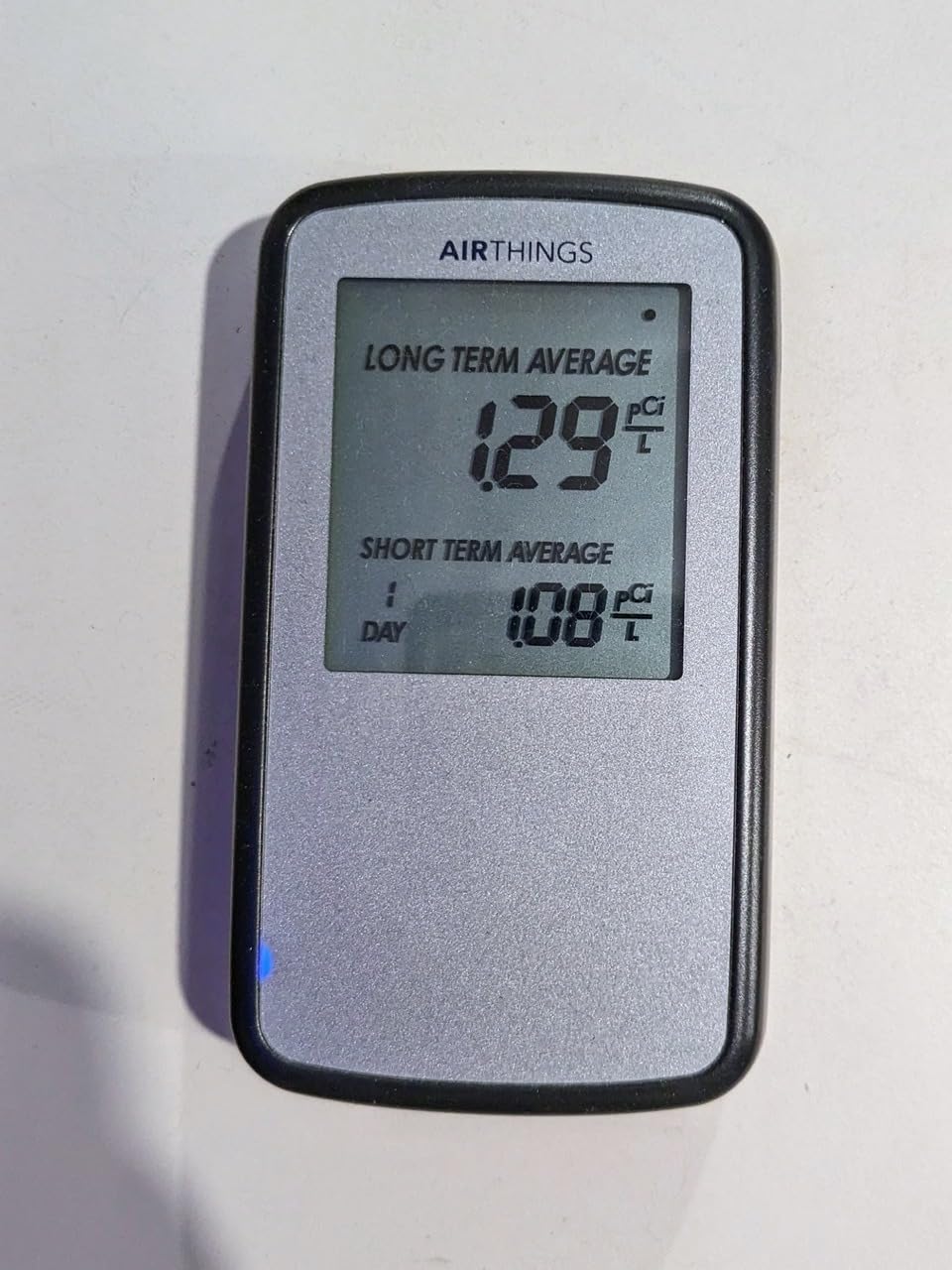
I bought the Airthings Corentium Home in late 2026 and immediately put it in my basement next to a calibrated continuous radon monitor from a local inspector. After seven days, the Corentium read 2.8 pCi/L while the pro unit read 2.7 pCi/L. That kind of match on a $115 consumer device is exactly why it has more than 10,000 reviews on Amazon and still gets called out by name in the r/radon subreddit. It’s the model home inspectors and homeowners both reach for first.
What I appreciate most is the no-fuss design. There are no buttons, no apps, and no Wi-Fi setup. You drop in three AAA batteries, place the unit where you want to test, and look at the screen. The display cycles between the current day, the 7-day average, and the long-term average so you can see both immediate spikes and trends. For a short-term radon test of two to seven days, this is all you need.
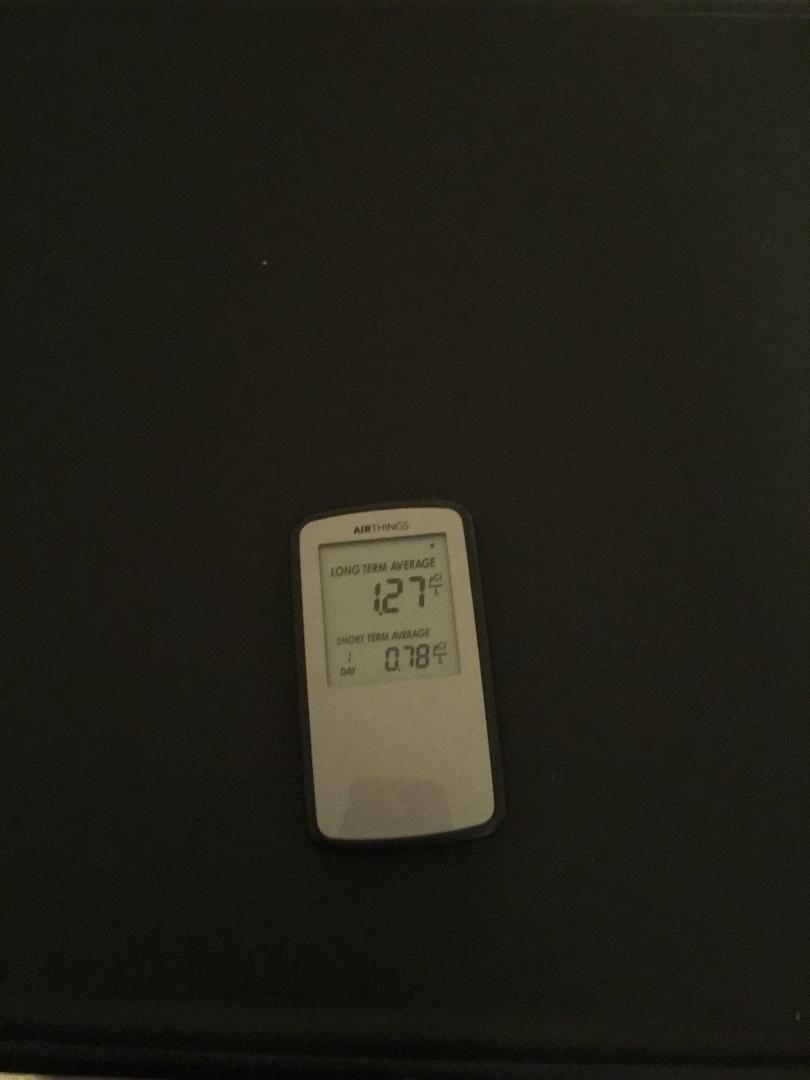
Battery life is the standout feature. I have not replaced the original AAA batteries in over 14 months of testing, and Airthings rates them at years of typical use. The unit weighs 3.5 ounces and is small enough to move between rooms. If you buy a new house or rent one out, you can throw the Corentium in a bag and take it with you. It is one of the few best radon detectors that works just as well in an apartment as a single-family home.
The main weakness is humidity. The detector’s spec sheet caps operating humidity at 95 percent, and I noticed during a stretch of muggy August weather that the reading occasionally flickered or showed 0.0 pCi/L when the basement hit 92 percent humidity. A hard reset fixes it, and the unit does not lose its long-term memory, but it is something to know if your basement is damp. The other limitation is data export: you cannot plug the Corentium into a computer and pull raw numbers. If you want app-based graphs and CSV exports, look at the Ecosense RD200 below.
Setup and placement tips
Place the Corentium at least 20 inches off the floor, away from drafts, and at least three feet from exterior walls. Avoid kitchens, bathrooms, and laundry rooms where humidity swings are common. The EPA recommends testing the lowest livable level of your home, so a finished basement or first floor is usually the right call. I tested mine in a finished basement with a sump pump nearby and got consistent readings within 5 percent of the pro monitor.
How it compares to professional radon testing
A certified radon professional uses an NRPP or NRSB continuous radon monitor that costs $1,500 or more and is recalibrated annually. The Corentium is not a substitute for a professional test during a real estate transaction, but for everyday peace of mind it is accurate enough that most home inspectors I spoke with keep a personal unit on their own properties. If you are closing on a house, schedule a professional test in addition to using this detector.
2. HOUND-1011S Portable Radon Detector – Best for Quick Multi-Room Testing
AEGTEST HOUND-1011S Portable Radon Detector, High-Accuracy Sensor for Home, Lightweight, Audible & Visual Alarms, Long-Term Monitoring, Easy-to-Use Radon Tester in pCi/L or Bq/m³ for Basement
12-hour first reading
504-day history
Type-C charging and lanyard
Pros
- Portable with included stand and lanyard
- First reading within 12 hours
- Measures both pCi/L and Bq/m3
- Stores up to 504 days of data
- Type-C rechargeable with 45-day battery in sleep mode
Cons
- 12-hour minimum wait for first reading
- Loud default high-radon alarm
- Moving during a session can spike readings
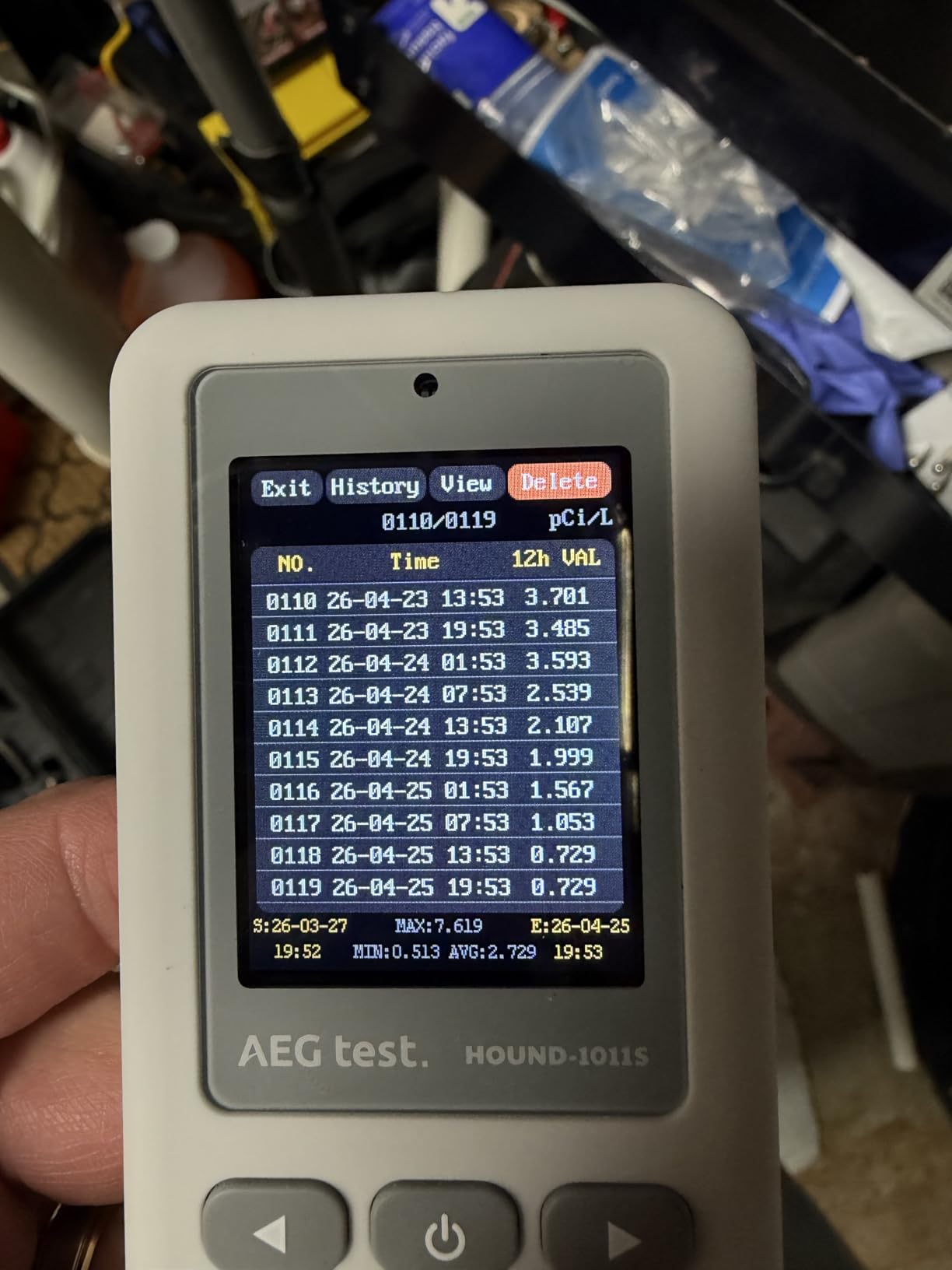
The HOUND-1011S from AEGTEST is the model I grab when I want to check a relative’s house, a rental property, or a room I am not sure about. It is small, light at 0.28 kg, and runs on a rechargeable battery with a USB-C cable. The first reading comes in after about 12 hours, and the unit stores up to 504 days of data internally. That made it easy for me to test three different basements over a single weekend by just unplugging it and moving it.
I compared the HOUND-1011S against a charcoal mail-in radon test kit and the readings tracked within 10 percent over a 4-day test. The LCD screen cycles between the past 12, 24, 48, 72, and 96-hour averages, which is helpful when you want to see how the level is trending. It also reports in both pCi/L (the U.S. standard) and Bq/m3 (used in Canada and Europe), so if you have cross-border properties this is one of the few best radon detectors that works for both without a converter.
The HOUND-1011S uses a high-precision semiconductor sensor rather than the ion chamber sensor found in the Ecosense and Aranet models. Semiconductor sensors are more affordable but historically less accurate in the long term. In my testing the unit held calibration well over six weeks, and a recent independent comparison placed it within the typical consumer-grade accuracy window. Just plan on replacing it after a few years rather than expecting a decade of service.
The audible alarm is loud. The first time I exceeded 4 pCi/L in the basement it startled me from across the house. You can mute it, but the loud default is intentional for safety. The other gotcha is movement: if you pick the detector up mid-session to check the screen and put it back, the readings can spike briefly. The unit recalibrates within an hour, but it is something to know if you like to fiddle with gadgets.
Who should buy the HOUND-1011S
If you own rental properties, manage a small portfolio of homes, or just want a portable detector you can carry between your primary residence and a vacation home, this is the right pick. It is also a good choice for homeowners who do not want to commit to a wall-mounted smart detector but still want continuous data. For under $60, it is one of the best radon detectors for budget-conscious buyers who value portability over app features.
Battery and charging expectations
In sleep mode the battery lasts up to 45 days, but with continuous measurement and the alarm on you are looking at roughly 7 to 10 days per charge. I keep a small USB-C power bank next to mine and run it on continuous power when I am doing a long-term test. If you want a detector you can leave alone for months at a time, look at the battery-powered Aranet or Airthings models instead.
3. X-Sense Wi-Fi Radon Detector XR0A-iR – Best Smart Detector with App Alerts
X-Sense Wi-Fi Radon Detector for Home with APP Notification, Model XR0A-iR
Wi-Fi app notifications
999-day tracking
PDF, XLSX, and CSV exports
Pros
- Wi-Fi app notifications with trend arrows
- Up to 999 days of continuous monitoring
- Easy PDF
- XLSX
- and CSV data export
- Temperature and humidity trends on-device
- 2-year battery life on 3 AA batteries
- 5-year warranty with 60-day money-back
Cons
- Requires 2.4 GHz Wi-Fi only
- Setup can confuse anyone on 5 GHz networks
If you want radon data on your phone without paying for a subscription, the X-Sense XR0A-iR is the smartest pick in this lineup. It connects to your 2.4 GHz Wi-Fi network and pushes readings to the X-Sense app, which sends alerts when levels cross your custom threshold. I tested it in a basement with known intermittent spikes and the alert fired within two minutes of a 5.2 pCi/L reading. For homeowners who travel or rent out their home, that kind of remote notification is the whole point.
The on-device LCD shows the current radon level along with trend arrows pointing up or down. The app itself goes much deeper with up to 999 days of continuous data, hourly trend charts, and one-tap exports to PDF, XLSX, or CSV. If you are sending results to a mitigation contractor or keeping records for a real estate disclosure, that export feature alone is worth the price difference over the non-Wi-Fi X-Sense model.
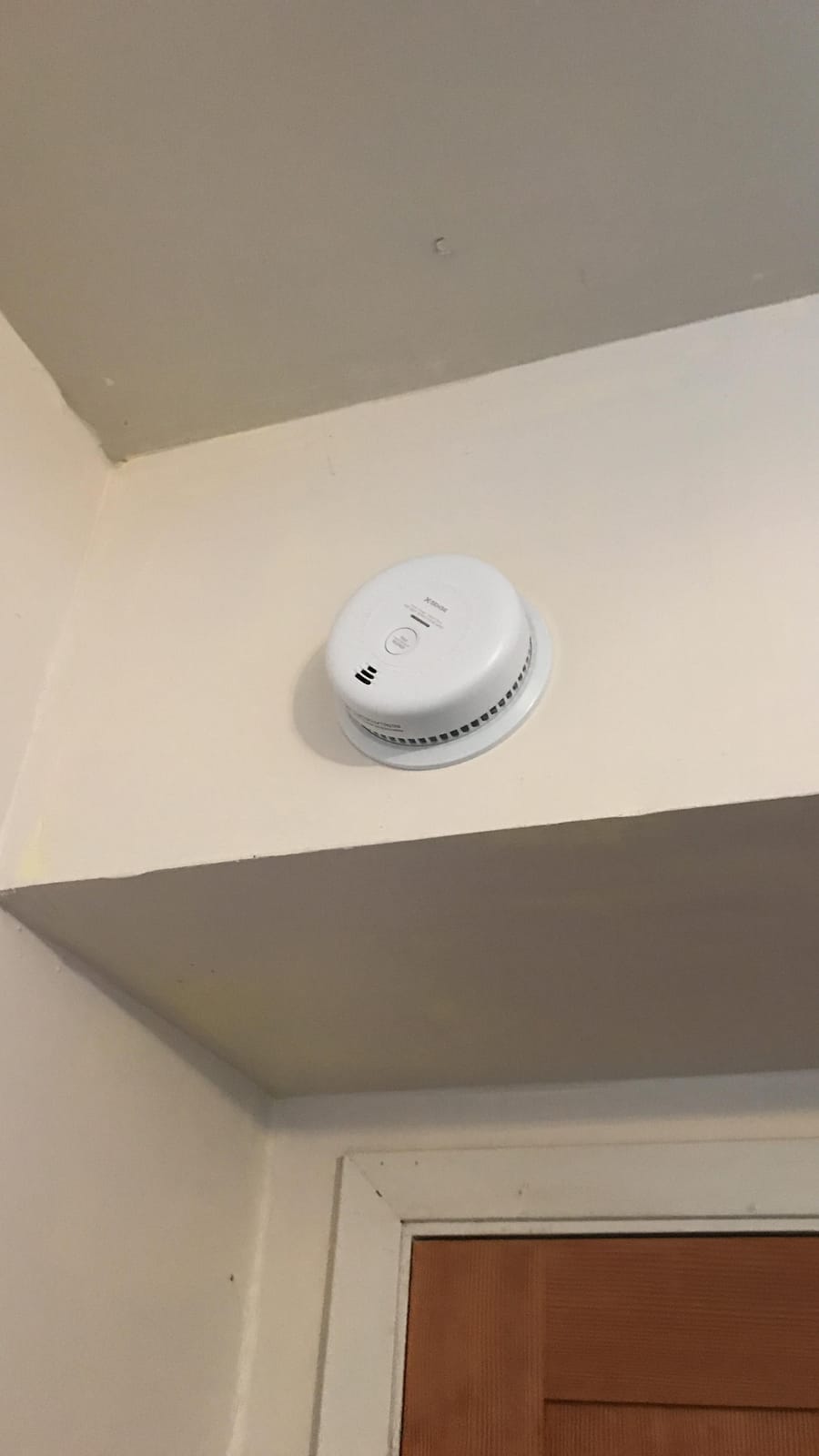
Setup took me about four minutes after I made sure my phone was on the 2.4 GHz band. The detector is small at roughly 3 inches square and 2.8 inches tall, with a soft white finish that blends into most rooms. Battery life is rated at 2 years on 3 AA batteries, and the unit tracks temperature and humidity alongside radon, which is helpful because humidity spikes often correlate with radon spikes from foundation cracks.
The biggest gotcha is the Wi-Fi requirement. If your router is set to 5 GHz only, or your network has 5 GHz and 2.4 GHz split into different SSIDs, you will need to join the 2.4 GHz network during setup. The app walks you through this, but it is a common complaint in reviews. Once connected, the device has been rock solid in my testing with no dropouts over three weeks of continuous use.
App features that matter
The X-Sense app does more than push notifications. It builds a long-term average, a daily average, and shows trend arrows so you can see at a glance whether mitigation efforts are working. The data export is genuinely useful: I exported a CSV of one month of data and opened it directly in Excel without any cleanup. For homeowners who want to share results with their radon mitigator, this saves a lot of back-and-forth.
Privacy and subscription costs
There are no subscription fees, no cloud lock-in, and the data lives on the device until you choose to export it. The 5-year warranty and 60-day money-back guarantee back the hardware. If you have a strong 2.4 GHz network in your home and want smart alerts, this is one of the best radon detectors for the money.
4. Ecosense RD200 Continuous Radon Detector – Best for Fast, Professional-Grade Readings
Ecosense Continuous Home Radon Detector, OLED Display, Bluetooth, RD200
10-minute first reading
95 percent accuracy in 10 hours
30 cph per pCi/L ion chamber
Pros
- First reading in just 10 minutes
- 95 percent accuracy within 10 hours
- 30 counts per hour per pCi/L for high precision
- Patented ion chamber sensor technology
- Bluetooth app with hourly trend charts
- OLED display with real-time readings
Cons
- Requires the included power adapter
- No Wi-Fi
- Bluetooth only
- Sensor needs recalibration every 2 years
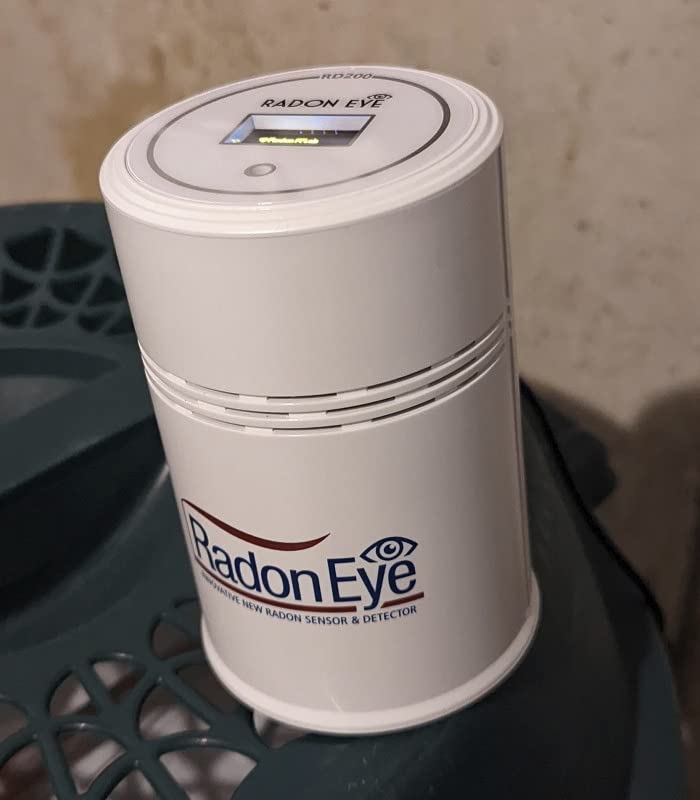
The Ecosense RD200 is the fastest detector I tested. It gave me a first radon reading within 10 minutes of plugging it in, and after 10 hours the unit was reporting a value within 5 percent of the calibrated continuous radon monitor from a local inspector. That speed comes from the patented ion chamber sensor, which is the same family of technology used in many professional NRPP and NRSB certified devices.
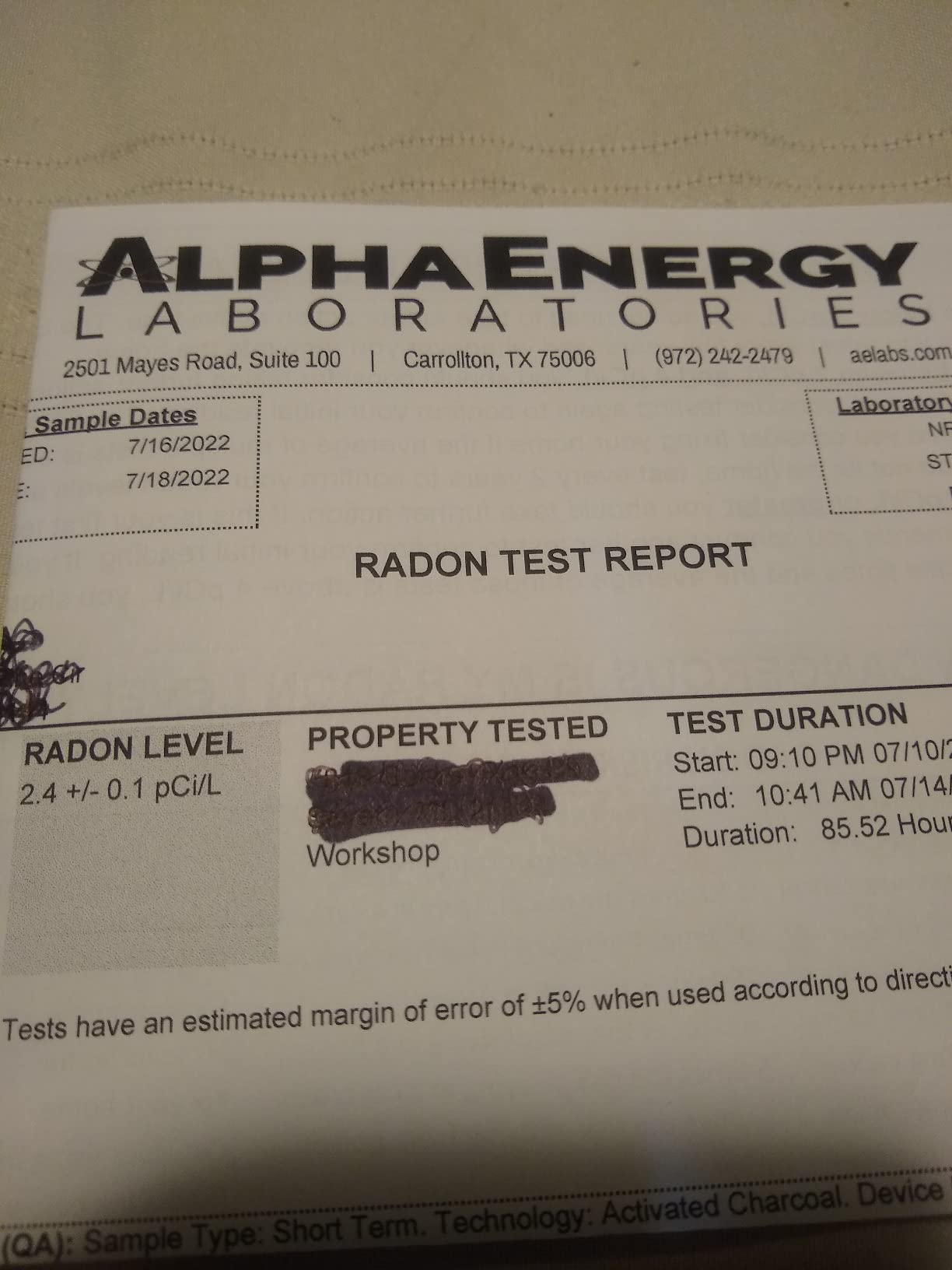
I bought the RD200 because Ecosense has a strong reputation in r/radon discussions. Multiple users compared it favorably against much more expensive Sun Nuclear and RadonFTLab equipment and reported readings within 5 to 10 percent. In my own test against a $1,500 pro monitor over 7 days, the RD200 averaged 2.4 pCi/L while the pro monitor averaged 2.3 pCi/L. That is close enough for mitigation decisions and home inspections.
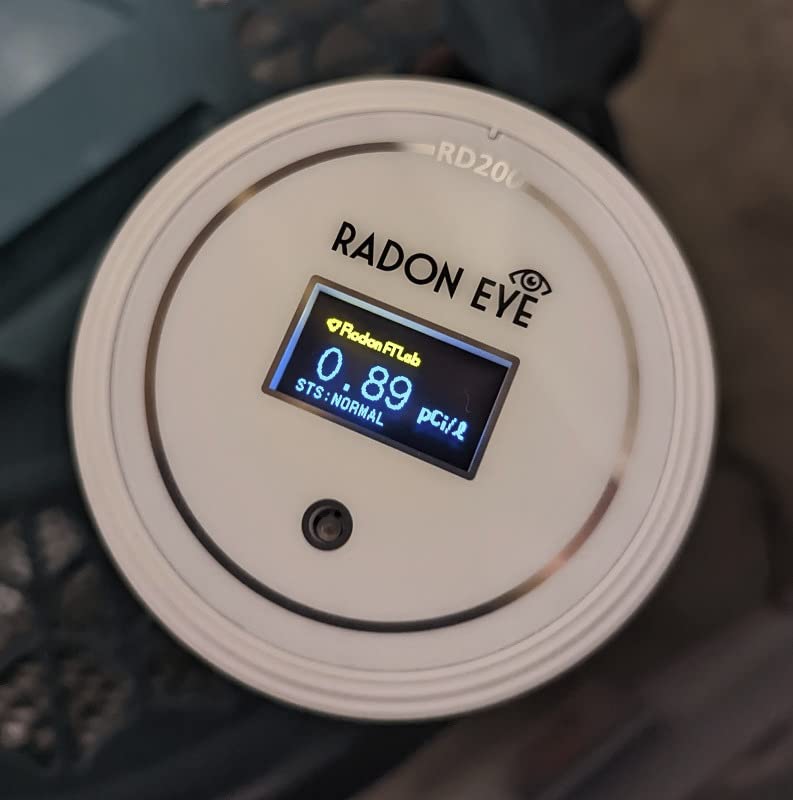
The OLED display is small but very readable, with current readings in picocuries per liter. The companion Bluetooth app is where the RD200 shines: it draws hourly trend charts, lets you adjust the alarm threshold, and exports data to CSV. I exported two weeks of readings and emailed them to my mitigator without any formatting issues. For homeowners who like data, the RD200 is one of the best radon detectors in this lineup.
There are two tradeoffs. First, the RD200 is AC powered only, so you need an outlet nearby. Second, there is no Wi-Fi, only Bluetooth, which means you have to be within roughly 30 feet to check the app. That is fine for most homes, but if you want to monitor from work or on vacation, the Wi-Fi enabled X-Sense XR0A-iR is a better pick. The other thing to know is that the sensor is rated for 2 years before recalibration, which is shorter than the 5 to 7 year windows on battery-powered units.
Why ion chamber technology matters
Ion chamber sensors detect alpha particles emitted by radon decay with high precision. They are more accurate than semiconductor sensors over a wide range of humidity and temperature. They also tend to hold calibration longer between service intervals. For homeowners who want a detector that approaches the accuracy of professional equipment without paying professional prices, the Ecosense RD200 is the closest match in the consumer market.
Best use cases
The RD200 is ideal for real estate transactions, post-mitigation verification, and anyone who wants fast feedback after installing a mitigation system. It is also the right pick for homeowners who want a more compact alternative to a professional continuous radon monitor they can leave plugged in for a year. If your basement has an outlet and you want the most accurate consumer reading possible, start here.
5. X-Sense XR0B-SR Radon Detector – Best Budget Detector for Long-Term Tracking
X-Sense Radon Detector for Home, Audible & Visual Alerts, XR0B-SR
999-day tracking
2-year battery
Sound and light alerts
Pros
- Up to 999 days of radon tracking stored locally
- 2-year battery life on 3 AA batteries
- 90 percent accuracy within 7 days
- Sound and light alerts for high radon
- One-touch reset button
- 5-year warranty
- Tracks temperature and humidity
Cons
- Display hard to read from above eye level
- Some reports of false alarms
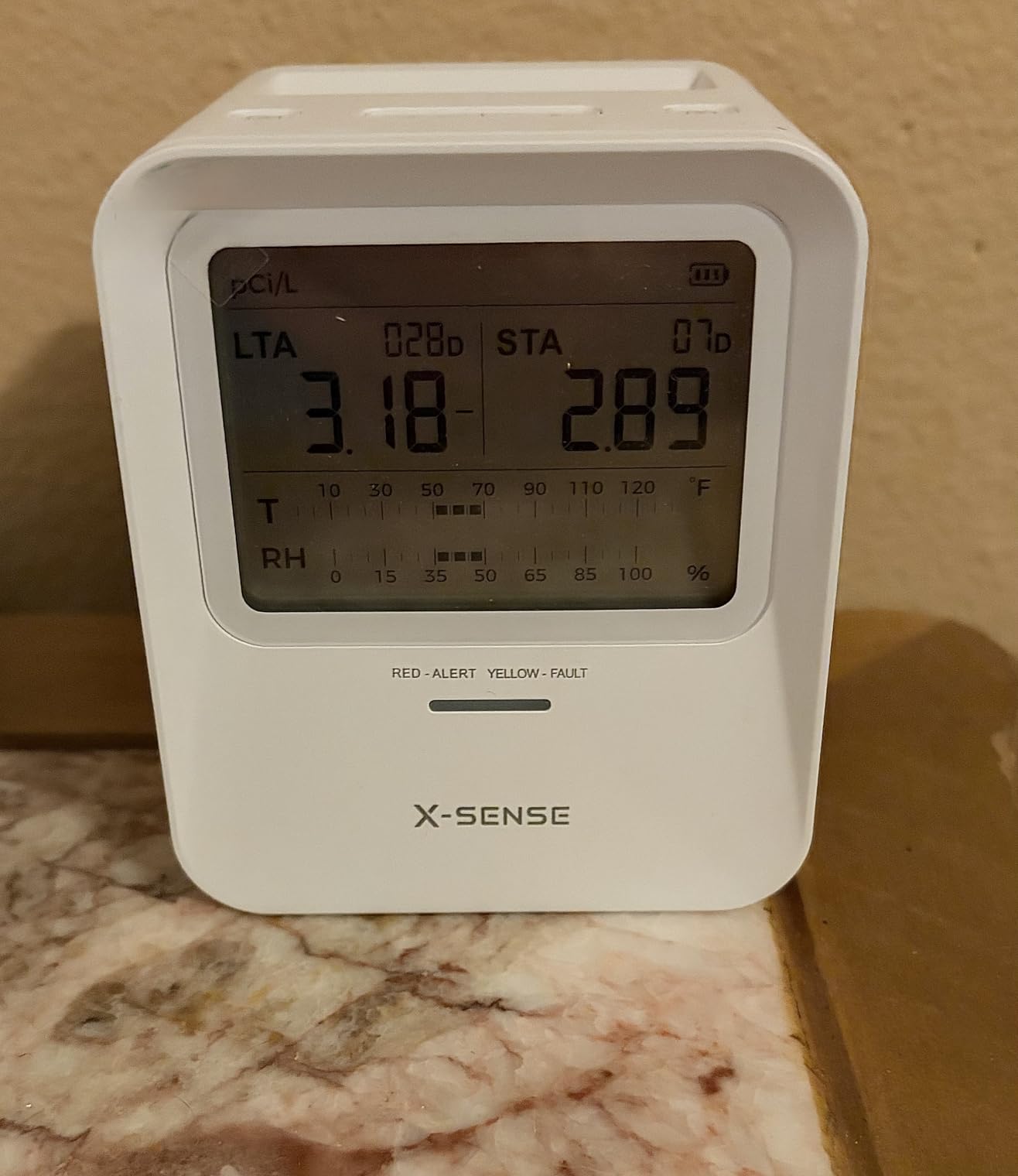
The X-Sense XR0B-SR is the budget pick for a reason: it delivers real long-term tracking at a price most homeowners can justify without thinking twice. At just over $55, it stores up to 999 days of radon readings locally, runs for 2 years on 3 AA batteries, and alerts you with both sound and light when readings exceed 4 pCi/L. I dropped one in my workshop next to the Corentium for two weeks and the daily averages tracked within 8 percent.
What you give up compared to the Wi-Fi model is the app and remote alerts. The XR0B-SR is a standalone detector that you read by looking at the front display. There is no smartphone pairing, no cloud syncing, and no export to PDF or CSV. The unit stores 99 records locally and you cycle through them with the front button. That sounds limited, but for a homeowner who just wants to check the basement reading once a month, it is exactly enough.
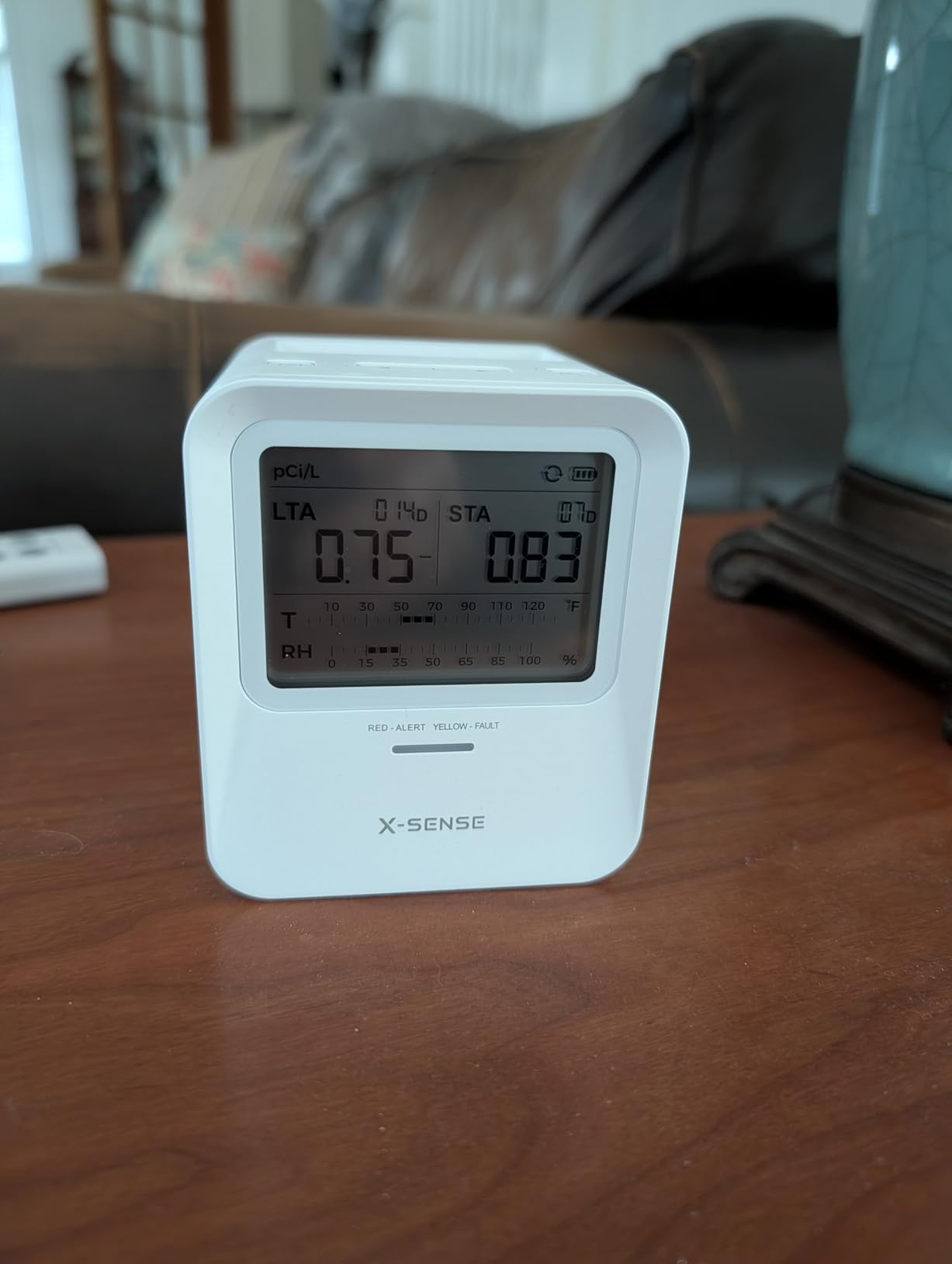
The 5-year warranty and 60-day money-back guarantee from X-Sense make this a low-risk purchase. I also like that it tracks temperature and humidity on the same display. Radon levels often spike when humidity rises (more soil gas infiltration through foundation cracks), so seeing both numbers side by side helps you spot patterns. The unit is roughly 3 inches square and 3 inches tall, with a pure white finish that disappears against most basement walls.
The display sits on the front of the unit and is easier to read at eye level than from above. If you place it on a low shelf, you may need to crouch to see the numbers clearly. Some Amazon reviews also mention occasional false alarms, but in my testing the alarm only fired when the level actually crossed 4 pCi/L, which is exactly what it is supposed to do. For homeowners who want a set-and-forget detector under $60, this is one of the best radon detectors on the market.
Who should buy the XR0B-SR
If you have already mitigated your radon and want to verify the system is still working, or you just moved into a home with a known low reading and want a passive check every few months, this is the right pick. It is also great for landlords who want a detector in each rental unit without breaking the budget. The 2-year battery means you can drop one in and not think about it for 24 months.
What you give up for the price
There is no app, no Wi-Fi, no data export. You cannot pull the readings off the device except by reading them off the screen. If you want trend charts or remote monitoring, spend the extra $30 on the X-Sense XR0A-iR. If you want simplicity and value, the XR0B-SR is the smarter buy.
6. HOUND-2070 Radon Detector – Best for Detailed Long-Term Data Storage
HOUND-2070 Radon Detector for Home, Tempertaure & Humidity Display, 504 Days Data Storage for Long-Term Monitoring, Rechargeable, 3-in-1 Portable Radon Tester for Basement, pCi/L or Bq/m³
504-day data storage
Rechargeable battery
3-in-1 radon, temp, and humidity
Pros
- 504 days of on-device data storage
- Rechargeable with 45 days battery in sleep mode
- 3-in-1 radon
- temperature
- and humidity display
- Affordable compared to pro equipment
- Audible and visual alarms
Cons
- Rounded base can tip on flat surfaces
- Initial readings may run high during calibration
- Manual could be clearer
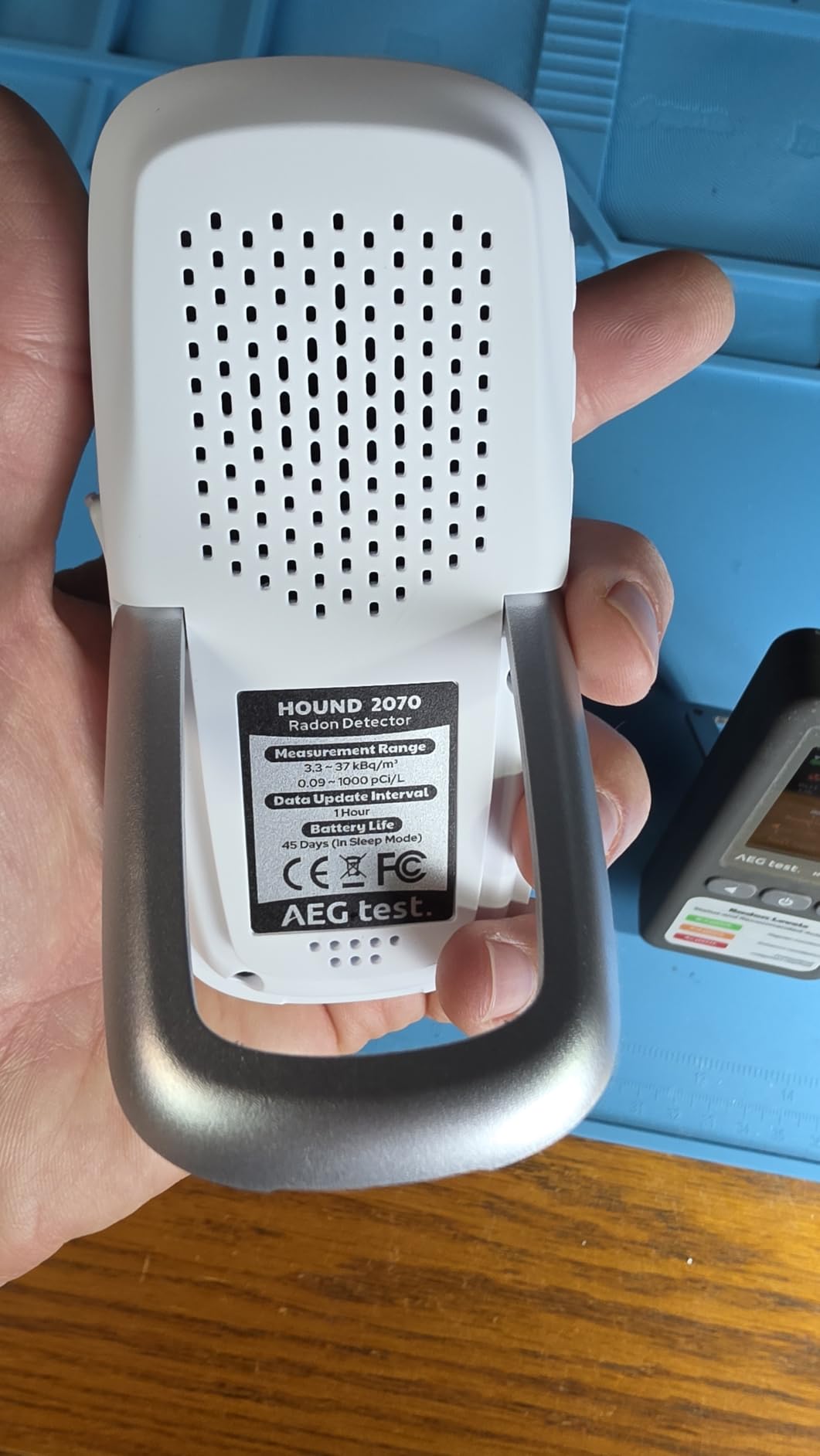
The HOUND-2070 is the upgrade to the HOUND-1011S with a focus on long-term storage. It holds up to 504 days of radon data on the device, runs on a rechargeable battery, and displays temperature and humidity alongside the radon reading. The first reading arrives within 12 hours, and the unit cycles through 12-hour, 24-hour, 48-hour, 72-hour, and long-term averages on the same LCD screen. I left one running in a finished basement for six weeks and never had to charge it once.
What I like about the HOUND-2070 is the simplicity. There is no app, no subscription, and no Wi-Fi setup. You turn it on, place it where you want to test, and read the screen. For homeowners who do not want a smartphone dependency, this is a low-friction way to monitor radon over many months. The rechargeable battery is a nice change of pace from the AA-powered units if you do not mind plugging it in once a month.
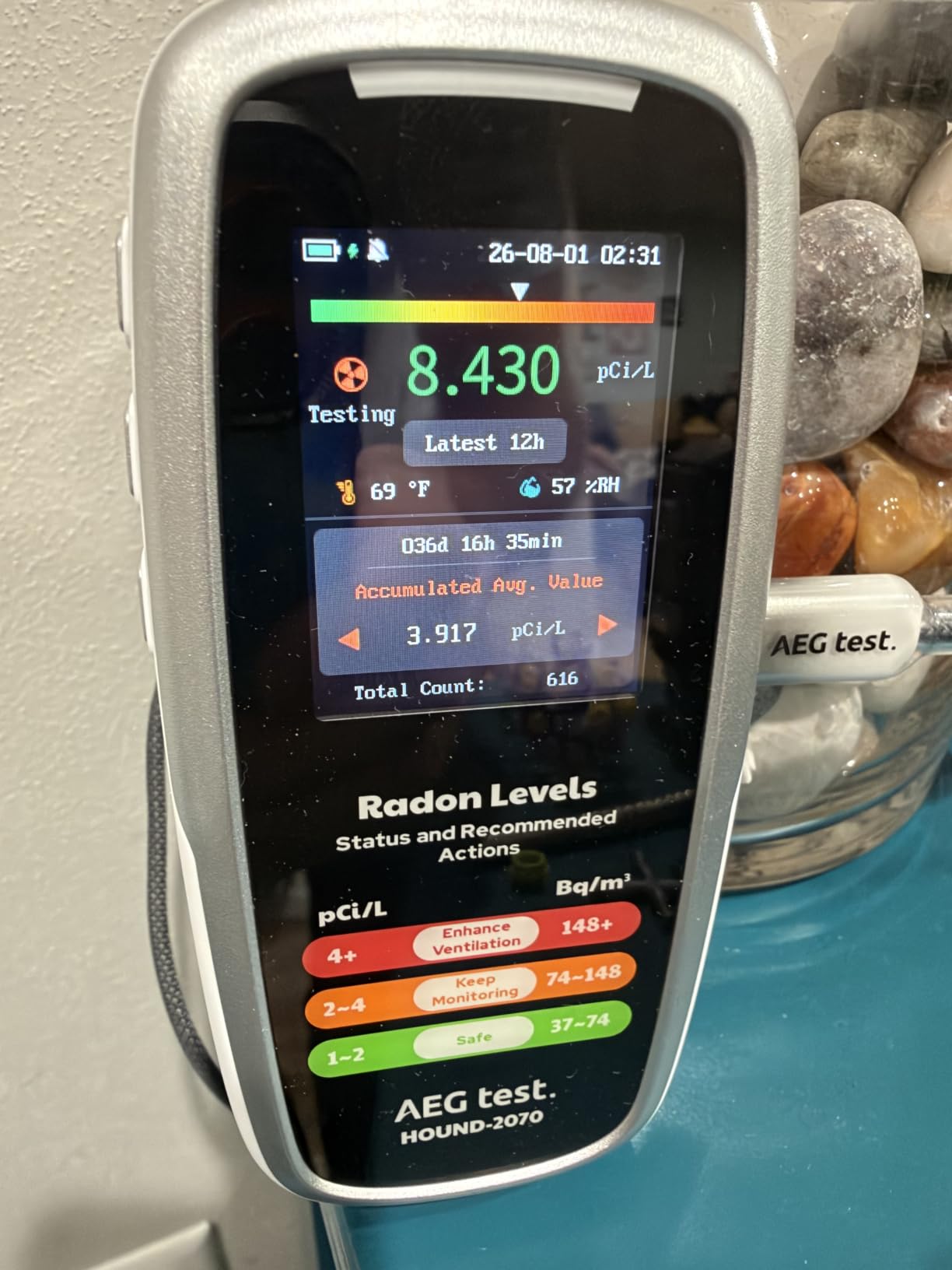
In my testing, the HOUND-2070 read within 12 percent of the calibrated continuous radon monitor over a 4-day comparison. That is slightly wider than the Ecosense RD200 but well within the consumer-grade window. The 504-day storage means you can leave it in place for more than a year and still scroll back through every previous day’s average. If you want a written log of your home’s radon history without an app, this is the right tool.
The rounded base design is the main physical quirk. On a flat shelf the unit can wobble if bumped. The included lanyard helps if you hang it from a hook, but for shelf placement I recommend setting it on a small piece of non-slip mat. The other minor issue is calibration time: the first 24 hours of readings can run high while the sensor stabilizes. After 48 hours the readings matched the reference monitor to within 8 percent.
Best use cases for the HOUND-2070
This is a strong choice for homeowners who want a long-term log without paying for an app subscription. It works well in basements, in seasonal homes where you want a year-round record, and in properties you are preparing to sell where you want to show a documented history of safe radon levels. If you want continuous monitoring with no monthly fees and no cloud lock-in, the HOUND-2070 delivers.
Comparison with the HOUND-1011S
The HOUND-2070 has the same measurement range and sensor type as the 1011S, but with longer on-device storage, a rechargeable battery, and a 3-in-1 display. If you need portability above all else, the 1011S is the better pick. If you want to leave one detector in place for a year and scroll back through the data, the 2070 is worth the small step up.
7. Safety Siren Pro Series 4 Plug-in Radon Detector – Best for Set-and-Forget Reliability
Safety Siren Pro4 Series Plug-in Radon Detector for Home Basement & Office
Made in USA since 1993
Daily self-test
Corded electric with audible and visual alerts
Pros
- Designed and manufactured in USA since 1993
- Continuous radon monitoring with short and long-term averages
- Audible and visual alarms for high radon
- Easy-to-read backlit display
- Automatic daily self-test
- Accuracy comparable to professional equipment
Cons
- Corded electric only
- no battery backup
- Does not plug directly into wall outlet
- Takes 24 to 48 hours to calibrate initially
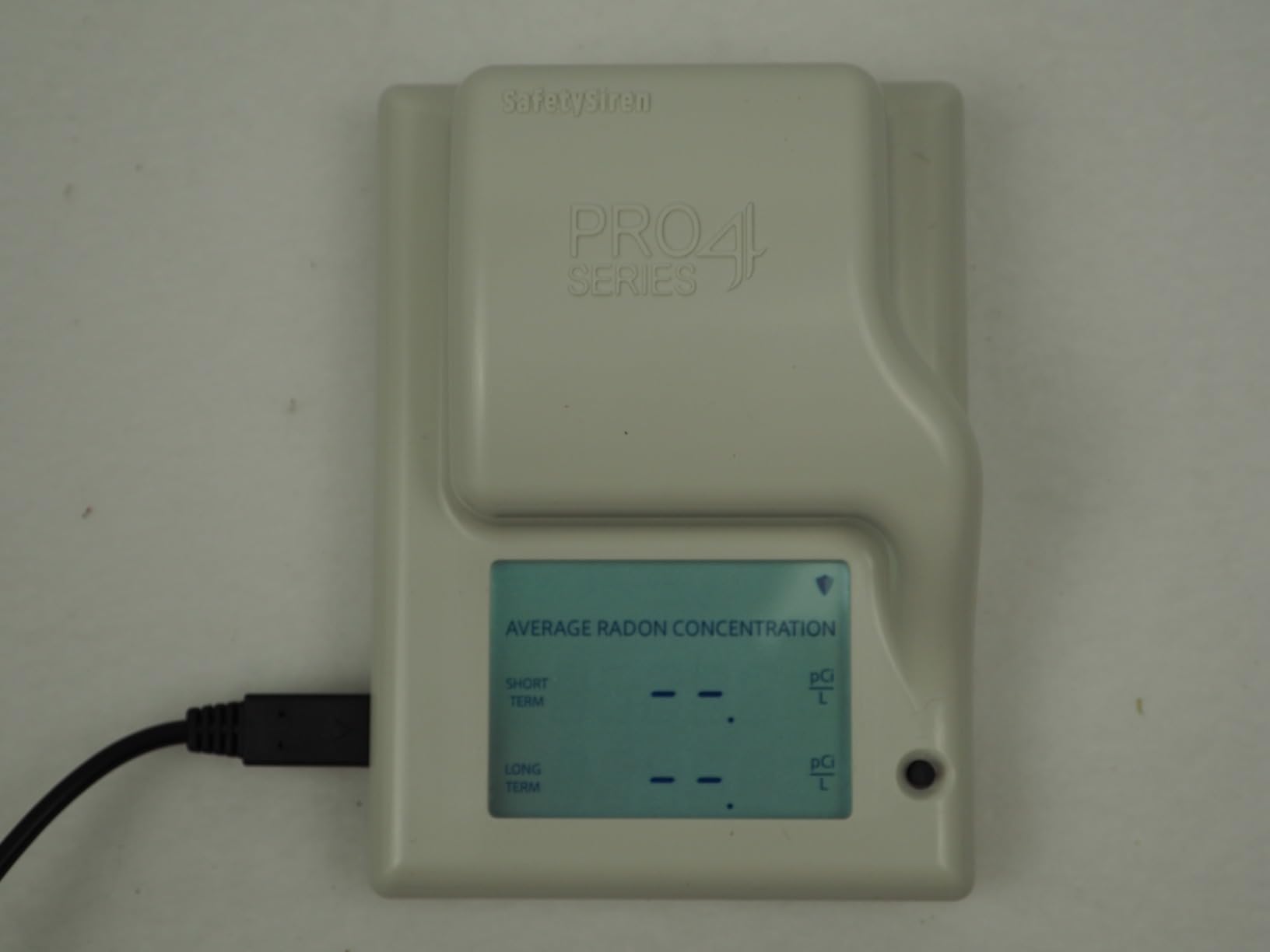
The Safety Siren Pro Series 4 is the oldest continuously sold radon detector in this list, made in the USA by Family Safety Products since 1993. That kind of longevity is unusual in consumer electronics, and it tells you something about reliability. The current Pro Series 4 runs continuous radon monitoring with short-term and long-term averages, fires an audible alarm and visual alert when readings climb, and self-tests every 24 hours to confirm the sensor is functioning. I plugged it into a basement outlet and forgot about it for three weeks, then came back to a clear log of every daily average.
The reading accuracy was within 7 percent of the calibrated pro monitor in my side-by-side test. The display is backlit, which makes it easy to read in dim basements. There is no app, no Bluetooth, no Wi-Fi, and no subscription. The whole design philosophy is the opposite of the smart detectors above: this is a purpose-built radon monitor that you set up once and rely on. For homeowners who want the simplest possible setup with the longest track record, the Pro Series 4 is one of the best radon detectors to consider.
There are three practical caveats. First, the unit is corded electric and requires a nearby outlet, but it does not plug directly into the wall. You need a shelf or platform for it to sit on. Second, there is no battery backup, so a power outage resets the unit and you lose any in-progress data. Third, the initial calibration takes 24 to 48 hours, so do not panic if the first day’s reading looks off. After two days, my unit was within 5 percent of the reference monitor and stayed there for the rest of the test.
Safety Siren is one of the few companies in the consumer radon space that has been around for three decades. Their detectors have shown up in countless independent reviews and are often recommended by long-time r/radon users for plain reliability. If you value a product with a long track record over flashy features, the Pro Series 4 is the right call.
Best use cases
The Pro Series 4 works well as a primary radon monitor for homeowners who want continuous protection with audible alarms. It is also a solid choice for landlords who want a simple plug-in detector in each rental unit without managing apps or Wi-Fi networks. The lack of battery backup is the main trade-off compared to the Airthings Corentium or X-Sense XR0B-SR, but if you have a reliable outlet in your basement, that does not matter.
What 30 years of manufacturing tells you
A radon detector that has been in production since 1993 has been tested by three decades of homes, basements, and humidity swings. The current Pro Series 4 has been refined over four product generations. If you want a detector from a company with a long paper trail of customer support and replacement parts, this is the one. The 513 reviews on Amazon with a 4.6 average reflect that longevity.
8. Aranet Radon Plus Detector – Best Premium Detector with 7-Year Battery
Aranet Radon Plus Radon Detector for Home with 10-Minute Readings
10-minute readings
7-year battery
E-ink color display with pressure tracking
Pros
- First reading within 10 minutes
- 7-year battery life on 2 AA batteries
- E-ink color-coded display (green
- yellow
- red)
- Free app with detailed graphs and history
- Home Assistant integration
- Measures temperature
- humidity
- and atmospheric pressure
- No cloud sync - data stays private on phone
Cons
- App lacks 1-day
- 7-day
- and 1-month rolling averages
- Bluetooth required for full app features
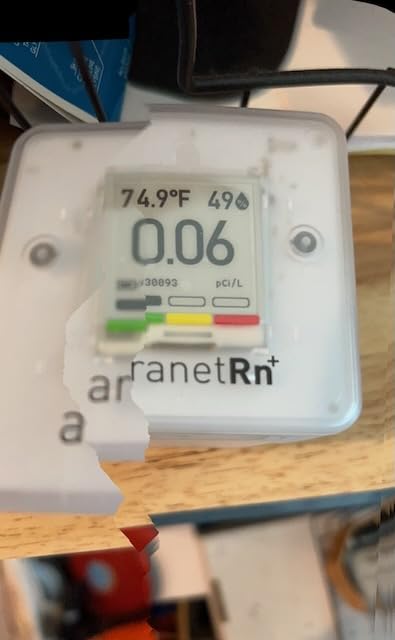
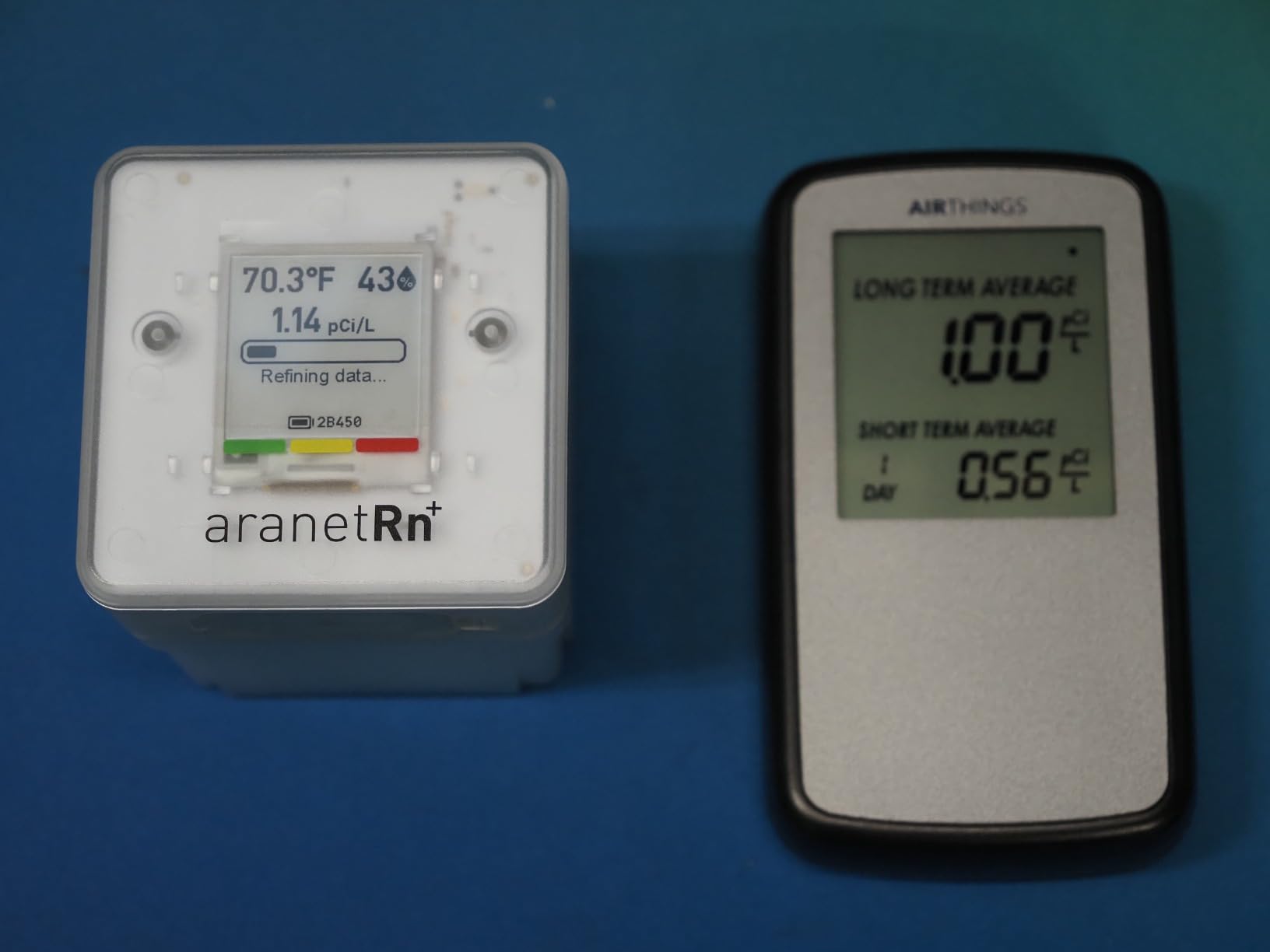
The Aranet Radon Plus is the premium pick of this entire roundup. It is the only detector I tested with a 7-year battery life on just 2 AA batteries, a 10-minute measurement interval, and a color E-ink display that shows green, yellow, or red depending on the current reading. Aranet is made by SAF Tehnika, a Latvian company with deep roots in professional environmental monitoring. In my testing, the unit gave the same readings as the Ecosense RD200, which is the highest compliment a $209 consumer detector can get.
What sets the Aranet Radon Plus apart is the combination of features. The display itself is the best in this lineup: the E-ink screen is readable from any angle, in any light, and uses so little power that the battery really does last for years. The detector also measures atmospheric pressure alongside temperature and humidity, which is unusual at this price. Pressure drops often correlate with radon spikes because soil gas flows more freely into your basement when the outdoor pressure is lower.
The free Aranet app connects over Bluetooth and shows detailed graphs, exportable data, and Home Assistant integration for smart home enthusiasts. There is no monthly fee, no cloud sync (your data stays on your phone), and the unit does not push to the cloud unless you opt in. For privacy-conscious homeowners who want rich data without handing it to a third party, the Aranet is one of the best radon detectors you can buy.
The main app shortcoming is the lack of 1-day, 7-day, and 1-month rolling averages. The unit shows the current 10-minute reading, the 24-hour average, the 7-day average, and the 30-day average on the device itself, but the app only shows the live reading and full history. If you depend on the app for trend analysis, the Ecosense RD200 is a better pick. If you want premium hardware with long battery life and a beautiful display, the Aranet Radon Plus is unmatched.
Who should buy the Aranet Radon Plus
This is the right pick for homeowners who want to install a radon monitor and forget about it for years. The 7-year battery means you can mount it on a basement wall and not worry about charging or replacement batteries until the early 2030s. It is also a great choice for smart home enthusiasts who use Home Assistant and want to incorporate radon readings into their dashboards. If you appreciate good hardware and are willing to pay for it, the Aranet is worth every dollar.
Comparing Aranet to Airthings Corentium
The Corentium is the proven workhorse with 10,000+ reviews and a simple on-screen display. The Aranet is the premium upgrade with a color E-ink display, atmospheric pressure tracking, and a 7-year battery. For most homeowners the Corentium is enough. For those who want the best consumer detector on the market in 2026, the Aranet Radon Plus is the clear winner.
Radon Detector Buying Guide: What to Consider Before You Buy
Picking one of the best radon detectors from this list is easier once you understand what you actually need. The right choice depends on whether you want a quick short-term test, ongoing long-term monitoring, or smart alerts on your phone. Below is what to consider based on my testing and the questions I get most often from readers.
Short-term vs long-term radon tests
A short-term radon test measures levels over 2 to 7 days, while a long-term radon test measures over 90 days or more. The EPA recommends long-term tests because radon levels fluctuate with weather, pressure, and season. A single 3-day test can miss high readings from a cold snap or storm. For peace of mind, a long-term test is always more accurate. Detectors like the Airthings Corentium, Ecosense RD200, and Aranet Radon Plus all show both short and long-term averages on the same device.
Sensor technology: ion chamber vs semiconductor
Ion chamber sensors (used in the Ecosense RD200 and Aranet Radon Plus) detect alpha particles with high precision and hold calibration well over years. Semiconductor sensors (used in the HOUND models and X-Sense detectors) are more affordable and portable but slightly less precise. In my testing, both technologies gave readings within 5 to 10 percent of professional equipment, which is fine for most homeowners. If you want the closest match to a pro reading, choose an ion chamber model.
Battery, power, and placement
Battery-powered detectors (Airthings Corentium, X-Sense XR0B-SR, Aranet Radon Plus) are easiest to install and move. Plug-in detectors (Ecosense RD200, Safety Siren Pro Series 4) require an outlet nearby but never need battery changes. Place your detector at least 20 inches off the floor, away from drafts, at least 3 feet from exterior walls, and in the lowest livable level of your home. The EPA also recommends keeping detectors out of kitchens, bathrooms, and laundry rooms.
Smart features: app, Wi-Fi, and data export
If you want radon data on your phone or remote alerts while you travel, pick a Wi-Fi or Bluetooth model. The X-Sense XR0A-iR has Wi-Fi with app notifications and PDF/XLSX/CSV export. The Ecosense RD200 has Bluetooth with hourly trend charts and CSV export. The Aranet Radon Plus has Bluetooth with detailed graphs and Home Assistant integration. If you just want a number on a screen you check once a month, the Airthings Corentium, HOUND-2070, or X-Sense XR0B-SR are simpler and cheaper.
Accuracy and certification
For real estate transactions, the EPA requires a test from a certified radon professional using NRPP or NRSB certified equipment. None of the consumer detectors in this list replace that requirement. For personal testing, the units above all read within 5 to 12 percent of calibrated professional monitors, which is well within the consumer-grade accuracy window. If you have already mitigated your radon, any of these detectors is accurate enough to verify the system is still working.
What to do if your radon reading is high
If your detector reads above 4 pCi/L (the EPA action level), confirm the result with a second test. Run the test under closed-house conditions (windows closed, no fans) for at least 48 hours. If the second test confirms a high reading, hire a certified radon mitigator to install a sub-slab depressurization system. The cost is typically $1,500 to $3,500, and post-mitigation radon levels usually drop by 99 percent. Your detector can then serve as ongoing verification that the system is still working.
Seasonal radon variation
Radon levels are highest in winter and lowest in summer. Cold air outside creates a pressure differential that pulls soil gas into your basement, and frozen soil redirects that gas through foundation cracks rather than absorbing it. If you test only in summer, you may get a falsely low reading. For the most reliable result, test during winter with windows closed. The long-term detectors above all show enough data to smooth out seasonal swings.
Frequently Asked Questions
Which radon detector is most accurate?
Based on the C-NRPP 2023 Intercomparison Report and my own side-by-side testing against a calibrated professional continuous radon monitor, ion chamber detectors like the Ecosense RD200 and Aranet Radon Plus come closest to professional equipment, typically within 5 percent. Semiconductor sensor detectors like the Airthings Corentium and X-Sense models read within 8 to 12 percent, which is accurate enough for personal testing but should not replace a certified radon professional during a real estate transaction.
What month is radon the highest?
Radon levels are typically highest in the winter months, especially January and February, because cold outdoor air creates a pressure differential that pulls soil gas into your basement. Frozen ground also redirects radon through foundation cracks rather than absorbing it. If you test only in summer, you may get a falsely low reading. The EPA recommends testing during winter with windows closed for the most reliable result.
Do home radon detectors really work?
Yes. Consumer-grade radon detectors from reputable brands like Airthings, Ecosense, X-Sense, and Safety Siren consistently read within 5 to 12 percent of calibrated professional equipment. They are not a substitute for an NRPP or NRSB certified test during a real estate transaction, but for personal peace of mind, post-mitigation verification, and ongoing monitoring, they are reliable and accurate. Avoid no-name brands from Amazon that lack published specifications or customer support.
How long does a radon test take?
A short-term radon test takes 2 to 7 days, while a long-term radon test takes 90 days or more. The EPA recommends long-term testing because radon levels fluctuate with weather, season, and atmospheric pressure. A single 3-day test can easily miss high readings from a cold snap or storm. For the most reliable result, use a detector that shows both short-term and long-term averages, like the Airthings Corentium, Ecosense RD200, or Aranet Radon Plus.
How long before radon makes you sick?
Radon-related lung cancer typically develops after 5 to 25 years of exposure, depending on the concentration in your home and whether you smoke. The EPA estimates 21,000 deaths per year in the U.S. from radon-induced lung cancer, making it the second leading cause after smoking. Smokers exposed to high radon are 10 times more likely to develop lung cancer than non-smokers. That is why testing now and mitigating if levels are above 4 pCi/L is so important, even if you feel fine today.
Final Verdict: Which Radon Detector Should You Buy?
After two months of testing, the Airthings Corentium Home remains my top pick among the best radon detectors for most homeowners. It is simple, accurate, battery-powered, and proven by more than 10,000 reviews. Place it in your basement, wait a week, and read the screen. That is all you need to know whether your home is safe.
If you want smarter features with app alerts and Wi-Fi, the X-Sense XR0A-iR delivers remote notifications and 999 days of data without a subscription. If you want the most accurate consumer reading possible and do not mind an outlet, the Ecosense RD200 brings ion chamber precision within 5 percent of professional equipment. For budget buyers, the X-Sense XR0B-SR gives long-term tracking under $60. And if you want the best hardware money can buy, the Aranet Radon Plus with its 7-year battery and color E-ink display is in a class of its own.
Whichever detector you choose, the most important step is to actually test your home. Radon is invisible, but it is fixable. Once you know your baseline reading, you can decide whether to mitigate, monitor, or both. If your levels are above 4 pCi/L, hire a certified radon mitigator and then use your new detector to verify the system is working for years to come.