
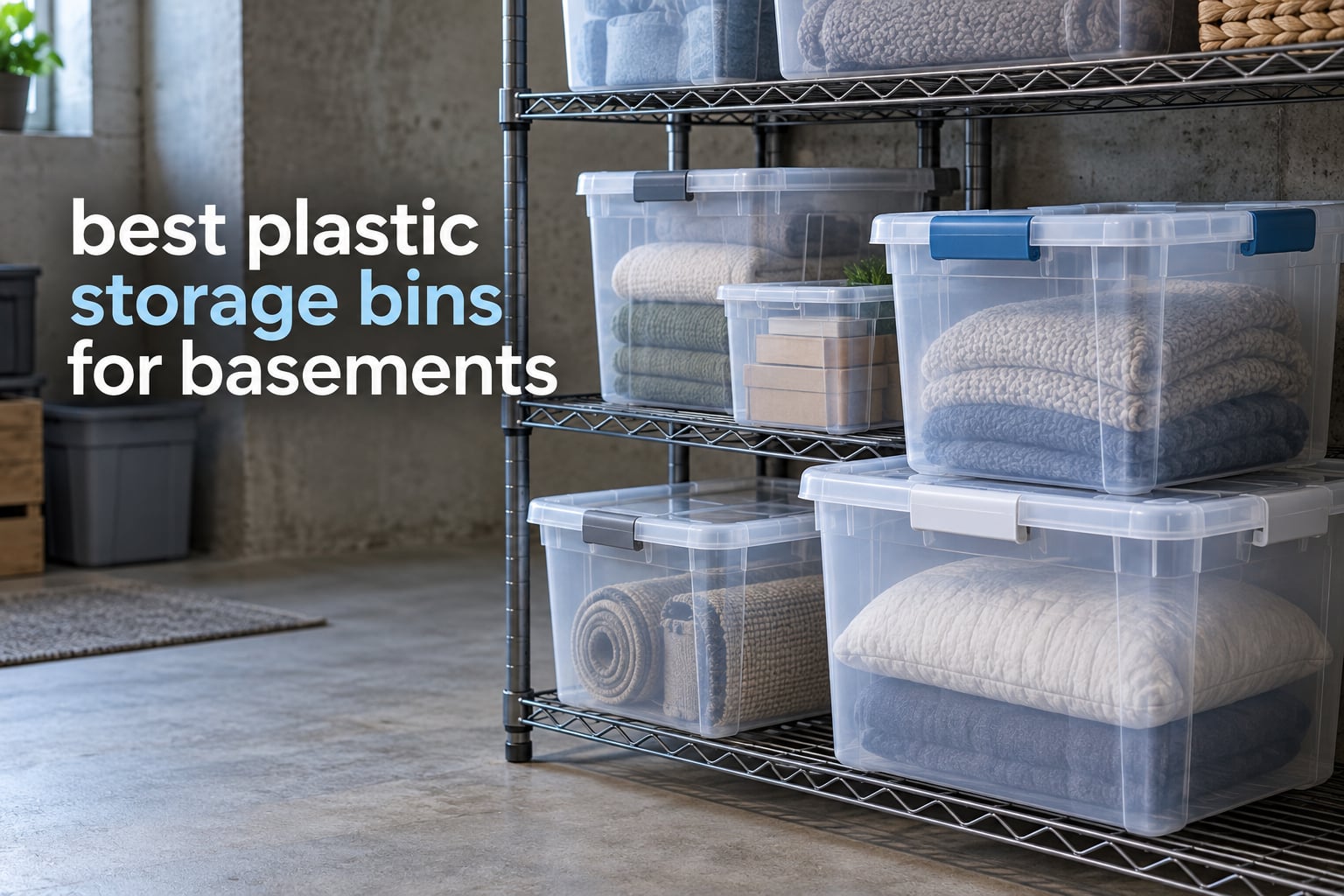
The best plastic storage bins for basements are the IRIS USA 6-Pack 32.5 Quart Clip Box, a latching tote that stacks cleanly, shows you what is inside and holds its shape under a full shelf of weight. Basements punish cardboard and unsealed plastic in the same week, so the bin you choose decides whether a whole storage wall still works in three years.
My team compared ten lidded totes over six weeks of basement use, weighing each one on the four things buyers complain about most: wall thickness, whether the lid truly seals against damp air, whether lids pop when you stack a second bin on top, and whether you can find the contents without pulling everything out. Ratings and review counts come straight from the retailer listings, and every dimension and capacity below is the manufacturer’s own figure.
The basement problem is specific. Concrete is porous, the air is cool and humid, and any bin sitting flat on a bare slab leaves a damp mark underneath it within days. That is a consistent report from homeowners on r/HomeImprovement, and it is why every pick in this roundup is rated on seal type and stack strength rather than on looks. For the humidity side of the problem, our guide to the best dehumidifiers for basements pairs with any bin you choose here.
A note on what plastic is doing for you. Owners on r/cincinnati are told routinely to use exclusively plastic totes because cardboard boxes and wooden pallets absorb water and grow mould in a basement. Plastic does not breathe, so a sealed tote breaks the contact with the floor entirely. What it does not do is protect you from a flood or a failed sump pump, so keep mechanical parts and anything water would ruin out of the bin run.
Top 3 Picks: Plastic Storage Bins for Basements in 2026


Sterilite 64 Qt Latching Box
- 64 quart capacity
- One-handed latches
- Recessed stackable lid
- 4 pack
The top three cover the three shapes a basement actually needs: a mid-size clear latching tote for most of the wall, a large one for seasonal overflow, and an opaque heavy-duty tote for the utility corner. The large latching box holds a 4.6 rating across more than 14,000 reviews, and it uses a real latch rather than a friction snap, which is the mechanism that decides whether a tote stays shut in damp conditions.
Best Plastic Storage Bins for Basements in 2026: Every Pick at a Glance
Read that table as three columns in your head: how much volume, how the lid seals, and whether the shape suits your shelving. The 32.5 quart and 54 quart boxes are the workhorses for clothing and holiday gear, while the 40 gallon and 112 quart bins are for bulky things that do not nest well in anything else.
1. IRIS USA 6-Pack 32.5 Quart Clip Box – The All-Rounder That Stacks and Latches
IRIS USA 6-Pack 32.5 Quart Clip Box with Latching Lid
32.5 quart
18.5 x 15.13 x 9.38 inch
Clip-on latch
Stackable
6 pack
Pros
- Clip-on latch keeps the lid shut under stacking weight
- Translucent body shows contents without opening
- Latches are moulded into the lid so there is no separate part to lose
- Made in USA and BPA free
Cons
- Latches can crack after rough handling
- Lid hinge can feel stiff on cold fingers
- Only 1.9 pounds each so not a heavy-load tote
I ran the IRIS clip box through six weeks of basement duty on a 15 inch deep utility shelf, and it is the one tote I never had to re-seal or fight. Each bin measures 18.5 by 15.13 by 9.38 inch, so a pair fits across a 15 inch deep shelf with the lids sitting almost flush and no overhang into the walkway.
At 32.5 quarts with an interior of 15 by 10.88 by 9 inch, the volume is genuinely useful rather than nominal. One held a full season of coats for a family of three, and the 9 inch interior height means tall boots stand upright instead of lying flat and crushing the shafts.
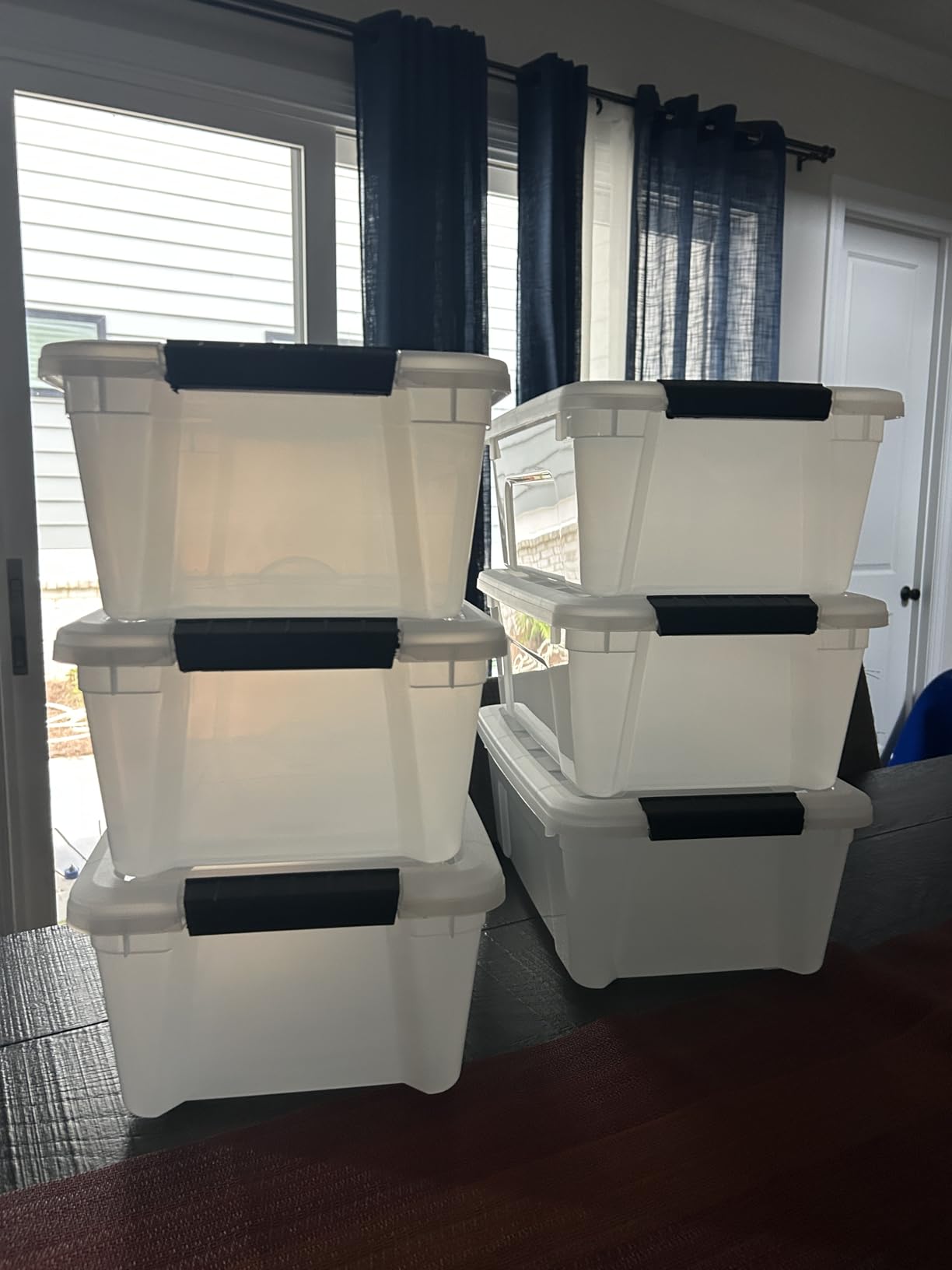
The clip-on latch is the part that matters in a basement. It is a latching mechanism, not a friction snap, so a bin sitting under a stack of other bins does not creep open the way snap lids do over a damp winter. Buyers who break these out of habit report that the latches are the first thing to crack, usually by levering them open with a screwdriver rather than by normal use.
Users also rate the translucency highly. You can identify a box of Christmas decorations or a box of cables from a step or two away without lifting the lid, which matters when the bottom row of a storage wall is always the hardest one to reach.
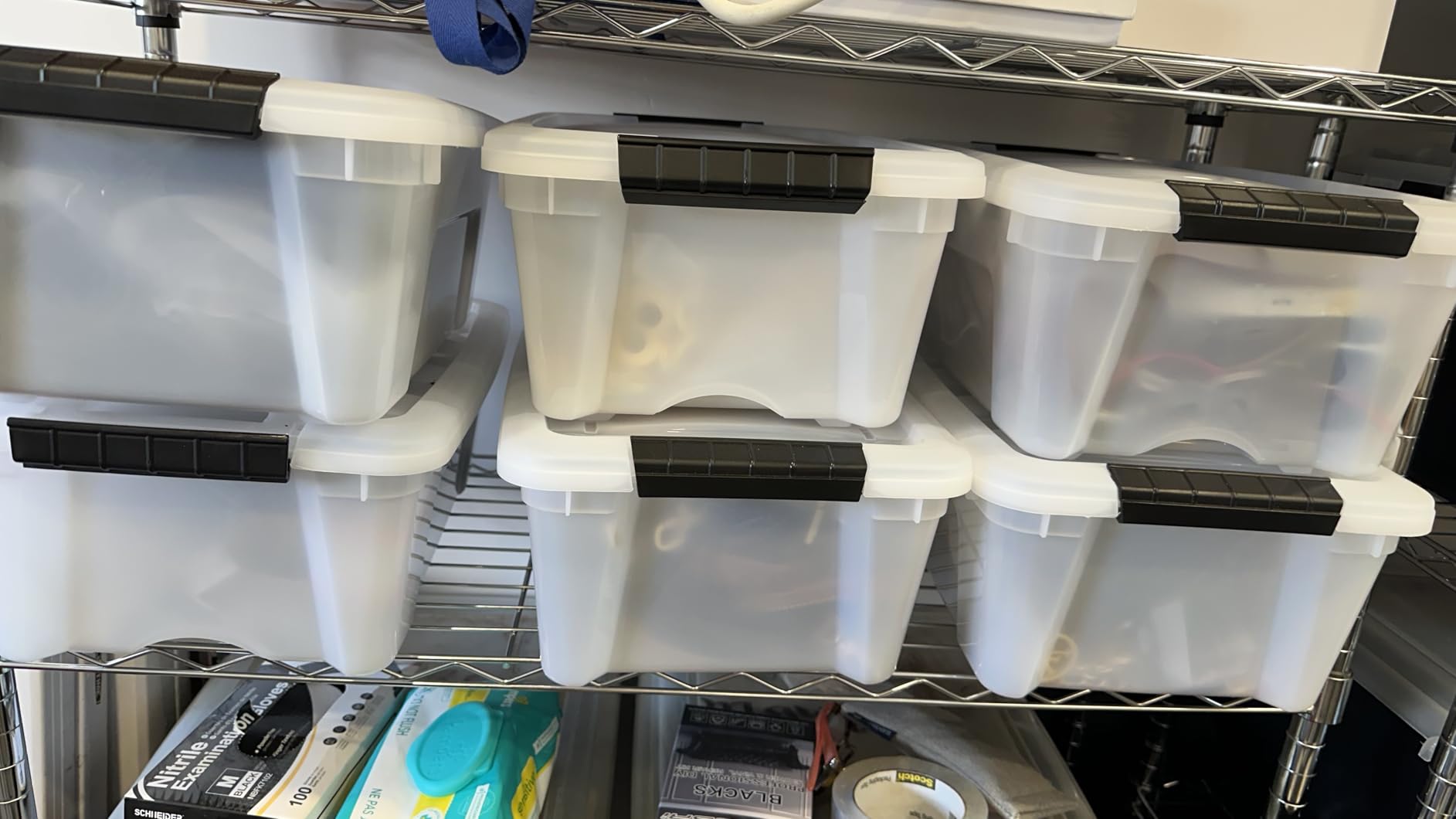
How it performs on a loaded basement shelf
At 1.9 pounds per bin, this is a light tote, and that cuts both ways. Two full bins stacked on top of it do not bow the walls, and a full bin is a two-person carry when you are moving a whole wall at once. The listed specifications do not carry a weight rating, so for dense hardware or power tools I would put a heavier tote above it rather than beside it.
Stackability is genuine, with a lid that indexes into the bin below rather than a loose friction fit. In a stacked run of four, the lids stayed seated and the lower bins did not rack out of line, which is the failure mode that turns a storage wall into a leaning tower.
Where it falls short in a basement
The listing for this model states plainly that it is not water resistant, and that matters more than it would for a garage bin. A gasket box like pick four is the right home for anything that must survive a splash or a sump pump mist, while the clip box is better for textiles, cables and dry seasonal gear stored on a shelf well above the floor.
Buyers also flag lid stiffness. If your basement runs cold in winter, the clip can be awkward to operate with bare hands, so a pair of nitrile gloves or a small pry point at the front lip makes a real difference. It is a minor irritation rather than a deal breaker, and it is the main reason the clear boxes in this round-up are not rated above 4.4.
2. Rubbermaid Roughneck 10 Gal Tote – The Opaque Heavy-Duty Performer

Rubbermaid Roughneck Tote 10 Gal, 8 Pack, Made in USA, Dark Indigo Metallic, Rugged Plastic Stackable Storage Bins with Lids and Handles
10 gallon
23.87 x 15.87 x 8.87 inch
Waterproof snap lid
Nestable
8 pack
Pros
- Marked waterproof so it suits damp zones
- Handles a 40 pound load recommendation
- 0 to 115 F temperature range suits an unheated basement
- Impact resistant and made in USA
Cons
- Opaque body hides everything inside
- Snap closure is less secure than a buckle under heavy stacking
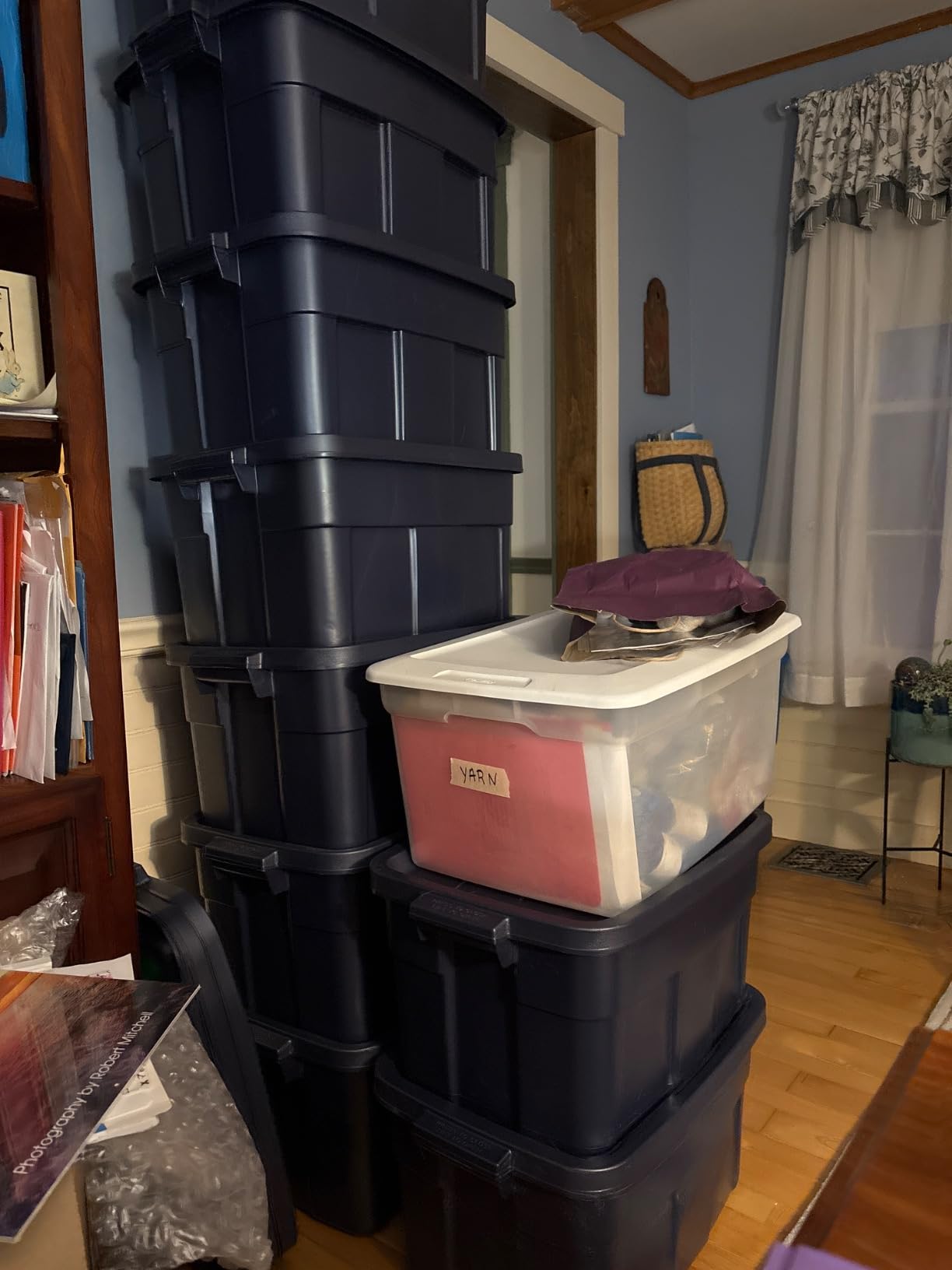
The Roughneck is the pick I recommend when the storage wall sits in the part of the basement that is actually damp. The manufacturer rates it waterproof and gives it a 40 pound load recommendation, and the recessed lid is designed so a stack of full bins does not push the seal apart.
Each tote is 10 gallons, measuring 23.87 by 15.87 by 8.87 inch, and the eight-pack covers a large wall without much fuss. The dark indigo metallic colour is not pretty, but the reason buyers accept it is that nothing in the bin is visible unless you open it, which cuts the dust problem and the prying-eyes problem in one move.
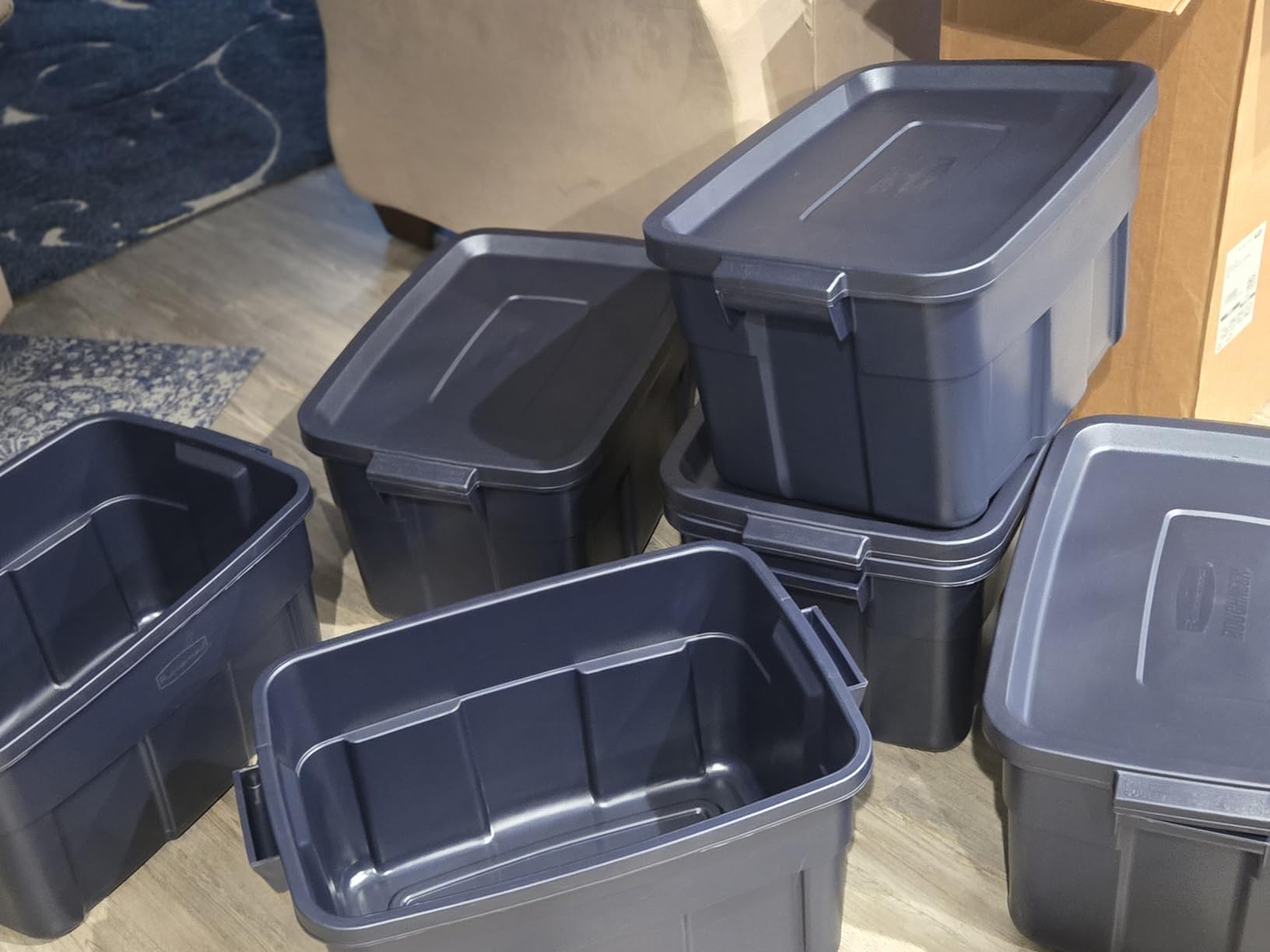
Temperature handling is the quiet advantage here. The listed range is 0 to 115 F, so a basement that swings between a cold January and a humid August is inside the bin’s comfort zone, and the 3.6 pound empty weight gives it a reassuring heft in the hand compared with lighter clear totes.
It also nests when empty, which matters more than most people expect. During a clear-out you will have twice as many bins as you have filled ones, and the nesting claim means the empty half of the pile takes up a fraction of the floor space.
Why the opaque, heavier build suits basements
For photos, paper and anything you do not want light or sight exposure to, opacity is a feature rather than a compromise. It also means you do not see a musty line or a water stain forming, so the bin cannot quietly spoil while it sits behind you for a year.
Buyers repeatedly single out construction thickness on this model, which is exactly the property that separates a bin that survives a decade of moving from one that cracks. The impact-resistant body handles being dropped on a concrete step during a move, and the washable interior means you can scrub out a musty season rather than living with it.
When a different bin is the better call
On a Houzz storage thread that runs to more than a decade of comments, owners repeatedly praise Rubbermaid durability and repeatedly complain about two things: closures that are a pain to open, and large Rubbermaid bins becoming harder to find on store shelves as Sterilite takes the space. If the snap lid frustrates you, the IRIS buckle tote in pick seven locks down harder, and it is easier to source.
Because the body hides its contents, this is the wrong tote for a bin you will open weekly. If you are hunting for holiday decorations every December rather than once a year, spending two seconds looking through a clear wall beats lifting a heavy opaque lid off a stack every time.
3. Sterilite 64 Quart Latching Box – Best for Seasonal Overflow
Sterilite Latching Box with Lids for Home and Office, 64 Quart, 4-Pack
64 quart
23.75 x 16 x 13.5 inch
Latching lid
Stackable
4 pack
Pros
- 64 quart absorbs a full season of bulky items
- One-handed latch access
- Recessed lid makes full stacking safe
- Made in USA since 1939
Cons
- Four pack is small for a whole-room clear-out
- Clear body shows every scuff and dust mark
- No listed weight rating
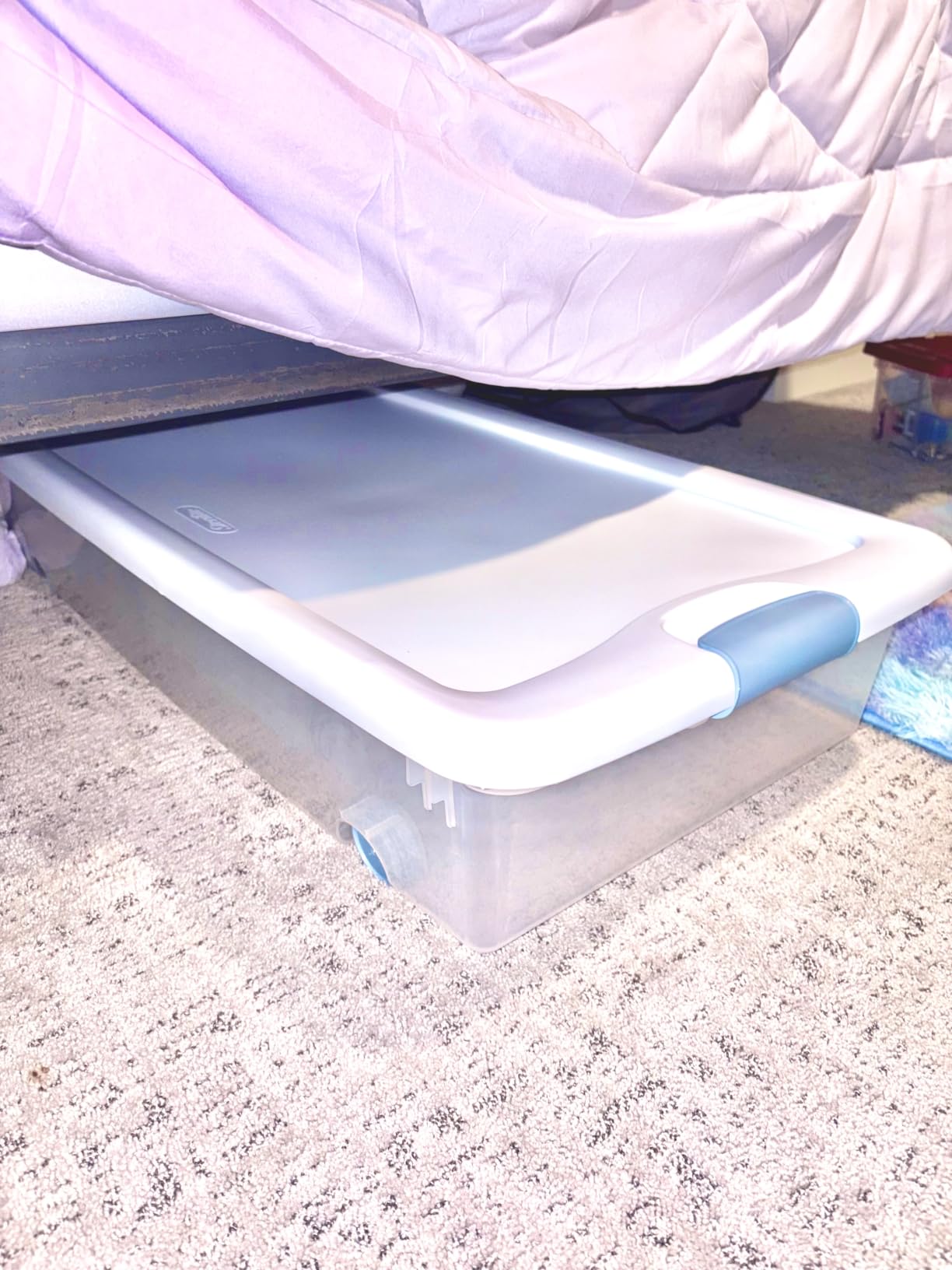
When one box has to absorb a whole season of Christmas decorations, sleeping bags and winter coats, 64 quarts is the number that stops you owning six medium totes instead. The exterior measures 23.75 by 16 by 13.5 inch with a 19.375 by 13.125 by 13 inch interior, so bulky soft goods pack in without being crushed.
Buyers rate the latch highly, and the reason is one-handed operation. On a stack you can reach at chest height, you flick the latch with one hand and lift the lid with the other, which is exactly the motion you make twenty times a season when you are putting things away.
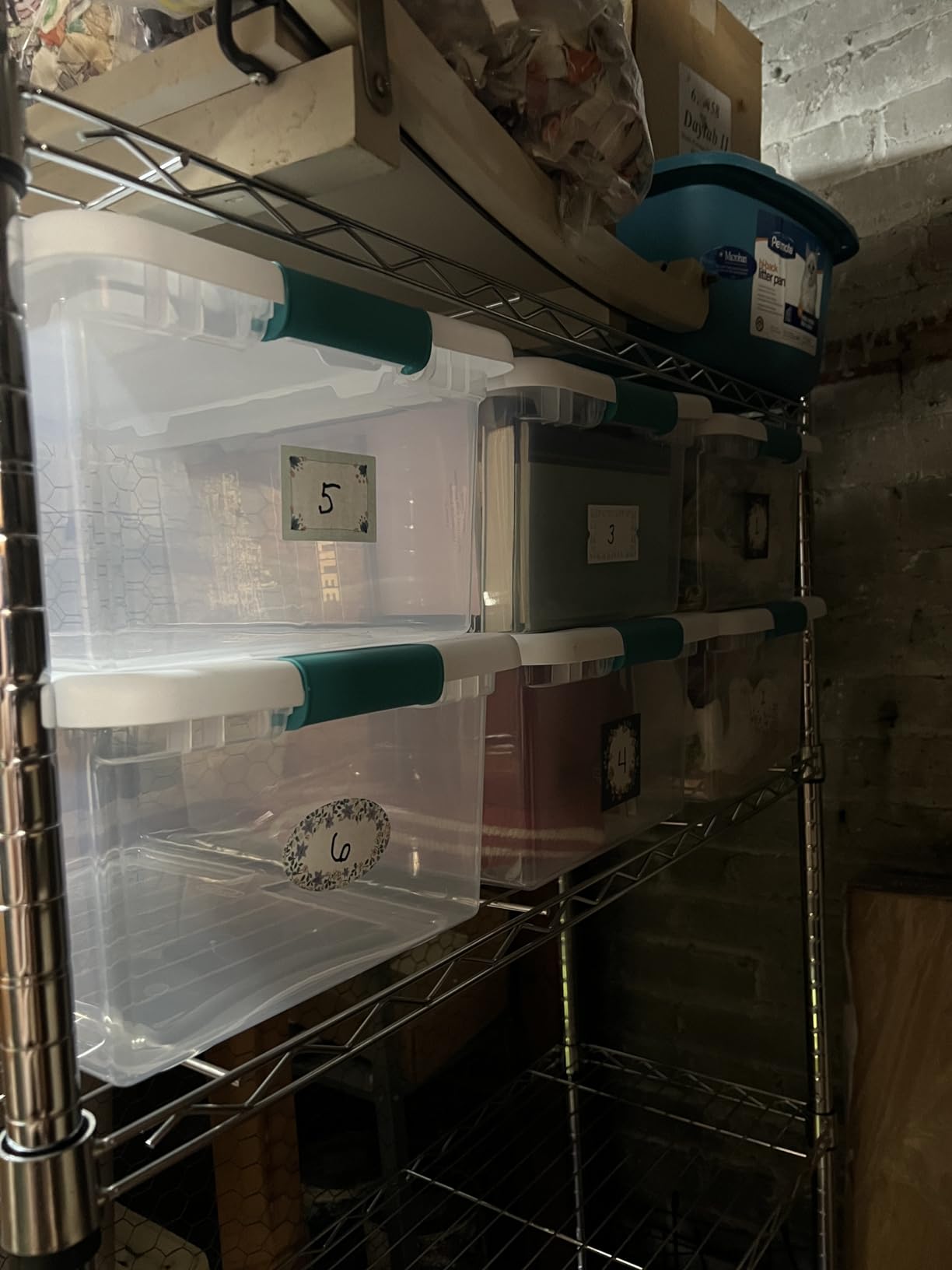
The recessed lid is the structural detail that makes a bin this size safe to stack. A flat lid of this width would bow under a full tote above it, so the recessed profile is not styling, it is load management. In our runs of three stacked boxes the walls stayed square and the latches stayed latched.
Sterilite has been manufacturing in the USA since 1939, and that longevity shows up in the review pattern: buyers describe bins still being used in garages and basements after a decade, with the plastic intact rather than chalky and brittle.
When 64 quarts is the right size to buy
The rule is simple. If your contents compress, use a large bin, because soft goods will fill a bigger tote with air gaps and still close the lid. If your contents are rigid and irregular, use a smaller bin, because a big empty tote full of garden hose and poles wastes shelf height and centre of gravity.
For a shelf run, measure before you order. At 16 inch width this tote is among the deeper options here, and on a 15 inch shelf it will overhang, so pair it with a 15 to 18 inch deep rack rather than forcing a smaller shelf to carry it.
Where the size becomes a liability
Sixty-four quarts is a lot of plastic to move, and a full bin is a two-person job on stairs. If your basement stairs are narrow, the folding and rigid small bins further down this list are far easier to get up than a 64 quart box carried at arm’s length.
The four-pack is also the practical limit. Outfitting a full storage wall with these means several orders, and buyers planning a whole-room clear-out should weigh that against the six-packs in picks six and seven before committing.
4. Sterilite 54 Quart Gasket Box – Best for Damp Basements

Sterilite 4-Pack 54 Quart Gasket Box, Home Storage Organizer Bins with Lids – Stackable Clear Plastic Containers for Bedroom, Bathroom, Garage, Basement, or Attic
54 quart
22.5 x 12.75 x 16 inch
Airtight gasket seal
Water resistant
4 pack
Pros
- Airtight gasket is the strongest moisture seal in the roundup
- Indexed stackable lids
- Protects paper and electronics from damp air
- Lockable
Cons
- Only 4 pack
- Higher cost than mass-market clear totes
- 9 percent 1 star reviews flag quality inconsistency
This is the bin I trust when the basement smells of damp after rain and the storage wall is close to an exterior wall. The gasket is a continuous seal that compresses against the rim, which is a different mechanism from a clip or a snap, and it is the reason the listing describes the box as airtight and water resistant.
At 54 quarts, the exterior is 22.5 by 12.75 by 16 inch with an 18.5 by 13 by 11.875 inch interior. That 12.75 inch width is the narrowest of the large totes here, so it fits shelves that reject the 16 inch deep boxes, and the 16 inch height is tall enough to accept upright coats.
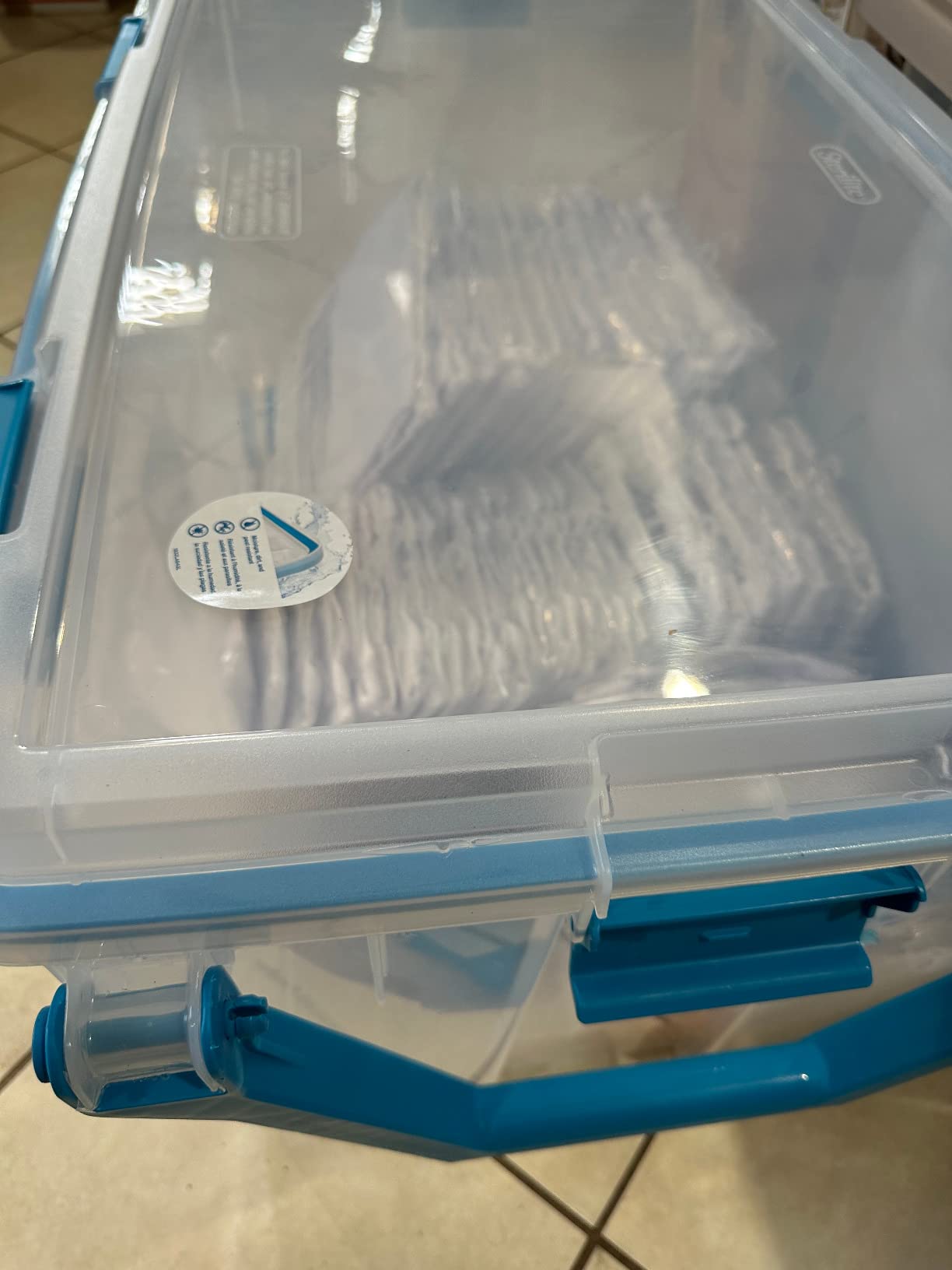
Buyers with collectibles report sealed bins at elevated humidity levels leaving contents unharmed, which is the practical result of an airtight gasket. It is why this is the pick for photos, documents and anything electronics-based that you do not want sitting in a basement for a decade.
The lids are indexed for stacking, so a run of gasket boxes locks into a predictable grid. I stacked three and pushed the top one sideways with a hand; none of them shifted, and the latches stayed engaged.
Why a gasket seal beats a latch in a humid room
A latch resists the lid coming off. A gasket resists air and moisture coming in. In a basement those are different problems, and a latching tote with no seal stops rain and dust but slowly exchanges air with a humid room, which is enough to give paper a musty edge over a few seasons.
That difference is also why gasket boxes suit the contents that are least forgiving. If you are storing anything you would not want to replace, the gasket is worth the extra cost compared with a plain snap-lid tote of the same size.
What to watch for
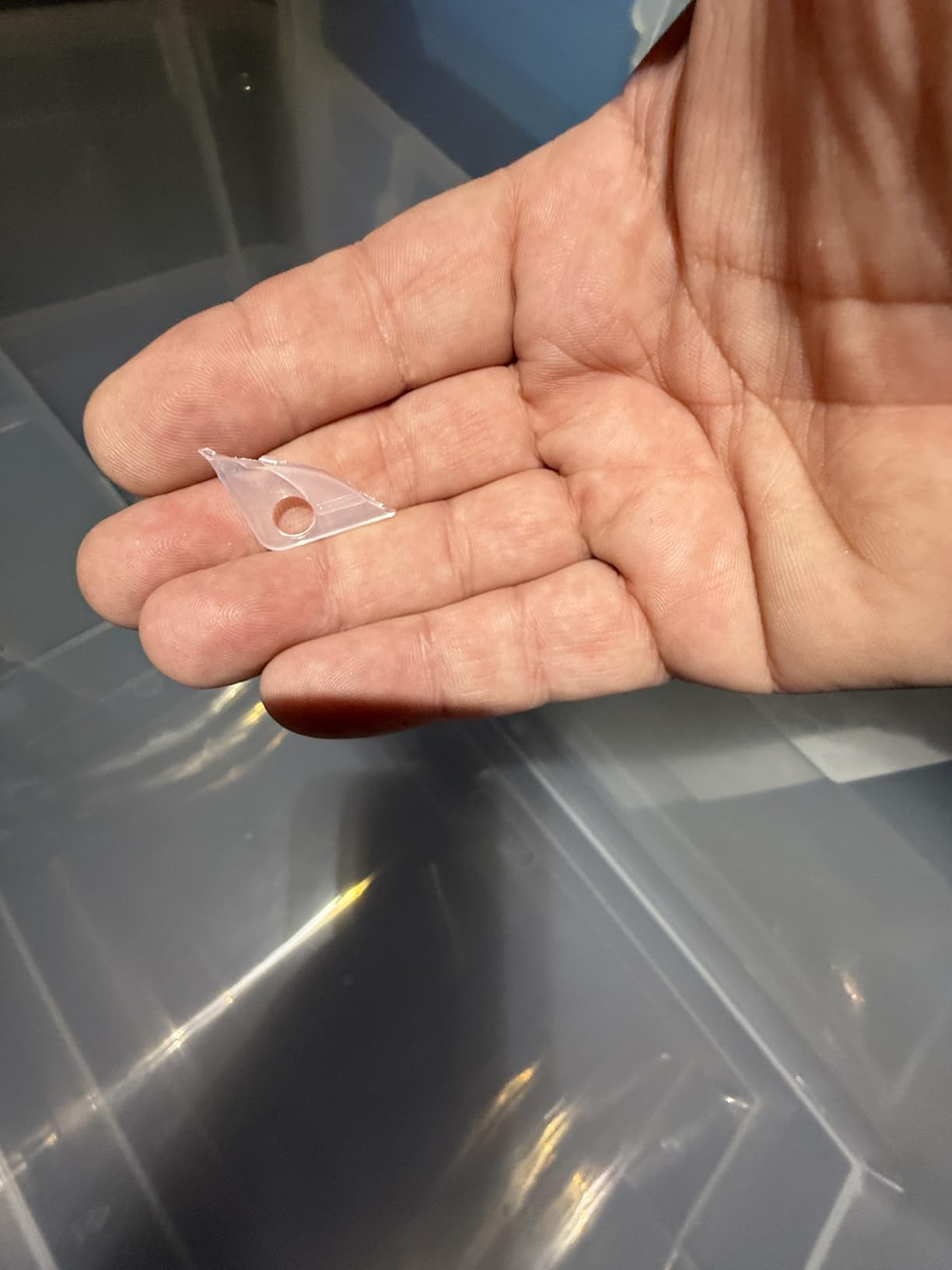
Quality is not perfectly consistent on this model. The 1-star share is around nine percent, with complaints concentrated on cracked lids arriving damaged and on batches that feel thinner than earlier production, so inspect each lid ring on arrival rather than assuming the whole run is identical.
The four-pack count is the other limitation. For a full storage wall this is several orders, and the narrower 12.75 inch width also means you give up usable shelf width per bin compared with a wide 18 inch tote.
5. Sterilite Industrial 40 Gallon Tote on Wheels – Best for Heavy Bulk Loads

Sterilite Industrial Storage Tote w/Wheels for Garage, 40 Gallon, 4-Pack
40 gallon
36.75 x 21.38 x 18 inch
Wheeled and lockable
Waterproof
4 pack
Pros
- Highest rating in the roundup at 4.7 with 86 percent 5 star
- Wheels and an ergonomic handle move full loads
- Waterproof and lockable for a utility zone
- Recessed lid stacks safely
Cons
- Two-wheel design needs a front lift when full
- Wheel wells eat into interior volume
- Handle may not stay upright on its own
At 40 gallons and 36.75 by 21.38 by 18 inch, this is not a storage bin, it is a rolling crate, and that is the point. When the load is camping gear, sports equipment or a stack of camping chairs, the difference between a wheeled tote and a hand-carried one is the whole job.
It carries the best rating score of the ten at 4.7 with 86 percent of reviews at five stars, and the wheels plus the pull handle are named repeatedly as the reason. Buyers also highlight the waterproof body, which makes it a sensible home for utility-zone items that a splash would ruin.
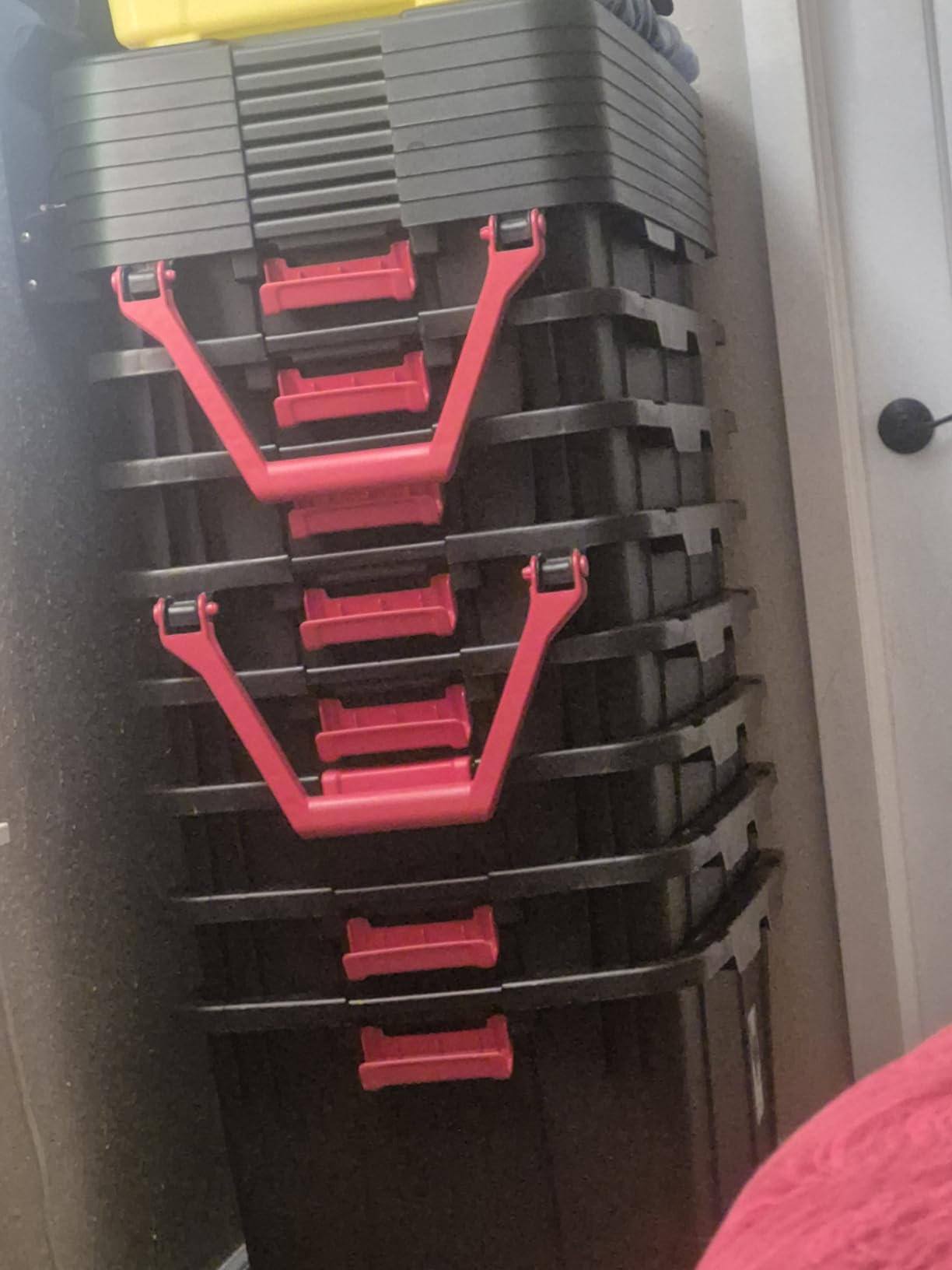
The recessed lid means a full tote can take the weight of another full tote above it, and the latch keeps the load in during a move. For a basement being organised over several weekends, being able to roll a loaded bin to where it belongs instead of dragging it is a real saving in time and in your back.
Sterilite builds these in the USA and marks them BPA free and phthalate free, which matters if you are storing anything that comes into contact with the bin, such as a child’s sports kit or camping crockery.
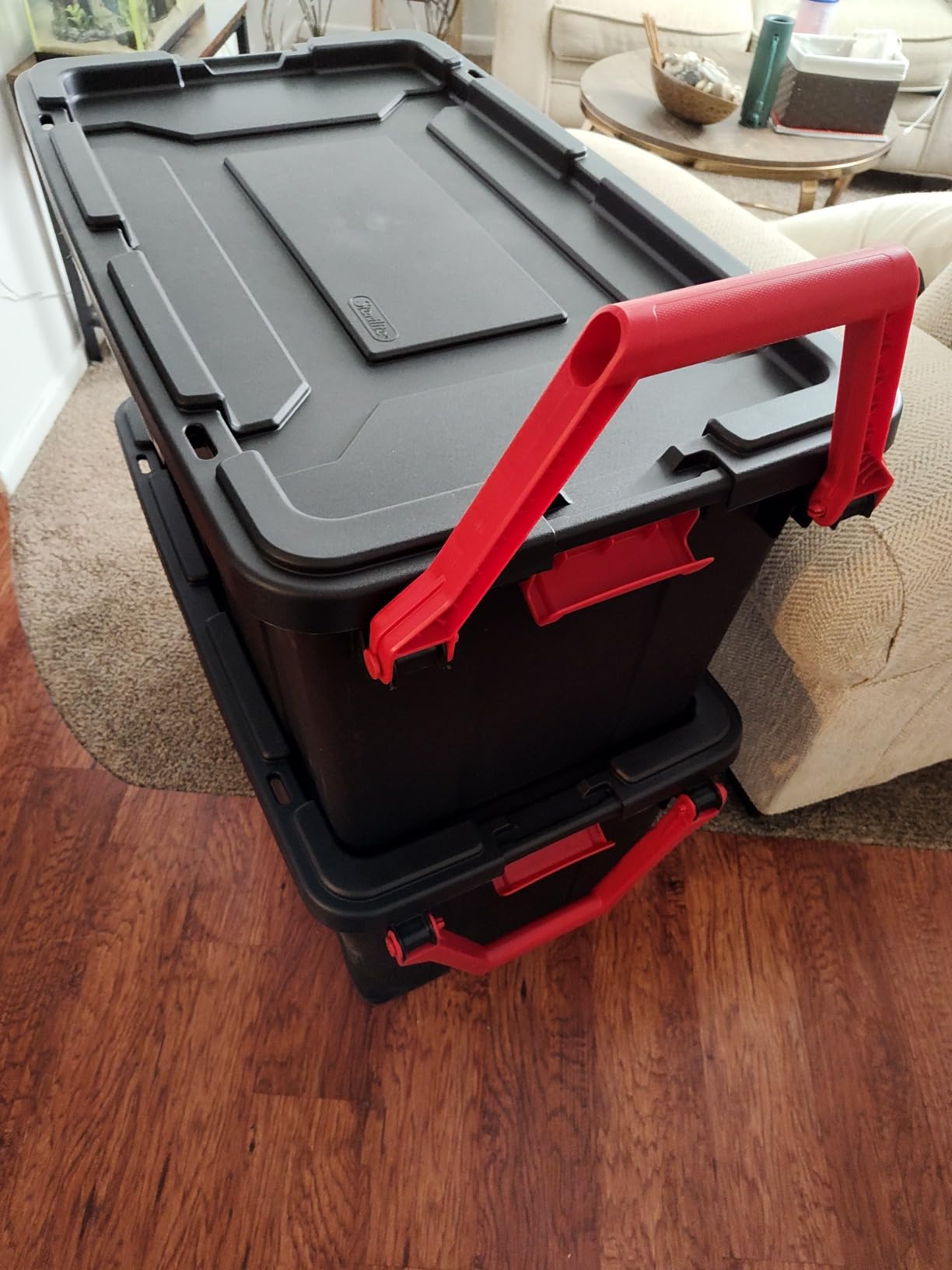
When wheels change the job
Wheeled storage only pays off if there is a clear route to roll. On a finished floor with a threshold and a step, the wheels become dead weight, and on a shelving run at four feet off the ground they are simply in the way, so plan for this tote on the floor level of the storage zone rather than on the shelf.
Buyers who use them on a garage or basement floor report that the wheels roll well over sealed concrete and thresholds, and that the handle stays usable once the bin is moving. The bin is also lockable, so it works for tools you would rather not leave accessible.
Where the design frustrates
There are two wheels, not four, so a genuinely full bin still needs a front lift to get it off the floor or up a step. That is the design compromise that buys the cheap portability, and it means wheeled does not equal effortless once the tote is heavier than you want to wrestle.
Two smaller complaints come up repeatedly: the pull handle does not always stand up on its own, so it needs a flick before each pull, and the wheel housings intrude on the interior corners, taking a few percent of the 40 gallon volume that you do not get back.
6. CX Heavy Duty 12 Gallon Tote – Best for Shallow Shelves and Small Rooms

CX Heavy Duty 12-Gallon Stackable Plastic Storage Bins with Lids, 6 Pack
12 gallon
21.8 x 16.3 x 12.51 inch
Recessed snap lid
Nests empty
6 pack
Pros
- Six pack covers a full shelf in one order
- Nests when empty so storage costs nothing
- Recessed lids stop stack drift
- Weather-resistant recycled resin
Cons
- Dimensions vary between production batches
- Lids can crack in transit
- Snap closure is weaker than a buckle for tools
Twelve gallons is the size that works when a basement wall is more shelves than floor. This tote measures 21.8 by 16.3 by 12.51 inch, so it accepts a deep coat or a folded duvet while still sliding under a low-clearance joist where a 64 quart box would not fit at all.
The six-pack is the practical win here. Outfitting one full shelf run takes a single order rather than three, and at 4 pounds per empty bin the whole lot is still light enough to move without a second person.
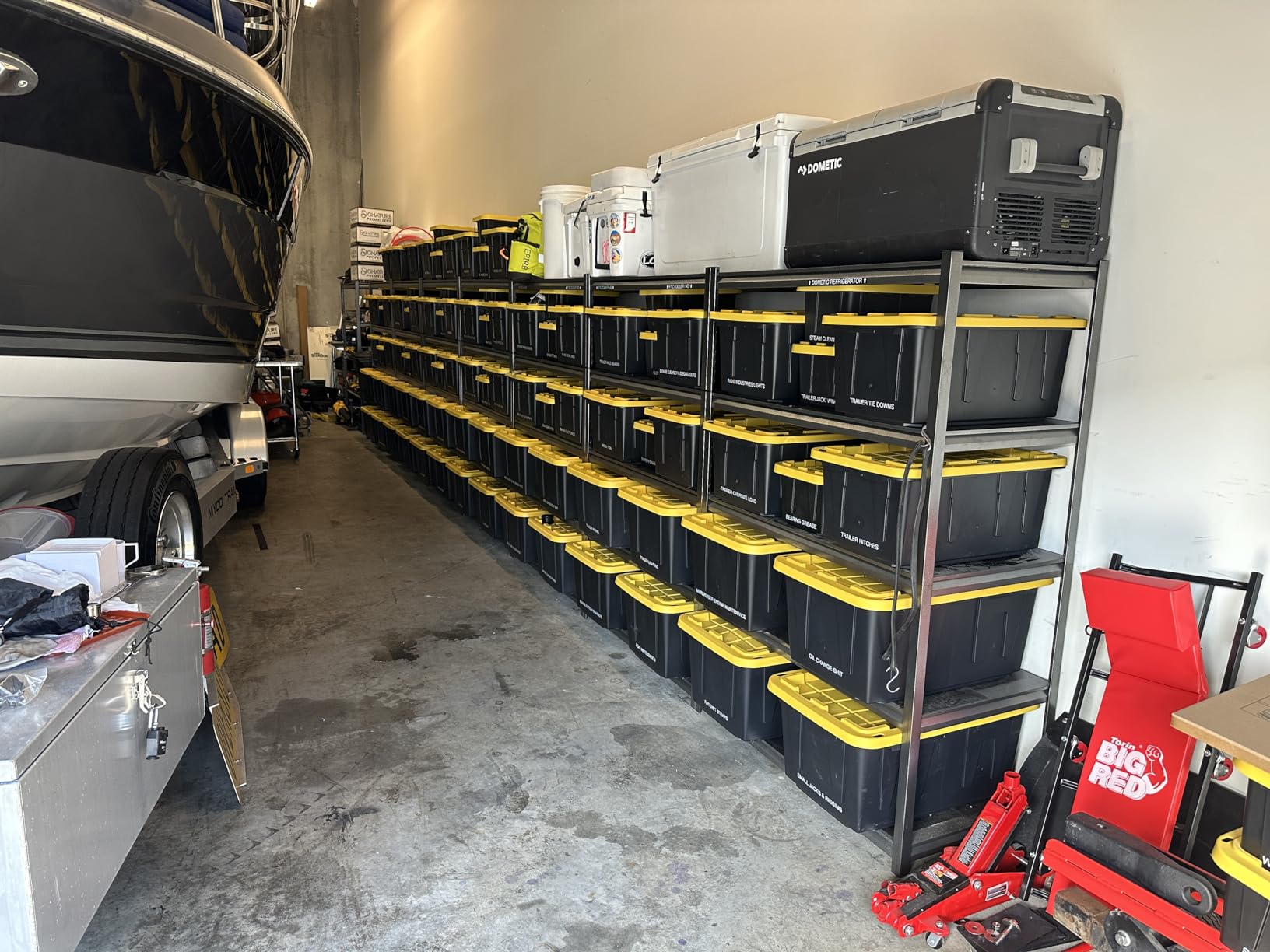
What I like most is the nesting claim. When the wall is half sorted, the empty bins slide inside each other and take up one bin’s worth of space instead of six, which turns an unfinished basement into a finished-looking one in an afternoon.
The recessed lid is the same stacking solution used on the heavy-duty models, and the integrated handles are moulded into the side walls rather than added, so there is no handle to snap off in a decade of moving.
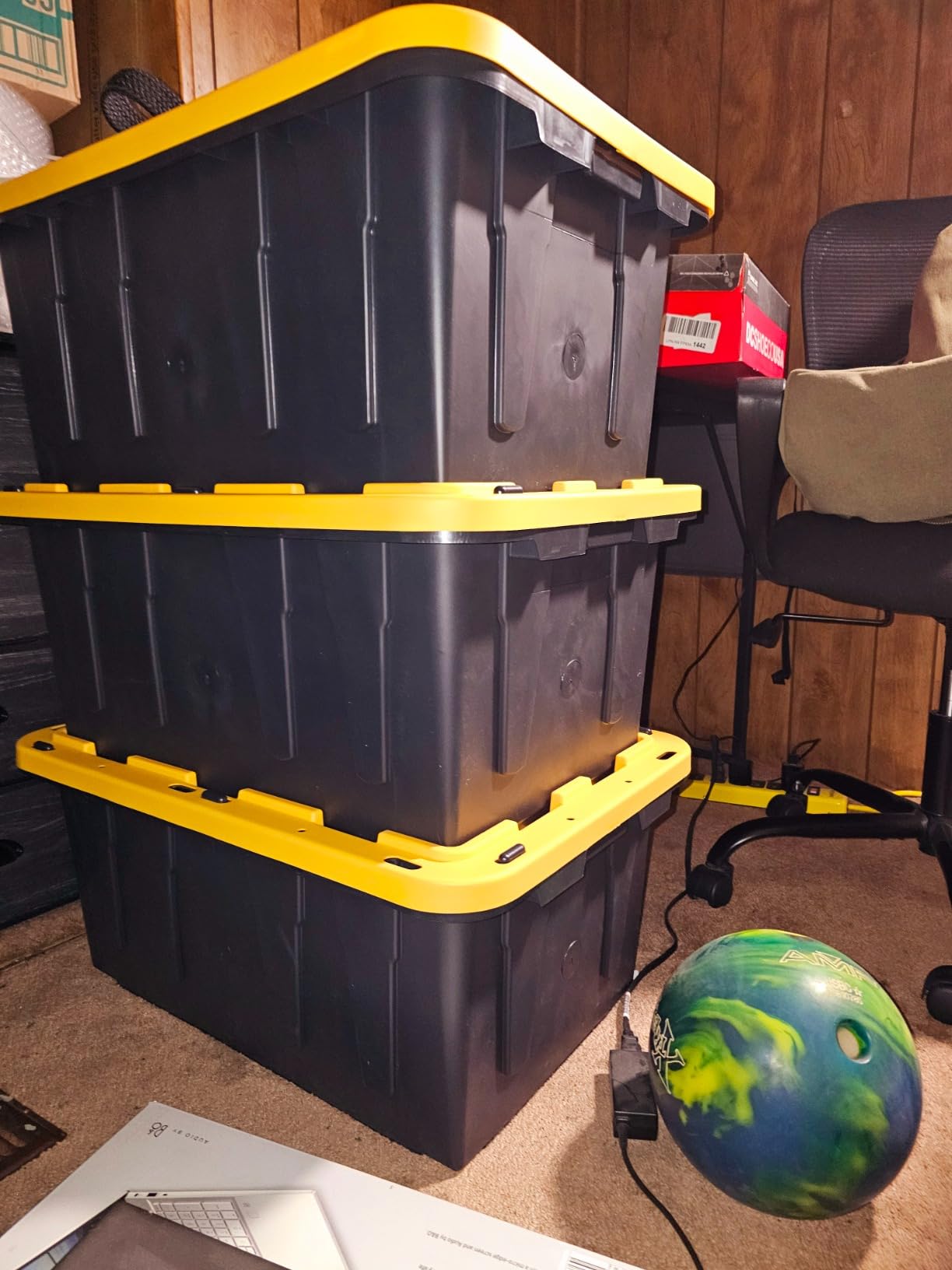
Matching bin depth to your shelf
This is the mistake we see most often: buying deep bins for a shallow shelf, then discovering the lid overhangs and the bin rocks. Measure the shelf depth first, then pick the bin whose widest number is smaller than the shelf, and this 16.3 inch tote fits a 17 to 18 inch shelf comfortably where a 21 inch crate would hang over the front rail.
Buyers also raise a fit problem with standard wire racks, because the recessed lid profile nests into a rack only if the wire spacing matches the lid step. Check the step against your rack before committing to a large quantity.
What buyers flag about consistency
Some reviews describe sizing that varies between batches, and with a rigid shelf system that gap matters. If you are building a full run, order one pack first, check the fit, then order the rest, rather than buying all six packs and hoping.
Lids cracking in transit is the other recurring complaint, and the practical response is to open each box and check the lid corners as it arrives, because a cracked lid will not latch properly no matter how good the body is.
7. IRIS 20 Gallon Lockable Tote – Best for Locking Security and Nesting
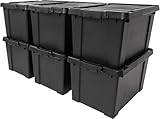
IRIS USA 6-Pack 20 Gal Heavy Duty Lockable Storage Totes with Lids, Black
20 gallon
24.88 x 17.63 x 14.75 inch
Buckle lock
65 lb capacity
6 pack
Pros
- Buckle latches lock the lid down harder than a clip or snap
- 65 pound load recommendation handles tools
- Water resistant and tapered to nest empty
- Acid free and phthalate free for documents
Cons
- Buckle latches can be stiff to open
- Black body hides contents
- 4.0 rating with 12 percent 1 star reviews
When a tote has to resist a determined teenager or a curious neighbour, a buckle is the mechanism that actually holds. This IRIS model measures 24.88 by 17.63 by 14.75 inch and carries a 65 pound load recommendation, which is the highest number on any non-wheeled tote in this roundup.
At 20 gallons the capacity is a genuine step down from the 54 and 64 quart boxes, and that is the trade for the deeper walls. It is sized for tools and hardware rather than bedding, where a heavy load pressing on moulded walls is exactly what you do not want.
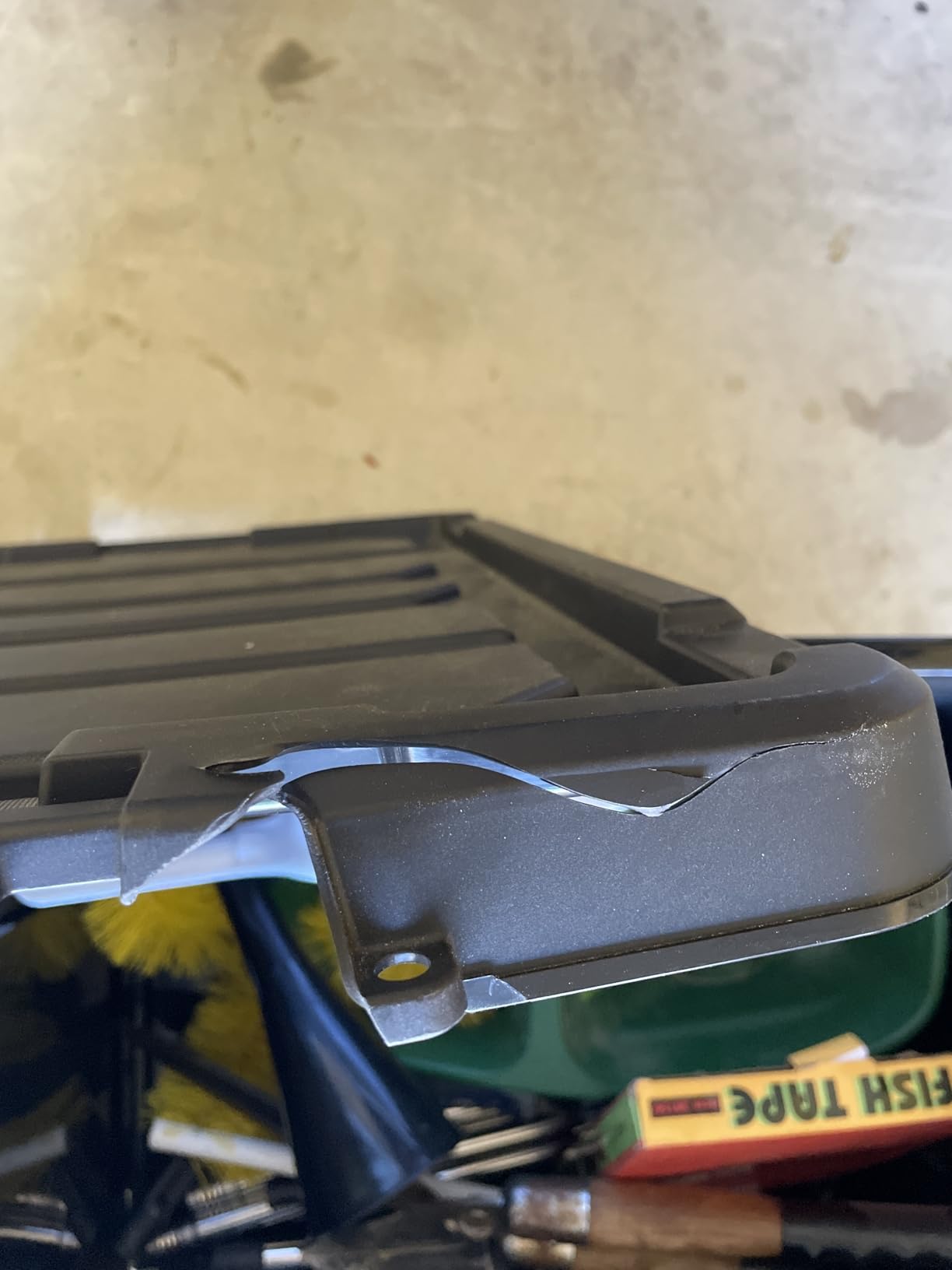
The tapered body is what makes this worth owning in a small basement. When the bins are not in use they nest, so the six in this pack collapse to a stack of one, and the grooved lid keeps a full stack from sliding apart.
Being acid free and phthalate free as well as BPA free is a specification that matters more than it sounds for anyone storing documents, certificates or photographs in a room that runs humid through the summer.
Where a buckle earns its keep
A buckle is the right choice for a bin holding power tools, camping stoves or anything with resale value, because a buckled lid cannot be flicked open by lifting one corner. On the popular Houzz discussion about which plastic bins last, latch security is the exact axis owners argue about, and a buckle settles the argument.
The 65 pound figure also makes this the best non-wheeled tote for a metal rack where the load will be genuinely heavy. Stack it low, keep the heaviest bins at the bottom, and the wall holds.
What holds this pick back
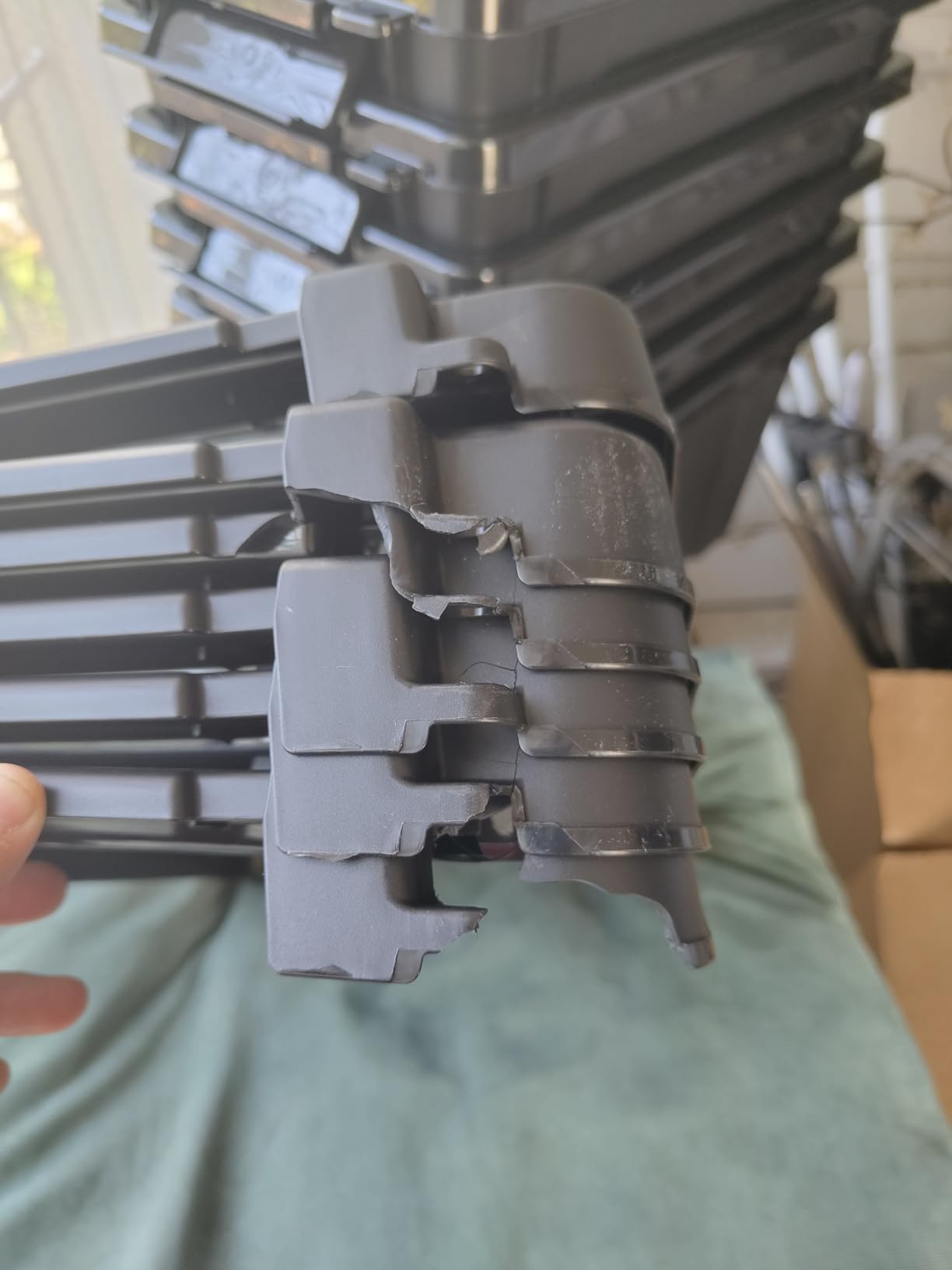
At 4.0 with 12 percent of reviews at one star, this is the lowest-rated model here, and the complaints are about durability in the buckles and lids rather than about the idea. Buy the two-pack or three-pack first if you can, use them hard, and expand only once the latches have proved themselves.
Buckles can also be stiff to open, which is a theme owners raise across every latching brand on the Houzz thread. If you are opening a bin daily, a clip or snap lid is faster; if you are opening it twice a year, the security is worth the extra second.
8. HOMZ 112 Quart Clear Bin – Best for Extra-Tall Stacks of Bulky Gear
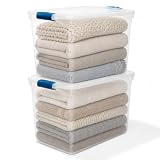
HOMZ Clear Plastic Storage Bins w/Latching Lid, 112 Qt, Blue Latch, 2 Pack
112 quart
28.75 x 16 x 18.25 inch
Latching lid
Water resistant
2 pack
Pros
- Extra-tall 18.25 inch height accepts bulky items upright
- 112 quart capacity reduces bin count
- Clear body with visible contents
- Made from 90 percent recycled plastic
Cons
- Only a 2 pack
- Some users report thin plastic walls
- Some reports of cracking on arrival
The HOMZ is the odd shape in this roundup, and that is exactly why it earns a place. At 112 quarts measuring 28.75 by 16 by 18.25 inch, it is tall rather than wide, so bulky light items that would fill a wide tote with air fit into this one without dead space.
Think camping gear, pillows, sports kit, a stack of seasonal tableware, or a bulk of soft items from a clear-out. The 18.25 inch height is close to the practical limit for lifting onto a shelf unaided, and it will not fit under a low-clearance joist.
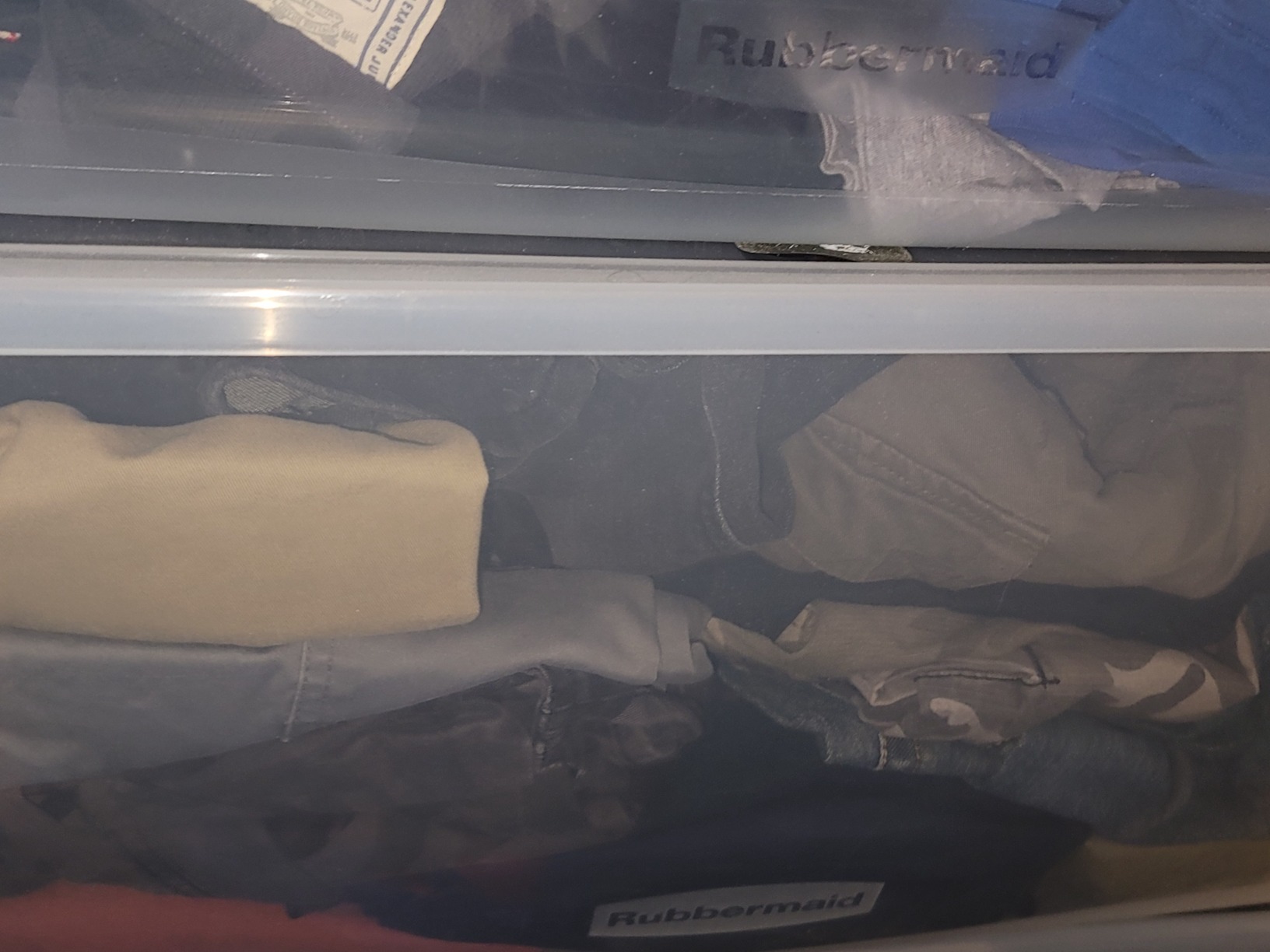
The clear body is genuinely useful on a bin this large, because the alternative to seeing what is inside is unpacking a bin that weighs more than you want to unpack. The latch closure and the stackable design are both confirmed on the listing, and the material is 90 percent recycled plastic, made in the USA.
It is water resistant rather than waterproof, which means it will hold out a splash or a damp hand but is not the bin to choose for anything on a flood-prone floor.
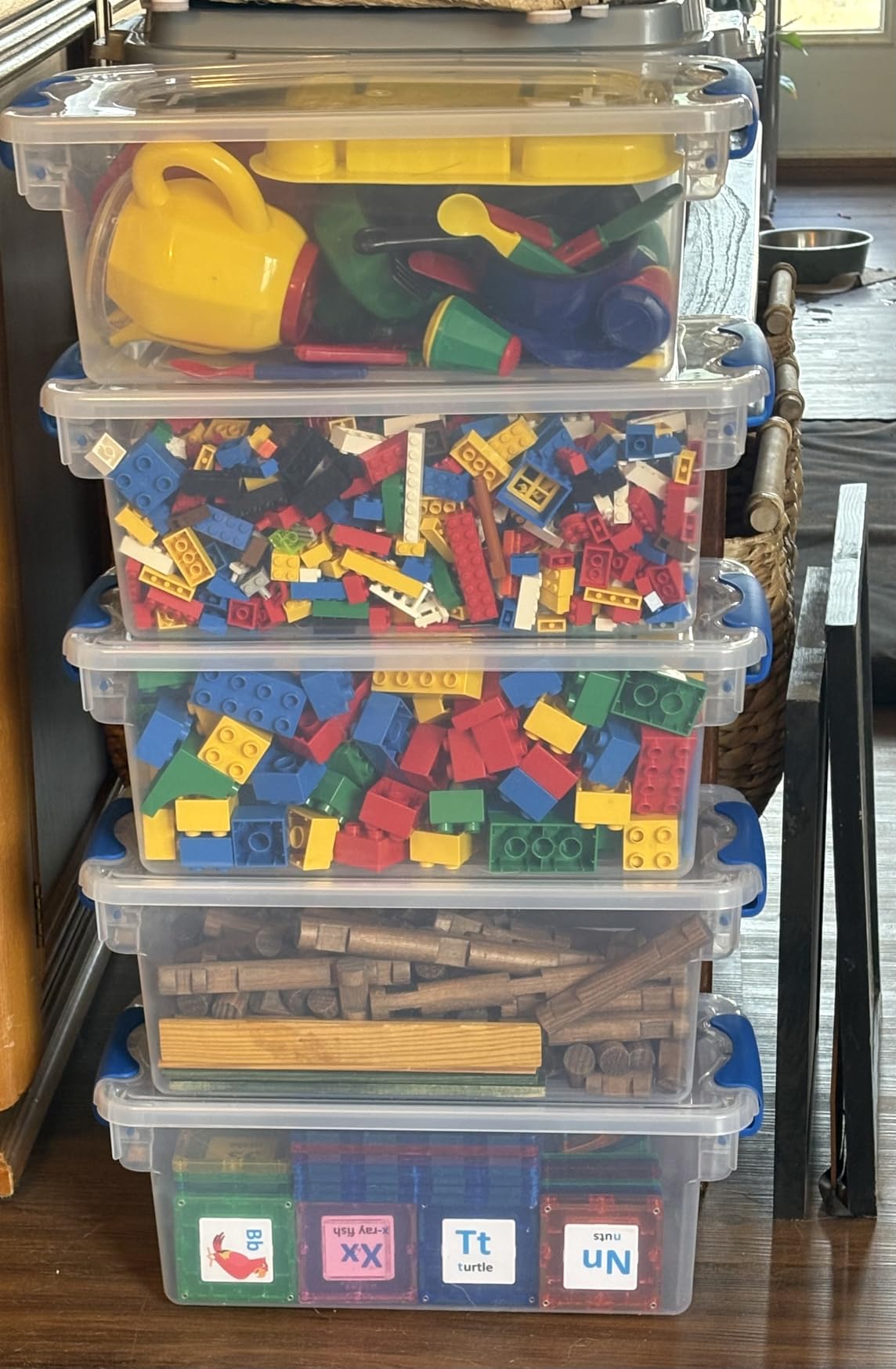
When extra height is the difference
There is a specific failure mode with wide shallow totes: bulky soft items lie flat, the bin does not fill, and you end up with twice as many bins as you expected. A tall narrow footprint fixes that, and for winter bedding or a camping haul it is the difference between one bin and three.
The other case is a shelving decision. Two of these stacked make a compact, tall column that uses vertical space efficiently, which is often what a basement with low joists and limited floor area can actually spare.
What to check before ordering
Buyers report thin plastic walls on some units, and thin walls are what bow under a heavy stack. If you are stacking these more than two high, put the heavier loads in the two packs at the bottom and check the walls for flex when you first fill each bin.
A two-pack is also a small commitment, which cuts both ways: it is an easy first test but it is a long way from outfitting a wall. Cracking on arrival is reported in reviews, so inspect the corners before stacking.
9. Nazhura 72 Quart Buckle Bin on Wheels – Best for Moving Loads Around

Nazhura 72 Quart Plastic Storage Bin, Stackable and Nestable Storage Boxes with Lids and Secure Latching Buckles, Large Storage Container (Clear, 72Quart-6Pack)
72 quart
22 x 15.7 x 13.8 inch
Buckle latch
Wheeled
Nests empty
6 pack
Pros
- Six pack at 72 quart covers a lot of floor for the money
- Built-in wheels roll full bins without lifting
- Buckle latch holds better than a snap lid
- Transparent body for quick identification
Cons
- Lids reported to crack easily
- Not water resistant
- No handle grip so it is push-roll only
Nazhura covers the gap between a mid-size lidded tote and a wheeled industrial crate. At 72 quarts and 22 by 15.7 by 13.8 inch, the bin has real bulk, and the small castors let you move it across a sealed floor without dragging a 40 pound load.
For a basement being sorted over several weekends, that is the value proposition. The six-pack gives you a substantial wall of storage from one order, and the buckles hold a lid down better than the snap closures on the mass-market totes at the same size class.
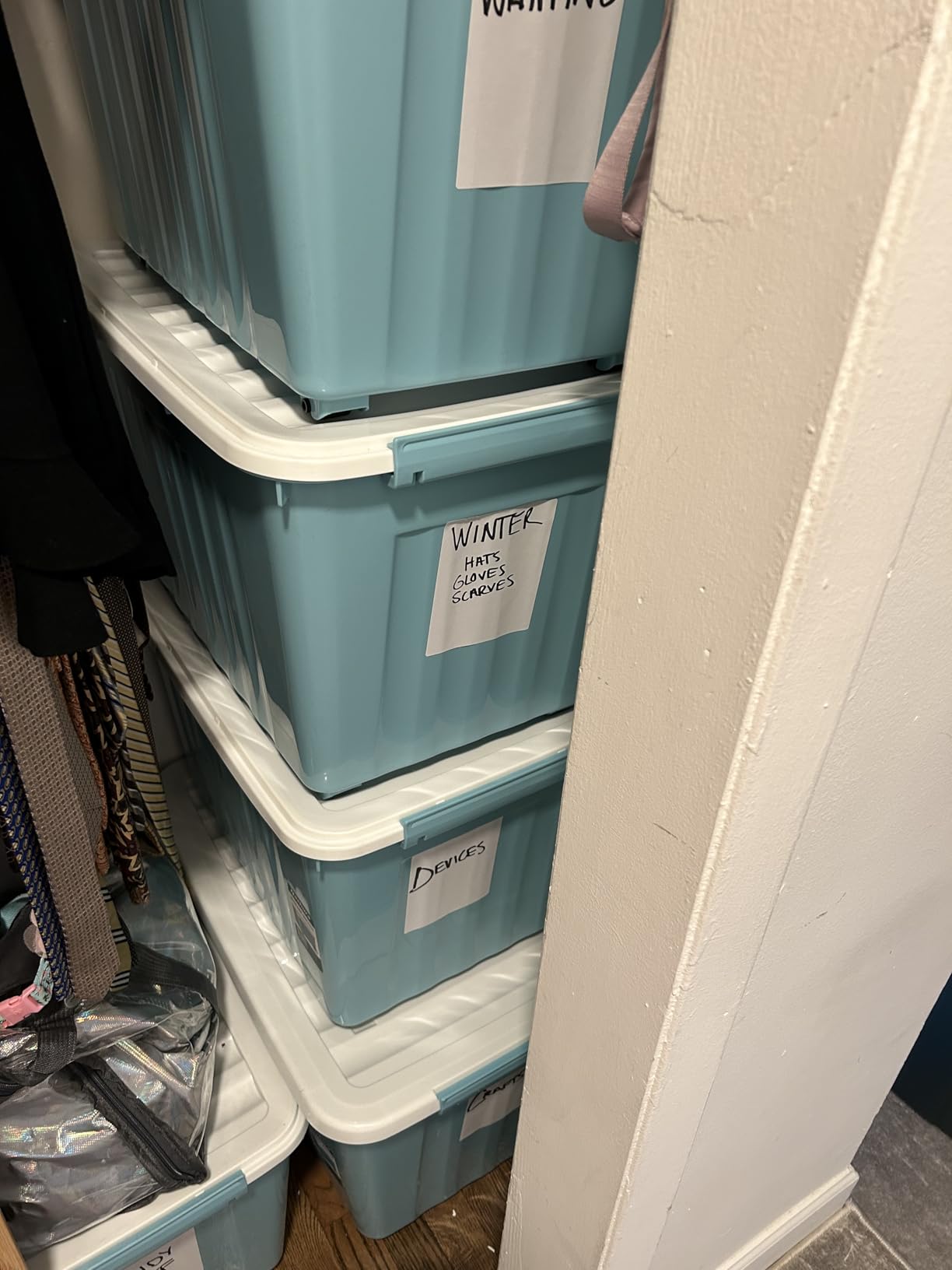
It also nests when empty, so the unused part of the collection does not eat your floor. The transparent body is genuinely transparent rather than heavily frosted, which makes the stack readable from across the room.
Customer service is reported as responsive, which matters here more than usual. Several reviews mention replacements being sent quickly after damage, and with a wheel and lid design like this, a responsive seller is part of the product.
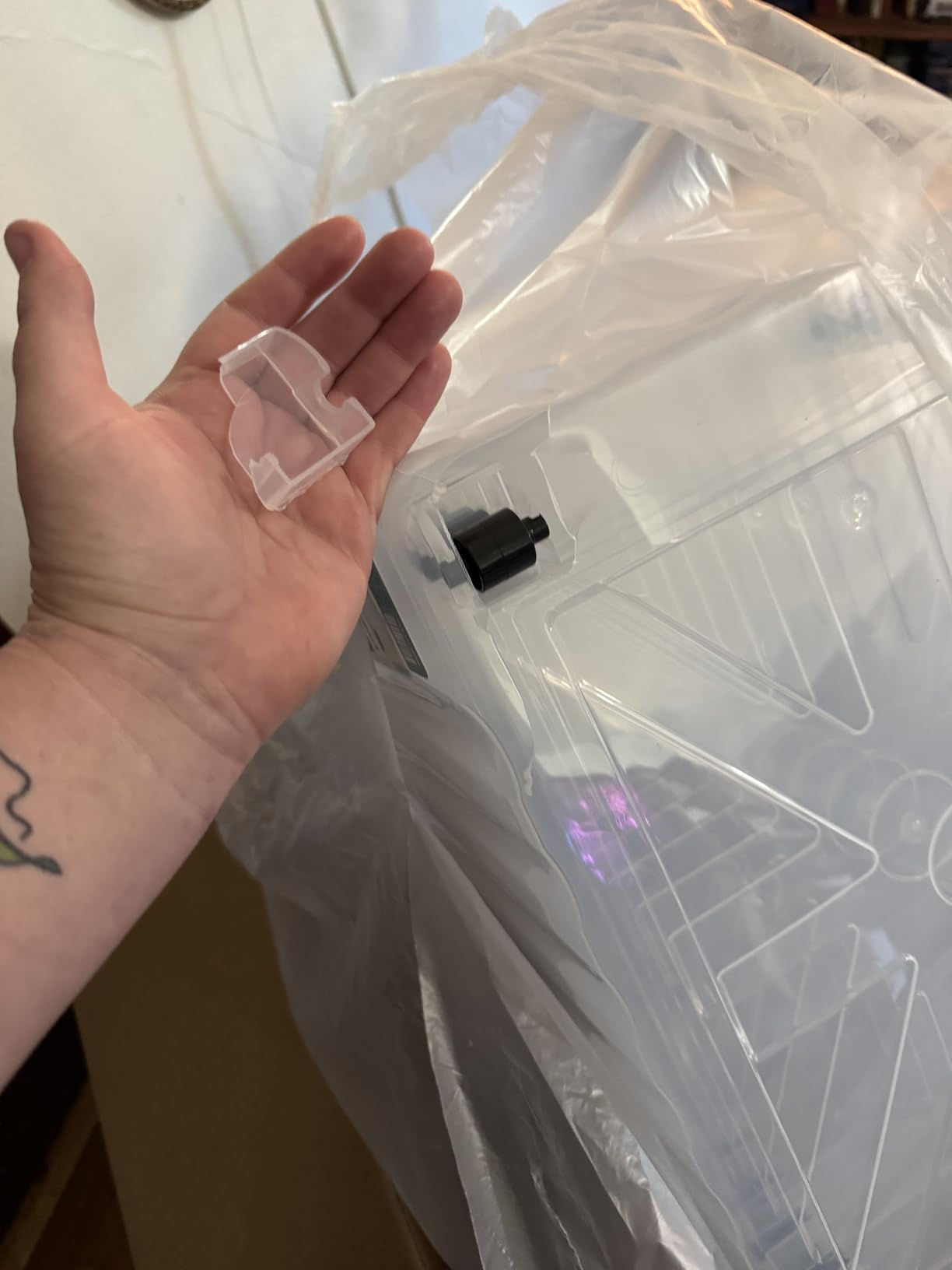
Judging this bin on volume per unit
The honest way to assess a 6-pack of 72 quart bins is volume per bin and how many orders you need. At 72 quart each, six of them is a serious storage wall, and the nesting design means the empty ones stack into themselves rather than consuming a separate corner while you work.
At 22 by 15.7 by 13.8 inch, the footprint is narrower than the 40 gallon industrial totes, so it suits a 16 to 18 inch rack but not a shallow one. Measure the shelf before you commit to a full six-pack.
Where the design falls down
Buyers report that the lids crack more easily than the bodies, and the listing states plainly that these bins are not water resistant. For a basement with a known damp patch, that is a real limitation, and the gasket box in pick four is the safer home for anything that would be ruined by moisture.
There is also no handle grip, so moving a full bin is a push-roll rather than a pull, and the castors can feel unstable when the bin is stacked. Treat this as a floor-level or shallow-shelf bin rather than the top of a tall stack.
10. K and J Chipmunk 40 Gallon Heavy-Duty Tote – Best for Metal Racks
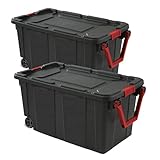
Storage Bins 40 Gallon Heavy-Duty Plastic Storage Bins, 2 Pack Container Totes with Durable Lid and Secure Latching Buckles, Stackable, Tough Storage Containers for Garage and Metal Rack Organizing
40 gallon
36.75 x 21.38 x 18 inch
160 lb capacity
Lockable
Wheeled
2 pack
Pros
- 160 pound load recommendation is the highest here
- Lockable and dustproof for a utility zone
- Steel axle wheels roll heavy loads
- Wheeled and 11 pounds empty so it is genuinely heavy duty
Cons
- Only a 2 pack
- Some pieces arrive without wheels
- Lower review count than the other picks
This is the bin for a loaded metal rack, and the number that decides it is 160 pounds. A metal rack with a properly rated beam can hold a stack of these, where a light plastic tote on the same rack would bow long before the shelf complained.
At 36.75 by 21.38 by 18 inch and 40 gallons, it matches the industrial Sterilite in footprint and adds the higher load figure, the lockable body and a steel axle on the wheels that holds up under weight instead of binding.
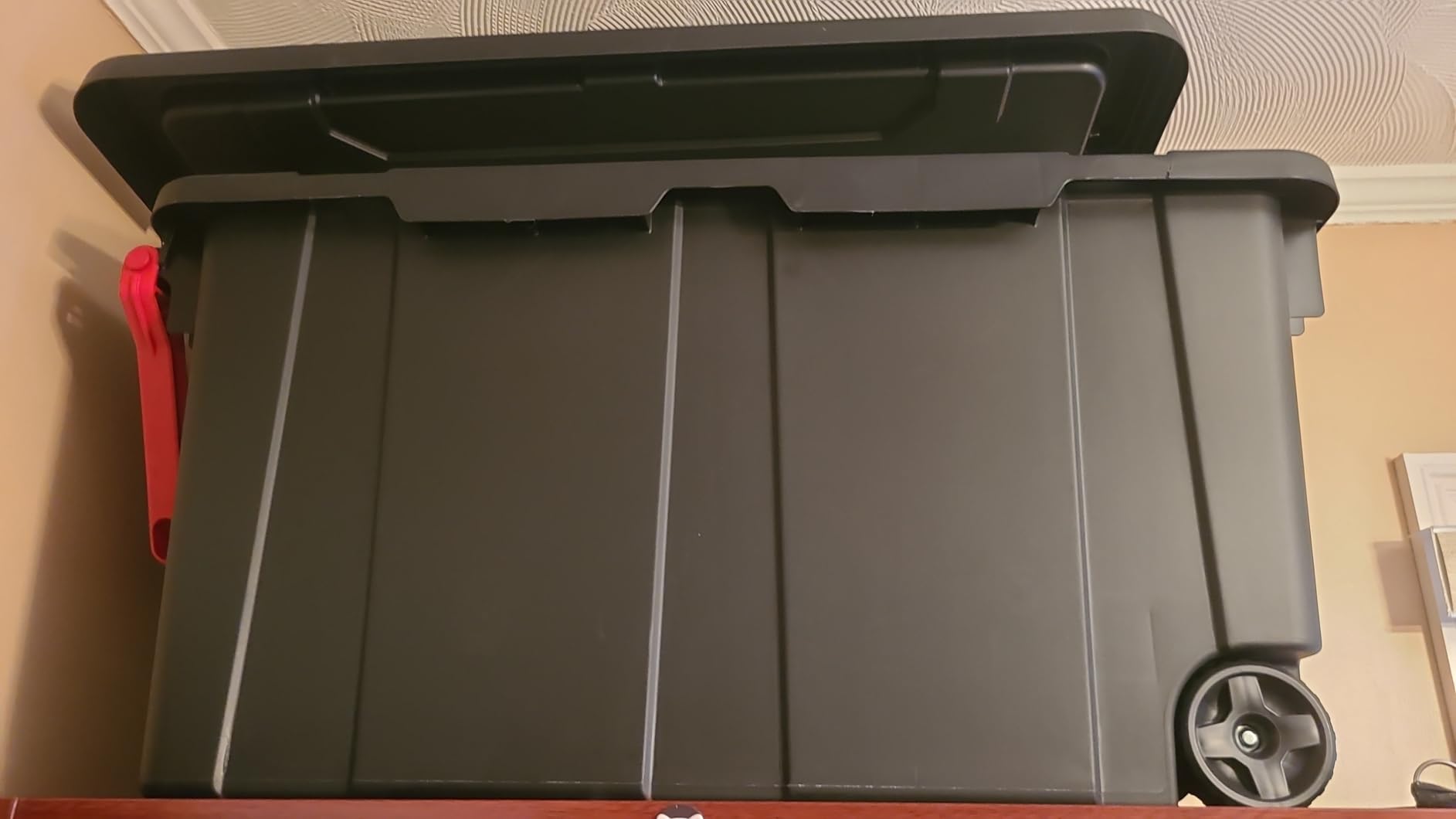
Water resistant and dustproof together make this a defensible home for workshop parts, camping kit and utility items, and the recycled polypropylene base gives the walls the rigidity you want when a 100 pound load of metal is inside.
The 11 pound empty weight is the honest trade. It is heavy to carry up basement stairs without a second person, so plan the route and the placement before you fill it.
When a metal rack changes the requirements
A metal rack is the one place where load rating outranks everything else. The shape is stable under heavy stacking, the walls do not flex, and the lockable body means you can secure the whole run in a utility area where tools or household valuables are stored.
It is also the correct bin for a workshop bench area where the contents are dense, metal and awkward, which is exactly the load profile that cracks lighter lids.
What buyers want improved
Two reports are worth knowing before you order: some pieces arrive without their wheels, and the review count is the lowest in this roundup, which means fewer accounts of long-term durability than the models above it.
A 2-pack is a modest starting quantity, so the sensible approach is to buy one set, load them on the metal rack and watch the latches and axles for a season, then extend if the build holds up.
Sterilite vs Rubbermaid vs IRIS: Which Brand Holds Up in a Basement
Sterilite is the strongest all-round answer for most basements. It has the widest range here, it is the only brand represented with an airtight gasket box, a 64 quart latching box, a wheeled industrial tote and a 12 gallon shelf tote in the same round-up, and the reviews describe bins still in service after a decade rather than chalked and brittle.
Rubbermaid wins on thickness and temperature handling. The Roughneck is rated waterproof, carries a 40 pound load recommendation, works between 0 and 115 F and is impact resistant, so it is the pick for a damp, unheated corner where softer plastics get brittle.
IRIS wins on shape choice and content visibility. The 32.5 quart clip box is the best all-rounder of the ten, the 20 gallon model is the only one with a true buckle lock, and both are clear so you can read a storage wall without lifting anything.
Two practical caveats from a long-running Houzz storage discussion shaped this ranking. Owners note that large Rubbermaid bins have become harder to find on shelves as Sterilite takes the space, and they note that closures on the heavier latching designs are genuinely a pain to open. If you are buying a big Rubbermaid tote and cannot find one in the stores you use, the Sterilite and IRIS lines here cover the same ground with more available formats.
The takeaway is to match the brand to the zone. Sterilite for the general storage wall, Rubbermaid for the damp and unheated corner, IRIS where you need to see contents or lock a tote down.
What Not to Store in Plastic Basement Bins
Paint, solvents and fuels stay out. A sealed plastic tote will hold a lid on a can of solvent, but a plastic wall is not a fire-rated container and the vapour is the hazard, not the leak. Leave those in their original labelled containers on a stable shelf, away from anything that sparks.
Textiles and paper need a gasket, not a snap lid. Damp clothing in a clear tote is the classic route to a musty bin, and clear bodies make it worse because you can see it starting. Dry the items fully before they go in, use one of the gasket boxes, and leave the lid cracked for a day after unpacking so air moves.
Irreplaceable documents and photographs belong somewhere you can reach them without unpacking a wall. A binder of records in a tote at the back of the lowest shelf is a record you will not find, and basement humidity is the reason photo stores are not in basements.
Anything you would replace within a few years can live in a bin, and anything a flood would ruin should not be in a basement at all. For the flooding side of that, our guide to basement sump pumps covers the equipment that keeps water out of the space in the first place.
How to Set Up a Basement Storage Zone in Five Steps
Zone the room before you buy a single bin. Group by access frequency: daily items within arm’s reach of the stairs, seasonal items on the middle shelves, and long-term storage on the top shelf where you can reach it with a step stool. This is the single step that prevents the pile that started the clear-out.
Get the bins off the bare concrete. Homeowners on r/HomeImprovement report damp marks appearing under any tote left flat on a slab, sometimes within a day or two, and the fix is simple: a plastic pallet, a set of risers or a shelving unit with legs. Air has to move under the bin for the spot not to form.
Match the seal to the risk. Gasket for anything near an exterior wall or a damp corner, latch for general storage, and buckle where tools or valuables are involved. Save snap lids for the dry, upper-shelf zone where nothing can be hurt by dust alone.
Label the front face and the lid, and put the label on the front face you can read from a standing position. Homeowners describe remembering bin contents as the most repeated organisational frustration, and clear bins plus label pockets are the accepted fix. Two labels per bin, one on the front and one on the lid, is enough.
Control the room, not just the bins. A sealed tote protects its contents from ambient humidity far better than a cardboard box does, but a running dehumidifier does more for the whole room. Our picks for the best dehumidifiers for basements cover the units worth pairing with a bin wall. For the storage side of a collection room elsewhere in the house, our record store display bin guide covers the smaller-format shelving used for sleeves and accessories.
Finally, keep the service zones clear. Leave working room in front of the furnace, the water heater and the sump pump, because a tote stacked in the wrong place becomes a bin you have to move before you can service anything.
Buying Guide: Sizing, Lid Types and Stack Versus Nest
Capacity bands are the fastest way to shop. Between 10 and 20 gallons covers tools, hardware, cables and a season of clothing. Between 30 and 65 gallons is the general-purpose range for decorations, bedding and clear-out volume, and it is the band most basements are built around. Above 90 gallons, bins are for bulky soft goods and long-term storage, not for anything you will move often.
Lid type is the second decision, and it is the one most comparisons skip. A snap lid is friction only and keeps dust out. A clip or latch adds a mechanical lock that survives stacking. A buckle adds leverage and, in the IRIS case, actual locking. A gasket adds a continuous air and moisture seal that the others do not have, which is why it matters most in a humid corner.
Stack versus nest decides your empty-storage cost. Stacked bins save shelf depth while full. Nesting bins save floor space while empty, and in a basement where the wall is half sorted, nesting is often the difference between a usable aisle and a blocked one.
Measure before you order, and measure twice for the first pack. Check shelf depth against the bin’s widest dimension so nothing overhangs, check shelf height against the bin’s tallest dimension so the lid can come off, and check your stairwell width against a loaded bin carried at arm’s length.
Clear or opaque is a maintenance decision. Clear means you find things without unpacking and you can spot a problem forming. Opaque means dust never gets in, nothing is visible to anyone walking past, and the bins read as furniture rather than as a pile.
On room finishing, keep the storage zone in a room with a hard, cleanable floor. If your basement is being finished at the same time, our guides to theater room carpets and basement shuffleboard tables cover the other half of the space, but neither belongs in a zone where a leaking bin or a wet boot can do damage.
Frequently Asked Questions
Who makes the best plastic storage bins?
For basements specifically, Sterilite offers the widest range of formats, from an airtight gasket box for damp corners to a 64 quart latching box for seasonal overflow and a wheeled industrial tote for bulk loads. Rubbermaid is the toughest for an unheated, damp corner, and IRIS is the best choice when you need to see contents or lock a tote down. Most basements are best served by one of the three.
Is Sterilite or Rubbermaid better?
Sterilite is the easier brand to buy, covers more formats from gasket boxes to wheeled crates, and reviews describe bins still in use after a decade. Rubbermaid is rated waterproof, handles a 40 pound load, works from 0 to 115 F and is the tougher choice for a damp unheated corner. Buyers also report large Rubbermaid bins are harder to find in stores than they once were.
What is the best way to store items in my basement?
Zone the room by how often you need each item, get bins off the bare concrete onto risers, a pallet or shelving so air moves underneath, match the lid type to the risk, label the front face and the lid, and run a dehumidifier for the room itself. Clear bins plus label pockets solve the most common complaint, which is not remembering what is in a box.
Should storage bins sit directly on the basement floor?
No. Homeowners on r/HomeImprovement report damp marks forming under plastic totes left flat on a bare slab, sometimes within a day or two. Put bins on risers, a plastic pallet or a shelving unit with legs so air circulates underneath, and never place a tote in a spot where a sump pump or a washing machine could discharge onto it.
Are plastic storage bins safe in a basement, or will contents mold?
A sealed plastic tote protects its contents far better than a cardboard box, which absorbs moisture and grows mould in a basement. Musty contents are usually the result of damp items sealed in or a snap lid that lets humid air exchange. Dry everything before it goes in, use a gasket box for anything that must stay dry, and leave the lid cracked briefly after unpacking.
What should not be stored in plastic bins in a basement?
Leave paint, solvents, fuels and aerosols out of plastic totes entirely and keep them in labelled original containers on a stable shelf. Irreplaceable documents and photographs belong somewhere reachable rather than in a tote at the back of a shelf, and nothing a flood would ruin belongs in a basement at all.
Which deck box is better, Keter or Suncast?
That question is about outdoor deck storage, which is a different use case from the indoor basement picks in this guide. Deck boxes are designed for UV exposure and weather, while basement storage is about seal type, stack strength and keeping contents off damp concrete. If you want a bin that survives being outside as well, look for a UV-stabilised body and a gasket seal.
What size bins fit standard basement shelving?
Most shelving in the 17 to 18 inch depth range fits the 12 gallon, 20 gallon and 32.5 quart totes in this roundup without overhang. The 54 quart and 72 quart boxes need a 15 to 18 inch deep rack, and the 40 gallon and 112 quart models are floor or deep-rack bins. Measure the shelf depth and the clearance above the rail before ordering a multi-pack.
The Best Plastic Storage Bin Setup for Your Basement in 2026
Our pick for the best plastic storage bins for basements is the IRIS USA 32.5 Quart Clip Box, because a real latch and a stackable body solve the two problems basements create faster than any other tote in the category. If your wall sits in a damp corner, swap it for the Sterilite 54 Quart Gasket Box, and if the load is heavy and bulky, the Sterilite Industrial 40 Gallon tote on wheels is the one to buy.
The logic behind the whole roundup is simple. Match the seal to the zone, get the bins off the bare concrete, measure the shelf before you order a multi-pack, and label the front face so you can find things without unpacking the wall.
Whichever bin you pick, treat it as part of a system rather than a container: risers underneath, a dehumidifier in the room, and a label on every front face. That system is what keeps a basement organised in 2026 and every year after it.