
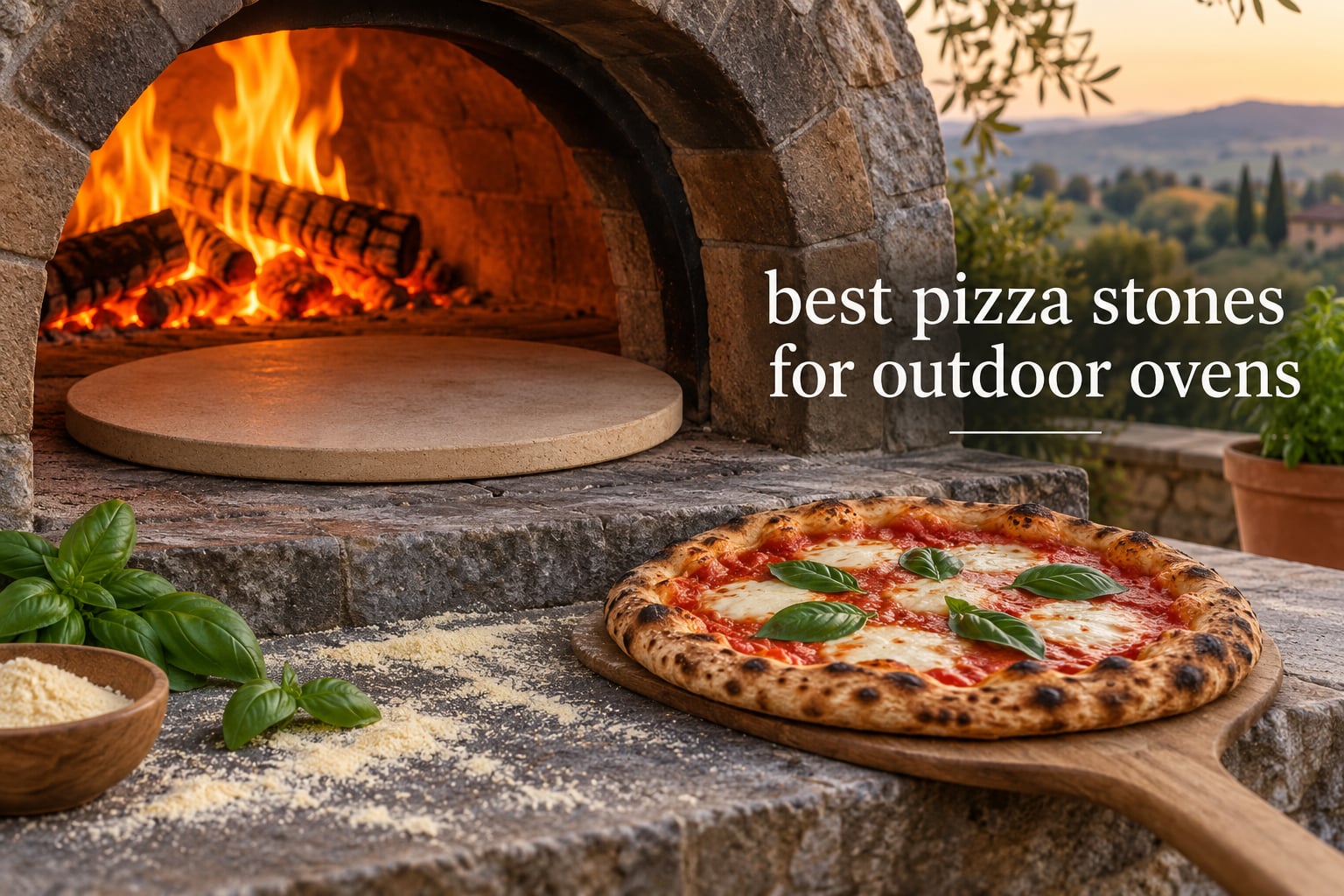
Most outdoor pizza oven owners learn the same way: the crust on the first pie looks pale and flabby, and the bottom never gets that blistered, slightly scorched finish you get in a real pizzeria. A thick cordierite stone fixes that. It soaks up heat during a long preheat, then pushes that stored heat straight into the dough the moment the pizza lands, so the base batters and chars instead of slowly drying out in moving air.
For anyone comparing options, this roundup covers the best pizza stones for outdoor ovens we could find, from gas ovens like the models in our gas pizza oven guide to wood-fired setups and kettle grills. Every stone below lists its material, stated maximum temperature, thickness and weight, because those four numbers decide whether a stone survives an outdoor oven at all.
One honest note before the picks: most mid-size and large outdoor pizza ovens already ship with a stone in the box. most of those factory stones are thin, and thin is the problem. They lose heat every time you open the door, so your second pizza of the session bakes differently from your first. If you are still deciding on the oven itself, start with our pizza oven roundup and come back here once you know the internal dimensions you have to work with.
Top 3 Picks for Outdoor Pizza Ovens (October 2026)

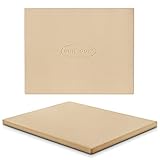
Unicook 15 x 12 Inch Pizza Stone
- Cordierite rated to 1450F
- 15 x 12 inch rectangle
- 0.6 inch thick

Culinary Couture Pizza Stone
- Cordierite rated to 1000F
- 15 x 12 inch rectangle
- 0.5 inch thick
Two stones here deserve a spot on any outdoor oven shopping list. The KitchenStar 16-inch cordierite set carries the highest heat rating and the largest review base in the category, and it ships with the tools you actually need. The Unicook rectangle is the smarter buy if you want proven performance without the accessory bundle.
Best Pizza Stones for Outdoor Ovens in 2026 at a Glance
Two things stand out in that table. First, the stated maximum temperatures vary enormously, from 900F on the Emile Henry ceramic to 1800F on both KitchenStar cordierite stones, and that spread matters more than any other spec once you are firing a wood oven. Second, thickness ranges from 0.38 inch on the Nuwave to 0.6 inch and above, which is the difference between a stone that recovers between bakes and one that does not.
1. KitchenStar 16-Inch Pizza Stone Set for Oven and Grill with Peel, Cutter and Brush
16-Inch Pizza Stone Set for Oven and Grill with Peel, Cutter and Brush
Cordierite
1800F max
16 inch round
6.21 kg
Pros
- Cordierite rated to 1800F for high-heat outdoor cooking
- Complete kit includes peel
- rocker cutter
- brush and rack
- Rocker blade cuts without dragging toppings
- Handles detach for compact storage
Cons
- Rocker blade is very sharp and needs care when cleaning
- Set is bulkier than a stone-only purchase
- 18/0 stainless blade can tarnish if not dried promptly
This is the stone I would put in an outdoor oven first. The cordierite slab is rated to 1800F, which puts it far above the 750F to 1000F band most wood-fired ovens actually reach, so the safety margin is generous. At 16 inches round it clears a standard hearth without crowding the flame path.
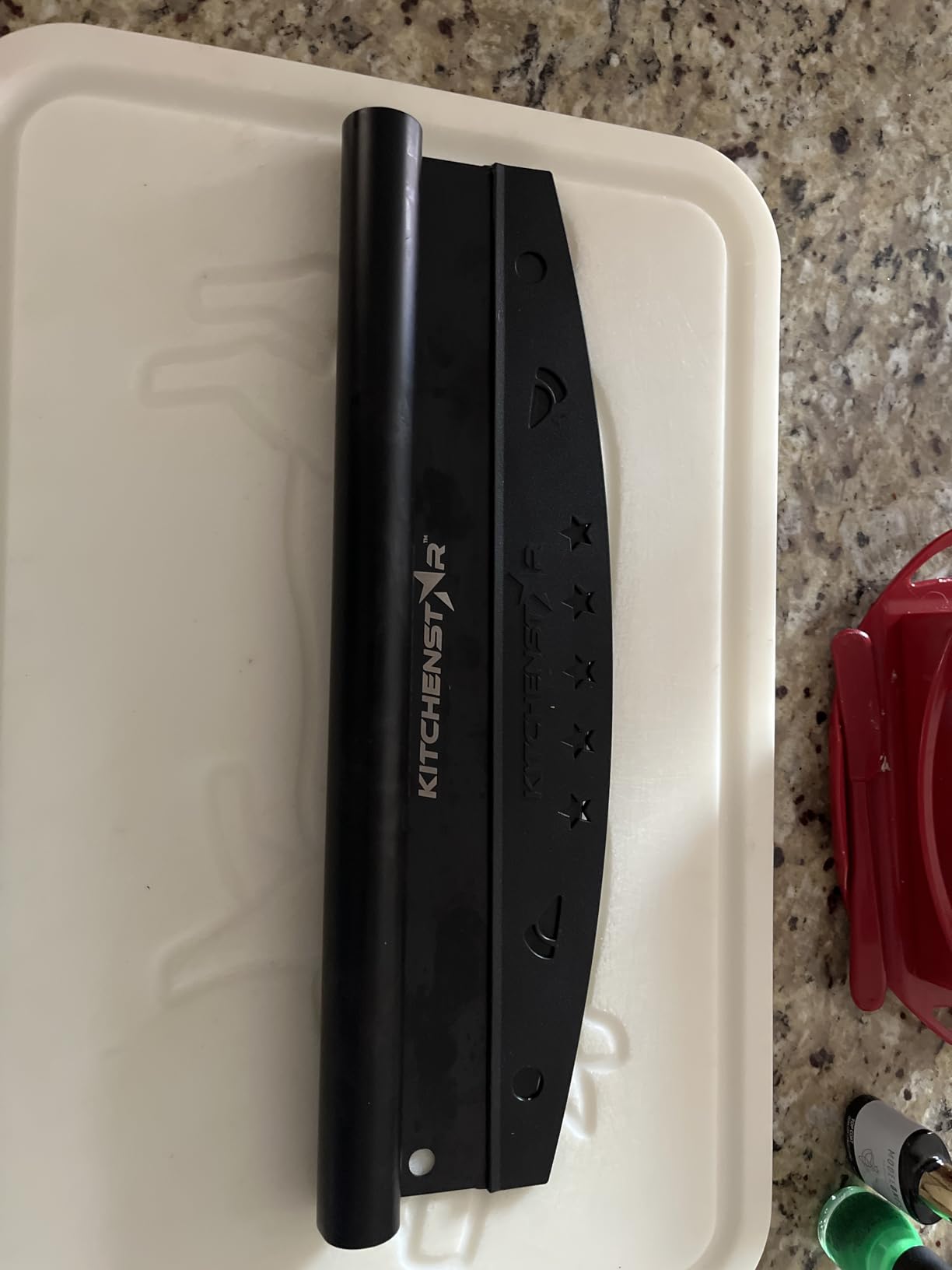
What sets it apart from the other cordierite options is the kit around the stone. You get an acacia wood peel, a rocker cutter with a protective cover, a metal brush with a beech handle and a stainless steel rack, so you are not hunting for tools on cookout day. The detachable handle pieces mean the whole thing stows in a cabinet when the season ends.
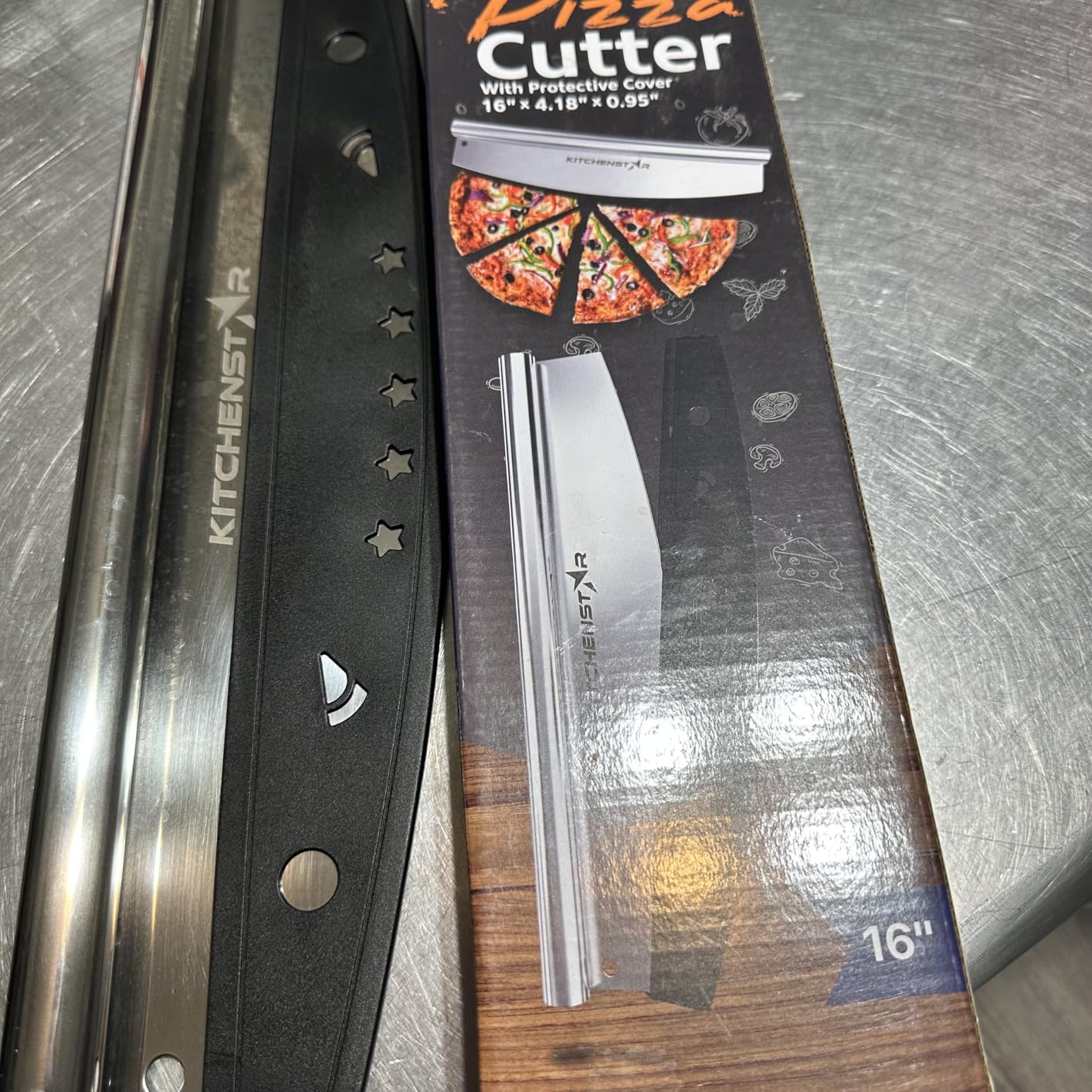
The honest drawback is the blade itself. It is genuinely sharp, and reviewers report the 18/0 stainless steel can show staining or tarnish if it is not rinsed and dried right after use. A towel and thirty seconds solves it, but it is a habit you have to build.
Why it works in a wood-fired oven
At 1800F rated, this slab has more thermal headroom than the oven needs. That headroom is what protects it from thermal shock when you slide a cold-ish dough onto a surface that has been at 900F for an hour, and it is why we would rather see a stone overspecced for the job than underspecced.
Where it falls short
If you already own a peel, a cutter and a brush, this bundle is more gear than you need and the extras are what you are paying for. A stone-only purchase serves the same cooking function at a noticeably lower outlay.
2. Hans Grill Rectangular Pizza Stone with Peel, 15 x 12 Inch Cordierite

Hans Grill Rectangular Pizza Stone with Peel, 15 x 12 Inch Cordierite Stone
Cordierite
1112F max
15 x 12 inch
7.8 lb
Pros
- Crisp restaurant-style crust on both oven and grill
- Works for bread
- calzone
- pastry and frozen pizza
- Thick heavy-duty stone holds heat well
- Packaging doubles as a storage box
Cons
- Bundled wooden peel has slots that trap dough
- Peel handle can feel short for oven use
- Stone stains quickly
- Needs a 20-45 minute preheat
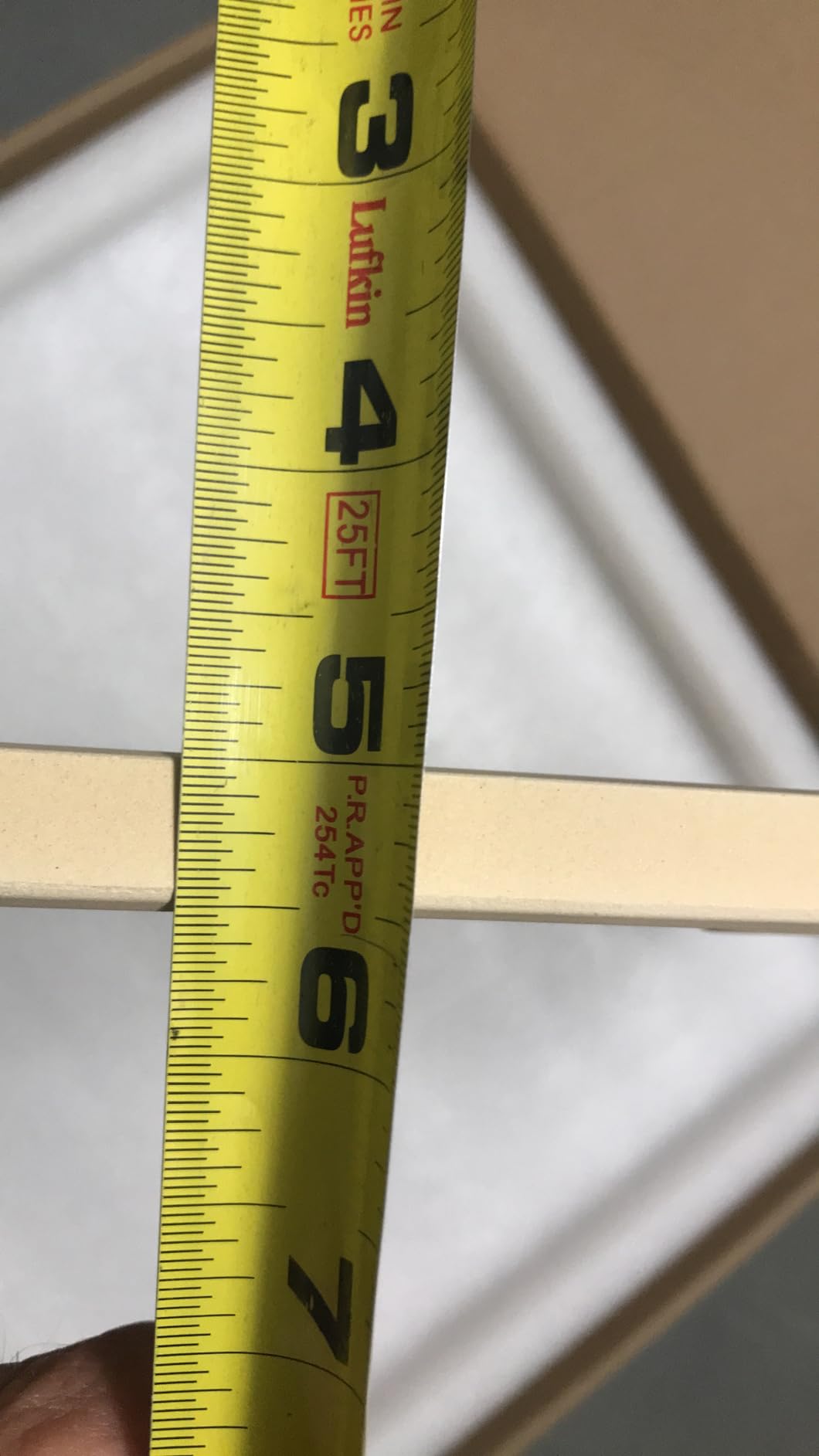
Reviewers treat this as a long-serving workhorse, and the numbers back that up with 13861 ratings at 4.4. The stone is a genuine 0.59 inch thick cordierite slab measuring 14.96 by 11.8 inches, so it covers more of a rectangular hearth than a 12 inch round stone would.
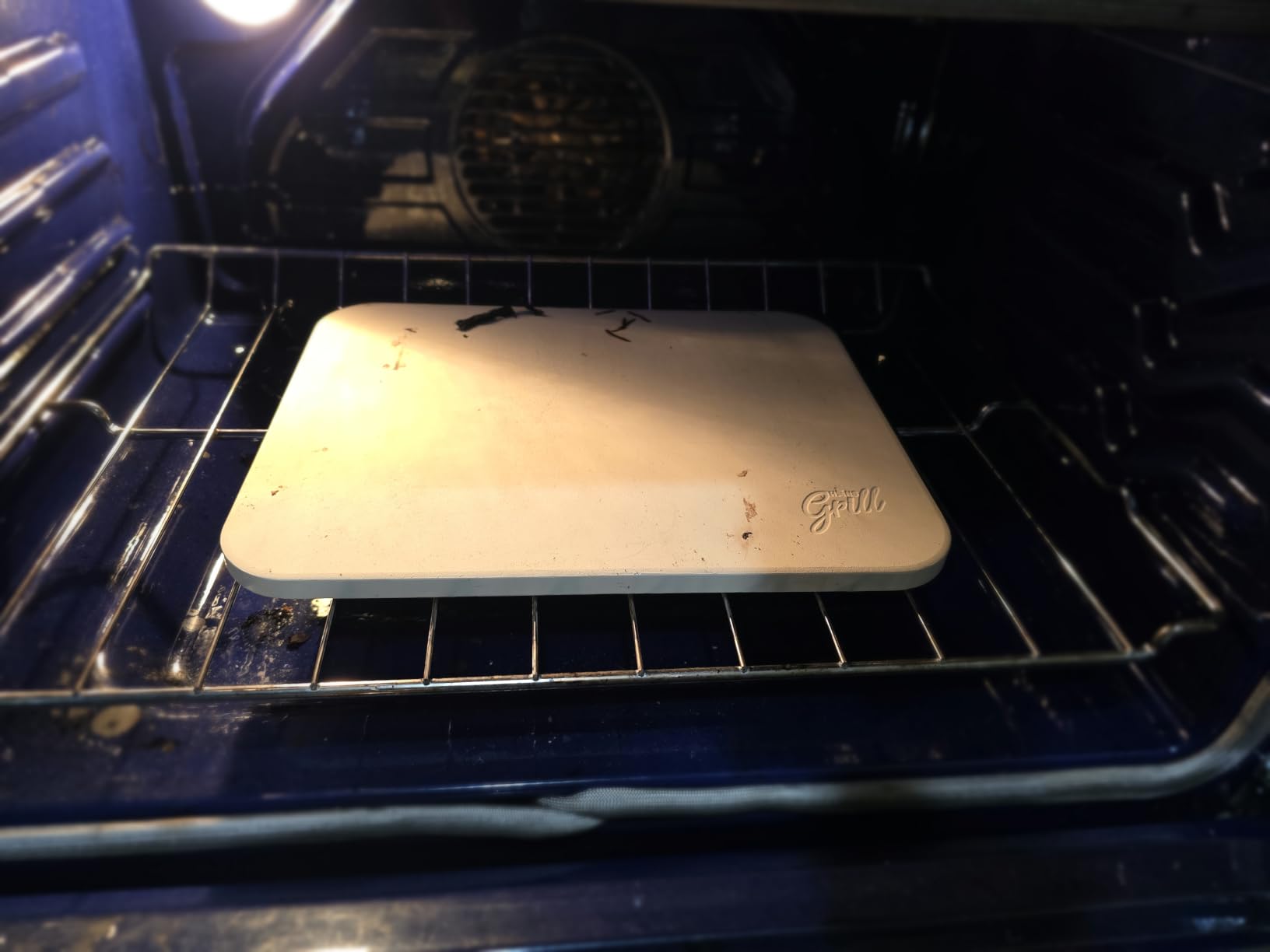
The 1112F rating is the number to pay attention to. It is lower than the KitchenStar stones, which means this one suits a gas outdoor oven or a grill rather than a wood oven held at 1000F. Within that range it is dependable, and it has years of owner reports behind it.
Two practical notes. The stone needs 20 to 45 minutes of preheat before it delivers, so plan your firing accordingly rather than assuming a 10 minute warm-up. And the surface does darken with use, which is cosmetic rather than functional as long as you are not baking a pale dessert crust on it.
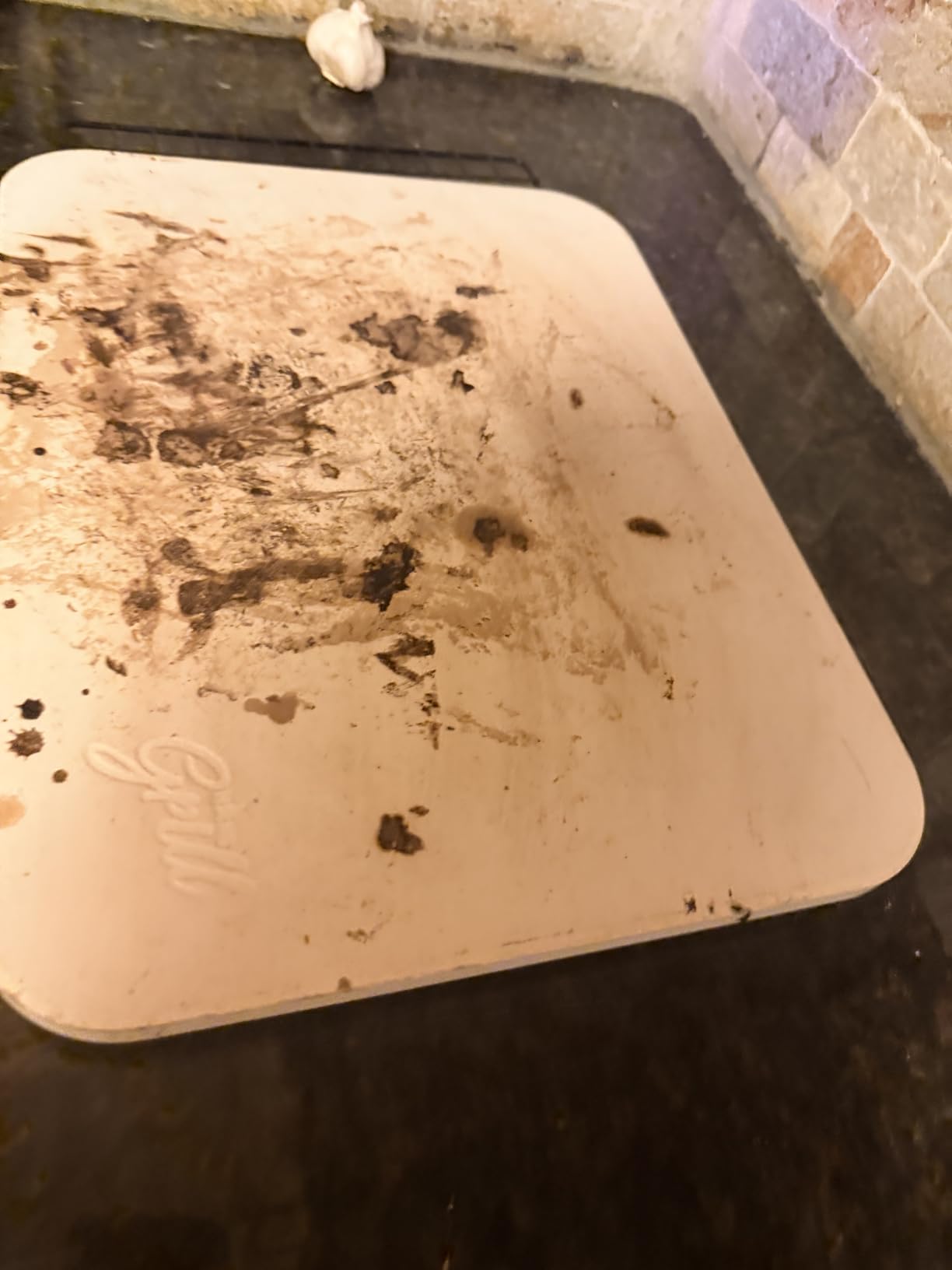
Best for grill users and long rectangular decks
If your outdoor cooking happens across a wide hearth or you run a flat-top grill alongside the oven, the rectangle uses the space better than a round stone. Two personal-size pies can sit side by side with clearance at the edges for airflow, and a wood peel slides on easily across a flat surface.
Where it falls short
The included wooden peel is the weak part of the set, and reviewers say so consistently. Its slots catch dough and its handle length is not always comfortable for oven work, so many owners replace it within a season.
The 1112F ceiling also rules it out for the hottest wood-fired setups. And the 7.8 pound weight means moving it mid-cook is a two-hand job, not a flick of the wrist.
3. Unicook 15 x 12 Inch Rectangular Pizza Stone for Oven and Grill
Unicook 15 x 12 Inch Rectangular Pizza Stone for Oven and Grill, 6.8 Lbs
Cordierite
1450F max
15 x 12 inch
6.5 lb
Pros
- Thick cordierite resists thermal shock even for frozen pizza on a 500F stone
- Absorbs moisture effectively for crisp crust
- Reversible smooth surface
- Also excellent for bread
- baguettes and focaccia
Cons
- 15 x 12 footprint only fits personal-size pies
- Heavy to lift in and out
- Needs a 30-60 minute preheat
This is the pick I recommend to anyone who wants proven outdoor performance without buying a bundle. The Unicook stone is 0.6 inch thick cordierite rated to 1450F, weighs 6.5 pounds and carries 13410 ratings at 4.5, which is one of the strongest combinations of evidence and specification in the category.
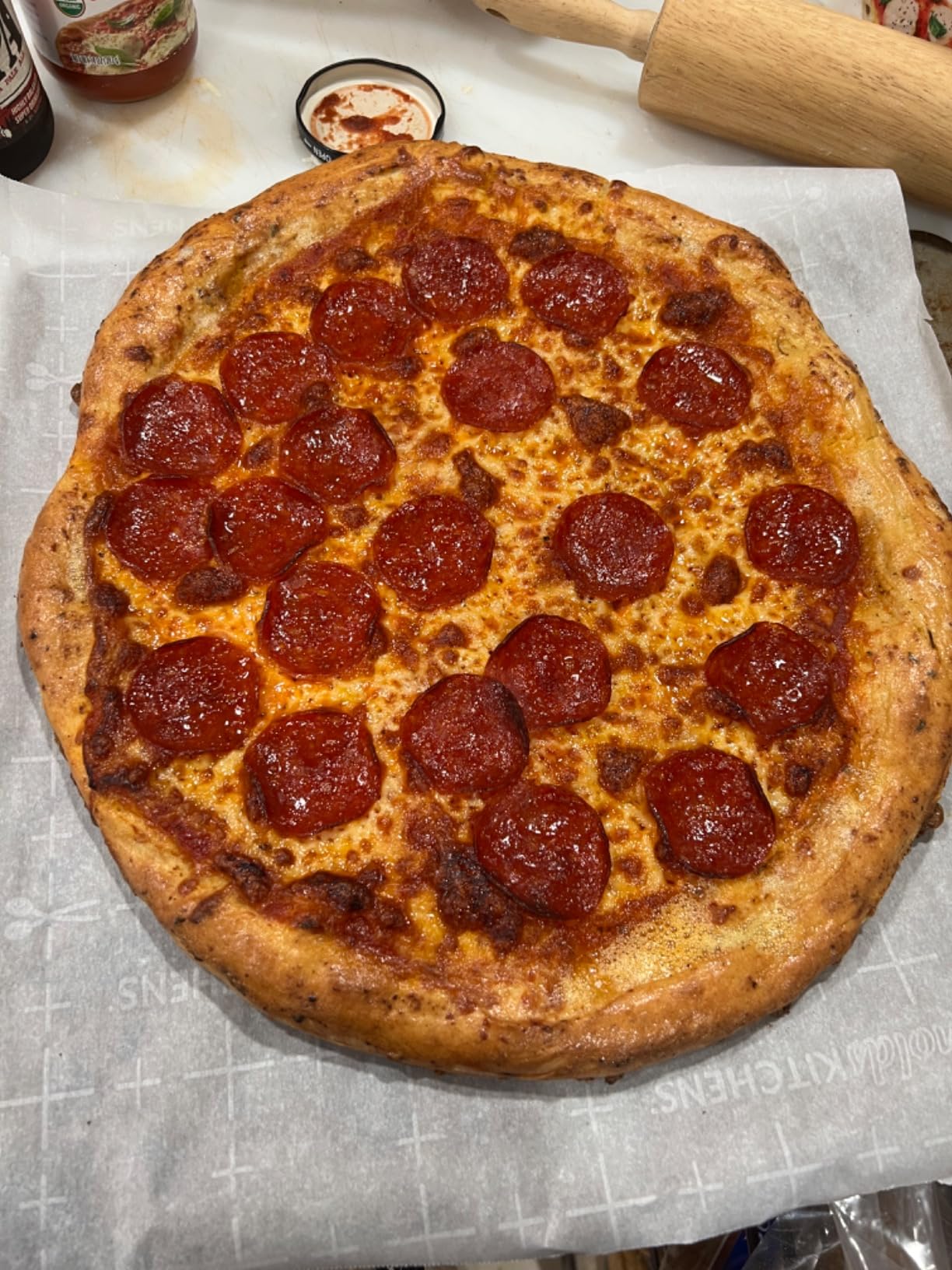
The porous surface does the job it is sold for, pulling moisture out of the dough so the base crisps instead of steams. Owners report even cooking with no hot spots, and plenty of them use it for bread, baguettes and focaccia rather than pizza alone.
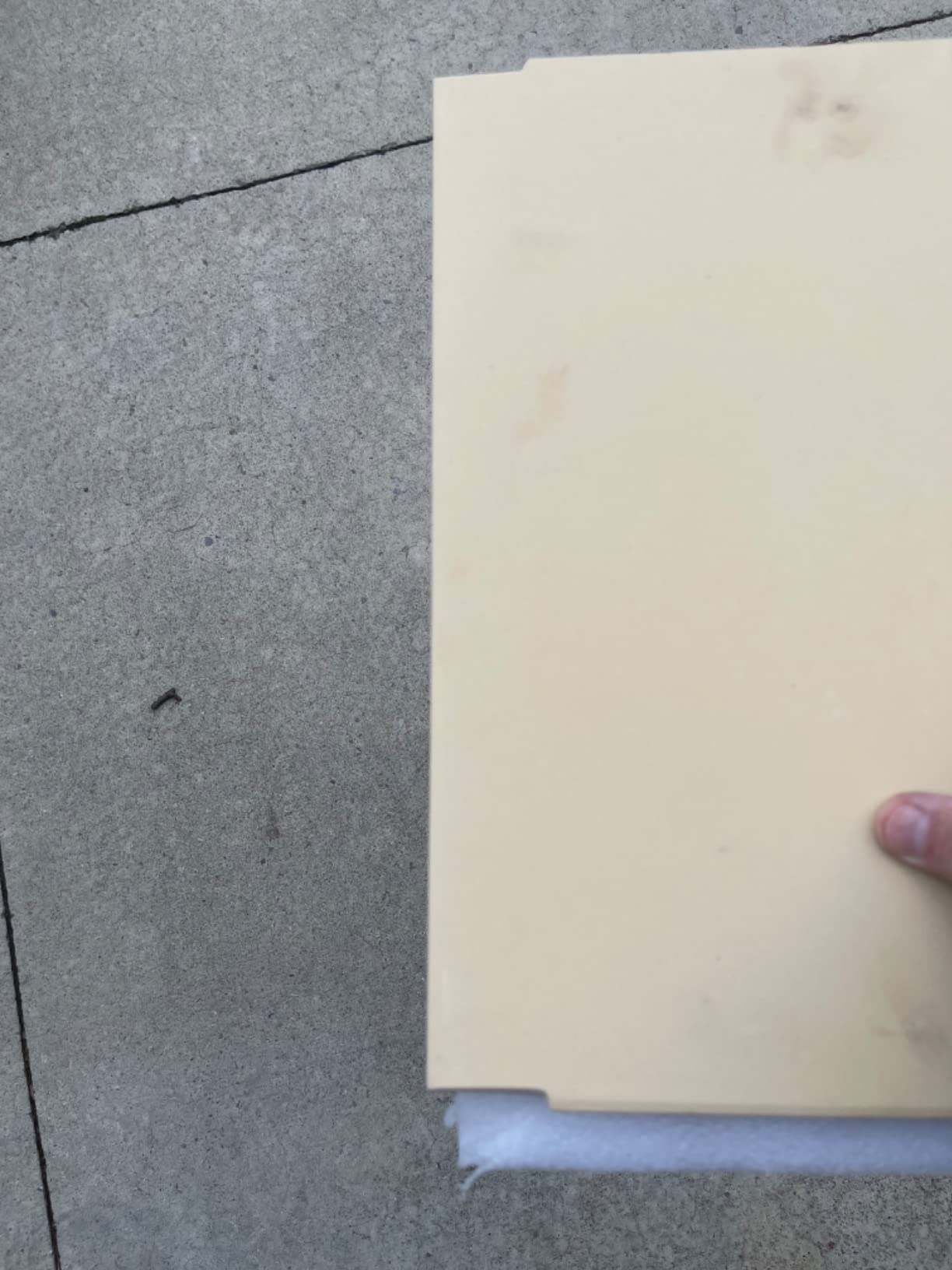
Thermal shock is where the 0.6 inch thickness pays off. Reviewers specifically mention dropping frozen pizza onto a stone at 500F without cracking, which is the scenario that ends thinner stones. A 1450F rating also clears the top end of most gas outdoor ovens comfortably.
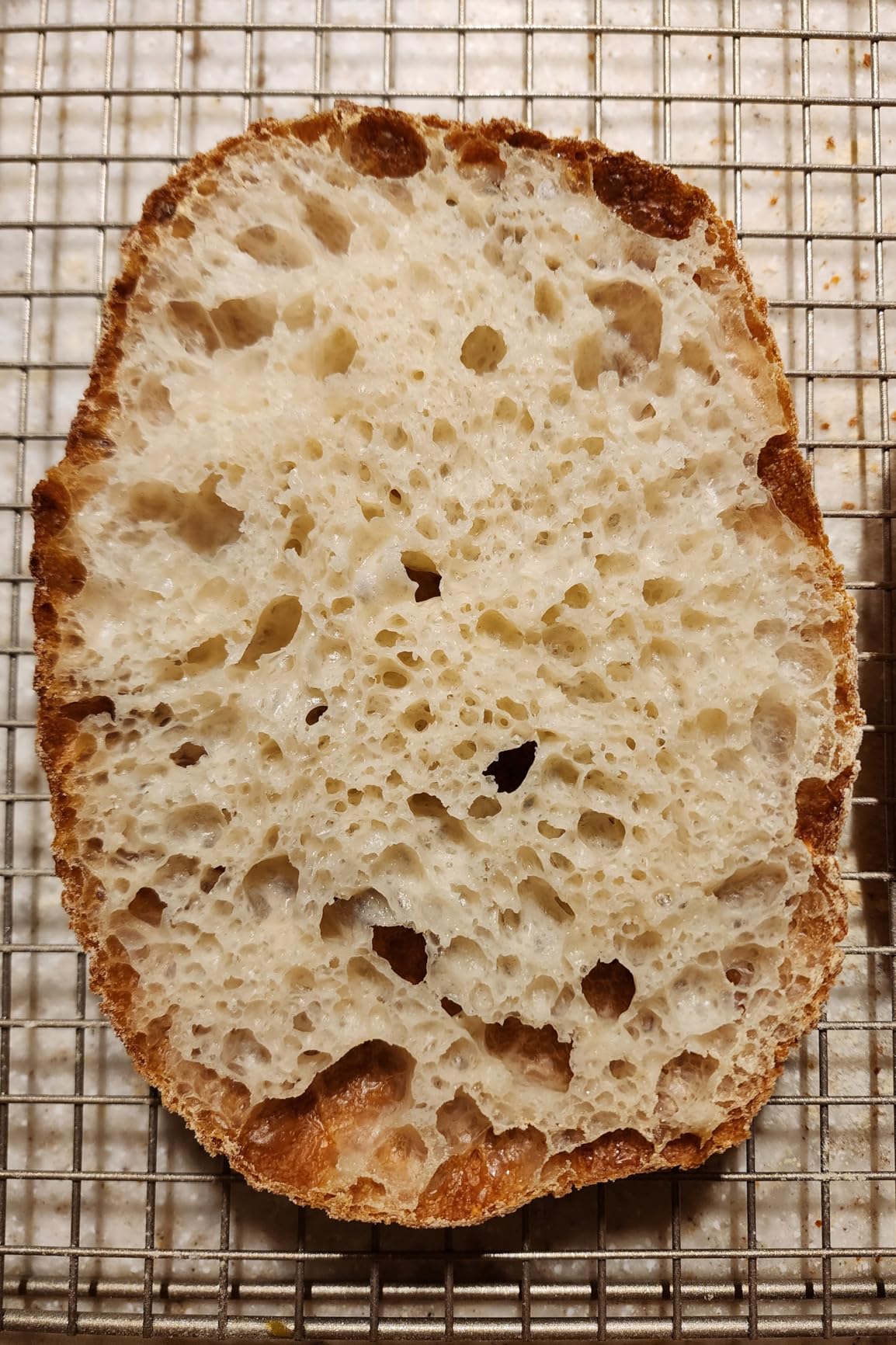
Why it suits a gas outdoor oven
Gas ovens hold a steady temperature rather than surging with the fire, and a stone that distributes heat evenly with no hot spots is exactly what you want in that environment. This stone has enough mass to ride through a door opening without dropping hard, and it fits inside compact countertop ovens too if you want to keep the same tool in two places.
Where it falls short
The 15 by 12 inch footprint only holds a personal-size pie, so a family pizza needs dividing or launching in two rounds. That is fine for one cook and frustrating for a group.
Then there is the preheat. Thirty to sixty minutes is what owners report, and the 6.5 pound weight means you are not moving it around casually while it is hot. Both are fair prices for the performance.
4. Old Stone Pizza Kitchen Rectangular Pizza Stone, 14×16-Inch

Old Stone Pizza Kitchen Rectangular Pizza Stone for Oven and Grill, 14×16-Inch
Cordierite
1450F max
16 x 14 inch
molded feet
Pros
- Rectangular shape uses more of the oven rack than round stones
- Durable US-made lead-free clay that resists cracking
- Molded feet sit the stone low for crisper crust
- Owners report 10 to 20 years of service
Cons
- Heavy to handle
- An isolated batch released a chemical odor when first heated
- Stains and discolors with normal use
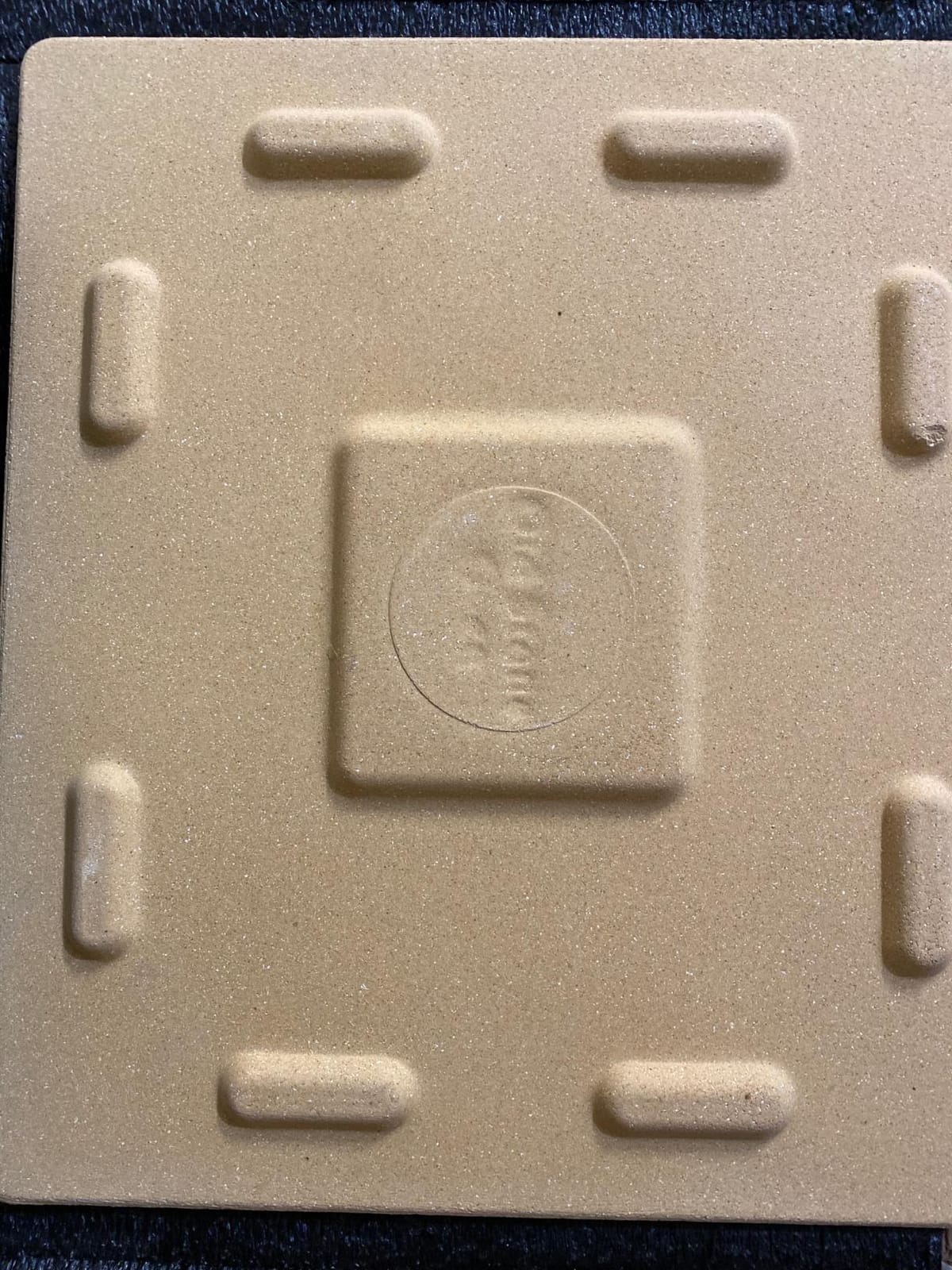
The defining feature here is the molded feet. They hold the stone off the oven floor, which pulls the cooking surface closer to the heat and to the flame path, and reviewers consistently link that to a crisper base. At 16 by 14 inches it is one of the larger cooking surfaces in this roundup.
It is American-made from lead-free clay, rated to 1450F and usable in residential ovens, pizza ovens and grills. A specially engineered heat core is what keeps the center of the pie from going soggy while the edges crisp.
The durability story is the headline. Owners report service lives of a decade or two on the same stone, which is a long enough track record to make this an easy recommendation for anyone who cooks outdoors weekly and wants one stone rather than a rotation.
Why the feet matter in an outdoor oven
In a wood oven the floor is the coldest place in the chamber, because the heat is coming off the flame above and off the walls. Lifting the stone on molded feet moves the dough surface into that rising heat and exposes the underside to airflow, which is precisely the situation where a stone outperforms bare hearth brick.
It is also the reason the 16 by 14 footprint is useful. Most outdoor ovens are wider than they are deep, so a rectangle covers the usable deck while leaving the side clearances open for flame movement.
Where it falls short
The stone is heavy and reviewers say so. There is no weight listed in the specifications, so expect to lift it with two hands and both arms, especially when it is at temperature.
There is also a reported chemical odor on first heat from an isolated batch of stones, and the surface will stain and discolor over years of use. If a pristine surface matters to you, this is the wrong pick.
5. Old Stone Round Pizza Stone, 16-Inch

Old Stone Round Pizza Stone, 16-Inch
Stoneware
1472F max
16 inch round
7.3 lb
Pros
- Classic 16 inch round size fits standard ovens and grills
- Absorbs and distributes oven heat evenly
- Durable lead-free clay blend
- Also good for bread
- pastries and vegetables
Cons
- Should not be cleaned with soap
- Round shape wastes rack space against rectangular stones
- Stains quickly with toppings
This is the traditional answer: a 16 inch round stoneware slab, 0.59 inch thick at 7.3 pounds, made from a lead-free clay blend. Owners describe it as dependable and resistant to cracking, and it does the basic job of absorbing and spreading oven heat evenly across a pizza base.
Round geometry has real advantages outdoors. Air moves around a circle without dead corners, and a 16 inch circle fits grills and pizza ovens without overhang. If your deck is square, a round stone leaves the corners unusable, but nothing gets starved of airflow.
The 1472F rating covers the top of the gas outdoor oven range, and the clay blend is the same family of material used in traditional hearth floors. Bread, pastries and vegetables are all common uses in owner reviews, so it earns its counter space beyond pizza night.
When a round stone is the right call
Choose round when your oven deck is circular, when you cook on a kettle grill with a curved grate, or when you want maximum clearance between the stone edge and the fire. It also nests more easily for storage, which matters if the oven lives in a shed over winter.
Where it falls short
You give up usable surface area. Compared with the 16 by 14 rectangles in this list, a 16 inch circle fits noticeably less dough per launch, and on a rectangular deck it leaves dead corners.
The manufacturer recommends 500F for a standard home oven, so treat the 1472F figure as a material limit rather than an invitation to push a home oven. And like every unglazed stone here, it stains with regular topping use.
6. Gyreuni 16-Inch Cordierite Pizza Stone with Pizza Peel Set

Gyreuni 16” Cordierite Pizza Stone for Oven and Grill with Pizza Peel Set
Cordierite
1472F max
16 x 14 inch
5-piece set
Pros
- Large 16 x 14 cordierite surface cooks an even large-style pizza
- Oak peel resists cracking and slides food easily
- Includes parchment sheets
- brush and steel cutter
- Works well on smoker and grill
Cons
- Bundled steel cutter is dull with burrs on the edges
- Oak peel can crack over time
- Some buyers report listing misstates the stone count
The Gyreuni set pairs a 16 by 14 inch cordierite stone rated to 1472F with a tapered half-inch oak peel, a three-in-one brush, a steel cutter and ten sheets of parchment paper. That is a fuller kit than most, and the stone itself is a strong piece rather than the weak link.
Buyers like the large cooking surface, which is closer to a 16 inch round in area and cooks a large-style pie evenly. The micro-pores in the cordierite absorb moisture for a crisp base, and the manufacturer states heat safe to 1472F with good thermal shock resistance and no odor on first use.
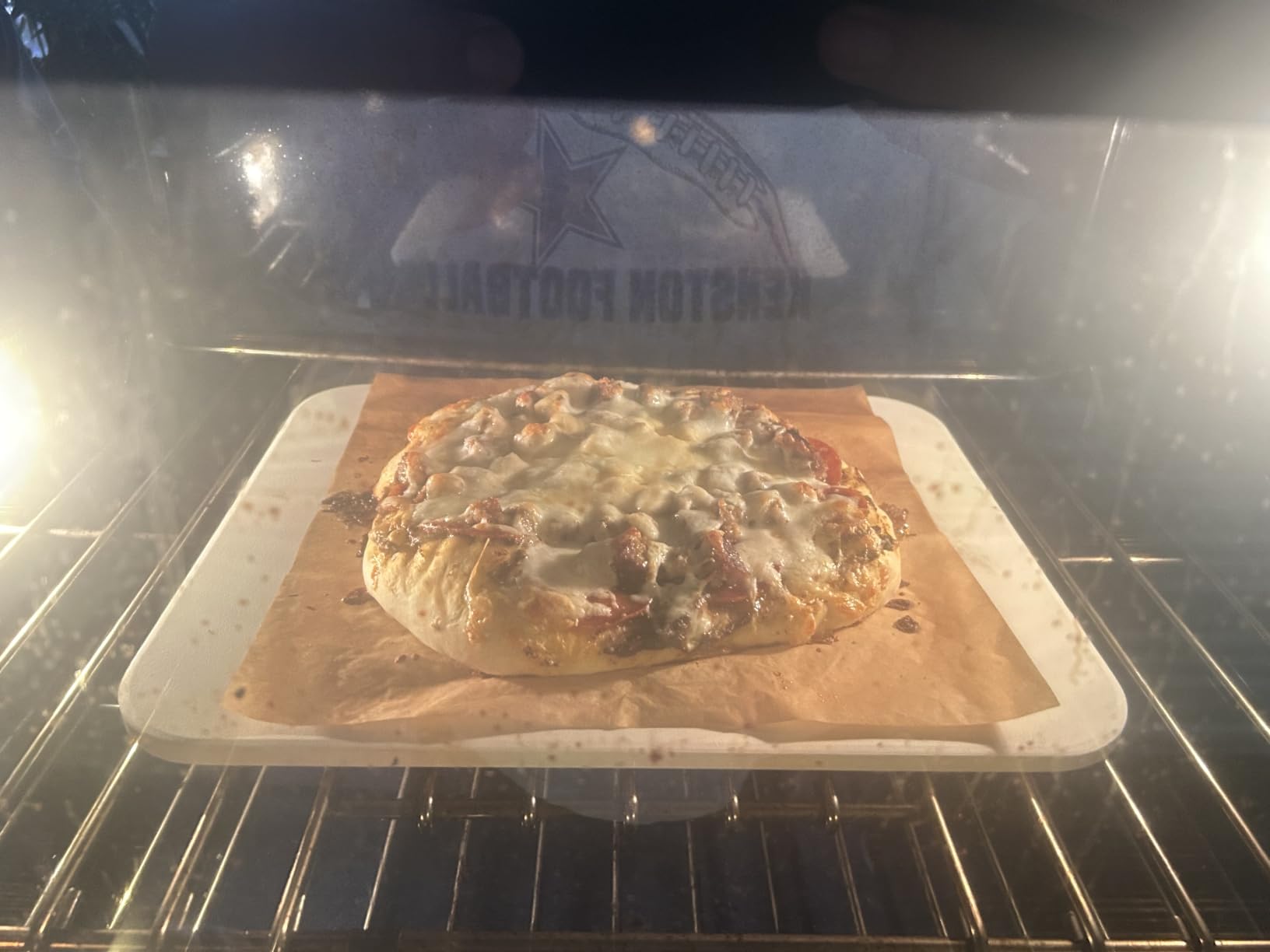
Reviewers report good results on oven, grill and smoker, which tells you the stone handles radiant heat as well as ambient oven heat. The recommended first preheat is 30 minutes at 400F or above, a gentler start than most competitors ask for. The bundle has also been reported to misstate how many stones are in the box.
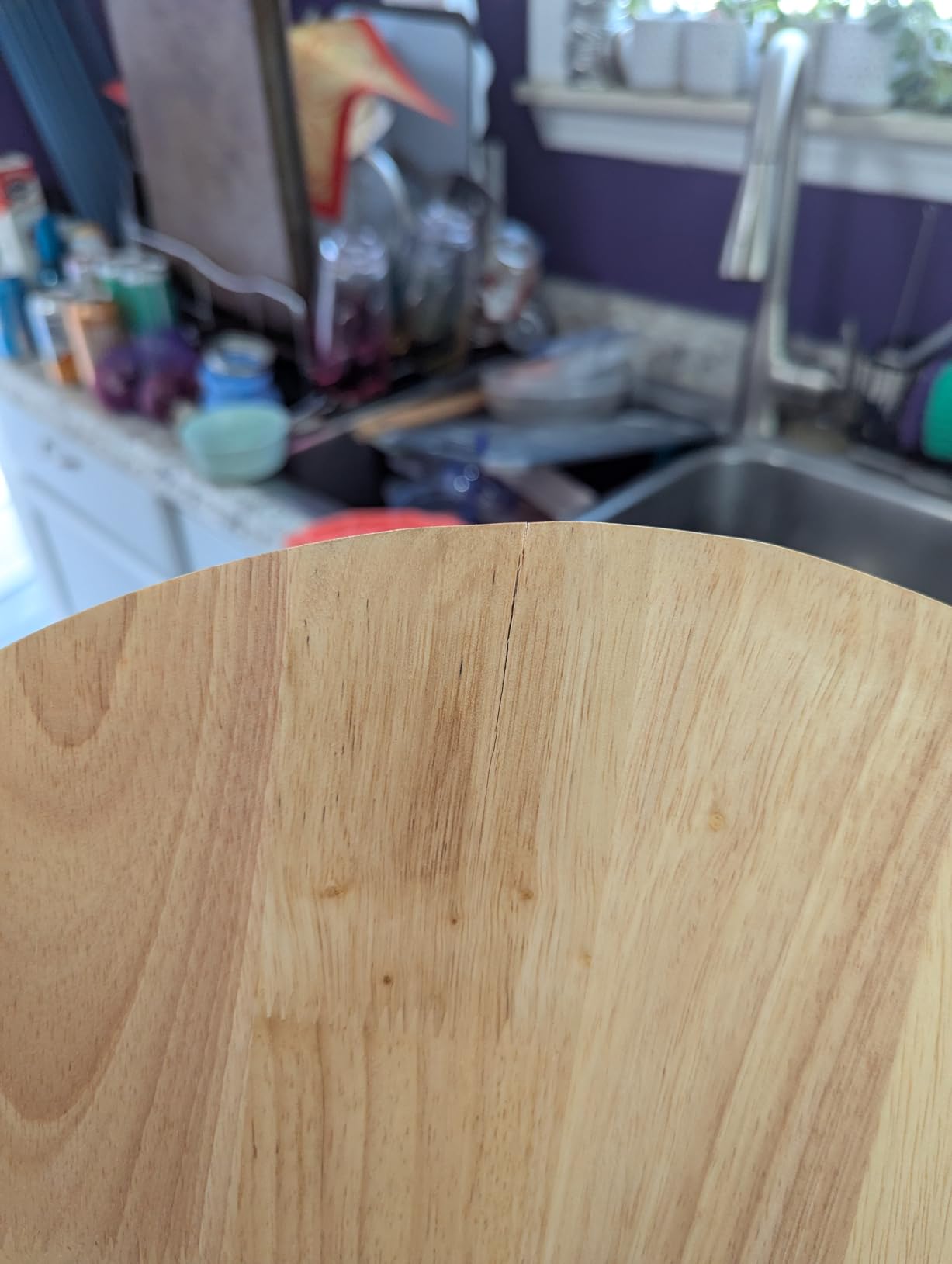
Best as a complete first setup
If you are buying your first stone and own nothing else, this solves the whole problem: stone, peel, brush, cutter and parchment in one box. The oak peel resists cracking better than the slatted wooden peels in some competing kits, and the tapered blade keeps your hands away from the heat.
Where it falls short
The steel cutter is the most criticized accessory. Reviewers describe it as dull with stamped burrs along the edges, so it will not give you the clean rocker cut that the KitchenStar kit does.
The oak peel can crack after extended use. Check the contents on arrival if the count matters to you.
7. KitchenStar 16-Inch Round Pizza Stone for Oven and Grill

16-Inch Pizza Stone for Oven and Grill, Baking Stone for Bread, Round
Cordierite
1800F max
16 inch round
7.1 lb
Pros
- One of the highest heat tolerances in the round-stone category
- Porous cordierite pulls moisture for a crisp crust
- Works on coal and gas grills as well as ovens
- Stainless stand allows safe handling of the hot stone
Cons
- Heavier than many competing stones at 7.1 pounds
- Included scraper is plastic rather than metal
- Cleaning must avoid soap or detergent
This is the stone-only version of our top pick, and for grill users it is arguably the better one. The 5/8 inch cordierite disc is rated to 1800F, among the highest tolerances in the round-stone category, and it includes a stainless steel stand and a vinyl scraper.
Direct radiant heat from charcoal is the harshest environment for a baking surface, and the 1800F rating is what gives this one room to survive it. Reviewers report even heat distribution for both pizza and bread, and the same listing covers toaster ovens, air fryers and smokers.
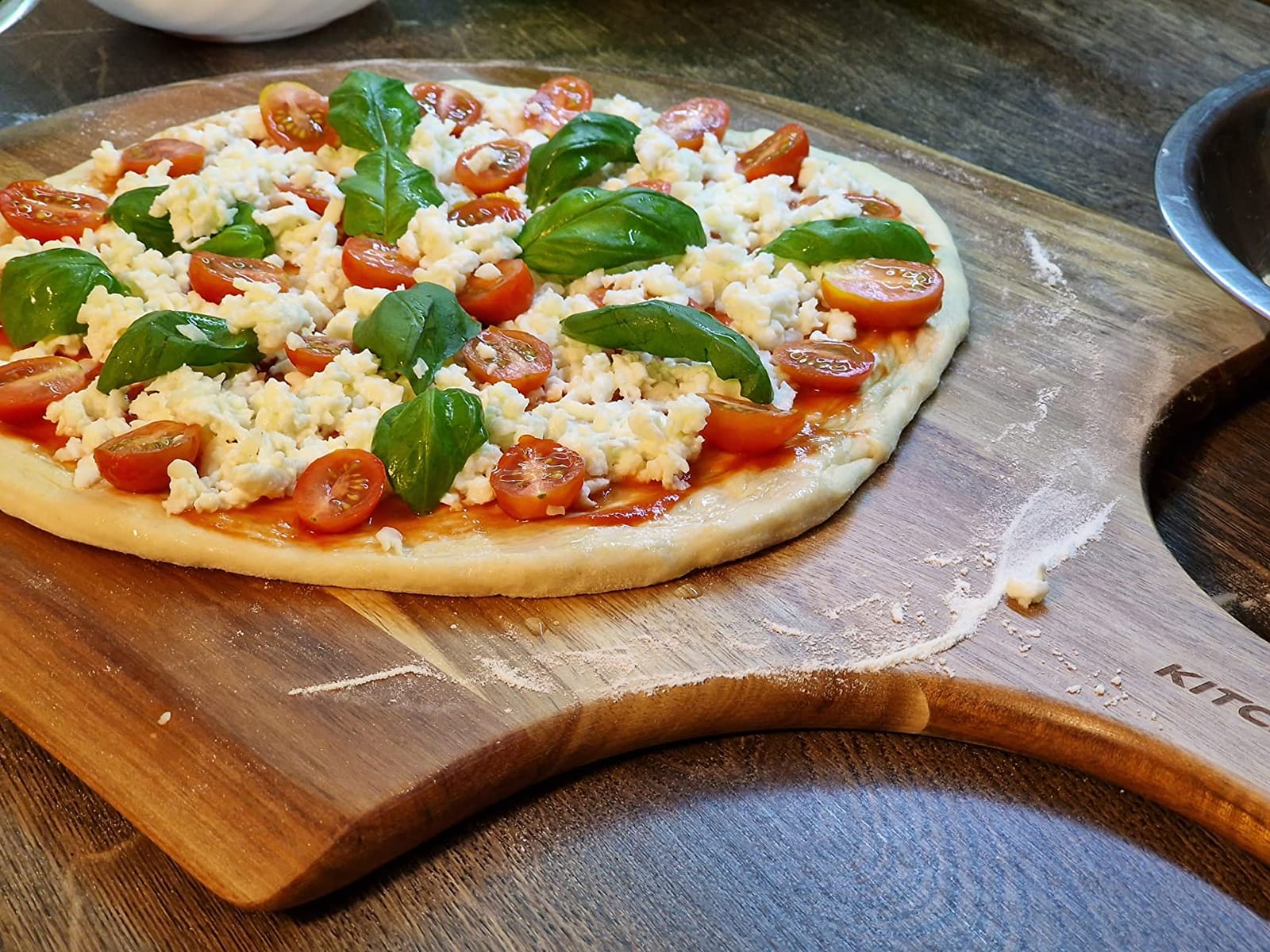
The stainless stand is the detail most appreciated on a grill, because it lets you lift a stone that has been sitting over coals without a towel and without guessing. The porous cordierite structure handles the moisture side of the job as well as any stone in this group.
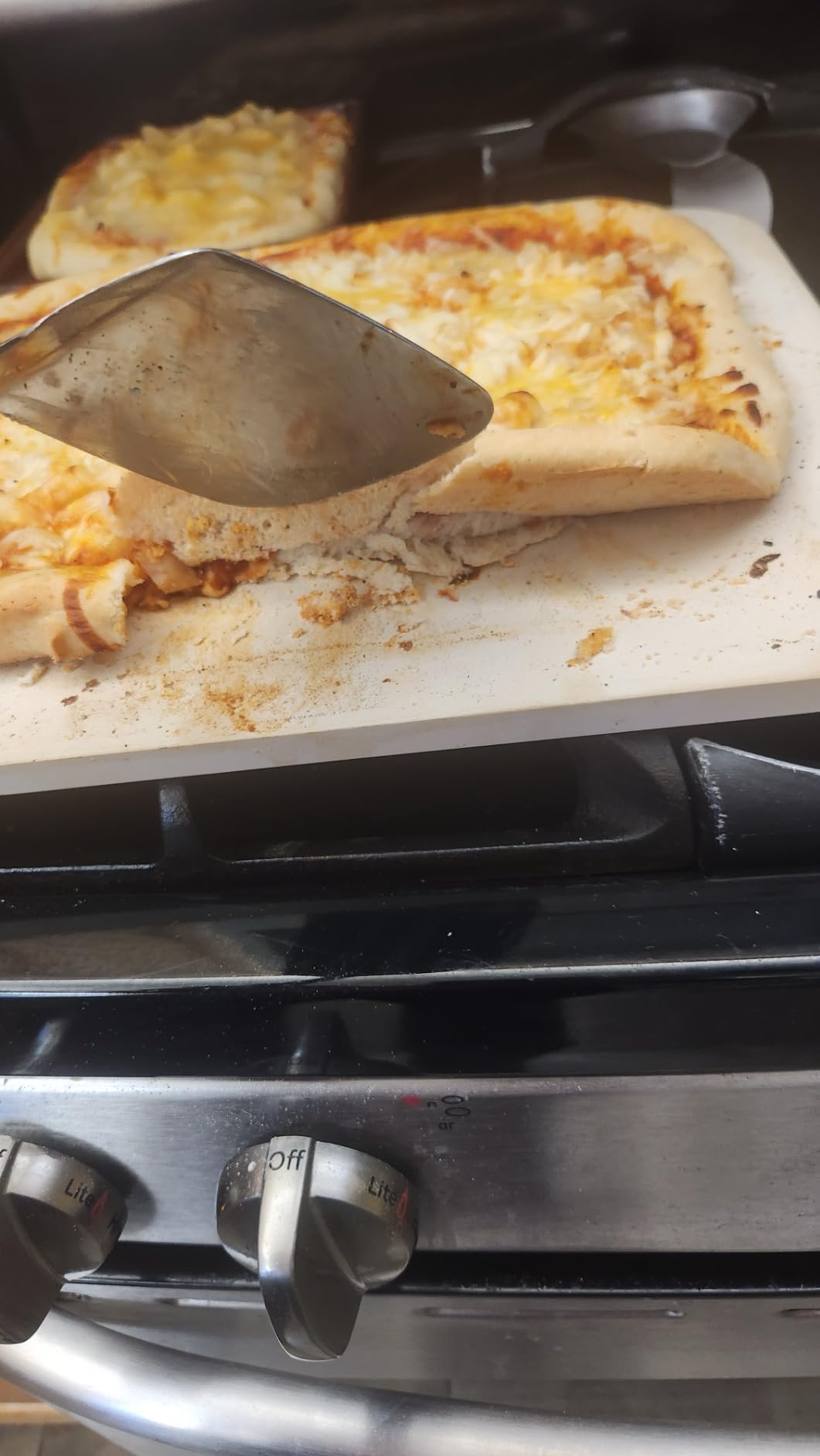
Why the heat rating matters on a grill
Grill stones take heat from two directions at once: rising air and radiant energy from coals. That combination drives thermal shock harder than a single-direction oven. A stone rated 1800F has roughly double the headroom above grill temperatures, and thermal mass means it can sit through a cook without cycling.
Where it falls short
At 7.1 pounds it is one of the heavier stones, and on a grill with a side shelf the stand is essential rather than optional. Moving it between grills mid-cook is a two-person job.
The included scraper is plastic, so it will not shift a burnt-on bit of cheese, and the care instructions are strict: water only, no soap and no detergent. Some buyers find the 4.3 rating reflects a good stone attached to a thin accessory package.
8. Culinary Couture Large Pizza Stone, 15 x 12 Inch Rectangular
Large Pizza Stone for Oven and Grill – 15 x 12 inch Rectangular Pizza Stone
Cordierite
1000F max
15 x 12 inch
0.5 inch thick
Pros
- Crisp evenly browned crusts for pizza
- calzone and stromboli
- Fits RV and toaster ovens and evens out hot spots
- Easy to lift compared with thicker stones
- Stain and odour resistant surface
Cons
- Needs a long reheat between consecutive pizzas
- Thickness is listed inconsistently
- Some pieces have arrived cracked
- Heavy enough to discourage oven storage
The Culinary Couture stone is the value entry in this roundup: a 15 by 12 inch cordierite rectangle rated to 1000F, with a stain and odour resistant surface. At 4.5 stars from 1111 ratings it holds a better score than several stones with far larger review counts.
Owners report crisp, evenly browned bases on pizza, calzone and stromboli, and the surface resists both staining and cooking smells better than the unglazed stones here. The porous face still absorbs excess moisture, which is the whole mechanism.
It is noticeably easier to handle than the 7 to 8 pound stones, and the rectangular footprint fits a toaster oven or an RV oven while levelling out the hot spots those small ovens are notorious for. That makes it a genuine outdoor-adjacent pick for campers and countertop bakers.
Best when you cook one pizza at a time
The 0.5 inch thickness is the trade-off. It heats faster than the heavier stones and gives up heat faster too, so it suits a cook who bakes a pie, eats it, then bakes another, rather than a high-volume session firing back-to-back pizzas.
If your outdoor oven is a gas unit where you control the heat and the deck never gets hammered by flame, that lighter mass is an advantage. You get a workable stone without wrestling it over an open door.
Where it falls short
Reviewers most often mention the long reheat between consecutive pizzas. On a wood oven where you are cooking through a queue, that downtime is the whole ballgame.
There is also inconsistent thickness information between the listing and the spec sheet, and a small number of stones have arrived cracked. Inspect the box on delivery, and check the actual thickness against what you ordered.
9. Emile Henry Round Pizza Stone, 14.5 Inch, Charcoal

Emile Henry Flame Top 14.5″ Ceramic Pizza Stone for Oven & Grill, Charcoal
Glazed ceramic
900F max
14.5 inch round
8.3 lb
Pros
- Glazed surface resists staining and can be cut on directly
- Micro-crazed glaze mimics a pizza oven floor
- Built-in ceramic handles lift it off a hot grill
- Dishwasher safe and doubles as a serving tray
Cons
- Highest price point in the category for comparable performance
- Soldered food bits bond to the glaze
- Heavy ceramic is fragile if dropped
- 900F ceiling is below cordierite rivals
The Emile Henry stone is the only glazed ceramic in this group, and that single difference changes how it behaves. The micro-crazed glaze imitates a traditional pizza oven floor, and it will not absorb oil or stain the way unglazed cordierite does. It is 14.5 inches round, 1.5 inches thick at the rim and 8.3 pounds.
Made in France with the maker’s flame technology, it is rated to 900F and is explicitly safe on gas, charcoal and natural wood grills, plus under the broiler. The built-in ceramic handles are what make that list believable, since you can lift it off a hot grill without a towel.
There is a 10 year manufacturer warranty against defects, and the only real caveat in the review data is that a detailed head-to-head test found cooking performance on par with far cheaper stones. Finishes score well, heat does not. Users also report the glaze is harder to clean than advertised once soldered cheese and carbon build up.
Best when presentation and cleanup matter
A glazed stone can come off the heat and go straight to the table as a serving tray, which unglazed stone cannot do. If you cook for guests and want one piece that handles the whole job, that is the argument for this stone.
It also serves as a general grill surface for bread, pastries and vegetables, and the scratch-resistant glaze can be cut on directly. The 14.5 inch round fits a standard grill grate without overhang.
Where it falls short
The 900F maximum is the dealbreaker for high-heat wood ovens. Most cordierite stones in this list carry ratings from 1112F up to 1800F, so this one leaves real headroom on the table when the chamber runs hot.
It is also one of the heavier stones we cover at 8.3 pounds, and glazed ceramic is unforgiving if you drop it on a hard surface. Owners across community threads repeatedly recommend Emile Henry stones as a long-serving workhorse while noting the glaze is not ideal for pizza specifically.
10. waykea 12 x 12 Inch Square Cordierite Pizza Stone

Waykea 12″ x 12″ Cordierite Square Pizza Stone for Oven or BBQ Grill
Cordierite
1400F max
12 x 12 inch
0.6 inch thick
Pros
- 0.6 inch cordierite is thicker than most stones at this price
- Fits RV
- camper and toaster ovens
- Absorbs heat fast and cooks both sides evenly
- Does not crack when instructions are followed
Cons
- 12 inch surface is too small for larger pies
- One piece arrived broken on delivery
- Not ideal for compact ovens with tight internal dimensions
The waykea square is bought for a specific job, and it does that job well. At 12 by 12 inches and 0.6 inch thick, it is thicker than most stones at this size, and the 1400F cordierite rating leaves plenty of margin over typical oven temperatures.
Reviewers overwhelmingly frame it as the RV and camper oven fix. In a small metal oven with wildly uneven heat, the stone levels out the hot spots and cooks the top and bottom at a similar rate, which is a genuine improvement over a bare rack.
It also fits toaster ovens and barbecue grills, absorbs heat quickly, and owners report no cracking when the handling instructions are followed. At 3.9 pounds it is one of the more manageable stones here, and the square shape is more efficient than a round stone in a square cavity.
Care is a hand wash, and the manufacturer covers it with a 180 day warranty. That is a shorter commitment than the ten years on the Emile Henry, but it is a real warranty rather than none.
Best for small ovens and travel kitchens
Twelve inches is a personal-size pie, and that limit is the entire story. If you are cooking for one or two, the square footprint uses every corner of a small oven and a BBQ grill grate more efficiently than a round stone of the same width.
It is also the easiest stone here to move. At 3.9 pounds you can lift it in and out one-handed with a towel, which matters in a camper kitchen where counter space is minimal.
Where it falls short
If you cook a 14 inch pizza, there is simply not enough surface. And in a compact pizza oven with tight internal dimensions, some buyers report it does not fit at all, so measure the cavity before you order.
One piece also arrived broken on delivery, which is worth inspecting. Delivery damage on any ceramic product is a packaging problem, but a square stone with corners is more exposed than a round one.
11. Nuwave Heavy-Duty Cordierite Pizza and Baking Stone, 11.5 Inch

Nuwave Heavy-Duty Cordierite Pizza & Baking Stone, Heat Resistant to 1,472F
Cordierite
1112F listed
11.5 inch round
16 oz
Pros
- Lightest stone in the group at 16 ounces
- 11.5 inch size fits countertop ovens
- Good heat distribution for crisp crust
- Cleans with a damp cloth
Cons
- Dough sticks to the surface more often than on other stones
- Biscuits stick more than on higher-end stones
- Smallest cooking surface in the roundup at 11.5 inches
The Nuwave stone trades mass for portability. At 11.5 inches round and 16 ounces, it is by far the lightest option here, and it was designed for the Nuwave Bravo XL and other countertop ovens, gas and wood grills, and Primo-style ovens.
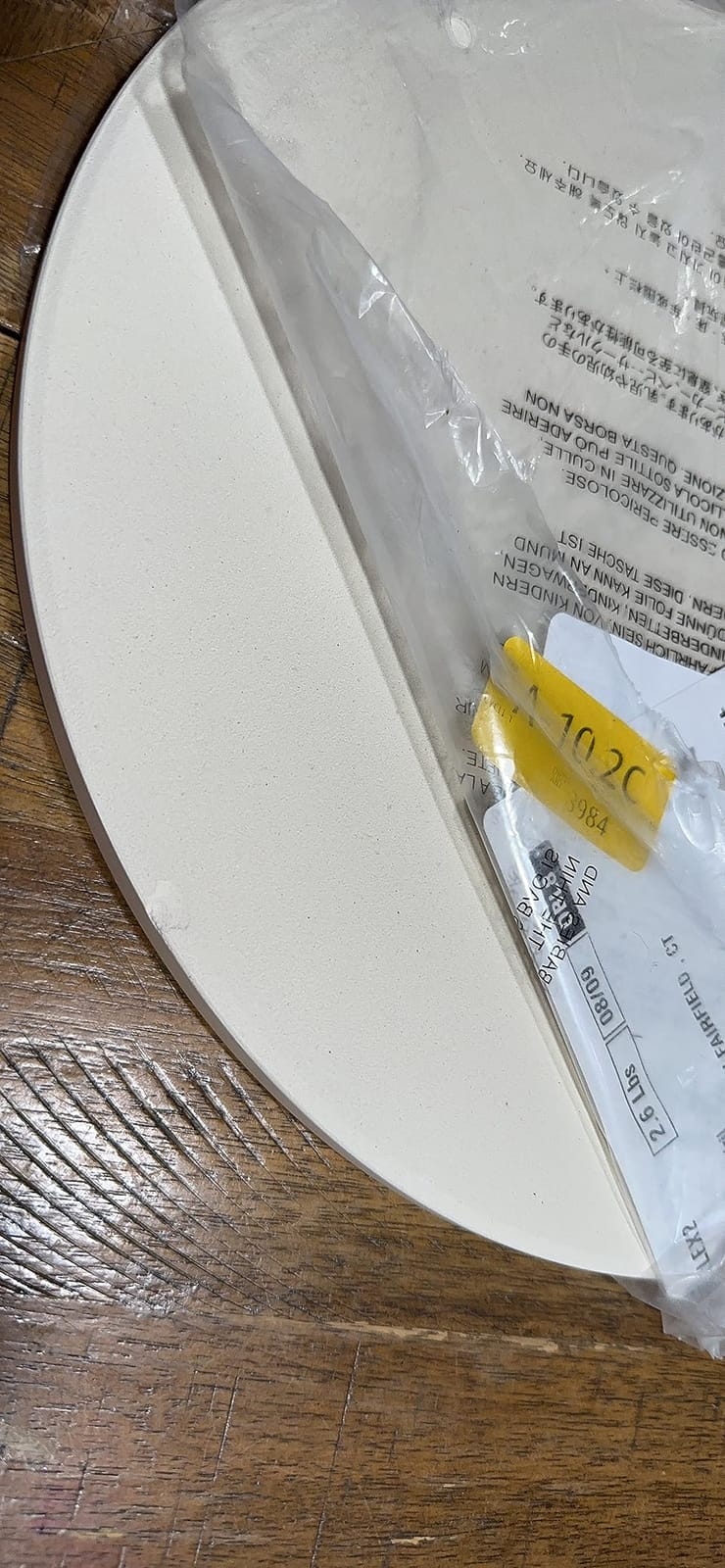
Made from all-natural, FDA-safe cordierite, it delivers good heat distribution and a crisp crust on both frozen and homemade pizza. The listing states 0.38 inch of thickness in the technical details and 0.47 inch in the description, so treat the exact figure as approximate.
The sticking complaints are the thing to plan around. Reviewers report dough adhering more than on heavier stones, and biscuits sticking more than they would on a higher-end surface. Semolina flour on the peel and a light dusting of cornmeal on the stone handle it, but a wet dough will still bond.
Cleaning is the easiest story in the group, since a damp cloth is all it takes. A light stone has less stored heat to shed, which is also why it needs less cooldown time before you handle it.
Best when weight matters more than heat retention
Sixteen ounces changes how you work. You can move this stone between a countertop oven, an air fryer and a grill without planning the lift, and you can store it in a small cabinet or a vehicle without thinking about it.
That is the right trade if you are cooking in a compact oven like the models in our countertop pizza oven guide, where a small stone is often the only thing that fits on the deck.
Where it falls short
Heat retention is the cost. A 16 ounce stone gives up stored energy quickly, so a second pizza landing on it right after the first will not get the same base as the first did. Recovery is the whole point of a thick stone in an outdoor oven.
At 11.5 inches it is the smallest surface here, and the max temperature is listed as 1112F even though the product headline cites 1472F. If your oven runs above 1000F, look elsewhere.
12. GOFOWRK Pizza Stone 5 Piece Set, 15 x 12 Inch

GOFOWRK Pizza Stone 5 PCS Set, 15 x 12″ Large Rectangle Pizza Stone Set for Oven and Grill with Metal Pizza Peels & Cutter Rocker, 0.6” Thickened Stone Pizza Pan, Baking Stone for Pizza, Bread
Cordierite
1470F max
15 x 12 inch
0.6 inch thick
Pros
- 0.6 inch cordierite improves thermal stability over thinner models
- Metal peel avoids the moisture issues of wooden peels
- Even heat distribution and moisture absorption
- Full accessory kit with peel
- rocker
- dough cutter and brush
Cons
- Newer listing with a shorter review history
- Accessory quality is average for the price
The GOFOWRK set is the one to look at if you want a thick stone without any wood in the kit. The cordierite slab is 0.6 inch thick, 15 by 12 inches, rated to 1470F and made from all-natural FDA-safe material. The accessories are a metal peel, a cutter rocker, a dough cutter, a silicone oil brush and a scraper.
Reviewers point at the 0.6 inch thickness as the reason it holds temperature better than thinner models, which is exactly the property that matters for back-to-back pizzas. The micro-pores distribute heat evenly and absorb excess moisture for a crisp base.
The all-metal peel is the differentiator. Wooden peels absorb moisture from the dough and can drag a skin across a wet base, and a metal peel sidesteps that entirely. It also will not crack the way the oak peel in some competing kits eventually does.
Care is straightforward. Clean the stone with the included scraper and water only, no soap and no detergent, and it is a 15 by 12 rectangle that fits a standard outdoor oven deck with room for airflow around the edges.
Best for a cook who avoids wooden tools
Going all metal is a genuine preference, not a gimmick. If you have had a wooden peel shed a sticky layer onto a dough, or watched one crack along the grain, a metal peel and a silicone brush solve both problems for good.
The 1470F rating and 0.6 inch thickness also make this one of the better-specified stones at this size, so it holds up in a gas outdoor oven and a moderately hot wood oven without drama.
Where it falls short
The review history is short, with 493 ratings behind it, so there is less long-term durability evidence here than for the established stones. A flat rating distribution suggests the accessory package is what holds some buyers back.
Several buyers consider the accessory quality average relative to what the set costs. The stone performs well; the surrounding tools are adequate rather than exceptional, and a metal peel also needs dusting because dough will stick to it too.
Buying Guide: Choosing a Stone for an Outdoor Oven
Cordierite, clay, glazed ceramic and steel compared
Cordierite is the material to buy, and it is the consensus answer in the cooking communities that gather around this topic. A thread on r/CookingForBeginners landed on the same conclusion without much argument. Cordierite is a mineral-derived ceramic engineered to survive rapid temperature change, which is the only failure mode that really matters outdoors.
It is not the same thing as generic ceramic. Cordierite is a specific engineered composition with a low thermal expansion coefficient, which is why it resists cracking where ordinary clay and stoneware can split. Cordierite is food safe, odourless, and it is the stated material in 9 of the 12 stones reviewed here.
Ordinary clay and stoneware stones are cheaper and work fine in a home oven. The Old Stone round is one of the few in this group, rated to 1472F but recommended to 500F in a home oven. Glazed ceramic, like the Emile Henry, is the outlier: the glaze seals the surface so it will not stain and it will not absorb moisture, and the 900F ceiling is lower than any cordierite rival here.
Community members on bbq-brethren warn specifically against glazed stones for pizza, since the glaze defeats the moisture absorption that produces a crisp base. That matches what the Emile Henry owner reports: handsome and easy to clean, with cooking performance that does not stand above cheaper alternatives.
A baking steel settles the other half of this debate. Steel conducts heat faster and gives more oven spring and bottom char at the 900F and above range where most outdoor ovens live, and owners on r/Pizza who converted from stone report faster preheat, better browning and no breakage. The catch is weight and the fact that a bare steel plate needs seasoning, so a cordierite stone remains the right first tool for a gas oven or a grill, while steel makes more sense for a hot wood chamber or high-volume cooking.
Thickness and heat retention
Aim for 0.5 to 0.75 inch of cordierite. Below half an inch, a stone heats quickly but gives its heat up as fast, so your second pizza bakes differently from your first. The Unicook and GOFOWRK at 0.6 inch, the KitchenStar round at 5/8 inch and the Hans Grill at 0.59 inch all sit in the sweet spot.
Thicker is heavier and slower to preheat, but it stores more energy. The 0.4 inch Culinary Couture is the clearest example of the trade-off in this list, and its owners mention the reheat wait between pies more than any other complaint. Leave a one inch airflow gap around the stone so hot air can circulate rather than pooling on the edges.
Preheat is where thickness pays off, and 30 to 45 minutes is a reasonable window for a gas outdoor oven. Wood ovens often get a longer, gentler ramp. Either way, a stone that has not soaked in heat will not give you a browned base no matter how long you bake.
Matching the stone to your oven
Measure the oven deck before you shop, and remember that a 16 inch circle covers less area than it sounds like. For a 13 inch pie, a 14 or 15 inch stone leaves the right margin. For a 16 inch pie, look at 18 inch stones or accept a smaller pie.
Gas outdoor ovens such as the models in our gas pizza oven reviews usually run 750F to 900F, so a 1000F to 1450F rating is comfortable. Wood-fired ovens push toward 1000F at the flame, and there the 1800F rated KitchenStar stones are the safe choice.
Match the shape to the cavity. Round stones suit circular hearths and grill grates. Rectangles cover more of a square deck but leave corners, and squares are the efficient pick in the small square ovens found in campers and countertop units.
First use, conditioning and cracking prevention
Thermal shock, not oven temperature, causes almost every cracked stone. It happens when a cold stone or a cold stone surface meets a hot chamber, so the most common mistake is pulling a stone out of a cold shed and dropping it straight into a fired oven.
Warm the stone gradually. Many manufacturers recommend starting at 400F or above for around 30 minutes before the first full-temperature use, and the Gyreuni listing is explicit about a 30 minute low preheat. Bring the stone up to temperature with the oven rather than inserting it last.
Never put a cold stone under direct radiant flame, and take coals to the sides if you are grilling over them. Let the stone cool on the deck before lifting it, and support the whole surface when you carry it rather than gripping one edge.
Cleaning, storing and non-pizza cooking
Never use soap or detergent on cordierite. Soap leaves a film in the pores that works against the moisture absorption you are buying the stone for, and several listings in this roundup say so explicitly. Scrape with a metal scraper or a brush, rinse with warm water and air dry.
The glazed Emile Henry is the exception, since it is dishwasher safe. The burn-off method works well for stuck cheese: leave it in a hot oven until the carbon layer is gone, then scrape it off cool.
Beyond pizza, every stone here bakes bread, flatbread, biscuits, cookies and vegetables, and two handle reheating cooked pizza. For storage, keep the stone dry and supported on edge if you have the space, and do not seal a damp stone in a closed box over winter.
Frequently Asked Questions
Which type of pizza stone is better, ceramic or cordierite?
Cordierite wins for outdoor ovens. It is a mineral-derived ceramic engineered for thermal shock resistance, so it survives rapid temperature swings and repeated firing better than ordinary clay or stoneware. Glazed ceramic looks cleaner and resists staining, but the glaze seals the surface and lowers the maximum temperature, usually to 900F. For a wood oven or a grill, cordierite is the safer material.
What is the best thickness for a pizza stone?
For outdoor ovens, aim for 0.5 to 0.75 inch of cordierite. That range stores enough heat to keep your oven temperature stable across back-to-back pizzas while still being manageable to lift. Stones thinner than half an inch heat fast but surrender heat fast, so the second pizza of a session bakes differently from the first. Thicker than three quarters inch and you are mostly moving weight.
Do pizza stones really make a difference?
Yes, most noticeably in an outdoor oven. A stone absorbs heat during a long preheat, then pushes that stored heat directly into the base of the dough on contact. That is what produces a browned, crisp, slightly blistered underside instead of a pale crust that dries out slowly in moving air. The difference is dramatic on a pizza oven and more modest on a home oven.
Should a pizza stone be at the top or bottom of the oven?
At the bottom, as close to the flame as the design allows. A pizza stone is a hearth surface, and it works by radiating stored heat upward into the dough, so putting it on an upper rack puts cold air between the stone and the crust. Leave about an inch of clearance around the edges so hot air can circulate, and never place a stone directly in the flame path unless its rating covers the temperature.
Is 550 degrees too hot for a pizza stone?
No, 550F is comfortably within the range for any cordierite stone. The ratings in this category run from 900F on glazed ceramic up to 1800F on high-spec cordierite. A 550F home oven or a low-and-slow grill sits near the bottom of what these stones tolerate. The risk is not the temperature itself but thermal shock, which comes from a sudden change such as a cold stone going into a hot oven.
Do outdoor pizza ovens come with a stone?
Most mid-size and large outdoor pizza ovens include a stone in the box. The reason people replace them is thickness, not quality. Factory stones are often thin, so they lose heat every time you open the door and your second pizza bakes differently from your first. Measure your deck and check the factory stone thickness before deciding whether an upgrade is worth it.
Final Verdict: Which Pizza Stone to Buy
The KitchenStar 16-Inch Pizza Stone Set is the best pizza stone for outdoor ovens in 2026, and the reason is not the accessories. It is 16 inches of cordierite rated to 1800F, the highest heat tolerance in this group, backed by the largest body of owner feedback we found, with a 4.7 rating across more than 21000 reviews. The peel, rocker cutter, brush and rack are a bonus on top of a stone that outlasts cheaper options in a hot oven.
If you want the stone without the kit, take the Unicook 15 by 12 rectangle. At 0.6 inch thick and rated to 1450F, it does the same job for less, and it is the value pick here. For grill cooks who want the highest tolerance and a stand to lift it with, the KitchenStar 16-inch round is the counterpart.
Whatever you choose, buy for three things: cordierite, half an inch of thickness or more, and a stated maximum temperature above your oven’s ceiling. Warm it gradually, never use soap, and leave an inch of airflow around the edges. If you have not settled on the oven yet, our portable pizza oven picks will help you match the stone to the right chamber.